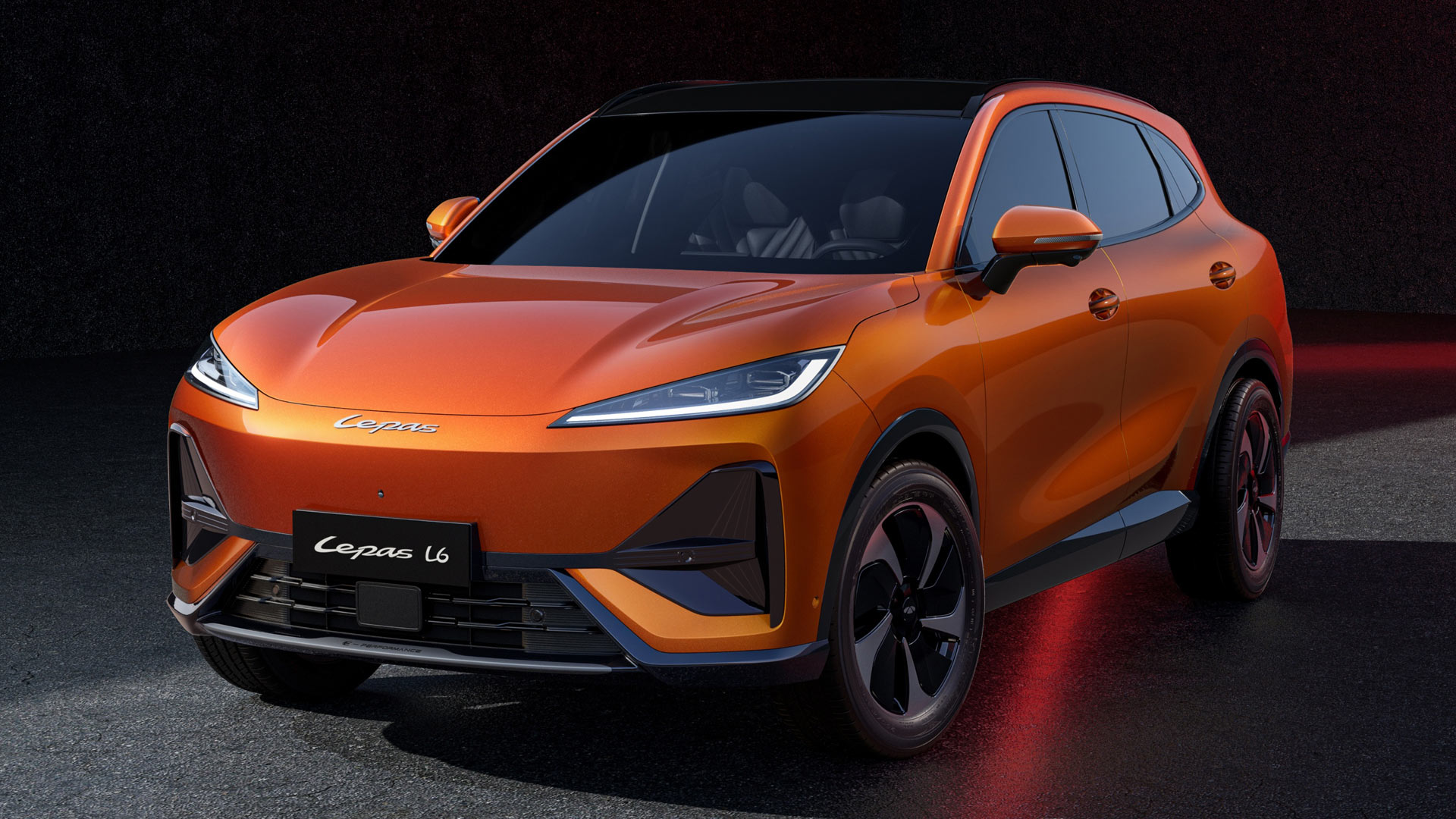
Chinese marque Lepas, part of the Chery automotive group, has confirmed its next vehicle for launch in the UK.
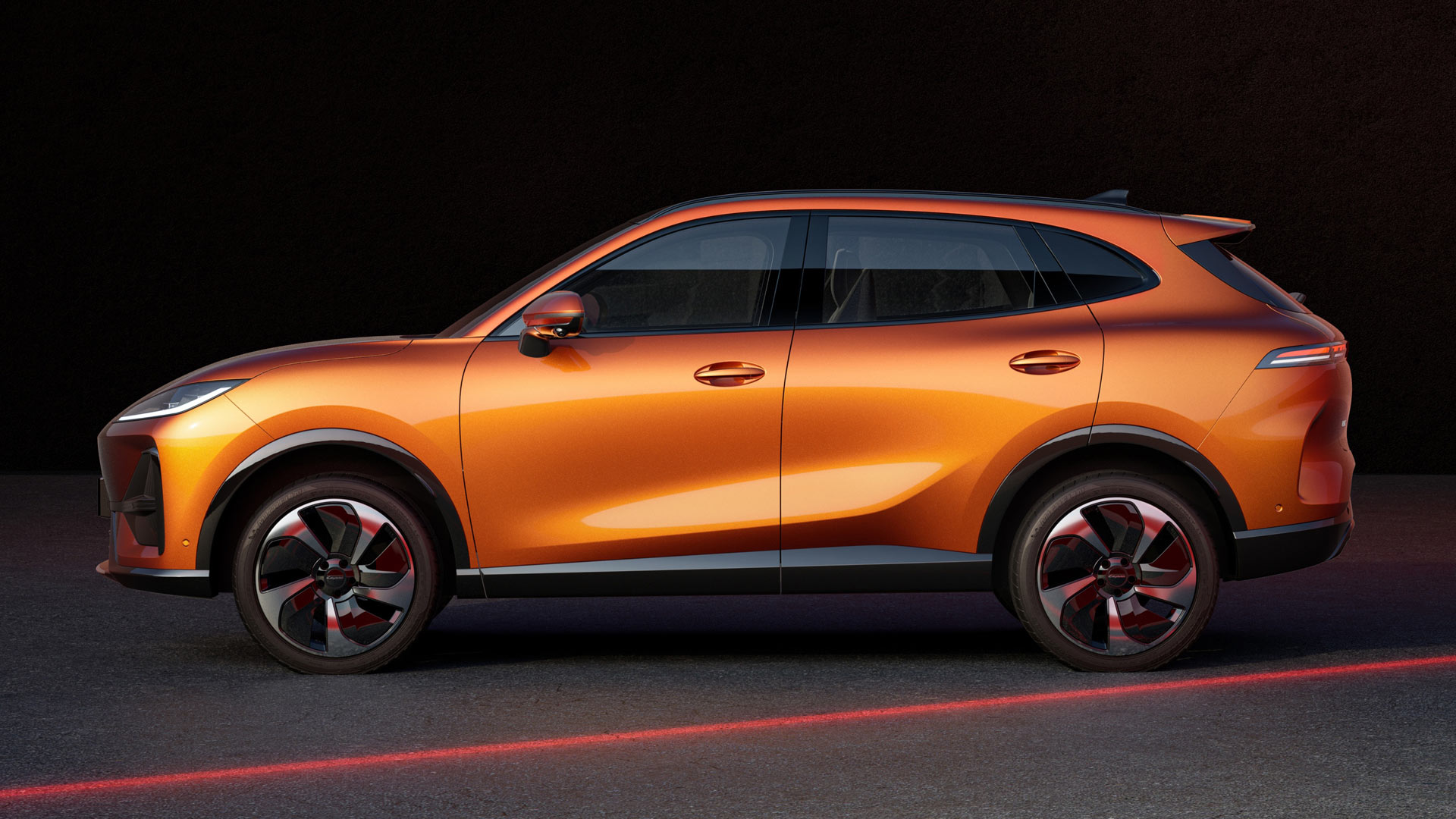
Making its debut at the prestigious Milan Design Week, the mid-size Lepas L6 SUV will be offered to British customers in both hybrid and fully electric guises.
Its arrival follows the announcement of the flagship Lepas L8 SUV earlier this year.
On sale in five-seat format at first, the L6 takes on an ever-growing roster of Chinese-made family SUVs. Its choice of powertrains potentially offers an advantage against established rivals such as the Volkswagen Tiguan and Hyundai Tucson.
Hybrid or EV power for Lepas L6
Although specific details about the Lepas L6 are still limited, the hybrid-powered version will combine a 1.5-litre petrol engine with an electric motor and battery pack.
This will allow the Lepas L6 Super Hybrid a range of up to 700 miles with its battery fully charged and petrol tank brimmed.
The electric Lepas L6 BEV uses a 67kWh battery pack, predicted to offer up to 270 miles of range in the official WLTP test. Recharging from 30 to 80 percent capacity takes as little as 20 minutes.
Both variants of the Lepas L6 are based on Chery’s New Energy Vehicle (NEV) modular platform. The company promises this will deliver ‘a seamless blend of performance, comfort and efficiency, tailored for European roads’.
The eye of the leopard
The Lepas name is a portmanteau of ‘leopard’ and ‘passion’. The L6’s LED daytime running lights are said to be modelled on the shape of a leopard’s eye, while its overall styling pays homage to ‘the elegance and agility of a running leopard’.
Commenting on the European launch of the L6, Ray Wang, managing director of Lepas UK, said: “The Lepas L6 marks an exciting step for our brand in Europe and, of course, the UK market – as we confirm this will be the second model sold.
“Combining our proprietary Lepas Super Hybrid and fully electric powertrains, the Lepas L6 delivers exceptional efficiency, impressive range and rapid charging.”
More information on the L6, including UK market prices, will be confirmed by Lepas closer to the on-sale date, likely to be late 2026.
Lepas is the fourth brand from Chery Group to enter the UK market in recent years. It follows Jaecoo, Omoda and Chery itself.
The new KGM Musso EV electric pickup has become the UK’s cheapest commercial vehicle for company car drivers to tax.
Benefiting from the full £5,000 Plug-in Van Grant, the double-cab pickup has a headline price of just £39,995 – and that includes VAT.
The electric Musso also attracts a low Benefit-in-Kind (BIK) company car tax rate of four percent, meaning it will cost fleet car drivers from just £30 a month to tax.
KGM – the new name for SsangYong – will showcase the Musso EV pickup at the Commercial Vehicle Show, which gets underway at Birmingham’s NEC later this month.
A 240-mile electric range
The electric version of the well-known Musso double-cab pickup, the new KGM Musso EV has an 80.6kWh battery supplied by EV giant BYD.
This provides it with a range of up to 240 miles. Rapid charging from 20-80 percent can take around half an hour.
The KGM Musso EV offers a 690kg payload and 2.3-tonne towing capacity – supported by load-sensitive self-levelling rear suspension. It also has full-time all-wheel drive, with its electric drivetrain serving up 207hp.
Orders for the new KGM Musso EV are open now, and UK dealers expect their first vehicles in May. Customer deliveries will start in the summer.
Any vehicle can suffer from a flat battery – even an electric car. Charging a car battery is a straightforward process, but there are some important points to consider first. This short guide will explain the process.
A car battery will typically last between three and five years before it needs replacing. There are many signs that a battery is getting old, but common symptoms include the engine cranking slower than normal, loss of power to the electronics and a warning light on the car’s dashboard.
Recharging a failing battery might get you home, but you should fit a replacement as soon as possible. A garage will usually be able to fit a new battery in a matter of minutes.
It’s also important to drive your car regularly to keep its battery in good health. Without use, even a relatively new battery might only last two weeks before it needs recharging. External factors such as cold weather or extreme heat could reduce this period to a few days.
Equally, the cause of a flat battery might be something as simple as an interior light left switched on.
Electric cars use a separate battery for starting the car and powering ancillaries such as the lights and air conditioning – so the same issues also apply to them.
Why has your car battery gone flat?
If you have ruled out the possibility that your car battery is simply old and needs replacing, you need to figure out why it has gone flat. Reasons may include:
Regular short journeys. As many motorists have discovered with increased working from home, the combination of infrequent use and short trips puts a strain on car batteries.
Leaving an interior light on. Also check the boot light, as this is harder to spot when you leave the vehicle.
Using the electrics when the car isn’t running. Did you listen to the radio while you spent the afternoon valeting the car?
Fitting the wrong battery. If it’s too small, the battery will lack the power required to crank the engine.
Extreme outdoor temperatures. Very hot or cold weather will have a detrimental effect on battery life.
How to charge a car battery
Once the car is running, a drive of around 30 minutes – preferably at a steady speed on the motorway – should be enough to return the battery to full health. Don’t stall the engine or you could end up stranded at the roadside.
If you find that the battery is flat or the car is slow to start at the next attempt, it’s almost certainly time to fit a new one. Prices range from around £50 to £200, depending on the size of battery your car requires.
A modern car with stop/start engine technology requires a different and more expensive AGM or EFB battery. You’ll also require a smart charger, rather than a conventional battery charger.
Here is the process for charging a car battery:
Check and clean the battery terminals. If they look dirty, rub them with a wire brush and remove any residue before charging.
On older cars, make a note of radio PIN codes or how to reset the clock BEFORE you disconnect the battery.
Disconnect the battery. Remove the negative terminal first, then the positive terminal, before opening the clamp holding the battery in place. Using a magnetic ratchet set or spanner will reduce the chances of important nuts and bolts dropping into the bowels of the engine. We’ve all been there.
Although it’s possible to charge a car battery in situ, we’d recommend removing it from the car. Position the battery on a flat surface in the garage or shed before connecting the positive cable to the positive terminal, then the negative cable to the negative terminal. Don’t recharge a car battery in the house – there’s a risk of explosion or fire.
With the cables secured, switch on the battery charger and wait for the battery to be charged. How long it takes depends on the size of the battery, but it could be up to 24 hours before the battery is fully topped up. Most chargers have a light or indicator to tell you when the battery is ready for use.
Unplug the charger, disconnect the cables, then position the battery in the car. Secure the battery by refitting the clamp, before fitting the positive terminal and then the negative terminal. Switch on the car’s ignition, check for any warning lights, then start the engine.
If your car spends a lot of time parked up, it’s probably worth investing in a trickle charger. These devices monitor the battery’s health and top it up gradually with electricity from the mains.
Owners of classic cars swear by them, as they ensure older, less frequently used vehicles are always charged and ready to be driven.
Penske Truck Rental has added a new vehicle option ahead of the 110th running of the Indianapolis 500. However, it isn’t the most practical choice.
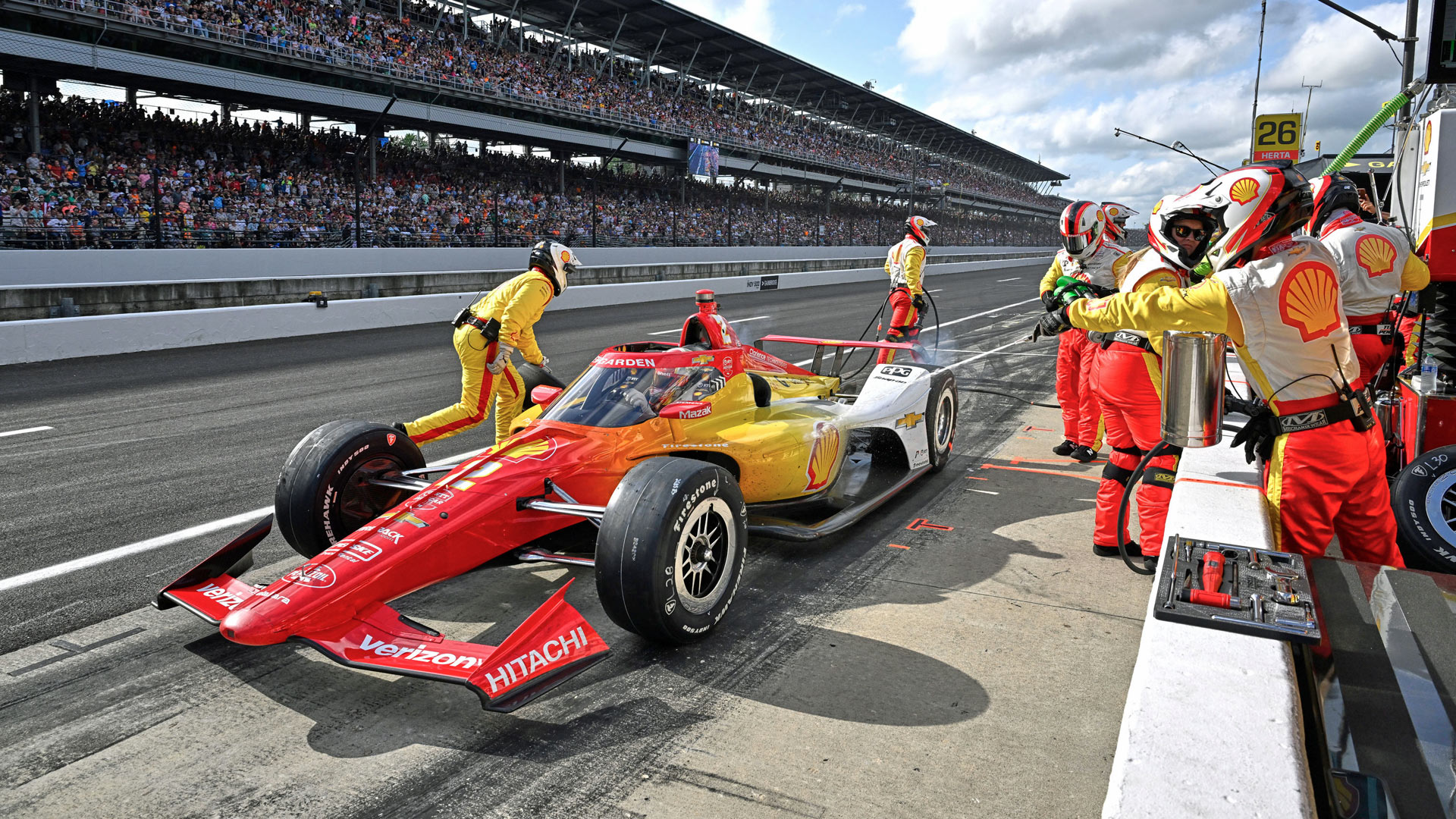
Along with the variety of trucks and vans listed on the Penske website, a Dallara DW12 IndyCar racer is now available to “rent”.
Penske is keen to highlight the extreme performance offered by the IndyCar, which develops 800 horsepower and can reach 240 mph.
Thiat makes it substantially faster than any of the other rental vehicles. Having 0.026 cubic-feet of cargo capacity does limit its practicality, however.
Fast, but slightly impractical
Penske also notes the IndyCar will need to undergo seven seconds of maintenance every 40 to 50 miles.
Averaging four miles per gallon on E85 renewable fuel could also be a challenge. Having an IndyCar pit crew on hand could obviously help here.
Despite the sheer level of effort Penske Truck Rental has gone to with its wildly impractical IndyCar option, sadly there is no way to actually reserve a race car at your local depot.
Instead, Penske is using the IndyCar rental option to offer enthusiasts the chance to win a VIP trip to this year’s Indianapolis 500 race.
Fans can enter the “Rev Up Your Rental” contest now, detailing in 500 words what winning a trip to the Greatest Spectacle in Racing would mean to them.
Head to the ultimate fan destination
The two lucky winners of the Rev Up Your Rental competition will receive air travel, hotel accommodation, and VIP access to the Indianapolis Motor Speedway for the Indy 500.
This will include track-side hospitality, a behind-the-scenes tour of the Fox Sports TV compound, and even pre-race access to the starting grid of the hallowed circuit.
“Penske Truck Rental has always been about moving lives and businesses forward – and for true racing fans, the Indianapolis 500 is the ultimate fan destination,” said Kevin Malloy, senior vice president of rental at Penske.
“This new contest celebrates the stories that move us all, and we’re honored to help two passionate fans’ dreams come true of attending this legendary race and enjoying a VIP experience.”
The 110th Indianapolis 500 will take place on Sunday, May 24 2026. This weekend sees the 2026 IndyCar Series head to California for the Long Beach Grand Prix.
Parking is one of most stressful and least enjoyable aspects of driving a car. Whether it’s the price to park, a shortage of spaces or the risk of being clamped, the issue is never far from a motorist’s mind.
The topic of where you can park is more complicated than you might think. Indeed, if you haven’t read the Highway Code for a while (not since your driving test, perhaps), you may have forgotten where you can’t stop or park. Similarly, you could be confused when it comes to parking outside your own home.
Here, we reveal the places where it’s illegal to park your car, along with a few useful facts about parking in the UK.
Most drivers are aware that yellow lines relate to parking restrictions. Double yellow lines indicate a prohibition of waiting at ANY TIME, even if there are no upright signs. Basically, you cannot park on double yellow lines.
Things aren’t so clear when it comes to single yellow lines. You MUST NOT wait or park on yellow lines during the times of operation shown on the signs, or at the entrance to a Controlled Parking Zone.
Often, you will find that single-yellow line parking restrictions are lifted at quieter times, such as overnight or at weekends. Alternatively, they may only apply for a couple of hours a day – to deter people from parking in residential streets close to a train station, for example.
You also MUST NOT wait, park, set down or pick up on school entrance markings when upright signs indicate a prohibition of stopping.
Parking at the roadside
The Highway Code says you must use off-street parking areas or bays marked out by white lines whenever possible. If you have to stop at the roadside, you should adhere to the following rules:
Do not park facing against the traffic flow
Stop as close as you can to the side of the road
Do not stop too close to a vehicle displaying a Blue Badge
Do not park in spaces reserved for Blue Badge holders, residents or motorcycles
There are specific rules regarding parking partially or wholly on the pavement, depending on where you live. Currently, pavement parking is banned in London and Scotland, but there are moves to extend this policy to all of the UK. Visit Motoring Research for the latest parking news.
Where you MUST NOT stop or park
The Highway Code goes on to list the following places where you MUST NOT stop or park:
The carriageway or the hard shoulder of a motorway, except in an emergency
A road marked with double white lines in the middle, even when a broken white line is on your side of the road. The exception is to pick up or set down passengers, or to load and unload goods
A tram or cycle lane during its hours of operation
A cycle track
Red lines, unless otherwise indicated by signs
Other parking restrictions
Rule 243 of the Highway Code says DO NOT stop or park in the following places:
On the approach to a level crossing or tramway crossing
Opposite or within 10 metres (32 feet) of a junction, except in an authorised parking space
Near the brow of a hill or humpback bridge
Opposite a traffic island or another parked vehicle
Where you would force other traffic to enter a tram lane
Where the kerb has been lowered to help wheelchair users and powered mobility vehicles
In front of an entrance to a property
On a bend
Where you would obstruct cyclists’ use of cycle facilities
These rules apply at all times, EXCEPT when you are forced to stop by stationary traffic.
What if someone parks on your driveway?
Although you are not allowed to park across the entrance to a property, there is nothing to stop someone parking on the road outside your house.
A survey by Uswitch of 1,000 Brits found 60 percent thought they were legally entitled to park in the space outside their home. Yet a quarter of drivers would happily ‘steal’ the spot outside your house.
Hannah Parsons, a solicitor at DAS Law, says: “A homeowner has no special legal right to park directly outside their property. All road users have the same right to park anywhere on the public highway as long as they do not contravene parking restrictions.”
Things aren’t so clear cut when it comes to parking on a driveway. As Parsons explains, it’s not actually a criminal offence.
“If a vehicle is parked on your driveway without your permission, they are trespassing. As trespass is a civil and not criminal offence, the police will not always get involved. At most, they may send an officer to try and determine the owner of the vehicle and ask them to move it.”
Once the car is on a driveway, it’s technically on private property – where the local council has no jurisdiction. A council can remove an abandoned car from private or public property, but if the vehicle is taxed, insured and has a valid MOT they’re unlikely to touch it.
Florence Codjoe, a car insurance expert at Uswitch, said: “Whilst it’s really frustrating to find a vehicle parked outside your home for weeks or months, it’s the decision of your local council as to whether it’s removed. If the vehicle is damaged, causing an obstruction, uninsured and without road tax [Vehicle Excise Duty], it’s likely the council will remove it.”
Taking revenge by blocking the car in question isn’t recommended. Hannah Parsons says: “If someone has parked on your driveway and you were to block them in, your vehicle may be causing an obstruction to the public highway and this is a criminal offence. The owner of the vehicle could therefore call the police.”
This is a view shared by Paul Watters of the AA. He warns: “Frustrating though this may be, what you can’t do is pop a line of cones on the road outside. You’re then committing a criminal offence because they could cause an accident. This counts as obstruction and a penalty charge could be issued.”
Penalties for illegal parking
The Traffic Management Act 2004 was introduced to tackle congestion and disruption on the road network. It gives local authorities more power to manage parking policies, coordinate street works and enforce some moving traffic offences.
A Penalty Charge Notice (PCN, more commonly know as a parking ticket), might be enforced and issued through the civil rather than the criminal justice system. The fine can typically be up to £70 outside London, or up to £130 within the capital.
The PCN is discounted by 50 percent if paid within 14 days of receiving the ticket. If the fine is left unpaid, the local authority can pursue the debt through the County Court.
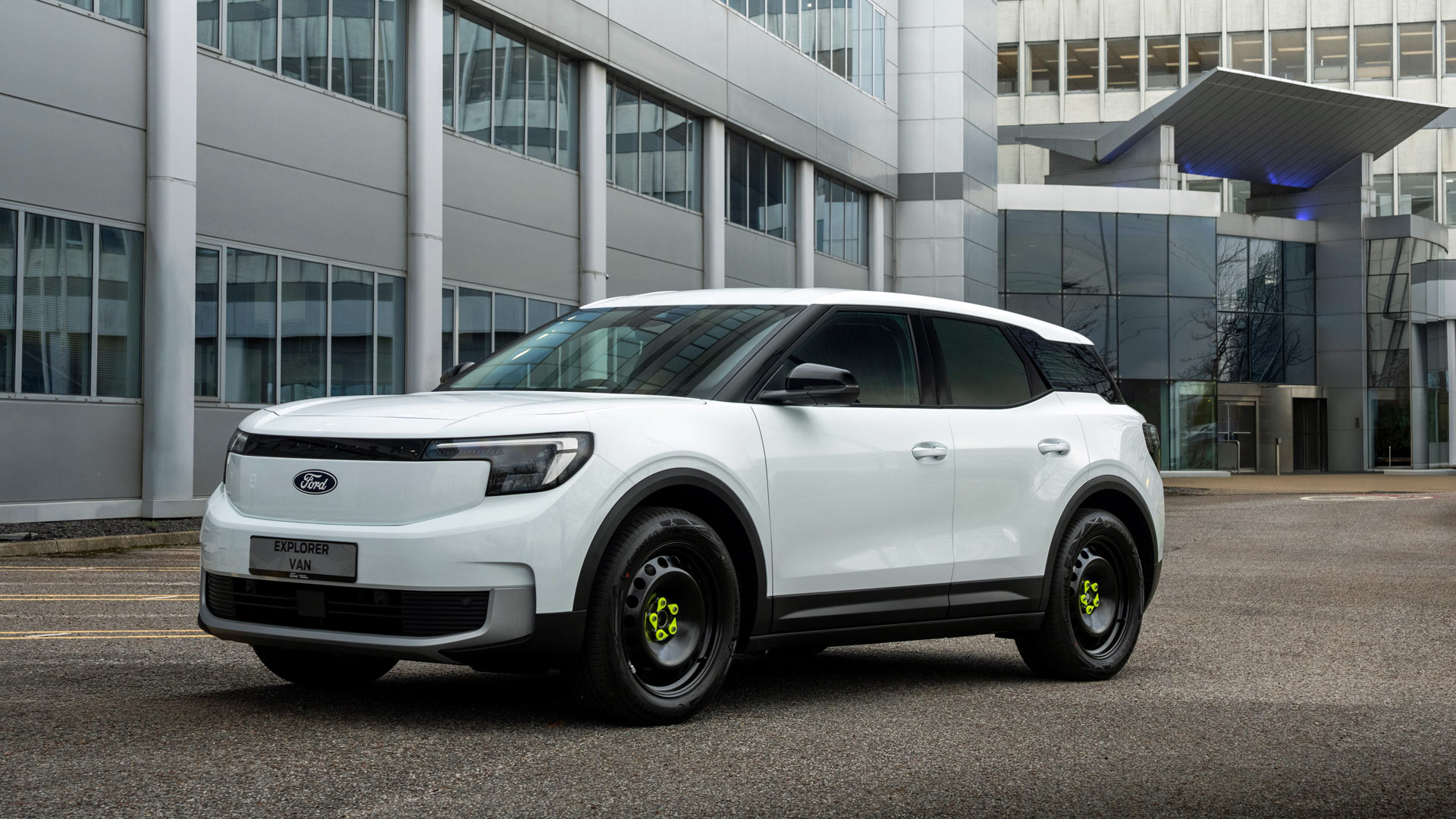
Ford has become the latest manufacturer to launch an electric car-based van in the UK, following the lead of Dacia and Volvo.
The new Ford Explorer Van converts the electric SUV into a practical commercial vehicle, aimed at moving ‘supervisors or inspection teams across multiple sites in the same day’.
Combined with these operational demands, there is pressure for some of Ford’s larger fleet customers to switch to electric vehicles – resulting in a need for models like the Explorer Van.
The company hopes the Explorer Van will replace existing company pool cars, or having to pay employees to use their own vehicles, in order to move people and specialist equipment.
Up to 374 miles of range
Discussions with Ford’s biggest fleet customers shaped the development of the Explorer Van, which will offer a choice of rear- or all-wheel drive.
The rear-wheel-drive Explorer Van serves up 285hp, plus the ability to tow up to 1,000kg. The all-wheel-drive version is boosted to 340hp, with an increased towing capacity of 1,200kg.
Opting for the RWD Explorer Van means the potential to cover up to 374 miles, with rapid-charging technology allowing the battery to be replenished from 10 to 80 percent in around 25 minutes.
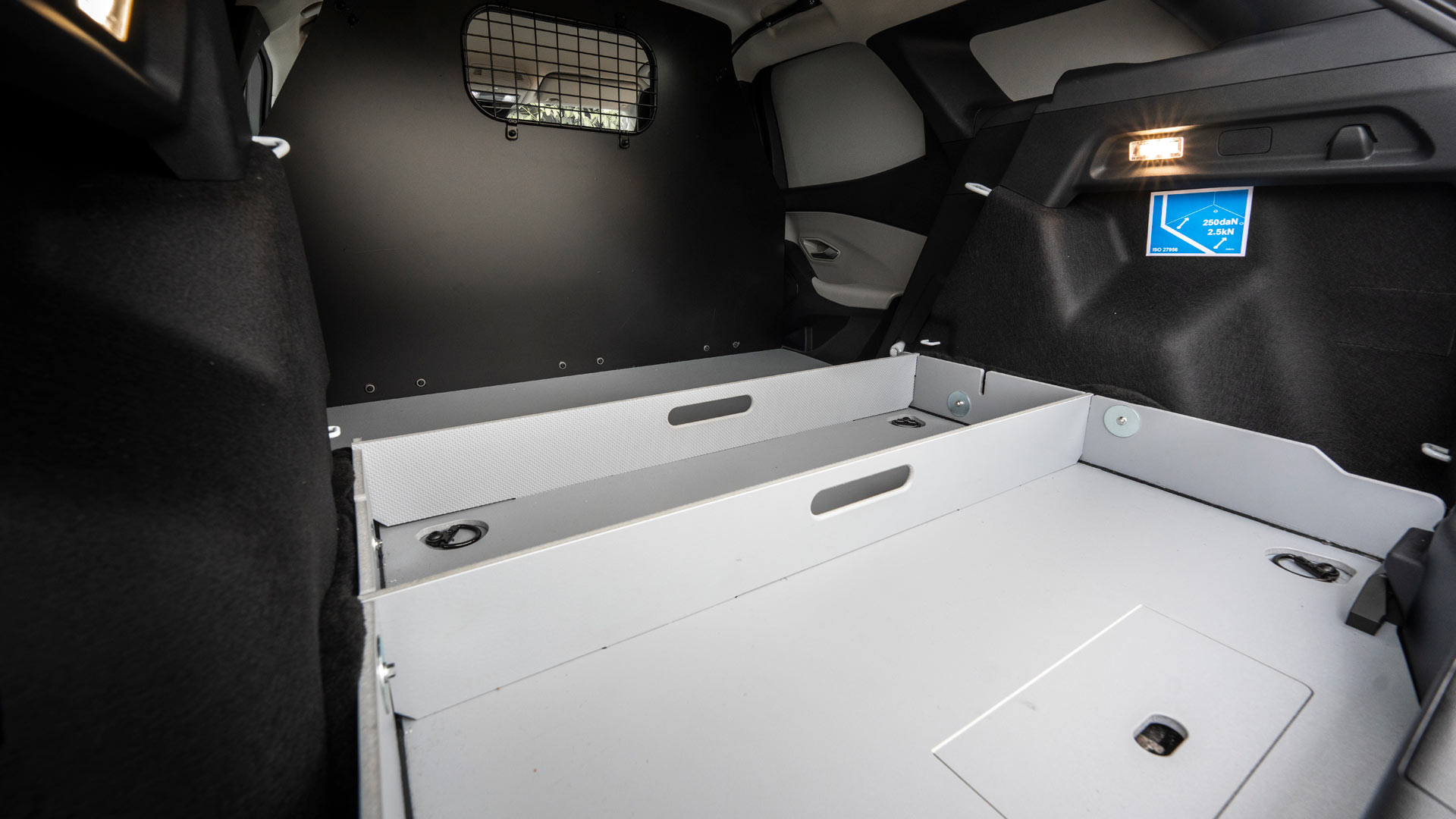
Ford’s Dagenham Conversion Centre is responsible for the commercial vehicle transformation, adding a new bulkhead behind the front seats, along with a flat load floor that uses innovative dividers.
Explorer Van on show this month
The rear side doors of the Ford Explorer Van remain operable, although the back windows have been replaced with solid panels. A maximum payload of 650kg can be carried.
Multiple option packs are offered for the Explorer, including stylish but utilitarian 19-inch steel wheels with hi-vis wheel nut indicators – as seen here.
The Explorer Van retains many of the same comforts as the SUV, including technology such as adaptive cruise control and a rear-view camera. A 17-litre ‘MegaConsole’ can be used to hide valuables, too.
Fully homologated as a commercial vehicle, Ford will supply the Explorer Van with a three-year, 60,000-mile warranty.
The new Ford Explorer Van will be on display at the CV Show in Birmingham later this month.
Honda’s electric car range is going retro. A bold new city car arriving this summer aims to shake up the UK’s affordable EV sector
The new Honda Super-N electric car will go on sale in the UK from July. And prices will start from less than £20,000.
Inspired by the 1980s Honda City Turbo II, the new Honda Super-N will have an electric range of 128 miles. However, in its natural city habitat, the firm says this will stretch to almost 200 miles.
It will also feature what Honda calls a ‘Boost Mode’, upping the electric motor’s power output from 64hp to 95hp.
There will also be a clever simulated seven-speed gearbox, plus an ‘Active Sound Control’ that ‘generates an engaging engine sound’.
As it will be one of the lightest EVs in Europe, Honda is promising fun and engaging dynamics. Engineers have tested prototypes here in the UK to ensure it’s calibrated to deal with our unique roads.
‘Joy of Driving’
“The Super-N promises to bring Honda’s ‘Joy of Driving’ and the thrill of EV performance to a whole new audience,” said Honda UK head of automobile, Michael Doyle.
“With its iconic looks, driving dynamics tailored to UK roads and unique features such as Boost Mode, every aspect of this model has been engineered to bring exhilaration and fun to every journey, no matter how short.”
The five-door, four-seat Honda Super-N has ‘enhanced’ front seats and clever ‘Magic Seats’ in the rear that individually flip up, deckchair-style, to boost cargo space.
There are blue highlights throughout the cabin, referencing the original City Turbo II, while the blue ambient lighting changes to purple when Boost Mode is engaged.
A range of exterior colours will be available, along with customisation options such as a two-tone spec with a contrasting gloss black roof and rear spoiler, plus a range of body graphics.
Full details of the new Honda Super-N will be confirmed nearer to the launch date. For now, Honda is inviting city EV fans to register their interest on its website.
The overwhelming majority of UK motorists say they would avoid buying a used car that has covered more than 100,000 miles.
Analysis by online marketplace eBay discovered almost three quarters (72 percent) of respondents would not buy a car with six figures on its odometer. And 81 percent of drivers are reluctant to look at high-mileage motors at all.
Interestingly, more than half of those surveyed (52 percent) said they would not even consider purchasing a car that has covered 50,000 miles or more.
Despite this, the majority of drivers (85 percent) said they are open to the idea of keeping their current car for longer than their previous vehicle.
Not everyone avoids high-miles motoring
Drivers aged over 65 keep their cars for the longest, at nearly seven years on average. At the other end of the scale, motorists aged 18–24 typically plan to hold onto their cars for 4.5 years.
According to the findings of a Freedom of Information request (FOI) submitted by eBay, more than six million vehicles with over 100,000 miles were MOT-tested in the UK last year.
Analysis of MOT data from the Driver and Vehicle Standards Agency (DVSA) also uncovered that nearly 407,000 cars had passed the 200,000-mile mark, and were still being driven.
Astonishingly, some 43,000 vehicles had covered more than 300,000 miles at the time of being tested, with nearly 2,700 having passed half-a-million miles.
Modern cars are ‘built to last’
With British motorists defining a high-mileage car as being one that has covered more than 96,000 miles, eBay has gone much further – purchasing a 64-plate Toyota Prius with 293,000 miles on the odometer.
The company plans to maintain the Prius using new and Certified Recycled eBay parts, with work being undertaken by Laura Kennedy, founder of Spanners with Manners – a female-led garage in Finchley, north London.
Following eBay’s purchase of the high-mileage Toyota, Kennedy commented: “People often overlook high mileage cars, but the truth is, a well-maintained vehicle with more than 100,000 miles on the clock can be a bargain. Modern cars, like eBay’s Toyota Prius, are built to last far beyond what many drivers assume.
“If a car has been serviced on schedule, looked after, and drives well, there’s no reason why it can’t keep going for years. And it’s easy to find all the parts you’re ever likely to need on eBay.”
More than 93,000 electrified models, like the Toyota Prius hybrid, underwent an MOT test with more than 100,000 miles being recorded.
Dealer growth in the UK, Polestar’s largest global market, has already outpaced this in 2026.
Overall, Polestar’s global sales grew by seven percent in Q1 of 2026 to an estimated 13,126 cars, says the NASDAQ-listed firm.
“There was a strong performance in key markets such as Australia, Germany, Sweden, South Korea and the UK,” said CEO Michael Lohscheller, “testament to the hard work of our teams and our established brand position”.
The UK’s fastest growing premium brand
Sharp growth in Australia was particularly noteworthy as it came on the back of heightened concern around energy prices, particularly oil prices, due to the conflict in Iran.
Lohscheller said the performance shows resilience, “with market conditions becoming more challenging amid ongoing geopolitical developments”.
Around a third of Polestars sold in 2026 thus far were delivered to customers in the UK. Sales are up 12.3 percent year-to-date, with Polestar now bigger in Britain than Lexus, Jeep, Fiat and Alfa Romeo.
“Polestar UK has seen a record Q1 and remains the fastest-growing premium brand,” said UK MD Matt Galvin.
“We have seen a significant uplift in interest owing to ‘pump anxiety’ replacing the outdated term of ‘charging anxiety’.”
Motoring Research recently spoke to Polestar CEO Michael Lohscheller. Look out for the full interview soon
Kia has announced the sale of its 100,000th electric car in the UK – becoming the first Korean brand to reach that milestone.
Described as a landmark achievement by bosses, it has taken Kia just over 11 years to break the 100,000 electric cars barrier.
Notably though, it has taken the firm just five years to jump from 10,000 EVs to 100,000 – and just three years to double the 50,000 figure reached in 2023.
“The milestone of reaching 100,000 EV sales is a significant landmark for Kia UK,” said president and CEO Paul Philpott.
“In a relatively short space of time, we have gone from strength to strength, steadily building our EV line-up, and have seen customer demand increase in line with our product desirability.
“We now have one of the industry’s most complete EV line-ups… further cementing ourselves as a leading player in the EV market.”
Kia EVs in the UK
Kia’s UK electric journey began in November 2014 with the Soul EV. With a 27kWh battery, it offered 132 miles of range, and only a few hundred sales a year were forecast.
Things accelerated in April 2019 with the launch of the Kia e-Niro. This had a far larger battery, delivering a 282-mile range, and sales responded accordingly.
Today, Kia has seven dedicated EVs, comprising the ‘EVx’ car and ‘PVx’ commercial vehicle ranges. Broadly, there’s an electric equivalent for every petrol or diesel car Kia sells.
The 100,000th Kia EV sold was an EV5 in Iceberg Green. The landmark sale was made on 11 March 2026 – and sales have continued to grow, with the latest figure standing at almost 105,000.
The next EV to launch will be the Kia EV2, the company’s smallest and most affordable EV yet.