Home Blog Page 70

Best family hatchbacks to buy in 2026

0
Toyota Corolla

Do you remember a time when hatchbacks were the default choice for families in search of a practical, spacious, economical and stylish car? Today, many families prefer high-riding SUVs, but that’s not to say that the hatchback has had its day.

On the contrary, buyers have never had it so good. Buy a new family hatchback in 2026 and you’ll be treated to the latest safety and connectivity technology, very affordable running costs and a car that’s likely to be nicer to drive than an SUV. 

We’ve pulled together a list of the best family hatchbacks to buy this year, with our choices presented in alphabetical order.

Audi A3 Sportback

Audi A3

With distinctive styling and the right badge, the Audi A3 is brimming with showroom appeal. Its technology-packed interior is very appealing, too – despite lacking the flawless quality that distinguished Audis of old. A Virtual Cockpit digital driver display sits alongside a 10.1-inch touchscreen with super-sharp graphics. Satellite navigation, Bluetooth connectivity and DAB radio come as standard, but many features are extra-cost options.

An engine range including petrol, diesel, plug-in hybrid and the 400hp RS3 hot hatchback means there is an A3 to suit most tastes. Audi’s trademark Quattro four-wheel-drive system is available on some models, too. In general, the driving experience offers a good balance between comfort and dynamic poise. Just beware the firmer ride on sportier S line versions.

We said: ‘Despite the dramatic styling of the A3’s interior, it is still practical. Some of the plastics can feel a little cheap, though. A large 10.1-inch touchscreen controls multimedia functions, but Audi has (thankfully) retained some physical buttons.’

Read our review of the Audi A3 Sportback

BMW 1 Series

BMW 1 Series

Predictably, BMW purists grumbled about the switch from rear-wheel drive to front- or four-wheel drive for the current 1 Series. However, it’s arguably the best resolved ‘baby BMW’ yet, with more space for rear-seat passengers and a larger boot. Many rivals are still more spacious in the back, though.

Overall quality is good enough to rival the more expensive BMW 3 Series, while the petrol and diesel engines offer a terrific blend of performance and economy. The level of standard equipment is excellent, with the entry-level Sport model featuring 17-inch alloy wheels, LED headlights, LED rear lights, automatic air conditioning, cruise control and parking assist.

There are now three trim levels to choose from: Sport, M Sport and M135, although the latter is a model in its own right. Indeed, with the demise of the 128ti hot hatch, the 300hp M135 xDrive is your best option if you’re after a performance hatchback with a BMW badge. Pictured is a 120 Sport in optional Thundernight metallic paint. It’s not a hue for shrinking violets…

Honda Civic e:HEV

Honda Civic e:HEV

Honda calls the Civic e:HEV the ‘driver’s hybrid’, pointing to its ‘heart-warming efficiency’ and ‘adrenaline-pumping power’. A bold claim, but we liked it enough to award it the maximum five stars, praising its efficient hybrid engine, family-friendly interior and side-order of driving fun. Prices start from around £35,000 and there are three trim levels to choose from: Elegance, Sport and Advance. In Elegance guise, you could see fuel economy of 60.1mpg.

Standard kit includes keyless entry and start, heated front seats, adaptive cruise control, front and rear parking sensors, a 9.0-inch touchscreen infotainment system with Apple CarPlay and Android Auto, dual-zone climate control and four USB ports.

We said: ‘Finding a weakness in the Civic e:HEV’s repertoire is tough. Tyre noise is a little louder than might be expected, while the infotainment screen graphics look old-fashioned. Its hybrid drivetrain is smooth and efficient, and it delivers lively performance. This is matched by a chassis that blends comfort with a hint of sportiness, living up to that “driver’s hybrid” claim.’

Read our Honda Civic review

Kia Ceed

Kia Ceed

There’s more to the Ceed than Kia’s famed seven-year warranty. Look beyond the fact that it’s covered until 2032 and you’ll find a car that’s inoffensively styled, packed with equipment and pretty good to drive. It doesn’t really excel in any particular area, but all-round competency is perhaps the Ceed’s biggest strength.

Every model comes with a 10.25-inch touchscreen infotainment system with sat-nav, while the flagship GT-Line S model adds an impressive 12.3-inch digital instrument cluster. This high-spec model also features a panoramic sunroof and an eight-speaker JBL audio system.

We said: ‘There is no shortage of choice in this class. If you want something more stylish, maybe consider the Mazda 3. If you’d like a sharper drive, the Ford Focus is hard to ignore. And if your tastes are more upmarket, the Mercedes-Benz A-Class is a classy contender. However, the Ceed earns its place on our best family hatchbacks list by being a capable and likeable all-rounder.’

Read our Kia Ceed review

Mazda 3

Mazda 3

In a family hatchback beauty contest, the svelte Mazda 3 would drive away with first prize. The fact that it’s also engaging to drive and perfectly built might seal the deal for you anyway. Despite its mainstream Mazda badge, the 3 – available as a hatchback or equally stylish saloon – feels genuinely premium.

What’s not to like? Well, there’s no diesel option, which is less of a problem than it was. But the lack of a hybrid will be an issue for some. Hefty C-pillars also make the rear seats feel slightly claustrophobic and the 351-litre boot is smaller than most cars here. We could overlook these foibles in such a desirable overall package, though.

We said: ‘You could buy the Mazda 3 on the strength of its styling alone. Available as a five-door hatchback or four-door saloon, it’s the most head-turning car in its class – but there’s more to the 3 than just sleek looks.’ Prices start from £24,500 for the Prime-Line trim, with the flagship Takumi model costing just shy of £30,000.

Mercedes-Benz A-Class

Mercedes-Benz A-Class

The Mercedes-Benz A-Class is one of the most popular premium hatchbacks in Britain. Buyers are happy to pay a little extra per month in exchange for a desirable badge, impressive interior and the latest technology. All models get a pair of 10.25-inch widescreen displays, which join in the middle to create an almost entirely digital dashboard for the driver.

Although the Sport Edition and Sport Executive models pack a generous level of equipment, many buyers choose to upgrade to one of the stylish AMG Line trims. The Mercedes-AMG A45 S hot hatchback is one of the fastest point-to-point cars you can buy, while the A250e plug-in hybrid offers around 50 miles of electric range.

Reviewing the Mercedes-AMG A45 S, we said: ‘The A45 S is closer in spirit to heroes of yesteryear like the Subaru Impreza Turbo and Mitsubishi Lancer Evolution. It’s a giant-killer, a car that makes fast work of, well, everything. Above all, it’s a riot to drive. If you want the ultimate hot hatchback, look no further.’

Read our Mercedes-Benz A-Class review

Seat Leon

Seat Leon

Fancy a Volkswagen Golf but would like to save money? The Seat Leon is for you. It shares the same platform and running gear, yet the Spaniard is arguably prettier than the German, and still packs the very latest technology. It’s also quite spacious, although the boot is a little small for this class of car.

Prices start from around £25,000, so the cheapest Leon undercuts the most affordable Golf by around £2,500. You can buy a mid-range Leon FR for the same price as an entry-level Golf. Even the entry-level SE model rides on 16-inch alloys and has a 10.4-inch touchscreen display, alongside a 10.25-inch digital instrument cluster.

As well as a choice of 1.5-litre petrol and 2.0-litre diesel engines, the Seat Leon is also available as a plug-in hybrid. Known as the Leon e-Hybrid, it offers up to 82 miles of range from a full battery, which can be recharged in 2.5 hours using a wallbox or five hours with a domestic plug. Prices range from £36,500 to £38,500, depending on the trim.

Skoda Octavia
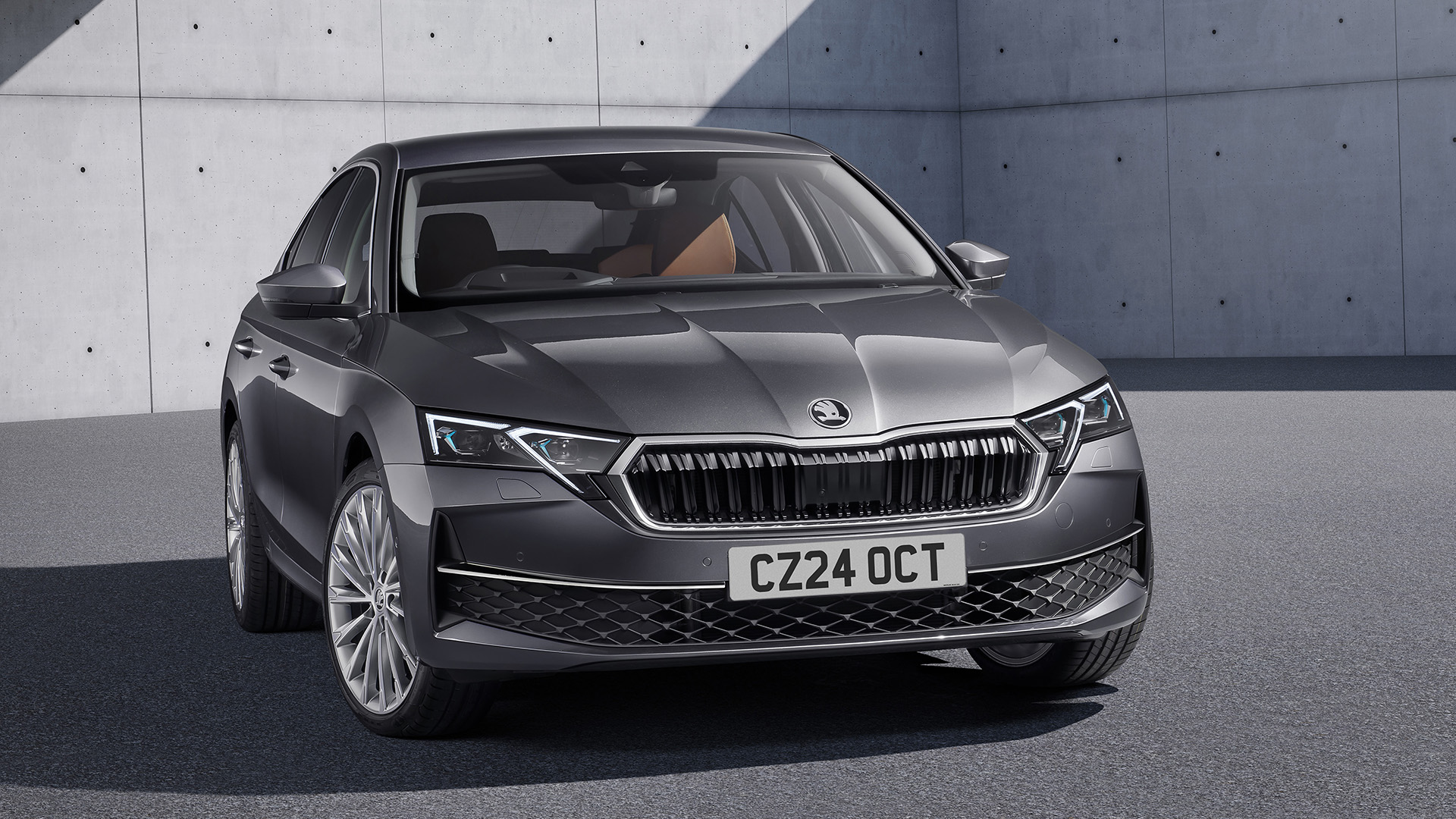
Skoda Octavia

The Skoda Octavia has collected plenty of awards, so it’s just as well it has a cavernous boot to carry all that silverware. Indeed, its massive 600 litres of luggage space is enough to rival cars from the segment above. You may find that you don’t need the spacious Octavia Estate.

Like the Seat Leon, the new Octavia is based on the same platform as the Volkswagen Golf, but the Skoda majors on interior room and value for money. The entry-level SE Technology costs around £26,500 and features the likes of 16-inch alloy wheels, a 13-inch touchscreen with navigation, LED headlights, cruise control and rear parking sensors. And yes, it even has an umbrella hidden inside the door!

Just like the Seat Leon, the Skoda Octavia is available with a choice of 1.5-litre petrol and 2.0-litre diesel engines, but there’s also a 265hp hot hatchback in the form of the Octavia vRS. In all cases, it’s hard to think of a more practical family hatchback; with the rear seats folded down, the boot offers 1,555 litres of space – enough to rival some estate cars.

Toyota Corolla

Toyota Corolla

The Toyota Corolla costs more than some of its key rivals, but it pays to look beyond the purchase price. In addition to a plenty of standard equipment, the Corolla is also powered by a choice of efficient petrol-electric hybrid engines that offer the economy of a diesel. Both the 1.8- and 2.0-litre versions could return up to 64.1mpg, so there’s no penalty for choosing the more powerful unit.

The Toyota Touch 2 multimedia system now comes with Apple CarPlay and Android Auto, which answers one of our criticisms of the car when it was launched. Priced from around £30,500 to £34,500, the Corolla is backed by a five-year warranty.

It’s not the newest family hatchback on our list, but an update in 2023 saw improvements to the interior and the infotainment system, and the car has developed a reputation for reliability and dependability. Standard features include 16-inch alloy wheels, a 10.5-inch touchscreen display with navigation, 12.3-inch digital instrument cluster and an impressive suite of safety and driver assistance systems.

Volkswagen Golf

Volkswagen Golf

The Mk8 Volkswagen Golf looks so familiar, you’d be forgiven for thinking it’s an evolution of the old model. The swoopy LED headlights and new corporate badge are the biggest clues to the Golf 8’s identity. You can hardly blame Volkswagen for playing it safe; the Golf is the default choice for millions of motorists.

The inside is less conventional. Volkswagen calls it a ‘digitalised workplace’, which is marketing speak for a digital dashboard and a range of touch-sensitive controls. You can use gesture control for some functions, while saying “Hello Volkswagen” triggers the voice control. The Seat Leon and Skoda Octavia make more financial sense, but many people will opt for the upmarket Golf. The latest Mk8 VW Golf GTI is a return to form, too.

We said: ‘Prise those redesigned roundels off the Golf and it could easily be an Audi A3. Its interior has the requisite wow-factor and the technology sets new standards for a mainstream hatchback. Although much has changed, the Volkswagen Golf still feels like the benchmark. It’s easy to see why it’s the go-to family hatchback.’

Read our Volkswagen Golf review

ALSO READ:

The best cars in every category

How to save money when buying a new car

Your EV questions answered on Motoring Electric

Advertisement

Last limited edition Porsche 911 S/T to be auctioned for charity

0
Porsche 911 S/T Charity Auction

The final unregistered example of the limited edition 2024 Porsche 911 S/T will be auctioned by RM Sotheby’s to raise money for good causes. 

Built to celebrate 60 years of the Porsche 911, the S/T made its public debut at the Rennsport Reunion event in 2023.

As with any special Porsche 911, the 992.1-generation S/T attracted a huge amount of attention. Demand far outstripped the production run of 1,963 cars, despite a list price of £231,600 in the UK. 

This week’s online auction will offer a rare chance to own the highly collectable 911, while also raising money for the American Red Cross to fund wildfire relief in California.

An iconic specification

Porsche 911 S/T Charity Auction

As the only 911 S/T not assigned to a customer, the car up for auction has just 932 miles on the odometer, having been run-in specially by Porsche’s preparation team in Stuttgart.

This means the 525hp 4.0-litre naturally aspirated flat-six, shared with the 911 GT3 RS, is ready for a new owner to enjoy. A short-ratio manual gearbox was the only transmission offered for the S/T, along with a lightweight clutch and carbon ceramic brakes. 

Carbon fibre panels and thinner glass made the S/T the lightest 911 of its 992.1 generation. This helped towards a 0-62mph time of 3.7 seconds.

The North American-spec car up for auction has been painted in Shore Blue Metallic, and comes with the optional Heritage Design Package. This means magnesium alloy wheels painted in Ceramica, racing roundels on the doors and retro-style exterior badges.

On the inside, the 911 S/T comes features carbon fibre bucket seats finished in Cognac leather, gold 911 badges and an owner’s manual pouch signed by Andreas Preuninger, director of the GT model line at Porsche.

Time to help good causes

Porsche 911 S/T Charity Auction

Accompanying the 911 S/T at auction will be the special Porsche Design Chronograph 1 – 911 S/T timepiece. The watch was only made available to those lucky enough to purchase an S/T in the first place.

The auction of the Porsche 911 S/T follows the sale of the first 2025 Chevrolet Corvette ZR1 at a Barrett-Jackson event in Scottsdale, Arizona. A winning bid of $3.7 million (£2.97 million) secured the flagship hypercar, with all proceeds donated to the American Red Cross for natural disaster relief.

With the RM Sotheby’s auction for the 911 S/T running from Tuesday 18 February until Thursday 20 February 2025, we won’t have long to wait to see what price it achieves.

ALSO READ:

Porsche 911 S/T review

Porsche 911 GT3 2025 review

Best supercars to buy in 2025

This weekend’s Daytona 500 will use its first electric pace car

New Hennessey Warhawk is a Jeep-based tactical strike vehicle

Volkswagen is giving away car cookies to help beat blue Monday

Advertisement

Know your APR from your PCP: an easy guide to car finance jargon

1
Car finance jargon buster

Most people who buy a new car do so via monthly finance payments, rather than paying cash upfront. Personal Contract Purchase (PCP) deals in particular have led a boom period for car finance. Indeed, only a small percentage of people now buy a new car outright.

You may be puzzled by finance jargon when sat opposite the salesperson in the showroom. Don’t worry, though – help is at hand.

If you’re bamboozled by balloon payments or confused by conditional sales, our guide to car finance jargon has the answers. Be sure to read our full guide to the most popular car finance options, too.

This article has been put together with help from the Finance & Leasing Association (FLA).

Car finance jargon buster

Car finance jargon
  • Administration fee or Documentation fee
    • The charge for setting up the finance and issuing the relevant documents. It will be included in the total amount payable and taken into account when the Annual Percentage Rate (APR) is calculated.
  • Agreement term or length of the agreement
    • The length of time over which you agree to repay the car finance.
  • Annual Percentage Rate (APR)
    • The annual cost of a finance agreement over and above the amount you have borrowed on finance. The cost will include interest rate charges and any other fees. APR can be used to compare different finance products.
  • Annual mileage
    • You will be asked to estimate your annual mileage as this helps the lender to calculate the market value (Guaranteed Minimum Future Value) at the end of the contract. Do not underestimate the figure, as you will be charged an excess mileage fee at the end of the finance contract.
  • Bad credit history
    • If a customer has a record of repayment issues, this will be classed as a bad credit history. Although there are specialist lenders for customers with a poor credit score, the cost of borrowing is likely to be higher.
  • Balance financed
    • The amount you need to borrow – the cost of the new car less a deposit or part-exchange allowance.
  • Balloon payment or Guaranteed Minimum Future Value (GMFV)
    • The lump sum deferred to the end of a PCP deal or similar. If paid, you will own the car. In most cases, the balloon payment is optional, but check before you sign the agreement.
  • Cash back
    • An amount refunded to the customer that is not required for a deposit. Cash back is often used as an incentive.
  • Conditional Sale
    • The sale of the vehicle is conditional on the customer completing the terms of the agreement. The customer will automatically own the car at the end of the agreement.
  • Credit agreement
    • A legally-binding contract between the customer and the finance company. It will include the loan amount, the term, the rate of interest and the customer’s rights and responsibilities.
  • Credit rating
    • Part of the scoring system used by finance companies when deciding how to price the risk of finance – and the suitable interest rate.
Car finance hire purchase
  • Deposit contribution
    • A contribution made by the supplying dealer or manufacturer. It will reduce the cost of finance.
  • Depreciation
    • The extent and rate at which a new car loses its value. For example, a new car might might be worth 50 percent of its original list price after three years and 30,000 miles.
  • Documentation fee
    • See Administration fee.
  • Early settlement
    • The amount payable should a customer decide to end the finance agreement.
  • Equity
    • The difference between the agreed market value of the car and the loan balance left to pay. If the market value is lower than the remaining balance, the term ‘negative equity’ is used.
  • Final payment
    • The last repayment to be made as part of the finance agreement. This may include an option to purchase fee.
  • Fixed rate interest
    • The same interest rate is applied for the duration of the car finance agreement.
  • Flat rate
    • The base interest charged on the finance. The APR figure is a more accurate representation of the cost of finance.
  • GAP (Guaranteed Asset Protection) insurance
    • In the event of an accident, the insurer will pay the car’s current market value. GAP insurance can cover the difference between the market value and the finance left to pay.
  • Gross income
    • The finance provider will ask for proof of your income before tax and National Insurance have been deducted. This is called gross income. Net income is the figure after tax and National Insurance are deducted.
  • Hire Purchase (HP)
    • After an initial deposit, customers pay a series of fixed monthly payments over a set period of time. Although you become the car’s registered keeper, you don’t own it until the final payment is made.
  • Interest rate
    • The price you pay for borrowing the money is called the interest.
Car finance PCP
  • Joint application
    • When two or more people apply for car finance, it is called a joint application.
  • Lease Purchase
    • A form of Hire Purchase in which a sum is deferred until the end of the contract. This sum isn’t optional and must be paid.
  • Monthly rentals
    • The amount paid every month under leasing agreements. They’re not classed as repayments as the car will be handed back to the leasing company at the end of the agreement.
  • Option to purchase fee
    • A voluntary payment which, if paid, transfers ownership of the car to the customer.
  • Part-exchange
    • The amount given to you for your existing car when trading it in for a new one.
  • Personal Contract Purchase (PCP)
    • A form of finance with the option to return the car at the end of the contract, which keeps monthly payments lower. See our guide to PCP finance.
  • Quotation
    • Provides an indication of the cost that would apply if you went ahead with the finance.
  • Residual value
    • The projected value of your car at the end of the finance agreement. Factors such as wear and tear, mileage and market trends may affect the actual value.
  • Secured loan
    • Most finance agreements are secured against the car.
  • Secondary rental
    • To keep renting the car at the end of a lease agreement, it might be possible to arrange a secondary rental. This will typically be in the form of an annual fee or monthly repayments.
  • Term
    • The length of the finance agreement.
  • Trade value
  • Unsecured loan
    • A loan that isn’t secured against the car.

ALSO READ:

Every type and body style of car explained

How to check if you will be charged in a Clean Air Zone

How to find the cheapest petrol and diesel near you

Advertisement

This weekend’s Daytona 500 will use its first electric pace car

1
Chevrolet Blazer SS Pace Car

The Daytona 500 is one of the most prestigious events in motorsport. Billed as the ‘Great American Race’, it was first held in 1959.

As the season-opener for the NASCAR Cup Series, it features a field of 45 stock cars powered by naturally aspirated 358-cubic inch (5.86-litre) V8 engines. In competition, they can reach speeds in excess of 180mph. 

The front of the pack will be silent for 2025, however, as this all-American salute to horsepower makes use of an electric pace car for the first time. 

However, the Chevrolet Blazer EV SS leading the NASCAR pack will not be short on performance or power.

Charging ahead of the pack

Chevrolet Blazer SS Pace Car

The Chevrolet Blazer EV SS is the quickest car from the American marque to wear its famous ‘SS’ badge. 

With its dual-motor, all-wheel-drive electric powertrain, the Blazer EV SS produces 615hp and 650lb ft of torque. This puts it almost on a par with the V8-powered NASCAR Cup racers that will be following close behind. Engaging ‘Wide Open Watts’ mode allows the Chevrolet to accelerate to 60mph in just 3.5 seconds.

“Chevrolet has a long history with racing – it’s in our DNA – and the Blazer EV SS is a testament to that,” said Scott Bell, vice president of Chevrolet. “We’re excited for customers to watch the Blazer EV SS – the quickest SS we’ve ever produced – pace such an iconic race this weekend.”

An electric NASCAR future?

Chevrolet Blazer EV.R

As surprising as an electric SUV leading the Daytona 500 may be, Chevrolet will also use the great race to demonstrate an even more extreme EV.

The Chevrolet Blazer EV.R prototype makes use of the current Next Gen NASCAR chassis, but with the traditional V8 engine ditched for an electric powertrain. With three six-phase electric motors fitted, the Blazer EV.R produces 1,300hp, which is sent to all four wheels.

Knowing that NASCAR fans are unlikely to appreciate electric SUV race cars, Chevrolet is keen to stress the Blazer EV.R is just a technical test bed. 

“While we will continue to race our proven and winning V8 technology in NASCAR for years to come, we continually look for ways to improve the combination of power, durability and efficiency to transfer learnings from the racetrack to the showroom, especially as we bolster Chevy’s consumer EV lineup,” said Eric Warren, executive director for global motorsports competition at General Motors.

ALSO READ:

Maserati Shamal returns as a Ferrari-engined restomod

2009 Brawn GP F1 car owned by Jenson Button heads to auction

Aston Martin Valkyrie is ready to battle for victory at Le Mans

Advertisement

Maserati Shamal returns as a Ferrari-engined restomod

1
MA-01 Maserati Biturbo Shamal

Are you tired of same-again restomods based on the Porsche 911 or original Land Rover Defender? If so, Modena Automobili may have the answer.

The MA-01 Maserati Biturbo Shamal makes use of the rare Italian sports car, built during the late 1980s and early 1990s. 

It certainly makes for a more esoteric starting point than a 911. Only 369 examples of the original Maserati Shamal were made between 1989 and 1996. 

As such, finding suitable donor cars for the 33 vehicles Modena Automobili plans to build could be something of a challenge.

Modernised in Modena

MA-01 Maserati Biturbo Shamal

The process of creating the MA-01 Maserati Biturbo Shamal is not unlike other restomods. Marcello Gandini’s angular styling has been subtly enhanced, with the new bodywork made from a combination of steel and carbon fibre. 

A kerb weight of less than 1,300kg is quoted, making this classic coupe lighter than many modern hot hatchbacks.

Modena Automobili has also beefed up the aerodynamic additions, with a deeper front splitter, sculpted side skirts and a large diffuser at the rear. Classic Maserati trident badges are found on the C-pillars, and there are new LED headlights up front.

Powered by Ferrari

MA-01 Maserati Biturbo Shamal

The MA-01’s performance comes from a 3.0-litre twin-turbocharged V6 Ferrari F160 engine, used in recent Maserati models such as the Ghibli S. 

Producing 500hp and 406lb ft of torque, it allows the MA-01 Maserati Biturbo Shamal to accelerate from 0-62mph in less than 5.0 seconds. Top speed is 174mph.

Unlike the manual gearbox used in the original Shamal, the MA-01 features a brand-new eight-speed ZF automatic transmission. 

The car’s suspension has also been enhanced, with new springs and dampers, and the rear using an upgraded subframe. Brembo brakes and Pirelli P-Zero tyres are included for good measure.

Buy your Biturbo with Bitcoin

MA-01 Maserati Biturbo Shamal

On the inside, Recaro Classic LX seats are fitted, with a digital dashboard and automatic climate control to bring the Shamal firmly into the modern age. The iconic Maserati oval clock is now removable and wearable. 

Individual customisation will be a key feature of the MA-01 Maserati Biturbo Shamal, allowing for bespoke interior options to be accommodated – at a price, of course. 

All of which brings us to the small matter of money. Including the cost of a donor car, but without local taxes, Modena Automobili suggests a starting price of €585,000 (£488,000). Crypto gurus should take note, however, as Bitcoin will be accepted as payment.

ALSO READ:

New Maserati GT2 Stradale is an MC20 racer for the road

Maserati MC20 Cielo review

Maserati GranTurismo review

Advertisement

Drivers say large SUVs ‘unnecessary’ in towns and cities

0
Clean Cities Carspreading

More than half (59 percent) of UK car owners believe that SUVs are ‘not necessary’ for driving in towns and cities, according to a new survey. 

The YouGov study, commissioned by the Clean Cities organisation, found that drivers were worried about the phenomenon of ‘carspreading’ in urban environments.

Carspreading is said to occur when modern SUVs are too large to fit inside parking bays designed for regular cars. This leads to the SUV ‘spreading’ beyond the space

Almost three quarters (71 percent) of survey respondents agreed that SUVs make parking more difficult, with only 15 percent disagreeing.

SUVs for the concrete jungle

Clean Cities Carspreading

During 2024, sales of SUVs accounted for close to two thirds (62 percent) of new cars registered in the UK, up from 47 percent in 2020. 

Clean Cities notes that previous research found that 75 percent of SUVs are sold to those living in urban areas.

Some 60 percent of those surveyed agreed with the statement that SUVs “are bought more as status symbols than for practical use”.

Last year, residents of Paris voted to triple the cost of parking for the heaviest SUVs entering the French capital. Even fully electric models are included in the tariffs, which took effect in October 2024.

Time for politicians to act?

Clean Cities Carspreading

Clean Cities now wants politicians in the UK to take similar measures, such as those suggested by the SUV Alliance campaign group. These include:

  1. Changes to Vehicle Excise Duty to tax SUVs and the heaviest and most polluting vehicles more when they are sold
  2. Setting a maximum size for new car sales from 2030 so that carmakers cannot sell vehicles too big for parking spaces
  3. Following the lead of Edinburgh City Council to introduce a tobacco-style ban on SUV advertising 
  4. Mandate that carmakers must publish an ‘ecoscore’ for all new electric vehicles
  5. Allowing local authorities to introduce higher parking charges on SUVs and other heavier, more polluting vehicles 

Oliver Lord, UK Head of Clean Cities, said: “Our cities face a double whammy of more cars and bigger cars. Carspreading doesn’t just affect parking, these supersized cars increase danger, congestion and pollution on our streets.

“City leaders must act now and stop carspreading before it’s too late. Even car owners want to see change.”

ALSO READ:

Heathrow to tackle rogue meet-and-greet parking operators

MOT testers could photograph your car to stop ‘ghost MOT’ fraud

How to save money on parking your car

Advertisement

‘Five-minute rule’ for new parking guidelines

0
New Private Parking Rules

New parking guidance is being introduced to protect drivers from being unfairly penalised if they have difficulties when paying to park their car. 

It follows several high-profile cases highlighted in the media, where a poor phone signal has led to drivers accruing penalty charges due to not paying for parking immediately.

The newly formed Private Parking Scrutiny and Advice Panel (PPSAP) announced last month that one of its first actions would be to discuss a ‘five-minute rule’ grace period

Now, the PPSAP has confirmed that the parking Code of Practice will be changed from 17 February 2025, giving greater protection to UK drivers.

‘Trust and transparency’

New Private Parking Rules

The change to the parking Code of Practice guidance will only apply to privately run car parks, where enforcement is undertaken by fixed ANPR or CCTV camera technology. 

As such, the guidance will not apply to public car parks operated by local authorities, or private car parks without ANPR or CCTV camera monitoring.

The PPSAP still says that drivers will still have to ‘read signage carefully’, and ‘follow the rules’ of their chosen car park. Parking penalty charges incurred before 17 February 2025 will not be covered. 

The changes represent the first major action taken by the PPSAP, which aims to work with the International Parking Community (IPC) and British Parking Association (BPA) to build ‘trust and transparency’ in private parking.

Making parking fairer

New Private Parking Rules

The PPSAP wants to show it can keep pace with changes in the technology affecting parking. The updated ‘five-minute rule’ guidance has therefore been fast-tracked.

Andrew Pester, chief executive of the British Parking Association said: “It is a real testament to the PPSAP that this change has been implemented so efficiently. The parking sector is always striving to ensure it operates in the interest of compliant motorists and to ensure that parking is fairly managed for all. This change is another important step in achieving this.”

Will Hurley, CEO of the International Parking Community said: “It is crucial that there is a mechanism to identify and resolve issues quickly. I am pleased that the panel has acted swiftly to introduce safeguards for motorists. It is important drivers play their part by reading and following instructions on signage when parking their vehicle.”

ALSO READ:

How to appeal a parking ticket

How to save money on parking your car

Parking rules explained: all the places you CANNOT park your car

Advertisement

Young Driver scheme could see nine-year-olds behind the wheel

0
Suzuki Swift Young Driver

The UK’s largest driver-training organisation for under 17s has taken delivery of a fleet of Suzuki Swift superminis – and children aged from nine years old will be permitted to drive them.

Young Driver has ordered a total of 170 examples of the mild-hybrid Swift to replace its previous fleet of Vauxhall Corsas.

Some 160 of the new Suzuki Swifts will be equipped with a five-speed manual gearbox, while a further 10 will have the optional CVT automatic transmission. Reassuringly, all will feature He-Man Dual Controls.

The new Suzukis will allow Young Driver to offer up to 150,000 lessons each year, at locations across the UK.

Lower costs, greater reliability

Suzuki Swift Young Driver

Young Driver’s switch to the Swift was for a number of reasons, as explained by managing director Ian Mulingani.

“After reviewing all our options, the Suzuki Swift was the clear winner,” said Mulingani. “Our decision was based around three priorities: product quality and durability, low CO2 emissions and fuel economy, and – of course – driveability and ease of operation for our novice drivers. 

“The Swift stood head and shoulders above other rivals, particularly the outgoing Corsa, which trailed it at every level.

“What finally tipped the balance for us, though, was product durability. Compared with the previous-generation models we ran, the current Corsa is clearly built down to a price – and it’s a price that we’ve paid dearly for over the last couple of years.”

Training even younger drivers

Suzuki Swift Young Driver

The Suzuki Swift fleet is currently being rolled out to the 70 Young Driver centres across the country.

Moving to the Swift brings an added benefit for young learners. Greater seat height adjustability will allow children as young as nine to get behind the wheel, provided they are over 1.4 metres tall. The previous Vauxhall Corsa was limited to those aged 10 and older. 

A Young Driver exclusive programme also allows sessions in a Porsche 911, Mercedes-Benz SL 500 and even a Caterham Seven.

For those aged between four and 10 years old, Young Driver has its bespoke Firefly Sport EV available for lessons.

ALSO READ:

Expand 20mph zones for road safety, say fleet experts

Drive this virtual BMW and you could win a trip to Le Mans

Ford reveals new e-bikes inspired by Mustang and Bronco

Advertisement

Volvo gives EX30 electric SUV the Cross Country treatment

0
Volvo EX30 Cross Country

The Volvo EX30 electric SUV has been transformed into a true off-roader, thanks to a Cross Country makeover. 

Previously reserved for rough-road-ready versions of Volvo estate cars, the EX30 is both the first SUV and first EV to wear the Cross Country badge. 

Along with improved all-terrain ability, Volvo will also offer a ‘Cross Country Experience’ for its compact SUV. This brings together a host of optional accessories, allowing owners to personalise their EX30.

The first Volvo Cross Country SUV

Volvo EX30 Cross Country

“We launched our first Cross Country car more than 25 years ago, and this concept of durable and all-weather cars is core to the Volvo brand,” said Jim Rowan, CEO of Volvo Cars. 

“In Sweden, we face harsh winters, but we also like to make the most of them by getting out and exploring our amazing nature, even when it’s minus 20 Celsius outside. That’s why we want to deliver a fully rounded experience, not simply a car, to our EX30 Cross Country customers.”

At launch, the electric Cross Country will be based on the Volvo EX30 in Twin Motor Performance Ultra trim. This means a total of 422hp coming from a 69kWh battery pack, with 0-62mph taking 3.7 seconds. 

Volvo says the EX30 can cover up to 265 miles when fully charged. It can also be replenished from 10 to 80 percent battery capacity in 26 minutes.

Adventuring in silence

Volvo EX30 Cross Country

No Cross Country makeover would be complete without a raised ride height, so the EX30 sits 19mm higher off the ground.

A set of 19-inch wheels with road-biased tyres are fitted as standard, but 18-inch rims with chunkier rubber can be found on the options list. 

Chunky front and rear skid plates provide extra body protection, while the wheelarches are trimmed in black plastic. The front grille is also finished in black, and features a topographical artwork showing the Kebnekaise mountain range – home to Sweden’s tallest mountain. 

The tailgate is also finished in black, and the C-pillars have Cross Country badges for good measure.

Join the Cross Country ecosystem

Volvo EX30 Cross Country

On the inside, Volvo leaves the EX30 unchanged in Cross Country spec, meaning a familiar level of Scandinavian minimalism.

The Cross Country Experience will offer customers a discounted package of accessories, including a roof rack and carrier basket, plus mud flaps and off-road tyres. 

“We know that more and more people are seeking ways to get closer to nature,” explains Jim Rowan. “This is why with our new Cross Country Experience, we aim to create an entire ecosystem around those models, supporting our customers as they embrace adventure.” 

Orders for the Volvo EX30 Cross Country are open now, with the first deliveries expected later this spring.

ALSO READ:

World’s most remote EV charger is installed on tiny British island

Tesla sales overtake Audi for the first time

Don’t like Jaguar’s new EV? You could buy the Austin Powers ‘Shaguar’ instead

‘Lotus Approved’ scheme launched for used cars up to 20 years old

Advertisement

Expand 20mph zones for road safety, say fleet experts

0
Expand 20mph zones say fleets experts

Automotive fleets across the UK should consider backing calls to widen the use of 20mph speed limits

That is the view of fleet management specialist FleetCheck, following publication of the latest data on road casualties by the Welsh government. 

It reveals that for the first full year that Wales had a default 20mph urban speed limit, 100 fewer people were injured on the roads affected. 

In fact, the number of casualties on Welsh urban roads between July and September 2024 represented the lowest for any three-month period since 1979.

Safest roads since the 1970s

Expand 20mph zones say fleets experts

The Welsh government switched the urban speed limit to 20mph across the country in September 2023. It was one of the first places in the world to introduce this lower limit at a national level. 

Following trials in eight areas, Wales adopted a 20mph speed limit on all restricted roads where a 30mph limit would previously have been applied. 

The aim was to reduce the number of serious injuries from traffic collisions, with the added benefit of lowering the impact on NHS resources

The move has not been without controversy, though. Almost 470,000 people signed a petition opposing the decision, while 10,500 have given feedback on roads where they believe the speed limit should be reassessed.

Is twenty plenty?

Expand 20mph zones say fleets experts

Peter Golding, managing director of FleetCheck, said: “These are apparently the lowest Q3 figures for road accidents involving injury ever seen in Wales – about a fifth less than the previous year. 

“While it is fair to suggest more experience is needed to find out whether this pattern is sustained, results of this type suggest that lower limits are having a dramatic effect on casualties.

“Organisations such as Brake and Cycling UK are backing the call for wider use of 20mph zones and the question is whether the fleet sector should do the same. It’s arguable that there is not just a moral imperative to do so but that it is very much in the spirit of the driving at work risk management culture.”

Acknowledging that the changes are not without debate, Golding noted: “There remains the potential for hundreds or even thousands of fewer road casualties every year if we adopted similar measures in England, Scotland and Northern Ireland. That’s something very difficult for fleets to ignore, in our opinion.”

Scotland aims to implement a similar blanket 20mph urban limit by the end of this year, while London has already restricted all roads within the Congestion Charging Zone to 20mph.

ALSO READ:

UK speed limits and speeding penalties: a quick guide for drivers

What is the margin of error for speed cameras in the UK?

New Ford tech saves delivery drivers vital seconds with every drop-off

Advertisement