Do you remember a time when hatchbacks were the default choice for families in search of a practical, spacious, economical and stylish car? Today, many families prefer high-riding SUVs, but that’s not to say that the hatchback has had its day.
On the contrary, buyers have never had it so good. Buy a new family hatchback in 2026 and you’ll be treated to the latest safety and connectivity technology, very affordable running costs and a car that’s likely to be nicer to drive than an SUV.
We’ve pulled together a list of the best family hatchbacks to buy this year, with our choices presented in alphabetical order.
Audi A3 Sportback

With distinctive styling and the right badge, the Audi A3 is brimming with showroom appeal. Its technology-packed interior is very appealing, too – despite lacking the flawless quality that distinguished Audis of old. A Virtual Cockpit digital driver display sits alongside a 10.1-inch touchscreen with super-sharp graphics. Satellite navigation, Bluetooth connectivity and DAB radio come as standard, but many features are extra-cost options.
An engine range including petrol, diesel, plug-in hybrid and the 400hp RS3 hot hatchback means there is an A3 to suit most tastes. Audi’s trademark Quattro four-wheel-drive system is available on some models, too. In general, the driving experience offers a good balance between comfort and dynamic poise. Just beware the firmer ride on sportier S line versions.
We said: ‘Despite the dramatic styling of the A3’s interior, it is still practical. Some of the plastics can feel a little cheap, though. A large 10.1-inch touchscreen controls multimedia functions, but Audi has (thankfully) retained some physical buttons.’
Read our review of the Audi A3 Sportback
BMW 1 Series

Predictably, BMW purists grumbled about the switch from rear-wheel drive to front- or four-wheel drive for the current 1 Series. However, it’s arguably the best resolved ‘baby BMW’ yet, with more space for rear-seat passengers and a larger boot. Many rivals are still more spacious in the back, though.
Overall quality is good enough to rival the more expensive BMW 3 Series, while the petrol and diesel engines offer a terrific blend of performance and economy. The level of standard equipment is excellent, with the entry-level Sport model featuring 17-inch alloy wheels, LED headlights, LED rear lights, automatic air conditioning, cruise control and parking assist.
There are now three trim levels to choose from: Sport, M Sport and M135, although the latter is a model in its own right. Indeed, with the demise of the 128ti hot hatch, the 300hp M135 xDrive is your best option if you’re after a performance hatchback with a BMW badge. Pictured is a 120 Sport in optional Thundernight metallic paint. It’s not a hue for shrinking violets…
Honda Civic e:HEV

Honda calls the Civic e:HEV the ‘driver’s hybrid’, pointing to its ‘heart-warming efficiency’ and ‘adrenaline-pumping power’. A bold claim, but we liked it enough to award it the maximum five stars, praising its efficient hybrid engine, family-friendly interior and side-order of driving fun. Prices start from around £35,000 and there are three trim levels to choose from: Elegance, Sport and Advance. In Elegance guise, you could see fuel economy of 60.1mpg.
Standard kit includes keyless entry and start, heated front seats, adaptive cruise control, front and rear parking sensors, a 9.0-inch touchscreen infotainment system with Apple CarPlay and Android Auto, dual-zone climate control and four USB ports.
We said: ‘Finding a weakness in the Civic e:HEV’s repertoire is tough. Tyre noise is a little louder than might be expected, while the infotainment screen graphics look old-fashioned. Its hybrid drivetrain is smooth and efficient, and it delivers lively performance. This is matched by a chassis that blends comfort with a hint of sportiness, living up to that “driver’s hybrid” claim.’
Read our Honda Civic review
Kia Ceed

There’s more to the Ceed than Kia’s famed seven-year warranty. Look beyond the fact that it’s covered until 2032 and you’ll find a car that’s inoffensively styled, packed with equipment and pretty good to drive. It doesn’t really excel in any particular area, but all-round competency is perhaps the Ceed’s biggest strength.
Every model comes with a 10.25-inch touchscreen infotainment system with sat-nav, while the flagship GT-Line S model adds an impressive 12.3-inch digital instrument cluster. This high-spec model also features a panoramic sunroof and an eight-speaker JBL audio system.
We said: ‘There is no shortage of choice in this class. If you want something more stylish, maybe consider the Mazda 3. If you’d like a sharper drive, the Ford Focus is hard to ignore. And if your tastes are more upmarket, the Mercedes-Benz A-Class is a classy contender. However, the Ceed earns its place on our best family hatchbacks list by being a capable and likeable all-rounder.’
Mazda 3

In a family hatchback beauty contest, the svelte Mazda 3 would drive away with first prize. The fact that it’s also engaging to drive and perfectly built might seal the deal for you anyway. Despite its mainstream Mazda badge, the 3 – available as a hatchback or equally stylish saloon – feels genuinely premium.
What’s not to like? Well, there’s no diesel option, which is less of a problem than it was. But the lack of a hybrid will be an issue for some. Hefty C-pillars also make the rear seats feel slightly claustrophobic and the 351-litre boot is smaller than most cars here. We could overlook these foibles in such a desirable overall package, though.
We said: ‘You could buy the Mazda 3 on the strength of its styling alone. Available as a five-door hatchback or four-door saloon, it’s the most head-turning car in its class – but there’s more to the 3 than just sleek looks.’ Prices start from £24,500 for the Prime-Line trim, with the flagship Takumi model costing just shy of £30,000.
Mercedes-Benz A-Class

The Mercedes-Benz A-Class is one of the most popular premium hatchbacks in Britain. Buyers are happy to pay a little extra per month in exchange for a desirable badge, impressive interior and the latest technology. All models get a pair of 10.25-inch widescreen displays, which join in the middle to create an almost entirely digital dashboard for the driver.
Although the Sport Edition and Sport Executive models pack a generous level of equipment, many buyers choose to upgrade to one of the stylish AMG Line trims. The Mercedes-AMG A45 S hot hatchback is one of the fastest point-to-point cars you can buy, while the A250e plug-in hybrid offers around 50 miles of electric range.
Reviewing the Mercedes-AMG A45 S, we said: ‘The A45 S is closer in spirit to heroes of yesteryear like the Subaru Impreza Turbo and Mitsubishi Lancer Evolution. It’s a giant-killer, a car that makes fast work of, well, everything. Above all, it’s a riot to drive. If you want the ultimate hot hatchback, look no further.’
Read our Mercedes-Benz A-Class review
Seat Leon

Fancy a Volkswagen Golf but would like to save money? The Seat Leon is for you. It shares the same platform and running gear, yet the Spaniard is arguably prettier than the German, and still packs the very latest technology. It’s also quite spacious, although the boot is a little small for this class of car.
Prices start from around £25,000, so the cheapest Leon undercuts the most affordable Golf by around £2,500. You can buy a mid-range Leon FR for the same price as an entry-level Golf. Even the entry-level SE model rides on 16-inch alloys and has a 10.4-inch touchscreen display, alongside a 10.25-inch digital instrument cluster.
As well as a choice of 1.5-litre petrol and 2.0-litre diesel engines, the Seat Leon is also available as a plug-in hybrid. Known as the Leon e-Hybrid, it offers up to 82 miles of range from a full battery, which can be recharged in 2.5 hours using a wallbox or five hours with a domestic plug. Prices range from £36,500 to £38,500, depending on the trim.
Skoda Octavia
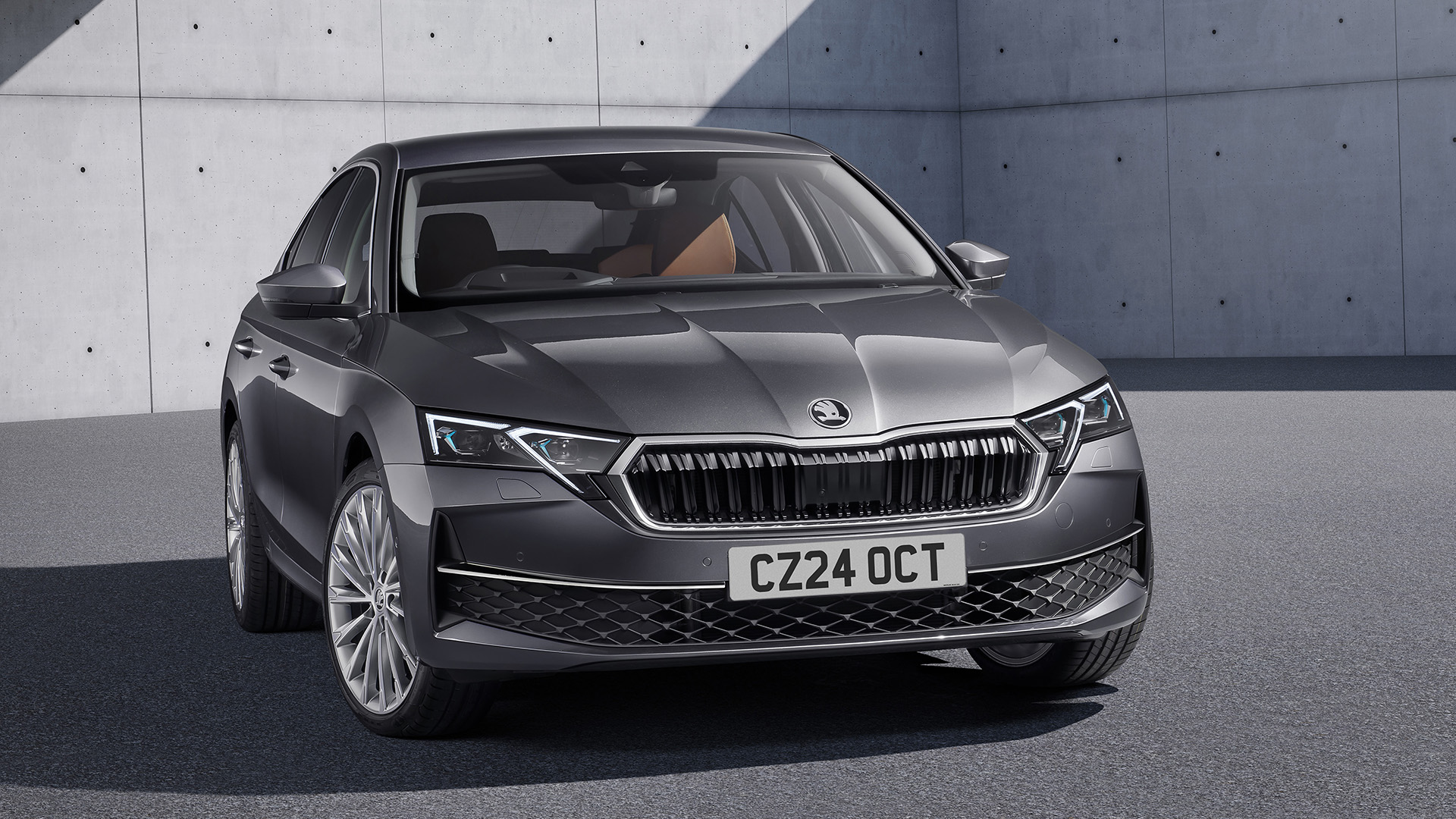
The Skoda Octavia has collected plenty of awards, so it’s just as well it has a cavernous boot to carry all that silverware. Indeed, its massive 600 litres of luggage space is enough to rival cars from the segment above. You may find that you don’t need the spacious Octavia Estate.
Like the Seat Leon, the new Octavia is based on the same platform as the Volkswagen Golf, but the Skoda majors on interior room and value for money. The entry-level SE Technology costs around £26,500 and features the likes of 16-inch alloy wheels, a 13-inch touchscreen with navigation, LED headlights, cruise control and rear parking sensors. And yes, it even has an umbrella hidden inside the door!
Just like the Seat Leon, the Skoda Octavia is available with a choice of 1.5-litre petrol and 2.0-litre diesel engines, but there’s also a 265hp hot hatchback in the form of the Octavia vRS. In all cases, it’s hard to think of a more practical family hatchback; with the rear seats folded down, the boot offers 1,555 litres of space – enough to rival some estate cars.
Toyota Corolla

The Toyota Corolla costs more than some of its key rivals, but it pays to look beyond the purchase price. In addition to a plenty of standard equipment, the Corolla is also powered by a choice of efficient petrol-electric hybrid engines that offer the economy of a diesel. Both the 1.8- and 2.0-litre versions could return up to 64.1mpg, so there’s no penalty for choosing the more powerful unit.
The Toyota Touch 2 multimedia system now comes with Apple CarPlay and Android Auto, which answers one of our criticisms of the car when it was launched. Priced from around £30,500 to £34,500, the Corolla is backed by a five-year warranty.
It’s not the newest family hatchback on our list, but an update in 2023 saw improvements to the interior and the infotainment system, and the car has developed a reputation for reliability and dependability. Standard features include 16-inch alloy wheels, a 10.5-inch touchscreen display with navigation, 12.3-inch digital instrument cluster and an impressive suite of safety and driver assistance systems.
Volkswagen Golf

The Mk8 Volkswagen Golf looks so familiar, you’d be forgiven for thinking it’s an evolution of the old model. The swoopy LED headlights and new corporate badge are the biggest clues to the Golf 8’s identity. You can hardly blame Volkswagen for playing it safe; the Golf is the default choice for millions of motorists.
The inside is less conventional. Volkswagen calls it a ‘digitalised workplace’, which is marketing speak for a digital dashboard and a range of touch-sensitive controls. You can use gesture control for some functions, while saying “Hello Volkswagen” triggers the voice control. The Seat Leon and Skoda Octavia make more financial sense, but many people will opt for the upmarket Golf. The latest Mk8 VW Golf GTI is a return to form, too.
We said: ‘Prise those redesigned roundels off the Golf and it could easily be an Audi A3. Its interior has the requisite wow-factor and the technology sets new standards for a mainstream hatchback. Although much has changed, the Volkswagen Golf still feels like the benchmark. It’s easy to see why it’s the go-to family hatchback.’
Read our Volkswagen Golf review
ALSO READ:
The best cars in every category