Following the announcement of a pay-per-mile tax for electric cars in the budget, Omoda and Jaecoo have launched their own rebate scheme.
The UK Government’s new Vehicle Excise Duty (VED) system will apply to electric and plug-in hybrid cars, taking effect from April 2028.
It means electric vehicle drivers will pay a road charge of 3p for every mile driven, with plug-in hybrids charged 1.5p per mile.
However, Chinese brands Omoda and Jaecoo have launched finance deals that aim to offset the cost of the pay-per-mile scheme.
Offsetting future VED charges
Those purchasing either a Jaecoo E5 or Omoda E5 electric SUV can receive a discount equivalent to between two and three years’ worth of the new pay-per-mile EV tax.
It adds up to a discount of £600 from the car’s purchase price, the same as covering 20,000 miles under the 3p-per-mile scheme.
To qualify for the EV Tax Rebate, customers need to order through Omoda and Jaecoo’s national dealership network, and make use of an approved 48-month finance agreement.
The 2025 Omoda E5 comes with a 61kWh battery pack that offers an official range of up to 267 miles. Opting for the Jaecoo E5 brings the same 61kWh battery, but a range of 248 miles when fully charged.
Smoothing the EV transition
Taking the EV Tax Rebate into account, monthly prices for the Omoda E5 start at £339 on a 48-month deal. This includes a £3,426 customer deposit, plus a £3,750 discount through the government’s Electric Car Grant.
Opting for the Jaecoo E5 will see customers pay £379 per month on a 48-month term. This requires a £4,760 customer deposit, in addition to the Electric Car Grant discount.
Gary Lan, CEO of Omoda and Jaecoo UK, said: “Today’s budget introduces a new 3p-per-mile EV tax from 2028-2029, and we want to make the transition to electric driving as smooth as possible for our customers immediately – not three or four years from now.
“Our EV Tax Rebate for the Omoda E5 and Jaecoo E5 effectively covers the first few years of this new tax, giving drivers the equivalent of thousands of miles of zero-cost motoring. These vehicles represent the forefront of electric mobility, and this initiative reflects our commitment to making clean, efficient, and intelligent transportation more accessible to UK drivers from day one.”
Wider bays top the list of what UK motorists want to improve their experience when it comes to parking.
New research has found that almost half (48 percent) of drivers would like to see parking spaces made larger.
With SUVs now accounting for eight of the top 10 best-selling vehicles in the UK, many new cars struggle to fit inside a standard parking bay.
Notably, 21 percent of drivers said they had suffered a ‘door ding’ on their own vehicle thanks to another car parking too close.
Still using 1970s standards
When it comes to the size of a typical parking space in the UK, there is no longer a standard measure used.
The 2016 Traffic Signs Regulations and General Directions legislation relaxed the standards, leaving only a minimum width of 1.8m.
However, since the 1970s, dimensions of 4.8m in length and 2.4m in width have frequently been used as a suggested size. These are the most common parking space dimensions found across the UK.
Width is a particular issue when it comes to parking, with family SUVs such as the Kia Sportage, Nissan Qashqai and Ford Puma all more than 1.8m wide. This leaves little room for manoeuvre when it comes to opening doors.
Drivers are already adapting
Larne O’Donoghue, spokesperson at YourParkingSpace, said: “This research tells us that space and comfort are now top priorities when parking – not just price. Many car parks are working with layouts that were designed decades ago, and that mismatch is clearly being felt by today’s motorists.
“While national guidelines may take time to evolve, we’re finding that drivers are already adapting by planning ahead, choosing locations carefully, and prioritising convenience when deciding where to park.”
Lower parking prices were a concern for 46 percent of those questioned, with guaranteed spaces a desirable feature for 34 percent of survey respondents.
Vauxhall has revealed a new van that can ensure tradespeople get a perfect cup of tea every time.
It may sound like an ambitiously early April Fool’s Day stunt, but the Vauxhall Vivaro Electrici-TEA is a real concept from the British brand.
With more than 100 million cups of tea consumed by Brits each day, Vauxhall has recognised that many tradespeople spend their tea break behind the wheel of a van.
A recent survey also revealed that 93 percent of tradespeople would make a cuppa on the go if they had the facilities to do so.
In search of the perfect cuppa
Almost three quarters (71 percent) of those surveyed said they appreciate it when a customer makes them a cup of tea. However, close to half (49 percent) said they prefer tea they have made themselves.
The main reason for this, cited by 60 percent of respondents, was that making their own brew ensures it is exactly how they like it.
Vauxhall’s research found that Yorkshire Tea was the preferred brand for tradespeople, and that tea bags should be steeped for one minute and 53 seconds.
Almost three quarters (72 percent) of tradespeople add sugar to their tea, with an even split between those who prefer one or two teaspoons (32 percent each).
‘The ultimate tea-making solution’
Accessed through one of the twin sliding doors on the electric-powered Vivaro, the mobile kitchen includes an electric kettle, tea bag dispenser, brew timer, thermal mugs and a fridge.
There is also a sink with a 10-litre water supply and, perhaps most importantly of all, a special biscuit tin for snack storage.
A chocolate digestive emerged as the top choice of biscuit to accompany a brew, selected by more than a third (35 percent) of respondents.
Steve Catlin, managing director at Vauxhall, said: “With 90 percent of tradespeople saying that a good hot drink has a positive impact on their day, we wanted to create the ultimate tea-making solution for the thirsty tradespeople of Britain. The Vivaro Electrici-TEA concept does exactly that, providing all the tools necessary to create that perfect brew from the comfort of their own van.
“The builder’s brew can mean a wide variety of things, but our research puts the uncertainty to bed to ensure those working on site get what they are looking for.”
Cars that are classified as historic vehicles are eligible for many benefits and exemptions, both at a national level and when it comes to driving in Clean Air Zones.
Historic vehicles don’t have to pass an MOT test each year. They also aren’t eligible for vehicle excise duty (VED – commonly known as road tax). However, the application processes for these are slightly different.
Historic vehicles exempt from the MOT
To qualify as historic, a vehicle must have been built or first registered more than 40 years ago. The rule applies on a rolling basis, so it currently covers cars built before 1 January 1985.
Also, no ‘substantial changes’ must have been made to the car during the last 30 years. These include replacing the chassis, body, axles or engine to change how the vehicle works.
It sounds prescriptive, but it’s not as onerous as you might think. For example, fitting a new engine is not considered a substantial change, nor is modifying the same basic engine to a larger cubic capacity.
Other acceptable changes include modifications made to preserve a vehicle because original parts are no longer available, or upgrading axles and running gear to improve safety (fitting disc brakes rather than drums, for example).
New legislation that took effect from 26 August 2025 that like-for-like repairs and restorations no longer need to be reported to DVLA. More modified vehicles, such as classic EV conversions, can also retain their original identity – rather than potentially have to wear a Q-plate. Owners still need to notify the DVLA, which will add a modified marker to the V5C registration document.
Evidence of an MOT test is required to tax a vehicle. Owners can declare MOT exemption at the Post Office with a V112 exemption from MOT form.
Historic vehicles exempt from VED road tax
A rolling 40-year exemption is also in place for historic vehicles when it comes to road tax, or Vehicle Excise Duty (VED).
Owners need to apply for a vehicle tax exemption in order to stop paying VED. This is also known as putting a vehicle in the ‘historic tax class’.
Owners do this by applying at a Post Office that deals with vehicle tax. They will need to bring the:
The Post Office will send the V5C to the DVLA and owners will receive an updated logbook with their car’s new historic vehicle status listed.
Note that owners still have to tax their vehicle, even if they don’t have to pay. The DVLA will send a vehicle tax reminder before it is due to expire. Owners then apply online in the usual way – but without paying a fee.
It is illegal to drive a vehicle if it is not taxed, even if it is in the historic tax class. Also, older vehicles used commercially for a trade or business, such as ice cream vans, are not exempt from vehicle tax. Neither are taxis.
London ULEZ and historic vehicles
Cars in the historic vehicle class are exempt from the London ULEZ (Ultra Low Emission Zone), too. This covers almost the entire area inside the M25.
Vehicles must be registered as historic vehicles with the DVLA, and those used for commercial purposes – e.g. coffee vans parked on the street – are still liable for the ULEZ.
However, all vehicles registered before 1 January 1983 are exempt from the ULEZ, regardless of commercial status. ANPR cameras will check the tax status of the vehicle using a DVLA database.
Clean Air Zones and historic vehicles
Historic vehicles are also exempt from other Clean Air Zones across the UK, such as the one in Birmingham city centre.
Here, a historic vehicle is one defined as being exempt from VED road tax and in the historic tax class.
As with the London ULEZ, automatic number plate recognition (ANPR) cameras will pick out historic vehicles and ensure owners don’t receive a fine for not paying the charge.
A 1977 Volkswagen T2 microbus that defied the odds and survived the Palisades Fire in California has been restored to its former glory.
Unveiled at the 2025 Los Angeles Auto Show, Volkswagen of America celebrated the classic microbus as a symbol of resilience and survival.
The Los Angeles reveal marked the Volkswagen’s first public outing since it miraculously appeared to have avoided damage while parked in a Malibu neighborhood devastated by wildfires.
Affectionately known as “Azul” by owner Megan Weinraubhe, the bright blue bus was famously photographed by Mark J. Terrill of the Associated Press in January 2025.
A symbol of hope
After Terrill’s image went viral around the world, Volkswagen of America worked with the microbus community to identify the owner of Azul.
Having liaised with Megan Weinraub, and gained permission to enter the Malibu neighborhood, Volkswagen transported the bus directly to the its Oxnard Facility.
As the home of Volkswagen of America’s extensive heritage collection, this was the perfect location to assess and repair the now-legendary T2 bus.
An inspection revealed that significant mechanical and body repairs were needed to make Azul roadworthy again. This included making use of specialists, such as the team at GE Kundensport – renowned for its restorations of historic Porsche vehicles.
“Keeping the soul intact”
“From the moment we first saw Azul, our goal was to ensure the story of the vehicle wasn’t erased by the fires, but brought back to life by restoring it, reuniting it with its owner, and returning it to the road,” said Gunnar Wynarski, vehicle technician at Volkswagen Group of America’s Oxnard Facility.
“While this special restoration project was a technical challenge, what mattered most was keeping the soul of the vehicle intact.”
Azul will be on display in the Volkswagen booth at the 2025 Los Angeles Auto Show until Sunday, November 30. Following that, the bus will be shown at the Petersen Automotive Museum in LA.
Along with the restoration project, Volkswagen of America also made a donation to the California Fire Foundation, a 501(c)(3) non-profit organization, to support first responders and their families across the state.
Your chance to bid on a Porsche 911 Carrera S owned since new by TV presenter James May – the former star of Top Gear and The Grand Tour – is counting down fast.
For sale through the Collecting Cars online auction platform, the 2010 911 Carrera S has already attracted plenty of bids.
Described as being in ‘Porsche purist specification’, the ownership story behind the rear-engined sports car only adds to its appeal.
With the auction due to end on the evening of Tuesday 25 November 2025, don’t delay when it comes to placing a bid…
Made for Porsche enthusiasts
Despite the ‘Captain Slow’ persona he cultivated on Top Gear, James May is a true enthusiast when it comes to his personal vehicles – as this Carrara White 997-generation Porsche makes clear.
Carrera S specification means a 3.8-litre naturally aspirated flat-six engine that delivers 380hp and 310lb ft of torque. It’s combined with a six-speed manual gearbox and the optional limited-slip differential.
Other equipment includes 19-inch Carrera Classic alloy wheels with 5mm spacers, plus red-painted brake calipers and Porsche Active Suspension Management (PASM).
The interior is finished in Ocean Blue leather with aluminium-look trim. A Bose audio system, cruise control and extended navigation for the Porsche Communication Management (PCM) system are included, too.
‘Too many cars, not enough space’
With 31,294 miles recorded on its odometer, the Carrera S has been serviced by Porsche Centre West London and marque specialist Number 5 Garage.
Accompanying the car will be the owner’s manual, a collection of MOT test certificates, maintenance invoices and the original order form.
James May commented: “I’ve had this 911 from new, and I’ve loved every mile of its life with me. I’m only parting with it because I have too many cars and not enough space – a common issue when you love cars.
“It’s a wonderful thing: fast enough, beautifully balanced, and with that lovely manual gearbox that reminds you why Porsche gets these cars so right. I hope its next custodian enjoys it as much as I have.”
To learn practical skills for saving fuel, we took part in The WLTP Challenge. This driving event is designed to show that cars can meet – or even exceed – their official fuel economy test figures. Speed wasn’t important; the sole aim was to use as little petrol or diesel as possible.
Our car for the 250-mile challenge was an Alfa Romeo Giulia Quadrifoglio, a performance saloon capable (in pre-facelift guise) of achieving 27.2mpg. That’s if your willpower is strong enough to resist unleashing the full fury of its Ferrari-derived 2.9-litre engine.
We shared the drive with a representative from the RAC, who provided fuel-saving tips as we made our way from Bristol to Birmingham, then back again via the Cotswolds. When you’re hypermiling a 510hp Alfa Romeo, every little helps.
You can discover if we exceeded the WLTP figure by clicking here. Alternatively, read on for eight ways to save fuel – and money – courtesy of the RAC.
1. Look after your car
Regular maintenance will ensure your car works at optimum efficiency, which will improve its fuel economy. Stick to the manufacturer’s recommended service schedule, including regular oil and filter changes, and be sure to fix any issues as they arise.
You also need to ensure the tyres are inflated to the correct pressures. Consult the car’s handbook for these, or use one of the many online guides for help. Remember to adjust the tyre pressures depending on the load you are carrying, too.
2. Go easy on the right pedal
If our WLTP Challenge experience taught us anything, it’s that feathering the throttle can make a huge difference to your fuel consumption. Slow and gentle acceleration is the key to efficient driving, so avoid any traffic light Grand Prix antics.
Change up a gear as soon as possible, but don’t allow the engine to labour. Experience will tell you when your car is ready for a higher gear – there’s no fixed rule.
While 56mph is often referenced as the optimum speed for fuel economy, the RAC says cars are typically most efficient at 45-50mph.
3. Maintain momentum
Momentum is the difference between good and excellent fuel economy. During the WLTP Challenge, we found that roundabouts, roadworks, hills and the actions of other drivers took a serious chunk out of efficiency.
The key is to read the road ahead. If you’re approaching a roundabout, ease off the throttle and see if you can tackle it without stopping. Equally, on a motorway, maintaining a safe distance to the car in front will allow you to react to sudden braking.
Hills are the hypermiler’s worst enemy. Watching the Alfa Romeo’s economy gauge drop to zero was frustrating and almost unavoidable. The RAC says you should accelerate a little before approaching a hill, then ease off as you drive up. Just make sure you’re not creating congestion behind you.
4. Use cruise control at the right time
Cruise control will only improve fuel economy on a flat surface, so is best reserved for motorways. On the WLTP Challenge, we found that cruise control is slower to react to gradient changes, which means you miss out on some valuable throttle lift-off opportunities.
Motorways offer the best opportunity to maximise fuel economy. On the M5 stretch of our route, the Alfa Romeo was showing a claimed 44mpg on its digital display. By the time we had completed a mixture of urban and rural roads, however, we had lost around 10mpg.
5. Reduce aerodynamic drag
According to the Energy Saving Trust, an empty roof rack adds 16 percent drag when driving at 75mph, while a roof box adds 39 percent. Neither of these were fitted to the Giulia, but make sure you remove them from your car when you return home from holiday.
Opening a window will have a similar effect, especially at higher speeds. In town, at lower speeds, an open window is actually more efficient than using air conditioning. Speaking of which…
6. Turn off the air conditioning
Air conditioning uses engine power and therefore increases fuel consumption. If you’re hoping to maximise fuel economy, use it sparingly and when necessary, but be realistic.
Make sure you switch on the air conditioning at least once a month, as this keeps the refrigerant flowing and the system lubricated. Failure to do so will result in an expensive repair bill further down the line.
During the WLTP Challenge, we managed to avoid using air conditioning for the majority of the trip, but the system was forced into action when the heavens opened and the windows started to mist up. Saving fuel is one thing, but safety comes first.
7. Avoid short trips
An engine will operate at its most efficient when warm, so cold starts will increase fuel consumption. Is it possible to combine several short trips into one? Could you cycle, walk or use public transport instead?
8. Reduce weight
The heavier your vehicle, the more fuel it will use. This is one reason why many manufacturers have removed full-size spare wheels from their cars.
Take out unnecessary items from the boot, as this will improve your fuel economy. You could also use it as an excuse to leave your mother-in-law at home. Possibly.
Click here to find out what the industry-standard WLTP (Worldwide Harmonised Light Vehicle Test Procedure) fuel economy test means for you.
Many classic car owners put their vehicle into hibernation over the winter months. However, even a car stored in a garage can degrade in damp, winter air. That’s where using a dehumidifier comes in.
Used correctly, a dehumidifier will minimise the effects of rust on body panels, stop mildew growing on the seats and prevent carpets and other trim from getting soggy.
A dehumidifier is equally beneficial if you are storing a motorcycle, machinery or tools in a garage. So how do you choose the right one? Read on for our quick guide.
Which type of dehumidifier to buy
Winter takes its toll on classic cars – even those that are safely locked away until the spring. But a dehumidifier can help. It could save you money in the long run, too.
For unheated garages, a desiccant system is preferable to a compressor unit, as they operate at lower temperatures. They also tend to be lighter, which could be a factor if you intend to move the dehumidifier.
Crucially, from a classic car perspective, desiccant dehumidifiers have the ability to reduce the relative humidity to 40 percent or lower – below the rusting point of metal.
A basic compressor unit will be ineffective at temperatures below 15ºC, so isn’t well suited to winter use in the UK.
Choosing a unit with an automatic restart function means the dehumidifier will kick back in after a power outage, rather than going into standby mode. Meanwhile, a unit with continuous drain-off means you have the option to feed a hose into a sink, drain point or separate holding tank.
How to get the best from a dehumidifier
Dehumidifier manufacturer Meaco has the following advice for motorists storing a car in a garage:
Place the dehumidifier on a level surface
Drain the water using a hose, preferably into a sink, to avoid the unit going into standby mode when the tank is full
Use as little hose as possible, as too much will create negative air pressure
Don’t use a plug-in timer, as desiccant dehumidifiers have a cool-down facility to prolong the life of the unit
Seal the garage the best you can to prevent external air from getting in
Leave the doors of the vehicle open, so that damp air can migrate to the dehumidifier
Cleaning the filter will increase the lifespan of the dehumidifier and maintain efficiency
Desiccant dehumidifiers are available from around £150. Needless to say, that’s a significantly cheaper option than repairing a rusty vehicle or replacing a set of damp carpets in the spring…
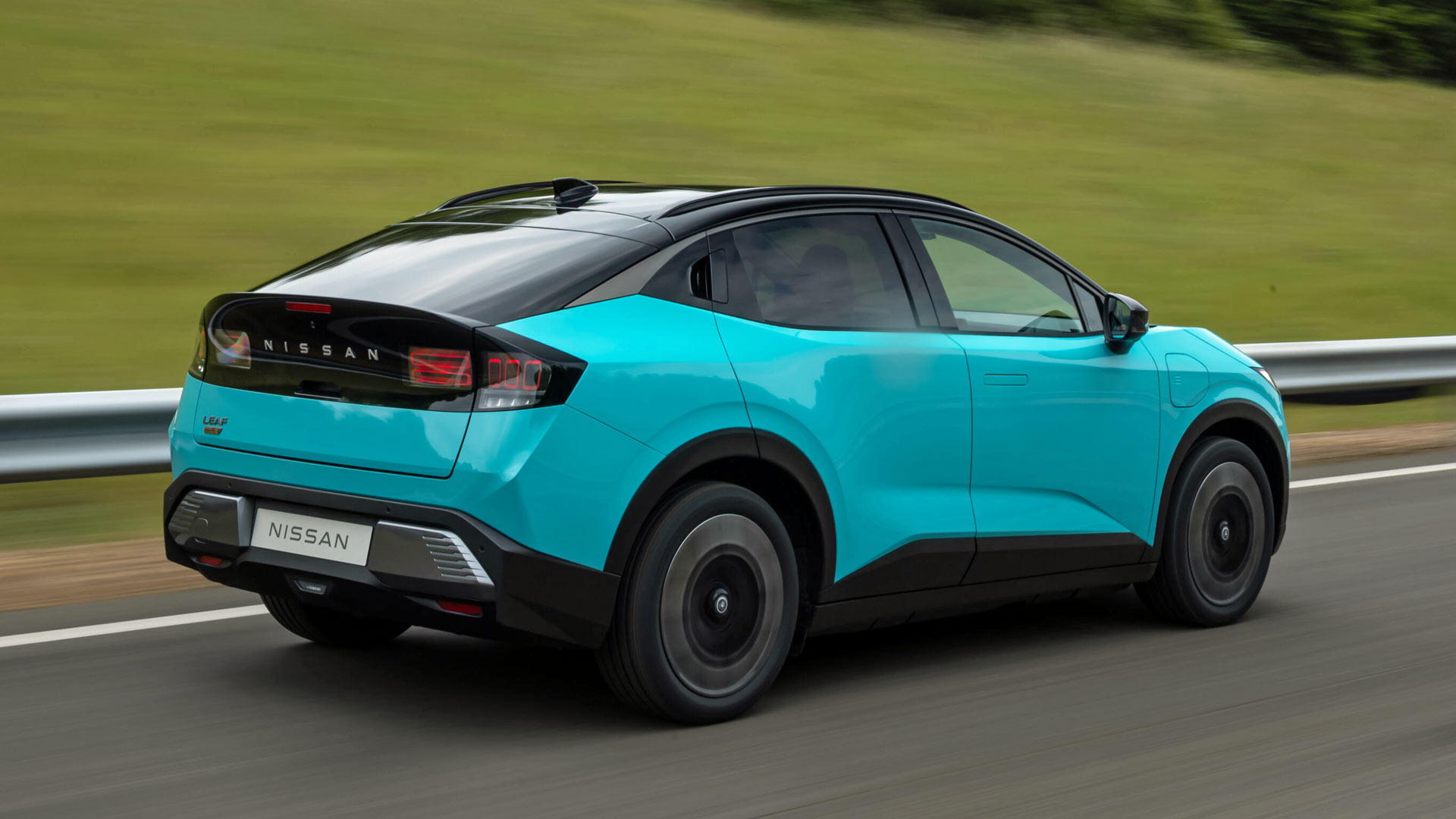
At launch, the new Nissan Leaf will only be available with a 75kWh battery that drives a 215hp electric motor.
Accelerating from 0-62mph takes 7.8 seconds – or 7.6 seconds with Sport Mode engaged – with the Leaf able to reach a top speed of 100mph.
Compatible with fast chargers with speeds of up to 150kW, the Leaf can be replenished from 20 to 80 percent charge in 30 minutes. When fully charged, it has an official range of 386 miles.
A smaller 52kWh battery model, with an estimated range of 271 miles, will join the Leaf lineup in due course.
Still made in Sunderland
The entry-level £32,249 Engage version of the Leaf comes with 18-inch alloy wheels, a heat pump and dual 12.3-inch display screens.
Moving up to the £33,149 Engage+ adds heated front seats, a heated steering wheel, wireless phone charging and larger infotainment screens.
For £34,249, Advance specification brings a dimming panoramic sunroof, an electrically powered tailgate, privacy glass and part-synthetic leather upholstery.
Topping the range is the Leaf Evolve, with a Bose sound system, 19-inch alloy wheels and power-adjustable front seats. It’s priced at £36,249.
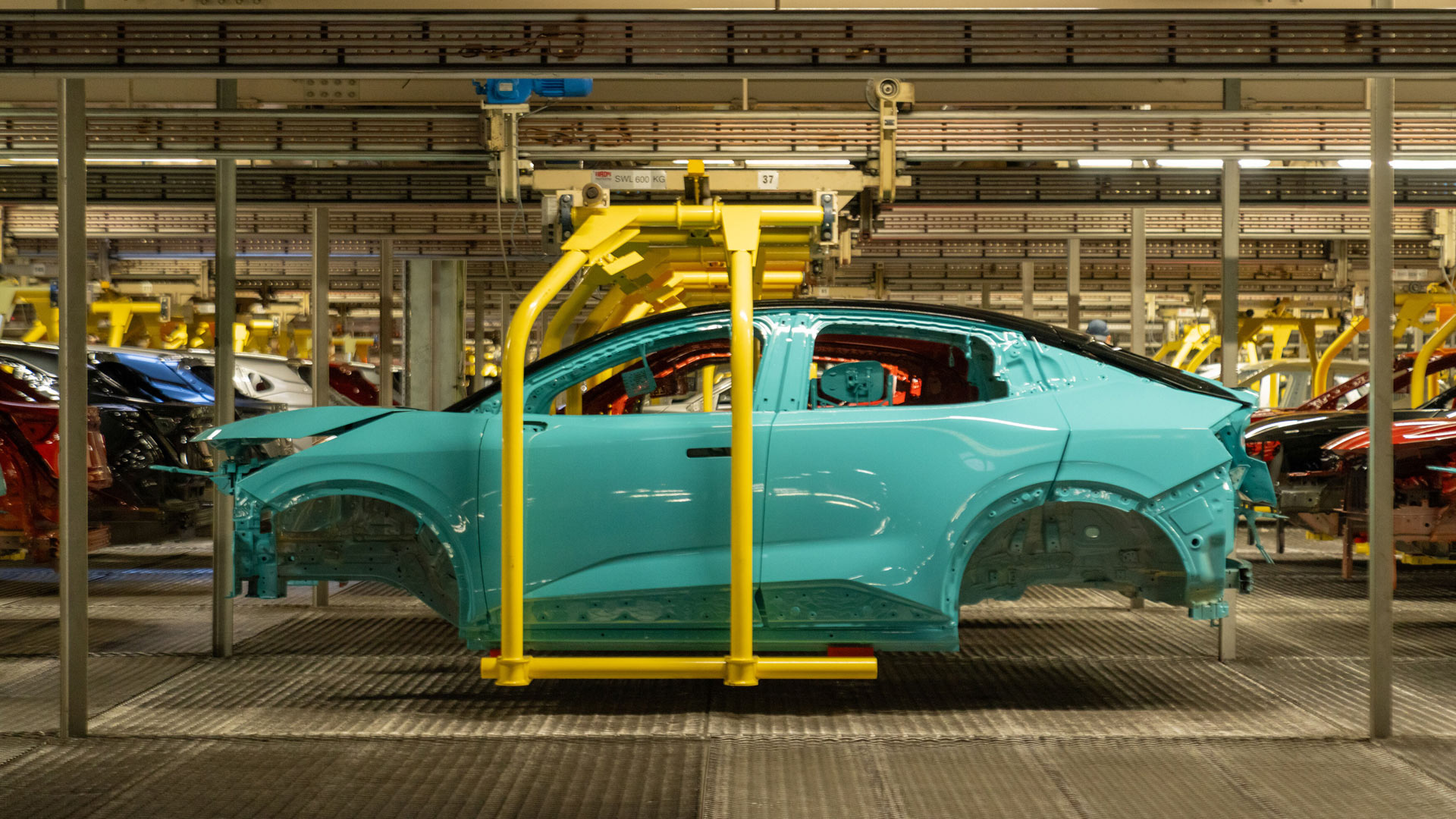
Production of the new Nissan Leaf is expected to begin in December 2025, with the first deliveries to customers planned for February 2026.
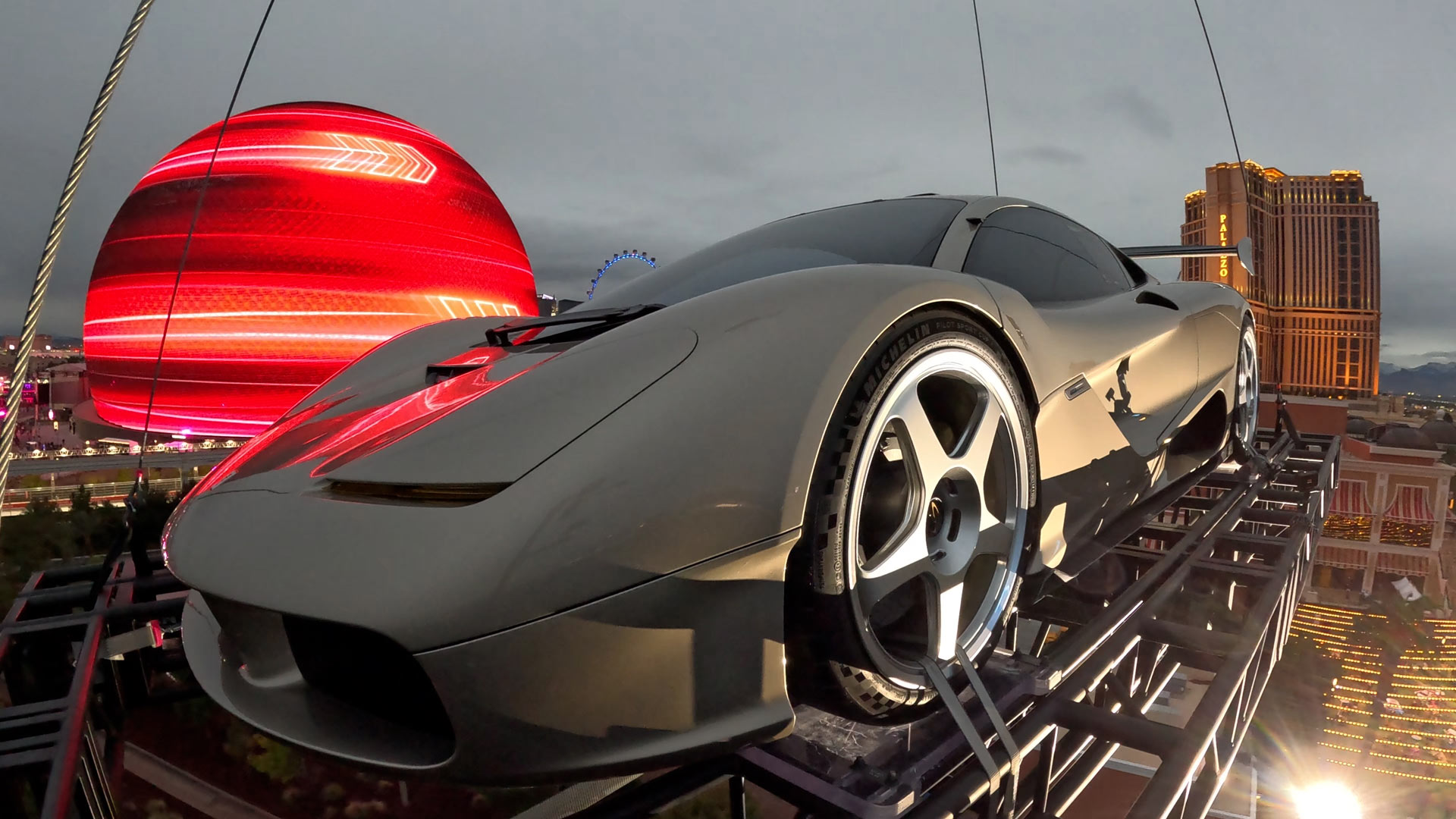
The first example of the new Gordon Murray Special Vehicles S1 LM hypercar has achieved a record sale price in Las Vegas.
Auctioned as part of the Las Vegas Grand Prix weekend, chassis no.1 from the five-car run sold for $20,630,000 (£15,773,000).
Excluding charity sales, this makes the S1 LM the most expensive new car to ever be sold at auction.
The record price seems fitting for a car known as the ‘Special One’ – and makes it more valuable than the McLaren F1 LM it pays tribute to.
S1 LM breaks auction record
Revealed earlier this year at Monterey Car Week, the S1 LM is the first product from the bespoke Gordon Murray Special Vehicles division.
Using the Gordon Murray T.50 supercar as its starting point, the S1 LM has styling influenced by the legendary McLaren F1. Climb inside and you’ll discover an F1-style central seating position, too.
Notably, all five cars from the planned production run were bought by a single car collector, who has not been named.
‘A pure expression of driving perfection’
The winning bidder in Las Vegas has not only secured the final example of the S1 LM; they will also spend time with Professor Gordon Murray CBE to shape every detail of their vehicle.
Driving sessions alongside four-time IndyCar champion and three-time Indy 500 winner Dario Franchitti will be included, too.
The lucky buyer will also receive a unique 500-page book that details the S1 LM’s creation. This includes original sketches and notes from Gordon Murray’s own design notebook.
Following the sale, Gordon Murray said: “This world record auction result is a defining moment for our entire team and for the automotive world.
“The S1 LM represents everything I have learned in six decades of design – a pure expression of driving perfection, engineering art and a true return to beauty. To see it achieve this scale of appreciation is truly humbling.”