Home Blog Page 5

What causes pothole damage on our roads?

0
With potholes costing British motorists a record £1.8 billion in 2025, we explain what causes these scars in the road surface.

Every year, winter weather wreaks havoc on the UK’s crumbling and poorly maintained roads. Ice, snow and rain water push the road surface apart, resulting in the deep and vicious potholes that every British driver is all too familiar with.

The collective cost of potholes is enormous. Repair chain Kwik Fit, which has been publishing its Pothole Impact Tracker report since 2013, says 12.8 million UK drivers suffered damage to their car after hitting a pothole in 2025. With an average repair cost of £137.40, the overall bill footed by motorists was a staggering £1.8 billion.

So how are potholes formed? Put simply, all roads are constructed in layers. The top layer is water-resistant and curved to drain water off the road. Over time, cracks appear due to the stresses caused by traffic, but also through constant heating and cooling. The road expands during the day, but contracts overnight.

Pothole road

These small cracks allow water to seep below the surface and into the underlying layers of the road. During cold nights, the water freezes and expands. This ice thaws during the day, with the water flowing into a different section of the road. The pavement contracts and leaves gaps in the surface, where water can be trapped.

Traffic causes these cracks to widen, allowing even more water to seep in and freeze during the night. This constant freeze-thaw cycle weakens the road surface. As the material breaks down, a pothole is formed.

Telling the hole story

Potholes on UK roads

Hit and pothole and you risk damaging your car’s wheels, tyres, steering, suspension or even bodywork. Indeed, Kwik Fit’s study found that 2.5 million drivers who chose a larger, more robust car or SUV were influenced in doing so by the condition of the roads in their area. 

If you have been affected by pothole damage, read Motoring Research’s guide for advice on how to potentially claim compensation from your local council or National Highways.

Interestingly, a company called Roadmender Asphalt has developed an ‘Elastomac’ product that has been adopted by some councils. It’s a flowable material made from 70 percent recycled products, including road surface shavings and car tyres.

Potholes on UK roads

Elastomac welds itself to the road and delivers a totally waterproof and permanent repair. Its maker says that by eliminating the need to excavate the patch, the process requires 80 percent less material, with no waste to carry away. Contractors are able to complete five times more pothole patches per day. Let’s hope it catches on.

The UK ranks 37th out of 141 countries on the World Economic Forum’s most recent road quality index. Singapore is in first place, followed by the Netherlands, Switzerland, Hong Kong and Japan.

READ MORE:

How to drive safely in heavy rain

Young Driver training tested: helping kids be safer on the road

Your EV questions answered on Motoring Electric

Advertisement

Young drivers being forced off the road by first-year costs

0
More than half of new drivers now spend up to £3,999 on fuel, insurance, tax, and repairs for their first year on the road

Even with car insurance premiums getting cheaper, new drivers are still being driven off the road due to high costs.

That’s according to research by Compare the Market, which found that 13 percent of new motorists said first-year costs prevented them from owning a car altogether.

Just over a quarter (27 percent) of those surveyed said that concerns about costs limited the distance they would drive during their first year on the road. 

This is despite the average insurance premium for drivers who have held a licence for less than a year falling – down from £2,650 in 2024 to £1,871 in 2026.

The high cost of driving in the initial 12 months means 86 percent of young motorists are reliant on financial support from their parents to stay on the road.

Ford remains top choice of first car

New Driver Car Ownership Costs

The cost of buying a first car has, unsurprisingly, increased for new drivers compared to previous generations. 

Some 38 percent of those aged over 55 paid less than £1,000 for their first car. Close to a third (32 percent) of 17- to 24-year-olds are now spending £5,000 or more. 

Ford models remain the most popular choice for new drivers, with over 27 percent choosing a blue oval-badged car. Vauxhall and Mini take joint second place, both on 13 percent.

Even without the cost of a car, more than half (53 percent) of new drivers are spending between £1,000 and £3,999 on fuel, insurance, tax and maintenance in their first year behind the wheel. 

As a result, 18 percent of young drivers feel they have to ask friends for petrol money when fuel prices are high.

New drivers search for good deals

New Driver Car Ownership Costs

Even with the financial challenges of becoming a new driver, three quarters (75 percent) of those surveyed said that they look back fondly at their first car. 

Some 61 percent say driving has given them a sense of freedom and independence, while a third (33 percent) admit to giving their car a name.

Amy Rootham, car insurance expert at Compare the Market, commented: “While it’s encouraging to see average premiums fall for newly qualified drivers, insurance is still a major part of the first-year budget. The car you choose can make a real difference. Opting for a smaller engine or a vehicle in a lower insurance group can help keep costs down. 

“Telematics or ‘black box’ insurance policies can also be a good option for young or new drivers, as they’re often more affordable and can encourage and reward safer driving. Considering these things whilst shopping around can help you find a good deal within your budget.”

ALSO READ:

9 surprising ways to cut the cost of car insurance

Young Driver training tested: helping kids be safer on the road

The best motoring events for car enthusiasts in 2026

Advertisement

Volvo EX30 Cargo turns electric SUV into a VAN

0
With the removal of the rear seats, the Volvo EX30 Cargo offers a load capacity of 1,000 litres, with a 390kg payload

Business and fleet customers in need of an electric van can now opt for an SUV-shaped chunk of Scandi-cool. Meet the Volvo EX30 Cargo.

Designed to maximise the practicality of the battery-powered SUV, the EX30 Cargo is actually the first commercial vehicle to be sold by the Volvo Car company. 

Notably, Volvo Group, responsible for building trucks and buses, has been a separate business since 1999.

The new EX30 Cargo will be available as a ‘second-stage conversion’ in the UK. This means it can be applied to existing vehicles in stock, along with new orders, giving the choice of 2026 or 2027 model-year vehicles.

A variety of electric powertrains can be combined with the van conversion. The off-road-ready EX30 Cross Country is also eligible for the Cargo treatment.

Up to 428hp for Volvo EX30 Cargo

2026 Volvo EX30 Cargo

The EX30 Cargo conversion sees the rear seats removed from the compact SUV. A bespoke flat floor is fitted, with an access panel to a lower level. 

New side panels help to maximise load-carrying capacity, while a specially designed bulkhead protects front-seat occupants from their cargo.

Total load capacity is up to 1,000 litres, with a payload of 390kg. The EX30’s rear doors remain usable, helping with access to whatever items are being carried. There is also additional lighting in the rear of the vehicle.

The 272hp P5 model will be the first to go on sale. It will be joined by the 150hp P3 version for the 2027 model year. In Extended Range form, the EX30 Cargo P3 can cover 300 miles between charges.

For those who need to make really rapid deliveries, the EX30 Cargo will also be available in P8 guise. This brings all-wheel drive via a dual-motor setup, plus a substantial 428hp output.

An electric van with added luxury

2026 Volvo EX30 Cargo

The EX30 Cargo Core comes equipped with adaptive cruise control, wireless Apple CarPlay and Android Auto connectivity, parking sensors and a rear-view camera. 

Opting for the EX30 Cargo Plus brings a Harman Kardon sound system, heated front seats and a heated steering wheel, along with two-zone climate control and wireless smartphone charging.

Prices for the EX30 Cargo in P5 specification will start from £36,010. Orders can be placed through Volvo’s fleet sales team.

Jack Munford, head of fleet at Volvo Car UK, said: “While we are best known for our passenger vehicles, we recognise that business owners and fleets also want the quality, safety and technology that Volvo is renowned for in a compact commercial vehicle. That is why we created the extremely practical EX30 Cargo.”

ALSO READ:

Volvo ramps up production to meet demand for new electric EX60

Volvo EX30: long-term review

Classic Volvo P1800ES is reborn as a five-cylinder turbo restomod

Advertisement

Undercover investigation reveals rip-off garages for car repairs

0
A survey of 2,000 drivers in the UK uncovered that some 52 percent either suspect or are unsure about being overcharged for car repairs

UK drivers face being ripped off when it comes to car maintenance, according to a new undercover investigation. 

A mystery shopping exercise by automotive diagnostics specialist Carly examined the prices charged by various UK garages for simple repairs.

The nationwide analysis found some garages would charge motorists up to five times the £110 cost of a simple sensor replacement. 

These findings support the views expressed in a survey of 2,000 UK motorists. More than half (52 percent) suspected they had been overcharged for car maintenance during the past five years.

Combined with rising fuel prices, it means vehicle repairs could add further to the increased cost of living.

Undercover report exposes high prices

Carly Car Repair Undercover Investigation

Carly’s mystery shopper investigation visited garages across the UK, using a Seat Ibiza with a known oxygen sensor fault. This allowed a direct comparison to see how consistent the prices charged for repairs would be.

Covering 10 different garages, including independents and main dealers, the study found that every site was able to correctly diagnose the fault.

However, many inflated the cost of the replacement part, with one national chain in Leeds quoting £672 instead of the expected £110. 

A main dealer in Stoke-on-Trent said they would charge £618 for the new oxygen sensor, with another franchised dealership in Sunderland quoting £328.

Four of the 10 garages also recommended additional work unrelated to the faulty oxygen sensor, including replacement brakes, new spark plugs and air conditioning services. Such add-ons could have added between £400 and £950 to the overall cost.

Plugging a gap in information

Carly Car Repair Undercover Investigation

These real-world findings add to the distrust felt by drivers, with over half (56 percent) believing garages have the upper hand. Some 45 percent said they felt distrustful of garages and unsure as to whether quotes were fair.

Just over half (51 percent) of drivers queried said they were not confident at diagnosing car faults. Nonetheless, 69 percent would attempt to self-diagnose a problem before visiting a garage.

Commenting on the findings, Emma Brown of Carly said: “What this investigation highlights is a clear information gap between drivers and garages. Many motorists simply don’t have the tools to understand what’s wrong with their car or what a repair should realistically cost before agreeing to work.”

The Carly smartphone application and scanner allows motorists to uncover fault codes recorded on their car by making use of the OBD port. Prices start from £40, allowing drivers to be better informed when seeking repairs from garages.

ALSO READ:

Long-range Nissan Micra now gets full £3,750 Electric Car Grant

After success in the US, Bring a Trailer auctions have arrived here

The best new cars to buy in 2026

Advertisement

How to change the address on your driving licence

0
UK driving licence

If you have moved house, you need to notify the Driver and Vehicle Licensing Agency (DVLA). Your latest address will be required for your new UK driving licence, vehicle log book (V5C) and Direct Debit mandate (if applicable).

It will also be relevant if you have a personalised number plate or a trailer registration certificate. Details on how to update these are below.

You don’t need to inform the DVLA if your move is temporary and you can still be contacted at your permanent address. This means, for example, that university students do not have to contact the DVLA if studying away from home during term times.

Change address for a driving licence

DVLA online scam warning

You must change your address on either your full or provisional driving licence. This does not cost anything, but is a legal requirement. You can also continue driving while you wait for your new licence.

It’s quicker and easier to change your address online. You will need your driving licence and to be a resident of Great Britain (there is a different process for drivers in Northern Ireland).

You also need to provide the addresses you have lived at over the past three years. And you must not be banned from driving, of course.

Additionally, you will need to supply your driving licence number, National Insurance number and passport number, if you know them.

Click here to access the government website and change your address online. Or click here for information on how to apply by post.

You could be be fined up to £1,000 for failing to update your driving licence, so don’t delay.

Change address for a car log book (V5C)

V5C vehicle logbook

It’s usually free to update your vehicle log book (V5C) when you change address. The DVLA’s online service is available from 7am to 9pm (or 8pm on Saturday and Sunday).

Again, you could be fined up to £1,000 if you fail to notify a change of address.

Please note the online service cannot be used if:

  • You have already sent the V5C document to the DVLA
  • You have sold or transferred the vehicle
  • You’ve lost the V5C document
  • The vehicle is registered as part of the DVLA fleet scheme
  • Your new address is abroad, including the Channel Islands, Isle of Man or Ireland

If you pay for Vehicle Excise Duty (VED) by Direct Debit, you will need to contact the DVLA. This can be done by telephoning 0300 790 6802. The lines are open from 8am until 8pm from Monday to Friday, and from 8am to 4pm on Saturdays.

Change address for a private number plate

Rolls-Royce with a private number plate

You also need to contact the DVLA if you have a personalised registration number that isn’t assigned to a vehicle. There are two relevant documents: the V750 certificate of entitlement and V778 retention document.

The address on the V750 certificate can be changed online using your DVLA personalised registration account. Alternatively, use the ‘change of address’ section and send the form to:

DVLA Personalised Registrations, Swansea, SA99 1DS

You must do the same with the V778 retention document.

Changing a trailer registration certificate

Range Rover towing a horsebox

To continue using your trailer abroad, you must register it to your new address. This applies to commercial trailers over 750kg and all trailers over 3,500kg before you can drive through some European countries.

The changes can be made online and the process costs £26 when you register a trailer for the first time.

ALSO READ:

Ask the experts: 10 things every learner driver needs to know

UK speed limits and speeding penalties: a driver’s guide

Your EV questions answered on Motoring Electric

Advertisement

Chevrolet offers first look at new 2027 Corvette Grand Sport

0
Roger Penske served as Grand Marshall for the 74th Mobil 1 Twelve Hours of Sebring IMSA, having won the race in 1964

Chevrolet used the 12 Hours of Sebring endurance race to reveal its latest Corvette Grand Sport. 

Having been a part of the Corvette range since the C2 model of 1964, the Grand Sport is an important part of the American sports car’s history.

Few details of the new 2027 C8 Corvette Grand Sport have been confirmed so far. However, the new vehicle surprised fans by hitting the track before the main IMSA WeatherTech SportsCar Championship race.  

The choice of Sebring to reveal the new Grand Sport was no surprise, it being the scene of a Prototype GT class victory for the C2 Corvette Grand Sport driven by Jim Hall and Roger Penske.

Celebrating the Corvette Grand Sport

2027 Chevrolet Corvette Grand Sport Sebring

Although Roger Penske is best known today for his eponymous corporation and owning various race teams, he was also an accomplished racing driver.

This year sees Penske celebrate his 60th anniversary of being a motorsport team owner. To mark the occasion, he was chosen as the official Grand Marshall for this 74th running of the 12 Hours of Sebring.

Penske was also reunited with his class-winning 1964 Chevrolet C2 Corvette Grand Sport (pictured in the foreground above).

Developed by Zora Arkus-Duntov himself, the original Grand Sport was intended to head off challenges from the Shelby Cobra. Only five examples were made, all powered by a 377-cubic-inch V-8.

“It’s incredible to think that 62 years ago, Jim Hall and I drove the Corvette Grand Sport to a class victory at the 12 Hours of Sebring,” said Penske.

“I have great memories of driving the Grand Sport, as we were fortunate to earn three wins across five races in the car during the 1963 and 1964 seasons”.

Continuing the Grand Sport legacy

2027 Chevrolet Corvette Grand Sport Sebring

“It is an incredible opportunity to be reunited with the Corvette Grand Sport C2 here at the 12 Hours of Sebring – an event and a track that has always carried special meaning for me and for our race teams over the years,” added Penske.

“Congratulations to Chevrolet on launching the new era of the Grand Sport program. It is truly special to see the C2 and the other generations of the Corvette Grand Sport, including the new C8, here at Sebring.”

The eighth-generation Corvette Grand Sport continues the theme of matching dark blue paintwork with white body stripes, along with the now-trademark red hash marks. With the C8 Corvette being mid-engined, the latter have moved to the rear fender.

Featuring a wide-body design as used on the Z06 and E-Ray models, the Grand Sport will feature a new-generation V-8 engine. Full details will be confirmed by Chevrolet later this week.

A 1-2 finish for the Porsche Penske Motorsport team ensured ‘The Captain’ had plenty to celebrate at Sebring, too.

ALSO READ:

IndyCar reveals circuit layout for Freedom 250 in Washington D.C.

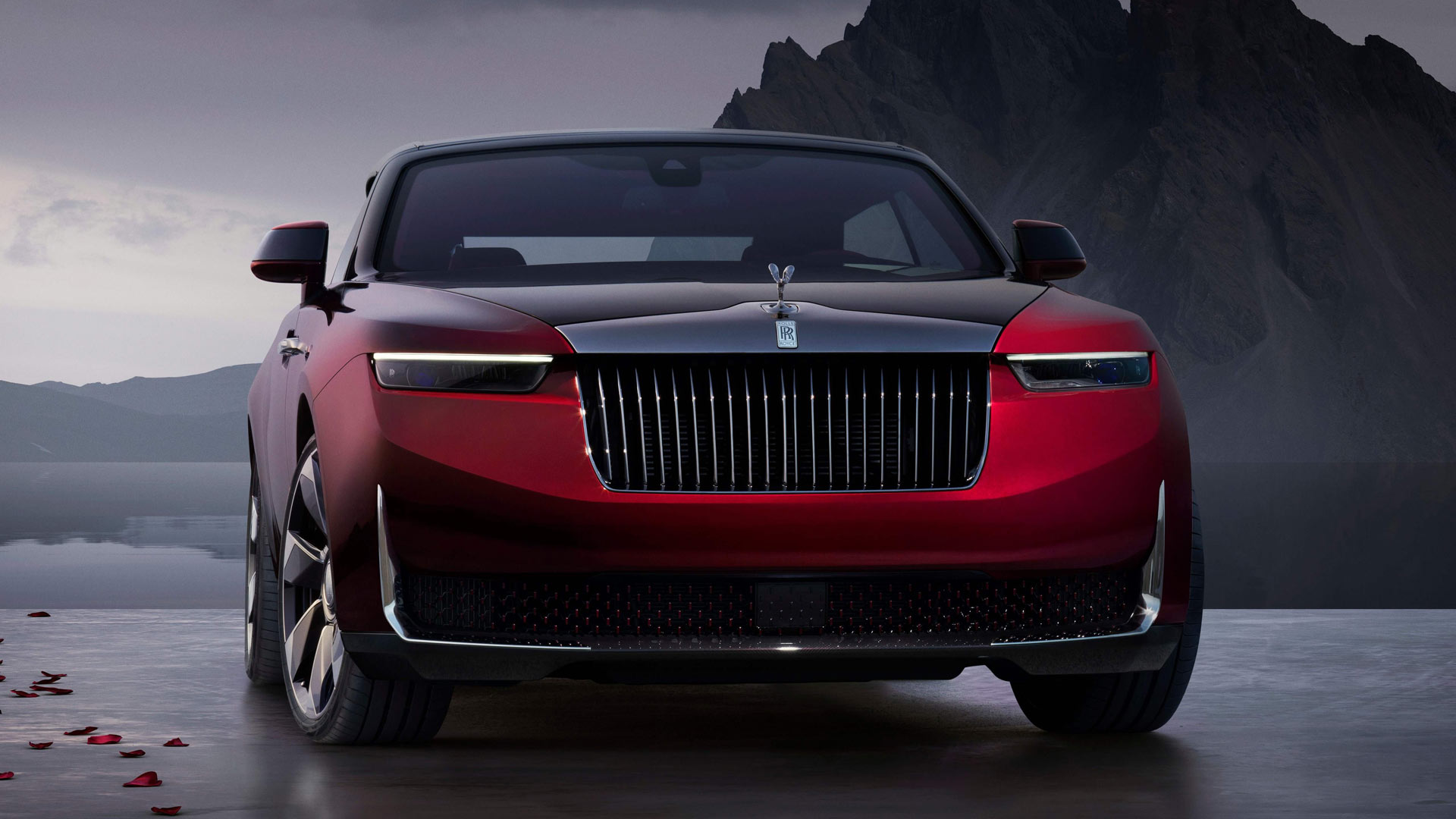
Rolls-Royce to launch ultra-exclusive Coachbuild Collection cars

Ford Mustang Sutton CS800DH review

Police forces are conducting fewer roadside breath tests

Prices confirmed for new BYD Atto 3 EVO

Barry Sheene’s title-winning 1977 Suzuki RG500 heads to auction

Advertisement

Rolls-Royce to launch ultra-exclusive Coachbuild Collection cars – and the first will be an EV

0
Rolls-Royce already has an extensive history of building bespoke cars, such as the Droptail cabriolet announced in 2023

Rolls-Royce has announced an ultra-bespoke Coachbuild Collection, with the first car in the series due to be revealed next month.

Described as a ‘new proposition in super-luxury’, the Coachbuild Collection will consist of very limited-edition cars in exclusive body styles.

Those invited to buy a Coachbuild Collection car also gain access to a multi-year programme of events, which are tailored to each special vehicle.

The design and engineering of each Coachbuild Collection Rolls-Royce, along with the number to be made, will differ for each car. 

Rolls-Royce will launch the Coachbuild Collection using its EV platform, following the success of the electric Spectre coupe.

A history of bespoke builds

Rolls-Royce Coachbuilt Collection

Coachbuilding has been part of the Rolls-Royce story since the marque was first founded. In its early years, a completed chassis would be delivered to a coachbuilder to create bespoke bodywork according to the customer’s demands. 

Founders Charles Rolls and Henry Royce had just one rule: that the proportions surrounding the radiator grille remained the same, to ensure each car could still be identified as a Rolls-Royce. 

This tradition has continued into the modern era, with unique cars such as the Rolls-Royce Boat Tail convertible (pictured above), which was unveiled at the Concorso d’Eleganza Villa d’Este in 2022.

Cars such as the Boat Tail were built for individual clients, with those who commissioned them entrusting the design process entirely to Rolls-Royce, instead of dictating the style.

The Coachbuild Collection will continue this approach, with participants giving Rolls-Royce the freedom to create limited-run vehicles.

A truly exclusive experience

Rolls-Royce Coachbuilt Collection

Each Coachbuild Collection car will be fully homologated and road-legal. Rolls-Royce emphasises that they are designed to be driven. 

Only the company’s best customers will be offered a Coachbuild Collection allocation, with invitations coming via the Rolls-Royce ‘Private Office’ network in Dubai, Seoul, Shanghai and New York, plus the Goodwood headquarters in West Sussex. 

Those participating in the first Coachbuild Collection will gain exclusive access to see their new car being created. 

This includes travelling to private test facilities to see the car being evaluated, along with visiting the design studios and workshops responsible for building it.

The ultimate expression of Rolls-Royce

Rolls-Royce Coachbuilt Collection

The decision to make the first Coachbuild Collection car fully electric was apparently driven by enthusiasm from Rolls-Royce owners. 

Many of those interested in being part of the Coachbuild Collection already own a Spectre, having been early adopters of the first Rolls-Royce EV. When surveyed, there was reportedly no contest for the choice of powertrain. 

Chris Brownridge, chief executive of Rolls-Royce Motor Cars, commented: “Coachbuild Collection clients seek to experience at the absolute pinnacle of our craft. What we will reveal in April is an extraordinary expression of contemporary Rolls-Royce coachbuilding, extravagant and yet silent.” 

The first Coachbuild Collection car will be officially unveiled next month. Come back to Motoring Research for an in-depth preview.

ALSO READ:

Rolls-Royce celebrates 10 years of Black Badge cars

Rolls-Royce Corniche ‘Henry II’ shooting brake review

Best luxury cars to buy in 2026

Advertisement

Every type of UK pedestrian crossing explained

0
Abbey Road pedestrian crossing

You might be surprised to learn there are seven types of pedestrian crossings in the UK.

These include the relatively new tiger crossing for both pedestrians and cyclists – officially known as a parallel crossing.

All these different types of UK pedestrian crossing can be confusing. Indeed, research has revealed that 81 percent of drivers don’t know how to use a zebra crossing. And a quarter don’t know who is permitted to use a toucan crossing.

So, in this short guide, we explain the differences between zebra, pelican, puffin, toucan, pegasus, officer-controlled and tiger crossings. No jaywalking, please.

Zebra crossings

Zebra crossing

This is the most common form of pedestrian crossing on British roads. Zebra crossings have flashing beacons on the pavement, black and white stripes on the road and zigzag lines on either side of them. These lines prohibit drivers from parking their cars on either side of the crossing.

Traffic does not have to stop until someone has moved onto the crossing. When there is an island in the middle of a zebra crossing, pedestrians must wait on the island before crossing the second half of the road. It is counted as a second pedestrian crossing.

Pelican crossings

These are signal-controlled crossings operated by pedestrians. Pushing the button will activate the traffic signals, but pedestrians should not cross when the red figure is illuminated. When a steady ‘green man’ shows, drivers will be shown a red light telling them to stop. If the green figure begins to flash, pedestrians should not start to cross.

Drivers must not move until the pelican crossing is free of pedestrians. A survey by Uswitch found that 71 percent of people believe pelican crossings can be used by cyclists. This isn’t the case – only pedestrians are permitted to use a pelican crossing.

Puffin crossings

Green figure traffic light

Puffin crossings differ from pelican crossings as the red and green figures are above the control box on the side of the road. There is no flashing green figure phase. Simply press the button and wait for the green figure to show.

Essentially, these are smarter versions of the older pelican crossings. They use sensors to indicate when the crossing is clear to release the traffic. Only one in three people who took part in the Uswitch survey were able to identify a puffin crossing.

Toucan crossings

Toucan crossings work in the same way as pelican crossings, with the key difference being that they can be used by pedestrians and cyclists. They are push-button operated.

Car drivers will see a red light to indicate they must stop. At the same time, pedestrians and cyclists are shown a green light to cross the road.

Pegasus crossings

Pegasus crossing

Pegasus crossings, also known as equestrian crossings, are for horse riders. They feature pavement barriers, wide crossing spaces, plus horse and rider figures in the light panels.

The button to activate the lights is positioned higher for ease of use by the horse riders. Traffic is controlled via standard traffic lights.

Authorised person crossings

These are crossings controlled by an authorised person, such as a school warden (traditionally a ‘lollipop lady’) or police officer. They will signal the traffic to stop, at which point the pedestrians can cross in front of the authorised person.

Tiger crossings

Tiger crossings, officially called parallel crossings, combine a pedestrian zebra crossing with a crossing for cyclists. They are often known as tiger crossings because early examples featured yellow stripes on black tarmac.

The UK’s first tiger crossing was installed in London, but the concept is common in the Netherlands. Unlike toucan crossings, they feature dedicated lanes for pedestrians and cyclists. This makes them ideal for use on cycle lanes.

In all cases, pedestrians and cyclists must check that the traffic has stopped before they start to cross the road. Always cross between the studs or over the zebra markings, and do not loiter on a pedestrian crossing.

Click here to read the official crossings guidance in the Highway Code.

ALSO READ:

Merging in turn or jumping the queue? A motorist’s guide

Apart from Britain, which countries drive on the left?

The best new cars to buy in 2025

Advertisement

Long-range Nissan Micra now gets full £3,750 Electric Car Grant

0

A new Nissan Micra with the choice long-range 52kWh battery now costs from £23,345, thanks to qualifying for the full £3,750 Electric Car Grant (ECG).

Previously in receipt of a £1,500 grant, the larger electric car discount comes courtesy of a new battery for the long-range Micra that is now sourced from Europe.

Notably, this means the 52kWh Nissan Micra Advance now costs £250 less than the 40kWh battery alternative. That’s because the shorter-range model still uses a battery sourced from China, so only receives a £1,500 ECG discount.

Up to 257 miles of range

The 52kWh Nissan Micra is available in Advance or range-topping Evolve specifications, with the latter now costing £26,115.

A Nissan Micra with the 52kWh battery offers a range of up to 257 miles: a useful improvement on the 196-mile range of the standard vehicle.

The Nissan Micra’s closely related sister car, the Renault 5, is already eligible for the top-tier £3,750 ECG. So too is the larger and more practical Renault 4, which is a finalist for AUTOBEST Conquest 2026.

ECG saving matches Nissan Leaf

Nissan GB managing director James Taylor said the battery update resulted from using a new supplier.

“It means that both of our new model launches so far this year – Micra and Leaf – are available with the maximum EV grant discount.”

The new British-built Nissan Leaf gained full ECG status in November 2025 – and was recently announced as a top three finalist for World Car of the Year 2026.                  

The WCOTY winners will be announced live at the New York International Auto Show on 1 April.

ALSO READ:

10 most popular car security products revealed

Chery Tiggo 4: new £19,995 hybrid SUV takes on Ford Puma

Dacia Striker: first look at bold new crossover estate car

Advertisement

IndyCar reveals circuit layout for Freedom 250 in Washington D.C.

0
The Freedom 250 Grand Prix of Washington, D.C. is intended to take place on Sunday, August 23 2026

The NTT IndyCar Series has revealed its circuit layout for the inaugural Freedom 250 Grand Prix of Washington, D.C.

Announced last month, the Freedom 250 will form part of planned celebrations for the 250th anniversary of the United States Declaration of Independence. 

An executive order from President Donald Trump formalized the new event. The document also directed the Secretary of the Interior and Secretary of Transportation to work with Mayor Muriel Bowser to create the race.

Taking place over the weekend of 21-23 August 2026, the Freedom 250 Grand Prix of Washington, D.C. will be the first official motor race to include the National Mall.

Taking in Washington, D.C. landmarks

2026 IndyCar Freedom 250 Circuit Layout

The Grand Prix will feature a 1.66-mile circuit with seven turns, plus a 0.4-mile straightaway along Pennsylvania Avenue. Free to attend, the Freedom 250 route has been designed to show off the city’s most famous landmarks

Turns two and three will see the cars pass by the National Archives Building on 9th Street, before a short section covering Constitution Avenue. 

The track also takes in the Hirshhorn Museum and Sculpture Garden before the IndyCar drivers round turn five, passing the Smithsonian National Air and Space Museum on Independence Avenue.

A backdrop of the Washington Monument and the U.S. Capitol is incorporated into the race. Roads around the National Mall will remain accessible throughout the majority of the course creation.

“Racing through the heart of American history”

2026 IndyCar Freedom 250 Circuit Layout

“This circuit is unlike any other street race we’ve seen,” said two‑time NTT IndyCar Series champion, and winner of the recent Good Ranchers 250, Josef Newgarden. 

“You’ve got a high‑speed section down Pennsylvania Avenue that will reward commitment and precision, mixed with technical corners around 9th Street that will demand respect. 

“Racing through the heart of American history, with those amazing landmarks lining the course, is going to be incredibly powerful. I can’t wait to be back here to race and celebrate America’s birthday at the Freedom 250 Grand Prix.”

This weekend will see the first running of another new IndyCar street course, with the inaugural Grand Prix of Arlington in Texas. 

IndyCar has confirmed the Grand Prix of Arlington will feature a single-car Firestone Fast Six “one-shot” qualifying session, instead of the usual group-based process.

ALSO READ:

Your guide to the 2026 IndyCar Series

Honda and Chevrolet make multi-year commitment to IndyCar

You can buy a watch made from Alex Palou’s title-winning IndyCar

Advertisement