The latest new car registration figures reveal more than half of the new cars that hit UK roads in September 2025 were electrified.
Some 50.8 percent of the 312,887 vehicles registered had some form of electrification, including fully electric cars and hybrids.
A record number of EVs were registered in a single month. The total of 72,779 battery-electric cars represents a 29.1 percent increase compared to September 2024.
The Society of Motor Manufacturers and Traders (SMMT) noted the positive effect of the government’s Electric Car Grant (ECG) scheme on EV sales.
Electric Car Grant drives sales
The SMMT found that electric cars eligible for the ECG recorded a 36 percent increase in sales, compared to 26.9 percent for non-qualifying EVs.
Many manufacturers have introduced their own electric car offers and discounts separate to the ECG, in a further boost for the EV market.
SMMT chief executive Mike Hawes said: “Electrified vehicles are powering market growth after a sluggish summer – and with record ZEV uptake, massive industry investment is paying off, despite demand still trailing ambition.
“The Electric Car Grant will help to break down one of the barriers holding back more drivers from making the switch – and tackling remaining roadblocks, by unlocking infrastructure investment and driving down energy costs, will be crucial to the success of the industry and the environmental goals we share.”
Diesel demand down
Demand for diesel cars continued to fall. The fuel type accounted for four percent of new models registered during September 2025.
Only 12,609 new diesel-powered cars joined the road last month: a 28.2 percent drop compared to September 2024.
Pure petrol cars recorded a modest increase of 2.4 percent against the same month last year. However, for the year to date, petrol models have shown an overall 8.2 percent decrease in sales, as electrified models continue to surge.
Petrol does remain the most popular fuel choice, however, accounting for just under half (47.5 percent) of all car registrations.
Kia Sportage finished first
The Kia Sportage emerged as the top-selling model during September, with 9,455 vehicles registered.
This helped the Sportage in its ongoing battle with the Ford Puma to become the best-selling car of the year. Ford’s compact SUV finished in second place, with 8,310 registrations for the month.
In third place was the Nissan Qashqai, on 7,218 registrations, followed by the award-winning Jaecoo 7 in fourth position.
SUVs occupied eight of the top 10 spots in September’s best-selling models list, with only the Vauxhall Corsa and Volkswagen Golf bucking the trend.
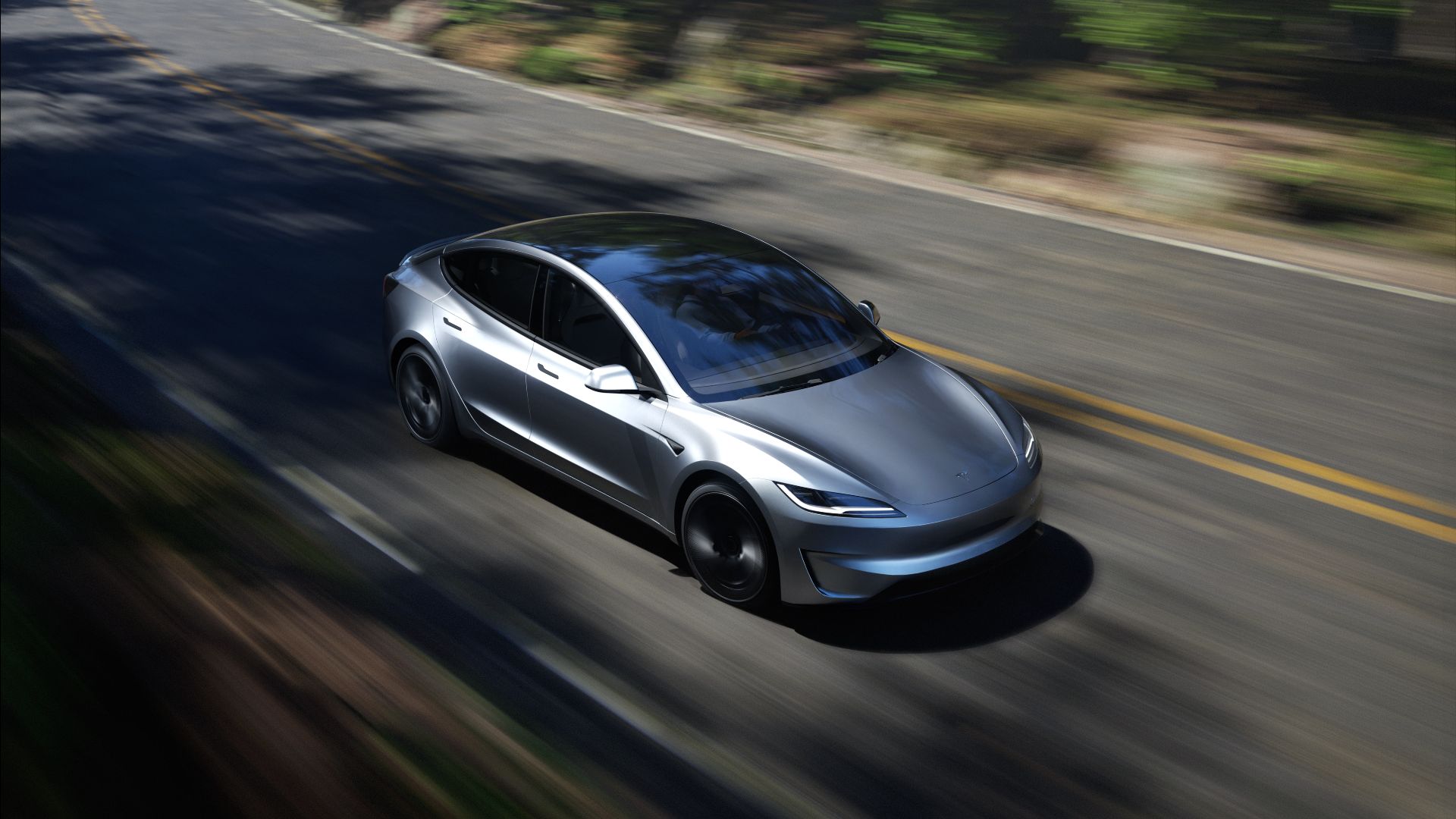
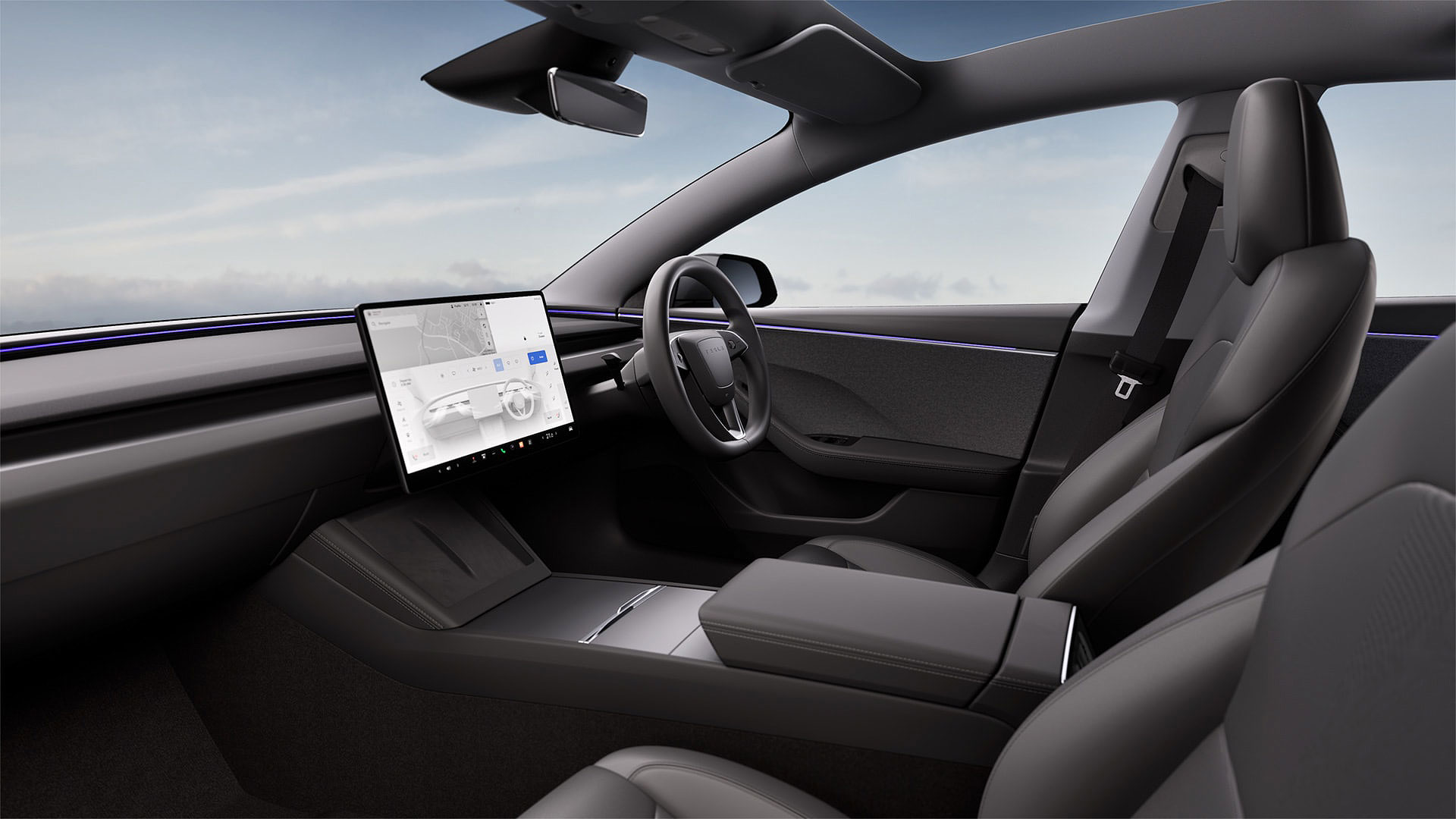
New Tesla Model 3 cars will once again have an indicator stalk. The change comes after customers firmly rejected the steering wheel buttons introduced on the facelifted ‘Highland’ model.
The revision, says the American company, is part of its ‘better-over-time’ philosophy. It will apply to all new cars ordered from now on.
Notably, the subsequent facelift of the Tesla Model Y saw the indicator stalk retained; the same ‘precision-engineered’ component will now be used by the updated Model 3.
The change comes as Tesla again boosts the range of every version of both the Model 3 and Model Y. The improvement is thanks to upgraded battery packs with higher-density cells that deliver more energy.
Electric range up to 466 miles
The entry-level Tesla Model 3 Rear-Wheel Drive now has a 323-mile range when fitted with 19-inch alloy wheels, up from the previous 318 miles.
Stick with the standard 18-inch wheels and the range goes up even further, to 323 miles.
The longest-range model, the Tesla Model 3 Long Range Rear-Wheel Drive, now has a 466-mile range, a 30-mile improvement over its previous 436-mile range.
The Tesla Model 3 Long Range All-Wheel Drive can now travel 445 miles between charges, up from 421 miles. And the Model 3 Performance has been boosted from 328 miles to 355 miles.
New forward-facing camera
Telsa has also fitted a front-facing camera to the Model 3. Located at the front of the car, it gives ‘an expanded view of the surroundings on the centre screen’. It should be useful when parking and at tight junctions.
Notably, it has both a fluid washer system and integrated heating, to prevent fogging and ensure it stays clean in grotty weather. The camera is already fitted to facelifted Model Y.
Speaking of the Model Y, the updated battery packs increase range there, too – the Long-Range All-Wheel Drive now offers up to 390 miles, for example, a big boost on its previous 364-mile range.
Best of all, prices remain unchanged, with the Tesla Model 3 range starting from £39,990 (or £299 a month via a Tesla PCP). The Model Y starts from £44,990 (or £349 a month). Ordering, says Tesla, is open now.
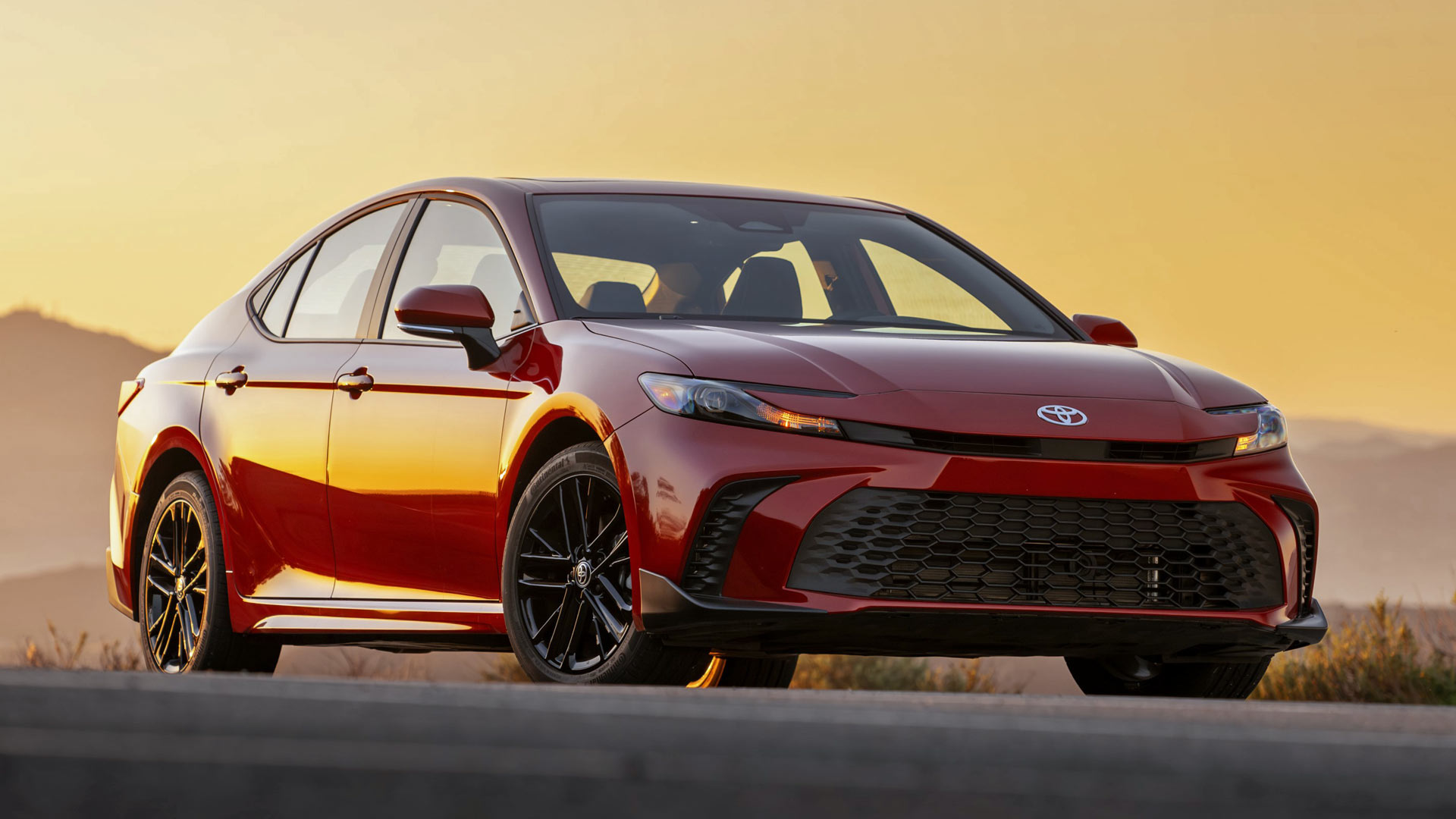
Toyota owners have proven themselves the most loyal in the United States for the fourth year in a row.
The 2025 J.D. Power Automotive Brand Loyalty study found that Toyota scored the highest for mass-market car brands yet again.
Almost a third (62 percent) of Toyota owners purchased another car from the same brand, representing a minor decline from 62.5 percent the year before.
J.D. Power notes this loyalty comes amidst trade tariffs adding ‘greater volatility’ to the new car market, as buyers seek out brands with strong reputations.
Toyota and Honda claim the mass market
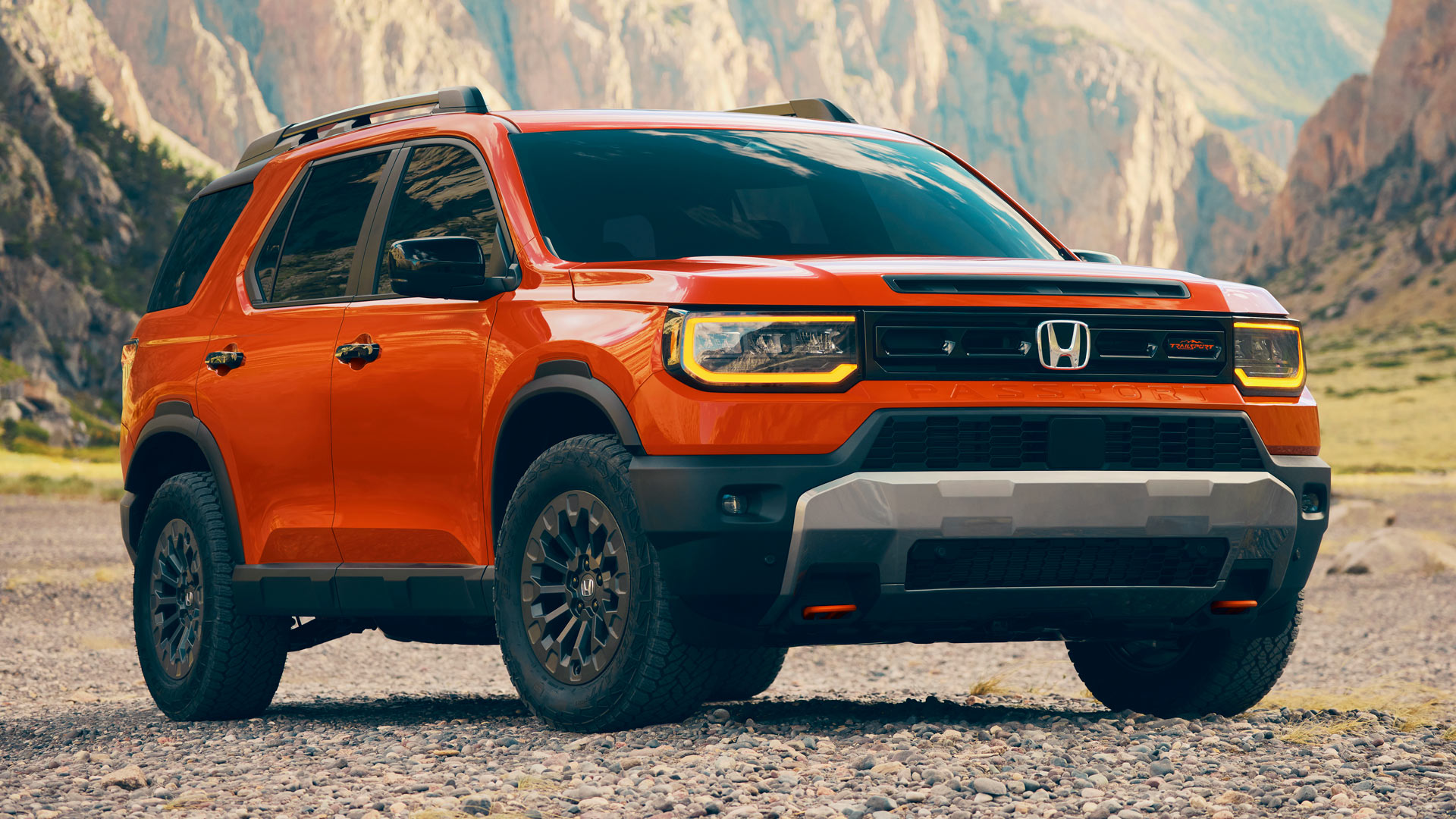
Honda ranked second for mass-market car loyalty in the 2025 J.D. Power study, with a rate of 55.5 percent.
However, Honda emerged on top when it came to mass-market SUVs, taking the top prize for the second year in a row.
Some 62 percent of Honda SUV owners went back to buy another. Honda was followed by Subaru in second place, with a 60.6 percent loyalty rate.
“Brand loyalty matters to vehicle buyers because it’s often associated with higher residual values, making vehicles from trusted brands a more financially sound choice over time,” said Tyson Jominy, senior vice president of data and analytics at J.D. Power.
Porsche owners remain loyal
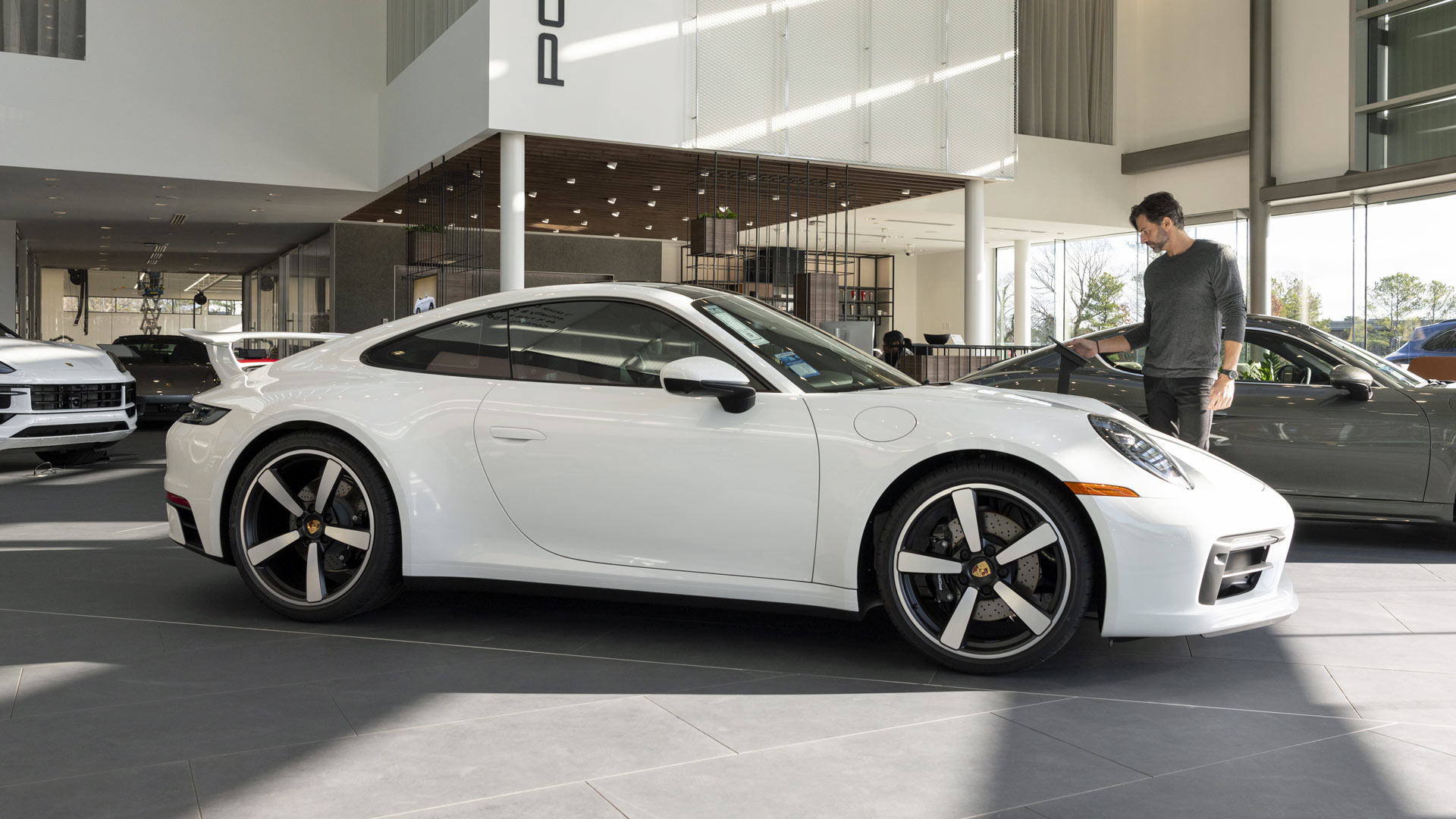
In the premium car market, Porsche remained the brand with the greatest owner loyalty for a second year in a row.
The German marque scored 58.2 percent, representing a slight increase from the previous year. Mercedes-Benz remained in second position on 49.7 percent.
For premium SUVs, Lexus kept its position in first place for the second consecutive year, but with a reduced score of 57.4 percent.
With a loyalty rate of 54 percent, BMW again ranked as the second-best brand for premium SUVs.
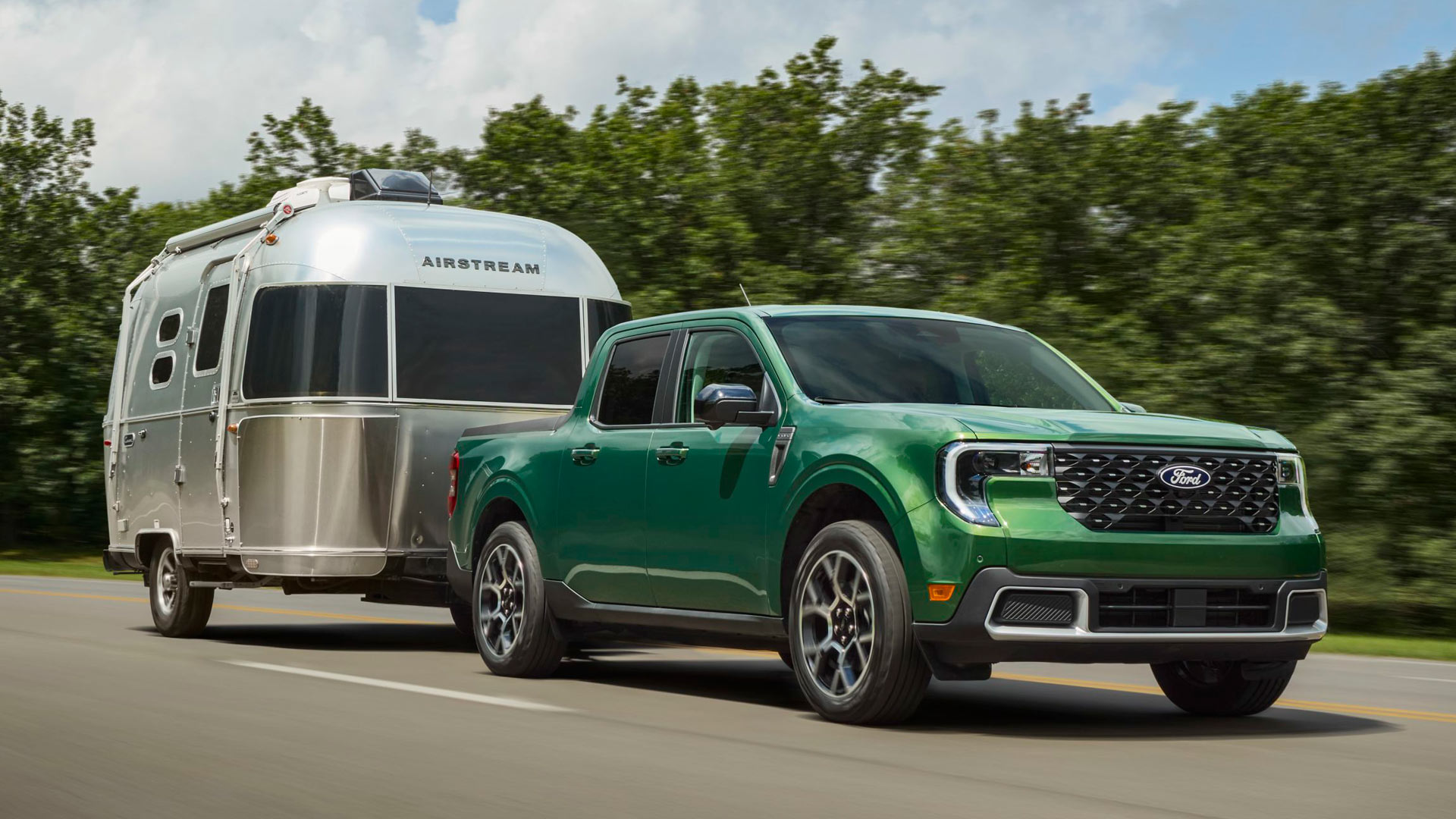
The Blue Oval’s brand loyalty score of 66.6 percent represented an increase on its 2024 score. Toyota was in second place on 61.2 percent.
Tyson Jominy explained that “buyer loyalty tends to weaken when shifting to a different vehicle segment. Not only that, but changing market conditions, such as increased availability of models, varying age of products and more aggressive incentive offers, have also brought brand loyalty back below 50 percent after finishing at 51 percent last year.
“Brand loyalty averages 49 percent across all nameplates and segments in this year’s study.”
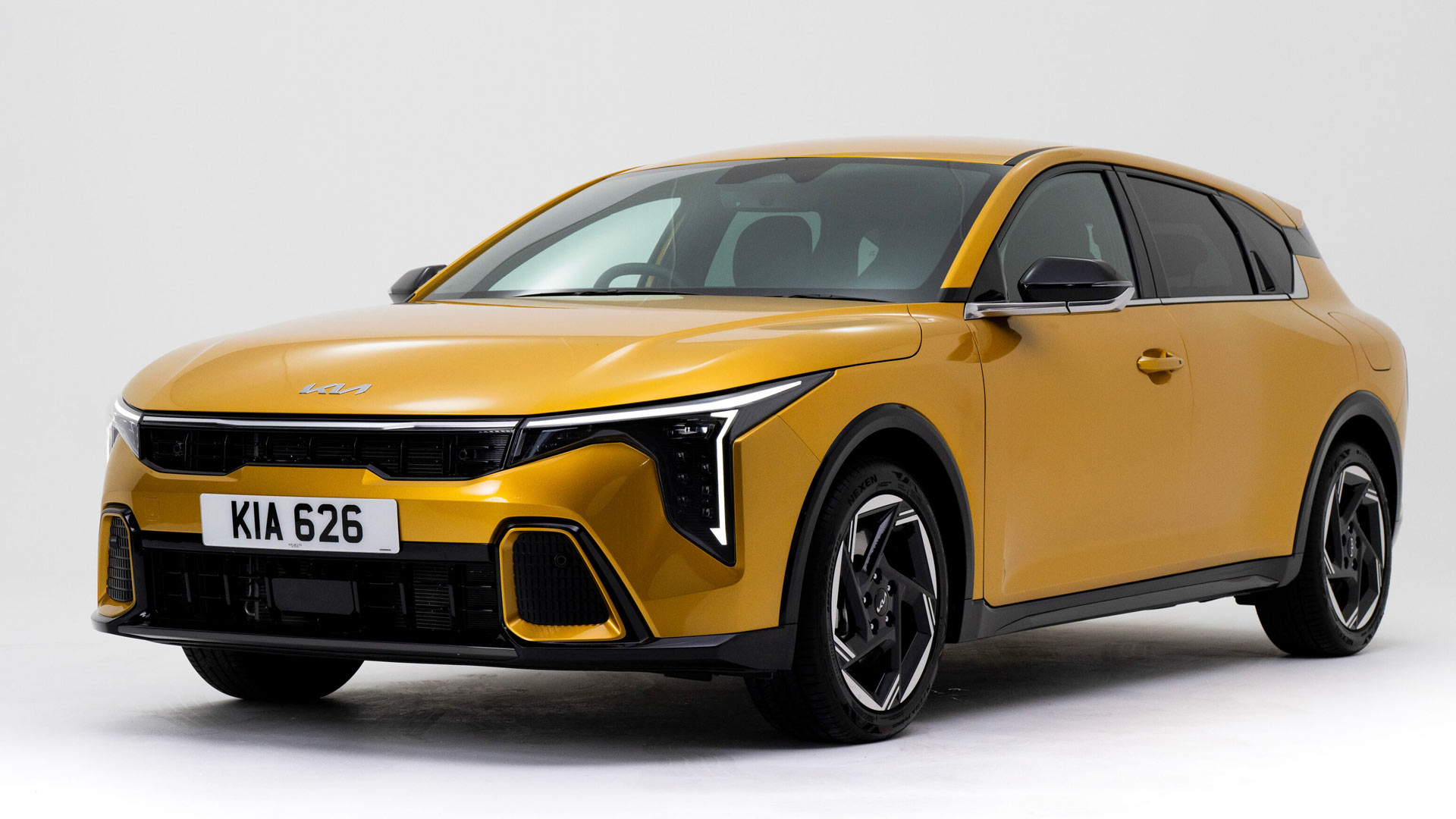
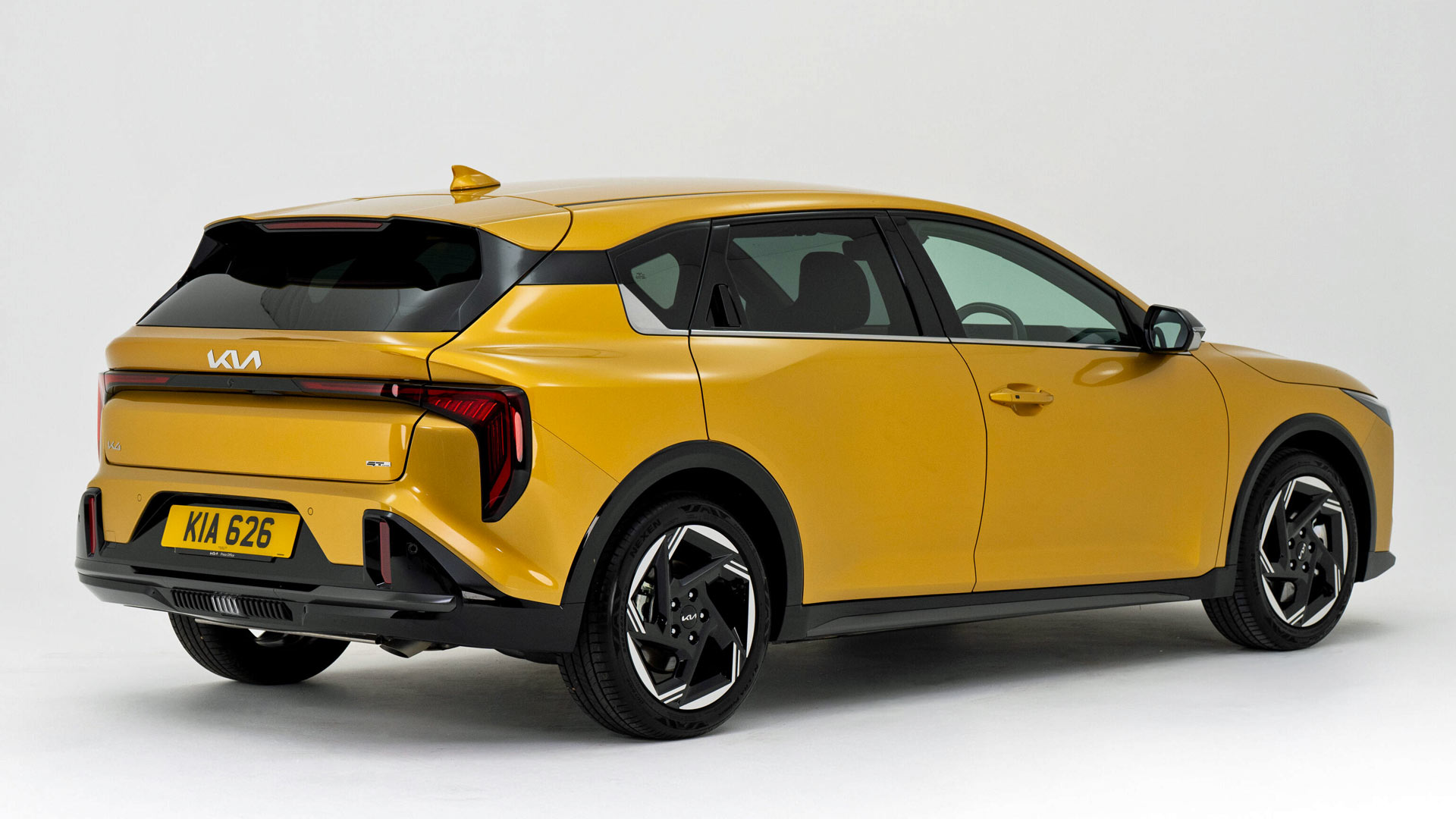
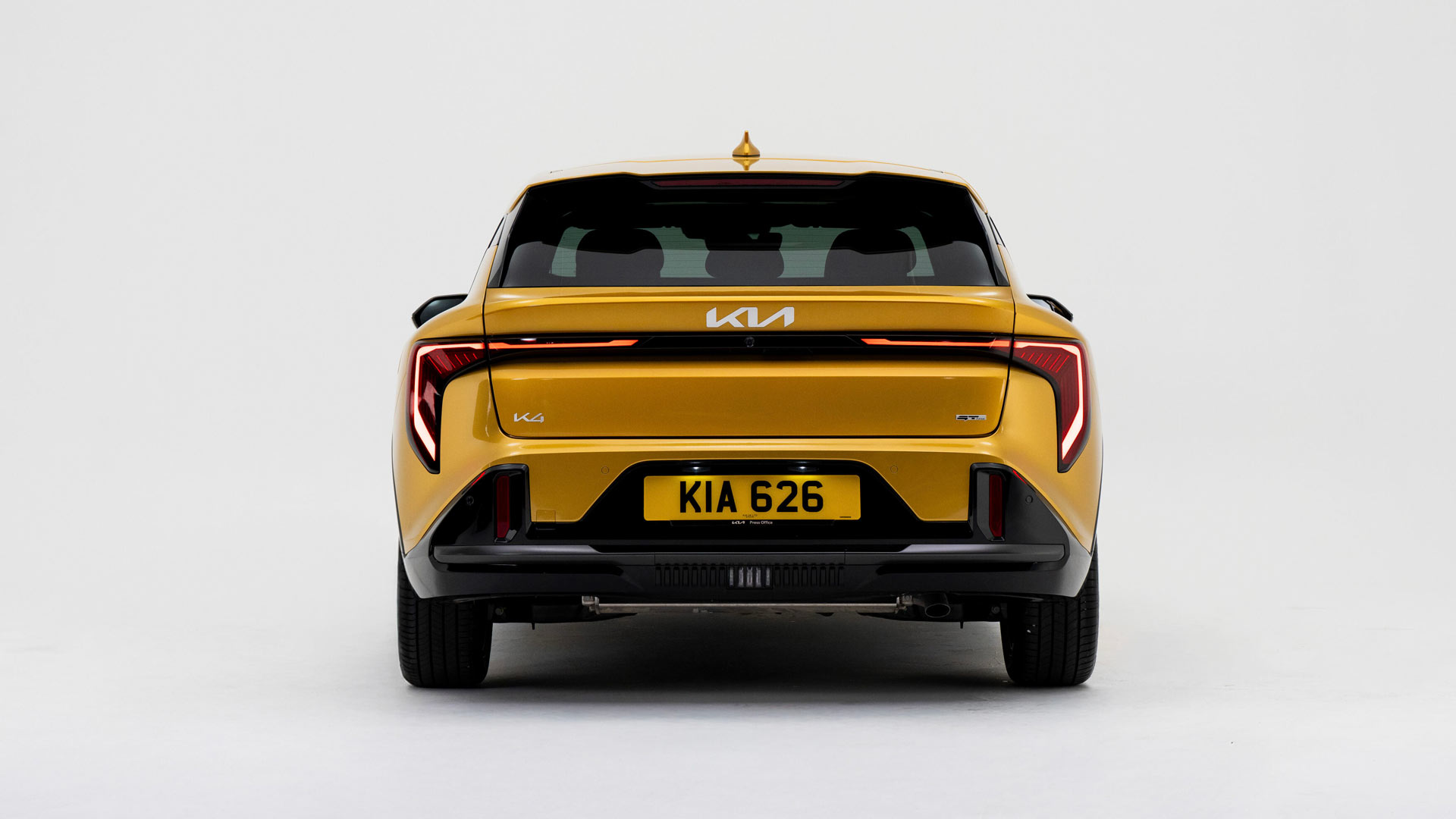
Following Kia’s announcement that its K4 hatchback will be coming to the UK, prices and specifications have now been confirmed.
The distinctive new C-segment family hatchback promises a substantial amount of interior space and in-car technology.
Adding to the Kia K4’s appeal will be highly competitive pricing, which sees the entry-level Pure model listed at £25,995.
This undercuts many of the K4’s closest competitors in the hatchback class, including the Volkswagen Golf, Toyota Corolla and Skoda Octavia.
Bargain prices for petrol hatchback
Three trim levels will be available for the Kia K4 at launch, combined with five different powertrain options.
Kia has promised a full hybrid K4 model will join the range in future. However, the initial range is based around a 1.0-litre three-cylinder turbo petrol engine, plus two versions of a 1.6-litre four-cylinder turbo petrol. Don’t even think about asking for a diesel…
The £25,995 starting price applies to the Kia K4 Pure equipped with the 1.0 engine and a manual gearbox. An optional dual-clutch automatic transmission takes the price to £27,495.
Standard equipment on the K4 Pure includes LED headlights, climate control air-con, rear parking sensors, 16-inch alloy wheels and Onyx Black cloth upholstery.
Strong standard specification
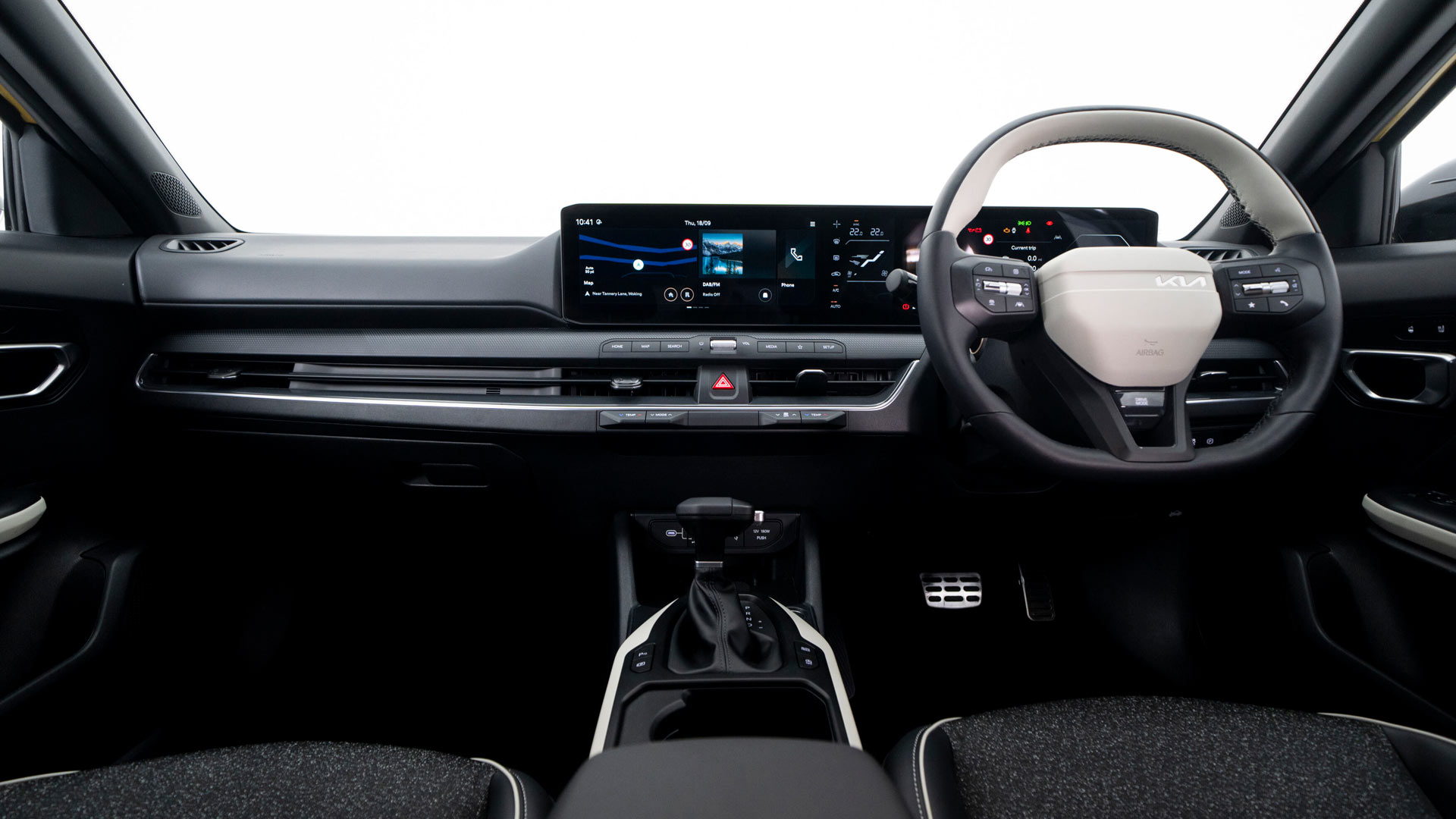
All versions come with a 12.3-inch digital instrument panel, 12.3-inch central infotainment screen and 5.3-inch digital panel for the climate control system.
Wireless Apple CarPlay and Android Auto connectivity are included, aided by three USB-C ports in the front and two in the rear.
Moving up to GT-Line spec will cost from £29,995 with the 1.0-litre engine, or up to £31,295 with the 150hp version of the 1.6-litre motor. Both cars use the DCT automatic gearbox.
GT-Line trim brings 17-inch alloy wheels, bespoke exterior styling, privacy glass, a three-spoke steering wheel and artificial leather upholstery.
Seven-year warranty included
Topping the Kia K4 range is the GT-Line S, requiring £33,995 in 1.0-litre guise. Choosing the most powerful 180hp version of the 1.6-litre engine will cost £36,195.
GT-Line S trim adds 18-inch alloy wheels, black artificial leather upholstery, a sunroof, wireless smartphone charging and an eight-speaker Harman Kardon sound system.
All K4s come with Kia’s impressive seven-year/100,000-mile warranty, with service intervals of 12 months or 10,000 miles (whichever comes first).
Orders can be placed at Kia dealerships now, with the first UK cars expected for delivery before the end of 2025.
Hyundai has announced dramatic price cuts of up to almost $10,000 for the 2026 model year of its Ioniq 5 electric SUV.
Depending on the version chosen, Hyundai will slash prices by between $7,600 and $9,800 compared to the current 2025 car.
Every Ioniq 5 in the lineup, excluding the high-performance N model, benefits from a sizable discount for 2026.
However, even remaining examples of the 2025 model-year Ioniq 5 are eligible for $7,500 purchase and lease initiatives to make the electric SUV more attractive – even as federal EV tax credits come to an end.
Hyundai sales up overall
Hyundai experienced a huge uptick in Ioniq 5 sales during September 2025: a 152 percent increase compared to the same month last year.
The imminent ending of federal EV tax credits is likely to have been a substantial driver for sales. Even so, the Ioniq 5 has seen a 36 percent rise in sales numbers during 2025 so far.
This helped Hyundai report its best ever September for overall vehicle sales, with 71,003 cars and trucks finding new owners.
According to Hyundai, cutting Ioniq 5 prices will “align with current market dynamics”, while also supporting increased U.S. production volumes.
Giving the Ioniq 5 a boost
Hyundai’s new pricing structure sees the entry-level Ioniq 5 SE RWD Standard Range, powered by a single 168 hp electric motor, reduced from $42,600 to $35,000.
However, the most substantial EV discounts are on the SEL trim level. Both versions receive $9,800 price cuts, dropping the RWD Ioniq 5 to $39,800, and the AWD version to $43,300.
“Hyundai is taking bold steps to ensure our award-winning Ioniq 5 remains a top choice for EV buyers,” said Randy Parker, president and CEO of Hyundai Motor North America.
“This pricing realignment reflects our commitment to delivering exceptional technology and innovation without compromise.”
Inspired by the success of the 2024 Hyundai Santa Fe NHL Edition, the new Palisade could be the perfect family transport to and from hockey practice.
It also affirms the Korean brand’s role as the Official Vehicle of the NHL, National Hockey League Players’ Association (NHLPA), and National Hockey League Alumni Association (NHLAA) in Canada.
A seven-seat slapshot
Using range-topping Ultimate Calligraphy Hybrid trim as its starting point, the Palisade is powered by 2.5L turbocharged hybrid engine with 329 horsepower and 339 lb-ft of torque.
The Palisade NHL Edition also comes solely in an exclusive “Creamy White” matte exterior finish.
A dual-pane panoramic sunroof is included, along with 21-inch alloy wheels. The latter can be finished with center caps showing the buyer’s favorite NHL team.
On the inside, the NHL Edition features Grey Charcoal Nappa leather upholstery, a Bose 14-speaker sound system, a head-up display, and integrated front and rear dash cams.
Other highlights include Luxwood door sills, branded carpet mats, and a TuxMat cargo tray and floor liners. As with the wheel center caps, all of these can be customized with an NHL team logo.
As an added bonus, buyers will also receive a special ‘Hyundai x NHL’ branded’ Yeti cooler – and will be entered into a prize draw to win a trip to a 2026 Stanley Cup Final game.
Hockey Night in Canada only
There is a catch to the NHL Edition, though. Just 500 examples will be made, with all cars destined for the Canadian market.
Available to order now, prices for the Hyundai Palisade NHL Edition start from CAD $68,899 before destination and delivery fees.
“Hockey is more than a sport in Canada, it’s part of our national identity. For us at Hyundai in Canada, we’re proud to say it’s part of our brand identity,” says Steve Flamand, president and CEO of Hyundai Auto Canada.
“With the 2026 Palisade NHL Edition, we’re proud to celebrate the passion of hockey fans across Canada by bringing fans a bold, premium SUV that reflects the spirit of the game. This special edition is a tribute to our ongoing partnership with the NHL and a testament to Hyundai’s commitment to delivering vehicles that resonate with Canadians from coast-to-coast.”
More than 1,000 new electric car charging points have been installed at UK supermarkets in the past 18 months, new figures reveal.
This is an increase of more than a third. The total number now tops 3,900 chargers at around 1,870 supermarkets, according to analysis by Zapmap and the RAC.
Put another way, it means five per cent of all the UK’s 83,851 charge points are now located at supermarkets. And 14 per cent of all UK supermarkets now offer EV charging facilities.
Six in 10 UK supermarkets also now offer higher-powered chargers, with nearly 600 rapid or ultra-rapid units installed in the last 18 months.
Early supermarket charge points were often slower, low-power units, which only added a few miles of charge even after the biggest of shops. Sainsbury’s and Morrisons are in particular are forging ahead with rapid chargers.
Aldi tops the EV table
Aldi has scored the biggest growth in chargers over the past 18 months, via a partnership with Shell Recharge. It has added 393 chargers, tripling the number at its stores to almost 600.
Tesco is still the largest overall network, with 1,409 charge points at 633 locations, but both Aldi and Lidl are catching up – they are now second and third, overtaking Morrisons.
Sainsbury’s has also grown significantly, with its own network of ultra-rapid chargers, called Smart Charge. There are now more than 375 of them at 105 locations: more than double the number of 18 months ago.
This leaves Sainsbury’s just behind Morrisons in the EV charge point league table.
Asda’s EV charging rollout has, however, stalled. Fewer than two per cent of its locations offer electric car charging facilities.
Growth in locations is ‘encouraging’
“A perceived lack of public charge points is one of the main reasons drivers give for not planning to get an EV,” said RAC head of policy Simon Williams.
“It’s therefore extremely encouraging to see so many supermarkets doing what they can to bust this myth installing hundreds more charging units.”
Williams noted that Iceland has now entered the supermarket EV charging point space, installing five devices at two of its supermarkets. Co-op and M&S are also growing their fledgling EV provision.
“We now need to see every retail chain doing what it can to maintain momentum by increasing the number of stores that offer EV charging,” added Williams.
Zapmap founder and COO Melanie Shufflebotham said: “We’ve long been advocates of charging when you can, rather than when you need to, and these locations, especially those providing high-powered charging, offer just that.
“For retail sites, including supermarkets, we also know that EV provision has a significant positive impact on tariff and dwell times, so meeting the needs of the EV drivers of today and tomorrow makes strong commercial sense.”
Smart motorways were first introduced to the UK in 2006. The aim was to tackle stop-start congestion by using variable speed limits – in some cases by incorporating the hard shoulder as a running lane.
Another goal was a reduction in collisions, as traffic can – in theory – be better controlled in relation to stopped vehicles. However, there have been a number of road deaths directly attributed to smart motorways. The government halted expansion of the network in 2023, citing ‘the current lack of public confidence felt by drivers and cost pressures’.
Nonetheless, there are still 375 miles of smart motorways across the UK. In this guide, we’ll look at the pros and cons of smart motorways – and what the future holds for these controversial roads.
Smart motorways: the advantages
Increasing traffic flow
The most obvious way to increase motorway traffic flow is to add lanes. So either you build them, or you convert existing space that isn’t regularly used into a running lane.
The latter is what smart motorways do with the hard shoulder, with the proviso that the lane can be closed – using a red ‘X’ on the overhead gantry – in the event of a stopped vehicle being detected. There are also emergency refuge areas that broken-down vehicles can use.
Broadly speaking, this was successful. National Highways figures showed that journey reliability was improved by 22 percent on roads where smart conversions took place.
Saving money and the environment
The conversion of hard shoulders reduces expenditure on new lanes, saving money for the taxpayer. It also means the road has a smaller footprint, causing less damage to the environment.
There is a less obvious environmental saving, too. Better controlling traffic flow and speed, and mitigating stop-start movement, reduces vehicle emissions. It also means cars will suffer less wear and tear.
Hard shoulder safety was an issue anyway
One thing that’s curious to note is the safety record of hard shoulders on non-smart motorways. In total, 40 percent of incidents involving a stopped vehicle occur on a hard shoulder.
If cars can reach them, emergency refuge areas potentially make collisions less likely due to being separated from the road. They are clearly marked with yellow road surfacing, too
Smart motorways: the disadvantages
All-lanes-running casualties
Casualties, crashes and near-misses involving stranded vehicles on all-lanes-running stretches have cast a shadow over smart motorways. This led to the lack of public confidence highlighted by then-prime minister Rishi Sunak.
One particular inquest found the deaths of two pensioners, Derek Jacobs and Charles Scripps, which occurred on the M1 near Sheffield, would not have happened if there had been a hard shoulder. The death of Jason Mercer on the same stretch of smart motorway also happened when he was forced to stop in a live lane.
It has been posited such tragedies could be avoided with better stopped vehicle detection systems, plus more frequent refuge areas. However, a barrage of negative publicity led the government to ‘pause’ the rollout of smart motorways in early 2022, until five years of safety data could be collected. Less than 18 months later, however, all plans to expand the network had been scrapped.
Rejoining the road
For existing smart motorways, this leads us back to emergency refuge areas. The consensus is that we need more of them, so fewer people are forced to stop in a lane.
While you’re likely to be safer while stationary, though, getting back onto the road from a refuge area can be more dangerous. Hard shoulders offer more of a run-up when it comes to rejoining running lanes. Refuge areas are limited on space, and it can therefore be difficult to re-join safely, unless the lane you are entering has been slowed down.
Confusing for drivers
Much has been made of how smart motorways are confusing for road users, too. “Some hard shoulders on dynamic smart motorways are only open to running traffic during the morning and evening peaks, but this catches out some drivers when their routine changes,” said former chief executive of Highways England, Jim O’Sullivan, when addressing the Commons Transport Select Committee.
Some drivers don’t realise they can use the hard shoulder, while others worry about sudden speed limit changes. However, it’s worth noting that smart motorway cameras do give a one-minute grace period to drivers after the limit displayed on overhead gantries has been reduced.
What is the future for smart motorways?
The proposed new smart motorways, including sections of the M1, M3, M4, M25, M40 and M62, are no longer going ahead.
An additional £900 million has also been spent on improving existing smart motorways, including 150 extra emergency refuge areas across the network, plus improved stopped vehicle detection technology on every all-lane-running section of road.
RAC road safety spokesperson Simon Williams welcomed the news that new smart motorways have been scrapped, saying: “This is a watershed announcement and a victory for everyone who has campaigned against these motorways that, by their design, put drivers in more danger should they be unlucky enough to break down on one.
“Our research shows all-lane-running smart motorways are deeply unpopular with drivers, so we’re pleased the government has finally arrived at the same conclusion. It’s now vitally important that plans are made for making the hundreds of existing miles of these types of motorway as safe as possible.
“The possibility of converting all-lane-running stretches to the ‘dynamic hard shoulder’ configuration, where the hard shoulder is open and closed depending on the levels of traffic, could be one option the government considers.”
An appearance at the 2025 Goodwood Festival of Speed formed part of Jaecoo’s considerable PR push. Cars took to the famous Goodwood hill climb, driven by an all-female team.
Chinese SUVs disrupting the market
When choosing the winners for its 2025 Car of the Year Awards, Leasing.com made use of data that showed real customer demand.
Enquiry volumes, vehicle market share and value for money were all taken into account, helping to determine the cars that made a major impact on the leasing market during the last year.
Revealing the Car of the Year winner, Mike Fazal, CEO of Leasing.com said: “The Jaecoo 7 has been a real disruptor in 2025, quickly establishing itself as one of the most in-demand models on our platform.
“It represents fantastic value and has clearly resonated with leasing customers who are looking for something fresh yet affordable.”
Jaecoo 5 available to lease soon
Chris Clayton, head of fleet at Jaecoo UK added: “The response to the Jaecoo 7 has been strong from day one, and we’ve focused on making sure it delivers where it matters most – design, technology and value. This award confirms that customers are responding to that.”
Along with the Jaecoo 7, the smaller Jaecoo 5 and electric E5 will become available to lease in the coming days.
Another Chinese-made SUV, the Leapmotor C10, took home the trophy for ‘Best Leasing Newcomer’.
“The Leapmotor C10 has really shaken things up in 2025,” said Mike Fazal. “As an affordable and well-equipped family SUV, it’s proven there is still room for new players to make a big impact in the leasing space.”
Writing an advertisement for a used car might sound simple, but you’d be surprised how many people get it wrong. You might have a fantastic car for sale, but if the advert isn’t up to scratch, you’re not maximising its potential. It’s like applying for a job with a half-finished CV.
At best, it might take longer for your car to sell. At worst, you could be missing out on hundreds of buyers who are keen to part with their cash.
You don’t have to be an ace salesperson or an award-winning writer to put together a compelling used car advert. However, there are some simple things to remember. If nothing else, be honest – it’s illegal to wrongly describe a used car.
Your advert should also encourage people to pick up the phone or send an email to arrange a visit and/or test-drive. If it’s a popular car, you’ll be competing for attention alongside other cars of a similar specification and price, so don’t be afraid to give it the ‘big sell’.
What to include in a used car advert
Make and model
For example: Ford Focus. Also include the trim level, e.g. Titanium, especially if it’s a special edition.
Year of registration
Include the letter or number, i.e. 68 or 2018/19. This could be important from a VED (road tax) perspective and also for buyers looking for facelifted/refreshed models.
Engine size and type of fuel
For example: 1.2-litre PureTech petrol or 2.0-litre TDCi diesel.
Equipment
Create a list of the options and accessories fitted to the car. Concentrate on the big ticket items, such as air conditioning, leather upholstery, an infotainment system, LED headlights, heated seats and so on.
Mileage
Be honest about the mileage, because it can be looked up online. Some buyers will be actively looking for low-mileage vehicles.
Owners
List how many owners the car has had, including yourself.
Warranty
State whether the car is still covered by a manufacturer’s warranty. If not, list any details of an aftermarket warranty, if applicable.
MOT
List the date when the MOT expires. If it’s due within a couple of months, it makes sense to get it tested prior to selling the car, as this will maximise the price you achieve. Alternatively, say you’ll provide a fresh MOT upon sale.
Service history
Buyers will pay more for service history, so make sure you include this in the ad. Be aware that full service history means that the car has been maintained to the manufacturer’s recommended schedule – if it hasn’t, it’s only part service history. A stamped service book complemented by receipts is always preferable.
The price
The price is essential, but don’t worry about adding ‘ono’ (or nearest offer) because buyers will be keen to negotiate anyway. Listing the car as ‘no offers’ could deter some buyers. Similarly, using ‘POA’ (price on application) is a no-no, as this irritates many buyers. Do your homework and find a price that’s suitable.
Contact details
Add your mobile number and email address, along with any times that are best to call or to avoid. Be prepared to answer any questions. One thing that’s often overlooked is that people will be more inclined to buy the car if the seller is polite and courteous. Be nice!
Selling a used car: also consider
The list above details the basic elements of a used car advert, but consider noting any known faults or any significant damage to the bodywork. Most used car buyers will expect a few stone chips or scratches, so don’t go overboard.
This is also an opportunity to elevate your car above the thousands of other vehicles available online. If it has a full set of nearly-new premium tyres, say so, being sure to include the brand name. Mention if it’s had a recent service, including expensive jobs such as the gearbox, clutch or cambelt.
Avoid waffle. Auto Trader recommends between 50 and 75 words for an online ad, but you can adjust this accordingly. If it’s a rare classic car, enthusiastic buyers will be keen to discover more about it.
That’s a GR8 motor, M8
You should also avoid abbreviations and cliches. While some of the common abbreviations, such as ‘AC’ (air conditioning) and ‘FSH’ (full service history) are well known, others might give the impression that you’re a trader.
Cliches are another thing to avoid. ‘Future classic’, ‘tastefully modified’ and ‘first to see will buy’ are pointless and irrelevant. Oh, and avoid using BLOCK CAPITALS, as it looks like you’re shouting at the buyer.
When you’re finished, stick the words through a spell check, strip away any evidence of text-speak and ask a friend or family member to check the advert.
This advice assumes that you’ve taken a decent selection of photographs and selected the right channel for your used car advert.