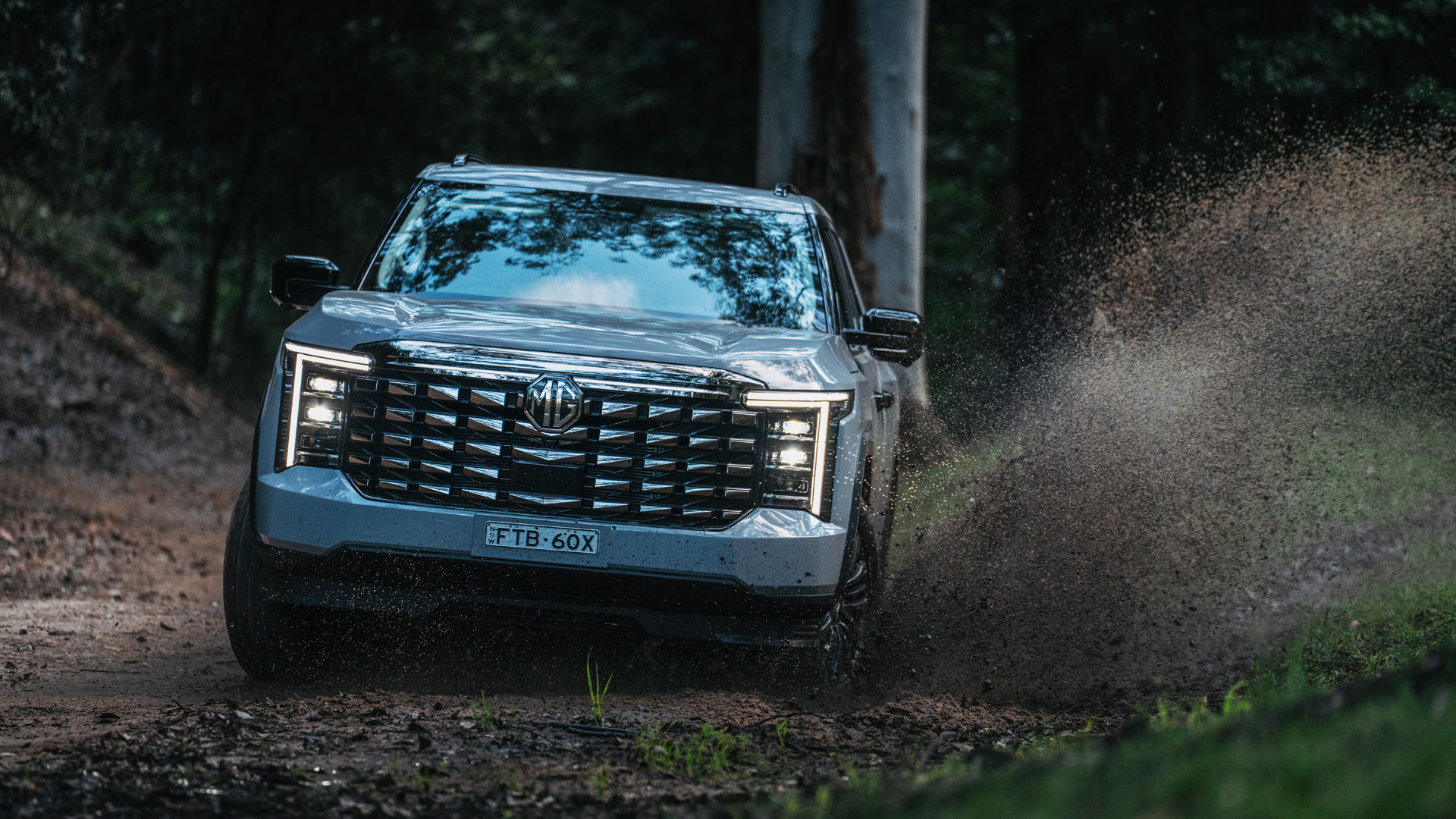
If the MG octagon still makes you think of classic British sports cars, the Chinese-built MGU9 pickup may come as something of a shock.
The reborn MG Motors marque, now owned by Chinese giant SAIC, will offer the new truck to buyers in Australia and New Zealand.
Said to offer the ‘robust strength of a ute’, combined with ‘the refinement of a modern SUV’, the MGU9 is the biggest vehicle ever to wear an MG badge.
Due on sale by the end of 2025, the MGU9 will be another player in the important ‘ute’ market, alongside the also-new Kia Tasman.
A global pickup truck
As has become common for SAIC, the MGU9 is a badge-engineered version of an existing truck in its brand range. Sold in China as the Maxus Interstellar X, the double-cab pickup is also marketed in Europe as the Maxus Terron 9.
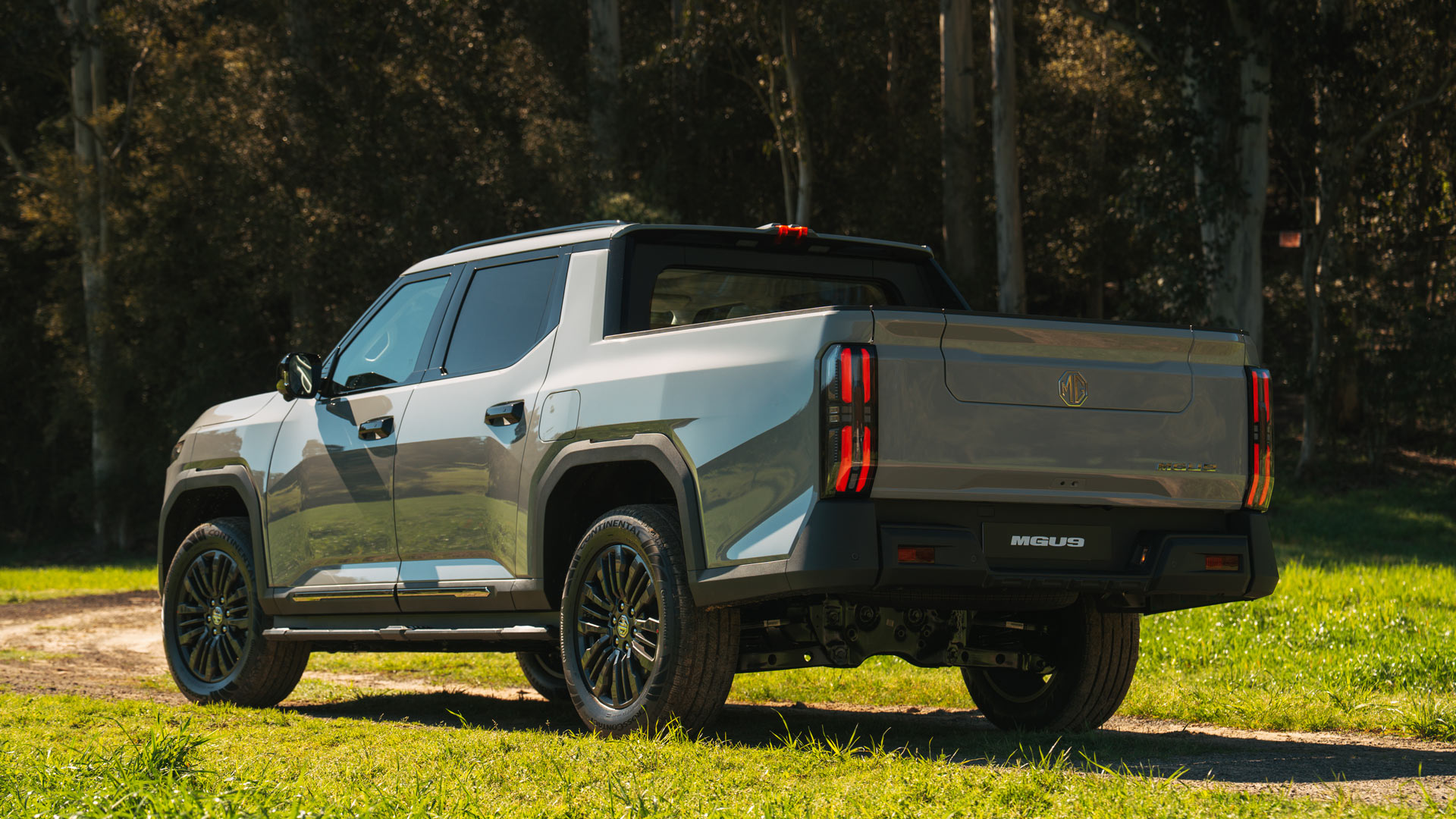
The MG-branded version is intended to offer greater refinement and ride comfort, along with an electric-opening tailgate that incorporates a step for easy access to the load bed.
Powering the MGU9 is a 215hp 2.5-litre four-cylinder diesel engine, described by MG as being ‘robust’. An eight-speed automatic gearbox is standard, combined with a four-wheel-drive system that incorporates electronically controlled locking differentials.
The MGU9 can haul braked trailers weighing up to 3,500kg. It can also carry a payload of up to 870kg, depending on the trim level chosen.
A big step up for MG
A core part of the MGU9’s appeal in Australia and New Zealand will likely be its pricing. The entry-level Explore version costs from $52,990 – equivalent to just £26,000.
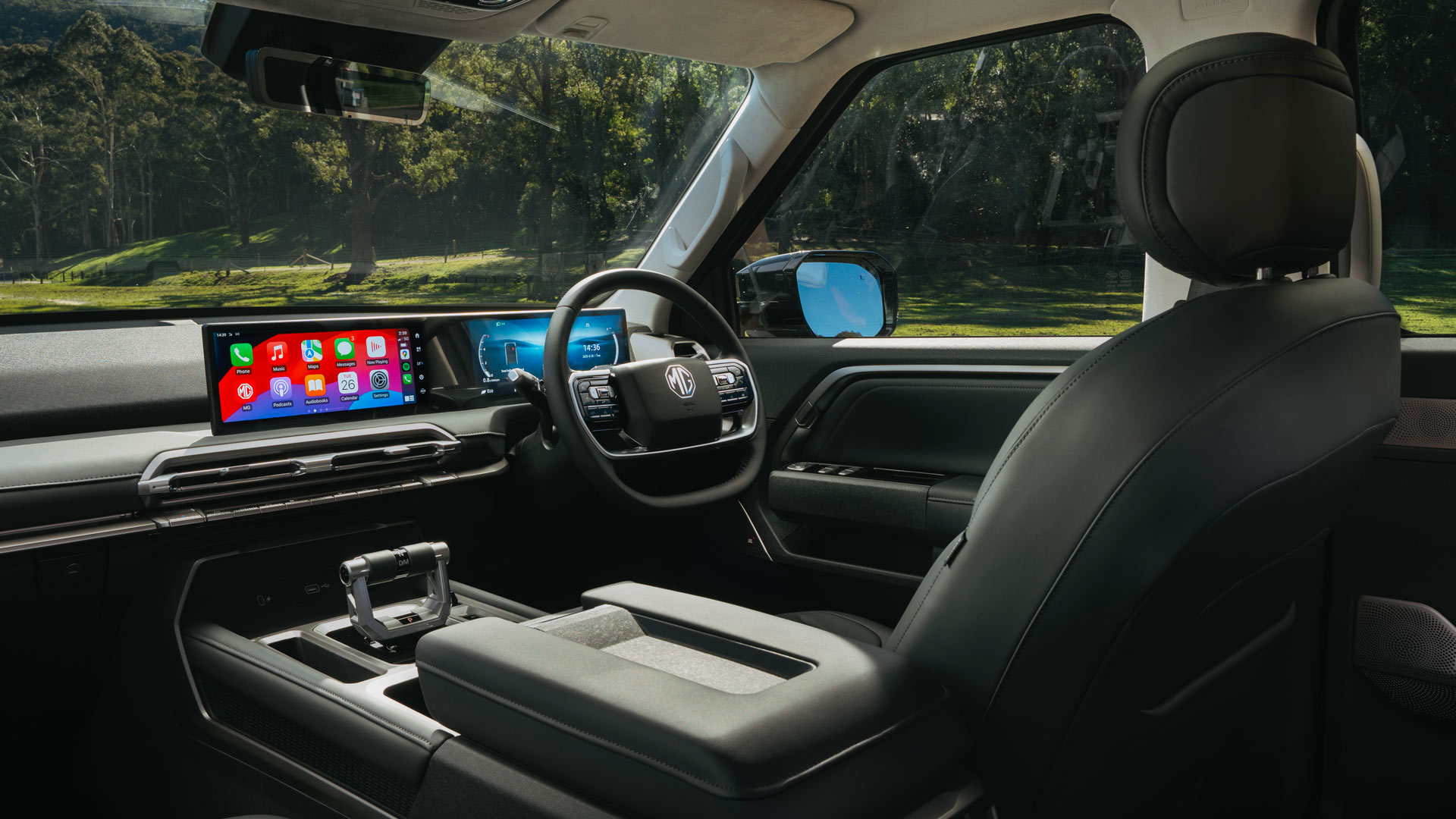
All models come with LED headlights, a host of safety equipment, parking sensors and a reversing camera. Infotainment is controlled by a 12.3-inch central touchscreen, combined with a 12.3-inch digital instrument panel. Wireless Apple CarPlay and Android Auto connectivity is included, too.
A seven-year warranty is part of the deal, provided the MGU9 is serviced within the MG dealership network.
Peter Ciao, CEO of MG Motor Australia and New Zealand, said: “Many Aussies and Kiwis have been a part of MG Motor’s journey from zero to a top 10 brand. The MG success story so far has been based on smaller cars and SUVs that Aussies fell in love with. But from today the MGU9 is our ‘big’ model step up.”
At present, there are no plans to launch the MGU9 in the UK. However, being made in right-hand drive does boost its chances.
Tired parents can spend 24 hours getting to know the Hyundai Kona Electric, thanks to a new test drive offer.
Hyundai’s new ‘Rest Drives’ initiative is designed with families in mind, as way to experience using the car in daily life.
A number of Hyundai dealerships throughout the UK will offer Rest Drives, which are available until 31 October 2025.
Families can put the Kona Electric SUV through its paces on the morning school run, or on late-evening drives aimed at helping youngsters get to sleep.
Driving in the pursuit of sleep
The Rest Drives programme was inspired by Hyundai research that found that almost three quarters (73 percent) of parents went driving just to get their kids to sleep.
These drivers spend an average of nine hours behind the wheel each month in pursuit of sleep. Some 95 percent of parents also they experience nap-time problems.
When attempting to lull their children to sleep, getting stuck in traffic was a problem for 42 percent of those surveyed. Engine noise was a challenge for 41 percent, while just over a third (36 percent) said fuel stops were a barrier to nap-time road trips.
By contrast, a comfortable ride was an important factor for two thirds (65 percent) of respondents, along with smooth acceleration (55 percent), quiet engines (48 percent) and eco-friendliness (29 percent).
Can an EV be part of the family?
Hyundai hopes that the Kona Electric will demonstrate all the qualities parents are looking for in the 24-hour Rest Drive.
As an added bonus, parents will also receive a Rest Drive baby box that includes a Jellycat soft toy, baby blanket, book and healthy snacks.
Ashley Andrew, president of Hyundai Motor UK, said: “Our wide EV range is designed to fit seamlessly into family life, and with the Hyundai Electric Grant offering up to £3,750 off a new Hyundai EV, switching has never been more affordable.
“The Kona Electric, with its whisper-quiet powertrain and refined driving experience, is the perfect partner for everything from school runs to nap-time drives, and through our ‘Rest Drives’ initiative parents can experience its calming, family-friendly benefits first-hand.”
Porsche has unveiled a unique version of the new 911 S/T, inspired by a historic 911 with an incredible backstory.
It all starts at the 1972 24 Hours of Le Mans, with a Porsche 911 2.5 S/T that claimed victory in the GTS 2500 class.
The classic 911 S/T continued racing until 1975, then passed through two more owners before it disappeared off the map.
Decades passed until the first clues to its location were uncovered in 2008. Five years later, a Swiss collector found the 911 S/T in a barn just outside San Francisco, then transported it back to Europe to begin a lengthy restoration.
Rescued and restored
Entrusted to the Porsche Exclusive Manufaktur department in Zuffenhausen, the original 911 2.5 S/T was given a complete bare-metal overhaul.
More than 1,000 hours were put into ensuring the bodywork was perfect. Porsche technicians were able to fabricate missing parts from scratch, working from original technical drawings and sheet metal gauges.
The Exclusive Manufaktur specialists sealed the bare body with a cathodic dip coating, the same process used for corrosion protection on modern production Porsches.
A complete respray in the original colour of Light Yellow was the finishing touch, which prompted the 911 S/T’s owner to embark on another Porsche project.
And it was all yellow
Porsche’s Sonderwunsch (‘special wishes’) department was commissioned to build a tribute based on the current 525hp 911 S/T.
The same Light Yellow paint was hand-applied to the new car, complete with replicas of the racing decals on the 1972 Le Mans winner.
Lightweight forged magnesium wheels are finished in Darksilver, and complemented by black brake calipers. The interior is entirely black, too.
Delivered to its owner in Switzerland, the modern 911 S/T now lives alongside the original Le Mans winner that inspired it. Which one would you jump into first?
Thefts of tools from vans increased again during 2024, with more than one in four drivers (28 percent) reporting the crime.
This compares to the 19 percent who said they had tools stolen in 2023. Volkswagen Commercial Vehicles, which undertook a survey of van drivers, found the value of thefts had also risen dramatically.
During 2023, the value of tools stolen from vans averaged £1,700. However, this jumped to the average value of £2,433 for tools stolen from a van in 2024 – a 40 percent increase.
More cost, more unplanned downtime
More than a quarter (27 percent) of tool thefts were valued at in excess of £3,500, compared to just 10 percent the year before.
Extrapolating the results of its survey of 1,000 drivers, Volkswagen Commercial Vehicles estimates the total cost of theft from vans to businesses now exceeds £3.5 billion every year.
In addition to the financial burden, the overwhelming majority (86 percent) of van drivers said they had to take unexpected downtime following a tool theft.
This resulted in an average of 3.97 days off work. And 20 percent of van drivers lost a whole week as they restocked and repaired their vehicle.
Piling the pressure on business
Increasing occurrences of tool thefts from vans, combined with the rising value of the items taken, is adding to the pressure being felt by businesses.
More than a third (36 percent) of survey respondents said the ongoing cost-of-living crisis was a stress factor, with van crime only making matters worse.
John Ricardo-Neto, head of product planning at Volkswagen Commercial Vehicles, said: “Tool theft remains a huge issue for van drivers and businesses in the UK, and it’s concerning to see the number of incidences and the scale of their impact continuing to rise.
“We encourage van drivers to take extra precautions – via our theft prevention technologies, ensuring tools are always well secured and vehicles parked in well-lit, CCTV-monitored areas – so that tradespeople can focus on what really matters.”
Lack of demand for high-end electric vehicles is making Porsche reconsider its plans to introduce new battery-powered models.
Announcing a ‘realignment of its product strategy’, the German car manufacturer is making drastic changes to its future vehicle lineup.
Most notably, a new flagship SUV, intended to sit above the current Cayenne in the model hierarchy, will now be launched with petrol and plug-in hybrid powertrains.
Previously, Porsche had intended the new luxury model – which has not been named yet – to be sold solely as an EV.
Petrol power to live on longer
Porsche will also extend the lifespan of combustion-powered models, making the Cayenne and Panamera available with traditional engines long into the next decade.
In addition, Porsche says it will push back the development and launch of other intended fully electric models to later dates.
This means that the creation of an all-new electric platform, planned to underpin a range of Porsche EVs in the 2030s, will be ‘rescheduled’.
The new platform will also be ‘technologically redesigned’, in coordination with the wider Volkswagen Group. As a result, expect a bigger pool of brands to adjust their plans due to this change in EV strategy.
Existing electric Porsches will continue to be developed, however, including the Macan, Cayenne and Taycan. A new electric 718 sports car is on the way, too.
Slowing EV demand to blame
Porsche was unequivocal about the reason for its new direction, explaining that it was in ‘response to the significant slower growth of the demand for exclusive battery-electric vehicles’.
“Today we have set the final steps in the realignment of our product strategy,” said Porsche CEO, Oliver Blume. “We are currently experiencing massive changes within the automotive environment. That’s why we’re realigning Porsche across the board.
“In doing so, we want to meet new market realities and changing customer demands – with fantastic products for our customers and robust financial results for our investors.”
Running a car accounts for a hefty chunk of your monthly income. And with the increased cost of living in recent years, many drivers are understandably looking to save money.
Fortunately, it’s easy to reduce how much you spend on driving. Our expert motoring advice will save you pennies in some places, and pounds in others. But it all adds up.
Read on for our easy-to-follow guide to cut your motoring costs. It covers everything from filling up with fuel to leaving behind unnecessary luggage. Dare we even suggest going electric?
Choose petrol instead ofdiesel
Unlike in the recent past, diesel is no longer a guaranteed way to save money. For starters, diesel cars cost more than petrol cars – on a hatchback, for example, the premium can be 10 percent or more.
Diesel will cost you more at the pumps, and while these engines often provide better fuel economy, efficient petrol motors – including those with hybrid assistance – are catching up. Even relatively modern diesel cars may incur a charge for entering the London ULEZ zone, too.
Unless your annual mileage is very high, or you are buying a large and heavy SUV, you should stick to petrol.
Choose electric instead of petrol
This is a controversial one, perhaps, but as our sister Motoring Electric site explains in detail, there can be many advantages to owning an electric car. Granted, the days of free road tax for EVs are over, but running costs should still be lower than an equivalent petrol car.
The key is being able to charge at home, ideally taking advantage of cheaper overnight electricity rates. If you are forced to rely on the public charging network, the cost of replenishing your EV’s battery isn’t much different to filling up with fuel.
Maintaining an electric car is cheaper, though, with no need to change engine oil, spark plugs, belts, coolant, air filters and transmission oil. And while EVs are generally still more expensive to buy, the gap is narrowing all the time – helped in some cases by the government’s Electric Car Grant.
Check your tyre pressures
This simple check can save you plenty. Sure, it might cost you 50p or £1 to check your tyre pressures at a petrol station, but the savings soon add up.
Tyres underinflated by 15psi – a difference you may not notice from a visual glance – can reduce fuel economy by six percent. That’s the difference between averaging 40mpg and 42mpg.
Find cheaper fuel
Use a comparison website such as Petrolprices.com to find the cheapest fuel in your area. The difference can be huge, adding up to many pennies per litre. Be warned: driving out of your way to pick up cheap fuel is a false economy, which becomes even more negligible the less economical your car.
Never fill up at a motorway services unless you’re desperate for fuel – the costs can be astronomical.
Share your car
Do you actually need to drive? Could you car share instead? You don’t even need to know someone going in the same direction: services such as BlaBlaCar bring trusted carpooling to everyone.
Simply enter your location and where you want to go, and a carpooling service will search for available rides. You can even add your own car to the service.
Empty your boot
Don’t carry unnecessary weight around with you. As this unimpressed Tetris champion with his Dacia Jogger points out, a boot full of junk means you’re using extra fuel for nothing. Emptying it out will offer small savings that add up the further you go, particularly if your motoring is mainly stop-start driving.
While you’re there, remember to remove your roof rack and cycle carrier when they’re not in use. These will add aerodynamic drag, along with additional weight.
Take an advanced driving course
An advanced course will teach you how to drive economically – you’ll still make good progress but be doing it in a more efficient way. Gentle inputs and anticipation are the key tenets.
Hypermiling is the art of driving as economically as possible. Once you take on the challenge, it can become addictive.
Haggle for cheaper insurance
Car insurance is one of the biggest motoring costs you will face. Never accept your automatic renewal quote – always give your insurer a call to see if you can haggle it down.
Better still, arm yourself with a car insurance comparison quote to see how well your price compares.
Add family members to your insurance
We’re not recommending ‘fronting’, which is where a parent insures their child’s car in their name and adds them as a named driver, even though the parent never drives the vehicle. This is illegal.
However, adding your partner as a named driver on the family car can balance the risk and reduce your premium by a few pounds.
Do some basic pre-MOT checks
There are really simple things you can check prior to an MOT, such as whether your car’s bulbs are all working, the condition of its tyres, the state of its windscreen wipers, and even if the washer bottle contains any fluid.
No matter how simple they are, the garage won’t rectify them before completing the MOT test, and will fail you for the most minor faults. Why risk the inconvenience and potential expense?
Appeal against parking tickets
Think you have been unfairly caught out by a parking ticket? Try making an appeal.
Provide evidence, check the terms and conditions, present a compelling case, and sometimes you won’t have to pay. It’s a great feeling when you get a ticket overturned, too.
Find cheap or free parking in advance
Don’t simply park in the closest car park you can find, or the one you always use. Check there isn’t a cheaper one nearby first, using apps such as Parkopedia.
This can save you a fortune, particularly in big cities. If you’re travelling to an unfamiliar place, plan your parking in advance.
Source car parts yourself
Been quoted big money by a dealer to replace parts? Consider buying them yourself online and using a local garage to fit them. This could potentially save you hundreds of pounds.
If you’re running an older car, websites such as eBay can be helpful in sourcing rare parts and accessories.
Don’t overestimate your mileage
If you tell your insurance company you cover 10,000 miles a year but you actually drive far less, you could be paying a higher annual premium than is necessary.
Give the company a realistic figure instead. But don’t underestimate, or you could be left without cover.
Keep off the kerb
It’s amazing how many people drive up and down kerbs. This damages the metal wires in the sidewalls of the tyres (and often the alloy wheels as well), and will eventually lead to a puncture.
Not only will avoiding bumping up and down kerbs save you money, it will also keep you safe.
Park away from other vehicles
If your car is paid for on finance, it will be assessed for condition before you hand it back – and you’ll be charged if any rectification is needed. An easy way to reduce the risk of damage is to park away from other cars, so their opened doors can’t damage it. They can’t scrape it when driving in and out, either.
Remember, even small panel dents could lead to a big bill. And everything will be logged by the dealer on the condition report.
Buy a smartphone holder
If you are caught using a hand-held mobile phone behind the wheel, you face a £200 fine and six points on your licence.
Use your smartphone for navigation or as an audio player? Avoid the risk – both financial and in terms of road safety – by fitting it into a phone holder.
Don’t use your windscreen wipers on ice
Windscreen wipers can cost £20 or more to replace and they’ll wear out much more quickly if you use them on ice in winter.
Scrape the windscreen or use de-icer spray instead to avoid damaging your wiper blades.
Don’t hit the gas straight away
Every modern car has engine electronics to regulate the engine starting procedure. In the past, you needed to use a little gas to get the car running, but this is no longer necessary.
So, don’t waste the extra fuel and risk damage to your engine. The car will start cleanly without any need to rev it.
Drive gently when the car is cold
Cars are at their least efficient when they are cold. If you drive quickly straight from start-up, you are redoubling the wasted fuel, and wearing out the engine more quickly in the process.
Show some mechanical sympathy and you will immediately start saving money.
Stick to your PCP mileage limit
If your PCP car finance scheme covers you for 9,000 miles a year and you end up driving 10,000 miles, you will face an excess mileage surcharge. These can be punitive, but even a minor-sounding 0.06p per mile adds up to a £180 bill if you go 3,000 miles over.
Often, it would have been cheaper to factor this mileage into the monthly PCP payments in the first place, so be realistic.
Don’t pay extra for premium fuel
Fuel sold in the UK is some of the best in the world. If you have a regular car with a normal-output engine, standard 95 octane unleaded petrol or everyday diesel will be fine.
You won’t feel any benefit from using higher-octane premium fuels, but you will notice the significant extra expense when you fill up.
Consider joining a car club
Don’t use your car much? You might save money by simply borrowing a car whenever you need one, rather than paying out for tax and insurance on a car you only use occasionally.
Car clubs usually let you reserve cars via an online app, and you can often borrow them for anything from half an hour to a couple of days. Many clubs cost as little as 30p a minute or £5 an hour for all-inclusive use, or you can pay more for a larger or more upmarket car.
Monitor your fuel economy
Don’t rely on your car’s trip computer to monitor fuel economy – they’re not always accurate – but use an app on your phone to calculate your miles per gallon each time you fill up.
Once you know how well it performs, work out how you can improve it – and challenge yourself by making a game of it.
Wash your car yourself
Hand car wash centres charge just a few pounds and save you effort, so where’s the harm? Well, even a £7 fortnightly car wash adds up to £182 a year.
Doing it yourself will not only save you money, it will also allow you to keep an eye on the condition of your car and get any damage rectified before it gets more serious.
Know how to buy economical tyres
Need new tyres? While it might be tempting to go for the cheapest available, that can prove to be a mistake in the long run. Not only are budget tyres inferior in terms of braking and handling ability, they may also hit your fuel economy.
All tyres are fitted with an EU tyre label with a fuel efficiency rating. An ‘A’ rating means the tyre decreases the energy lost through the tyre (often referred to as ‘low rolling resistance’), while a G rating is the worst performing – resulting in increased fuel consumption and exhaust emissions.
Use your phone to avoid extra parking charges
Paid for parking? Not returning to your car in time can prove expensive if you’re hit with a fine. But many parking companies offer payment via a phone app.
Although there may be a small convenience fee, the app should notify you when your parking is nearly up – and you can extend it remotely so you’re not caught out.
If you’re young, research insurance carefully
Unfortunately, being a young driver means you’re going to get stung for car insurance. That’s unavoidable. However, there are ways to make it cheaper. Try getting quotes for a wide variety of cars. Although you’d expect small cars in low insurance groups to be cheaper to insure, you might discover a few exceptions.
Use insurance comparison websites to shop around and try approaching a few companies directly. Also consider a ‘black box’ telematics policy to help you build up a no-claims discount.
Buy road tax annually, not monthly
You can pay vehicle excise duty (VED, or car tax) annually, monthly or every six months. Many opt for a monthly direct debit, but it works out more expensive over the entire year. Pay the full amount at the outset if you can.
If you’re strapped for cash, consider taking out a zero percent interest credit card and setting up a direct debit to pay it off over the year. It’ll work out cheaper than choosing the monthly option.
Comprehensive cover might be cheapest
If you’re on a budget, many assume third-party insurance (the minimum legal requirement, which only covers damage to other vehicles) will be the cheapest. But try getting quotes for fully comprehensive as well.
The weird algorithm of insurance companies’ computers often means comprehensive cover is cheaper than going third-party only.
Buy a classic car to save on tax
You could save money by buying a classic car. Vehicles registered more than 40 years ago are exempt from paying VED, which could make for a significant saving.
Buy sensibly and you could also save on insurance. And your car might even appreciate in value over time – certainly not the case with a new car.
The electric Yangwang U9 Xtreme has claimed the title as the world’s fastest production car.
Reaching an astonishing top speed of 308.4mph at the Automotive Testing Papenburg (ATP) test facility in Germany, the Yangwang has surpassed both the Hennessey Venom GT and Bugatti Chiron Super Sport.
The outright production car record comes just weeks after the Chinese-made U9 Xtreme officially became the world’s fastest EV.
It all marks a major achievement for the Yangwang brand, which is a new, upmarket division of the globally successful BYD Auto company.
High-voltage engineering
A development of the regular Yangwang U9 electric sports car, the Xtreme receives a suitably extreme boost in performance.
Four electric motors, capable of spinning at up to 30,000rpm, generate an incredible 3,000hp. By comparison, the standard U9 makes do with ‘just’ 1,305hp.
Powering the U9 Xtreme is Yangwang’s Blade Battery, boasting the first use of 1,200V technology to offer an even faster discharge rate.
Other changes for the Xtreme, previously known as the Track/Special Edition, included the fitment of semi-slick tyres and smaller 20-inch wheels – rather than the standard 21-inch rims.
Yangwang’s DiSus-X suspension also gained specific tuning to cope with the demands of high-speed track driving.
For those who want to recreate a high-speed run, Yangwang plans to build a limited run of 30 examples of the U9 Xtreme.
Achieved with electric power
Taking the wheel for the U9 Xtreme’s record-breaking run was Marc Basseng. With extensive motorsport experience, including winning the 2012 FIA GT1 World Championship, the German driver was well suited to the task.
Basseng said: “This record was only possible because the U9 Xtreme simply has incredible performance. Technically, something like this is not possible with a combustion engine.
“Thanks to the electric motor, the car is quiet, there are no load changes, and that allows me to focus even more on the track.”
BYD executive vice president, Stella Li, added: “This is an incredibly proud moment for everyone in the research and development division. Yangwang is a brand that does not recognise the impossible, and only through this commitment to what’s coming next can you end up with a vehicle like the U9X.”
Many drivers are unaware of the vital emergency call (eCall) system that is fitted to new cars in the UK.
The technology is mandatory for all cars made from April 2018 onwards. And for a good reason: it could potentially save your life following a serious collision.
National Highways joined forces with car manufacturers and road safety groups to raise awareness of the eCall feature, which is now found in millions of vehicles throughout the UK.
What is a car eCall button?
Introduced under EU legislation in April 2018, the idea for eCall was first mooted in the late 1990s. Similar technology already existed in North America, including the OnStar system fitted to General Motors vehicles.
The eCall system is designed to alert the emergency services to a serious incident that has triggered the vehicle’s airbags.
Sensors automatically send the GPS location of a car to an emergency operator, allowing it to be located easily after a crash. Microphones allow the driver and passengers to speak with a responder without needing to use a mobile phone.
How do I use a car eCall button?
After a serious collision, the eCall system will operate automatically. However, it can also be activated manually to summon help. National Highways gives examples of when it could be used, such as:
Having stopped in live traffic on a motorway
Not being able to exit your car safely
Coming across another vehicle in need of assistance
Experiencing a medical emergency while driving
Noticing a potential hazard in the road
Modern eCall systems include an ‘SOS’ button, typically mounted at the top of the windscreen. Some vehicles have this button on the steering wheel instead.
This can be pressed by the driver or passenger, connecting them directly to emergency services operators. The circumstances of the incident can then be explained, with the appropriate response sent directly to the vehicle’s location.
Check if your car has eCall
Despite the low level of awareness, National Highways says proper use of eCall has increased over time. In 2020, correct calls were made 22 percent of the time, but this had risen to 59 percent by 2022.
By the end of this year, it is predicted that more than 12 million vehicles on UK roads will have the system fitted.
Mel Clarke of National Highways said: “The emergency call (eCall) system and its SOS button could save lives and revolutionise incident response on the roads, yet our research shows that most people do not know about it. I urge drivers to check if they have this safety feature installed, particularly if your vehicle was manufactured since April 2018, and to follow our advice about how and when to use it.”
More than one in three British car buyers say they are more likely to switch to electric following the introduction of the Electric Car Grant (ECG).
For Londoners, the figure is even higher, with 55 percent saying they are now more likely to buy an EV.
The government-funded savings are particularly appealing to those aged 17-34; a hefty 85 percent of them feel more likely to switch into an EV in the next two years, according to the research by Renault.
By contrast, just 27 percent of those aged over 55 said they were likely to buy an EV in the next couple of years. Their concerns included range, the number of charging points and car prices.
Surprisingly, the survey also showed that just 46 percent of women say they are very likely to buy an EV within the next two years, compared to 63 percent of men.
The survey came as Renault opened a new store called ‘rnlt’ at Battersea Power Station. The concept store showcases the latest Renault EVs, and retails a dazzling array of merchandise.
BTCC legend and former Renault racer Jason Plato was on hand to help open the new store. “I believe that education is key to accelerating interest in electric car buying,” said Plato.
“While we have to respect people’s concerns, many of them are looking outdated as some of the latest cars to be launched offer incredible technology at great value, including long battery range and running costs that mean they can be much cheaper to own over their lifetime than a car with an engine.”
The Renault 5 Turbo 3E electric supercar concept was also on hand for the rnlt store’s opening. It will remain in place until 21 September.
Renault Electric Car Grant savings
Here are the prices of Renault’s electric vehicles following a deduction of the ECG:
Demand for diesel-powered cars is running on fumes, according to DVLA data. Cars fuelled by the black pump accounted for just six percent of new registrations in 2024.
It marks a dramatic fall in the decade since the ‘Dieselgate’ scandal rocked the automotive world, leaving consumers with a legacy of mistrust.
The data reveals that diesel’s share of the new car market has dropped by 87 percent since 2015, when it accounted for nearly half (48 percent) of registrations.
Changes to Vehicle Excise Duty (road tax) rules, the banning of older diesel models from city centres, and the rise of electric vehicles are all said to have contributed to derv’s demise.
Diesel heading towards extinction
Paul Barker, editor of Auto Express, said: “Once the default choice for company cars thanks to favourable tax breaks, diesels have now been overtaken by EVs, with even stronger incentives encouraging fleets to go electric.
“This, combined with increasing cost, improvements in hybrid tech and the looming 2035 ban on new petrol and diesel sales, mean forecasts suggest diesels will make up just two percent of the market – one in 50 cars – by 2028.”
Diesel’s market share is expected to account for five percent of registrations during 2025 and 2026, before falling away further.
In a survey of UK drivers, Auto Express found that 43 percent blamed Dieselgate for damaging their ‘trust in the industry’, and put them off buying a diesel car again.
Diesels still holding their value
For those who do still want a diesel, the scarcity of new options makes choosing a car more difficult. Since 2015, the number of new diesel cars available to buy has plummeted by almost two thirds (62 percent), from 240 models to 91 in 2025.
In spite of falling demand, residual values for diesel-powered cars remain competitive. Data from Cox Automotive shows that diesels retain 51 percent of their value after two-to-four years – not too dissimilar to hybrid cars (53 percent) and petrol models (58 percent).
By comparison, new electric cars hold onto only 36 percent of their original value after the same time period.
“While sales are dwindling, strong used values show there is still demand, but the writing is clearly on the wall,” added Paul Barker. “The big question now is whether diesel continues to fade gradually or if legislation will further accelerate its demise.”