‘Pump anxiety’ caused by conflict in the Middle East is leading to increased interest in electric cars across major car markets globally, says Polestar CEO Michael Lohscheller.
The trend first became apparent in Australia, Lohscheller explained. Fuel prices there have rocketed following the war in Iran, with the cost of diesel up a staggering 100 percent.
“We have seen sharply rising orders in Australia because of the whole energy situation now globally… I call this pump anxiety – people are nervous when they go to the gas station, and more and more people are changing to EVs.
“When I first saw the reports that we were improving so quickly in Australia, I asked my team, is this right? But it’s clear there is uncertainty, and EVs can benefit from this.”
Now, as pump anxiety overpowers charge anxiety, other markets are seeing interest in electric cars grow – including the UK.
UK’s fastest-growing premium brand
While Polestar sales are up in key markets such as Sweden, South Korea and Germany, the UK remains Polestar’s biggest global sales base, says Lohscheller. “The UK is a role model for me – what works in the UK will also work in other markets.”
Polestar is still the UK’s fastest-growing premium car brand, too. The firm has announced a record first quarter, with year-on-year sales up 12 percent. So far this year, Polestar is bigger than Lexus, Jeep, Fiat and Alfa Romeo, amongst others.
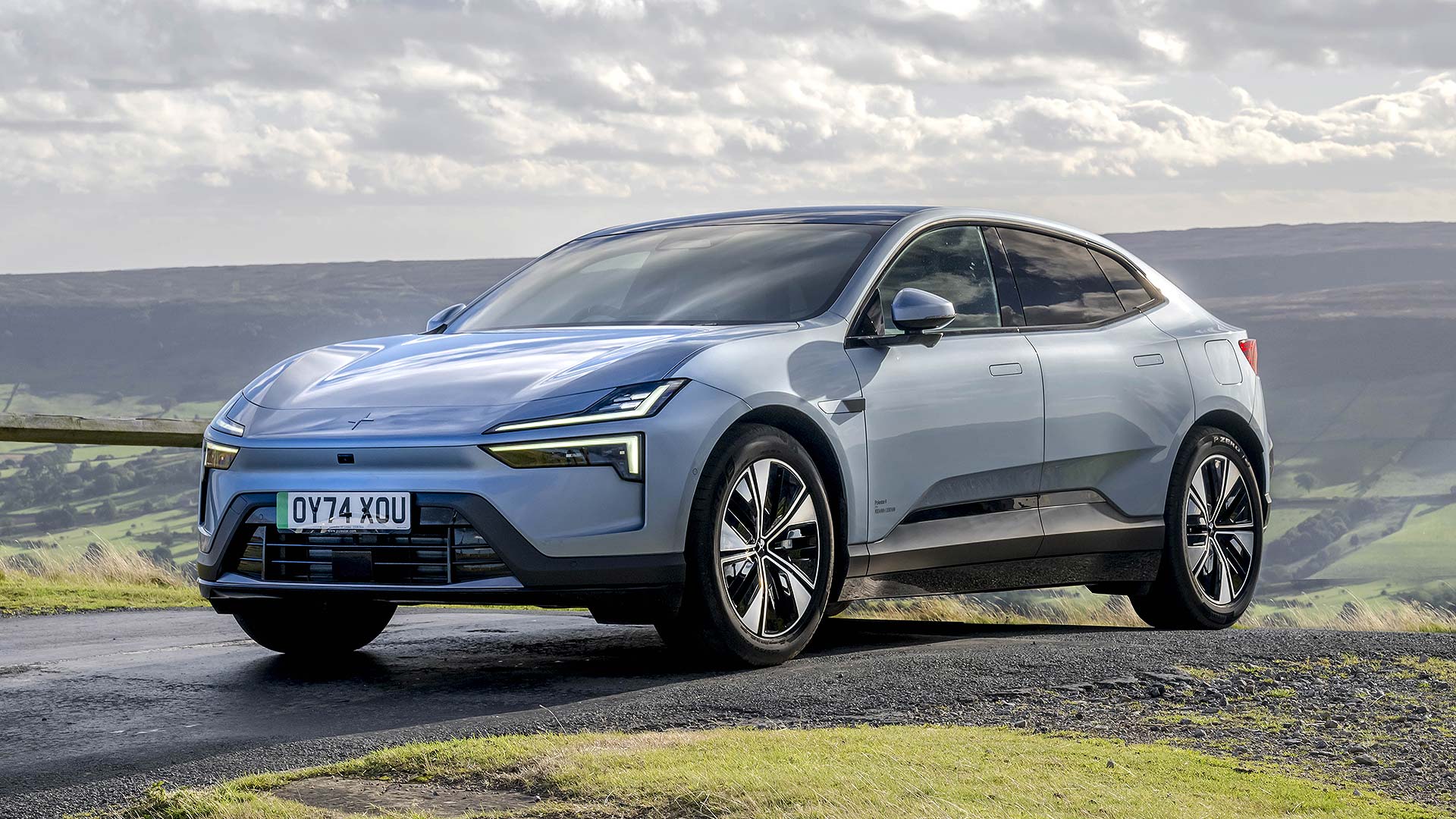
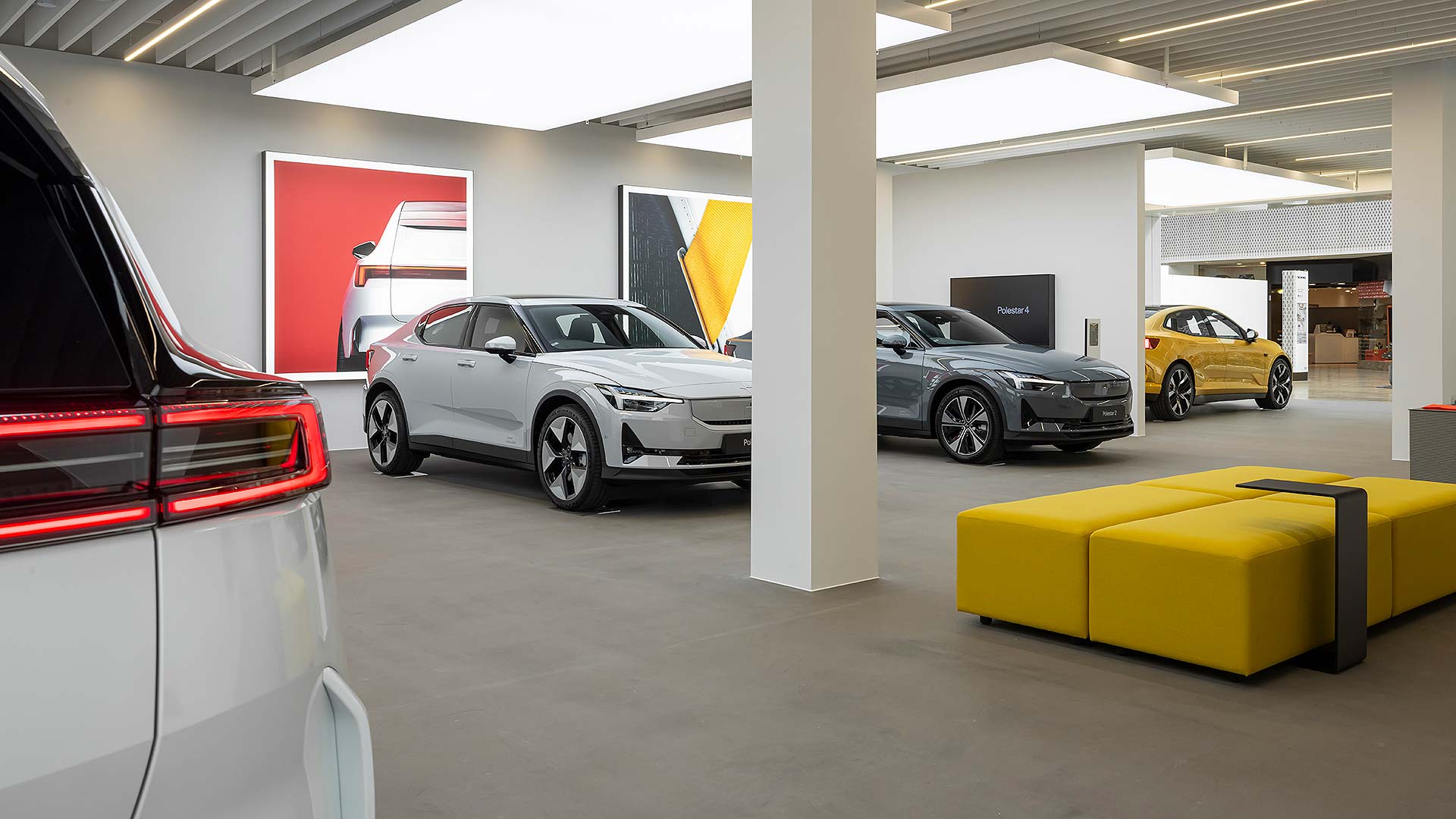
The Polestar 2 has defined the firm since its UK launch in 2020. However, the new Polestar 4 – the car that famously has no rear window – is also helping to drive growth, with sales up by almost half. “It’s like playing with two strikers now,” Lohscheller told us.
As part of this growth, Polestar wants to boost sales to private buyers, after years of success with company cars. “They are a key target for us… if you buy a Polestar, you tell all your friends about it, and this can help multiply awareness and sales.”
A next-generation Polestar 2 is due in 2027, with the new Polestar 7, a compact SUV set to compete in a very popular part of the market, arriving in 2028.
Used Polestar value
It’s not just new car sales that are on the up, either. Sales of used cars – known as pre-owned EVs within Polestar – are up a whopping 99 percent, as lower prices open up the brand to a whole new audience. Pump anxiety is again proving a catalyst here.
“Pre-owned is always the indicator of what happens next. People look at gas prices, start to get nervous, maybe look at used [electric] cars… we are seeing this in the growing increase for pre-owned cars.”
The Polestar 2 has been the firm’s core model since 2020, with around 200,000 sold. This means there is a growing number of used Polestar 2s coming to market as cars return from lease or PCP deals.
“There is a lot of management focus on pre-owned… you need to sell a car four times, not just the first three-year leasing period. It’s an important business – I can’t underestimate the importance of pre-owned,” added Lohscheller.
Polestar technology trends
Just as with new cars, used Polestars benefit from ongoing over-the-air updates that improve the vehicles over time. There’s a residual value benefit to this, said Lohscheller, and it means Polestar can keep in constant dialogue with customers.
In-service statistics reveal no worries about long-term battery life either (every Polestar Pre-owned has a battery health certificate, along with a two-year warranty). EVs also require much less servicing “and when you get the electricity at a reasonable rate, you start to see – hey, this is fun financially, right? It’s actually cheaper.”
Polestar recently won the prized AUTOBEST Smartbest 2026 award, for the first integration of Google Maps’ clever live lane guidance into the Polestar 4. The AI-supported technology highlights all possible lanes for the chosen route, including which lane the car is in.
The aim is to help drivers change lanes in time, particularly around busy intersections.
“It’s important because we do this in partnership with Google,” said Lohsheller. “Everybody a few years ago said, ah, we need to do everything on our own. But no – we need to integrate things and customers love it.”
Cloning a car is the four-wheeled equivalent of identity theft. Criminals will steal a car, then give it a new set of ID numbers. These are copied from a similar vehicle of the same make, model and colour that is already registered on the road.
Thieves disguise the 17-digit Vehicle Identification Number (also known as the VIN number, or chassis number) on the cloned car. They can then use a stolen V5C document (car log book) to legitimise its identity.
With help from vehicle history specialist Cap HPI, here are four straightforward ways you can avoid buying a cloned car.
Check the historyfile
Always check through the car’s service and MOT history before you buy. Examine any bills and receipts supplied, and use the government’s online MOT checker tool to see if the car’s mileage tallies with that displayed on the dashboard.
Also, make sure you view the car at the registered keeper’s address, as shown on the V5C. Don’t be talked into meeting somebody in a petrol station or layby.
Buyers should ensure all the VIN numbers on the vehicle match each other. A Cap HPI history check will ensure these numbers tally with the details recorded by the DVLA, too.
Market value
Look at classified advert listings to get a feel for your chosen car’s market value. The Auto Trader website ranks cars into categories such as Good Price, Fair Price and Lower Price to give you some guidance.
If the seller is asking less than 70 percent of the typical market price for a vehicle, be on your guard. There is rarely such a thing as a bargain, and certainly not if your car turns out to be a clone.
Don’t pay with cash
Don’t make payment with cash, particularly if the car is costing you more than about £3,000. Some cloners will take a banker’s draft as part-payment, because the cash part is sufficient profit without ever cashing the draft.
Most crooks selling cloned cars would rather walk away from a sale than take a payment that could be traced back to them. If it doesn’t feel right to you, walk away. There will always be other cars you could buy.
Check the V5C document
Check the vehicle’s V5C, commonly known as the log book. Stolen V5C documents are still being used to accompany cloned vehicles.
Is the vehicle advertised saying the owner has mislaid or lost the V5C? Then buyer beware! This is a red flag you should check very, very carefully.
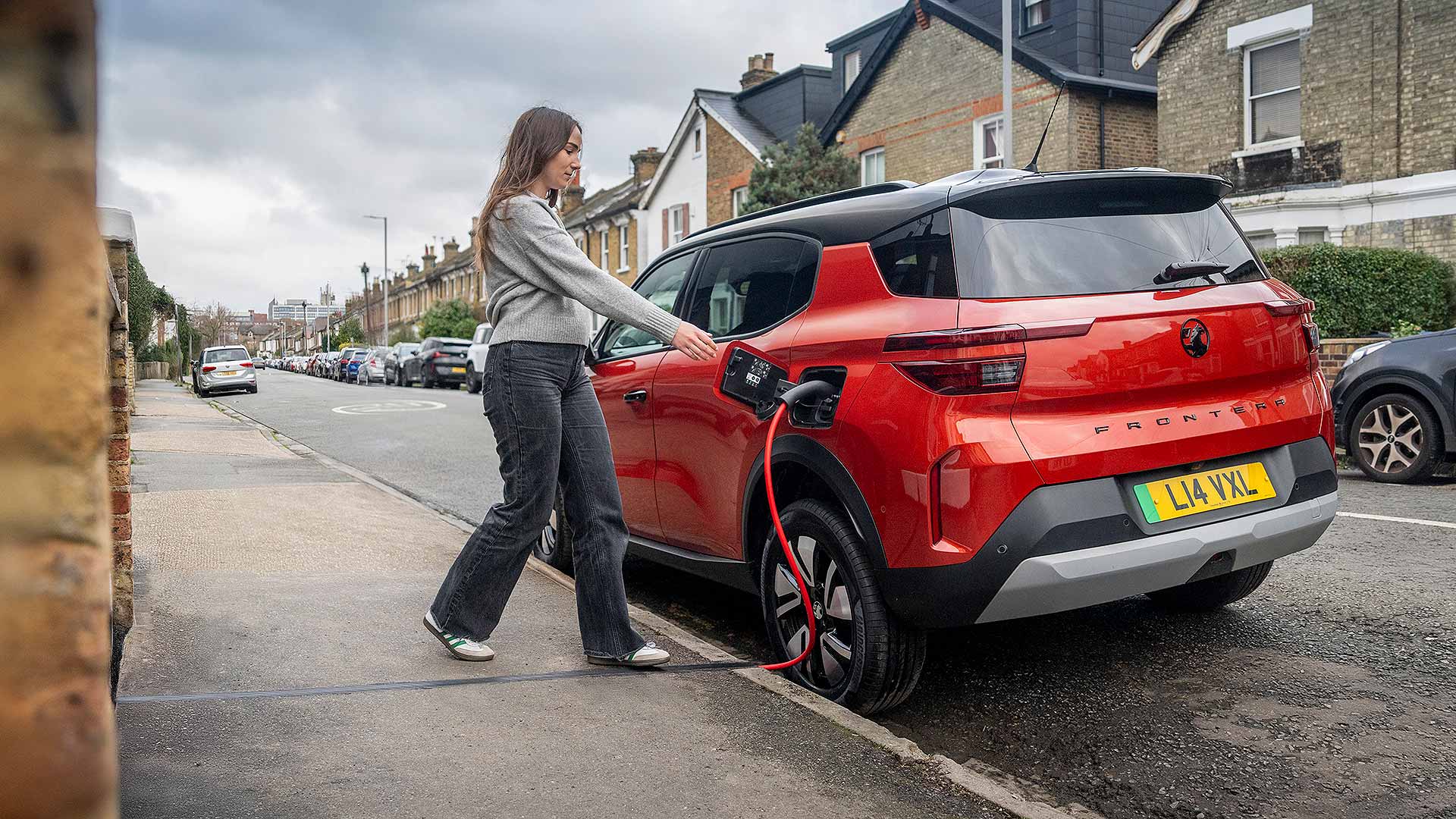
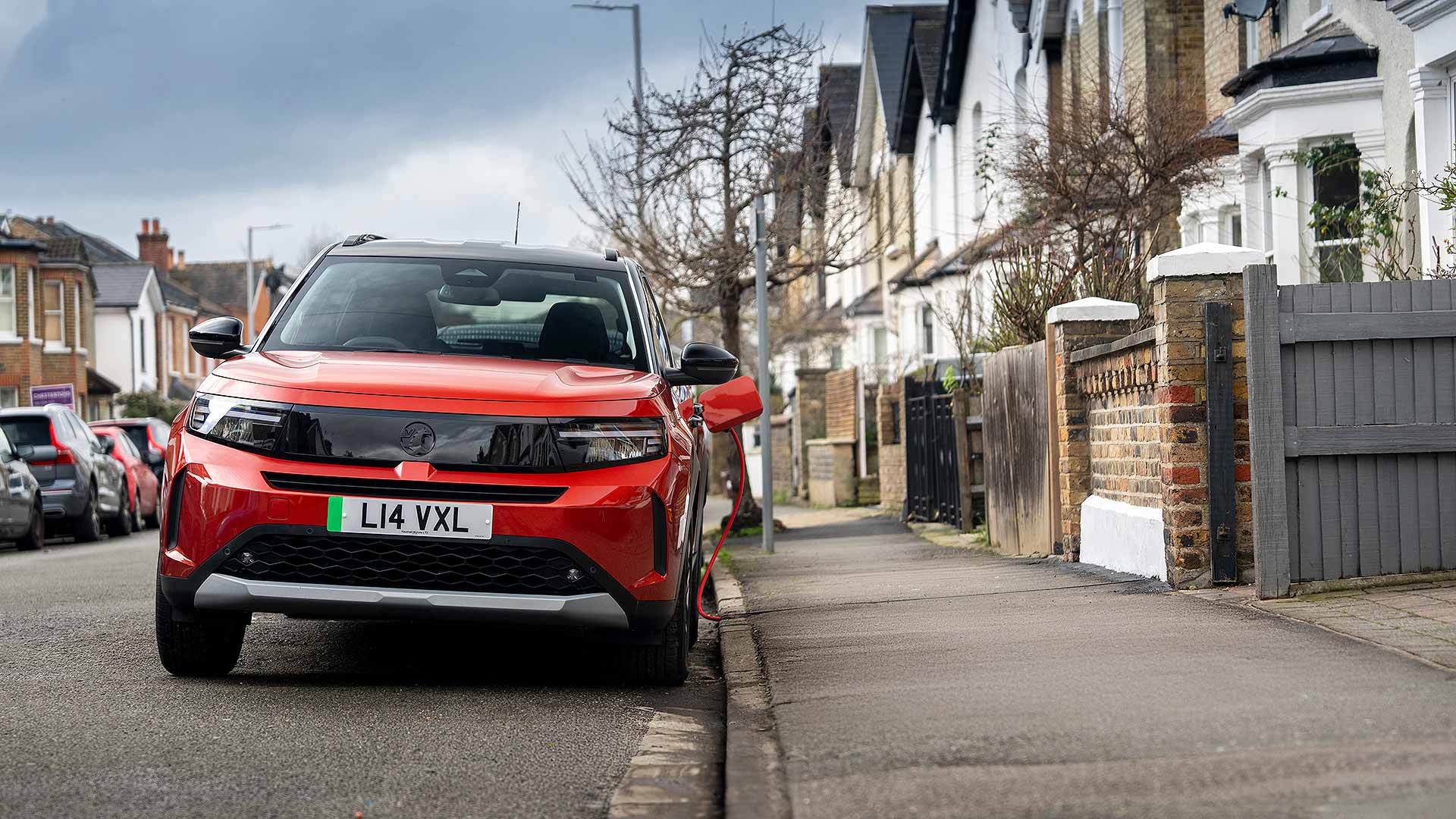
Cross-pavement charging for electric car owners who don’t have a driveway is accelerating rapidly in the UK, with 42 percent of councils across England, Scotland and Wales now on track to offer it by the end of this year.
A Freedom of Information request by Vauxhall found that 56 tier-one councils either currently offer cross-pavement charging, or will introduce it before 2026 is out.
Seven of the 134 councils that responded to the Freedom of Information request have it live in their constituencies. A further 21 are at the trial stage, with plans underway in 28 more.
However, Vauxhall also discovered a lack of consistency in how councils are approaching applications from residents for cross-pavement gullies.
Some charge upwards of £1,000
Some councils will offer installation services for free, whereas others are asking more than £1,000.
There is also a lack of clarity about how to apply for cross-pavement charging, and how long people must wait before they find out if permission is granted.
Separate Vauxhall research has found that four in 10 UK households do not have a driveway. This is a key barrier to electric car ownership, as it means residents cannot easily benefit from cut-price home EV charging. Cross-pavement charging is intended to solve this problem.
Council clarity is needed
“To allow drivers across the country to feel confident going electric,” said Vauxhall MD Eurig Druce, “councils need to ensure they are providing drivers with as much clarity as possible about the options available to them, and how they can install EV charging outside their door.”
To help accelerate awareness of cross-pavement charging, Vauxhall has teamed up with leading provider Kerbo Charge on its Electric Streets of Britain campaign.
As part of the firm’s Electric All In offer, it will provide £500 off a Kerbo Charge installation to new EV buyers.
Vauxhall proudly adds that every electric car in its range costs less than £40,000, and is also eligible for the Electric Car Grant – saving customers £1,500.
What is Kerbo Charge?
Kerbo Charge says it is the leading provider of cross-pavement charging channels in the UK. Some 34 local authorities are trialling it, and more than 1,000 channels have already been installed.
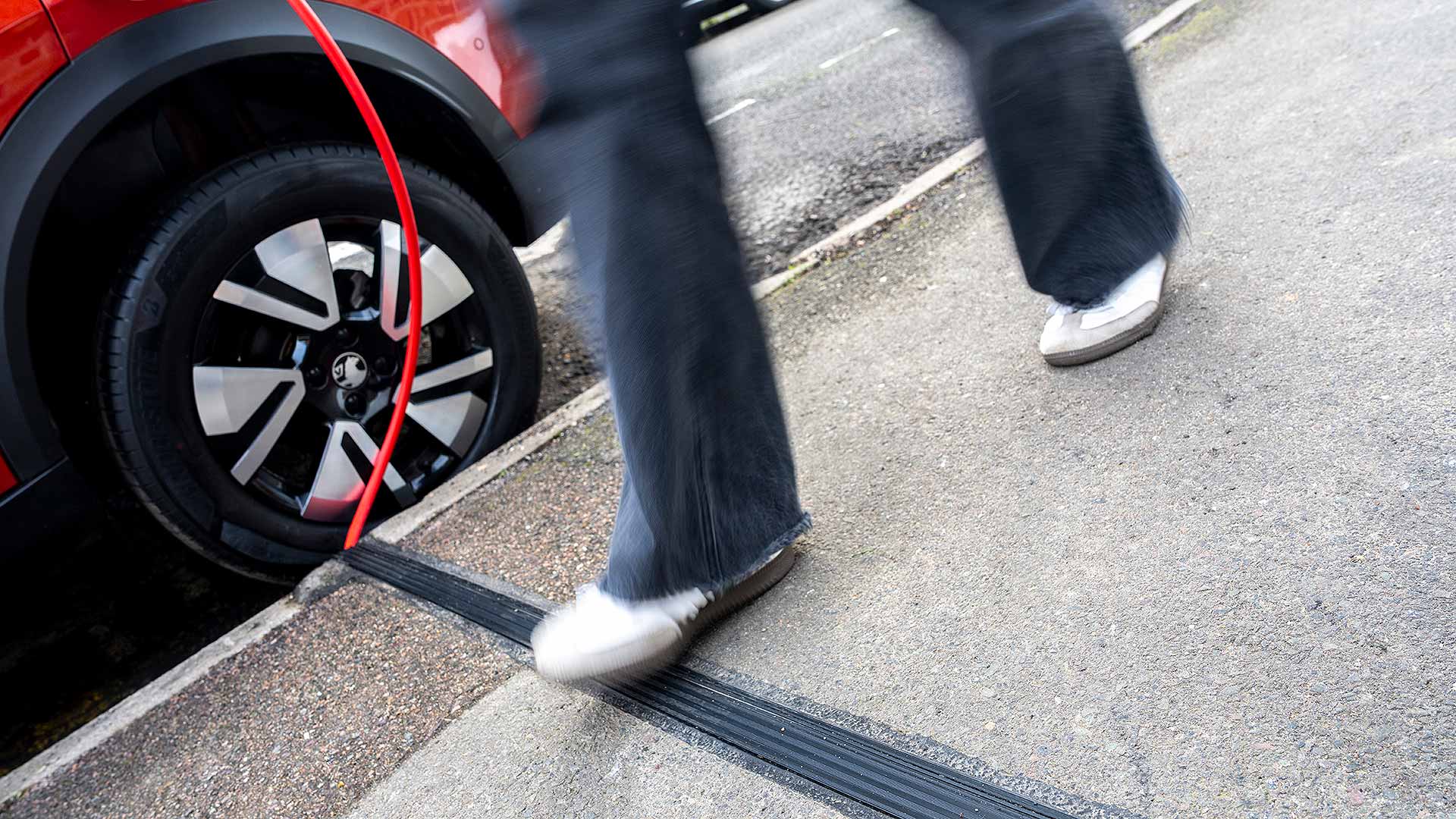
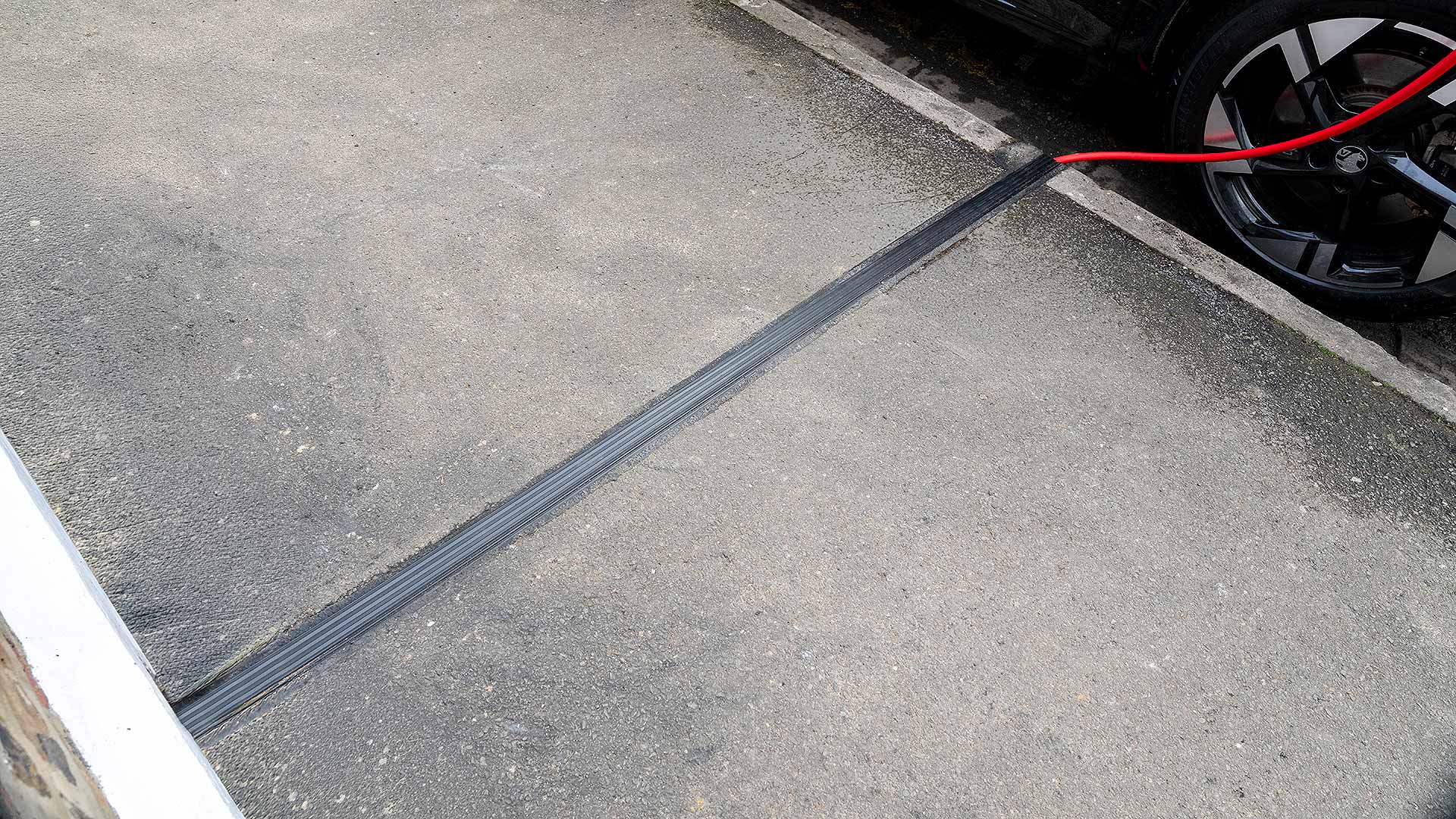
A narrow strip is cut into the pavement and kerbs, into which the channel is then installed.
EV owners then insert their own charging cable into the channel, and securely close a lid above it – just like a zip, says Kerbo Charge. It means no cables stretching across pavements, and no trip hazards for pedestrians.
The channels, made in Derbyshire, are unique to the UK and are able to bend with the pavement surface – which is important as most UK pavements are not flat, notes the firm. It also means that surrounding groundworks are not required.
Kerbo Charge was founded by Michael Goulden and Ben Whitaker, who pitched the business on the BBC’s Dragon’s Den. They received £50,000 from Deborah Meaden in 2024.
“The best inventions solve widespread problems with simple and cost-effective solutions,” said Meaden. “Kerbo Charge does just that.”
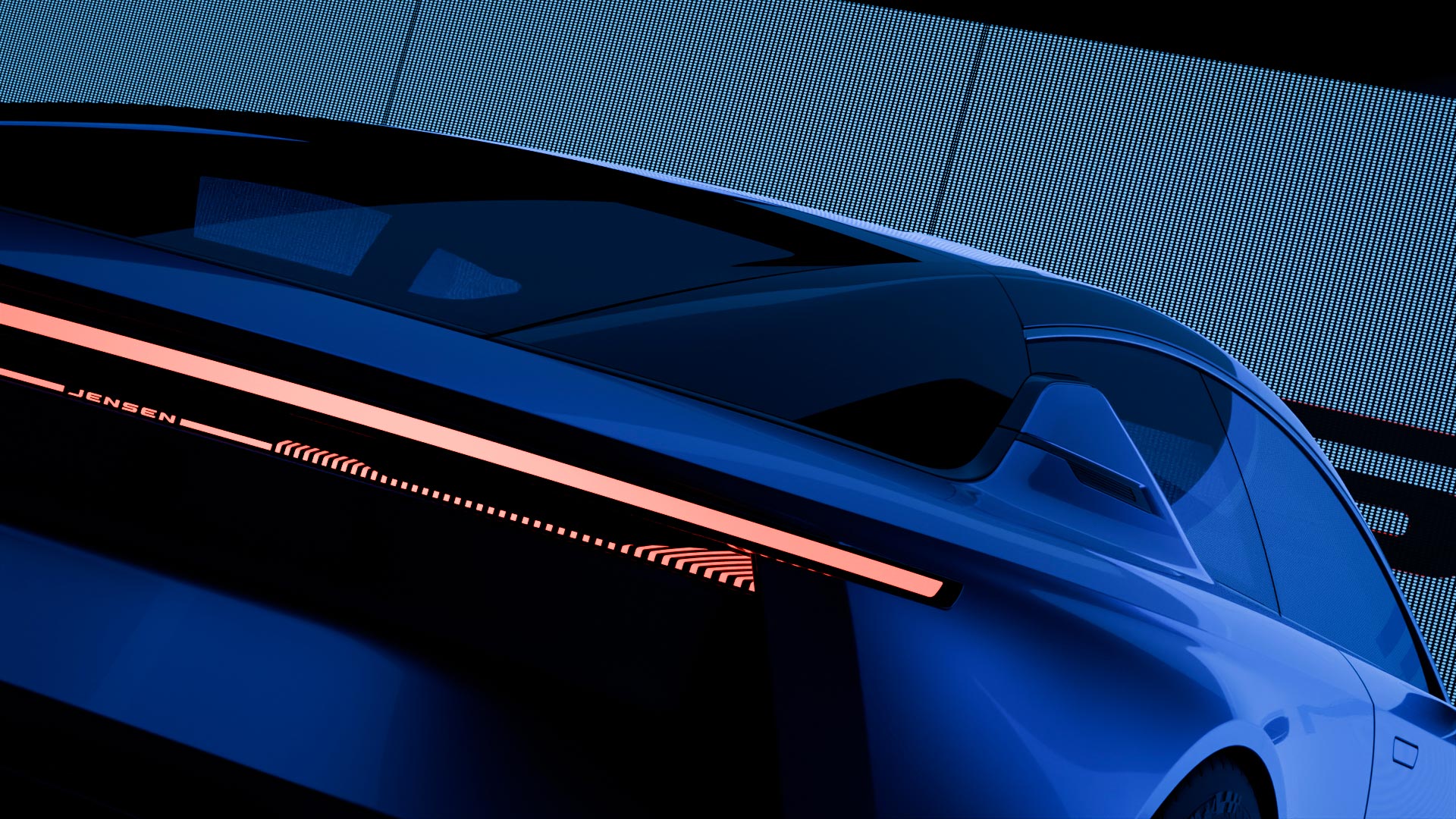
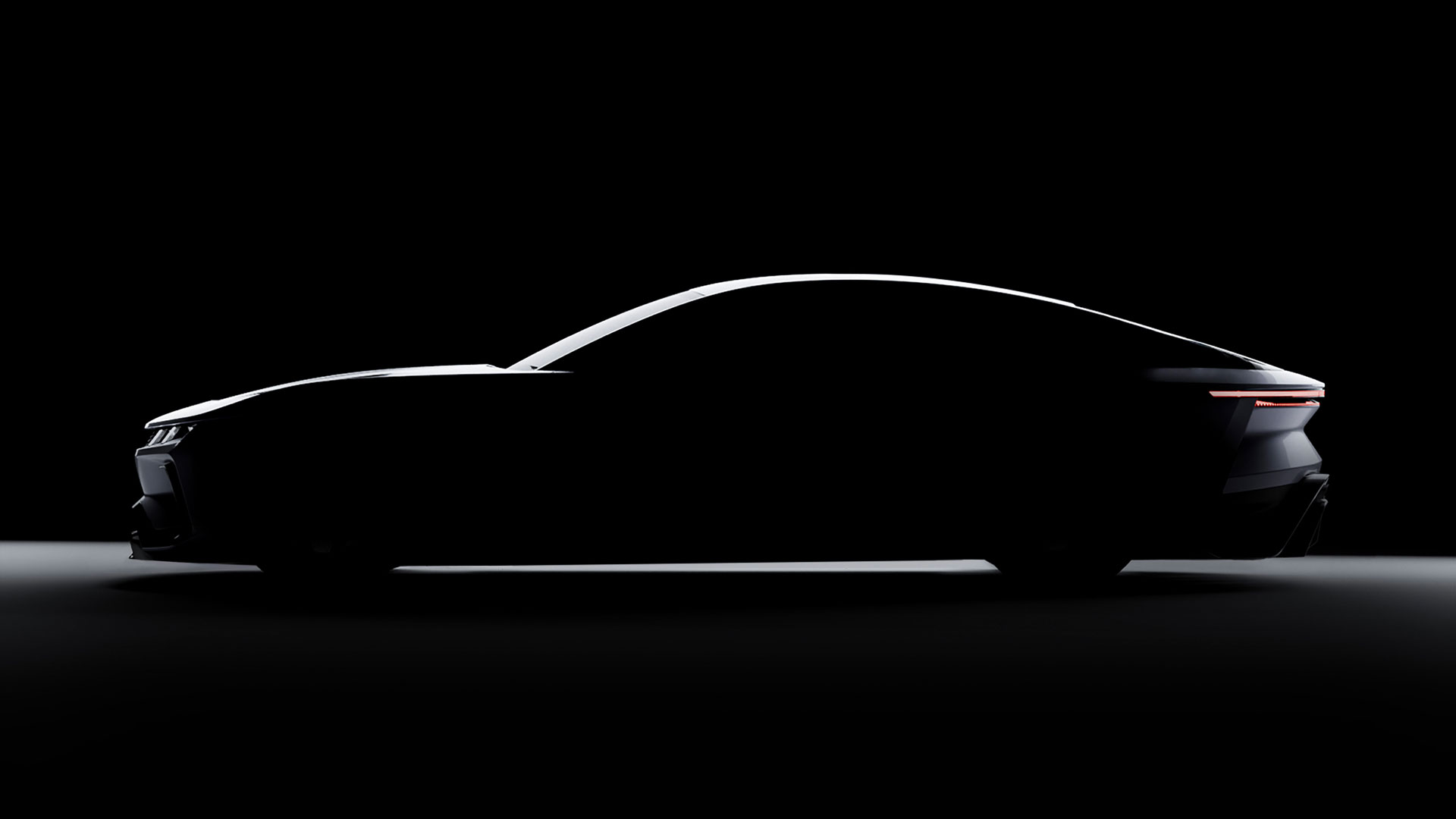
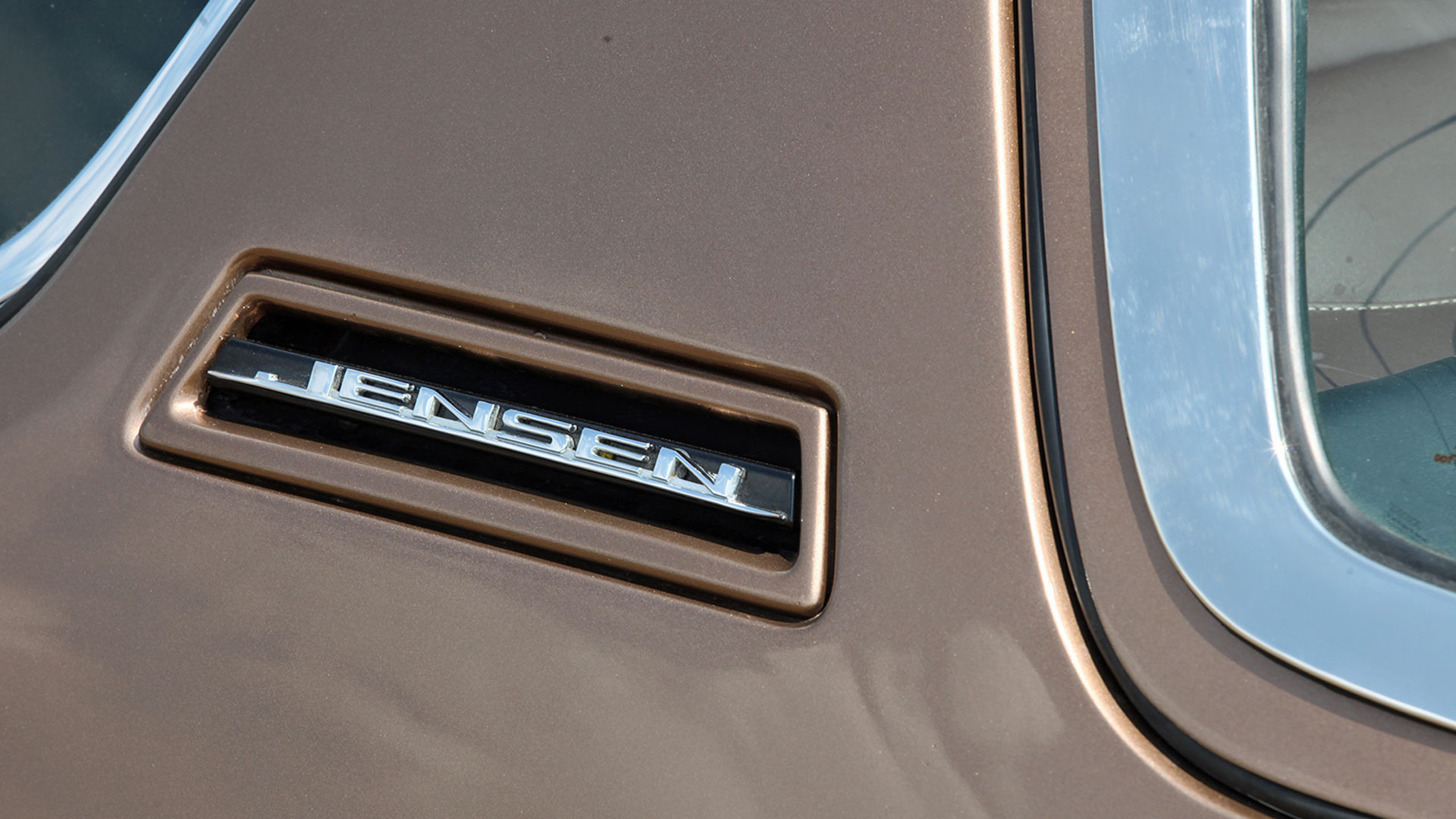
Banbury-based Jensen International has announced more information about its forthcoming Interceptor GTX sports car.
The company is keeping many details about the new model under wraps, but it has confirmed the Interceptor GTX name.
Jensen International is keen to stress that this will not be a continuation of the revered original Interceptor, a classic British coupe built between 1966 and 1976.
Instead, the Interceptor GTX will be a ‘clean-sheet design’ that is entirely new from the ground up, and featuring a hand-built aluminium body.
It will also have an aluminium chassis and a bespoke V8 beneath its bonnet, paying homage to the big-block Chrysler engines found in the original.
A personal link to the Jensen story
Jensen International has also revealed that Jeff Qvale, son of the former owner of Jensen Motors, Kjell Qvale, has become a partner in the project.
The late Norwegian-American Kjell Qvale was instrumental in establishing the Jensen-Healey company, having previously been a leading importer of British sports cars to the United States.
Qvale’s name later appeared on the Qvale Mangusta sports car, which subsequently evolved into the MG XPower SV.
Jeff Qvale can claim extensive experience in the North American automotive market, and also has fond memories of the Jensen Motors factory in the UK.
‘An ultra-analogue driving experience’
Following the announcement, Jeff Qvale commented: “For me, this project is very personal. Jensen was a big part of my father’s life and our family history.
“Hand-built to the utmost quality, the Jensen Interceptor GTX will set new benchmarks and provide the pure, high-performance, ultra-analogue driving experience that discerning clientele are now demanding.”
David Duerden, managing director of Jensen International, added: “We are proud to reveal the name of our first, entirely new car and delighted to have Jeff Qvale on board.
“He brings a deep understanding of the Jensen brand and exceptional expertise in the global automotive and investment sectors. As a key partner, he will play a crucial role in bringing the Jensen Interceptor GTX to market.”
Jensen International plans to reveal the Interceptor GTX in pre-production guise during the second quarter of 2026. Motoring Research will bring you more details very soon.
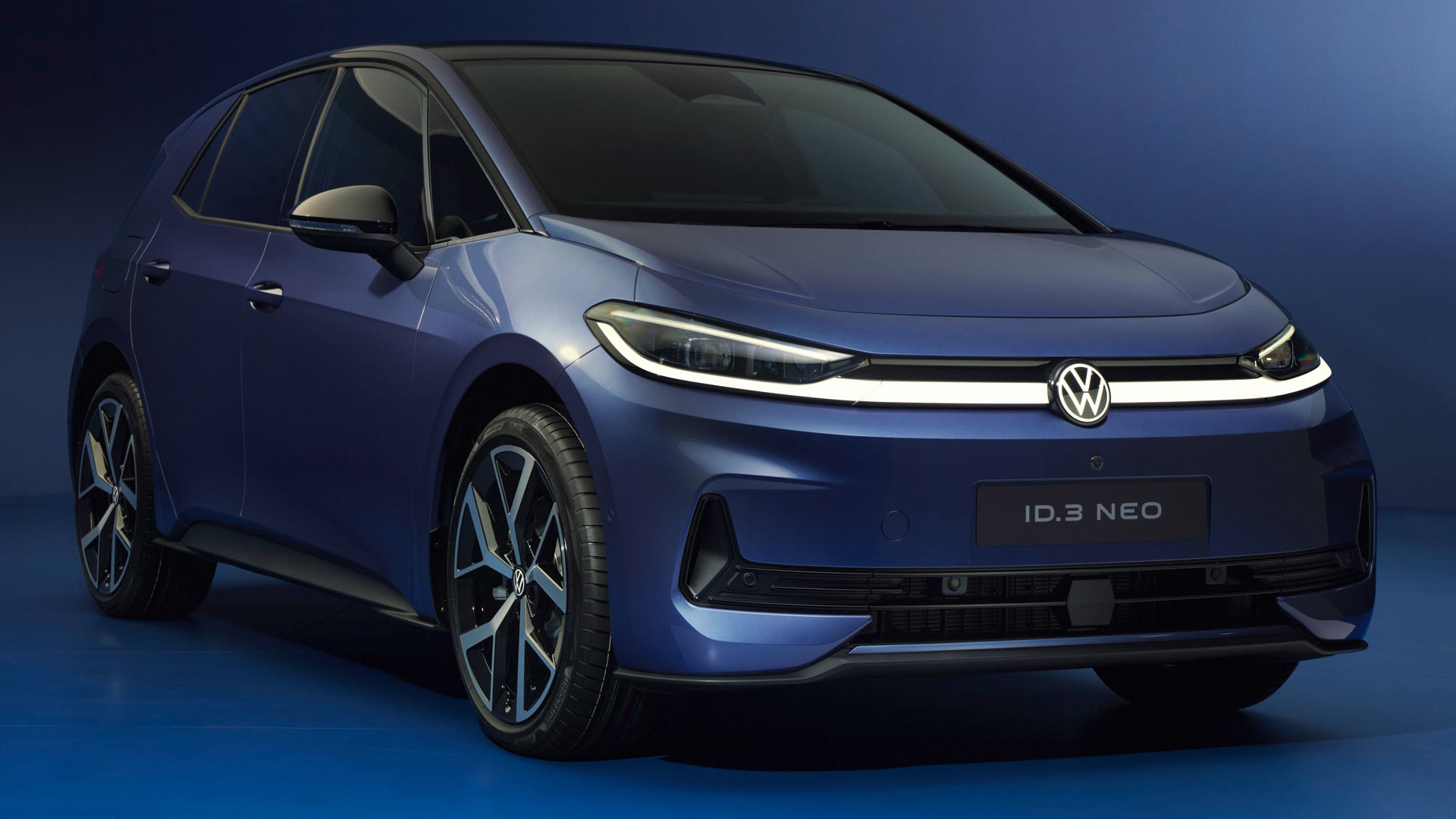
The Volkswagen ID. 3 has been given a substantial mid-life facelift, bringing a new look inside and out for the electric hatchback.
Named the Volkswagen ID. 3 Neo, the revised EV features an updated exterior to bring it into line with the German marque’s new family identity.
It represents the most significant overhaul of the ID. 3 since it was launched in 2019, following a minor update in 2023.
Beneath the refreshed bodywork is a choice of powertrains, including three different battery sizes. The largest option enables the ID. 3 Neo to cover almost 400 miles before recharging, making it competitive with newer electric rivals.
However, the most significant alteration is to the ID. 3 Neo’s interior, addressing the well-documented gripes about Volkswagen’s use of touchscreens and haptic controls.
More battery range for ID. 3 Neo
Given it has been seven years since the original ID. 3 went on sale, the outgoing version was beginning to look out of step with the rest of the Volkswagen range.
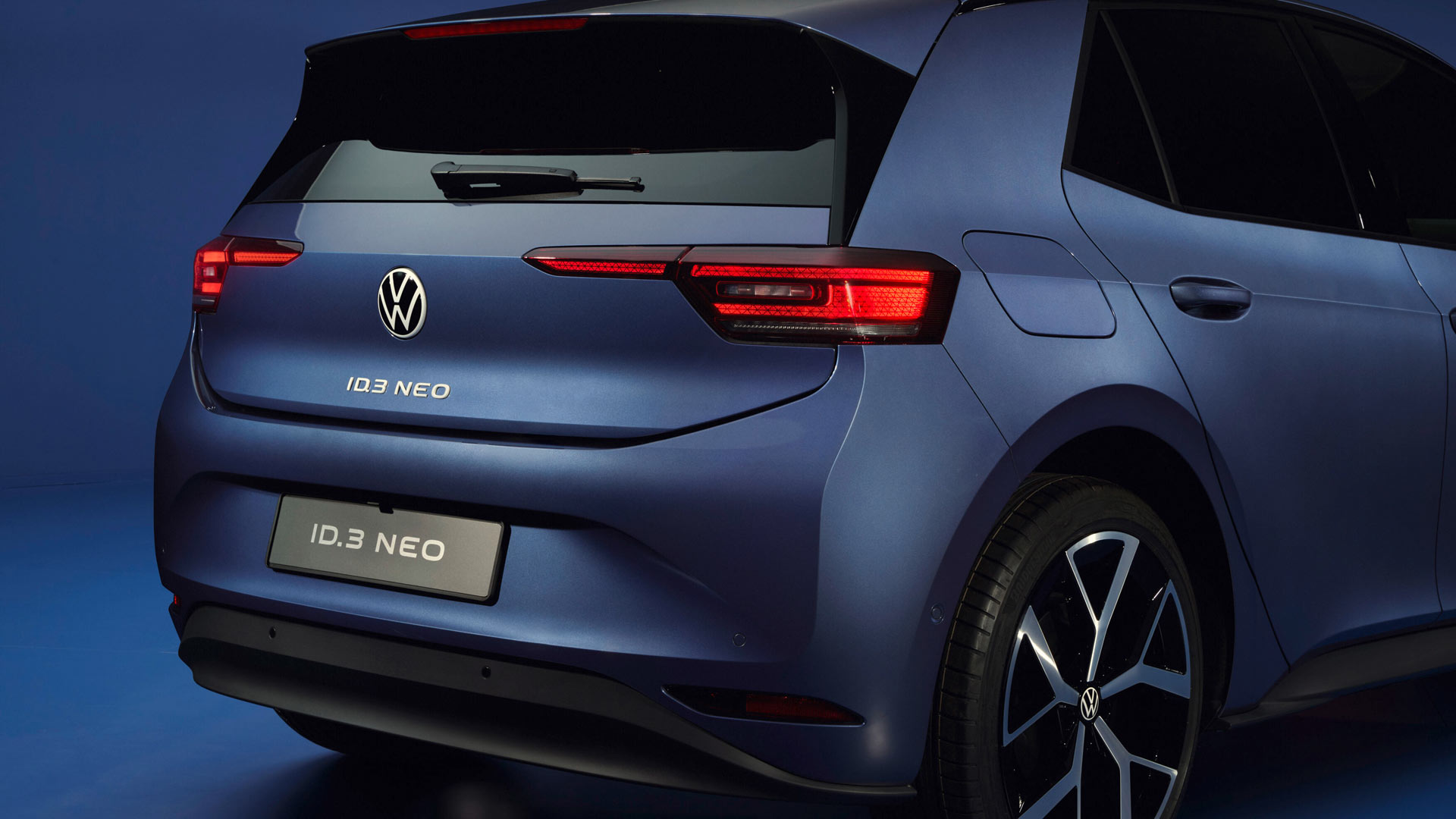
The ID. 3 Neo brings sharper front-end styling, new headlights and revised tail lights. The rear hatch is also now body-coloured, as are the roof and rear spoiler, rather than being painted black as on the previous ID. 3.
The ID. 3 Neo updates are more than just cosmetic, however, with Volkswagen offering increased power outputs for the three electric motor options. These now start at 170hp, progressing to 190hp and 231hp, although there is currently no mention of the performance GTX model.
Battery choices include 50kWh and 58kWh packs, with a long-range 79kWh version promising up to 391 miles when fully charged. This represents a gain of 50 miles versus the old ID.3.
A victory for real buttons and switches
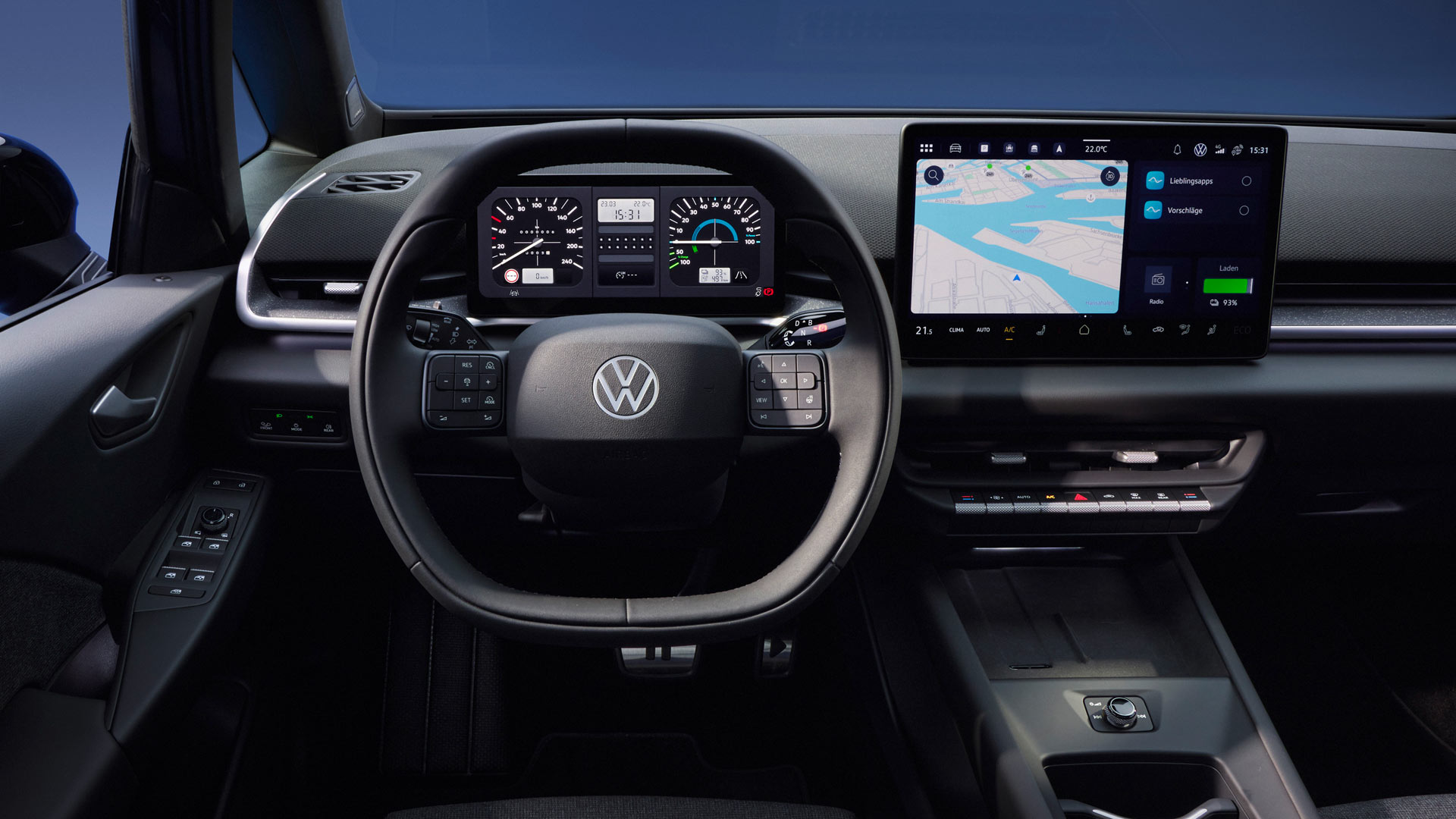
The biggest change for the ID. 3 Neo is, undoubtedly, its interior. Perhaps stung by the constant criticism from automotive pundits, Volkswagen has thoroughly redesigned the cabin to include buttons and switches.
This includes a steering wheel with ‘proper’ physical buttons, instead of frustrating haptic touchpads, plus a row of switches to adjust the climate control without having to use the central touchscreen.
It marks a win for common-sense interior design, and will leave car journalists searching for something new to complain about…
Volkswagen has also redesigned the graphics for the 12.9-inch touchscreen, while the 10.25-inch digital instrument panel gets a makeover. The latter includes an option for retro-style digital dials, first seen in the forthcoming ID. Polo, which provided inspiration for the ID. 3 Neo’s cabin.
Trim quality is said to be improved, too, with Volkswagen taking on board feedback from customers and critics alike.
European orders for the ID. 3 Neo are open now, with UK prices and specifications set to be confirmed by Volkswagen in the near-future.
Reaching a 70th birthday is an important milestone, but is especially noteworthy for one of Volvo’s life-saving safety innovations.
A prototype version of the classic Volvo 120 Series, better known as the Amazon, made its debut in 1956. It featured a two-point cross-chest diagonal seatbelt: a major advancement from the lap belts available at the time.
Later in 1956, when production of the Amazon got underway, Volvo offered its new seatbelt as an optional extra.
Although American car manufacturers had offered two-point seatbelts before, Volvo brought the conecpt to European drivers.
A road safety gift to the world
However, Volvo’s greatest step forward was the launch of a three-point seatbelt – invented and developed by Swedish engineer, Nils Bohlin.
The design combined a lap belt and diagonal chest belt together, setting a template for seatbelts that continues some seven decades later.
Volvo began fitting a three-point seatbelt to the Amazon by 1958. The following year, it became standard on all Volvos sold in the Swedish market.
Recognising the significance the seatbelt would play in improving road safety, Volvo made the patent for its three-point design available to other car manufacturers for free.
As a result, Nils Bohlin’s innovation was swiftly adopted across the globe. It is likely to have saved millions of lives.
The seatbelt also helped establish Volvo’s reputation for safety, demonstrated again when it introduced the first rear-facing child seat in 1972. The same year, the company also added three-point seatbelts to the rear of its vehicles.
Volvo still pioneers safety tech
Volvo continues to develop safety technology, with the latest EX60 electric SUV featuring a world-first use of multi-adaptive seatbelts.
These use multiple sensors inside and outside the EX60 to adjust the level of seatbelt tension. Factors taken into account include the size of the person in the seat, the way they are sitting, and the type of collision occurring.
Nicole Melillo Shaw, managing director of Volvo Car UK, said: “Volvo has always been at the forefront of safety evolution and innovation, and we’re pleased that we can continue to make new developments on such vital features like the seatbelt.
“The latest multi-adaptive seatbelt in the new EX60 is a testament to our pioneering technology and approach to safety that is continued today.”
Volvo has already increased production capacity to meet worldwide demand for the EX60. The new electric SUV is capable of more than 500 miles on a single battery charge in range-topping P12 guise.
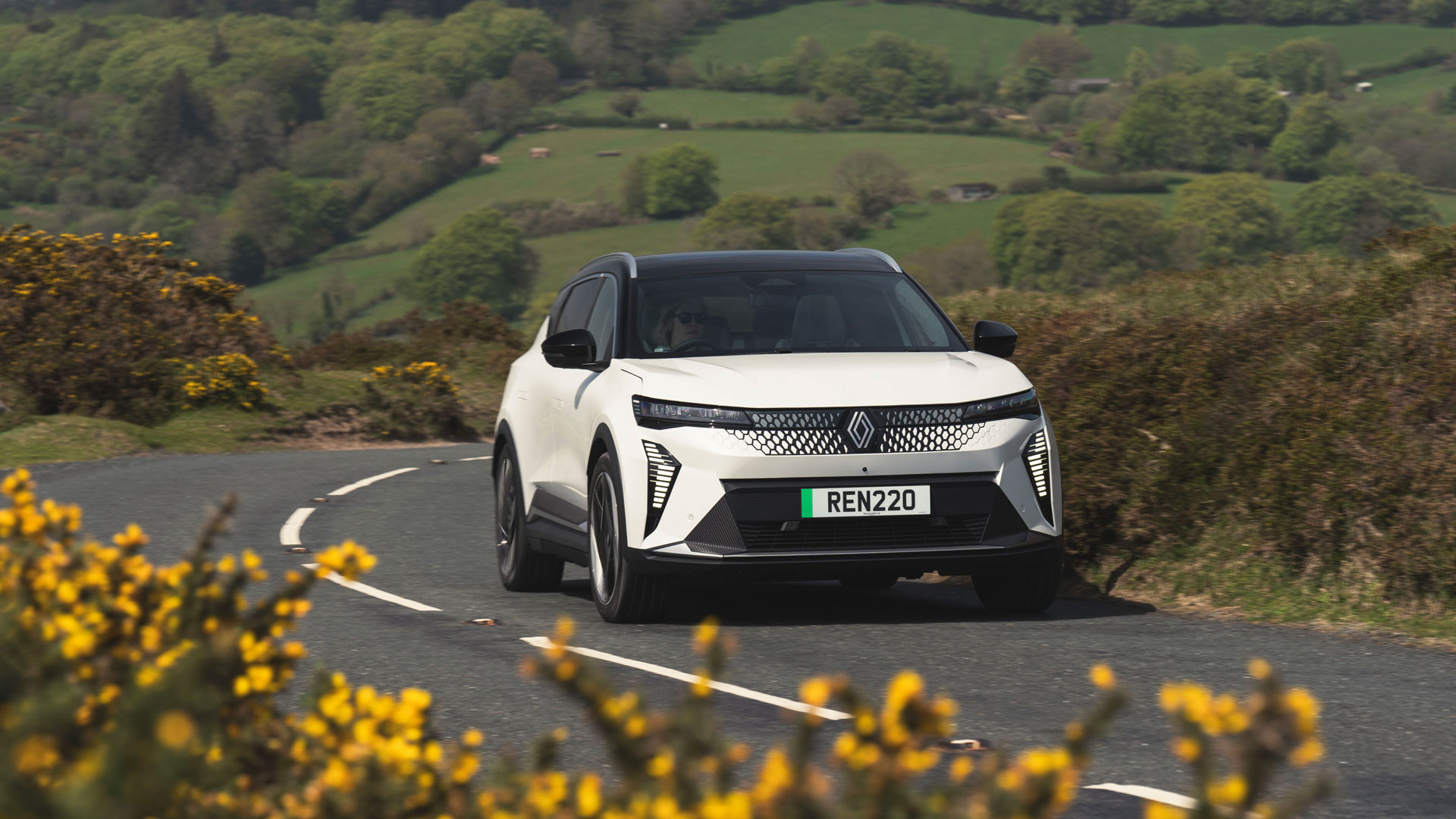
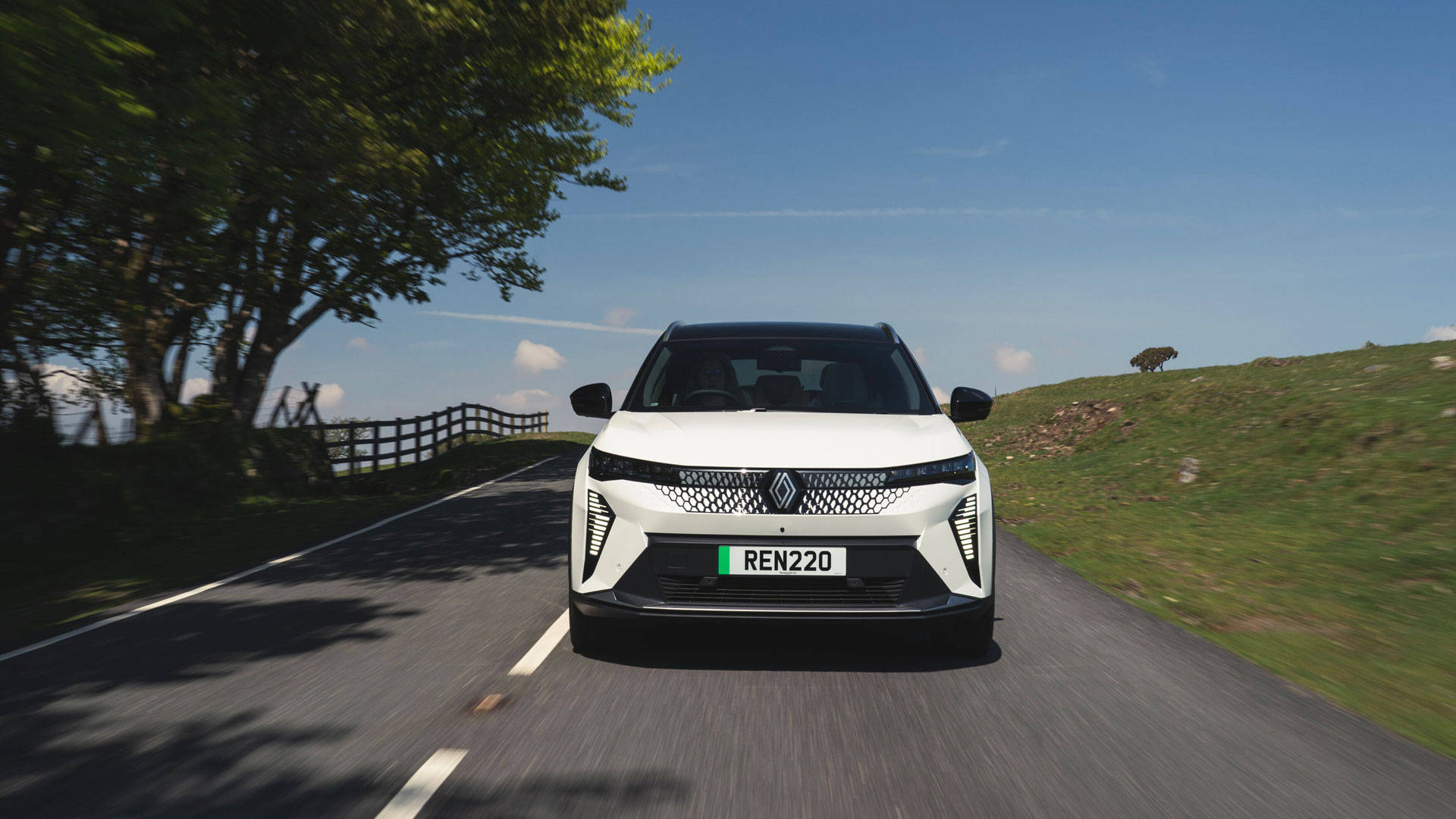
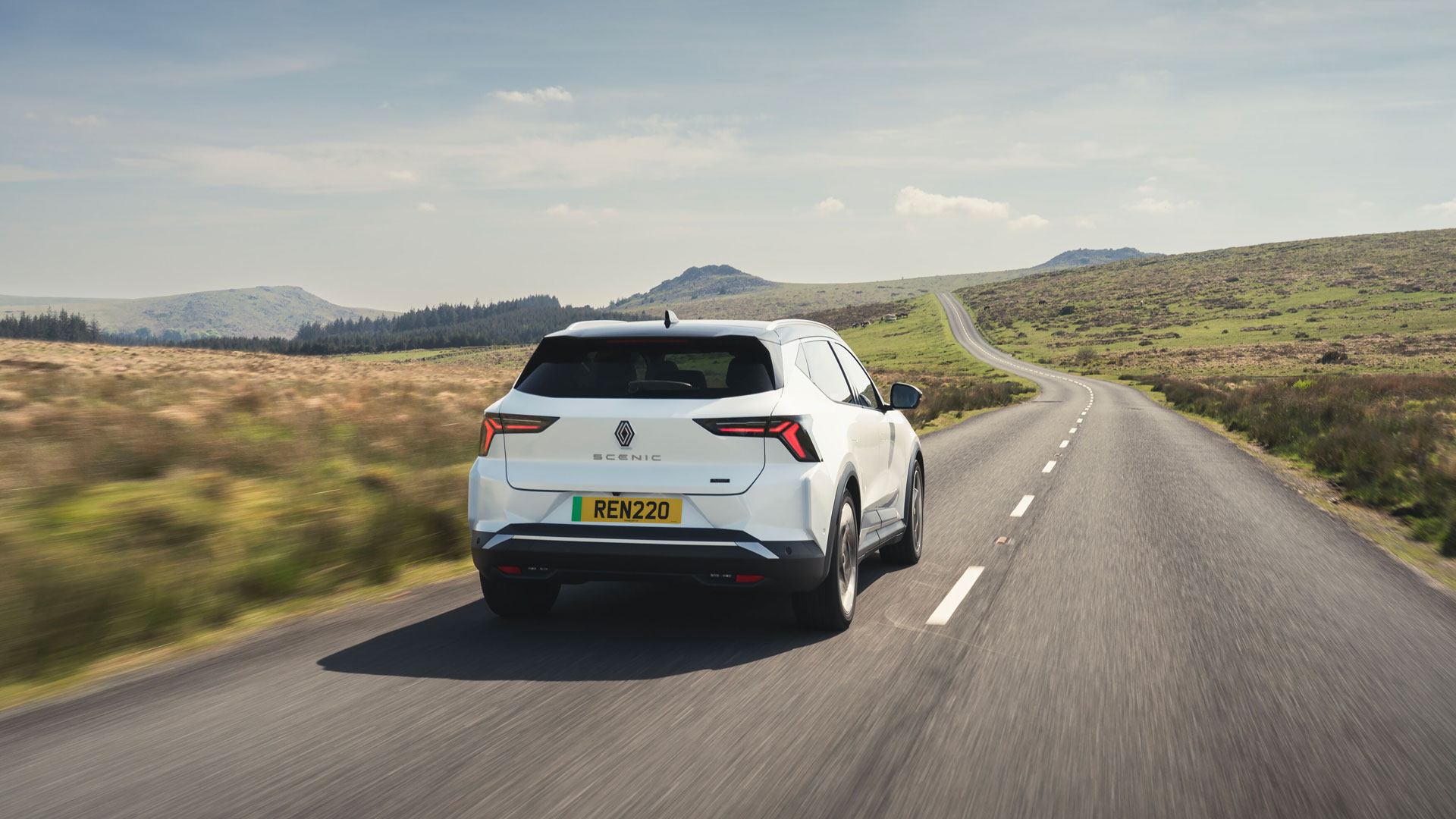
The Scenic E-Tech SUV has become the latest model from Renault to gain full eligibility for the Electric Car Grant (ECG).
Notably, the Renault Scenic E-Tech family SUV has been rewarded with the maximum £3,750 grant – available solely to EVs made to the ‘highest manufacturing sustainability standards’.
It becomes the third Renault to qualify for the top-level ECG, following the Renault 4 and 5 models announced last year. Other vehicles from the French marque qualify for the smaller £1,500 grant.
As a result, the Scenic E-Tech now costs from £33,245 in entry-level Techno specification.
Scenic E-Tech ready to order now
All versions of the Renault Scenic E-Tech sold in the UK use a 220hp electric motor, which is combined with an 87kWh ‘Long Range’ battery pack.
Depending on the trim level chosen, the Scenic E-Tech is capable of up to 381 miles when fully charged. Replenishing its battery from 15 to 80 percent requires 32 minutes with a DC rapid-charger.
The £33,345 Renault Scenic E-Tech in Techno trim features 19-inch alloy wheels, a 12.3-inch digital instrument panel, a 12-inch central touchscreen and wireless smartphone charging.
Opting for the Techno Esprit Alpine version now costs £36,245, adding 20-inch alloy wheels, heated sports seats, a heated steering wheel and blue carpets.
Now priced at £38,245 thanks to the ECG, the Scenic E-Tech Iconic Esprit Alpine tops the range. It comes withb an electrically adjustable driver’s seat, Harman Kardon audio system and a panoramic sunroof.
One in three Renaults is now electric
Adam Wood, managing director of Renault UK, said: “Today’s confirmation of the maximum grant for Renault Scenic, as a result of its battery maker using 100 percent renewable energy at its plant, is another demonstration of how we have prioritised putting sustainability at the heart of our manufacturing processes.
“In the first three months of 2026, Renault’s EV registrations in the UK grew 87 percent year-on-year, powered by a combination of the launches of the award-winning Renault 4 and Renault 5 and the growing consumer confidence and momentum built by the government’s Electric Car Grant.
“Now, one in three new Renault cars sold is electric, proving that there is a strong appetite for great electric cars that are brilliantly designed, fun to drive, packed with tech and affordably priced.”
Look out for our review of the Renault Scenic E-Tech – coming soon to Motoring Research.
Supercars are the preserve of the fortunate few, but we can all dream. Exotic and expensive, they deliver the ultimate in performance and driving excitement, alongside an unbeatable sense of occasion.
The best supercars of 2026 include some familiar names, such as Aston Martin, Ferrari and McLaren, but there’s also room for two high-end versions of the Porsche 911. All are currently available to buy – if you have the means and, in some cases, a place on the waiting list – and all will make you fall in love with driving again. Even the Monday morning commute seems brighter in a supercar.
Time is running out to buy a thunderous V8 or high-revving V12, with new petrol engines due to be outlawed from 2035, so don’t delay to live out your supercar dream. Our choices are presented in alphabetical order, rather than order of preference.
Aston Martin Vanquish
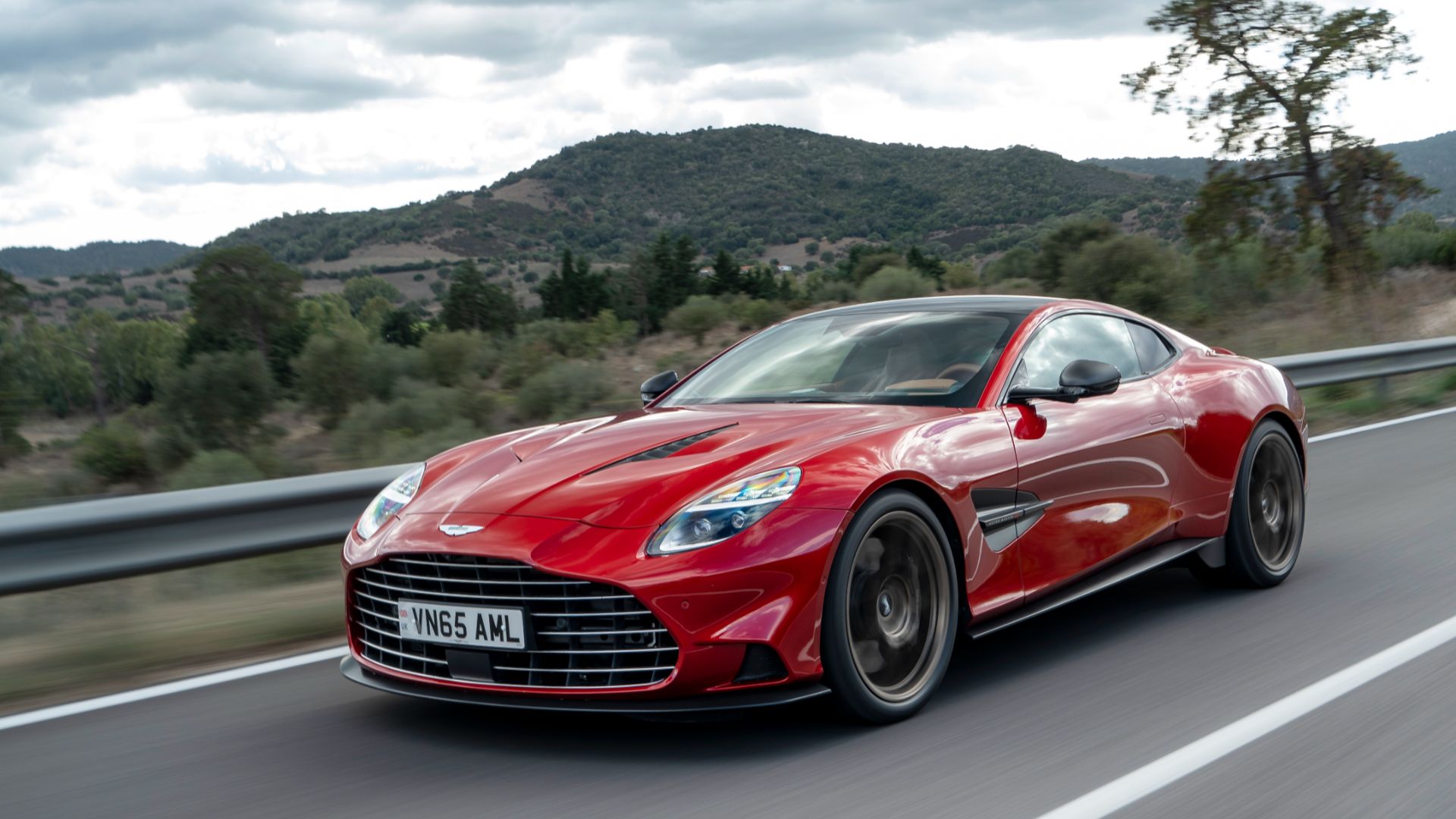
The radical, mid-engined Valhalla might be grabbing the headlines, but the Vanquish is an Aston Martin of the old-school – and absolutely no worse for that. It has a 5.2-litre twin-turbo V12 beneath its long bonnet, which sends all 835 horses and 738lb ft to the rear wheels. Zero to 62mph takes 3.3 seconds and top speed is 214mph.
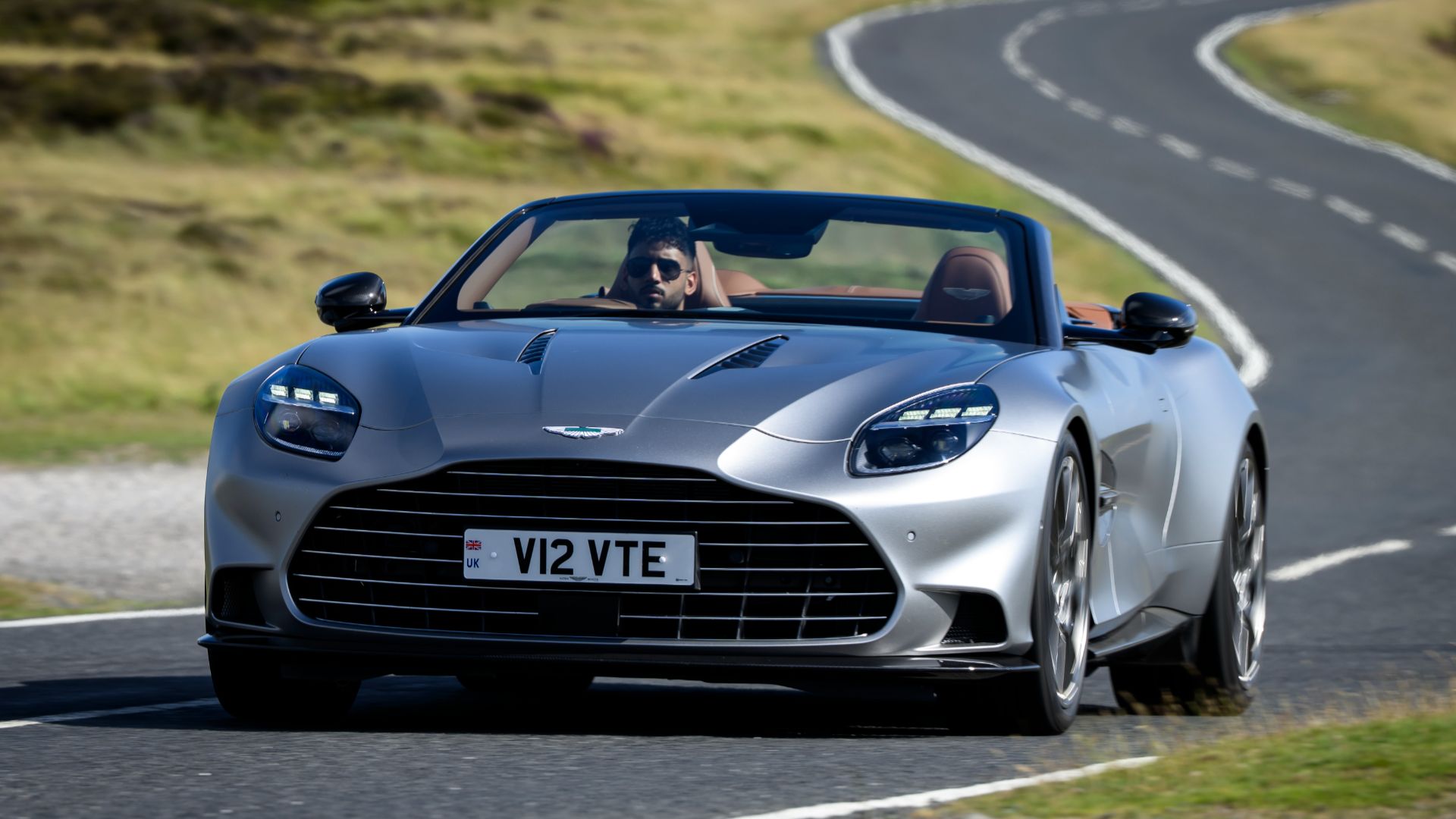
You can have a coupe or the even more decadent Volante drop-top (pictured above). Either way, the Vanquish combines outrageous power with tailored luxury like few other cars. You could drive from Kensington to Cannes without breaking a sweat. The fuel bill would be substantial, but if you can afford the Vanquish’s £330,000+ asking price…
We said: ‘The poise and nuance of the Aston Martin’s chassis makes taking the reins of 835 horses far less intimidating than you might expect. And if you do get carried away, the huge carbon brakes are reassuringly powerful and progressive. The only slight demerit is reserved for the ride, which is on the firm side for a luxurious grand tourer.’
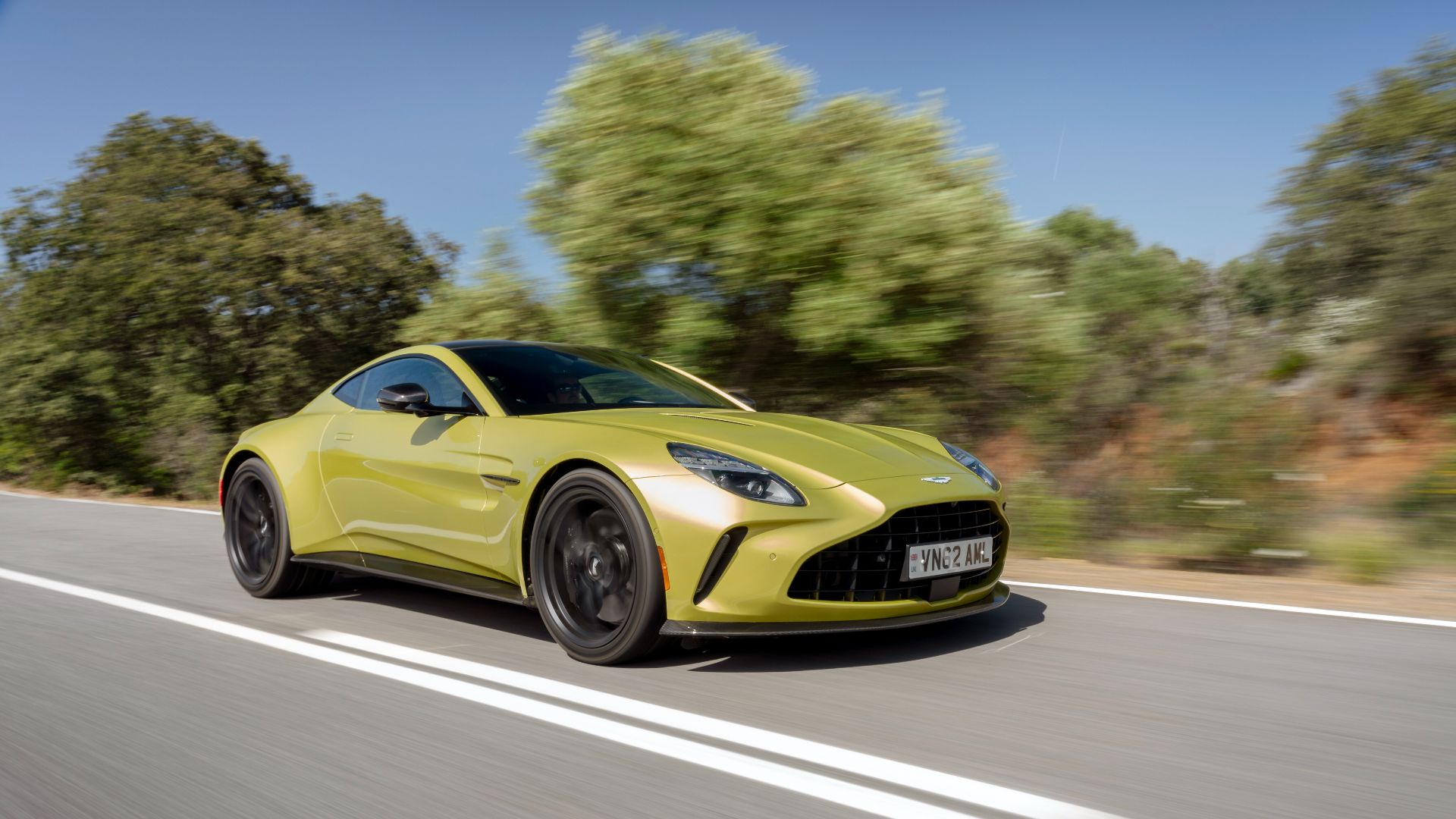
When the current Aston Martin Vantage was originally launched in 2018, a 510hp twin-turbocharged 4.0-litre V8 placed it towards the upper end of the sports car category. However, a substantial facelift for 2025 gave the Vantage a fresh look and a 30 percent boost in power.
With a turbocharged V8 that now musters 665hp, the Vantage has become a bona fidesupercar. Both the coupe and Vantage Roadster also feature a wider track, stiffer chassis and Bilstein dampers, which transform how they drive. The new Vantage S promises to take things further still – we’ll be driving it soon.
We said: ‘It isn’t perfect, of course. The Vantage’s ride feels firm even on smooth Spanish roads and its 325-section tires rumble relentlessly at speed. Then again, if you want a long-striding GT, the Aston Martin DB12 already answers that brief brilliantly. Unlike its bigger brother, the Vantage never totally relaxes. It’s alert, feisty and up on its toes – and it will keep you on your toes, too. It’s an unequivocal and unapologetic supercar. Job done.’
Eight hundred and thirty horsepower sounds an insane amount for Ferrari’s ‘entry-level’ supercar. Then again, in a world of 2,000hp electric hypercars, perhaps such head-scrambling numbers are becoming the norm. The 296 GTB and its drop-top GTS sibling (pictured) combine a high-revving 3.0-litre turbocharged V6 with a plug-in hybrid system. Driving the rear wheels only, the result is 0-62mph in 2.9 seconds and a 205mph maximum, along with 15.5 miles of zero-emissions electric range.
The 296 is so accomplished – and so ludicrously fast – it makes the pricier 849 Testarossa look somewhat redundant. So save yourself £150,000 and buy this one instead. There, you didn’t expect cool-headed consumer advice in a Ferrari review, did you? If you simply must have more performance, though, the 868hp 296 Speciale takes things up another notch.
We said: ‘Beyond the sound and the fury, the 296 is joyous at any speed. Its steering is lucid and precise, its electronic dampers seem to breathe with the road and the whole car feels progressive and keenly balanced. Underneath, an arsenal of electronic wizardry is analysing every split-second of your progress, but the combined effect is reassuringly analogue. And far more manageable than 830hp has any right to be.’
The Temerario replaced the long-lived Lamborghini Huracan, trading its naturally aspirated 5.2-litre V10 for a twin-turbocharged 4.0-litre V8 bolstered by three electric motors. The grand total is an explosive 920hp, delivered close to the engine’s searing 10,000rpm redline. With a 0-62mph time of 2.7 seconds, the new ‘baby’ Lamborghini outpaces the hypercars of a decade ago.
Despite its extreme performance and superbike soundtrack, the Temerario is easy to drive, more practical than its predecessor and usefully smaller than a Revuelto. More derivatives are on the way, including a drop-top Spyder and STO-style road racer – perhaps even an off-roader like the acclaimed Huracan Sterrato – but your main decision for now is whether to have the Alleggerita package. This reduces weight by up to 25kg and boosts downforce by 67 percent, helped by a carbon fibre ducktail spoiler (pictured above).
We said: ‘With enough space to explore the upper reaches of its rev range, the Temerario comes alive. The linear rush of acceleration gains a frenzied urgency beyond 7,000rpm, accompanied by a hard-edged metallic shriek. Changing up so late feels unnatural at first – I was instinctively pulling the right paddle at about 8,000rpm – but hold your nerve and the Temerario is as unhinged as you’d hope.‘
Not even Lamborghini’s flagship supercar can escape the need to embrace electrification. Successor to the long-serving Aventador, the Revuelto combines a naturally aspirated V12 with a plug-in hybrid system. It means that rather than resorting to downsizing or forced induction, the mid-engined Lamborghini continues to fire on all cylinders.
Adding three electric motors to proceedings results in a wild 1,015hp and 0-62mph in just 2.5 seconds. The Revuelto can also reach a top speed of 217mph, and cover up to six miles moving silently on battery power alone. Its dramatic ‘space ship’ styling features Lamborghini’s trademark scissor doors.
We said: ‘If outright speed is what matters, you may as well buy a Tesla. Like every mid-engined V12 Lamborghini since the Miura – which arguably invented the modern supercar in 1966 – the Revuelto stimulates all of your senses. From its shock-and-awe styling, to its thunderous soundtrack, to its nuanced steering and handling, it transforms even the most mundane journey into an event.’
The MC20 was the car that heralded Maserati’s comeback – and it was right on target. With a high-tech turbocharged V6 and a carbon fibre tub, it has the Lamborghini Huracan and McLaren Artura squarely in its sights. Yet this elegant, almost understated Italian also has a softer side, blurring the lines between supercar and super-GT.
A fully electric ‘Folgore’ version of the MC20 has now been abandoned. However, the 630hp of this car – capable of 0-62mph in 2.9 seconds and 202mph – seems quite sufficient. Maserati will release an updated version of its mid-engined supercar this year, branded the MCPura, but it keeps all of the best bits of the MC20 intact.
We said: ‘Like the child of 2004’s outrageous Maserati MC12 – itself an evolution of the Ferrari Enzo – the MC20 looks fabulous in the flesh. Its low, pointy nose flows elegantly into a domed cockpit flanked by hungry air intakes. An F40-style Lexan rear window shows off the low-mounted engine, with Trident-shaped vents to help expel heat. The MC20 Cielo convertible might be the prettiest supercar on sale.’
The Artura represented a hard reset for McLaren Automotive: the young company’s first completely new powertrain since the MP4-12C of 2011. Its plug-in hybrid system offers a future-proofed 18.6 miles of electric range, plus a combined 680hp once the 3.0-litre twin-turbo V6 joins the party. Zero to 62mph takes 3.0 seconds and top speed is 205mph.
Almost everything else about the Artura is new, too – including the carbon fibre chassis, rear e-differential and touchscreen tech. It’s a terrific ‘real world’ supercar (if such a thing exists) and a stong foundation for McLaren’s next decade, whatever that may bring. The Artura Spider is the no-compromise convertible version.
We said: ‘The Artura defaults to Electric mode on start-up, allowing you to glide away in near-silence – quite a contrast to the showy theatrics of most supercars. The 95hp e-motor offers ample oomph for urban driving and will stretch to 81mph beyond city limits. Sport mode is where things get exciting, though, with the engine always on and the motor providing ‘torque infill’ and razor-sharp throttle response.’
We declared the McLaren 720S ‘the new supercar benchmark’ when we first drove it in 2017. Now that car has evolved into the 750S, with more power, less weight and a sharper chassis. In the unlikely event we find £250,000 down the back of the sofa, it’s still the supercar we’d buy.
Granted, a Lamborghini Huracan offers more visceral drama, but the McLaren has a broader spread of talents. A fairly modest footprint makes it ideal for real roads (the kind with high hedges and oncoming tractors) while a 750hp 4.0-litre turbocharged V8 is plenty quick enough, thank you.
We said: ‘Within the first few hundred yards, the new car already feels more alert and intense. In middle-tier Sport mode, throttle response is voracious, the boost beyond 4,000rpm exponentially exciting. Gearshifts via the paddles are brutal and the steering – still hydraulic, now with a quicker ratio – is so precise you can almost think it around corners. Best of all, the beautifully damped ride of the 720S remains unspoiled.’
With the exception of the Le Mans-inspired GT1, this is the most extreme Porsche 911 ever sold in a showroom. Sculpted by the demands of downforce, the GT3 RS looks brutally uncompromising. However, the reality is rather different; incredible chassis configurability means it can be a supple road car one minute and a track weapon the next. You even get air conditioning and infotainment.
You also get one of the finest engines of the 21st century: a naturally aspirated 4.0-litre flat-six that keeps howling until 9,000rpm. Alternatively, if you prefer to fly slightly more under the radar, check out the next 911 on this list…
We said: ‘This particular GT3 RS has the £25,739 Weissach Package, including a carbon fibre rear rollcage. Settling into the 918-style seats, it otherwise feels quite familiar, but the difference is immediately apparent on the circuit. Where the GT3 Touring starts to slide, the RS feels locked onto the racing line. You can brake later, get on the power earlier and simply carry more speed.’
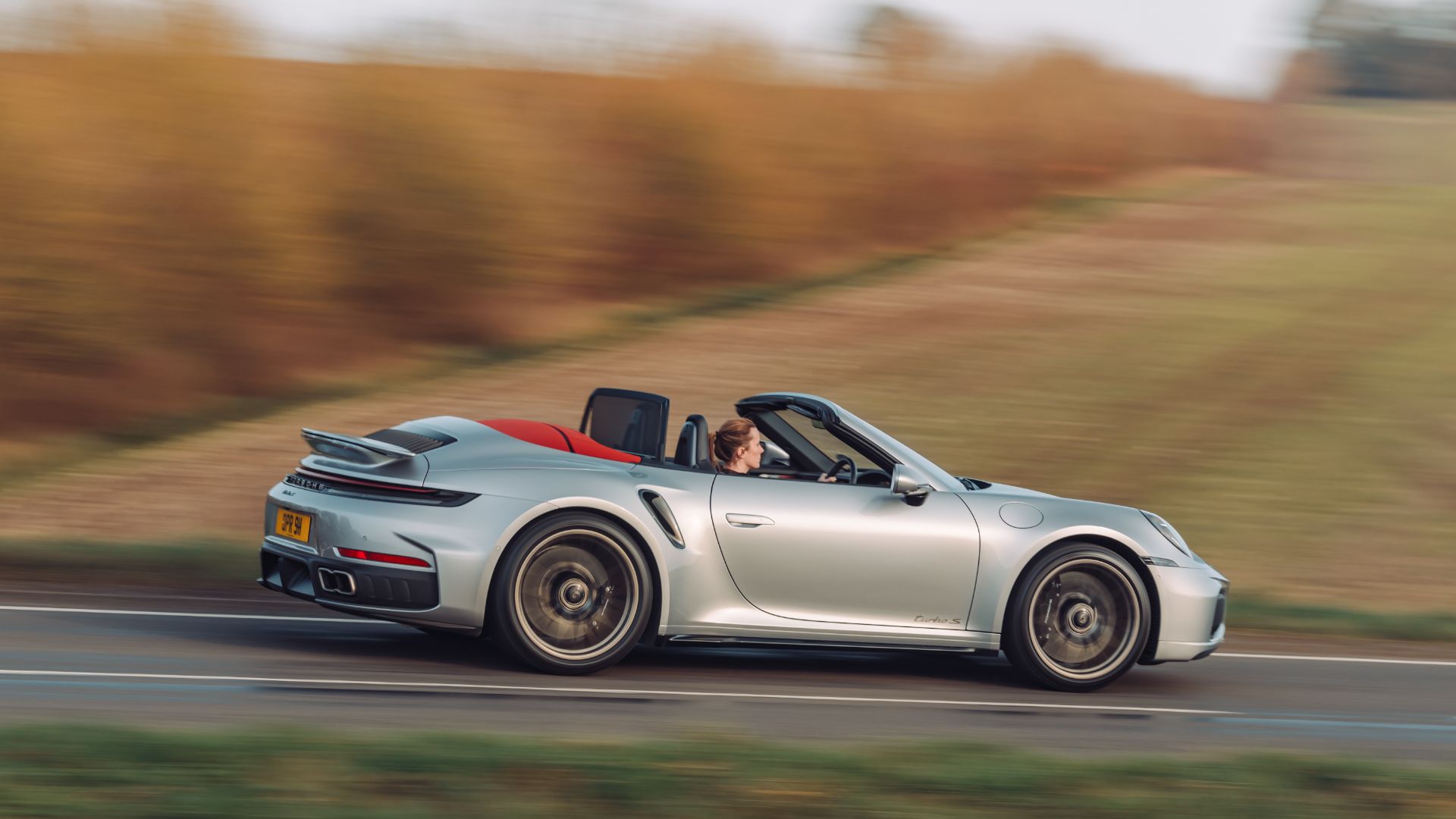
Is the Porsche 911 Turbo S a proper supercar? With 711 horsepower and a 0-62mph time of 2.5 seconds, how could it be anything else? The latest ‘992.2’ Turbo S (there is no longer a ‘base’ Turbo) is the first to go hybrid, combining a 3.6-litre flat-six with a 1.9kWh battery and 82hp electric motor. It’s blisteringly quick, yet also comfortable and refined enough to drive every day. Four-wheel-drive traction makes it capable in all weathers, too.
We recently drove the Turbo S Cabriolet (pictured above) and have the coupe booked in for next month. Both are heavy cars, at 1,810kg and 1,725kg respectively, but a new electro-hydraulic chassis control system ably disguises their weight. You’ll be glad of the enormous 10-piston carbon-ceramic brakes, too.
We said: ‘Given the original (930) 911 Turbo was famous for its waaaaait-for-it turbo lag, the contrast here couldn’t be greater. The electric eTurbos mean the throttle reacts with the wham-bam immediacy of a powerful EV. And the acceleration just keeps building from there.’
After more than 25 years, and eight generations, Porsche has finally made its track-focused 911 GT3 into a convertible.
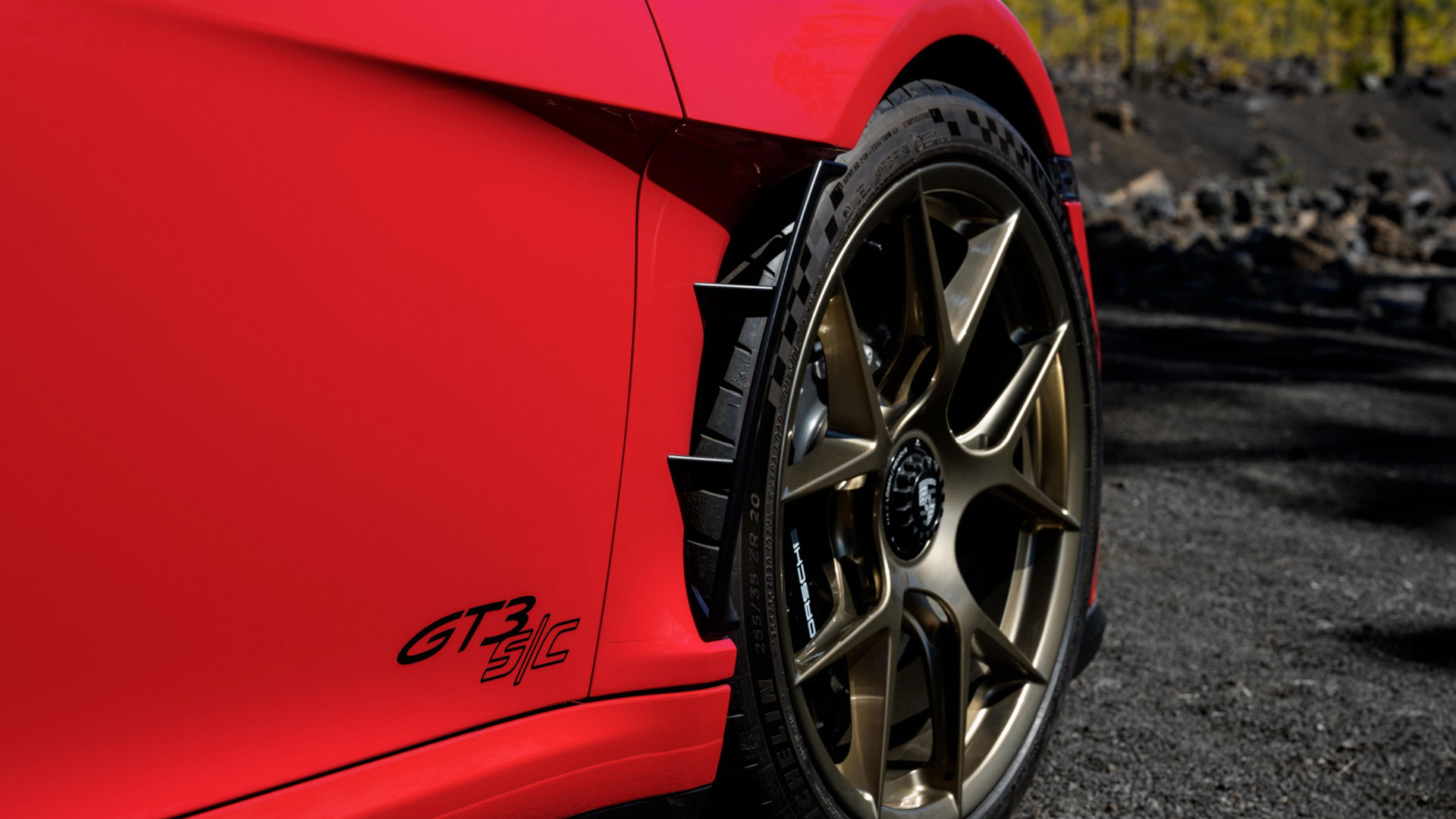
The new Porsche 911 GT3 S/C represents the first time the illustrious GT3 badge has been applied to a model without a fixed roof.
Driving the latest 992.2-generation 911 GT3 in the open air should make the wail of its naturally aspirated 4.0-litre flat-six even more visceral.
Frank Moser, head of the 911 and 718 model lines at Porsche, said: “The emotive powertrain of the 911 GT3 comes into its own even more emphatically when driving with the roof down on winding country roads”.
Maximising the level of driver involvement, the 911 GT3 S/C comes equipped solely with a short-ratio six-speed manual gearbox.
GT3 S/C is only 35kg heavier
Creating a convertible typically involves adding weight, which works against the established 911 GT3 ethos. To offset this, Porsche has used components from the limited edition 911 S/T, with the car’s bonnet, wings and doors all made of carbon fibre.
The 911 S/T also donates its carbon fibre anti-roll bars, with standard PCCB carbon-ceramic brakes helping to shave more weight. Magnesium centre-lock alloy wheels reduce rotating mass, plus there are magnesium components within the lightweight folding roof.
Porsche has even gone so far as fitting a compact 40Ah lithium-ion battery, which saves 4kg compared to the standard item.
All of these weight-saving efforts result in the 911 GT3 S/C tipping the scales at 1,497kg: only 35kg heavier than a 911 GT3 in coupe guise.
Open-air fun at 9,000rpm
The 4.0-litre flat-six engine is carried across directly from the 911 GT3 coupe, which means 510hp and 332lb ft of torque.
Despite the requirement for sound-stifling exhaust gas particulate filters to be fitted, Porsche promises the 911 GT3 S/C will deliver an ‘emotionally engaging soundscape that is significantly intensified when the roof is down’.
Working the six-speed manual ‘box can see the S/C accelerate from 0-62mph in 3.9 seconds – the same as its fixed-roof sibling. Top speed is a breezy 194mph.
“We have already learned with the 911 Speedster and the 718 Spyder RS just how well our high-revving naturally aspirated engine, a particularly dynamic chassis setup and thorough lightweight construction combine to create a true driver’s car without a roof,” said Andreas Preuninger, head of Porsche GT cars.
More lightweight materials inside
Unlike other high-performance 911 convertibles, such as the Speedster models, the GT3 S/C does not feature a ‘double bubble’ rear deck. As a result, Porsche has been able to fit the power-folding roof from the regular 911 convertible.
This can be opened or closed in 12 seconds, and operates at speeds of up to 31mph. There is also a power-operated wind deflector, which deploys in just two seconds when required.
More weight-saving can be found inside the 911 GT3 S/C, including lightweight carpets and carbon fibre door pulls. Four-way adjustable sports seats are fitted as standard, with carbon fibre buckets on the options list.
Black leather is used for the upholstery, with the steering wheel wrapped in perforated leather.
New GT3 S/C ready to order now
For those who want a more individual look, Porsche offers the 911 GT3 S/C Street Style Package. Priced at £24,110, it brings unique detailing for the exterior, including Pyro Red decals and wheels finished in Slate Grey Neo.
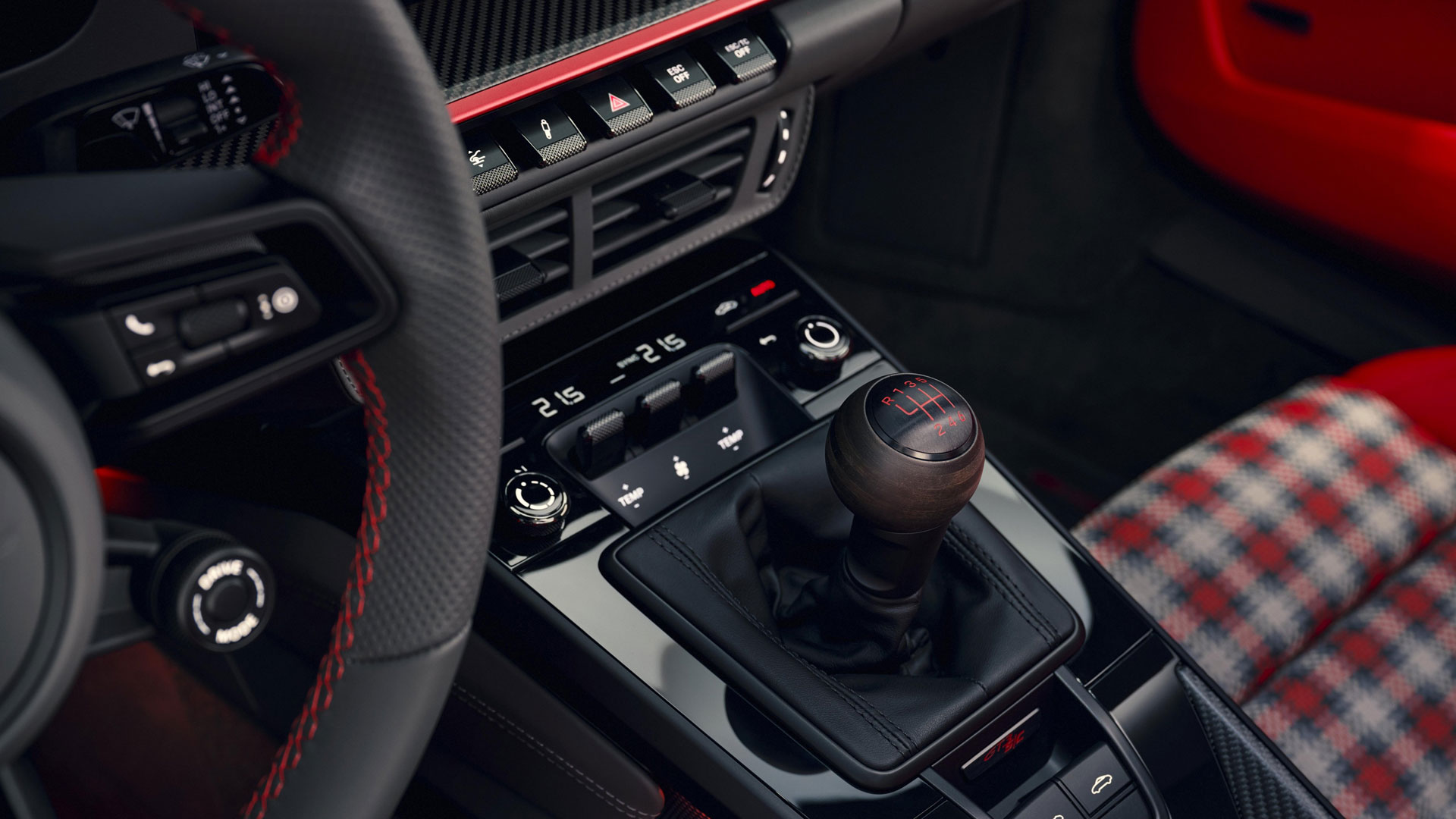
Four-tone braided leather is used for the sports seats, while the shift lever features an open-pore laminated wood gear knob with Pyro Red detailing.
As has become tradition, Porsche Design has also created a £10,600 chronograph wristwatch, which is available exclusively to owners of the 911 GT3 S/C.
UK prices for the 911 GT3 S/C start at £200,500, and Porsche dealerships will accept orders now. A driving day at Porsche’s Silverstone experience centre is included, too.
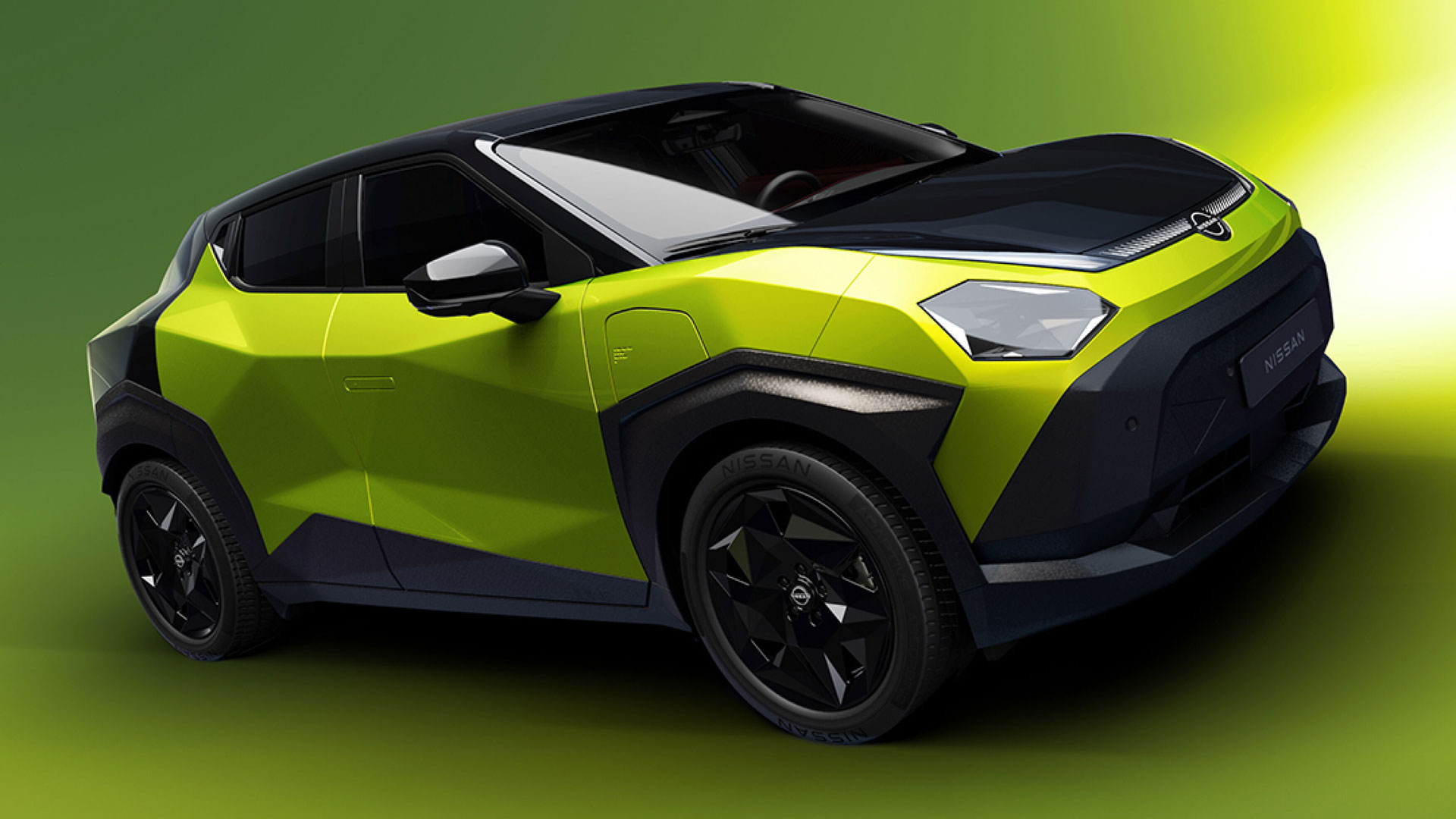
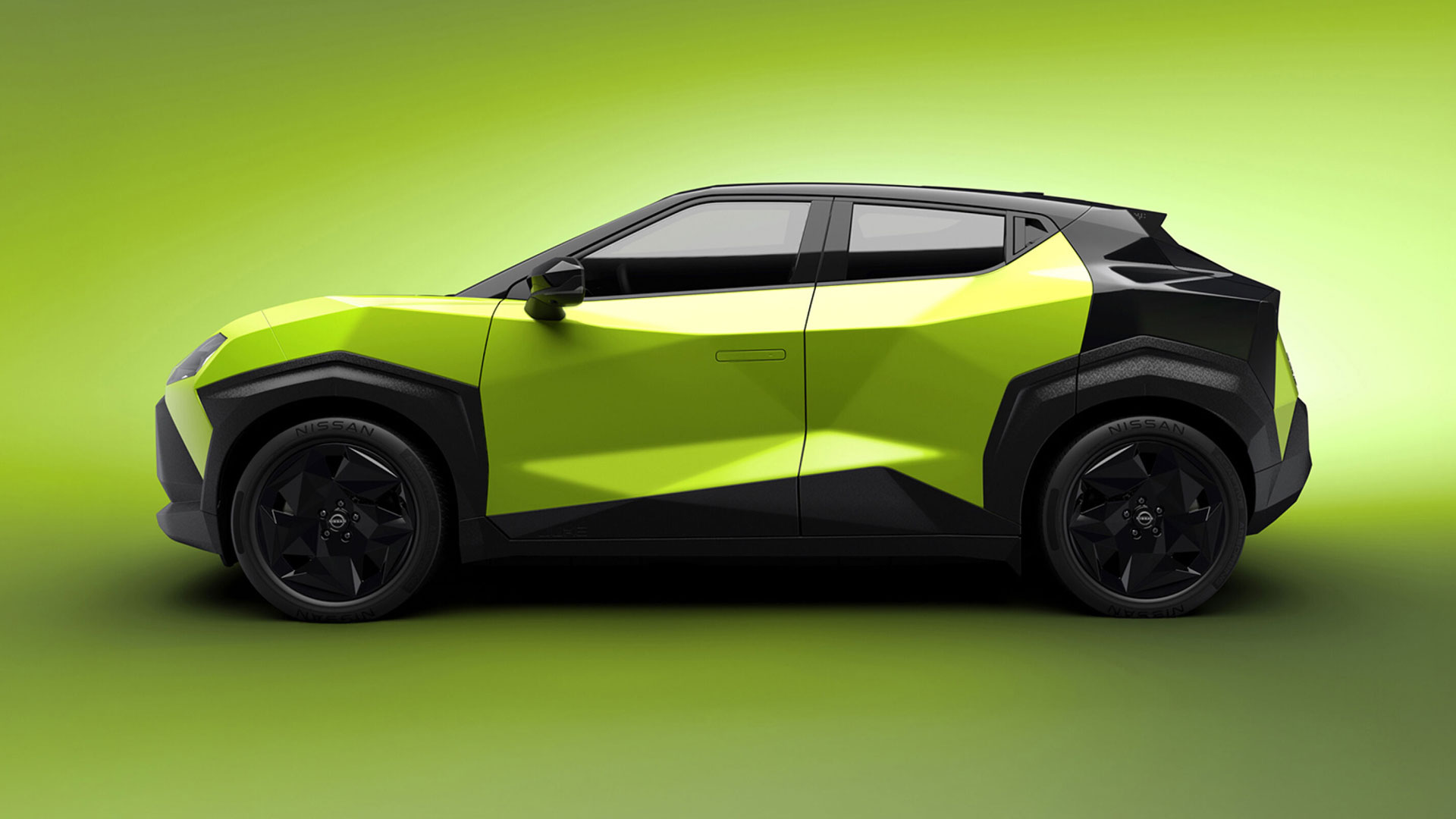
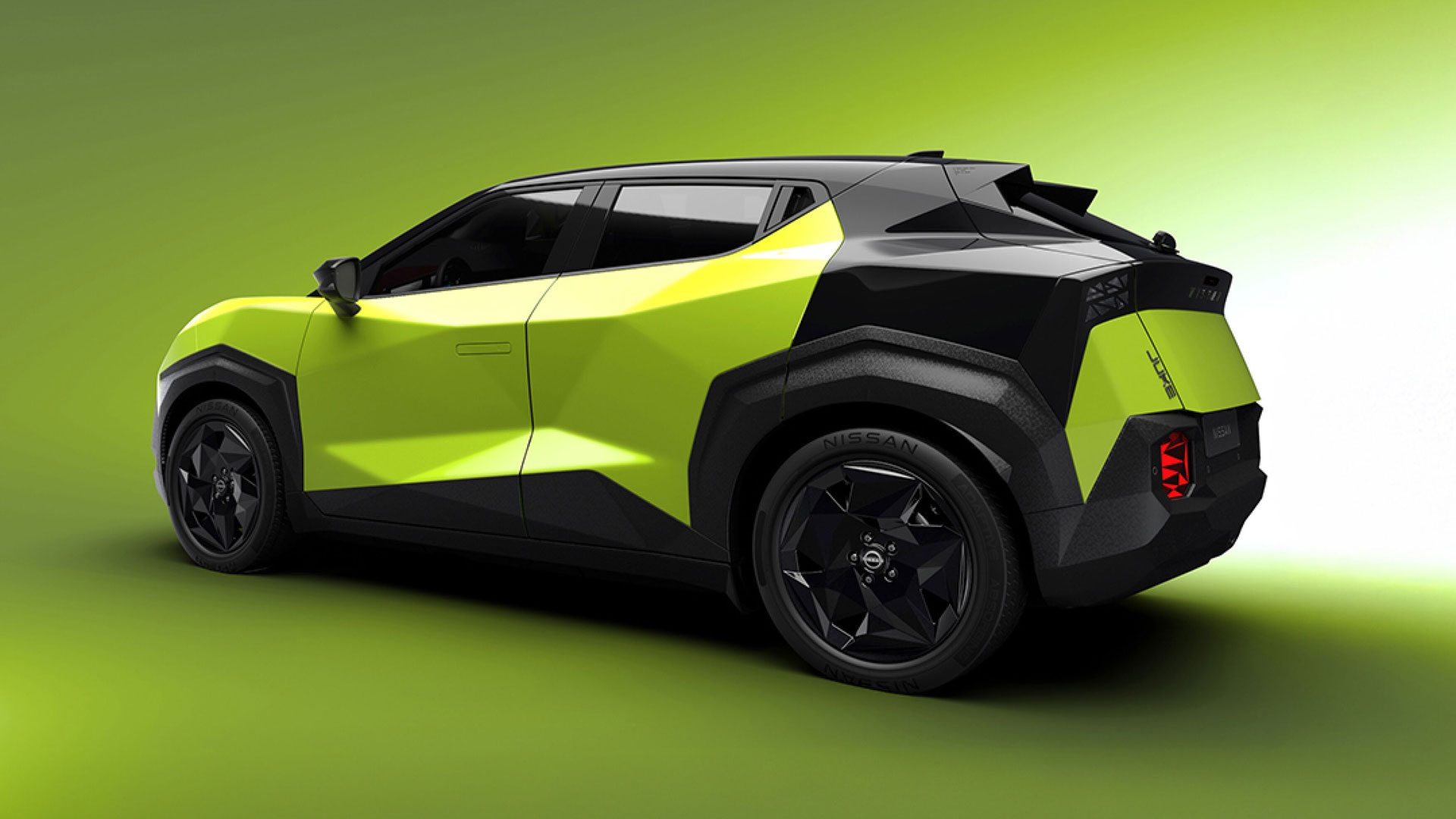
Nissan has unveiled the first images of its third-generation Juke compact SUV – and it looks bolder than ever.
When the original Juke hit the roads back in 2010, it caused a stir with its styling, resembling a radical concept car that had just been driven off the show stand.
It helped the Juke become one of Nissan’s best-selling models in the UK. However, the polarising styling of the original Juke was toned down for the second-generation car, introduced in 2019.
The radical Juke is back for this third incarnation, though, with design inspired by the Hyper Punk Concept car displayed at the 2023 Japan Mobility Show.
Even so, perhaps the biggest shock is that the Nissan Juke will now be fully electric when sales start in 2027.
Juke to be built in Sunderland
Although Nissan has offered hybrid-powered versions of the current, second-generation Juke, the switch to being entirely electric marks a major change for the crossover.
The new Nissan Juke will make use of the CMF-EV platform, which also underpins a host of vehicles from the Renault-Nissan-Mitsubishi alliance.
These include the third-generation Nissan Leaf, which will be built alongside the new Juke at the Japenese company’s factory in Sunderland.
Nissan has not shared details of the new Juke’s powertrain yet, but sharing the same 52kWh and 75kWh battery packs as the Leaf seems likely.
Continuing to build the Juke on Wearside is a strong endorsement of the Sunderland facility, which has assembled the two previous generations of the car.
The first trial phase of Juke EV production is expected to begin in the coming weeks.
‘Challenging convention’ in the EV age
Nissan chose its ‘Vision Event’ in Japan to reveal the first images of the third-generation Juke, presenting it as part of a long-term focus on technical innovation.
“Juke has always stood for bold design and a willingness to challenge convention. With this third generation, we are bringing that spirit into the electric age,” said Clíodhna Lyons, regional vice president for brand and marketing at Nissan.
“As our first fully electric Juke, it will help us reach new customers while expanding choice across our electrified range.”
The Juke will form part of Nissan’s expanded EV lineup, which includes the Micra supermini, third-generation Leaf, Ariya SUV and a forthcoming electric city car.
Following the start of production, the new Nissan Juke will officially be launched in spring 2027.