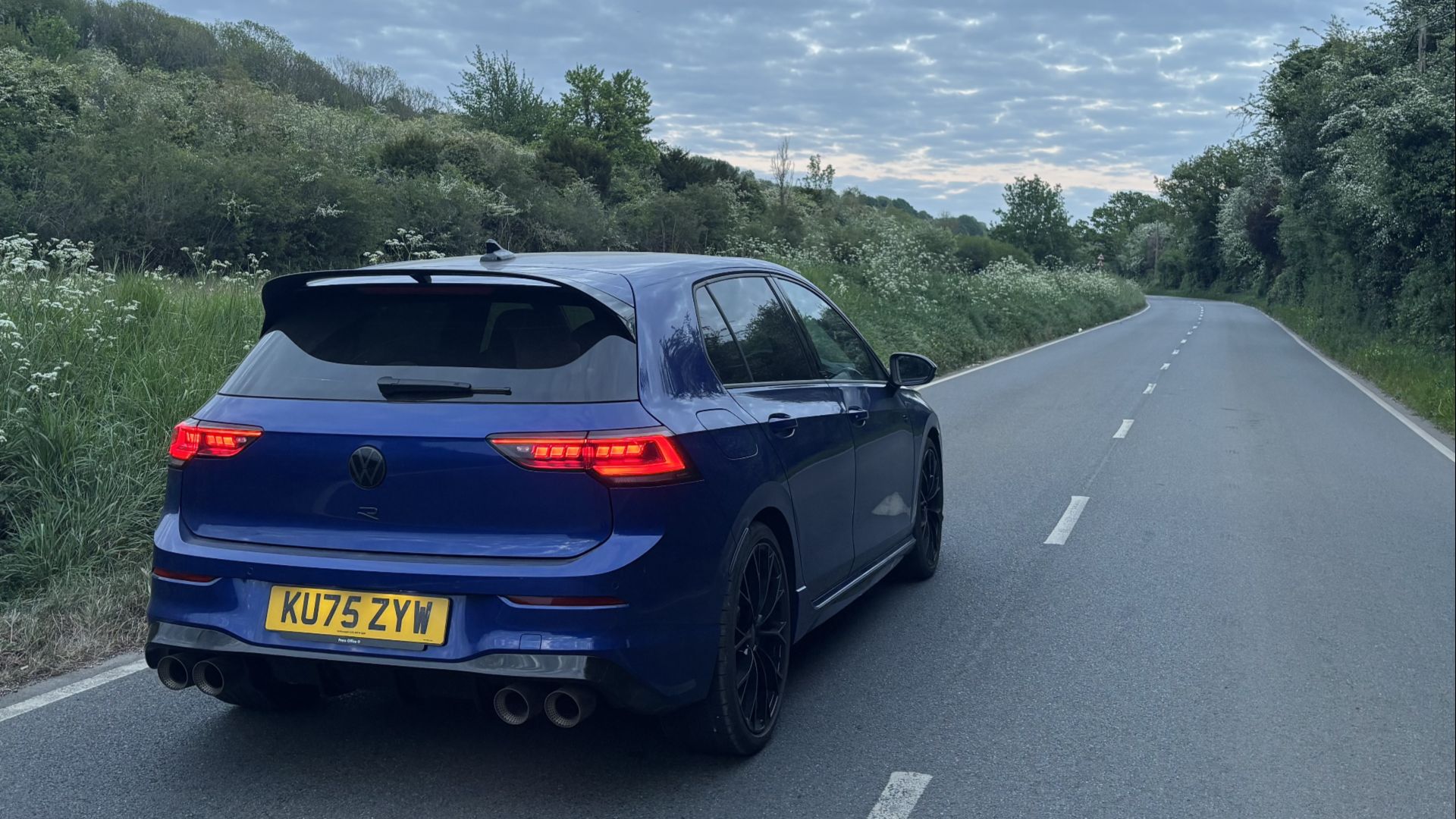
When I first enquired about running a Golf R, I expected this to be a swansong of sorts. The eighth-generation VW Golf was to be the last, we were told, as the electric ID.3 filled the family hatchback-sized hole in the Volkswagen range.
Thankfully, reports of the Golf’s demise were a little premature. Volkswagen had a change of heart, deciding it was better not to abandon the model names people know and love. The ‘ID.’ prefix would now denote versions with battery power, as with the new Polo and electric ID. Polo. So yes, a ninth-generation Golf and ID. Golf are coming down the tracks.
Does this mean the flagship Golf R will live on? Almost certainly. However, there’s a strong possibility, like the forthcoming Polo GTI, that it could be reinvented as an EV. So this petrol ‘R’ might still mark the end of an era.
All of which brings us back to the question I posed previously: should you buy a Volkswagen Golf R while you still can?
More fuel, less luggage
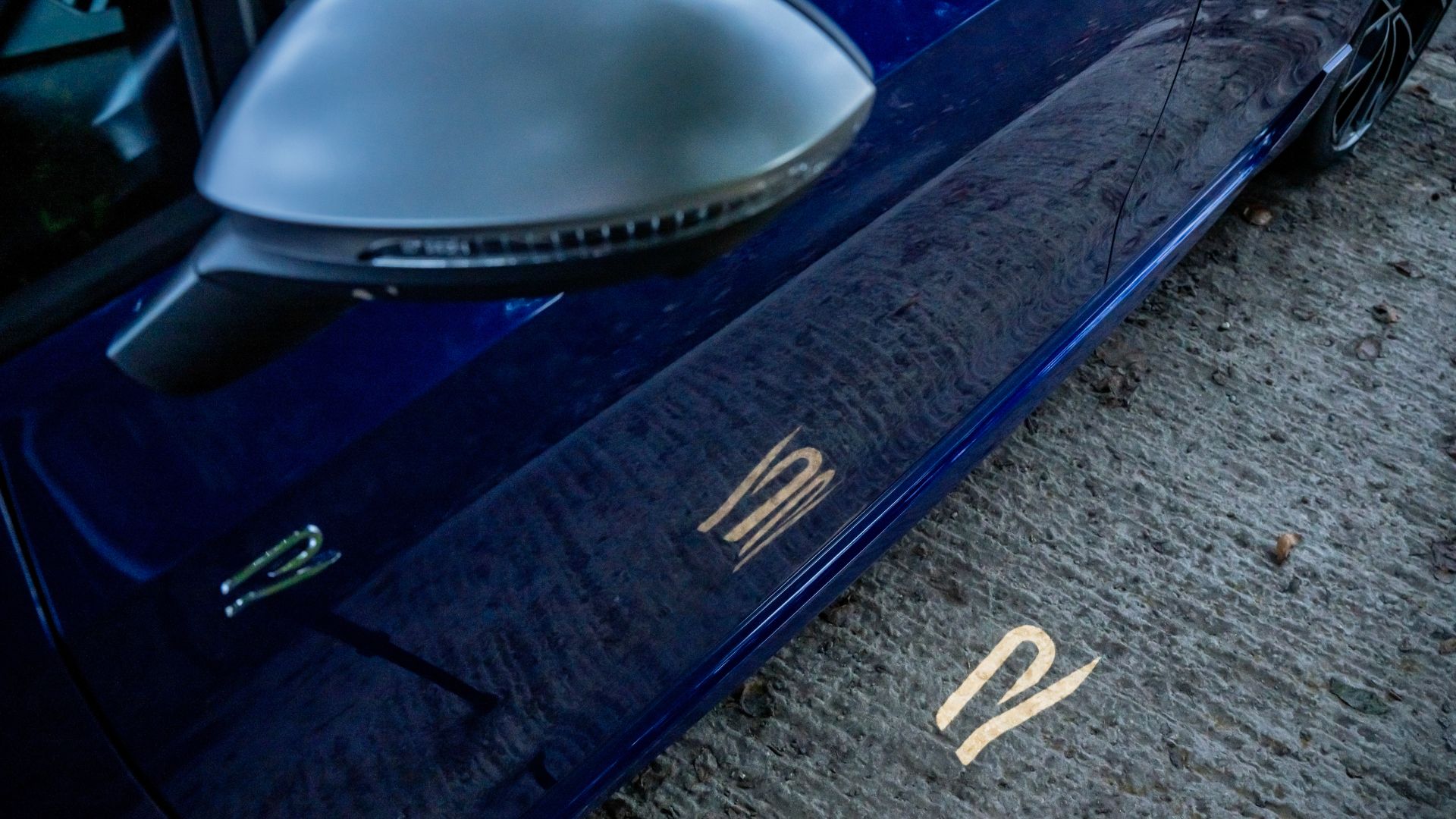
My first long-term test report (see below) dusted off the history of Volkswagen’s flagship ‘R’ badge, then the second update (also below) focused on how the Mk8 Golf R drives.
For this third and final instalment, I’ll discuss how the car was to live with as a daily-driver. From school runs to racking up motorway miles, KU75 ZYW did it all.
Let’s deal with the practical stuff. If you’re used to driving A.N. Other mid-sized crossover, you might find the Golf on the small side for a family car. This is exacerbated by the 4Motion four-wheel-drive system, which eats into boot space, shrinking it by 40 litres to 341 litres.
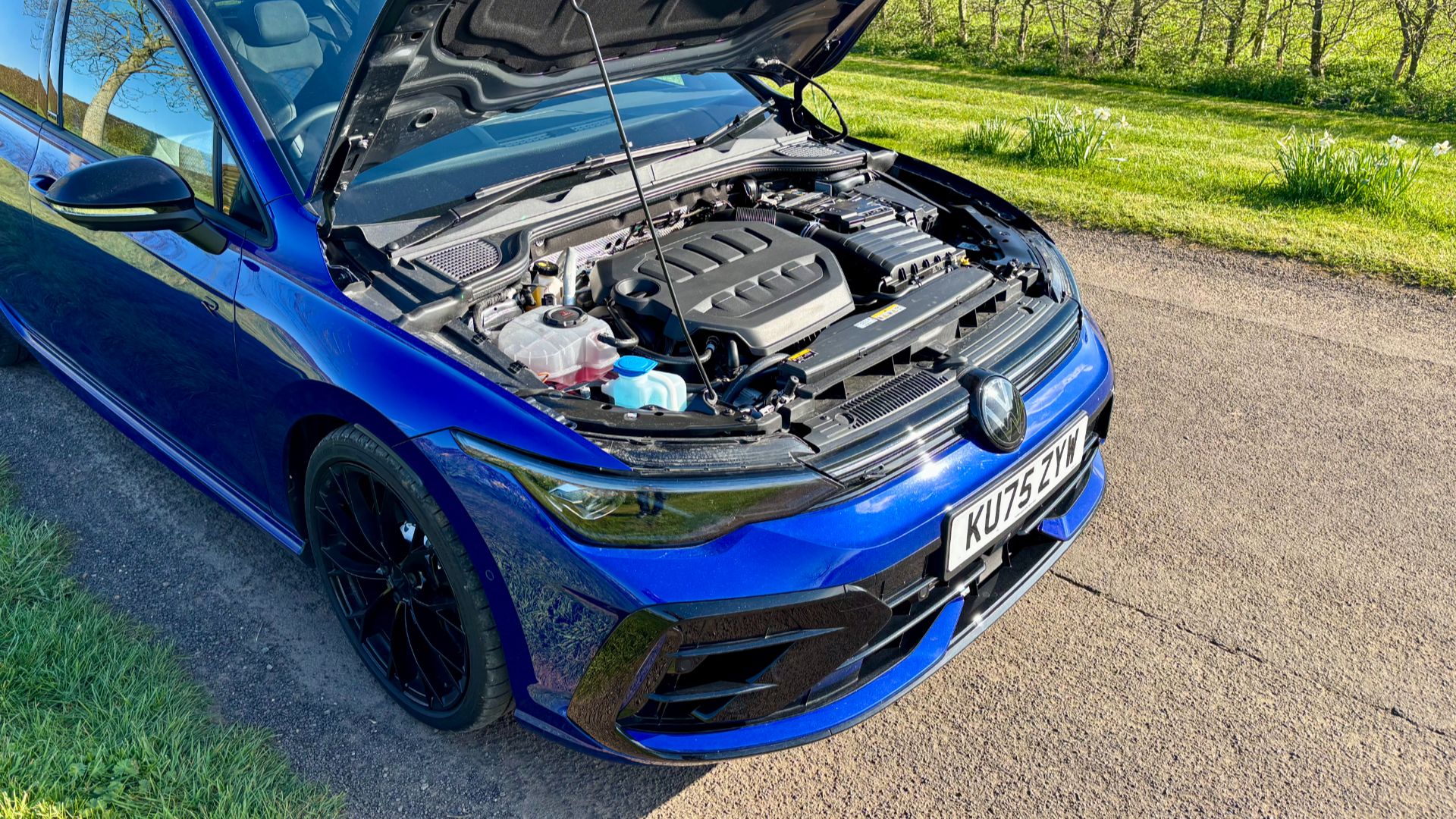
Fuel economy could be better, too. I managed 31.7 mpg overall, versus an official average of 34.5mpg, but the numbers dropped into the mid-20s when stop-starting around town. Fill the 55-litre tank with super unleaded, as per Volkswagen’s recommendation, and this 333hp hatch won’t be cheap to run.
That said, group 34E insurance (out of 50 groups in total) is lower than I had expected. And the ‘R’ still resides at the more affordable end of the performance car spectrum.
Inside the Volkswagen Golf R
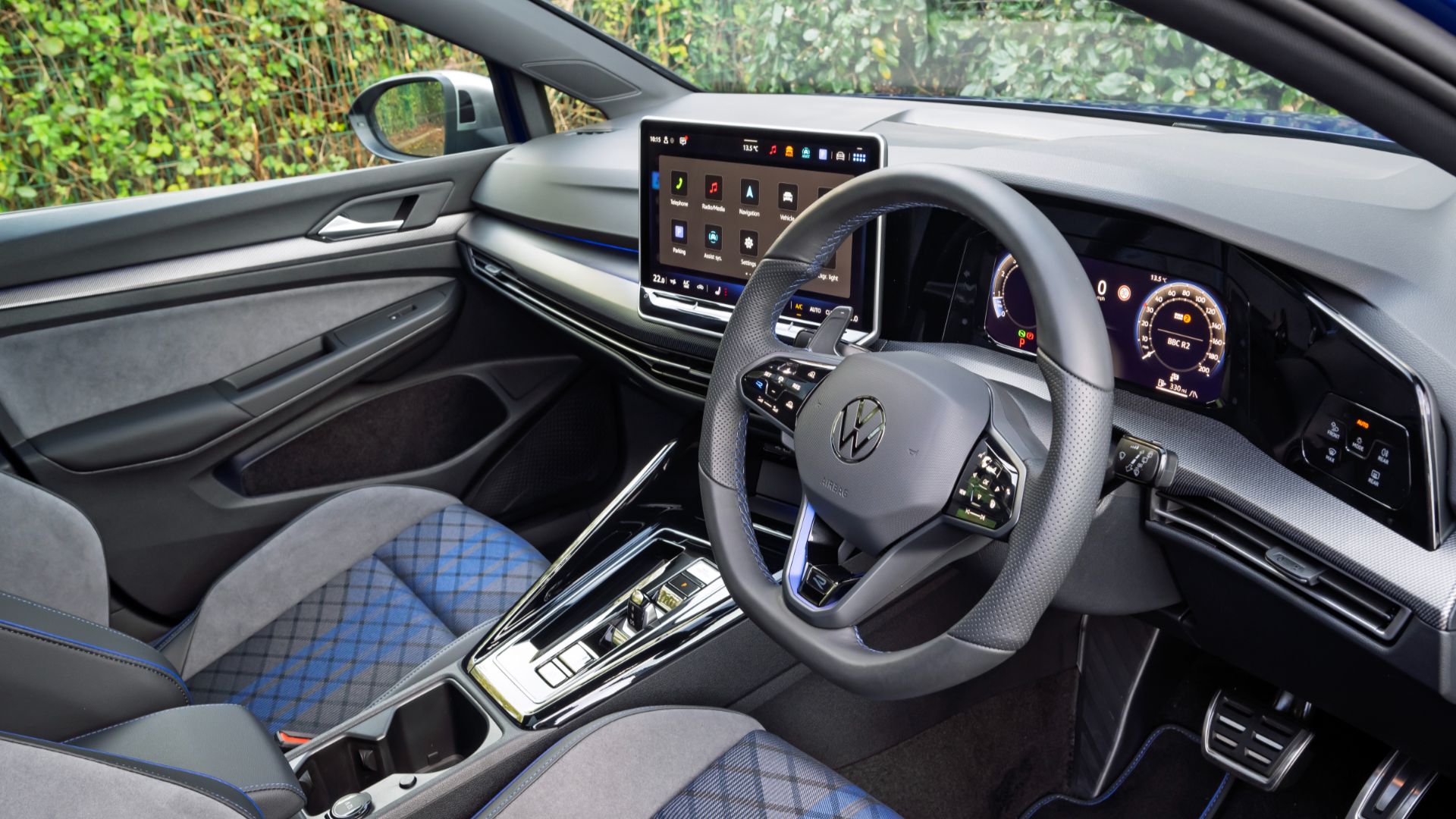
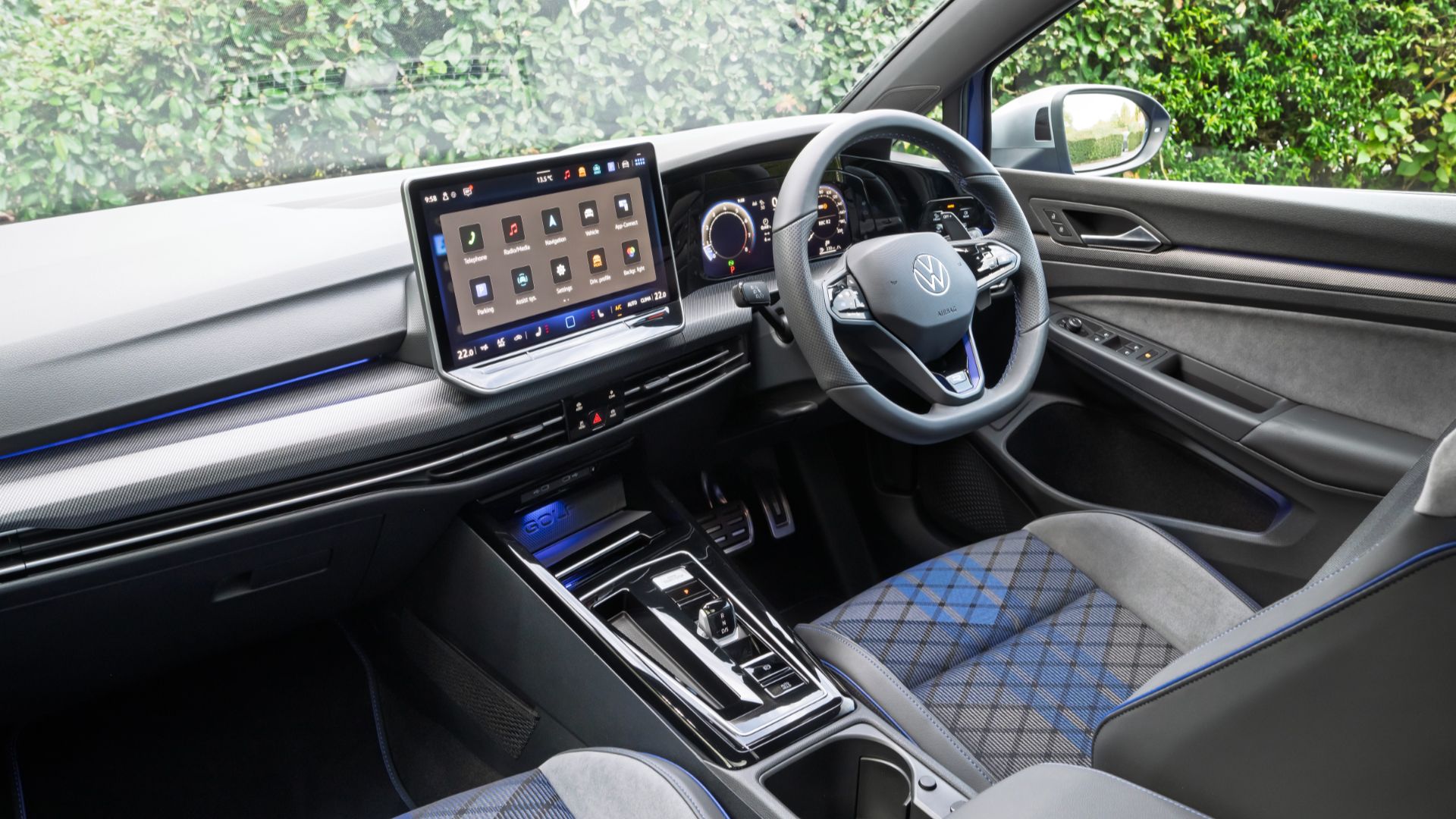
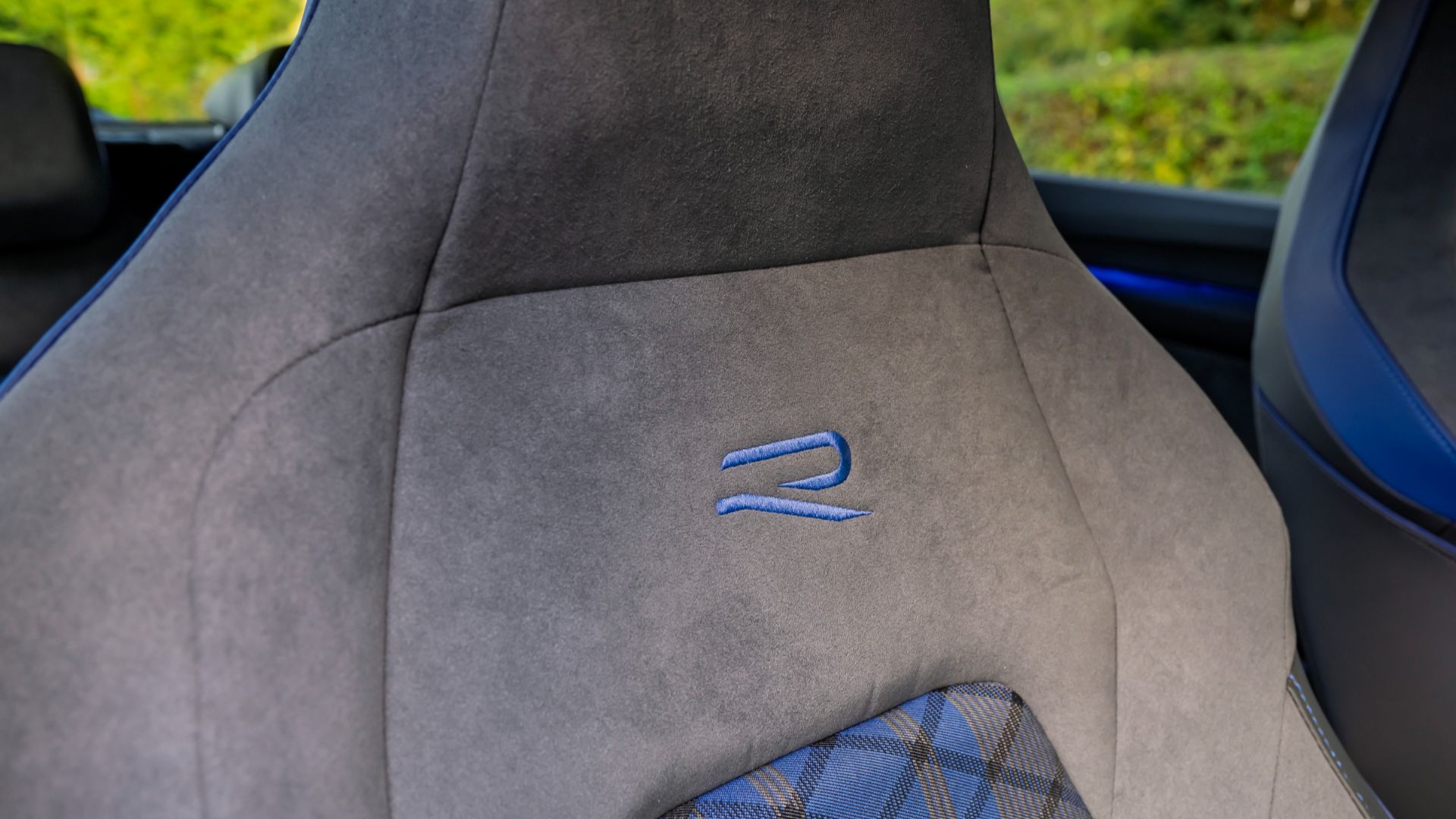
Inside, the Golf offers a very configurable driving position and nicely supportive bucket seats. I prefer their grippy ‘microfleece’ fabric to leather trim, too.
Many words have been written about the Mk8 Golf’s woeful infotainment, so I won’t reopen old wounds here. Suffice to say it was much improved after the mid-life ‘Mk8.5’ update, introduced in January 2024 – and as tested here.
Indeed, I found the latest system quick to respond and intuitive to navigate. I also connected my phone quickly and reliably using Apple CarPlay. My only ongoing gripe is with the haptic controls on the steering wheel spokes, which are fiddly and easy to activate by mistake.
In contrast to reports of earlier cars, it’s also worth saying the software in ‘my’ Golf was glitch-free. All I’d ask is for an easier, one-touch way to turn off the lane assist and speed limit bongs that are, regrettably, mandated in every modern car.
Masterful at making progress
Not that I was speeding everywhere, you understand, but when you do want to ‘make progress’, few cars do so as effectively as a Golf R. Despite the showboating Drift mode introduced for this Mk8 version, this car’s forte is covering ground in a fast and fuss-free manner.
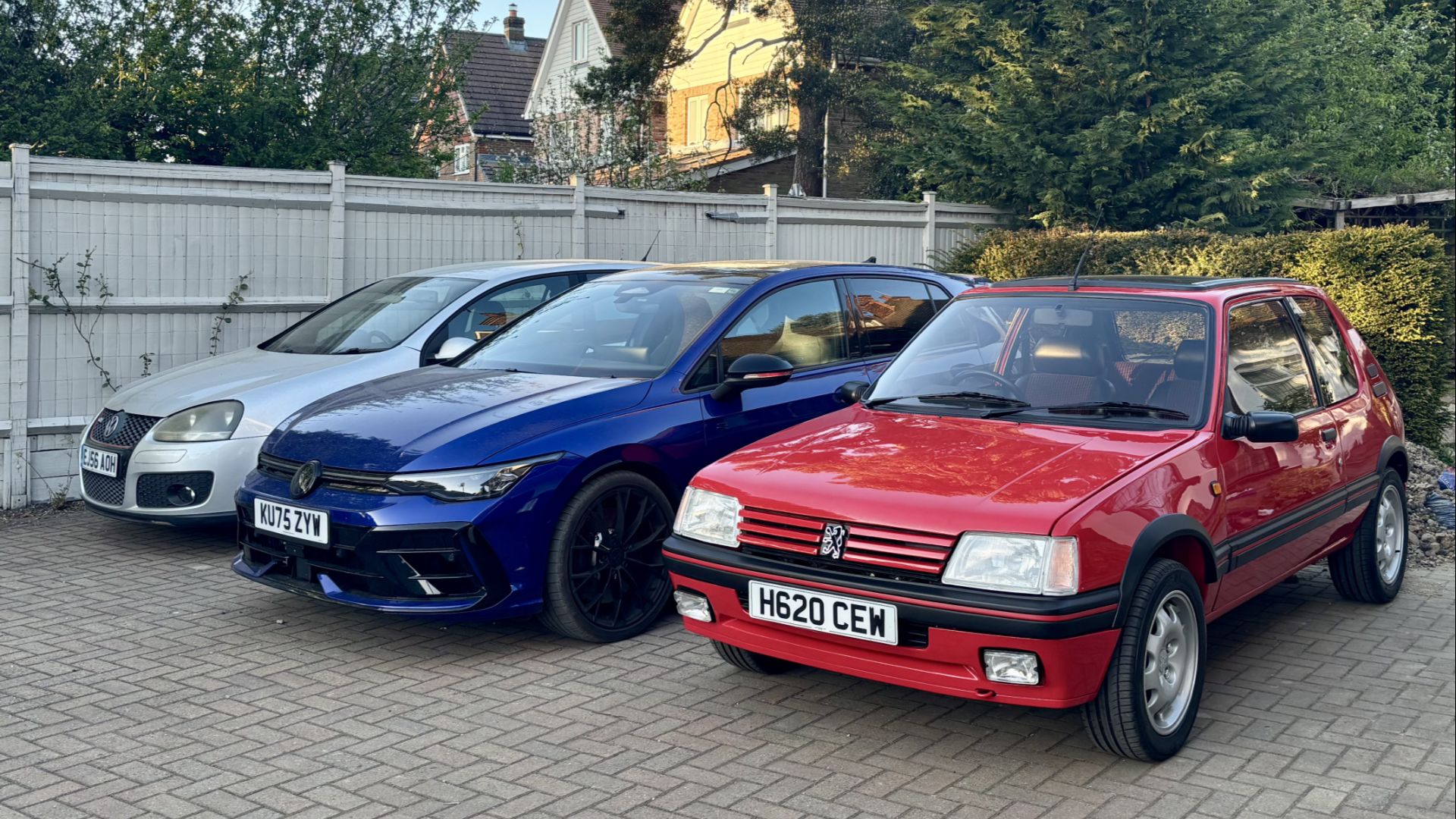
At times, the VW feels a bit too competent for its own good, something brought into sharp focus when I borrowed an immaculate Peugeot 205 1.9 GTI restored by Auto Rara (pictured above). Despite having little more than a third of the Golf’s output, the classic 205 felt energetic and exuberant where the ‘R’ seemed coolly efficient.
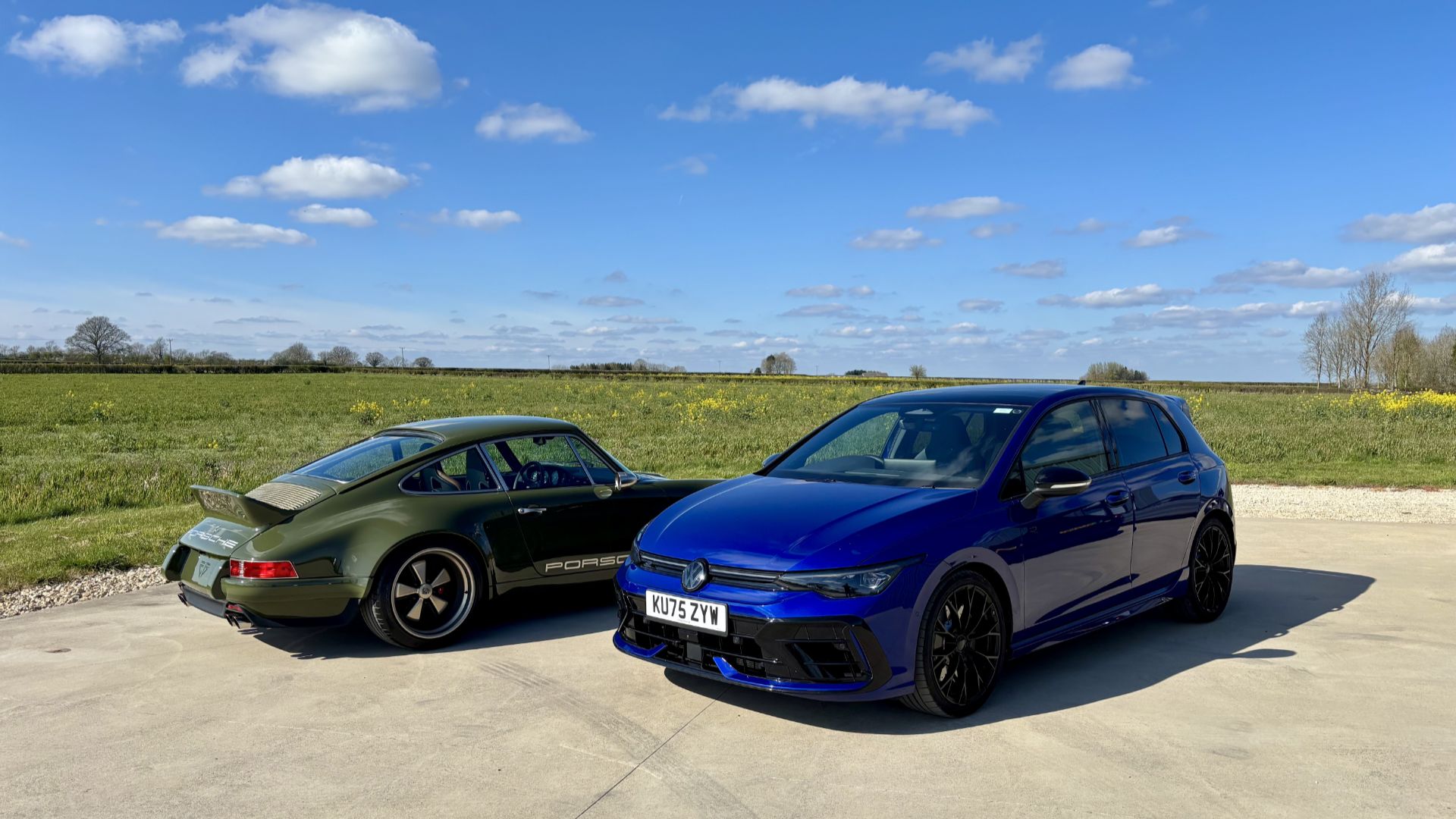
Then again, few people would choose to daily-drive a 205 GTI in 2026, and the ‘R’ worked its way into my affections over time. Whatever else I’d been road-testing that day, from a restomod Porsche 911 to the latest Chinese SUV, it always felt reassuring to climb back into my long-termer. Because, let’s face it, most of our journeys aren’t on the kind of roads where a hot hatchback can really shine. And when it isn’t going fast, the ‘R’ does an excellent job of just being a Golf. More than 37 million owners can’t be wrong, right?
A magnet for have-a-go heroes
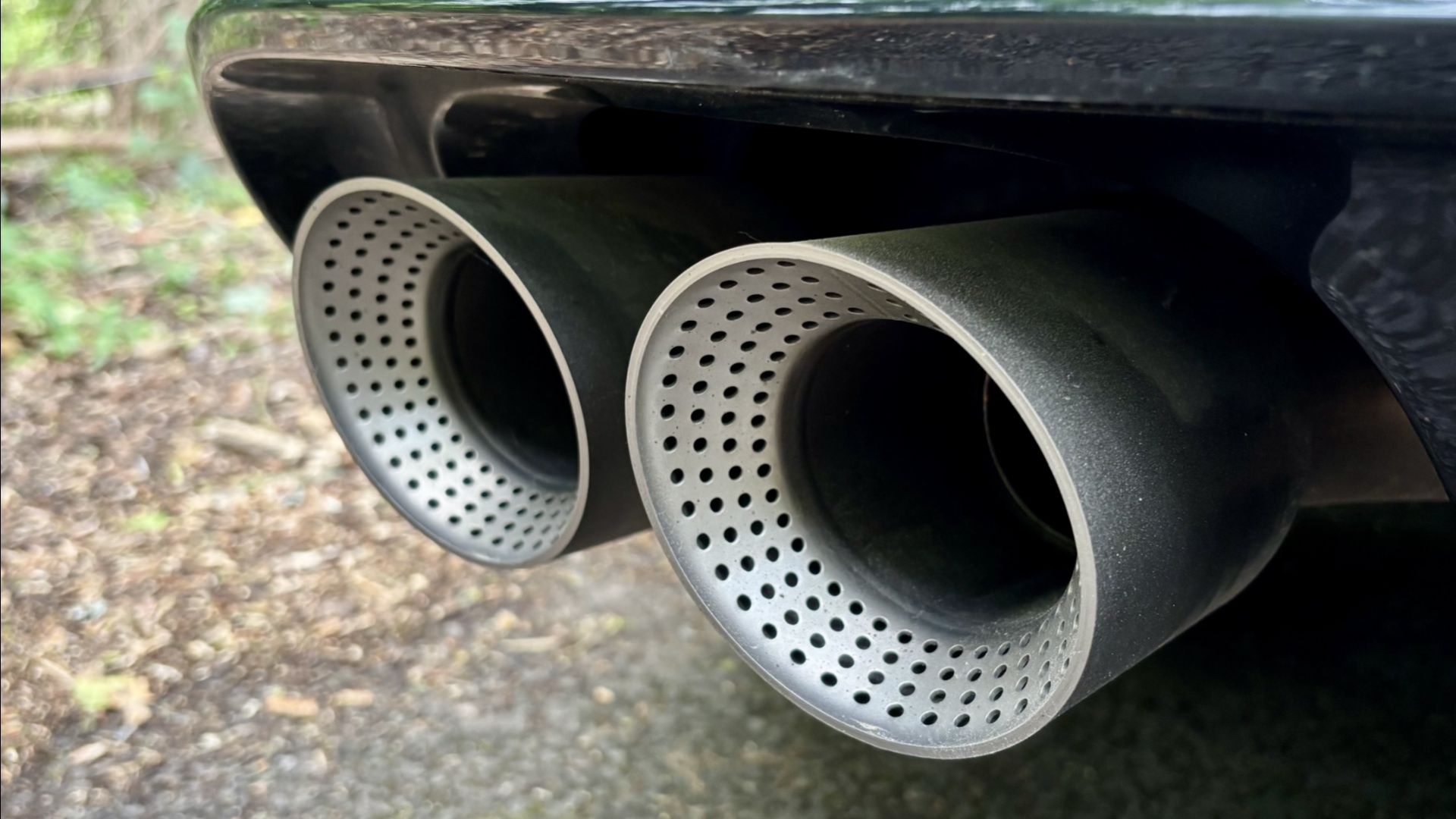
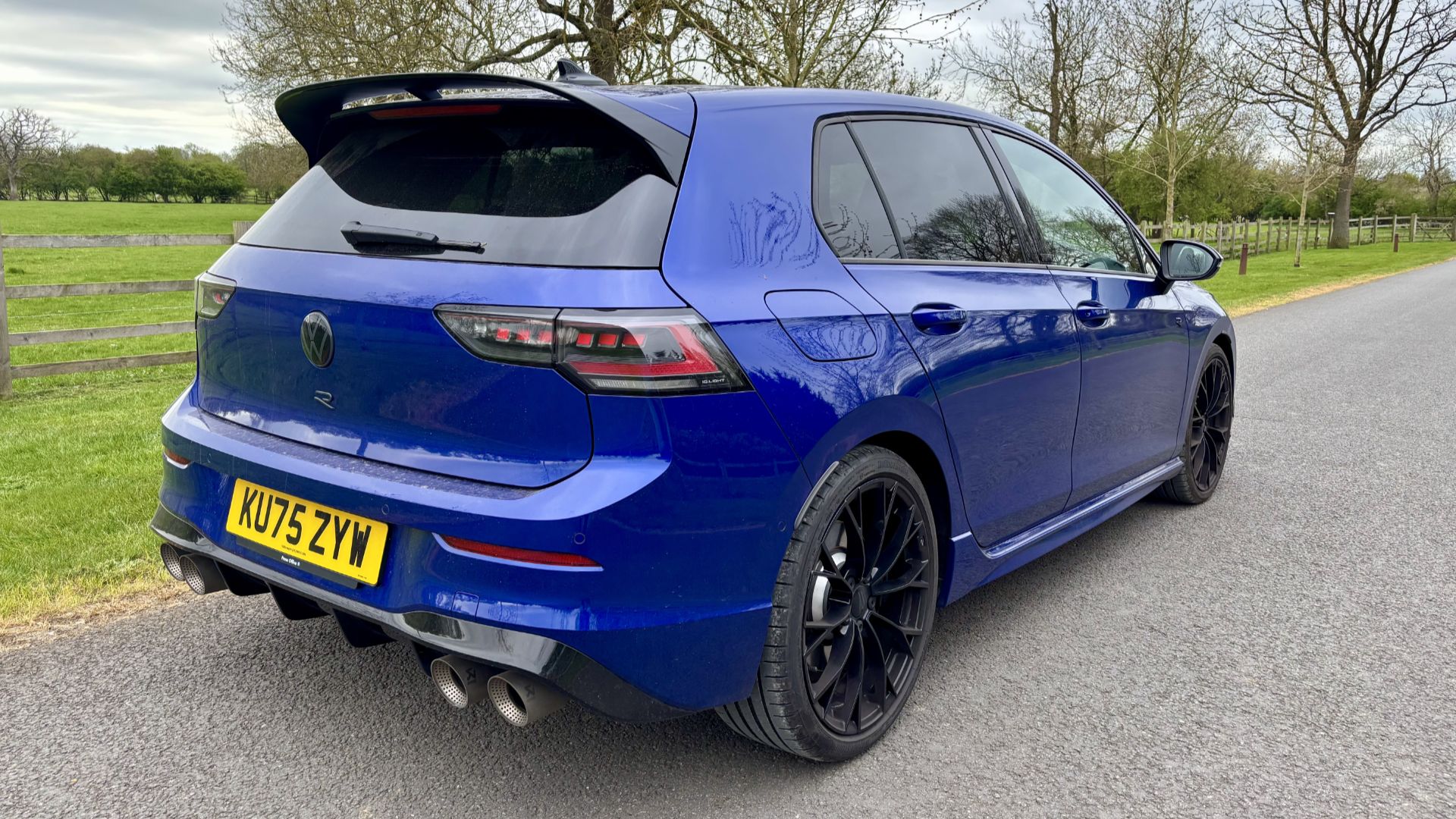
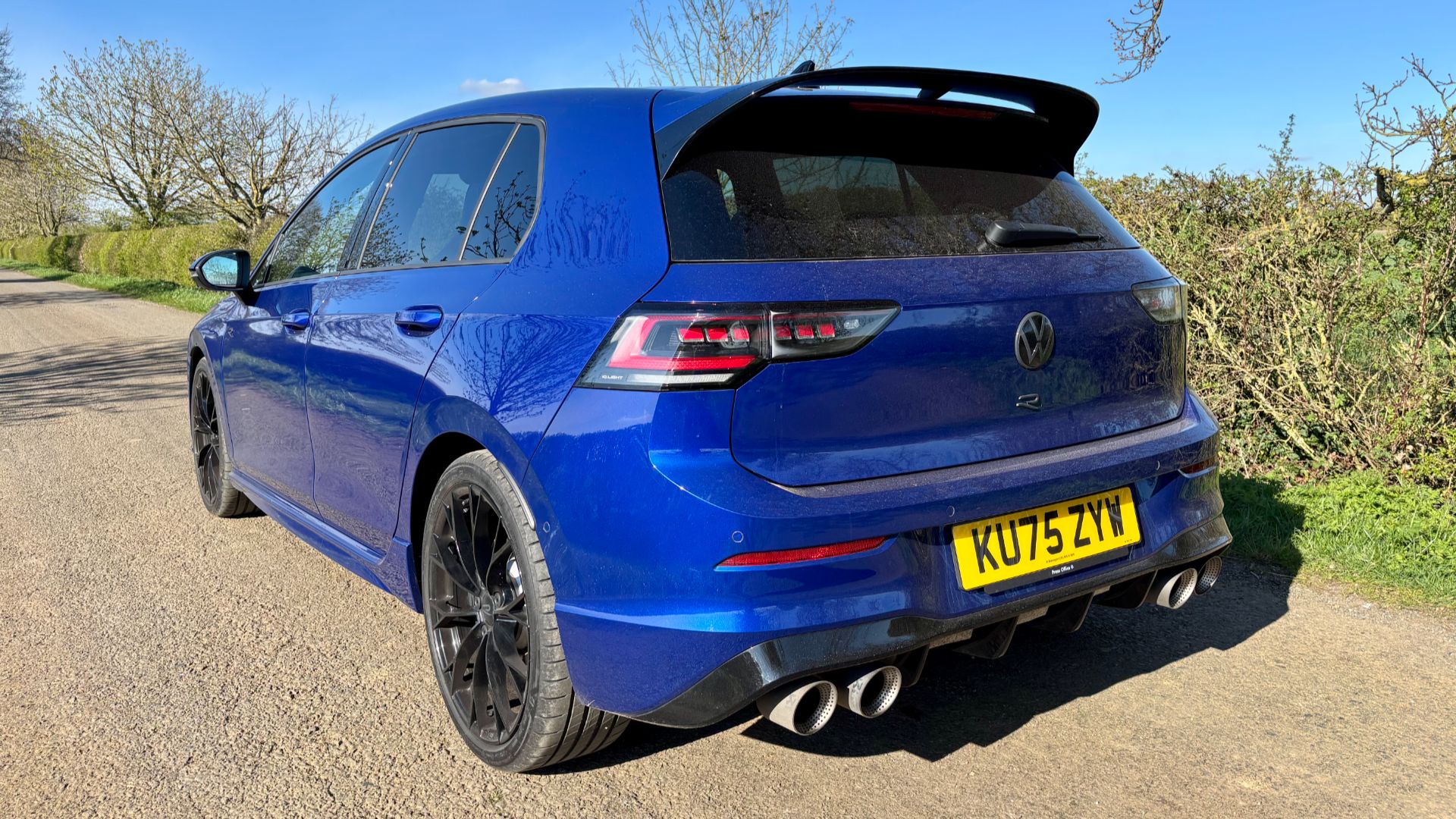
Even in dark-and-moody Black Edition spec, as seen here, the Golf R looks quite subtle – especially when parked alongside a Honda Civic Type R or Mercedes-AMG A45 S. Nonetheless, perhaps because of its trademark ‘R’ Lapiz Blue paint or big-bore Akrapovic exhaust (which looks meatier than it sounds), the Golf did attract a certain kind of attention. Put simply, it feels like every other hot hatch owner wants to race you.
At times, such as when I chased an Alpine A290 GTS along a brilliant B-road, this rivalry is quite enjoyable. At others, like when I was cruising calmly on the M25, it could be annoying. Interestingly, I’ve rarely experienced the same reaction to a Golf GTI, whether it be my own Mk5 or the Mk8.5 GTI I tested in 2024.
The comparison with the GTI is a critical one, as the Golf R’s sibling also feels, in some respects, like its closest competitor. Is the ‘R’ worth the £5,000 premium? Unless you really want or need four-wheel drive, I’d argue not. Yes, the GTI is slower, but it’s also lighter and more engaging to drive.
As a serial Golf GTI owner, I’m also a sucker for red go-faster stripes, tartan seats and the iconic status of the GTI badge. From my (very subjective) standpoint, it seems to outshine the Golf R.
End of a long-term loan
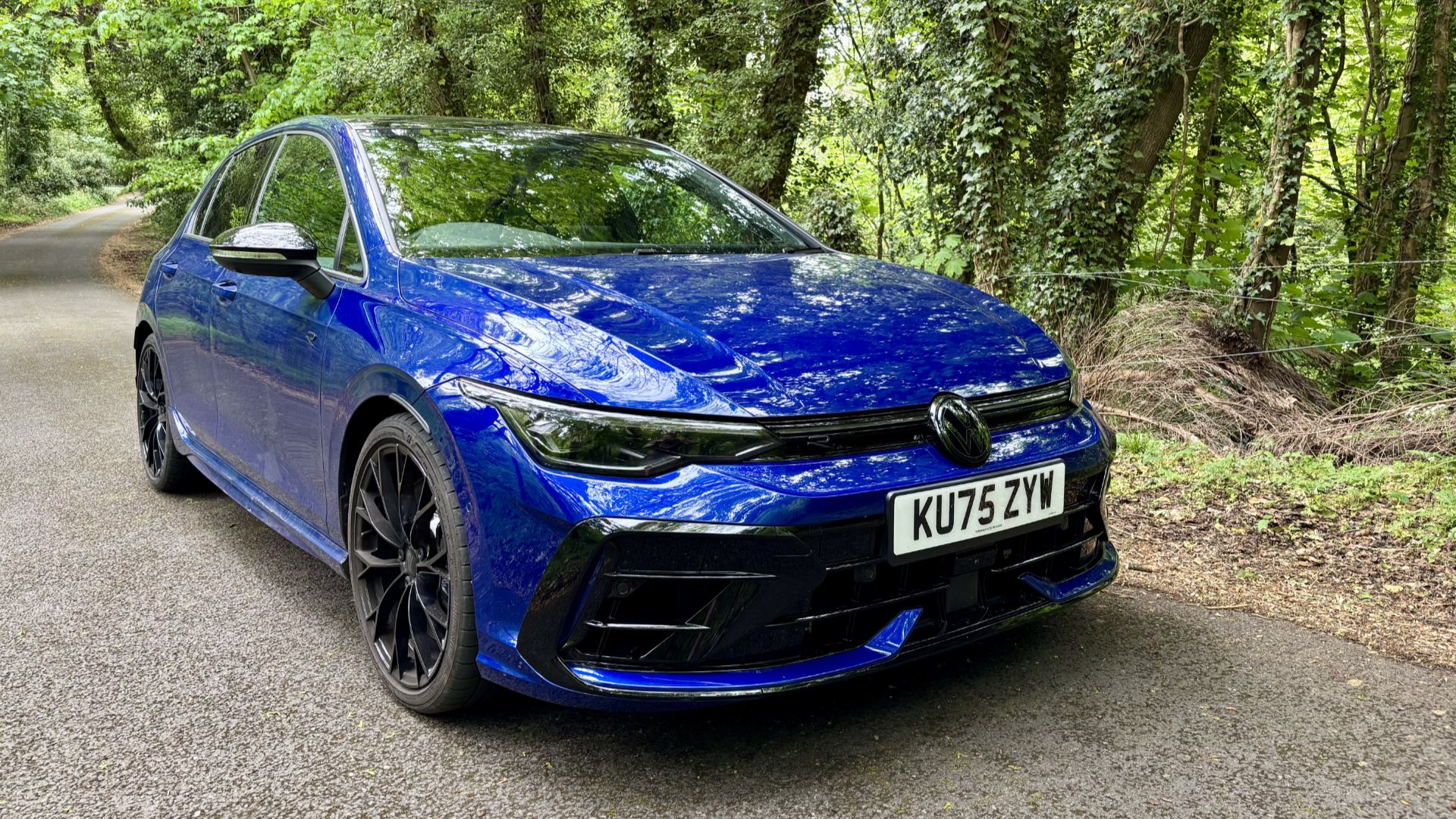
And so my time with the Volkswagen Golf R comes to a close. It’s fair to say this eighth-generation car didn’t scale the same heights as its brilliant Mk7 predecessor – and the high prices still asked for Mk7s suggest the market feels the same.
Nonetheless, the latest Golf is a well-rounded hot hatchback that fitted effortlessly into my life, and added a dash of excitement to even very mundane journeys. It’s expensive, at £46,930 (or a hefty £58,820 as tested here), but in a world where you can spend £50,000 on a Toyota GR Yaris, all things are relative.
I would happily have carried on living with the ‘R’ – and my car-agnostic partner felt the same. It’s a car that covers a lot of bases very well. Even if, in the final analysis, I’d rather have a new Golf GTI.
________________________________________________________________________
Volkswagen Golf R 2026 long-term review – second report
A decade ago, when its Mk7 predecessor roamed the roads, the Volkswagen Golf R faced a plethora of hot hatchback rivals. These included the Ford Focus ST and RS, Honda Civic Type R, Peugeot 308 GTI, Hyundai i30 N and Renaultsport Megane. All have since been quietly euthanised and not replaced. The venerable Audi RS3 is living on borrowed time, too.
Today, the Golf R’s most obvious competitors are the BMW M135i, Mercedes-AMG A35 and the enemy within: its own Golf GTI sibling. Otherwise, Volkswagen’s hardcore hatch exists almost in a class of its own.
What is going on? Well, we can lay partial blame on the shift towards SUVs, with vehicles like the Cupra Formentor and Porsche Macan offering comparable performance in fashionably chunkier packaging. There’s also a growing number of electric alternatives, from the Alpine A290 to the Hyundai Ioniq 5 N.
Above all, however, traditional hot hatchbacks have become victims of legislation, such as tightening emissions targets and unrealistic EV sales quotas, which conspire to make these cars increasingly unprofitable and unviable. So, should you seize the moment and buy a Golf R while you still can? That’s what I am aiming to find out.
Tangled up in blue
In my first long-term report (scroll down to find it underneath this second one), I introduced KU75 ZYW and gave a potted history of R-badged Golfs, from the original Mk4 R32 of 2003 to the Mk8.5 R tested here. Next time, I will talk about what the car is like to live with, including such worthy matters as fuel economy and luggage space. This article, however, is all about how the Golf R drives.
Now, any car is only fun to drive when you actually drive it. That sounds like a statement of the bleedin’ obvious – and indeed it is – but many of the machines that motoring hacks gush about are rarefied, compromised, impractical or expensive. Frequently all of the above. A Golf R might not scale the emotional heights of a dedicated sports car, but the ability to use it year-round, for every conceivable journey and job, all while said sports car is tucked away in a garage, means the sum total of your driving enjoyment might actually be more.
I accept that’s an odd way of looking at things, as if driving fun can somehow be quantified and totted up over time. Yet the longer I spend with the Golf R, the more I appreciate its sheer usability. Most of the time, it just fits calmly and inoffensively into daily life. But that little blue ‘R’ button is always there, glowing beneath your left thumb on the steering wheel spoke, waiting for the moment when you can bring this simmering hot hatchback to the boil.
A complex character
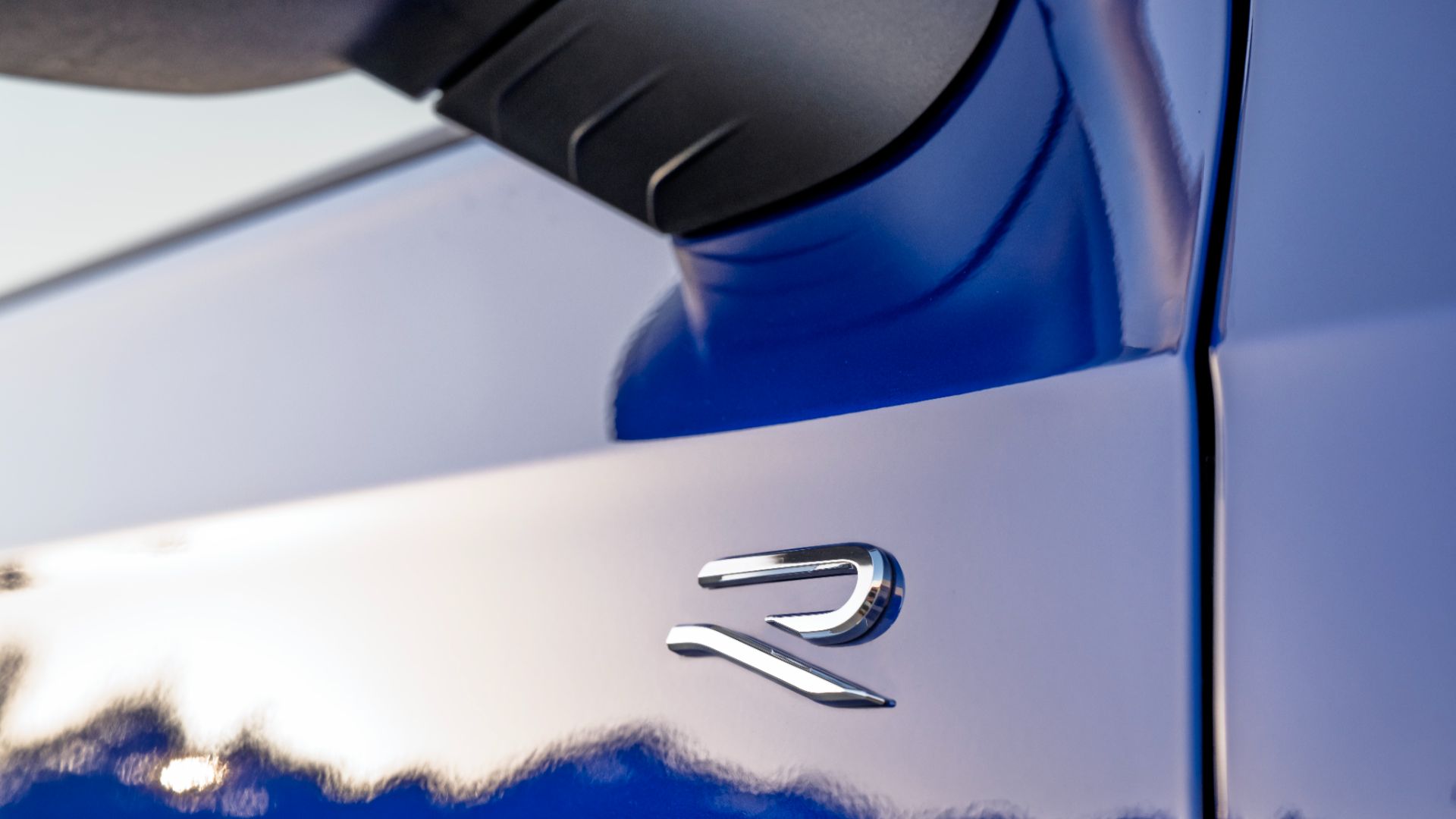
In my own 2006 Golf GTI, there are no drive modes. Its one-size-fits-all drivetrain and chassis setup is sharp enough to be worthy of the badge, yet soft enough that your passengers won’t threaten a mutiny.
The Golf GTI has generally walked this line well – and so does the latest Golf R. The key differences versus my (t)rusty manual Mk5 are a DSG twin-clutch automatic gearbox, four-wheel-drive traction and a multitude of driving modes. The latter can transform the car’s character in an instant, giving it an even wider breadth of ability.
Before we delve into the drive modes, it’s important to mention the options fitted to this particular car. Firstly, it has the ‘DCC’ adaptive dampers (£755), which seem like an absolute necessity on Britain’s crumbling and very variable roads. Plus it’s fitted with the R Performance Pack (£2,010, or standard if you pay £1,320 extra for the Black Edition seen here), which unlocks two additional drive modes: Drift and Special.
Engage Special mode
The Golf R defaults to Comfort mode on start-up, blending a measured throttle response with relaxed automatic shifts and a relatively supple ride. Unless you live in the Scottish Highlands or a wilder part of Wales, this will probably be where you spend most of your time. My partner, who is absolutely not a car person, flatly refused to use anything other than Comfort, declaring the car “very smooth and easy to drive”. She’d likely be just as happy with a common-or-garden Golf 1.5 TSI, but the ‘R’ plays the role of an all-purpose family holdall equally well. It speaks softly while carrying a 333hp stick.
Switching into the Sport or Race settings brings some welcome extra weight to the steering and urgency to the transmission, which holds onto gears for longer before shifting up. Unless you’re ‘making progress’ on rural roads, though, ride quality is rather brittle, the 19-inch alloys thumping through potholes and occasionally sending shudders through the car’s structure.
That’s where Special mode comes in – and why the Performance Pack is a worthwhile upgrade. It was tuned specifically for Germany’s infamous Nürburgring Nordschleife circuit, yet is also the best fit for a British B-road, turning everything up to maximum attack except the DCC dampers. In Special mode, the Golf seems to breathe with the road, feeling fluent rather than overly aggressive.
As for Drift mode, I tried it on a quiet roundabout late at night and have little inclination to try it again. It works by sending power to the outside rear wheel to initiate a slide, but the sensation is oddly artificial and it will soon shred your tyres. When the factory-fit new Bridgestones cost £156 a pop, there are more affordable ways to have fun.
Point-and-shoot performance
And the Golf R is fun. Its familiar four-cylinder ‘EA888’ engine feels eager and brimful of turbocharged torque, with the full 310lb ft delivered from just 2,100rpm. The DSG dual-clutch gearbox is also a willing accomplice. With rapid-fire shifts that don’t pause for breath, it only heightens the sense of speed.
If all that sounds a bit much, like a spicy curry that you regret after a few mouthfuls, the VW’s calm steering and planted chassis are the cooling yoghurt to take the edge off. Few cars at any price give you such confidence when driving quickly. Indeed, from A to B on challenging roads, I’d wager most drivers could go faster in a Golf R than any six-figure supercar.
The problem, some will say, is the Golf makes it too easy. You simply point and shoot, rather than regularly having to adjust your aim. I like cars that keep you busy, so I have some sympathy with this, but the Golf R is a very particular type of performance car – and owners love it for that.
Pump up the volume
Gripes? My biggest disappointment has been the Akrapovic titanium exhaust. I got childishly excited when I saw it on the spec sheet, and its perforated pipes look seriously cool (usually to the person you’ve just overtaken).
However, its snarl is disappointingly muted, with very little of the snap, crackle and pop you’d expect for a whopping £3,480. I’m told the engine’s petrol particulate filters are largely to blame. Yep, it’s those darn EU legislators again.
Soundtrack aside, the oft-criticised haptic controls on the steering wheel are still fiddly to use. And the gearshift paddles are small and plasticky. In terms of the driving experience, though, that’s about it.
Countdown for the Golf R
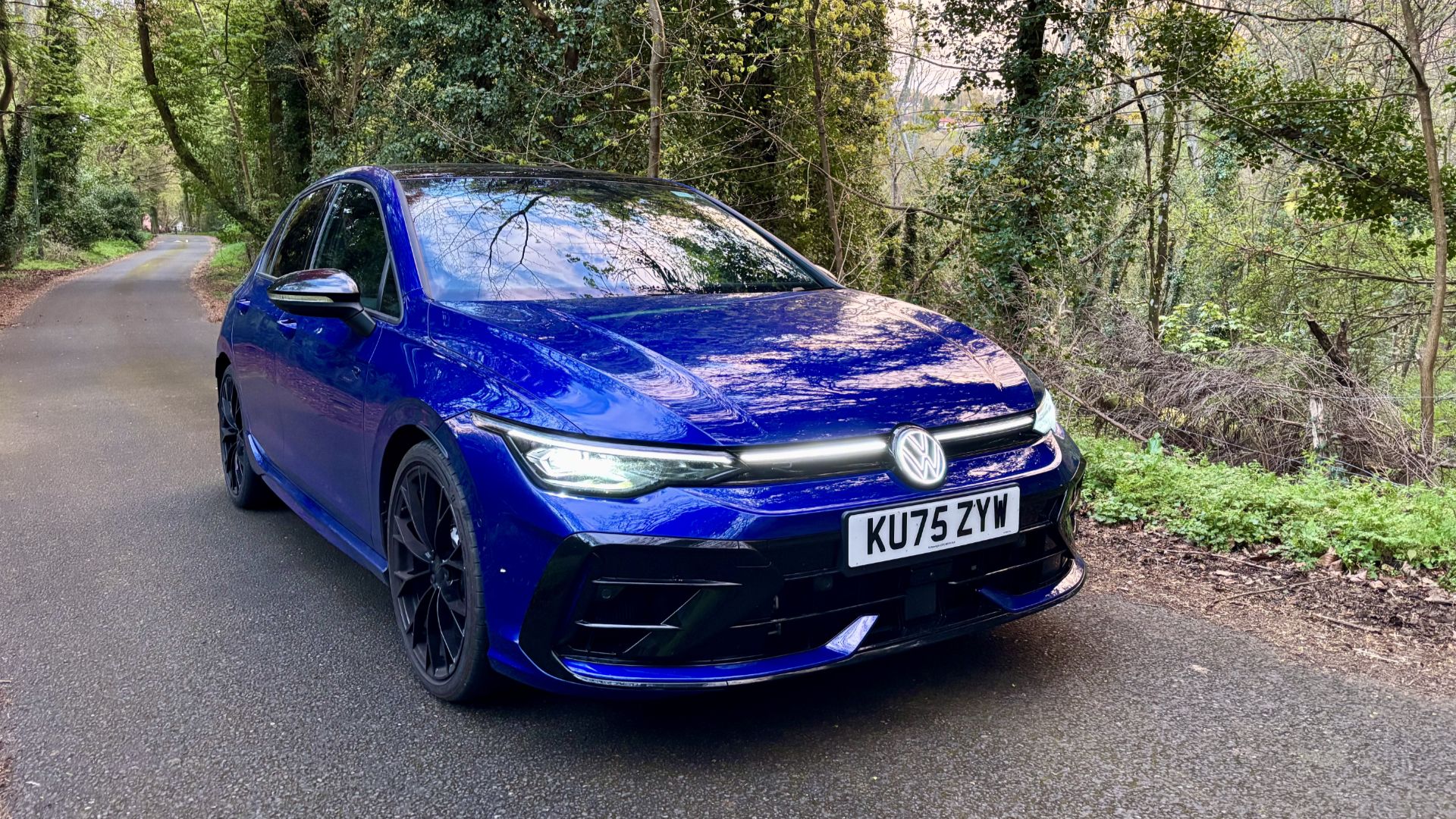
I’m more than half-way through my time with the ‘R’ already and, aptly enough, it seems to be racing by. When the Mk8 Golf is phased out, will it too join the ranks of those dearly departed hot hatchbacks as a vehicle out of step with the times?
I hope not, but nor would I bet against it. Born in the late 1970s, I have lived through every era of the hot hatchback and, away from work, these cars have formed the biggest part of my motoring life. Long may that continue.
Come back to Motoring Research soon for my final report on what the Golf R is like to live with, and an overall view on the experience of running one. My first report on the car is below.
_____________________________________________________________________________
Volkswagen Golf R 2026 long-term review – first report
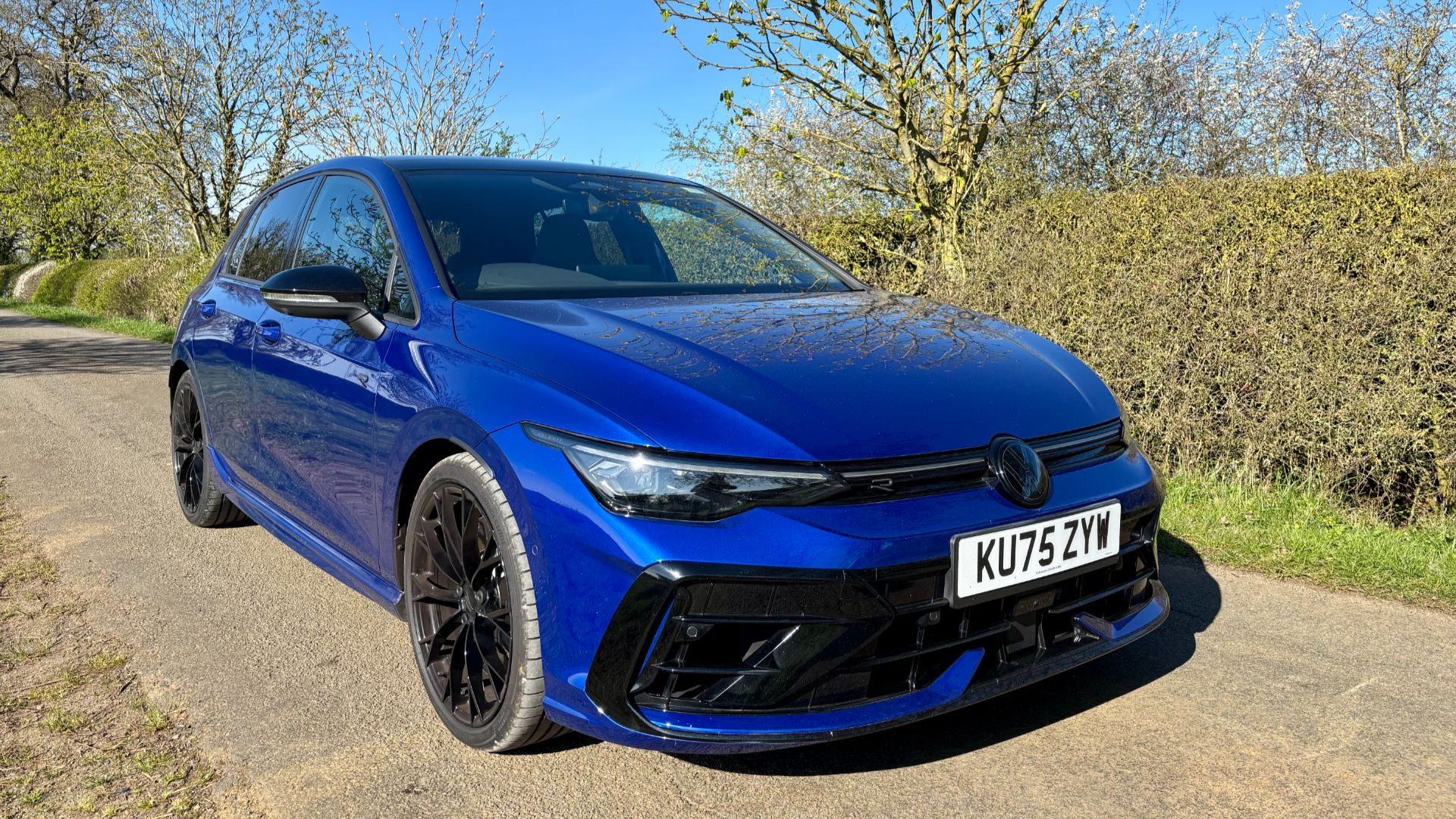
If you could only own one car, what would it be? My initial impulse says a Ferrari F40 – the poster I had blu-tacked to my bedroom wall. However, I suspect even an F40 would lose its lustre if used for Saturday trips to Tesco, or for commuting on frosty mornings around the M25.
A Porsche 911 Turbo S, then? It’s certainly a dream car you could drive every day, capable of being mild or wild depending on your mood. But my life contains two children, and neither can squeeze into the back of a 911 without whinging incessantly about the lack of legroom. I speak from experience.
Being more realistic, both in terms of practicality and price, I reckon a Volkswagen Golf R might be my ideal all-rounder. It’s fast and four-wheel drive, as versatile as any Golf hatchback, looks relatively discreet and is equipped with all the mod-cons you’d expect in 2026. For someone who enjoys driving, yet needs a fit-for-purpose family car, it seems to tick all the boxes.
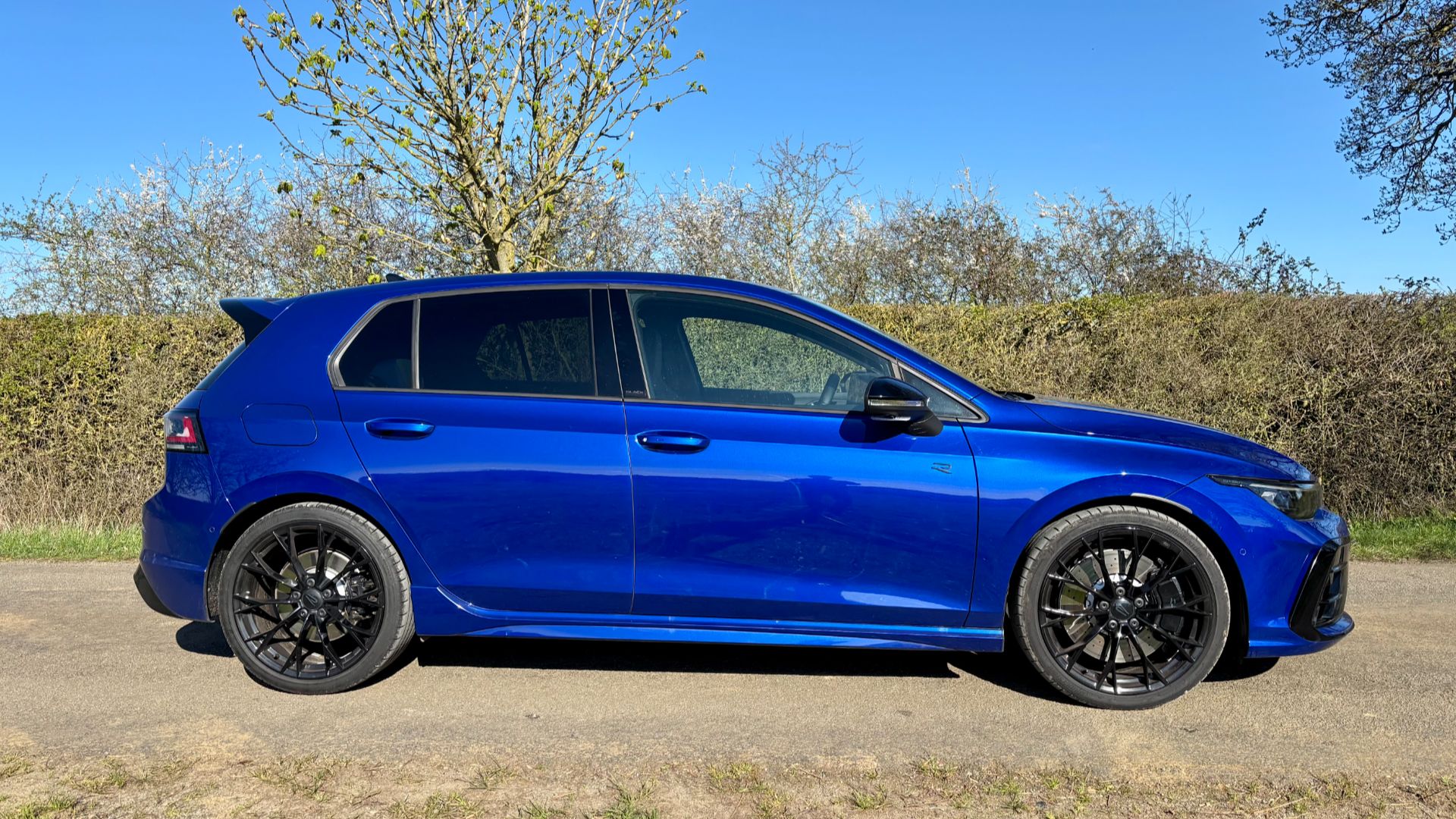
That’s what I thought, anyway, so when Volkswagen offered the loan of a new Golf R for six weeks, it took me all of three seconds to agree. For one thing, it would give my faithful but tired Mk5 Golf GTI – now edging towards 130,000 miles – a break from daily duties. For another, it would allow an opportunity to really live with the car, use it for work and play, discover all its driving modes and figure out its foibles.
I could also get a, potentially more objective, second opinion from my partner, who has little interest in cars but regularly drives our Golf. “Can I connect my phone?” was her first question. Yes, you can. In that regard, the new R, with its wireless Apple CarPlay and Android Auto connectivity, already has the 2006 GTI, with its single CD player, well and truly licked.
Open up and say ‘R’
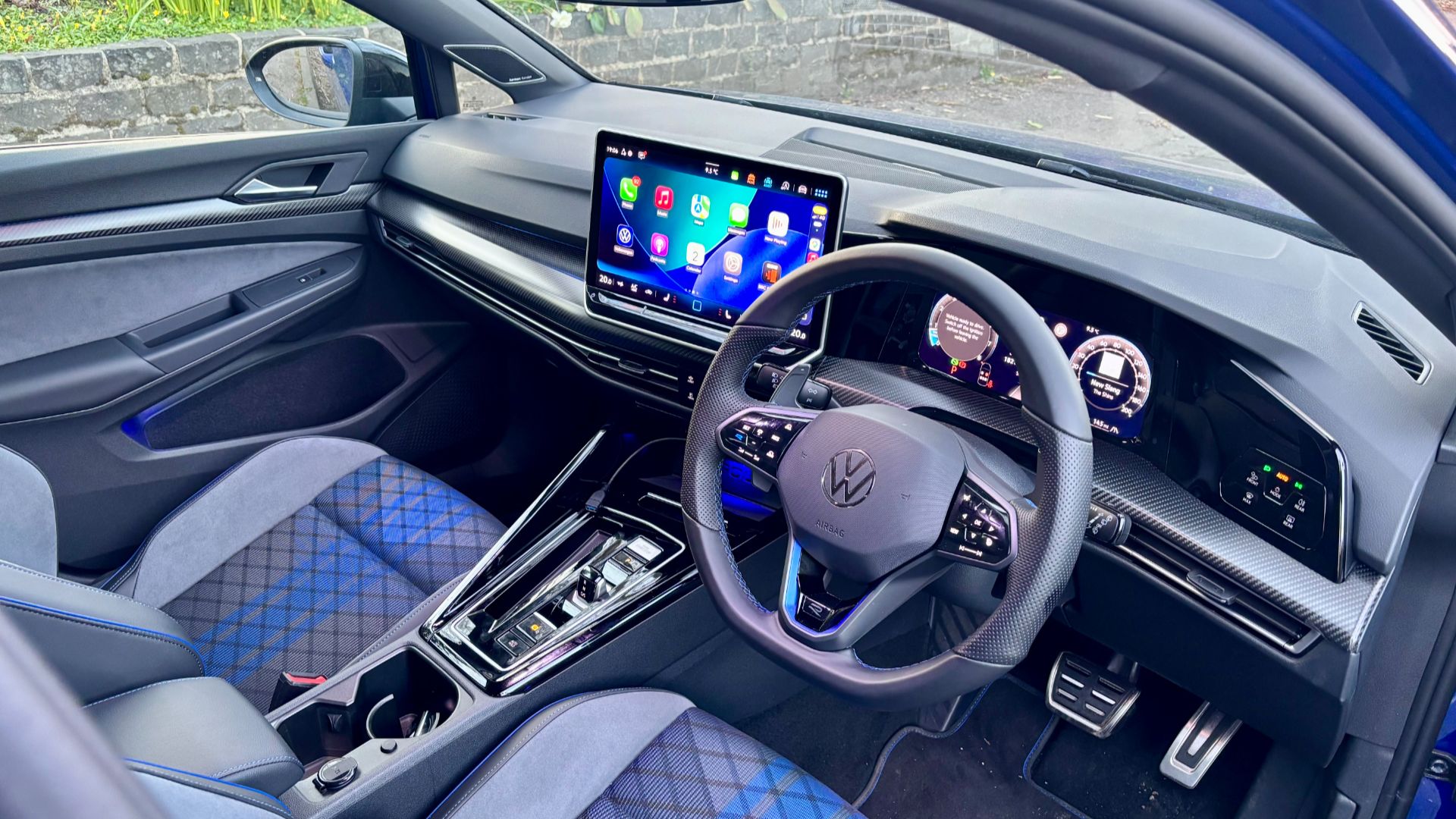
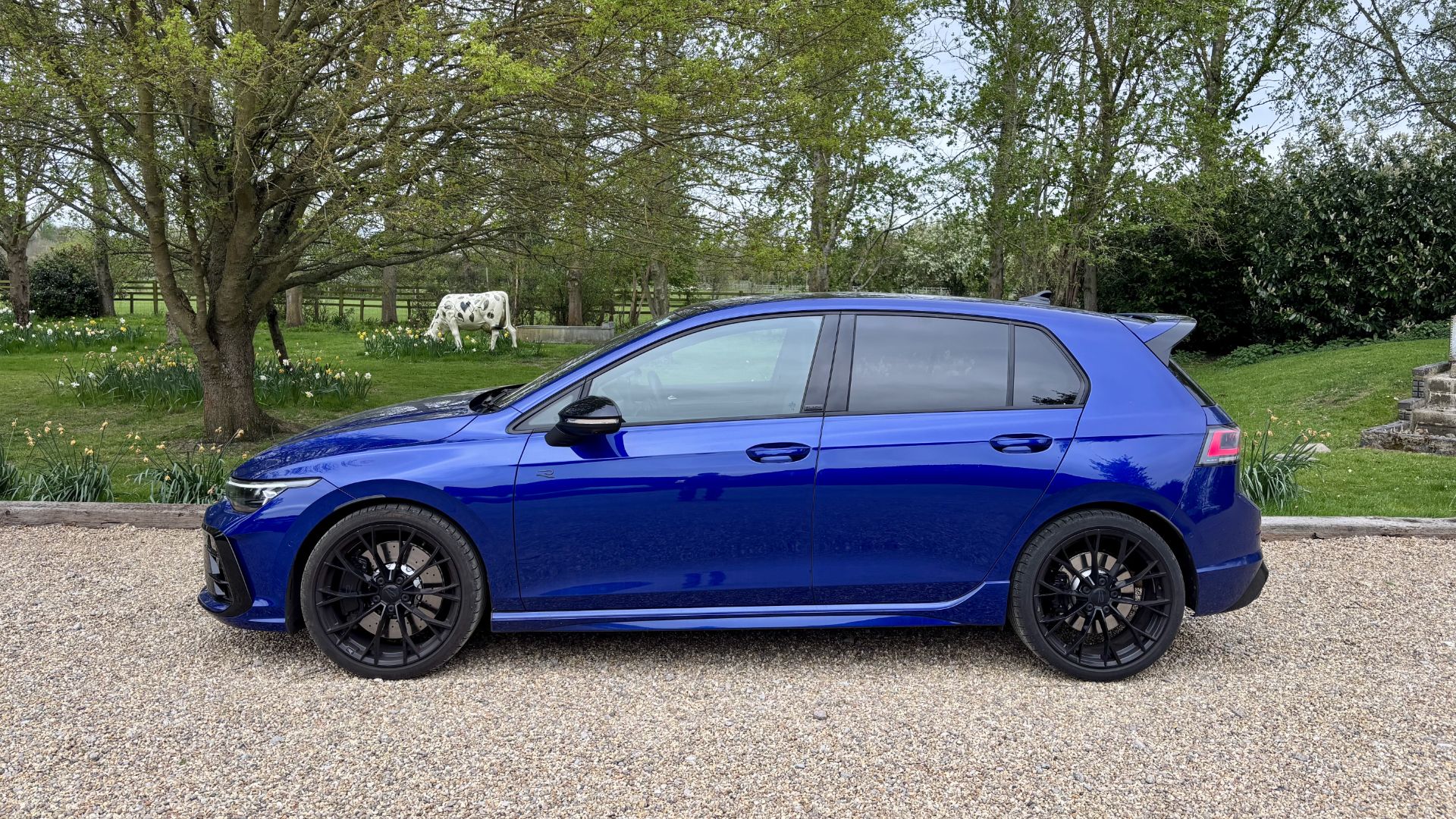
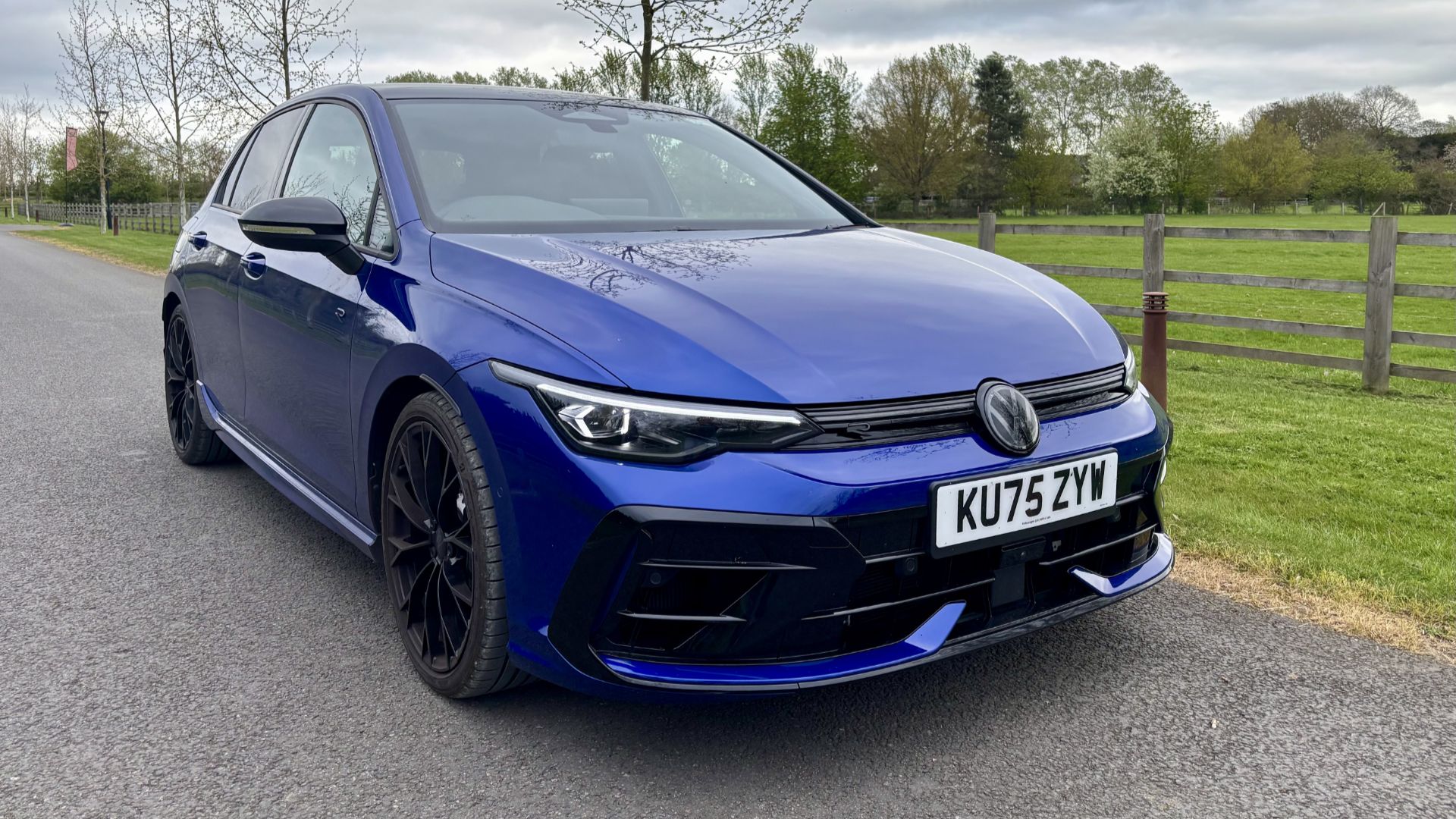
The car delivered this week is Lapiz Blue metallic with 19-inch black ‘Warmenau’ alloy wheels. It’s also a Black Edition, which means darkened headlights, black badges and the R-Performance package fitted as standard. The latter raises the Golf’s top speed to 168mph and adds a Drift mode, plus a ‘Special’ mode designed specifically for the Nürburgring. How will it handle the B2033 to Box Hill? In the cause of pragmatic consumer research, I intend to find out.
We’ll delve further into the spec of this particular car, and discover what it’s like to drive, in a subsequent report. For now, I wanted to provide a bit of context about the Golf R and its story so far. After all, the history of the Golf GTI has been recounted endlessly, but the R is a newer phenomenon – one with a broader brief and a broader range of abilities.
Volkswagen’s R badge can trace its roots back to the Golf R32 of 2003. Following a similar template to the Audi S3 launched four years earlier, it combined a powerful engine from the Audi TT with four-wheel drive – and the result was serious point-to-point pace. However, with its creamy 241hp 3.2-litre VR6 and plush, leather-lined interior, the flagship Golf was more of a BMW 3 Series rival than a traditional hot hatch.
Pioneer of the DSG gearbox
The R32 didn’t just introduce the R badge, since applied to everything from the T-Roc to the Touareg. Its main claim to fame was being the first car fitted with Volkswagen’s dual-clutch DSG automatic transmission. By lining up the next ratio (either up or down) in advance, this revolutionised how gears are selected. It meant shifts could be lightning-quick, whether in auto or manual mode, and was also around 20 percent more efficient than an old-fashioned torque converter automatic.
The DSG soon proliferated to other products within the Volkswagen Group (Porsche’s closely related PDK transmission, for example), and much of the wider car industry soon followed suit. Today, both the Golf R and GTI are only offered with a DSG; a seven-speeder in the case of my test car, with a toggle on the centre console and paddles behind the steering wheel. Meanwhile, the once-ubiquitous manual ’box, as fitted to my Mk5 GTI, seems to be approaching extinction.
A Mk5 version of the Golf R32 arrived in 2005, followed by the first (Mk6) Golf R in 2009. It employed a 270hp turbocharged 2.0-litre four-cylinder engine and Haldex 4Motion all-wheel drive for 0-62mph in just 5.5 seconds. CAR called it a ‘polished performer’, while Pistonheads described it as a ‘seriously planted, sure-footed beast’, albeit one that is ‘more of a cruiser than a B-road hooligan’.
The Mk7 Golf R of 2013 raised the stakes with 300hp and a notably sharper chassis. Autocar responded with a 4.5-star rating, saying this previous-generation model ‘blends the sophistication that you’d expect of a Volkswagen with the rawness and sheer driver appeal of the best superheated hatches’. Praise indeed.
The Golf R comes of age
That brings us bang up to date with the car you see here. After its mid-life ‘Mk8.5’ makeover, the Golf R now boasts a fulsome 333hp for a basic list price of £46,850 (£48,170). That compares to 265hp and £41,810 for a Golf GTI or 325hp and £47,995 for the latest GTI Edition 50. Buyers in search of a Golf with balls are, frankly, spoiled for choice.
I’m itching to get some miles under the Golf’s Bridgestone tyres and share some thoughts on how it drives. In my next report, I’ll also delve into the spec in more detail. Come back to Motoring Research very soon to read more.
ALSO READ:
Volkswagen Golf GTI Mk8.5 review
