Home Blog Page 53

Shell survey finds growing resistance to EV switch

0
Shell Recharge EV Survey

Research by energy company Shell has found that electric car owners are growing in confidence around the world – but petrol and diesel owners are, worryingly, becoming increasingly resistant to making the shift to electric.

More than 15,000 drivers from the UK, Europe, United States and China took part in the 2025 Shell Recharge Driver Survey.

Covering electric vehicle ownership, the survey found 61 percent of EV drivers are less worried about running out of battery charge than they were a year ago. 

Almost three quarters (72 percent) say the availability of public charging points has improved during the same time period, too.

High costs prevent more EV switching

Shell Recharge EV Survey

However, Shell’s survey also found interest from drivers of petrol or diesel cars in switching to an EV is falling.

In Europe, only 41 percent of ICE (internal combustion engine) car drivers were interested in owning an electric car in 2025, compared to 48 percent the previous yea. The United States saw a slightly smaller decline, down from 34 percent to 31 percent. 

The cost of buying an electric car was cited as the key barrier for close to half (43 percent) of non-EV drivers in the European marketplace. 

For those who have made the transition to electrified driving, the chance of them going back seems remote. More than 90 percent of current electric car drivers said they would consider another EV as their next vehicle.

More EV owners were also relying solely on their electric car, rather than having an ICE ‘backup car’ as well.

European drivers missing out

Shell Recharge EV Survey

European drivers were less satisfied with their charging experiences, with just half (51 percent) saying the reliability of public chargers has improved in the last 12 months. 

By contrast, three quarters (74 percent) of Chinese respondents, and 80 percent of those in America, said public charging was now better. European EV owners were the least likely to believe public chargers represent value for money, too.

David Bunch, executive vice president for Shell Mobility, said: “Shell has established strong public charging networks in key markets worldwide, and this research reinforces what we hear from our customers: there’s a growing disparity in the transition to electric vehicles. 

“While current EV drivers are feeling more confident, the relatively high cost of owning an electric vehicle, combined with broader economic pressures, are making it a difficult decision for new consumers.”

ALSO READ:

Ultra-fast Kia EV9 GT 7-seater to cost from £82,185

What to buy: plug-in hybrid or an electric car?

Your EV questions answered on Motoring Electric

Advertisement

Is it legal to drive after taking hay fever tablets?

0
Advice for drivers with hay fever

Do you welcome in the summer months with a sneeze? If you suffer with hay fever, bear in mind that taking medication could mean you risk prosecution or even a driving ban. You have been warned.

The same traffic laws apply to over-the-counter drugs as illegal substances. If your driving is impaired by the hay fever medicine, you could end up with a criminal record. Ann there’s the risk of causing an accident, too.

Neil Worth, road safety officer at GEM Motoring Assist, explained: “Some medicines, including those used to treat hay fever, can have an effect on your ability to drive safely. They could make you tired, dizzy or groggy, and they can compromise your vision and reaction time.

“That’s why it’s so important to check with your GP or pharmacist, and to read any warnings on the labels of the medicines you plan to take.

Advice for hay fever sufferers

Frontline MGA Factory Edition review

Here’s a quick safety checklist for drivers who take hay fever medicine:

  • Ask your doctor or pharmacist if a medicine might affect your ability to drive. Be particularly careful if you are using a medicine for the first time.
  • If you experience potentially dangerous side effects from a medicine, don’t drive. Organise a taxi or a lift from a friend if you need to travel.
  • If you find a medicine is making you tired, ask if there is a non-sedating alternative available. Studies have shown feeling sleepy at the wheel can impair your judgement as much as drinking alcohol.
  • It’s not just prescription medicines that can cause drowsiness and other potentially dangerous side-effects. Check with your pharmacist if you plan to use an over-the-counter drug, too.
  • Ask your doctor or pharmacist to explain any risks first. If you’re unsure about any warnings on the medicine label, don’t drive.

A study by Confused.com found 58 percent of drivers who suffer from hay fever said they had driven a car shortly after taking medication, even though many remedies can impair performance behind the wheel. A worrying 10 percent said they had noticed adverse effects of taking prescription drugs.

It is illegal to drive if you’re unfit to do so because you’ve taken legal or illegal drugs, or you have certain levels of illegal drugs in your blood. 

Legal medication is covered by the same drug-driving laws as substances such as cocaine and cannabis. Drivers are advised to consult the government website for a list of prescription medicines affected by the legislation.

‘Check the medication thoroughly’

Pollen season ahead for drivers

Richard Gladman, head of driving and riding standards at IAM RoadSmart, warned: “If you are stopped by the police after taking a hay fever remedy and driving whilst impaired you could find yourself falling foul of drug driving regulations.

“Be sure to check the medication thoroughly and see if it is suitable. But most importantly, concentrate on your route to recovery so you can get back onto the road sooner rather than later.”

IAM RoadSmart has the following advice for hay fever sufferers:

  • Ensure your car is clean and dust-free and that you operate the air conditioning or ventilation to your advantage. Changing the pollen filter regularly is important, too.
  • Arrange to see your GP if you feel under the weather. If you haven’t been diagnosed with hay fever but need medication, avoid driving.
  • Blurred vision and drowsiness can be side-effects of over-the-counter medicines. Popular remedies for a runny nose and sneezing symptoms can also affect your driving.
  • If you need anti-histamine, take non-drowsy ones. If you’re unsure, read the leaflet or speak to your pharmacy.
  • When you sneeze at the wheel, you travel up to 50ft with your eyes closed. If you need to get somewhere but don’t feel well enough to drive, ask somebody else to help. The risk simply isn’t worth it

If in doubt, talk to your pharmacist and always read the label when taking medicines.

ALSO READ:

How to check UK driving test availability and book online

Merging in turn or jumping the queue? A motorist’s guide

Apart from Britain, which countries drive on the left?

Advertisement

How to drive safely on smart motorways

0
How to drive on a smart motorway

Smart motorways use technology to control the flow of traffic, reduce congestion and improve journey times. However, these roads have proved highly controversial in recent years.

The rollout of smart motorways across the UK was paused in 2022, then halted altogether a year later. The then-prime minister, Rishi Sunak, cited a lack of public confidence in the roads, which have been blamed for a number of road accidents and deaths, as one reason for his decision.

However, are still 375 miles of smart motorways in the UK, so understanding how they work is important – both for your own safety and that of others.

These are the three types of smart motorway that you may encounter:

  • Dynamic hard shoulder: where the hard shoulder is temporarily opened up to traffic
  • All-lane running: where the full width of the road is usable, with emergency refuge areas alongside
  • Controlled motorway: with three or more lanes, a hard shoulder and variable speed limits

Read our separate advice guide to discover more about the pros and cons of smart motorways.

Safer driving on smart motorways

Red X closed lanes smart motorway fines

National Highways, which manages the motorway and A-road network in England, has the following advice for motorists driving on a smart motorway:

  • Never drive in a lane closed by a red ‘X’. Not only is it illegal, you will endanger the lives of other motorists and anyone who might be working in the closed lane.
  • Keep to the speed limits shown on the signs. National Highways uses sensors and cameras to monitor traffic volumes, with limits set accordingly.
  • A hard shoulder is always identified by a solid white unbroken line. If there’s no speed limit displayed above it or a red ‘X’ is displayed, do not use it except in emergency.
  • A broken white line indicates a normal running lane.
  • If the hard shoulder is being used as an extra lane, use the designated emergency areas for emergencies.
  • If your vehicle experiences difficulties, exit the motorway immediately.
  • If you break down, put your hazard lights on.
  • Most breakdowns are preventable. Keep your car maintained, check your tyres and ensure you have enough fuel for your journey.

In an emergency or breakdown

Using the hazard lights

If you are unable to exit the motorway, follow these steps:

  1. Use an emergency area. These are marked with blue signs with an orange SOS telephone symbol.
  2. If you can leave your vehicle safely, contact National Highways using an emergency telephone at the roadside. Alternatively, call 0300 123 5000 from your mobile phone.
  3. If you can’t get to an emergency area, move to the hard shoulder (where available) or as close to the nearside of the road as possible.
  4. Consider exiting the vehicle via the nearside door and waiting behind the safety barrier.
  5. Switch on your hazard lights and side lights. Do not use a warning triangle.
  6. Contact your breakdown provider, such as the AA or RAC.

What does the red ‘X’ mean?

A red ‘X’ means you must stay out of a lane that is closed to traffic. It might be displayed on an overhead gantry or on large signs next to the motorway.

It’s illegal to drive in a lane closed by a red ‘X’ sign. You could receive a fixed penalty of up to £100 and three points on your driving licence. More severe penalties and a court appearance could follow in some cases.

What about variable speed limits?

Variable speed limit sign

National Highways might impose a variable speed limit at busy times, but these can also be automatically triggered by sensors that monitor traffic flow.

The speed limit is displayed inside a red circle and is legally enforceable. If no limit is displayed, the national speed limit of 70mph on a motorway applies.

Speed cameras are in operation on the smart motorway network and the police are responsible for enforcing speeding offences.

Always keep left

As on any motorway, you should always drive in the left-hand lane when the road ahead is clear.

You must not drive on the hard shoulder except in an emergency, or unless instructed to by the police, National Highways or road signs.

ALSO READ:

Merging in turn or jumping the queue? A motorist’s guide

Car insurance: compulsory and voluntary excess explained

What are synthetic fuels – and can they save cars as we know them?

Advertisement

New Abbey Road sound mode for Volvo and Polestar

0
Volvo Polestar Abbey Road Sound Mode

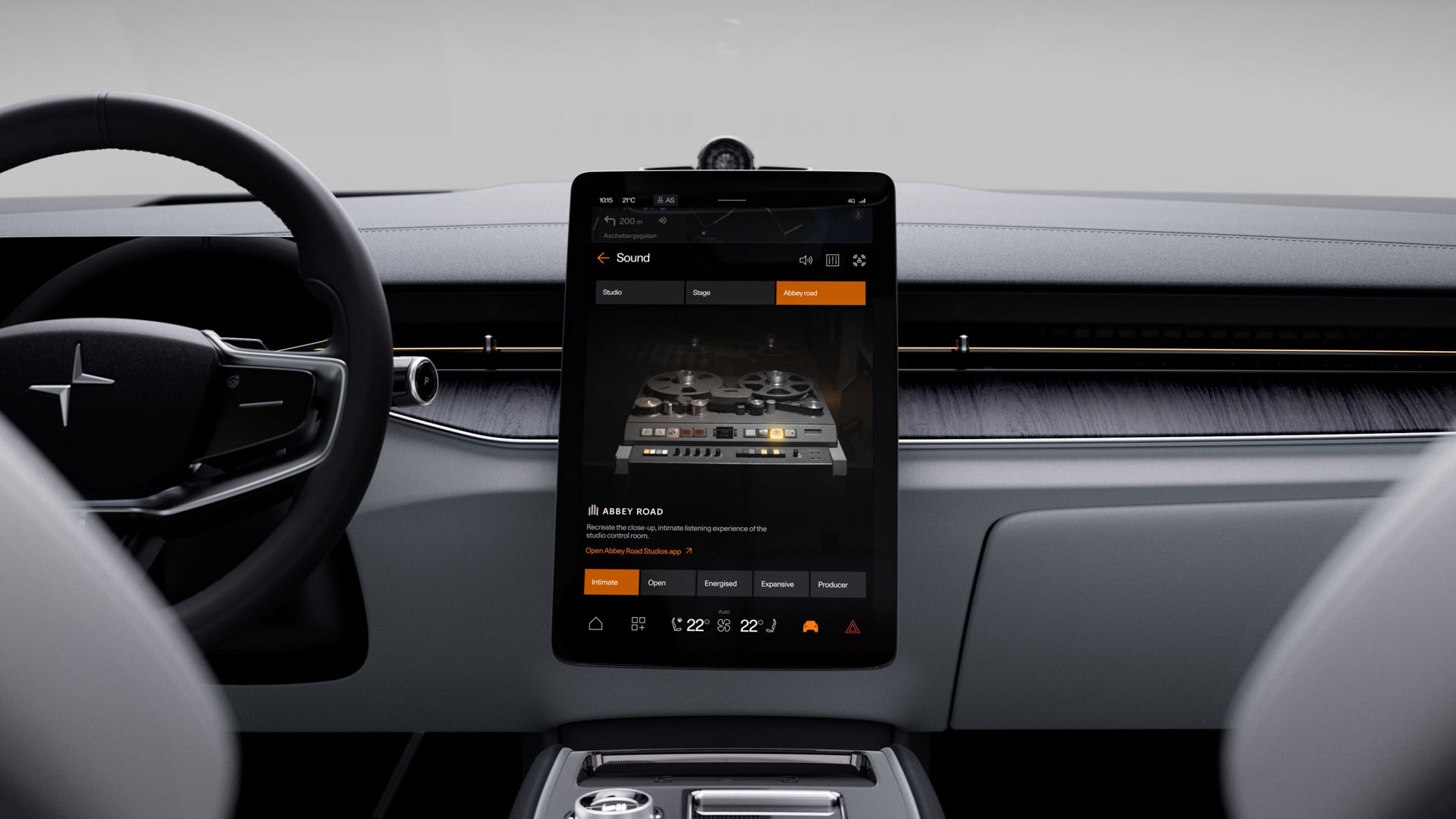
Electric SUVs from Volvo and Polestar are set to receive a special audio system update. Volvo EX90 and Polestar 3 models equipped with the premium Bowers & Wilkins sound system will gain a new Abbey Road Studios mode.

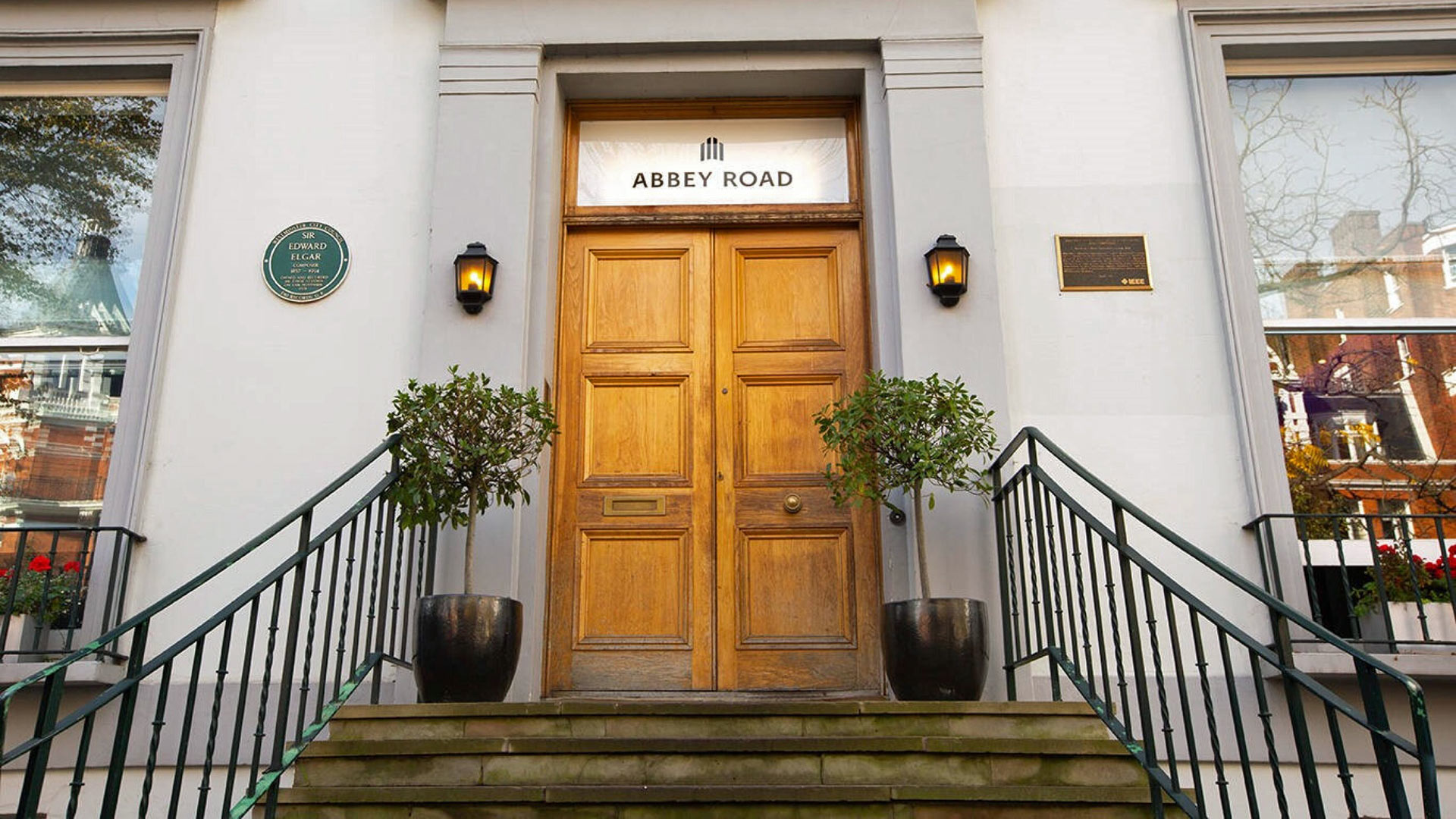
This is said to emulate the experience of listening to music inside the legendary recording studio. Abbey Road is best known for being the venue where the Beatles created many of their greatest hits.

Engineers from Bowers & Wilkins worked with experts at the EMI-owned Abbey Road Studios in London, which has played host to many of the world’s most famous music artists.

In the producer’s chair

Volvo Polestar Abbey Road Sound Mode

For both the EX90 and Polestar 3, Abbey Road Studios mode will offer four distinct settings, accessible through the central touchscreen.

The Intimate preset recreates the intimacy of sitting in the producer’s chair in the studio control room, bringing the listener closer to the performance. 

Open mode creates an immersive experience inspired by the studio environment where the music is performed. It allows the listener to hear the music as if alongside the artists.

Energised mode offers lively, vibrant music with pristine detail. It is said to sound broad, energetic and engaging.

An Expansive preset immerses the listener in the ambience of the live room, enhancing the depth, dimension and dynamic punch of the performance. 

And finally, Producer mode allows drivers to tailor the sound for themselves, based around the ‘sonic DNA’ of Abbey Road Studios.

Free update is incoming

Volvo Polestar Abbey Road Sound Mode

Volvo and Polestar will issue the Abbey Road Studios mode via a free over-the-air (OTA) update to vehicles equipped with the Bowers & Wilkins sound system.

In both models, this includes a 25-speaker setup generating a 1,610-watt output. It also incorporates Dolby Atmos playback and road noise-cancelling technology. 

Volvo will begin issuing the OTA update in the coming weeks. Polestar will bundle it amongst a wider array of software upgrades. 

The latter includes Stolen Vehicle Tracking and Smart Schedule for charging to the Polestar 3.

ALSO READ:

Living with a Volvo EX30: long-term review

Polestar 2 2025 review

Your EV questions answered on Motoring Electric

Advertisement

The Jeep Wagoneer SUV is ready for law enforcement duty

0
Jeep Wagoneer COV

Jeep has launched a special version of its Wagoneer luxury SUV, aimed specifically at use by law enforcement and VIP protection agencies. 

The new Wagoneer Command Operations Vehicle (COV) made its public debut in front of more than 200 Stellantis fleet customers at the M1 Concourse in Pontiac, Michigan. 

Agencies at local, state and federal level had requested the Wagoneer be adapted for law enforcement and protective detail. Many worked in cooperation with Jeep to design the Wagoneer COV.

Rapid response vehicle

Jeep Wagoneer COV

The Wagoneer COV’s powertrain remains unaltered compared to the standard civilian model. However, this does mean a twin-turbocharged ‘Hurricane’ straight-six engine, which serves uo 420 horsepower and 468lb ft of torque. 

This allows the Wagoneer COV to accelerate from 0-60 mph in 6.3 seconds. It can also haul trailers weighing up to 10,000 lb.

Conversion to COV specification includes the addition of Whelen strobe lights, a Whelen lightbar for the rear window, and a siren speaker hidden behind the front grille

A custom wiring harness and Power Distribution Center allow the Wagoneer to be adapted for a variety of uses. There are bespoke weapon storage options, too.

‘The standard-bearer for law enforcement’

Jeep Wagoneer COV

Opting for the Wagoneer COV does not mean going without life’s luxuries, though. Leather upholstery is standard, along with three-zone climate control.

“From Washington D.C. motorcades to high-profile logistic requirements in every state and county across America, the Jeep Wagoneer COV is set to become a new leader in secure VIP transportation, having already gained a high level of interest from government agencies since its introduction in January 2025,” said Ryan Austin, Stellantis law enforcement program manager. 

“The Jeep brand’s reputation for rugged refinement sets the stage to make it the standard-bearer for our law enforcement and VIP protection program for years to come.” 

Fleet customers in the United States can order the 2025 Wagoneer COV through Stellantis dealerships now. Details on Canadian market availability will be shared for the 2026 model year.

ALSO READ:

Slow-selling BMW XM goes V-8-only for the US

Ford F-150 Lobo offers street truck attitude straight from the factory

AC Cars America to sell reborn Cobra in the United States

Advertisement

Ultra-fast Kia EV9 GT 7-seater to cost from £82,185

0
Kia EV9 GT UK Pricing

Kia has announced UK prices and specification details for the EV9 GT, its flagship electric SUV. Revealed at the Los Angeles Auto Show last year, the EV9 GT is one of the world’s quickest three-row electric cars. 

Such performance comes at a price in the UK, however, with the six-seat version of the EV9 GT starting at £82,185. 

Opting for maximum passenger-carrying ability increases the price by £1,000; the seven-seat EV9 GT costs from £83,185.

Rapid pace, rapid charging

Kia EV9 GT UK Pricing

Kia is keen to stress the EV9 GT’s ‘grand touring’ capabilities, rather than its raw performance. The flagship SUV is equipped with a 99.8kWh battery pack, offering a potential range of 280 miles.

Standard 800-volt technology means the EV9 GT requires just 24 minutes to recharge from 10 to 80 percent using a 350kW DC device.

With 502hp and 546lb ft of torque, the all-wheel-drive EV9 GT can accelerate from 0-62mph in just 4.6 seconds. Top speed is 136mph. An electronically controlled limited-slip differential helps counteract any loss of traction.

Electronically adjustable suspension is fitted as standard, along with a ‘Road Preview System’ that can detect and react to changes in the road surface. A ‘Virtual Gear Shift’ replicates the effect of a six-speed paddle-shift transmission, similar to the technology used in the Hyundai Ioniq 5 N.

Neon green interior

Kia EV9 GT UK Pricing

Compared to a standard Kia EV9, which won the 2024 World Car of the Year Award, the GT gains a bespoke LED light signature for its front grille, 21-inch alloy wheels and larger front brakes with neon green calipers. 

More neon green is found inside, including the stitching for the artificial leather and suede upholstery. The sports steering wheel also features a neon green button to flick between drive modes – including the sporty ‘GT’ setting.

The EV9 GT comes with a 14-speaker Meridian audio system, wireless Apple CarPlay and Android Auto connectivity, and a wireless phone charger. Not forgetting Kia’s seven-year/100,000-mile warranty, of course.

Orders for the Kia EV9 GT can be placed now, with the first UK customer deliveries expected in autumn 2025.

ALSO READ:

Kia EV3 is World Car of the Year 2025

The 20 greatest Korean cars

Jaecoo 7 SHS 2025 review

Advertisement

GAP motor insurance payouts triple in just three years

1
Two cars with damaged fronts and rears are involved in an accident on the road, surrounded by scattered debris.

Payouts for GAP (Guaranteed Asset Protection) car insurance, which covers the financial gap between a vehicle’s market value and the amount still owing on a loan or lease, have almost tripled between 2021 and 2024.

In 2021, the average GAP payout was £1,587. By 2024, it had rocketed to £5,558 – a sum owners might otherwise have to pay themselves if they weren’t insured.

The reasons for increasing GAP insurance payouts can be traced back to the pandemic, says car warranty provider MotorEasy. These include rising new car prices, spare parts shortages leading to insurance write-offs, and a surge in vehicle theft.

An unusual period of appreciating used car values during the pandemic has firmly turned around, too. Second-hand prices have declined rapidly, particularly for electric vehicles.

Electric car values plummet

Porsche Taycan

New EVs can lose 50-60 percent of their value in just two years, says MotorEasy. Meanwhile, the introduction of more advanced new models has further increased the gap between purchase price and current market value. MotorEasy has seen GAP payouts exceed £20,000 for high-spec EVs.

Meanwhile, a rise in the theft of high-end vehicles has also led to some hefty GAP insurance payouts. More than four in 10 of MotorEasy’s GAP claims over £15,000 were for stolen Range Rovers.

“Our latest data paints a clear picture,” said Duncan McClure Fisher, CEO of MotorEasy parent company Intelligent Motoring. “The financial risks associated with car ownership are escalating.”

He also said that increasingly complex modern cars, and the more costly parts needed for repair, are leading car insurers to write off vehicles more readily. This can mean that owners face a larger financial shortfall if their relatively new car is deemed a ‘total loss’.

Fisher added: “The combination of so many influential factors has created a ‘perfect storm’ where GAP insurance is no longer just a nice-to-have, but an increasingly vital financial safeguard.”

ALSO READ:

Dartford Crossing charges to increase from September 2025

Fleets say EV charging speed is now top priority

Lancia named ‘A Star is Back’ by AUTOBEST journalists

Advertisement

HWA Evo Mercedes super saloon will race at the Nurburging 24h

0
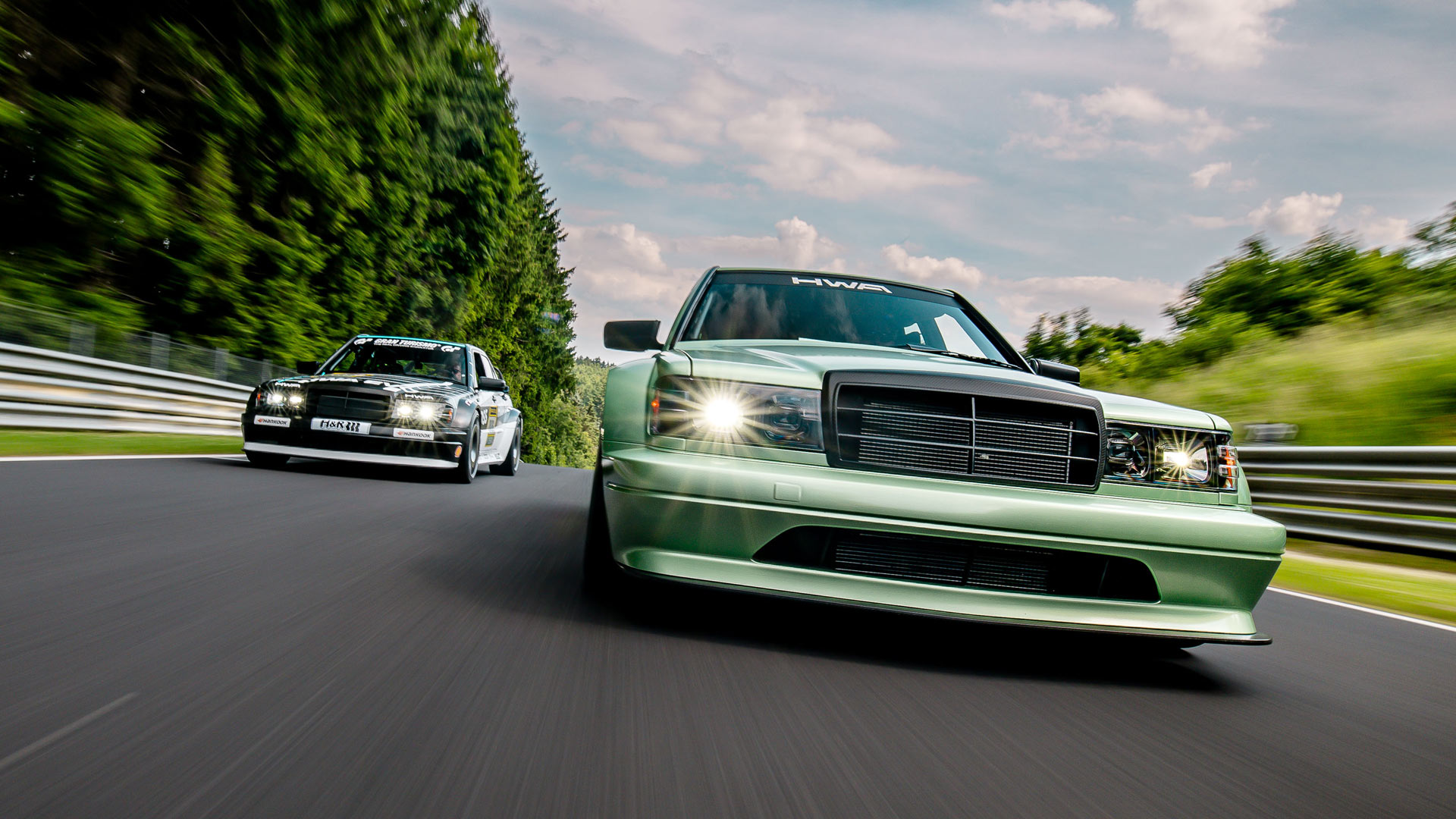
Two HWA Evo cars race on a forested track, headlights on, surrounded by green trees and a cloudy sky.

The HWA Evo has been announced as a contender for the 2026 Nurburging 24 Hours race, following the retro super saloon’s dynamic debut at the German circuit. 

Inspired by the Mercedes-Benz 190E 2.5-16 Evo II – a wild 1980s homolgation special – HWA has pushed the limits of the restomod concept.

With the production run of 100 road cars now underway, the £730,000 Evo is now headed to the racetrack. 

Given the Affalterbach-based company’s extensive motorsport experience, debuting the HWA Evo racer at the Nurburging seems highly appropriate.

Racing is in the blood

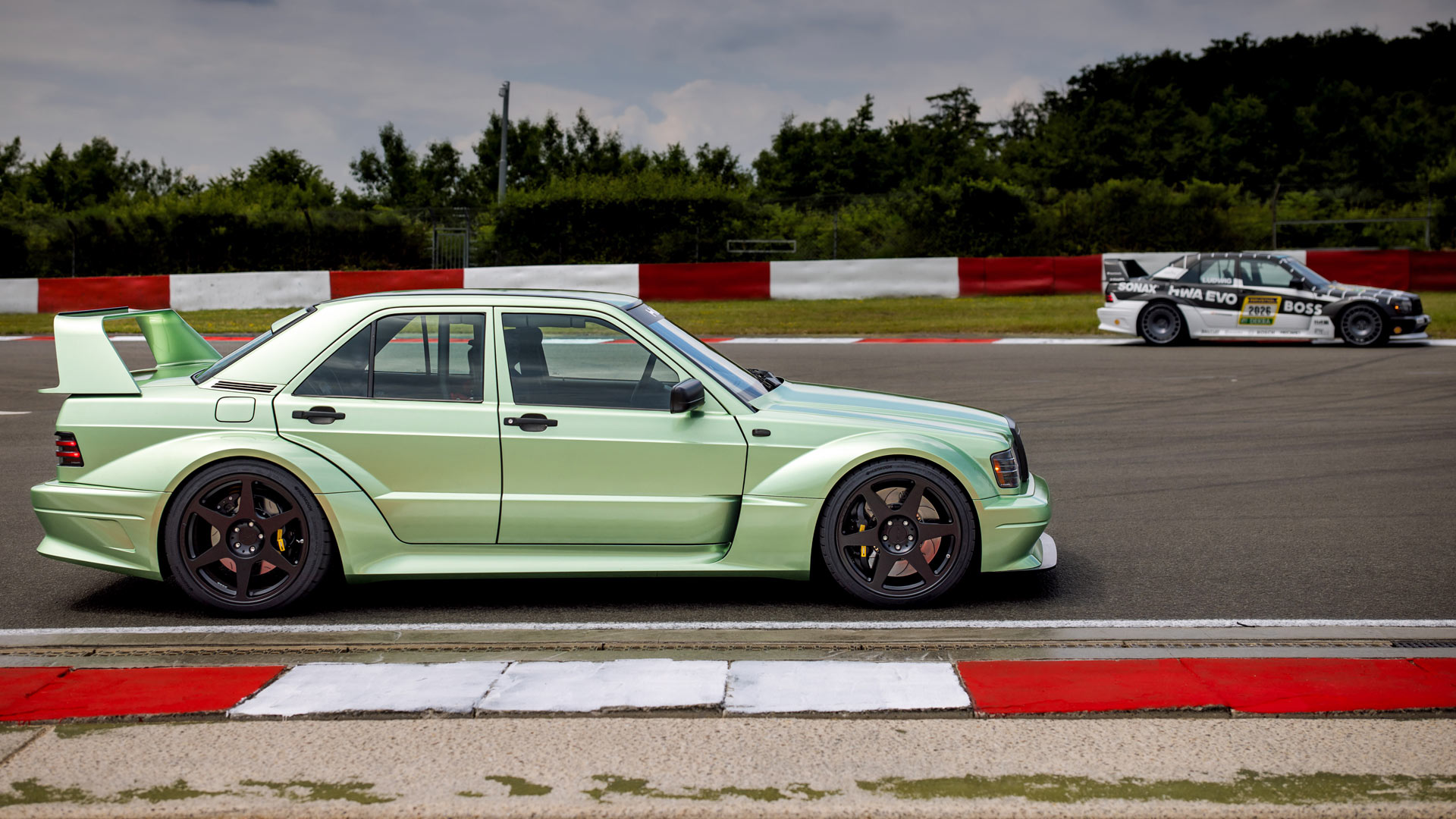
Two HWA Evo cars on a race track with red and white barriers, surrounded by trees under a cloudy sky.

“Motorsport is in our DNA, and consequently in that of the HWA Evo,” said Martin Marx, CEO of HWA. “As the first road car to bear the HWA name, it was clear to us that we should further develop the project in line with this heritage.”

The road-going version of the HWA Evo already packs plenty of motorsport engineering. This includes an integrated roll cage and DTM-specification suspension, with double wishbones and electronically adjustable dampers.

Such attention to detail makes the HWA Evo more than just a regular restomod. In fact, HWA actively discourages the term ‘restomod’, pointing out that only the steel centre section of the original Mercedes 190E chassis remains. 

Powering the HWA Evo is a 3.0-litre twin-turbocharged V6 that delivers 450hp. For now, the company is keeping quiet about how powerful a racing-spec model might be.

Legendary circuit, legendary drivers

Two HWA Evo cars on a racetrack with visible sponsors, against a cloudy sky and trees in the background. No recognizable landmarks present.

“During our preliminary testing of the prototype road cars, it was instantly apparent that the HWA Evo is everything we built it to be,” added Gordian von Schöning, CTO of HWA. 

“Imbued with both the legacy of the iconic 190E Evo II that inspired it, and the storied success of HWA as a motorsport manufacturer, we are incredibly excited to bring the car to the Nurburgring to demonstrate its full capabilities.”

Two HWA Evo cars will take part in the 2026 Nurburging 24 Hours race. They will enter the SP-X class, with appropriate modifications in terms of performance, weight and safety systems.

Motorsport legends Klaus Ludwig and Roland Asch, who both drove the original Mercedes-Benz 190E in the Deutsche Tourenwagen Meisterschaft (DTM) series, will be responsible for track-testing the new HWA Evo. 

A driver lineup for the 2026 endurance event will be announced in due course. In the meantime, spectators at this year’s Nurburgring 24 Hours will have a chance to see the HWA Evo in action.

ALSO READ:

HWA Evo revealed: Reborn 190E super saloon takes aim at Singer

1991 Mercedes-Benz 190E review: Retro Road Test

Mercedes-Benz 190: the story of a modern classic

Advertisement

Hot Wheels reveals F1 The Movie limited-edition model car

0
Hot Wheels F1 the Movie die-cast car

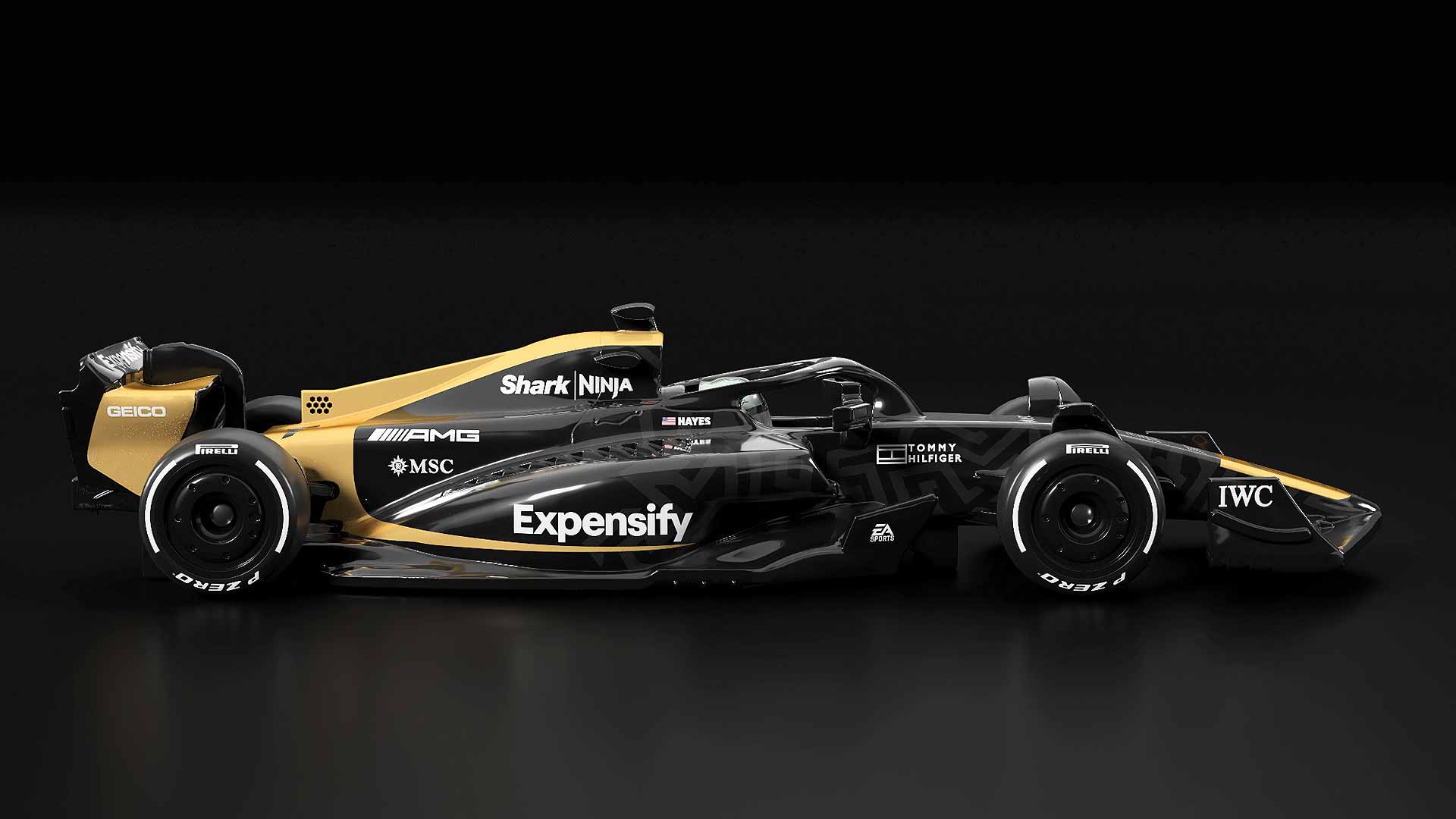
Hot Wheels has unveiled a new limited-edition die-cast car, created in partnership with blockbuster film F1 The Movie.

The 1:64-scale collectable is inspired by the fictional Apex Grand Prix (APXGP) F1 team. Its lead driver is Sonny Hayes, played by Brad Pitt.

The Hot Wheels F1 The Movie die-cast car will be launched on 24 June, days before the film’s general release on 27 June.

The model car is finished in APXGP’s distinctive black and gold livery. The driver’s helmet is in the pale green and black colours of Brad Pitt’s character – and the car carries Sonny Hayes’ number 7.

It has a collectable ‘Kar Keepers’ clamshell case ‘to deliver the ultimate collector experience’. The Hot Wheels APXGP F1 car also comes with three sets of Pirelli tyres (authentically coloured for soft, medium and hard compounds), along with an F1 The Movie-branded tyre rack.

Hot Wheels F1 the Movie die-cast car

This latest model follows last year’s licensing partnership between Hot Wheels and Formula 1. There have since been two sold-out collaborative launches.

Hot Wheels executive vice president Roberto Stanichi said the previous Formula 1 releases “were incredibly well received by racing fans and Hot Wheels collectors, and now we can share a piece of the collection with film lovers around the world.

“The APXGP die-cast allows Hot Wheels to connect with a new audience of moviegoers, who now have the opportunity to own a 1:64 scale piece of cinematic and racing history.”

The 1:64 scale die-cast will be available to order from Hot Wheels’ UK store, priced at £30.

Watch F1 The Movie trailer

ALSO READ:

Volkswagen Golf GTI Edition 50 sets a new Nurburgring lap record

Land Rover reveals adventure-ready Defender 110 Trophy Edition

Caterham Seven 310 Encore is the end of a Ford-powered era

Advertisement

Trade value of used EVs plummets 53% in just 2 years

0
A brightly lit car dealership features rows of various vehicles, each marked with red price tags, under a reflective ceiling.

Heavy discounting on new electric cars is driving down the prices of nearly-new models, new analysis reveals.

Cox Automotive says that residual values of used EVs up to 24 months old are being particularly affected by the push on new electric cars.

Back in 2022, two-year-old electric cars held onto an average of 83 percent of their original cost new (OCN) when sold to the trade. Fast-forward three years, and they now retain only 47 percent of OCN.

This means that used EVs aged up to 24 months old are typically losing 53 percent of their value. Cox Automotive compares this to a similarly-aged diesel car, which loses only 30 percent of its original cost new.  

Line graph showing decline in trade sale prices of electric vehicles under 24 months old, as a percentage of original cost, 2022-2025.
Graph illustrates average yearly trade sale price for EVs under 24 months old as a percentage of original cost new. Source: Manheim Auction Service

“2022 did see used prices reach a peak following the supply constraints around the Covid-19 pandemic,” said Cox Automotive insight director Philip Nothard. “However, the current performance of nearly-new EVs in the used market is still much lower than we would anticipate for vehicles in this age profile.

“The heavy discounts offered on new vehicles mean that consumers can pick up a brand new car for the same price as a nearly-new model. This gives consumers very little incentive to consider them, which is a real blow to a market that needs all the incentives it can get its hands on.”

The SMMT estimated that discounts on new EVs totalled around £4 billion in 2024, and such heavy discounting has continued in 2025.

On the flip side, added Nothard, older EVs aged three to five years are performing strongly. “At auction, these vehicles have seen only a modest drop of 15 percent in the same time period – as they aren’t impacted as severely by heavy manufacturers’ discounts and tend to attract a different driver.”

Nothard is now calling for more support for the used EV sector “to put the brakes on the rapid pace of depreciation”.

ALSO READ:

Fleets say EV charging speed is now top priority

Dartford Crossing charge to increase from September 2025

Caterham Seven 310 Encore is the end of a Ford-powered era

Advertisement