Home Blog Page 247

Lockdown car care: a series of easy-to-follow videos

0

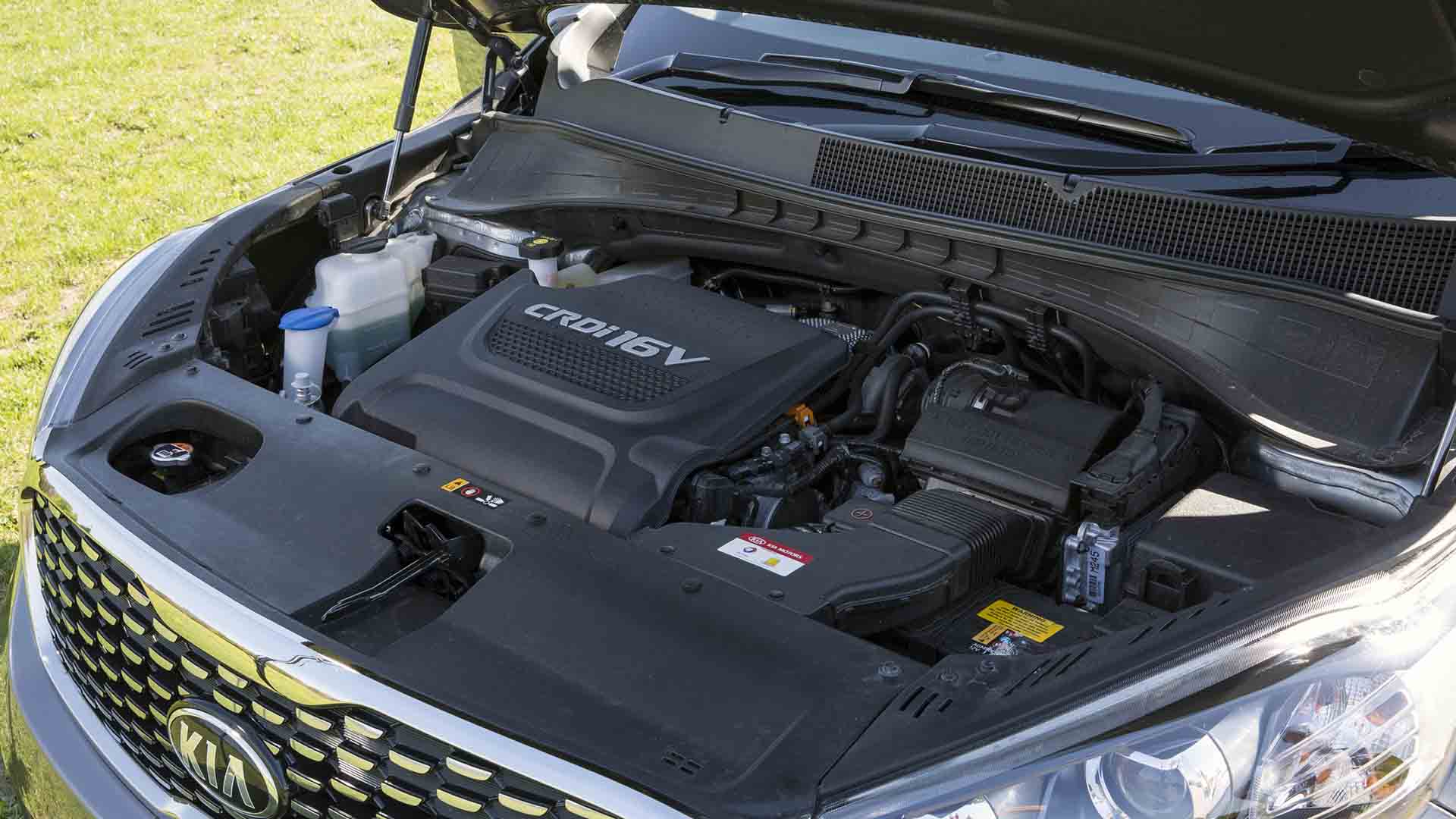
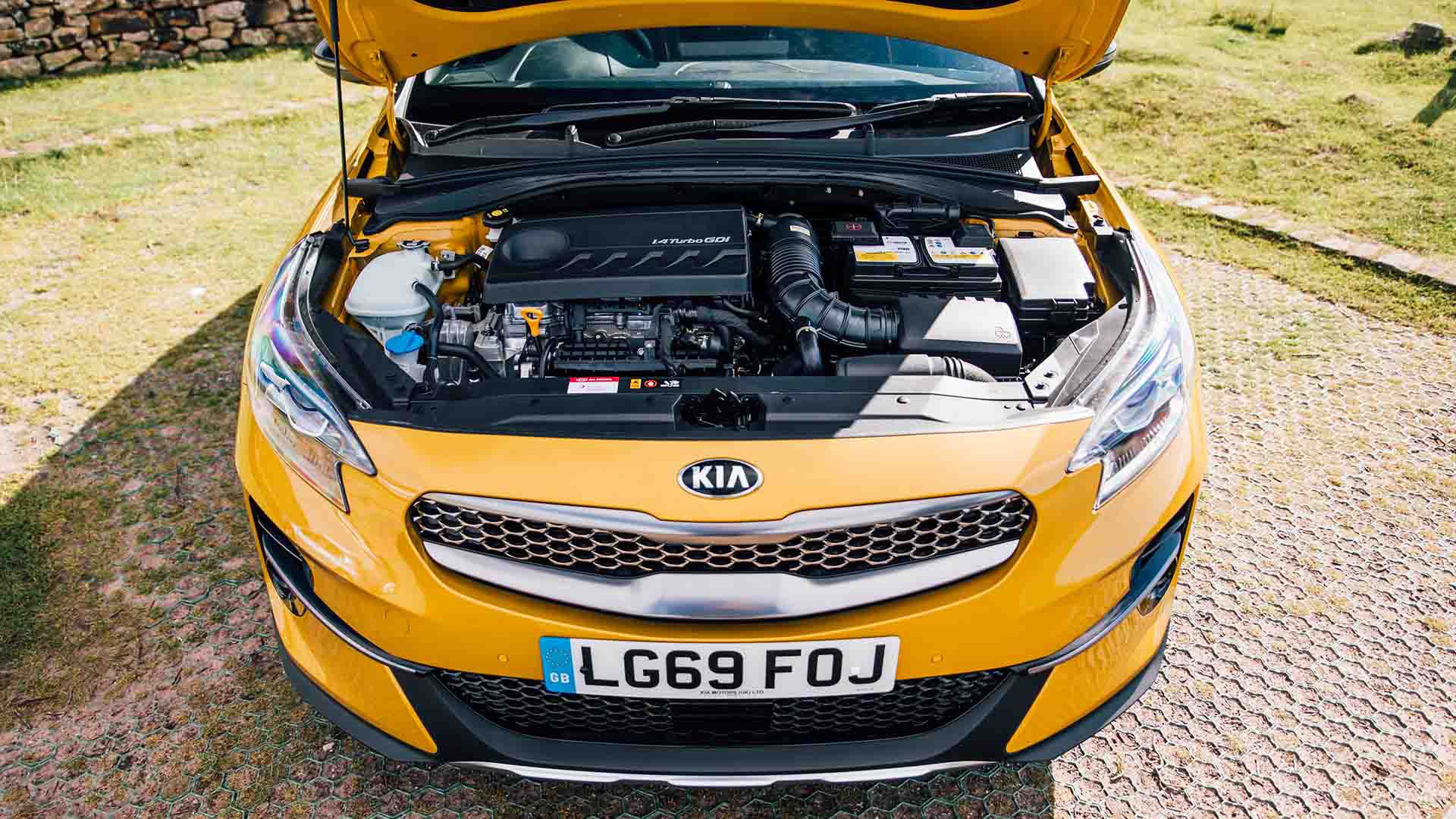
Kia Xceed under the bonnet

With UK road travel down 73 percent during the lockdown, it’s hardly surprising that some cars are being left for long periods of time. However, his can lead to unexpected problems further down the line.

A flat battery is the most obvious issue, but a prolonged period of inactivity can also have an impact on the brakes, tyres, air conditioning and paintwork.

With this in mind, Kia has produced a series of short animation videos giving guidance on basic safety and maintenance procedures to follow during the lockdown. 

These videos are a supplement to the advice given at the beginning of the month.

There are four videos in total, which we have linked to below.

Brakes

Episode one provides information on the brakes and what to expect if a car has been inactive for a long period of time.

Battery

Episode two features the car battery and how to ensure it remains charged during the lockdown. There’s also advice for electric and hybrid owners, plus what to do in the event of a flat battery.

Exterior

In the third episode, Kia explains what you need to do to check the exterior of your car, including brake lights and tyre pressures.

Under the bonnet

The final episode shows you how to ensure the essential fluid levels are checked and maintained.

Cleaning your car

Kia Sorento

It’s also important to keep your car clean during the lockdown, especially if it is being used to attend medical appointments, for going to work, or to collect the weekly grocery shopping.

Earlier this week, we showed you how to sanitise your car. The details can be found here.

An Auto Trader spokesperson said: “We understand that people still need to use their cars to get around, whether it’s for shopping for necessities, going to work, or attending medical appointments.

“Many may also be transporting other family members, so having multiple people in and out of a car means a higher risk of infection through contact with surfaces. By keeping cars as hygienic as possible with regular cleaning and disinfecting, we can reduce the risk of coronavirus spreading through car use.”

ALSO READ

10 percent of drivers making non-essential trips

Nissan Sunderland is helping deliver PPE to the NHS

Green politician wants speed limits CUT to protect the NHS
Advertisement

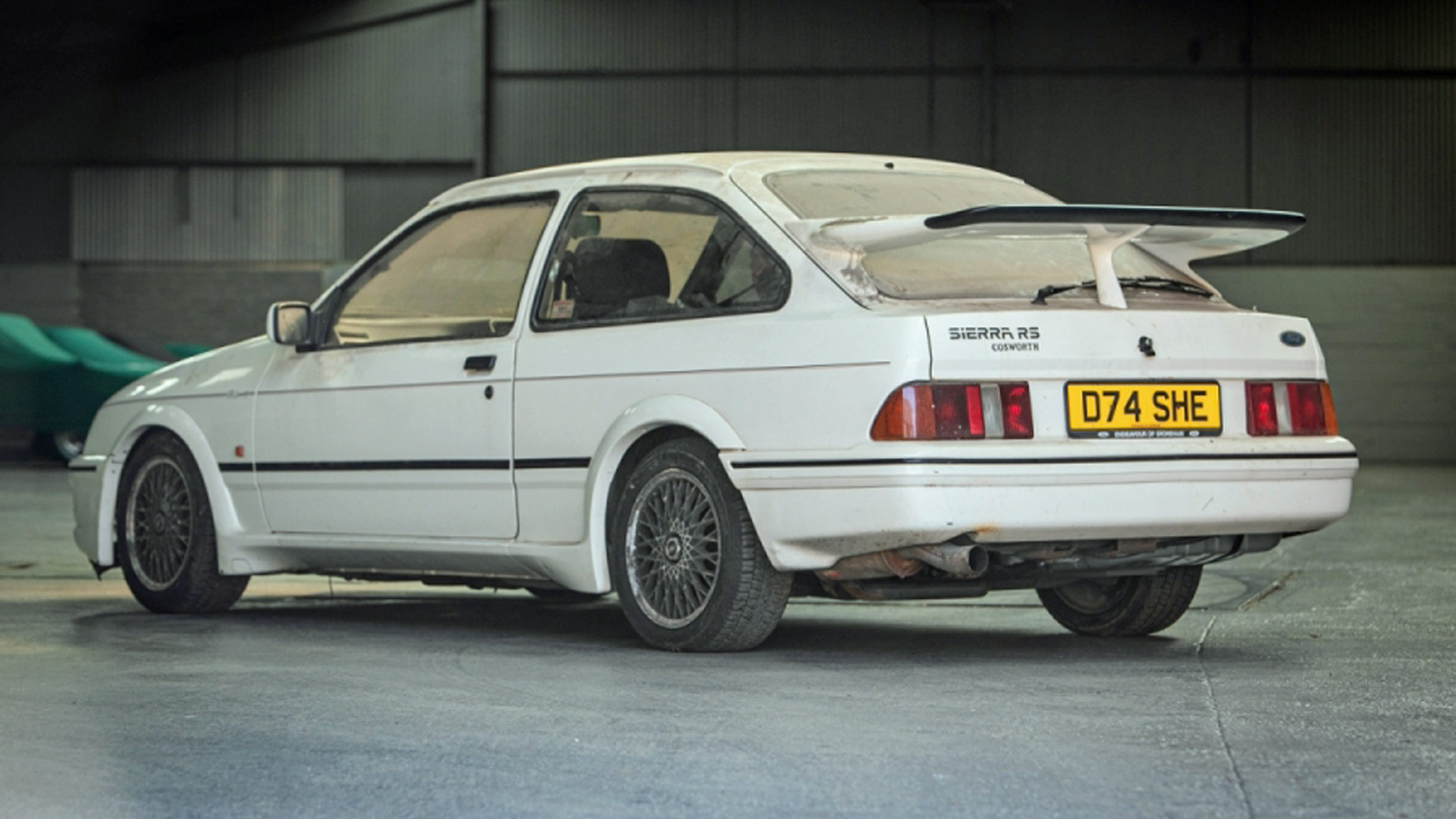
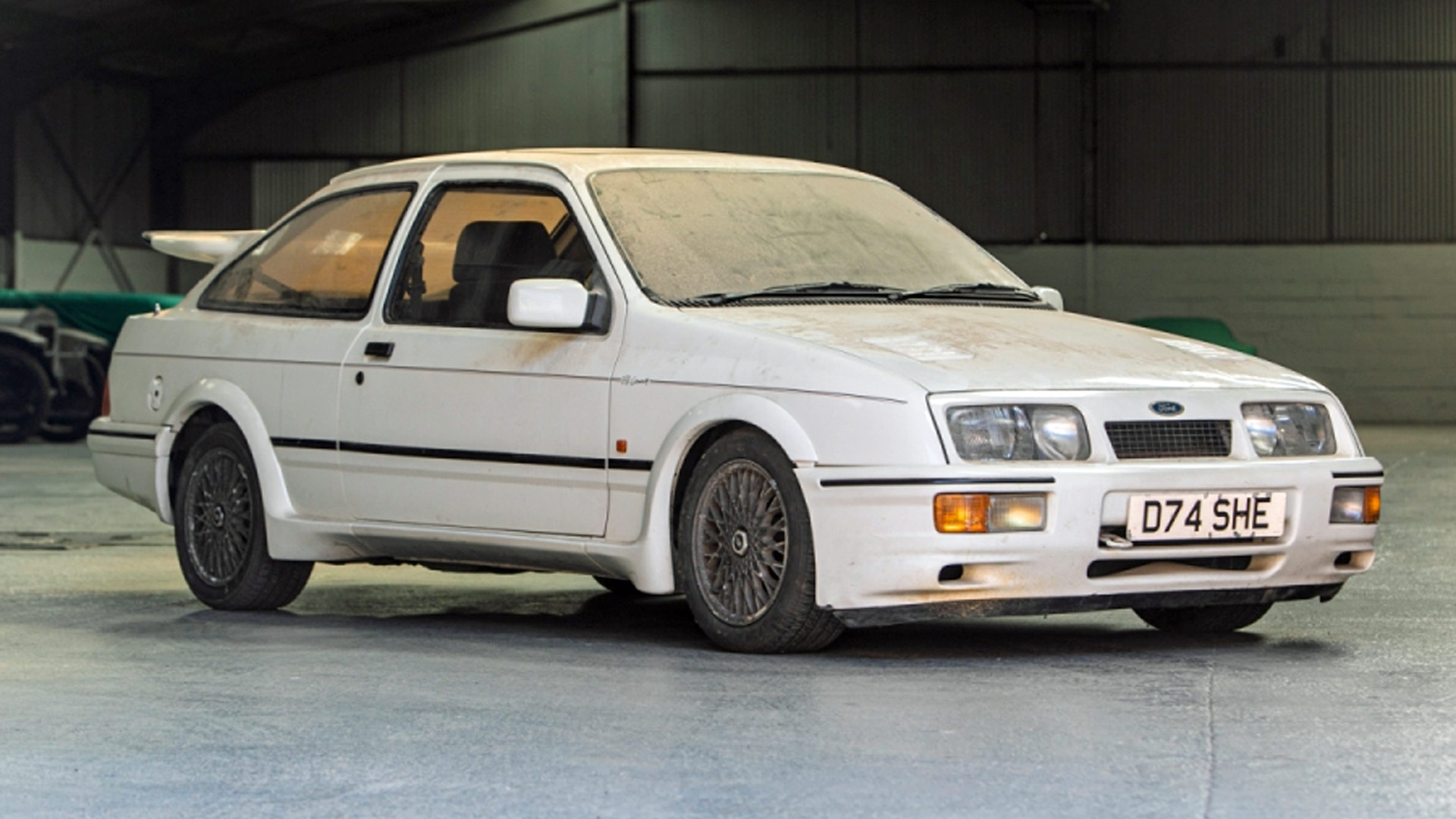
‘Garage find’ 1987 Ford Sierra RS Cosworth heads to auction

0

Garage Find Ford Sierra RS Cosworth

Fast Fords from the 1980s have become hot property at auctions in recent years, with records broken for the biggest sales. 

One of the lots listed for the forthcoming Silverstone Auctions May Live sale is another desirable modern classic. 

However, the winning bidder might need to be prepared to get their hands dirty to make the most of this hidden treasure…

Awakened after two decades

Garage Find Ford Sierra RS Cosworth

The ‘barn find’ phenomenon has taken over the auction world, with collectors fighting for abandoned classics. The 1987 Sierra RS Cosworth in question here is slightly different, having been deliberately stored in a garage by its owner. 

Sold new in June 1987, the car passed through several owners before reaching the current registered keeper in June 1991. 

The Sierra was then driven round 16,000 miles, taking the total recorded on the odometer to 84,552. In 1998, the car was then placed into a state of hibernation until March this year.

Break out the chamois leather

Garage Find Ford Sierra RS Cosworth

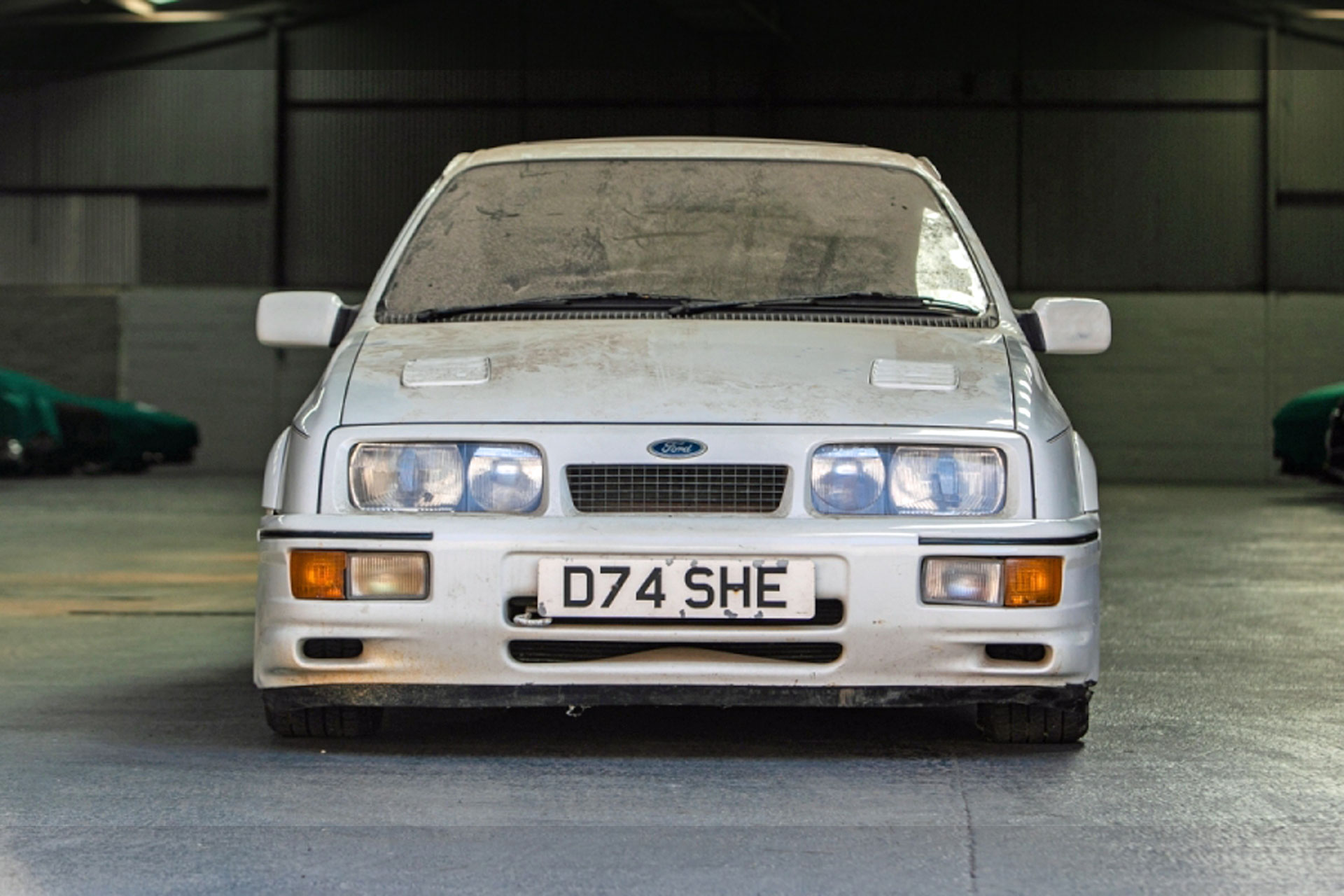
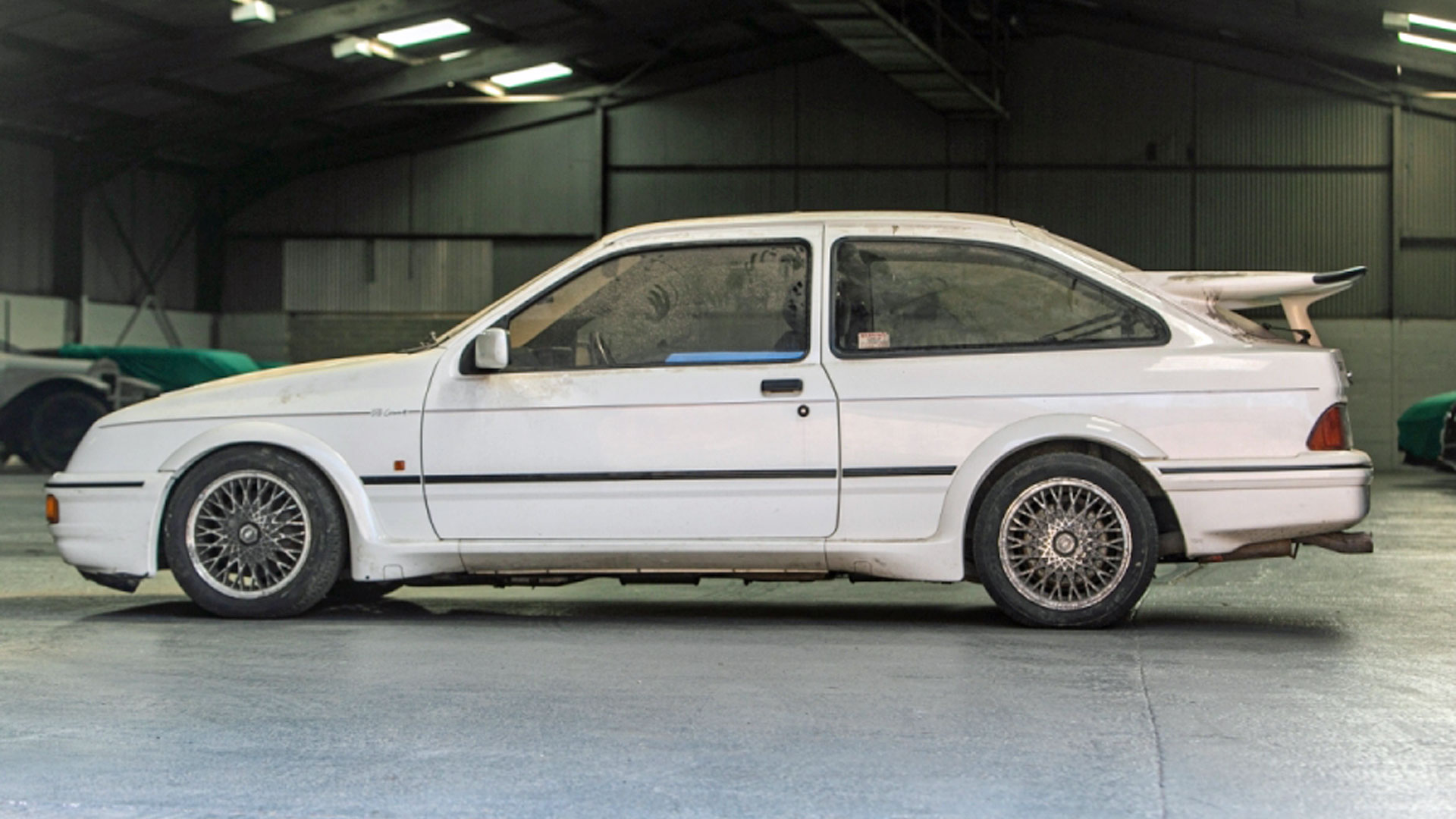
Untouched for more than two decades, this Cosworth has all the dirt and dust you’d expect from a lengthy period living in a garage.

The seller has decided to put it up for auction in unrestored original condition.  

Externally, there is enough grime to keep a professional valeter busy for days. The 15-inch multispoke wheels need a deep clean, while the interior is grubby but looks complete. 

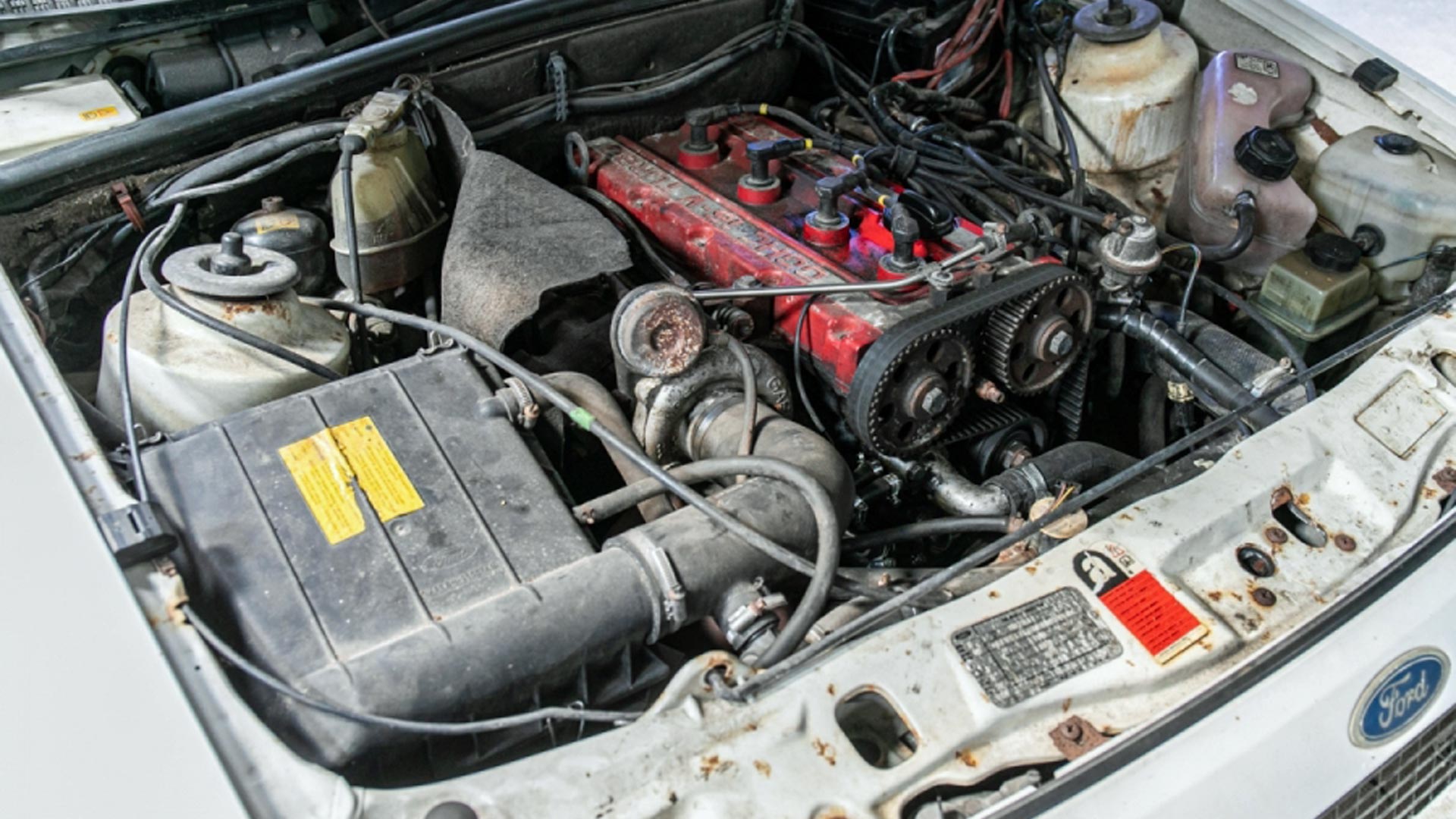
Under the bonnet, the 204hp turbocharged 2.0-litre engine is far from being in concours condition, but could be smartened up again.

Returning to rude health 

Garage Find Ford Sierra RS Cosworth

Despite the covering of dust, the seller notes the car does run. More than £1,300 has been spent fitting a new fuel tank and fuel pump, along with a comprehensive service, to get it working again.

Other work included freeing seized brake calipers after decades of standing still. A new water pump and cambelt were also installed for the Cosworth YBD engine. 

When new, the rear-wheel-drive Sierra RS Cosworth would have been capable of 0-60 mph in 6.5 seconds, with a top speed of nearly 150 mph. The racing Sierras the road car existed to homologate were considerably faster, and dominated Touring Car competitions around the world. 

A whale of a time

Garage Find Ford Sierra RS Cosworth

Putting a value on this Sierra RS Cosworth is no easy task. Being one of only 1,650 examples old in the UK makes it rare, while the decades spent in storage add a special twist. 

Last year a barn-find RS Cosworth sold for more than £80,000 at auction, with that example having been taken off the road in 1991. 

Bidders and enthusiasts will have to wait until 23 May to see what the Sierra sells for. Silverstone Auctions will run the sale behind closed doors, but you can bid via telephone or online.

ALSO READ

Recreate your Vanishing Point movie dreams with this 1970 Dodge Challenger

Modern touchscreens now available for classic Porsches

You could own an original classic Ferrari POLICE CAR

Advertisement

Recreate your Vanishing Point movie dreams with this 1970 Dodge Challenger

0

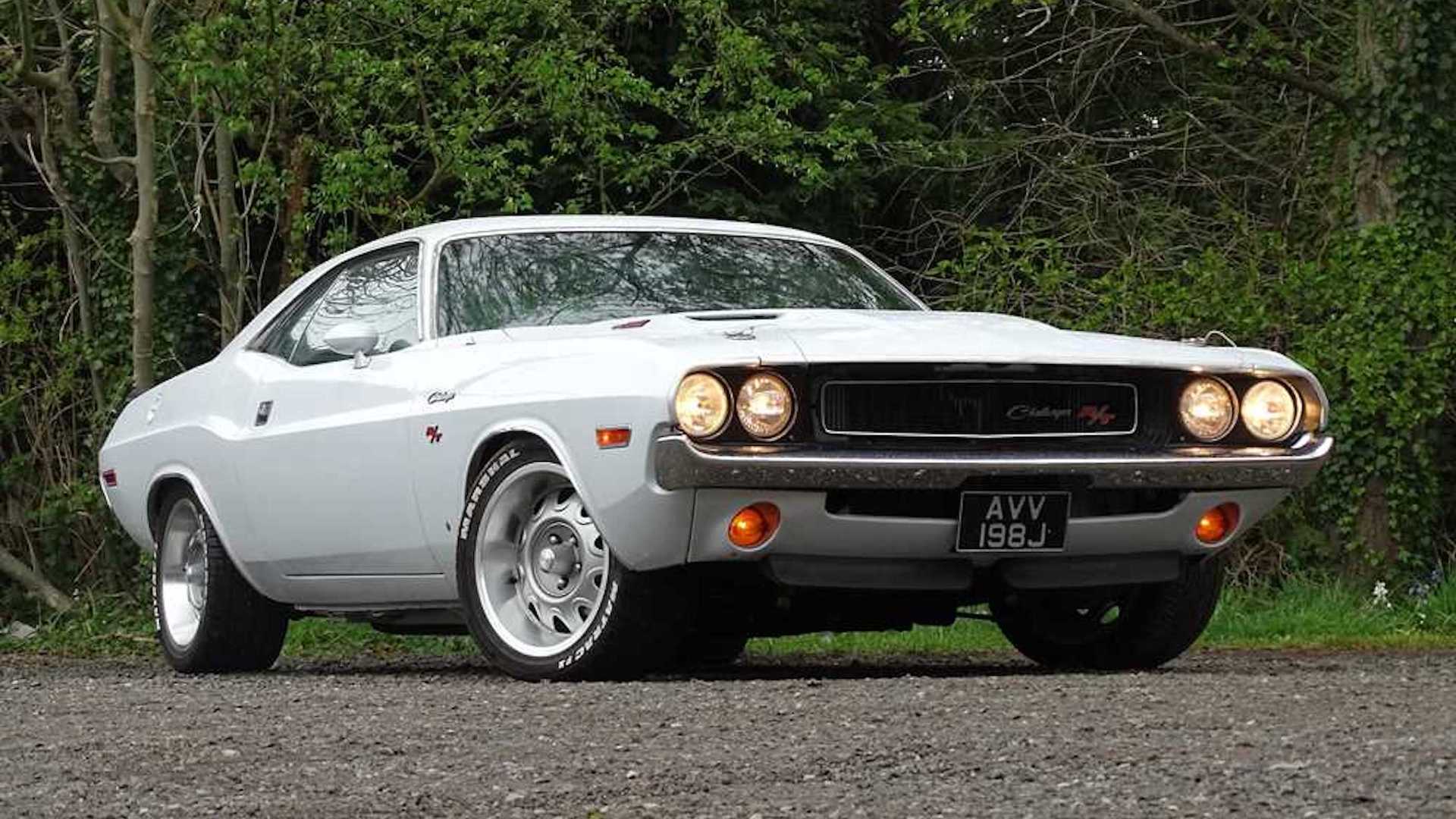
1970 Dodge Challenger RT

One of the cars for sale at the upcoming H and H Classic Motor Car Auction has a special movie connection. 

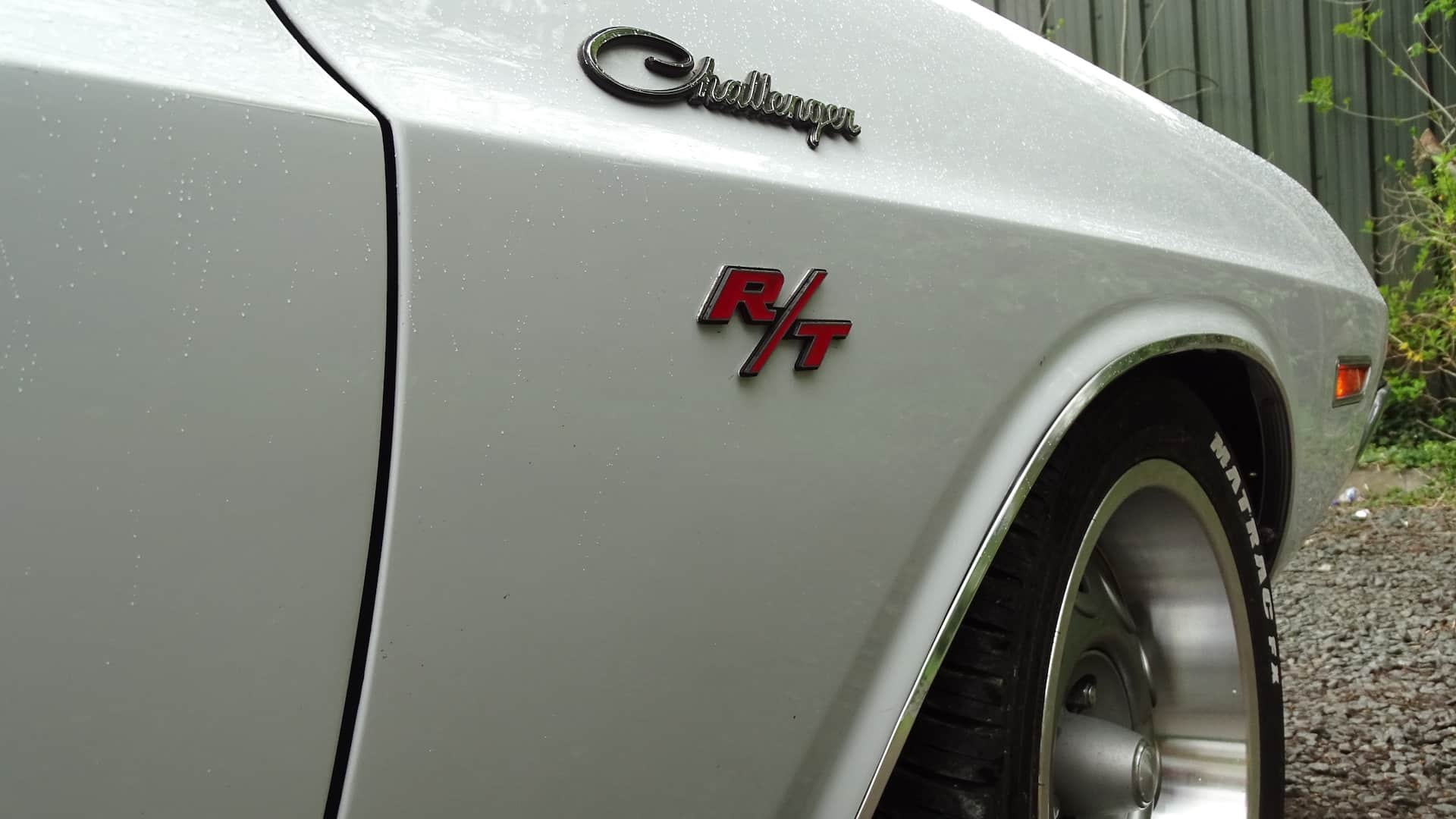
The 1970 Dodge Challenger R/T included in the sale is said to have been inspired by Vanishing Point, the 1971 cult classic film

For fans of the movie, or Detroit muscle in general, this represents a relatively rare chance to buy a desirable ‘70 Challenger. 

“He’s presently driving a Dodge Challenger”

1970 Dodge Challenger RT

Introduced in late 1969 for the 1970 model year, the Dodge Challenger was intended to take on the Ford Mustang and Chevrolet Camaro. Smaller than the Charger, it was offered in either coupe or cabriolet body styles.

Engine options ranged from a 198-cubic inch (3.2-litre) inline-six with 125 hp, through to the terrifying and expensive optional 426-cubic inch (7.0-litre) Hemi V8 with 425 hp and 490 lb-ft of torque. 

With more than 76,000 sold in the first year, the Challenger certainly captured the wallets of many Americans. It also caught the attention of the production team making Vanishing Point.

“Speed means freedom of the soul”

1970 Dodge Challenger RT

A total of five brand-new Dodge Challenger R/Ts were supplied for the production of the 1971 film, all finished in Alpine White. No factory modifications were made, with the cars prepared by stunt coordinator Carey Loftin, who had previously worked on Bullitt with Steve McQueen.  

Vanishing Point would see delivery driver Kowalski, played by Barry Newman, set out to reach San Francisco from Denver, Colorado in less than three days. 

Along with trying to evade the police, Kowalski also meets and inspires numerous characters along the way. 

American rock band Audioslave would use the film as the basis for the music video accompanying their 2003 single “Show Me How to Live”.

“Kowalski, can you hear me?”

1970 Dodge Challenger RT

The seller of this particular Challenger R/T was clearly a fan of Vanishing Point, using the film as a starting point for the restoration work on the car.

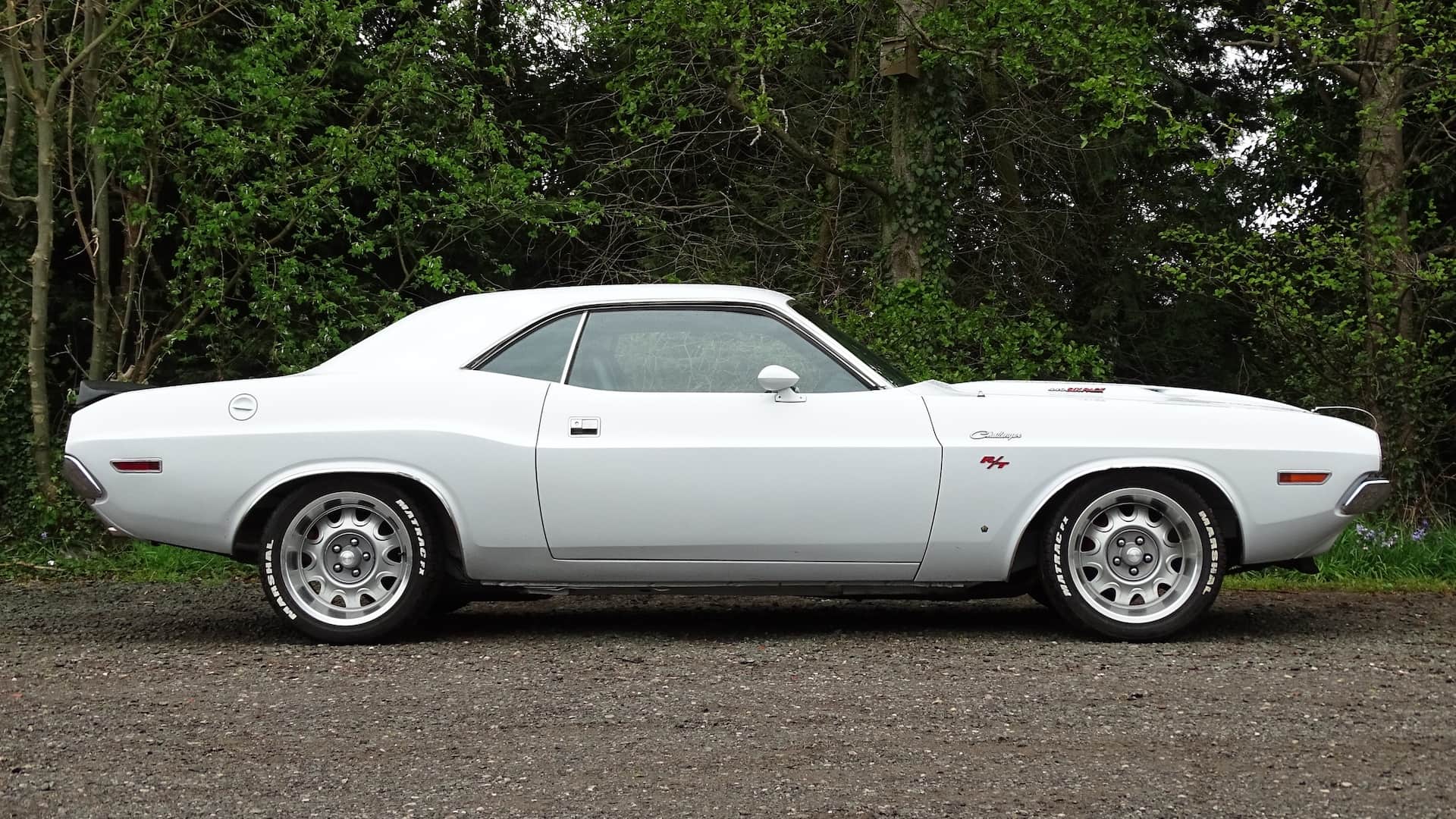
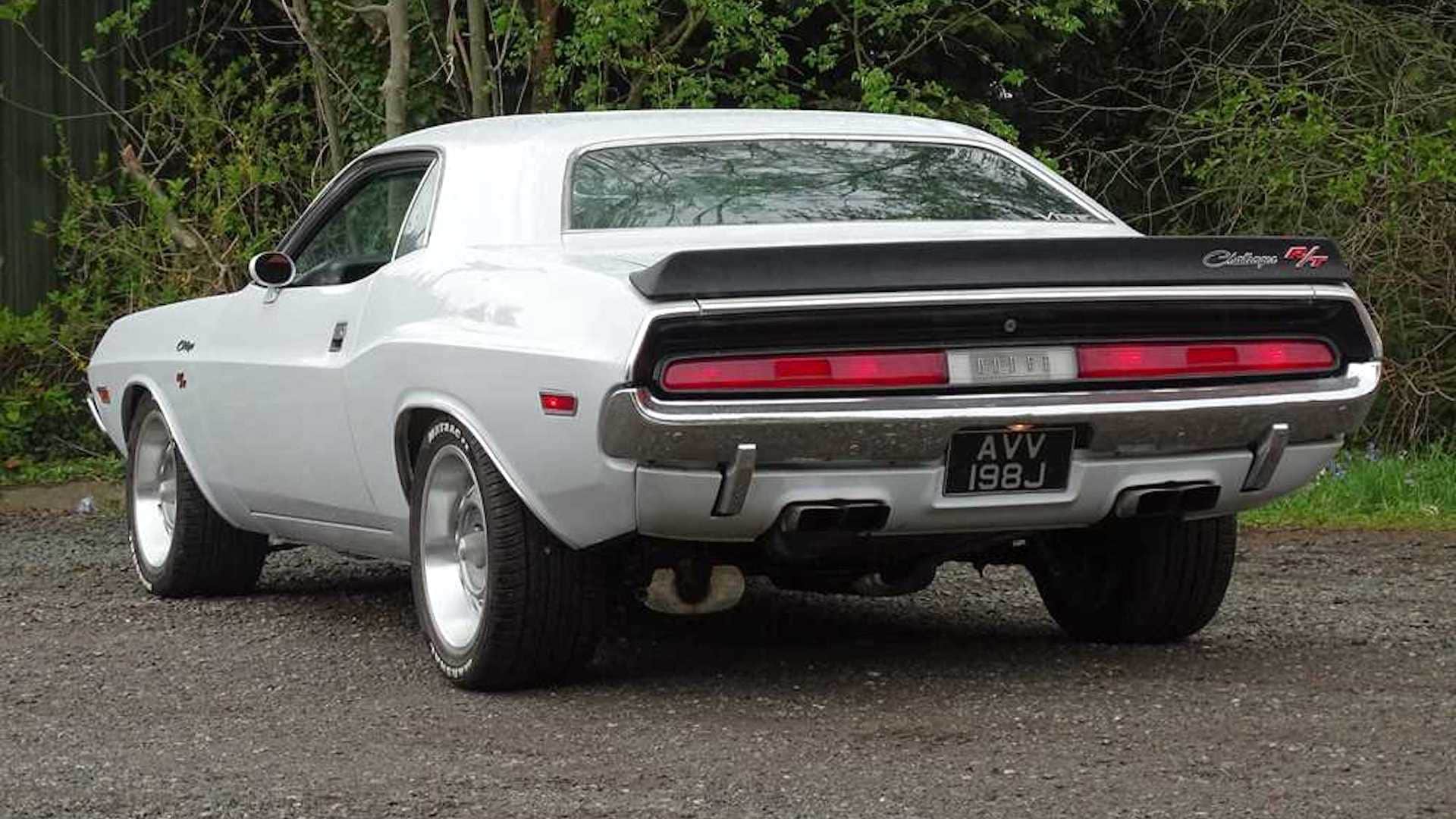
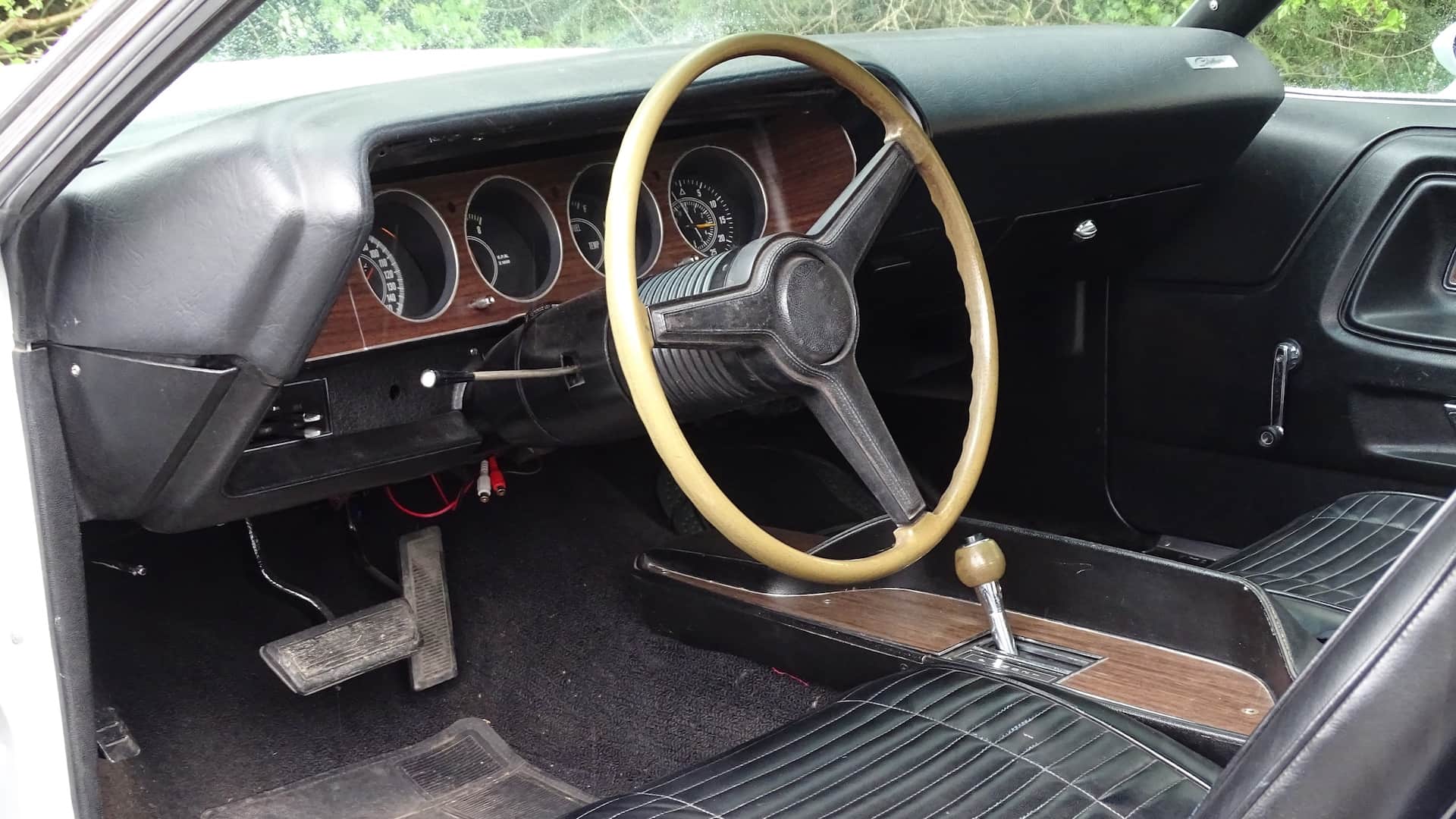
A combination of Alpine White paintwork, and a black vinyl interior, mean the car apes the one used by Kowalski. Larger deep-dish wheels, and a Challenger T/A-style rear spoiler, have been added for extra visual impact. 

Inside remains the same as when it left the Chrysler factory in Hamtramck, Michigan in 1970. This means a three-spoke steering wheel, along with a Rallye dashboard finished with woodgrain trim, as was standard for all R/T cars. 

“The last American hero”

1970 Dodge Challenger RT

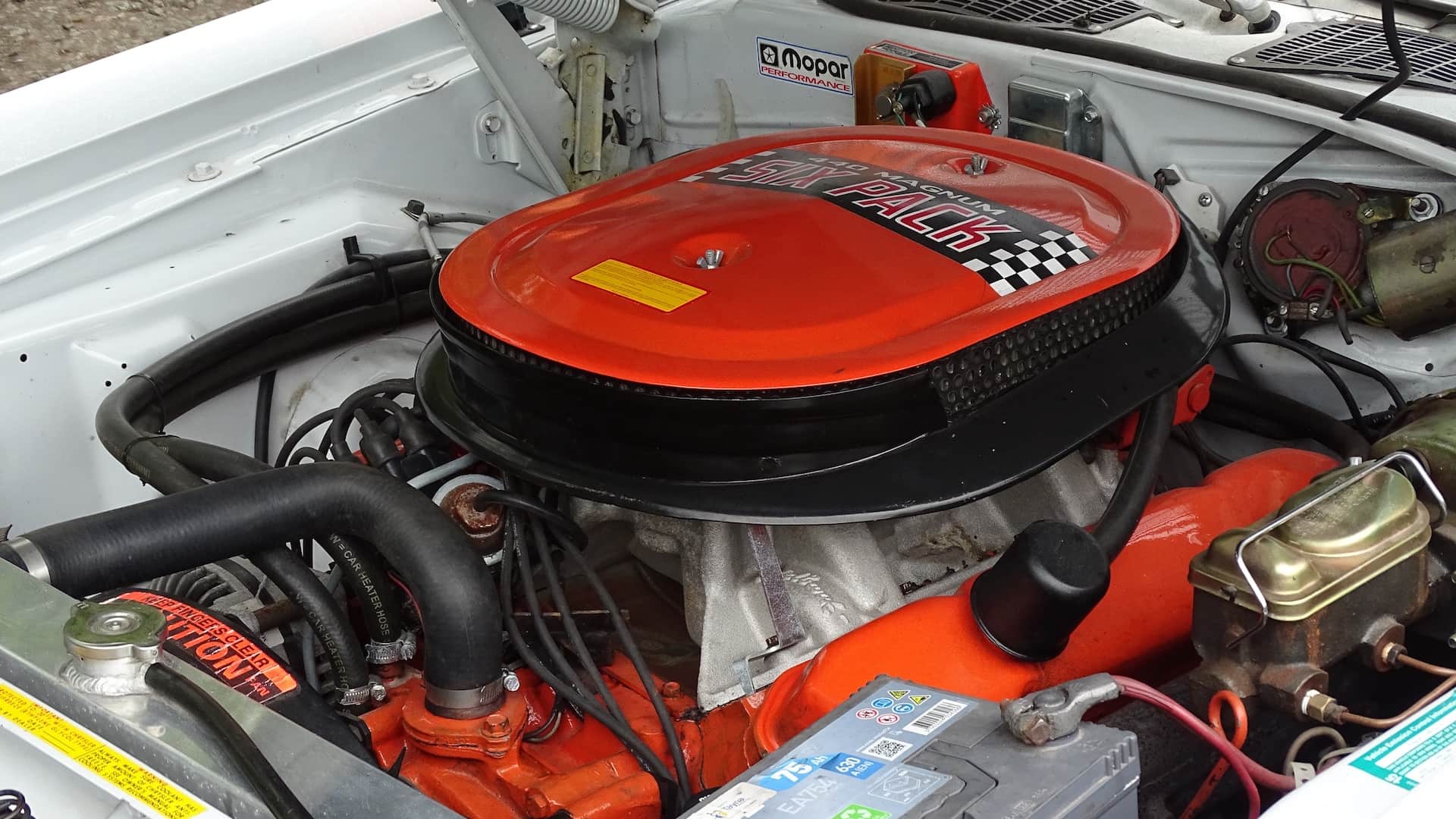
Powering this particular Challenger R/T is the gigantic optional 440-cubic inch (7.2-litre) Magnum V8 engine, fitted with ‘Six Pack’ carburettors. Official factory ratings put output at 390 hp, accompanied by a thundering 440 lb-ft of torque. 

Being cheaper than the 426 Hemi option, but still with serious performance, made the 440 R/T a popular choice for Mopar fans. Contemporary road tests claimed it would hit 0-60 mph in around 6 seconds, and run a quarter-mile sprint in under 14 seconds. 

An optional three-speed automatic transmission was specified for this car, whilst it also wears an exhaust system with quad tailpipes. 

“Patiently. That’s the only way to wait for somebody.”

1970 Dodge Challenger RT

Opportunities to buy true muscle cars like the E-Body Challenger in the UK are rare occasions. The chance to purchase a desirable 1970 model year Challenger R/T, with inspiration from Vanishing Point, is rarer still. 

An estimated sale price of between £50,000 and £60,000 ($62,000 to $75,000) compares favourably with Challenger values seen in the United States. However, the fuel mileage will be as low as you might suspect…

The H and H Classic Motor Car Auction will take place on Wednesday 29th April. To ensure the safety of staff and bidders, the sale itself will take place behind closed doors with being placed by telephone or made online.

ALSO READ

This amazing Ringbrothers Chevrolet K5 Blazer is available to buy right now

Sinister 2003 Mercury Marauder up for sale

The Kia Telluride is the official 2019 Car of Texas

Advertisement

The average electric car is driven 9,500 miles a year

0

Tesla Model S range

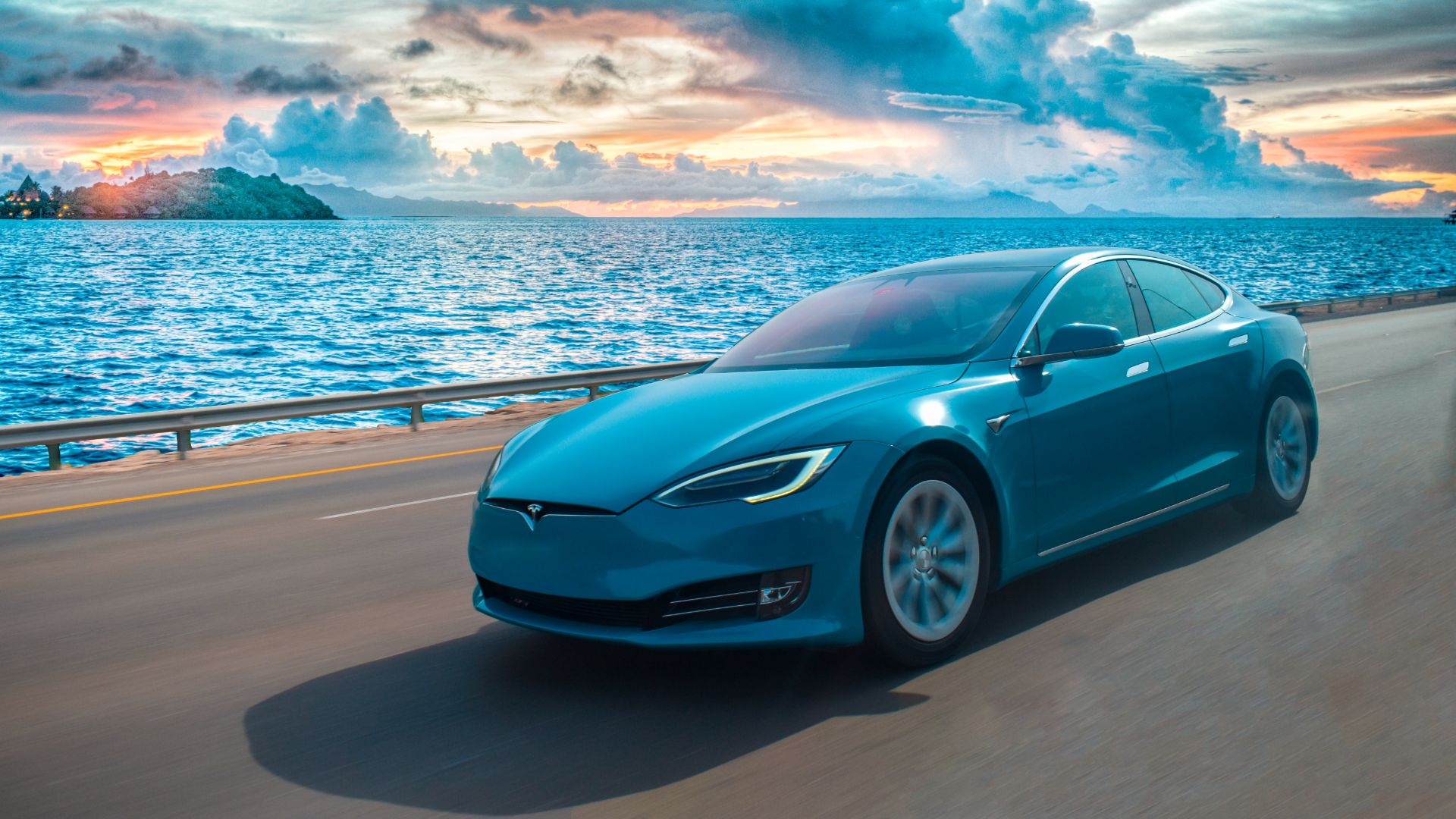
Pure electric cars are driven an average of 9,435 miles a year, new research has revealed. This is more than many popular petrol cars.

Figures from the RAC Foundation show the newest cars in Great Britain travel an average of 10,377 miles in each of their first three years. That’s the equivalent of 28 miles a day.

The high-mileage hero is the Tesla Model S, with the electric car covering an average of 12,392 miles a year. Overall, Tesla cars travel 12,459 miles, with these figures based on a sample of 887 vehicles.

Other significant electric cars include the Nissan Leaf (8,241 miles) and Renault Zoe (5,736 miles).

For context, the Skoda Octavia covers 9,230 miles in petrol form and 14,986 as a diesel. Meanwhile, the Mitsubishi Outlander PHEV averages 12,500 miles a year.

Predictably, diesel cars cover the most miles, averaging 12,496 a year – 67 percent more than new petrol cars.

These figures were collated before the lockdown. Since stay at home measures were introduced, road travel has dropped by 73 percent.

Top 10 average annual car mileage

  1. Tesla: 12,459
  2. Mercedes-Benz: 12,100
  3. Volvo: 11,578
  4. Ford: 11,488
  5. Mitsubishi: 11,456
  6. Volkswagen: 11,282
  7. Citroen: 11,272
  8. Renault: 10,924
  9. BMW: 10,859
  10. Land Rover: 10,716

Tesla Model 3

Steve Gooding, director of the RAC Foundation, said: “Unsurprisingly people with diesels have been doing most mileage, probably seeking better long-distance fuel economy, but this study is also evidence that battery-electric powered cars are not just trophy vehicles signalling their owners’ green credentials but prior to the lockdown were racking up the miles as everyday transport.

“Tens of millions of people still drive petrol and diesel-powered cars, but this data suggests that owners of electric cars have found them to be a practical proposition, running up the sort of big annual mileages that many of us need to do, challenging preconceptions about their range and the ease of re-charging.

“The next big question is what will happen when the COVID-19 lockdown ends? Some say our travel behaviour might change quite dramatically as we’ve mastered on-line meetings in place of the office routine, but any ongoing desire for social-distancing might yet draw us back to our own cars for the trips we make once the travel restrictions are lifted.”

ALSO READ

Plug-in hybrid Land Rover Discovery Sport and Range Rover Evoque launched

1 in 2 public transport users consider switch to cars

Air pollution linked to COVID-19 deaths in Europe

Advertisement

Why record low oil prices might not mean lower pump prices

0

petrol pump

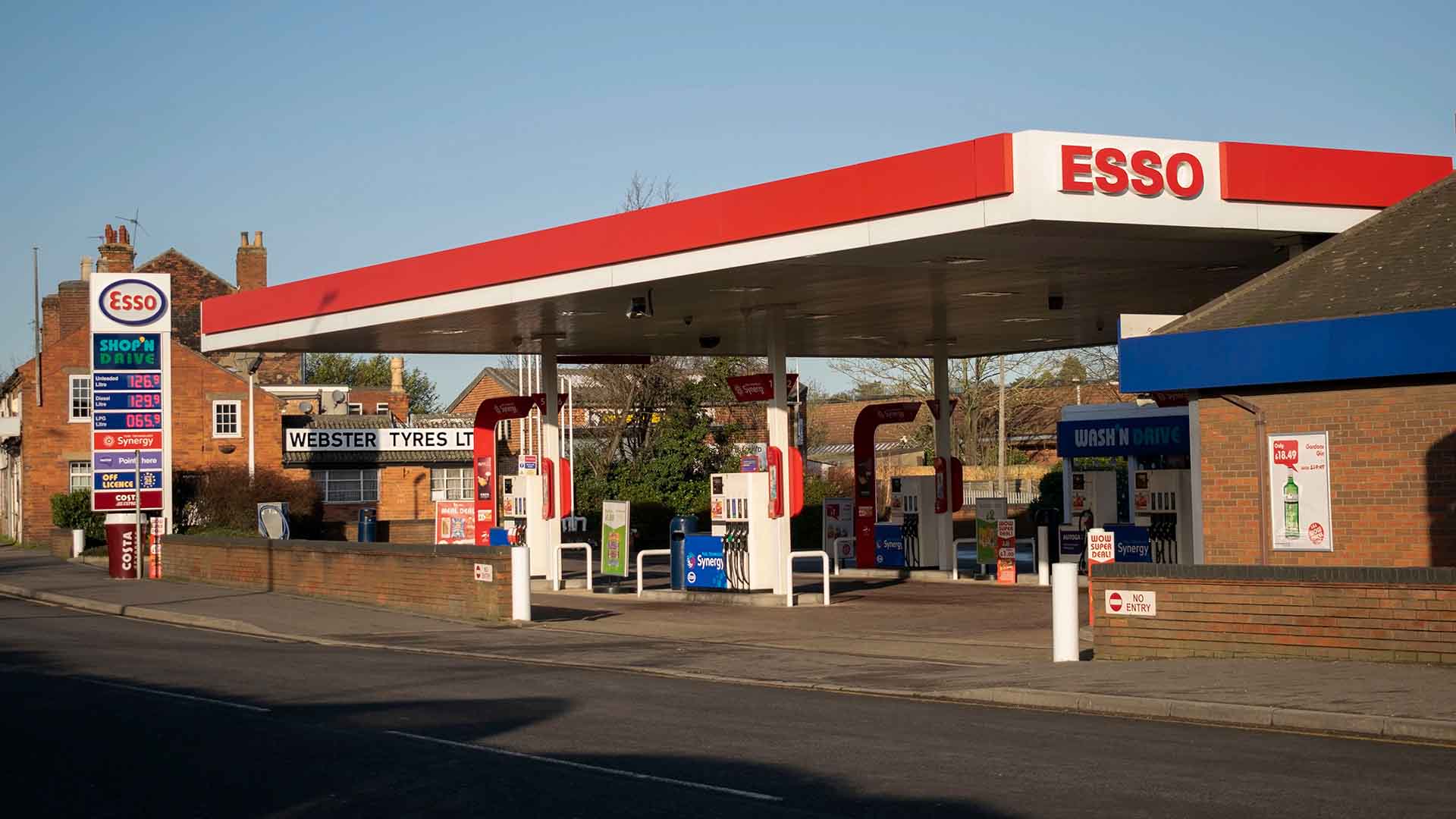
The price of a barrel of crude oil plummeted by 66 percent in March, falling to its lowest level in 18 years. The cost of a litre of unleaded fuel dropped from 122.72p to 113.54p as a result. That’s a fall of 9.18 percent.

Meanwhile, the supermarkets announced some major cuts, with prices dropping to 104p and 111p for petrol and diesel respectively. Asda finished March selling petrol for 102.7p and diesel for 108.7p.

But the RAC is warning drivers that fuel prices are unlikely to drop below £1 per litre, with retailers already feeling the effects of the lockdown. Demand for petrol is down 75 percent, while diesel is down 71 percent as motorists stay at home.

Road travel has dropped by 73 percent during the lockdown, leading to a stark warning from the Petrol Retailers Association (PRA). It said that 1,000 retailers could be lost as a result of the coronavirus and plummeting oil prices.

According to the RAC, further price cuts remain a possibility if retailers are prepared to pass on the savings they are making to drivers.

‘At pains to trim their prices’

Esso petrol station

RAC fuel spokesman Simon Williams said: “The oversupply of oil continues to suppress the barrel price and it’s clear now that plans by some of the world’s largest oil-producing nations to limit production haven’t yet been enough to lift the price – there’s currently too little demand for oil in the first place.

“It’s right that retailers charge a fair price for fuel that reflects the price of the raw product, and in theory petrol prices could fall below £1 per litre if the lower wholesale costs were reflected at the pumps – but at the same time people are driving very few miles so they’re selling vastly lower quantities of petrol and diesel at the moment. This means many will be at pains to trim their prices any further.

“We also continue to be concerned about smaller forecourts that provide a vital service in areas where the supermarkets don’t have a foothold as many are already finding conditions tough with sales having fallen off a cliff since lockdown. It would be bad news all round if these forecourts shut up shop for good.”

As of Sunday 26 April, the pump price for a litre of petrol was 109.3p, while diesel stood at 114.8p. Around two-thirds of the price of fuel goes to the government in form of duty and VAT.

ALSO READ

Fuel stations at risk of closure due to coronavirus

DVLA warns of ‘significant delays’ for motorists

Motorists with car finance to get three-month payment freeze

Advertisement

Porsche 911 now offered with manual gearbox ‘for purists’

0

Porsche 911 7-speed manaul gearbox 'for purists'

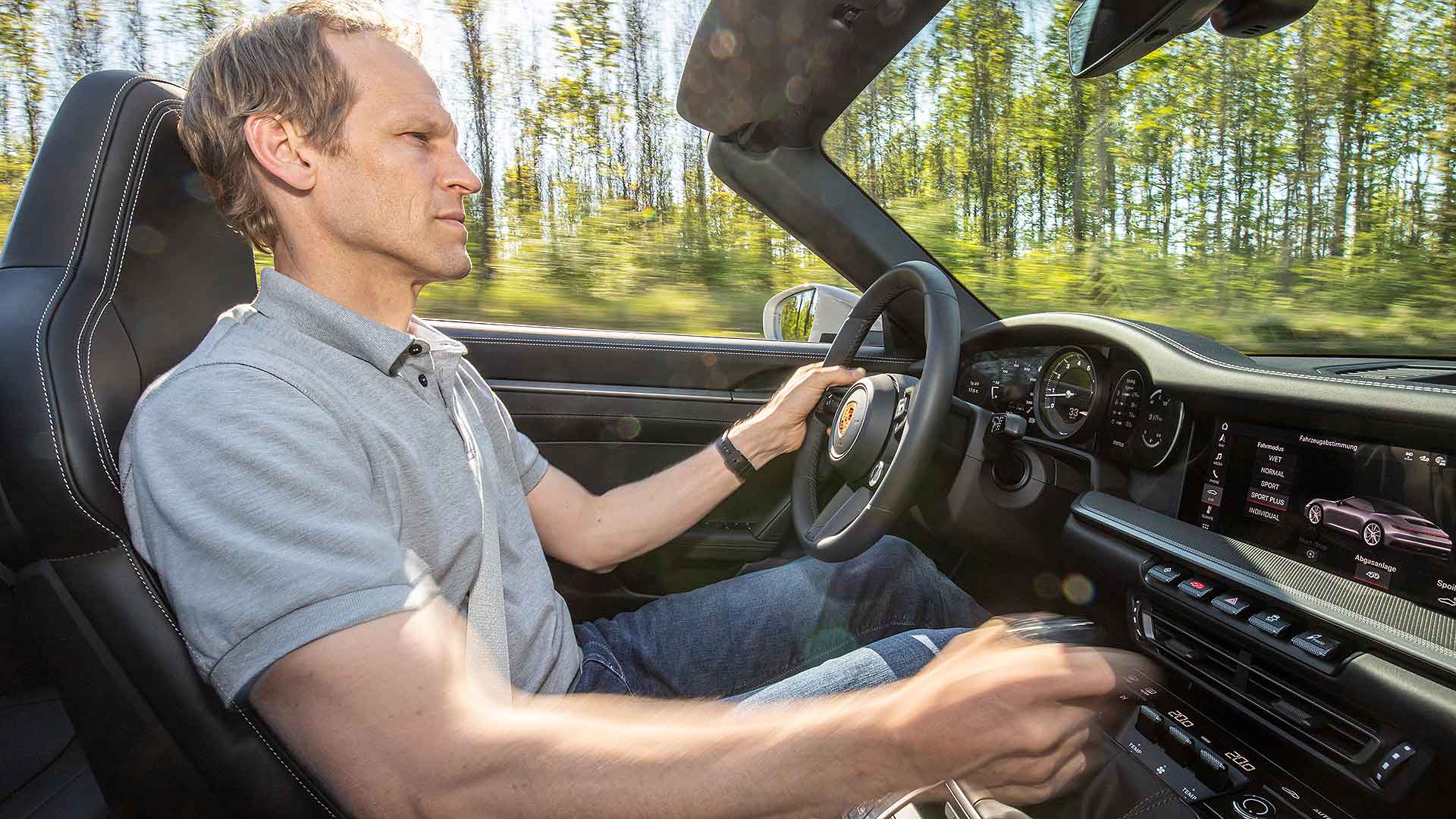
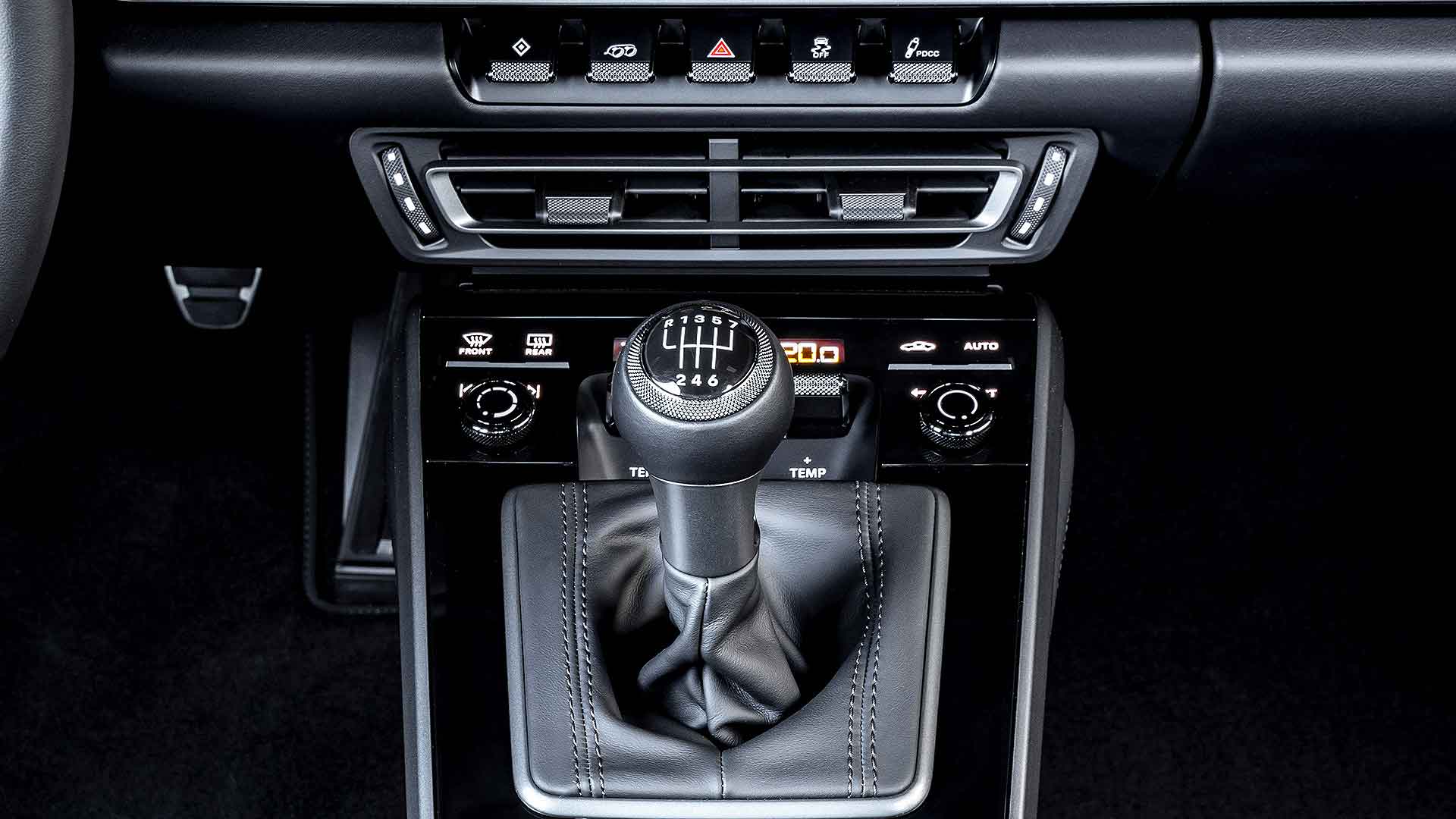
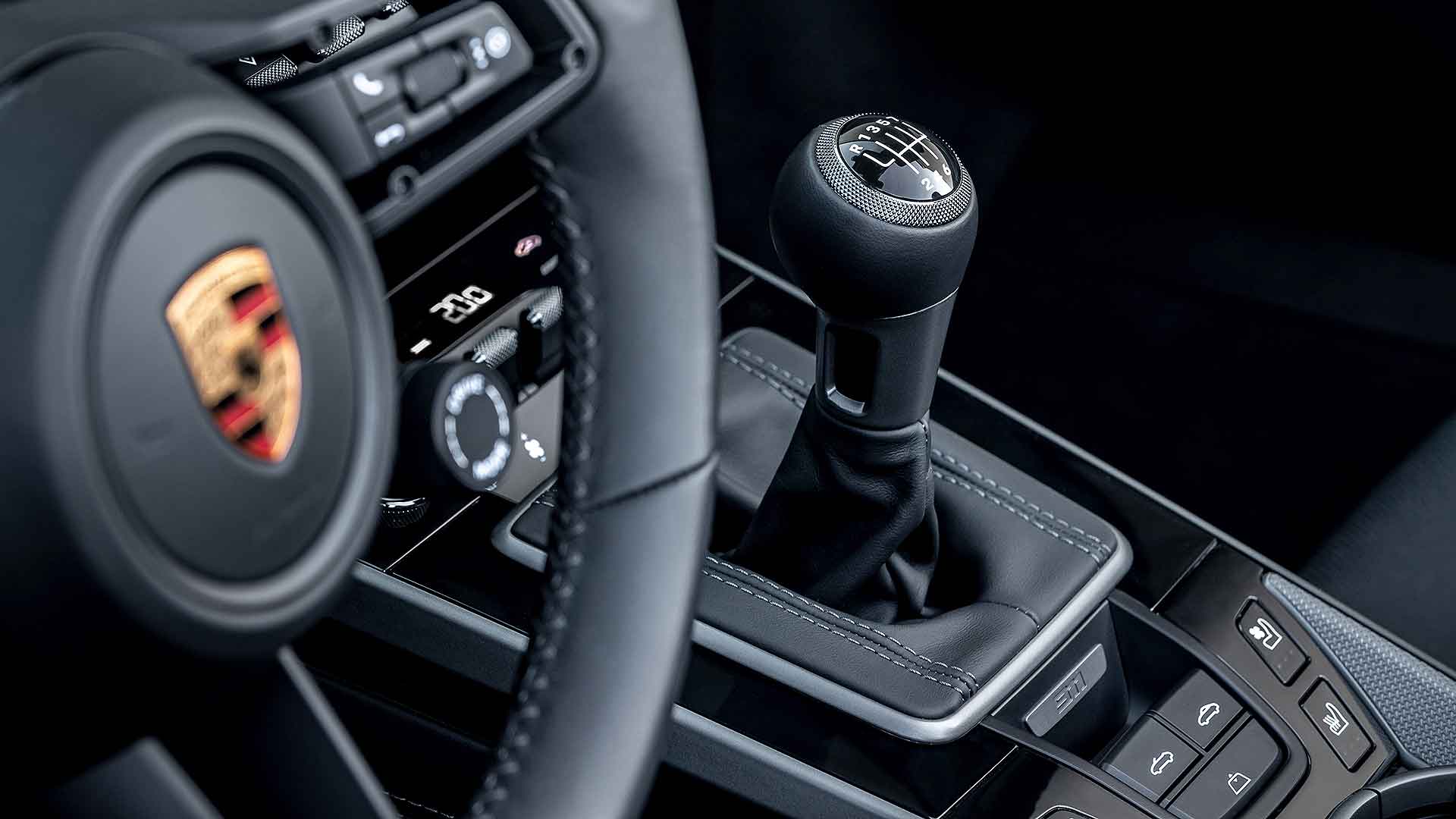
Porsche has introduced a seven-speed manual gearbox option for the 911 sports car, alongside the existing eight-speed PDK paddleshift auto.

The new stick-shift gearbox is a no-cost option on 911 Carrera S and Carrera 4S models. It was launched first in the United States last year. 

It is bundled together with Porsche’s Sport Chrono package, and includes a clever rev-match function for downshifts.

Porsche 911 7-speed manaul gearbox shift pattern

When you shift into a lower gear, the engine revs are ‘blipped’, smoothing out the downshift. It’s the same technique racing drivers use on the track.

Other Sport Chrono goodies include a mode switch dial on the steering wheel, a stop watch integrated into the dashboard, plus the Porsche Track Precision smartphone app.

Porsche 911 7-speed manaul gearbox

There’s an additional new feature too: a tyre temperature indicator.

When the tyres are cold and have less grip, blue bars are shown on the dashboard. As they warm up, they turn blue-white and then, when fully up to temperature, white.

Porsche quotes a 4.2-second 0-62mph time for the 911 Carrera S, and says it weighs 1,480kg – 45kg less than the PDK variant.

The 2020 Porsche 911 Carrera S costs from £94,350 and Carrera 4S prices start from £99,925. 

2020 model year Porsche 911

More new features have been introduced for 2020. 911 buyers can now add lightweight, noise-insulated glass, which saves more than 4kg in weight.

There’s a new paint colour, Python Green, and a seven-colour ambient lighting package for the interior.

Those who drive their 911 in the city, rejoice: an optional Smartlift function lifts the front end 40mm at the push of a button.

Porsche InnoDrive has been introduced, too. This is an advanced cruise control that uses sat nav data to work out acceleration and deceleration for the next 3km of driving, including corners, gradients and speed limits.

The car then takes over so all the driver has to do is steer.

It is, however, only available on the PDK auto version. Not that purists would be happy handing over control to the car, anyway…

ALSO READ

Amazing barn-find Porsche 901 predates the 911

The Porsche 911 is the most profitable car in the world

New Porsche app guides you to the best driving roads

Advertisement

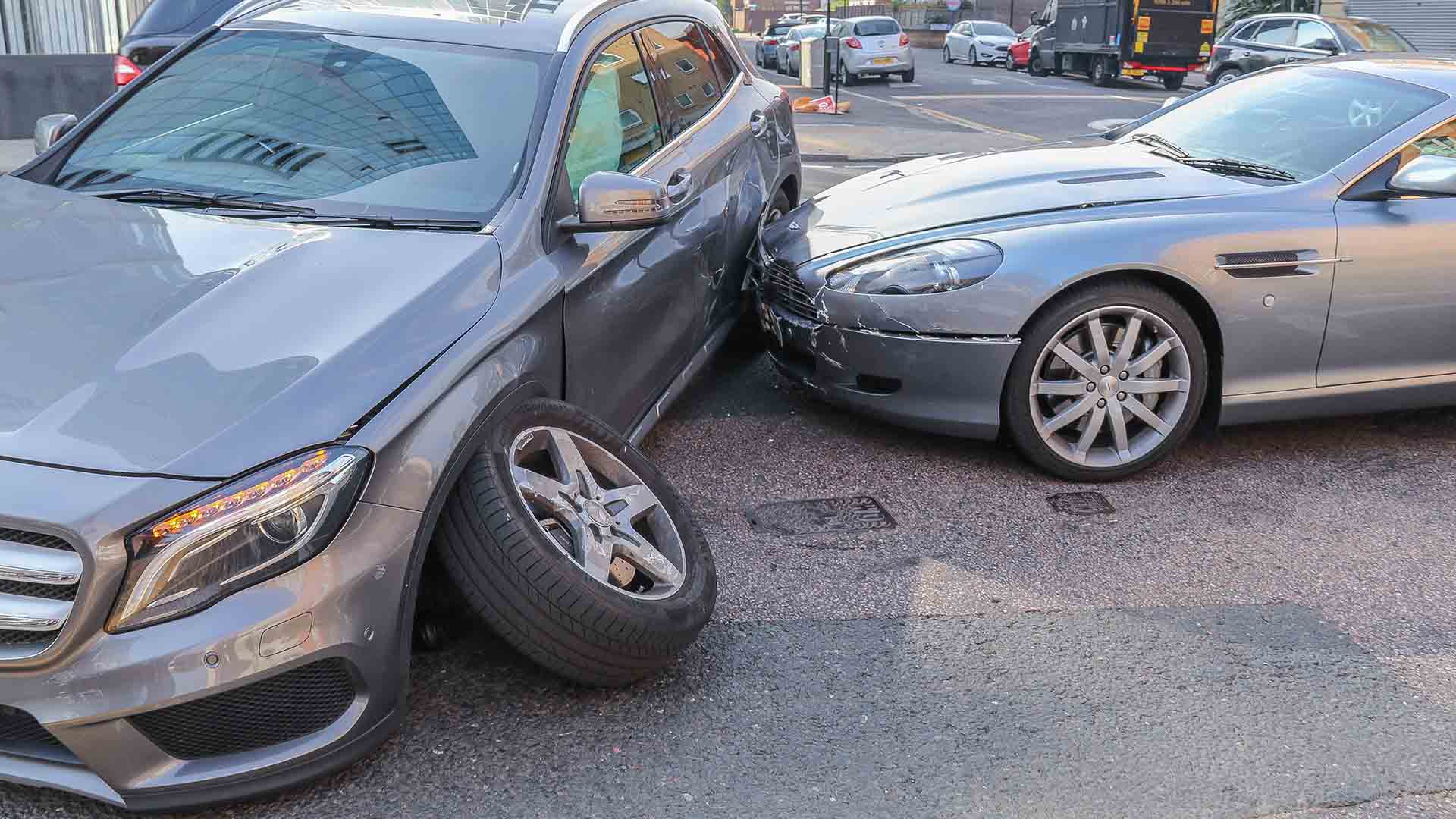
Most accidents happen on slower roads

0

Most accidents happen on slow roads

More than two-thirds of accidents take place on roads with a speed limit of 30mph or less. That’s according to Department for Transport statistics.

Using figures from 2018, the research shows that 73,408 (60 percent) of accidents happened on roads with a limit of 21-30mph. Meanwhile, 10,661 (nine percent) took place on roads with a limit up to 20mph.

The data also shows that you’re less likely to have an accident on a motorway or derestricted road.

However, accidents on faster roads are more likely to be fatal. For example, while ‘just’ 12 percent of accidents take place on a road with a 51-60mph limit, they make up 32 percent of fatal accidents. There were 542 fatal accidents in 2018.

Given the above, it will come as no surprise that London has the highest proportion of road accidents, but the lowest rate of fatalities. The key figures from a regional perspective are accidents and fatalities per one million people.

In London, the figures are 2,881 and 12 respectively. At the opposite end of the scale – and indeed, the country – Scotland saw figures of 1,178 and 27.

The East Midlands has the highest rate of fatalities, with 37 fatal accidents per one million people. The South West (31), Wales (30) and Yorkshire and the Humber (30) saw similarly high rates of fatalities.

[av_table purpose=’pricing’ pricing_table_design=’avia_pricing_default’ pricing_hidden_cells=” caption=” responsive_styling=’avia_responsive_table’ id=” custom_class=” av_uid=’av-2m45i2a9f’] [av_row row_style=’avia-heading-row’ av_uid=’av-2l0kkmgs3′][av_cell col_style=” av_uid=’av-2j1b66ir7′]Region of the country[/av_cell][av_cell col_style=” av_uid=’av-2hh2qfe9f’]All accidents in the region[/av_cell][av_cell col_style=’avia-highlight-col’ av_uid=’av-2h0alepv7′]Accidents per 1m people[/av_cell][av_cell col_style=” av_uid=’av-2f39khfub’]Fatal accidents in the region[/av_cell][av_cell col_style=’avia-highlight-col’ av_uid=’av-2dvla9ecz’]Fatal accidents per 1m people[/av_cell][/av_row] [av_row row_style=” av_uid=’av-2cl0h9to3′][av_cell col_style=” av_uid=’av-2c3zwm2r7′]London[/av_cell][av_cell col_style=” av_uid=’av-29un5ss8j’]25,662[/av_cell][av_cell col_style=’avia-highlight-col’ av_uid=’av-28qas1ek3′]2,881[/av_cell][av_cell col_style=” av_uid=’av-2880e6xyr’]109[/av_cell][av_cell col_style=’avia-highlight-col’ av_uid=’av-26097a4mr’]12[/av_cell][/av_row] [av_row row_style=” av_uid=’av-24un0c19v’][av_cell col_style=” av_uid=’av-24e3gwrg3′]South East[/av_cell][av_cell col_style=” av_uid=’av-22y0v8voz’]19,164[/av_cell][av_cell col_style=’avia-highlight-col’ av_uid=’av-21lx5m6lv’]2,098[/av_cell][av_cell col_style=” av_uid=’av-20pkjd6ur’]237[/av_cell][av_cell col_style=’avia-highlight-col’ av_uid=’av-1za924777′]26[/av_cell][/av_row] [av_row row_style=” av_uid=’av-1xyzg2f3n’][av_cell col_style=” av_uid=’av-6tejnv5f’]Yorks/Humber[/av_cell][av_cell col_style=” av_uid=’av-1v4kr969f’]10,526[/av_cell][av_cell col_style=’avia-highlight-col’ av_uid=’av-1ub7gzek3′]1,921[/av_cell][av_cell col_style=” av_uid=’av-1s002t84z’]165[/av_cell][av_cell col_style=’avia-highlight-col’ av_uid=’av-6bqnix9v’]30[/av_cell][/av_row] [av_row row_style=” av_uid=’av-1qauuiaur’][av_cell col_style=” av_uid=’av-1om5npucz’]East of England[/av_cell][av_cell col_style=” av_uid=’av-1nnedpgqb’]11,762[/av_cell][av_cell col_style=’avia-highlight-col’ av_uid=’av-1lws87fn7′]1,897[/av_cell][av_cell col_style=” av_uid=’av-kdnj08j’]163[/av_cell][av_cell col_style=’avia-highlight-col’ av_uid=’av-1jdxh1z03′]26[/av_cell][/av_row] [av_row row_style=” av_uid=’av-1idnmb52r’][av_cell col_style=” av_uid=’av-1gw7eiuib’]East Midlands[/av_cell][av_cell col_style=” av_uid=’av-1fm3av2sz’]8,603[/av_cell][av_cell col_style=’avia-highlight-col’ av_uid=’av-1euc8b4hf’]1,791[/av_cell][av_cell col_style=” av_uid=’av-1czbt2s4z’]179[/av_cell][av_cell col_style=’avia-highlight-col’ av_uid=’av-1cag9kcqb’]37[/av_cell][/av_row] [av_row row_style=” av_uid=’av-1ai7qe67n’][av_cell col_style=” av_uid=’av-19r1tx27n’]South West[/av_cell][av_cell col_style=” av_uid=’av-17inbj1wz’]9,792[/av_cell][av_cell col_style=’avia-highlight-col’ av_uid=’av-497c2c1f’]1,749[/av_cell][av_cell col_style=” av_uid=’av-476egq9f’]172[/av_cell][av_cell col_style=’avia-highlight-col’ av_uid=’av-1484b1bsj’]31[/av_cell][/av_row] [av_row row_style=” av_uid=’av-12lw3cxv7′][av_cell col_style=” av_uid=’av-11xljz0qb’]North West[/av_cell][av_cell col_style=” av_uid=’av-10e296rqr’]12,701[/av_cell][av_cell col_style=’avia-highlight-col’ av_uid=’av-zgsq565v’]1,742[/av_cell][av_cell col_style=” av_uid=’av-y01bf303′]184[/av_cell][av_cell col_style=’avia-highlight-col’ av_uid=’av-wlbc5lrn’]25[/av_cell][/av_row] [av_row row_style=” av_uid=’av-vtdzcxkj’][av_cell col_style=” av_uid=’av-tnkwu16b’]West Midlands[/av_cell][av_cell col_style=” av_uid=’av-t1y4nwmr’]9,907[/av_cell][av_cell col_style=’avia-highlight-col’ av_uid=’av-rp543zzn’]1,679[/av_cell][av_cell col_style=” av_uid=’av-qdfgjr3n’]167[/av_cell][av_cell col_style=’avia-highlight-col’ av_uid=’av-8xupl9v’]28[/av_cell][/av_row] [av_row row_style=” av_uid=’av-2clou6lv’][av_cell col_style=” av_uid=’av-mabrs5tf’]North East[/av_cell][av_cell col_style=” av_uid=’av-kloehdv7′]3,899[/av_cell][av_cell col_style=’avia-highlight-col’ av_uid=’av-kaal3zhv’]1,467[/av_cell][av_cell col_style=” av_uid=’av-iqakzxir’]51[/av_cell][av_cell col_style=’avia-highlight-col’ av_uid=’av-gzrqklf7′]19[/av_cell][/av_row] [av_row row_style=” av_uid=’av-fz4bmbg3′][av_cell col_style=” av_uid=’av-ebv89aib’]Wales[/av_cell][av_cell col_style=” av_uid=’av-dlxbh7n7′]4,214[/av_cell][av_cell col_style=’avia-highlight-col’ av_uid=’av-ckkfne2b’]1,343[/av_cell][av_cell col_style=” av_uid=’av-bco1oy5v’]95[/av_cell][av_cell col_style=’avia-highlight-col’ av_uid=’av-a5hmh20j’]30[/av_cell][/av_row] [av_row row_style=” av_uid=’av-8rnq8icz’][av_cell col_style=” av_uid=’av-7aj95zar’]Scotland[/av_cell][av_cell col_style=” av_uid=’av-590hhcz7′]6,405[/av_cell][av_cell col_style=’avia-highlight-col’ av_uid=’av-4dsjupdf’]1,178[/av_cell][av_cell col_style=” av_uid=’av-3ignc0kz’]149[/av_cell][av_cell col_style=’avia-highlight-col’ av_uid=’av-1mz6v75f’]27[/av_cell][/av_row] [/av_table]

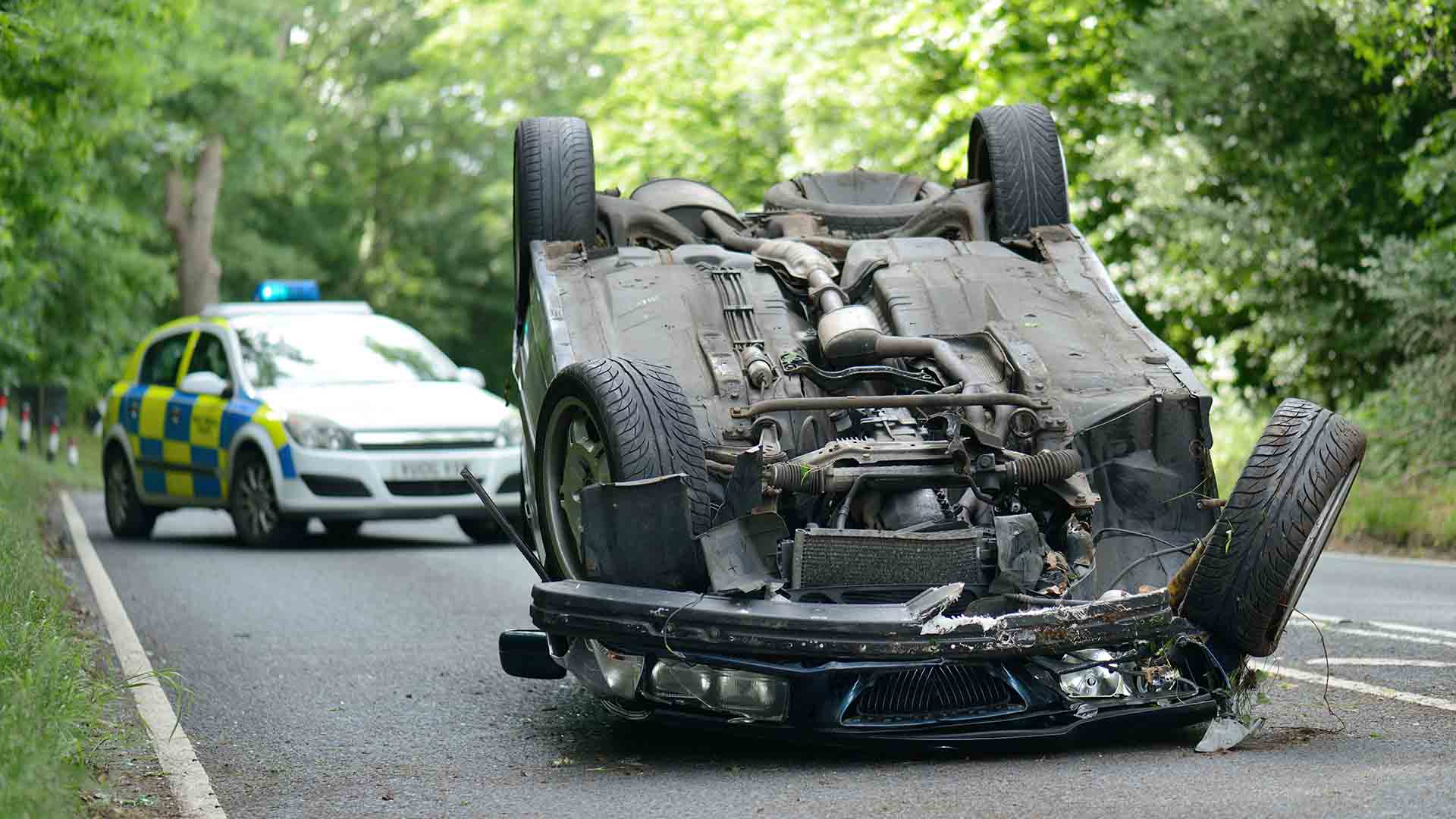
Rural roads remain the most dangerous

Accident on rural road

The research commissioned by Choose My Car shows that you should take extra care at T junctions or staggered junctions. Nearly 36,000 accidents took place on these junctions in 2018 – that’s nearly two-thirds (29 percent) of all accidents and 19 percent of fatal incidents.

Combined, crossroads and roundabouts accounted for around 20,000 of all accidents.

Finally, although two-thirds (67 percent) of road accidents take place on urban roads, the majority of fatal accidents (62 percent) happen in rural areas. 

Rural roads are often narrower, derestricted, unlit and lacking the safety features seen in urban areas. Leave the road in the countryside and you’re likely to encounter a stone wall or tree.

See the full results of the Choose My Car research.

Advertisement

Frank Stephenson: ‘How I designed the Ferrari F430’

0

Ferrari F430Frank Stephenson is one of the world’s foremost car designers, with a CV that ranges from the modern Mini and Fiat 500 to the McLaren P1.

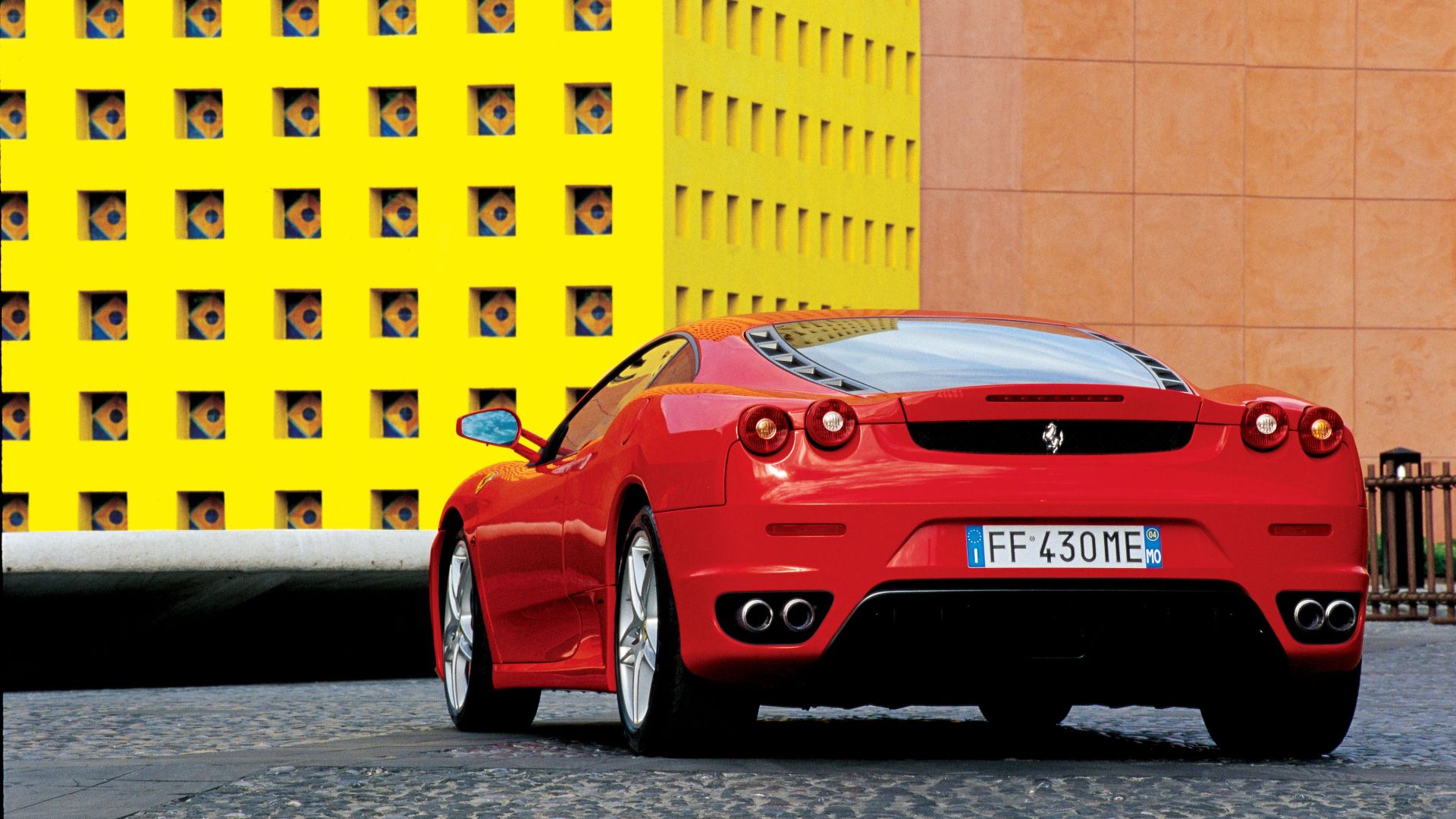
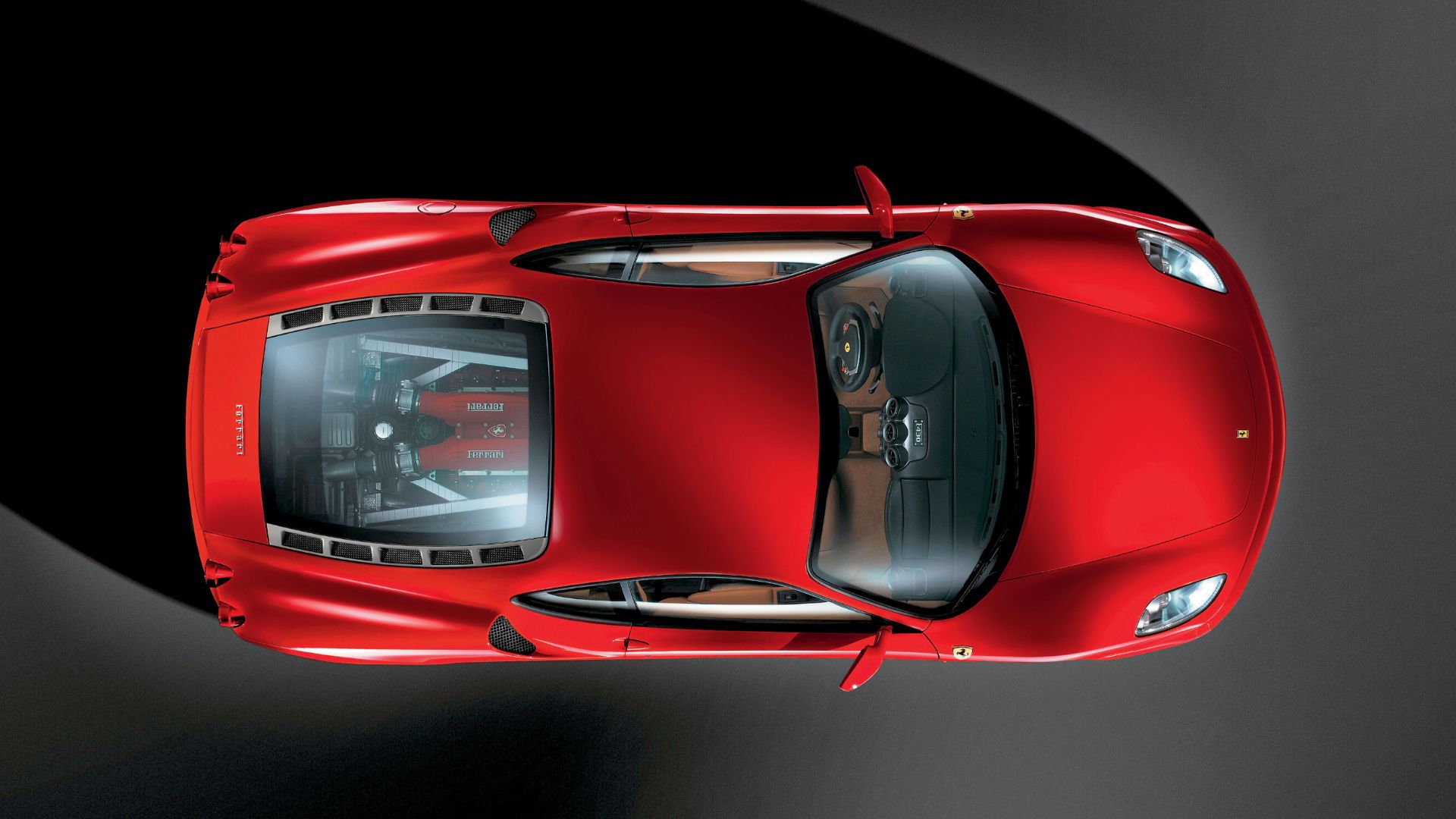
Now, Stephenson has shared some of his secrets in a new series on YouTube. The first episode covered the Mini Cooper, while the latest is about the Ferrari F430 – “one of my favourite projects,” recalls Frank.

Using his sketchpad, Stephenson gives a step-by-step guide to the design process. The result is a fascinating insight into the shaping of a supercar.

Cossie you’re worth it

Frank Stephenson

Frank is very much a citizen of the world. Born to a Spanish mother and American father, he spent his early years in Casablanca, Morocco, before moving to Istanbul, Turkey, and then Madrid, Spain, as a teenager.

After studying automotive design in California, his first job was with Ford in Cologne, Germany, where he sketched the double-deck rear spoiler on the Escort RS Cosworth. Stephenson then spent 11 years at BMW, where his work included the influential X5 SUV.

After some years In Italy – where he oversaw the Ferrari FXX, Maserati GranSport, Fiat Punto and more – Stephenson then moved to McLaren, drawing the MP4-12C and evolving a new design language from scratch.

‘Big boots to fill’

Ferrari F430

A new Ferrari is a dream job for any car designer, and Frank didn’t take the task lightly. “The brief was to do something based on the 360. In other words, take one of the more beautiful Ferraris and make it even nicer,” he explains. “Big boots to fill with that one.”

The F430 was launched in 2004, replacing the 360 Modena as Ferrari’s ‘junior’ supercar. As Stephenson suggests, it was a thorough rework of its predecessor, with more power and greater downforce. Its mid-mounted V8 produces 490hp for 0-60mph in 3.6 seconds.

“I always felt that the 360 was a bit soft, as if they’d left it in the oven too long. The F430 loses that friendliness,” says Frank.

Watch Frank Stephenson sketch a Ferrari F430

Frank is obsessed with the idea of ‘perfect’ car design, a theory he explains in the documentary film Chasing Perfect – available on Sky, iTunes, Amazon and Google Play.

“I am fortunate that I have worked with some the best design teams in the world and at the most interesting car companies. We made some amazing cars possible. Although we never quite achieved perfect there is a lot we can be proud of,” he says.

Achieving near-perfection with the F430 involved looking to the past, as Frank explains…

Jumping the shark

Ferrari F430

“To copy old solutions, that’s a sin in my book,” Frank notes. “But to be inspired by older designs – to use the genetic code to the past – is a great idea.”

With the F430, it was Ferrari’s rich heritage in Formula One that ignited a spark of inspiration. Look at the 156 F1 ‘Sharknose’ of 1961, as raced by Phil Hill, and you see genesis of the F430’s front air intakes.

“I reinterpreted the Sharknose and its nostrils in a much more modern way. When you saw it, you knew it was right,” says Frank proudly. And what looks dramatic on paper is downright ferocious in reality.

Sense and sensuality

Frank StephensonAir intakes are a subject Stephenson takes seriously: “I get upset when I see a vent that’s blocked off and has no purpose. I don’t understand that type of design.”
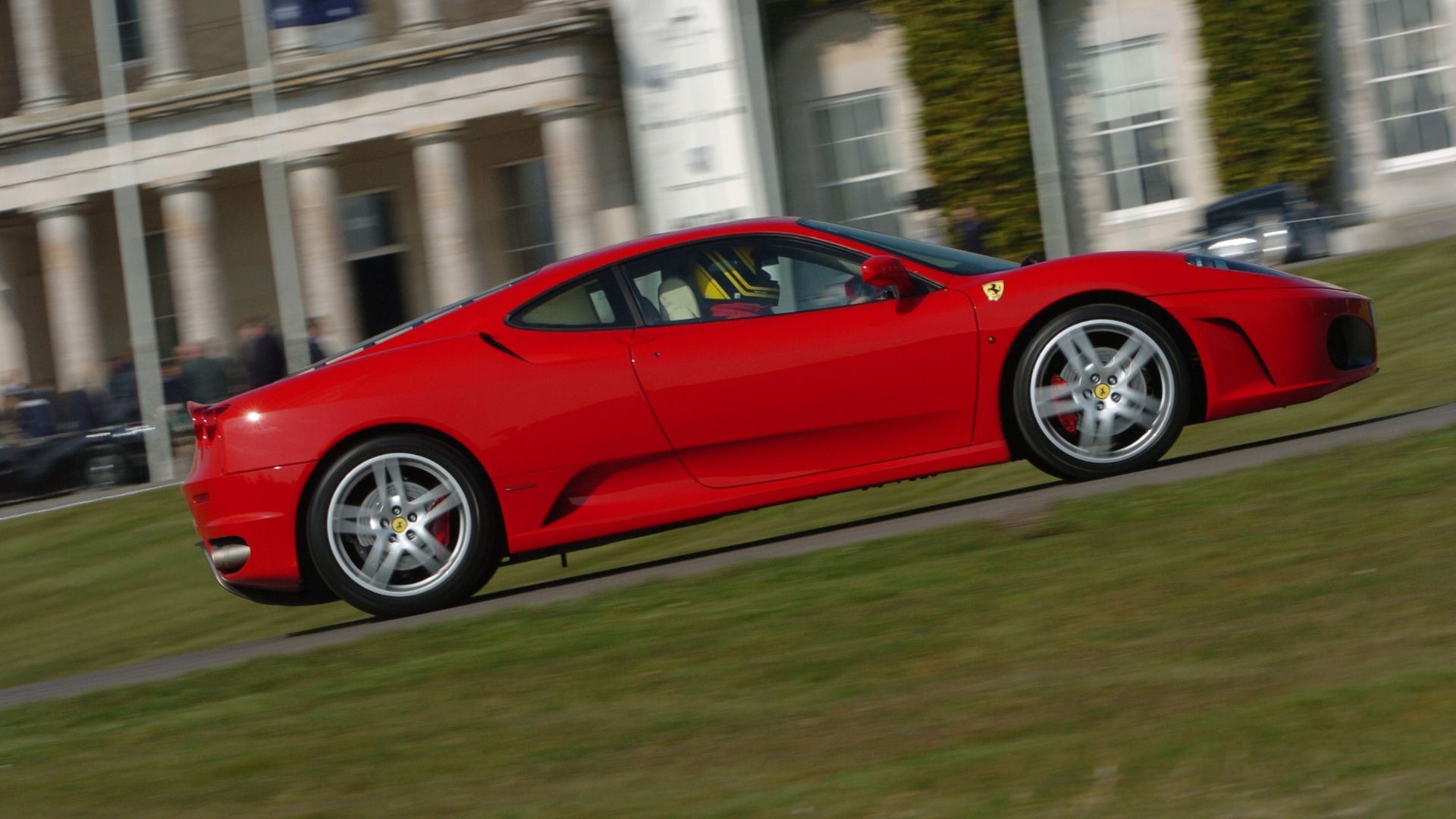

Nonetheless, a Ferrari isn’t entirely a case of function over form. “It’s not a McLaren, where everything is minimalised. You add a bit on Ferraris to get that sensuality.” The Enzo-style taillights, for example, “made it look like the car was bulging”.

Frank also thinks Ferraris are “losing that character that they had a few decades ago, where cars were less monster-looking, less aggressive”. In the case of the F430, “there’s an amount of artistic finesse to the car that made it stand out”.

More videos coming soon

Ferrari F430

There’s plenty more in the video, including the concept of ‘tumblehome’ – the difference in angle between the doors and the window glass. If the cockpit curves inwards, explains Frank, that “tends to make the car look very dynamic”.

Visit Frank’s How I Designed YouTube channel and you’ll also learn the creative process behind the 2000 Mini Cooper, with more videos due soon. We hope to see the McLaren P1 next…

Read our review of the F430’s spiritual successor, the Ferrari F8 Tributo, by clicking here.

Advertisement

Modern touchscreens now available for classic Porsches

0

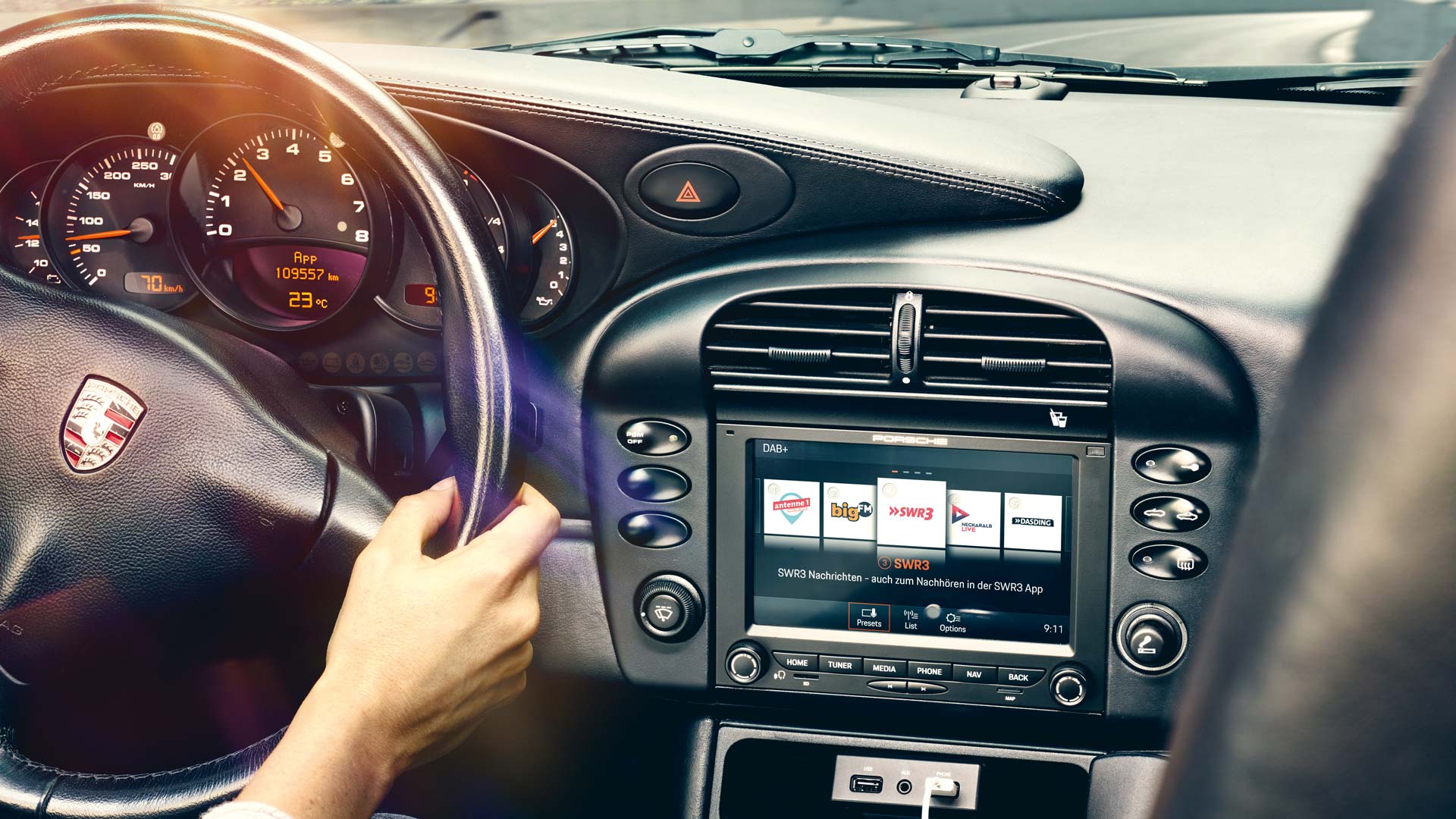
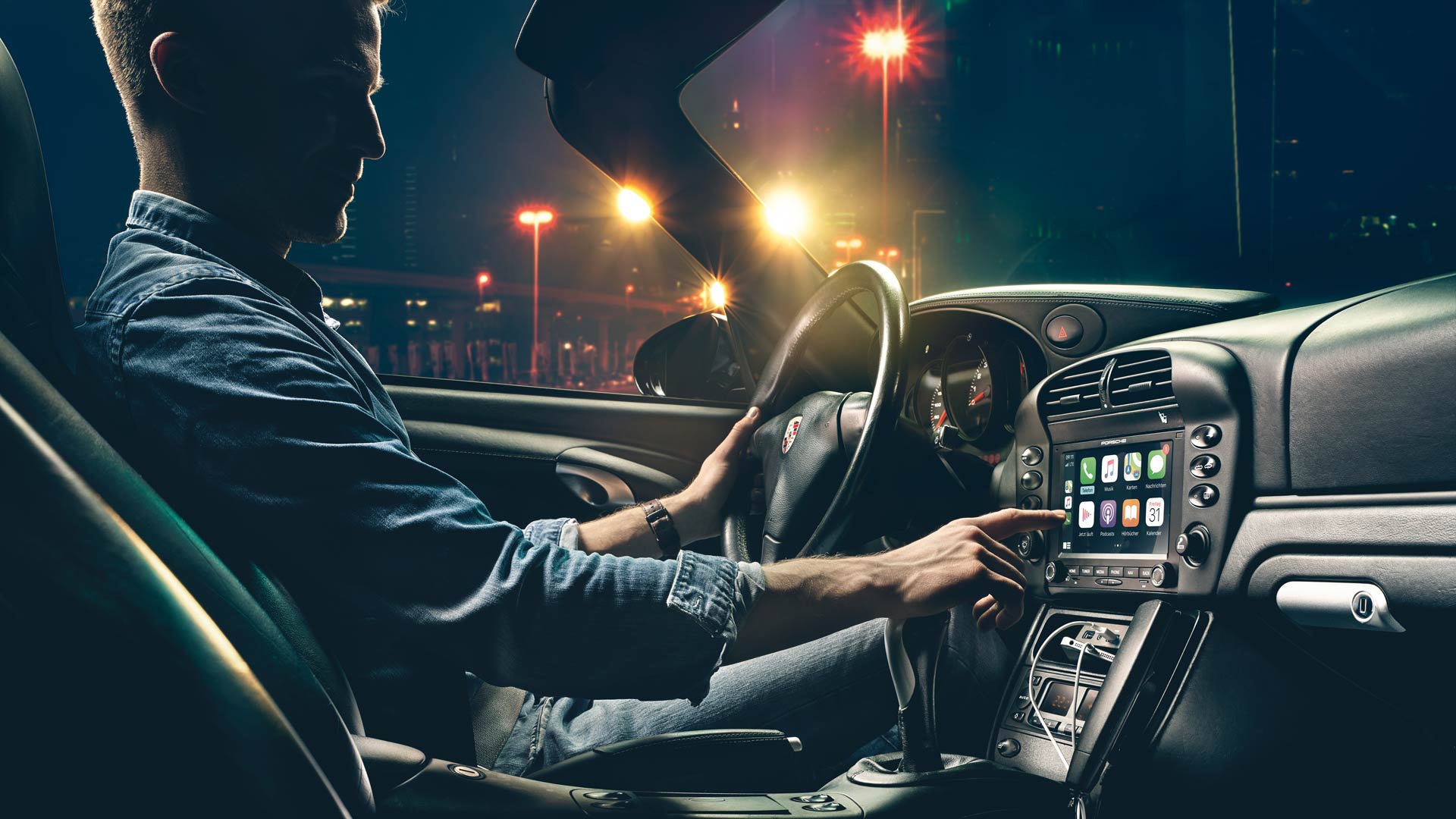
Porsche Classic PCCM Touchscreen

Classic Porsches have a reputation for everyday usability, and that can now extend to multimedia connectivity. 

New versions of the Porsche Classic Communication Management (PCCM) multimedia system have been launched, benefitting from upgraded features

It means even an original Porsche 911 from the 1960s could now benefit from digital radio and integrated navigation options.

True retrofit connectivity

Porsche Classic PCCM Touchscreen

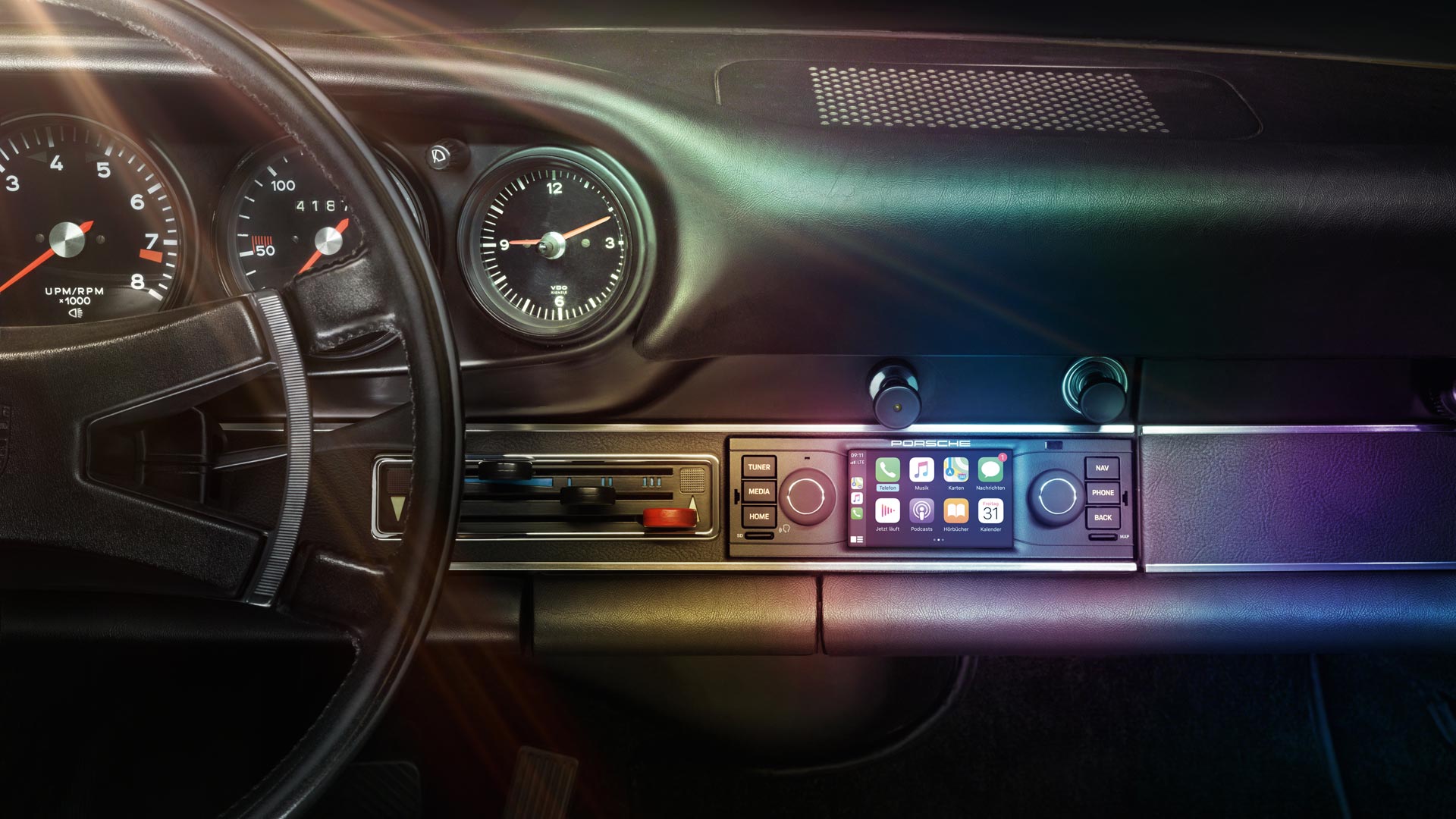
Porsche offers two versions, with the standard PCCM module an option for cars with a single-DIN radio slot. This includes cars from the earliest 911s, through to the very last air-cooled 993 models. 

PCCM features Apple CarPlay connectivity, Bluetooth, and DAB+ digital radio, giving a range of options far beyond what these cars originally left the factory with. Separate SD card-based navigation can also be used.

A small touchscreen is supplemented by buttons and knobs, all intended to integrate seamlessly with the cabin of a classic Porsche.

Double the capacity 

Porsche Classic PCCM Touchscreen

For those with a modern classic Porsche that uses a double-DIN radio, a PCCM Plus module offers connectivity options on a bigger scale. 

Designed to fit water-cooled ‘996’ 911s, and the earliest Boxsters, the PCCM Plus uses a seven-inch touchscreen. Both Apple CarPlay and Android Auto connectivity are included, with Porsche stating PCCM Plus will work with existing audio installations. 

Like the single-DIN unit, PCCM Plus features modern satellite navigation, including the latest Point of Interest (POI) features. 

A sound investment?

Porsche Classic PCCM Touchscreen

Adding modern touchscreen functionality, combined with the latest multimedia connectivity, does not come cheap.

Porsche charges €1,439.89 plus VAT (£1,260 / $1,558) for the single-DIN PCCM unit, with the double-DIN PCCM Plus selling for €1,606.51 plus VAT (£1,406 / $1,739). 

Professional installation is recommended, with the two units now available to buy online from the Porsche Classic Store, or from a Porsche dealership.

Advertisement

Parents scared of teaching their children to drive

0

Parents scared of teaching child to drive

Twenty percent of parents are nervous about teaching their children to drive, with concerns they would pass on bad habits. This is according to a survey of 1,004 parents.

Indeed, 12 percent of parents are so worried about the prospect, they would only teach their child if the car was fitted with dual controls. Thirty-four percent of mums and 19 percent of dads said they wouldn’t be confident teaching their child.

Meanwhile, 18 percent said they were concerned “they would seriously fall out” with their child.

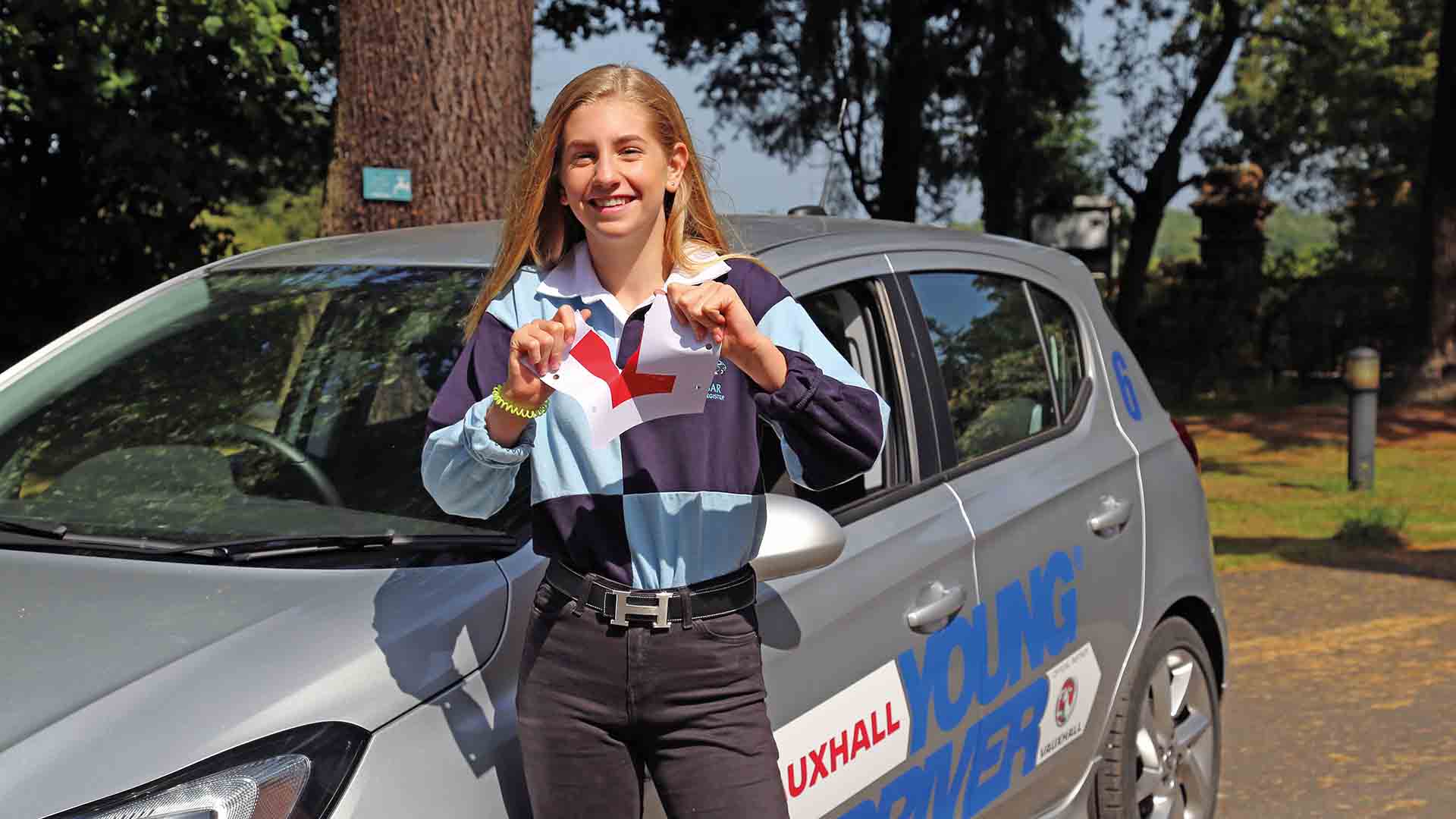
The research was published by Young Driver, a company specialising in teaching 10-17 year olds how to drive. This follows the publishing of a book on the subject by motoring journalist Quentin Willson.

Although a child must be 17 before a parent can teach them to drive on the road, tuition can be given on private property.

Anyone giving unpaid tuition (on the road) must be over the age of 21, be qualified to drive the relevant type of vehicle, and have held a full driving licence for three years. A learner driver can be fined up to £1,000 and get up to six penalty points on their provisional licence if they drive without the right supervision.

‘Arguments, stress and tears’

Teaching child to drive

Quentin Willson said: “Although parents may have the best intentions, the reality when they get behind the wheel with their child can be arguments, stress and tears. One in seven surveyed by Young Driver said it was likely both parties would end up losing their temper.

“Most parents learnt to drive decades ago and the test has changed dramatically since then, meaning their advice can confuse the learner. They often aren’t aware that the test now includes sat navs, independent driving, mechanical questions and new parking manoeuvres. It’s also a real skill knowing how to teach someone how to drive and with the best will in the world, most motorists have picked up some bad habits over the years.

“But with preparation and planning, together parent, child and instructor can make a really strong team, leading to the best possible outcome in terms of creating a safe, confident and skilled driver. And that’s good news for all road users.”

Boy in Blackpool busted

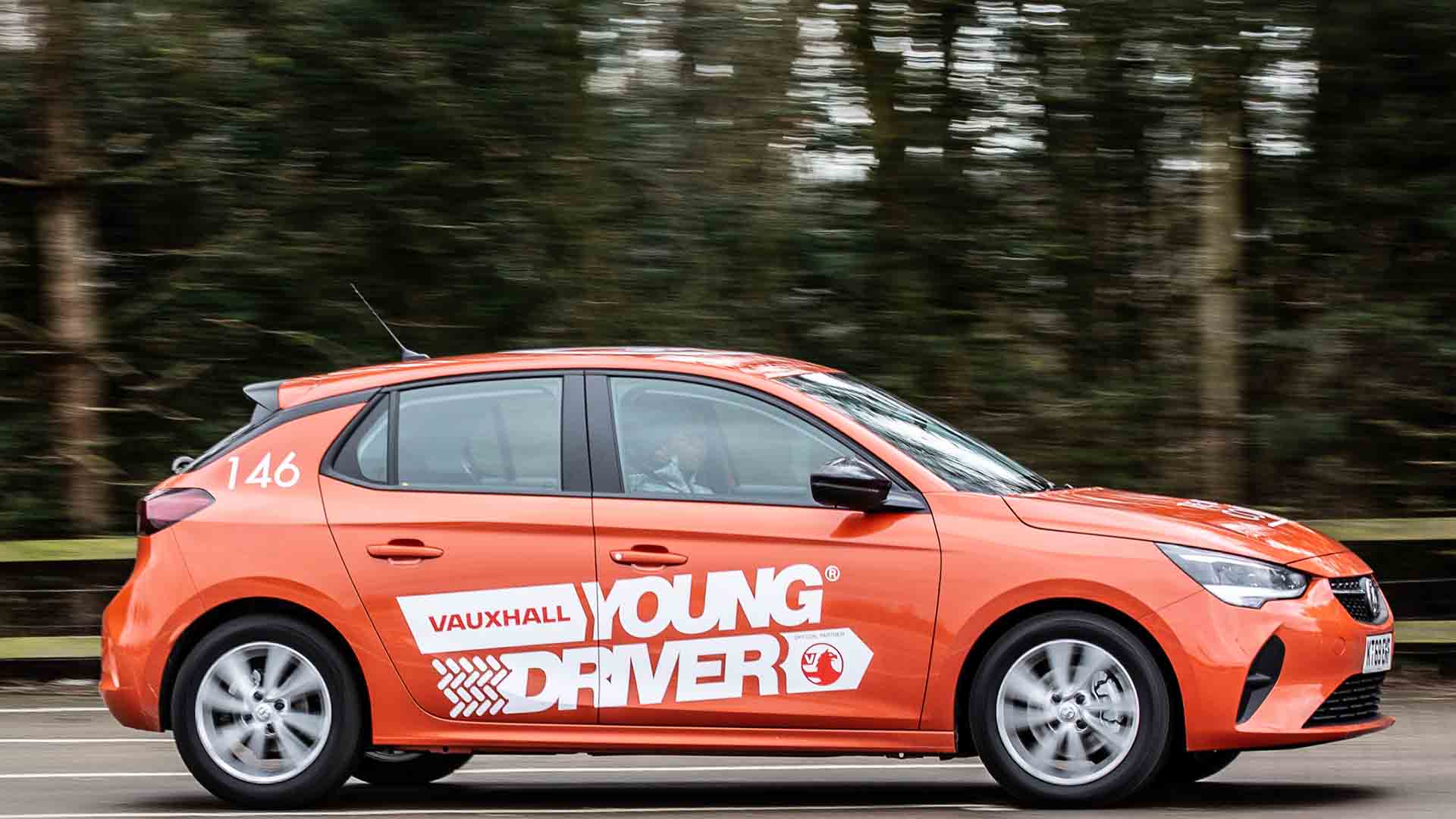
Young Driver - New Corsa

Last month, a boy aged 11 was pulled over while driving a Vauxhall Astra in a Blackpool car park. His parents said they were “fed up” of him playing Grand Theft Auto on the PlayStation.

Sue Waterfield, head of marketing at Young Driver, added: “We know that the best way to teach someone to drive is over a longer time frame and giving them as much experience as possible, providing them with the chance to thoroughly learn those necessary skills.

“Young people often want to pass their test as soon as they can after 17, but through Young Driver we can start their learning experience from as young as 10. If they already know how to change gear, check mirrors and use the pedals without having to overthink it, once they’re officially on the road they can focus on more complex areas of driving such as predicting other road users.

“Once they reach 17, that combination of approved instructor lessons, along with additional practice with parents, is key, which is why we wanted to use our experience of how to teach teens to produce this book with Quentin. Seven per cent of parents were concerned a lesson with their child might put the youngster off driving for life – but that really needn’t be the case!”

Advertisement