The AUTOBEST 2021 award for Europe’s best mainstream motor will be fought out between seven different brands as contenders for Best Buy Car of Europe 2021 are revealed.
A jury of 31 members from 31 countries – including Motoring Research’s Richard Aucock representing the UK – will now make their final assessments before the winner is announced in December.
The seven cars in the running for Best Buy Car of Europe 2021 are:
Organisers of the awards have been eager to continue with the 2021 presentation despite the worldwide Covid-19 pandemic.
“The record number of seven is a direct result of the great news coming from the industry – brilliant new models deserving a presence in the final,” said AUTOBEST chairman Dan Vardie.
The seven cars will be judged by 13 criteria including price, service network, spare parts distribution and versatility.
The objective is to honour the best offer for everyday European retail customers, which is why a price cap is included within the criteria: vehicles must be affordable and accessible.
The AUTOBEST jury represents 31 countries across Europe, making it the largest independent motoring awards jury in the world.
An awards ceremony is planned for 2021 where a full set of awards will be presented, including honours for best car company, best design, best technology and best eco tech.
After 13 years without a female driver, the British Touring Car Championship (BTCC) will now get its second of 2020 later this month.
Jessica Hawkins will compete with Power Maxed Racing team at Snetterton, following on from Jade Edwards who drove for the team at Silverstone in September.
It brings a recognition of the 25-year-old’s abilities, with Hawkins having already led a varied and successful motorsport career.
A winning reputation
The Hampshire-born driver won numerous karting titles early in her career, including the 2008 Honda Cadet British Open Championship. In 2017 she finished second in the Pro Class of the Mini Challenge UK, having taken 5 race wins and 13 podiums.
Jess has also become a successful stunt driver, featuring in The Fast & Furious Live shows. She has also worked on the forthcoming James Bond film, No Time to Die. This year has seen her added to the 2021 Guinness Book of World Records for driving the fastest-accelerating lawnmower!
Last year saw Hawkins compete in the inaugural season of the all-female W Series. Jess had planned to race in the single-seater championship again, but COVID-19 resulted in the 2020 season being scrapped.
More girl power on the grid
Hawkins will not be the only W Series alumna competing at Snetterton on the weekend of October 25th. Esmee Hawkey, who also took part in last year’s female-only championship, will be racing in the Porsche Carrera Cup GB support series.
Now in her third season of the Porsche Carrera Cup, Hawkey currently leads the Pro-Am category, having taken an impressive nine class wins so far.
It demonstrates the effectiveness of the W Series in that two of its previous contenders will be racing in top-level British motorsport at the same event.
A dream fulfilled
Power Maxed Racing has used a number of drivers to fill the seat of its Vauxhall Astra during the 2020 BTCC season. Fan favourite Rob Austin scored points in the car at Thruxton, with Jade Edwards taking the wheel at Silverstone.
Hawkins was given the chance to drive following a successful trial earlier this year. Adam Weaver, Power Maxed Racing team principal, said that Jess “impressed” the team at her initial test, and that she “should be a strong contender once she hits the Norfolk tarmac”.
Jess added that: “BTCC is where I’ve always wanted to be – it’s my dream. I’ve managed to knock on the door a few times, but I genuinely can’t believe it’s actually happening.”
The Sutton VIP Class LEVC taxi is unlikely to be waiting for you outside London Waterloo, ready for a quick trip ‘south of the river, mate’. It’s not your average LEVC TX cab.
Average taxi cabs don’t feature thick-pile carpet, hand-crafted wood veneers, a Sony PS4 games console, a refrigerator and multi-colour ambient lighting. Then again, few cabs cost in the region of £120,000 for private buyers.
The Sutton VIP Class LEVC taxi is the work of Sutton Bespoke, the tuning arm of luxury car dealer Clive Sutton. The LEVC TX is accustomed to mixing it with luxury vehicles and supercars on the streets of West London. Now it’s sharing the same showroom space.
Top rank
It looks familiar on the outside, but look again and you might spot the two-tone paint finish. The lower half retains the authentic ‘black cab’ paint, but the top half is finished in Ferrari ‘Grigio Silverstone’. The sign on the roof will read ‘VIP’, so that everybody knows you’re a cut above the rest.
Inside, the rear seats are trimmed in Sandalwood leather with Alcantara trim. The hard-wearing (and wipe-clean) rubber flooring has been replaced by thick-pile carpet. Wood veneers adorn the door trims, while occupants can enjoy the London skyline through a panoramic roof.
Crazy Taxi
That’s if the VIPs can divert their attention from the upgraded stereo system, television tuner with Apple TV, Sony PS4 and refrigerator, or deciding whether they prefer pink or blue ambient lighting. In case you’re wondering, the middle arm rest is from a Range Rover.
The driver is separated from whatever is going on in the back by a retractable screen. The steering wheel, digital instrument panel and portrait-style touchscreen are familiar Volvo items. Soft-close doors can be specified if required.
Underneath, the Sutton VIP Classic is based on the LEVC TX range-extender cab. It delivers up to 63 miles of all-electric range, offering a total range of 301 miles. This is thanks to the 1.5-litre Volvo petrol engine under the bonnet.
Business users can buy the posh cab for £100,000 (excluding VAT). The ideal ‘people-carrier’ for parents looking for a ‘mum or dad taxi’? Still want that Range Rover?
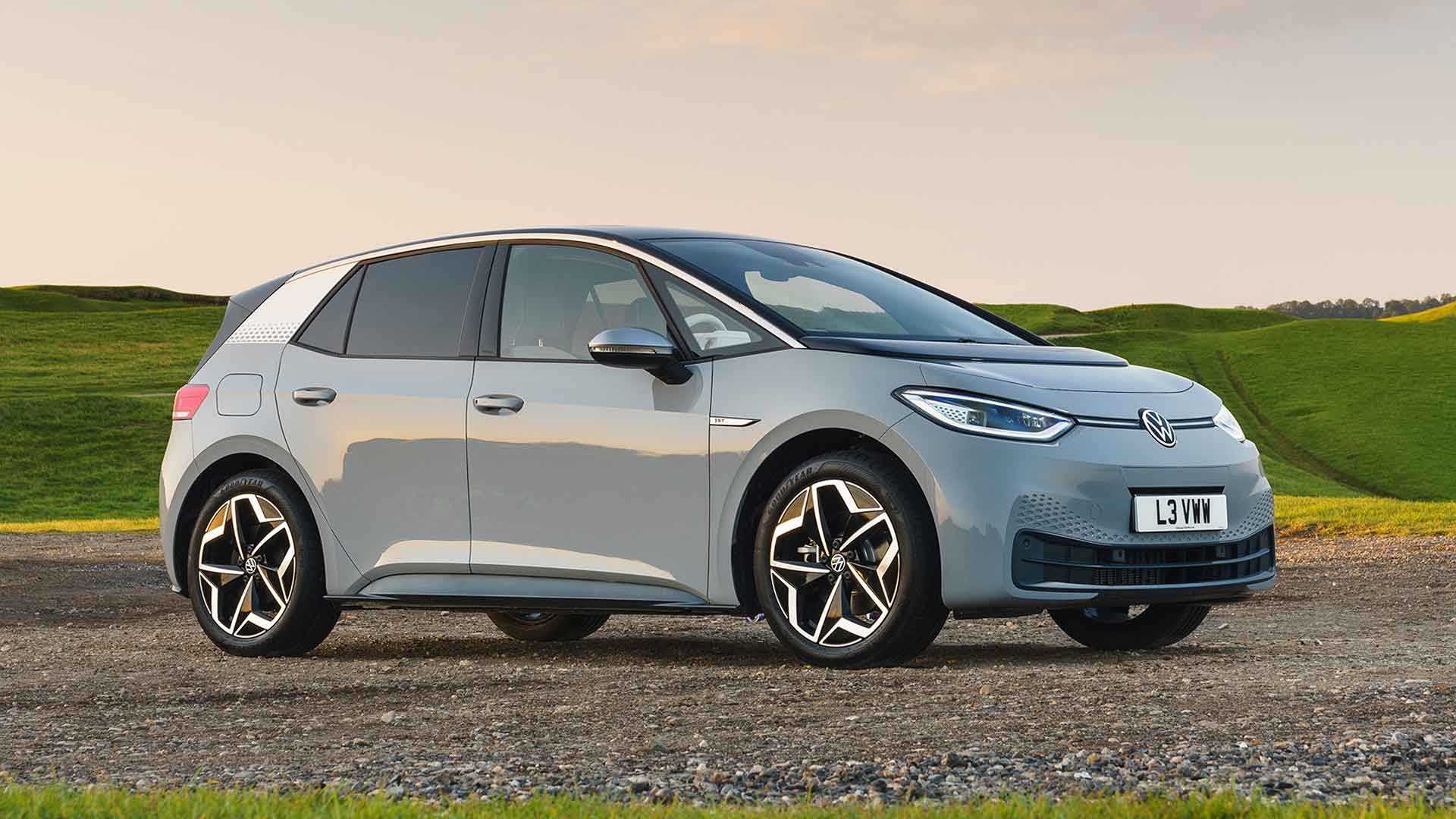
Volkswagen will open ordering for series versions of the new ID3 electric car later in October with prices starting from £29,900.
The surprising sub-£30k price tag is for the entry-level ID3 Life and is achieved after the Plug-in Car Grant is subtracted.
Prices may drop even lower in 2021 when a smaller-capacity battery goes on sale.
Volkswagen will offer the ID3 in seven different trim levels. All have preconfigured specs with option choices limited to paint and interior colours.
Six versions will feature a 58 kWh battery, as already featured on the ID3 Launch Edition. This gives a range of up to 263 miles.
A range-topping ID3 Tour will use a 77 kWh battery, increasing driving range to 336 miles.
All ID3 currently use a 204 hp electric motor, branded Pro Performance with the 58 kWh battery, and Pro S with the 77 kWh battery.
Volkswagen ID.3 specs
The ID3 is well equipped even in basic Life guise. LED headlights, adaptive cruise control, sat nav with 10.0-inch touchscreen, keyless start and the Volkswagen voice assistant are all standard.
No ID3 has wheels smaller than 18-inches.
An over-the-air software update brings wireless smartphone charging, Apple CarPlay and Android Auto in early 2021.
Volkswagen then builds up ID3 equipment with a combination from five different spec packs – Design, Infotainment, Comfort, Assistance and Sport (and each has a higher-grade ‘Plus’ version).
This is some of what each includes:
Design – LED matrix headlights, animated rear LED lights, interior ambient lighting (Plus: adds panoramic sunroof)
Infotainment – Discover Pro sat nav (Plus: adds head-up display, upgraded sound system)
Comfort – heated seats and steering wheel, electric folding door mirrors (Plus: adds two-zone climate control)
Nobody likes paying more than they have to for something, especially if it’s car insurance. It’s one of the most expensive and unavoidable costs of motoring.
According to recent figures from MoneySuperMarket, the average cost of a comprehensive car insurance policy is £475. This is a six percent fall compared to six months ago, and two percent lower than 12 months ago.
The average price is just that: an average. Higher risk groups, such as young drivers will pay more, as will consumers in high-risk postcodes. Which is where the new CompareTheMarket insurance tool comes in.
Simply input your area, age, value of your car and current car insurance premium to find if you’re getting a good deal. Unsurprisingly, the most expensive premiums are found in London, but you might be surprised by the difference between the highest and lowest prices.
London calling
Newham is the most expensive area, with drivers paying an average of £1,521.66 in the London borough. This is followed by Tower Hamlets (£1,366.69), Brent (£1,324.92) and Hackney (£1,301.23).
Island living is recommended if you want to pay the least for car insurance. Three out of the four cheapest regions are islands, with residents of the Isles of Scilly paying just £329.45 a year. Only West Devon prevents the Orkney Islands and Isle of Wight from completing an island one-two-three.
There are 408 regions in the CompareTheMarket tool, with all but 13 showing a more expensive price than the MoneySuperMarket average. One thing’s clear: where you live plays a massive role in how much you pay for cover.
Six out of the 15 cheapest regions are in Devon. Meanwhile, 14 out of the 15 most expensive locations are in the Greater London area. Manchester is the 11th most expensive area in the UK.
The most costly areas for car insurance
Newham: £1,521.66
Tower Hamlets: £1,366.69
Brent: £1,324.92
Hackney: £1,301.23
Barking and Dagenham: £1,295.74
Westminster: £1,279.36
Redbridge: £1,267.36
Haringey: £1,262.19
Kensington and Chelsea: £1,231.70
Enfield: £1,220.51
The cheapest areas for car insurance
Isles of Scilly: £329.45
Orkney Islands: £442.05
West Devon: £445.65
Isle of Wight: £447.04
Torridge: £449.72
East Devon: £456.40
Kerrier: £463.92
North Norfolk: £465.19
Fareham: £466.01
East Lothian: £467.98
Click here for the full data and the research methodology.
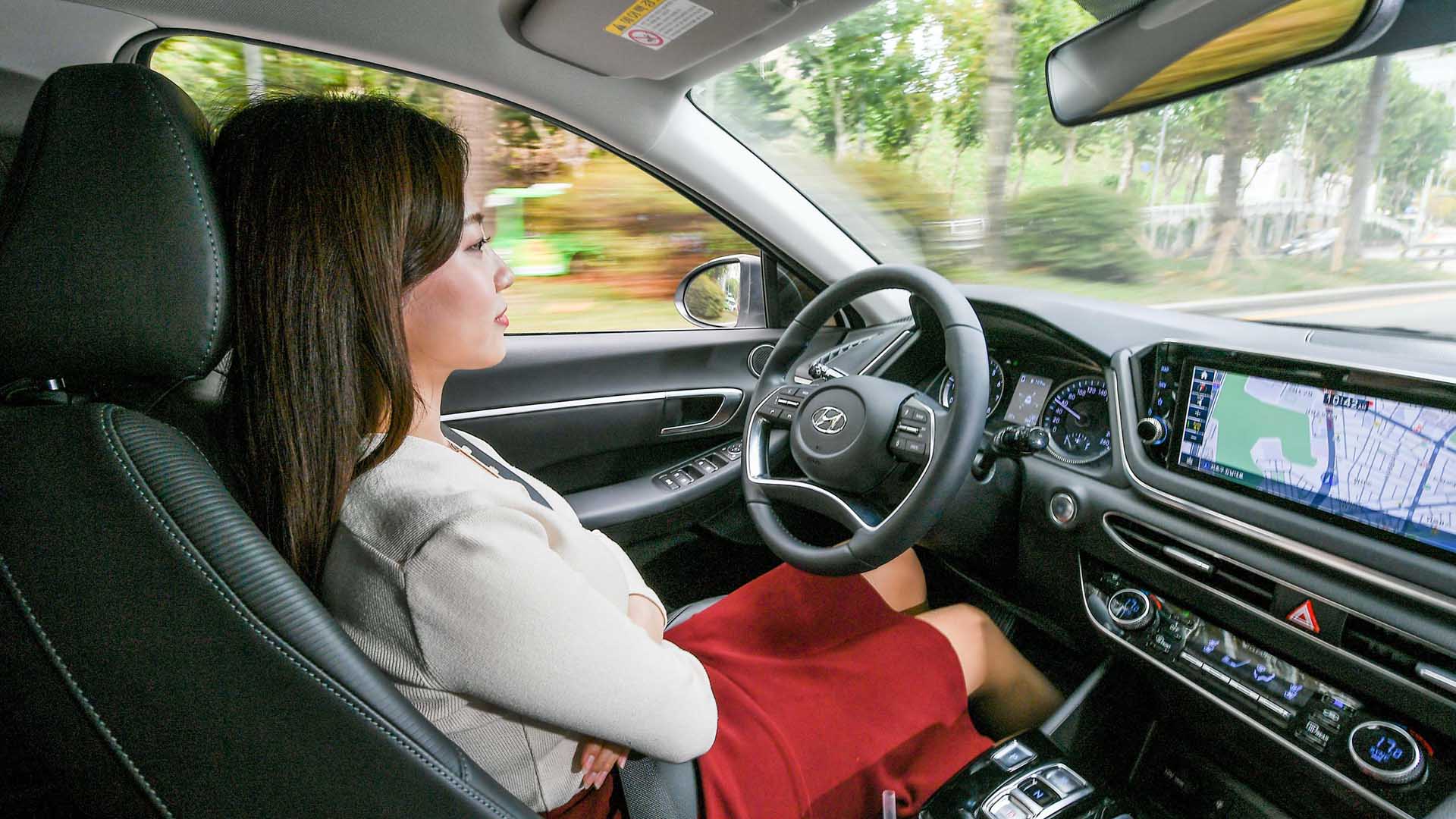
The government has launched a consultation on the use of Automated Lane Keeping System (ALKS) on Britain’s motorways.
But what is ALKS and what role will it play in the future of driving in the UK?
The Centre for Connected & Autonomous Vehicles (CCAV) offers the following definition for ALKS:
‘A system for low-speed application which is activated by the driver and which keeps the vehicle within its lane for travelling speed of 60kph or less by controlling the lateral and longitudinal movements of the vehicle for extended periods without the need for further driver input.’
‘Traffic jam chauffeur’
If that’s a bit wordy, ALKS has been described by the Department for Transport (DfT) and PSA Group as a ‘traffic jam chauffeur’. In other words, the car is able to drive autonomously on motorways by adapting its speed to that of the surrounding traffic and speed limit.
A hybrid of adaptive cruise control and lane-keeping assistance, if you like.
It allows the driver to delegate the driving to the vehicle under certain circumstances. This is distinct from the current driver assistance systems, where the driver must remain in control of the vehicle at all times.
Crucially, ALKS challenges existing laws on the responsibilities of a driver. This is why the government believes changes to legislation and the Highway Code are required before ALKS can be safely used on British roads.
ALKS: the conditions
The issue of speed is important, because the ALKS technology is designed for motorways at speeds of up to 60kph (37mph). There are also conditions that must be met before the system is activated. These are:
A deliberate action by the driver (i.e. pressing the activation button).
The driver is in the driving seat with the seatbelt fastened.
The driver is confirmed as being available.
There is no failure affecting the safe operation of the ALKS.
The Data Storage System for Automated Driving (DDSAD) is operational.
The weather and infrastructure allow for the safe operation of the ALKS.
The vehicle receives a positive confirmation of system self-check.
The vehicle is on roads where pedestrians and cyclists are prohibited, and where there’s a physical separation that divides the traffic flowing in opposite directions.
Safety measures will be used to enable the continued operation of the system. For example, it will detect if a driver leaves a seat for more than a second or if the seatbelt isn’t fastened.
It will also check the driver every 30 seconds, monitoring eye blinking, eye closure, conscious head movements and input to driver-exclusive vehicle controls.
ALKS: what happens next?
Although ALKS has been approved by the United Nations Economic Commission for Europe (UNECE), some questions remain. These will need to be answered before the expected roll-out in spring 2021.
There are many questions in the consultation document. Many are focused on education, safety and legislation, such as who is responsible for teaching a driver to use the system, and who is liable in the event of a collision?
Some issues will court controversy, such as whether or not a driver is allowed to perform other activities when ALKS is activated. If they are, what activities would be safe?
Controversially, the government is considering allowing ALKS to operate at speeds of up to 70mph, provided the manufacturer declares that the system is safe to do so.
‘Road safety revolution’
The government argues that ALKS will make our roads safer. Transport secretary Grant Shapps points to the fact that, in 2018, 85 percent of road collisions that resulted in injury involved human error.
He said: “I want the UK to be the first country to see these benefits and to encourage manufacturers to deploy this transformative technology on our roads by delivering the right environment for it to thrive. We are already familiar and comfortable with automation in aircraft and I am keen that we embrace it on our roads.”
This is a view supported by the Society of Motor Manufacturers & Traders (SMMT). Its chief executive Mike Hawes said: “Whilst driverless cars will be many years away, new technology like ALKS – which still require the driver to be alert and able to take control – can have an instant impact in reducing accidents.
“Its introduction will be life-changing, making our journeys safer and smoother than ever before, helping prevent some 47,000 serious accidents and save 3,900 lives over the next decade.
“This advanced technology is ready for roll out in new models from as early as 2021, so the consultation is a welcome step in bringing regulations up to speed so that the UK can be among the first to grasp the benefits of this road safety revolution.”
There’s also support from Edmund King, AA president, who welcomes the consultation. He said: “Over the last 50 years, leading edge in-car technology from seat belts to airbags and ABS has helped to save thousands of lives.
“The government is right to be consulting on the latest collision-avoidance system which has the potential to make our roads even safer in the future.”
New petrol and diesel cars will be banned from sale in the UK from 2030, the government has confirmed.
This was confirmed by Boris Johnson in an article for the Financial Times. Sales of some hybrid cars will continue until 2035.
“We’ll invest more than £2.8bn in electric vehicles, lacing the land with charging points and creating long-lasting batteries in UK gigafactories,” said the prime minister. “This will allow us to end the sale of new petrol and diesel cars and vans in 2030.
“However, we will allow the sale of hybrid cars and vans that can drive a significant distance with no carbon coming out of the tailpipe until 2035.”
There is no clarification on what constitutes a ‘significant distance’, but sales of plug-in hybrids are likely to be permitted until 2035. Regular hybrids and mild hybrids will be banned.
‘Reassuring customers’
In response to the announcement, Mike Hawes, SMMT chief executive, said: “We share government’s ambition for leadership in decarbonising road transport and are committed to the journey. Manufacturers have invested billions to deliver vehicles that are already helping thousands of drivers switch to zero, but this new deadline, fast-tracked by a decade, sets an immense challenge.
“Success will depend on reassuring consumers that they can afford these new technologies, that they will deliver their mobility needs and, critically, that they can recharge as easily as they refuel. For that, we look to others to step up and match our commitment. We will now work with government on the detail of this plan, which must be delivered at pace to achieve a rapid transition that benefits all of society, and safeguards UK automotive manufacturing and jobs.”
RAC head of policy Nicholas Lyes said: ““With the government formally bringing forward the date for banning the sale of new petrol and diesel cars to 2030, the car industry and those responsible for charging infrastructure now have an enormous task on their hands.
“Production lines that for decades have been set up to build cars powered with internal combustion engines will have to be transformed to allow manufacturers to profitably build a wider range of EV models in sufficient quantities. Meanwhile the country’s public charging network will need to grow exponentially to cater for the surge in EVs on the road.”
‘Hates its people
Not everybody is supportive of the ban. James Ruppert, a leading motoring journalist, said “the government are coming for every vehicle that doesn’t need an AA battery – and it will be sooner rather than later.”
He argued that “if electric cars were so brilliant, everyone would go out and buy them. Instead they are subsidised by everyone who can’t afford them”. In a damning assessment of the government, Ruppert said: “We have a government that is out of control, hates its people and in particular the drivers who pay for pretty much everything.”
Our Richard Aucock has written an extensive guide to the 2030 new petrol and diesel car ban, which will be updated with any fresh developments.
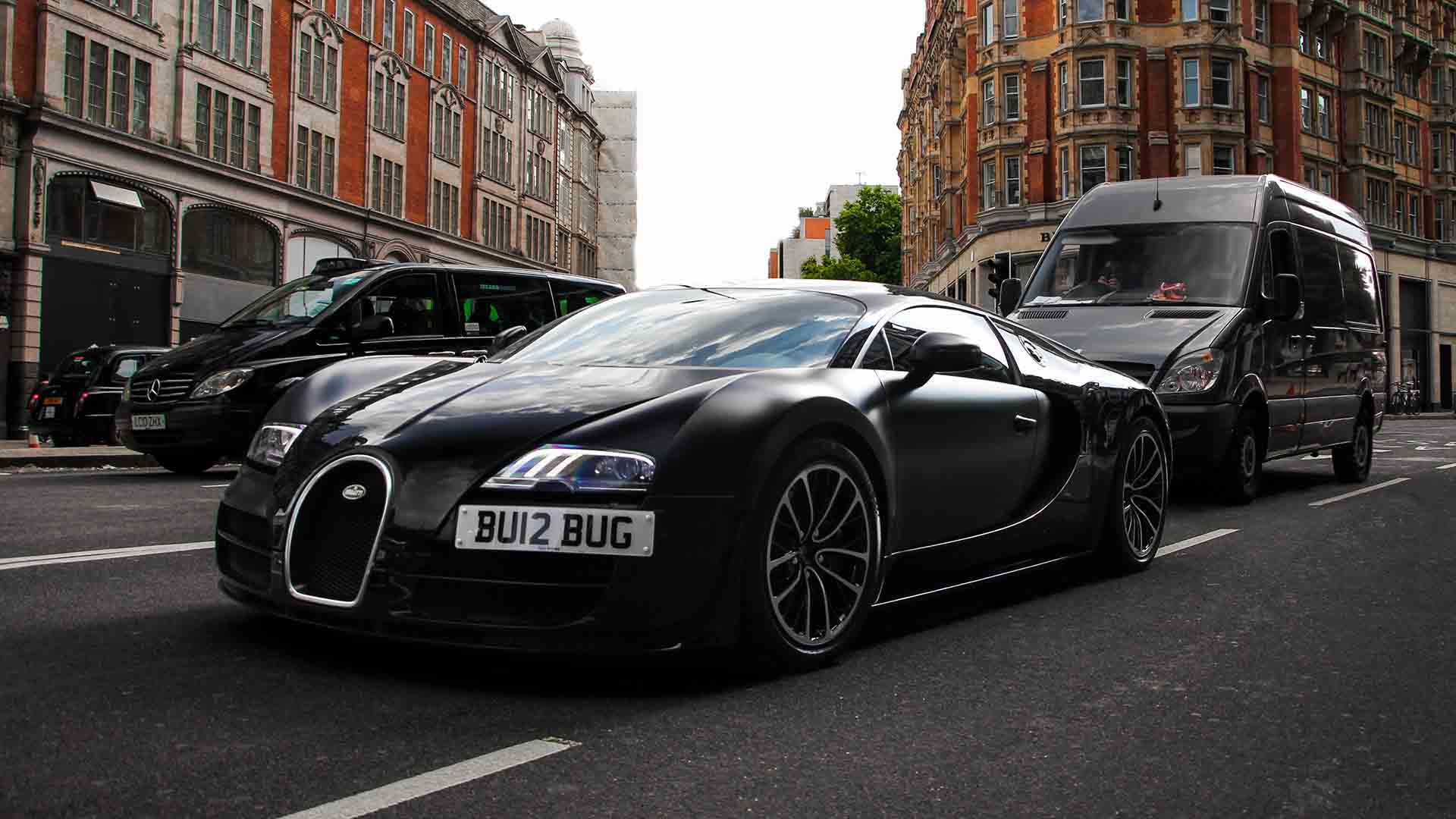
‘Noise cameras’ have been installed in West London to tackle supercar drivers using the streets as ‘racetracks’. That’s according to news published by the BBC.
The cameras, which have a 74 decibel (dB) noise threshold, were activated more than 130 times in the first 11 days. Offending drivers are issued with a warning that they face a fine if caught a second time.
Fines of between £100 and £2,500 are likely, while persisting offenders may have their vehicles seized.
The Royal Borough of Kensington and Chelsea installed the noise cameras after receiving complaints that local roads were a ‘magnet for Lamborghinis and Ferraris’.
And it’s not just supercars: a Range Rover on Sloane Street triggered the camera at just under 100dB.
‘Disruptive and irritating’
To date, the loudest sound measured is 104dB – the equivalent of a helicopter flying overhead.
Johnny Thalassites, Kensington’s lead member for transport, “Residents have had enough of drivers using our streets as a racetrack.
“Supercars look good and most drivers are considerate. But when they they’re not, it is disruptive and irritating for people living and working in the area.”
Announcing the trials of noise cameras in 2019, then-transport secretary Chris Grayling said: “Noise pollution makes the lives of people in communities across Britain an absolute misery and has very serious health impacts.
“This is why I am determined to crack down on the nuisance drivers who blight our streets.
“New technology will help us lead the way in making our towns and cities quieter, and I look forward to seeing how these exciting new cameras could work.”
The noise limit is 74dB
New cars must meet Europe-wide noise limits. These have been reduced from 82dB in 1978 to the current limit of 74dB established in 2016. Off-road vehicles are permitted to be 1dB louder, while wheelchair accessible and armoured vehicles can be 2dB louder.
The Vehicle Certification Agency says it is illegal to modify the exhaust system of a vehicle to make it noisier the the level recorded for that model at type approval. The police can take action if a vehicle silencer doesn’t work or a driver is behaving in a way that creates too much noise.
There are also noise limits on tyres. Since November 2012, all new tyres have been graded and labelled to show how noisy they are.
Could the installation of noise cameras prompt a rise in demand for electric sports cars and supercars in West London? The likes of the Tesla Model S and Porsche Taycan offer the performance to take on a Ferrari or Lamborghini, but without the soundtrack to trigger a camera. Time will tell.
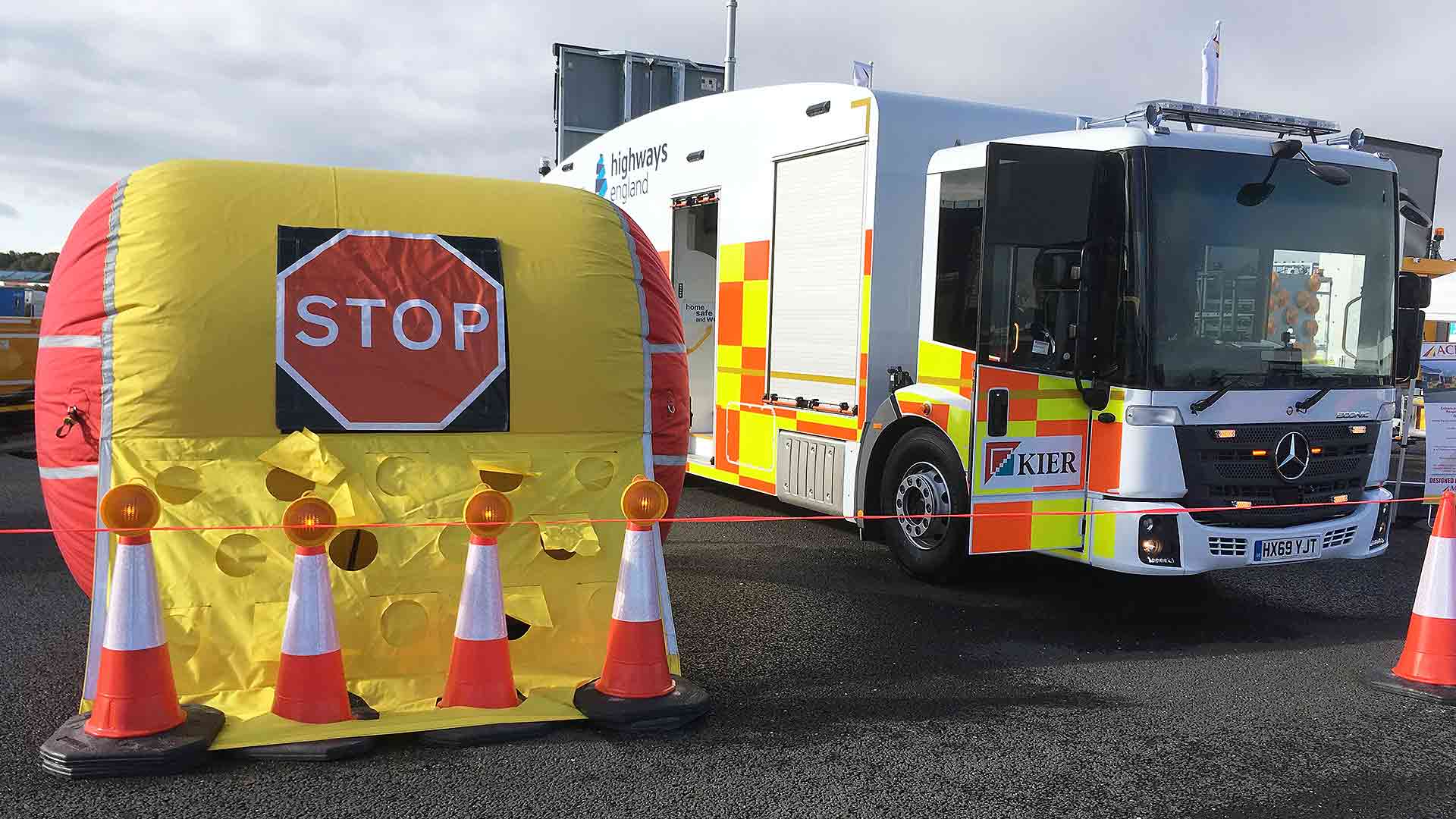
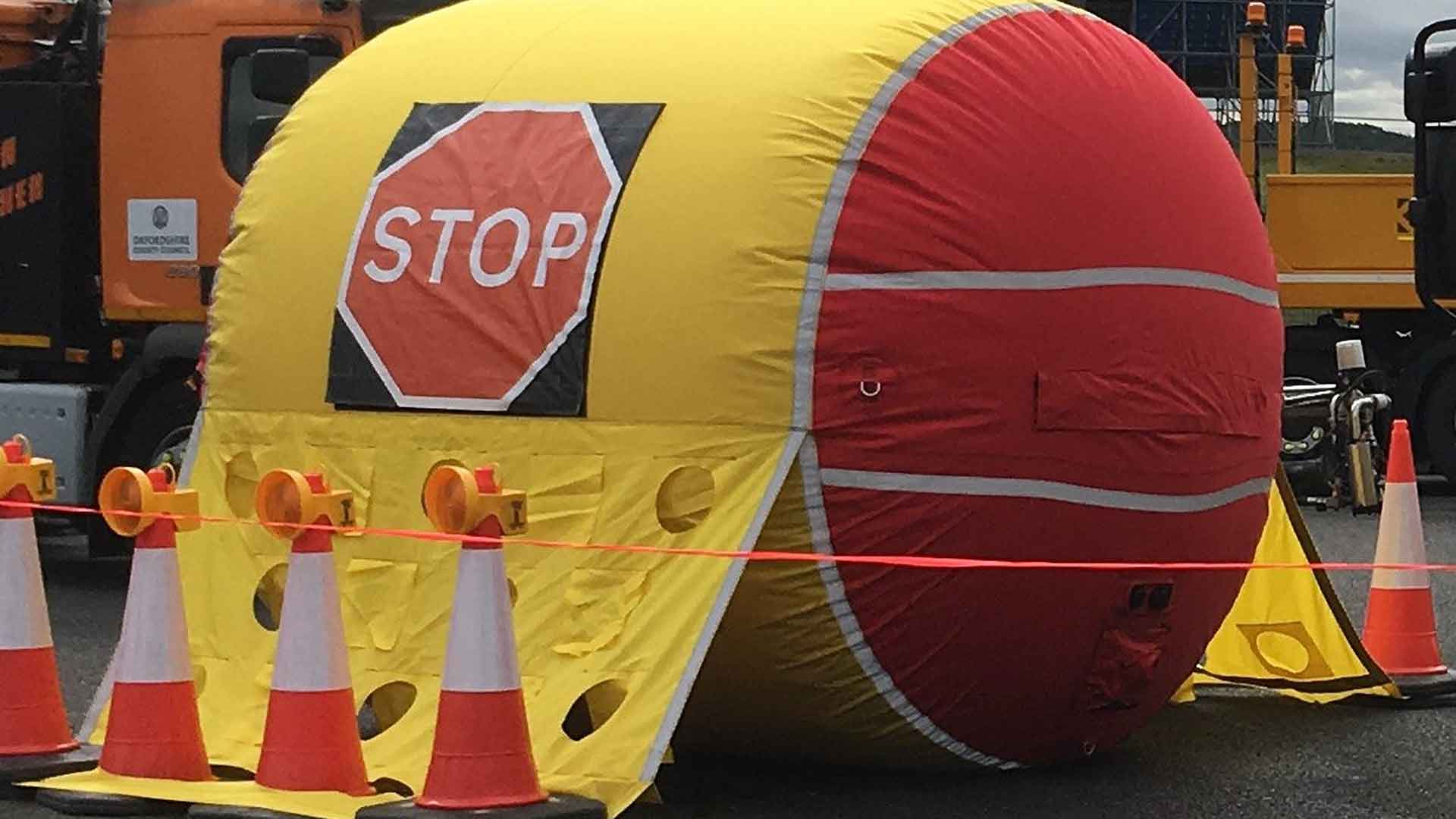
Highways England is to start trials of a new inflatable barrier to help protect road workers through roadworks.
The new ‘roadside airbag’ will begin tests in the West Midlands.
The organisation hopes it will help cut the hundreds of vehicle incursions into roadworks reported each month.
Described as large, bright and very visible, the Vehicle Incursion Airbag can be inflated in less than 10 minutes, so it can be put into place quickly.
The first trial area is a slip road on the A45/A46 Stivichall Interchange in Coventry: roadworks there begin later in October.
Highways England partner Kier is running the trial. Project manager Mark Sheppard said it “will give us a great opportunity to trial something a little bit different.
“Traffic management incursions are all too common, so the chance to take a different tack to help influence decisions made by some roads users is worth exploring.”
Highways England innovation manager Lisa Manc said: “Our road workers report around 240 incidents or vehicle incursions each month.
“It is a far too frequent hazard for our workforce – and the consequences could be fatal.
“We hope these airbags will go some way to protection our workers, but also help change drivers’ behaviours.”
The inflatable airbag barriers will supplement cones and signs, adding another layer to traditional traffic management.
The trial is costing £95,700 and is being funded through the Designated Funds programme, as part of £150 million Highways England has ringfenced to support innovation through 2015-2020.