A new app already being used by the McLaren Racing F1 team aims to help bring spectators back to live motorsport by helping race organisers easily track the health status of those visiting their circuit.
The Guestia app claims to provide a real-time solution to managing racetrack attendance – and quickly alert organisers to the health status of app users.
Users can record temperature measurements, self-report symptoms, input Covid test results and enter full contact details.
It can ensure those visiting an event fill in all required information before actually attending.
It also includes contact tracing functionality via a smartphone’s Bluetooth contact detection.
The app is currently being used by the McLaren F1 team. Race operations director Mark Norris said it allows the racing team to plan all individual travel and logistical arrangements.
“The platform enables McLaren to provide real-time information to all team members about the changing situation.”
Vulnerable people can be contacted quickly where necessary, effectively providing real-time communications with users.
“The app is the first of its kind,” said Guestia’s Nigel Essam.
“It’s the ideal solution for the events and hospitality sector to be able to safely reintroduce guests back to motorsport.”
What’s more, a further 27 percent of the marketplace’s audience is aged 25-34 years old.
“The pandemic has shifted young people’s views of car ownership,” said Auto Trader’s Rory Reid, “as they look to rely less on public transport and try to minimise the risk of spreading coronavirus.
“This is great for the car industry as it opens up a new pool of buyers.”
The changing profile has also seen demand for particular types of car on Auto Trader shift – with prices of hatchbacks going up 11.5 percent in the past week as a result.
The UK’s largest driving school, RED, is also reporting “unprecedented numbers of new customers wishing to learn to drive”.
CEO Ian McIntosh said the firm’s 1,400 driving instructors are “working flat out to meet this new demand… from a new wave of learners who are keen to get behind the wheel in order to minimise their time spent on public transport”.
RED says new learner driver activity is more than 100 percent higher than this time last year, with almost 44,000 enquiries from new drivers in the last month alone.
The average age for those passing their driving test in the UK is 23.7 years old, according to DfT and DVSA data.
A fully-electric ambulance has been launched by a UK specialist – and the West Midlands Ambulance Service will begin front-line trials this month.
Bradford’s VCS says the Fiat Ducato-based vehicle is the first 100% zero emissions ambulance to be used on UK roads.
Called an Electric Dual Crewed Ambulance, or E-DCA, the vehicle has a 75mph top speed and a range of up to 110 miles.
It can be recharged in 4 hours 15 minutes.
Batteries are mounted beneath the vehicle, giving a low centre of gravity that aids handling and stability.
VCS says the development is part of a desire to bring emergency services operators in line with the global demand for zero emission transport.
West Midlands Ambulance Service chief executive Anthony Marsh said: “Given we operate in a clean air zone like Birmingham, this is a sensible and advantageous step forward for so many reasons.
“We look forward to working with our staff to integrate the vehicle into frontline operations, while using it as a test bed to develop even more advanced vehicles.”
VCS MD Mark Kerrigan said the vehicle is a “strong first step on the path to electrification.
“We’re confident that by working with the West Midlands Ambulance Service, we can continue to innovate and improve our zero emissions offering.”
VCS is Britain’s largest emergency service vehicle producer, and commands a 40 percent market share of all ambulances currently operating in the UK.
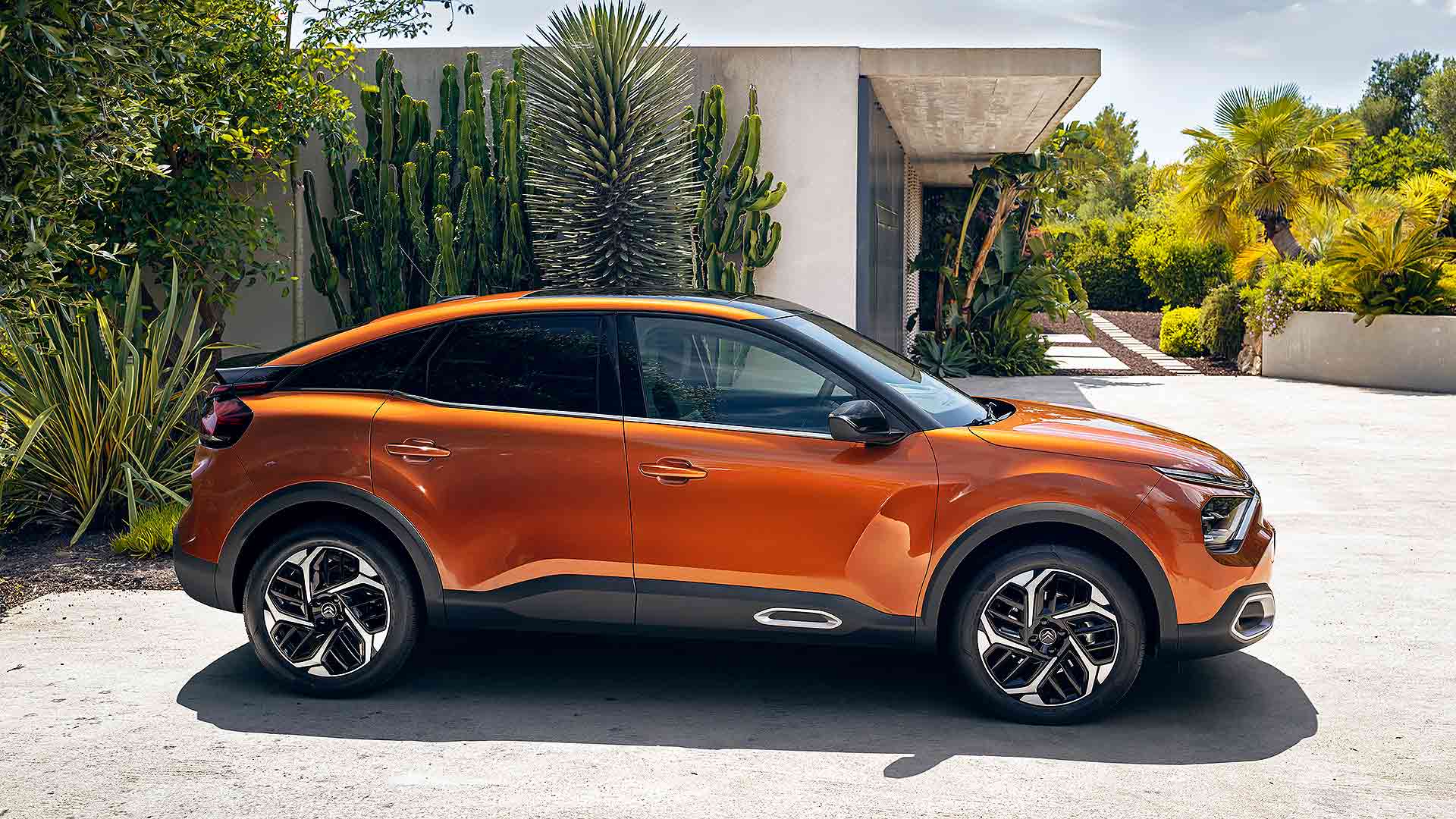
The new 2021 Citroen C4 family hatch will cost from £20,990 and the all-electric Citroen e-C4 will be priced from £29,180 once the Plug-in Car Grant has been taken off.
Ordering for both versions is open now with deliveries due to begin in early 2021.
Citroen describes the new C4 and e-C4 as hatchbacks that carry SUV detailing. They replace the slow-selling (and quirky) C4 Cactus.
Those who prefer regular engines can pick from turbo petrol or diesel.
Citroen is claiming best-in-class rear kneeroom for the C4, while extra-cushioned seats and suspension with Progressive Hydraulic Cushions give “unrivalled ride comfort”.
Citroen C4 and e-C4 range
The Citroen e-C4 pairs a 50kWh battery and a 136hp motor. The WLTP range is 217 miles.
It can use a 100kW rapid charger, boosting the battery from flat to 80 percent charge in 30 minutes.
A regular wall box will deliver 100 percent charge in seven hours 30 minutes.
PureTech petrol engines are offered with 100hp, 130hp or 130hp, BlueHDi diesel come in 110hp or 130hp guise.
Trim grades comprise Sense, Sense Plus, Shine and Shine Plus.
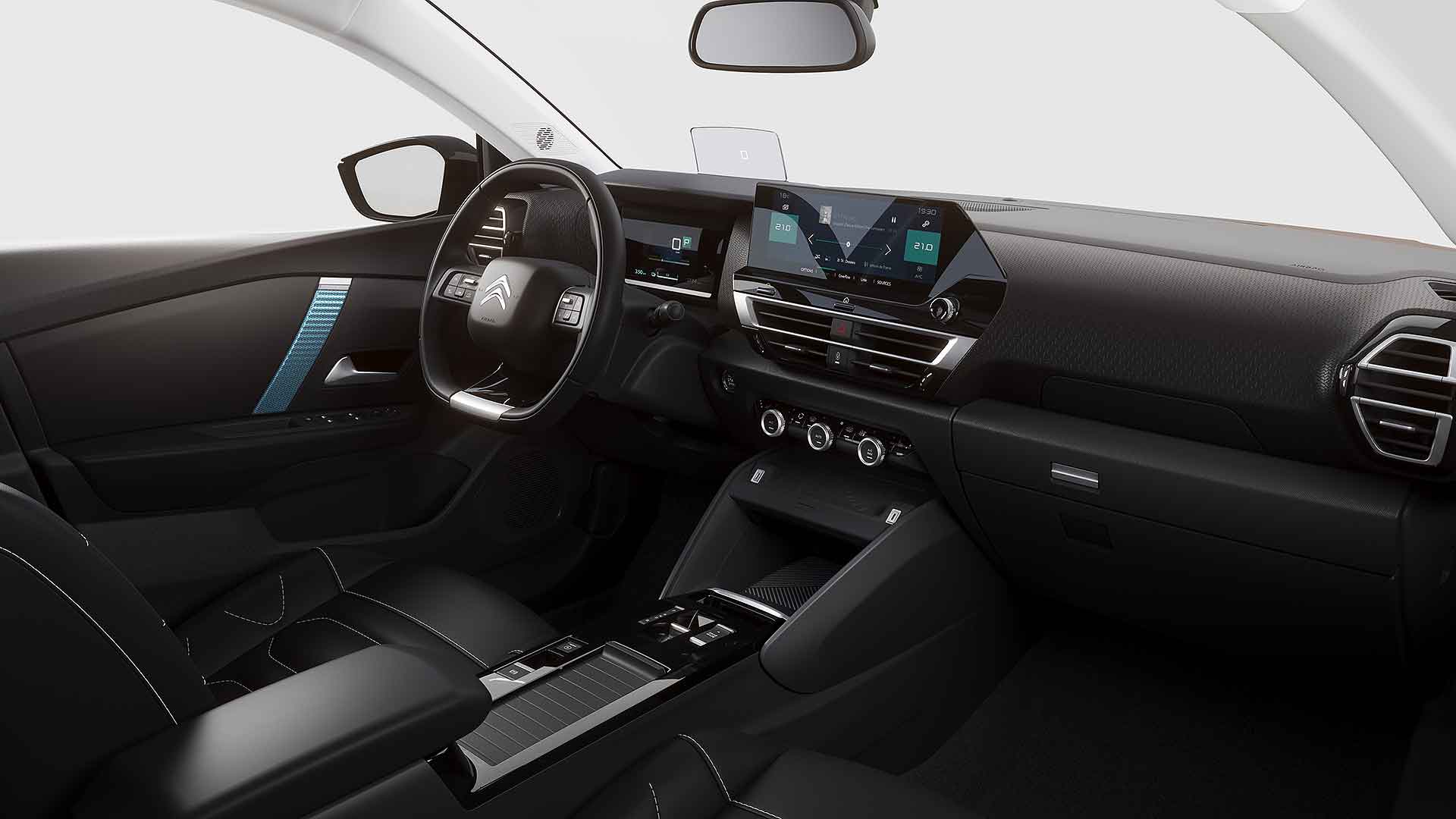
All feature LED headlights, 18-inch alloys, 10-inch touchscreen with Apple CarPlay and Android Auto.
Citroen fits a comprehensive safety pack including driver assist features. Other standard features include dual-zone climate control, electronic parking brake and rear parking sensors.
Sense Plus adds sat nav, rear parking camera and folding door mirrors.
Shine has dark-tint rear windows, a more advanced driver assist pack, keyless entry and heated steering wheel.
Shine Plus brings a premium sound system, leather and textile upholstery, wireless smartphone charging and an even more comprehensive Highway Driver Assist pack which uses camera and radar technology.
2021 Citroen C4 prices
Sense
PureTech 100: £20,990
BlueHDi 110: £22,740
Sense Plus
PureTech 130: £22,990
PureTech 130 auto: £24,390
BlueHDi 110: £23,840
BlueHDi 130 auto: £26,840
Shine
PureTech 130: £23,990
PureTech 130 auto: £25,390
PureTech 155 auto: £26,390
BlueHDi 110: £24,840
BlueHDi 130 auto: £27,040
Shine Plus
PureTech 130 auto: £26,590
PureTech 155 auto: £27,590
BlueHDi 130 auto: £28,240
2021 Citroen e-C4 prices
Sense Plus: £29,180
Shine: £30,130
Shine Plus: £31,330
All e-C4 prices include government Plug-in Car Grant
Euro NCAP and Thatcham Research have launched a new Assisted Driving assessment to help motorists understand what modern driver assist safety technology can – and can’t – do.
Vehicles are awarded one of four grades: Very Good, Good, Moderate or Entry.
The tests emphasise the ‘driver assist’ aspect: no system on sale today can legally offer autonomous driving or ‘self-driving’ functionality.
“The system that are currently allowed on our roads are there to assist the driver – but do not replace them,” said Thatcham director of research Matthew Avery.
“Unfortunately, there are motorists that believe they can purchase a self-driving car today.
“This is a dangerous misconception.”
There have already been collisions and deaths caused by motorists who don’t understand the limitations of current systems and assume they are more ‘auto-pilot’ than they actually are.
Assisted Driving explained
The Assisted Driving test grades the speed assistance, steering assistance and adaptive cruise control ‘safety packs’ now coming as standard or as options to many new cars.
The aim is to support, or assist, the driver on long journeys, with speed control, lane-keeping and braking.
This reduces fatigue, one of the biggest causes of road collisions.
Three criteria are rated: Vehicle Assistance, Driver Engagement and Safety Back-Up.
Vehicle Assistance rates how well the systems actually work, both in controlling speed and accurately assisting the steering.
Safety Back-Up looks at what happens in an emergency, such as when a sensor fails or the driver becomes unresponsive.
Driver Engagement is the most interesting category. This assesses how clearly the assisted status is communicated to the driver, and how well the driver is monitored (with, for example, attention monitors).
In addition, these criteria also rates the car firm’s consumer marketing material – marking down makers who make inflated claims about the true ‘autonomy’ of their systems.
2020 Assisted Driving tests
The first Assisted Driving tests have assessed 10 vehicles. The star performer is the Mercedes-Benz GLE, with a well-balanced set of scores across all three categories.
The BMW 3 Series and Audi Q8 were also given Very Good scores.
However, while the Tesla Model 3 received outstanding scores in Vehicle Assistance and Safety Back-Up, it scored just 36 points in Driver Engagement.
Tesla was criticised for calling its system ‘Autopilot’, which is “inappropriate as it suggests full automation.
“The Tesla Model 3 excels in the level of Vehicle Automation but fails to balance that high level of support with a similar level of Driver Engagement, leading to possible overreliance.
“The best systems strike a good balance between the amount of assistance they give to the driver and how much they do to ensure drivers are engaged and aware of their responsibilities behind the wheel.”
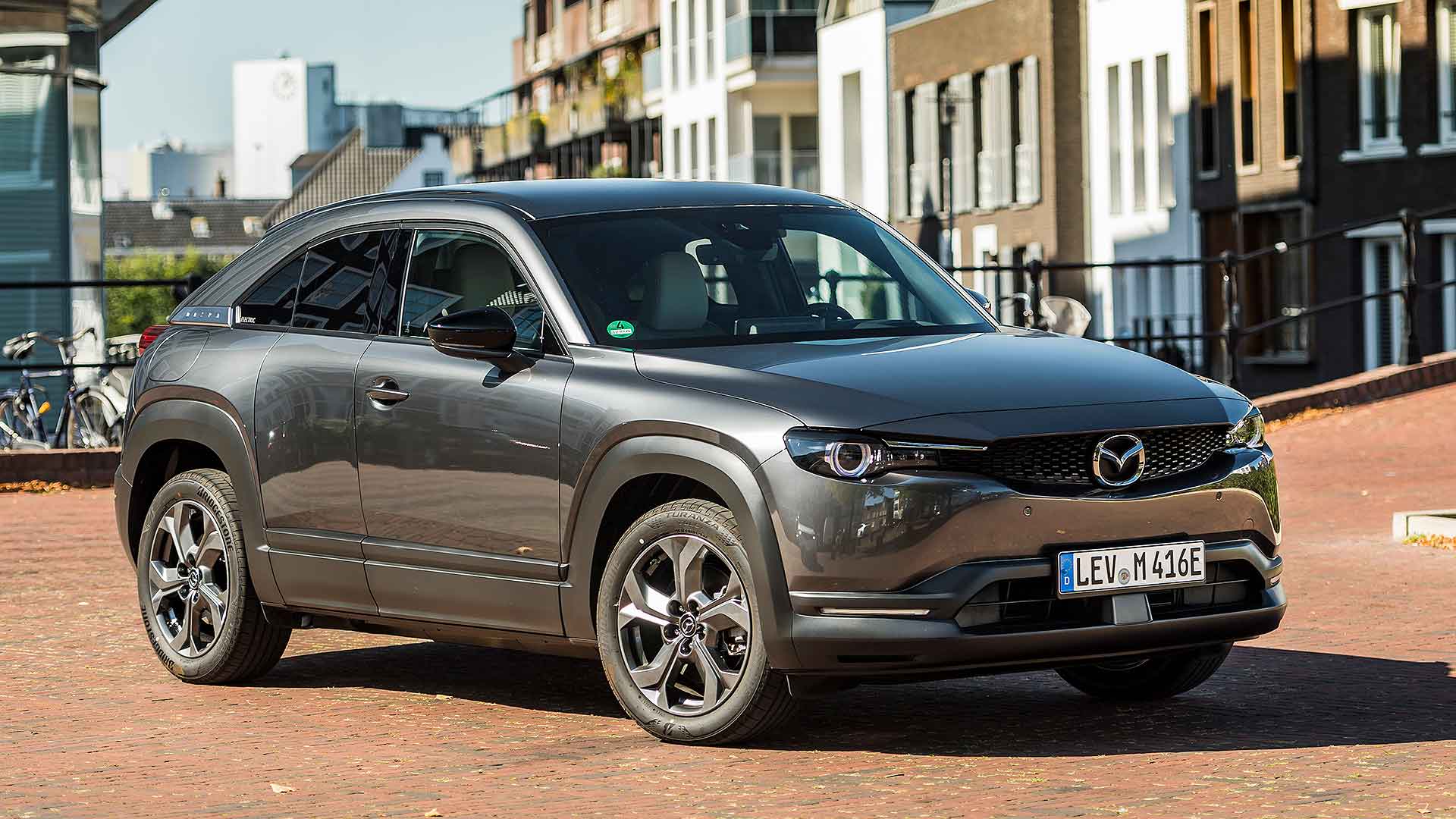
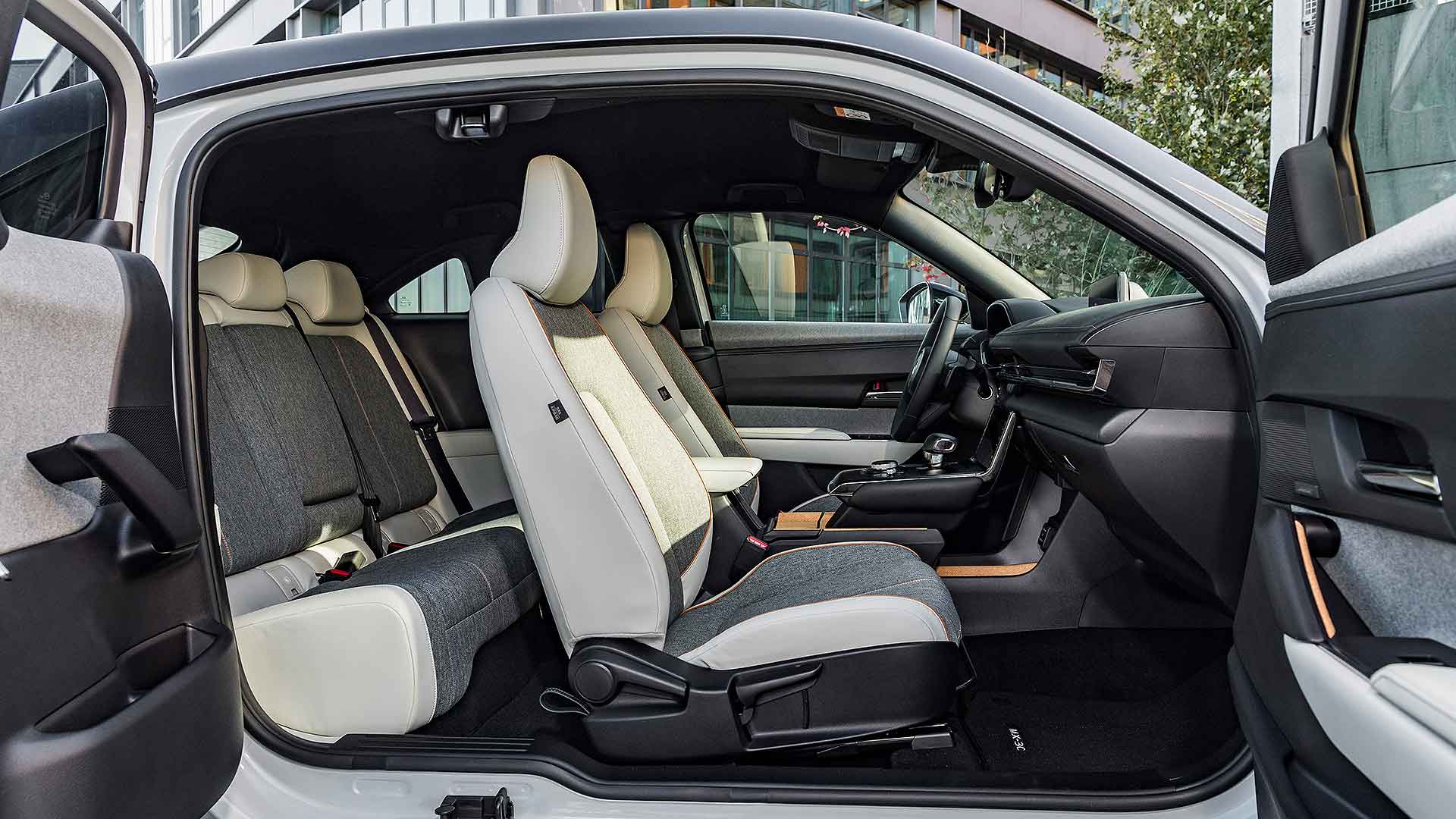
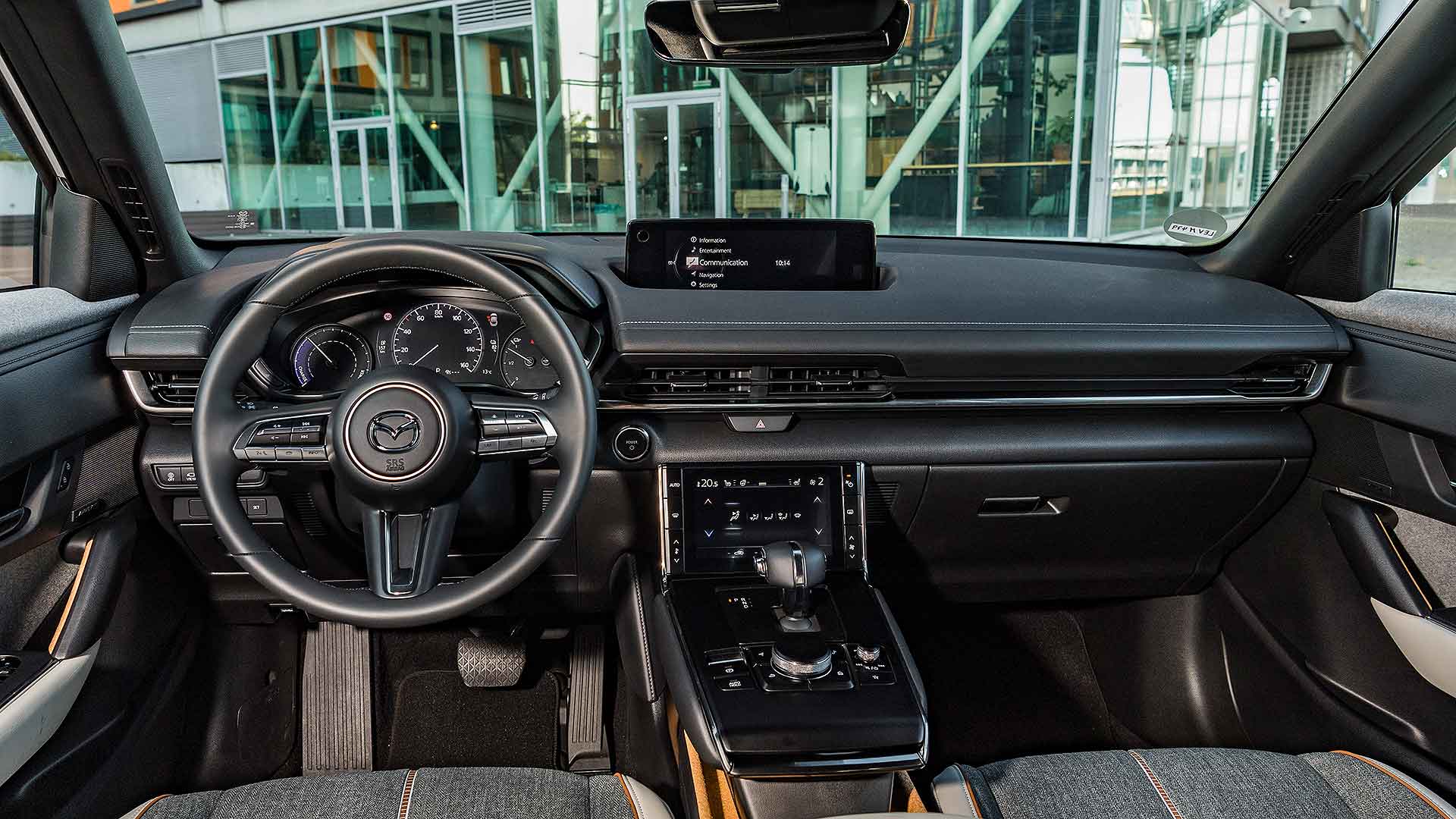
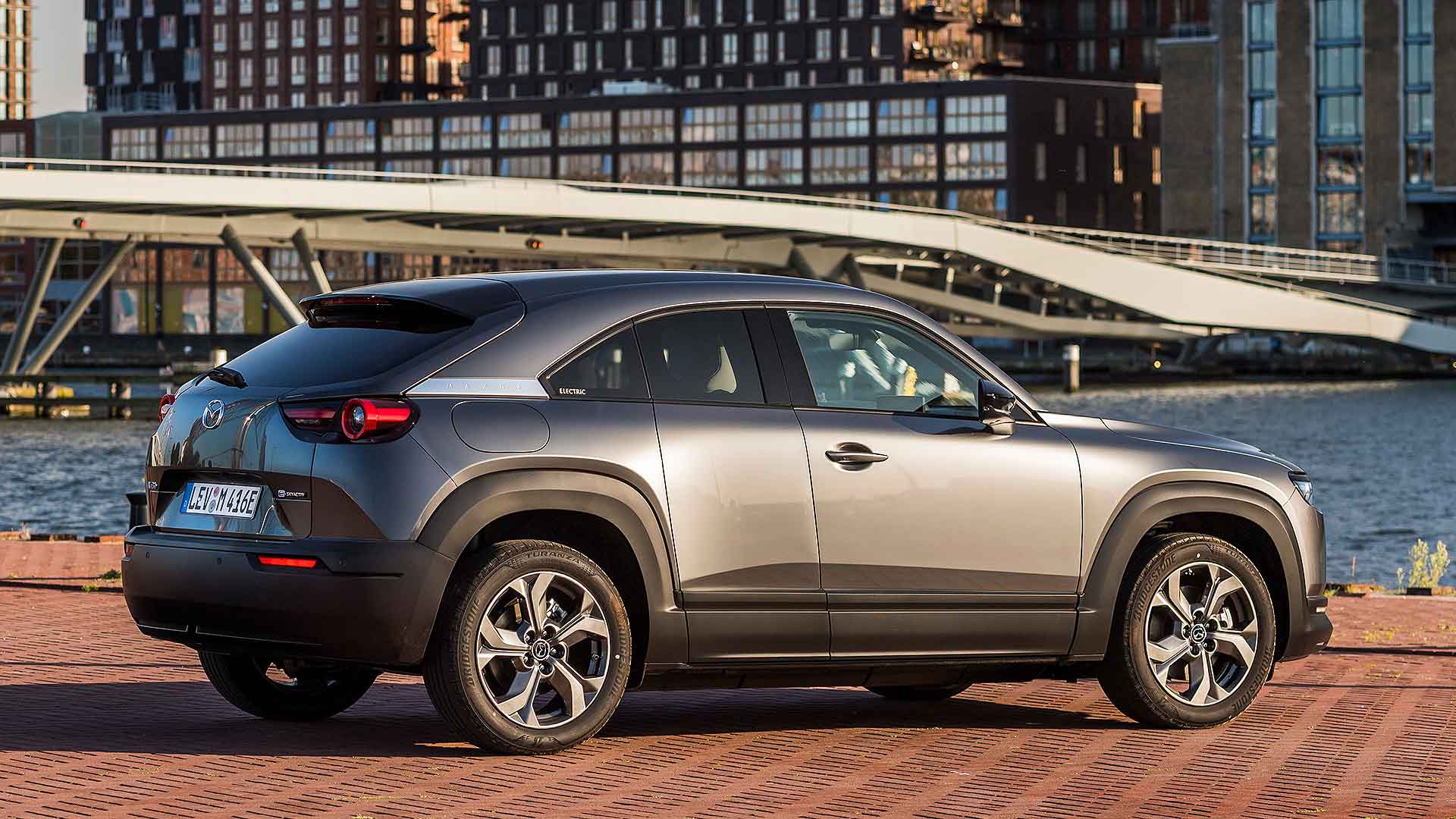
The SUV coupe-style Mazda MX-30, which is similar in size to a Ford Focus, seats five and can be reserved for a fully-refundable deposit of £800.
Every MX-30 is equipped with sat nav, head-up display, radar cruise control, reversing camera and LED headlights.
They all also come with a Type 2 AC charging cable and a socket for 50kW rapid charging.
This delivers 80 percent battery charge in 36 minutes.
The first 500 MX-30 will all be Launch Edition models. These will come in either Ceramic metallic or Polymetal Grey metallic paint as standard – or three-tone Ceramic or Soul Red Crystal paint as an option.
Adaptive LED headlights, LED rear lights, electric heated front seats and a combined cloth and leatherette upholstery are all standard.
The £25,545 entry-level MX-30 SE-L Lux arrives later. This has 18-inch alloys, black door mirrors and a black grille.
The MX-30 Sport Lux, costing £27,545, is expected to be the best-seller. Extra equipment includes bright-finish alloys, power seats and keyless entry.
GT Sport Tech, costing from £29,845, has a heated steering wheel, 12-speaker Bose sound system and brown artificial leather.
“Over the coming months,” said Mazda UK MD Jeremy Thomson, “our digital platforms and our dealer network will have a range of opportunities for potential customers to get familiar with the MX-30, ranging from answering their questions, to seeing the car, and even opportunities for early test drives.”
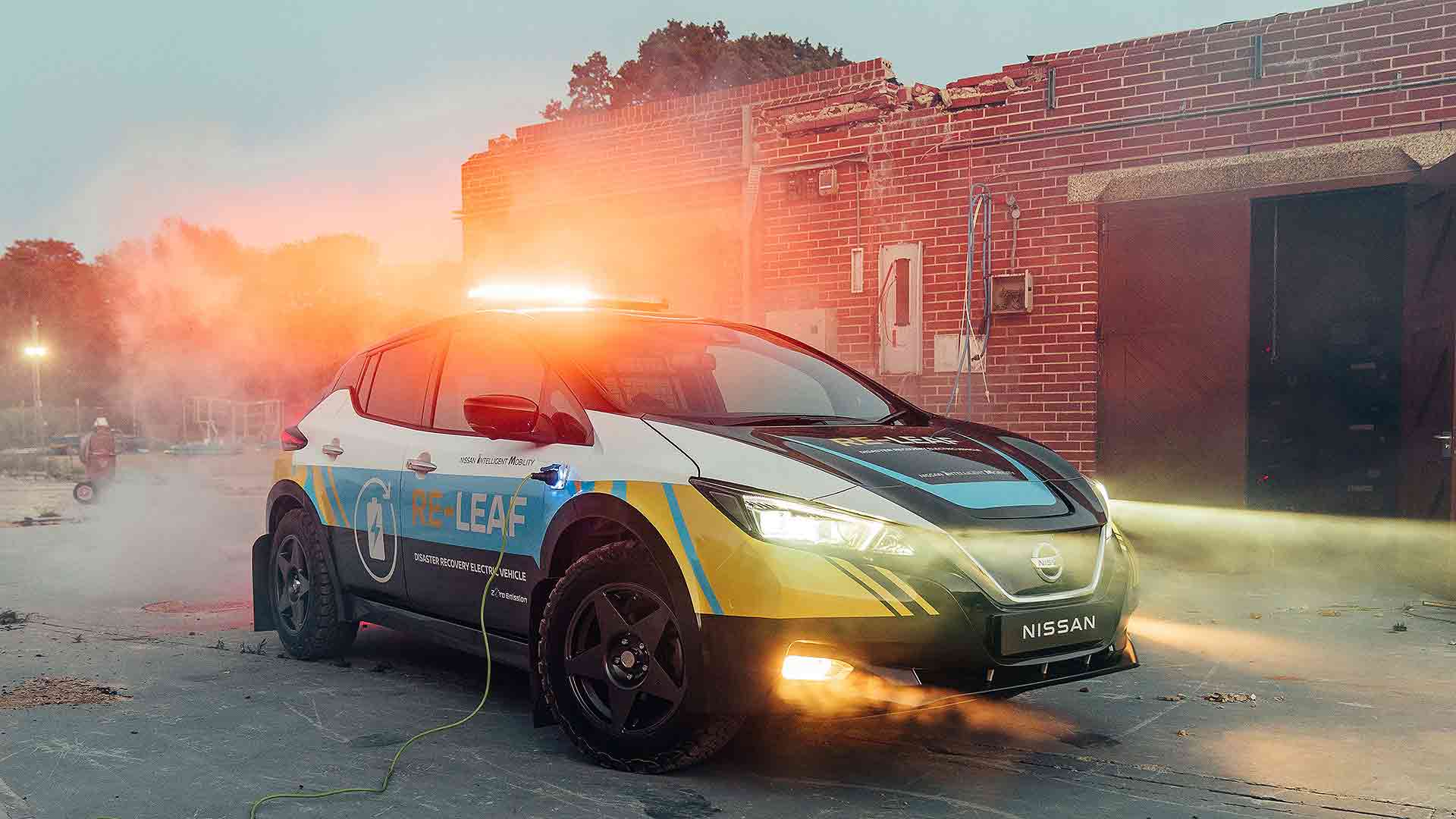
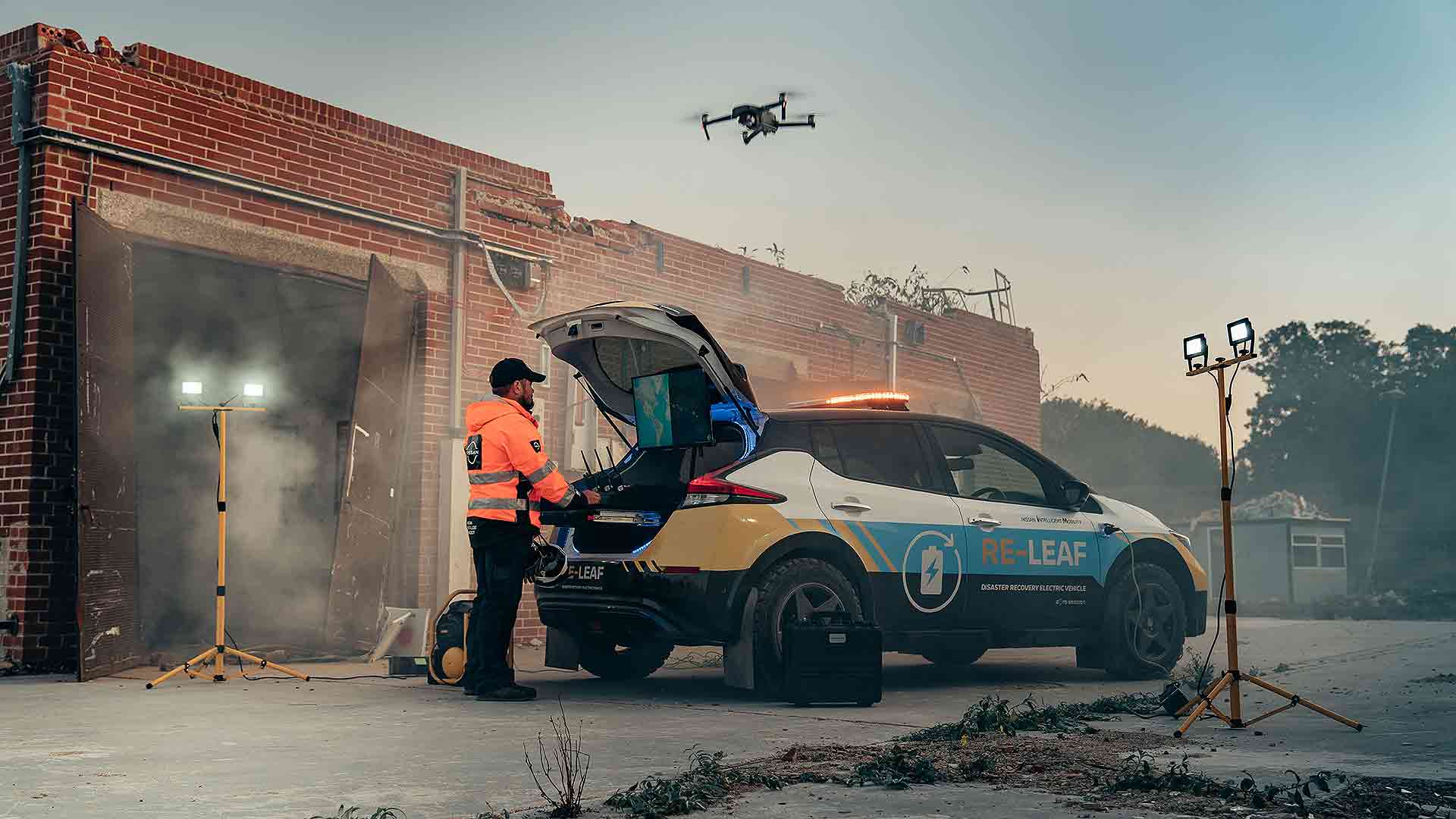
The Nissan Re-Leaf concept has been created to show how 100% zero emissions electric cars can provide mobile power in natural disaster zones
Natural disasters are the biggest cause of power outages and the electric car concept from Nissan aims to show how EVs can come to the rescue.
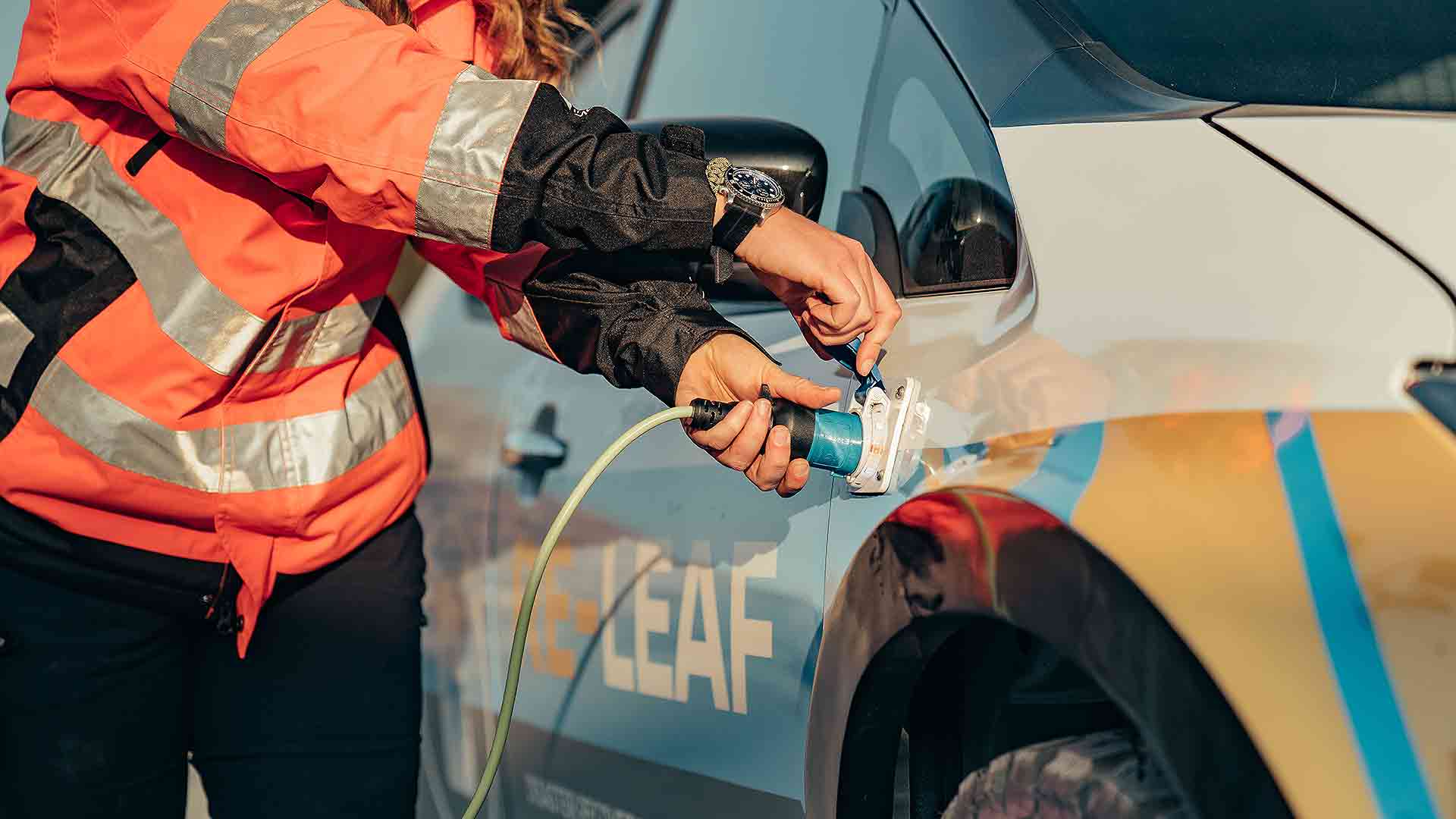
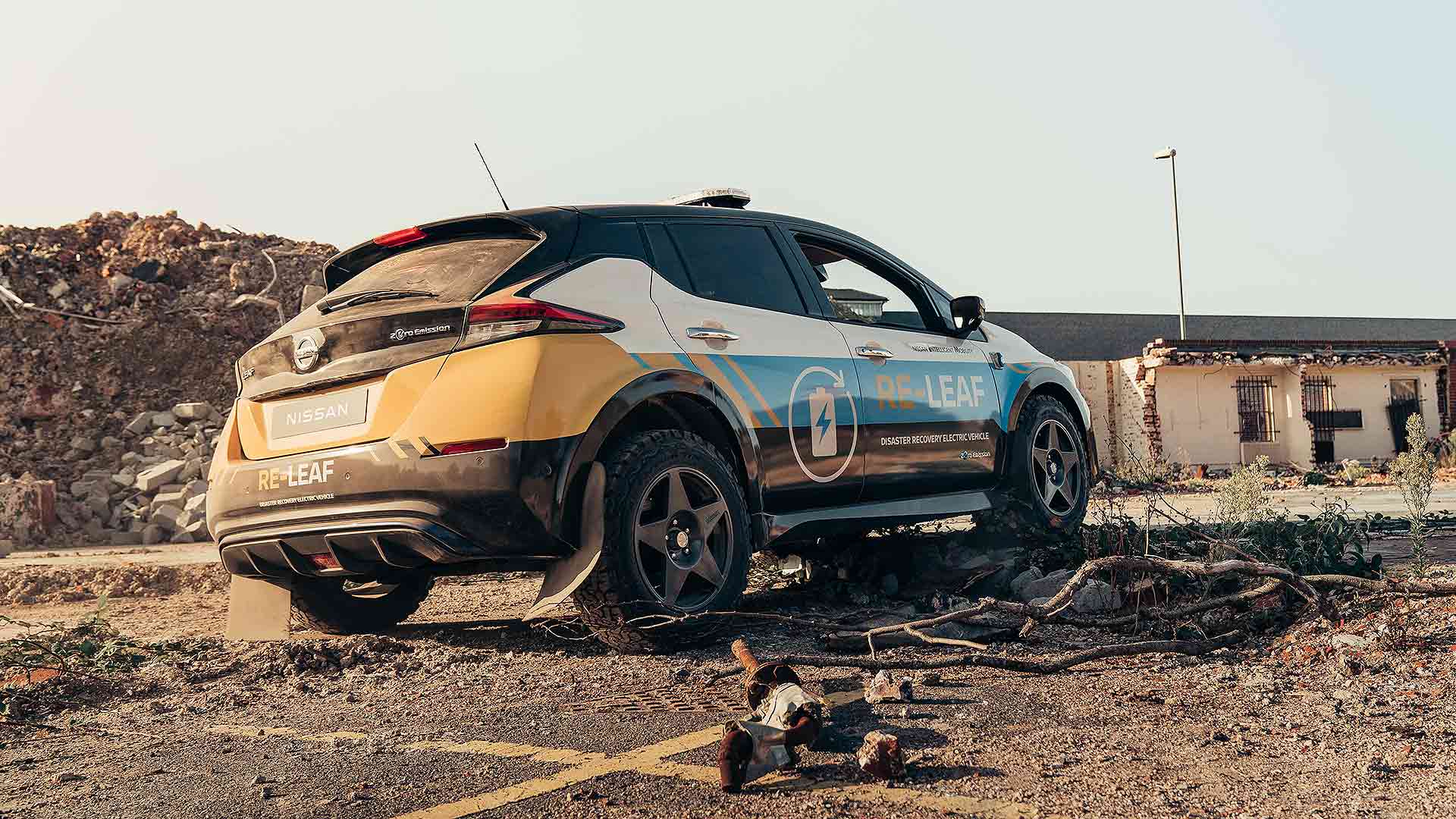
The Nissan Re-Leaf is derived from a regular Nissan Leaf electric car, and is equipped with a range of external sockets to power devices from the lithium ion battery.
Nissan says it can power an electric jack hammer, an intensive care medical ventilator and a 100-watt LED floodlight all for a full 24 hours.
The Re-Leaf also has uprated suspension, wheels and tyres so it can be driven into a disaster zone to provide the fully mobile power service.
The Leaf’s bi-directional charging ability is behind the mobile power functionality, allowing it to both ‘pull’ power from the grid, but also ‘push’ it back to electronic devices.
In disaster zones, power typically takes a day or two to be restored: the Re-Leaf provides electricity during the outage, and can then be recharged once power comes back online.
Nissan says the concept also shows how electric cars can help support the broader electricity network for additional resilience against power cuts.
Nissan Europe’s Helen Perry said: “Concepts like the Re-Leaf show the possible application of EVs in disaster management.
“Electric vehicles are emerging as one of the technologies that can improve resilience in the power sector.
“By having thousands of EVs available on standby, either as disaster-support vehicles or plugged into the network through Vehicle-to-Grid (V2G), they’re uniquely capable of creating a virtual power plant to maintain a supply of energy during a major outage.”
RJN, a UK engineering and motorsport firm, carried out the modifications that include raised suspension giving 225mm of ground clearance.
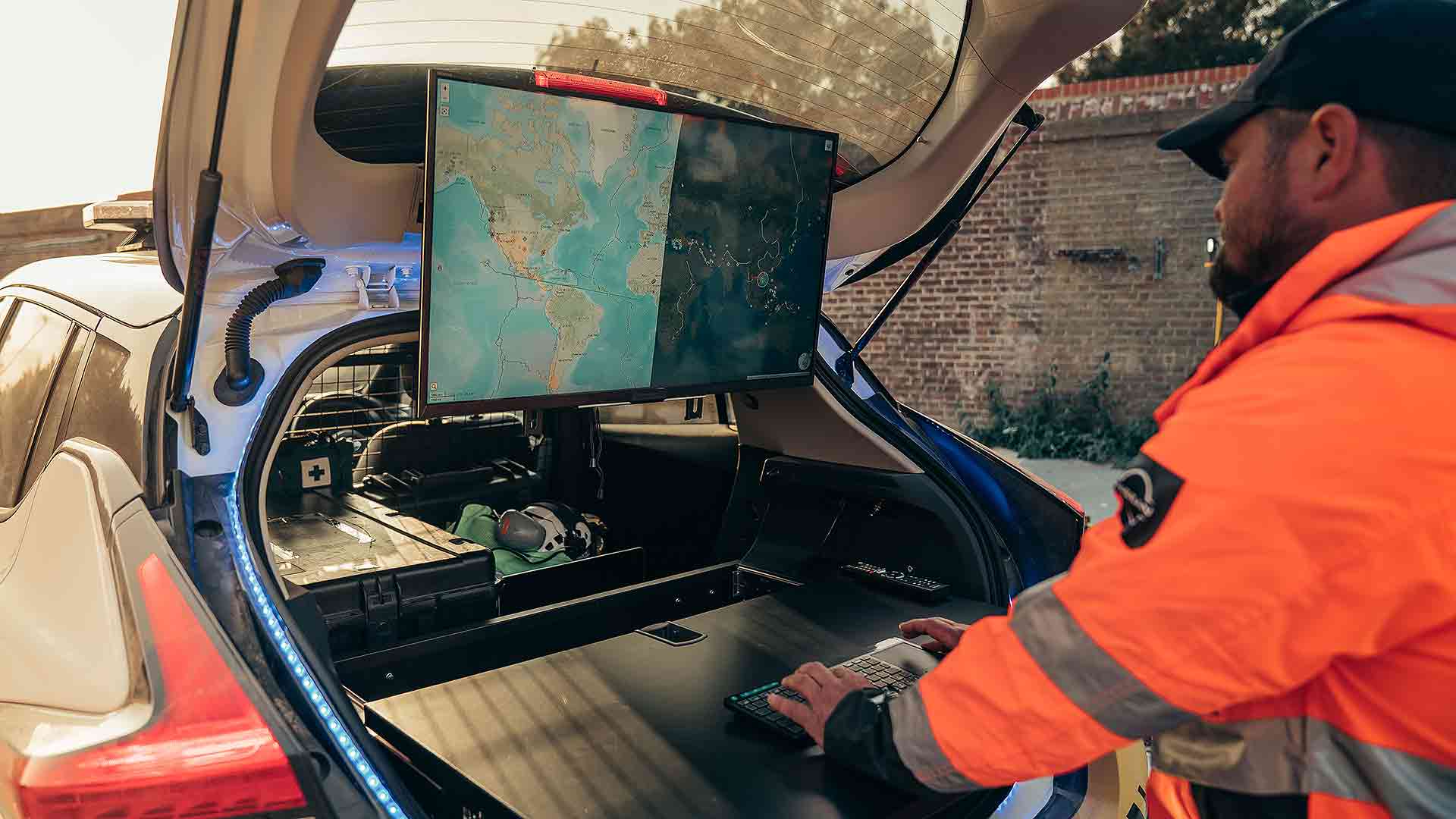
The rear seats have been removed to store specialist equipment, and a van-style bulkhead protects the front seat passengers.
The Re-Leaf even has a pull-out desk in the rear, with a 32-inch LED screen and dedicated power supply to create an operational communications hub.
The Department for Transport has clarified misleading advice that appeared to suggest motorists should avoid filling stations, garages and motorway services to stem the spread of Covid.
This conflicted with advice on the DfT’s own website, advising motorists to simply limit their time, keep their distance from others and pay contactless.
The Petrol Retailers Association raised this with the DfT and the organisation has now remedied the advice.
It explained to the PRA that the Easy Read guidance “wrongly oversimplified” the situation.
“To be clear – petrol stations and motorway service areas remain vital in providing a safe place for motorists to stop, refuel and take a short break from driving.
“There has not been a chance in policy on petrol stations.”
PRA chairman Brian Madderson said the organisation was “immensely pleased that the government has listened to our suggestions”.
This has affected a number of Porsche customer teams, with the race-winning Manthey-Racing outfit having to withdraw. Porsche will still be well represented on the grid though.
Two decades of camaraderie
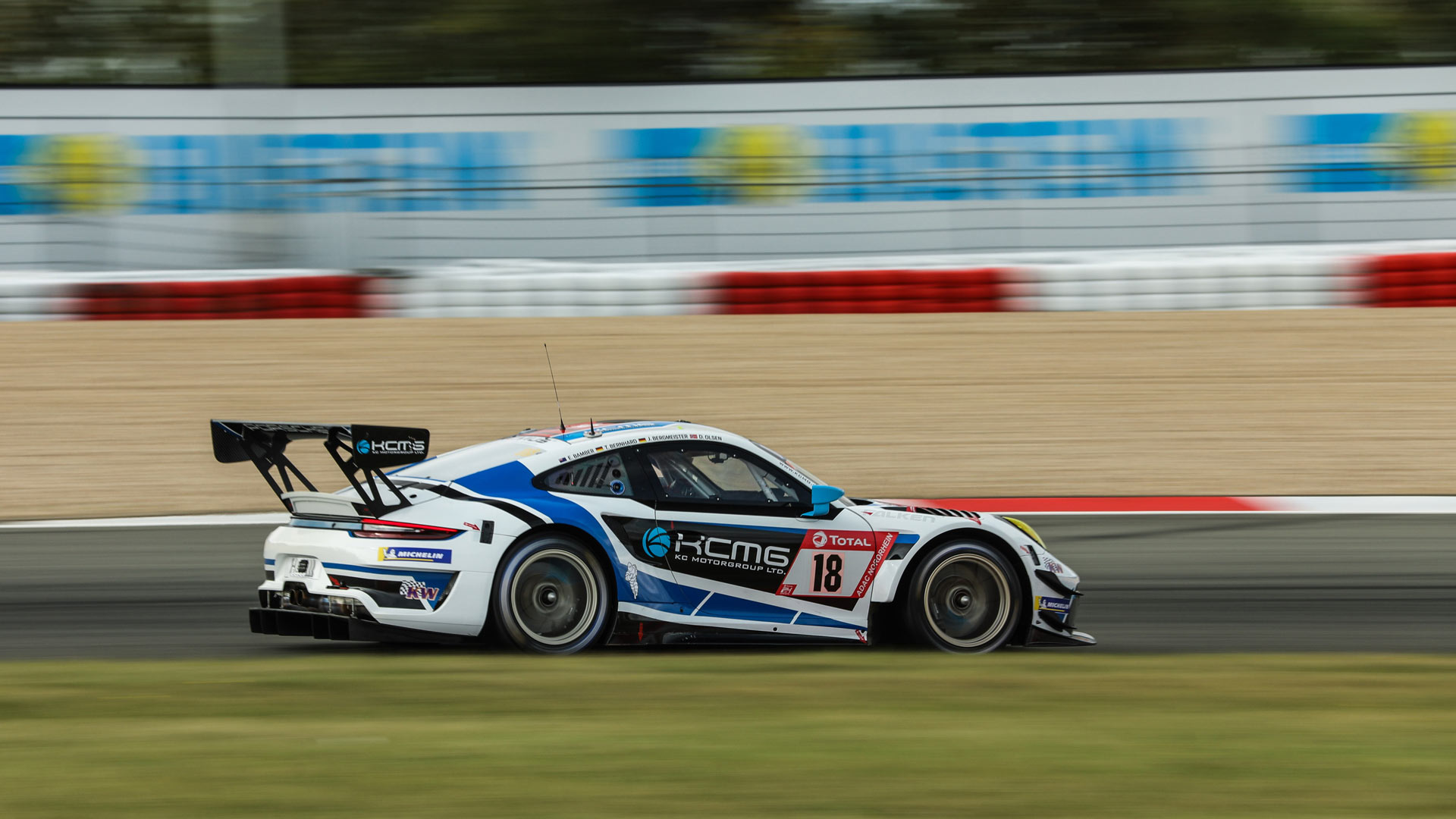
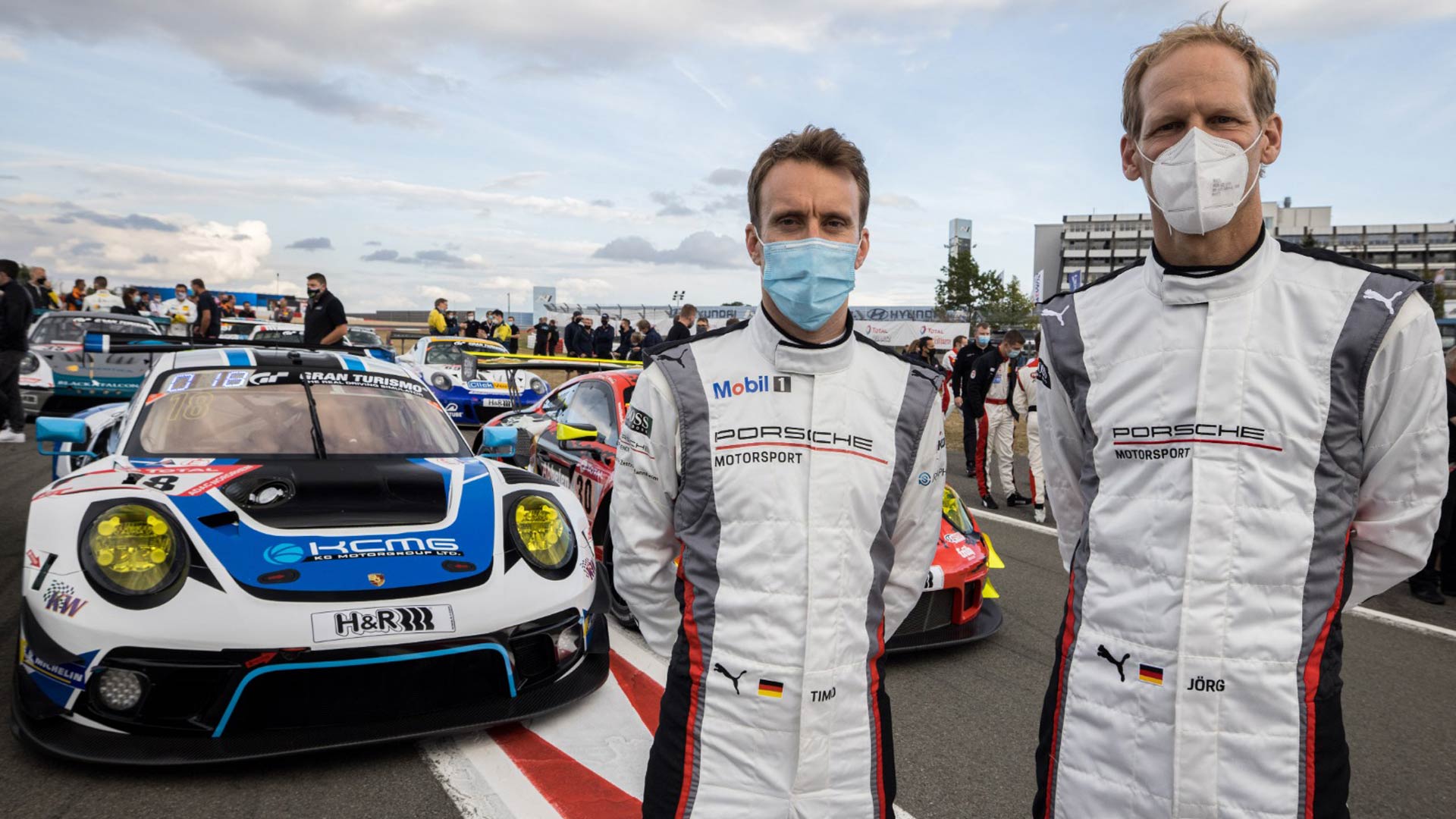
For the #18 KCMG Porsche 911 GT3 R, a group of four experienced drivers have been brought together. This includes Le Mans 24 Hour winner Earl Bamber, and Intercontinental GT champion Dennis Olsen.
The foursome is completed by Timo Bernhard and Jörg Bergmeister, who first began their Porsche racing careers nearly two decades ago. The German duo’s first factory-backed race came in the 2002 24 Hours of Daytona, where they took GT class victory.
Bernhard has a prodigious association with the Nürburgring, having won the 24 Hour race five times with Porsche. He also holds the record for the outright Nordschleife lap record, set in 2018 with the Porsche 919 Hybrid Evo.
Giving something back to the company
Despite initial hesitations about childcare and appointments, both drivers agreed to race this weekend. Bergmeister was happy to help as he feels he should “give back a little bit when there are situations like this”.
Bernhard added Porsche “has done a lot for me in the past and I think now there’s a chance to return something. The spirit that we have at Porsche is that we’re not individuals, but a team.”
Having only retired from racing last year, both drivers should still be in peak fitness. Although Bernhard added the caveat that he may “look slow this weekend because I haven’t done 100 laps before the race”.
The 2020 Nürburgring 24 Hour begins on Saturday 26th September, having been delayed from the usual May date. Live coverage of the full race is available on the ADAC YouTube channel.
The driving theory test has changed, with effect from 28 September 2020. After some delay due to the pandemic, the test in England, Scotland, Wales and Northern Ireland nows include three multiple-choice questions based upon a short video.
The idea is to make the test more accessible to drivers with reading and learning difficulties, who may struggle with written questions. The use of video-based questions should assist those with dyslexia and autism.
Anyone who took the theory test before 28 September was required to read a case study before answering five questions about it. Following the changes, you’re now asked to watch one video, then answer three questions. Below is an example of a car theory test video.
Questions based on this clip could include:
Why are motorcyclists considered vulnerable road users?
Why should the driver, on the side road, look out for motorcyclists at junctions?
In this clip, who can cross the chevrons to overtake other vehicles, when it’s safe to do so?
Each question will come with four multiple-choice answers.
The video will play on the left-hand side of the screen, with controls allowing the candidate to play, pause or move to a specific video on the progress bar. The right-hand side shows the questions and answers.
In another example provided buy the Driver and Vehicle Standards Agency (DVSA), the video shows a street with double yellow lines. The question asks: what do the yellow lines mean? The following answers are provided:
They mark the edge of the road
You can wait at certain times
No waiting at any time
They mark a cycle lane
Who is affected by the changes?
All car theory tests now use video clips. The change does not yet apply to theory tests for motorcycles, lorries, buses, coaches or approved driving instructors (ADIs – part one).
What is not changing
Other elements of the car theory test aren’t changing. For example, you will still need to answer 50 multiple-choice questions within 57 minutes. To pass, you will need to get at least 43 questions correct.
The hazard perception test is also unchanged.
What the industry says about the changes
RAC spokesman Simon Williams said: ”This is a very positive change and should make the driving theory test accessible to many more people as watching case study videos is far more reflective of real-world driving than having to read them and then answer questions.
“We know from RAC research that being able to drive is an important milestone in people’s lives as it allows them to get around more easily. This is particularly true for those who live in more rural locations.”
Peter Brabin, head of training at Bill Plant driving school, added: “There’s no doubt that the changes coming into effect are an improvement to the theory test; as whilst the majority of the examination remains unchanged, the introduction of video clips in place of written case studies puts students into more realistic scenarios akin to everyday driving experiences.
”As well as this, the implemented changes will prove far more beneficial to drivers with reading and learning difficulties, as well as those who find they learn better in visual scenarios.”