Toyota and app-based taxi service Uber worked together to stage an electric track day for taxi drivers at Brands Hatch circuit.
The special showcase brought 300 Uber drivers to Kent, giving them the chance to test Toyota and Lexus electric vehicles on the world-famous racetrack.
Toyota’s electric track day builds on the growing relationship the Japanese marque has created with Uber in the UK.
Last year, Toyota launched a dedicated website aimed at Uber employees, with bespoke car finance offers for owner-drivers.
Five-star driver rating
Since the Toyota Uber Driver Scheme began six months ago, almost 2,000 Uber drivers have made the decision to switch to an electric Toyota or Lexus.
To help persuade more owner-drivers to follow suit, more than 80 battery-powered vehicles were available to drive at Brands Hatch.
The Toyota bZ4X electric SUV has proven one of the most popular models for Uber drivers, with additional support given to those who decide to go electric.
Toyota also brought its new Proace Verso and Proace City Verso people carriers to Brands Hatch, along with the Lexus UX 300e and RZ 300e luxury SUVs.
A real-world EV experience
The track day proved a particularly rewarding one for Nuruzzaman Chowdhury from Poplar, East London. A prize draw held during the day saw Mr Chowdhury win a brand new Toyota bZ4X SUV.
Alastair Rutt, senior manager for Toyota’s business team, said: “Our electric vehicle initiative with Uber has already been an outstanding success, with more than 100,000 visits to our dedicated microsite and thousands of drivers going ahead with a new vehicle purchase.
“With our Brands Hatch driving event, we were able to give our guests a real-world introduction to the strengths of our model range for a business where reliable performance and long-lasting quality are key.”
While the Trump administration’s raft of tariffs are causing concern for new car manufacturers, certain classic vehicles will avoid the new 25 percent import tax.
Experts at car transport company Autoshippers have analysed America’s new tariff rules, and discovered a notable exception.
Provided a vehicle is more than 25 years old on the date of importation, it will avoid the steep new tariffs being imposed by the United States.
Instead, classic cars entering the USA will only be subject to the regular 2.5 percent import duty, making for a potentially substantial saving.
The ’25-year rule’ for imports
Mike Harvey from Autoshippers notes that: “Under the new Harmonised System code 9903.94.04, classic cars only incur the standard 2.5 percent duty, provided they meet the 25-year age requirement.
“This means that while newer vehicles may face higher tariffs, classic cars are exempt from these additional charges, significantly reducing the financial burden for enthusiasts and making vintage imports more accessible.”
Vehicles aged older than 25 years already hold a special significance for American car enthusiasts. Created in 1989 by the National Highway Traffic Safety Administration (NHTSA), the ‘25-year rule’ allows for cars to be imported without having to comply with a host of federal safety and emissions regulations.
Loophole in the legislation
Ironically, the NHTSA’s original 25-year rule was linked to action taken by car manufacturers to end the thriving grey import market during the 1980s.
Mercedes-Benz dealerships in particular were concerned about the number of vehicles being unofficially brought into the USA, and the impact this was having on their business.
After lobbying the US Congress for action, the result was the Imported Vehicle Safety Compliance Act of 1988. This outlawed the private importation of cars not intended for the US market, wiping out grey imports almost overnight.
The 25-year rule was introduced by the NHTSA in 1989 so that collector vehicles could be imported into the USA. Now, that same legislation has ensured classic cars remain unaffected by new ‘Liberation Day’ tariffs.
Ahead of last weekend’s Japanese Grand Prix, McLaren Formula One driver Lando Norris hit the streets of Tokyo in a heavily modified Nissan Skyline.
A collaboration between Monster Energy and tuning company Liberty Walk allowed the British driver to become fully immersed in Japan’s car culture.
Such was Norris’s commitment, he even arrived at Suzuka Grand Prix circuit in the bodykitted Skyline on race day.
A video shows the current F1 World Drivers’ Championship leader tackling Tokyo’s rain-soaked streets, and creating plenty of tyre smoke along the way.
Legend of the underground
Along with the Lando Norris himself, the other star of the video is undoubtedly the Liberty Walk LB-Kaido Works Nissan Skyline.
Somewhere beneath its extreme, widened body is, apparently, an R32-generation Skyline. Built between 1989 and 1993, the R32 saw the introduction of the GT-R nameplate, which swiftly became globally recognised and revered.
Liberty Walk’s inspiration for the Skyline comes from the extreme ‘Kaido Racer’ element of Japanese car culture, which emerged in the late 1970s and early 1980s.
Kaido Racers were intended to look like FIA Group 5 racing cars, which competed in the Super Silhouette championship.
Build your own Super Silhouette racer
For those who want to own a Skyline like the one driven by Norris, Liberty Walk can sell you an LB-Kaido bodykit.
Priced at £29,620 (including VAT), the Liberty Walk package replaces almost every body panel on the R32 Skyline.
That price does not include finding a donor car, of course, but opting for a standard bonnet, rather than the extended panel seen on Lando’s car, will save you more than £6,000.
We’ll have to wait and see whether Norris adds a Liberty Walk-tuned Skyline, perhaps with a Monster Energy livery, to his garage in the near future.
Time is running out for the fifth-generation Toyota GR Supra, but the Japanese sports car won’t be going out quietly.
With 2026 being the final model year for the Supra, Toyota has announced a commemorative Final Edition.
Making its debut at this weekend’s Grand Prix of Long Beach, the GR Supra MkV Final Edition will be driven on-track by Akio Toyoda himself.
Now the chairman of Toyota, Akio Toyoda was instrumental in reintroducing the Supra when he served as the company’s president and CEO.
Going out on a high
The GR Supra Final Edition is powered by a 3.0-liter turbocharged in-line six-cylinder engine, offered with a six-speed manual transmission or eight-speed automatic.
Both versions produce 382 horsepower and 368 lb-ft of torque, with the automatic Supra able to accelerate from 0-60 mph in 3.9 seconds. Choosing the manual increases this marginally to 4.2 seconds.
Toyota has made in-depth suspension upgrades to the Final Edition. These include revised electronically controlled shock absorbers and stronger under-body reinforcement.
New software mapping for the differential will boost rear-driven traction, while larger Brembo brakes are fitted on the front axle.
Now on its final lap
Helping the GR Supra Final Edition stand out are a new gloss-finish carbon fiber ducktail spoiler and gloss carbon side mirror caps, plus a set of 19-inch matte black alloy wheels.
Buyers will be able to add a GT4 aero kit later in the model year, inspired by the GR Supra’s competition history. This option will also unlock two exclusive paint colors: Burnout and Undercover.
On the inside, the Final Edition sports car has seats clad in a combination of leather and Alcantara, with contrasting red stitching. Red seat belts and red detailing around the gear shifter are other unique features.
The first completed examples of the 2026 Toyota GR Supra Final Edition will arrive in U.S. dealerships soon, before production ends for good in spring 2026.
The number of vehicles in use on UK roads has hit a new high of nearly 42 million, reveals data from trade body the Society of Motor Manufacturers and Traders (SMMT).
In total, the number of cars reached a record high of more than 36 million. This is the third consecutive year of growth, and the second-biggest rise in car volumes since 2016.
The SMMT says this reflects both last year’s expansion of the new car market, to 1.953 million cars, and the rise in electric vehicles, which made up nearly one in five sales last year.
There are now more than 1.3 million EVs being driven on UK roads, according for 3.7 percent of all cars in use.
Vans that can
Continuing the growth in UK vehicle numbers, vans also multiplied to record levels. They now account for more than 5.1 million vehicles on Britain’s roads.
Notably, more than one million vans have been added in the past decade alone. This reflects the rise in home delivery services.
Both heavy goods vehicles (HGVs) and bus and coach volumes fell slightly, by 0.1 percent, to around 625,000 and just under 72,000 respectively.
One in 20 buses on UK roads is now electric, with electric vans making up 1.6 percent of the British fleet. However, less than 0.1 percent of trucks is currently an EV.
This one’s a keeper
SMMT figures also revealed motorists are holding onto their cars for much longer. The average age of a car on the road is now 9.5 years old – much older than the eight-year-old average in 2019.
More than two in five cars on UK roads have been in use for more than a decade. This means they predate the introduction of Euro 6 emissions technology that, the SMMT says, has done so much to improve air quality.
“Drivers need more incentives and greater confidence in infrastructure investment if we are to replace the high volumes of older high-emission cars with zero-emission alternatives,” said SMMT chief executive Mike Hawes. “There is scope to push environmental improvements much faster.”
The SMMT data also revealed that petrol overwhelmingly remains the most popular fuel type, making up 58.2 percent of cars on our roads.
Notably, diesel cars are still on 32.1 percent, with hybrids, EVs and plug-in hybrids on 4.0 percent, 3.7 percent and 2.0 percent respectively.
The most popular type of car is the supermini (11.8 million examples), followed by family hatchbacks (9.5 million) and then SUVs (6.1 million).
If your Hot Wheels collection seems short of Ferraris, salvation is in sight. A new partnership between the Italian car company and the die-cast model maker will see a host of new Ferrari models introduced in 2025 and beyond.
To celebrate the renewed partnership, Hot Wheels has planned a series of special Ferrari models. Together, these pay tribute to the prancing horse’s greatest hits.
Celebrating the Scuderia story
One of the first products available is a box set featuring two limited-edition Hot Wheels Collector die-cast cars, with a suggested price of £130.
Inside the commemorative case is a 1:64-scale version of the 312 P, which happened to be the very first Hot Wheels Ferrari model, released back in 1969.
Alongside the 312 P is the modern Ferrari 499P Modificata: an extreme track car derived from the Le Mans-winning 499P racer.
Hot Wheels has used its special Spectraflame paint for the two limited-edition cars. They also feature removable engine covers.
Designed with fans in mind
Along with miniature renditions of Ferrari hypercars such as the F40 and F50, the new Hot Wheels range will includes another throwback to the marque’s motorsport heritage.
A set combining the Ferrari 250 GTO with a Fiat 642 RN2 Bartoletti Transporter (pictured above), will be available from October this year – priced at £18.99.
“This collection was developed with all Hot Wheels fans in mind, from true Ferrari connoisseurs to budding automotive enthusiasts, thanks to the attention to detail by our design team,” said Roberto Stanichi, executive vice president at Hot Wheels.
“From our core die-cast available at retail worldwide to our most premium limited-edition models on Mattel Creations, fans of all ages can now bring a piece of Ferrari home.”
Not everybody wants an SUV. These premium cars occupy the middle ground between mainstream four-door saloons and luxury cars that potentially come with a chauffeur. Popular with company car drivers, they offer a terrific blend of style, practicality and performance for the price.
Here’s a list of the best premium cars you can buy in 2026, with our choices presented in alphabetical order.
Alfa Romeo Giulia
If you weren’t feeling old before today, you will be when we tell you that the Alfa Romeo Giulia has been on sale since 2015. Sure, it’s been updated along the way, most recently at the beginning of 2023, but it’s fundamentally the same car. Yet that’s no bad thing, because the Giulia remains an interesting alternative to the German car you may have been looking at.
Aside from the thunderous Quadrifoglio version with its Ferrari-derived 2.9-litre V6 engine, there is now only one engine and two trim levels available. Both the Sprint and Veloce models are powered by a 2.0-litre turbocharged petrol motor that sends 280hp to the rear wheels. You could also get your hands on the limited edition Tributo Italiano model, while stocks last.
We said: ‘The Giulia is not perfect, but it delivers just enough charm and engagement to overcome its faults. And if this really is the last internal combustion car you buy, you might as well choose one that puts a smile on your face every time you drive it’.
The BMW 3 Series has been the benchmark premium saloon car for more than four decades. Such is the power of its badge, the premium-priced 3 Series even manages to outsell most ‘mainstream’ rivals. Key to its appeal is the way it drives, with the 3 Series retaining its famed rear-wheel-drive dynamics. That said, many buyers now opt for the security of BMW’s xDrive four-wheel-drive system.
Petrol and plug-in hybrid versions are available, along with a choice of trim levels. The entry-level Sport comes with 17-inch alloy wheels, LED headlights, three-zone climate control, ambient lighting, a rear-view camera, folding mirrors, a sport leather steering wheel, a 12.3-inch digital dashboard and a 14.9-inch central screen. The mid-range M Sport adds a more sporting flavour, including 18-inch alloy wheels.
We said: ‘After the mediocre old car, the interior of the new 3 Series is beautifully finished, all high-end materials and, again, a modern appearance. It drives immaculately, too. The ride is poised and comfortable, steering ultra-crisp and precise, handling engaging and entertaining.’
Just when you thought Citroen had turned its back on luxury barges, up pops the C5 X, a car that’s incredibly hard to pigeonhole. Citroen says it’s a blend of saloon, estate, SUV and coupe, but we’d add hatchback to that list. A case of five cars in one, then?
Sort of. In truth, if you’re after one of the above, you’d be better off looking elsewhere, but if you want a distinctive and oh-so-comfy family car for easing the pain of a long journey, the C5 X should be on your shortlist. Thanks to what Citroen calls Advanced Comfort seats and suspension, the C5 X is as relaxing as a Mercedes-Benz S-Class or Range Rover. Yes, really.
We said: ‘It takes a lot to prise Britain’s middle-managers out of their Audis and BMWs, so the C5 X faces an uphill struggle. Nonetheless, its blend of comfort, space and unconventional style see Citroen playing to its strengths. If you value serenity over sportiness, it’s an appealing proposition’.
Available with a choice of plug-in hybrid powertrains, the DS 9 is a uniquely French take on the premium saloon recipe. At almost five metres long, it’s a big car that people will certainly notice, and because sales will be limited, exclusivity is guaranteed. Your neighbours are unlikely to waft home in a DS 9.
With prices starting from around £56,000, the DS 9 is expensive. However, you can expect up to 51 miles of electric range from a fully charged battery, and the interior is a thing of beauty. Make no mistake, this is a charismatic premium car that is bordering on luxurious.
We said: ‘Germany dominates the premium car sector, but France wants a piece of the action. It’s a brave person that pays so much for a French car, and the Germans remain correspondingly cheaper to lease. But isn’t luxury meant to be rarified? While rationally hard to recommend, the few who buy a DS 9 are in for a tactile treat.’
Genesis is the luxury arm of Hyundai, and while the South Korean brand is relatively new to the UK, it has been a major player in the US since 2016. There are two saloons available: the G80 flagship and this, the G70, which is also available as a Shooting Brake (estate car).
There isn’t really an entry-level trim; the Premium model lives up to its name by offering a long list of standard equipment. Opt for this one and you’re limited to a 2.2-litre diesel engine, but upgrade to the Sport and you can choose between the diesel and a 2.0-litre petrol motor. Genesis stands out in the UK thanks to its impressive five-year care plan, which includes a warranty, servicing and even a collection service.
We said: ‘Above all, it may appeal to those who simply want something different, instead of the premium German norm. With fixed prices, no physical dealers and every customer assigned their own dedicated ‘personal assistant’, the whole Genesis mindset is refreshingly different.’
Before you say anything, we know the Mercedes-Benz CLE isn’t a four-door saloon, but ask yourself this: how often do you drive with people in the back? If the answer is not often, why not treat yourself to one of the most stylish and practical coupes on sale today?
It’s actually larger than the old E-Class Coupe, so there’s plenty of space in the back, plus a boot that can carry up to 420 litres of luggage. And the cabin is extremely luxurious, with features such as leather upholstery, heated front seats, a reversing camera and wireless smartphone charging standard across all models.
We said: ‘Replacing both the C-Class coupe and E-Class coupe in Mercedes-Benz’s rationalised range, the CLE manages to be a more convincing proposition than either car, with smart styling, relaxed road manners and a roomy interior.’
Although you can’t buy a new Volvo saloon in 2026, you can buy a Polestar, and it just happens to be one of the best electric cars on the market. Thanks to an update intended to bring it in line with the newer Polestar 3 and 4, the 2 offers up to 409 miles of range if you choose the Single Motor Long Range model.
On the inside, the dashboard is dominated by a portrait-orientated 11.5-inch central screen and a 12.3-inch digital instrument panel, with the cabin oozing Scandi-cool. Build quality is exemplary, creating an upmarket feel without being ostentatious.
We said: ‘The Polestar 2 has evolved substantially during its lifetime, and it remains one of the best EVs on sale. Being able to drive more than 400 miles on one charge is the best tonic for range anxiety, and it’s all wrapped-up with a premium ownership experience.’
In GTS form, the Porsche Panamera GTS is arguably the closest you’ll get to a four-door Porsche 911. The third-generation Panamera arrived early in 2024, with the lineup stretching from the 353hp rear-driven standard model to the 782hp Turbo S E-Hybrid. The 500hp GTS is the ‘Goldilocks’ model, sitting more or less in the middle of the range.
Other premium cars are more luxurious, but you’ll struggle to find one that offers such a delightful blend of ride, handling, quality and badge appeal. Even the interior is a thing of beauty, while passengers in the back will appreciate the amount of leg and headroom.
We said: ‘A sports car in a saloon car suit, the GTS strikes a deft balance between luxury and performance, and between motorway comfort and B-road agility. While not the fastest Panamera you can buy, it is the most rewarding model to drive.’
The Skoda Superb is a bit of a gatecrasher. For a start, it offers the space to rival luxury cars from the next class up, such as the Audi A6 and Mercedes-Benz E-Class. It’s also a hatchback in a world of four-door saloons. In truth, it’s a difficult car to categorise, but that’s part of its appeal.
Prices start from around £35,500, but even the luxurious L&K edition comes in at £44,500. When you consider the amount of space and equipment on offer, that makes the Superb L&K a bit of a bargain. Highlights include 18-inch alloy wheels, three-zone climate control, a heated windscreen, a digital instrument panel, a heated steering wheel and full LED Matrix headlights.
Reviewing the Superb iV Estate, we said: ‘The Skoda Superb Estate provides a timely reminder of how traditional estate cars provide practicality without the compromises of an SUV. It’s relatively affordable, too.’
If you’re not turned on by the Volkswagen range of SUVs, the ID.7 might be right up your electric avenue. It’s like a Passat for a new generation, but with battery rather than diesel power. Choose the ID.7 Pro S Match and you can look forward to an impressive 436 miles of range, but even the entry-level Pro Match offers 381 miles from a single charge.
There’s also a performance model in the form of the GTX 4Motion, which uses two electric motors to give it four-wheel-drive and a total output of 340hp. It’ll sprint to 62mph in just 5.4 seconds, maxing out at 112mph.
The ID.7 is arguably Volkswagen’s best electric car, offering a terrific blend of practicality, quality, ride and handling. With prices ranging from £51,500 to £62,000, you’d be forgiven for having high expectations, but the ID.7 delivers on nearly every front.
That said, the GTX lacks the driver appeal its styling and acceleration would have you believe, so choose the Pro S Match for the best balance of range and performance.
Restoration specialist Frontline Cars has revealed its lightest and most advanced MG-based restomod to date.
This year sees the MGA celebrate its 70th anniversary, and the Frontline Factory Edition brings the classic sports car into the 21st century.
Located in MG’s former home of Abingdon, Oxfordshire, Frontline Cars has developed the Factory Edition entirely in-house, using its 30 years of expertise to refine and update the MGA.
Available in both coupe and roadster body styles, the Factory Edition will be offered in right- or left-hand drive configurations, with Frontline targeting worldwide sales – including the USA and Australia.
More power, more volume
The MGA Factory Edition tips the scales at just 815kg, and comes with the choice of two naturally aspirated Ford Duratec engines. The standard 2.0-litre unit produces 225hp, while the optional 2.5-litre engine delivers 290hp.
Both motors feature individual throttle bodies, a modern ECU, a stainless steel exhaust and precision-tuned camshafts. A limited-slip differential is fitted as standard, along with Frontline’s own five-speed manual gearbox.
Bespoke five-link rear suspension has been developed with Nitron, with new telescopic dampers fitted at the front. The adjustable electrically assisted power steering is designed to not compromise on feedback.
Frontline has also upgraded the Factory Edition’s brakes, with a four-piston setup at the front, and two-piston rear calipers. The MGA’s traditional fly-off handbrake has been retained, too.
Subtle updates outside and in
On the outside, the Factory Edition’s enhancements are designed to subtly distinguish it from the original MGA.
New LED headlights are the most obvious change. These allow for the sidelights to be removed, creating a cleaner look for the car’s front end.
For the first time in its history, Frontline has added its own badge to the bonnet. Each headlight has the company logo etched into it, too.
Every example of the Factory Edition will be tailored to the customer’s configuration. Almost all aspects of the car can be customised, with an endless choice of paint colours and interior trims on offer.
Still an MGA at heart
“The MGA always had more to give,” says Tim Fenna, founder and chief engineer at Frontline Cars.
“We wanted to keep its iconic shape and character while transforming the driving experience. This is a car that looks and feels like a classic, but drives like something far more advanced. It’s light, fast and incredibly rewarding – but still unmistakably an MGA.”
The Frontline MGA Factory Edition will make its public debut this weekend at the 82nd Goodwood Members’ Meeting.
The first customer cars will be assembled in summer 2026, but we’ll be driving it next month. Come back to Motoring Research soon for our review of the Frontline MGA Factory Edition.
Growing up in the 1980s, we had a choice of four television channels – or just three before Channel 4 first aired in 1982. If you didn’t like what was on, you had to read a book, kick a football around the garden or watch some paint dry. Today, there are hundreds of TV channels and streaming services, plus millions of videos on YouTube and social media. Yet finding something to watch seems harder than ever.
This abundance of choice is also a dilemma facing high-end car buyers. Now, I don’t expect you to summon much sympathy for those spending £1 million (including a few options) on an Aston Martin Valhalla, but the process of configuring a bespoke car isn’t easy. Trust me, I tried it.
If you ever wondered what it’s like to create your dream, money-no-object hypercar, this story will hopefully give you some insight. Spoiler alert: having built my Aston Martin in the virtual world, I didn’t get to drive home in the real thing. Shame, I know.
Valhalla gives you wings
I arrive at Aston Martin’s headquarters in Gaydon, Warwickshire, where all the company’s sports cars – from the Vantage to the Valkyrie – are assembled. Production of the Valhalla will commence here almost imminently and 999 cars are planned, priced at £850,000 each (before extras, natch).
If you’re not familiar with the Valhalla, this is Aston’s riposte to the Ferrari F80 and McLaren W1. It began as a joint project with Red Bull Racing, but was brought in-house when Aston Martin launched its own F1 team. Ironically the car’s original designer, Adrian Newey, also moved from Red Bull to Aston Martin earlier this year.
Powered by a flat-plane twin-turbocharged V8, a 6.1kWh battery and three electric motors – two on the front axle, plus a third integrated into its dual-clutch gearbox – the Valhalla develops 1,079hp and 811lb ft of torque. With a dry weight of 1,655kg, that means 0-62mph in 2.5 seconds and a 217mph maximum. It’s enough to make even the 835hp Vanquish look a tad feeble.
‘Imagine a reclothed F1 car’
Before I enter the VIP suite to configure ‘my’ car, I’m shown around a pre-production Valhalla prototype by Sam Holgate and Adam MacKerron, who led the exterior and interior design respectively. Their enthusiasm at being part of the project is obvious – it must be a car designer’s dream.
The Valhalla’s basic shape echoes Adrian Newey’s 2016 AM-RB 001 concept, but all the details are different. Holgate points out the layered front splitter, serrated sills and central roof scoop – all elements seen on this year’s AMR25 F1 racer.
Sculpted by airflow, which exits via an adjustable T-shaped wing and two huge venturi tunnels, the Valhalla looks ruthlessly functional. Yet there is beauty here, too: such as in the traditional Aston Martin side strakes, refashioned as air outlets for the front wheelarches. “It’s about duality of character,” says Holgate. “Imagine an F1 car that’s been clothed with something flowing and beautiful on top.”
Inside the Aston Martin Valhalla
I lift the large dihedral door – which incorporates sections of the roof and sill to aid access – and drop into the driver’s seat. Unpainted carbon fibre is everywhere, but this isn’t a barely tamed beast like a Valkyrie. There is an audio system, wireless phone charging and infotainment with Apple CarPlay connectivity. Perhaps Aston Martin will, in time, produce a track-focused AMR Pro version, but this ‘standard’ Valhalla seems quite civilised.
Sitting in a padded hard-shell seat, the driving position is low-slung like a racing car, with your heels just 70mm lower than your hips. The rectangular steering wheel is clearly F1-influenced, while the graphics on the two digital displays were designed by tech experts at Aston Martin Racing. Your view ahead is through a shallow, letterbox-like windscreen. To look behind, there is a rear-mounted camera.
“We brought a lot of the Valkyrie AMR Pro to Valhalla,” explains MacKerron. “This car leads the way in terms of our future interior design language.”
Parked in the pit garage
Then it’s time to visit the VIP studio and configure my own car. Located in a leafy courtyard at Gaydon – there are similar facilities at Aston Martin ‘Q’ stores in New York and Tokyo – the room is dominated by an enormous 7.5 x 2.8-metre screen, which takes up an entire wall. As I build my Valhalla, it fills the space in life-size 5K clarity.
The car can also be rotated through any angle and displayed in a variety of real-world scenes, including a mountain road, the French Riviera and on-track at the Las Vegas Grand Prix. As you can see in these images, I chose Aston Martin’s F1 pit garage to show off my chosen spec.
Guiding me through the process is Nicole Gee from Q – Aston Martin’s bespoke division, named with a knowing nod to James Bond. She is armed with an array of paint and fabric swatches to show just some of the options available, from tinted carbon fibre to leather matched to the colour of your shoes. The possibilities are almost limitless.
Badge of honour
Still, some decisions need to be made or we’ll never leave this room, so we start with paint. I’m tempted by the idea of naked carbon fibre, but eventually settle on Spectral Silver: a pearlescent ‘flip’ finish that looks white in some lights and sparkling silver in others. I combine it with an exposed satin-effect carbon for the roof and lower body.
Now I can choose from one of six liveries that introduce a contrasting colour. I go for a relatively subtle option, combining a full-length stripe with highlights around the side scoops. And what better hue than Podium Green, as seen on the company cars of Fernando Alonso and Lance Stroll?
Furthering the motorsport theme, I reject the three ‘regular’ forged alloy wheel options in favour of lightweight, 10-spoke magnesium rims with a ‘liquid titanium’ look. I want to drive my Valhalla on UK roads year-round, though, so I wrap them in Michelin Pilot Sport tyres – rather than semi-slick Cup 2R rubber.
As we work through more elements of the car’s exterior, I select a machined aluminium front grille with a dark chrome finish, body-colour mirror caps, titanium grey exhaust tips, clear side window glass and brake calipers in AM Racing Green. Finally, it’s time to choose a badge. The standard green and white Aston Martin ‘wings’ seem too obvious, while the custom Union Jack version looks a bit ‘Brexit’. So I go for the minimalist aluminium script, just 70 microns thick, which sits beneath the paint lacquer. If it’s good enough for the Valkyrie…
Devoted to driving
Another smorgasbord of choice awaits inside my virtual Valhalla. In contrast to some of Aston Martin’s recent press cars, I decide to tone things down, with an environment devoted to the serious business of driving. Or that’s how it played out in my head, anyway.
For the seats, I select grippy and tactile Alcantara, with other areas of the cabin trimmed in Onyx Black semi-aniline leather. Only the Eifel green stitching and seat belt stripes – again, inspired by F1 – add a splash of colour. The metallic switches and air vents have a satin dark chrome coating, while the gear shift paddles are carbon fibre to match the steering wheel.
Even the carbon itself can be customised. I go for a more familiar chequered ‘2×2 Twill’ in my Valhalla, but you could have marbled ‘chopped carbon’ instead – a material pioneered by the Lamborghini Huracan Performante and more recently used in the Land Rover Defender Octa. Perhaps AM and neighbouring LR compared notes over the fence at Gaydon.
Stretching into seven figures
I’m not presented with a price for my finished Valhalla, but with the fancy paint, magnesium wheels and plentiful carbon, I think we can safely budget in excess of £1 million. Mind you, compared to the £2 million McLaren wants for a W1 and the £3.1 million Ferrari F80, that could almost be considered a bargain.
Designing my own hypercar has been a lot of fun. But the pressure to get it ‘right’ (feel free to disagree and comment below) was quite draining. It all comes back to having so much choice. After a couple of hours immersed in all things Valhalla, I’m ready to go home for a rest. Perhaps I’ll see what’s on TV…
Honda Racing Corporation (HRC), the dedicated motorsport arm of Honda, has announced plans to launch its own memorabilia business.
HRC intends to offer enthusiasts the chance to buy more than just branded t-shirts and baseball caps, however.
Indeed, fans will be able to bid for the chance to own genuine pieces of motorsport history.
Signed merchandise, limited-edition collectables and rare artefacts from the company’s racing teams will all be up for grabs.
A legendary motorsport engine
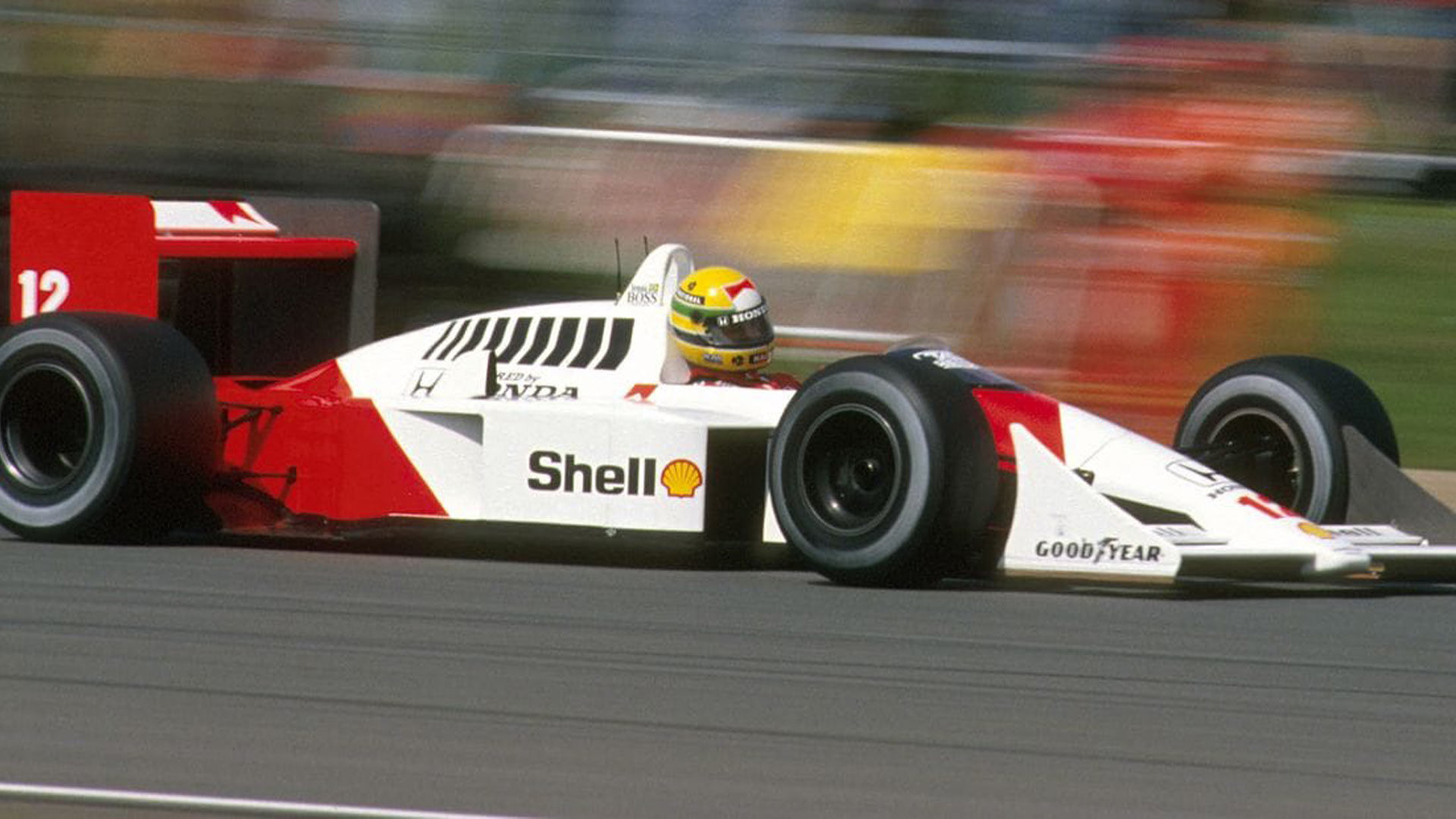
To celebrate the launch of its new memorabilia business, HRC will auction selected parts from the legendary RA100E V-10 engine, as fitted to the 1990 McLaren MP4/5B Formula One car.
Driven by Ayrton Senna and Gerhard Berger, the MP4-5B claimed six race wins and 12 podiums during the 1990 season. This was enough to secure Senna his second Drivers’ World Championship title, along with the Constructors’ World Championship crown for McLaren.
Honda continued to develop the naturally aspirated 3.5-liter RA100E V-10 throughout the season, achieving a peak output of 710 hp.
Now, an example of the famous RA100E engine has been disassembled at HRC’s factory in Sakura City, Japan, by the people who originally helped build it.
Sharing in Honda history
HRC has chosen parts such as the camshafts, cam covers, pistons and connecting rods from the RA100E engine, and placed them in bespoke display cases. Each item will come with an HRC certificate of authenticity.
The auction for the RA100E components will take place during this year’s Monterey Car Week in August.
Honda is also selecting other machines from its heritage collection to be sold, including IndyCar racers and valuable motorcycles.
“We aim to make this a valuable business that allows fans who love F1, MotoGP and various other races to share in the history of Honda’s challenges in racing since the 1950s,” said HRC President Koji Watanabe.
“Including our fans to own a part of Honda’s racing history is not intended to be a one-time endeavor, but rather a continuous business that we will nurture and grow.”