BMW has reached another impressive milestone in the United States, with the assembly of the marque’s seven-millionth vehicle over here.
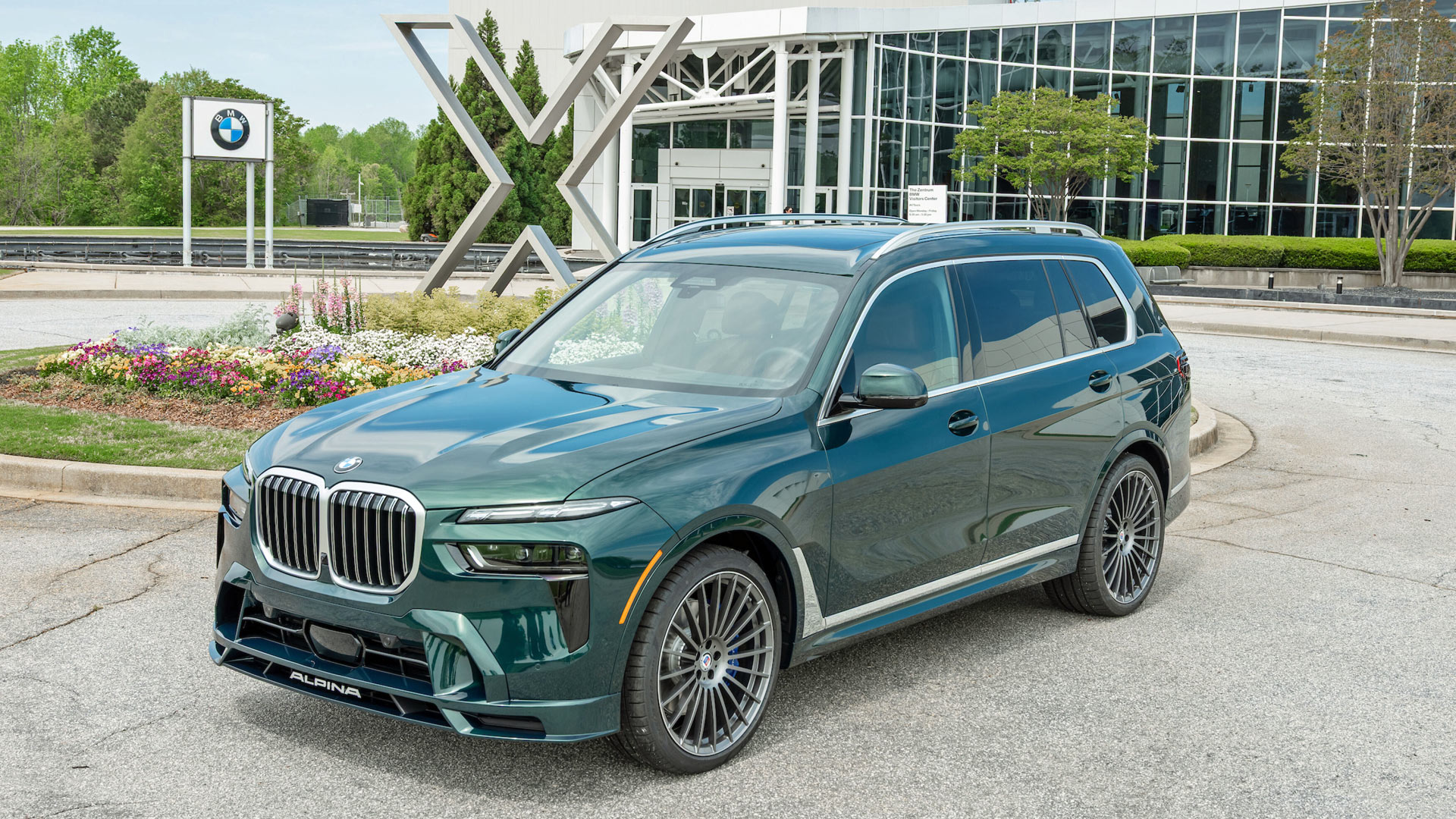
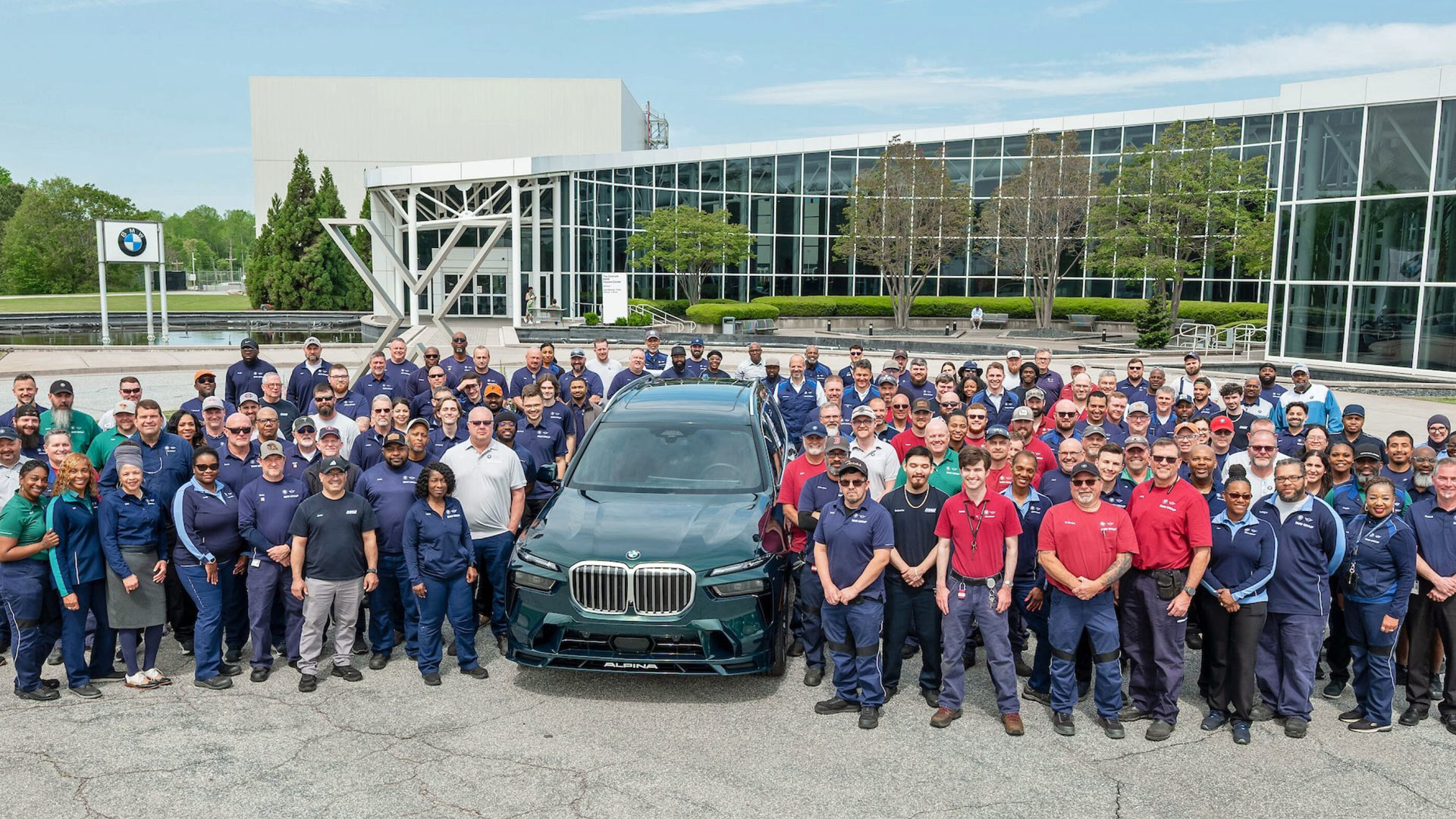
Associates at Plant Spartanburg in South Carolina were responsible for building the special BMW Alpina XB7 SUV, finished in Alpina Green Metallic.
Although the XB7 actually left the production line in March this year, conversion to the bespoke Alpina specification meant the performance SUV was not completed until later.
With the Alpina front apron, rear diffuser, and rear spoiler fitted, plus a commemorative badge, the XB7 will now take its place as part of the BMW Historic Collection.
The USA’s biggest automotive exporter
It marks another major achievement for BMW North America, which is celebrating its 50th anniversary during 2025.
BMW first began manufacturing vehicles at Plant Spartanburg in 1994, initially building local market versions of the 3 Series sedan and coupe.
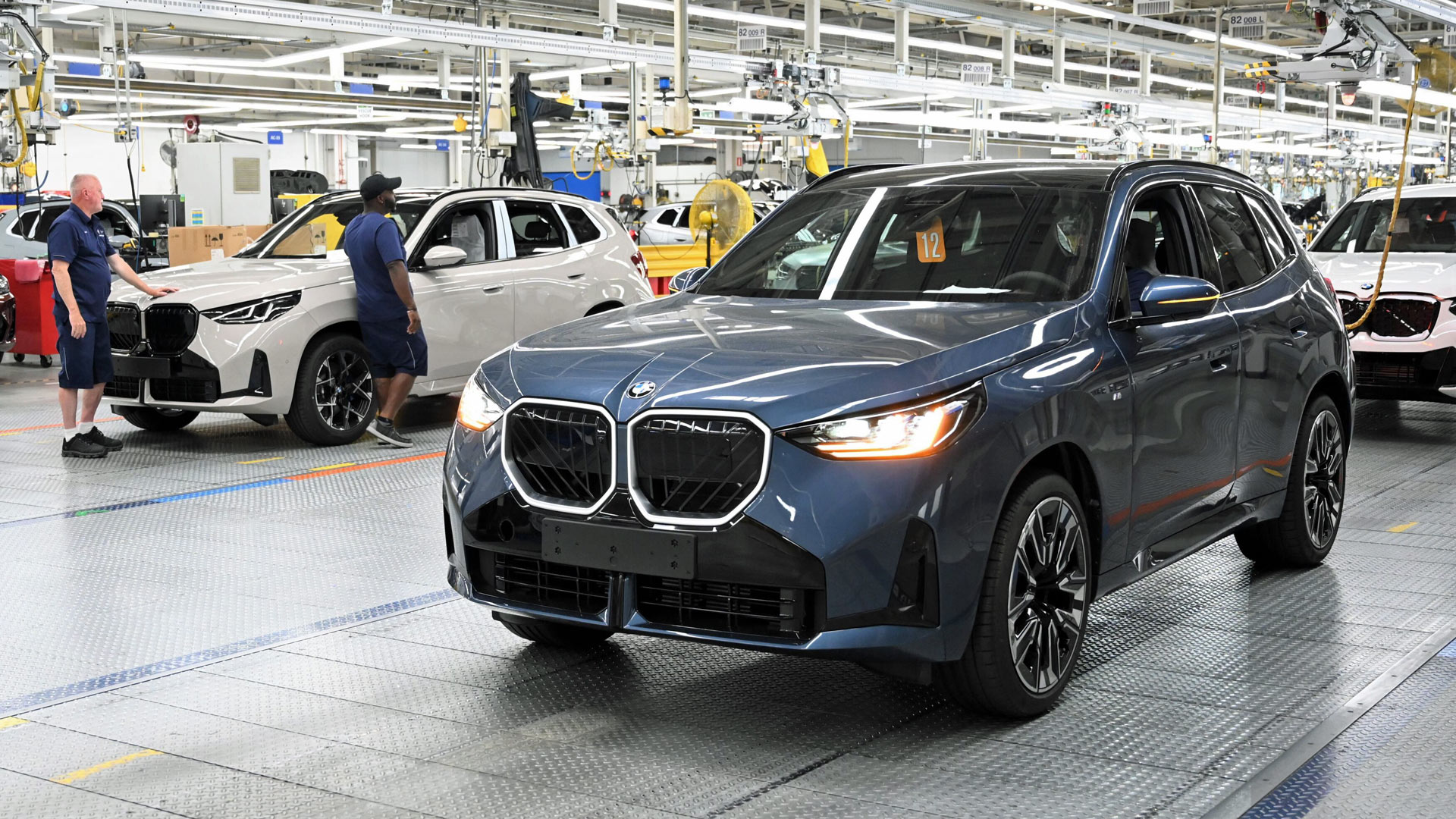
However, the facility has specialized in assembling X-branded BMW models, and is now responsible for multiple different SUVs in the range.
It took until 2006 for the one-millionth BMW to be made in South Carolina, but only another six years to reach two million vehicles. Major milestones have fallen even more rapidly since, due to continuing expansion.
Building a “remarkable legacy”
Such is the success of Plant Spartanburg, BMW has been the top exporter of vehicles from the United States for the last decade.
Of the 400,000 BMWs leaving the factory in 2024, almost 225,000 were exported, being sent to 120 different countries across the world.
More than $14.8 billion has been invested in Plant Spartanburg since 1992, turning it into the largest BMW Manufacturing facility in the world.
“This beautiful BMW Alpina XB7 is a testament to the great products we have, the quality of our supplier network, and the unwavering commitment and dedication of our valued associates,” said Dr. Robert Engelhorn, president and CEO of BMW Manufacturing.
“For over 30 years, BMW has proudly invested in South Carolina and its people, creating a remarkable legacy. We are excited about our future as we prepare to assemble fully electric vehicles at this plant.”
A new partnership between Skoda and Amazon will allow consumers to explore cars from the Czech marque in a fresh and familiar environment.
Skoda has become the latest manufacturer, and the first European one, to develop a digital showroom with the giant online marketplace.
Potential buyers will be able to use the Amazon app and website to research the Skoda range, consider finance options, look for cars available locally, and book a test drive.
A visit to a Skoda retailer will still be required to finalise a purchase, though, meaning you cannot order a Fabia with Prime Delivery.
Click and collect, for now
In the United States, Hyundai allows customers to purchase a new car directly through a special section of the Amazon website.
However, Skoda has surveyed UK customers when developing its Amazon showroom, finding that face-to-face interaction is still important when buying a car.
Almost half (47 percent) of survey respondents said they appreciated the potential to research a new car online, from the comfort of their home.
Skoda’s research found that more than three-quarters of survey respondents spend up to two hours each day browsing for online shopping, with ease and simplicity the main reason for this.
Researching from the sofa
Dealerships remain important, though, with 82 percent of those surveyed saying they prefer some type of in-person engagement. Nearly four-fifths (78 percent) said a test drive was an essential part of the car buying process.
Matthew Bowden, Director of Skoda UK, said: “Online browsing and research are part of everyday life, which is why we’re so excited to launch the Skoda showroom at Amazon.
“It gives prospective customers more opportunities to find their next car and see where it’s available, all from the comfort of their home.”
The Skoda showroom is now live on the Amazon.co.uk website, or can be found through searching inside the Amazon smartphone app.
People in Britain have been driving on the left-hand side of the road since the 18th century. The law dates back to 1722, when a ‘keep left’ rule was introduced on London Bridge to control the increasing traffic. This was eventually adopted on all roads across the country.
The Highways Act of 1835 made this law applicable in the United Kingdom and its many colonies. The legislation stated: ‘Drivers of wagons or carts not to ride thereon unless some other person guide them. Drivers causing hurt or damage to others, or quitting the road, or driving carriage without owner’s name, or not keeping the left or near side, or interrupting free passage, if not the owner to forfeit 20 shillings, if he be the owner, 40 shillings.’
The British Empire link is important, as it provides a clue to the identity of the countries that continue to drive on the left. Naming former British colonies and UK Overseas Territories would be a good place to start if a pub quizmaster asks you to name five countries that drive on the left…
Why does the UK drive on the left?
The custom is thought to date back to Roman times, when right-handed soldiers would mount a horse from the left to keep their right arm free for combat. More recently, with the advent of horse travel, a horseman would hold the reins with his left hand, using the right hand for friendship or to draw a sword.
In 1998, the remains of a Roman quarry were discovered near Swindon. Ruts in the road were deeper on the right than on the left, which suggests that loaded carts used the right side of the road as they left the quarry. Empty carts arrived on the left.
Could UK drivers switch sides?
In 1969, the UK considered switching sides after Sweden successfully changed to driving on the right. The changeover took place on 3 September 1967, on a day known as Högertrafikomläggningen (right-hand traffic diversion).
All but essential traffic was banned from the roads, with some 360,000 street signs switched nationwide. Swedish people tended to buy left-hand-drive cars, so the switch to the right was carried out for safety reasons.
The UK rejected the idea on the grounds of cost and safety. The bill would have been in the region of £264 million – around £4 billion in today’s money. More recently, the Department for Transport said: “We do not have a policy on this because it’s not something we are interested in at this time.”
Due to its border with Spain, the British Overseas Territory of Gibraltar changed to driving on the right in 1929.
Why do Europe and America drive on the right?
When the island of Samoa in the South Pacific switched sides in 2009, it was the first country in decades to order motorists to start driving on the left. A two-day bank holiday was organised to allow islanders to get used to the change, but thousands of people protested against the plan.
“Cars are going to crash, people are going to die, not to mention the huge expense to our small country,” a Samoan lawyer told The Times.
There is evidence of the French driving on the right since the late 18th century, but Napoleon is credited for bringing right-hand traffic to Europe. Nations he conquered, such as Russia, Switzerland and Germany switched from the left to the right. Adolf Hitler did the same in Czechoslovakia and Austria.
The story is less clear in North America, but an English author writing in 1806 is quoted as saying: “In some parts of the United States, it is a custom among the people to drive on the right side of the road”. This suggests that driving on the left was customary in other parts of the country.
Henry Ford played a part. His company changed to left-hand drive in 1908, with a Ford catalogue from that year stating: ‘The control is located on the left side, the logical place, for the following reasons: travelling along the right side of the road, the steering wheel on the right side of the car made it necessary to get out on the street side and walk around the car. This is awkward and especially inconvenient if there is a lady to be considered.
‘The control on the left allows you to step out of the car on to the curbing without having had to turn the car around. In the matter of steering with the control on the right, the driver is farthest away from the vehicle he is passing, going in opposite direction; with it on the left side he is able to see even the wheels of the other car and easily avoids danger.’
Which other countries drive on the left?
Apart from the UK, the following countries, dependencies and territories also drive on the left:
‘Merge in turn’. You will have seen the signs at the end of a two-lane section of road, but how many of us actually merge as requested?
It would be nice to believe that we’re all wonderfully polite and follow the ‘zipper merge’ without fuss or bother. But anecdotal evidence suggests this isn’t entirely true…
How many times have you seen a lorry driver move across to block the two lanes, resulting in two lines of heavy traffic behind the trailer and an entirely clear lane ahead of the cab?
Or, in what appears to be an example of Britain’s obsession with queueing, a long line of drivers waiting in one lane, scratching their noses and Snapchatting their mates, while the other lane lies empty, save for a few crows and some discarded packaging from Greggs.
There is a third method, which involves hurtling along the asphalt equivalent of the Mary Celeste, only to barge in at the last minute. According to social media – so often the voice of common sense, balance and reason – this method invariably includes an Audi of some sort.
But aside from the retina-burning LED lights and apparent lack of courtesy, isn’t Mr or Mrs Audi actually doing the right thing?
The zip merge saves time
‘Zip merging’ or the ‘zipper merge’ originated from the United States as a traffic flow measure designed to ease congestion when a road narrows from two or more lanes to one. In simple terms, drivers should merge at the point of closure, rather than forming a single line as soon as possible.
A 2008 study conducted by Ken Johnson, a state work zone engineer in Minnesota, found that the length of the queue is reduced by up to 50 percent when drivers merge in turn. He also argued that because everyone is ‘equally disadvantaged’ by the queue, there’s less chance of a driver experiencing road rage. Sounds compelling enough.
And yet, on today’s commute, you’re likely to find some motorists shaking their heads and tutting to themselves as an Audi driver (other German brands are available) shows a total disregard for the rules of the road and our nation’s reputation for politeness.
But while the terribly polite and courteous driver sits behind the wheel of their Hyundai/Skoda/Kia/Suzuki/Lexus (delete as applicable), it is they who have failed to observe the guidance of the Highway Code. Not to mention missing the first 20 minutes of Pointless.
Recommended by the Highway Code
In the section marked ‘Lane discipline’, rule 134 of the Highway Code states: ‘You should follow the signs and road markings and get into the lane as directed. In congested road conditions, do not change lanes unnecessarily.
‘Merging in turn is recommended but only if safe and appropriate when vehicles are travelling at a very low speed, e.g. when approaching roadworks or a road traffic incident. It is not recommended at high speed.’
On the subject of merging in turn, can’t we show a little joined-up thinking? If nothing else, you might get home in time to see the first round of Pointless. And if you do it, other drivers might follow your lead – and before you know it we’ll be a nation of zip-mergers.
Then we can turn our attention and anger to middle-lane hoggers instead…
A collaboration between Mattel and Hot Wheels has resulted in the Brick Shop range, aimed at the ever-growing market for grown-up model car collectors.
Each Brick Shop kit includes a scale model to be assembled brick by brick, and comes accompanied by a matching 1:64-scale Hot Wheels die-cast model.
Three tiers of pricing are offered, starting with the 1:32-scale Speed Series, then the 1:16-scale Elite Series models.
The 1:12-scale Mercedes-Benz 300SL ‘Gullwing’, the first car in the top Premium Series – pictured above – will be priced at £136.99.
Classic Americana to retro heroes
In the mid-tier Elite Series, enthusiasts can choose from a Chevrolet Corvette Grand Sport with metallic exhaust pipes, a 1990 Honda NSX with pop-up headlights, or a Custom ’62 Chevy Pickup.
The latter is particularly eye-catching in orange, and comes with an exposed V8 engine and adjustable suspension, plus a surfboard in the truck bed.
Elite Series cars are supplied with extra parts to allow collectors to customise their designs, along with licensed decals and metal wheel covers.
All of the Mattel Brick Shop Elite Series models have a recommended price of £44.99.
A new way to enjoy Hot Wheels
The Speed Series will be the most affordable models, priced at £21.99 each. These each come with different wheel covers and a full set of decals for customisation.
Included in the Speed Series will be the Cadillac Project GTP Hypercar, ’68 Chevrolet Camaro and Maserati MC20.
“Hot Wheels has fuelled the passion of car enthusiasts for generations, and with Mattel Brick Shop, we’re giving fans an entirely new way to engage with their favourite vehicles,” said Roberto Stanichi, head of vehicles and building sets at Mattel.
“This Hot Wheels collection by Mattel Brick Shop delivers what car fans have been clamouring for: buildable vehicles that deliver true car authenticity. Our design team meticulously recreated these vehicles in brick form while preserving what made them great in the first place, including real metal parts and a matching exclusive die-cast, giving fans a new way to collect, build and play.”
The first Mattel Brick Shop models are available to pre-order now. They should reach retail stores later this summer.
The Rolls-Royce Phantom celebrates an important birthday this month, 100 years after the luxury saloon was first introduced.
Now into its eighth generation, the Phantom has long been the flagship of the Rolls-Royce range. It has also earned an important place in automotive history.
Although the Phantom line saw breaks in production during the last century, the model has endured to become one of the longest-running nameplates of all.
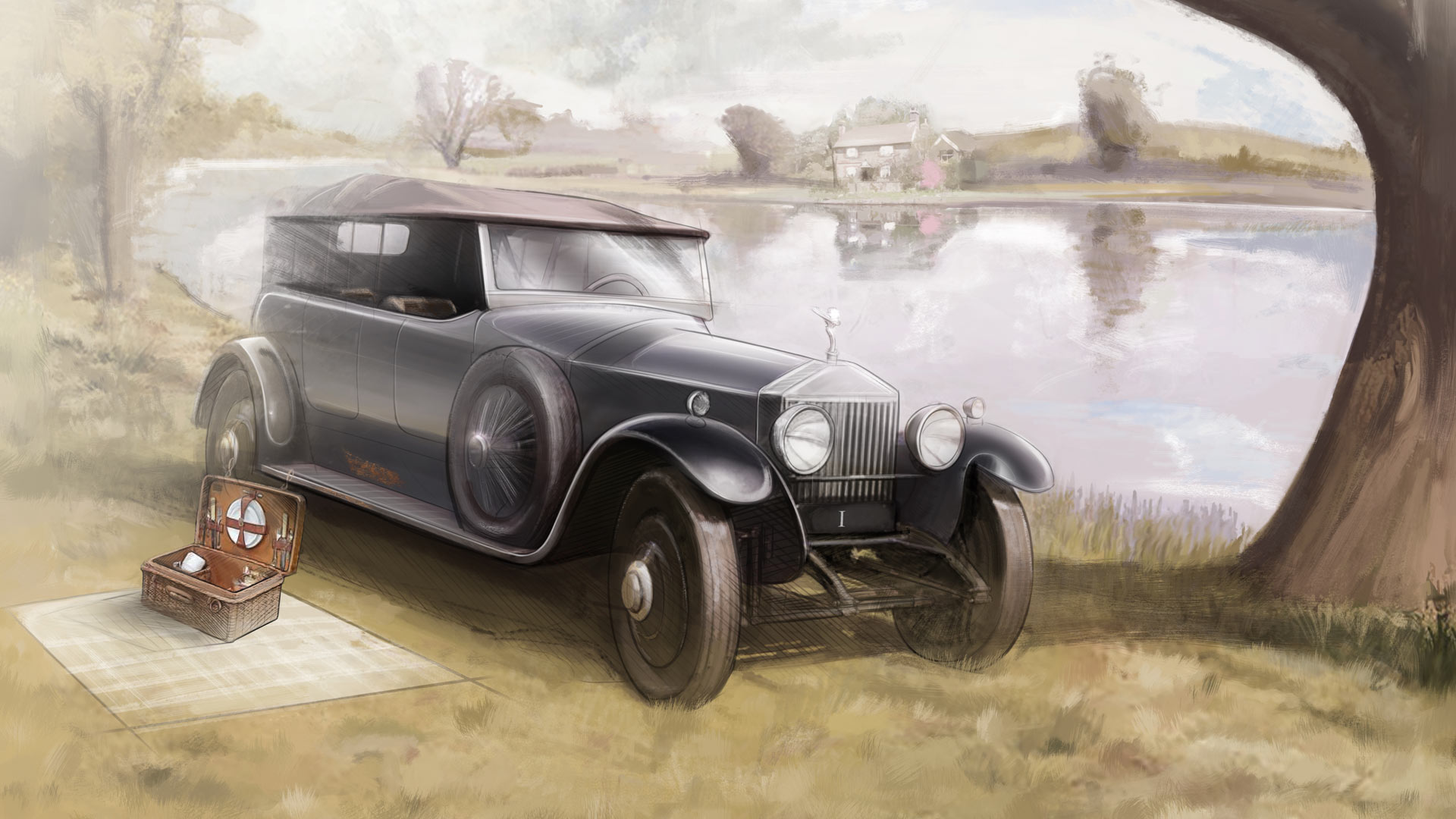
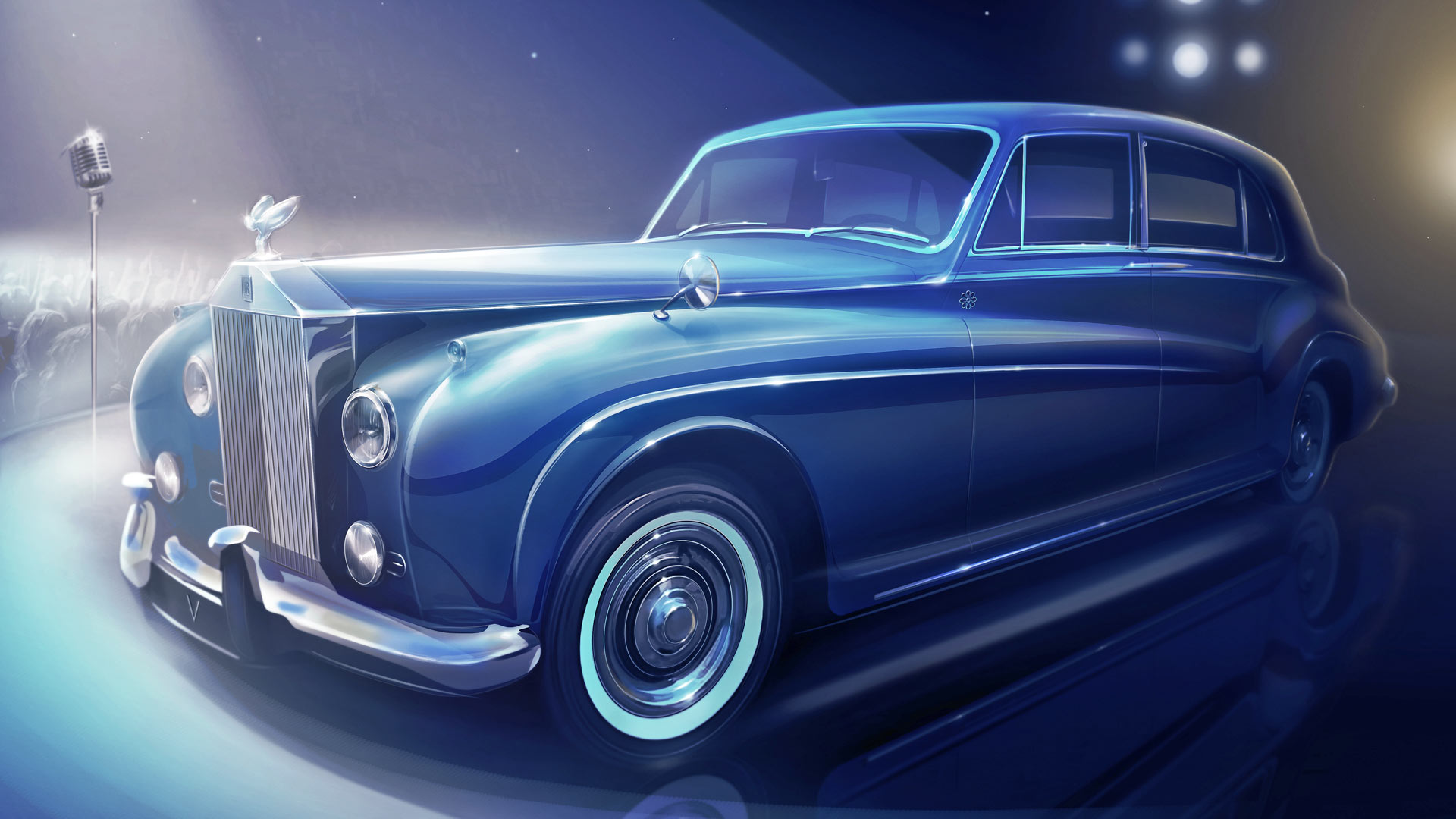
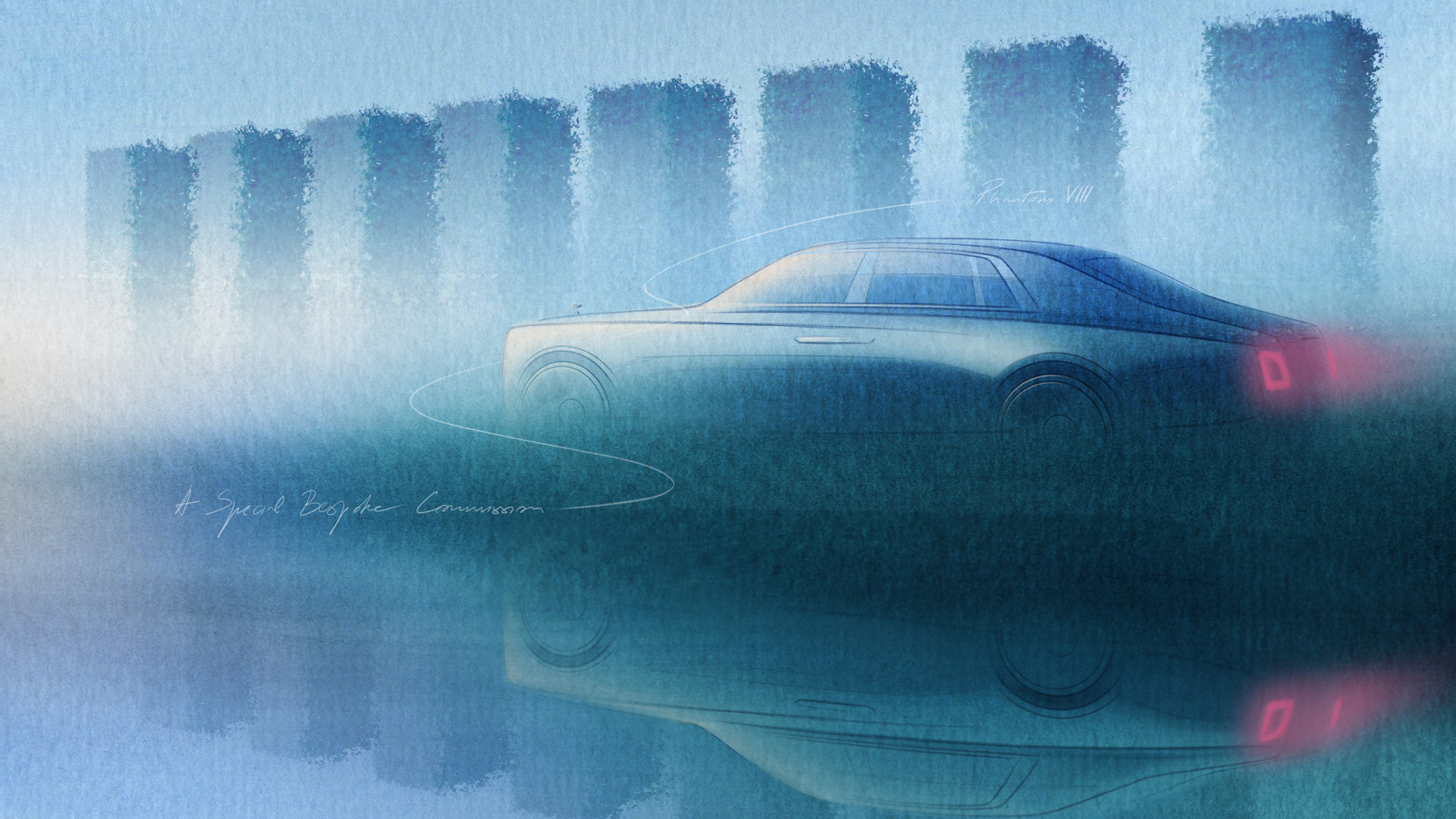
To celebrate this centennial year, Rolls-Royce has reflected on the car’s storied history, commissioning its design team to create a series of original artworks with the Phantom as their subject matter.
In that year, artist Charles Sykes was asked to produce six original oil paintings for the Rolls-Royce brochure of the time.
Sykes depicted cars in environments such as arriving at the opera, or outside large country houses, reflecting the lifestyles of Rolls-Royce owners at the time.
For the modern artworks, the designers considered a wider range of Rolls-Royce customers, such as the Phantom V models owned by John Lennon and Elvis Presley.
Fit for kings and queens
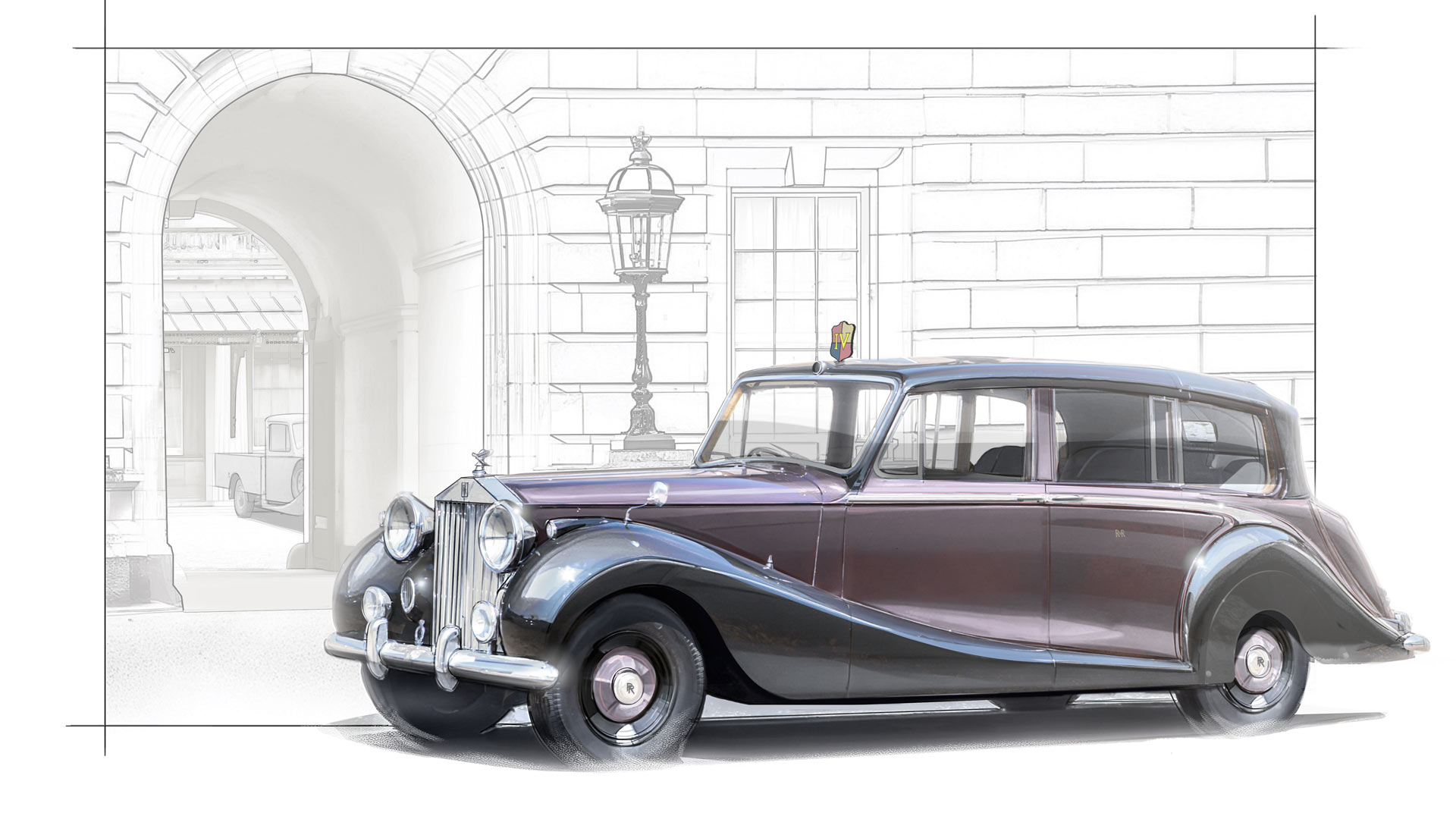
The Phantom IV, launched in 1950, is the rarest of the model lineage, with only 18 examples produced. Rolls-Royce only sold a Phantom IV to clients deemed worthy enough to own one.
These included heads of state, such as the British royal family, who took ownership of the very first completed Phantom IV – depicted in one of the new illustrations (see below).
Commissioned by the Duke of Edinburgh as a more formal car for himself and the young Princess Elizabeth, the Phantom IV was tailored to the late Duke’s personal design requirements.
It marked the beginning of an association between Rolls-Royce and the royal family, which lasted until the turn of the 21st century.
‘A means of personal expression’
One constant throughout the Phantom’s history has been the emphasis on personalisation. From the earliest coachbuilt examples, through to bespoke commissions of the latest Phantom VIII, these cars have always been tailored to their owners.
Reflecting on the Phantom’s centenary, Chris Brownridge, chief executive of Rolls-Royce Motor Cars, said: “Phantom is much more than a motor car. It is a cultural phenomenon, both reflecting and influencing the world around it.
“Since its earliest days, the marque’s pinnacle product has been among the most desired rewards for success and a potent symbol of power and prestige on the world stage. Above all, it has provided a means of personal expression for its owner, often becoming a work of art in its own right.
“These fascinating stories – and the exquisite images they have inspired our designers to create – offer a glimpse of Phantom’s extraordinary reach, and the world-changing people and events it is associated with.”
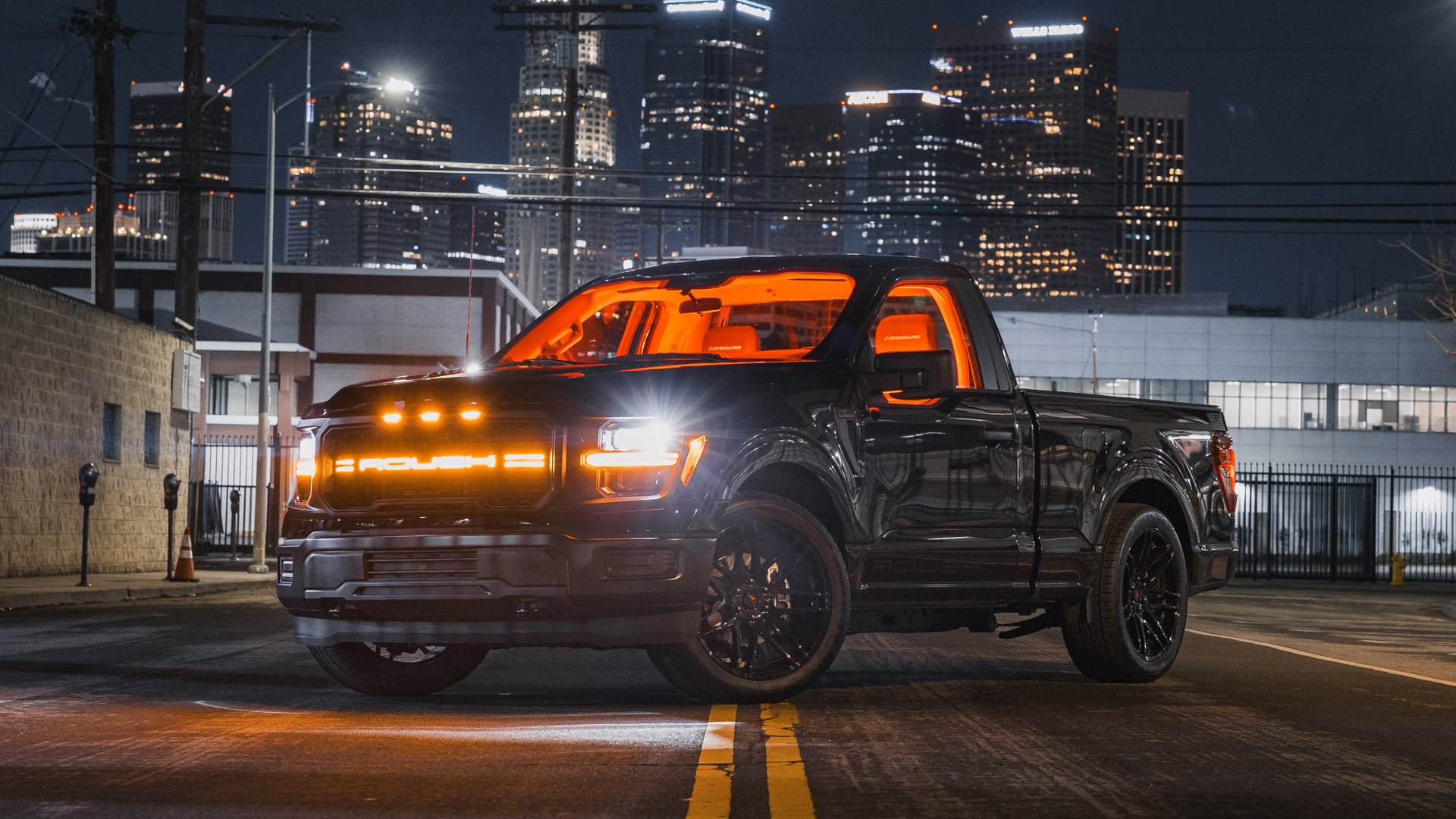
Tuning specialist Roush Performance has revealed its latest take on the Ford F-150 pickup.
The 2025 Roush Nitemare has been engineered to “dominate the street”, with custom design elements and a major focus on handling.
Available for the F-150 in XL and XLT trim, the Nitemare package adds $19,999 to the base cost of a new truck.
For those who want more, however, Roush’s supercharger package can boost the Ford’s 5.0-liter V-8 to 705 horsepower and 635 lb-ft of torque – all for an extra $8,650.
Built for the street and track
The Nitemare’s dynamic prowess is aided by coilover suspension, featuring twin-tube dampers and progressive rate springs. Slotted brake rotors are also part of the package.
The F-150 Nitemare is lowered by three inches at the front and five inches at the rear, giving it a mean stance on standard 22-inch gloss black wheels.
Upgraded sway bars and General Tire G-Max AS07 all-season tires help the Nitemare to reach a peak of more than 1.0 G when cornering on a circuit.
Roush also fits a bespoke, cat-back exhaust system to the Nitemare. Its black tailpipe tips are said to provide an “unapologetically bold” sound.
A head-turning truck
Roush’s signature front grille features integrated amber lighting, while the rear has new LED marker lights and blacked-out Ford tailgate lettering.
There is also a bespoke Roush Nitemare graphics package, along with custom Raven Black leather with red detailing. Aluminum pedals are fitted, with real carbon fiber trim on the options list.
“We engineered the Nitemare to be more than just a head-turner – it’s one of the best-handling trucks we’ve ever built,” said Jack Roush Jr.
“Our lowered suspension system and precision-tuned handling components will let drivers carve the track with confidence while maintaining the everyday drivability expected from a Roush vehicle.”
When it comes to power and performance, the plug-in hybrid Ferrari 296 GTB and open-top 296 GTS hardly fall short.
However, that has not stopped Maranello’s engineers from developing a hardcore Speciale version, intended to set a ‘new benchmark’ for road-legal driving excitement.
Unusually, Ferrari has launched both the 296 Speciale coupe and open-top 296 Speciale A together from the outset.
As with past icons such as the 360 Challenge Stradale and 430 Scuderia, the Italian marque has followed a familiar path of more power and reduced weight.
Given the already high starting point for the 296 GTB, the new Speciale brings hypercar-grade horsepower to the party. Let’s dig in to the details…
Boosted hybrid performance
Combined power from the Ferrari’s twin-turbocharged 3.0-litre V6 engine and electric motor now stands at a colossal 868hp – 50hp more than the 296 GTB.
Technology from the 296 Challenge race car has enhanced the V6 combustion engine, while the electric motor is tweaked to deliver an extra kick.
The result is a 0-62mph time of just 2.8 seconds, with 0-124mph taking 7.0 seconds. Top speed is in excess of 205mph.
With track driving likely to be on the agenda for 296 Speciale owners, a new ‘Qualify’ mode has been added to the eManettino. This deploys extra power from the electric motor when exiting a corner, bringing some ‘Hammer Time’ to your hot laps.
Track-focused aerodynamics
Maximising performance does require dipping into the options list, however. Opting for the lightweight package shaves some 60kg, using carbon fibre for the car’s bumpers and engine cover – and reducing dry weight for the fixed-top Speciale to 1,410kg.
Much of the 296 Speciale’s bodywork is new, with a major focus on improving aerodynamic performance. Ferrari says the upgraded car boasts 20 percent more downforce than a 296 GTB.
This includes the use of an ‘aero damper’ integrated into the bonnet, along with new winglets on the rear bumper. The active rear spoiler now has three different downforce settings, and can switch between them more rapidly.
Ferrari engineers have not forgotten the suspension either, lowering the 296 Speciale by 5mm. Finely tuned springs and dampers are said to reduce the maximum roll angle by 13 percent when cornering.
Tailored to your taste
Carbon fibre and Alcantara are used extensively throughout the 296 Speciale’s cabin. This includes making the door panel from a single piece of carbon, which feeds into the road-going racer image.
As with all new Ferrari models, customers are able to customise and tailor their car to exact design specifications.
This includes choosing the new Verde Nurburgring paint colour, developed especially for the 296 Speciale, which can be combined with racing numerals and full-length body stripes.
Production of the 296 Speciale will not be capped, but Ferrari does say fewer examples of the open-top Speciale A will be sold. The Ferrari online configurator has already been updated to help you plan your ultimate 296.
It was already dubbed ‘the supercar of SUVs’. Now Aston Martin has announced a new flagship – and even faster – version of the DBX.
The DBX S offers more horsepower then the DBX707 (which continues on sale), plus new options that can shave almost 50kg from the luxury SUV’s kerb weight.
Adding an ‘S’ suffix to the DBX continues an Aston Martin naming convention that dates all the way back to 1953 – and the upgraded DB3S Le Mans race car.
More recently, the S badge has been used to denote high-performance versions of the V8 Vantage and Vanquish models.
Turbo tech from the Valhalla
Powering the DBX S is the existing 4.0-litre V8 engine, now using turbocharger technology derived from the forthcoming Valhalla hypercar. The result is a peak output of 727hp: a 20hp boost compared to the DBX707.
Peak torque remains at 664lb ft, but the extra power reduces the 0-124mph time by 0.3 seconds. A 0-62mph sprint time of 3.3 seconds and 193mph top speed remain identical to the DBX707.
Juggling the power is a nine-speed automatic transmission, but with new shift points to reflect the enhanced rev range of the DBX S. Downshifts in Sport and Sport Plus modes are said to be ‘even more aggressive’.
A modified exhaust system brings ‘more character to the natural voice of the thunderous V8 engine’, while the quad tailpipes are now vertically stacked.
Heavyweight performance, lightweight options
For those who want to save weight on their 2.2-tonne SUV, the DBX S offers a variety of new options. A carbon fibre roof – the largest single-piece carbon fibre element ever fitted to an Aston Martin – helps remove some 18kg by itself. It also helps lower the car’s centre of gravity for improved dynamics, and sees the roof rails removed.
Magnesium wheels are a first for the luxury SUV sector, with the optional 23-inch rims cutting unsprung mass by 19kg.
For the final weight-saving measure, buyers can specify a polycarbonate honeycomb front grille, along with carbon fibre components for the redesigned front bumper and rear diffuser.
Selecting all the lightweight options will save 47kg, and cut the kerb weight of the DBX S to 2,198kg.
Sporting design inside and out
On the inside, the DBX S has a bespoke interior theme, with a distinctive herringbone pattern on the seats. This can also be extended to the headlining, should buyers choose the optional carbon fibre roof.
Alcantara trim is standard, covering the seats, headlining, centre console and instrument panel. Semi-aniline leather is used for areas subject to higher wear, such as the seat bolsters.
An ‘S’ logo is embroidered onto the seats, along with an Aston Martin badge that is both embossed and debossed. Customers can specify red seat belts for an extra sporting touch.
Exterior paint options include special livery designs, with either Rosso Corsa Red, Trophy Silver or Podium Green highlights used to pick out the new front splitter, side sills and rear diffuser.
‘A powerful statement of intent‘
Speaking about the DBX S, Aston Martin CEO Adrian Hallmark said: “Over the last two years, Aston Martin has introduced an entire core collection of next-generation sports cars as well as a new DBX; all with a new, entirely bespoke infotainment system designed in-house.
“The introduction of DBX S not only reaffirms our commitment to producing the most exciting, rewarding and beautiful cars, it also sends a powerful statement of intent about our ambitions not just for DBX, but for the Aston Martin brand.”
The Aston Martin DBX S is available to order now, with the first completed cars expected for delivery to customers in late 2025.
Land Rover Classic has revealed the latest version of the original Defender to receive an official restomod makeover.
The Land Rover Classic Works Bespoke department has treated the classic Defender Soft Top to new V8 power, along with a host of other upgrades.
It marks the first time Land Rover has built an open-top Defender since 2016, and follows the launch of the marque’s Works Bespoke service last year.
For those who want a restored Defender with the official Land Rover seal of approval, the Soft Top pays homage to classic models from the 1990s.
Bikini is optional
Creating a Defender V8 Works Bespoke Soft Top starts with sourcing a suitable donor vehicle for the restomod build. Land Rover Classic uses the last examples of the Defender as a basis, focusing on vehicles made between 2012 and 2016.
Hundreds of hours of work go into creating each V8 Works Bespoke model, with buyers able to tailor the vehicle’s specification to their personal taste.
A bespoke canvas hood is included, and comes in a choice of four colours. Said to be inspired by the last Defender model, the side and rear sections can be unzipped and rolled up for open-air driving. Extra tie‑down points have been added to keep the roof stable at higher speeds.
Buyers are also able to specify a smaller ‘bikini’ hood, which only protects the front-seat occupants from the elements.
Prices from £234,000
Providing the power is a thoroughly modern 5.0-litre V8 engine, producing 405hp and 380lb ft of torque. An eight-speed ZF automatic transmission is standard, as is the traditional Land Rover four-wheel-drive system.
Land Rover Classic also adds Bilstein suspension dampers, Eibach anti-roll bars and Alcon brakes to improve how the Defender drives.
Customers can choose from 49 different exterior colours, or commission an individual hue from a sample. Numerous leather upholstery options are available, while the extensive list of options includes an on-board wine cooler.
The open-top Defender of your dreams does not come cheap, however. Prices start at £234,000, which includes a one-year, unlimited-mileage warranty.