Driving your car after it has failed an MOT could lead to three penalty points on your driving licence, a £2,500 fine and even a driving ban. However, it is permitted in certain circumstances.
Government guidelines on this topic have changed over the years, but the current rules are as follows.
If your car fails the MOT test before the previous MOT certificate has elapsed, you can drive it away – but only if the none of the faults are classed as ‘dangerous’ and the minimum standards of roadworthiness are met.
The GOV.UK website explains these minimum standards. They include requirements that all lights are working, brakes are fully functional and tyres have a minimum tread depth of 1.6mm. Incidentally, the windscreen, windows and mirrors must also be clean.
MOT stations can’t keep your car
Whether your car passes or fails the MOT, the testing garage or dealership has no right to detain the vehicle, even if it fails on a dangerous fault.
Speaking with an operative at the DVSA, we were told: “No MOT station can impound a car, even if they find a dangerous defect. You are within rights to get the car towed elsewhere for work”.
However they went on to stress that: “It’s a grey area regarding dangerous and non-dangerous defects. Ultimately, if you drive the car away and something happens, you are still liable”.
Just to reiterate, the DVSA website states: ‘You can be fined up to £2,500, be banned from driving and get three penalty points for driving a vehicle that has failed its MOT because of a “dangerous” problem’.
Our advice is to get any remedial MOT work done there and then at the garage, if possible. Alternatively, you could have the car towed – rather than driving it – if there is any doubt about its legality.
Armchair racers could find themselves heading to the 24 Hours of Le Mans, thanks to a free update for the Forza Motorsport video game.
The next five weeks have been designated as ‘BMW Month’ on the popular Microsoft Xbox and PC racing title.
The promotion will see numerous iconic cars from the German marque’s back-catalogue added to a virtual showroom.
In addition, a number of new challenges and events will be introduced into the game, covering both single-player career mode and online multi-player competition.
A shot at Le Mans glory
The biggest draw for players in Update 16 for Forza Motorsport is the opportunity to win an expenses-paid trip to the 24 Hours of Le Mans endurance race in France, courtesy of BMW.
To be in with a chance of heading to the Circuit de la Sarthe, gamers need to get behind the virtual wheel of the 2023 #25 BMW Team RLL M Hybrid V8 race car.
Simply completing 15 laps of the Daytona International Speedway circuit with the BMW M Hybrid V8, then registering on a dedicated website, is enough to enter the competition.
Open now, the promotion runs until 12 February 2025. Winners will receive flights to Le Mans, accommodation and, most importantly, tickets for the legendary 24-hour race.
Iconic M-car classics
Along with the opportunity to win a trip to Le Mans, Update 16 adds an array of BMW vehicles that were previously unavailable in the current Forza Motorsport.
Along with the BMW Team RLL M Hybrid V8 racer, the update brings V10 power in the shape of the 2009 BMW M5, along with the 2010 BMW M6 coupe.
Other M-badged additions include the 2008 BMW M3, plus the iconic E39-generation BMW M5 from 2003 – and even a 2020 Formula Drift BMW M2.
Players can also unlock the 1976 BMW 3.0 CSL and the 2023 BMW Turner Motorsports M4 GT3. Both are available as rewards for completing two new ‘Tours’ in career mode.
Motorsport evolution in progress
A total of five BMW-themed multi-player competitions will be offered, with a new event becoming available each week. There are a variety of new challenges for offline play, too.
Forza Motorsport developer, Turn 10, also notes that Update 16 will see players receive a free Mobil 1 50th Anniversary Gold Livery to use with the 2023 Cadillac Racing #01 V-Series.
Further changes been made to revert three race circuits to their original branding, along with adjusting the audio settings for the 2021 Porsche 911 GT3 and 2002 Ferrari Enzo.
The Cupra Terramar was sixth, on 165 points, with the Alfa Romeo Junior last on 136 points.
Renault’s victory makes it on the second time in the 62-year history of Car of the Year that a brand has taken the top prize two years in a row.
The last time was in 1995 and 1996 with the Fiat Punto and Fiat Bravo.
Notably, most of the 2025 finalists were all-electric – and all of them had at least some degree of electrification, such as hybrid or plug-in hybrid engines.
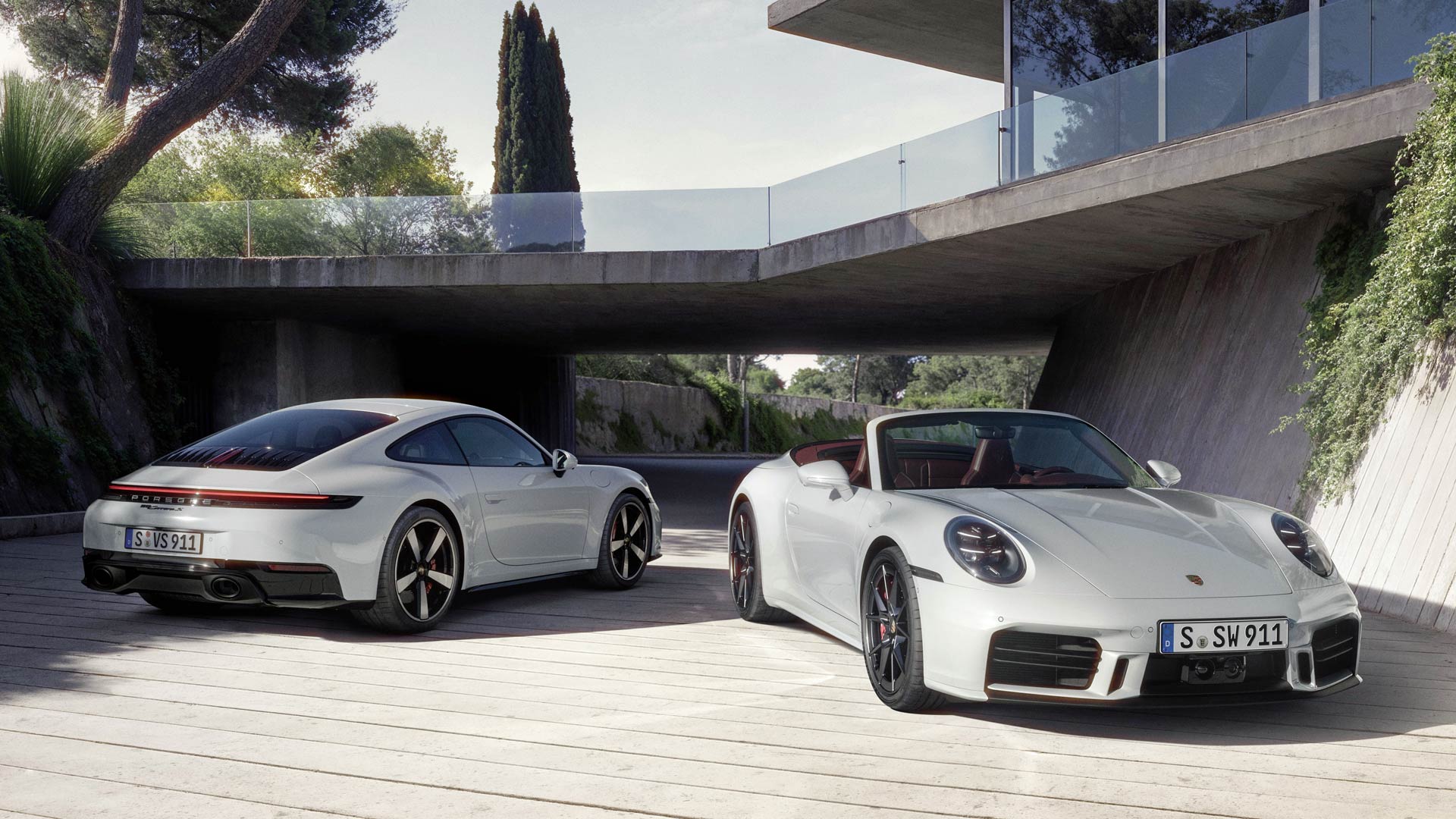
Notably absent from the lineup when the 911 received its mid-life update last year, the Carrera S has now returned to the Porsche 911 range.
The revised ‘S’ slots above the standard Carrera and lightweight Carrera T, but beneath the new hybrid-assisted GTS.
Porsche says the Carrera S will offer improved driving dynamics, plus a stronger level of standard equipment.
However, an increased output from its 3.0-litre twin-turbocharged flat-six engine will likely be the biggest talking point, narrowing the gap to the electrified GTS.
Nearly 500hp and torque vectoring
Compared to its predecessor, the new ‘992.2’ Carrera S gains 30hp, lifting output to a substantial 480hp, alongside 391lb ft of torque. New turbochargers and revised charge-air cooling are responsible for the boost in horsepower.
An eight-speed PDK dual-clutch auto transmission and rear-wheel drive are fitted as standard. Accelerating from 0-62mph takes 3.3 seconds, with a top speed of 191mph for the coupe version.
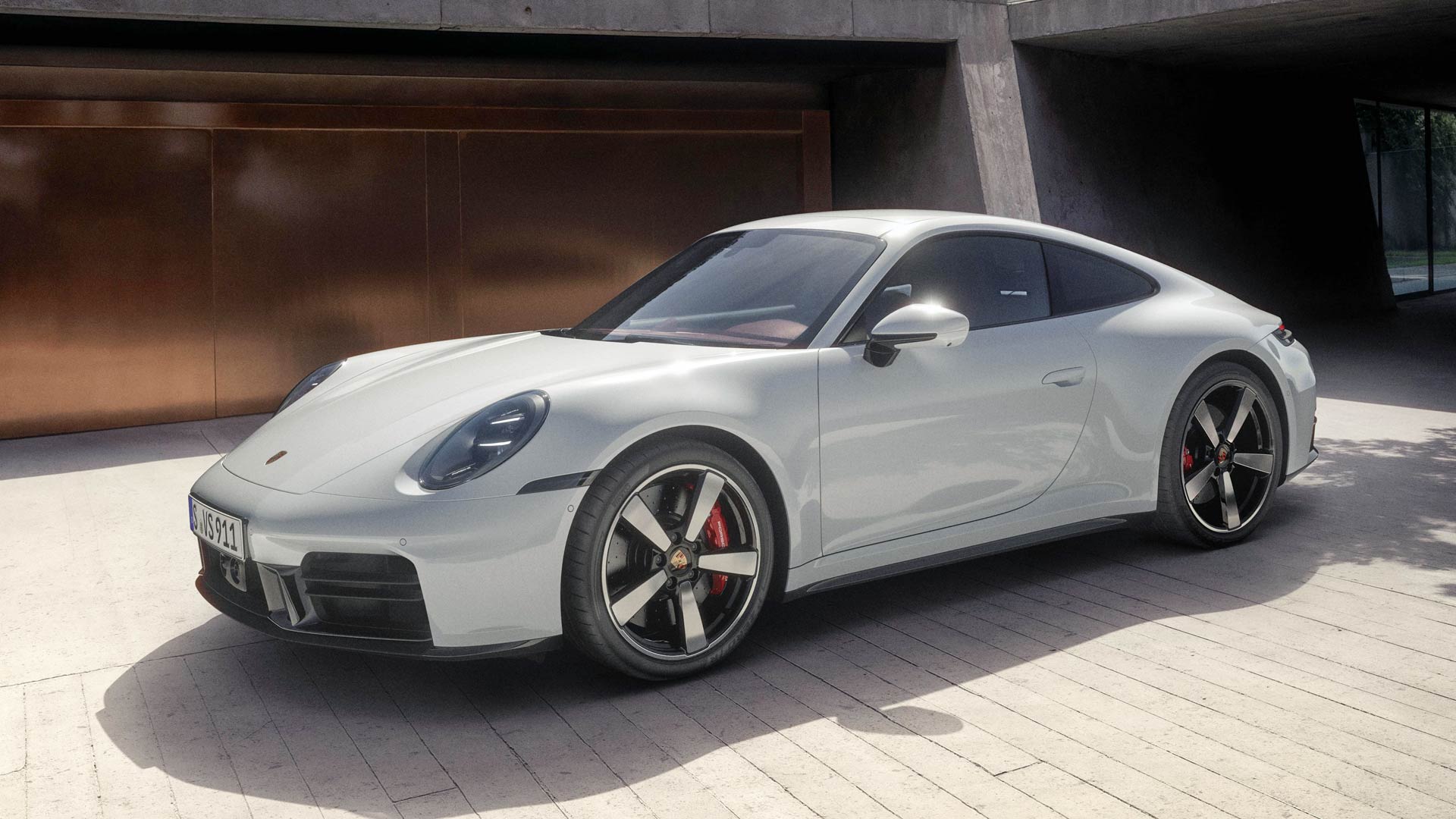
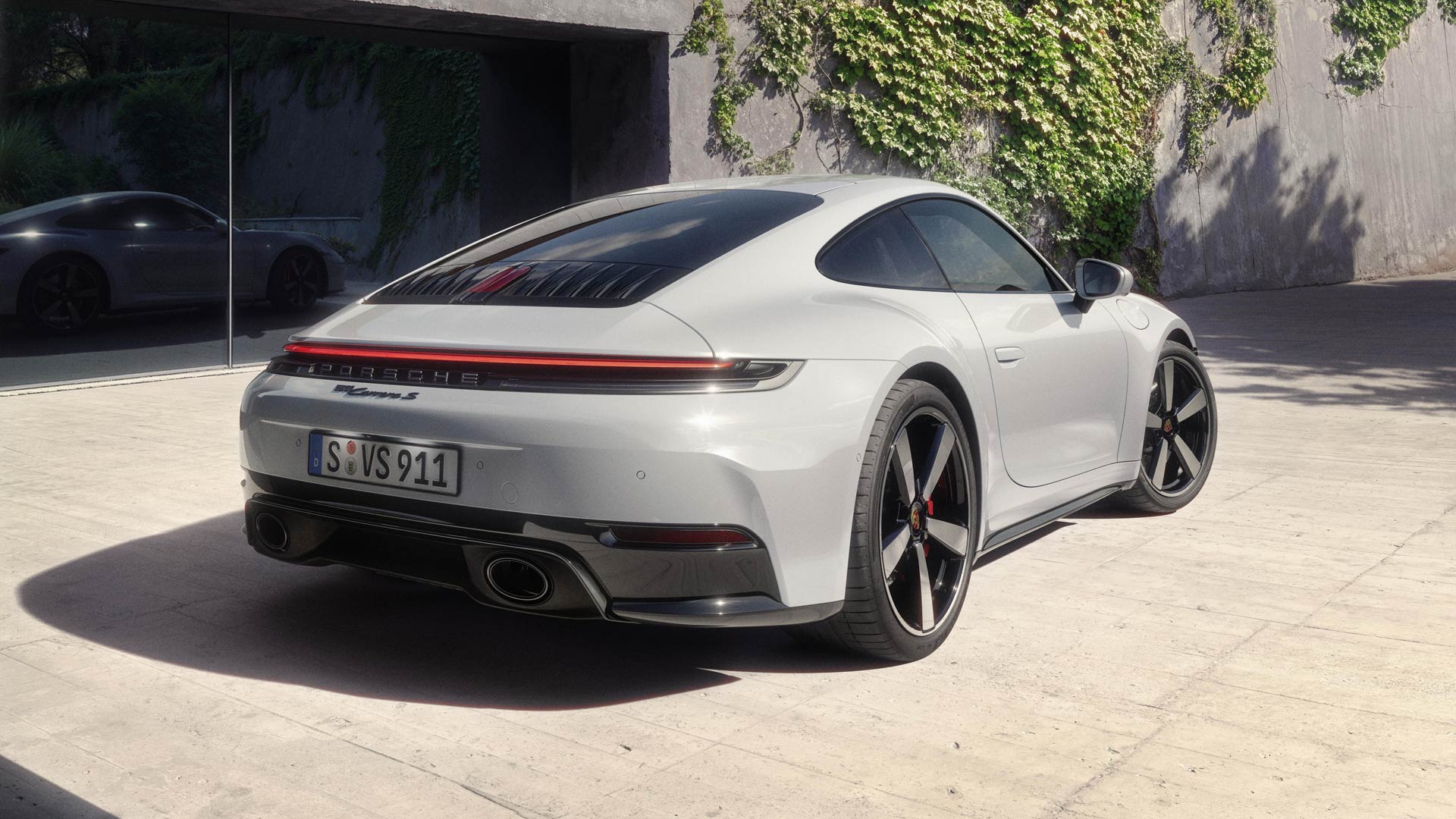
Other changes include staggered Carrera S alloy wheels, with 20-inch rims at the front and 21s at the rear. Porsche Torque Vectoring Plus (not offered on the standard 911 Carrera) is also included, along with a sports exhaust system.
Brakes from the 911 Carrera GTS, complete with red-painted calipers, are fitted as standard. Uprated PCCB carbon-ceramic discs, rear-axle steering and PASM sports suspension – providing a 10mm drop in ride height – can all be found on the options list.
Rear seats a no-cost option
Although Porsche has upped performance for the 911 Carrera S, its exterior design remains indistinguishable from the base Carrera – save for the unique alloy wheels.
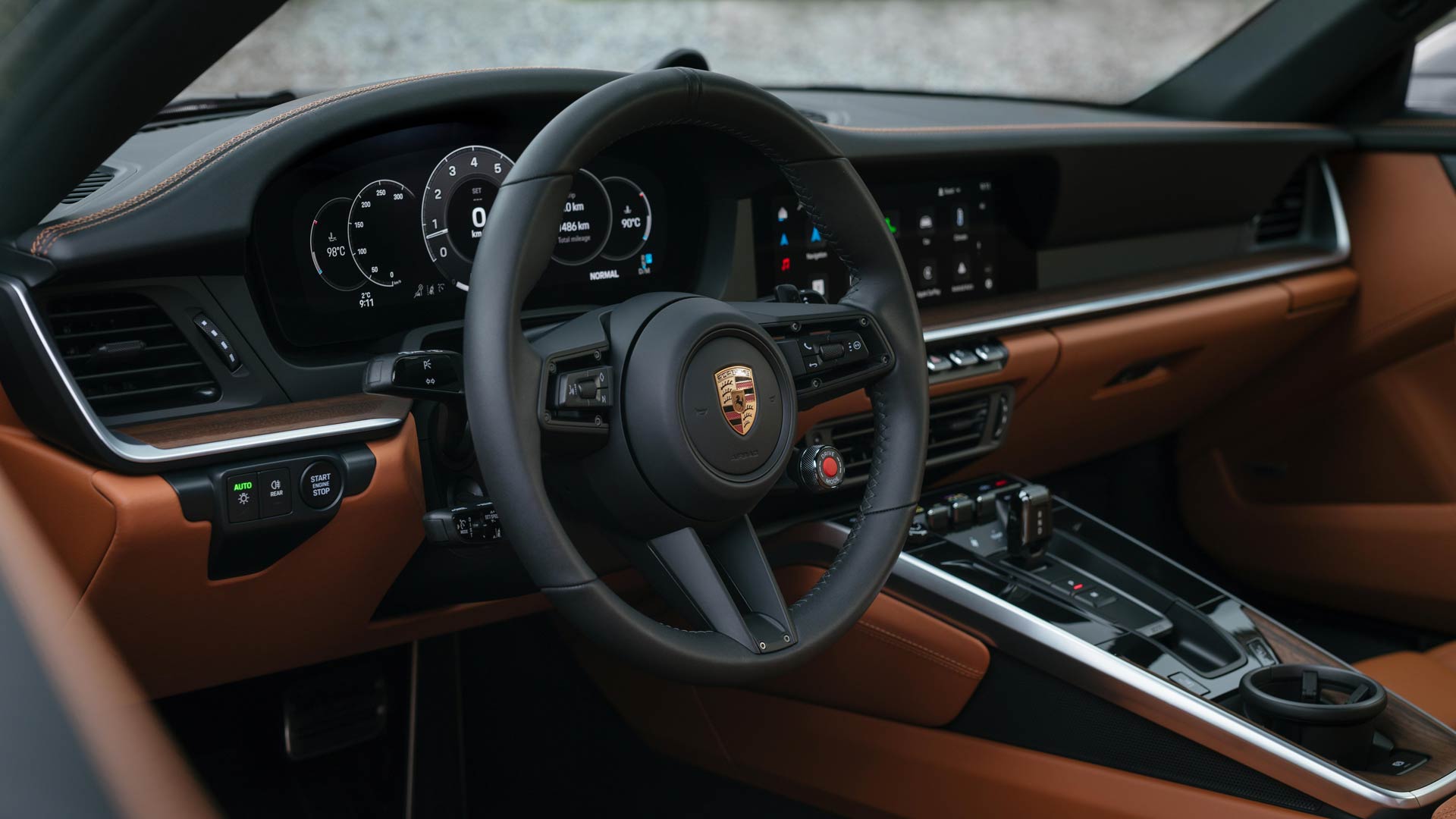
On the inside, black leather trim is standard, covering the seats, dashboard and door panels. More hide can be added on request, plus the option of contrast stitching in Crayon.
To save weight, the 911 Carrera S Coupe does without rear seats, but these can be added back in at no extra cost. Convertible versions have the back seats included by default, though.
Other standard equipment includes Matrix LED headlights, wireless smartphone charging, a heated multi-function steering wheel and a reversing camera.
Order books now open
Like any modern Porsche sports car, the 911 Carrera S offers near-endless potential for customisation. A front-axle lift kit, adaptive cruise control and a Burmester audio system are some of the choice extras.
Prices start at £119,800 in coupe form, with the Carrera S Cabriolet requiring £129,800. Orders can be placed at Porsche dealers now, with the car also featured on the online configurator to plan your perfect spec.
All new 911 buyers can enjoy a free driving experience at the Porsche Experience Centre, located at Silverstone circuit in Northamptonshire.
BMW has revealed how its future cars will look inside, along with a fresh update for its iDrive infotainment system.
First launched in the BMW 7 Series in 2001, iDrive initially attracted controversy for combining entertainment, information and navigation features into a single display screen.
The German manufacturer has updated iDrive and its operating system ever since, making it one of the benchmark media systems.
However, plans for the latest chapter in the development of iDrive are the most dramatic to date, completely revolutionising the interiors of new BMW models.
Projecting in widescreen
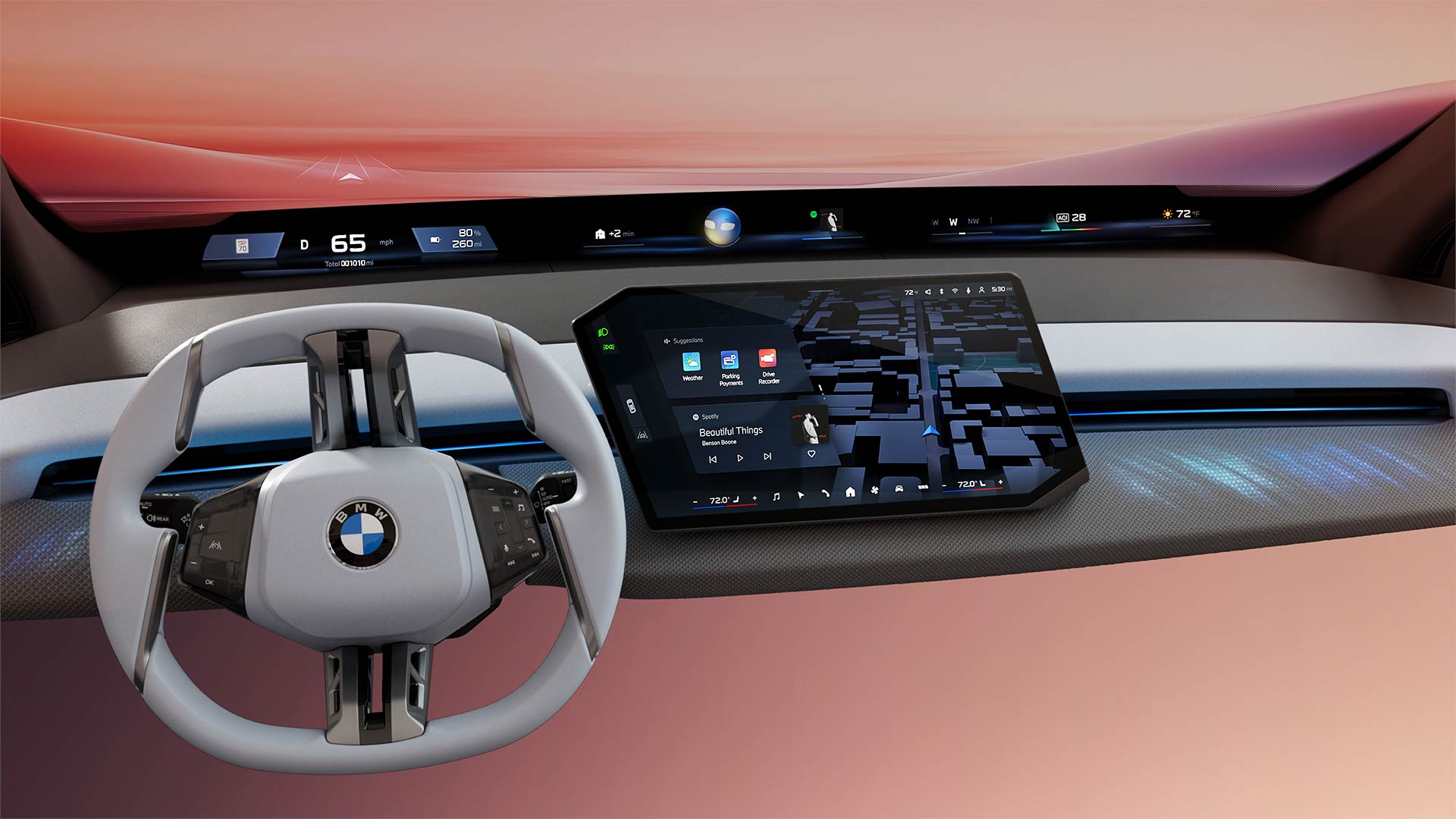
Revealed at the 2025 Consumer Electronics Show (CES) in Las Vegas, the new BMW iDrive system is designed to work with a Panoramic Vision display.
The latter sees the conventional instrument panel replaced by a head-up display that spans the entire width of the dashboard. Information is projected onto a black bar across the bottom of the car’s windscreen.
The most important data, such as speed, is shown on the section in the driver’s line of sight. However, the rest of Panoramic Vision can be customised to the driver’s preference.
As an additional option, BMW’s new 3D Head-Up Display can be projected further up the windscreen, putting navigation instructions directly in front of the driver.
(Some) buttons still included
BMW has retained a main central iDrive infotainment screen, which is placed closer to the steering wheel for easier access.
A new menu structure is said to be more logical to use, with ‘QuickSelect’ making it faster to find key functions. Widgets on the central touchscreen can be ‘swiped’ upwards so they are projected onto the Panoramic Vision display.
With no classic iDrive rotary controller, operating the infotainment system can be done through voice commands using BMW’s Intelligent Personal Assistant, or via a revised multi-function steering wheel.
Haptic feedback buttons feature on the wheel, with certain functions illuminating when they are available to use. Thankfully, some physical controls remain for the indicators, exterior mirrors and gear lever.
New tech for Neue Klasse
The final piece in the iDrive puzzle will be BMW’s new Operating System X – a development of the current version 9. A greater level of personalisation is included, from adjusting ambient lighting and display backgrounds to tweaking the steering settings.
BMW’s Intelligent Personal Assistant will make suggestions, such as when to engage Sport mode, but adapt and learn if the driver chooses to ignore these.
Panoramic iDrive will be integrated into all new BMWs from late 2025 onwards, but it will take centre-stage in the forthcoming Neue Klasse electric models.
“The new BMW Panoramic iDrive not only makes our vehicles smarter and more user-friendly, it also enables much more extensive personalisation, which turns every new BMW into a car that is very much the user’s own,” said Adrian van Hooydonk, senior vice president for BMW Group Design.
Luxury car maker Rolls-Royce has announced a £300 million boost for its Goodwood headquarters. The investment represents the largest injection of capital since the West Sussex factory opened in 2003.
Originally home to 300 staff, the Goodwood facility started out by building one car per day. Now more than 2,500 people work at the ‘Home of Rolls-Royce’, with 28 vehicles leaving the site every day.
The substantial investment by Rolls-Royce is partly driven by demand for personalised ‘Bespoke’ and individual ‘Coachbuild’ commissions of its vehicles.
A record year for special cars
Rolls-Royce delivered 5,712 new cars to customers around the world in 2024, making it the marque’s third-best year on record.
The flagship Rolls-Royce Phantom EWB attracted the most Bespoke upgrades, followed by the electric Spectre coupe.
The incredible Phantom Goldfinger (pictured above) set the standard for Bespoke commissions in 2024. Embellished with real gold, it marked the 60th anniversary of the classic James Bond film.
A personal experience
The success of the Bespoke service has driven the expansion of Rolls-Royce’s Private Office network. Designed as invitation-only spaces for creating VIP vehicles, Private Offices allow a closer working relationship between customers and design teams.
Along with the original Private Office in Goodwood, venues now exist in Dubai and Shanghai, with New York and Seoul also added during 2024.
Private Office commissions are typically 25 percent costlier than a ‘standard’ Rolls-Royce. The Middle East was the biggest market for Bespoke models in 2024, followed by North America and Europe.
Electrified future in the UK
In its first full year of sales, the electric Rolls-Royce Spectre has become the marque’s best-seller in Europe. Worldwide, the Spectre finished second behind the Cullinan SUV.
After launching four new models during 2024, this year will see Rolls-Royce reveal its next electric car.
Chris Brownridge, chief executive of Rolls-Royce Motor Cars, hailed the new investment: “In 2024, Rolls-Royce Motor Cars reaffirmed its position as an authentic luxury house by crafting the most complex, personal and valuable motor cars in its history. This momentum means it is necessary for us to invest more than £300 million in extending the Home of Rolls-Royce.
“This represents our most substantial financial commitment to Goodwood since its opening in 2003 and a significant vote of confidence in the Rolls-Royce marque, securing our future here in the UK.”
For the second year running, the Ford Puma has been named as the UK’s best-selling new car. The car sales chart is based on data from the Society of Motor Manufacturers & Traders (SMMT).
Ford’s compact crossover racked up 48,340 registrations in 2024, pushing the Kia Sportage SUV into second place.
With 47,183 examples registered, the Sportage wasn’t far behind, however – and notably ahead of the Nissan Qashqai, which managed 42,418 sales in 2024.
SUVs and crossovers dominated the automotive chart, accounting for eight of the top 10 cars. Only the Volkswagen Golf and Polo bucked the high-riding trend.
Fleet sales up, private purchases down
Overall new car sales reached 1.953 million during 2024, representing an increase of 2.6 percent compared to the previous year.
Fleet sales were the main driver of growth, being responsible for 1.163 million registrations, or 59.6 percent of the UK market. Compared to 2023, fleet sales jumped by 11.8 percent year-on-year.
By comparison, business new car registrations in 2024 declined by 3.1 percent versus 2023, down to 42,647 from 44,031 vehicles.
Registrations by private customers also fell by 8.7 percent, down to 746,246 units. This represents the lowest figure since 2020, when the pandemic brought the new car market to a standstill.
Record sales for electric cars
Electric cars gained a record market share during 2024, accounting for almost a fifth (19.6 percent) of new registrations. Generous discounts from manufacturers throughout the year will likely have boosted these numbers.
Compared to 2023, EV registrations of 381,970 cars represented a substantial increase of 21.4 percent. Plug-in hybrid models climbed by 18.3 percent, with regular hybrid vehicles up by 9.6 percent.
However, the SMMT is concerned that weak demand from private customers will make it harder for car manufacturers to meet mandated targets for new zero-emission vehicles.
SMMT chief executive Mike Hawes said, “A record year for EV registrations underscores vehicle manufacturers’ unswerving commitment to a decarbonised new car market, with more choice, better range and increased affordability than ever before.
“This has come at huge cost, however, with the billions invested in new models being supplemented by generous incentives which are unsustainable. We need rapid results from the regulatory review and urgent substantive support for consumers – else automotive investments will be at risk and the jobs, economic growth and net zero ambitions we all share in jeopardy.”
Still struggling to come up with a new year’s resolution for 2025? Volkswagen suggests making the switch to an electric car.
New research by the German marque finds that owning an EV could help with achieving some traditional resolutions – and unlock the potential for additional ones.
Volkswagen questioned a total of 3,132 UK drivers for the survey, 58 percent of whom were existing electric car owners.
Reduce stress, boost wellbeing
Survey respondents highlighted that driving an electric car had a notable impact on their personal wellbeing.
Forty two percent of EV drivers said they were annoyed by external factors such as potholes, roadworks, other road users and parking issues.
By comparison, almost three quarters (72 percent) of those driving an internal combustion engine (ICE) car said they experienced stress behind the wheel.
Range anxiety doesn’t seem to be causing stress for electric car drivers, either. Only eight percent said they believed EV ownership would be worrying. The figure for non-EV drivers was nearly half (48 percent).
Close to two thirds (65 percent) of electric car drivers said they have covered more than 150 miles on a single charge.
Fewer financial worries with an EV
Volkswagen’s survey also highlighted the potential cost savings from making the switch to electric vehicle ownership.
Data from the Office for Zero Emissions says charging an electric car at home costs about 8p per mile, while a petrol- or diesel-powered car averages between 13p and 17p per mile to fuel.
Some 62 percent of ICE drivers said they were irritated by fuel costs, compared to only 32 percent of electric car drivers.
In addition 53 percent of ICE car drivers admitted that prices at petrol stations were a problem. That contrasts with 30 percent of those who already drive an EV.
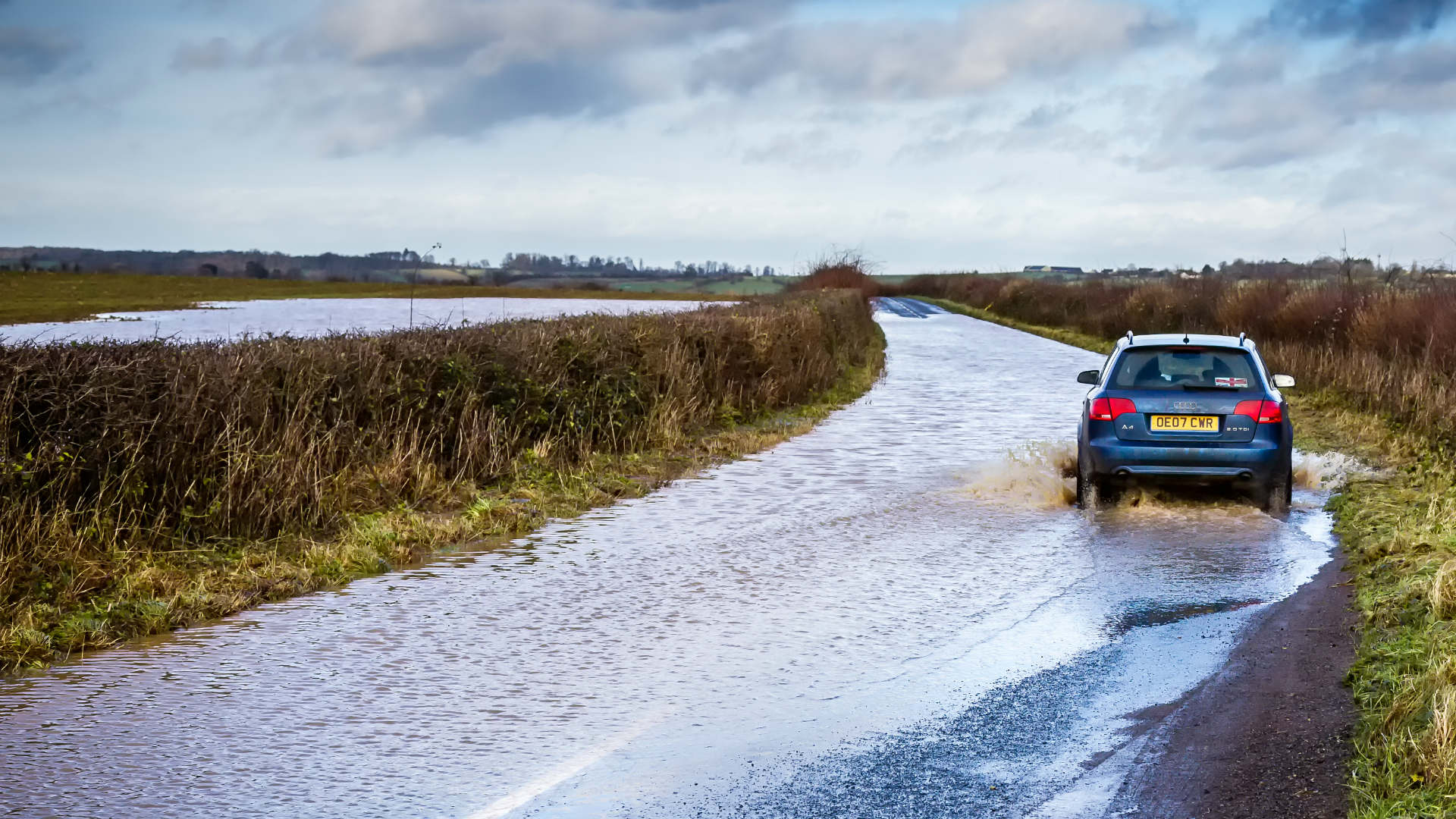
When the Met Office issues a Yellow weather warning for heavy rain it inevitably means driving will be more dangerous – yet around three quarters of drivers say they would risk driving through flood water.
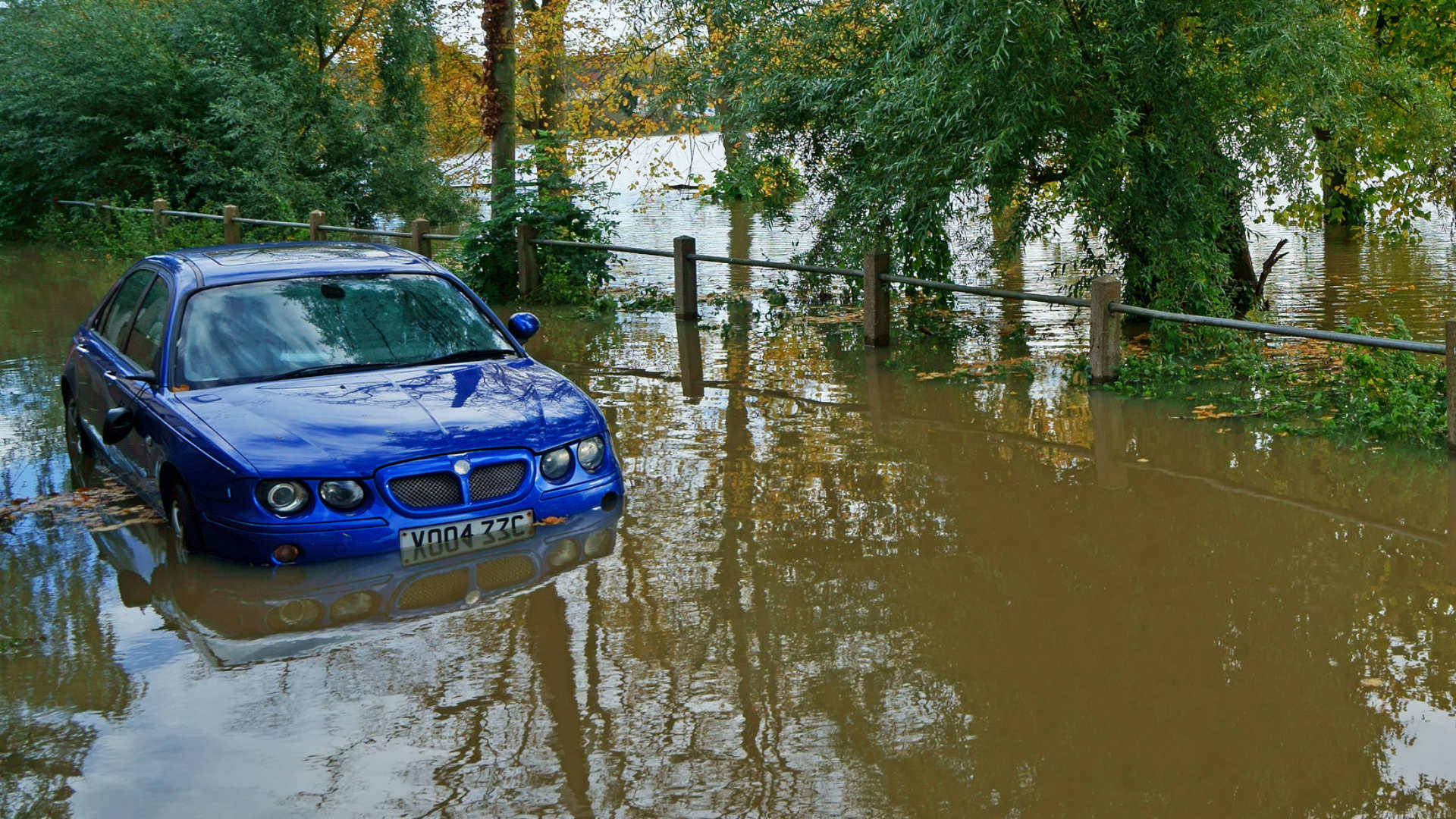
A risk worth taking? Absolutely not. Just 300mm of moving water is enough to float a car, yet research shows many drivers aren’t aware of the danger.
Shockingly, 32 percent of flood-related deaths are in vehicles: the leading cause of death in flooded areas.
A survey carried out by the AA, in partnership with the Environment Agency, found that Leicester was the top place for flood-related car breakdowns in the UK over a four-year period.
The appropriately named Watery Gate Lane played host to 88 flood-related callouts during this time. It headed the list of the top 10 places in Britain for breakdowns due to flood water.
‘Never drive through flood water’
Caroline Douglass of the Environment Agency said: “It is concerning that so many drivers are willing to risk their own life and the lives of others by driving through flood water.
“Our message is clear: surface water flooding it is often deeper than it looks, and just 300mm of flowing water is enough to float your car. Never drive through flood water. Turn around and find another route.”
Please do not drive through flood water, particularly when you are close to houses or local businesses. When you drive through it causes a wave and the water then pushes towards homes that are at risk of #flooding. pic.twitter.com/pzIj5fykyB
— Warwickshire Fire and Rescue Service (@WarksFireRescue) January 2, 2024
The AA’s Ben Sheridan added, “Don’t chance it if the road ahead is flooded – flood water can be deceptively deep and can hide other hazards in the road that can leave you stranded.
“Trying to drive through flood water puts you and your passengers at risk, but it can also cause damage to your car. It only takes an egg-cupful of water to wreck your engine and on many cars, the engine’s air intake is low down at the front.”
How to drive through SHALLOW flood water
The message is pretty clear: you should avoid driving through a flood. However, if you decide that the water is shallow enough to drive through, the Driver and Vehicle Standards Agency (DVSA) has the following five tips:
Allow oncoming traffic to pass before you drive through the flood water
Drive along the highest part of the road (usually the centre), but look out for approaching drivers who may be doing the same thing
Go slowly and keep to a steady speed
Use first gear and keep revs high by slipping the clutch (keep it partly engaged)
Once you’ve made it through, test your brakes before resuming normal driving
NEVER attempt to drive through fast-moving water such as a flooded bridge or a ford. Conditions can change rapidly, so you may be swept away. Equally, you don’t know if the flood water is hiding debris or a broken road surface.
If your engine cuts out after driving through flood water, don’t attempt to restart it. Instead, call your breakdown provider and wait for help.
The AA lists these facts about flood water. They are worth considering before you attempt to drive through a flood.
Most drowning deaths happen within three metres of a safe point
Two-thirds of people who die in flood-related incidents are good swimmers
Just 150mm of fast-flowing water can knock you off your feet
If the speed of the water doubles, the force it exerts on you and your car goes up four times
Flood water can carry diseases
Listen to local traffic and weather reports, and use social media to receive an early warning of roads blocked by flood water. It’s better to plan ahead than it is to react to sudden changes in conditions.
Roads are often coated with grit during the winter months to improve grip for vehicles and reduce the risk of accidents.
Gritting trucks travel slowly and you will probably need to pass them at some point. But does overtaking a road gritter inevitably mean stone chips and damage to your vehicle?
In this guide, we explain what you need to know when following a road gritter, including how to pass with maximum safety and minimal risk to your car’s windscreen or paintwork.
What is road grit?
Spoiler alert: road grit is not actual ‘grit’. Years ago, it was a mix of sand, small stones and salt, but rock salt is now used instead. This is softer and less likely to cause damage than stones. The sound you hear is often the ‘splatter’ of salt, rather than the impact of tiny rocks.
Some local authorities use a product called Thawrox. This is a mixture of rock salt and an agricultural by-product produced in the sugar refining process. The manufacturer says it offers a smoother flow with less binding, so the spread pattern is more efficient. It also bounces less when it hits the road surface, so the spread rate can be reduced – also helping lessen the risk of damage to passing cars.
Sometimes, grit is dampened before being spread, so it begins acting on the road surface more quickly. Again, this makes it less likely to chip or scratch nearby vehicles.
Rock salt is largely sourced from three huge underground mines in the UK. It is ground away by machines rather than by hand. Before being transported to storage depots, it is treated with an anti-caking agent.
How do road gritters operate?
The most efficient speed for gritting a road is between 40mph and 50mph. Gritters try to stick to this speed, even on motorways. On three-lane carriageways, gritters will drive in the middle lane, so all three lanes can be treated equally.
Usually, when a gritter is spreading salt, its amber lights will be flashing as a warning to other road users.
Salt spreading is automated and adjusted by speed. When the gritter stops, it will cease spreading salt until it moves again. The equipment at the rear contains an ‘agitator’ to ensure the salt is spread as evenly as possible.
Will following a road gritter damage my car?
Following a road gritter can be a horrible sensation: a noise like your paint and windscreen are being chipped to pieces. However, thanks to a combination of the latest road grit and salt spreading technology, it often sounds worse than it is.
If you’re careful about how you follow a gritter, the risk of damage to your car is minimal. You just need to go about it in the right way.
What is the safest way to pass a road gritter?
The best way to pass a road gritter is to minimise your time exposed to danger. In this case, it’s the spray of salt from the rear of the vehicle. Hang back, out of the way of the road grit, then swiftly overtake when it is safe and clear.
Your objective should be to minimise the clattering noise you hear. If you’re on a single carriageway, leave a clear distance until you pass. On a motorway, do the same, but without ‘lane-hogging’.
On four-lane motorways, gritters will often travel in the second lane (i.e. alongside the hard shoulder). Experienced drivers will travel in the fourth lane (outside lane) with a second car in the third lane acting as a ‘shield’ between them and the road gritter. It’s very satisfying when you manage it…
What if I think a gritter has damaged my car?
The government has a comprehensive online guide for motorists who think their car has been damaged and want to seek compensation. However, it also has a disclaimer: ‘You can’t claim compensation if debris from another vehicle caused the damage. Contact your insurer instead’.
It is unlikely that a claim for chipped paint or a broken windscreen that you believe was caused by a road gritter would be accepted. If you could provide clear evidence, though, such as dashcam footage, it could be worth trying to get compensation.
How do I spot a road gritter?
You would think spotting a road gritter would be easy. Not for some: every year, there are around 40 incidents of people driving into gritters. If the expensive salt-spreading equipment at the rear is damaged, the gritter will be forced out of action.
Following research with the Transport Research Laboratory, National Highways now paints its gritters in one block colour: bright orange. This emphasises the ‘solid’ shape of the vehicle, which research indicated would help salt spreaders to stand out as much as possible.
How advanced are the latest road gritters?
The latest road gritters used across the UK are built by Romaquip. They feature technology that allows route information to be pre-programmed using GPS.
This means salt is spread automatically, taking into account bridges, road features and other specific landscape details. It means salt isn’t wasted, drivers can fully concentrate on the road and, theoretically, there’s less risk of ‘stray’ salt being splattered onto cars rather than the road.
The UK’s biggest operator of road gritters is National Highways. It runs more than 500 winter vehicles to cover 4,400 miles of motorways and A-roads.
What about gritting local roads?
National Highways is only responsible for motorways and A-roads; local roads are the responsibility of the council in that area.
If you live in England or Wales, you can find out which roads your council will grit by entering your postcode into the GOV.UK online tool.
What NOT to do when you see a road gritter
Remarkably, National Highways says some drivers take to the hard shoulder of a motorway to avoid a road gritter.
Quite apart from being illegal, this is highly dangerous, as stranded cars could be hidden from view. Also, if the road is untreated, the area most likely to be icy is the unused section of the hard shoulder…