Home Blog Page 236

Gordon Murray Automotive T.50 revealed: reinventing the McLaren F1

0
Gordon Murray Automotive T.50

The Gordon Murray Automotive T.50 could be the best driver’s car of 2020. Maybe the finest driver’s car ever. Gordon Murray redefined things once, back in 1992, with the original McLaren F1. The T.50, his 50th car in 50 years of automotive design, aims to do that again. Murray vows never to build another supercar, so the T.50 could just be the purist benchmark of the breed forever more.  

The spec is remarkable. It weighs just 986kg, or little more than a Lotus Elise. Yet has a 3.9-litre Cosworth V12 engine putting out 663hp, with not a turbocharger in sight. It revs to a ludicrous 12,100rpm, with a six-speed manual gearbox – rather than a paddleshift – adding to the intensity.

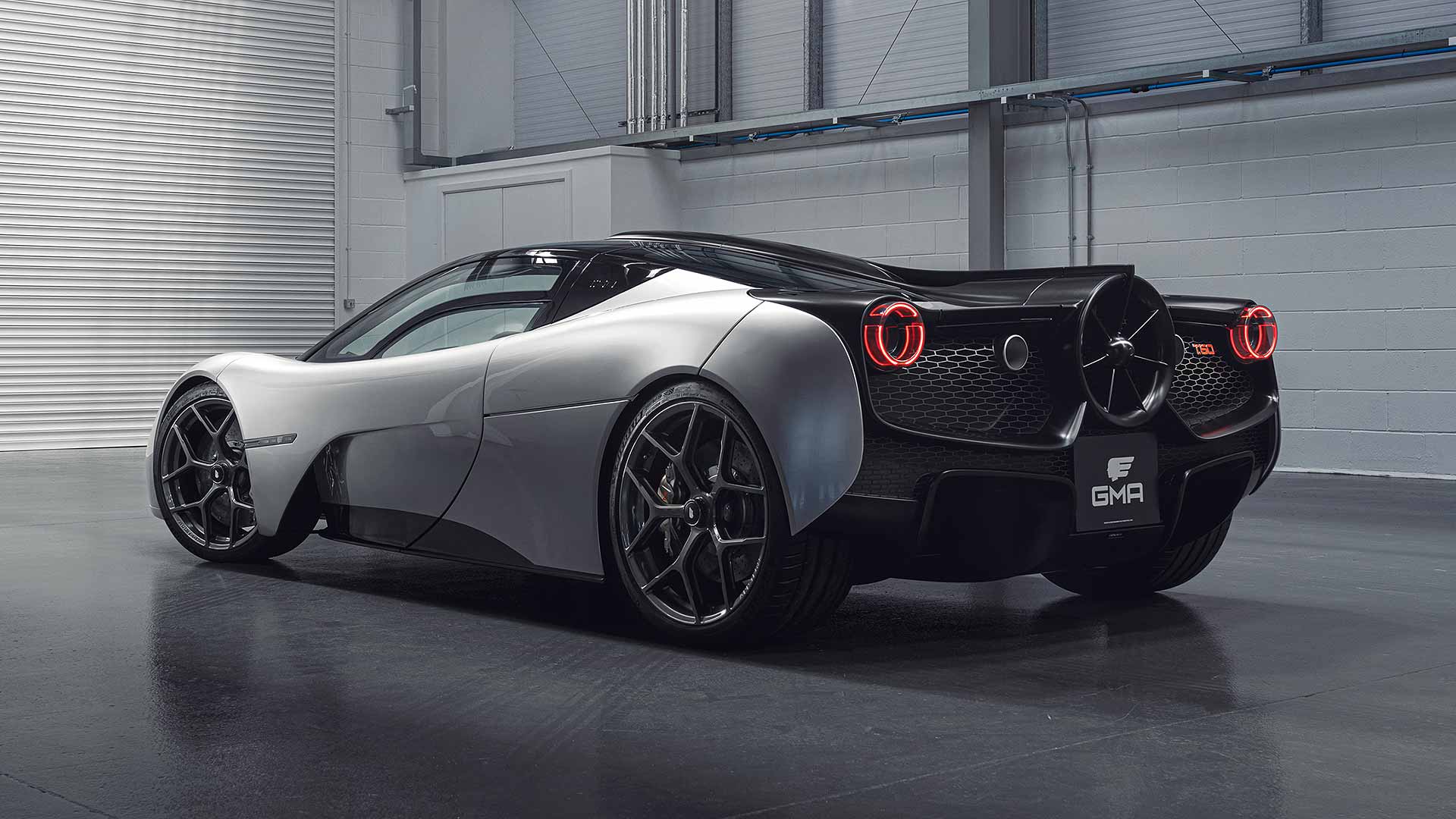
And it’s a fan car. Just like the Brabham BT46 Formula 1 car that infamously raced once, and won, before being banned. Gordon Murray designed that, too. The T.50 road car uses the same concept, with a big round fan at the rear that literally sucks the car to the ground with the ‘most advanced and effective aerodynamics ever seen on a road car’.
Gordon Murray Automotive T.50

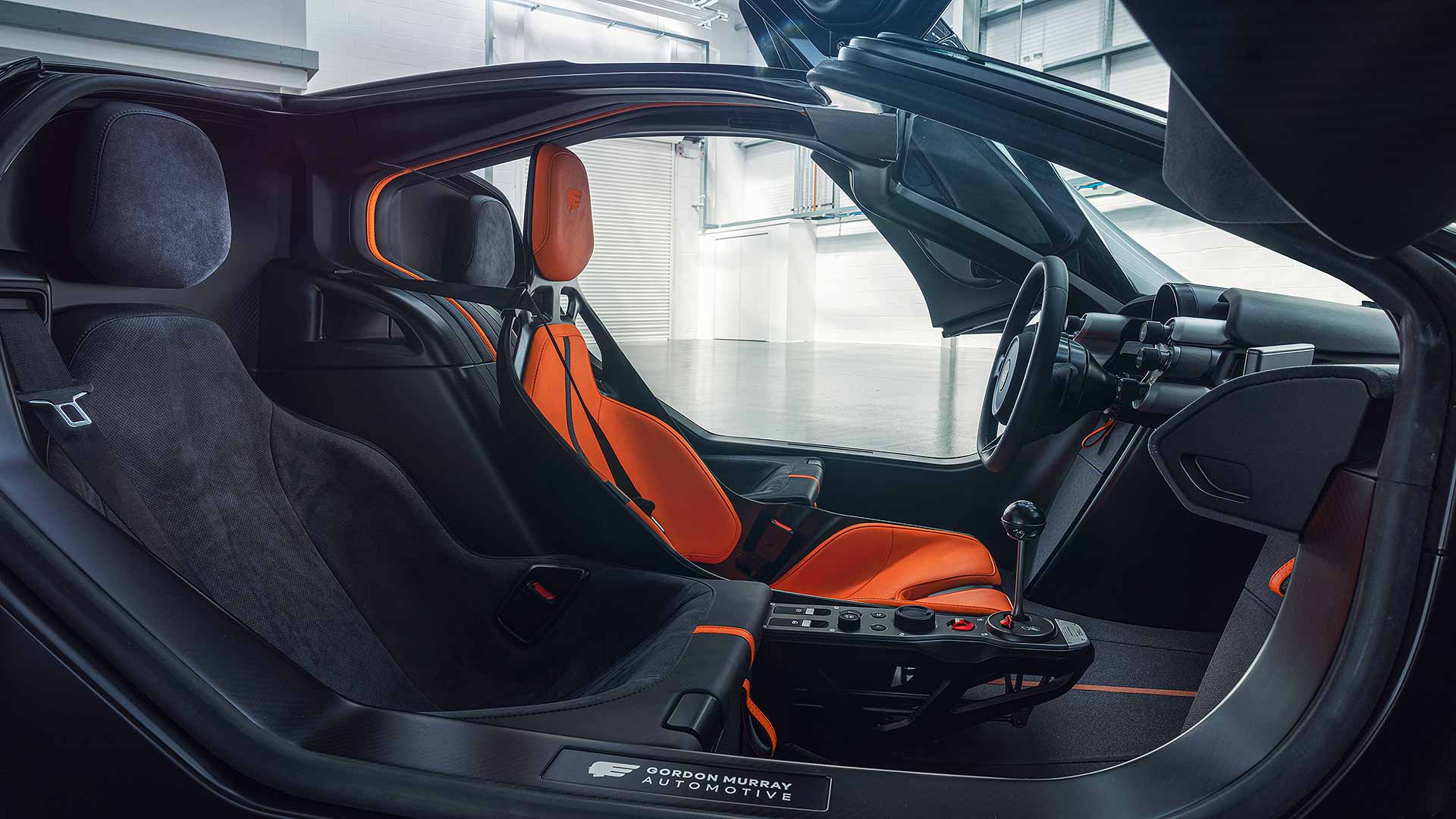
The son of F1 carries the family genes with its central driver’s seat and three-seat layout. It has nearly as much luggage space as a Ford Fiesta. It’s refined and relatively comfortable in everyday driving. It even has a bespoke high-end Arcam sound system that gets the seal of approval from famous audiophile Murray.

Priced from £2.8 million and set to be built from 2022, only 100 examples of the T.50 will be built. Here’s why the company believes this is the world’s most driver-centric car of all.

Fan zone

The fan is the talking point. There’s nothing else like it. The 400mm fan is the defining feature of the rear, with the centre of the car designed around it. It supports the functionality of dual active rear spoilers and interactive diffusers hidden underneath the car.

Gordon Murray Automotive T.50

The idea of the fan is to speed up the flow of air passing below the body – something called ‘ground effect’. But it can also manage airflow over the top of the car, to balance downforce and drag. The fan is powered by a 48-volt motor that spins at up to 7,000rpm.

It all sounds mind-boggling, so let’s try to explain things via the six aero modes available:

·  Auto: the default, where the fan has little effect

·  Braking: again automatic, the rear spoilers are deployed to a maximum 45-degree angle, the fan operates at high speed and the diffuser valves open. The result is double the downforce and 150mph to zero in 10 metres less than normal.

·  High Downforce: the first of four driver-selectable modes (via a controller on the left of the instrument pack), where the rear spoilers are deployed to +10 degrees, diffuser valves open and the fan spools. Result? 50 percent more downforce.

·  Streamline: the rear spoilers are set to -10 degrees, diffuser valves partially close, while the fan operates at high speed, which draws air from the top of the car to reduce drag and create a ‘virtual longtail’ aerodynamic effect. That means 15kg of thrust and a 12.5 percent reduction in drag.

·  V-Max Boost: the most extreme mode. This uses Streamline mode, but powers the fan by the 48-volt starter-generator, freeing up engine power. With added ram-air induction, it gives an output boost to 700hp.

·  Test: the mode for showing off to your mates. When stationary, the fan spools up to maximum 7,000rpm, the twin rear spoilers cycle through their full range and the diffuser valves open and close before returning to rest. Cue the applause.
Gordon Murray Automotive T.50

Light is right

The GMD T.50 will be one of the lightest new cars on the road, full stop. Thank a carbon fibre monocoque that weighs just 150kg, an engine that weighs 178kg and a gearbox that is 80kg. A typical supercar, according to Murray, weighs a third more – 1,436kg versus the T.50’s 986kg. A basic Ford Fiesta weighs 1,136kg.

Notably, the T.50 is 150kg lighter than the McLaren F1, which is going to make the experience of the world’s lightest, highest-revving V12 something extraordinary. The engine “was never going to be anything other than a V12,” says Murray. There’s nothing to match the response, sound, free-revving feel and turbo-free purity.

The Cosworth V12 will rev from idle to redline in 0.3 seconds: that’s a pickup speed of 28,400 revs per second. Yet it delivers over 70 percent of its pulling power from 2,500rpm. And, with ease of use in mind, there are actually two engine maps, with a more relaxed one limiting revs to 9,500rpm and power to 600hp, delivering the best efficiency and emissions.

Gordon Murray Automotive T.50

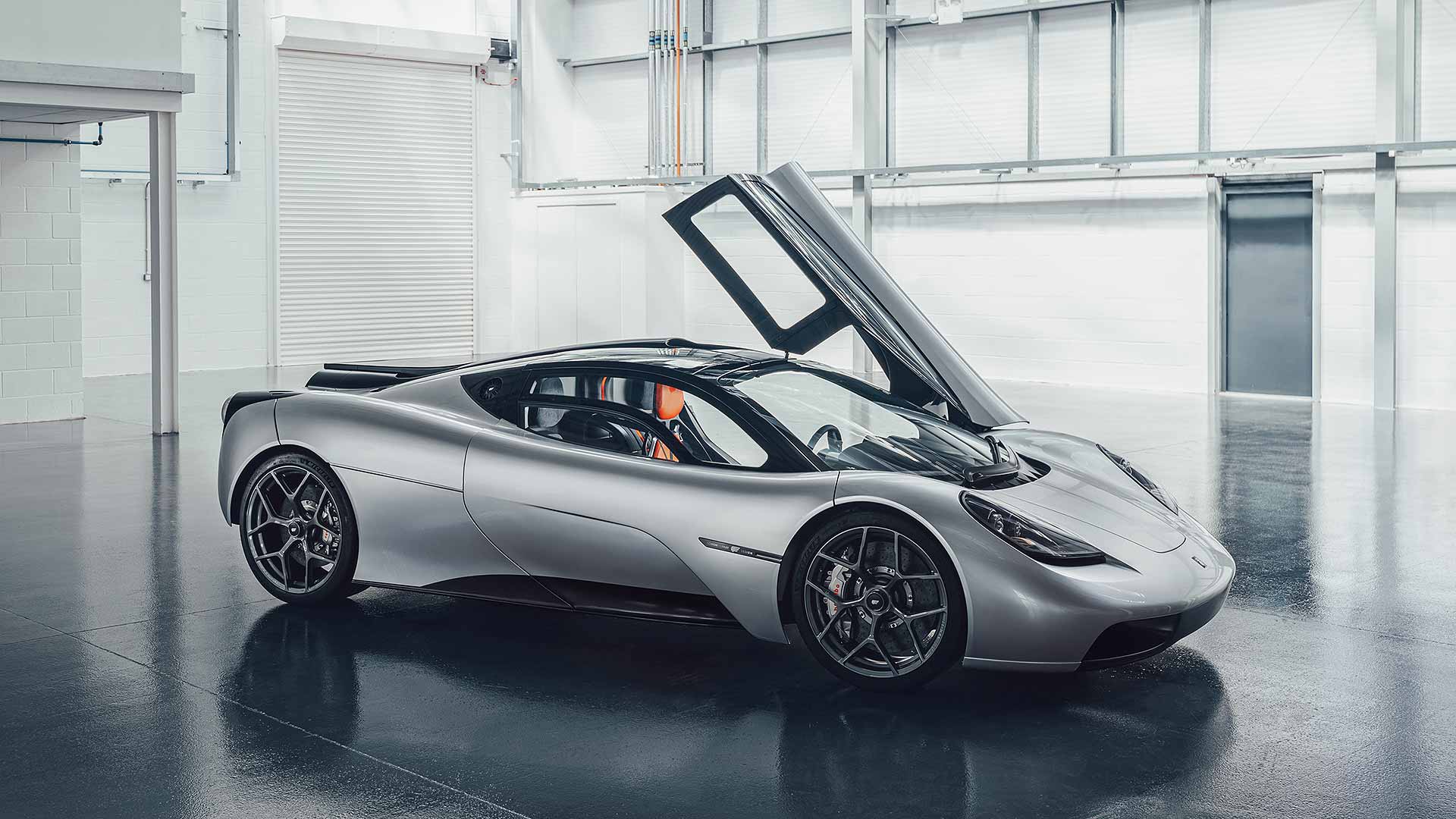
It’s also not covered beneath a plastic housing. Murray hates them. Instead, the orange cam covers, inlet trumpets and exhaust manifolds are on full display to wow everyone when the dihedral doors are opened.

Of course, it’s a six-speed manual, not a paddle shift, with an Xtrac gearbox boasting a narrow gate and short throw (with plenty of feel and control through solid titanium pedals). Murray says it provides “the ultimate gearchange”. He’d know: he signed it off personally.
Gordon Murray Automotive T.50

The everyday supercar

Gordon Murray has no time for awkward, inconvenient supercars. When he designed the McLaren F1, he bought a Honda NSX to provide inspiration, rather than the flawed Ferrari 348 equivalent. The F1 had three seats and decent luggage space; so too does the T.50.

In each rear haunch is a 90-litre space big enough for a flight case. If you only carry one passenger, there’s a special suitcase that fits into a passenger seat, boosting space to 288 litres. And there are five stowage bins in the cabin – two above the passenger footrests, two more under each passenger seat, plus a fifth behind the driver’s headrest.
Gordon Murray Automotive T.50

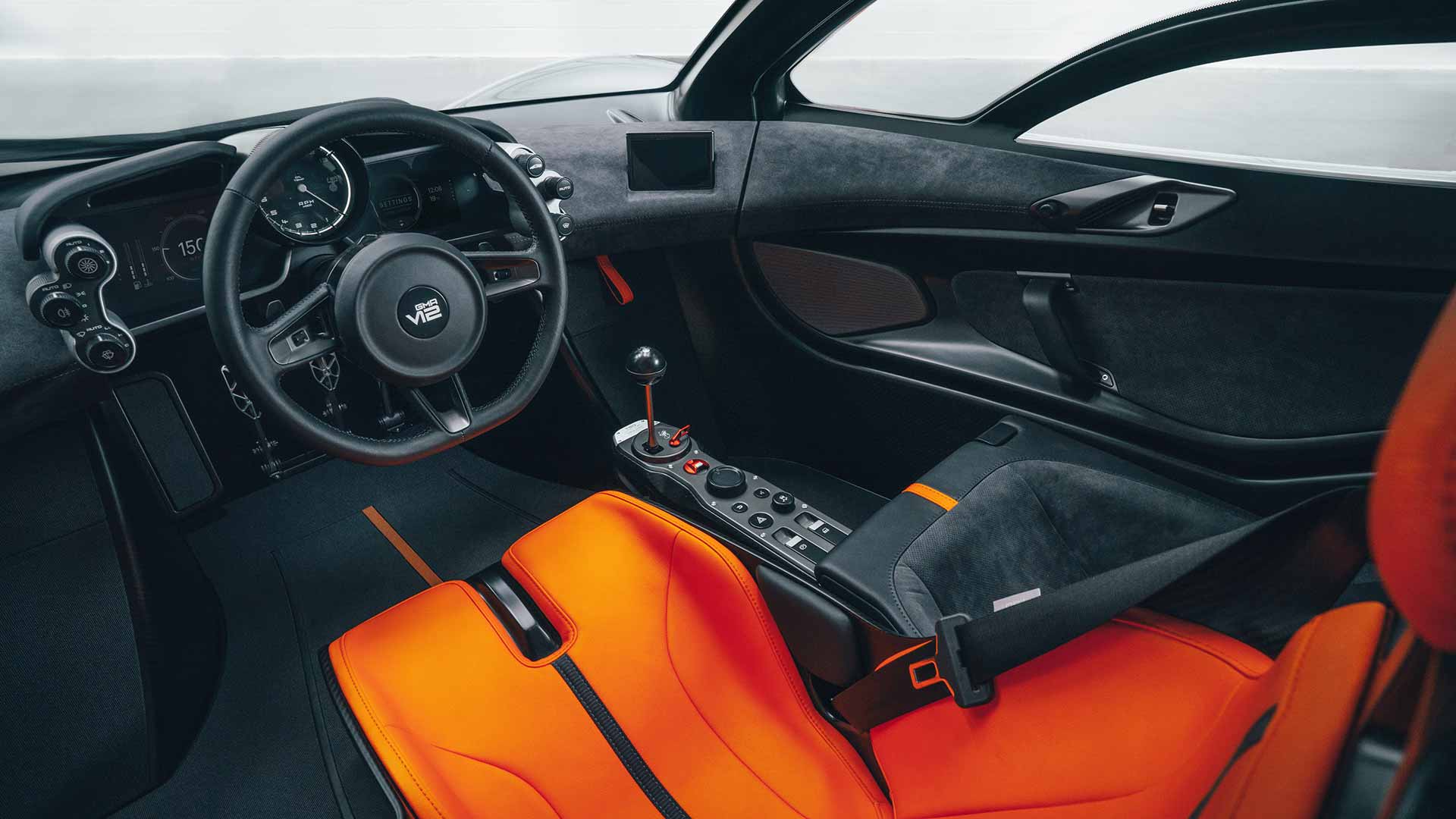
The T.50 is easy to get in and out of, despite its central seat (vividly coloured in contrast to the others, for max single-seater cues), visibility is said to be excellent, and the size of the car is manageable. It’s described as Porsche Cayman-sized, and so much wieldier in the city and on narrow roads than a regular supercar. It even has speed-bump-friendly ground clearance of up to 140mm.

There are no parts bin components here: it’s all bespoke, just as in the McLaren F1. Pride of place is given to the 120mm analogue rev counter, floodlit and with a milled aluminium needle. Aluminium is also used for the rotary controls that surround the instruments, while the right-hand display nods to modernity with a colour screen that includes Apple CarPlay and Android Auto. So too do the dual rear-view monitors either side of the cabin, which substitute for old-fashioned door mirrors.

Gordon Murray Automotive T.50

The timeless supercar

The effectiveness of the fan means the T.50’s aerodynamics are largely beneath the surface. It doesn’t need the exaggerated wings, vents and ducts Murray so dislikes. “I was determined to create a clean and pure shape that would remain timeless, ensuring the T.50 will still look fresh in 30 years.”

There’s a central line that stretches from the Gordon Murray Design mermaid badge on the nose, moving inside the cabin as it heads rearwards. Towards the back, it’s mirrored by a central spine running from the air intake into the top of the fan.

The LED headlights also nod to the McLaren F1, says Murray. They are also at least 15 percent brighter than any supercar that’s gone before. Then there’s the roof-mounted air inlet, which is pure McLaren F1. While the shape is simple, the rear deck has plenty of aero-influenced shaping, all to direct air towards the twin active spoilers.

Murray says the badge is “probably the oldest automotive logo in the world”. The Murray family first used it in the 12th century. Meanwhile, the blue, red and green colouring mirrors the Murray clan’s tartan. 

Gordon Murray Automotive T.50

Simply extraordinary         

The T.50 is pure Gordon Murray. Pure, yet intricately engineered without compromise, meeting extraordinary targets and promising plenty. As more and more cars take over from the driver, this is putting them back, literally, at the centre of the experience.

“The agility, responsiveness and reward of a lightweight vehicle simply cannot be matched,” says Murray. Lightness is his mantra. It’s why he drives an Alpine A110 today, after spending years in a Smart Roadster. It’s why weekly ‘weight watchers’ meetings were called, where the weight of components down to nuts, bolts and fixings was scrutinised.

We’re wowed by it already. The meticulous way Murray and his team have focused on creating not only the purest, lightest and most driver-centric supercar ever, but also one of the most refined, comfortable and usable too. It’s a ferociously exciting project. Yes, it’s almost £3 million, and still two years away, but if the promise revealed today is fulfilled in 2022, the McLaren F1 may yet have a genuine successor. And the world, out of nowhere, an all-new supercar benchmark. Maybe, just, THE petrol-engined supercar benchmark, ahead of the switch to electric. 

Gordon Murray has done it once. With the T.50, can he do it again?

ALSO READ

Gordon Murray awarded CBE in 2019 New Year’s Honours

Gordon Murray’s online museum is virtually brilliant

The best motorsport liveries of all time

Advertisement

Buy a Skoda Yeti to save on car insurance

0
Skoda Yeti car insurance

Buying a Skoda Yeti could save you money on your car insurance. That’s according to new research into the cost of insuring a family car.

It found that it costs an average £282.22 a year to insure a Skoda Yeti. This is compared to a cost of £617 to insure a Volkswagen Golf. The average cost to insure a family car is £472 across all hatchback and estate models.

Reading between the lines, it pays to drive something out of the ordinary. Following the crowd doesn’t mean you’ll save money on car insurance. Indeed, none of the makes and models with the cheapest polices are included in the top 10 most popular family cars.

Cheapest average cost of car insurance for family cars

Vehicle makeVehicle modelAverage price
SkodaYeti£282.22
FiatQubo£285.91
CitroenC3£287.36
HondaHR-V£289.49
HyundaiKona£297.09
DaciaLogan MCV£297.09
SkodaRoomster£299.16
SuzukiSX-4£300.05
HyundaiiX20£306.17
SuzukiCelerio£306.40
Skoda Yeti

Interestingly, three out of the top 10 most expensive cars to insure are Tesla models. The Model X is the most expensive (£1,406.72 a year), followed by the Model S (£1,056.19). The Tesla Model 3 is the fourth most expensive, commanding an average premium of £1,003.28 a year.

Dave Merrick, head of car insurance at MoneySuperMarket, said: “If you’re looking to buy a new car, it is always worth pricing up the cost of insurance before committing to a purchase.

“Our data shows the most popular cars in each region aren’t necessarily the ones that have the best insurance premiums. In fact, it is often the opposite – the most popular cars tend to have significantly higher insurance costs. There are many factors to consider when choosing a family car and, in order to keep costs down and keep on top of your finances, shopping around will help you find the best deal.”

Click here for more ways to save money on your car insurance.

ALSO READ:

New Toyota Yaris from £189 a month on 0% finance

Dacia Sandero Stepway Bi-Fuel LPG 2020 review

How to prevent catalytic converter theft from cars

Advertisement

Fuel prices UP for the second consecutive month

0
Asda fuel prices

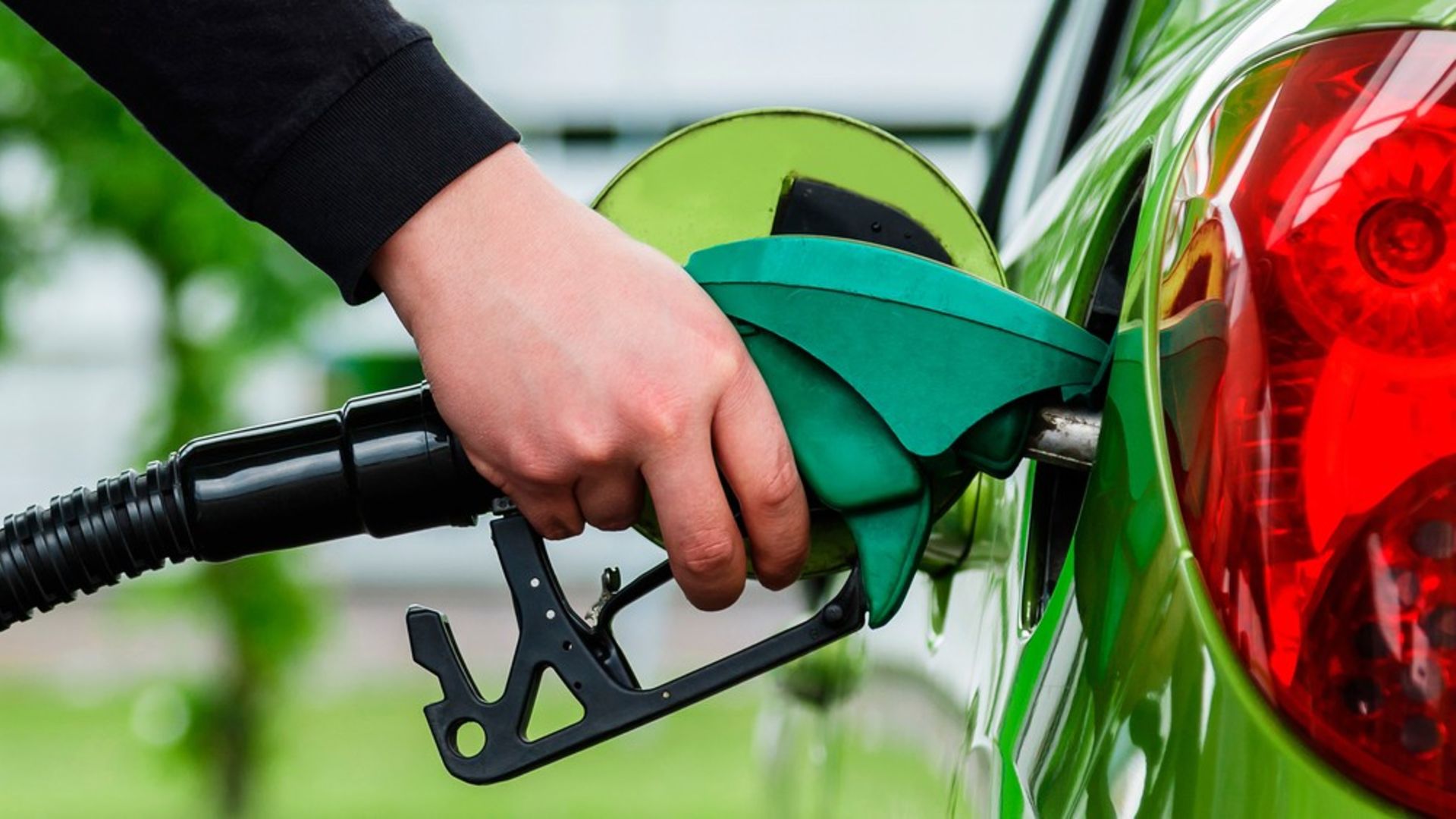
Fuel prices rose for the second consecutive month in July, adding nearly £2 to the cost of a full tank. This is according to new RAC Fuel Watch figures.

The price of unleaded increased to 114.27p from a low of 111.06p at the start of the month. This means it now costs £62.58 to fill a typical tank with unleaded – an increase of £1.77.

There’s better news for diesel drivers, although a full tank still costs £1.62p more now than it did at the beginning of June. The cost of a litre diesel went up from 115.09p to 118.04p.

The price rises come despite the wholesale price of petrol falling by 2p across the month. The cost of diesel also fell, but by just 0.22p. Retailers should be reducing their pump prices over the next week or two, says the RAC.

RAC fuel spokesman Simon Williams said: “July was another bad month for drivers with a 3p a litre rise in the price of fuel. This means petrol’s 7p a litre more expensive than it was at the end of May (107p on 31 May) and diesel is 6p more (111.86p on 31 May), something drivers will no doubt have noticed as each complete fill-up is costing almost £2 more.

“The higher prices at the pump have been driven by the cost of oil increasing steadily to around $42 a barrel from a low of $13.21 in April. But drivers may well be given some respite as oil producers are planning on ramping up production despite the risk of renewed lockdowns around the world.

“This could easily lead to supply outstripping demand and therefore a reduction on the forecourts of the UK. As it there is some scope for retailers to already be reducing their prices. If they play fair with drivers we ought to see 2p a litre come off the price of unleaded and nearer 4p come off diesel.”

Where to find the cheapest fuel

fuel prices drops UK

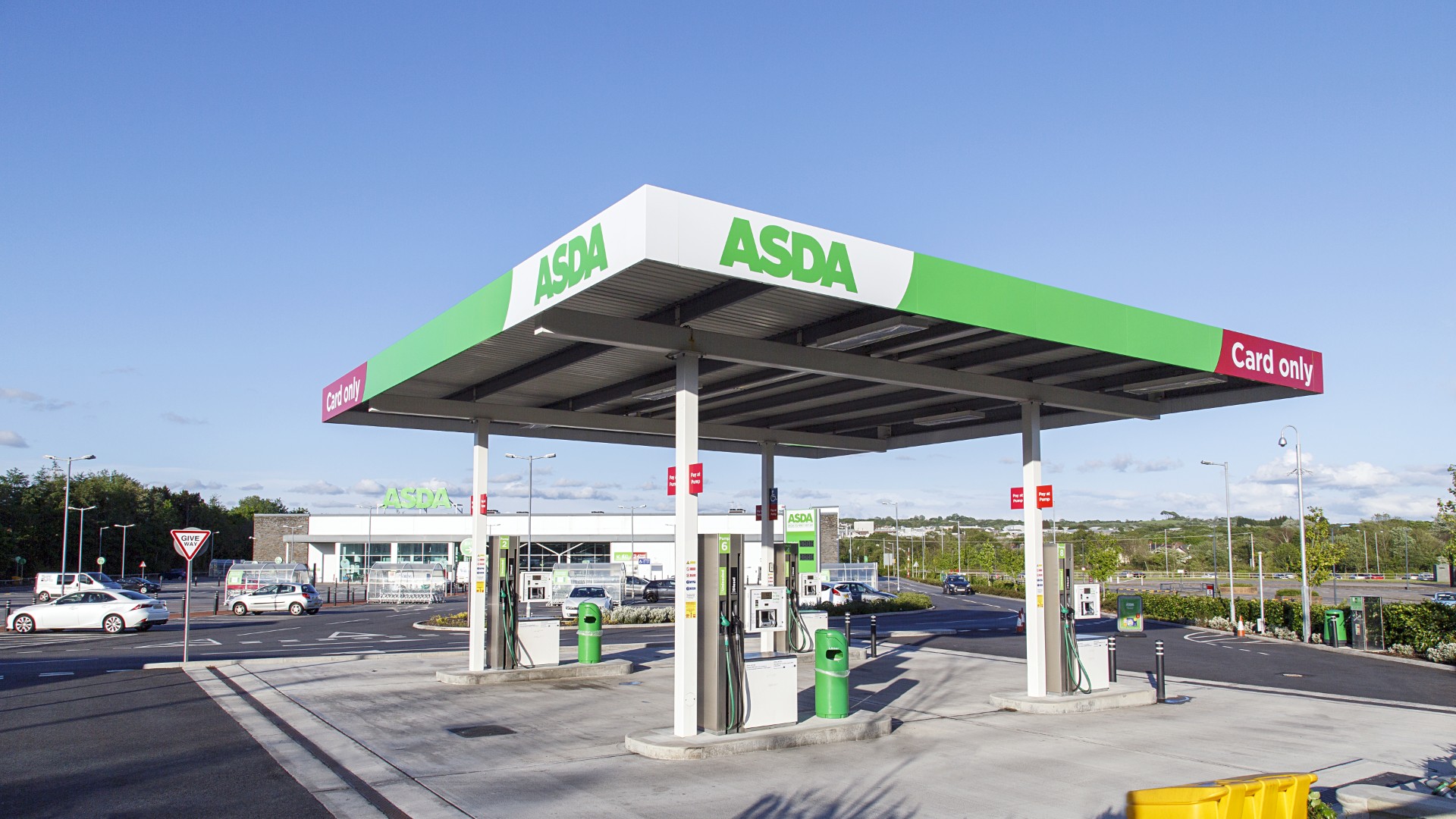
According to the RAC, Asda is the cheapest supermarket for fuel, with a litre of unleaded costing 108.63p a litre. The others average just over 109p a litre.

Asda is also the place to go for the cheapest diesel, with a litre costing 112.68p. The price at Sainsbury’s was 113.39p, while Morrisons and Tesco were both 114p.

There are a number of ways to find cheaper fuel. These include using a price comparison website, the Waze app or a connected car. Click here for more advice.

ALSO READ:

How to find road traffic information and avoid delays

How to use the Eurotunnel for a holiday abroad

How to find the cheapest petrol and diesel near me

Advertisement

Video gamer wins on real-world pro racing debut

0
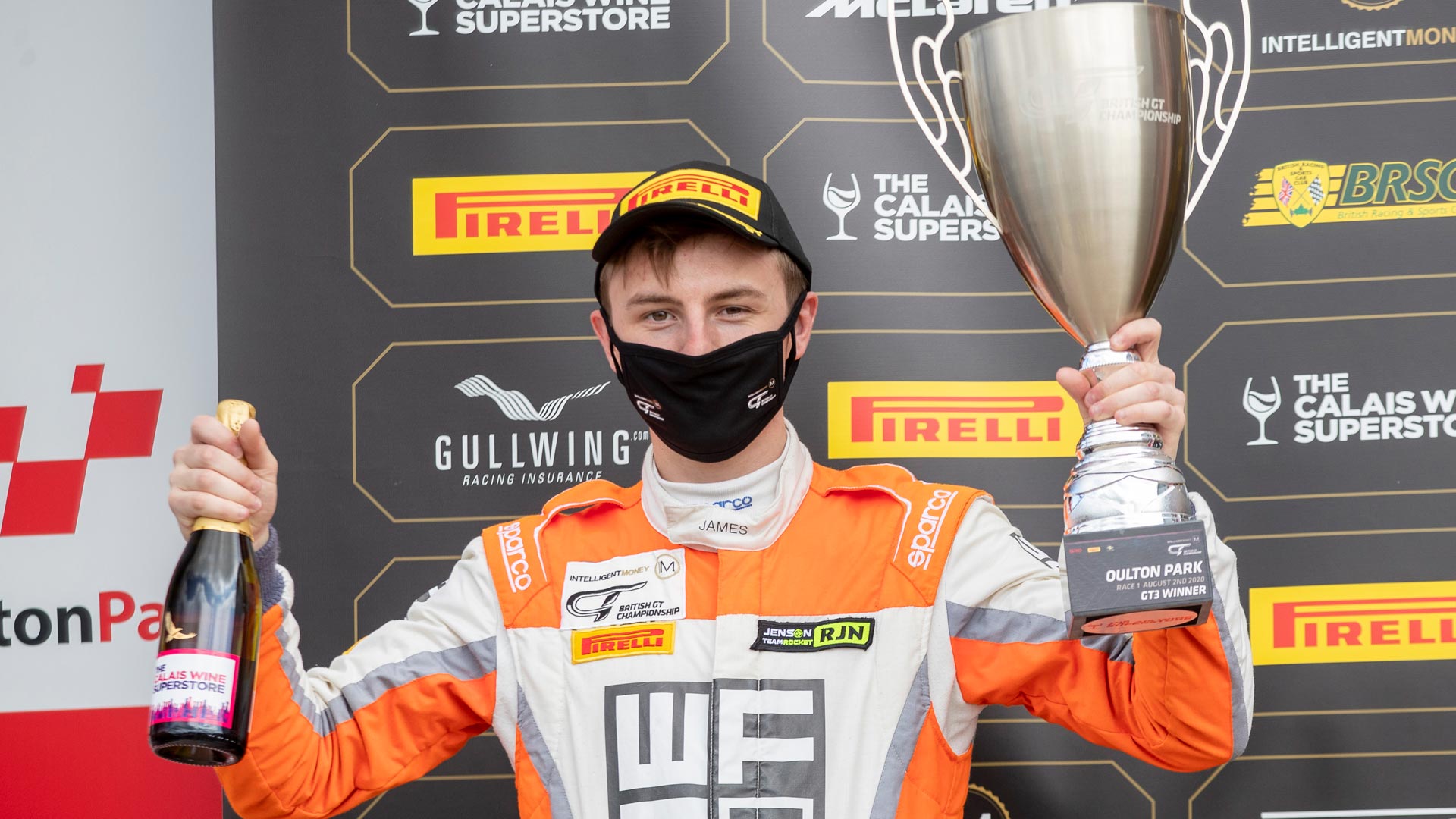
James Baldwin wins on debut

A world-beating video gamer has proven his talent goes beyond the digital world with victory in his professional motorsport debut. 

The first round of the 2020 British GT Championship saw gamer James Baldwin, and teammate Michael O’Brien, win the Silver class.

Driving for Jenson Team Rocket RJN is part of Baldwin’s prize for winning the 2019 World’s Fastest Gamer competition.

His million-dollar race contract let him secure the chance to drive the GT3-specification McLaren 720S.

On the pace from the start

James Baldwin wins on debut

Baldwin caused a shock during qualifying at Oulton Park. He set the fastest lap time of all, but saw it deleted due to exceeding track limits on the Cheshire circuit. 

Fortunately, Baldwin’s second-best qualifying lap was still good enough for him and O’Brien to start from fourth on the grid. 

A strong drive by Baldwin during his opening stint was followed by O’Brien gaining positions on track. When the leading car received a penalty, it allowed the duo to claim the lead. O’Brien held the position, securing a win in round one of the championship.

Setting a new high score

James Baldwin wins on debut

A tougher second race saw Baldwin and O’Brien finish in seventh initially. However, a post-race decision saw the pair elevated to sixth. It leaves them leading the overall drivers’ championship, marking an impressive debut for the former gamer. 

Engine Media co-CEO and World’s Fastest Gamer founder, Darren Cox commented that it was unprecedented to see “a gamer like this arrive in professional racing and win on debut. That is ground-breaking.

“This is not only a testament to the incredible talent that we unearthed in James but also a result of the advances in sim racing – the similarities between the cars in the game and cars on the track are getting closer and closer.

Baldwin’s next opportunity to prove his real-world credentials comes on August 15-16, racing at Donington Park.

ALSO READ

Ford teams up with gamers to design a racing car

Video gamers rate themselves as the best drivers

Lighten up in this Speedkore Dodge SRT Demon

Advertisement

New Toyota Yaris from £189 a month on 0% finance

0
Toyota Yaris exterior

The new Toyota Yaris is now on sale in the UK with the firm offering 42 months’ 0 percent finance with monthly costs starting from £189.

The three-year and six-month finance deal is on the mid-grade Yaris Hybrid Design, which costs from £20,970 on the road.

Toyota asks for a £4,311 deposit, and then takes £189 a month for 42 months, with a guaranteed future value of £8,910.

Not only will customers save on finance costs, they’ll also pay less in running costs: the new Yaris Hybrid is 22 percent more fuel-efficient, cutting monthly fuel bills.

Toyota Yaris interior

All models are well equipped too, with the entry-level Yaris Hybrid Icon coming with 7.0-inch touchscreen, 16-inch alloys, automatic air con, reversing camera and the Toyota Safety Sense active safety kit.

Yaris Hybrid Design, likely to be the best-seller, adds machined alloys, a larger 8.0-inch touchscreen, LED lights, rear privacy glass and a sportier instrument display.

Yaris Hybrid Dynamic has 17-inch alloys, front sports seats, dual-zone climate control, JBL premium sound system and part-synthetic leather upholstery.

Yaris Hybrid Excel, meanwhile, has auto-fold door mirrors, blind spot monitor and ‘intelligent clearance sonars’ with auto-braking.

Toyota Yaris logo

Yaris Hybrid Launch Edition

The new fourth-generation Toyota Yaris is available in special launch Edition guise.

This is painted in Tokyo Fusion Red with an Eclipse Black Pearlescent bi-tone finish – it’s the colour pictured here.

Based on Dynamic, it includes auto-fold door mirrors, blind spot monitor, a 10.0-inch colour head-up display, auto-dim rear-view mirror and clear blue ambient interior lighting.

The Yaris Hybrid Launch Edition costs £24,005: expensive, until you clock that the bi-tone paint finish alone is worth £1,180…

2020 Toyota Yaris prices

  • Yaris Hybrid Icon: £19,910
  • Yaris Hybrid Design: £20,970
  • Yaris Hybrid Dynamic: £21,920
  • Yaris Hybrid Excel: £22,220
  • Yaris Hybrid Launch Edition: £24,005

ALSO READ

Volkswagen launches new United value edition range

Eat out to help out… at motorway service areas

Your full guide to the 2020 British Touring Car Championship

Advertisement

Servicing an electric car: what you need to know

2

electric car maintenance

Sales of electric cars rocketed 186 percent in 2020, to nearly seven percent of all new car sales. And as EVs become more popular, many people have questions about maintaining them

Obviously, there are no oil changes, spark plugs or fuel filters to worry about. Nor indeed an exhaust emissions test.

So what exactly does servicing an EV involve? And will it be cheaper than a conventional petrol or diesel car?

Electric car servicing costs 

electric car maintenance

Powertrain maintenance should, in theory, cost much less for an EV than a combustion car – simply because there is less work and fewer parts involved.

We looked at market leader Tesla’s website, which lists the following procedures under ‘recommended maintenance service’:

  • Cabin air filter (every two years)
  • High-efficiency particulate air filter (every three years)
  • Brake fluid test (every two years)
  • Air conditioning (between two and six years, depending on model)
  • Brake calipers (every 12 months or 12,500 miles in cold weather regions)

It also says these checks are non-essential, even for maintaining the warranty. If there’s an issue with a car, Tesla can flag it up remotely and prompt maintenance as and when needed.

Car servicing website ClickMechanic highlights that electric car brakes usually last longer, too. That’s because regenerative braking, used to harvest deceleration energy and top up the batteries, saves on disc and pad wear.

Electric Volkswagen Beetle

Electric car maintenance essentials

  • Tyres
  • Brakes
  • Lights
  • Wipers
  • Wheel alignment/tracking
  • Suspension
  • Cabin filtration

What electric cars don’t need

  • Oil changes
  • Spark plugs
  • Belt changes
  • Coolant changes
  • Air filters
  • Transmission oil changes

What about electric car batteries?

Range figures of electric cars need an ‘urgent rethink’

Here’s the big question for many people. The reality is that EV batteries seem to be holding up well. The battery and drive unit in Teslas is warrantied for eight years or at least 100,000 miles. Kia also applies its famous seven-year/100,000 warranty to both electric cars (such as the e-Niro) and their batteries.

For the Tesla Model 3 – now one of the UK’s best-selling cars – Tesla claims a minimum of 70 percent battery capacity retention over that same period. 

Early Nissan Leaf owners, some of whom bought their cars nearly 10 years ago, are reporting more than 90 percent battery capacity retention.

This 10 percent shortfall in performance isn’t too dissimilar from what you might expect from a petrol engine after a decade of use. 

ALSO READ:

Electric car owners braced for ‘poll tax on wheels’

All you need to know about Formula E

More EV advice on Motoring Electric

Advertisement

DVLA warns of onging delays for motorists

0
DVLA delays

The DVLA has warned motorists using its services of significant delays due to the the Covid-19 pandemic.

However, a spokesperson stressed to Motoring Research that this is only for paper services and applications: DVLA online services are working as normal.

The Driver and Vehicle Licensing Agency (DVLA) maintains the registration and licensing of drivers and vehicles, and the collection of road tax (VED).

“Paper applications sent to our office in Swansea will take longer to process as they must be dealt with in person on site, where we are working with reduced numbers to meet social distancing requirements,” a spokesperson told Motoring Research.

The 2 metre social distancing measures in Wales have resulted in a reduced number of staff on site.

Motorists should remain patient, says the DVLA, even if the delay is stretching into weeks. 

“If you’ve already made an application, we will process this and return any documentation as quickly as possible.”

DVLA online

The DVLA says that its online services have not been impacted by the Covid-19 pandemic. Since March, the organisation has processed more than 18 million online transactions.

For the fastest response, motorists should go online and fill in the necessary details, rather than sending paperwork to the DVLA in Swansea. 

Motorists can access a range of services online, with a V5C log book address change being the most recent service added. 

The organisation says its most popular online services are:

All the DVLA online services are available and a spokesperson assured Motoring Research that “online applications will be processed quicker than paper applications”.

Drivers aged 70 and over

Motorists who are aged 70 and over need to renew their driving licence every three years.

A spokesperson at the DVLA told Motoring Research that some drivers applying to renew “may be able to drive while the DVLA is considering their application, providing they have a current driving licence and they have not been told by their doctor or optician that they should not drive”.

Full information is available online to see if you can drive while your application is with the DVLA.

SORN spike

Many drivers opted to take their cars off the road during the lockdown, registering the car with a Statutory Off Road Notification (SORN).

Motorists get a refund for any full months of remaining VED car tax, so there has been a spike in the number of SORN applications this year. Click here to tell the DVLA you’re taking your car off the road.

VED refunds are being processed as normal, insists the DVLA.

During the peak of the Covid-19 pandemic, the DVLA restricted its telephone contact centre to key workers only. 

This restriction has now been lifted, but officials still request that “while demand is very high, please only call our contact centre if it is urgent”. 

The DVLA contact centre is open Monday to Friday from 8am to 1pm, and 2pm to 7pm. 

It is also open on Saturdays between 8am and 2pm, but is closed on Sundays. Contact details can be found here

  • This piece was updated on 30 July with more information for drivers aged 70 and over

Are you struggling to access DVLA services? Let us know in the comments below

ALSO READ

Most accidents happen on slower roads

Prince Philip crash encourages older motorists to quit driving

These are the most stolen cars in the UK

Advertisement

Highway Code: cyclists could get priority on the roads

0
Cycling in London

Cyclists, pedestrians and horse riders could be given greater protection as part of proposed changes to the Highway Code.

The Department for Transport (DfT) has issued a consultation document seeking views on the proposals, which are designed to improve road safety for vulnerable road users. It’s not a full-scale revision of the Highway Code. Instead, the changes focus on three main areas:

  • Introducing a ‘hierarchy of road users’ that ensures those road users who can do the greatest harm have the greatest responsibility to reduce the danger or threat they may pose to others.
  • Clarifying existing rules on pedestrian priority on pavements and that drivers and riders should give way to pedestrians crossing or waiting to cross the road.
  • Establishing guidance on safe passing distances and speeds when overtaking cyclists or horse riders, and enduring that they have priority at junctions when travelling straight ahead.

‘Considerable new text’

The rules for cyclists are likely to stimulate the most discussion. The DfT says “there is considerable new text within this chapter” of the Highway Code to ensure the safety of cyclists.

This comes amid the announcement of a government scheme offering £50 bike repair vouchers to cyclists in England. The Fix Your Bike Vouchers scheme website was “taken offline by the Energy Saving Trust following high levels of interest”.

The proposed changes clarify the position on cyclists riding two abreast, while informing motorists that cyclists should be given priority on a roundabout. Drivers are also told to give cyclists “at least as much room as you would when overtaking a car”.

Should 'death by dangerous cycling' be an offence?

Crucially, cyclists will be able to ride two abreast or more and will be encouraged to ride in the centre of their lane in the following situations:

  • On quiet roads or streets. If a faster vehicle comes up behind you, move to the left to enable them to overtake, if you can do so safely.
  • In slower-moving traffic. Move over to the left if you can do so safely so that faster vehicles behind you can overtake when the traffic around you starts to flow more freely.
  • At the approach to junctions or road narrowing where it would be unsafe for drivers to overtake you.

“This is quite important,” says Duncan Dollimore of Cycling UK on The Guardian website.

“There are some roads police who believe you should ride 50cm from the gutter, and that you shouldn’t be rising two abreast on a country road.”

‘Dutch Reach’

In the ‘waiting and parking’ section of the Highway Code, motorists will be advised to use the ‘Dutch Reach’ method when opening a car door. This means reaching across to open the door with the hand furthest from the door. This protects cyclists approaching from behind by ensuring you turn your body to face the window and don’t open the door too widely.

How to pass horses safely on the road

The government says the objective of the ‘hierarchy of road users’ is not to give priority to pedestrians, cyclists and horse riders in every situation’. However, it does attempt to place the road users most at risk in the event of a collision at the top of the hierarchy.

The revised Highway Code could also include references to blanket 20mph speed limits in urban areas. To reflect the car industry’s shift to electrification, there’s also specific references to electric car charging points and cables.

The consultation period will run until midnight on 27 October 2020. The full document can be found here.

ALSO READ:

‘Untold damage’ caused by 4×4 drivers in Shropshire

How to find road traffic information and avoid delays

How to use the Eurotunnel for a holiday abroad

Advertisement

‘Untold damage’ caused by 4×4 drivers in Shropshire

0
4x4 drivers Shropshire

A group of 4×4 drivers are being warned they could face legal proceedings after being spotted driving along a Shropshire river.

Several off-road vehicles were photographed by a member of the public who reported the group to the Environment Agency. In a tweet, Chris Bainger, Environment Agency fisheries technical specialist for Shropshire, Herefordshire, Worcestershire and Gloucestershire, said “this is not okay”.

“Rivers are sensitive ecological environments, not green lanes.”

Anyone who is found to have driven along a river could be subject to criminal proceedings under the Wildlife and Countryside Act or civil proceedings for trespass. Owners of riverbanks own up to the centre point of a river. Anyone entering a river and crossing over the centre point should have permission from the owners of both banks.

‘Directly crushing any ecology’

Chris Bainger said: “Do they realise the harm they may be doing?

“They are directly crushing any ecology and while some fish like trout and larger juvenile salmon may be able to get away, small salmon won’t escape. Plus, if there are a number of vehicles following each other they are damaging the sensitive gravel on the riverbed.

“That means fish will be less able to successfully spawn later in the year, additionally the churned up sediment smothers the river bed and the small creatures that live within it. Those are an essential part of the food chain for larger aquatic wildlife in the river. The knock on effect is longer term stress on the localised environment.”

The Environment Agency is urging people with evidence of anyone driving down a river bed to contact the police. Alternatively, crimes can be reported anonymously to Crimestoppers on 0800 055 111.

Earlier this month, police were searching for a green 4×4 “with loud exhaust” after it was seen “tearing up the golf course” near Telford, Shropshire.

In a tweet, Telford Police said: “We are looking for it now. There were players on the course so you can appreciate how dangerous it was.”

ALSO READ:

Grand Prix Designs: work to start on Silverstone trackside homes

The Torsus Terrastorm is a 4×4 minibus for you and your army

How to find the cheapest petrol and diesel near me

Advertisement

Grand Prix Designs: work to start on Silverstone trackside homes

0
Trackside Residence Front View

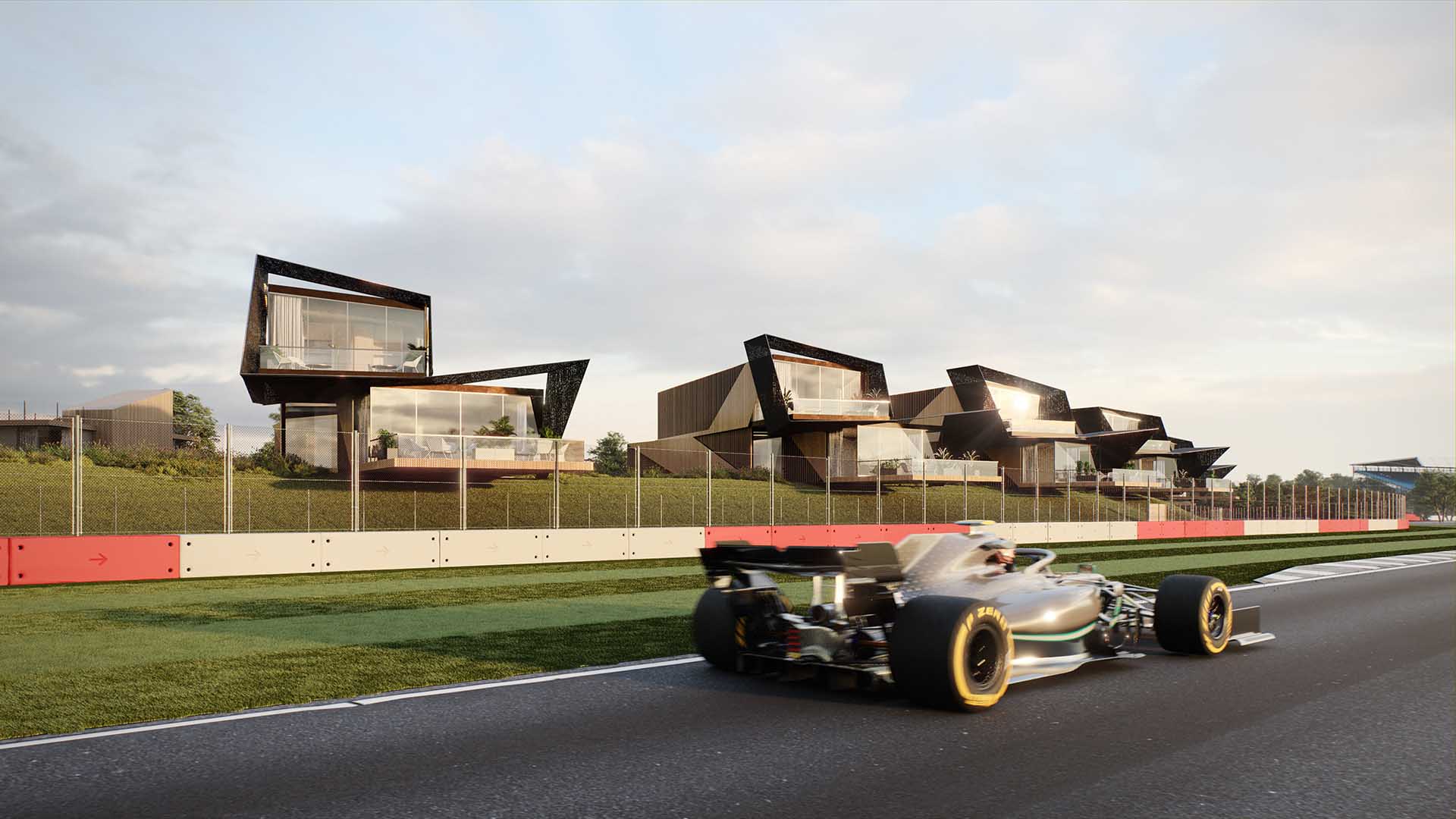
This weekend, all eyes will be on Silverstone for the British Grand Prix. Two years from now, you could be watching the race from the comfort of your own trackside home.

The Escapade Silverstone development of 60 homes and a clubhouse was given planning permission at the end of last year. Work will start in October 2020 and will be completed by May 2022. Prices range from £650,000 to £1,650,000.

Homeowners will enjoy access to the clubhouse and facilities, which include state-of-the-art simulator rooms, briefing rooms, a driver-focused gym, an oxygen swimming pool and sauna, plus a restaurant, bar and private dining room.

Silverstone homes restaurant

Residents will also be able to park in a climate-controlled car storage area located just 500 metres from the edge of the Silverstone circuit.

Each residence is provided on a 125-year lease, with owners free to enjoy them up to a certain number of nights a year. As an investment, owners are forecast to receive 5-6.5 percent yield from their property, but the homes can be sold at any time.

Trackside Residence Rear View

Escapade Living CEO, Will Tindall, said: “We’re delighted to be working with such a world-renowned venue as Silverstone for our first development. Escapade Living creates destinations that are entirely of their surroundings, while also providing owners with the opportunity to make a return on unique world-class property. The residences overlook arguably the most exciting complex of corners on all of the F1 calendar.

“In our opinion, real luxury doesn’t feel expensive; it feels comfortable and natural. That’s what Escapade Silverstone provides. And more than that, it is completely integrated with the circuit – an authentic experience borne out of the world’s foremost racetrack and, as a finished product, baked into it.

“The millions watching Silverstone’s Grand Prix double bill will do so virtually. But as the world unlocks, thousands will return to Silverstone to share the joy and spectacle of speed. When they do, we hope Escapade will be the ultimate place to stay as a guest, or as an owner.”

Silverstone countryside residence

Stuart Pringle, managing director, Silverstone Circuits, added: “Silverstone has always been a centre of excellence from a racing, technology and engineering perspective. But we aim to be a global, all-weather destination, welcoming guests from around the world on a daily basis to enjoy motorsport together, and to do it in surroundings which enrich that experience.

“We are delighted to be working with Escapade Living in creating a peerless hospitality experience. Escapade Silverstone will enable motorsport lovers to buy residences right on the edge of the circuit. For us, its immersive, bespoke, guest-led offering hails the dawn of something special.”

Reserve your property today and you could be enjoying one of the best seats in the house at the 2022 British Grand Prix. It has to be better than spending a few hours on the A43 in Northamptonshire.

ALSO READ:

McLaren and Gulf Oil reunite on road and track

Porsche Cayman GTS 4.0 (2020) review

Ultimate fast Ford: driving the 825hp Mustang CS800

Advertisement