Drivers with a disability may be entitled to free Vehicle Excise Duty (VED). It’s one of a range of financial support measures designed to help disabled people in the UK.
To qualify, a vehicle must be registered in the disabled person’s name or their nominated driver’s name. It must only be used for the disabled person’s personal needs and cannot be used by the nominated driver for their own personal use. A disabled driver can only have one vehicle tax exemption at any one time.
You can apply for vehicle tax exemption if you receive any of the following benefits:
Higher rate mobility component of Disability Living Allowance (DLA)
Enhanced rate mobility component of Personal Independence Payment (PIP)
War Pensioners’ Mobility Supplement (WPMS)
Armed Forces Independence Payment (AFIP)
You can claim the exemption when you apply for vehicle tax. However, if you’re claiming for a vehicle for the first time, you need to do so at a Post Office.
You will require a Certificate of Entitlement for DLR, PIP, WPMS or AFIP. If your certificate has been lost or stolen, you should telephone one of the numbers listed on this page.
If you’re buying a new vehicle, you should take the Certificate of Entitlement to the dealership. For used vehicles, you must take the following documents to a Post Office that deals with vehicle tax:
Vehicle registration certificate (V5C). Alternatively, the new keeper slip (green slip) and a completed V62 form
Certificate of Entitlement to DLA, PIP, AFIP or WPMS
MOT or GVT (goods vehicle testing) certificate (if applicable)
Vehicles registered with a Northern Ireland address also require a certificate of insurance or cover note valid on the day the tax starts
Free vehicle tax can be renewed online, by phone or at a Post Office. Hard of hearing customers can use a textphone.
Disabled drivers who receive the standard rate mobility component of PIP are entitled to a 50 percent reduction in vehicle tax. You cannot get a reduction for getting the lower rate mobility component of DLA.
Other benefits
The Blue Badge scheme provides a range of parking benefits for disabled people who travel either as drivers or as passengers. A Blue Badge allows parking in disabled bays, so people with mobility issues can stop closer to their destination. Click here to find out how to apply for or renew a Blue Badge online.
The Motability Scheme provides help with leasing a car, powered wheelchair or scooter. You may also be eligible to receive VAT relief when having a vehicle adapted to suit your condition, or on the lease of a Motability vehicle.
You usually require evidence of an MOT test to tax a vehicle. However, some vehicles are exempt from MOT testing, including tractors and some historic vehicles.
All cars with up to eight passenger seats require an MOT on the third anniversary of their date of registration. It’s the same for motorcycles, motor caravans, three-wheeled vehicles, quad bikes, dual-purpose vehicles, private hire and public service vehicles (up to eight seats), along with goods vehicles up to 3,000kg.
You can view a complete list of the age when the first MOT is needed, along with the maximum cost of a test, by clicking here.
To apply for MOT exemption, you will need to complete a V112 form. This should be produced when you tax your vehicle at a Post Office. Alternatively, it can be completed when you tax your vehicle online.
Vehicles exempt from the MOT test
The following vehicles are exempt from the MOT test:
Motor tractor.
Track-laying vehicle.
Articulated vehicle that is not a lorry or bus.
Works trucks.
Invalid carriages weighing no more than 360kg when loaded.
Vehicle used only to pass from land occupied by the person keeping the vehicle to other land occupied by them, and not travelling on the road for more than a total of six miles a week.
Hackney carriage licensed by Transport for London.
Vehicle provided for police purposes and maintained in an approved workshop.
Goods vehicle powered by electricity and first registered before 1 March 2015 (Great Britain only).
Tram.
Trolley vehicle that is not an auxiliary trolley vehicle.
Vehicles authorised to be used on the road by a Special Types General Order or a Vehicle Special Order, unless the order specifies otherwise.
Vehicles used only on certain islands that do not have a bridge, tunnel, ford or other suitable way for a motor vehicle to be conveniently driven to a road in any part of the UK.
Vehicles with a maximum design speed of less than 15.5mph.
A vehicle constructed for gully or street cleaning or refuse disposal, which either is a three-wheeled vehicle or has an inside track width of less than 810mm.
A public service vehicle having a date of manufacture before 1 January 1960 and which has not been substantially changed.
A vehicle other than a public service vehicle registered or manufactured 40 years ago and which has not been substantially changed in the last 30 years.
Historic vehicle MOT exemption
On 20 May 2018, new legislation was introduced meaning historic (classic) cars more than 40 years old will no longer require an MOT. This is a rolling date, so if your car was first registered on 1 November 1980, it is now exempt from the MOT test. You can declare it a Vehicle of Historic Interest (VHI).
It’s worth noting the point about ‘substantially changed’. If the car has been ‘substantially’ altered in the last 30 years, the MOT exemption no longer applies. You can read the government’s definition of ‘substantially changed’ on the V112 form, but in summary, the changes extend to the chassis or monocoque bodyshell, engine, axle and running gear.
There are also considerations for kit cars, vehicles with a Q-plate registration number, and reconstructed classic vehicle and kit conversions.
When taxing a classic vehicle, you will need to declare that is exempt from the MOT test. This can be completed on the V112 form using category ‘R’. If you fail to register it as a VHI, the car will still require an MOT test before it is allowed on the road.
It remains your responsibility to ensure your car is in a safe and roadworthy condition. Many classic car owners choose to voluntarily submit their historic vehicles for testing.
Click here to download the V112 ‘Declaration of exemption from MOT’ form. For information on MOT testing during the lockdown, read our latest news item.
A bid to clamp down on tailgaters has netted almost 10,000 offenders in the first two weeks.
Highways England began testing a camera system across its road network in October 2020, recording motorists driving too close behind others.
The new tactics are being used to highlight the risks of what drivers are doing, and attempt to educate them appropriately.
Cutting casualties from tailgating is the overall aim. Over 130 people were killed or seriously injured by incidents involving driving too close in 2018.
Stay safe, stay back
Working in partnership with the police, drivers spotted tailgating by Highways England cameras will receive a letter in the post. The organisation is not looking to prosecute drivers, but instead wants to reinforce the message to leave a gap between vehicles.
Highways England’s Head of Road Safety, Jeremy Philips, commented that the cameras are there to “make drivers aware of their behaviour and encourage better driving.”
The new cameras monitor drivers passing through a 150m stretch, and include the option to link multiple cameras together.
Footage can be used to differentiate deliberate tailgating from overtaking or sudden braking by other road users.
Don’t be a space invader
Highways England has highlighted the tailgating experience of one of its own data and intelligence analysts. Caroline Layton was driving through roadworks on the M27, when she was tailgated by an HGV.
Caroline explained that the HGV “came up really close, just a couple of metres behind” and all she could see in the rear-view mirror “was the lorry’s grille.” Caroline slowed down, due to fearing she would be “sandwiched in the middle” should a car in front brake suddenly.
The Highway Code reminds drivers to leave a two-second gap between them and other vehicles on faster roads, and to extend this in poor weather. Tailgating can lead to prosecution for driving without due care and attention, with a minimum £100 fine and three penalty points.
Despite this, a survey by Highways England found that more than 25 percent of drivers admitted to tailgating others.
Google ‘online car buying website’, and you’ll be greeted with the name Cazoo. It’s arguably the most famous such website, helped in no small part by the company’s shirt sponsorship of Aston Villa and Everton football clubs.
Growing numbers of car buyers are comfortable buying a car online, as the coronavirus pandemic sees a shift in consumer behaviour. Online car showrooms have benefited from lockdown and social distancing measures, while traditional retailers have suffered.
Many car makers are developing an online buying service and contactless delivery or collection, but it’s the online car buying websites that are set to benefit from lockdown measures.
The positives are obvious. You can browse online listings from the comfort of your home. Scroll through multiple photos, watch video tours of cars for sale, arrange finance, compare prices and complete the entire buying process online.
Once you’re happy, the car will be delivered to your home within a matter of days, many coming with a money-back guarantee.
This doesn’t spell the end for the traditional new and used car dealer, but it represents a big shift in the way we buy and sell cars. Here, we explore some of the major online car buying websites, including Cazoo, Cinch, BuyaCar and Car Store.
Cazoo launched in December 2019, promising to deliver ‘an entirely new way to buy a used car’. Its founder is Alex Chesterman, famous for creating LoveFilm and Zoopla. He received an OBE in 2016 for services to digital entrepreneurship.
The company raised over £80m in pre-launch funding, then acquired Imperial Car Supermarkets in July 2020. It now has customer centres in Birmingham, Cardiff, Bristol, Wembley, Manchester and Bishop Auckland – with more being added every month.
How it works
Cazoo owns all its cars, which must pass a 150+ point inspection before they are listed for sale on the website. The checks include the bodywork, engine, suspension, brakes, electrics, underbody and boot. The company says it buys less than five percent of the cars it looks at.
The car will be delivered to your home address or it can be collected from one of the customer centres. All cars come with a seven-day money-back guarantee, a 90-day warranty with RAC breakdown cover and seven days of free driveaway insurance. The cost of delivery is included in the purchase price.
Cazoo offers two types of finance: Personal Contract Purchase (PCP) and Hire Purchase (HP). It will also part-exchange your current car, giving an instant online valuation.
Alex Chesterman said: “The process of buying a used car is outdated and not fit for purpose for today’s consumer. Cazoo is reimagining used car buying to make it simple and convenient, whilst adding transparency and quality to an industry which suffers from a lack of consumer trust. We take away the need to travel, to haggle, to spend countless hours at a dealership and to risk any buyer’s remorse.”
Cinch
The Cinch advertising campaign is fronted by brand ambassador Rylan Clark-Neal. The process is similar to Cazoo, but Cinch also offers consumers the chance to buy from approved used car dealers. Manufacturers, leasing companies and dealers can offer vehicles directly to consumers via the Cinch platform.
How it works
All cars must pass a 225-point inspection and be less than seven years old with up to 70,000 miles on the clock. A 14-day no-quibble return policy is available for customers who aren’t satisfied with their purchase. Finance packages and a part exchange scheme are also offered.
Joanna Kerr, marketing director at Cinch, said: “Since the beginning, our vision has always been to make the car finding and buying process as easy, transparent and trustworthy as possible. Consumer behaviour has evolved in the last 10 years and the global pandemic has accelerated the need and desire to buy online.
“As a society, we’re more and more comfortable buying a variety of items online through trusted platforms. We want to give our customers the chance to enjoy the same experience when finding and buying their next car.”
BuyaCar
BuyaCar is Britain’s most popular online car supermarket when measured in terms of organic traffic to its website. The company buys cars directly from dealerships when orders are placed, then collects them for delivery to the customer’s door. Launched in 2002, BuyaCar has around 20,000 sales to its name.
How it works
Customers search for cars online, then pay a deposit to secure a purchase. Low-rate finance options are available, with all cars delivered with a 14-day money-back guarantee. If the manufacturer’s warranty has expired, BuyaCar will provide a 30-day mechanical warranty.
BuyaCar will also take a car in part-exchange, if it’s under 10 years old and has up to 85,000 miles on the clock.
The company celebrated its busiest ever summer period following the Covid-19 lockdown. Even during the first month of the lockdown, more than £1.1 million of cars and vans were delivered by the business to key workers.
Christofer Lloyd, editor of BuyaCar.co.uk, said: “It is appropriate that we have now passed the four million milestone for total deliveries to the customer’s door, in a year which has seen BuyaCar performance records broken several times.
“Our average delivery distances between the supplying dealer and the purchasing customer typically hover around 160-180 miles, but many customers choose cars from hundreds of miles away that they would never have a chance of buying without BuyaCar.co.uk.”
Car Store
Evans Halshaw Car Store is the used car brand for standalone retail sites within the Pendragon group. Crucially, it offers consumers the chance to buy a car online, with the option of home delivery or click and collect from one of its retail stores.
How it works
All cars undergo a 104-point inspection before sale. The six-step process includes the bodywork, under the bonnet, interior, underneath the car, wheels and tyres, plus a road test. The car will be delivered with a three-month guarantee and a seven-day money-back guarantee.
You also get a 14-day price promise. If you find a like-for-like car at a competitor car retailer within 14 days of buying from Car Store, and within a 40-mile radius of the store, Car Store will refund the difference.
Car manufacturers
It’s also possible to buy a car online from a manufacturer. In 2019, Volvo launched an online sales service, proudly boasting that the entire process can be completed in as little as 20 minutes.
The approach is broadly similar to the other online car showrooms, with the key difference being that you’re restricted to buying a Volvo. You can part-exchange your own car, choose a finance package, then decide whether to buy a Volvo from stock or build your perfect car.
Other manufacturers with the facility to buy online include Hyundai, Dacia, Peugeot, Vauxhall and Mitsubishi.
Other online services
You don’t have to buy a car online. There are a number of websites that offer a valuable sales tool, without the commitment to buy online.
Heycar is one example. The company launched in the UK in August 2019 and has around 3,700 UK dealers signed up to use its online service, with an inventory of more than 170,000 vehicles. All Heycar vehicles come with a warranty, are less than eight years old and have fewer than 100,000 miles on the clock.
Customers use the Heycar platform to browse for used cars, then message or call the dealer via the website.
Carwow is another example of a company transforming the way we buy a new car. It works like a price comparison site, with approved dealers submitting offers based on the customer’s search criteria. Carwow says its saves buyers an average of £3,600 off the recommended retail price. Cars can be delivered to a home address or collected at the dealer.
Online car buying websites: the pros
To some people, buying a car via an online showroom is the perfect solution. There’s no need to visit a dealer: the hassle is taken away. Everything is included within the price, so there’s no need to haggle or negotiate.
You also get an almost unlimited choice of cars. Visit a local dealership, and you’re limited to what they have in stock or is available within the wider dealer network. Online, you can view and compare cars, finance packages and offers. Just don’t get too carried away – it’s easy to break your budget when you’re not dealing with physical cash.
In the midst of a pandemic, it also feels like the safer alternative to visiting a showroom. The car is delivered to you, which makes it the best – possibly only – choice during a national or local lockdown. In the case of companies like Cazoo, Cinch and BuyaCar, there’s the knowledge that the car will be delivered without any hidden defects, cleaned and ready to go.
Online car buying websites: the cons
You’re likely to pay more when buying a car via an online showroom. The cost of preparation and delivery will be included with a margin, so it will almost certainly be cheaper to buy an equivalent car elsewhere. You may also get a longer warranty when buying a car from an approved used scheme.
It’s also worth remembering that you won’t be able to test drive the car before it arrives, so there’s no guarantee that it will meet your expectations. The driving position, boot space and quality of the infotainment system are just three considerations. Do your homework first.
The growth of online car buying websites doesn’t mean the end for physical dealerships. Instead, it means consumers will have greater choice when buying a new or used car, which should encourage traditional outlets to raise their game.
In the midst of a pandemic, buying online is the safest way to buy a car. Beyond 2020, online buying car websites will continue to shift the way we buy and sell cars.
The government has yet to confirm if there will be an MOT extension for motorists in England during the second lockdown. This follows the announcement made on Saturday evening.
Cars, motorcycles and light vans that were due an MOT between 30 March and 31 July 2020 were given a six-month extension to help keep motorists moving during the coronavirus pandemic.
This led to the Driver and Vehicle Standards Agency (DVSA) predicting a rush for MOT tests in September, October and November.
Motoring Research has contacted the DVSA to find out if the new national restrictions will affect MOT tests. We are waiting for a response.
There are no references to drivers, garages or MOT tests in the official government guidance. However, motorists are told to ‘avoid travelling in or out of your local area, and you should look to reduce the number of journeys you make’.
Joel Combes, director of Lawgistics, told Car Dealer Magazine: “As far as we can assume, the rules are likely to be the same as the first lockdown.
“Garages are essential businesses and the rules state that essential businesses can stay open. We are assuming that the rules will be the same as those earlier in the year.”
Advice to garages in March
Government guidance published in March said garages could stay open to carry out repairs and services. They could also remain open for MOT tests and retests. At the time, vehicle owners were told to get an MOT if the certificate expired before 30 March 2020.
If their MOT due-date was after 30 March 2020, it was extended by six months. The exemption period expired at the end of July, meaning cars that were due an MOT from 1 August 2020 did not get an extension.
Even if an MOT extension is unlikely during the second national lockdown, you’re advised to book a test sooner rather than later. Demand remains high following the original exemption period, while some garages could be closed during the lockdown period.
Stuart James, chief executive of the Independent Garage Association (IGA), said: “Garages are still busy catching up with the backlog of MOTs that the extension caused earlier this year. A second extension would only cause confusion among consumers and put law-abiding vehicle owners at risk of significant fines by leaving cars unchecked.”
This is because car showrooms will be closed, so some garages might decide to shut their servicing department.
We will update this piece when new information is released.
Transport for London has confirmed a ‘temporary’ increase in the cost of the London Congestion Charge to £15 a day will continue as part of an agreement with the government for a second extraordinary funding round of up to £1.7bn.
It previously cost £11.50.
However, plans to extend the Congestion Charge zone to the North and South Circular roads have been rejected by both the government and the Mayor of London.
This would have seen around 4 million more Londoners paying the Congestion Charge.
The Congestion Charge’s extended operating hours, to 10pm in the evening, will continue: previously, charges were lifted from 6pm.
TfL has also confirmed the Congestion Charge will continue to operate during the weekends, too. Pre-Covid 19, it only operated during weekdays.
Christmas Day is now the only day on which charges are lifted.
When it originally annunced the temporary changes in June 2020, TfL said they could see car journeys fall by a third and pollutants reduced by up to 11 percent.
Although many people now work from home, latest data suggests there are now as many cars within the Congestion Charge zone as before lockdown.
Without changes, TfL argues traffic levels in central London could double.
This is despite only 1 in 4 central London residents actually owning a car.
TfL also reminds motorists they still need to pay the London ULEZ charge on top of the Congestion Charge, if their vehicle is not a September 2015-on diesel or 2005-on petrol.
London Congestion Charge prices
Price increased from £11.50 to £15 (+30 percent)
Evening hours extended from 6pm to 10pm
Now operates during weekends
Congestion Charge reinbursements
An extension to the Congestion Charge reimbursement schemes was announced by London Mayor Sadiq Khan in the summer.
NHS staff are already eligible for reinbursements: these have now been extended to staff at NHS Trusts, ambulance staff and those who work in care homes located within the zone.
The NHS patient reimbursement scheme has been extended to include patients vulnerable to coronavirus.
Local authorities and charities within the zone who are providing coronavirus-related support services can apply to the reimbursement scheme too.
A substantial decline in revenue from parking tickets and fines is another consequence of the Covid-19 crisis.
A series of Freedom of Information (FOI) requests shows the sheer scale of the decline for UK councils.
At the peak of lockdown restrictions, enacted across the country between April and June 2020, parking fine revenue fell by some 71 percent.
This could leave councils facing a collective financial black hole of £41.3 million.
The £41 million fall
LeaseFetcher, a contract hire and leasing comparison website, undertook the research. It submitted FOI requests to 20 of the largest metropolitan councils, along with 23 London boroughs..
When combined together, these 43 locations had collected £16,845,599 in parking fines between April and June this year.
That compares to £58,162,078 collected for the same period in 2019 – a huge £41,316,479 reduction. Such a figure is likely to impact the already stretched budgets of local authorities across the UK.
Leicester tops the table again
The 20 cities outside of London accounted for more than £9.5 million of the total revenue lost. It marks a 85.2 percent decrease versus the same April to June period in 2019.
Leicester was the worst affected council, losing 99.21 percent of parking fine income compared to the year before. Cardiff saw a decrease of 98.6 percent, with Belfast suffering a 95.4 percent drop.
Glasgow was the metropolitan area that experienced the biggest fall in sheer financial terms. The Scottish city saw parking fine receipts slashed by more than £1.2 million.
London revenue has fallen down
London operates on another level compared to the rest of the UK when it comes to parking fine revenue. The 23 London boroughs that responded to the FOI request received a colossal £31.7 million less from April to June 2020.
Compared to the same period in 2019, this marks a 68.2 percent decline from the £46.5 million received last year.
The Royal Borough of Kensington and Chelsea saw the largest percentage decrease, losing out on 96.91 percent of parking fine income. Barking and Dagenham had the smallest percentage reduction, at 12.5 percent – and also the lowest monetary fall of £106,025.
Camden was the London borough on the end of the biggest financial decline. The area received £3.3 million less than in 2019.
A ‘common-sense approach to issuing parking and driving fines’ during lockdown was promoted by the London Councils organisation. This included giving consideration to key workers when choosing whether to issue penalties or not.
Citroen cars will cost thousands of pounds less in the UK thanks to a new ‘Fair Pricing’ strategy, plus a new model structure.
There will also be special ‘online’ versions of core models. Called C-Series, these will offer even greater value and a standard five-year extended warranty.
The initiatives are part of a new Citroen Advance UK plan, which aims to unlock the potential of the distinctive French brand in the UK.
The launch of 11 new models in 16 months, including the crucial new C4 and e-C4, will also accelerate Citroen in the UK, says MD Eurig Druce.
Citroen Fair Pricing
Price reductions will be significant. Even the entry-level Citroen C1 will be up to £700 cheaper.
The C3 will cost up to £1,175 less, while buyers of the C3 Aircross SUV could save up to £1,775.
The new Fair Pricing initiative goes live on 1 December 2020 and Mr Druce says customers who have already placed orders will be switched to the new Fair Pricing range – which may give some buyers a surprise cash saving.
Citroen will also simplify its model range structure around three core grades: Live, Sense and Shine.
Citroen C-Series online specials
The firm has also recently expanded its online platform with a new Citroen Store and Virtual Showroom. This allows buyers to take virtual tours of cars – and then buy online.
To capitalise on this, Citroen is launching extra-value online specials called C-Series.
Initially, there will be three C-Series models: C3 C-Series, C3 Aircross C-Series and C5 Aircross C-Series.
These models have no-haggle prices that are even more affordable – the C3 C-Series costs £13,980, significantly less than even the cheapest Ford Fiesta.
Equipped to a level 3 ‘Shine’ grade, the C3 C-Series is also almost £3,000 cheaper than the ‘Fair Pricing’ C3 Shine, which costs £16,155.
The C3 Aircross C-Series is £17,000 and the C5 Aircross C-Series is £25,755.
Citroen will sell these haggle-free models with an extended five-year warranty for private buyers.
Mr Druce told Motoring Research the C-Series vehicles will come with a standard-rate finance package, but no other incentives or consumer offers.
“Other models in the line-up will still have consumer incentives such as low-rate finance and deposit contributions: the aim behind the C-Series range is to offer a completely transparent, negotiation-free model that’s ready to buy online.”
Citroen dealers will also be able to sell C-Series models, offering easy value for customers who don’t like to haggle.
Veteran broadcaster and former racing driver Tiff Needell will return to TV screens next month with a new motoring show.
The former Top Gear star will appear in six episodes of Lovecars: On the Road, which airs on ITV4 during November and December 2020.
It follows Needell being unceremoniously dropped from Fifth Gear, a show he helped create, in September 2019.
After leaving Fifth Gear, Needell became a feature of the Lovecars YouTube channel.
Going fast and sideways
Founded in 2011 by presenter Paul Woodman, Lovecars has expanded across social media. The YouTube channel for the brand has amassed 200,000 subscribers, and covers a variety of automotive content.
The same mixture of reviews, hot laps and road trips is promised to feature in Lovecars: On the Road. Brands from ‘Aston Martin to Zagato’ are said to be included, with cars ranging from a Pagani Zonda to a Piaggio Ape.
According to Paul Woodman, Tiff will be “back on television doing what he does best”, in the form of “driving cars fast and sideways”.
A wealth of experience
With some 17 years experience of TV broadcasting and shredding tyres, Tiff himself is rather excited. He said he “can’t wait to show” viewers what he has been working on with Lovecars.
Needell and Woodman will be the main presenters for Lovecars: On the Road. However, they will also be joined by extra hosts and guests each week.
Featured stars from the world of motorsport include 2019 W Series champion Jamie Chadwick, Italian racing driver Vicky Piria, and Le Mans racer Ollie Webb.
Ben Collins, previously the Stig on Top Gear, will also make an appearance.
Under the influence
Adding to the roster will be a number of online personalities and influencers. These include stunt driver and YouTuber Sid North, along with award-winning travel blogger Maja Malnar.
The Lovecars team is said to be considering a second television series, but is currently focussing on YouTube again.
The first of six one-hour Lovecars: On the Road episodes will air on Thursday 12 November 2020 at 8pm.
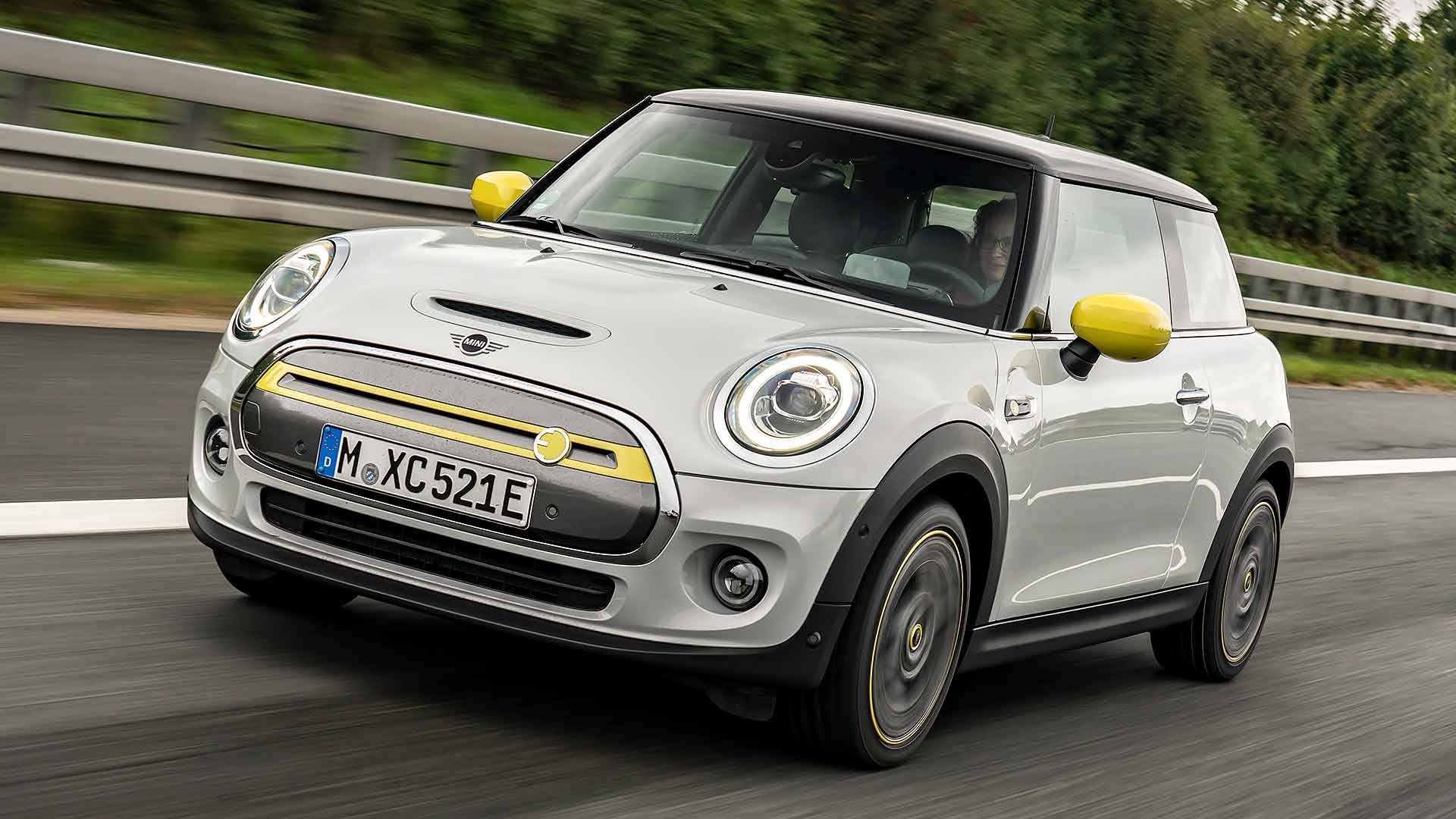
Mini has confirmed plans to build two new electric crossover SUVs in addition to an all-new 100 percent zero emissions version of the core three-door Hatch.
The British brand will also start building battery electric vehicles in China from 2023, to meet growing demand in the world’s largest new car market.
Currently, one in 10 new Minis are sold in China and the brand plans significant expansion in the region.
It will, however, maintain production at other facilities, including Mini Plant Oxford in the UK.
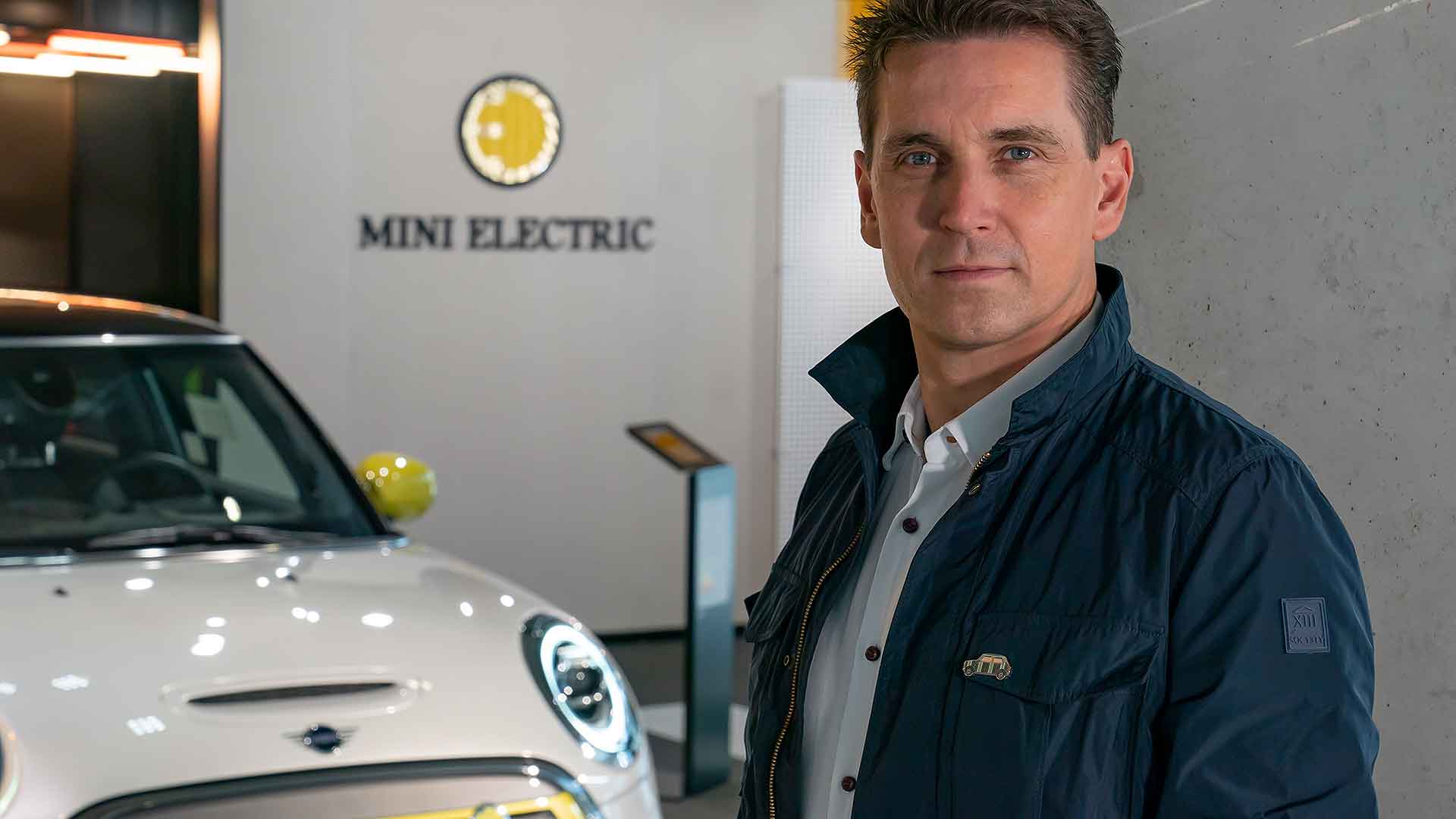
The realignment of the Mini brand around electric and electrified models is part of plans to target new customers and sales markets, said head of Mini, Bernd Korber.
“Mini was always the answer to very special challenges relating to individual mobility… this willingness to reinvent the status quo continues to shape the brand to this day.”
The future of Mini
Mini’s future electric line-up will comprise a replacement for today’s Mini Electric three-door Hatch, a small pure electric SUV, plus an additional larger crossover SUV.
While the future Mini Hatch, Mini Clubman and Mini Countryman replacements will also be offered with petrol and diesel engines, the new small SUV will be exclusively pure electric.
There is speculation the next-generation BMW i3 electric car could also be derived from it.
Unlike small car brand Smart, Mini is not going all-electric, said Mr Korber. Not all global regions are ready for pure electric vehicles, he insists, so petrol, diesel and plug-in hybrid versions will still be offered.
“We are pursuing the ‘power of choice’ approach… to create the conditions for further growth in global automotive markets.”
Biggest Mini yet
Mini is also planning a larger all-new SUV model for the premium compact segment. This would sit above the Mini Countryman.
Mr Korber has previously said such a vehicle won’t be as large as a BMW X3 (it will likely be BMW X1-sized), but will offer more space than the current range, to meet demand in markets such as North America.
Mini is going to remain Mini though, Mr Korber insists. “It is part of our responsibility to the brand and the community to preserve the unique character of Mini.
“Every new model from our brand in the future will still be unmistakably a Mini.”
Even the new premium crossover will therefore still have the smallest footprint in its sector.
Since being relaunched by BMW, four million new Mini models have been produced, the majority of which have been built at Plant Oxford. Mini currently delivers vehicles to more than 100 global markets.
The Mini Clubman family hatch and Countryman small SUV will remain core vehicles. Today, 40 percent of all new Minis sold are a Clubman or Countryman.
Impressively, five percent of current Mini sales are the high-performance John Cooper Works line.
Meanwhile, the introduction of the Mini Electric has doubled Mini’s electrified market share to 10 percent so far in 2020.