Brabus has been creating its own brand of modified cars since 1977, but few are as extreme – or as downright cool – as the Rocket GTS.
The German tuning company has transformed the latest Mercedes-AMG GT into a machine that blends wild performance and relative practicality in one custom package.
Although its styling may be reminiscent of the classic BMW Z3 M Coupe, the Rocket GTS brings an awful lot more power to proceedings.
Also, unlike the now-classic BMW, Brabus has given the Rocket GTS 2+2 seating, bringing further functionality to this high-powered shooting brake.
A load-lugging supercar
Although Brabus does not reveal the origin of the powertrain inside the Rocket GTS, the fact that it uses a hybrid setup narrows down the possibilities.
The Mercedes-AMG GT 63 S E Performance seems the likely starting point. In true Brabus fashion, however, the Rocket GTS is far removed from any car made in Stuttgart.
The 796hp twin-turbocharged V8 engine now displaces 4.5 litres, and is mated to an electric motor that sends 204hp to the rear axle. In total, the Rocket GTS packs a colossal 1,000hp and 1,342lb ft of torque into its enlarged hatchback body.
All-wheel drive assists with a 0-62mph time of 2.6 seconds, with top speed limited to 197mph. The hybrid powertrain also means the Rocket GTS can cover 7.5 miles on battery power alone.
Lightweight but luxurious
Brabus has built the new bodywork from carbon fibre, leaving the lightweight material exposed for good measure. All the details were created using CAD technologies and CFD modelling, with time spent in the wind tunnel to ensure the car is slippery at speed.
Brabus doesn’t specify how much luggage the Rocket GTS can hold, but several suitcases seems realistic – judging by the press photos provided.
The rest of the interior has received a suitably lavish makeover, with customers able to tailor their car from an endless range of bespoke finishes.
Brabus has installed its own titanium-tipped exhaust system, with pipes that feature integrated red lighting and carbon fibre surrounds.
There are also Brabus Monoblock P alloy wheels, produced using a special forging and machining technique. Exposed carbon fibre aero blades help channel hot air away from the brakes, while centre-lock fixings add some motorsport style.
As for cost, Brabus has quoted a price tag of €789,000 before German taxes at 19 percent. For potential buyers in the UK, that translates to £779,500 with VAT included.
Brabus will build the Rocket GTS in limited numbers based on customer demand. The ultimate hot hatchback? Frankly, little else even comes close…
Very few UK car buyers actually purchase a car outright, with the vast majority using finance instead. In fact, more than 90 percent now opt for some form of credit rather than paying in full. Nearly half of used cars are purchased using finance, too.
After a long period of very low interest rates, monthly payments have crept up in recent years – and car prices have become notably more expensive, too. Nonetheless, with many people now used to buying on finance, this method of owning a car is here to stay.
In this short guide, we explain the different car finance options you could consider, including Personal Contract Purchase (PCP), Personal Contract Hire (PCH) and leasing. Keep reading to discover which one is right for you.
Which car finance option suits you best?
So, you’ve made the decision to spread the cost of your brand new car. Now you just need to decide on a finance deal – and there really is no catch-all credit type. Some deals are simply leases, where you’re expected to hand the car back at the end. Others give you the option to own the car after a fixed number of payments.
Make sure you know exactly what you are agreeing to, and that you have understood the terms and conditions (i.e. the small print). The interest rate is key. Ensure you know what it is, how that translates into an APR (annual percentage rate) and how much more it will cost you to buy the car on credit.
To help you understand car finance, let’s go through some of the most common options on the market.
Hire Purchase(HP)
In the 20th century, this was Britain’s favourite way to pay for anything, from a cardigan in a catalogue to your next dream car.
A hire purchase agreement simply involves spreading the cost over a pre-agreed period – usually set from 12 months to five years. You’ll pay a fixed rate of interest during that time, but usually only a small deposit upfront.
If you want to keep the car at the end of the term, and it’s assumed you will, you’ll have to pay an admin fee to cover the cost of transferring ownership from the finance company to yourself. Up until that point, you are only the registered keeper, so you can’t modify the car in any way.
Conditional Sale
This agreement is actually the same as a Hire Purchase contract, except you will automatically own the car once the finance has been repaid in full, with no extra final payment.
Personal Contract Hire (PCH)
This is really another term for leasing, as there is no option to buy the car at the end. Your monthly payments will therefore be lower than those on an HP deal.
Payments will also be based on your predicted mileage, however, so expect to pay a penalty if you exceed that. At the end of the term, you simply hand the car back (and perhaps lease a newer one instead).
Personal Contract Purchase (PCP)
The basic premise behind the PCP deal – and its runaway popularity – is that you only pay for the car’s predicted depreciation during the term of your contract. So that’s the difference between the value of the car when new, and its expected value when your deal ends – typically in three years’ time. The latter is often referred to as the Guaranteed Minimum Future Value (GMFV).
Most cars lose around 40 percent of their list price during that period, so a £20,000 car could be worth roughly £12,000 after 36 months. That leaves you £8,000 to pay. Some of that is required upfront as a deposit, and the rest is due in instalments, at a fixed interest rate, for the duration of the contract period. This means the monthly payments are kept relatively low.
At the end of the deal, you’ll have the option to stump up the remaining £12,000 to buy the car in full – often referred to as the balloon payment. Or you may just decide to hand the car back, or indeed swap it for another car and a fresh PCP deal.
On that note, dealers will sometimes set the car’s GMFV deliberately low, so they can offer you a bonus chunk of equity when you come to settle up. But you’ll only be able to access this if you put it towards another finance deal. That’s how the car dealer keeps you on their books, and why so many motorists go back to the same brand again and again.
Let’s not forget, though, that it also means you’ve probably paid more in instalments (and therefore in interest) than you needed to in the first place.
Lease Agreement
This type of Conditional Sale is much the same as a PCP in that you’ll pay a deposit, some instalments and then a balloon payment at the end. The big difference is that buying the car at the end is not optional – you must ensure you have the funds to do that, and you will ultimately own the car at the end.
You can settle the finance and buy the car outright at any point during the term, however.
Personal Loan
Borrowing the money you need to buy a new car outright has its advantages, as you will immediately become the registered owner. You’re not bound by mileage restrictions either, and if you decide to upgrade the stereo or modify the car in any way, you can.
However, a loan is usually unsecured, so you can’t just hand the car back to clear the debt. Instead, you’d have to sell the vehicle, and the depreciation means there would undoubtedly be a shortfall (i.e. the car is worth less than it was financed for).
Credit card
The same advantages apply when you buy using a credit card. But you have the extra protection of Section 75 of the Consumer Credit Act (1974). This says that, if even a portion of your car is bought using a credit card, the credit provider is jointly liable for any breach of contract by the retailer. The sum has to be greater than £100, but can even apply to some other types of car finance.
The criteria is quite strict, particularly with regard to the relationship between the credit provider and the supplier, so it’s worth checking whether your contract qualifies.
Car finance: a final thought
If you’re feeling overwhelmed by all these options, you could simply take your lead from hundreds of thousands of other new-car buyers every year, and opt for a PCP. These are by far the most popular car credit agreements, accounting for around three out of four new car sales.
Adrian Dally of the Finance and Leasing Association says: “The PCP was introduced into the market by Ford, who brought it over from the States. Its success is due to both to price, and a cultural change in attitudes towards owning assets.”
Whichever product you choose, it’s worth remembering that, while you may have signed the paperwork at your local dealer, your contract is with the finance company. So if there’s a fault with the car itself, and not just the terms of the deal, then it’s the finance company you have to approach.
The good news is that there’s often more security in buying on credit as you have stronger return rights. That includes the 14-day cooling off period outlined in the Consumer Rights Act (2015). So if you change your mind for any reason, the vehicle transfers back to its supplying dealer.
Beyond that, if you’re unhappy with the way a complaint is being handled, you also have the backing of the Financial Ombudsman. Its job is to arbitrate, judge and resolve your case, which is initially assessed by its investigators. If it thinks your complaint is justified, and the dealer still won’t play ball, the case can be referred to an Ombudsman – a higher ranking investigator whose verdict ‘is final, and legally-binding to both parties, should the consumer accept it’.
Again, make sure you know exactly what you’re agreeing to before you sign on the dotted line. If still in doubt, you can find lots more information about car finance at the FLA’s consumer advice website, or visit the Financial Ombudsman’s advice pages for more information about the complaints process.
The Kia Sportage topped the table as the UK’s best-selling new car during October 2024, based on data from the Society of Motor Manufacturers & Traders (SMMT).
Some 4,533 examples of the practical family SUV found new homes last month, helping the Korean brand set a new sales record.
However, the overall SMMT figures for October 2024 showed a substantial drop in new car sales.
Private, fleet and business customers across the UK all purchased fewer vehicles, when compared to the same period in 2023.
Sportage is the UK’s favourite
Kia will be celebrating the fifth-generation Sportage’s success. The SUV is the Korean marque’s top-selling model in the UK and around the world.
The Sportage is now a close second for overall new car sales in 2024, with 42,115 examples shifted this year. That places it just 350 vehicles behind the top-selling Ford Puma.
With 100,936 cars sold already this year, Kia has already broken its previous best record, set in 2022.
Almost half (49 percent) of new Kia models sold in the UK are classed as ‘eco’ models by the company, being either fully electric, a plug-in hybrid or a hybrid.
Ford Puma still ahead
Taking second place in the new car sales chart for October 2024 was the Ford Puma, with 3,521 examples registered.
It was sufficient to retain the Ford’s lead as the best-selling car of 2024, taking its total for the year to 42,465.
The new Mini Cooper took third place for October, being one of only three non-SUVs among the top 10 best-selling cars for the month.
Fourth place was claimed by the Volvo XC40, followed by the Volkswagen Tiguan in fifth.
Overall new car sales slump
Overall new car sales for October 2024 declined by six percent versus the same month in 2023, according to the SMMT, with a total of 144,288 registrations.
The number of petrol and diesel new cars fell by 14.2 percent and 20.5 percent respectively, with hybrid and plug-in hybrid vehicles also down, by 1.6 percent and 3.2 percent.
Battery-electric vehicles were the only powertrain type to witness an increase in registrations, with a substantial 24.5 percent jump compared to October 2023.
Sales to private customers declined by 11.8 percent, while business registrations were down by 12.8 percent. Fleet buyers posted a slightly smaller decline, with a fall of 1.7 percent.
The new Dacia Spring Cargo has become the cheapest battery-powered van on sale in the UK.
Excluding VAT, the electric van will cost business buyers just £14,995, with the Spring Cargo also eligible for the UK Plug in Van Grant (PiVG) of £2,500.
Monthly costs could start from £149 without VAT, based on a three-year deal with an allowance of 10,000 miles per annum and a deposit of £894. As such, the Spring Cargo could prove attractive to budget-conscious business users.
Business on a budget
To create the van version of the Spring, Dacia has removed the car’s rear seats and fitted a mesh bulkhead.
This results in 1,085 litres of cargo capacity, which can be accessed via the rear doors or hatchback opening. The load area itself can carry a payload of 370kg.
Keeping prices low is Dacia’s use of standard Polar White paint, combined with steel wheels and lots of black plastic exterior trim. It gives the Spring Cargo an air of UN-specification utilitarianism, and is likely to be a useful base for businesses to add their own liveries.
Also keeping prices low is the simple specification. The Dacia Spring Cargo is only available with one battery and in a single trim level.
Low costs, but fully loaded
The 28.6kWh battery is connected to a 65hp electric motor, with the potential to cover up to 140 miles in mixed driving conditions. Using the Spring Cargo in urban areas should boost its range to 186 miles.
Fast charging means the Spring Cargo can be replenished from 20 to 80 percent battery capacity in 45 minutes.
Manual air conditioning, cruise control, front and rear parking sensors, and a rear-view camera are all included. Infotainment is handled by a 10.0-inch touchscreen with navigation and smartphone connectivity.
Like the regular Spring electric SUV, the Spring Cargo can be ordered now from Dacia dealerships, or online via the Dacia website.
The high cost of petrol and diesel means some less scrupulous motorists are tempted to fill up and then drive away from the petrol station without paying.
Known by the police as ‘bilking’, this offence is estimated to cost every petrol station around £10,500 per year. And figures obtained by Crown Oil show 99 percent of crimes don’t lead to a prosecution.
The act of leaving a petrol station without paying for fuel is covered by the Theft Act 1978. The offence of Making Off Without Payment (MOWP) is outlined in section three of the Act.
The Theft Act 1978 states: ‘A person who, knowing that payment on the spot for any goods supplied or service done is required or expected from him, dishonestly makes off without having paid as required or expected, and with intent to avoid payment of the amount due, shall be guilty of an offence.’
In serious cases, a person found guilty of Making Off Without Payment could face a maximum of two years in prison and an unlimited fine. Defendants convicted in a Magistrates’ Court can be fined up to £5,000 and/or jailed for up to six months.
Police may not investigate
However, the police may not investigate the crime of making off without paying for fuel unless there is proof of criminal intent. Devon and Cornwall Police hit the headlines when a forecourt owner was told officers would only respond if there was an obvious ‘intent’ to steal.
A request under the Freedom of Information (FOI) Act in 2019 showed that, of 897 offences of Making Off Without Payment, Devon and Cornwall Police listed a total of 616 as ‘Investigated as far as reasonably possible. No suspect identified’. Some of these may not have been related to petrol station drive-offs, however.
In a separate FOI request, West Yorkshire Police said it did ‘not have a specific policy’ in relation to the offence of leaving a petrol station without paying, but it has ‘specific guidance’ for forecourt retailers.
‘In summary, if the suspect draws fuel, enters the store and purchases items before paying for those items, the call taker will ask whether the suspect has been asked whether they have taken any fuel.
‘If the question was asked, the offence made out is one of fraud by false representation. If the question was not asked, the offence is making off without payment.
‘Where fuel is drawn and the offender simply drives off, the offence is making off without payment. However, where this is done in a vehicle bearing false registration plates, the appropriate offence is theft – non specific. The appropriate crime record is then completed.’
If petrol station staff believe the act of making off without payment was unintentional or accidental, they are advised to contact the DVLA. The retailer can then seek to recoup the losses using the details of the car’s registered keeper.
How to prevent petrol station theft
In the past, police chiefs have suggested the petroleum industry could eliminate ‘bilking’ by making motorists pay for fuel upfront – a practice that is common in other countries.
However, UK fuel retailers are reluctant to implement this because the walk-in shop, with its range of high-profit-margin drinks and snacks, is a core part of their business.
Fuel theft looks likely to decline in the longer term, as increasing numbers of drivers switch to electric cars. At present, however, the British Oil Security Syndicate (BOSS) estimates that UK police forces dedicate more than 800,000 resource hours to the problem each year.
Revealed in Milan, Italy, the new e-Vitara is Suzuki’s first mass-production fully electric car.
Based on a specially developed EV platform, the e-Vitara was designed with traditional Suzuki off-road prowess in mind. It will replace the existing, combustion-powered Vitara SUV.
The launch of the e-Vitara is part of Suzuki’s journey towards full electrification, with various petrol models such as the Jimny, Ignis and Swift Sport now dropped from its UK range.
Available with 4WD
Suzuki’s new Heartect-e ‘skateboard’ platform is designed solely for electric vehicles. It offers two battery sizes and allows for both two- and four-wheel-drive setups.
The entry-level 49kWh battery is available with two-wheel-drive only, and is combined with a 142hp electric motor.
Opting for the larger 61kWh battery increases motor output to 172hp in 2WD guise. Choose the 4WD e-Vitara and you gain an additional 64hp electric motor, resulting in a combined torque figure of 221lb ft.
The front and rear axles of the 4WD e-Vitara can apportion torque independently, via Suzuki’s Allgrip-e system. A driver-selectable Trail mode is designed for off-road use, recreating the effect of a limited-slip differential to maximise traction.
A Toyota version is coming, too
Suzuki will build the e-Vitara in Gujarat, India, with production expected to start in spring 2025. Japan, Europe and India will be the first target markets, although Suzuki has yet to reveal e-Vitara prices or final specifications.
The e-Vitara is expected to continue the partnership between Suzuki and Toyota, meaning a version of the Toyota Urban SUV concept will make use of the same Heartect-e platform.
Speaking at the launch event in Milan, company president Toshihiro Suzuki said: “The e-Vitara is our first BEV, developed through repeated trial and error to create an easy-to-use BEV for our customers. In order to realise a carbon-neutral society, we will provide a variety of options, including BEVs, hybrid vehicles and CNG vehicles, tailored to specific regions.
“Introduction of the e-Vitara represents a significant milestone in achieving carbon neutrality. Following the launch of the e-Vitara, we will continue to expand our BEV line- up and propose mobility solutions tailored to the needs of specific countries and regions.”
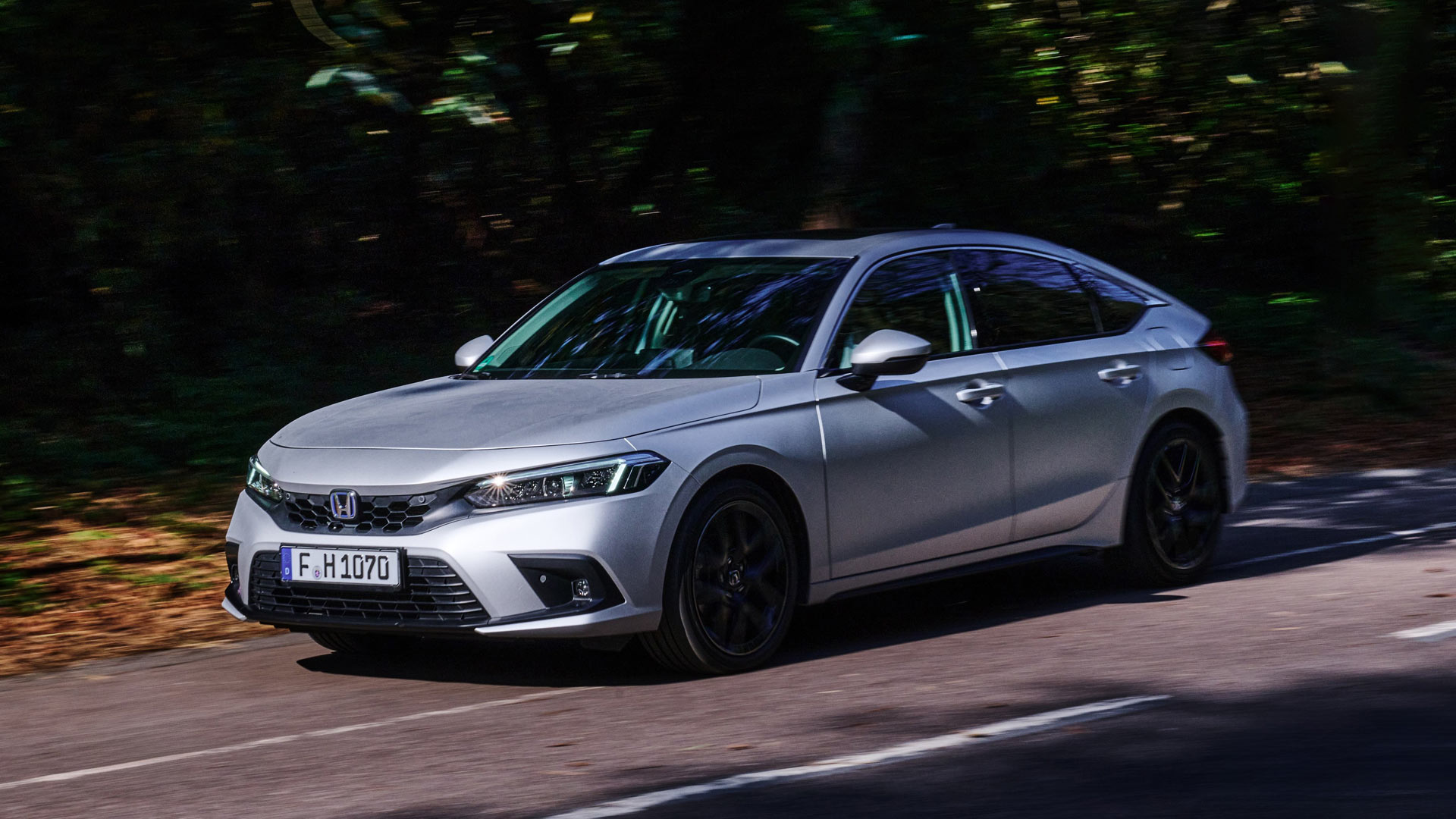
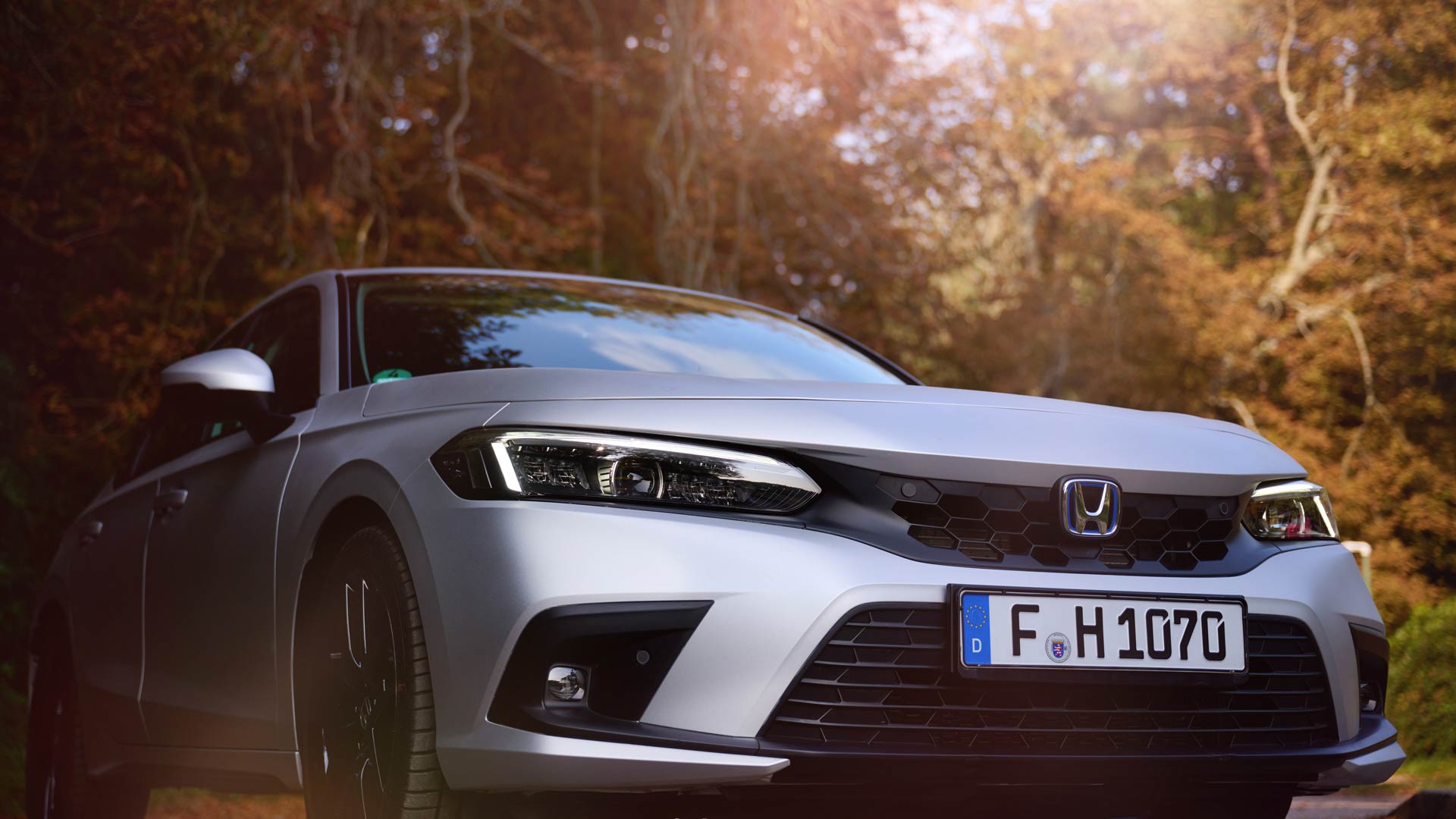
A new Honda Civic hatchback features the world’s most silver paintwork, helping the company mark a special silver anniversary.
The ‘silveriest’ paint includes elements of the actual precious metal, ensuring this is a truly bespoke Civic e:HEV hybrid.
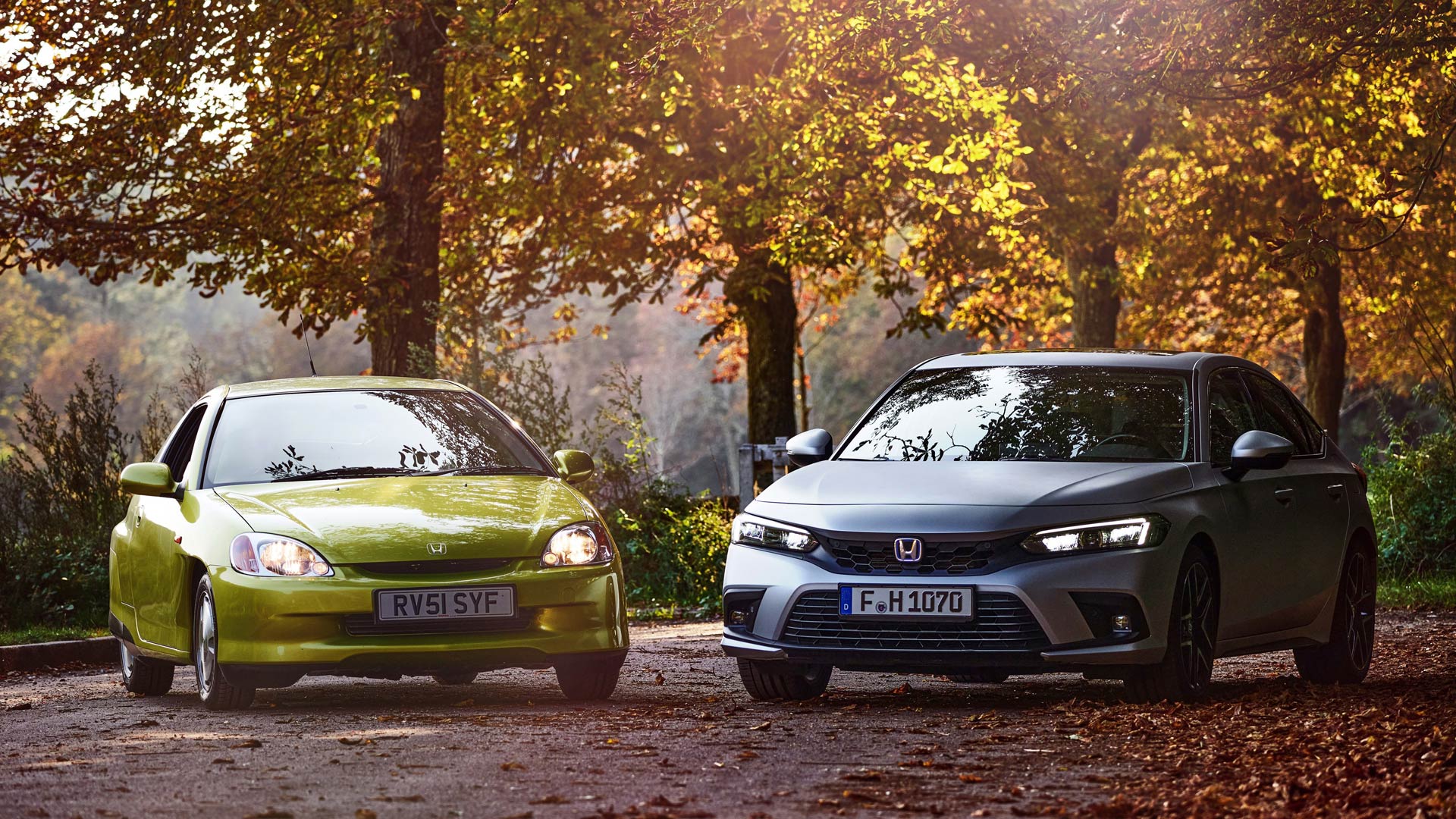
For Honda, the occasion is the 25th anniversary of the radical Insight hybrid, which made its European debut in the autumn of 1999.
Today, Honda has fully embraced hybrid technology, with all cars in its UK range now offered with electrified power.
A silver anniversary gift
The Civic’s special finish is the work of British artist Stuart Semple. The inventor of a bespoke range of paints, Semple’s creations include Pinkest Pink, Goldest Gold and Blackest Black.
Sourced from his Culture Hustle gallery, Semple made the shimmering Silveriest Silver hue with 64 percent real silver flakes, combined with pigments blended in an acrylic suspension.
The result is paintwork that replicates the effect of solid silver, but without the eye-watering expense.
The Syrup Room in Bournemouth undertook the task of painting the Civic e:HEV, requiring three days to complete the job. Multiple layers of specialist protective and removable paint were required, before the final coats of Silveriest Silver were applied with high precision spraying equipment.
A quarter-century of hybrids
Launched in 1999, the Honda Insight combined futuristic styling with a 1.0-litre three-cylinder petrol engine delivering 68hp. Honda’s first-generation Integrated Motor Assist (IMA) hybrid system contributed a further 13hp.
The Insight’s sleek styling and impressive aerodynamics helped it achieve an average fuel economy figure of 83.1mpg.
Nik Pearson of Honda Motor Europe, said: “Honda’s hybrid know-how is unmatched in the industry. In 1999 we set about building the world’s most fuel-efficient car, the revolutionary Insight, which was the first petrol-electric hybrid car in Europe.
“Today we offer a fully electrified model range, the majority of which feature our innovative e:HEV powertrain. It’s for these reasons we’ve marked 25 years of hybrid technology with the ultimate silver anniversary gift: the Silveriest Civic. And doesn’t it look fantastic?”
The British Touring Car Championship (BTCC) has made a surprising decision to drop hybrid power from the 2025 season onwards.
Instead, the series will aim to bolster its green credentials through the use of 100 percent sustainable race fuel by all competitors.
This follows a number of successful tests of fully sustainable, fossil-free fuel during the 2024 season.
The BTCC noted no disadvantages from using sustainable fuel when compared to drivers using standard race-grade petrol.
Chequered flag for hybrid tech
The BTCC became the first touring car competition in the world to introduce hybrid technology, after it was made compulsory for the 2022 season.
A Hybrid Energy Management system, developed by Cosworth Engineering, was tested extensively before being mandated for competition use. Instead of the previous ‘success ballast’, the level of hybrid assistance given to each driver was restricted in a bid to promote closer competition.
Changes were made to the operation of the hybrid assistance for the 2024 season, with extra boost from the turbocharged engine permitted to aid overtaking. This followed Ashley Sutton’s dominance of the BTCC during 2023.
The ‘push to pass’ turbo boost will be retained for the 2025 season, but without any additional hybrid assistance. The changes will reduce weight by around 55kg, also aiding the cars’ agility.
BTCC continues to evolve
The new sustainable race petrol – Hiperflo ECO102 R100 – is free of any fossil fuel components. All its ingredients come from synthetic and biological sources, meeting all the relevant FIA and ISCC rules on sustainability.
Alan Gow, BTCC chief executive, said: “The hybrid era was a great one for the BTCC. Six years ago, when we first announced hybrid, it was a technology still in its relative infancy within motorsport. We’ve successfully completed that programme – and really have no more to prove in that respect – whilst others have yet to catch up.
“But as we’ve now ticked that box we can move further forward with the introduction of the fossil-free sustainable fuel, whilst very importantly delivering the same performance parameters that made this year’s BTCC such a memorable one.
“We don’t just sit still with the BTCC – we evolve, and we advance, as today’s announcement firmly underlines.”
Drivers in a supermarket car park were left puzzled when their car key fobs stopped working. According to news reports, North Hertfordshire Police said it received a number of calls from people who were unable to unlock their vehicles.
This followed a similar incident in Kent, where shoppers could not open their cars. At the time, a spokesperson for the RAC said: “These fobs work on a very low frequency, so radio masts shouldn’t interfere with them.
“Things like CCTV cameras and baby monitors run on the same frequency, however, so it’s a common problem in town centres.”
Another possibility, however, is that thieves are using jamming devices to block the signals for remote central locking. Ford security expert Simon Hurr has the following advice for owners who suspect the signal between their car and key fob has been compromised:
Place the key fob under your chin with your finger on the unlock button.
Tuck your chin down to shield the fob as much as possible from any radio frequency jamming device in the vicinity.
Walk around the car, maintaining a position of directly facing the car at all times.
While walking slowly around the car, press the unlock button repeatedly.
When the car unlocks, the source of radio frequency interference will be behind you (your body blocks the jammer).
The problem of keyless car theft
Signal jamming in a public place is one example of criminals using technology to target unsuspecting motorists. Keyless car theft is when two criminals use a relay box to pick up a signal from the key fob inside a home or office. Doing so allows them to replicate this signal and unlock the car.
Many popular Ford models, including the Puma, Focus, Kuga and Mustang Mach-E use keyless entry key fobs with a sleep mode. A motion sensor inside the car detects when it has been stationary for longer than 40 seconds and triggers a shutdown, so the key won’t respond to attempts to hack its signal.
Simon Hurr added: “The online availability of devices which have no place in public hands has long been a problem for Ford, our industry and crime fighters. We are pleased to respond with a simple but effective solution – swiftly implemented to help protect owners of our top-selling cars.”
Skoda has announced a hotted-up vRS version of its new, second-generation Kodiaq SUV.
The 2025 Kodiaq vRS offers the potential for hot hatch performance on the school run, with room for up to seven people inside Skoda’s most practical vehicle.
The first-generation Kodiaq vRS, then powered by a diesel engine, developed a cult following for its combination of pace and space. Skoda will hope for more of the same success with this version.
Same engine as the Golf GTI
Powering the new Kodiaq vRS is the familiar ‘EA888’ 2.0-litre four-cylinder petrol engine, found throughout the Volkswagen Group in cars such as the Golf GTI and Skoda Octavia vRS.
In Skoda’s latest range-topping SUV, the engine delivers 265hp and 295lb ft of torque. This reflects a 20hp boost in horsepower compared to the previous Kodiaq vRS, cutting the 0-62mph time down to 6.4 seconds. A top speed of 144mph should be more than sufficient, too.
All-wheel drive is fitted as standard, along with a seven-speed DSG dual-clutch automatic transmission. Dynamic Chassis Control is also included, offering 15 levels of damper adjustment, plus there are ventilated disc brakes for good measure.
Standing out from the SUV crowd
In keeping with recent Skoda vRS tradition, the fastest Kodiaq comes with a gloss black finish for its front grille, window surrounds, roof rails and side mirror caps.
A bespoke front bumper features extra air intakes, while the front grille has a horizontal lighting strip. Polished twin exhaust tailpipes are found at the rear, with honeycomb trim covering the diffuser.
Bold 20-inch ‘Elias’ alloy wheels are unique to the Kodiaq vRS, and have a polished black finish. Red-painted brake calipers are a further hint at the performance on offer.
Inside the hot Kodiaq are high-backed sports seats with vRS branding, plus plenty of red stitching and a three-spoke sports steering wheel.
Due in spring 2025
Buyers can choose between vRS Lounge and vRS Suite specifications. The former comes with perforated Microsuede upholstery, while the latter upgrades to full leather.
Other interior highlights include a 10.0-inch digital instrument panel, 13.0-inch central infotainment touchscreen, ambient lighting, keyless entry and LED Matrix headlights.
Skoda has yet to confirm prices for the new Kodiaq vRS, but expect this latest family SUV to cost around £50,000. The first UK deliveries are due in spring 2025.