Dutch sports car manufacturer Donkervoort has revealed its most powerful vehicle to date: the 600hp P24 RS.
Combining a lightweight carbon fibre body with a twin-turbocharged V6 engine gives the new P24 RS truly explosive performance.
Donkervoort has used Audi engines in its sports cars for more than two decades. However, the end of production for Audi’s sonorous 2.5-litre five-cylinder motor left the Lelystad-based company with a problem.
Enter the 3.5-litre Ford Ecoboost V6, which has powered everything from the Transit van to the mid-engined Ford GT supercar.
Dutch Formula 1 supplier Van der Lee has bolted bespoke turbochargers to the V6, resulting in peak outputs of 600hp and 590lb ft of torque. Not bad in a car that weighs just 780kg…
Choose how much power you want
The new P24 RS develops 100hp more than the previous Audi-engined P22 model, and boasts an outrageous power-to-weight ratio as a result.
However, Donkervoort realises that drivers may not want the full 600hp for trundling to the shops. A ‘Power to Choose’ menu lets them select 400, 500 or the full 600 horses as required.
Despite its advanced new engine, Donkervoort has retained an old-school five-speed manual gearbox. It does offer a rev-matching function on downshifts, though.
Controlling the vast power being channelled to the rear wheels is a Torsen limited-slip differential. This helps propel the P24 RS from 0-124mph in just 7.4 seconds. Top speed is 186mph.
AP Racing four-piston brakes are fitted as standard, while those in search of ultimate track-day stopping power can specify carbon-ceramic discs.
F1-inspired aerodynamics
Compared to the Lotus Seven-style kit cars Donkervoort originally built in the 1970s, the wild P24 RS looks like an arrival from outer space.
The company has kept its trademark exposed front wheels, but used Formula 1 know-how to develop an optional aero kit.
Comprising a jutting front splitter, dramatic rear wings and a double diffuser, the aero kit generates 90kg of downforce at 155mph.
Other aerodynamic aids include headlights that hide behind the front grille until needed. The P24 RS features a pair of removable carbon fibre targa-top roof panels, too.
Tractive adjustable dampers can be joined by optional adjustable ride height system, which allows the P24 RS to be lowered at the push of a button.
Donkervoort P24 RS available to order
Donkervoort has kept the interior of the P24 RS pleasingly simple, using dials and buttons rather than relying on a touchscreen.
The removable steering wheel is used to control most major functions, but an iPad Mini-based infotainment system can be added on request.
A set of custom-made lightweight Recaro bucket seats come with six-point harnesses approved for road and track use. Behind the seats, a 298-litre luggage capacity is on par with a typical supermini.
Prices start from €298,000 (approximately £257,500), although an extensive degree of customisation is available on top, including options such as power steering and air conditioning.
Some 150 examples of the P24 RS are planned. Donkervoort has already taken orders for the first 50 cars from customers.
The first examples of the Chevrolet Corvette ZR1 have arrived in the UK, with one currently available to buy now.
Although the eighth-generation Corvette is officially sold in Britain, including the performance Z06 version, the supercar-baiting ZR1 remains off-limits on this side of the Atlantic.
However, London-based performance specialist Clive Sutton has imported two examples of the ZR1 into the UK, taken from the limited 2025 production series.
One of the cars has already been claimed, but the stunning Competition Yellow example pictured here is still for sale.
An asking price of £425,000 represents a hefty premium compared to the ZR1 3LZ’s $195,495 cost in the United States – equivalent to just £143,200. Even so, it’s still a (relatively) affordable way into a new supercar with upwards of 1,000hp.
The most powerful production Corvette V8
The most powerful road-going Corvette when launched – until the ZR1X arrived – the eighth-generation ZR1 boasts a twin-turbocharged 5.5-litre V8.
Developing 1,064hp and 828lb ft of torque, the flat-plane crank LT7 engine propels the ZR1 from 0-60mph in just 2.3 seconds when combined with the optional ZTK Performance Package.
Flat-out, the Corvette ZR1 can reach 233mph – and as Hennesey proved, it can still hit 196mph when carrying a Christmas tree on its roof.
Other ZR1 features include an eight-speed dual-clutch auto transmission, performance exhaust system, suspension with Magnetic Selective Ride Control, and Brembo carbon-ceramic brakes.
A fully loaded supercar
The Competition Yellow Corvette ZR1 coupe offered for sale by Clive Sutton comes in range-topping 3LZ trim, boasting a formidable level of specification.
This includes the dramatic carbon fibre aero package with a huge rear wing and front dive planes. More carbon fibre is used for the door mirror caps and split rear window panel. The exhaust tailpipes are finished in black.
On the inside, Jet Black leather and microsuede upholstery covers the GT2-specification sports seats, complemented by yellow stitching. The steering wheel boasts carbon fibre detailing, too.
Options added to this particular ZR1 include a front axle lift system. Like all Corvette coupes, the roof panel is removable.
Buy a Corvette ZR1 from £365,000
Such a comprehensive level of spec does help justify the £425,000 asking price of the ZR1 for sale. Clive Sutton notes this includes all transportation costs, the 10 percent import duty and 20 percent VAT charge, plus all fees associated with UK homologation and registration.
Opting to have another ZR1 imported, with a lower level of specification, could see customers paying from £365,000.
Clive Sutton said: “We’ve imported the world’s most desirable high-performance and luxury vehicles for almost 40 years, but I still get excited by supercars like the ZR1.
“We expect demand to outstrip supply for this iconic American supercar and we’re confident that our seamless, premier experience is what customers at this exclusive end of the market expect.”
New data has revealed a surprising disparity in the level of vehicle-related fires tackled by Fire and Rescue Services across the UK.
Following Freedom of Information requests, the research used callout logs from 31 different Fire and Rescue Services.
Data covering incidents across a full year was collated, with this information overlaid across the number of vehicles registered in each area.
This creates a picture of where Fire and Rescue Services deal with the most vehicle incidents, including fires.
At its most extreme, the data showed that vehicles in London were 15.6 times more likely than those in Kent to be involved in an incident requiring an emergency response.
London Fire Brigade topped the charts for the most vehicle-related callouts, attending 7,572 incidents in one year. This equates to the capital’s firefighters responding to 453 incidents per 10,000 vehicles.
Tyne and Wear Fire and Rescue claimed second place, with 343 callouts per 10,000 vehicles, followed by East Sussex Fire and Rescue on 268 incidents.
At the other end of the scale, Kent Fire and Rescue Service attended just 29 incidents per 10,000 vehicles during the past year.
County Durham and Darlington Fire and Rescue Service was the second lowest, responding to 46 callouts for every 10,000 registered vehicles. Notably, this is seven times lower than that recorded by neighbouring Tyne and Wear.
Derbyshire followed as the third lowest, with 114 incidents per 10,000 vehicles registered: still nearly four times lower than London.
Proper car maintenance reduces risk
Although London Fire Brigade attended the most vehicle callouts relative to cars registered, these accounted for only 5.5 percent of all the incidents it attended.
Karl Bantleman from Direct365, which undertook the research, commented: “Data from Fire and Rescue Services across England clearly illustrates the tireless, around-the-clock work of this sector, ensuring our nation’s safety.
“The disparity between vehicle safety of counties like Kent and the high incident rates in areas like London and Tyne and Wear shows that road risk is heavily influenced by local infrastructure and traffic density. We’ve seen road incidents account for over 20 percent of Fire and Rescue callouts in areas like Buckinghamshire, which demonstrates the fluctuating pressure placed on different regional services.
“Regardless of location, vehicle owners must take proactive steps to reduce risk. Routine maintenance is vital to preventing incidents and ensuring our essential emergency services can focus their resources where they are most needed.”
The majority of UK drivers believe that breaking road traffic laws is justified if they judge it to be an emergency situation.
More than two thirds (68 percent) of motorists said it was acceptable to park on double yellow lines, break the speed limit or use a bus lane if needed.
Some 17 percent of those surveyed said they had broken a motoring rule in an emergency: a figure that equates to around seven million drivers in the UK.
Almost a quarter (24 percent) said they would be willing to contravene the law if they believed they could do so without being caught.
Despite this, most of those questioned (86 percent) admitted to feeling annoyed when other road users broke the law.
Bending the rules when needed
Temporary car insurance provider Tempcover, which conducted the research, asked what situations UK drivers would most likely deem an emergency.
A medical crisis, such a passenger experiencing a heart attack or stroke, was considered sufficiently urgent by more than half (55 percent) of those surveyed. Someone suffering a serious injury would be acceptable to a similar proportion (52 percent).
However, others took a broader view of what an emergency situation might be.
Pet emergencies were deemed an acceptable reason to break the law for 14 percent, whilst four percent even believed that needing the toilet was justification enough.
If stopped by the police in a genuine emergency, almost a third (32 percent) would expect an officer to escort them to their destination. Some 14 percent believed they could just ‘get away with it’ instead.
The risk of causing a second emergency
Of the 12 percent who have borrowed someone else’s car during an emergency, less than half (41 percent) checked whether they were insured to drive it.
In fact, 36 percent admitted they were unaware that driving without insurance could see a car seized and potentially crushed.
Adam Craddock, car insurance expert at Tempcover, said: “In the heat of an emergency situation, the end goal is often at the front of mind. However, it is vital to remember that breaking road laws – like speeding or running red lights – can inadvertently create a second emergency by putting yourself and other road users at risk.
“The last thing anyone needs in a crisis is the legal and safety repercussions to make an already difficult situation much harder to manage.
“Driving without valid insurance, even in an emergency, remains a criminal offence. If caught driving uninsured, you could be subject to fines, points on your licence, and the vehicle could be seized and destroyed.”
Today, you hear much discussion about ‘peak car’. Many enthusiasts believe this golden age occurred in the 1990s, a time when most vehicles were dynamically sorted, reliable and comfortable over long distances. They also weren’t too large or powerful to enjoy on real roads, nor were they constrained by nannying driver aids. The general absence of SUVs among the cars launched 30 years ago is refreshing, too.
Here, we remember the coolest and most interesting cars launched in 1996, including the Lotus Elise, Citroen Saxo VTS and Ford Ka. Which one would you choose to revisit?
Porsche Boxster
Along with winning the Euro 96 football tournament, Germany scored another major success in 1996 with the launch of the first-generation Porsche Boxster.
A mid-mounted engine gave the two-seat roadster near-perfect weight distribution, aiding its agility and sense of balance. Early examples came with a 2.5-litre flat-six, with the later Boxster S model gaining a more powerful 3.2 unit.
Widely acknowledged as having saved the company from extinction (a turnaround bolstered by the Cayenne SUV of 2002), the Boxster revolutionised how Porsche produced and sold cars.
Mercedes-Benz SLK
The Mercedes-Benz SLK (and later SLC) has now been discontinued, but it left a strong legacy. Launched in 1996, that amazing folding hard-top roof came in a relatively affordable package.
Handsome looks, a peppy 2.3-litre supercharged engine and the three-pointed star badge all helped make the SLK a success. Faster versions followed, peaking with the SLK 32 AMG in 2001.
The clever Vario Roof proved cars could have the benefits of security and comfort, but still enjoy top-down motoring. Whether we can be grateful for coupe-convertible imitators such as the Nissan Micra C+C and Peugeot 206 CC is another matter
Audi A3
Given Audi’s standing in the modern car market, it is hard to downplay the significance of the A3’s launch in 1996. Arriving just ahead of the Mk4 Volkswagen Golf, the Audi offered buyers an upmarket hatchback experience, albeit at a slightly higher cost.
The first-generation A3 was good to drive, aided at launch by the option of a 150hp 1.8-litre turbocharged engine. Later in its life, powerful diesels helped sell the idea of a TDI hot hatch.
Today, more hatchbacks than ever are sold as premium products. But it was the original A3 that paved the way for them.
TVR Cerbera
Arguably the Blackpool company’s finest creation, even in the crazy world of TVR the 2+2 Cerbera made an impact like nothing else. Stunning looks, devastating performance and an outlandish soundtrack made the Cerbera a hit.
Orders flooded in when the car was first revealed in 1993, but deposit holders had to wait until 1996 for delivery. The promise of a top speed in excess of 180mph was enough to offset worries about reliability in early magazine road tests.
Every Cerbera was exciting, from the 350hp Speed Six through to the last 440hp 4.5-litre Speed Eight. No traction control or anti-lock brakes meant the cars demanded respect, especially on wet roads
Spectre R42
We will forgive you if you have never heard of the Spectre R42, let alone actually seen one. Inspired by the Ford GT40, this British-built supercar even used the same naming convention as Ford, as it stood just 42 inches tall.
The R42 was intended to compete in the Le Mans 24 Hours race. Financial difficulties saw production start slowly, then continue that way. Fewer than 30 cars were eventually completed, with the majority of those heading to Switzerland.
Spectre reportedly took 2,000 hours to hand-build the R42, losing money on every example. A 350hp 4.6-litre Ford V8 was the engine of choice.
Jaguar XK8
Revealed to the world at the 1996 Geneva Motor Show, the Jaguar XK8 was intended to pull the classic British marque back from irrelevance and revitalise its image. Sound familiar? With more than 90,000 made between 1996 and 2004, however, it certainly proved successful on the sales front.
Helping the XK8’s case was its graceful styling, created under the supervision of the late Geoff Lawson. Although the interior was still a traditional wood-and-leather affair, the performance on offer was thoroughly modern.
Early cars came with a 290hp 4.0-litre V8 engine. The launch of the supercharged XKR in 1997 lifted performance to another level.
Lotus Elise Series 1
Not sold on the idea of an electric Lotus SUV? Nor are many people, it seems. So let’s remember the good times, specifically when the Elise made its debut 30 years ago.
The combination of a lightweight aluminium chassis, fibreglass body panels and mid-mounted engine created a glorious driver’s car. Precise steering and a low centre of gravity made the most of the 118hp 1.8-litre engine, too
Drive an Elise and you wonder why anyone would want more. Values of early cars are now on the rise, and rightly so. We will probably never see its like again.
Renault Sport Spider
If you prefer your lightweight roadsters with a French flavour, the Renault Sport Spider was just the ticket in 1996. As the first car to wear the Renault Sport badge, this was a truly hardcore proposition.
Early cars did not even have a windscreen, using an aeroscreen device instead. By the time the Spider made it to the UK, however, the 100 examples sold here were all fitted with a full glass screen. A one-make race series saw the roofless Renault supporting the British Touring Car Championship in the late 1990s.
All cars came with a mid-mounted 148hp 2.0-litre four-cylinder engine, which is connected to a five-speed manual transmission.
Renault Megane Scenic
During the past 30 years, the compact MPV rose to great heights before disappearing into relative obscurity.
The launch of the Scenic created a new segment for the European market, spawning multiple imitators. Its key features included three individual rear seats that could be moved or removed.
Heading into the 2000s, the increasing popularity of SUVs saw sales of the Scenic begin to dwindle. We think these small and practical people carriers are due a comeback.
Peugeot 306 GTI-6
Six-speed manual transmissions had typically been the preserve of exotic supercars until Peugeot added one to its hot hatchback. Compared to the previous five-speed S16 model, the GTI-6 used six close-ratio forward gears to better keep its 2.0-litre engine in the power band.
An output of 167hp doesn’t seem much today. However, combined with the 306’s sweet chassis, it made for a true driver’s car in 1996. Find a good one today and you’ll see what all the fuss was about.
Peugeot 106 GTI
Peugeot was on a roll with hot hatches in 1996, demonstrated by the launch of the 106 GTI. Yes, the 1.6-litre engine had a mere 120hp, but the pint-sized Peugeot weighed just 950 kg.
That meant a 0-60 mph time of 7.5 seconds, with a top speed close to 130mph. Yet it was precise and entertaining handling that really sold the 106 GTI to enthusiasts.
Although it was constantly compared to the older Peugeot 205 GTI, the 106 has since established itself as another hot hatch to commemorate.
Citroen Saxo VTS
Along with the Peugeot 106 GTI, 1996 can also be remembered for introducing its in-house Citroen rival. The Saxo VTS would become the king of the McDonald’s car park, forever associated with the ‘Max Power’ modified car scene. That Citroen asked Katie Price, then known as Jordan, to help promote the VTS only reinforced this image.
It packed the same 120hp engine as the 106 GTI, but had a greater fondness for disappearing backwards into hedges due to lift-off oversteer. This probably explains why only a few hundred examples of the Saxo VTS remain on our roads.
Ford Ka
It’s hard to believe the original Ka made its debut three decades ago. The first production example of Ford’s ‘New Edge’ styling, it still looks modern today.
Certainly more so than the ancient 1.3-litre ‘Endura E’ four-cylinder engine, which predates even England’s 1966 World Cup victory. But the Ka was never about performance. Rather, this was a cheap city car that was fun to drive.
Had Ford made the Ka’s underbody rust protection as good as its handling, we would undoubtedly still see them on a regular basis. Sadly, most have now rotted away.
Lancia Ypsilon
Launched after Lancia had departed the UK market, the first-generation Ypsilon was a development of the original Fiat Punto. Aimed at delivering a little more pizazz in the piazza, the Ypsilon was offered with a choice of 100 different paint colours.
Lancia launched the Ypsilon with its tried and tested FIRE range of engines, and tuned the suspension to deliver a more refined ride. A performance model, given the wonderful name of Elefantino Rosso (Tiny Red Elephant), followed later in the Ypsilon’s production run.
Fiat Coupe 20v Turbo
Long before Chris Bangle gained notoriety for his BMW styling efforts, the American designer worked for Fiat in the 1990s. His most striking creation was the Fiat Coupe, launched in 1993.
In 1996, the Coupe was offered with a powerful five-cylinder turbocharged engine. This sent 217hp to the front wheels, allowing for 0-60mph in around six seconds. It meant the Coupe now had the performance to back up its bold looks.
For those who struggled with the styling of the Coupe, solace could be found on the inside. Other than a body-coloured strip across the dashboard, the Pininfarina-designed cabin was rather more conventional than the exterior.
Ferrari 550 Maranello
The 478hp 550 Maranello blasted onto the covers of car magazines in 1996, exciting Ferrari fans with its 199mph top speed.
The 550 was both a grand tourer and a red-blooded supercar, with a front-mounted V12 engine and an open-gate manual gearbox. It truly delivered on the road, and is now rightly recognised as an all-time Ferrari great.
Skoda Octavia
Everyone’s favourite Czech mate revived a name first used by Skoda between 1959 and 1973. Launched in April 1996, the new Octavia promised plenty of space for not much cash.
Its boot was substantially bigger than the Mk4 Volkswagen Golf it shared a platform with, but the Skoda was cheaper to buy. This first-generation Octavia eventually sold more than 1.5 million examples.
Holden HSV GTS R
While Europe was building small MPVs and hot hatchbacks, Australia continued to build V8-powered super saloons. One of the rarest and most outlandish models produced by Holden in the 1990s, the HSV GTS-R is a true collector’s item.
Just 85 examples of the bright yellow saloon (or ‘sedan’ if you’re Aussie) were made, and it was the most expensive Holden ever when new. A 5.7-litre V8 with 289hp was standard, or buyers could pay more to have the engine ‘blueprinted’ by Holden’s racing team.
Such low production numbers have resulted in big prices for examples of the GTS-R, despite its unfashionable three-spoke alloy wheels. A few years ago, one was sold for the equivalent of £190,000.
Dodge Viper GTS
Not to be outdone, America was celebrating the launch of the coupe version of the Dodge Viper for 1996. A development of the RT/10 roadster model, the GTS featured a special ‘double bubble’ roof to accommodate crash helmets.
The launch of the GTS also saw Dodge release a range of updates for the Viper. These included airbags, electric windows and air conditioning. More power was extracted from the 8.0-litre V10, taking it all the way to 450hp.
Mitsubishi Lancer Evolution IV
Developed for use in rallying, road-going versions of the Mitsubishi Lancer Evolution helped spearhead the UK’s Japanese grey-import market.
Constant developments saw the Evo IV released in August 1996, using an updated platform. Underneath, the 2.0-litre turbocharged four-cylinder engine and manual transmission remained. Mitsubishi fitted the Evo IV with Active Yaw Control for its all-wheel drive system, helping control the 276hp output.
Compared with earlier versions, the Evo IV sported a more dramatic bodykit. Huge PIAA fog lights, 16-inch OZ Racing wheels and Recaro bucket seats were also part of the transformation.
Toyota Mega Cruiser
No, this is not a Hummer H1. The Toyota Mega Cruiser was the Japanese company’s own take on the Hummer concept, creating a giant SUV intended for military use.
Production of civilian versions began in 1996, although fewer than 150 examples were sold to the general public. High prices, and the general lack of need for a giant SUV in Japan, kept sales low.
A 4.1-litre diesel engine provides the power, and comes with a four-speed automatic transmission. The all-wheel-drive system has a two-speed transfer case, along with front, centre and rear differential locks.
Toyota Classic
When even Toyota’s UK magazine describes a vehicle from its back catalogue as ‘wacky’, you can be confident that it will be unconventional. In 1996, Toyota decided to celebrate the 60th anniversary of the 1936 AA sedan by building a modern tribute.
Using a Hilux pickup truck frame as a base, the Classic was powered by a 2.0-litre four-cylinder engine with 97hp. Inside, Toyota added extra wood trim for the dashboard, a wooden steering wheel, and red leather seats.
Toyota produced 100 examples of the Classic, making them a real rarity today. At the time of writing, we couldn’t find a single one for sale.
SsangYong Korando
Released in 1996, the second-generation of the SsangYong Korando is certainly one of the more curious vehicles on our list. Essentially a South Korean take on the Jeep Wrangler, using engines from Mercedes-Benz, the Korando had body-on-frame construction.
The combination of German engines and a ladder frame chassis helped the Korando develop a reputation for dependability. Coil suspension and selectable four-wheel drive allowed it to go further off-road than softer SUVs.
Although it may look a little unusual, compared to the hideous SsangYong Rodius MPV, the Korando is positively pretty.
Vauxhall Sintra
Being named after a Portuguese town was where the European influence stopped with the Sintra. This was simply a rebadged version of the General Motors U-Body, used for American minivans like the Chevrolet Venture and Pontiac Montana.
Built in Atlanta, GM was generous with equipment but stingy on quality. By the year 2000, the Sintra had become Britain’s least reliable car, and had disappeared from sale. Not everything was better in 1996, then…
Hennessey Performance has revealed a new limited-edition pickup, built to celebrate the 250th anniversary of the Declaration of Independence.
The Texas-based tuner has used the Ford F-250 Lariat truck as the base for its new creation. Production of the VelociRaptor 1200 F‑250 will be capped at 250 examples.
Alex Roys, president of Hennessey, said: “This year marks a truly historic milestone for the United States and we’re proud to commemorate 250 years of American independence with a celebration model worthy of the occasion.
“Our VelociRaptor 1200 F‑250 embodies the spirit of American engineering and craftsmanship, delivering extreme capability, bold design, and the unmistakable character our customers expect from Hennessey.”
Celebrating ‘a truly historic milestone’
Powering the VelociRaptor 1200 F‑250 is Ford’s 6.7‑liter High Output Turbo Diesel V-8 engine, serving up a substantial 500 horsepower and 1,200 lb-ft of torque.
A comprehensive set of upgrades begins with a BDS off-road suspension system that lifts the F-250 by a further five inches. New Fox 2.5 coilover shocks with DSC adjustable remote‑reservoir technology are also included.
Hennessey has added lightweight 18-inch alloy wheels, which are wrapped in 37-inch tires designed for off-road action.
An extensive carbon fiber styling package begins with a bespoke hood that has functional vents for heat extraction. More carbon fiber features on the flared fenders, along with the door mirror caps and tailgate trim.
There is also a pair of Hennessey stainless steel bumpers and LED fog lights, plus a new 50-inch LED light bar for maximum illumination.
An anniversary gift made in Texas
Crowning the F-250’s exterior are special ‘US 250’ anniversary badges for the fender vents, along with VelociRaptor 1200 graphics, and a Hennessey ‘H’ grille emblem.
The interior benefits from upgraded seats with a bespoke finish, all-weather Hennessey floor mats, and a commemorative serial-numbered build plaque.
Nathan Malinick, Hennessey director of design, said: “As proud Texans, we take great pride in celebrating our country’s 250th anniversary. Designing a set of distinctive and functional carbon fiber enhancements – from the hood and fender vents to the tailgate – make this truck a special and exclusive way to honor all we love about the USA.
“With just 250 trucks, unique ‘US 250’ badging, and a bespoke interior, this model is rare, desirable, luxurious and imposing. Happy anniversary USA!”
Available to order now, opting for all the upgrades adds $54,500 to the price of a base Ford F-250 Lariat. This includes Hennessey’s own limited warranty, valid for three years or 36,000 miles.
If you’re a child of the 1980s, chances are you played with a Matra-Simca Rancho – later known as the Talbot-Matra Rancho – without ever really knowing what it was.
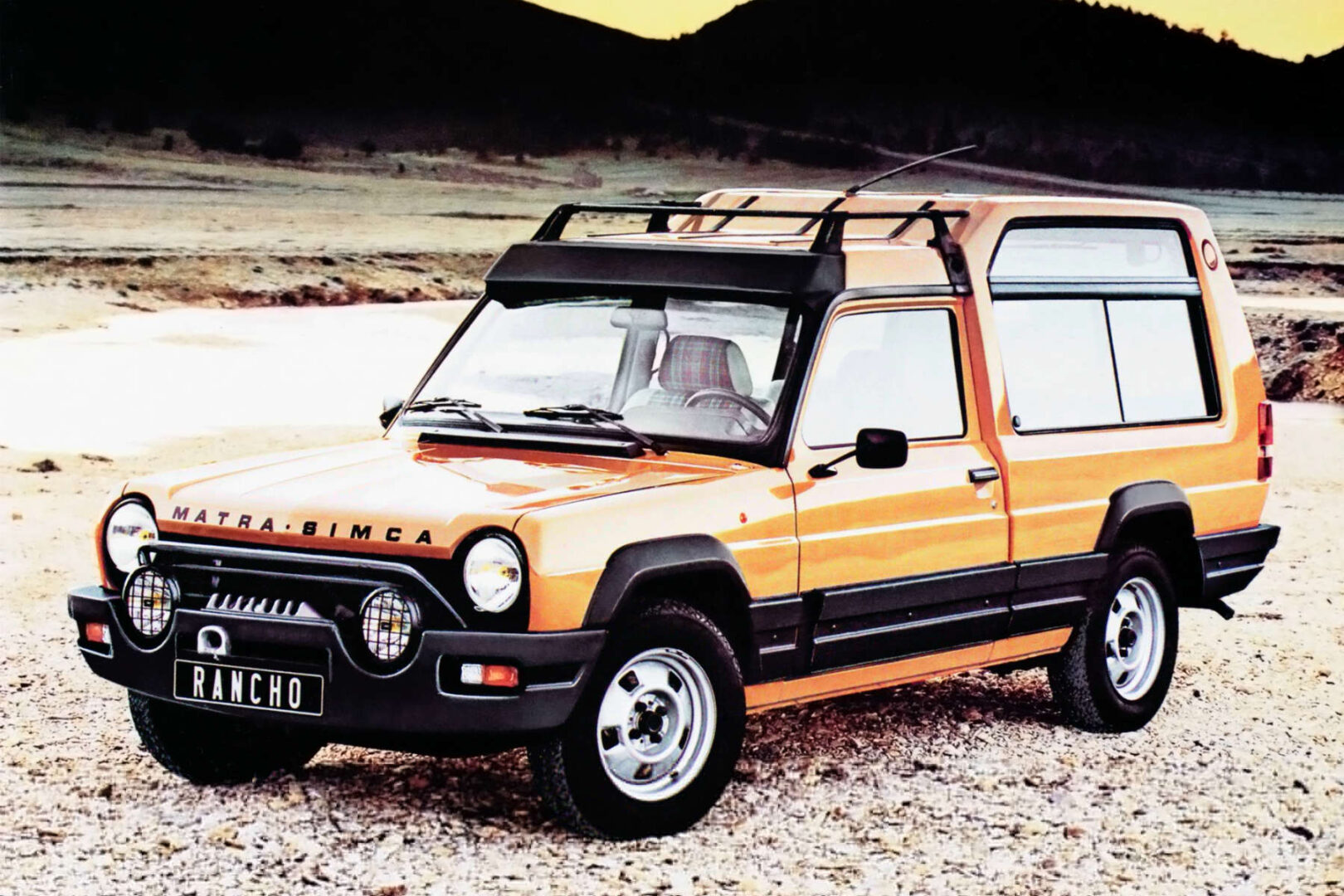
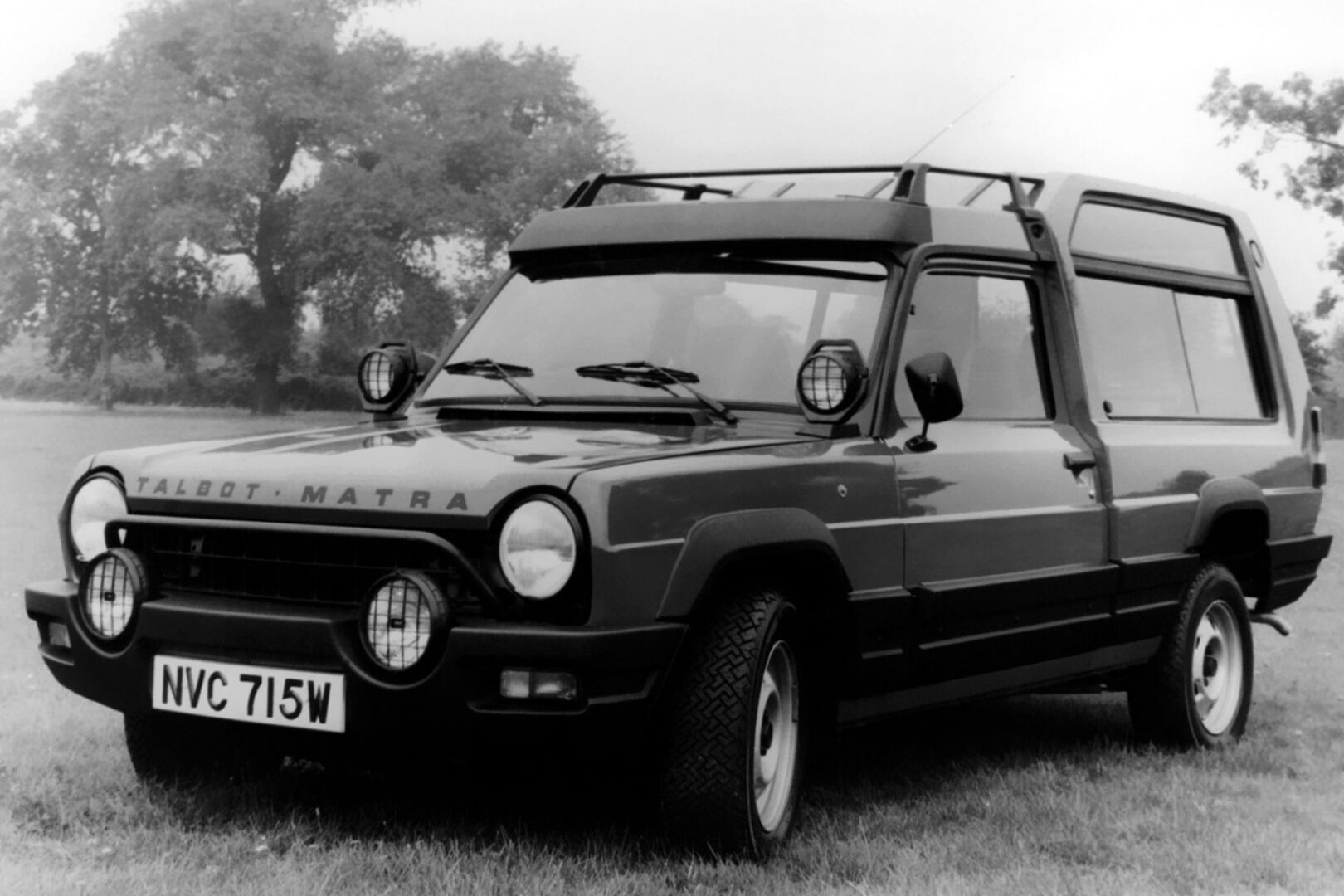
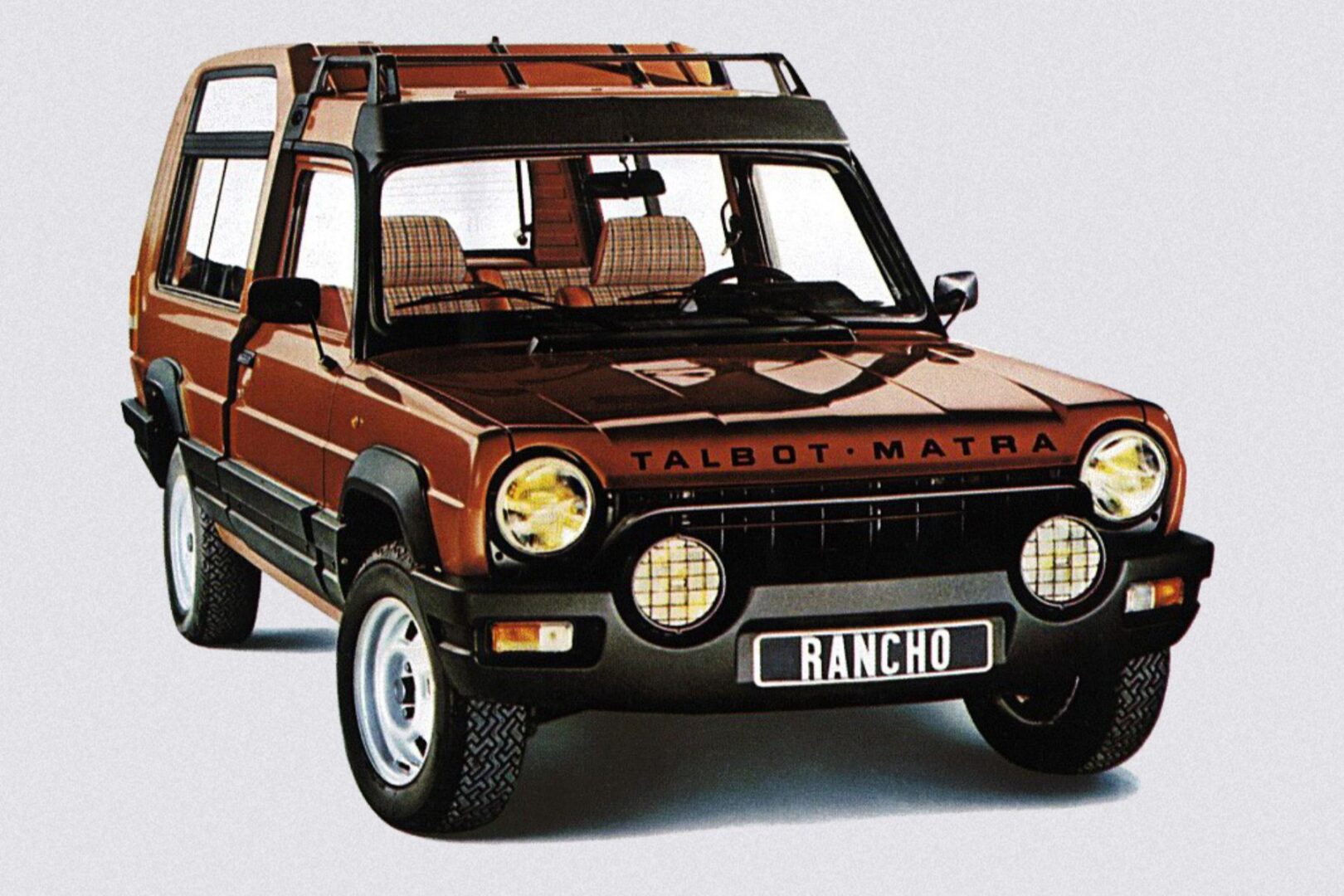
The Rancho certainly looked like an off-roader. Its split tailgate, plastic roof rack, wheelarch extensions and large spotlights saw to that. In reality, though, your Matchbox Superkings model probably had as much off-road prowess than the real thing.
Does this make the Rancho a bit of a fraud: all show and no go? Well, perhaps. But that’s not to say that the Rancho is without appeal. It might have lacked the skills to tackle the rough stuff, but this car was a genuine pioneer. Where it led, others followed.
Matra takes off
Mecanique-Aviation-Traction grew out of CAPRA, a small French aeronautical firm that became Matra in 1942. It started manufacturing Renault-powered sports cars in 1965, before building its first road car in 1967.
It was the Ford V4-powered Matra 530, which paved the way for the three-seat Bagheera sports car (pictured above) in 1974. By now, Matra was developing a reputation for flair and innovation – and what came next was its most groundbreaking and influential car design to date.
An aeronautical background made it hardly surprising that Matra had such broad horizons. And with the fuel crisis of 1973 still a recent memory, it needed to look beyond sports cars to secure its future.
The Bagheera was a joint development between Matra and Chrysler-owned Simca, which had developed a strong dealer network and a successful range of cars. For Matra, this meant access to an extensive distribution network, as well as a bountiful supply of spare parts.
The Simca-Matra-Chrysler-Peugeot-Talbot story is long, complicated and too convoluted for this ode to the Rancho. However, a little knowledge is enough to understand where the faux off-roader came from, how it developed, and what led to its demise.
Matra turned to the Range Rover for inspiration and Simca for a leg-up. Spen King’s creation had enjoyed seven years of market dominance, offering an unrivalled ability to look good outside the King’s Arms or parked on the King’s Road, as well as working on the Queen’s estate.
It’s hard to believe now, but other SUVs of the era were mostly crude, utilitarian affairs, offering next to nothing in the way of creature comforts. A trip to the garage for the annual MOT test was about as far as you’d dare go in an off-roader.
A year before the Rancho arrived, CAR magazine tested the Toyota Land Cruiser and said: ‘The Toyota Land Cruiser is a nasty piece of work. Ugly, ill-fitted to its dual purpose, priced at £4,392 to (theoretically) take on the Range Rover, its overall performance is inferior to the lowly Land Rover Station Wagon’. Ouch.
The Rancho takes shape
The stage was set. Matra felt that the world wanted the prestige and practicality of the Range Rover, without the need for a cumbersome, inefficient and, in many cases, redundant four-wheel-drive system.
Chrysler had enjoyed some success with the Simca 1200 Campero, a Spanish-built vehicle based on the Simca 1100 and designed for unmade roads and forest tracks. Launched in 1973, the Campero’s styling, hardware and approach almost certainly led to the development of the Rancho.
It was based on the 1976 Simca 1100 van, with power sourced from a 1,442cc Simca 1308/Chrysler Alpine engine. Christened P12, there were more than a few subtle nods to the Range Rover, including the split tailgate, two doors, large rear side windows and separate badge lettering on the bonnet and tailgate.
At the back, the Rancho featured a fibreglass-clad steel frame body, with the rear seats positioned 10cm higher than the fronts for maximum visibility. The doors, front wings and windscreen were lifted from the 1100 pick-up, while the dashboard was taken from the Simca 1100 hatchback.
It was by no means quick – top speed was 91mph – and it wasn’t particularly fuel-efficient. You can blame poor aerodynamics and the relatively high kerb weight for the Rancho’s failure to return decent economy. But hey, doesn’t it look great?
The roof rack was Matra’s attempt to mask the step from the front half to the rear section, while the wheelarch extensions, side mouldings and big bumpers provided protection from swinging shopping bags on the streets of Paris and London.
Chelsea traction
‘Built for you to spread your wings,’ proclaimed the launch brochure. Matra was occasionally guilty of promoting off-road skills it just didn’t possess, but it knew that fashion and image would sell the Rancho.
‘For people who don’t mind being noticed a little,’ said a press advert in 1979. ‘Matra Rancho, from Chrysler – a very noticeable car at a rather unnoticeable price: under 6 grand.’ The inclusion of Chrysler was significant – few buyers would have heard of Matra – as was the image used on the ad. The Rancho was parked outside Harrods in Knightsbridge.
Chrysler pulled out of Europe in 1978 and sold its holdings to Peugeot, with the Rancho gaining Talbot-Matra badging in 1979. It remained without any serious competition. Manufacturers were beginning to cotton on to the lifestyle benefits of a 4×4, but the Rancho stood alone in a field offering space, practicality and the option of seven seats. That’s assuming you could drive to the field…
‘Perfectly at home in both town and country. Rancho seats seven in comfort, and with the rear seats folded there really is an astonishing amount of carrying space,’ said the Talbot range ad in 1981. Alongside the Tagora, Alpine, Solara, Horizon and Sunbeam, the Rancho sticks out like an eccentric French exchange student in a room of sombre-suited sixth-formers.
Sheep in wolf’s clothing
Yet it remained popular, especially in its native France, where the automotive press was more accommodating than others. The Rancho story is one of overcoming adversity, forging ahead in a non-existent market, dealing with multiple management changes and a somewhat cynical press.
‘An exercise in form as much as function. It’s intended for well-heeled Europeans who want the rugged look and feel of an off-roader for practical or social reasons,’ wrote Car and Driver in 1980.
‘It is a con trick, nothing more than a sheep in wolf’s clothing,’ said Motor in 1978, before admitting that it looked better than a Range Rover – quite a surprise, coming from a UK title – and had a sharp image.
‘The Rancho has become a very fashionable car in which to be seen along the boulevards of Paris,’ said Chrysler of its ‘multi-purpose leisure vehicle’. And that’s the point of the Rancho – it was never intended to be a Range Rover rival. It was more of a lofty estate car with the driving characteristics of a family saloon or hatchback.
Sure, it cost the same as a well-equipped estate car, but it undercut the Range Rover by some £3,000. Little wonder, then, that Rancho sales were more than double the original forecast, with 56,700 finding loving homes.
Sadly, Britain wasn’t offered the special editions, such as the more rugged Grand Raid of 1980, the well-appointed Rancho X, the metallic black Midnight, or the very lifestyle Découvrable. There was also a French-only commercial vehicle.
Production ended in 1984, with Matra concentrating on its next pioneer: the Renault Espace. The MPV began life as the P11, with Matra building the first three generations and the Avantime. When Renault took on production of the Espace, Matra was effectively dead, although the name lives on in the form of a company building electric bikes.
Childhood hero
Toyota and Nissan have both claimed to have invented the crossover, but the Rancho was out of the blocks before an enlightened marketer had coined the term. It would be another decade before the RAV4 arrived, the growth of the ‘crossover’ segment slowed by the advent of the MPV.
It could be argued, then, that Matra invented the segment, only to stop it in its tracks with the development of the Espace.
About the absence of four-wheel drive – so what? For most buyers, a drive along a forest track to go camping or turning into a beach-side car park is more than enough off-roading, thank you. And when you get to your destination, the Rancho not only looks the part, it has the practicality and space to out-muscle any full-fat 4×4 or estate car.
Whatever your thoughts on the Rancho, that quirky ‘off-roader’ you pushed along the living room carpet was as radical as the Lamborghini Diablo you had pinned to your bedroom wall. Pass that Matchbox Superkings or Corgi model to your young offspring – the Rancho legacy needs to be kept alive.
The latest Lego Icons Formula 1 scale model has been announced, recreating another famous car from F1 history.
Along with covering the modern Formula 1 grid, Lego has designed detailed versions of classic racing cars for its Icons range.
So far, these have included Nigel Mansell’s 1992 Williams FW14B, along with the McLaren MP4/4 driven to victory by Ayrton Senna in 1991.
Now, the Ferrari F2004, used by Michael Schumacher and Rubens Barrichello during the 2004 Formula 1 season, gets the Lego Icons treatment.
It gives F1 enthusiasts the chance to build one of the most dominant racing cars of all time. The F2004 was also the vehicle that carried Schumacher to his seventh Drivers’ World Championship.
A Lego tribute to Ferrari F1 success
The F2004 was the final product of Ferrari’s all-conquering 2000s F1 dynasty, which saw the Scuderia claim six successive Formula One Constructors’ Championships.
With the team under the command of Jean Todt, the Ferrari F2004 was designed by Rory Byrne, Aldo Costa and James Allison, with supervision from Ross Brawn as the team’s technical director.
A development of the title-winning Ferrari F2002 and F2003-GA cars, the F2004 featured improved aerodynamics and the removal of driver aids such as launch control.
Powering the F2004 was a 3.0-litre naturally aspirated V10, capable of producing up to 940hp in qualifying trim.
During the course of the 2004 season, the car claimed 15 race wins out of 18 rounds, along with 12 pole positions and 15 fastest laps.
Such dominance by Ferrari secured a 1-2 finish in the Drivers’ Championship for Michael Schumacher and Rubens Barrichello.
Lego F2004 is available to order now
The Lego Icons version of the F2004 comes with 735 pieces, making for a considerable scale model some 32cm (12.5 inches) long and 13cm (5.5 inches) wide.
Highlights include a detailed replica of the Ferrari V10 engine, a cockpit with working steering, and miniature grooved slick tyres with printed ‘Bridgestone Potenza’ lettering.
Accompanying the Lego model is a Michael Schumacher minifigure, plus a display stand that includes statistics about the F2004, plus a quote from its legendary German driver.
In the UK, the Lego Icons Ferrari F2004 will cost £79.99, which makes it substantially cheaper than the £2.6 million paid for a real version at auction.
Orders for Schumacher’s Ferrari can be placed now. Lego expects to ship the first completed sets from 1 March 2026.
The NTT IndyCar Series will travel to Washington, D.C. this August, following the announcement of the Freedom 250 street race.
President Donald J. Trump formalized the Freedom 250 Grand Prix of Washington, D.C. by the signing of an executive order.
This directs the Secretary of the Interior and the Secretary of Transportation to work with Mayor Muriel Bowser to create a brand-new street course, centered around the National Mall.
Due to take place across the weekend of 21-23 August 2026, the Freedom 250 will form part of the celebrations for the 250th anniversary of the United States Declaration of Independence.
IndyCar has already confirmed that the Freedom 250 will be free for spectators to attend. Fox Sports will be broadcasting the race live.
‘A quintessentially American sport’
As part of the executive order, President Trump said: “For over one hundred years, American IndyCar racing has set the pace for motorsports.
“With speeds topping over 200 miles per hour, the cars and drivers inspire awe and respect in all who watch this quintessentially American sport.”
Penske Entertainment will be responsible for managing the race, as it does for a number of events across the IndyCar season.
“President Trump has bestowed an incredible distinction upon our sport, and we’re grateful for his trust and support as IndyCar prepares to honor our country with a tremendous racing spectacle,” said IndyCar series owner Roger Penske.
The announcement swells the 2026 IndyCar season to 18 races, with the Freedom 250 slotting into the calendar between Markham in Canada and the Milwaukee Mile events.
Adding a new race to the calendar at such short notice will be a logistical struggle for IndyCar, and the capital city itself. An August date means fans and drivers will likely also face temperatures between 90-100 deg F, combined with 70 percent humidity.
Has Washington, D.C. hosted motorsport before?
The Freedom 250 Grand Prix of Washington, D.C. will be the first official motor race to take place on the National Mall. However the nation’s capital has hosted other automotive events.
In 2002, the Cadillac Grand Prix of Washington, D.C. used a 1.66-mile temporary circuit laid out around the RFK Memorial Stadium parking lot. Held as part of the American Le Mans Series, the race was held just once, despite a 10-year contract.
Between 2014 and 2016, the Red Bull Global RallyCross Championship also hosted a round in the grounds of RFK Stadium.
Red Bull returned to D.C. in 2024, giving a high-speed Formula 1 demonstration run ahead of that year’s Miami Grand Prix.
This year’s NTT IndyCar Series starts with the opening race of the season, the Firestone Grand Prix of St. Petersburg on 1 March 2026.
Voting is now open for the inaugural AUTOBEST Conquest. The award gives car buyers the same opportunity as motoring journalists to decide on the Best Buy Car of Europe 2026.
The motoring public now has 50 percent of the vote, with the AUTOBEST jurors from more than 30 European countries accounting for the other 50 percent.
It means that, for the first time, drivers across Europe can help decide what will be the Best Buy Car of Europe 2026. “Equal vote, equal voice,” said AUTOBEST founder and chairman Dan Vardie.
The six AUTOBEST Conquest 2026 finalists
These are the six cars in competition for the title of AUTOBEST Best Buy Car of Europe 2026:
BYD Dolphin Surf
Citroen C3 Aircross
Fiat Grande Panda
Ford Puma Gen-E
MG S5 EV
Renault 5
AUTOBEST is already the world’s largest independent motoring media jury, with 32 jurors across the European continent. The rules state one country, one juror. Motoring Research’s Richard Aucock represents the UK.
Journalists have already conducted an exhaustive two-day analysis of the finalists at the AUTOBEST Ultimate Test late last year. Now, the focus shifts to car buyers, who are encouraged to visit local dealers and test-drive the finalists for themselves.
Public votes are also open for three other categories in the AUTOBEST awards:
Best Users’ Car of Europe
Best Car Design of Europe
Best Affordable Tech Package
The aim is to promote excellence in real-life usability, design and technology, “all shaped together by the public and the professionals”.
Voting is open now and run until the evening of 28 March 2026, when the winners – including the AUTOBEST Best Buy Car of Europe 2026 – will be announced live during the AUTOBEST Conquest Show.
“This pioneering format marks AUTOBEST’s transition from the traditional Gala Awards into a modern entertainment broadcasting concept,” said Vardie.