The Honda Prelude will return to the European market in 2026, more than two decades after it was last on sale.
Honda first revealed the hybrid-powered Prelude Concept at the 2023 Tokyo Motor Show. Since then, the car has appeared at the Los Angeles Auto Show and this year’s Goodwood Festival of Speed.
Along with confirming a comeback for the Prelude coupe, Honda has announced key details of its powertrain setup.
Shifting up the fun
The new Prelude will feature a two-motor hybrid system, likely similar to that found in current Honda models such as the Civic e:HEV.
Honda’s ingenious e:HEV hybrid powertrain uses an e-CVT automatic gearbox to activate the electric motors and petrol engine as required. Sadly, swapping this for a manual transmission in the Prelude thus seems impossible.
Instead, Honda says the Prelude will feature the first use of ‘S+ Shift’ technology, which can ‘simulate the sound and feel of quick automatic gear changes’.
How this will be achieved hasn’t yet been confirmed, but the electric Hyundai Ioniq 5 N has already simulated manual gearshifts to convincing effect.
The return of a famous name
Following the announcement, Hans de Jaeger, senior vice president of Honda Motor Europe, said: “The Honda Prelude is an iconic nameplate, and this latest model promises to build on that heritage with our trademark hybrid performance and the latest dynamic technology.
“All with a view to not only delivering exceptional efficiency, but also the fun-to-drive performance for which this model is known. We are excited for its arrival in Europe following a very positive reception so far.”
Honda first introduced the Prelude for the European market 46 years ago in 1978. Evolving through five generations until 2000, the Prelude debuted new technology such as four-wheel steering and torque-vectoring differentials.
Prices and specifications for a new hydrogen version of the Vauxhall Movano van have been announced.
Intended as an alternative to the existing diesel and electric Movano models, the hydrogen-powered van offers an official range of 311 miles.
The Vauxhall Movano Hydrogen costs £70,400 excluding VAT in L3 H2 form, although this figure drops to £66,450 when the UK Government’s Plug-in Van Grant (PiVG) is applied.
The larger Movano Hydrogen L4 H3 will cost £68,070 excluding VAT and with the PiVG applied.
For comparison, prices for the equivalent battery electric version of the Movano start at £50,385 before VAT.
Longer range, faster fuelling
Vauxhall wants the Movano Hydrogen to appeal to fleet users who cover longer distances, and who don’t have time to wait for EV charging.
A total of four high-pressure fuel tanks are fitted, capable of storing 7kg of hydrogen. Filling these takes just five minutes, making the Movano Hydrogen more akin to a diesel in terms of refuelling.
The hydrogen supplies power to an electric motor that generates 110hp and 302lb ft of torque. There is also a 11kW lithium-ion battery, which can be used to boost acceleration where needed. Regenerative braking helps to replenish the battery, or it can be fully charged in 90 minutes using an AC wallbox.
Strong standard spec
All versions of the Movano Hydrogen come in Vauxhall’s Prime specification, featuring a 10.0-inch touchscreen with satellite navigation as standard. Apple CarPlay and Android Auto are also included, along with Bluetooth and USB connectivity.
There is also a 7.0-inch digital instrument panel, automatic air conditioning, keyless entry and start, plus rear parking sensors.
Orders can be placed for the Movano Hydrogen from spring 2025. Vauxhall has also begun testing a hydrogen-powered version of its smaller Vivaro van, which is already sold in Europe with an Opel badge.
Darkness is a major contributory factor in road accidents. Research by the RAC Foundation showed a 19 percent increase in collisions during the two weeks after the clocks go back.
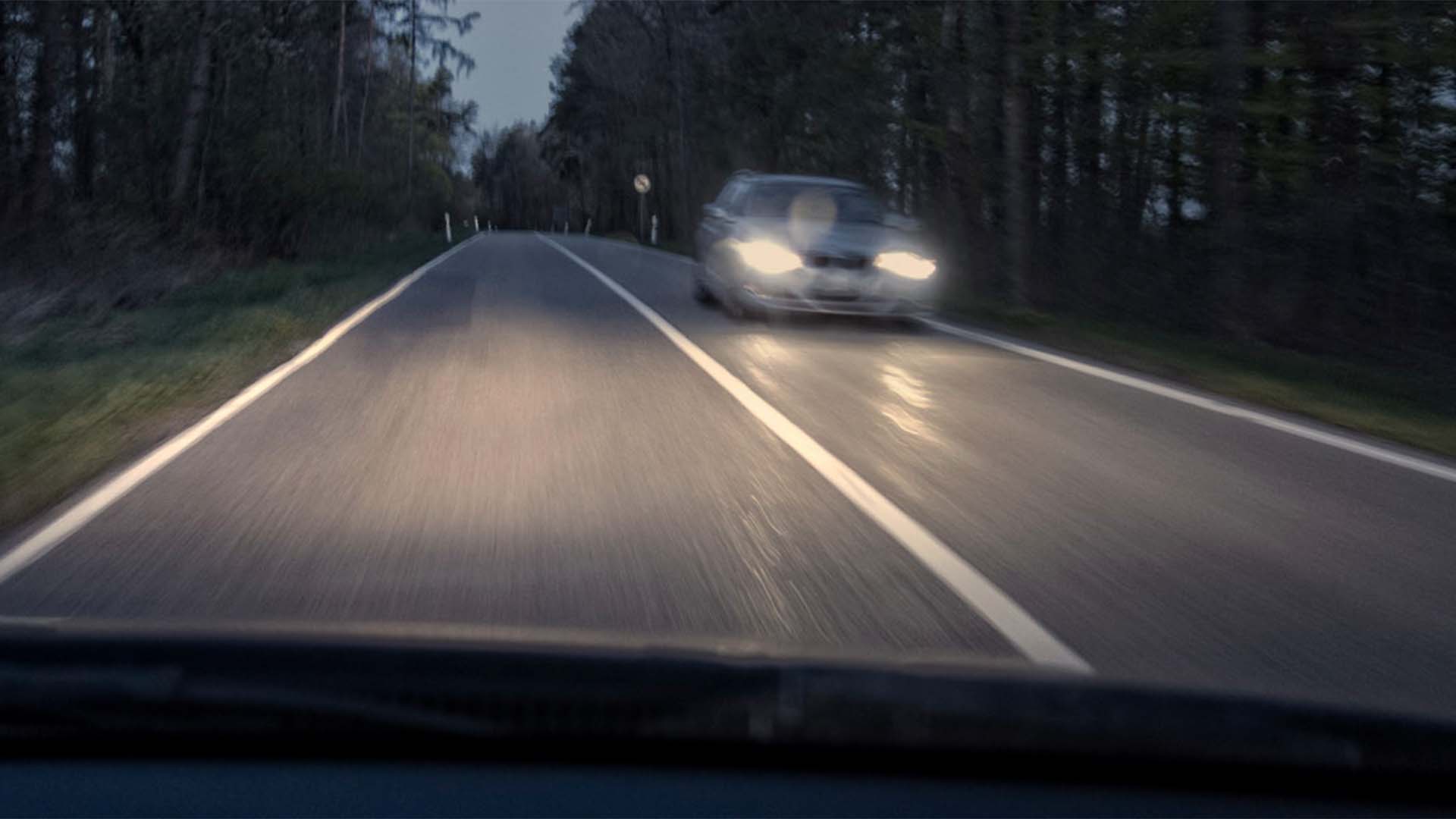
For drivers, the problems include objects that look blurred, night-time glare from artificial lighting and being dazzled by oncoming vehicles.
Indeed, UK Government data showed that around 300 collisions every year are caused by glare from headlights.
As the days get shorter and driving conditions become more difficult, we explain how to drive more safely in the dark.
Get your vision checked
Dr Andy Hepworth of optical lens company Essilor, said: “With such short days in the winter – and driving conditions frequently made worse by the British weather – often people have no choice but to drive in the dark or wet weather, which can play havoc on vision.
“Glare caused by natural or artificial light is undoubtedly one of the biggest challenges – especially for spectacle wearers. Removing distractions caused by glare from street lights, traffic lights and headlights from other cars could help to keep drivers safer.
“Ensuring your eyesight is up to scratch is also crucial. Most people over the age of about 45 will need some vision correction to see in sharp focus. Everyone should have their eyes checked by an optician at least every two years, as your sight can change without it being obvious.”
How to drive in the dark
Dr Hepworth also has the following advice for driving in the dark
Adjust your eyes to the dark before driving. Low light levels cause the pupil of the eye to become larger and this can accentuate any focusing errors. It’s important to wear glasses or contact lenses with an up-to-date prescription.
Keep your distance. It’s more difficult to judge distance in the dark, so allow extra space between you and the car in front.
Use anti-glare lenses. A specially developed lens coating can reduce glare and reflection by up to 90 percent.
Keep the windscreen smear-free. Make sure the windscreen and other windows are kept clean, and ensure the washer fluid is always topped up.
Regularly check and adjust the mirrors. Consider a car with an auto-dimming rear-view mirror.
AI technology company CrowdCharge has calculated the average cost of fuelling a petrol car for a full year as £1,205.
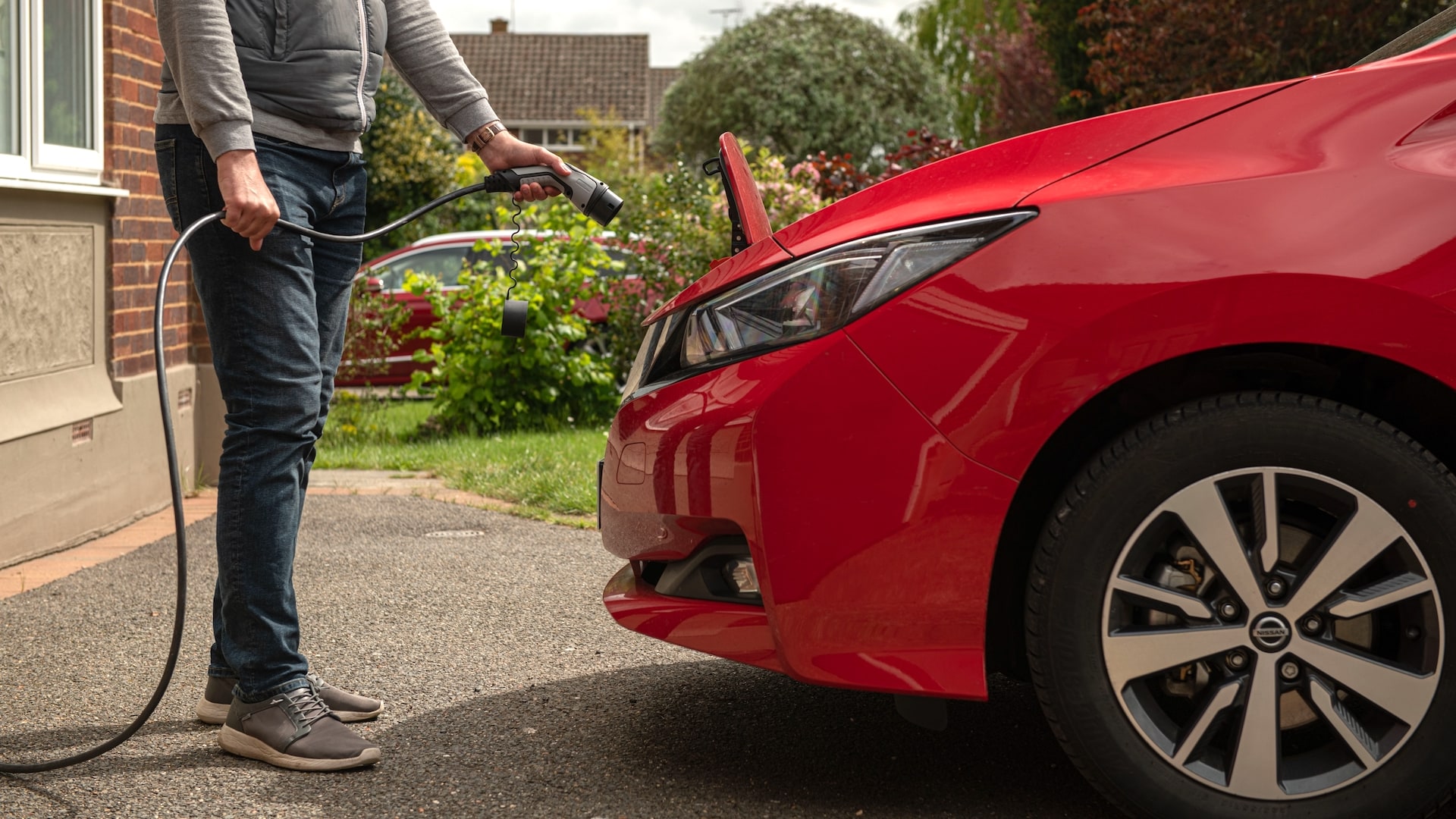
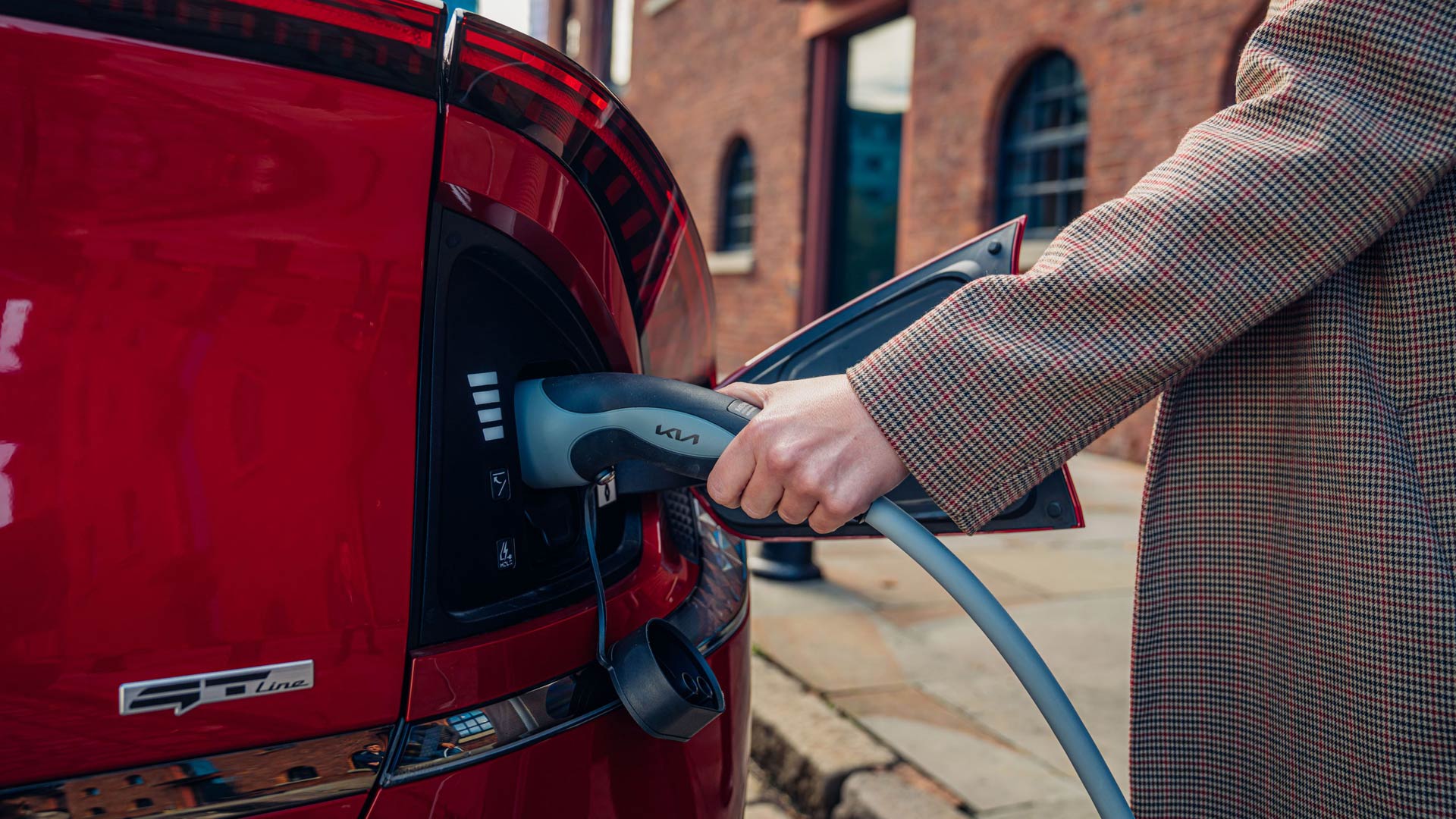
However, having the ability to replenish an EV via a home charging device could see this figure halved to £608.
Making use of the latest smart charging devices could lead to further savings in EV running costs, too.
The smarter option for EVs
The average driver in the UK covers 7,600 miles each year, leading to typical fuel costs of between 13p and 17p per mile for a petrol or diesel car.
By comparison, driving a medium-sized electric car, and having the ability to charge at home, reduces this cost to 8p per mile.
Those with a smart charging device, which allows the charger to operate primarily during off-peak electricity hours, could pay just £400 per year: equivalent to a third of the expenditure for a petrol car.
CrowdCharge notes that the use of off-peak smart charging could cut carbon emissions by up to 63 percent, too.
The argument for EVs
Where EVs are compatible with vehicle-to-grid (V2G) charging, the average cost for a year could decrease to £250, according to CrowdCharge’s research.
V2G allows owners of electric cars to sell power back to the grid when needed, making money in the process.
CrowdCharge is currently trialling V2G with AC technology for workplace charging, using software to dictate when cars charge or export energy to maximise savings.
Mike Potter, CEO of CrowdCharge, said “The current debate about the zero-emission vehicle mandate and electric car sales figures has resulted in a focus on what incentives should be offered to encourage people to buy EVs.
“EVs may be perceived to be more expensive than petrol cars based on their initial purchase price, but when you factor in the fuel price for EVs being either very low or potentially zero, the argument against EVs based on cost evaporates.”
The new Dacia Duster has been named AUTOBEST Best Buy Car of Europe 2025.
The prestigious award, which represents 665 million motorists across Europe, from 31 nations, saw the Duster score a total of 16,292 points from the jurors – but it was a very closely-fought battle.
The second-place Renault Symbioz was just 102 points behind the Duster. That’s a difference of just 0.13%.
In third place, the new Vauxhall Frontera was only 0.29% behind the winning Dacia Duster, while the new Citroen C3 scored only 411 points less.
The MG3 closed the rankings in fifth place, with a still-creditable score of 13,507 points.
Duster double
“It is the most balanced AUTOBEST competition in our history,” said founder and chairman Dan Vardie.
“The difference between the winner and the fourth-place car is less than 1 per cent of the total number of points available to jurors to vote. This clearly shows the impressive progress carmakers have made to fulfil the complex needs of the 665 million car users AUTOBEST is serving.”
It is not the first time the Dacia Duster has scooped the top AUTOBEST prize, with the original model being named Best Buy Car back in 2011.
The results came after two intensive days of assessments back in November in the AUTOBEST Ultimate Test. This took place both on the road and at the OAMTC proving ground in Teesdorf, Austria.
The AUTOBEST Best Buy Car of Europe focuses on attainable, affordable models that cater for a broad spectrum of customers.
Judges assess cars via a complex matrix of 13 criteria, which includes aspects such as performance, design, technology and driver appeal, along with more real-world criteria including practicality, economy and service network.
A big emphasis is placed on price, ensuring that AUTOBEST winners are attainable, affordable and reflect great new car value.
“All the finalists this year proved to be outstanding products,” said Vardie.
“AUTOBEST has shown that, in 2025, there will be a choice of remarkable models around for every European motorist’s needs and tastes.”
The car industry is facing strong headwinds, from import tariffs to mandated EV sales targets. Despite it all, though, 2024 has produced some genuinely exciting new cars, many of which we were lucky enough to drive.
This isn’t a round-up of the ‘best’ cars of the year; many of the vehicles listed here are totally impractical or prohibitively expensive. Frequently both. However, they all share something: an ability to make us smile, and to elevate driving from mere transport to an end in itself.
In no particular order, then, here are the cars we loved driving in 2024, complete with links to read the individual reviews. From a battery-powered buggy to a V12 supercar, it has been quite a journey.
McLaren Artura Spider
The arrival of the al fresco Artura Spider coincided with a mid-life update for the ‘junior’ McLaren. Its 3.0-litre turbocharged V6 and 7.4kWh battery now muster a combined 700 horsepower. In a carbon-tubbed roadster weighing just 1,560kg, that equates to 0-62mph in 3.0 seconds and a 205mph top speed.
Being able to retract the roof adds an extra layer to the Artura experience, while an ultra-rigid carbon fibre tub ensures no compromise in terms of driving dynamics. Factor in up to 21 miles of EV range and a more complete supercar is hard to find.
We said: ‘Light and rigid, it seems almost impervious to inertia, following the tarmac with unwavering focus and zen-like body control. Its hydraulic steering also fizzes with feedback that even the best electric systems struggle to emulate. I’d welcome more initial bite from the brakes, but the Artura Spider delivers a near-flawless dynamic performance.’
The Vanquish was supposed to come back as a mid-engined supercar. Instead, Aston Martin reverted to what it does best: a brawny, front-engined GT.
Raffishly handsome and luxuriously appointed, the new Vanquish makes a winsome start before it even turns a wheel. Then you ignite the 835hp twin-turbo V12 and the seduction is all but complete. In time, the lucid steering, keenly balanced chassis and powerful carbon brakes will deepen its allure. Cars like this are living on borrowed time, soon to be legislated out of existence, so enjoy them while you can.
We said: ‘It sounds fabulous, too – less AMG and OTT than the DBS 770 Ultimate, the V12’s cultured snarl swells into a blue-blooded roar. Aston Martin Chairman Lawrence Stroll says his customers are more interested in “the smell, feel and noise” of petrol engines than electric motors, and driving the Vanquish makes it hard to disagree.’
For raw driving excitement, the SR10 XXR is on another level. While most modern cars use electronics to flatter your ability and mask your mistakes, the track-only Radical takes no prisoners. Especially on a wet circuit with a decidedly average driver at the wheel (guilty as charged).
Powered by a tuned four-cylinder engine from a Ford Focus ST, the 725kg Radical sends 425hp to its rear tyres: sufficient for 0-62mph in 2.4 seconds. With a paddle-shift sequential transmission, on-board telemetry and up to 425kg of downforce, even novices can achieve seriously quick lap times.
We said: ‘Fast enough to make most supercars look silly, it’s a fantastic toy for track days. Even after a damp day at Donington Park, I’m already addicted. Better still, you could buy one and go racing; the Radical Cup UK visits circuits such as Brands Hatch, Silverstone and Paul Ricard in France. Although hardly cheap, it’s a relatively accessible route into “proper” motorsport.’
The first EV on our list is the most powerful road-going Audi ever: the 925hp RS E-Tron GT Performance. A close relative of the Porsche Taycan, this sleek and sumptuous saloon is the indirect replacement for the Audi R8 supercar.
Thanks to self-levelling air suspension, the E-Tron does an impressive job of disguising its 2,320kg kerb weight. It has the long-striding, unflappable air of a proper grand tourer, with an electric range to suit (364 miles in the official test). It’s rarer and better looking than a Taycan, too.
We said: ‘In a classic Quattro, full power arrives in a sudden and frenzied blast of boost. Here, it’s a smooth and progressive rush, with no turbo lag or gear changes to worry about, making it far easier to manage. Indeed, you acclimatise surprisingly quickly to all that thrust underfoot, enjoying the elastic acceleration and sheer sense of omnipotence.’
Hang on, isn’t this supposed to be all new cars? Well, it might look convincingly classic – not to mention achingly gorgeous – but this is a modern, electrified twist on the second-generation Mercedes-Benz SL. Built in Oxfordshire by Everrati, it’s also a compelling example of a restomod done right.
The process starts with a ground-up restoration to concours standard. The factory-fitted six-cylinder engine is then swapped for a 68kWh battery and Helix electric motor, which deliver a healthy 300hp. Neatly integrated into a car that looks almost exactly as Mercedes intended, the EV drivetrain also suits the SL’s laid-back demeanour. The ‘Pagoda’ was never truly a sports car, after all.
We said: ‘Its steering is fingertip-light, throttle response is calmly calibrated and the modest proportions make it easy to slice through London traffic. Besides, everyone lets you out of junctions in something this beautiful – if only for a closer look.’
Wherever the line between a supercar and a hypercar lies, the Revuelto has arguably crossed it. With a grand total of 1,015hp from a naturally aspirated V12 and three electric motors – two driving the front axle and one at the rear – Lamborghini’s flagship can rocket to 62mph in 2.5 seconds and reach 217mph.
Moreover, while the Lambos of old gave you a physical workout, this one is remarkably easy to drive. It even has a fully electric City mode for pootling around town. That said, while a far more polished product than the Aventador it replaces, find an open road (or racetrack) and the Revuelto still feels as unhinged as you’d hope.
We said: ‘Those few-and-far-between moments when you can unleash all 9,500rpm are illicit, immersive and utterly intoxicating. And where the Aventador would have punctuated every rush to the redline with a brutal upshift, the Revuelto scarcely even pauses for breath.’
The Continental GT is the heart of the Bentley brand: like the 911 for Porsche or the Golf for Volkswagen. Getting it right really matters, then – and thankfully the new GT Speed doesn’t disappoint. Powered a 4.0-litre V8 with plug-in hybrid hardware, a mighty 782hp makes it the most powerful Bentley ever.
The latest Speed is 186kg heavier, but better balanced, with 49:51 weight distribution between the front and rear axles. It’s enjoyable to hustle on Swiss mountain passes (we tried) and makes light work of long distances. Interior quality and tactility is also second-to-none.
We said: ‘It undoubtedly has a greater bandwidth than before, not only in terms of performance and the ability to drive in electric mode, but also in ride and handling, the twin-valve dampers switching from tightly clenched to languidly laid-back depending on the drive mode.’
John Redfern of Motoring Research liked the BMW 128ti so much he bought one. How’s that for an endorsement? BMW’s rival for the Golf GTI sits a rung below the M135i on the 1 Series ladder. A front-driven hot hatchback, it summons 265hp from a 2.0-litre turbocharged engine: good for 0-62mph in 6.1 seconds and 155mph.
Sporty decals, bright red brake calipers and 18-inch alloy wheels help the 128ti look the part, while inside it boasts sports seats and aluminium pedals. There’s no manual gearbox option, but the eight-speed auto does allow you to take control using the steering wheel-mounted paddles.
We said: ‘On the road, rather surprisingly, it is the 128ti’s ride that first stands out. Compared to other hot hatches, it flows impressively well along UK tarmac, despite the suspension’s inherent tautness. The steering, if not bursting with feel, offers enough feedback to be fun, and there is ample torque to make easy progress.’
After 61 years in continuous production, there are many ‘special’ 911s. But the 2024 S/T – which combines the 525hp NA flat-six from the GT3 RS with a manual gearbox, less weight and a wingless ‘Touring’ body – is more special than most. Limited to 1,963 examples, it’s the ultimate 911 of the current ‘992’ generation.
It’s easy to feel jaded about yet another 911 derivative, of course, but the S/T will soon banish your cynicism. It feels vivid and alert, a car that demands to be driven. A shame only a lucky few owners will.
We said: ‘The engine is akin to a religious experience. Shorter gear ratios mean acceleration is even quicker than the RS, and with full power arriving at 8,500rpm, it just keeps on intensifying, seemingly hell-bent on revving itself to oblivion. Frankly, as the likes of Ferrari and Lamborghini launch supercars with twice the power output, it makes you wonder how anyone could need or want more.’
First conceived as a military vehicle based on the classic Mini, the Moke became a symbol of the Swinging Sixties, driven by everyone from The Beatles to James Bond. Today, it has been resurrected as a fun-loving electric car – perfect for summer holiday adventures.
Unfortunately, our drive took place on a damp day in the Home Counties, yet the simple charms of the Moke won us over. A power output of 45hp and range of 54 miles look woeful compared to other EVs, but the Moke is less of a car, more a lifestyle accessory. And it can’t fail to make you grin.
We said: ‘The Moke is still no Lotus Elise, yet there’s something to be said for cars that keep your limbs busy and your brain engaged at well below the legal limit. Going flat-out in a Moke at 50mph feels faster than a Porsche Taycan travelling at twice that velocity.’
Now nine years old, the Alfa Romeo Giulia Quadrifoglio is aging like a robust Italian red. As other super saloons grow larger and heavier, weighed down by unnecessary technology, the simple pleasures of the 520hp, 1,660kg Giulia become ever more satisfying.
The major change for 2024 was the addition of a mechanical limited-slip differential – replacing the electronic torque vectoring item used previously – which makes the Giulia feel more controllable close to the limit. On the road, it’s a captivating driver’s car. On a racetrack, it can be an absolute hooligan.
We said: The Giulia’s steering is light and direct, and its suspension – double wishbones at the front, multi-link at the rear – delivers a fluid ride that is well matched to British roads. While other super saloons can feel like instruments of brute force, the Quadrifoglio has a deftness that rewards its driver on a deeper level.’
More evidence of Aston Martin’s return to form arrived with the new Vantage. A power hike to 665hp for the 4.0-litre twin-turbocharged V8 slashed its 0-62mph time to 3.5 seconds, and elevated top speed to 202mph. Bilstein adaptive dampers, an electronic differential and bespoke Michelin tyres make the car quicker around corners, too.
Shaper and sportier than a DB12, but more of a muscle car than its mid-engined rivals, the Vantage has an ebullient character all its own. If a Porsche 911 Turbo seems a bit obvious, this is a brilliant (and British-built) alternative.
We said: ‘No question, the Vantage now plays in the major league. With larger turbos, modified cam profiles and improved cooling, its hand-built engine feels mighty in the mid-range and ravenous for revs. By the braking board at the end of the main straight, the big-lunged V8 is still pulling hard at nearly 160mph.’
Amidst the many varieties of Porsche-based restomod, the Kalmar 9X9 stands out. Based on an air-cooled 993 model from the 1990s, but with the powertrain from a current 911 Turbo, it’s conceived as a tribute to the legendary 959 – Porsche’s first supercar, launched in 1986.
Following all that? If not, just know the 9X9 makes 930hp, weighs 1,410kg and hits 62mph in a scant 2.0 seconds. Technologies such as four-wheel drive, a dual-clutch PDK gearbox, adaptive dampers and rear-wheel steering help to build your confidence, while the sheer force of boost takes your breath away. There’s also a Leichtbau version, with less weight and the naturally aspirated engine from a 911 GT3.
We said: ‘With a furious whoosh from its twin turbochargers, the 9X9 piles on speed at a brain-scrambling rate. It’s immersive and intense: a level of performance that only true exotica (and the very fastest EVs) can compete with.’
The shape of the Plus Four has hardly changed since 1950, yet much is new beneath those classic curves. The top story for 2024 is the Dynamic Handling Pack – a £1,995 option that comprises stiffer springs, adjustable Nitron dampers and a rear anti-roll bar. It transforms how the Morgan drives.
In the natural habitat of the British sports car – i.e. a meandering country lane, preferably with a pub at one end – the standard Plus Four could feel flustered and, frankly, a little crude. Now it offers the composure of something more modern, without diluting its exuberant character.
We said: ‘The 259hp BMW engine’s plentiful torque keeps it constantly on the boil, punching forcefully out of corners and overtaking other cars with ease. Its soundtrack is gruff and earthy, with a deep gargle of induction when you floor the right pedal. Pressing the Sport Plus button opens baffles in the twin tailpipes and unleashes a fusillade of explosive pops on the over-run.’
Volkswagen’s latest, eighth-generation Golf GTI had a tough act to follow and the reviews were mixed. Thankfully, a recent facelift has righted many of those issues, with improved infotainment, recalibrated dampers and more power – now 265hp, for 0-62mph in 5.9 seconds. The only downside is that you can no longer choose a manual gearbox.
No matter: the dual-clutch DSG automatic is so good that you won’t miss swapping cogs, while the new chassis setup strikes a great balance between comfort and agility. With the next Golf GTI set to go electric, this really could be the end of an era.
We said: ‘The GTI is still no Honda Civic Type R in terms of hard-wired engagement or sheer point-to-point speed, but nor does it try to be. This is a car that shrugs off the daily commute or school run, yet also relishes those rare moments on roads less travelled.’
The diminutive Honda Freed MPV has been voted the 2024-2025 Japan Car of the Year (JCOTY) by a panel of 59 jurors.
It represents the 12th time Honda has claimed overall victory in the JCOTY contest. This is also the first time Honda has collected top honours since the CR-Z topped the chart for the 2010-2011 edition.
Strong competition saw the Honda Freed take on contenders such as the new Volvo EX30 and the high-performance Hyundai Ioniq 5 N.
Voting was close, but the Freed emerged with a total of 220 points. It was followed by the Mazda CX-80, with a score of 196 points.
A tough automotive evaluation
First held in 1989, the Japanese Car of the Year awards see journalists from 40 publications put the top 10 contenders through an exhaustive evaluation. This includes track driving, which took place this year at the Sodegaura Forest Raceway near Tokyo.
Aimed squarely at the Japanese domestic market, the third-generation Honda Freed impressed the judges with a combination of practicality and driver engagement.
A choice between traditional petrol and hybrid engines also contributed to the Freed’s success, as did its strong value for money. The MPV received maximum marks from 15 of the 59 JCOTY jurors.
Mini Cooper is the top import
Along with claiming third place in the overall JCOTY awards, the latest Mini Cooper was named Import Car of the Year for 2024-25.
The judges were particularly impressed by how the new Mini offers both petrol and battery-electric powertrain options, along with safety and driver assistance systems comparable to a BMW 7 Series.
The Mini was also commended for its use of recycled materials – and the Cooper’s classic ‘go-kart driving experience’ won the judges over, too.
Success for the Mini Cooper continues the BMW Group’s run of good fortune in the JCOTY awards. The BMW X1 took the top import prize last year, as did the BMW 3 Series for 2019-2020 contest.
A back to basics minivan
Other important prize winners included the Mitsubishi Triton pickup truck, which took home the Design Award. Mazda’s e-Skyactiv R-EV rotary engine technology received an Executive Committee Special Award.
The Honda CR-V e:FCEV, powered by hybrid tech and a hydrogen fuel cell, added more success for Honda, winning the Technology Award.
Collecting the first-place trophy, Satoru Azumi, chief engineer for the Honda Freed, commented, “When designing the Freed, we went back to basics and created a new standard for the family minivan that offers class-leading comfort, usability and packaging with the option of Honda’s unique hybrid system and a very reasonable price tag.”
One of the most recognisable cars from the world of video games has been recreated by BMW.
Originally featured in 2005’s Need for Speed: Most Wanted, the blue and silver E46 M3 GTR has become an icon for the series of street racing games.
With the Need for Speed franchise commemorating its 30th anniversary this month, BMW decided to help with the celebrations.
The result has brought the Most Wanted M3 GTR out of its virtual existence and into the real world.
Racing in America
The BMW E46 M3 GTR was developed by the German marque’s motorsport division, with a particular focus on the American Le Mans Series (ALMS).
A straight-six-powered version of the E46 M3 was entered in the 2000 ALMS, but was outgunned by the rival Porsche 911 GT3. So, for the 2001 season, BMW Motorsport squeezed an all-new 4.0-litre V8 beneath the bonnet, which brought up to 450hp to the party.
The V8 did the trick, with the M3 GTR winning seven out of 10 rounds during the 2001 ALMS, and taking the GT category title with Jörg Muller. Rival teams were unhappy, as BMW had pushed the limits of GT eligibility by offering 10 road-going examples of the GTR after the season had finished.
For 2002, the ALMS upped homologation requirements to 100 cars and 1,000 engines. BMW withdrew, but it had cemented the E46 M3 GTR into motorsport history.
The fans’ most-wanted BMW M3
Such racing infamy led the developers of Need for Speed: Most Wanted, EA Black Box,to include the BMW M3 GTR in the 2005 video game.
Driven by the game’s main antagonist, Razor, the blue and silver M3 played a major role in the street racing story, and became a gaming icon as a result.
As John Stanley, senior creative director for Need for Speed Unbound says: “The M3 GTR is one of the most recognisable and beloved cars in Need for Speed history”.
It meant that when the Need for Speed franchise looked to celebrate a major milestone, there was only one vehicle to choose.
From screen to reality
Using one of its rare E46 M3 GTR race cars, BMW has accurately replicated the blue and silver livery seen in the Most Wanted game.
The completed car will be on display at the BMW Welt visitor centre in Munich, allowing fans to see the famous M3 in person.
For those who cannot make it to Germany, the M3 GTR will also make a virtual appearance in the latest Need for Speed Unbound game, being offered as part of the ‘Prepare for Lockdown’ update.
The reborn Renault 4 is one of the most anticipated cars of 2025, combining retro styling with an electric powertrain.
And there is a way to ensure you are first in line for ordering a 4 E-Tech, with the launch of Renault’s R4 R Pass.
Priced at £150, Renault says the R4 R Pass is the ‘perfect Christmas gift for enthusiasts’. Especially if they like electric crossovers.
A classic comeback
Revealed earlier this year at the Paris Motor Show, the R4 E-Tech is an unashamed tribute to the original Renault 4, produced between 1961 and 1994.
Sharing a platform with the equally retro Renault 5 E-Tech, the R4 comes with the option of two powertrains, plus a range of up to 250 miles.
An extended wheelbase boosts legroom for those in the rear, with the Renault 4 E-Tech offering 420 litres of luggage capacity. The front passenger seat can be folded flat, allowing for easier transportation of longer loads.
However, the real appeal of the R4 E-Tech will be its classic styling. This includes a single-piece illuminated front grille, along with a modern reinterpretation of the Renault 4’s three-part tail lights.
Priority access included
Buying the £150 R4 R Pass allows for priority ordering of the Renault 4 E-Tech, ahead of other potential customers. Cars will be assembled in the Maubeuge manufacturing plant in France.
Those purchasing the R4 R Pass will also receive regular information and updates on the Renault 4 E-Tech, along with a 1:43-scale model of the car.
Renault notes that the £150 paid for the R4 R Pass is not deducted from the cost of any car ordered. However, the company will make a €50 (£41) donation to its Give Me 5 programme, which helps young people into sport, for every pass purchased.
The original Ford Escort is ready to fire back into production, some five decades after the final RS2000 was assembled.
County Durham-based Boreham Motorworks, part of the DRVN Automotive Group, has revealed full details of its Escort RS Mk1 ‘Continumod’.
Officially licensed by the Ford Motor Company, Boreham Motorworks’ Escort will use a continuation chassis, but with modern components and technology underneath.
The combination makes this evocative fast Ford more than simply another restomod, says its maker. Let’s take a closer look…
Refining a design classic
As a genuine continuation car, there is no donor vehicle involved in the creation of the reborn Escort Mk1 RS. All 150 examples will be built from the ground up, and stamped with a new continuation Ford chassis number.
On the outside, the Escort Mk1 RS Continumod sees some subtle, evolutionary design changes.
Wayne Burgess, design director at Boreham Motorworks, decided to remove the Escort’s quarter bumpers and main indicators. Its new LED headlights have been styled to resemble the look of race cars with taped-up lamps.
There is also a billet-machined aluminium front grille, plus updated door handles, door mirrors and tail lights. The 15-inch alloy wheels evoke the four-spoke RS items fitted to classic Fords.
Revving to 10,000rpm
Customers can choose from two power options for the Escort Mk1 RS Continumod, starting with a 1.8-litre twin-cam four-cylinder engine. Developing 185hp, it is matched with a four-speed synchromesh straight-cut transmission.
However, the star of the show is the new 2.1-litre four-cylinder engine, which is capable of revving to a frenetic 10,000rpm.
Featuring forged steel conrods and a billet crankshaft, this motor can deliver a peak output of 300hp. In true motorsport style, it will also come with a five-speed dog-leg manual gearbox.
Both options send power to the rear wheels via an ATB limited-slip differential, with upgraded brakes responsible for reining in the performance.
Analogue action
Boreham Motorworks is pursuing a target weight of just 800kg for the Escort Mk1 RS Continumod. This would result in a power-to-weight ratio comparable to a supercar.
Helping the Escort’s cause is the use of carbon fibre for many body panels and interior parts. Forged magnesium wheels are on the options list.
The interior itself is minimalist but modernised, with air conditioning and heated screens included. There is a deep-dished three-spoke steering wheel, along with modern bucket seats trimmed in grippy Alcantara.
An optional roll cage is available, as are four-point racing harnesses and a carbon fibre storage box for race helmets.
‘Honouring a legacy’
Iain Muir, CEO of Boreham Motorworks, said: “Recreating the Ford Escort Mk1 RS for a new generation is not just about building a car; itʼs about honouring a legacy that has inspired driving enthusiasts for over half a century.
“At Boreham Motorworks, weʼve committed ourselves to not only staying true to the essence of the original, but also to bringing it into the modern age with cutting-edge engineering, precision design and unparalleled craftsmanship.”
Prices for the Escort Mk1 RS Continumod start from £295,000 and 150 cars are planned, each with a two-year/20,000-mile warranty. Potential owners can register their interest on the Boreham Motorworks website now.
Following an official debut for the Boreham Motorworks Escort RS next summer, production is expected to start in the third quarter of 2025.