Hyundai is set to launch a flurry of new models over the next 18 months, including all-new cars and replacements for some of its UK best-sellers.
A total of five new Hyundais are set to arrive during the next year and a half, spearheaded by the exciting new Ioniq 3 – due to be revealed at the Milan Design Week in April.
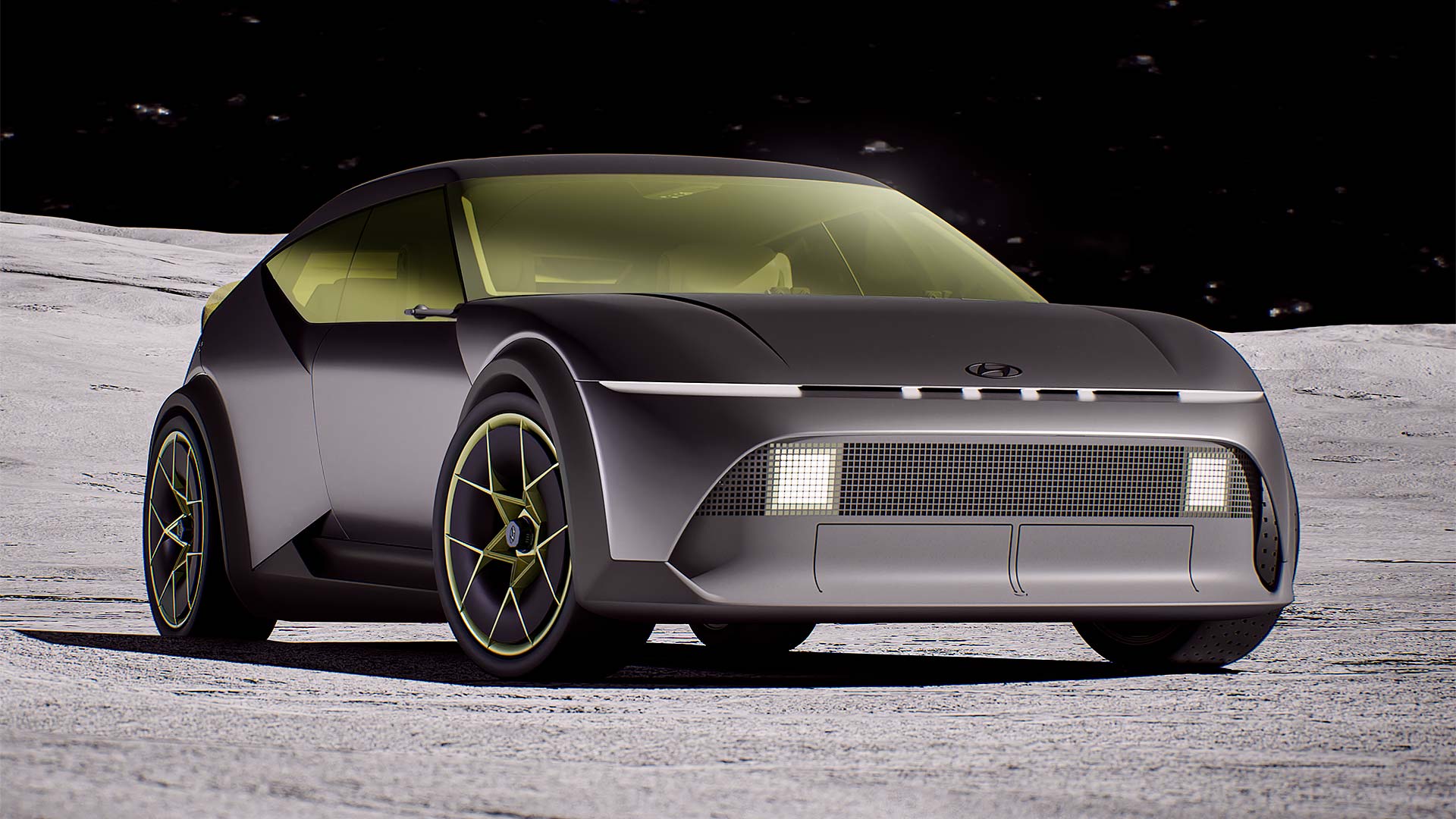
The production version of the stylish Concept Three concept car shown at the Munich Motor Show last autumn (see image below), the electric Ioniq 3 will compete with cars such as the Nissan Leaf and Volkswagen ID.3.
New i20, Bayon, Kona and Tucson
The new Hyundai Ioniq 3 will also take on its sister car, the Kia EV4 – and the shared technology indicates it could have a driving range of around 390 miles. It will be built in Turkey and prices could start from less than £35,000.
Hyundai will launch an all-new version of the Hyundai i20 supermini, too, along with a replacement for the Hyundai Bayon crossover SUV. While the current car is still fresh, there will eventually be a replacement for the Hyundai Kona as well, underlining the firm’s commitment to the small car sector.
Hyundai is also readying replacement for the top-selling Hyundai Tucson. We might get a first look later this year, ahead of it going on sale in 2027. Given how well the current model is still selling, it will be a very important new car for the firm.
The new Hyundai Tucson is expected to continue with hybrid and plug-in hybrid drivetrains, but not a fully electric version: Ioniq models currently serve that role.
Even so, Hyundai’s entire range will be electrified by 2027, allowing buyers to make a choice between hybrid, plug-in hybrid or pure electric.
“We are moving at speed and purpose to give European customers the choices they deserve,” said Hyundai’s European CEO Xavier Martinet.
Hyundai 2025 results
Martinet, who has now been boss of Hyundai Europe for a year, revealed that Hyundai sold just over 603,000 new cars in Europe last year, up around one percent versus 2024.
Importantly, sales of its electrified vehicles – that’s hybrid, plug-in hybrid and electric – grew by 24 percent, with EVs on their own accelerating by almost half.
Nearly one in five new Hyundais sold across Europe was electric. The EV mix was even higher in the UK, at 27 percent.
The UK was also Hyundai’s largest overall market in Europe, with 93,124 new cars registered here last year. This saw the firm move up from ninth to sixth place in the car brand rankings, overtaking Toyota, Nissan and Mercedes-Benz.
The Hyundai Tucson was the firm’s best-selling model in Britain, taking a 30 percent share. Nearly six in 10 Hyundais were either hybrid, plug-in hybrid or electric, 10 percent above the market average.
International motor shows, once the epicentre of new car launches, have struggled to recover from the financial blows dealt by Covid. However, the annual Retromobile show in Paris has defied this trend by looking to the past, with a focus on classic cars and restomods.
For legendary Italian design studio Bertone, Retromobile provided a natural stage to reveal its reinvention of the Autobianchi A112 Runabout – a concept sports car created by Marcello Gandini while he was working at Bertone in 1969.
Just 25 examples of the new Bertone Runabout will be built, offered in either Barchetta (fully open) or Targa (removable roof) guises. A wedge-shaped carbon fibre body sits atop an aluminium chassis, with a 475hp 3.5-litre supercharged V6 delivering a 0-62mph time of 4.1 seconds.
After espressos were brewed and pleasantries had been exchanged, I sat down with head of design for the Runabout, Andrea Mocellin, to discuss his influences, Italian coachbuilding and some decidedly unconventional headlights.
Your career has largely focused on future mobility and technical innovation so far. What drew you to the Runabout project?
“While I’ve always been interested in the future of mobility, I began my education and career in Turin, surrounded by coachbuilders and the legacy of masters such as Marcello Gandini and Giorgetto Giugiaro. Bertone has always thought radically about vehicle design – and that, for me, is new mobility. Design must communicate not only with the driver, but with today’s audience and market, which demands a certain type of car.
“The Runabout is radically influenced by Marcello Gandini’s masterpiece [pictured above], but it must also satisfy collectors who expect exceptional performance by today’s standards. Bertone wants to create pieces of art with real performance and a driving experience defined by joy.”
During his review of the Alfa Romeo 8C, Jeremy Clarkson relayed the Tate Gallery’s view that a car cannot be art, because art has no purpose beyond itself. The Runabout is not the most practical of cars – so can it be considered as art?
“We hope the Runabout is beautiful, and perhaps one day it will sit in art museums as well as car museums. But we also want it to be driven.
“Historically, Bertone has always believed in art with a function. Until now, we have offered our talent to others. Today we can manufacture our own cars and deliver art, design and function together.”
Given Bertone’s vast archive, why choose the Runabout as your first resurrected concept car?
“This marks the renaissance of the Bertone brand. Alongside the GB110 hypercar [pictured on the left above], we wanted our second car to offer a completely different ownership and driving experience.
“Whereas the GB110 draws inspiration from the breadth of Bertone’s history, the Runabout is a deep dive into a single, iconic design.”
What were the design challenges of translating a 1969 concept into a modern, road-legal car?
“You have to approach the project knowing it must reach production. Those boundaries shape the design from day one. Working closely with engineers is what turns a sketch into something that belongs on the road. Overcoming those challenges is what gives a design its credibility.
“If you ask any designer, they would rather work on two production cars than one hundred concept cars. That way you get to see it on the street and leave your mark on automotive industry history.”
Did you want to keep the original car’s headlight position behind the driver?
“Unfortunately, that just wasn’t possible. We love the original Gandini car, but it was only used as a reference.
“The new pop-up headlights still deliver a sense of theatre, but this is a car designed to be used in today’s world.”
Were there any non-negotiable design cues for the new Runabout?
“The red stripe divides the car into two distinct design languages. The lower section references the scafo – the boat hull – reinforcing the nautical inspiration. The upper half follows the iconic Bertone wedge.
“The coda tronca (cut-off tail) and L-shaped B-pillar complete the sculpture and make the Runabout instantly recognisable.
“The interior, too, was crucial given the open-top format. Horizontality dominates, creating a wraparound feel. A nautical compass nods to the original, while the digital intrusion is limited to the instrument cluster. We wanted craftsmanship and premium materials, while retaining an analogue feel. The interior is minimal – not simple, but minimal.”
Having lived in Turin, London and Munich, what have these cities taught you about car design?
“Turin is the spiritual home of automotive design. Munich is more industrial and feeds my interest in innovation. London – and indeed Asia and America – showed me the global appetite for unique cars that differ from mass-produced offerings.
“I also learned just how globally revered the Bertone brand remains, and the affection enthusiasts still have for its classic designs.”
What is your dream road-trip with the Bertone Runabout?
“From the south of France to Turin. The coastal roads would be perfect. The American west coast, too – the Runabout would come alive in those sunsets. And, not to be a cliché, but even British rain would beautifully highlight the car’s forms.”
I can’t disagree. The Runabout feels perfectly suited to la dolce vita along the riviera. Bertone’s revival shows that scarcity, craftsmanship and clear design intent still have the power to stop people in their tracks.
As the automotive industry approaches the physical limits of performance, emotion is increasingly being injected through nostalgia. The reborn Lamborghini Countach, with Aventador hardware beneath retro-inspired bodywork, is a clear case in point. Bertone wants to position itself at the forefront of a return to true coachbuilding, where modern, usable underpinnings meet historic design language.
For those lucky 25 owners, the Runabout will be a collector’s piece. For everyone else, it’s a reminder of what Italian coachbuilding can achieve when given space for creative expression.
Electric vehicle manufacturer Polestar has further expanded its range of seamless public charging options for owners.
The Swedish marque now offers access to more than 28,000 public charging devices compatible with Plug & Charge capabilities, when making use of the Polestar Charge application.
This means Polestar owners are able to use an array of charging devices simply by plugging into them. Communications between the car and charger are handled automatically, meaning there is no need for additional payment actions.
In addition, the company has fully integrated making use of the Tesla Supercharger network into Polestar Charge, again removing the need to use additional smartphone apps.
Plug in, charge up
Plug & Charge operates through identifying the vehicle when it is connected to a public charging device. As the car stores payment information itself, billing is handled automatically for the registered owner.
As a result, this means there is no need to use separate smartphone apps to manage charging, or present a contactless credit or debit card to begin charging.
Currently, only the Ionity and Allego networks offer Plug & Charge capabilities for Polestar in the UK, meaning drivers will have access to around 1,000 devices.
In order to access Plug & Charge features, owners will also have to subscribe to the Polestar Charge service, at a cost of £11.99 per month.
Polestar Charge offers access to more than one million charging points across Europe, with the ability to navigate to them directly through Polestar’s integrated Google Maps in-car navigation.
Subscribers also receive a 30 percent discount on public charging, including networks such as Ionity, InstaVolt, and Fastned.
Creating a seamless charging experience
Polestar’s inclusion of the Tesla Supercharger network directly into its charging app will also make life easier for owners.
Drivers can now easily access over 20,000 Tesla Superchargers, at more than 1,500 locations across Europe, without the need to switch apps. Real-time device availability, along with in-car route planning, is now included.
Olivier Loedel, Head of Product Software Management at Polestar, says: “With Polestar Charge we give our customers access to one of the biggest charging networks in Europe.
“By expanding Plug & Charge and fully integrating Tesla Superchargers, we’re improving our premium seamless charging experience even further. Our strong charging offer, integrated with the in-car navigation in Google Maps, sets us apart from many competitors.”
Plug & charge is currently available for Polestar 2 MY26 and Polestar 3 models, and will be made available for Polestar 4 owners through an upcoming Over-the-Air update.
Although the McLaren Racing Formula 1 team is preparing for the new 2026 season, the company’s road car division has revealed a limited-edition to commemorate its success last season.
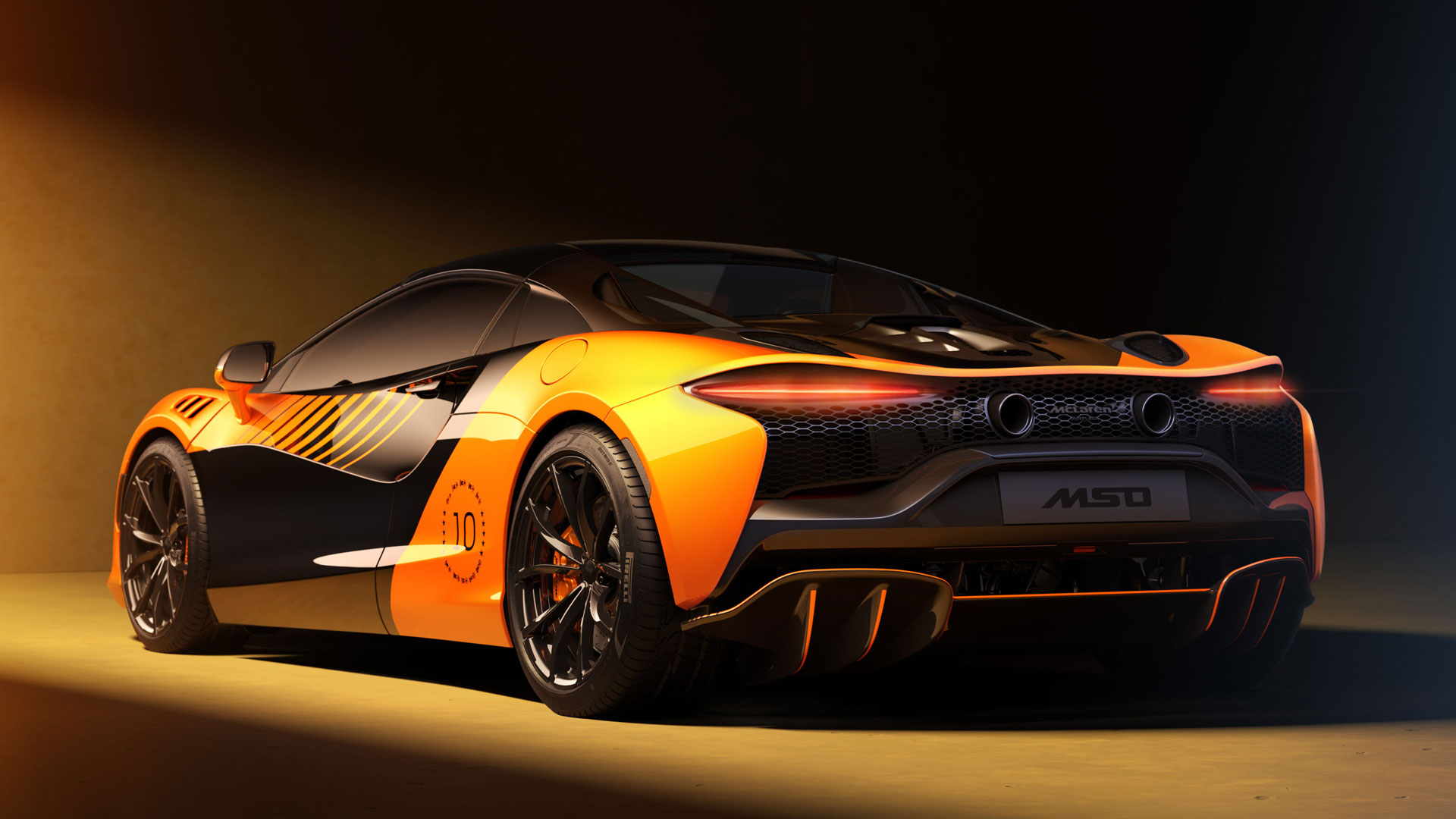
The Artura Spider MCL39 Championship Edition has been designed in honour of McLaren’s tenth Formula 1 World Constructors’ Championship victory, earned during the 2025 season.
Along with the Drivers’ Championship win for Lando Norris, the Woking-based outfit also claimed a dominant Constructors’ first place ahead of Mercedes-AMG and Red Bull Racing.
A tenth title means McLaren Racing is now second on the list of all-time Formula 1 World Constructors’ Champions, surpassing Williams with nine.
Such a major milestone necessitated a new limited-edition supercar, designed to honour McLaren Racing and the successful MCL39 F1 racer.
Bespoke F1-inspired livery included
Sticking to a theme, the McLaren Artura Spider MCL39 Championship Edition will be limited to just ten examples, all made by McLaren Special Operations (MSO).
A hand-painted exterior livery combines MSO Bespoke Myan Orange with Onyx Black, and sees the addition of special ‘10’ motifs ahead of the rear wheels.
Each motif incorporates ten stars, along with the rendered outline of every McLaren F1 car to win a World Constructors’ Championship.
MSO has added a black exterior package as standard to the Artura Spider, along with ten-spoke Super-Lightweight Dynamo Forged Alloy Wheels in gloss black. More Myan Orange has been used for the calipers of the carbon ceramic brakes.
There are also black McLaren exterior logos, black model badges, and exhaust tailpipes given a ‘Stealth’ finish.
Signed by Lando Norris and Oscar Piastri
For the interior, MSO has treated the Artura Spider to seats including unique ‘10’ headrest embroidery in McLaren Orange, plus a steering wheel that features a Myan Orange 12 o’clock marker.
The overall interior is upholstered in Performance Carbon Black Alcantara, and Jet Black Nappa Leather, along with contrasting McLaren Vision Orange piping.
McLaren Formula 1 drivers, Lando Norris and Oscar Piastri, will place their signatures on the Artura Spider’s extended carbon fibre door sill trims.
Each MCL39 Championship Edition will include a ‘Custom Track Record Plaque’ in the luggage compartment, and an exclusive collectors’ keepsake for each owner.
Buying a piece of McLaren history
McLaren has left the Artura Spider mechanically unaltered for the MCL39 Championship Edition. This means the same hybrid-enhanced twin-turbo 3.0-litre V6 as normal, producing 700hp and 531lb ft of torque.
This is not the first time McLaren has used the Artura for a special celebratory model. Last year the MCL38 Edition gained a similar orange and black livery, whilst being limited to only nine examples.
Henrik Wilhelmsmeyer, Chief Commercial Officer, McLaren Automotive said: “McLaren is a brand that merges the excitement of Formula 1 racing with a curated experience that matches our clients’ distinctive lifestyles.
“We want the connection our fans feel with our brand to extend beyond the emotional and into the tangible, by making it possible for them to be a part of McLaren history.”
Dutch sports car manufacturer Donkervoort has revealed its most powerful vehicle to date: the 600hp P24 RS.
Combining a lightweight carbon fibre body with a twin-turbocharged V6 engine gives the new P24 RS truly explosive performance.
Donkervoort has used Audi engines in its sports cars for more than two decades. However, the end of production for Audi’s sonorous 2.5-litre five-cylinder motor left the Lelystad-based company with a problem.
Enter the 3.5-litre Ford Ecoboost V6, which has powered everything from the Transit van to the mid-engined Ford GT supercar.
Dutch Formula 1 supplier Van der Lee has bolted bespoke turbochargers to the V6, resulting in peak outputs of 600hp and 590lb ft of torque. Not bad in a car that weighs just 780kg…
Choose how much power you want
The new P24 RS develops 100hp more than the previous Audi-engined P22 model, and boasts an outrageous power-to-weight ratio as a result.
However, Donkervoort realises that drivers may not want the full 600hp for trundling to the shops. A ‘Power to Choose’ menu lets them select 400, 500 or the full 600 horses as required.
Despite its advanced new engine, Donkervoort has retained an old-school five-speed manual gearbox. It does offer a rev-matching function on downshifts, though.
Controlling the vast power being channelled to the rear wheels is a Torsen limited-slip differential. This helps propel the P24 RS from 0-124mph in just 7.4 seconds. Top speed is 186mph.
AP Racing four-piston brakes are fitted as standard, while those in search of ultimate track-day stopping power can specify carbon-ceramic discs.
F1-inspired aerodynamics
Compared to the Lotus Seven-style kit cars Donkervoort originally built in the 1970s, the wild P24 RS looks like an arrival from outer space.
The company has kept its trademark exposed front wheels, but used Formula 1 know-how to develop an optional aero kit.
Comprising a jutting front splitter, dramatic rear wings and a double diffuser, the aero kit generates 90kg of downforce at 155mph.
Other aerodynamic aids include headlights that hide behind the front grille until needed. The P24 RS features a pair of removable carbon fibre targa-top roof panels, too.
Tractive adjustable dampers can be joined by optional adjustable ride height system, which allows the P24 RS to be lowered at the push of a button.
Donkervoort P24 RS available to order
Donkervoort has kept the interior of the P24 RS pleasingly simple, using dials and buttons rather than relying on a touchscreen.
The removable steering wheel is used to control most major functions, but an iPad Mini-based infotainment system can be added on request.
A set of custom-made lightweight Recaro bucket seats come with six-point harnesses approved for road and track use. Behind the seats, a 298-litre luggage capacity is on par with a typical supermini.
Prices start from €298,000 (approximately £257,500), although an extensive degree of customisation is available on top, including options such as power steering and air conditioning.
Some 150 examples of the P24 RS are planned. Donkervoort has already taken orders for the first 50 cars from customers.
The first examples of the Chevrolet Corvette ZR1 have arrived in the UK, with one currently available to buy now.
Although the eighth-generation Corvette is officially sold in Britain, including the performance Z06 version, the supercar-baiting ZR1 remains off-limits on this side of the Atlantic.
However, London-based performance specialist Clive Sutton has imported two examples of the ZR1 into the UK, taken from the limited 2025 production series.
One of the cars has already been claimed, but the stunning Competition Yellow example pictured here is still for sale.
An asking price of £425,000 represents a hefty premium compared to the ZR1 3LZ’s $195,495 cost in the United States – equivalent to just £143,200. Even so, it’s still a (relatively) affordable way into a new supercar with upwards of 1,000hp.
The most powerful production Corvette V8
The most powerful road-going Corvette when launched – until the ZR1X arrived – the eighth-generation ZR1 boasts a twin-turbocharged 5.5-litre V8.
Developing 1,064hp and 828lb ft of torque, the flat-plane crank LT7 engine propels the ZR1 from 0-60mph in just 2.3 seconds when combined with the optional ZTK Performance Package.
Flat-out, the Corvette ZR1 can reach 233mph – and as Hennesey proved, it can still hit 196mph when carrying a Christmas tree on its roof.
Other ZR1 features include an eight-speed dual-clutch auto transmission, performance exhaust system, suspension with Magnetic Selective Ride Control, and Brembo carbon-ceramic brakes.
A fully loaded supercar
The Competition Yellow Corvette ZR1 coupe offered for sale by Clive Sutton comes in range-topping 3LZ trim, boasting a formidable level of specification.
This includes the dramatic carbon fibre aero package with a huge rear wing and front dive planes. More carbon fibre is used for the door mirror caps and split rear window panel. The exhaust tailpipes are finished in black.
On the inside, Jet Black leather and microsuede upholstery covers the GT2-specification sports seats, complemented by yellow stitching. The steering wheel boasts carbon fibre detailing, too.
Options added to this particular ZR1 include a front axle lift system. Like all Corvette coupes, the roof panel is removable.
Buy a Corvette ZR1 from £365,000
Such a comprehensive level of spec does help justify the £425,000 asking price of the ZR1 for sale. Clive Sutton notes this includes all transportation costs, the 10 percent import duty and 20 percent VAT charge, plus all fees associated with UK homologation and registration.
Opting to have another ZR1 imported, with a lower level of specification, could see customers paying from £365,000.
Clive Sutton said: “We’ve imported the world’s most desirable high-performance and luxury vehicles for almost 40 years, but I still get excited by supercars like the ZR1.
“We expect demand to outstrip supply for this iconic American supercar and we’re confident that our seamless, premier experience is what customers at this exclusive end of the market expect.”
New data has revealed a surprising disparity in the level of vehicle-related fires tackled by Fire and Rescue Services across the UK.
Following Freedom of Information requests, the research used callout logs from 31 different Fire and Rescue Services.
Data covering incidents across a full year was collated, with this information overlaid across the number of vehicles registered in each area.
This creates a picture of where Fire and Rescue Services deal with the most vehicle incidents, including fires.
At its most extreme, the data showed that vehicles in London were 15.6 times more likely than those in Kent to be involved in an incident requiring an emergency response.
London Fire Brigade topped the charts for the most vehicle-related callouts, attending 7,572 incidents in one year. This equates to the capital’s firefighters responding to 453 incidents per 10,000 vehicles.
Tyne and Wear Fire and Rescue claimed second place, with 343 callouts per 10,000 vehicles, followed by East Sussex Fire and Rescue on 268 incidents.
At the other end of the scale, Kent Fire and Rescue Service attended just 29 incidents per 10,000 vehicles during the past year.
County Durham and Darlington Fire and Rescue Service was the second lowest, responding to 46 callouts for every 10,000 registered vehicles. Notably, this is seven times lower than that recorded by neighbouring Tyne and Wear.
Derbyshire followed as the third lowest, with 114 incidents per 10,000 vehicles registered: still nearly four times lower than London.
Proper car maintenance reduces risk
Although London Fire Brigade attended the most vehicle callouts relative to cars registered, these accounted for only 5.5 percent of all the incidents it attended.
Karl Bantleman from Direct365, which undertook the research, commented: “Data from Fire and Rescue Services across England clearly illustrates the tireless, around-the-clock work of this sector, ensuring our nation’s safety.
“The disparity between vehicle safety of counties like Kent and the high incident rates in areas like London and Tyne and Wear shows that road risk is heavily influenced by local infrastructure and traffic density. We’ve seen road incidents account for over 20 percent of Fire and Rescue callouts in areas like Buckinghamshire, which demonstrates the fluctuating pressure placed on different regional services.
“Regardless of location, vehicle owners must take proactive steps to reduce risk. Routine maintenance is vital to preventing incidents and ensuring our essential emergency services can focus their resources where they are most needed.”
The majority of UK drivers believe that breaking road traffic laws is justified if they judge it to be an emergency situation.
More than two thirds (68 percent) of motorists said it was acceptable to park on double yellow lines, break the speed limit or use a bus lane if needed.
Some 17 percent of those surveyed said they had broken a motoring rule in an emergency: a figure that equates to around seven million drivers in the UK.
Almost a quarter (24 percent) said they would be willing to contravene the law if they believed they could do so without being caught.
Despite this, most of those questioned (86 percent) admitted to feeling annoyed when other road users broke the law.
Bending the rules when needed
Temporary car insurance provider Tempcover, which conducted the research, asked what situations UK drivers would most likely deem an emergency.
A medical crisis, such a passenger experiencing a heart attack or stroke, was considered sufficiently urgent by more than half (55 percent) of those surveyed. Someone suffering a serious injury would be acceptable to a similar proportion (52 percent).
However, others took a broader view of what an emergency situation might be.
Pet emergencies were deemed an acceptable reason to break the law for 14 percent, whilst four percent even believed that needing the toilet was justification enough.
If stopped by the police in a genuine emergency, almost a third (32 percent) would expect an officer to escort them to their destination. Some 14 percent believed they could just ‘get away with it’ instead.
The risk of causing a second emergency
Of the 12 percent who have borrowed someone else’s car during an emergency, less than half (41 percent) checked whether they were insured to drive it.
In fact, 36 percent admitted they were unaware that driving without insurance could see a car seized and potentially crushed.
Adam Craddock, car insurance expert at Tempcover, said: “In the heat of an emergency situation, the end goal is often at the front of mind. However, it is vital to remember that breaking road laws – like speeding or running red lights – can inadvertently create a second emergency by putting yourself and other road users at risk.
“The last thing anyone needs in a crisis is the legal and safety repercussions to make an already difficult situation much harder to manage.
“Driving without valid insurance, even in an emergency, remains a criminal offence. If caught driving uninsured, you could be subject to fines, points on your licence, and the vehicle could be seized and destroyed.”
Today, you hear much discussion about ‘peak car’. Many enthusiasts believe this golden age occurred in the 1990s, a time when most vehicles were dynamically sorted, reliable and comfortable over long distances. They also weren’t too large or powerful to enjoy on real roads, nor were they constrained by nannying driver aids. The general absence of SUVs among the cars launched 30 years ago is refreshing, too.
Here, we remember the coolest and most interesting cars launched in 1996, including the Lotus Elise, Citroen Saxo VTS and Ford Ka. Which one would you choose to revisit?
Porsche Boxster
Along with winning the Euro 96 football tournament, Germany scored another major success in 1996 with the launch of the first-generation Porsche Boxster.
A mid-mounted engine gave the two-seat roadster near-perfect weight distribution, aiding its agility and sense of balance. Early examples came with a 2.5-litre flat-six, with the later Boxster S model gaining a more powerful 3.2 unit.
Widely acknowledged as having saved the company from extinction (a turnaround bolstered by the Cayenne SUV of 2002), the Boxster revolutionised how Porsche produced and sold cars.
Mercedes-Benz SLK
The Mercedes-Benz SLK (and later SLC) has now been discontinued, but it left a strong legacy. Launched in 1996, that amazing folding hard-top roof came in a relatively affordable package.
Handsome looks, a peppy 2.3-litre supercharged engine and the three-pointed star badge all helped make the SLK a success. Faster versions followed, peaking with the SLK 32 AMG in 2001.
The clever Vario Roof proved cars could have the benefits of security and comfort, but still enjoy top-down motoring. Whether we can be grateful for coupe-convertible imitators such as the Nissan Micra C+C and Peugeot 206 CC is another matter
Audi A3
Given Audi’s standing in the modern car market, it is hard to downplay the significance of the A3’s launch in 1996. Arriving just ahead of the Mk4 Volkswagen Golf, the Audi offered buyers an upmarket hatchback experience, albeit at a slightly higher cost.
The first-generation A3 was good to drive, aided at launch by the option of a 150hp 1.8-litre turbocharged engine. Later in its life, powerful diesels helped sell the idea of a TDI hot hatch.
Today, more hatchbacks than ever are sold as premium products. But it was the original A3 that paved the way for them.
TVR Cerbera
Arguably the Blackpool company’s finest creation, even in the crazy world of TVR the 2+2 Cerbera made an impact like nothing else. Stunning looks, devastating performance and an outlandish soundtrack made the Cerbera a hit.
Orders flooded in when the car was first revealed in 1993, but deposit holders had to wait until 1996 for delivery. The promise of a top speed in excess of 180mph was enough to offset worries about reliability in early magazine road tests.
Every Cerbera was exciting, from the 350hp Speed Six through to the last 440hp 4.5-litre Speed Eight. No traction control or anti-lock brakes meant the cars demanded respect, especially on wet roads
Spectre R42
We will forgive you if you have never heard of the Spectre R42, let alone actually seen one. Inspired by the Ford GT40, this British-built supercar even used the same naming convention as Ford, as it stood just 42 inches tall.
The R42 was intended to compete in the Le Mans 24 Hours race. Financial difficulties saw production start slowly, then continue that way. Fewer than 30 cars were eventually completed, with the majority of those heading to Switzerland.
Spectre reportedly took 2,000 hours to hand-build the R42, losing money on every example. A 350hp 4.6-litre Ford V8 was the engine of choice.
Jaguar XK8
Revealed to the world at the 1996 Geneva Motor Show, the Jaguar XK8 was intended to pull the classic British marque back from irrelevance and revitalise its image. Sound familiar? With more than 90,000 made between 1996 and 2004, however, it certainly proved successful on the sales front.
Helping the XK8’s case was its graceful styling, created under the supervision of the late Geoff Lawson. Although the interior was still a traditional wood-and-leather affair, the performance on offer was thoroughly modern.
Early cars came with a 290hp 4.0-litre V8 engine. The launch of the supercharged XKR in 1997 lifted performance to another level.
Lotus Elise Series 1
Not sold on the idea of an electric Lotus SUV? Nor are many people, it seems. So let’s remember the good times, specifically when the Elise made its debut 30 years ago.
The combination of a lightweight aluminium chassis, fibreglass body panels and mid-mounted engine created a glorious driver’s car. Precise steering and a low centre of gravity made the most of the 118hp 1.8-litre engine, too
Drive an Elise and you wonder why anyone would want more. Values of early cars are now on the rise, and rightly so. We will probably never see its like again.
Renault Sport Spider
If you prefer your lightweight roadsters with a French flavour, the Renault Sport Spider was just the ticket in 1996. As the first car to wear the Renault Sport badge, this was a truly hardcore proposition.
Early cars did not even have a windscreen, using an aeroscreen device instead. By the time the Spider made it to the UK, however, the 100 examples sold here were all fitted with a full glass screen. A one-make race series saw the roofless Renault supporting the British Touring Car Championship in the late 1990s.
All cars came with a mid-mounted 148hp 2.0-litre four-cylinder engine, which is connected to a five-speed manual transmission.
Renault Megane Scenic
During the past 30 years, the compact MPV rose to great heights before disappearing into relative obscurity.
The launch of the Scenic created a new segment for the European market, spawning multiple imitators. Its key features included three individual rear seats that could be moved or removed.
Heading into the 2000s, the increasing popularity of SUVs saw sales of the Scenic begin to dwindle. We think these small and practical people carriers are due a comeback.
Peugeot 306 GTI-6
Six-speed manual transmissions had typically been the preserve of exotic supercars until Peugeot added one to its hot hatchback. Compared to the previous five-speed S16 model, the GTI-6 used six close-ratio forward gears to better keep its 2.0-litre engine in the power band.
An output of 167hp doesn’t seem much today. However, combined with the 306’s sweet chassis, it made for a true driver’s car in 1996. Find a good one today and you’ll see what all the fuss was about.
Peugeot 106 GTI
Peugeot was on a roll with hot hatches in 1996, demonstrated by the launch of the 106 GTI. Yes, the 1.6-litre engine had a mere 120hp, but the pint-sized Peugeot weighed just 950 kg.
That meant a 0-60 mph time of 7.5 seconds, with a top speed close to 130mph. Yet it was precise and entertaining handling that really sold the 106 GTI to enthusiasts.
Although it was constantly compared to the older Peugeot 205 GTI, the 106 has since established itself as another hot hatch to commemorate.
Citroen Saxo VTS
Along with the Peugeot 106 GTI, 1996 can also be remembered for introducing its in-house Citroen rival. The Saxo VTS would become the king of the McDonald’s car park, forever associated with the ‘Max Power’ modified car scene. That Citroen asked Katie Price, then known as Jordan, to help promote the VTS only reinforced this image.
It packed the same 120hp engine as the 106 GTI, but had a greater fondness for disappearing backwards into hedges due to lift-off oversteer. This probably explains why only a few hundred examples of the Saxo VTS remain on our roads.
Ford Ka
It’s hard to believe the original Ka made its debut three decades ago. The first production example of Ford’s ‘New Edge’ styling, it still looks modern today.
Certainly more so than the ancient 1.3-litre ‘Endura E’ four-cylinder engine, which predates even England’s 1966 World Cup victory. But the Ka was never about performance. Rather, this was a cheap city car that was fun to drive.
Had Ford made the Ka’s underbody rust protection as good as its handling, we would undoubtedly still see them on a regular basis. Sadly, most have now rotted away.
Lancia Ypsilon
Launched after Lancia had departed the UK market, the first-generation Ypsilon was a development of the original Fiat Punto. Aimed at delivering a little more pizazz in the piazza, the Ypsilon was offered with a choice of 100 different paint colours.
Lancia launched the Ypsilon with its tried and tested FIRE range of engines, and tuned the suspension to deliver a more refined ride. A performance model, given the wonderful name of Elefantino Rosso (Tiny Red Elephant), followed later in the Ypsilon’s production run.
Fiat Coupe 20v Turbo
Long before Chris Bangle gained notoriety for his BMW styling efforts, the American designer worked for Fiat in the 1990s. His most striking creation was the Fiat Coupe, launched in 1993.
In 1996, the Coupe was offered with a powerful five-cylinder turbocharged engine. This sent 217hp to the front wheels, allowing for 0-60mph in around six seconds. It meant the Coupe now had the performance to back up its bold looks.
For those who struggled with the styling of the Coupe, solace could be found on the inside. Other than a body-coloured strip across the dashboard, the Pininfarina-designed cabin was rather more conventional than the exterior.
Ferrari 550 Maranello
The 478hp 550 Maranello blasted onto the covers of car magazines in 1996, exciting Ferrari fans with its 199mph top speed.
The 550 was both a grand tourer and a red-blooded supercar, with a front-mounted V12 engine and an open-gate manual gearbox. It truly delivered on the road, and is now rightly recognised as an all-time Ferrari great.
Skoda Octavia
Everyone’s favourite Czech mate revived a name first used by Skoda between 1959 and 1973. Launched in April 1996, the new Octavia promised plenty of space for not much cash.
Its boot was substantially bigger than the Mk4 Volkswagen Golf it shared a platform with, but the Skoda was cheaper to buy. This first-generation Octavia eventually sold more than 1.5 million examples.
Holden HSV GTS R
While Europe was building small MPVs and hot hatchbacks, Australia continued to build V8-powered super saloons. One of the rarest and most outlandish models produced by Holden in the 1990s, the HSV GTS-R is a true collector’s item.
Just 85 examples of the bright yellow saloon (or ‘sedan’ if you’re Aussie) were made, and it was the most expensive Holden ever when new. A 5.7-litre V8 with 289hp was standard, or buyers could pay more to have the engine ‘blueprinted’ by Holden’s racing team.
Such low production numbers have resulted in big prices for examples of the GTS-R, despite its unfashionable three-spoke alloy wheels. A few years ago, one was sold for the equivalent of £190,000.
Dodge Viper GTS
Not to be outdone, America was celebrating the launch of the coupe version of the Dodge Viper for 1996. A development of the RT/10 roadster model, the GTS featured a special ‘double bubble’ roof to accommodate crash helmets.
The launch of the GTS also saw Dodge release a range of updates for the Viper. These included airbags, electric windows and air conditioning. More power was extracted from the 8.0-litre V10, taking it all the way to 450hp.
Mitsubishi Lancer Evolution IV
Developed for use in rallying, road-going versions of the Mitsubishi Lancer Evolution helped spearhead the UK’s Japanese grey-import market.
Constant developments saw the Evo IV released in August 1996, using an updated platform. Underneath, the 2.0-litre turbocharged four-cylinder engine and manual transmission remained. Mitsubishi fitted the Evo IV with Active Yaw Control for its all-wheel drive system, helping control the 276hp output.
Compared with earlier versions, the Evo IV sported a more dramatic bodykit. Huge PIAA fog lights, 16-inch OZ Racing wheels and Recaro bucket seats were also part of the transformation.
Toyota Mega Cruiser
No, this is not a Hummer H1. The Toyota Mega Cruiser was the Japanese company’s own take on the Hummer concept, creating a giant SUV intended for military use.
Production of civilian versions began in 1996, although fewer than 150 examples were sold to the general public. High prices, and the general lack of need for a giant SUV in Japan, kept sales low.
A 4.1-litre diesel engine provides the power, and comes with a four-speed automatic transmission. The all-wheel-drive system has a two-speed transfer case, along with front, centre and rear differential locks.
Toyota Classic
When even Toyota’s UK magazine describes a vehicle from its back catalogue as ‘wacky’, you can be confident that it will be unconventional. In 1996, Toyota decided to celebrate the 60th anniversary of the 1936 AA sedan by building a modern tribute.
Using a Hilux pickup truck frame as a base, the Classic was powered by a 2.0-litre four-cylinder engine with 97hp. Inside, Toyota added extra wood trim for the dashboard, a wooden steering wheel, and red leather seats.
Toyota produced 100 examples of the Classic, making them a real rarity today. At the time of writing, we couldn’t find a single one for sale.
SsangYong Korando
Released in 1996, the second-generation of the SsangYong Korando is certainly one of the more curious vehicles on our list. Essentially a South Korean take on the Jeep Wrangler, using engines from Mercedes-Benz, the Korando had body-on-frame construction.
The combination of German engines and a ladder frame chassis helped the Korando develop a reputation for dependability. Coil suspension and selectable four-wheel drive allowed it to go further off-road than softer SUVs.
Although it may look a little unusual, compared to the hideous SsangYong Rodius MPV, the Korando is positively pretty.
Vauxhall Sintra
Being named after a Portuguese town was where the European influence stopped with the Sintra. This was simply a rebadged version of the General Motors U-Body, used for American minivans like the Chevrolet Venture and Pontiac Montana.
Built in Atlanta, GM was generous with equipment but stingy on quality. By the year 2000, the Sintra had become Britain’s least reliable car, and had disappeared from sale. Not everything was better in 1996, then…
Hennessey Performance has revealed a new limited-edition pickup, built to celebrate the 250th anniversary of the Declaration of Independence.
The Texas-based tuner has used the Ford F-250 Lariat truck as the base for its new creation. Production of the VelociRaptor 1200 F‑250 will be capped at 250 examples.
Alex Roys, president of Hennessey, said: “This year marks a truly historic milestone for the United States and we’re proud to commemorate 250 years of American independence with a celebration model worthy of the occasion.
“Our VelociRaptor 1200 F‑250 embodies the spirit of American engineering and craftsmanship, delivering extreme capability, bold design, and the unmistakable character our customers expect from Hennessey.”
Celebrating ‘a truly historic milestone’
Powering the VelociRaptor 1200 F‑250 is Ford’s 6.7‑liter High Output Turbo Diesel V-8 engine, serving up a substantial 500 horsepower and 1,200 lb-ft of torque.
A comprehensive set of upgrades begins with a BDS off-road suspension system that lifts the F-250 by a further five inches. New Fox 2.5 coilover shocks with DSC adjustable remote‑reservoir technology are also included.
Hennessey has added lightweight 18-inch alloy wheels, which are wrapped in 37-inch tires designed for off-road action.
An extensive carbon fiber styling package begins with a bespoke hood that has functional vents for heat extraction. More carbon fiber features on the flared fenders, along with the door mirror caps and tailgate trim.
There is also a pair of Hennessey stainless steel bumpers and LED fog lights, plus a new 50-inch LED light bar for maximum illumination.
An anniversary gift made in Texas
Crowning the F-250’s exterior are special ‘US 250’ anniversary badges for the fender vents, along with VelociRaptor 1200 graphics, and a Hennessey ‘H’ grille emblem.
The interior benefits from upgraded seats with a bespoke finish, all-weather Hennessey floor mats, and a commemorative serial-numbered build plaque.
Nathan Malinick, Hennessey director of design, said: “As proud Texans, we take great pride in celebrating our country’s 250th anniversary. Designing a set of distinctive and functional carbon fiber enhancements – from the hood and fender vents to the tailgate – make this truck a special and exclusive way to honor all we love about the USA.
“With just 250 trucks, unique ‘US 250’ badging, and a bespoke interior, this model is rare, desirable, luxurious and imposing. Happy anniversary USA!”
Available to order now, opting for all the upgrades adds $54,500 to the price of a base Ford F-250 Lariat. This includes Hennessey’s own limited warranty, valid for three years or 36,000 miles.