Home Blog Page 229

Euro NCAP launches new Assisted Driving rating

0
Thatcham Research Assisted Driving

Euro NCAP and Thatcham Research have launched a new Assisted Driving assessment to help motorists understand what modern driver assist safety technology can – and can’t – do.

The Assisted Driving assessments sit alongside the traditional Euro NCAP safety star ratings.

Vehicles are awarded one of four grades: Very Good, Good, Moderate or Entry.

The tests emphasise the ‘driver assist’ aspect: no system on sale today can legally offer autonomous driving or ‘self-driving’ functionality.

Thatcham Research Assisted Driving

“The system that are currently allowed on our roads are there to assist the driver – but do not replace them,” said Thatcham director of research Matthew Avery.

“Unfortunately, there are motorists that believe they can purchase a self-driving car today.

“This is a dangerous misconception.”

There have already been collisions and deaths caused by motorists who don’t understand the limitations of current systems and assume they are more ‘auto-pilot’ than they actually are.

Assisted Driving explained

The Assisted Driving test grades the speed assistance, steering assistance and adaptive cruise control ‘safety packs’ now coming as standard or as options to many new cars.

For example, Toyota fits Safety Sense to the new Yaris as standard; Volkswagen offers Travel Assist and Ford sells a Co-Pilot 360 pack.

The aim is to support, or assist, the driver on long journeys, with speed control, lane-keeping and braking.

This reduces fatigue, one of the biggest causes of road collisions.

Three criteria are rated: Vehicle Assistance, Driver Engagement and Safety Back-Up.

Vehicle Assistance rates how well the systems actually work, both in controlling speed and accurately assisting the steering.

Safety Back-Up looks at what happens in an emergency, such as when a sensor fails or the driver becomes unresponsive.

Driver Engagement is the most interesting category. This assesses how clearly the assisted status is communicated to the driver, and how well the driver is monitored (with, for example, attention monitors).

In addition, these criteria also rates the car firm’s consumer marketing material – marking down makers who make inflated claims about the true ‘autonomy’ of their systems.

Thatcham Research Assisted Driving

2020 Assisted Driving tests

The first Assisted Driving tests have assessed 10 vehicles. The star performer is the Mercedes-Benz GLE, with a well-balanced set of scores across all three categories.

The BMW 3 Series and Audi Q8 were also given Very Good scores.

However, while the Tesla Model 3 received outstanding scores in Vehicle Assistance and Safety Back-Up, it scored just 36 points in Driver Engagement.

Tesla was criticised for calling its system ‘Autopilot’, which is “inappropriate as it suggests full automation.

“The Tesla Model 3 excels in the level of Vehicle Automation but fails to balance that high level of support with a similar level of Driver Engagement, leading to possible overreliance.

“The best systems strike a good balance between the amount of assistance they give to the driver and how much they do to ensure drivers are engaged and aware of their responsibilities behind the wheel.”  

Assisted Driving 2020 rankings

Very Good

Mercedes-Benz GLE: 87%

BMW 3 Series: 86%

Audi Q8: 81%

Good

Ford Kuga: 76%

Moderate

Volkswagen Passat: 68%

Tesla Model 3: 65%

Nissan Juke: 62%

Volvo V60: 60%

Entry

Renault Clio: 52%

Peugeot 2008: 50%

ALSO READ

Blanket motorway tolls planned for Europe

Motorists warned about obscured road signs

Electric car scrappage scheme ‘rejected’ by government
Advertisement

2021 Mazda MX-30 news, prices, specs and on-sale date

0
Mazda MX-30

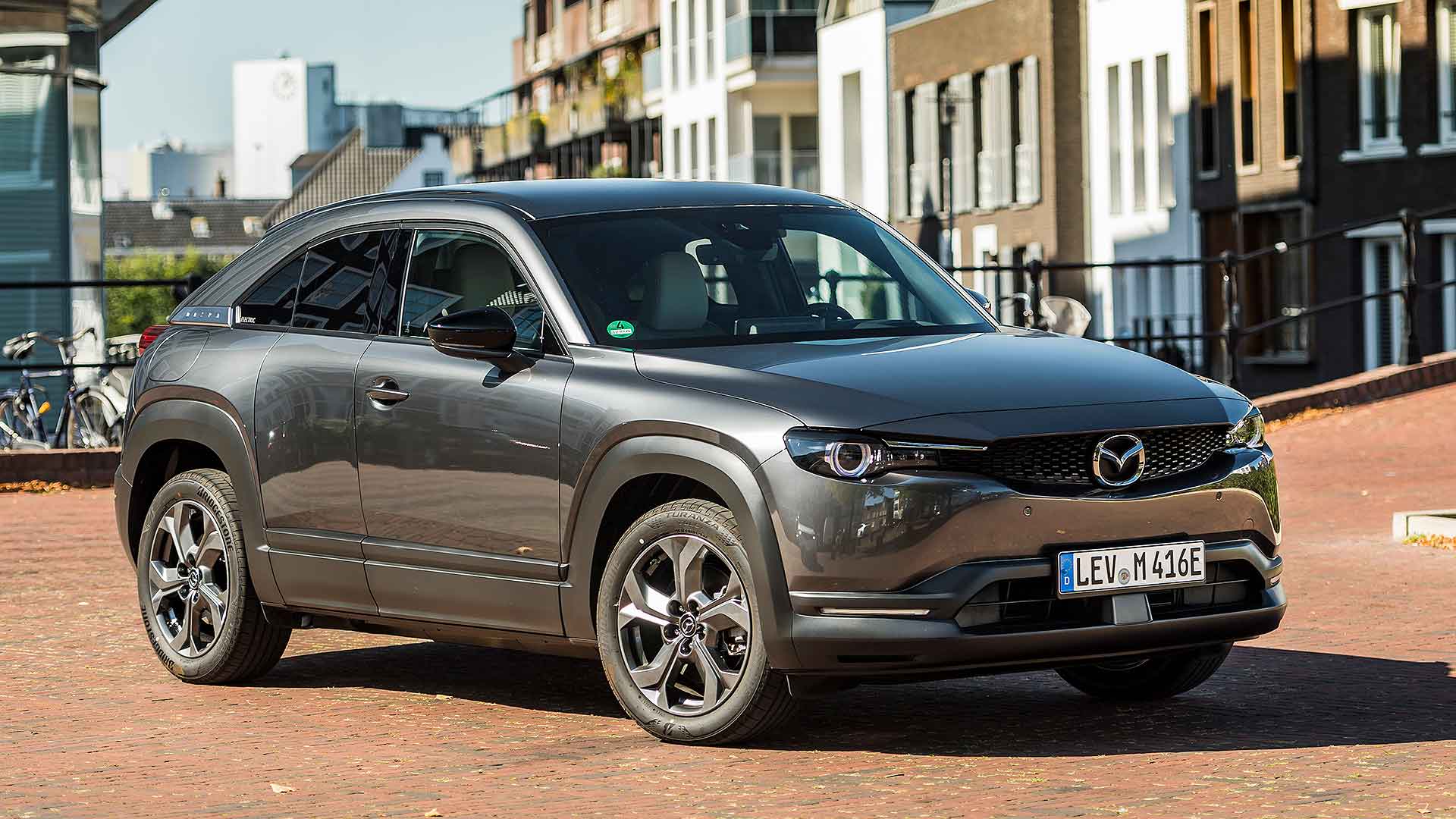
The Mazda MX-30 is the firm’s first 100% zero emissions electric car and it will cost from £25,545 when it arrives in the UK in March 2021.

This price includes the £3,000 government OLEV Plug-in Car Grant.
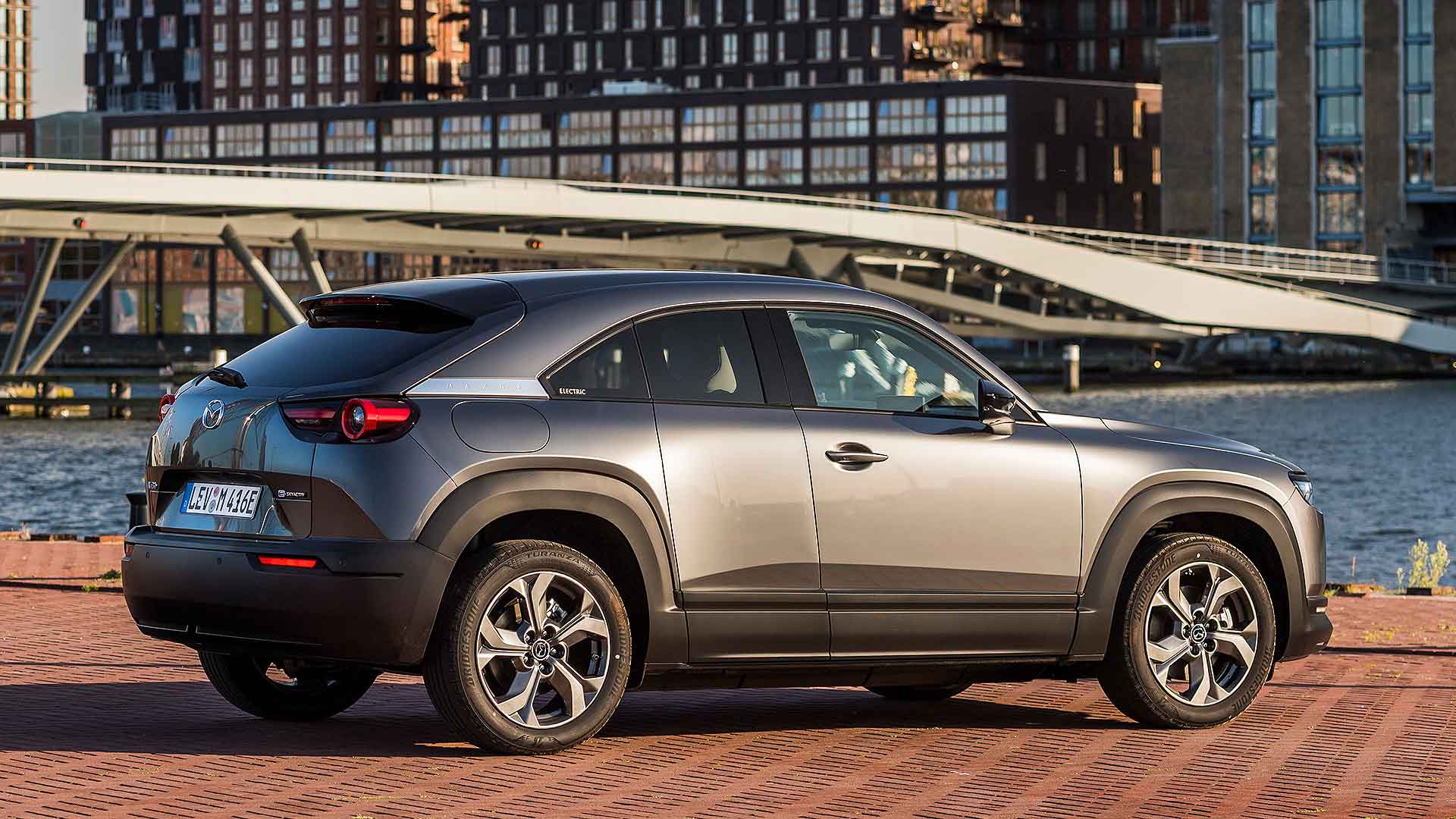
The family-sized new five-door crossover EV boasts a 124-mile range from its fast-charging 35.5kWh battery.

Mazda MX-30

It has rear doors with the hinges at the back, so they open in the same way as the retro Mazda RX-8 coupe.

Mazda will offer it in three grades – SE-L Lux, Sport Lux and GT Sport Tech – plus a limited-to-500 Launch Edition.

Pre-ordering is open now.

The SUV coupe-style Mazda MX-30, which is similar in size to a Ford Focus, seats five and can be reserved for a fully-refundable deposit of £800.

Mazda MX-30

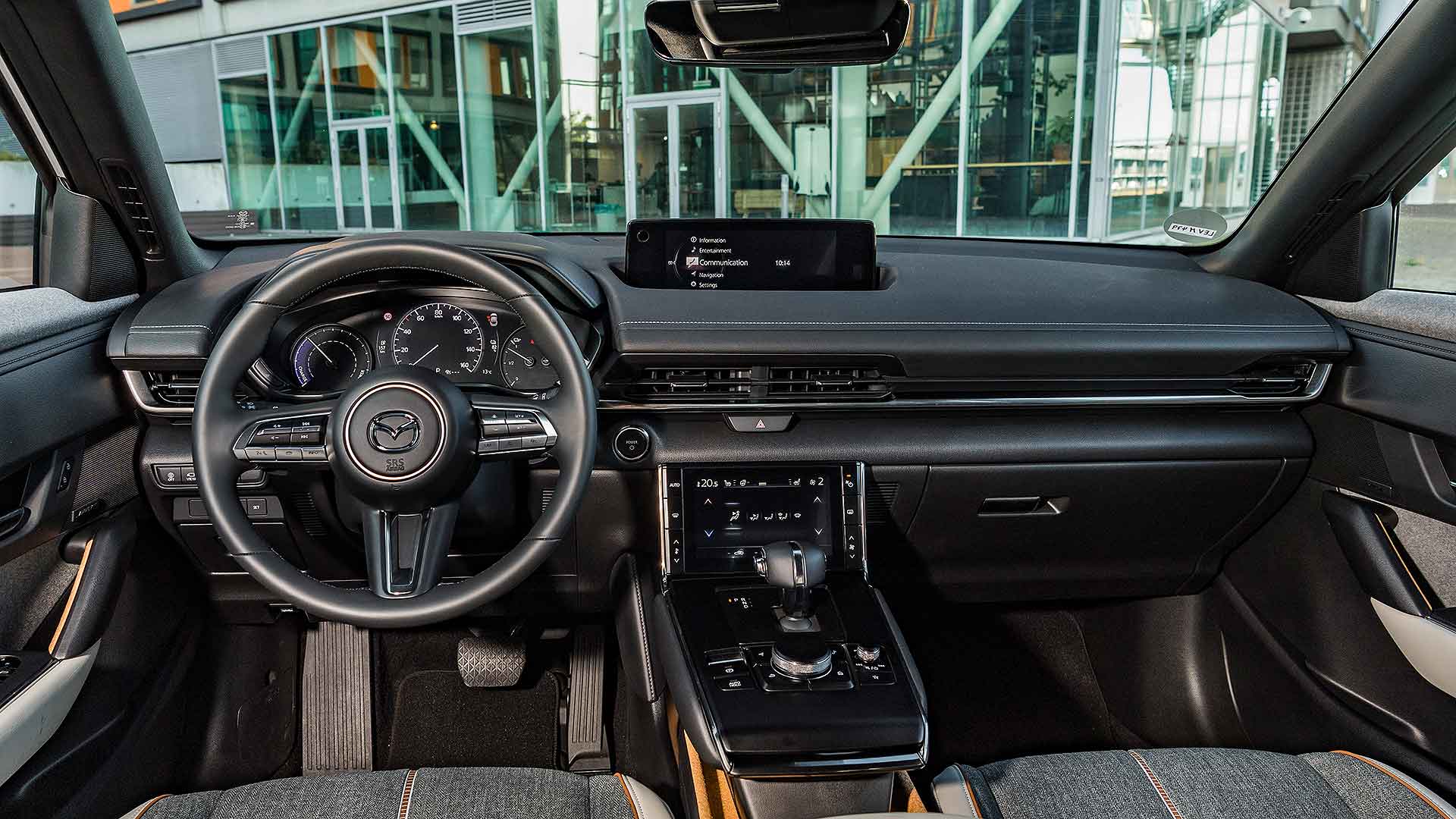
Every MX-30 is equipped with sat nav, head-up display, radar cruise control, reversing camera and LED headlights.

They all also come with a Type 2 AC charging cable and a socket for 50kW rapid charging.

This delivers 80 percent battery charge in 36 minutes.

Mazda MX-30

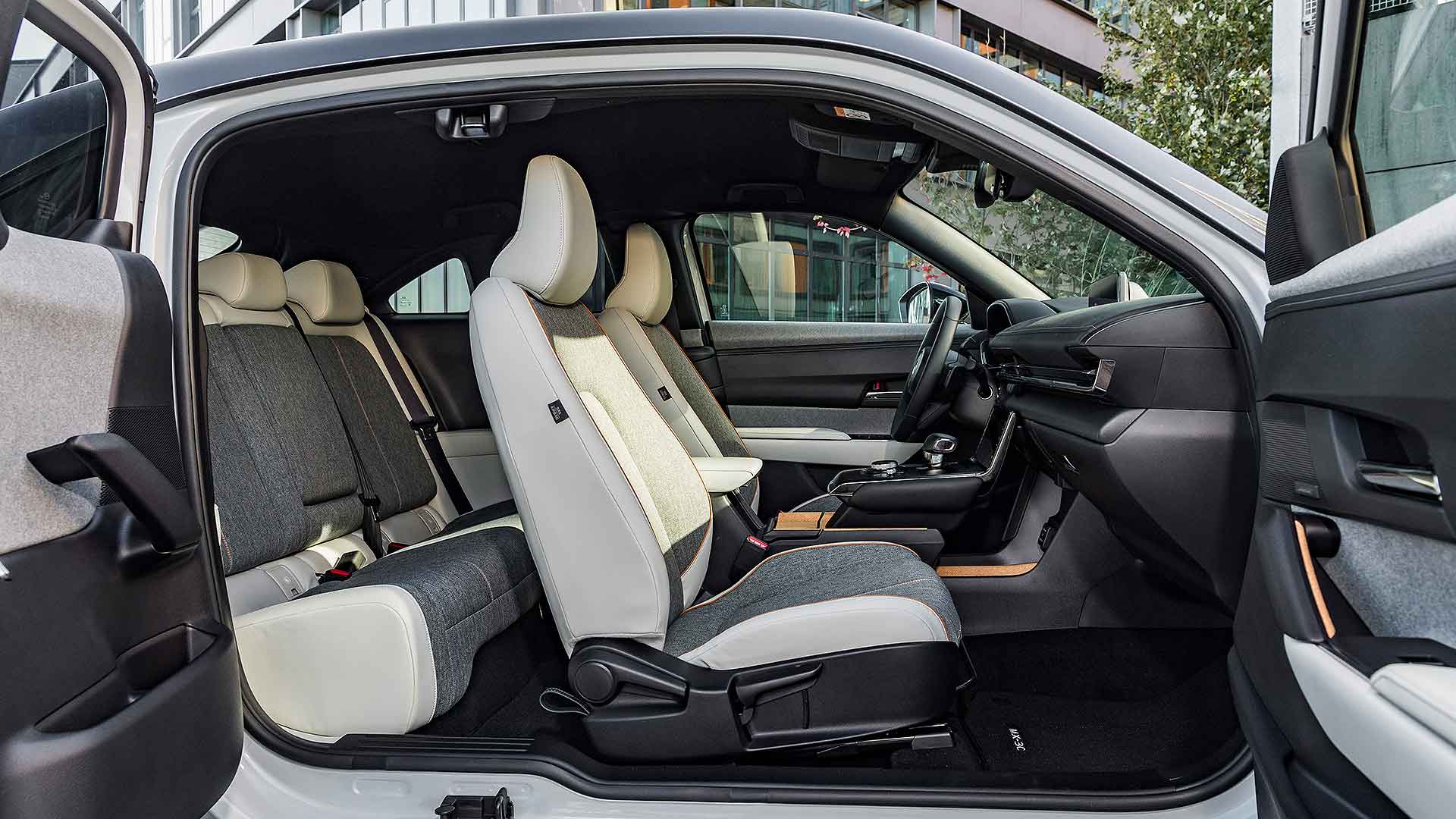
The first 500 MX-30 will all be Launch Edition models. These will come in either Ceramic metallic or Polymetal Grey metallic paint as standard – or three-tone Ceramic or Soul Red Crystal paint as an option.

Adaptive LED headlights, LED rear lights, electric heated front seats and a combined cloth and leatherette upholstery are all standard.

The £25,545 entry-level MX-30 SE-L Lux arrives later. This has 18-inch alloys, black door mirrors and a black grille.

The MX-30 Sport Lux, costing £27,545, is expected to be the best-seller. Extra equipment includes bright-finish alloys, power seats and keyless entry.

GT Sport Tech, costing from £29,845, has a heated steering wheel, 12-speaker Bose sound system and brown artificial leather.

“Over the coming months,” said Mazda UK MD Jeremy Thomson, “our digital platforms and our dealer network will have a range of opportunities for potential customers to get familiar with the MX-30, ranging from answering their questions, to seeing the car, and even opportunities for early test drives.”

ALSO READ

Fiat launches £99 ‘pay as you go’ car lease

Nissan Re-Leaf EV provides mobile power in natural disasters

New Toyota Yaris from £189 a month on 0% finance

Advertisement

Nissan Re-Leaf EV provides mobile power in natural disasters

0
Nissan Re-Leaf

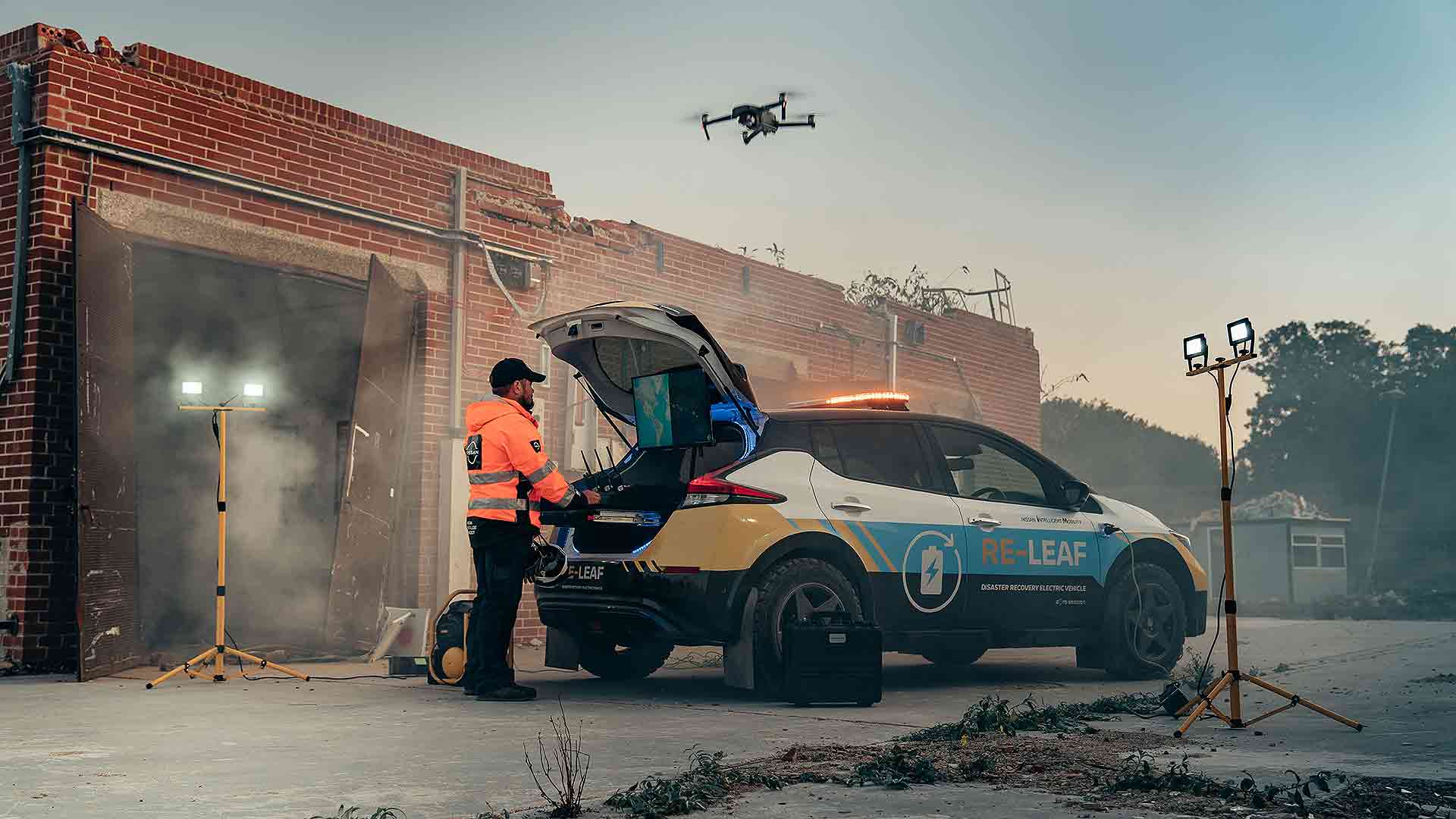
The Nissan Re-Leaf concept has been created to show how 100% zero emissions electric cars can provide mobile power in natural disaster zones

Natural disasters are the biggest cause of power outages and the electric car concept from Nissan aims to show how EVs can come to the rescue.

Nissan Re-Leaf

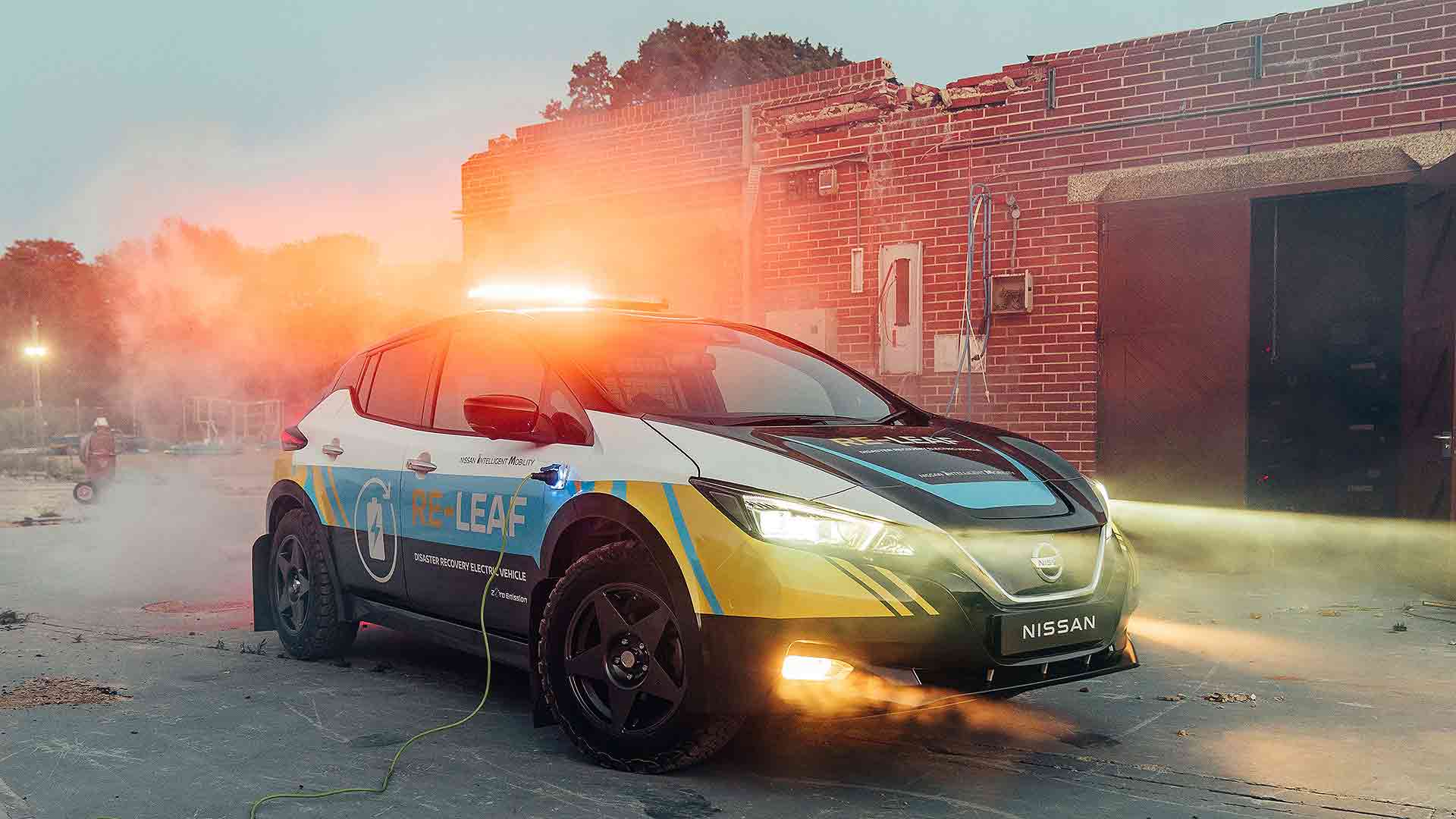
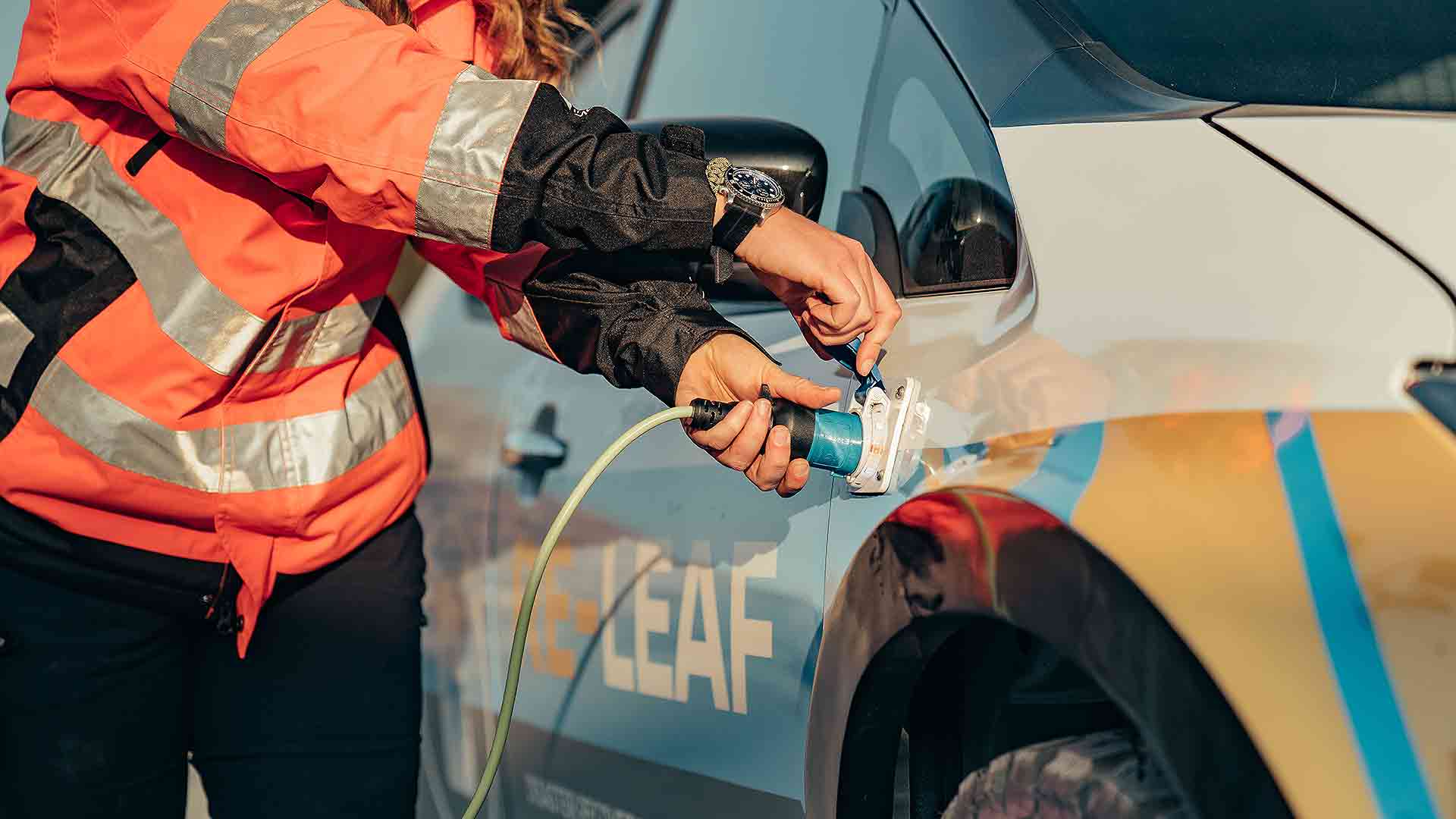
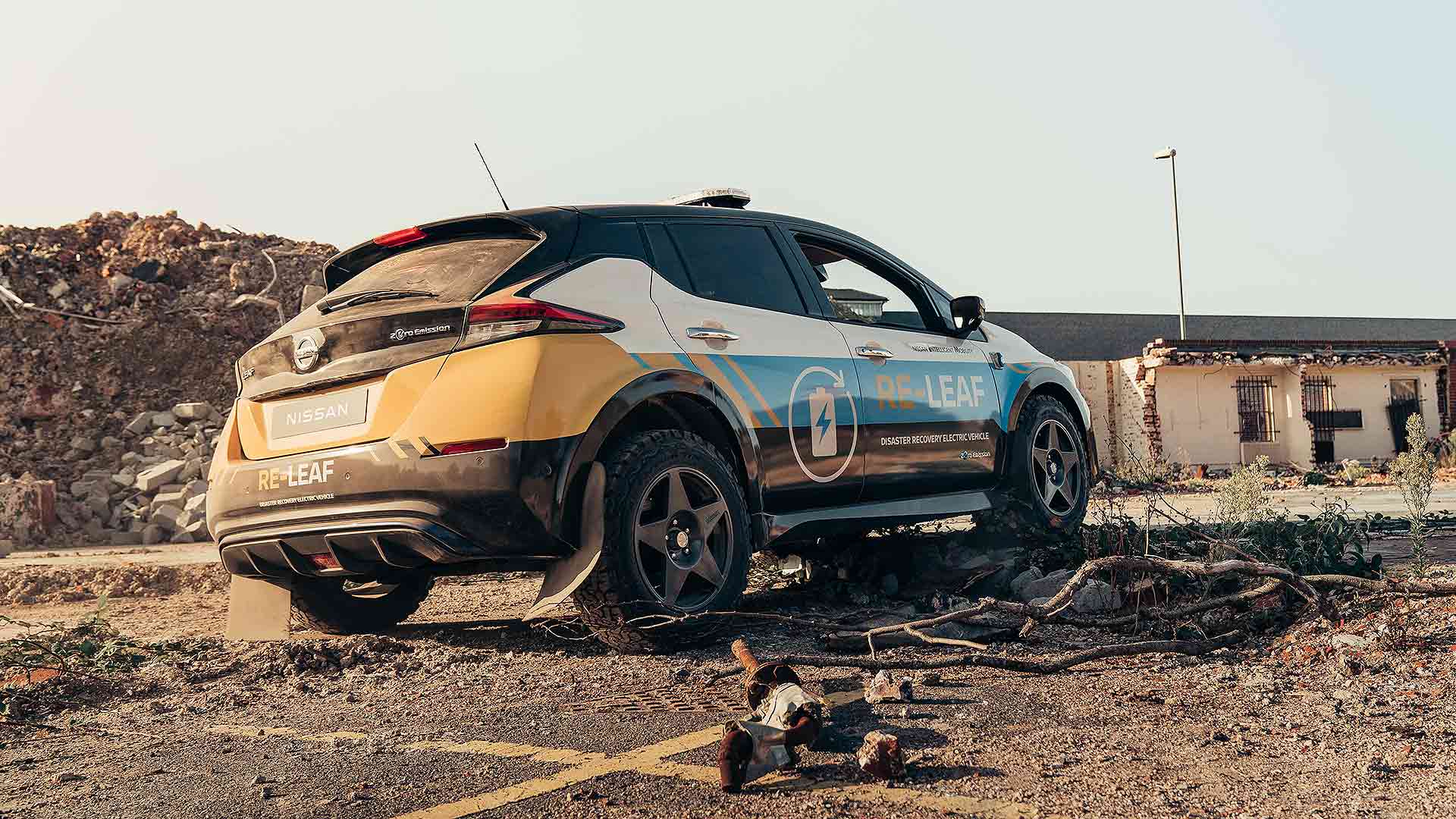
The Nissan Re-Leaf is derived from a regular Nissan Leaf electric car, and is equipped with a range of external sockets to power devices from the lithium ion battery.

Nissan says it can power an electric jack hammer, an intensive care medical ventilator and a 100-watt LED floodlight all for a full 24 hours.

Nissan Re-Leaf

The Re-Leaf also has uprated suspension, wheels and tyres so it can be driven into a disaster zone to provide the fully mobile power service.

The Leaf’s bi-directional charging ability is behind the mobile power functionality, allowing it to both ‘pull’ power from the grid, but also ‘push’ it back to electronic devices.

In disaster zones, power typically takes a day or two to be restored: the Re-Leaf provides electricity during the outage, and can then be recharged once power comes back online.

Nissan says the concept also shows how electric cars can help support the broader electricity network for additional resilience against power cuts.

Nissan Europe’s Helen Perry said: “Concepts like the Re-Leaf show the possible application of EVs in disaster management.

“Electric vehicles are emerging as one of the technologies that can improve resilience in the power sector.

“By having thousands of EVs available on standby, either as disaster-support vehicles or plugged into the network through Vehicle-to-Grid (V2G), they’re uniquely capable of creating a virtual power plant to maintain a supply of energy during a major outage.”

Nissan Re-Leaf

RJN, a UK engineering and motorsport firm, carried out the modifications that include raised suspension giving 225mm of ground clearance.

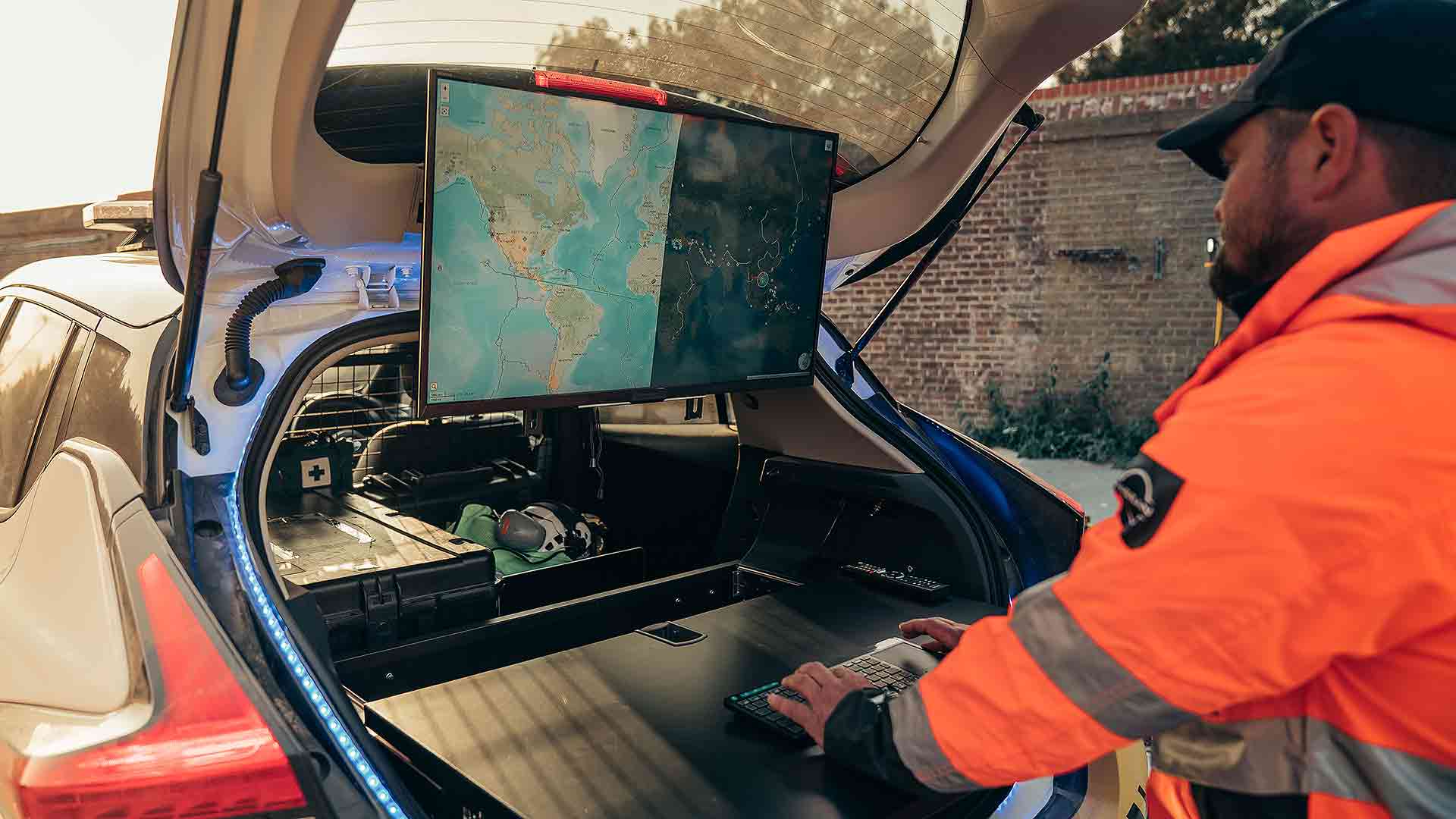
The rear seats have been removed to store specialist equipment, and a van-style bulkhead protects the front seat passengers.

Nissan Re-Leaf

The Re-Leaf even has a pull-out desk in the rear, with a 32-inch LED screen and dedicated power supply to create an operational communications hub.

ALSO READ

Nissan Leaf is Stuff Car of the Year

Government withdraws warning to ‘avoid petrol stations’

New car CO2 emissions rising due to ‘inconvenient truth’ of SUVs

Advertisement

Government withdraws warning to ‘avoid petrol stations’

0
Filling a car with fuel at a petrol station

The Department for Transport has clarified misleading advice that appeared to suggest motorists should avoid filling stations, garages and motorway services to stem the spread of Covid.

Originally, an ‘Easy Read’ guidance booklet stated that motorists should “only stop at petrol stations or motorway service stations if you really need to”.

This conflicted with advice on the DfT’s own website, advising motorists to simply limit their time, keep their distance from others and pay contactless.

The Petrol Retailers Association raised this with the DfT and the organisation has now remedied the advice.

It explained to the PRA that the Easy Read guidance “wrongly oversimplified” the situation.

“To be clear – petrol stations and motorway service areas remain vital in providing a safe place for motorists to stop, refuel and take a short break from driving.

“There has not been a chance in policy on petrol stations.”

PRA chairman Brian Madderson said the organisation was “immensely pleased that the government has listened to our suggestions”.

ALSO READ

Brittany Ferries lays up ships due to drop in demand

Highway Code: cyclists could get priority on the roads

Coronavirus brings Porsche racing drivers out of retirement

Advertisement

Coronavirus brings Porsche racing drivers out of retirement

0
Porsche racers back from retirement

Bringing factory racing drivers out of retirement could be one of the more unusual side effects from COVID-19.

Timo Bernhard and Jörg Bergmeister both hung up their helmets last year, after successful careers driving for Porsche.

Yet this weekend’s Nürburgring 24 Hour endurance race has seen the retired duo drafted back into action at short notice.

Health and safety precautions come first

Porsche racers back from retirement

The reason for Porsche turning to old hands came after last weekend’s Le Mans 24 Hour race. 

When three team members tested positive for Coronavirus at the French event, the company opted to send a reduced contingent for the German race. 

This has affected a number of Porsche customer teams, with the race-winning Manthey-Racing outfit having to withdraw. Porsche will still be well represented on the grid though.

Two decades of camaraderie

Porsche racers back from retirement

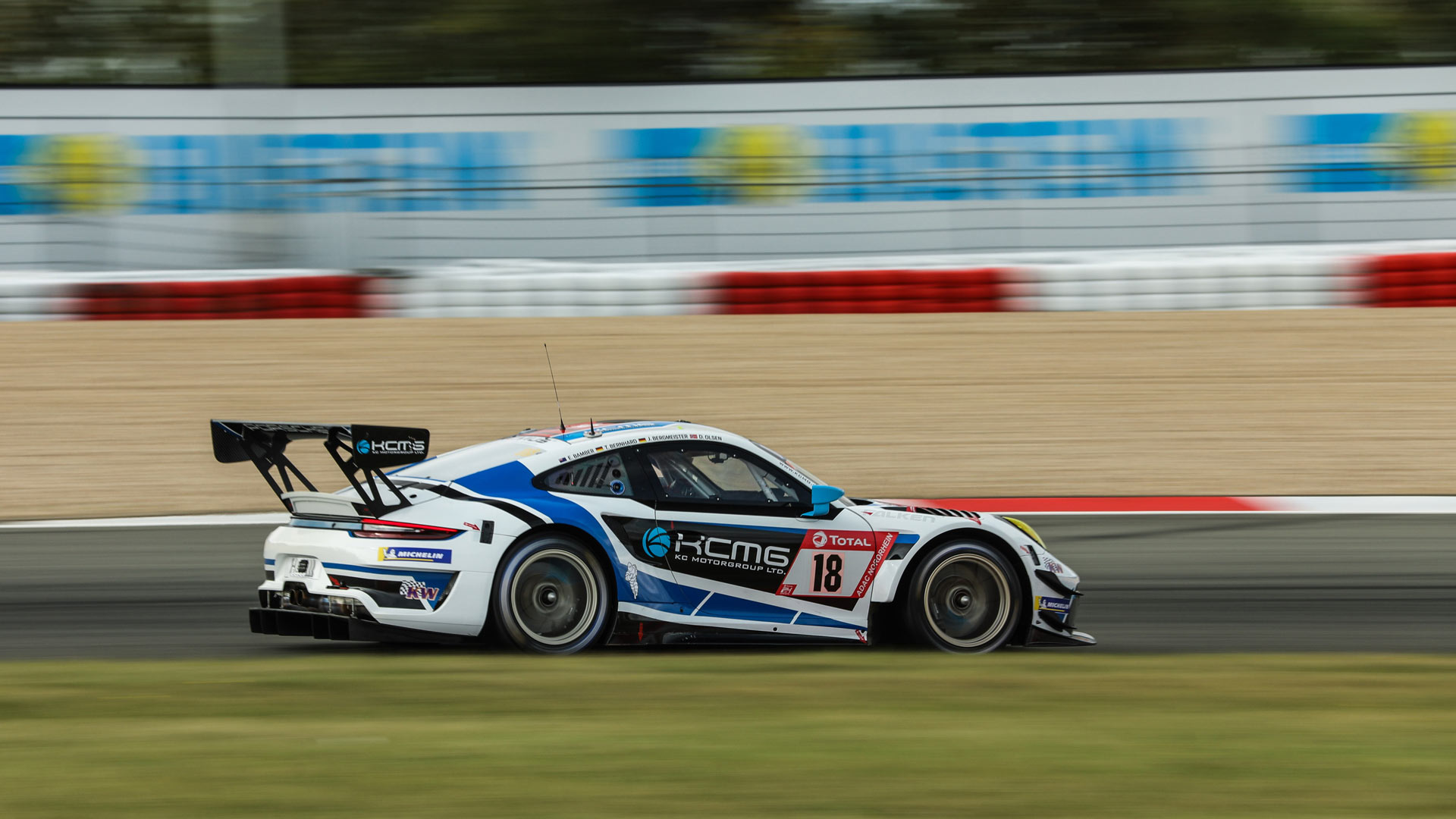
For the #18 KCMG Porsche 911 GT3 R, a group of four experienced drivers have been brought together. This includes Le Mans 24 Hour winner Earl Bamber, and Intercontinental GT champion Dennis Olsen. 

The foursome is completed by Timo Bernhard and Jörg Bergmeister, who first began their Porsche racing careers nearly two decades ago. The German duo’s first factory-backed race came in the 2002 24 Hours of Daytona, where they took GT class victory. 

Bernhard has a prodigious association with the Nürburgring, having won the 24 Hour race five times with Porsche. He also holds the record for the outright Nordschleife lap record, set in 2018 with the Porsche 919 Hybrid Evo.

Giving something back to the company

Porsche racers back from retirement

Despite initial hesitations about childcare and appointments, both drivers agreed to race this weekend. Bergmeister was happy to help as he feels he should “give back a little bit when there are situations like this”. 

Bernhard added Porsche “has done a lot for me in the past and I think now there’s a chance to return something. The spirit that we have at Porsche is that we’re not individuals, but a team.” 

Having only retired from racing last year, both drivers should still be in peak fitness. Although Bernhard added the caveat that he may “look slow this weekend because I haven’t done 100 laps before the race”.

The 2020 Nürburgring 24 Hour begins on Saturday 26th September, having been delayed from the usual May date. Live coverage of the full race is available on the ADAC YouTube channel.

ALSO READ

Aston Martin Vantage Roadster (2020) review

Caura app aims to save motorists time, money – and fines

New 195mph Lister Stealth stakes claim as Britain’s fastest SUV

Advertisement

Changes to the driving theory test: what you need to know

0

Changes to the theory test

The driving theory test has changed, with effect from 28 September 2020. After some delay due to the pandemic, the test in England, Scotland, Wales and Northern Ireland nows include three multiple-choice questions based upon a short video.

The idea is to make the test more accessible to drivers with reading and learning difficulties, who may struggle with written questions. The use of video-based questions should assist those with dyslexia and autism.

Anyone who took the theory test before 28 September was required to read a case study before answering five questions about it. Following the changes, you’re now asked to watch one video, then answer three questions. Below is an example of a car theory test video.

Questions based on this clip could include:

  1. Why are motorcyclists considered vulnerable road users?
  2. Why should the driver, on the side road, look out for motorcyclists at junctions?
  3. In this clip, who can cross the chevrons to overtake other vehicles, when it’s safe to do so?

Each question will come with four multiple-choice answers.

The video will play on the left-hand side of the screen, with controls allowing the candidate to play, pause or move to a specific video on the progress bar. The right-hand side shows the questions and answers.

In another example provided buy the Driver and Vehicle Standards Agency (DVSA), the video shows a street with double yellow lines. The question asks: what do the yellow lines mean? The following answers are provided:

  • They mark the edge of the road
  • You can wait at certain times
  • No waiting at any time
  • They mark a cycle lane

Who is affected by the changes?

Changes to the car theory test

All car theory tests now use video clips. The change does not yet apply to theory tests for motorcycles, lorries, buses, coaches or approved driving instructors (ADIs – part one).

What is not changing

Other elements of the car theory test aren’t changing. For example, you will still need to answer 50 multiple-choice questions within 57 minutes. To pass, you will need to get at least 43 questions correct.

The hazard perception test is also unchanged.

What the industry says about the changes

RAC spokesman Simon Williams said: ”This is a very positive change and should make the driving theory test accessible to many more people as watching case study videos is far more reflective of real-world driving than having to read them and then answer questions.

“We know from RAC research that being able to drive is an important milestone in people’s lives as it allows them to get around more easily. This is particularly true for those who live in more rural locations.”

Peter Brabin, head of training at Bill Plant driving school, added: “There’s no doubt that the changes coming into effect are an improvement to the theory test; as whilst the majority of the examination remains unchanged, the introduction of video clips in place of written case studies puts students into more realistic scenarios akin to everyday driving experiences.

”As well as this, the implemented changes will prove far more beneficial to drivers with reading and learning difficulties, as well as those who find they learn better in visual scenarios.”

ALSO READ:

How to check driving test availability online

What do your car dashboard warning lights mean?

The Highway Code rules you may have forgotten

Advertisement

Caura app aims to save motorists time, money – and fines

0
Caura app homescreen

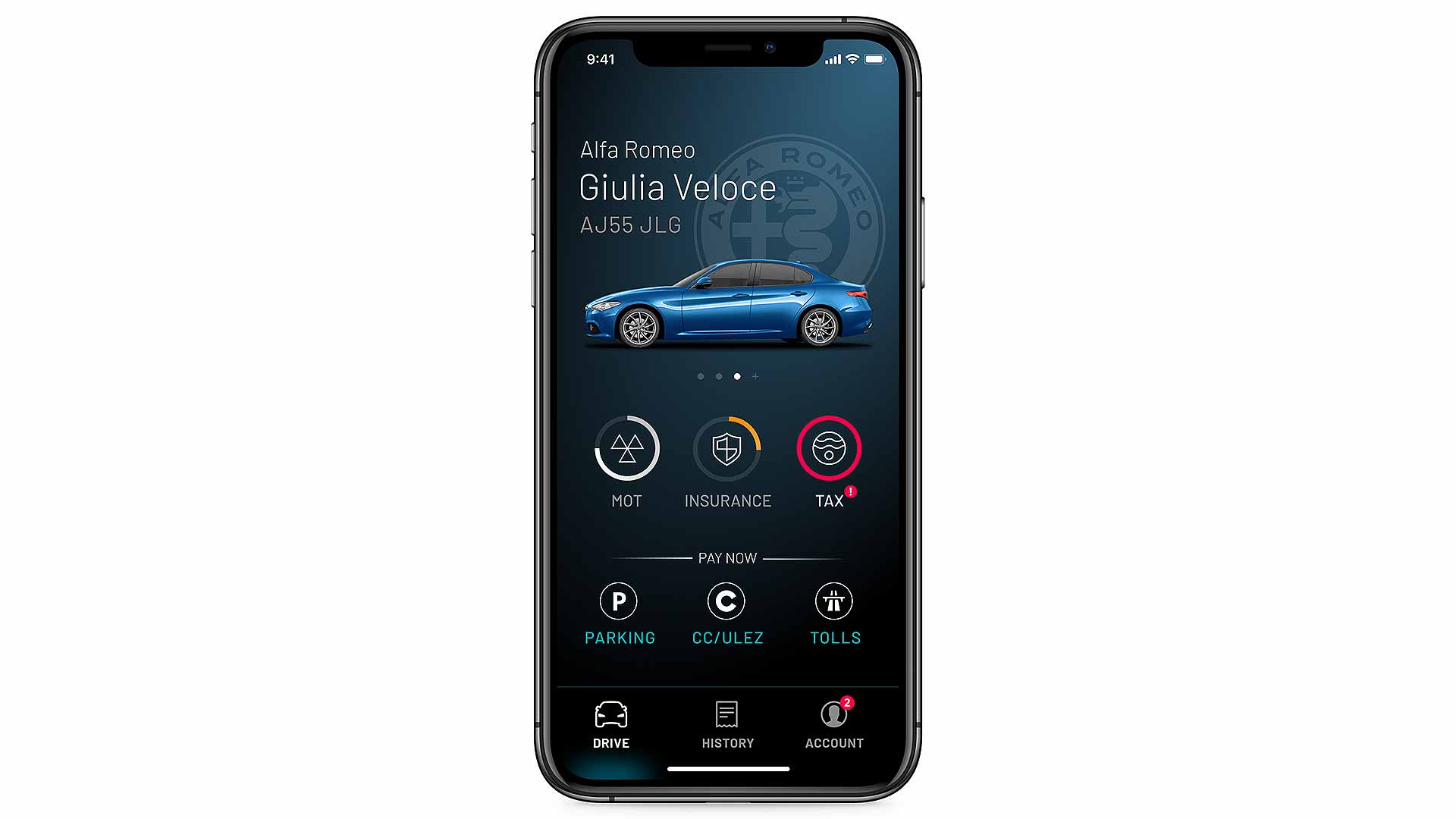
Caura is an FCA-authorised smartphone app that aggregates multiple motoring bills into one platform using a single registration number.

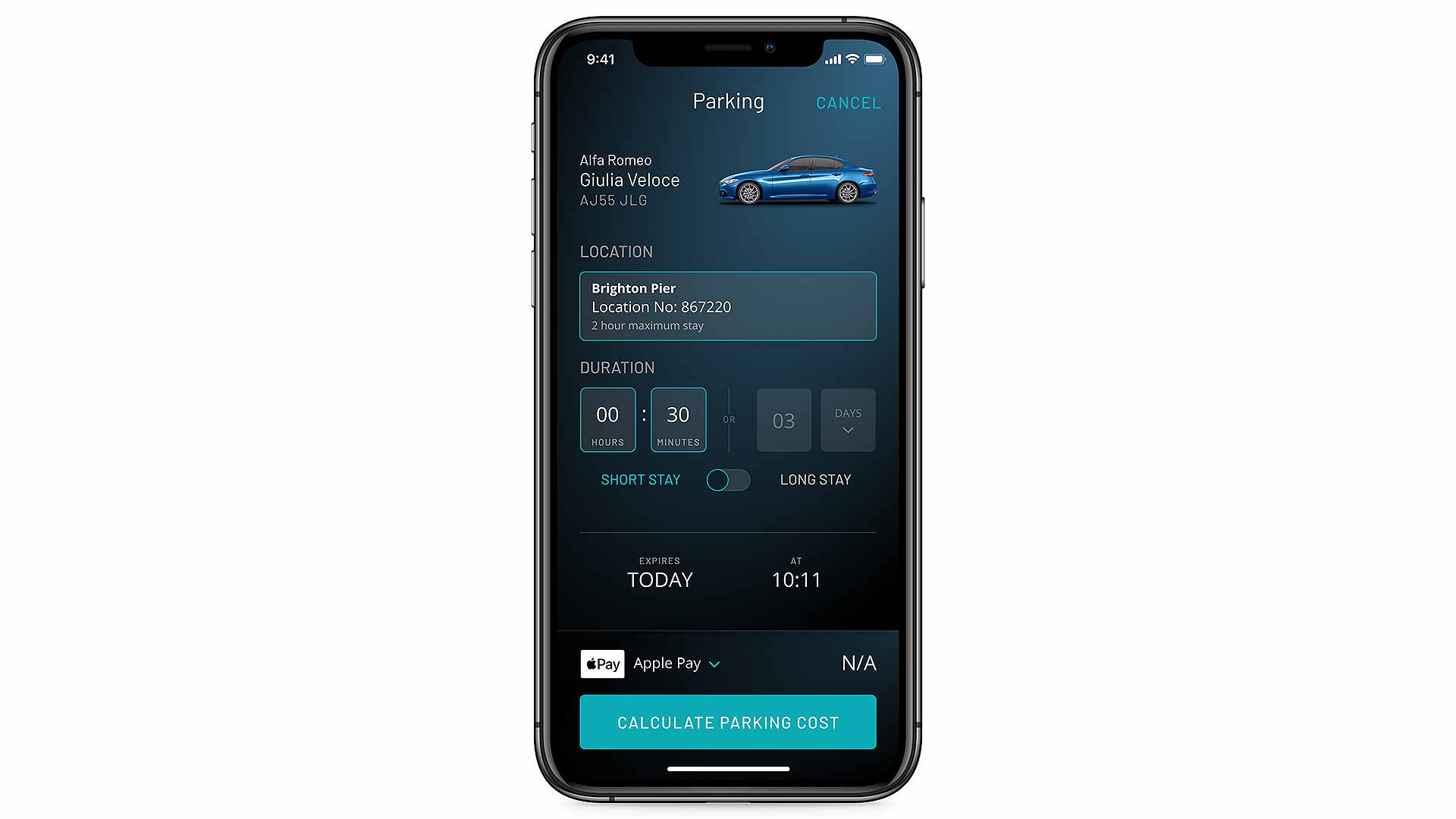
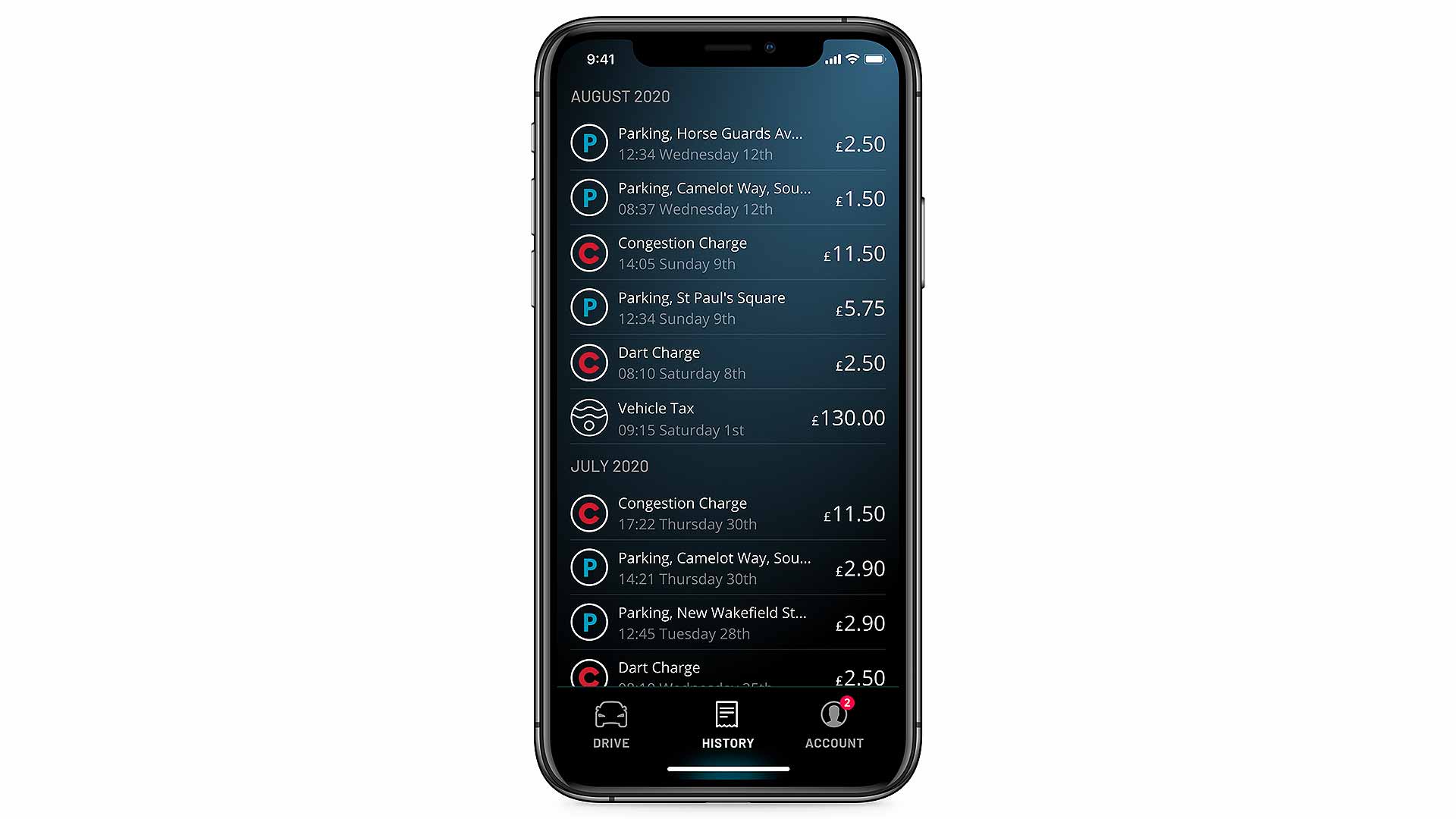
Described as an industry first, the free app manages car parking, tolls, MOT, road tax, car insurance and congestion charges.

It integrates with Apple Pay and also stores payment details to be used in two clicks.

An Android Auto launch is planned for later in 2020.

Caura app

Usefully, Caura has in-app notification functionality to remind motorists about upcoming bills or charges.

Such ‘push notifications’ could help tackle 1 in 4 MOTs that are conducted late, say the developers.

Investor Rob Wilmot said the app’s digital infrastructure was “desperately needed in today’s fractured and outdated ecosystem.

“The team has done a remarkable job bringing together an entire industry, integrating private and public companies, and government bodies, with proprietary technology into a beautiful and simple-to-use app.”

Caura can even manage multiple registered vehicles, useful for private motorists with several cars, as well as company car fleet managers.

Caura app

How does Caura work?

Once installed and set up, motorists simply enter their car’s registration number.

This then automatically displays the vehicle’s current VED road tax, MOT and car insurance renewal dates.

Owners can also, from the app’s home screen, directly pay for parking, congestion charges and toll roads for their vehicle.

This “minimises admin and mitigates penalty fines”.

Caura estimates that penalties associated with late or incorrect motoring expenses cost car owners £2bn a year.

ALSO READ

How to use your iPhone or Apple Watch as a digital car key

Waze now lets you plan trips on desktop and send to app

Revealed: the postcodes where demand for MOTs will be the highest

Advertisement

BMW M3 and M4 Competition news, prices and specs

0
2021 BMW M3 Competition

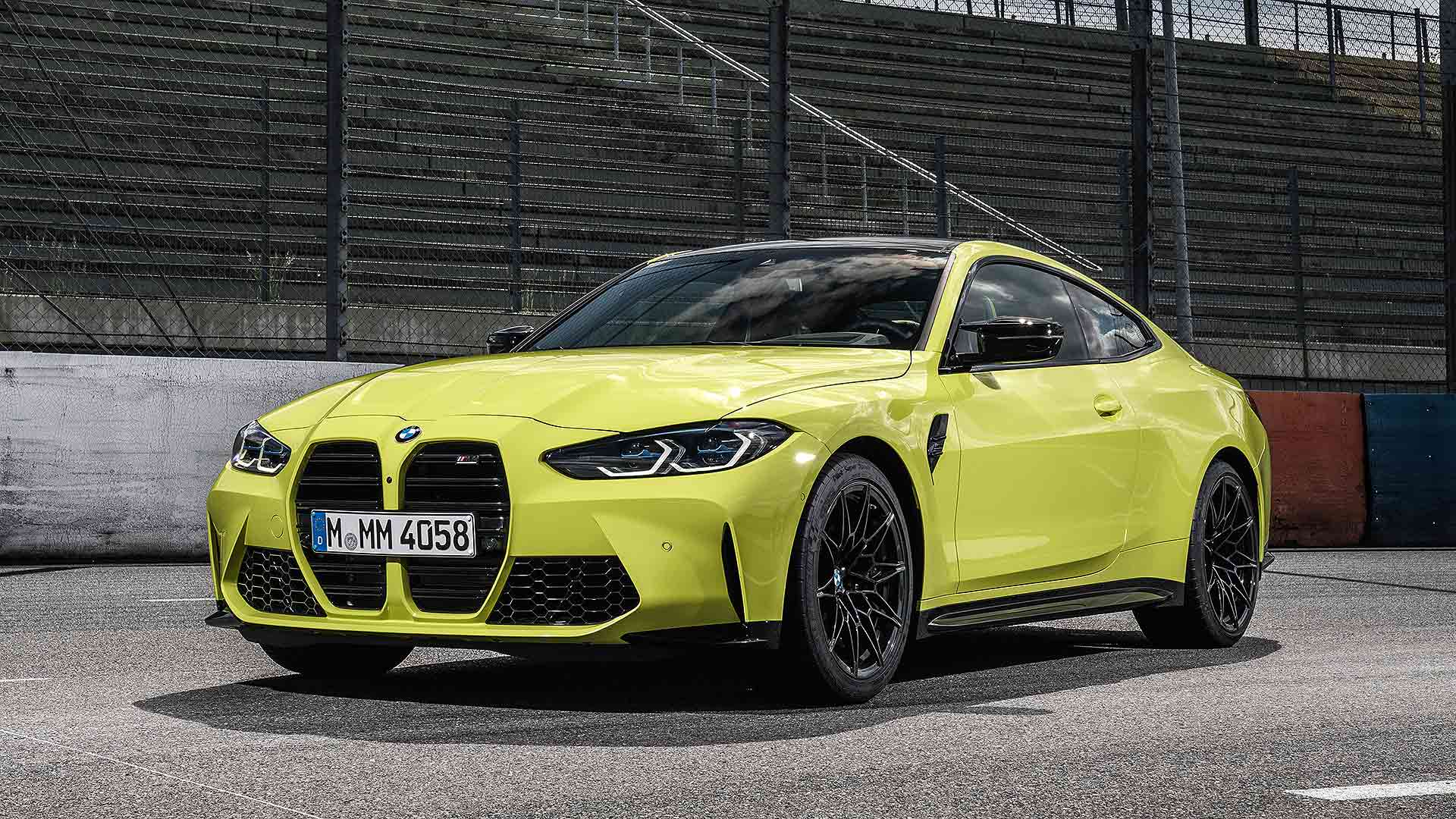
The new BMW M3 Competition and M4 Competition have been revealed ahead of deliveries beginning in March 2021.

Ordering is open now with the M3 Competition (pictured above) priced from £74,755 and the M4 Competition from £76,055.

Both versions feature a 3.0-litre six-cylinder turbo engine producing 510hp, paired with an eight-speed M Steptronic automatic gearbox (a manual is not available in the UK).

2021 BMW M4 Competition

Both are also rear-wheel drive, with an M xDrive all-wheel drive version due from summer 2021.

The M3 Competition and M4 Competition share the same 0-62mph acceleration time of 3.9 seconds, plus the same combined fuel economy of 27.7mpg, and CO2 emissions of 234g/km.

BMW says power is up 60hp over the old M3 and M4, and there’s also more pulling power.

Top speed of both is 155mph… unless the M Pro Package is selected. Then, top speed goes up to 180mph.

BMW explains the new M models have Adaptive M suspension, 380mm front disc brakes and bespoke M ABS and M Traction Control.

The M Drive Professional system is new, too: this assesses “the driver’s ability to pilot the car through corners with plenty of oversteer and opposite lock”. We, literally, quote.

But it is the radical new front end of both models that is likely to draw most attention.

BMW skips over the massive kidney grilles, but there’s no denying they’re divisive.

Bold new colour choices only add to the drama: Sao Paulo Yellow and Isle of Man Green are pictured here, and Toronto Red is another new shade.

2021 BMW M3 Competition

Intriguingly, both M3 Competition and M4 Competition feature 19-inch wheels at the front and 20-inch wheels at the rear. BMW M brakes are available in blue, red or black; optional carbon ceramic brakes have gold calipers.

Geek fact: the M3 Competition is built in Munich, while the M4 Competition is built in Dingolfing, south Bavaria.  

ALSO READ

BMW M3 history in pictures

Porsche Cayman GTS 4.0 (2020) review

The M11 is named Britain’s best motorway

Advertisement

2021 Mercedes-Benz S-Class news, prices and specs confirmed

0
Mercedes-Benz S-Class

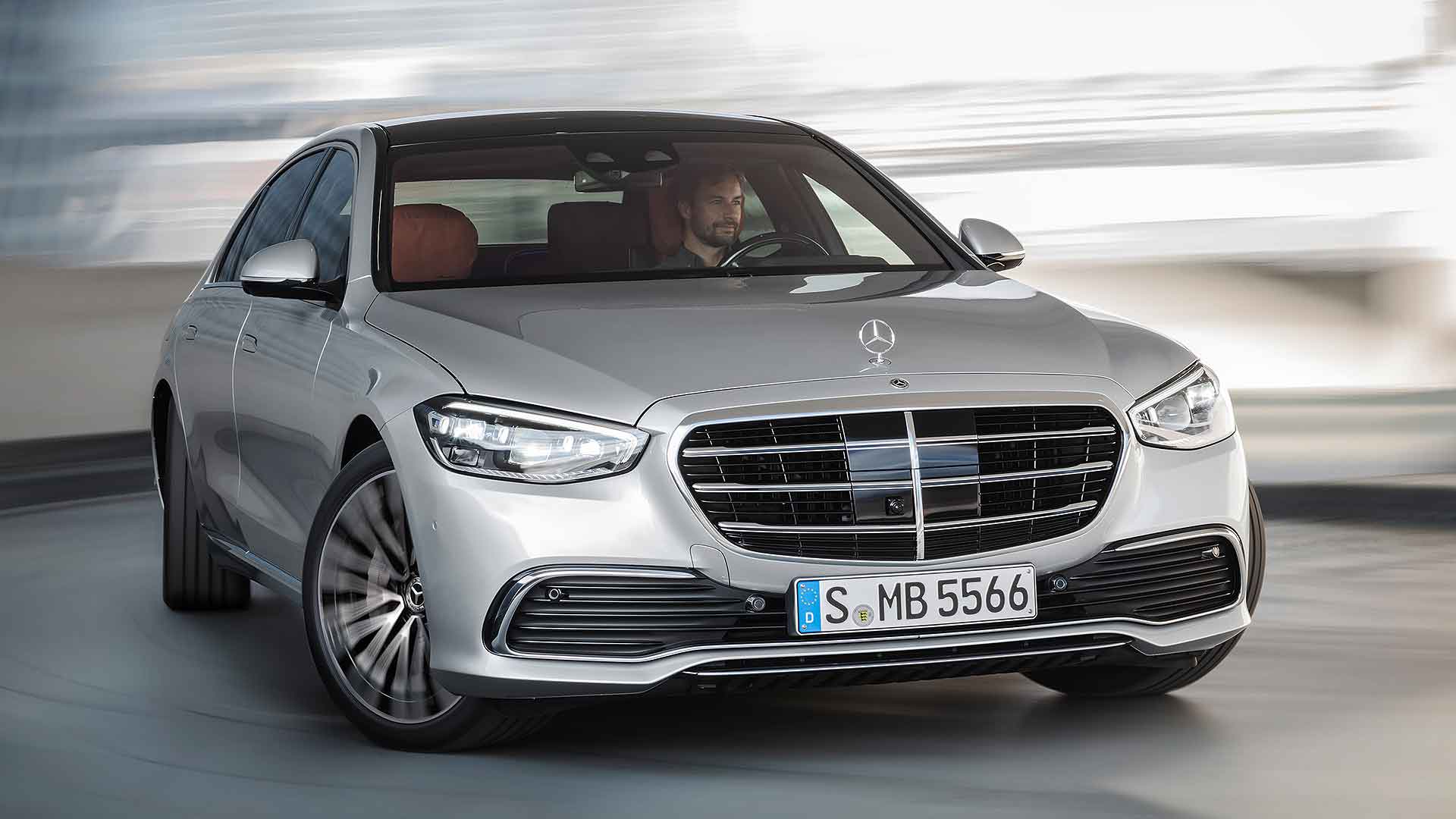
The new 2021 Mercedes-Benz S-Class will cost from £78,705 and first UK cars will arrive late in 2020.

Set to be offered in five variants, with three engines, ordering for the new S-Class is open now.

Mercedes-Benz will sell both regular and long-wheelbase versions, and the core grade will be AMG Line: four upgrade packs (Premium, Premium Plus, Premium Executive and Premium Plus Executive) will build on this.

The entry-level version is the S 350 d AMG Line, priced from £78,705. This diesel variant produces 286hp, emits 173g/km CO2 and averages 40.4-42.8mpg.

Even this version is swift, accelerating from 0-62mph in 6.4 seconds.

The S 400 d 4MATIC, an all-wheel drive diesel, is only available in long wheelbase guise, and costs from £94,135.

This punchy diesel produces 330hp, emits 192g/km CO2 and averages 37.7-38.7mpg. 0-62mph takes 5.4 seconds.

The petrol alternative is the S 500 4MATIC, priced from £89,105. This produces 435hp and takes 4.9 seconds from 0-62mph. It averages 32.8-34.9mpg and emits 194g/km CO2.

Mercedes-Benz S-Class

Top spec

Every new S-Class features MBUX infotainment with a 12.8-inch OLED central touchscreen, a 12.3-inch driver display – and some have an MBUX tablet, which can be taken out of the car and used as a regular Android device.

Every person in the S-Class can now say ‘Hey Mercedes’ and activate the built-in virtual assistant.

Equipment is comprehensive. All S-Class feature Nappa leather upholstery, soft-close doors, all-round heated seats and 19-inch alloys.

AMG Line Premium trim ups the alloys to 20-inches and adds Burmester 3D surround sound audio, a panoramic sliding sunroof, 3D driver display and active ambient lighting.

AMG Line Premium Plus has 21-inch alloys, plus luxuries such as heated front and rear door arm rests and an augmented reality head-up display.

Executive pack can be added to either Premium or Premium Plus, for £3,795. It includes an MBUX rear tablet, electric sunblinds, electric footrest on the back of the front passenger seat, plus a chauffeur package.

Mercedes-Benz adds the arrival of 4MATIC all-wheel drive for the S 400 d and S 500 is a first for right-hand drive S-Class.

ALSO READ

Rolls-Royce redesigns Spirit of Ecstasy

‘Rigorous new standards’ to protect taxi passengers

Everything you need to know about the 2021 Ford Bronco

Advertisement

New 2021 Volkswagen Golf GTI and GTE news, prices and specs

0
2021 Volkswagen Golf GTI

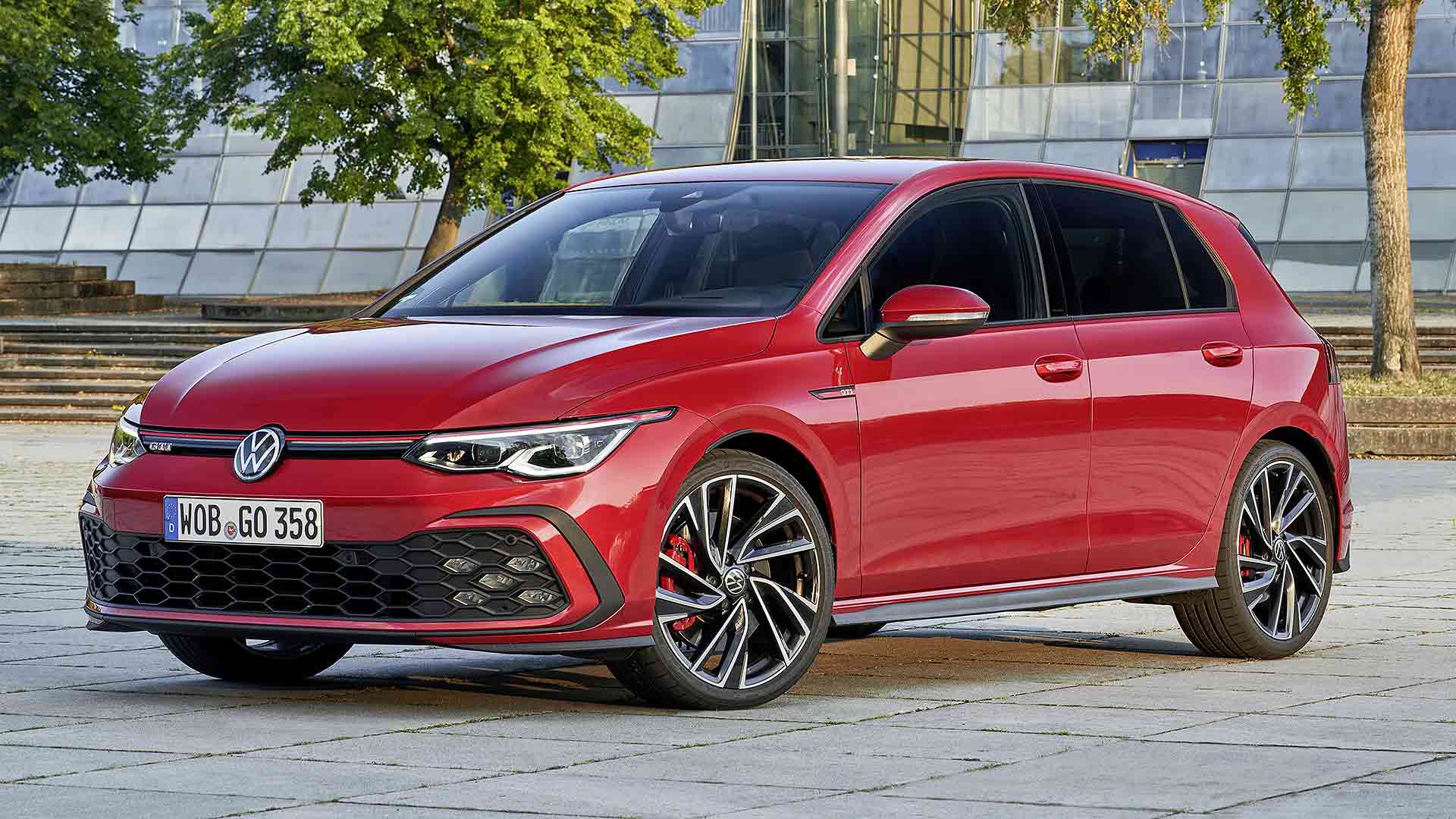
Ordering has opened for the 2021 Volkswagen Golf GTI and plug-in hybrid GTE range, with prices starting from £33,460.

The eighth generation Golf GTI launches with 245hp from its 2.0-litre turbo engine.

The standard gearbox is a six-speed manual: a seven-speed DSG costs £34,960.

In DSG guise, the new Golf GTI accelerates from 0-62mph in 6.2 seconds (the manual is a little slower), and both have a 155mph top speed.

The Golf GTI DSG is also slightly more fuel-efficient, averaging between 37.2-38.2mpg; the manual returns 36.7-38.2mpg. Both have a sub-170g/km CO2 figure in base guise.

What’s special about the Golf GTI? At the front, an illuminated grille strip, plus honeycomb LED fog lights and a set of 18-inch alloys.

The Golf GTI gets custom front and rear bumpers, twin chrome tail pipes, roof spoiler and smoked rear lights.

It has a sport steering wheel, aluminium gearshifter and sports seats with the traditional Golf GTI Jacara check cloth.

2021 Volkswagen Golf GTE

2021 Golf GTE

For those who want a more eco-friendly hot hatch, Volkswagen has also opened ordering for the new 2021 Golf GTE PHEV.

It produces the same 245hp output as the GTE – from a plug-in hybrid drivetrain comprising a 150hp 1.4-litre turbo petrol engine and a 110hp electric motor.

The 13kWh battery gives enough charge for 32 miles’ electric driving.

The GTE accelerates from 0-62mph in 6.7 seconds and, more significantly, returns 176.6mpg on the official WLTP combined cycle.

CO2 emissions are just 36g/km.

The GTE, which comes as standard with a six-speed DSG transmission, costs from £35,960.

Instead of the GTI’s red styling theme, the GTE has blue accents for the exterior and interior Jacara check cloth.

The wheels shrink to a more eco-friendly 17-inches and the tailpipes are hidden from view.

Volkswagen also gives two charging cables to Golf GTE buyers: a regular mains charging cable and a 16 am AC cable for wallboxes: the latter will charge at 3.6kW from flat to full in three hours 40 minutes.

A Volkswagen spokesperson told Motoring Research deliveries of the Golf GTI DSG begin in October, and November for the manual.

Golf GTE deliveries begin in early October.

ALSO READ

New Ford Puma news, prices, specs and on-sale date

Audi website now lists PCP deals alongside on-road prices

How to kill coronavirus in your car in 7 minutes

Advertisement