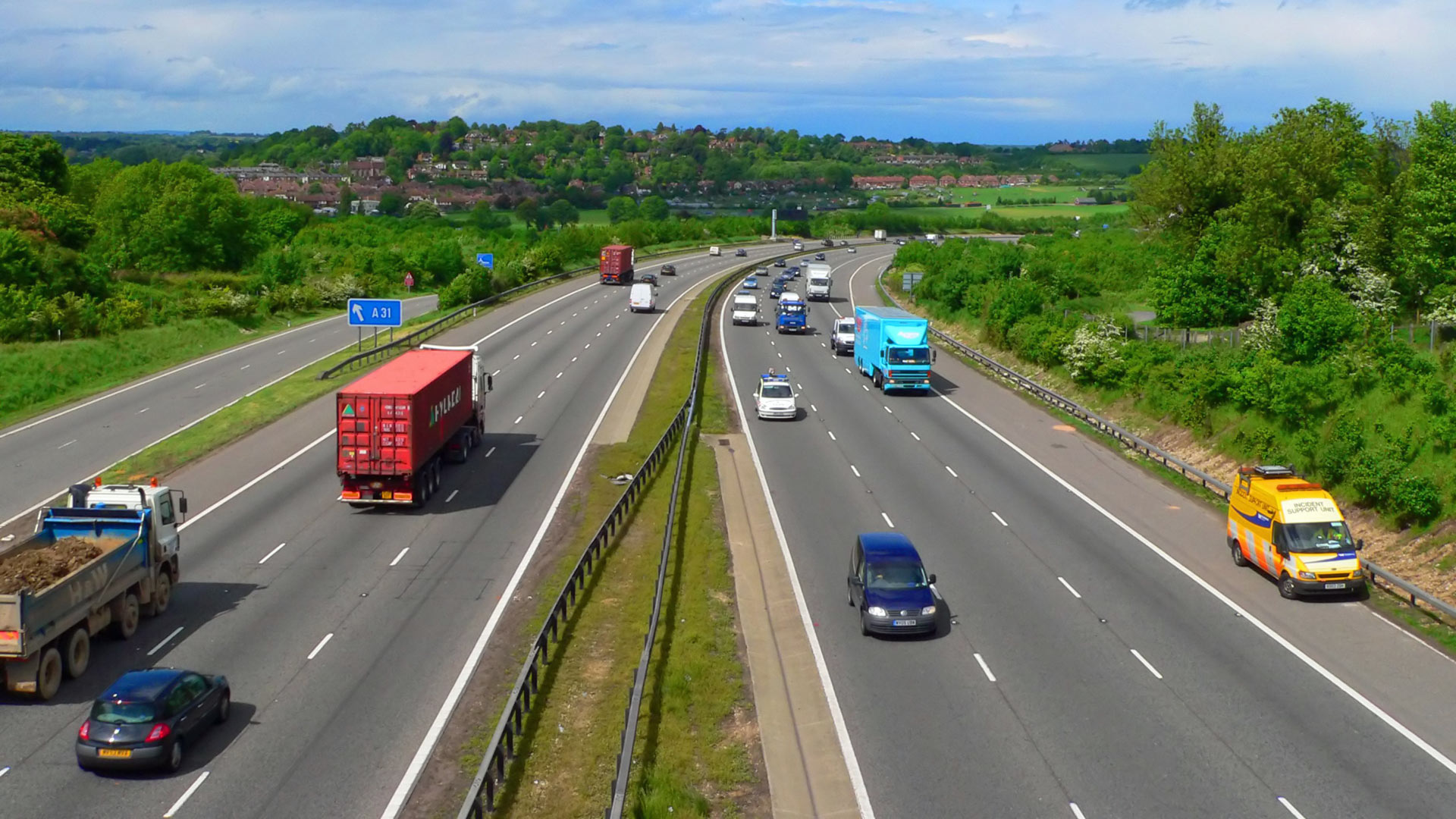
Changes to Vehicle Excise Duty (VED), better known as road tax, are set to earn the UK government a whopping £16 billion in revenue.
From 1 April 2025, electric vehicles will be subject to VED for the first time. This comes alongside an increase in rates paid by owners of petrol and diesel cars.
Leasing Options has undertaken analysis of how these new VED rules are likely to impact UK motorists, and calculated the revenue being raised. It also examined which regions of the UK will be hit hardest by the changes.
A postcode lottery
According to analysis of DVLA data, the Isles of Scilly will be the region most affected by the new VED rules.
Although the tiny archipelago has just 776 vehicles on its roads, the changes mean residents of the Isles of Scilly will pay an average of £257.90 in VED per vehicle registered.
This is due to a larger proportion of higher-emission vehicles on Scilly’s roads, such as older cars and those with larger engines.
Darlington and Slough follow as the second and third hardest-hit locations. Locals in Darlington will contribute an average of £257.33 in VED per vehicle, while those in Slough will pay £242.61.
Charging up tax rates
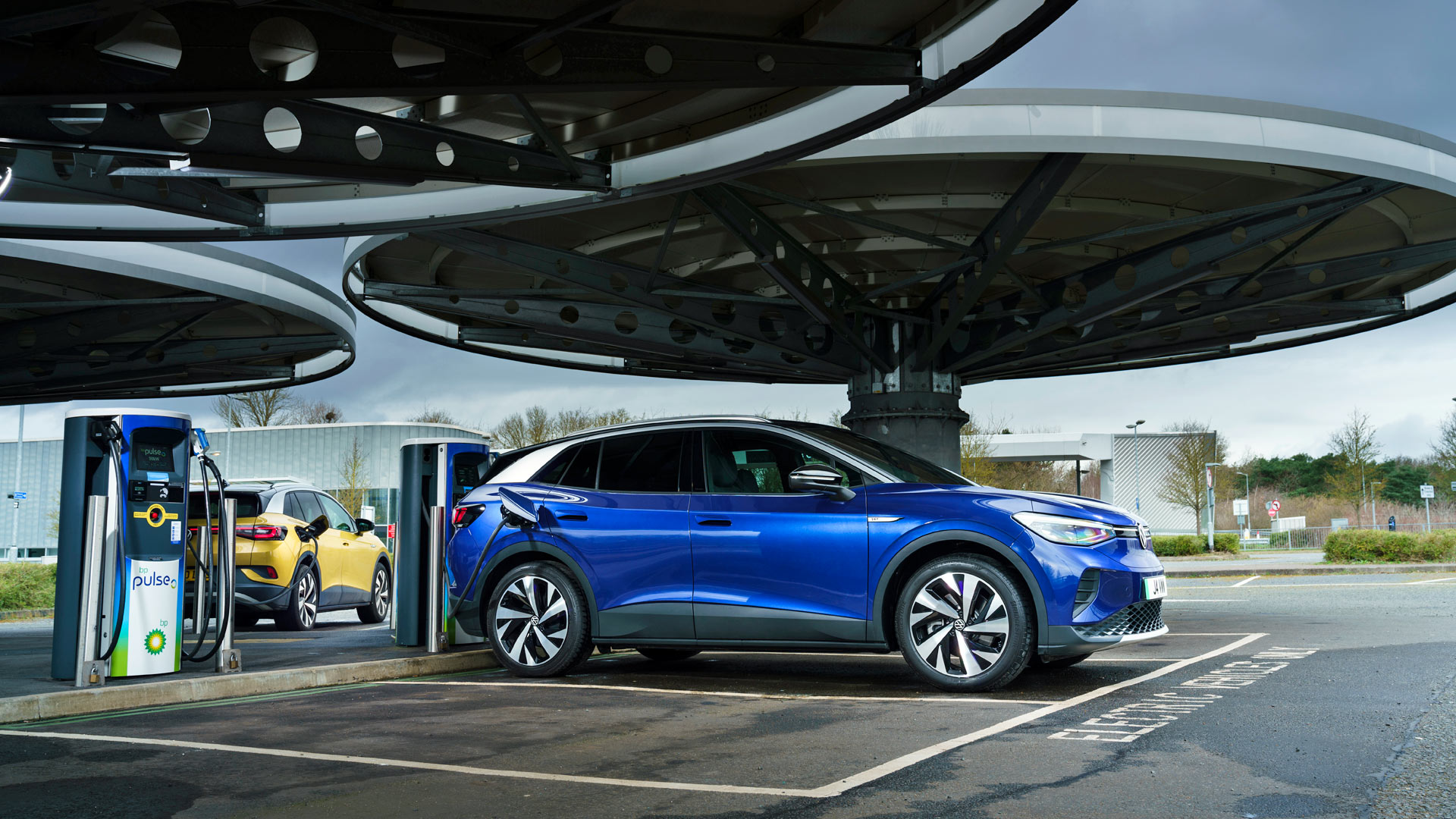
The inclusion of electric cars in the VED rules marks a major change in policy, following years of zero-emission models being exempt from road tax.
From 1 April 2025, all new electric cars will be subject to a first-year rate of £10 until 2029. Those costing more than £40,000 will also be hit by the annual ‘Expensive Car Supplement’ of £425.
Electric cars registered between 1 April 2017 and 31 March 2025 will be liable for the same £195 rate of VED as petrol and diesel cars.
Bringing EVs into the scope of road tax is expected to contribute an additional £229 million to the Treasury’s coffers.
‘Mixed signals’ for consumers
Manchester will see the largest impact from the EV changes. The region will fork out an extra £23.3 million and account for almost 10 percent of total EV tax revenue.
Outer London is next, with revenue of £13.5 million, followed by Windsor and Maidenhead with £11.9 million.
Mike Thompson, COO at Leasing Options, said: “Introducing VED for EVs is a controversial move that could slow down adoption. Many drivers made the switch to electric expecting lower running costs. This additional tax could make them rethink that decision.
“The government has championed EV adoption as a crucial part of the UK’s net-zero ambitions. Taxing EVs now, just as uptake is accelerating, sends mixed signals. If the goal is sustainability, we need assurances that this revenue will be reinvested into greener transport infrastructure.”
The younger half-brother of seven-time Formula One World Champion Sir Lewis Hamiton, Nic Hamilton last raced in the BTCC in 2023.
Although Hamilton had to step away from the BTCC mid-way through the 2023 season, he did achieve a career-best sixth-place finish.
After 20 months away, Hamilton is now back on the BTCC grid – and with even greater motivation than before.
A platform for inclusivity
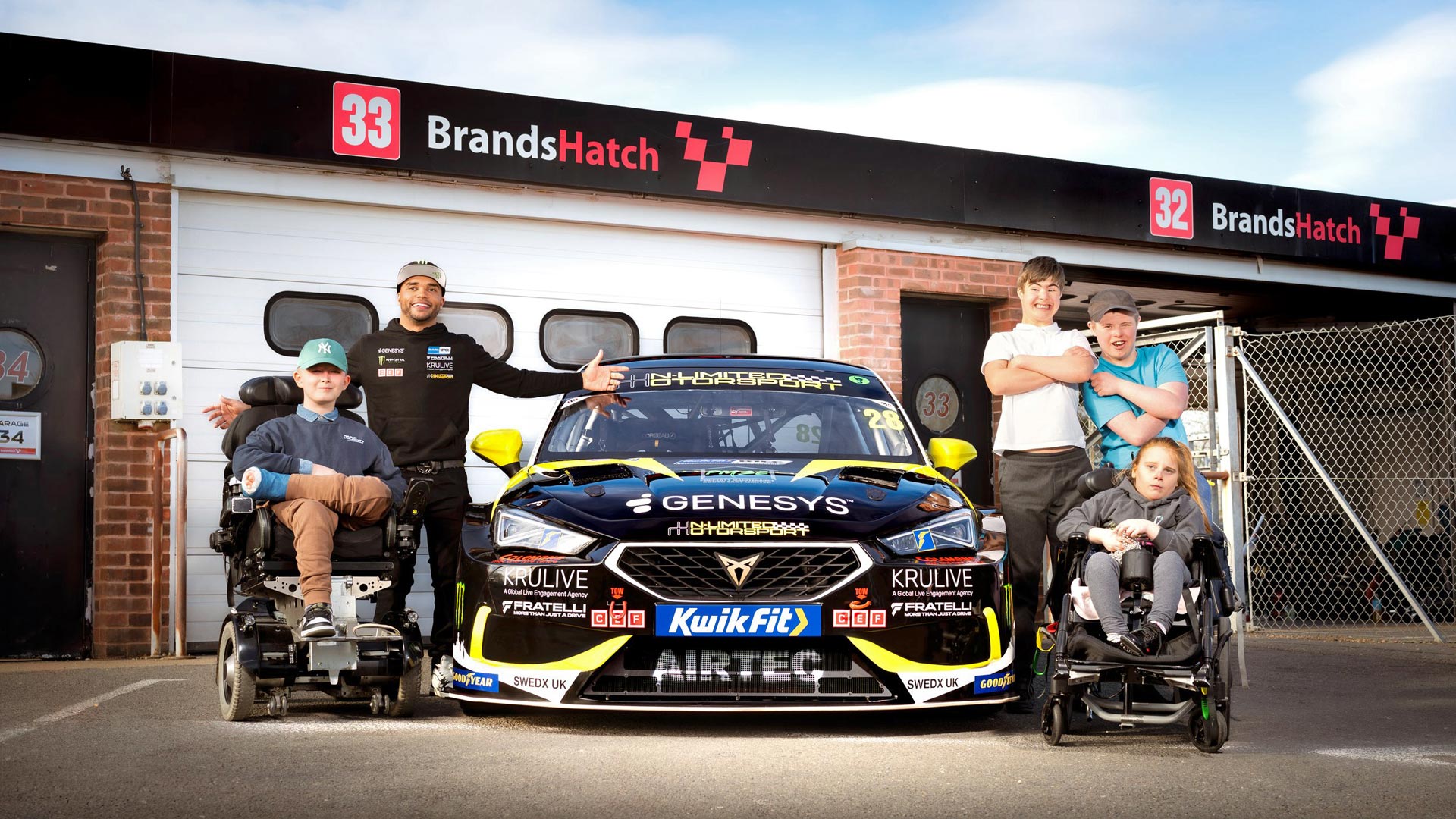
Hamilton is the only driver in the history of BTCC to compete with cerebral palsy. His Cupra Leon racing car is specially adapted for his disability.
Hoping to use his position as a racing driver to inspire others, Hamilton invited children from the We Are Beams charity to Brands Hatch for his season launch.
“There is a place in motorsport for disabled people to feel valued and accepted in multiple roles within the sport. I want to open people’s eyes to that,” said Hamilton.
“I want to continue to prove that motorsport is for everyone and that racing can be a platform for opportunity and inclusivity. Un-Limited Motorsport and my partners believe in what I stand for, my talent and my purpose. If I can be accepted, then so can others with a disability.”
Moving forwards together
Hamilton becomes the latest driver to join the Un-Limited Motorsport team, driving alongside Dexter Patterson and Max Hall.
Founded in 2024 as a single-car team, Un-Limited Motorsport has undergone a rapid expansion. It will now accommodate three drivers for the 2025 season.
Team owner Bob Sharpless said: “It’s fantastic to have Nic Hamilton join Un-Limited Motorsport. He’s hugely determined to get back on the BTCC grid, and I’m proud that we could make it happen.
“Nic is not just an incredibly well-known driver – he’s an inspiration worldwide. The fact that he’s put his trust in our team speaks volumes about how far we’ve come in such a short time. We’re excited to support him on this journey and can’t wait to see what we achieve together.”
The 2025 BTCC season begins on Saturday 26 April, with the opening rounds taking place at Donington Park.
Tesla has delivered more than 250,000 new electric cars in the UK. The figure was achieved less than a year after the American company broke the 200,000 mark.
Recent momentum, including a 21 per cent year-on-year sales increase in February 2025, has helped Tesla to reach the new milestone.
The updated Model 3, revealed last year, has been a key driver of growth. This was compounded in October with the launch of a Model 3 Long Range Rear-Wheel Drive – the longest-range Tesla vehicle yet. The firm will hope the upcoming Model Y facelift, due in the UK from June, can maintain its continuing growth.
This comes despite a downturn in Tesla deliveries across Europe, which is attributed to consumer kickback over CEO Elon Musk’s political views.
The UK has, however, yet to see a downturn in Tesla deliveries. In February 2025, the Model 3 was Britain’s second best-selling car – followed by the outgoing Tesla Model Y in third. All eyes will now be on the March 2025 new car registration figures, due out next week.
Tesla pop-up store in London
To showcase its latest products, Tesla is opening a pop-up store on London’s Oxford Street next month.
Running between 4-11 April, features will include the Tesla Cybertruck, new Tesla Model Y (pictured above), Tesla Optimus Bot and the latest Tesla Powerwall 3 home energy storage solution – designed for solar integration. Those eager to attend can sign up here.
On the subject of power solutions, Tesla has continued to expand its Supercharger network to meet its growing deliveries. There are now more than 1,800 Tesla Superchargers across 160 locations in the UK – with the firm also running 42 retail and service stores, plus an additional 25 self-serve test drive locations.
Porsche has announced that all models in the Taycan range will now come equipped with its biggest battery.
The 105kWh Performance Battery Plus is being fitted as standard to the Taycan and Taycan 4S as part of a comprehensive package of enhancements for the EV.
Along with new safety technology and revised alloy wheels, Porsche says the 2025 Taycan specification represents £8,000 in extra value.
It brings added appeal to a car that Motoring Research’s Tim Pitt called ‘the best sporting electric car on sale’ in his recent review.
Extra range, no added cost
Previously, the Porsche Taycan and Taycan 4S were fitted as standard with an 89kWh battery pack. Customers could specify the larger 105kWh Performance Battery Plus, but at a considerable cost of £4,454.
However, making the bigger battery the default configuration means the entry-level Taycan is now officially capable of up to 421 miles when fully charged. Compared to the smaller battery, this represents an extra 50 miles of range.
Porsche has also made 19-inch Taycan S Aero alloy wheels standard for the regular Taycan. Adaptive cruise control and lane change assist are now fitted to all models, too.
Those buying the faster Taycan GTS and Turbo versions also get rear-axle steering and Power Steering Plus as standard – worth around £3,600 in extra equipment.
These are said to make PCM more responsive to use, and allow direct access to more third-party applications. A new Porsche App Centre should allow drivers a simpler experience to download and install new apps to their car.
Porsches equipped with Bose or Burmester high-end sound systems will be able to experience Dolby Atmos spatial audio, too.
Prices for the new 2025 Taycan start at £88,200, with the order book open now. Porsche no doubt hopes the generous new specification will draw customers back to its electric saloon and estate, which experienced a 49 percent slump in sales last year.
Peugeot CEO Alain Favey has confirmed the GTI badge will return on a high-performance version of the electric Peugeot e-208.
The decision to go ahead has already been made as a key part of Favey’s aim to “re-energise” the Peugeot brand.
Peugeot, Favey pointed out, has a long performance heritage and is currently competing in the World Endurance Championship (WEC). He added: “The return of the GTI is proof of the performance Peugeot has always stood for.”
The GTI goes electric
Favey confirmed the new GTI will be derived from the current-generation electric Peugeot e-208 (pictured above).
He told a group of AUTOBEST jurors – including Motoring Research’s Richard Aucock, the UK AUTOBEST juror – that we will see it “this year”.
“It will be a true GTI,” said Favey, and will use technology from the Stellantis Group portfolio, “but also the skills of the Peugeot engineers who are very motivated to bring this car and make it the best possible in this segment.”
High-performance parts
Models such as the Alfa Romeo Junior Veloce and Abarth 600e Scorpionissima (pictured above) – both using the same architecture as the new Peugeot e-208 GTI – have an arsenal of interesting technology the engineers can draw from.
This includes 280hp electric motors, a mechanical limited-slip differential, Alcon four-pot front brakes and a bespoke rear anti-roll bar.
The Abarth 600e Scorpionissima sprints from 0-62mph in just 5.9 seconds – and, as it would be smaller and potentially lighter, the Peugeot e-208 GTI could be faster still.
It will certainly be a step on from the current Peugeot e-208, which peaks at 156hp with a 54kWh battery. Following Favey’s promise that we will learn more soon, anticipation is likely to skyrocket.
Peugeot’s GTI heritage
Alain Favey has been in charge of Peugeot for just a few months. Indeed, he is not yet into his first 100 days at the French firm.
He has, however, a clear idea of what the Peugeot brand should be. “We will not be premium – we do not aspire to be. In the mainstream part of the market, we want to be in the upper part of it. Upper mainstream will be how we express the brand and evolve our model range.”
He wants Peugeot to be seen as an alternative in the market, building on the “French panache is part of our DNA… We want to be a bit edge, with a different positioning to stand out from the crowd”.
Peugeot is a brand with more than 210 years of history, he added. “We definitely want to use this heritage to build what the future will be for our products and for our brand.”
Low Traffic Neighbourhoods are a controversial topic. BBC Radio 2 presenter even Jeremy Vine got into trouble for praising them, with the keen cyclist warned that posting his support for the schemes on social media broke the corporation’s strict rules on impartiality.
Perhaps Vine has a point, though? After all, a Low Traffic Neighbourhood can improve quality of life at a local level. It means less pollution, quieter streets and a greater sense of community. Streets free of the stranglehold of traffic. Streets that breathe again. What’s not to like?
Well, for many motorists, a Low Traffic Neighbourhood is an inconvenience. A loss of civil liberty. The micromanagement of motoring. There are even suggestions of this being a class war. So, what exactly is a Low Traffic Neighbourhood (LTN)?
What is a Low Traffic Neighbourhood?
‘Low Traffic Neighbourhoods are groups of residential streets, bordered by main or “distributor” roads (the places where buses, lorries and non-local traffic should be), where “through” motor vehicle traffic is discouraged or removed.’
This quote from the policy makers’ document is a good summary. Measures are put in place to discourage or restrict the use of motor vehicles. Some are temporary, while others are permanent.
It remains possible for residents and delivery drivers to use the streets, but it’s harder or impossible to drive through from one main road to the next. ‘Rat-runs’ become a thing of the past if LTNs are implemented.
Why do we need Low Traffic Neighbourhoods?
In 2020, the government announced a £2 billion package to ‘create a new era for cycling and walking’. Of this, £250 million was allocated for an ‘emergency active travel fund’, to include the likes of wider pavements, pop-up bike lanes and cycle-only corridors.
“The government and councils needed to act fast because of Covid,” said Giulio Ferrini of the walking and cycling charity Sustrans.
At the time, some argued the pandemic was simply another opportunity to persecute Britain’s drivers. Opposition groups have said LTNs benefit the middle classes in the centre of the schemes, at the expense of those living outside the neighbourhood or who are dependent on their vehicles to earn a living.
In 2023, the government commissioned a review of Low Traffic Neighbourhoods. Its report concluded that ‘while they can work, in the right place, and, crucially, where they are supported, too often local people don’t know enough about them and haven’t been able to have a say.
‘Increasingly and frustratingly, we see larger and larger low traffic schemes being proposed by some councils despite concerted opposition by local residents and by local businesses, and in some cases being removed again’. Clearly, the LTN debate is far from over.
How does a Low Traffic Neighbourhood work?
Most LTNs use so-called ‘modal filters’ to stop vehicles driving beyond a certain point. These are placed at strategic points around the neighbourhood to stop drivers using the streets as rat-runs.
Traffic on minor roads and residential streets has increased, as drivers are directed away from minor roads to avoid congestion. Traffic-based navigation systems and apps such as Waze have contributed to soaring traffic levels on back roads.
There are many forms of modal filters, including bollards, gates, planters, opposing one-way systems, bus gates, width restrictions and so-called ‘school streets’. These are timed sections of road designed to discourage parents from dropping off close to school.
Some LTNs are enforced using rising bollards and Automatic Number Plate Recognition (ANPR) cameras. Others rely on width restrictions and the assumption that motorists will adhere to the rules.
As footage sourced by the BBC reveals, some motorists will take to the pavement to avoid a blockade. There have been protests and petitions demanding the removal of LTNs in some London boroughs, while others have been vandalised.
The case for and against LTNs
Local Traffic Neighbourhoods can be implemented using emergency traffic orders, with the subsequent consultation taking place over the first six months of operation. That’s one of the aspects that has angered many people.
Some councils have dropped the plans. Ravi Govinda of Wandsworth Council said: “We are also absolutely committed to our ambitious target of growing the greenest inner London borough by 2030.
“But the LTNs we had in place were just not working for local residents and businesses. There were gridlocks on our roads, which increased carbon emissions; emergency vehicles were getting blocked in, and the daily lives of many residents were being disrupted.”
There’s also a concern that an LTN does little more than shift a problem elsewhere. Sam Cooray, who lives on the border of a scheme in Oval, in the London borough of Lambeth, told The Guardian: “I’m between two main roads so I’m in a cloud of pollution, and my children are in a cloud of pollution,” she says, “sitting in a park cafe beside a busy road.”
Supporters point to the social and environmental benefits as reasons to get behind the concept of LTNs. The first scheme in Waltham Forest saw traffic levels fall by around half inside the residential area and by 16 percent even when including the main roads.
Chris Proctor of Enjoy Waltham Forest said: “The average road within the village saw a 44.1 percent reduction in vehicles on the road and a reduction in speed from 21.6mph to 19.5mph.”
Simon MacMichael of cycling website Road.cc, said: “Is it too much to hope that as more and more low traffic neighbourhoods are introduced, and more local residents get used to their streets being closed to rat-running drivers, there is a future around the corner in which people are encouraged out of their cars – if they have one in the first place – and use cycling or walking as their default way of getting around?”
One thing’s clear: there is no middle ground in the LTN discussion. A bit like Brexit, either you’re in favour or you’re not. The topic on social media is surrounded by vitriolic language, bitterness and anger.
It all comes down to whether you view LTNs as ‘road closed’ or ‘road open to pedestrians, wheelchair users and cyclists’. And it’s far from an open or shut case.
The ‘VW Kong For a Cause’ is the result of joint project with the Kong dog toy company, alongside VCA Charities pet shelters in the United States.
For every example of the VW Kong For a Cause sold, another will be donated to an animal shelter. All net proceeds from sales of the toy will go to charity, too.
If the link between Volkswagen and dog toys has you scratching your head, there is a good reason for it – and one rooted in the German marque’s history.
A rocky start to a winning idea
Inspiration for the original Kong rubber dog toy came from a mechanic’s workshop in Denver, Colorado during the 1970s.
Workshop owner Joe Markham had acquired a German Shepherd dog, named Fritz, to help protect his workshop after a spate of burglaries.
Fritz attempted to chew everything from rocks to radiator hoses, but salvation finally arrived in the shape of a rubber bump stop from a 1969 Volkswagen Type 2 Bus.
Honouring design classics
Markham realised the bump stop had the perfect consistency to resist chewing without damaging a dog’s teeth, and spent the next six years designing the ultimate canine toy.
This led to the Kong company being launched in 1976, and millions of the rubber dog toys being sold around the world.
As the modern equivalent to the classic Volkswagen Type 2, the ID. Buzz has donated its Cabana Blue colour scheme to the special Kong toy, which is sadly only available to enthusiasts in the United States.
“At Volkswagen, we believe in the power of connection between people and their pets,” said Rachael Zaluzec, SVP for brand marketing at Volkswagen of America. “The ID. Buzz embodies that spirit, and this collaboration carries forward Kong’s wonderful origin story that began with a man, his best friend and a VW bus.”
The majority of British motorists have no plans to buy an electric car, according to a new study.
Research commissioned by AXA insurance, which questioned 1,501 UK motorists, found that almost two thirds (63 percent) are not interested in purchasing an EV.
Of those surveyed, more than a third (37 percent) said concern about the lifespan of batteries in an electric car was the major factor in their decision.
Such are the fears about battery life, a mere eight percent of those who responded said they planned to buy a second-hand electric vehicle.
Battery life causing concerns
However, battery life were not the only concern about electric cars held by the survey respondents.
Some 61 percent said they thought electric cars were too expensive to buy. And 36 percent believe there is a shortage of public charging points in their local area.
AXA also uncovered a lack of knowledge from members of the public about electric cars, in particular relating to used EVs.
Nearly two thirds (64 percent) of those questioned said there is not enough public information on how to buy a used electric vehicle.
Boosting consumer confidence
AXA believes the used electric car market could be stimulated through standardised battery health certificates.
Such certificates would offer a clear guide as to the state of the battery in a second-hand EV, comparing its maximum level of charge against what was available when the car was new.
Marco Distefano, managing director at AXA Retail, said: “We urge the Government to urgently publish guidelines to support standardised battery health testing.
“Not only will this stimulate the used EV market, but it also has the potential to positively impact insurance premiums by providing a barometer for assessing the value of EVs in a similar way that mileage is used for vehicles with an engine.”
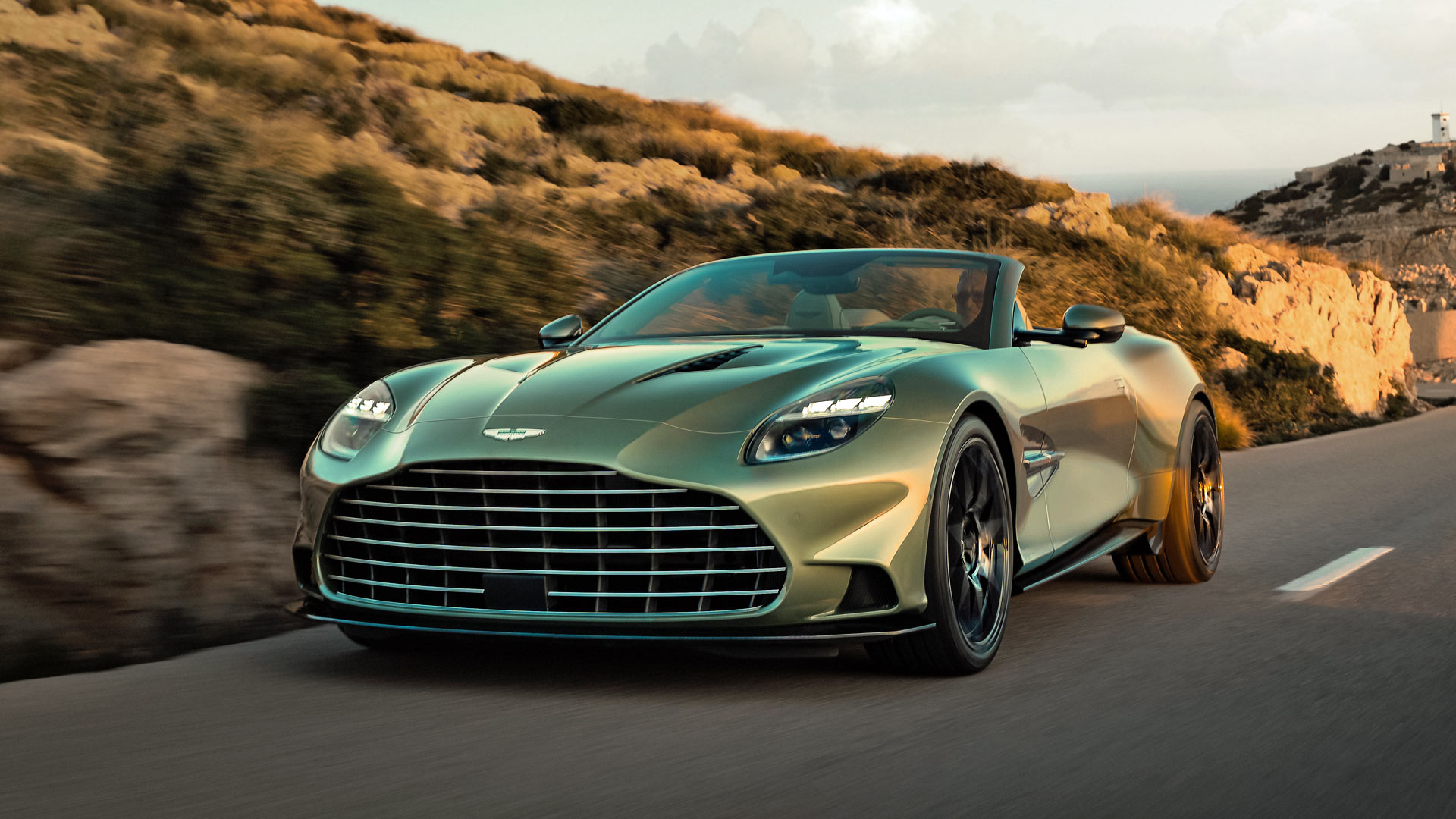
Aston Martin has revealed a drop-top version of its flagship V12 super GT. The new Vanquish Volante becomes the most powerful open Aston Martin ever – and the world’s most powerful front-engined convertible.
Aston Martin CEO Adrian Hallmark said: “For 60 years, Aston Martin Volantes have defined the art of elegant, sporting, open-top motoring.
“At Aston Martin we are proud to be doing such justice to our heritage while, as the unprecedented performance of the Vanquish Volante shows, keeping our eyes firmly focused on the future.”
Open for business
The Volante version of the new Vanquish was designed alongside its coupe counterpart, meaning there were no compromises in terms of the car’s design.
According to chief creative officer Marek Reichman: “The opportunity to create a true flagship Volante is rare. The challenge is always to maintain Aston Martin’s core brand DNA, and it was vitally important to create the Volante alongside the coupe in order to deliver excellence in proportion and drama.”
A lightweight, K-fold roof completely disappears beneath the tonneau cover, and can be opened or closed in 16 seconds. Aston Martin says the fabric roof’s level of thermal insulation matches that of the Vanquish coupe.
A new stainless steel exhaust system with quad tailpipes has been developed specifically for the Volante. With the roof down, passengers are said to enjoy ‘an enhanced range of frequencies and resonant V12 howl’. For those who want more V12 volume, a lightweight titanium exhaust is on the options list.
The fastest Volante ever
Providing the acoustic hit is the same twin-turbocharged 5.2-litre V12 as found in the Vanquish coupe. This endows the Volante with a mighty 835hp and 738lb ft of torque.
A ZF eight-speed automatic paddle-shift transmission sends all that power to the rear wheels, aided by an electronic limited-slip differential. Accelerating from 0-62mph takes 3.4 seconds in the Volante: 0.1 seconds slower than the Vanquish coupe.
Carbon ceramic brakes are fitted as standard to the Vanquish Volante, along with new Bilstein DTX adaptive dampers that should switch it from boulevard cruiser to sporting grand tourer in an instant.
Unlike the 2+2 Vanquish coupe, the Volante is solely a two-seater, maximising space for the roof when retracted. A substantial cross brace divides the cabin from a rear storage space that can be filled with bespoke saddle leather luggage.
Aston Martin fits Sports Plus seats as standard, with carbon fibre Performance seats available at extra cost. A combination of Alcantara and semi-aniline leather is the default upholstery option. As ever, though, the Q by Aston Martin bespoke service can create a near-endless array of finishes as desired.
The Vanquish Volante is the latest car to use Aston Martin’s new infotainment system, which combines a 10.25-inch digital instrument panel with a 10.25-inch central touchscreen. Pleasingly, there are still plenty of traditional buttons and switches throughout the cabin.
Celebrating the Volante legacy
The launch of a new Vanquish convertible also marks the 60th anniversary of Aston Martin’s Volante nameplate. Applied to numerous open-top Astons over the years, the badge was first used on the rare 1965 Short Chassis Volante – only 37 examples of which were made.
The Vanquish Volante will be built in larger numbers, although combined production of both Vanquish variants is capped at 1,000 cars per year.
Orders for the new Vanquish Volante can be placed now, with first deliveries planned for autumn 2025. Prices have yet to be announced, but expect a premium of at least £20,000 over the £330,000 asked for a Vanquish coupe.
Peugeot has revealed a racy new Sport version of its Expert van, creating a rival for the MS-RT range of modified Ford Transits.
The French marque says it took inspiration from a ‘rich motorsport pedigree’, but clearly used its recent racing history as a starting point for the Expert Sport van.
That means you won’t find the red, navy blue, yellow and light blue livery worn by competition Peugeots of old, but rather the modern eye-searing shade of Kryptonite green.
This colour has appeared on Peugeot’s 9X8 Le Mans hypercar, along with road-going performance models such as the 508 Peugeot Sport Engineered.
Mean, green, load-carrying machine
For the Expert Sport’s bodywork, Peugeot adds a deeper front splitter, side skirts with integrated protective front mudguards, and a revised rear bumper.
A new rear spoiler is also painted in Kryptonite green. However, there is no word from Peugeot on whether it increases downforce when circling the city ring road.
A set of bespoke 18-inch alloy wheels are shod with high-load-capacity Nankang tyres, with more Kryptonite green used for the exterior badges, front grille and large side stripes.
Inside, the Expert Sport’s seats are finished in black ‘eco-leather’ with, of course, Krytonite green contrast stitching.
Choose diesel or electric power
Peugeot has fitted the Expert Sport with more equipment than the regular ‘Asphalt’ model. Dual-zone climate control, keyless entry and start, and wireless smartphone charging are all standard on this motorsport model.
Buyers get a choice between Ice White or Titanium Grey exterior colours, and can have the Expert Sport in either Panel Van or Crew Van body styles.
Similar to the Vauxhall Vivaro GS, the Expert Sport comes with either a 180hp 2.0-litre diesel engine or a 136hp electric motor.
Available to order soon, the diesel Expert Sport starts from £42,675 excluding VAT. Going electric elevates the starting price to £48,315 excluding VAT, but with the Plug-in Vehicle Grant applied.