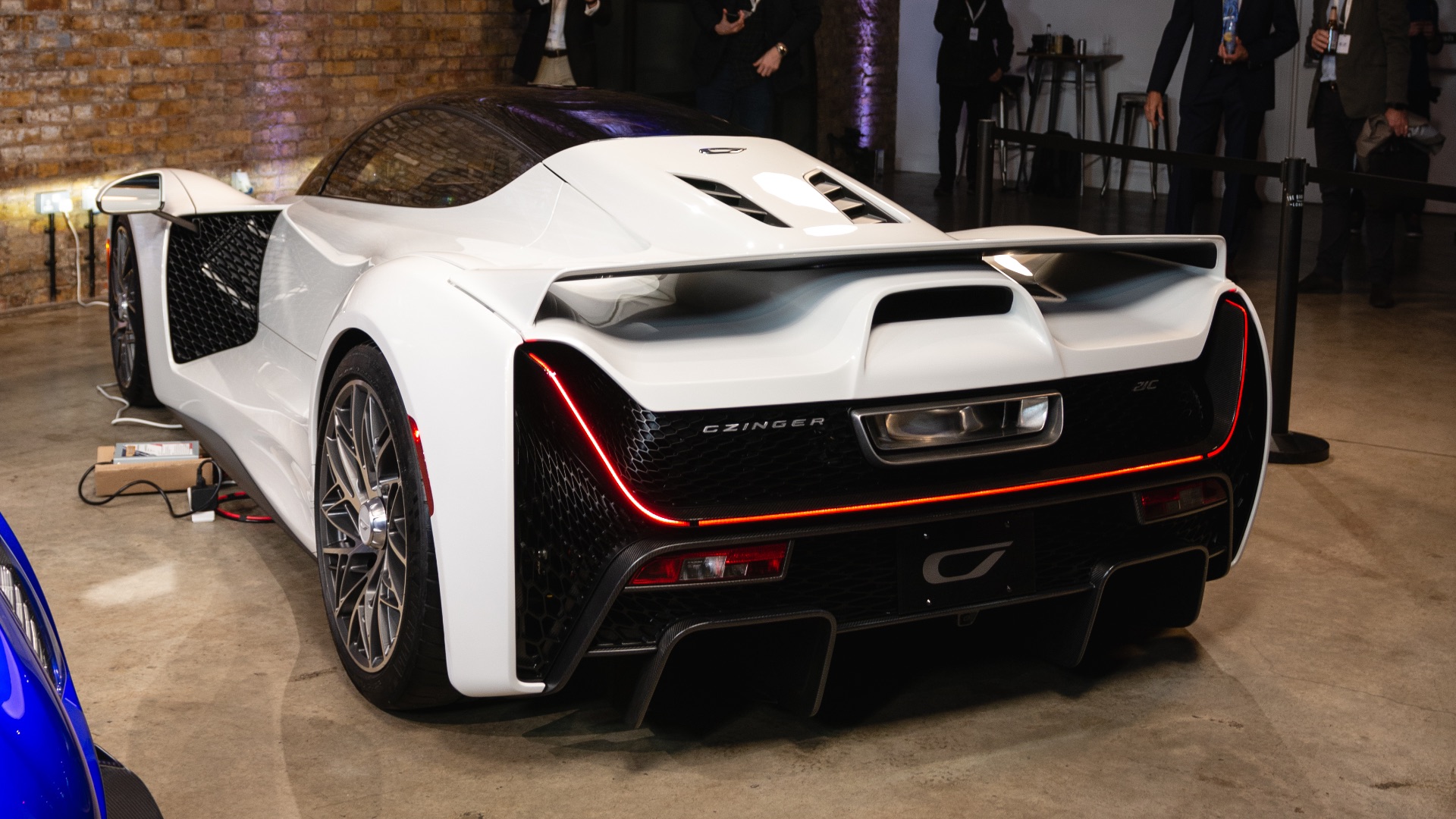
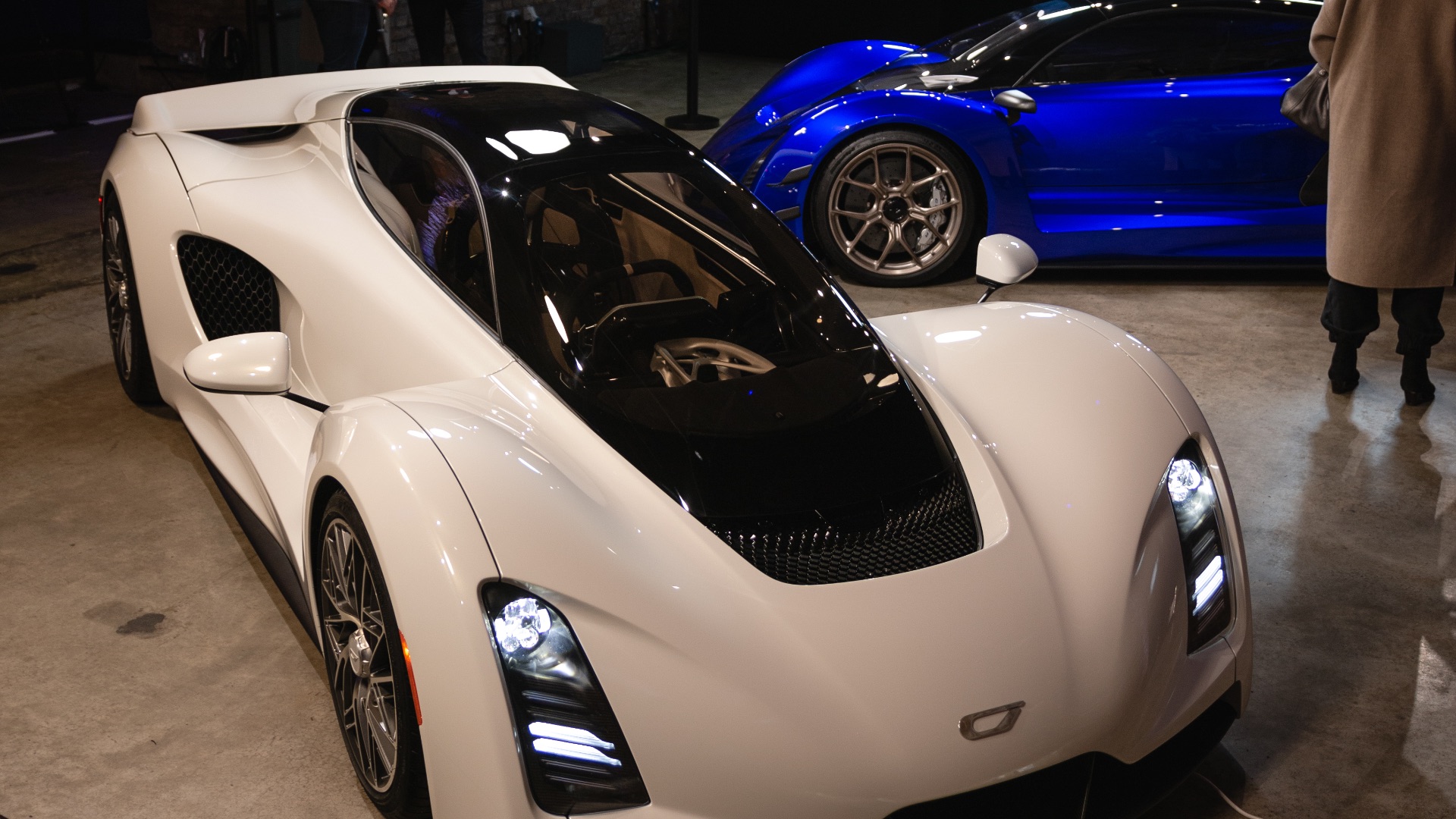
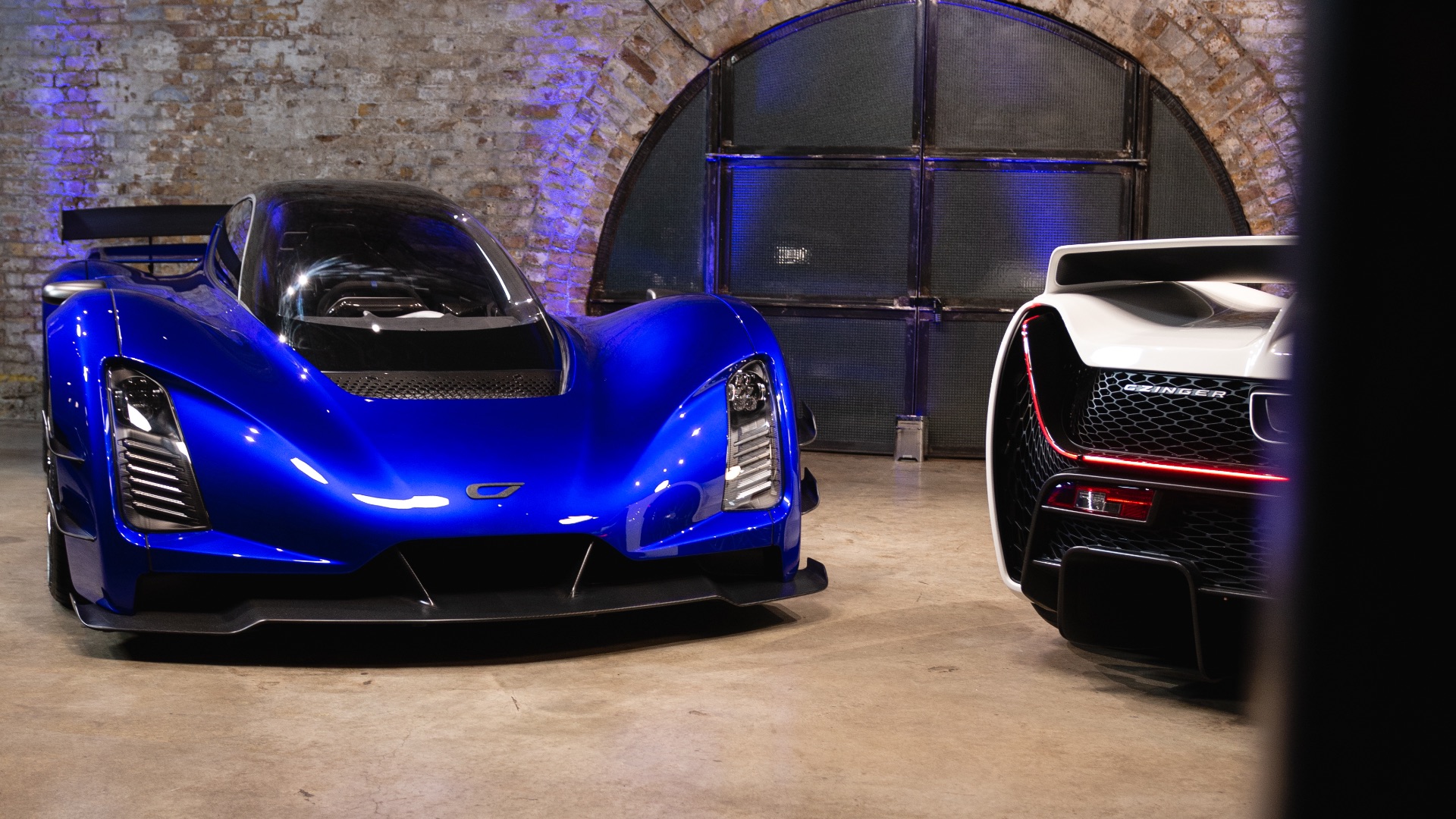
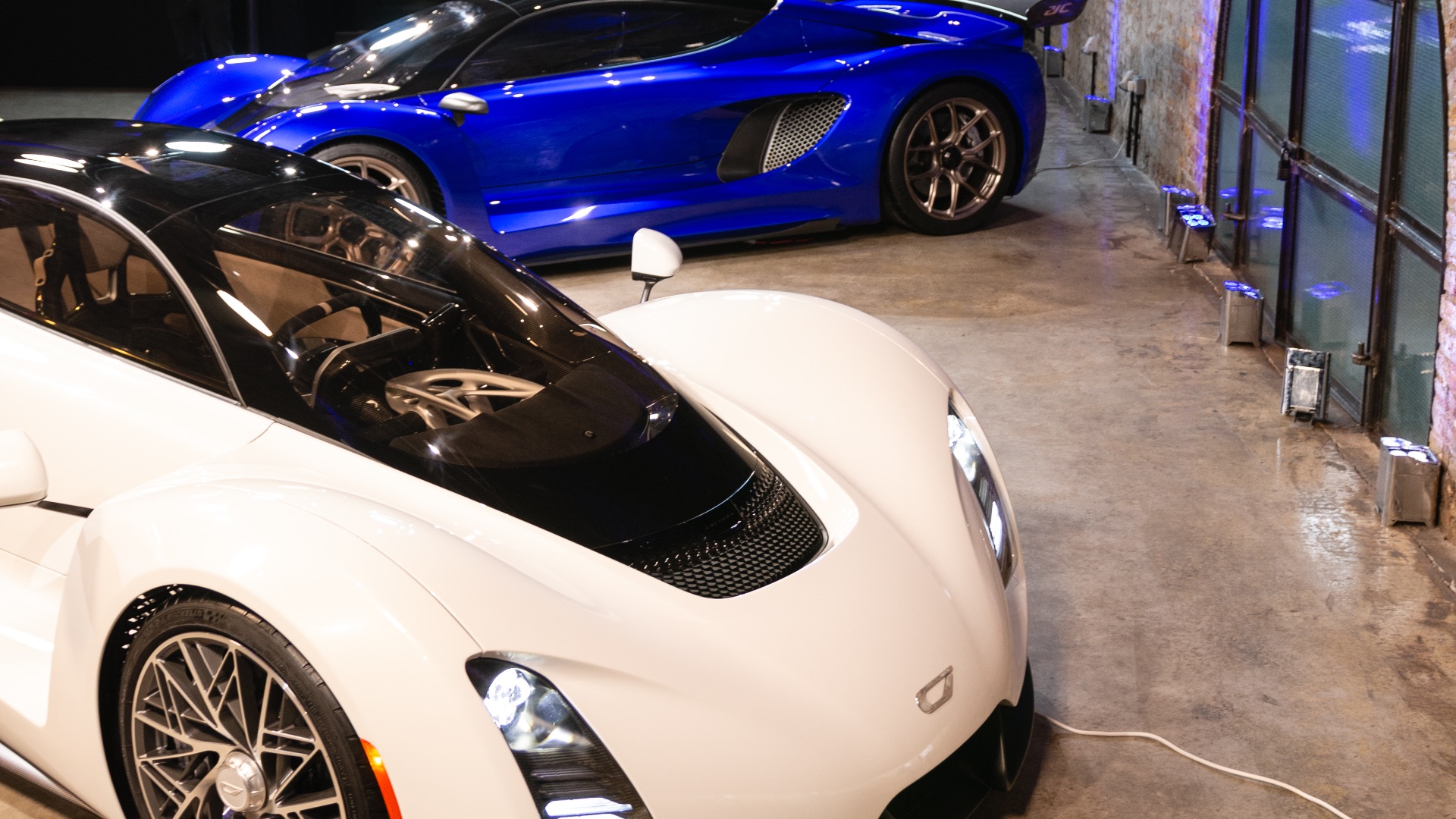
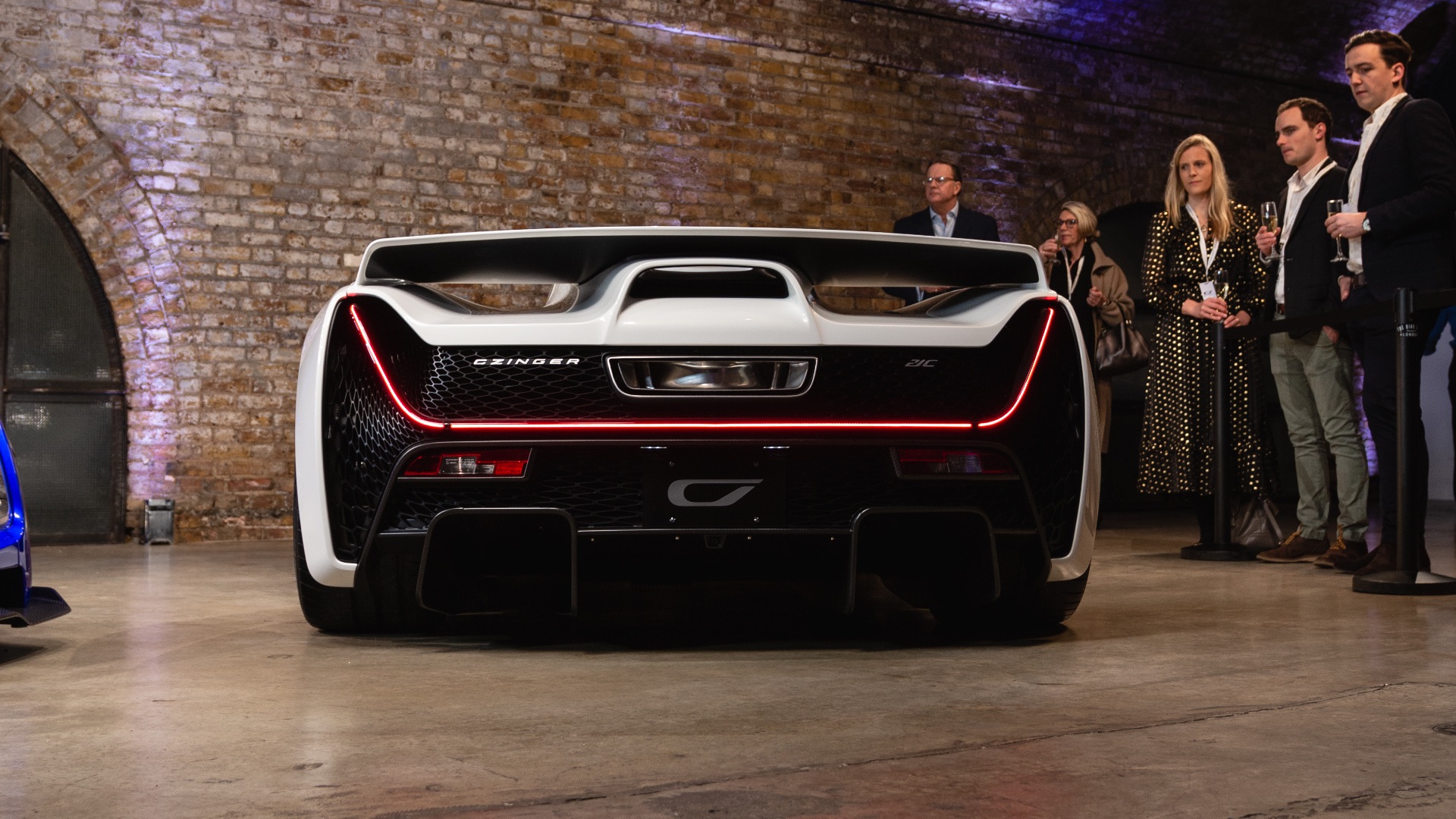
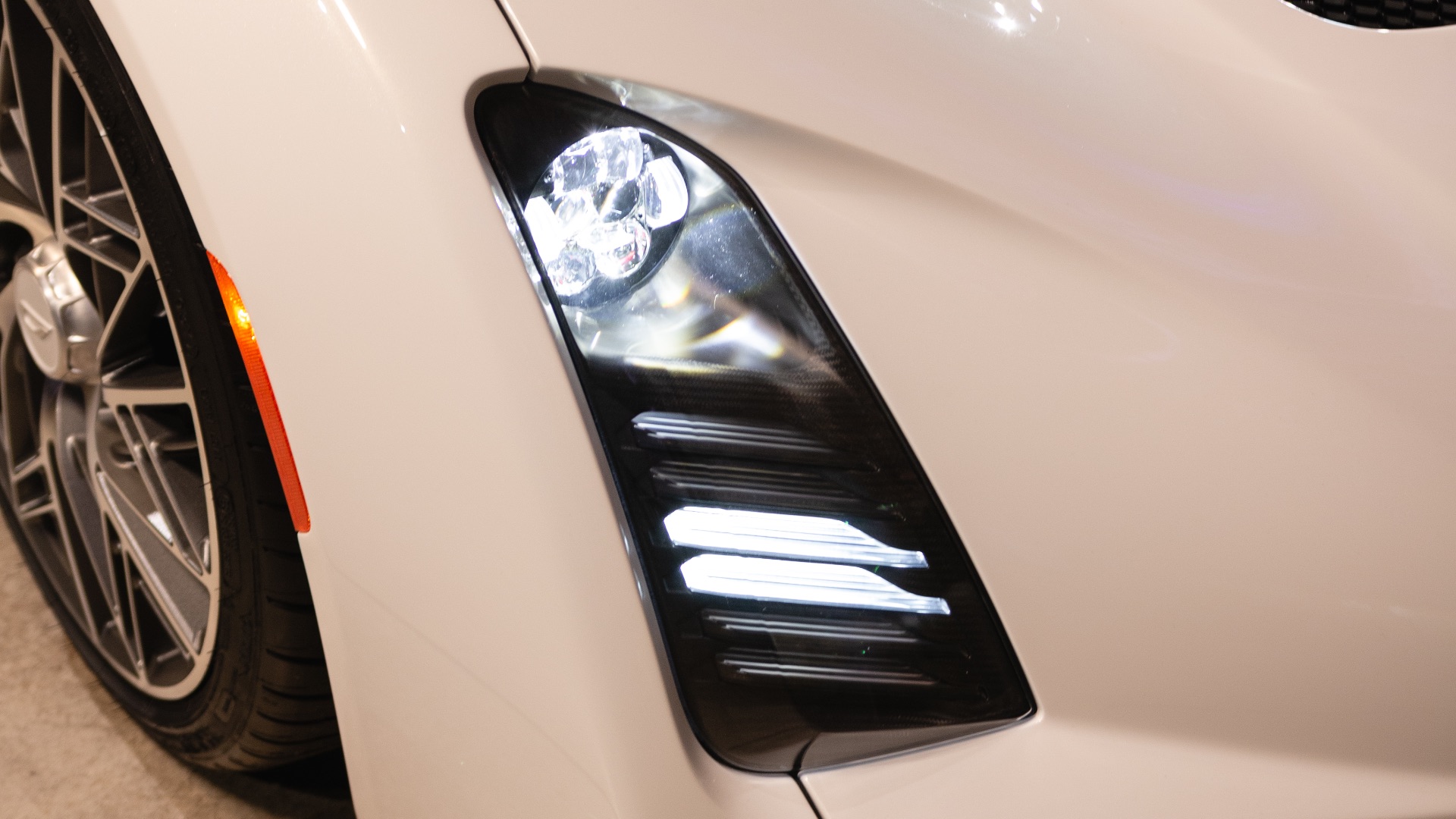
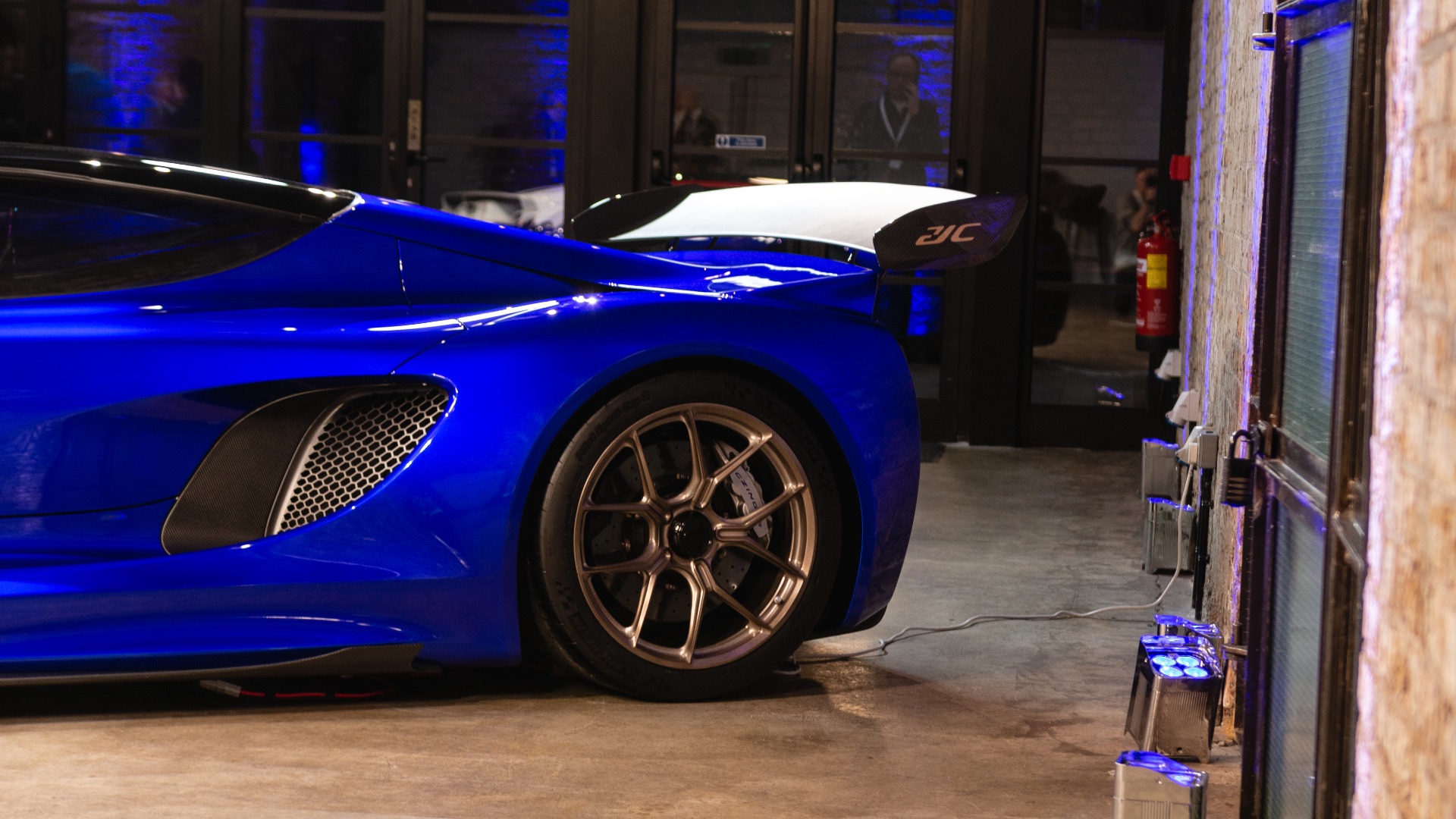
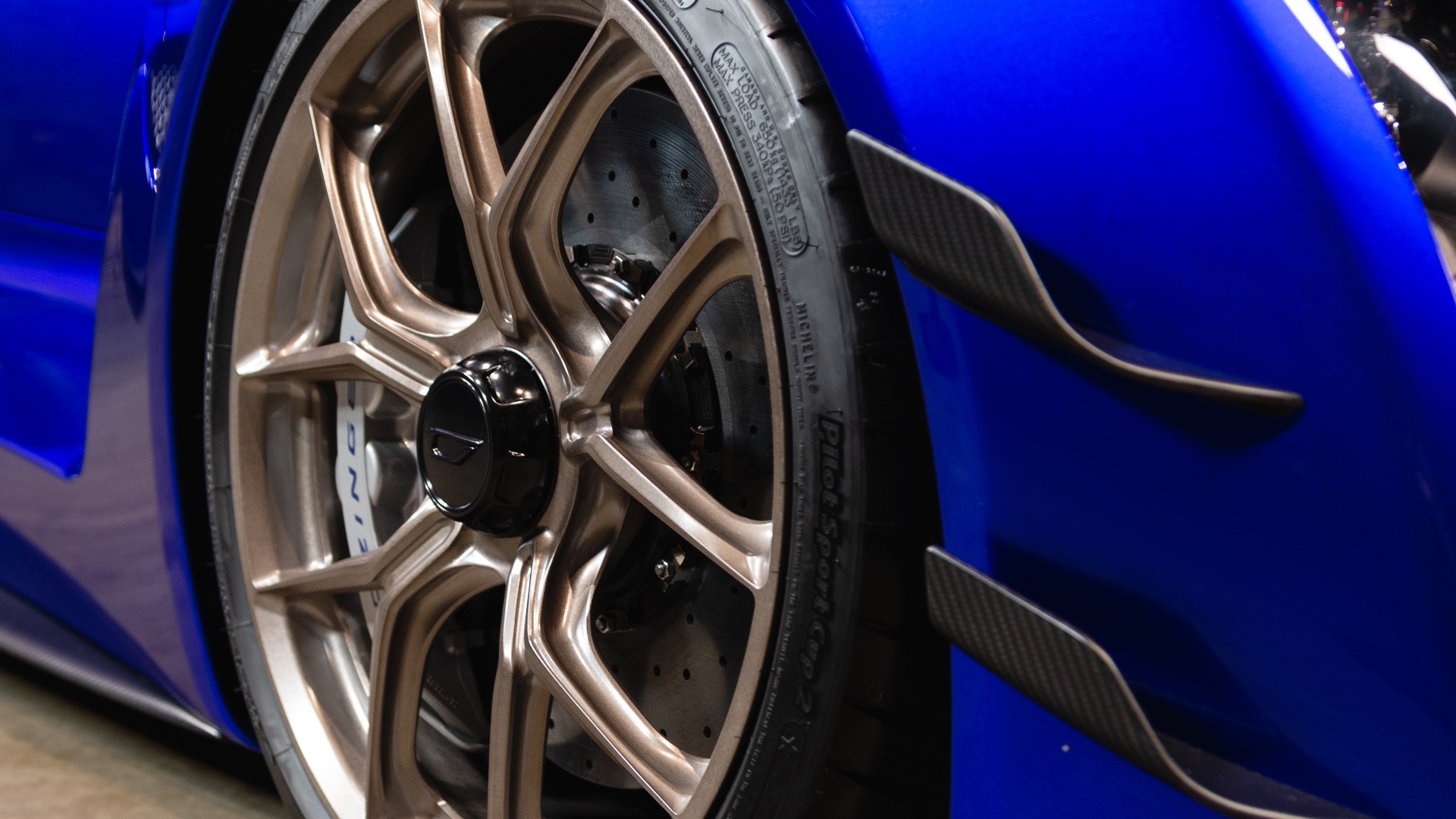
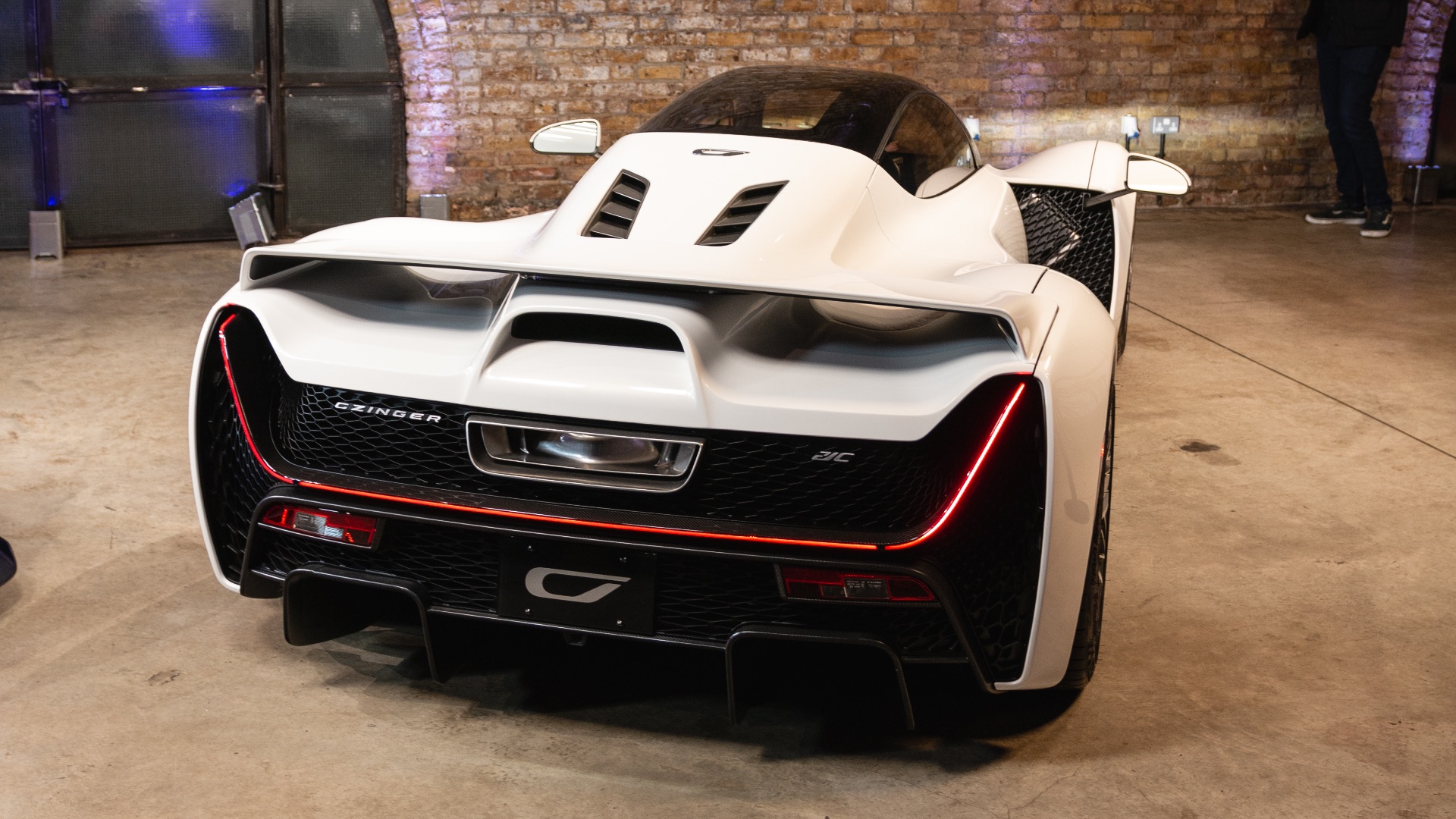
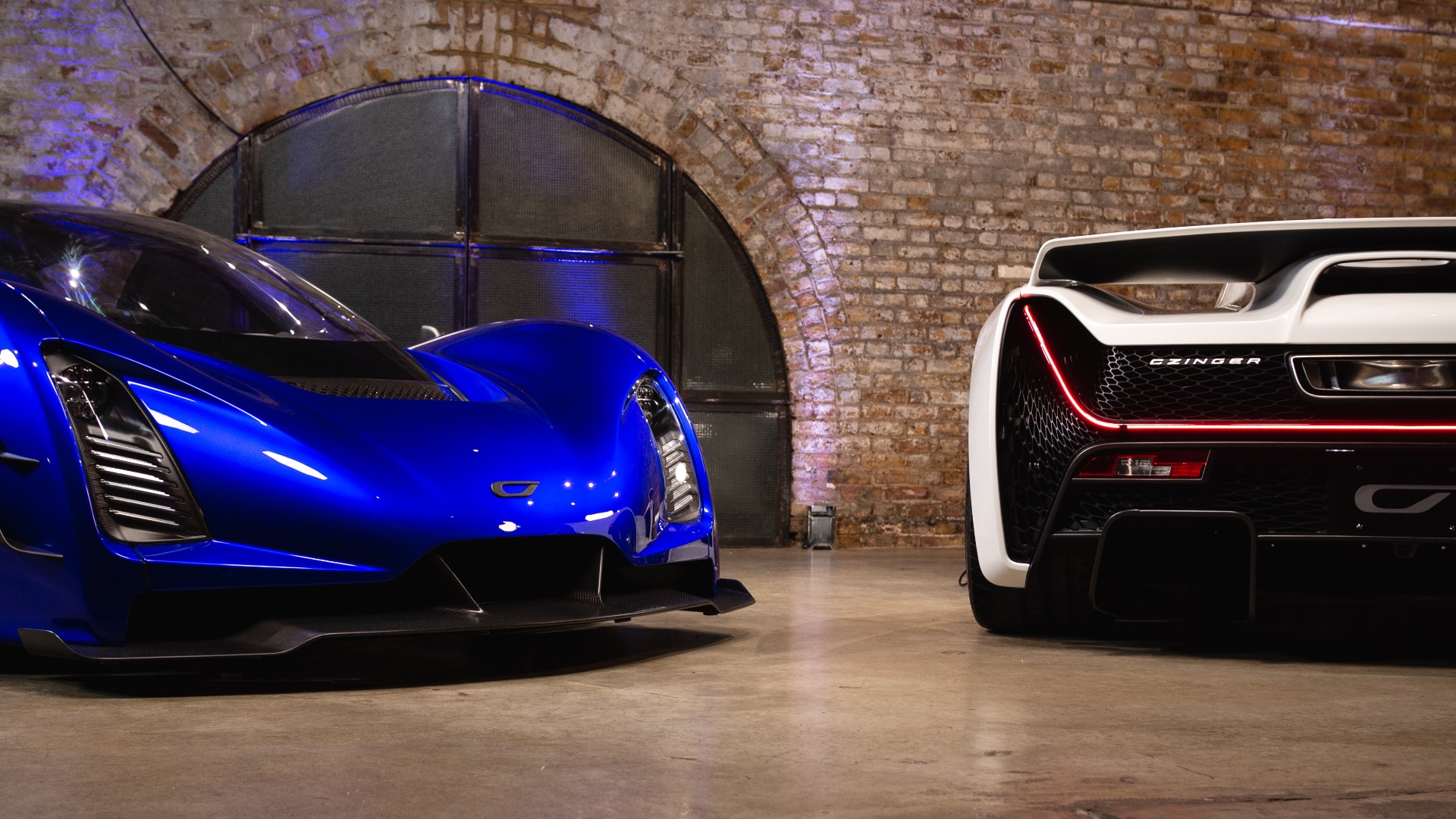
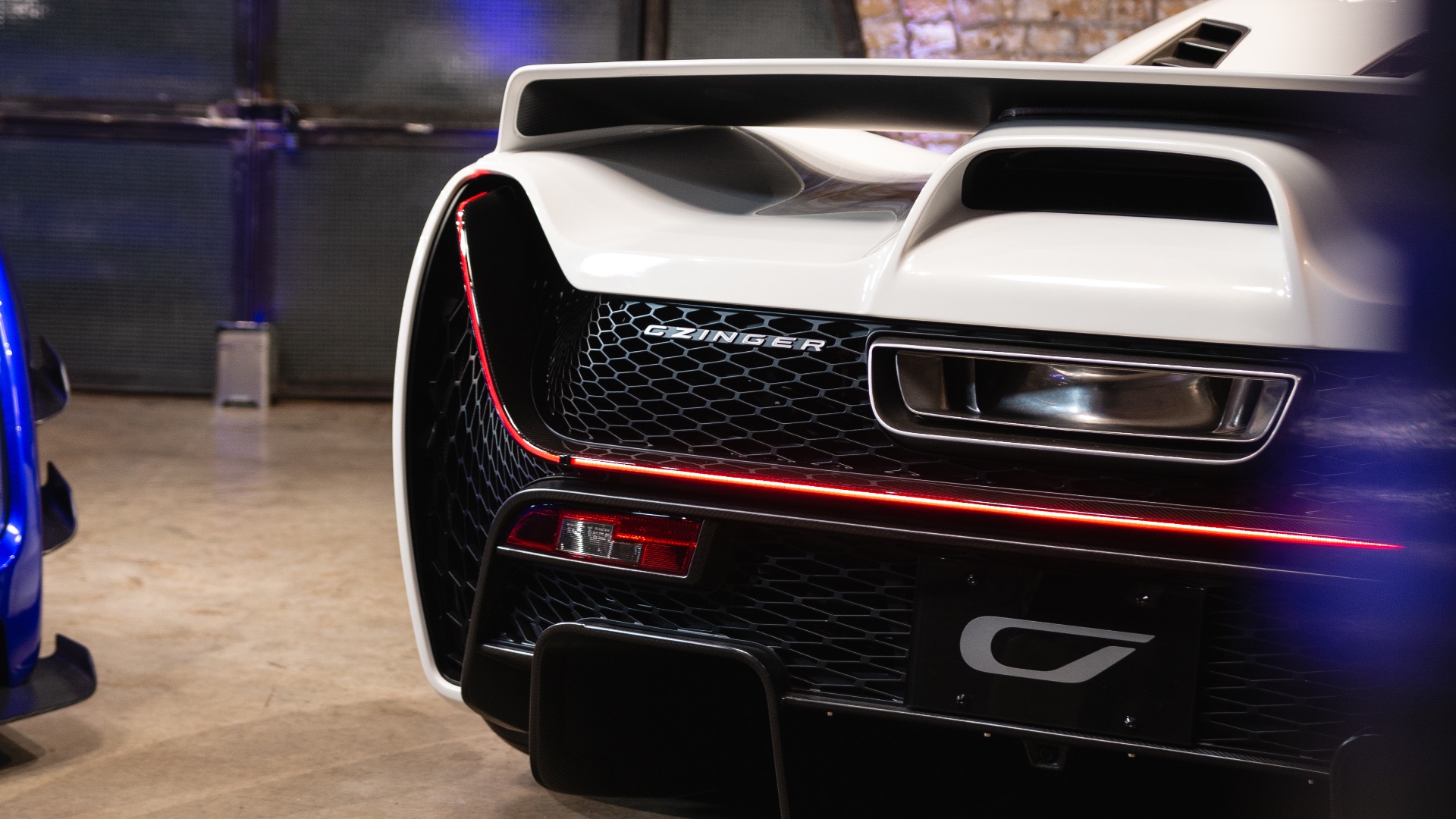
From hipster beards to cafes selling breakfast cereal: plenty of trends have started in Shoreditch. Many have ended here, too. Tonight, however, this fashionable East London enclave had once again witnessed something new. And the Czinger 21C is more than just a car. It could be a ‘hit reset’ moment for the whole industry.
Even a game-changing hypercar can’t defeat the coronavirus, however. The 21C was due to debut in Geneva earlier this month, but Covid-19 had other ideas. Thus, the launch was moved to London, where I had chance to speak with Kevin Czinger (say it ‘Zinger’) about his car and company.
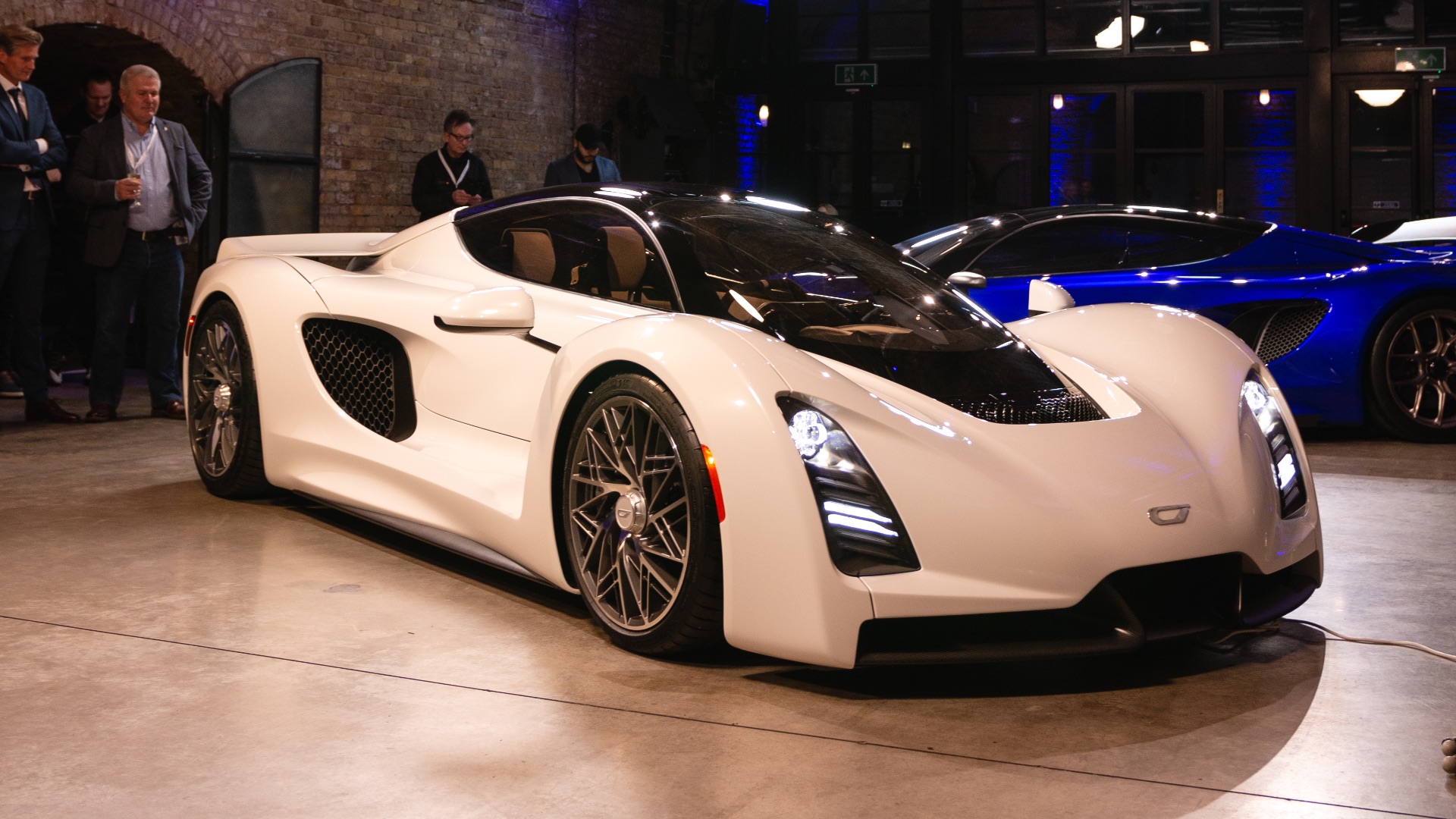
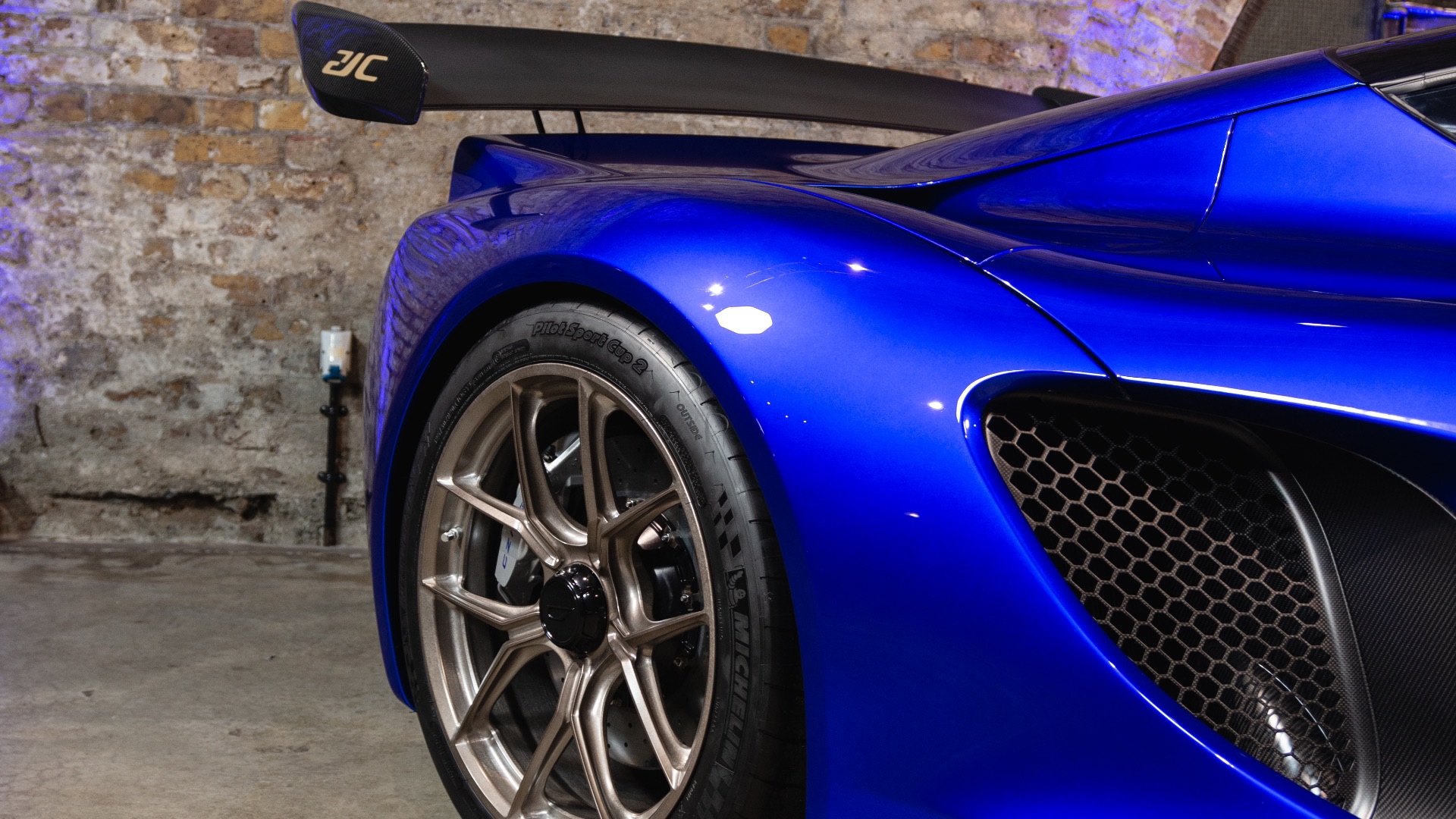
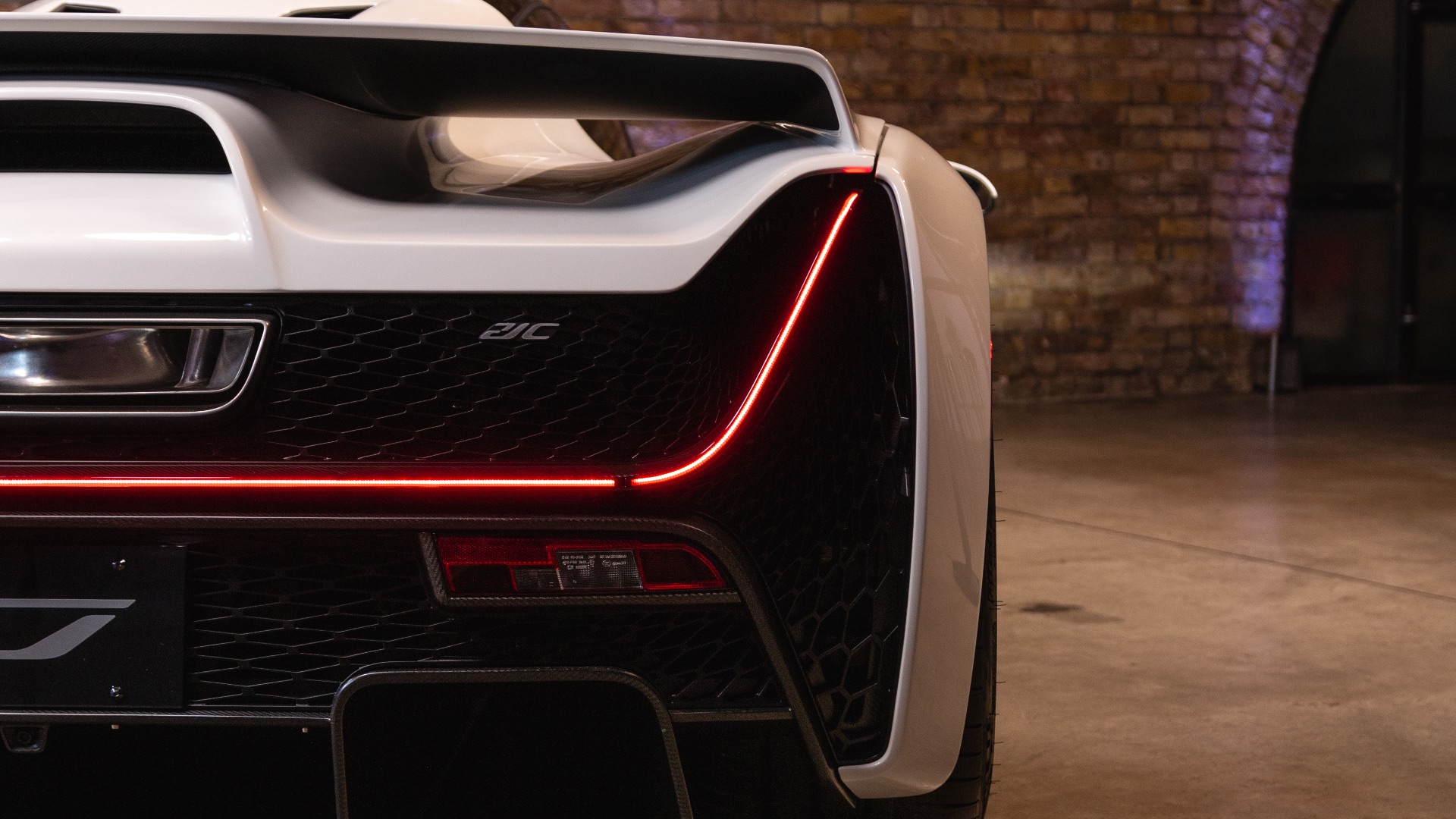
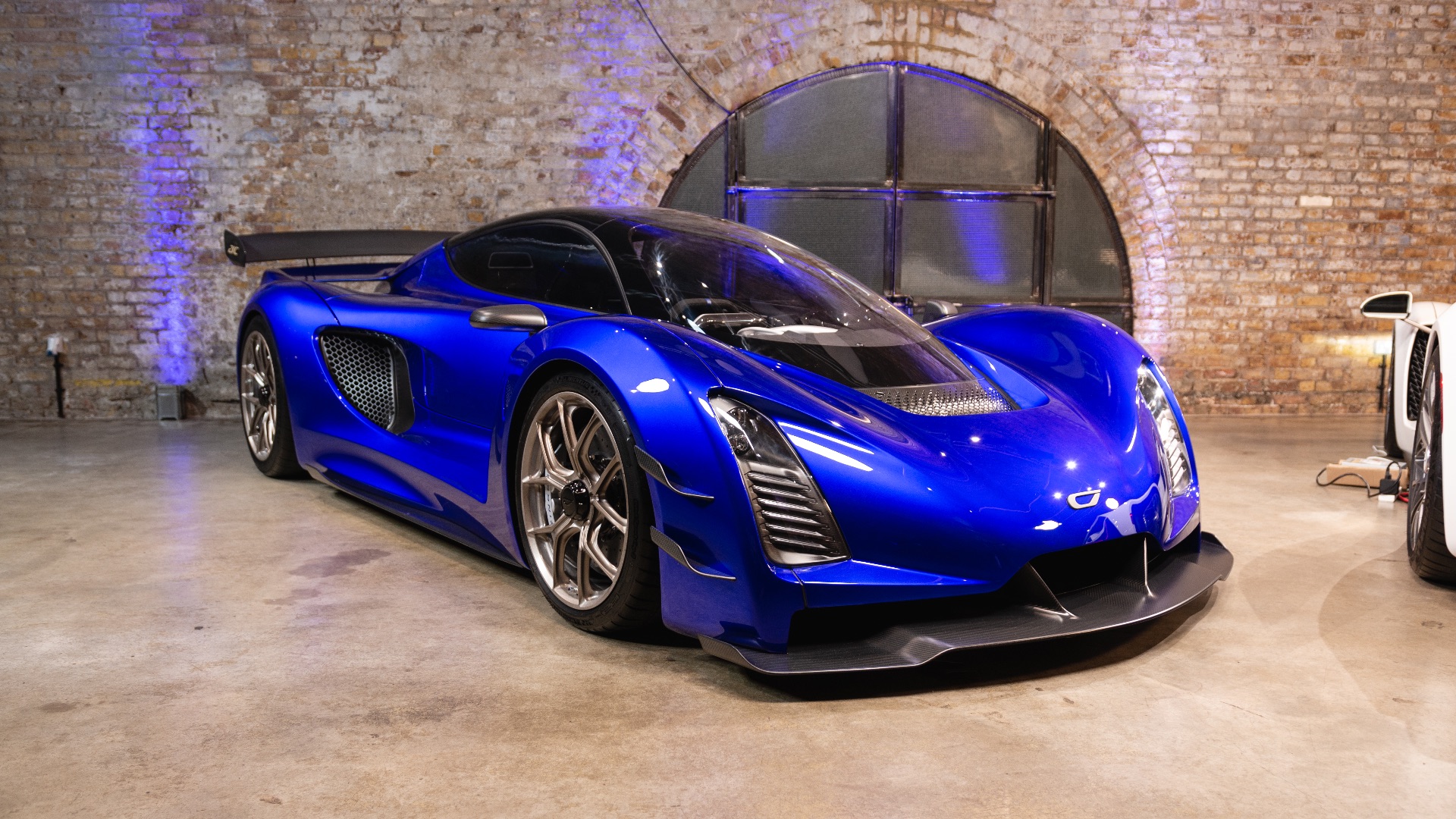
A little theatre before we begin. The lights are dimmed and a V8 scream fills the speakers. Two cars appear in the spotlights: one road-ready (white), the other in ‘lightweight track configuration’ (blue). With in-line seating – Kevin calls the passenger a “co-pilot” – and styling that’s a mélange of “SR-71 Blackbird spy plane, Top Gun F-15 fighter jet and pod racer from Star Wars: The Phantom Menace,” they look like absolutely nothing else.
World debut of the Czinger 21C in London.
CEO Kevin Czinger says the design was inspired by the SR-71 Blackbird, F-14 Tomcat jet in Top Gun and pod racers in Star Wars: The Phantom Menace. pic.twitter.com/3NyJAk3GOj
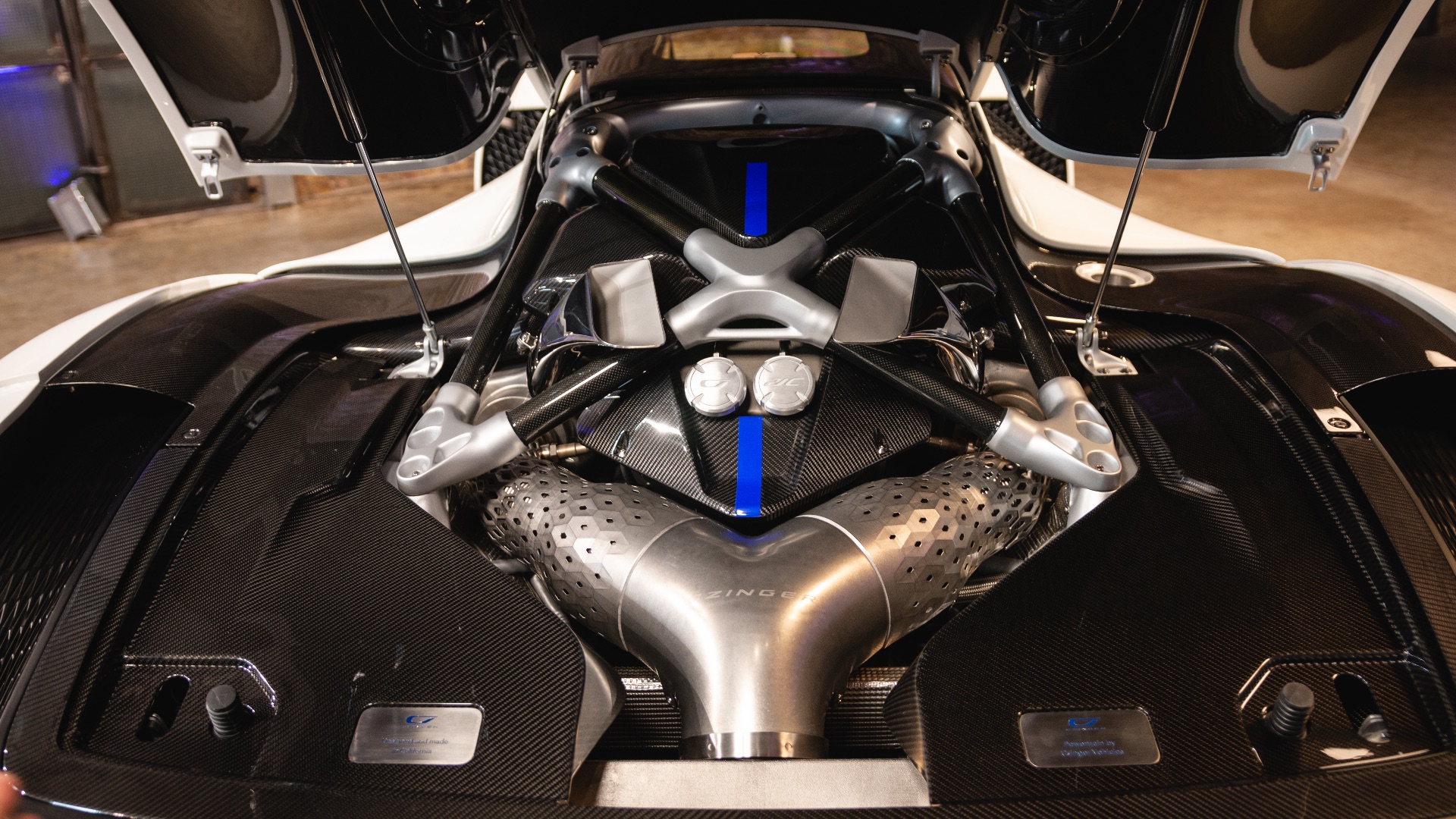
The numbers are otherworldly, too. A 2.88-litre twin-turbo V8 drives the rear wheels via a seven-speed automated manual ’box, while two electric motors with torque vectoring power the fronts. Combined output is 1,250hp, with a power-to-weight ratio of one horsepower per kg. That means 0-62mph in 1.9 seconds, a quarter-mile in 8.1 seconds and 268mph flat-out (236mph in high-downforce track spec). Still, it’s the notion of 0-248mph-0 in 29 seconds that frazzles my brain.
Kevin doesn’t mince his words. “Until now, these vehicles could only have existed in our minds,” he says. “The 21C pushes the limits of what man can achieve.” His Californian chutzpah is a tough sell to a cynical British hack, but I can’t fault his ambition. “We’re not solely a hypercar company,” he explains. “Our goal is to create one of the great enduring brands of the 21st century.”
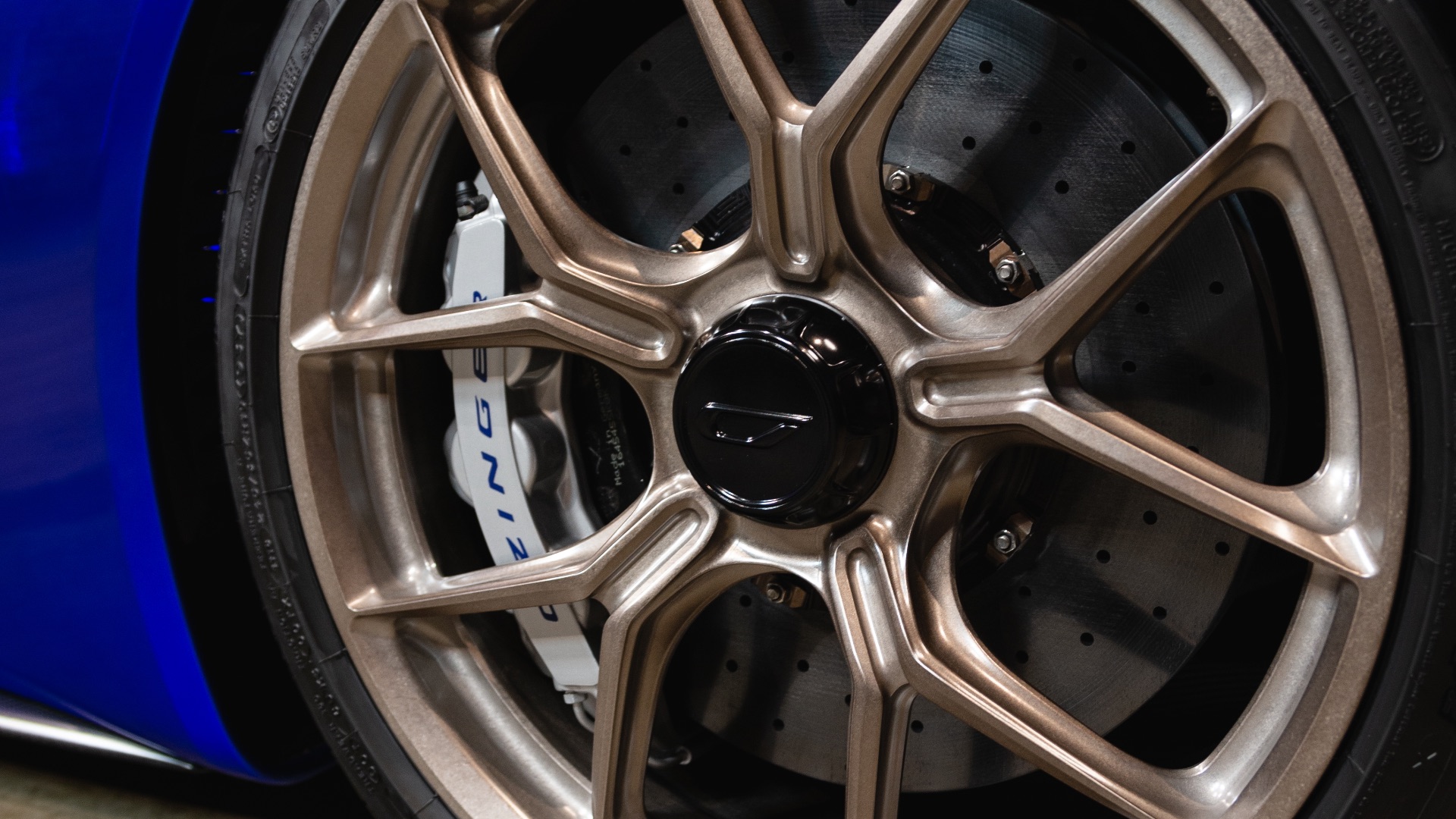
The start of that journey is the 21C and Czinger hopes its 3D printed production could shake up the industry. The process uses complex computer algorithms to calculate data such as material strength, weight, stress and cost, then build up an optimised part from metal or composite. It’s a world away from huge factories packed with metal stamping presses and welding robots, offering far greater flexibility and less investment upfront.
Despite Czinger’s hints of “new, more affordable performance cars” in development, I get the sense the 21C is primarily a shop window for this innovation. Think how Rimac uses the C_Two to promote its electric expertise, then makes much bigger margins selling the tech to major manufacturers. Kevin freely admits Czinger is working with “several big automotive brands”, while his contacts book must be something to behold. Senior execs from Apple, Boeing, Google, and SpaceX all helped with the project.
‘Hypercar’ and ‘sustainability’ aren’t two words you usually see in the same sentence, especially when a combustion V8 is involved. But Kevin is keen to talk up the 21C’s green credentials: “This vehicle is built to be in harmony with our planet”. Refuel with methanol from sustainable sources and the powertrain is zero-emissions. “We need to get away from thinking electric cars answer every need,” he says.
For all his tech nerdery and business nous, though, Kevin remains a car guy at heart. “I read Motor Trend and Hot Rod as a kid,” he recounts, “and built hot rods with my brothers. I’ve always loved cars.” This one is “designed to hunt for track records,” so expect an assault on the Nürburgring before the year is out. It will also take on the hill at Goodwood Festival of Speed this summer – and Motoring Research will be there to film it.
Only 80 examples of the 21C will be made. And while prices haven’t been announced, you’re unlikely to see much change from £2 million. Yet whatever your thoughts on unobtanium hypercars, it’s what the 21C represents that matters. This is Kevin Czinger’s dream made real. “It’s a vision that’s about 11,000rpm. And you can have a lot of fun with that.”
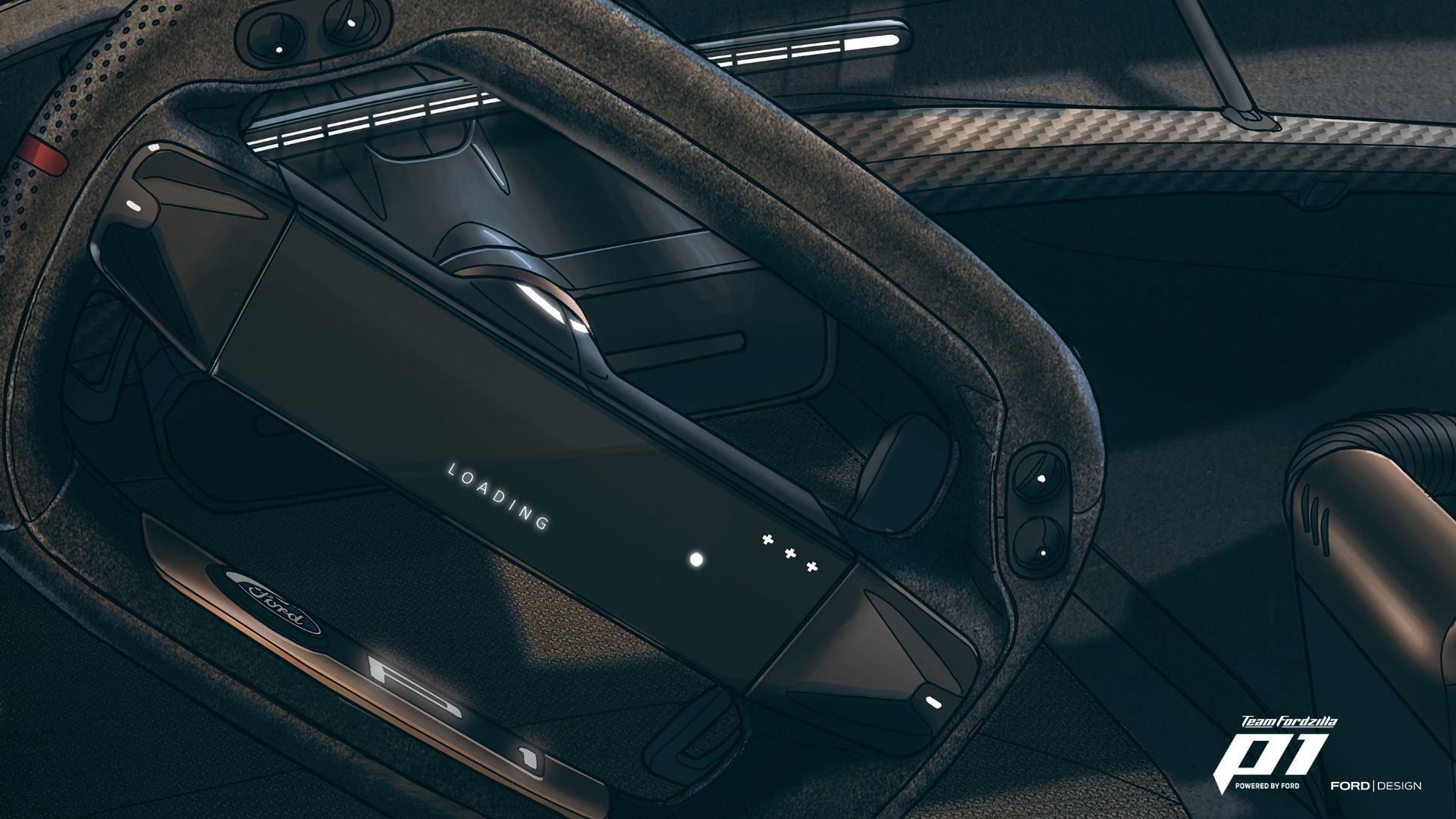
Ford is teaming up with gamers to create ‘the ultimate track machine’. Ford’s first virtual race car will be designed from the ground up, rather than based on an existing model.
The car is codenamed Team Fordzilla P1. Captains of the five Fordzilla esports teams from France, Germany, Italy, Spain and the UK will be collaborating with Ford on the vehicle.
“Coming up with a no-holds-barred race car for the virtual world is when the gloves come off and the design team can really let their imaginations fly,” said Amko Leenarts, director, Design, Ford of Europe.
“The expertise of gamers is crucial to ensuring that this will be the best-looking car on the grid.”
Ford will be canvassing the wider gaming community for its input, too, with social media polls via Twitter. These will reference everything from the engine to the shape of the cockpit. Work on the project begins this week.
“We all love racing our dream cars but ultimately these are usually painstaking recreations of vehicles that actually exist in the real world,” said Leah Alexandra, captain of the UK Fordzilla team.
“It will be an absolute thrill to get behind the wheel of the Team Fordzilla P1 for the first time knowing that not only have we helped to create it but that no-one else has ever driven it before.”
Porsche Taycan EV makes gaming debut in Gran Turismo Sport
This Ford is just the latest of many virtual-only cars. The concept was pioneered for the famed racing title Gran Turismo.
A number of manufacturers have designed special Vision Gran Turismo models purely for the virtual world. Some have even built them for real. From what Ford is saying of this Fordzilla P1, it will be something entirely different, unlike, say, Bugatti’s Vision Gran Turismo car.
The number of potholes will rise by nearly a fifth (16 percent) if the investment in roads remains at current levels. That’s according to new research conducted by an insurance company and an economic consultancy.
It says that only one in four potholes in the UK will be fixed if the government commits to pledges made at last year’s general election. Since the election, the country has been hit by Storms Ciara and Dennis, resulting in more potholes and the requirement for even more investment.
This country doesn’t have a good track record when it comes to the quality of our roads. In 2016, a survey by Waze found that the UK was the third worst European country to drive in for driver satisfaction, with only Romania and Russia appearing lower on the list. Many respondents cited poor road surfaces as particular problem in the UK
The Netherlands performed well on both lists, finishing top in the Waze survey and ranked second on the World Economic Forum index. This should come as no surprise, given the fact that 62 percent of the Dutch government’s investment into infrastructure is spent on the road network.
With a budget of €3.6bn (£3.1bn) for roads, the Dutch spend €29,000 (£25,000) per kilometre of road. Meanwhile, the UK government spends €25,000 (£22,000) per kilometre.
‘The issue of pothole continuity’
Now, a British company is calling for the use of Asphalt Rubber (AR) on road production in the UK. Roadmender Asphalt points to the use of the recycled rubber for road surfaces in Sweden, where it says road life expectancies have ‘shot through the roof’. It claims that mastic asphalt – the equivalent material used on Britain’s motorways – should be rolled out for use on other roads.
Harry Pearl, CEO of Roadmender Asphalt, said: “Whilst the new research from Zurich UK and Cebr paints a bleak picture for the state of Britain’s roads, the issue of pothole continuity does not take into account the new innovations that are on the horizon. Of course greater investment in our road networks will always help to alleviate the issue, but as seen in countries such as Sweden and their Scandinavian neighbours, innovative technologies are there to be utilised.
“Mastic asphalt has proven to be a success for the British motorways, and in the next few years we will certainly see an increase of mastic being transferred onto Britain’s A and B roads. With the assistance of our Roadmender vehicles, we are able to cut the costs of pothole repair through efficiency and time.”
The 1980s was the decade that restraint forgot. The world got smaller, the rich got richer and excess was the order of the day.
In the motoring world, the 80s brought us as many horrors as it did heroes. Happily, from a motoring perspective, we’re about to focus (mostly) on the latter.
Prep that perm, parachute those pants and fire up your Walkman – let’s look back at the 1980s in cars.
What is cool?
As it states in the book, How Cool Brands Stay Hot: Branding to Generation Y, “the meaning of ‘cool’ is subjective [but] it certainly signifies some sign of admiration or at least approval.” You cannot learn to be cool, it’s more a personality trait.
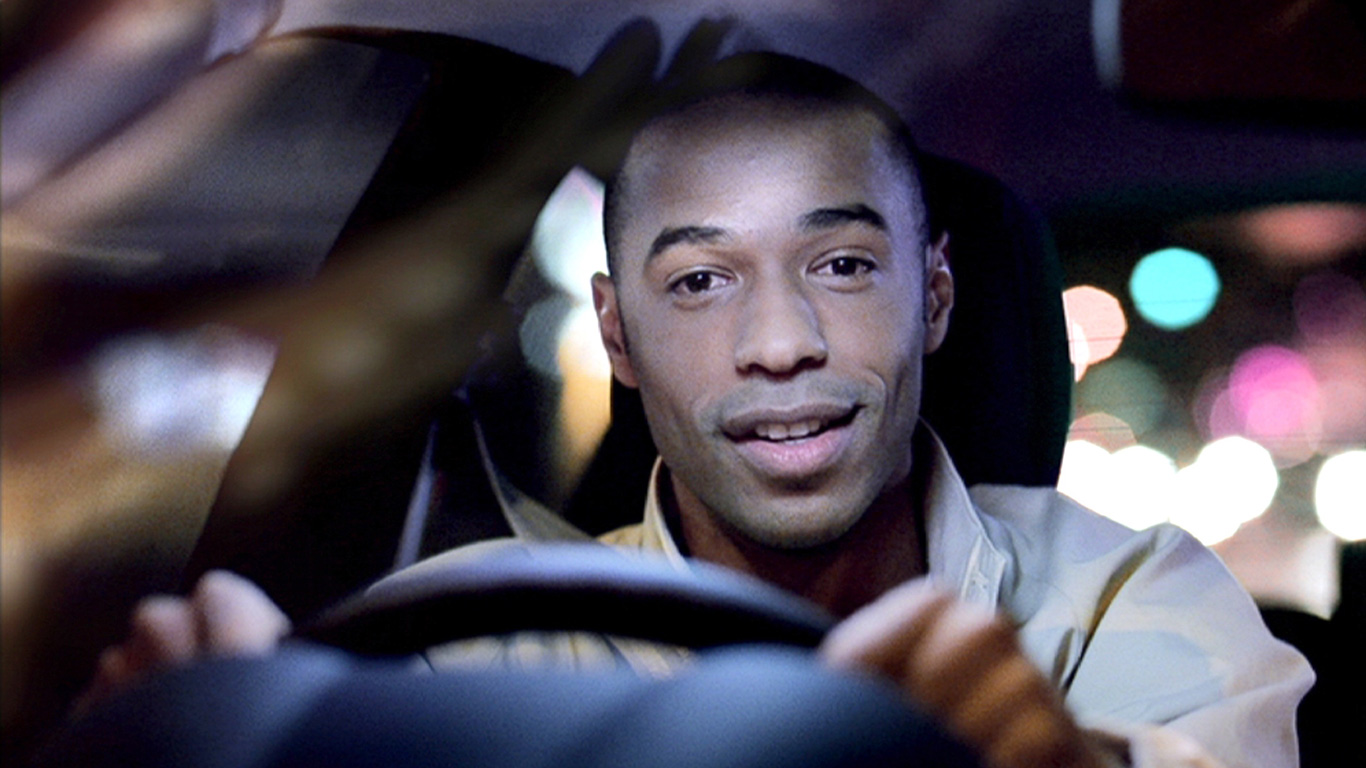
Cool is effortless. So while Thierry Henry might be the epitome of cool, we’d argue that Wayne Rooney isn’t. Whatever, here’s a list of cool cars from the 1980s.
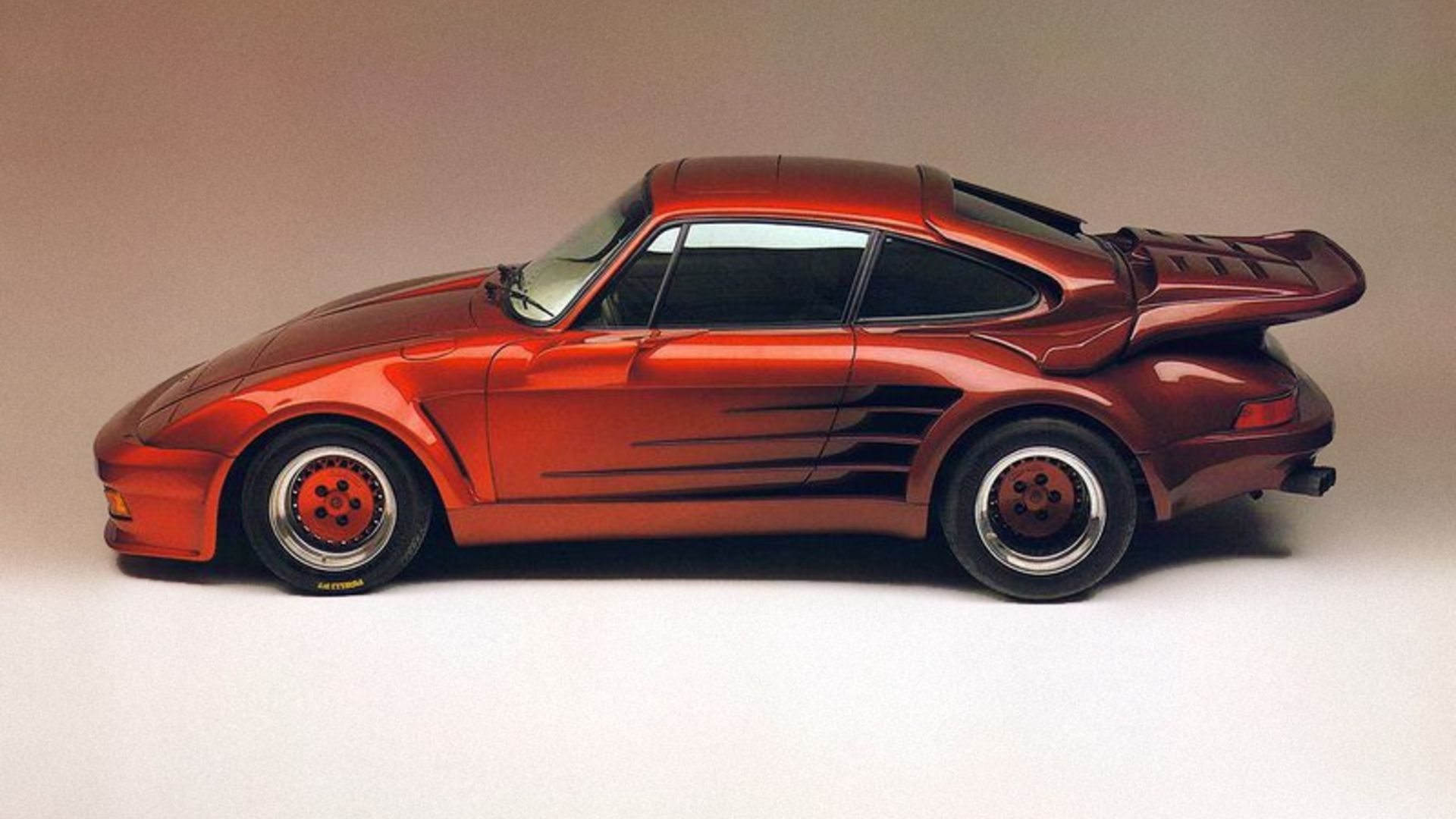
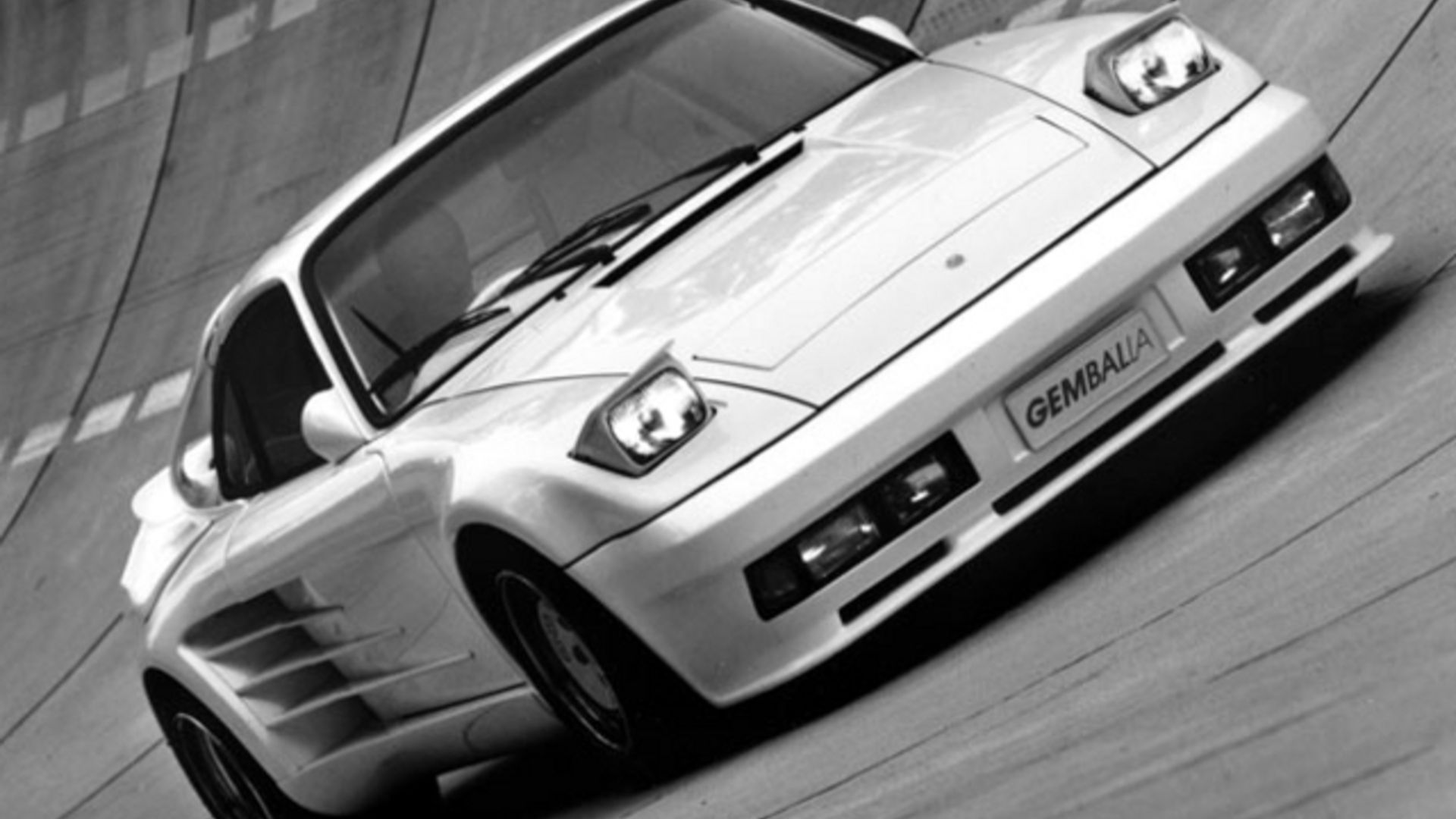
Gemballa Avalanche Porsche 930
Only in the 1980s would someone think that the Porsche 911 (930) Turbo needed to be more brash and showy. Enter Gemballa, the spiritual forefather to every aftermarket motor show abomination you’ve ever seen. And yet, the 930 Avalanche is oh-so-cool, in such a quintessentially 80s way. Strakes, a slant nose, a big sprawling wing and six – yes six – exhaust outlets were hints as to the fury within. Many would shudder at the thought of a 380hp 1980s 911 Turbo. It doesn’t stop us wanting one, though.
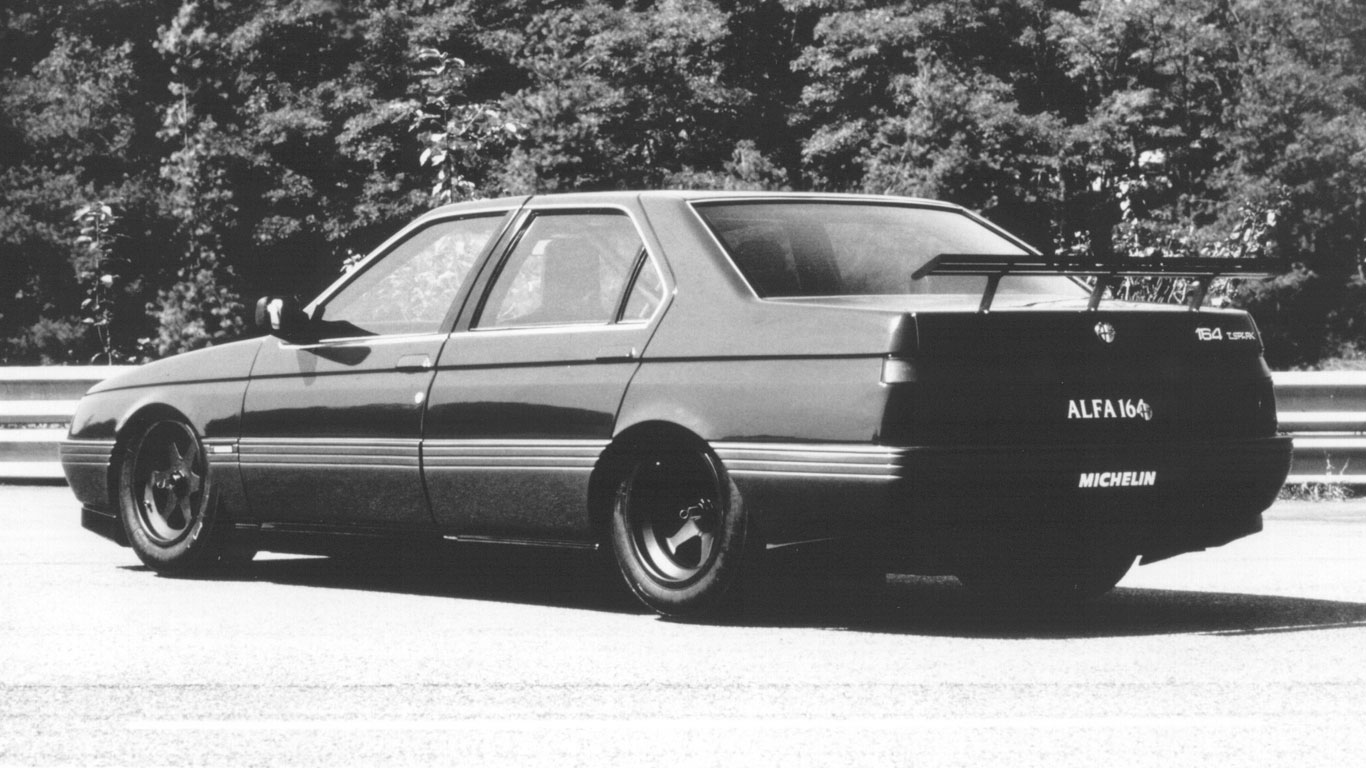
Alfa Romeo 164 ProCar
Coolest car of the decade or the greatest missed opportunity? The bonkers and slightly terrifying Alfa Romeo 164 ProCar was an F1 car masquerading as the kind of saloon car your dad would drive to the office. The 3.5-litre V10 engine was developed for a stillborn partnership with Ligier, while the chassis and featherlight bodyshell were developed by Brabham. Just two of these 210mph+ mid-engined wonders were built, as the 164 was left without a race series.
Alpine GTA
The original six-headlight Alpine A310 is cool in a way that the GTA can only dream of, but as a child of the 1970s it’s not welcome here. Which leaves the Renault Alpine GTA to fly the flag for Dieppe. This was the first Alpine to be officially sold in the UK, with Renault taking aim at the Porsche 944/911 and Lotus Esprit. Whether it had enough in its armoury to win the fight is up for debate, but the Regie is cooler, right?
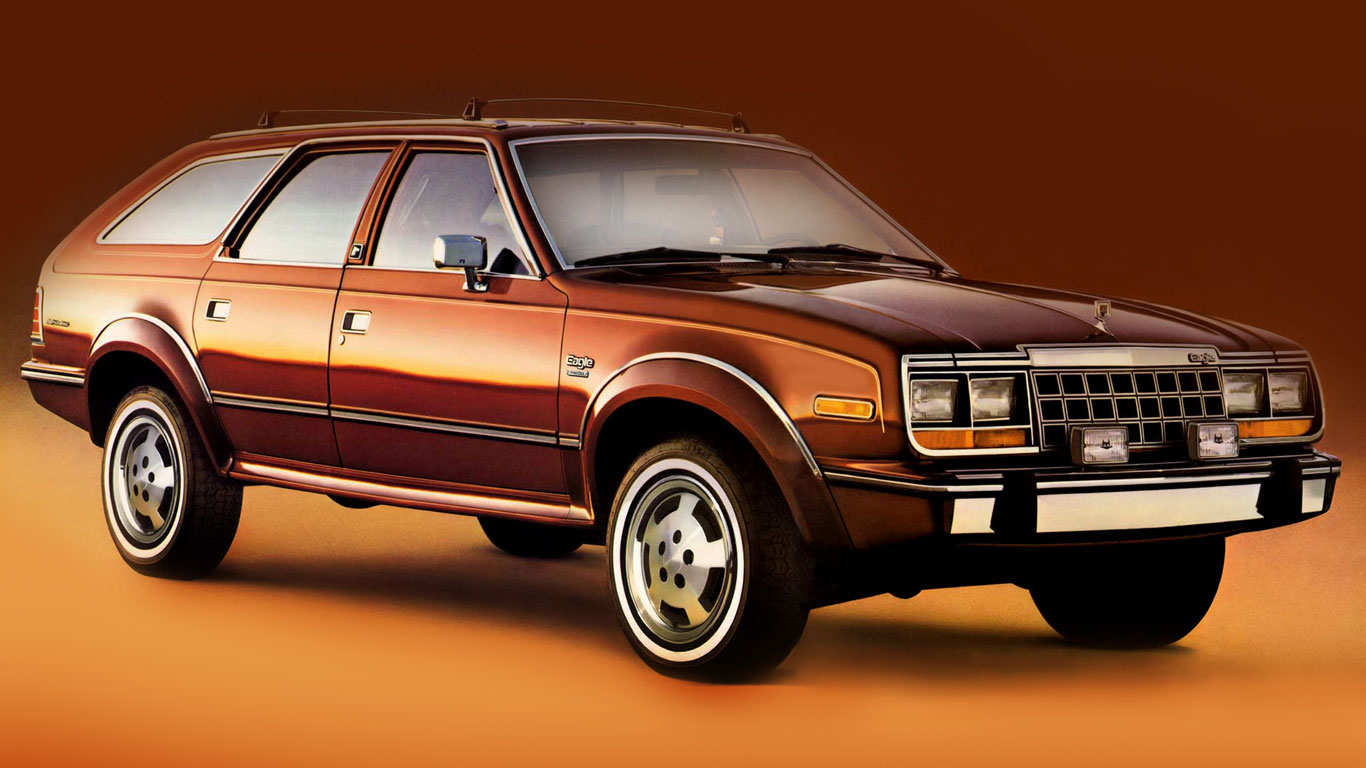
AMC Eagle
These days, segment-busting cars are the norm and just about every niche has been filled. Just spend a few minutes on the Audi website if you’re in need of a demonstration. But at the beginning of the 1980s, cars tended to slot into neat boxes: saloons, wagons, 4x4s, sports cars and the fast-emerging hatchback. The all-wheel drive AMC Eagle, then, was a true pioneer, built at a time when a crossover was a raised section of track on your brother’s Matchbox Powertrack.
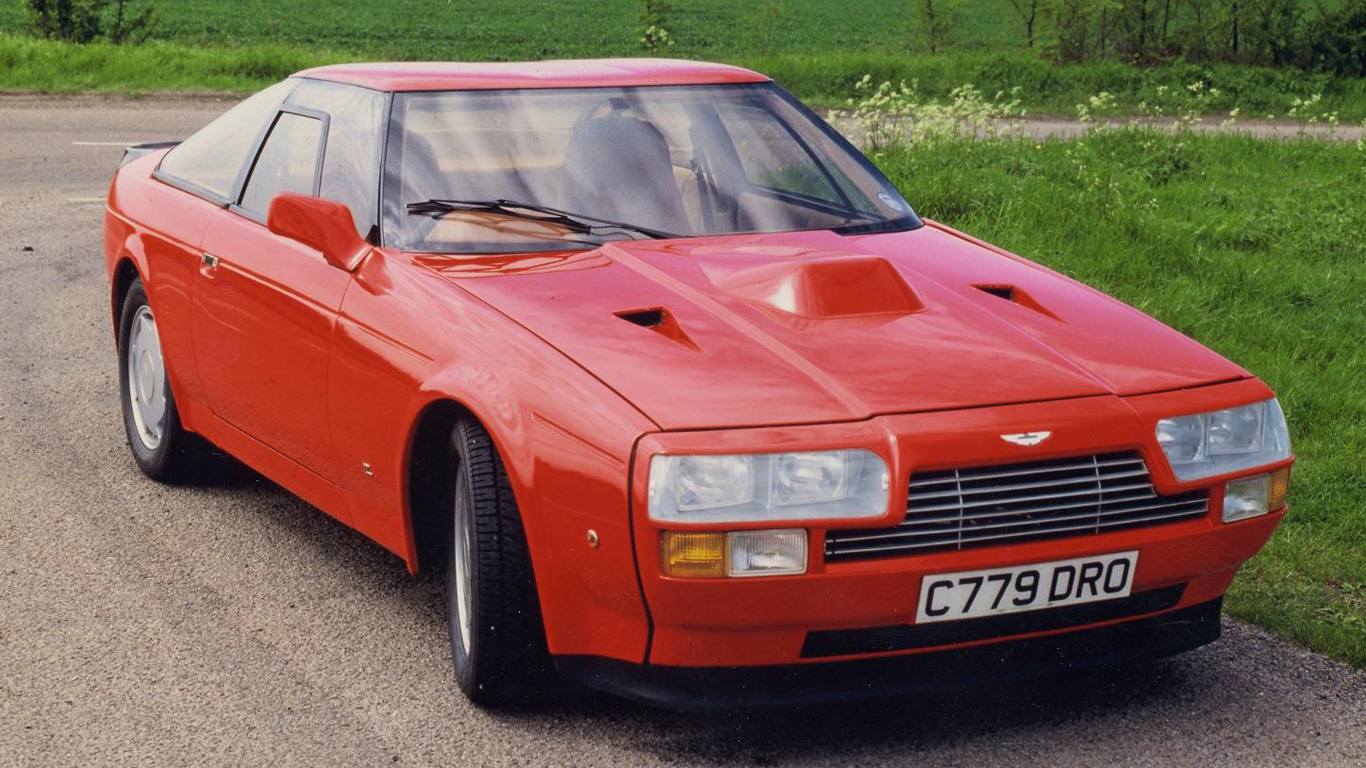
Aston Martin Vantage Zagato
In 1985, Aston Martin renewed a partnership with Zagato to create the limited edition Vantage Zagato. Unveiled at the 1985 Geneva Motor Show, each one of the 50 saloon cars had been pre-sold by the time the production version arrived in 1986. A further 37 Volantes were built. In the same way the Lagonda represents 1970s Aston Martin, the Vantage Zagato is wonderfully 80s.
Autobianchi Y10
The Lancia Y10 – sold as the Autobianchi Y10 in its home market – took the Italian marque into the premium city car sector for the first time and was aimed at affluent urbanites. Chic, avant-garde and lifestyle were the watchwords for this achingly cool kammback city car. The Y10 offered a slice of continental exotica to an audience more accustomed to the conservative Metro and Nova.
Bitter SC
To be cool you don’t need to be perfect. James Dean, ‘the king of moody cool’, was, by all accounts, far from the perfect gentleman and a bit of a nightmare to work with. Coolness, you see, has the ability to forgive a multitude of sins. So while the Bitter SC will never feature on any ‘best of’ gallery, it remains effortlessly cool thanks to its Italian styling. Hard to believe there’s an Opel Senator lurking beneath a body that’s as elegant as Sophia Loren.
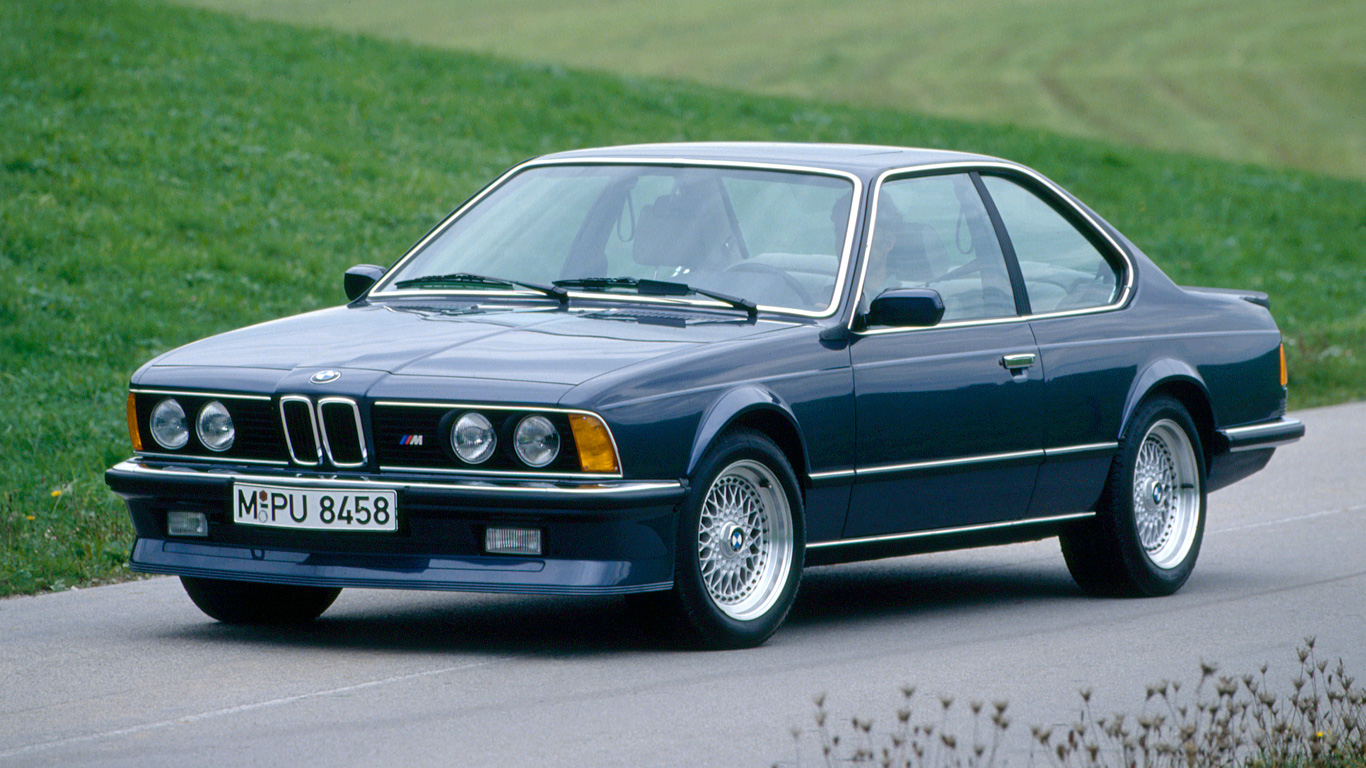
BMW M635CSi
Sure, the E30 M3 and E28 M5 are BMW’s most illustrious cars of the 1980s and will grace the covers of classic car mags for years to come, but is the 635CSi cooler? The E24 looks better today than it did at its launch in 1976, but it’s the M635CSi that deserves its place here, not least because of the presence of the engine from the M1 supercar.
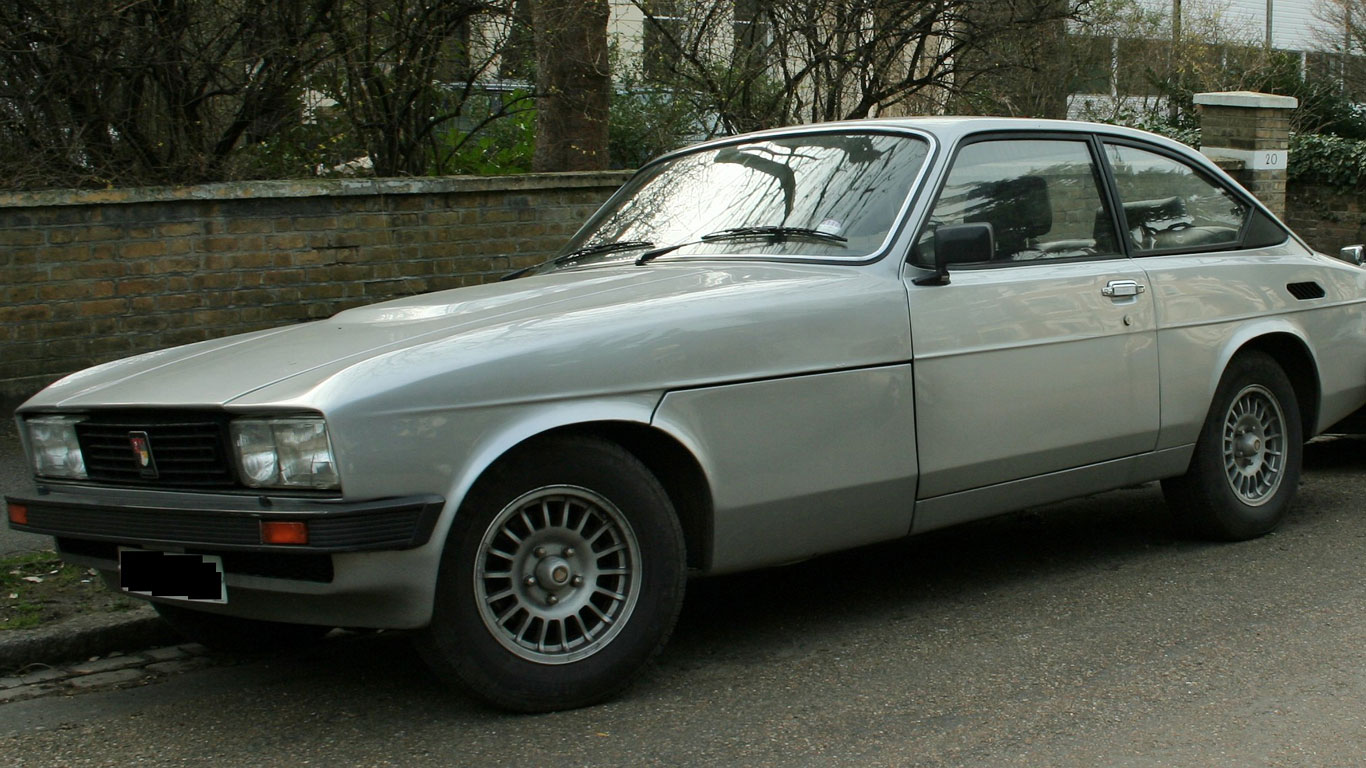
Bristol Brigand
“There is nothing quite like a Bristol. It’s not as common as a Rolls-Royce or Bentley, it’s more exclusive than a Jaguar or Mercedes-Benz, less ostentatious than an Aston Martin. It represents a blend of quiet, understated good taste allied to a high level of equipment, impeccable finish and dramatic performance. We called the Beaufighter “an English gentleman’s very high speed touring carriage,” no better soubriquet could be suggested for the Bristol Brigand; it’s as simple as that.” Motor Sport magazine’s review of 1984 hits the nail on the head.
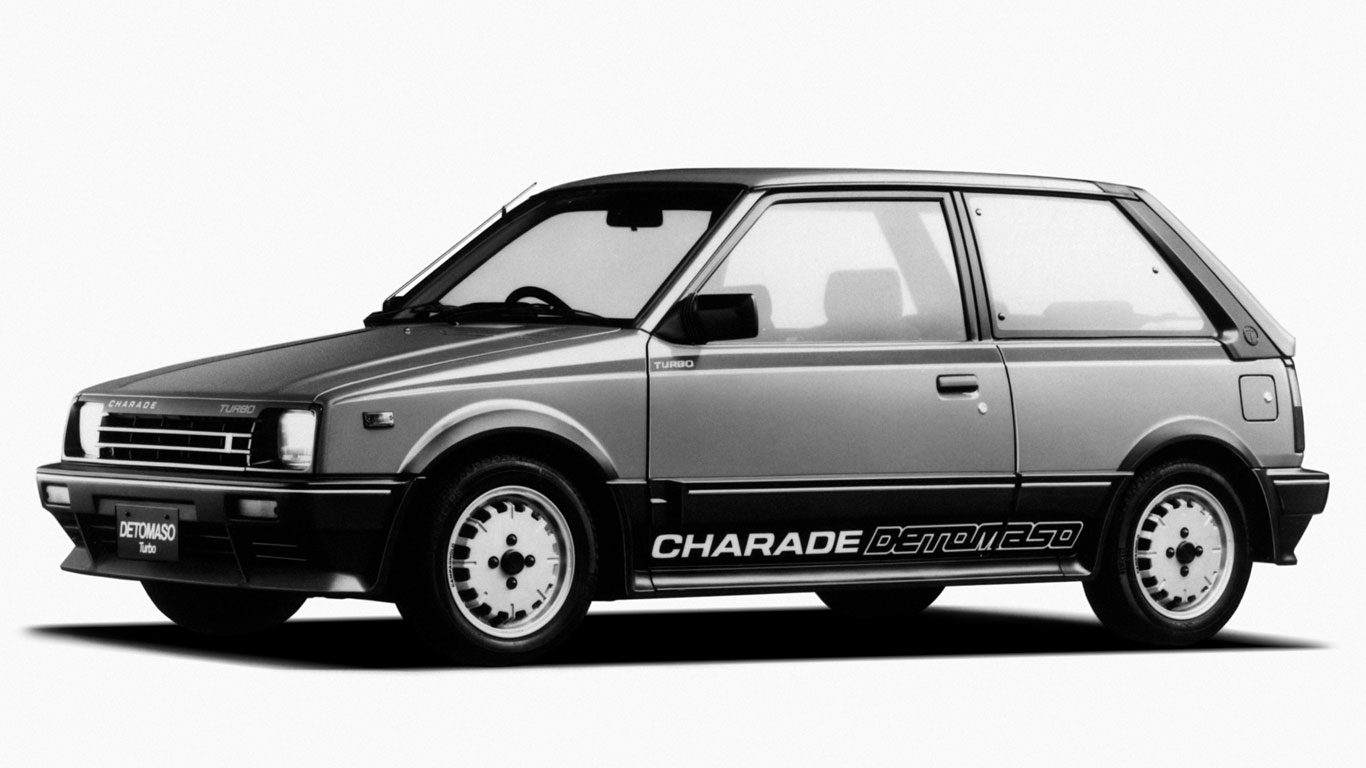
Daihatsu Charade DeTomaso 926R
You could add the DeTomaso name to just about anything to inject some instant coolness. The DeTomaso Trouser Press, for example. So when the Italian firm lent a hand to create the Daihatsu Charade DeTomaso 926R there was only ever going to be one outcome. This mid-engined homologation special was like a Japanese-Italian Renault 5 Turbo and it had the performance to match.
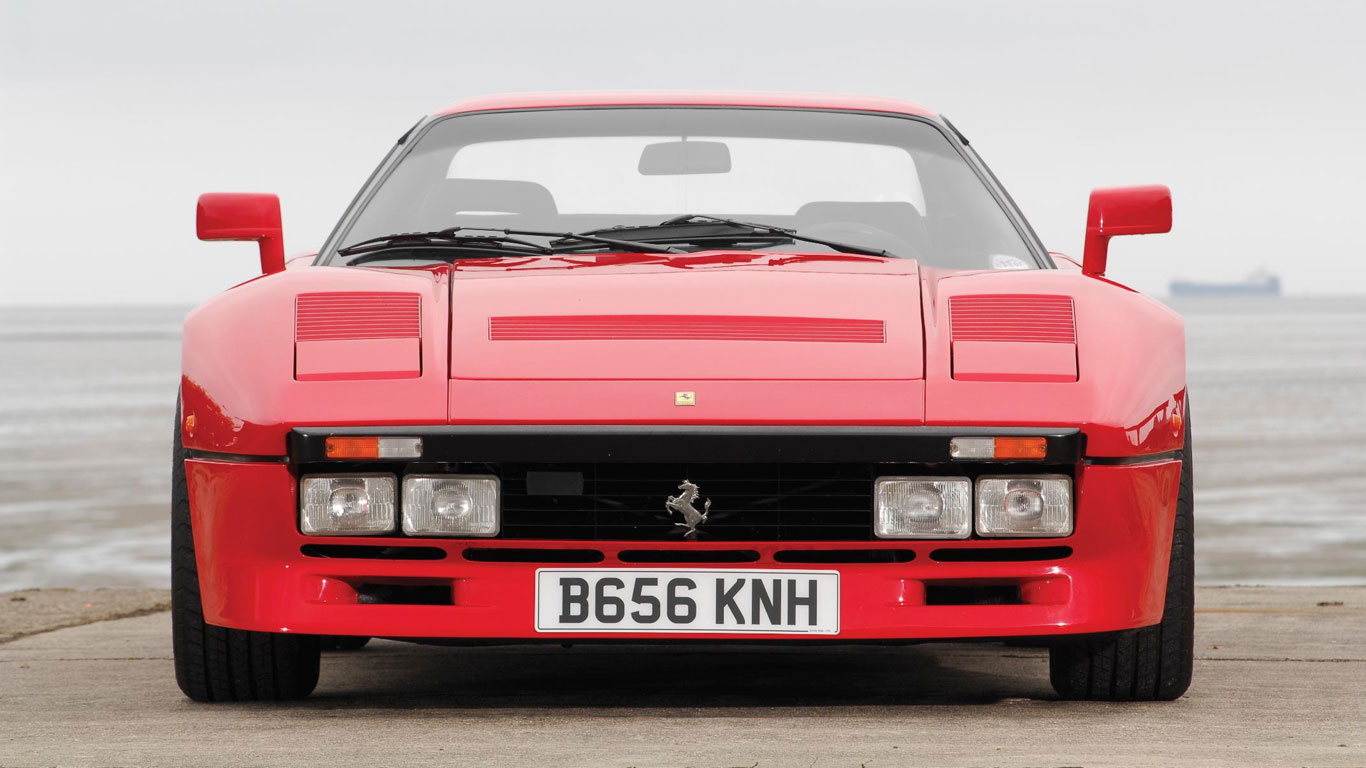
Ferrari GTO
If coolness is measured by the number of posters sold, Steve McQueen, Cindy Crawford, the ‘Tennis Girl’ and the Ferrari F40 should be judged as being off the scale. And yes, it would be all too easy to include the F40 here. But for us, the GTO’s link with Group B and the fact that a mere 272 were built makes it cooler than the oh-so-obvious F40. The GTO is the knowing tap on the side of the nose, while the F40 is the Ferrari baseball cap purchased at the theme park.
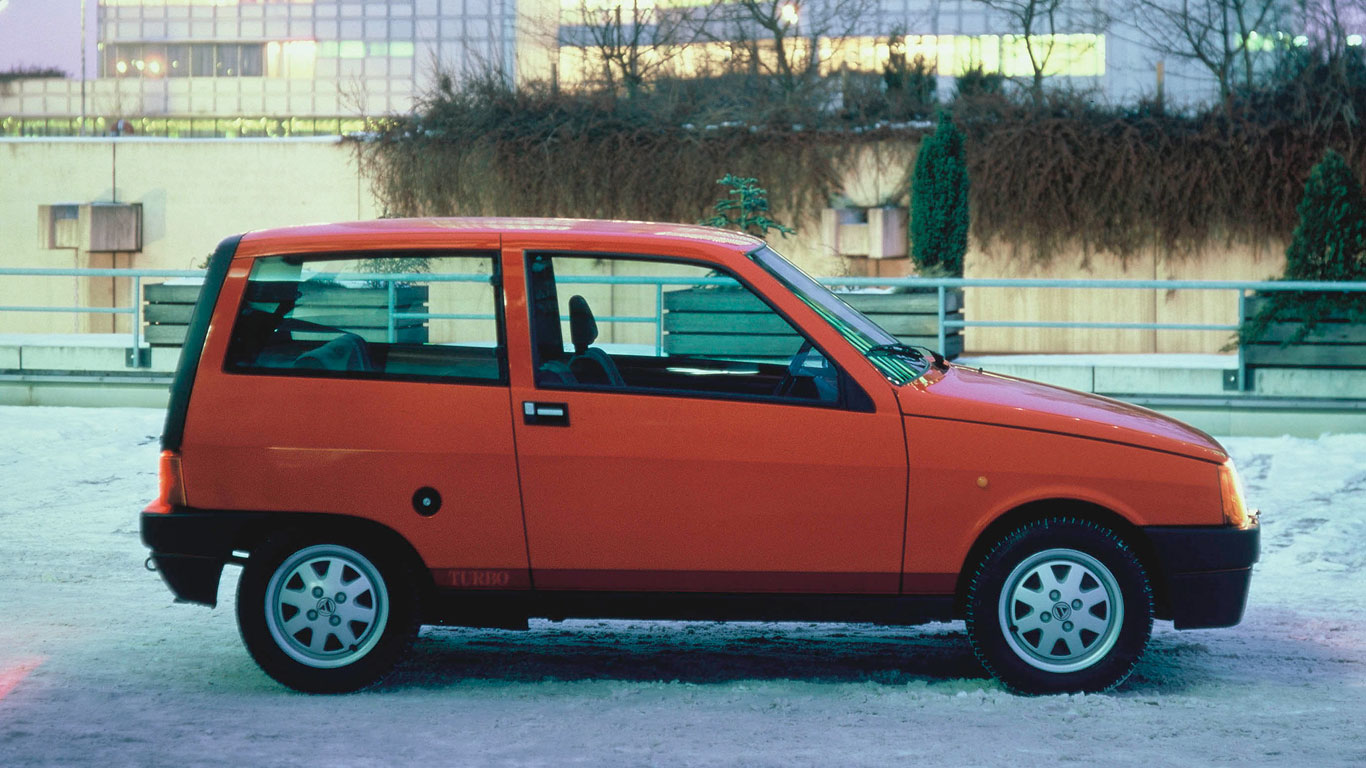
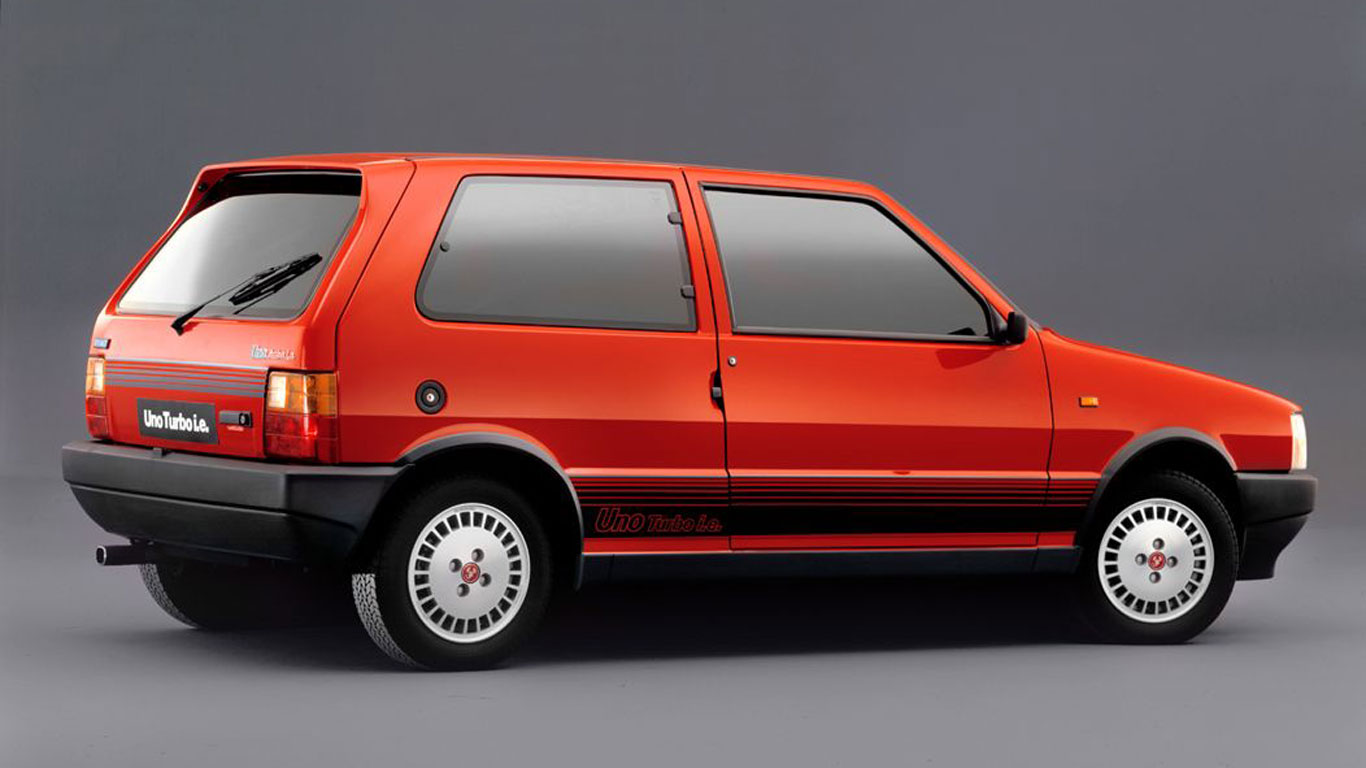
Fiat Uno Turbo
In the early to mid 80s, the Fiat Uno and Peugeot 205 battled for small car supremacy. They were streets ahead of their rivals and sat comfortably at the top of the sales chart. But when the GTI arrived, the 205 pulled clear of the Uno, not least because it accounted for a massive 15% of all 205 sales. Realising Peugeot could be onto something, Fiat launched the Uno Turbo: the oft-forgotten hot hatch hero of the 1980s, which arrived at a time when Turbo decals were as loud as a Frankie t-shirt.
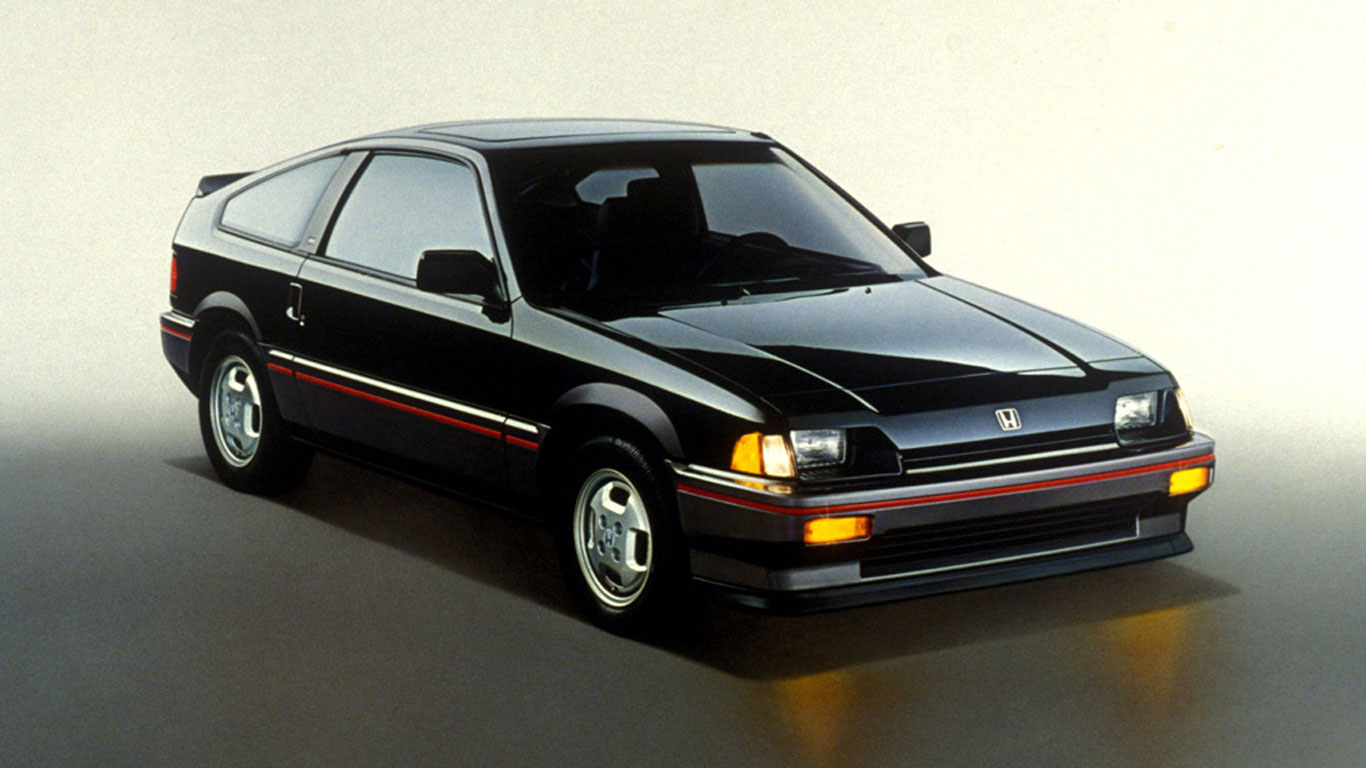
Honda CRX
For a company so synonymous with reliability and – how can we put this – more mature owners, Honda has delivered some cracking performance cars. But there’s more to his Japanese company than Type Rs and everyday supercars developed with the help of Ayrton Senna. The CRX is a good case in point: Honda’s unique take of the new breed of emerging hot hatches.
Isuzu Piazza
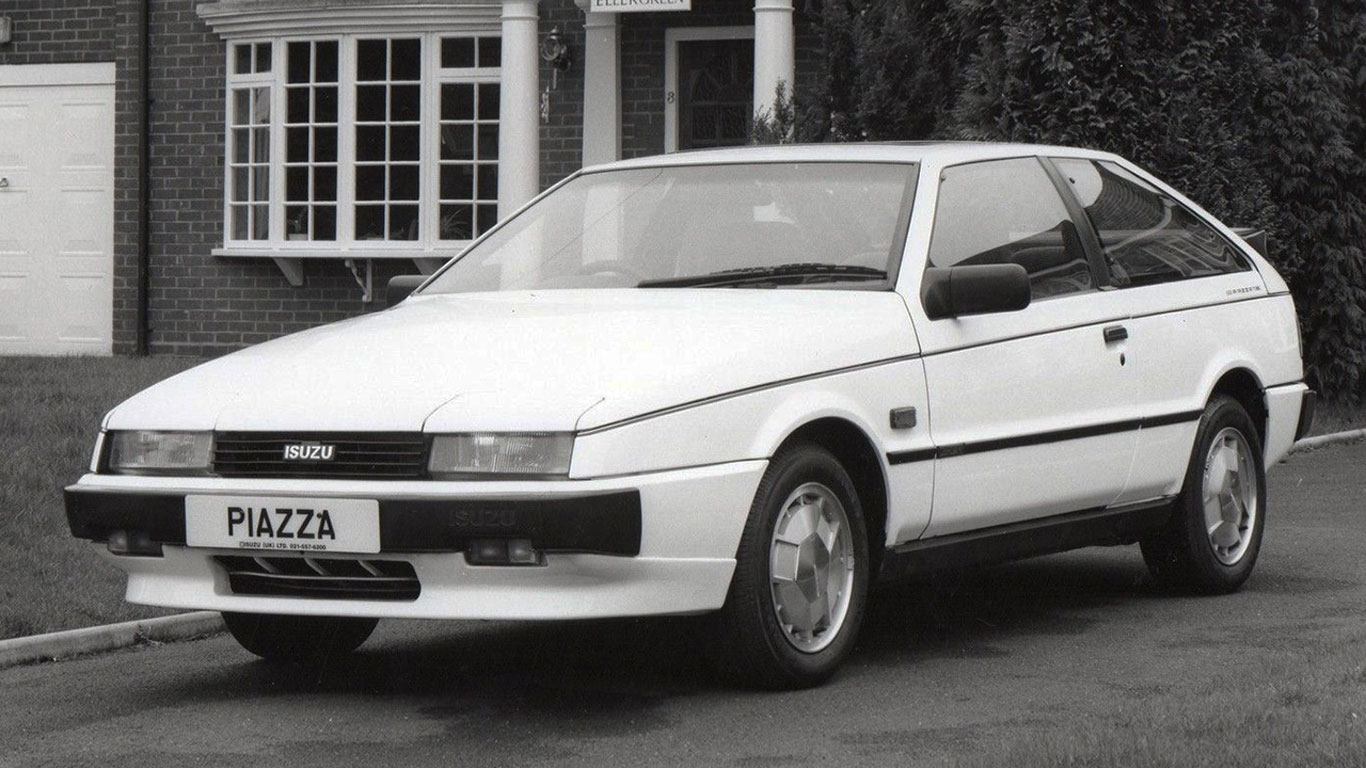
The Asso di Fiori concept of 1979 was one of Giorgetto Giugiaro’s finest creations, which saw the light of day in the form of the Isuzu Piazza of 1981. The early cars were criticised for their stodgy handling and lack of power, but the fitment of a turbocharger and input from Lotus meant that the Piazza evolved into an excellent coupe. Commercially, the Isuzu was left wanting, but the Piazza remains one of the coolest cars of the decade.
Jeep Cherokee XJ
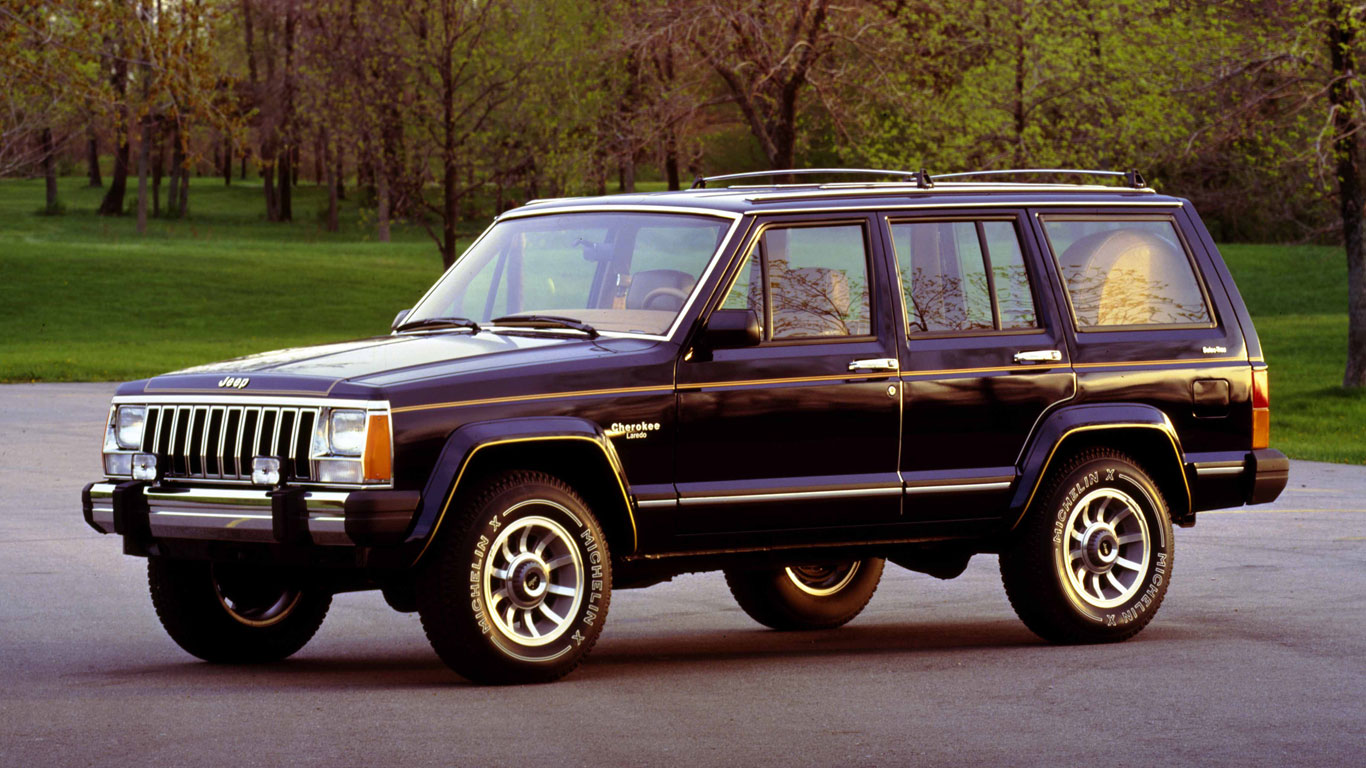
Had this been a gallery focused on cool cars of the 1970s, this slot might have been filled by the Monteverdi Safari, but although the Swiss SUV lived on until 1982, it is more associated with the 1970s. Which leaves the timeless Jeep Cherokee XJ to fly the flag for 80s SUVs. It’s cool in a way that modern SUVs aren’t.
Lamborghini Jalpa
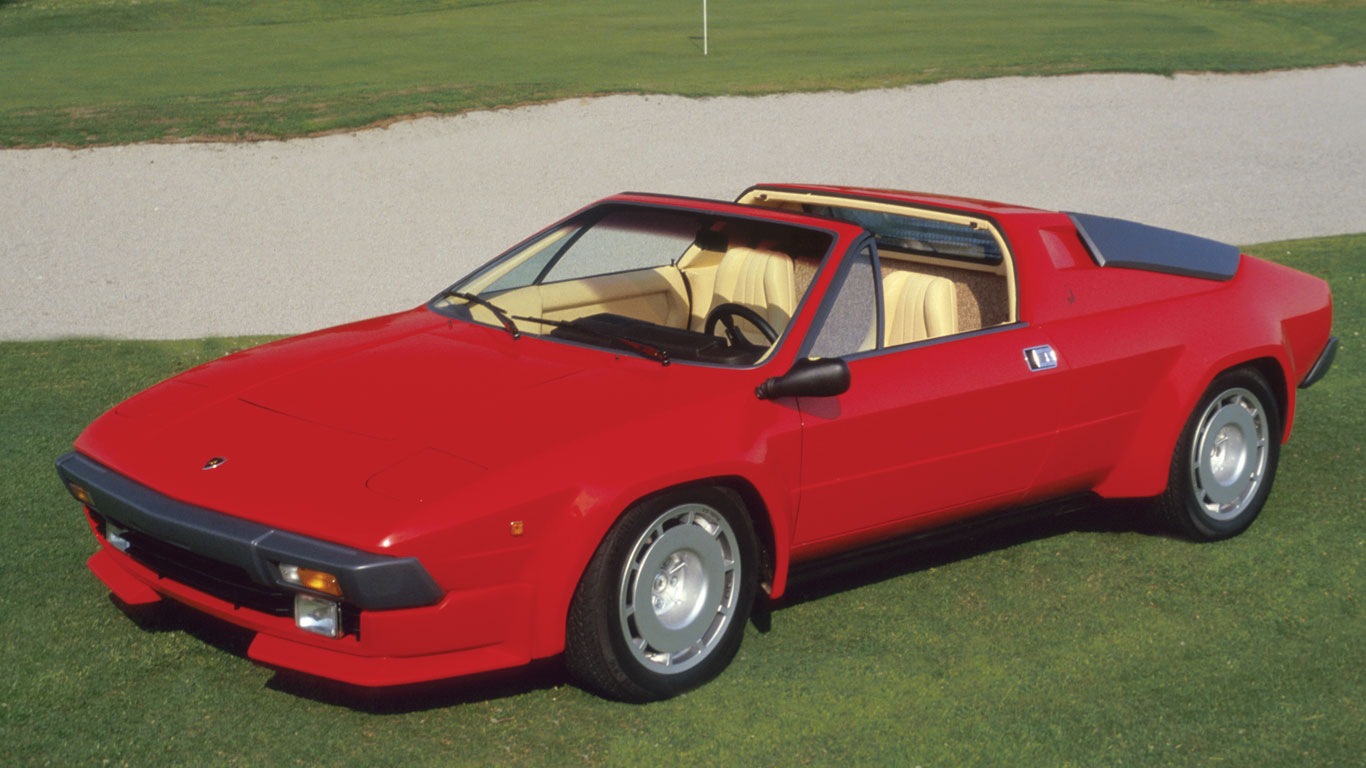
By the 1980s, the Lamborghini Countach was becoming a parody of itself, all shoulder pads, makeup and excess. Striking it might have been, but cool it most certainly wasn’t. Unless you happened to be a seven-year-old boy. The Jalpa, on the other hand, remains cool. It was the final development of the Urraco and the last Lamborghini to be powered by a V8 engine. Oh, and it had pop-up headlights.
Lancia 037 Stradale
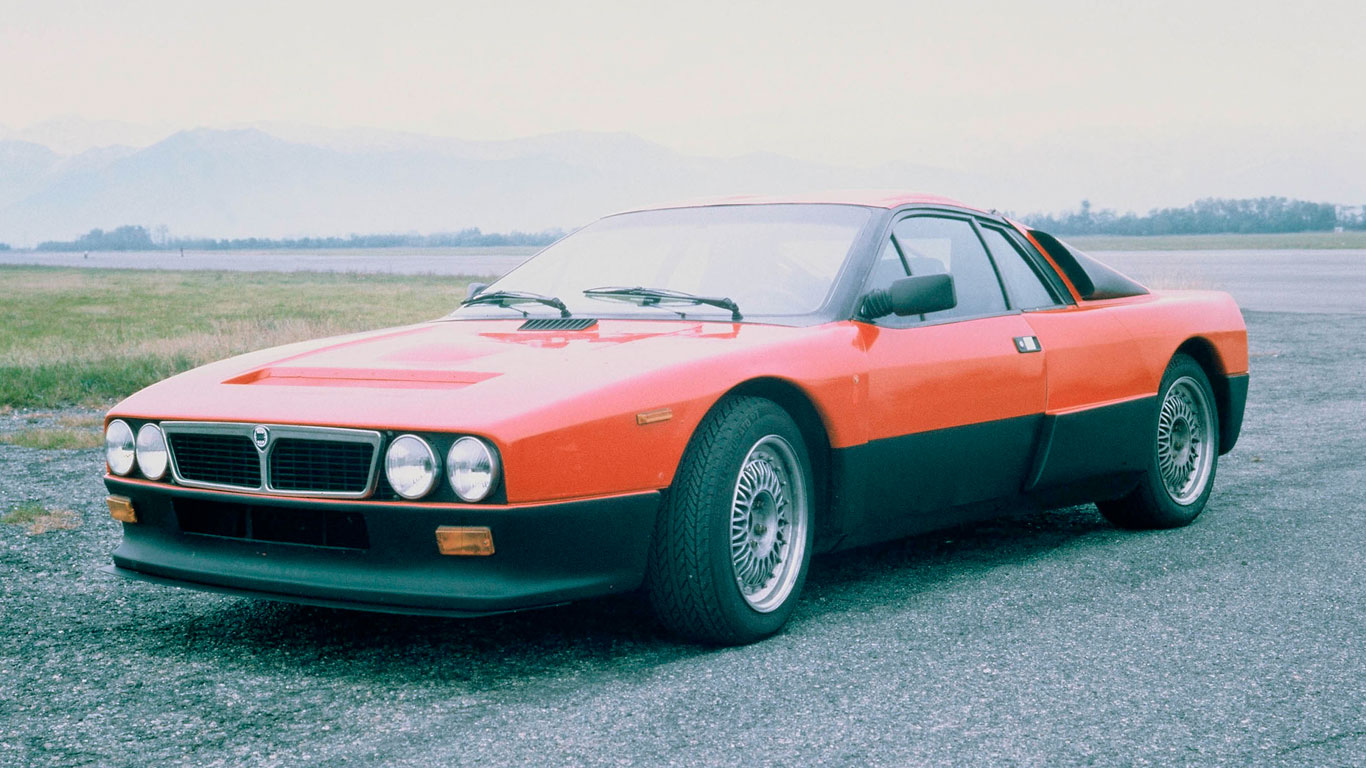
Truth is, we could have filled this entire gallery with cars from the infamous Group B World Rally Championship, but that’s a gallery for another day. The road-going Lancia Rally 037 featured a supercharged 2.0-litre engine developed by Abarth, providing a top speed of 137mph. Only 207 Stradale examples were built, each one a fitting tribute to the last rear-wheel drive car to win the WRC.
Lancia Thema 8.32
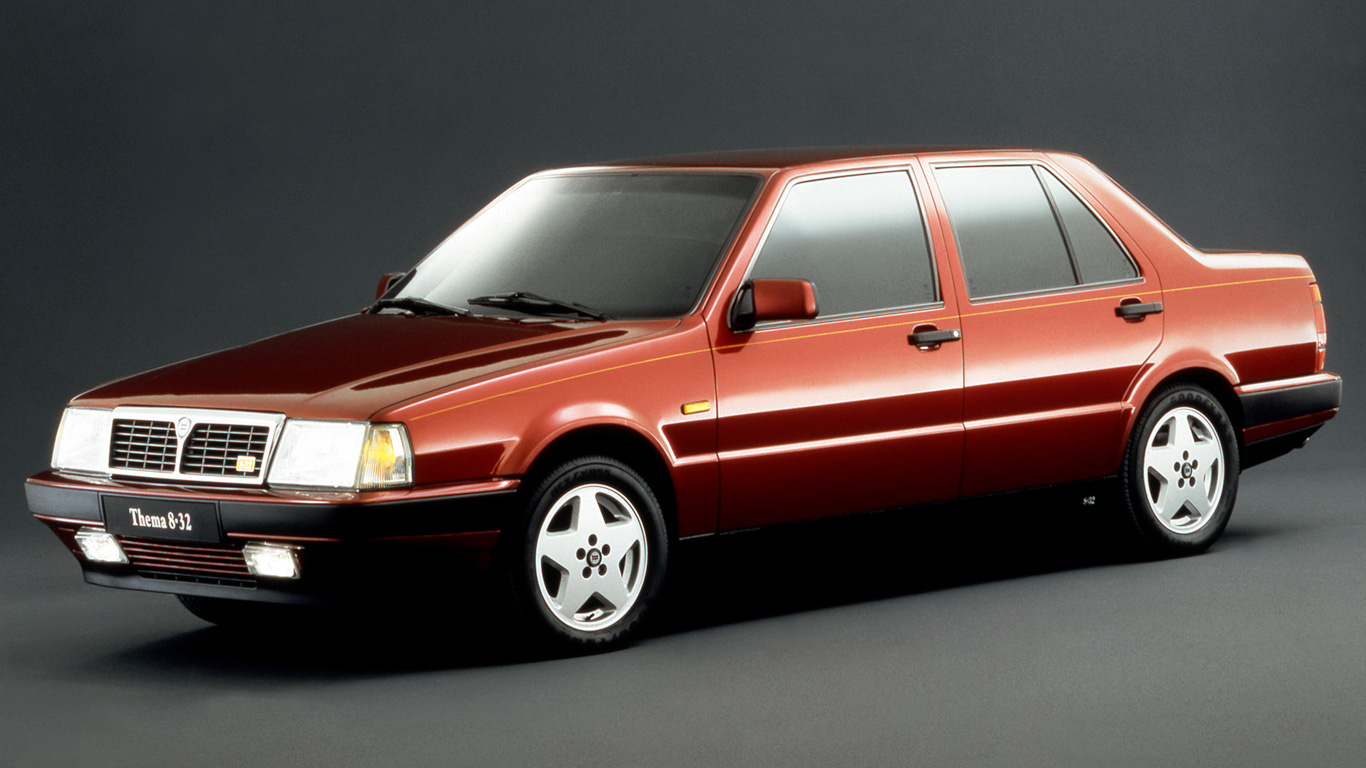
Again, we’ve chosen to shun the obvious in favour of something a little more discreet. The brilliant Lancia Delta Integrale would appear on many lists, but the WRC hero is the IMAX 3D to the arthouse cinema of the Lancia Thema 8.32. It was powered by a Ferrari V8 engine, creating one of the greatest sleepers of all-time. An Alfa Romeo Giulia Quadrifoglio of the 1980s, if you like.
Lynx Eventer
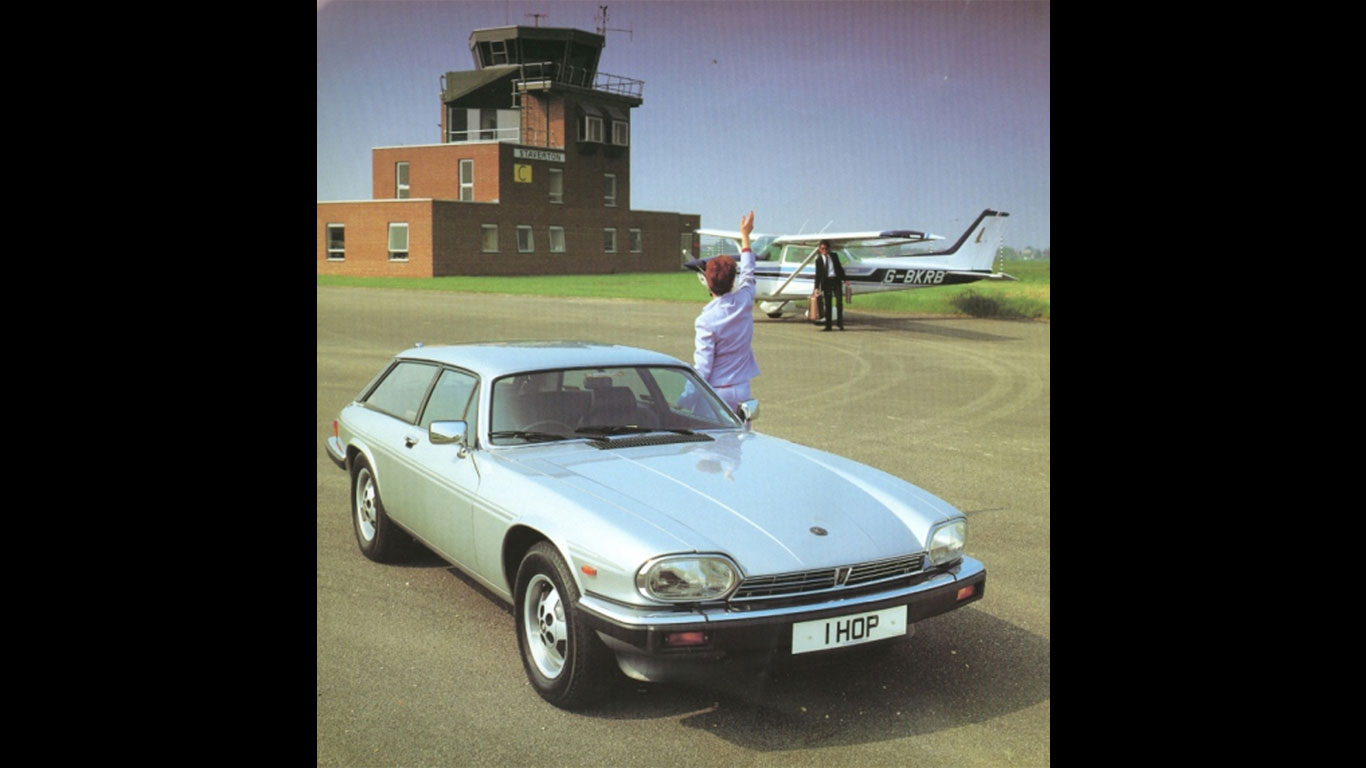
The Lynx Eventer: one of the most British cars ever built and arguably the most elegant estate car in the world. Based on the evidence, it’s a wonder that Jaguar never created an XJS shooting brake of its own, although 67 examples built over a period of 16 years hardly represents a commercial success. But it’s cool, because all shooting brakes are cool.
Opel Monza GSE
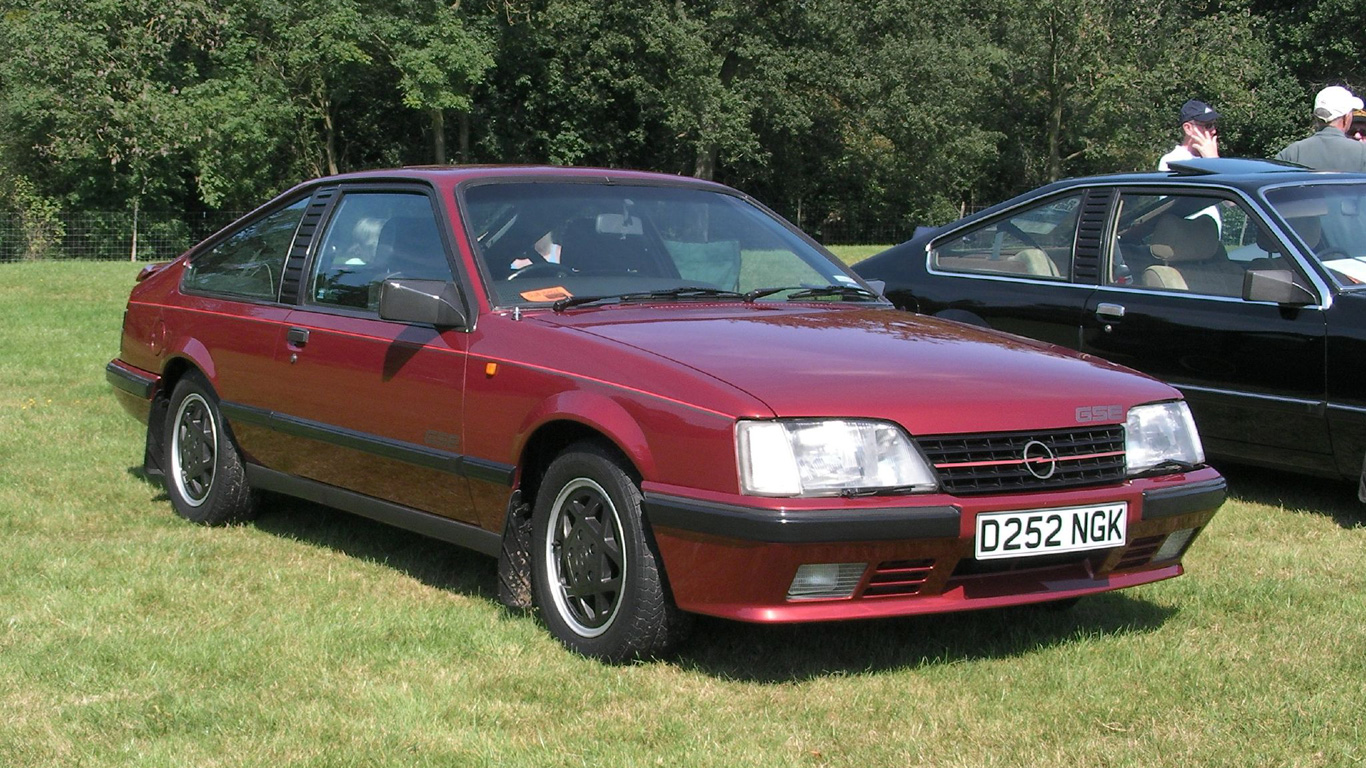
Back in the 1980s, the Opel Monza sounded far more exotic than the Vauxhall Royale Coupe. One was named after a race track, while the other sounded like a burger you’d order from a fast food joint. The GSE was the best of the breed, offering top specification and a limited slip differential.
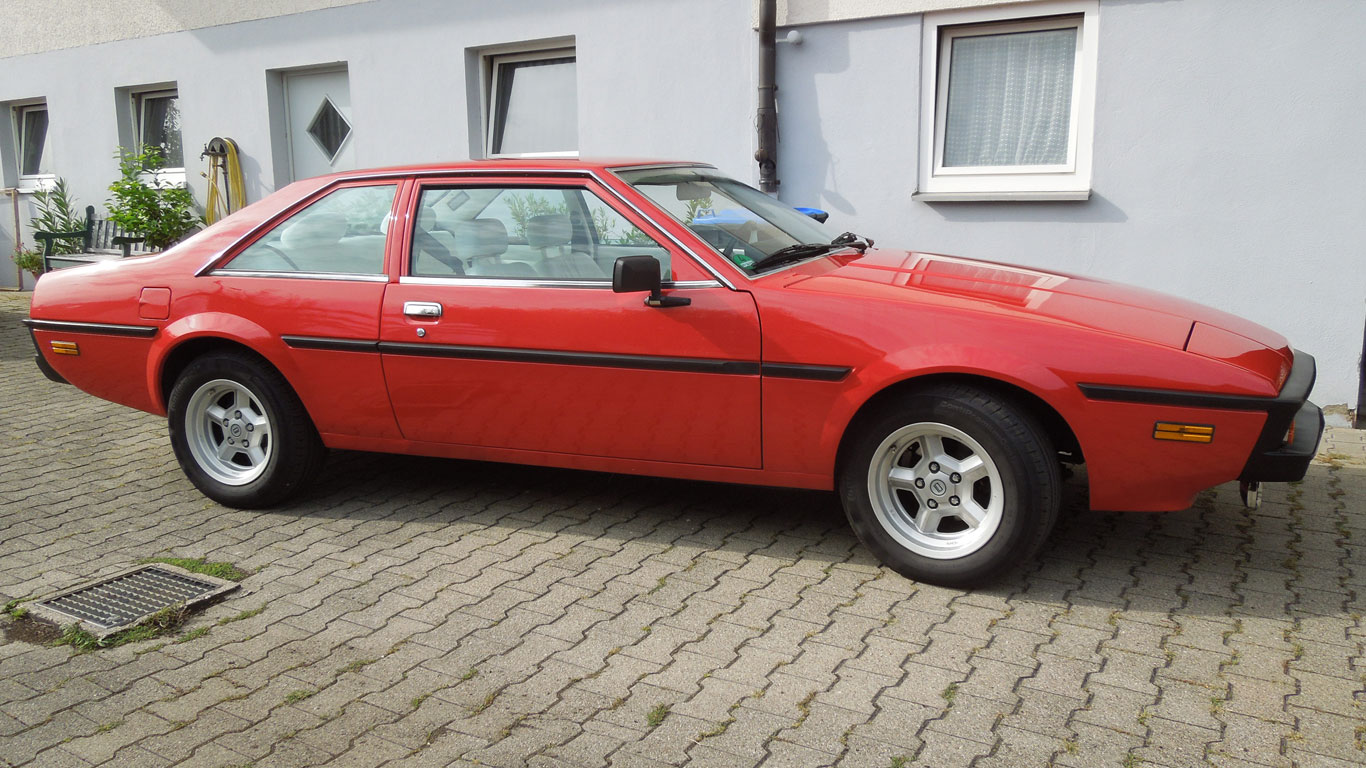
Matra Murena
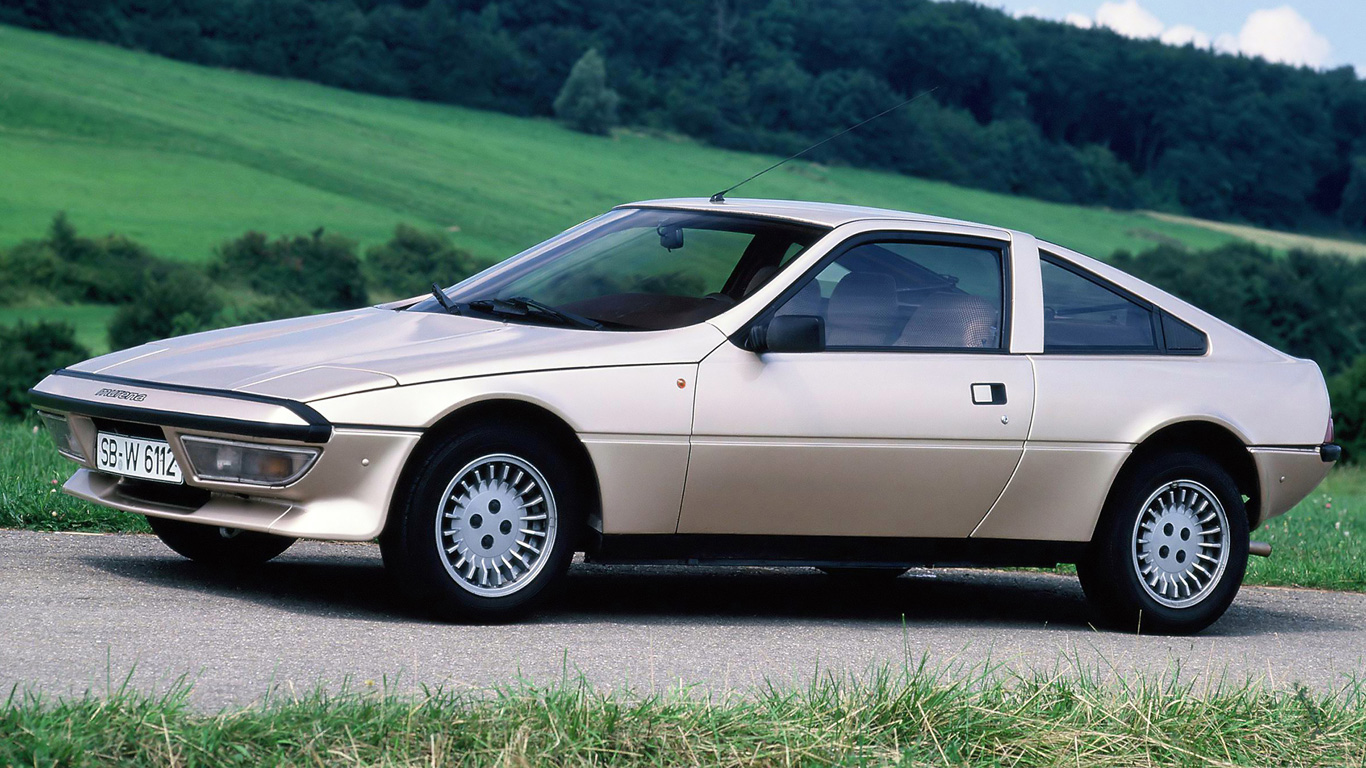
Thanks to its three-abreast seating and left-hand drive only status, the Matra Murena must have felt so exotic in the 1980s, like a bottle of Le Piat D’Or served at a dinner party. It evolved from the earlier Bagheera and sales were held back by doubts over its performance credentials and a high price. In 1983 it was pulled from sale, a victim of reshuffling at Peugeot.
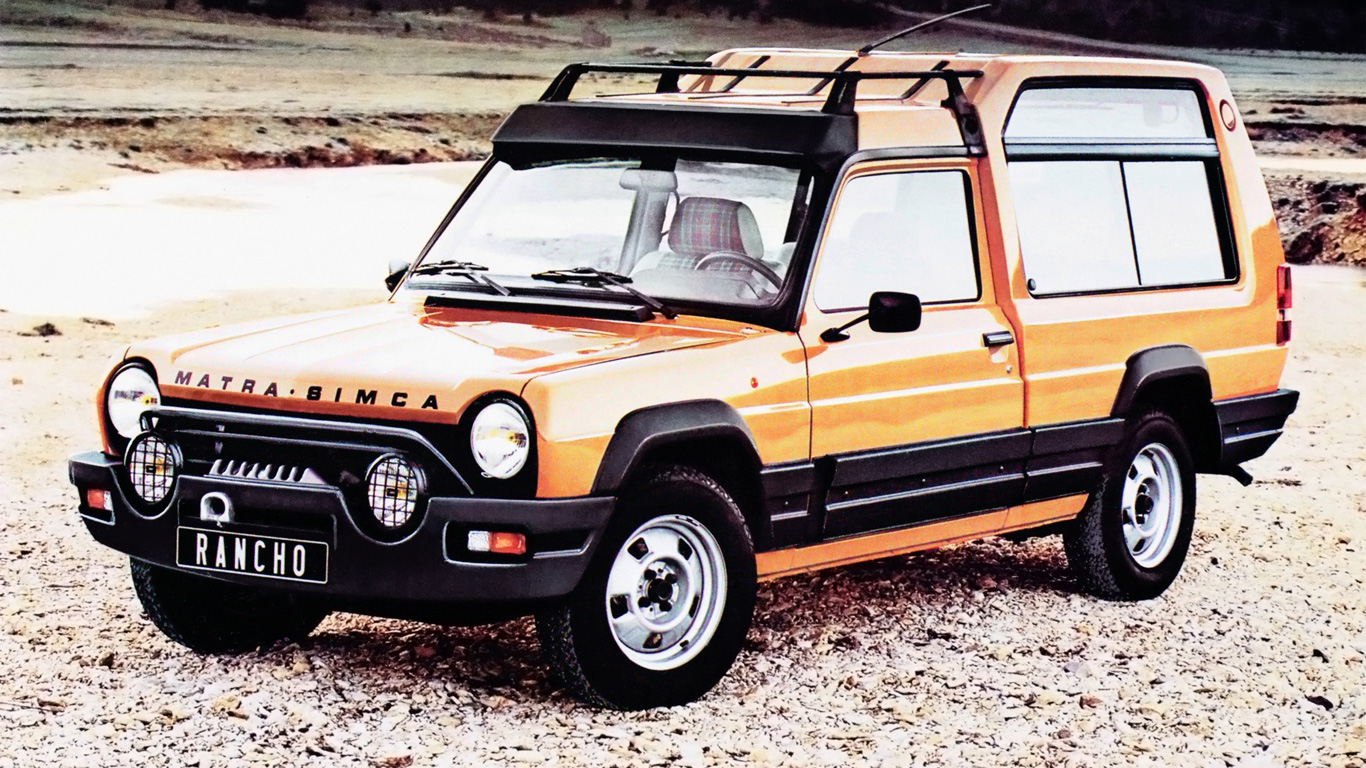
Matra Rancho
Underneath the Matra Rancho you’ll find the underpinnings of a humble Simca van, which, in truth, wasn’t up the challenge of hauling this faux off-roader. The two-wheel drive ‘on-roader’ pioneered the crossover concept long before the Qashqai and other such wannabes, cementing Matra’s reputation for innovation and forward-thinking.
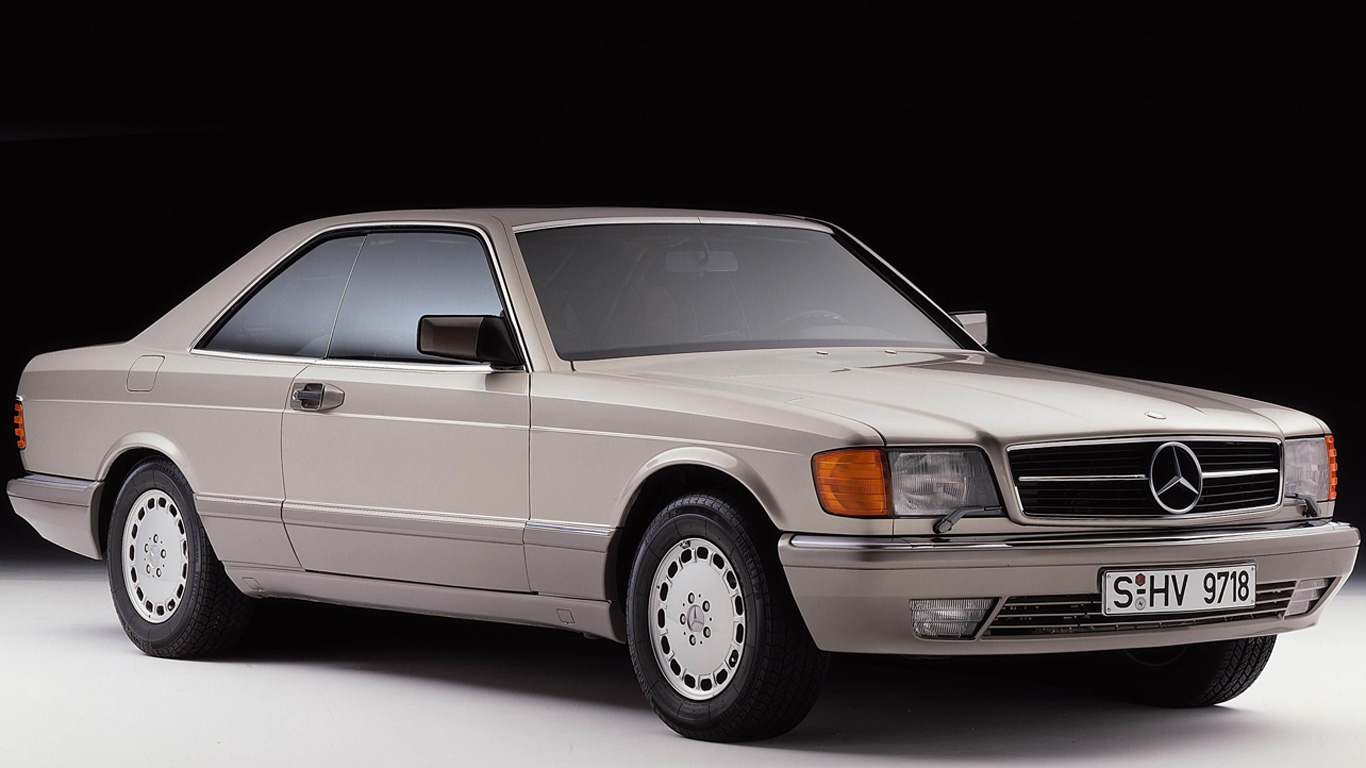
Mercedes-Benz 560SEC
Mercedes-Benz take on the coupe concept was predictably German, with the SEC based on the contemporary S-Class. Luxury, class and sophistication were guaranteed, but you’ll need the 5.5-litre V8 engine of the 560SEC if you’re hoping to get somewhere in a hurry. Compare and contrast this elegant Merc with the Stuttgart firm’s current range.
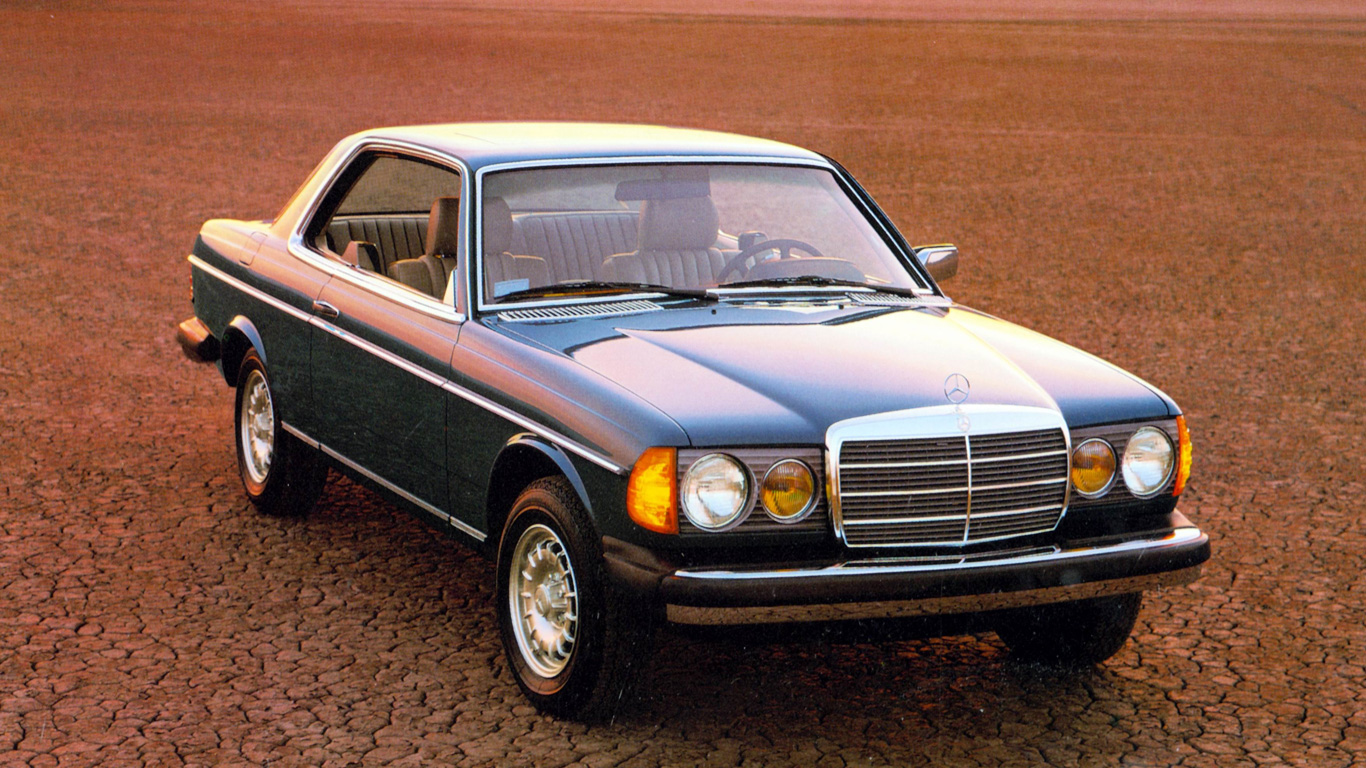
Mercedes-Benz W123 CE
It’s a similar story with the pillarless W123 CE: one of the most practical and sensible coupes of the 1980s. It was essentially a two-door version of the venerable W123 saloon, albeit with a shortened wheelbase.
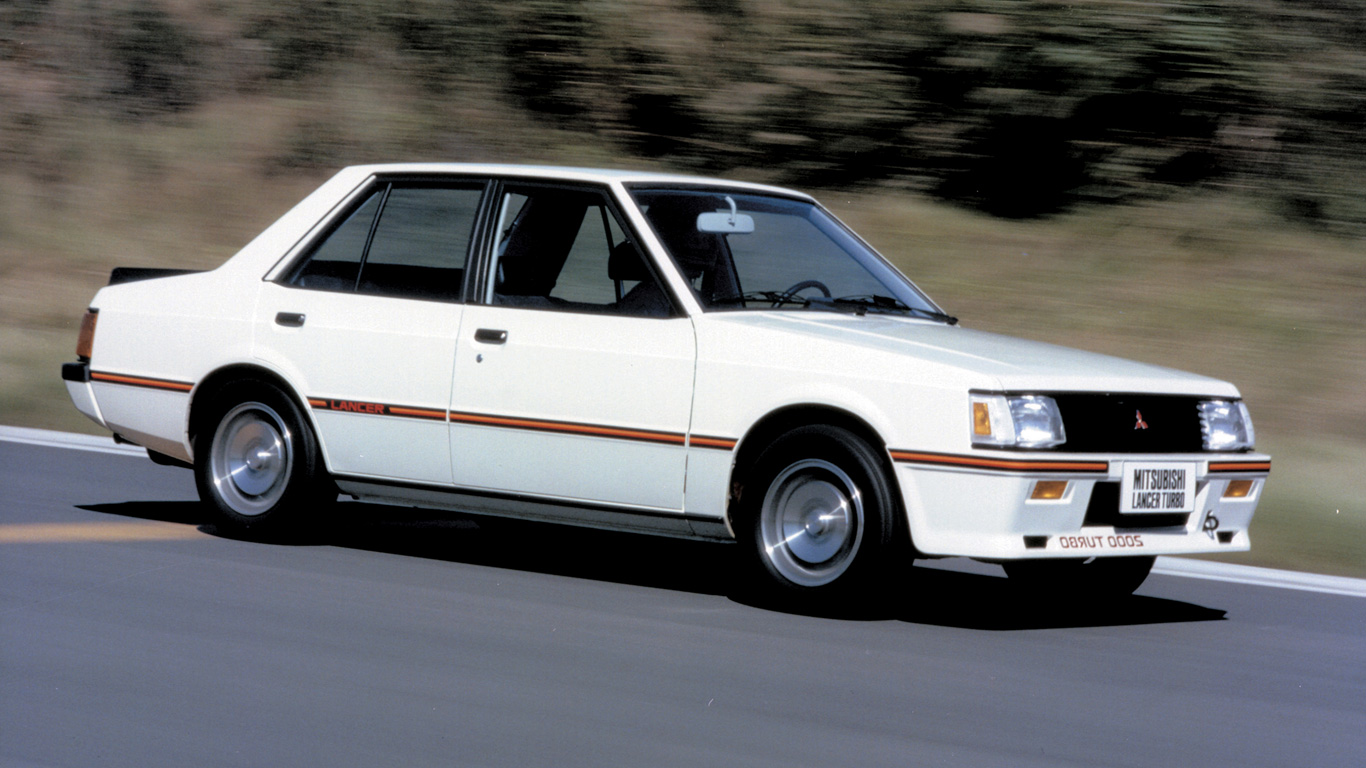
Mitsubishi Lancer 2000 EX Turbo
The Mitsubishi Lancer 2000 EX Turbo was the genesis of a new breed of performance heroes, with the 4G63 engine found under the bonnet going on to power the forthcoming Evolution models. And if that’s not cool enough, the reverse lettering on the chin spoiler evokes memories of the BMW 2002. Enough said.
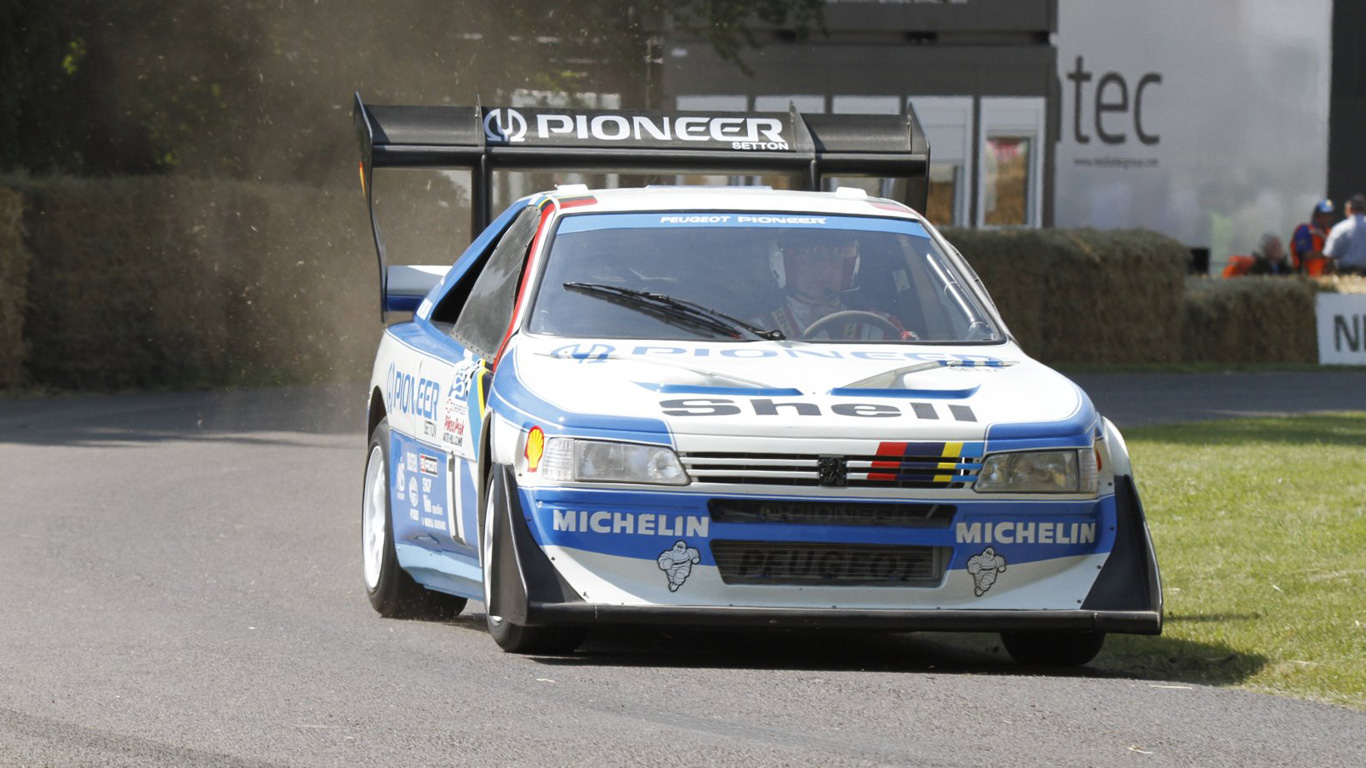
Peugeot 405 T16 Pikes Peak
Peugeot 205 GTI: best hot hatch in the world, yadda, yadda, yadda. Look, we’ve heard it all before, and while there’s no doubting the Pug’s supremacy, it is, perhaps, a tad obvious for this gallery. And if you’re wondering why we’ve included a Peugeot 405, search for ‘Climb Dance’ and all will become clear.
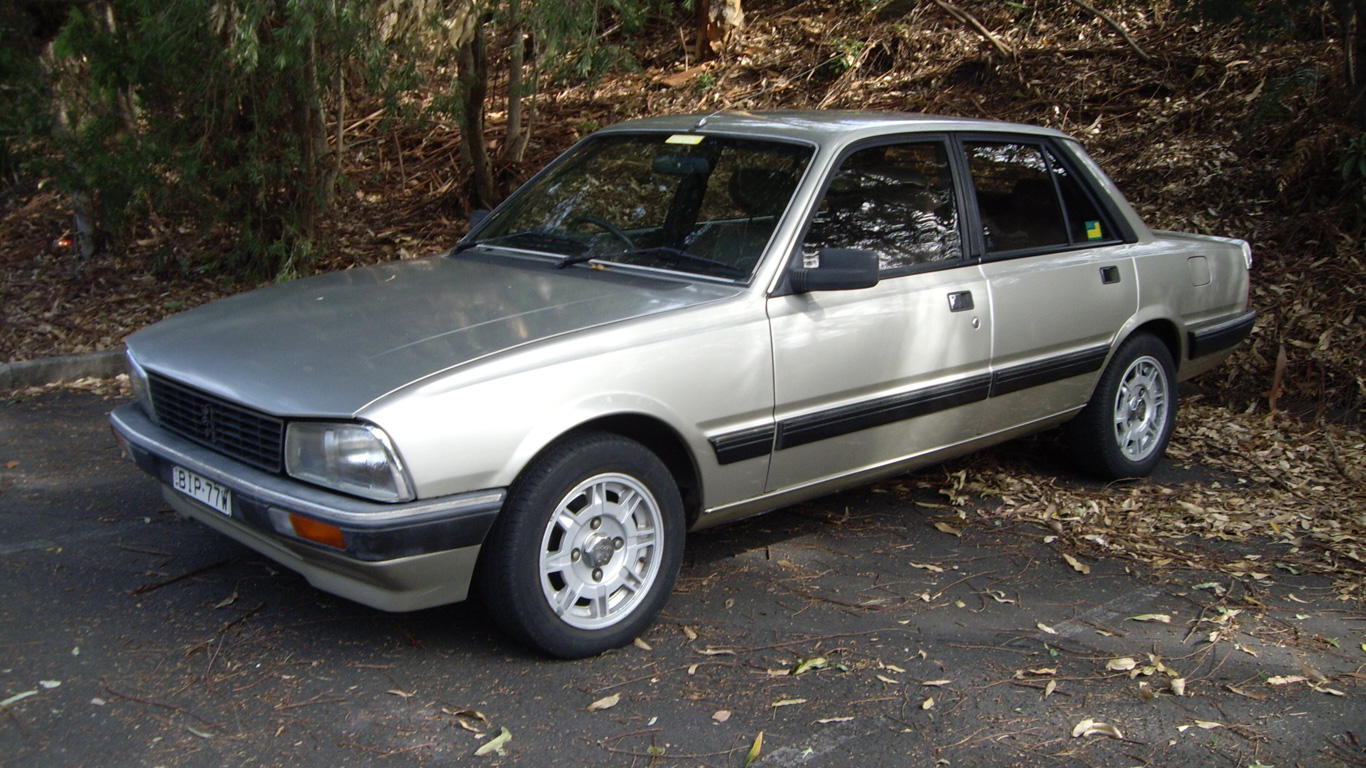
Peugeot 505 GTI
It might not look like it today, but in the 1980s this was a saloon car with genuine pedigree. It was the last rear-wheel-drive car to be built by Peugeot and, in the right spec, could give a German saloon a run for its money. The 505 GTI is massively underrated, but you’ll struggle to find one, as there are fewer than 20 on the road.
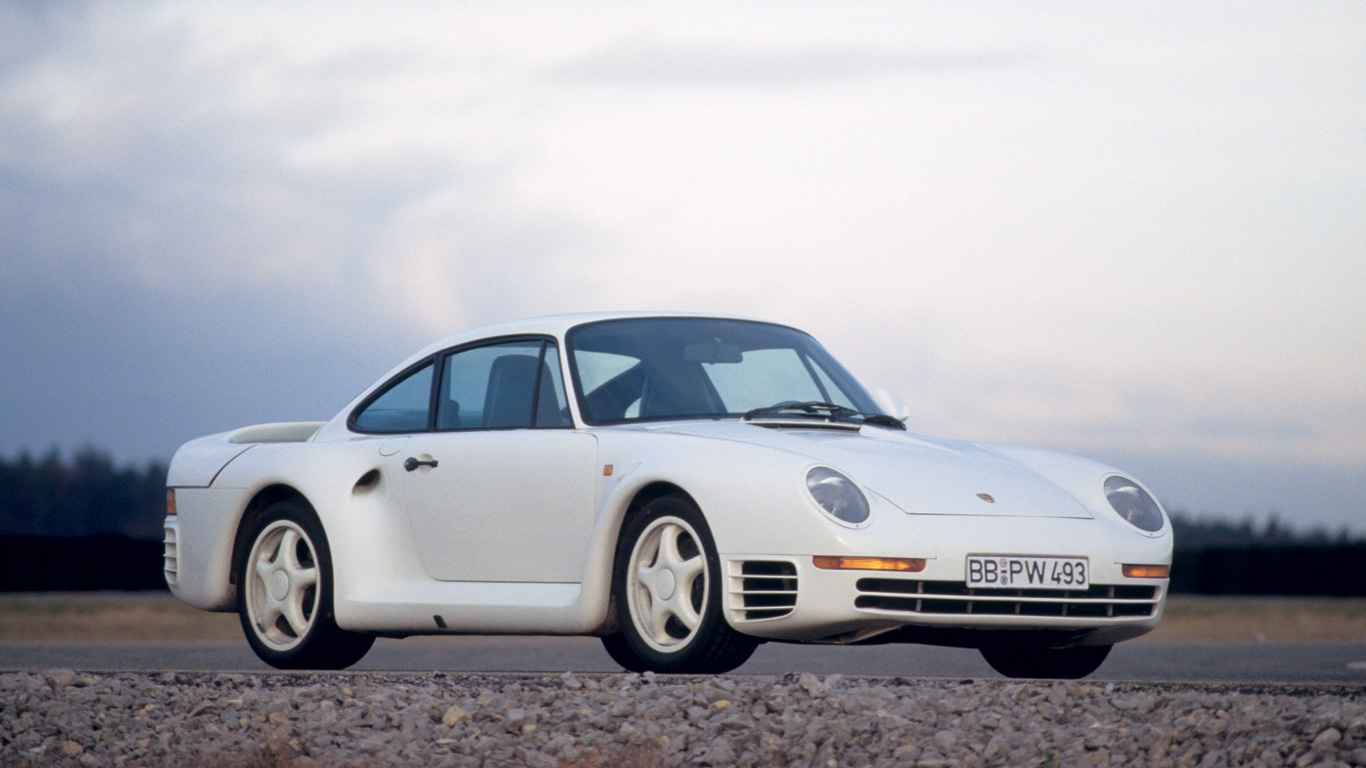
Porsche 959
If you’ll allow us to flout our own rules, we’d like to include the Porsche 959 in our gallery of cool cars. This car had it all: the pin-up styling, the tag of ‘fastest car in the world’, and enough techno-wizardry to change the supercar forever. The 959 is the prep school kid who excelled in mathematics, captained the football team and was a hit with the ladies. In short: it had it all.
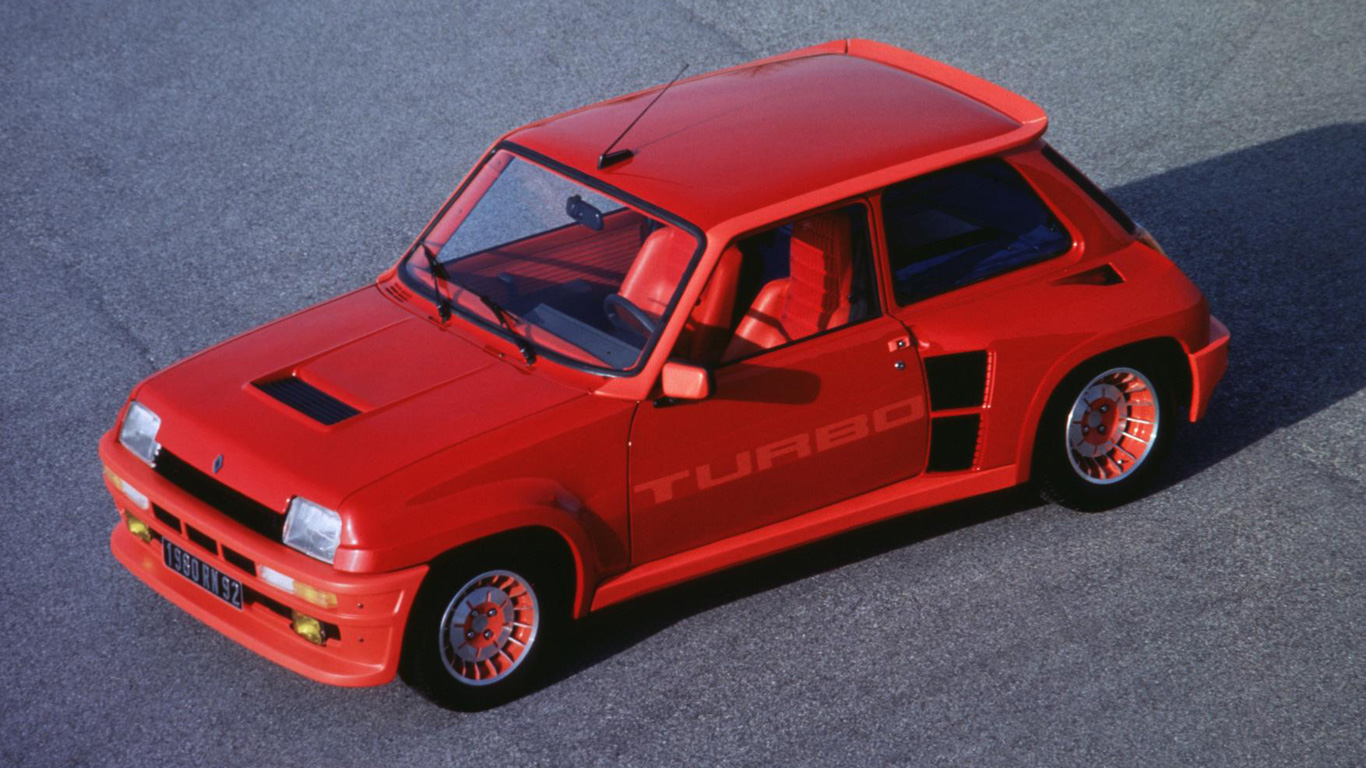
Renault 5 Turbo
The French have a habit of delivering lightweight, front-wheel drive hot hatches, but the Renault 5 Turbo rewrote the rulebook. With the rear seats removed, the 1.4-litre engine was placed behind the driver, creating something that was more supercar than hot hatch. The original 5 Turbo was loaded with unique parts and production was limited to 400 units. The later Turbo 2 was more production-friendly and cheaper to buy.
Renault 21 Turbo
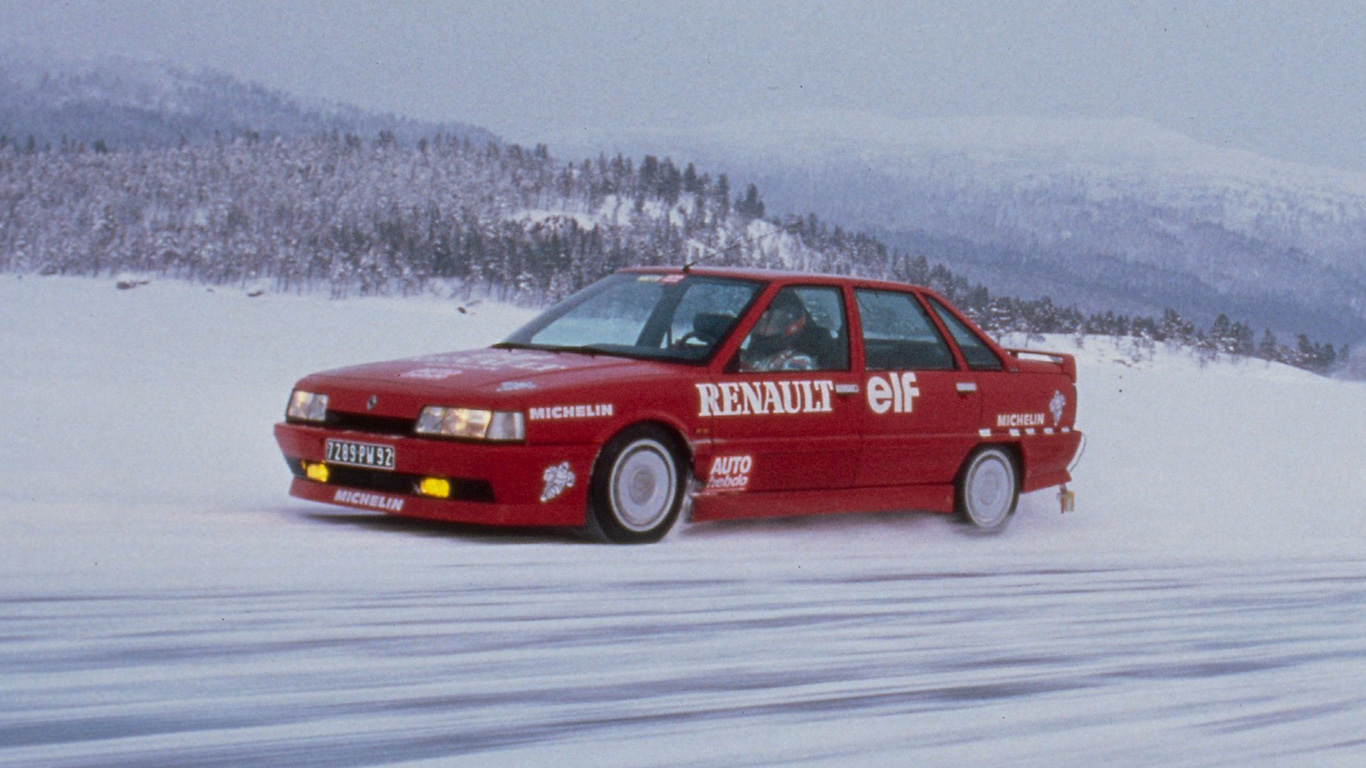
In 1988, Regie went hunting Cossies and German saloons with the 21 Turbo. On-boost, this thing could disappear over the horizon in a blur of yellow foglights quicker than you could say “dodgy electrics”. The Quadra four-wheel drive version arrived in 1989.
Renault 25
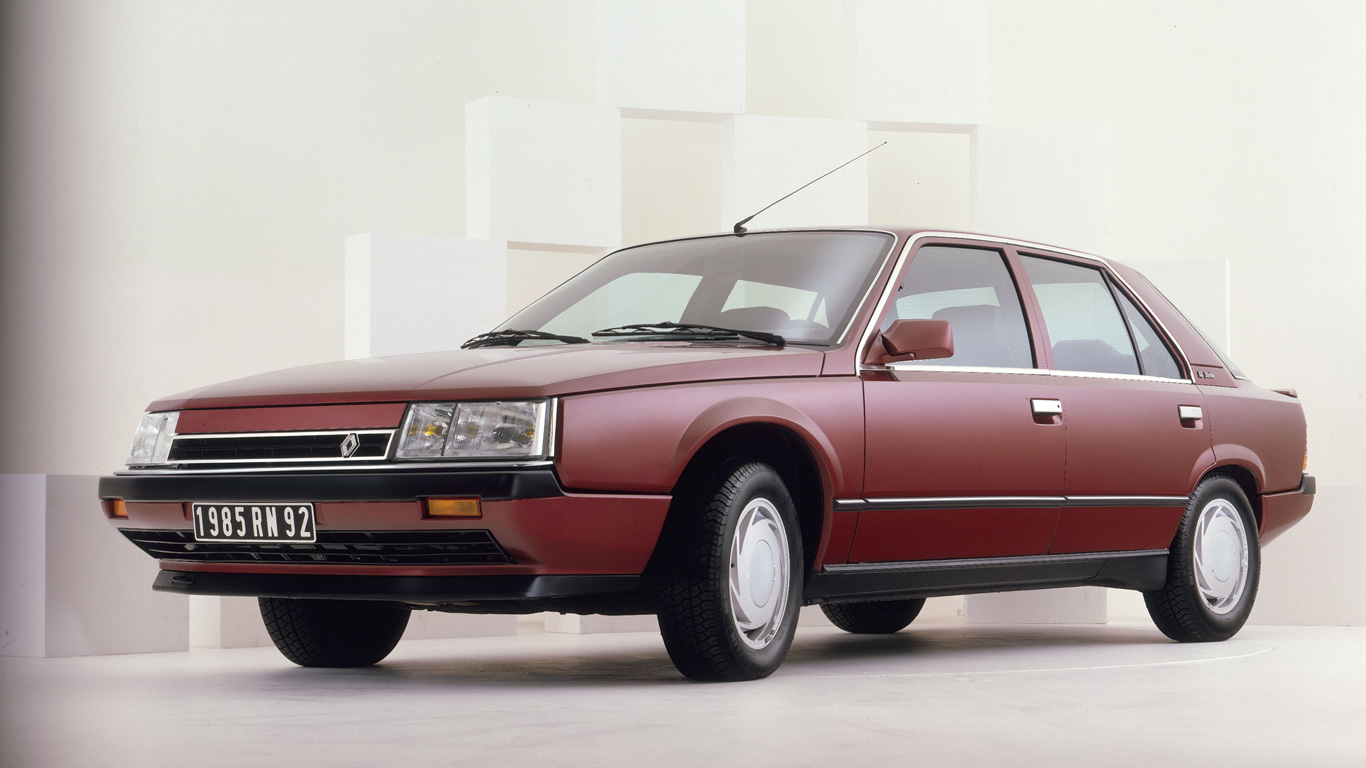
The Renault 25 was a tech-laden executive car built in true French style. That’s to say that when it was working it was almost without peer, but issues were as omnipresent as a cloud of Gauloise smoke in a Parisian bar. We’ll take a pre-facelift 25 Baccara, if anybody is offering.
Renault Espace
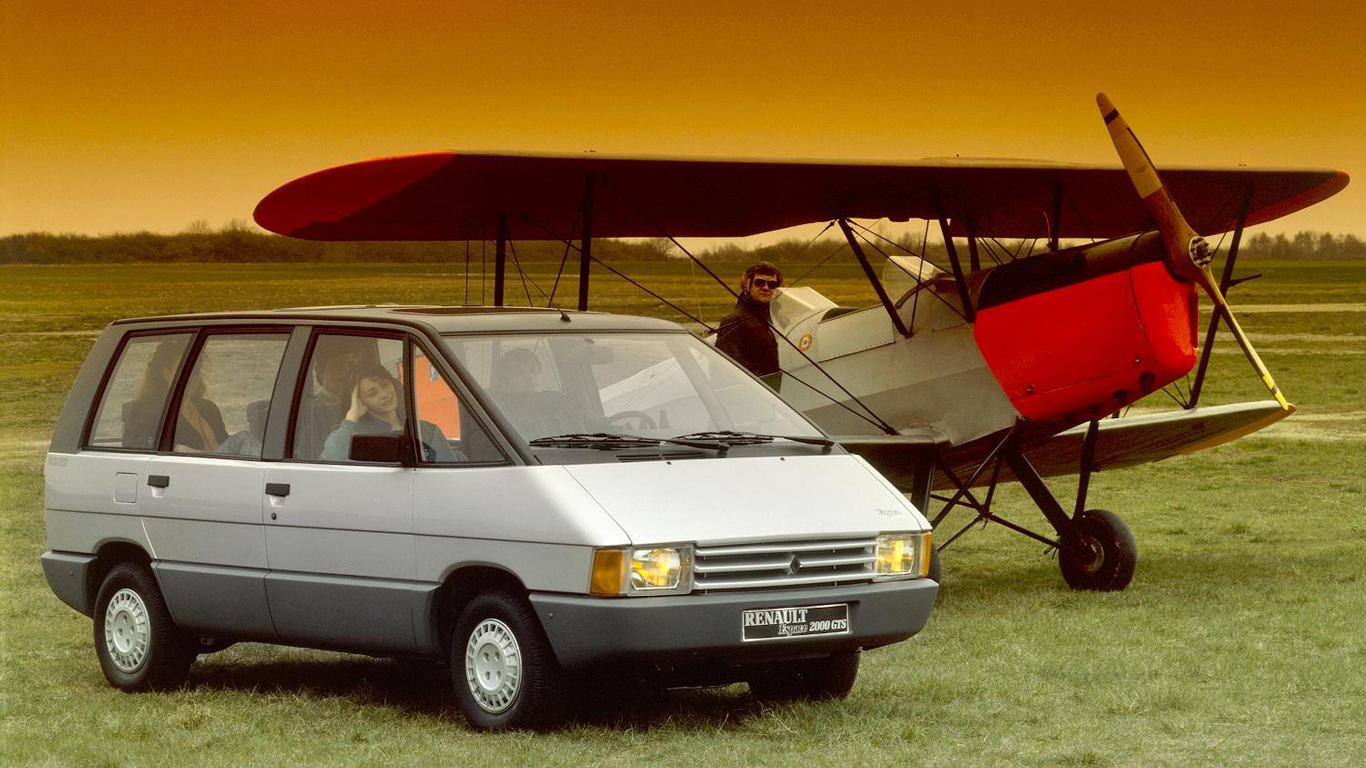
A cool MPV: have we left our marbles in Mothercare? Perhaps, but the original Espace is another pioneering vehicle which can credited to the genius of Matra. It also helps that the one-box vehicle looks like a TGV.
Saab 900 Turbo
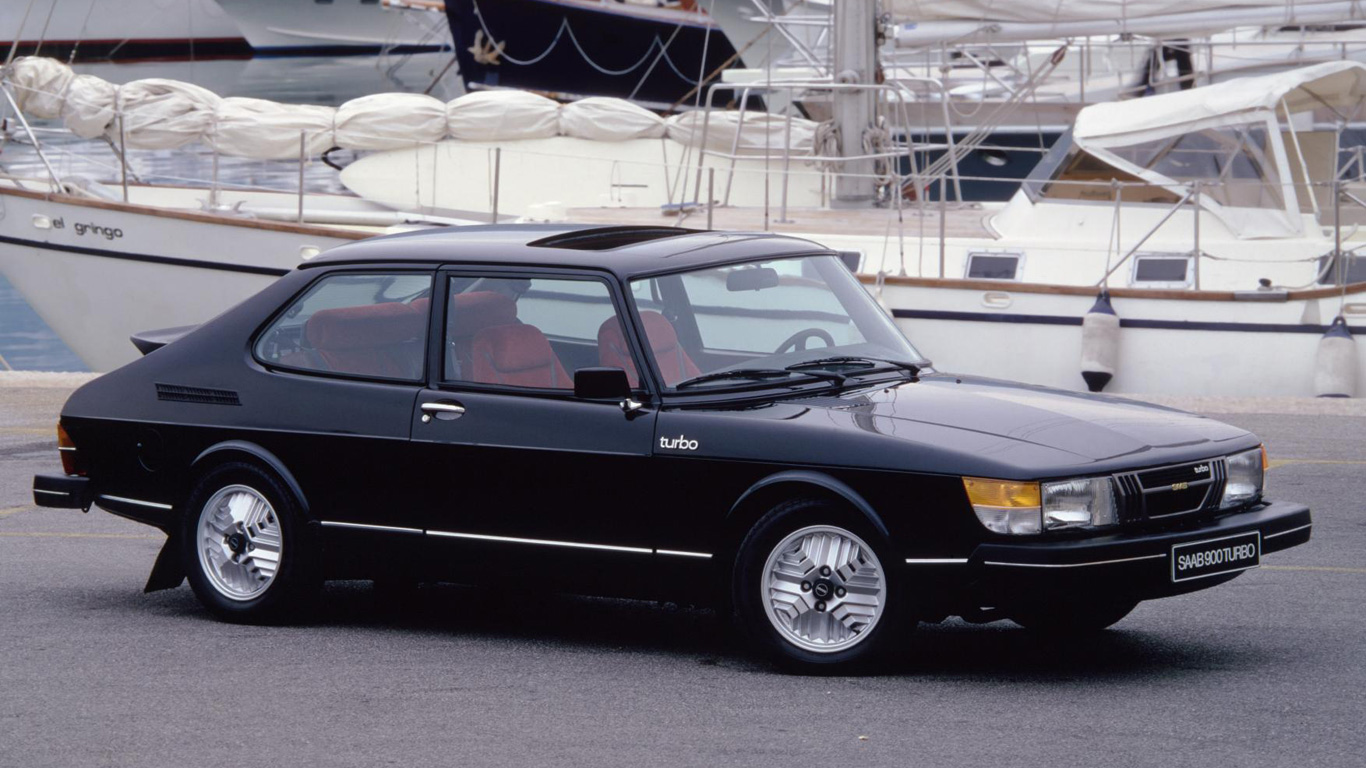
The Saab 900 Turbo is ‘jättebra’, which we sincerely hope is Swedish for ‘fantastic’ or ‘excellent’. We were going to go with ‘häftigt’, but we’re worried that means ‘cool’ as in something a refrigerator should do. Whatever, the Saab 900 Turbo is effortlessly cool.
SEAT Ibiza
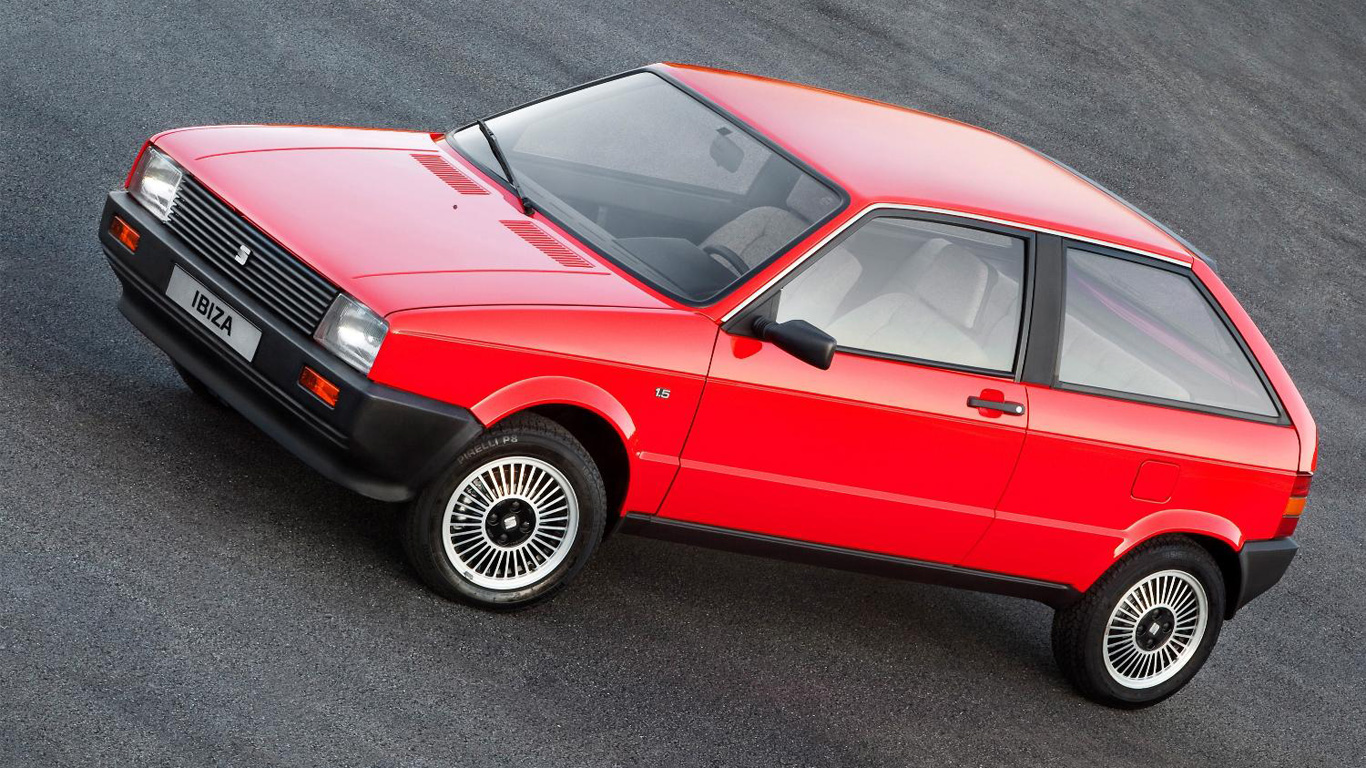
Hear us out with this one. The Mk1 SEAT Ibiza boasts styling penned by Giugiaro, engines developed by Porsche and a single wiper. That it looks so good should come as no surprise, because Giugiaro had proposed the concept for the second generation Golf.
Skoda 136 Rapid Coupe
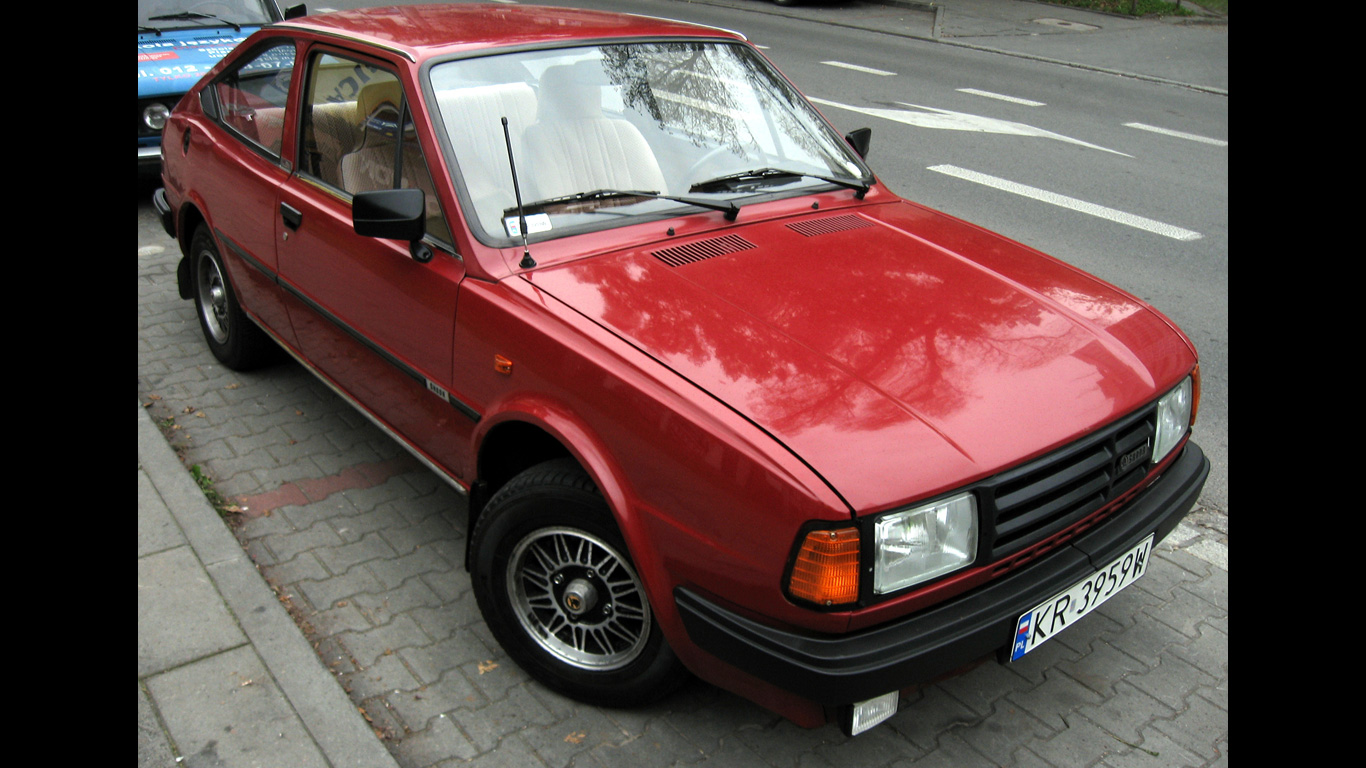
In the 1980s, the idea of a cool Skoda would have been unheard of. The Czech firm was the butt of countless jokes rolled out by end-of-the-pier entertainers and those in search of cheap laughs. But the only thing cheap about the 136 Rapid Coupe was the price: this was a cut-price Porsche 911. Of sorts.
Subaru XT
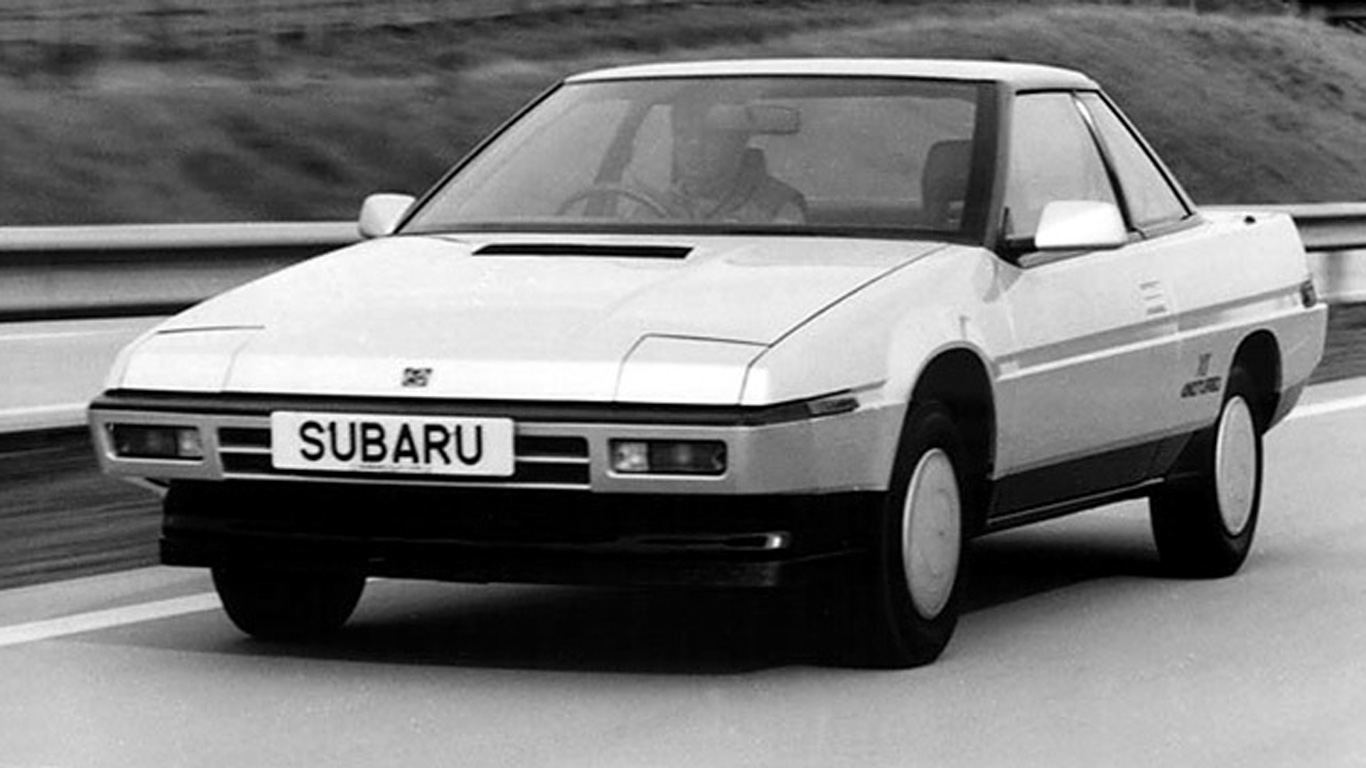
Even today the Subaru XT looks like a vision of the future. Like the Audi Quattro, the XT was a turbocharged four-wheel drive car for the executive who craved something a little different. But that’s where the similarities end. If the styling isn’t cool enough for you, search for photos of the dashboard.
Toyota Corolla AE86
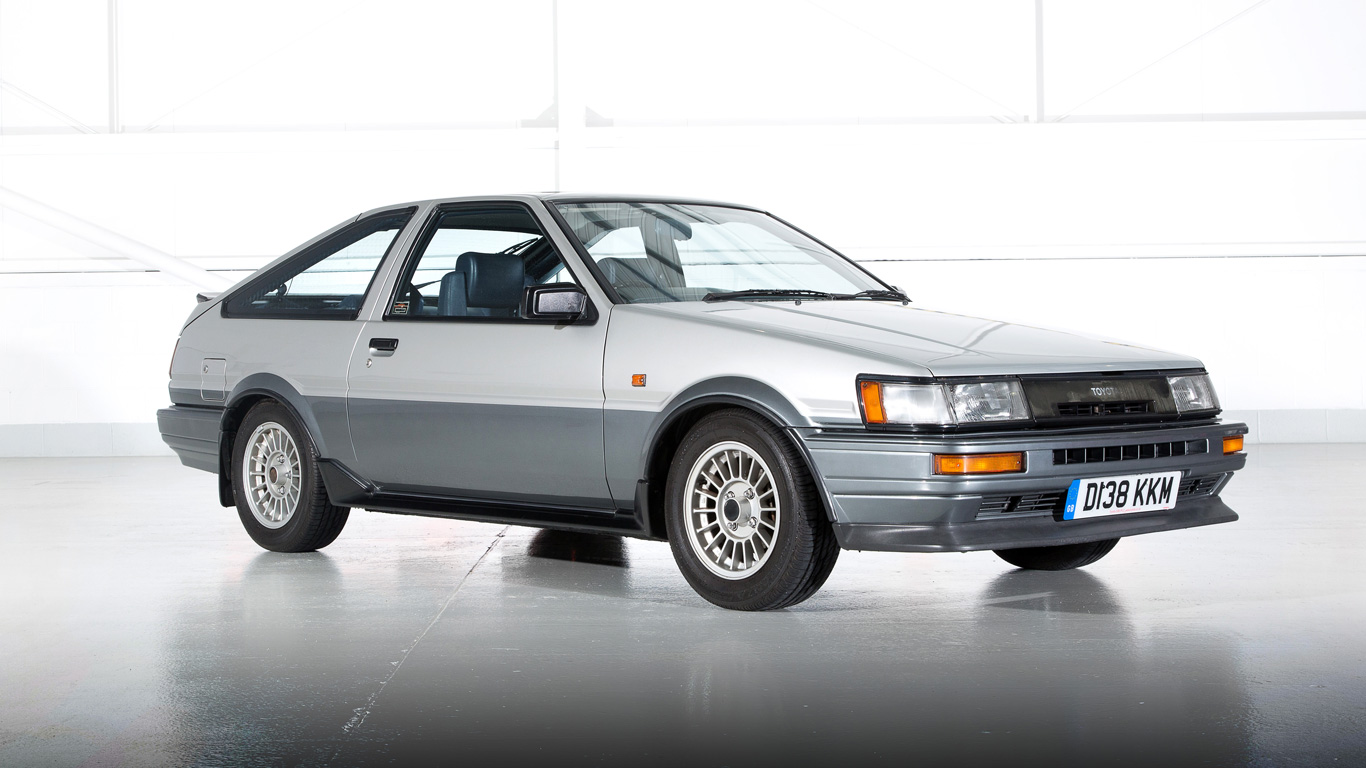
Can a Toyota Corolla be cool. Provided it is suffixed by the letters A and E and the numbers 8 and 6, the answer is a resounding yes.
Toyota Space Cruiser
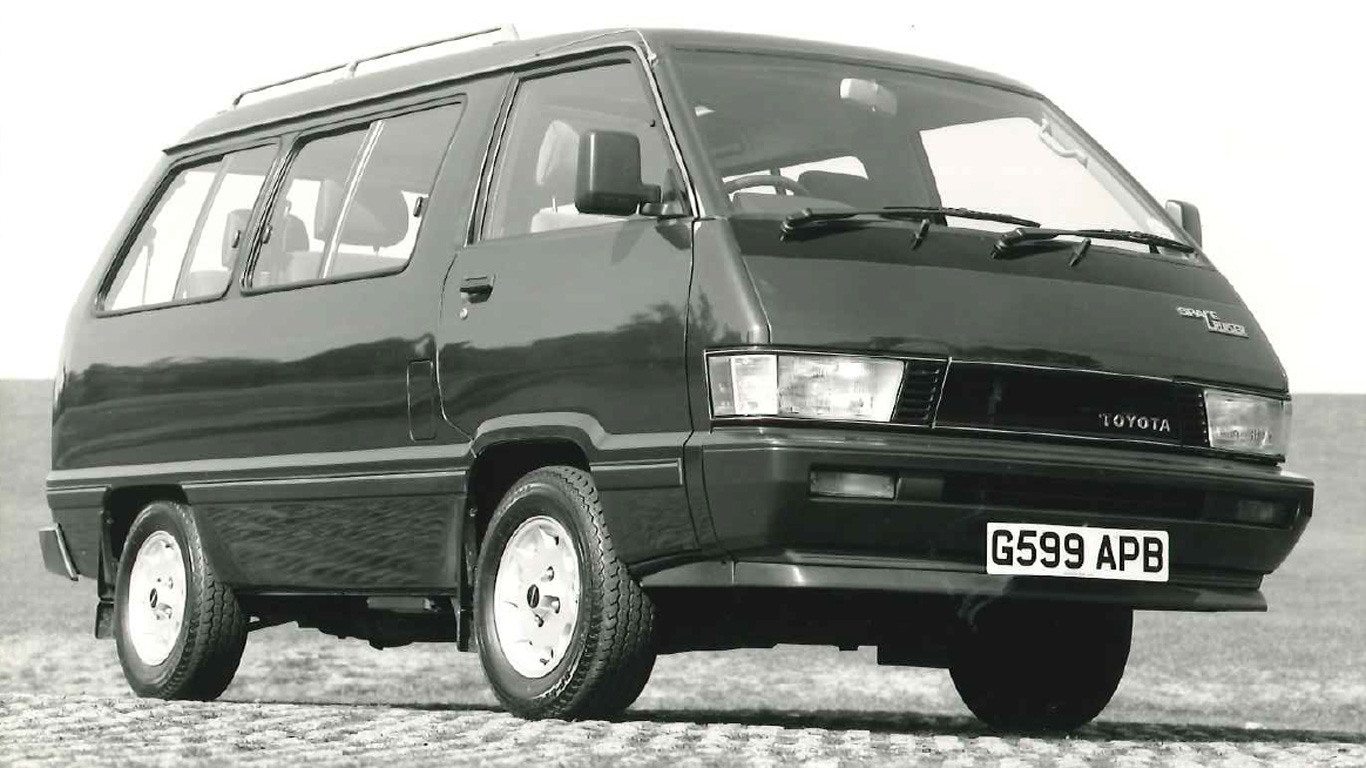
When it comes to the concept of the people carrier, the Toyota Space Cruiser is the antithesis of the Espace. For while the Renault was designed by Matra to be a car-like MPV from the ground up, the Toyota relied on its van roots. But it’s called the Space Cruiser, which is one the greatest names given to a car. Which means it’s cool.
Volkswagen Polo Sprint
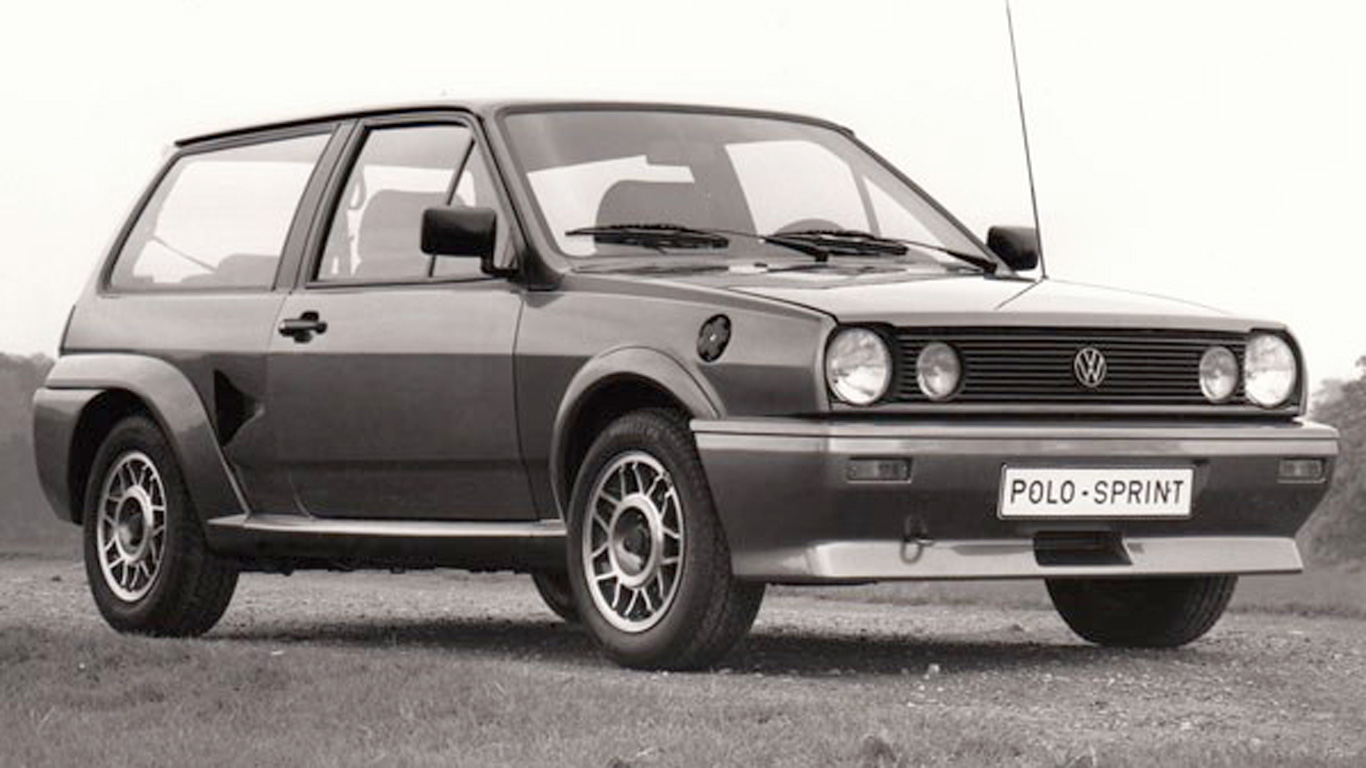
PoloDriver.com tells the story of how the Volkswagen Polo Sprint played a vital role in the development of traction control, and likens the wide-arched, rear-engined oddity to the Renault 5 Turbo. Sadly, it was a one-off – we’d have liked to see this supercharged Polo going head-to-head with the Renault.
Volkswagen Passat GT
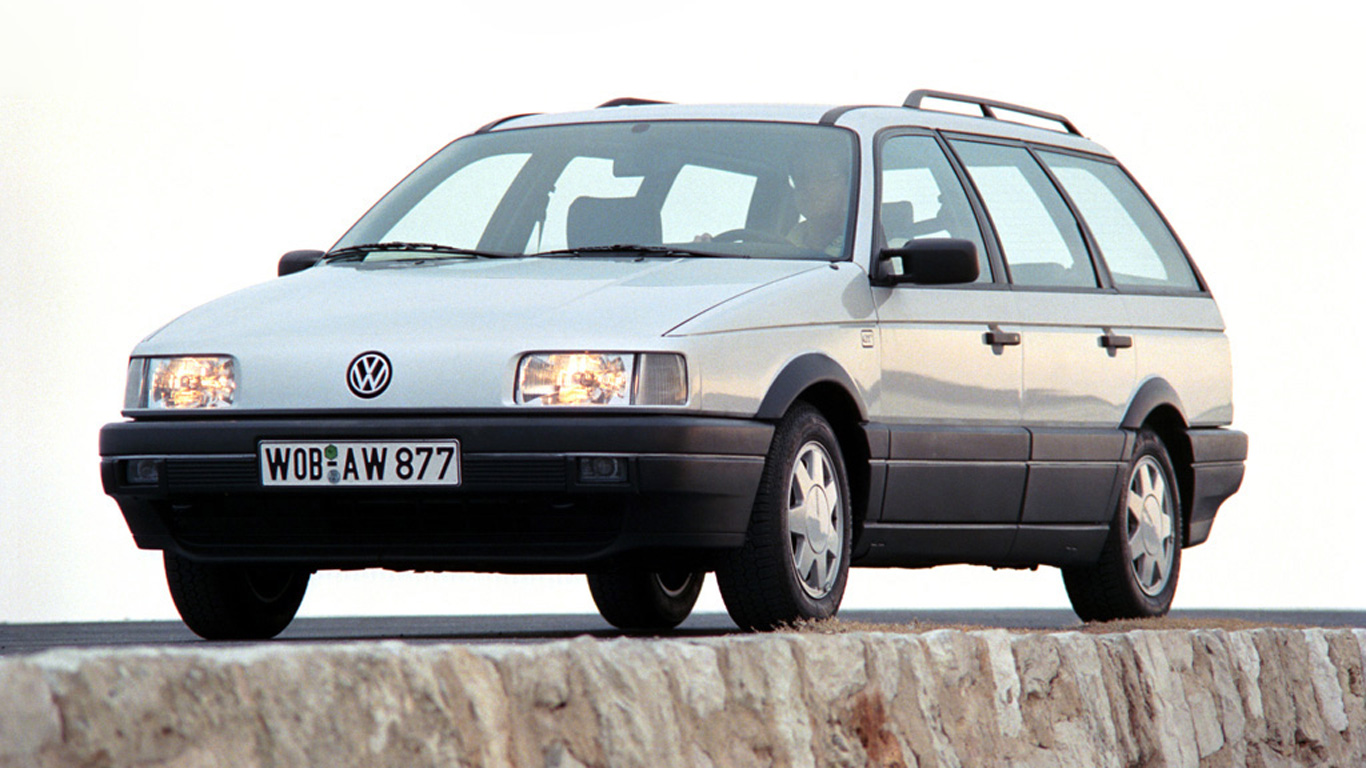
The B3 Passat is cool in a retro Dub kind of way, but what makes the GT stand out? Well, it’s powered by the same 16v engine you’d find in a Mk2 Golf GTi and yet, to the untrained eye, it looks like a regular Passat. On the wagon, only a subtle 16v badge on the tailgate provides a clue as to the car’s potential.
Volvo 780
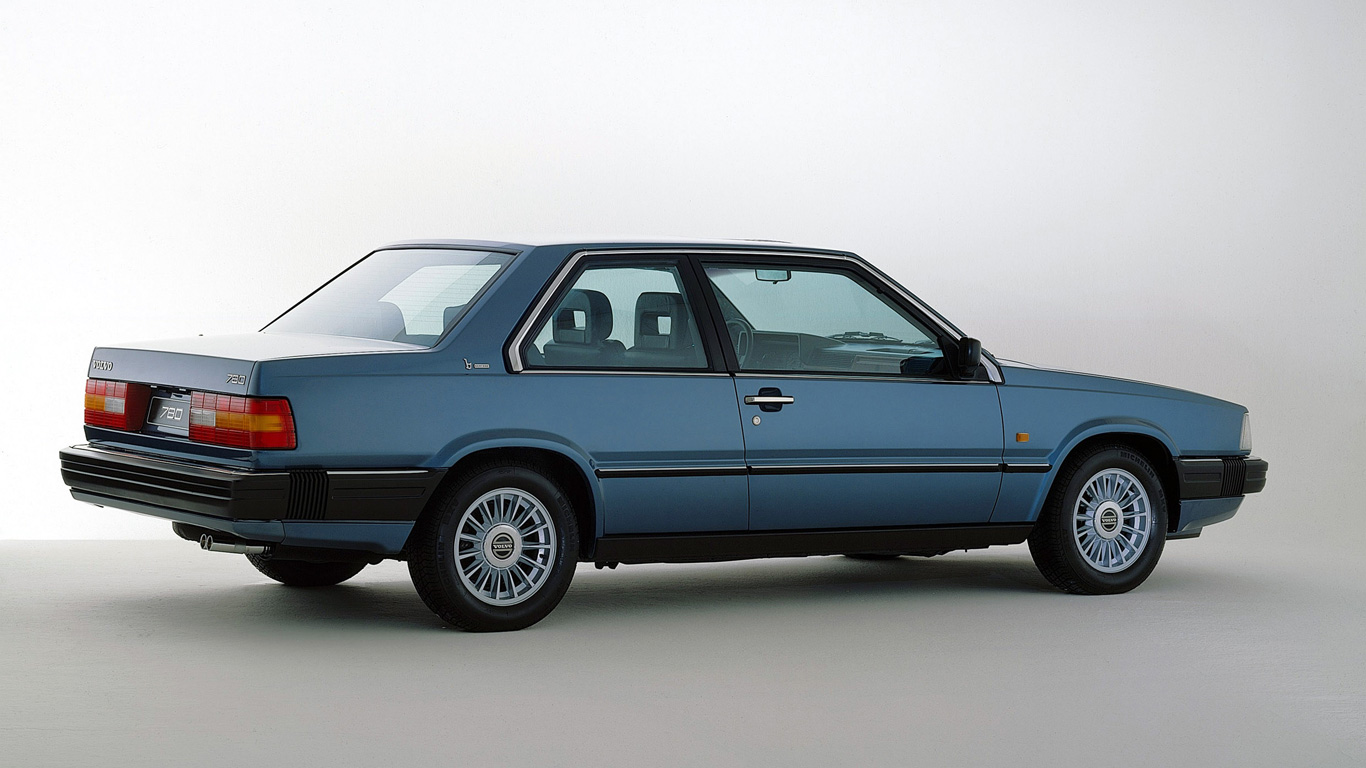
When the Volvo 780 arrived in 1985, it was the most expensive car the company had ever launched. Powertrains and chassis were shipped down to Turin, where Carrozzeria Bertone set about creating the sexiest Volvo since the P1800. So cool and so very Volvo.
Following International Women’s Day 2020, one area of inequality highlighted is car safety. Statistics show women have a much higher risk of being seriously injured on the road.
Overall, women are 47 percent more likely to be killed or seriously injured in a car accident than men.
Figures obtained by Select Car Leasing show that, in terms of leg injuries, the difference is as severe as 79 percent. Women are also 58 percent more likely to hurt their arms, plus 44 percent more likely to hurt their necks.
So why are women so much more at risk? Seemingly, it’s because they’re under-represented when it comes to crash testing. The above stats were the case all the way back in 2011, according to the University of Virginia, and have barely changed since.
This is because crash test dummies still seem to favour men. Of the five crash tests that must be passed before a car goes on sale, just one includes a female dummy. That test only involves the dummy being in the passenger seat, too.
So there isn’t actually any hard data on how the average female driver really fares in an accident. In America, there’s just one female crash dummy. She’s five feet tall and weighs just seven stone. Not overly representative.
There is also no seatbelt yet developed that is safe for pregnant women.
Research from 2004 says pregnant women should still use seatbelts, but that 62 percent of those late into their term don’t fit the standard three-point belt design.
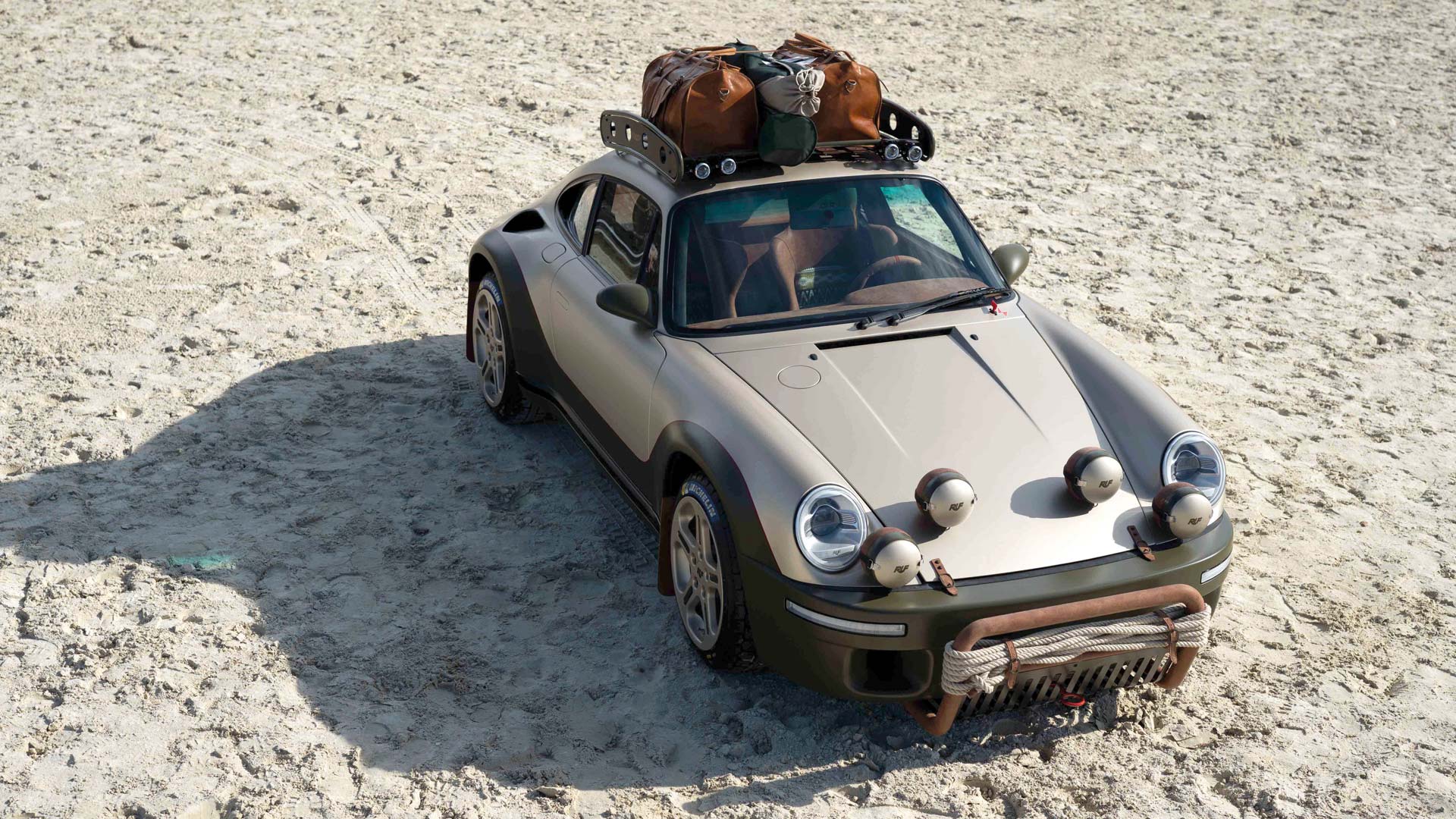
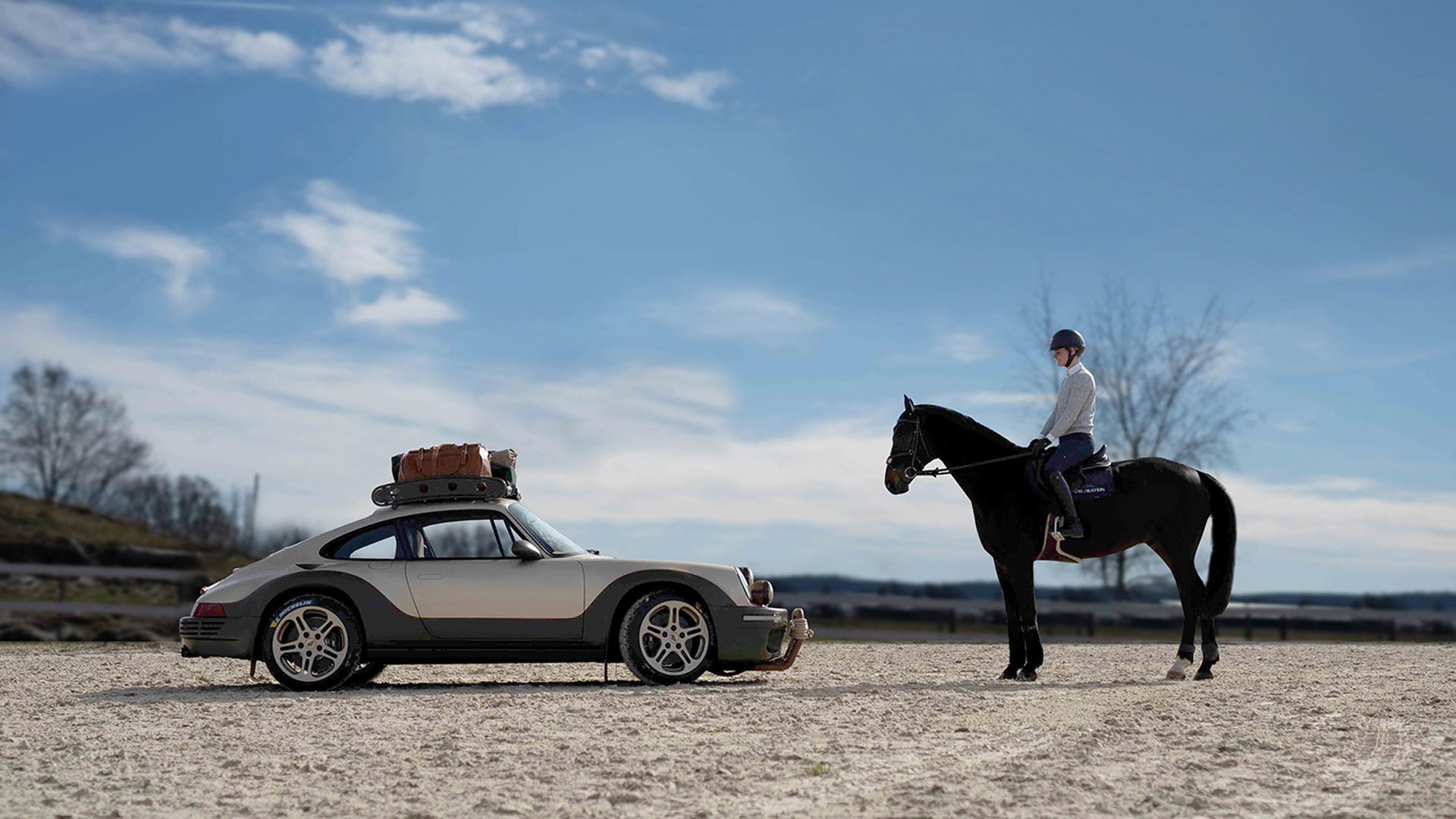
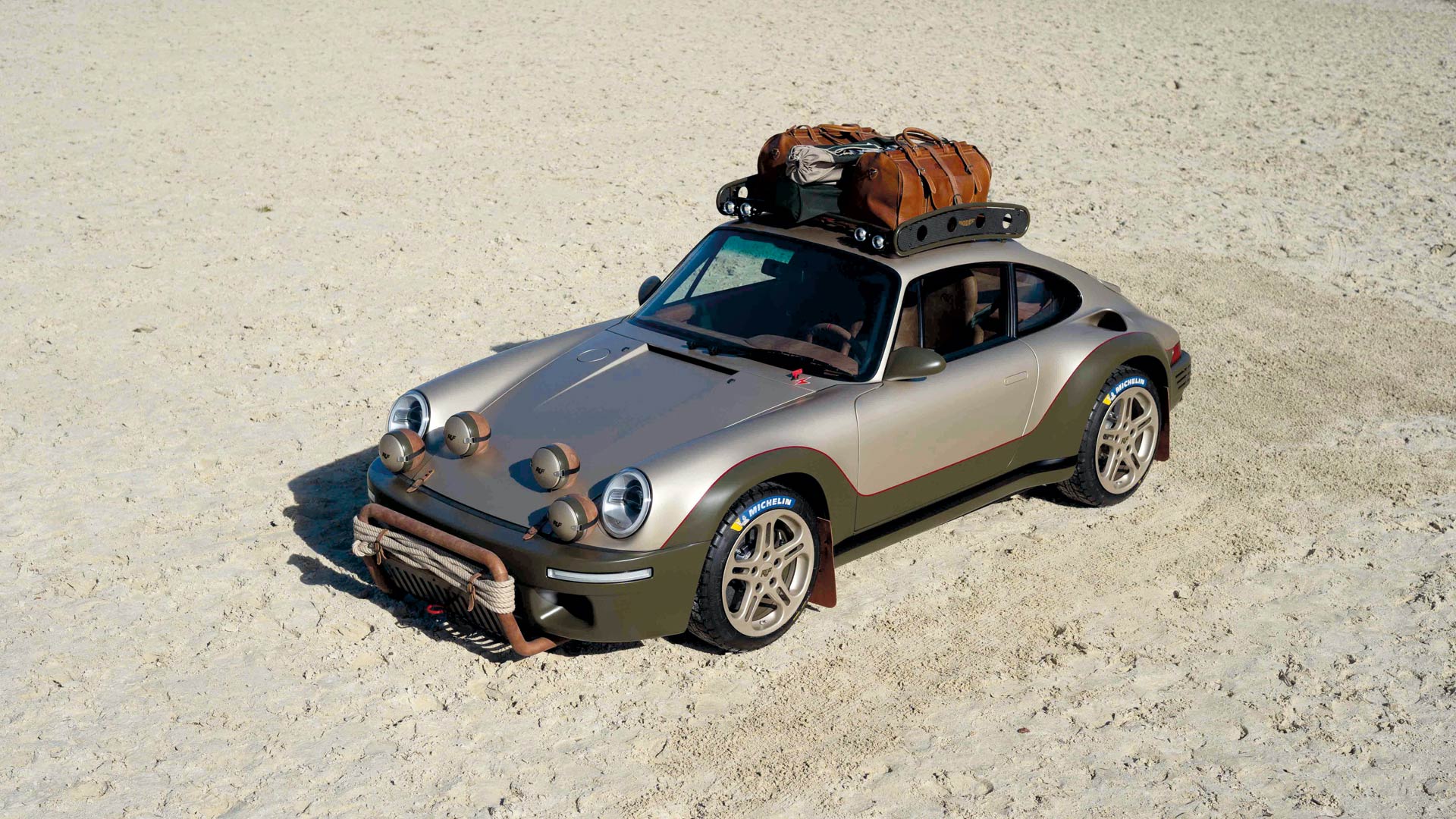
Sports car maker RUF has revealed an impressive new off-road concept, said to have been inspired by the Rodeo Drive Concours d’Elegance event in California.
The German manufacturer, which has traditionally used Porsche chassis to create its own products, is expanding its horizons with the Rodeo.
Whilst the Rodeo may have retro looks, the technology underneath means this is a thoroughly modern machine.
Get ready to saddle up
The idea for the Rodeo Concept came from high-profile automotive events and car enthusiasts.
RUF notes that this includes famed collector Bruce Meyer, who was the founding chairman of the Petersen Automotive Museum in Los Angeles.
Meyer is known for owning some of the most collectible vehicles on the planet, including the very first 1987 RUF Yellowbird.
Phillip Sarofim, a RUF fan, is also said to have provided inspiration for the Rodeo, along with fashion mogul Ralph Lauren. In particular, the themes from Lauren’s 2011 Western Collection were used in developing the car.
The styling of the Rodeo Concept also has a familiarity to a classic Porsche model. The 953 was used on the 1984 Paris-Dakar Rally, with four-wheel drive and high-riding suspension.
Like the Porsche 953, the Rodeo Concept has a lifted ride height combined with chunkier rubber for all-terrain action. However, the 1980’s Porsche did not come with a monocoque chassis made from carbon fiber.
RUF has utilized the same lightweight carbon chassis as found on the CTR Anniversary, and the brand-new SCR.
A full corral of horsepower
This means that buyers would have the choice of various RUF flat-six engines to connect to the four-wheel drive setup. A 4.0-liter naturally aspirated engine, or a turbocharged 710 horsepower CTR unit, could be options.
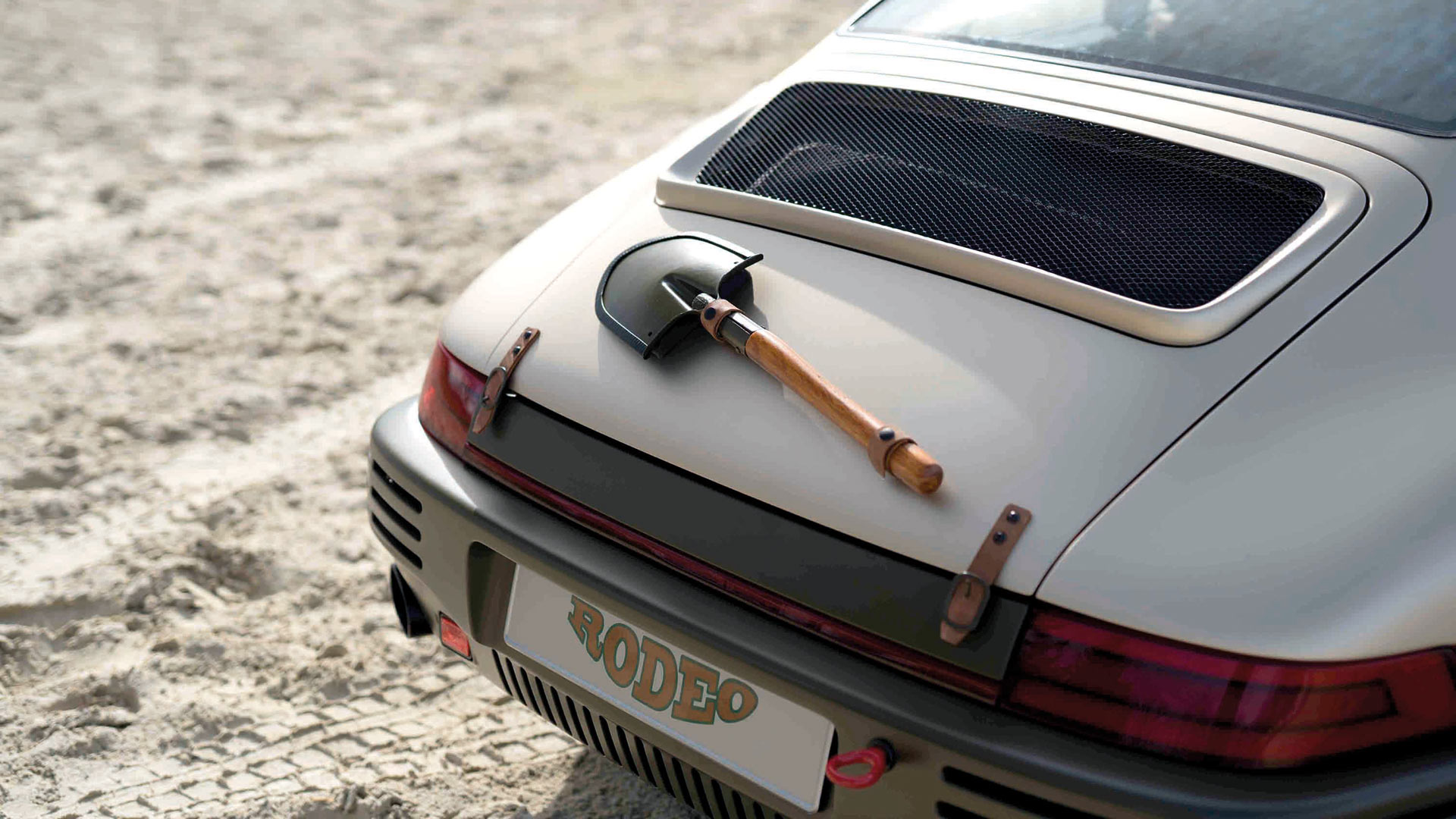
Buyers opting for the turbocharged engine might want to make sure luggage on the roof rack is firmly secured, along with the spade attached to the engine cover.
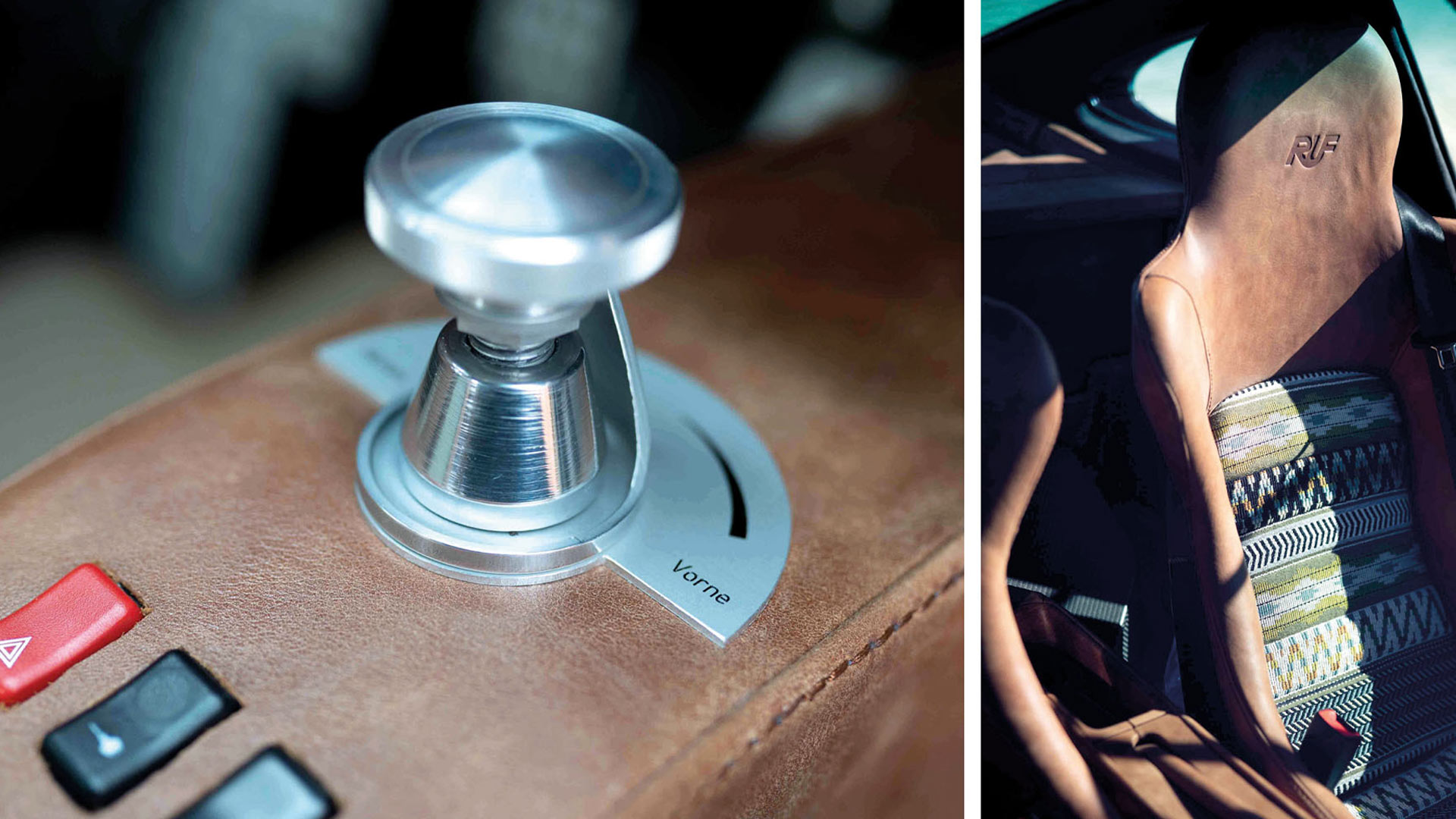
All the exterior add-ons for the Rodeo are matched with an interior that makes use of vintage saddle leather, with Western-inspired fabric for the seat inserts.
Interest in Porsche 911s capable of off-road action has increased in recent years. The Keen Project has built classic Porsches inspired by Baja racing, with journalist Matt Farah being one notable owner.
The reborn Gemballa brand, known for outrageous modified Porsches in the 1980s, is also said to be exploring a new off-road supercar.
However, RUF’s marketing director, Estonia Ruf, is clear about the motivation of the Rodeo. She explains that the “Rodeo Concept combines that passion for cars with the love of western culture – an appreciation I found while studying in Oklahoma, USA.
“This car is inspired by some of our favorite people and our love for the countryside.”
New RUF SCR hits production
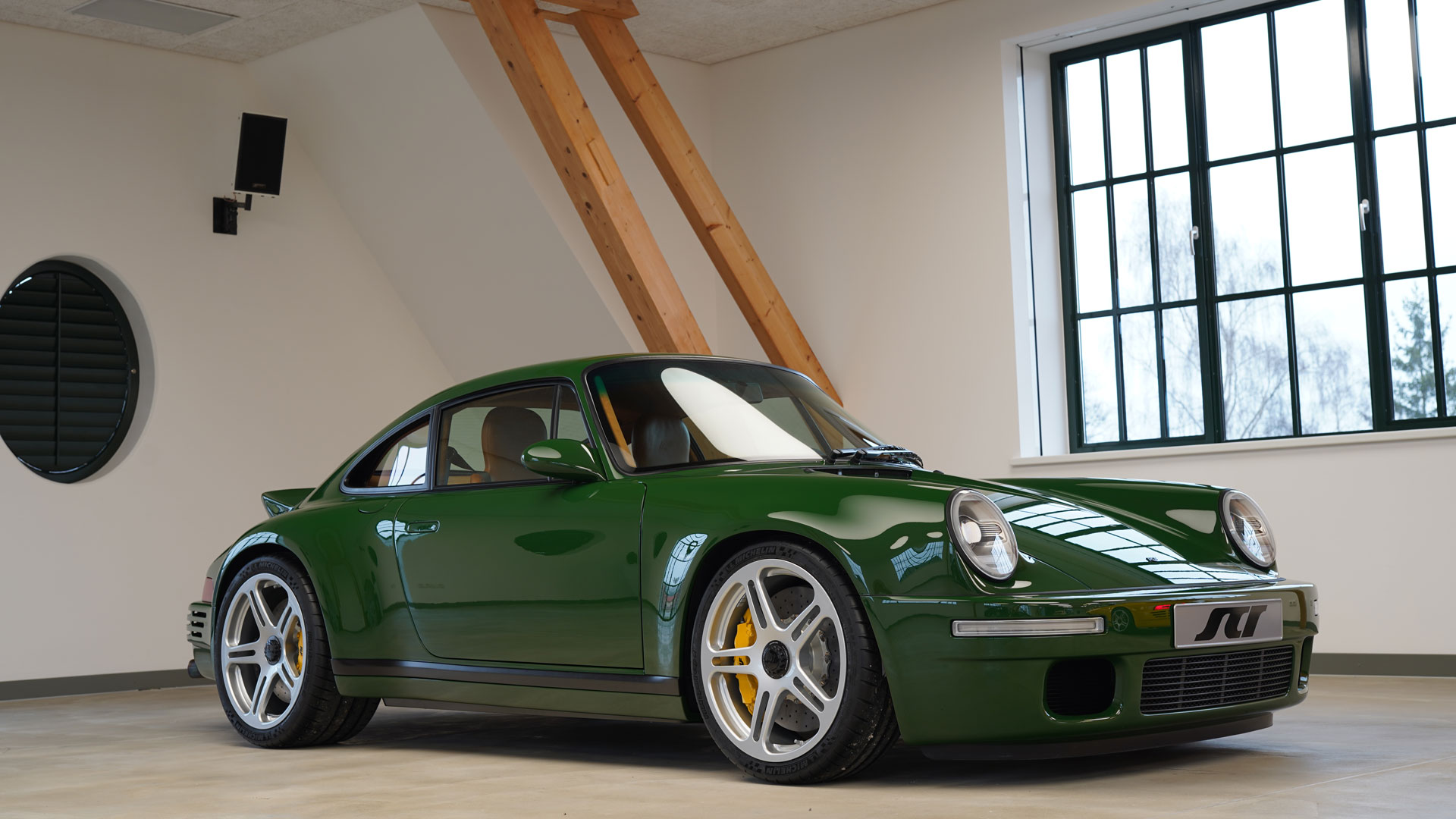
Along with revealing the Rodeo Concept, RUF has also reached an important milestone with the SCR sports car.
Paying tribute to the 1978 RUF SCR, the new version uses a 510 horsepower 4.0-liter flat-six engine and a carbon fiber chassis. The combination of less weight and more power means the SCR has a potential top speed of 199 mph.
An integrated roll cage, six-speed manual transmission, and push-rod suspension are all included on the SCR. Limited numbers will be built each year, priced from €650,000 ($745,000 or £565,000).
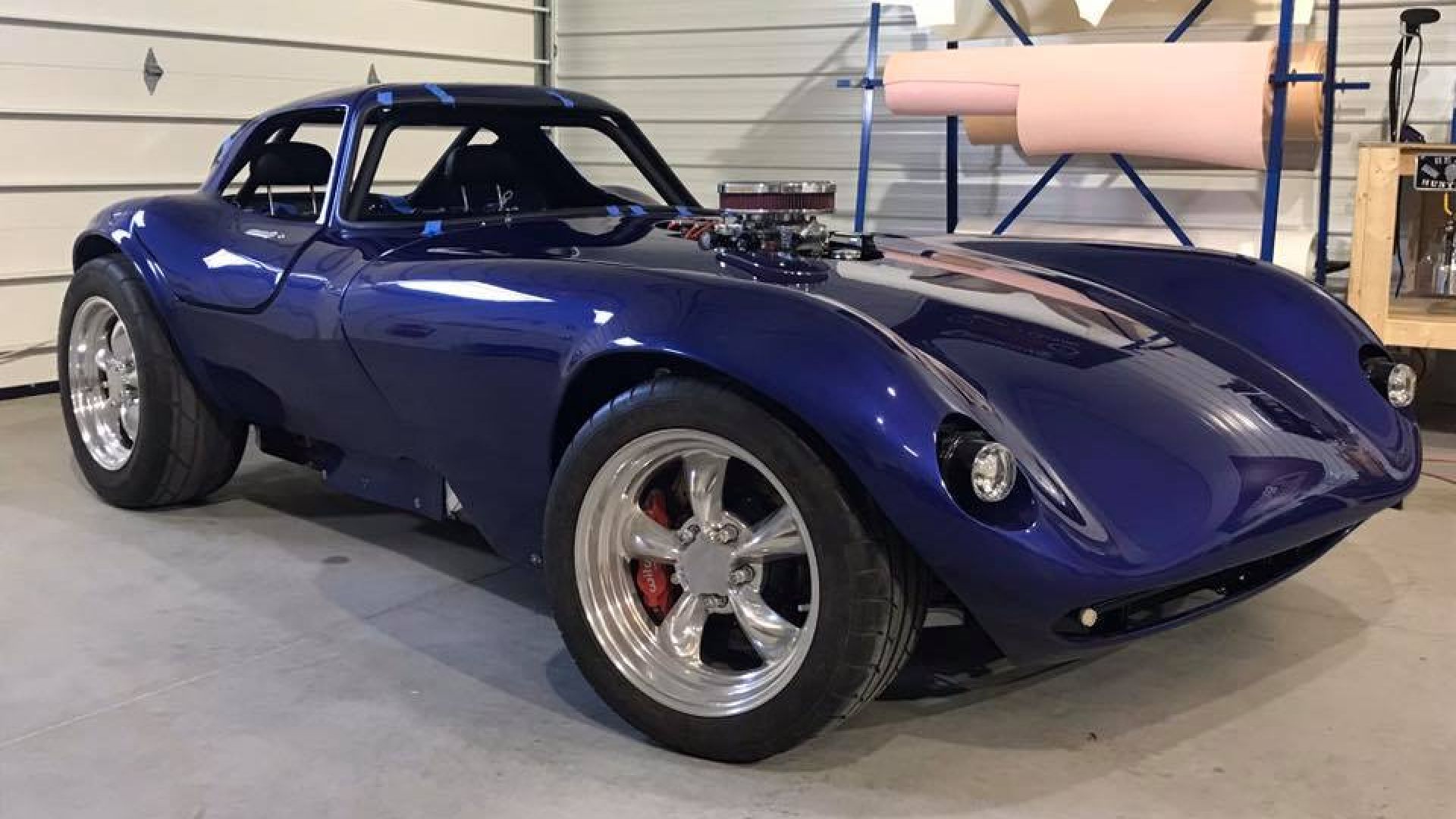
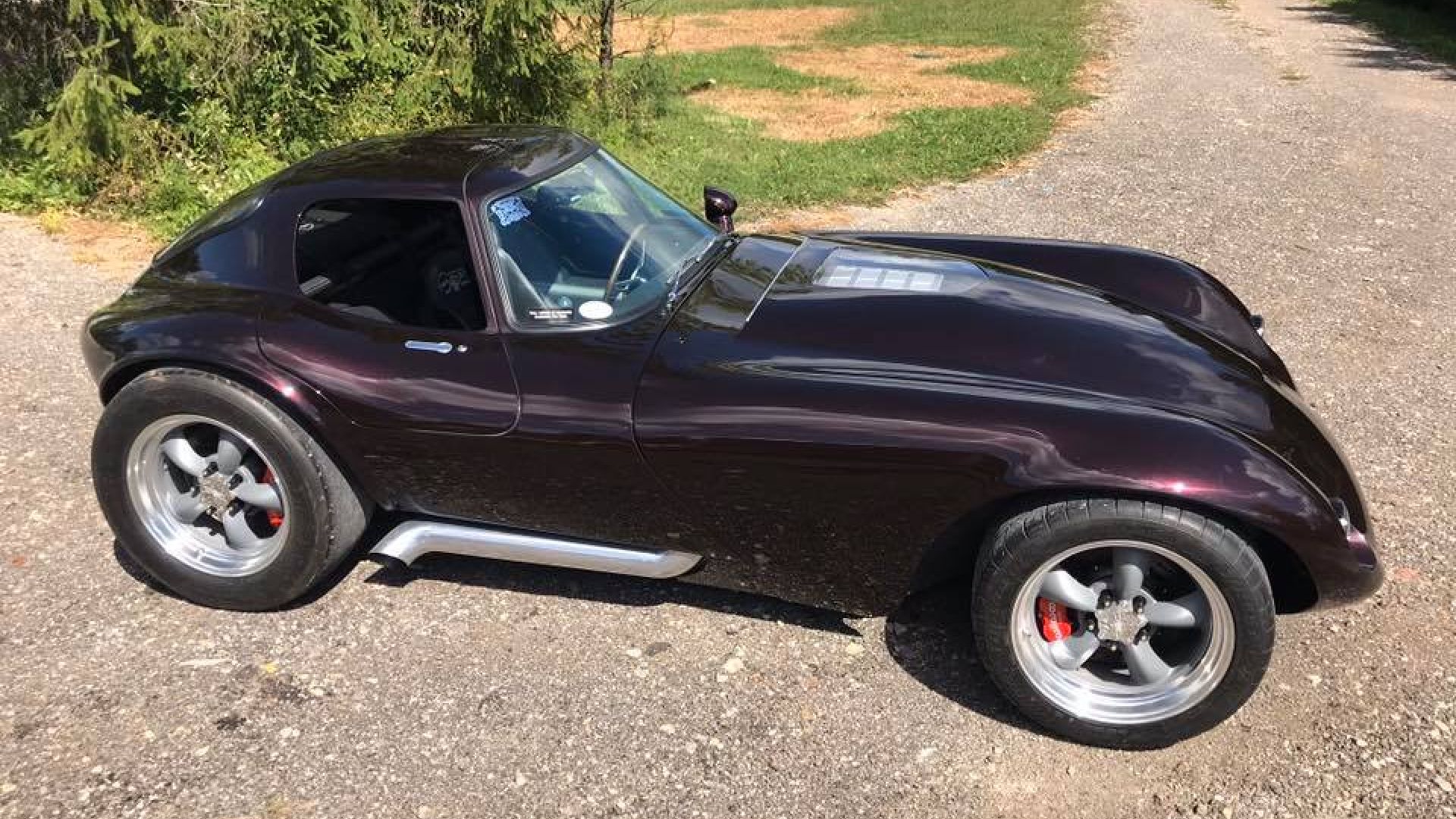
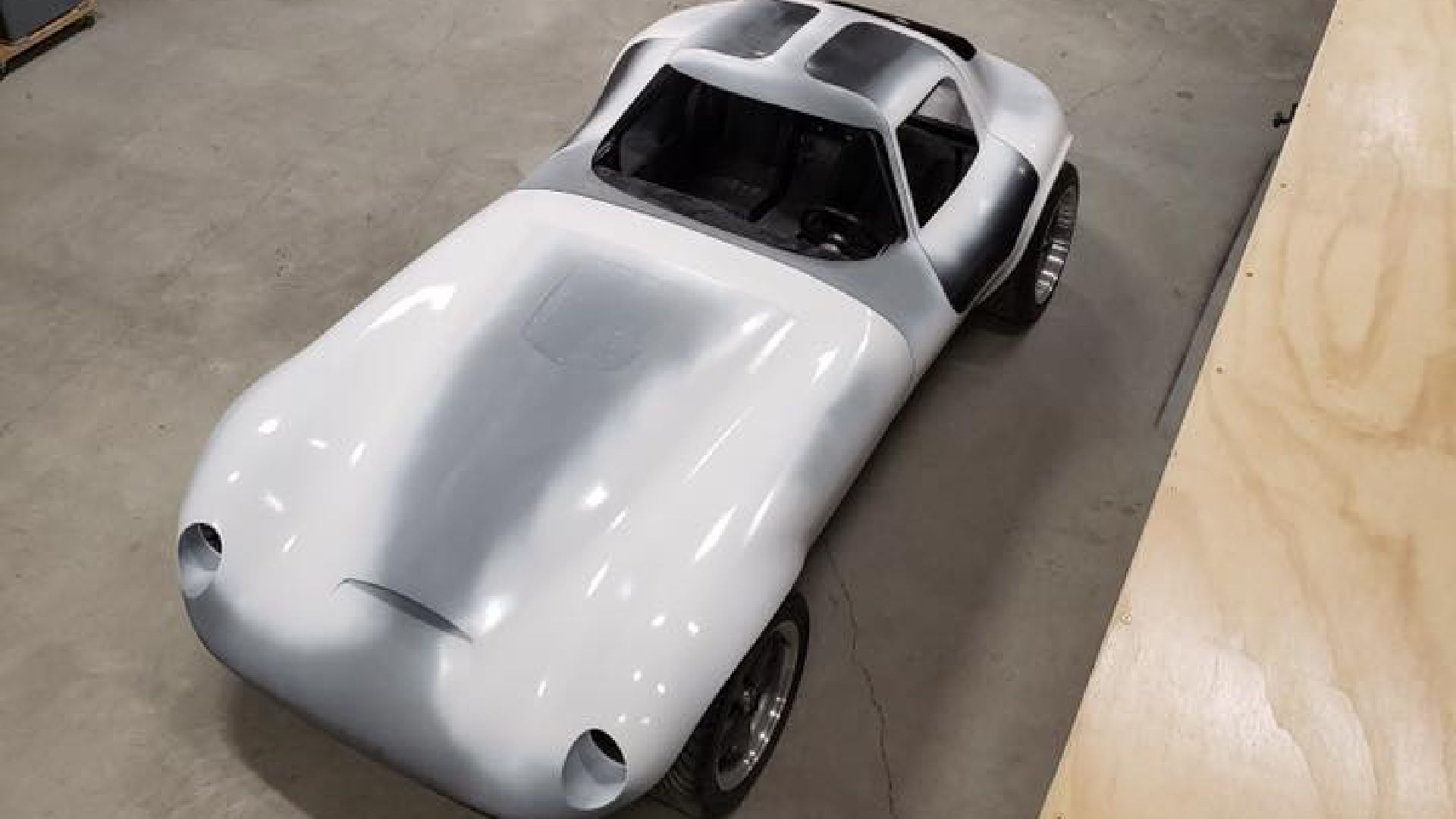
The company has gone up for sale after 15 years. Owner Craig Ruth says he wants to move on to something else.
The new owner of Cheetah could hit the ground running, with all but a shop and a fibreglass supplier ready to go. That means everything from the molds and tooling, to the contact book for suppliers, are included.
Ruth claims there’s even enough raw material in stock to build two frames.
Though it resembles something you might find in a Hot Wheels own-brand box, the Cheetah name has a near 70-year history.
It goes back to one Bill Thomas, who was keen on giving the then-new Cobras of one Carroll Shelby a bloody nose during America’s golden era of circuit sports car racing.
The principle: mate a lightweight diminutive shrink-wrapped sports car body with a Chevrolet Corvette V8.
As with the range of Cobra replicas you can still buy, the original concept for the Cheetah is almost unchanged today, save for the more powerful modern Chevy V8s.
The Cheetah has been the subject of a number of disputes over who has the rights to produce a car in that image, and use that name.
These have died down, and Cheetah Evolution is locked and ready to go.
$200,000 doesn’t seem like an awful lot for your very own sports car company. Could someone like Jay Leno or Richard Rawlins pick it up and pump in some investment?
Maybe, but commenters on Facebook that have suggested pitching it have been shot down by Ruth, saying: “I don’t chase anyone.” He’s in no rush to move it on, either, concluding that it can “sit and rot” if it doesn’t sell.
To our mind, it’s a worthy get. This 1950s underdog is the ultimate antidote to a fast-approaching electrified autonomous future. If we could, we would.
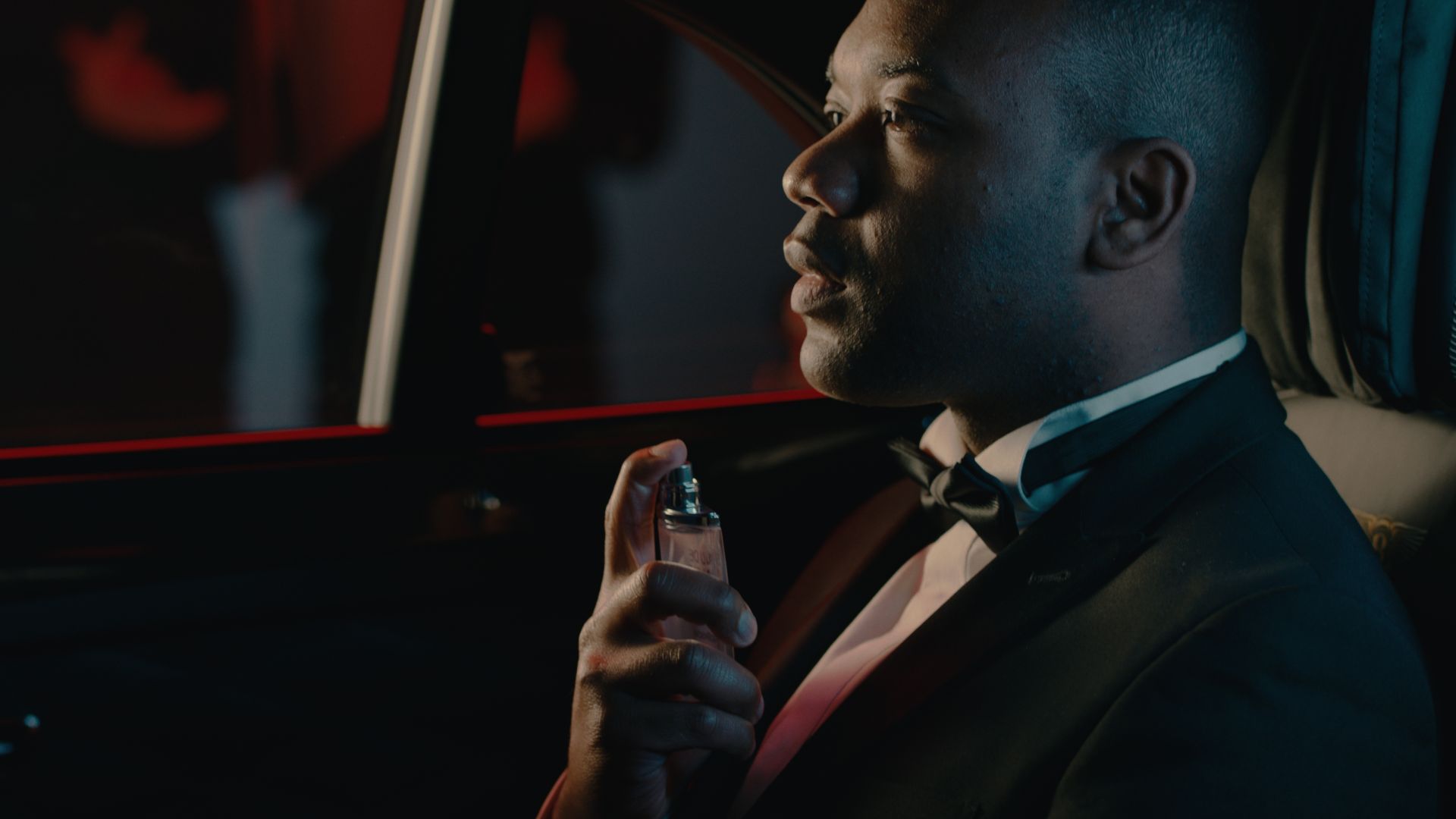
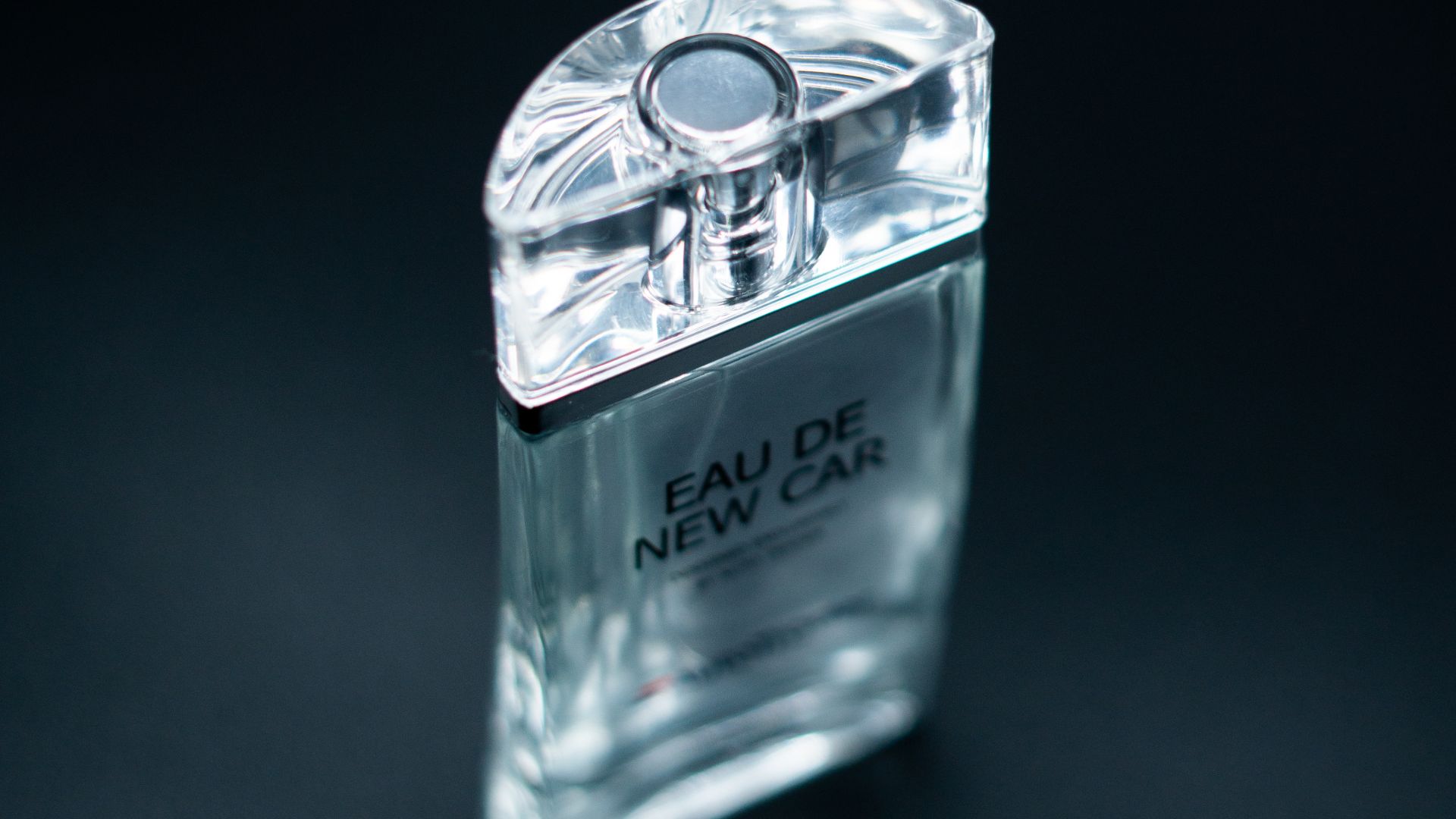
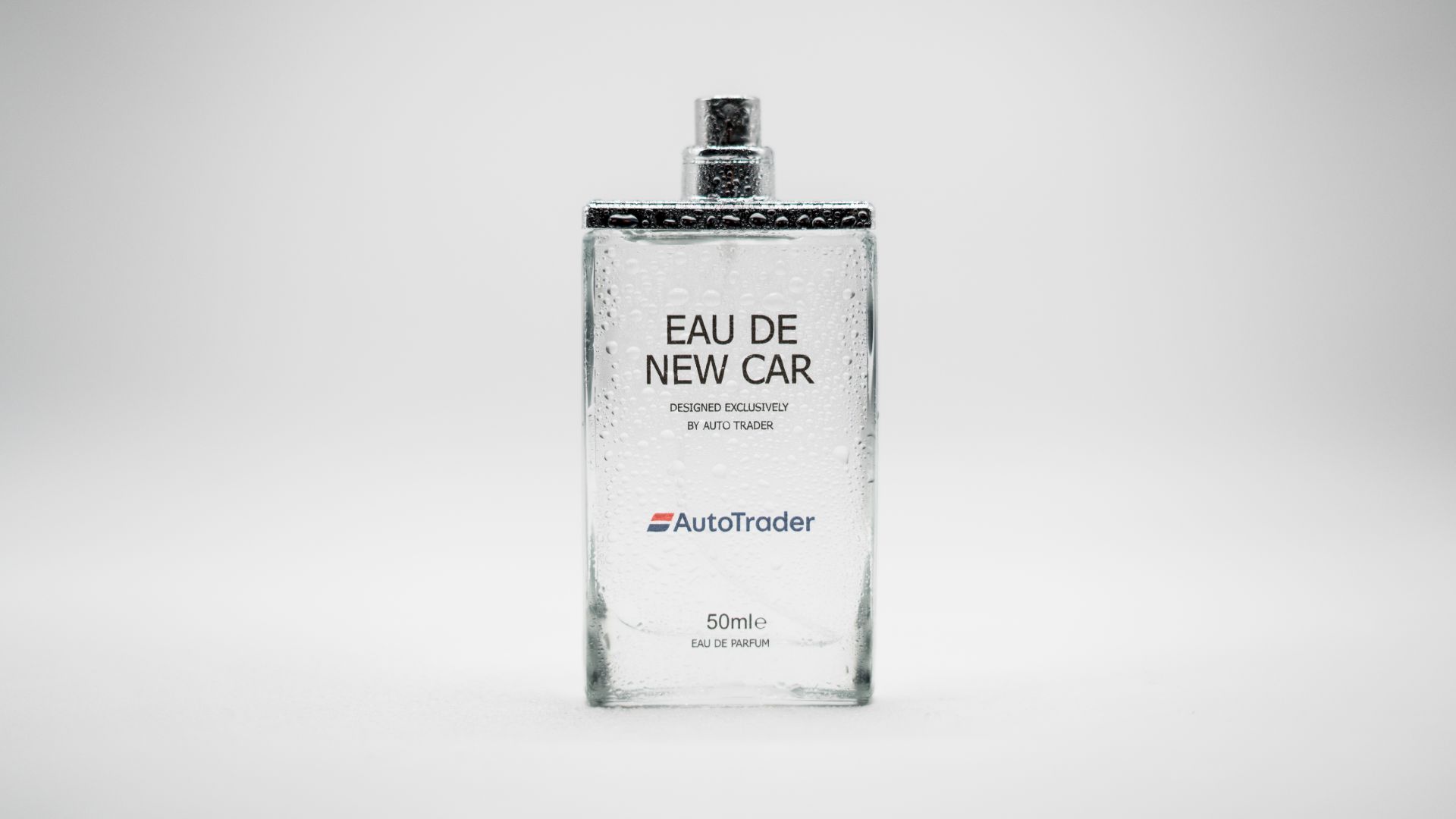
Online car sales platform Auto Trader has launched a new car fragrance. But it’s not for your car – it’s for you.
The inspiration comes after Auto Trader’s research found that the scent of a new car was most-associated with success, with 25 percent of respondents claiming as much. It also found that an association with success commanded respect in the workplace. Success is also reported to increase someone’s attractiveness.
Success equals attractiveness and respect, and the smell of new cars implies success. Which brings us to the new Auto Trader scent: Eau de New Car. It’s designed to give you the smell of a new car and, by extension, success.
The so-called ‘purifying fragrance’ will set you back £175 for a 50ml bottle, and yes, you can buy it now on Auto Trader. The scent blends smells of quality leathers and leather wax, with quality automotive carpeting, that you’d get when climbing into a new car.
“When our research found that the scent of a new car is the one which people are most likely to associate with success, we couldn’t resist creating a bespoke fragrance which brings this to life,” said Auto Trader’s Rory Reid.
The 10 cars most at risk of keyless car theft
Petrol-scented candle comes top in poll of nicest smells
“Let’s face it – the feeling you get when getting into a brand-new car is unforgettable. There’s little wonder that this is the scent we most associate with success. Why shouldn’t we be able to smell that scent and feel that way all the time?
“Eau de New Car is a scent like no other. It is your own personal spritz of success, to provide an instant, refreshing lift.”
The former Top Gear presenter has channelled his inner Jonny Depp, sans Dodge Challenger, modelling the fragrance for the video advertisement. The limited-edition fragrance is available while stocks last. We expect Auto Trader’s entry into the world of fragrances is more a dalliance than a lasting presence.
A new report reveals how much dashcams are currently contributing to dangerous driving convictions. Dashcam company Nextbase says 50 percent of the footage uploaded to its National Dashcam Safety Portal has led to a conviction.
The report, by BBC Inside Out, looked at how police are utilising this new resource.
Nextbase’s safety portal has seen footage of around 10,000 incidents uploaded, with 5,000 leading to police using footage for a prosecution. At present, 28 of the UK’s 39 police forces are signed up to the portal.
The 10 cars most at risk of keyless car theft
The report features support for dashcam tech from a number of public figures. Journalist Quentin Wilson is an advocate, saying “We need a kind of army of eyes in the 37 million cars on the roads in the UK”.
“Having dashcams there as a deterrent, where people know ‘I could be on camera, I need to behave myself’… it will save potentially hundreds of lives. So as far as I’m concerned that’s it.”
His support was echoed by radio broadcaster Jeremy Vine. “I honestly believe that cameras on bicycles are going to transform the safety of our roads both for cyclists and pedestrians and even for other car drivers,” he said.
There are dashcam detractors, however. There are worries that the influx of ‘evidence’ from thousands of drivers – and counting – all over the country, will overload police resources and manpower.
“The danger is the whole system will be saturated and the police will just give up because they won’t be able to afford the resources to sift through and work out,” said Nick Freeman, the lawyer colloquially known as ‘Mr Loophole’.
The full Inside Out report is due to air tonight (Monday 9 March), on BBC One at 7.30pm.
New technology will allow you to see what your new car looks like on your driveway before you’ve bought it.
A finance company is trialling the use of the Apple iPhone’s augmented reality (AR) feature. With it, car buyers can view 3D and true-to-scale car models parked on their driveway or in a parking space.
If you’re familiar with Pokemon Go, you’ll understand how it works.
Most car buyers will be able to access AR through platforms such as Safari and Messages without the need for specific apps. If you don’t like the way the car looks outside your house, you can try something different.
Creditplus says “it hopes that customers will be more satisfied with their choice of car”.
This is only one example of how AR is helping to shape the car industry. The likes of Mercedes-Benz, Cadillac and Genesis are introducing AR-based navigation systems to their flagship models. When in use, the guidance systems give the driver a live camera view of the road ahead.
Google is also rolling out AR walking directions in Maps.
Some car dealerships are also experimenting with AR. For example, a salesperson can use AR on an iPad to show people how options and accessories could change the look of their new car. This could include exterior colours, interior trim and alloy wheels.
Land Rover has used the tech to good effect on the Velar, while Hyundai’s sales team have used iPads to showcase the features of the latest i30. This article also outlines how AR can be utilised to help owners with everything from basic car maintenance to taking their car on a virtual track day.
The Renault Morphoz, which was due to be unveiled at the 2020 Geneva Motor Show, previews a number of autonomous and shareable features that are likely to become mainstream in the future. For example, the car accepts user profiles from smartphones, including an AR screen overlay for the driver.
 From hipster beards to cafes selling breakfast cereal: plenty of trends have started in Shoreditch. Many have ended here, too. Tonight, however, this fashionable East London enclave had once again witnessed something new. And the Czinger 21C is more than just a car. It could be a ‘hit reset’ moment for the whole industry.