Porsche has revealed a new limited-edition 911 GT3. The GT3 90 F. A. Porsche honours an important member of the founding Porsche family.
The late Ferdinand Alexander Porsche, better known as F.A. Porsche, would have turned 90 years old this month.
To mark the occasion, Porsche has created the special GT3 Touring, which pays tribute to the man responsible for shaping the iconic 911 sports car – and establishing Porsche Design.
On sale in early 2026, the 911 GT3 90 F. A. Porsche boasts an array of design features that were developed by Stuttgart’s bespoke Sonderwunsch (special wishes) department.
Unique design for 911 GT3 90
The unique exterior and interior of this special-edition GT3 were inspired by air-cooled 911 driven by Ferdinand Porsche during the 1980s.
This includes the exclusive ‘F.A. Green Metallic’ paint colour developed for the GT3, and based on the Oak Green Metallic of F. A. Porsche’s own 911.
Input from the Porsche family, including Ferdinand’s youngest son, Mark, helped to refine the celebratory green hue. A galvanised, gold-plated badge with a ‘90 F. A. Porsche’ logo is affixed to the engine cover.
Also unique to the 911 GT3 90 F. A. Porsche are Fuchs-style alloy wheels finished in satin gloss black. These feature the historic 1963 Porsche crest on their locking centre caps.
Porsche Design on the inside
For the cabin, a new ‘F.A. Grid-Weave’ fabric was created. Made up from the 911 designer’s favourite colours, the pattern is similar to that used on his jackets.
The F.A. Grid-Weave can also be found inside the glovebox and on the luggage compartment mat. It is matched with Truffle Brown Club Leather upholstery on the seat bolsters, doors and dashboard.
Atop the dashboard, the Sport Chrono dial is based on the original Chronograph 1 wrist watch, created as a one-off piece for F. A. Porsche.
There is also an open-pore walnut plywood gear knob featuring F. A. Porsche’s signature, plus a gold-plated commemorative plaque in front of the passenger.
A left-hand-drive GT3 only
Porsche has made no mechanical changes to the regular 911 GT3 with Touring Package, meaning 510hp from a naturally aspirated 4.0-litre flat-six that will rev to 9,000rpm.
Production of the 911 GT3 90 F. A. Porsche will be capped at 90 examples, with one car already earmarked for Mark Porsche himself.
The remaining 89 vehicles will be available to order from April 2026, priced at €351,211 (approximately £308,000). However, its left-hand-drive configuration means the GT3 won’t be sold officially in the UK.
Each car comes with an exclusive special version of the Chronograph 1 wristwatch, along with a Porsche Design bag finished in Truffle Brown Club leather.
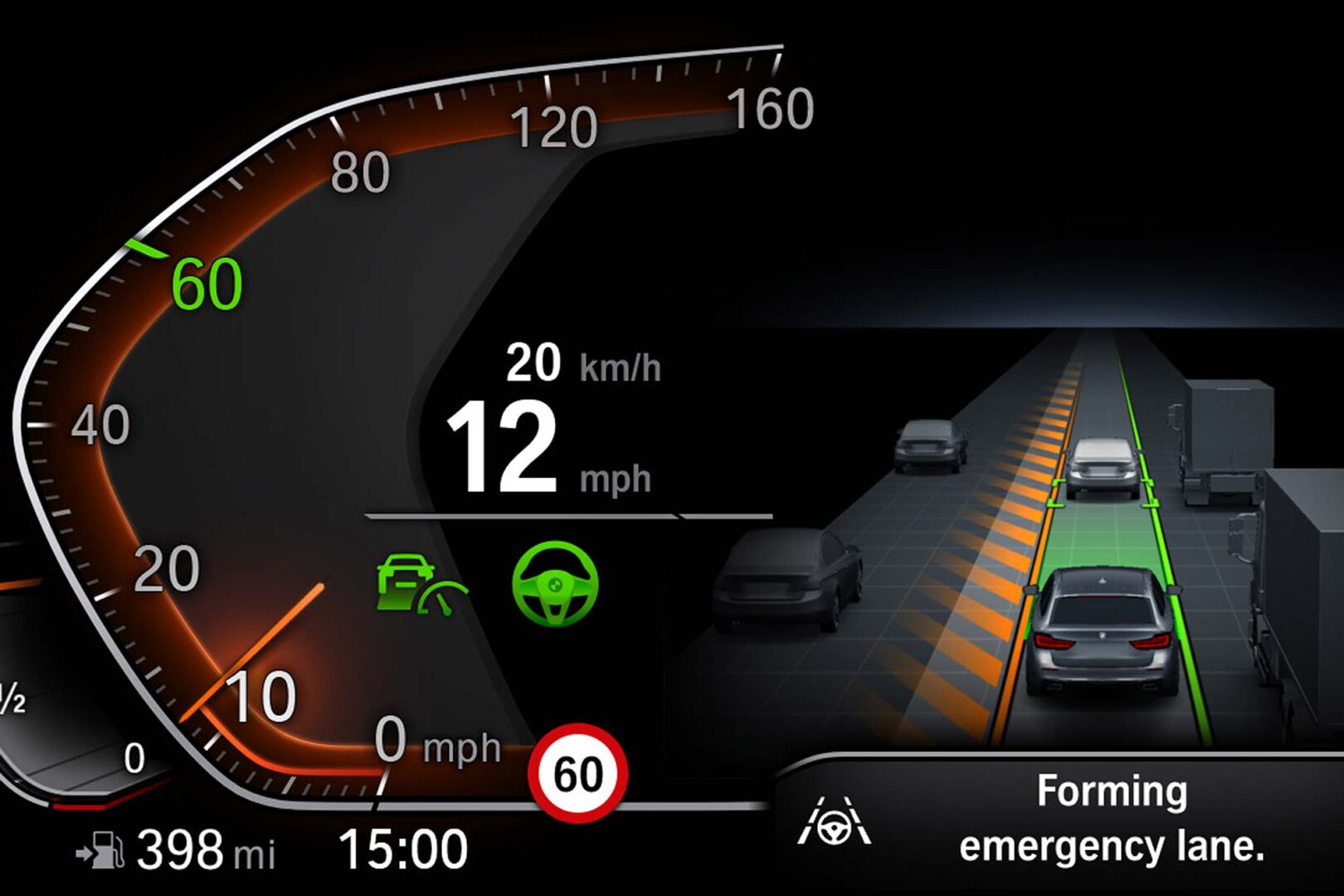
Used car dealers report customers are being increasingly put off by second-hand vehicles fitted with Advanced Driver Assistance Systems (ADAS). These can include audible speed limit alerts and lane-keep assistance.
Some 20 percent of used car buyers are actually opting for slightly older models with fewer ADAS features as a result.
A majority of motorists are unconvinced by the safety benefits of ADAS, while 18 percent say they find them actively annoying.
“New EU regulations mandated a whole host of ADAS devices from July last year and UK cars tend to be made to the same specifications,” said Paul Burgess, CEO at Startline Motor Finance, which publishes a monthly Used Car Tracker to gauge car dealer sentiment.
“The new introductions do tend to be intrusive, such as audible warnings if you exceed the speed limit and lane departure that will take control of the steering wheel.
“Much research has gone into these devices and road safety experts believe they will have a marked effect on accident rates. However, there is little question some drivers them annoying. The vast majority of dealers think this is having a direct impact on the saleability of the cars involved.”
Is ADAS education needed?
Surprisingly, the research found none of the dealers surveyed think customers will tend to turn off the ADAS features on cars they have bought.
Theories here include disable switches being buried in submenus (and the systems default to ‘on’ each time the car is started anyway), or drivers simply becoming accustomed to ADAS over time.
“It is interesting that 55 percent of dealers think motorists are unconvinced of the safety benefits,” added Burgess. “Perhaps some form of education campaign is needed to show how cars equipped in this way will actively prevent accidents.”
Winter tyres are largely misunderstood in Britain. Put simply, there doesn’t need to be snow on the ground before drivers will feel the traction, grip and safety benefits of fitting winter tyres.
According to the Met Office, the UK has 11 days of lying snow per year, on average, although this increases 23 days a year in Scotland. If you happen to live in the Highlands, a set of winter tyres is the best way to stay mobile.
Winter tyres can be beneficial throughout the cold season as they are designed for temperatures below 7ºC, making them well suited to a typical British winter. In Birmingham, for example, average temperatures in December range from 2-7ºC: prime conditions for winter tyres.
So, cutting to the chase, you should consider fitting winter tyres if you want to drive as safely as possible between now and the spring. Read on to find out more.
Most cars are equipped with summer tyres, or ‘normal’ tyres, which are designed primarily for temperatures above 7ºC. A winter tyre differs in three ways. It has:
A softer tread compound designed to remain grippy and flexible at low temperatures
A tread pattern that collects snow and slush, because nothing sticks to snow better than snow
A number of sipes, designed to ‘bite’ into the snow
The British Tyre Manufacturers’ Association says a car fitted with winter tyres, braking from 62mph on a cold and wet road, will out-brake a car fitted with normal tyres by around five metres – the length of a Range Rover. On snowy roads at 30mph, the difference is 11 metres.
Are winter tyres expensive?
It’s certainly true that winter tyres are slightly more expensive than normal tyres. You also need to factor in the cost of second set of wheels – simple steel wheels would be perfect, rather than fancy alloy rims. But you should look at winter tyres as an investment, rather than a secondary expense.
For a start, your summer tyres will be left unused during the winter months, so you’re effectively doubling their life (assuming you store them in the correct manner). There’s also the cost associated with keeping moving when other vehicles may be left stranded, not to mention the almost priceless value of road safety.
As an added bonus, if you use steel wheels with your winter tyres, your expensive alloys will be saved from the ravages of salt, grit and wet weather.
Are winter tyres mandatory in the UK?
Anyone who has driven through Europe during the skiing season will know that winter tyres are mandatory in some countries. These include Austria, Norway and, in some conditions, Germany.
There are no such laws in the UK, leaving you free to make an informed decision. The further north you are, the more likely you are to benefit from winter tyres. For example, the Cairngorms in Scotland, where snow or sleet falls on 76.2 days of the year, is prime winter tyre territory.
When should you fit winter tyres?
Most tyre manufacturers recommend fitting winter tyres in October and removing them again in March. Their use should be driven by the temperature, though, so if the country is braced for a cold spell in April, you can leave your winter tyres on for a few extra weeks.
Murphy’s law dictates that temperatures will plunge a week after you’ve refitted your car’s summer tyres, of course…
Can you use winter tyres in summer?
The benefits of using winter tyres will diminish once temperatures start to rise, so switching to summer tyres is highly recommended.
According to Michelin, braking distance from 50mph to standstill between 11ºC to 26ºC on wet roads will be four metres shorter with summer tyres than on winter rubber.
On a dry road, braking from 31mph to zero, a car riding on summer tyres will pull up 1.5 metres shorter than the same car on winters.
Should you tell your insurer about winter tyres?
The Association of British Insurers (ABI) says the majority of insurance providers recognise that winter tyres have a ‘positive impact’ on road safety. As such, their fitment shouldn’t affect your annual premium.
However, some insurers may require you to contact them before making the switch, so check your policy details for further information. The ABI has created a winter tyres ‘commitment’, which should prove useful when you’re considering the insurance implications.
Are there any drawbacks to winter tyres?
In theory, there shouldn’t be any drawbacks associated with winter tyres, but there are a few things to consider.
Firstly, if you live in an urban area and your daily commute takes in roads that are well maintained and routinely gritted when the temperatures drop, you’ll receive less benefit from winter tyres than drivers in rural regions.
Some drivers who have used winter tyres complain of increased road noise and a decrease in fuel economy, but you should check the reviews of each individual tyre for further details.
Other factors may include a potentially lower speed rating for a set of winter tyres, the fact that you have to run winters on all four wheels, and finding the space for storing a spare set of wheels during the summer or winter.
Also, it’s worth noting that, no matter how good your tyres are, or how skilful you are behind the wheel, you’ll still have to queue behind everybody else if the conditions turn treacherous and every car on summer tyres grinds to a halt.
What are the alternatives to winter tyres?
A four-wheel-drive vehicle isn’t a viable alternative to a set of winter tyres. While it will provide better traction on ice and snow, it delivers no advantages when stopping or cornering. That said, a 4×4 riding on a set of winter tyres is arguably the ultimate cold-weather weapon.
For a cheaper alternative to winter tyres, you could consider a pair of snow socks. While they’re not a direct substitute, they work by covering the driven wheels in stretchy, grippy fabric. They could mean the difference between getting home or being left by the roadside in the snow.
A more old-school solution would be a set of snow chains, but the road must be covered in a layer of ice or snow before they can be used. Using them in other conditions risks damaging the road and could result in a fine.
Finally, you could consider a set of all-weather tyres (often called all-season tyres), which are designed to cover most conditions, providing a good balance of wet and dry performance. In theory, this should make them ideally suited to the British climate and able to tackle any snow you might encounter.
Winter tyres: a final thought
Winter tyres hit the headlines way back in 2010 when much of Britain experienced a harsh winter and most of the country seemed to grind to a halt. Demand for winter tyres far outstripped supply as motorists were alerted to their benefits.
Today, this is where some misconceptions stem from, with many consumers wrongly associating winter tyres with snow. Far better, we think to call them ‘cold weather’ tyres.
The winter of 2025-2026 is forecast to be warmer than usual, but average UK temperatures will likely still be below 7ºC. If you’re keen to fit winter tyres, it makes sense to act soon – particularly as they are a niche product, so fitters may not have your car’s size available in stock.
These are difficult times to be a car company. Cheap Chinese imports, costly US tariffs and the UK Government’s muddled approach to policymaking have all slowed sales and impacted the bottom line. And that’s before you factor in cyber attacks, semiconductor shortages, the cost of living crisis and the reluctance of many motorists to embrace EVs.
If the business outlook feels bleak, however, that isn’t the case from a product perspective. In other words, 2025 has been a great year for new cars. From an old-school V12 Aston Martin to a new-fangled electric Alpine, we’ve enjoyed a rich variety of driving experiences. Life as a motoring journalist is never dull, and we continue to be thankful for that.
What follows isn’t a definitive list of the best cars of 2025. If it was, we’d have to fill it with dull-but-worthy crossover SUVs that do everything tolerably well. Instead, this is a round-up, in no particular order, of the cars we enjoyed driving most in 2025. Some of them are flawed, impractical or expensive – several are all three – but they showcase the automotive industry at its diverse and brilliant best. Here’s to more of the same in 2026.
Lamborghini Temerario
The Lamborghini Huracan was a tough act to follow, but the new Temerario grabs the bull by the horns. Out goes the Huracan’s 5.2-litre naturally aspirated V10 and in comes a 4.0-litre twin-turbocharged V8 with three electric motors. The result is a ‘baby’ Lambo that musters a hypercar-baiting 920hp. What’s not to like?
Well, it offers more bandwidth than the Huracan – including the ability to drive in silent EV mode – but the Temerario’s engine isn’t as characterful lower down the rev range. And opportunities to wring out the full 10,000rpm are rare on the road. Even so, this is a very evocative and exciting modern supercar, and a worthy rival for the McLaren Artura and Ferrari 296 GTB.
We said: ‘With enough space to explore the upper reaches of its rev range, the Temerario comes alive. The linear rush of acceleration gains a frenzied urgency beyond 7,000rpm, accompanied by a hard-edged metallic shriek. Changing up so late feels unnatural at first – I was instinctively pulling the right paddle at about 8,000rpm – but hold your nerve and the Temerario is as unhinged as you’d hope.’
What do you get if you cross an SUV with a rally car? The answer is something like the Octa: a V8-powered Land Rover Defender that’s almost as rapid over rough terrain as it is around a racetrack. Yes, it costs twice as much as a regular Defender 110 (£148,045 to join the long waiting list), but there really is nothing else like it. The combination of ‘6D Dynamics’ air suspension and hydraulically interlinked triple-valve dampers, plus the small matter of 635hp, make the Octa feel invincible.
There aren’t many places in Britain where you can drive fast off-road, but the Octa is great fun on tarmac as well. It shrugs off potholes that would force any sports car to slow down, changing direction with an eagerness that belies its size and weight. Best of all, it still offers the comfort and practicality you’d expect from a modern Land Rover. The original Defender wouldn’t see it for dust.
We said: ‘We have seen super SUVs before, of course, but nothing that rivals the Octa for sheer breadth of capability. You might argue that only a small percentage of owners will drive this car anywhere near its limits, particularly in the UK – and you’d be right. But the bombastic Defender Octa rides roughshod over dull logic. It’s impossible not to enjoy it.’
Rather than attempting to cut weight and complexity, Hyundai boldly harnessed technology to make an electric SUV fun to drive. And against the odds, it succeeded. The Ioniq 5 can digitally recreate the sounds and sensations of a tuned four-cylinder engine with a dual-clutch gearbox, making it feel like a fast and feisty hot hatchback. You can rev it out to 8,000rpm, the power reaching a crescendo before the artificial thump of an upshift. Fail to change gear and you even feel the lurch of an ignition cut as the Hyundai bounces off its rev limiter. Or pretends to.
If all that sounds a bit contrived, it works surprisingly well in practice. The Ioniq 5 is the most entertaining EV we’ve driven: a sensible family SUV one minute, a 650hp B-road blaster the next. It’s larger than it looks, and pricey at £65,010. However, compared to premium-badged alternatives such as the Porsche Macan EV, the Hyundai offers a lot more for your money.
We said: ‘It turns in eagerly, helped by torque vectoring across the front axle, then you can get the back end rotating under power. The brakes inspire confidence and traction is immense, the four-wheel drive and instant electric torque conspiring to slingshot you out of corners.’
The Vanquish coupe was one of our favourite cars of 2024, so it’s no surprise to see the drop-top Vanquish Volante make the 2025 list. Aston Martin’s front-engined flagship isn’t flawless, but its seductive styling and sheer bombast rapidly overwhelm any sense of objectivity. Besides, we should relish such cars before they are legislated out of existence.
The Vanquish’s thumping heart is a 5.2-litre twin-turbocharged V12 that sends all its 835 horses to the rear wheels. It can be an effortless cruiser or a blood-and-thunder supercar, depending on how you drive it. Removing the roof hasn’t dented the Volante’s dynamics, either – as we discovered on a cross-country blast across North Wales. Click the link below for the full story.
We said: ‘Its demeanour is burly and aggressive, like an over-engined muscle car, but there’s a real deftness to its damping and steering response. It feels like an Aston Martin Vantage turned up to 11 – or perhaps 12 – and that’s very much a good thing.’
Think of the Chevrolet Corvette and you probably imagine a classic all-American sports car with a big-capacity V8 under its hood. Sorry, bonnet. The eighth-generation ‘C8’ model flips this on its head, though, with a mid-engined layout for the first time in the Corvette’s history. It’s also the first time the ’Vette has been officially sold in right-hand drive.
Three varieties of C8 Corvette are available in the UK, but the hybrid E-Ray is the sweet spot of the range. It combines a traditional 482hp 6.2-litre V8 with a 162hp electric motor that drives the front wheels. It might upset some Chevrolet purists, but electrified power and all-wheel drive have transformed the E-Ray into a true modern supercar: one that stands up to comparison with European rivals.
We said: ‘Hit the open road and the Corvette’s magnetically adjustable dampers start doing their thing, giving the E-Ray a staggeringly compliant ride when Tour mode is selected from the rotary controller. Engage Sport mode, or even Track mode, and the Magnetic Ride system still gamely tries to soak up the worst of British tarmac.’
Hey, it’s not only six-figure supercars that won our affections in 2025. The Kia EV3 is a well-designed, versatile and attractively priced EV that – provided you can charge it at home – could slot seamlessly into your life. It starts from £33,005 and standard equipment includes front/rear parking sensors, a reversing camera and heated seats. Buyers also get a choice of two batteries: 58kWh or 81kWh, delivering a range of up to 270 or 375 miles respectively.
On the road, the EV3 is comfortable, easygoing and quiet. It feels spacious inside and the touchscreen media system works well. There’s also a useful 460-litre boot, plus the peace of mind that comes from Kia’s seven-year or 100,000-mile warranty. If you’re looking for a sensibly-sized family vehicle, add this one to your shortlist.
We said: ‘Forget the Volkswagen ID.3: this feels like the true ‘Golf’ for the electric age. What do we mean by that? Simply that the EV3 is an accessible and thoroughly well-rounded vehicle that could slot effortlessly into many (maybe even most?) of our lives. With family cars now increasingly SUV-shaped, it has arguably become the benchmark to beat.’
We first saw the Evija prototype in 2019, but six years passed before we finally got behind the wheel. During that time, the electric hypercar went from white hot to white elephant, while anything with an old-school V12 seemed to sell out almost instantly. Nonetheless, the £2.4 million Lotus provided an experience we won’t ever forget.
For starters, it looks incredible, thanks to a ‘porous’ body that was sculpted by aerodynamics. It also sounds like no other EV we’ve driven: a high-pitched whine that seems to crackle with kinetic energy. On track at Hethel, it delivered the plentiful feedback and deft body control you’d expect of a Lotus, but everything about the Evija is overwhelmed by the tsunami of its four-motor, 2,039hp powertrain. For sheer accelerative force, no road-legal V12 can match it.
We said: ‘At lower speeds, the electric motors are limited by traction, but more torque is fed forwards as you go faster, so the dizzying, disorientating rush just keeps on building. Throttle response and acceleration at three-figure speeds are otherworldly: the Lotus seems to laugh in the face of physics.’
The latest 911 GT3 (the 992.2 for Porsche nerds) is an evolution of the car launched in 2021. It looks broadly the same and there’s no extra power, with many of the latest modifications focused on meeting emissions legislation. However, there was little wrong with this motorsport-inspired 911 to start with. And a 510hp naturally aspirated flat-six that howls to 9,000rpm is something worth celebrating in 2025.
You can have your GT3 with the fixed rear wing seen here, or order the Touring Package for a more subtle look. There’s also a choice of manual or paddle-shift PDK gearboxes, plus the option of rear seats for the first time. No matter how you spec it, though, the GT3 is sublime to drive: exhilarating on the road and exceptional around a track. The new GTS and Turbo S are better all-rounders, but this 911 – and its wild GT3 RS sibling – deliver the most memorable moments.
We said: ‘With a less-than-ludicrous 510hp, you can wring out the revs more often, revelling in the progressive power delivery and guttural six-cylinder howl. The trolls of social media will point out that their Teslas go quicker, but I promise you: drive a 911 GT3 and you will never once want for more. Or want to stop.’
If your budget stretches further than a GT3, the £595,000 GT Hypercar elevates the Porsche 911 into, well, hypercar territory. Built in Northamptonshire by motorsport specialist RML, it’s based on a last-generation (991.2) Turbo S, with a fully carbon fibre body and active aerodynamics. Tuning company Litchfield has boosted the 3.9-litre flat-six to a stonking 920hp: enough for 0-62mph in just 2.4 seconds.
This is the second car to wear an RML badge, following the Ferrari-inspired Short Wheelbase of 2022, and it’s as flawlessly finished as anything built in Stuttgart. In some ways, it picks up the baton dropped by Porsche’s now-abandoned Mission X electric hypercar, delivering enough oomph to outgun a 911 Turbo S, combined with the aero and chassis mods to outpace a GT3 RS on-track. It’s also easier to drive than you might expect, although the noisy Inconel exhaust and absence of luggage space limit its use for longer road-trips.
We said: ‘If you turned up at a track day in a GT Hypercar, little this side of a fully-fledged GT4 racer could get close. Yet there is much to enjoy on a British B-road, too. Its electric power steering is lucid and traction is plentiful, at least on dry tarmac.’
Mini has gone big on electrification, with EVs now a core part of the British-based, BMW-owned brand’s range. This includes the fourth-generation Mini hatchback, which offers customers the choice of electric or petrol power.
With 218hp and 243lb ft of torque, the electric Cooper SE is just as fast as its petrol stablemate. Interior space may be compact, but there is no doubt Mini has nailed the premium experience, with upmarket materials and a large central OLED touchscreen. It all makes for a feelgood driving experience, however fast you happen to be going.
We said: ‘The various driving profiles peak with ‘Go-Kart Mode’, complete with sci-fi noises as you push the accelerator, plus digitised ‘exhaust’ pops and bangs when you lift off. It is genuinely laugh-out-loud hilarious, and proof that electric power is no barrier to driving enjoyment.’
Hang on, the headline said ‘new cars’? Yet that’s exactly what this is: a brand new Mk1 Escort built from scratch with continuation chassis numbers and Ford Motor Company’s official blessing. Based on the Alan Mann Racing Escort that won the British Saloon Car Championship in 1968, it’s your £300,000 ticket to competing in historic motorsport. And the most exciting fast Ford in years, too.
Power comes from a 1.8-litre Lotus twin-cam engine with twin Weber 45 carbs and a straight-cut manual gearbox. A dry weight of just 795kg means 205hp is more than enough to get this classic racer sliding around. You steer it with the throttle, dancing from one corner to the next while grinning from ear to ear. The best bit? Boreham Motorworks is launching a road-legal version of its reborn Mk1 Escort in 2026.
We said: ‘The rest all comes down to feel. Whether it’s drifting around Brands Hatch in the BSCC or sliding through Welsh forests in the Lombard RAC Rally, the original Escort is celebrated for its ability to go sideways – and finding that balance at the limit of grip is key to driving it quickly.’
Aside from its starring role in the remake of The Running Man, Alpine’s A290 made headlines in 2025 by proving the venerable French hot hatchback has a future. Essentially a sportier version of the Renault 5 E-Tech, it uses a relatively small 52kWh battery to save weight, and serves up 220hp in GTS guise (as tested).
With a 0-62mph time of 6.4 seconds and a 106mph maximum, this isn’t a Megane RS-style firecracker. Yet it’s fast enough to have fun, with agile handling and a flowing gait that will encourage you to take the twisty route home. An official 226-mile range equates to less than 200 miles in the real world, though, so the chic and cheerful A290 won’t suit everyone.
We said: ‘Prod the D-for-drive button (borrowed from the A110) and the A290 feels instantly up for it. With 221lb ft going through its front tyres, this GTS version can break traction if you’re hard on the throttle out of corners. Yet it mostly feels smooth and eager, with enough punch to make swift progress.’
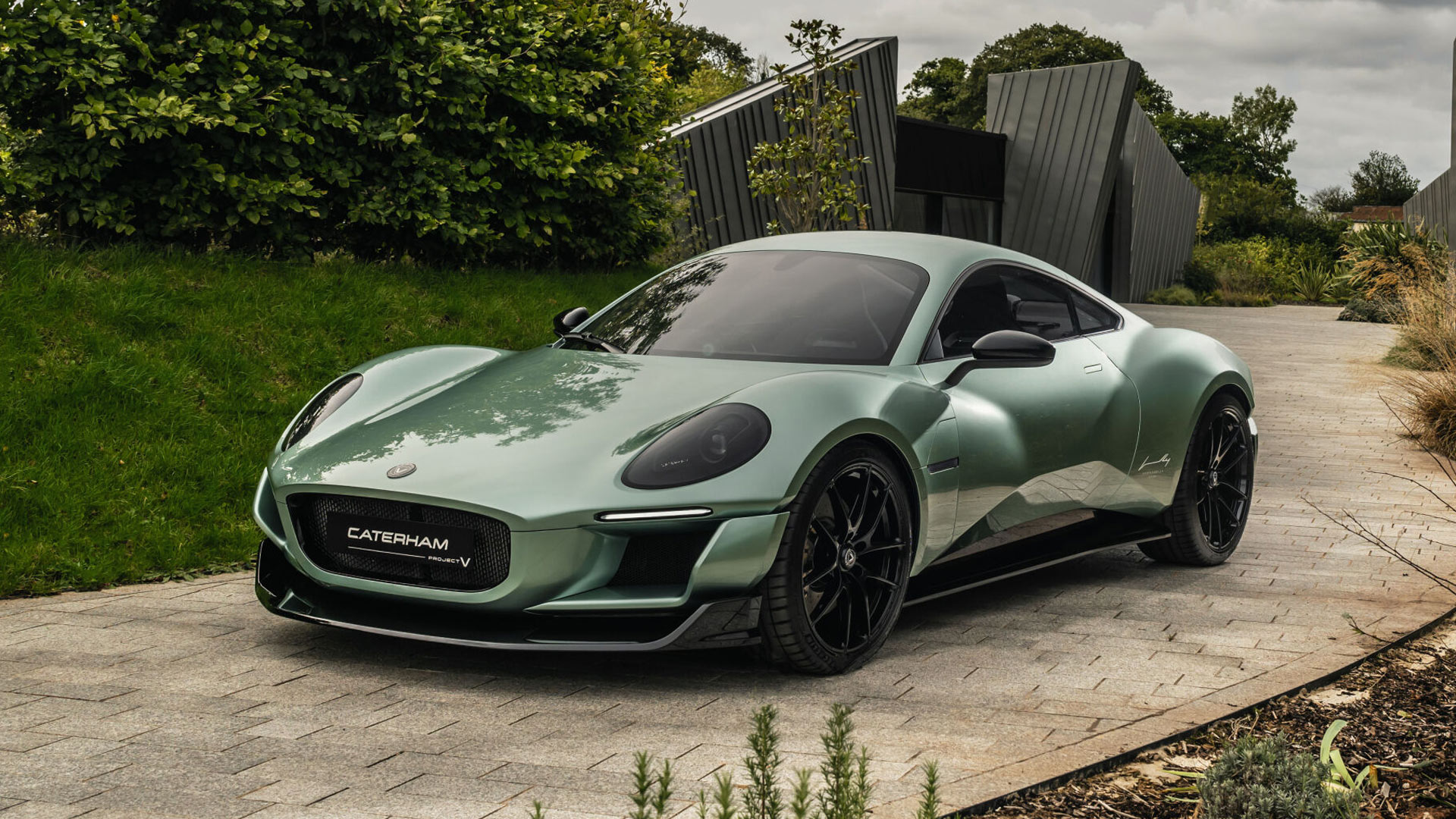
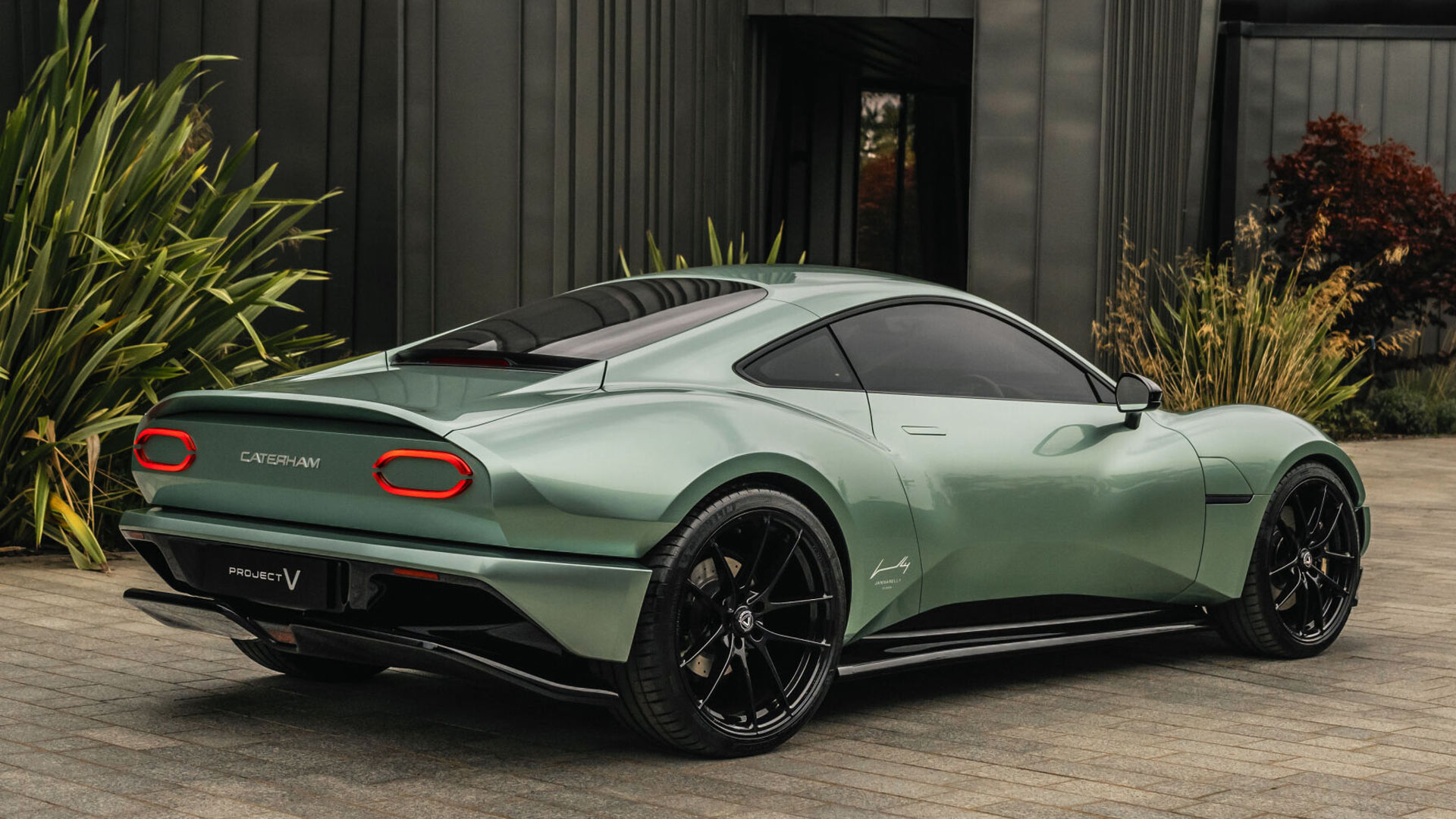
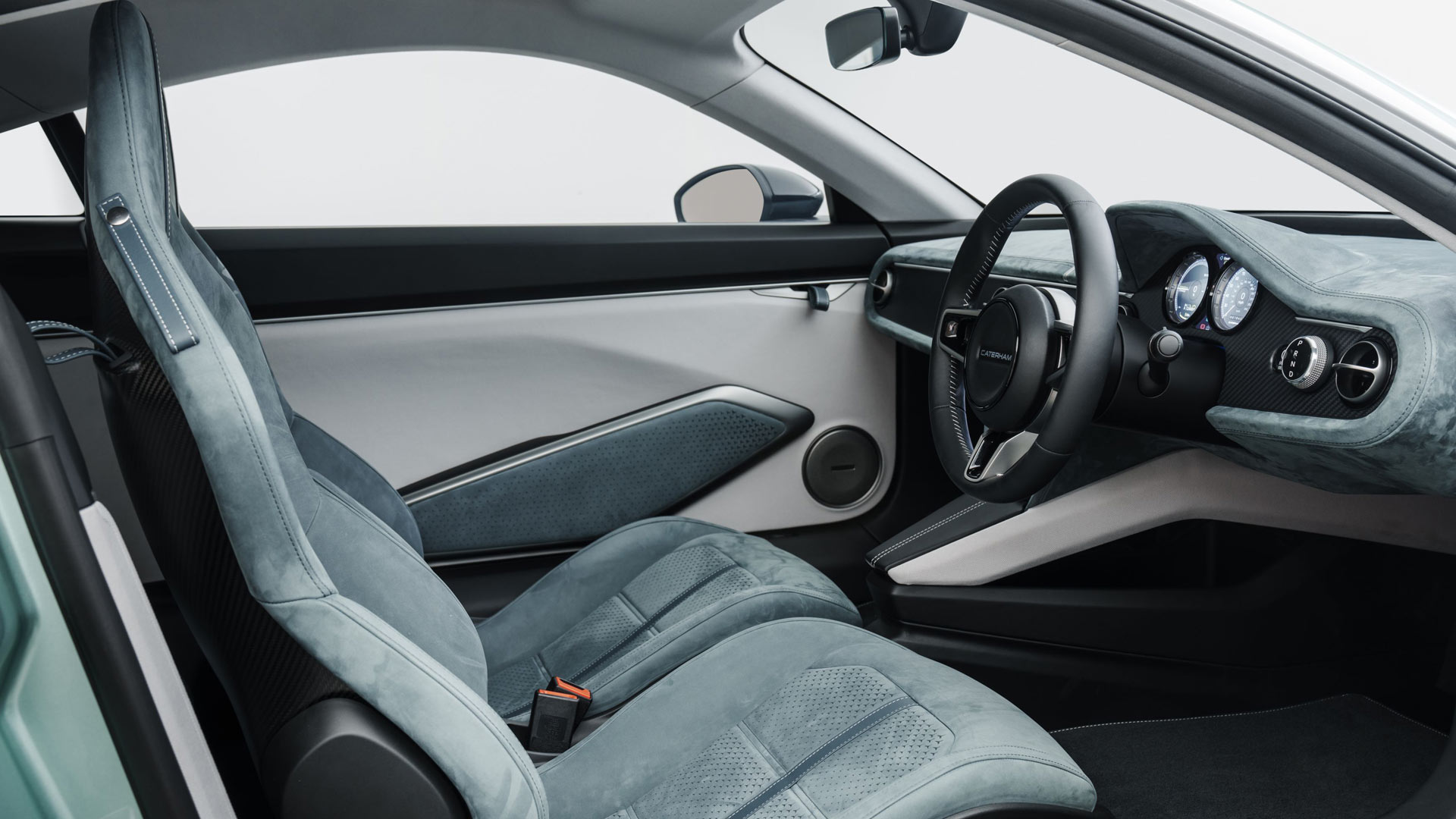
The first working prototype of the radical Caterham Project V sports car will be shown in Japan next month.
Set to be the British marque’s first electric vehicle, the Caterham Project V prototype makes its public debut on 9 January 2026 at the Tokyo Auto Salon.
In addition, the original Project V show car will make its first appearance in the United States as part of the 2026 CES event in Las Vegas.
Japanese firm VT Holdings’ ownership of Caterham means a debut in Tokyo is important to the Project V programme. In addition, Yamaha Motor is responsible for creating the prototype’s electric e-axle.
Still a Caterham at heart
Despite electrification representing a dramatic shift from Caterham’s history, the company wants Project V to deliver the same qualities of lightweight construction and driver engagement.
The initial Project V concept, revealed at the 2023 Goodwood Festival of Speed, used a 272hp rear-mounted electric motor. Performance of 0-62mph in 4.5 seconds is being targeted.
A 55kWh battery pack is intended to give the sports car a range of 249 miles. It should also be able to charge from 20 to 80 percent in just 15 minutes.
Development and testing of the prototype Project V is said to be well underway, with more intensive work planned for 2026.
This will include evaluating the immersion-cooled battery packs, said to give better heat dissipation and a greater level of safety.
Kazuho Takahashi, CEO of Caterham Cars, said: “This is a significant milestone in the development of Project V, with our prototype making its public debut at the Tokyo Auto Salon.
“This next step enables us to begin a comprehensive vehicle testing programme in collaboration with our technical partners. Our objective remains unchanged: to realise our vision of a pure electric sports car that embodies the unmistakable DNA of a Caterham.”
Genesis is celebrating its 10th anniversary as a standalone luxury marque, and has marked the occasion in some style.
Earlier this year, the Korean car manufacturer launched the GV60 Magma – the first model from its new performance sub-brand.
Joining the Genesis GV60 Magma and other models in Le Castellet, France, was this attention-grabbing G90 Wingback concept.
Developed from the flagship Genesis G90 saloon sold in North America and South Korea, the Wingback estate could be an exciting alternative to another same-again SUV.
Dividing the ‘multiplication of SUVs‘
Luc Donckerwolke, chief designer at Hyundai and Genesis, explained: “At the moment there is, let’s say, a multiplication of SUVs. And this fast growth will create a saturation.
“This is when other typologies of cars are going to become attractive again. This is why I strongly believe in not having a typology monoculture.”
The Peruvian-born designer says the Wingback is a “bridge between Magma and the One of One bespoke” build programme.
The high-performance shooting brake version of the Genesis G90 could thus become a reality, given that it uses an unmodified version of the 5.1-metre-long platform underpinning the saloon.
The question now is how much would Genesis customers be prepared to pay for a limited-edition hot estate, which could rival the BMW M5 Touring and Audi RS6 Avant.
‘Iron fist in a velvet glove’
When shaping the G90 Wingback Concept, Donckerwolke took inspiration from its previous Magma performance teasers.
This means a broad ‘Crest’ front grille, distinctive ‘Two-Line’ headlights, and the trademark ‘Parabolic Line’ that sweeps along the side profile.
Flared wheelarches housing 22-inch alloy wheels, a widened front bumper with deeper air intakes, and a pair of spoilers on the new tailgate are all unique to the Wingback Concept.
On the inside, suede-like quilted Chamude fabric is used extensively on the sports seats, steering wheel and dashboard. The idea, says Luc Donckerwolke, is to create an impression “of the iron fist in a velvet glove”.
Will the new G90 Wingback be sold?
No performance data has been released for the G90 Wingback Concept, although the regular saloon features a twin-turbocharged 3.5-litre V6 engine.
Genesis is said to already be working on a Magma version of the four-door G90, however, which should offer considerably more than the current 415hp.
The luxury marque has revealed a host of concept models over the past decade, covering everything from convertibles to mid-engined supercars. There is currently no timeline as to when, or even if, the Genesis G90 Wingback might enter limited production.
Nonetheless, with the reveal of the production GV60 Magma, and even an entry into the hypercar class of the World Endurance Championship in 2026, building a bespoke performance estate seems like a logical move for Genesis. Let’s hope so.
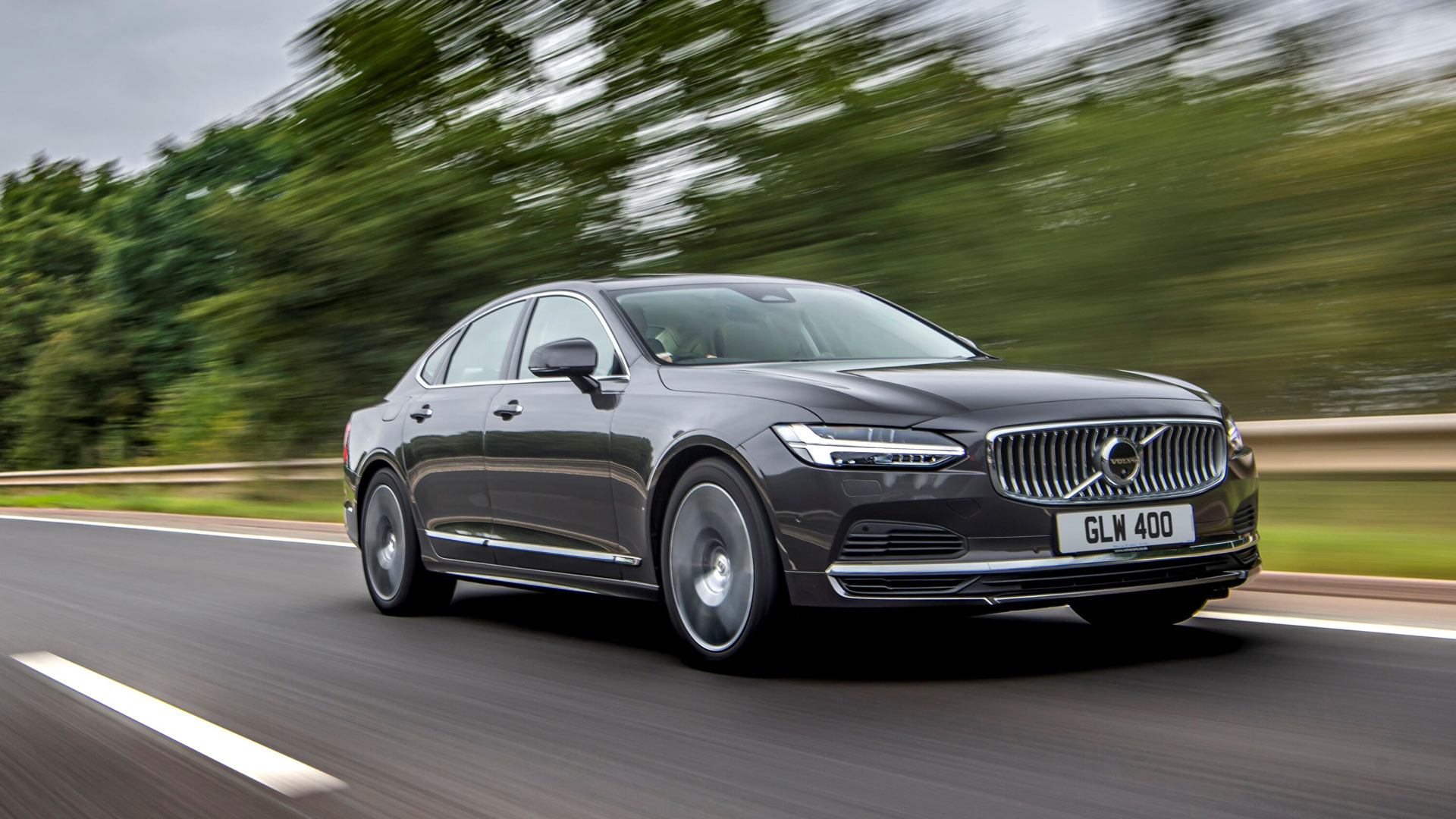
New analysis has revealed the number of UK motorists who were caught driving at more than 112mph during the past year.
The study was undertaken by Volvo, making use of Freedom of Information (FOI) data supplied by 32 separate British police forces.
Covering a time period between September 2024 and August 2025, some 1,500 drivers were recorded exceeding 112mph.
This means more than four drivers every day were detected. The speed measurements came from in-car police recording, fixed speed cameras, mobile speed camera vans and average speed cameras.
A 160mph speeding ticket
Northamptonshire Police had the most instances of drivers exceeding 112mph, with 291 speeding offences recorded. The county has both the M1 and M45 motorways passing through it.
Staffordshire Police were next, with 196 instances, followed by Merseyside Police, who recorded 117 offences beyond 112mph.
Interestingly, both Cleveland Police and Dyfed-Powys Police had no drivers breaking the 112mph barrier.
Cheshire Constabulary recorded the highest speed of all from the FOI data, with one driver clocked at 160mph. Northamptonshire was just behind, with 159mph noted as the worst case of speeding.
Volvo cars fitted with speed limiters
In total, Volvo’s FOI research found 3,082,339 instances of speeding were recorded during the last 12 months.
The choice of 112mph as a starting point for Volvo’s analysis is no coincidence. Since 2020, every new car sold by the Swedish marque has been limited to 112mph – part of its aim to have no person killed or seriously injured in a Volvo.
Nicole Melillo Shaw, managing director of Volvo Car UK, said: “At Volvo, safety in and around your car is our number one priority. With a record number of licensed vehicles on the road in the UK – more than 42 million in 2025 – road safety has never been more important.
“The fact a UK driver is caught travelling in excess of 112mph every six hours highlights the importance and relevance of our speed limiter technology. It is a feature we build in by design, and the findings of our research suggest it is the right approach to take.”
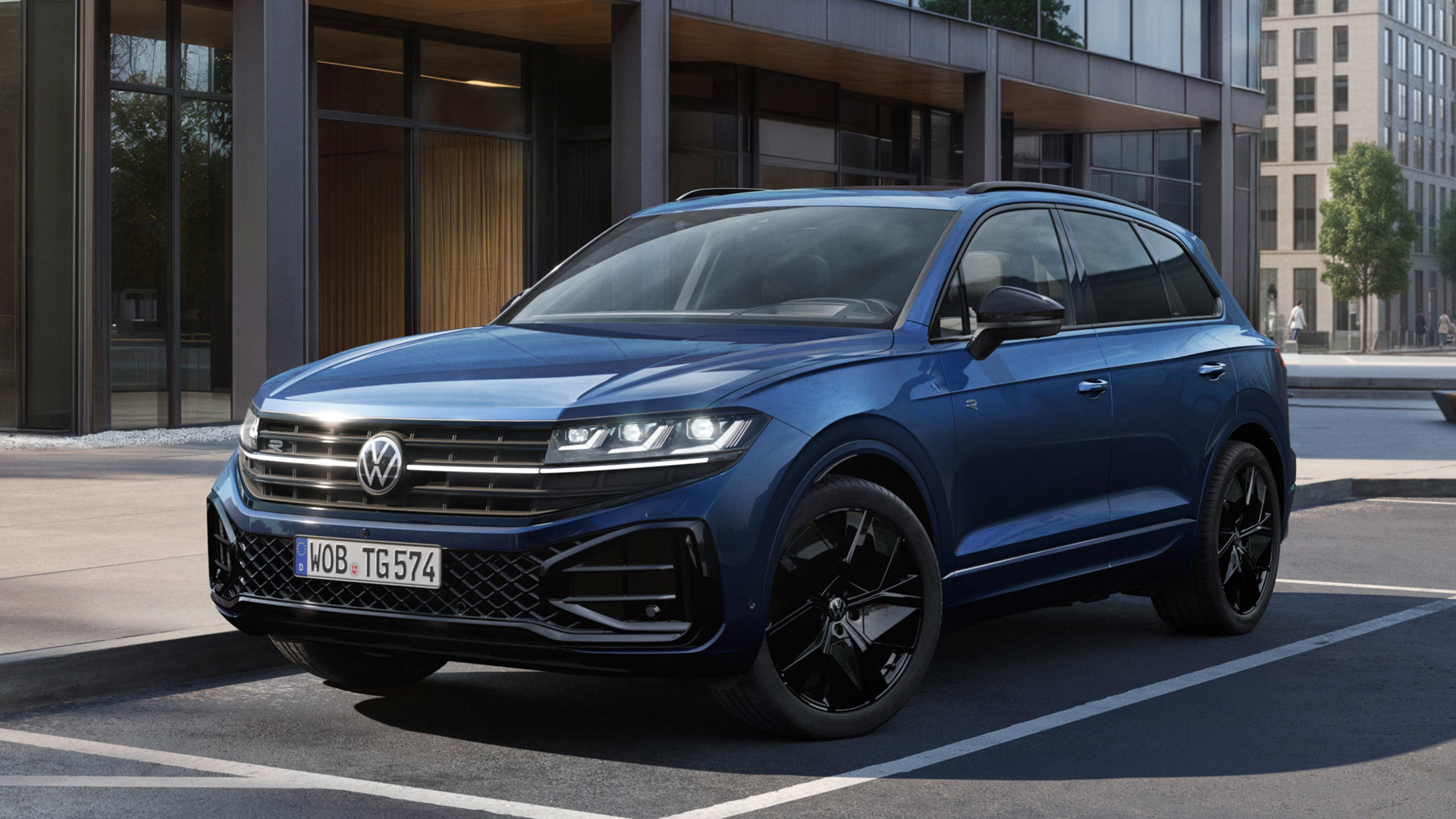
Volkswagen has announced prices for the run-out Touareg Final Edition, ahead of sales beginning on 11 December 2025.
Production of the German marque’s flagship luxury SUV will end for UK customers in 2027, bringing a 25-year model lineage to a close.
Two versions of the Touareg Final Edition will be offered, acting as replacements for the existing Black Edition and Touareg R models.
With the Touareg approaching the twilight years of its life, Volkswagen will offer the Elegance trim level from stock only.
More equipment, less money
The regular Touareg Final Edition comes equipped with a 286hp 3.0-litre V6 diesel engine. This is combined with 4Motion all-wheel drive and an eight-speed automatic gearbox.
Metallic paint, a power-folding tow bar, power closing for all doors, and a larger 90-litre fuel tank are all part of the standard equipment.
On the inside, ‘Varenna’ leather upholstery is included, along with stainless steel illuminated door sill protectors and interior ambient lighting with 30 colour options. Special ‘Final Edition’ badging is the finishing touch.
Prices for the Touareg Final Edition will start at £72,535, making it £1,990 cheaper than the current Black Edition model.
Showcasing three generations of Touareg
For more performance, the Touareg R Final Edition uses a 462hp 3.0-litre TSI petrol plug-in hybrid powertrain.
Given the strong level of standard spec, the £81,455 Touareg R Final Edition gains only metallic paint, a tow bar, power-closing doors and bespoke badges.
“The Touareg has always been a true flagship for Volkswagen, and the new Final Edition versions are the perfect celebration of its many years of success,” said Rod McLeod, director of Volkswagen UK.
“They combine the usual Touareg elegance with punchy performance and generous features. In short, they showcase everything that’s been so great about the Touareg since its launch almost a quarter of a century ago.”
The Toyota Supra may be coming to the end of its life, but the Japanese marque already has a new supercar waiting in the wings.
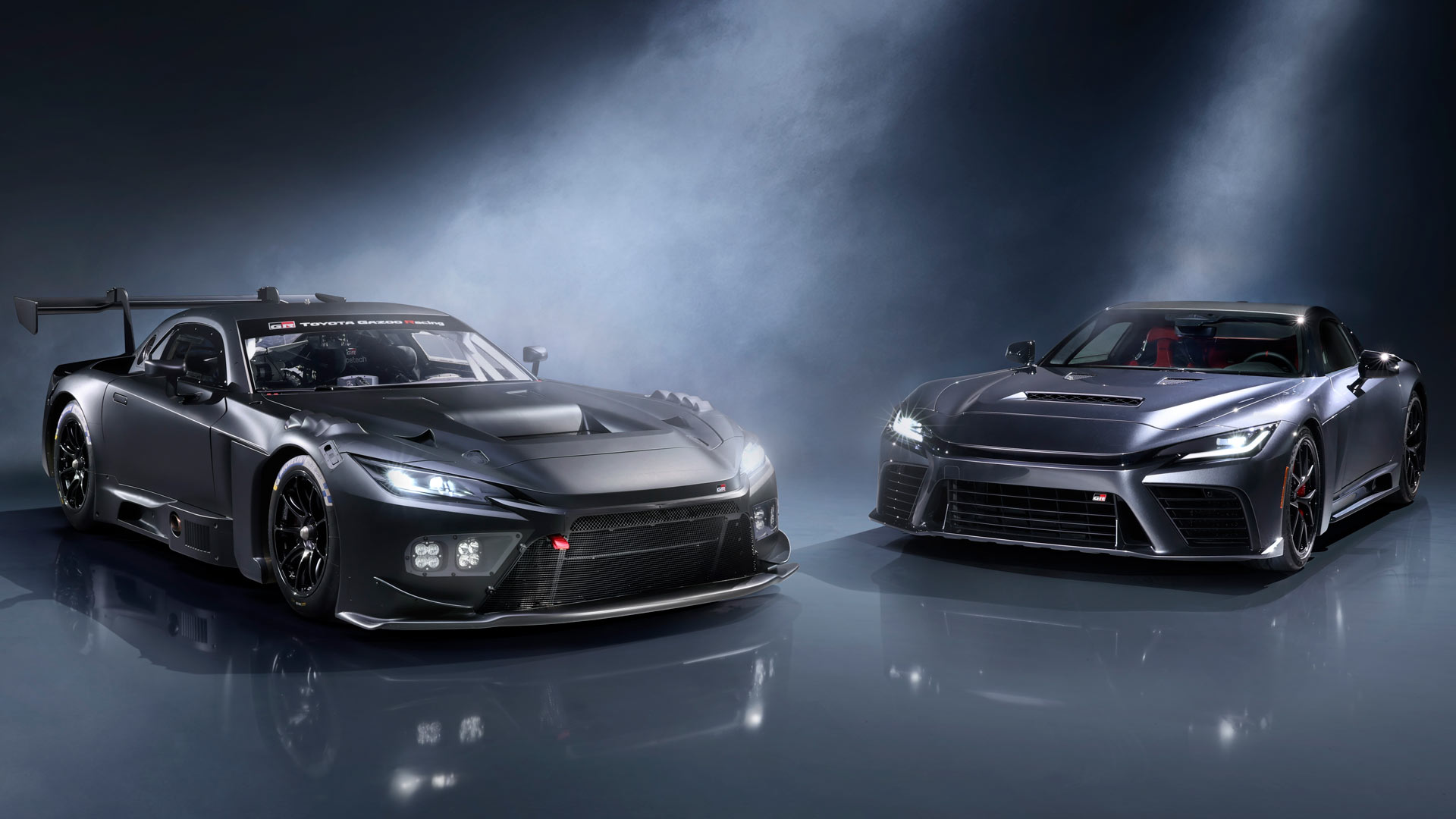
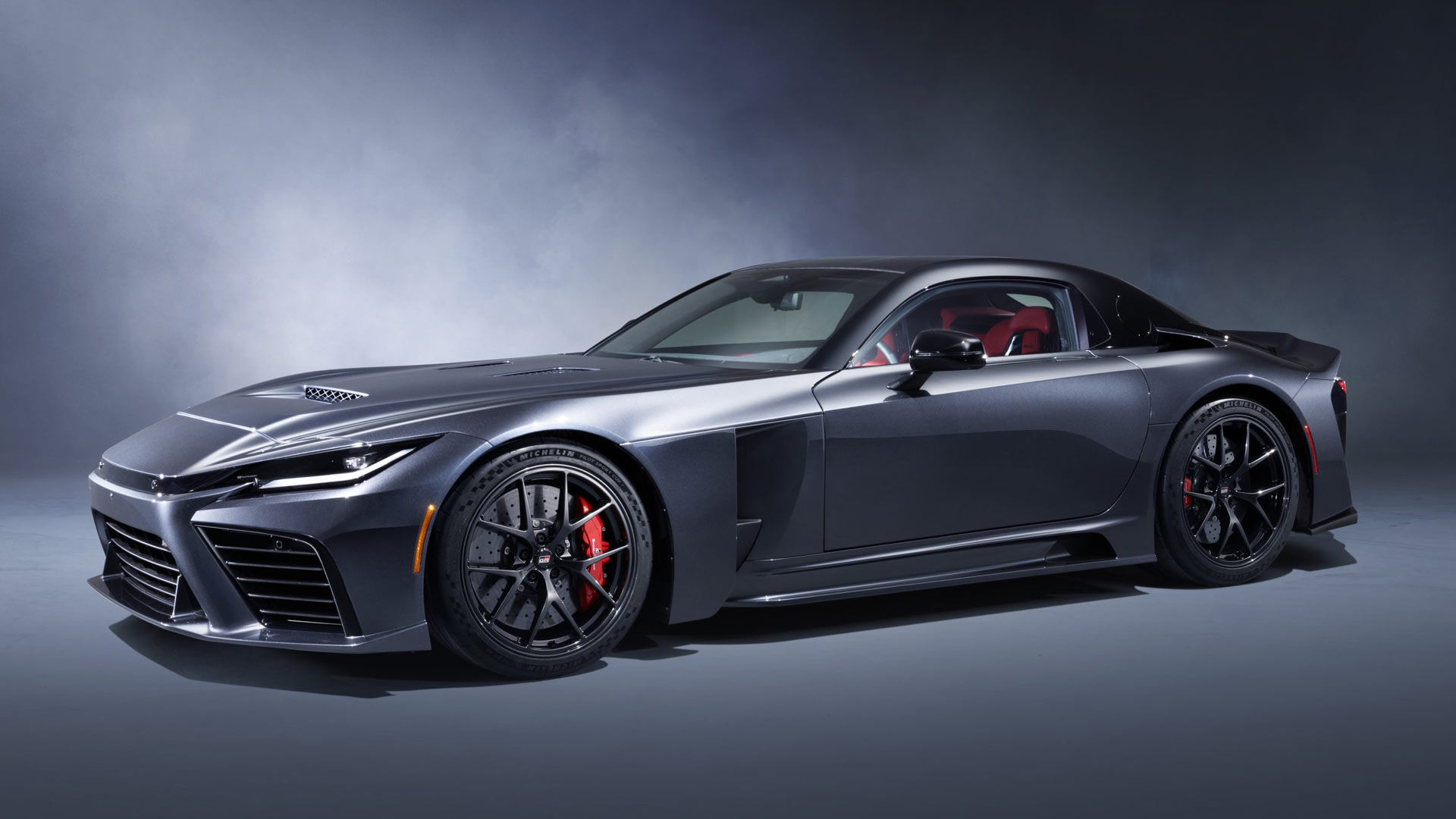
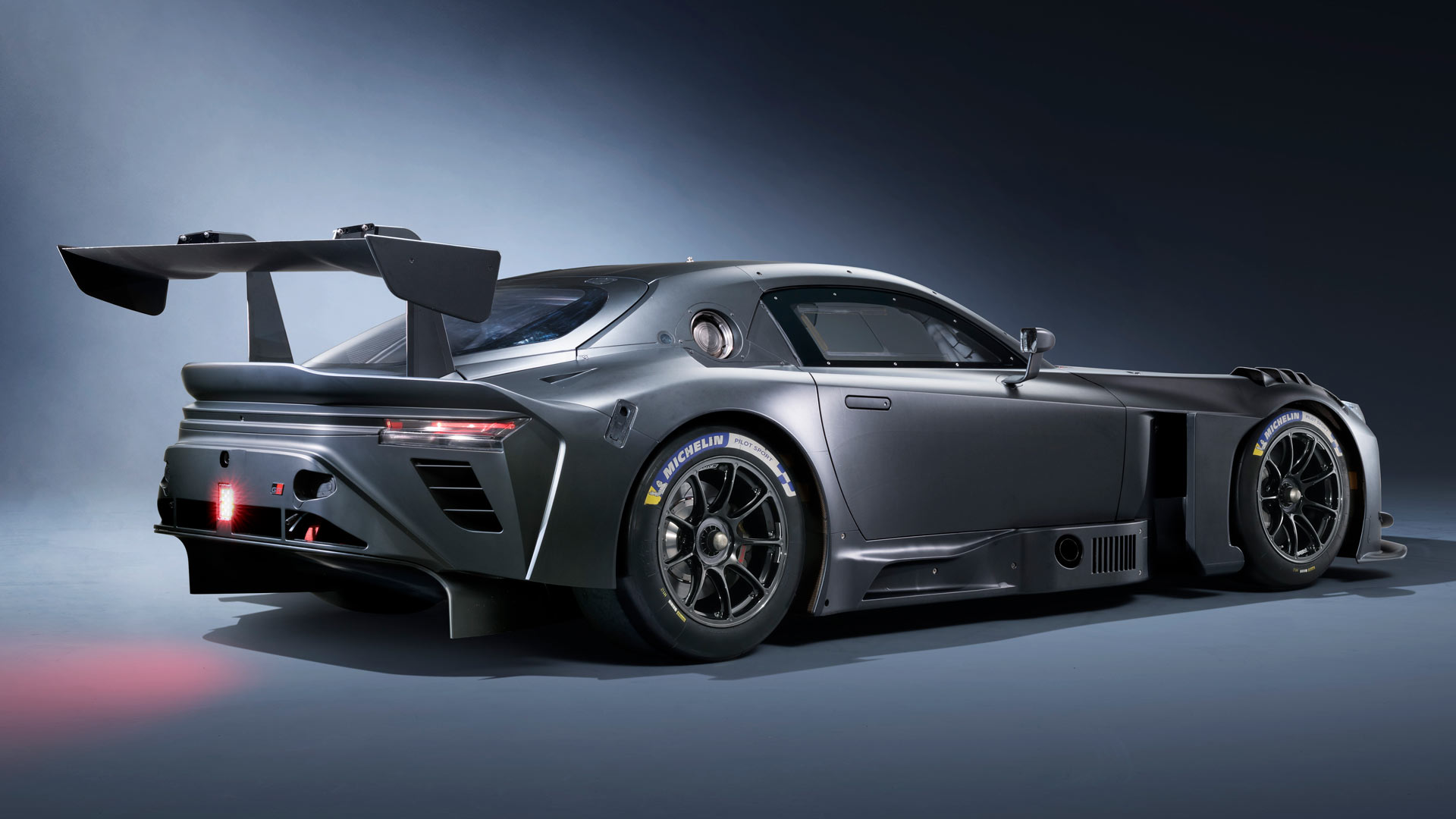
Designed and engineered by Toyota’s Gazoo Racing division, the wild GR GT will enter production in 2027.
Intended as a flagship for the Toyota Gazoo Racing lineup, the road-going GR GT will be sold alongside an FIA GT3-spec version developed for motorsport customers.
The GR GT and GT3 are said to trace their roots back to the Lexus LFA. Both were partially developed by Toyota veterans responsible for the legendary Lexus, too.
V8 power and rear-wheel drive
Gazoo Racing created the GR GT around the idea of a ‘road-legal race car’, beginning with a high-performance powertrain.
Although there is no screaming naturally aspirated V10 like the Lexus LFA, Gazoo Racing has not – thankfully – built a fully electric supercar.
Instead, a 4.0-litre twin-turbocharged V8 engine is combined with a single electric motor. Toyota promises the hybrid powertrain will develop a minimum of 650hp and 627lb ft of torque.
Power will be sent directly to the rear wheels via an eight-speed automatic gearbox and a mechanical limited-slip differential.
Ensuring the GR GT sounds emotive has also been a top priority. Gazoo Racing has apparently tuned the exhaust system for an ‘enjoyable sound’.
Designed for the road and track
The GR GT will make use of an aluminium monocoque chassis, combined with carbon fibre body panels. Do not expect Toyota’s supercar to be super-light, though, with a targeted kerb weight of 1,750kg.
Aerodynamics have dictated the GR GT’s exterior design, with downforce and engine cooling prioritised. Engineers from Toyota’s World Endurance Championship programme lent their expertise to its development.
Although official performance figures may change before the GR GT arrives, a top speed of 199mph has already been suggested.
For the GT3 version, a more aggressive bodykit, including a towering rear spoiler, will provide maximum performance for the racetrack.
GR GT is coming in 2027
Other highlights included of the GR GT’s design include dual wishbone suspension with aluminium components, along with Brembo carbon-ceramic brakes.
Semi-slick Michelin Pilot Sport Cup 2 tyres will be fitted, plus a multi-stage stability control tested at the Nurburgring.
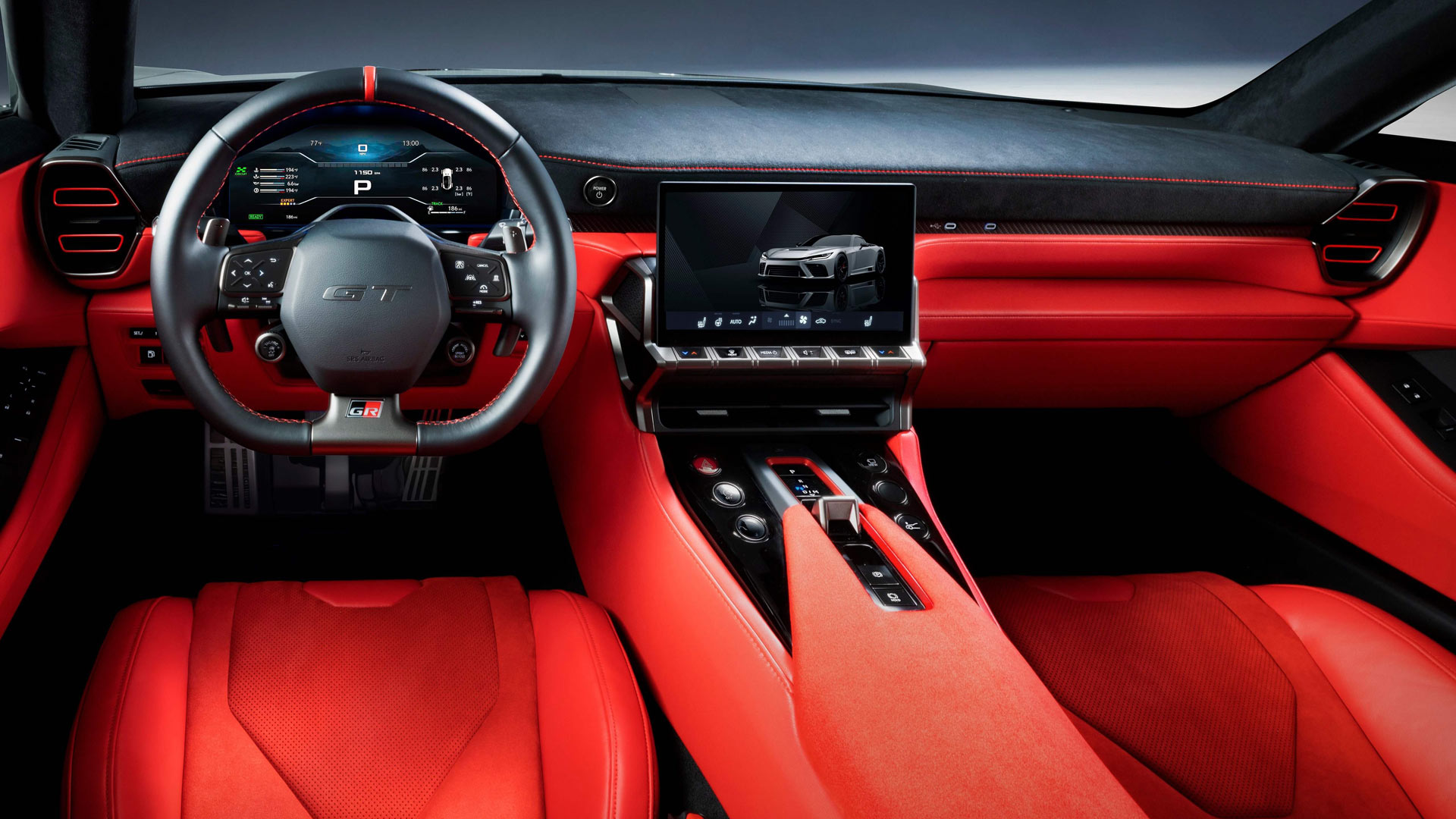
Gazoo Racing has given the GR GT a relatively simple interior, with a focus on clear displays and the large gear shift paddles mounted behind the steering wheel.
Expect more information about the GR GT, and its GT3 racer sibling, to emerge as development continues throughout 2026. We’re excited already.
The 2026 AUTOBEST Award Winners have been announced during the European ‘Best Buy Car’ organisation’s Ultimate Test in Austria.
BYD executive vice president Stella Li took one of the top prizes after being inducted into the MANBEST Hall of Fame for the car industry’s best managers and leaders.
The award acknowledges her pivotal role in BYD’s global expansion, including rapid growth here in the UK, which has seen the Chinese brand grab a 2.3 percent share of the new-car market so far in 2025.
BYD was also named TECHNOBEST 2026 winner for its Super e-Platform flash charging tech. This allows 1,000kW (1mW) DC rapid charging speeds – delivering 295 miles of range in just five minutes.
Meanwhile, Japanese giant Toyota has been named COMPANYBEST 2026 for an ‘exceptional performance’, with a multi-pathway strategy that includes hybrids, plug-in hybrids, fuel cell vehicles and EVs, as markets demand.
Toyota has also committed to a ‘full-lineup philosophy’, producing everything from sports cars to commercial vehicles. And the company is successful in motorsport, winning three FIA Constructors’ world championships in 2024.
SPORTBEST 2026 goes to Formula E CEO Jeff Dodds, and the SAFETYBEST 2026 winner is Pirelli’s clever Cyber Tire concept.
BMW Group chief designer Adrian van Hooydonk has been inducted into the DESIGNBEST hall of fame, for his decades of work at the Munich firm – recently culminating in the launch of the latest Neue Klasse design vision.
The Honda Prelude won the innovative ‘A Star Is Back’ Award, which honours retro favourites that have been successfully bought back to life.
All the winners will be presented with their prizes during an exclusive award ceremony in Vienna in March 2026.
AUTOBEST Conquest
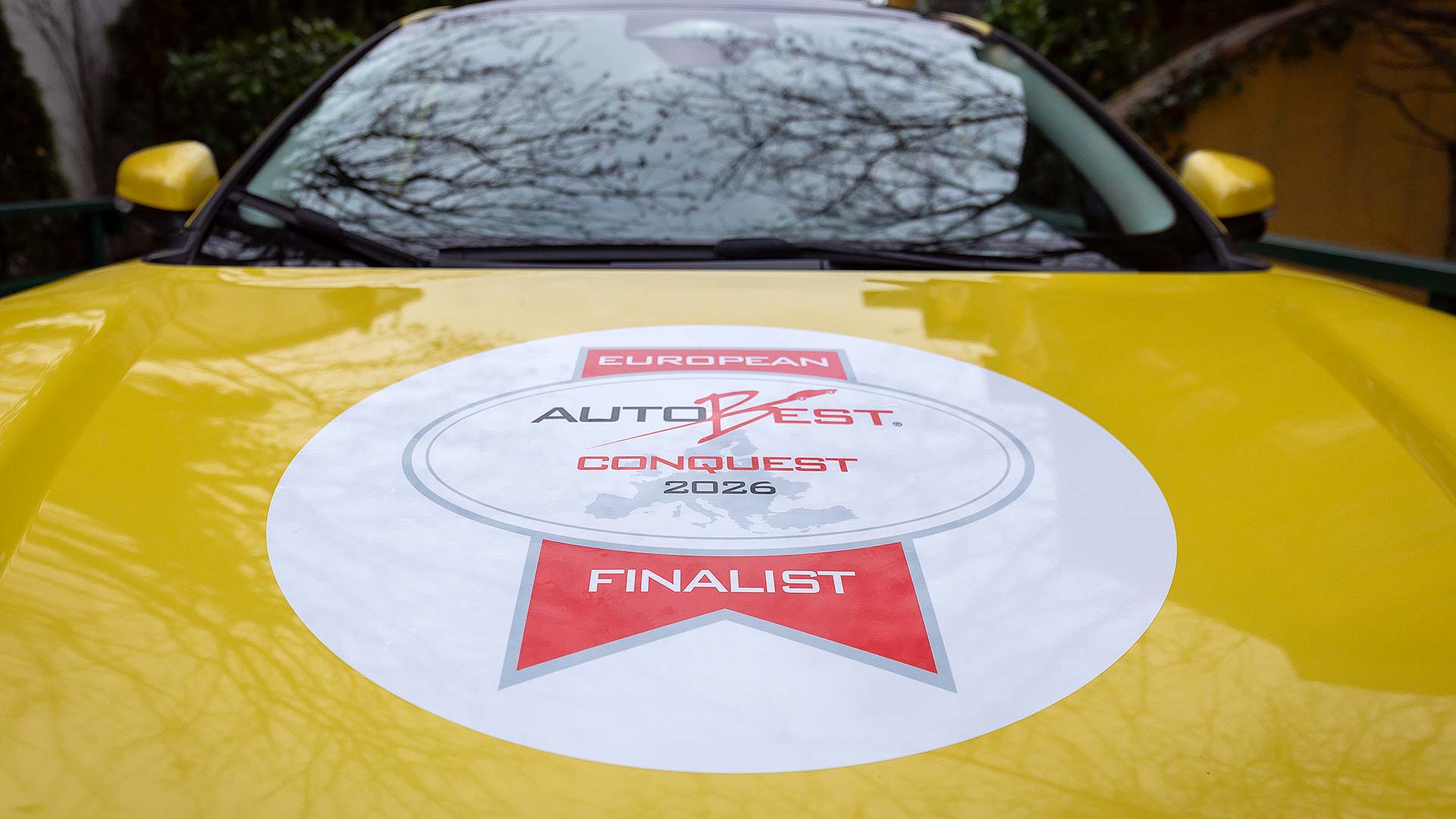
The AUTOBEST organisation, of which Motoring Research’s Richard Aucock (pictured above) is the UK juror, is also planning a noteworthy evolution in how the 2026 Best Buy Car of Europe is decided.
During the AUTOBEST Ultimate Test, six finalists were assessed by 32 expert jurors from across Europe.
The finalists were the BYD Dolphin Surf, Citroen C3 Aircross, Fiat Grande Panda, Ford Puma Gen-E, MG S5 EV and Renault 4.
Starting in January 2026, motorists from across Europe will be invited to ‘drive, test and vote for the best’, with all finalists open to a public vote. Public votes will count for 50 percent of the final result, with the jury accounting for the other 50 percent.
This will remain open until the Grand Finale, when the results will be revealed live during the AUTOBEST Conquest Show on 28 March 2026.
Motoring Research will be bringing you more news of the exciting developments for AUTOBEST – which remains the largest independent motoring media jury both in Europe and the world.