Ineos Automotive has announced major updates for the Grenadier, as the hardcore off-roader enters its third full year of production.
Much has been written about the story behind the Grenadier’s creation, along with the British 4×4’s ability both on and off the road. Changes for the 2026 model year aim to address some of the areas that have attracted criticism.
In particular, Ineos has fitted a new variable-ratio steering rack, intended to make the Grenadier feel more precise and responsive when the wheel is close to the straight-ahead position.
The previous Grenadier’s recirculating ball steering setup favoured off-road durability, but could feel slow-witted when driving on tarmac at speed.
Ineos has also reduced the Grenadier’s turning circle, with extra steering angle to make it more manoeuvrable in town and on twisty trails.
Answering the Grenadier’s critics
Further changes for the 2026 Ineos Grenadier include an upgraded climate control system. This has apparently improved the ‘performance and predictability of heating and cooling’ inside the cabin.
The Grenadier’s driver assistance systems (ADAS) have received important updates in order to comply with the latest safety regulations.
Ineos has also included a shortcut on the infotainment touchscreen to silence the compulsory Intelligent Speed Assist with just one press.
Lynn Calder, CEO of Ineos Automotive, said: “We’ve continuously enhanced and upgraded the Grenadier since its launch, but this is the most significant improvement so far. And it means the 2026 models are the most rounded and most accomplished yet.
“It’s easier and more fun to enjoy every day and for every journey (and with a faster way to switch off the annoying ADAS alerts we are forced to fit). And with all that, it’s our best Grenadier yet, with enhanced appeal to an even broader range of customers.”
New Grenadier Black Edition revealed
Along with updating the Grenadier for 2026, Ineos has also launched a new Black Edition trim level. This can be applied to both the regular station wagon and Quartermaster pickup truck.
Based on the range-topping Fieldmaster version, the Black Edition comes exclusively with Inky Black exterior paintwork. Gloss black 18-inch alloy wheels are combined with black trim for the front grille and skid plates.
Privacy glass, a lockable storage box for the spare wheel holder, black leather upholstery, a dark interior headlining and black carpet mats complete the moody makeover.
Prices for the Black Edition start at £71,995, covering both station wagon and Quartermaster body styles.
All other Grenadier models retain the same prices for 2026, with the Grenadier Commercial starting from £51,390 excluding VAT. The entry-level Quartermaster and station wagon variants cost from £62,495.
Chinese automotive giant Chery, maker of the Omoda and Jaecoo brands, has revealed it is opening a new European headquarters in Liverpool, potentially creating hundreds of new jobs.
The announcement, which followed months of talks, was made during Prime Minister Keir Starmer’s trade visit to China.
Liverpool City Council said it was ‘one of the most significant projects’ for the city in recent years, reported the BBC.
Council leader Liam Robertson described it as a “huge opportunity” for Liverpool, the wider city region and the UK.
It “recognises our strengths” and “puts Liverpool at the forefront” of advanced manufacturing, added Robertson.
The new Chery HQ will reportedly support research, engineering and commercial development for the Chery Commercial Vehicle division.
No details have yet been announced on where in Liverpool Chery will locate its new European base, nor when it will open. However, it is hoped it will create ‘hundreds’ of new jobs.
Chery to build cars in JLR UK plants?
The news of Chery’s new European HQ in Liverpool is interesting in the context of a recent report by the Financial Times that the Chinese giant could build vehicles in the UK, using spare capacity at JLR factories.
JLR builds the Range Rover and Range Rover Sport models in Solihull. It also makes Range Rover Evoque and Land Rover Discovery Sport at Halewood, Merseyside (pictured above).
While the Solihull plant is thriving – production of the new electric Jaguar will begin there later this year – it is believed there is spare capacity at Halewood. This could potentially be utilised by Chery.
News that Chery’s European commercial vehicle HQ will be based in Merseyside may now compound the rumours.
“A JLR-Chery tie-up could be a win-win,” said Professor David Bailey of the Birmingham Business School. “The rationale… is strong.”
JLR has a longstanding joint venture with China’s Chery, called CJLR. In 2024, it agreed to license the Freelander brand to CJLR for the creation of EVs in China.
“Chery and JLR are forging an innovative collaboration model that epitomises our growth path for the future,” said Chery Group chairman Yin Tongyue at the time.
The Mk2 Land Rover Freelander was actually produced in Halewood, before it was replaced by the Land Rover Discovery Sport in 2016.
In 2024, JLR announced a £500m investment in Halewood to transform it for electric vehicle production. The aim is to produce ICE, PHEV and BEV models side by side, before becoming JLR’s first all-electric production facility.
Halewood is believed to have the capacity to produce around 205,000 cars a year. In 2025, JLR made a total of 201,283 cars at its three plants in Castle Bromwich, Halewood and Solihull.
Motoring Research has contacted Chery and JLR for comment.
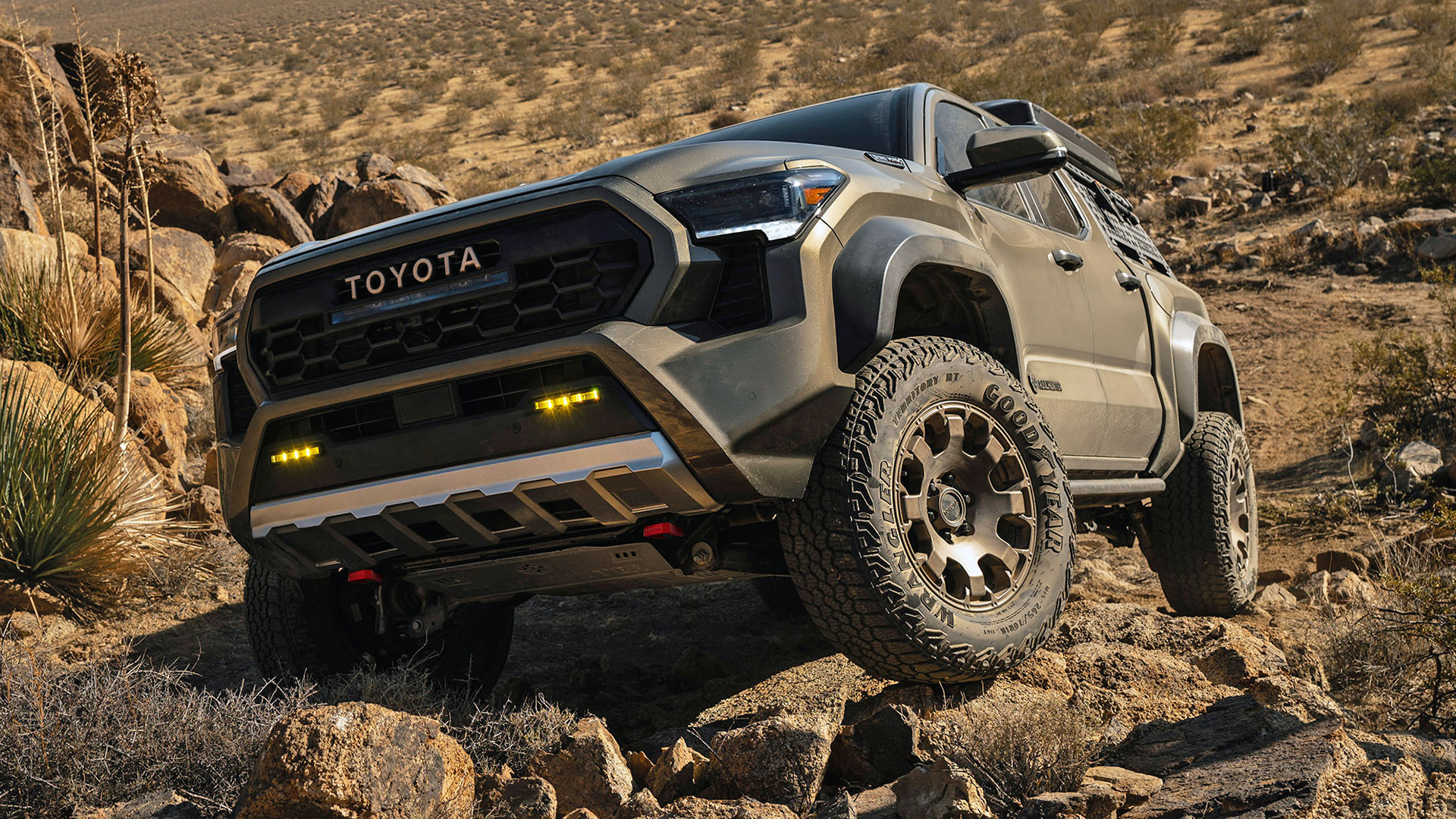
The Texas Auto Writers Association (TAWA) has crowned the Toyota Tacoma Trailhunter its official Truck of Texas for 2026.
Following exhaustive testing on both asphalt and off-road trails, the Tacoma Trailhunter emerged victorious during the annual TAWA Truck Rodeo.
It means the fourth-generation Tacoma pickup has become a back-to-back winner in the Truck of Texas contest, having defended its crown from the 2025 event.
More impressively, Toyota pickup trucks have now claimed the prestigious award four times in the last five years.
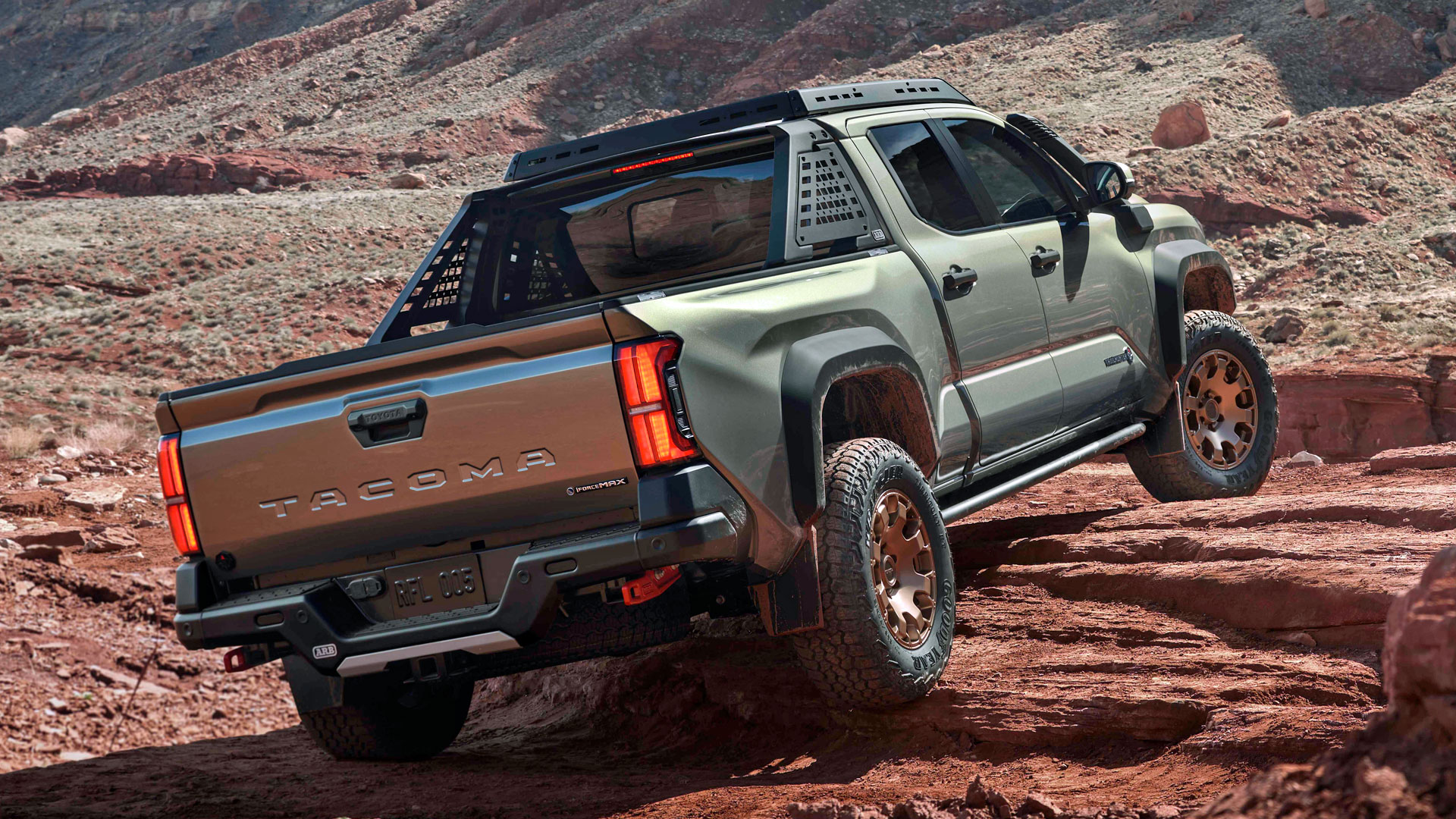
Developed especially with off-road action in mind, the Tacoma Trailhunter boasts an array of specialist equipment. This includes Old Man Emu forged monotube position-sensitive shock absorbers, 33-inch off-road tires, and an ARB steel rear bumper with tow hooks.
Powering the Tacoma is Toyota’s latest i-Force Max hybrid drivetrain, featuring a turbocharged 2.4-liter four-cylinder gas engine. A total output of 323 horsepower, along with 465 lb-ft of torque, is channeled through an eight-speed automatic transmission.
Designed by Calty Design Research in California, and manufactured by Toyota in Mexico, the Tundra Trailhunter impressed the TAWA judges again for 2026.
“Earning Truck of Texas honors for the second consecutive year underscores how the Toyota Tacoma continues to set the benchmark for durability, capability, and real-world performance as judged by the Texas Auto Writers Association,” said outgoing TAWA president, Cory Fourniquet.
Nissan Armada Pro-4X wins SUV of Texas
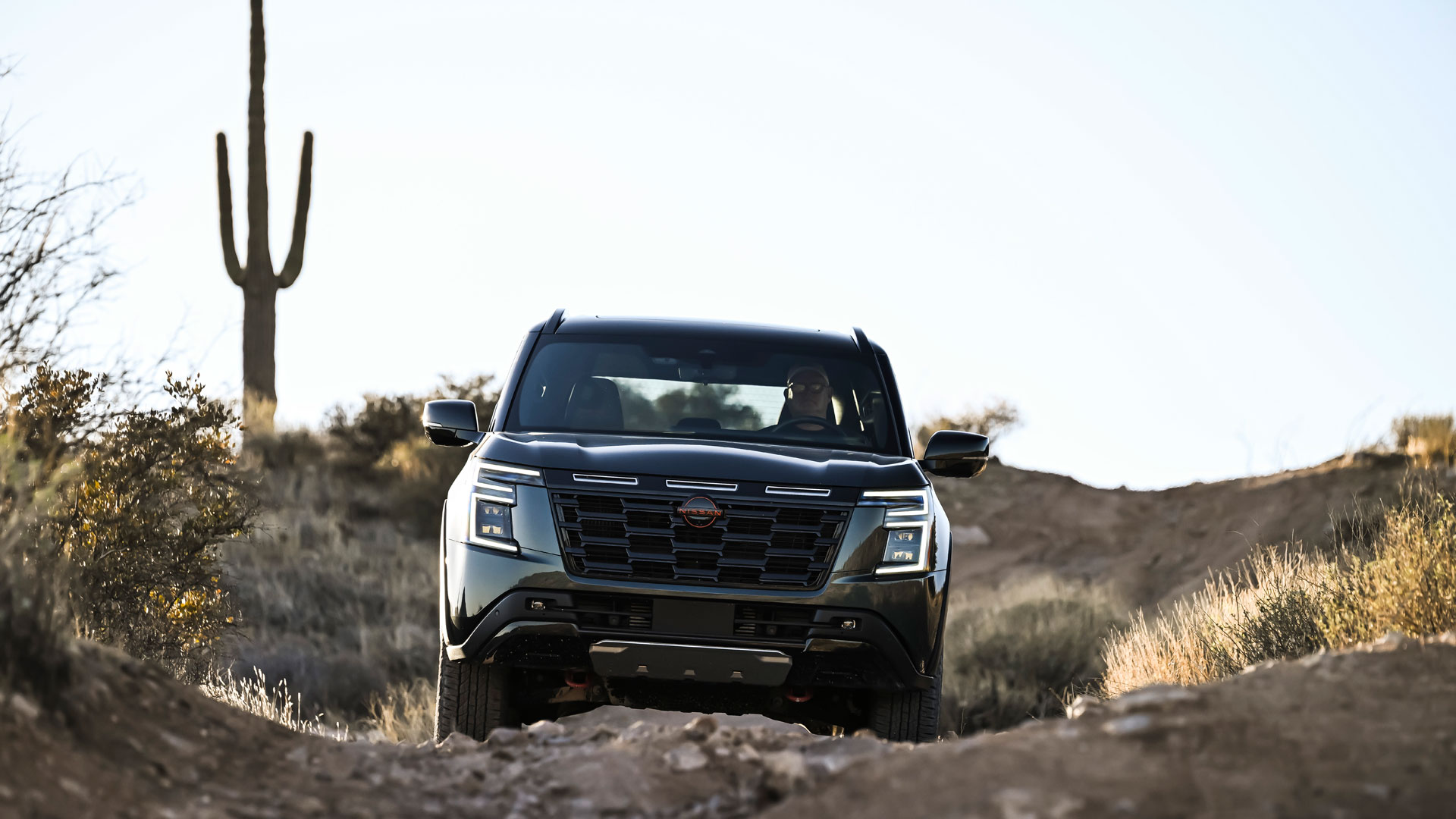
The Texas Truck Rodeo saw a double victory for Japanese brands, with the Nissan Armada Pro-4X taking home the silverware as the official SUV of Texas for 2026.
Described as a “super large beast” by the judging panel, the full-size Nissan Armada features a twin-turbocharged V-6 that delivers 425 horsepower and 516 lb-ft of torque.
Adaptive air suspension, an electronic locking rear differential, sturdy underbody protection, and off-road-tires are all part of Pro-4X trim, along with special red exterior badging.
“Powerful, confident and exceptionally refined, the Nissan Armada Pro-4X delivers the kind of capability, comfort and presence that Texas SUV buyers demand,” said Cory Fourniquet.
“It stood out as a complete package, making it a deserving winner of the 2026 SUV of Texas Award.”
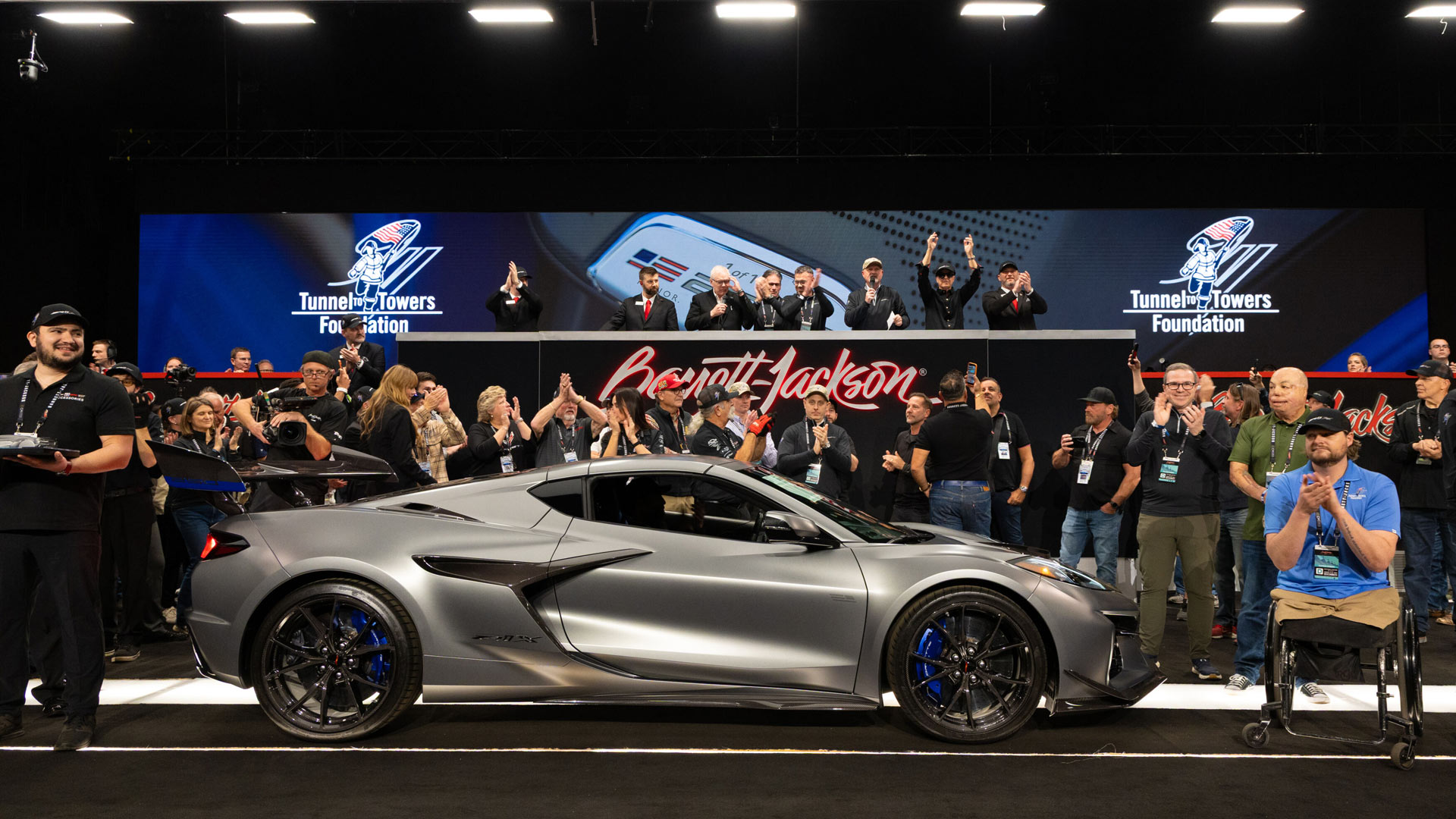
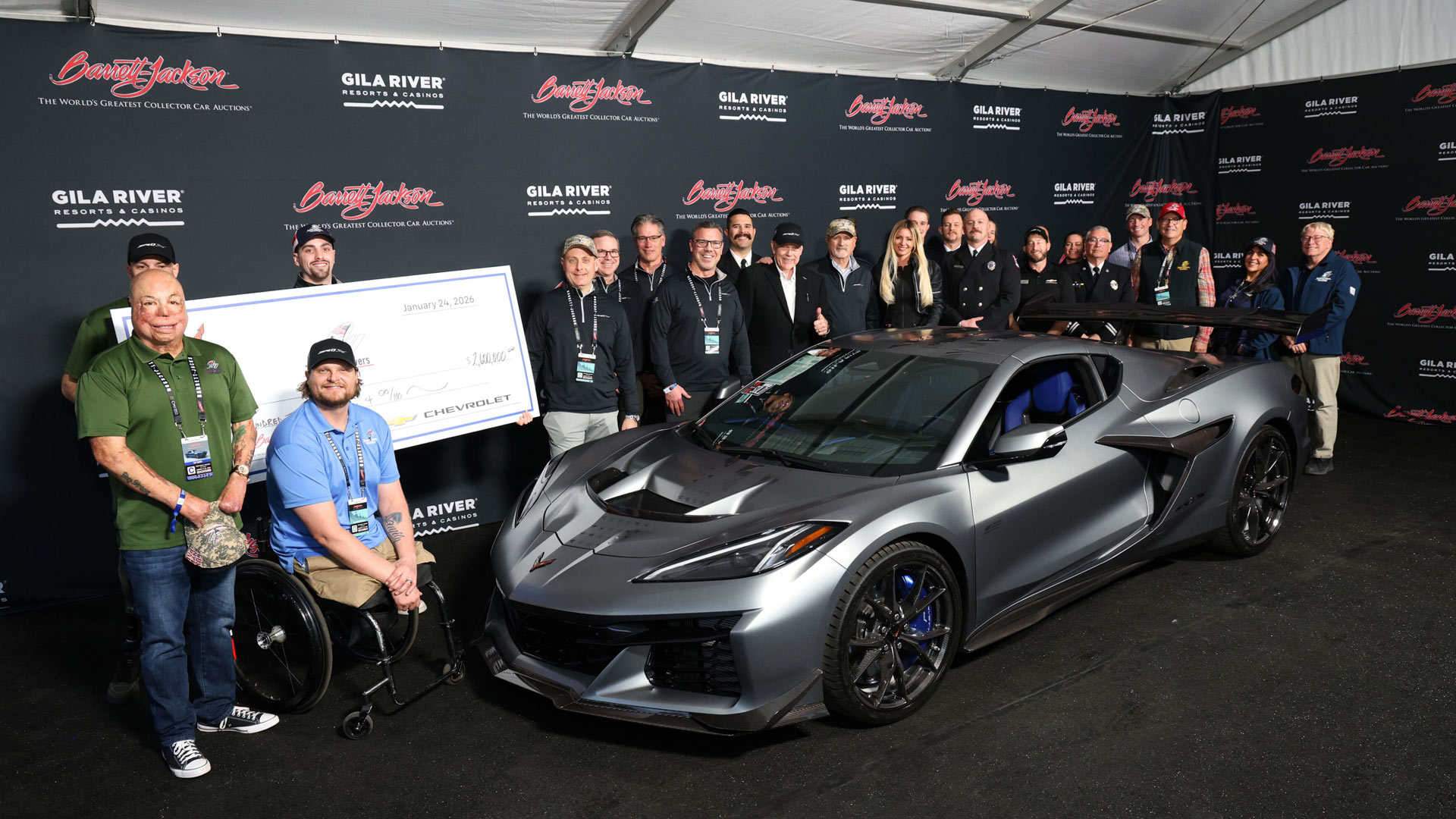
A bespoke example of the 2026 Chevrolet Corvette ZR1X has raised millions of dollars for charity.
Sold as part of the prestigious Barrett-Jackson 2026 Scottsdale Auction, the Stars & Steel-inspired Corvette ZR1X attracted a winning bid of $2.6 million.
It makes for a substantial markup over the $212,195 recommended retail price for the 1,250 horsepower hybrid supercar. However, this particular ZR1X was truly unique.
The winning bidder is no stranger to collectible Corvettes, either. Rick Hendrick previously took home the first 2021 Stingray, 2023 Z06, and 2025 ZR1 models in similar circumstances.
In fact, Hendrick, CEO of the Hendrick Automotive Group and owner of Hendrick Motorsports, has been the winning bidder in 40 Barrett-Jackson charity vehicle auctions – single-handedly raising more than $30 million for charity.
A unique ownership experience
Based on the already limited-production Stars & Steel version of the flagship Corvette, the auctioned car was hand-painted by experts at General Motors’ Design Fabrication shop, with a custom Dark Satin Steel finish.
A host of blue detailing was then added to the ZR1X, including on its brake calipers and gigantic carbon fiber rear wing. On the inside, the Corvette is trimmed in Santorini Blue leather.
As part of the winning bid, Rick Hendrick also has the opportunity to help assemble the ZR1X’s 5.5-liter twin-turbocharged “Gemini” V-8 engine.
General Motors has reinstated the popular “Build Your Own Engine” program, last seen on the Corvette in 2019, for customers who purchase a high-performance Z06, ZR1, or ZR1X.
Ticking the box to build your own engine means the owner can work alongside master engineers in Chevrolet’s Performance Build Center, located at the famed Bowling Green Assembly plant in Kentucky.
Helping families of fallen heroes
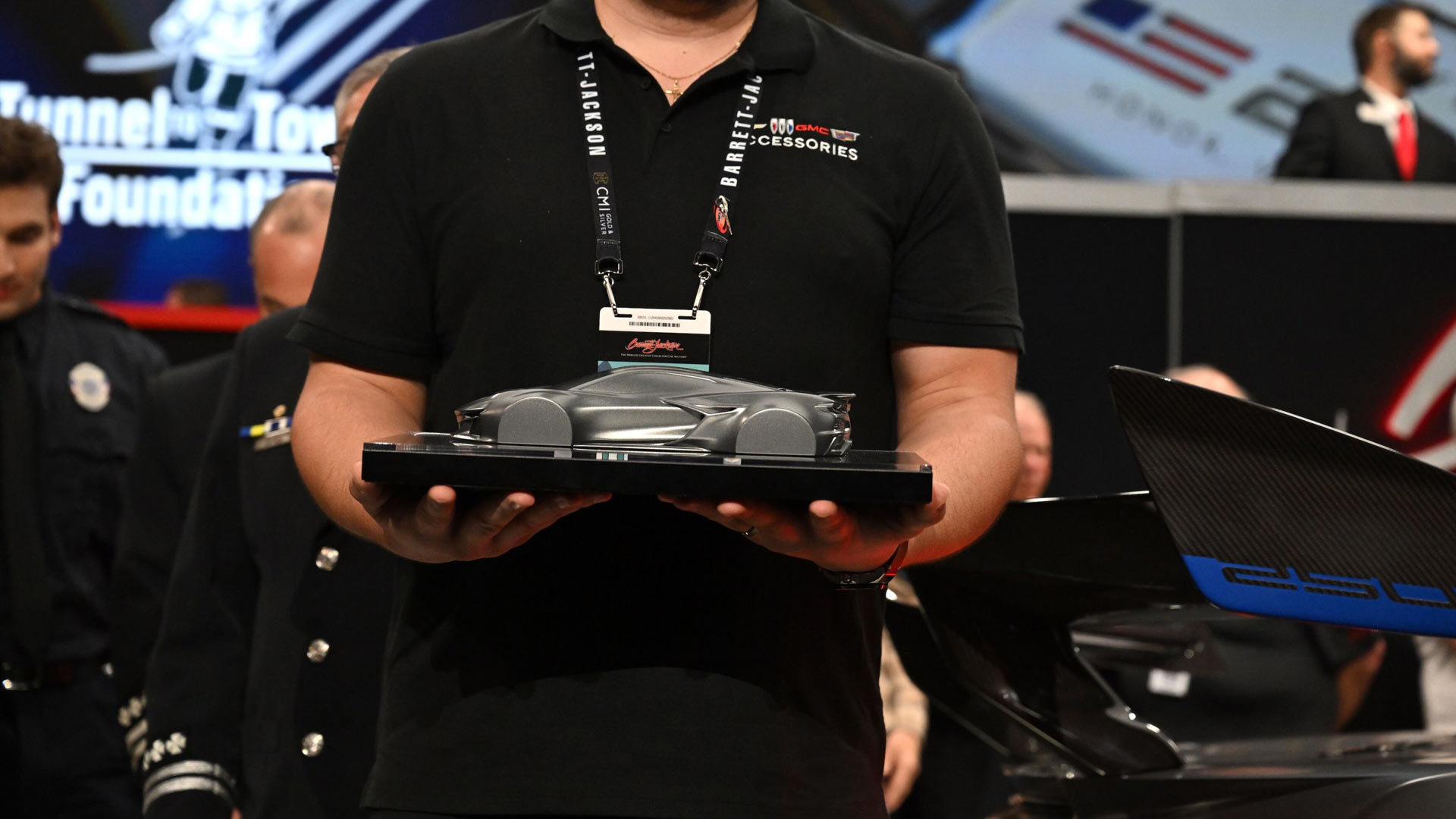
All the proceeds from the auction of the special Corvette ZR1X will be donated to the Tunnels to Towers Foundation.
The charity works to provide mortgage-free homes to Gold Star and fallen first responder families with young children. This includes building custom smart homes for catastrophically injured veterans and first responders, and providing housing and services for homeless veterans.
Tunnel to Towers CEO Frank Siller commented: “This incredible gift will help us continue delivering on our promise to never forget the families of our fallen heroes and to ensure our catastrophically injured veterans can live their lives with the dignity and independence they deserve.”
Scott Bell, vice president of Global Chevrolet, added: “To honor those who serve, Chevrolet created a one-of-one edition of America’s quickest production car: the Corvette ZR1X.
“We’re proud to know the winning bid will go directly to supporting first responders and veterans in need across the United States through the Tunnel to Towers Foundation.”
Car crime affected more than one in four UK motorists during the last 12 months, according to new data from the RAC.
As part of the latest RAC Report on Motoring, the breakdown organisation questioned British drivers about their experiences of vehicle crime throughout the previous year.
Some 26 percent said they had been a victim of car crime, including offences such as theft or vandalism.
For those living in towns and cities, this figure increased to almost half (46 percent) of respondents.
By comparison, only 15 percent of those who live in rural locations said the same. One in five (20 percent) of suburban respondents said they had been a victim of vehicle crime.
Rural drivers most worried about car crime
Almost a fifth (19 percent) of those in towns had seen their car deliberately vandalised during the last year, and 13 percent had items stolen from their vehicle. Only seven and two percent of those in the countryside experienced the same issues, respectively.
Despite motorists in rural areas experiencing a much lower level of vehicle crime, they have the same or a greater fear of being targeted by criminals.
Some 38 percent of rural drivers admitted worrying about the risk of vehicle theft – the same proportion as urban motorists.
And 39 percent of those in the countryside were concerned about their car being vandalised. Only 34 percent of urban dwellers had the same concern.
Rural drivers are also more anxious about drivers not leaving a note following a collision. More than a third (34 percent) had this concern, versus 18 percent of people living in a city.
A contributor to higher insurance costs
Simon Williams, RAC Insurance spokesperson, said: “It’s very worrying to see so many drivers have experienced some form of vehicle crime over a 12-month period. Having a vehicle vandalised is both unbelievably annoying and expensive, but having one stolen is a horrible violation. It’s also incredibly stressful to resolve and inconvenient to cope with, given how important cars are to our daily lives.
“Every criminal incident like this contributes to the average cost of car insurance, which has already risen in recent years due to the higher costs of parts and labour, and the increasing complexity of modern vehicles. Having to claim on your insurance because of something you’ve accidentally done yourself is one thing, but when it’s because of mindless, deliberate vandalism, it’s beyond frustrating, not least because it will inevitably result in higher future premiums
“It’s little wonder why the cost of insuring a vehicle was named the second biggest motoring frustration in our annual Report on Motoring research, with 29 percent of drivers saying it was one of their top concerns.”
UK vehicle production in 2025 was the lowest seen since 1952, new figures from the Society of Motor Manufacturers and Traders (SMMT) reveal. However, a recovery is already underway, driven by electric cars.
A total of 764,715 cars and vans were built in the UK last year, a hefty 15.5 percent decline compared to 2024.
This was driven by a number of factors, including key model changeovers, the crippling JLR cyber-attack during the summer and the closure of Vauxhall’s van factory in Luton.
Car production fell by eight percent to 717,371 units – the lowest (excluding the pandemic period) since 1956. Van production also plummeted by 62.3 percent to just 47,344 commercial vehicles.
However, says the SMMT, there are already signs of a recovery, with Nissan finally beginning production of the new electric Leaf at its Sunderland facility in December, after assembly of the previous model stopped around a year ago.
This will give a significant boost to UK car production, with the trade body forecasting a 10 percent improvement to around 824,000 units in 2026 (790,000 of which will be cars).
Furthermore, “we can see a pathway to one million vehicles per annum by 2027,” said SMMT chief executive Mike Hawes.
This would be dependent on more new electric and electrified car launches, including the next Nissan Juke, the electric Range Rover and the highly controversial rebirth of Jaguar as an electric car brand.
Crucially, it wouldn’t depend on the arrival of a new car brand in the UK (despite recent speculation that Chinese giant Chery could use an existing JLR factory). It does, though, require trade certainty, meaning “no additional protectionist measures” from either the US or Europe.
Concerns about trade with US and Europe
The UK now has a trade deal with the US, allowing 100,000 tariff-free vehicles to be exported there each year. Hawes said the 100,000 target wasn’t met in 2025, due to the JLR shutdown, but should be “just about adequate” this year.
“Obviously, longer term, we would like to see trade with the US and the UK grown,” requiring an uplift of the tariff-free total. This is likely to be a focus of discussions in the coming years.
As for Europe, while the UK has a trade agreement (the Trade and Cooperation Agreement, or TCA), Hawes raised concerns around the EU’s latest ‘Made in Europe’ approach. This could require vehicles to be made in the EU to qualify for state incentives and other subsidies.
“These proposals could have the effect of delivering what Brexit didn’t deliver, and make it much harder for UK-produced vehicles to access to the European market,” said Hawes. “This is a significant threat to the industry.”
The hope is that, because the two regions have the TCA in place, ‘Made in Europe’ qualification will extend to UK-built vehicles. “We hope a degree of common sense will prevail.”
What’s more, new ‘Rules of Origin’ regulations are set to ramp up at the end of this year. From 1 January 2027, these require a high proportion of an electric car’s value, and 50-60 percent of its battery, to be made in the EU or UK – or the car faces a 10 percent tariff.
The deadline was pushed back in 2023 and, because battery production here hasn’t grown as quickly as expected, car makers are demanding the deadline be pushed back again. The EU, however, is currently playing hardball.
“We don’t want it to go back to Christmas Eve [before an agreement is reached],” said Hawes.
UK builds for export
Trade deals are crucial for the car industry, as production in the UK remains export-driven. Nearly eight in 10 cars – that’s a total of 717,371 – were exported in 2025, with Europe taking by far the highest share of exports, at 56.7 percent.
The US was next, on 15 percent, with China in third place on 6.3 percent. All three markets were down, by 3.3 percent, 183 percent and 12.5 percent respectively.
Turkey was fourth, on 5.3 percent, followed by Japan, which took 2.9 percent of UK car exports.
The UK has since signed new trade agreements with India and South Korea, and there is hope that both regions might take a growing proportion of tariff-free, UK-built cars.
“The key to long term growth,” said Hawes, “is the creation of the right competitive conditions for investment: reduced energy costs, the avoidance of new trade barriers and a healthy, sustainable domestic market.
“Government has set out how it will back the sector with its Industrial and Trade strategies, and 2026 must be a year of delivery.”
Top 10 British-built cars for export
Nissan Qashqai
Mini
Toyota Corolla
Nissan Juke
Range Rover Sport
Range Rover
Range Rover Evoque
Range Rover Velar
Jaguar F-Pace
Land Rover Discovery Sport
More than half of UK cars will be electrified
There was significant growth in the number of electrified cars – that’s EVs, plug-in hybrids and hybrids – that were built in the UK last year.
Production rose by 8.3 percent to almost 300,000, giving electrified cars a record 41.7 percent share.
With the production ramp-up of the new Nissan Leaf, along with other planned models, the SMMT is confident that more than half of cars built in the UK this year will be electrified.
The organisation, added Hawes, is currently unable to reveal the split between EVs, PHEVs and hybrids for compliance purposes. It is hoped this will change as UK car production becomes increasingly electrified.
UK van slump
The slump in UK van production is perhaps the most alarming aspect of the vehicle production figures. It is entirely down to the closure of Vauxhall’s plant in Luton, which generally produced around 90,000 vans each year.
Production has been consolidated at parent company Stellantis’ facility in Ellesmere Port, which was reopened a few years ago as a pure electric plant.
Last year, Stellantis’ UK production plunged from 105,000 vehicles to a mere 30,000 – a 71 percent decline.
A spokesperson told Motoring Research that the facility “currently builds electric-only Vauxhall Combo, Opel Combo, Peugeot Partner, Peugeot Rifter and Citroen Berlingo for the UK and export markets.
“We plan to start production of electric Vauxhall Vivaro, Peugeot Expert and Citroen Dispatch from next year.” It is hoped this will start to rally UK van production once again – although it has a long way to go in order to fully recover.
The Porsche 911 Turbo celebrated its 50th birthday in 2025, marked by a ’50 Years’ anniversary edition with unique paint and tartan seat trim.
Porsche restomod specialist Kalmar Automotive has gone much further, however, creating a limited-production homage to the original Porsche 930 Turbo.
The Kalmar 7-97 Turbo Edition combines retro-inspired styling with an air-cooled engine – and only 11 examples will be made.
Available in both coupe and convertible body styles, the 7-97 Turbo Edition is based on the 993-generation Porsche 911.
Along with extensive modifications to transform the 993 into a Turbo tribute, each car will be tailored to a unique specification chosen by its owner.
Classic looks, modern engineering
The 7-97 Turbo Edition bears an obvious resemblance to the classic Porsche 930. Beneath the familiar proportions, though, Kalmar has been hard at work to solve many of the aerodynamic issues with the original car.
Every surface of the 7-97 Turbo Edition has been mapped using Computational Flow Dynamics (CFD), helping to create a more balanced aero setup.
Kalmar has also redesigned the iconic ‘whale tail’ rear spoiler, ensuring it delivers optimum downforce and cooling for the enhanced flat-six engine.
The front of the 7-97 Turbo Edition features a blend of long- and short-nose Porsche 911 design elements, while its front grilles are a contemporary nod to the 1967 911R.
All the bodywork is crafted from carbon fibre. Kalmar removes the rain gutters from the 993-generation bodyshell and bonds the rear window into place.
More boost and all-wheel drive
Along with how it looks, the biggest draw for those ordering a 7-97 Turbo Edition will surely be the 3.2-litre ‘Mezger’ flat-six.
Developed by Kalmar with its technical partner Lorrtec, the turbocharged engine actually has a smaller displacement than a standard 993 Turbo. However, it compensates with considerably more boost.
A total of 650hp and 494lb ft of torque are on offer. The 7-97 Turbo Edition also comes with four-wheel drive, traction control and adjustable suspension. All of this should help tame the 911 Turbo’s infamous ‘widow maker’ reputation.
A set of Fuchs-style 18-inch magnesium centre-lock wheels wear Michelin tyres, and conceal modern carbon-ceramic brake discs.
Kalmar has not quoted any performance figures for the 7-97 Turbo Edition, but a modest kerb weight of around 1,200kg will guarantee dramatic acceleration.
From retro racer to grand tourer
Not content with customising the exterior of the Porsche 911, Kalmar also turned its attention to the 7-97 Turbo Edition’s cabin.
A completely new electrical system includes a compact central touchscreen. This allows drivers to adjust engine suspension settings on the move, and provides mod-cons such as Apple CarPlay connectivity and a reversing camera.
The rest of the 7-97 Turbo Edition’s interior can be customised to the owner’s chosen specification, with a wide range of materials and finishes available. Hardcore road racer or luxurious grand tourer? The choice is yours.
Kalmar has not quoted a price for the 7-97 Turbo Edition, but expect to pay in excess of £400,000 once the cost of a donor car is factored in.
All the contenders for the prestigious UK Car of the Year Awards 2026 (UKCOTY) have been revealed. The list features a host of critically acclaimed cars and SUVs.
Founded in 2014, the UKCOTY Awards is sponsored by Start Rescue. It sees a panel of 33 leading car journalists – including Motoring Research’s very own Tim Pitt – cast their votes for the top models.
From a long-list of 59 eligible cars and SUVs, the UKCOTY judges have already chosen eight winners, with each car taking victory in its respective category.
The eight finalists are now in contention to be named as the overall UKCOTY champion, set to be announced on 26 February 2026.
With electric vehicles accounting for five of the finalists, and numerous categories for SUVs, read on to see which car could claim the top prize.
Small Car – Renault 5 E-Tech
The Renault 5 E-Tech has already received plenty of accolades since it entered production in 2024, Indeed, the electric hatchback has collected 44 awards to date, including the 2025 European Car of the Year trophy.
Could it take another one by claiming the overall UKCOTY Award for 2026, having been named the winner in the ‘Small Car’ category? Nearly two thirds of the UKCOTY judging panel picked the Renault 5 E-Tech as the best vehicle in its class, making it a strong contender.
More than 100,000 examples of the 5 E-Tech have already been built, with the car’s popularity in the UK boosted by eligibility for the government Electric Car Grant.
Kia is continuing to expand its range of electric vehicles, with the EV4 hatchback and fastback-style saloon two of the latest additions to its model lineup.
Developed to take on the big-selling Tesla Model 3, the EV4 can boast an impressive range of up to 388 miles when fully charged.
Being able to accommodate 490 litres of luggage, combined with a spacious interior and plenty of technology, will have helped the EV4 to finish first in the UKCOTY ‘Family Car’ class.
Demonstrating the changing shape of the family car market, last year’s UKCOTY winner in this category was the Skoda Superb Estate.
There is no escaping the importance of the crossover in the UKCOTY Awards 2026, with three categories dedicated to the ever-growing number of SUVs available.
Having won the ‘Small Crossover’ category, the Citroen C3 Aircross is represented in both petrol-powered and electric e-C3 Aircross guises. C3 prices seem surprisingly affordable in a world where most new cars look increasingly expensive.
Last year, the Citroen C3 Aircross and e-C3 Aircross twins claimed third place in the European Car of the Year Awards, giving them a strong chance at further glory.
Citroen also became the first manufacturer in the UK to secure eligibility for the Electric Car Grant, with discounts of £1,500 applied to the e-C3 Aircross.
Skoda has made a rapid transition to both SUVs and electrification. And the Elroq combines both, with a mid-size SUV body style and electric power.
Revealed at the 2024 Paris Motor Show, the Elroq is one of many Volkswagen Group models to make use of the MEB platform. This underpins everything from the Cupra Born to the reborn Ford Capri.
The Elroq is offered with a number of powertrains, including a sporty new vRS model. With a total of 340hp from its twin-motor setup, a 0-62mph time of 5.4 seconds makes it the fastest-accelerating production Skoda to date.
Such performance could help it secure the outright UKCOTY Award, along with the ‘Medium Crossover’ title.
Like its sister brand Kia, Hyundai has introduced a host of electric SUVs. The Ioniq 9 is the biggest vehicle yet from the South Korean marque.
Make no mistake, this is a large SUV. It shares the same ‘E-GMP’ platform as the Kia EV9, and is the electric alternative to a petrol-powered Hyundai Santa Fe. Notably, the latter collected the prize for the best Large Crossover in last year’s UKCOTY Awards.
Hyundai offers the Ioniq 9 in a choice of six- or seven-seat guises, along with a variety of trim levels. There is also a sizeable 110.3kWh battery, which provides a range of up to 385 miles.
Amidst a sea of electric crossover SUVs, the Audi A6 saloon looks like a surprisingly conventional UKCOTY contender, having already picked up a trophy as the top ‘Executive Car’.
Now into its sixth generation, Audi had originally planned to replace the previous A6 with an all-electric model. However, the company had a change of heart, creating a new A6 to be sold alongside battery-powered E-tron versions.
Continuing its longstanding rivalry with the BMW 5 Series and Mercedes-Benz E-Class, the Audi A6 range even still includes a diesel engine. The 204hp 2.0-litre TDI is a solid choice, with its efficiency boosted by mild hybrid technology.
The Audi A6 is so good the UKCOTY judging panel chose it twice for the 2026 awards. It has also won the ‘Estate Car’ category.
Estate cars are relatively thin on the ground in the current market, thanks to the dominance of SUVs. In fact, there were only three wagons shortlisted in 2026, with the A6 Avant facing off against the Porsche Taycan Sport Turismo and BYD Seal 6 Touring.
Packing the same premium features and efficient engines as the saloon, the new Audi A6 Avant also brings a useful boot capacity of 503 litres to the party.
An estate has never claimed the top UKCOTY Award, but perhaps the A6 Avant will buck the trend?
When it came to the ‘Performance Car’ category of the UKCOTY 2026 Awards, the judging panel was given a broad selection of vehicles to evaluate. From the radical mid-engined Chevrolet Corvette to the Mini John Cooper Works hot hatchback, it was a diverse range of contenders.
From the seven choices, the all-electric Alpine A290 emerged victorious. It’s effectively a quicker version of the Renault 5 E-Tech, doubling the chances of the French firm taking glory.
A 220hp electric motor powers the front wheels of the top A290 GTS, allowing the hot hatchback to accelerate from 0-62mph in 6.4 seconds. Alpine has even created a Rallye version, intended for use in single-make motorsport championships.
We now have a month to wait to discover which of the eight finalists will emerge as the UK Car of the Year 2026.
Motorists who don’t have off-street parking are being “locked out of affordable electric vehicle charging” by cost, confusion and council delays, says non-profit EV champion EVA England.
So-called cross-pavement charging solutions – where electric cars parked on the road are charged from a cable plugged into the drivers’ home – are the answer, yet are being blocked by cost and red tape.
A survey by the organisation found that 93 percent of drivers who don’t have a driveway also don’t have any form of cross-pavement charging solution.
This is despite nearly 4 in 5 saying cross-pavement charging could work for their home.
The government has been running consultation into reform on planning rules for cross-pavement charging, and EVA England, in its submission, is urging ministers to act.
A mere eight drivers surveyed say they’ve been able to install a cross-pavement solution. Many others have had repeated refusals from councils, along with months (or even years) of silence and burdensome planning costs that can add around £500 per application.
This is on top of installation costs that approach £3,000.
Charging from the roadside
Cross-pavement charging solutions generally involve cutting a shallow cable gulley into the pavement. This is much safer than trailing charging cables across pavements and then attempting to cover them with mats.
Despite this, some drivers have been told cable gullies were unsafe, “while being tacitly allowed to trail charging cables across pavements… something many felt posed a far greater risk to pedestrians”.
EVA England now wants the government to ditch the need for a planning application to install an EV cable gulley.
“Drivers are telling us the same thing again and again,” said EVA England CEO Vicky Edmonds: “The demand is there, but the system is getting in the way.
“Cross-pavement charging could unlock affordable home charging for millions of households, yet too many drivers are stuck waiting, paying more, or putting off going electric entirely.
“This consultation is a real opportunity to remove one of the most frustrating and unnecessary barriers drivers face. We hope the government will act on it.”
It is estimated that more than 1 in 3 UK motorists park on-street.
The law on speeding is pretty clear: ‘You must not drive faster than the speed limit for the type of road and your type of vehicle’. Nonetheless, millions of British motorists break speed limits every day.
According to Department for Transport statistics for 2024 (the most recent year available) 44 percent of cars exceed the speed limit on motorways. That compares to 43 percent on 30mph roads and nine percent on single carriageway national speed limit (60mph) roads.
Around 1,000 people are caught speeding every day in Britain. But by sticking to the following limits, you can avoid a run-in with the police, a fixed penalty notice (FPN) and points on your driving licence. Read on and stay safe.
When the RAC explored the reasons given for breaking the speed limit, drivers were asked to select up to three answers. The top reason was ‘I drive according to the speed of other road users’. A case of following the herd, then.
The table below shows the national speed limits for different types of roads and vehicles in the UK.
Vehicle
Built-up areas (mph)
Single carriageways (mph)
Dual carriageways (mph)
Motorways (mph)
Cars, motorcycles, car-derived vans and dual-purpose vehicles
30
60
70
70
Cars, motorcycles, car-derived vans and dual-purpose vehicles when towing caravans or trailers
30
50
60
60
Motorhomes or motor caravans (not more than 3.05 tonnes maximum unladen weight)
30
60
70
70
Motorhomes or motor caravans (more than 3.05 tonnes maximum unladen weight)
30
50
60
70
Buses, coaches and minibuses (not more than 12 metres overall length)
30
50
60
70
Buses, coaches and minibuses (more than 12 metres overall length)
30
50
60
60
Goods vehicles (not more than 7.5 tonnes maximum laden weight)
30
50
60
70 (or 60 if articulated or towing a trailer)
Goods vehicles (more than 7.5 tonnes maximum laden weight) in England and Wales
30
50
60
60
Goods vehicles (more than 7.5 tonnes maximum laden weight) in Scotland
30
40
50
60
Locally set speed limits
Local councils can set their own speed limits in certain areas. These will be clearly signposted and examples include:
A 20mph zone near a school, in a built-up area, or in a pedestrianised zone.
A 50mph limit on a country road with a high record of accidents, or with sharp corners, roundabouts and hidden dips.
As you will have noticed, 20mph limits are becoming increasingly widespread in urban areas. They now cover the majority of streets in London and its suburbs, for instance.
Vehicle-specific speed limits
There are also specific speed-limit rules for vans, car-derived vans, dual-purpose vehicles and motorhomes.
Most vans have a lower speed limit than cars and must follow the limits for good vehicles of a similar weight. Vehicles weighing less than two tonnes (loaded) may qualify as a car-derived van or dual-purpose vehicle. These have the same speed limits as cars.
Motorhomes and motor caravans are classed as goods vehicles if they carry products for exhibition and sale, are used as a workshop, or are used for storage.
The penalties for speeding
The minimum penalty for breaking a UK speed limit is a £100 fine and three penalty points. Accumulating 12 or more points within a period of three years could lead to you being disqualified from driving.
If you have been caught by a speed camera, you will be sent a Notice of Intended Prosecution (NIP) and a Section 172 notice within 14 days. The Section 172 must be returned within 28 days, telling the police who was driving the car. You will then be sent a Fixed Penalty Notice (FPN) or a letter telling you to attend court.
If you’ve been stopped by the police, you face one of three outcomes: a verbal warning, an FPN or an order to go to court.
Getting a Fixed Penalty Notice
Drivers who receive an FPN can plead guilty or not guilty. Pleading guilty results in a £100 fine and three points on the driving licence, or the opportunity to attend a speed awareness course.
First-time offenders can avoid penalty points on their licence by taking a speed awareness course. Research suggests these courses are a more effective deterrent for speeders than fines or points.
Drivers who plead not guilty will be summoned to court. The risk of doing so is an increased fine and more penalty points if you are eventually found guilty.
The size of the fine depends on what the speed limit was, along with how much you have exceeded it by. It’s usually a percentage of the driver’s weekly income, up to a maximum of £1,000 (or £2,500 if driving on a motorway).
Drivers could also be disqualified from driving or have their licence suspended.
Courts operate on a ‘band’ system based on the severity of the offence. The following table provides a summary of the likely points and disqualification period.
Speed limit (mph)
Recorded speed (mph)
Recorded speed (mph)
Recorded speed (mph)
20
41 and above
31-40
21-30
30
51 and above
41-50
31-40
40
66 and above
56-65
41-55
50
76 and above
66-75
51-65
60
91 and above
81-90
61-80
70
101 and above
91-100
71-90
Sentencing range
Band C fine
Band B fine
Band A fine
Points/disqualification
Disqualify for 7-56 days or 6 points
Disqualify for 7-28 days or 4-6 points
3 points
Statutory aggravating factors include:
Previous convictions, having regard to a) the nature of the offence to which the conviction relates and its relevance to the current offence; and b) the time that has elapsed since the conviction
The offence was committed while on bail
Other aggravating factors:
Offence committed on licence or post-sentence supervision