A new electric car is joining the Hyundai range: meet the compact and affordably priced Inster.
Aimed at urban drivers, the Hyundai Inster promises to be easy to drive and park in the city, and it won’t break the bank either.
Known in South Korea as the Hyundai Casper, the Inster measures 3,595mm in length. It uses the same platform as the Kia Picanto and Hyundai i10.
In the UK, buyers can choose from a pair of trim levels, along with two different batteries depending on the model picked.
Small in size, big on space
The smallest modern Hyundai has been developed as a four-seater, in contrast to five-seat EV rivals such as the Dacia Spring.
Despite this, Hyundai claims the Inster will be a practical car, helped by walk-through access to the front seats. In addition, all seats can be folded down flat, like a futuristic reinterpretation of the original Fiat Panda.
Strong levels of standard equipment are promised, with 15-inch alloy wheels, rear parking sensors and a rear-view camera on the entry-level ’01’ trim. A 10.25-inch central touchscreen and digital instrument panel are included as well.
Moving up to the ’02’ version adds 17-inch alloy wheels, front parking sensors, privacy glass and LED projection headlights. Ambient interior lighting and a wireless smartphone charging pad are also fitted.
Urban mobility machine
The front-wheel-drive Inster has the option of two electric powertrains, although both are naturally aimed at city drivers.
A 42kWh battery pack is standard on the Inster 01, offering the potential for an official, WLTP-tested range of up to 203 miles. Combined with a 97hp electric motor, the 0-62mph dash should take 11.7 seconds.
Optional on 01 trim, and standard on the Inster 02, is a larger 49kWh battery. This increases power output from the electric motor to 115hp, cutting the 0-62mph time to 10.6 seconds. It also results in a range of 223 miles.
An 11kW onboard charger is standard, as is a heat pump to maximise efficiency. Using public charging devices of up to 150kW, it should require 30 minutes to replenish the Inster from 10 to 80 percent charge.
Ready for a tour of Britain
Prices for the Hyundai Inster will start at £23,495 for the 01 when fitted with the 42kWh battery pack. Opting for the 49kWh battery with the same trim level lifts the asking price to £25,045.
Topping the range is the Inster 02 49kWh, set to cost £26,745 before options such as metallic paint or a two-tone roof finish are added.
Paying by finance, an Inster 01 42kWh could cost £248.57 a month with a £4,000 deposit. This is based upon a 48-month contract, allowing up to 8,000 miles each year.
UK deliveries of the Inster are anticipated to begin in the spring of 2025. However, the diminutive EV will first be embarking upon a tour of 86 Hyundai UK dealerships, covering the country between October and December 2024.
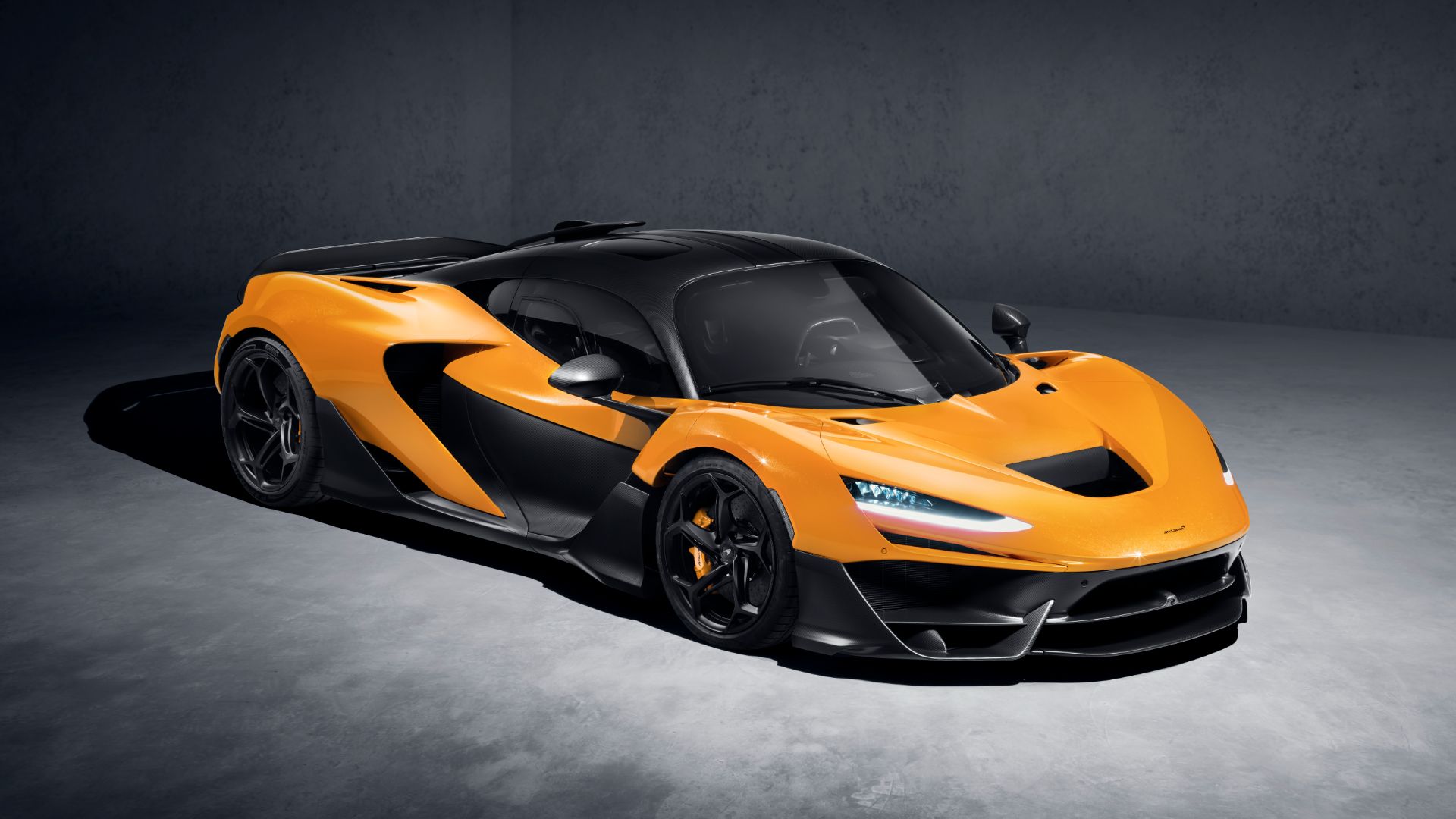
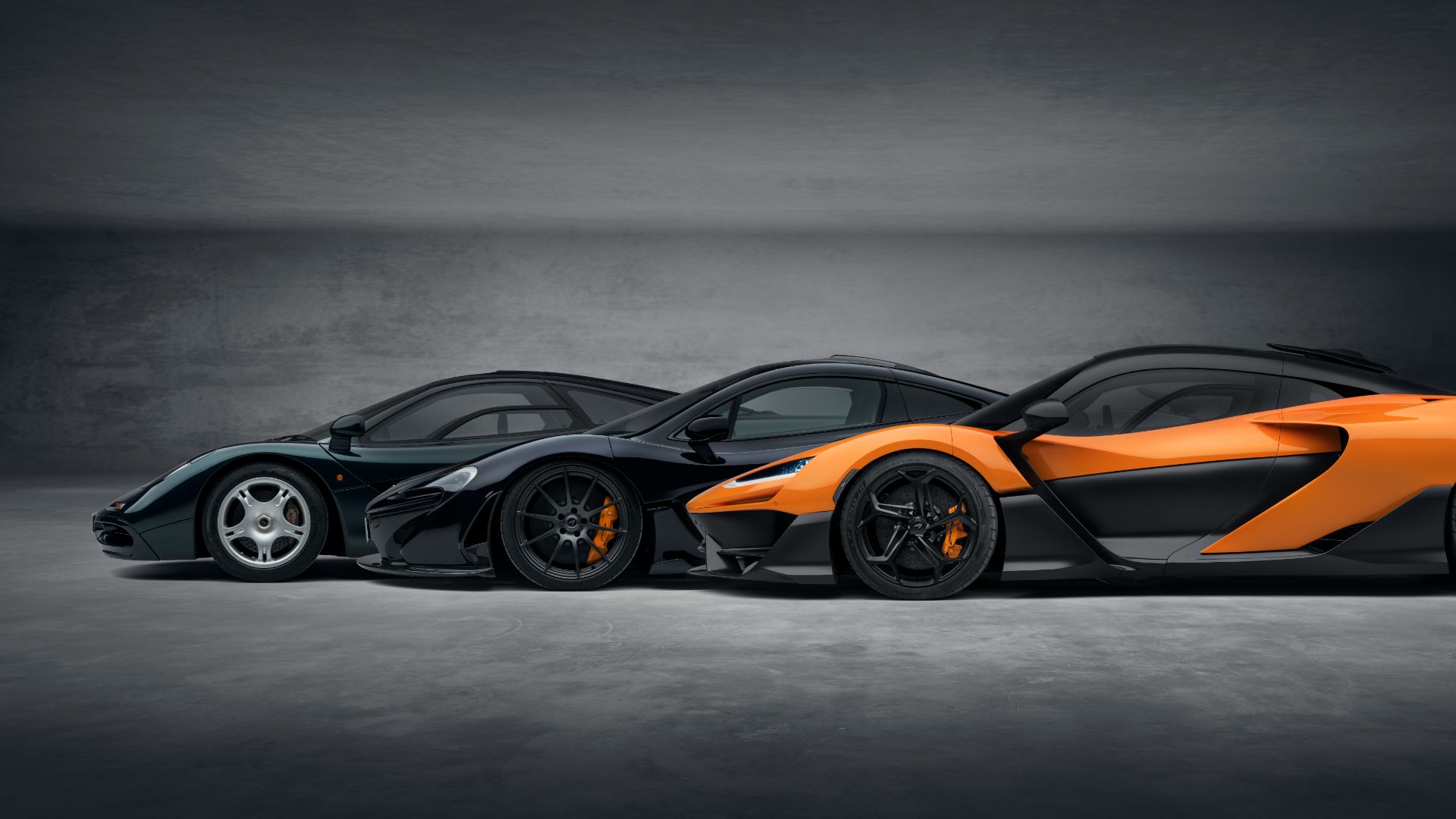
When the opening gambit is ‘a successor to the McLaren F1 and P1’ – two of the greatest supercars in history – you know what follows will be something special. Or it certainly needs to be.
Welcome to the inner sanctum of a futuristic, semi-subterranean factory in Woking: home to McLaren’s road and racing car operations. The wraps are about to come off a new ‘1’ car, a once-in-a-generation flagship that stands above even Ultimate Series models such as the Senna, Elva and Speedtail.
Its name is W1, with a ‘W’ that stands for ‘world championship’. The car will make its public debut on the 50th anniversary of Emerson Fittipaldi winning McLaren’s first drivers’ and constructors’ F1 world championships, but I’m here several weeks beforehand for a secret preview. Time to reveal Britain’s new hypercar hero.
Swifter than a Senna
Like the ground-breaking P1 of 2013, the W1 is a plug-in hybrid, combining a 4.0-litre twin-turbocharged V8 engine with a 1.4kWh battery and motorsport-grade electric motor. Total outputs are 1,275hp and 988lb ft of torque, all of which goes to the rear tyres via an eight-speed dual-clutch gearbox and electronic differential.
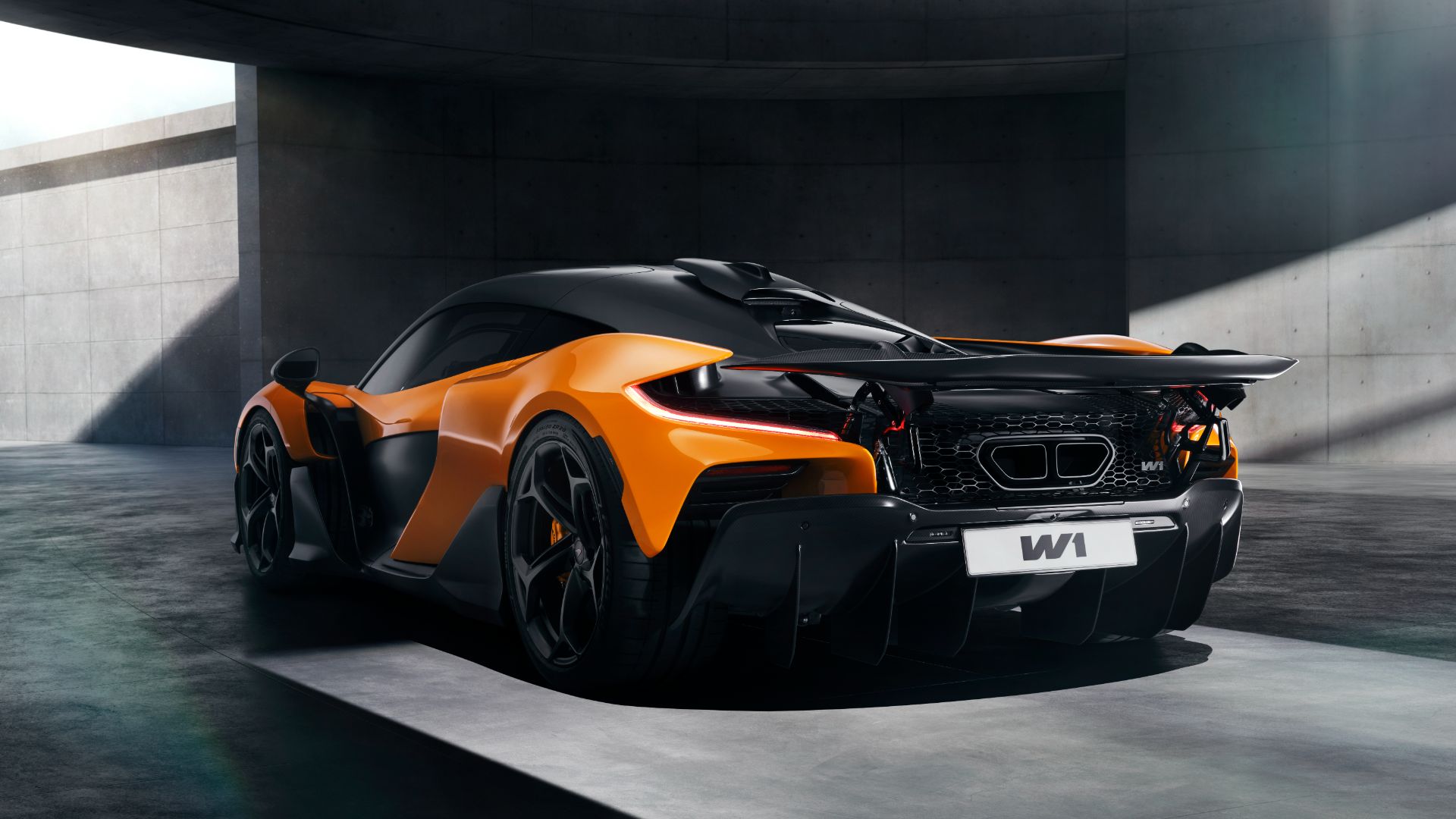
In a carbon-bodied car that weighs 1,399kg without fluids (reckon on a kerb weight of around 1,500kg), that means 0-62mph in 2.7 seconds and 0-186mph in 12.7 seconds, plus a limited top speed of 217mph. Helped by shape-shifting aerodynamics, including a patent-pending new Active Long Tail, the W1 can also lap Nardo’s handling circuit – used by numerous carmakers for testing – fully three seconds quicker than a McLaren Senna.
Only 399 examples of the W1 will be made, and all have been sold in advance, despite a base price of £2 million before any personalised touches from McLaren Special Operations (MSO) are added. Value for money? It’s a loose concept in this rarefied market, but when you consider the going rate for a McLaren F1 is about £20 million…
The W1’s ‘secret weapon’
If a McLaren with a mid-mounted 4.0 V8 sounds familiar, think again. The W1’s engine is a clean-sheet design and “not a development of the existing M840T V8 or a scaled-up version of the V6 in the Artura,” insists W1 line director, Alex Gibson. With a 90-degree angle, flat-plane crankshaft and soaring 9,200rpm redline, it brings 928hp to the party on its own.
The W1’s battery offers a tiny EV range of just 1.6 miles, but does mean you can slip away silently without waking the neighbours. Combined with a radial flux e-motor (similar to those used in IndyCar racing), it also counters the effect of any turbo lag, serving up instant electric torque from zero rpm.
Aluminium rocker switches on the instrument binnacle offer access to three modes for the powertrain and chassis: Comfort, Sport and Race. The latter, says chief aerodynamicist Robin Algoo, is the W1’s “secret weapon”. So how does it work?
Race mode for track use
Switch into Race mode and the W1 drops down by 37mm at the front and 17mm at the rear. Actuated by four electric motors, its Active Long Tail also pivots and extends rearwards by 300mm, effectively lengthening the working area of the diffuser.
In this configuration, downforce increases to a substantial 1,000kg at 174mph – up to five times more than the standard road setup, and all without the need for a high-rise rear wing.
However, it’s worth noting that, due to the Active Long Tail protruding well beyond the rear bumper, Race mode isn’t road-legal. It can only be activated when the GPS system detects the car is on a racetrack (or a temporary street circuit such as Monaco). You can leave the wing fully stretched when parked, though, for maximum street theatre and Instagram likes.
W1 gives you wings
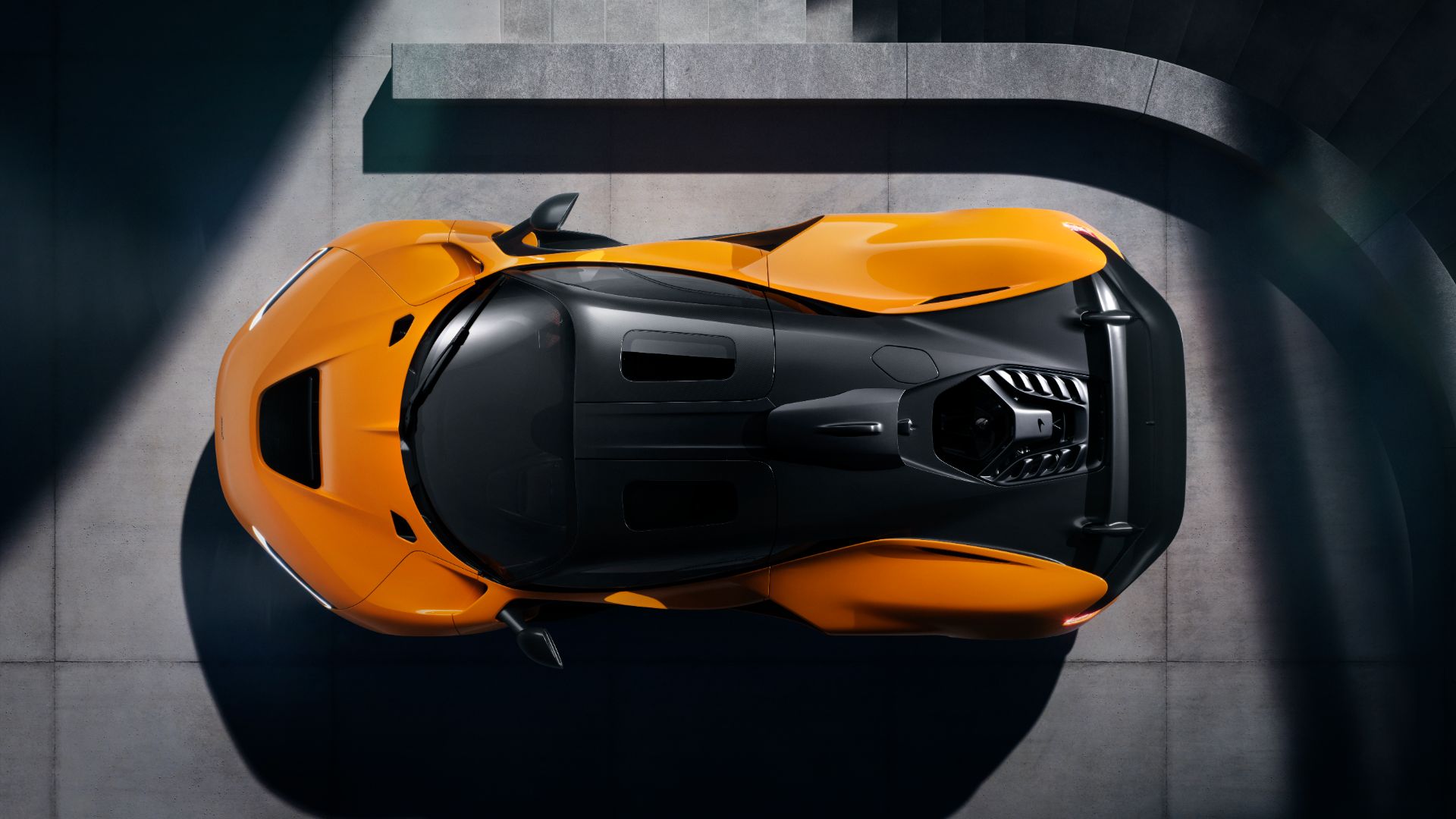
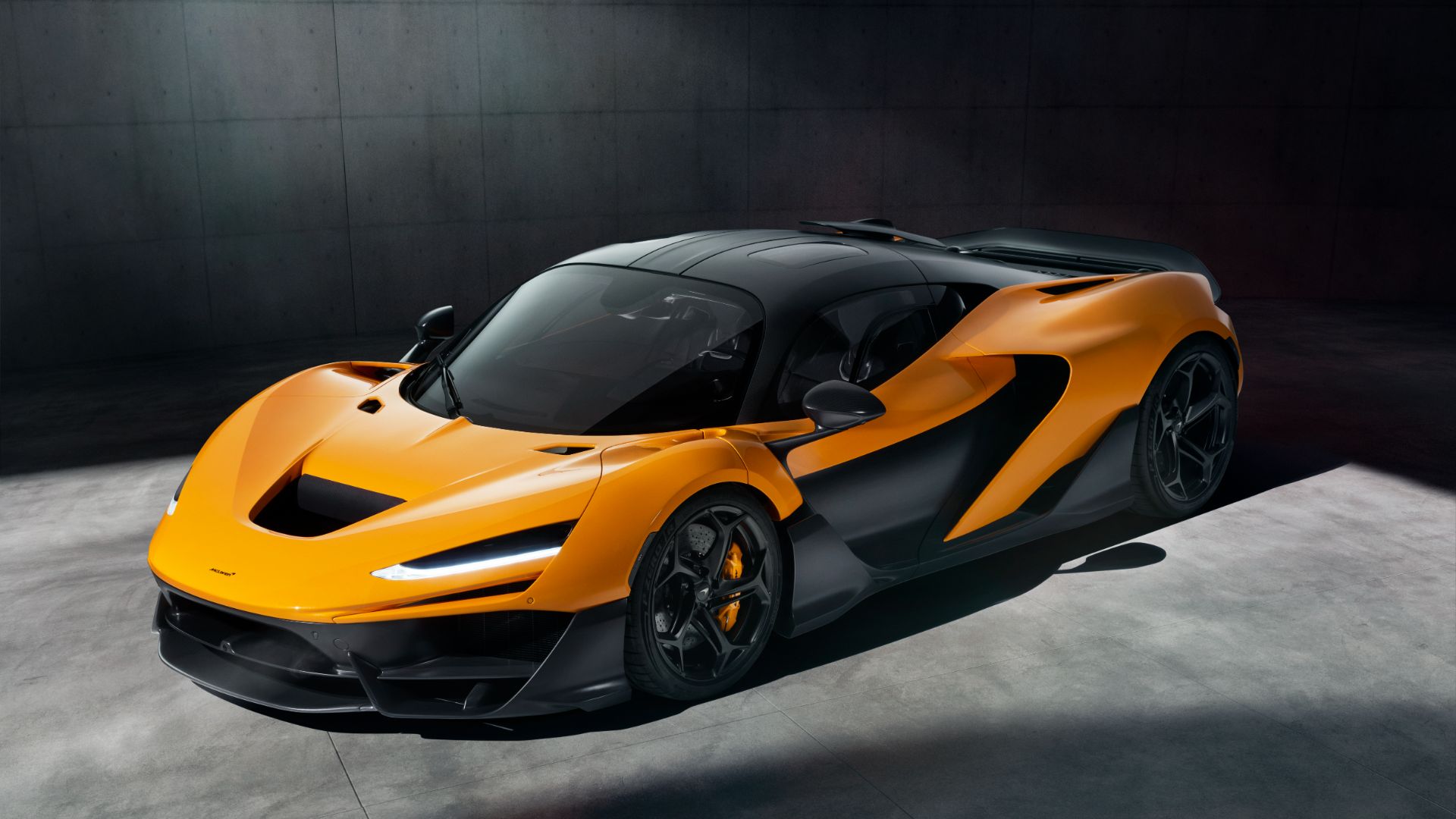
Other aero addenda on the W1 include a sculpted underbody, a flow diverter on the roof and an active front spoiler that offers ‘a level of performance comparable to the rear wing on most supercars’. Every external surface has been honed in a wind tunnel, from the front wishbones to the wing-shaped supports for the door mirrors.
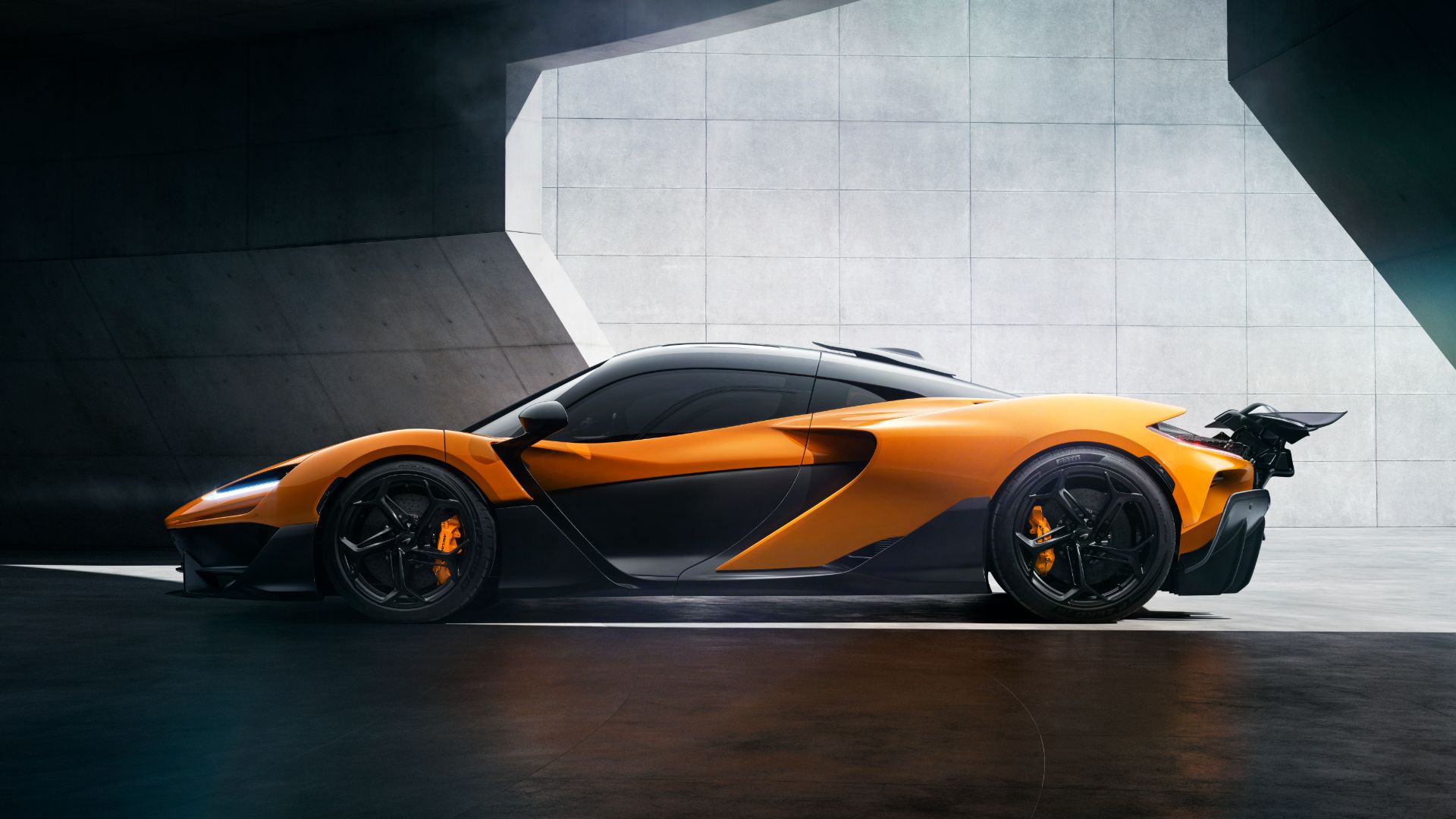
The overall look of the W1 is aggressive without being brutal, and clearly indebted to the P1 (arguably still the most beautiful hypercar of all). McLaren’s current MCL38 F1 racer provided inspiration for the curvaceous side pods, too.
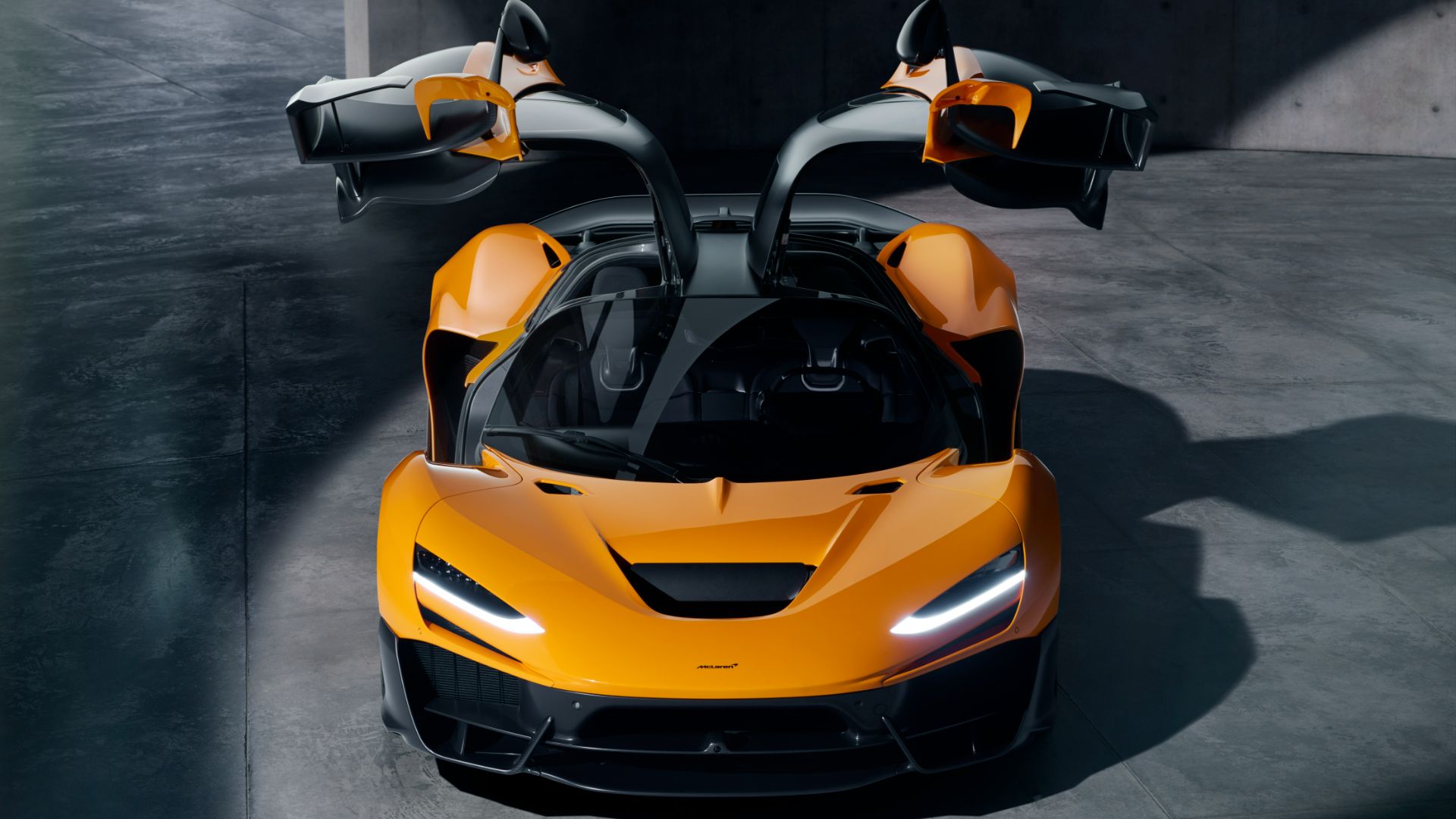
Obviously, as shown by the image above, the biggest design departure here is the doors. Now ‘anhedral rather than dihedral’ (let’s just call them gullwing doors), these provide easier access and allow smoother airflow towards the high-temperature radiators. They also look spectacular when opened, showing off the W1’s pre-impregnated carbon fibre chassis and unique interior. More on the latter shortly.
‘A car only McLaren could create’
McLaren purists can breathe a sigh of relief: yes, the W1 still has hydraulic power steering – a rarity in a world where virtually all car manufacturers have gone electric. Based on Woking’s previous efforts, the result should be lucid and linear feedback that boosts your confidence in the car.
Suspension is by double wishbones with pushrods and inboard dampers, plus active heave control tech that comes directly from F1. Brakes are carbon-ceramic discs with monobloc calipers and the W1 rides on 19-inch front and 20-inch rear forged alloy wheels (centre-lock magnesium rims are optional) with bespoke Pirelli P Zero Trofeo RS rubber.
McLaren CEO Michael Leiters promises “the purest driver connection by remaining true to the principles that underpin the ultimate supercar driving experience“. The W1, he says, “is a car that only McLaren could create”.
Inside the McLaren W1
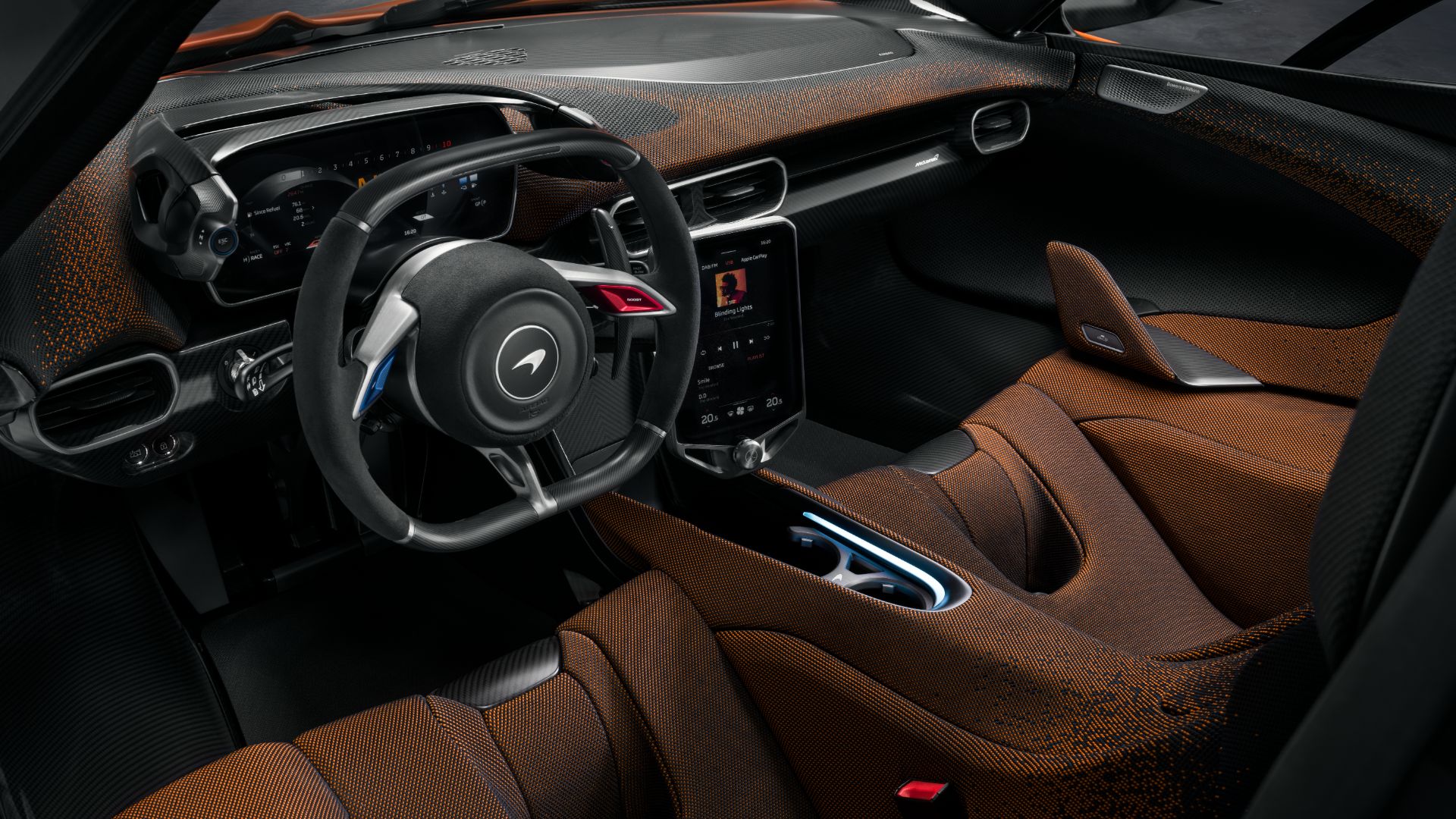
Inside, the W1 is pared-back and driver-focused, but not entirely impractical. There’s navigation, infotainment with Apple CarPlay, a luggage shelf behind the seats (big enough for two crash helmets, says McLaren) and even a sliding cupholder.
The seats themselves form part of the ‘Aerocell’ tub and are thus fixed in position – the wheel, pedals and primary controls move to meet the driver instead. You sit with legs outstretched and feet up high, like being aboard a single-seat racer. Many surfaces inside the car are exposed carbon fibre, while others are swathed in a lightweight, knitted material called McLaren Innoknit. We’d like to report that it’s hand-stitched together by elderly ladies in the Woking area, but sadly that idea was debunked.
The W1’s steering wheel is machined from a solid piece of aluminium and, in a break with McLaren tradition, has a couple of buttons inside the rim. ‘Boost’ provides maximum e-power for short periods, while ‘Aero’ activates an F1-style drag reduction system.
A hypercar halo
A worthy heir to the F1 and P1, then? Time will tell, but the W1 certainly raises the game for McLaren in terms of performance, both on the road and racetrack. It could even challenge the Mercedes-AMG One for a new Nurburgring lap record.
It’s an awe-inspiring halo for the British brand, too: one that stays true to McLaren Automotive’s core values even as it mulls over collaborating with another car company – and the almost inevitable SUV.
Ferrari has its own hybrid hypercar on the way – fittingly, a successor to the LaFerrari that challenged the P1 – but it will need to be something special to top this. Your move, Maranello.
Vauxhall has announced lower prices for the electric Corsa and Astra, slashing up to £4,765 from the cost of certain models.
In a world where seemingly everything has become more expensive, new car price cuts are a real rarity.
The Vauxhall Corsa Electric 50kWh Design model now starts from £29,045, representing a saving of £3,400 compared to the previous price.
Vauxhall has also reduced prices across the rest of the Corsa lineup, with the top-spec Ultimate model now £4,150 cheaper, and the sporty GS version down by £2,850.
Price cuts across the range
The Vauxhall Astra hatchback range has also seen comprehensive price cuts, starting with the Astra Electric Design, which now costs from £34,395 – a £2,850 reduction.
Similarly, the Astra Sports Tourer Electric estate has a new lower starting price of £36,145. The biggest price cut is reserved for the Astra Sports Tourer Ultimate, which has £4,765 shaved from its the list price: now from £40,695.
James Taylor, managing director at Vauxhall, said: “The new pricing structure on Corsa Electric and Astra Electric is the latest in a number of measures we have taken to democratise access to electric vehicles – including becoming the first brand in the UK to offer an electric and petrol hybrid car for the same list price with the new Frontera.”
Vauxhall recently announced new five-year PCP finance deals for electric cars, intended to make monthly payments equivalent to petrol-powered models.
Save money on charging, too
Buyers of new electric Vauxhalls can also benefit from the brand’s range of charging offers.
When buying online, customers can receive a free Octopus Energy Ohme Pro wallbox with installation included, or the option of £675 credit towards public charging.
Opting to buy through a Vauxhall dealership means you can also gain 50,000 Tesco Clubcard points. These can be exchanged for £500 in Clubcard vouchers, or a £1,000 credit with Clubcard Reward Partners.
Finally, new Vauxhall customers get an Octopus Electroverse card. This gives access to more than 750,000 public charging points across the UK and Europe, all paid for via a single account.
Created when moonlight passes through ice crystals in high-altitude cirrus clouds, the lunar halo is an ‘ethereal technicolour ring’ that appears around the moon.
The Spectre’s fortunate new owner challenged Rolls-Royce to channel this lunar effect into a custom exterior paint colour.
Fly me to the moon
Motivation for the Spectre Lunaflair came after the owner saw a previous Rolls-Royce Bespoke build: the 2023 Phantom Syntopia. This featured an iridescent Liquid Noir finish, with a mirror-like paint pigment.
More than a year of experimentation was required to perfect the Lunaflair’s new colour, with numerous trials of the optimal paint effects and application required.
The completed paint requires seven layers of lacquer, including a new pearlescent coat infused with fine flakes of magnesium fluoride and aluminium. This leads to a rainbow effect when the Spectre is exposed to bright sunshine.
Martina Starke, head of Bespoke at Rolls-Royce, said: “We are constantly astounded by the diversity of ideas that inform our clients’ Bespoke concepts, which frequently draw inspiration from materials, finishes and themes they see in other commissions.
“Spectre Lunaflair is the perfect example of this, exploring the ethereal beauty of a lunar halo, and sparked by the client after witnessing a paint finish on another Bespoke motor car.”
Dancing in the moonlight
The personalisation extends inside the Spectre Lunaflair, with Navy Blue, White and Peony Pink tones channelling the rainbow effect of the exterior paintwork.
This colour scheme extends across the seats and door panels, while the two-tone steering wheel has a Navy Blue outer and an Arctic White inner side.
Appropriately, for a car inspired by astronomical elements, the Lunaflair comes with Rolls-Royce’s dramatic Starlight Headliner roof lining, which is dotted with fibre optic ‘stars’.
To ensure the Spectre Lunaflair remains unique and exclusive, Rolls-Royce has confirmed that the special paint finish will not be used on another car.
The second fully electric Skoda has been revealed. The new Elroq is a compact SUV that majors on affordability.
Making its public debut later this month at the Paris Motor Show, Skoda wants the Elroq to build on the success of its larger Enyaq iV.
As the latest model to use the Volkswagen Group MEB platform, the Elroq is a relative of vehicles ranging from the Cupra Born to the new Ford Capri.
The Elroq also premiers Skoda’s new ‘Modern Solid’ design language, featuring a black ‘Tech Deck Face’ instead of a traditional front grille.
Up to 361 miles of range
Measuring 4.49 metres in length, the Elroq is a similar size to the conventional Skoda Karoq SUV. A kerb weight of 1,949kg means the Elroq is no lightweight, but smooth styling means a low drag coefficient of just 0.26.
The Elroq’s maximum range is 361 miles when equipped with the ’85’ model’s larger 79kWh battery option. The smallest 52kWh battery, found in the Elroq 50, delivers up to 233 miles.
Charging speeds of up to 145kW are supported for the smaller battery, with the 79kWh item compatible with 175kW devices. This means charging from 10 to 80 percent can take less than 30 minutes.
All launch versions of the Elroq are rear-wheel drive, with power outputs ranging from 168hp to 282hp. The latter, combined with the 79kWh battery pack, can accelerate from 0-62mph in 6.6 seconds.
Packing in plenty of tech
Skoda promises the Elroq will boast class-leading levels of standard equipment. The base SE version comes with LED headlights, LED tail lights and 19-inch alloy wheels as standard. A 13-inch central touchscreen is combined with a digital instrument panel, along with a reversing camera and rear parking sensors.
The Elroq SEL gains a heated two-spoke leather steering wheel, heated front seats, paddles to adjust brake regeneration levels and satellite navigation. Front parking sensors are included, too.
Privacy glass, dark chrome roof rails, keyless entry and adaptive cruise control are fitted to the Elroq Edition.
Finally, topping the range is the Elroq SportLine, with 20-inch black alloy wheels, lowered sports suspension, sports seats and carbon-look interior trim.
Time to Czech the Elroq out
UK prices for the new Skoda EV start at £31,500 for the entry-level Elroq SE 50, which uses the 52kWh battery pack.
At the opposite end of the range, the flagship Elroq SportLine 85 will cost from £41,600.
The Skoda configurator is now live, allowing owners to tailor the compact EV to their own taste. UK orders can be placed from 18 October 2024, with the first deliveries expected in spring 2025.
Hyundai has reached a huge production milestone, having built more than 100 million vehicles across the globe.
Leaving the line in Ulsan, South Korea, an Ioniq 5 electric SUV claimed the title of being the 100,000,001st Hyundai to be made.
The new owner of the Ioniq 5 collected the car directly from the factory, and took part in a commemorative handover ceremony.
Record-breaking production speed
Hyundai was founded as an automotive brand in December 1967, meaning it has taken the Korean company less than 57 years to pass the 100 million vehicle mark.
By comparison, it took Volkswagen 60 years after the end of World War II to achieve the same milestone, doing so with a Touran MPV in 2005.
And it took Ford from 1903 until November 1977 to build its 100 millionth vehicle: a Ford Fairmont that left the Mahwah assembly plant in New Jersey.
To further emphasise the speed at which Hyundai has achieved this target, consider that it only surpassed 50 million vehicles in 2013…
Just the beginning
Hyundai began production with only the Ulsan plant, but it now owns 12 manufacturing facilities in 10 different countries worldwide.
Ulsan was responsible for building the Pony, Hyundai’s first mass-market car, and is now a centre for electrification.
Dong Seock Lee, president and head of domestic production at Hyundai Motor Company, said: “Each and every employee at Hyundai Motor has contributed to the accumulation of 100 million units through their hard work and dedication.
“This auspicious occasion is just the first step toward the future era of electrification that Hyundai Motor will lead.”
The British Touring Car Championship (BTCC) is moving closer to switching all competitors on the grid to sustainable petrol.
It follows a recent successful trial with the synthetic, low-emissions fuel during the Silverstone rounds of the 2024 BTCC series.
Daryl DeLeon used the fuel for the complete race weekend in his Duckhams Racing Cupra Leon, racking up 198 miles of competitive driving.
DeLeon finished every session without suffering any fuel-related issues. His pace was also similar to cars running on the regular control championship fuel.
Same performance, lower emissions
The new BTCC race fuel has been developed by Haltermann Carless. Its Hiperflo ECO102 R100 petrol meets FIA requirements to be classed as a sustainable fuel.
Compared to traditional fossil fuels, the sustainable petrol manages to reduce greenhouse gas emissions by 55 percent when measured on a wheel-to-well basis.
Should the full BTCC grid adopt the sustainable fuel, CO2 emissions from the series would be reduced by 50,000 kg over an entire season.
Crucially, the Haltermann Carless sustainable fuel is intended to be a ‘pure drop-in solution’, requiring no hardware modifications to existing engines.
Looking to a sustainable future
Alan Gow, chief executive of the BTCC, said: “We are delighted with the significant progress we have made with regard to 100 percent sustainable fuel – working closely alongside Haltermann Carless and our teams – with last weekend’s results representing a significant milestone in the project.
“The development work doesn’t stop here, however, as we actively strive to even further improve the efficiency and performance of the sustainable fuel going forward.
“This is an important and essential step for the BTCC as we continue to look to maintain the competitiveness and excitement synonymous with our championship, but in a more sustainable way.”
As a further test, DeLeon will make use of the sustainable fuel again for this weekend’s BTCC finale at Brands Hatch.
The plan is then to make the sustainable option become the default control fuel for the race series in the near future.
A new study has revealed the truth about how British motorists assess their own driving abilities.
The survey by Isuzu found that almost one-in-six (15 percent) of respondents rated their driving skills as ‘bad’, with 4 percent admitting they are actually a danger on the roads.
Close to four-in-ten (39 percent) said they struggle with parallel parking, whilst just parking in a bay is problematic for 19 percent of those surveyed.
Remembering to turn headlights on when it gets dark troubles 15 percent of motorists, and 7 percent of respondents said they forget to look for pedestrians.
Driver self-assessment
When it comes to locations with the worst drivers, the study highlighted Cardiff as being the capital of poor driving ability in the UK.
More than one-in-three (35 percent) of those surveyed from the Welsh city graded their driving ability as bad, followed by 33 percent of Londoners, and 31 percent of Liverpudlians.
In contrast, no drivers from Stoke-on-Trent believed they were a bad driver, with only 2 percent of motorists from Nottingham willing to believe their abilities were below standard. Inhabitants of Cambridge (3 percent rated bad), and Edinburgh (4 percent) were similarly self-assured.
Leading reasons cited for being a bad driver included there being too many cars on the road, a factor for more than one-third (36 percent) of those surveyed.
Parking spaces being too small (24 percent), being easily distracted (20 percent), and roads being too small (17 percent) were other leading excuses.
A worrying reality
Road rage was a common factor for those surveyed, with more than half (59 percent) saying they had been shouted at or received rude gestures, because of their poor driving.
Almost one-in-five (19 percent) admitted they have friends or family members who refuse to be a passenger in their car, due to poor driving abilities.
George Wallis, Head of Marketing at Isuzu UK, said: “With over 50 million drivers in Great Britain, it is worrying to think that as many as 7.5 million consider themselves bad drivers. It’s clear from the research that UK motorists face many challenges on all journeys, from smaller roads, tight parking bays and even their own vehicle.”
Perhaps the most telling statistic from the survey was that almost two-thirds (62 percent) of respondents simply wish they were better drivers.
Vehicle production on Merseyside is set to continue, with Jaguar Land Rover (JLR) confirming a major investment in its Halewood plant.
Some £500 million will be spent on the historic facility, with JLR looking to produce electric vehicles alongside existing combustion-engined and hybrid models.
The investment programme will support JLR’s ‘Reimagine’ strategy, which aims for all of its brands to be electrified by 2030.
In addition, the Reimagine plan should help JLR to achieve ‘carbon net zero’ across its supply chain and production operations by 2039.
Investing for the future
Half of the £500 million investment has already been spent on the Halewood site, with more than one million hours of construction work undertaken during the past year.
Extending the facility by 32,364 square metres, the Merseyside factory now features dedicated electric car production lines, which are supported by 750 autonomous robots.
This ‘factory of the future’ will be used to build mid‑sized luxury electric SUVs, making use of JLR’s new Electric Modular Architecture (EMA) platform.
Other work includes the creation of a new body shop capable of producing 500 vehicle bodies every day. The final production line has also been extended from 2.5 miles to 3.7 miles to accommodate battery fitment.
JLR technology transfers
Tailoring the Halewood site to accommodate electric vehicle production has seen build stations extended in length, along with 40 new autonomous mobile robots to assist employees with fitting high‑voltage batteries.
JLR has also delivered high voltage training to more than 1,600 employees at the factory.
Following the end of combustion-powered vehicle production at JLR’s Castle Bromwich site, equipment has been transferred to Halewood.
Some £16 million worth of production technology has now moved to Merseyside, including articulated robots and automated guided vehicles.
A site for ‘world-class luxury EVs‘
Barbara Bergmeier, executive director at JLR, commented: “Halewood will be our first all-electric production facility, and it is a testament to the brilliant efforts by our teams and suppliers who have worked together to equip the plant with the technology needed to deliver our world-class luxury electric vehicles.”
First opened in October 1963 by Ford, the Halewood site was originally used to build the Anglia. This was followed by the Ford Corsair, Escort and Capri, until production shifted to the Jaguar X-Type in 2001.
More recently, Halewood has been responsible for manufacturing the Range Rover Evoque and Land Rover Discovery Sport.
A collaboration between Skoda and security experts UTAC Special Vehicles has resulted in a special armoured version of the Kodiaq.
Developed as a joint project, the Kodiaq Armoured is based upon the previous, first-generation SUV, produced from 2017 until earlier this year.
An array of modifications means the Skoda Kodiaq Armoured is fully certified to meet PAS 300 and PAS 301 Civilian Armoured Vehicle standards.
It follows an armoured version of the Skoda Superb Estate, launched in 2018, which has sold more than 500 examples around the world.
Multiple layers of safety
UTAC Special Vehicles has applied extensive modifications to the passenger compartment of the Kodiaq, although the exact details of these have (understandably) been kept secret.
Bullet-resistant glass is used, along with armoured steel protection, allowing the modified Kodiaq to absorb the impacts of bullets and explosions.
Testing for the Kodiaq Armoured saw the Skoda SUV subjected to more than 200 rounds of ammunition. This included attacks from both handguns and assault rifles, with the Kodiaq also evaluated on its ability to protect against grenades and high explosives.
All four wheels of the Kodiaq Armoured are fitted with a tyre retention system. This allows the Skoda to keep driving in the event of a puncture, with the tyre prevented from leaving the rim even when fully deflated.
Unassuming protection
With the additional protection adding to the Kodiaq’s kerb weight, both the suspension and brakes have been upgraded to suit this armoured model.
Buyers can choose from a host of powertrain options, along with all-wheel drive. Offered in five-seat format, the Kodiaq Armoured comes with an 8.0-inch infotainment touchscreen offering satellite navigation, plus Apple CarPlay and Android Auto phone connectivity.
Blue lights and a siren are included, too. In non-armoured form, the Skoda Kodiaq has become a popular choice for emergency services, including various police forces.
A price for the Skoda Kodiaq Armoured has not been provided. However, the previous Superb Armoured started from more than £118,000.