Home Blog Page 82

Driving away without paying for petrol: what does the law say?

1
BP filling station

The high cost of petrol and diesel means some less scrupulous motorists are tempted to fill up and then drive away from the petrol station without paying.

Known by the police as ‘bilking’, this offence is estimated to cost every petrol station around £10,500 per year. And figures obtained by Crown Oil show 99 percent of crimes don’t lead to a prosecution.

The act of leaving a petrol station without paying for fuel is covered by the Theft Act 1978. The offence of Making Off Without Payment (MOWP) is outlined in section three of the Act.

The Theft Act 1978 states: ‘A person who, knowing that payment on the spot for any goods supplied or service done is required or expected from him, dishonestly makes off without having paid as required or expected, and with intent to avoid payment of the amount due, shall be guilty of an offence.’

In serious cases, a person found guilty of Making Off Without Payment could face a maximum of two years in prison and an unlimited fine. Defendants convicted in a Magistrates’ Court can be fined up to £5,000 and/or jailed for up to six months.

Police may not investigate

Police car flashing light

However, the police may not investigate the crime of making off without paying for fuel unless there is proof of criminal intent. Devon and Cornwall Police hit the headlines when a forecourt owner was told officers would only respond if there was an obvious ‘intent’ to steal.

A request under the Freedom of Information (FOI) Act in 2019 showed that, of 897 offences of Making Off Without Payment, Devon and Cornwall Police listed a total of 616 as ‘Investigated as far as reasonably possible. No suspect identified’. Some of these may not have been related to petrol station drive-offs, however.

In a separate FOI request, West Yorkshire Police said it did ‘not have a specific policy’ in relation to the offence of leaving a petrol station without paying, but it has ‘specific guidance’ for forecourt retailers.

‘In summary, if the suspect draws fuel, enters the store and purchases items before paying for those items, the call taker will ask whether the suspect has been asked whether they have taken any fuel.

‘If the question was asked, the offence made out is one of fraud by false representation. If the question was not asked, the offence is making off without payment.

‘Where fuel is drawn and the offender simply drives off, the offence is making off without payment. However, where this is done in a vehicle bearing false registration plates, the appropriate offence is theft – non specific. The appropriate crime record is then completed.’

If petrol station staff believe the act of making off without payment was unintentional or accidental, they are advised to contact the DVLA. The retailer can then seek to recoup the losses using the details of the car’s registered keeper.

How to prevent petrol station theft

Filling station petrol pump

In the past, police chiefs have suggested the petroleum industry could eliminate ‘bilking’ by making motorists pay for fuel upfront – a practice that is common in other countries.

However, UK fuel retailers are reluctant to implement this because the walk-in shop, with its range of high-profit-margin drinks and snacks, is a core part of their business.

Fuel theft looks likely to decline in the longer term, as increasing numbers of drivers switch to electric cars. At present, however, the British Oil Security Syndicate (BOSS) estimates that UK police forces dedicate more than 800,000 resource hours to the problem each year.

ALSO READ:

New car insurance ‘Vehicle Risk Rating’ to replace 1-50 groups

13 easy ways to save money on fuel

Your EV questions answered on Motoring Electric

Advertisement

New 2025 e-Vitara is Suzuki’s first electric SUV

0
New Suzuki eVitara

Revealed in Milan, Italy, the new e-Vitara is Suzuki’s first mass-production fully electric car.

Based on a specially developed EV platform, the e-Vitara was designed with traditional Suzuki off-road prowess in mind. It will replace the existing, combustion-powered Vitara SUV.

The launch of the e-Vitara is part of Suzuki’s journey towards full electrification, with various petrol models such as the Jimny, Ignis and Swift Sport now dropped from its UK range.

Available with 4WD

New Suzuki eVitara

Suzuki’s new Heartect-e ‘skateboard’ platform is designed solely for electric vehicles. It offers two battery sizes and allows for both two- and four-wheel-drive setups

The entry-level 49kWh battery is available with two-wheel-drive only, and is combined with a 142hp electric motor. 

Opting for the larger 61kWh battery increases motor output to 172hp in 2WD guise. Choose the 4WD e-Vitara and you gain an additional 64hp electric motor, resulting in a combined torque figure of 221lb ft.

The front and rear axles of the 4WD e-Vitara can apportion torque independently, via Suzuki’s Allgrip-e system. A driver-selectable Trail mode is designed for off-road use, recreating the effect of a limited-slip differential to maximise traction.

A Toyota version is coming, too

New Suzuki eVitara

Suzuki will build the e-Vitara in Gujarat, India, with production expected to start in spring 2025. Japan, Europe and India will be the first target markets, although Suzuki has yet to reveal e-Vitara prices or final specifications.

The e-Vitara is expected to continue the partnership between Suzuki and Toyota, meaning a version of the Toyota Urban SUV concept will make use of the same Heartect-e platform.

Speaking at the launch event in Milan, company president Toshihiro Suzuki said: “The e-Vitara is our first BEV, developed through repeated trial and error to create an easy-to-use BEV for our customers. In order to realise a carbon-neutral society, we will provide a variety of options, including BEVs, hybrid vehicles and CNG vehicles, tailored to specific regions. 

“Introduction of the e-Vitara represents a significant milestone in achieving carbon neutrality. Following the launch of the e-Vitara, we will continue to expand our BEV line- up and propose mobility solutions tailored to the needs of specific countries and regions.”

ALSO READ:

One-off Honda Civic has the world’s most silver paint

All we want for Christmas… is a Tamiya remote control GR Yaris

Best family SUVs to buy in 2024

Advertisement

One-off Honda Civic has the world’s most silver paint

0
Honda Silveriest Paint Hybrid

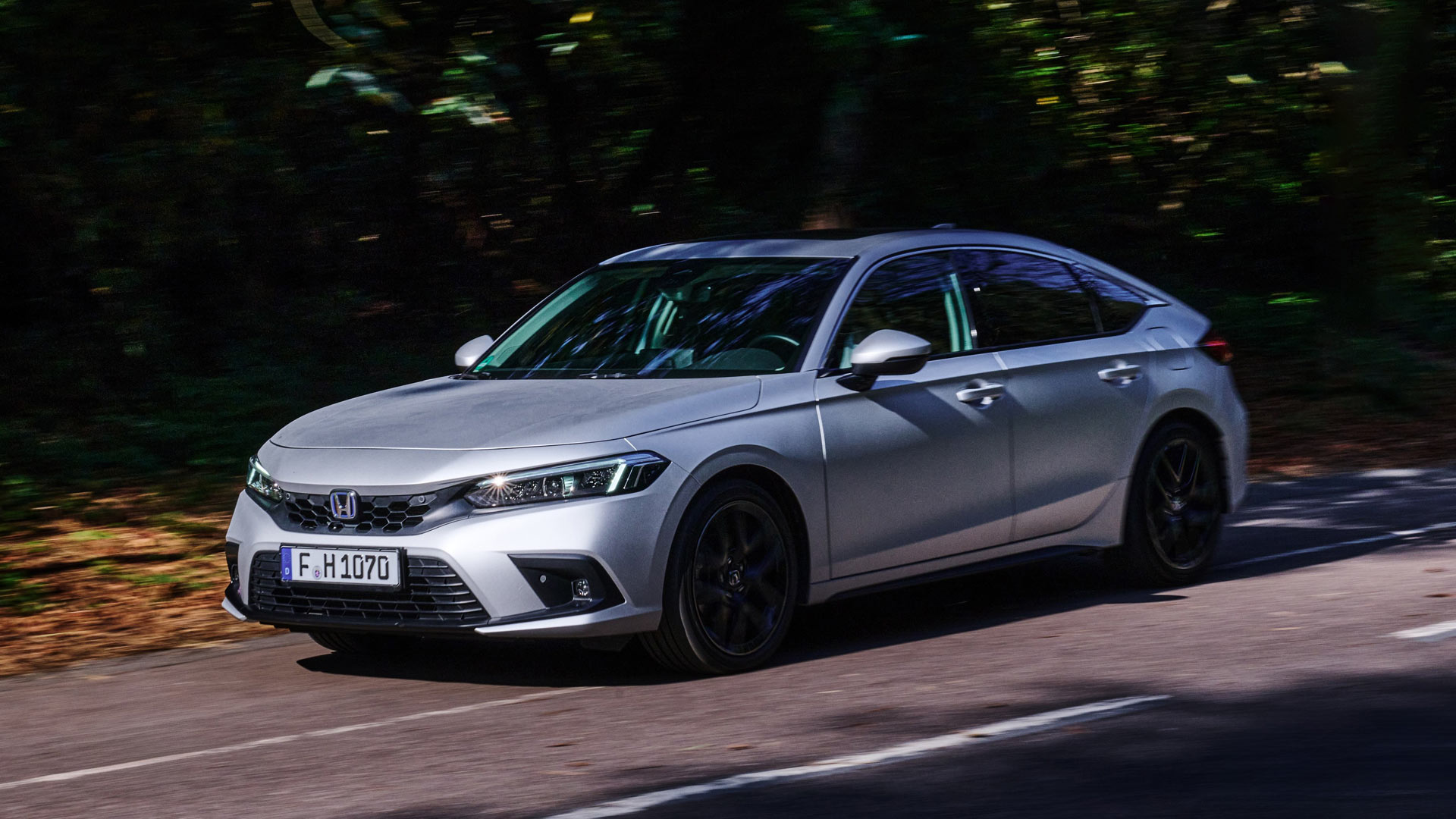
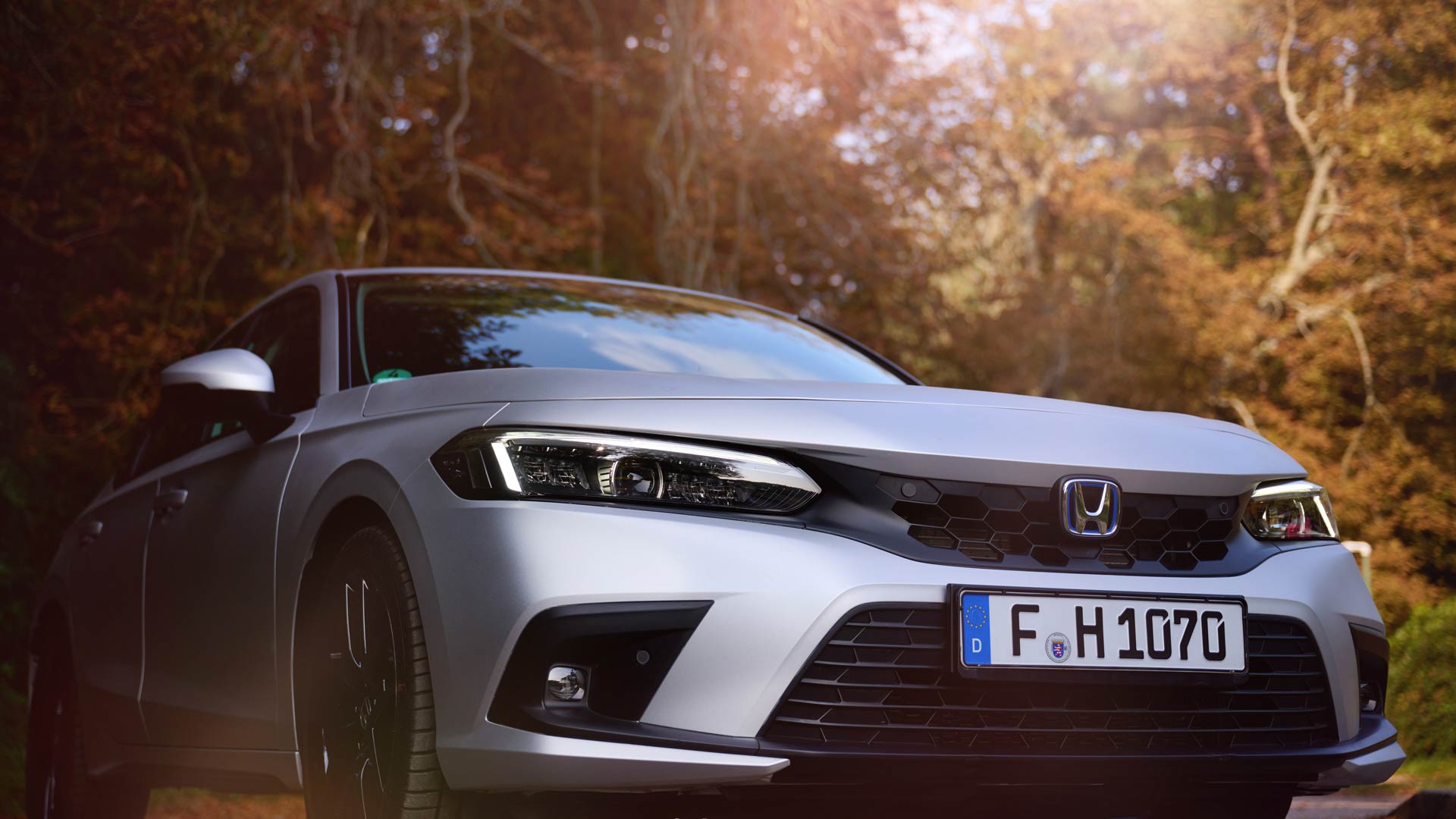
A new Honda Civic hatchback features the world’s most silver paintwork, helping the company mark a special silver anniversary.

The ‘silveriest’ paint includes elements of the actual precious metal, ensuring this is a truly bespoke Civic e:HEV hybrid

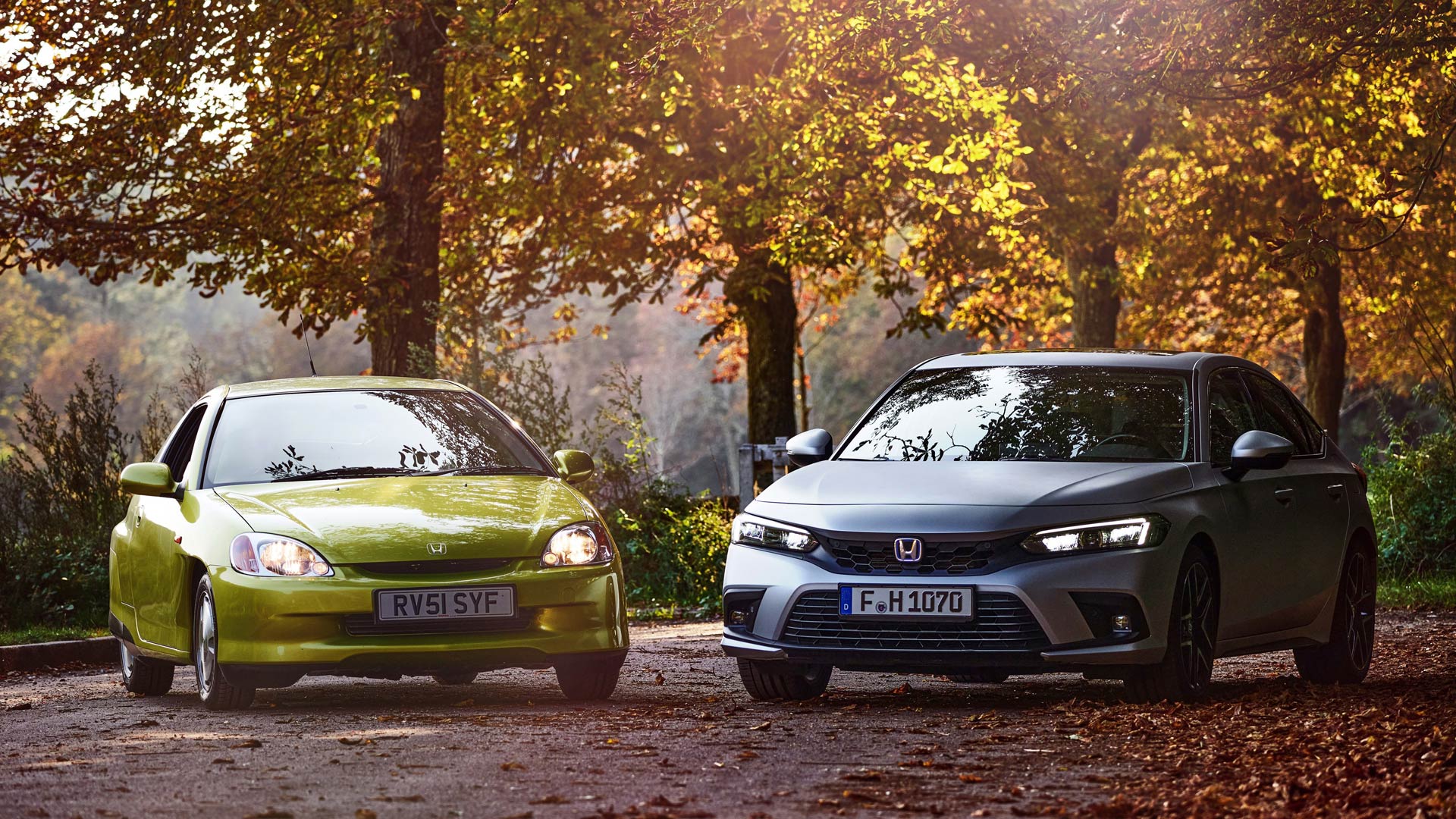
For Honda, the occasion is the 25th anniversary of the radical Insight hybrid, which made its European debut in the autumn of 1999.

Today, Honda has fully embraced hybrid technology, with all cars in its UK range now offered with electrified power.

A silver anniversary gift

Honda Silveriest Paint Hybrid

The Civic’s special finish is the work of British artist Stuart Semple. The inventor of a bespoke range of paints, Semple’s creations include Pinkest Pink, Goldest Gold and Blackest Black.

Sourced from his Culture Hustle gallery, Semple made the shimmering Silveriest Silver hue with 64 percent real silver flakes, combined with pigments blended in an acrylic suspension. 

The result is paintwork that replicates the effect of solid silver, but without the eye-watering expense.

The Syrup Room in Bournemouth undertook the task of painting the Civic e:HEV, requiring three days to complete the job. Multiple layers of specialist protective and removable paint were required, before the final coats of Silveriest Silver were applied with high precision spraying equipment.

A quarter-century of hybrids

Honda Silveriest Paint Hybrid

Launched in 1999, the Honda Insight combined futuristic styling with a 1.0-litre three-cylinder petrol engine delivering 68hp. Honda’s first-generation Integrated Motor Assist (IMA) hybrid system contributed a further 13hp. 

The Insight’s sleek styling and impressive aerodynamics helped it achieve an average fuel economy figure of 83.1mpg. 

Nik Pearson of Honda Motor Europe, said: “Honda’s hybrid know-how is unmatched in the industry. In 1999 we set about building the world’s most fuel-efficient car, the revolutionary Insight, which was the first petrol-electric hybrid car in Europe. 

“Today we offer a fully electrified model range, the majority of which feature our innovative e:HEV powertrain. It’s for these reasons we’ve marked 25 years of hybrid technology with the ultimate silver anniversary gift: the Silveriest Civic. And doesn’t it look fantastic?”

ALSO READ:

Honda Civic review

Honda Civic Type R review

Retro Honda Civic, Integra and Accord Type R driven: which one wins?

Advertisement

BTCC to ditch hybrid power for sustainable petrol in 2025

0
BTCC ditches hybrid power for 2025

The British Touring Car Championship (BTCC) has made a surprising decision to drop hybrid power from the 2025 season onwards. 

Instead, the series will aim to bolster its green credentials through the use of 100 percent sustainable race fuel by all competitors. 

This follows a number of successful tests of fully sustainable, fossil-free fuel during the 2024 season. 

The BTCC noted no disadvantages from using sustainable fuel when compared to drivers using standard race-grade petrol.

Chequered flag for hybrid tech

BTCC ditches hybrid power for 2025

The BTCC became the first touring car competition in the world to introduce hybrid technology, after it was made compulsory for the 2022 season. 

A Hybrid Energy Management system, developed by Cosworth Engineering, was tested extensively before being mandated for competition use. Instead of the previous ‘success ballast’, the level of hybrid assistance given to each driver was restricted in a bid to promote closer competition. 

Changes were made to the operation of the hybrid assistance for the 2024 season, with extra boost from the turbocharged engine permitted to aid overtaking. This followed Ashley Sutton’s dominance of the BTCC during 2023. 

The ‘push to pass’ turbo boost will be retained for the 2025 season, but without any additional hybrid assistance. The changes will reduce weight by around 55kg, also aiding the cars’ agility.

BTCC continues to evolve

BTCC ditches hybrid power for 2025

The new sustainable race petrol – Hiperflo ECO102 R100 – is free of any fossil fuel components. All its ingredients come from synthetic and biological sources, meeting all the relevant FIA and ISCC rules on sustainability. 

Alan Gow, BTCC chief executive, said: “The hybrid era was a great one for the BTCC. Six years ago, when we first announced hybrid, it was a technology still in its relative infancy within motorsport. We’ve successfully completed that programme – and really have no more to prove in that respect – whilst others have yet to catch up. 

“But as we’ve now ticked that box we can move further forward with the introduction of the fossil-free sustainable fuel, whilst very importantly delivering the same performance parameters that made this year’s BTCC such a memorable one.

“We don’t just sit still with the BTCC – we evolve, and we advance, as today’s announcement firmly underlines.”

ALSO READ:

All we want for Christmas… is a Tamiya remote control GR Yaris

First example of Maserati MCXtrema hypercar arrives in the UK

New government campaign warns of dangerous fake car parts

Advertisement

What to do if your car key fob stops working

1
Car key fob

Drivers in a supermarket car park were left puzzled when their car key fobs stopped working. According to news reports, North Hertfordshire Police said it received a number of calls from people who were unable to unlock their vehicles.

This followed a similar incident in Kent, where shoppers could not open their cars. At the time, a spokesperson for the RAC said: “These fobs work on a very low frequency, so radio masts shouldn’t interfere with them.

“Things like CCTV cameras and baby monitors run on the same frequency, however, so it’s a common problem in town centres.”

Another possibility, however, is that thieves are using jamming devices to block the signals for remote central locking. Ford security expert Simon Hurr has the following advice for owners who suspect the signal between their car and key fob has been compromised:

  1. Place the key fob under your chin with your finger on the unlock button.
  2. Tuck your chin down to shield the fob as much as possible from any radio frequency jamming device in the vicinity.
  3. Walk around the car, maintaining a position of directly facing the car at all times.
  4. While walking slowly around the car, press the unlock button repeatedly.
  5. When the car unlocks, the source of radio frequency interference will be behind you (your body blocks the jammer).

The problem of keyless car theft

Ford key fob

Signal jamming in a public place is one example of criminals using technology to target unsuspecting motorists. Keyless car theft is when two criminals use a relay box to pick up a signal from the key fob inside a home or office. Doing so allows them to replicate this signal and unlock the car.

Many popular Ford models, including the Puma, Focus, Kuga and Mustang Mach-E use keyless entry key fobs with a sleep mode. A motion sensor inside the car detects when it has been stationary for longer than 40 seconds and triggers a shutdown, so the key won’t respond to attempts to hack its signal.

Simon Hurr added: “The online availability of devices which have no place in public hands has long been a problem for Ford, our industry and crime fighters. We are pleased to respond with a simple but effective solution – swiftly implemented to help protect owners of our top-selling cars.”

ALSO READ:

Top 10 tips for buying a used car

UK speed limits and speeding penalties: a quick guide for drivers

The hidden secrets of everyday motoring

Advertisement

New 2025 Skoda Kodiaq vRS debuts with 265hp and 7 seats

0
New 2025 Skoda Kodiaq vRS

Skoda has announced a hotted-up vRS version of its new, second-generation Kodiaq SUV.

The 2025 Kodiaq vRS offers the potential for hot hatch performance on the school run, with room for up to seven people inside Skoda’s most practical vehicle.

The first-generation Kodiaq vRS, then powered by a diesel engine, developed a cult following for its combination of pace and space. Skoda will hope for more of the same success with this version.

Same engine as the Golf GTI

New 2025 Skoda Kodiaq vRS

Powering the new Kodiaq vRS is the familiar ‘EA888’ 2.0-litre four-cylinder petrol engine, found throughout the Volkswagen Group in cars such as the Golf GTI and Skoda Octavia vRS.

In Skoda’s latest range-topping SUV, the engine delivers 265hp and 295lb ft of torque. This reflects a 20hp boost in horsepower compared to the previous Kodiaq vRS, cutting the 0-62mph time down to 6.4 seconds. A top speed of 144mph should be more than sufficient, too.

All-wheel drive is fitted as standard, along with a seven-speed DSG dual-clutch automatic transmission. Dynamic Chassis Control is also included, offering 15 levels of damper adjustment, plus there are ventilated disc brakes for good measure.

Standing out from the SUV crowd

New 2025 Skoda Kodiaq vRS

In keeping with recent Skoda vRS tradition, the fastest Kodiaq comes with a gloss black finish for its front grille, window surrounds, roof rails and side mirror caps. 

A bespoke front bumper features extra air intakes, while the front grille has a horizontal lighting strip. Polished twin exhaust tailpipes are found at the rear, with honeycomb trim covering the diffuser. 

Bold 20-inch ‘Elias’ alloy wheels are unique to the Kodiaq vRS, and have a polished black finish. Red-painted brake calipers are a further hint at the performance on offer.

Inside the hot Kodiaq are high-backed sports seats with vRS branding, plus plenty of red stitching and a three-spoke sports steering wheel.

Due in spring 2025

New 2025 Skoda Kodiaq vRS

Buyers can choose between vRS Lounge and vRS Suite specifications. The former comes with perforated Microsuede upholstery, while the latter upgrades to full leather. 

Other interior highlights include a 10.0-inch digital instrument panel, 13.0-inch central infotainment touchscreen, ambient lighting, keyless entry and LED Matrix headlights.

Skoda has yet to confirm prices for the new Kodiaq vRS, but expect this latest family SUV to cost around £50,000. The first UK deliveries are due in spring 2025.

ALSO READ:

Skoda builds modified Superb Estate ‘Sleeper Edition’ with 477hp

Skoda Fabia review

Best family SUVs to buy in 2024

Advertisement

All we want for Christmas… is a Tamiya remote control GR Yaris

0
Collecting Cars Tamiya GR Yaris

Online auction platform Collecting Cars has announced a limited-edition, radio-controlled Toyota GR Yaris.

Created in collaboration with model experts Tamiya, only 25 examples of the special R/C machine will be made for collectors across the world. And just in time for Christmas, too.

The 1:10-scale model is a replica of the full-size Toyota GR Yaris revealed earlier this year at the Collecting Cars Worldwide Coffee Run.

Its livery pays homage to the classic Tamiya Sand Scorcher R/C buggy, which was originally launched in 1979.

Small-scale fun guaranteed

Collecting Cars Tamiya GR Yaris

The Collecting Cars GR Yaris makes use of Tamiya’s M-05 chassis. Unlike the full-size, 4WD Toyota, it uses a front-wheel-drive setup. 

However, you will find double-wishbone suspension on all four corners, friction dampers and a low centre of gravity for nimble handling. The car’s agility is demonstrated by Jake Hill, the recently crowned 2024 British Touring Car Champion, in the video below.

Helping the Collecting Cars model stand out is a special Sand Scorcher sticker pack, which replicates the real GR Yaris.

The original Tamiya Sand Scorcher buggy, known for its waterproof design and robust metal components, became an instant classic when launched in 1979. It was subsequently reintroduced in 2010 as a 30th-anniversary model.

Better than novelty socks

Collecting Cars Tamiya GR Yaris

Edward Lovett, founder and CEO of Collecting Cars, said: “The Toyota GR Yaris has become a standout within the Collecting Cars community, and this Tamiya model captures the excitement of both the real car and the beloved R/C classic – a reflection of everything we love about the GR Yaris, both in full size and in miniature. 

“The life-size, road-going version is an appreciated and cherished car, that most respected collectors worldwide have within their stables. Our model is a very intricately designed, beautifully crafted homage to an icon, and the perfect gift for the petrolhead in your life – better than socks any day! A rally car really is for life, not just for Christmas.”

The bespoke GR Yaris is likely to attract plenty of attention from R/C collectors, and can be ordered by fans around the world from the Collecting Cars shop now. Priced at £325 plus shipping, sales will be made strictly on a first-come, first-served basis.

ALSO READ:

Radio-controlled Tamiya Ford Bronco is ready for adventure

Toyota GR Yaris review

Best hot hatchbacks to buy in 2024

Advertisement

First example of Maserati MCXtrema hypercar arrives in the UK

0
Maserati MCXtrema in UK

The most powerful Maserati to date has landed in the UK, and been handed over to its fortunate new owner. 

Based on the existing MC20, the Maserati MCXtrema is, as its name suggests, an extreme, track-only version of the mid-engined supercar. 

Intended as a spiritual successor to the legendary Maserati MC12, only 62 examples of the MCXtrema will be produced for the global market.

About half of all MCXtrema production is earmarked for North America, meaning this car will be a particularly rare sight on British shores.

Pushing the MC20 to the limit

Maserati MCXtrema in UK

For the MCXtrema, Maserati has boosted its 3.0-litre twin-turbocharged ‘Nettuno’ engine to deliver 730hp and 538lb ft of torque. Combined with a kerb weight of just 1,300kg, it makes for suitably extreme on-track performance. 

However, the MCXtrema’s design is a bigger talking point, leaving almost nothing of the Maserati MC20 untouched. It features a completely flat underbody, jutting front splitter and huge rear spoiler, the latter incorporating a shark fin element.

Maserati MCXtrema in UK

Race-specification carbon brakes, adjustable suspension and 18-inch alloy wheels with centre-lock fastenings are all standard. Air jacks are integrated into the design to make track-day wheel changes easier.  

On the inside, the MCXtrema is strictly a single-seater, with an FIA-approved roll cage and a fully plumbed-in fire suppression system.

Ready for the racetrack

Maserati MCXtrema in UK

The owner of the UK’s first Maserati MCXtrema is a car collector and racing driver with his own motorsport team. His journey to ownership included a visit to Maserati HQ in Italy, along with a passenger ride in a prototype at the Paul Ricard circuit in France.

Commenting on the arrival of his car, the owner said: “I’m thrilled to receive the keys to my very own MCXtrema today. A lot of work has gone into defining the car to my exact configuration requirements and I couldn’t be happier. It’ll be great to get it out onto the track shortly where it belongs and seeing what it can really do in the UK.”

Fancy your own MCXtrema? Sadly, you are already out of luck. Despite a price tag of £936,000 before any options, all 62 examples have already been sold. 

Alternatively, there is the road-legal Maserati GT2 Stradale to consider. Although it ‘only’ has 640hp, recently announced UK prices start at £338,880.

ALSO READ:

New Maserati GT2 Stradale is an MC20 racer for the road

Maserati MC20 Cielo review

Maserati GranTurismo review

Advertisement

New purist Porsche 911 Carrera T is manual and rear-drive only

0
2025 Porsche 911 Carrera T

Want a Porsche 911 that goes back to basics? Meet the new 992.2-generation Carrera T.

You’ll find no all-wheel drive or towering rear spoiler here. Instead, Porsche has opted for a purist approach, with ‘the emphasis on driving fun’. 

Most significantly, the PDK dual-clutch automatic gearbox is not available on the Carrera T – even as an option. Every car will come equipped with a six-speed manual transmission

In contrast to the previous 992.1 Carrera T, this lightweight model will be available in both coupe and convertible body styles, too.

Manual by design

2025 Porsche 911 Carrera T

Porsche has placed the Carrera T on a substantial diet. Lightweight windows are fitted, the back seats have been ditched, plus there is a reduction in sound-deadening material. 

Equipped with fixed-back bucket seats, the Carrera T weighs 40kg less than a regular 911 Carrera. This cuts its kerb weight to 1,478kg – on par with many of today’s hot hatchbacks.

The 3.0-litre twin-turbocharged flat-six comes from the regular Carrera, offering up 394hp and 331lb ft of torque. An auto-blip feature for the manual gearbox ensures any driver can emulate a heel-and-toe downshift

Accelerating from 0-62mph takes 4.5 seconds (4.7 seconds in the Cabriolet), with top speeds of up to 183mph. On paper, this makes it the slowest 911 on sale, but straight-line speed is not the focus here.

Tuned for driving thrills

2025 Porsche 911 Carrera T

Porsche’s PASM adaptive sports suspension is fitted as standard, lowering the Carrera T by 10mm. Rear-wheel steering is also included, tuned specifically to make this 911 feel more agile. 

The anti-roll bars have been adjusted to make the Carrera T’s chassis feel more neutral, while the steering ratio is more direct. 

Lightweight alloy wheels from the 911 Carrera S measure 20 inches at the front and 21 inches at the rear. Larger 350mm brake discs are fitted at all four corners, with six-piston calipers inside the front wheels.

A sports exhaust system is fitted for good measure. When combined with the reduced sound insulation, it’s said to create a ‘particularly emotive soundscape’.

Wood you believe it?

2025 Porsche 911 Carrera T

To underline the Carrera T’s (increasingly unusual) transmission, Porsche adds a special six-speed decal to the rear side windows. Vanadium Grey is used for the model badge, with the same colour used on the alloy wheels, engine lid grille and door mirrors. A near-endless choice of paint colours is available, including bespoke ‘Paint to Sample’ options. 

On the inside, the Sport Chrono Package is standard, with an analogue stopwatch for measuring lap times. The shift pattern logo also appears on the passenger side of the dashboard. However, the open-pore walnut laminated gear knob, which sits atop a shortened shift lever, is the star of the show.

Four-way electrically adjustable seats are standard, but buyers will need to specify the £4,622 fixed-back buckets for maximum weight saving.

Ready to order now

2025 Porsche 911 Carrera T

The Carrera T may be the slowest version of the 911 available, but that doesn’t make it the cheapest. 

The bespoke specification of this lightweight model means coupe prices start from £111,300. The Cabriolet requires at least £121,300 before the inevitable foray into the options list. 

All customers get the chance to access a driver training event, to be held at Silverstone’s Porsche Experience Centre.

For those who want the most engaging Porsche 911 this side of a GT3, orders for the Carrera T can be placed now. The rest of us can simply dream, using the virtual Carrera T now live on the Porsche configurator

ALSO READ:

New 2025 Porsche 911 GT3 revealed – including option of rear seats

Porsche 911 S/T review

Porsche 911 European RS by Thornley Kelham review

Advertisement

Futuristic new 2025 Tasman is Kia’s first pickup truck

1
2025 Kia Tasman Pickup

Kia has unveiled the first pickup truck in its history, with the Tasman set to go on sale in 2025.

With a traditional ladder frame chassis, the Tasman is intended to be a tough working vehicle, rather than a lifestyle plaything.

Being named after the sea that separates Australia and New Zealand hints at the target market for the Tasman, although Kia does intend this to be a global model.

The competition will be strong, however, with the Kia Tasman pitched against household names such as the Ford Ranger and Toyota Hilux.

Looks like nothing else

2025 Kia Tasman Pickup

Kia says the Tasman’s design team ‘deliberately shunned the familiar form language’. It certainly looks striking and futuristic, while also less divisive than the Tesla Cybertruck.

Kia’s trademark ‘Tiger Nose’ front-end treatment is still present, with a sizeable grille intended to emphasise the width of the Tasman.

A double-cab layout will be offered as standard, with certain markets able to choose a single-cab ‘ute’ variant or a chassis-cab (see below) for extra customisation. 

Korean trucks will use a 281hp 2.5-litre turbocharged petrol engine, but other countries will also be offered a 210hp 2.2-litre diesel. Higher-spec versions will come with all-wheel drive, too.

Developing a tough truck

2025 Kia Tasman Pickup

Practicality is the lifeblood of the pickup truck market, and Kia claims the Tasman will offer a ‘best-in-class cargo capability’ of 1,173 litres. 

A strengthened load bed can carry a payload of up to 1,195kg, alongside the ability to haul trailers weighing up to 3,500kg. Corner steps are included as standard, with load bed illumination to make life easier when working at night.

Wading ability of up to 800mm will feature on all versions, with waterproof connectors used under the bonnet to protect electrical components. 

Kia has put the Tasman through an exhaustive development programme, too. It says 1,777 specific tests were conducted over more than 18,000 rounds of evaluation.

Not coming to the UK yet

2025 Kia Tasman Pickup

Inside, Kia has fitted the Tasman with a modern 12.3-inch digital instrument panel, combined with a 12.3-inch central touchscreen. Dual wireless smartphone charging pads are included, along with hidden storage boxes beneath the rear seats.

Numerous accessories will help tailor the Tasman to individual needs, including four different accessory configurations for the load bed alone.

Kia chose to reveal the Tasman simultaneously at the Jeddah Motor Show in Saudi Arabia and at an event in Hobart, Tasmania. 

Korean sales will start during the first half of 2025, followed by launches in Australia, Africa and the Middle East. Despite right-hand-drive production being planned, Kia does not currently intend to bring the Tasman to the UK.

ALSO READ:

New Kia EV3 electric SUV to cost from £32,995

Kia Pride EV is an electric restomod that keeps it real

Kia Niro EV long-term test

Advertisement