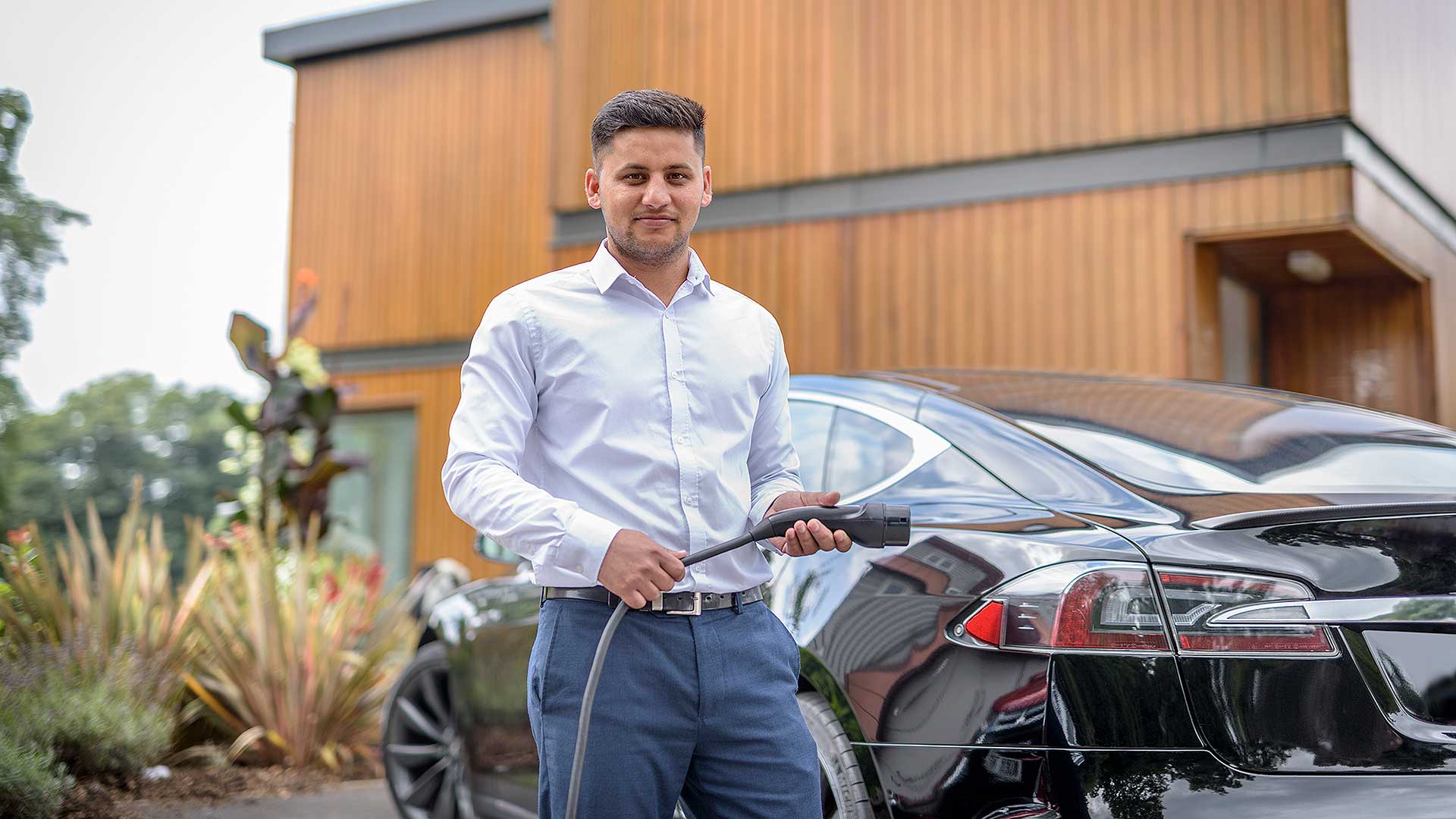
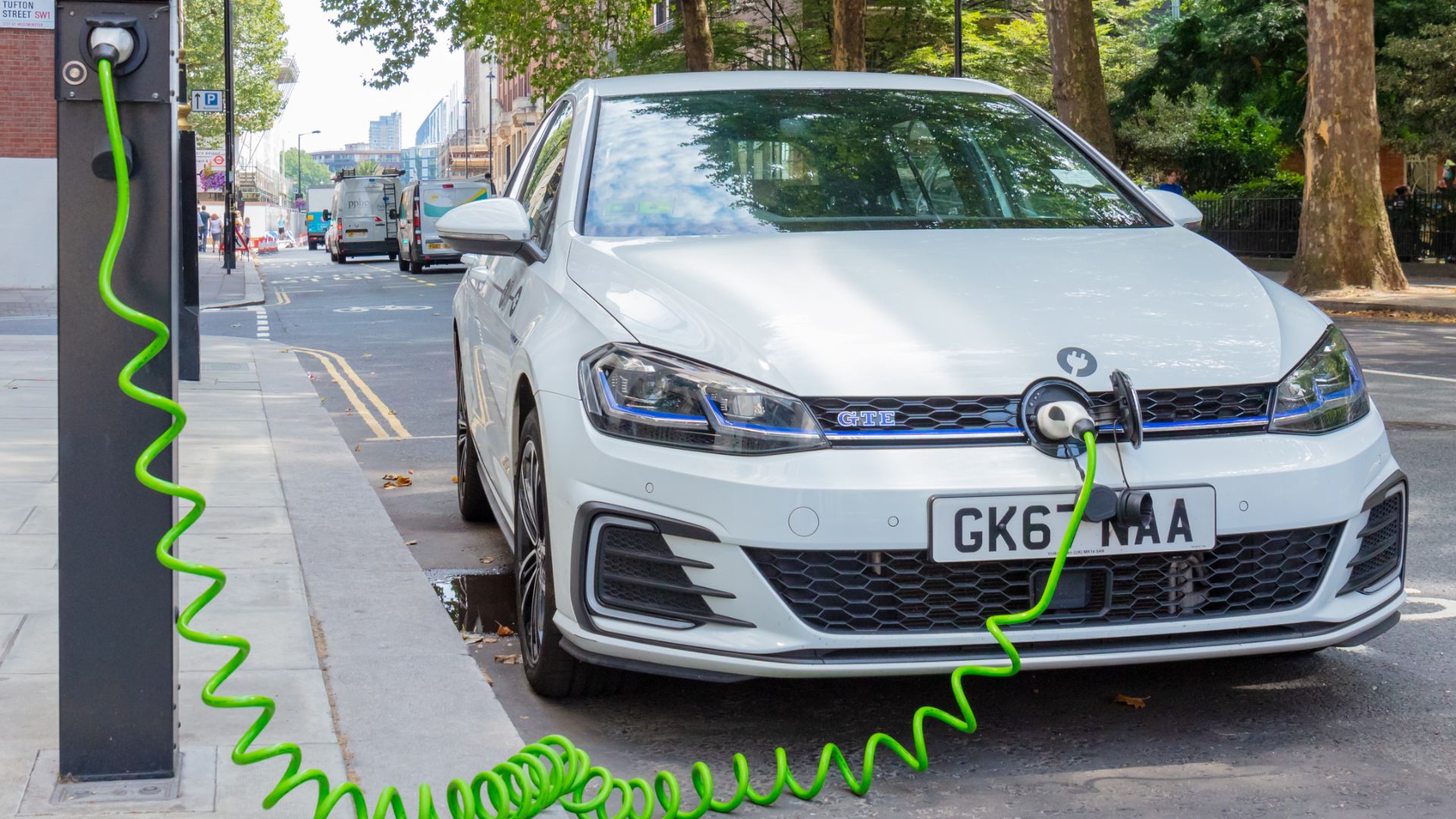
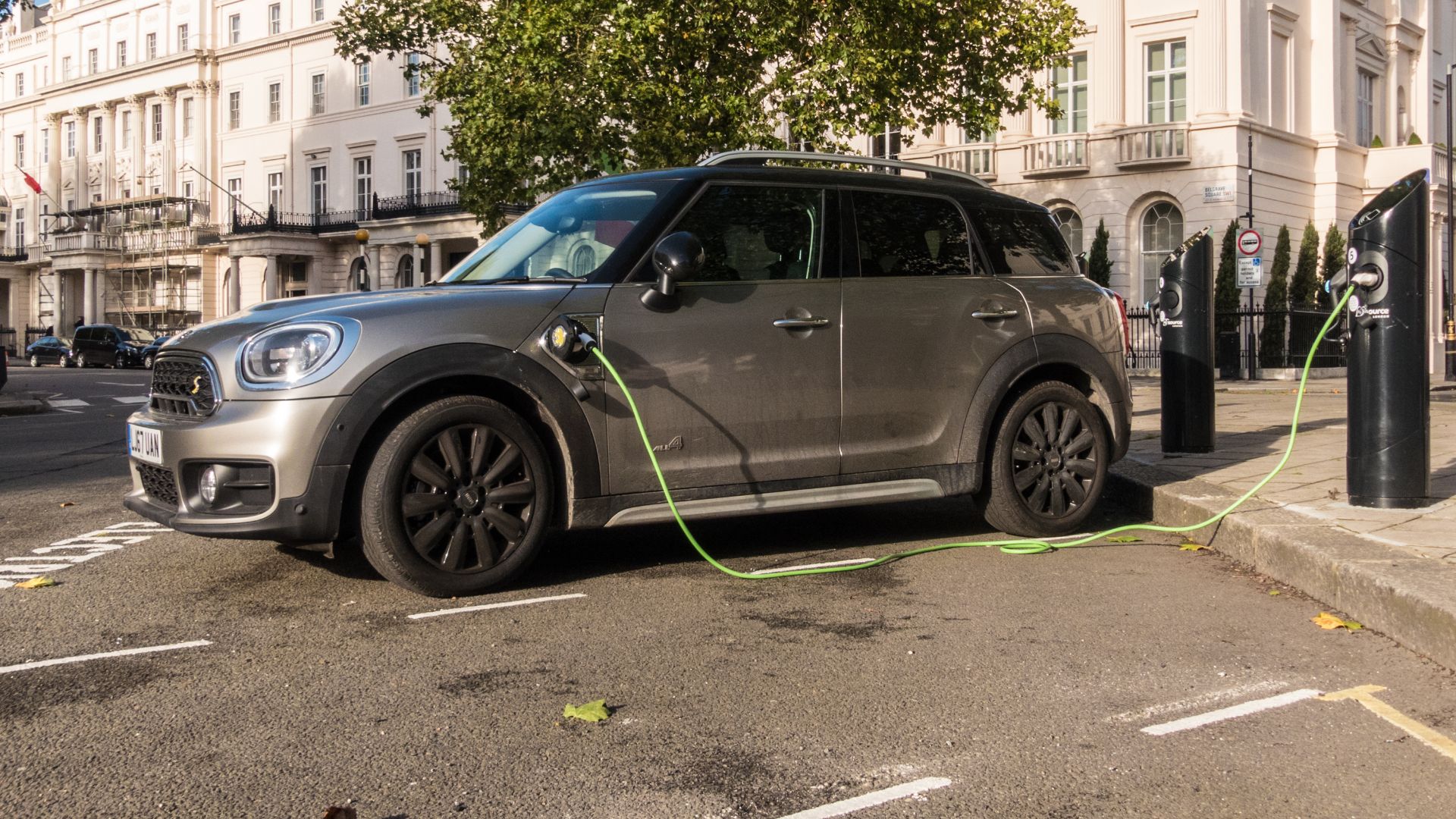
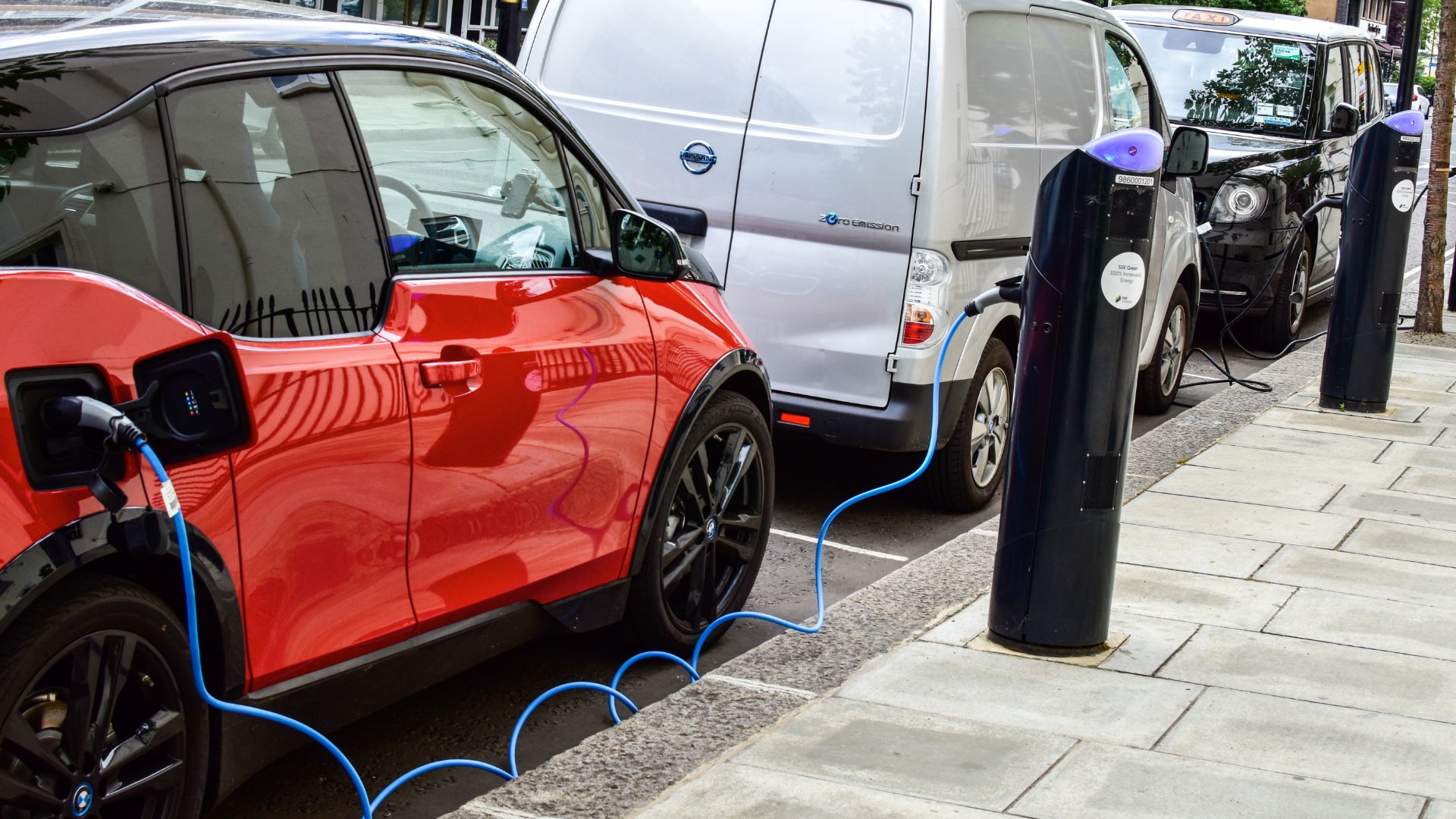
A growing number of people are warming to the idea of owning an electric car – but obstacles remain. That’s according to an international survey of more than 4,000 people.
Sixty percent of the respondents in 16 different countries said they view electric cars favourably, with around half saying they are more positive now than three years ago.
Among those planning to lease a car within the next five years, 40 percent said they intend to choose an electric car.
We looked into leasing deals in August. While electric cars are often more expensive than petrol and diesel cars, the running costs tend to be cheaper.
Personal Contract Hire (PCH) deals start from around £200 a month for a Volkswagen e-Golf, with deals available on the Jaguar I-Pace. As the choice widens, the prices will become more competitive.
The infrastructure needs fixing
But while motorists are switching on to electric cars, concerns remain. Around a half of those surveyed in the Electric Vehicles and Sustainability section of the Mobility Monitor study said the current infrastructure is a barrier.
Meanwhile, 45 percent said a limited driving range was a reason to avoid electric cars.
In Italy, Spain and the UK, around 60 percent of respondents who plan to buy or lease a car in the next five years said a shortage of charging stations would stop them from making the switch.
Tex Gunning, CEO of LeasePlan, the company which worked with Ipsos on the research, said the infrastructure needs urgent attention.
“Our 2019 Mobility Monitor shows that public demand for zero-emission mobility far outpaces currently available EV infrastructure.
“We need to fix this now.
“The European Commission, together with national governments and local authorities, must step up and act on citizen demand for zero-emission mobility by investing in a comprehensive, pan-European charging infrastructure.
“Only through collective, decisive and timely action will we be able to win the fight against climate change, and improve air quality in our towns and cities.”
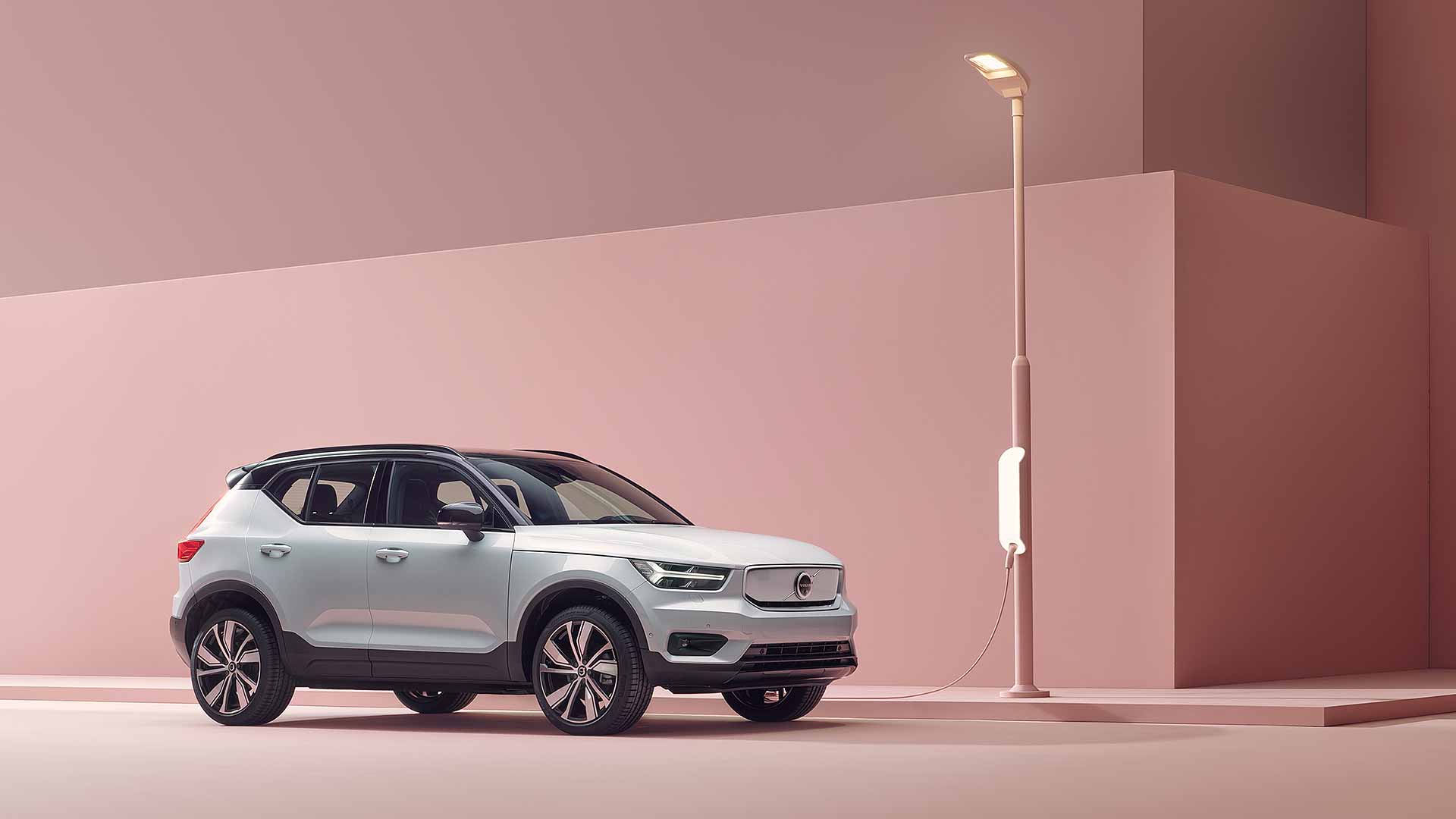
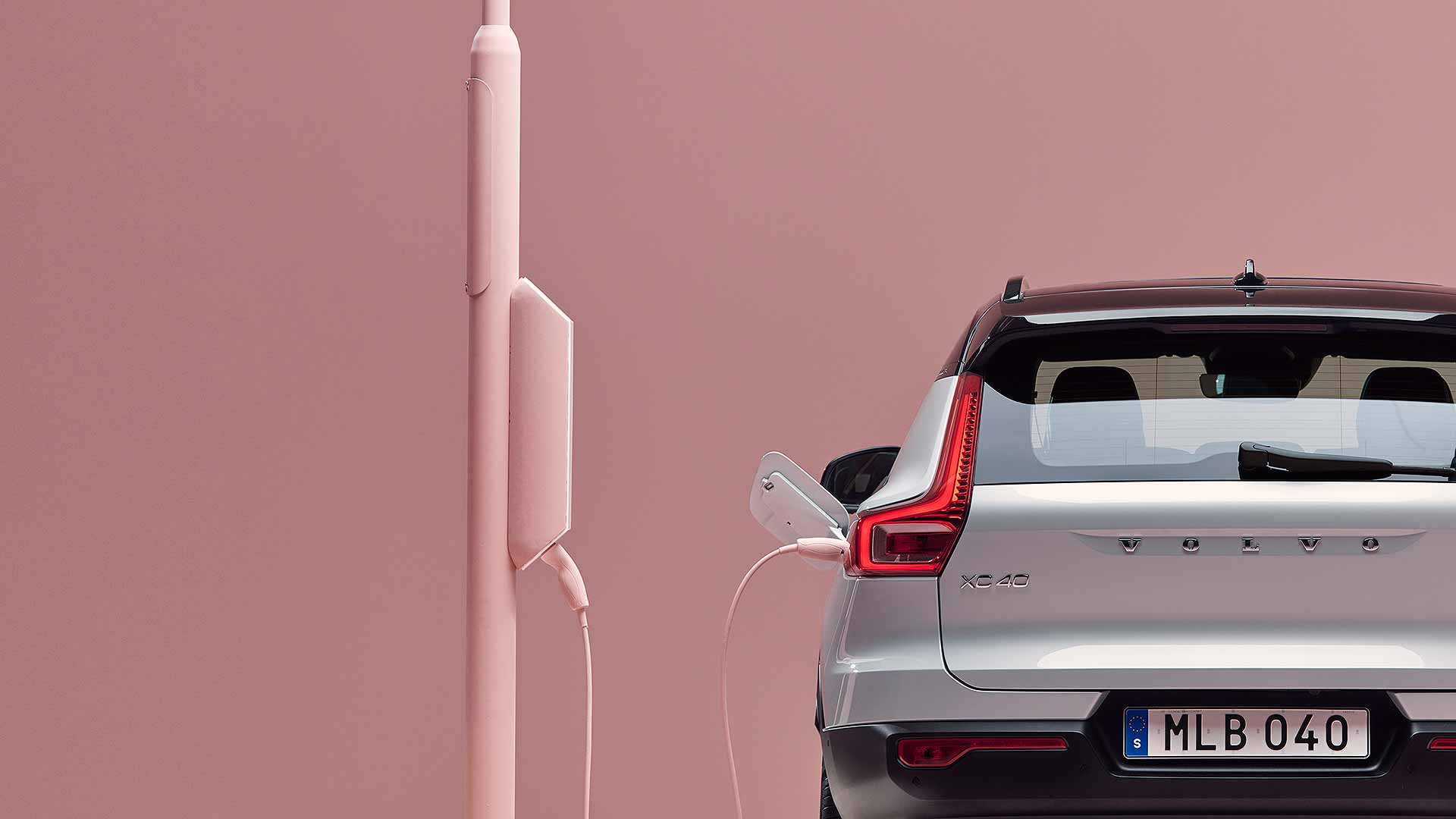
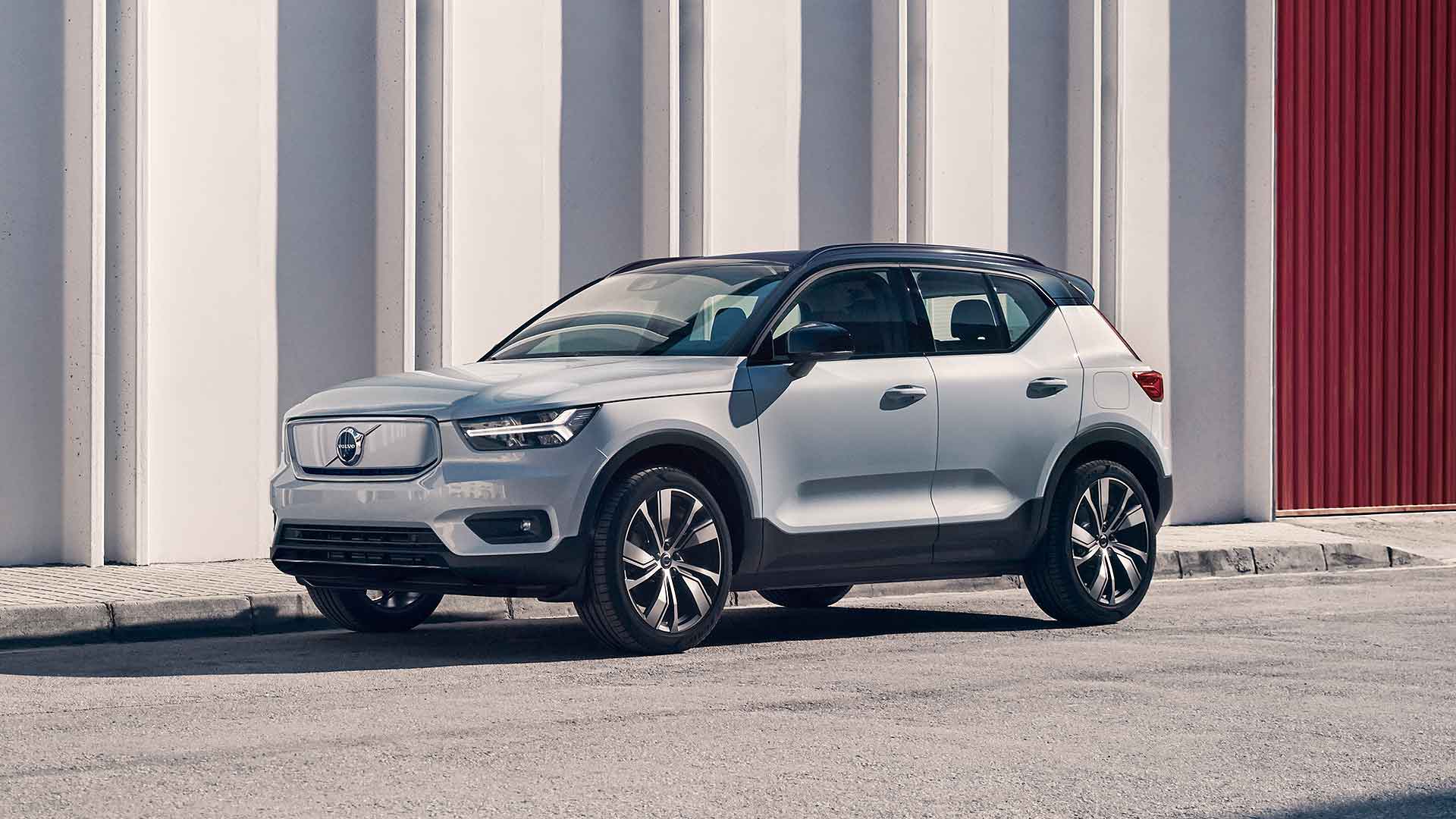
Volvo has revealed its first ever all-electric car, the XC40 Recharge. An EV version of the increasingly popular XC40 compact SUV, it combines a 0-62mph time of 4.9 seconds with an EV driving range of nearly 250 miles.
The XC40 Recharge P8 AWD has two electric motors, giving a total of 408hp. It’s a planet-saving performance car in sheep’s clothing.
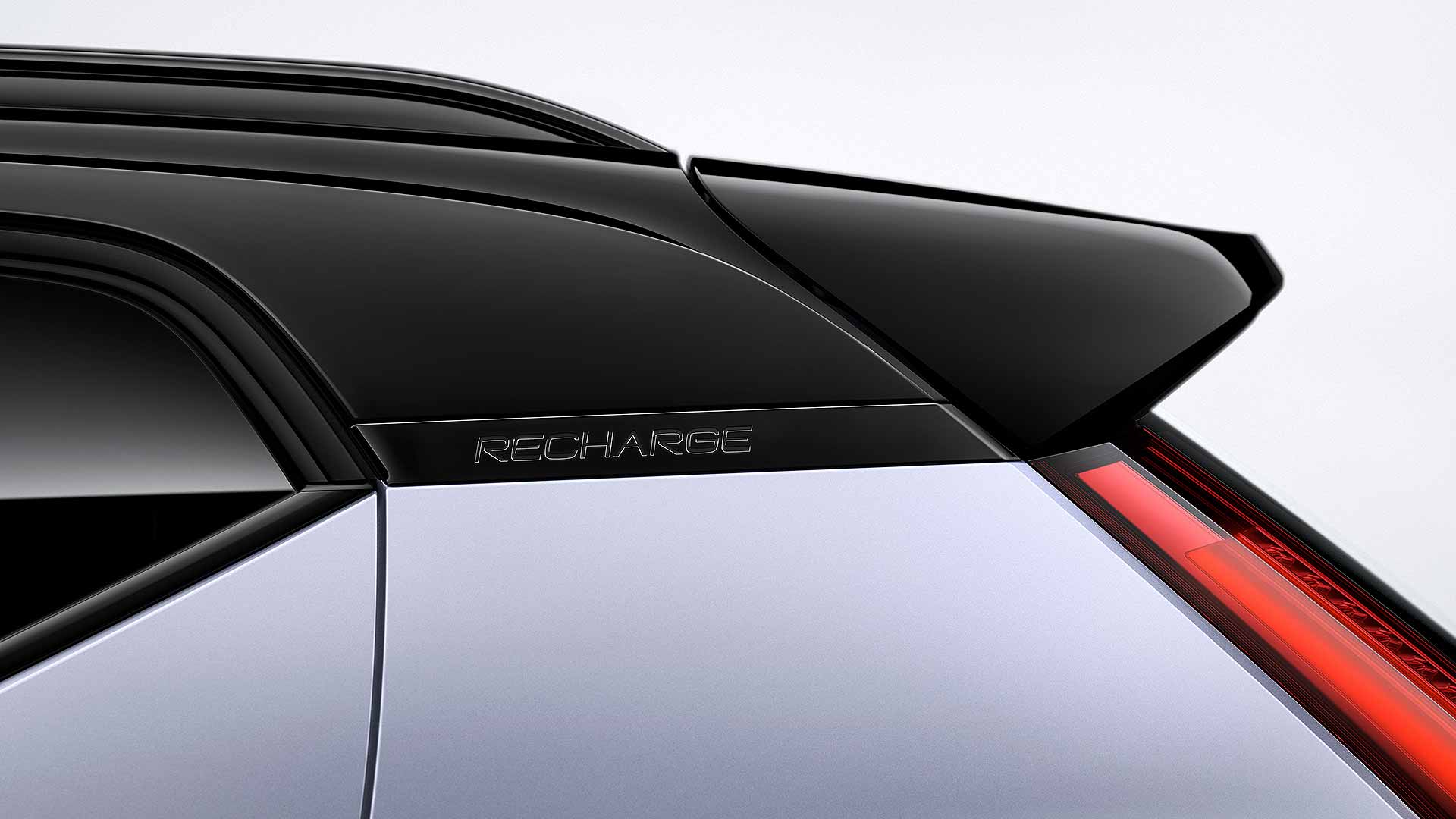
As for the name ‘Recharge’, that’s Volvo’s branding for all its future electric cars – and it’s going to release one every year between now and 2025.
By then, EVs will comprise 50 percent of its overall sales. The rest? Electrified plug-in hybrids (with not a normal engine in sight).
Volvo says the XC40 Recharge’s batteries will, ahem, recharge from zero to 80 percent in 40 minutes. Total battery capacity is 75 kWh.
The electric XC40 will go on sale in 2020, and Volvo says it will build its website around promoting EVs. When customers visit, they will first be asked if they want a Volvo Recharge or not – making them consider electric right from the start.
“We have said this several times before: for Volvo Cars, the future is electric,” said CEO Hakan Samuelsson. “Today we take a major new step in that direction with the launch of our fully electric XC40 and the Recharge line.”
Recharge will also comprise plug-in hybrids: Volvo is the only firm to sell a plug-in hybrid variant of every model it sells.
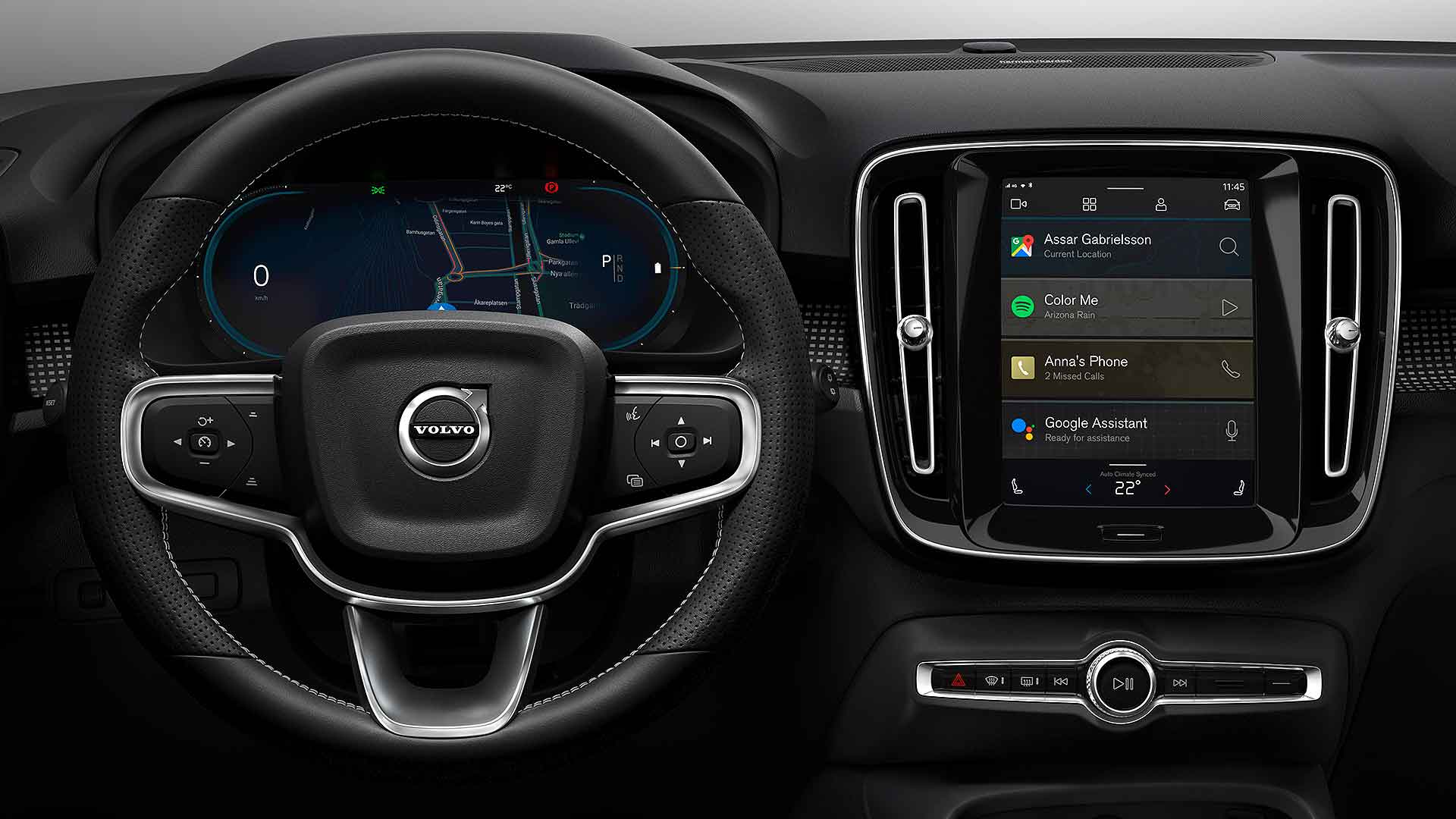
The XC40 Recharge is also the first Volvo to feature a Google Android-based infotainment system. This, says the firm, takes connectivity to a new level.
It is fully integrated with the Volvo On Call connectivity system and, for plug-in hybrid drivers, will let them show off to their friends how much time they spend driving in electric mode.
To meet demand for Recharge models, Volvo plans to triple production capacity for its electrified cars.
I might be the first person on earth to take any notice of the Alfa Romeo Giulia Quadrifoglio’s fuel economy figure. It’s an irrelevance. As meaningful as an energy efficiency sticker on an American-style fridge freezer.
The hot Alfa’s performance figures are far cooler. Top speed: 191mph. Zero to 62mph: 3.9 seconds. Horsepower: 510 at 6,500rpm. Torque: 442lb ft at 2,500rpm. Numbers that once upon a time would have been strong enough to elevate a supercar to bedroom wall poster status.
The figures look great on paper, but reports suggest that they’re even better when translated to asphalt. I’ve never had the pleasure. The Giulia Quadrifoglio remained on the bucket list, sandwiched between dinner with Keeley Hawes and tackling Route 66 in an AMC Eagle.
I’ve waited a very long time to drive one of these. I don’t think I’ll be testing it to its limits… pic.twitter.com/719Zdm5AG3
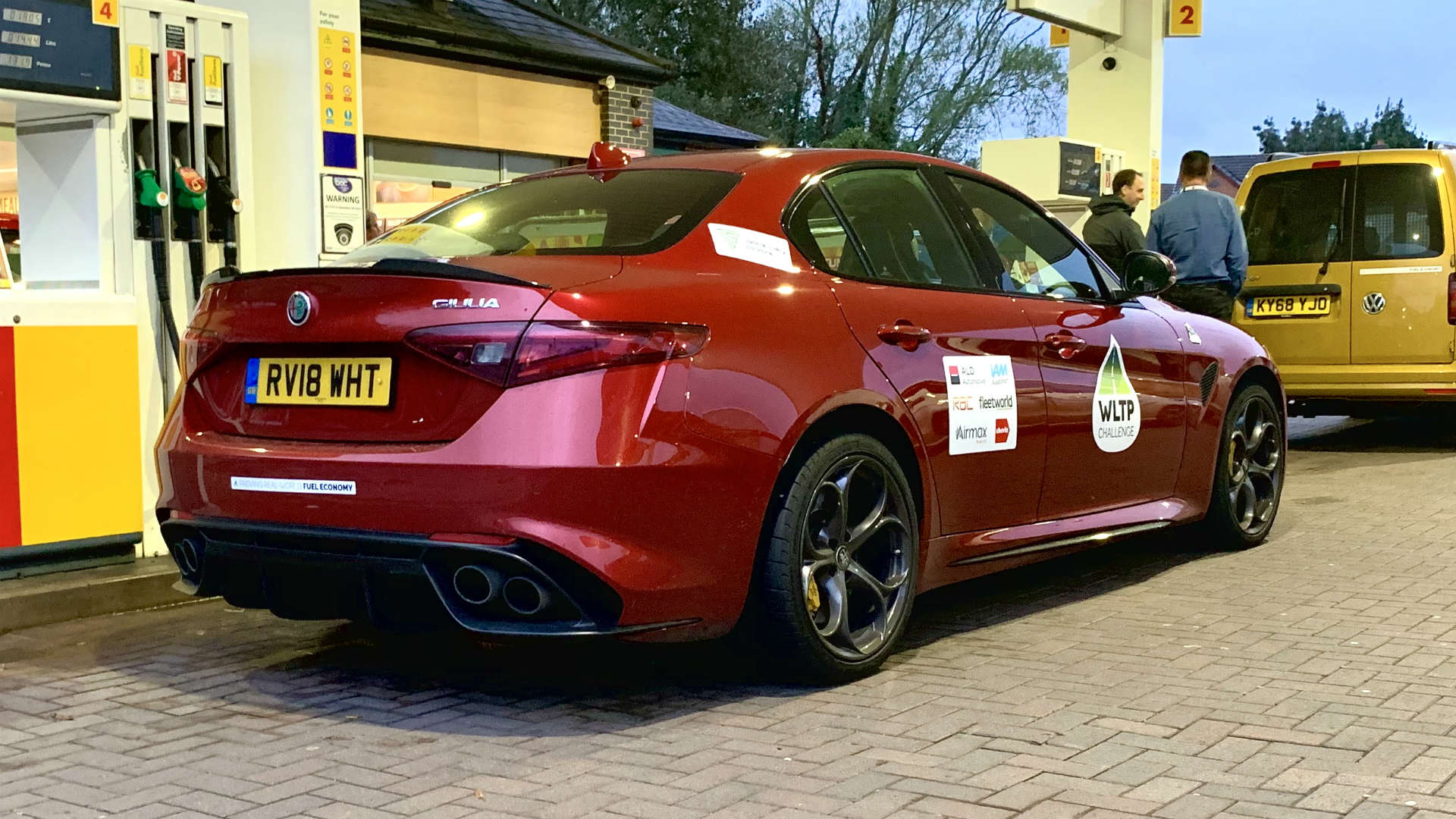
I can tick one of those off the list. I haven’t left the country and Keeley won’t return my calls, so that leaves the Giulia Quadrifoglio. A chance to see what all the fuss is about. Where should I go? The Brecon Beacons? Scotland? The Yorkshire Dales? Nope, a business park in Bristol was my destination, within earshot of the M4 and a stone’s throw from Screwfix. Great.
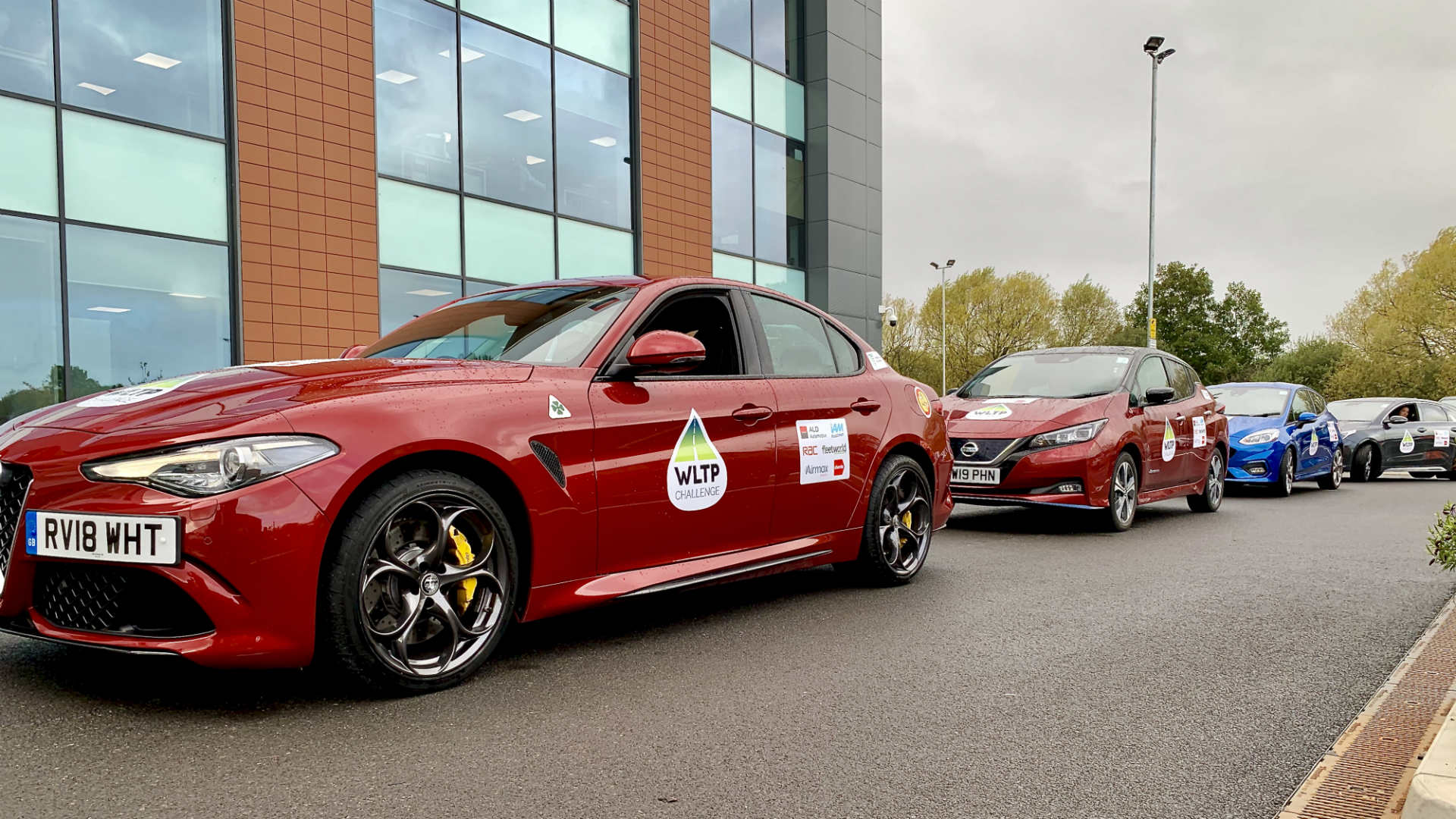
The Alfa was one of 21 cars taking part in the inaugural WLTP Challenge: a driving event designed to prove the effectiveness of the new standardised fuel economy test procedure. In theory, WLTP should be more reflective of real-world driving conditions, rather than the old NEDC figures, which were about as truthful as a party political broadcast.
In the sterile surroundings of a car park in Bristol, the Alfa stood out like a pimple on an adolescent’s face, and not just because of its Competizione Red paint. The other vehicles were, for the most part, designed to be driven by people who nod in agreement to callers to the Jeremy Vine show and live out their days eating carrot cake in garden centre cafes.
Cars built with WLTP regulations in mind. Cars that don’t wear Quadrifoglio badges.
Go rogue or go home
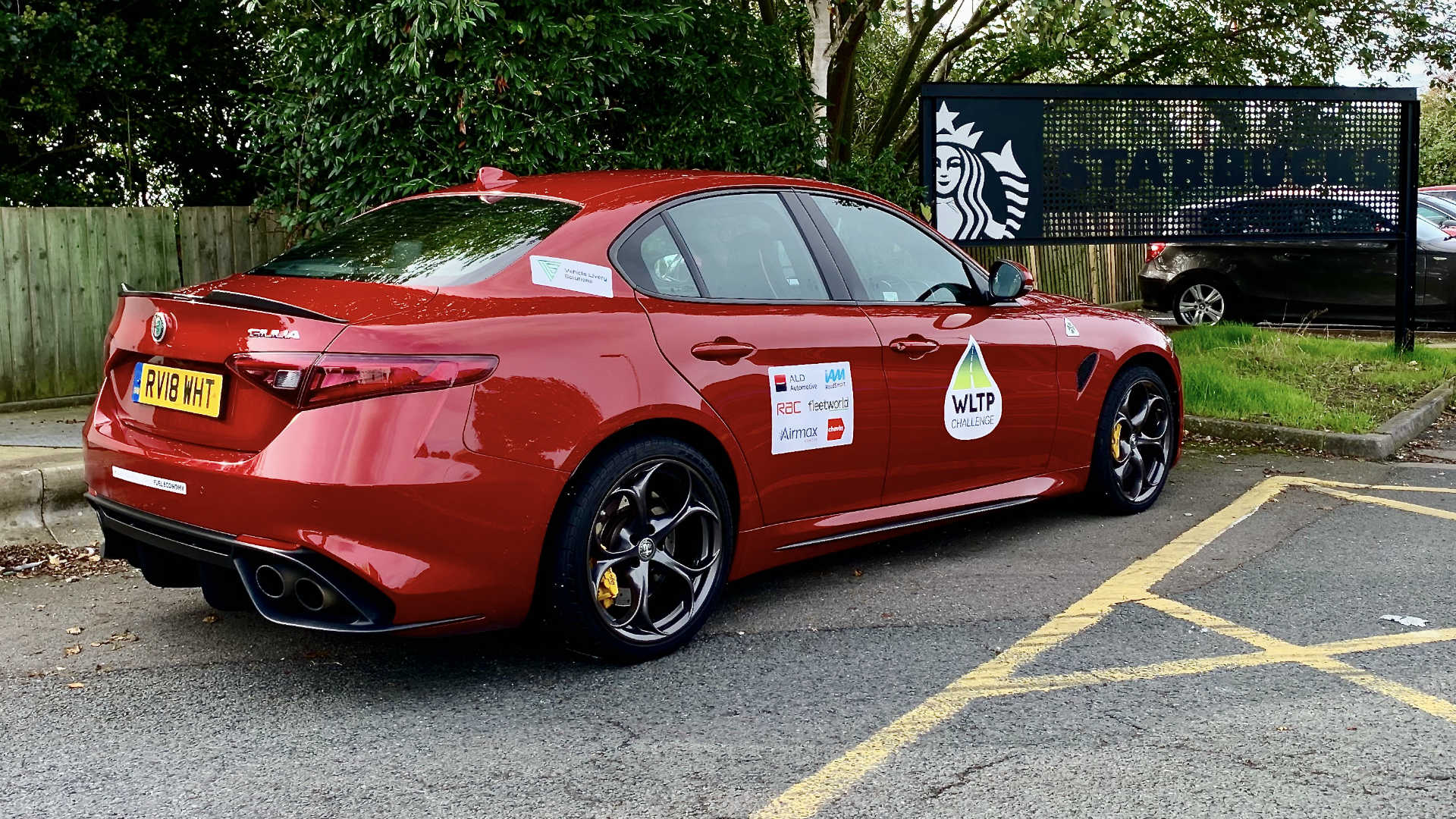
It’s at this point that I should tell you that the Giulia Quadrifoglio has a WLTP figure of 27.2mpg, with CO2 emissions of 206g/km. Not too shabby for a four-door saloon powered by a Ferrari-derived 2.9-litre twin-turbocharged engine. The mission was to meet or exceed that figure over a 220-mile route designed to ‘simulate a typical journey for an employee driving on company business’.
This meant a visit to a Starbucks, lunch at an office block in the West Midlands, a visit to one of those sex shops on the A1, and half an hour in a layby to watch the highlights of the En-ger-land match on YouTube. I skipped the last two, primarily because I may have made them up.
The organisers were at pains to point out that the cars should be driven ‘in a normal way’ to reflect real-world motoring. Looking back, this should have been my invitation to drive the Alfa in the manner a 510hp real-wheel-drive manic saloon should be driven, but fearing for my next freelance commission, I towed the line.
What followed was an incredibly frustrating and at times tedious day behind the wheel. Hypermiling can be rewarding, but not, in turns out, when you’re popping your Giulia cherry. The temptation to ‘go rogue’ was ever present – after all, I might not get another opportunity with the fiery Italian.
Wales looked more appealing than lunch in Walsall, while Castle Combe offered greater riches than a slow crawl through the Cotswolds. But the car was being tracked and monitored by a team of big brothers, so I knew that it wouldn’t be long before I was hunted down by a crack crew of environmentalists and shipped home in the back of a Prius.
Skinny lattes and Greta scores
Having prepared for an eco drive, I knew what was required to show the electric, hybrid and diesel vehicles a thing or two about sipping fuel. A skinny latte was ordered to save weight, before I killed the air conditioning, left the optional Harman Kardon sound theatre turned off, and switched my right foot to featherlight mode. Time to spank the economy drive, or something.
Momentum is the key. Every time the car stops, you’ll waste precious fuel getting up to speed. Roundabouts and traffic lights require careful consideration if you’re to avoid stopping, while maintaining a safe distance to the car in front is the key to avoiding any unwanted braking.
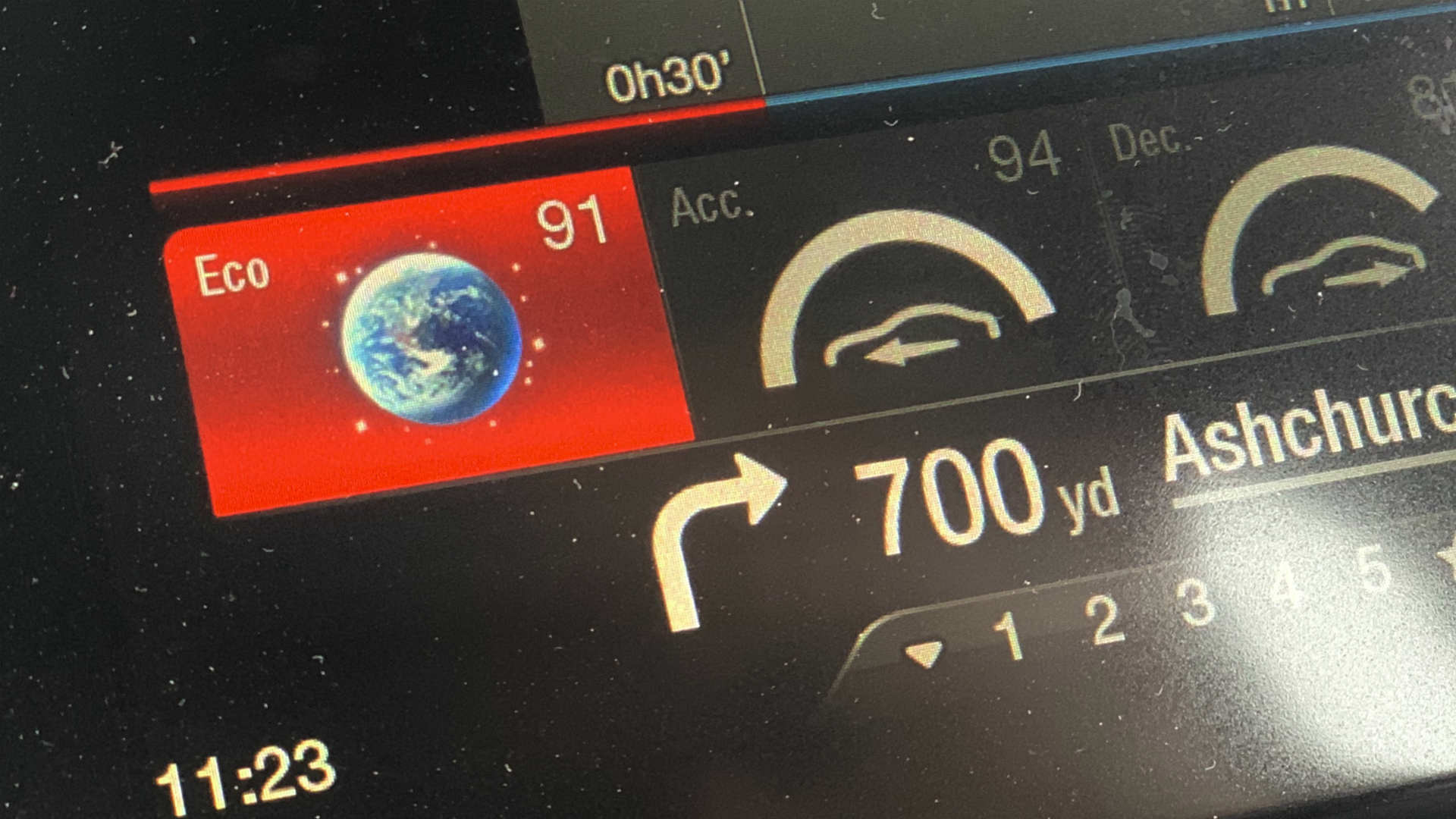
Tipping its coppola to Extinction Rebellion, the Giulia features a couple of displays designed to get the most out of the tiny 58-litre fuel tank. One is an eco rating, which monitors your acceleration, braking and gear changes to deliver a kind of ‘Greta score’. At one point, this was as high as 91, although it’s mildly amusing that the system awards its own eight-speed automatic transmission the full 100 points.
The other is an economy gauge nestled below the dials, which features a sliding scale of fuel consumption. Coast downhill and it shoots to the right; climb a hill and it disappears off to the left.
Hills are the enemy of an eco drive. Twenty miles of hard work can be undone by the slightest incline, sending Greta into a tailspin and putting the nearest petrol station on full alert. Dab the throttle before you climb to give yourself a fighting chance of staying green.
Motorways, on the other hand, are where all your earth dreams come true. Sticking to a steady 60mph saw the Giulia display a rather optimistic 44.1mpg, although this – along with my spirits – dropped as I ventured off the M5 and into the West Midlands. By lunchtime, I had had my fill of eco driving, and not even a tuna and sweetcorn sandwich could lift the mood. Forget WLTP FTW, this was more like WLTP FML.
Home before bedtime?
The route back to Bristol included tortuous motorway traffic and a drive through the Cotswolds on roads that should feel superb in a Giulia Quadrifoglio. Fast sweeping bends, glorious views, wide roundabout exits and long straights combined to create a natural habit for a rear-wheel-drive saloon. But not today, sonny. Today you must follow a line of traffic behind a WLTP challenger in Honda CR-V hybrid doing a steady 42mph on his way to a remarkable 70.08mpg – around 30mpg more than the claimed figure.
The Alfa’s economy after 223 miles: 36.39mpg, which is, as near as makes no difference, a 34 percent improvement on the WTLP figure. Not bad, especially when you consider that the Quadrifoglio is about as far removed from an eco car as I am from enjoying a caesar salad with Ms. Hawes.
But is a 34 percent upshift in economy worth it for all the frustration and torture of being overtaken by a Ford C-Max and tailgated by a Vauxhall Corsa? Of course not.
Air conditioning can increase fuel consumption by as much as 10 percent, so it was switched off. But this results in a sweaty back and the need to open the windows at traffic lights, at which point you breathe in all of those delightful toxins being pushed out by the surrounding lorries. A few years off your life to save a few mpgs – no thanks.
And because the future of eco driving means following a CR-V at a steady 42mph, the nation’s company car drivers will be late home for bedtime stories with their children, which will result in arguments with their partners and the breakdown of relationships. The kids need the Gruffalo, so put your foot down, Mr CR-V.
You’d be better off sticking a Giulia Quadrifoglio in the garage for weekends and holidays, and using a Ford Fiesta 1.0 ST-Line for the daily commute. A chap managed to achieve 56.6mpg on the WLTP Challenge, in a car that’s fun to drive, cheap to buy and, on this evidence, cheap to run.
I can’t tell you a great deal about the Giulia Quadrifoglio, aside from the fact that the superb £3,250 Sparco bucket seats are worth every penny, the infotainment system is painfully poor and the ride comfort is great at 56mph. The car also turns more heads than halitosis.
The problem is, I was so preoccupied with whether or not you can drive a Giulia Quadrifoglio with restraint, I didn’t stop to think if I should. It’s a dinosaur in an age of electrification, but I’d urge you to enjoy cars like the Alfa while you still can. The car deserves more than to be restrained like a tiger on a leash.
Drive it like you’ve stolen the last gallon of fuel. Sorry, Greta.
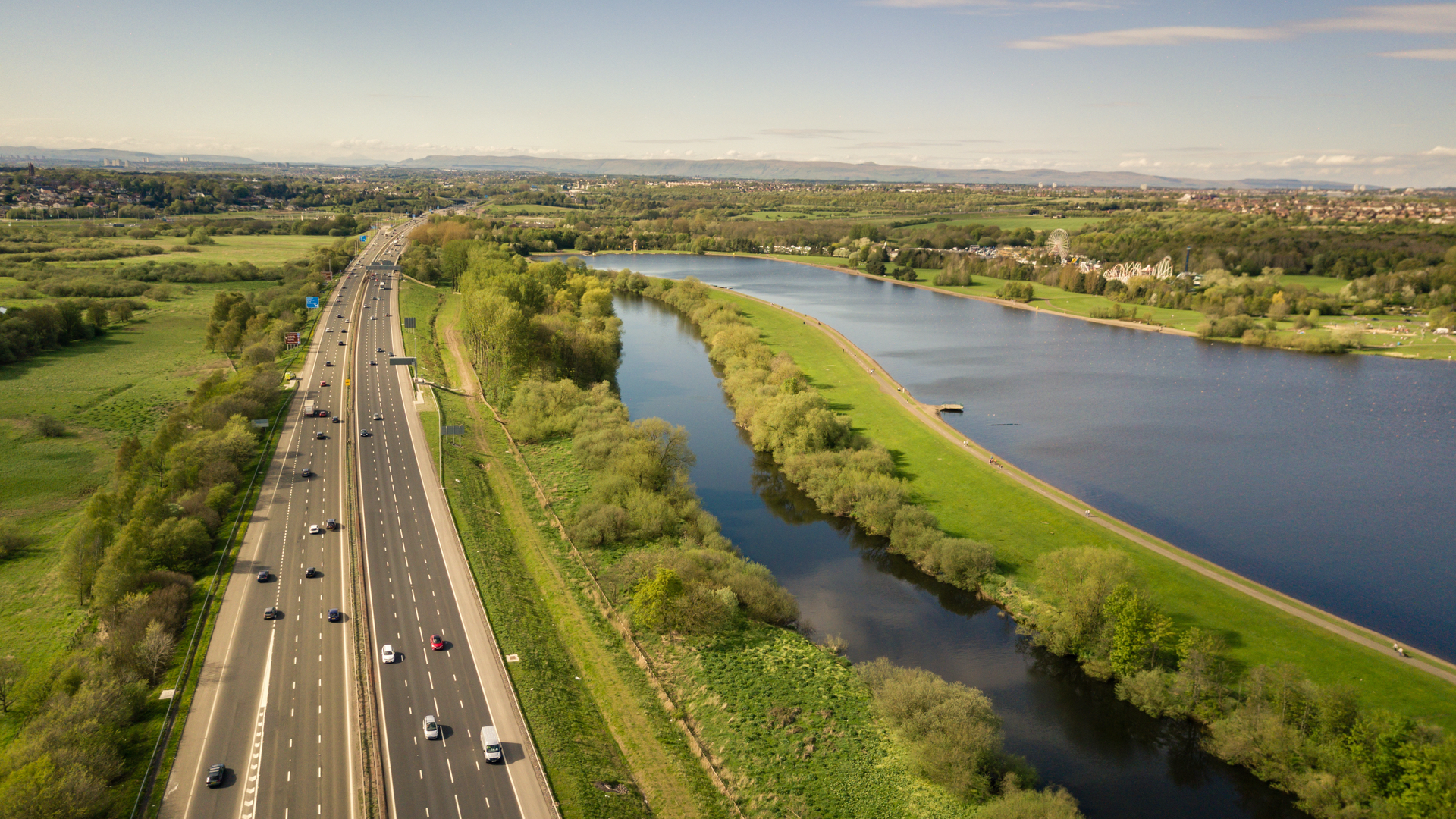
It’s certainly one of the most dramatic motorways in Britain. According to Roads.org.uk, it’s also one of the most interesting. But is the M74 Britain’s best serviced motorway?
New research suggests that it could be, and there’s a pretty compelling argument to support the claim.
By analysing data on congestion, frequency of motorway services and customer satisfaction at the services, the M74 in Scotland is ranked first, with a score of 91.5 percent.
With six service stations along the 85-mile stretch of M74 and A74(M) between Glasgow and Gretna, the motorway scores top marks for frequency of motorway services. It also scores a near perfect 18.2 (out of 20) for congestion.
The M74 finishes ahead of the A1(M), which scores 20 for congestion, 38.2 (out of 40) for frequency and 30.1 (out of 40) for customer satisfaction.
Meanwhile, the M8 between Edinburgh and Glasgow is ranked bottom. Its caused isn’t helped by the complete absence of proper motorway services, with the Heart of Scotland little more than ”just a large BP garage“.
As anyone who has travelled on the M27 in Hampshire will testify, Rownhams is a place to avoid. The services near Southampton score the lowest mark for congestion and customer satisfaction.
Best (and worst) motorways for services
Motorway
Overall (%)
Congestion (out of 20)
Frequency (out of 40)
Satisfaction (out of 40)
1. M74
92
18
40
33
2. A1(M)
89
20
38
31
3. M6 (north of M62)
86
19
36
30
4. M6 (south of M62)
78
15
33
30
5. M5
77
16
31
30
6. M4
76
17
29
30
7. M42
75
11
36
28
8. M1 (south of M6)
70
13
29
28
9. M23
64
1
29
34
10. M20
64
14
22
29
11. M62 (east of Pennines)
61
10
20
31
12. M40
61
12
20
29
13. M56
60
6
24
30
14. M62 (west of Pennines)
58
9
15
34
15. M25 (western links)
58
5
20
32
16. M1 (north of M6)
56
15
13
29
17. M9
53
9
4
40
18. M2
46
4
11
31
19. M3
42
7
7
27
20. M27
37
0
11
26
21. M25 (eastern links)
36
5
5
26
22. M11
32
2
2
29
23. M8
28
3
0
26
In August, Norton Canes on the M6 Toll was named Britain’s best motorway services by Transport Focus, while Westmorland was named best operator, scoring 97 percent for customer satisfaction across its four sites in Cumbria and Gloucestershire.
Do you agree with the Just Tyres study? Let us know in the comments below.
The most EV-friendly areas of the UK have been revealed, based on the number of public charging points for electric cars.
A Freedom of Information (FOI) request by Motorway.co.uk identified the car charging winners and losers. Perhaps unsurprisingly, London benefits from the most plug-in points.
The best London boroughs – Westminster, Richmond, Wandsworth and Hammersmith – all offer more than 200 public charging stations.
Before we consider the losers, it’s worth noting that charging points on private land weren’t included in this data. This is purely an examination of council-sanctioned car charging.
The worst places to own an electric car
London isn’t a slam-dunk win for electric car drivers: both Enfield and Harrow have less than 10 charging points.
The borough of Bexley, meanwhile, has a grand total of zero charging facilities: the only part of London that goes completely without. Apparently, Bexley council plans to have 13 charge points up and running by the end of 2019.
If these areas of London deal without charging points, what’s the rest of the country like?
Well, there are entire cities with no public places to plug in. Mansfield, Northampton, Swansea and Kingston upon Hull, all go without.
Mansfield
171,958
0
0.00
Northampton
215,963
0
0.00
Swansea
300,352
0
0.00
Kingston upon Hull
314,018
0
0.00
“UK government has a mammoth task on its hands to create an EV charging infrastructure that can cope with the expected growth in electric car ownership over the next 20 years,” said Alex Buttle, director of Motorway.co.uk.
“In fact, its own 2040 switchover target from fossil fuels depends on it. The government is trying to encourage people to switch to electric cars, but many vehicle owners are reluctant to do so until they are confident the infrastructure is fit for purpose.
“We carried out a survey of UK drivers recently and an inadequate charging infrastructure was the most common reason cited by respondents as to why they wouldn’t consider switching to an electric car over the next five years.
“Brexit is understandably at the top of the government’s agenda at the moment, but it’s in danger of taking its eyes off this huge infrastructure challenge, and a public that has no faith in the charging programme is unlikely to buy into the idea of early switching.”
I’m a Celebrity and Britain’s Got Talent hosts Ant and Dec are working on a new BBC Two car show. No, not that one.
The pair have announced plans for a new show called Street Car Showdown, in which teams convert used cars and race them in competition.
Ant and Dec’s production company Mitre Television is working with Studio Lambert on a pilot episode, although there’s no word on when the show will hit our screens.
In a statement, Ant McPartlin and Declan Donnelly said: “We have been fascinated with this world since we were teenagers in the North East and experienced car modders meeting up on Roker seafront in Sunderland to show off their creations.
“We came up with the format to shine a light onto the untapped world of car fanatics and highlight their passion, talent and creativity.
“We are great admirers of the team at Studio Lambert and are thrilled to be partnering with them on this project.“
Studio Lambert’s CV includes Gogglebox, The Circle, Race Across The World and Undercover Boss. Stephen Lambert, the company’s chief executive, said: “We were delighted when Mitre asked us to work on developing Ant and Dec’s fun, adrenalin-filled idea and producing it with them.“
Ant and Dec to act as creative consultants
Ant and Dec will act as creative consultants on the show, but a deal with ITV prevents them from hosting Street Car Showdown. The pair present several high profile ITV shows, including Britain’s Got Talent, I’m a Celebrity… Get Me Out of Here and Saturday Night Takeaway.
In 2018, Suzuki ended its TV advertising campaign with Ant and Dec after Ant McPartlin was charged with drink-driving. Suzuki spent a reported £10 million a year on the partnership, which included idents during Saturday Night Takeaway.
In a statement at the time, the company said: “Suzuki are withdrawing their advertising campaign with Ant and Dec. As a car brand we recognise the seriousness of Ant’s charge. We completely support Ant’s decision to seek treatment.”
McPartlin was fined £86,000 and banned from driving after he pleaded guilty to driving a Mini while more than twice the legal limit in March 2018. A 20-month ban was reduced to 15 months after he completed a drink-driving referral course.
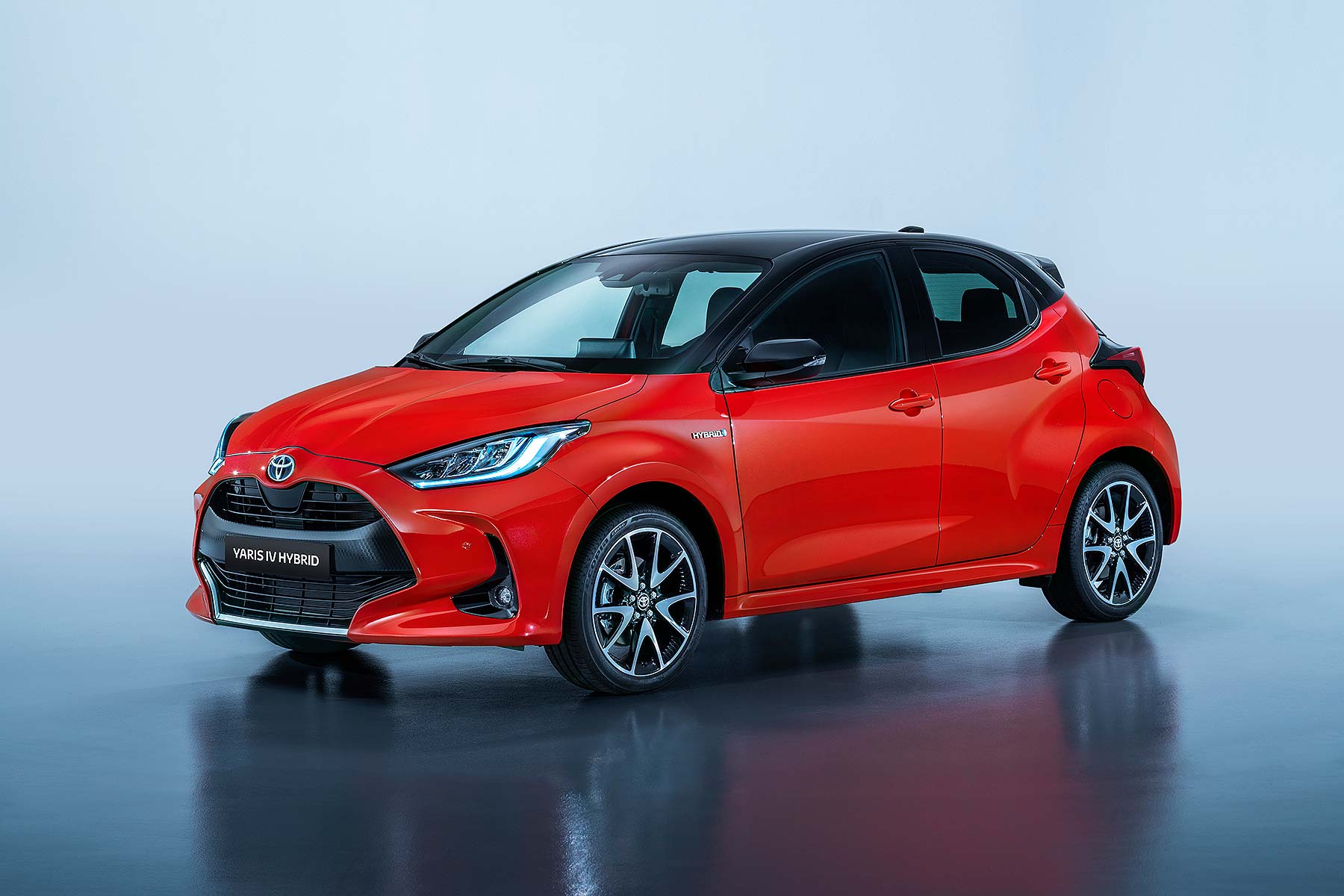
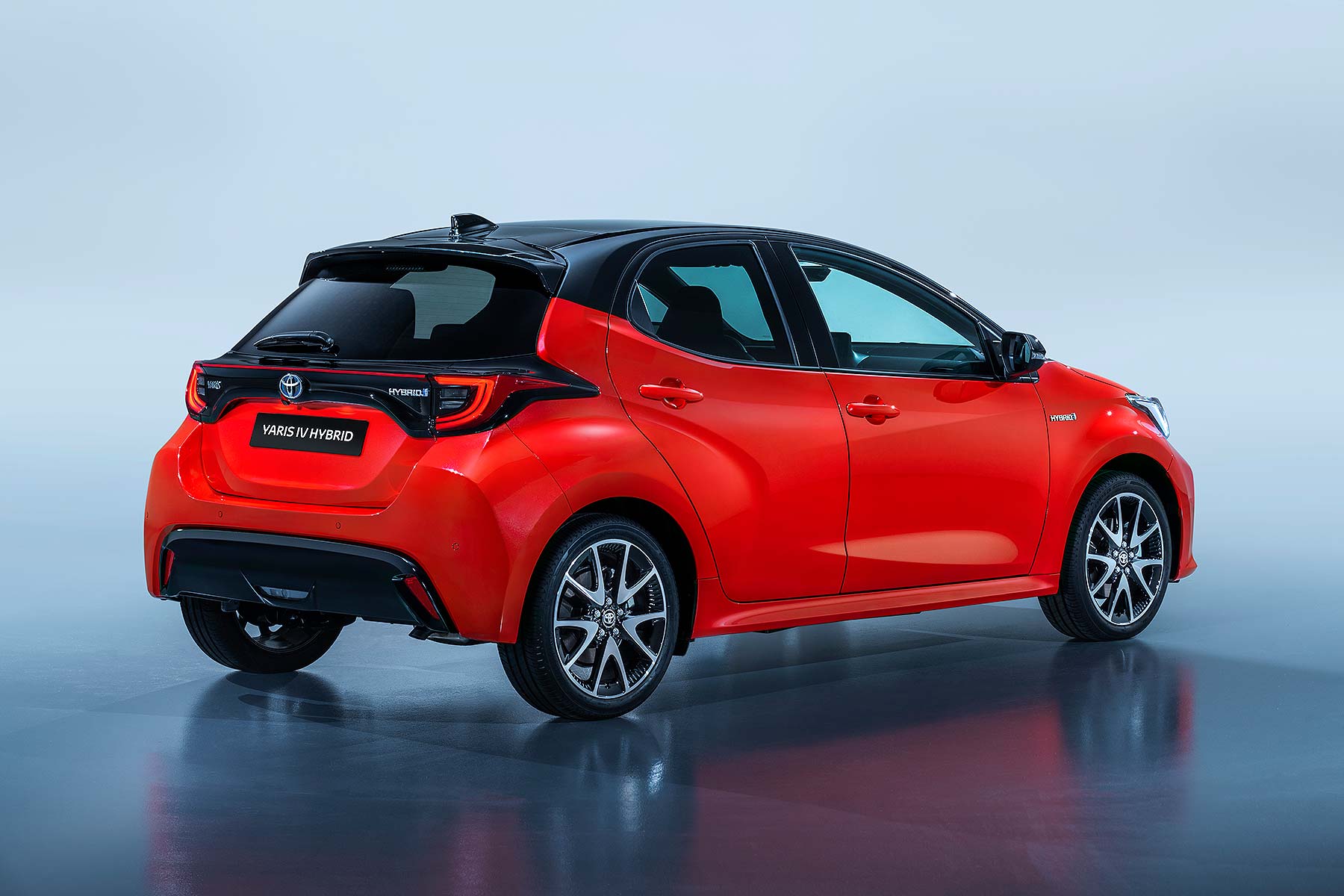
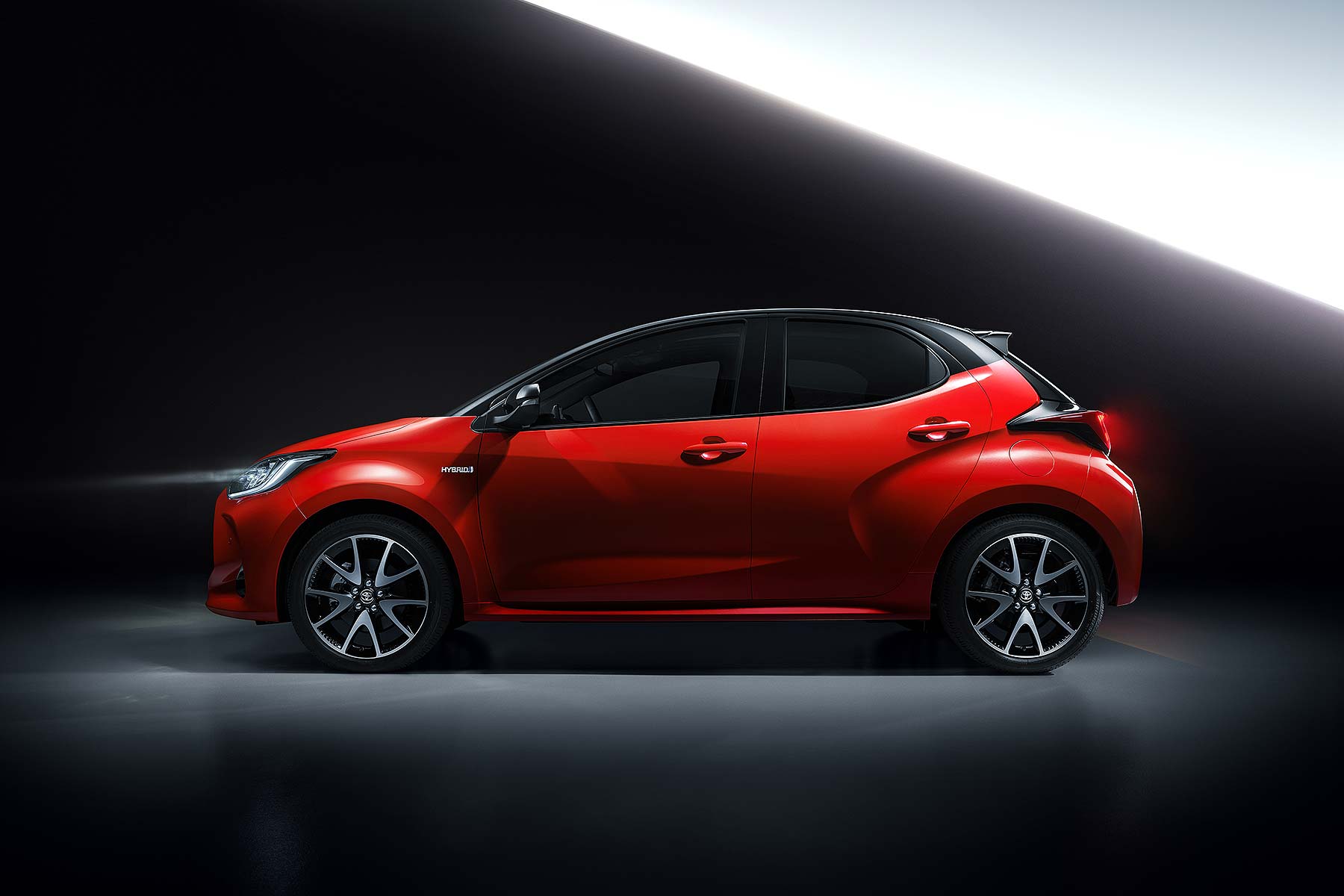
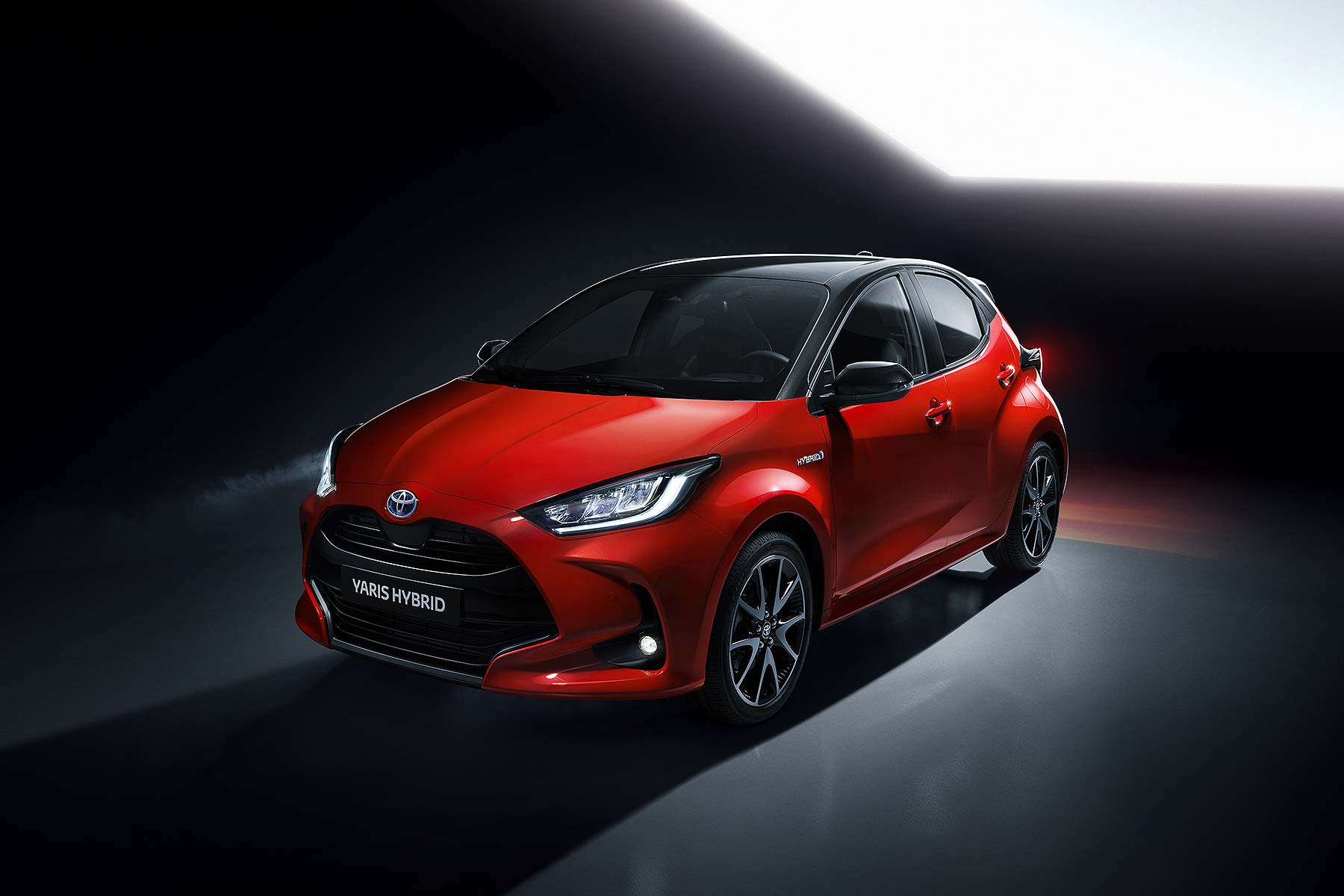
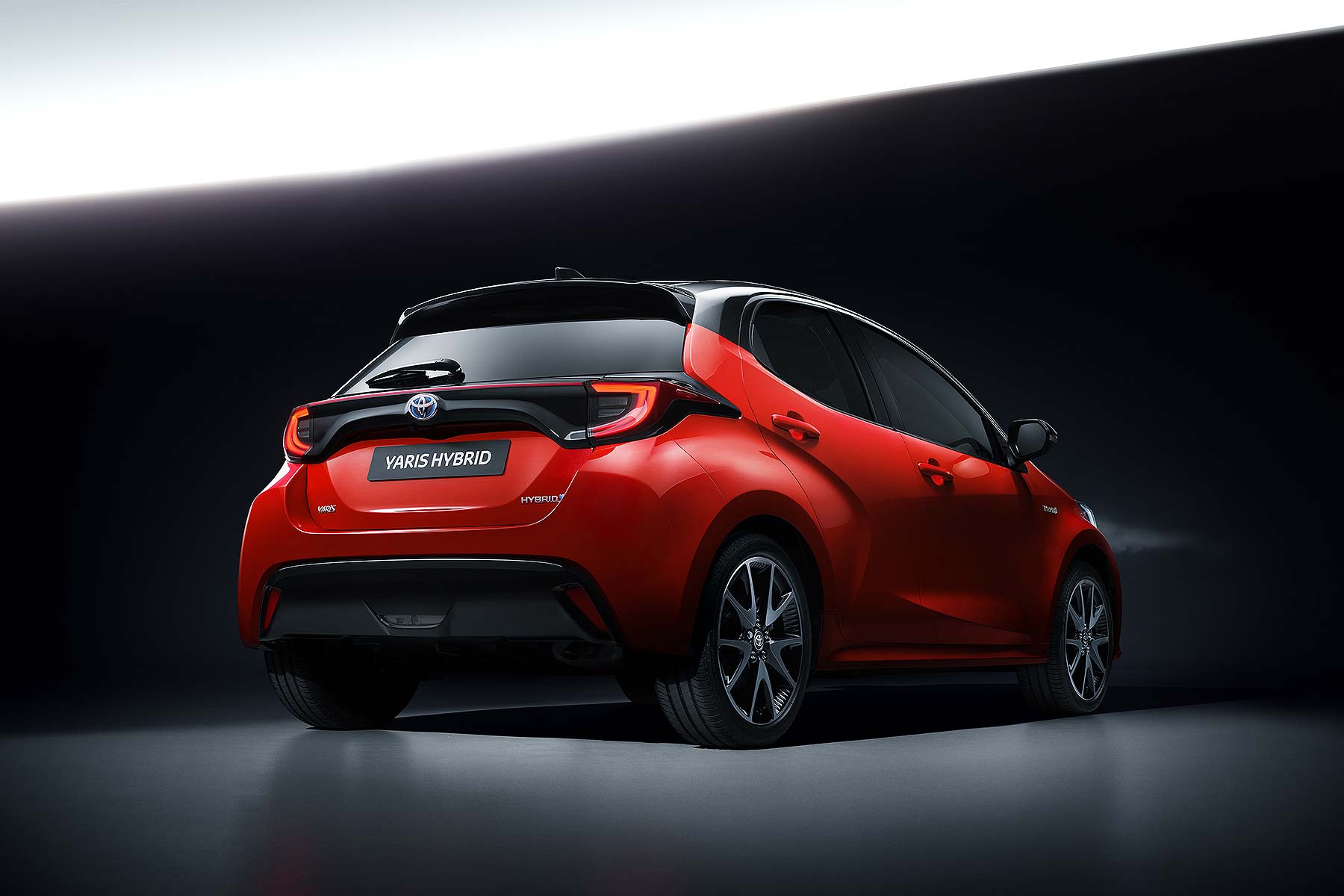
This is the new Toyota Yaris, which goes on sale next spring and will be in dealers from September 2020. Two decades after the groundbreaking original, Toyota’s best-selling car in Britain has become genuinely desirable again.
It looks completely different to today’s third-generation car, and much more exciting. The designers have been inspired by Toyota’s title-winning world rally cars, giving it a sporty, standout appearance.
Charismatic boss Akio Toyoda said there will be ‘no more boring cars’ under his watch, and it seems the Yaris designers have listened.
We had a first look at the new Yaris at a preview event in Amsterdam. It looks even more distinctive in the metal than it does in images. It’s anything but boring.
‘Big small’ is the buzzword for the designers. New cars often get bigger but the new Toyota Yaris is actually smaller – 5mm shorter and 40mm lower (albeit 50mm wider). It’s larger inside though, thanks to 50mm more space between the wheels.
The Yaris remains the shortest car in its class, dipping under four metres (the only supermini to do so) with a total length of 3,940mm That’s great for city use – 75 percent of European buyers live in urban areas.
But it doesn’t look diminutive. The wide grille and short overhangs give it a punchy appearance, as do bulging front wheelarches and muscular rear haunches. The squat profile of the rear end is striking.
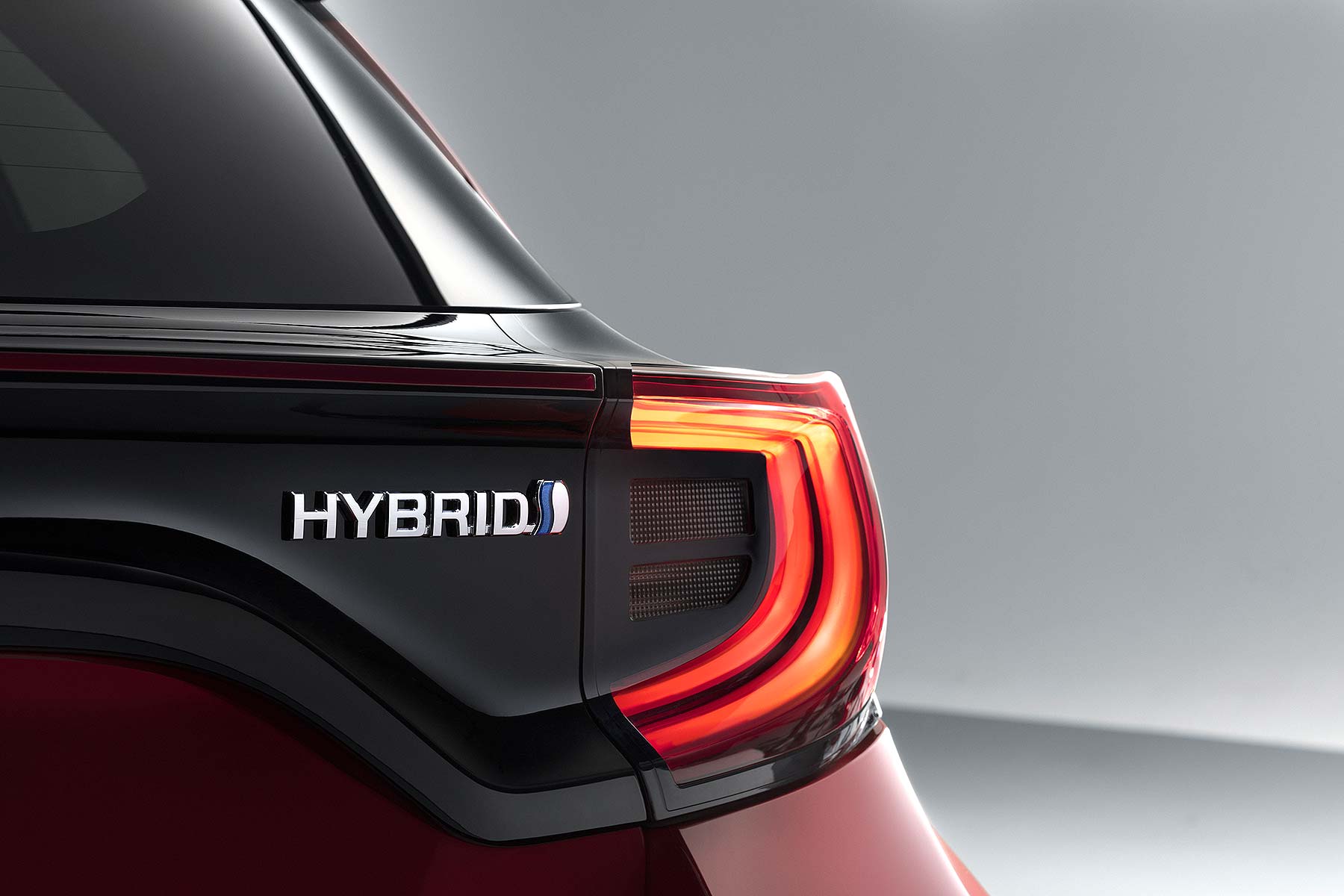
The new Yaris has lots of curves and form, a neat kick in its side window line, 3D rear lights and a diffuser-style bumper that wouldn’t look out of place on a racy hot hatch.
Quality interior
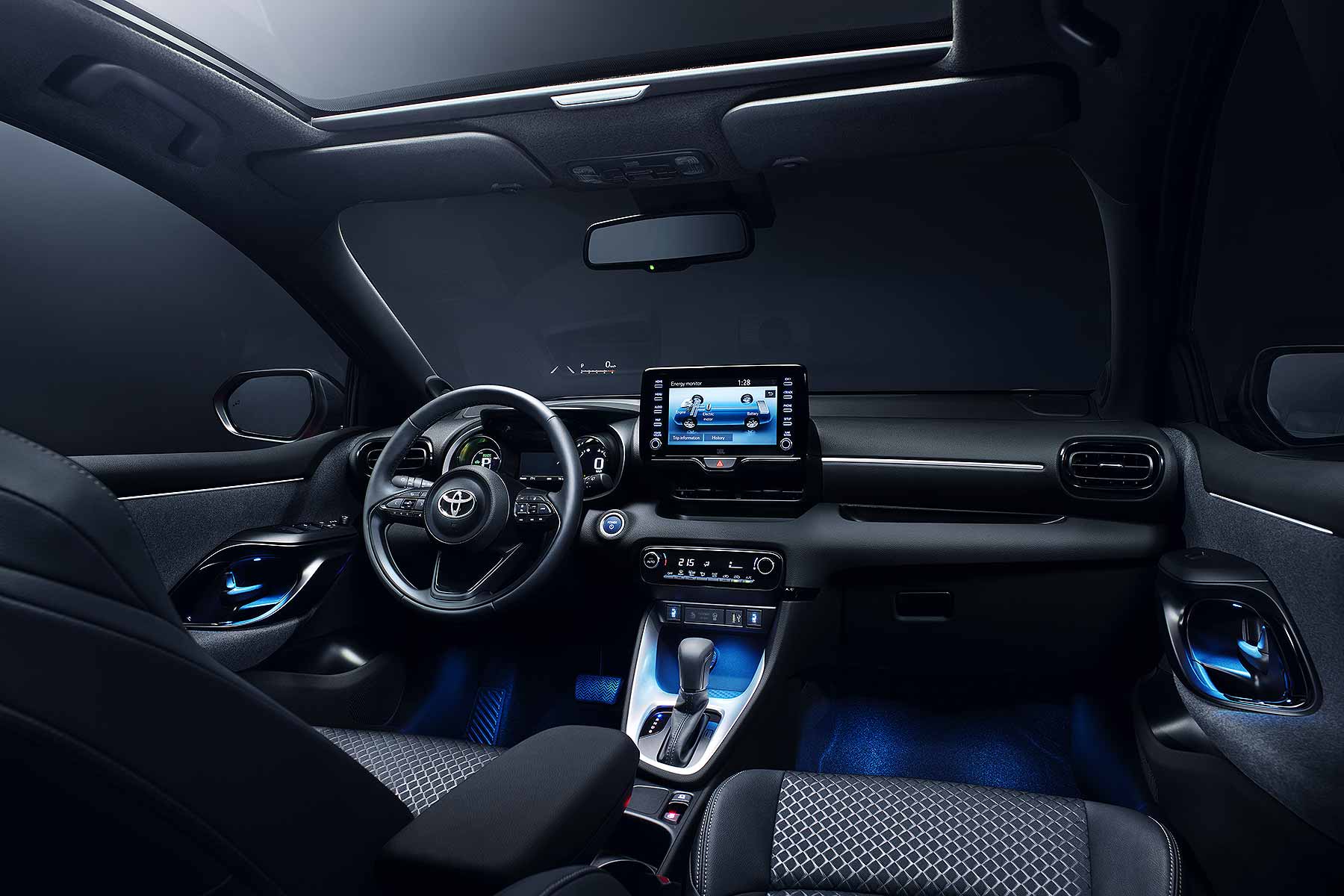
The interior is more interesting, too. The instruments are inspired by binoculars and, for the first time in a Yaris, the dashboard is made from soft-touch plastics, to lift quality.
Door panels feature a smart, nice-to-the-touch felt material and the prominent central touchscreen has Apple CarPlay and Android Auto connectivity. There’s a full-colour head-up display available.
The new Yaris has lots of stowage areas, the seats seem supportive and the steering wheel is lovely to hold. Like the styling, it has come a long way inside.
The ‘big small’ mantra is followed within. Sitting in the back reveals a surprisingly roomy supermini, with lots of space for knees, heads and feet.
The rear seat is comfier and more supportive than the small car norm, too.
Hybrid technology
All versions of the Yaris have three-cylinder petrol engines. The regular UK engine will be a 1.5-litre; Toyota might bring a cheaper 1.0-litre in later.
But the most important engine is the 1.5-litre hybrid (which the firm dubs ‘self-charging hybrid’, because you don’t have to plug it in). Toyota has made a great leap forward here, too.
The all-new engine operates in an ultra-efficient way, called the Atkinson Cycle. This inherently makes it more efficient than regular engines, and it’s ably backed up by brand new fourth-generation hybrid technology.
Toyota has swapped the old car’s batteries for modern lithium-ion ones. These charge up faster, can deploy more power more quickly – and, we’re told, transform how the new Yaris drives.
Engineers say as much as 80 percent of urban driving will be conducted in zero-emissions engine-off hybrid mode (and it’s easier to keep the engine from kicking in when driving in electric). The engine will even shut down when you lift off the accelerator at motorway speeds.
It means 20 percent more efficiency, despite it also putting out 15 percent more power. And because the electric drive is more efficient, Toyota promises less of the high-revving engine effect when petrol power kicks in.
The car is still some way off reaching showrooms, so we don’t know economy and CO2 emissions figures yet, but CO2 of less than 70g/km seems a decent bet. It might also be brilliant at real-world economy tests.
Toyota has invested big in the new 2020 Yaris, and it shows. It’s already Europe’s favourite Toyota, and a regular top-20 best-seller in Britain. Watch with interest what this one can achieve. It certainly won’t be boring.
Highways England has deployed its very own eyes in the sky. It’s running drones in order to keep a watch over the progress of work on motorways.
The use of drones, it says, helps reduce disruption for motorists, and allows engineers to plan more accurately.
Lane closures can be reduced because the drones allow monitoring of a much larger 3D area. It can also be carried out more quickly.
The ‘bird’s eye’ view also allows more meticulous planning of future works. It means getting a better idea of what equipment is needed and what closures will be necessary.
The ongoing M6 upgrade between junctions 2 and 4 near Coventry is benefitting from the technology. The A14 Cambridge to Huntingdon upgrade has also made use of it. (Parts of the latter are a year ahead of schedule, too.)
The M6 project is gargantuan. The smart motorway upgrade will have nine emergency areas, new concrete central reservations, two new noise barriers and a range of new electronic monitoring and signage systems.
“Safety is our top priority and we constantly pioneer ways of using new technology to keep people safe while we do this work,” said Highways England Smart Motorway sponsor, Peter Smith.
Upgraded M6 is 30 percent safer, says Highways England
A14 Cambridgeshire road upgrade to finish a year early
“The drone is a fantastic piece of kit that provides us with detailed insight into scheme progress across a large area of the works in a much quicker and efficient way.
“It surveys up to 10km in a single day and then creates an accurate 3D model of the works in just one hour.
“Ordinarily, inspections by road workers require lane closures for safety reasons and can take up to several days. By using the drone we are able to reduce lane closures because we can scan a much larger area in a quicker period of time.”
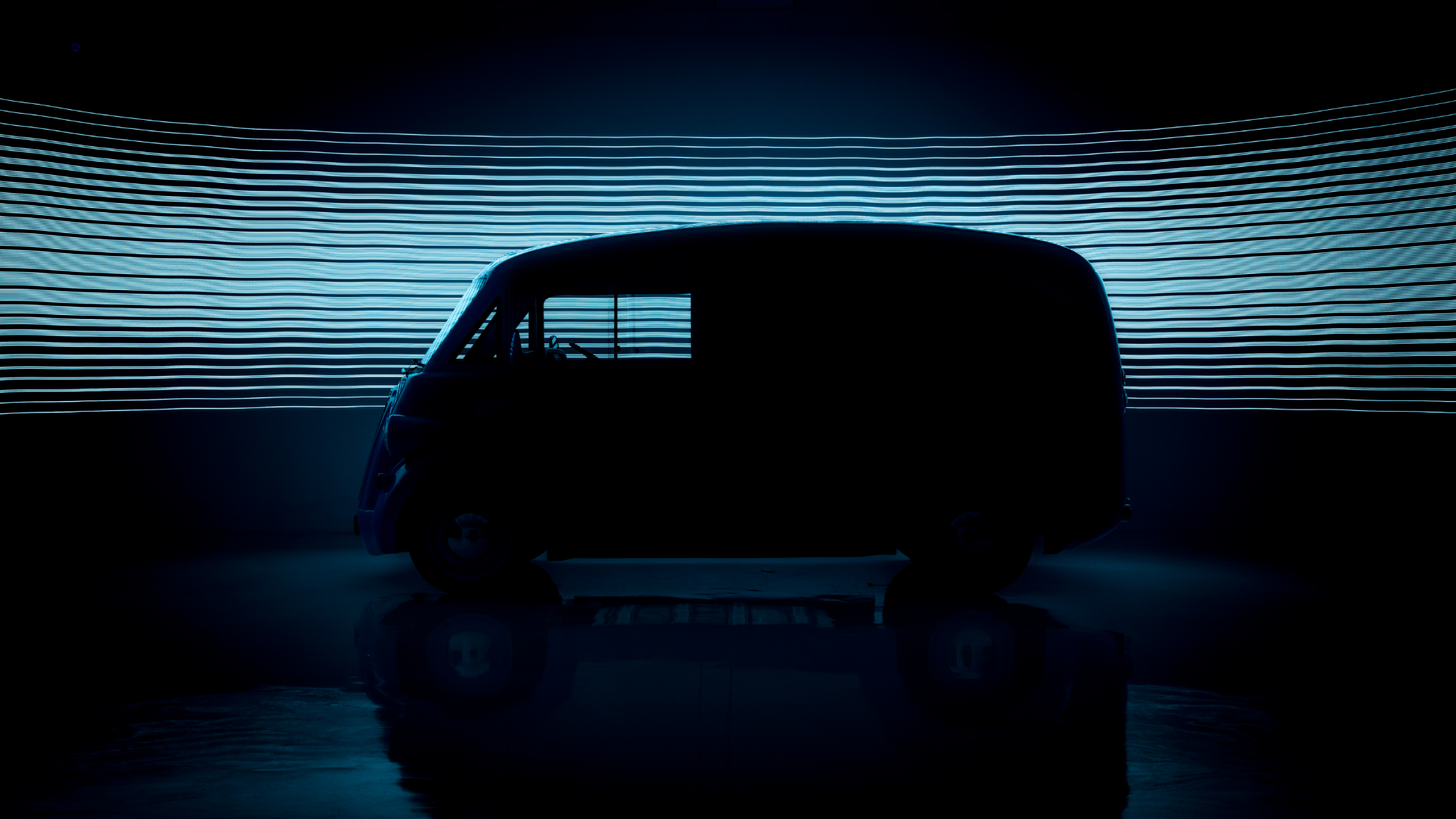
The classic Morris J-type van is returning, in spirit, as an all-electric commercial vehicle. The JE is described as a ‘21st-Century re-imagining of the iconic Morris J-type van’.
The new Morris Commercial company wanted to drag the J-type, considered by many to be ‘the ultimate iconic British van’, kicking and screaming into the 21’st century.
A tall order, over 70 years on from the original’s debut at Earls Court.
From 1948 to 2019
So what’s new about the new JE? Pretty much everything, bar the characterful styling and the fact that it’s built in Britain.
The important stuff obviously is what powers it. It’s electric, although the exact specifications of the powertrain are yet to be disclosed. Morris Commercial says it’ll have ‘high functionality and [a] long range’.
It’s also due to be relatively lightweight. Based on a modular chassis, the body is made of carbon fibre. Yes, this is a carbon-clad Morris van. It’s not quite ready yet, although there is a fully working engineering prototype.
Van drivers are paying £600k a year in loading bay fines
There’s also no word on when it’ll be available to buy, or indeed how much it’ll be. The prototype will, however, be revealed in full in a matter of weeks.
“I am so pleased to reach this stage after over two years of intense development,” said CEO and founder of Morris Commercial, Dr. Qu Li.
“It’s been a fantastic journey and I am extremely proud of what the whole Morris Commercial team and its incredible suppliers have achieved. The working engineering prototype has undergone extensive road testing and the end of 2019 is an amazing conclusion to the first phase of the project.
“We still have a little way to go to bring the project to full production, but we have the team and the product to make this an enormous success.
As a business we are committed to environmental sustainability and we are trailblazing a new approach to the production of appealing, fully electric commercial vehicles.
“We are very excited to unveil the JE to the public this autumn.”
The current eye test for drivers is ‘out of date’ and ‘not fit for purpose’, according to a road safety group.
Drivers must be able to read – with glasses or contact lenses if necessary – a car number plate made after 1 September 2001 from 20 metres.
An eye test is part of the practical driving test, with the driver asked to read a number plate on a parked vehicle.
If the driver fails the eye test, the driving test stops, the DVLA is informed and the licence is revoked. Re-applicants will be required to have an eye at a DVSA driving test centre, along with the standard eye test as part of the practical driving test.
Drivers must also have a visual acuity of at least decimal 0.5 (6/12) measured on the Snellen scale, along with an adequate field of vision.
An eye test every 10 years
GEM Motoring Assist says this isn’t enough and is calling for a detailed eye test to form part of the driver photocard licence renewal process, every 10 years.
Road safety officer, Neil Worth, said: “If you can’t see properly, you shouldn’t be driving. Poor eyesight is linked to more than 3,000 fatal and serious injury collisions every year. We are worried that there are just too many people driving whose eyesight has deteriorated to an unacceptable level.
“We believe it is entirely practical and sensible to require a test of visual acuity and field of view every 10 years, something that would fit in with licence renewal.
“Tests of this kind would not only make our roads safer, saving lives, disability and many millions of pounds through the reduction in the number of crashes, but they would also play a vital role valuable tool in the early diagnosis of many other costly medical conditions, irrespective of driving.”
Vision. You MUST be able to read a vehicle number plate, in good daylight, from a distance of 20 metres (or 20.5 metres where the old style number plate is used). If you need to wear glasses (or contact lenses) to do this, you MUST wear them at all times while driving. The police have the power to require a driver to undertake an eyesight test.
In 2018, the DVLA launched a campaign to remind drivers that they can check their vision by taking the 20 metres test. Five car lengths or eight parking bays is an easy way to measure the distance.
Dr Wyn Parry, DVLA’s senior doctor, said: “The number plate test is a simple and effective way for people to check their eyesight meets the required standards for driving.
“Having good eyesight is essential for safe driving, so it’s really important for drivers to have regular eye tests. Eyesight can naturally deteriorate over time so anyone concerned about their eyesight should visit their optician – don’t wait for your next check-up.”
As part of its Older Drivers Campaign, RoSPA (Royal Society for the Prevention of Accidents), advises motorists to keep a spare set of glasses in the glovebox.