Home Blog Page 232

Uber ‘more environmentally damaging than private cars’

0
Uber app

Emissions from Uber rides are 41 percent higher than the average privately owned vehicle, a new report reveals.  

The significantly higher carbon emissions are because of the time Uber drivers spend without passengers in their vehicles.

In response, Uber has pledged to make all its rides in North America and Europe 100 percent zero emissions by 2030. It is also targeting 100 percent electric trips in London by 2025, and 50 percent of trips in Europe to be zero-emissions.

The FT has analysed Uber’s first-ever environmental impact report, looking at trips taken in the US and Canada between 2017 and 2019.

Improved algorithms had reduced emissions per passenger mile – but they were still significantly higher than regular vehicles.

Uber, however, insisted the service was still more environmentally friendly than driving a vehicle one-up, as well as other taxi services.

“This is a start and we expect to be judged by our actions,” said Uber CEO Dara Khosrowashahi.

Nissan Leaf

Electrifying Uber

As part of its move towards electric cars, Uber has signed an MoU with the Renault Nissan Alliance to provide Uber drivers with affordable EVs, such as the Nissan Leaf pictured above.

A pilot is already operating in London, offering Uber App drivers access to cost-effective electric cars.

This will be extended to France later this year, then to the Netherlands, Portugal and other markets.

The aim is to give Uber users the chance to select a zero-emissions vehicle in 80 percent of European Uber regions by the end of 2021.

“By teaming up with Uber in the UK, we have already been able to increase the awareness and adoption of zero-emission vehicles, and we are looking forward to exploring how to roll that out further in Europe,” said Nissan Europe’s Jordi Vila

ALSO READ

Is Uber worse for the environment than driving yourself?

Uber gives free rides to NHS workers during coronavirus crisis

Uber users would pay more for an electric ride

Advertisement

Land Rover Defender electrified with new plug-in hybrid

0
2021 Land Rover Defender P400e PHEV

Land Rover has introduced a plug-in hybrid version of the new Defender, which combines 27 miles of pure electric driving with 404hp and 0-62mph in 5.6 seconds.

The new Defender P400e also averages 85.3mpg and emits 74g/km CO2 in official tests.

Combining a 2.0-litre turbo petrol engine with a 105kW electric motor (and 19.2kWh battery), Land Rover says the new Defender PHEV can be driven in pure electric mode even when running in off-road-biased low-range mode – for 100 percent zero emissions off-roading.

2021 Land Rover Defender P400e PHEV

Charging via the standard Mode 3 (wallbox charger) cable tops it up to 80 percent capacity in two hours. There’s an optional Mode 2 (three-pin plug) cable that takes seven hours.

The Defender P400e Plug-in Hybrid is also compatible with 50kW rapid chargers, where recharging to 80 percent capacity takes 30 minutes.

Land Rover’s electrified Defender is offered with the five-door 110 bodystyle, with either five or six seats. Impressively, it is still capable of towing 3,000kg.

Land Rover has yet to reveal prices for the Defender P400e, which arrives as part of the 2021 model year updates for the new vehicle.

2021 Land Rover Defender 90

Defender 90, six-cylinder on sale

The three-door Land Rover Defender 90 is now on sale, with prices starting from £43,625 (compared with £45,315 for the five-door Defender 110).

Land Rover suggests it’s the more suitable choice for urban dwellers, thanks to a turning circle of 11.3 metres.

Despite its more compact dimensions, the Defender 90 can still seat up to six people, with the addition of a middle-row front seat.

A smooth six-cylinder diesel Defender is now available, too. The D300 produces 300hp and will do 0-62mph in 6.7 seconds in Defender 90 guise. With a whopping 479lb ft of pulling power, Land Rover says the surge of torque ‘perfectly fits the Defender’s tough character’.

Surprisingly, Land Rover has swapped the current four-cylinder D200 and D240 turbodiesel engines for detuned versions of the new in-line six-cylinder. Both return economy of 32.2mpg and CO2 emissions of 230g/km.

2021 Land Rover Defender Hard Top

Other updates for 2021 include the launch of commercial vehicle Hard Top van versions of both Defender 90 and Defender 110.

The 90 Hard Top costs from £35,820 plus VAT, and the Defender 110 is priced from £43,012 plus VAT.

ALSO READ

Land Rover watch timed for launch of new Defender

This Land Rover Defender went from farm truck to bespoke masterpiece

Land Rover puts Defender to work for coronavirus crisis

Advertisement

T-plates for young drivers with telematics car insurance trialled

0
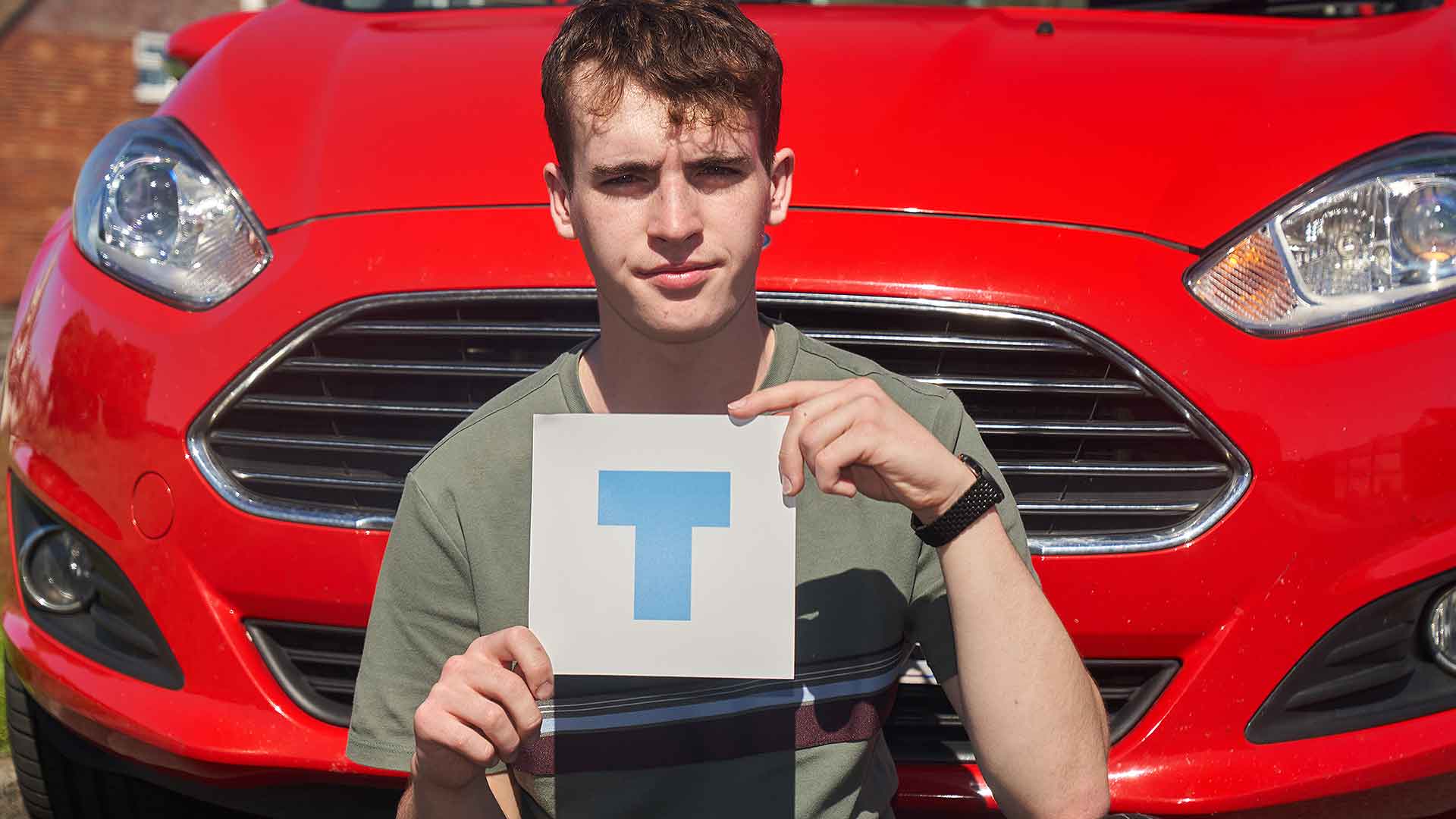
Young driver with a T-plate

Young drivers say they feel pressured to drive faster by other motorists. To address the issue, Co-op has begun a trial of T-plates to help those with telematics (‘black box‘) car insurance feel safer.

Almost one in four young drivers aged 17-25 physically feel unsafe when they drive, due to the pressure from other motorists.

Nearly three in four have been overtaken when it wasn’t safe to do so – and 43 percent have received rude hand gestures from other drivers.

The nationwide T-plate pilot aims to combat this and help young drivers feel safer on the roads.

Drivers with black boxes will see their insurance premiums increase, or in some extreme cases, their policies cancelled if they don’t drive as they should,” said Co-op Insurance MD Charles Offord.

“Yet, currently it’s impossible for other motorists to know if another vehicle has a black box fitted.

“Young drivers want other motorists to know this, which is why we’re launching the T-plate.”

Backed by road safety charities

T-plates for young drivers

Co-op surveyed more than 24,000 young drivers and six in 10 said the T-plate would make them feel less pressured.

The trial begins today with hundreds of young drivers. The plan is to roll it out to thousands more in the coming months.

The initiative has been backed by road safety charity Brake and driving school RED.

Co-op research shows that more than six in 10 young drivers will look to use telematics car insurance, to help keep the cost of getting onto the road under control.

“The cost of my insurance has come down quite a bit since having the black box installed,” said 21-year old driver Callum Smith.

However, “I am often made to feel like I’m in the wrong for sticking to the right speed limit by other drivers.

“If they knew I had a black box, I think they would ease up a bit.”

ALSO READ:

Young drivers targeted with ‘fuss-free’ monthly car insurance

The cheapest new cars to insure for young drivers

Car insurance ‘rip-off’ as young drivers pay more than double

Advertisement

Waze now lets you plan trips on desktop and ‘send to app’

0
Waze Save To App goes live

After discovering that millions of Waze users plan trips using the desktop Live Map, the navigation app now lets you save and send trip plans direct to the smartphone app with a single click.

The functionality works on both Android and iOS devices.

Waze says the new functionality simplifies things for users, allowing them to find the best route and time to leave before getting into their car.

Once the trip is sent, users will receive time-to-leave notifications based on real-time traffic data – so they’ll be alerted to leave earlier if traffic is heavy.

Route navigation can also be quick-started with one click.

Waze product manager Yael Schwartzberg says the platform becomes the first in the industry to “bring their whole planned drive directly to their app at the click of a button.

“With many people stuck in front of their computer at home as a result of the Covid-19 outbreak, we’re now giving them a way to make the most of this setup and hit the road as easily as possible once it’s time to leave.”

How to use Waze Live Map Save To App

  • Visit Waze Live Map
  • Enter route
  • Enter desired arrival time
  • Click ‘save to app’
  • Planned drive appears on the Waze smartphone app

ALSO READ

Waze reports huge fall in miles driven due to coronavirus

Waze and Google Maps now in Apple CarPlay

FordPass connected car smartphone app is now free

Advertisement

Free 12-month engine warranty at Castrol workshops

0
Castrol Engine Warranty scheme

Independent Castrol Service workshops will now give a free 12-month engine warranty to all motorists who have an oil change using Castrol lubricants.

Neither the garage nor the customer have to pay a penny: all warranty costs are covered by Castrol.

Customers have seven days to register following the service for the 12-month warranty.

The warranty package, which is valid for those covering up to 18,000 miles in a year, is intended to help independent workshops attract and retain more customers.

Research by Castrol shows that comprehensive warranty cover is one of the main reasons that customers use franchised workshops.

The new Castrol Engine Warranty scheme allows more affordable independents to offer similar reassurance.

“There is no financial risk to the participating workshop should there be an issue with the engine following a service or oil change,” said Layla Yebaile, head of marketing at Castrol.

All warranty claims are submitted online by the customer. Once a claim has been received, owners either take their car to the workshop or, if it can’t be driven, arrange for a home inspection.

Customers will also be reminded just before the end of the 12-month warranty that it is about to expire.

“It gives greater peace of mind to the customer, and provides another way for businesses to differentiate themselves,” said Yebaile.

ALSO READ

More motorists risk car insurance ‘loyalty tax’

Zap-Map adds payment service to cure ‘charger anxiety’

How smoking affects the value of your car

Advertisement

More motorists risk car insurance ‘loyalty tax’

0
September is a peak month for car insurance renewals

This September’s peak car insurance renewal season could be busier than ever – and motorists who let their policy auto-renew rather than checking prices could be out of pocket by up to £289.

Called the auto-renewal ‘loyalty tax’, the number of motorists allowing auto-renewal is actually on the increase.

Research shows the number of auto-renewals has risen 40 percent over the past six months alone, to the highest level since early 2017.

GoCompare is now urging the 6.7 million motorists at risk of paying the car insurance loyalty tax to shop around and check if they could get identical cover for less money.

Lee Griffin, CEO and founder of GoCompare, said: “Our research shows that millions of drivers are not actively engaging with the renewal process this year, potentially leaving themselves hundreds of pounds out of pocket by effectively paying a ‘loyalty tax’.   

“We know insurers are helping those in extreme financial difficulty and, in these circumstances, it could be in the insured’s interest to remain with their current provider. 

“But drivers who are still paying their premiums really need to shop around this year to see what other insurers are willing to offer them.”

Lockdown saw fewer cars on the road, resulting in fewer accidents and claims which led one car insurer to issue automatic refunds.

This trend has continued since lockdown restrictions eased.

However, warned Mr Griffin, while this may mean some motorists are pleasantly surprised to find their auto-renewal quote coming in cheaper than last year, he still urged motorists to shop around.

“That is the signal that they could probably get an even better deal elsewhere.”

Top tips to get a better car insurance deal

  • Never accept your auto-renewal quote, even if it is cheaper than last year, without first checking prices
  • Give yourself at least a week ahead of your renewal date to shop around
  • Make sure you read the small print of new policies, so it is a like-for-like policy with no excess charges, penalties, exclusions or terms and conditions

For those who are facing financial difficulties and whose car insurance is coming up for renewal, GoCompare has also published some specific advice to help, including guidance from regulator the FCA.

ALSO READ

How to save money on car insurance

Popular car insurance myths: busted

What do the car insurance write-off categories mean?

Advertisement

First look at the new 2021 Dacia Sandero range

0
Dacia Sandero and Sandero Stepway

Dacia is preparing to launch all-new versions of the Sandero and Sandero Stepway and has revealed first images of the third-generation models.

Long famous as being Britain’s cheapest new car on sale, Dacia has given us our first look at the new Sandero range ahead of announcing further details – including an on-sale date – later in September.

The Sandero has been a top-10 best-selling car in Europe since 2017.

Dacia says the new Sandero has a more steeply-raked windscreen, lower roofline and more streamlined appearance.

Dacia Sandero and Sandero Stepway

The wheels now fill out the arches better, for a more grounded appearance, and it has modern features such as a ‘bee-sting’ aerial at the rear of the car, rather than today’s old-fashioned antenna.

The crossover-style Sandero Stepway – the most popular Dacia in the UK – has a unique bonnet with bulging domes, and a more rugged appearance.

Both Sandero and Sandero Stepway have a distinctive Y-shaped LED light signature. Neat LED tail lamps are also more streamlined.

Dacia isn’t revealing any information about the interiors yet: today’s car, although roomy, has a particularly dated dashboard, so buyers will be hoping for a big step forward.

The firm does say the new cars will be ‘smarter, more accessible and more Dacia’.

Dacia Sandero, Sandero Stepway and Logan

There will also be a new Logan saloon, although this is unlikely to go on sale in the UK. Dacia hasn’t yet confirmed if there will be a replacement for the Logan MCV small estate.

More details will be announced online on September 29th.  

The introduction of the new Sandero follows the 2018 launch of an all-new Dacia Duster family-sized crossover – which, despite its extra sophistication, retained its title of being Britain’s cheapest SUV.

The hope will be that Dacia can repeat this achievement with the all-new Sandero.

ALSO READ

Dacia Sandero Stepway Bi-Fuel (2020) review

How Dacia Bi-Fuel LPG cars will save you money

2018 Dacia Duster UK sales confirmed

Advertisement

Zap-Map adds payment service to cure ‘charger anxiety’

0
Zap-Pay

Zap-Map, the popular electric car chargepoint location app, has launched a new in-app payment tool called Zap-Pay to make charging an EV simpler and more seamless.

There are currently more than 40 individual charging networks operating in the UK. Most require individual sign-ups, meaning electric car owners have to use multiple apps and cards.

Charge anxiety’, or concern about being able to access the right public charge point when needed, is an issue for almost 7 in 10 EV drivers, according to Zap-Map research.

Zap-Pay will allow EV drivers to search, plan and pay, all in one app. Similar to using a Tesla Supercharger, drivers simply plug in, says the firm: the app manages the rest.

The first network to join the new cross-network payment service is Engenie.

The firm says “a wave of network partners” will follow in the autumn.

It will be rolled out “across UK networks in 2021, providing unique and unrivalled coverage across the whole country”.

Zap-Pay

‘As easy as filling up’

Government ministers have been critical of how complicated it is to charge an electric vehicle. “It should be as easy for drivers to charge their vehicles at public charge points as it is to pay for petrol or diesel,” said transport minister Rachel Maclean.

“As the EV market continues to go from strength to strength, journey planning and paying with one app or membership card must also follow – Zap-Pay will help do just that.”

Last week, Mike Hawes, chief executive of the Society of Motor Manufacturers said most research surveys suggest a key concern of potential electric car owners is charging.

“It should be as easy to charge as it is to fill up. We need a visible, reliable and interoperable network.”

Ben Lane, joint MD at Zap-Map, said that “no one should need dozens of accounts, apps and cards to charge their car.

“Providing a seamless charging experience is essential to accelerate this shift [to EVs].”

Zap-Map has been downloaded more than 250,000 times and a survey by Engenie showed 90 percent of drivers regularly use it.

“Zap-Map is the most used and trusted EV charger mapping tool in the UK,” said Engenie CEO Ian Johnston. “It is perfectly placed to bring this game-changing solution to market.”

Discover more about 100% zero emissions cars on Motoring Electric

ALSO READ

1 in 3 motorists ‘optimistic’ about buying an electric car by 2025

Electric car green number plates to launch in autumn

Does Tesla want to become a UK electricity provider?

Advertisement

How smoking affects the value of your car

0

No smoking sign

Everyone knows smoking is bad for your health. But when it comes to cars, it’s also bad for your wealth. A heavy smoker may lose up to £2,000 when they part-exchange a car at a dealer.

This is according to vehicle data specialist HPI, which says dealers take a dim view of smoke-soiled cars. The smell is one problem, but cigarette ash can cause damage to the seat upholstery and trim.

Fernando Garcia, consumer director at HPI, said: “The first thing a car dealer will do when looking at a car being sold by a smoker is to knock down the price of the part-exchange.

“That’s simply down to the fact that a car for part-ex has to be made fit for resale and this becomes considerably more difficult and expensive when that car was previously driven by a smoker.

“The two main impacts smoking has on a vehicle are physical damage to the interior and smell, something many smokers are often unaware of – or think can be resolved by using an air freshener.“

Resale values up in smoke

dirty car interior

Cleaning a car owned by a smoker can cost anything up to £150, but in severe cases, the internal fabric and headlining may need to be removed. This can cost hundreds or thousands of pounds, depending on the smell and type of vehicle.

Repairing any marks, stains or burns will add to the cost, reducing the resale value still further.

Garcia added: “Some dealers tell us they won’t even buy cars from smokers because of the time and expense of cleaning up a car and removing unpleasant smells. 

“Unless consumers want to see the residual value of their vehicles literally go up in smoke, I’d urge them to try to quit or at the very least refrain from smoking inside the car when driving.”

Smoking in a vehicle: the law

smoking in a car with a child

It has been illegal to smoke in a vehicle with anyone under the age of 18 since 2015, with the law introduced in England and Wales to protect young people from the dangers of second-hand smoke.

Both the driver and the smoker could be fined £50, and the law applies even if somebody is sat in the open doorway of a vehicle.

The law does not apply to e-cigarettes, a driver aged 17 if they are alone in the car, or a convertible with the roof completely down.

ALSO READ:

How to find the cheapest petrol and diesel near you

How to make your car last longer

How to prevent catalytic converter theft from cars

Advertisement

Used car prices in largest-ever monthly increase

1
DS Certified used cars

Used car prices are continuing to rise with Auto Trader figures showing a 6.1 percent increase in the average retail price of a secondhand car during August.

This is the largest monthly price increase ever recorded, and the fifth consecutive month of growth in 2020.

It means the average asking price of a secondhand car in the UK now stands at £13,705.  

Analysts add that during August, there were fewer diesel cars, automatic cars and vehicles aged under one year in the marketplace.

This actually helped slow down the rate of price growth – without these challenges, it would have been higher still.

“Over the last five months, we’ve observed a very positive trajectory for used car prices, driven largely by supply challenges and extremely strong consumer-led demand,” said Auto Trader insight director Richard Walker.

Mr Walker said that although some of the supply challenges are beginning to ease, strong consumer demand means that “whilst the trajectory may begin to level off slightly, we’re confident prices will remain buoyant over the coming months.”

Demand higher than UK population

Demand on Auto Trader was up a hefty 30.5 percent last month, with 67.1 million visits – more than the total population of the UK.

Petrol cars are proving particularly popular, with a 27.4 percent increase in demand, while diesel car demand rose 19.3 percent.

Surprisingly, demand for electric cars has actually fallen below supply, which saw prices actually decline 5.2 percent last month.

This is the biggest monthly fall in electric car prices in almost five years.  

The average used electric car now cost £25,880, compared to £12,389 for a petrol car.

This “suggests car buyer are reverting to the type of vehicles they are familiar with, and what they consider to be the most affordable choice”.

Sue Robinson, director of car dealer trade body the NFDA, said robust demand was likely to continue for a number of factors “including the movement away from public transport to owned vehicles, and the increase in disposable income for a number of consumers”.

ALSO READ

Used car prices have risen for 15 weeks running

Used car sales halve due to lockdown

How to sell your car for the best price

Advertisement