Home Blog Page 233

New car sales stumble as buyers prepare for September spree

0
2020 Kia Niro

New car registrations were down 5.8 percent in August as buyers appeared to hold off their purchases ahead of the key 70-plate September registration change.

August is traditionally the quietest month of the year and in 2020, just over 87,000 new cars were registered.

The Society of Motor Manufacturers and Traders (SMMT) said that although private buyers declined only marginally, there were bigger falls in the fleet and business car sectors.

Registrations of electric, hybrid and plug-in hybrid cars, however, were up almost 75 percent, taking a 16.1 percent market share.

Pure electric cars alone took a 6.4 percent market share in August, up 77.6 percent.

In contrast, the downfall of diesel continued, with the fuel accounting for less than 20 percent of overall new car registrations.

“The decline is disappointing, following some brief optimism in July,” said SMMT chief executive Mike Hawes.

“However… it’s important not to draw too many conclusions from these figures alone. With the all-important plate change month just around the corner, September is likely to prove a better barometer.”

Overall UK new car registrations are down 39.7 percent year to date. This equates to around 600,000 fewer new cars sold so far during 2020.

Top 10 best-selling new cars: August 2020

Ford Puma 2020

The Ford Fiesta returned to the top of the UK registrations chart in August, with a clear lead over the next-best Volkswagen Golf.

The Vauxhall Corsa, after a few months in top spot, fell back to fifth place.

There were two surprises in the top 10 – the first appearance of the all-new Ford Puma SUV, and the Kia Niro hybrid emerging in 10th place, just 17 registrations behind the Ford Kuga.

1: Ford Fiesta

2: Volkswagen Golf

3: Ford Focus

4: Ford Puma

5: Vauxhall Corsa

6: Mercedes-Benz A-Class

7: Volkswagen Tiguan

8: Volkswagen Polo

9: Ford Kuga

10: Kia Niro

ALSO READ

1 in 3 motorists ‘optimistic’ about buying an electric car by 2025

Fuel prices are rising – but ‘not back to pre-pandemic levels’

Car insurance claims halved during lockdown

Advertisement

1 in 3 motorists ‘optimistic’ about buying an electric car by 2025

0
Vauxhall Corsa-e

More than 1 in 3 motorists say they are feeling optimistic about buying an electric car in the next five years – but almost 1 in 4 say they can’t ever see themselves owning one.

And although Britain is expected to ban the sale of new petrol and diesel cars by as soon as 2035, 44 percent of motorists believe the technology won’t be ready by then.

The figures were revealed in a survey by trade body the Society of Motor Manufacturers and Traders on British motorists’ feelings towards fully electric cars.

The contrasting views, says the SMMT, shows how huge investment by car makers into EVs is starting to bear fruit – but how much work there still is to be done, particularly with affordability and in developing the UK’s meagre charging network.

There are currently around 19,000 public electric car charge points across the country: the SMMT believes there needs to be 1.7 million by 2030, and 2.8 million by 2035, in order to give motorists confidence to make the switch.

This would cost £16.7 billion and equate to 507 new public charge points being installed every day.

Vauxhall Corsa-e power display

‘Slow lane’

Car makers are leading the charge, said SMMT chief executive Mike Hawes, “but they can’t transform the market alone.

“Until these vehicles are as affordable to buy and as easy to own and operate as conventional cars, we risk the UK being in the slow lane, undermining industry investment and holding back progress.”

The biggest barriers to motorists switching into an electric car are higher purchase prices, lack of local charging points and fear about being caught short on longer journeys.

To address affordability, the SMMT is calling for a commitment to the Plug-in Car Grant of at least six years – and the revival of grants for all zero-emissions capable vehicles such as plug-in hybrids.

The organisation also suggests making the purchase price of zero emissions vehicles tax-free.

By making the average electric family car VAT-free, and including the Plug-in Car Grant, the purchase price could be reduced by £5,550.

An all-electric SUV could be almost £10,000 cheaper.

This could drive as many as 2.4 million sales over the next five years, taking the market share of electrified cars from today’s 8 percent up to almost 30 percent by 2025.

“To give consumers confidence to take the leap into these technologies, we need government and other sectors to step up and match manufacturers’ commitment by investing in the incentives and infrastructure needed to power our electric future,” concluded Mr Hawes.

ALSO READ

What is an electric car?

Can an electric car be your everyday car?

Electric cars 2020 – which EVs have the longest range?

Advertisement

Fuel prices are rising – but ‘not back to pre-pandemic levels’

0
Unleaded petrol pump

Average fuel prices rose for the third successive month in August, with petrol going up 0.5p and diesel rising 0.3p.

However, both fuels are still 13p a litre cheaper than they were at the end of January.

RAC Fuel Watch experts are now predicting there is little sign fuel prices are returning to pre-pandemic levels any time soon.

  • RELATED: How to find the cheapest petrol and diesel near you

“We had feared prices might rise more quickly as people started driving more after the lockdown,” said RAC Fuel Watch spokesman, Simon Williams.

“So far, petrol has only gone up 9p a litre from its low of 106p a litre in May.”

Prices may even fall in the coming weeks, added Mr Williams, if fuel retailers reflect the downward movement in the wholesale price of oil. He suggested a 5p a litre fall in the price of both petrol and diesel.

The average price of a litre of unleaded is 114.9p, and diesel is 118.5p.

Motorway fuel price surprise

Motorway fuel prices have, surprisingly, bucked the UK trend.

They are now only 10p a litre higher than the UK average, compared to a 20p a litre difference in January.

And even this is 5p a litre lower than the average over the past half-decade.

“It was positive that motorway fill-ups remained more reasonably priced than they have been in the past, with service station retailers apparently taking not as much margin as they have in the past,” said Mr Williams.

He pointed to Moto’s trial with selling fuel only a few pence a litre above supermarket prices, traditionally the lowest in the UK.

Although it’s unlikely the trial signals an industry-wide change in direction for motorway fuel retailers, “it won’t have gone unnoticed by its competitors”.

Could motorway fuel prices finally start becoming more competitive and become convenient go-to filling destinations of their own? Let us know in the comments below.

ALSO READ

How to prevent catalytic converter theft

The cars that go furthest with the fuel light on

How to save fuel when driving

Advertisement

Car insurance claims halved during lockdown

0
Isuzu D-Max car crash

New figures from the Association of British Insurers (ABI) show a dramatic fall in car insurance claims during the 2020 coronavirus lockdown period.

Between April and June 2020, motor insurance claims were down 48 percent, from approximately 678,000 claims to 324,000.

“The fall largely reflected the lockdown period, when far fewer vehicle journeys were made,” said the ABI.

This has helped push the average price paid for comprehensive car insurance down to a four-year low of £460.

“Insurers have been passing on cost savings to their customers,” said ABI manager Laura Hughes.

“However, cost pressures remain, such as rising vehicle repair costs reflecting ever-more complex vehicle technology, and increased vehicle theft.”

£19,500 personal injury average

While the value of claims settled during Q2 2020 also fell, it was only down five percent, with £2.1 billion paid out. This reflects existing claims from previous quarters – but also shows how the value of the average claim is rising.

Indeed, this was up 27 percent over the previous quarter, to £4,600.

This is the largest quarterly rise on record, and influenced by the value of both the average theft and accidental damage claim going up 14 percent.

Worryingly, the average value of personal injury claims also leapt 34 percent – to a staggering £19,500.

“With personal injury costs continuing to rise, it is important that the whiplash reforms scheduled to be implemented in April 2021 are not delayed further,” said Ms. Hughes.   

Matthew Scott, executive director of the Association of Consumer Support Organisations (ACSO), added it was not surprising that personal injury claims had risen by so much.

“With fewer cars on the road, incidents are likely to have taken place at higher speeds, and the injuries suffered much more severe.”

ALSO READ

How to save money on car insurance

Popular car insurance myths: busted

Young drivers targeted with fuss-free monthly car insurance

Advertisement

Care by Volvo car subscription service launched in UK

0
Care By Volvo

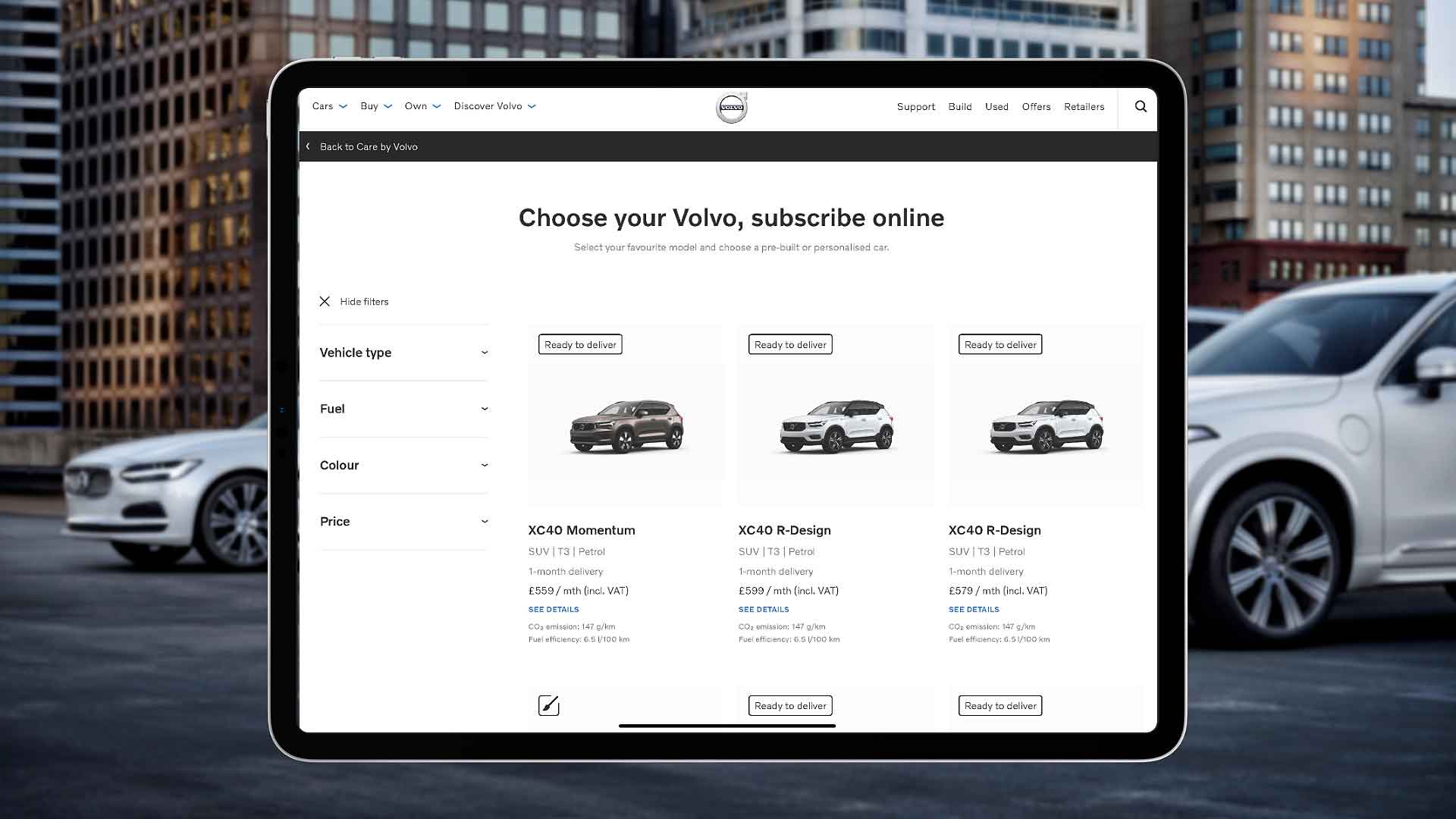
Volvo has launched a monthly subscription service for new cars called Care by Volvo, following a successful trial in London.

Customers choose and buy online, with fixed monthly prices starting from £559.

The price is all-inclusive, bundling servicing, tyres and other wear-and-tear maintenance, roadside assistance and 10GB of in-car wi-fi per month.

Insurance can be added for an extra monthly cost, although Volvo says many UK customers will prefer to arrange this themselves.

After a 30-day initial trial, customers can cancel with three months’ notice, at no cost. There’s no sign-up fee and no fixed-term agreement.

The service is “perfect for uncertain financial times” said head of Care by Volvo, Conor Horne.

With no long-term financial commitment, those hesitating about taking on a three-year new car PCP can manage their risks without “paying to get out early”.

Volvo’s Magnus Fredin told Motoring Research he expected most customers to take out subscriptions for at least six months.

Care By Volvo

Care by Volvo: how does it work?

Potential Care by Volvo customers don’t need to visit a Volvo retailer: the entire process can be completed online.

All in-stock cars are listed, with expected delivery times (usually within a month), along with the option to configure a factory order (with longer delivery times).

Mr Horne says early evidence suggests three in four people prefer to choose a pre-configured car, “like buying a pair of shoes or jeans”.

Care By Volvo

Once an order is made, a local Volvo dealer handles the delivery, along with routine service and maintenance.

The local retailer is also on hand to help customers through the purchase process, although the deal itself is done directly with Volvo. The fixed monthly prices are haggle-free, too.

Volvo predicts up to 10 percent of customers could eventually choose the Care by Volvo subscription route.

The firm’s data reveals more than nine in 10 customers are new to the brand, and they are much younger than the Volvo average.

Less than one percent choose to switch their car – and less than five percent actually end the deal once the three-month post-trial period is over.

The only other car company to offer a vehicle subscription service in the UK is Jaguar Land Rover, with its Pivotal subscription product.

ALSO READ

M is Volvo’s new Mobility brand

Is your Volvo dirty? There’s an app for that

Now you can arrange to test-drive a Volvo on Amazon

Advertisement

DVLA increases automatic driving licence extension to 11 months

0

Photocard driving licence

The DVLA has announced a further extension for motorists with driving licences expiring in 2020.

Drivers who have a photocard or entitlement to drive expiring between 1 February and 31 December 2020 now have a further 11 months from the date of expiry to apply to renew their licence.

The extension is automatic, and drivers don’t need to do anything.

Motorists will only need to apply to renew their licence when they receive a reminder before the automatic extension expires.  

In June, the DVLA granted a seven-month automatic extension for driving licences, after agreement with the EU.

This followed a new EU regulation that allowed automatic extensions to be applied.

“The initial extension from the EU expired at the end of August and we have now agreed a further extension with the EU to the end of December,” said a DVLA spokesperson.

Motorists are required to renew photocards every 10 years: it’s every five years for bus and lorry drivers.

“Drivers who have already applied to renew their photocard driving licence or entitlement to drive can usually carry on driving while we process their application providing they have not been told by their doctor or optician that they should not drive,” added DVLA chief executive Julie Lennard.

The automatic extension means motorists can carry on driving – and “don’t need to worry about the admin or the associated costs with renewing their licences”.

Renewing a driving licence costs £17 for those who apply by post, and £14 for those who do it online.

DVLA delays

The DVLA has been experiencing delays in dealing with paper applications during the coronavirus pandemic.

This is leading to motorists waiting far longer than normal for paperwork to be processed and returned.

The DVLA says this is due to social distancing at its Swansea HQ restricting the number of people who can work on site at any one time.

Online applications, a spokesperson told Motoring Research, are unaffected by delays.

ALSO READ

Driver eye test ‘not fit for purpose’

How to get an international driving permit

DVLA clamping down on car tax evasion

Advertisement

Eat Out To Help Out: the motorway services taking part

0
Eat Out to Help Out

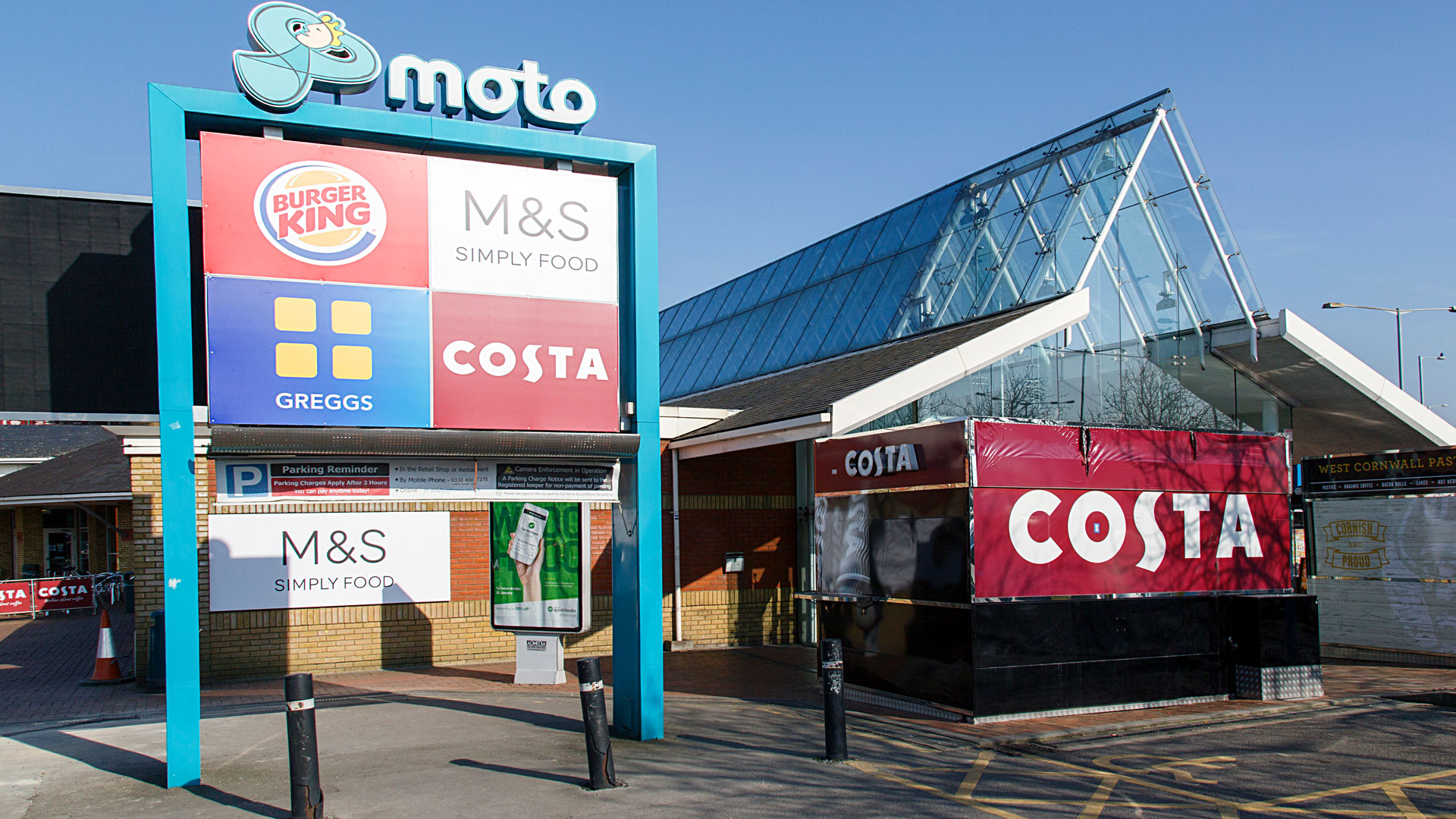
Motorway services operators Moto, Roadchef and Welcome Break are all taking part in the government’s August 2020 Eat Out To Help Out scheme.

This means that you can enjoy a 50 percent discount when dining at selected motorway service areas.

The August Bank Holiday is officially the final day of the initiative.

Eat Out To Help Out is designed to give a boost to the UK hospitality industry, which has been struggling since lockdown measures were introduced in March. It is hoped that the initiative will encourage customers to eat out, now that restrictions are easing.

Discounts are available from Monday to Wednesday throughout August, with a maximum £10 available per person.

Motorists 'demand action' against extortionate motorway fuel prices

Meals at all catering outlets without Roadchef’s main buildings will be eligible for the discount. Outlets include McDonald’s, Costa, Leon, Fresh Food Cafe, Cornish Bakery, Chozen Noddle and Restbite. The discounts are not available at Drive Thru outlets and restaurants located outside the main buildings.

The ‘eat out to help out’ discount is also at motorway services operated by Moto. This means you can get £10 off the price of food at Eat & Drink Co, KFC, Burger King, Costa, Arlo’s, Bar & Grill and Chow.

Similarly, Welcome Break is taking part in the scheme. A 50 percent discount is available at Burger King, Starbucks, The Good Breakfast, Chopsti, Harry Ramsden, KFC, Pret and Pizza Express.

In all cases, the discount is only available when you eat in. The scheme is not valid on takeaway orders.

best and worst motorway services

Motorists who enjoy fine dining will be pleased to discover that Tebay and Gloucester Services are also taking part in the scheme. Discounts are available in the ‘Kitchen’ on Mondays, Tuesdays and Wednesdays throughout August.

Announcing the scheme, the Chancellor of the Exchequer Rishi Sunak said: “Our restaurants, cafes and bars play a vital role in our economy, employing more than a million people. They have been hit hard by coronavirus, so it’s vital we do everything we can to help them recover.

“Our Eat Out To Help Out scheme is deigned to get more customers through the door – protecting jobs by giving businesses the confidence to retain and hire staff.”

To find a restaurant that’s registered for the scheme, visit the government website.

ALSO READ:

How to find road traffic information and avoid delays

How to use the Eurotunnel for a holiday abroad

How to find the cheapest petrol and diesel near me

Advertisement

MOT enforcement officers to wear bodycams

0

The government body responsible for checking and enforcing standards on MOT garages is now equipping all its officers with bodycams.

All frontline staff will now wear bodycams, which the Driver and Vehicle Standards Agency (DVSA) says is to “reduce physical and verbal assaults”.

Bodycams record both video and audio, rather like a personal CCTV device.

“Whilst the majority of people we come into contact with are courteous,” said the DVSA, “we need to be able to protect the public without fear of violence or abuse.

“We take a zero-tolerance approach to physical and verbal assaults, and the bodycams will act as a deterrent.”

The devices will help the agency manage, support and respond to any assaults that do take place.

The DVSA bodycams are similar to those used by other enforcement officers such as the police.

Body cam on DVSA enforcement officer

DVSA and AI

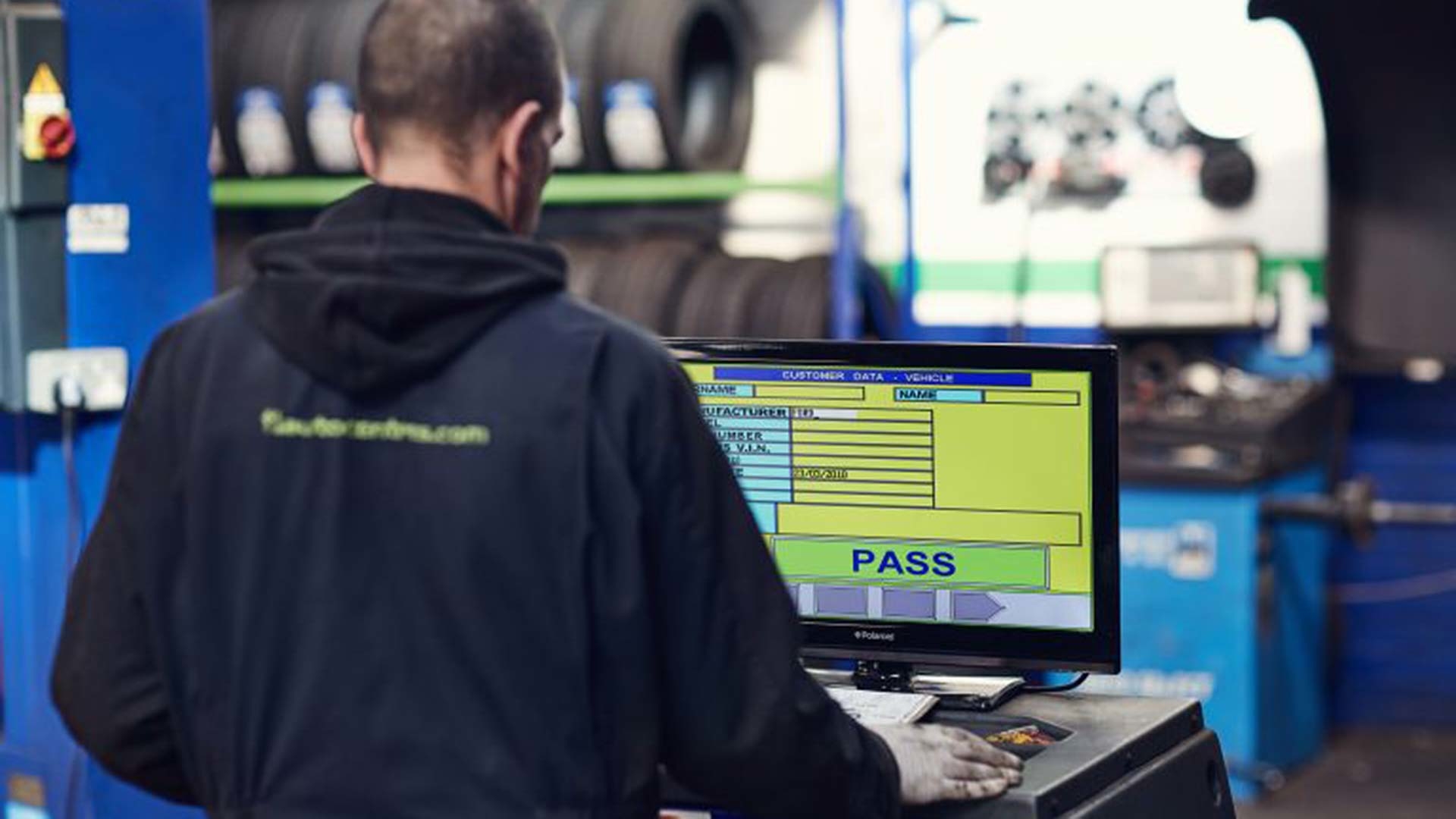
DVSA frontline staff routinely visit MOT garages to check up on those it believes are not testing vehicles properly.

The organisation is actually now using artificial intelligence (AI) to identify problematic garages – analysing 40 million annual MOT tests to profile the country’s testers.

For the first time, the tool can drill down to individual MOT testers, giving them a risk score that incorporates factors such as pass rates, disciplinary history and both the frequency and duration of tests.

It even has a ‘predictive vehicle failure model’ for individual cars, giving the likelihood of a vehicle passing or failing its MOT.

Testers who repeatedly record results contrary to the prediction are targeted.

This allows the DVSA to direct enforcement officers to individual garages or MOT testers who may either be underperforming or committing fraud.

One tester in Devon was identified by the AI system. When investigation officers delved further, he was found to have carried out more than 300 fraudulent MOTs.

He was prosecuted, given a suspended prison sentence and banned from testing.

As the DVSA steps up such activity thanks to the efficiency of AI risk rating algorithms, so it is eager to protect officers investigating fraudulent or deliberate testing.

The new bodycams, it is hoped, will give more confidence to those officers tackling what the DVSA describes as “the bad eggs”.

ALSO READ

The postcodes where this autumn’s demand for MOTs will be highest

Motorists warned about MOT delays in October peak

Garages told to stop discounting MOTs

Advertisement

Child car seats confuse 4 in 10 parents

0
Car child seat confusion

Parents say they are overwhelmed by the number of different child seats on sale – and four in 10 admit they have no idea which seat to buy for their children.

One in 10 says that even once they’ve bought the correct seat, they are not at all confident they will be able to fit it correctly.

“There’s a lot of confusion out there about car seats,” said Vik Barodia, COO of online marketplace heycar, which carried out the research.

“It’s easy to see why parents don’t know what way to turn.”

This is why the marketplace has developed a unique car seat chooser, which Mr Barodia says will “take away the hassle, provide peace of mind and leave families confident in their choice”.

The tool is simple to use (motorists enter the registration number of their car) and lists the exact fit for different car makes and models.

Safety first

Car child seat confusion

Understandably, almost half of parents surveyed said their number one priority when choosing a child car seat was safety.

Being right for their child was next, followed by being good quality, easy to fit and remove, and long-lasting.

Fitting is a particular worry for many, particularly mums, who are less confident than dads.

The survey revealed the average time taken to fit a child car seat is 11 minutes 30 seconds.

Almost one in three parents reckon they can fit a seat in less than five minutes. By contrast, one percent of parents admit fitting their child car seat took more than an hour…

ALSO READ

How to take your child car seat on a flight

Wrongly fitted car seats putting children in danger

Parents ‘scared’ of teaching their children to drive

Advertisement

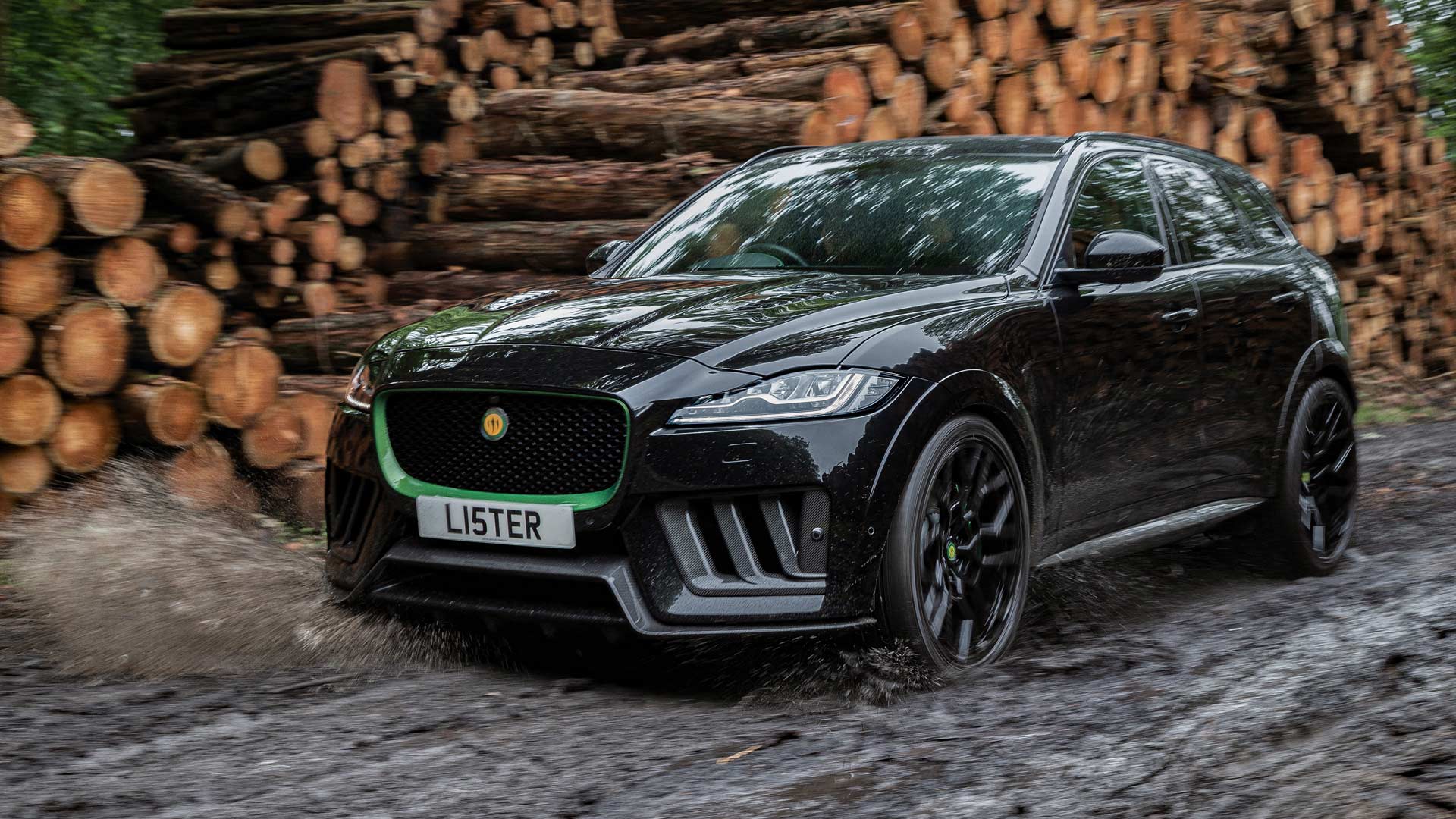
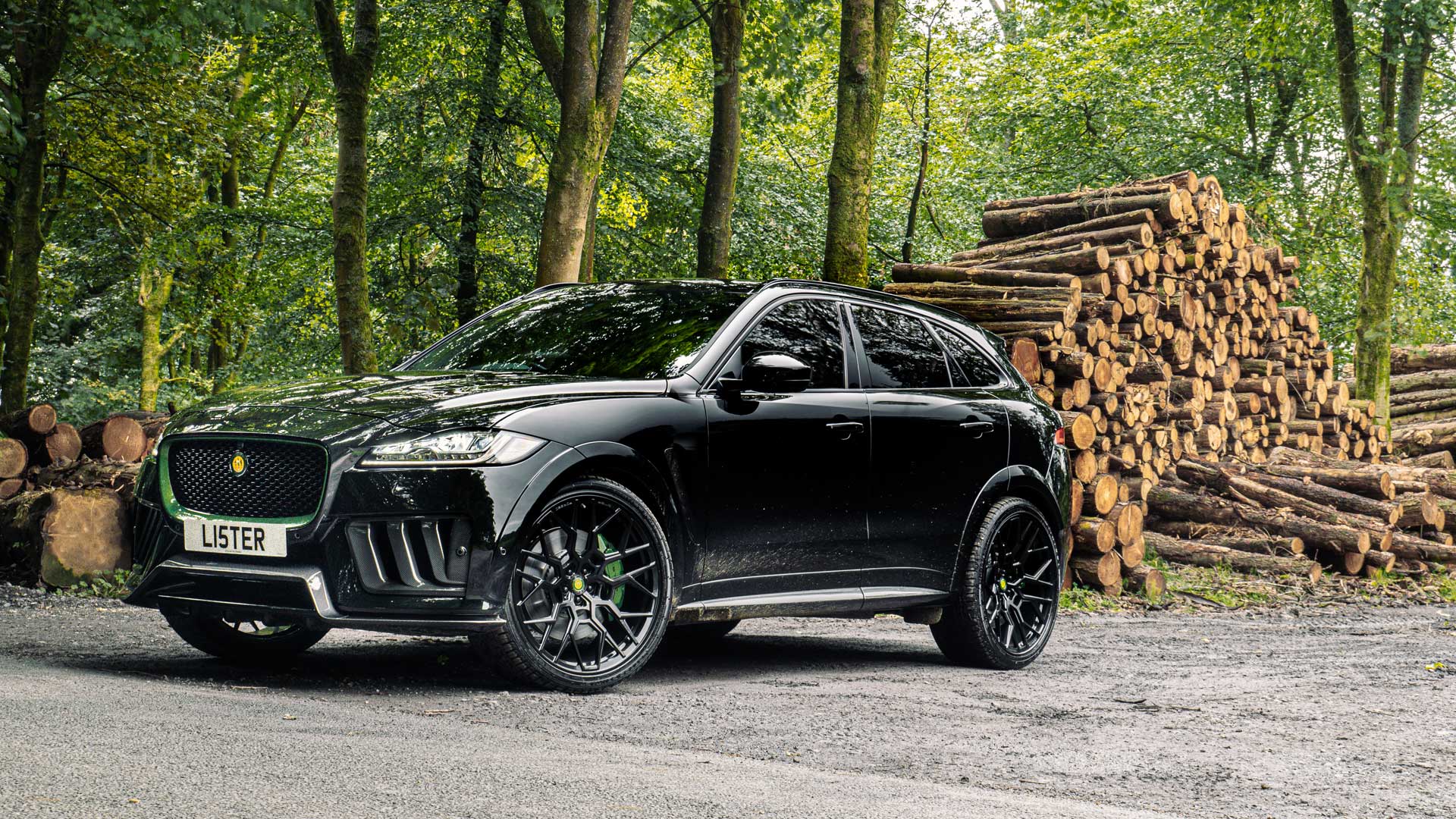
New 195mph Lister Stealth stakes claim as Britain’s fastest SUV

0
Lister Stealth Fastest SUV in UK

Specialist British sports car manufacturer Lister has announced details of its new limited-edition Stealth SUV.

The company claims that a top speed of 195mph secures the position of Britain’s fastest SUV, and that it can accelerate “with the urgency of a supercar”.

A total of 100 examples are set to be produced by the Blackburn-based firm, with prices beginning from £109,950.

The devil is in the (engine) detail

Lister Stealth Fastest SUV in UK

Lister uses the already rather rapid Jaguar F-Pace SVR as the basis for the Stealth. This means a supercharged 5.0-litre V8 engine, producing 550 horsepower, is the starting point for the new SUV.

Adding a new custom-built intercooler, along with improved air filters and upgraded supercharger pulleys, has created a substantial increase in output. Peak power now stands at 666 horsepower, with torque a considerable 650 lb-ft. 

Upgrading the Stealth has been made easier by Lister’s experience with the 5.0 V8 engine. The same unit appears in the company’s LFT-666 coupe and LFT-C convertible, both based upon the Jaguar F-Pace.

Is this the fastest SUV on sale in the UK?

Lister Stealth Fastest SUV in UK

The extra power is what lets Lister claim to have made Britain’s fastest production SUV. A top speed of 195mph does push it firmly ahead of both the Lamborghini Urus and Bentley Bentayga Speed

A 0-60mph time of 3.6 seconds is also impressive, putting it into genuine contention with supercars for acceleration. The 2021 Dodge Durango SRT Hellcat SUV can do the same sprint in 3.5 seconds, but is not officially sold in the UK. 

Handmade body panels, including a front bumper made from carbon fibre, have been designed for optimal aerodynamics. Lister has also fitted a set of 23-inch alloy wheels, and upgraded the brakes to cope with the increased performance.

A warranty fit for a 195mph SUV

Lister Stealth Fastest SUV in UK

Lister plans to use Bridge of Weir leather for the interior of the five-seater Stealth, with 36 colours and 90 different stitching options to choose from. Buyers will be able to tailor the steering wheel finish, seat belts, and roof lining for a true bespoke vehicle. 

One of the most impressive features for the 195mph SUV is the warranty supplied by Lister. Backed by Warrantywise, the Stealth will come with a lengthy seven-year warranty. It gives this 666hp SUV something in coming with a Kia Sportage.  

A starting price of £109,950 makes the Stealth notably cheaper than a Lamborghini Urus or Bentley Bentayga. 

Potential buyers for the 100 examples to be made can place their order now through the Lister website. The process includes a virtual consultation to pick through the endless interior options.

ALSO READ

Rolls-Royce redesigns Spirit of Ecstasy

Bentley Bentayga (2020) review

Tesla Model S electric hearse launched for eco-funerals

Advertisement