Loyalty to their existing car insurance company potentially cost UK drivers £830 million in 2021.
Research by price comparison website MoneySuperMarket finds that 52 percent of drivers allowed their insurance policy to renew automatically last year.
This led to an average cost increase of £49 for each of the 17 million drivers that remained with the same insurer.
Drivers are on autopilot
MoneySuperMarket surveyed 2,000 drivers, with 52 percent of those asked stating they didn’t bother shopping around for a new insurance quote. This represents a 27 percent increase from the 41 percent who auto-renewed in 2020.
A quarter (25 percent) of those questioned said they did get other quotes, but opted to remain with their insurer for ease. This marked a 20 percent increase compared to the year before.
Some 14 percent believed changing insurer takes too much effort, with almost one in five (19 percent) arguing there is no real saving.
Worryingly, 48 percent said they did not recall seeing their insurer compare their new policy price to the previous one. This is despite a change in FCA rules to make this mandatory when renewing.
Shop around to save
The average price rise for car insurance premiums also jumped by 17 percent, from £42 in 2020 to £49 last year. One in 10 of those surveyed saw an increase in their annual policy of between £50 and £75. Some 12 percent of drivers saw between £76 and £100 added to their premium.
Drivers in London reported the largest increases, with an average of £79 added. Welsh motorists escaped with the smallest price rise, typically seeing £31 extra charged.
Sara Newell, car insurance expert at MoneySuperMarket, commented: “While we have seen the introduction of the FCA’s new rules on price walking – which are intended to level the playing field for consumers – it’s important that drivers don’t rely on such measures to reduce their premiums.
“We’ll monitor the impact of the FCA’s new measures over the coming months, but the fact remains that shopping around is always going to be the most effective way of keeping your costs down.”
Following her title wins in 2019 and 2021, Bath-born Chadwick will look to make it three championships in a row.
This year’s W Series sees races held in support of eight Formula 1 weekends, further raising the profile of the single-seater championship. A round of the W Series will also take place in Asia for the first time, at the famous Suzuka circuit in Japan.
Expect more wins in 2022
Beating the reigning champion will require a concerted effort by other W Series competitors. Of the 14 races held to date, Chadwick has won six and taken podium finishes in six more.
Her dominance in the W Series was shown by a convincing double win at the Circuit of the Americas, securing her second championship in 2021.
Such success has earned Chadwick important FIA Super Licence points, a requirement for racing in Formula 1.
The 23-year-old is currently a development driver for the Williams Racing F1 team.
Going for W Series gold
For 2022, Chadwick will be driving for the brand-new Jenner Racing team. The outfit is owned and operated by 1976 Olympic decathlon gold medalist, Caitlyn Jenner.
The American debut of the W Series in 2021 caught the attention of Jenner, who has competed in motorsport previously. Having won a celebrity race at the Long Beach Grand Prix in 1979, Jenner went on to compete in the 24 Hours of Daytona and spent six years as a factory Ford GT driver.
Speaking about her return for 2022, Chadwick said: “I am really excited to be returning to W Series to defend my title. To be asked to return by Jenner Racing was an opportunity I didn’t think twice about. Together, we are focused on doing all we can to win title number three. I have spoken to Caitlyn Jenner and her vision for the team is amazing. I have zero doubt that she will be able to help take my career to the next level and open doors for me internationally.”
The 2022 W Series will kick off on 8 May in Miami.
The all-electric ID Buzz will officially be revealed on 9 March 2022, following five years of development.
Before its debut, Volkswagen has taken disguised pre-production versions of the ID Buzz on a European tour to test public reactions.
London, Paris and Amsterdam
Volkswagen originally displayed a Microbus concept at the 2001 Detroit Auto Show. This was followed by the electric Bulli concept in 2011 and the Budd-e of 2016.
The 2017 Detroit Auto Show saw the reveal of the ID Buzz concept, created on Volkswagen’s all-electric MEB platform. In 2018, the ID Buzz Cargo van was displayed at the IAA Mobility Show in Hannover.
Both prototype versions of the five-seat ID Buzz passenger model, and the Buzz Cargo van, are taking part in Volkswagen’s road-trip. Test runs have been conducted in London, Paris, Amsterdam, Copenhagen, Hamburg and Hannover.
Despite the European focus for final testing, Volkswagen will sell the ID Buzz in the United States. The company notes that fans in San Francisco are likely to be excited about the return of the iconic ‘hippy’ van.
Retro styling, modern construction
Although the design of the ID Buzz is a deliberate homage to the original Microbus, the engineering underneath is all new. Volkswagen will use the MEB platform, which already underpins the ID.3, ID.4 and multiple other models.
An 82kWh battery pack will supply power to a 150kW electric motor. Like the classic version from the 1960s, the ID Buzz will be rear-wheel drive. Top speed is limited to 90mph, but instant torque should make it feel more sprightly than the air-cooled original.
Like the rest of the ID family, the Buzz will benefit from over-the-air software updates, automatic parking capability and crowdsourced data for traffic hazards.
Following its public debut in March, production of the ID Buzz begins in the first half of 2022. A European launch will follow in September.
The additional roles are due to the successful launch of the Aston Martin DBX707 SUV.
Billed as the world’s most powerful luxury SUV, the new car requires extra skilled automotive technicians to meet demand.
A little bit Xtra
The St Athan plant was first announced in 2016, and is the home of the DBX SUV. Built on the former RAF St Athan base, the 90-acre site began production in 2019.
Initially employing 600 workers, the Welsh site will increase to 750 staff once operating at full capacity.
Revealed earlier this month, the DBX707 is the company’s flagship SUV. A modified 4.0-litre twin-turbocharged V8 endows it with 707hp and 663lb ft of torque.
This allows the DBX707 to accelerate from 0-62mph in just 3.3 seconds, with a top speed of 193mph.
A vote of confidence for Wales
Delivering employment for the Welsh community has been central to the St Athan project.
Tobias Moers, CEO of Aston Martin Lagonda said: “As we ramp-up production of DBX707, we are delighted to have the opportunity to increase our team at St Athan and create more employment opportunities for the local community.
“Our DBX SUV is the first Welsh-built production car for nearly 50 years and these new positions are an opportunity to join a team delivering our truly incredible new DBX707 derivative, which is setting new benchmarks for performance in the luxury segment.”
Simon Hart, secretary of state for Wales said: “The creation of more than 100 jobs working with a world-class and globally-recognised brand is a huge vote of confidence in the skills and expertise of the Welsh workforce.
“Wales remains a highly attractive location for cutting-edge automotive technologies and the UK government will continue to work to secure and support the investment of companies like Aston Martin Lagonda as they drive economic growth and create jobs.”
Land Rover specialist Twisted has created an all-electric version of the classic Defender.
With a bespoke design and build process, the Defender EV results from thousands of hours of work by the North Yorkshire company.
The Defender was designed in response to demand from Twisted’s customers. Some 20 percent of enquiries to the firm over the past two years have related to electric vehicles.
Charging into the wilderness
Twisted has designed its electric drivetrain as a modular setup. This allows it to be used with Defender 90, 110 and 130 chassis. The battery packs are mounted beneath the bonnet, and also where the fuel tank would be in a conventional Defender.
The short-wheelbase Defender 90 uses a 61kWh battery, allowing a range of 140 miles when fully charged.
Opting for the larger Defender 110 increases battery size to 81kWh. As a result, overall range improves to an estimated 180 miles.
All versions use a Type 2 charging plug, mounted where the fuel filler would usually be. Replenishing the battery packs is said to take less than three hours, depending on the charger type used.
Engage Sport (or Eco) mode
A Dana TM4 Sumo electric motor powers the EV Defender, generating 268hp with a mighty 885lb ft of torque. Drivers have the option of switching between Sport and Eco modes.
“There is something extremely special about the Twisted EV. It has incredible power, yet still the charm of the classic Defender,” says Twisted Automotive founder, Charles Fawcett. “The Eco mode effortlessly accelerates to 60mph and, with Sport mode engaged, it just pulls and pulls. It’s incredibly fun to drive.”
The electric components in the Twisted Defender have an IP67 waterproof rating. This allows for a 900mm wading depth, outperforming a conventional classic Defender.
Being fully electric, and therefore ULEZ (Ultra Low Emission Zone) compliant, will likely make the Defender EV appeal to London drivers. Last year, Twisted opened a new showroom in Kensington.
Defending a British icon
Prices for the Twisted EV Defender start at £270,000 (£225,000 plus VAT), with a personal commissioning service allowing each vehicle to be fully tailored.
The new model will be sold internationally, including via Twisted showrooms in Texas and Dubai.
Charles Fawcett adds: “Twisted has an established reputation as the market leading modifier of Defender and I am excited that we have the ability to future-proof a treasured British icon.
“The fully electric Twisted has been a labour of love for the whole team, with thousands of hours invested into its development. With an estimated 70 percent of all Defender and Series Land Rovers ever made still being on the road, it is one of the most recyclable vehicles on the market and Twisted has now future-proofed this British icon even further.”
Drivers have become less likely to approve of speeding, reveals new research by IAM RoadSmart.
The independent road safety charity published the findings in the latest edition of its Safety Culture Report.
Of the 2,000 motorists surveyed, 42 percent believed it was acceptable to drive at 80mph on a motorway. This is down from 56 percent who gave the same response in 2016.
Speeding out of fashion
More than a fifth (21 percent) of those questioned for the 2022 report believed driving above 80mph was acceptable. But this represents a decline from 28 percent six years ago.
Interestingly, just 17 percent of those in the North East thought speeds above 80mph on a motorway are fine. By comparison, 25 percent of drivers in the East of England found them acceptable.
The East of England also accounts for the highest percentage of drivers who accept driving at 5mph above a residential speed limit.
More than a quarter (27 percent) of that region’s motorists found it acceptable, with the North East again the least accepting, at 16 percent.
Numbers down, but more to be done
Self-reported speeding by drivers was lower in the latest Safety Culture Report. Only 10 percent of respondents admitted to driving at 5mph over the speed limit on a residential street, compared with 17 percent in 2016.
Neil Greig, IAM RoadSmart’s director of policy and research, says more needs to be done: “Acceptability of speeding on motorways is still far too high, but the downward trends of drivers’ opinions are a positive sign. Actual speeding behaviour in towns and cities has also improved, as more and more drivers appear to understand the link between speed and serious injury.
“Those who believe it is acceptable to drive at speeds greater than the limit are simply not listening to the warnings or taking notice of the frequent police messaging. Speeding is responsible for around 12 deaths each day on UK roads. We clearly need to do more to educate drivers on the fatal consequences of speeding.”
The new Skoda Fabia supermini is now available in the popular Monte Carlo trim level.
Offered on various Skoda models since 2011, Monte Carlo spec is inspired by the Czech brand’s success on the famous rally.
For the 2022 Fabia, it means sporty detailing inside and out, along with a choice of two engine options.
Put it all on red. Or black
Skoda has stuck to a similar theme for the exterior of the Fabia Monte Carlo. Black detailing is used for the front grille, wing mirrors and rear diffuser, along with sections of the front splitter.
Buyers can also specify a black roof as an option, with aerodynamically designed 17-inch alloy wheels fitted as standard. Monte Carlo badges are found on the front wings, along with black Skoda lettering on the boot.
A 110hp 1.0-litre three-cylinder petrol is the default engine, available with a choice of six-speed manual or seven-speed DSG auto transmissions. Alternatively, a 1.5-litre TSI four-cylinder petrol offers 150hp for 0-62mph in 8.0 seconds – and comes with the DSG ‘box as standard. It’s the closest the Fabia gets to a hot hatch.
Rallying the crowds
On the inside, the Monte Carlo benefits from height-adjustable sports seats, a leather-clad three-spoke steering wheel and black roof lining.
Carbon fibre-effect trim is used for the armrests and dashboard, with LED ambient lighting illuminating the interior in red.
Skoda will offer the Monte Carlo with a 10.25-inch multimedia touchscreen as an option. An 8.0-inch unit is standard-fit.
Prices and a UK on-sale date for the Fabia Monte Carlo are yet to be confirmed by Skoda.
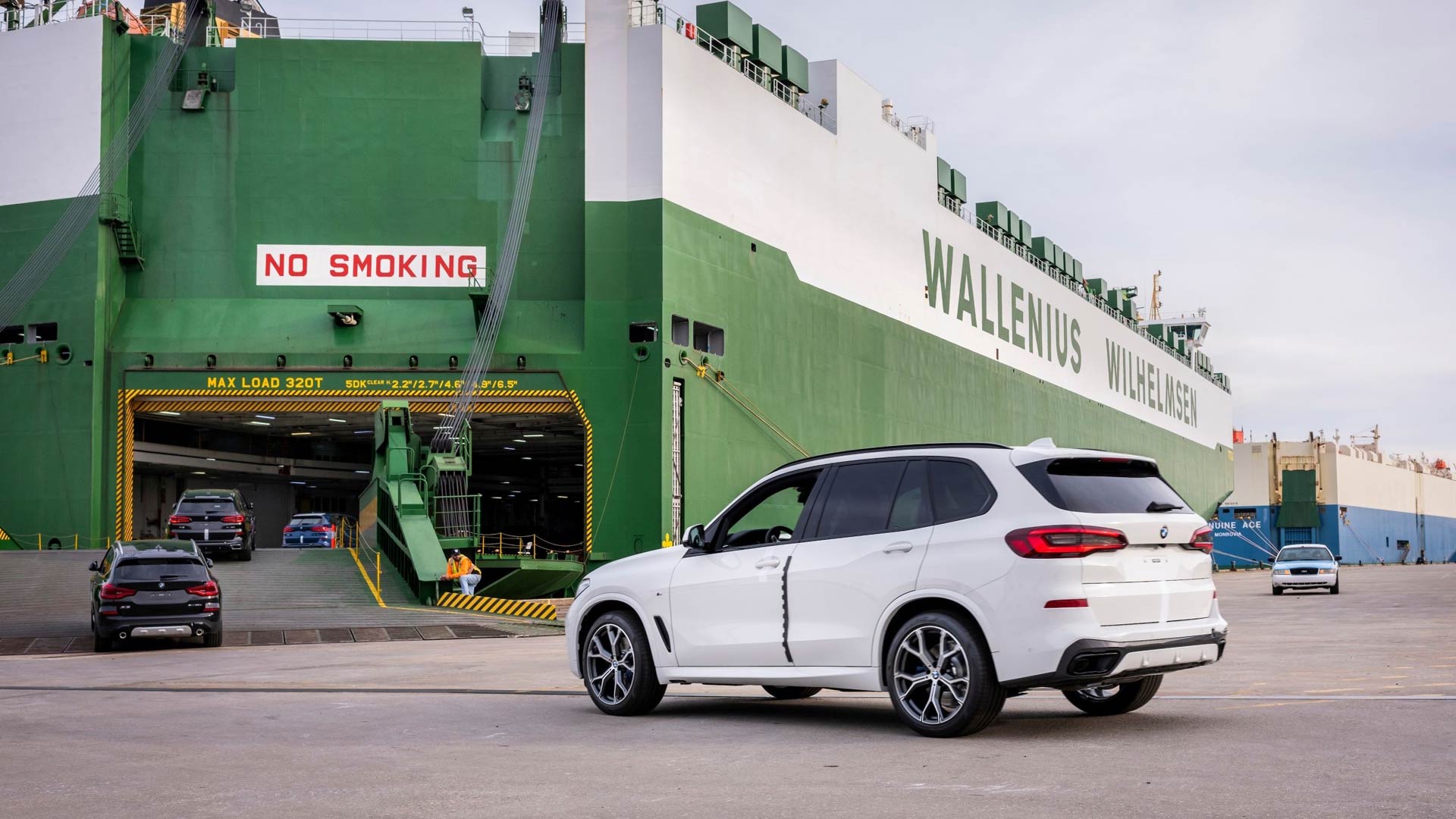
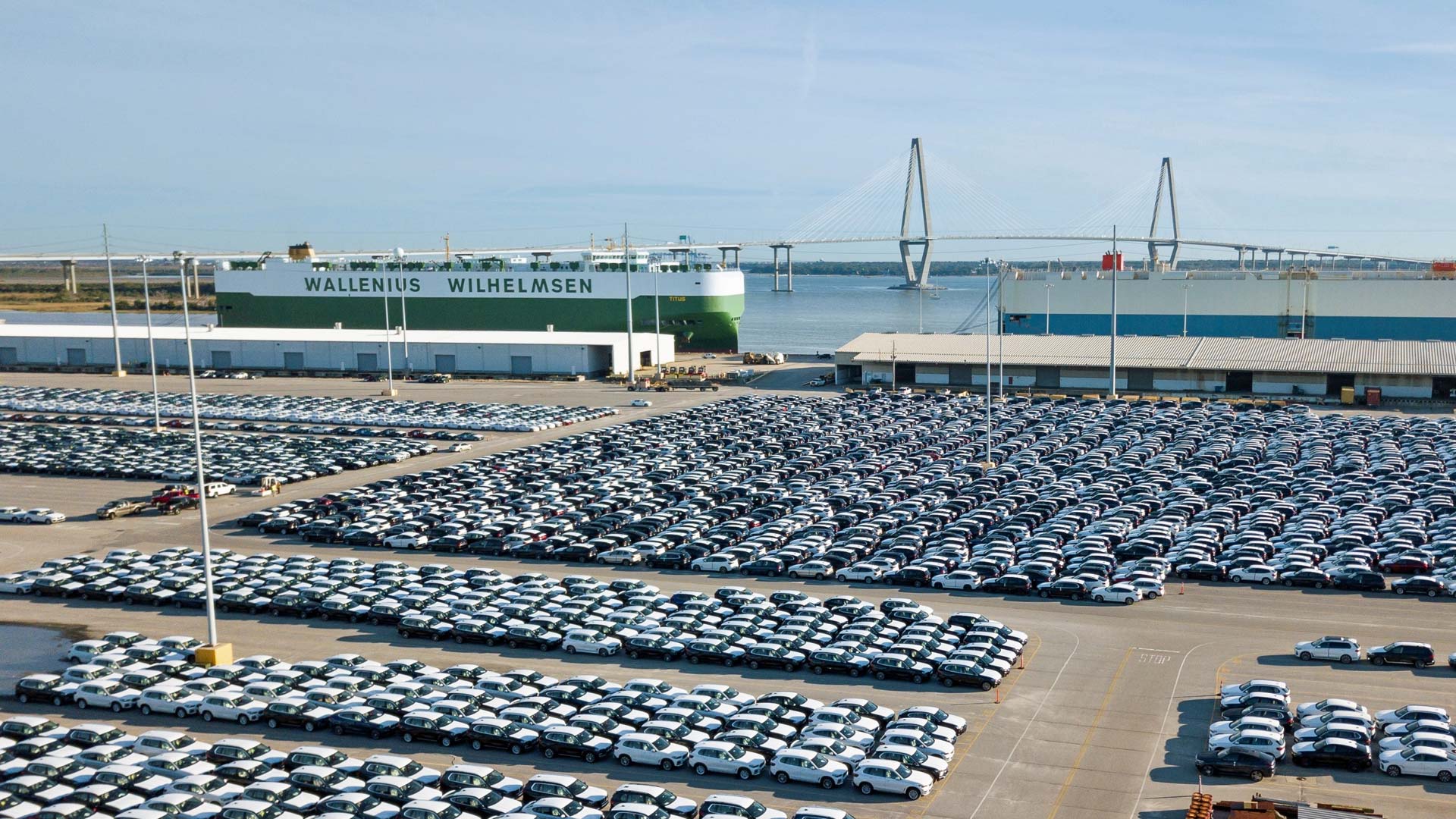
BMW was the largest automotive exporter by value from the United States during 2021.
It marks the eighth time in a row that the company has claimed this accolade, in a year that also saw BMW break production records.
More than 257,000 BMWs produced in Spartanburg, South Carolina, were exported last year. They added up to a total value in excess of $10.1 billion (£7.45 billion).
Electrifying the production process
BMW’s Spartanburg production facility, which is the company’s largest in the world, made 433,810 vehicles in total. All of these were from BMW’s ‘X’ SUV range, with the X5 the single most popular model.
Investment in electrification saw Spartanburg employees build around 70,000 plug-in hybrids. The X5 xDrive45e accounted for close to 40,000 vehicles, along with 30,000 of the smaller X3 xDrive30e.
The radical BMW XM plug-in hybrid, the first electrified model to wear the ‘M’ badge, will enter production at the American factory later this year.
By land and by sea
SUVs made at Spartanburg during 2021 were exported to around 120 countries, using six different American ports. Rail shipments were also used to send vehicles to Canada.
China was the destination for almost a quarter (24.1 percent) of all exports. Germany took second place with 12.3 percent, with South Korea in third (9.4 percent). The United Kingdom received 5.4 percent of all Spartanburg’s exports.
More than $12 billion (£8.86 billion) has been invested in the South Carolina factory by BMW since 1992. It now employs 11,000 people, and can build up to 1,500 vehicles every day.
“Claiming the top spot for U.S. automobile exports by value rounds out a very successful year for Plant Spartanburg. I’m incredibly proud of our associates and the resilience they have shown the past year,” said Dr. Robert Engelhorn, president and CEO of BMW manufacturing. “This achievement demonstrates BMW’s trusted partnership with this state and its continued commitment to the United States.”
ALSO READ:
A secret tour of BMW GB’s incredible car collection
The new Polestar 5, the first clean-sheet model from the Swedish electric car company, is being developed in Britain. The high-performance GT will take shape at a new R&D facility in Coventry.
More than 280 UK-based engineers have created an all-new bonded aluminium platform, using similar technology to that pioneered by Lotus and Aston Martin. The team is now scaling up to over 500 employees, and preparing the four-door, four-seat Polestar 5 for launch.
Polestar engineers have previously worked at Formula 1 teams, sports car manufacturers such as McLaren and Lotus, plus Jaguar Land Rover – and even the LEVC London taxi company. This has created ‘industry leading in-house engineering and R&D capabilities’ from scratch, says Polestar.
Discreetly described by engineers as the firm’s rival to the Porsche Taycan, the Polestar 5 will be a high-performance GT with ‘class-leading’ dynamics, rigidity and safety.
The new 5 is the production version of the Precept concept car (pictured above). Polestar is targeting a 2024 launch for the new EV.
“Our UK R&D team is one of Polestar’s greatest assets,” said Polestar CEO Thomas Ingenlath.
“Their mix of engineering and technological expertise enables us to develop advanced lightweight sports car technology with a creative mindset and a spirit that embraces innovative engineering. This will set Polestar apart in the years to come.”
What is bonded aluminium?
A bonded aluminium platform is an architecture bonded or ‘glued’ together, then baked in an oven. With additional rivets for reinforcement in key areas, it is exceedingly strong, as well as being light.
Polestar says the finished body will weigh half that of cars in segments smaller than this – and it will be torsionally more rigid than even a traditional supercar. The result is a vehicle that will be more efficient and have a longer EV range than a regular GT in this sector – and also be dynamically responsive, while delivering ‘leading safety levels’.
“This architecture delivers outstanding dynamic and safety attributes,” said head of Polestar UK R&D, Pete Allen.
New production techniques
While bonded aluminium technology is ideal for low-volume sports cars such as the Lotus Elise and Aston Martin line-up, this labour-intensive process has been difficult to scale into higher volumes without impacting quality.
Polestar says its UK team has developed an all-new production process ‘that develops both body and platform in unison’. This means the Polestar 5 can come to market faster than ordinarily possible, while maintaining high levels of quality and body rigidity.
The firm isn’t ready to go into specifics yet, but promises its in-house platform will enable further derivatives to be developed quickly once the Polestar 5 is introduced.
The four-door GT car is on-track to be launched in 2024.
Q&A: Polestar in Coventry
Where is Polestar’s UK R&D hub located?
Polestar’s UK base is currently located at the MIRA test facility in Nuneaton (calling it Polestar Coventry clearly offers more international recognition).
The firm chose MIRA because it has an on-site test track, a wind tunnel and myriad other facilities to call upon. It’s also centrally located for all the engineers it has recruited from JLR, McLaren, Lotus, Bentley and elsewhere.
Why did Polestar choose the UK?
There was competition from other countries to house the first standalone Polestar R&D facility, admits Pete Allen. “But the mix of motorsport, large OEM, specialist sports car and engineering consultancy expertise available in the UK is unique in the world.
“We wanted to develop an alternative approach, one that’s faster and more innovative, which can be more nimble and agile in response to market and technological changes. Nowhere else in the world has such a concentration of relevant capability in such a small area.”
How significant is the work done by Polestar UK?
Up to now, Polestar has taken existing Volvo platforms and honed them for its own requirements. That’s why, deep down, the Polestar 2 is essentially a Volvo XC40.
Interestingly, the first running Polestar 5 test mule was actually derived from an XC40, albeit with a unique driving position to mimic the new GT car: “You could just about see over the edge of the door.”
Polestar UK is creating the company’s first bespoke model, unique from the ground up. In doing so, it is accelerating development of the Polestar DNA, and helping the brand become distinct from Volvo.
The work being done is therefore very significant, and will accelerate the evolution of Polestar into a standalone premium electric car brand.
How many people work at Polestar UK?
The initial hand-picked team, formed in May 2019, was tiny. Pete Allen explains how they had to borrow chairs from MIRA to interview people in their empty building.
It’s now approaching 300 people and growing all the time. The goal is to have 800 people working for Polestar UK, based in two locations. For context, McLaren Automotive employs around 2,500 people.
Will the Polestar 5 be similar to the Precept concept?
Polestar UK is aiming for the production 5 to be as close as possible to the Precept. Journalists were briefly shown a computer rendering that suggests differences will be minimal.
It’s been challenging, admits Pete Allen. “The concept is very low, and the battery sits below the passengers. Combustion engine cars have an immediate 150mm advantage here. “It’s a particular challenge for packaging the suspension: we spent a lot of time during the early phase resolving this.”
He is also confident the unique seating position of the Precept, with a large distance between front and rear passengers, will be carried through to the production car. “We’re comparing legroom to a long-wheelbase Volvo S90.”
Almost three-quarters of UK drivers deliberately avoid using the hard shoulder on smart motorways.
A survey of 2,000 adults by Kwik Fit found 73 percent don’t drive on the hard shoulder (inside lane) of a smart motorway, even when signs show it as open for traffic.
This makes for a substantial increase from the 56 percent of drivers who answered the same when surveyed in 2019.
Scrap smart motorways, say drivers
Drivers’ main fear about using the hard shoulder is colliding with a stationary vehicle up ahead. A total of 31 percent cited this as a concern, with 30 percent saying they do not believe smart motorways are safe.
Only five percent of respondents thought smart motorways are safer than traditional motorways. This follows an announcement that the government will pause the introduction of any new smart motorways for five years.
Some 22 percent of motorists believed pausing the rollout is sensible, given the ongoing safety concerns. However, more than a third (36 percent) said that rather than being paused, smart motorways should be scrapped altogether.
Six percent also thought smart motorways were dangerous, but that the reduced congestion justified the risk.
Better understanding, but confusion remains
The Kwik Fit survey did highlight that drivers feel slightly more confident about the signage used on smart motorways.
In 2019, 29 percent of drivers said they were uncertain on the signs that explained how to use a smart motorway. This has now fallen to 22 percent, but around one in five motorists is still unsure.
Roger Griggs, communications director at Kwik Fit, said: “Smart motorways have been a huge topic of debate and it is absolutely correct for the government to pause their development to both gather data and ensure that the UK’s motorways are as safe as possible.
“It is clear that many drivers are yet to be convinced about the safety of smart motorways and therefore there must be clear transparency about all the data being gathered and the evidence on which future decisions are based.”