A shocking 10 percent of UK motorists do not have an up-to-date service record for their car, new research has revealed.
Breakdown recovery service Green Flag has discovered that 1.3 million drivers have skipped scheduled servicing on their vehicle.
In addition, five percent of drivers – equivalent to around 690,000 motorists in the UK – don’t even know when their car is next due a service.
Given there are 34 million cars on the UK’s roads, this means up to two million vehicles are potentially being driven without a recent service.
Cutting corners on servicing
As part of Green Flag’s survey, a number of key reasons were identified for why drivers don’t keep up with their car’s servicing schedule.
Exactly a third (33 percent) of those asked claimed they simply could not afford to pay for servicing their car.
A quarter (25 percent) of respondents said they believed their car was running fine, so it did not need to be serviced.
Other reasons included 13 percent who said they did not have time, while 12 percent were concerned about finding a reliable garage to service their car. And 10 percent of motorists did not realise there even was a schedule for maintaining their car.
An easily avoided situation
The impact of skipping a service can be substantial. Green Flag found that almost three quarters (73 percent) of drivers purchased their current car with a complete maintenance record.
A considerable 40 percent said a full service history was the single most important factor in their choice of vehicle to purchase.
Katie Lomas, managing director at Green Flag, commented: “To see such a large number of vehicles on the road without being serviced recently is concerning for both drivers and other road users. It can increase the likelihood of breakdowns and accidents, which could be easily avoided by getting it regularly checked by a professional.
“Ensuring your vehicle is kept fully serviced is important for several reasons. Primarily for safety and peace of mind while driving, but also potentially reducing running costs and the likelihood of either a breakdown or experiencing further issues in the long run. Servicing helps to identify problems with a vehicle early and therefore helps to prolong the lifespan of your car.”
Can you name all the warning lights pictured above? A survey of 2,000 car owners by Warrantywise uncovered that 46 percent of motorists couldn’t identify even half of the warning lights on their car’s dashboard. Extrapolated to the whole UK, that adds up to 23 million drivers…
More worrying still, the Warrantywise poll revealed that three percent of drivers – a mildly terrifying 1.5 million people – could not identify any warning lights correctly at all.
Warning lights are there to alert you if your car’s mechanical or electronic systems aren’t working properly. As such, understanding them could potentially prevent an accident. Many can also result in an MOT test failure if illuminated.
Warning lights can be split into three categories. Red usually means a serious problem, orange or yellow is advisory and blue or green cover everything else. Generally speaking, whether it’s a single light, or your car dashboard is lit up like a shop window at Christmas time, you should address the issue quickly.
This is an overview of dashboard warning lights and what they mean. For more detail, you may need to consult your car’s handbook.Let’s prioritise the red-light issues first – as you should when you see them.
Battery
A red warning light in the shape of a square car battery with positive and negative terminals indicates an issue with charging the battery.
This could be a problem with the battery itself, or the alternator or alternator belt. If the battery is failing to charge, you may be unable to start the car (without using jump leads or a bump-start).
Brakes
A brake warning light could be triggered by something as simple as the handbrake being left on.
If the light doesn’t turn off when you disengage the handbrake, open the bonnet to check the brake fluid level. Or ask a mechanic to investigate further.
Low oil pressure
A light that looks like an oil can signifies low oil pressure. You should not drive with this light illuminated, as you could cause serious damage to the engine.
Turn the engine off, open the bonnet and check the oil level using the dipstick – it may need topping up. Seek assistance if the light stays on.
Seat belt
A light showing a person sitting with a seat belt across their chest warns you that someone in the car is not wearing their seat belt.
If you don’t wear a seat belt and you haven’t got a valid reason, you could be hit with a £100 on-the-spot fine. The driver is also responsible for any children aged 14 or younger not wearing their belts.
Coolant temperature
You should keep an eye on your car’s temperature gauge to identify any issues with its cooling system, but some cars also have a temperature warning light. This looks like a thermometer with wavy lines and indicates when the engine gets too hot.
Like the oil pressure warning light, you should stop and turn off the car to let it cool down – or risk damage to the engine.
Airbag
A light showing a person with a circle in front of them suggests there is a fault with one of the car’s airbags.
Investigate it as soon as convenient – a faulty airbag could compromise driver or passenger safety in the event of an accident.
Door open
This one is pretty self-explanatory. It could be one of the doors, the boot or the bonnet that is open, depending on the symbol shown.
If you see this light while driving, pull over safely and make sure the relevant opening is closed.
Washer fluid
Let’s now move onto orange or yellow lights, which signify advice rather than an urgent issue.
A shortage of washer fluid can trigger a warning light on some cars. Simply top up the washer fluid reservoir to turn the light off.
Traction control
Occasionally you might see this light appear for a brief moment while driving. Most likely to illuminate in wet or slippery conditions, the traction or stability control light means the car is having to brake a wheel or cut power to prevent wheelspin or skidding.
Driving more cautiously, with the road and weather conditions in mind, should prevent it from appearing again. If the light stays illuminated, it may indicate a problem with the car’s traction or stability systems.
ABS
The ABS light is most likely to come on during hard braking. This is when the anti-lock braking system is triggered. During rapid deceleration, the system will modulate the brakes to prevent the wheels locking up and causing a skid.
As with traction control, if this activates on the road, try to adapt your driving – making it slower and smoother – to prevent the light reappearing.
Engine management
The engine management or ‘check engine’ light could mean a wide range of things, from an open fuel filler cap to a serious engine problem.
You will probably need to plug a diagnostics reader into your car to establish exactly what the issue is here.
Tyre pressure
If you car is fitted with a TPMS (Tyre Pressure Monitoring System), you may see this light when one or more of the tyres is under-inflated – possibly due to a puncture.
An under-inflated tyre will wear more quickly, lead to higher fuel consumption and cause the steering to feel sluggish. It may also make the car dangerous to drive.
If the TPMS light flashes for a minute or so when you start the car and then stays on, this means the system isn’t working properly. Get it checked at a garage as soon as you can.
Catalytic converter
A catalytic converter uses chemical reactions to break down harmful gases in your car’s exhaust system. This light means it is overheating or not functioning correctly.
You can continue driving with this light illuminated, but you should have the issue investigated promptly. If not, you risk further damage to the ‘cat’ – and a potentially bigger bill.
Service warning
The exact appearance of this warning light may vary, but it’s there to warn you that your car is due a service.
The service schedule will be detailed in the handbook, and you should follow it closely to keep your car safe and preserve its future value. Many modern cars will actually give you a mileage countdown until the next service is due.
Lane assist
If your car is fitted with lane assist – to nudge you back into lane if your car starts to drift on the motorway – a light might display to show it’s enabled.
Lane assist is increasingly common on modern cars, but some drivers choose to switch it off.
Cruise control
Many cars are now fitted with cruise control, which helps to maintain a steady speed – and keep you within speed limits. Some systems use radar to maintain a set distance from the car in front, too.
A light showing a car’s speedometer with an arrow pointing at it might display when the cruise control is turned on.
Glow plugs
If you drive a diesel-engined car, a glow plug light might display when you first turn the key. This means the glow plugs are warming up and the ignition shouldn’t be turned on until the light goes out.
If the light flashes, it suggests a problem with the glow plugs.
Bulb failure
Some cars will display a warning light when they detect a failed bulb in one of the exterior lights. Replace the bulb to extinguish the light and ensure your car is road-legal.
DPF
If you drive a modern diesel car, it might display a DPF light when the diesel particulate filter becomes blocked.
This is most likely to happen if you drive lots of short journeys at low speeds. Allow it to regenerate by going for a long-ish motorway journey.
Indicators
Now for the green and blue lights, starting with an obvious one.
When you turn your indicators or hazard lights on, left or right arrows will display on the dashboard to show which way you are indicating.
Main beamheadlights
When you have got main beam engaged for driving in darkness, a blue light like the one pictured above will display on your dashboard.
You should make sure you dip your headlights when there are other cars about to prevent oncoming drivers being dazzled.
Fog lights
A curved ‘D’ shape next to wavy lines will indicate that your car’s front or rear fog lights are turned on.
These should only be used when visibility drops below 100 metres, as they can dazzle other drivers. They are not a substitute for headlights.
Stop/start
A curved arrow symbol usually relates to the stop/start system. Depending on the car, it could mean the system is activated, allowing the engine to turn off when the car is stopped to save fuel, or simply that stop/start is turned off.
It may also mean there’s an issue with the stop/start system. Consult your owner’s manual if unsure.
One of the recognised barriers for making the switch to electric car ownership is ‘range anxiety’ about how far an EV can travel on a single charge.
However, Volkswagen believes such worries could be a thing of the past – at least for drivers of its new ID.7 Pro S.
In tests conducted at the Nardo Ring test track in southern Italy, the ID.7 Pro S was able to run for 584.7 miles (941 kilometres) without recharging – enough for even the longest one-day journey.
Going the distance
Despite cold weather having an impact on lithium-ion battery performance, Volkswagen conducted its range experiment in December. However, being in Italy did mean temperatures that ranged from 5-15 degrees C.
Instead of using Nardo’s famous high-speed banked bowl, Volkswagen engineers drove the ID.7 Pro S on the 7.7-mile Low Speed Ring. This allows for average rush-hour speeds, ranging between 14mph and 19mph.
The 86kWh battery in the ID.7 Pro S was fully charged before the test. It is compatible with rapid charging devices, allowing charge speeds of up to 200kW.
With an average efficiency of 6.75 miles per kWh during the test run, this led to a distance of 584.7 miles. For comparison, this equates to more than 280mpg in an internal combustion-powered car.
An EV for company car drivers
The result means the ID.7 Pro S beat its own official WLTP-tested battery range of 441 miles by almost a third (32.7 percent).
According to Volkswagen, the potential loss of range anxiety has already translated into customer enquires about the ID.7 fastback and estate.
Martin Sander, member of the board at Volkswagen, said: “We are seeing a positive trend in incoming orders in Europe and are currently selling more ID.7 models than Passat.
“This shows that the ID.7 is a meaningful all-electric addition to the brand’s product portfolio and, in addition to our successful Passat, is also suitable for long-distance drivers and as a company car.”
Wrapping has become popular in recent years as a temporary way to change the colour and appearance of your car.
It’s less labour-intensive than a respray with paint, and thus much cheaper. As an added benefit, the carefully-cut plastic wrap also protects the existing paint underneath.
However, your car insurance could be void if the vehicle has been wrapped and you don’t declare it. That’s because, like any change made to a car after its first registration, a wrap is classed as a modification – and all modifications must be declared when taking out an insurance policy.
More visibility, more cost
Companies have had their vans or business vehicles wrapped in corporate colours for years. However, those who wrap private cars – such as Yianni Charalambous, star of the Yianni: Supercar Customiser TV show, previously broadcast on BBC Three – have now shot to success.
A wrap doesn’t increase the performance of your car, and it shouldn’t inhibit the safety systems. So why the declaration? Well, it could be problematic for security. Covering your car in a lurid colour or pattern makes it stand out to friends and onlookers, but also makes it more visible to thieves.
According to Jardine Motors Group, a wrap could raise your insurance premium by 15 percent. And some companies won’t actually cover you, meaning you will have to consult a specialist.
Notify the DVLA about a wrap
“We find a lot of [insurance] companies don’t even know what a wrap is, but there are specialist ones out there,” said Duncan Richards, spokesperson for Autoshine and Tinting.
“We’ve had customers say: ‘My current insurer won’t insure it, they’ve cancelled my policy’. We’ve also had others who haven’t charged extra, so each insurance company is different.”
As well as the declaration to your insurance company, the Driver and Vehicle Licensing Agency (DVLA) also needs to be made aware. As a wrap is often a full colour change, the car’s V5C registration document must also be updated to match.
American tuning company Hennessey has a long history of producing extreme hypercars and modified SUVs.
Now, the Texas-based outfit has moved into the tactical vehicle sector, establishing a new division called Hennessey Defense Systems.
Ahead of its debut at the Las Vegas SHOT Show, the company has released details of its first military vehicle: the wild-looking Warhawk.
Based on the Jeep Gladiator Rubicon pick-up truck, the Warhawk is said to be ‘lighter and faster’ than similar options in the tactical vehicle market.
Gladiator: ready!
The Warhawk has a relatively mild engine – by Hennessey standards, at least. Its 285hp 3.6-litre ‘Rubicon’ V6 is combined with a permanent all-wheel-drive system.
The Warhawk can carry payloads of up to 544kg, and tow trailers weighing more than 2,040kg.
Hennessey has developed the Warhawk to offer modular construction options. This means it can be adapted for special forces and police SWAT use, or converted to carry supplies and medical equipment.
Potential upgrades include armoured shields for the drivetrain and off-road run-flat tyres, plus mounting points on the bodywork for weapons or other equipment.
First-strike capability
Hennessey can convert the Warhawk to run on diesel, or alternatively on kerosene-based fuels. A steel front bumper with an integrated winch and extra power outlets is available, too.
John Hennessey, company founder and CEO, said: “We are excited to unveil Warhawk at the 2025 SHOT Show. Warhawk’s design is strongly influenced by experienced war fighters and their desire to have a fast, reliable and versatile first-strike vehicle that is easy to operate and service in some of the world’s harshest environments.
“We are honoured to take our decades of experience from building some of the world’s fastest vehicles and applying our know-how to the defence sector.”
Ahead of the Warhawk’s public debut, Hennessey has already garnered interest from both military and private customers. Orders for the production vehicle are open now.
Today (January 20) is officially Blue Monday: the day nominated as being the most miserable and depressing of the year.
Although some have dismissed the notion as pseudo-science, there is no denying the third Monday of the year can feel a little short on cheer.
Perhaps we can blame any moroseness on the recent news that grey was, for the seventh year in a row, the UK’s most popular new car paint colour?
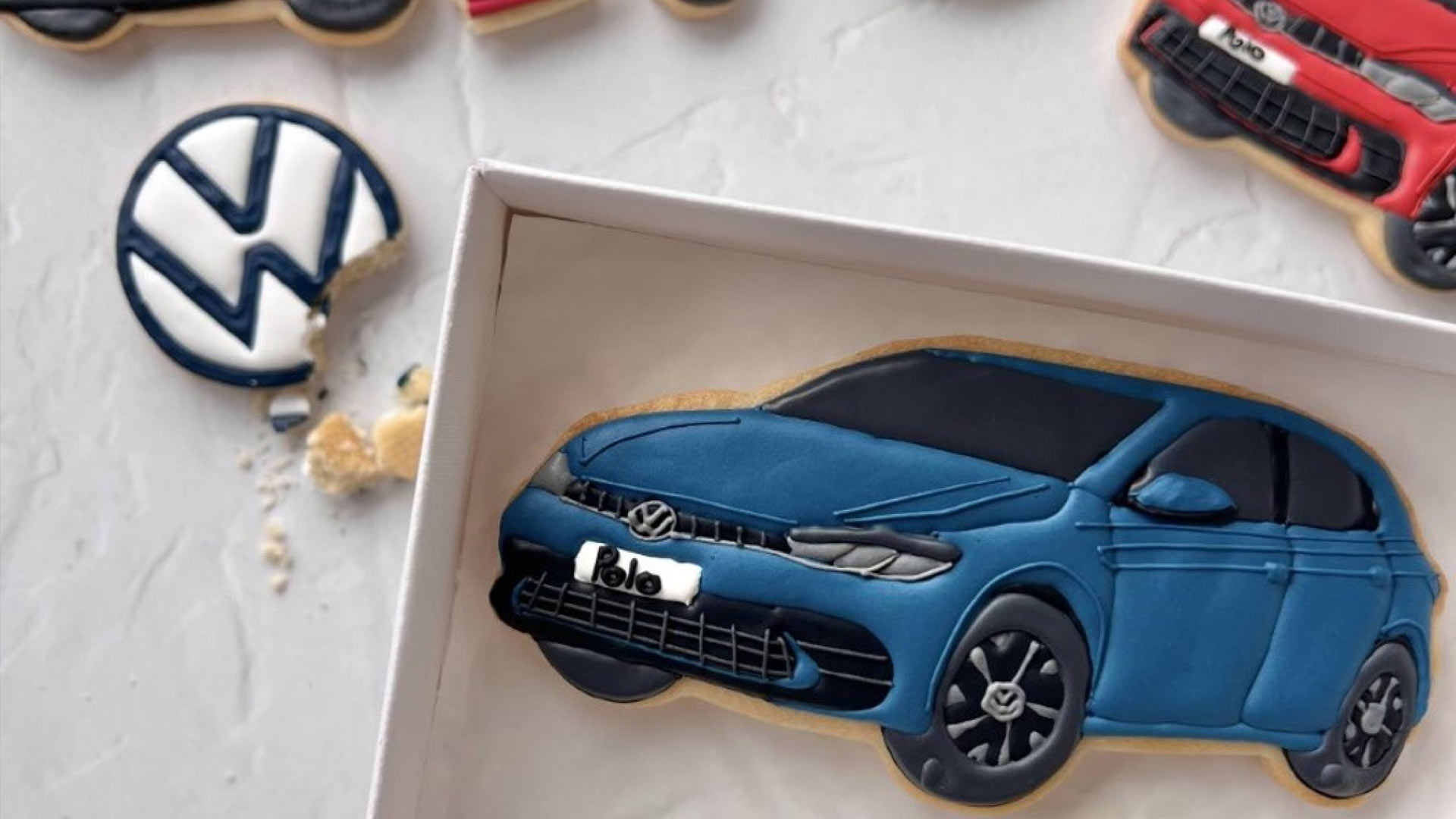
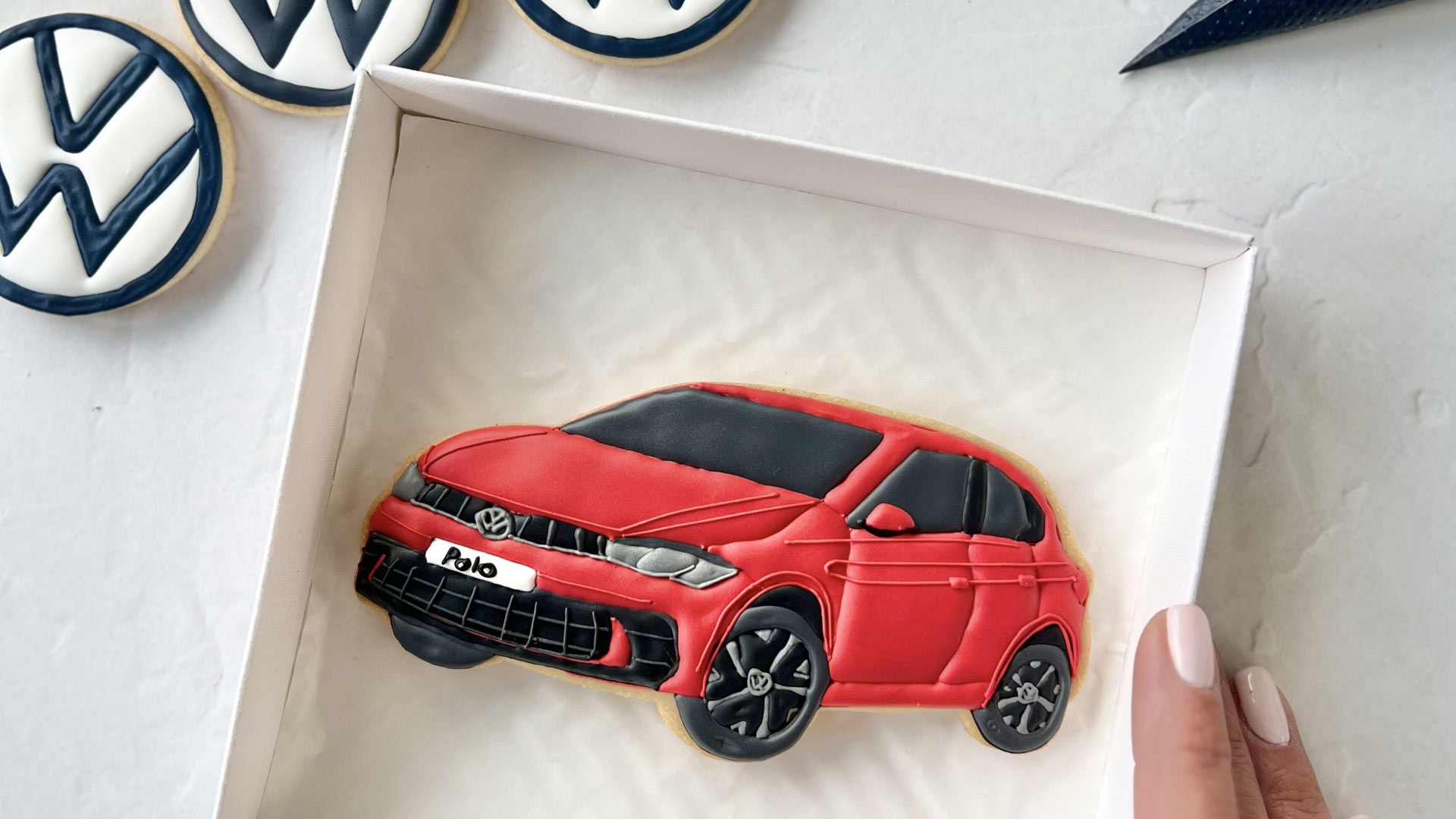
However, for those who are feeling the Blue Monday gloom, Volkswagen has an answer. Make a comment on one of the brand’s social media posts and you could receive some special Volkswagen Polo-shaped cookies.
Taking the biscuit
Having topped the chart as the UK’s best-selling car brand during 2024, Volkswagen clearly has a reason to be cheerful this Blue Monday.
As such, throughout the day, Volkswagen will be making special posts on Facebook, Instagram and TikTok. VW fans simply need to leave a comment about which model from the marque’s range ‘makes them smile’.
Lucky winners, chosen at random, will then receive a parcel of Polo-shaped cookies, made by baker Luluz Treats. Full terms and conditions will be shared by Volkswagen. Entrants must be aged 18 or over.
Don’t get the blues
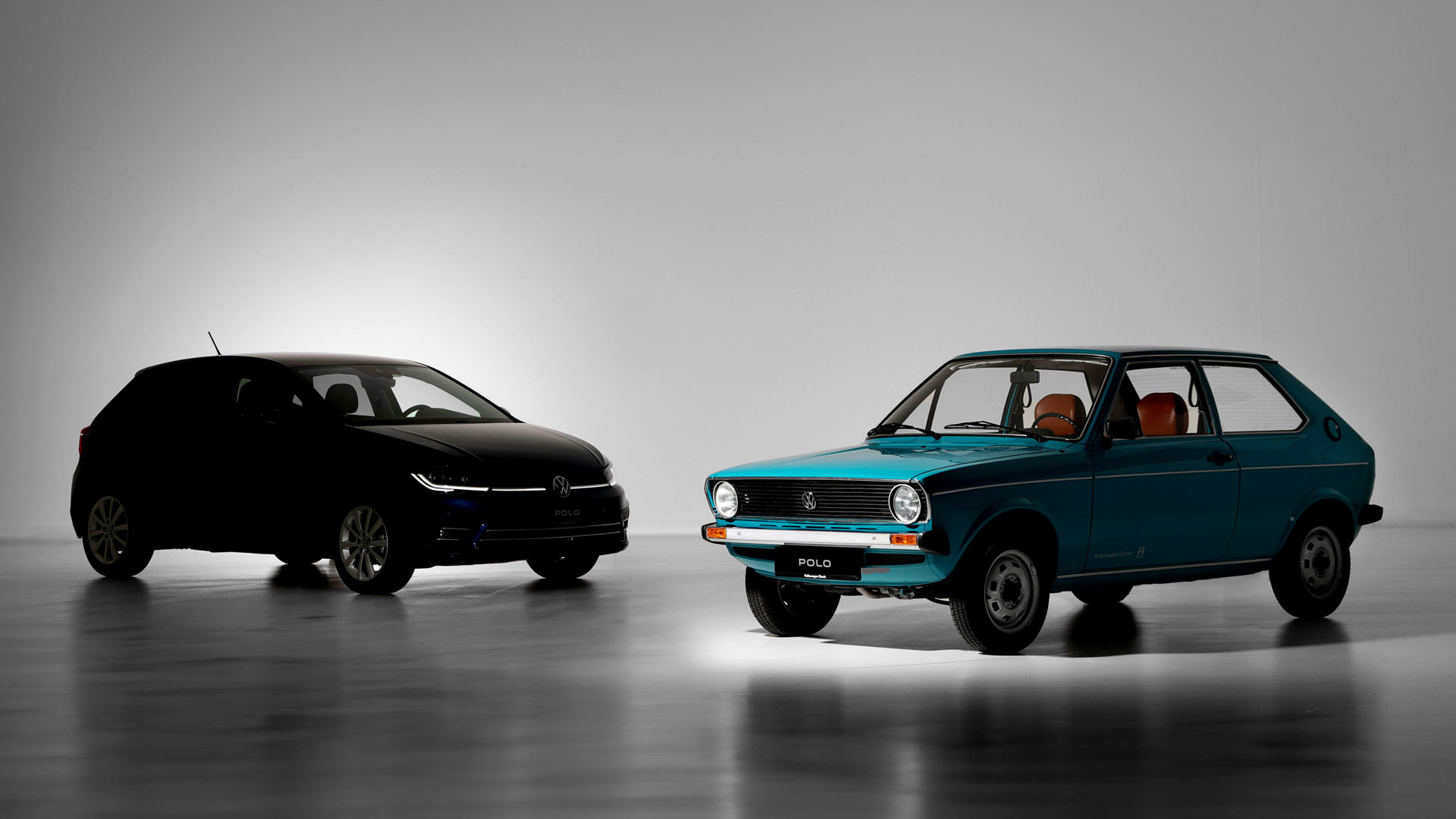
The choice of a Volkswagen Polo for the giveaway cookie is no coincidence, as the popular supermini celebrates its 50th anniversary in 2025.
More than 20 million examples of the Polo have been built since 1975. And you can expect more celebratory news and events from Volkswagen throughout the year. Perhaps life really does begin at 50?
“It’s only three weeks since most of us were enjoying the warm post-Christmas glow and celebrating the start of 2025, but the winter blues are making all that feel like a distant memory for some people,” said Fiona Jones, social media manager at Volkswagen UK.
“We hope our cookie giveaway helps to alleviate that and spreads a little Polo 50th birthday joy this January.”
Looking to buy a used car? You might have seen vehicles advertised for sale as ‘previously written off’ or categorised using a letter – ‘Cat S’, for example.
If a car has been written off, this means it was too badly damaged for an insurance company to repair cost-effectively. In other words, the cost of fixing the damage was more than the vehicle is worth. However, a write-off can be still repaired privately and returned to the road if you wish.
There are four categories of write-off in the UK. These reflect the severity of the damage, taking account of dangerous structural issues, along with the estimated cost of repair.
The UK’s car insurance write-off categories
The insurance industry and the Driver and Vehicle Licensing Agency (DVLA) use four write-off categories in the UK. In descending order of severity, these are:
Category A: The most serious category. Category A write-offs must be crushed; the car can never be legally used on the road again. Parts cannot be removed from the vehicle, even if they appear to be salvageable.
Category B: This signifies serious damage. Again, the car should never be used on the road again, and its body shell must be crushed. However, some parts may be removed from the vehicle to repair other cars.
Category S (formerly known as category C): The car has suffered structural damage in an accident and would be uneconomical to repair, given its value. If repaired by a professional, however, it may be returned to the road.
Category N (formerly known as category D): The least severe category. Damage is non-structural, but it could affect safety-critical features such as the car’s brakes or steering. Category N write-offs may be returned to the road, but not until they have been professionally repaired.
It’s worth remembering that a car’s value is a major factor in its likelihood to be written-off by an insurance company.
Putting it simply, a new supercar would need a lot of damage to make it a write-off. A £500 banger only needs a little cosmetic damage to be written off.
How do I know if a car has been written off?
Although owners should legally declare an insurance write-off when advertising a car for sale, some unscrupulous individuals may try to hide this information.
One way around this is search for a used car on Auto Trader, as all insurance write-offs are automatically declared. Alternatively, you could purchase a vehicle history check from a company such as HPI. The cost for peace of mind is around £20.
Should I buy an insurance write-off?
The only reason to buy a car that has previously been written off is because it’s considerably cheaper than an undamaged example. However, be aware that you’ll also have to declare it a write-off when you sell the car on – and that will affect its value.
Only category S and N vehicles (C and D under the old system) can legally be sold for use on the road. We’d want to fully understand what caused the damage and see evidence that the car has been repaired by a reputable body shop. You’ll also need to declare the write-off status to your insurance company.
What happens to my car after it’s written-off?
If your car has been damaged and the insurance provider deems it not worthy of repair, they will offer you what they consider to be the market value and essentially buy it off you. The car will then be sold at auction or scrapped, depending on the severity of the damage.
If you wish to keep the car, you may be able to buy it from the insurance company. It then becomes your responsibility to repair the car. Proceed with caution, as there may be extra damage – and thus expense – that isn’t obvious at first glance.
Again, you will also have to declare the car is a write-off when you insure it, and when the time comes to sell it.
Grey was the UK’s best-selling new car colour for the seventh year running in 2024.
Nearly 28 percent of all new cars sold last year were grey, giving the colour its best ever share.
It means that over 543,000 new grey cars hit the roads in 2024, a year-on-year increase of 6.7 percent.
Black was second, while blue overtook white to move up into third place.
It was the first time in seven years there hadn’t been an entirely monochrome top three – and it was blue’s first top three appearance since 2010.
Red held position in fifth, but sales fell 4.1 percent to give the colour its lowest market share in 22 years.
Colour wheels
Although almost 2 in 3 new cars were either grey, black or white, the other third were painted in one of 93 different colours.
The number of green new cars grew by 27.7 percent, while new yellow cars also rose in number. Both, incidentally, are feature colours of the European Car of the Year-winning new Renault 5.
Greater London saw the most green cars registered – and the best place to play the ‘yellow car’ game is Berkshire, with 779 registered in the region.
A Renault survey suggests that 1 in 5 Brits now play the yellow car game on a road trip.
In contrast, pink, maroon and turquoise cars collectively accounted for a mere 747 registrations.
Pink was the UK’s least-favourite new car colour of all, falling 31 percent with just 145 registrations.
“While 2024 saw more new car buyers go green, with a record number of EVs reaching the road, the ‘face’ of the market remains familiar, with grey and black proving perennially popular,” said SMMT chief executive Mike Hawes.
“While manufacturers strive to ensure every driver can have their pick of a vast choice of paint colours and personalisation options to suit their individual tastes, it seems UK car buyers’ preferences remain steadfastly monochrome.”
Hungarian restomod specialist Kamm has revealed an open-top Targa version of its modified Porsche 912.
Following the 912c coupe launched last year, the stylish new 912c Targa promises to combine old-school driving fun with modern usability.
The first Kamm 912c Targa (pictured here) is based on a 1968 Porsche 912 Targa, complete with the desirable ‘soft window’ roof and an eye-catching Tangerine colour scheme.
Retro style, modern performance
Produced between 1965 and 1969, the Porsche 912 was an entry-level alternative to the 911. Replacing the 356, it used a 1.6-litre flat-four engine instead of the usual flat-six.
The original 912 was already a featherweight, but Kamm has placed the 912c Targa on a strict diet, helped by extensive use of carbon fibre.
Almost every body panel is crafted from the lightweight material, including the bumpers, doors, wings and engine cover. With polycarbonate windows and carbon fibre wing mirrors, the 912c Targa tips the scales at less than 800kg.
The standard engine is ditched for a new 2.0-litre flat-four, which breathes better thanks to independent throttle bodies and a bespoke Kamm airbox. With 185hp and 151lb ft of torque, performance will certainly be brisk.
An uprated five-speed dog-leg manual gearbox is fitted, with a choice of three shift patterns – plus a ZF limited-slip differential.
Beach cruiser or road racer
Brembo brakes are used for stopping the Targa, while TracTive semi-active coilover suspension is a world away from the the springs and dampers fitted in Stuttgart.
To enhance its retro appeal, Kamm has fitted the demo 912c Targa with Cibie spot lights and alloy wheels that resemble classic steel rims, plus a roof rack made from carbon fibre.
Along with a complete overhaul of its electrics, the interior of the 912c Targa has a Fusina Racing steering wheel, electric air conditioning, lightweight carpets and a sound system with lightweight speakers.
Customers can choose between racing- or touring-spec carbon fibre seats, along with optional FIA-specification harnesses. A bolt-in roll cage can be added for good measure.
The future is orange
Following the debut of the 912c Targa, company founder Miklos Kazmer commented: “As with all Kamm cars, the 912c Targa will be equally at home on the street as it is the track. And what better way to enjoy life than a fast drive to the beach in a soft-window Kamm 912c Targa, ready for a day of fun and relaxation.“
Inevitably, this brand of restomod relaxation comes with a substantial price tag, with the launch edition Kamm 912c Targa priced at €395,000 (approx. £333,000).
Build slots are now open for buyers to commission their own 912c coupe or Targa, including near-endless options for individual customisation.
Family-owned car dealership Hendy Group has bought back a 75-year-old Ford Anglia it first sold back in 1949.
The 1949 Ford Anglia EA94A is described as ‘pristine’. Remarkably, it has only covered 4,463 miles from new.
The three-owner car comes with all its original paperwork, including the logbook, manufacturer warranty booklet and ‘Ford Eight and Anglia’ handbook.
It even has the original sales receipt from founding company Percy Hendy Ltd, located in Chandler’s Ford.
Sold to its first owner for £319
The car was originally sold in February 1949 to a Ms. Lily Cull from Eastleigh, Southampton, for £319, 16 shillings and 8 pence.
Following a cosseted life, the classic Ford was purchased last month by Rebecca Hendy, chairperson and trustee of the Hendy Foundation – the charity arm of Hendy Group – with her two sons Will and Ben.
“It’s been a joy to bring the car back into the family fold after so many years,” said Hendy.
A piece of Hendy history
“It’s fantastic to be able to honour a piece of Hendy history and celebrate our longstanding partnership with the Ford Motor Company,” Hendy continued. “We vow to give it the care and attention it deserves, while also allowing many members of the public to see it properly.”
Hendy Group has a history dating back 165 years. In 1910 – some 39 years before the Anglia was sold – it opened the first official Ford car dealership in the UK.
Today, Hendy employs more than 1,700 people across the south coast of England. It operates eight Ford dealers, alongside outlets for 21 other automotive brands at more than 60 locations.