Home Blog Page 234

New car CO2 emissions rising due to ‘inconvenient truth’ of SUVs

0
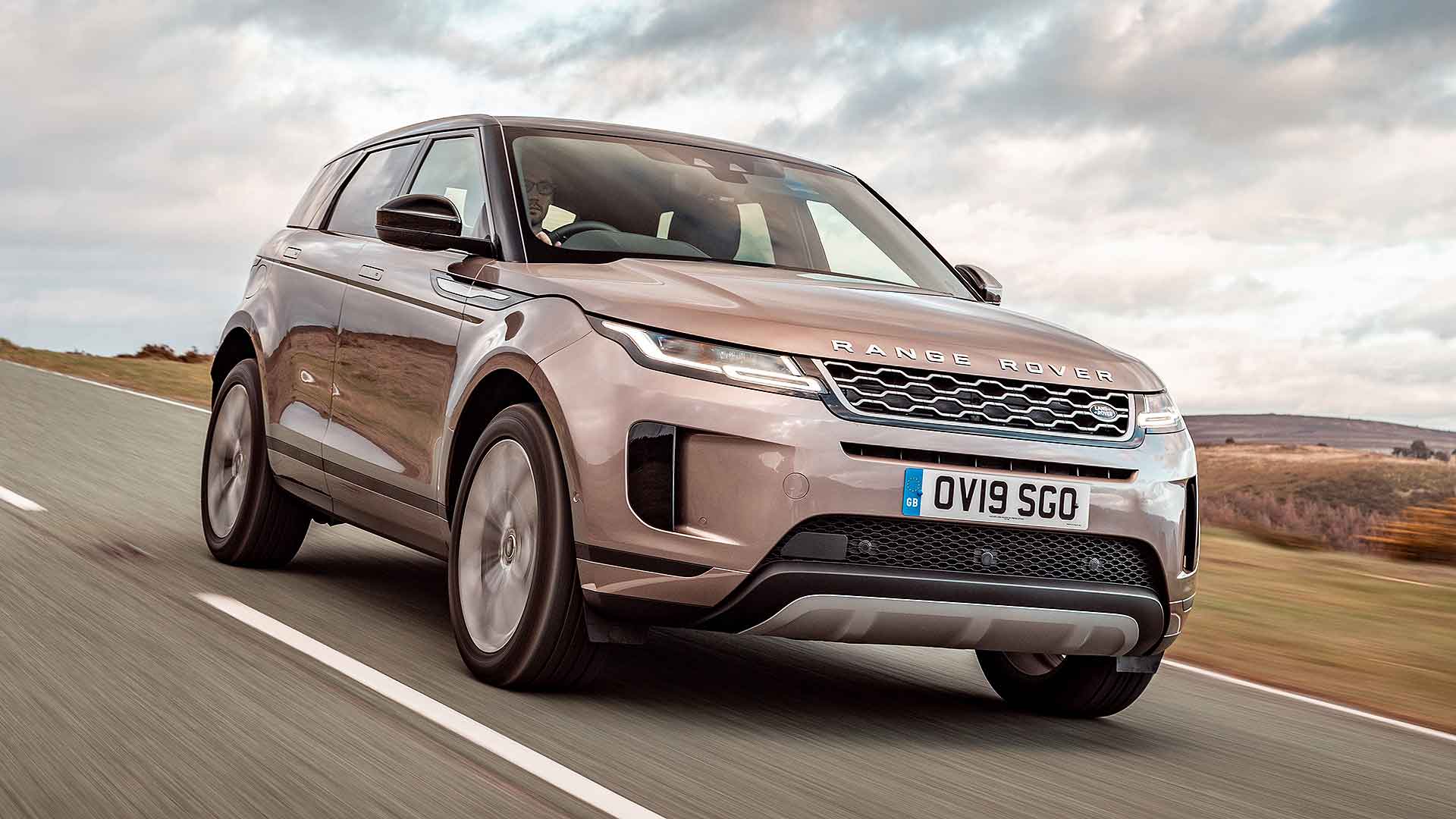
Range Rover Evoque

Car manufacturers are obliged to meet strict CO2 targets for vehicle emissions by the end of 2020 – but new car CO2 output is actually rising – a trend one analyst is blaming on a focus on selling profitable SUVs.

Last year, SUVs comprised nearly 4 in 10 European new car sales. This has almost doubled since 2015, reveals data from JATO Dynamics.

The popularity of big, heavy SUVs is why a long decline in average new car CO2 emissions has gone into reverse– leaving car firms way off the target they now have just months to meet.

Many car firms are facing huge fines for not reducing their new car CO2 emissions quickly enough.

By the end of 2020, the average CO2 emissions of cars sold in Europe needs to be 95g/km. In 2019, it was 121.8g/km, giving car firms a mountain to climb.

The average CO2 emissions of an SUV is even higher, at 131.5g/km. This has risen since 2017 – and as SUV market share has grown in that time, this increase has compounded the problem.

Car firms are, says JATO, “facing a tough decision – sacrifice sales from SUVs or risk not meeting the target.”
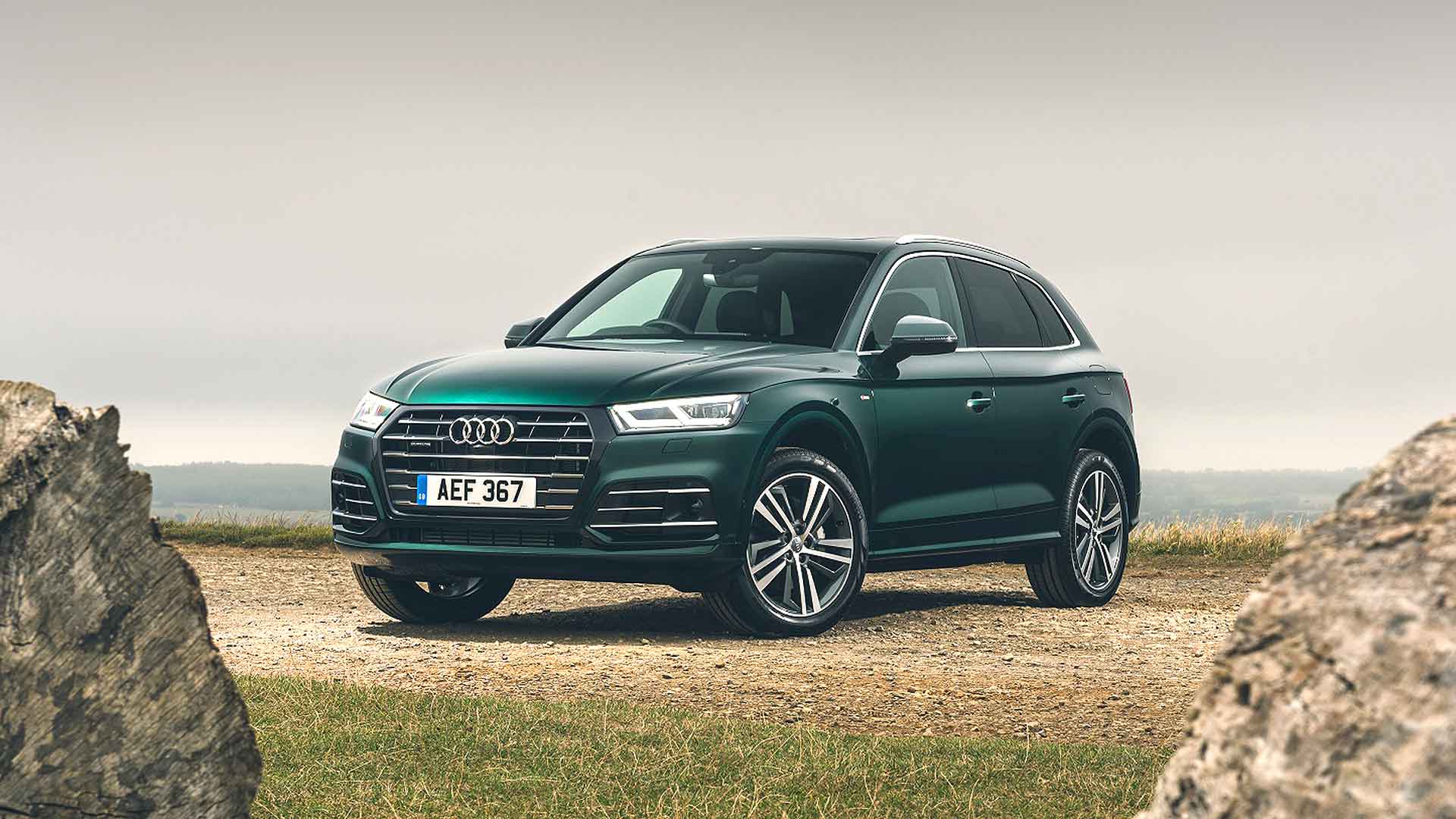
Audi Q5

It certainly means brands might think twice about launching new SUVs in this marketplace, adds JATO, “especially given that any profits they make could easily be depleted by rising penalties”.

Car firms will be fined €95 for every 1g/km of CO2 they are over target, multiplied by the number of cars they sell.

The fines could therefore run into billions.

And despite the UK leaving the EU, it will be the same situation here: the UK government has agreed to transfer across the EU’s strategy for reducing new car CO2 emissions.

JATO analyst Felipe Munoz says car manufacturers face a stark choice – either pay punitive penalties or, in the short term, “discontinue some of their SUVs”.

They either need to “sacrifice sales from SUVs or risk not meeting the target” – and either choice is going to cost them.

It’s the last thing an industry hit hard by the coronavirus crisis needs…

ALSO READ

Lamborghini sales boom as 6 in 10 new cars is an SUV

‘Controversial’ Rolls-Royce SUV helps sales surge 25%

Sale of SUVs ‘making a mockery’ of emissions policies
Advertisement

Tesla Model S HEARSE launched for zero-emissions eco-funerals

0
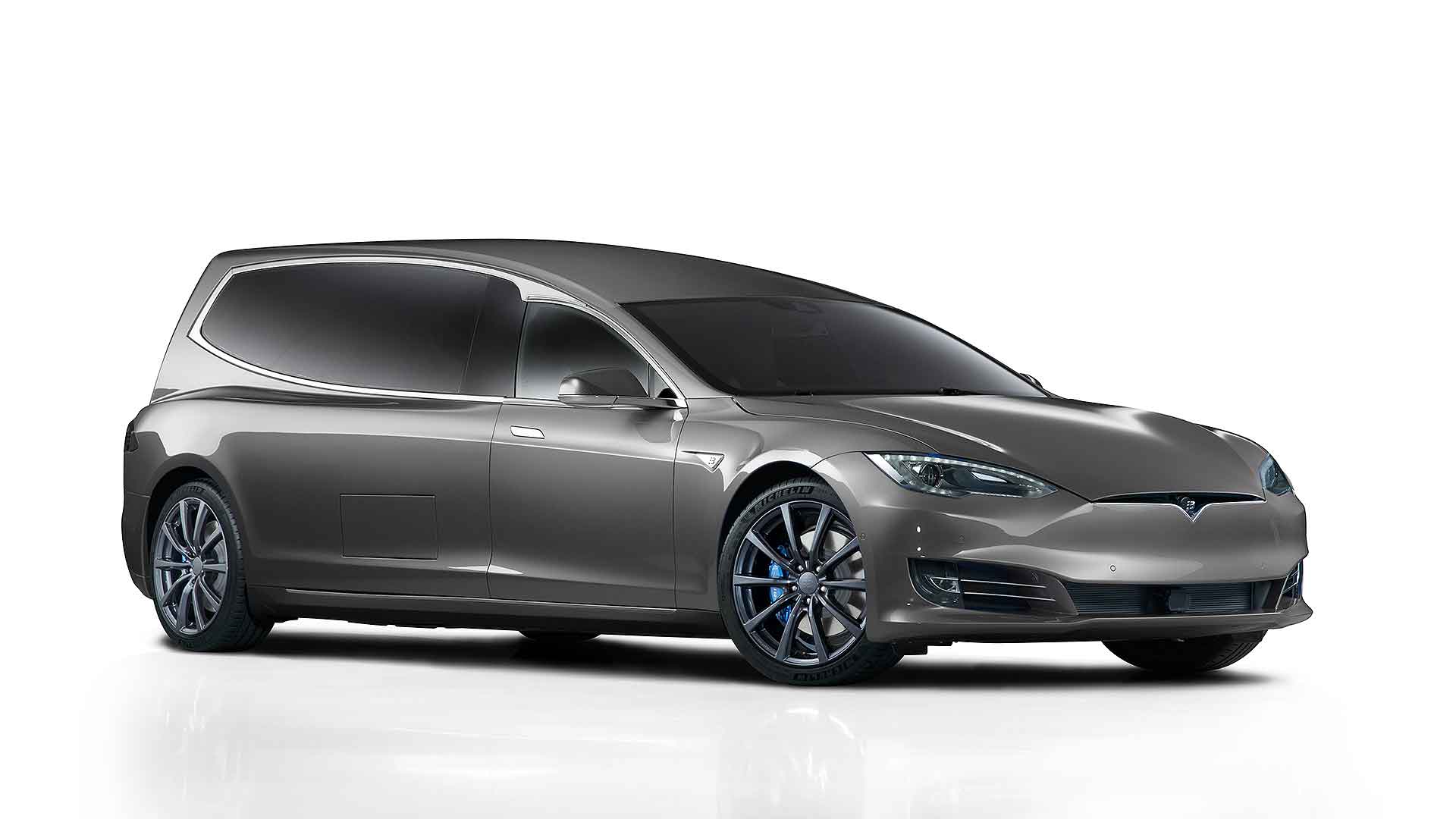
Coleman Milne Binz.E Tesla Hearse

An electric hearse based on a Tesla Model S has been launched by a UK specialist to meet the growing demand for zero-emissions ‘eco-funerals’.

Bolton’s Coleman Milne is now offering the Binz.E hearse, which is based on both new and used Telsa Model S electric cars.

The firm expects it to prove particularly popular with funeral directors operating in the London Ultra Low Emission Zone (ULEZ) – in which it can operate for free.

Coleman Milne Binz.E Tesla Hearse

With a 220-mile range, there’s no danger of running out of charge during even the longest funeral processions, either.

“As attitudes among policymakers and the general public shift towards greater environmental sustainability, it is important that the funeral sector takes stock of its own approach to climate change,” said Coleman Milne MD Lee Hudson.

He expects the growth of clean air zones and regional ULEZ initiatives to boost demand for electric hearses, but says funeral directors pushing more environmentally conscious funerals will also grow the market.

“Our new Binz.E will provide a key component in the growing trend for these eco-funerals.”

Coleman Milne Binz.E Tesla Hearse

Germany’s Binz designed, developed and produces the Tesla-based Binz.E electric hearse which is being sold by Coleman Milne.

The Stuttgart-based firm says its clever compression composite sandwich construction gives the Binz.E plentiful strength and rigidity, and also “an exceptionally high-quality paint finish”.

Customers also benefit from the Tesla app, for remote observation of the vehicle, and use of the full network of fast-charging Tesla Superchargers.

A UK demonstrator is due imminently.

ALSO READ

The bespoke Tesla Model S Shooting Brake is for sale

Tesla Model 3 is UK’s best-selling car in March

Tesla builds its millionth car – and it’s a new Model Y

Advertisement

Revealed: the postcodes where demand for MOT tests will be highest

0
Don’t book an MOT test if you aren’t driving

Earlier this month, the Driver & Vehicle Standards Agency (DVSA) launched a campaign encouraging motorists to get their MOT done in August.

The number of MOT tests is set to double this autumn following the extension granted during the lockdown.

Now, the DVSA has revealed the postcodes where demand for MOTs are expected to be highest this autumn. Demand for MOT tests is expected to rise by 50 percent in the majority of postcodes.

Garages must cope with the typical volume of tests plus the extra MOTs required as a result of the lockdown.

Little wonder the DVSA is urging motorists to book early to avoid disappointment. Time is running out if you want to get your MOT test done in August.

Birmingham (B) is typically one of the busiest postcodes in terms of MOT tests. Garages can expect to carry out 146,147 tests in a typical eight-week period in October and November.

This year, an additional 86,753 tests will be required – an increase of 59.36 percent.

Sheffield (S), Nottingham (NG), Leicester (LE) and Peterborough (PE) complete the top five when ranked by number of MOT tests.

Glasgow (G) is eighth in the table, but the postcode will experience the largest increase in MOT tests (68.27 percent). Forty-seven miles along the M8, garages in Edinburgh can expect a similar uplift in demand for MOTs (66.84 percent).

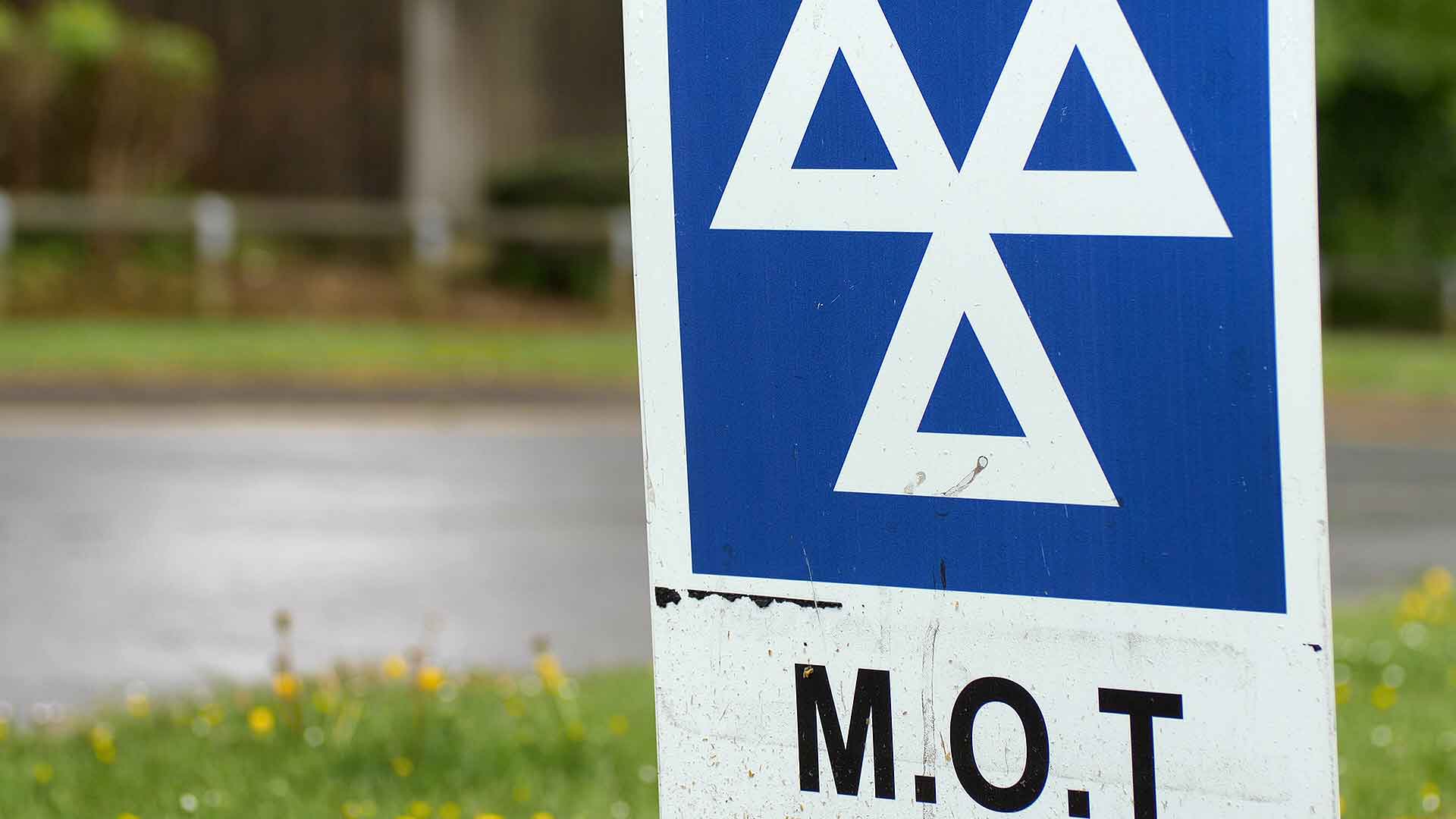
MOT sign

Chris Price, head of MOT policy at DVSA, said: “MOT exemptions made sure motorists could keep moving during coronavirus. Now exemptions have ended, millions of motorists will be making sure their vehicle is safe by getting an MOT done.

“Garages across the country will see demand start to peak during September, with almost double the number of MOTs due in October and November.

“If you have an MOT exemption until October or November, you can beat the rush – get your test done this summer.”

Postcodes with the highest demand for MOT tests (October/November)

  1. Birmingham (B): 232,900 tests – 59.36 percent increase
  2. Sheffield (S): 164,001 tests – 56.07 percent increase
  3. Nottingham (NG): 139,245 tests – 57.16 percent increase
  4. Leicester (LE): 139,087 tests – 63.11 percent increase
  5. Peterborough (PE): 136,944 tests – 62.67 percent increase
  6. Bristol (BS): 136,328 tests – 57.42 percent increase
  7. Glasgow (G): 126,968 tests – 68.27 percent increase
  8. Cardiff (CF): 124,040 tests – 62.79 percent increase
  9. Newcastle (NE): 122,430 tests – 59.95 percent increase
  10. Reading (RG): 119,882 tests – 61.88 percent increase
  11. Manchester (M): 112,970 tests – 61.21 percent increase
  12. Coventry (CV) – 111,145 tests – 61.96 percent increase
  13. Portsmouth (PO) – 110,647 tests – 55.14 percent increase
  14. Guildford (GU) – 105,299 tests – 58.02 percent increase
  15. Norwich (NR) – 103,388 tests – 56.02 percent increase
  16. Tunbridge Wells (TN) – 103,016 tests – 58.05 percent increase
  17. Derby (DE) – 101,918 tests – 59.89 percent increase
  18. Swansea (SA) – 100,275 tests – 63.42 percent increase
  19. Edinburgh (EH) – 97,115 tests – 66.84 percent increase
  20. Southampton (SO) – 96,727 tests – 56.15 percent increase

Drivers could be fined up to £2,500, be banned from driving and get three penalty points for driving a vehicle that has failed its MOT because of a ‘dangerous’ problem.

If a car fails its MOT during the extension period, it will need to be removed from the road until it is repaired. The extension no longer applies.

Click here to find out how to prepare your car for its MOT test.

ALSO READ

Used car prices have risen for 15 weeks running

Teachers given access to Peugeot staff discounts

How to prepare your retro motor for the MOT test

Advertisement

Teachers given access to Peugeot staff discounts

0
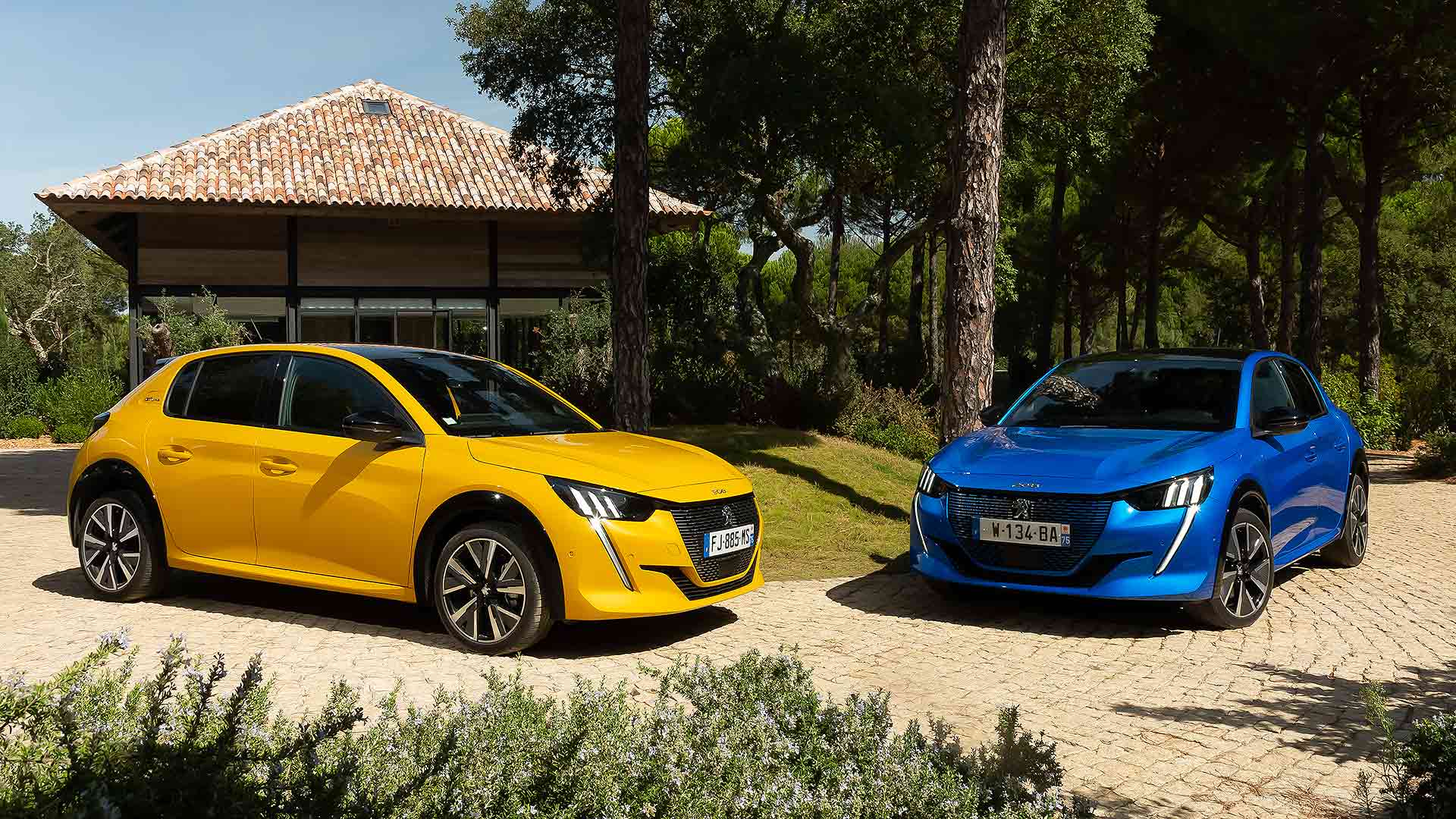
Peugeot 208

Qualified teachers can now access special Peugeot promotional offers on new cars as the firm opens up a scheme previously only available to insiders.

The Peugeot Pride Family & Friends promotional offers are open to all qualified teachers, both those paying cash and buying on finance.

Earlier in the summer, Peugeot opened the staff discount scheme to all NHS staff.

The firm says it’s a way of thanking key workers for their support during the coronavirus crisis.

Peugeot Pride

The exclusive money-saving deals are offered across the Peugeot range – and buyers can even arrange the full deal online, including home delivery.

Teachers and NHS staff are asked to register using Peugeot’s ‘Pride thank you’ form. They will be sent a promotional code that unlocks the special offers available.

The firm hasn’t revealed the scale of the offers but does say the deals are exclusive and normally only open to employees and their friends and family.

For teachers, the qualifier is that they have been teaching for at least six months.

Peugeot UK MD David Peel said the firm was “very happy to extend our Pride programme to the country’s teachers.

“During lockdown, teachers continued to educate children across the country to interact and engage with pupils despite the limitations imposed by Covid-19 – utilising many of the digital tools that we’re now using at Peugeot to engage with our customers.”

ALSO READ

How to kill coronavirus in your car in 7 minutes

Have petrol and diesel sales already peaked because of coronavirus?

Can car air filters protect you from coronavirus?

Advertisement

Brittany Ferries lays up ships following ‘significant drop in demand’

0
Brittany Ferries Armorique leaving Plymouth

Brittany Ferries will lay up ships and reduce services in the wake of new quarantine measures. The cross-Channel ferry operator says the first changes will come into force from the end of August.

Anyone returning from France must self-isolate for 14 days. The measures were introduced at the weekend, leading to a mass exodus from some European ports and airports, with Brits hoping to beat the 0400 Saturday deadline.

At the weekend, around 35,000 passengers cancelled or delayed their plans to travel with Brittany Ferries. This follows a warning from the company that it is experiencing a “disastrous summer season”.

The company carries around 2.6 million customers in a normal year – 85 percent of which are British.

Brittany Ferries has now confirmed that it is changing its schedule and taking three ships out of service. Around 50,000 passengers with existing books will be affected by the changes.

Christophe Mathieu, director general of Brittany Ferries, said: “We warned over the weekend that schedule changes were likely, as quarantine measures have led to a significant drop in demand for our services.

“This is not something we want to do. However, in the context of a terrible summer season we have no choice but to consolidate sailings that, by virtue of lack of passenger numbers, are uneconomic to run.

“These extraordinary decisions are regrettable and we apologise in advance to all those whose travel plans will be disrupted.”

Brittany Ferries: key changes

Britanny Ferries Armorique at sea
  • Armorique, which serves the Plymouth to Roscoff route, will be laid up from 31 August.
  • Pont-Aven will replace Armorique on the Plymouth to Roscoff route from 10 September, with three return trips per week. The ship will also operate one return sailing from Plymouth to Santander and Roscoff to Cork during the week.
  • Bretagne, which serves the Portsmouth to St Malo route, will be laid up from 7 September.
  • Etretat will not resume crossings.
  • Connemara will continue to operate the Cherbourg and Le Havre routes from Portsmouth but will no longer serve Bilbao.

The company operates 12 ships serving 12 ports in the UK, France, Spain and Ireland. These are: Poole, Portsmouth, Plymouth, Roscoff, Saint-Malo, Le Havre, Cherbourg, Caen, Santander, Bilbao, Cork and Rosslare.

The Brittany Ferries call centre is expected to be busy over the coming days, so the company is asking passengers to wait for notification of any changes to their booking. Where possible, alternative arrangements should be made via the Brittany Ferries website.

Click here for more coronavirus travel updates and advice on the Brittany Ferries website.

ALSO READ

How to use the Eurotunnel Channel Tunnel

Eat Out To Help Out: the motorway services taking part

Driving to France: ferry or Eurotunnel?

Advertisement

Ford Fiesta is the UK’s most popular first car

0
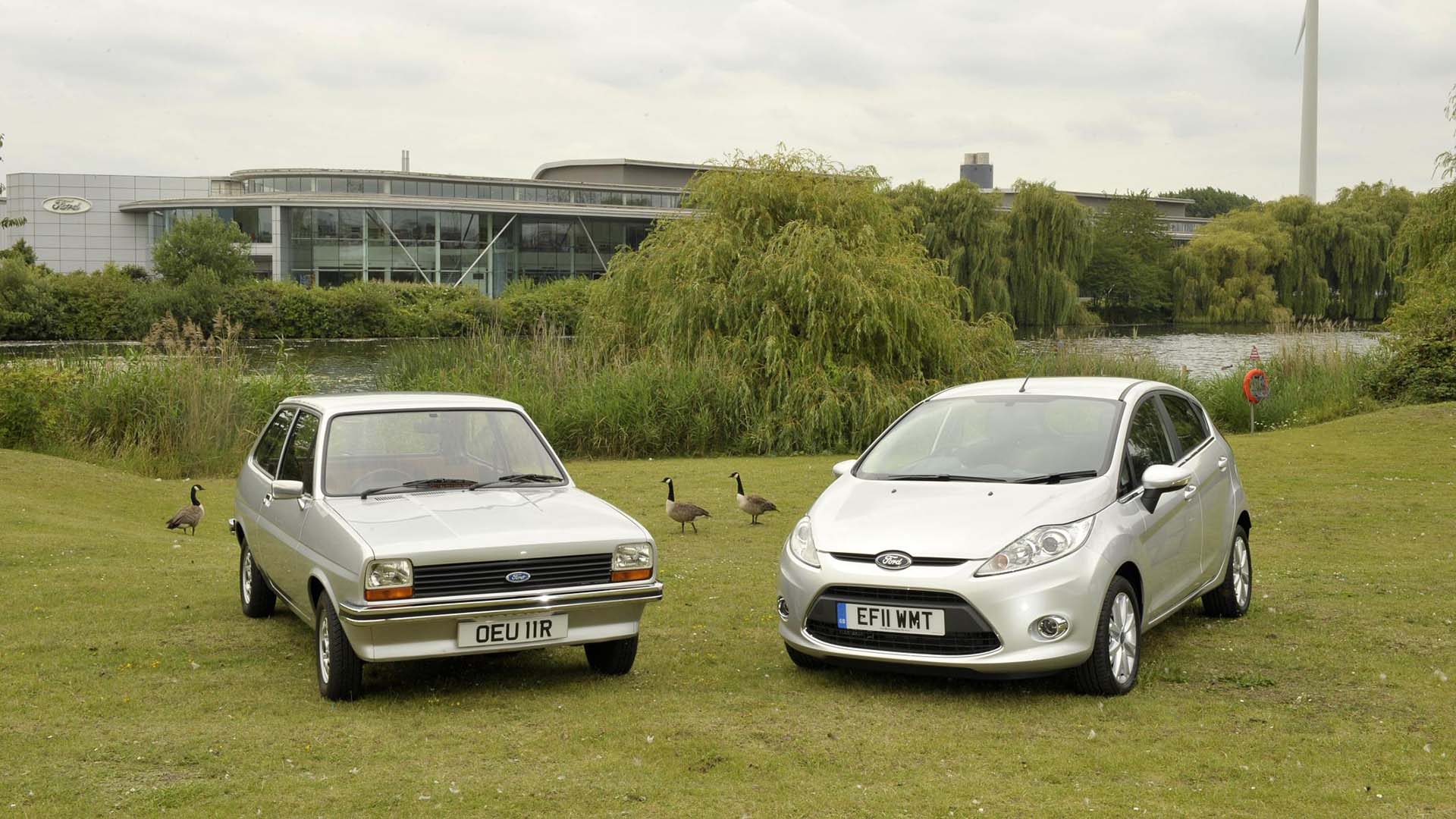
Ford Fiesta

Ford dominates the list of the UK’s most popular cars of all time. So it should come as no surprise to discover that the Ford Fiesta is the most popular first car.

More than 1 in 4 respondents to a recent survey said that their first car was a Ford. Of these, 12 percent took their first steps on the road in a Ford Fiesta.

An insurance company spoke to 500 drivers to learn more about the nation’s first cars. The average price spent on a first car was £3,782, with 66 percent of people saying they felt it was worth what they paid for it.

Predictably, we turned to Auto Trader to find out how much Ford Fiesta you can buy for £3,782. Quite a lot, as it happens. There are around 575 examples between £3,500 and £4,000, with Zetec the dominant trim, and petrol outnumbering diesel by four to one.

In 2020, many people buy a car using a Personal Contract Purchase (PCP) plan. Right now, you can buy a Ford Fiesta Trend 1.0 for £170 a month after a £4,354 deposit. This is based on a three-year contract with a restriction of 9,000 miles per annum.

Over half of the respondents to the survey sold their first car to buy another, but 17 percent were sent to the scrapyard. Meanwhile, seven percent were written off.

‘Lovely elderly lady’

Ford Fiesta

Rachel Bustin, a blogger from Home in the Pastures, shared her memories of her Ford Fiesta: “I remember going to buy my first car with my dad. We bought it from a lovely elderly lady who lived on the coast overlooking Porthtowan. It was a red, two-door Ford Fiesta. The mileage was low due to the elderly lady using it once a week to go to the shops. It was a great find!”

Victoria from Lylia Rose also had a Ford Fiesta for her first car. She said: “I was 19 when I bought my first car. It was a burgundy Ford Fiesta, really old, and cost around £300. Someone told me Ford Fiestas are really reliable and easy to buy parts for, which I’ve found to be true. I only had the car for one year, but it was a great little runner.

“Since that car I’ve had a couple of Ford Ka cars and a Vauxhall Corsa, but I’ve actually gone back to a Ford Fiesta which I’ve now had for a few years as they are so easy to drive and really reliable as I was told all those years ago.”

We’ll leave you with the news that 20 percent of people decide to name their first car. The most popular name? Betty. Hmm.

Click here to read the full results of the Dayinsure first car study.

ALSO READ

Toyota Yaris (2020) review

Eat Out To Help Out: the motorway services taking part

What to do if you can’t find your driving licence

Advertisement

Revealed: the slowest motorways in England

0
Dartford Crossing East Tunnel

Perhaps predictably, the Dartford Crossing has been revealed as the slowest section of motorway in England.

There’s also a degree of inevitably about the fact that 11 of the 50 slowest sections of motorway are on the M25.

With average speeds of 24.6mph and 25.1mph, two sections of the M25 by the Dartford Crossing are England’s slowest. There were 57.8 million crossings made in 2018/19 – the highest since the Dart Charge was introduced in 2014.

The M25, M4 and M5 motorways dominate the list of slowest motorways. Eight of the slowest stretches of motorway are located on the M5, which will make for grim reading for the tourists spending their summer holiday in the South West.

Overall, the South East, West Midlands and North West are home to the slowest motorways.

It’s not unusual

UK traffic jam

Dan Hutson, head of motor insurance at Comparethemarket.com, the company behind the research, said: “Sitting in traffic on the motorway isn’t unusual.

“And our research reveals it’s the norm in many areas to be crawling along at speeds 30mph or 40mph below the speed limit.

“Some of the slowest sections of motorway are near major locations or junctions. For example, ‘Thorney Exchange’, right next to Heathrow Airport, is the twelfth slowest stretch and one of the busiest junctions in the country.

“Our research also shockingly reveals that there are 11 stretches of motorway across England which have an average speed of less than 30mph. What is also worrying is that our data reveals the speed of traffic at all times of the day, so during rush hour the average speeds are likely to be much lower.”

Top 10 slowest sections of motorway

  1. Dartford Crossing (northbound near Littlebrook): 24.6mph
  2. Dartford Crossing (northbound between Princes Road and Littlebrook): 25.1mpg
  3. M67 (westbound between Ashton Road and Denton): 26mph
  4. M67 (westbound between Denton and A57): 26.1mph
  5. M5 (northbound near Oldbury): 28.3mph
  6. M4 (westbound near Chiswick): 28.6mph
  7. M4 (westbound between Chiswick and Brentford): 28.7mph
  8. M4 (westbound near Brentford): 28.7mph
  9. M5 (northbound between Quinton and Olbury): 29.1mph
  10. M5 (southbound near West Bromwich): 29.5mph

Click here for tips on how to find the latest traffic information to avoid getting stuck in a delay. The complete list of slowest motorways can be found here.

ALSO READ

UK used car sales HALVE due to lockdown

Have petrol and diesel car sales already peaked due to coronavirus?

Heatwave warning: dogs die in hot cars

Advertisement

Bond cars: Aston Martin unveils 007 Editions of Vantage and DBS

0
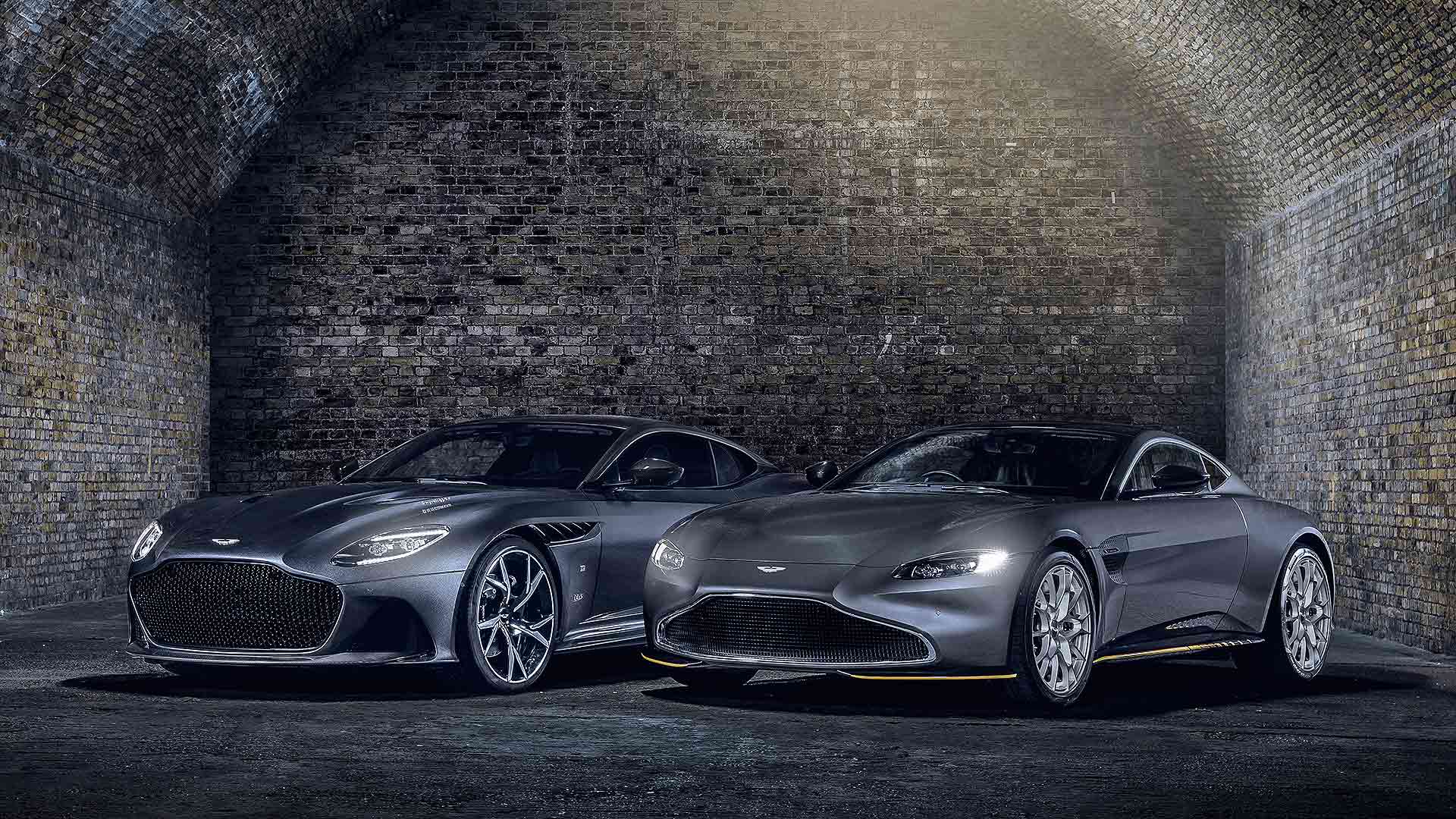
Aston Martin Vantage 007 Edition and DBS Superleggera 007 Edition

“You seem to have this nasty habit of surviving,” sneers Kamal Kahn to James Bond in Octopussy. After 107 years and seven bankruptcies, one might say the same about Aston Martin.

Ever since Goldfinger in 1964, Aston Martin and Bond, James Bond have gone together like an evil masterminds and hollowed-out volcanoes. Now, to celebrate the forthcoming release of No Time To Die – the 25th film in the Bond saga – Aston has revealed special ‘007 Editions’ of the Vantage and DBS Superleggera.

Priced at £161,000 for the Vantage and £279,025 for the DBS, they’re available to order now for delivery in spring 2021.

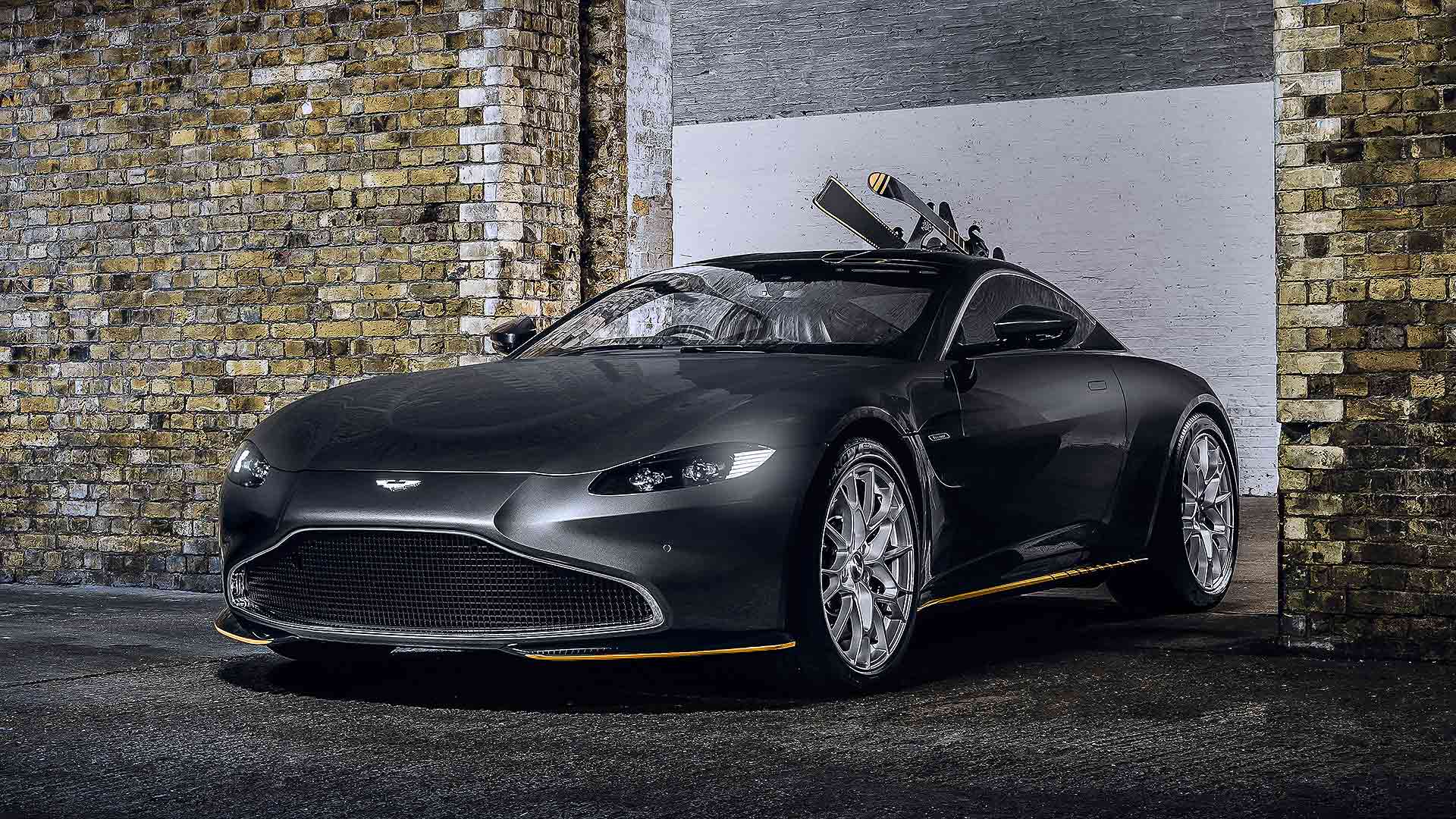
Aston Martin Vantage 007 Edition

Form an orderly Q

Sadly, neither car comes with rocket launchers, a cement sprayer or the ability to transform into a submarine. You don’t even get revolving number plates.

On the plus side, you do gain a unique specification created by ‘Q by Aston Martin’ – Gaydon’s in-house personalisation department (and another none-too-subtle Bond reference).

The 007 Edition cars will also be built in limited numbers: 100 examples of the Vantage and 25 of the DBS Superleggera.

Aston Martin Vantage 007 Edition

The living highlights

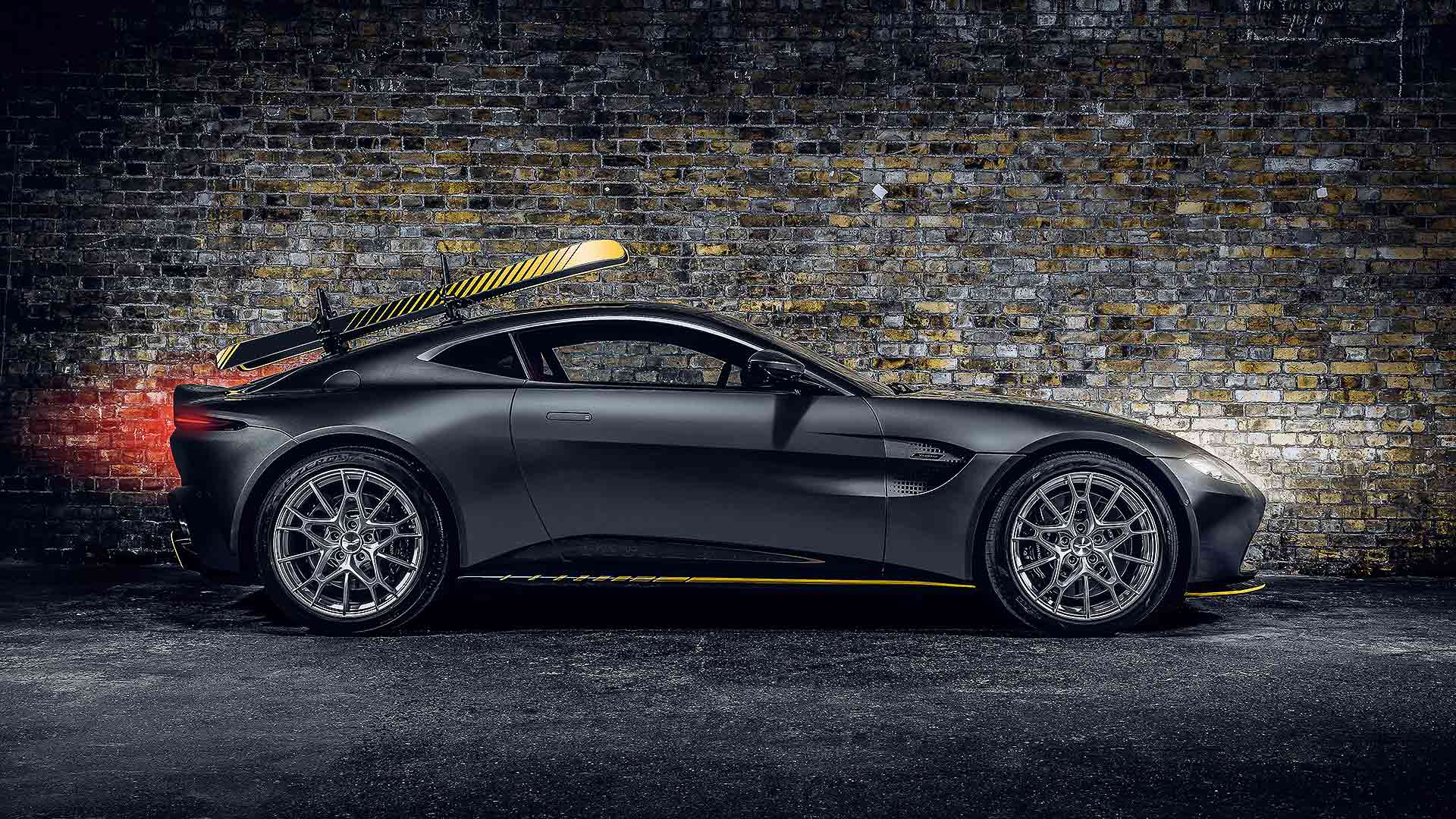
Let’s start with the Vantage, which is inspired by the Aston Martin V8 from 1987’s The Living Daylights and also features in No Time to Die. In the latest film, Daniel Craig retrieves the car from his secret London lock-up.

Exterior styling mods include a mesh front grille and dashed yellow diffuser that (it says here) is inspired by the hazard stripes on the film car’s rockets. You can even go all-out with limited edition The Living Daylights skis and a ski rack. Cool in Courchevel, less so in Colchester…

The Vantage is painted Cumberland Grey, with an interior in Obsidian black leather and dark chrome. Bond fripperies include the Russian police radio frequency (as used by Timothy Dalton to aid his escape) embroidered onto the sun visors, cross hairs etched into the paddle shifters and a laser-etched plaque that references the various weapons fitted in the film.

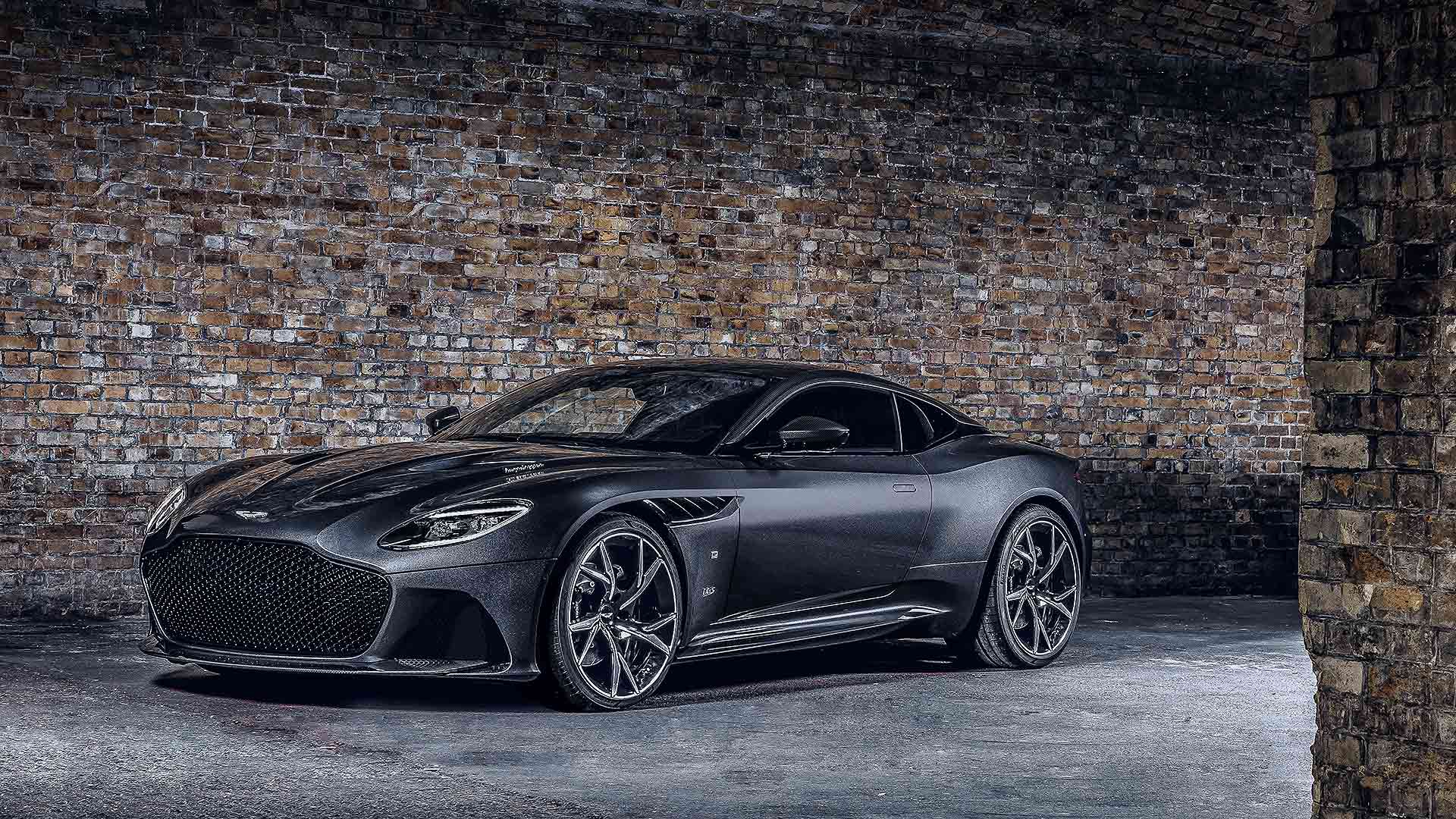
Aston Martin DBS Superleggera 007 Edition

A V12 is not enough

As for the DBS Superleggera, a 725hp 5.2-litre V12 beneath the bonnet is arguably the only gadget it needs. It’s certainly swift enough to outrun a Ferrari F355, Jaguar XKR or, um, AMC Matador.

This time, the 007 Edition means Ceramic Grey paint, with the roof, mirrors, splitter and diffuser in black-tinted carbon fibre. Gloss black 21-inch wheels are also bespoke to these 25 cars, with badges on the front wings and what Aston describes as ‘stainless steel silver 007 foil’ on the rear spoiler.

Inside, you’ll discover red detailing, more 007 badges and a sill plaque. The overall effect is more subtle than the Vantage – but emulates the spec you will see in No Time To Die.

Aston Martin Vantage 007 Edition

Nearly time to die

If you can’t afford six figures for these ultimate pieces of film memorabilia, you can still enjoy No Time To Die in cinemas this November.

The release of Daniel Craig’s final outing as Bond has been delayed by the coronavirus crisis. However, it should offer plenty to keep car fans happy. As well as the DBS Superleggera and classic V8, the film also stars the iconic Aston Martin DB5 and upcoming Valhalla mid-engined hypercar.

We’re in two minds about skis and embroidered headrests, but the latter will surely leave us shaken and stirred.

ALSO READ:

Aston Martin DBX (2020) review

Zagato celebrates 100 years with Aston Martin V12 twins

Hyper drive: Aston Martin Valkyrie hits the road

Advertisement

Motorists are letting their car insurance auto-renew – and it’s costing them a fortune

0
Haggle for cheaper insurance

Drivers are wasting an estimated £1.9 billion a year by allowing their car insurance to auto-renew. That’s the warning ahead of the September peak in car insurance renewals.

Around a fifth (21 percent) of motorists allowed their insurance policy to auto-renew in the last six months. This compares with 15 percent when the survey was last completed in February 2020. This is a 40 percent increase in the number of drivers auto-renewing their insurance.

The number of motorists auto-renewing without shopping around for competitive quotes is at its highest since February 2017.

When asked why they allowed their policy to automatically renew, a fifth of drivers said their existing provider was the cheapest last year, so they believed they would offer good value. Another fifth said they spoke to their insurance company about reducing their payments or taking a premium holiday.

Other reasons for sticking with the same provider included loyalty (22 percent), the hassle of switching (17 percent), and worries over the loss of their no-claims bonus (11 percent).

Less than half of drivers check their renewal premium against what they paid for cover the previous year. Just a third check their renewal documents for any changes to the cover they were offered.

Circumstances change, so a reduction in the annual mileage, adding or removing additional drivers, or a change in occupation could have an impact on the cost of insurance.

Paying a ‘loyalty tax’

Best car insurance companies

Lee Griffin, CEO and founder of GoCompare, said: “September is traditionally one of the busiest months for renewals due to historic new car sales.

“Our research show that millions more drivers are not actively engaging with the renewal process this year, potentially leaving themselves hundreds of pounds out of pocket by effectively paying a ‘loyalty tax’.

“Drivers who are still paying their premiums really need to carefully consider their options and shop around to see what other insurers are willing to offer them.

“The good news is that car insurance premiums are falling due to less traffic on the roads and fewer claims. As a result, some drivers may actually see a premium reduction on their renewal letter, however that is the signal that they could probably get an even better deal elsewhere.”

ALSO READ

Young drivers targeted with ‘fuss-free’ monthly car insurance

Are these the most unusual road signs in Britain?

What to do if you can’t find your driving licence

Advertisement

Used car sales halve due to UK lockdown

0
Mercedes-Benz used car sales

Just over 1 million used cars were sold in the quarter from April to June 2020 – 48.9 percent fewer than in 2019 and entirely due to coronavirus lockdown, says the Society of Motor Manufacturers and Traders.

It actually marked a 2020 turnaround, as January and February used car sales were thriving pre-pandemic.

However, SMMT figures reveal the sales slump was already easing by June: while transactions were down 74.2 percent in April, they only fell 17.5 percent in June.

So far in 2020, 2.89 million used cars have been sold, compared to 4.05 million in 2019. That’s a decline of 28.7 percent – with 85 percent of the losses recorded in the April to June period.

Mike Hawes, SMMT chief executive, said: “As devastating as these figures are, with full lockdown measures in place for the whole of April and May, they are not surprising.

“As the UK starts to get back on the move again and dealerships continue to re-open, we expect to see more activity return to the market, particularly as many people see cars as a safe and reliable way to travel during the pandemic.”

The most popular type of used car during the 2020 lockdown period was a supermini, with 316k transactions – they took 30.5 percent of the market, despite sales falling 52.4 percent.

Unsurprisingly, every car sector declined: the least badly affected were luxury saloons, down ‘just’ 30.4 percent.

The most popular used car colour was black, closely followed by silver, blue, grey and white.

Best selling used cars: April-June 2020

1: Ford Fiesta

2: Volkswagen Golf

3: Ford Focus

4: Vauxhall Corsa

5: Vauxhall Astra

6: BMW 3 Series

7: Mini

8: Volkswagen Polo

9: Audi A3

10: Mercedes-Benz C-Class

ALSO READ

Approved used schemes: what each car company offers

Surge in used car demand continues

Heycar used car marketplace launches in UK

Advertisement