Home Blog Page 223

We drive a Volvo police car – on a frozen lake

0

Volvo V90 police car

Volvo has a history with police cars. The Swedish company has been building them since 1929 – and selling them to the British police since the 1960s.

In recent years, police-liveried Volvo V70s were a familiar sight on UK roads, either as traffic cars or armed response vehicles. Now the newer, boxier V90 has started to take its place.

Here it is in Swedish livery, being tested at a top secret military base, somewhere in the Northern Circle. We say ‘tested’, but that’s actually me living out a childhood dream of driving a police car. On a frozen lake. And mostly sideways.

What’s the point of that?Volvo V90 police car

It’s not all in the name of fun and frolics. Honestly. Volvo’s test drivers spend at least 500 hours putting the latest police cars through their paces in hot and cold climates.

The logic goes that if it can survive being driven hard in temperatures way below zero degrees, a pursuit through Bradford’s housing estates won’t phase it.

What’s under the bonnet?Volvo V90 police car

Under the bonnet of this V90 – and, indeed, all V90 police cars at the time of writing – is a standard four-cylinder D5 diesel engine.

The twin-turbo unit produces 235hp and, before all the extra weight of police equipment is added, propels the V90 to 62mph in 6.9 seconds.

What’s different, then?Volvo V90 police car

All Volvo V90 police cars start off as standard cars, taken from the production line at the same point ordinary models are shipped off to dealers.

But, rather than being loaded onto a transporter, police-cars-to-be are taken around the back of Volvo’s factory in Torslanda, near Gothenburg, and modified by its special vehicles division.

And what happens next?Volvo V90 police car

Here, a special team of converters spend around six days turning it into a cop car. A special boot frame is fitted to cope with all the gear carried by traffic officers (and prevent it flying forwards in the case of a rear-end shunt), while brakes are upgraded to bring the heavyweight V90 to a stop.

The suspension also gets upgraded, with a 300mm lift and firmer dampers. The wheels are replaced by XC90 alloys.

Is anything done in the UK?Volvo V90 police car

Once police cars arrive in the UK, they’re sent to one of a small number of specialist converters where the finishing touches are put in place.

The correct radio is fitted, for example, while British ‘battenburg’ livery is applied to make them stand out.

Why are they so close to standard?Volvo V90 police car

Police cars are generally bought outright rather than leased, so police forces want to be able to get as much of their investment as possible back when it comes to resale time.

As such, once you remove the kit fitted by Volvo’s special vehicles workshop, the V90 is like pretty much any other model.

It looks rather luxurious insideVolvo V90 police car

Inside, it’s exactly as you’d expect a high-spec V90 to be. Leather seats are fitted (they wear better than cloth and are easy to wipe down), while the standard infotainment system is left in place.

The aftermarket computer that controls the blues and twos, as well as having its own sat-nav feature, is hinged to cover the standard system, but can easily be lifted up.

Does it have holes in the roof?Volvo V90 police car

You used to be able to spot an ex-police car by holes in its roof where the lights were fitted. That’s not the case any more… everything is flush mounted, and cabling for the LED roof lights runs through the roof bars.

All this helps when the police car has to be sold after retirement.

How long do forces keep police cars?Volvo V90 police car

Traditionally, police forces keep traffic cars for a maximum of three years and 100,000-150,000 miles.

Now, budget cuts dictate they must keep hold of them for longer – as much as five years and several hundred thousand miles – so they need to be pretty robust.

How often are police cars serviced?Volvo V90 police car

Most police forces have their own workshop for routine servicing, which is carried out regularly, while some even invest in diagnostic equipment to enable more serious work to be carried out.

Obviously, under routine police work the cars can be damaged fairly regularly – and for bodywork they’re usually returned to a local Volvo dealer.

What other challenges do forces face?Volvo V90 police car

In recent times, all traffic cars were diesel, with police forces keen to save money on fuel. But as diesel becomes a dirty word and police need to be seen to be doing their bit, we’re seeing a shift towards petrol or hybrid police cars.

Indeed, the fast and efficient plug-in hybrid V90 T8 looks a strong candidate for police duty.

What about driverless tech?Volvo V90 police car

Volvo is big on autonomous technology, and safety systems such the firm’s City Safety automatic emergency braking could prove problematic.

If a car will do everything in its power to prevent a collision, how do police carry out tactical stops that involve making contact with other vehicles? Fortunately, for now, the technology can be turned off…

And in the future?Volvo V90 police car

Who knows? Police cars are a tiny part of what Volvo does, so it won’t hold back on developing its driverless features for those rare occasions when traffic officers need to take control.

Will we see driverless police cars? “Cars will outskill even police drivers,” Volvo’s special vehicles chief, Ulf Rydne, told us.

Will we see V90 police cars on UK roads?Volvo V90 police car

The V90 is now in service on UK roads, including with Kent Police and the Metropolitan Police in London.

Best hope the next time you spot one isn’t with blue-and-twos flashing in your rear-view mirror…

ALSO READ:

The cars of Alan Partridge: in their words, not ours

Rolls-Royce vs. the sleeper train: a race from London to Edinburgh

Car fog lights: how and when to use them
Advertisement

Hybrid car sales to continue until 2035

0
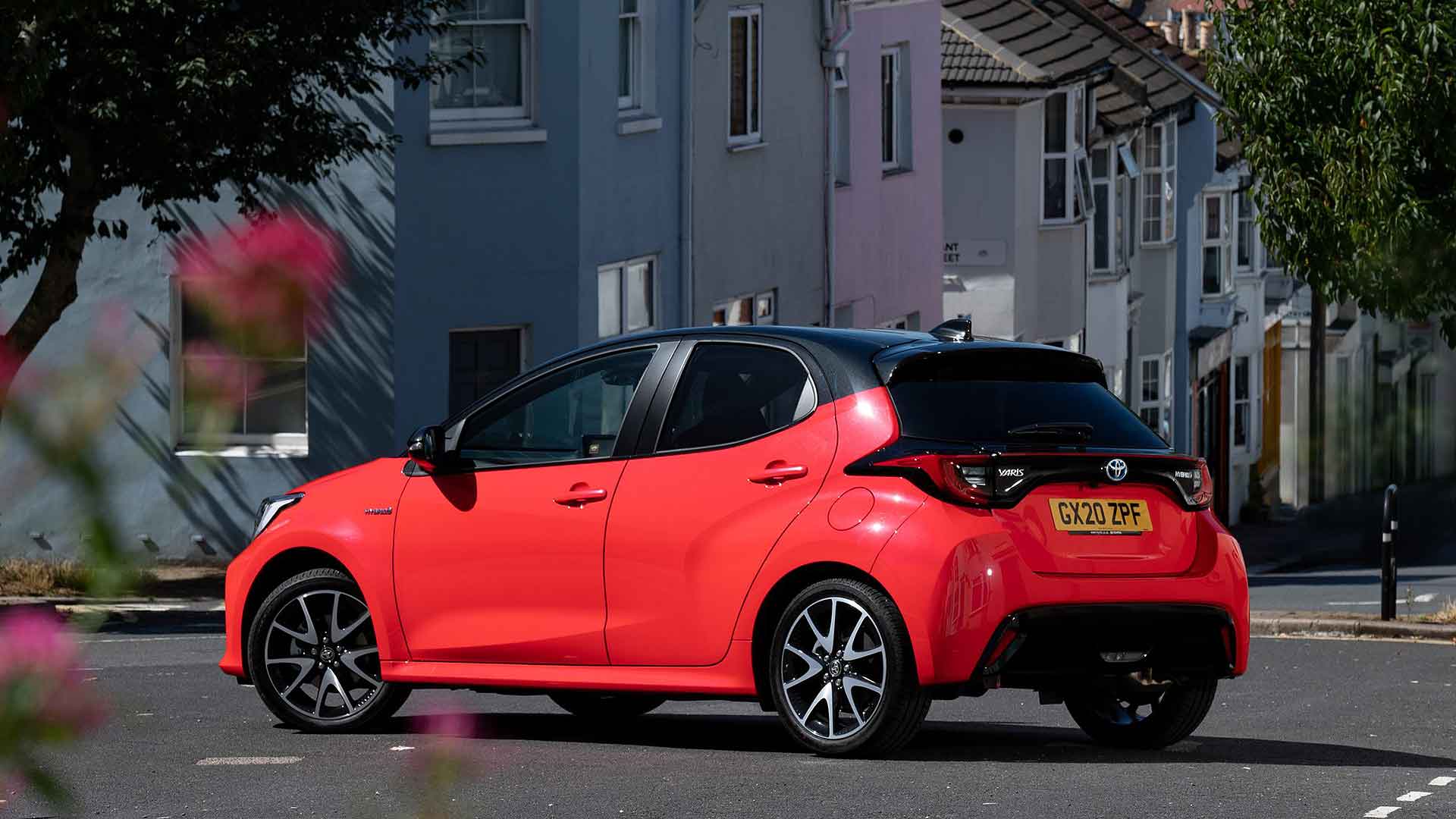
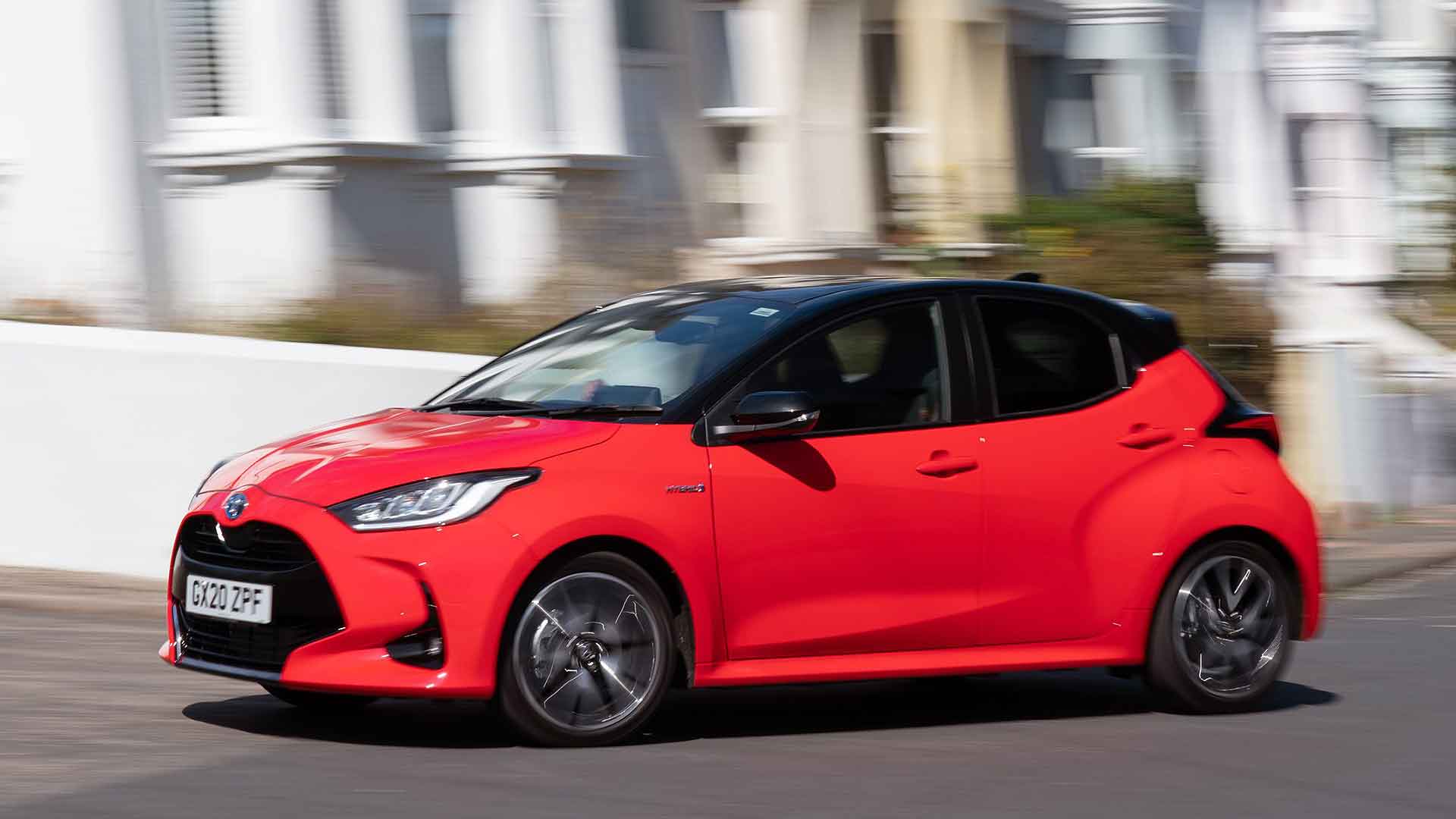
Toyota Yaris Hybrid 2020

The sale of some new hybrid cars will continue until 2035. This follows the announcement that new petrol and diesel cars will be banned from sale in the UK from 2030.

In a statement, the government said ‘new cars and vans can be sold if they have the capability to drive a significant distance with zero emissions (for example, plug-in hybrids or full hybrids)’. What constitutes a ‘significant distance’ will be defined through consultation.

Although this grey area remains, the fact that full hybrids – or ‘self-charging hybrids’ – are excluded from the ban will anger green campaigners and those seeking a total ban on ICE (internal combustion engine) cars. There’s a big difference between a plug-in hybrid and full hybrid car, not least the electric range.

Plug-ins lead the charge

Mitsubishi Outlander PHEV

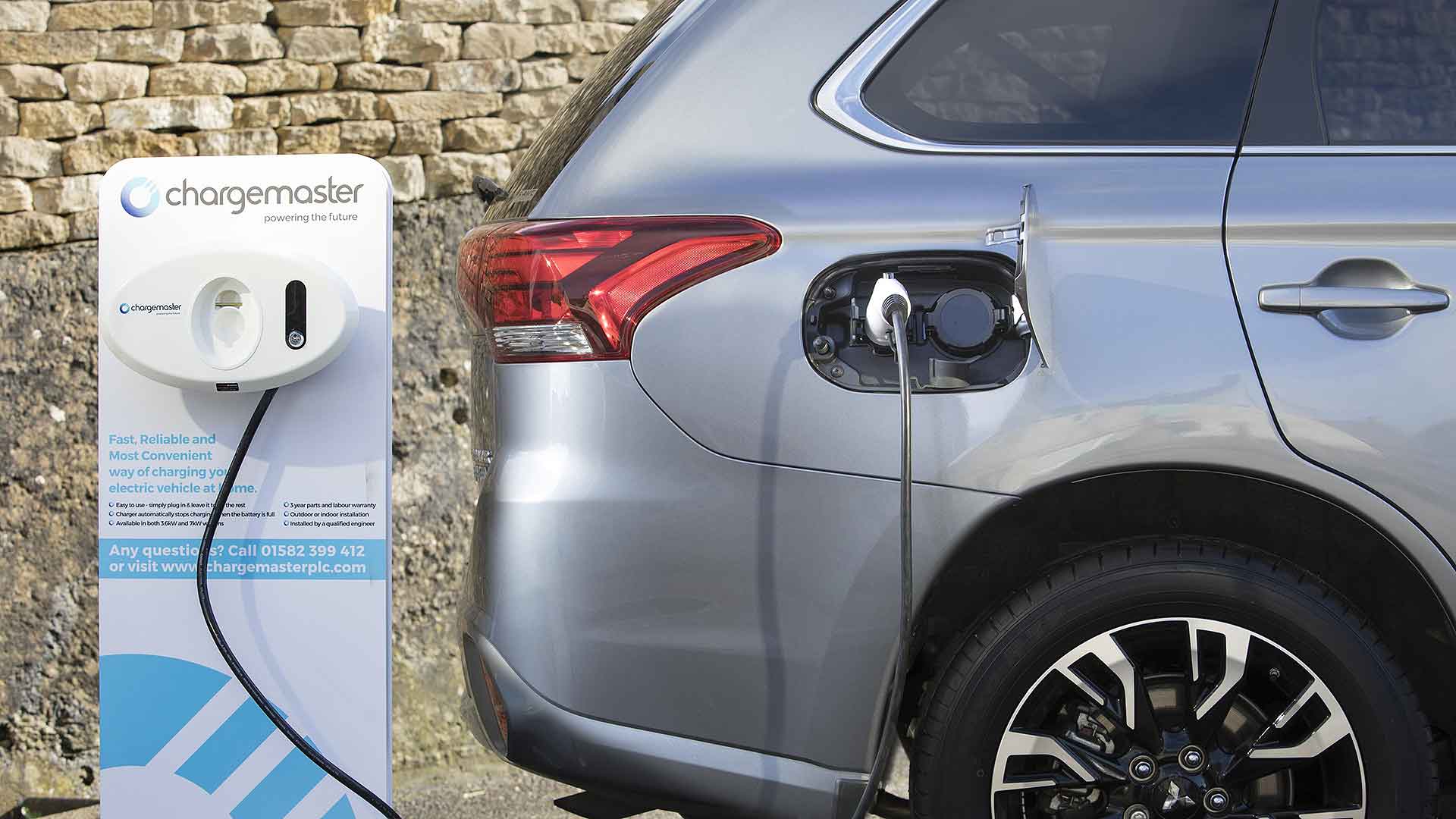
The Mitsubishi Outlander PHEV, the UK’s most popular plug-in hybrid, offers an official 28 miles of pure electric range. Up to 32 miles is possible in the Hyundai Ioniq Plug-in, while the BMW 330e can cover up to 41 miles in electric mode.

This makes them ideal for commuting and city driving. Charge them overnight, and you should wake up to enough charge to cover an average UK car journey of 8.4 miles. That’s assuming the owner remembers to charge the batteries. If not, a plug-in hybrid is just another expensive and heavy petrol or diesel car.

In contrast, a full hybrid cannot be charged from a power socket. Instead, these cars feature a small electric motor to boost the performance or efficiency of a petrol or diesel engine. The electric range is limited to slow-moving traffic, pulling away from rest and parking.

They’re popular, because they offer the efficiency of a diesel car and are cheaper to tax. However, some will argue that they shouldn’t be exempt from the 2030 ban.

‘Full hybrids can’t even do the UK’s average car journey’

Renault Clio E-Tech Hybrid 2020

Tom Callow, electric vehicle expert and advocate, tweeted: “Full hybrids can’t even do the UK’s *average* car journey without zero tailpipe emissions. Not sure how they will pass any “significant distance” bar by 2030.”

He argued that an exemption “will slow down the rollout of charge point infrastructure”.

Toyota would beg to differ. The company is likely to point to data showing that, on average, up to 54 percent of a journey time in a Toyota hybrid is completed in electric mode. This figure is based on test drives conducted over a total of 1,687,319 mies at an average speed of 23mph.

In the launch material for the new Yaris, Toyota said its fourth generation hybrid system was tested in the likes of Rome, Paris and Darmstadt. It pointed to trials showing that cars equipped with the technology operate for 80 percent of the time as a zero emission vehicle.

Toyota’s range is underpinned by hybrid vehicles: the Yaris, C-HR, Corolla, Camry, RAV4 and Prius. The company is likely to be at the forefront of calls for full hybrids to be included in the 2035 extension.

‘Taking more than four million cars off the road’

Toyota Yaris Hybrid 2020

Transport secretary Grant Shapps said: “The UK is going further and faster than any other major economy to decarbonise transport, harnessing the power of clean, green technology to end the UK’s contribution to climate change by 2050.

“Bringing forward the phase-out date could create 40,000 extra jobs by 2030, particularly in our manufacturing heartlands of the North East and across the Midlands, and will see emissions reductions equivalent to taking more than four million cars off the road.

“We are also leading the charge when it comes to the transition to zero emission vehicles and today’s timely boost in funding builds on our world-leading £2.5 billion package to encourage drivers to make the switch.”

Click here to read more about the 2030 new petrol and diesel car ban.

Advertisement

Volvo creates ‘ultimate driving simulator’ to boost safety

0
Volvo ultimate driving simulator

In what could be a subtle nod to BMW, Volvo has developed what it calls ‘the ultimate driving simulator’.

The mixed-reality simulator is being used to make new strides in safety and autonomous driving technology. This follows news that Volvo is dropping cars from a crane to help rescue services to prepare for any possible crash scenario.

Volvo’s ‘ultimate driving simulator’ features a moving driving seat, a steering wheel with haptic feedback and a virtual reality headset more familiar to gamers.

Volvo says its simulator takes things to the next level, blurring the line between simulation and reality.

The simulator involves driving a real car on real roads. By wearing a Teslasuit full-body haptic suit, Volvo’s test drivers can physically feel small reproductions of the forces one would experience in a crash. The key difference being that the driver experiences no actual risk.

Testers are exposed to an imagined active safety and driver assistance feature, upcoming autonomous drive user interfaces and future car models. In 2019, Volvo, with help from Varjo, became the first car manufacturer to make it possible to drive a real car while wearing a mixed reality headset.

This data can be used by engineers to gain insights on the interaction between people and the car. The aim: to develop new safety, driver assistance and autonomous driving tech.

‘Look and feel totally real’

Volvo safety simulator

Casper Wickman, senior leader of user experience at Volvo’s Open Innovation Arena, said: “Working together with great companies like Varjo, Unity and Teslasuit has allowed us to test so many scenarios that look and feel totally real, without having to physically build anything.

“It lets us test drive actual cars in through traffic scenarios that look and feel real, but can be adjusted at the touch of a button.

“By using this cutting-edge technology, we are exploring and leading the development for creating safe cars in the future. It’s great to play a part in that.”

Click here to read a Volvo new car review.

Advertisement

Waze integrates Amazon Music into sat nav app

0
Waze app on a smartphone

Popular navigation app Waze has integrated Amazon Music into its platform to make life easier for users.

Motorists can now listen to tunes on Amazon Music directly through the Waze app.

They can also skip and select tracks without leaving the app.

What’s more, if they’re using Amazon Music, they’ll still receive Waze ‘next turn’ directions, so don’t have to toggle between the two.

How to use Waze Audio Player

Waze bosses say the integration is a boost for driver safety as well as convenience: motorists can listen to Amazon Music without taking their eyes off the road.

“Waze users have driven over 100 billion kilometres while listening to content from streaming services via our Audio Player,” said head of global partnerships Adam Fried.

“We’re really excited to welcome Amazon Music into the Audio Player family, giving drivers access to their favourite music and playlists to make their time in the car as enjoyable as possible.”

How to use Waze Audio Player

Waze and Amazon Music logo

Pairing Amazon Music to Waze is easy, say bosses of the sat nav app.

Users open Waze and tap on the music note icon. They can then select Amazon Music as their audio player.

Selecting tracks, playlists and stations is among the built-in functionality.

Other streaming music providers integrated into the Waze Audio Player include Spotify, Deezer and YouTube Music.

ALSO READ

Waze reports huge fall in miles driven due to coronavirus

Waze now lets you plan trips on desktop and ‘send to app’

All new cars to log real-world fuel consumption from January 2021

Advertisement

Ranked: the most exciting car chases of all time

0
Quantum of Solace

A new study claims to have identified the most exciting on-screen car chase of all time. It measured the heart rate of 100 people across 40 car chases. The higher the beats per minute (bpm), the better the car chase. That’s the theory.

The result: Mad Max: Fury Road is the most exciting on-screen car chase. The 2015 film starring Tom Hardy and Charlize Theron edged Fast & Furious 6 and Furious 7 to claim the top spot.

Five Furious films made the top 20, with The Fast & The Furious, Fast Five and Fast & Furious Presents: Hobbs & Shaw completing the quintuple of movies starring Vin Diesel and family. This makes the Furious franchise the ‘scientifically most exciting car chases ever made’.

We think Dennis Weaver’s character in the 1971 film Duel might have something to say about that. French car fans will also be miffed to discover Ronin could only manage fourth place on the list.

Hang on a minute, lads, what’s this? No room in the top 20 for The Italian Job or Bullitt? The chase scene involving the Ford Mustang and Dodge Charger is arguably the best reason to watch the 1968 film starring Steve McQueen.

However, we’re not going to get our popcorn in a twist. The beauty of a list like this is that it sparks debate. A chance to share views via WhatsApp or whatever social channel you use.

So, without further ado about nothing, here are the most exciting car chases of all time. Remember, don’t write in, it’s just for fun.

Top 20 most exciting car chases

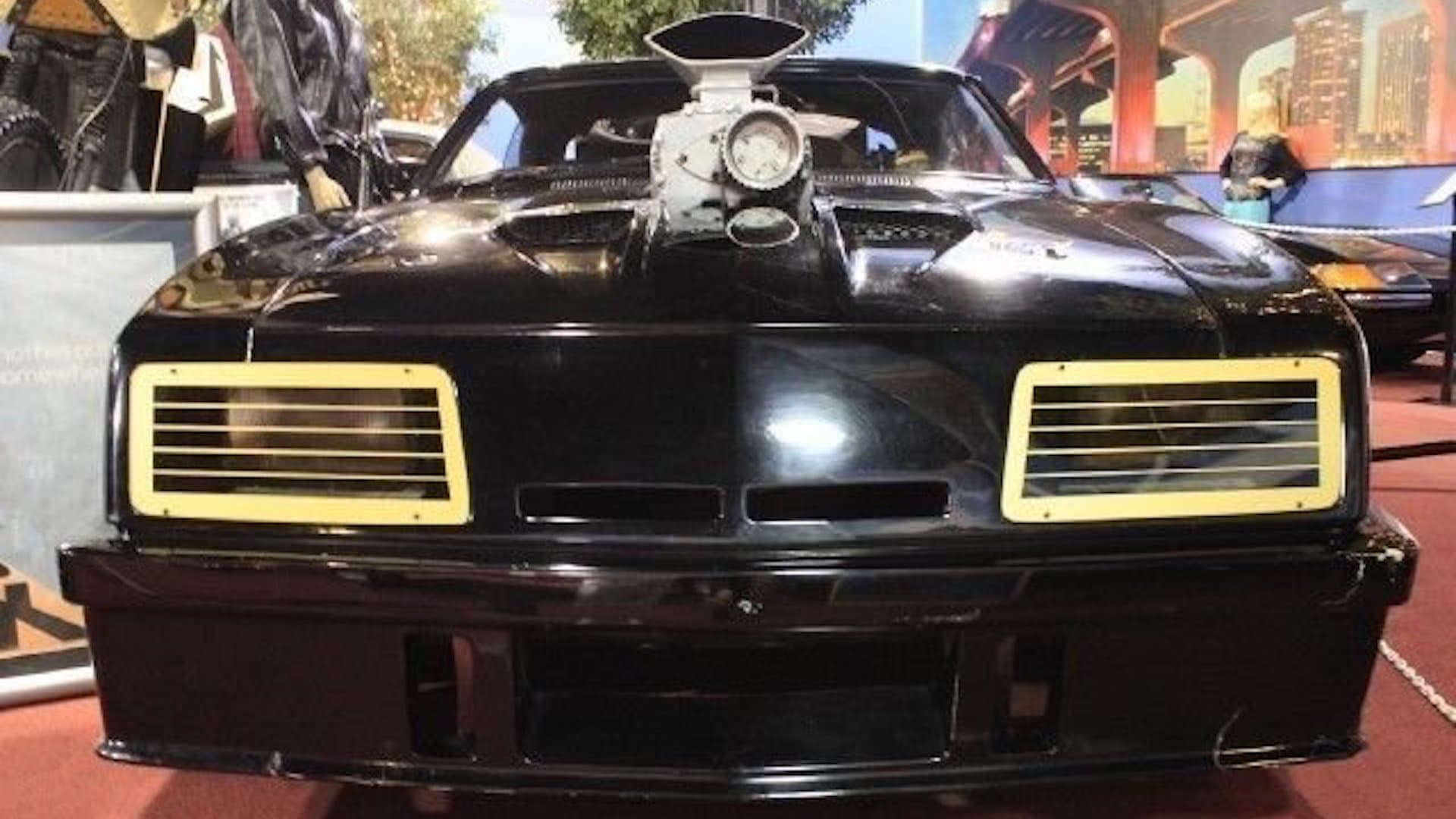
Mad Max V8 Pursuit Special
  1. Mad Max: Fury Road (85bpm)
  2. Fast & Furious 6 (84bpm)
  3. Furious 7 (83bpm)
  4. Ronin (82bpm)
  5. Baby Driver (80bpm)
  6. The Fast & The Furious (78bpm)
  7. Quantum of Solace (77bpm)
  8. The Bourne Supremacy (76bpm)
  9. The French Connection (76bpm)
  10. Batman: The Dark Knight (75bpm)
  11. Terminator 2: Judgment Day (74bpm)
  12. The Bourne Identity (74bpm)
  13. Mad Max 2: The Road Warrior (74bpm)
  14. The Raid 2 (73bpm)
  15. Fast Five (72bpm)
  16. The Matrix Reloaded (72bpm)
  17. Need for Speed (72bpm)
  18. Death Proof (71bpm)
  19. Fast & Furious Presents: Hobbs & Shaw (71bpm)
  20. Gone in 60 Seconds (70bpm)

Click here to read the full results of the Money.co.uk study.

Advertisement

All new cars to log real-world fuel consumption from January 2021

0
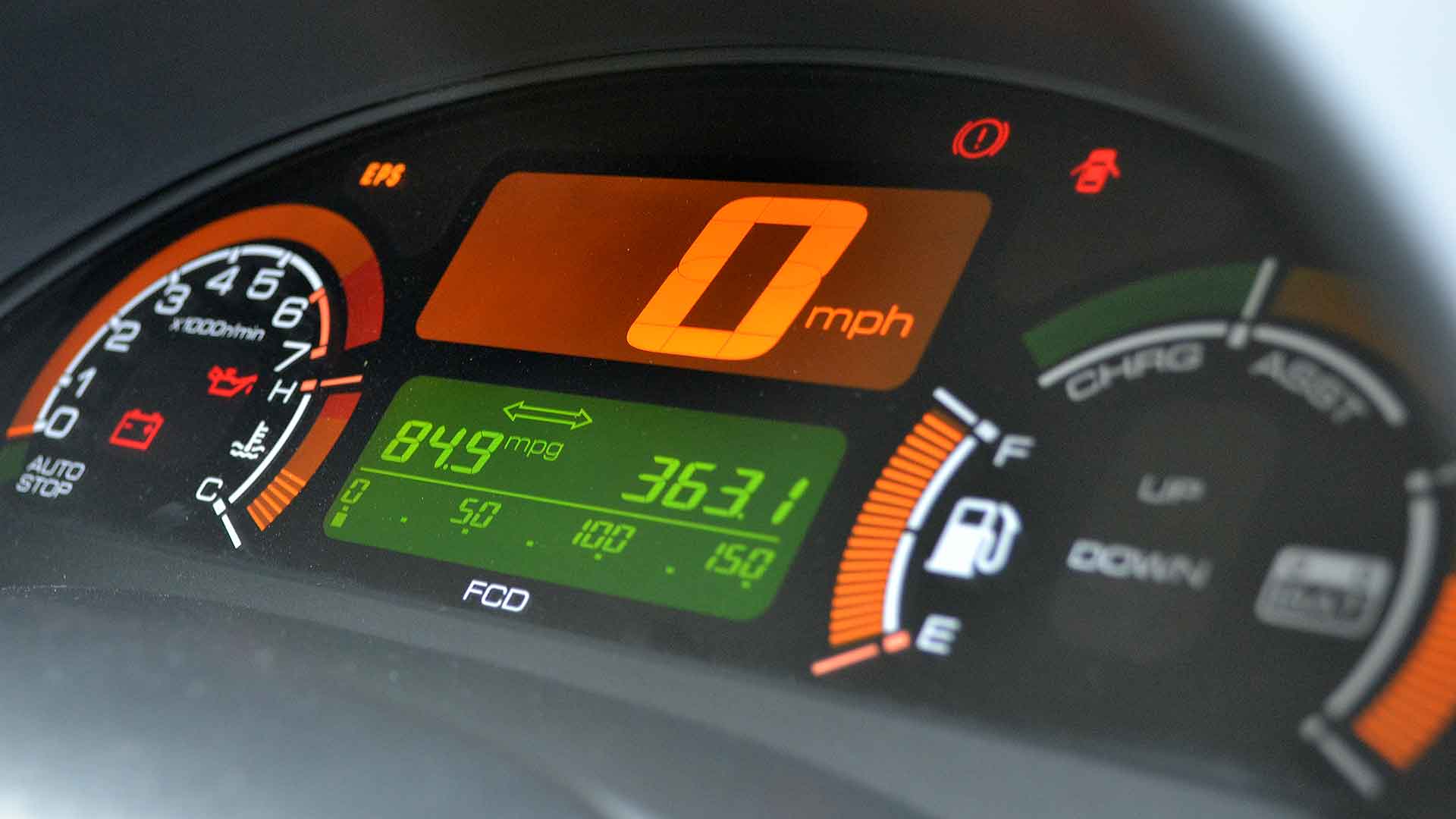
Honda Insight mpg display

Every new car sold in Europe from January 2021 must be fitted with an onboard fuel consumption monitoring device (or FCM) under new EU regulations.

The move is the latest measure in toughening up how car manufacturers measure and report fuel economy and emissions.

The mpg monitoring devices will initially be tested over a five-year period. However, both the European Parliament and European Council have voted to make the devices law by 2030 at the latest.

The idea behind the onboard fuel economy recorders is to minimise the discrepancy between real-world fuel consumption and car manufacturers’ quoted figures.

The aim is to highlight vehicles that record a high discrepancy so authorities can investigate if necessary. However, it has not yet been decided how the data will be transferred from vehicles.

Experts have suggested four ways of doing this:

  • During periodic inspections, such as routine servicing
  • Random spot checks by authorities
  • Via managed fleets such as company cars and rental vehicles
  • Automatic ‘over the air’ updates

Although all newly-launched vehicles during 2020 have been recording fuel consumption data, there is currently no defined standard or requirement to transfer this data.

EU officials add that any data transfer will be fully anonymised so motorists cannot be identified.

Indeed, it is not even clear whether individual makes and models of cars will be logged – although experts hope this will be the case, as it will make it easier to monitor the real-world fuel consumption of individual brands.

New car fuel consumption display

The new standard, called Euro 6d ISC-FCM (that’s ‘in-service conformity, fuel consumption monitoring’), will help legislators monitor the electrical consumption of EVs.

What’s more, it will also allow the real-world performance of plug-in hybrids (PHEVs) to be assessed.

This is in response to criticism that although PHEV vehicles have exceptional ‘official’ fuel economy, their real-world performance is much less impressive, as users regularly drive them with the batteries discharged.

Fuel consumption monitoring devices will allow regulators to see the true picture of how often motorists charge up PHEVs in day-to-day use.

ALSO READ

Should plug-in hybrids be banned from motorway car chargers?

Volvo calls plug-in hybrids ‘part-time electric cars’

Plug-in Car Grant: electric cars the government pays you to buy

Advertisement

Volvo drops cars from 30 metres to test safety

0
Volvo drops cars from 30 metres

Volvo calls it ‘the most extreme crash test’ it has ever undertaken. For the first time, it has dropped several new cars from a crane – from a height of 30 metres.

The aim is to help rescue services to prepare for any possible crash scenario, and to simulate the forces that occur in the most extreme impacts. Volvo says it replicates the damage found in high-speed single-car accidents, side impacts and collisions involving a truck.

Usually, rescue workers are trained using vehicles from scrapyards. There is a vast difference between a car built in 2020 and one built as recently as 2000. Steel strength, safety cage construction and durability are just three ways car design has progressed in two decades.

Volvo safety test

Ten cars were dropped from the crane several times. Rescue workers used hydraulic tools to simulate the extraction of car occupants following a collision. The emergency services often talk of the ‘Golden Hour’, which could be the difference between life and death.

The priority is to get a patient to hospital within an hour of an incident. A safe and swift extraction plays a huge part in this process.

‘Safer roads for all’

Hakan Gustafson, a senior investigator at the Volvo Cars traffic accident research team, said: “We have been working closely together with the Swedish rescue services for many years. That is because we have the same goal: to have safer roads for all. We hope no one ever needs to experience the most severe accidents, but not all accidents can be avoided. So it is vital there are methods to help save lives when the most severe accidents do happen.”

“Normally we only crash cars in the laboratory, but this was the first time we dropped them from a crane. We knew we would see extreme deformations after the test, and we did this to give the rescue team a real challenge to work with.”

Volvo drops cars from crane

Volvo’s aim is that no one should be killed or seriously injured in one of its new cars. Every new car it sells now comes with a limited top speed of 180kph (112mph).

Its cars will also come with a Care Key, which allows drivers to set additional limits for younger and inexperienced family members.

Watch Volvo drop a car from 30 metres

ALSO READ:

Read Volvo reviews on Motoring Research

Care by Volvo car subscription service launched in UK

Is your Volvo dirty? There’s an app for that

Advertisement

When will the right-hand-drive Chevrolet Corvette be on sale?

0
RHD Chevrolet Corvette Launch Date

After the dramatic move to a mid-engined layout, the second biggest shock at the launch of the new, eight-generation Chevrolet Corvette was the promise of a right-hand-drive version. 

The all-American sports car has been produced since 1953, but only ever in left-hand drive. However, moving the engine behind the driver makes the conversion much easier.

More than a year since the C8 Corvette was revealed, though, some fans are becoming impatient about when we will see RHD models. That patience is likely to be tested a little longer.

No transatlantic cancellations

RHD Chevrolet Corvette Launch Date

North American market production of the new model began in February 2020. General Motors previously stated ‘early 2021’ as the predicted launch date for right-hand-drive C8 Corvettes. 

The good news is that, despite Covid-19, the RHD Corvette is still in the works. Chevrolet began testing pre-production versions earlier this year, and also released an image of how the interior will look. 

Yet the UK is unlikely to get earliest access to the mid-engined model. Japan, which saw its entire initial allocation of 300 cars sell out immediately, will take the first deliveries.

American performance for all

RHD Chevrolet Corvette Launch Date

Building a right-hand-drive Corvette means it becomes a viable option for a number of new markets. South Africa, India, New Zealand and Australia will all be able to enjoy the American icon with the steering wheel on the ‘correct’ side of the cockpit. 

Australian buyers have existing experience of performance Chevrolet models. Holden Special Vehicles converted more than 1,000 examples of the Camaro muscle car to right-hand drive, before the company became defunct earlier this year. 

A new GM Speciality Vehicles outfit will be responsible for selling the Corvette in Australia, with a target of late 2021 for deliveries. Australian enthusiasts can order the Chevrolet Silverado pickup truck in RHD format, too.

Ready for launch?

RHD Chevrolet Corvette Launch Date

For those in the Northern Hemisphere, the new Corvette is now officially predicted to be with dealers ‘from the second half of 2021’. 

UK customers will be able to take advantage of a launch edition model, priced from £81,700 for the Stingray coupe. The comes in the top-level 3LT trim, with features including magnetically adjustable suspension and exterior tweaks. 

All versions of the C8 Corvette sold in Europe will come fitted with the Z51 Performance Package as standard. This takes the 6.2-litre V8 engine to 495 hp, and adds extras like Brembo brakes and a freer-flowing exhaust. 

Chevrolet will also offer the folding-hardtop Stingray convertible version of the Corvette, priced from £87,110.

ALSO READ:

McLaren 765LT (2020) review

Porsche Taycan Turbo (2020) review

Lexus LC 500 Convertible (2020) review

Advertisement

New Toyota GR Yaris comes in shrunken R/C form

0
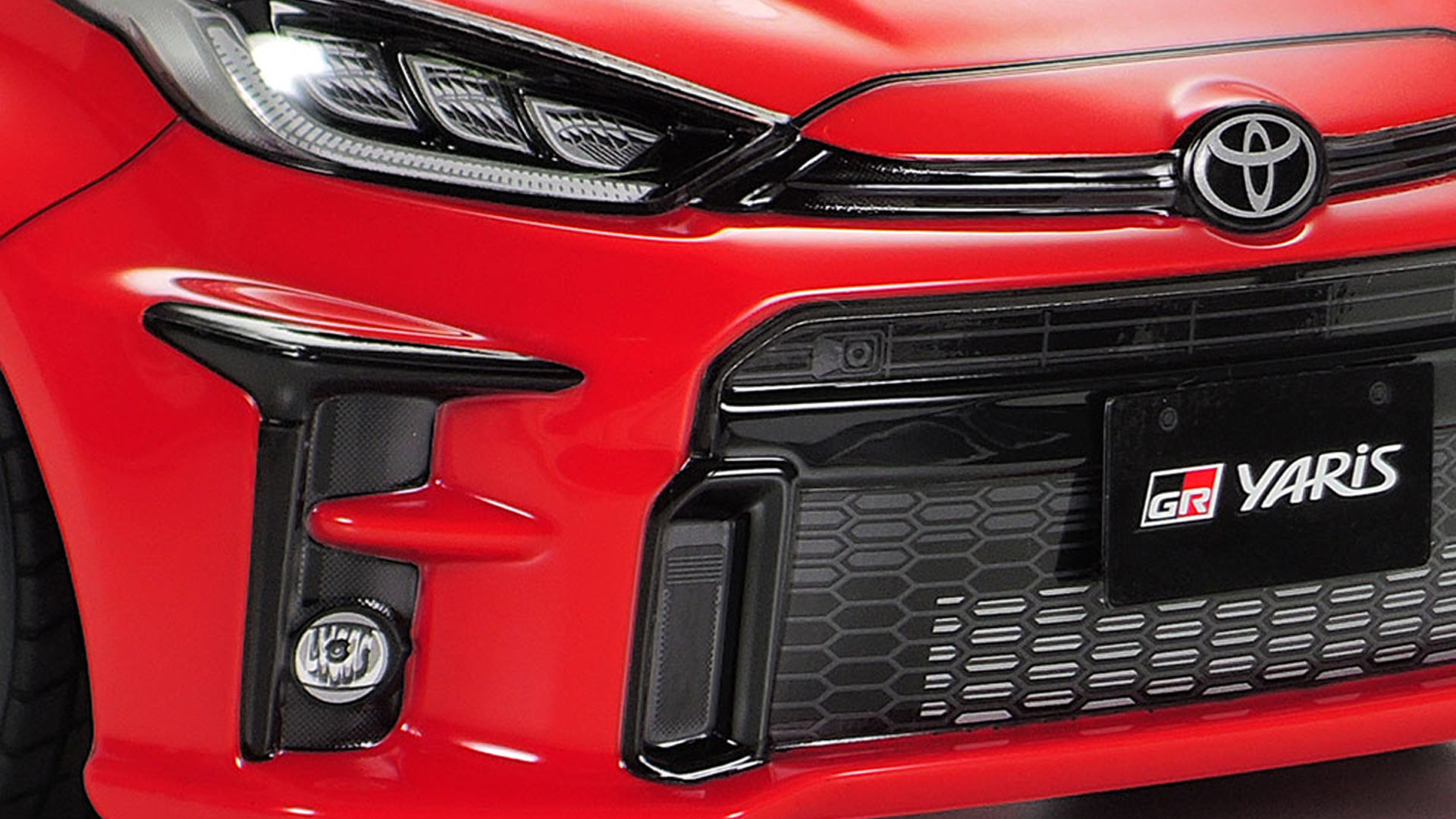
Toyota GR Yaris Tamiya RC Model

Unless you have managed to avoid the internet completely, you will know that the new 2020 Toyota GR Yaris is getting plenty of attention.

Our own Tim Pitt described the pint-sized homologation hero as “bespoke and ballistic” in his review. 

Others have been just as charmed by Toyota’s WRC refugee, and the GR Yaris has quickly become the must-have 2020 hot hatchback. 

Given the performance on offer, a price tag of £29,995 seems reasonable. Yet there is a way to join in the fun for less than the cost of a monthly PCP payment.

A true performance bargain

Toyota GR Yaris Tamiya RC Model

For less than £130, plus some additional parts, you could become the owner of Tamiya’s R/C version of the GR Yaris. 

However, this radio-controlled model is only one-tenth the size of the real Toyota. Oh, and you will need to assemble the chassis and paint the bodywork yourself. 

At just 372 mm in length, parking the Tamiya model should be simple at least. 

The battery-powered electric motor of the R/C car will also be gentler on your bank balance, compared to the 261 hp turbocharged engine found in the proper GR Yaris.

Scaled down expectations

Toyota GR Yaris Tamiya RC Model

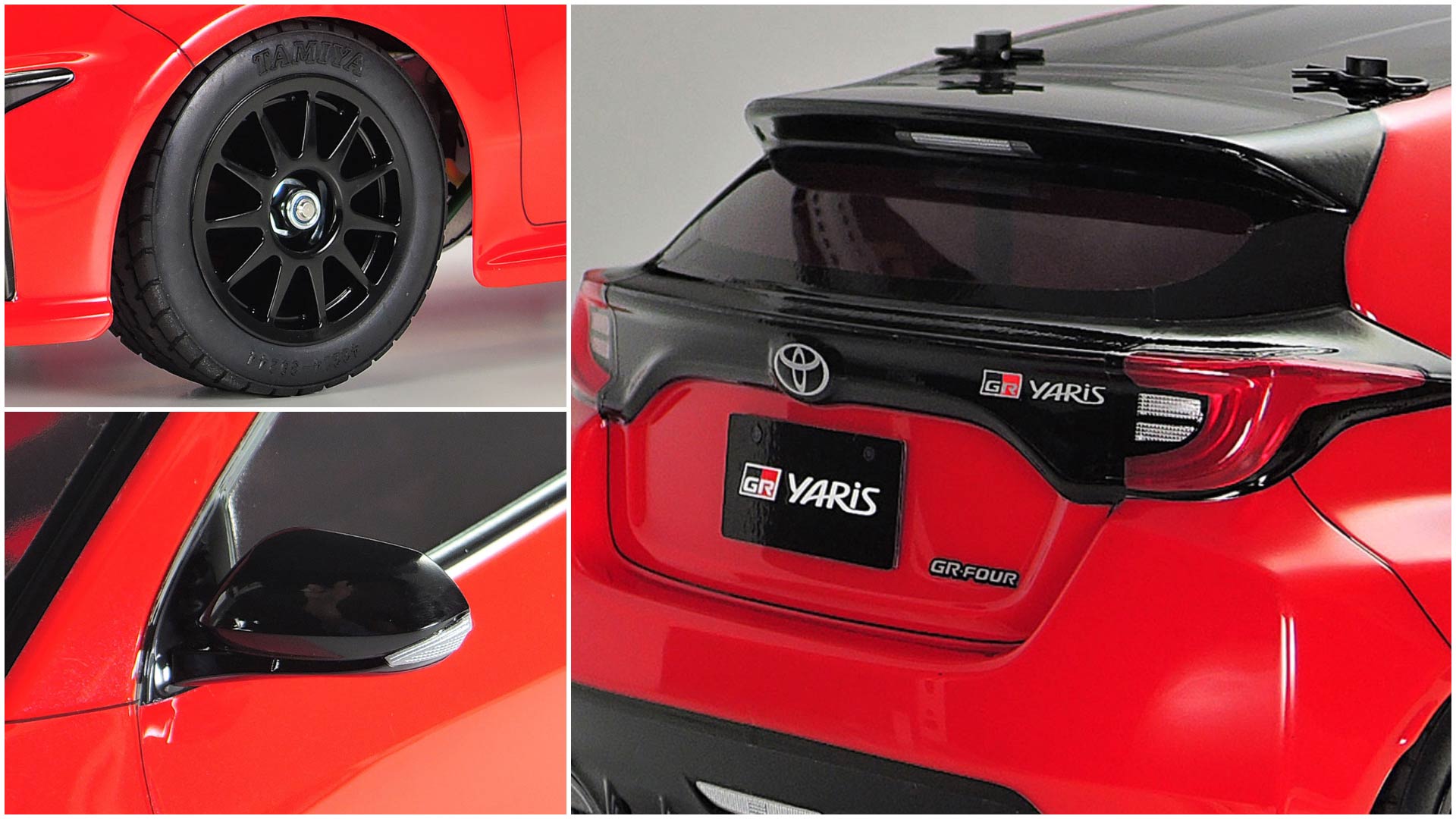
Smaller dimensions do not mean a lack of detail on the Tamiya version of the GR Yaris. The bodyshell captures the multiple air intakes and vents in perfect accuracy, with the swollen rear wheel arches also replicated. 

Miniature wing mirrors feature tiny indicators, whilst LEDs can be added to illuminate the headlights. A set of black 11-spoke wheels emulate the style found on the fully grown Yaris.

The M-05 chassis used by Tamiya is front-wheel drive only, meaning there is no ‘four-paw’ action here. But, even without four-wheel drive, the 1/10 version still looks able to tackle dirt and gravel.

Available to order from online hobby stores now, the Tamiya GR Yaris is likely to end up on many Christmas lists. Including ours.

ALSO READ

Electric Citroen Ami could be UK’s cheapest car

Yes, Tesla Tequila is actually a real drink

Car fog lights: how and when to use them
Advertisement

Electric Citroen Ami could be UK’s cheapest car

0
Citroen Ami

It seems the Citroen Ami could be coming to the UK after all. The electric city car is currently destined for other European markets, but a new website allows British buyers to register their interest.

The two-seat Ami is just 2.41 metres long and has a turning circle of 7.1 metres (a London black cab needs 8.5 metres).  Its 5.5kWh lithium-ion battery offers a range of 47 miles. Top speed is 26mph.

In France, the Ami costs just €6000 to buy. With a converted price of £5,384, that would potentially make it the UK’s cheapest car. However, Citroen expects most Ami drivers to use leasing or car-sharing schemes.

European reunion

Citroen Ami

The new page on Citroen’s website states: ‘We want to bring Ami 100% Electric to the UK! But first, we need to know if you’re interested!’. Simply fill in your contact details and they’ll be in touch.

Speaking to Autocar, Citroen UK managing director Eurig Druce spoke of his “huge desire” to bring the Ami here. Indeed, a number of cars have been imported for assessment on roads near Citroen’s Coventry headquarters.

Druce did admit the car is unlikely to be converted to right-hand drive. But as he pointed out: “The difference between having the steering wheel on the left or the right is probably only seven or eight inches – not a huge disadvantage”.

A 21st century 2CV

Citroen Ami

One key point to note is that Ami is classified as a quadricycle rather than a car. In Europe, that means it does not require a driving licence and can driven by 16-year-olds.

Over here, those aged 16 are only eligible to drive ‘light quadricycles’ up to 350kg (after the CBT, theory test and practical test). As the Ami weighs 485kg, that would rule it out for younger motorists in the UK.

Even so, Citroen fans are rightly intrigued by the Ami. With its focus on no-frills mobility, it’s the closest thing we’ve got to a 21st century 2CV. It’s ability to carry a basket of eggs across a ploughed field hasn’t yet been tested, however.

ALSO READ:

Celebrating Citroen’s most innovative cars

Going nowhere in a Citroen DS: a lockdown car review

Dyane and GS: driving the classic Citroens of my childhood

Advertisement