Home Blog Page 79

Vauxhall slashes prices for new Grandland Electric SUV

0
Vauxhall Grandland Electric Prices

Vauxhall has cut the cost of electric versions of its new Grandland SUV. Prices for the Grandland Electric now start at less than £40,000, following reductions of up to £4,700. 

The news arrives in the same week that Vauxhall’s parent company, Stellantis, announced plans to close its Luton van plant

That decision was said to be in response to weakened demand for electric cars, combined with the potential cost of meeting the Zero Emissions Vehicle Mandate (requiring an increasing proportion of car manufacturers’ sales to be EVs).

Grandland Electric prices cut

Vauxhall Grandland Electric Prices

The Vauxhall Grandland Electric range now starts at £37,345 in Design trim, which represents a £3,650 saving compared to the previous list price.

For the mid-range GS model, Vauxhall has cut £4,650 from the cost of the Grandland Electric, taking the starting price to £38,495. 

Finally, the range-topping Ultimate model sees the biggest reduction of all. Slicing a substantial £4,700 from the list price means this fully-loaded SUV now costs £40,495.

Vauxhall has not changed prices for the related Grandland Hybrid model, which starts from £34,700. However, the EV savingsare intended to give the two powertrains greater parity.

Tax savings on the horizon

Vauxhall Grandland Electric Prices

Vauxhall’s decision to reduce the cost of the Grandland Electric follows a trend of cutting prices for its EV models. Earlier this year, the company announced major reductions for electric versions of both the Corsa and Astra.  

From 1 April 2025, owners of electric cars will have to pay VED (road tax). New EVs registered after this date that cost in excess of £40,000 will be subject to the ‘expensive car supplement’. This adds £410 in annual VED from the second year of ownership. For the Grandland Electric, all but the Ultimate model will now avoid the extra penalty.

James Taylor, managing director at Vauxhall, commented: “With the recent Budget confirming the introduction of the new vehicle excise duty rules from April 2025, we are pleased to announce that two of our three new Grandland Electric versions, representing around an expected 80 percent of sales, will not attract this new tax – making going electric in our latest family SUV even more attainable”.

Save on EV charging, too

Vauxhall Grandland Electric Prices

All versions of the Grandland Electric use a 73kWh battery pack, offering an official range of up to 325 miles. Buyers of new electric Vauxhalls can also benefit from the brand’s range of charging offers.

Customers can receive a free Octopus Energy Ohme Pro wallbox with installation included, or the option of £675 credit towards public charging – available when buying online.

Purchasing a Grandland Electric through a Vauxhall dealership means you can also gain 50,000 Tesco Clubcard points, with an equivalent value of £500. 

ALSO READ:

Vauxhall Astra review

Celebrate 40 years of the Vauxhall Nova and Corsa

Best family SUVs to buy in 2024

Advertisement

UK car industry demands urgent review of EV sales targets

0

Urgent government intervention is needed to safeguard the UK automotive industry and protect the zero emission vehicle (ZEV) transition, says trade body the Society of Motor Manufacturers and Traders (SMMT).

In a headline announcement, the SMMT has warned car companies are facing a bill of almost £6 billion to meet the controversial ZEV Mandate in its first year of operation alone.

This requires 22 percent of all new cars sold to be electric in 2024. And the figure rises to 28 percent in 2025, then right up to 80 percent by 2030.

However, since the ZEV Mandate was announced two years ago, the assumptions on which it was based have not been borne out. In 2022, for example, the car industry anticipated 457,000 EVs would be registered in 2024, giving a market share of 23.3 percent.

However, so far in 2024, EVs have a market share of 18.7 percent in the UK – 94,000 fewer cars than anticipated.

The shortfall in electric car sales is despite an estimated (and unsustainable) £4 billion in manufacturer discounts, which have failed to stimulate consumer demand to the level required.

With a £15,000 fine for every car sold over target, car firms face an additional £1.8 billion in compliance penalties just for 2024 alone.

Compliance costs will only increase further in 2025. Furthermore, some of the payments UK producers have to make could end up going to overseas brands, such as Chinese firms and Tesla, who don’t build cars in the UK.

Things are even worse for electric vans. Despite a less onerous 10 percent target for 2025, even this is unlikely to be achieved, with a year-to-date mix of just 5.7 percent. Those selling vans are facing further billions in compliance costs.

‘The car industry is hurting’

“We need an urgent review of the automotive market and the regulation intended to drive it,” said SMMT chief executive Mike Hawes. 

“Not because we want to water down any commitments, but because delivery matters more than notional targets. The industry is hurting; profitability and viability are in jeopardy and jobs are on the line.

“When the world changes, so must we. Workable regulation – backed with incentives – will set us up for success and green growth over the next decade.”

ZEV Mandate needs adjustment

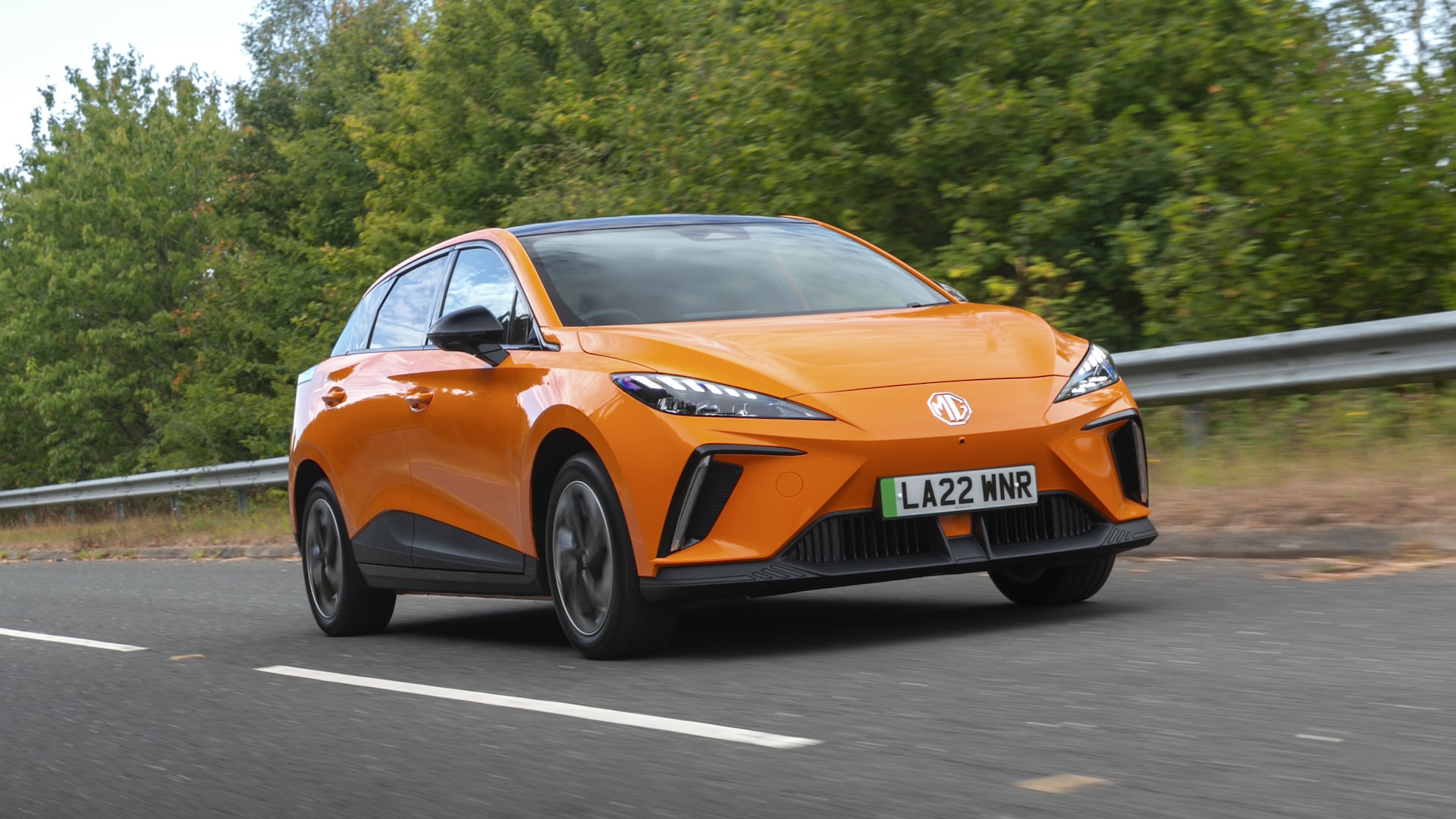
MG4 EV

The SMMT is warning that compliance costs are already so formidable, it could force some brands to withdraw from the UK entirely.

With global manufacturers already making production cutbacks due to weak EV demand, this could lead to some investors “questioning the UK’s appeal as a manufacturing destination”.

An example of this was already seen earlier today, with Stellantis announcing plans to close its Luton van factory. The SMMT therefore wants the regulation to be “urgently” adjusted to meet market realities

It also wants to see rapid action to stimulate demand, which could involve the previously mooted idea of halving the VAT on new EVs.

This would help more EVs to reach UK roads, more quickly, helping the country meet its decarbonisation targets.

ALSO READ:

Car industry calls for VAT to be halved on new EVs

Electric car sales need ‘substantial growth’ to hit 2030 target

New electric Jaguar prototype hits the road

Advertisement

Brabus 700 Blue Sky is a 700hp, wide-body Rolls-Royce Cullinan

0
Brabus 700 Blue Sky

For those who find the latest Rolls-Royce Cullinan a touch too subtle, German tuning firm Brabus has a solution.

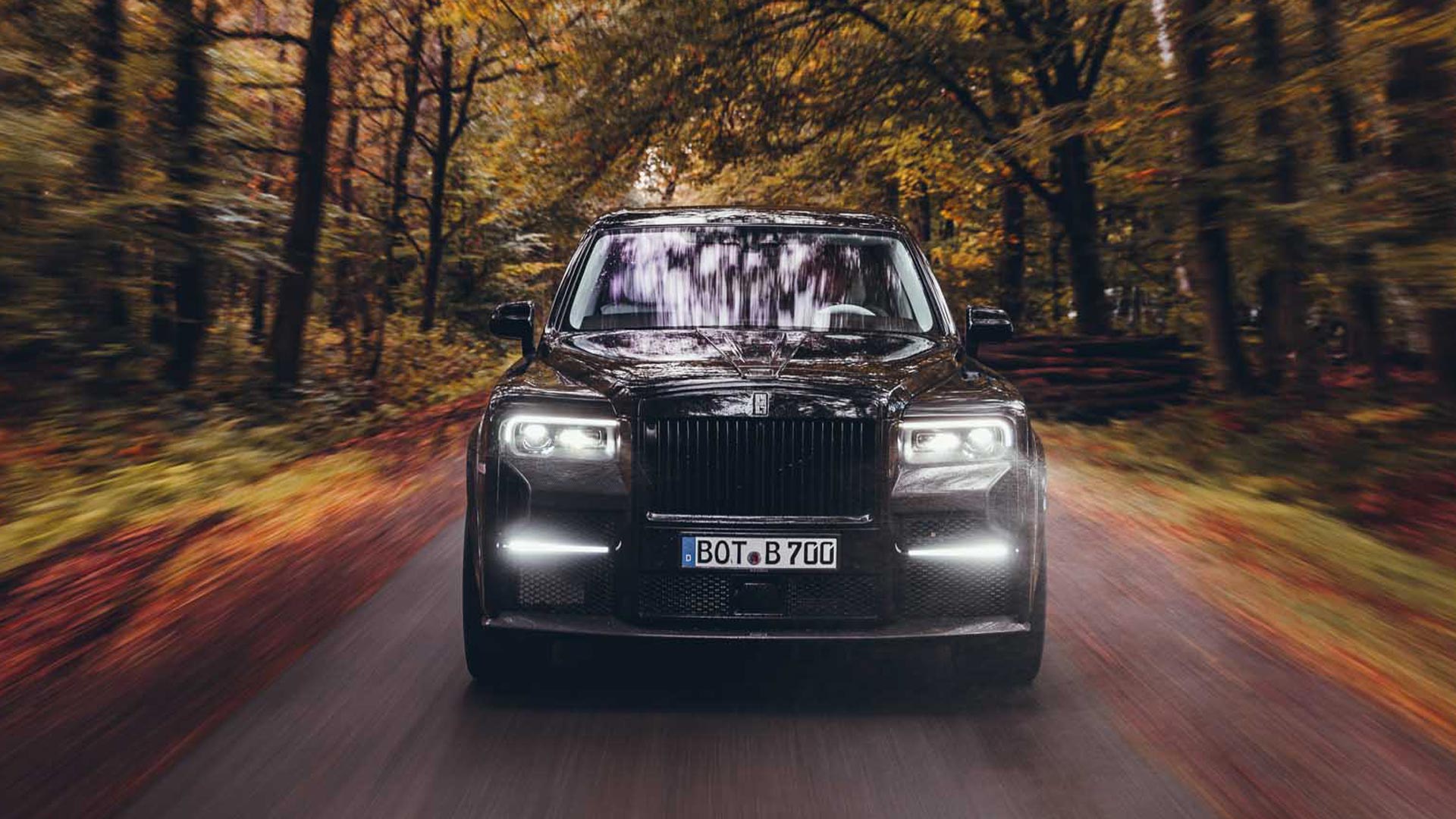
The Brabus 700 Blue Sky is a radical take on the high-riding Rolls-Royce, leaving no part of the luxurious SUV untouched.

Known for its work on Mercedes-Benz models, this is only the second time that Brabus has modified a Rolls-Royce – following its efforts with the Ghost saloon.

Rolls-Royce makes own Black Badge version of the Cullinan Series II, said to be the car’s ‘disruptive alter ego’. However, the 700 Blue Sky is notably more extreme.

Designed for a ‘one-second wow’

Brabus 700 Blue Sky

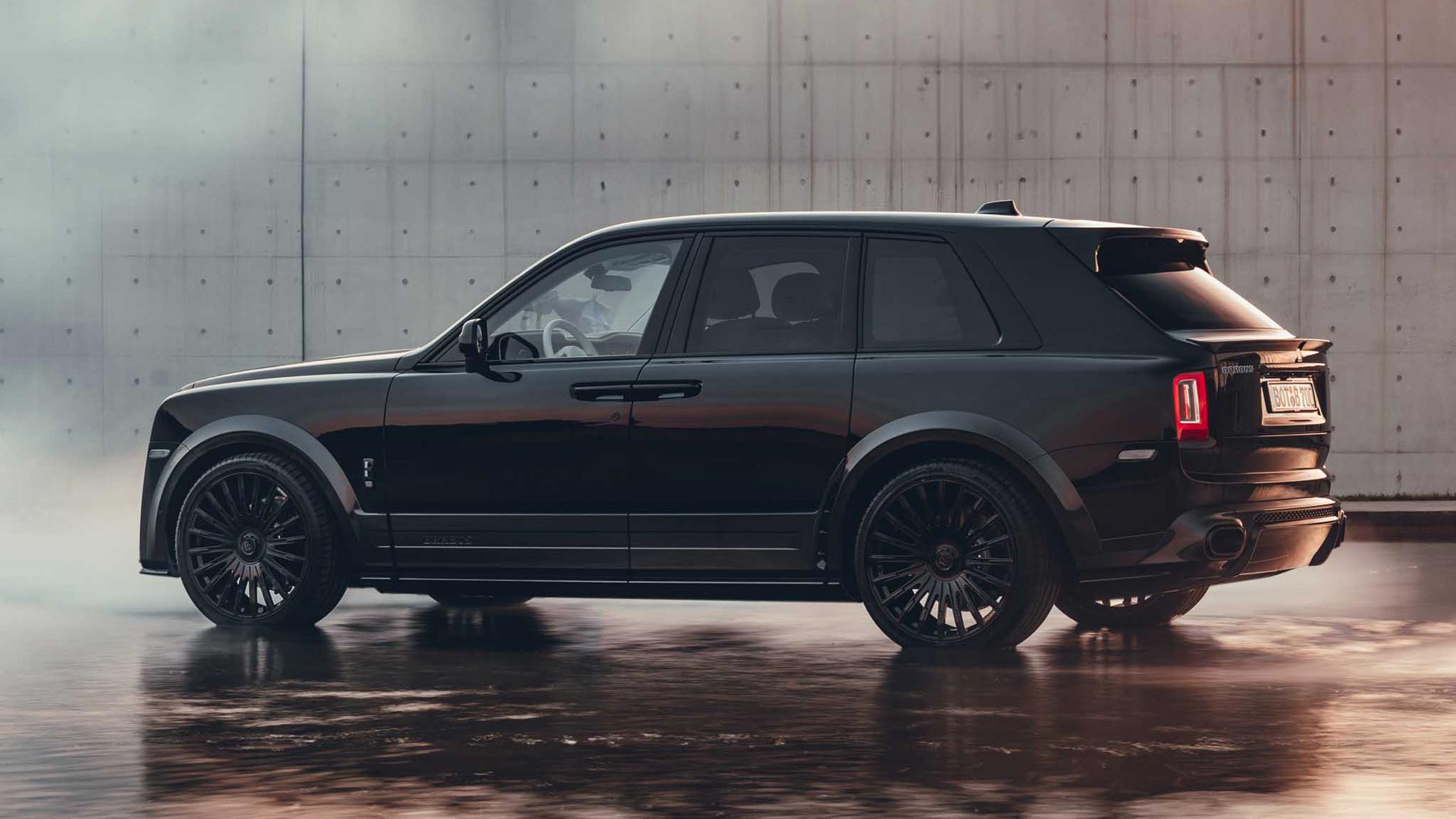
On the outside, Brabus has equipped the 700 Blue Sky with its ‘Widestar’ bodykit, adding huge flared wheelarches made from exposed carbon fibre

There is a new front bumper, which Brabus says works to reduce aerodynamic lift at high speeds, along with more carbon fibre for the redesigned bonnet.

At the rear, Brabus has installed a large diffuser that (naturally) is shaped from exposed carbon fibre. An extra rear spoiler is fitted beneath the rear window, too.

Although the Rolls-Royce Cullinan comes on 23-inch alloy wheels as standard, Brabus has gone one better with 24-inch rims. To ensure the perfect stance, its suspension is also lowered by 25mm.

A 700hp twin-turbo V12

Brabus 700 Blue Sky

Brabus could not resist upgrading the Cullinan’s 6.75-litre twin-turbocharged V12 engine, too. Its output has been boosted to 700hp, combined with a mighty 701lb ft of torque. A sports exhaust is said to deliver a ‘decidedly powerful V12 note’.

Despite the Cullinan’s substantial kerb weight, the Brabus modifications allow the 700 Blue Sky to accelerate from 0-62mph in just 5.0 seconds. Top speed remains limited to 155mph.

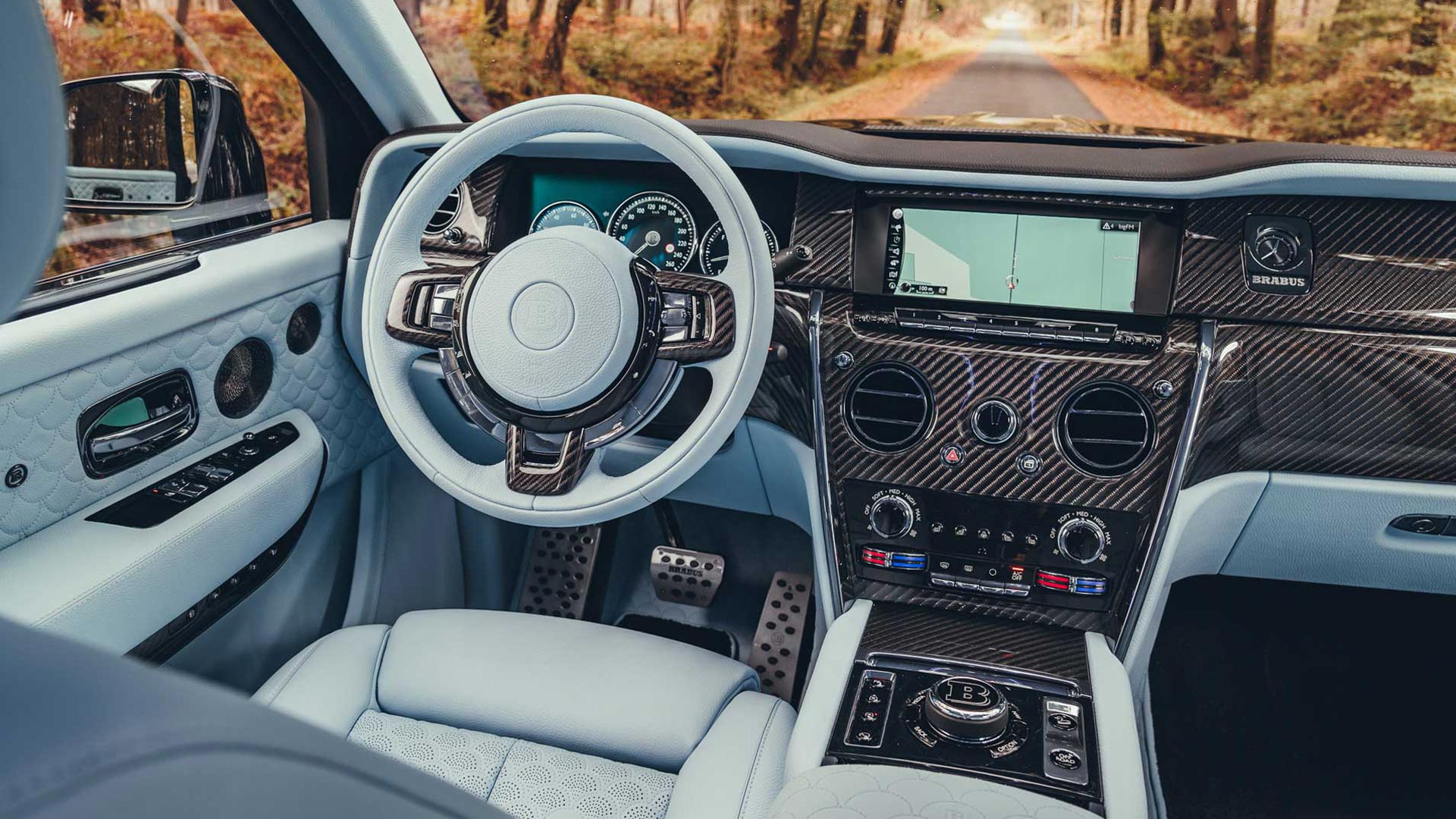
Rolls-Royce has a formidable reputation for crafting exceptional interiors, but Brabus has not been daunted by modifying the Cullian’s cabin. The demonstrator seen here has Blue Sky leather trim, also giving the model its name.

The sky is the limit

Brabus 700 Blue Sky

Quilted upholstery with a unique shell design is used extensively throughout the Cullinan’s cabin. The same pattern is found on the floor, in the boot, and even surrounding the famous starlight headliner

Brabus adds yet more carbon fibre trim to the Blue Sky’s dashboard and steering wheel, while even the Rolls-Royce analogue clock has received a Brabus makeover

Anyone already in the market for a £330,000 Rolls-Royce Cullinan is unlikely to worry unduly about cost. The complete 700 Blue Sky makeover does not come cheap, though. Brabus quotes a German price of €896,546 (including taxes at 19 percent), which equates to around £748,700.

ALSO READ:

Brabus Rocket GTS transforms AMG GT into a 1,000hp hot hatch

Brabus goes wild with 900hp G-Class dune buggy

Rolls-Royce Cullinan Black Badge 2025 review

Advertisement

‘Out of charge’ EV breakdowns fall to lowest ever level

0

The number of electric car drivers running out of charge has fallen to a lowest-ever level, statistics from the AA have revealed.

So-called ‘out of charge’ breakdowns are now at a record low of less than 2 percent.

In 2015, the figure was more than four times higher, at 8.26 percent – and has been consistently falling every year apart from 2017 and 2019.

This is despite the huge uptick in new electric cars hitting UK roads.

AA president Edmund King says the figures suggest range anxiety should now be a thing of the past for EV drivers.

“Our figures clearly show that year-on-year, the proportion of EVs running out of charge has dropped dramatically.”

The AA deals with around 8,000 breakdowns each day, yet only around five or six a day are for EVs that are out of charge.

What’s more, “many of the out of charge breakdowns aren’t on zero charge, but are either low on charge or experiencing technical problems such as the vehicle charge point covers sticking.”

AA statistics also show that the top 30 percent of breakdown faults for EVs are almost identical to petrol and diesel cars: tyres, wheels and the 12v battery.

King said the 80% decline in EVs running out of charge is thanks to a combination of more chargers, better chargepoint reliability and charge post support for customers, improved driver education and information – and, of course, the improved range of newer EVs.

“We understand why many drivers have been hesitant about switching to EVs as it is a major change, but it is important their decisions are based on accurate information.

“Once drivers have made the switch, the vast majority enjoy the ride and won’t go back.

ALSO READ

There is now a Lego version of Nigel Mansell’s Williams F1 car

World Rally Championship ditches hybrid power for 2025

Futuristic new 2025 Tasman is Kia’s first pick-up truck

Advertisement

Cupra plans to sell cars in the United States by 2030

0
Cupra has plans for North America

Cupra has announced bold plans to sell cars in the United States by the end of the decade. 

Originally created as Seat’s sporty sub-brand, Cupra became a marque in its own right in 2018. Since then, the Spanish manufacturer has delivered more than 750,000 vehicles around the world. 

Now Cupra has its sights set on cracking the tough North American market, with a target of doing so by 2030.

Coming to America

Cupra has plans for North America

Cupra’s path to the United States has seen it enter into talks with the Penske Automotive Group. Penske runs dealerships and vehicle logistics operations across North America, so would be a prime partner for Cupra.

Identifying states where Cupra models might be popular is a key part of the project. The company would look to sell electric and hybrid vehicles, along with conventional petrol-powered models. 

As part of its strategy, Cupra also plans to produce one of its models in an existing Volkswagen plant in North America. The Volkswagen Group operates numerous factories across the continent, which should make finding a suitable production site straightforward.

Demonstrating the seriousness of the company’s plans, Bernhard Bauer, the former managing director of Cupra Germany, has been appointed as the new MD for Cupra USA​.

Global brand ambition

Cupra has plans for North America

Cupra is no stranger to international expansion, as it recently started selling cars in Australia. It also operates in Mexico, which makes moving into the USA a natural progression.

“Cupra’s ambition is to be a truly global brand, and expanding into the United States represents one of the greatest milestones on our journey,” said Wayne Griffiths, CEO of Cupra. 

Griffiths added: “We have great respect for the US market, recognising that a strong distribution and retail strategy is essential for success. By entering into preliminary discussions with Penske Automotive Group, we are exploring opportunities with the best possible partner, one with the right distribution network to introduce Cupra to a new generation of American car lovers.”

The final location for Cupra’s US headquarters, and details of its specific model lineup, will be announced at a later date.

ALSO READ:

Don’t love your new electric Cupra? You can hand it back

Cupra Leon TSI 300 review

Your EV questions answered on Motoring Electric

Advertisement

Cadillac to join the Formula One grid in 2026

0
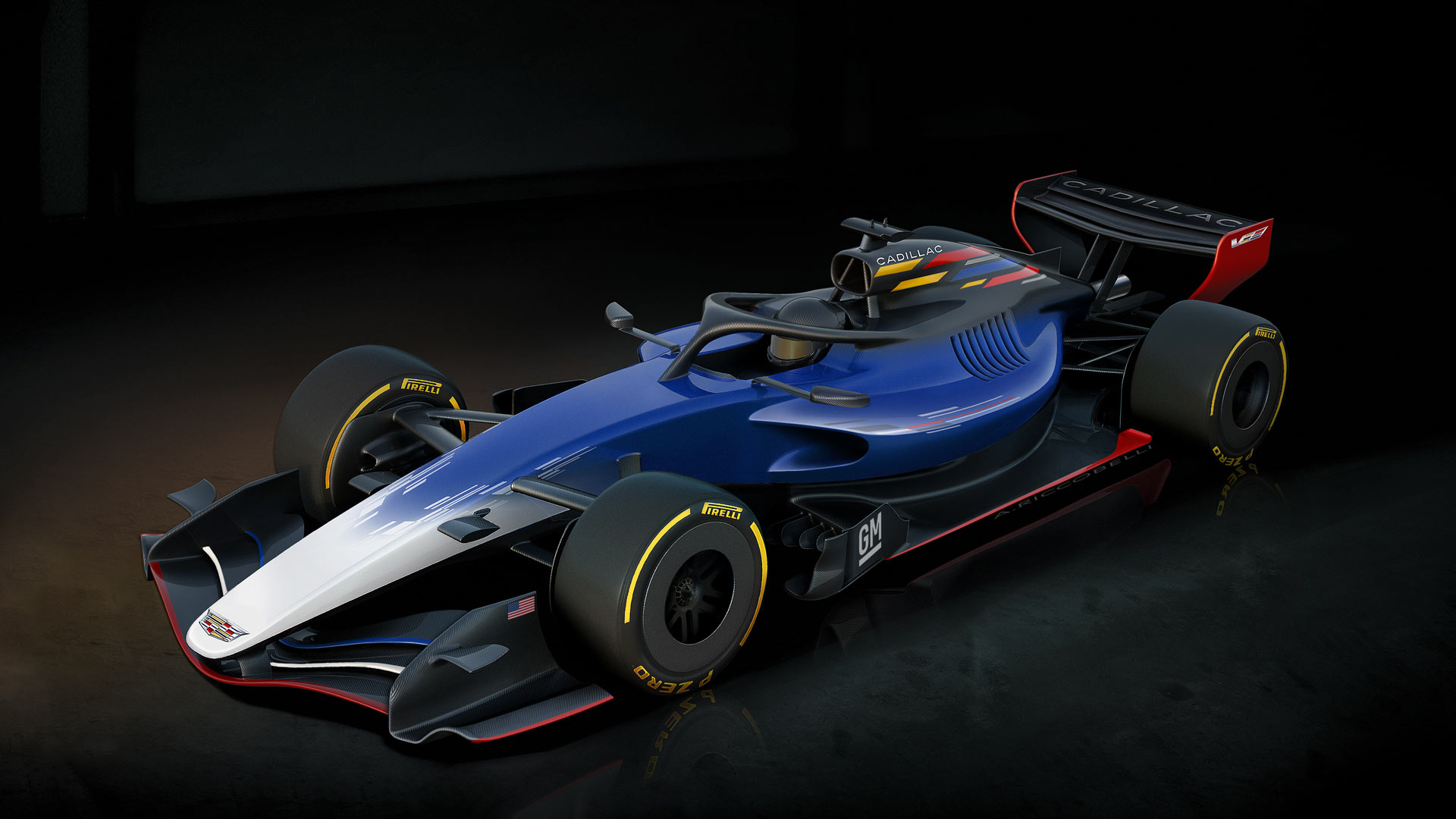
Cadillac 2026 Formula 1 Team

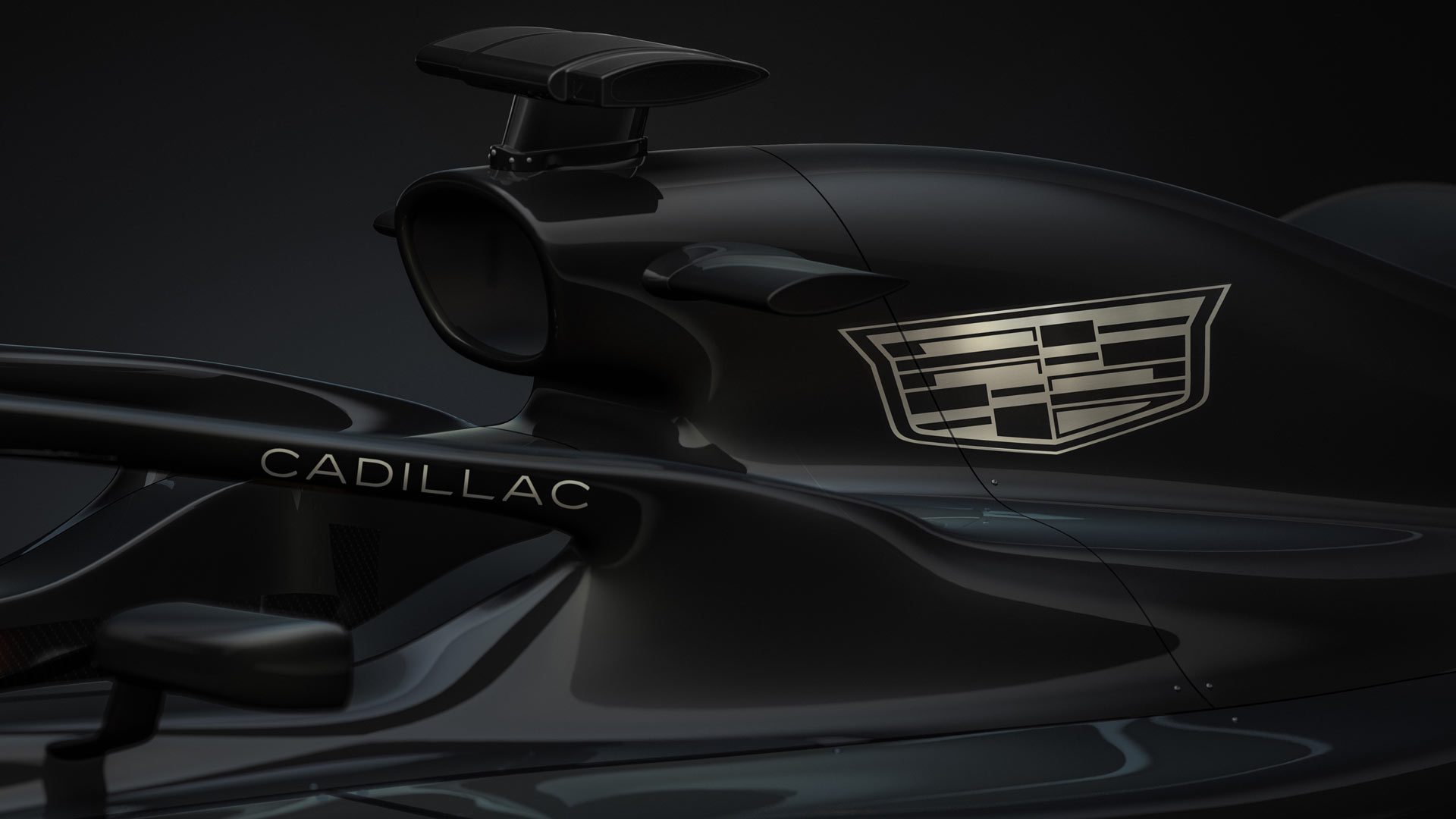
General Motors has confirmed that the Cadillac brand will officially join the Formula One grid as the sport’s 11th team.

The American luxury car manufacturer is set to enter F1 for the 2026 season as a constructor, coinciding with a major change in the technical regulations. 

Cadillac will become the first all-new team to successfully join Formula One since Haas in 2016, swelling the grid to 22 cars.

The manufacturer will also aim to build its own power units by the end of the decade, but has not confirmed who will supply its engines initially.

A dream come true for Mario Andretti

Cadillac 2026 Formula 1 Team

At the start of 2023, General Motors announced its intention to join F1 in collaboration with Andretti Global. Although this application was approved by the FIA, the commercial rights holders for the sport slammed the door shut on Caddy’s entry for 2025.

Now, almost two years later, Stefano Domenicali, the president and CEO of Formula One, confirmed Cadillac’s entry, saying: “We look forward to seeing the progress and growth of this application, certain of the full collaboration and support of all the parties involved”.

Cadillac will operate its Formula One team with TWG Global, and will host operations throughout the United States – along with a facility at Silverstone in the UK.

Motorsport legend Mario Andretti, the last American F1 world champion, will serve on the team’s board of directors. “To still be involved at this stage of my life – I have to pinch myself to make sure I’m not dreaming”, said Andretti.

‘The pinnacle of motorsports’

Cadillac 2026 Formula 1 Team

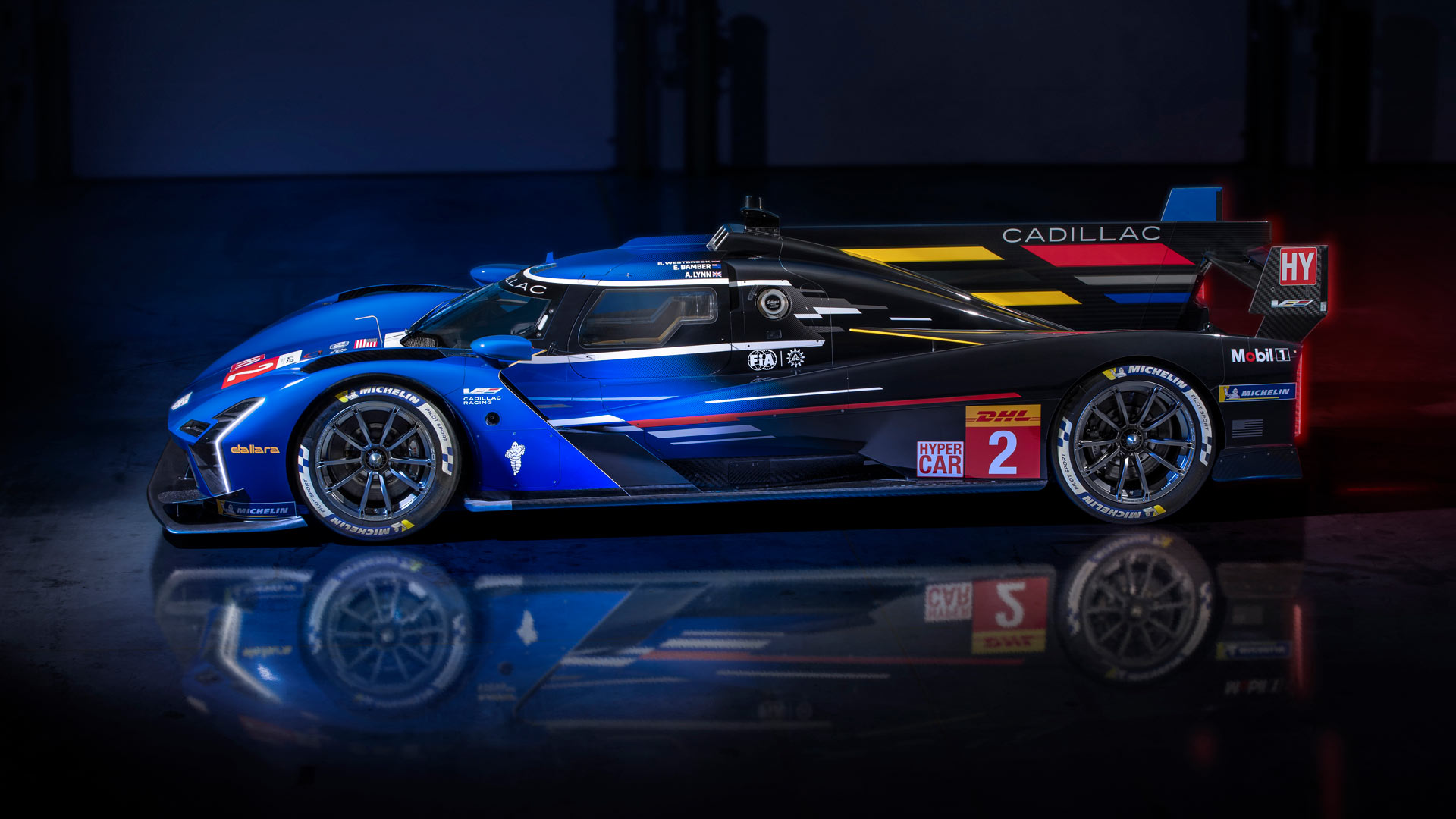
Cadillac has a strong association with motorsport, most recently competing in the World Endurance Championship, and winning the IMSA SportsCar Championship in 2023.

“As the pinnacle of motorsports, F1 demands boundary-pushing innovation and excellence. It’s an honour for General Motors and Cadillac to join the world’s premier racing series, and we’re committed to competing with passion and integrity to elevate the sport for race fans around the world,” said GM President Mark Reuss. 

“This is a global stage for us to demonstrate GM’s engineering expertise and technology leadership at an entirely new level.”

Cadillac’s entry into Formula One in 2026 will see it pitched against other major manufacturers. Audi is due to enter the sport in the same season, while Ford will become an engine supplier to Red Bull Racing.

ALSO READ:

There is now a Lego version of Nigel Mansell’s Williams F1 car

History Of The Cadillac V-Series

Great Motoring Disasters: Cadillac Allante

Advertisement

New Bugatti W16 Mistral becomes the world’s fastest open-top car

0
Bugatti W16 Mistral World Record Edition

Bugatti has claimed another world record, setting the highest top speed for an open-top car. 

During an organised record attempt at the Papenburg test track in Germany, the Bugatti W16 Mistral reached a maximum speed of 453.91kph. 

That translates into an astonishing 282mph, making the W16 Mistral one of the fastest road-legal cars ever created.

For comparison, the closed-roof Bugatti Chiron Super Sport 300+ achieved a top speed of 304.77mph in 2019.

A one-off record roadster

Bugatti W16 Mistral World Record Edition

The record-breaking success of the W16 Mistral means Bugatti reclaims the accolade of the fastest open-top car, some eight years after it was snatched away by Hennessey.

In 2016, the Texas-based outfit reached 265.6mph with its Hennessey Venom GT Spyder, which edged ahead of the 254mph Bugatti Veyron Grand Sport Vitesse. 

Bugatti was commissioned by the owner of this W16 Mistral to create a one-off special, capable of chasing maximum speeds

The Mistral World Record Edition is valued at €14 million (£11.7 million). The unique car’s (possibly slightly nervous) owner was on-hand to watch the top-speed run unfold.

The safest pair of hands

Bugatti W16 Mistral World Record Edition

The W16 Mistral was driven by Andy Wallace, the ‘Bugatti Pilote Officiel’. The Oxford-born driver has set previous speed records for Bugatti, along with winning the 24 Hours of Le Mans, so was a particularly safe pair of hands for the top-speed attempt.

Announced in 2022, the Mistral uses the same quad-turbocharged 8.0-litre W16 as other models in modern Bugatti history. Here, it produces a colossal 1,600hp. 

Wallace had to tackle the Papenburg test track’s banked curves at more than 120mph, before unleashing the Mistral’s full power on the straight to hit a record-breaking top speed.

“Throughout the testing program leading up to this moment, it was incredible to feel how stable the car felt – I got the sense that it wanted to go faster,” commented Wallace.

A record-breaking collection

Bugatti W16 Mistral World Record Edition

Following the official record-setting speed run, verified by SGS-TÜV Saar GmbH, Wallace took the owner of the unique W16 Mistral for a passenger ride that almost reached the same 282mph maximum.

The Mistral World Record Edition will now become part of an incredible private Bugatti collection, joining a Veyron Super Sport, Veyron Grand Sport Vitesse and Chiron Super Sport 300+.

Poignantly, the Mistral World Record Edition also marks the end of the road for the phenomenal W16 engine. Bugatti’s all-new hypercar, the Tourbillon, will feature a 8.3-litre naturally aspirated V16, supplemented by hybrid hardware. 

Can we expect to see a record-breaking version of the Tourbillon in due course? Don’t bet against it.

ALSO READ:

New Bugatti Tourbillon has 1,800hp V16 and top speed of 276mph

A latte money: £50 Bugatti coffee comes in a carbon fibre cup

Best supercars to buy in 2024

Advertisement

There is now a Lego version of Nigel Mansell’s Williams F1 car

0
Lego Williams FW14B

Lego has announced a major new collaboration with Formula One, including scale models of all the latest F1 cars. 

However, in among the modern machinery, Lego also revealed that the iconic Williams FW14B will be rendered in brick form. 

With almost 800 pieces included, this is your chance to build one of the greatest Formula One cars of the 1990s. 

The Lego set even comes with a miniature figure of Nigel Mansell CBE, who drove the FW14B to championship glory in 1992.

A miniature motorsport hero

Lego Williams FW14B

Designed by Adrian Newey for the 1992 Formula One World Championship, the Williams-Renault FW14B was the most advanced car on the grid. 

Cutting-edge technologies included active suspension, a semi-automatic sequential gearbox and a traction control system. Fitted with a Renault 3.5-litre V10 engine, the FW14B proved to be unstoppable during 1992. 

It would carry Mansell to nine victories and three additional podiums during the 16-race season, setting records that took decades to be equalled. 

Most importantly of all, it finally gave Nigel Mansell the 1992 Formula One Drivers’ Championship, after he’d come so painfully close to victory three times before.

Red 5 is alive

Lego Williams FW14B

The Lego version of the FW14B is a substantial model, measuring 31cm (12 inches) long and 15cm (5.5 inches) wide. 

Details include working steering, a removable engine cover to view the Renault V10, and miniature slick tyres with Goodyear lettering on them. 

Compared to some other Lego efforts, the car is instantly recognisable, aided by a classic blue and yellow livery and the red number ‘5’ on its nose cone. 

Included in the box is a display stand with printed vehicle statistics, plus a Lego mini figure of our Nige himself – complete with a moustache, of course.

The affordable Williams FW14B

Lego Williams FW14B

To own this little slice of British motorsport history will cost £69.99. Considering that four-time F1 World Champion Sebastian Vettel paid more than £2.7 million to own the actual FW14B raced by Mansell, that seems like a bit of a bargain.

The Lego Williams will not be under any trees this Christmas, however. Pre-orders can be placed now, but the first deliveries aren’t expected until 1 March 2025.

ALSO READ:

Lando Norris laps Silverstone in a McLaren P1 made of Lego

Lego Ferrari 488 GTE model hits 129mph

Lockdown Lego project: we build a £330 Bugatti Chiron

Advertisement

World Rally Championship ditches hybrid power for 2025

0
WRC Ditches Hybrid Power for 2025

The World Rally Championship (WRC) organisers have announced that they will abandon the use of hybrid powertrains for the 2025 season.

Following a decision of the FIA World Motor Sport Council, the WRC has confirmed that top-tier Rally1 cars will no longer have to use a standard 100kW plug-in hybrid system.

Instead, the use of 100 percent sustainable fuel is said to be sufficient to ensure the WRC can meet environmental commitments.

This follows a similar decision taken by the British Touring Car Championship earlier this month, with the UK race series also removing hybrid assistance for next year.

Batteries not included

WRC Ditches Hybrid Power for 2025

The WRC launched plug-in hybrid power as part of a raft of changes introduced with the Rally1 formula in 2022. 

The setup consists of a 100kW electric motor and 3.9kWh battery pack, both supplied by Compact Dynamics. Plug-in hybrid tech meant the WRC Rally1 cars could travel on battery power alone in specific liaison zones, and also deploy an additional electric boost during rally stages. 

However, incidents at this year’s Acropolis Rally in Greece led Compact Dynamics to adjust the safety guidelines stating when the 750-volt hybrid systems have to be removed from a vehicle and repaired at the factory.

This led to concern about the costs of having to return hybrid units for repairs more frequently, which could become a burden on WRC teams.

Rallying ‘more fun to watch’

WRC Ditches Hybrid Power for 2025

The WRC has therefore discontinued hybrid systems in a bid to assuage the worries of teams. It also promises that next year’s Rally1 cars will be more fun to watch.

To ensure the 2025-spec vehicles maintain the same power-to-weight ratio as this year’s contenders, the minimum weight permitted will be reduced from 1,260kg to 1,180kg. A larger-diameter air restrictor will increase power outputs, too. 

Revealing that the WRC organisers have considered this move for some time, a Ford Puma Rally1 car without a hybrid system was entered into Rally Poland in June this year. Mārtiṇš Sesk ran with ballast in place of the hybrid unit, finishing fifth overall.

Making the WRC stronger

WRC Ditches Hybrid Power for 2025

At present, the flagship Rally1 class of the WRC has only Toyota and Hyundai competing as manufacturers, plus the M-Sport team operating with factory support from Ford.

The FIA says removing hybrid power should reduce running costs for teams, and make it easier for drivers to transition to the top class of competition.

FIA chief technical and safety officer Xavier Mestelan-Pinon said: “Following extensive dialogue with key stakeholders, it became clear that continuing to use the plug-in hybrid units provided under the existing supplier agreement was no longer in the best interests of the FIA World Rally Championship. 

“We can now move forward in full confidence that the WRC becomes even better and stronger, with developments that are in line with the working perspective for the 2027 technical regulations.”

ALSO READ:

The coolest motorsport special edition cars

Toyota GR Yaris review

Classic car news and reviews on Retro Motor

Advertisement

Kia EV9 GT super-SUV revealed at LA Auto Show

0

The high-performance new Kia EV9 GT electric SUV has been revealed at the LA Auto Show ahead of its UK launch later in 2025.

Boasting more than 500hp from two high-power electric motors driving all four wheels, Kia is targeting 0-60mph acceleration in just 4.3 seconds for the new seven-seat EV9 GT.

This will make it one of the fastest seven-seat electric SUVs in the world.

To help it handle such potent performance, the Kia EV9 GT also features electronically controlled suspension – a first for a Kia SUV.

Other performance upgrades include larger front brakes with GT-branded front calipers (painted in Kia’s GT-spec vivid neon green) and an electronic limited slip differential.

Enthusiasts will also be intrigued by the new Kia EV9 GT’s Virtual Gear Shift (VGS). Simlar to the system on the Hyundai Ioniq 5 N, this simulates the experience of a traditional automatic gearbox, with noticeable ‘shifts’ as it accelerates – and even a tail-off in acceleration as the ‘rev limit’ is reached.

Drivers can use steering wheel paddle shifters to go up and down the virtual gears, with the whole experience enhanced by electronic active sound that replicates the sounds of gearshifts.

Full technical details – including the Kia EV9 GT’s range – will be revealed nearer to its UK launch. It is, however, unlikey to match the existing all-wheel drive version’s 313-mile range, due to the EV9 GT’s extra performance.

Prices are still to be confirmed, but likely to start from upwards of £80,000.

Bespoke Kia EV9 GT design

The new Kia EV9 GT has discreet styling cues in a nod to its performance. The large 21-inch alloys are shod in high-performance Continental tyres, and the GT features unique patterns on the front active air flaps, and an ‘energetic’ LED lighting pattern.

There are neon green highlights on the steering wheel and seats, while the front seats themselves are hip-hugging sports seats with GT-branded Alcantara inserts. There’s a bespoke GT steering wheel and dashboard trim, too.

The new Kia EV9 GT is a development of the super-successful Kia EV9, which is the reigning World Car of the Year.

“The EV9 has been a home run for Kia and introduced the first mass-market electric three-row SUV,” said Steven Center, COO & EVP, Kia America.

“EV9 GT includes all those wonderful elements while amping up the fun factor significantly. This new halo trim is set to spark the hearts of driving enthusiasts who still need the practicality of a three-row SUV.

“You can have your cake and eat it too!”

ALSO READ

Top-selling Kia Sportage facelift revealed at LA Auto Show

Uber drivers offered big discounts on Toyota bZ4X

FIRST PHOTOS: new electric Jaguar prototype hits the road

Advertisement