Home Blog Page 370

The 2020 Mustang GT500 is the most powerful Ford ever made

0

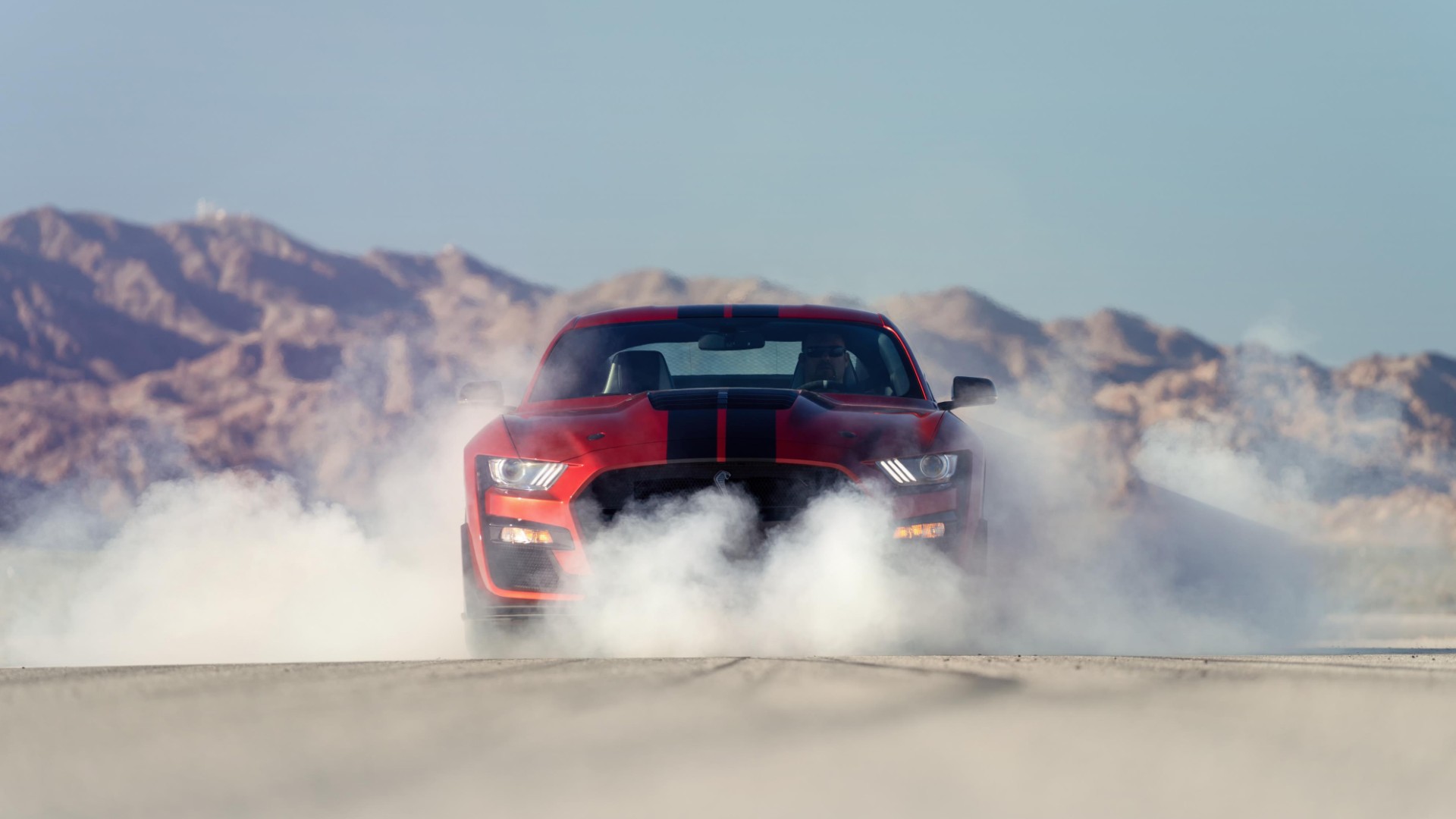
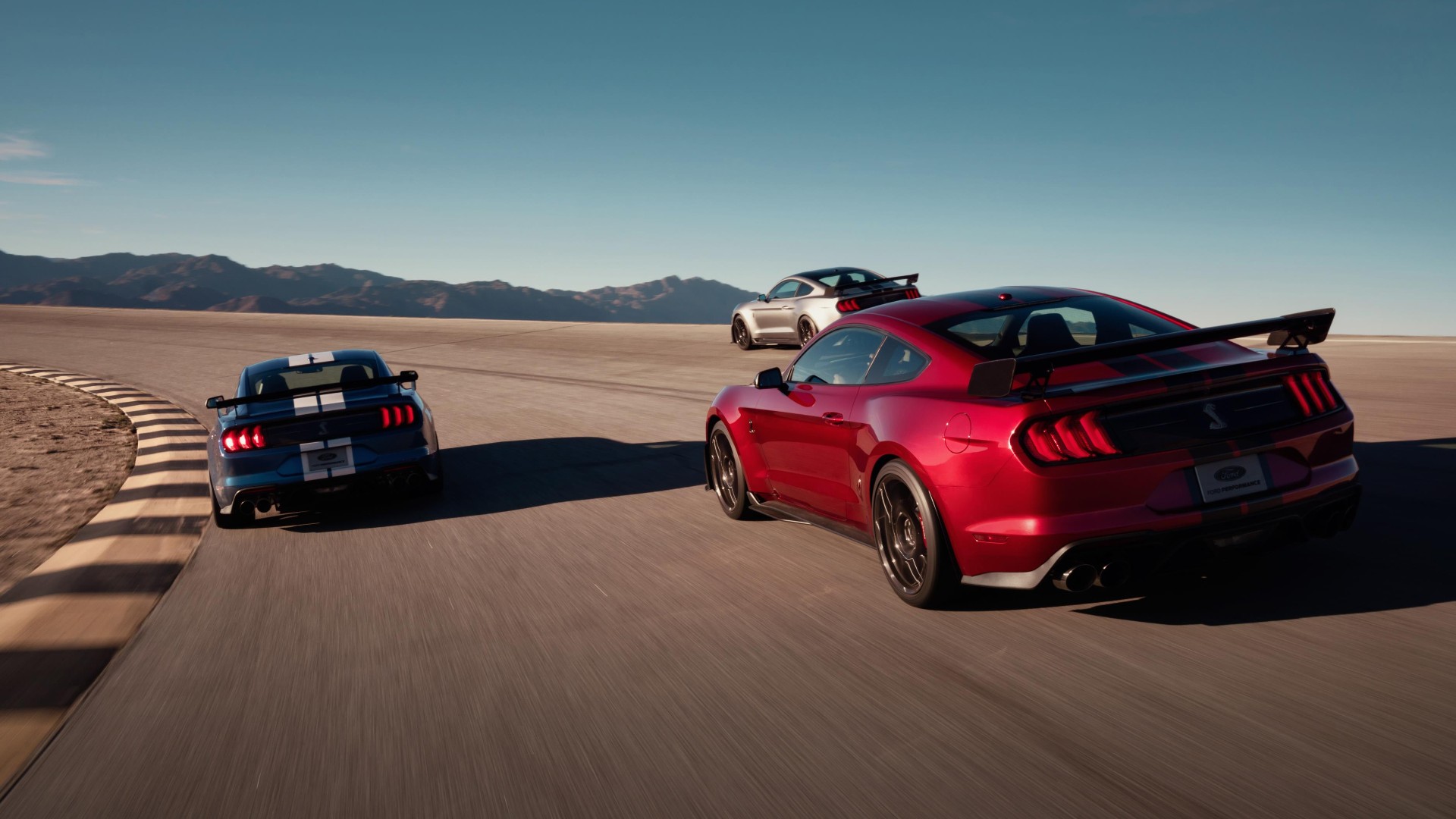
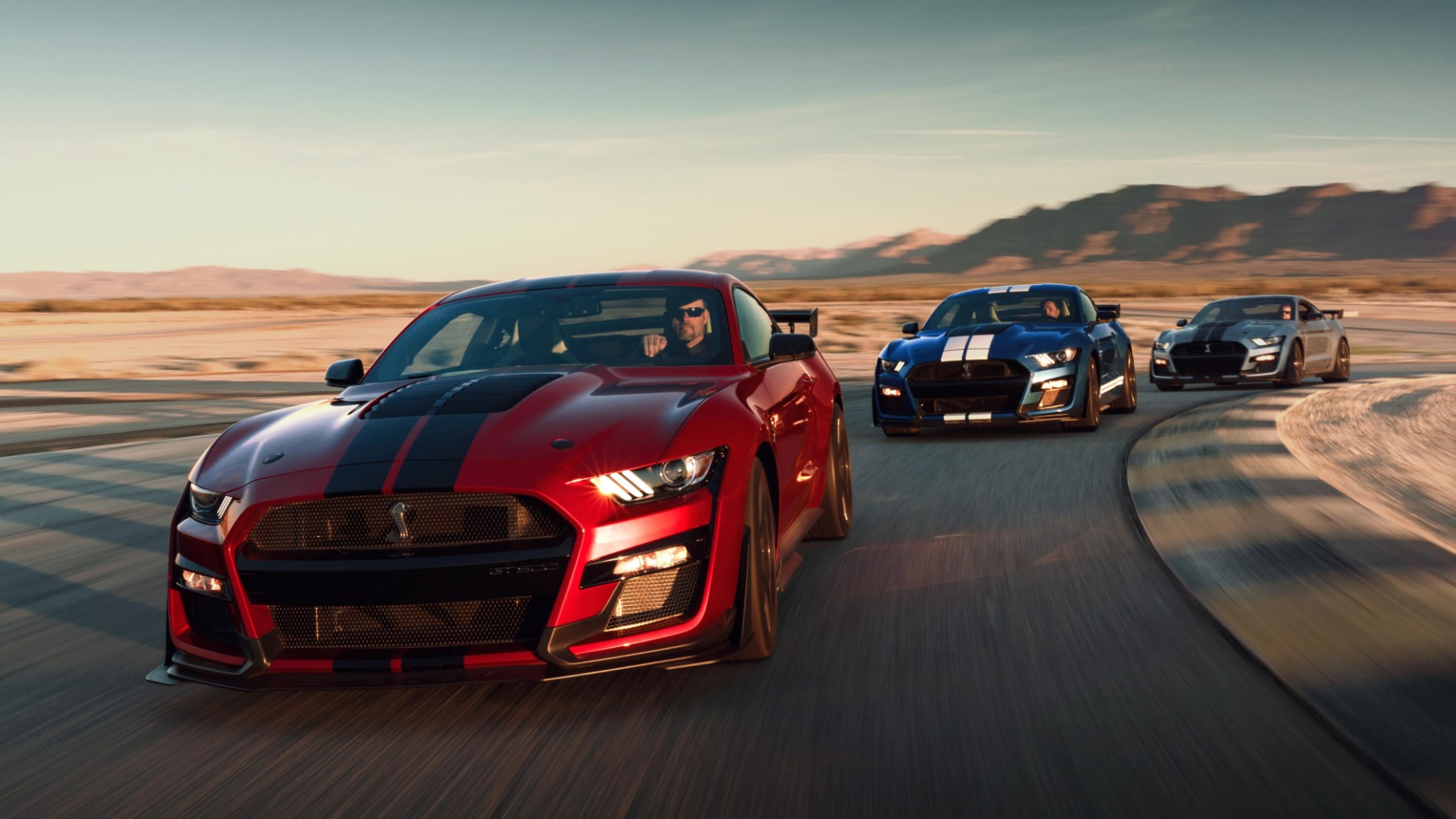
Shelby Mustang GT500 power revealed

Ford has revealed the power figures for the new Mustang Shelby GT500 and they are… galactic. Are you sitting down?

With its supercharged 5.2-V8, the new Shelby GT500 produces 760 horsepower and 625 lb ft of torque. Seven-hundred-and-sixty…

That’s more than the Aston Martin DBS Superleggera, McLaren 720S, Ferrari 488 Pista and Porsche 911 GT2 RS. It even pips the latest and greatest V12 raging bull, the Lamborghini Aventador SVJ, by one solitary horsepower.

Related: 2020 Shelby GT500 vs 1967 Shelby GT500

As for home-grown rivals, Chevrolet’s Corvette ZR1 falls foul of the GT500’s muscle by around five horsepower.

It doesn’t quite outmuscle the mighty mopars, mind. The Dodge Challenger Redeye and Demon beat it out, producing a respective 797 and 840 horsepower. Is this why they call America the land of opportunity?

How does the GT500 make all that power?
Shelby Mustang GT500 power revealed

Well, the 5.2-V8 isn’t entirely dissimilar to the Voodoo unit found in the GT350. Instead of a flat plane crank, it has a traditional cross plane.

That makes for lower revs and a lumpier sound compared to the more exotic shriek of the GT350. Adding a shriek of its own – and a considerable donation to that power figure – is the 2.65-litre supercharger plonked on top… 

As for performance, or indeed how much the Shelby GT500 will cost, that remains a mystery. Equipped with a new dual-clutch gearbox that can shift in under 100 milliseconds, it ought to put that power to good use. That’s assuming it can keep the rears from lighting up.

It’s a sophisticated Mustang. That gearbox, that engine, sophisticated aero, massive brakes and suspension upgrades mean the most monstrous Mustang won’t quite be a people’s pony car. Nor, sadly, will it be available in the UK in right-hand-drive, like the 5.0-litre V8 GT.
Shelby Mustang GT500 power revealed

“With its supercar-level powertrain, the all-new Shelby GT500 takes the sixth-generation Mustang to a performance level once reserved only for exotics,” said Hermann Salenbauch, global director, Ford Performance vehicle programs.

“As a Mustang, it has to be attainable and punch above its weight. To that end, we’ve set a new standard among American performance cars with our most powerful street-legal V8 engine to date, plus the quickest-shifting transmission ever in a Mustang for all-out precision and speed.”
Advertisement

New Volkswagen T-Cross TDI proves why diesel is doomed

0

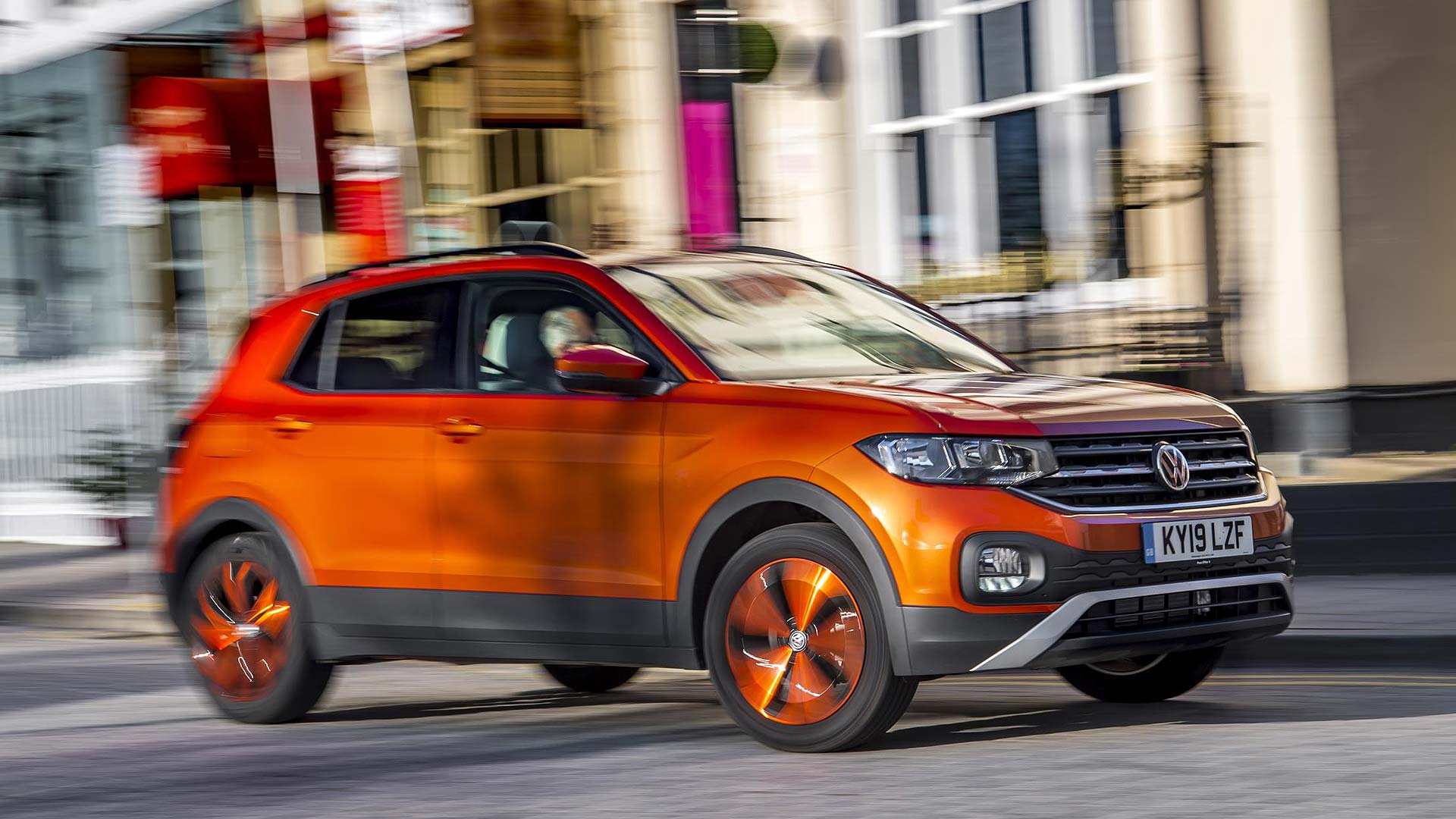
Volkswagen T-Cross TDIVolkswagen recently confirmed it is bringing a diesel-engined version of its T-Cross small SUV to the UK.
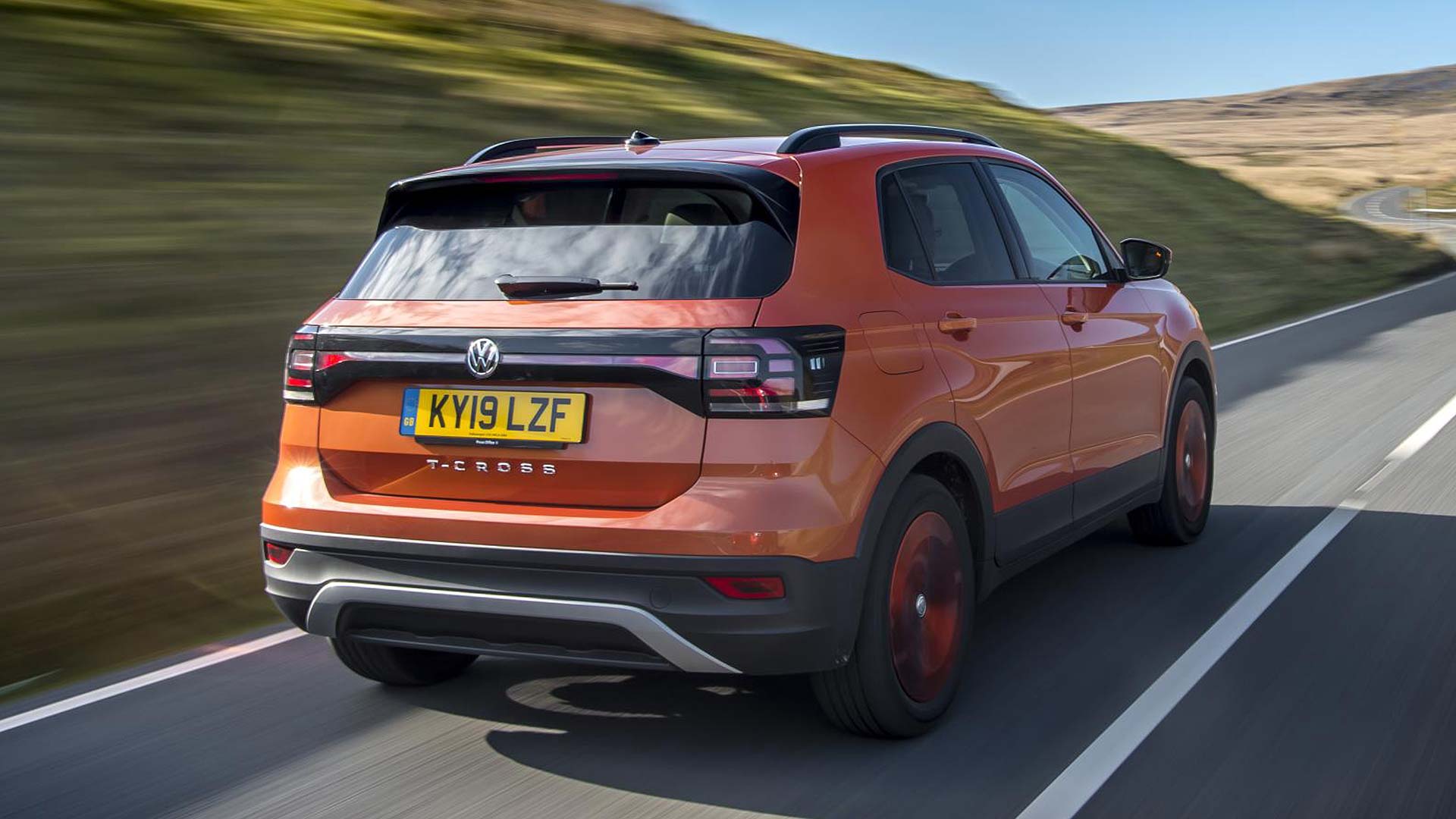
Up to now, it’s been petrol-only, and there was speculation on the launch that diesel wouldn’t make it across the channel at all.

But now, it’s here, a decision perhaps swayed by cost-conscious decision-makers in company car fleets demanding a diesel alternative.

Related: How to find the cheapest petrol and diesel near you

Thing is, crunching the numbers actually shows why diesel is done for.

Volkswagen T-Cross TDI

Helpfully, Volkswagen makes comparisons easy. A T-Cross 1.6 TDI 95 SE, with a five-speed gearbox and 95hp output, costs £21,065.

A turbo petrol-powered  T-Cross 1.0 TSI 95 SE, with, erm, a five-speed gearbox and 95hp output, costs £18,815.

That’s a whopping £2,250 premium for diesel, right away. And this is a cutting-edge turbo petrol engine, too, not some wheezy old clunker.

You can narrow the gap to £1,500 by choosing the 1.0 TSI 115 six-speed 115hp variant, but that’s not quite a fair comparison (and insurance is two groups higher, 10 versus 8), so we won’t.

Ah, but diesel has an economy advantage, right? That’s the whole point of picking diesel instead of petrol, no? Well, not really. The TSI 95 does 47.9-48.7mpg on the new WLTP cycle. The TDI 95 does 51.4-53.3mpg.

8 percent better economy, for a 12 percent higher list price.

Tax is taxing

It gets worse. Because the government hates diesel, it charges fleets 30 percent BIK company car tax. The petrol car is rated at 26 percent. As the tax take is based on the list price, dearer cars are taxed more.

For the 20 percent taxpayer who may get a T-Cross as a company car, this means a yearly tax bill of £978 for petrol… and £1,263 for diesel. A £285 difference, or almost £24 a month.

And for 40 percent taxpayers, it’s £571 a year, or nearly £48 a month.

Quite apart from the fact diesel is also noisier, rattlier and generally less pleasant to live with than Volkswagen’s world-class 1.0 TSI engine, it’s not hard to see why new diesel sales are dropping.

People bought them to save money. More parsimonious petrols and burdensome tax penalties mean that’s no longer the case. It’s no wonder savvy British motorists are moving away from them in droves.

Question is, can anything now save the diesel?

Advertisement

London is the second worst city to drive in as a tourist

0

London is the worst city for tourists

London has been named the second worst European city to drive in as a tourist, in a study of 24 major locations across the EU.

Insurance comparison site Compare The Market factored in the cost of parking, price of fuel, road safety, road quality, car density and congestion to come to this conclusion.

It will come as no surprise to anyone who has braved the streets of the UK capital.

Neither will the fact that Rome is ranked as the worst city for tourist drivers. From crazy scooter riders to madmen in Fiat Pandas, driving in the Italian capital can be a nerve-racking experience.

Moscow, Milan and Dublin were the other cities to find themselves at the foot of the table, while Paris just managed to avoid a bottom five slot.

With a road fatality rate of 140.69 per million residents, Moscow and St Petersburg are the cities to avoid if you value your life.

Nice is good, Frankfurt is nicer

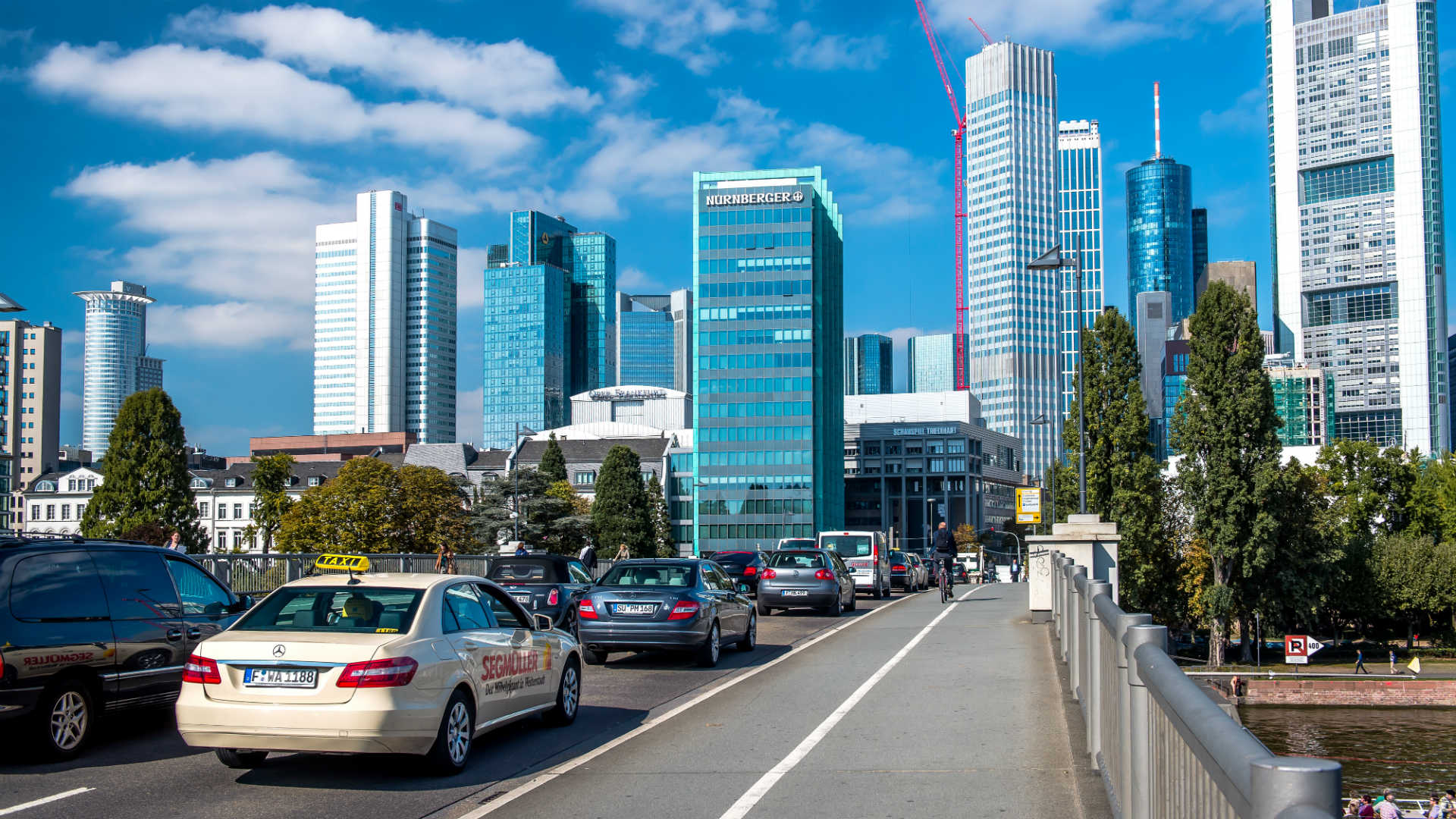
Cars in Frankfurt

At the opposite end of the table, Frankfurt is the city to head to if you fancy a stress-free driving experience, with the German financial capital finishing top for congestion and second for the cost of parking.

Nice, Vienna, Madrid and Lisbon were the other European cities to finish in the top five.

Given the results of the Compare The Market study, tourists might want to consider using public transport when travelling to London. It costs £12 to park for two hours, while a gallon of fuel costs £5.43.

The results in full

City Parking (2 hours) Fuel (per gallon) Road fatalities

(per million residents)

Road quality rating Passenger cars (per 1,000 residents) Hours of congestion
1. Frankfurt £1.70 £5.28 38.78 5.5/7 562 107
2. Nice £3.70 £5.80 51.98 6/7 477 130
3. Vienna £6.80 £4.67 49.39 6/7 552 109
4. Madrid £5.30 £4.94 38.97 5.5/7 505 129
5. Lisbon £2.10 £5.69 57.25 6/7 470 162
6. Budapest £2.70 £4.29 61.83 4.1/7 355 162
7. Krakow £1.80 £4.45 79.74 4.1/7 586 125
8. Stockholm £5.80 £5.78 27.26 5.5/7 480 135
9. Prague £3.10 £4.74 57.85 4/7 523 143
10. Munich £6.10 £5.28 38.78 5.5/7 562 140
11. Barcelona £6.80 £4.94 38.97 5.5/7 505 147
12. Warsaw £1.30 £4.45 79.74 4.1/7 586 173
13. Berlin £7.00 £5.28 38.78 5.5/7 562 154
14. Amsterdam £7.50 £6.31 36.66 6.1/7 489 164
15. St Petersburg £2.90 £2.42 140.69 2.9/7 302 200
16. Copenhagen £11.00 £5.98 36.82 5.5/7 430 137
17. Brussels £4.90 £5.31 56.13 4.5/7 510 195
18. Florence £4.40 £6.02 54.17 4.5/7 625 195
19. Paris £6.50 £5.80 51.98 6/7 477 237
20. Dublin £5.20 £5.44 38.97 4.6/7 446 246
21. Milan £5.20 £6.02 54.17 4.5/7 625 226
22. Moscow £9.60 £2.42 140.69 2.9/7 302 210
23. London £12.00 £5.43 27.7 5.1/7 472 227
24. Rome £7.00 £6.02 54.17 4.5/7 625 254

Figures in bold and italics represent the best in each category. Figures underlined are the worst.

Advertisement

This Chevrolet pickup has been restored by American Honda

0

American Honda restores Chevrolet pickupDo not check your calendar, this is not a late April Fools’ Day joke. Honda really has brought a classic Chevrolet pickup truck back to former glory.

Whilst the two companies may be strong competitors, and even fierce rivals on the IndyCar circuit, Honda is intrinsically linked to Chevy in the USA.

To understand the relationship, we need to head back to 1959, when Honda’s very first North American outpost was opened in Los Angeles.

American Honda restores Chevrolet pickupAlthough originally founded by Soichiro Honda in 1946, it took 13 years for the company to make a move overseas to the American market.

American Honda was established on June 11 1959, with just three employees and an initial investment of $250,000 in capital.

Honda became the world’s largest motorcycle manufacturer in 1959, but sales in Southern California started relatively slowly. Fewer than 2,000 bikes were sold in the first full year of operation, but the company had big plans for expansion.

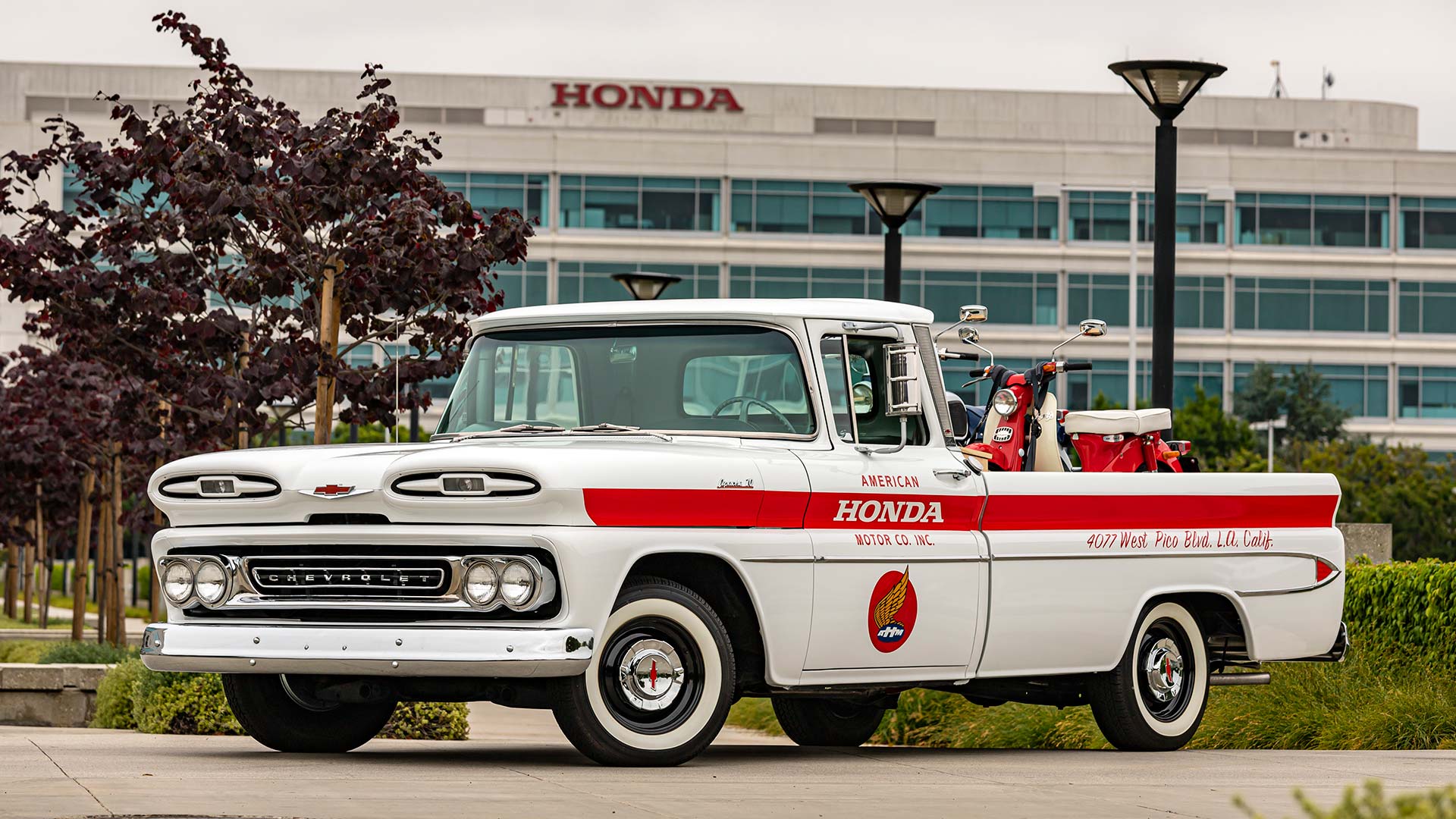
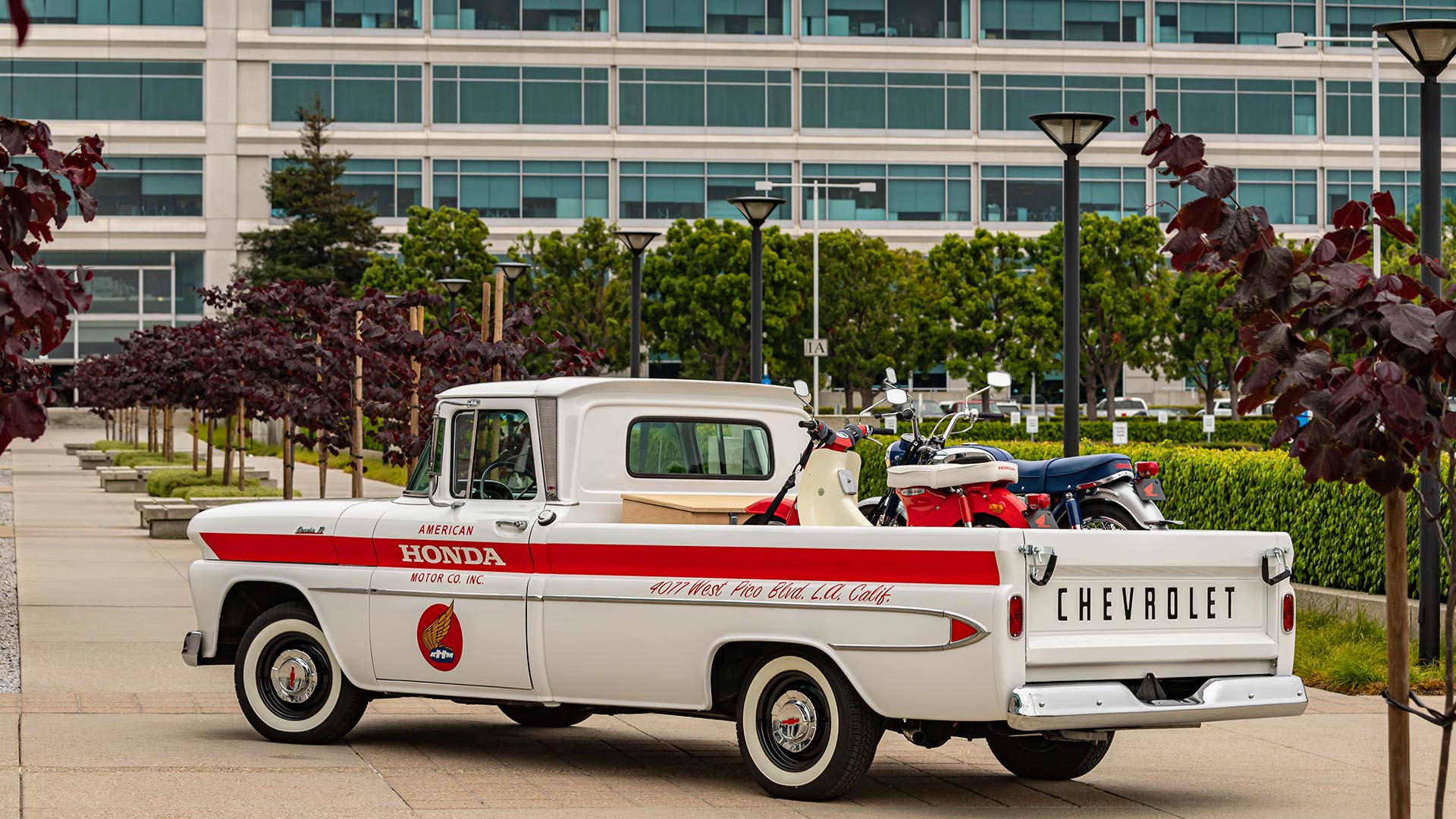
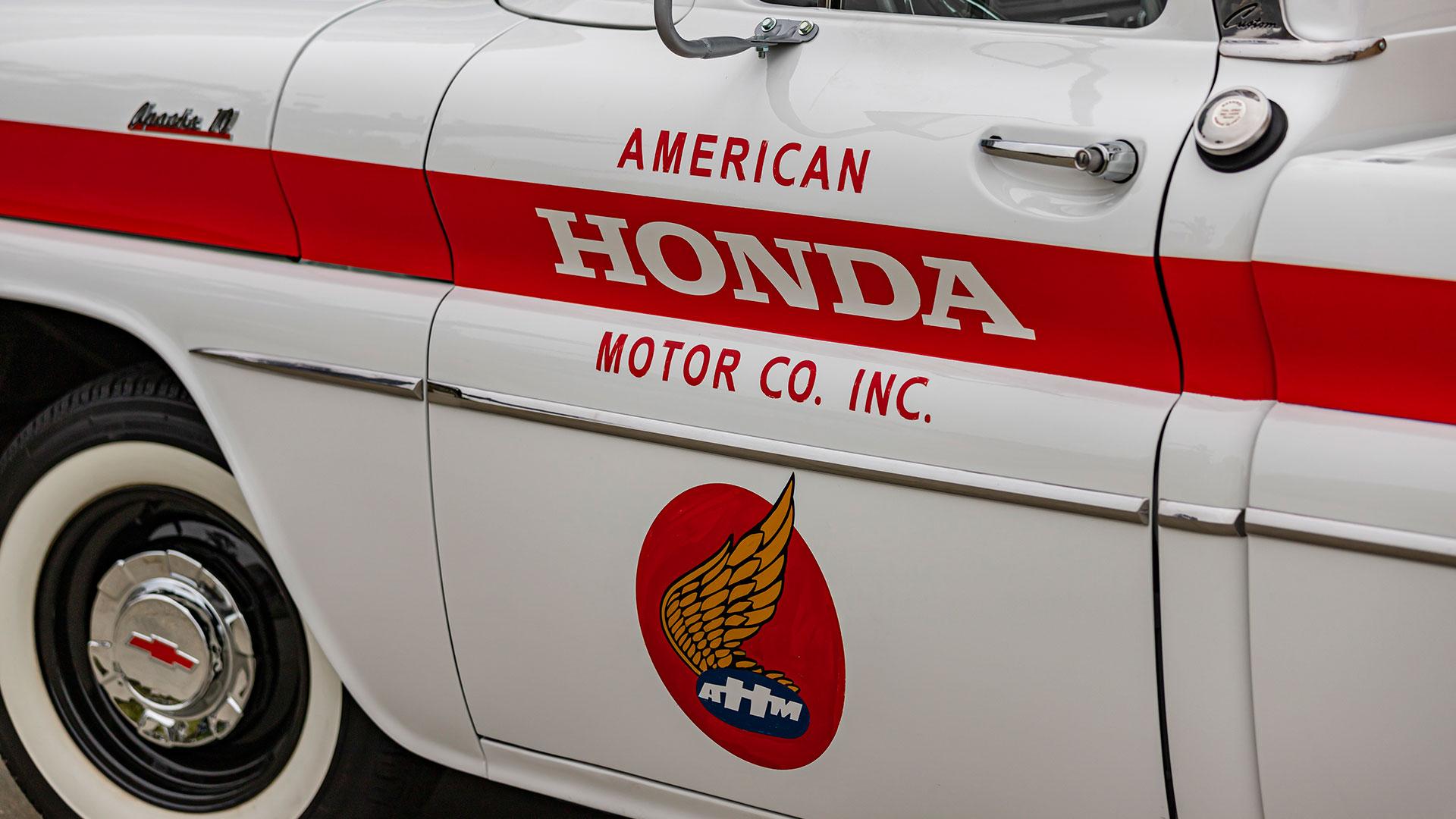
American Honda restores Chevrolet pickupSome of the initial capital investment by American Honda went on a fleet of three Chevrolet half-ton pickup trucks. Used to ferry bikes to dealerships to sell on consignment, these trucks wore a distinctive red and white livery.

It meant when deciding on how best to celebrate 60 years of Honda in America, recreating the original Chevrolet delivery vehicle would be a key element.

We imagine that recreating the classic livery on a modern Honda Ridgeline truck would not have had quite the same effect.

American Honda restores Chevrolet pickupWith a vintage photo from 1961 to work with, Honda employees tracked down the correct Chevrolet C/K 1500 Apache in need of restoration.

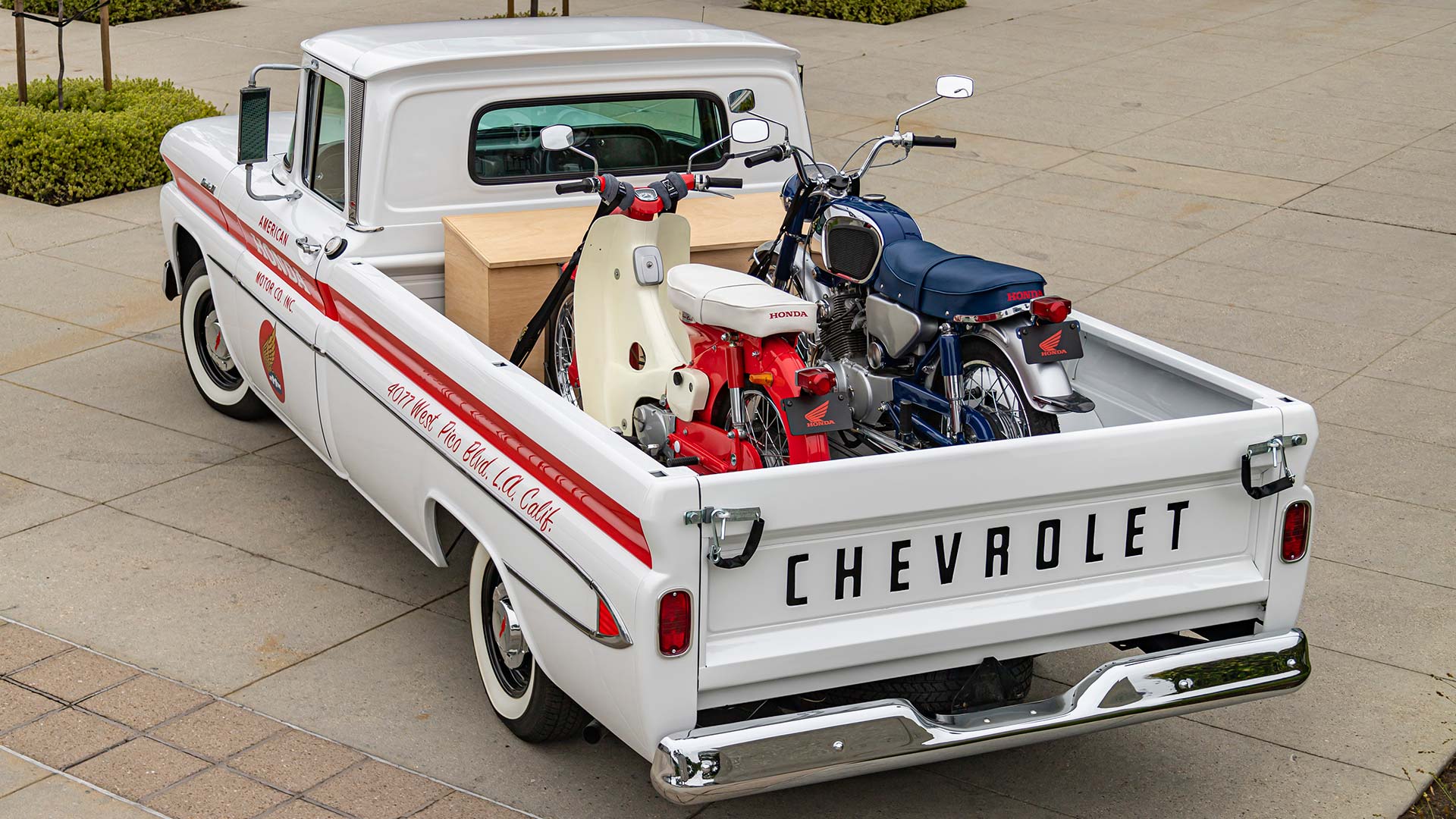
Once found, the chosen truck underwent a brief mechanical overhaul, followed by painting in the classic red and white paint scheme. Just like the original, the graphics on the doors and truck bed were all painted by hand.

In the back of the Chevy’s load bed sit a red 1965 Honda ‘Super Cub’ 50 on the left, whilst the right is occupied by a 1965 CB160.

American Honda restores Chevrolet pickupThe ultimate destiny for the restored delivery truck will be pride of place in the American Honda Collection Hall.

Located at the company’s current headquarters in Torrance, California, the Chevy will be displayed in front of a recreation of the first American Honda office.

Honda will also be taking the truck to this year’s SEMA show in Las Vegas, along with outings to other classic car events throughout Southern California.

Advertisement

Chris Grayling wants to save hedgehogs with a new road sign

0

New road signs to help reduce wildlife collisions

A new road sign will be used by the Department for Transport in a bid to reduce traffic collisions with wildlife. 

The new sign, revealed by Transport Secretary Chris Grayling, features a hedgehog and is to be placed in areas where accidents involving wildlife are the highest.

DfT figures suggest that 629 people were injured in accidents with animals in 2017, while four were killed.

New road signs to help reduce wildlife collisions

The government wants local authorities and wildlife welfare groups to suggest hot-spots for accidents with animals, to get signs installed where needed as soon as possible.

Why a hedgehog? Well, numbers have halved in rural areas over the past 19 years, and it seems these prickly pedestrians are in most danger when it comes to traffic.

New road signs to help reduce wildlife collisions

“We have some of the safest roads in the world but we are always looking at how we can make them safer,” said Chris Grayling.

“Motorcyclists and other vulnerable road users are particularly at risk. The new small mammal warning sign should help to reduce the number of people killed and injured, as well as helping our precious small wild mammal population to flourish.”

Advertisement

2021 Aston Martin hypercar to be named Valhalla

0

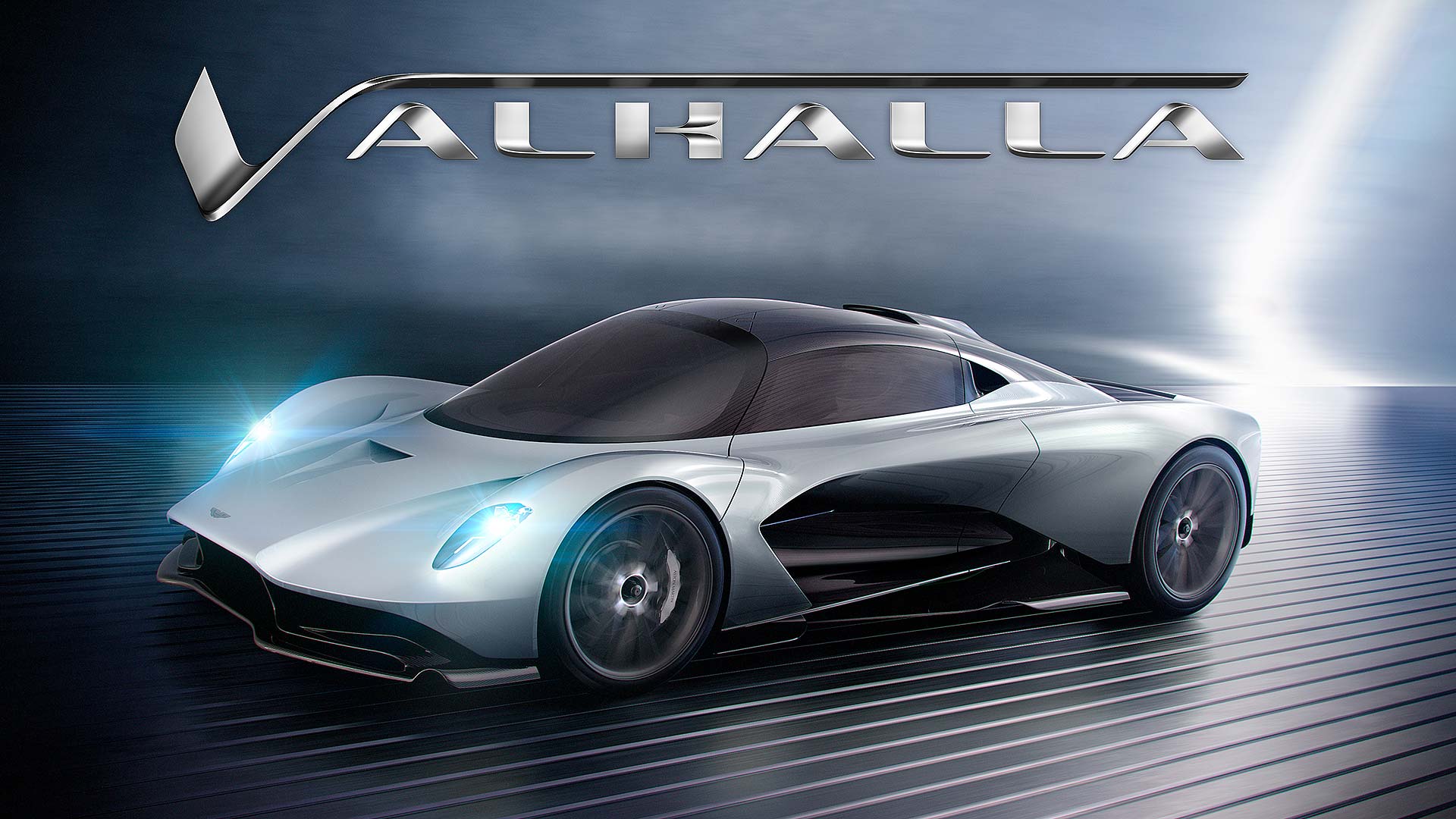
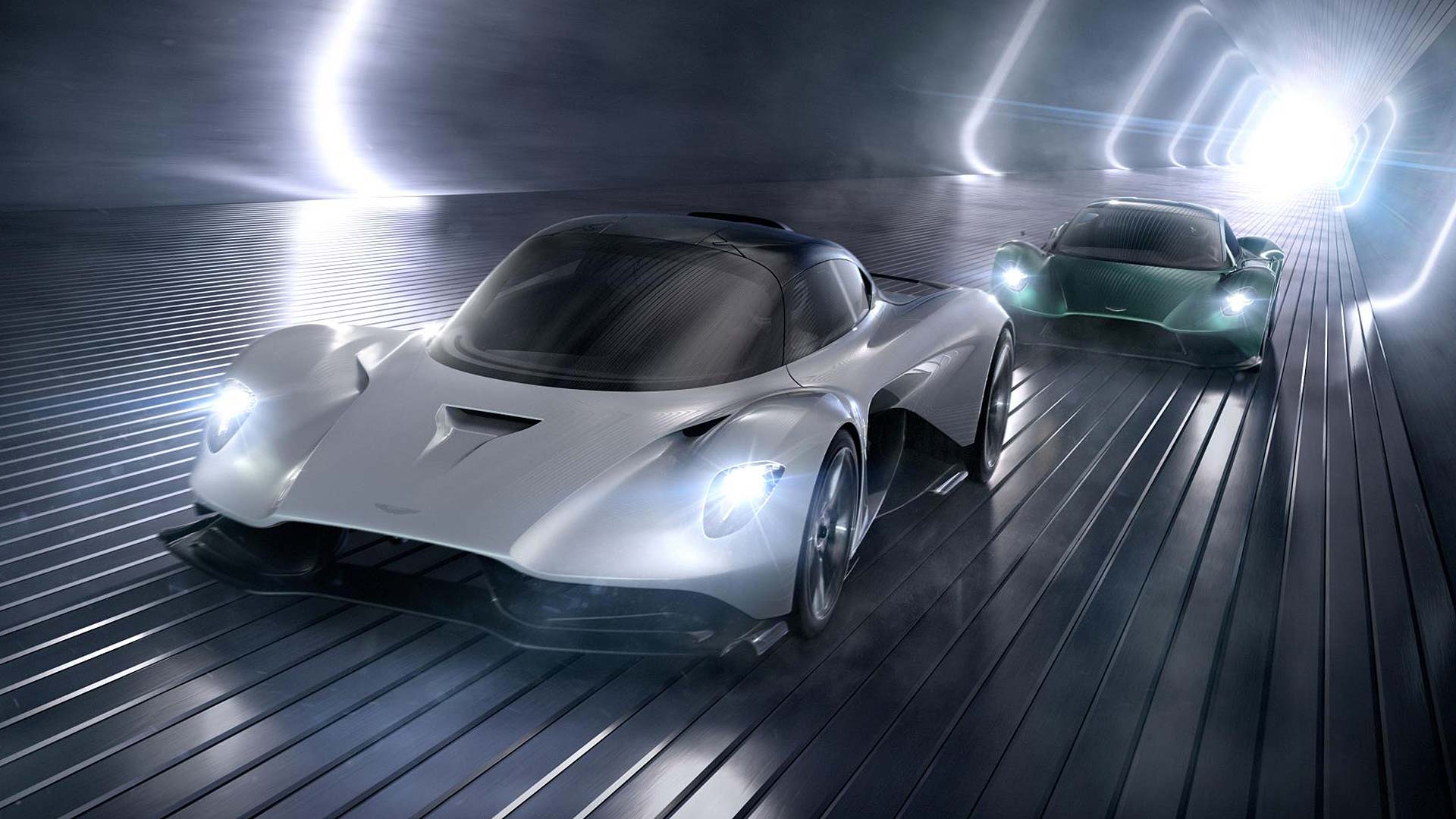
Aston Martin ValhallaThe second Aston Martin co-developed with F1 tech legend Adrian Newey and Red Bull Advanced technologies is to be called Valhalla. 
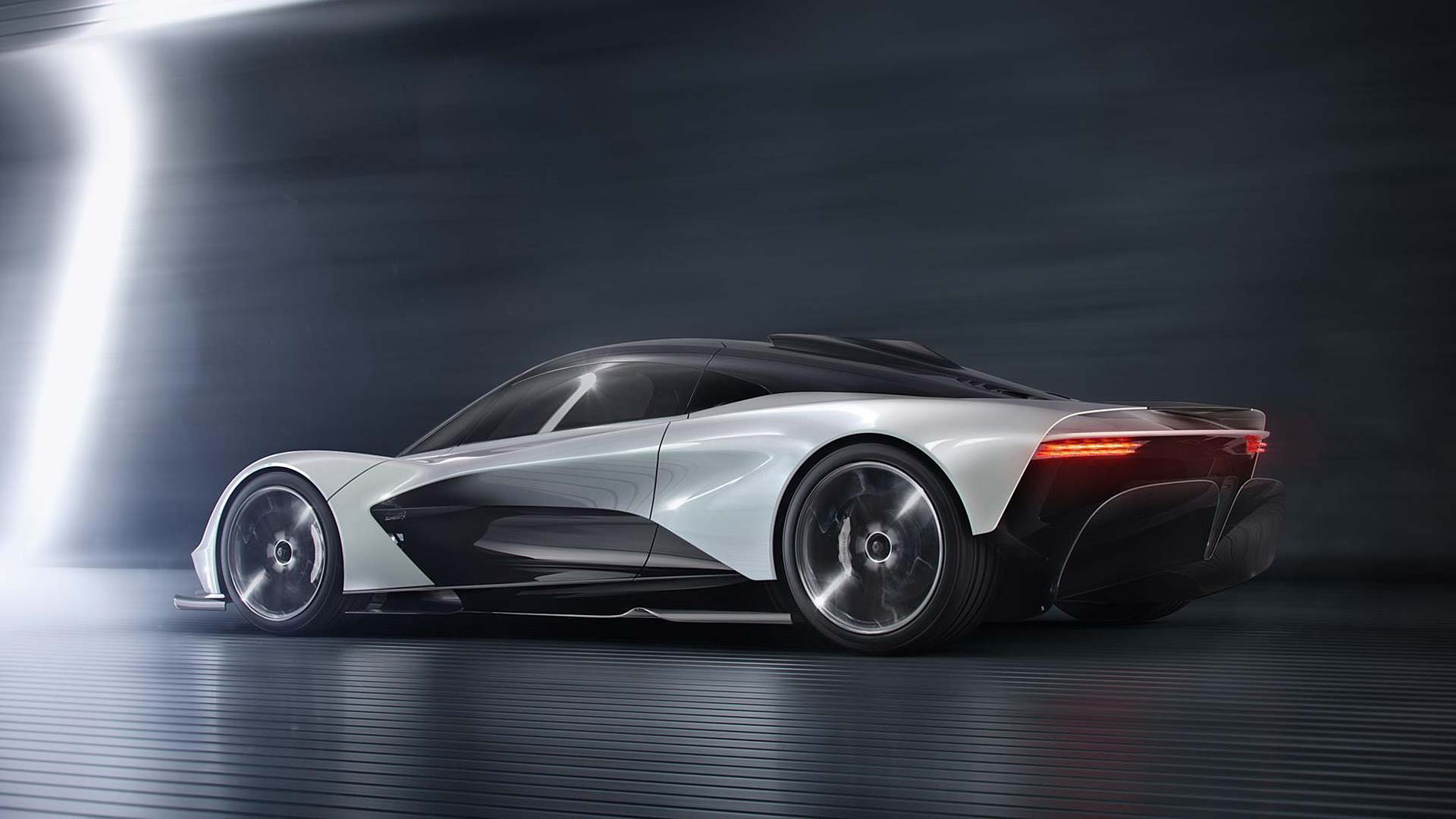
It’s the official name for the AM-RB 003 concept (pictured below), first shown at the 2019 Geneva Motor Show.

AM-RB 003

Valhalla will be the slightly more attainable mid-engined sibling to the Aston Martin Valkyrie. Indeed, the firm is already describing it as ‘son of Valkyrie’. 

Made entirely from carbon fibre, just 500 coupe models will be built.

In choosing Valhalla, Aston Martin continues its tradition of using ‘V’ names for its high-performance road cars. This dates back to 1951, when the hot version of the DB2 was designated Vantage. 

“Aston Martin model names always attract a lot of attention,” said the firm’s president and CEO Andy Palmer.

“They do so because they invariably capture an emotion or tell a story.”


What does Valhalla mean?

Aston Martin has taken the name Valhalla from Norse mythology. It literally translates, we’re told, to ‘the hall of the fallen’. 

Which is? ‘An enormous and majestic hall in Asgard, one of the Nine Realms’. The souls of those who are slain in battle go there: it is ‘a warrior’s paradise’. 

The people who go to Valhalla are chosen by the Valkyries: they are ‘a group of warrior maidens who gather the fallen at the behest of Odin, All-Father of Nordic Gods’. 

Valkyrie is, of course, the name of Aston Martin’s halo hypercar, which it recently announced will race at the Le Mans 24 Hours.

Aston Martin says the Valhalla, its third mid-engined hypercar, will be powered by a high-performance turbo V6 petrol engine and a battery-electric hybrid system.

AM-RB 003

It will also use F1-inspired technology and aerodynamics, “extending the trickle-down of genuine state-of-the-art F1 technology into a road-legal car”.

Aston Martin is even promising “next-generation aircraft morphing technology, to create a variable airfoil across the entirety of the rear wing”.

Palmer added that “For those fortunate enough to own one, I’m sure they will recognise and appreciate the name’s connotations of glory and happiness.

“There can be few more hallowed places than the driver’s seat of an Aston Martin Valhalla.”

Expected to cost from £1 million, production of the new Valhalla begins in 2021.

But while registrations are already open, those who want one may be disappointed: the order book is reportedly fully subscribed.


Advertisement

Taxi! New eco-friendly van is based on London cab

0

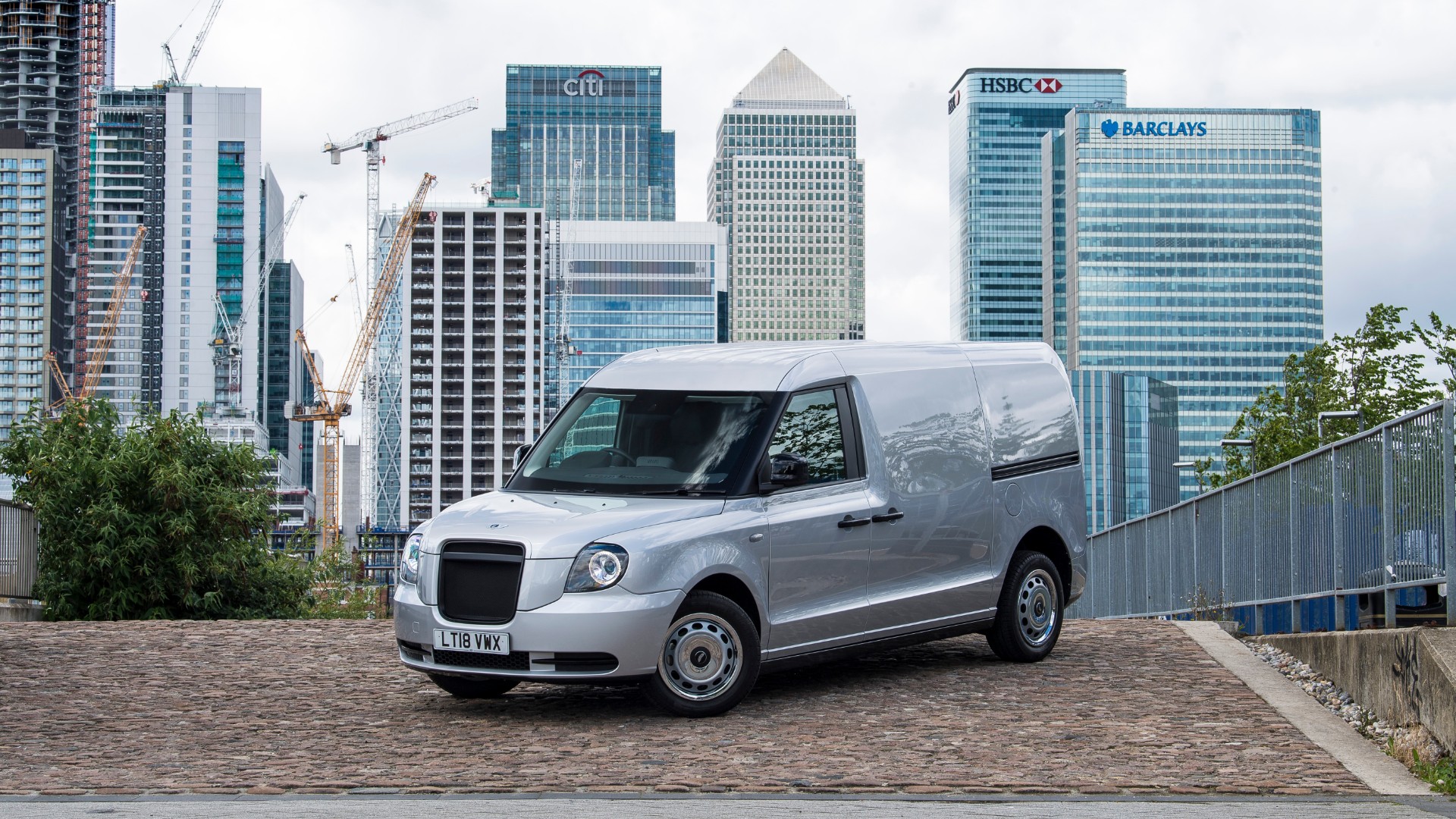
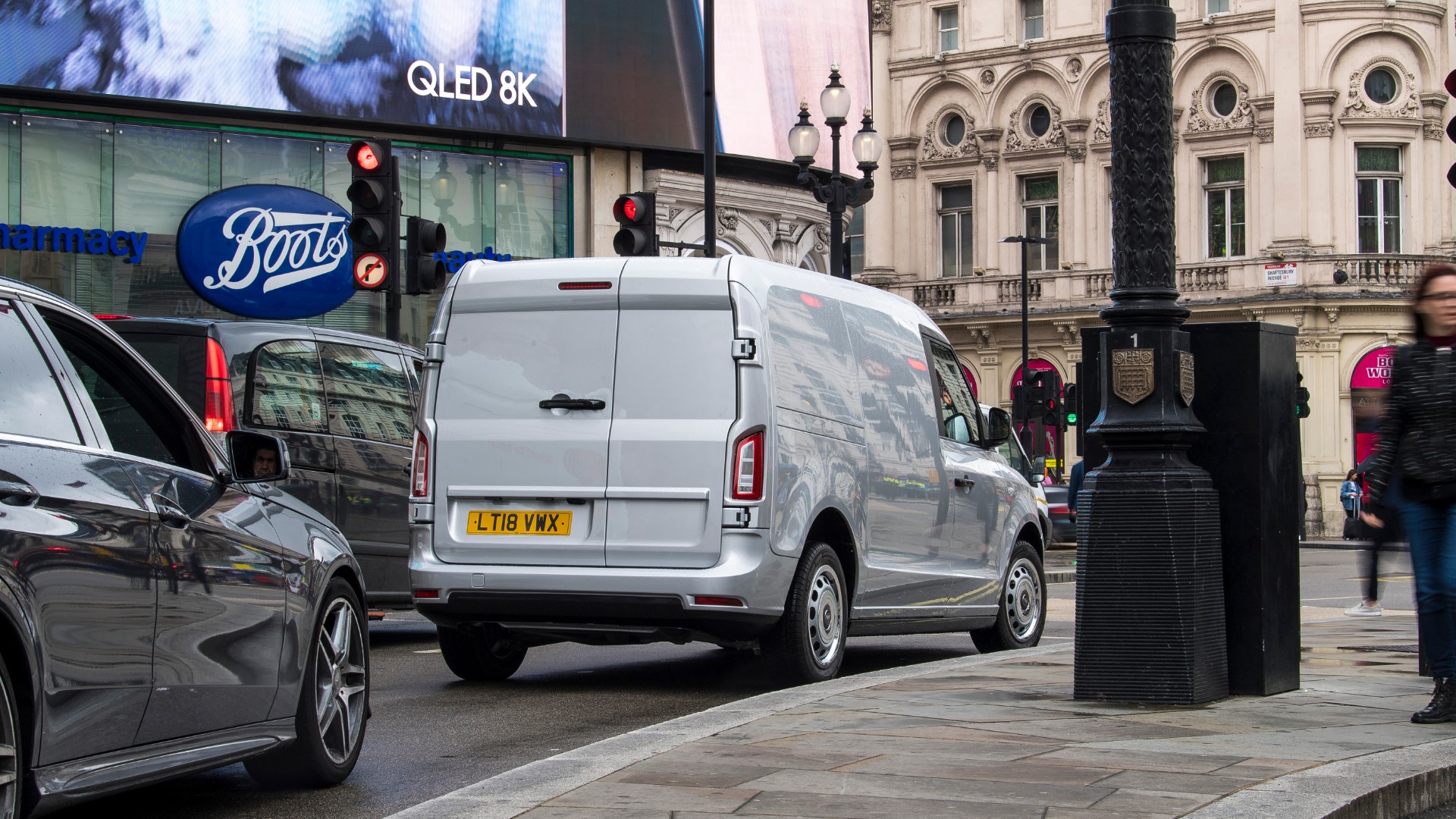
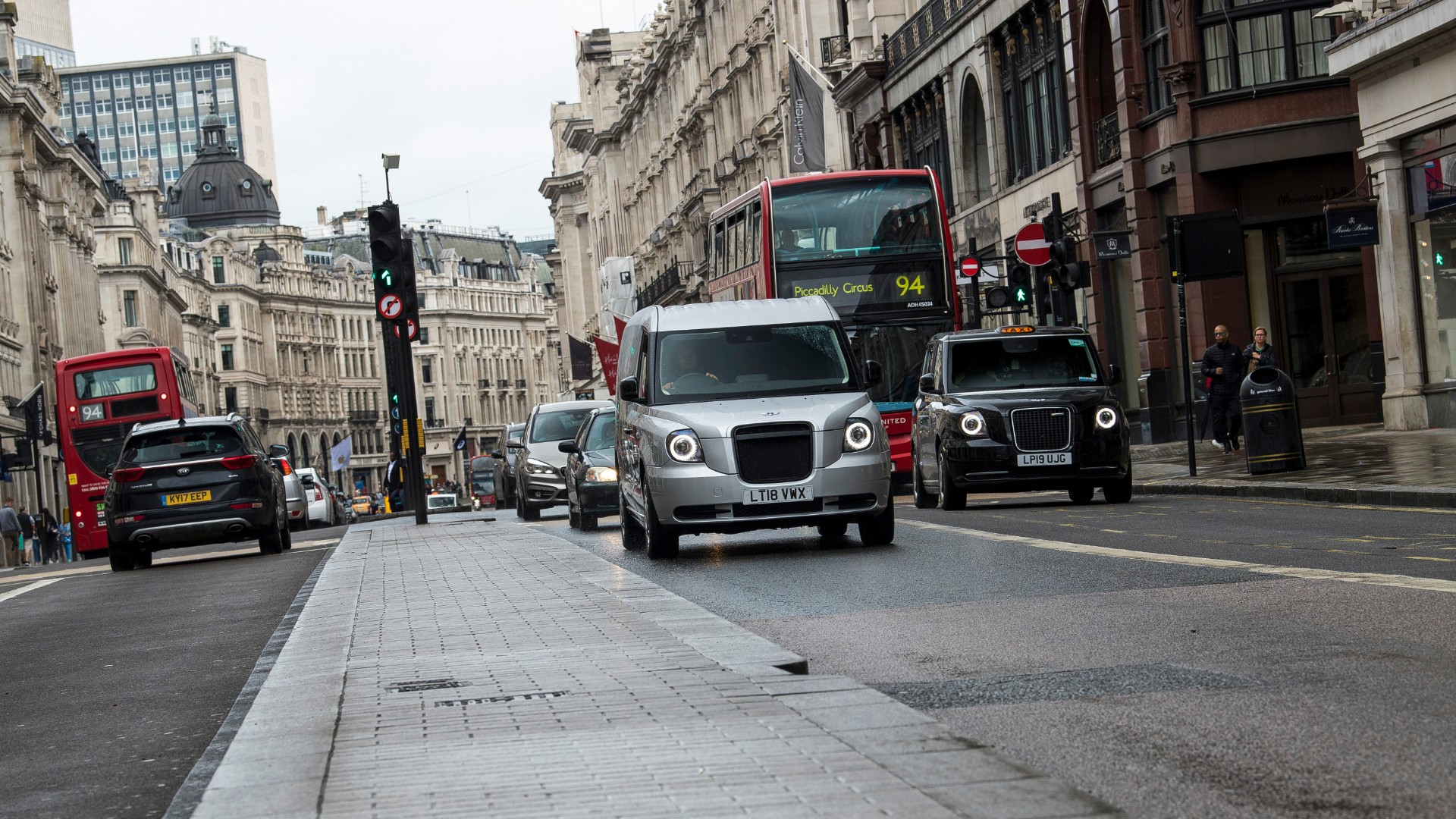
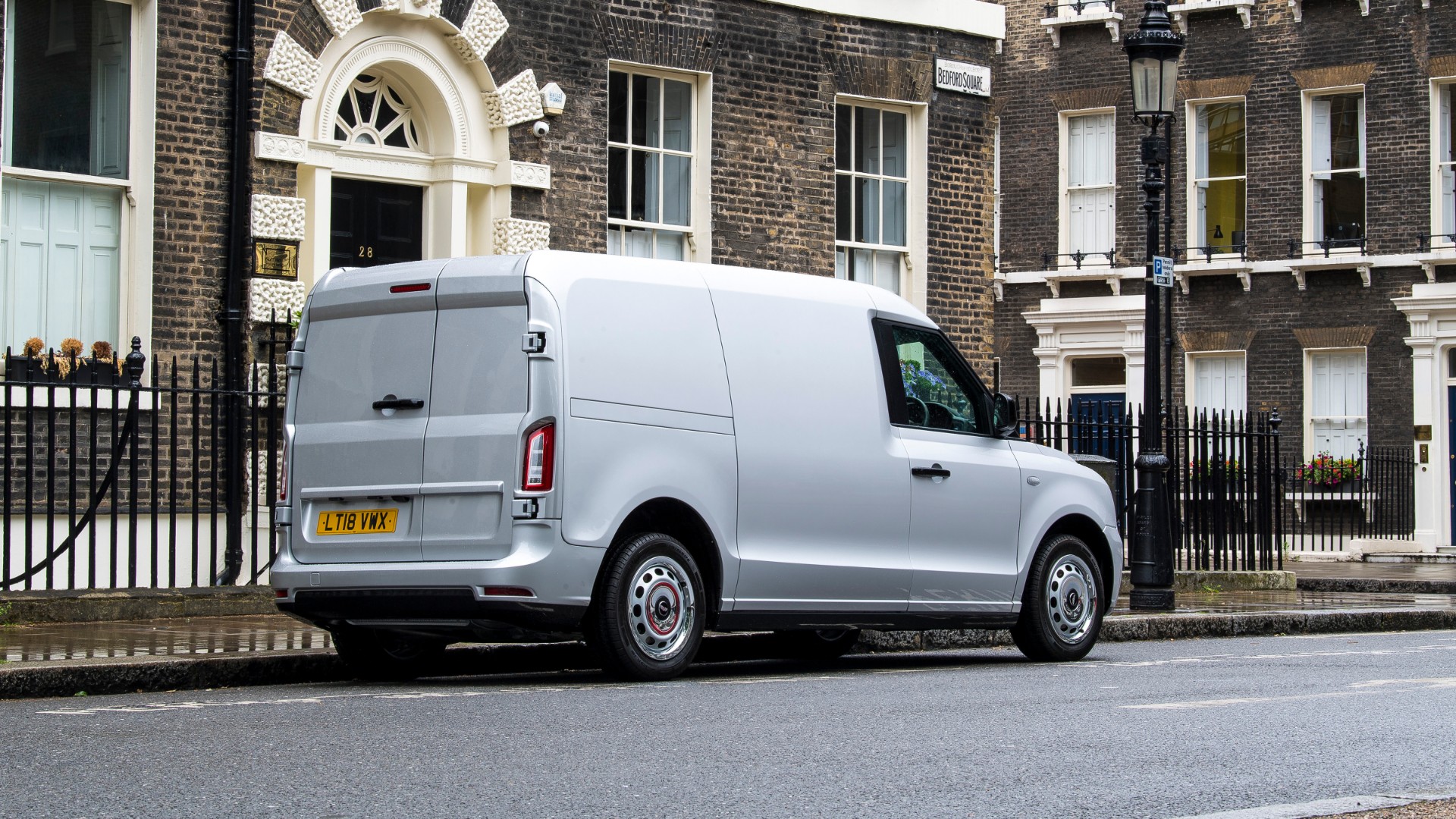
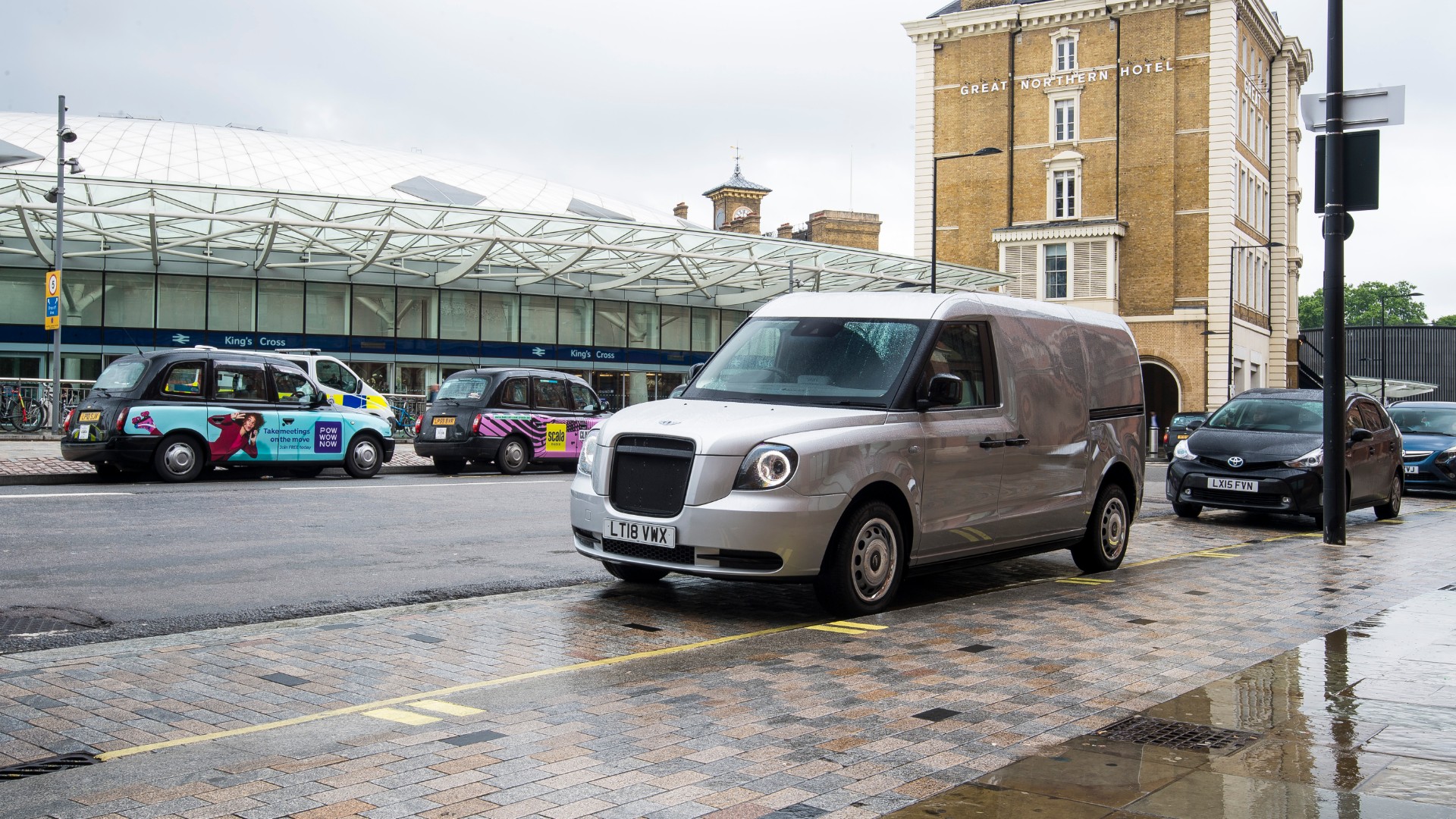
The new LEVC LCV van

LEVC, the company behind the TX London taxi, has launched a small van. Meet the LCV based on the familar, eco-friendly cab, and revealed by London Mayor, Sadiq Khan.

‘The clean and green urban delivery van of tomorrow is here,’ says LEVC. Like the TX cab, the ‘Light Commercial Vehicle’ uses the e-City range extender powertrain.

That means batteries and an electric motor, in combination with a petrol engine, for a total of 80 miles electric range, plus a total range of 377 miles.

The new LEVC LCV van

What makes this powertrain well-suited for a London cab, also works for a small delivery van. Eighty miles of electric range could see delivery drivers in the capital through an entire day before the petrol engine is called upon.

At present, the UK market for small vans is around 50,000 vehicles a year, while there are around 65,000 unique LCV journeys in London every day. That must amount to hefty ULEZ and congestion charge fees, all of which the LEVC LCV can avoid.

The new LEVC LCV van

The LCV is targeted to achieve a best-in-class total cost of ownership, compared with conventional petrol and diesel-powered vans. Durability is said to be world-class.

Along with the £3,500 scrappage incentive, plus up to £8,000 granted for ‘New Energy’ van adoption, the LCV could be a tempting prospect indeed for urban businesses.

The new LEVC LCV van

Van drivers should also be happy. The LCV has been benchmarked against premium MPVs for comfort and ease-of-operation on the inside. The TX cab’s super-tight turning circle features, too.

“The light commercial vehicle sector is the only growing vehicle traffic segment in London,” said LEVC CEO, Joerg Hofmann.

“This is due to the rapid rise in internet shopping – the Amazonisation of retail. Every day there are 65,000 unique LCV journeys into London, but mobility must not come at the expense of air quality.

The new LEVC LCV van

“We have combined our existing knowledge of the urban environment with EV technology that can put urban mobility on a sustainable pathway. Durable, reliable, efficient, cost-effective and high quality, that is our new LCV.

“London and the UK will be first to market, then we will extend the vehicle to Europe and further afield. Our goal is to be the leading European electric commercial vehicle provider.”

Advertisement

Learner drivers urged to be more aware of motorcyclists

0

New videos to improve safety of motorcyclists

In 2017, motorcyclists accounted for 19 percent of all deaths on the roads of Great Britain, which is why the Driver and Vehicle Standards Agency (DVSA) has created a series of ‘thought-provoking’ videos.

The videos will become part of DVSA’s learning materials, but will not feature in the theory test. Instead, the DVSA hopes they will encourage learner drivers to be more aware of motorcyclists when driving.

Motorcyclists account for just one percent of all road traffic in Britain, which makes the 19 percent death rate all the more alarming. In 2017, 2,656 motorcyclists were involved in accidents resulting from a driver or rider failing to look properly.

‘Devastating consequences’

The videos have been created with the help of road safety campaigner and motorcyclist Ria Brisland. 

Ria’s son, Nik, died in April 2015 after being involved in a collision with a car while riding his motorbike. 

Ria said: “Getting everyone to be aware of their fellow road users at all times is essential if we are to prevent collisions and the devastating consequences they can have on families.

“These new clips are thought-provoking and will make a difference to the way people look for bikers. They may prove the difference between life and death.”

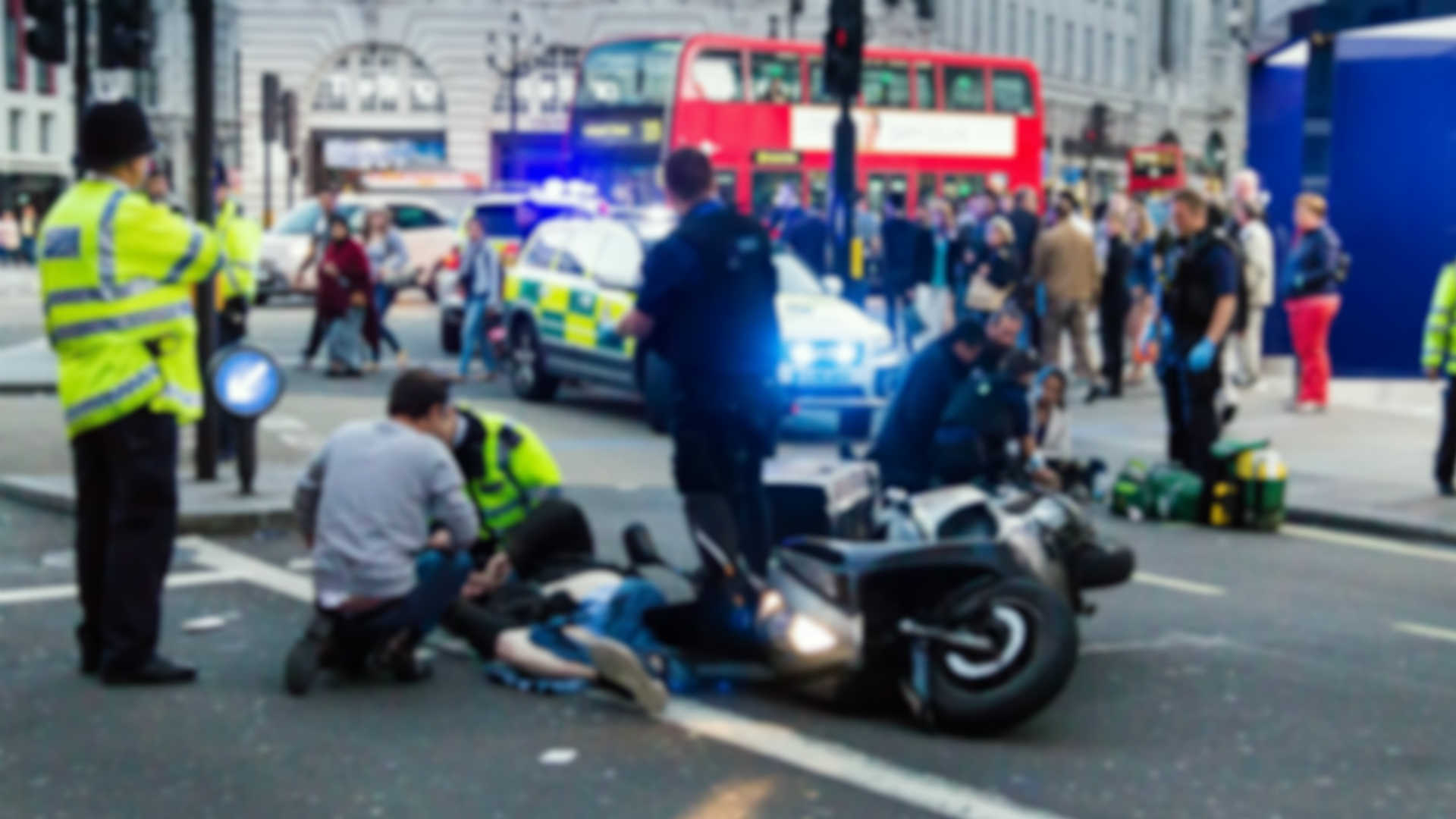
Motorcycle accident in London

Road safety minister Michael Ellis added: “Britain’s roads are among the safest in the world, but still far too many vulnerable people are involved in fatal and serious injury collisions each year.

“After reading Ria’s story and her concerns for fellow bikers, I was determined to help her and I am delighted that these clips will now be seen by millions of learners, helping improve road safety.”

Advice for road users:

  • Always look for motorcyclists before emerging from a junction
  • When turning right across a line of slow-moving or stationary traffic, look out for motorcyclists on the inside of the traffic you are crossing
  • Check mirrors and blind spots carefully
Advertisement

Government Road to Zero already behind schedule, say experts

0

JATO CO2 emissions

In July 2018, the government published its Road to Zero strategy, pledging to make almost every car and van zero-emissions by 2050.

But new analysis from the British Vehicle Rental & Leasing Association (BVRLA) shows that issues with taxation, charging point infrastructure and vehicle supply are ‘putting the brakes’ on UK EV registrations.

The BVRLA – which represents fleets that own or operate nearly five million cars and vans – is urging the government to ‘supercharge its electric vehicle strategy’ in order to meet its Road to Zero deadline.

Transport secretary Chris Grayling launched Road to Zero last year with an ambition for at least 50 percent – and as many as 70 percent – of new car sales to be ultra-low-emissions (ULEVs) by 2030.

Grayling said: “The Road to Zero Strategy sets out a clear path for Britain to be a world leader in the zero-emission revolution – ensuring that the UK has cleaner air, a better environment and a stronger economy.”

The BVRLA analysis uses a scorecard to chart the progress of the Road to Zero strategy, with the government said to be falling behind in the following key areas:

  • Tax policy: persuading large fleet buyers to go electric is one of the fastest ways to boost the number of electric vehicles on the road. A lack of clarity about what taxes will be levied on the buyers and users of EVs in future years means many fleet buyers are holding back
  • Charge point access: there are still too many rapid charge point ‘blackspots’ and the ability to roam between different charging networks remains a challenge
  • Leading by example: the government set a target to make 25 percent of its car fleet ULEV by 2022, but recent data indicates that only two percent are ULEVs, placing the Government way behind on its own plans

Fleets are ‘desperate and frustrated’

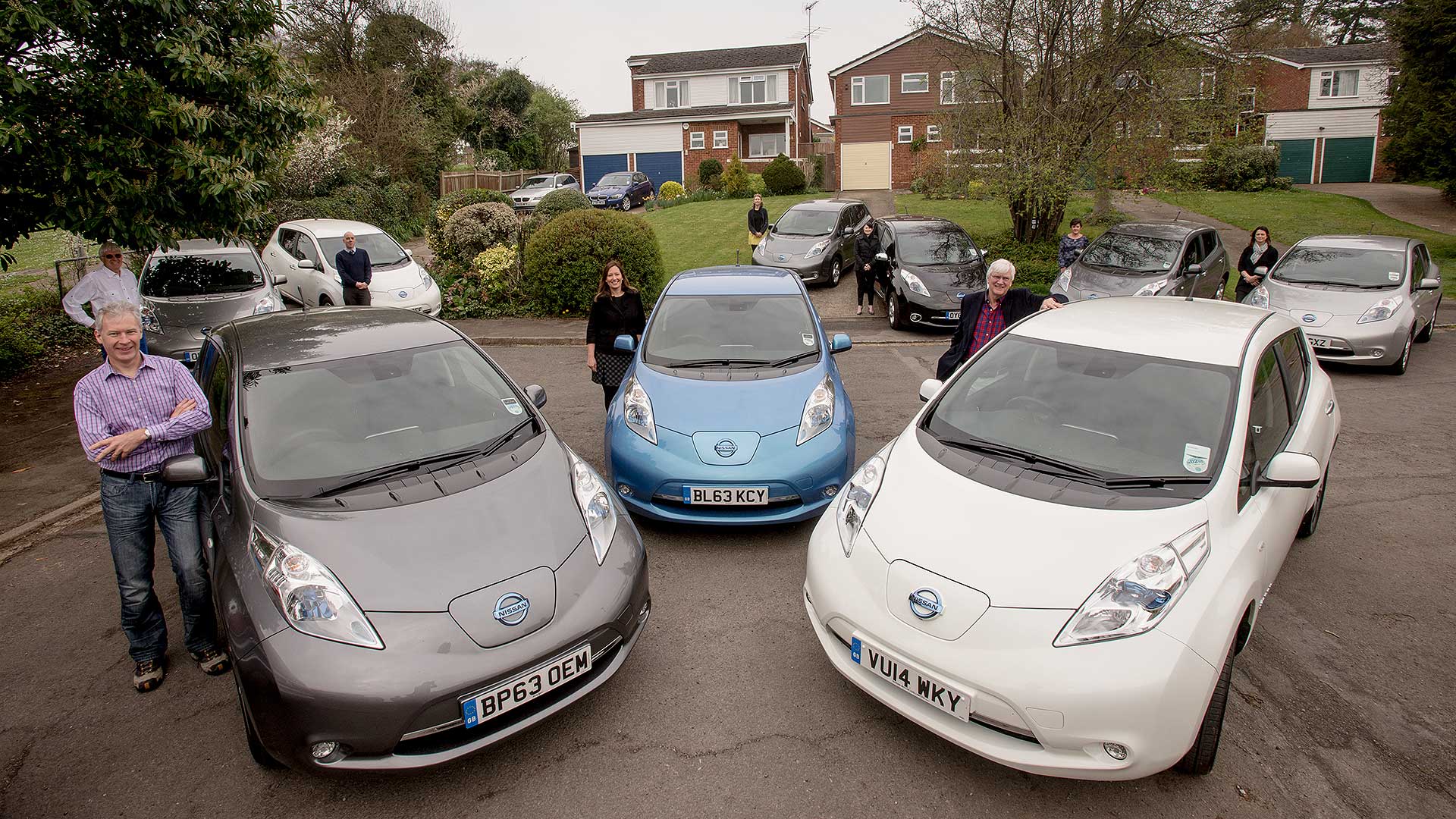
Electric Nation

Gerry Keaney, BVRLA chief executive, said: “Fleets across the UK have committed to this transition and are leading the zero-emission vehicle surge.

“Our research has found that they are desperate for clarity on future taxation and incentives, want better access to public charging and are frustrated at lead-times of over 12 months for the most popular EVs.”

The BVRLA has three recommendations to ‘get the UK’s electric vehicle strategy back on track’. These are:

  • Providing a five-year road map for motoring taxes and EV incentives
  • Setting a national quota for EV registrations that ramps up between now and 2030
  • Mandating universal methods of access and payment for public charge points

Details of the Road to Zero strategy can be found here.

ALSO READ

UK new car investment plummets as firms spend on no-deal Brexit planning

Why ‘ghost’ road markings pose a danger to self-driving cars

New Volkswagen T-Cross TDI proves why diesel is doomed

Advertisement

Revealed: the craziest things taken to a test drive

0

Horse taken on a test drive

What would you take along to a test drive? A friend, perhaps? Maybe a guide to the car in question? Two eminently sensible suggestions.

But we suspect you wouldn’t take a horse to a test drive. Or a rifle.

These are just two of the things car buyers have taken to a test drive, according to online used car platform, CarGurus.

It surveyed thousands of used car dealers to discover the most unusual items that customers have turned up to a test drive with over the last 12 months.

Many customers bring their pets – including fish, cats, a Great Dane in a child’s car seat, snakes and even a horse – while several dealers reported the ashes of dead relatives coming along for the test drive.

Meanwhile, musicians often bring their instruments to check they will fit in the vehicle. Dealers reported seeing a double bass, cello, drum kit and an accordion.

Musical instruments taken on a test drive

Chris Knapman, editor of CarGurus said: “These examples might be at the extremes of what car buyers have brought along on test drives, but they do highlight the importance of making sure a potential purchase is fit for purpose.

“After all, it’d be a shame to get your new car home only to discover your beloved 12-foot pet snake didn’t fit in the boot!

“Even for those with more conventional requirements we’d still encourage taking along items to ensure a car fits your needs, whether it’s child seats, a baby buggy, golf clubs or anything else you plan to carry on a regular basis.”

Top 10 most bizarre things taken to a test drive

  1. A ‘lucky’ egg
  2. A horse
  3. A rifle
  4. A 12-foot pet snake
  5. An accordion
  6. Two parrots
  7. A mattress
  8. The ashes of a deceased relative
  9. Slippers
  10. A truncheon
Advertisement