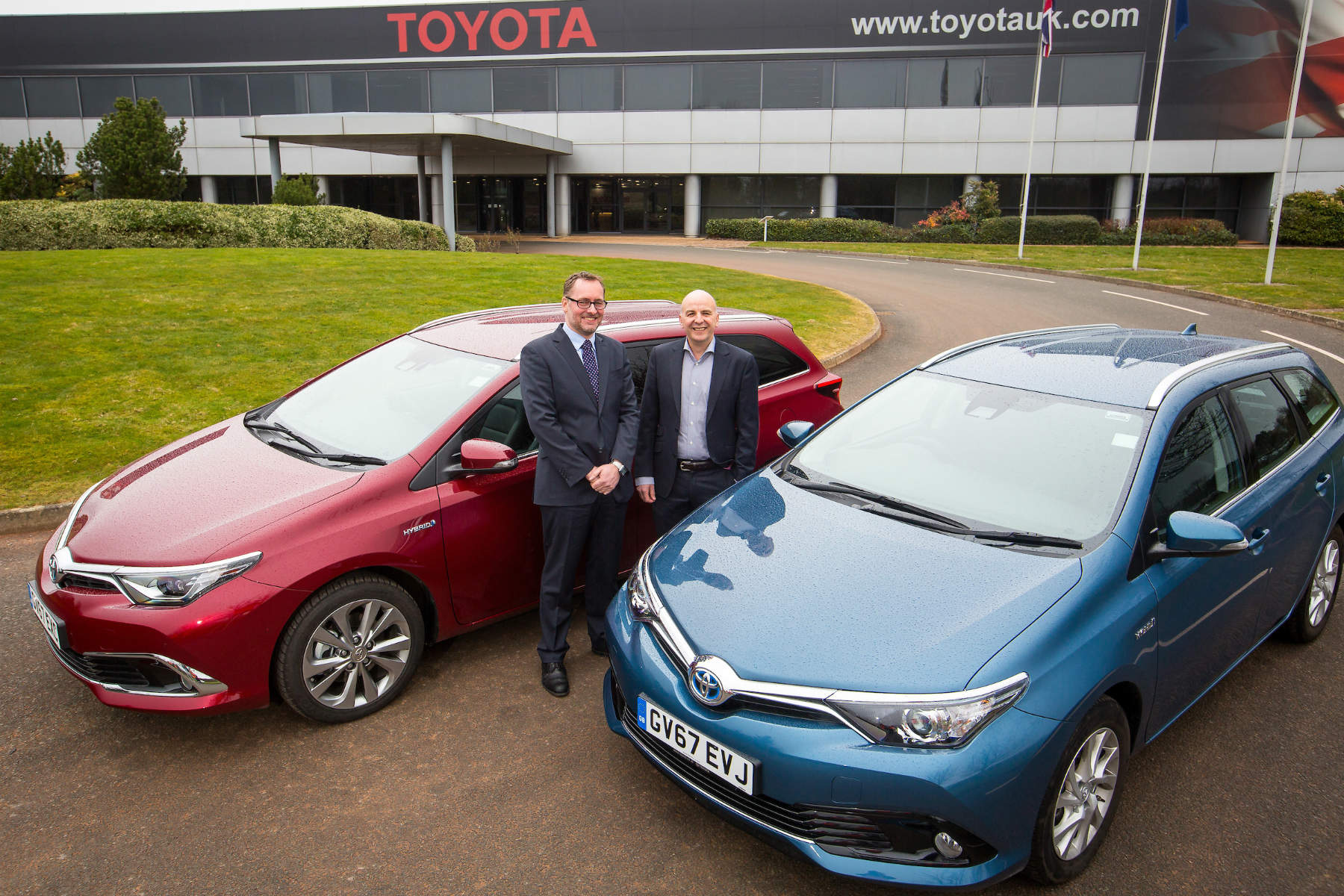
More than 400 diesel company cars used by government department Defra are being swapped for hybrid models under a shake-up intended to reduce harmful CO2 and NOx emissions.
Defra – the government department responsible for the environment, food and rural affairs – is replacing a significant proportion of its diesel car fleet with the British-built Toyota Auris hybrid within four of its organisations: the Environment Agency, Marine Management Organisation, Rural Payments Agency and Animal and Plant Health Agency.
“The cars from these four Defra organisations already represent one of the lowest CO2-emitting fleets in the UK,” said Defra’s strategic fleet manager, Jim Gregory.
“We have reduced nitrogen oxide gases (NOx) emissions, linked to respiratory illness, by nearly 10 percent, and CO2 by nearly 30 per cent, across our 7,000 cars, commercial vehicles, plant and machinery. We have challenged ourselves to go even further by buying only hybrid or electric vehicles from 2025, replacing our current fleet of diesels with cleaner vehicles and setting targets for NOx as well as CO2 emissions.”
The changeover of Defra’s fleet has already begun, and will continue throughout 2018 as an ongoing rolling replacement process.
It comes as figures revealed by Go Ultra Low today show that popularity of 100 percent electric and plug-in hybrid vehicles continued to grow in the first quarter of the year, following a record-breaking 2017. The first three months of this year saw 13,327 new cars registered to UK drivers, a 16% increase on the same quarter last year.
“This continuous growth in the plug-in market shows no signs of slowing down,” said Go Ultra Low’s head, Poppy Welch. “Month after month, we are seeing registrations increase, demonstrating that the public appetite for plug-in motoring is growing. With the range of pure electric cars constantly increasing and plug-in hybrids continuing to offer the best of both worlds, it’s getting easier for motorists to see the benefits of electric motoring.”