In the past, one of the main stumbling blocks around electric cars was range anxiety: the worry about whether a car can travel far enough on a full charge to meet the driver’s needs.
With many EVs now rated for a realistic range of 200 miles or more, that worry is slipping away. But it’s being replaced by something else: charge anxiety.
That’s according to Autovista Group, which highlights the mismatched language around electric car charging, and the vast differences in charging performance.
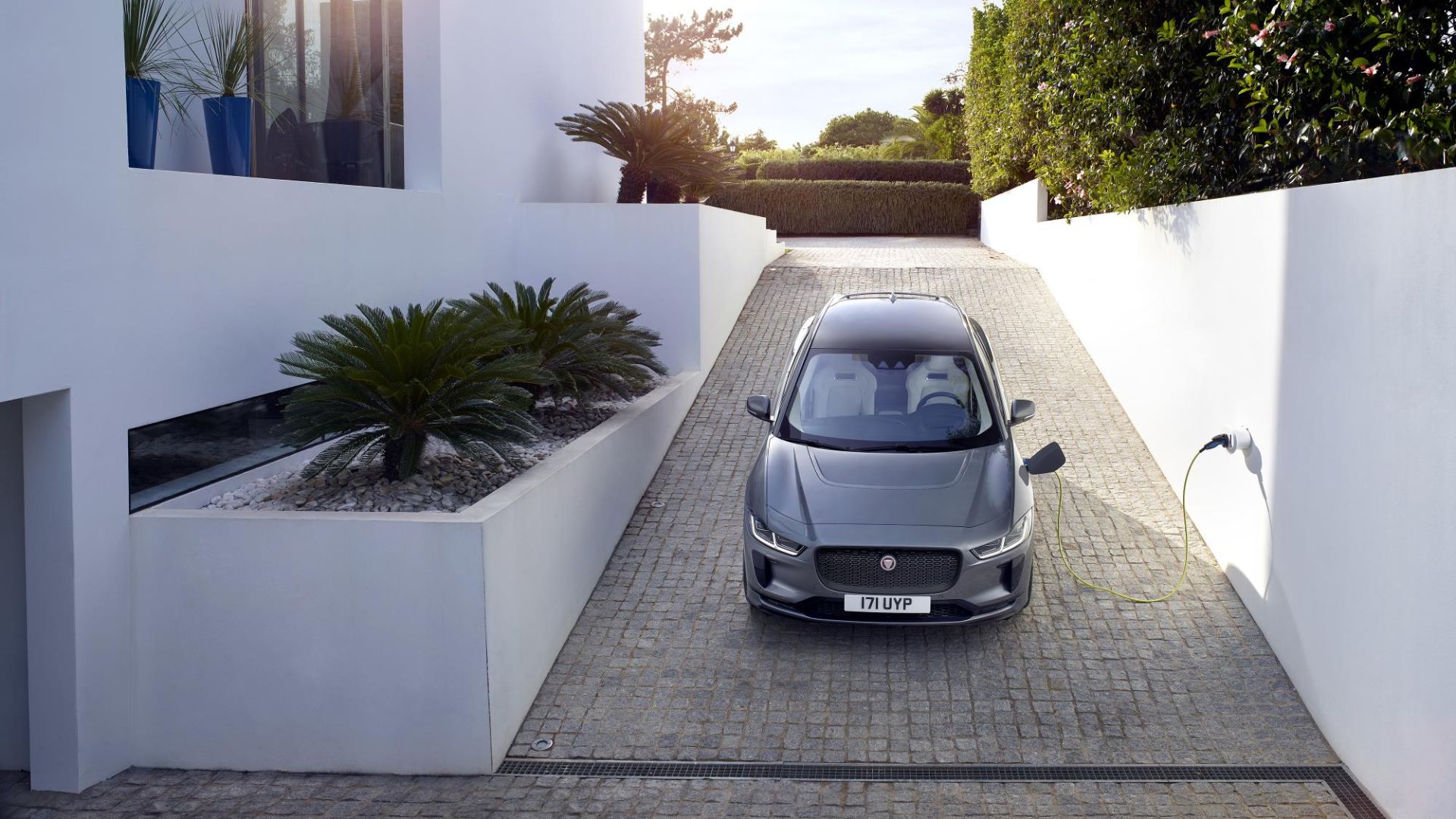
While the Jaguar I-Pace, Audi E-tron, and even budget EVs such as the Hyundai Kona and Kia e-Niro, now rival the likes of Tesla for range, charge times can vary hugely.
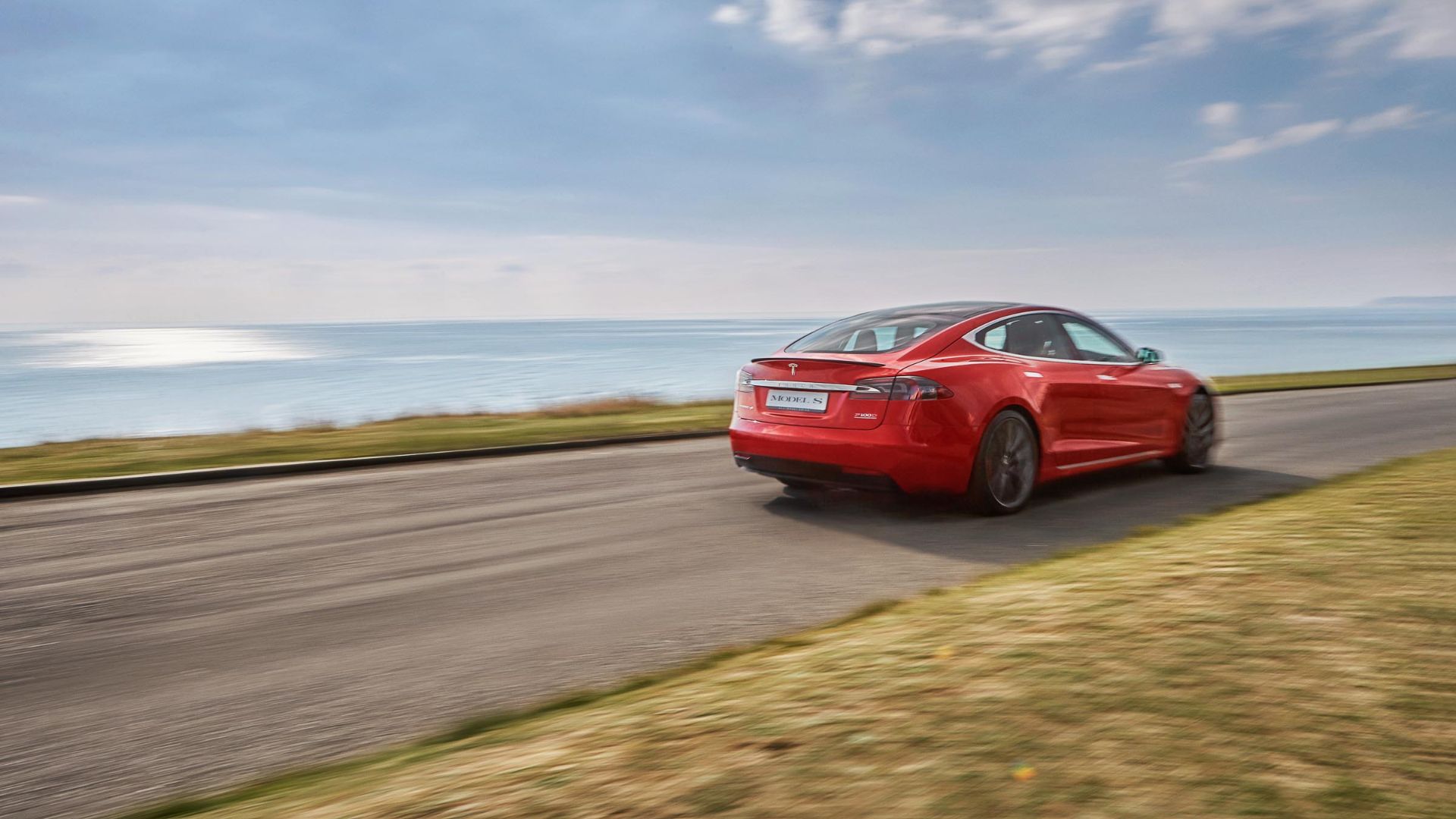
A Tesla Model S will fill up in 6.5 hours, assuming you’re charging from a 22kW-capable wall box. That’s because of its three-phase 22kW on-board charger. By contrast, the Jaguar, with a similar battery size of 90kWh, needs 13 hours due to its lower 7.2kW on-board charging capability.
There is no universal standard for rate of recharge, either. Some carmakers quote 0-100 percent charge times, while others quote 10-100 percent, or even 20-80 percent.
So what buyers are faced with are different standards of charging, by different measurements, and to different levels. Capable of 200 miles or more their car may be, but exactly what will they face when plugging it in?
Ralf Sulzbach and Jennifer Bilatscheck of Autovista Group see two things that need to happen.
Firstly, a standardisation of faster onboard chargers for cars with batteries of 50kWh or more. That means three-phase on-board chargers with 11kW AC charging at minimum, and 22kW to be optionally available.
Secondly, consistent standards of charge time. Autovista reckons DC charge times for a quick 20-80 percent fill-up on the road, and AC times for 0-100 percent at home should be standardised.
Drivers would then be better-equipped to understand and assess what they’re buying. It’s an age-old statement, but if electric cars are to take over from internal combustion, charging needs to be as easy as pulling up at the pumps.
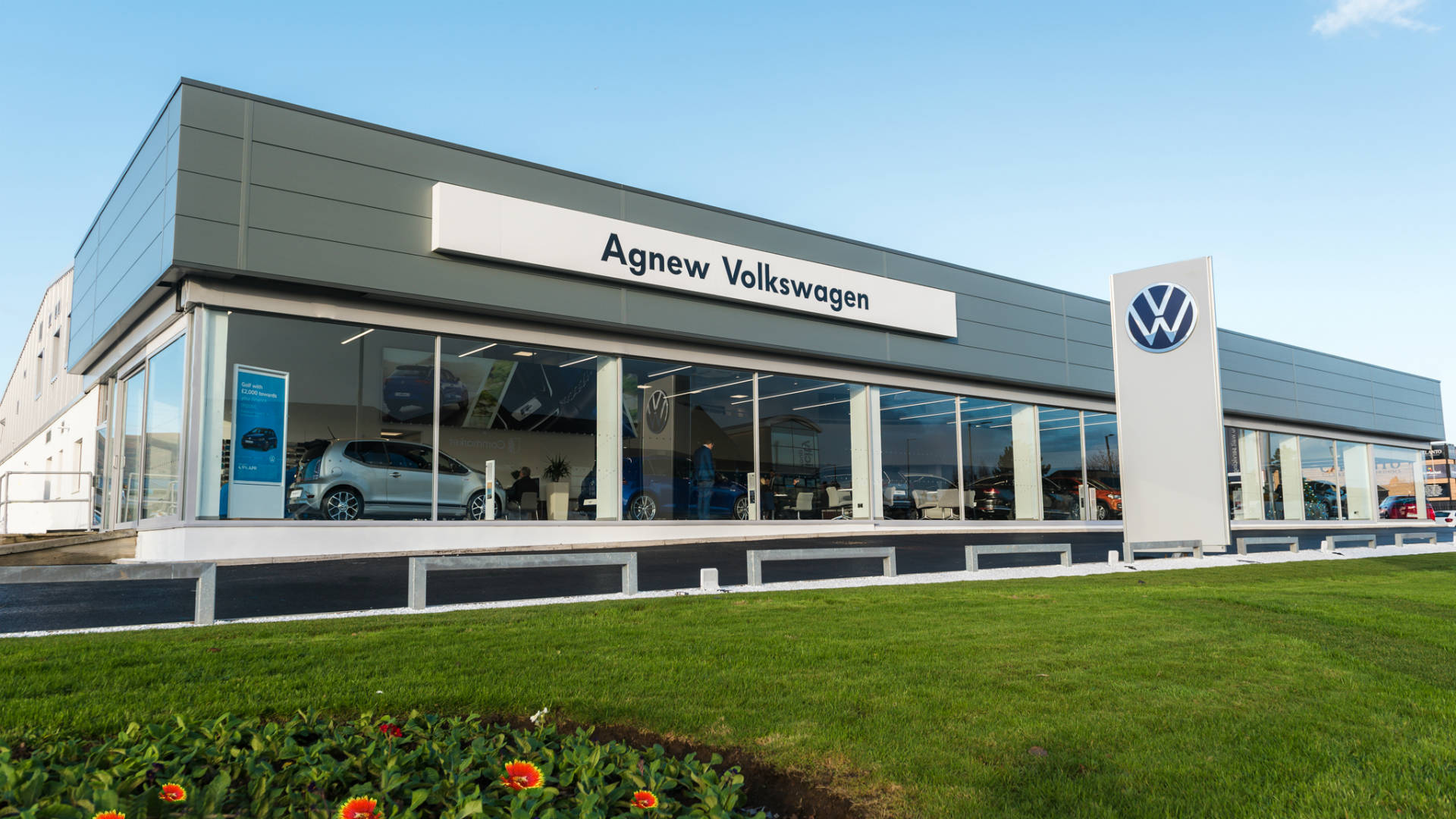
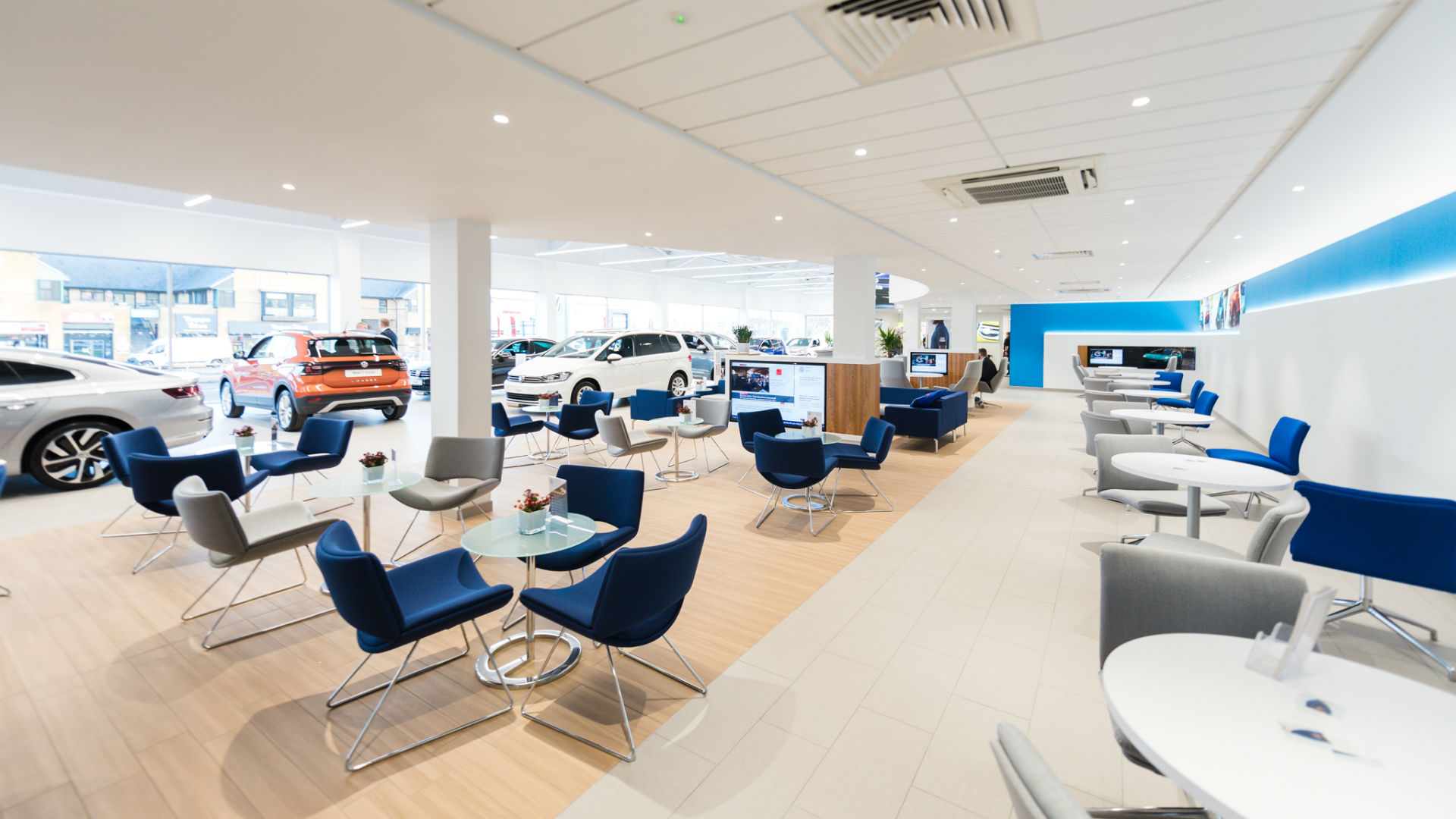
Meet the Volkswagen dealer of the future. Whether you’re collecting a new ID.3 electric car or servicing your ageing Golf diesel, it’s likely the showroom will look like this.
Agnew Volkswagen is the first dealer in the UK to display the company’s new branding. Note the illuminated totem displaying the new logo. The Belfast dealer spent £2 million on the refurbishment.
The coffee will remain hotter than the sun, the suits worn by the sales team will be shinier than a freshly minted penny, and the smell of cleaning products will be as overpowering as ever. But the showroom and some of the cars are all-new.
Inside, the fixtures and fittings showcase Volkswagen’s new ‘Vibrant Power’ ethos, with a colourful palette and a ‘heavier focus on people’. There’s a dedicated area for electric vehicles, ready for the arrival of the ID.3 in 2020.
Volkswagen says the new identity will be appearing at dealers throughout 2020, with the rollout expected to be complete by spring 2021.
‘Exciting new tone’
Brian Robinson, franchise director at Agnew Volkswagen said: “These new and significantly improved facilities come in response to the expectations of our customers in the Greater Belfast region and the performance of Agnew Volkswagen in the long-term. We are proud to be the first showroom to showcase the new retail experience and branding in the UK, which now provides a luxurious environment for our customers and staff.”
Chris Stevens, head of network development at Volkswagen UK, added: “The new Volkswagen logo represents the automotive world into which we are moving – digital, intuitive and user-friendly. All of this is happening while Volkswagen moves into a new era of electrification, and democratises electric mobility, just as the Beetle democratised mobility and the Golf, luxury.
“The new ID family of pure-electric models will usher this in as the electric ‘people’s car’, while the revamped logo signifies this step-change to the world.”
Plenty of factors come into play when choosing your first car, many of them involving money. Buy the wrong car and you could pay out more for your insurance premium than a down-payment. This list of the 10 cheapest cars for new drivers factors in insurance, buying and fuel, and comes courtesy of Compare the Market. We’ve ordered the list based on insurance premiums, so let’s count them down…
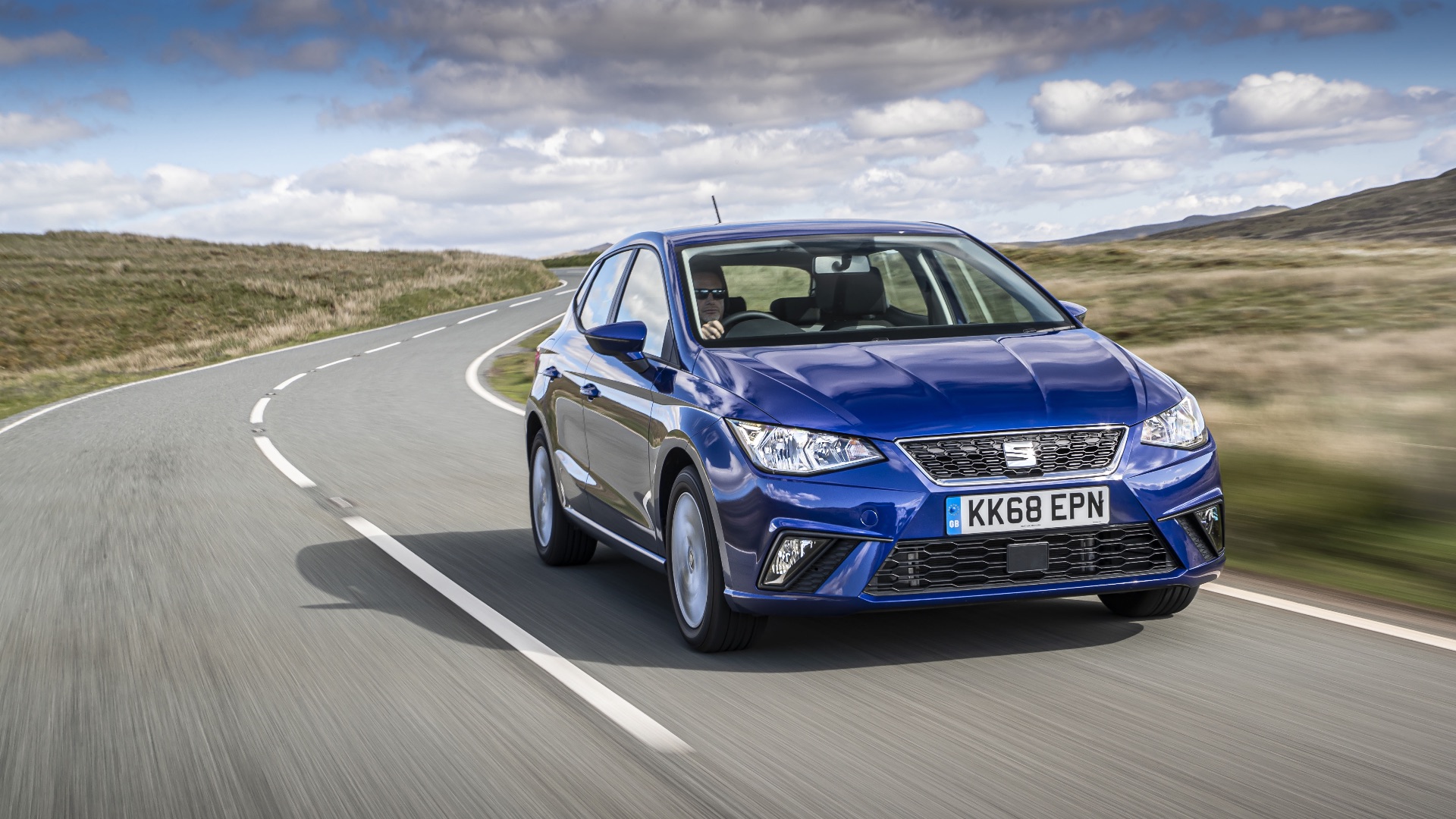
10. Seat Ibiza
We begin with the Seat Ibiza. Cousin to the Volkswagen Polo, it adds a bit of Spanish style to the German dependability beneath its skin.
The Ibiza range starts at £15,600 for the basic 1.0-litre petrol. It achieves fuel economy of 50.4mpg, but insurance is a bit pricey. The average premium is £1,199.
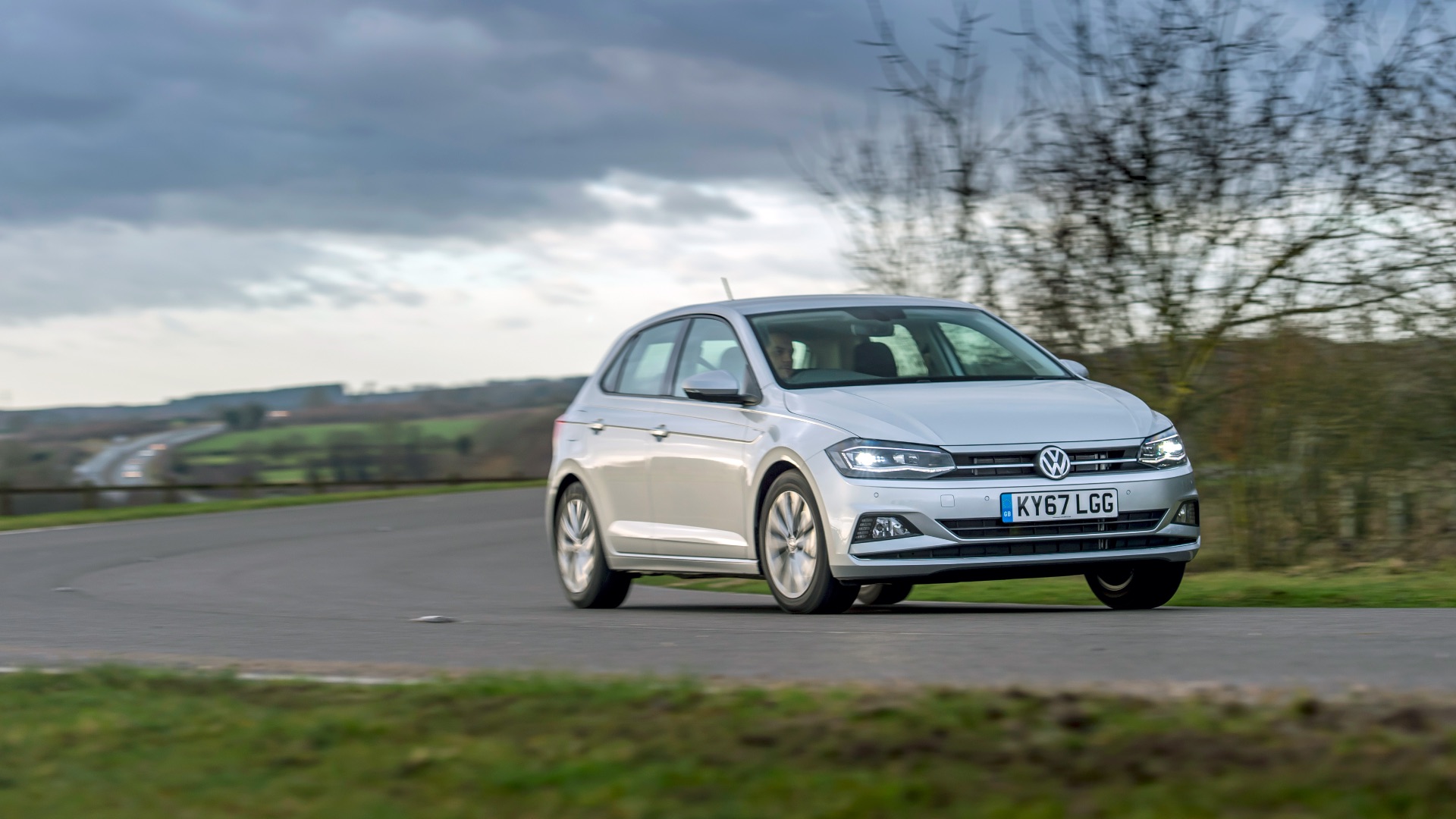
9. Volkswagen Polo
Volkswagen’s sub-Golf supermini has long been a popular choice among new drivers, bringing strong resale values – thank the VW badge – and solid quality to the table.
The Polo range opens with the 1.0-litre three-cylinder petrol. It produces 80hp and can manage 48.7mpg, according to official tests. It’s in insurance group six, three above the Ibiza, although the average premium is cheaper, at £1,160.
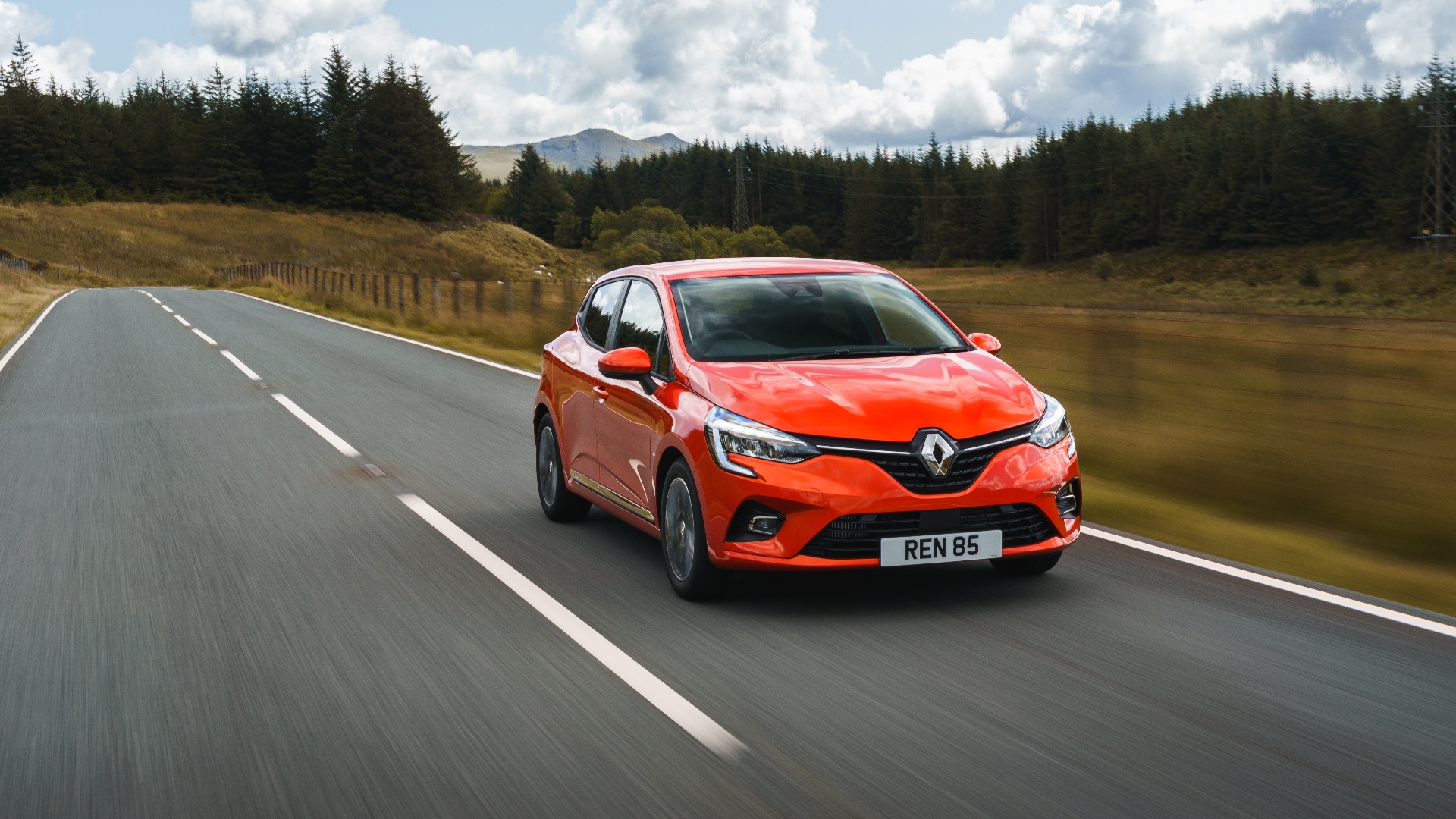
8. Renault Clio
Another long-serving favourite of the first-time driver is the Renault Clio. Safe, stylish and affordable, the Clio has been popular with the newest to our roads for more than 25 years.
The cheapest new Clio will cost you £14,295. It’s more efficient than the Polo and Ibiza, eking out 54.3mpg from its 1.0-litre TCe engine. It’s the last remaining car on this list with an insurance premium over £1,000, costing £1,117 on average.
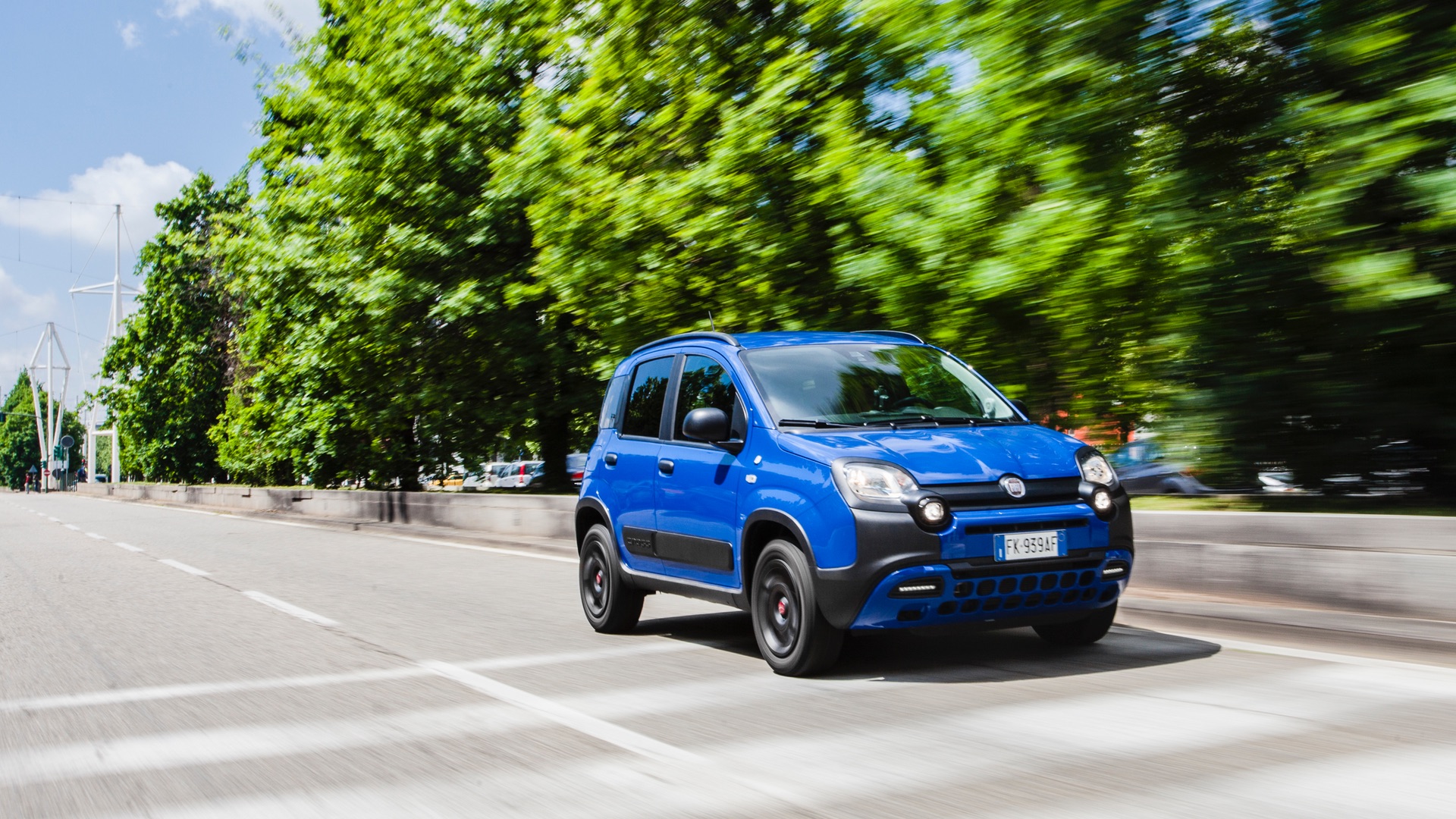
7. Fiat Panda
Fiat’s quirky small car might sit in the shadow of the 500, but it keeps the attention of the budget-conscious driver. It’s going mild-hybrid in 2020, which will improve fuel economy and emissions.
The entry-level 1.2-litre petrol Panda is good for 44.1mpg – not up to the standards of previous entries. With a £10,080 starting price, it does undercut them by more than £4,000, however. It’s also cheaper to insure; a group three rating means an average premium of £915.
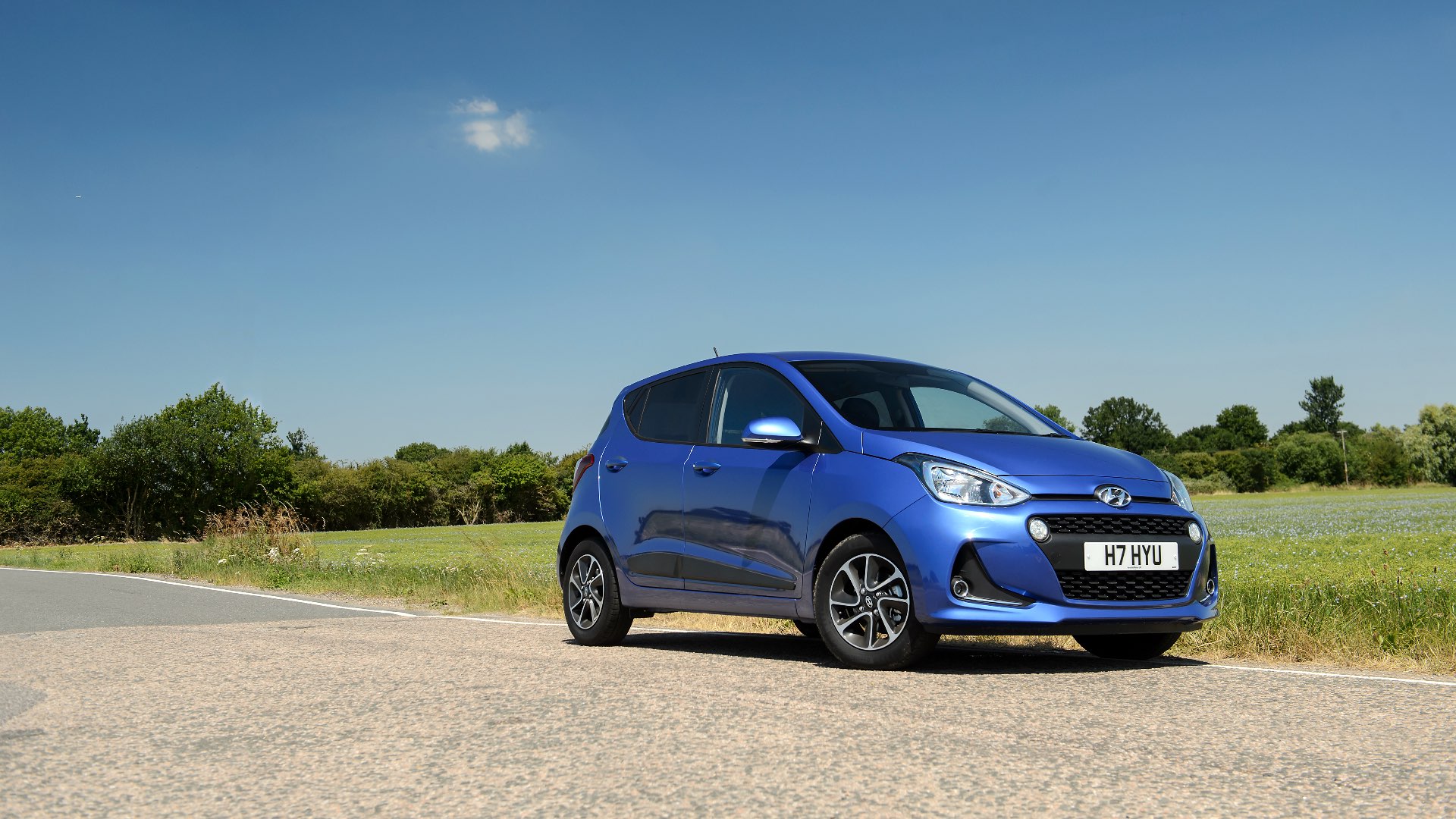
6. Hyundai i10
Likewise, the Hyundai i10 has long been a champion of the budget-conscious. It may not have the style or badge kudos of others, but it comes with an impressive five-year warranty.
The i10 can be yours for £10,025 if you choose the 68hp 1.0-litre engine. It’ll return 55mpg if you drive carefully, and cost £915 on average to insure.
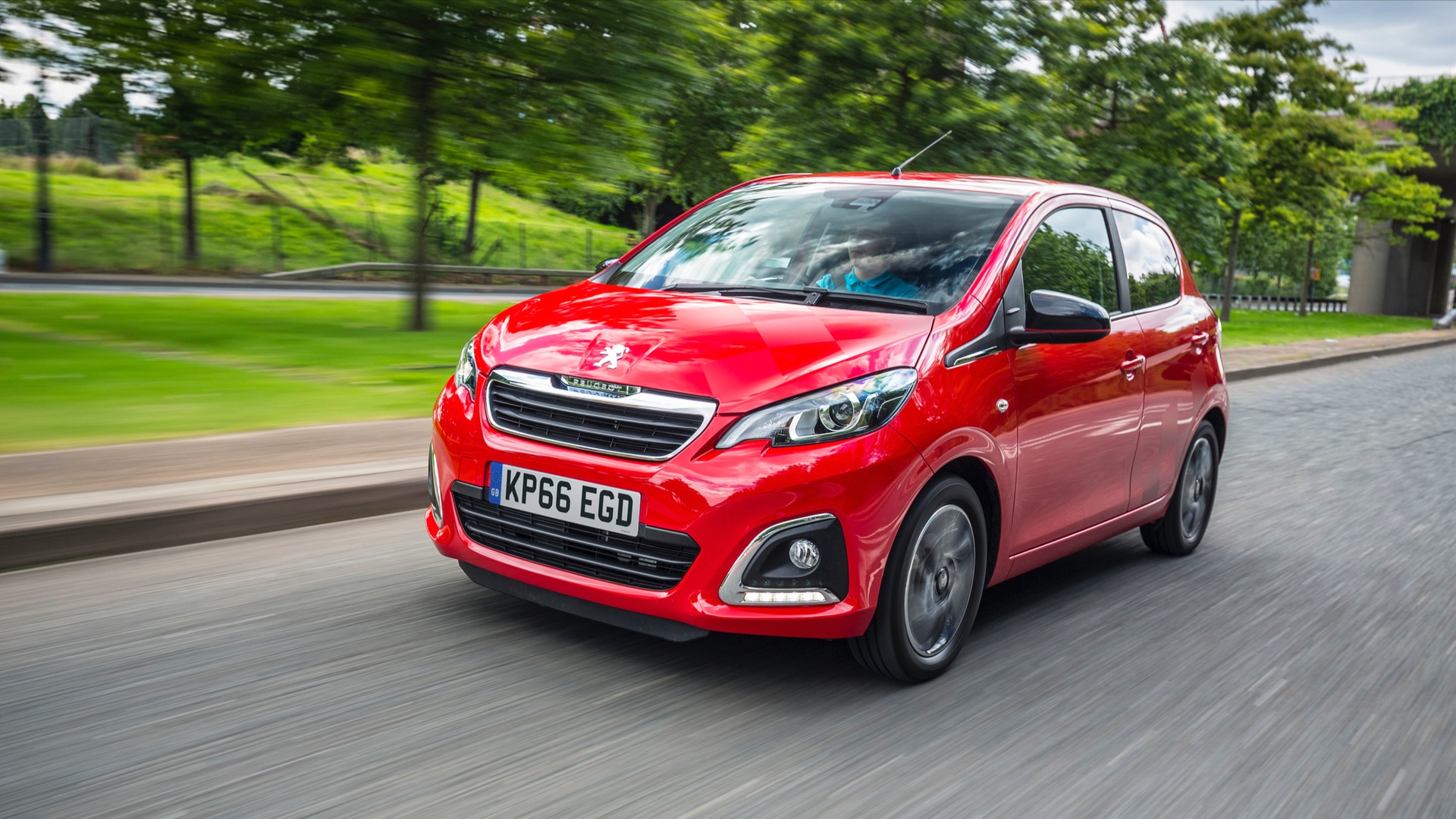
5. Peugeot 108
The Peugeot 108/Citroen C1/Toyota Aygo triplets have been on sale for 15 years now. Tiny engines, low running costs and excellent maneuverability give them enduring appeal.
The 108 is a little more expensive than its Citroen sibling (found further up this list), starting at £12,265. It’ll deliver an impressive 55mpg from its 1.0-litre petrol engine and insurance is group six. That’s an average premium of £899.
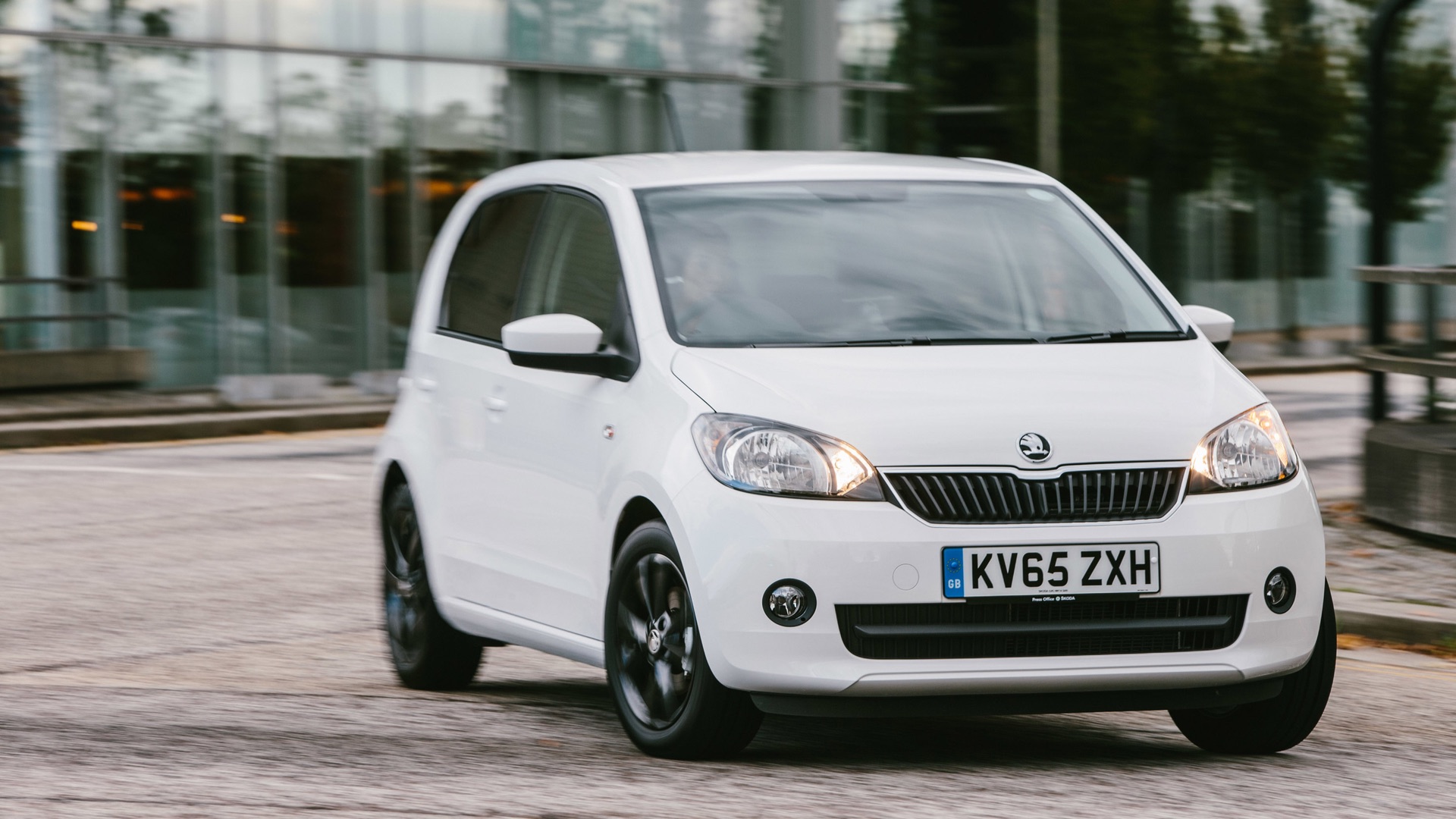
4. Skoda Citigo
Skoda has recently discontinued the petrol-powered Citigo in favour of the iV electric version. If you can find one at a dealer, it’s likely to be great value.
List prices for the petrol Citigo started at £8,890 and it achieves 54.3mpg. As for insurance, that will set you back £871 on average.
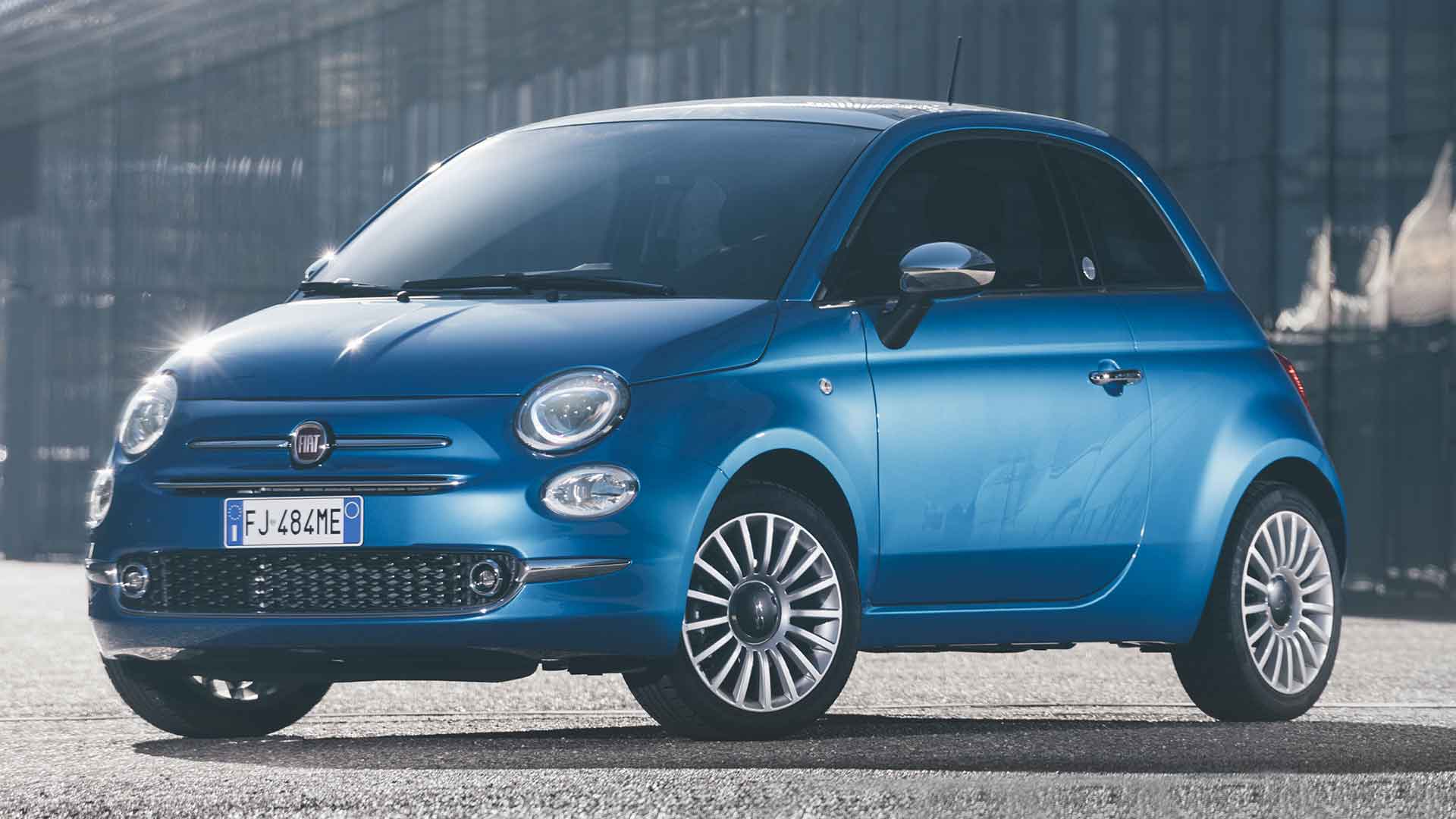
3. Fiat 500
After 13 years on sale, the Fiat 500 is still going strong. Its inimitable sense of style perhaps outweighs the fact it’s behind on tech and rather long in the tooth. Like the Panda, it’s also going mild-hybrid for 2020.
At present, you can get into a 500 for £12,165. Its 70hp 1.2-litre four-cylinder engine manages 51.3mpg and it’s insurance group two – with average premiums of £870.
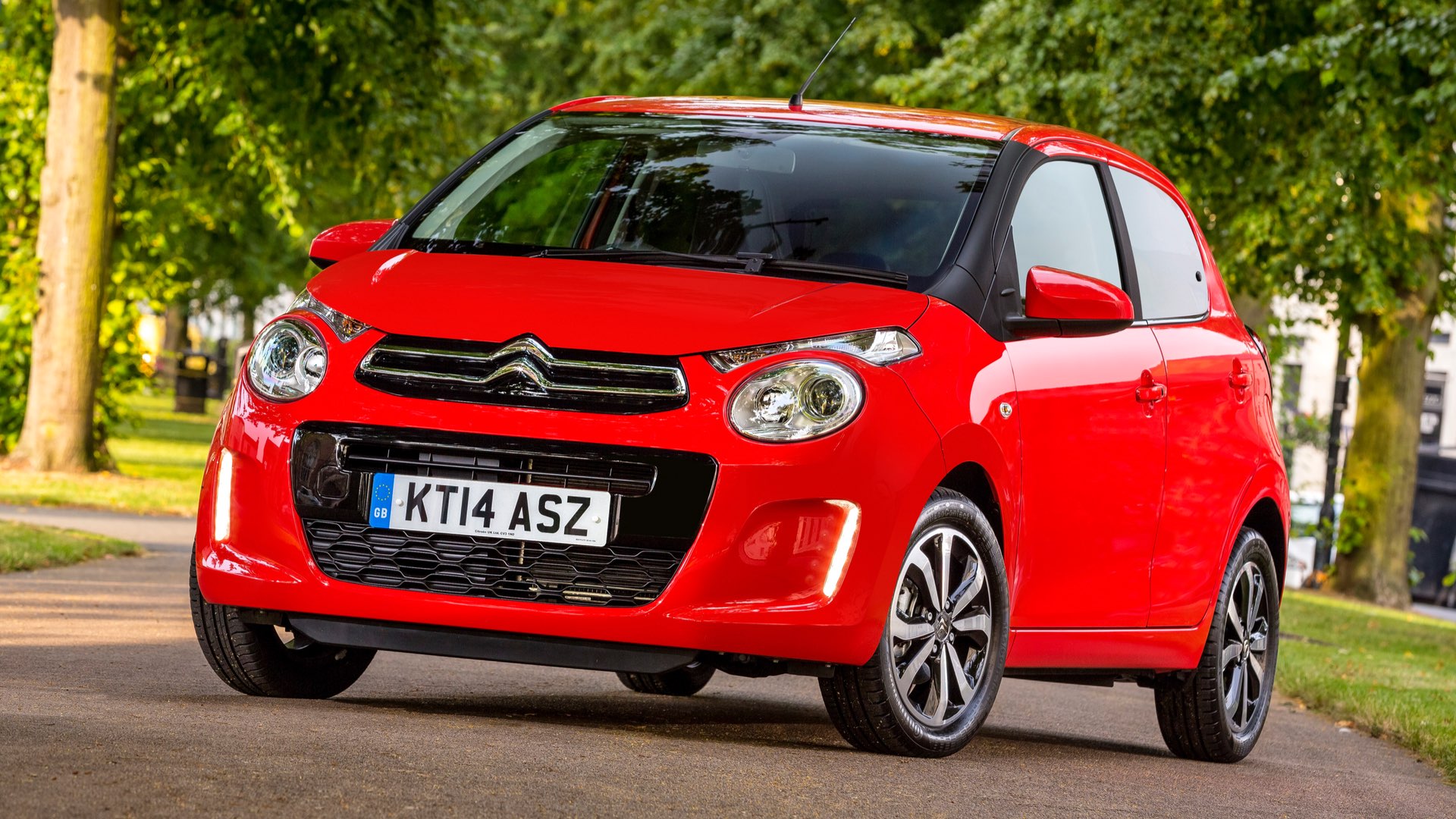
2. Citroen C1
Another of the Citroyogeot triplets, here’s the Citroen C1. It bests its French relative on price while, depending on your opinion, sacrificing a bit of style. It’s probably the more sensible choice of the two.
Especially because it undercuts the Peugeot’s opening price by almost £2,000. It can be had for £10,470, with a 1.0-litre engine good for 56mpg. Its other trump card over the 108 is insurance. The average premium is £868.
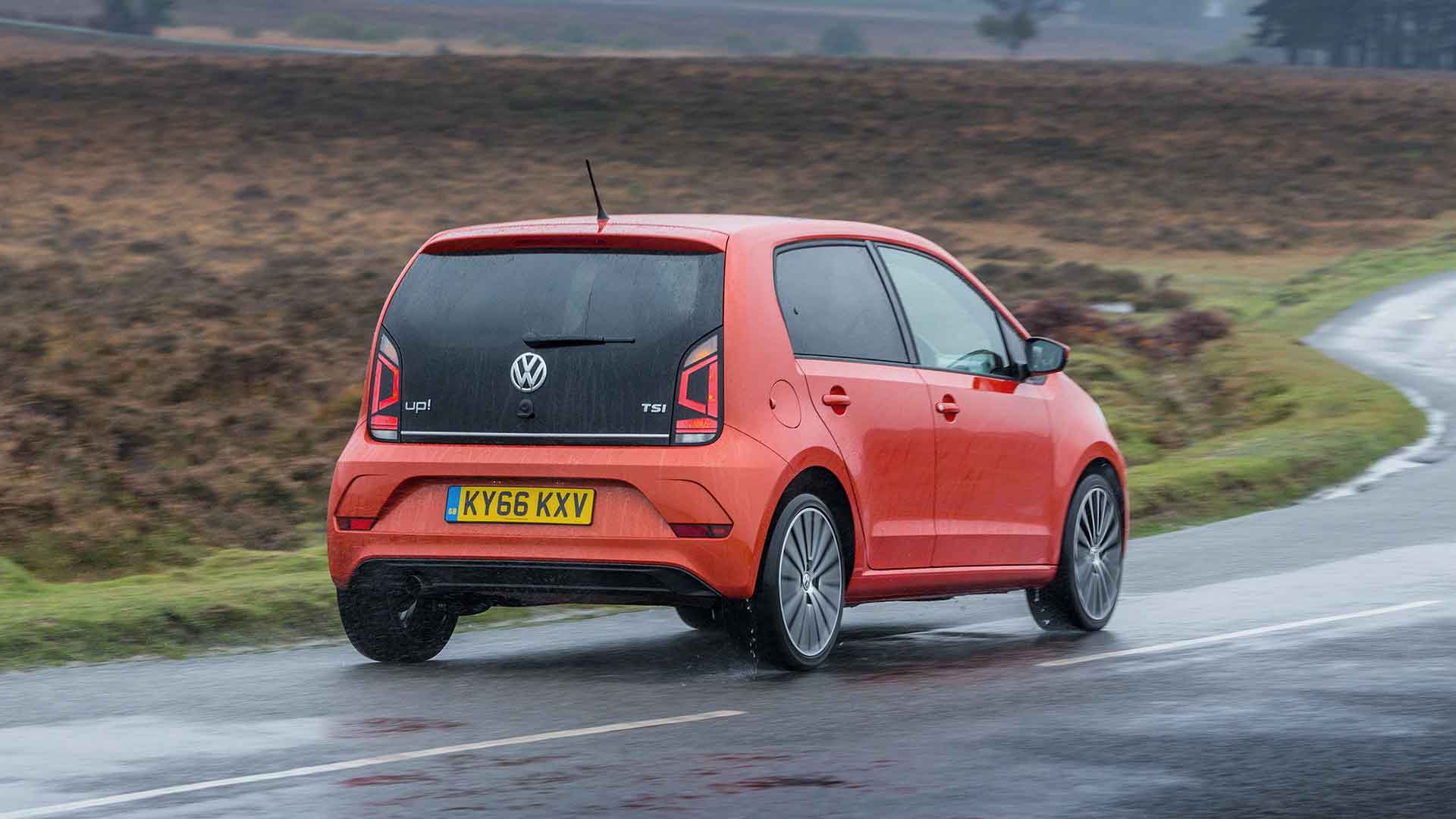
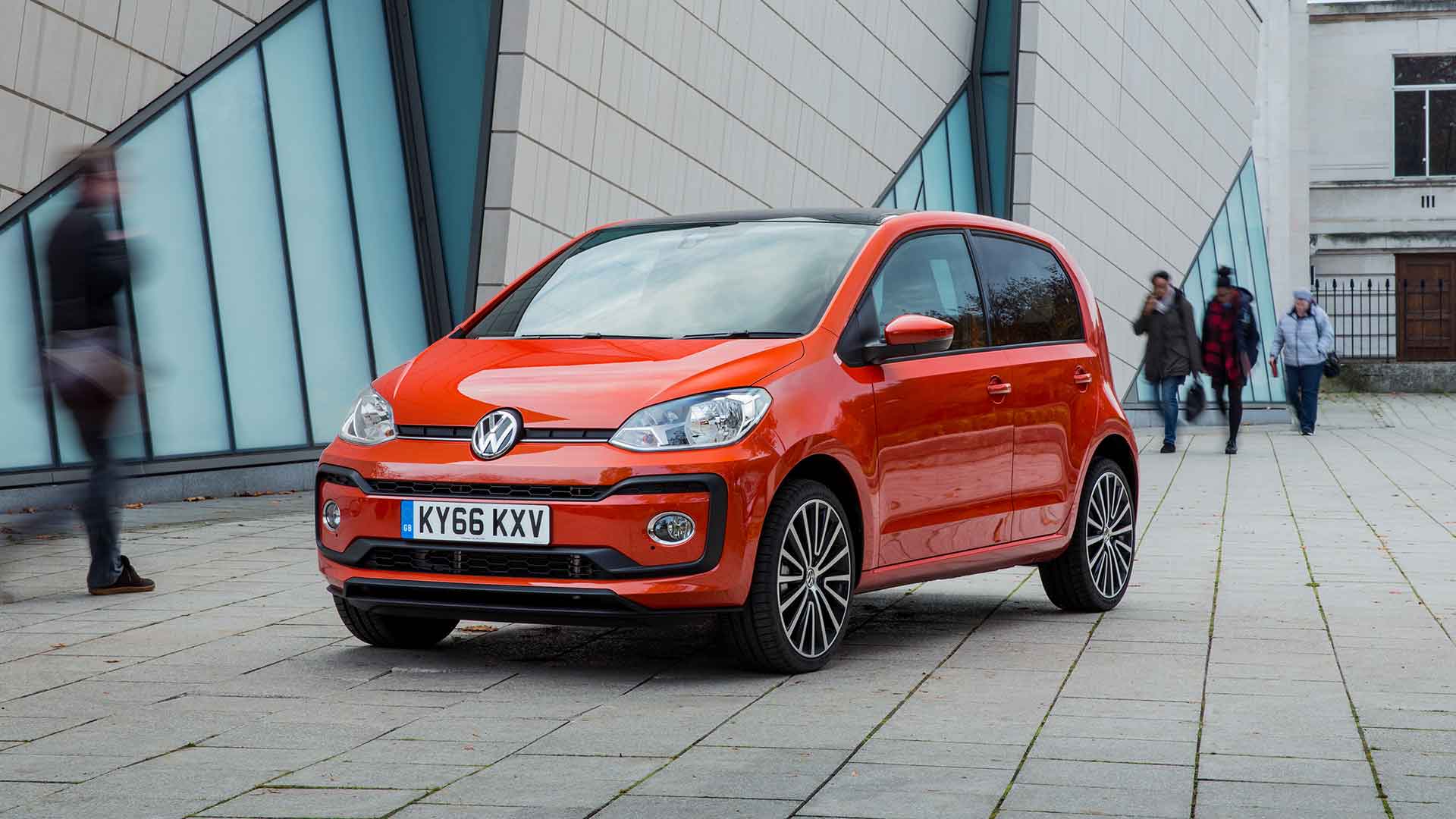
1. Volkswagen Up
The overall winner, however, is the Volkswagen Up. Like the Lupo that came long before it, the Up is perhaps the defining small car of its decade. Stylish, quirky, fun and well made, the Up ticks all the boxes for plenty of people.
Prices for the VW kick off at £9,260 and it offers 54.3mpg. Where it beats the Citigo is on insurance, with an average cost of £818. That makes it the cheapest car to insure here.
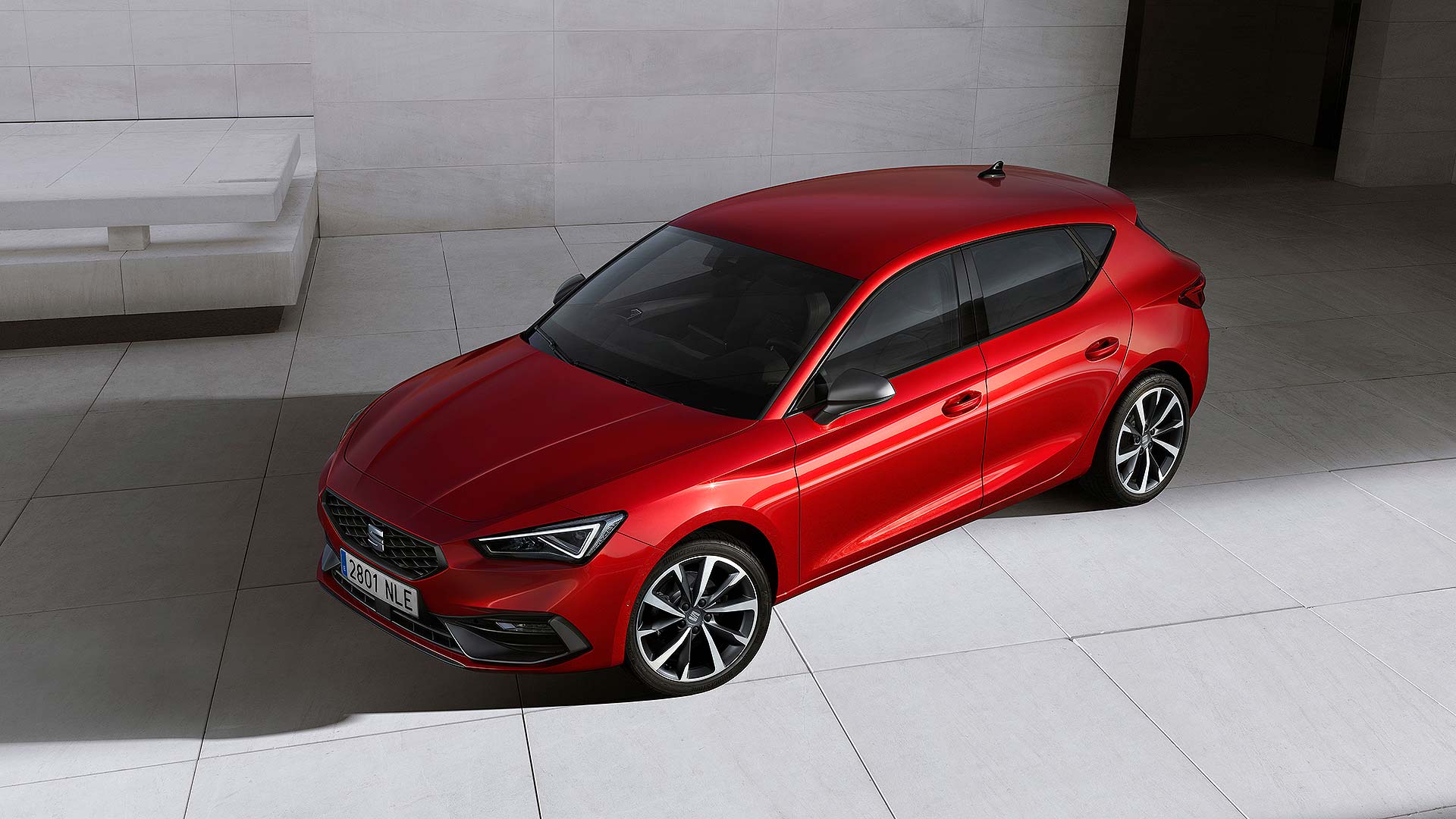
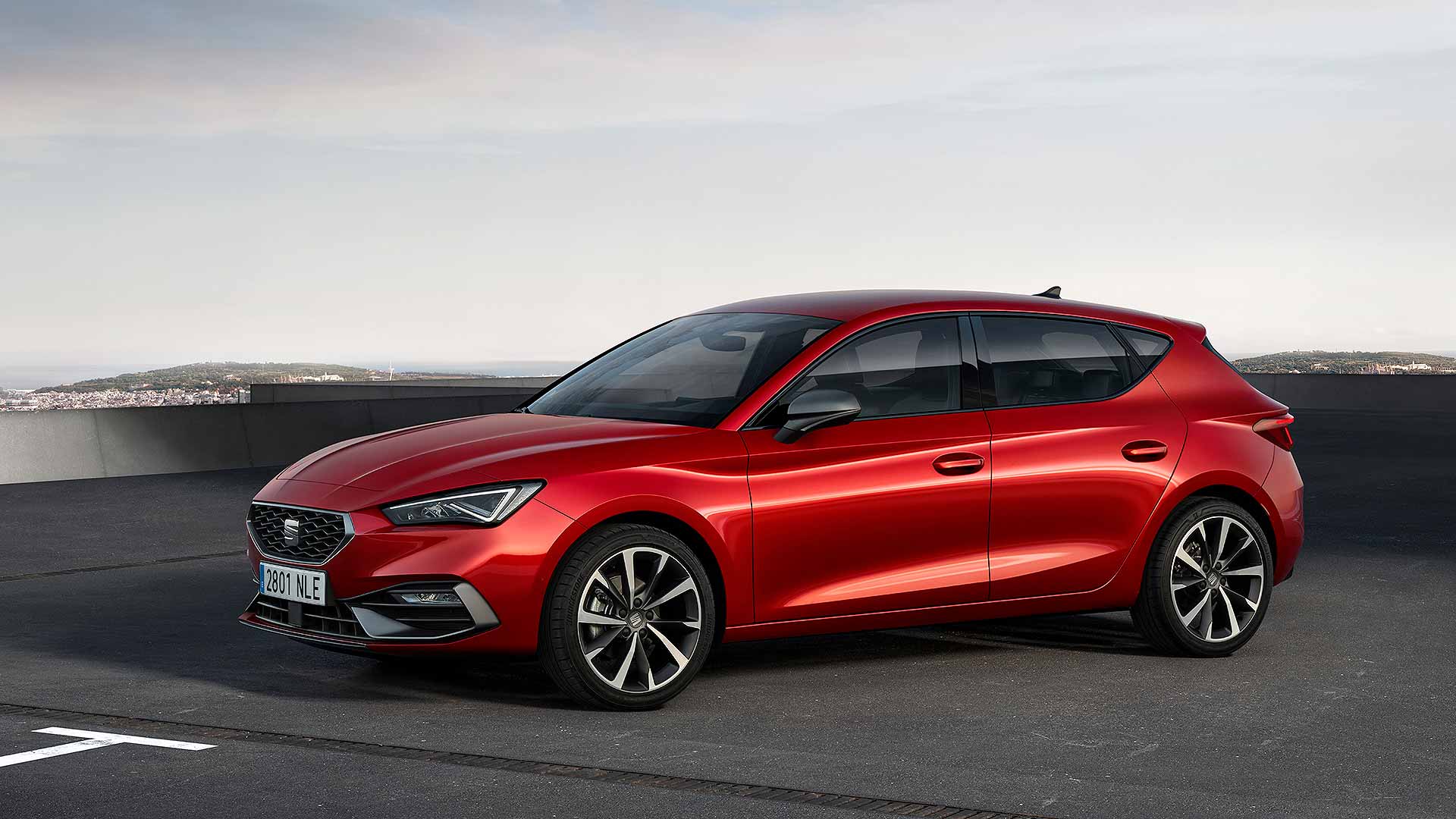
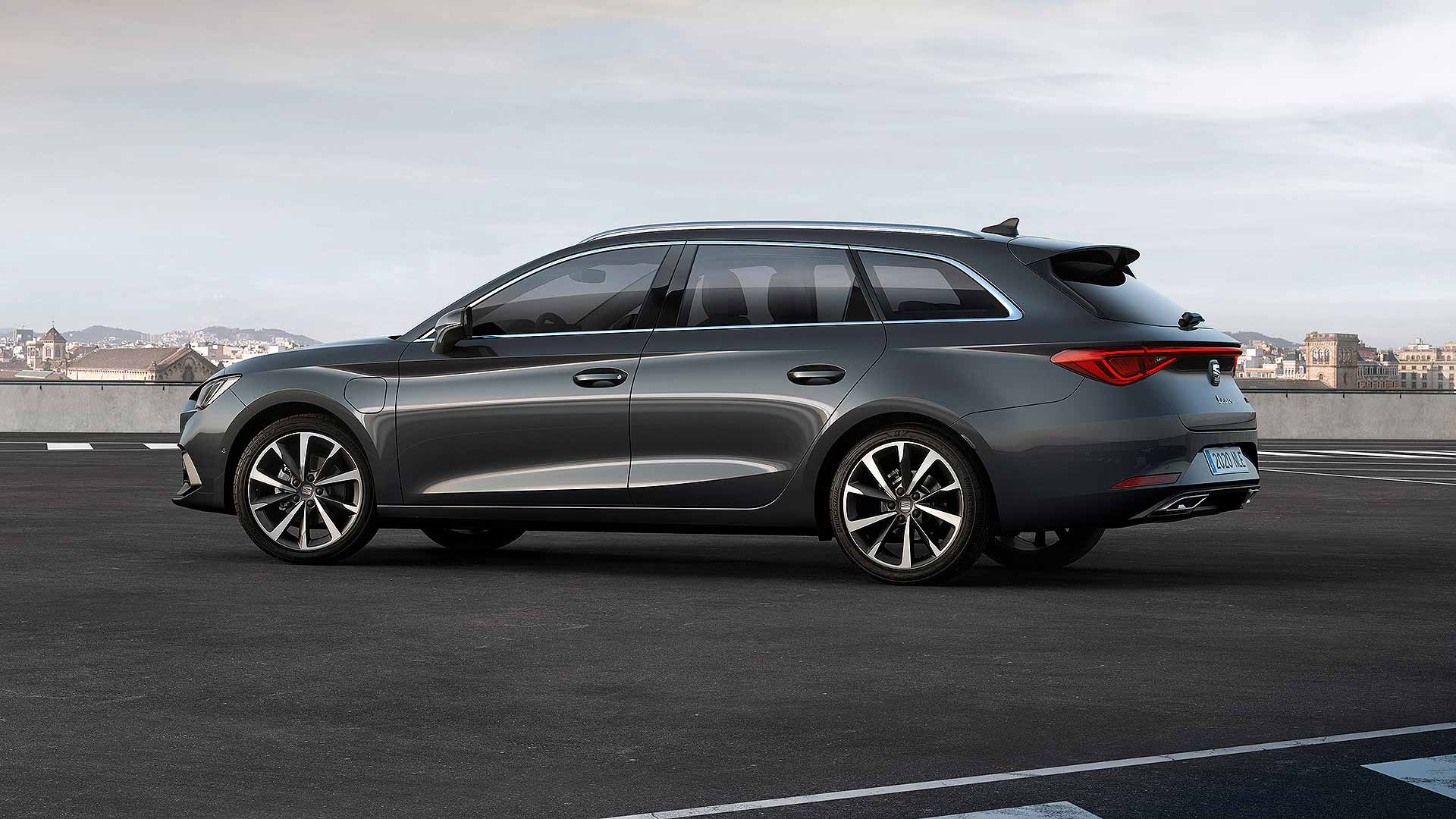
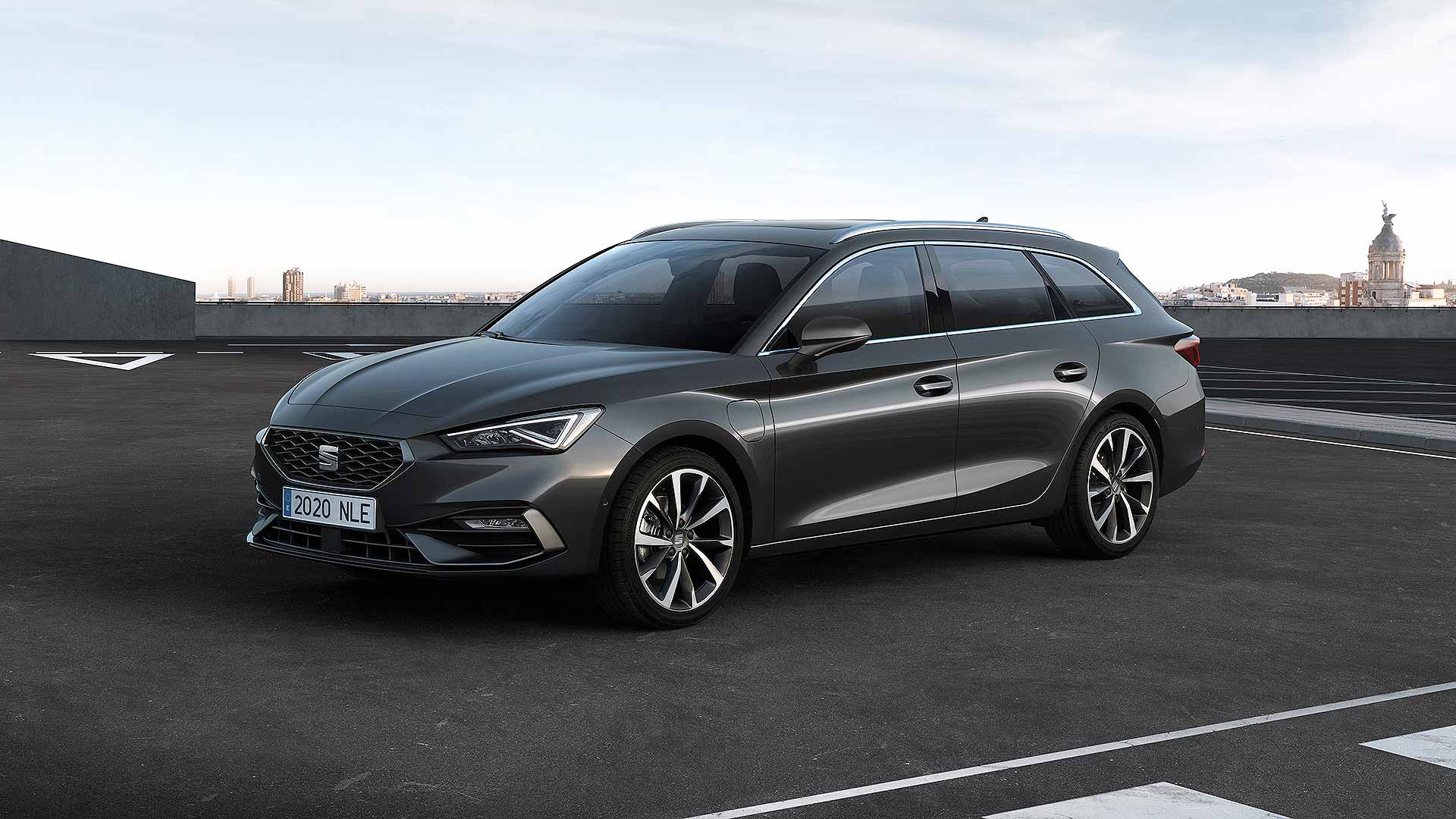
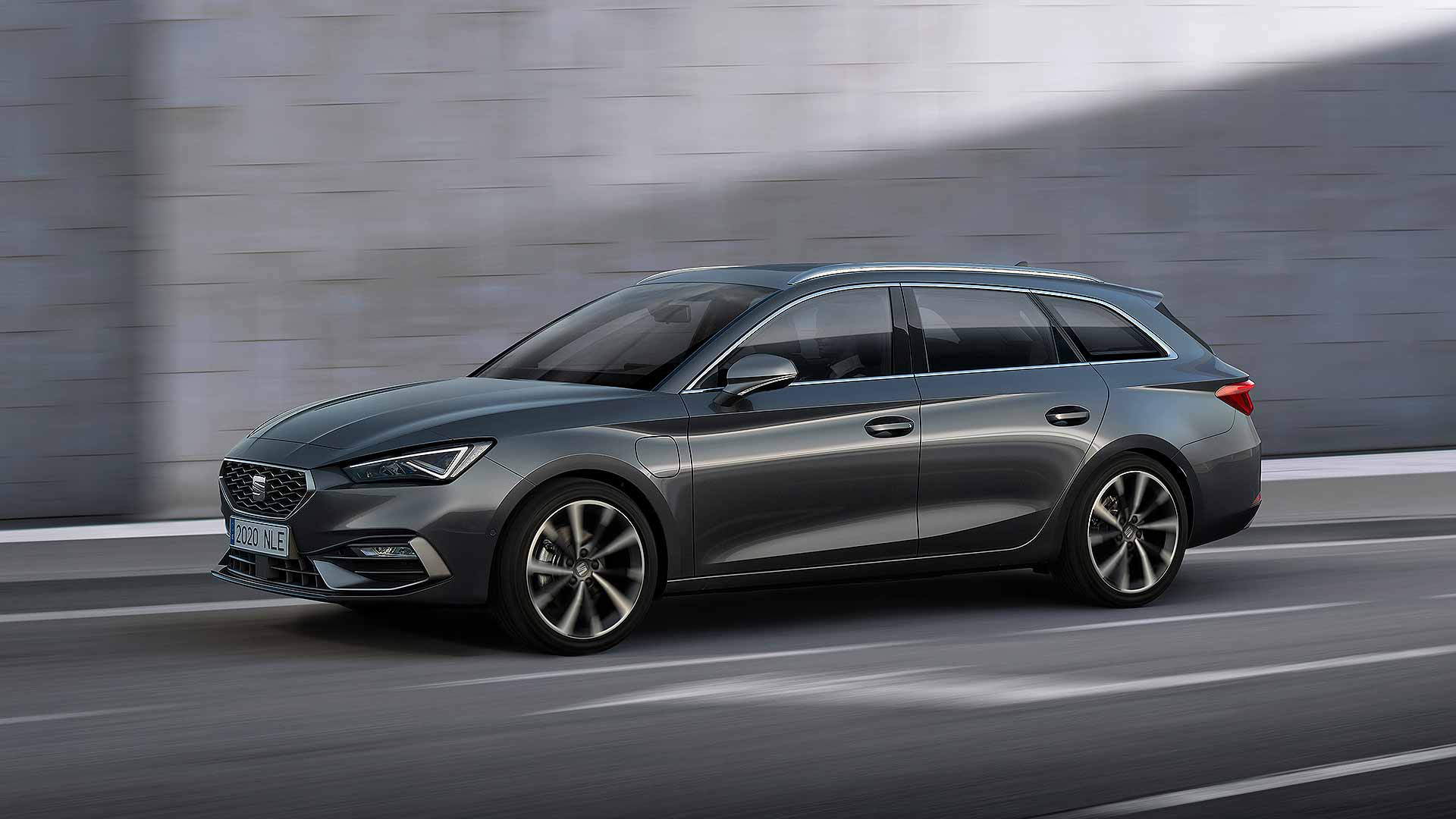
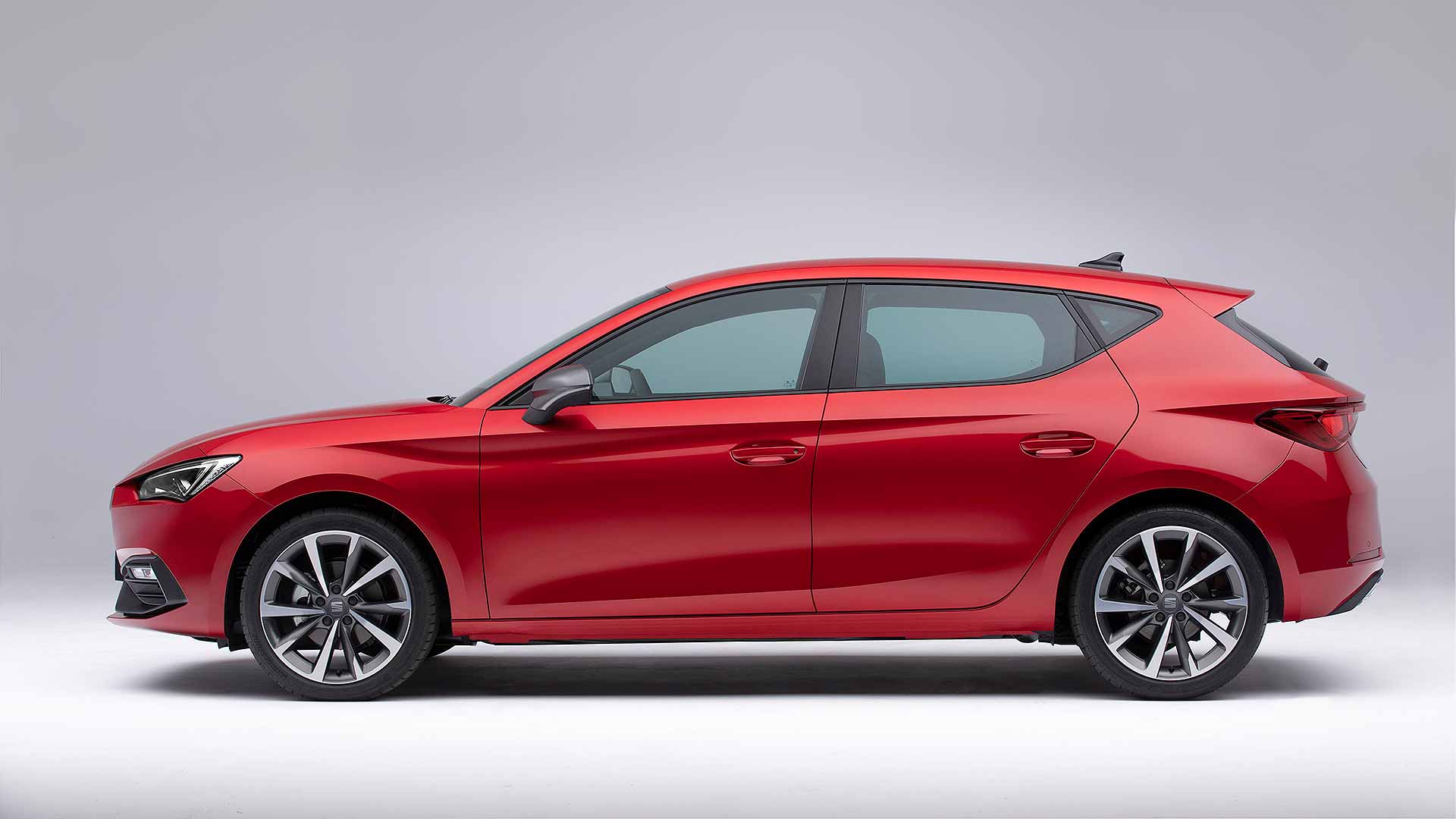
The new fourth-generation Seat Leon has been revealed, bringing sharper looks, larger proportions, new powertrains including plug-in and mild hybrids, and always-connected capability.
And yes, Seat enthusiasts, a high-performance ‘Cupra‘ variant is all but a dead cert.
The new Leon follows in the footsteps of 2.2 million of its predecessors, more than a million of which were the outgoing third-generation.
With every generation, the Leon has sold more, and Seat will be hoping this trend continues fourth time out. The Golf-sized family hatch is one of the marque’s most successful models, and a core part of its UK line-up.
The Seat Leon’s role has long been the Golf’s slightly quirky Spanish cousin. Generally, Leons are sportier and aimed at younger drivers, and the new one looks to be no exception.
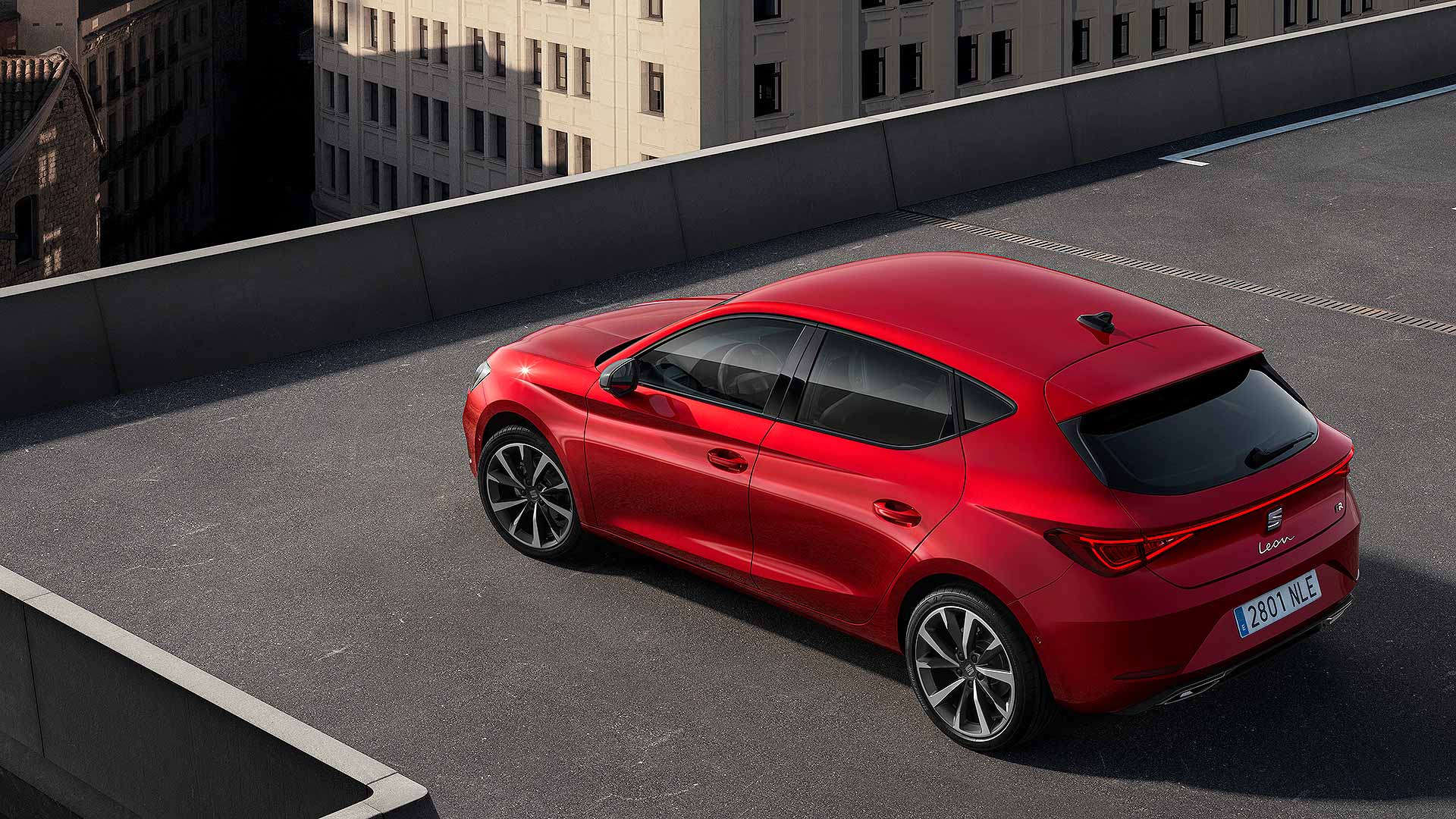
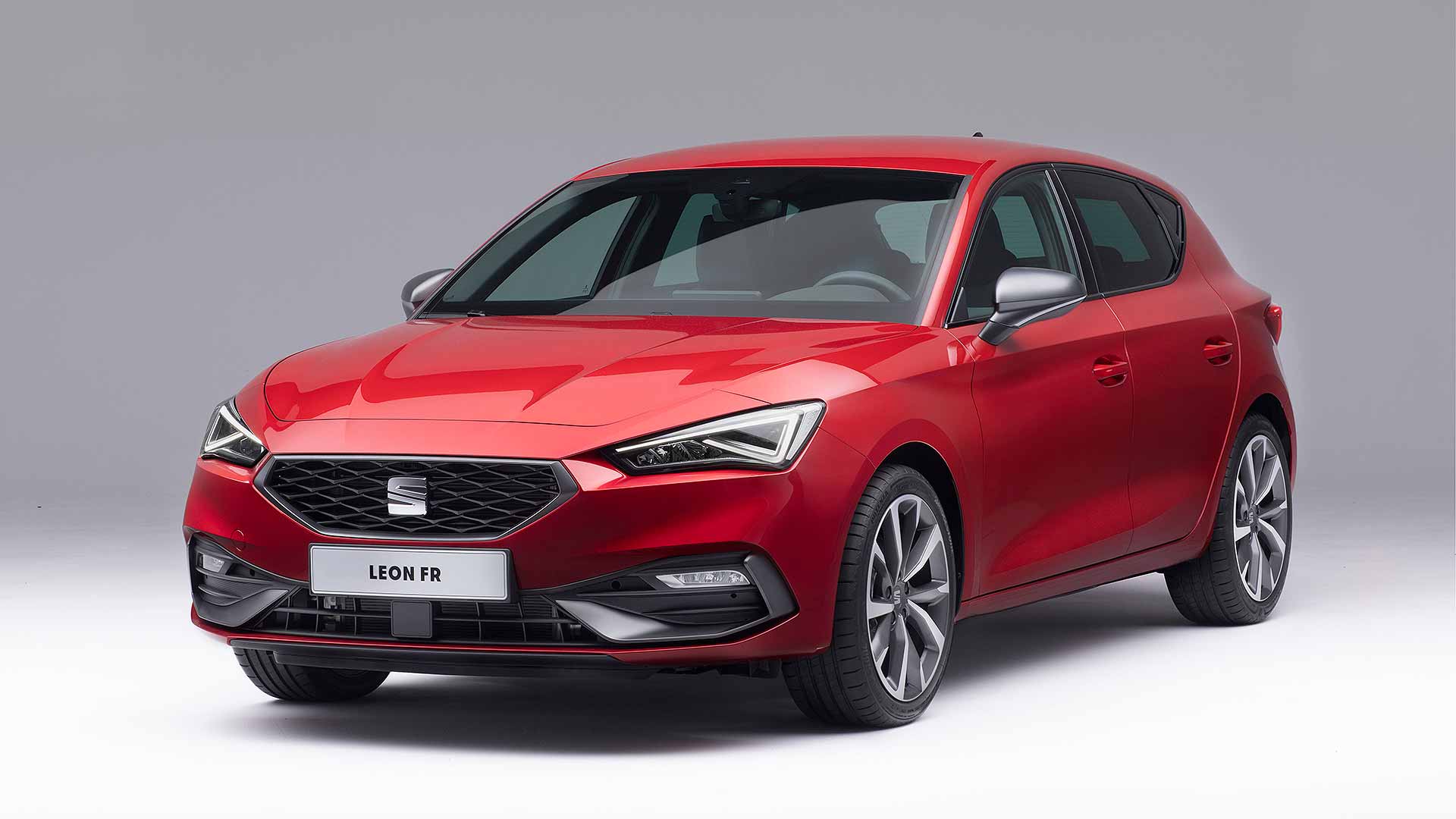
It remains one of the sharpest-looking hatches on the market. The new car follows Seat’s recent design direction closely, borrowing much from the recent Tarraco SUV.
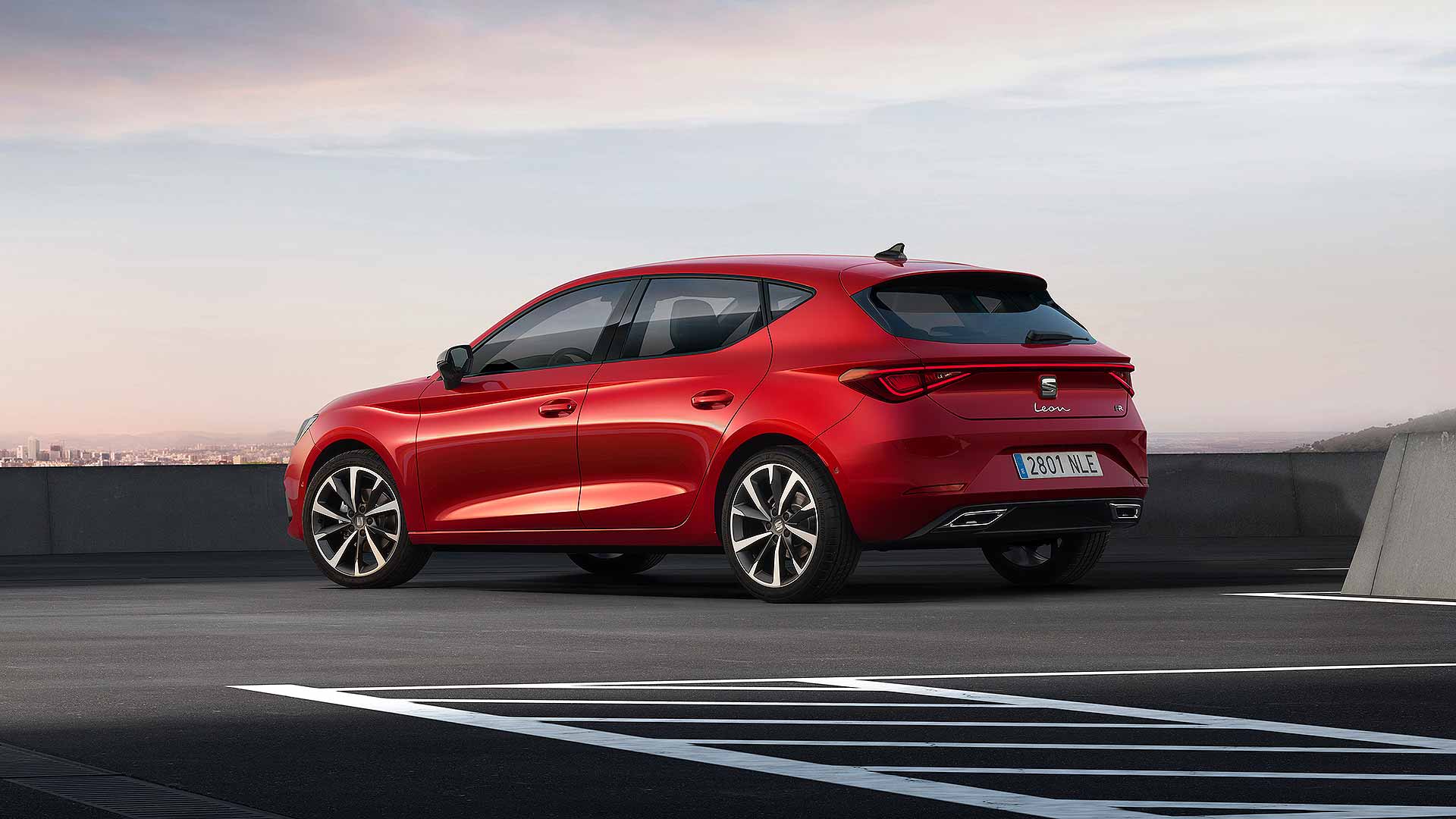
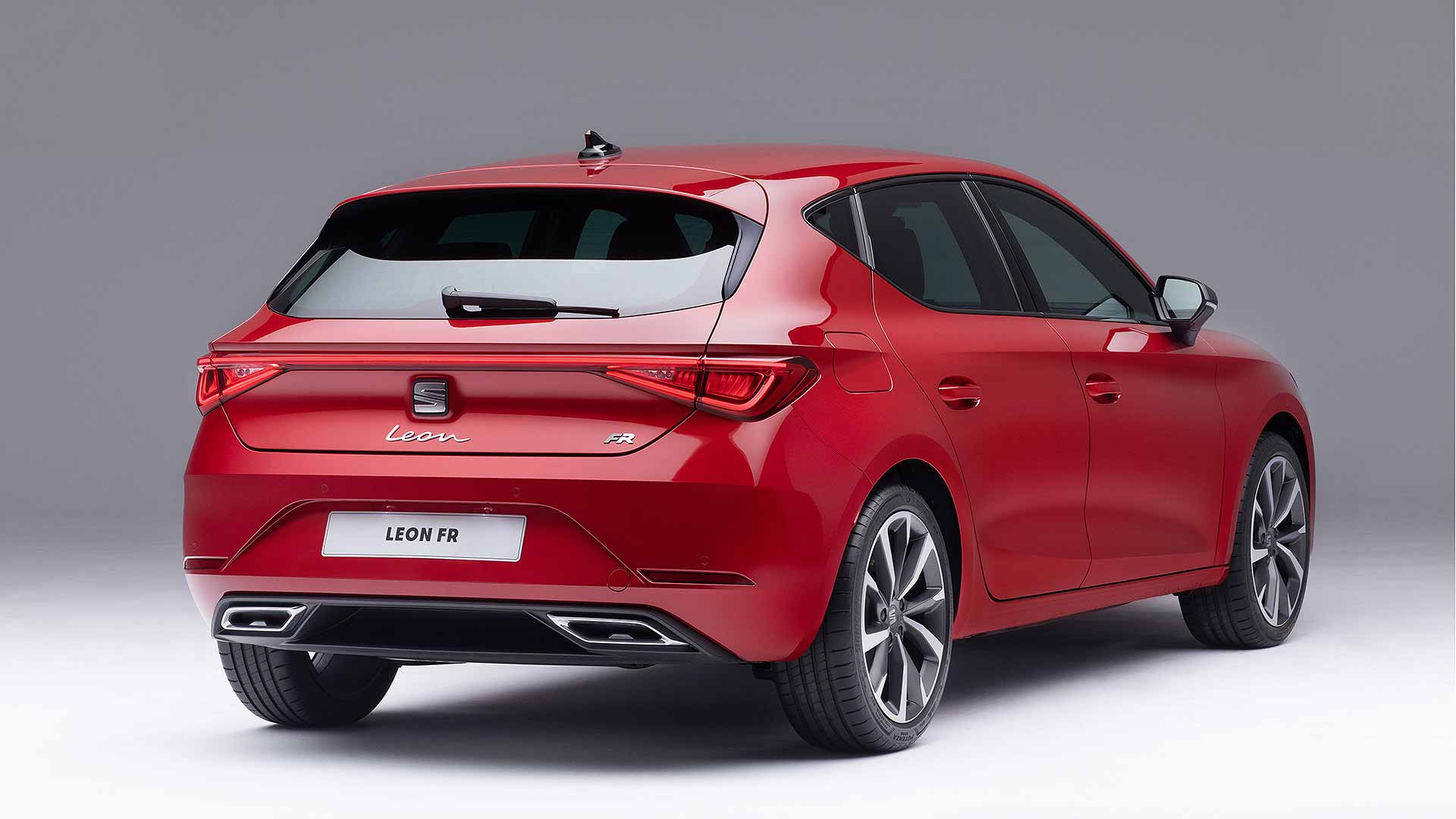
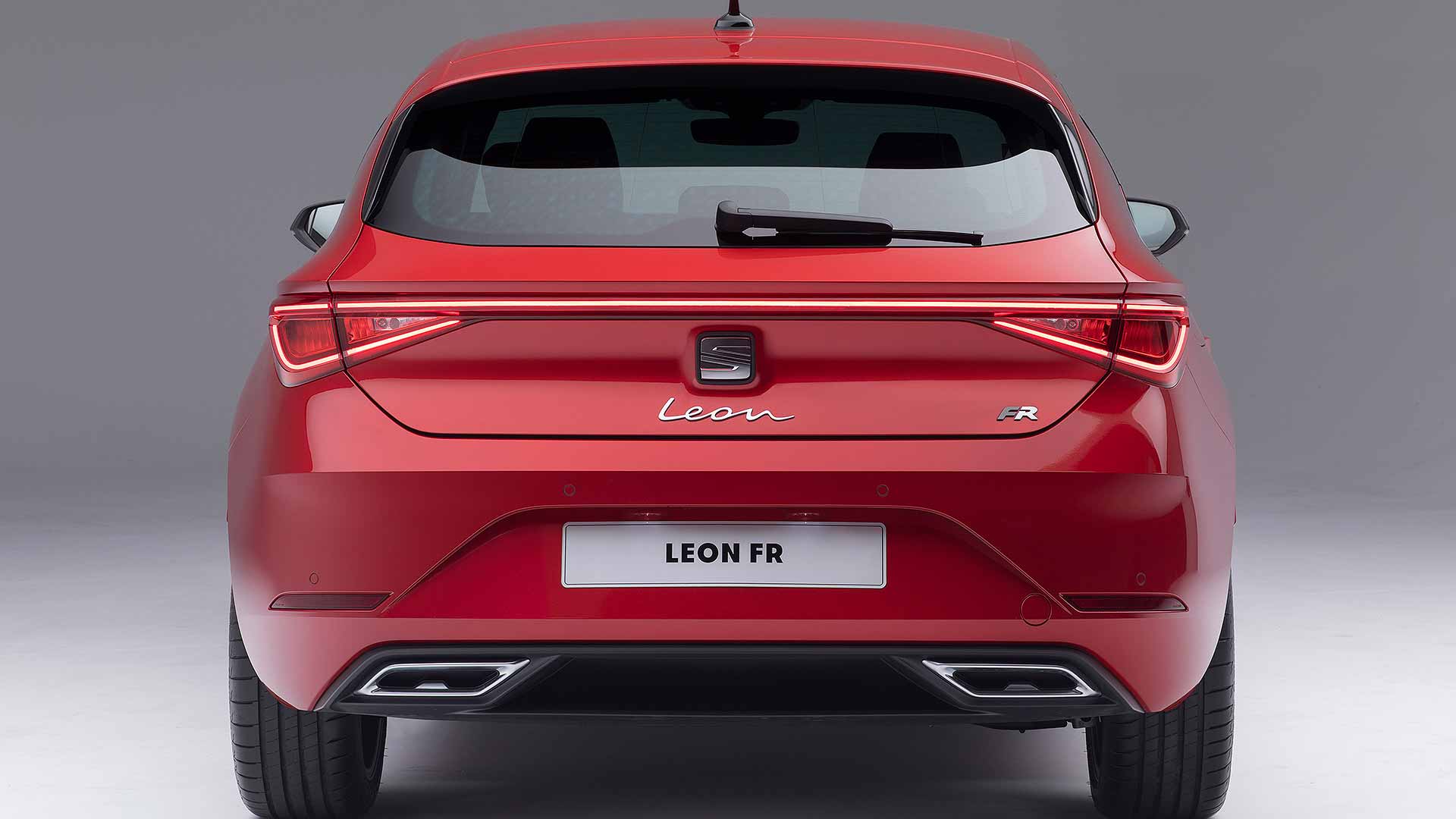
Happily, the Tarraco is a looker, and the Leon wears its styling tropes well. This include’s Seat’s new corporate snout and sharp LED lighting that has a “stronger three-dimentional connection”. There’s also a width-spanning “coast-to-coast” rear light bar.
The overall shape hasn’t changed much, but the changes that have been made add up to an eight percent improvement in aerodynamic efficiency.
Gone is the three-door option and, appearing for the first time, is a handwriting-style model badge script on the bootlid. We wonder, how many could be tempted away from the new Golf on looks alone?
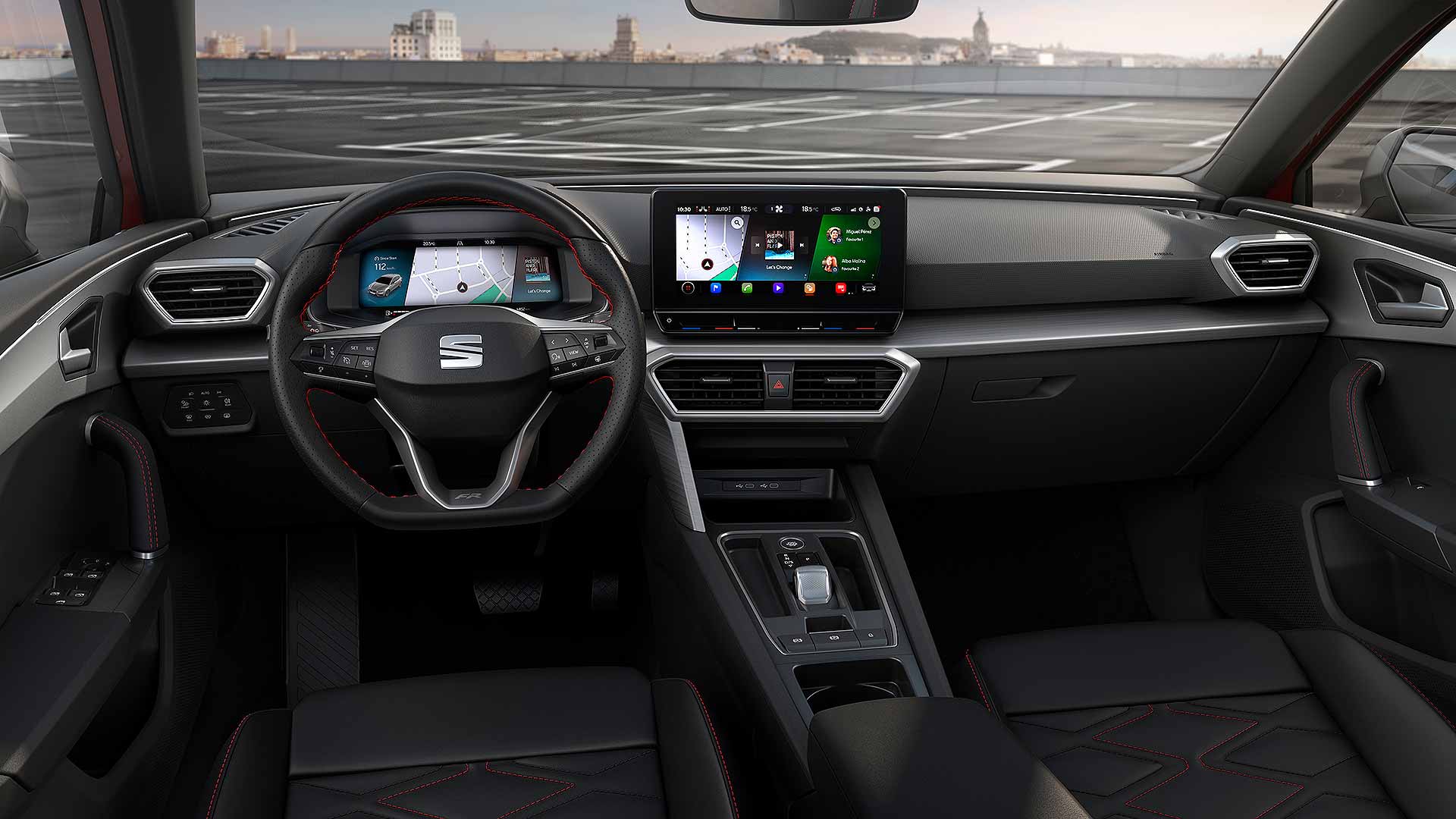
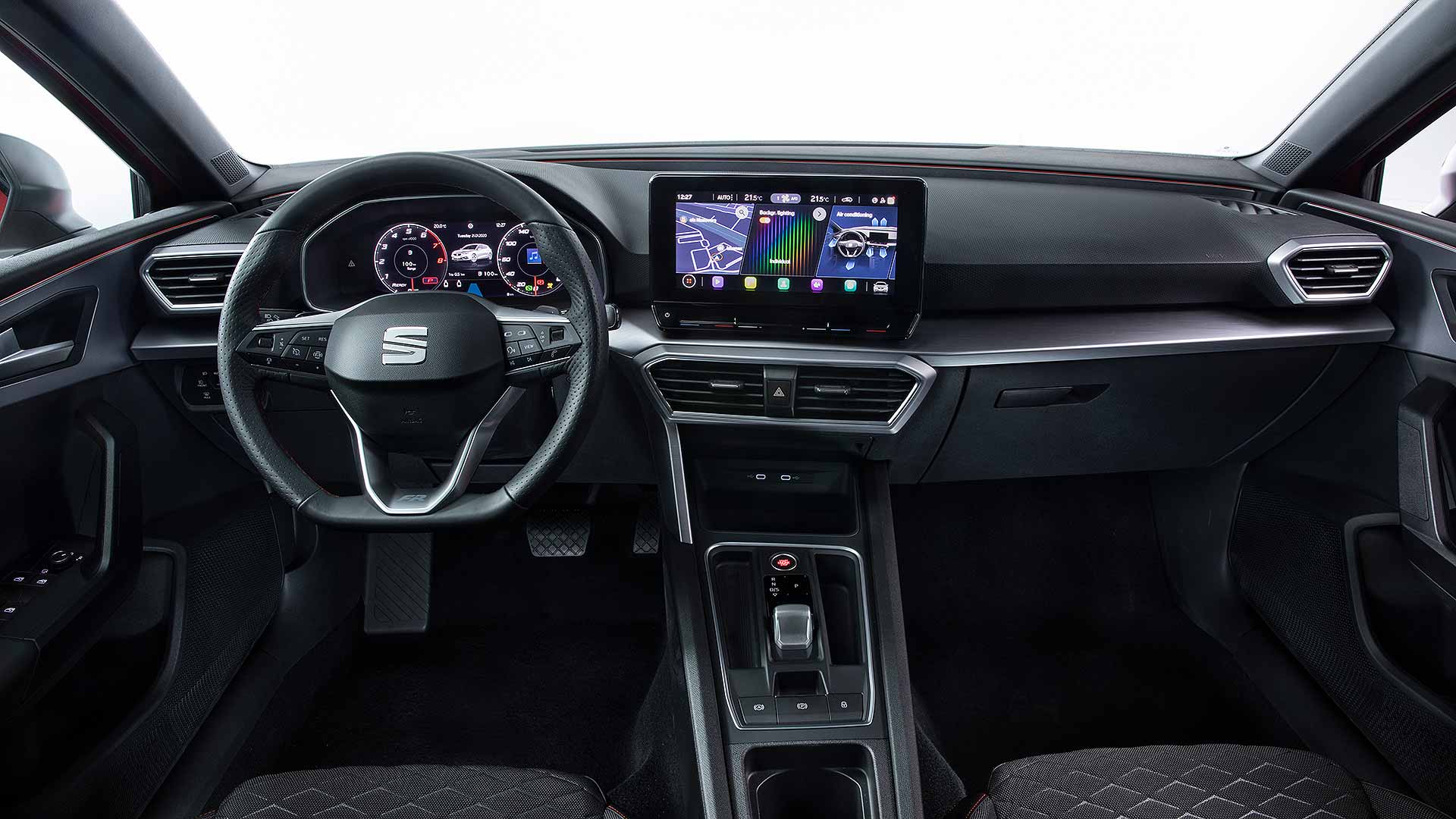
The new Leon’s relation to the Golf 8 is evident here, with the new infotainment screen canted towards the driver, and a similar-looking centre console. The screen, as standard 8.15-inches but available in 10.0-inch, isn’t quite as integrated as the Golf’s, sitting atop the centre of the dashboard.
The larger 10-inch item, standard on SE Dynamic specification and upwards, offers online connectivity, 3D connected navigation, voice control and gesture control.
Standard on all but the entry model is the new Seat Digital Cockpit, with a 10.25-inch fully-customisable instrument cluster.
The new Leon is Seat’s first fully-connected vehicle, with wireless Apple CarPlay and Android Auto on board, and vehicle data monitoring via an app when outside.
For the plug-in hybrid model, you can even manage battery charging and control the electronic air conditioning. An ecosystem of connectivity and apps is expected to grow, so the Leon will get cleverer as it gets older, too.
Many will be happy to note that wireless phone charging is now available in the Leon.
New for the Leon is semi-autonomous capability. That means cruise control that combines information from a front-mounted camera and GPS data to recognise traffic signs, bends, roundabouts, junctions, speed limits and built-up areas.
Take your hands off the wheel and it will continue driving itself. However, within 15 seconds, you’ll get a bong and a warning flashing up on the dash. If you don’t put at least one hand back on the wheel, a braking jolt is given, and if needed, it’ll bring the car safely to a stop.
Seat has made a big deal of the ambient lighting in the cabin, with a configurable “unbroken arc of light” running the width of the top of the dash, and through the doors. It’s also functional, with blind spot detection signals coming via the strip, too.
In terms of practicality, the hatch retains the third-generation car’s 380-litre boot capacity. The estate, however, ups its capacity by 30 litres over before, to 617 litres.
Both the estate and hatch are longer, by 93 mm and 86 mm respectively, which should translate to a roomier cabin, too. Interestingly, it’s slimmer, by 16 mm.
Mild and plug-in hybrids
Speaking of the plug-in hybrid, that’s probably the headline-grabbing addition to the engine range. Called eHybrid (not quite the same as Porsche’s nomenclature), it combines a 1.4-litre TSI petrol engine with an electric motor, and a 13 kWh battery.
It has a heady 204 hp, that goes to the wheels via a six-speed DSG gearbox.
On the other hand, it can drive without producing any emissions at all, with a 38-mile electric-only range. Charging is via a 3.6 kW AC inlet, allowing it to be fully charged in under four hours.
Plug-in hybrid buyers won’t be restricted to the hatch, either. Both the hatch and estate will be offered with eHybrid variants.
For those not quite as dedicated to the cause of electrification, a mild-hybrid (eTSI) joins the range. The system is optional with the 1.0-litre three-cylinder and 1.5-litre four-cylinder TSI models, with 110 hp and 150 hp respectively.
It’s a 48-volt starter-generator system that allows engine-off coasting, adds torque under initial acceleration and can regenerate power under braking. The overall result should be that the engine is off for more of the time via the stop-start system, thus reducing fuel consumption and emissions.
A 130 hp variant of the 1.5-litre TSI is also available, albeit without the option of mild hybrid assistance. Overall fuel efficiency is claimed to be improved by on the 1.0 and 1.5-litre engines, optimising valvetrain control.
At the top of the petrol tree is a 2.0-litre TSI with 190 hp and inevitably, more powerful variants with a Cupra badge will follow.
Diesel is hanging on in there, too, with two 2.0-litre TDI engines completing the lineup. NOx emissions are down for the 115 hp and 150 hp units, thanks to the addition of AdBlue injection tech. In a broad stroke, the engine range is very similar to that found in the new Golf.
What trim levels does the new Leon come in?
Six individual trim levels are available. The range opens up with the SE, going thorough the SE Dynamic, FR, FR Sport, Xcellence and Xcellence Lux.
As standard on all are kelyess entry and start, two USB points, LED headlights with automatic high beam, electric and heated mirrors, a leather steering wheel and Seat Connect. If that’s all you need, the SE will do you well.
The 10.0-inch infotainment system and digital instrument cluster join the cabin on the SE Dynamic, as does front and rear parking sensors, tinted windows and larger 17-inch wheels.
FR models, as you might imagine, add sportier looks, in the form of more aggressive bumpers, dual exhaust pipes, and 15 mm lower ride height. That sportiness carries to the inside, too, along with some added tech. Climbing the range from there adds more tech and luxurious elements.
How much is the new Leon and when can I have one?
SE, SE Dynamic and FR variants can be ordered now, although pricing has yet to be announced. Those who want FR Sport, Xcellence or Xcellence Lux specifications will have to wait until April before they can get their name down.
As for the Cupra version? Well, sportiness is a Seat trump card. Indeed, with Cupra branching off as a brand of its own, we expect the hot version to come sooner rather than later, and to pack some serious punch.
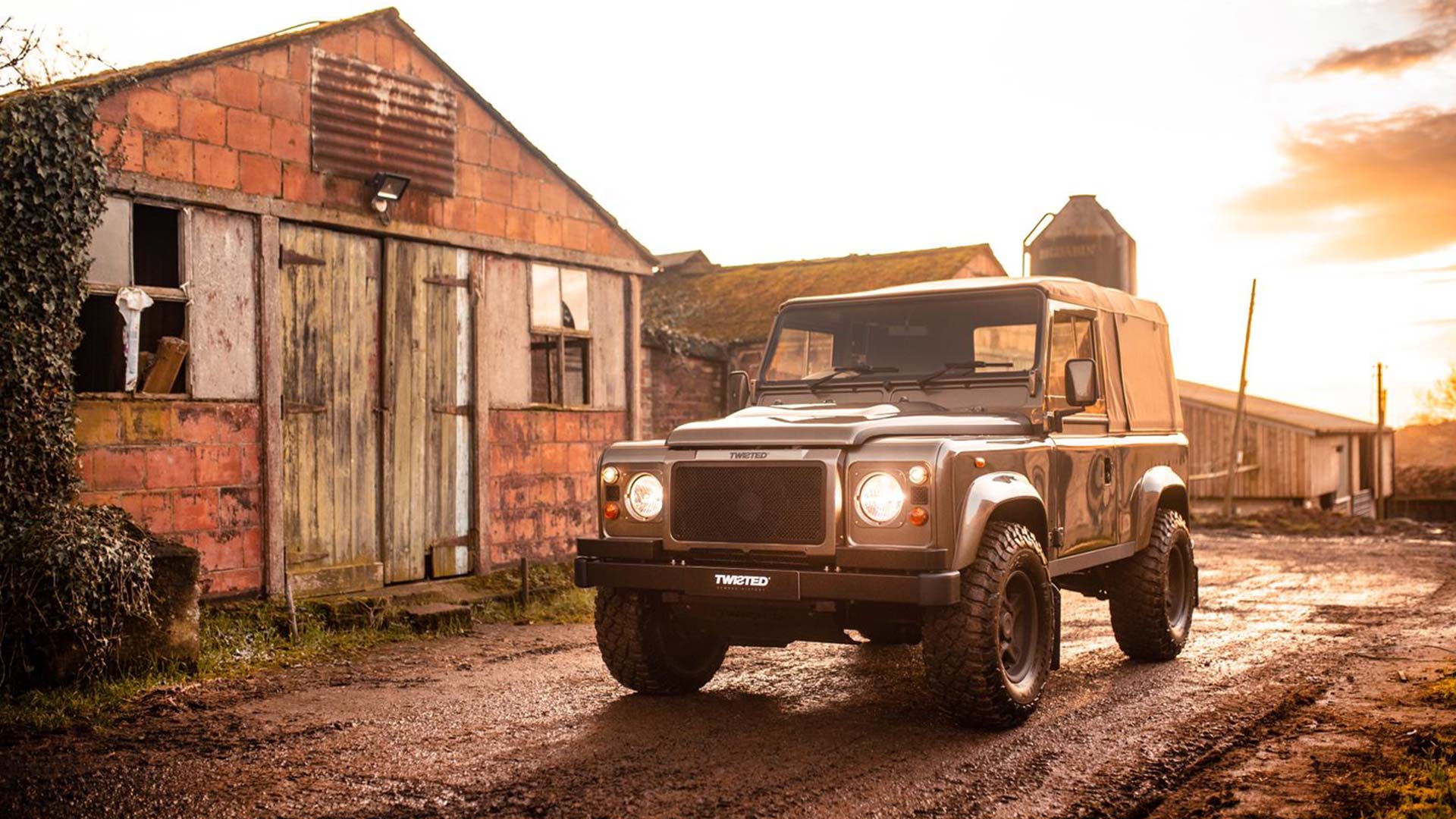
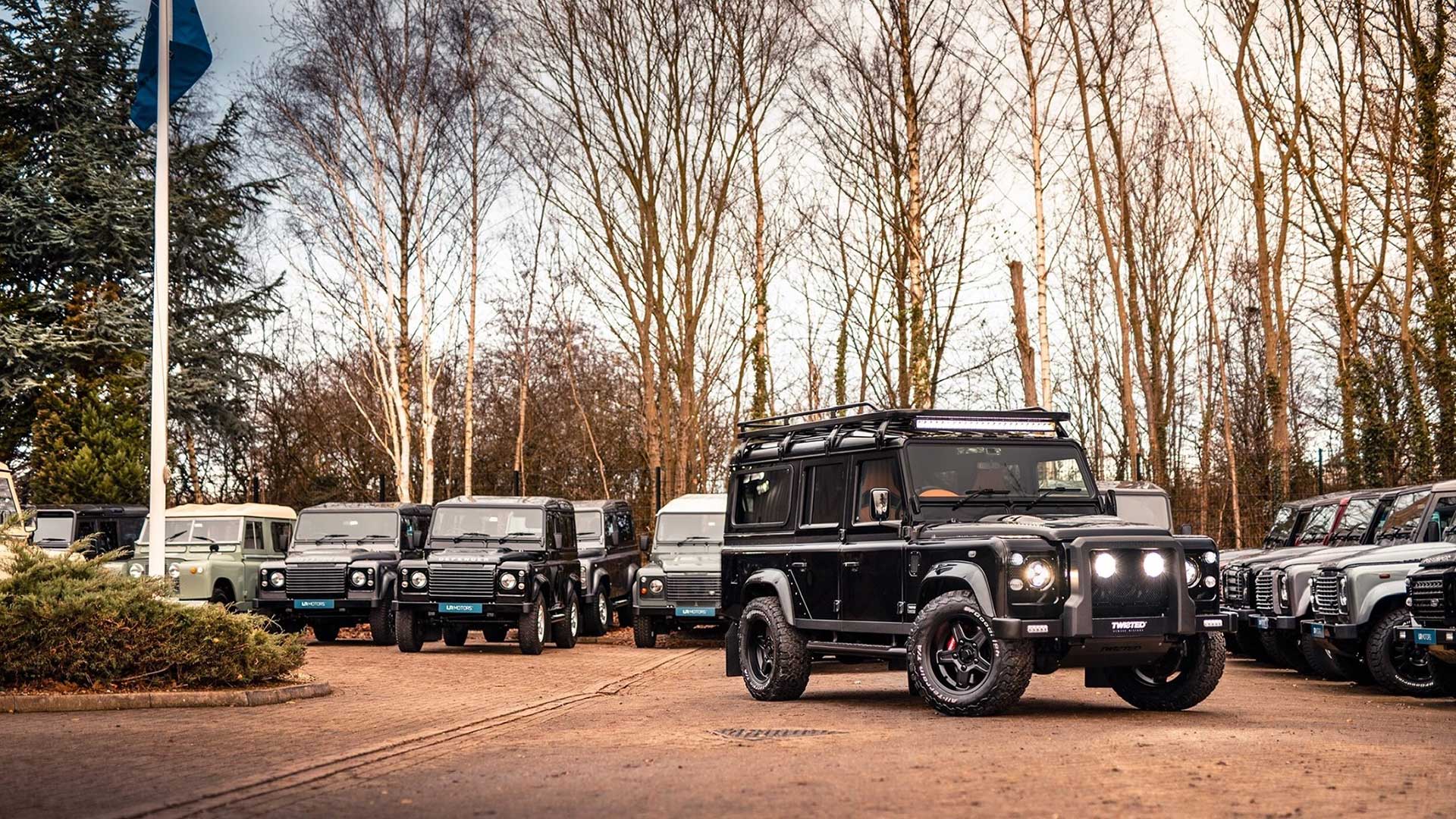
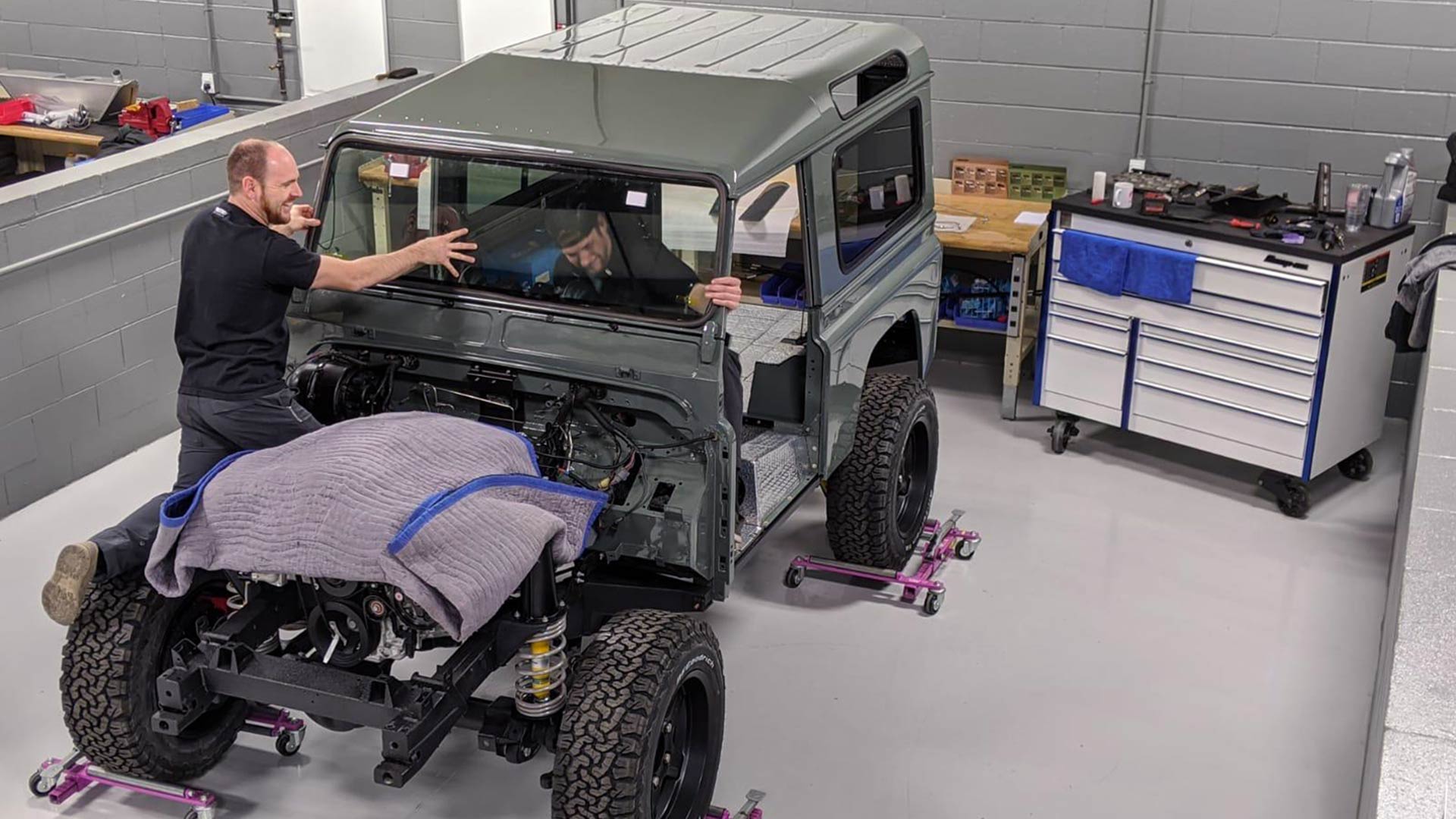
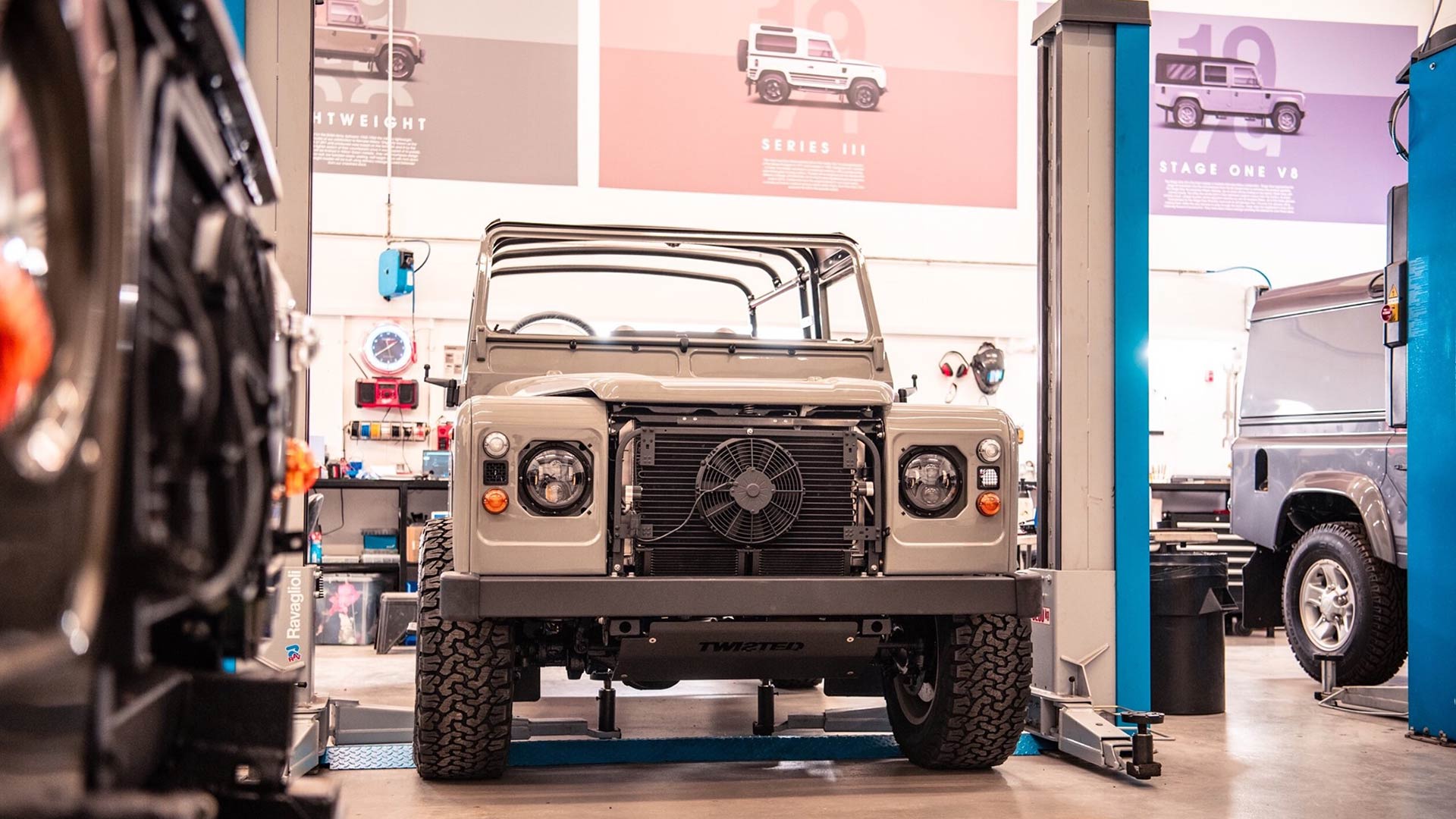
Twisted Automotive, known for producing bespoke modified Land Rover Defenders, has announced plans for a new showroom in Silverstone.
Aimed at potential customers in London and across the south of England, the new showroom will display a range of models from the company.
It forms part of grand expansion aims, revealed by Twisted exactly four years to the day that Land Rover ceased production of the original Defender.
Journey south
At present, UK sales for Twisted’s products are dealt with from the company’s headquarters in Thirsk, North Yorkshire. Whilst this may suit the rural image of a Twisted Land Rover, it does mean southern customers face a considerable journey to view products.
Based at Silverstone in Northamptonshire, the location for the new showroom has been chosen to be only 30 minutes by train, or an hour by car, from central London.
Set to open in March 2020, the Silverstone showroom will offer test drives, servicing for existing customers, and also host the Twisted Cafe.
Team America is ready
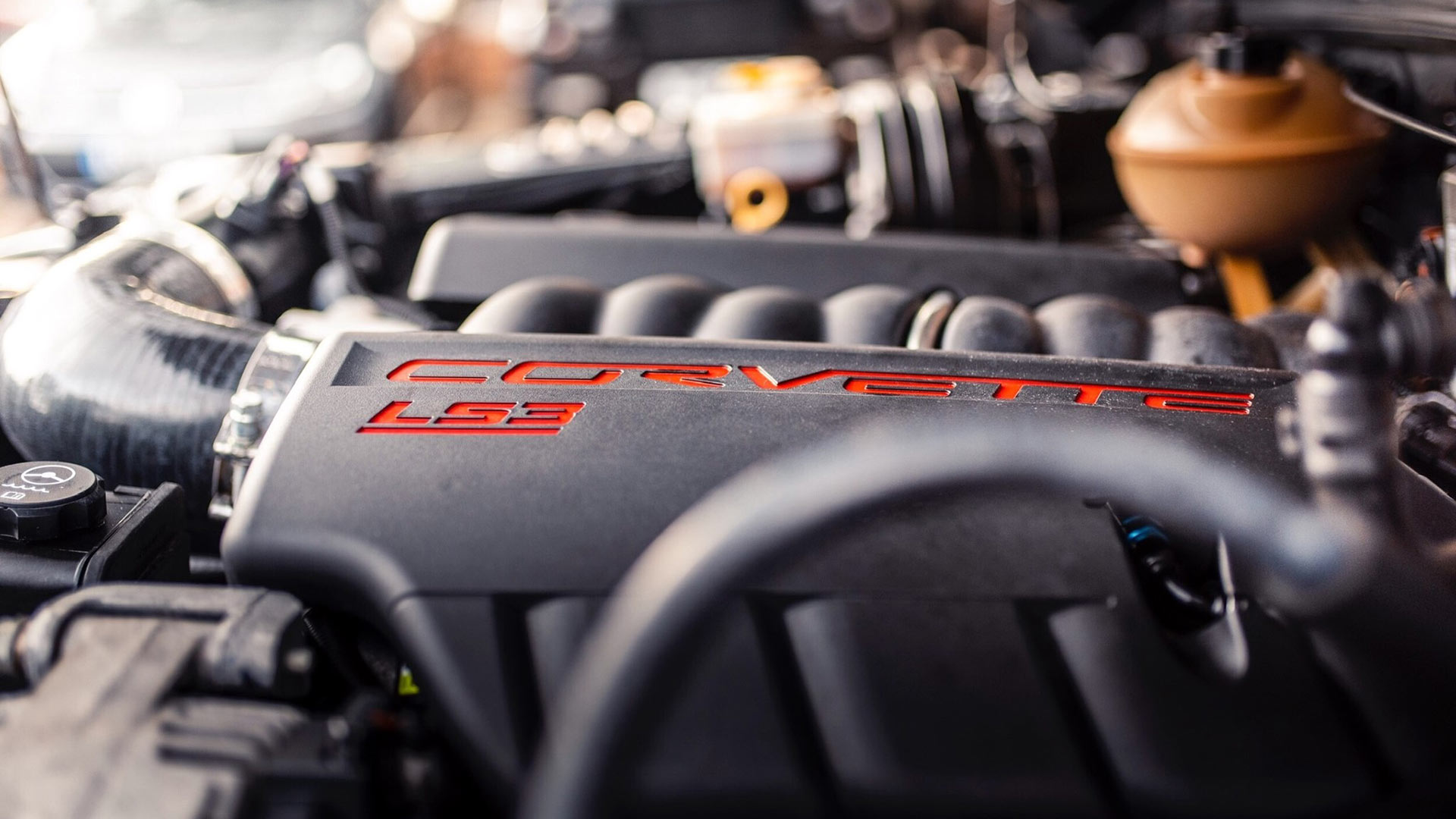
Last year saw Twisted announce an enhanced American division, located in South Boston, Virginia. Creating vehicles especially for American buyers, Twisted’s NA-specification Defenders use supercharged Chevrolet V8 engines with 650 horsepower.
The company has already finished its first North American-spec Defender, a short-wheelbase 90 model, which features air conditioning, electric windows, and central locking in the left-hand drive vehicles.
An accompanying Defender 110 is now being prepared, with Twisted planning to show both models at the New York International Auto Show in April. Prices for the American models begin at a considerable $250,000 (£192,000).
Global expansion continues
Following on from the North American outpost will be a brand-new Twisted Middle East venture, set to open later in 2020 at a facility in Dubai.
Primarily aimed at appealing to off-road enthusiasts across the United Arab Emirates, Twisted notes that the company has previously sold vehicles to customers in Qatar, the UAE, Oman, and Kuwait.
The Twisted Middle East showroom and service centre will be managed by Matt Duckett, who recently joined the company from Jaguar Land Rover. Duckett’s previous roles included engineering the stunt vehicles used in the forthcoming James Bond film No Time to Die.
Remaking history in Yorkshire
Twisted has also finished building the first of a planned limited edition Lightweight Defender, inspired by Land Rovers used by the British Army between 1968 and 1984.
Painted in Twisted’s own Willow Green, and with a canvas roof, the Lightweight also gains double bumpers and half-height doors. Built from low-mileage stock, the full run of ten examples is scheduled to be completed by summer 2020.
Speaking about the continuing expansion plans, Twisted founder Charles Fawcett commented that it “illustrates the enduring passion” for the classic Defender, and that the company remains a guardian “of the heritage of this British icon”.
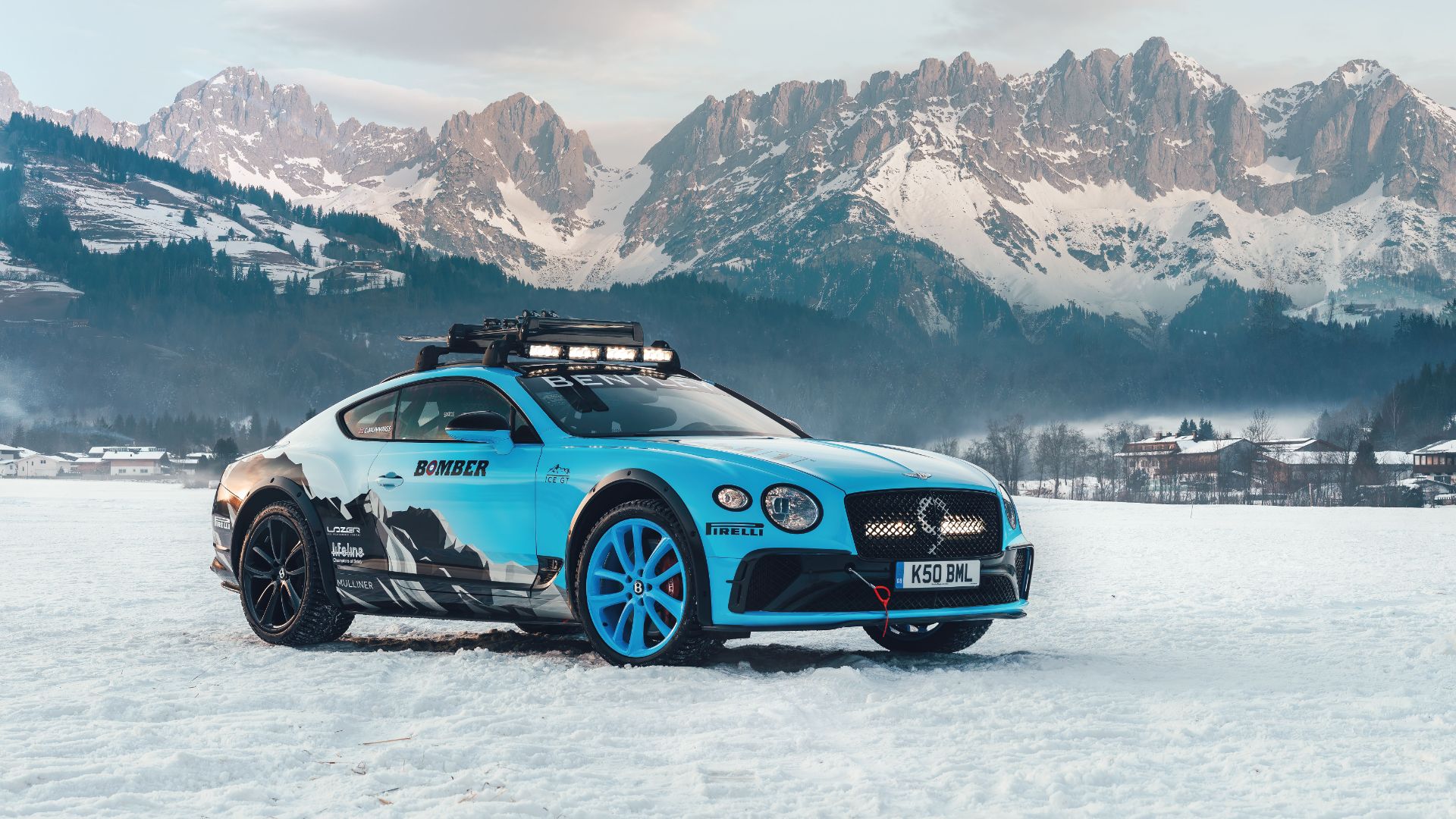
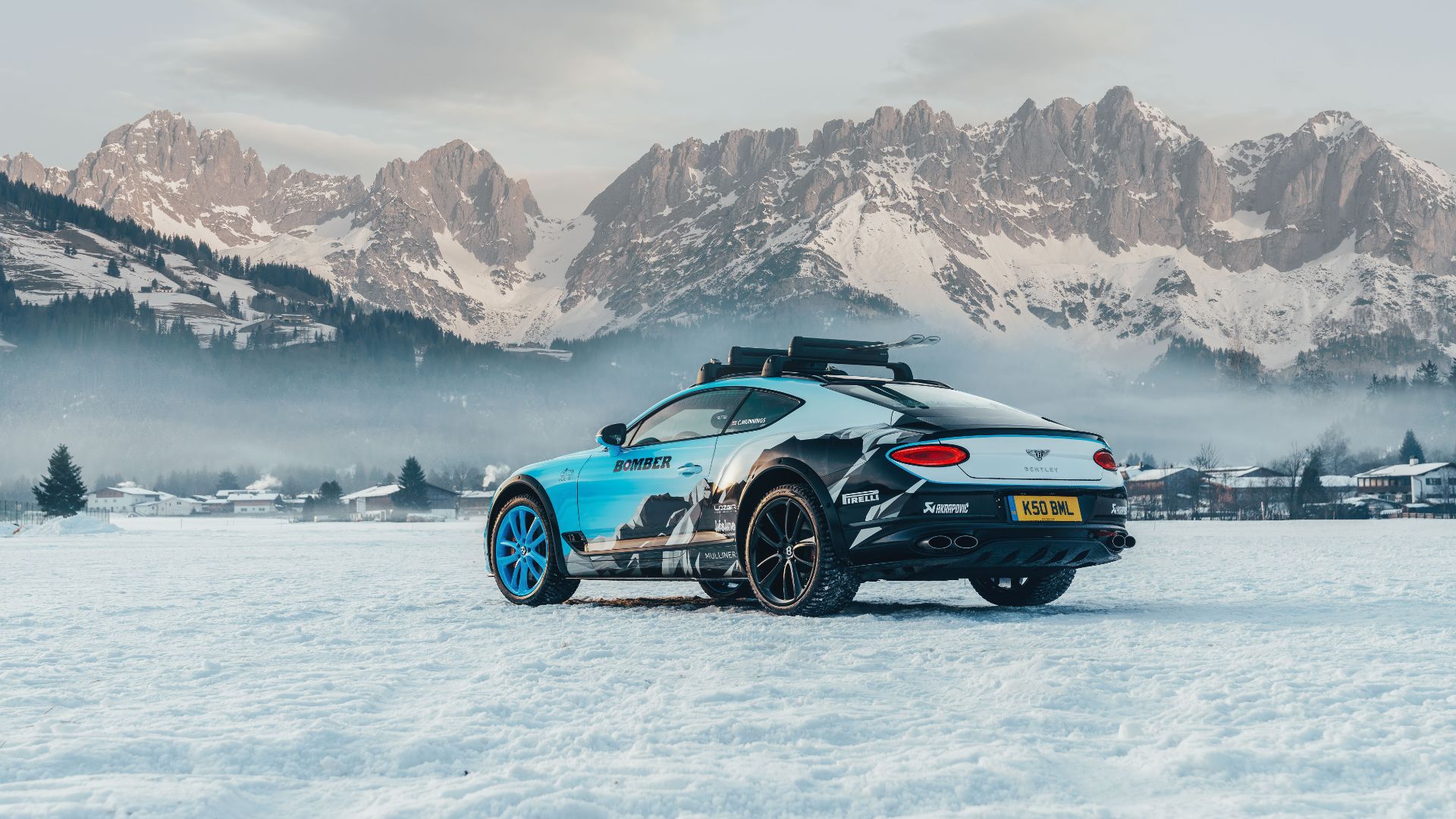
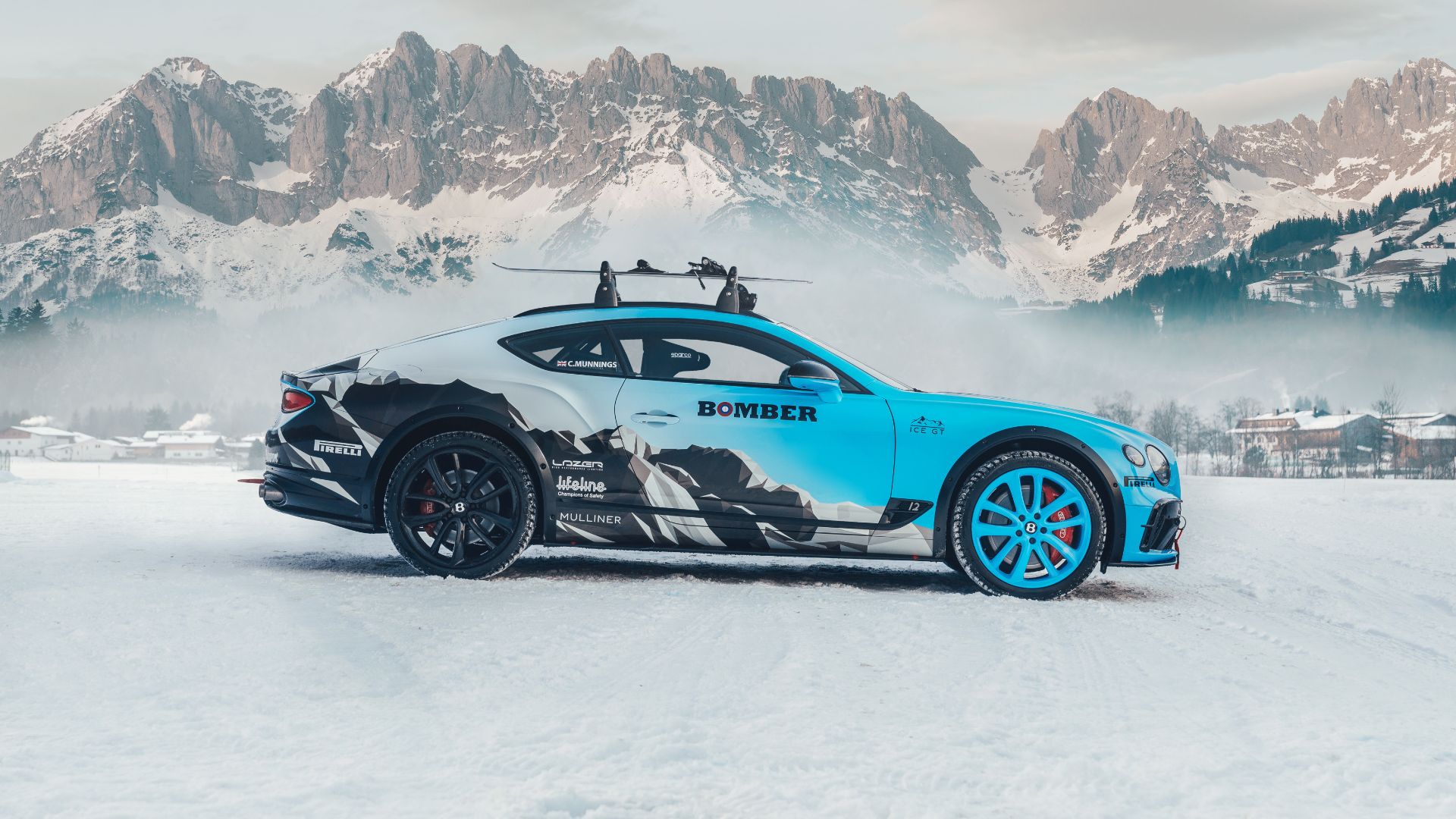
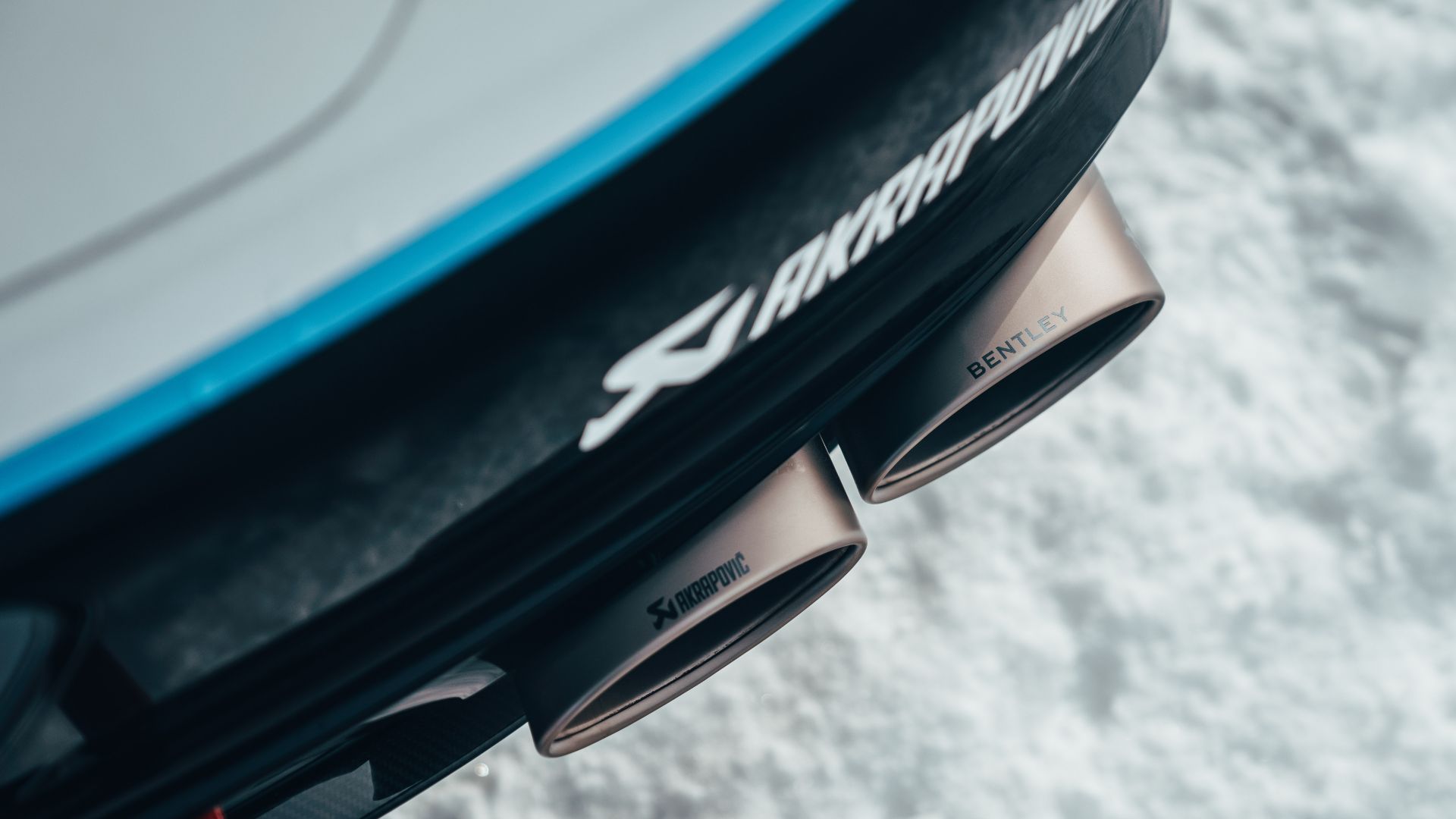
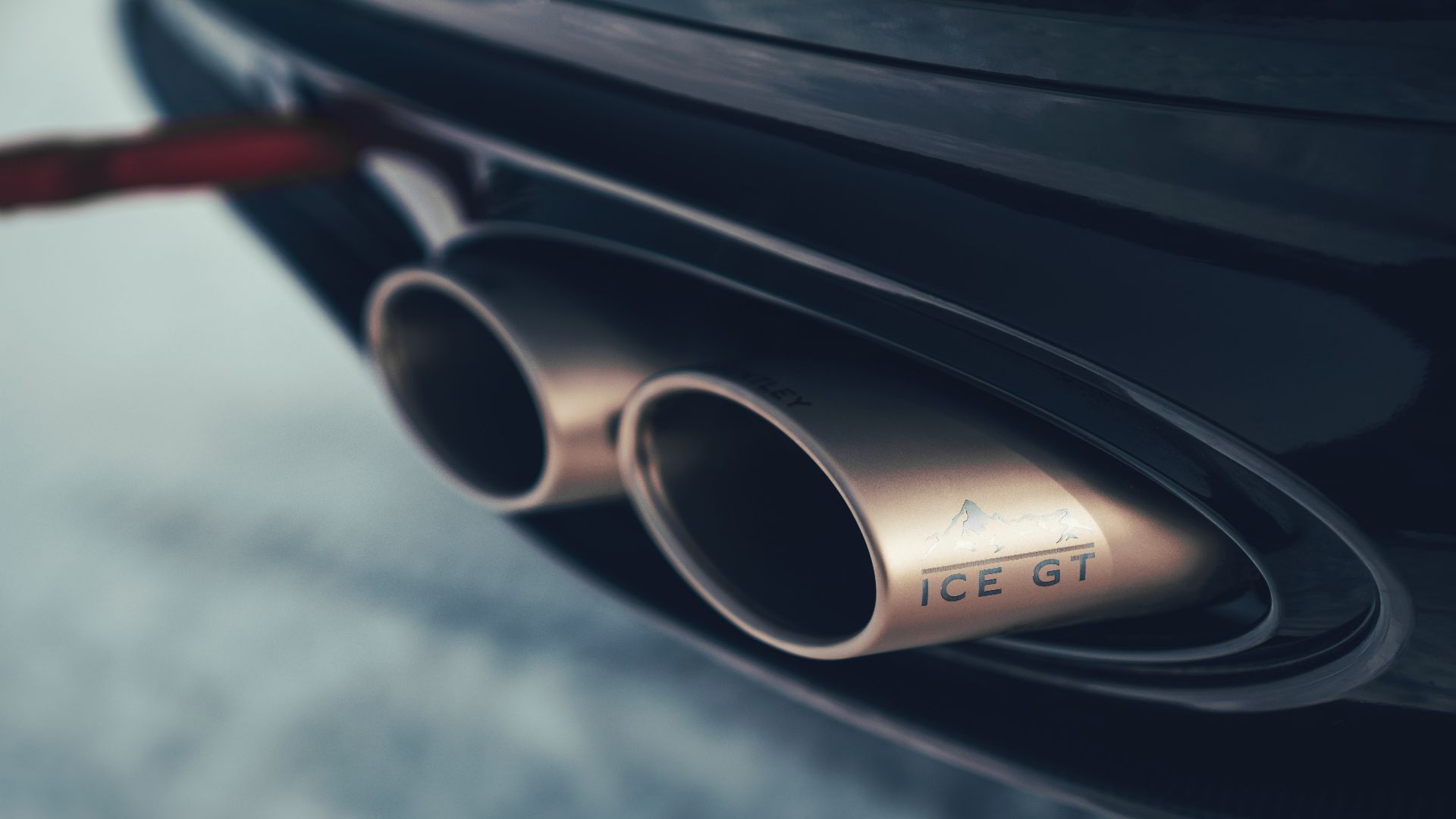
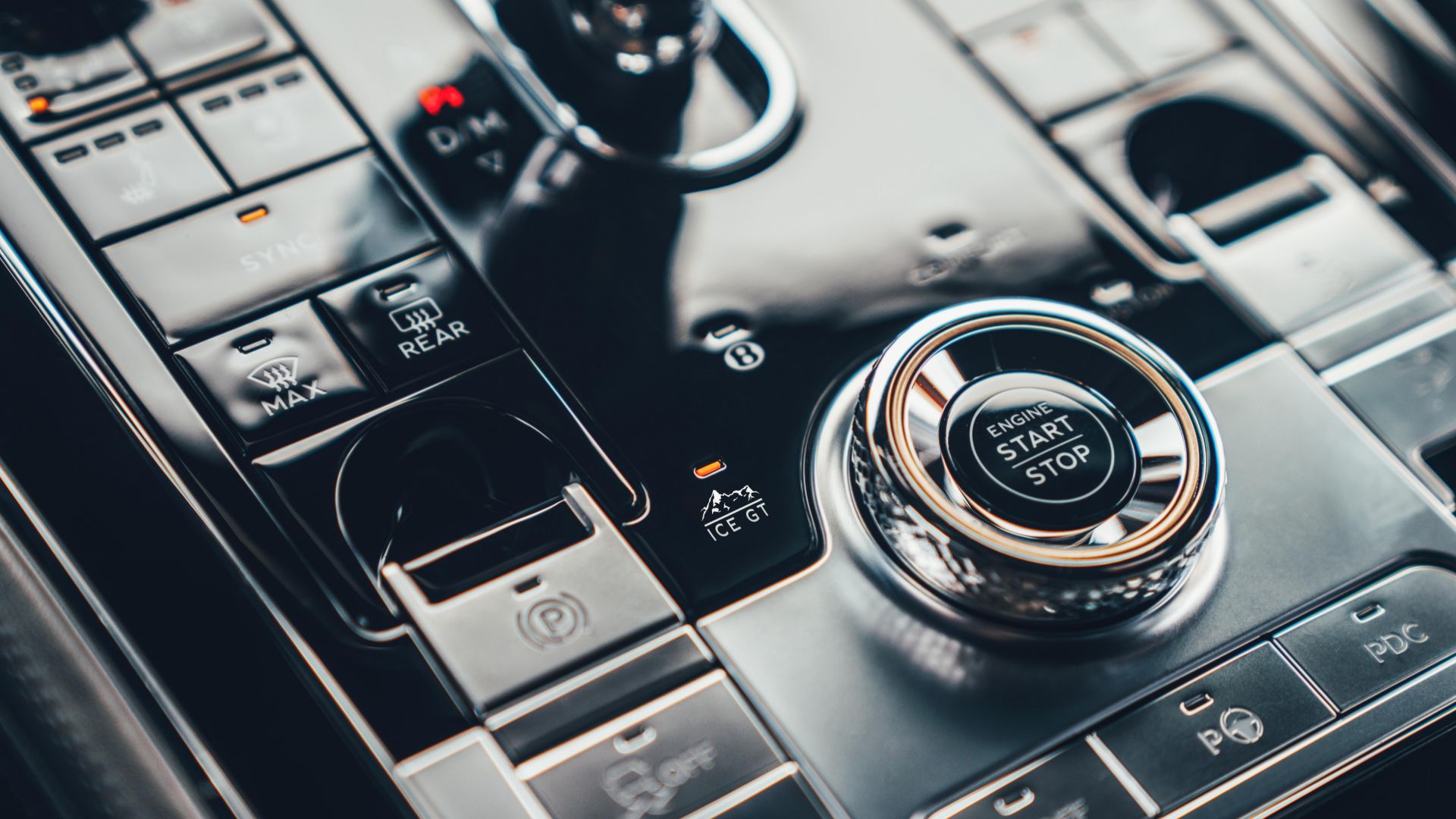
Bentley already races its stately Continental GT super-coupe in GT3, but wants to take on other types of motorsport. To that end, it’s already a regular at the Pikes Peak hillclimb – and is now taking the Conti racing on ice.
Yes, you read that right. The car most comfortable on Park Lane, or cruising the French Riviera, will enter the 2020 GP Ice Race in Zell-am-See.
The specially-prepared Continantal GT will be piloted by junior World Rally Championship driver Catie Munnings. She’ll be the first female driver to race for Bentley in the modern era.
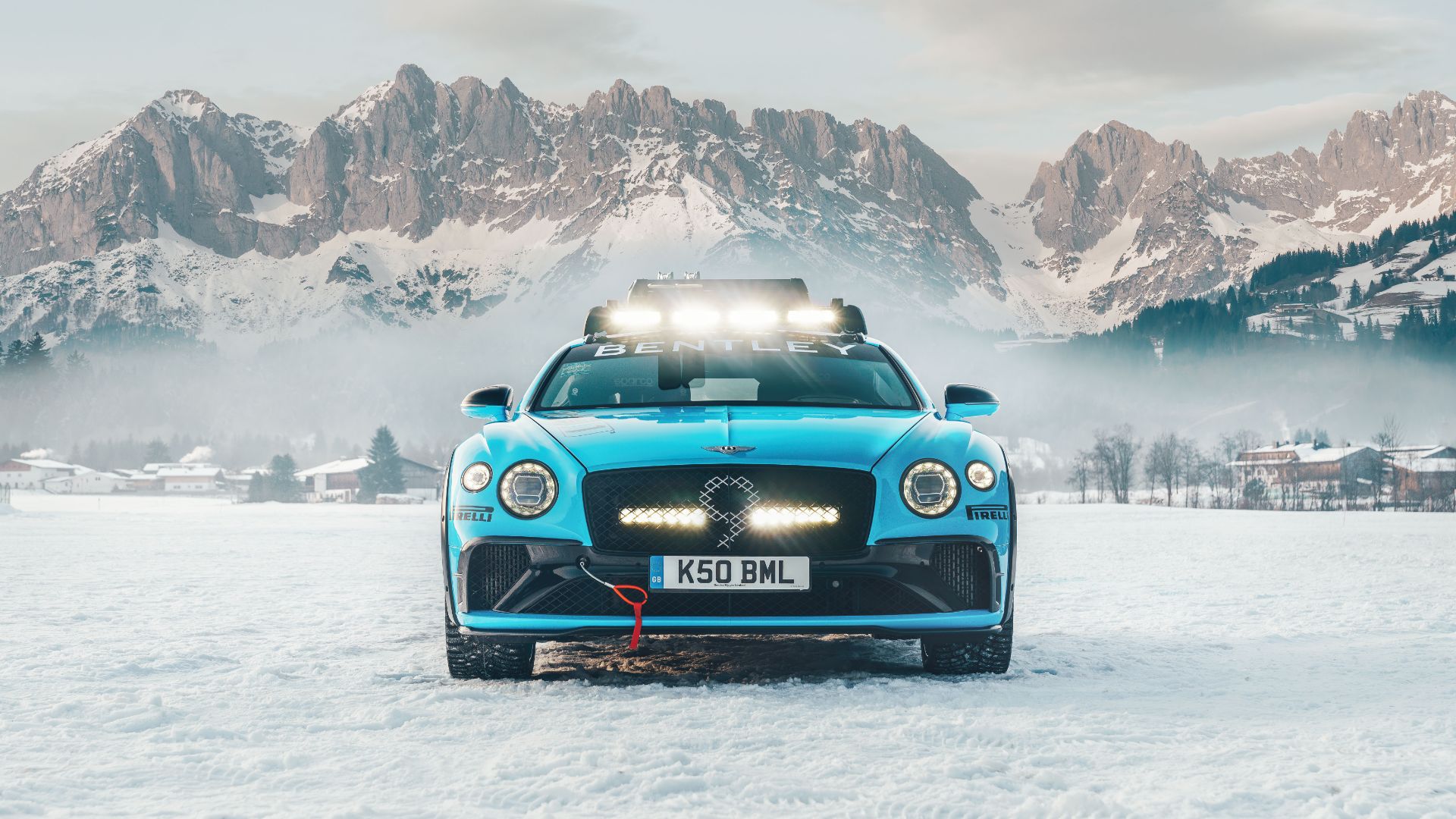
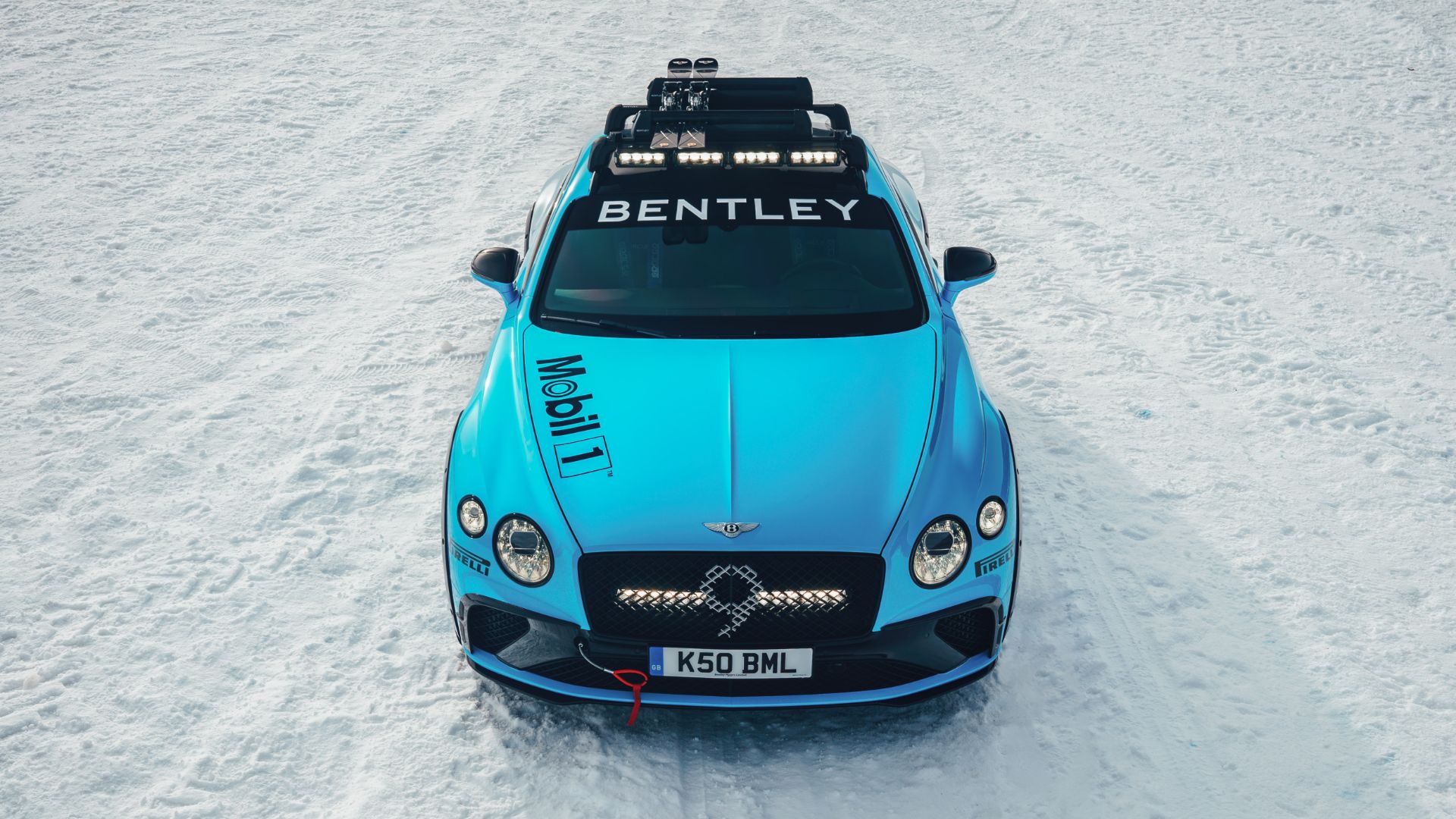
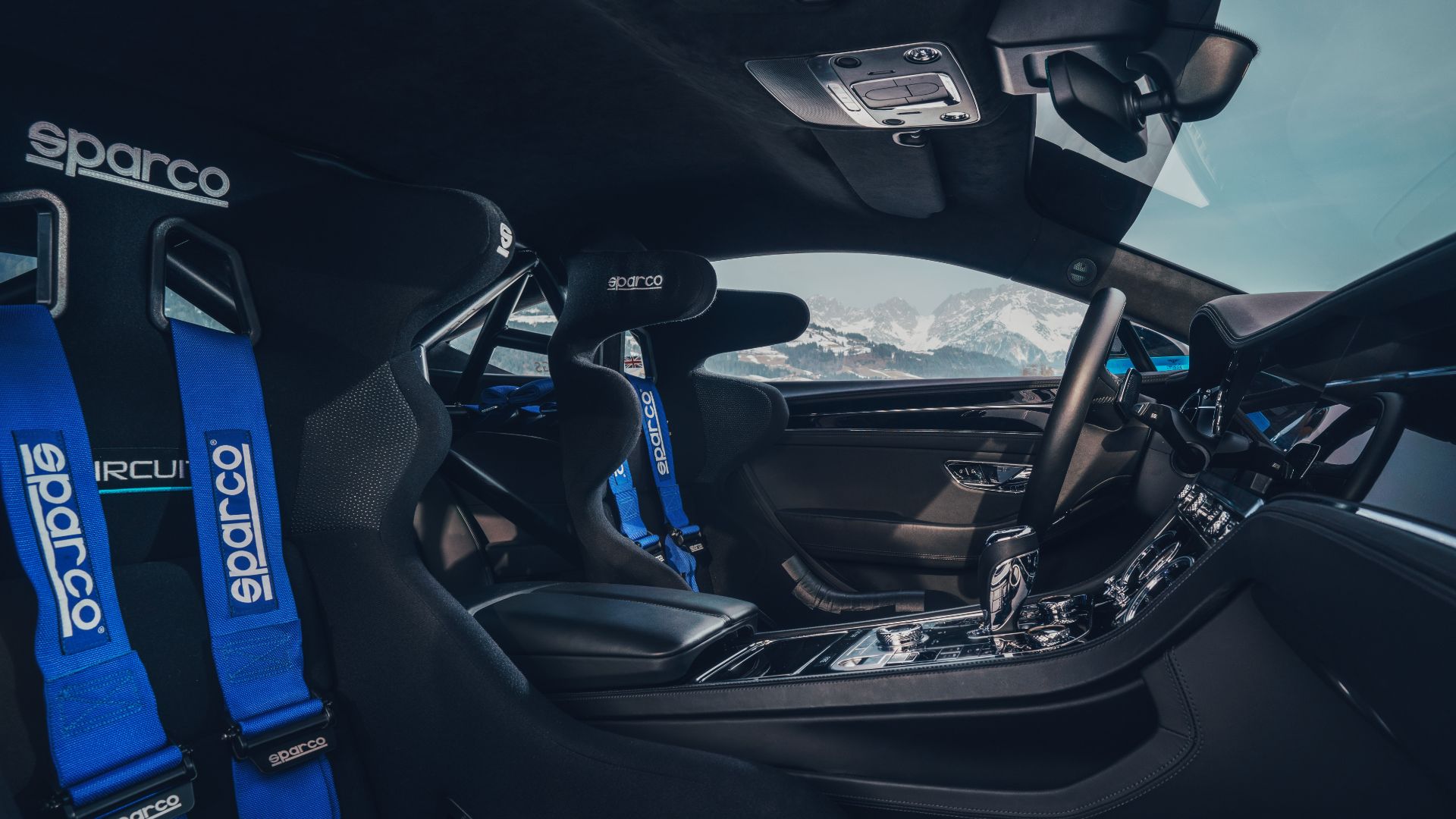
To ready the car for competition on the purpose-built ice track, Bentley has fitted a rear roll cage, on-board fire suppression, racing seats and harnesses.
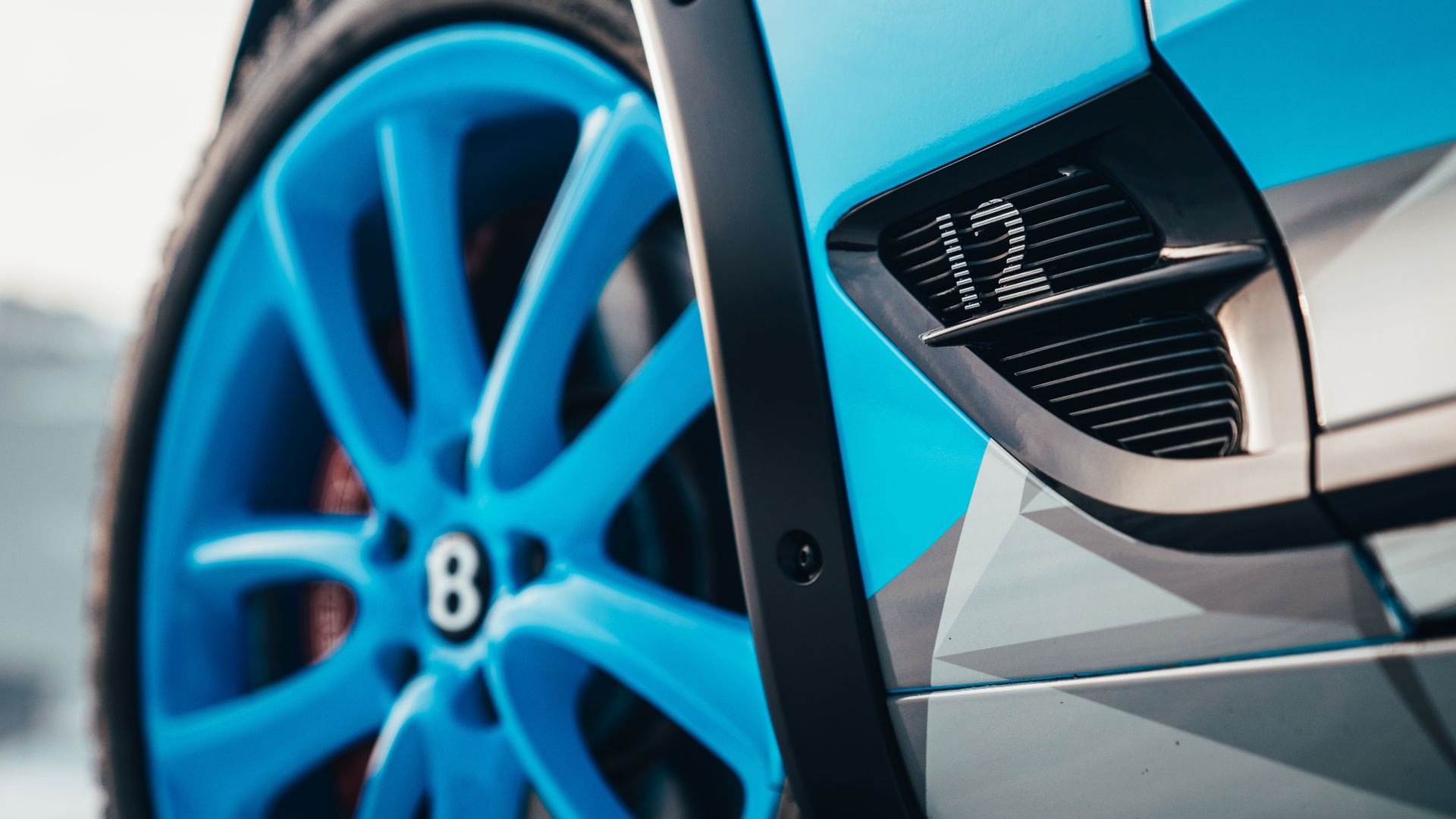
It rides a touch higher, and has a 15mm increase in track width. Studded Pirelli Scorpion tyres will put the 635hp W12’s power onto the ice, while lighting Catie’s way will be high performance laser roof-lights.
Bond boost: demand for Aston Martin drives leaps ahead of movie release
“I first drove the prototype Continental GTs on snow during winter testing before the launch of the car,” said Bentley’s director of motorsport, Paul Williams.
“The stability and control this car has on these surfaces is unbelievable and I look forward to seeing it race in those conditions.”
Along with the conventional race, there is also a competitive round of skijoring. The latter is a race while towing someone on skis.
The Bentley will be towing skier Sven Rauber in 2020’s skijoring event.
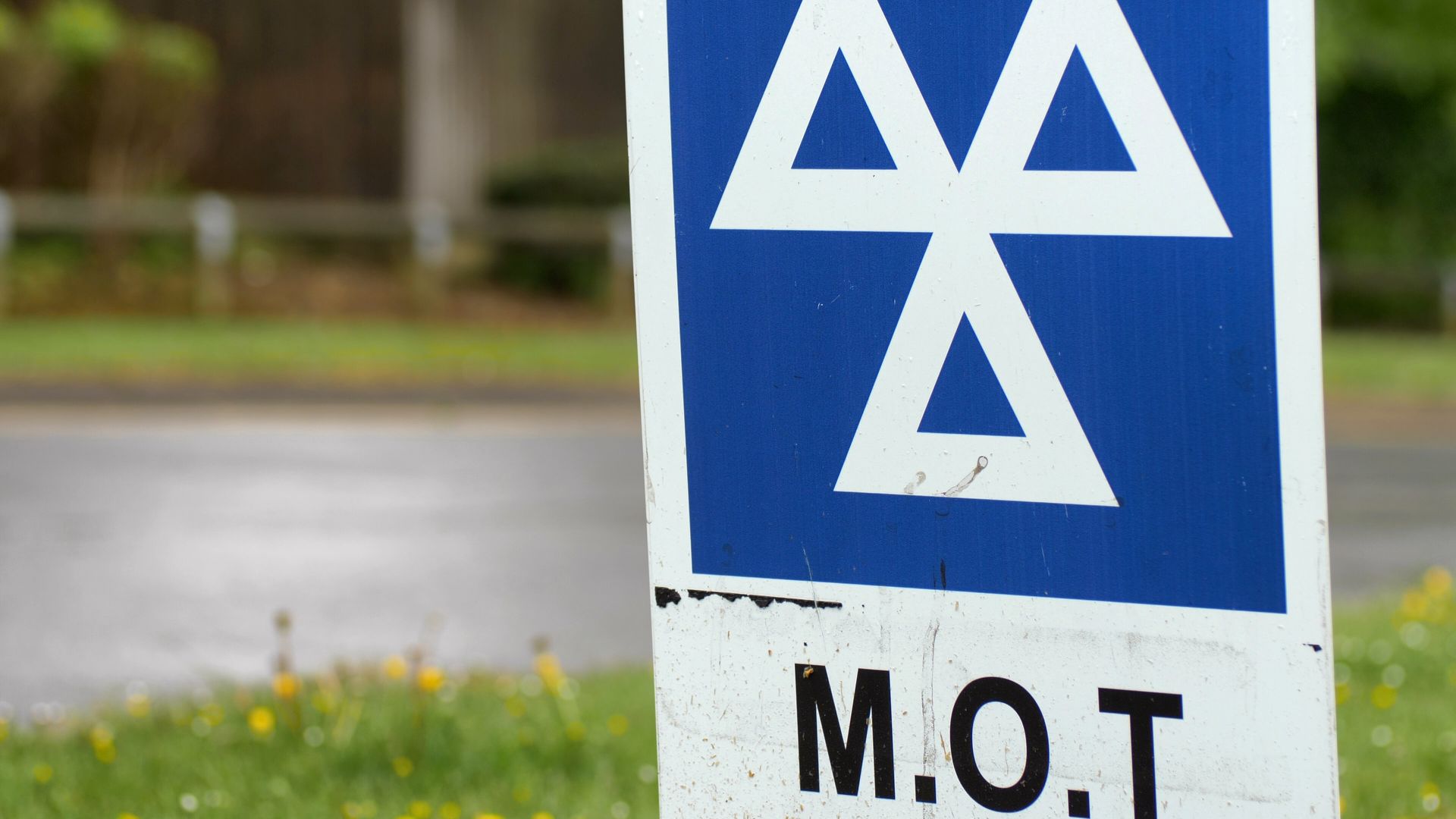
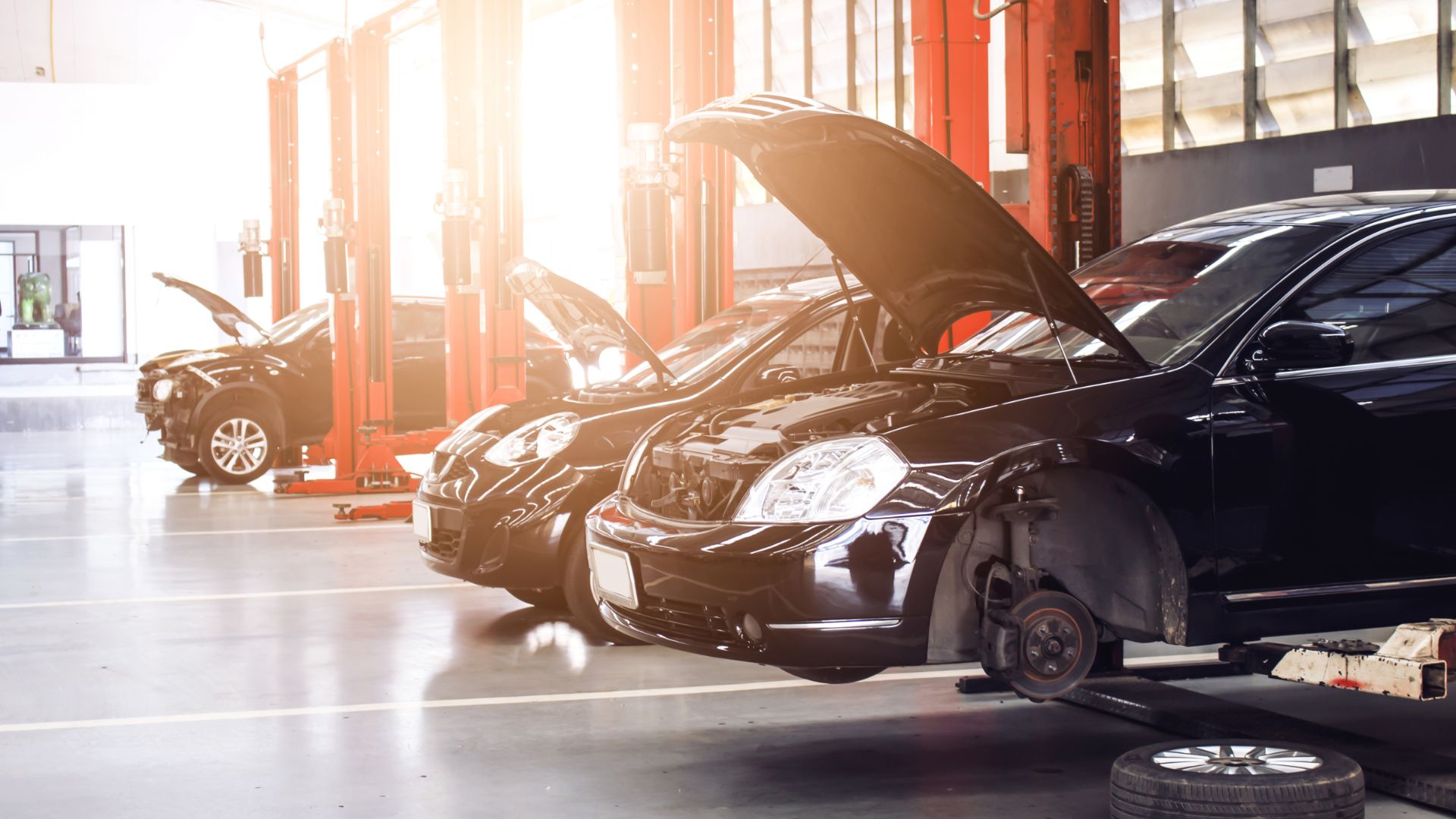
All MOT tests in Northern Ireland have been suspended, effective immediately, after 48 of 55 lifts inspected in test centres were found to be unsafe.
The lifts were found to have damage that could put testers at risk, including structural cracks. Drivers in NI with an MOT test booked for today (Tuesday 28 January 2020) have been advised not to attend.
“This is hugely embarrassing,” said Paul Duffy, chief executive of the Driver and Vehicle Agency (DVA), speaking to BBC News Northern Ireland.
“I think we have a fairly good reputation and this is something that has tarnished that reputation.
“The DVA recognises the considerable inconvenience and disruption this will cause for many people and sincerely apologises that it has been unable to rectify this situation more quickly.”
So far, more than 5,000 tests have been cancelled, and rising. As of yesterday, drivers can apply for exemptions.
Cars going for their first MOT test will still be required to do so. They will be tested, temporarily, in lanes normally used for lorries and buses. Tests on HGVs and buses will also continue as normal.
Will car insurance be valid with no MOT?
Why the Coronavirus could lead to lower petrol prices
There have been assurances that insurers will be ‘pragmatic’.
“I think the key thing here is to talk to your insurer,” said Malcolm Tarling of the Association of British Insurers.
“Let them know these quite unusual circumstances and get hold of one of those exemption certificates as well.”
“Insurers are going to keep a very close eye on the situation and they are going to be guided by the advice the authorities in Northern Ireland are giving out.”
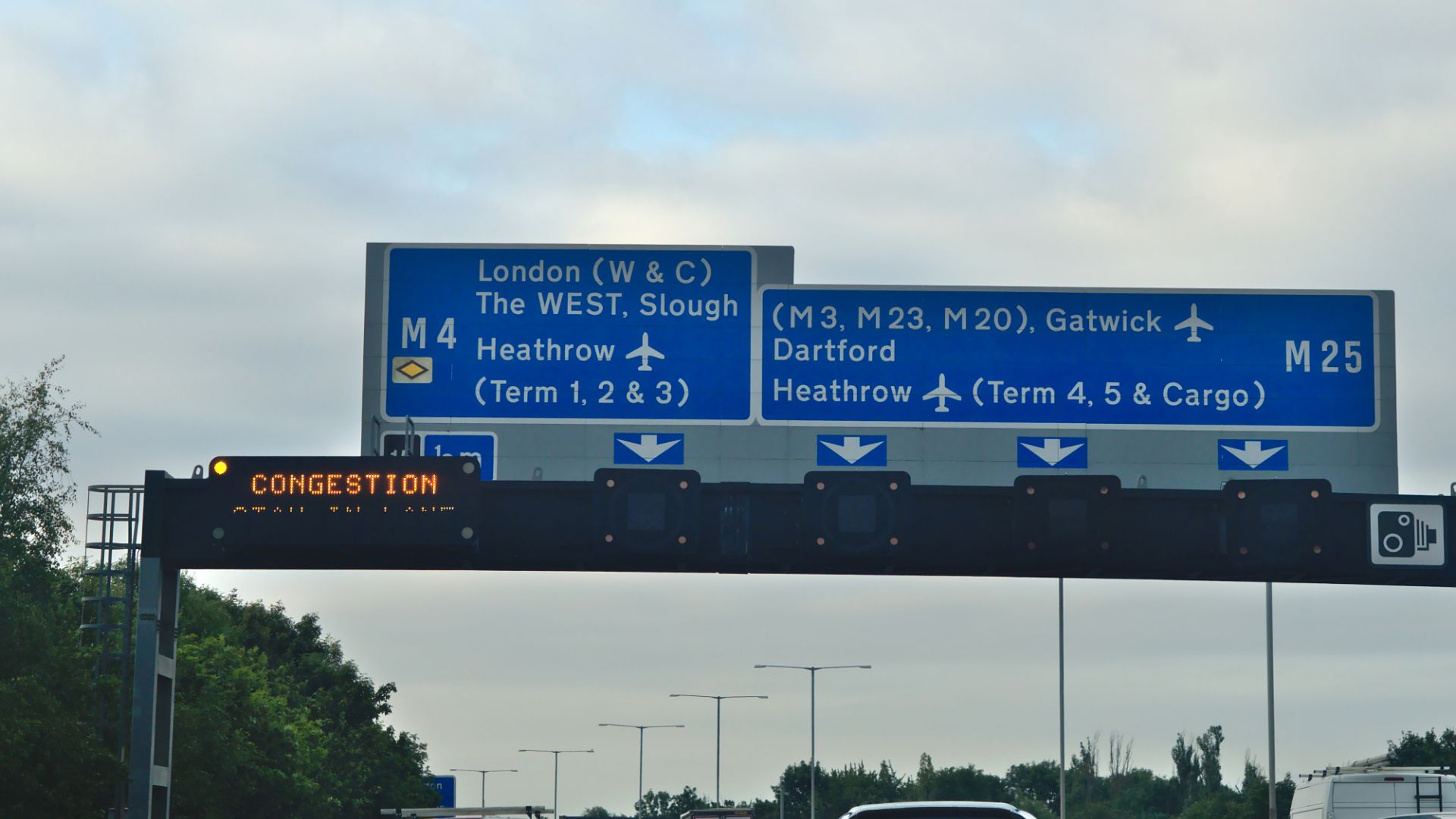
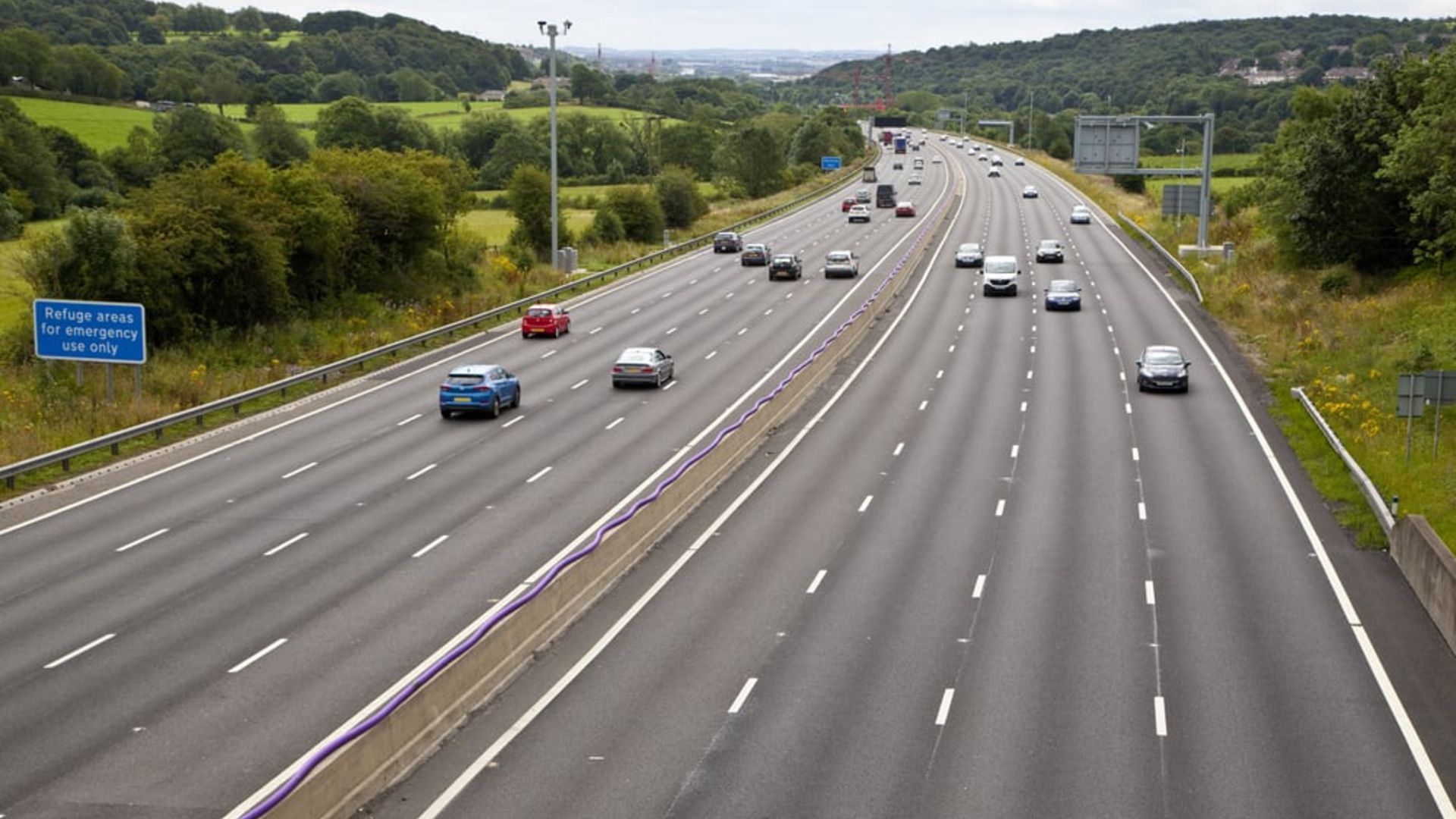
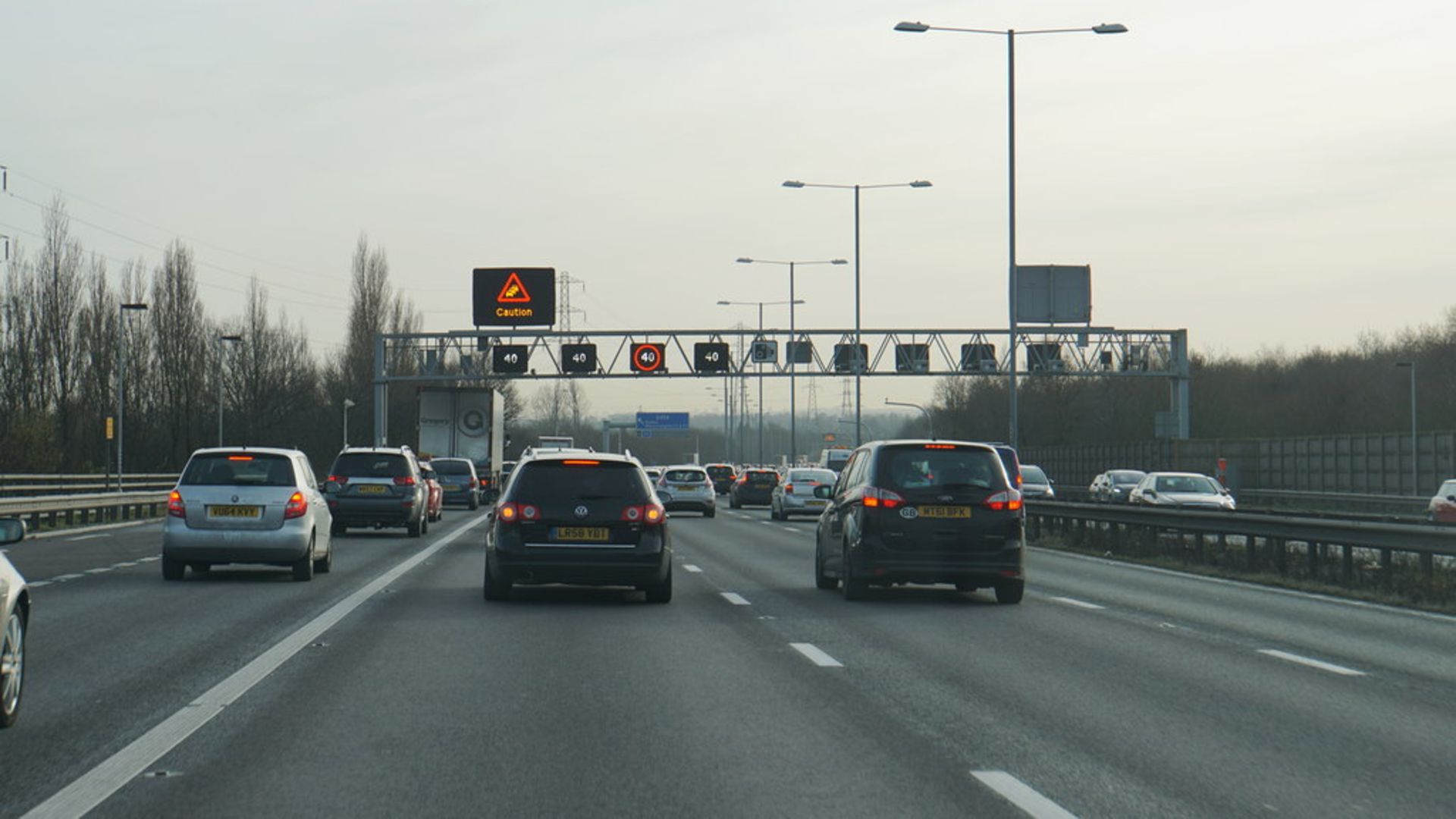
The furore around around so-called ‘smart motorways’ has been stoked by the former roads minister who gave them the go-head in 2010. Sir Mike Penning has published a report that calls for smart motorways to be stopped until they are proven safe, or technology is installed to make them safe.
Conservative MP Penning approved the roll-out of smart motorways after being shown the promising results of a trial on the M42. This included hard shoulders converted to running lanes, with refuge areas every 600 metres.
“I spoke to the Secretary of State,” he recalls, “and told him the evidence showed there was no greater risk. So we signed them off.”
So what has changed? Penning claims in the report that he wasn’t told by Highways England (then the Highways Agency) that refuge areas would be fewer and further-between. Across the 400 miles of motorway that are now all-lanes-running, most are around 1.5 miles (2,500 metres) apart.
“I feel that I was totally misled. I’m an ex-fireman, and I’ve cut people out of car wrecks. I know how much this matters,” he said.
“They are endangering people’s lives. People are being killed and seriously injured on these roads, and it should never have happened.”
Sir John Hayes, roads minister for two years until 2018, also “repeatedly” raised concerns about the spacing, he told The Telegraph.
“My argument was that you need more regular refuges, each less than a mile apart,” he said.
“I repeatedly pressed for this and didn’t want any more roll-out of smart motorways unless these refuges were in place.”
How can smart motorways be made safe?
The AA recently uncovered a damning document that dates back to June 2012. It proposed the spreading-out of refuge areas, far beyond the 600 metres of the trial run. “By rationalising refuge areas… savings can be made on a significant item of capital infrastructure,” it said. The AA summarised this as a ‘deliberate cost-cutting measure’.
The other side of the coin is improved stopped-vehicle detection. In 2016 Highways England committed to the installation of technology that would give better warnings of broken-down cars. To date, that technology is running on 25 miles of the M25 – roughly 16 percent of the current ‘smart’ network.
In the five years since smart motorways were introduced, there have been 38 deaths on these stretches of road – plus a massive 2,000 percent increase in potentially deadly near-miss incidents recorded on a section of the M25. There are even suggestions of corporate manslaughter charges against Highways England.
82 percent of drivers make test-fail errors AFTER passing
“They need bigger and more frequent refuge areas and better signage to ensure drivers understand when hard shoulders are closed to active running,” said Richard Burnett, chief executive of the Road Haulage Association.
The RAC draws attention to the stopped-vehicle detection system deficit, as well as refuge areas.
“This report shines a light on the huge concerns that exist about the safety of all-lane-running smart motorways in the event of a breakdown,” said RAC head of roads policy, Nicholas Lyes.
Is your car child seat dirtier than your toilet?
Van drivers spend 7 billion hours a year looking for parking
“With more than two-thirds of drivers telling the RAC that the permanent removal of the hard shoulder compromises safety in the event of a breakdown, it is now abundantly clear things need to change.
“We have consistently called for the roll-out of stopped vehicle detection radar technology to quickly identify stranded vehicles and additional SOS areas to give drivers a greater chance of reaching one in the event of an emergency, thereby reducing the collision risk.”
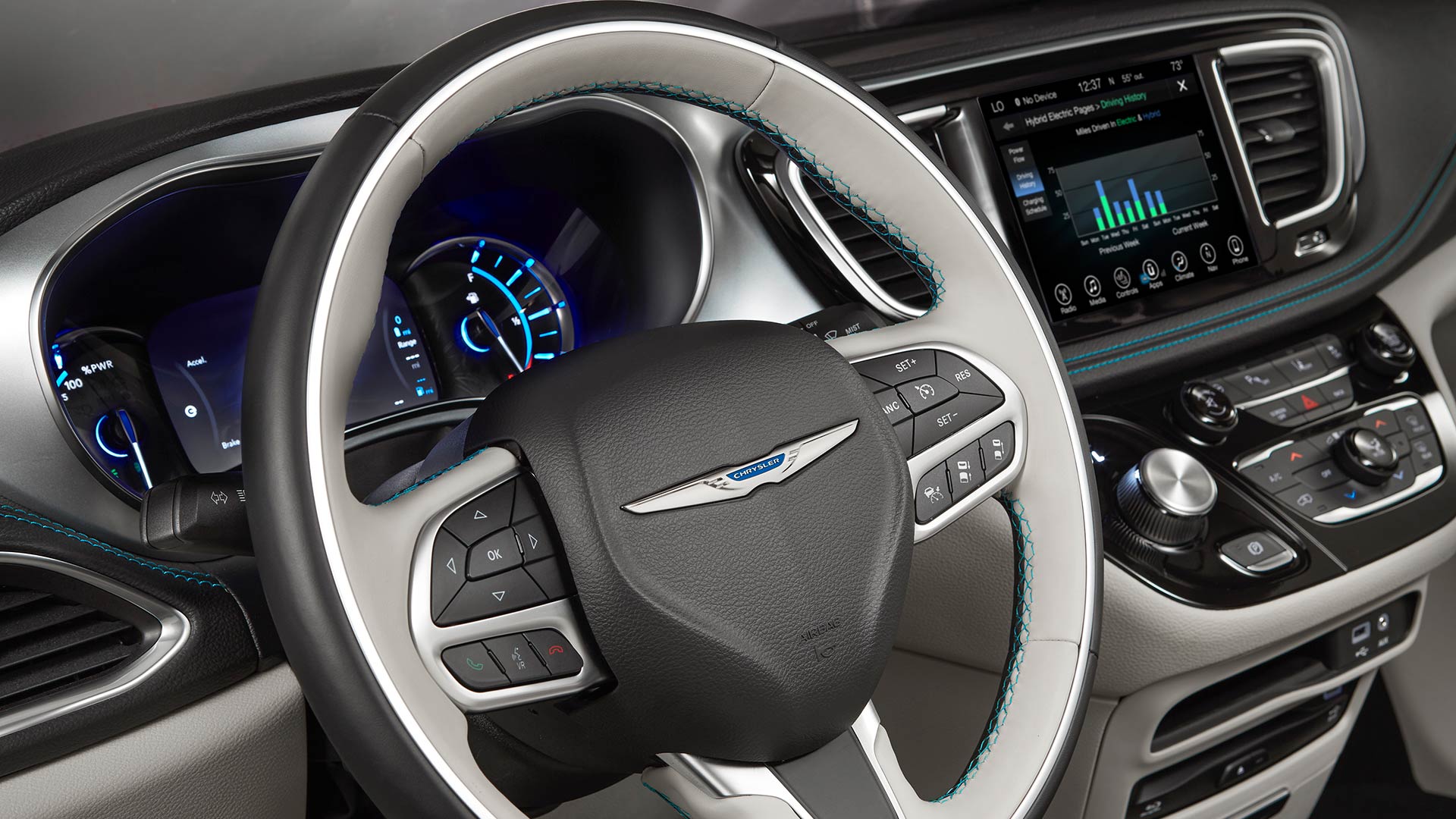
Fiat Chrysler Automobiles (FCA) has announced its latest version of the Uconnect multimedia system, due to role out later this year.
With modern drivers demanding greater connectivity and smartphone integration than ever before, getting a car’s multimedia platform right is a big deal. FCA has found that 51 percent of buyers take such technology into account when choosing a new vehicle.
For Uconnect 5 FCA is promising a better overall user experience, aided by hardware that offers processing speeds up to five times faster than at present.
Easier smartphone integration options
With the lines between car and smartphone systems increasingly blurred, one of the big changes for Uconnect 5 is wireless integration with Apple CarPlay and Android Auto.
At present 80 percent of FCA’s vehicles in North America feature Apple CarPlay and Android Auto, but the new Uconnect system will take this total to 100 percent coverage.
FCA notes that two phones will be able to simultaneously use Uconnect, potentially reducing (or inflaming) arguments over who gets to pick the music on road trips.
Bigger screens with a personal touch
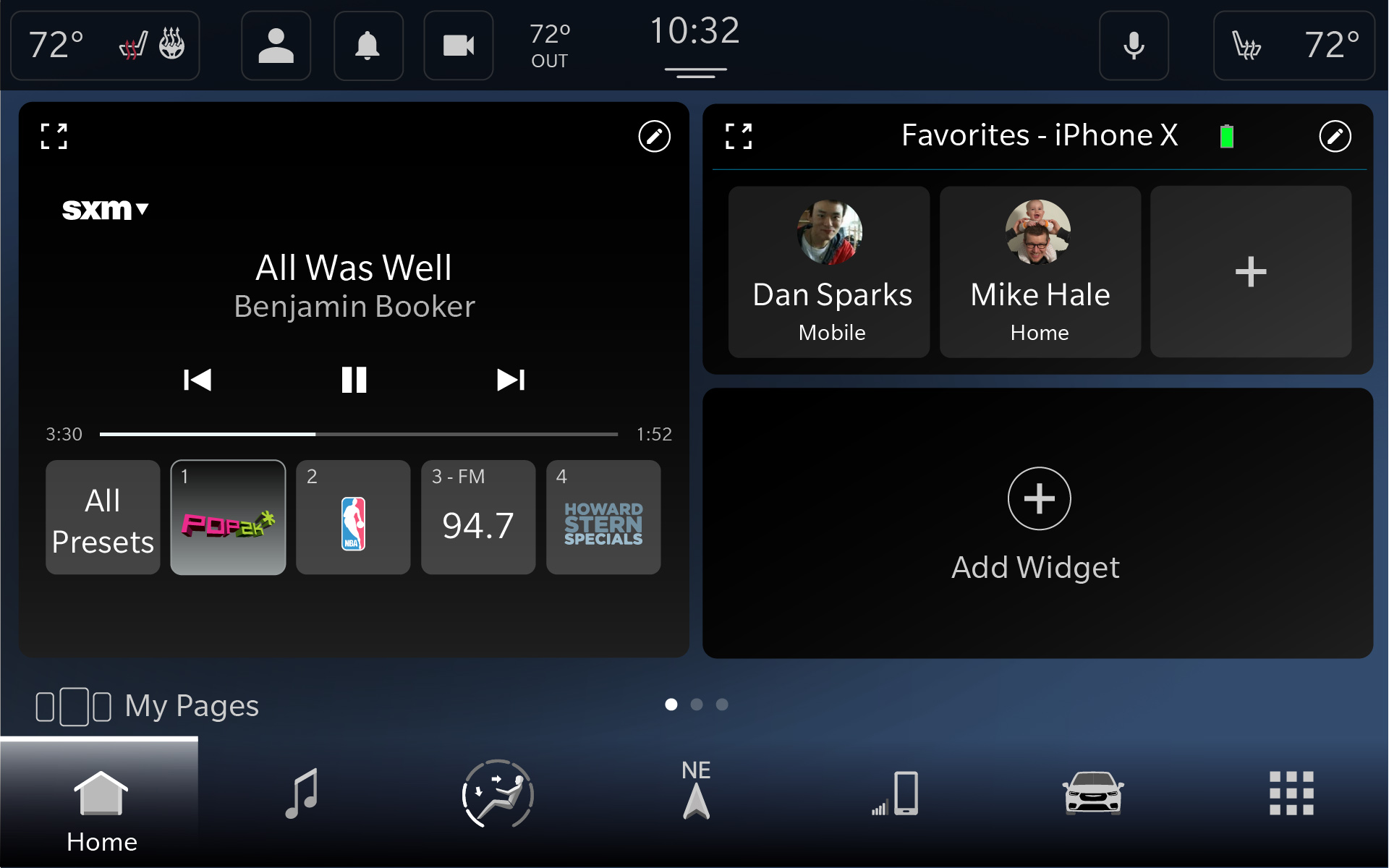
Uconnect 5 itself makes use of a new Android operating system, delivered with more internal memory and faster response times for the larger 12.3-inch touchscreen.
FCA states that new bigger screen options can be mounted in both portrait or landscape fitments, with individual FCA brands able to tailor exactly how the screen looks in specific models.
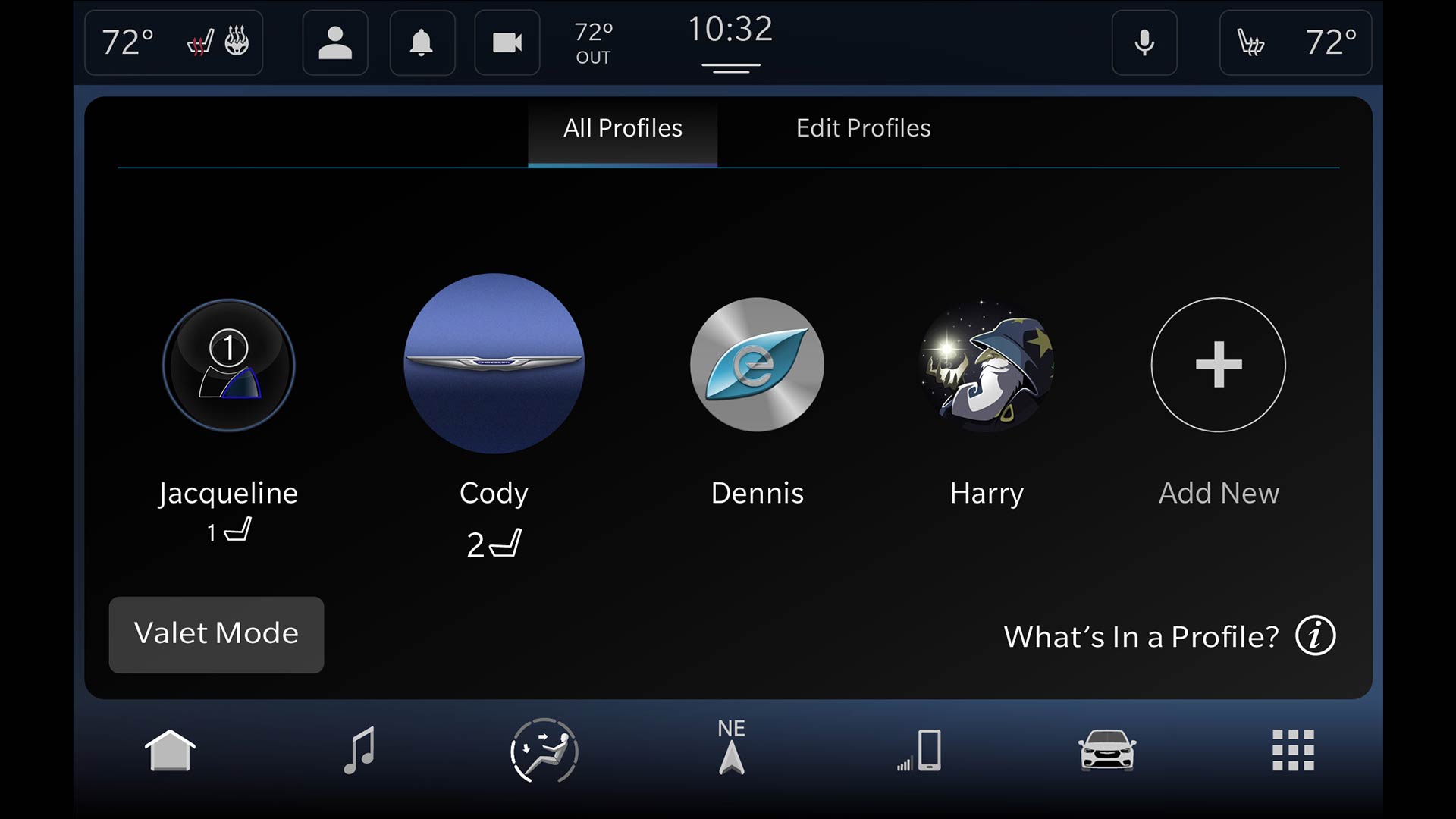
Ultra HD screen technology is said to further improve the user experience, whilst drivers will be able to tailor the Uconnect home screen to their personal taste.
“Alexa, fire up the Hellcat”
Greater use of the Amazon Alexa ‘Uconnect skill’ will also be offered, giving drivers more options on how to use Alexa. Unlocking doors and remotely starting the vehicle will be possible from Alexa-enabled devices in the home for Uconnect 5 users.
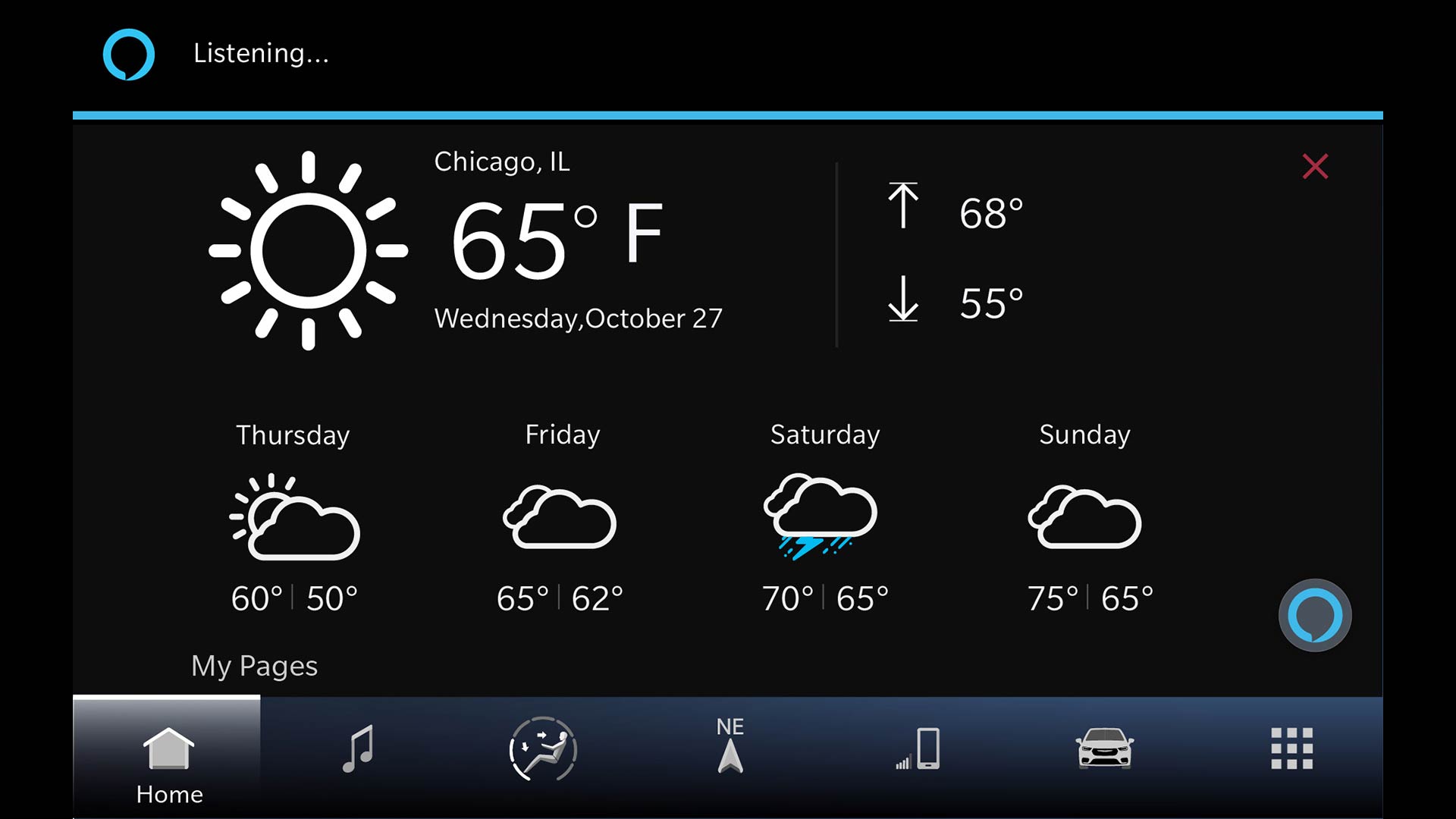
In car, Alexa will be integrated directly into Uconnect 5, meaning drivers can ask the same questions of Alexa that they would at home. This includes getting weather updates, checking the news, requesting traffic information, or just playing music and podcasts.
Key to this is improved voice recognition, with FCA promising that it will operate more naturally and responsively to commands.
Updates across the airwaves
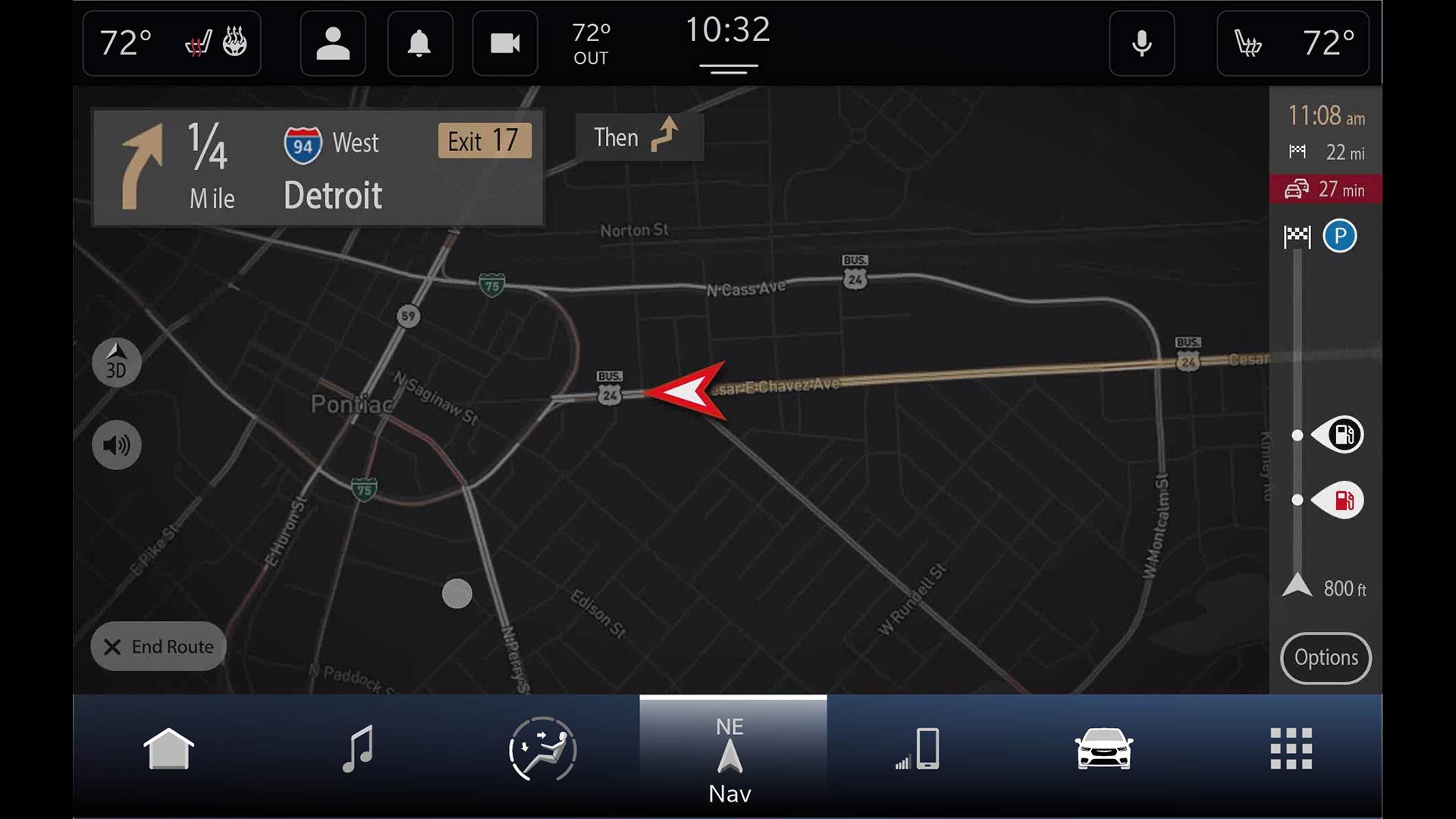
For those who still rely on integrated satellite navigation, Uconnect 5 will feature an improved service provided by TomTom. This will include over-the-air map updates, directions to charging stations for electric vehicles, and even walking directions via the Uconnect smartphone app.
FCA will also allow vehicle firmware to be updated remotely over-the-air, along with reminders about servicing and maintenance requirements.
New models featuring Uconnect 5 are expected to be available later in 2020, although FCA has not yet confirmed which particular models are first in line.
What makes a car a classic? Go too new and you run the risk of looking like you’re trying to up-sell your old snotter that’s at the bottom of its depreciation curve. Conversely, go too old and the declaration of a car as a classic becomes sort of redundant. If it’s carbureted, and didn’t come with seatbelts at first, that ship probably sailed years ago. So when does true classic car status begin?
The Federation Internationale de Vehicules Anciens, otherwise known as the international federation of historic vehicles (FIVA) reckons you can’t go far wrong at 30, given the right make and model. You don’t get much more official than that.
“There’s no magic rule to say when a vehicle becomes a ‘classic’,” says Tiddo Bresters, president of FIVA, “but reaching 30 years of age is one of FIVA’s clear criteria.”
“So in 2020 we’re delighted to welcome a whole new raft of 1990 classics to the fold, as they celebrate their 30th birthday, thanks to their caring owners. Historic vehicles don’t have to be hugely rare or valuable; the ‘new classics’ range from supercars to city cars to motorcycles – but all are important milestones in the story of our motoring heritage.”
‘Clear criteria’ is no joke either. FIVA has four boxes for you to tick if you want to declare your vehicle is historic. Firstly, it must be at least 30 years old. The second is that it’s “preserved and maintained in a historically correct condition”. That means no modifications, and preferably no rust. Thirdly, and curiously, it mustn’t be a means of daily transport. We’re not sure on that one, given that technically one could use a Ferrari 250 GTO daily.
Fourthly, it has to be “part of our technical and cultural heritage”. It’s 30, clean, unmodified and used sparingly, but does it have its place in the history of the motorcar? Is it a worthy note on the great motoring tapestry? If not, not all is lost. You’ll almost certainly get a spot at the Festival of the Unexceptional. We’d be curious to know what the FIVA makes of that event.
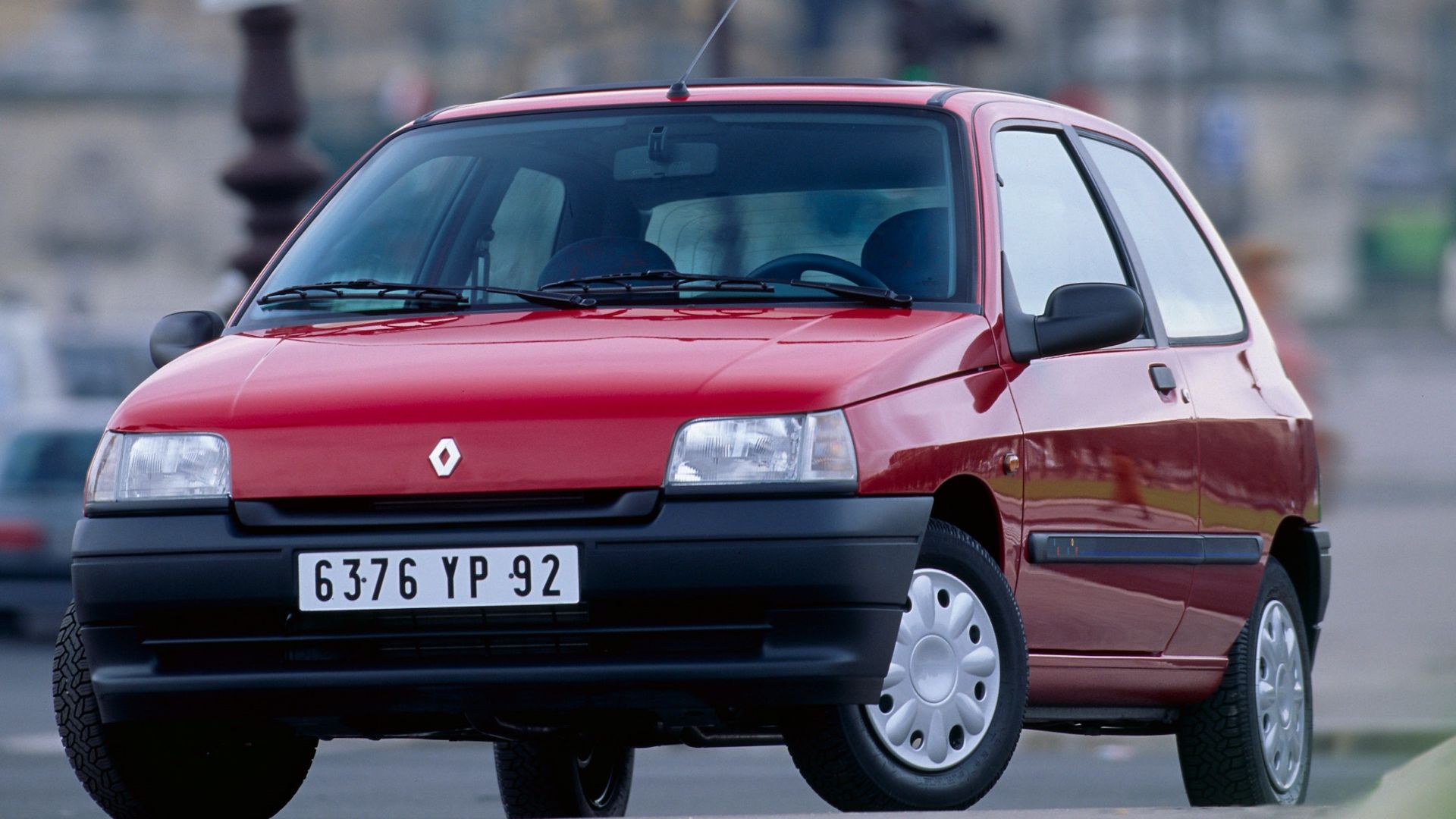
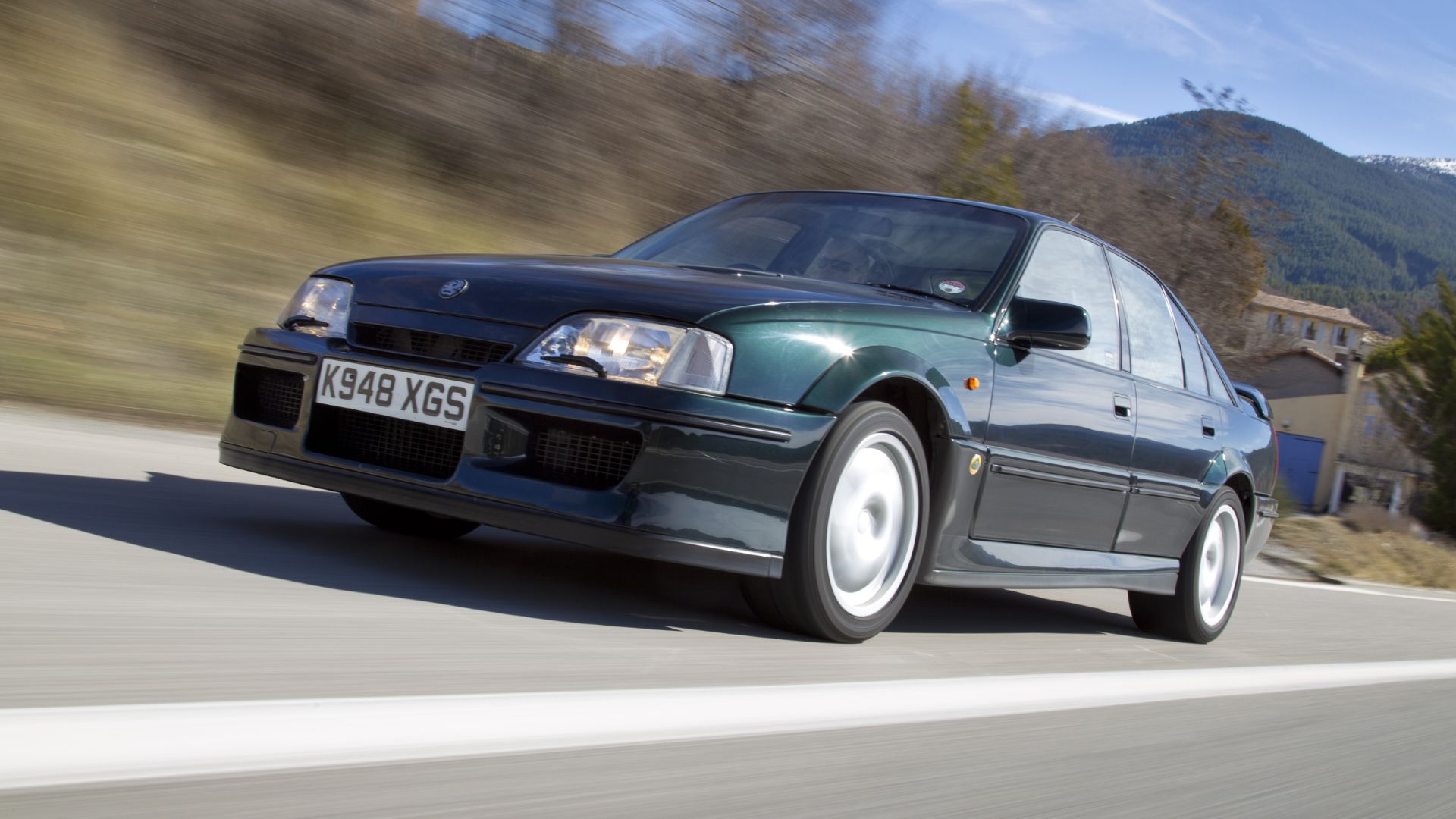
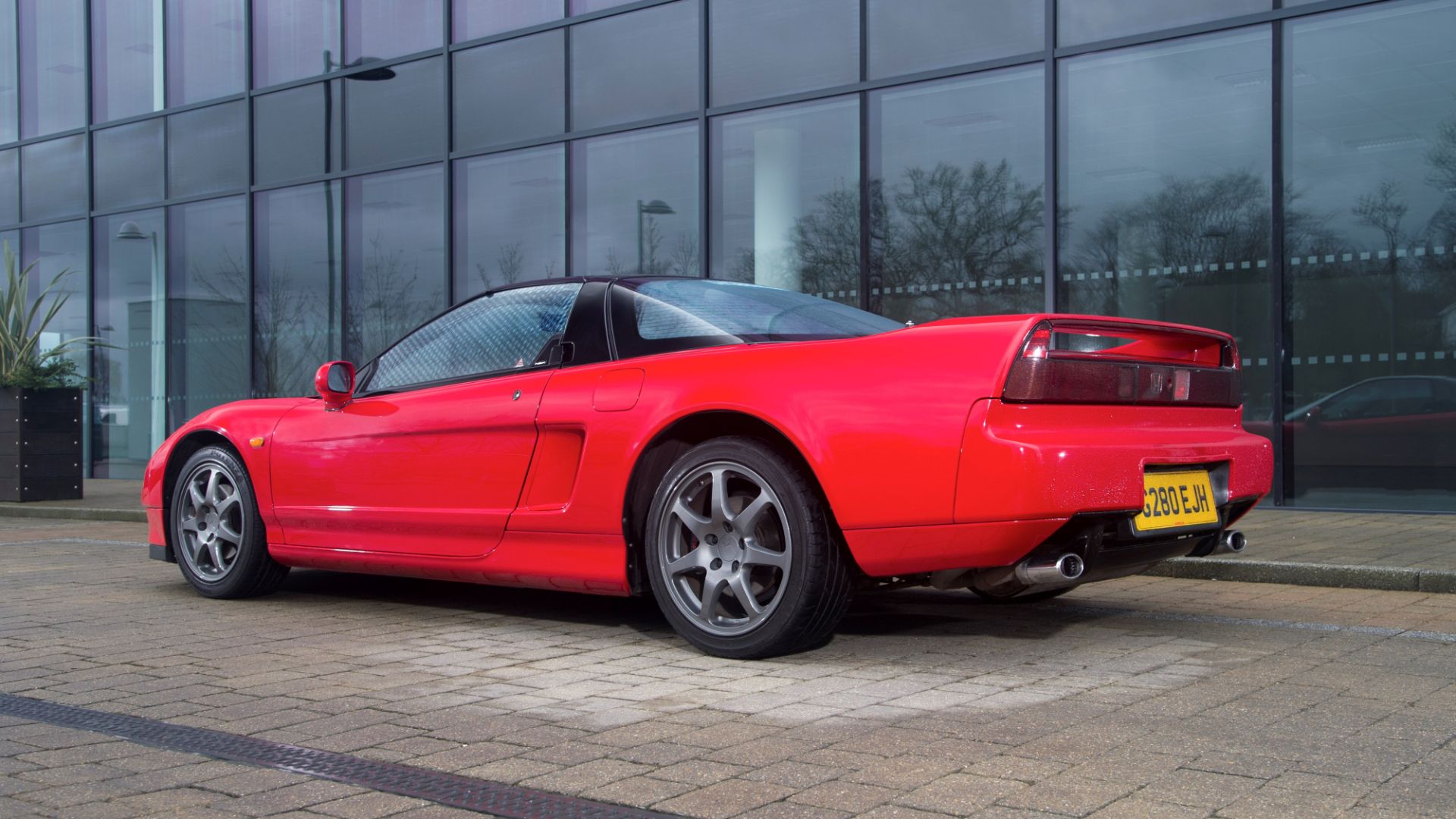
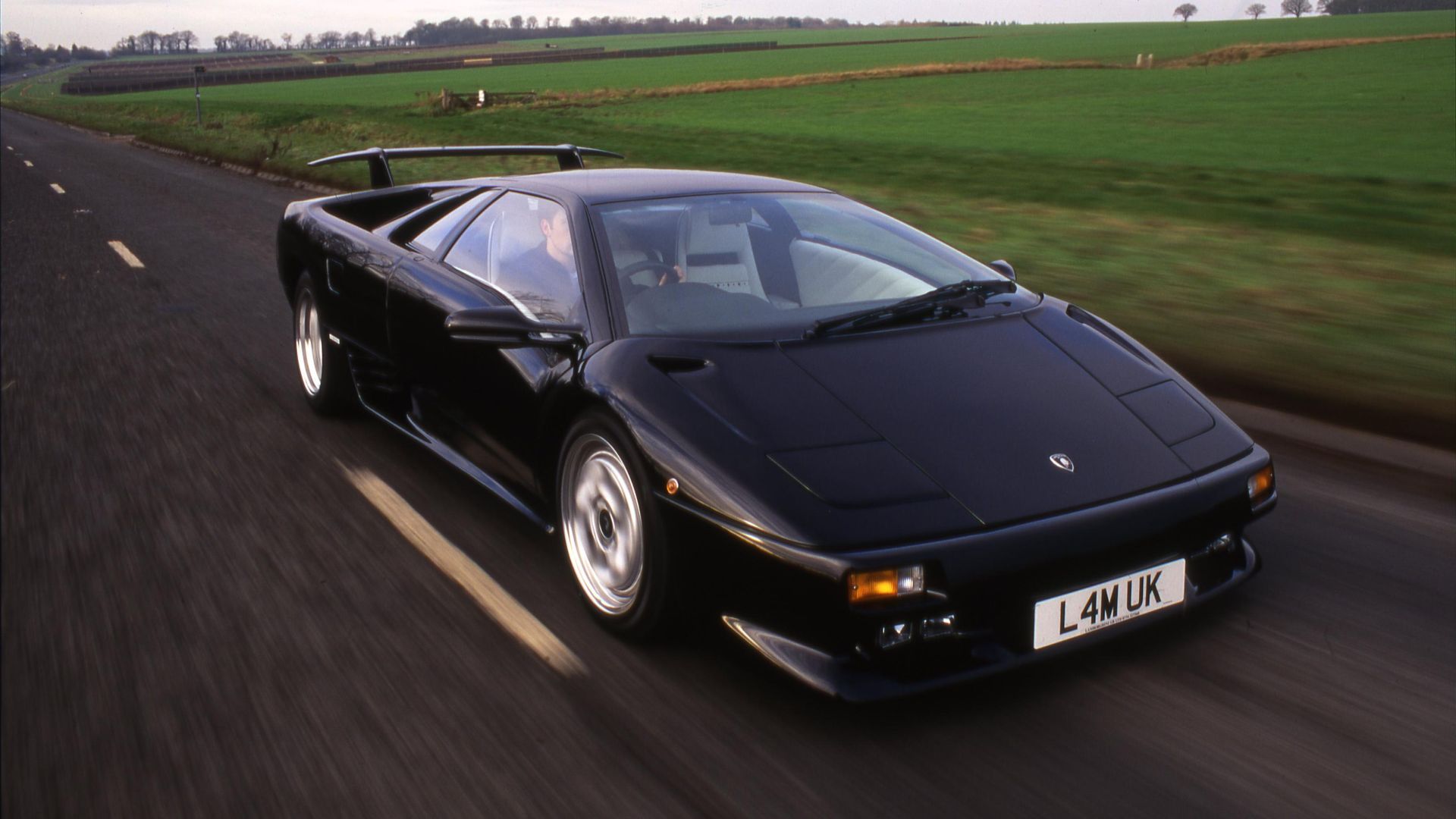
So what cars have secured true classic status? Entries range from the humble Renault Clio supermini, to the rip-snorting Lamborghini Diablo supercar. The Honda NSX also gets a mention, as does the boisterous 177mph Lotus Carlton. In the case of the latter, infamy plays as much a part in classic status as age.
Indeed, all are remarkable cars in their own way, whether that’s because you’re deliciously French (Clio) or are chasing 200mph (Diablo). So perhaps the FIVA is right on that fourth point about technical and cultural heritage.