Could your next car wear a Sony badge? The electronics giant revealed its Vision-S concept last year – and has now released a video of its radical EV on the road.
In the video, we see the car wearing Austrian number plates, testing on an airfield circuit and in the snow-covered mountains.
Officially, Sony describes the vehicle as a showcase and testbed for future technology. But company CEO Kenichiro Yoshida has already said he believes “the next mega-trend will be mobility”.
A history of in-car entertainment
We sense the Vision-S is testing the waters for a possible production car.
Watch: Sony Vision-S road and track testing
Slightly smaller than a Tesla Model S – and not dissimilar in style – the Vision-S has been developed for road use by Magna Steyr – the independent manufacturer that builds the Mercedes-Benz G-Class, Jaguar I-Pace and Toyota Supra, among others.
Other high-profile partners in the project include Bosch, BlackBerry, Nvidia and Qualcomm.
The car was revealed at the Consumer Electronics Show (CES) in Las Vegas last January.
Read my lips
The stats for the Vision-S look impressive: 544 hp from two electric motors, 0-62mph in 4.8 seconds and a 149mph top speed. However, it’s the technology here that really pushes boundaries.
The 2,350kg Vision-S uses a total of 40 sensors to monitor the car and driver. Although it isn’t fully autonomous, it can change lanes automatically – if the path is clear – when the driver activates the indicator. Digital mirrors also warn of surrounding vehicles, with ‘360 Reality Audio’ to help with gauging distances.
Inside the car, Time of Flight (ToF) sensors monitor the driver’s alertness and can lip-read to assist with voice controls – if other passengers are talking, for example.
Playstation included
Stopping short of actually reading your mind, Sony’s car also learns about its occupants, including their preferred cabin temperature, audio playlists and driving routes. If one of the occupants falls asleep (preferably not the driver), it will dim the interior lights and adjust the surrounding temperature to suit.
Ready to wake up? There’s surround-sound with individual seat speakers, plus integrated Playstation tech. Bring on Gran Turismo 7…
Naturally, the Vision-S also promises to fully integrate with your smartphone (yes, there’s an app) and connect to 5G networks, with software-over-the-air (SOTA) updates on its onboard systems. We suspect Elon Musk is taking notes.
BMW appears to be engaged in the social media equivalent of burning its heritage in a trash can. In what could pass as scene from a future Cars 4 film, a 760Li with a voice like Doc Hudson tells an iX electric SUV it is “marketing b******t.” The iX responds in kind by telling the 7 Series it’s history.
However, as this ex-Sean Connery BMW 635CSi proves, diamonds are forever. Some cars from BMW’s past are untouchable. The E24 is one such car.
It enjoyed a remarkably long innings, arriving in 1976, then not dying out until the 1980s said hello to the 90s. BMW tried and failed to replace the 6er with the 8 Series, but its successor had lost some of the magic.
It speaks volumes that the 8 Series could manage just a decade before going into a near two-decade hiatus.
‘Epitome of BMW zestfulness’
The 635CSi was second only to the M635CSi in the BMW 6 Series range. It arrived in 1978 with power sourced from a 3.5-litre six-cylinder engine derived from BMW’s Group 5 racing 24-valve unit. A top speed of 140mph made it Germany’s fastest four-seat coupe.
In 1979, Autocar described the 635CSi as “the epitome of BMW zestfulness – that glorious smooth eagerness of a BMW six, which is such a hallmark of the breed”. It cost, as near as makes no difference, £16,500 – the equivalent of £84,000 in today’s money. More expensive than a Jaguar XJ-S, but significantly cheaper than a Porsche 928 or Mercedes-Benz 450 SLC.
For the early part of the 1980s, the 635CSi was the flagship of the 6 Series range. The fact that it was upstaged by the BMW Motorsport-bred, 150mph M635CSi shouldn’t dilute the appeal of this elegant and smooth operator.
As Autocar summarised, it should appeal to a “man who ranks style as important as performance, and who prefers a vestige of sporting sound to total refinement’’. Somebody who prefers to be stirred, not shaken.
There can be only one
A man like Sean Connery. He bought the left-hand drive 635CSi in 1989/1990 and kept it until 1998. During that time, the car was used on the roads around the former Bond’s home in Marbella, Spain. Mr Connery sold the car to a BMW main dealer in Lancashire.
The 635CSi was placed in dry storage in the UK until 2007 before taking up residence in Luxembourg, where it remained in storage. It made a brief public appearance in 2016 to celebrate 100 years of BMW, but essentially the car is as it was when the Highlander star sold it in 1998. If you’re looking for an ex-Connery 635CSi, there can be only one.
At the time of writing, bidding for the Luxembourg-registered BMW 635CSi has reached £17,250 with no reserve, which is hardly a bridge too far. It’s worth noting that it was registered in 1986, before being delivered in January 1989 and registered to Sean Connery in 1990. There are just 61,841km (38,426 miles) on the clock.
The Detroit Auto Show 2021 has been cancelled after organisers concluded the effects of the pandemic risked “asking too much” of exhibitors and stakeholders.
The event, officially called the North American International Auto Show, was scheduled to run in September in its traditional home of downtown Detroit, North America’s ‘motor city’.
Organisers are instead hoping to run a smaller outdoor event for enthusiasts at a racetrack in Pontiac, Michigan, in late September.
The Detroit Auto Show is run by the Detroit Auto Dealers Association. It was last hosted in January 2019 and dates for the 2021 event have been rescheduled several times due to the coronavirus pandemic.
“As we continued to watch the world and watch a vaccine roll out well in some places and not well in other places and still having lockdowns in some areas, it really became clear to us that we were not going to have the kind of show we wanted to have,” show chairman Doug North told Automotive News.
“Many of our stakeholders who have to make significant investments are all feeling the pandemic crunch in their budgets.
“It became clear we’d be asking too much.”
When asked by Automotive News whether the event would return in 2022, Mr North did not commit. “We can’t speak to the future because auto shows are being cancelled and postponed and terminated throughout the world.
“Not to mention they’re continuing to evolve in ways that aren’t traditional.”
However, he added, “we firmly believe auto shows have a place in the automotive world”.
In Europe, the Geneva Motor Show, which traditionally runs in March, has already been cancelled for 2021.
However, the biannual IAA Frankfurt Motor Show is currently still scheduled to go ahead in September – moving from its traditional home to a new location in Munich.
In the UK, the British Motor Show is scheduled to take place at a huge indoor and outdoor location at Farnborough from 19—22 August 2021.
Ford has bagged two of the three titles at the 2021 North American Car, Truck and Utility Vehicle of the Year (NACTOY) Awards.
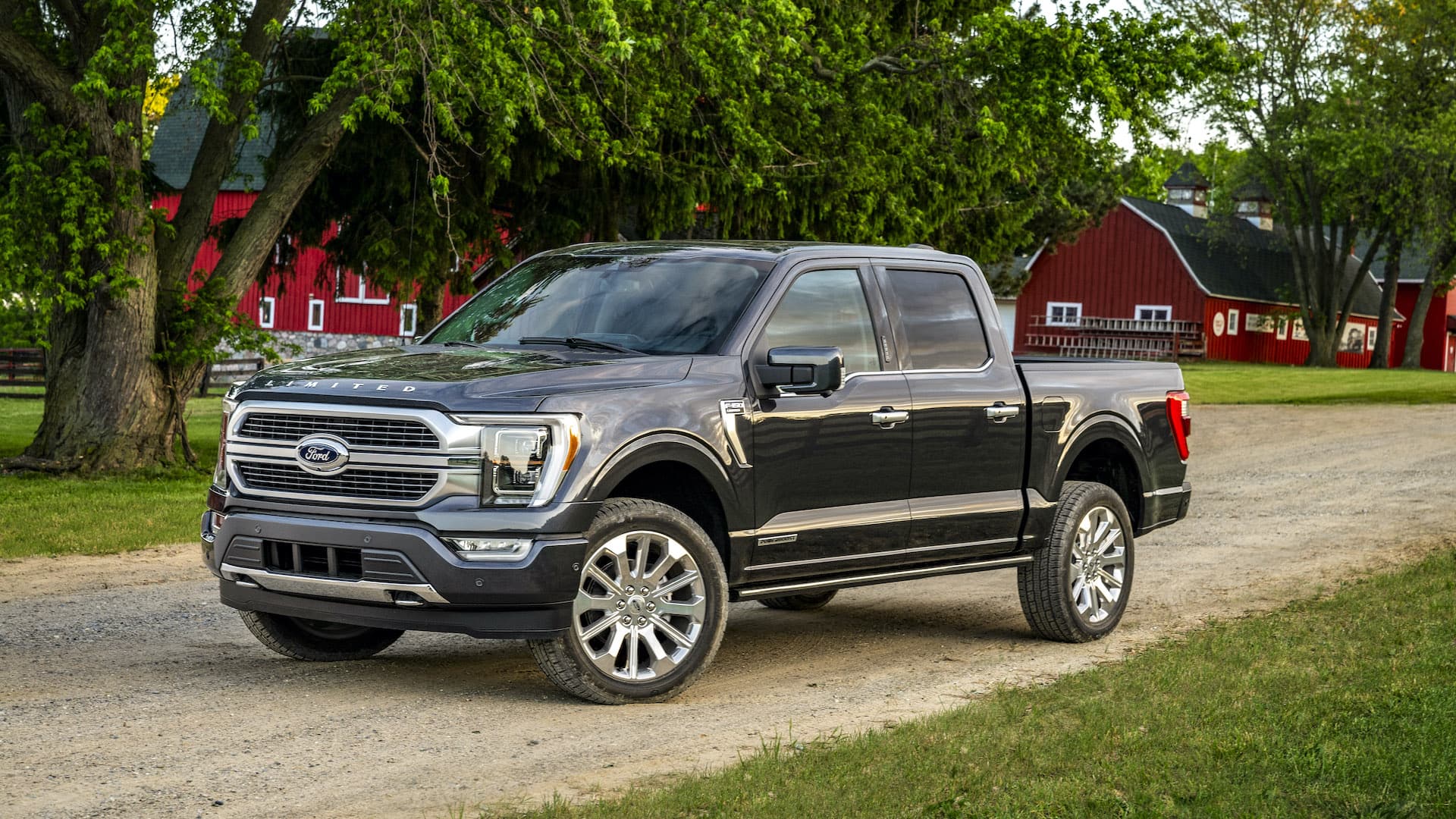
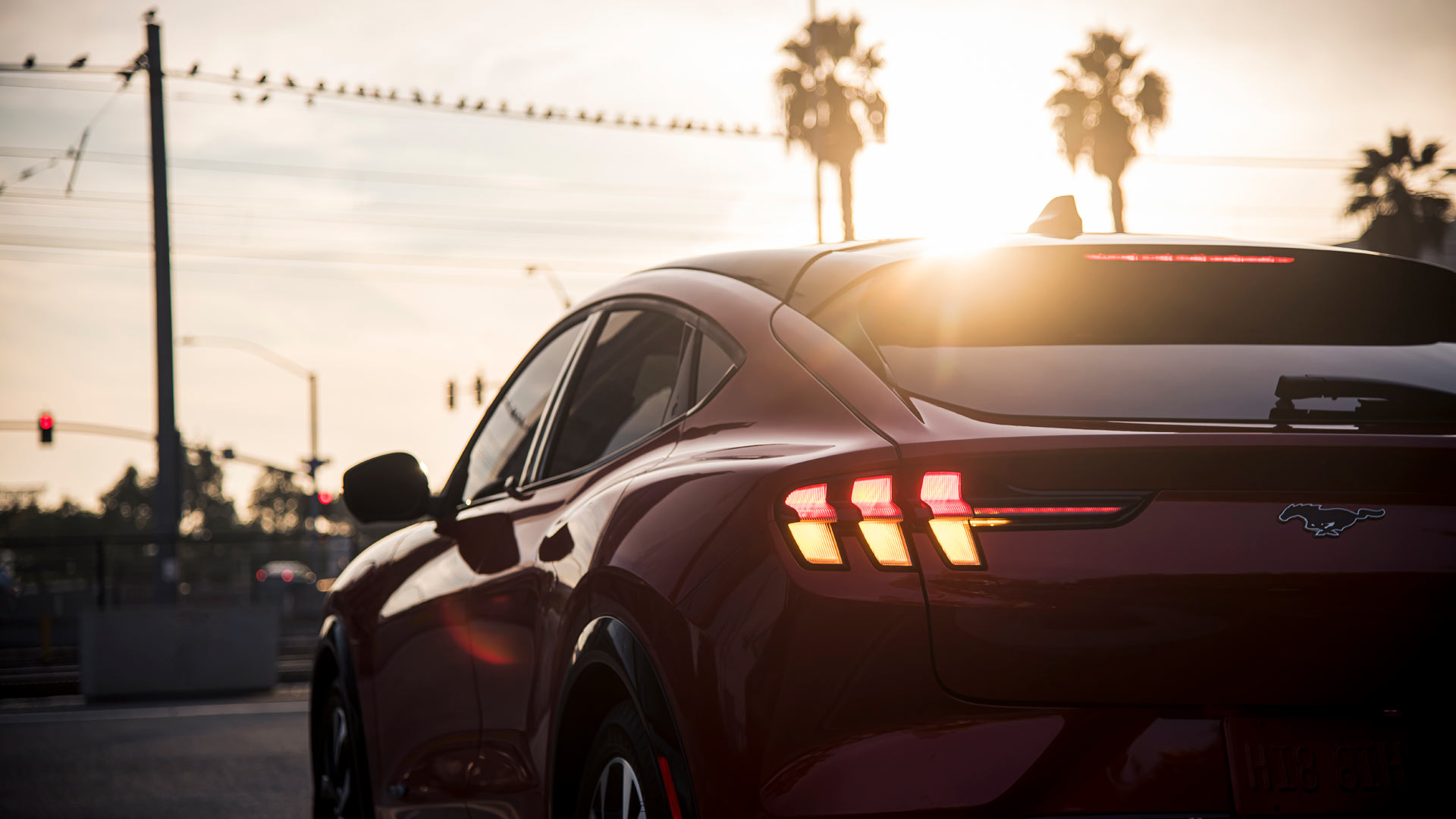
The Blue Oval saw the brand-new 2021 F-150 pickup take glory in the Truck category, whilst the all-electric Mustang Mach-E was a winner in the Utility class.
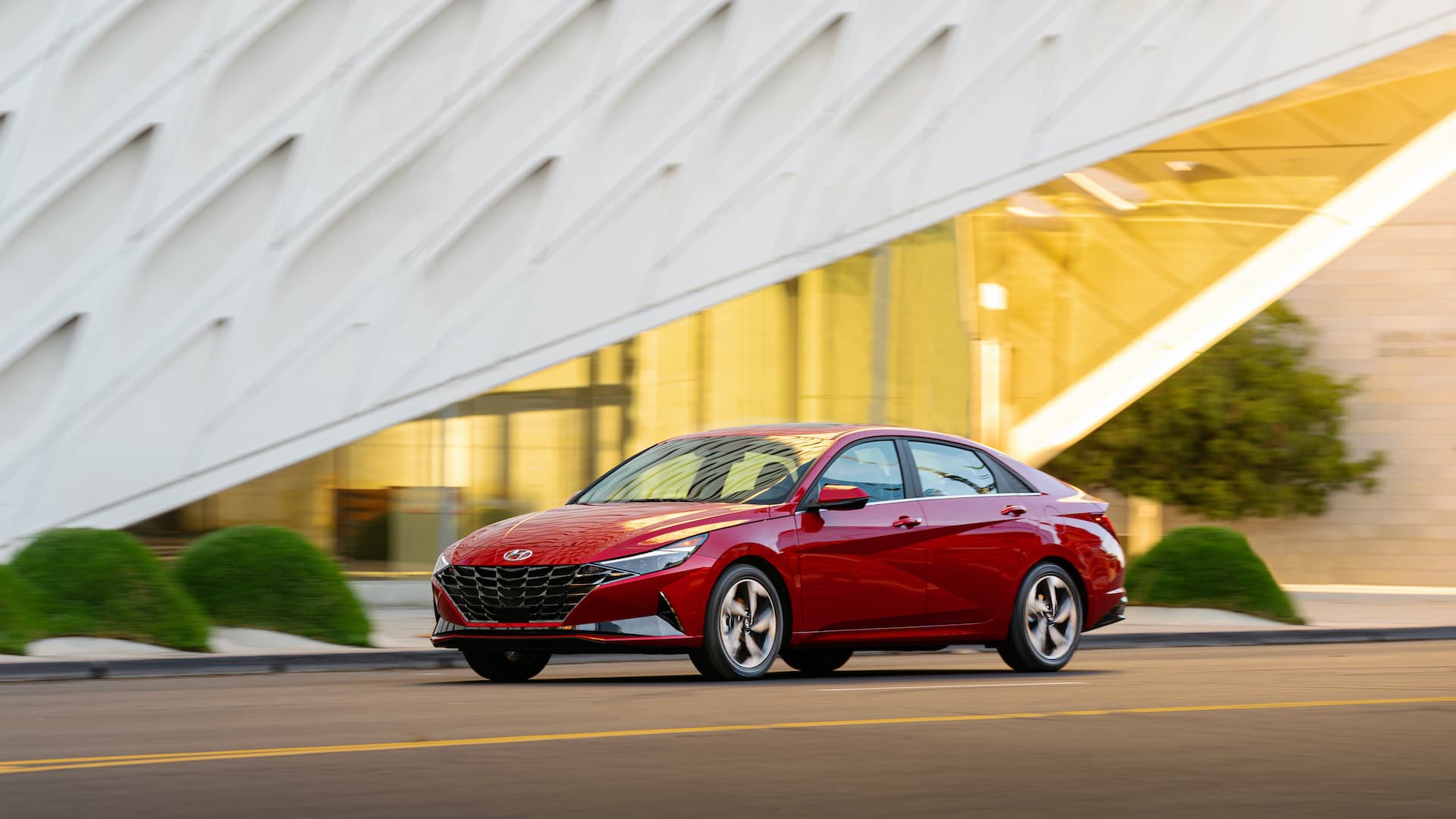
Hyundai can also celebrate, with the latest Elantra picking up the prestigious Car of the Year Award for 2021.
Doubling down on success
A win for the Mustang Mach-E will be a major endorsement of Ford’s move into the electric crossover SUV market. Purists may were initially upset at the Mustang name on a battery electric model, but NACTOY jurors believed it was the right decision.
They marked the Mustang Mach-E ahead of the reborn Land Rover Defender, and the Genesis GV80 – the first SUV from Hyundai’s luxury brand.
The company has taken a less radical approach with the new F-150 pickup truck, now into a fourteenth generation. However, the F-150 has been the best-selling pickup in America for the past 44 years meaning the stakes are still high.
Ford’s pickup triumphed ahead of the desert-orientated Jeep Gladiator Mojave, and the 700 horsepower Ram 1500 TRX.
Elation for the Hyundai Elantra
The new Hyundai Elantra claimed the important 2021 Car of the Year trophy, beating the Genesis G80 and Nissan Sentra.
With four-door coupe styling, and a bold interior inspired by aircraft cockpit, the new Elantra is certainly distinctive. Hyundai was praised for launching a new hybrid version, along with a performance N Line model.
It made for radically different winner compared to the Chevrolet Corvette Stingray, which took the prize in 2020.
A competitive year for all concerned
Judging the 2021 event was tough, according to those making the decisions. Juror Paul Eisenstein commented that he could not “recall a year when the finalists all were so deserving.”
The NACTOY Awards were first established in 1994, and are now the longest-running independent motoring accolades. Some 50 jurors drawn from print, radio, and online media come together to make their picks each year.
Due to coronavirus, a virtual event was used to announce the winners this year.
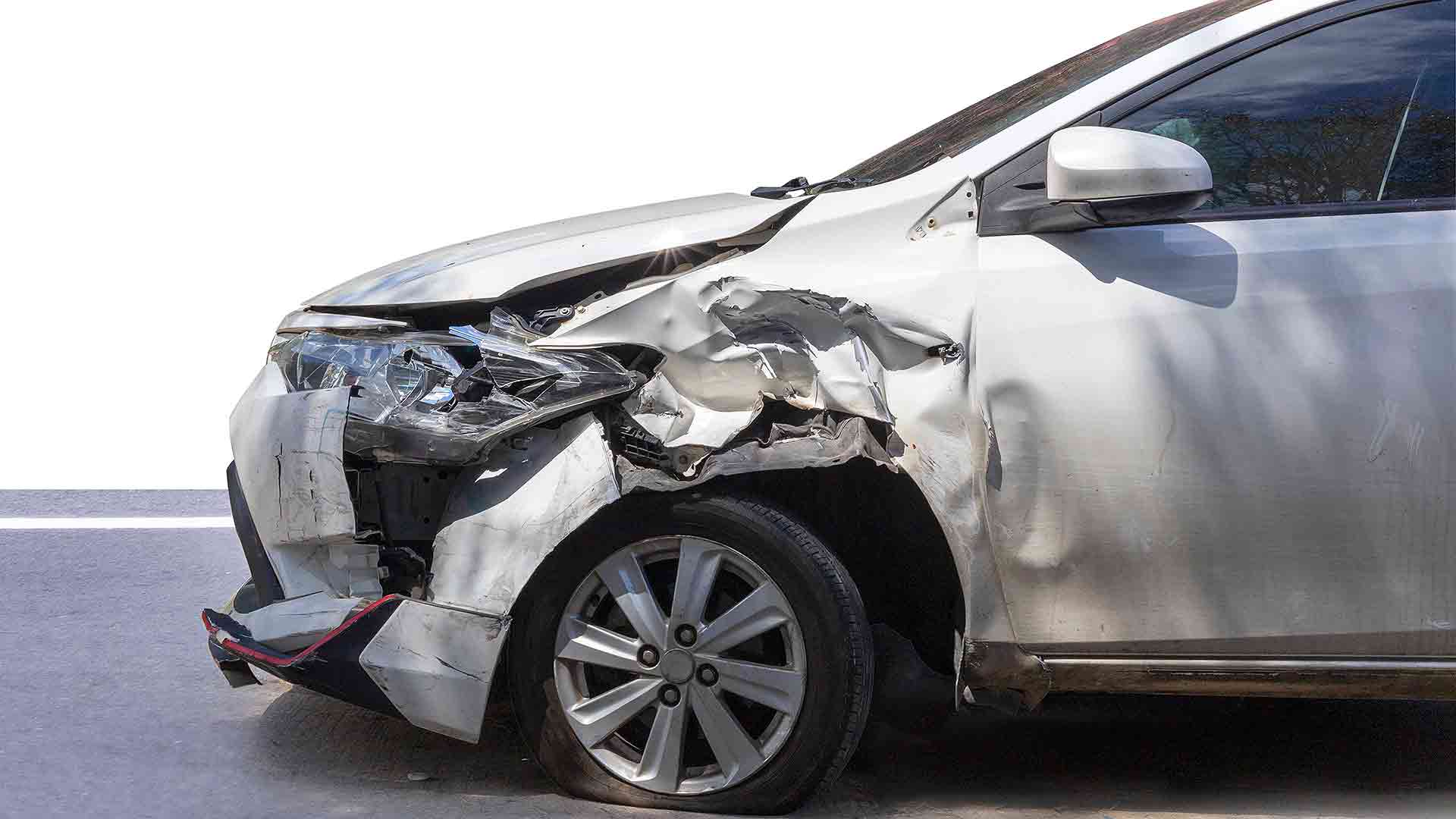
Values of written-off motors rose 32 percent during the second half of 2020, with one auctioneer reporting more bids per lot and higher sale prices across the board.
The price rises have been by the Covid-19 pandemic – and while demand for budget-priced cars is part of the reason, other factors are at play, too.
Lockdowns have also helped boost the price of salvage cars: because people have been driving less, there have been fewer road traffic accidents, meaning there’s now a shortage of written-off salvage cars in the marketplace.
Brexit is yet another factor: companies were stockpiling parts, which again helped heighten demand.
Values of Category B and Category S vehicles increased by 33 percent, while prices for the most lightly-damaged Category N vehicles rose 41 percent.
These are the vehicles that are most easily repaired and returned to the road.
Graham Howes, the firm’s commercial director, said: “We saw demand drive higher prices across the board, but the demand in the LCV sector is noteworthy.
“It’s clear that the growth of online shopping is creating an unprecedented market for all levels of LCV.”
The average price of a used car increased four percent in 2020, significantly up on modest growth of 0.5 percent in 2019.
The figures from Auto Trader show how growing consumer demand caused by the coronavirus crisis has strengthened the used car sector.
Indeed, prices increased for nine months in a row following the first lockdown, and went up by more than eight percent in December 2020 alone.
Auto Trader says it is driven by motorists looking to avoid public transport and remain Covid-secure.
The strong December performance comes despite tighter restrictions, and Auto Trader says there’s early evidence January demand will remain robust, despite the imposition of a third lockdown.
“We have every reason for optimism that prices will remain strong in Q1,” said Auto Trader data director Richard Walker.
Demand for EVs ‘exceptionally strong’
The marketplace says demand for used petrol and diesel cars is consistent, but there are currently “exceptionally strong levels of demand” for electric vehicles.
Demand for premium EVs has risen more than 80 percent – but supply has more than outpaced this, with upmarket electric car availability increasing a staggering 224 percent.
This means average prices actually decreased slightly, but they still remain heady, at over £46,000.
Demand for volume electric vehicles grew 58.7 percent, but there was a much smaller improvement in supply – which means prices actually grew 16.2 percent to over £19,000.
This means electric cars, even used ones, remain unaffordable for many motorists, further delaying their mainstream rollout.
ALSO READ:
David Beckham’s Range Rover Sport could be yours for £10k
Seventy-five years ago, the Volkswagen factory in Wolfsburg started series production of the Limousine (Type 1). That car would become the Beetle, and its influence would seep into millions of lives around the world – including mine.
Many of my fondest memories are tied up in Volkswagens. A never-ending journey to the south of France in the back of my parents’ Passat. An impromptu picnic in an auntie’s Polo ‘Breadvan’. And my first hot hatch: a Mk1 Golf GTI. I polished its Mars Red paintwork until it turned pink.
There are other, less pleasant, recollections too. Like the time I spun the Golf on a wet corner, ending up backwards in a field of bemused sheep. Or being rear-ended at the traffic lights in a different GTI, which wrote the car off and ruined my Christmas Eve.
Like for millions of others, then, the ‘people’s car’ feels personal. So when I was offered the chance to drive some of Volkswagen’s heritage fleet, I jumped at the chance. Time to make some new memories.
The four cars gathered here could scarcely be more different. Yet all are important steps in the story of the core VW brand.
At the two extremes are the Beetle and XL1. The former shifted 21 million units over 65 years, making it the best-selling car of all time until the late 1990s (when it was overtaken by the Toyota Corolla). The latter was a test-bed for future technology – limited to just 250 cars, with 30 allocated for the UK.
The pair in the middle have far more in common. The original Golf GTI, contrary to popular perception, wasn’t the first hot hatchback, but did define the breed. And the Scirocco was one of Volkswagen’s rare attempts at a sports car, paving the way for the Corrado and other coupes to come.
Volkswagen XL1
Back in 2011, Volkswagen predicted a future powered (in part, at least) by diesel. How times have changed. The XL1 is an early plug-in hybrid, its mid-mounted 48hp diesel engine supported by a 27hp electric motor.
Its target was a ‘one-litre car’ – i.e. one litre of fuel per 100km, or 282mpg. The XL1 smashed that, returning 0.9l/100km (313mpg) in official tests. One secret of its success was advanced aerodynamics, including cameras instead of door mirrors and covered rear wheels, resulting in a drag coefficient of Cd 0.189.
First drive of the day is the remarkable Volkswagen XL1: 795kg, Cd 0.189 and 313mpg.
It looks like a supercar, but it’s actually the exact opposite: totally focused on reducing weight and hitting a ‘one litre per 100km’ fuel economy target. pic.twitter.com/fGHpJHiLDr
The other was lightness: a carbon fibre reinforced plastic (CFRP) structure, ceramic brake discs, aluminium suspension arms and manual window winders all keep weight to a minimum – just 795kg unladen.
Unfortunately, any savings in running costs were wiped out by the purchase price. The XL1 cost around £100,000 when new, although its rarity means used examples have barely depreciated today.
The XL1 looks otherworldly in the metal (sorry, plastic), like a prop from a sci-fi film. Lined up alongside our three classics, it seems perfectly proportioned, but it’s tiny compared with any modern car.
Open a butterfly-wing door, slide over the wide sill and the cabin feels surprisingly conventional (spot the Mk6 Golf switchgear). It’s decently spacious, too, with staggered seats – the passenger chair is fixed – that allow for a narrower body and slipperier shape.
In many ways, the XL1 drives like any other hybrid car. There are no gears to worry about and it switches automatically between electric and/or internal combustion power as needed. But the tiny, two-cylinder 800cc diesel sounds like nothing else, hammering away like a sewing machine as you hyper-mile to 62mph in 12.7sec and 99mph flat-out.
Despite the mini-McLaren looks, it’s no sports car either. Super-skinny 115/80 R15 (front) and 145/55 R16 (rear) tyres see to that. Still, it turns as many heads as anything from Weissach or Maranello.
Volkswagen Golf GTI
The Golf GTI first appeared at the Frankfurt Motor Show in 1975 and a run of 5,000 cars was planned – enough to satisfy Group 1 racing homologation rules. When sales started in 1976, however, production rocketed from 50 to 500 cars a day. Such was the demand for this nascent icon.
Early cars used the fuel-injected 110hp 1.6-litre engine from the Audi 80 GTE: good for 0-62mph in 9.2sec and 113mph. A new 112hp 1.8 engine arrived in 1982, bringing more torque and improved fuel economy. The original GTI remained on sale until 1983, although the cabriolet version lasted a decade longer.
Many of the Mk1’s trademark features – such as the red go-faster stripe, ‘Jacara’ tartan seat trim and golf ball gearknob – endure on Volkswagen GTIs to this day. More than simply a car, this was the genesis of an entire subculture.
I’ve owned and adored three Mk1 GTIs, so if you’re hoping for a rational, level-headed review, you’ve come to the wrong place. There’s just something about these cars that gets under my skin.
This particular Mk1 is a highly-sought-after Campaign model. The run-out special edition, it came with 14-inch Pirelli alloy wheels, a four-headlamp grille, green-tinted glass, a sliding sunroof and Volkswagen’s new-fangled MFA trip computer.
I’m perhaps in the minority for preferring the zingier 1.6 engine, but the more flexible 1.8 is still a peach. Tappety at low revs, then gruff and buzzy at the top end, it’s lively and bursting with character. The unassisted steering and long-throw gearshift are wonderfully tactile, too.
Ultimately, the Mk1 doesn’t possess the balletic balance of, say, a Peugeot 205 GTI. Push hard and it defaults to tyre-scrubbing understeer, accompanied by generous helpings of body-roll. However, while most French hatches have rusted in pieces, this Golf still feels as solid as the day it left Wolfsburg. I’m in love all over again.
Volkswagen Scirocco Storm
Until the 1974 Scirocco, Volkswagen had shied away from sporty cars. The Beetle-based Karmann Ghia coupe of 1962 was more about style than speed, while the VW-Porsche 914 of 1969 was a joint venture that usually wore Porsche badges.
Not that every Scirocco was sporty; the entry-level model had a 1.3-litre engine producing just 60hp. Fortunately, further up the range, things got more interesting – culminating in the GLI (later GTI) with the same engines as the hottest Golf.
Next up: Mk1 Volkswagen Scirocco Storm.
One of Giugiaro’s very finest designs – from the days when a flagship coupé wore 13-inch alloys… pic.twitter.com/6Jg2XxZVpy
Part of the Scirocco’s appeal was its wedgy, crisp-edged styling – the work of Giorgetto Giugiaro, who also designed the Mk1 Golf. The build process was farmed out to Karmann in Osnabruck.
As with the Campaign above, Volkswagen has sourced a high-spec special edition for its heritage fleet. The Scirocco Storm had a front spoiler with integrated airdams and plush leather trim. This 1981 example has the 1.6 ‘GTI’ engine, meaning 0-62mph in 8.8sec and a 115mph Vmax.
There are obvious similarities between Scirocco and Golf, and notable differences. Its driving position is lower and more laid-back, while the three-spoke steering wheel still has the Wolfsburg wolf at its centre – a symbol that disappeared sometime in the early 1980s. The dashboard, with its deep-set dials and Blaupunkt tape player, feels more old-fashioned, too.
On the road, the Storm feels eager and surprisingly quick, aided by very short gear ratios. At 70mph in fifth gear, the rev counter has already passed 4,000rpm. Not ideal for motorway miles.
The VW feels most at home on B-roads, where its sharp steering and sure-footed chassis come to the fore. For sentimental reasons, I’d still pick the Golf, but the ‘Rocco is a more accomplished driver’s car.
Volkswagen Beetle
And so finally to the Beetle. Talk about a car of contrasts. Launched in 1938 as the Kraft-durch-Freude wagen (Strength-through-Joy car), its remit was to mobilise the masses in Nazi Germany. We all know how that ended, but the Beetle transcended its unpalatable origins – eventually becoming The Love Bug in Disney’s 1968 film and a totem for the flower power generation.
A oddball saloon with an air-cooled engine out back, the Beetle was the antithesis of America’s post-war ‘land yachts’ and muscle cars. It also looked decidedly old-school by the time the front-engined, front-wheel-drive Mini debuted in 1959. The car’s key strength was reliability, something Volkswagen played on in famous poster ads labelling it a ‘Lemon’.
The Beetle was effectively replaced in 1974 by the Golf – a far more more practical car with a hatchback and water-cooled engine. However, it remained in production in Europe until 1978, and lived on in Mexico until 2003.
It’s amazing to think this 1977 Beetle 1200L – one of the final cars built in Emden, Germany – was sold in showrooms alongside the Golf GTI. The two are on different planets in terms of performance and dynamic prowess.
Indeed, with 34hp and a 0-62mph time of 35 seconds, this may be the slowest car I’ve ever driven. Acceleration above 50mph is glacial. Not that there’s much incentive to go quickly: vague steering, below-par brakes and rudimentary damping see to that. The Beetle had cross-ply tyres when new, but even the radials fitted here don’t help much.
As you’ve no doubt guessed, I won’t be growing my hair, moving to San Fran and buying a Beetle. Nonetheless, driving one feels like a rite of passage for a motoring journalist and I’m grateful for the experience. This remains one of the most important cars ever made.
My personal Volkswagen story continues with a Mk5 Golf GTI. It’s been my daily-driver for the past four years and is very much part of the family. Hopefully my two children will remember it in years to come.
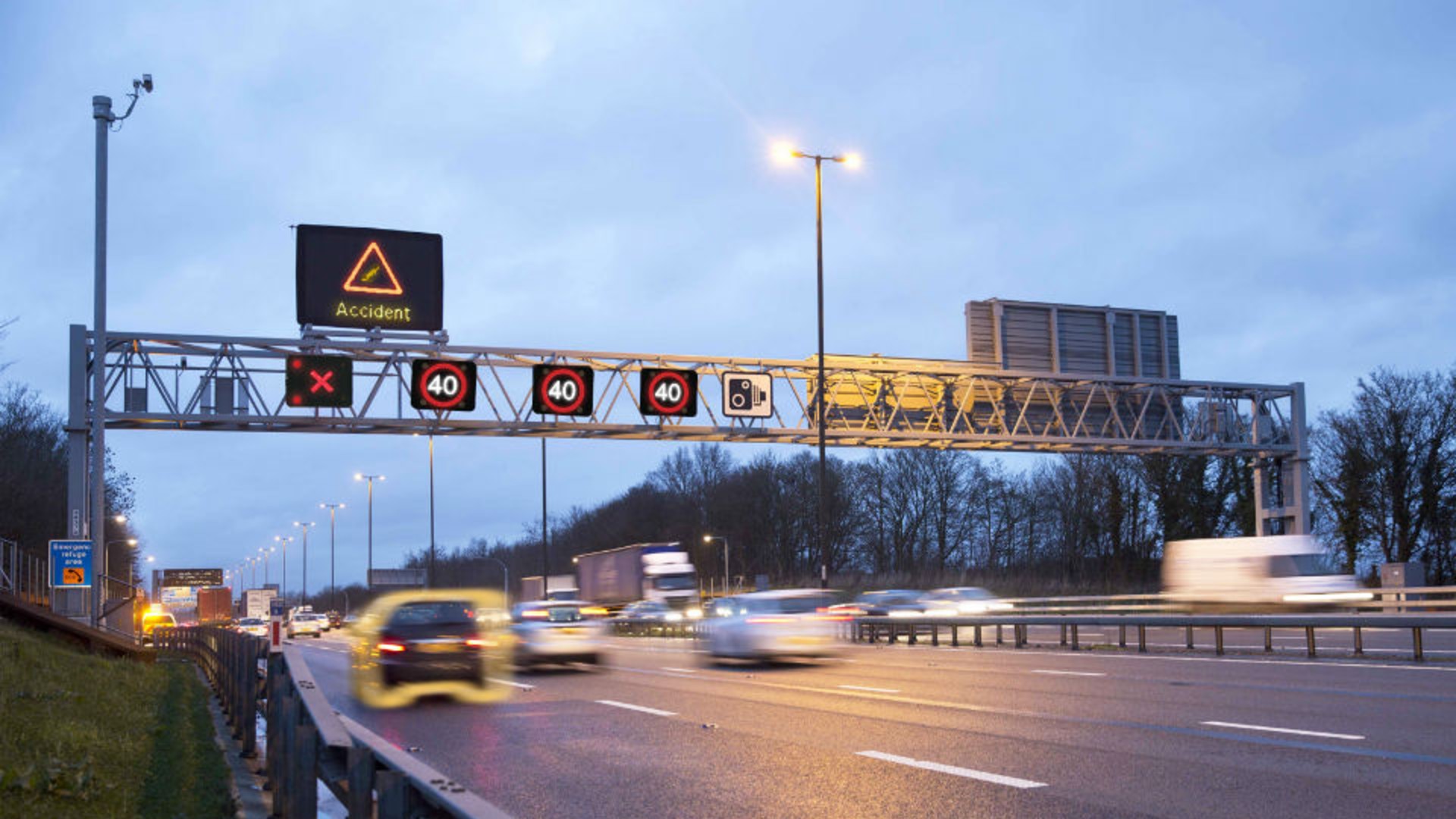
The overhead gantries on smart motorways display a red ‘X’ if the lane beneath is closed. Ignoring this sign could cost you £100, with police using camera evidence to issue fines.
In the past, fines were only levied to drivers using closed lanes if they were pulled over by a police officer at the time of the offence.
Highways England issued more than 180,000 warning letters to drivers who actively ignored lane closures before the fines were introduced.
The RAC welcomed the move, saying “It is right that offenders are punished with a substantial fine. The sooner the message gets through to motorists, the safer it will become for every motorway user”.
“Driving on a smart motorway lane that has been closed by a red ‘X’ sign is extremely dangerous. It is incredibly frustrating for law-abiding drivers to see others flouting red ‘X’ signs, and those ignoring them are a danger to themselves and others.”
One in 20 remain in closed lanes
Many motorways across the UK have been made ‘smart’ with the installation of gantries and the opening of the hard shoulder as a working lane. The gantries can be used to slow traffic down or close lanes, in order to keep stopped vehicles safe.
AA research indicates that one in 20 drivers remain in red ‘X’ lanes even after seeing that they are closed. The organisation has commended the use of cameras to improve safety.
“A red ‘X’ isput up to warn of an obstruction, so drivers must get out of the lane when they see them,” said Edmund King, president of the AA.
“We have had several incidents recently where AA members’ cars have been hit in a live lane on smart motorways.”
Now that the UK has left the European Union, ex-pat drivers may find themselves in need of extra paperwork.
Although many UK motorists will be able to rely on their normal photocard for short trips to Europe, those planning on staying longer will not automatically be covered.
As reported in The Times, those who have an old-style paper driving licence – without a photocard – will require an International Driving Permit… and they may even have to travel back to the UK in order to obtain one.
New rules for longer stays abroad
The exact requirements for an International Driving Permit varies between individual countries in Europe. Germany and Spain allows those with a photocard licence to drive for up to six months without one. Hungary gives photocard-holding motorists up to a year.
Those who plan to stay longer than the stated periods will need to apply for an International Driving Permit, regardless of licence type.
Most countries are, however, clear on the rules for the estimated 3 million UK motorists with a paper-only driving licence. These drivers will need to obtain an International Driving Permit for both long, or short, stays in Europe.
Those with licenses issued by Gibraltar, Guernsey, Jersey or the Isle of Man will also need additional documentation.
UK ex-pats should act now
Government guidance advises making contact with the relevant embassy of the country you will be travelling to. There are three types of International Driving Permit, meaning drivers may need more than one to pass through several countries.
The Post Office can issue an International Driving Permit for just £5.50. However, for those with a paper driving licence, an original valid passport will need to be presented. The permit can be collected by someone on behalf of the applicant, but all documents will need to be present.
For ex-pat citizens, this could mean a trip back to the UK purely to obtain an International Driving Permit.
Those planning on living in the EU may need to apply for a driving licence in their new country. Some countries allow for the simple exchange of a UK licence, but others require a driving test to be taken.
People in lockdown must not leave or be outside their home or garden except if they have a ‘reasonable excuse’.
Those breaking the rules can be given a Fixed Penalty Notice of £200 for the first offence. It doubles for further offences up to a maximum of £6,400.
People are still allowed to leave home for work purposes, where they cannot work from home, and can visit local shops that are permitted to stay open during lockdown.
Motorway services and lockdown
Motorway service stations are not affected by lockdown restrictions. They remain open across the country, 24 hours a day, 365 days of the year.
This is because, says motorway services provider Welcome Break, they “provide an essential service for critical drivers who need to be on the road and require a safe place to stop, rest and get fuel”.
By law, motorway services are required to offer toilets, fuel and the ability to buy snacks and a hot drink.
Motorists are, however, advised to ‘limit the time’ they spend in service stations.
How to be Covid-secure at motorway services
Motorists using motorway services are required to use a mask or face covering at all times except when seated.
If they are using seating areas, they should register with the NHS track and trace app – this is mandatory for those staying longer than 15 minutes.
All motorway service stations clearly display the QR code to scan throughout their buildings.
Most have also set up one-way systems and installed hand sanitisers.
Roadchef advises there may be limits of the number of customers allowed in its buildings at any one time.
Welcome Break says drive-thru outlets will remain open during lockdown, but seating areas will be closed. Seating areas will remain open in the main amenity buildings.
Moto is encouraging contactless payments wherever possible and adds face masks are compulsory for both customers and colleagues.
Extra Services asks those showing symptoms of Covid-19 not to enter its premises.
These allow hauliers to receive in-person advice on the new rules and documents needed to move goods between the UK and EU which came into force on 1 January 2021.