The offer is part of a big ‘Go Hybrid’ campaign to boost interest across the Kia range of electrified cars.
The Kia Scrappage scheme also continues, offering up to £2,500 to buyers of older and less efficient vehicles.
The savings are available on the Picanto, Rio, Niro Hybrid, Stonic and Sportage ranges.
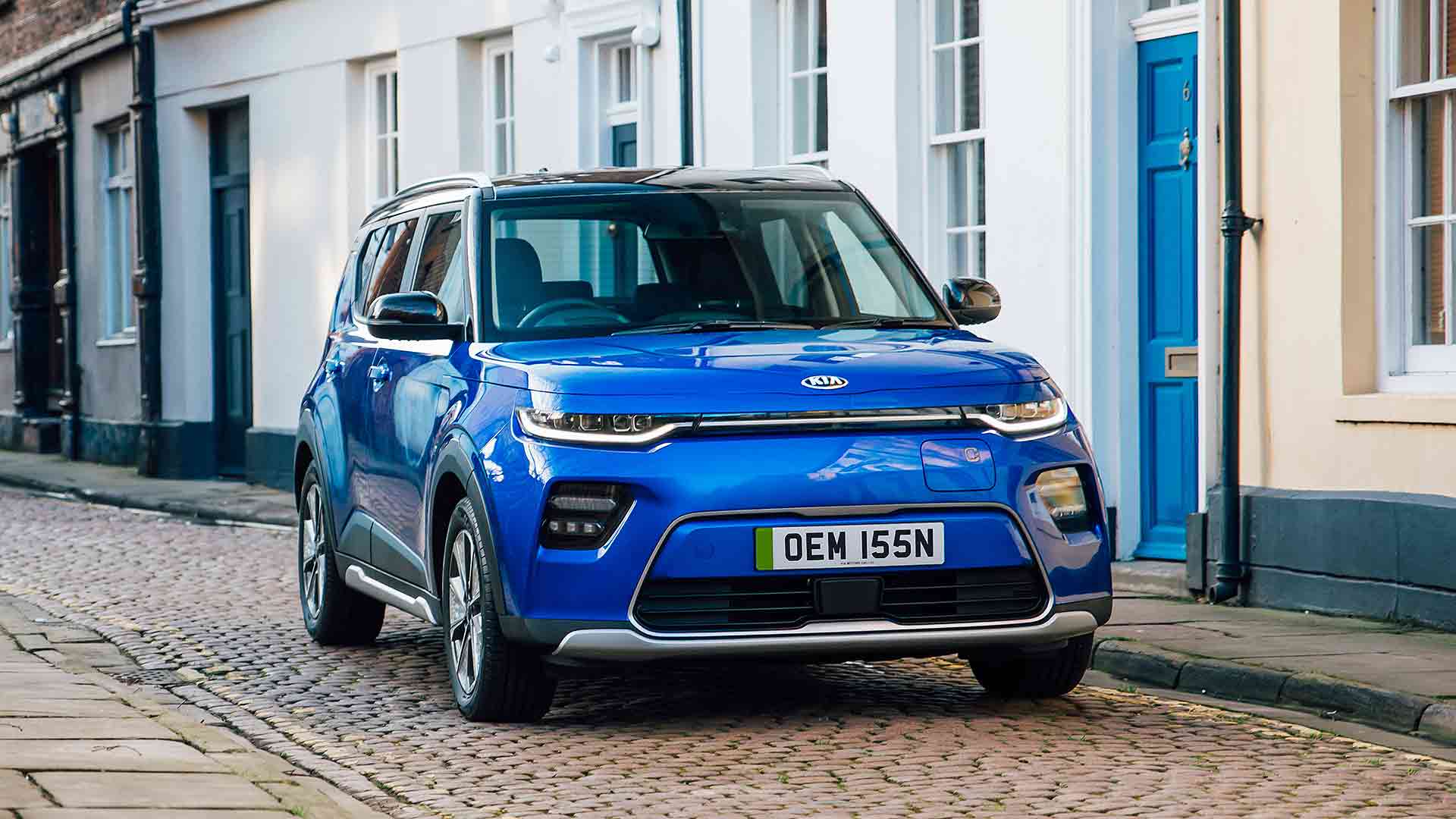
Those who prefer full electric will get three free services if they buy an e-Niro or Soul EV on Kia Finance e-Plus.
Kia has also cut the APR on the Soul EV from 4.9 percent to 2.9 percent.
Meanwhile, buyers of a Stonic, Niro, Sportage or XCeed enjoy zero percent APR, plus two three services and two years’ free roadside assistance.
Kia is continuing a range of NHS staff offers to reward those who have worked hard during the pandemic – and make cars more affordable so they can be less reliant on public transport during lockdown restrictions.
The 60-strong jury will now conduct a second round of voting to determine the winner.
The 2021 European Car of the Year is due to be announced on 1 March 2021.
The victor will succeed the 2020 Car of the Year, the Peugeot 208 (pictured above). Peugeot is not in the running for a repeat triumph in 2021, despite the 2008 SUV appearing on the longlist.
2021 Car of the Year contenders
A total of 29 cars were originally in the running for the 2021 gong. All models are required to be on sale either now or before the year’s end in at least five European countries.
Apple and Hyundai are reportedly in early-stage talks over an electric car partnership – sparking a 25 percent rise in Hyundai’s share price.
The Korean car manufacturer has since backtracked over the official statement, merely saying it was in talks with a number of partners.
Apple wasn’t named in the revised statement.
The tie-up would reportedly include both electric cars and batteries, according to a domestic broadcaster.
In December 2020, Reuters reported Apple had decided to move forward with its self-driving car project and was targeting 2024 to release a passenger electric vehicle with ‘breakthrough’ battery technology.
‘Apple and Hyundai are in discussions but they are at an early stage and nothing has been decided,’ said Hyundai in an official statement.
Apple declined to comment, said Reuters.
The iPhone maker has been considering an electric car, known as Project Titan, since back in 2014.
The BBC says the sticking point has long been who would manufacture the car, as it would be difficult for Apple to do so on its own.
“Apple outsourcing car production to Hyundai makes sense, because it is known for quality,” Jeong Yun-Woo, a professor at a South Korea university (and former Hyundai designer) told Reuters.
“But I’m not sure whether it is a good strategy for automakers [who] face risks of losing control to tech firms.”
Experts have told the BBC an electric Apple car is at least five years away.
Tesla doesn’t officially release new car registrations figures, so it is listed as ‘other’ in the official Society of Motor Manufacturers and Traders rankings.
But ‘other’ saw sales grow 78 percent in 2020, to over 26,000 cars – and we do know that 22,344 of them were the Tesla Model 3 alone.
It therefore seems likely Tesla has leapt up the order to take a UK market share approaching 1.5 percent – beating the likes of Porsche, Lexus and Mitsubishi.
MG, meanwhile, is fast rolling out its own range of pure electric cars, to bolster its existing good-value line-up of hatchbacks and SUVs.
This has helped it post growth of nearly 41 percent in 2020, with sales growing to 18,415 cars – giving it a 1.1 percent share of the UK new car market.
Both companies have more to come in 2021: Tesla with the Model Y electric crossover SUV, MG with new all-electric models including a well-priced EV estate car.
Every other car company declined in 2020. Some kept a cap on things: Porsche was down 6.4 percent, Lexus and Toyota were down 12.7 percent and even luxury brand Bentley was ‘only’ down 16.1 percent.
Losses for others were much greater. Vauxhall fell 40.2 percent, Hyundai was down nearly 43 percent, Citroen was down nearly 45 percent.
The worst performers were Smart, down 65.7 percent, and Subaru, which fell more than 68 percent.
Last year, Subaru sold just 951 cars, compared to almost 3,000 motors the year before.
It’s a far cry from the heady days of Colin McRae and Impreza Turbos: unlike Tesla and MG, the future seems bleak for this still fondly-regarded Japanese brand…
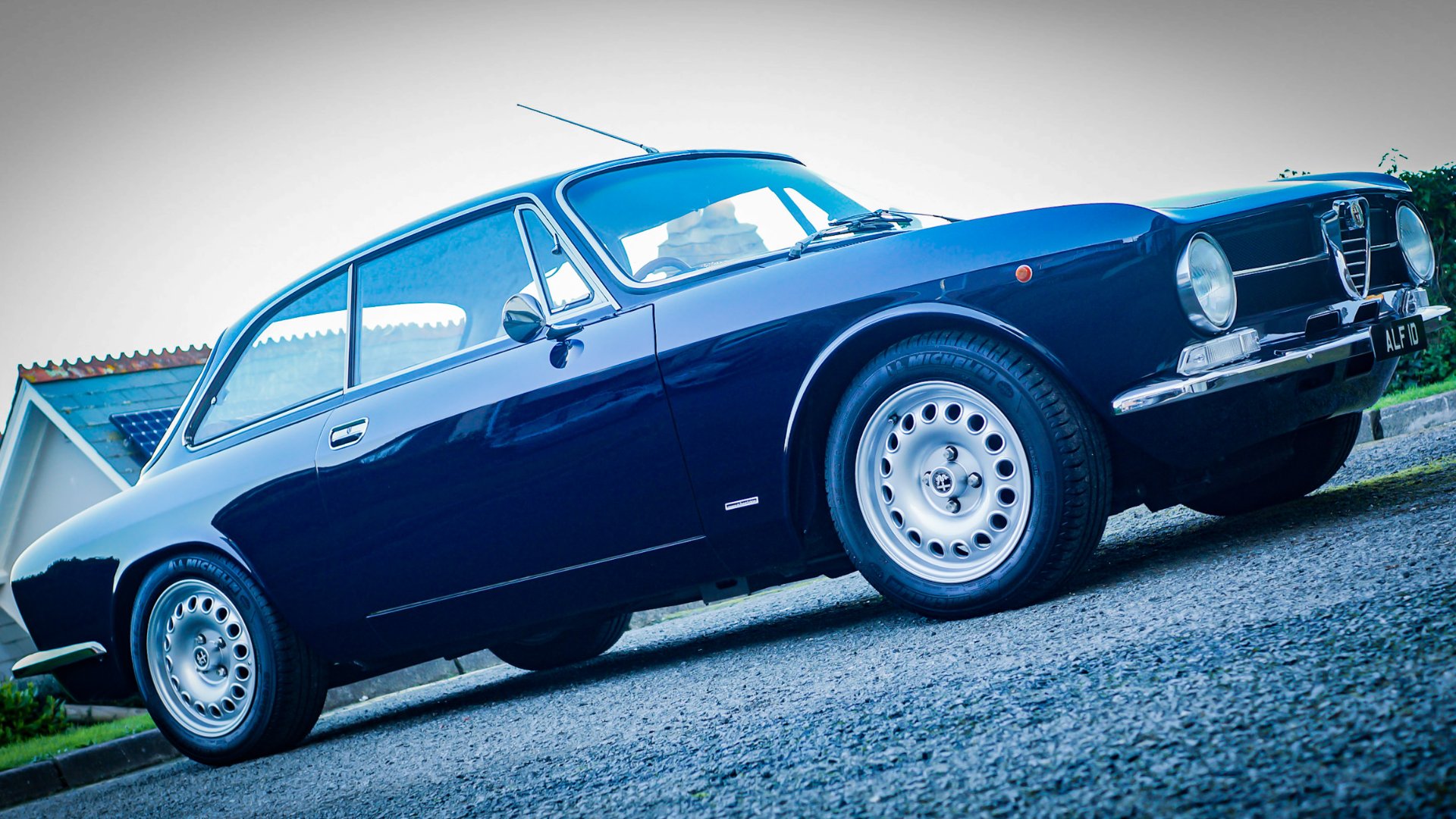
An Alfa Romeo GT Junior has sold for £50,000, smashing the auction world record for this model.
The stylish classic coupe, originally exported to Australia in 1971, attracted 261 bids during a seven-day online sale.
The record price is further evidence of a robust collector car market, which has so far resisted the creeping Covid malaise. Online auctions in particular are booming, as our interview with Car & Classic CEO Tom Wood revealed last month.
Cheaper thrills
Ironically, the GT Junior was conceived as a cheaper route into Alfa Romeo ownership. Launched in 1965, it traded the 109hp 1.6-litre engine of the Giulia Sprint Veloce for a 90hp 1.3 with twin carbs and twin cams.
It was particularly popular in Italy, where the tax regime penalised larger engines (hence other ‘downsized’ classics, such as the Ferrari 208 GTB).
Performance was steady (0-60mph in 12.6 seconds), but the GT Junior’s gutsy willingness to rev – coupled with a sweet gearshift and balanced, rear-driven chassis – made it wonderfully engaging to drive. You’ll be outgunned by a family-spec Ford Focus, but who cares?
Taste of Italy
Then there’s how the GT Junior looks: pert, pretty and brimful of Italian brio. Frankly, it could drive like a Routemaster bus and we’d still want one.
The most distinctive feature of early 105-series coupes was the scalino ‘step front’, where the leading edge of the bonnet sits 10mm proud of the bodywork. Later cars, such as this one, have a flush front end.
Flared wheelarches, a flowing roofline and a chopped Kamm tail also hint at subtle sportiness, while the period-look 15-inch Alfaholics alloys fitted here are just gorgeous.
Better than new
Other modifications for this particular GT Junior include fitment of the 1,750cc engine (used in the standard GT Veloce from 1967) with new Weber carbs, Pipercross filters and electronic ignition.
The uprated suspension uses Koni dampers and 40mm lowering springs, and the brakes have been bolstered with a dual-circuit balance box.
The car is otherwise standard, but restored to near-concours condition. Following a bare-shell respray with Glasurit paints, every chrome part has been re-plated or replaced, with every rubber seal also new. Safe to say, this Alfa Romeo is smarter than when it left the factory (and certainly less likely to rust).
Alfa bravo
The GT Junior has caused a stir among Alfisti (Alfa Romeo’s fanatical fans) and far exceeded Hagerty’s market value for a similar model in perfect condition, which stands at £30,900.
It also impressed Chris Pollitt, head of editorial at Car & Classic. “I’ve never seen a restoration that had been carried out with such care and incredible attention to detail,” he said.
“Going up and down the country to photograph cars for our auction platform means I get to see some exceptional vehicles. However, this Alfa Romeo remains firmly at the top of the list.”
The trade in cloned number plates has been described as a “Wild West” by a government advisor. This comes following a surge in the number of motorists wrongly accused of traffic offences.
It is illegal for a company to issue new number plates without seeing proof of the car ownership through registration documents. Number plates are identity documents and there are strict government regulations for suppliers to adhere to. These are outlined by the British Number Plate Manufacturer Association (BNMA).
Suppliers need to register with the DVLA to get a Register of Number Plate Suppliers (RNPS) ID. The company must also keep a record of each plate supplied, which must comply with British Standard requirements. A register of number plate suppliers can be found on the GOV.UK website.
Many companies are side-stepping the regulations by basing themselves overseas so they can be exempt from UK laws. This is according to an investigation by the Telegraph [subscription required].
A reporter was able to buy six sets of number plates without any attempt by the suppliers to check ownership of the vehicle. The plates could be placed on a car of the same make, model and colour to commit an offence, which would be linked to the innocent driver of the car that had its plates cloned.
A growing problem
Cloned number plates is a growing problem. The number of complaints received by the DVLA increased from 656 in April 2019 to 1,105 in March 2020. This is according to a Freedom of Information request by the Telegraph.
Tony Porter, a government advisor and former assistant police chief constable, described the trade in cloned number plates as a “Wild West”. He has asked the government for a registration scheme for number plates, which would see them marked with a reference number or hieroglyph. This would make them easier to trace.
“The consequences of cloning range from a rather annoying penalty ticket landing on your doorstep for jumping a red light to more extreme cases, where your vehicle has been incorrectly identified as being involved with organised criminals and triggers a firearms stop on a motorway,” said Mr Porter.
A DVLA spokesman added: “Any motorist who believes they have been a victim of number plate cloning should contact the police. They should also contact the issuing authority of any fines or penalties they receive with appropriate evidence that shows their vehicle was not in the area at the time.
“DVLA Enforcement Officers assist the Police and Trading Standards in their enforcement against number plate suppliers, including those who trade illegally using the internet.”
It’s not difficult to find a company willing to bypass the regulations. Google ‘number plates’, and you’ll be greeted with adverts for two offshore companies, both of which are willing to supply plates without seeing any form of identification. Many people will be unaware that they must purchase number plates from a registered supplier, while others could be looking for period-specific plates for their retro or classic car. In some cases, the plates could be purchased for cloning purposes.
One company is even listing green number plates, just a month after they were introduced in the UK.
Mirroring the declining 2020 new car market, new van sales fell 20 percent in 2020, a marked decline that resulted in over 73,000 fewer new light commercial vehicles taking to Britain’s roads.
The Society of Motor Manufactures and Traders (SMMT) said things had been looking up towards the end of the year, with three consecutive months of growth, but a disappointing December saw registrations return to the red.
Overall, 292,657 new vans were registered in 2020, the first year to dip below 300k sales since 2013.
“It’s been a truly extraordinary and testing year for the commercial vehicle sector,” said SMMT chief executive Mike Hawes.
“Undeniably the LCV market, having shrunk by a fifth, has a lot of hurdles to overcome as we enter 2021.
“However, investment in fleet renewal will be key to driving recovery, and the sector’s resilience, now coupled with added clarity over UK-EU trading relations and the rollout of vaccines, offers hope for both the van market and the wider economy.”
The cost to the sector of the decline in sales is calculated by the SMMT at some £2 billion in retail value. Demand for small vans and pick-ups was particularly badly hit, down 34.4 percent and 32.7 percent respectively.
Medium vans and large vans were less affected, down 15.6 percent and 16.5 percent – these are the vehicles most commonly used for home deliveries of online orders.
Ford is clear leader
Ford dominated the new van market in 2020, with the Transit Custom commanding a massive 20k margin over the second-placed Mercedes-Benz Sprinter.
Indeed, the Transit Custom also outsold many cars… it actually emerged as Britain’s third best-selling vehicle, ahead of the Volkswagen Golf.
Add in the passenger-friendly Tourneo Custom, and the Ford commercial vehicle range edged up one further place, into second… beaten only by the Ford Fiesta.
The larger Ford Transit and smaller Ford Transit Connect compound Ford’s grip on the UK’s light commercial vehicle sector.
The Ford Ranger was the only double-cab pick-up to make the top 10, while Vauxhall will be hoping for more from the new Vivaro in 2020, given how the British-built model now comes in all-electric Vivaro-e guise.
Kia has revealed an all-new logo that will be coming to cars, dealers and online communications to herald its ‘future transformation’.
Replacing its long-running current badge, the new design is rolling out globally complete with a new slogan: ‘Movement that inspires’.
It’s part of Kia’s plan to overhaul its brand, focusing on a long-term business plan that concentrates on electric vehicles and new types of mobility products.
The firm has previously said the ‘Plan S’ project is intended to grab it a leading position in the global car market.
The new logo is the first major milestone in this new brand philosophy.
Like a signature
Set to become a familiar sight in coming years, the new logo, says the firm, features ‘symmetry, rhythm and rising elements that embody Kia’s confidence and commitment to customers’.
It’s meant to resemble a handwritten signature and Kia president and CEO Ho Sung Song said it “represents our desire to inspire customers as their mobility needs evolve, and for our employees to rise to the challenges we face in a fast-changing industry”.
Kia revealed the logo in a dramatic firework display that saw 303 pyrodrones launch hundreds of fireworks.
This stunt saw Kia claim a Guinness World Record for the ‘Most unmanned aerial vehicles launching fireworks simultaneously’.
Kia says it will reveal its new brand strategy and purpose in full on 15 January 2021.
New car registrations plunged 29 percent in 2020 to 1.63 million units, a level not seen since the 1992 recession.
In terms of year-on-year decline, the pandemic-induced plunge of around 680,000 cars sold is a degree of severity last seen back in 1943, where almost no cars were sold due to WW2.
Trade body the Society of Motor Manufacturers and Traders says the first lockdown accounts for the bulk of lost sales. At least half a million fewer cars were sold in March, April and May 2020.
“The market simply never recovered,” said SMMT chief executive Mike Hawes.
Such a decline in new car sales will have had a significant impact on the UK economy, with the SMMT estimating the exchequer lost £1.9 billion in receipts from new cars.
The cost to the automotive industry was around £20 billion.
SMMT boffins previously predicted 2021 new car sales would return to around two million units. They are now revising these estimates downwards, and plan to release a new figure later in January.
The usual ‘run rate’ for new car registrations in the UK is around 2.3 million units, showing the scale of the decline caused by the Covid pandemic.
Electric up, diesel down
The decline of diesel continued unabated. The last time so few diesel cars were sold was back in 2000.
Only 20 percent of new cars sold in 2020 were diesel-powered.
In contrast, sales of pure electric cars accelerated rapidly. They took a 6.6 percent market share (from less than 2 percent a year ago), with sales reaching over 108,000 units – a 186 percent year-on-year increase.
Add in plug-in hybrid vehicles, and more than one in 10 cars sold in 2020 was a plug-in electric vehicle capable of travelling some distance in zero-emissions mode.
This was a new record for the UK.
However, the SMMT warned there is still a long way to go before one in 10 sales grows to the ’10 in 10′ sales required by the government’s 2030 deadline.
Tesla surprise in December
Tesla ended the year with yet another surprise – the Model 3 was the best-selling car of all in 2020, well clear of the Volkswagen Golf and Ford Fiesta.
What’s more, there was another all-electric car in fourth place, with the Volkswagen ID.3 just nipping ahead of the Nissan Qashqai.
With battery electric vehicles taking a 16.5 percent share of the December market, this sets the scene nicely for 2021, where the ascendancy of electric cars is expected to continue.
Pure electric cars actually outsold diesel in December: regular and mild-hybrid diesels took just a 16.2 percent market share.
Overall, December new car registrations were down 10.9 percent, outperforming the rest of the year, although ultimately hit by a new round of Covid Tier restrictions.
Best-selling cars 2020
Overall, the Ford Fiesta, once again, was the best-selling car in Britain in 2020 – but the rejuvenated Vauxhall Corsa ran it surprisingly close.
The AUTOBEST Best Buy Car of Europe 2020 was less than 2,500 units behind the Fiesta, and easily beat the Volkswagen Golf, leaving the VW in third place.
The ageing Nissan Qashqai slipped to sixth, while the brand new Ford Puma made an immediate impact by taking ninth in the top 10 list.
The premium Mercedes-Benz A-Class sat well clear of the Qashqai in fifth place, while the Volvo XC40 family-focused SUV impressively made it into the top 10, ahead of the BMW 1 Series.
Morrisons, Sainsbury’s and Tesco all put up fuel prices by an average of 3p a litre, which is double the increase in wholesale prices.
Average petrol prices increased from 114.4p to 116.4p in December, with diesel going up from 117.7p to 120p.
Asda was considerably cheaper, increasing petrol just 1.3p from 108.8p to 110.1p a litre, and diesel from 111.8p to 113.4p.
Even though its rivals were less competitive, using a supermarket was still 4p a litre cheaper for unleaded and 4.5p a litre cheaper for diesel.
Offsetting lockdown losses
The RAC suggests retailers may have been trying to protect themselves for what was to come in terms of further coronavirus restrictions.
“It’s very disappointing,” said RAC fuel spokesman Simon Williams.
“While wholesale prices went up very slightly in December, our data shows there should be scope to lower forecourt prices, rather than putting them up.”
While retailers may argue that ‘per litre’ profits for retailers are considerably down due to motorists filling up less – something the new lockdown will compound further – “those who still need to fill up regularly are having to pay more than they should be.
“Our calculations show that both fuels should actually come down by 3p a litre in the next fortnight.”