A svelte new British grand tourer will be revealed later this year, inspired by the classic Jensen Interceptor.
Although full details remain under wraps, Jensen International Automotive (JIA) has confirmed that its bespoke GT will feature V8 power.
Based in Banbury, JIA currently specialises in restoring and enhancing the original Jensen Interceptor, even creating a supercharged version boosted by electric motors.
However, the as-yet-unnamed new sports car will be the marque’s first clean-sheet design, based on an aluminium chassis, with the promise of ‘elegant yet striking contemporary’ styling.
It hopes to channel the spirit of the Jensen Interceptor, creating a ‘thoroughly modern take’ on the luxury British GT car.
Classic inspiration, modern engineering
David Duerden, managing director of Jensen International Automotive, said: “Taking the theme of the luxury British GT to fresh, thoroughly modern heights, JIA’s first car is designed and engineered from the ground up to deliver an unmatched, deeply immersive, V8-powered driving experience.
“While it takes inspiration from the Jensen Interceptor launched 60 years ago, this is certainly no ‘restomod’ or ‘continuation’. It will stand proudly as a completely all-new car in its own right.”
JIA plans to hand-build the new vehicle in the UK, and in ‘ultra-low volumes’ only.
Making use of its decades of experience in restoring and enhancing the original Interceptor, JIA will create a new division focused solely on the rapid development of the new GT.
Six decades of progress
More details on the specification and design of the JIA GT will be released later this year, The car’s launch comes some six decades after the Jensen Interceptor first went into production.
More than 6,400 examples of the Interceptor were manufactured between 1966 and 1976, in liftback, convertible and rare coupe body styles.
However, the Interceptor’s biggest attraction was its all-American Chrysler engine. Originally offered with a 383-cubic inch (6.3-litre) V8, later models came with a gigantic 440-cubic inch (7.2-litre) motor delivering up to 385hp.
In his Retro Road Test of an Interceptor equipped with the 440-ci V8, our Tim Pitt said: “That engine is the main event. It rumbles like rolling thunder as two twin-barrel Weber carburettors gargle unleaded at a rate of 12.5 miles per gallon. It also pulls like an Amtrak train: effortless and knife-through-butter smooth.”
Hopefully we won’t have to wait long to see if JIA can channel the same big-block spirit into its new GT car.
Despite electricity price increases at the start of the new year, charging an EV at home can still offer significant savings compared to running a petrol car.
This is the view of home charging specialist Ohme, which says electric car owners can combat the latest price increases by using a smart energy tariff.
Current fuel prices mean petrol costs an average of £1.36 per litre – equivalent to £6.17 per gallon. Typically, a modern petrol car will be capable of covering 40 miles per gallon of fuel.
Ohme notes that spending the same £6.17 via a smart charging energy tariff could power an electric car for up to 350 miles – the equivalent of 350mpg.
Smart charging can offset tariff increases
Ohme uses the electric Audi A6 Avant E-tron as an example of how drivers can save money using smart tariffs, compared to the new electricity Standard Variable Tariff of 27.69p/kWh.
Although most EV drivers are unlikely to run their battery completely flat, recharging the Audi’s 75.8kWh battery from zero to 100 percent would cost £20.99 using the Standard Variable Tariff.
However, using a dynamic electricity tariff such as Intelligent Octopus Go could cost £5.31 for the Audi’s full 361-mile range
“The idea of a car doing 350mpg would obviously be fanciful, but that could be the reality when charging your EV on a smart energy tariff at home,” said Ohme CEO David Watson.
“Charging at home will always be the most affordable place for EV drivers to charge their cars, even with this latest rise. Changing to a smart electricity tariff will enable drivers to maximise those savings still further.”
Making the case for home charging
Founded in 2017, Ohme is now the official UK home charging device provider for a range of vehicle manufacturers, including the Volkswagen Group, Mercedes-Benz, Genesis, Hyundai, Smart, Suzuki and XPeng.
Ohme is also the exclusive charger provider for customers who choose an electric vehicle through the Motability scheme.
Between September 2024 and April 2025, Ohme undertook its ‘Winter Crowdflex trial’, which encouraged drivers to plug in their EV to charge whenever they were at home.
Taking part in the trial earned Ohme customers more than £400,000 in seven months, aided by smart charging capabilities.
British motorists risk damage to their vehicles through their winter morning habits, according to new research.
A survey undertaken by online marketplace eBay found that almost half of UK drivers potentially cause problems thanks to how they remove ice from their car.
Nearly one in five drivers (19 percent) admitted they have used boiling hot water to clear ice from windows, despite the risk of this causing glass to crack.
An additional 30 percent said they use windscreen wipers to remove ice. This can damage wiper blades and the motors powering them.
The great freeze out
A substantial number of drivers (18 percent) said they were happy to leave their car running to let it defrost, with 15 percent saying they would get on with other tasks while their vehicle is unattended.
Under rule 123 of the Highway Code, leaving a car running and unattended is illegal, and can potentially result in a fine.
Just under a third (32 percent) of drivers said they would use an ice scraper to clear their windscreen, with de-icer spray favoured by 26 percent.
Bank cards, paint scrapers and even CDs were some of the other options chosen by drivers in their battles with frozen windows.
Get prepared for winter conditions
Attitudes to de-icing differ between generations, with just over half (52 percent) of Gen-Z motorists saying they would fully defrost all windows before setting off on their journey. By contrast, 85 percent of older ‘Boomers’ would ensure every window was clear.
Some 19 percent said they were unaware that it was illegal to drive with windows still covered in ice or snow, risking a further fine.
Abir Tewari, UK director of parts and accessories at eBay, said: “Following the first cold snap of the season, we’re seeing motorists use a range of methods to clear their windscreens – some more effective and safer than others.
“It’s vital drivers prepare their vehicles properly for challenging winter conditions. That’s why eBay offers a wide selection of tried, tested and safe solutions to make cold mornings simpler and safer.”
Driving in the winter months can be challenging, and fog often makes the dark mornings and evenings more dangerous. You therefore need to know how all the lights work on your car – including the fog lights.
When there is fog, you should have your headlights turned on. Many modern cars come with automatic headlights, which don’t always respond to foggy conditions. So you may need to switch them on manually.
The next consideration is whether to supplement your car’s headlights with fog lights.
What are car fog lights for?
The answer to the question sounds obvious, but bear with us. Rear fog lights are indeed for use in foggy conditions. But more importantly, they are for the benefit of other drivers. Their intense red glow won’t assist your own vision.
Like your indicators, they are a sign to other drivers that visibility is limited. And, of course, an indication that you are nearby.
When should I turn my fog lights on?
This is where things get hazy (so to speak) and it’s a subject of debate. Especially as inappropriate use of fog lights is a bugbear for many motorists.
Use the other cars around you as an indication of whether they are necessary. Look at the car 100 metres ahead and judge how visible it is. If you can see it clearly, fog lights aren’t needed. If the car is lost in the haze, with only glimmers of light to be seen, it’s definitely time to switch your fog lights on.
This is especially important on the motorway, given how fast you and other cars around you are travelling. Frankly, if conditions are that bad, we’d hope speeds will be below the 70mph limit. As soon the fog clears, though, it’s important to switch your fog lights off again.
What if I leave my fog lights on?
Fog lights have a very specific purpose. Using them when they’re not needed can dazzle other drivers, and even obscure other lights on your car. You don’t want the brake lights to be less visible because your rear fogs are outshining them.
It’s a legal issue, too. If the police see you driving with your fog lights on unnecessarily, a £50 on-the-spot fine could be issued.
How do I switch my fog lights on?
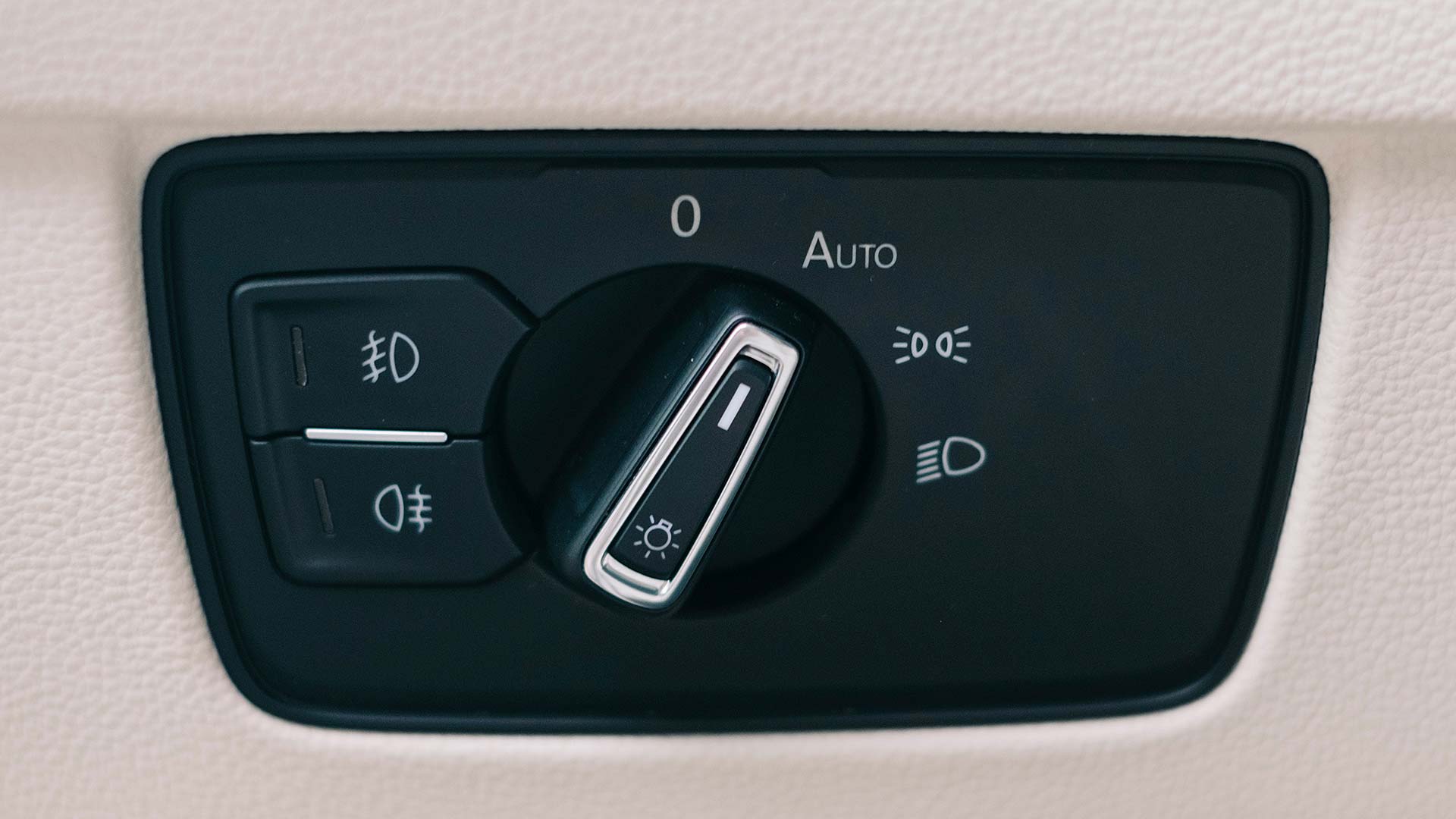
By law, all cars built since 1986 must have at least one rear fog light. This will be operated using a switch with a symbol similar to that on the left-hand side in the photo above.
Front fog lights aren’t a legal requirement, but many cars have them fitted as standard. In most cars, they can be switched on using the same stalk as the headlights, or via a button on the dashboard.
The symbol for fog lights varies. If the wavy line is to the left of the lamp graphic, those are your front fog lights. If the wavy line is to the right (as above), this activates your rear fog lights.
You will often see a warning symbol on the dashboard that confirms the fog lights are on.
Other tips for driving in fog
First of all, it’s usually beneficial not to use your main beam headlights. While it’s tempting to flick them on to give a better view, in thick fog it will cause reflections and reduce visibility even more.
Drive slowly, and leave a bigger gap to other vehicles in case they have to stop suddenly.
When you are stopped, for example at traffic lights, keep your foot on the brake pedal so your brake lights are lit up, making you more visible to other traffic. If a car stops behind you, though, use your handbrake and remove your foot from the brake pedal to avoid dazzling the other driver.
Jeep has revealed the latest model in its planned year-long birthday celebration, which commemorates 85 years of the legendary 4×4 brand.
A total of twelve new special-edition models will be launched throughout the year, as part of its “Twelve 4 Twelve” series, which will highlight everything Jeep can offer.
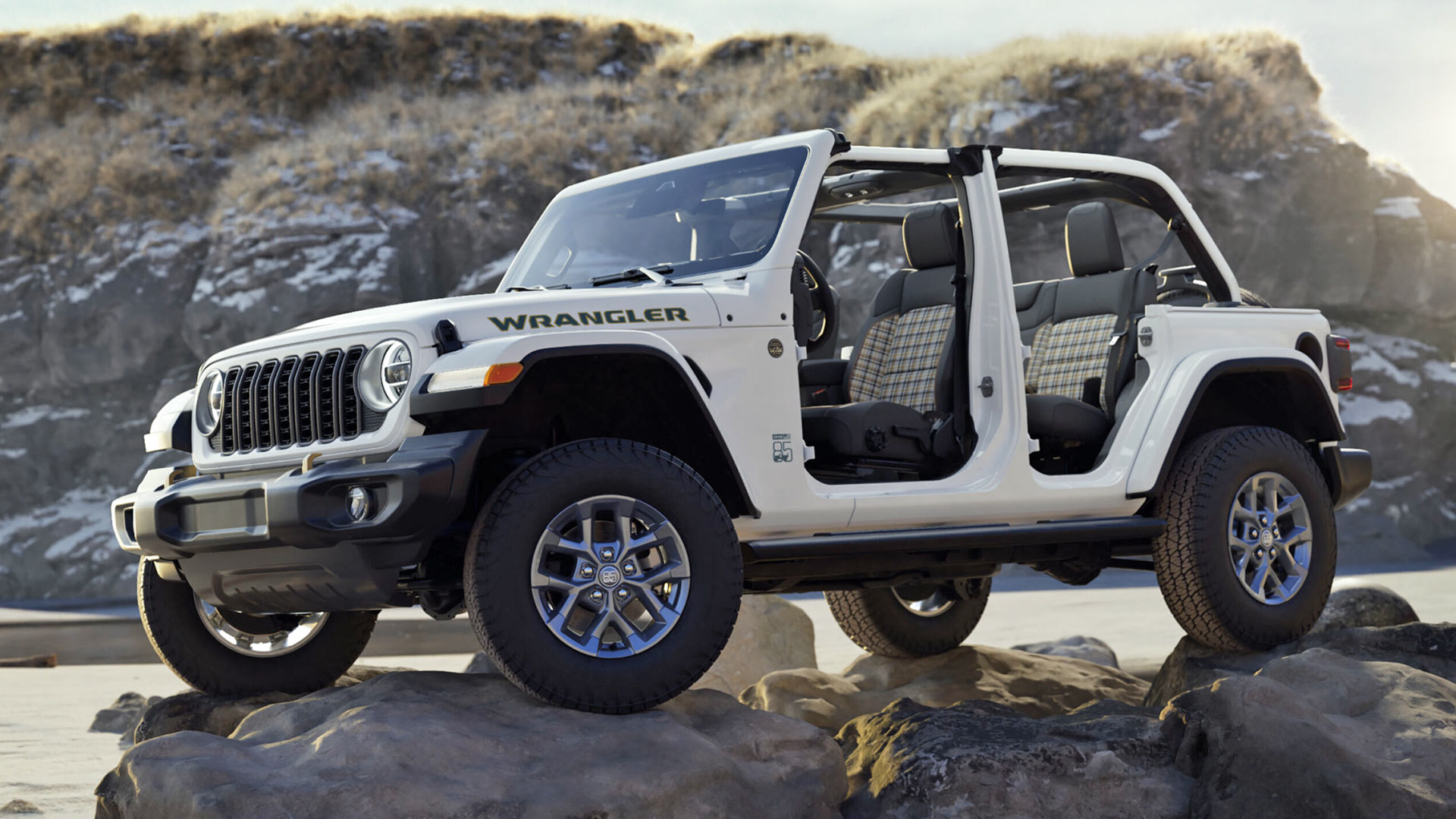
The third vehicle to be announced for the series is the Jeep Wrangler 85th Anniversary Edition, which combines retro-inspired design details with modern off-road technology.
It sees the 85th Anniversary Edition follow the Wrangler 392 launched in November 2025, and the new Wrangler Whitecap, revealed last month.
Most significantly, it gives Jeep fans the chance to own a 4×4 with nostalgic interior fabric.
An anniversary present worth checking out
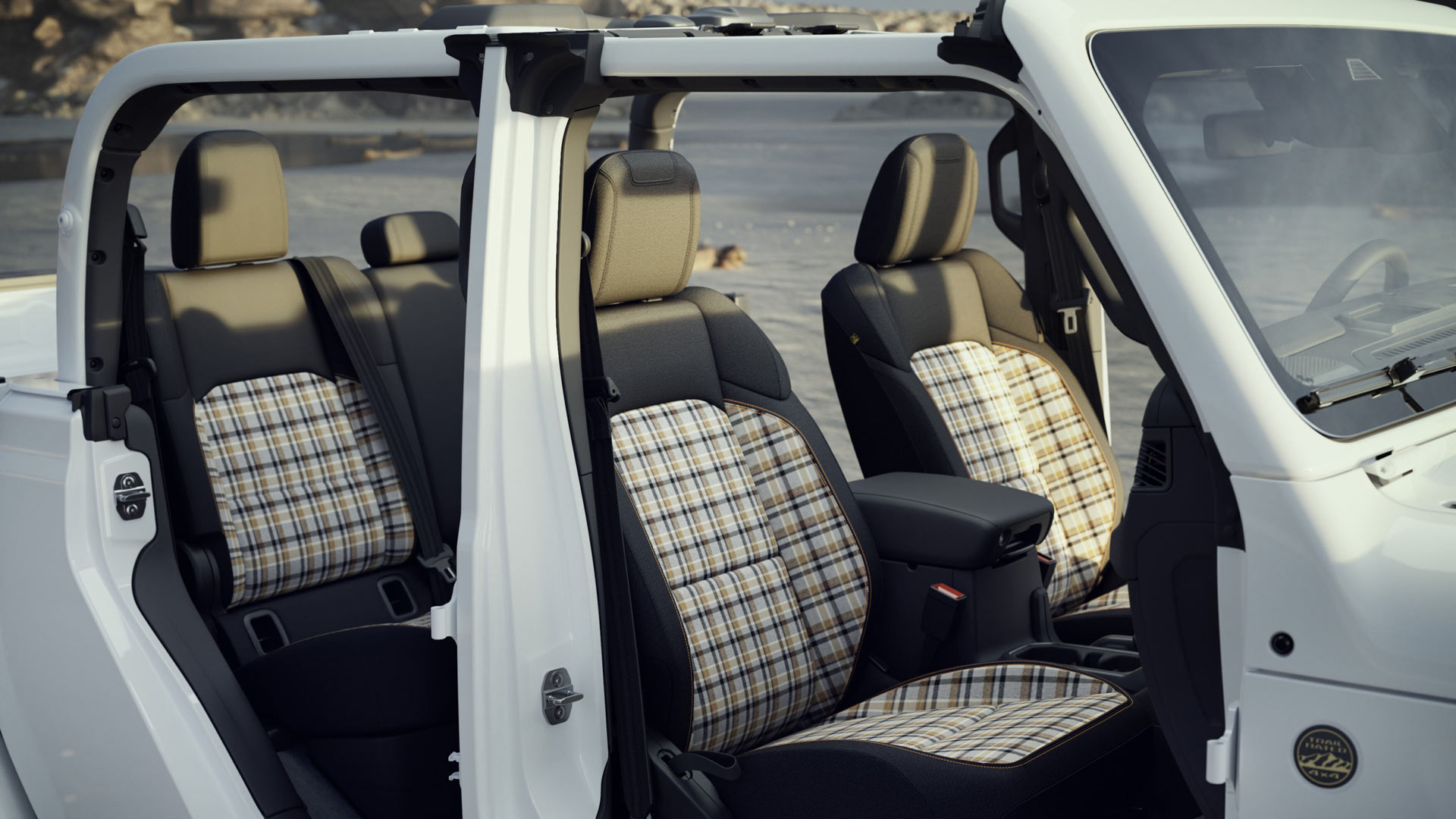
The standout feature of the Wrangler 85th Anniversary Edition are the exclusive plaid seat inserts, complete with bespoke seat tags.
More plaid detailing can be found across the instrument panel, said to pay tribute to ‘Jeep Americana heritage’. There is also an 85th Anniversary gear shifter medallion and cupholder plaque, along with durable Berber floor and cargo mats.
Jeep has given the 85th Anniversary Edition package a host of exterior upgrades, too, with Steel Oxide-painted 17-inch wheels, bronze tow hooks, and Blue Agave 85th Anniversary badges.
Buyers can add a body-colored hardtop and all-terrain tires from the factory, should they want to further personalize their Wrangler.
Standard equipment includes an Alpine premium sound system, tinted windows, and a convenience package with heated front seats, heated steering wheel, and remote start with keyless entry.
Honoring the past for today’s adventures
Orders for the Jeep Wrangler 85th Anniversary Edition can be placed now, with prices starting from $46,300 (excluding a $1,995 destination fee).
This means the new commemorative model costs only $710 more than a comparably equipped Wrangler Sport S.
“For 85 uninterrupted years, every Jeep vehicle has been built with purpose, designed first for capability, engineered for real world use and shaped by the needs of those who rely on it,” said Bob Broderdorf, Jeep brand CEO.
“The Wrangler 85th Anniversary special edition reflects this enduring mindset, translating into thoughtful details and authentic design cues that honor the past while continuing to deliver confidence and capability for today’s adventures.”
Jeep will also offer the same 85th Anniversary package, complete with plaid seats, for the Gladiator truck.
Prices for the celebratory version of the open-air pickup begin from $45,820, before the addition of the $1,995 destination charge.
Learning to drive? If so, being fully prepared to take your test has never been more important. The average waiting time for a driving test in the UK is currently around 20 weeks. That means passing first time is crucial if you want to avoid waiting around for months between each attempt.
The UK’s largest pre-17 driving school, Young Driver, has delivered 1.6 million lessons to youngsters aged nine and upwards, helping them to establish their skills behind the wheel. Our Tim Pitt’s 14-year-old son Thomas was among them – read about his Young Driver experience here.
We asked a selection of Young Driver’s 430 government-approved instructors to share their best nuggets of advice for learner drivers. Their top 10 tips are revealed below.
1. Learning to drive takes time
Everyone is different, and we all require a different number of driving lessons to be test-ready. It’s impossible for your instructor to predict at the start of your training how many lessons you will need. And yes, more lessons inevitably means greater expense, but damaging your car through a lack of experience could end up costing much more.
2. Book lessons before your 17th birthday
It might take a while to get a spot with the instructor you’d like to learn with. Research by Young Driver found two thirds of UK driving instructors have a waiting list – and some of these were longer than six months. Approach the person or driving school well in advance to see if you can reserve a place.
3. Pay attention to the paperwork
Begin studying before you start your practical lessons and make sure you are actually absorbing what’s on the page or screen. The Highway Code is not just a boring bit of paperwork – you need this knowledge to become a good driver. Too many learners believe they can ‘wing’ the test and are surprised when they fail it. Sometimes, even if they do pass, they still don’t know enough detail to drive well, as their focus has been on passing the exam, not on understanding it.
Use an app such as Young Driver Theory & Practice to do mock exams and hazard perception tests on repeat. You can even watch a series of 360-degree virtual driving lesson videos to help build on practical experience.
4. Be patient with yourself
Focus on your own actions. The majority of mistakes made by students are because they rush to avoid delaying traffic behind them. Other drivers will have to adapt – everyone was a learner once, after all.
It’s important to realise how dangerous impatient or aggressive attitudes behind the wheel can be. As the poster says, keep calm and carry on.
5. Learning may require lots of lessons
Everyone’s parent has a tale of how they only took five lessons to pass their test. That may be the case, but times change and everyone is different. The average is now 45 hours of lessons. Private practice will be key, so make sure you have a friend or family member who can take you out as often as possible.
You can also start learning before you’re 17 years old via schemes like Young Driver. This gives you the opportunity to learn the basics of changing gear, steering and braking from age nine, without the pressures of being on a real road. It’s a useful head-start that will hopefully reduce the number of lessons you need when you reach 17.
6. Don’t book a test before you’re ready
There is still a lengthy wait for driving tests in most regions across the UK. Your instructor can advise on how to secure a test, but our best advice is not to book a test before you’re ready. It’s a pointless exercise and only adds to the queues.
7. Try to learn through observation
When you’re in a car with another driver, use that time to learn about driving through careful observation. For those who have spent every car journey prior to turning 17 with their eyes glued to a phone screen, it can be a struggle to read other traffic, especially at roundabouts and junctions. It’s easy to tell those who have taken an interest, as they pick up observation skills reasonably quickly.
8. Think twice before overtaking
You don’t need to overtake or push your way out, or rush to get through a traffic light. Even if a car in front is going slower than you’d like, you don’t have to overtake them. Don’t be pressured into taking risks behind the wheel. It’s just not worth it.
While you’re still learning, you’re building up the experience to learn how to judge such situations. But in general, always play it safe. Driving experience takes years to build up – and there is always more to learn. Also, even highly accomplished drivers can get it wrong, sometimes with disastrous consequences.
9. Be confident and challenge yourself
As a driver, you need to be able to make sensible decisions for yourself, which is very different to the risk-taking mentioned above. Working on your confidence so that you feel happy to make decisions behind the wheel is vital.
Occasionally, you might be pushed out of your comfort zone – by an emergency vehicle approaching at speed, for example. However, if you are not happy to take responsibility for your own actions, you are not ready to drive a car.
10. Don’t take your licence for granted
Congratulations, you have passed your test. The open road and a lifetime of driving freedom awaits. Always remember, though: a driving licence is a privilege, not a right. Treat it as such.
Mazda has gone bold with its latest fully electric model. The new CX-6e is like nothing in the rest of the Japanese marque’s range.
Announced at the 2026 Brussels Motor Show, the CX-6e SUV will be the battery-powered alternative to the existing CX-60.
The CX-6e is new to Europe, but based on the EZ-60 – developed as a joint venture with Chinese company, Changan Mazda.
As with the Mazda 6e hatchback it shares a platform with, that means the new CX-6e will be assembled in China for European customers.
It represents a continued expansion of Mazda’s EV range which, until recently, only included the oddball MX-30 compact crossover.
Made in China for European buyers
Although the CX-6e will be made in China, Mazda has evolved its existing ‘Kodo’ design language. Highlights include short overhangs, an illuminated front grille and detailed body surfacing.
Seven exterior colours will be available, including the Nightfall Violet ‘hero colour’ seen here. This is described as being a ‘deep and glossy tone’, which shifts between a purple glow and near-black depending on the light.
At launch, Mazda will equip the CX-6e with a 78kWh lithium iron phosphate battery, which drives the rear wheels via a 258hp electric motor. Zero to 62mph takes 7.9 seconds, while top speed is 115mph.
Fully charged, the CX-6e’s battery offers an officially tested range of up to 300 miles, and supports charging speeds of 195kW. This can potentially see the battery replenished from 10 to 80 percent in 24 minutes.
Minimalist interior as standard
The CX-6e will bring Mazda into a deeply competitive market, taking on rivals such as the Tesla Model Y and Audi Q4 E-Tron. However, the marque hopes the dramatic interior of its new SUV will help it gain attention.
There is no traditional instrument cluster, with Mazda opting for an enhanced head-up display instead. Dominating the dashboard is a huge 26-inch touchscreen, which includes a dual-screen setup.
As a result, the driver and front-seat passenger can configure separate sides of the display, so they can prioritise the information they need without being distracted.
Gesture control is included, along with multilingual voice recognition that covers functions from adjusting the climate control to opening the windows. Wireless Apple CarPlay and Android Auto connectivity will be standard, too.
When it comes to practicality, the CX-6e offers a boot capacity of 468 litres. This swells to 1,434 litres when the rear seats are folded flat.
Expanding Mazda’s electric range
“The all-new Mazda CX-6e brings our human-centric approach into the electric era, combining great design, driving enjoyment and advanced technology for European customers,” said Martijn ten Brink, president and CEO of Mazda Motor Europe.
“The CX-6e offers the efficiency and performance our customers expect, while supporting Mazda’s broader ambition to reduce CO2 and expand our electric portfolio. Together with the Mazda 6e, it accelerates our electrification strategy and strengthens our multi-solution approach.”
Following a launch for European markets later this summer, Mazda intends to have the CX-6e available to UK customers by the end of 2026.
Full pricing and UK spec details for the Mazda CX-6e will be announced closer to the new model going on sale.
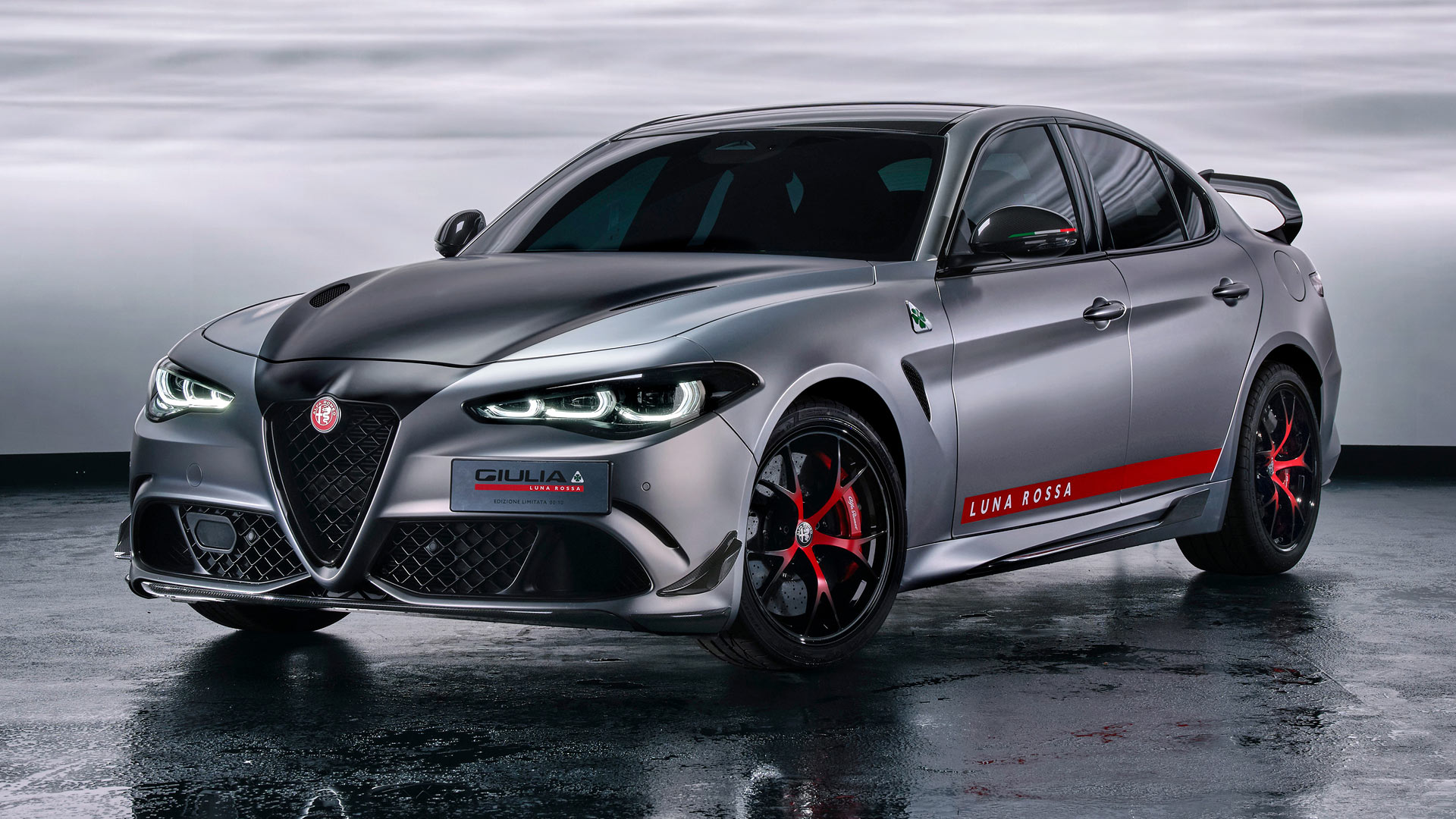
Alfa Romeo has presented a radical limited edition Giulia Quadrifoglio at the 2026 Brussels Motor Show.
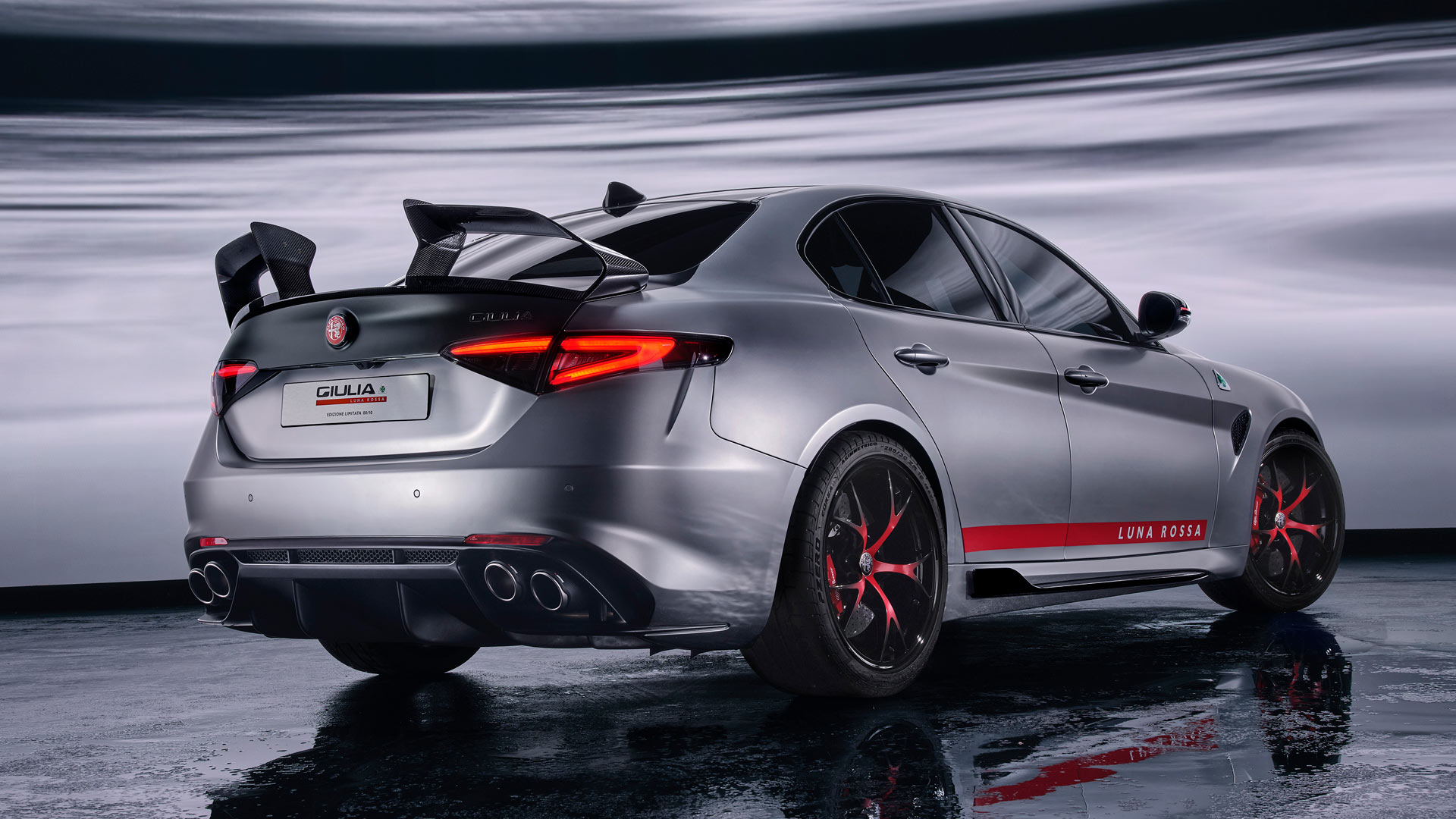
Created in partnership with the Luna Rossa America’s Cup sailing team, the high performance saloon gains an extreme bodykit designed to maximise airflow and downforce.
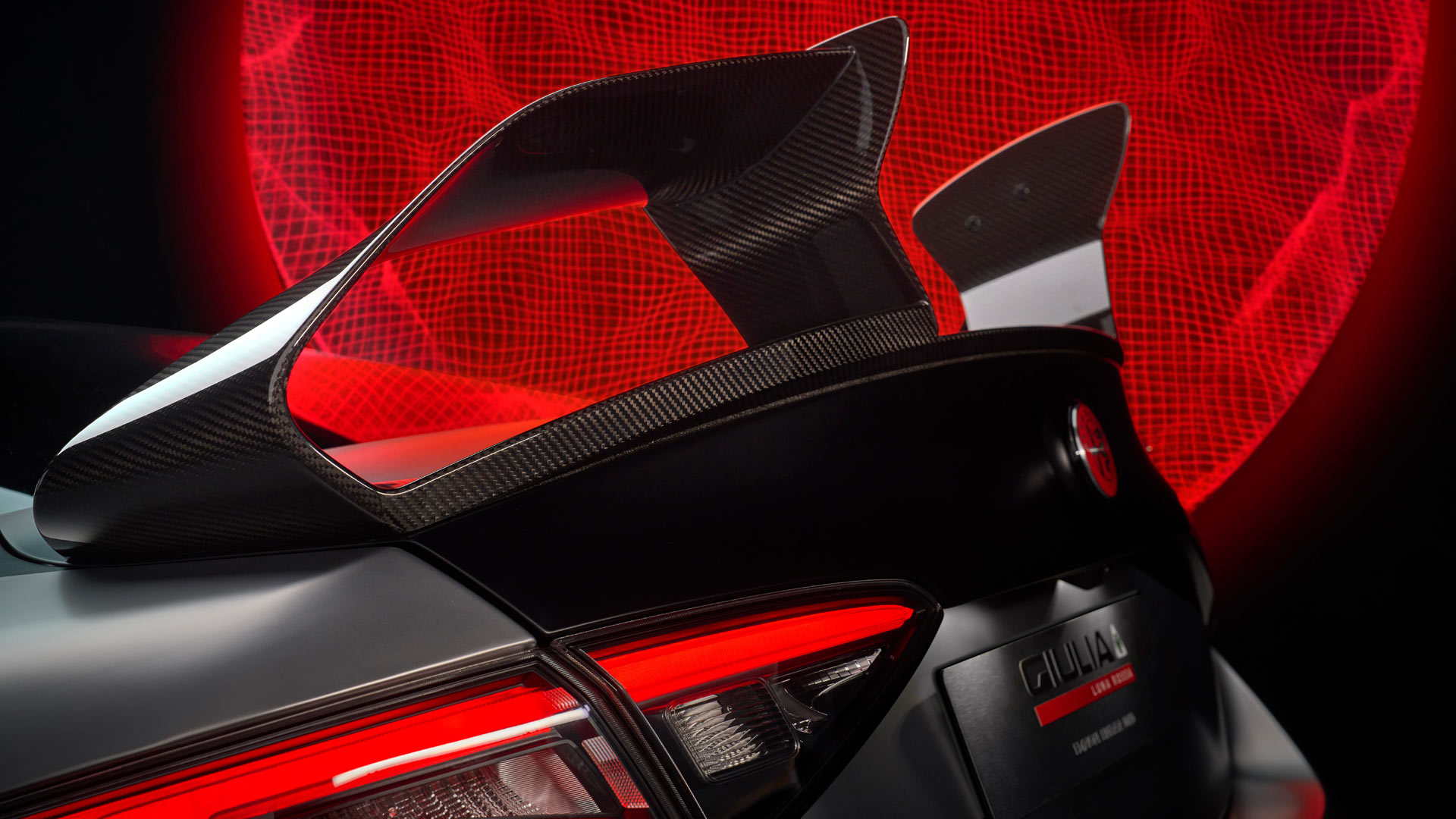
Inspiration is said to have come directly from the Luna Rossa AC75 racing yacht, particularly for the split carbon fibre rear wing.
According to Alfa Romeo, the new aerodynamic appendages mean the Giulia Quadrifoglio Luna Rossa can generate 140kg of downforce when driving at 186mph – five times more than the regular car.
As part of the collaboration, Alfa Romeo will act as title sponsor for the Luna Rossa team during the 2027 America’s Cup, due to take place in Naples, Italy.
Gone with the wind
Alfa Romeo will build just 10 examples of the Giulia Quadrifoglio Luna Rossa, with each one hand-picked from the production line at the famous Cassino plant.
The Luna Rossa has been developed as part of the new ‘Bottega Fuoriserie’, a partnership between Alfa Romeo and Maserati to consolidate their bespoke vehicle programmes.
Engineers have paid attention to every aspect of the 520hp Giulia Quadrifoglio’s exterior. New canards for the front bumper, carbon fibre side skirts and underbody ground effect make this the most aerodynamic version of Alfa Romeo’s sports saloon to date.
The unusual rear spoiler, with a design taken from the two central pylons of the Luna Rossa racing yacht, is the real star of the show.
Its shape creates a ‘high aerodynamic load with a reduced surface area’, helping the Luna Rossa achieve a top speed of 186mph.
Bespoke liveries and carbon fibre trim
The Giulia Quadrifoglio Luna Rossa also benefits from an optimal aerodynamic balance of 40 percent over the front axle. Alfa Romeo says this ‘contributes to making driving dynamics even more precise’.
There is also a new bespoke livery for the Luna Rossa, in tribute to the AC75 yacht. Hand finished with steel-effect paint, a red side band features the Luna Rossa branding.
Even the Alfa Romeo logos have been modified for the special edition, featuring a red background for the first time in the marque’s history.
More red is used for the 19-inch alloy wheels, resulting in a slight 1990s Max Power vibe. However, they certainly make the Luna Rossa stand out.
Exposed carbon fibre appears on the mirror caps, roof and all of the Giulia’s new aerodynamic additions.
All 10 cars already setting sail
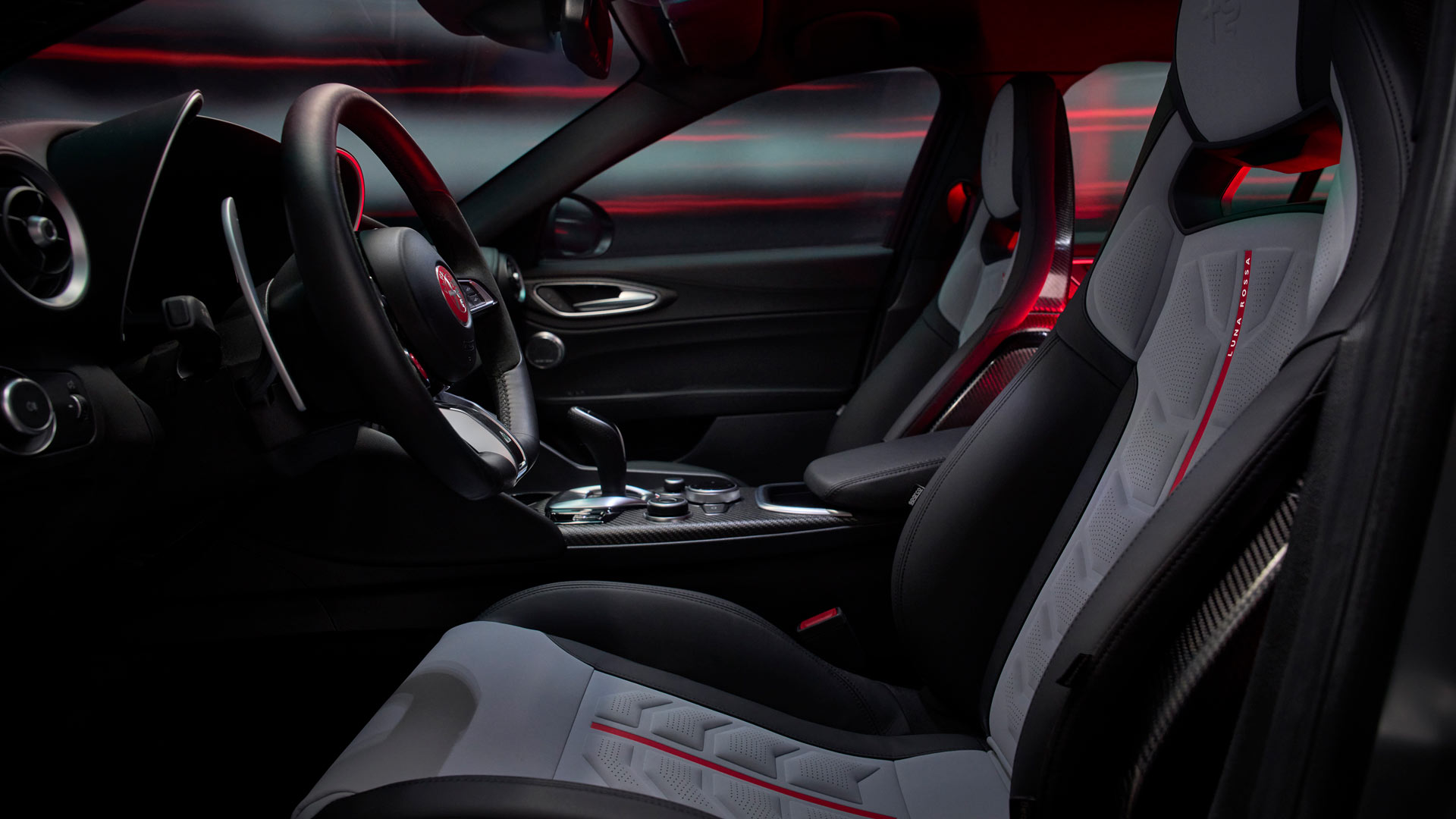
Inside, the Giulia Quadrifoglio Luna Rossa benefits from exclusive Sparco sports seats. These are upholstered in the same material used for the flotation devices on the Luna Rossa AC75 yacht.
On the dashboard, an ultra-thin film is taken from an original Luna Rossa sail. Supplied by the America’s Cup team, the sail fabric has been machined to precisely cover the insert in front of the passenger seat.
Exposed carbon fibre is used throughout the Alfa’s cabin, covering the centre console and seat-backs. The latter are embellished with the Luna Rossa emblem, along with the red-backed Alfa Romeo logo seen elsewhere.
For those wondering, the 520hp 2.9-litre twin-turbocharged V6 engine has been left untouched. There is also no mention of pricing as, sadly, all examples of the Luna Rossa have already been sold.
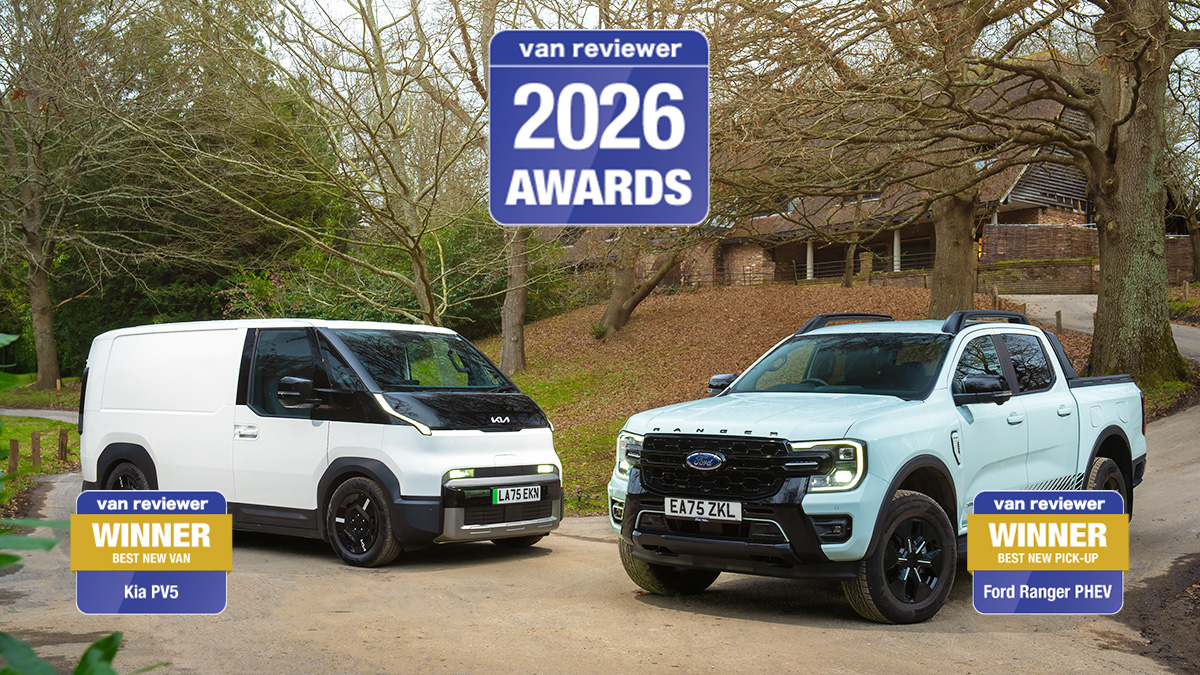
The new Kia PV5 van has won a major trophy after being named Best New Van in the 2026 Van Reviewer Awards.
It shares the top step of the Van Reviewer podium with the Ford Ranger PHEV, named Best New Pickup.
Eleven other new vans were named in the van title’s first annual awards. Van Reviewer is an expert commercial vehicle publication that helps UK consumers find the best van or pickup.
The Kia PV5 was named Best New Van ‘following its arrival as one of the most important new electric vans to enter the UK market’.
It has already been named International Van of the Year, and secured a Guinness World Record for EV driving range.
“Kia has made quite an impression with the launch of the first model in its electric van range,” said Van Reviewer editor, George Barrow.
“To produce a van of this quality at the first time of asking shows how seriously Kia has taken its entry into the light commercial vehicle market. The PV5 has impressed at every opportunity, and the bar has been set very high.”
Ranger is the best new pickup
The Ford Ranger PHEV is the first plug-in hybrid version of the UK’s best-selling pickup. It retains four-wheel drive and off-road ability, plus a generous payload and towing performance, while also delivering electric-only driving capability.
“The Ranger PHEV feels like a genuinely well-judged step towards electrification for pickups,” said Barrow.
“Rather than compromising its working ability, the plug-in hybrid system adds flexibility, allowing to operate quietly and efficiently when that matters, while still delivering the capability buyers expect from a Ford Ranger.
“It’s a thoughtful, practical solution that reflects how pickups are actually used, and it makes a strong case for electrification in this segment.”
Van Reviewer Awards 2026 winners
The full list of winners in the 2026 Van Reviewer Awards is outlined below:
Volvo has announced details of its forthcoming electric EX60, which offers the potential for an industry-leading battery range.
Making its official debut later this month, the new EX60 is the latest electric SUV to join the Swedish marque’s model lineup.
Although Volvo is holding back most details about the EX60 until the full reveal, it has confirmed how far the car can travel on a full charge.
Impessively, the EX60 will be capable of up to 503 miles without a charging stop, even in all-wheel-drive configuration.
This battery range would enable the new EV to drive from Los Angeles to San Francisco, or from Stockholm to Oslo, without needing to recharge.
Long range, rapid charging
The EX60’s range is made possible by being the first Volvo to use the new Scalable Product Architecture 3 (SPA3) platform.
Shared with sister company Polestar, SPA3 integrates the battery cells directly into the body of the EX60. It also uses new e-motors developed in-house.
When the EX60 does need to be charged, its batteries can also be replenished faster than any electric model in Volvo’s history.
Capable of using public DC devices with speeds of up to 400kW, a charging time of 10 minutes potentially gives the EX60 more than 200 miles of battery range.
Volvo’s new 800-volt electrical system, combined with new software and algorithms, makes ultra-rapid charging possible in all weather conditions.
Addressing the causes of range anxiety
According to Volvo, this means recharging an electric vehicle is now getting much closer to the time needed to refuel a petrol or diesel car.
“The EX60 is designed to be a game-changer,” said Anders Bell, chief technology officer at Volvo Cars.
“With our new electric vehicle architecture, we directly address the main worries that customers have when considering a switch to a fully electric car. The result is class-leading range and fast charging speeds, marking the end of range anxiety.”
Volvo will reveal the EX60 in full on 21 January 2026, with a livestream for those eager to get a first look.
Production of the EX60 is set to commence in the first half of 2026. The new model will be manufactured at Volvo’s famed Torslanda facility in Gothenburg, Sweden.