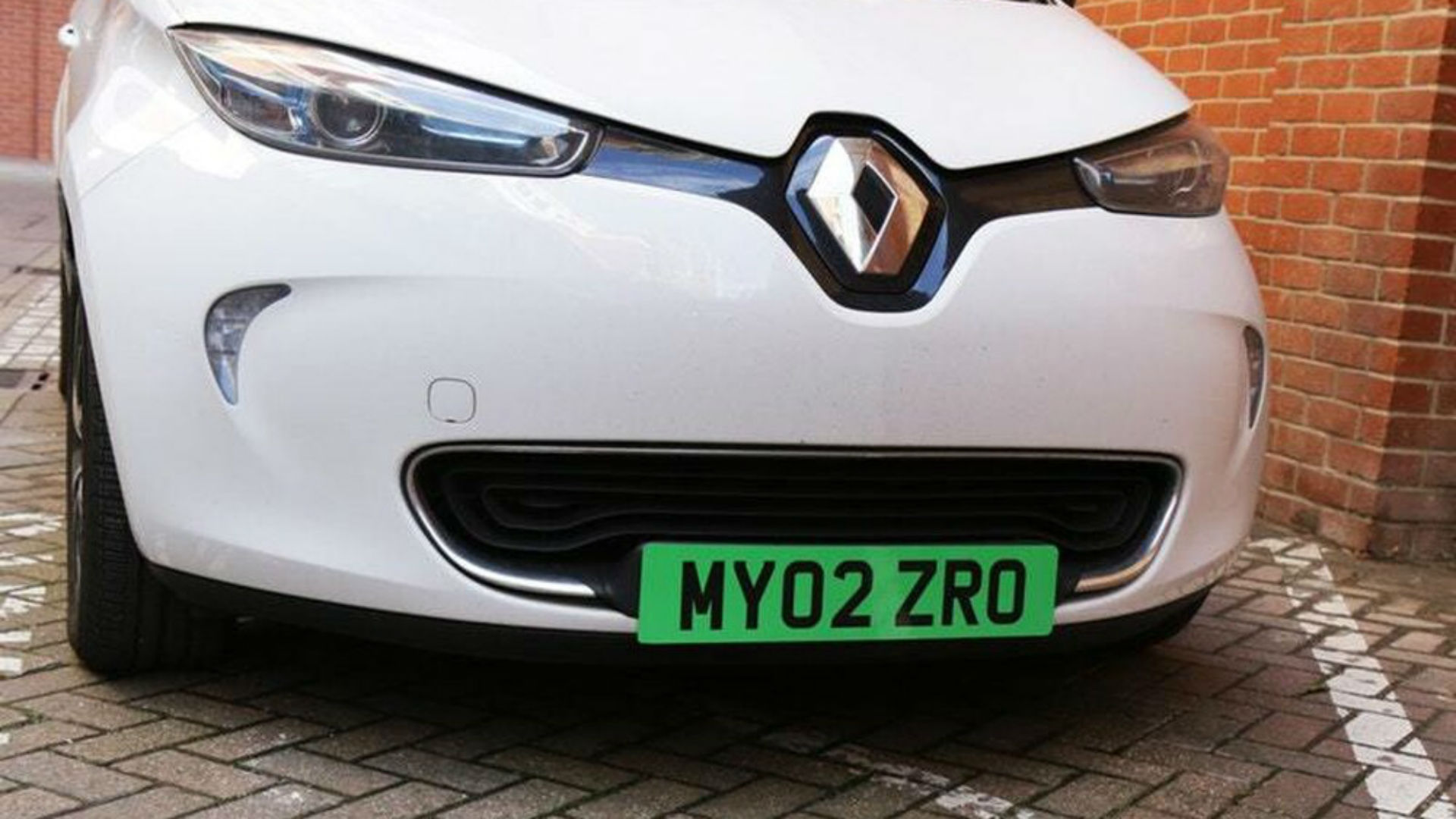
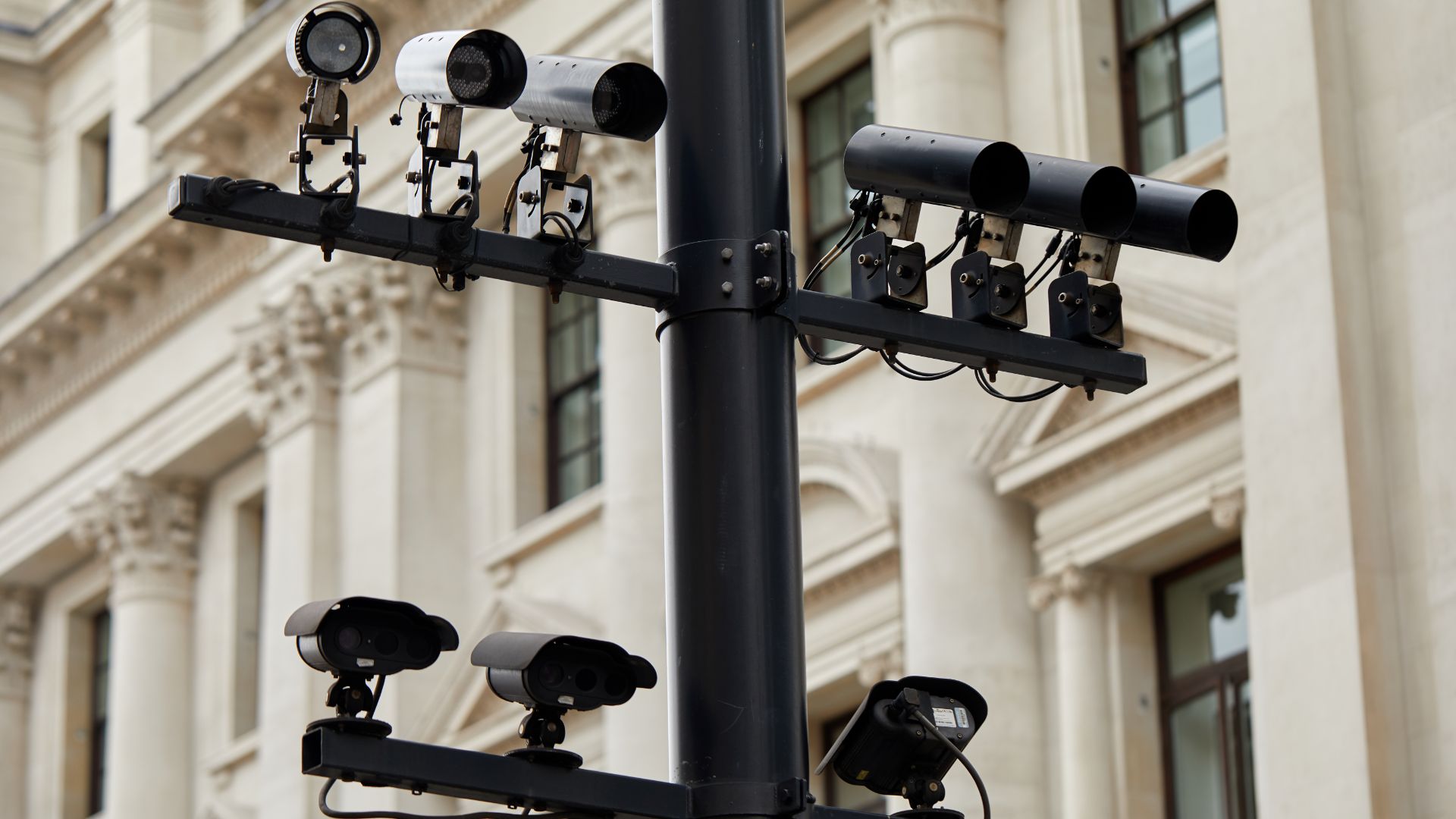
Proposals to introduce green number plates giving special benefits for electric car drivers have met with criticism from the Surveillance Camera Commissioner. It has highlighted implications for privacy, given the role of Automatic Number Plate Recognition (ANPR) systems to identify the green plates on the road.
ANPR is currently in use in bus lanes, car parks and on motorways. It’s used in policing and regulating use of these areas – and to deter misuse. EVs with green number plates could get ‘local privileges’, including the use of bus lanes, access to EV-only parking and more.
However, there are concerns, as cited by the Surveillance Camera Commissioner, that this could involve ‘an unqualified extension of the role of ANPR’.
‘Limited evidence was presented that car drivers want green number plates or that it is for the benefit of society. Therefore, the legality was questioned,’ says the report.
There are also concerns that green number plates could cause issues in terms of car cloning. Could some drivers counterfeit ‘green’ status to take advantage of the privileges?
The report continues: ‘This leads to a greater risk to the national ANPR system regarding the potential of more cloned plates on the road… The process of getting green number plates should therefore be tightly controlled’.
Mitsubishi offers 10,000 miles of free charging for Outlander PHEV
The Department for Transport’s consultation on the issue closed last month. Draft plans are expected by the end of the year, along with new legislation that will allow green plates to go ‘online’.
“Green number plates are a positive and exciting way to raise awareness and support the uptake of electric vehicles on our roads,” said a DfT spokesperson.
“The public consultation has now closed and we are analysing responses.”
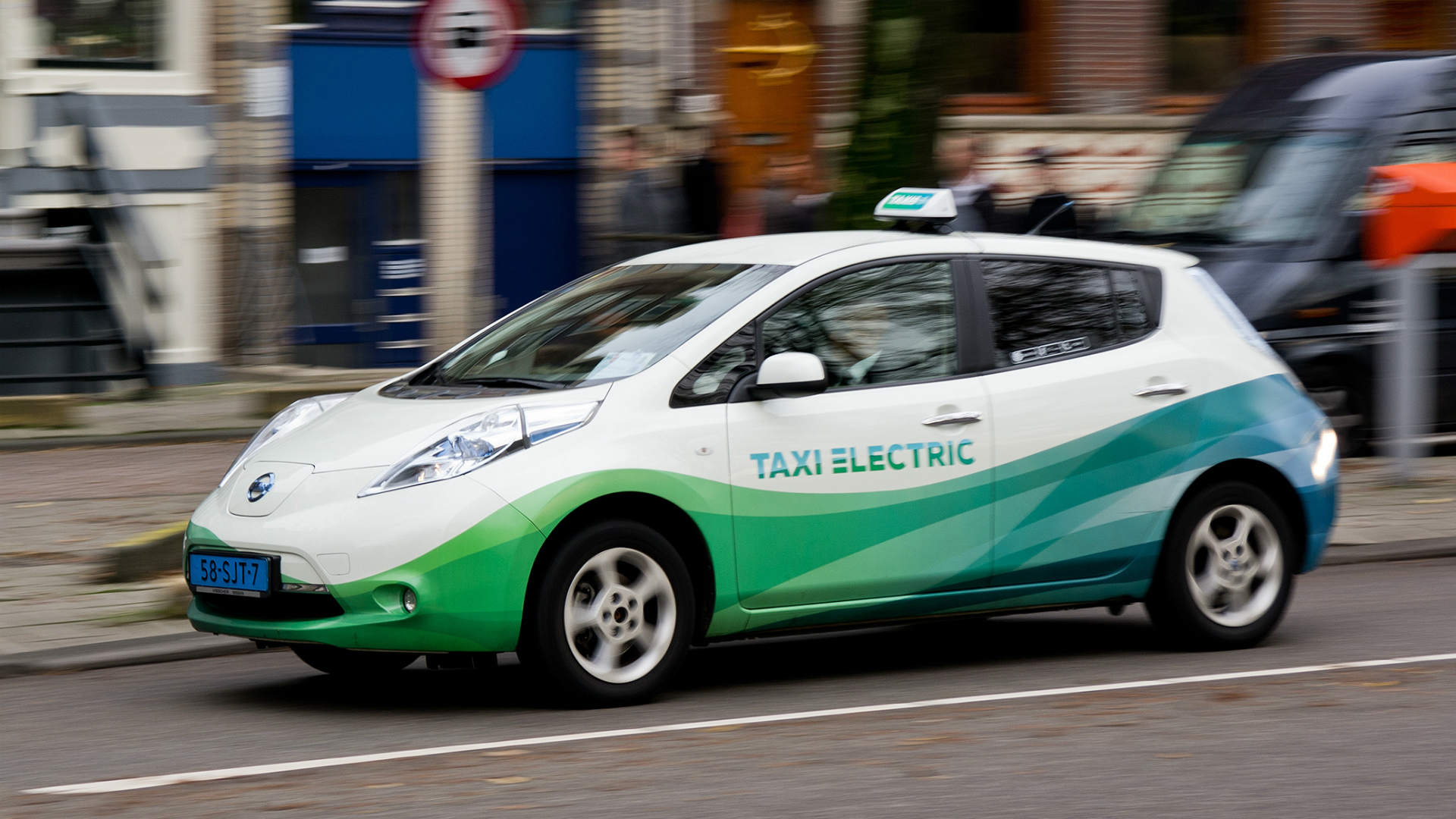
The majority of Uber and taxi drivers would be willing to pay extra for a cleaner ride. That’s according to a recent YouGov poll.
It found that more than half (52 percent) of customers in seven European countries would be happy to pay a premium to travel in an electric car. An additional 15-20 cents per km, to be precise. That’s the equivalent of 13 to 17p per kilometre travelled.
Younger users (18-24) are more likely to embrace an additional charge for a zero-emission taxi. Six out of 10 said they’d pay more.
There’s an increasing awareness of Uber’s impact on pollution. In London, 44 percent of the respondents to the online survey said Uber has a negative impact on the air quality in the capital. Similarly, a third of Parisians said Uber is having a negative effect on pollution levels in the city.
Yoann Le Petit, new mobility expert at campaigning group Transport & Environment (T&E), said: “Uber’s customers are wise to its air pollution and are even willing to chip in for a clean ride. Now Uber must do its fair share for the climate and our health. Thus, the #TrueCostOfUber campaign urges the company to electrify its fleet in its 10 biggest European cities by 2025.”
T&E says the emissions of the taxi and ride-hailing market in London and Paris is the equivalent of adding an extra 250,000 privately owned cars to the road. French government data shows that 90 percent of the registered private hire vehicles are powered by a diesel engine.
Uber has 3.6 million users in London and 2.7 million customers in France. T&E is urging candidates in the Mayor of Paris campaign to commit to reducing Uber emissions if elected.
‘Uber has no excuse’
Olivier Blond, president of Respire, the national association focused on air quality improvement, said: “With 78 percent of young people saying they’re ready to pay a little more for zero-emissions cars, Uber has no excuse for not upping its game, abandoning diesel now and switching to 100 percent clean vehicles.”
The sample size of the YouGov survey was 12,523 adults from the UK, France, Germany, Spain, Italy, Netherlands and Belgium.
The news is expected to unsettle the automotive industry, which has been investing heavily in plug-in hybrid models as a stepping stone to fully-electric cars.
Now, Mike Hawes, chief executive of the Society of Motor Manufacturers (SMMT), has stated it is “extremely concerning that government has seemingly moved the goalposts for consumers and industry on such a critical issue.
“A date without a plan will merely destroy value today… we need to hear how the government plans to fulfil its ambitions”.
Motoring Research reported last month how Department for Transport minister of state George Freeman spoke of government plans to bring forward the 2040 ban.
“Many people haven’t made the shift from electric motoring being a nice idea, a vision, to being an actual practical reality that we are going to do.
“All of us are going to have to get with the progamme.”
Plug-in hybrids combine an electric drivetrain with a regular petrol or diesel engine, for a limited range of zero-emissions driving.
When the batteries run flat, the traditional petrol or diesel engine takes over.
Prime Minster Boris Johnson announced the revised petrol and diesel car ban at the launch of the UN climate conference COP26.
He was joined by Sir David Attenborough at the central London event.
In a statement, the government suggested the 2035 ban could even be accelerated further, “if a faster transition is feasible”.
Transport secretary Grant Shapps said: “This government’s £1.5bn strategy to make owning an electric vehicle as easy as possible is working – last year alone, a fully electric car was sold every 15 minutes.
“We want to go further than ever before. That’s why we are bringing forward our already ambitious target to end the sale of new petrol and diesel cars to tackle climate change and reduce emissions.”
2035 petrol and diesel ban: auto industry responds
Auto Trader commercial director Ian Plummer called the target “a stretch, given where we are today – pure electric cars only accounted for 1.6 percent of new car sales last year, and even fewer of used.
“That said, consumers do feel ready for the change; appetite and interest is high as environmental concerns play a more influential role in people’s purchasing decisions.”
Price, he said, is what’s holding people back. “EVs remain almost double the price of their ICE counterparts, so government grants and incentives are essential to drive meaningful uptake.”
RAC head of policy Nicholas Lyes said the organisation was not surprised by the pull-forward “as there is indisputable need to tackle climate change.
“A more ambitious target should be the catalyst for faster change, but there are clearly many hurdles to cross.
“While EV take-up is accelerating, high initial purchase prices are still holding sales back. These will inevitably come down as manufacturers bring out more and more electric vehicles.
“In the short to medium-term we should not, however, overlook the role plug-in hybrid vehicles with cleaner than ever petrol engines could play in bridging the gap to going completely electric.”
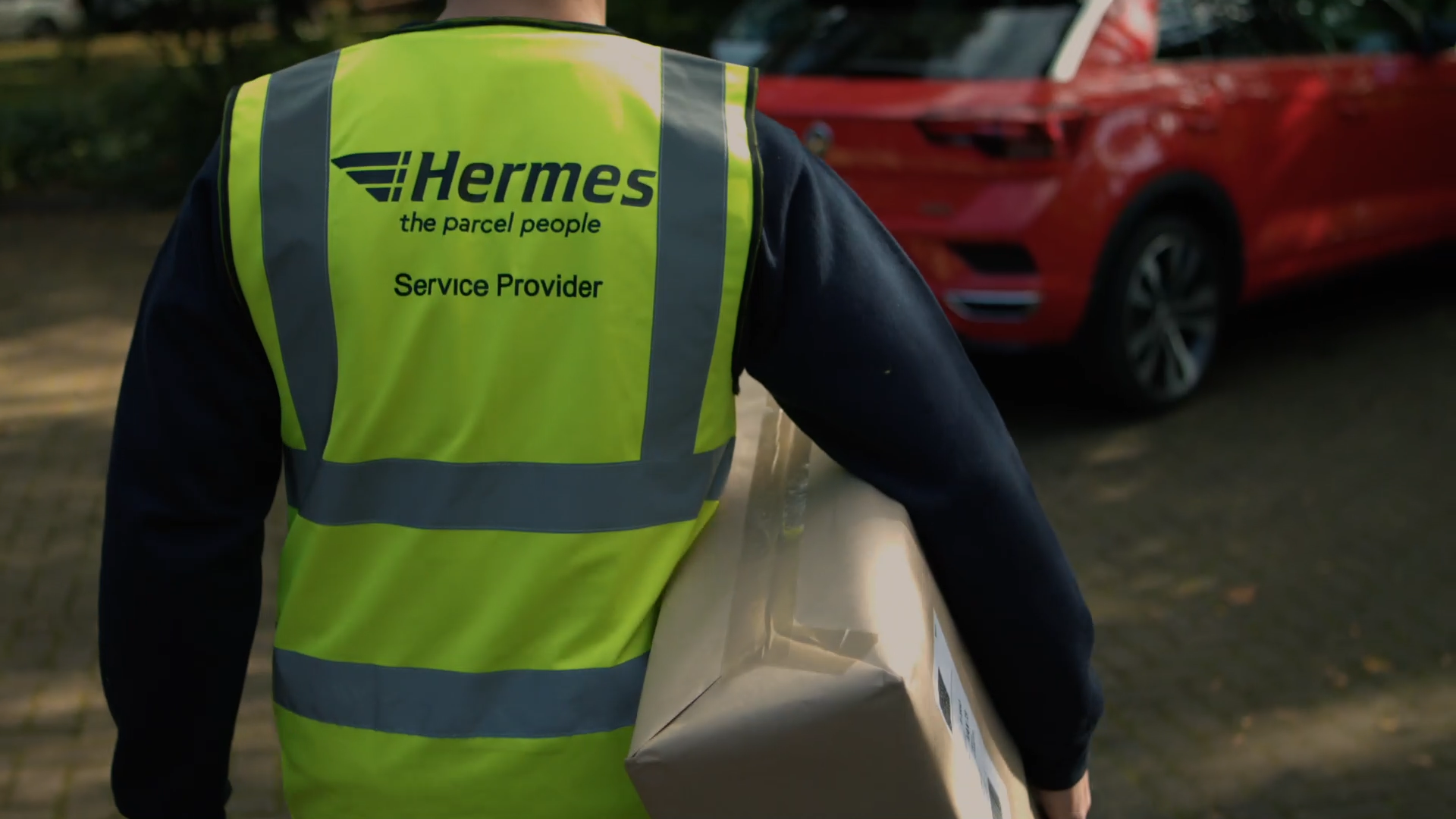
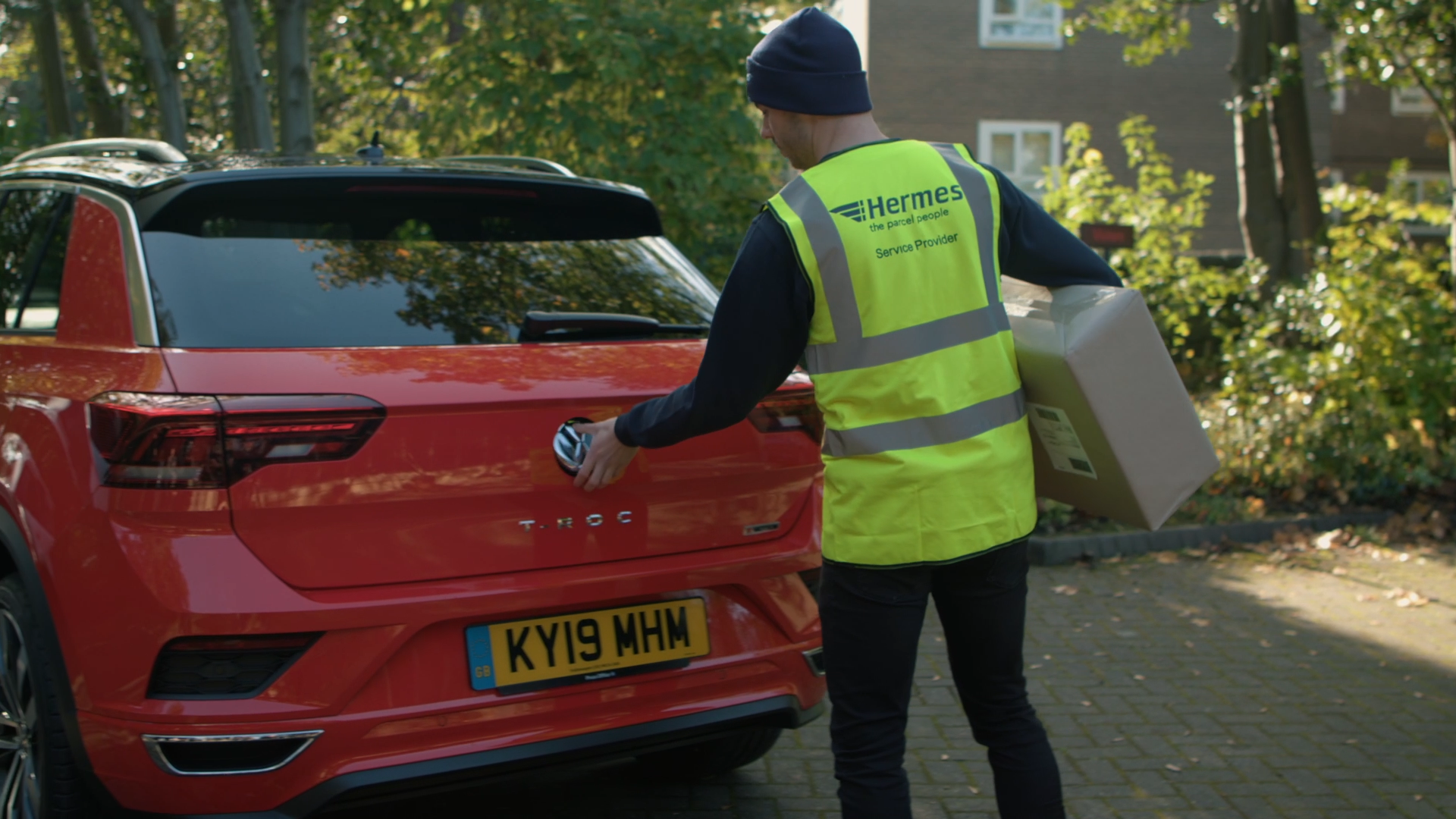
Volkswagen has partnered with Hermes to make deliveries to your car possible. The plan is to make missed parcels a ‘thing of the past’.
When customers tick the option of a parcel being delivered to their car, a Hermes courier can use a one-time access code to put a package in the boot.
New electric Volkswagen e-Up priced from £19,695
They find your car using GPS and, once the package is delivered, the courier provides photo evidence, then confirms that the boot is locked.
This is just one of Volkswagen’s ‘We’ range of digital services, accessible via the Volkswagen ID log-in and We Connect Plus package. The initial trial is being carried out in Milton Keynes. Once that’s complete, feedback will be reviewed and the service may be rolled out further.
Most Volkswagens produced after 2 January 2019 are able to have the Volkswagen We platform and therefore the service. Touaregs from 2 July 2018 or after should also be compatible.
Volkswagen will build one million EVs a year by 2023
“We are excited to have Hermes on board as our first courier partner to trial We Deliver in the UK,” said Claire McGreal, mobility services manager at Volkswagen UK.
“Feedback from users in Germany, where the scheme is already live, has been consistently positive and we hope to begin rolling out gradually across the UK by late 2020. Security is, of course, high on our list of priorities which is why delivery details are traceable to specific individual couriers.
“Should the delivery be unviable on the day for any reason – for example, there is insufficient space in the boot or the courier can’t locate the car – then the delivery will default to the user’s alternative address instead.”
New research has revealed the best times of the year to buy car insurance. In addition to this, it shows the average fully comprehensive premium has risen in cost by 16 percent (or £68) since 2013.
The analysis by MoneySuperMarket involved 49 million car insurance quotes from the last seven years, between 2013 and 2019.
It showed that August may be the best month to buy car insurance – being the cheapest, on average, for the past two years. In 2017, February was cheapest, however, and has been three times between 2013 and 2019.
Last year, those who insured their car in August paid £469. On average, that’s a 10 percent (£52) cheaper than December. In 2018, that saving was £43, with the average price being £495, compared with £538 in December. Generally speaking, December is considered the priciest month to buy car insurance.
Insurance is also more expensive than it was in 2013. The average fully comprehensive premium in the fourth quarter of 2013 was £435. That compares to an average of £503 in Q4 2019. As noted, the £68 jump represents an increase of 16 percent.
“People purchasing a car often wait until December to secure a bargain, as dealers try and lock in sales before the end of the year,” said Emma Garland, data scientist at MoneySuperMarket.
“The only downside, is that it is generally the most expensive time to buy a car insurance policy. Our data shows that February and August are typically the cheapest months to buy car insurance. This could be because fewer cars are bought, due to people holding off for the new vehicle plates that are issued in March and September.”
Range anxiety is a concern for electric car buyers. As our EV charging infrastructure finds its feet, the priority for many buyers is getting from A to B without having to charge in-between. We’ve done the research and ranked which EVs go how far on a full charge, according to the more realistic WLTP test cycle.
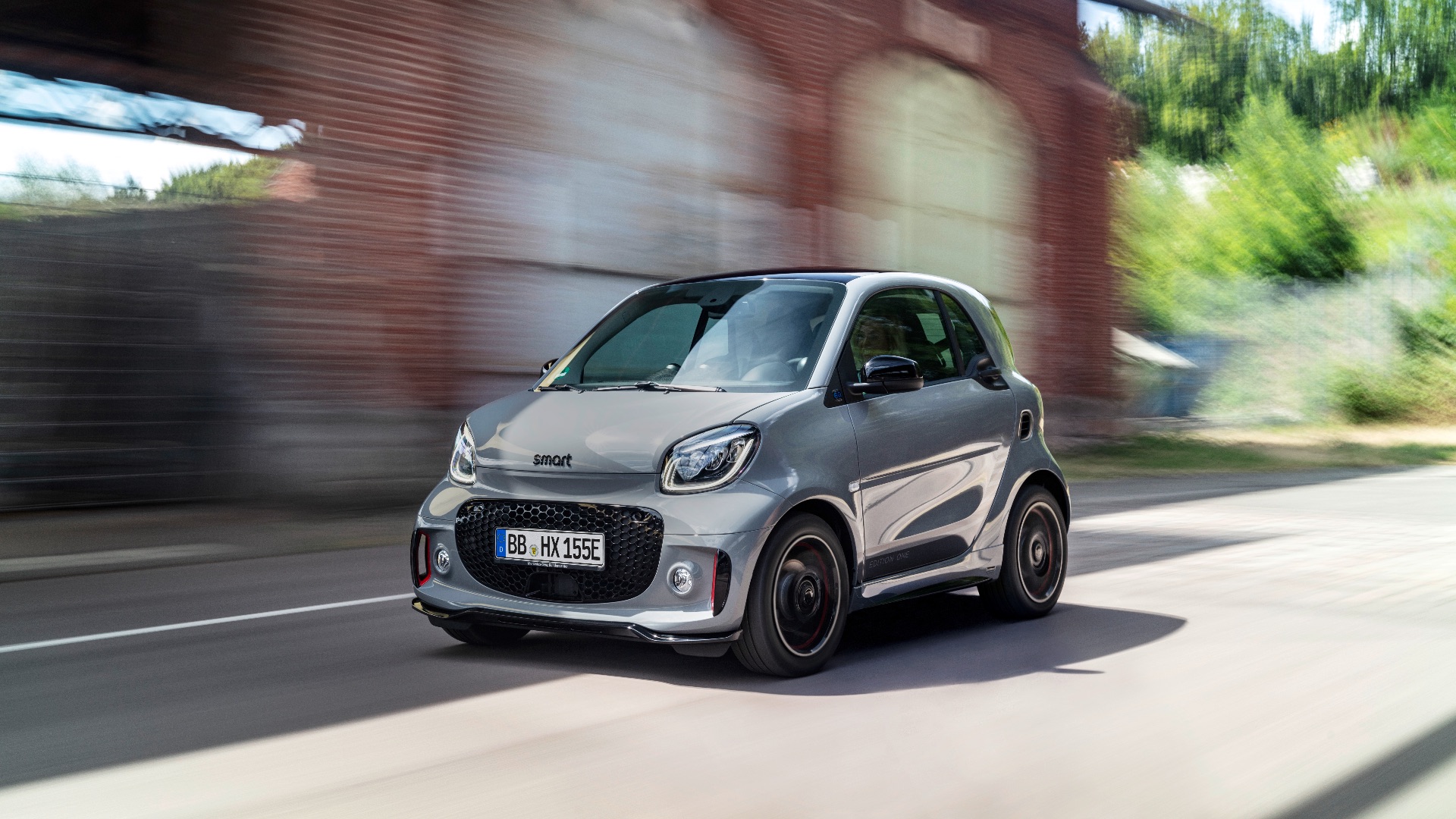
Smart EQ – 65 miles or more
The Smart seems like a car that should always have been electric. And now the entire Smart range is indeed battery-powered: choose from ForFour, ForTwo Coupe and ForTwo Cabriolet models. With less than 100 miles’ range, they’re hardly long-distance cars, but are capable in the city. Pricey, though, with the ForTwo Coupe starting from £16,850 after the government electric car grant.
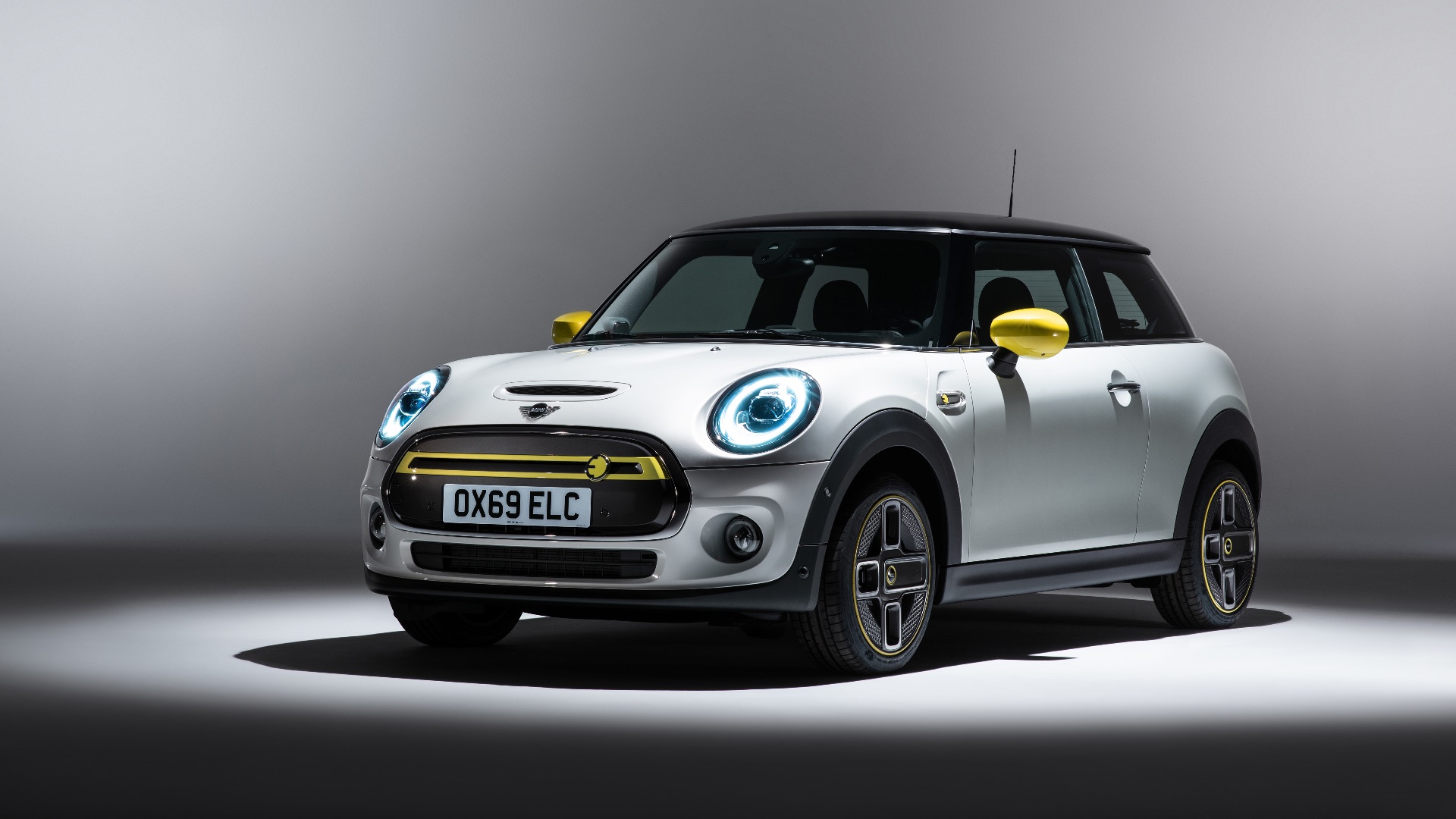
Mini Electric – 124 miles
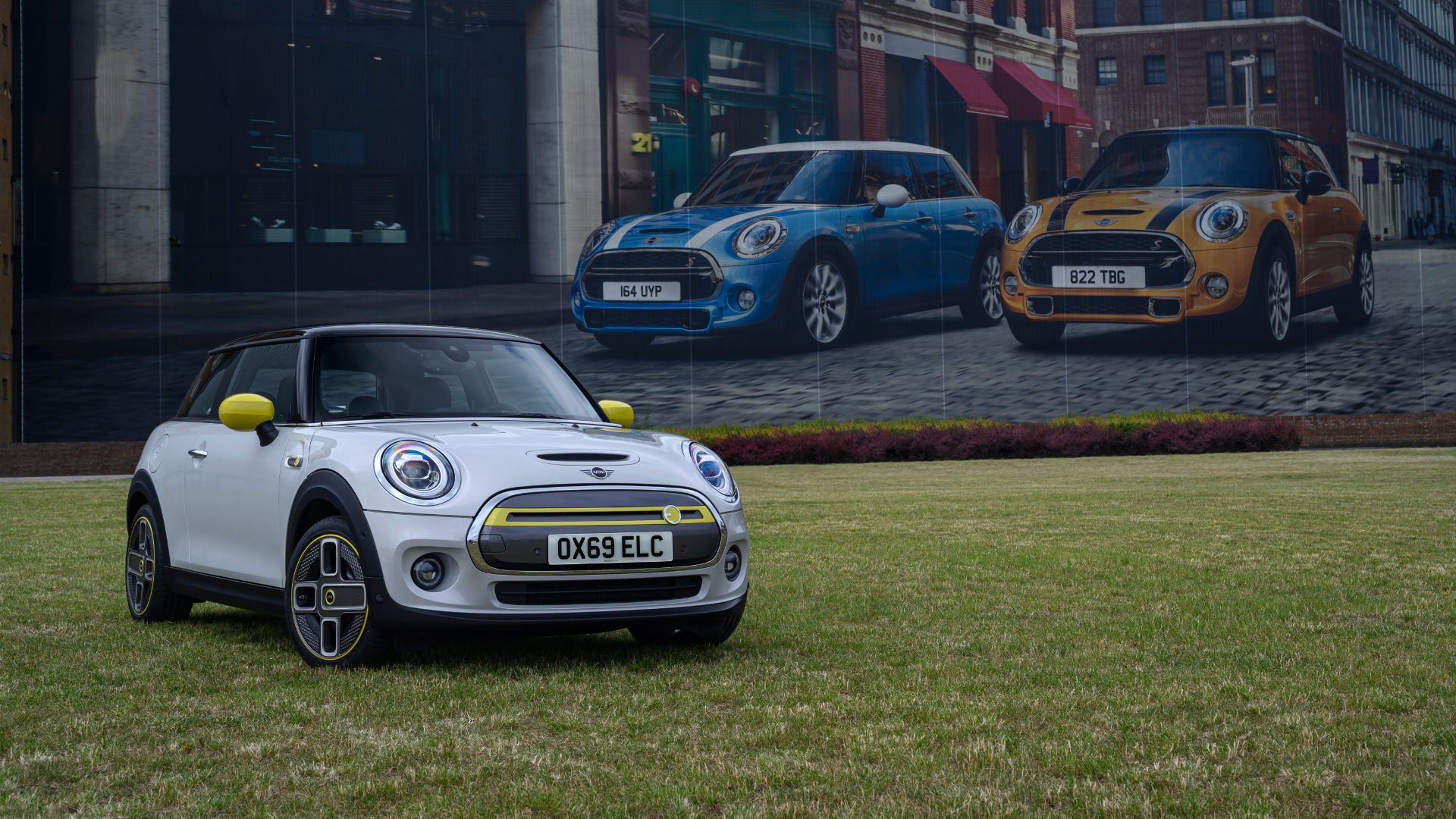
The new Mini Electric is open for ordering, with deliveries expected in March 2020. With an on-the-road price of £24,400 (after the grant is deducted) it’s cheaper than the Honda e, but the range is a similarly-limited 124 miles. A compact 32.5 kWh battery has been used to keep weight down, with Mini keen to preserve its famous ‘go-kart’ handling characteristics.
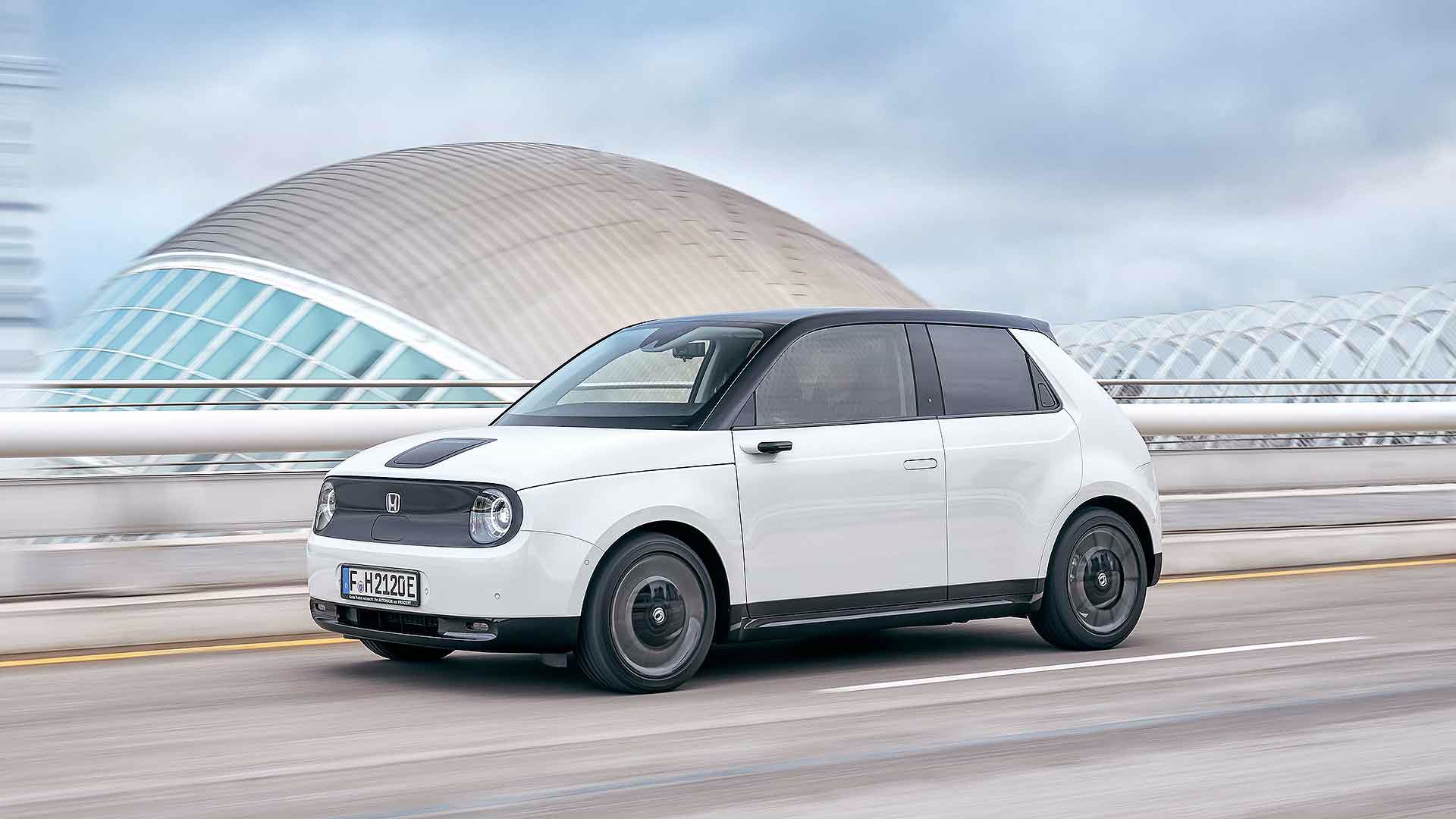
Honda e – 137 miles
We called the Honda e a ‘class act’ in our recent review. But the car will raise eyebrows for some, especially given its price. It manages just 137 miles between charges, and that’s on the smaller wheels. ‘The two elephants in the room are range and price,’ said Richard after driving it. ‘Those who understand [the Honda e] won’t mind paying a premium. But both factors mean it’s not an everyman EV’. Post-grant prices are £26,160 for the 100 kW version, while the 113 kW model costs £28,660. Alternatively, finance starts from £299 per month.
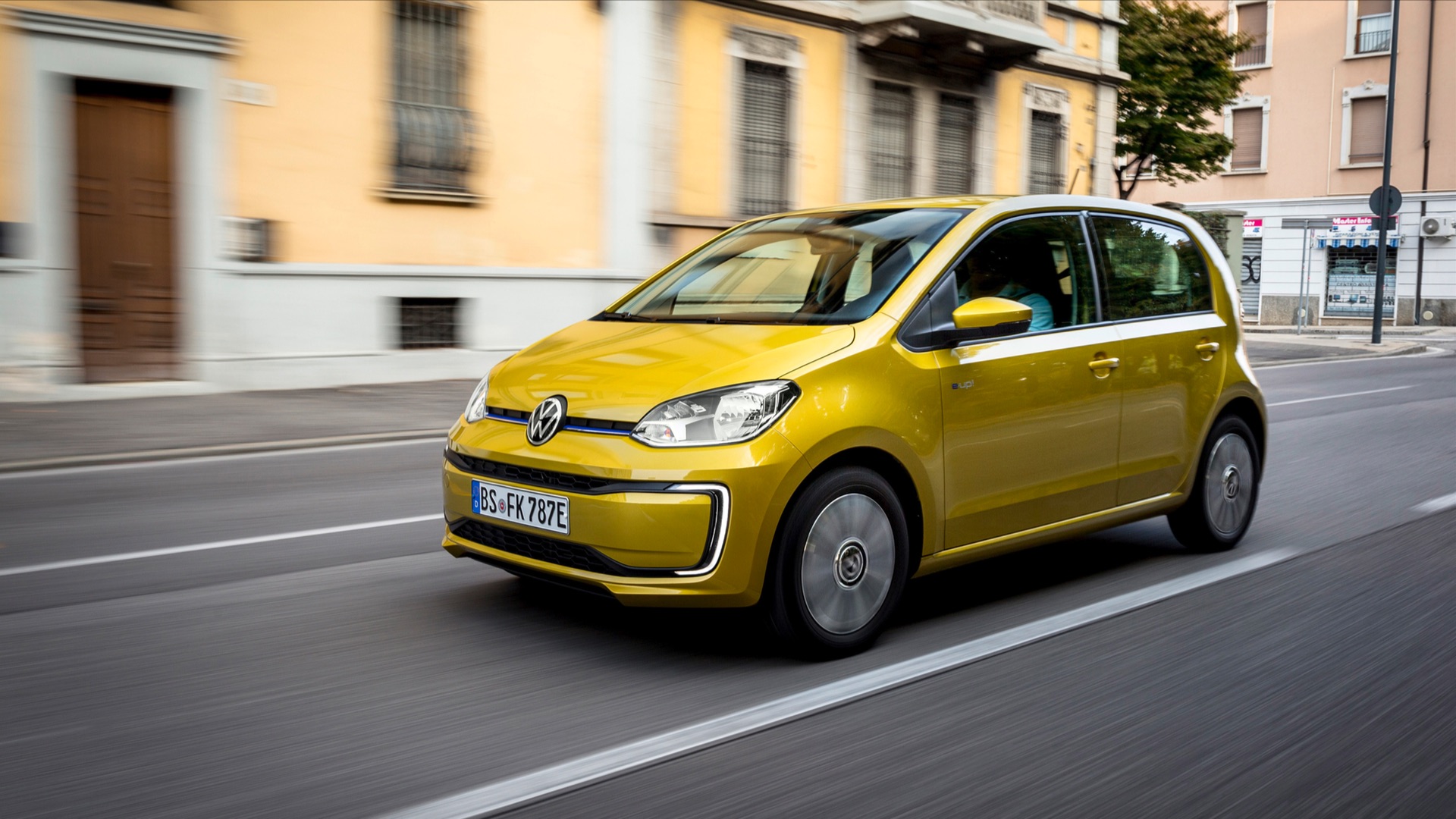
Volkswagen e-Up – 162 miles
Volkswagen recently updated the electric version of its Up city car. The new e-Up has a certified WLTP range of 162 miles. On its website, VW says ‘That’s more than enough to get you from London to Brighton and back’. Indeed it is.
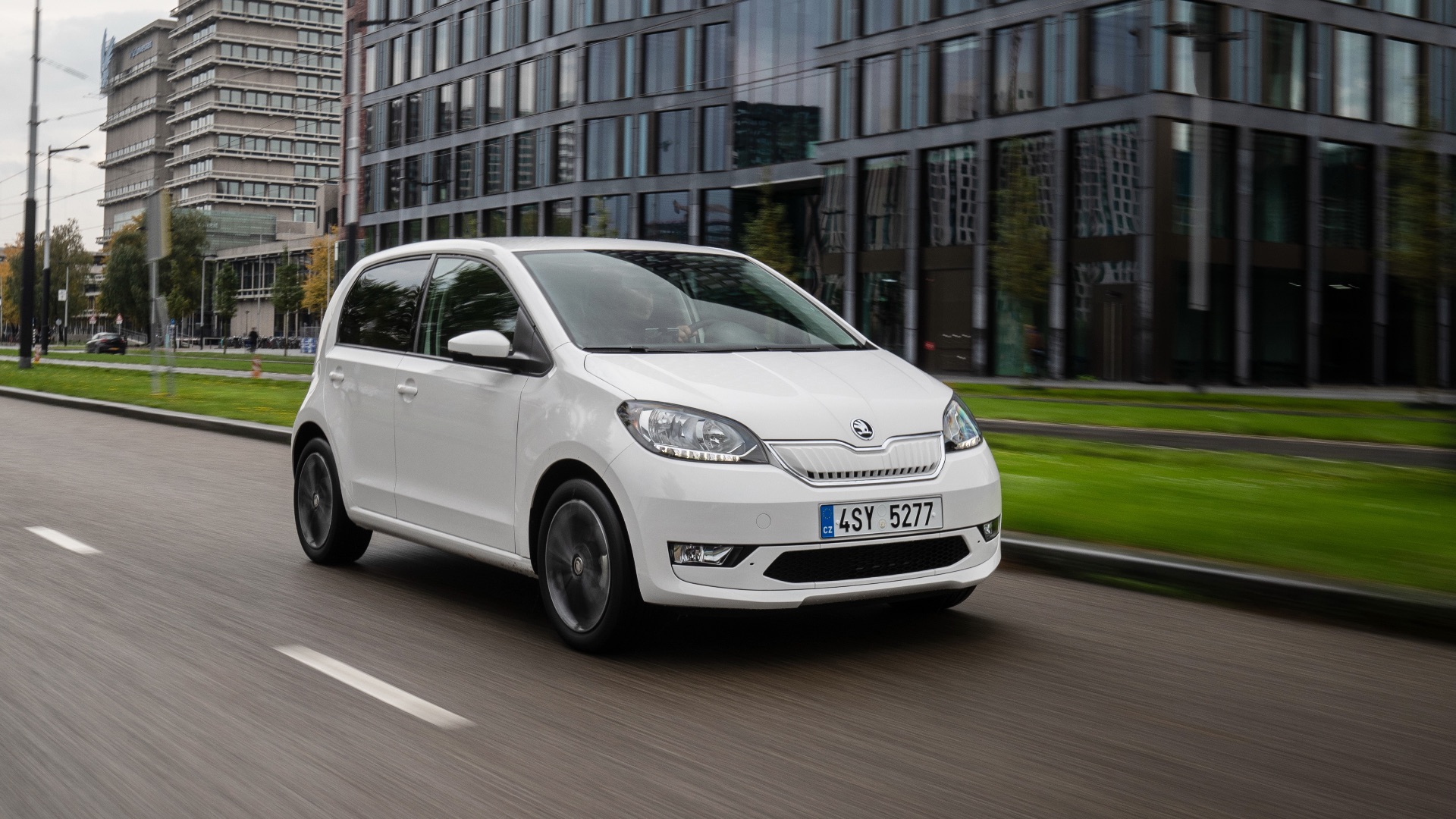
Skoda Citigo e iV – 162 miles
The new Skoda Citigo e iV, based on the e-Up, went on sale in December 2019 and costs from £16,995. That’s after the plug-in car grant and based on the entry-level SE. The Citigo also offers a driving range of 162 miles, while the top-spec SE L can be charged using a CCS cable connected to a 40kW DC fast charger.
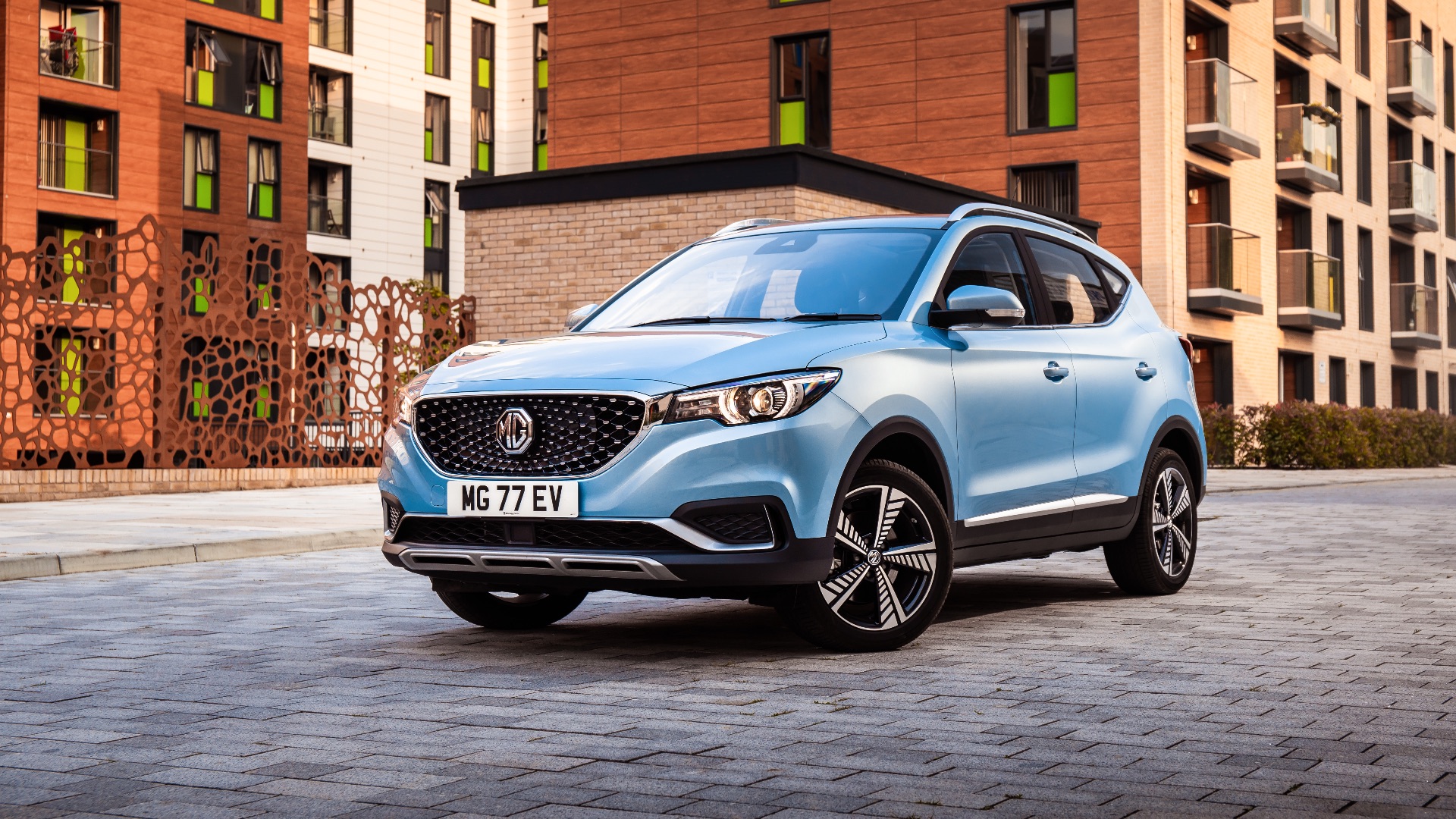
MG ZS EV – 163 miles
‘The people’s electric car’ as MG calls it, caused a stir at launch, with the company initially matching the £3,500 government grant for early adopters of its new crossover. It’ll deliver 163 miles on the WLTP cycle, and now costs £24,995 post-grant.
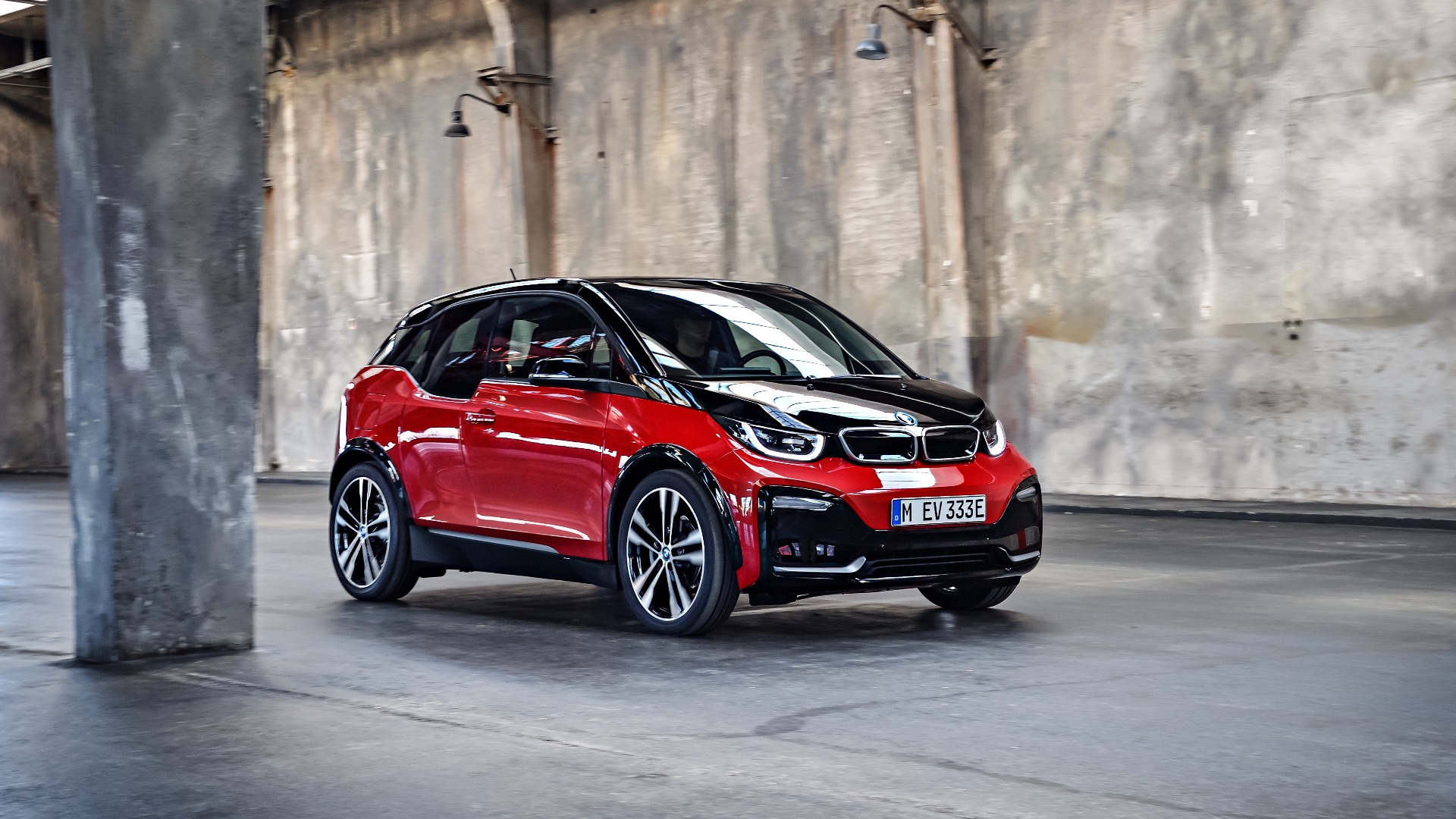
BMW i3 – 193 miles
If you want a motorsport-style carbon fibre chassis, rear-wheel drive and 19-inch alloy wheels, an electric car might not be your first choice. But these are exactly what the BMW i3 offers, along with a range of 193 miles for the recently revised 120Ah model. You also get 0-62mph in 7.3 seconds, funky ‘suicide’ rear doors and the kudos of a premium badge. Prices start at £31,680 after the EV grant.
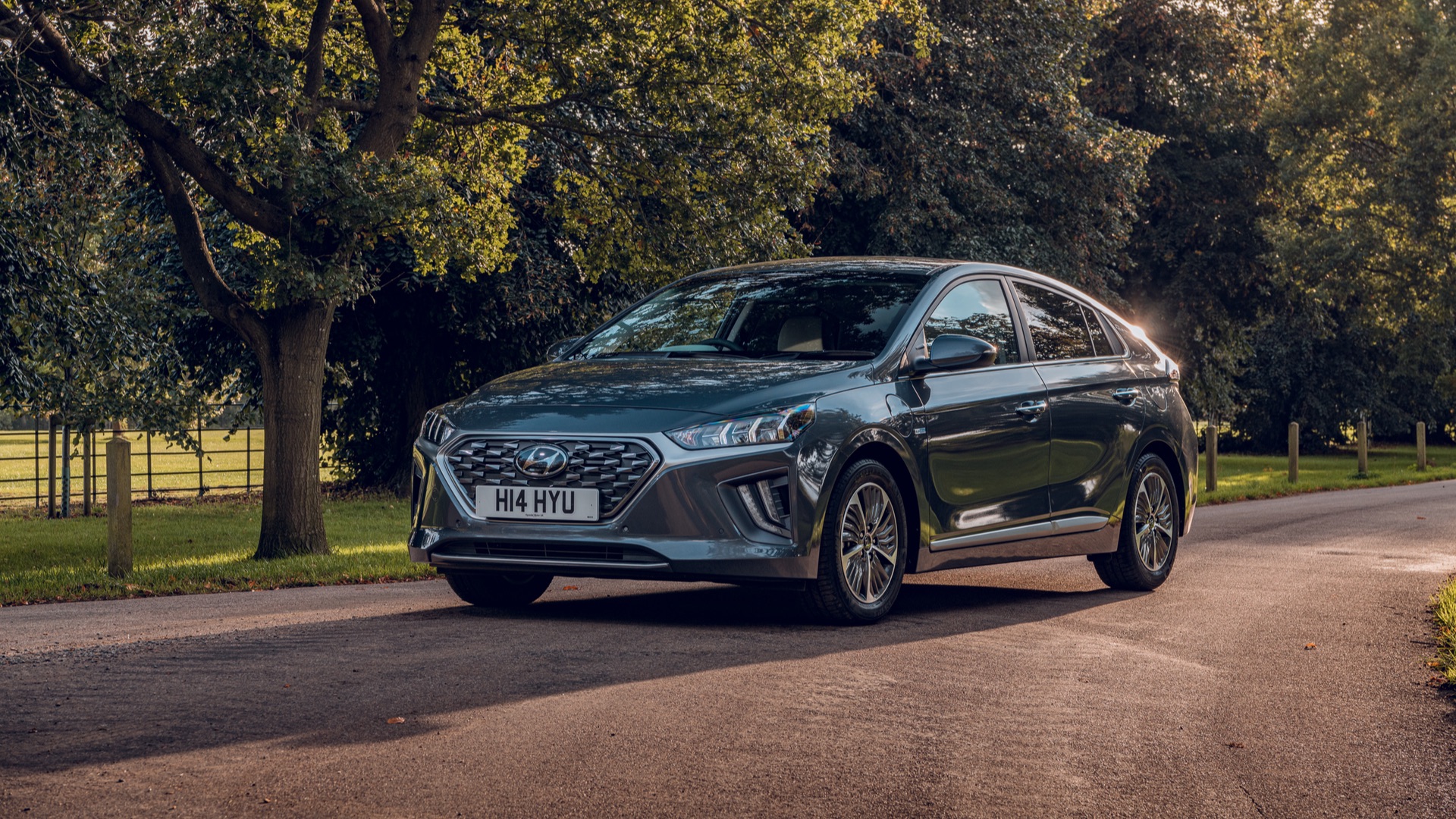
Hyundai Ioniq – 194 miles
The Ioniq isn’t just one model. Instead, Hyundai has built three versions of the same car: hybrid, plug-in hybrid, and battery EV. Updated for 2020, the EV has a 135hp motor and a WLTP range of 194 miles. Keenly priced at £29,450 (including the grant), it shows the benefits of designing an EV from the ground up, rather than converting a conventional car.
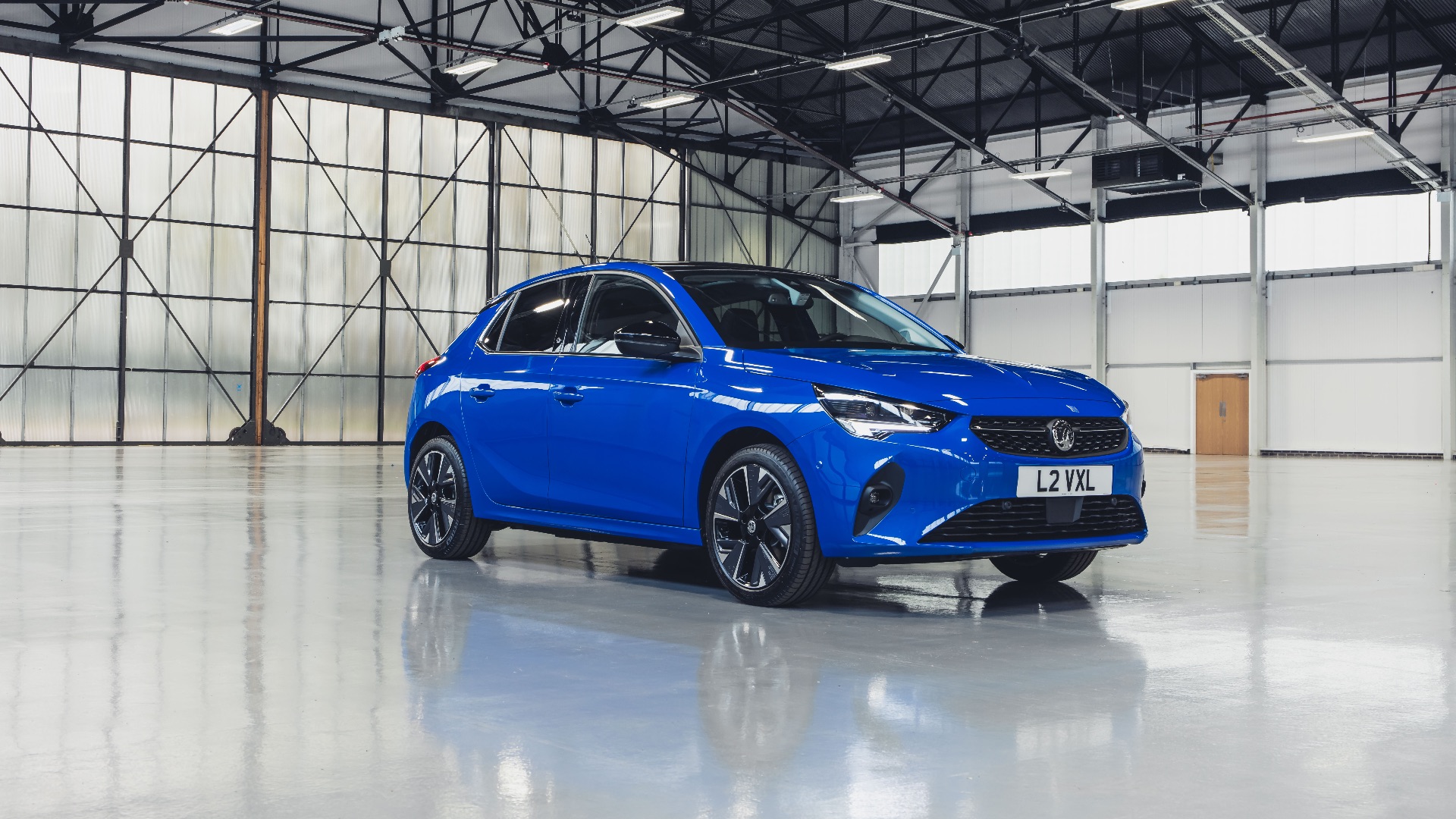
Vauxhall Corsa e – 205 miles
The Vauxhall Corsa-e is available for a competitive £295 a month on a four-year personal lease contract after a £5,310 initial lump sum. Alternatively, you can get a guaranteed £2,000 part-exchange on your old car. The 50kWh battery in the Corsa-e offers 205 miles of electric range, although this can be extended by 40 percent if you use a special Eco mode.
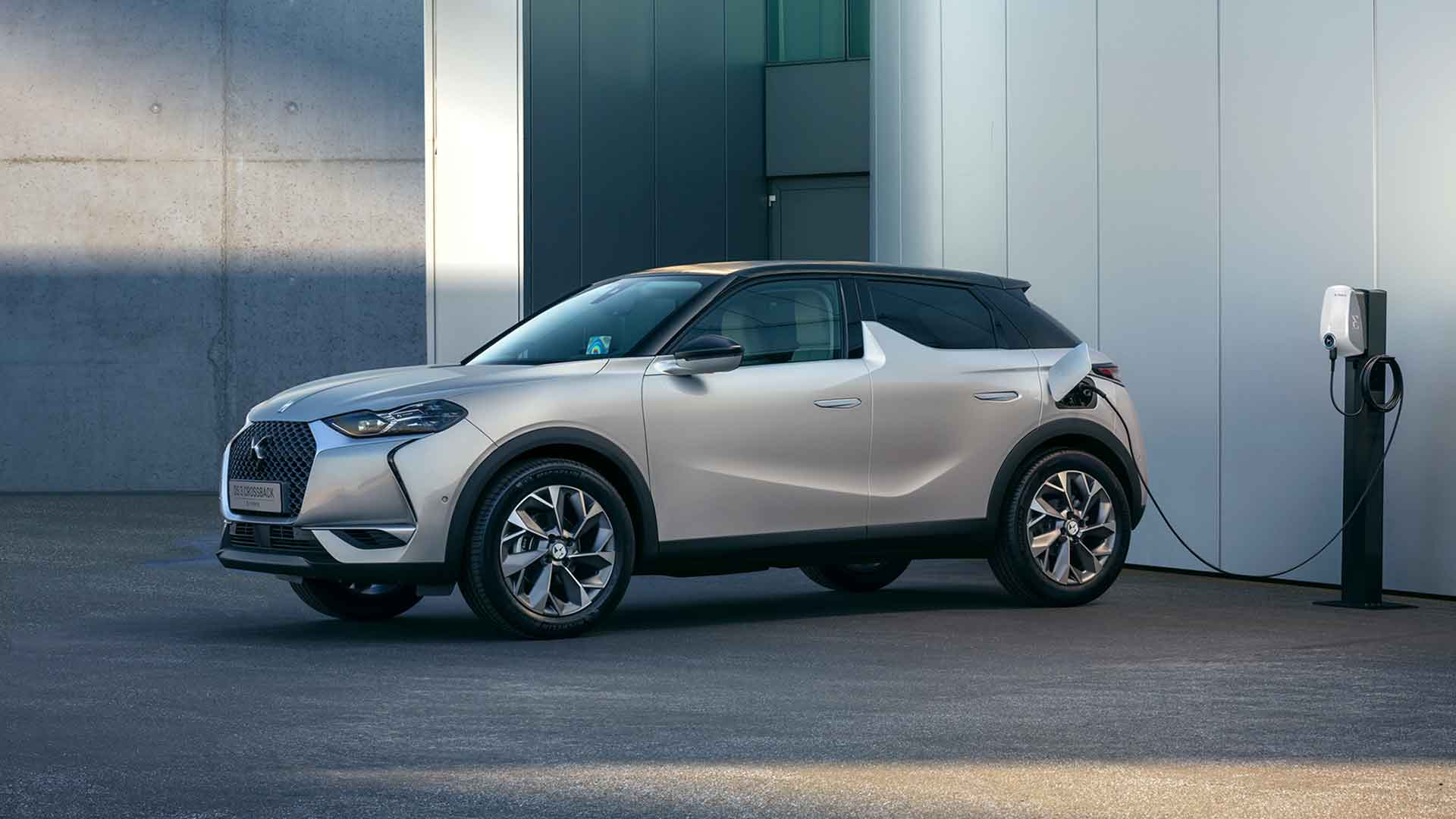
DS 3 Crossback E-Tense – 206 miles
New to the scene is the DS 3 Crossback E-Tense. It packs a 50kWh battery and is good for a 206-mile range. Not bad, but not quite up there with certain Korean rivals. It’s got French style on its side, though.
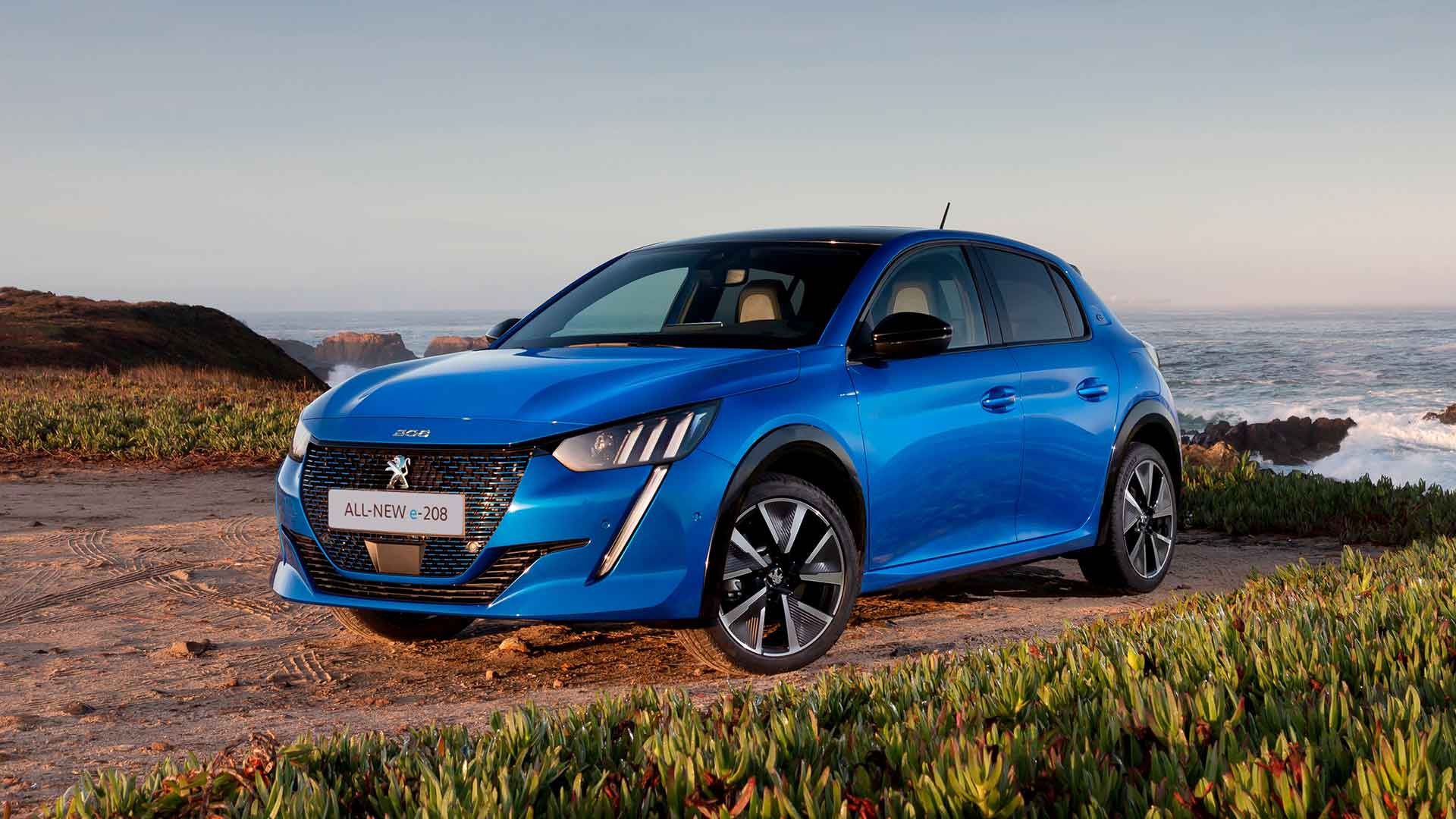
Peugeot e 208 – 217 miles
The Peugeot e-208 is more expensive than the Mini Electric, but its 217-mile range is more impressive. It costs from £25,050 after the government grant, while the top-spec e-208 GT is priced at £29,250. Unlike the Renault Zoe, which was designed as an electric car, the e-208 shares much in common with petrol and diesel 208s – and indeed the new 2008 crossover, which is also available as an EV.
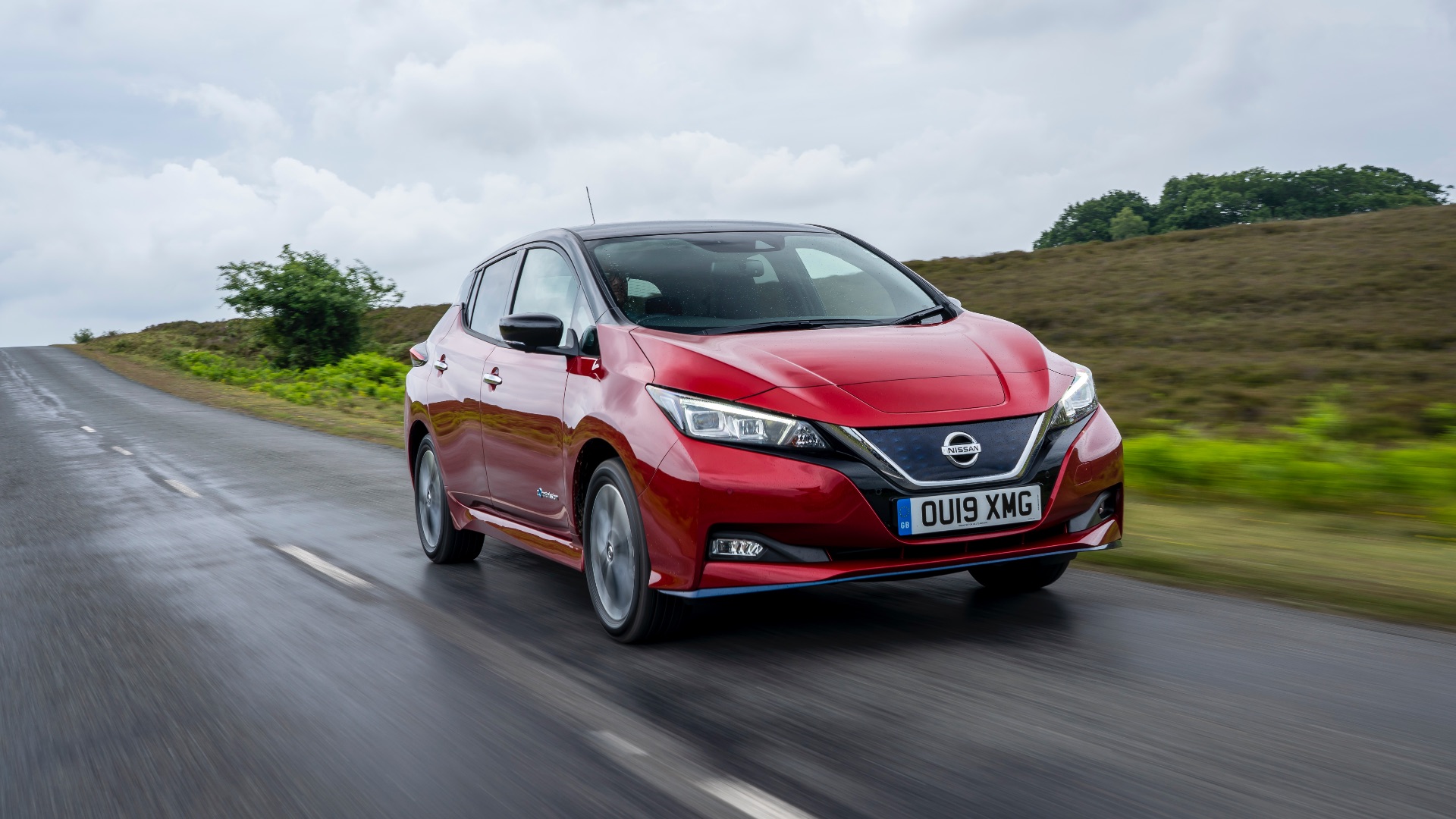
Nissan Leaf – 239 miles
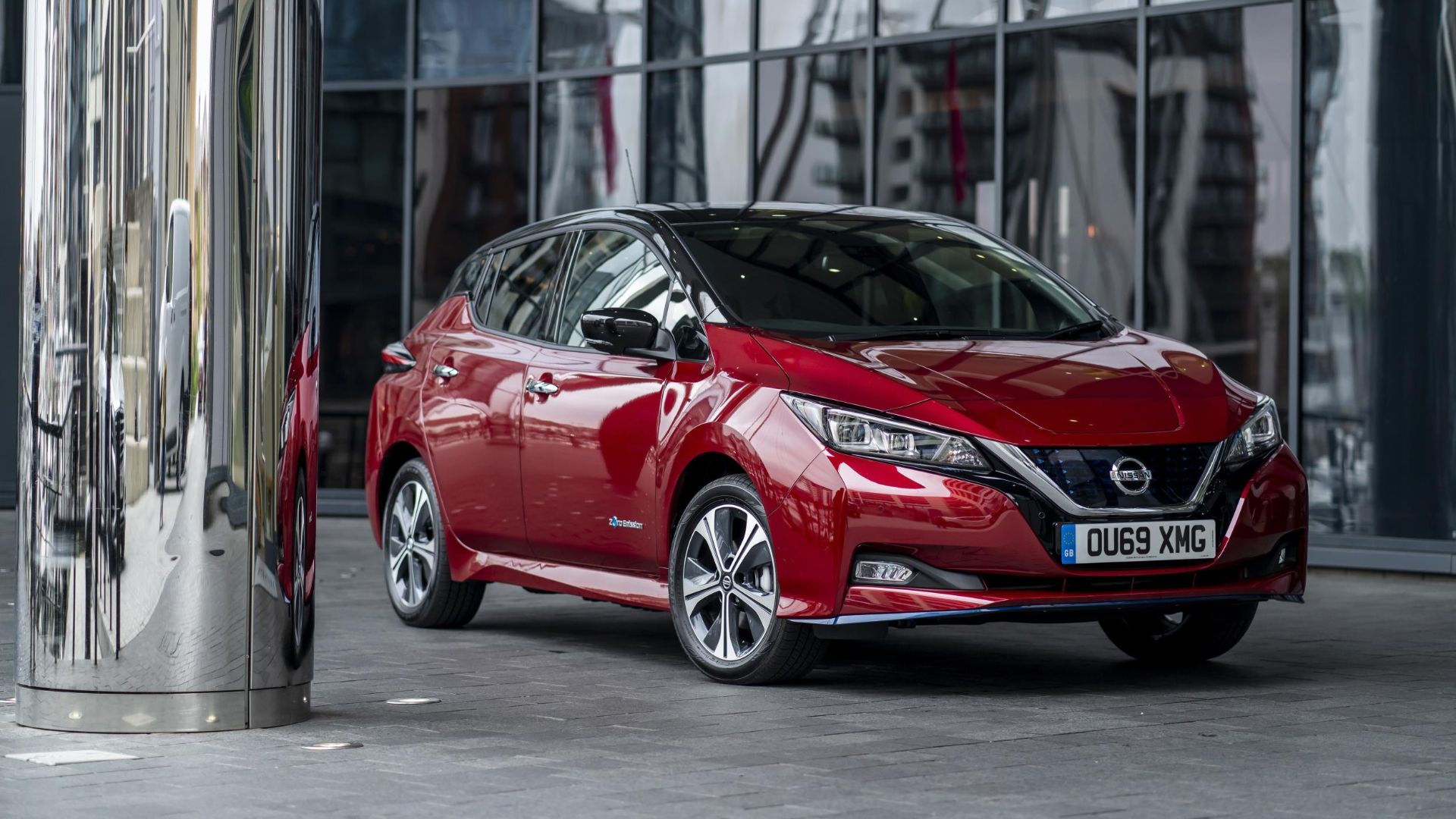
You can now buy a Nissan Leaf with 239 miles of WLTP-certified range. The newly updated looks are less apologetic and the cabin is much more attractive. The second-generation Leaf feels a major step, then – especially in this new 62kWh guise. The ‘e-Pedal’ makes driving easy, too; braking is often simply a matter of lifting off the accelerator.
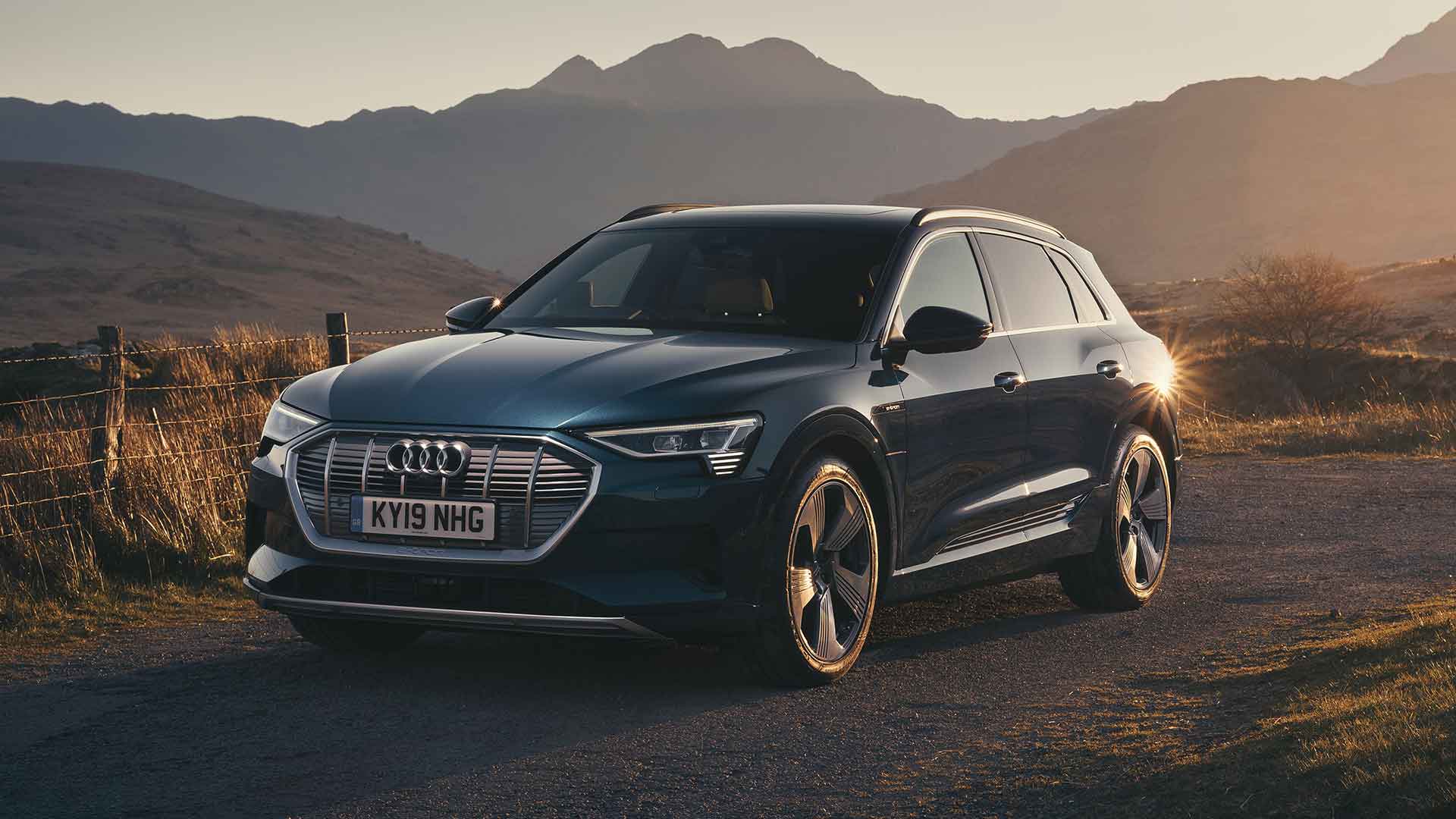
Audi E-tron – 239 miles
The Audi E-Tron is a relatively late entry to the EV market for a marque that’s been so openly curious about electric cars in recent years. As well as a WLTP-rated range of 239 miles, you get up to 400hp and cameras instead of wing mirrors. The £71,000 E-tron marks the start of a 12-car Audi EV onslaught.
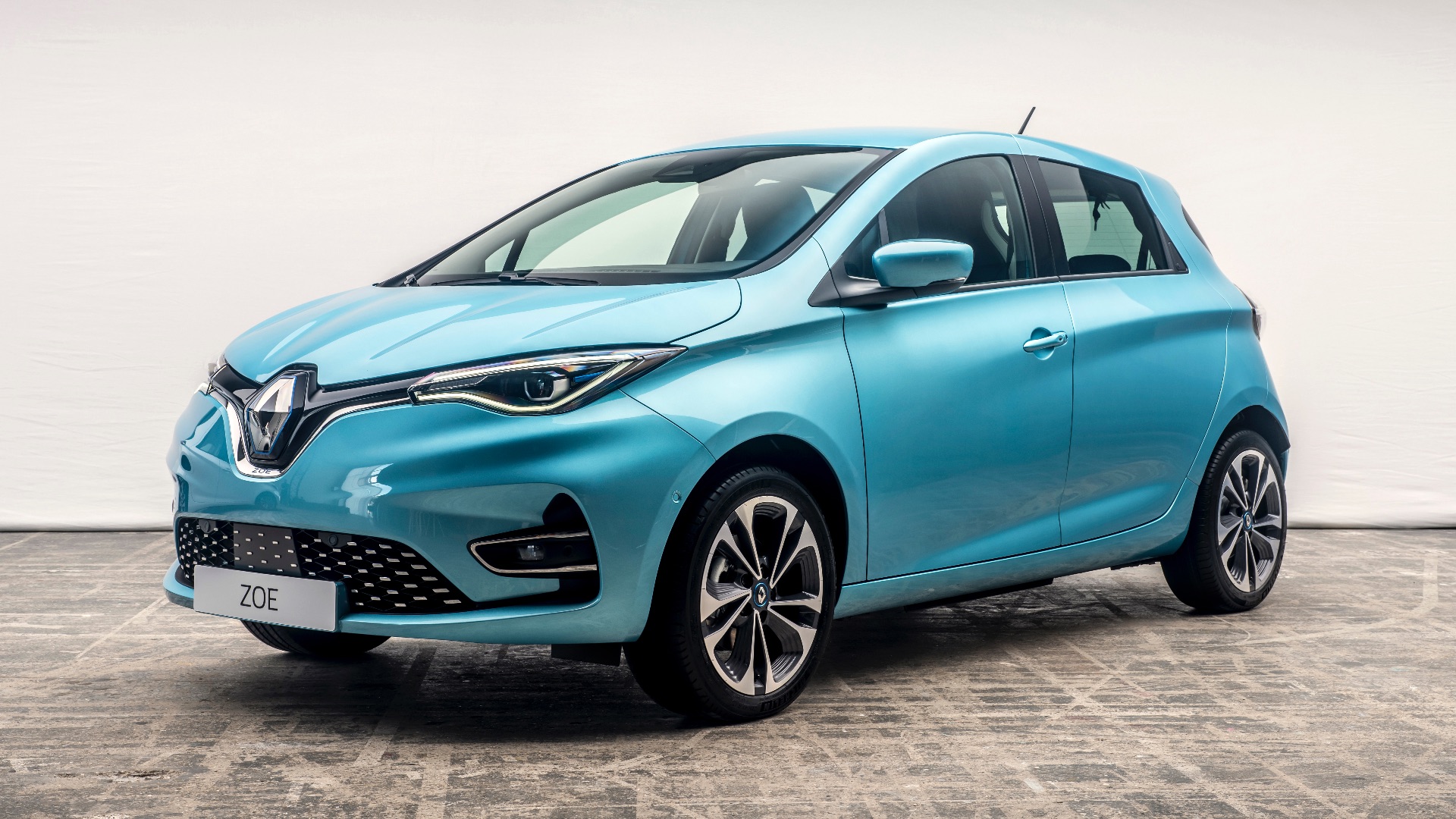
Renault Zoe ZE50 – 242 miles
In new ZE50 spec, the Zoe can cover 242 miles on a charge. Its interior has been comprehensively updated, too, which is very welcome. The Zoe ZE50 costs from £18,670 (after the grant), and 50kW rapid charging capability is now offered.
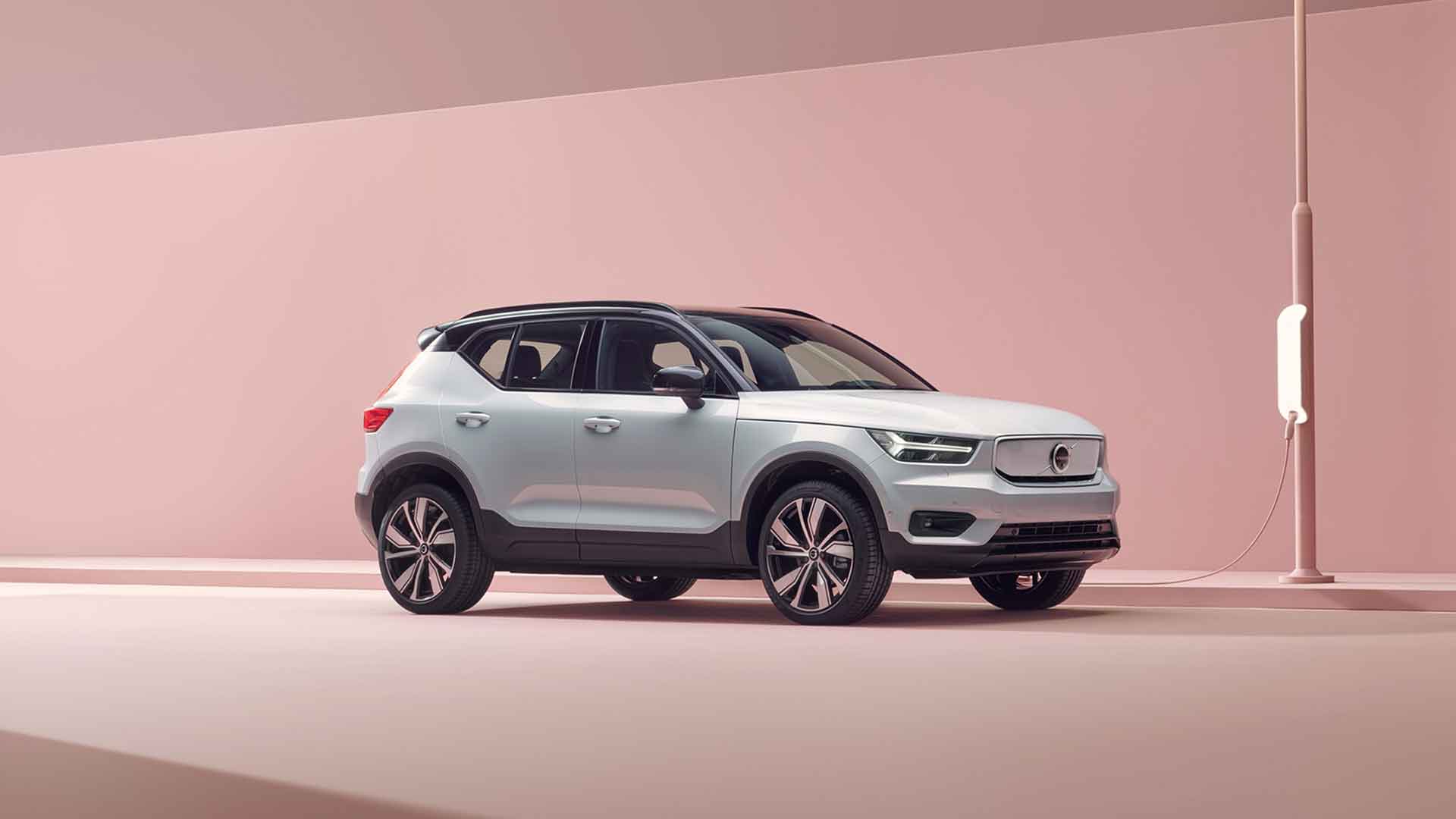
Volvo XC40 Recharge – 250 miles
Volvo’s first all-electric car combines a 0-62mph time of 4.9 seconds with an EV driving range of nearly 250 miles. The XC40 Recharge P8 AWD has two electric motors, giving a total output of 408hp. Total battery capacity is 75kWh, and Volvo says the batteries will recharge from zero to 80 percent in 40 minutes. It’s the first of a new range of all-electric Volvos, with the company planning to launch one a year between now and 2025.
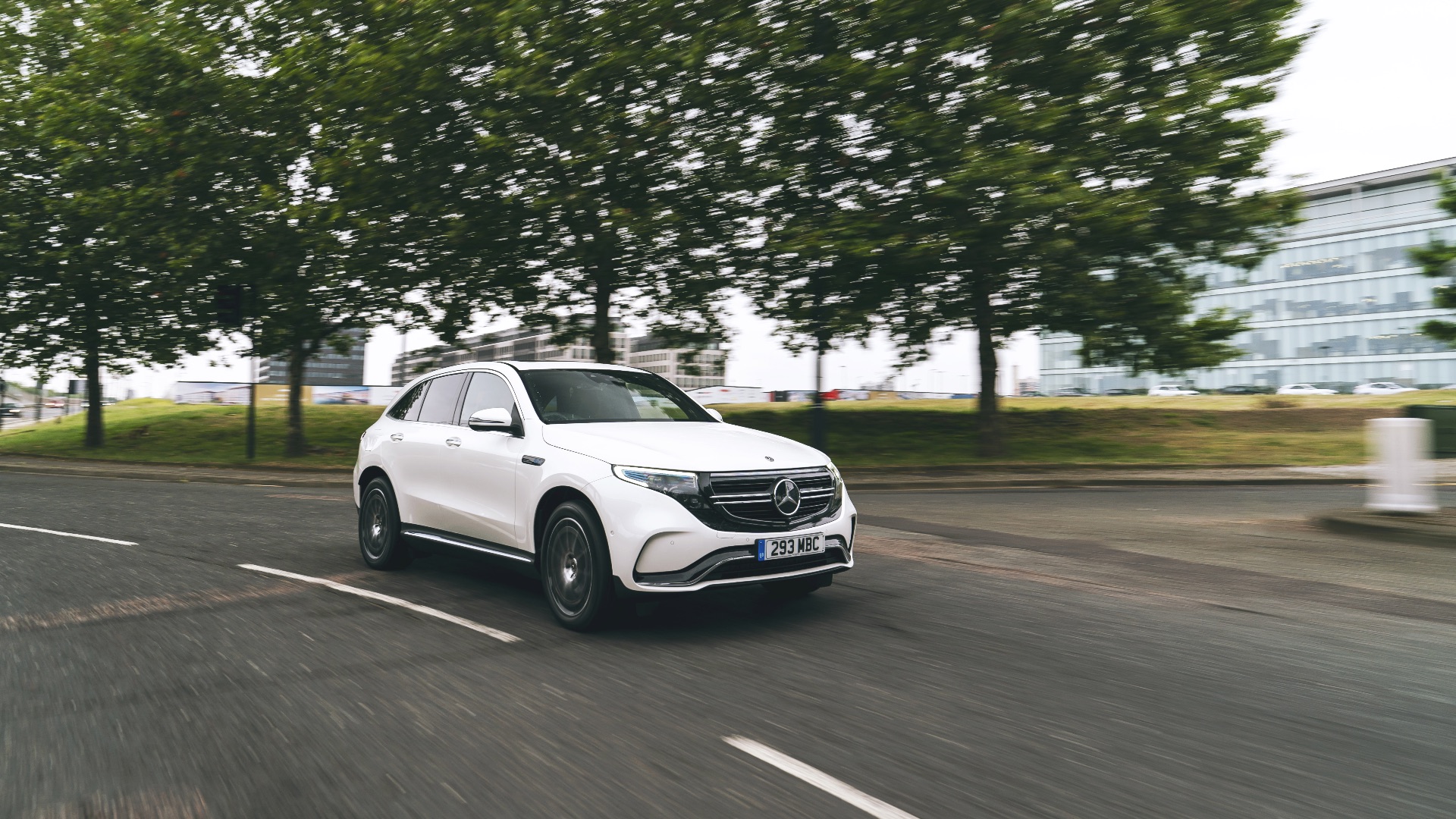
Mercedes-Benz EQC – 259 miles
Beating the Audi E-tron to the punch is the EQC SUV from Mercedes-Benz. Packing a comparatively small 80kWh battery, its 259-mile WLTP-certified range is impressive. Prices start at £64,925. Expect a veritable tidal wave of EQ-branded electric models from Mercedes going forward.
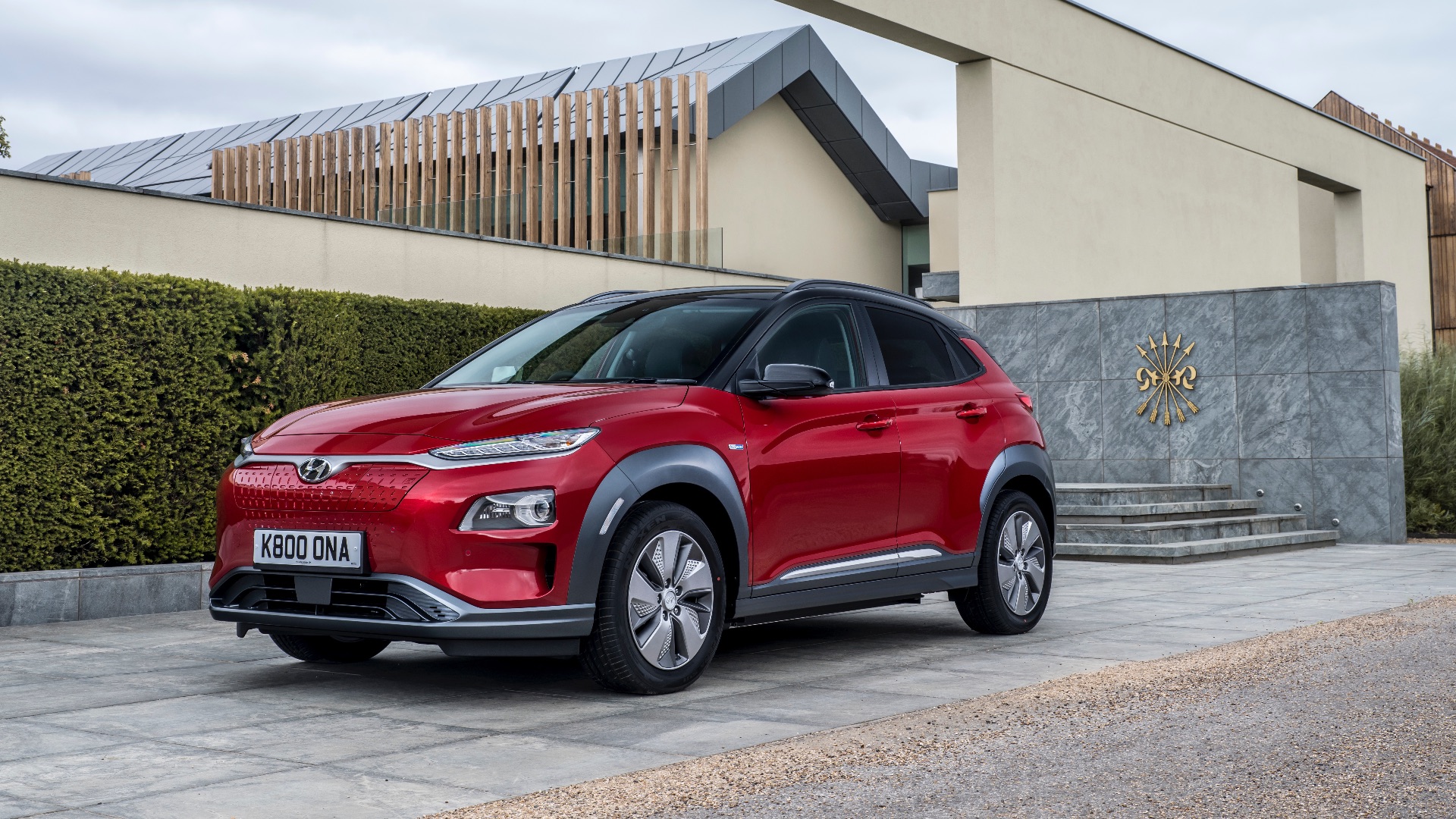
Hyundai Kona Electric – 279 miles
The circa-£30,000 Hyundai Kona Electric 64kWh shows that EVs don’t need much fanfare. It’s a silent revolution, most obviously in terms of its powertrain, but also in terms of hype. It’s delivers premium EV range for half the price. You’ll struggle to get more miles-per-pound anywhere else.
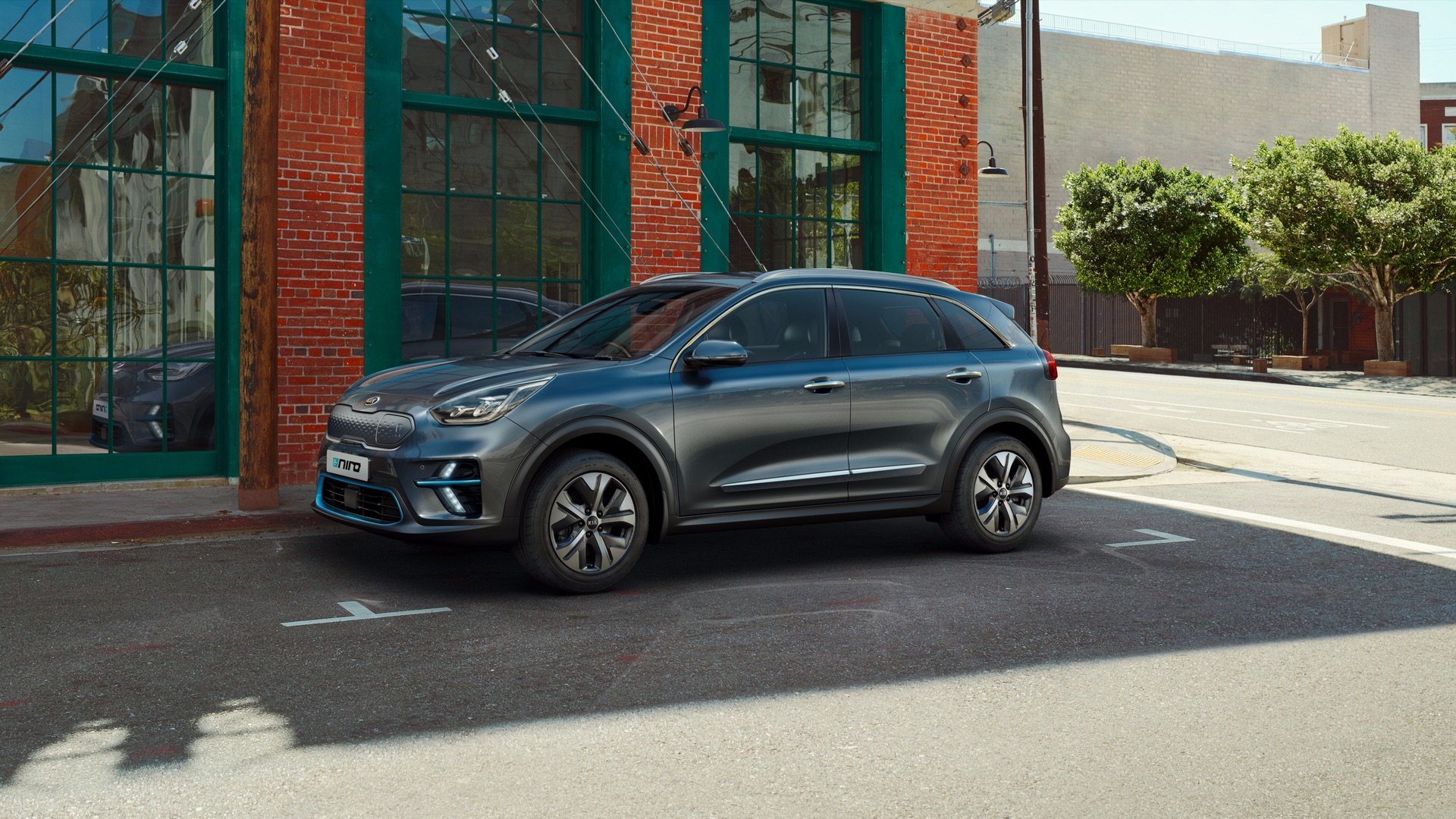
Kia E Niro – 282 miles WLTP
Unless you buy the Kona Electric’s sister car, that is. The Kia e-Niro will also cost around £30,000 when the 64kWh model arrives. As with the Hyundai, it offers E-tron-beating range for a budget price.
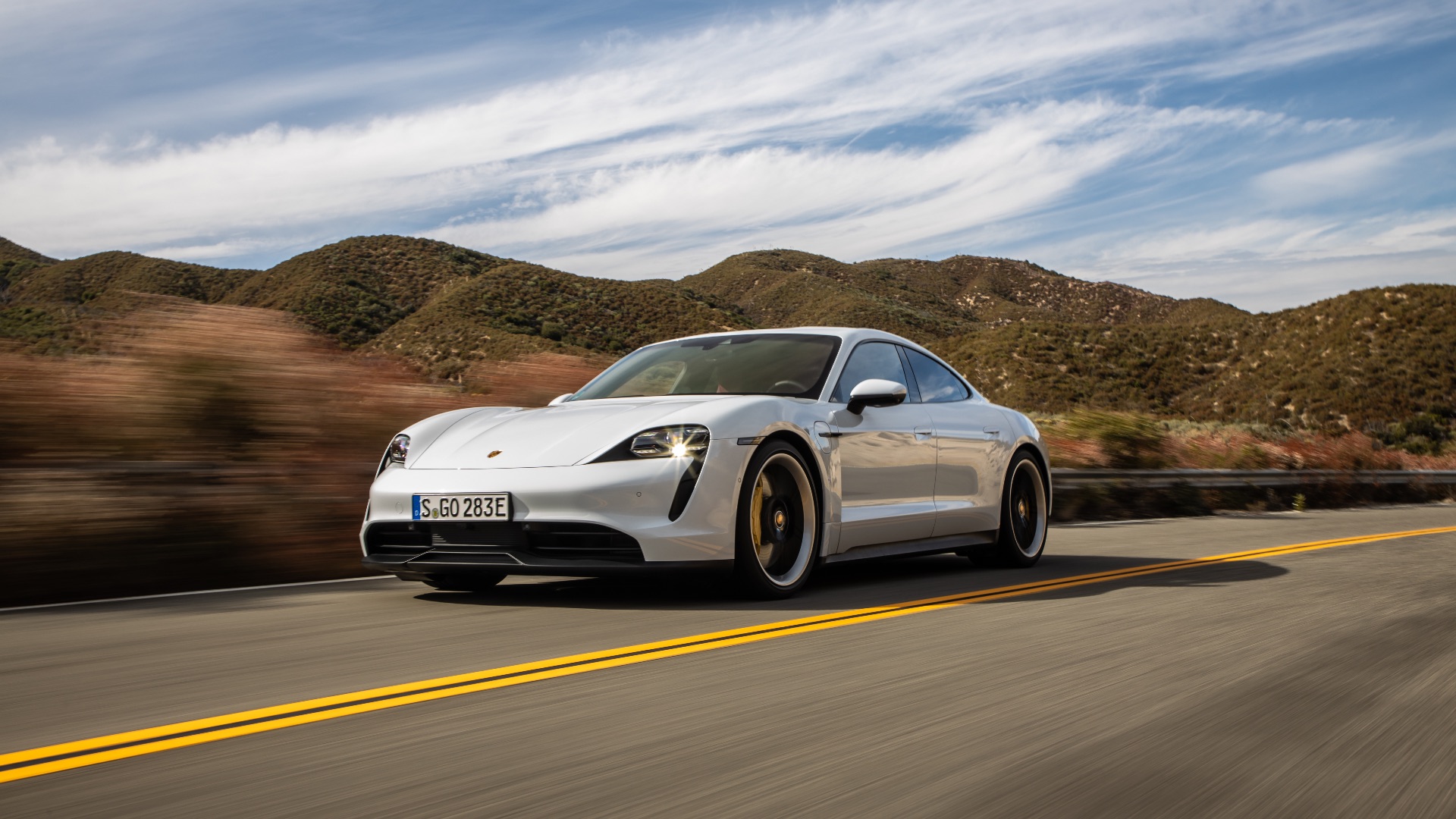
Porsche Taycan – 287 miles
The German marque’s first EV has a lot riding on it – and a lot to prove. Can EVs be fun? Like, Porsche-level fun? The Taycan is certainly pricey and fast. The one to buy is surely the entry-level 4S with Performance Battery Plus. That’s how you’ll get 287 miles of range, anyway, and it’s far cheaper than other models, costing from £83,000.
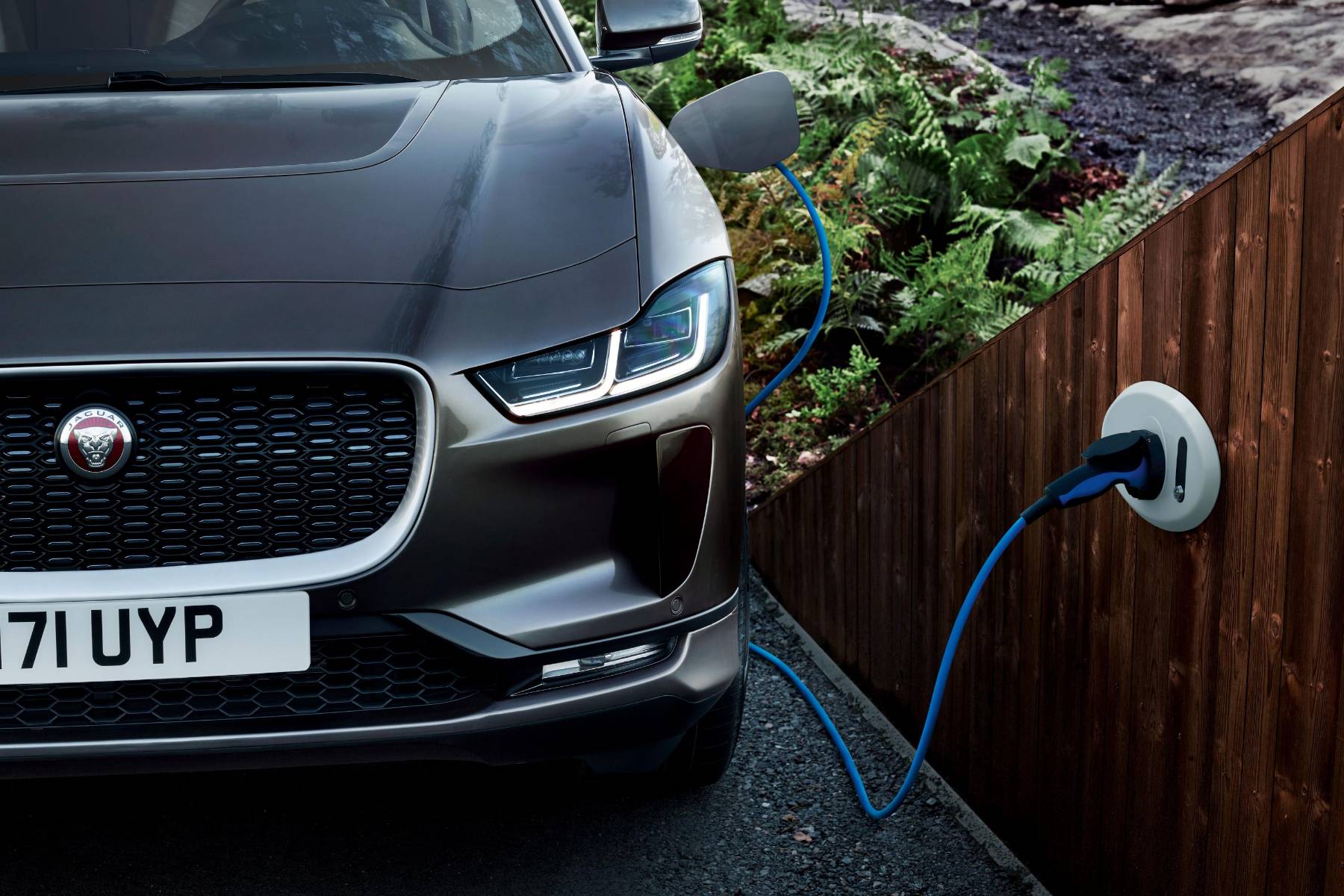
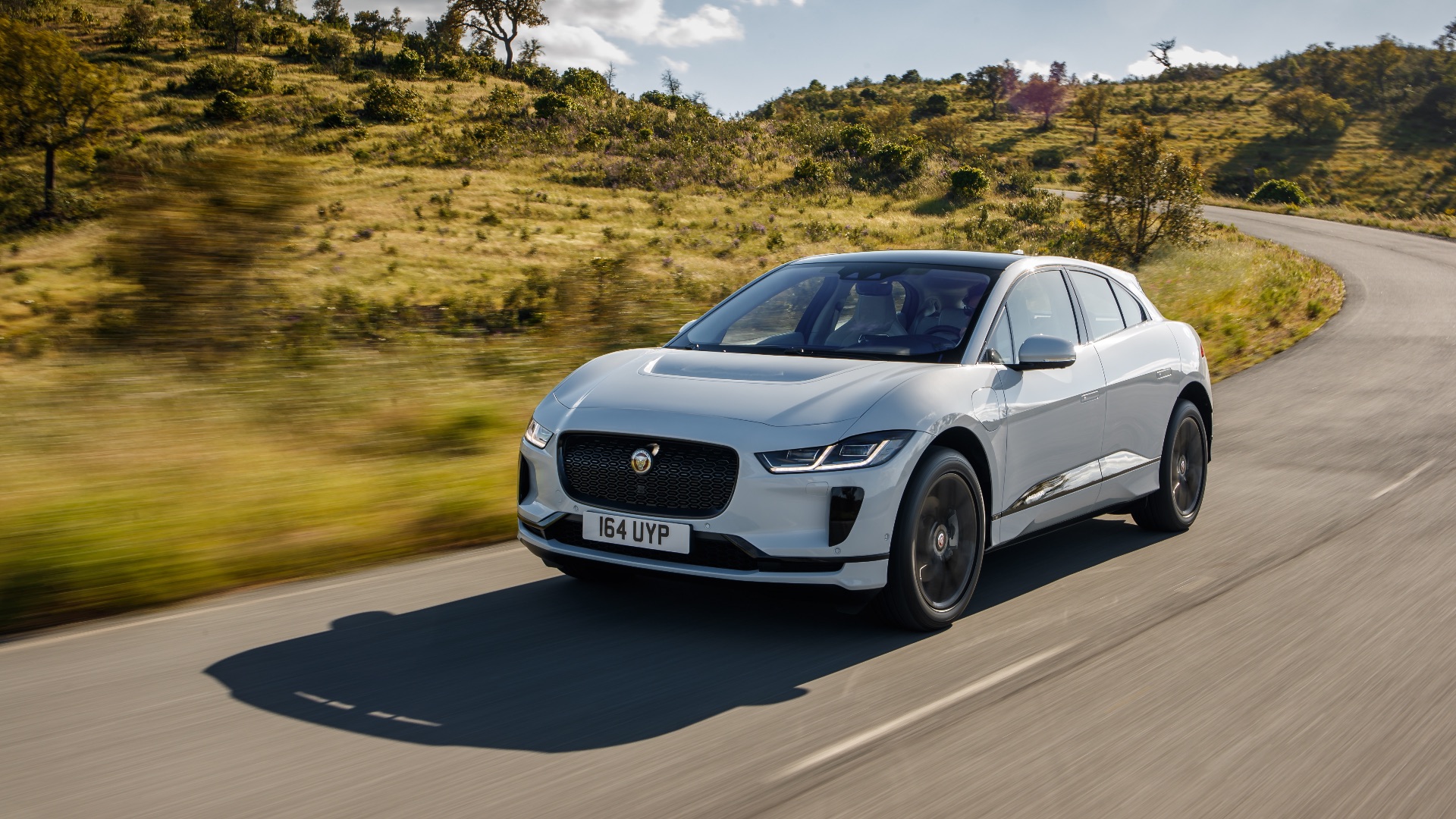
Jaguar I-Pace – 292 miles
The Jaguar I-Pace has the Germans licked for now. Not only did it get to market months earlier, it also offers a superior range. While Audi and Mercedes are talking about closer to 250 miles, Jaguar was there months ago with 292 miles of WLTP-certified range. Couple that with 400hp and startling looks and you’ve got a leader in this fledgling premium EV class.
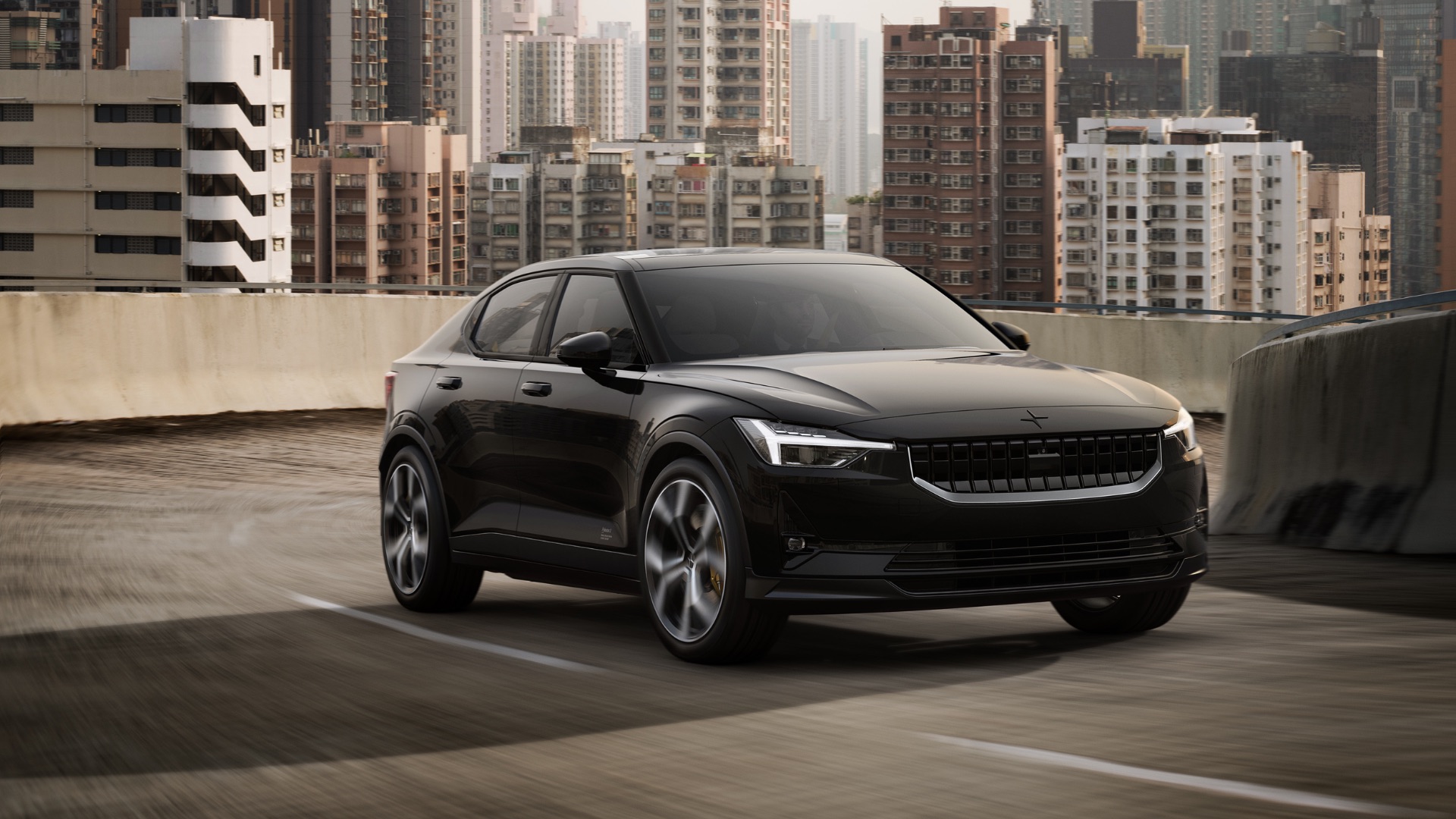
Polestar 2 – 310 miles est.
Volvo’s new electric offshoot has wasted no time producing rivals to Tesla. Like the Model 3, the Polestar 2 is a small executive car. Unlike the Model 3, it has the ride height and stance of an SUV. Up to 310 miles of range will reportedly be available, with a lower-range model available from £34,000. You can order one now, online only, with first deliveries expected later this year.
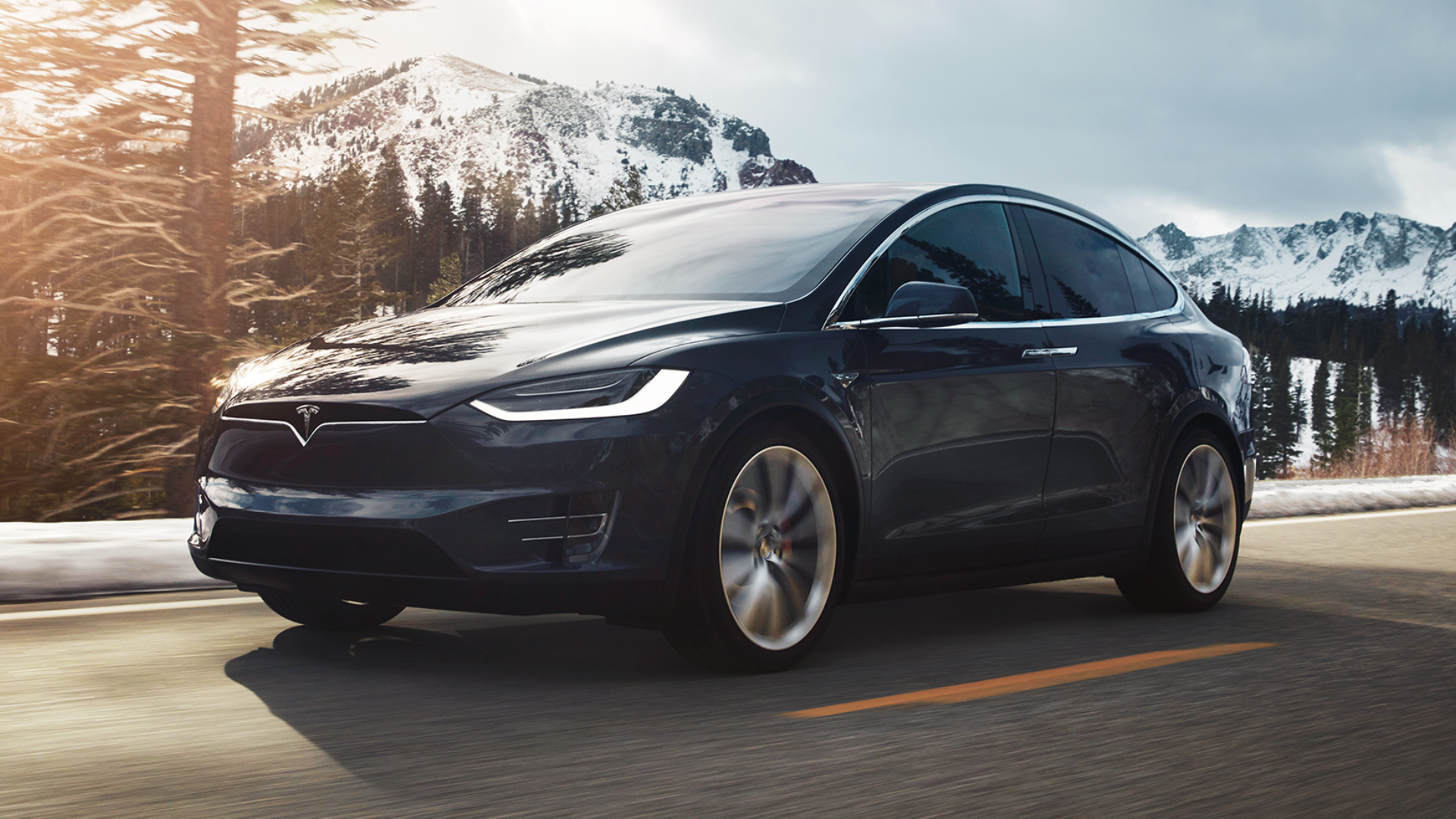
Tesla Model X – 315 miles
If you need to make six passengers vomit profusely, but with the guilt-free feeling of electric power, a Model X P100D is just the job. The ‘P’ stands for performance, and means a 100kWh battery pack mated to uprated electric motors. The result is a range of 315 miles. However, a 0-60mph time of 2.9 seconds is the bigger party-trick for this £129,200 SUV.
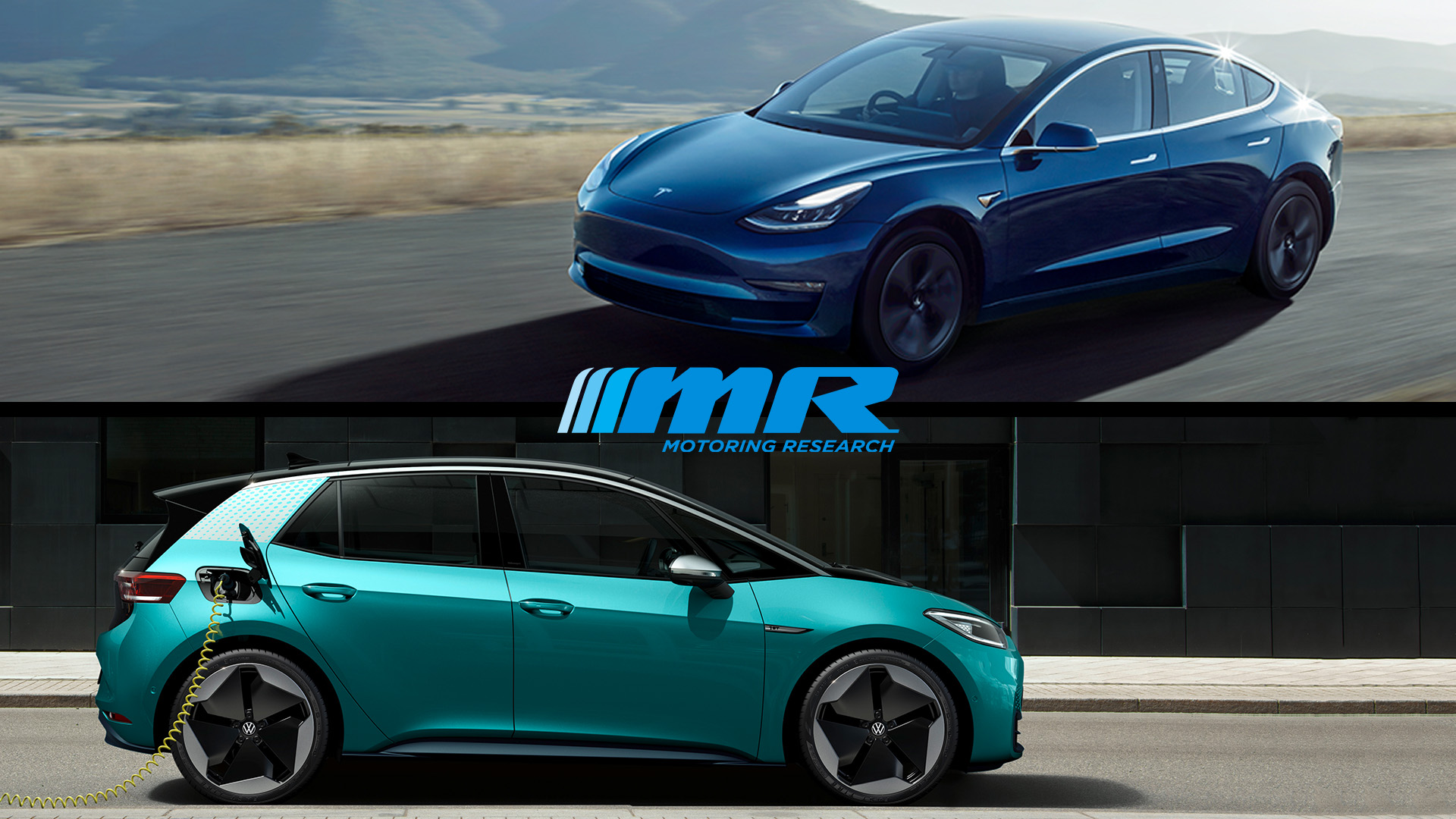
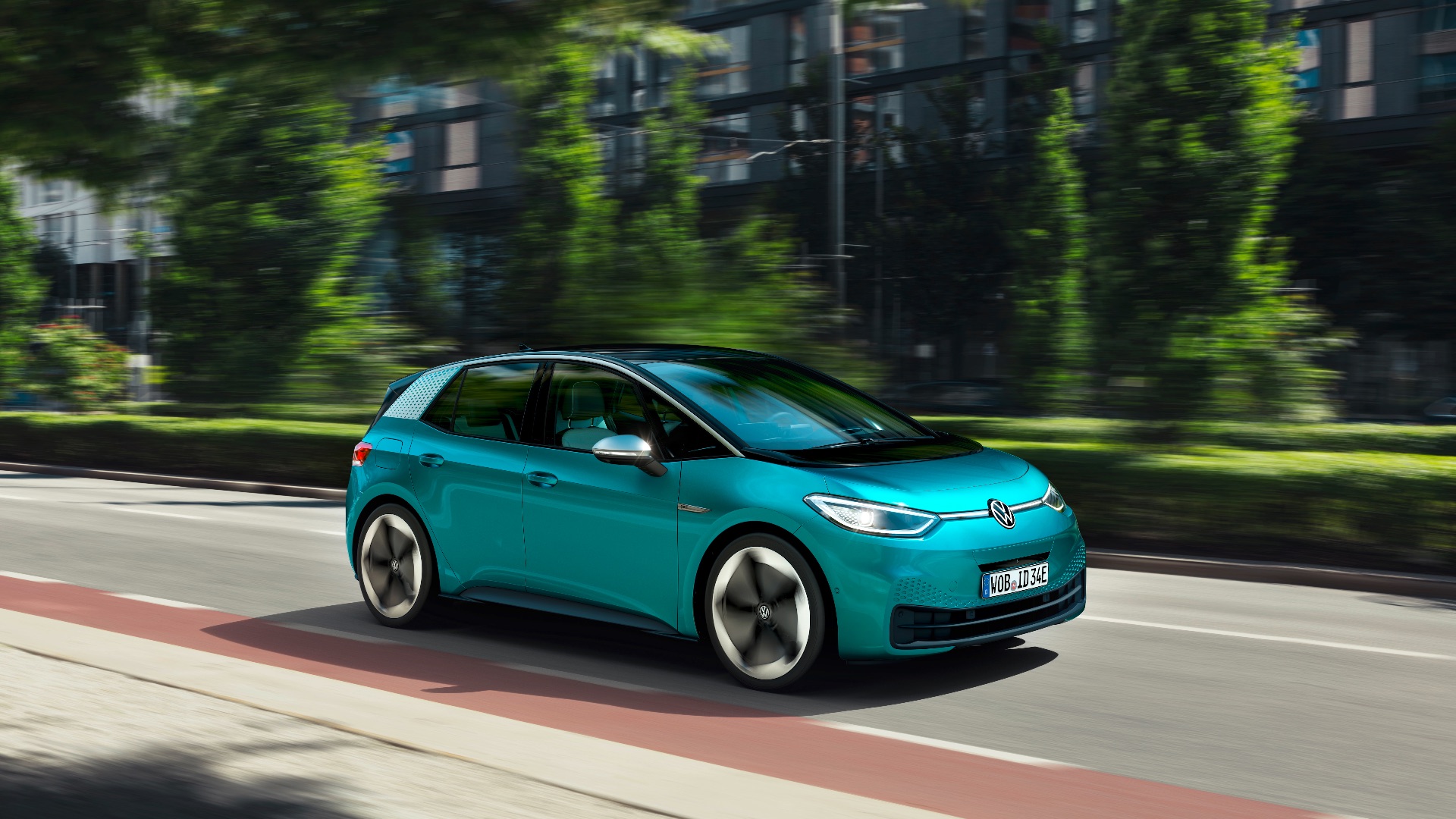
Volkswagen ID.3 – 340 miles
It might not be the most exciting new electric car, but it’s what the Volkswagen ID.3 can do for the entire industry that’s most intriguing. VW hopes it will have the same impact as the Beetle and the Golf – hence the ID.3 name – and it will be interesting to see if it affects sales of the new Mk8 Golf. Up to 341 miles of range is available, with top-end First Edition cars available from £35,000.
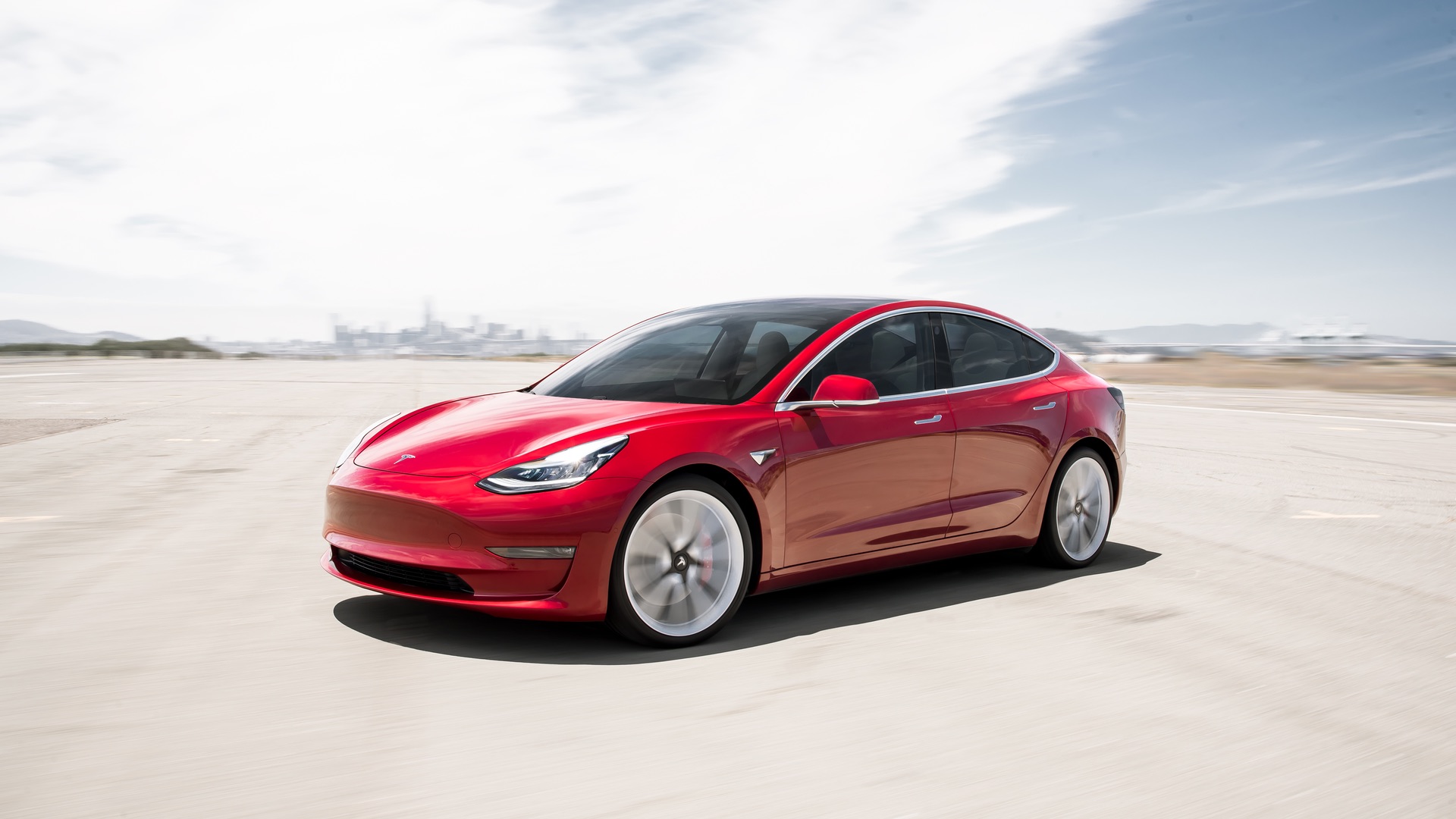
Tesla Model 3 – 348 miles
Tesla’s answer to the BMW 3 series has been lauded by some as the best car on sale: high praise for a car sold by one of the most controversial figures in motoring. Its popularity and appeal is hard to ignore, though. Long Range versions will drive for 348 miles on the WLTP cycle. Coming beyond 2020 will be the Model Y crossover, also based on the Model 3.
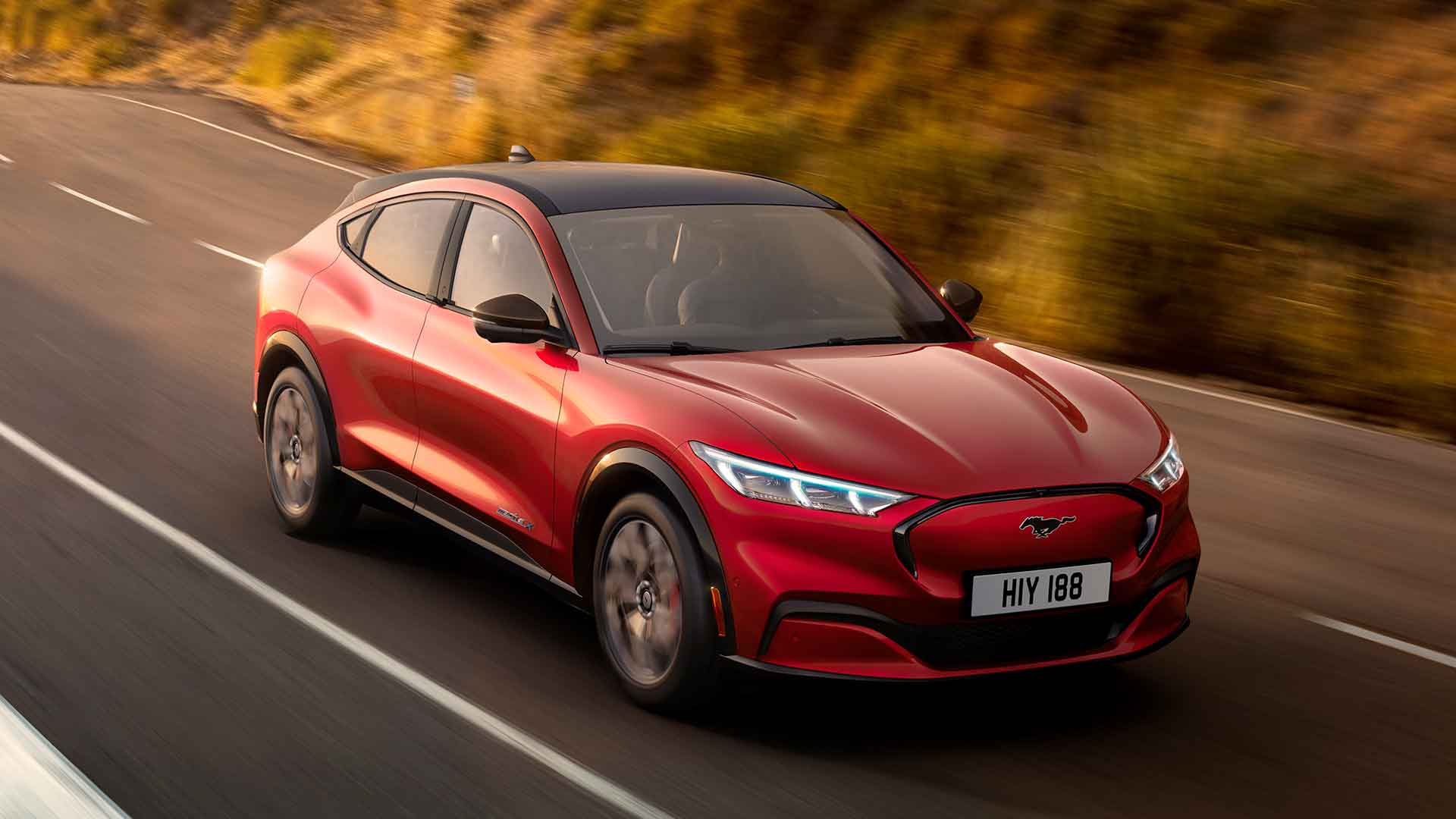
Ford Mustang Mach-E – 370 miles est.
The fact that this iconic Ford has gone electric continues to raise a few eyebrows, but the use of the Mustang name makes sense. As does the fact that it’s an electric SUV, because that’s what the world wants. Available with a choice of two batteries and three power outputs, the Mach-E could offer up to 370 miles of electric range. It’s packed with the latest tech, while practicality is guaranteed thanks to a large 402-litre boot and 100-litre ‘frunk’.
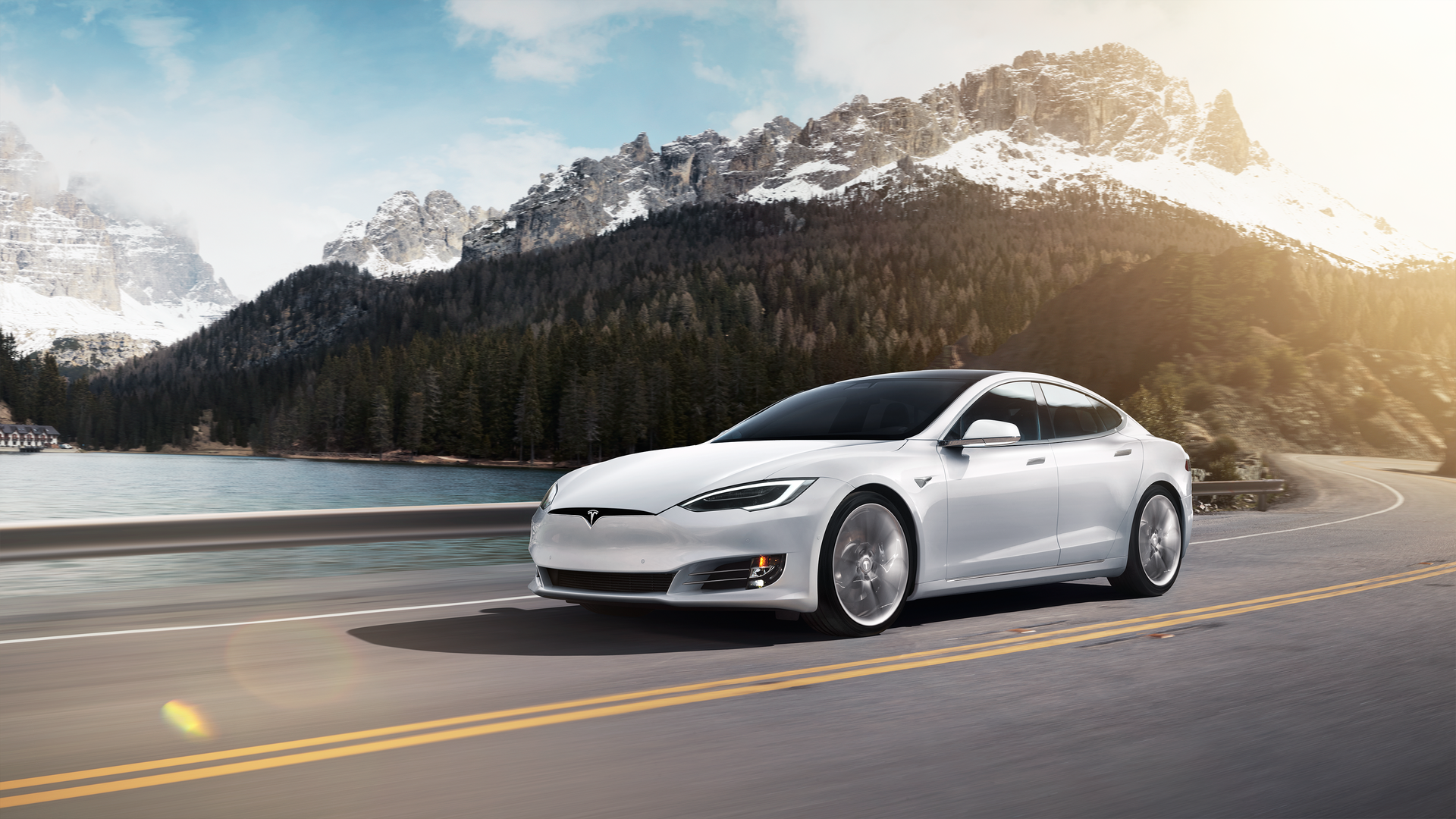
Tesla Model S – 379 miles
Forgo the need to get ‘Ludicrous’ with your Model S and you can save over £40,000 – and gain additional range. The upgraded EV still achieves supercar-rivalling performance, too. At present, it goes the furthest on a single charge of any EV, with a WLTP-rated range of 379 miles.
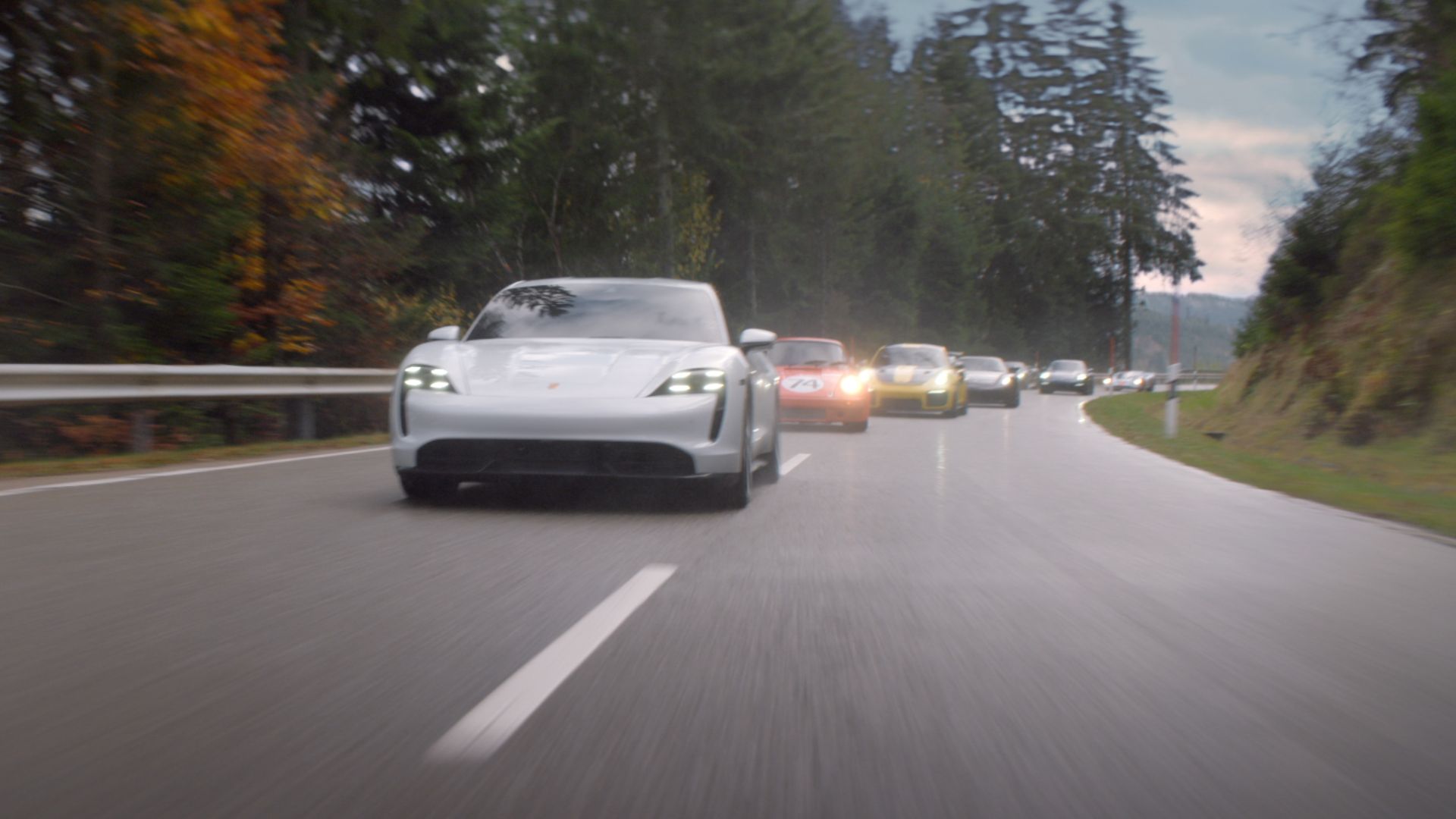
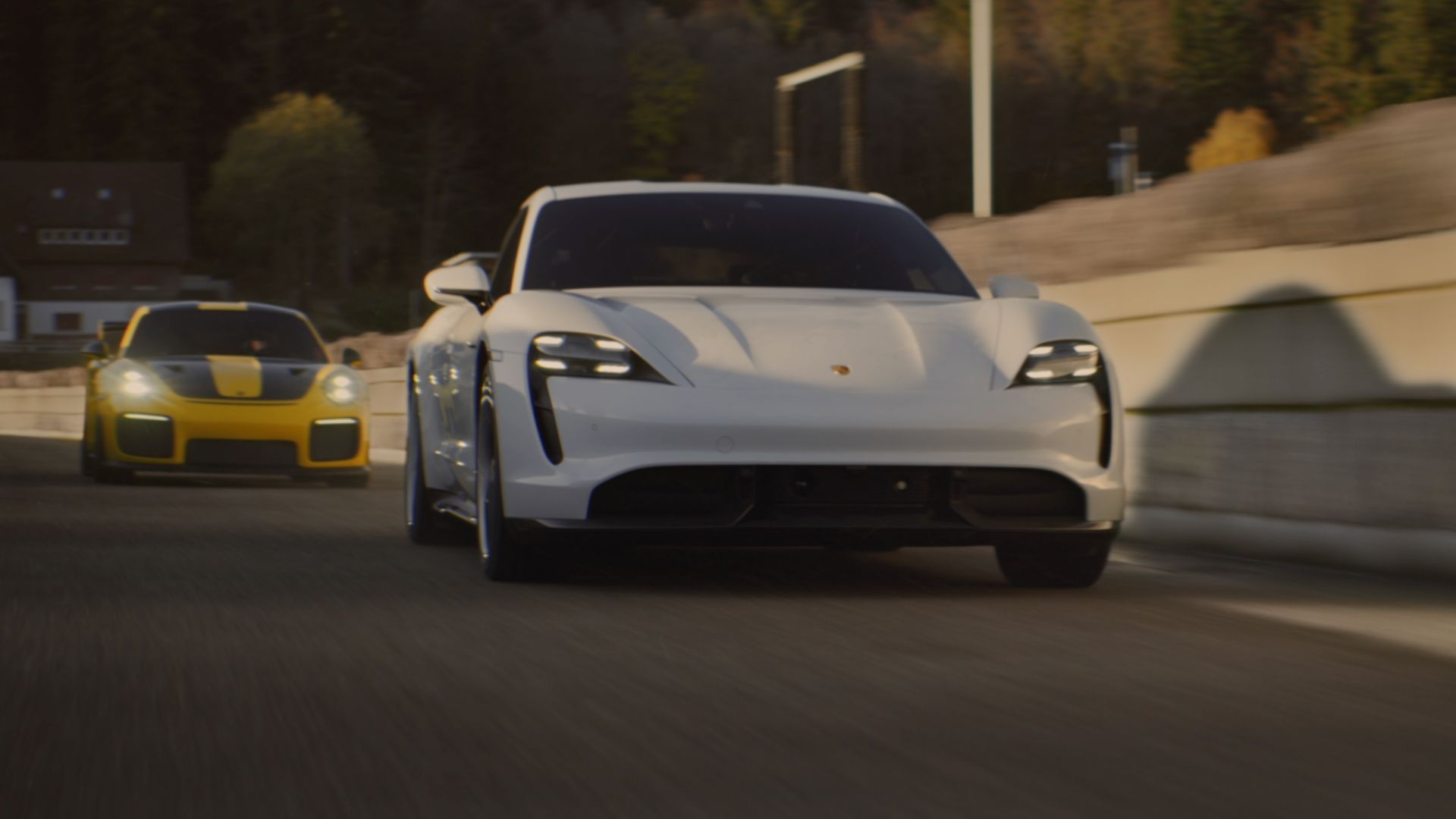
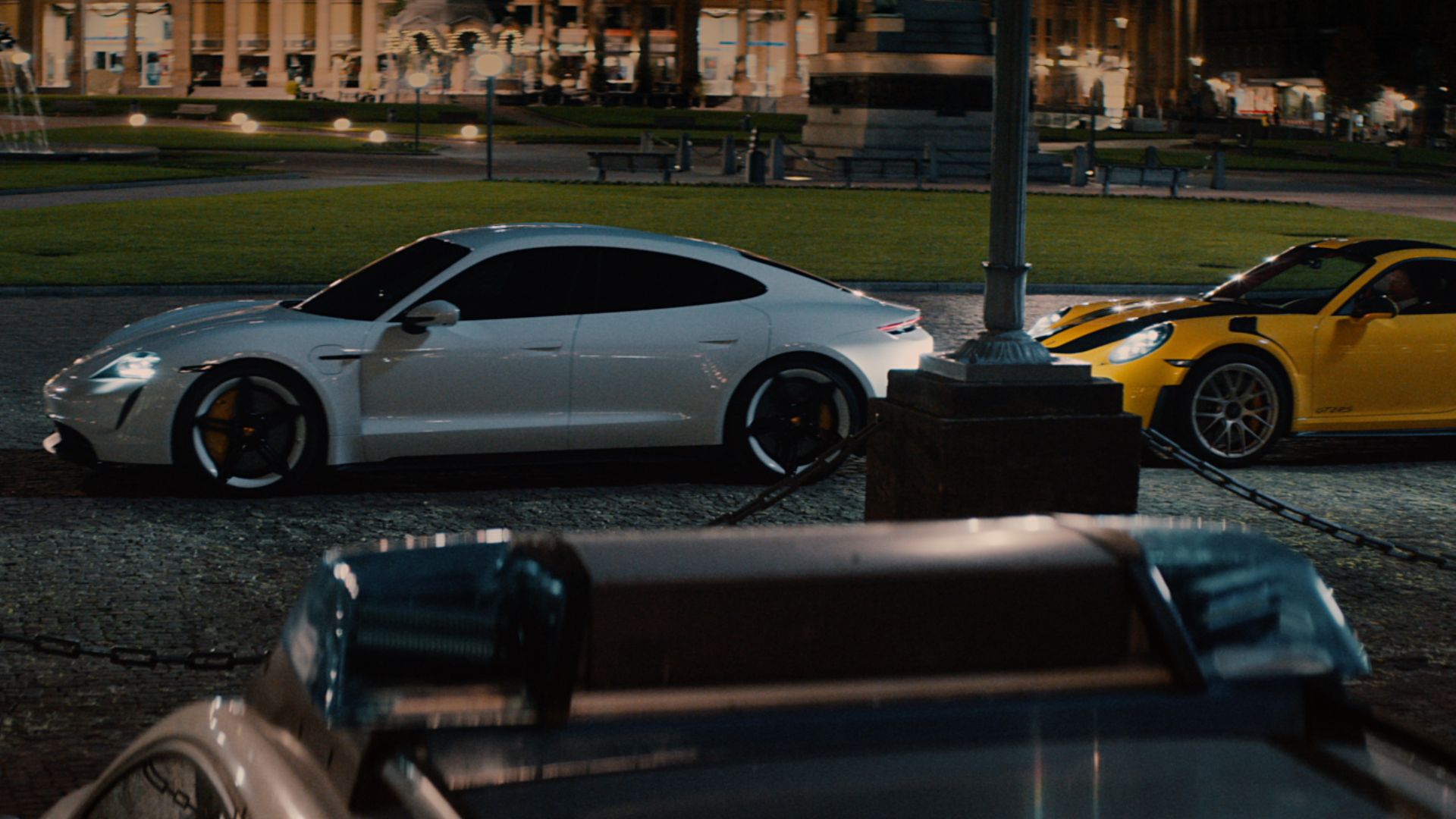
Porsche’s ‘The Heist’, a 30-second commercial played during the 2020 Super Bowl, was a cruel tease. Nine of the company’s coolest sports cars, supercars and racing cars teamed up to chase down an electric Taycan, stolen from the Porsche Museum.
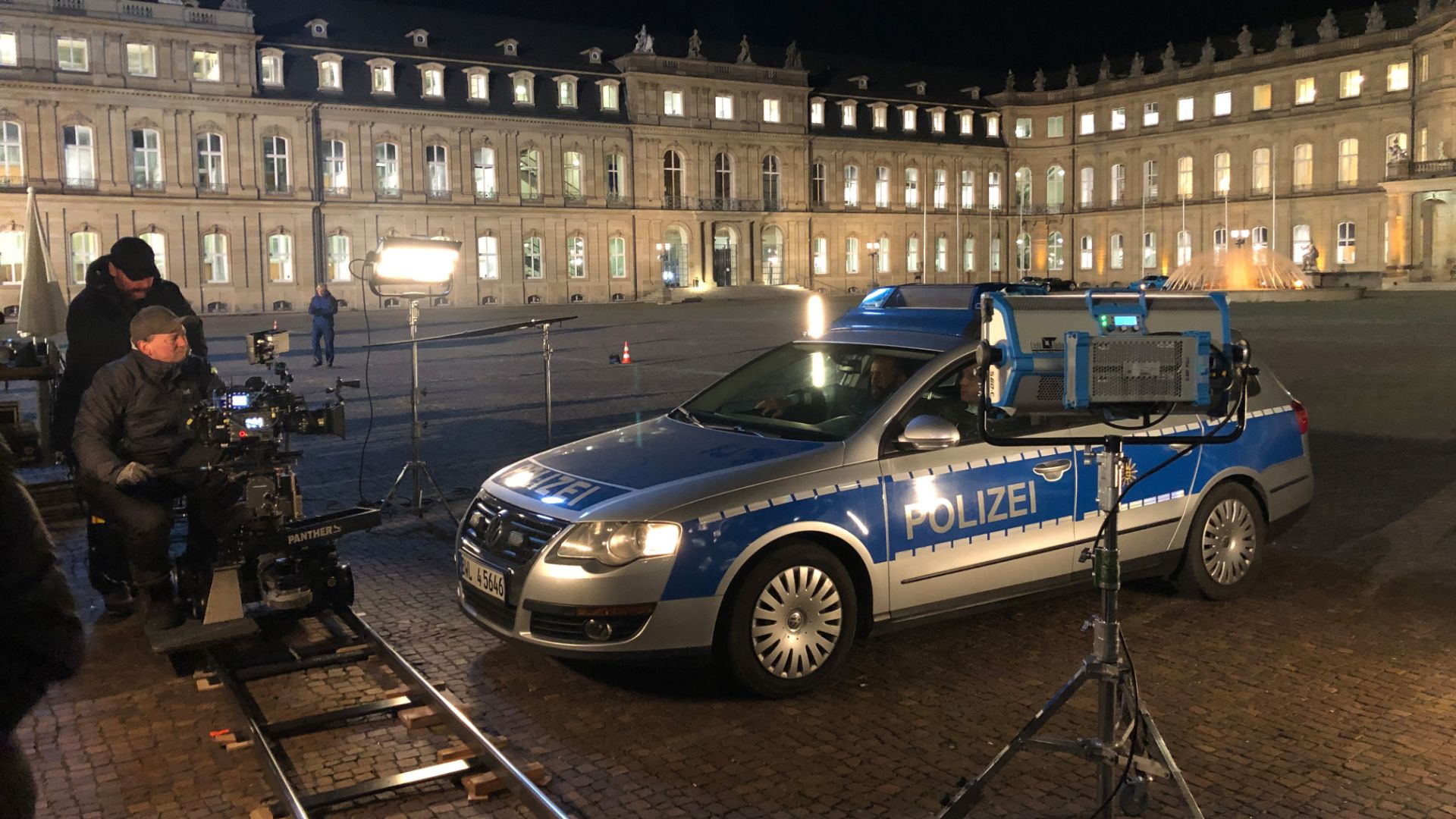
Cool though the advert was, we were left wanting more. And Porsche has delivered, with a behind-the-scenes look at the shoot.
There were five locations and up to four cameras running at once. A total 150 people were enlisted to work on the production, plus 10 incredible cars.
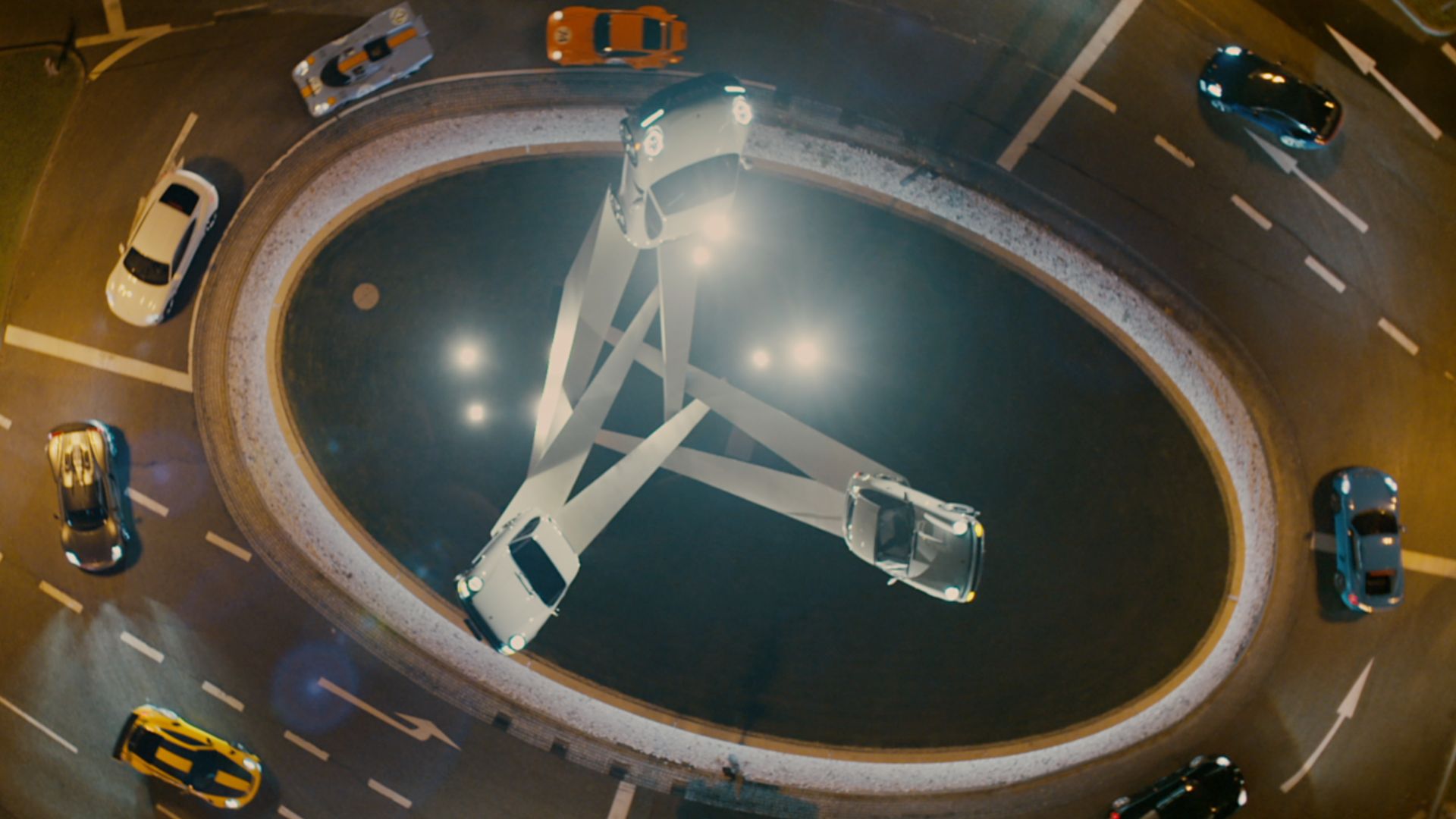
The stars range from the new ‘992’ 911, to the legendary Carrera GT and incredible 917 sports racer of the 1970s. Yes, there was even a Porsche tractor involved.
“We have a lot of experience preparing historic vehicles for all kinds of operations, but driving a 917 through the centre of Stuttgart, at night, was a first even for us,” said Alexander Klein, head of heritage experience at the Porsche Museum.
“When we travelled to the location in the Black Forest, the roads were covered in snow, and stayed that way until the evening before the shoot. Fortunately, we were prepared and had different tyre profiles and compounds with us, especially for the racing cars. We did not make any technical changes to the museum vehicles though.”
We see all of these cars in pursuit of the Taycan, leaving the museum in a brisk convoy, going around the famous Porsche roundabout in Zuffenhausen. Behind the wheel of the 917 K was Porsche factory driver Lars Kern, while world record-holder for drifting, Harald Müller, was also involved.
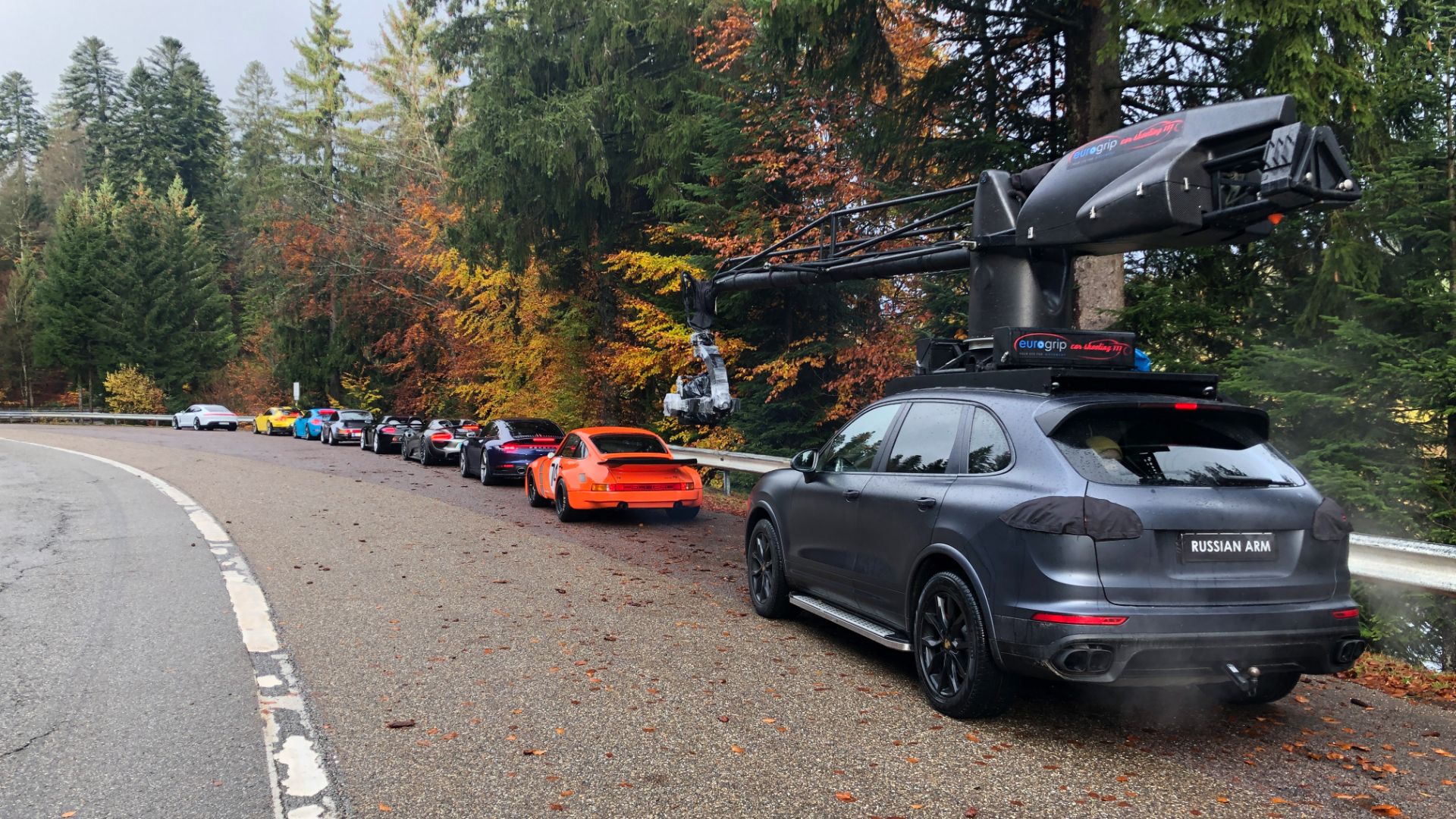
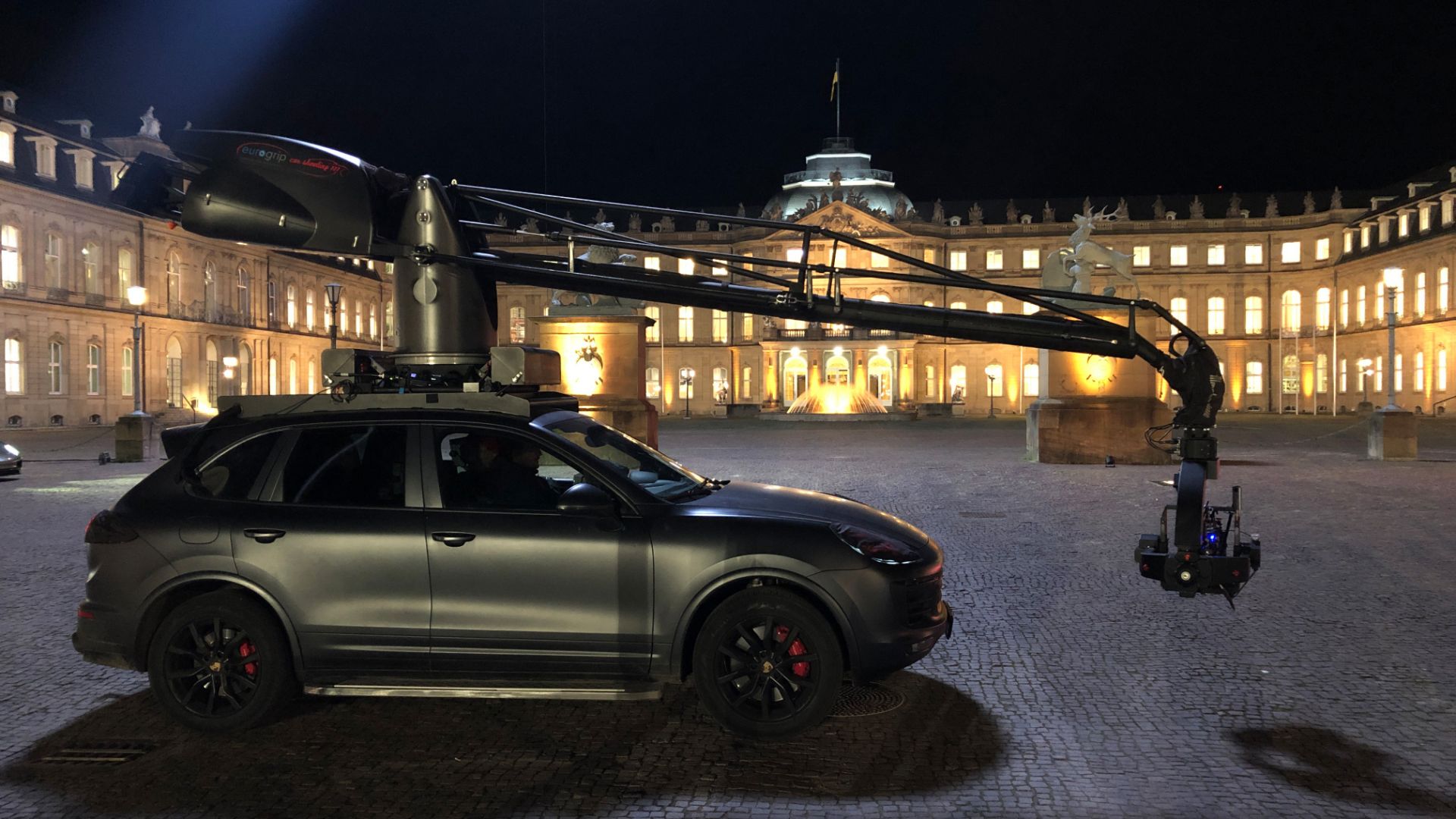
Of course quite literally behind the scenes, is another Porsche that didn’t get a starring role. Arguably, though, it had the most important job of all: carrying the ‘Russian arm’ camera rig. The Cayenne Turbo is painted in matte black, with its lights blacked out so there are no reflections. This Porsche was made as invisible as possible.
The Cayenne is a popular choice for filming in Hollywood. Its comparative performance and agility combine with its sturdiness, to make it good for mounting a giant – and very expensive – piece of filming equipment.
The Super Bowl is widely accepted to be the world’s biggest sporting event. As such, it also carries the most expensive advertising space. A 30-second spot can cost millions, so it’s fitting Porsche would prepare something so epic.
An increasing number of people intend to ditch diesel and petrol to buy an electric car. That’s according to the results of a new survey.
It found that one in 10 (11 percent) of UK consumers expect to make their next car purchase an electric vehicle – up from five percent in 2018 and six percent in 2019.
Conversely, 48 percent would buy a diesel or petrol car – down from 73 percent in 2018 and 63 percent in 2019.
But concerns remain and the EV industry has work to do before it can hope to improve on the 11 percent figure revealed by Deloitte’s Global Automotive Consumer Survey.
A lack of charging infrastructure is the main concern when considering a move to electric. As for positives, 45 percent of consumers identified lower emissions and reduced operating costs as the primary reasons for making the switch.
‘Influx of new EV models’
Michael Woodward, UK automotive lead at Deloitte, said: “2020 will see an influx of new EV models enter the UK car market. At the same time, consumer anxiety around battery range is gradually improving as the underlying technology evolves and feasibility of driving electric realised.
“However, the current price of an EV, combined with the ability to charge one, could be holding back more consumers from making the switch to pure electric in the immediate term.
“For those consumers who aren’t yet ready, alternatively fuelled cars, such as hybrid electric, tend to be preferred with over a third of consumers seeking this option as their next car. Whilst there is clearly still work to be done, these vehicles provide an initial step towards a fully electric future.”
The electric car share of the leasing market could hit 20 percent in 2020. That’s according to the chief executive of the British Vehicle Rental & Leasing Association (BVRLA)
Today, electric cars are responsible for just 1.6 percent of all new lease cars, but the BVRLA says there is evidence to suggest the EV market share will soar this year.
Indeed, average CO2 figures for new lease cars declined in the third quarter of 2019. A figure of 116.8g/km is down from 118.5g/km in the previous quarter.
Meanwhile, diesel is down to 38.3 percent of market share, with petrol declining slightly to 52.8 percent.
We looked at the website of one leading leasing company and found business leases ranging from £140 per month for a Nissan Leaf to a staggering £12,250 for a Porsche Taycan.
Switching to a personal lease increases the monthly fee, but some popular electric cars remain affordable. Deals include £170 for a Nissan Leaf, £175 for a Skoda Citigo e iV and £180 for a Renault Zoe.
EV could ‘really take-off’
Gerry Keaney, BVRLA chief executive, said: “It is clear that the fleet sector has enthusiastically embraced the EV market and we expect to see BEV registrations really take off in 2020.
“If OEMs can supply enough vehicles and the government maintains the vital Plug-in Car Grant, there is no reason why the BEV share of new lease registrations couldn’t hit 20 percent by the end of the year.”
The BVRLA 2019 Quarterly Leasing Survey points to a shrinking business fleet leasing market. A figure of 1.21 million vehicles is a four-year low, with car leases down nine percent year-on-year. Meanwhile, the personal contract hire (PCH) market was up 17 percent.
The expected surge in demand for electric car leases will be required to offset the rise in CO2 emissions caused by the high demand for petrol cars and what the BVRLA calls “the inflationary impact of the new WLTP emissions standard”.
BMW is throttling back on the fourth-generation ‘new’ Mini. The decision is partly due to worries over Britain’s post-Brexit relations with the EU, which muddy the waters in terms of making long-term investments.
“The lifespan of this platform has been extended… for cost reasons and because of Brexit,” said BMW spokesman Maximilian Schoeberl when talking to Reuters.
Last year, BMW Chief Executive Oliver Zipse said the business case would probably not change if the tariffs are “in the range of zero and five percent”. However, if import and export costs are much above that, BMW may be forced to reconsider Oxford’s role, versus its Born facility in the Netherlands.
In 2018, Mini production at the Netherlands facility was up 39 percent on the year before. A total of 211,660 cars, including Mini models and the BMW X1, rolled off the production line. The Oxford plant made 234,501 Minis in 2018.
Ultimately, the all-new model, whenever it arrives, will demand significant updates to both facilities. Exactly what Britain’s relationship is with the EU, financially and otherwise, will directly affect BMW’s decision for that investment.
Yours for £1.3 million: the BMW that rapper Tupac was shot in
Registrations of the Mini were down 18 percent in December. Overall sales were also down 4.1 percent in 2019, to 346,639 cars.
However, Mini isn’t the only small car manufacturer to have suffered. Expensive emissions upgrades and poor sales recently forced Opel/Vauxhall to drop its Adam and Viva/Karl models.