New research reveals how much parking bumps and crunches cost the UK motorist. Apparently, we’re shelling out £1.5 billion a year.
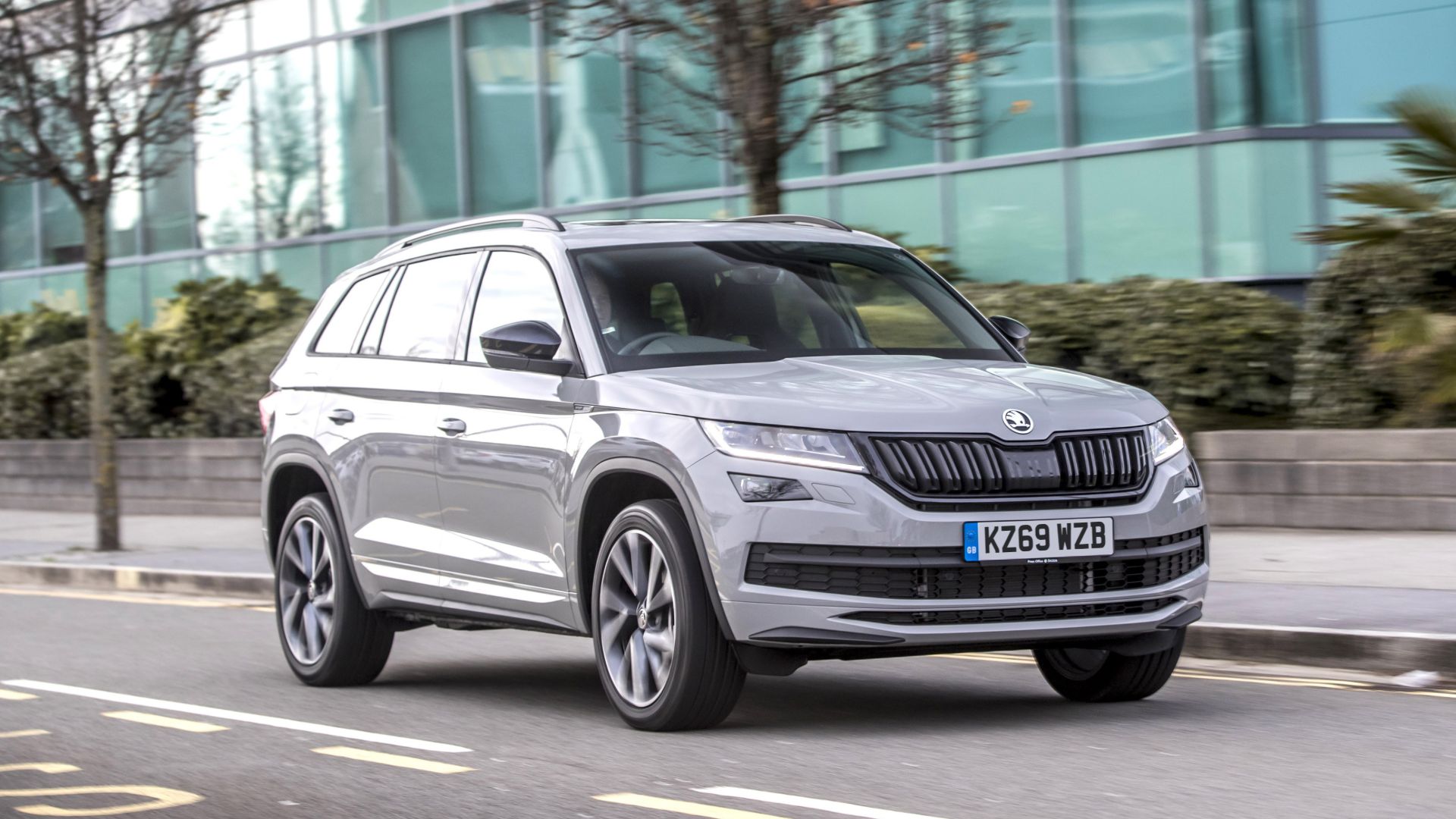
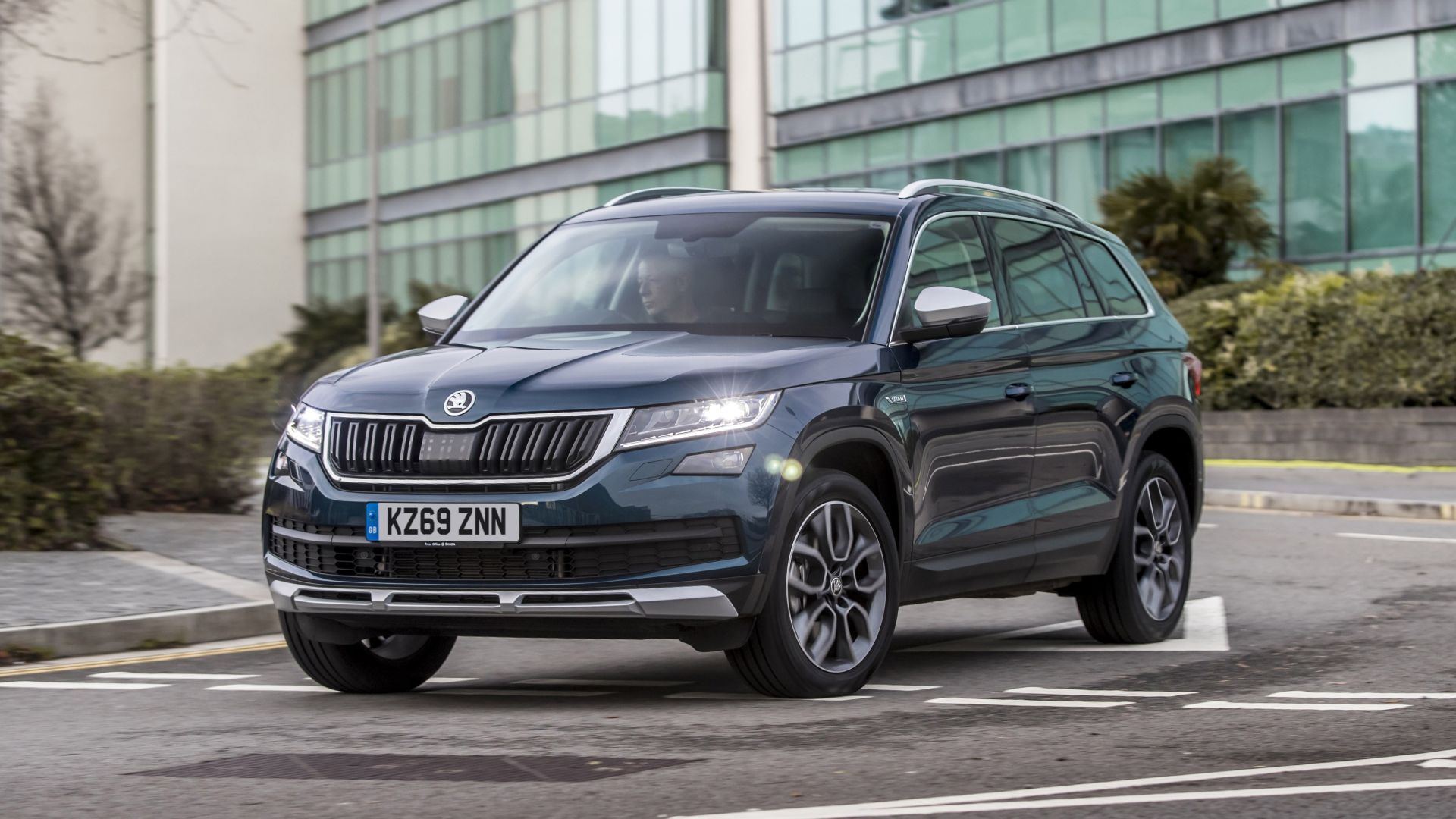
The study by Skoda questioned 2,000 UK drivers on their experiences. It revealed that around 11 percent had seriously damaged their car while parking over the course of the last year. That’s 3.74 million people out of the UK’s 34 million motorists.
Around 40 percent said they’d hit a lamp post, tree or space divider. And the average bill for this damage was £396.
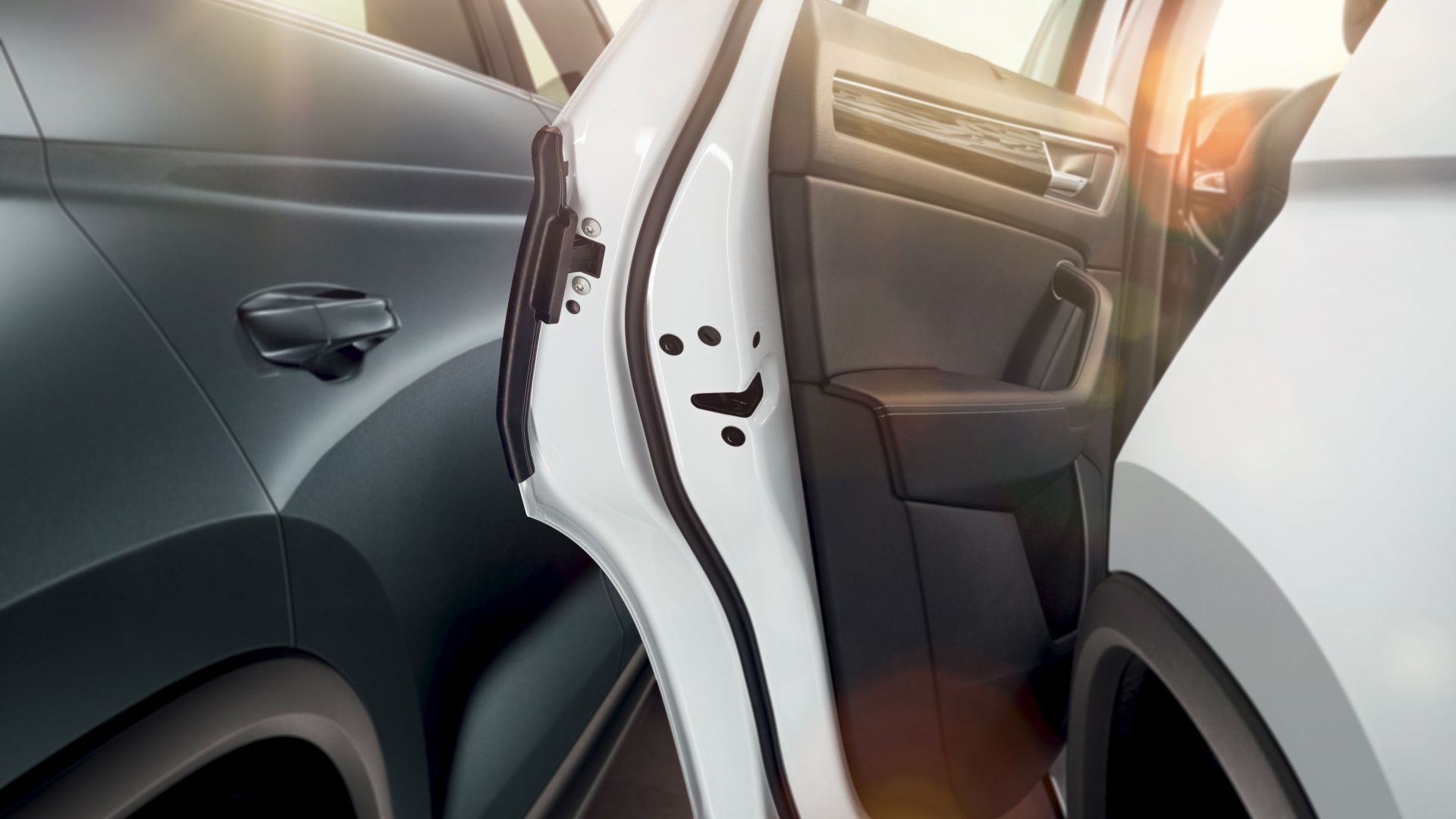
As for other parking problems, four in 10 of the motorists polled admitted to whacking another car with their door when getting out. In a year, the average driver also kerbs his or her wheels twice.
Despite all this, our confidence isn’t dented. An ambitious 73 percent of Brits reckon they are good at parking. But only 53 percent think they’re good enough to get themselves through another driving test.
Of course, new cars can come with an arsenal of new technology designed to help you park. Reversing cameras, position indicators and software that displays exactly where your car is can take the pain out of the process. There are also systems that will park the car for you, although we wonder how many actually trust them to do so.
“While many people feel confident in their parking capabilities the numbers show motorists have forked out significant sums in the last 12 months repairing their cars from parking mishaps,” said a Skoda spokesperson.
ALSO READ
This is your invite to the world’s smallest classic concours d’elegance event
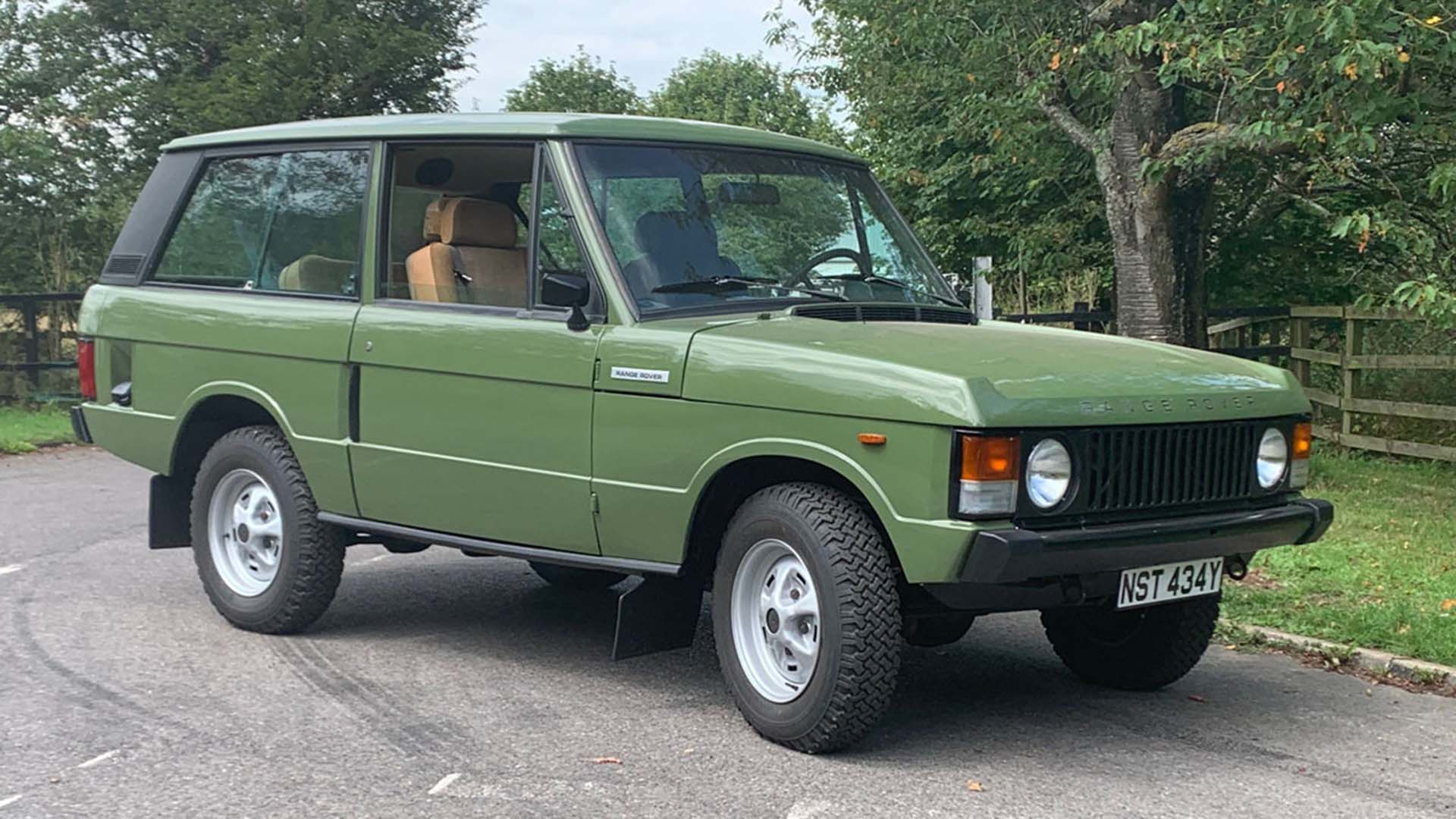
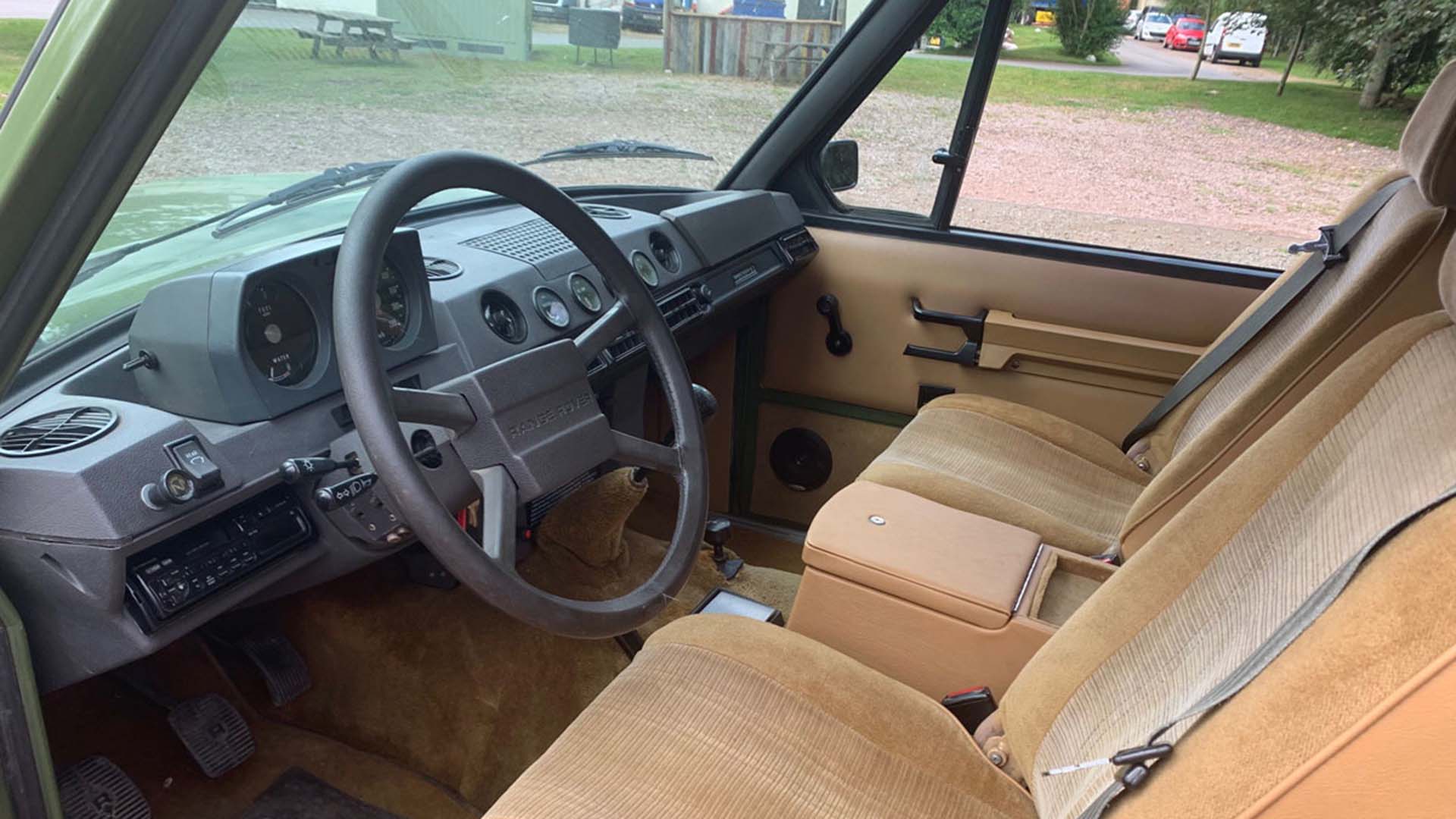
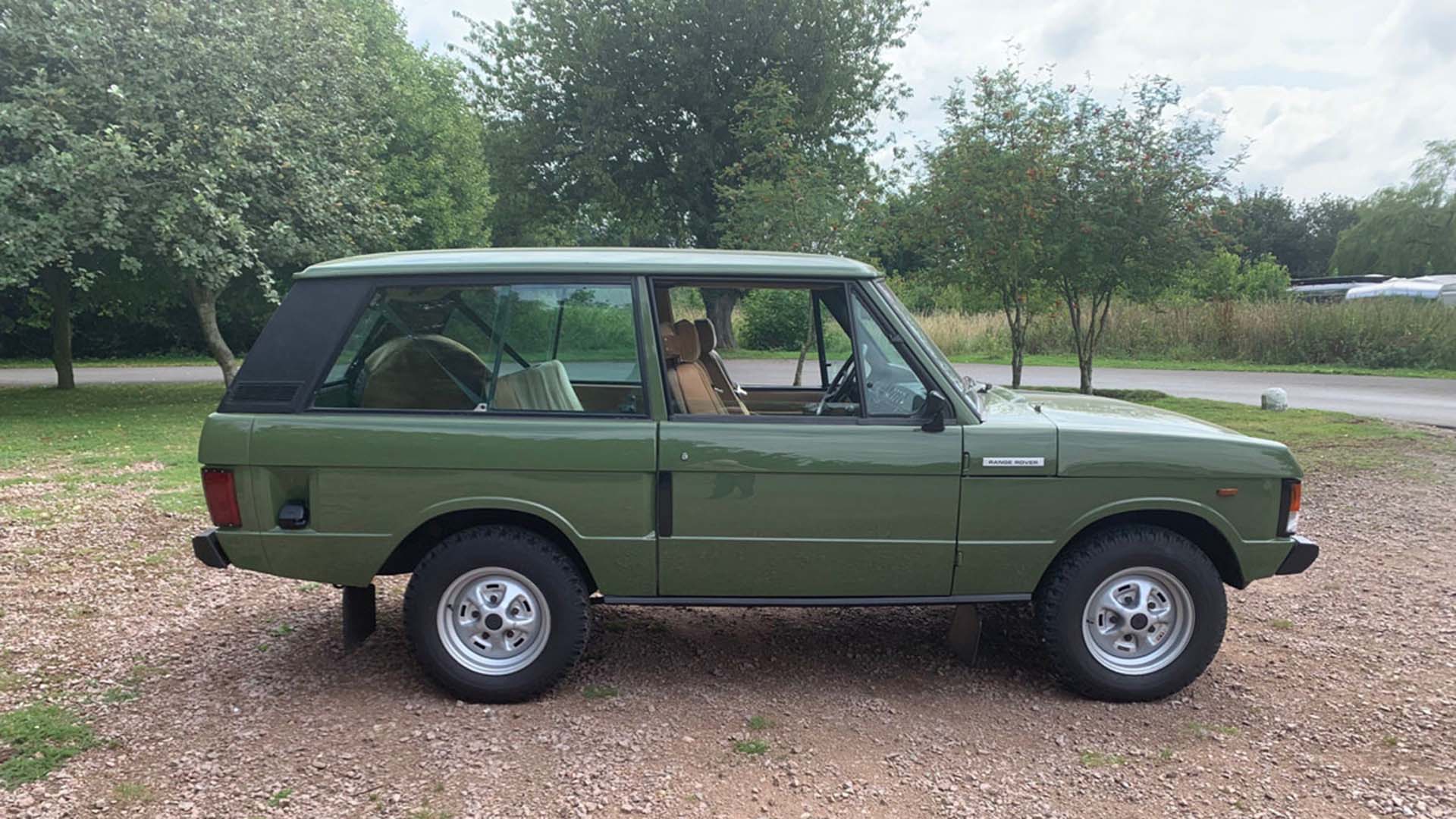
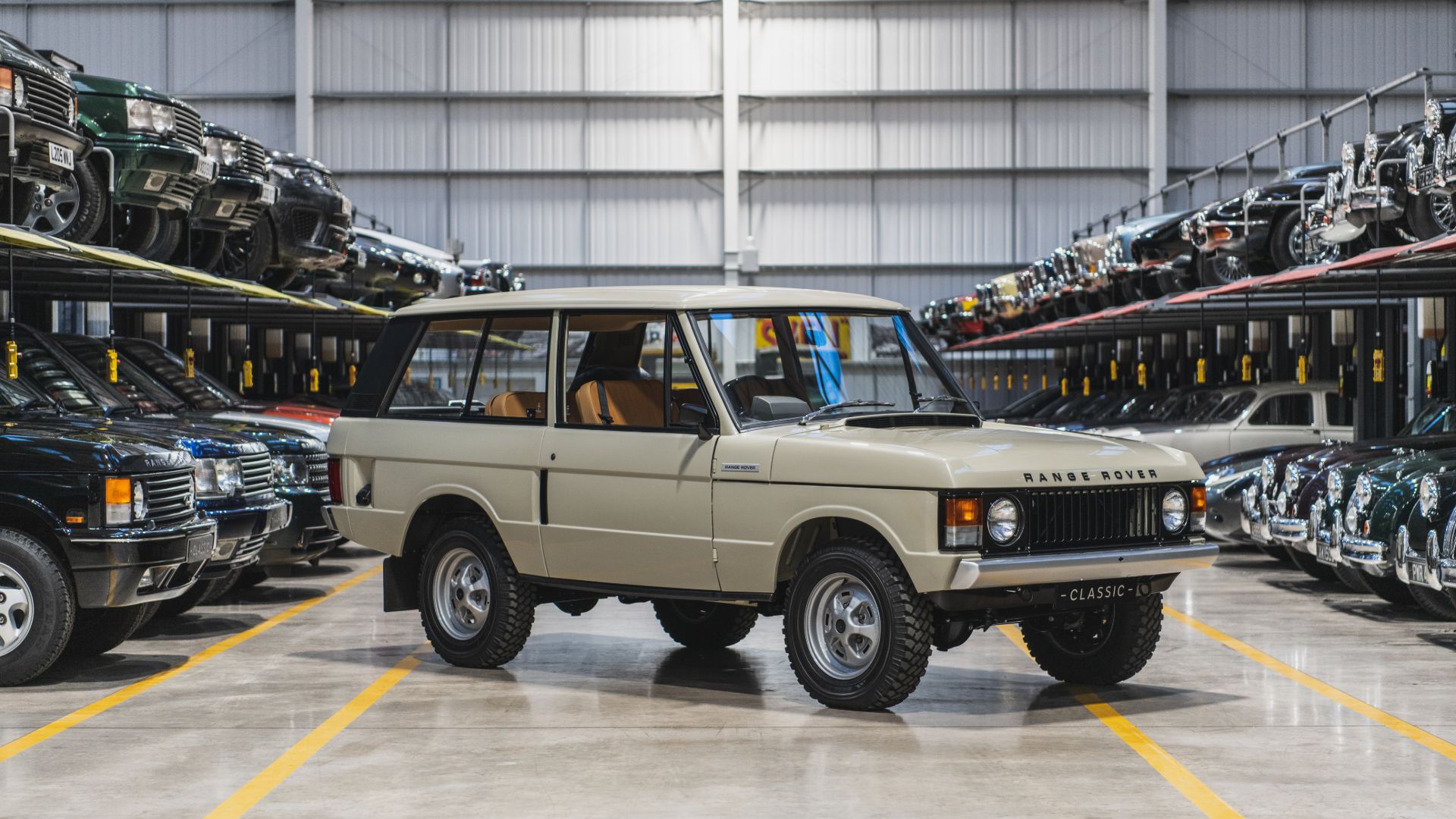
If, like us, you spent the weekend sheltering from Storm Dennis and binge-watching the latest series of Salvage Hunters: Classic Cars, you’ll recognise this Range Rover.
The 1982 two-door Range Rover was imported from Spain before being recommissioned by Twenty-Ten Engineering. Although the episode ended without the car finding a buyer, it could be yours, because the Range Rover is going under the hammer this weekend.
It’s one of the lots at the Coys at Olympia auction, which is part of The London Classic Car Show. The pre-auction estimate of £22,000 to £26,000 is unlikely to please co-presenter Drew Pritchard.
He was adamant that the car should fetch at least £30,000, describing it as potentially “the best left-hand-drive one out there”. Fellow presenter Paul Cowland hoped to achieve £30,000 on the nose.
‘This car owes us a lot of money’
“I’ve seen the invoices for this car and they’re just massive. This car owes us a lot of money,” said Cowland.
Pritchard travelled to Barcelona to buy the Range Rover and spent £13,500 on what he thought was a totally original example. Having entrusted Twenty-Ten with the job of recommissioning the car, he discovered that just the driver’s door was the original paint.
Undeterred, the team pressed on with a sympathetic restoration, maintaining some of the car’s originality, including the letters on the bonnet and tailgate. A pair of travel stickers were also retained, although the hosts failed to agree on whether or not this was a good thing.
Cowland described the Range Rover as a “£26,000 piece of stock”, so anything less than the higher estimate would be a disappointing result.
It’s a manual from Barcelona
Previously, it was for sale on the Car & Classic website for £29,995, with the description stating that the producers ‘would be keen for the new owner to potentially appear on camera purchasing the car from our presenters’.
You won’t get an opportunity to appear on TV if you buy this at auction, but you will own a Range Rover that has spent almost its entire life in the classic-friendly conditions of Spain.
If you haven’t caught up with the latest series of Salvage Hunters: Classic Cars, you’re missing a treat. The presenters are excellent, the cars are fantastic, and you get to see the wonderful array of engineers and specialists helping to keep our classic cars alive.
Here’s a link to the show. Enjoy the binge-watching.
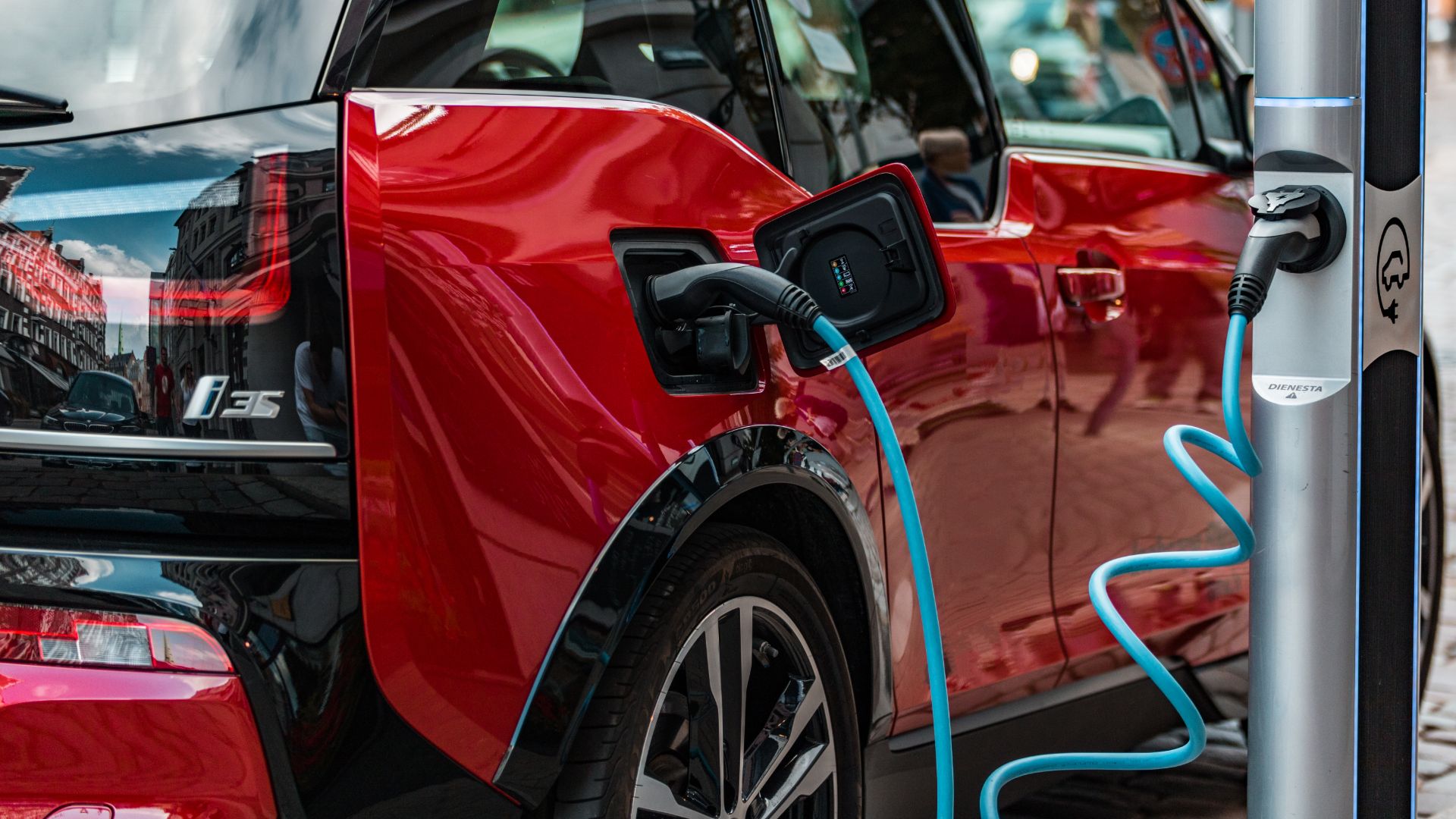
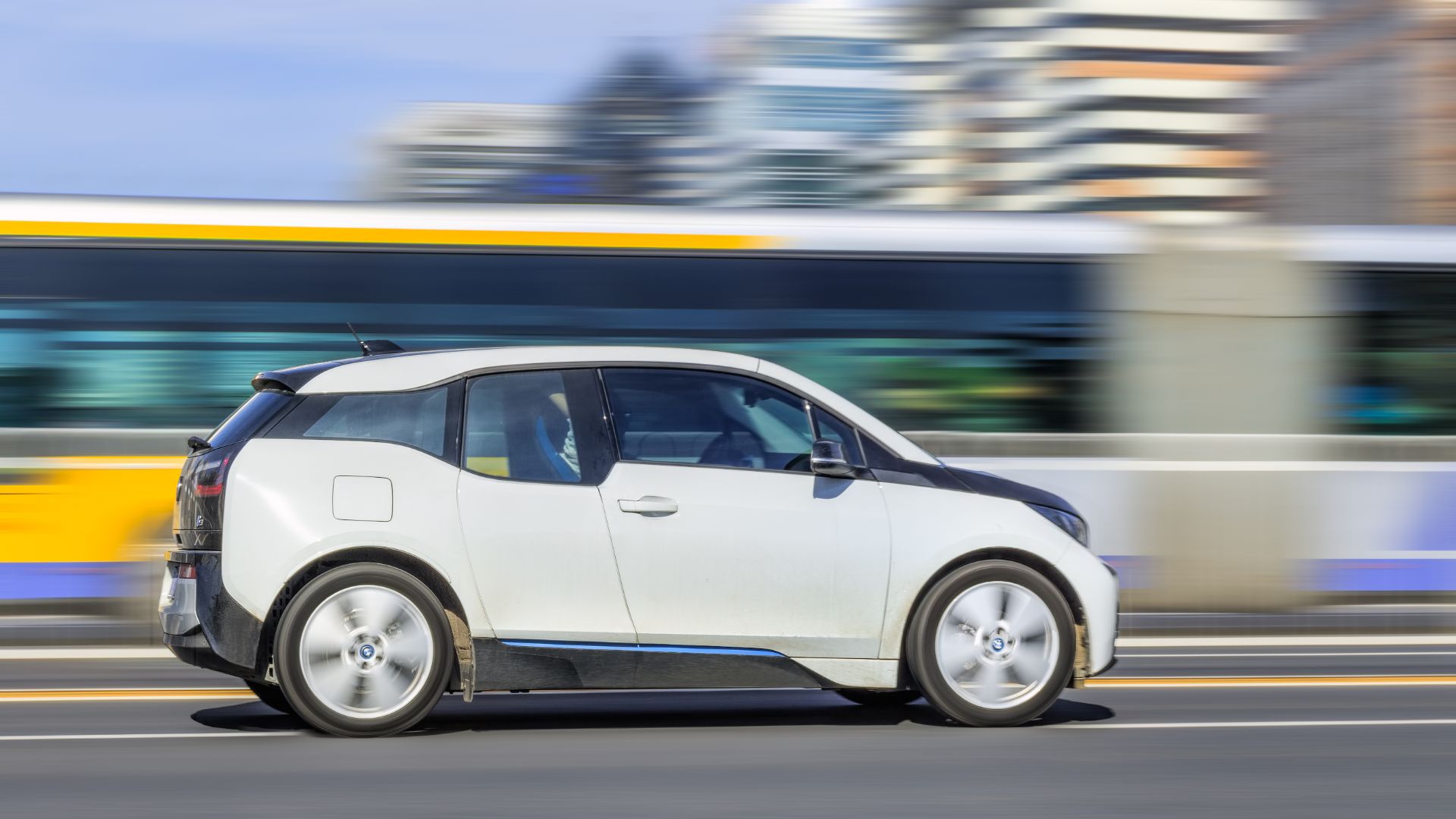
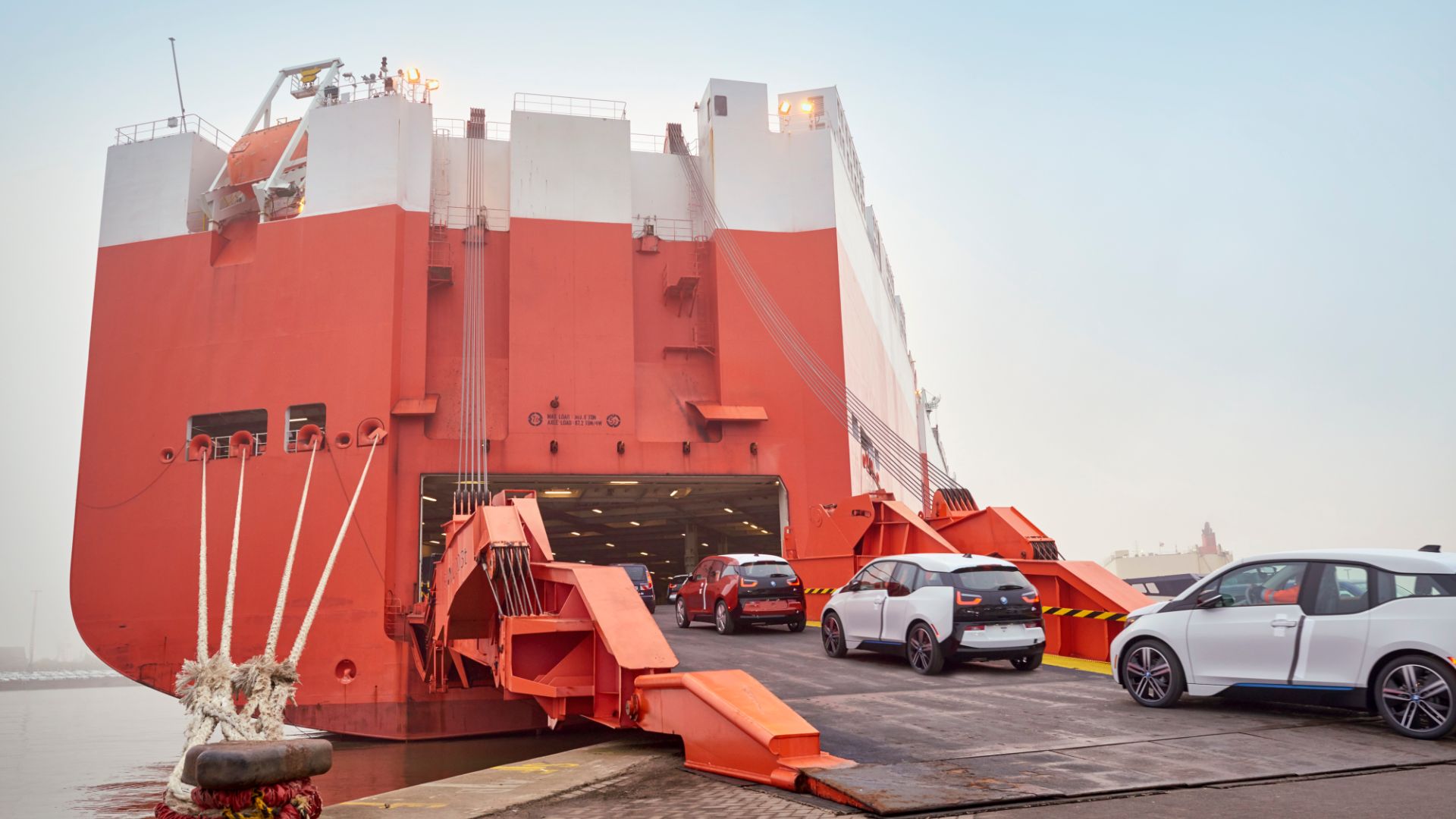
Last year BMW said that there was ‘no plan for a successor’ to its i3 electric car. Now that decision has been reversed.
Launched in 2013, the i3 seemed ahead of its time. However, that time may have come. BMW now says the car has been saved, by ‘continuing and growing demand’.
A total of 180 UK sales following its launch seven years ago must have been a sobering statistic. Last year, however, the i3 topped 4,348 sales.
Talking to The Times, early i3 adopter and Jazz FM radio host David Freeman said “Five years ago it was the only electric car in the car park. Now you get cheery waves and there’s camaraderie with other i3 owners”.
That change in perception and public attitude seems to be translating into sales. ‘The car’s future is assured,’ said BMW in a statement, ‘far beyond the usual automotive industry model lifecycle of six or seven years’.
What does that mean? Well, we might not be getting an all-new i3 any time soon, but the current car will live on, getting ever-better range figures and updated technology. The i3 S recently brought increased range capability, jumping to 193 miles for the 120Ah model.
The i3’s eco credentials were buoyed by the Massachusetts Institute of Technology, which rated it the greenest car in terms of ‘lifecycle emissions’. This is the effect the car has on the environment, from the creation of the materials used to construct it, to the moment it’s taken off the road and disposed of.
Motorists could save £41,000 by switching to electric
The BMW i3 uses a selection of recycled and sustainable materials in its construction. The cabin uses recycled bottles for the seats, Deccan hemp eucalyptus wood for its dash and door panels, and castor beans for its key. The i3 factory is wind-powered, and the process to make the carbon fibre chassis is powered by hydroelectricity.
Rarely does a car arrive before its time, and live to see that time arrive. In this case, BMW has saved the i3 ready for it to see the market it helped jump-start really spring into life.
Around 500 classic cars with a collective value of £70 million will attend the London Classic Car Show this week. The event takes place from 20-23 February at Olympia in Kensington.
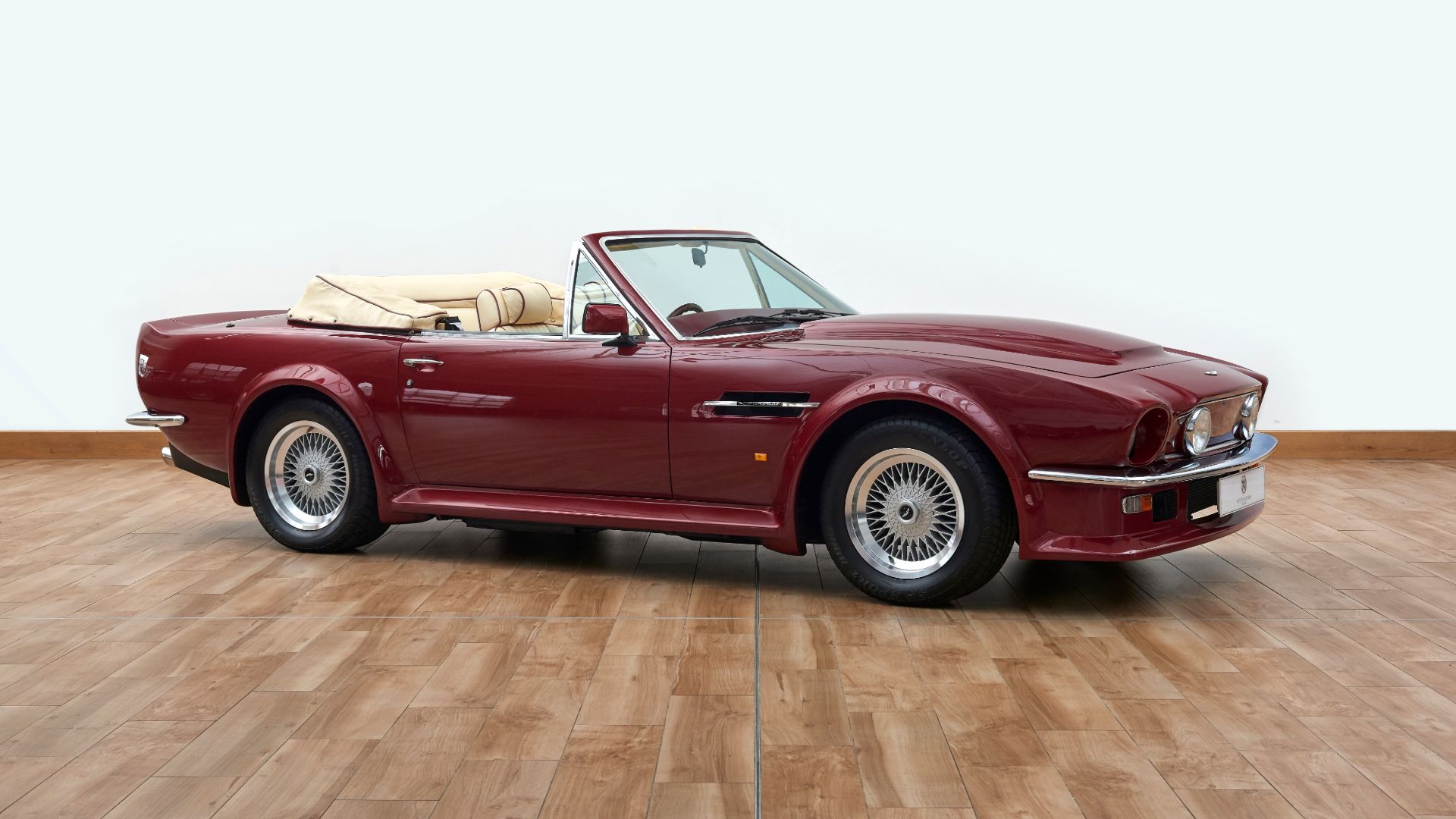
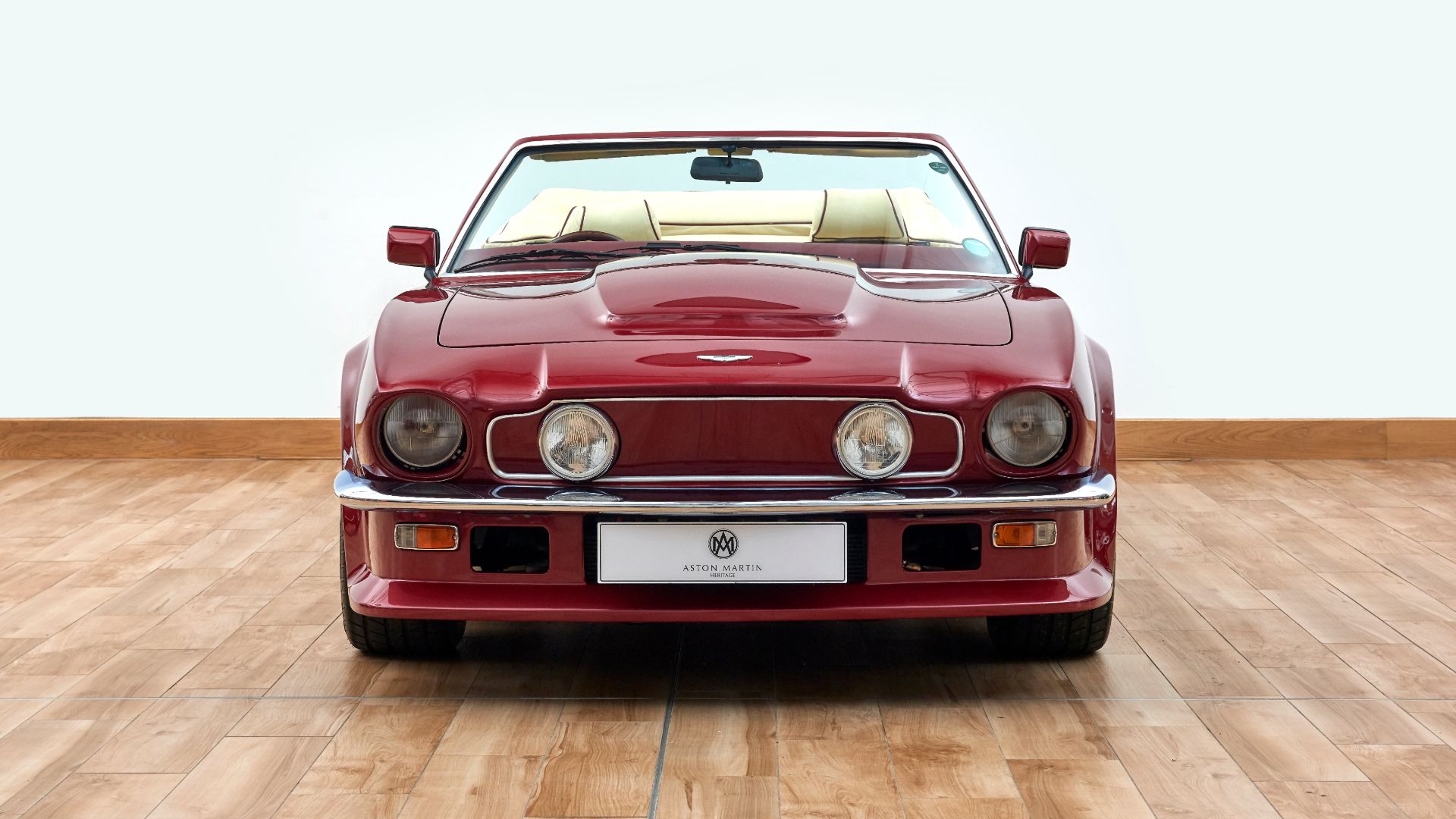
Among the highlights is a 1987 Aston Martin AMV8 Vantage Volante with the sought-after X Pack. Formerly owned by David Beckham, it’s one of just 78 similar cars.
With a five-speed manual gearbox and 432hp, the V8 is good for 0-62mph in 5.3 seconds. It’s for sale via Aston Martin Works, and predicted to make around £525,000.
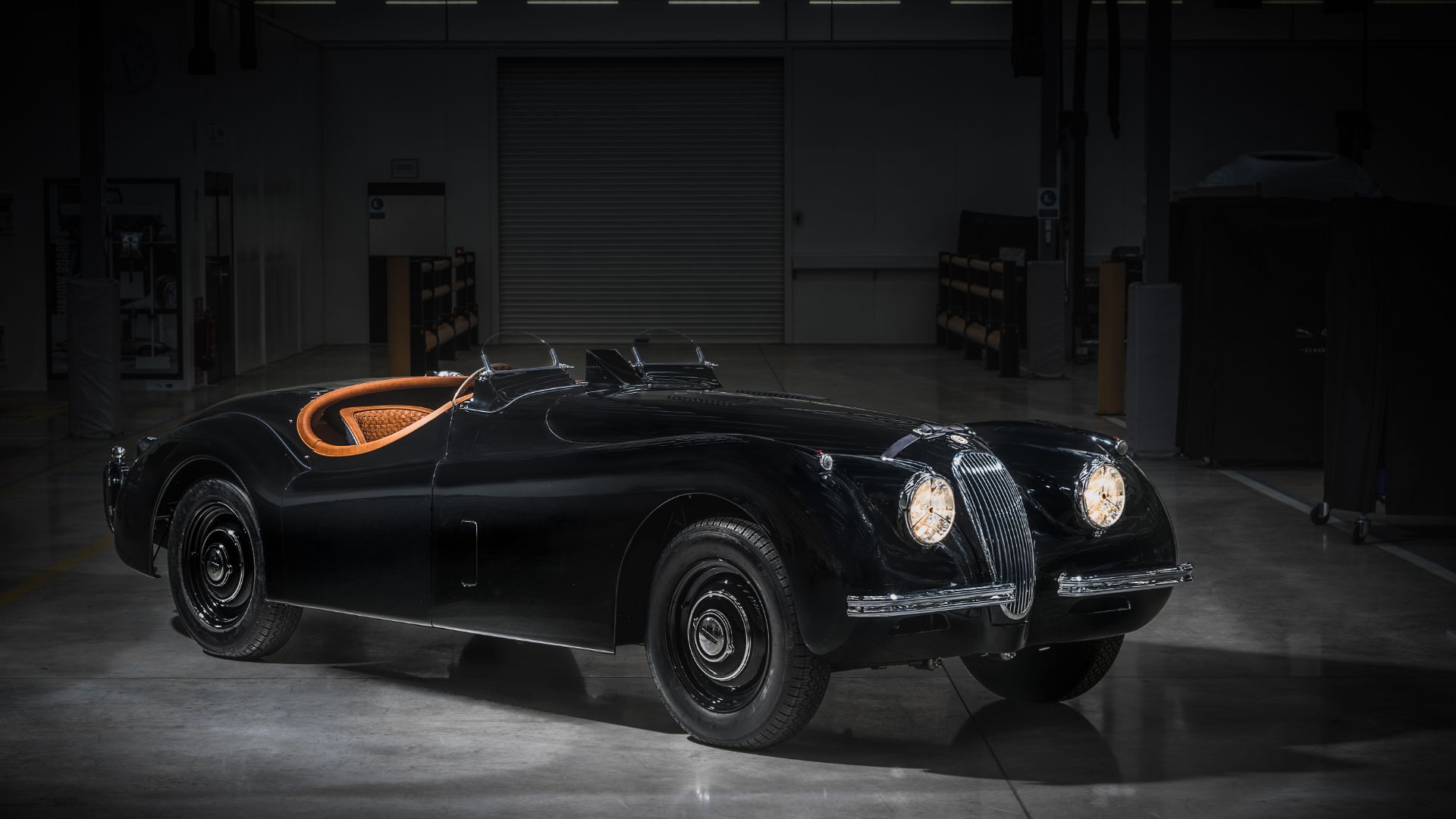
Joining Beckham’s Aston at the show is a 1954 Jaguar XK120. It’s another car with a celebrity connection.
The Jaguar was recently restored and rebuilt over 2,700 hours for British model, David Gandy. The all-black body with ‘aged saddle tan’ leather was specified by Gandy himself.
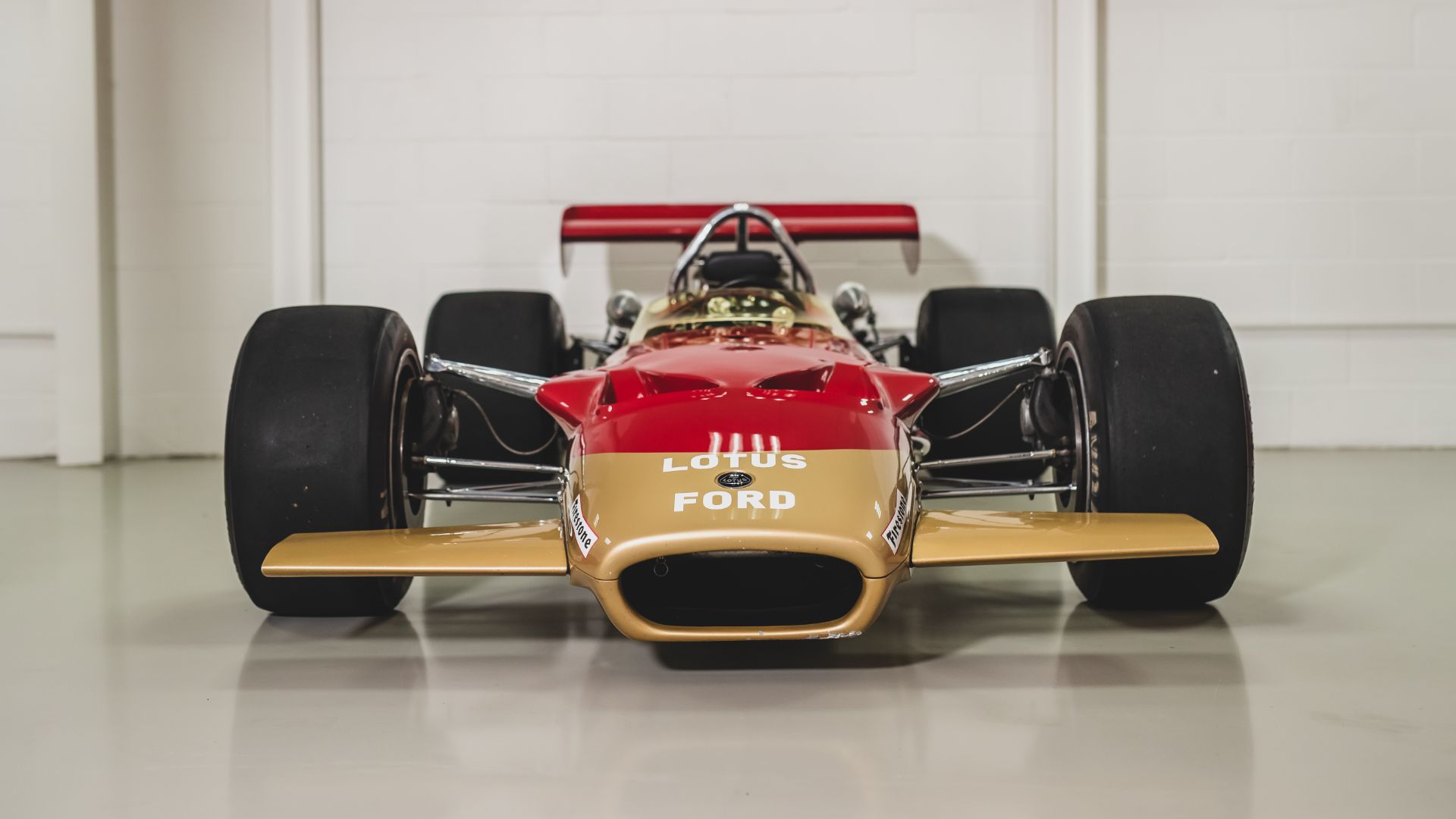
Visitors can also see a very special piece of Formula 1 heritage. This Lotus 49B is currently owned by legendary F1 designer Adrian Newey.
Newey’s history with the 49B began as a 10-year-old, when he had a Tamiya model of the car. The Lotus he now owns is ’49BR8′, driven in-period by Graham Hill.
In Newey’s ownership, the Cosworth-powered Lotus has undergone a full restoration and seen action at a number of events. Newey will be present with his car, telling his own personal love story.
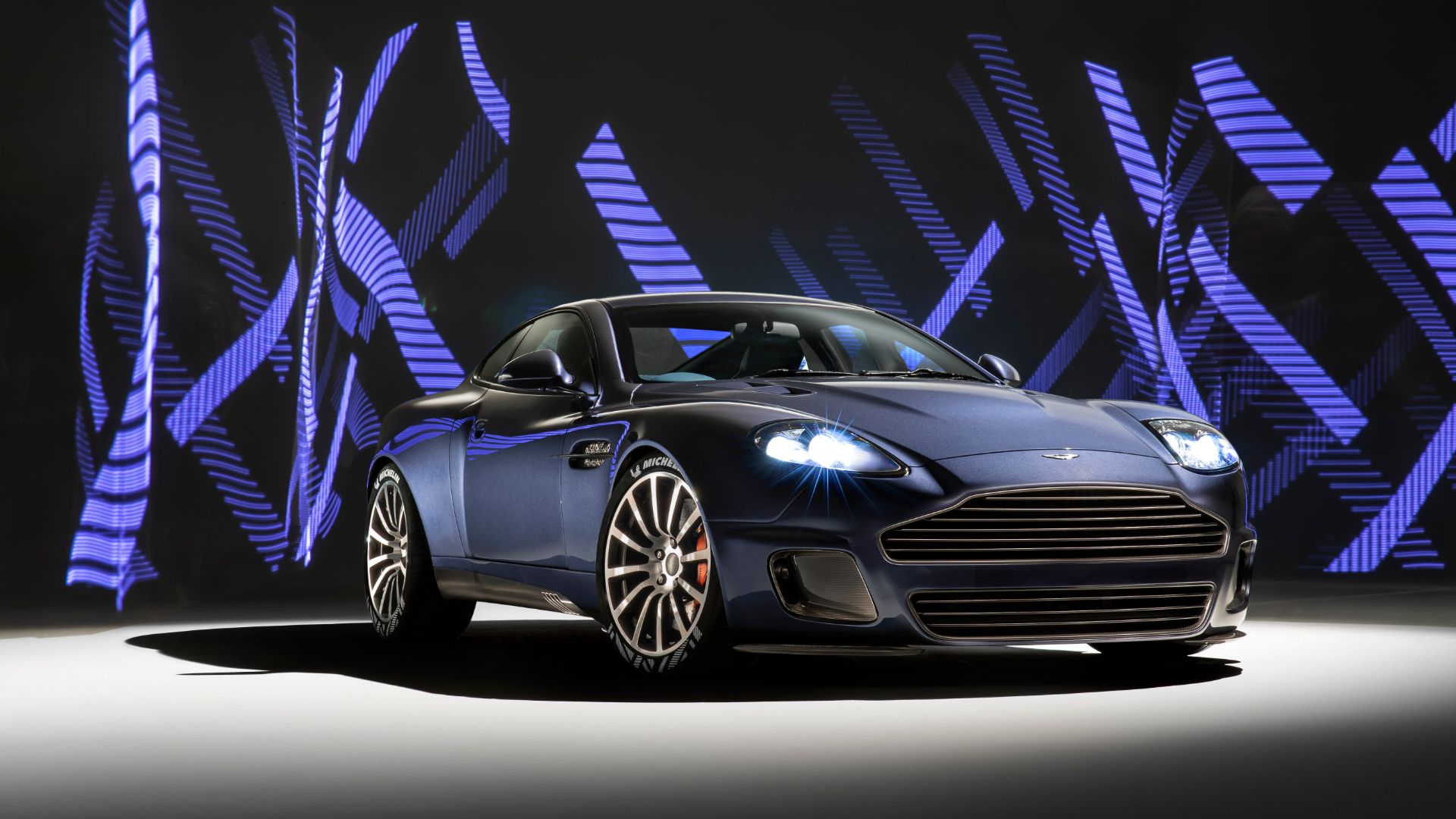
Other cars joining the show’s ‘Car Stories’ feature, hosted by classic car expert Max Girardo, include a brace of classic Aston Martins. One is the new ‘restomod’ Vanquish 25, the creation of car designer Ian Callum (who penned the original Vanquish).
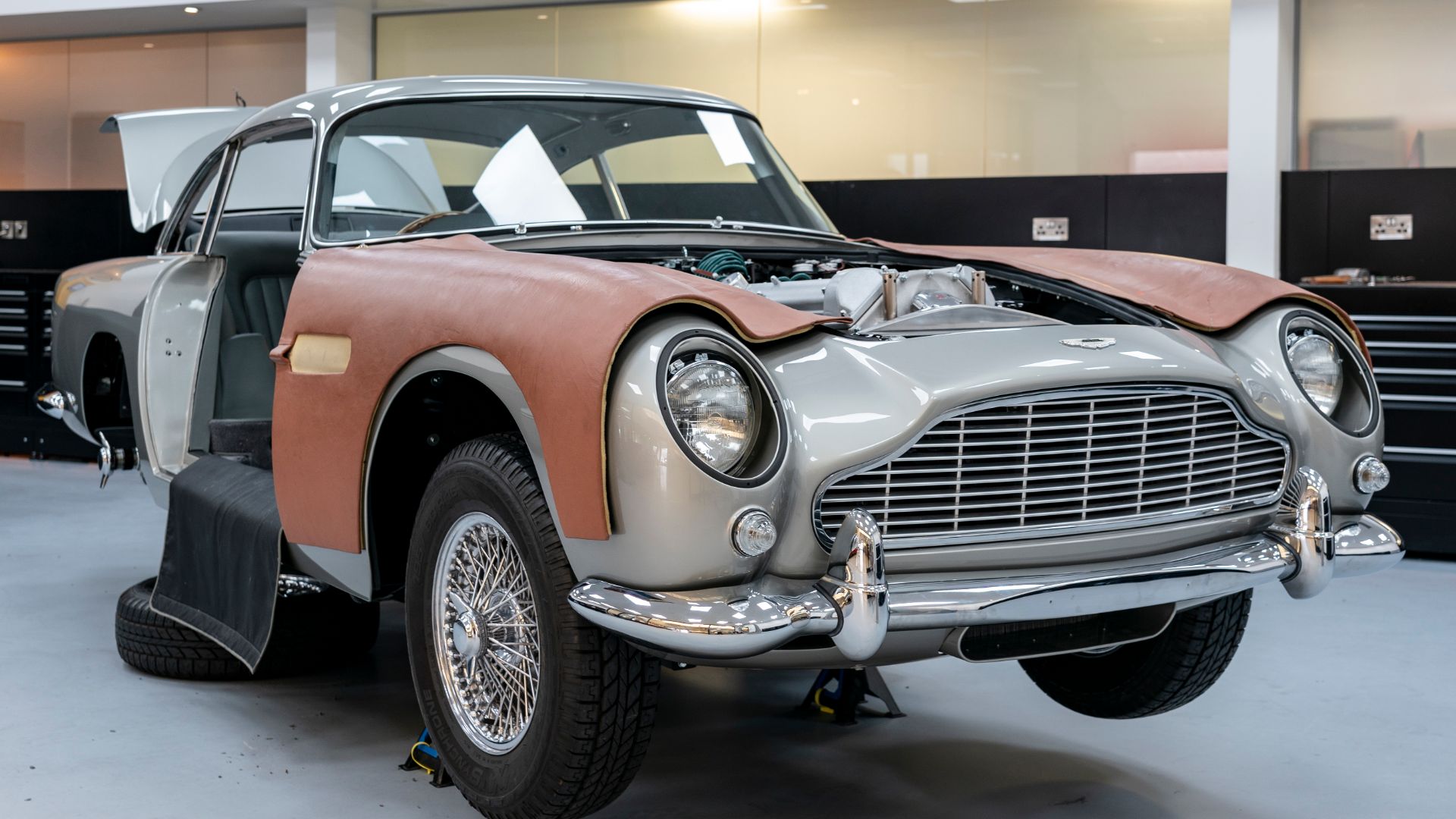
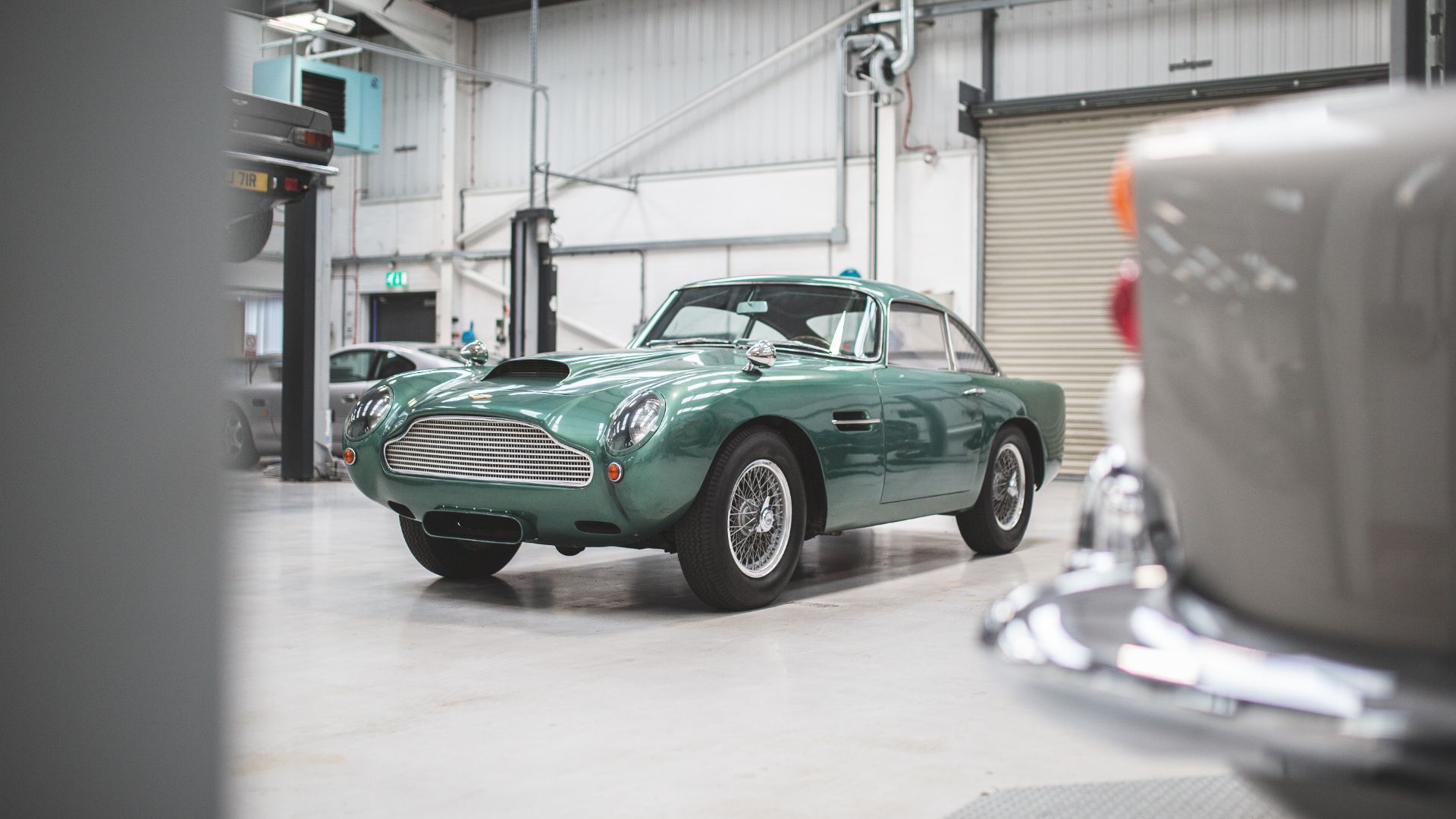
Aston Martin Works will be showing the DB5 Goldfinger Continuation, with AM Works president Paul Spires demonstrating the gadget-laden machine. Spires will also be on hand to guide people around the new DB4 Zagato Continuation.
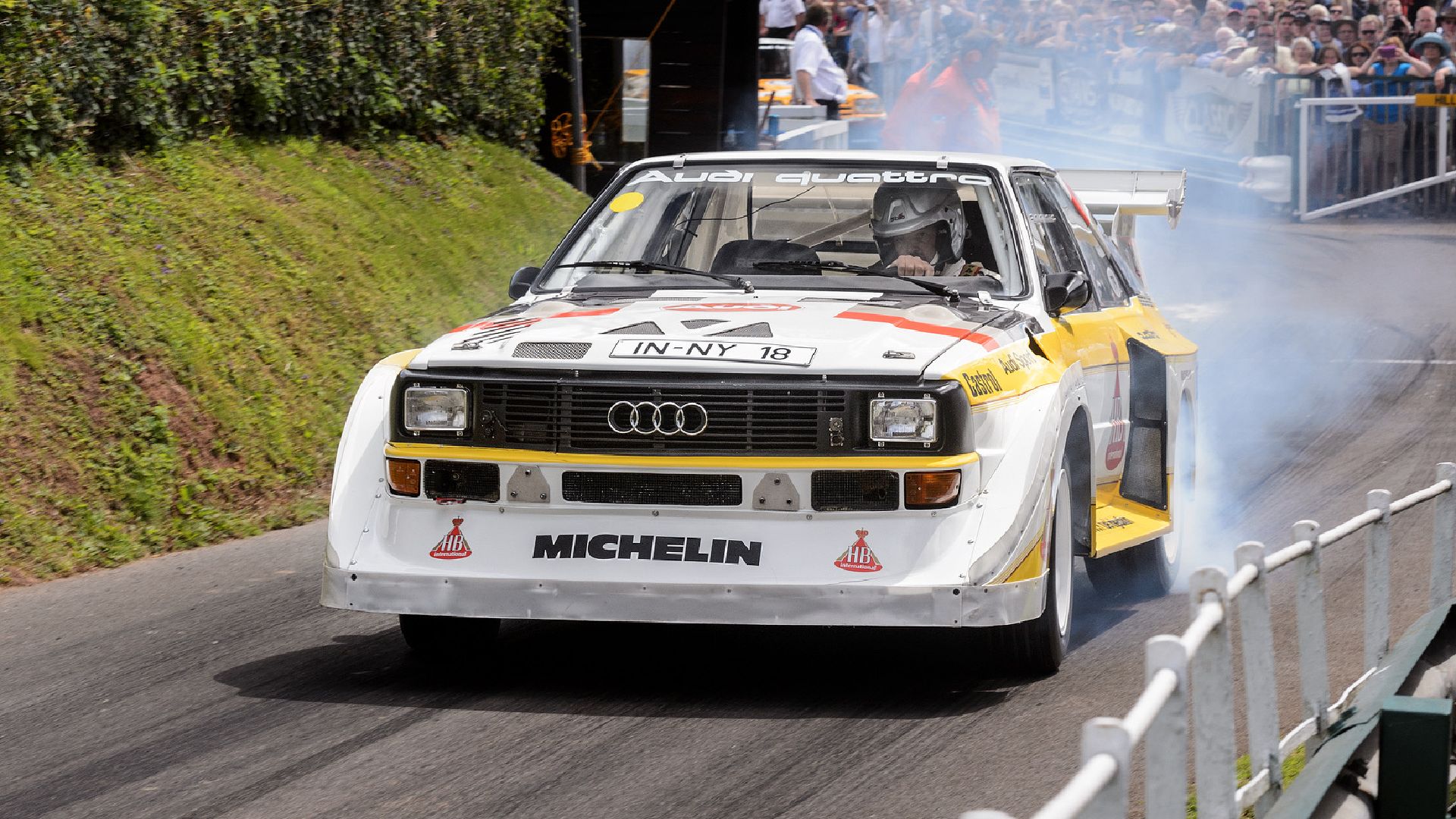
Big anniversaries are being marked at LCCS, too. Celebrating the 40th anniversary of the Audi quattro will be a 1985 S1 rally version, driven in period by Stig Blomqvist and Walter Rohrl.
Meanwhile, the Range Rover will celebrate its 50th birthday. Many examples will be in attendance, including a factory-restored ‘Reborn’ two-door model.
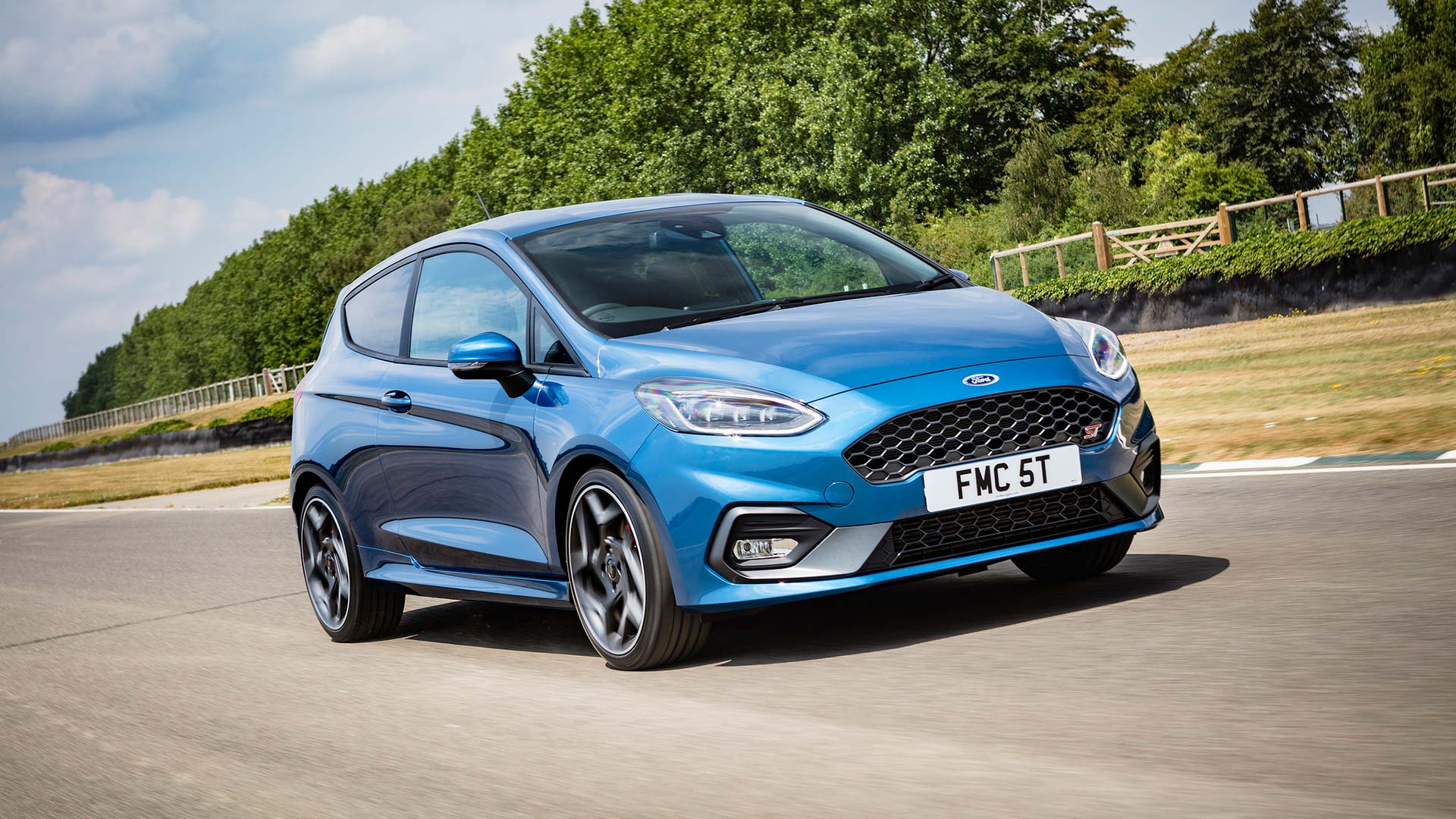
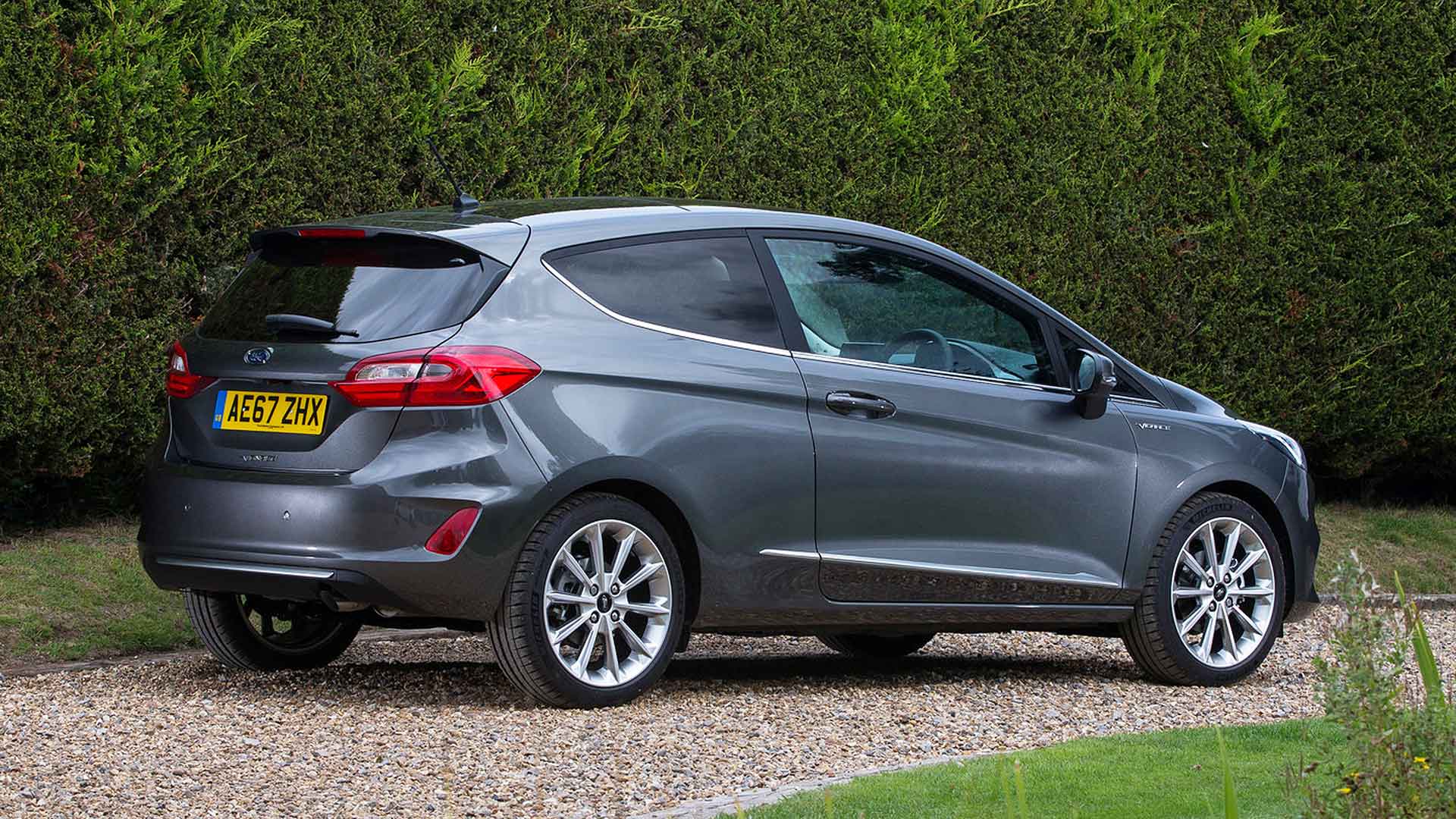
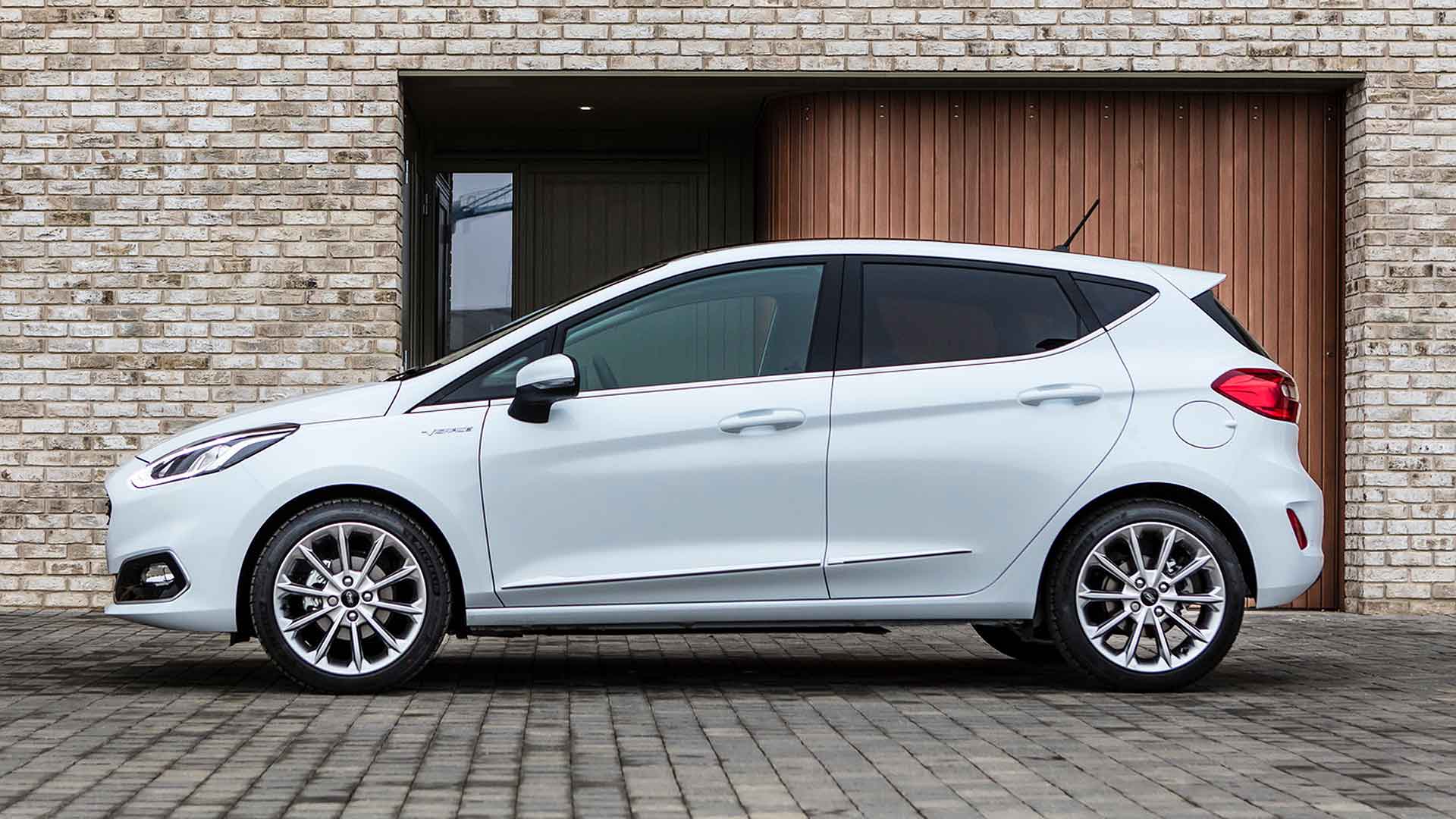
News coming out of Germany suggests we could be falling out of love with the Ford Fiesta.
Ford has cut production of the Fiesta in response to a number of factors, including a drop in UK sales. Production at the Cologne plant will reduce from five to four days a week, according to Automotive News Europe.
The plant builds 1,150 Fiestas a day, with a third of this output going to the UK. Although the Fiesta remains Britain’s best-selling car, registrations have been on a downward trend.
A Ford spokesperson told Automotive News Europe: “Southern Europe and the United Kingdom are seeing weaker demand [for the Fiesta] leading to the need to adjust production.”
In 2018, registrations totalled just under 96,000 – an amazing 50 percent higher than its nearest rival, the Volkswagen Golf. A year later, registrations fell to almost 78,000. Still the UK’s number one, but with registrations reflecting a falling market.
Year-to-date figures put the Ford Fiesta on 6,087 – 800 ahead of the Ford Focus in second place.
The UK new car market declined -7.3 percent in the first month of 2020, with the Society of Motor Manufacturers and Traders (SMMT) blaming “continued confusion surrounding diesel and clean air zones and ongoing weak consumer and business confidence”.
‘Moving the goalposts’
Mike Hawes, SMMT Chief Executive, said: “The new car market is a key driver of the UK’s overall economy, so another month of decline is unsettling. Consumer confidence is not returning to the market and will not be helped by government’s decision to add further confusion and instability by moving the goalposts on the end of sale of internal combustion engine cars.
“While ambition is understandable, as we must address climate change and air quality concerns, blanket bans do not help short-term consumer confidence. To be successful, government must lead the transition with an extensive and appropriately funded package of fiscal incentives, policies and investment to drive demand. We want to deliver air quality and environmental improvements now but need a strong market to do so.”
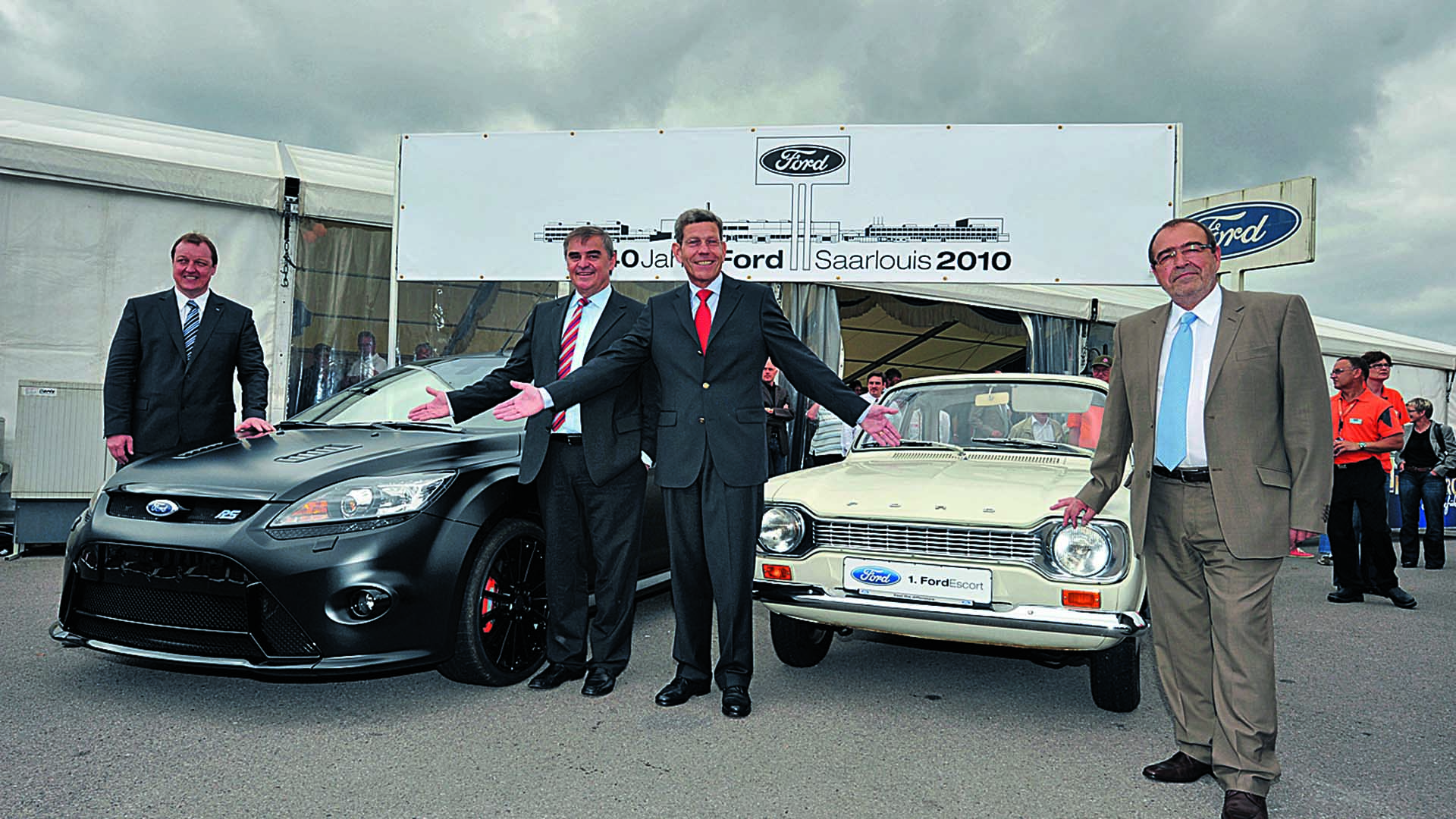
In January 1970, the first vehicle left the assembly line at the Ford plant in Saarlouis. Since then, more than 15 million cars have rolled out of the German factory, including the Escort, Capri, Focus, C-Max and Kuga. Here, we celebrate 50 years of the plant with the help of some archive photos.
Work begins in 1966
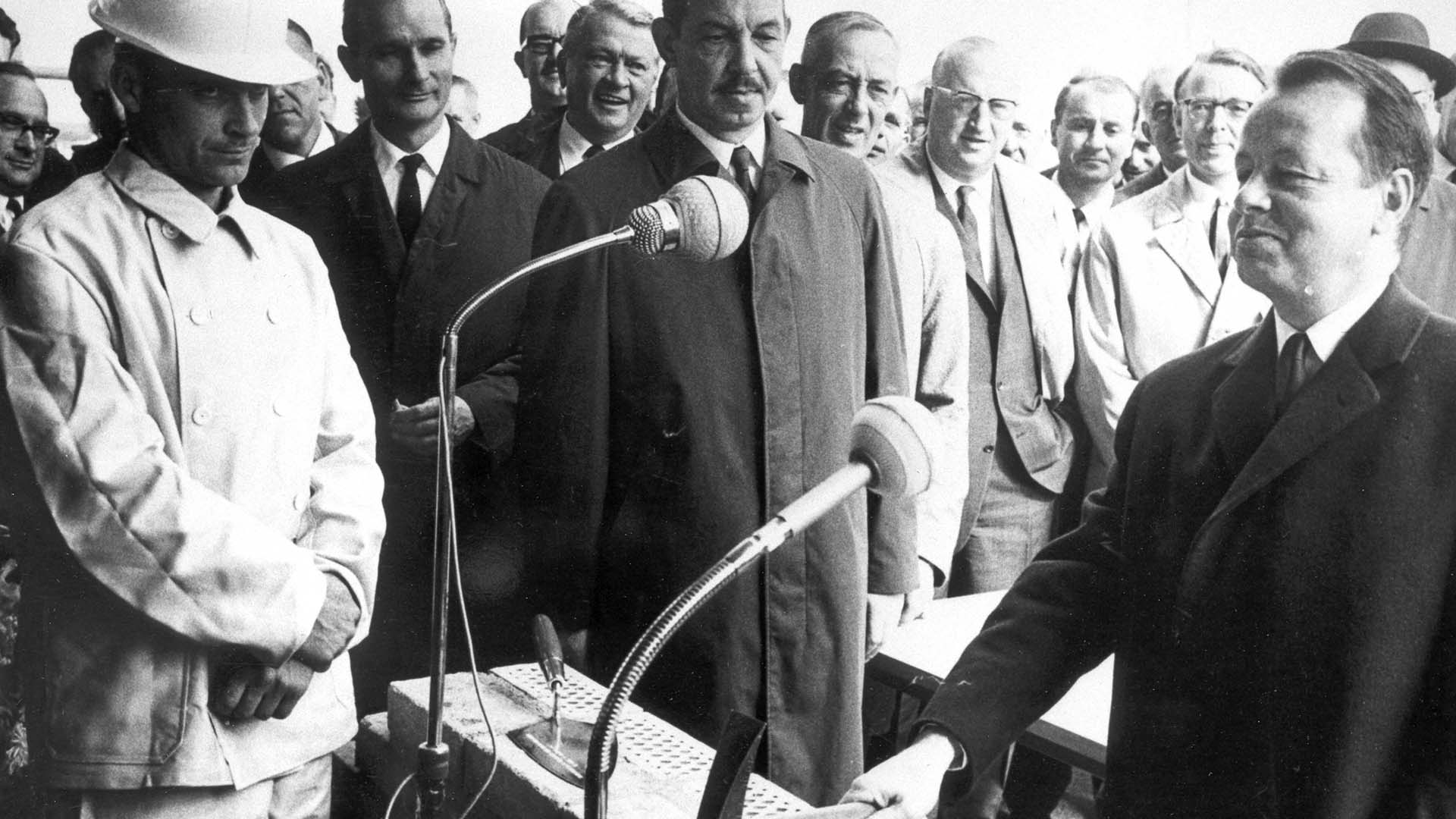
The Saarlouis plant is situated on the site of the former Roderberg airfield in Germany, about 15 minutes from the border with France. The foundation stone was laid by Ford General Manager Robert G. Layton on 16 September 1966.
Roderberg arfield
This photo from 1966 shows the Roderberg airfield before construction had started. Until then, the 1.4 million square-metre factory area was overgrown with meadows and trees.
30 years later…
Things looked a little different in 1996.
The first bodyshell
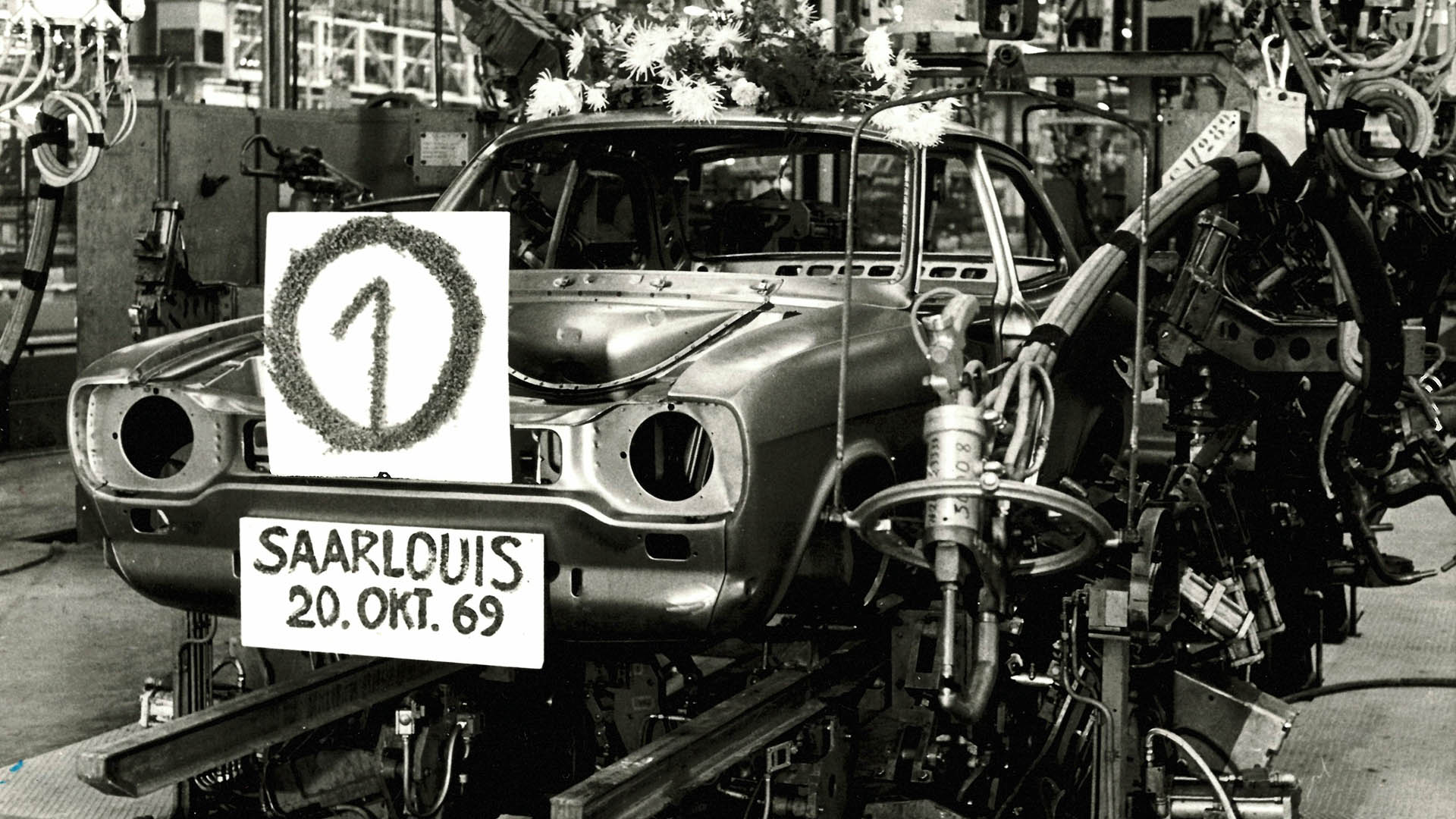
Although the Saarlouis plant didn’t officially open until 1970, the first Ford Escort body shell was completed on 20 October 1969. The plant also manufactured body parts for other European Ford plants, but also for Renault.
The first Ford Escort
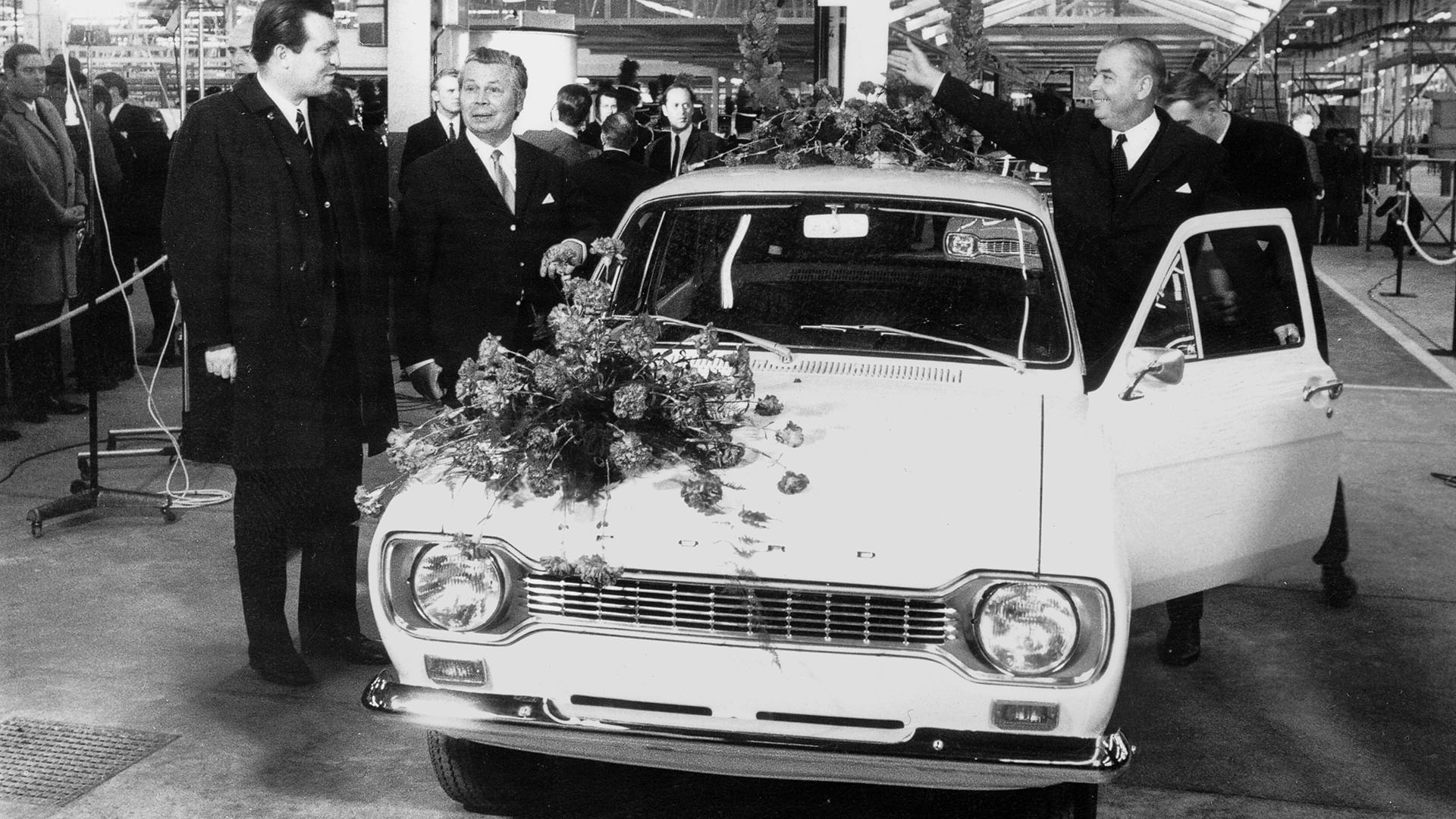
The first Ford Escort rolled off the Saarlouis production line on 16 January 1970. The prime minister of Saarland, Franz-Josef Roder, had the honour of driving the car off the assembly line. The Escort was powered by a 1.1-litre engine producing a rather modest 40hp.
A beautiful Ford plant
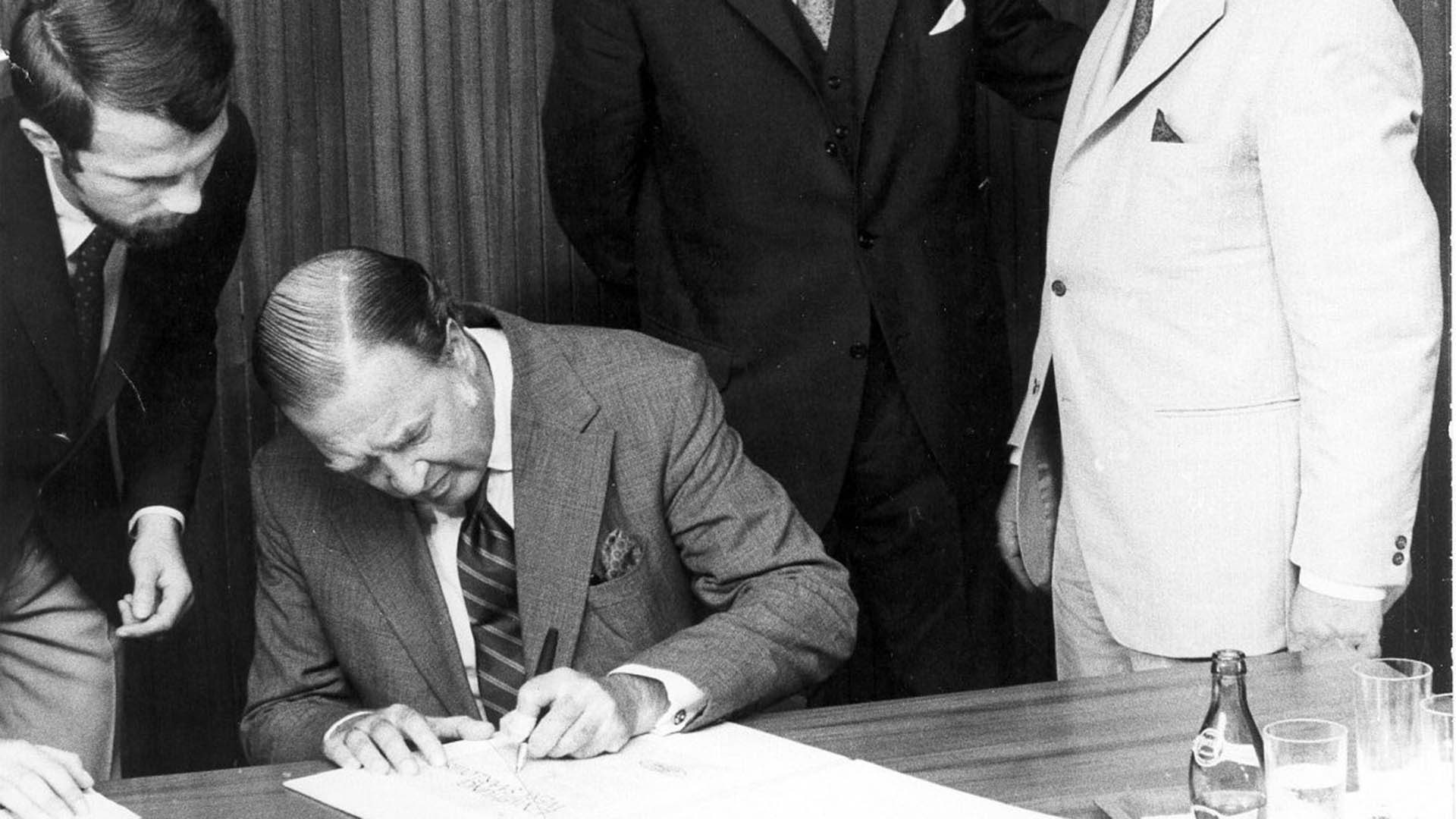
Henry Ford II, the grandson of the company founder, is pictured signing the founding certificate at the official inauguration of the plant in June 1970. He described the Saarlouis factory as “one of the most beautiful Ford plants in the world”.
The car you always promised yourself
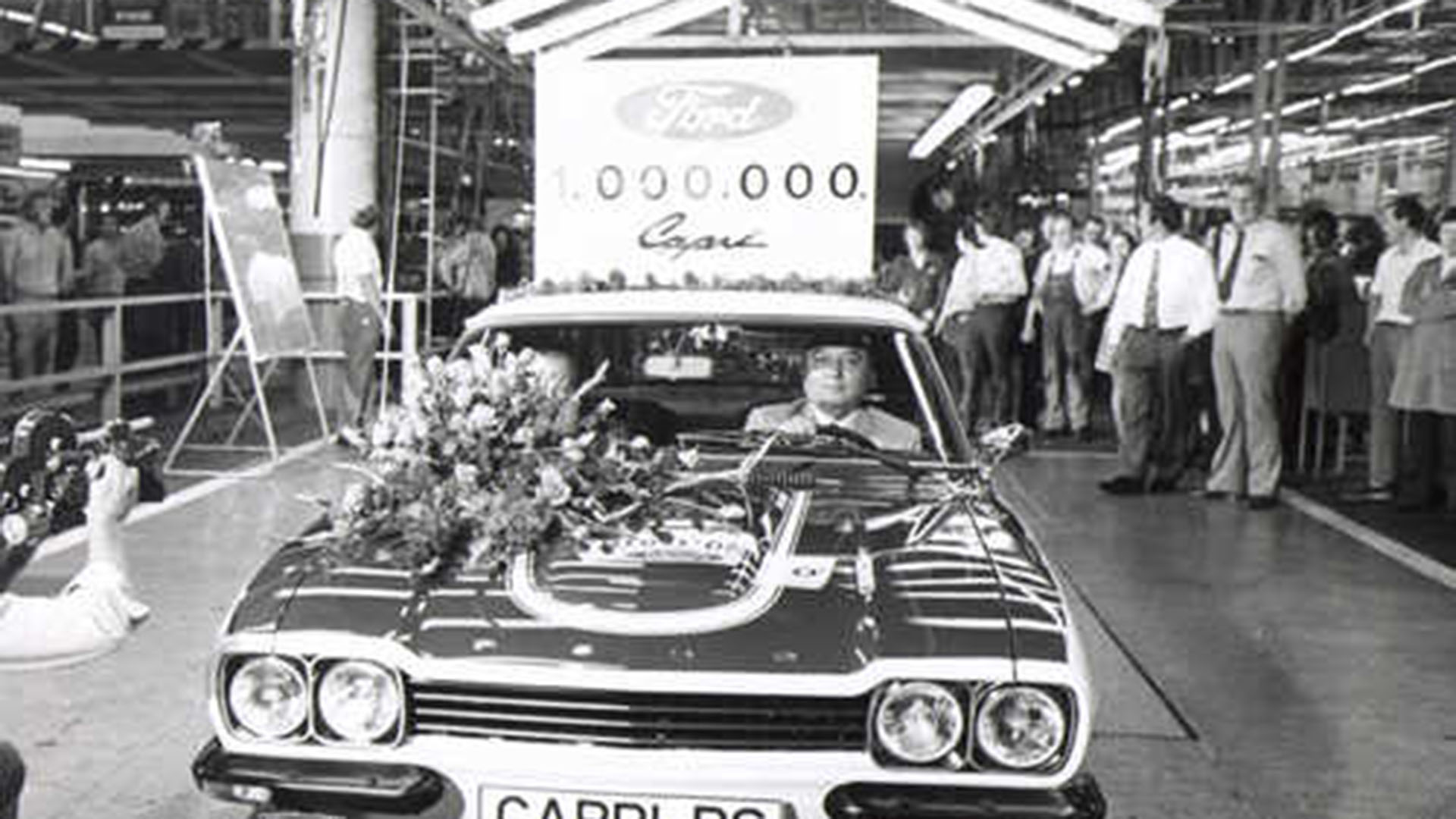
From 1971 to 1975, around 150,000 examples of the Ford Capri rolled out of the Saarlouis plant. The one millionth Capri, an RS2600, was completed on 29 August 1973.
The first Ford Fiesta
The first Ford Fiesta rolled off the Saarlouis production line on 11 May 1976. By 1980, more than 700,000 units of the popular small car had been produced at the German plant. Today, it’s the best-selling new car in Britain.
Fiesta festival
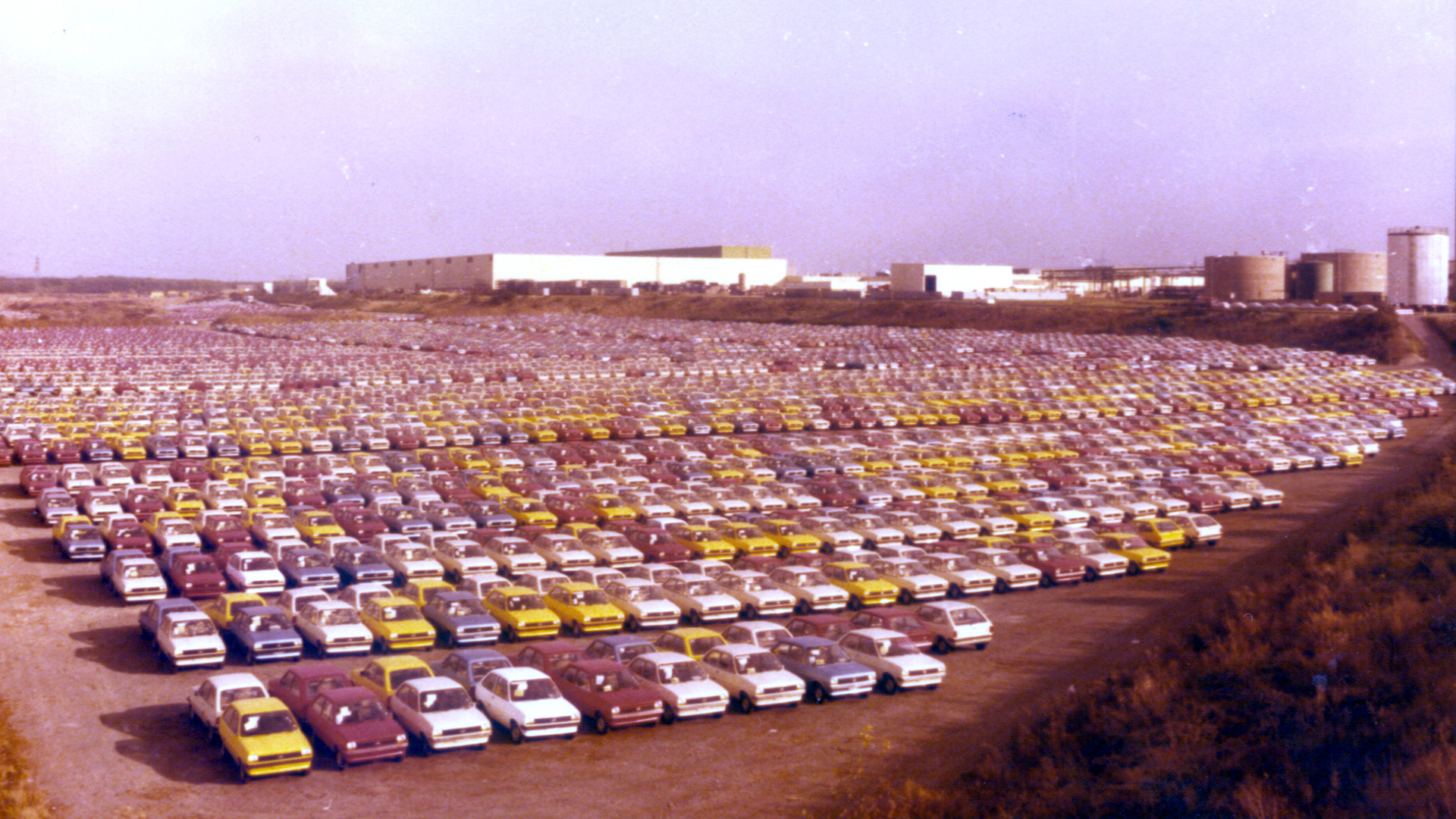
What a brilliant photo – new Fiestas as far as the eye can see. Of these, how many are still on the road? Yellow was far more popular in the 1970s than it is today.
Two million and counting
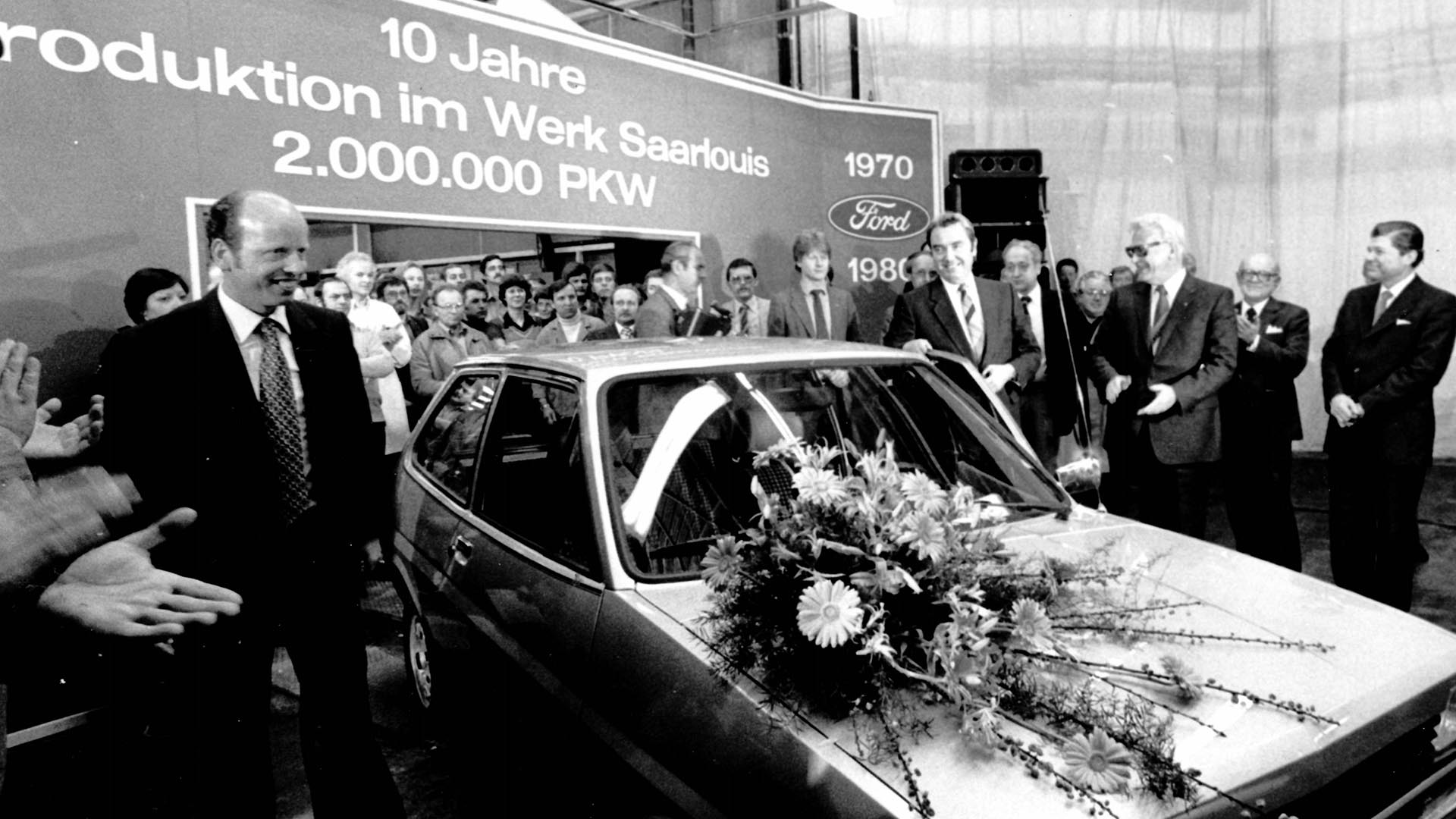
The two millionth vehicle to be built at the Saarlouis plant was completed in 1980. A good way to mark the 10th anniversary of the German factory.
Ford Escort Mk3
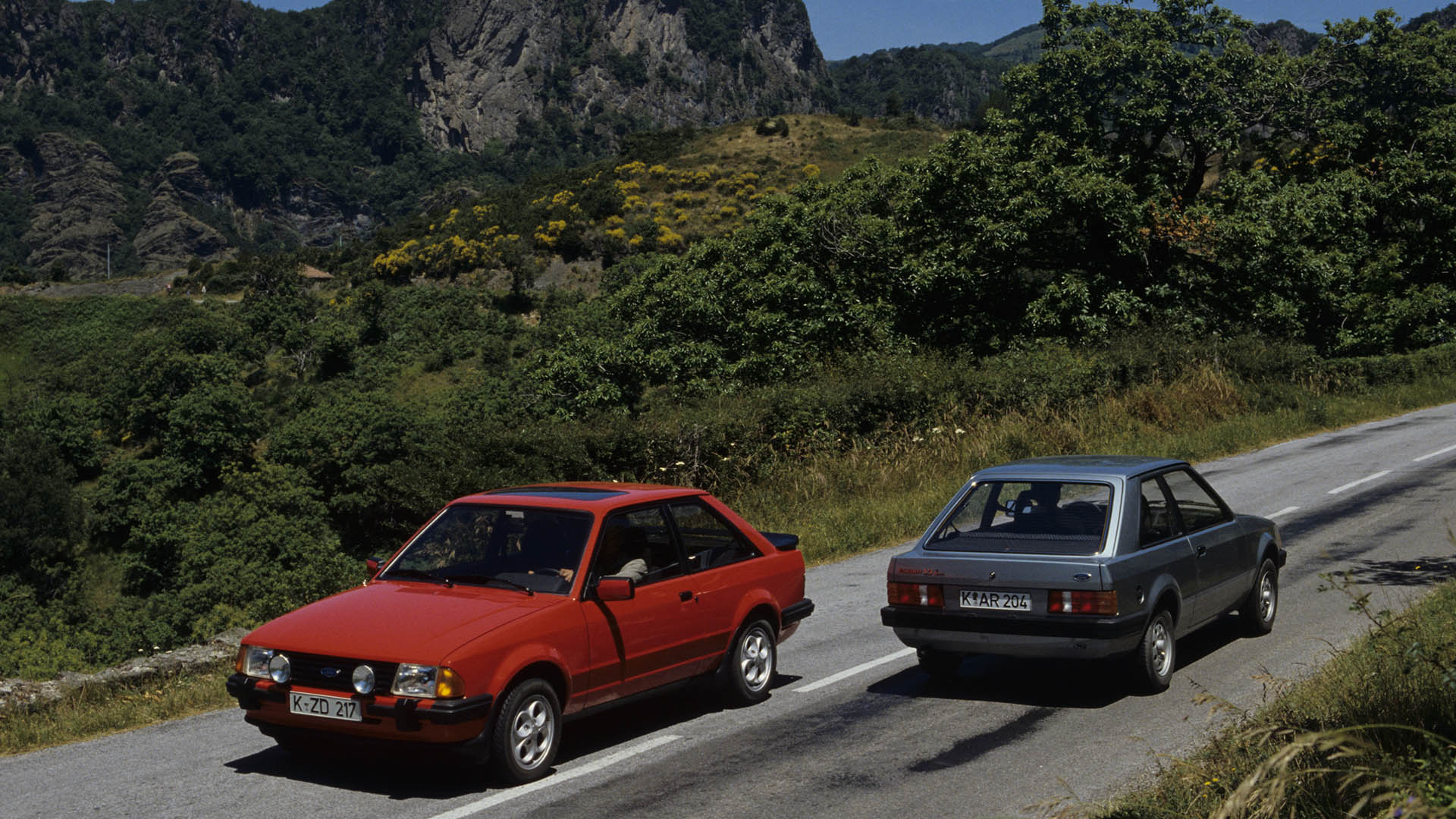
In 1981, the Ford Escort was named European Car of the Year. As well as Saarlouis, the Escort Mk3 was also built in Halewood, Spain and Brazil.
Five million cars
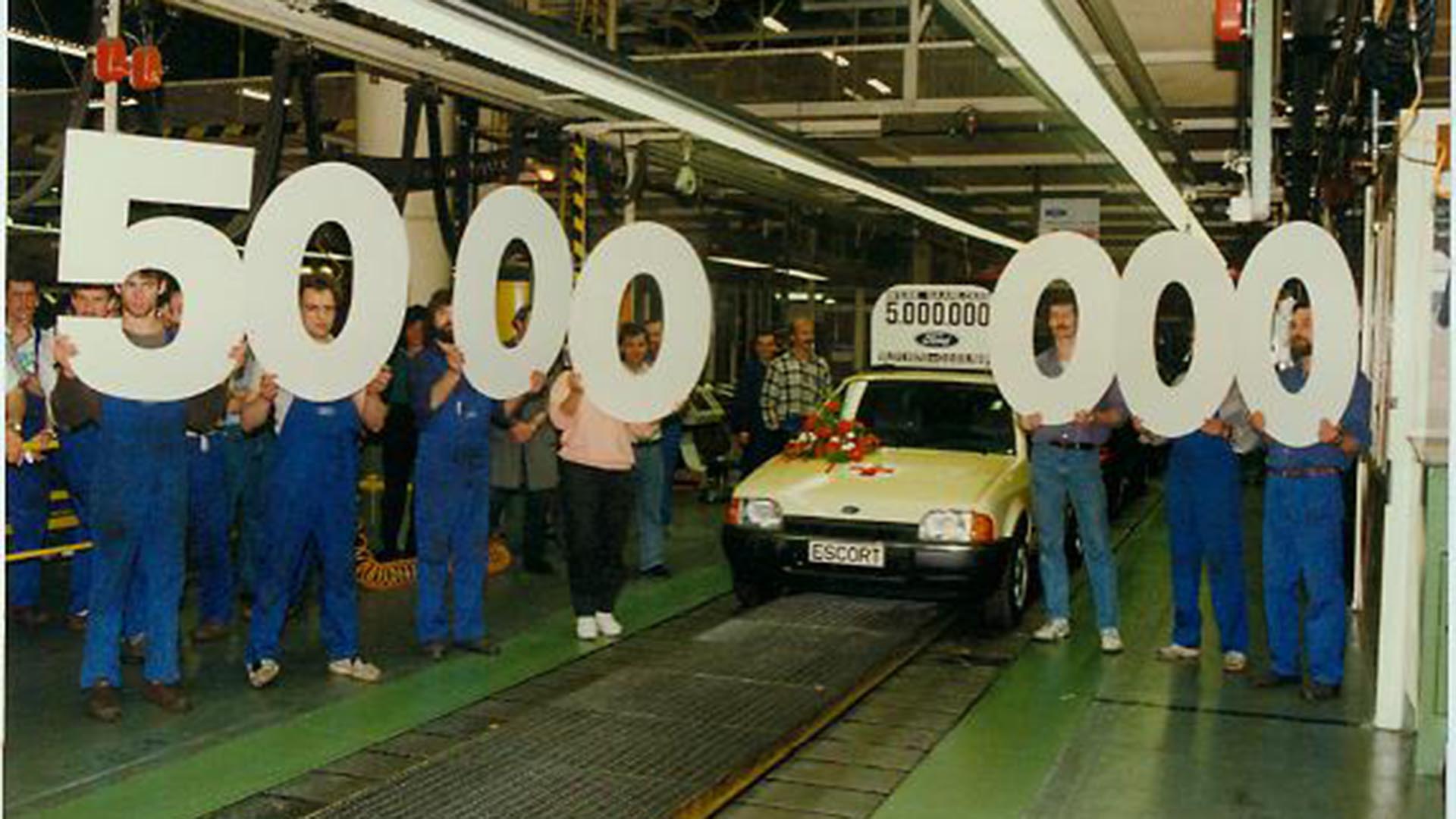
Saarlouis production hit five million in February 1990. The milestone car was a fourth-generation Ford Escort. We suspect the factory workers were delighted to be chosen to hold one of the seven figures.
Saarlouis in 1997
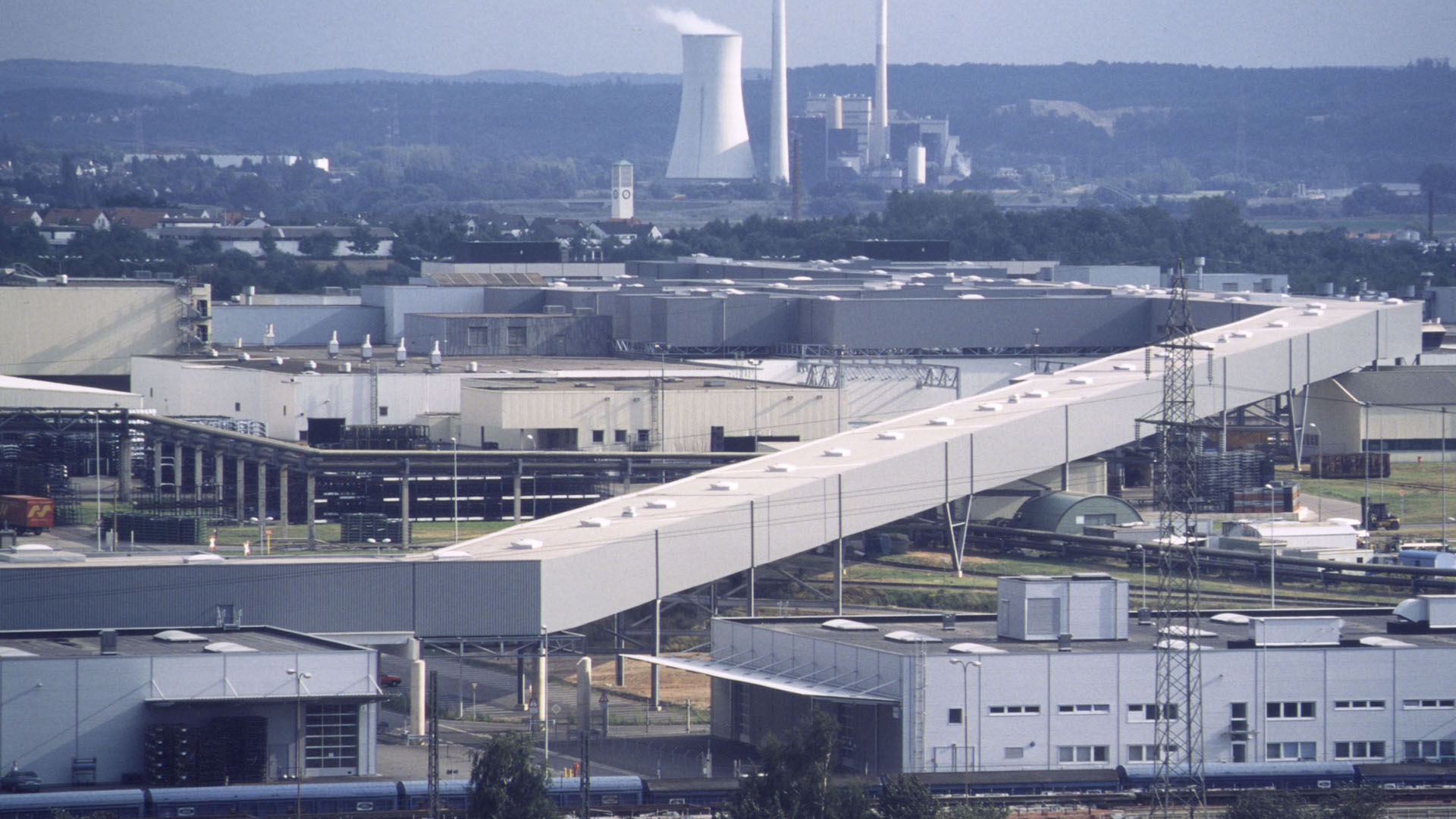
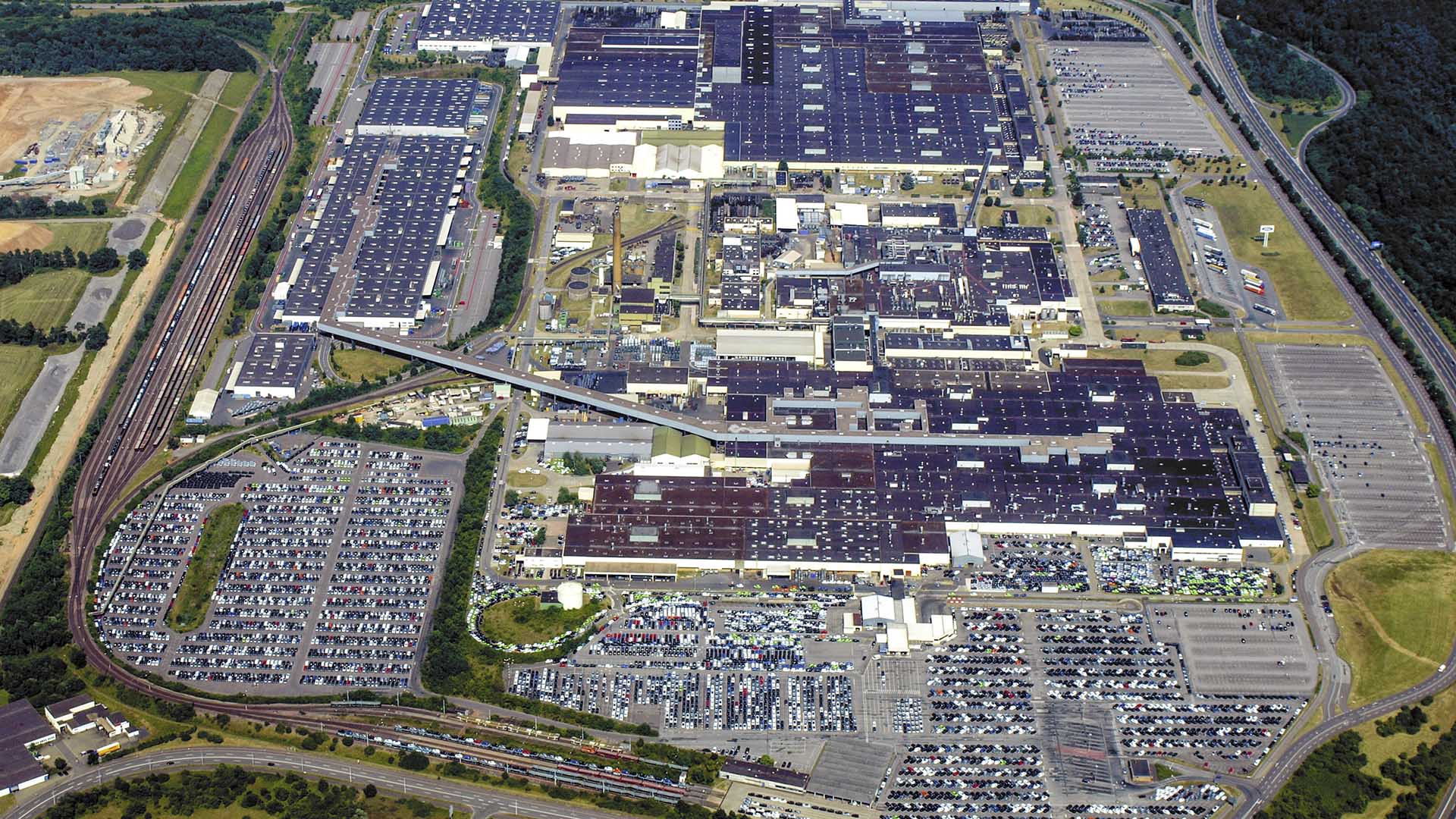
This photo of the sprawling Saarlouis plant was taken in 1997. Note the railway line, which is used to transport cars across Europe. If you look closely you might be able to spot a yellow Mk1 Fiesta. Probably.
Ford Focus
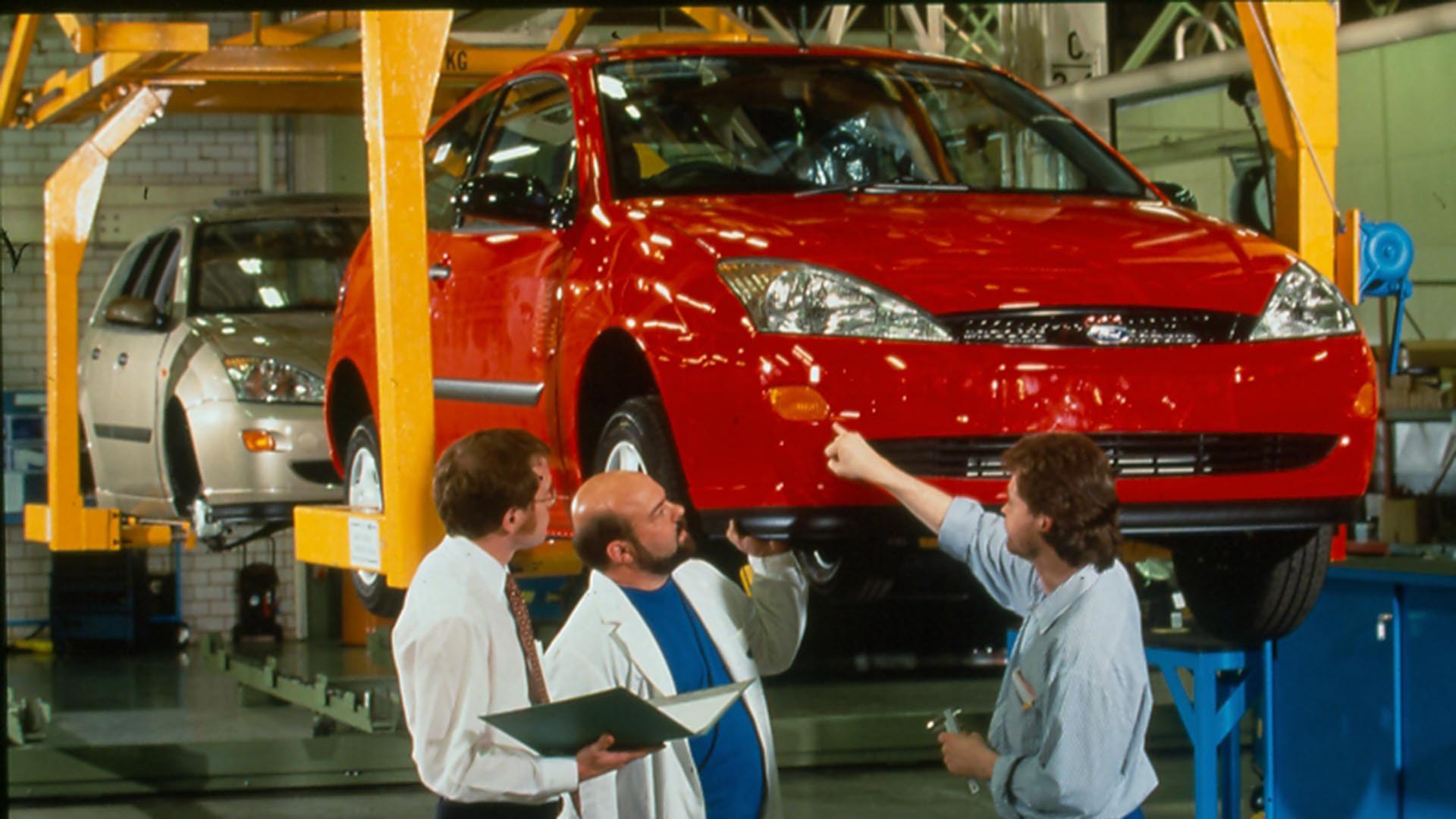
The Ford Focus is another ‘son of Saarlouis’. Just a year after the start of production, the Focus was named 1999 European Car of the Year.
Ford Focus RS
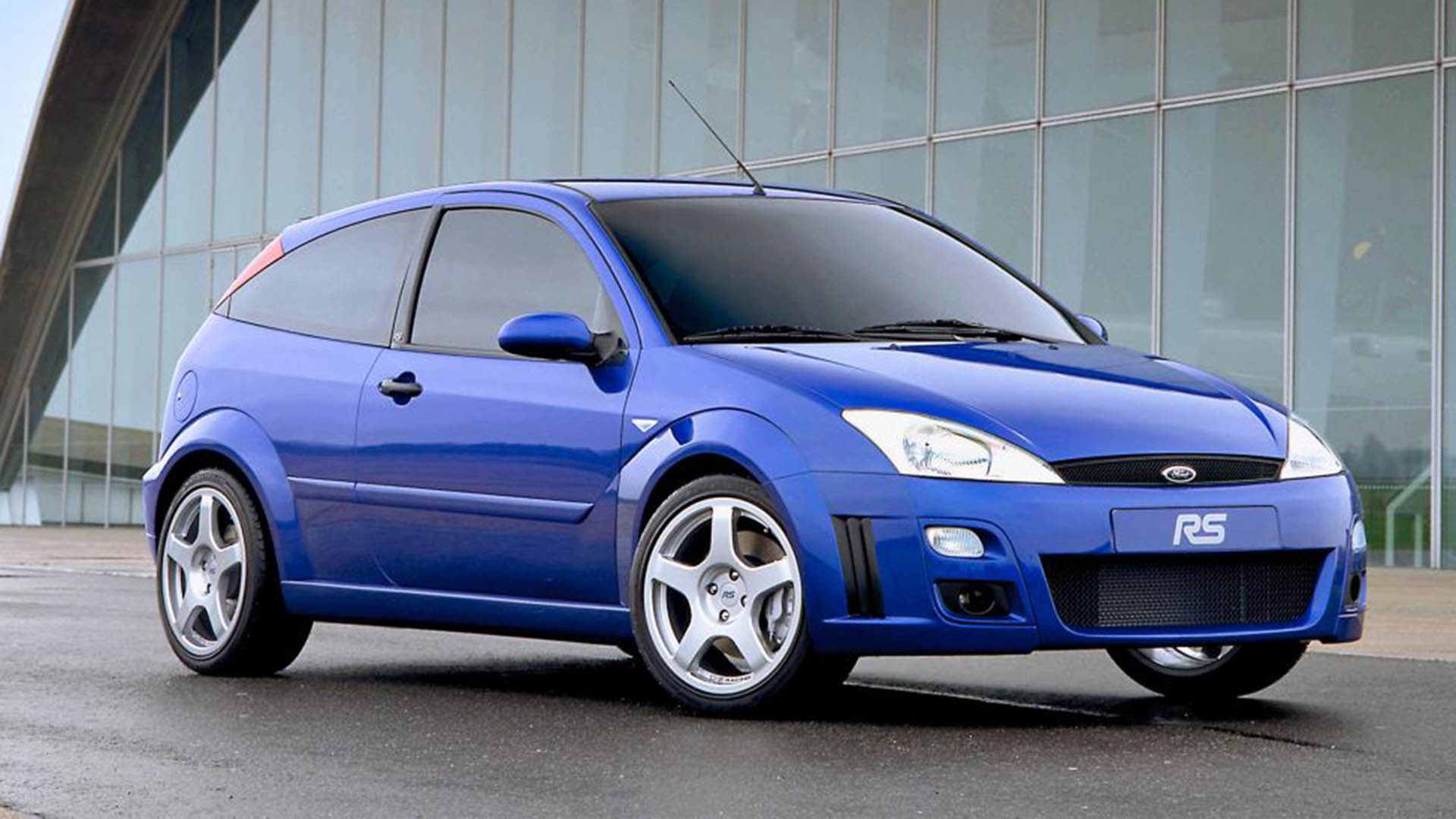
The Ford Focus RS was built on its own assembly line at the Saarlouis plant. Production was limited to 4,501 units between October 2002 and November 2003. Nearly half were sold in the UK, making it the biggest market for the Focus RS.
Ford C-Max
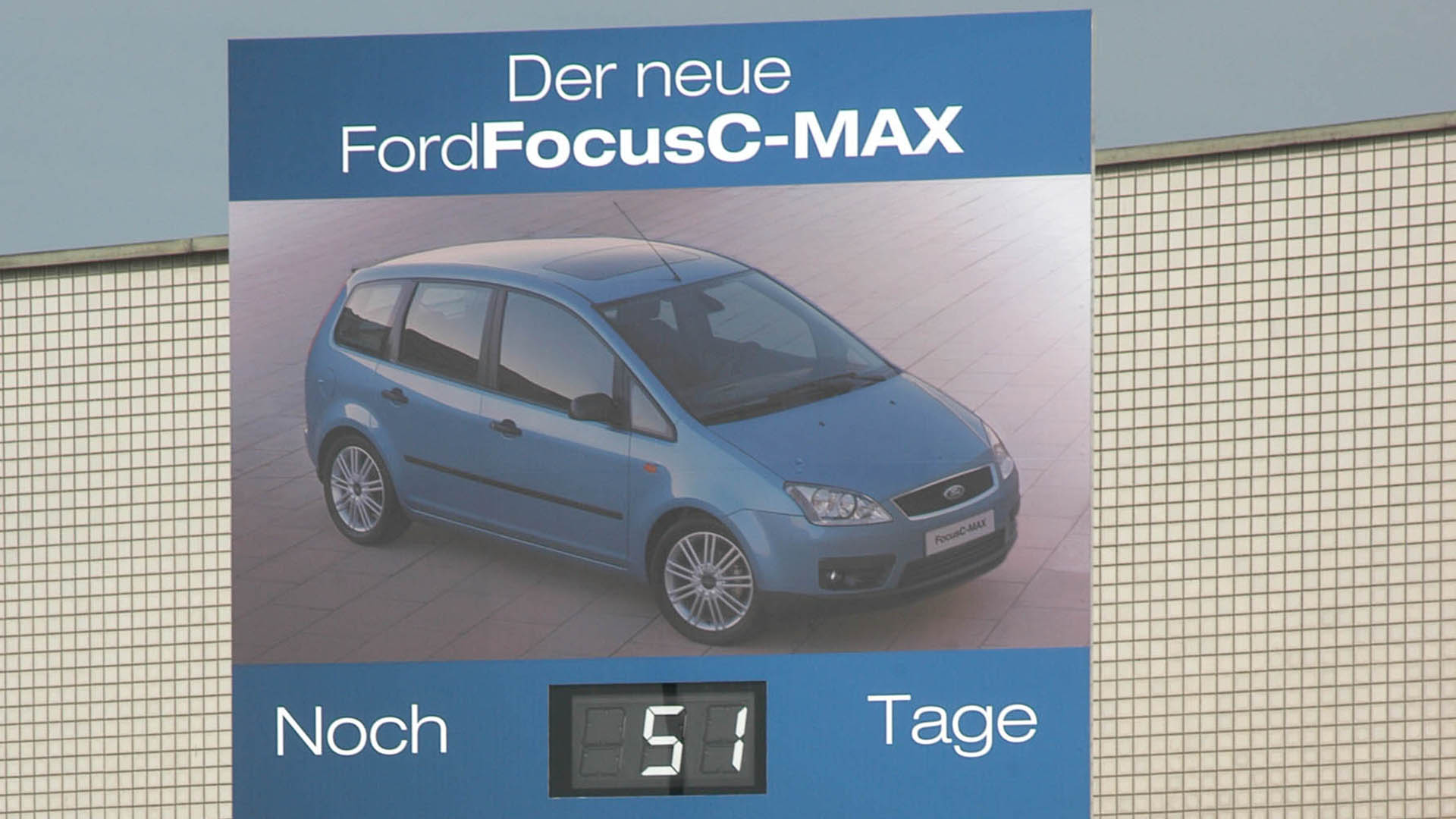
Production of the Ford Focus C-Max began in November 2003. After the facelift of 2007, the Focus part of the name was dropped, with the MPV now known as the Ford C-Max. By 2019, some 1.2 million C-Max cars had been built in Saarlouis.
A Saarlouis wedding
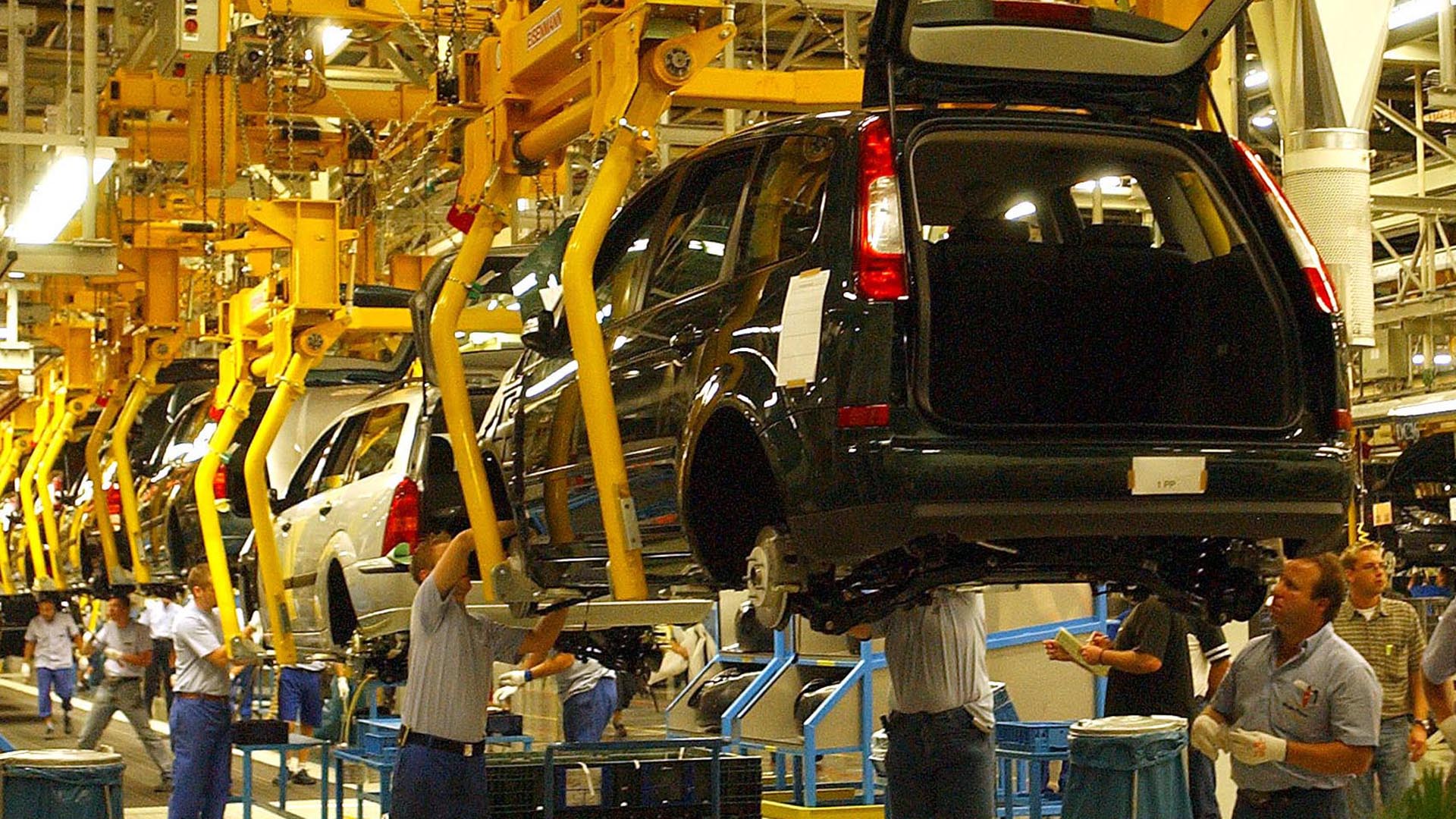
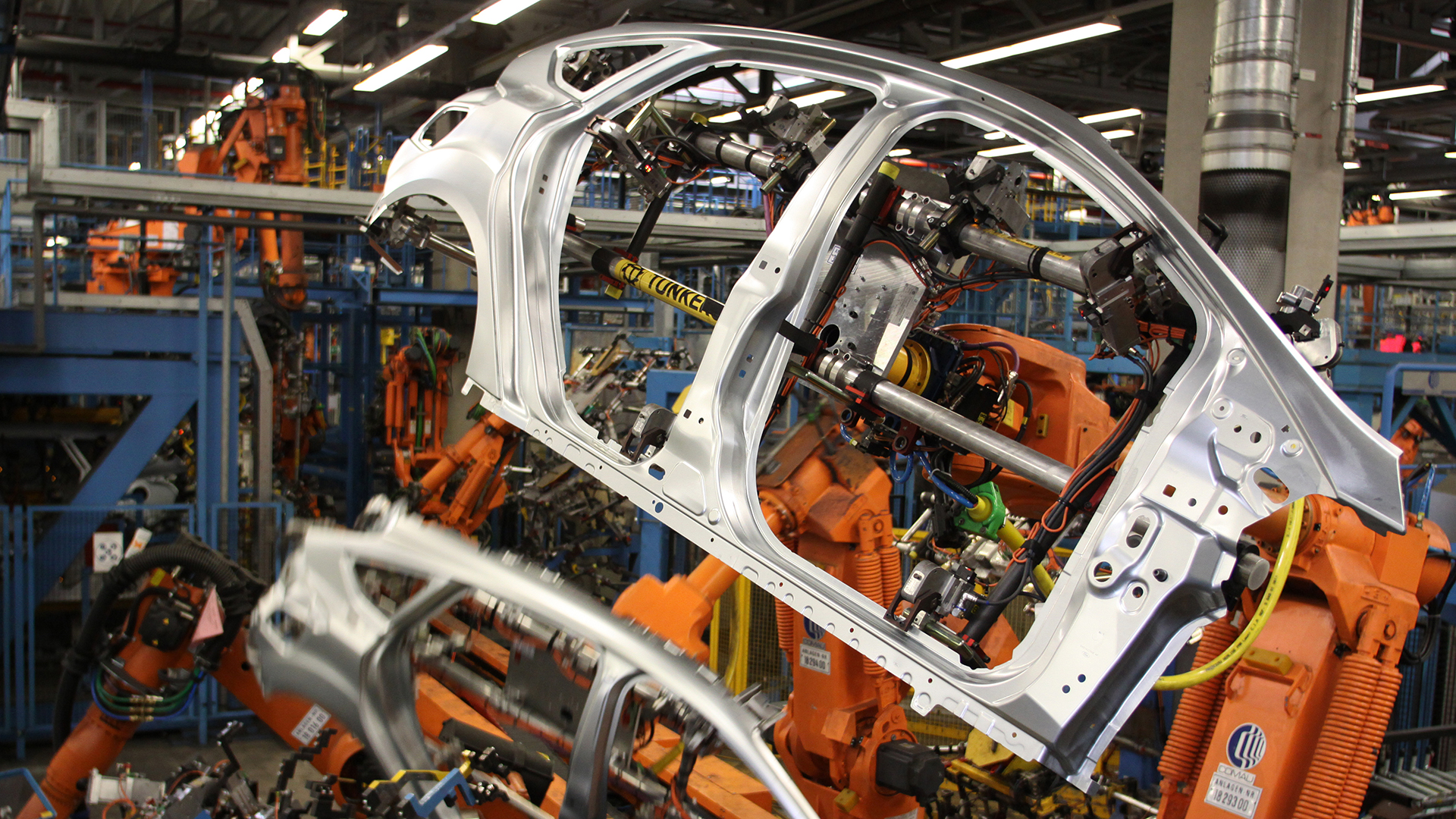
Ford calls this a ‘wedding’. It sees the platform-sharing Focus and C-Max on the same production line, where the body and drive units are assembled.
10 million cars
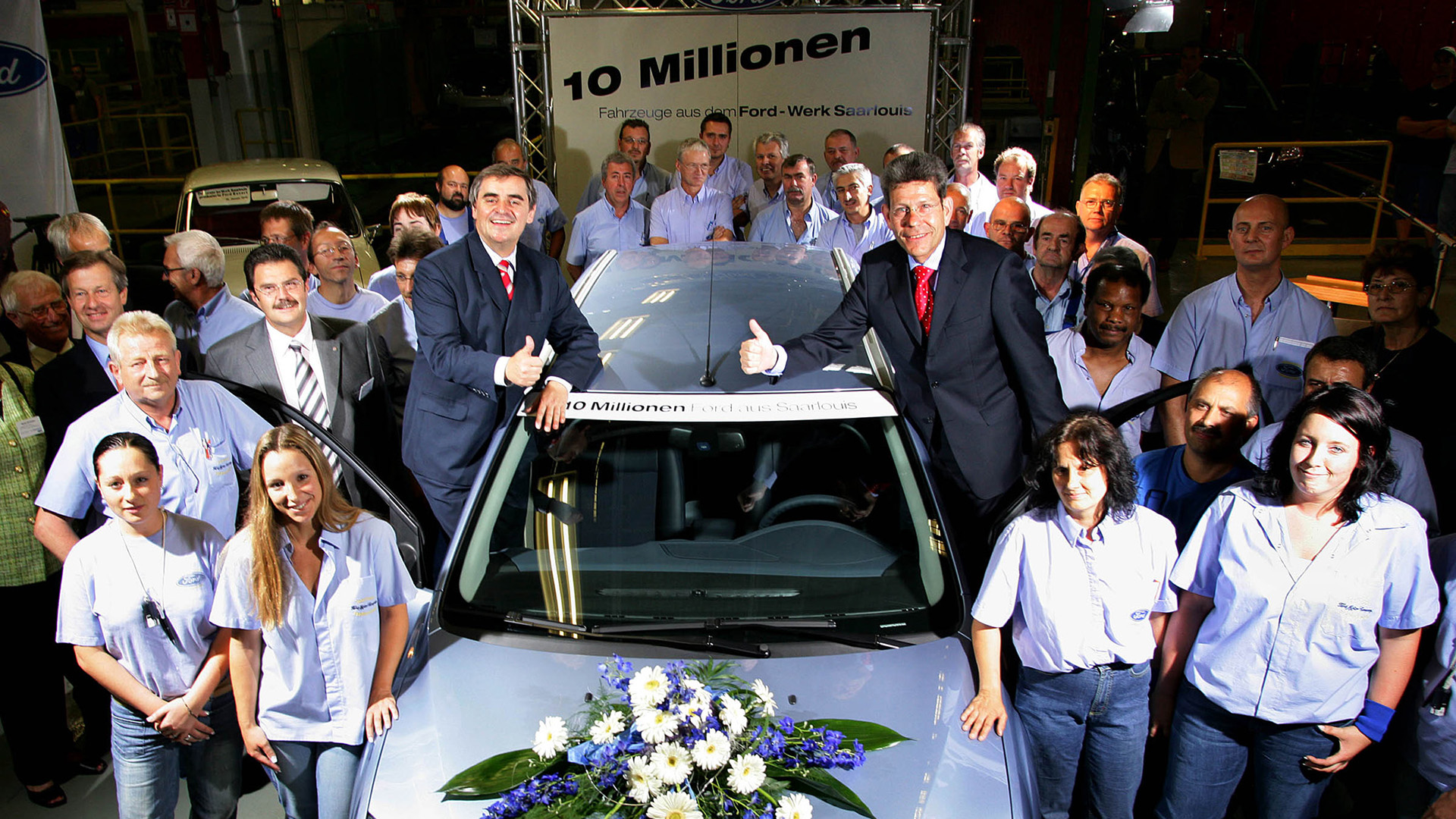
Yet another milestone. In July 2005, Saarland’s prime minister, Peter Muller (left) and Ford’s Bernhard Mattes were on hand to celebrate the 10 millionth vehicle to be built in Saarlouis. Most of the people in this photo look delighted.
Ford Kuga
The first Ford Kuga rolled off the production line in 2008. Today, the Kuga is the most popular SUV in Germany.
We run green
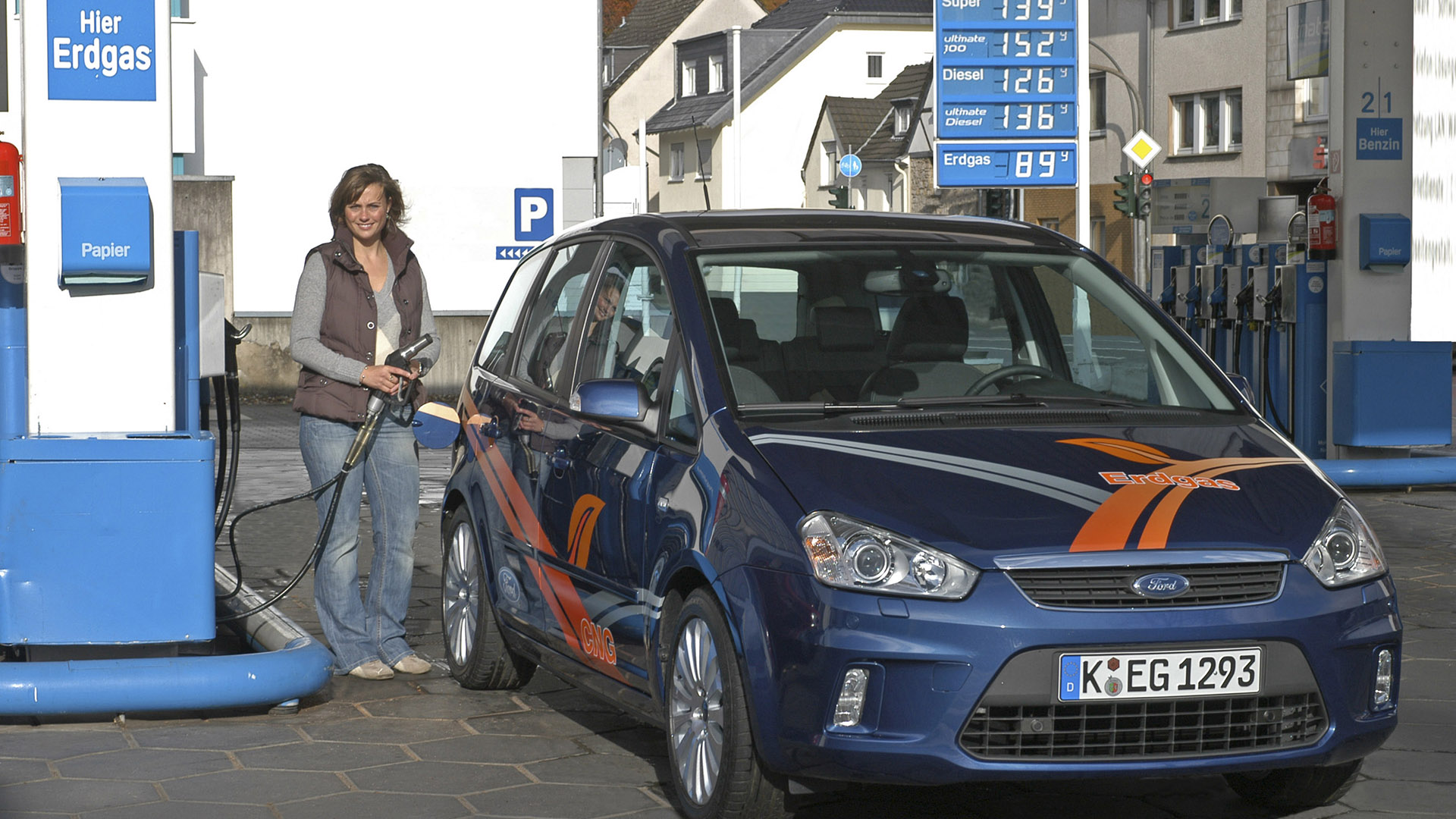
From July 2008, vehicles at the Saarlouis plant were converted to liquified gas (LPG) for the first time, followed a year later by natural gas (CNG) technology.
Saarlouis at work
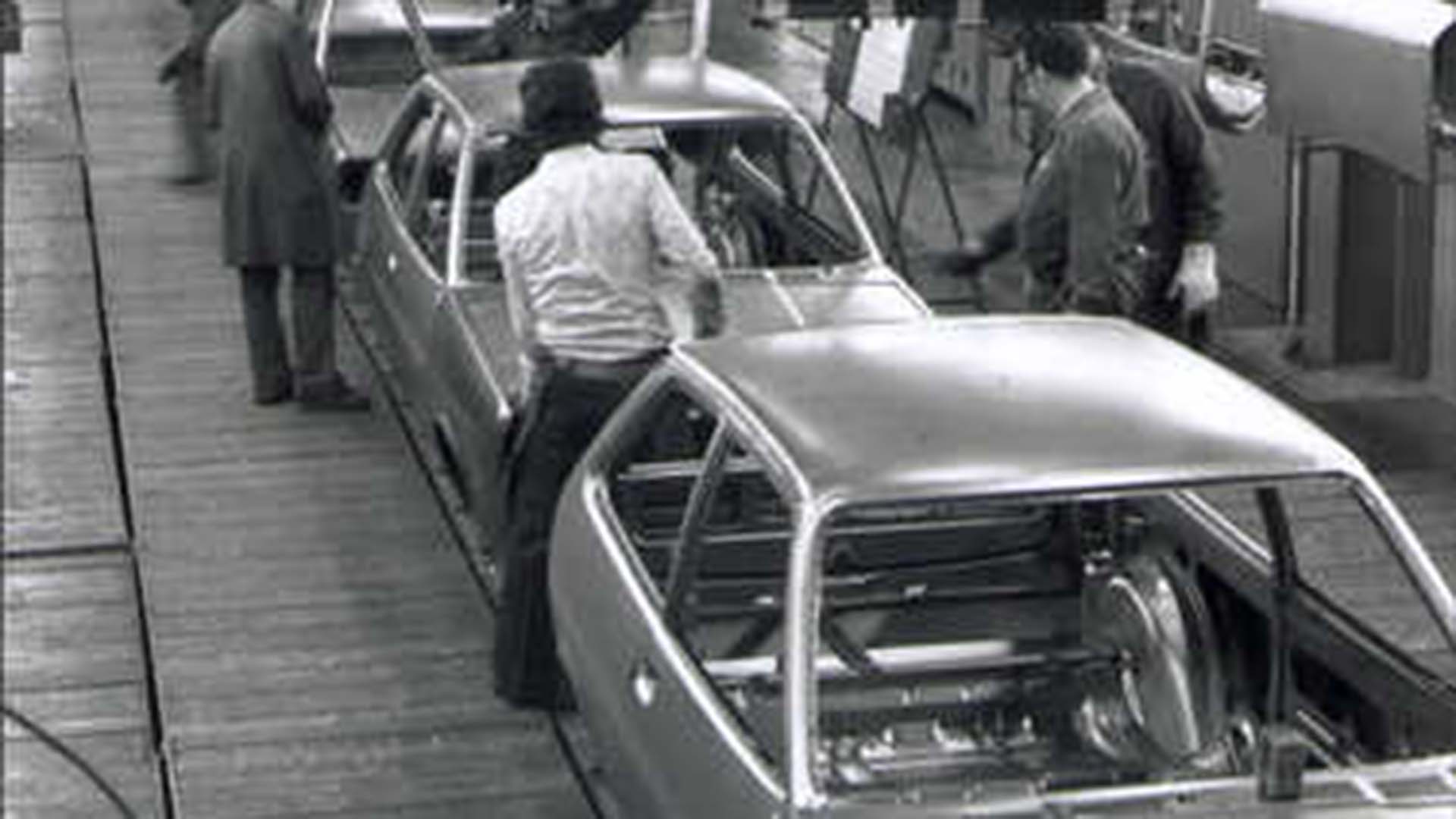
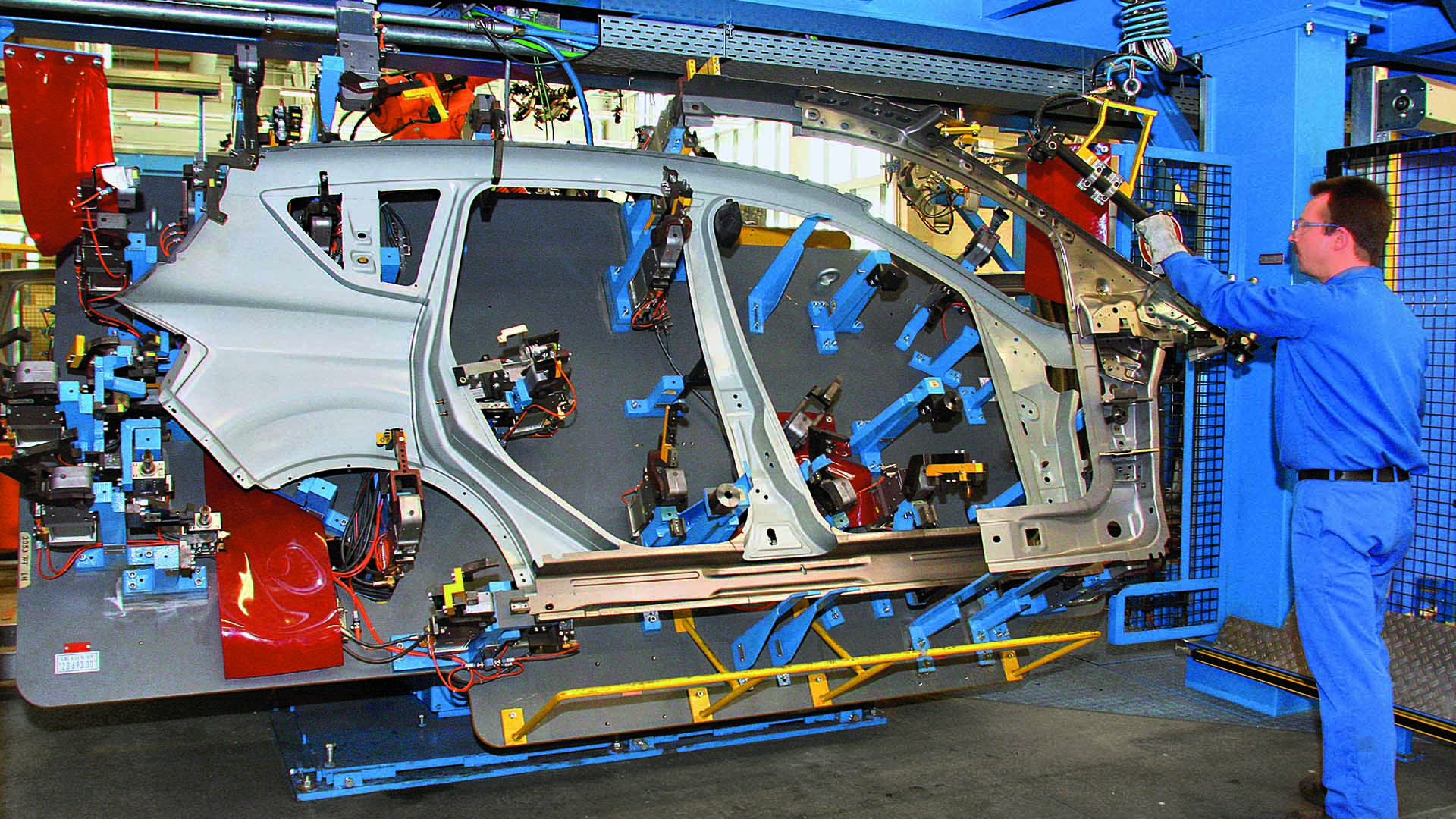
This photograph taken in 2010 shows a vehicle sidewall in production at the Saarlouis plant.
Ford Focus Electric
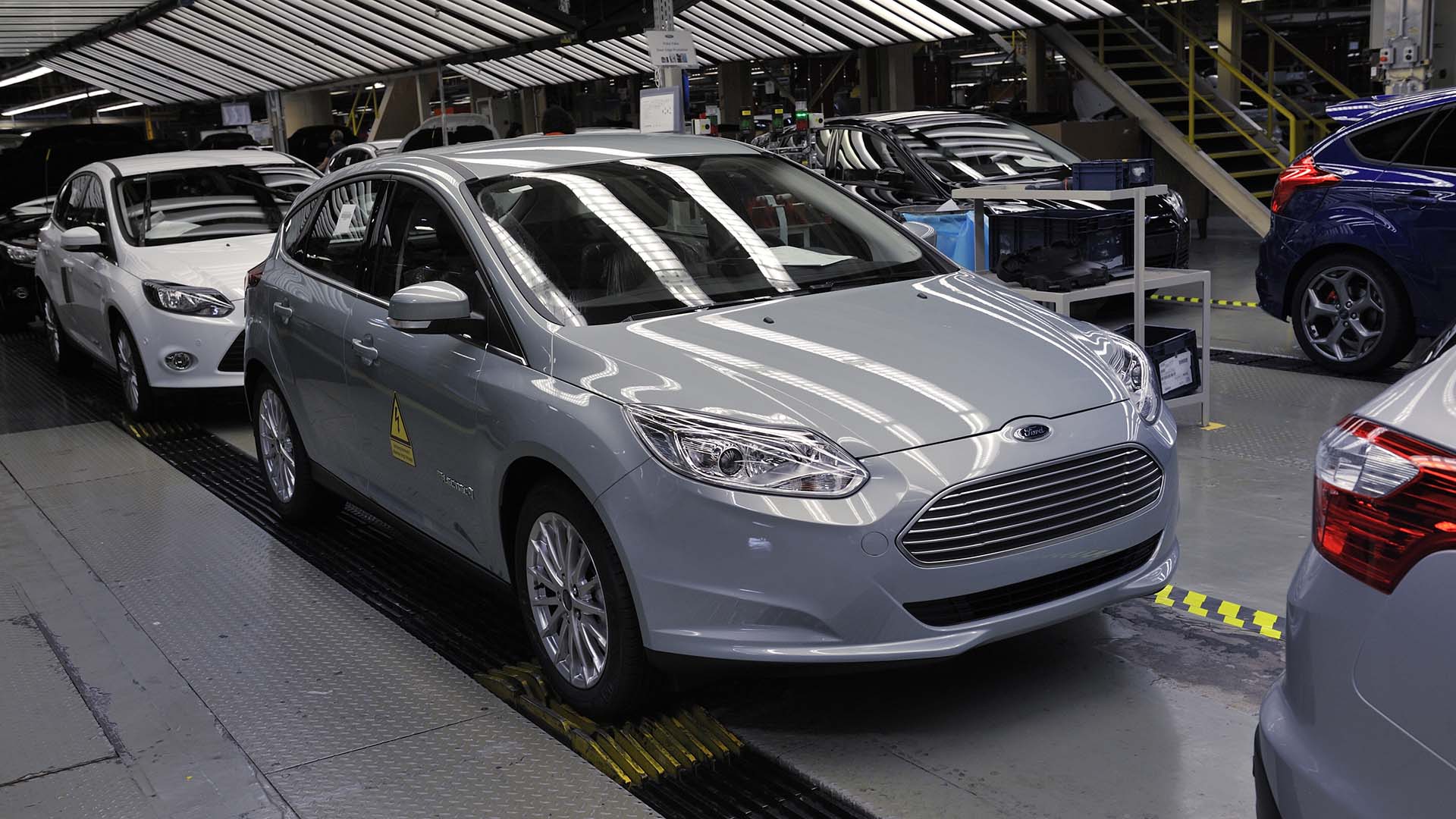
In June 2013, the first Ford Focus Electric rolled off the production line in Saarlouis. It was the first fully electric Ford in Europe and the first pure electric car to be produced in Germany.
C-Max returns to Saarlouis
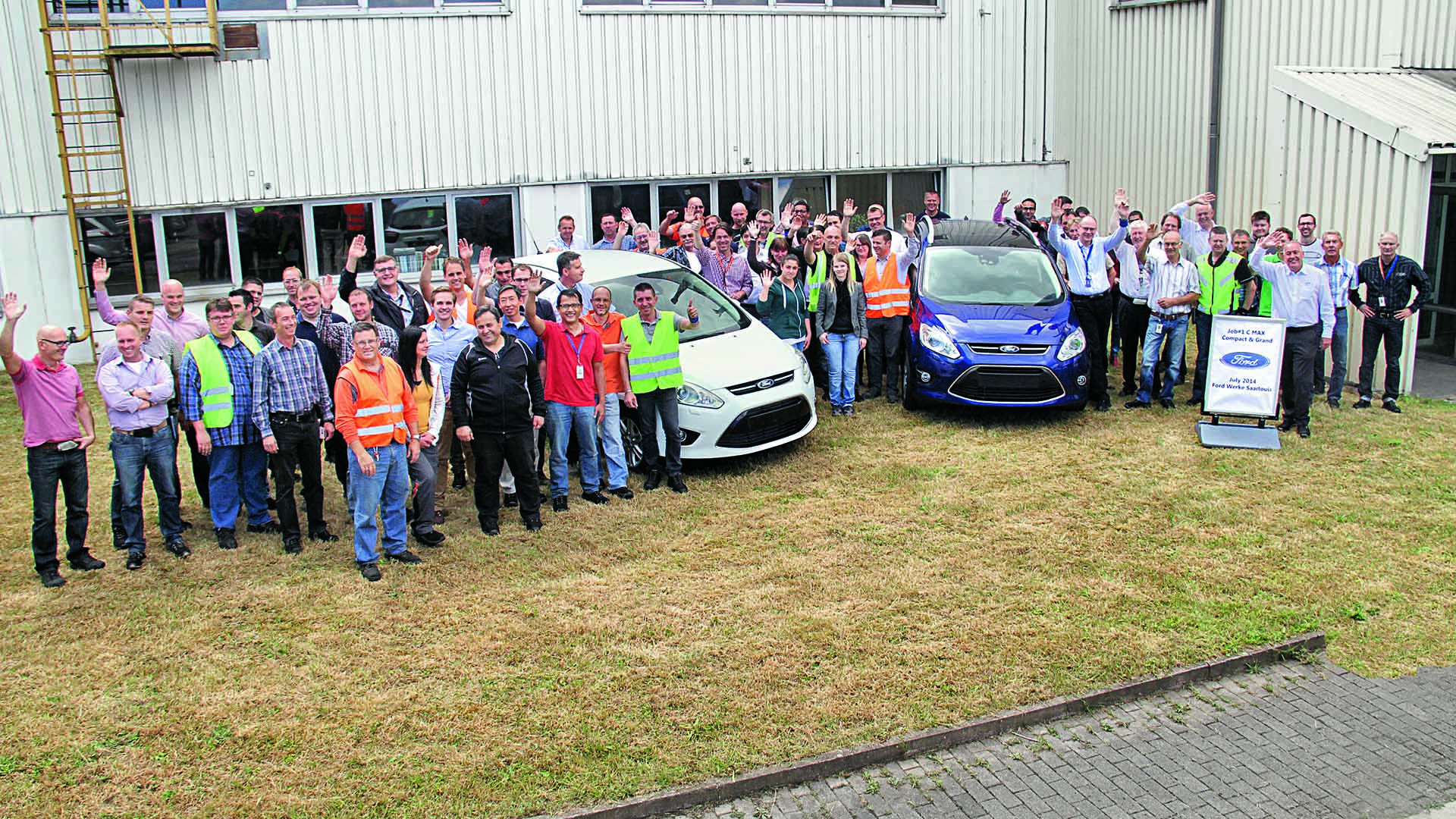
Ford moved production of the C-Max to Valencia in 2010, but it returned to Saarlouis in 2014. Here we see the C-Max, Grand C-Max and lots of happy people.
15 million cars
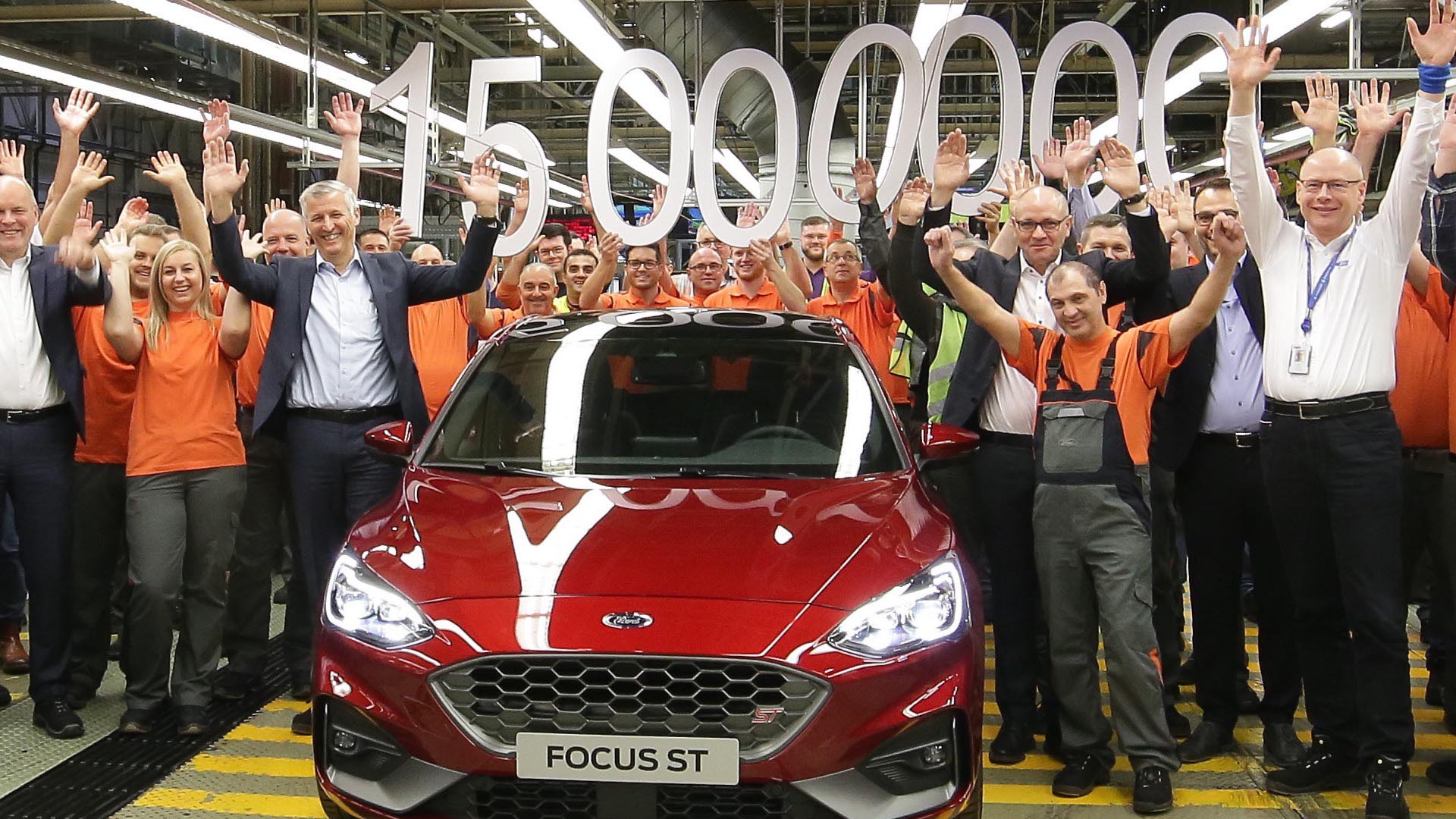
Disappointingly, Ford didn’t re-use the figures from the five million milestone when celebrating the 15 millionth car. This photograph was taken in December 2019, just a month before the 50th anniversary of the Saarlouis plant. When the first Escort rolled off the production line in 1970, production capacity was 20 units a day. Today, that number has increased to 1,160.
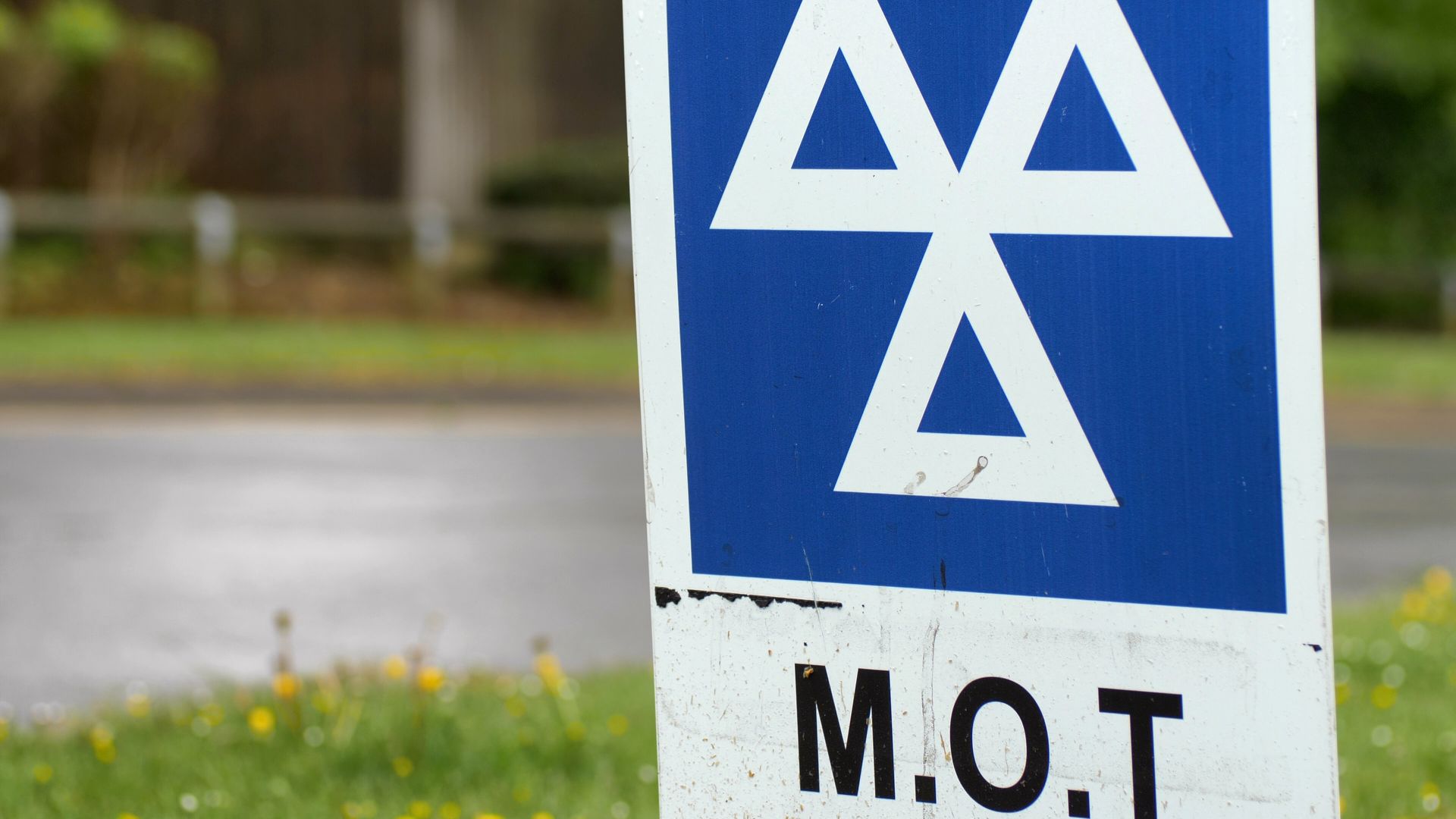
Three percent of motorists thought a car radio not working would count as an MOT fail. That’s according to the results of a new survey.
Research shows that 7.6 million cars have been driven on the roads without a valid MOT – around 20 percent of the cars on the road. Thirty-one percent of the drivers polled in the Halfords survey were unaware that they could face a fine of up to £1,000 for driving without an MOT.
Meanwhile, 16 percent didn’t know that an expired MOT puts them at risk of invalidating their car insurance.
When asked why they had driven without an MOT, 64 percent of drivers said they had forgotten when the test was due. Two-thirds of drivers (33 percent), believed there’s a grace period for driving without an MOT. There isn’t.
It’s worth remembering that the government runs a free MOT reminder service. You just need the car’s registration number and a phone number or email address. Click here to access the service.
‘An anxious time’
Aaron Edwards from Halfords Autocentres said: “The MOT test can be an anxious time – it can be a little bit like waiting for your exam results. When it comes to doing things that may cause stress and cost money, people tend to leave these things to the last minute.”
The biggest MOT myths
Rank
Myth
Percentage
1.
Didn’t realise that running out of water in the screen wash bottle would count as a fail
71 percent
2.
Didn’t know that windscreen stickers that obscure the driver’s view would be classed as a fail
60 percent
3.
Weren’t aware that having under-inflated tyres would mean a fail
56 percent
4.
Thought that window not opening would be a fail, but that isn’t the case
33 percent
5.
Didn’t know that driving with damaged windscreen wipers would be a fail
31 percent
6.
Thought they could pass their MOT without having a registration plate
25 percent
7.
Thought they could pass their test with a missing door mirror
New research reveals 49 percent of British people suffer with ‘green guilt’. That’s the worry your lifestyle isn’t eco-friendly enough, whether that’s down to the car you drive, your recycling habits or anything else.
The research, conducted by Kia, found seven in 10 Brits face pressure from family and friends to be more eco-friendly. Some even admit to exaggerating their green credentials as a result.
Even children are making demands, with 46 percent putting pressure on their parents about green choices.
Under the influence
Peugeot e-208 goes far enough for long-distance couples
Sir David Attenborough is the most influential celebrity in encouraging a greener lifestyle – even more so than Greta Thunberg. A sizeable 53 percent say their green choices are influenced by social media influencers, too.
According to the research, a massive 77 percent plan to buy an ‘eco’ car in the next three years. Note, that doesn’t necessarily mean an EV. Just over a third (34 percent) are looking to buy an electric car next, while 60 percent are ‘ready to embrace the electric revolution’.
What’s putting people off for now? Well, 43 percent said they fear running out of charge, while 40 percent worry about finding somewhere to plug in. Also 35 percent say EVs take too long to charge.
“It’s great to know that Brits are ready to embrace the electric revolution but it’s clear there’s still a lot of myth-busting to be done,” said Steve Kitson, director of corporate communications at Kia UK.
“We now need to help consumers see how they can tackle ‘green guilt’ and make a positive impact on the environment by taking the leap and going green with their next car. At Kia, we’ve announced our plans to have 11 electric models in our line up within the next five years to ensure we are leading the way for the electric revolution.”
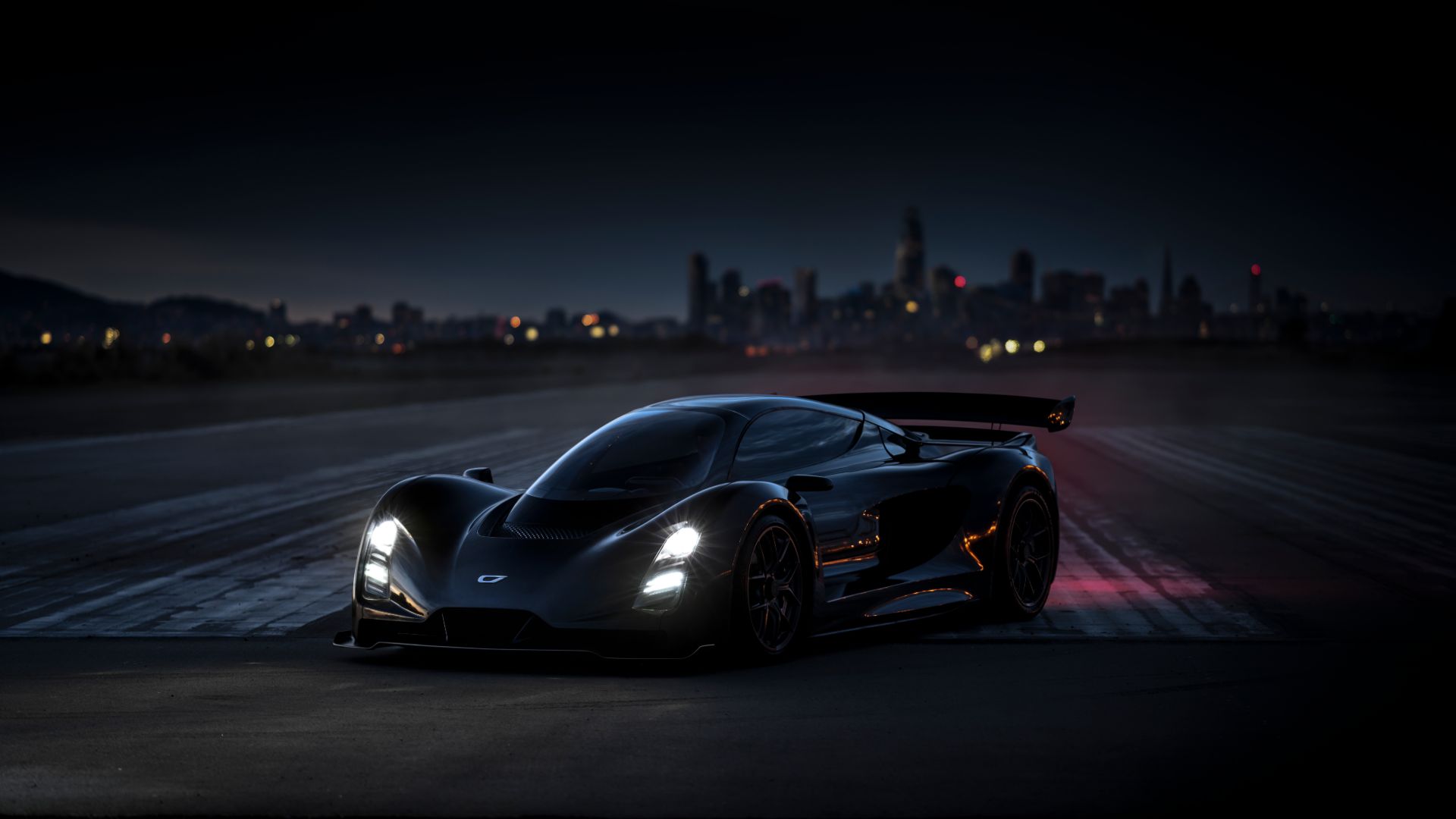
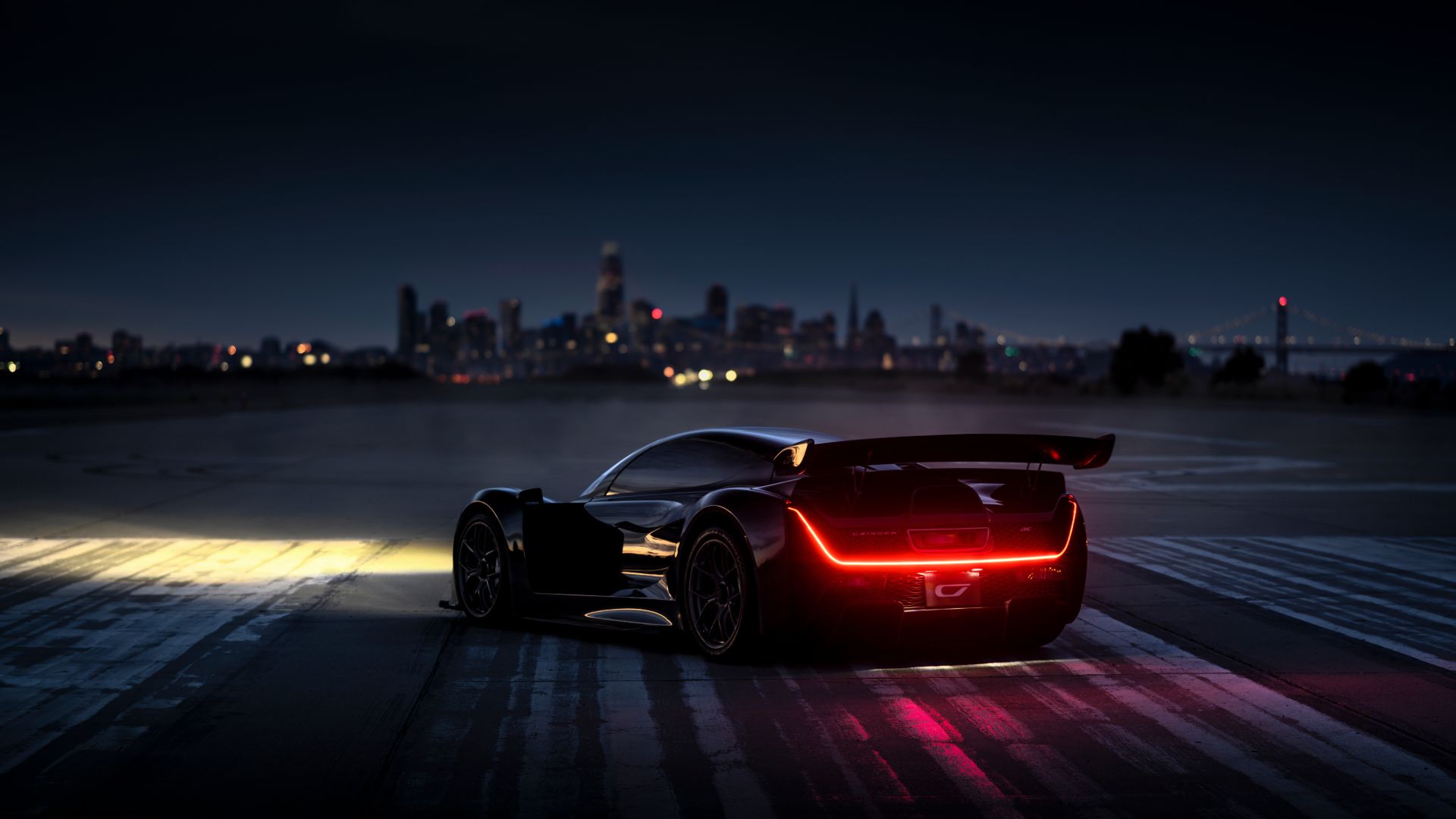
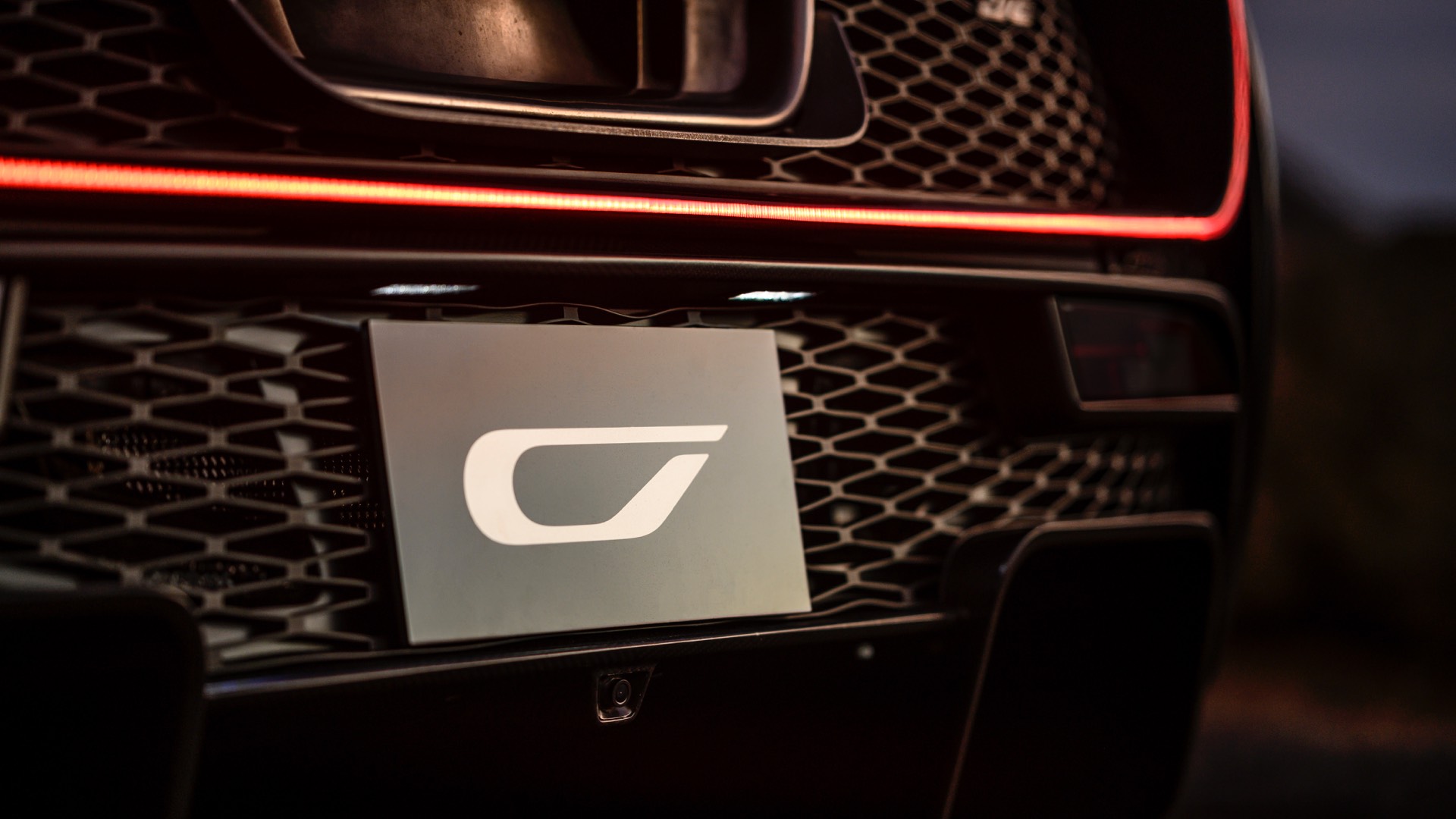
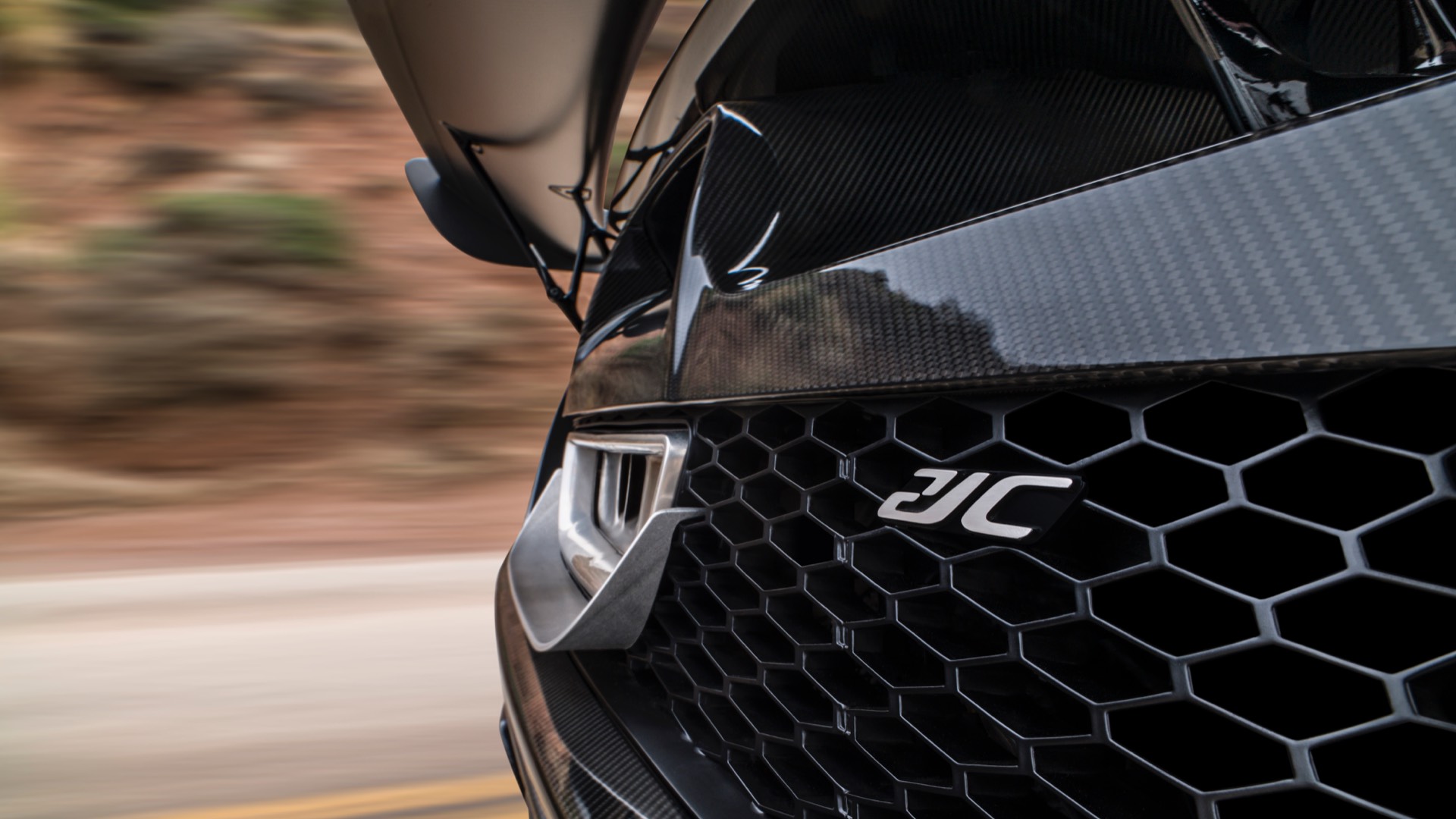
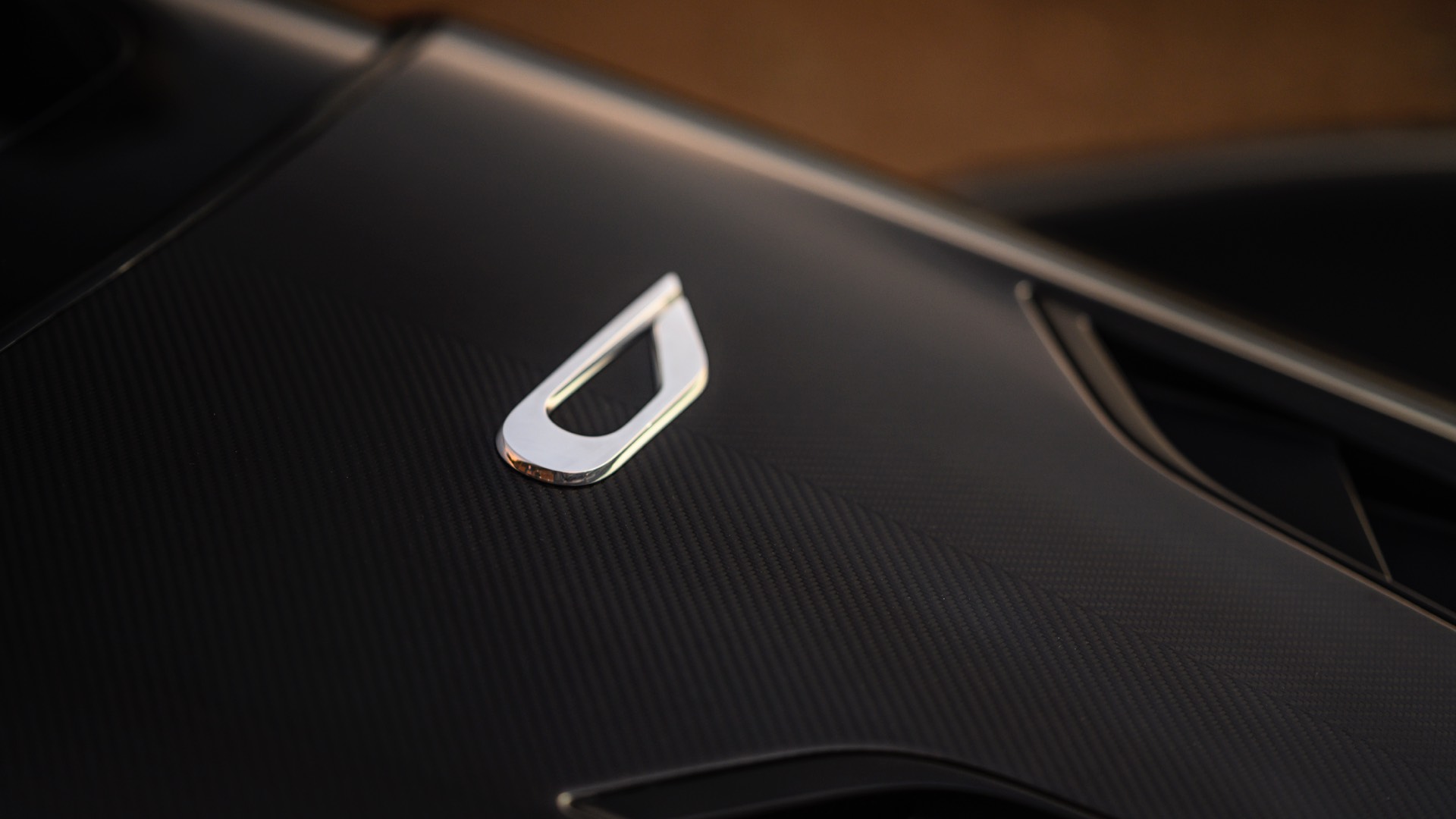
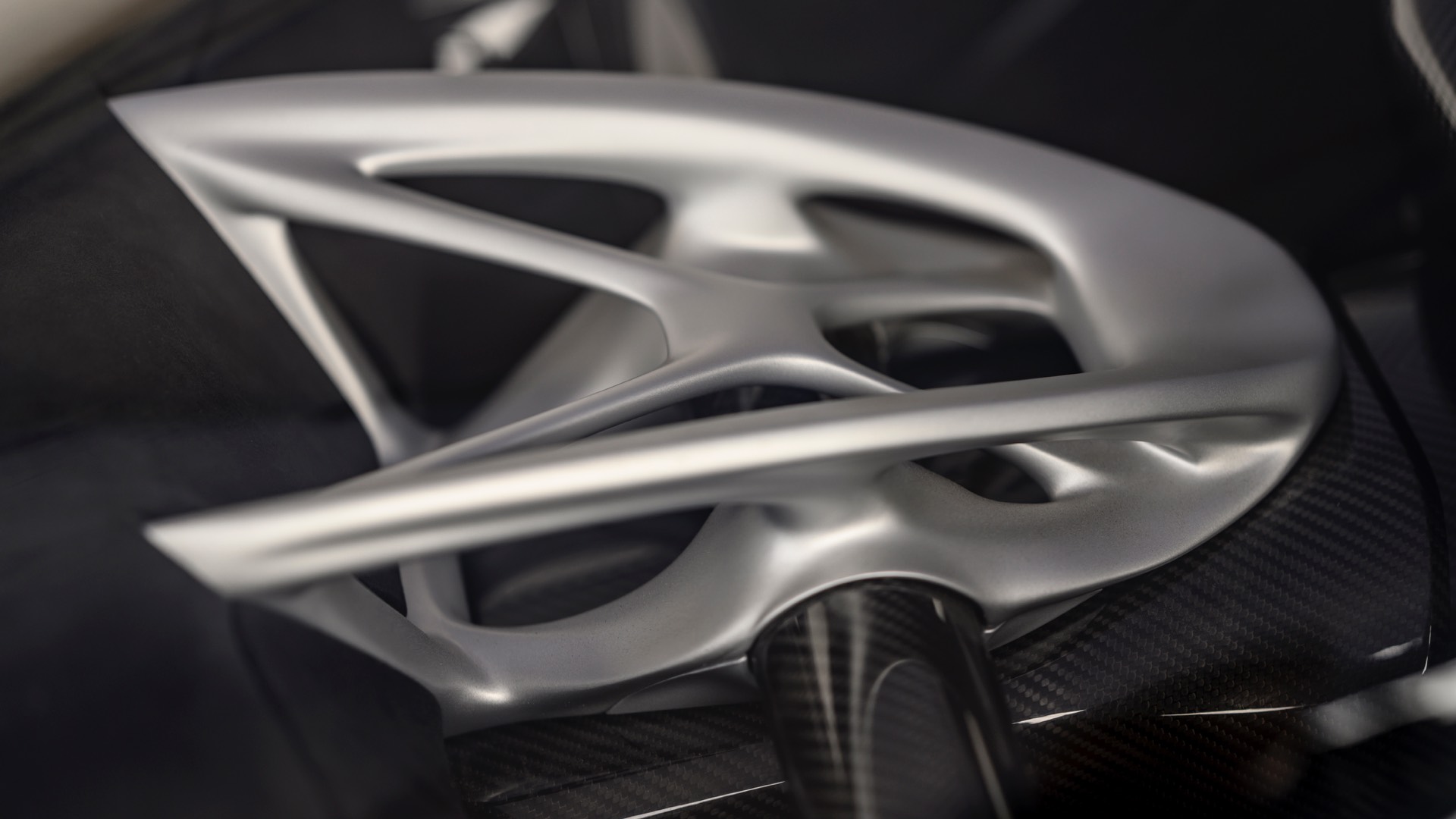
The latest player to join the flourishing hypercar fray is Czinger. The Los Angeles-based company has ideas on how to revolutionise high-performance supercars and how cars are made.
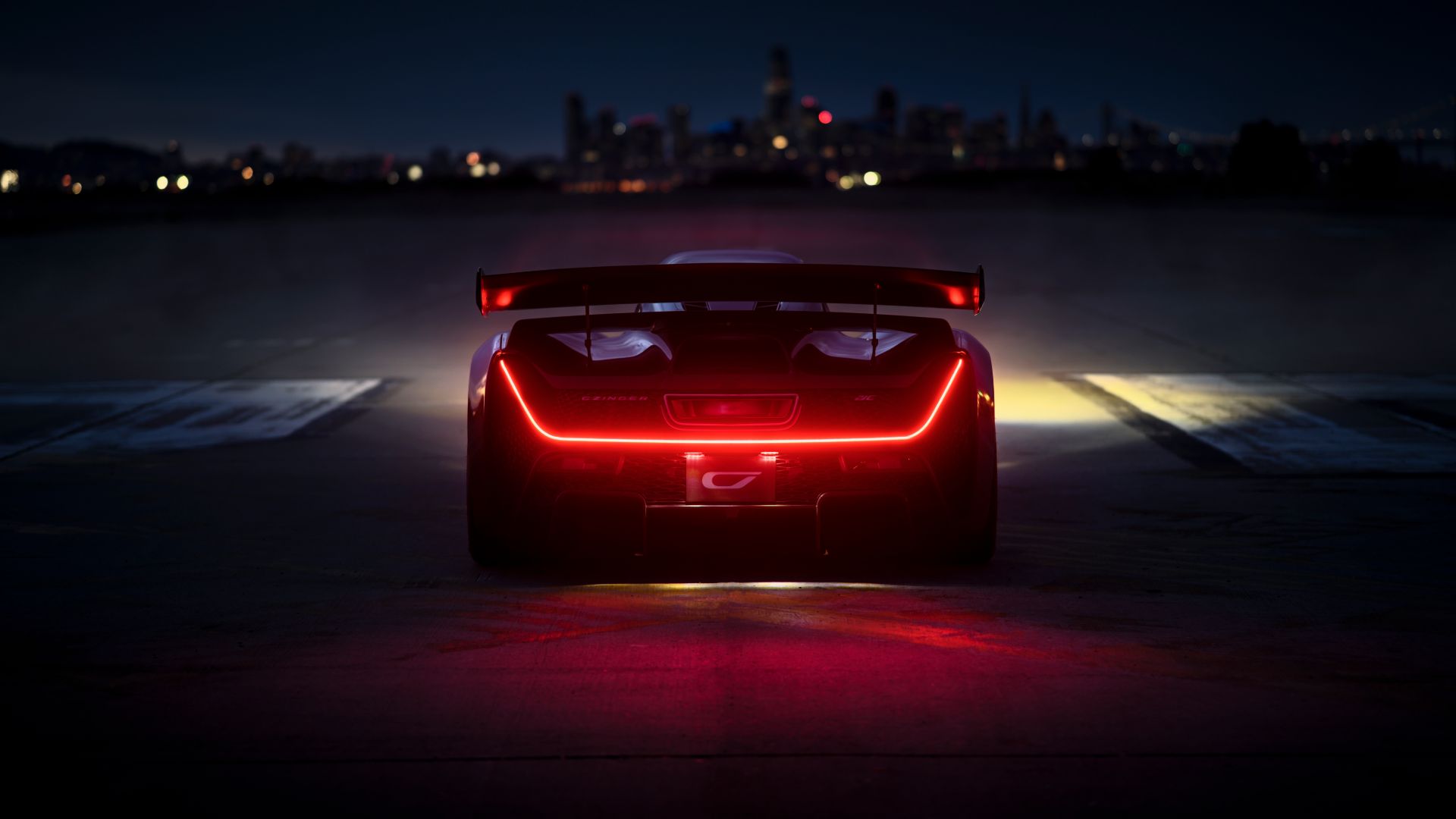
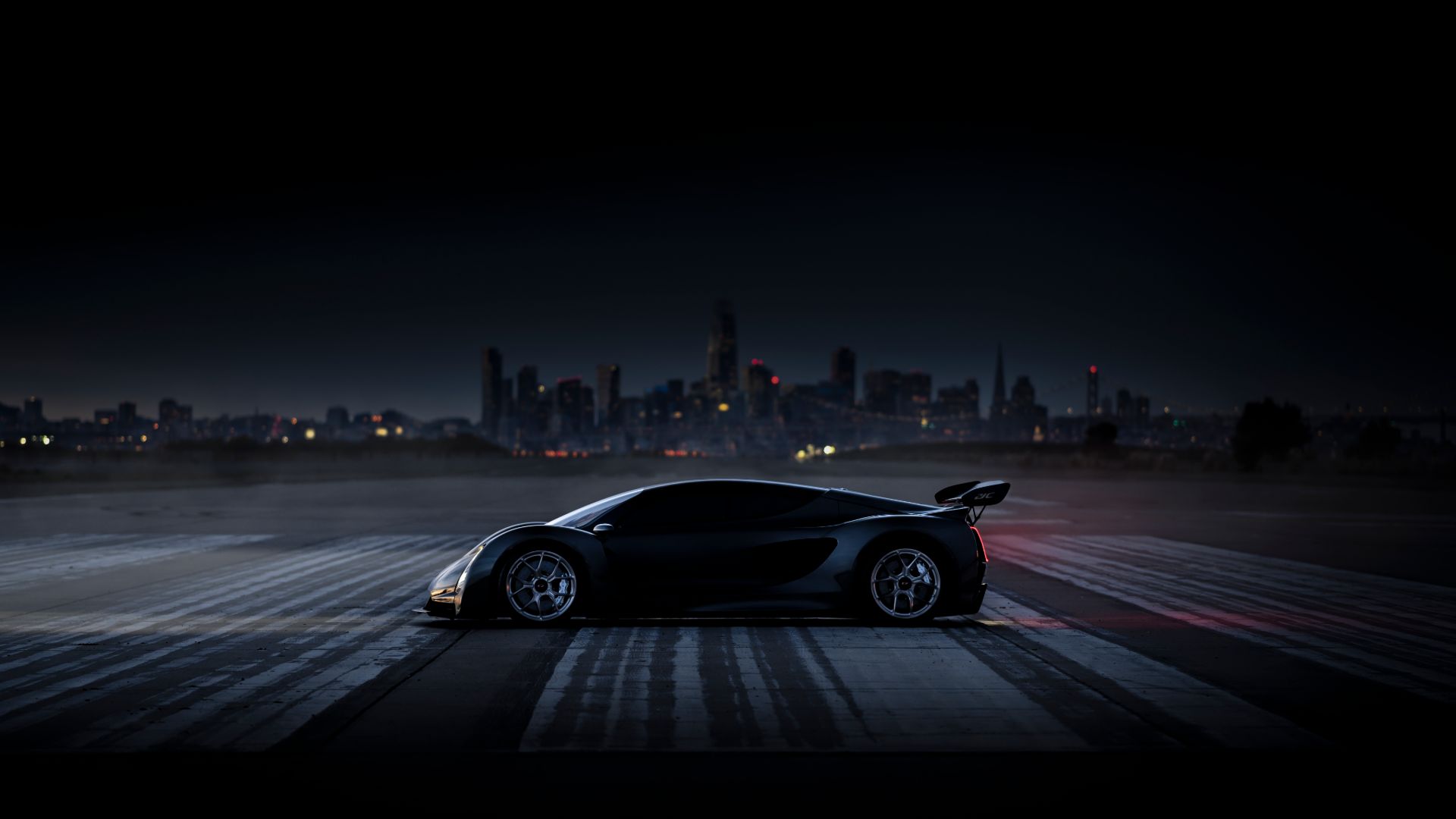
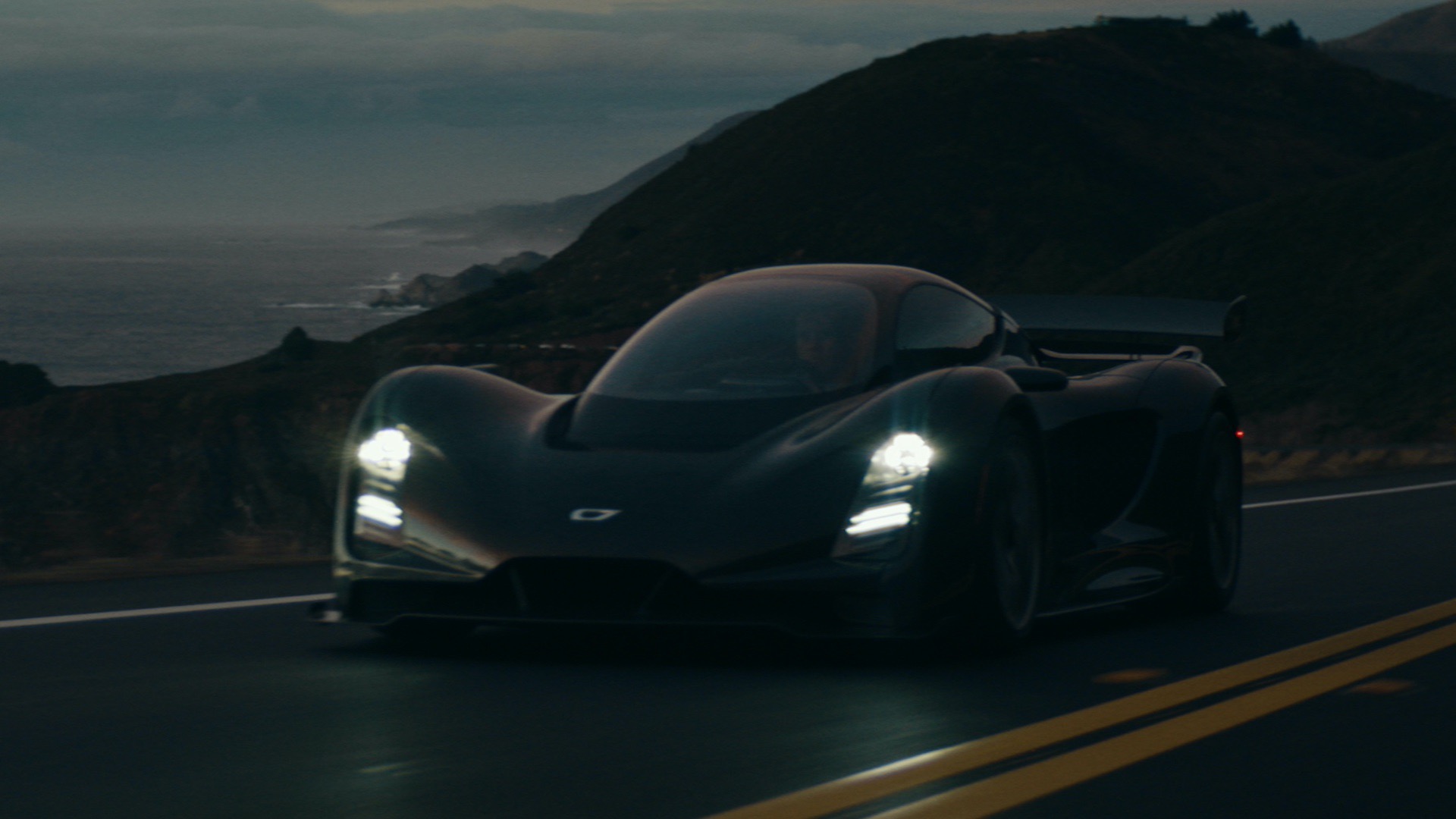
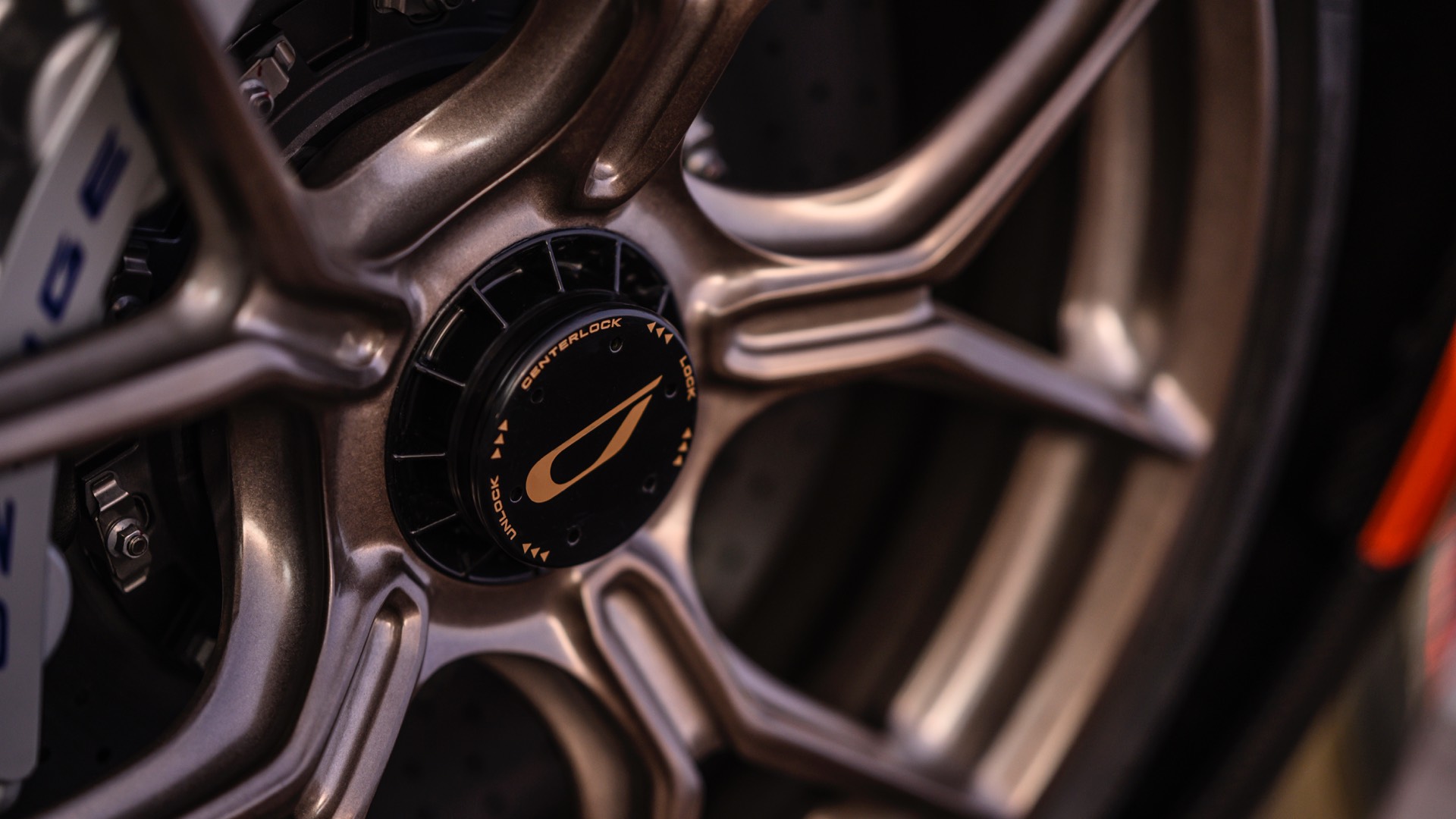
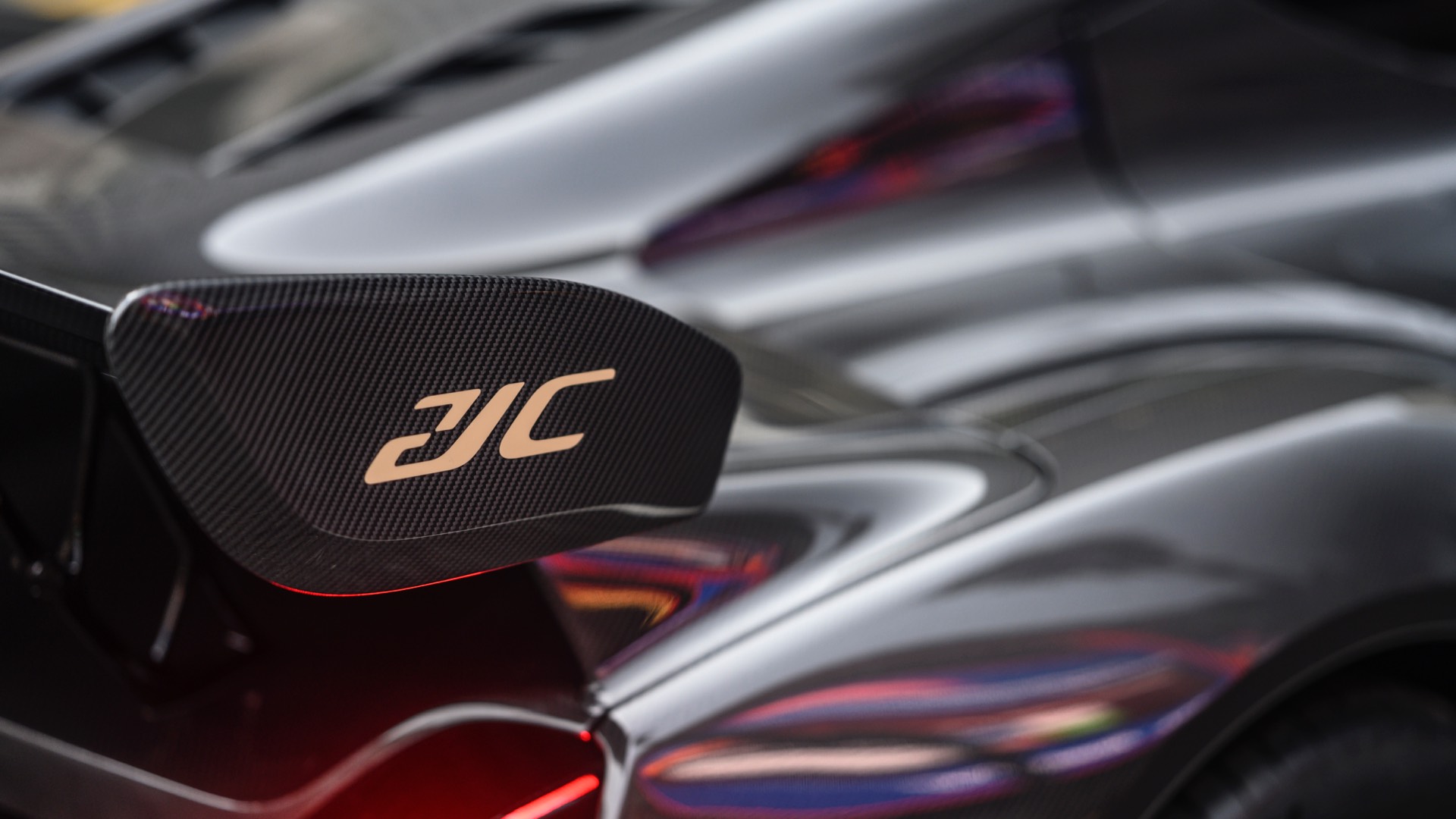
It has already teased the aggressive 21C, and now, it’s ready to reveal some power and performance figures. We’ve also got a few more teaser shots of this remarkable looking machine.
1,250hp hybrid hypercar
But first, the performance. If an Aston Martin Valkyrie seems a bit tame to you, perhaps the 1,250 hp Czinger will more tickle your fancy. That makes the 21C good for 0-62 mph in 1.9 seconds.
Not many cars can show a Bugatti Chiron a clean pair of heels, but the 21C appears to be one of that rarest of breeds.
What exactly is producing that 1,250 hp is still partly under wraps. What we do know, is that Czinger calls its in-house developed unit a ‘strong hybrid powertrain’.
Judging by the sounds in the teaser videos, it’s certainly not got some generic American V8 sat out back, even in spite of both car and creator Kevin Czinger taking inspiration from Lola’s classic big-banger V8 racers.
There’s an industrial howl to it that wouldn’t sound out of place spilling from the back of a modern LMP2 racing car. It’s certainly more mysterious than the kind of twin-turbocharged V8 crate motors you’ll find in some other recent American hypercars.
Some might worry that hypercars are much of a muchness these days. Every man and his dog’s got an autoclave and dreams of sharing show floor space with Horatio Pagani and Guinness World Record book space with Christian Von Koenigsegg. To that end, it’s best make your new hypercar genuinely revolutionary and innovative.
Czinger believes it has with the 21C. With its unique two-seat in-a-row design and 3D printing in amongst the “world’s most advanced production technologies”, it’s certainly something we’ve not seen before.
Seating in the centre is a unique offering, too, outside of the McLaren F1, Speedtail, and soon Gordon Murray’s T.50. That there are serious performance figures, and evidently finished and running cars, is a riposte to the sceptics, too.
That single-seat layout, combined with the fact that, unlike the aforementioned McLarens and the GMA T.50, it doesn’t have two seats akimbo, means the 21C can have an extremely narrow glasshouse. The fighter plane cockpit and Le Mans wedge cliches are well-worn, but they really apply here.
In terms of styling, the Czinger is La Sarthe meets the long-standing supercar tribute acts of Grand Theft Auto.
There are hints, curiosities, that make you wonder whether some other cars inspired it. There are very of-the-moment styling tropes, too, with the width-spanning rear LED light bar.
All in, the 21C, in fading light at the Alameda Naval Base in San Francisco, looks to be a rare thing. Genuinely original, inside and out. We look forward to seeing it in full at Geneva next month.
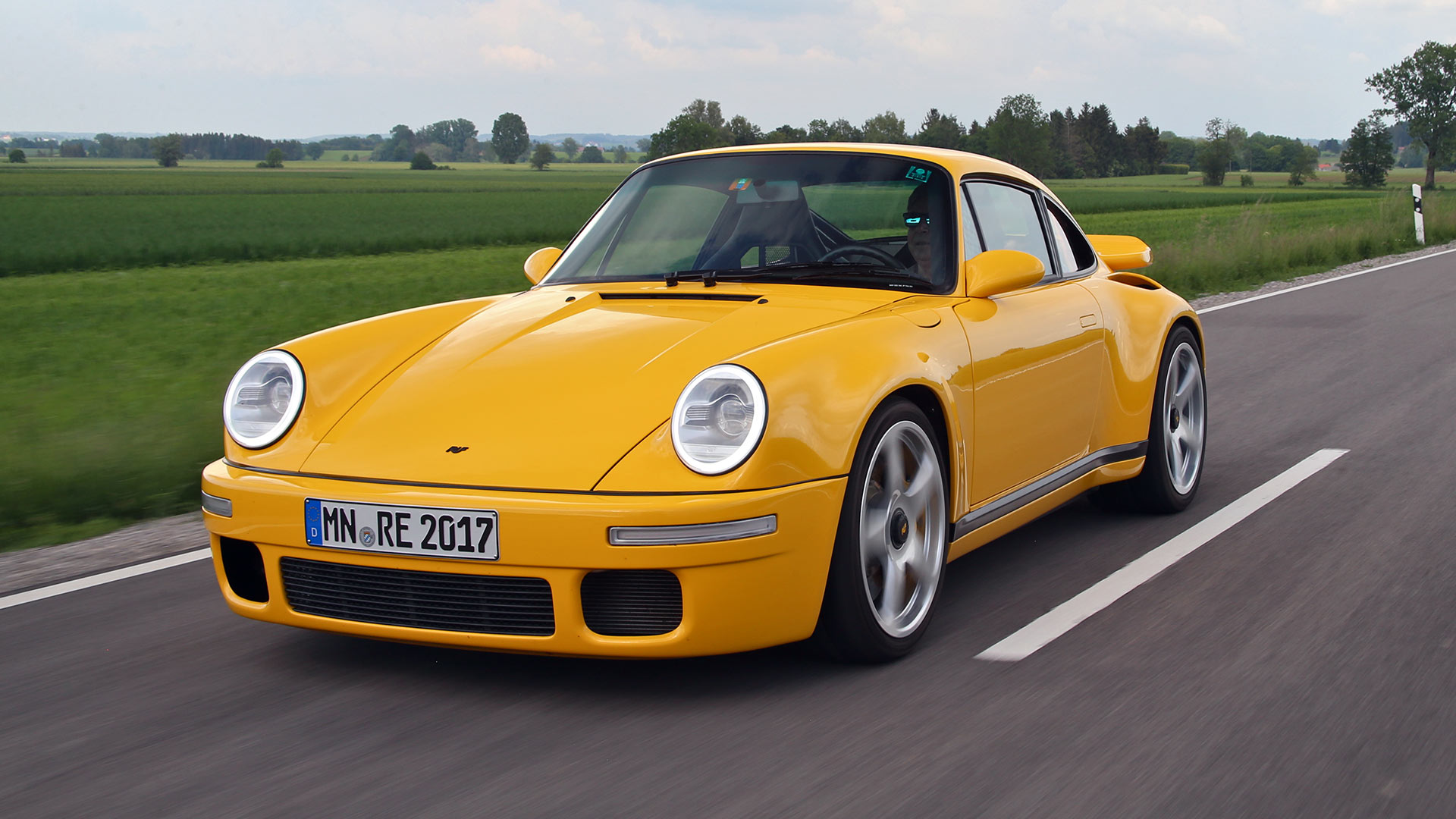
Many German companies produce modified versions of Porsche sports cars, but RUF stands out from the rest of the crowd.
Building models completely from the ground up using bare chassis, RUF is seen by the German government as an automotive manufacturer in its own right.
A new limited-edition book aims to capture the story of the company first founded in 1939, and how it has created some of the fastest sports cars on the planet.
A story of junior and senior
Founded by Alois Ruf Sr. in Pfaffenhausen, Germany in 1939, RUF first operated as a simple service station. Although Alois Ruf Sr. experimented with his own vehicle designs, it would not be until the 1970s that the Porsche fascination began.
Following the death of this father, Alois Ruf Jr. took charge of the company in 1974. An interest in the Porsche 911 led him to start creating modified parts for the famous sports car. RUF would then build its first full production model in 1975.
This story of the origins of RUF is the subject of the eponymously titled book from Waft Publishing, acting a complete archive of the 37 different RUF cars made to date.
Rapid history lesson
Broken into two sections, the first part of the book is titled “Alois and Friends”, which details the story of the man behind the brand. In “Yellowbird and Friends”, the evolution of RUF vehicles is chronicled, with the hardcover book spanning 588 pages in total.
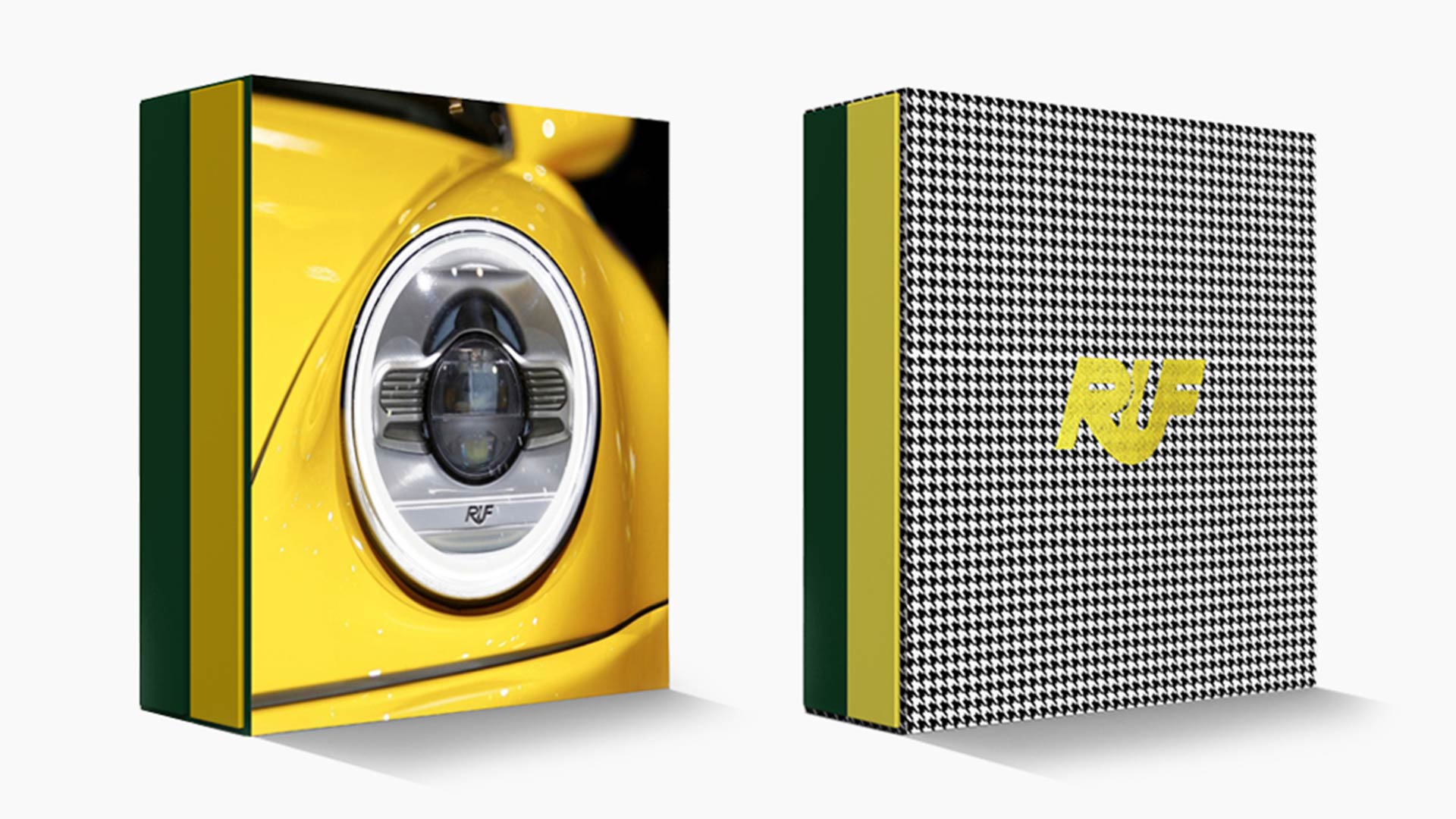
Waft has made the book in two types, with 911 copies of the the $310 (£240) ‘Limited Edition’ version to be sold.
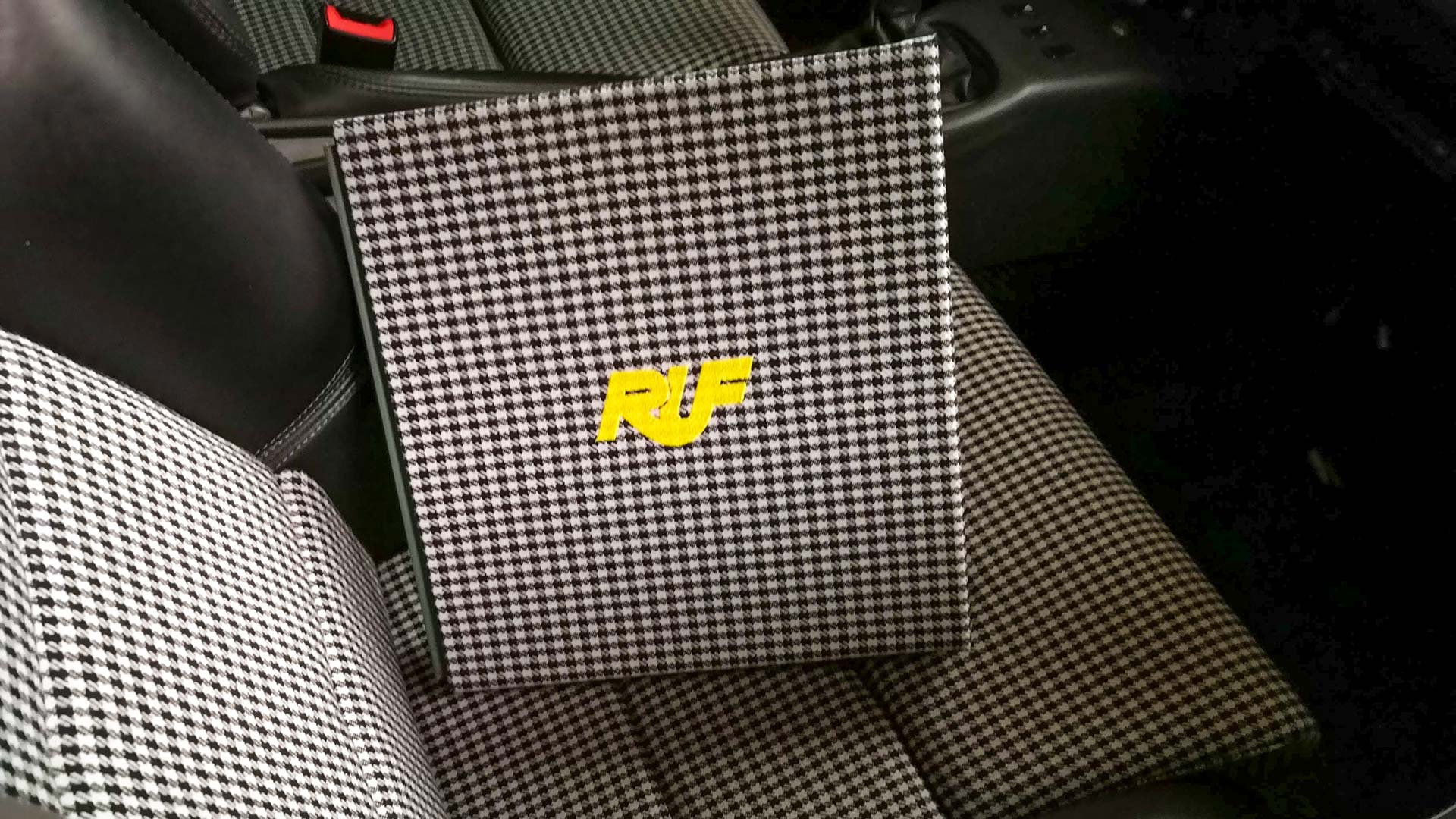
Fans can also buy the ‘Very Limited and Personalized Edition’ for $600 (£465), that comes finished in the same Pepita Ruf fabric as used in RUF cars. Limited to 356 copies, opting for the ‘Personalized Edition’ also sees the buyer’s name embroidered onto the front cover.
Given the price of new RUF cars, opting for the book might be a more affordable option for fans of the marque.