During its first full year of production in 2019, it doubled the total output of Lamborghini’s Sant’Agata factory. It has gone on to set a record for being the highest produced model in the company’s history – and in the shortest amount of time since its launch.
The popularity of the Urus led Lamborghini to build a brand-new paint shop, making use of artificial intelligence. This allows customers to specify an even greater degree of customisation than before.
Making records on ice, too
Fittingly, the model that left the production line was configured with the latest ‘Graphite Capsule’ set of finishes.
This means an exterior finished in Grigio Keres Matt grey paint, with eye-searing Verde Scandal green detailing. The theme continues inside, with the steering wheel rim also upholstered in bold Verde Scandal.
With a twin-turbocharged 4.0-litre V8 engine, the 650hp Urus is one of the most powerful production SUVs in the world.
Earlier this year, it also became the fastest SUV on ice. At the Days of Speed event on Lake Baikal in Russia, the Urus reached 185mph over a frozen one-kilometre course.
The winners of a government competition to fund testing of hydrogen-powered vehicles have been announced.
Public transport, supermarkets and even emergency services in the Tees Valley, near Middlesbrough and Stockton-on-Tees, will be involved in the £2.5 million scheme.
Responsible for more than half of the UK’s hydrogen production, the North East region is an obvious choice for the trials.
The Tees Valley previously received more than £1.3 million in government funds for a hydrogen fuelling station.
Fighting crime with zero emissions
One of the most eye-catching hydrogen deployments is the use of Toyota Mirai fuel cell cars.
Ten of the zero-emissions vehicles will be trialled in the Tees Valley, including as response vehicles by Cleveland Police. It follows a similar use of the Toyota Mirai by the Metropolitan Police Service, who benefited from a range of up to 300 miles on a single tank of hydrogen.
Toyota will also bring a hydrogen fuel cell bus to the area, along with a new forklift truck.
A collaboration between Stagecoach and Ricardo will supply other hydrogen buses. The joint venture will see a diesel double-decker bus retrofitted with a hybrid fuel cell system.
Supermarket clean sweep
A fleet of hydrogen delivery vans will be rolled out by HV Systems, supported by the government funding. In partnership with a major supermarket chain, the goal is to demonstrate the benefits fuel cell vans have over battery- or diesel-powered models.
Sainsbury’s will trial a hydrogen-powered heavy goods vehicle in the area. This follows recent separate funding from the government, dedicated to zero-emissions road freight research.
Earlier this year, the government announced a masterplan for the UK’s first hydrogen transport hub in Teesside. It is hoped this could be operational by 2025, contributing 5,000 jobs to the North East economy.
Following the funding announcement, Transport Secretary Grant Shapps said: “By harnessing the power of hydrogen technology, we can pave the way for its use across all transport modes, creating cleaner, greener more efficient transport systems across the UK.”
Sales of classic cars are booming, despite the ongoing effects of the Covid pandemic. And the market is being driven by online auctions.
That’s the view of Tom Wood, CEO of Car & Classic. “With traditional auctions closed, people have wanted to sell cars without physical contact,” says the tech entrepreneur. “Visits to our site were up 30 percent in 2020, but online auctions grew 60 percent month-on-month.”
Car & Classic is Europe’s largest marketplace for collectable cars, with more than 40,000 vehicles listed at any one time. Its new auction website launched in July last year and has sold hundreds of cars to date.
We asked Tom about the latest buying trends, how an online auction works and which cars get customers clicking. Oh, and his own very eclectic car collection…
Tell us about the current classic car market
It’s a buoyant market and online auctions have made it more accessible to more people. Modern classics – that’s anything from the eighties to the noughties – are really flying, both from an interest and a pricing point of view. We’ve also seen a slight softening of older cars from the forties and fifties.
That’s partly a generational thing: new people have come into disposable income and the cars that were on their bedroom walls now look attractive and potentially achievable.
I think that, thanks to the coronavirus vaccine, there will be a ‘post-war’ feel in the air. This will continue to fuel interest in classic cars.
How do your auctions differ from simply buying a car on eBay?
Well, you can sell anything on eBay, so the ‘car journey’ is no different to selling a spare tyre or a mobile phone charger. And you do lots of the legwork yourself, such as describing the car and taking photos.
We do that for sellers and charge zero percent fees for buyers. We also use motoring journalists to take the pictures (up to 200 of them) and write the words – and the same person does both, so the car is described in detail by somebody who’s actually seen it.
Importantly, Car & Classic has the world’s only escrow service for online car auctions, which is like the service offered by a physical auction house. We act as an intermediary, so funds are transferred from the buyer to us, then released to the seller when both parties are happy to proceed (i.e. the buyer has seen the car and is satisfied with its condition).
We’re talking about large amounts of money, so escrow is a huge selling point. It takes away the cash risk.
Are any brands or eras of car selling particularly well?
Our top three marques are all German: Porsche, Volkswagen and Mercedes-Benz, while cars from the nineties are currently generating the most interest. The most sought-after model is the Mercedes SL.
One example of a car selling for hugely more than reserve was a 1983 Mk1 Volkswagen Golf GTI, modified in-period by GTI Engineering. It smashed the £11,500 estimate, selling for £21,500.
Another was a barn-find W124 Mercedes E500, which had been left for 20 years. That was estimated at £5,000 and sold for close to £20,000.
We’ve seen plenty of ‘restomod’ classics. Are buyers less fixated on originality?
There’s something for everyone but, anecdotally, I am seeing more modified classics coming up for sale.
I think there is a growing market for these cars, probably helped by the YouTube channels and so on. And it would be remiss if I didn’t mention electrified classics. There are more converted EVs now, such as Fiat 500s and MGBs.
There’s an element of individuality to classic cars, and pristine, as-it-left-the-factory restorations are probably being replaced, in part at least, by restomods – which are more unique and more usable year-round.
What advice would you give a first-time classic car auction buyer?
Spend time studying the description and images, to make sure you really understand the car’s good and bad points.
Read reviews for the auction house on Google, Trustpilot or similar. And get advice from marque specialists about your chosen car.
Finally, check what happens if you win. Most online auctions are simply introductory services, whereas we manage the transaction for you.
Tell us about your own classic cars.
The Morgan Aero 8 was always my dream car and I bought one, then toured it around Europe.
I had a 1965 Mk1 Ford Cortina race car, which I’ve now swapped for an Ariel Nomad. I’ve recently had a second child, so this is probably my act of rebellion.
I also own a Rover P5B Coupe, which I’ve had since university. It was the car that got me into classics. I’m very lucky that I now work with the cars I love.
Five classics that have made money
Finally, we asked Tom which five classic cars gained most value, in percentage terms, in 2020. The following list is based on data from actual Car & Classic sales.
1. Ford Cortina
Everyone loves a classic Ford, but not every classic Ford is loved equally. Where once the Escort won the most affection, there was a 104 percent rise in Cortina values from 2019 to 2020. Clearly, Tom sold his at the right time.
2. Volkswagen Corrado
Nineties cars are where it’s at, particularly in the case of the Volkswagen Corrado. This compact coupe leapt in value by 69 percent. Former MR Features Ed. Gavin Braithwaite-Smith, who owns a Corrado VR6, will be pleased…
3. Toyota Celica
“Cars such as the Ford Escort RS Cosworth, Lancia Delta Integrale and Audi Quattro are at the top of their value peak,” reckons Tom, “and so the market is looking for a new rally icon.” That car could be the Toyota Celica, which was up 62 percent in a year.
4. Aston Martin Virage
An Aston Martin of the old school, the Virage replaced the long-lived V8 models in 1989. “A car that has seen its appeal grow in recent years,” according to Tom, with Car & Classic data showing a 53 percent rise in values in 12 months.
5. Jaguar XJ
The venerable XJ saloon celebrated its 50th anniversary in 2018, which may have generated extra interest in the classic Jaguar. Buyers paid a hefty 47 percent more than the previous year.
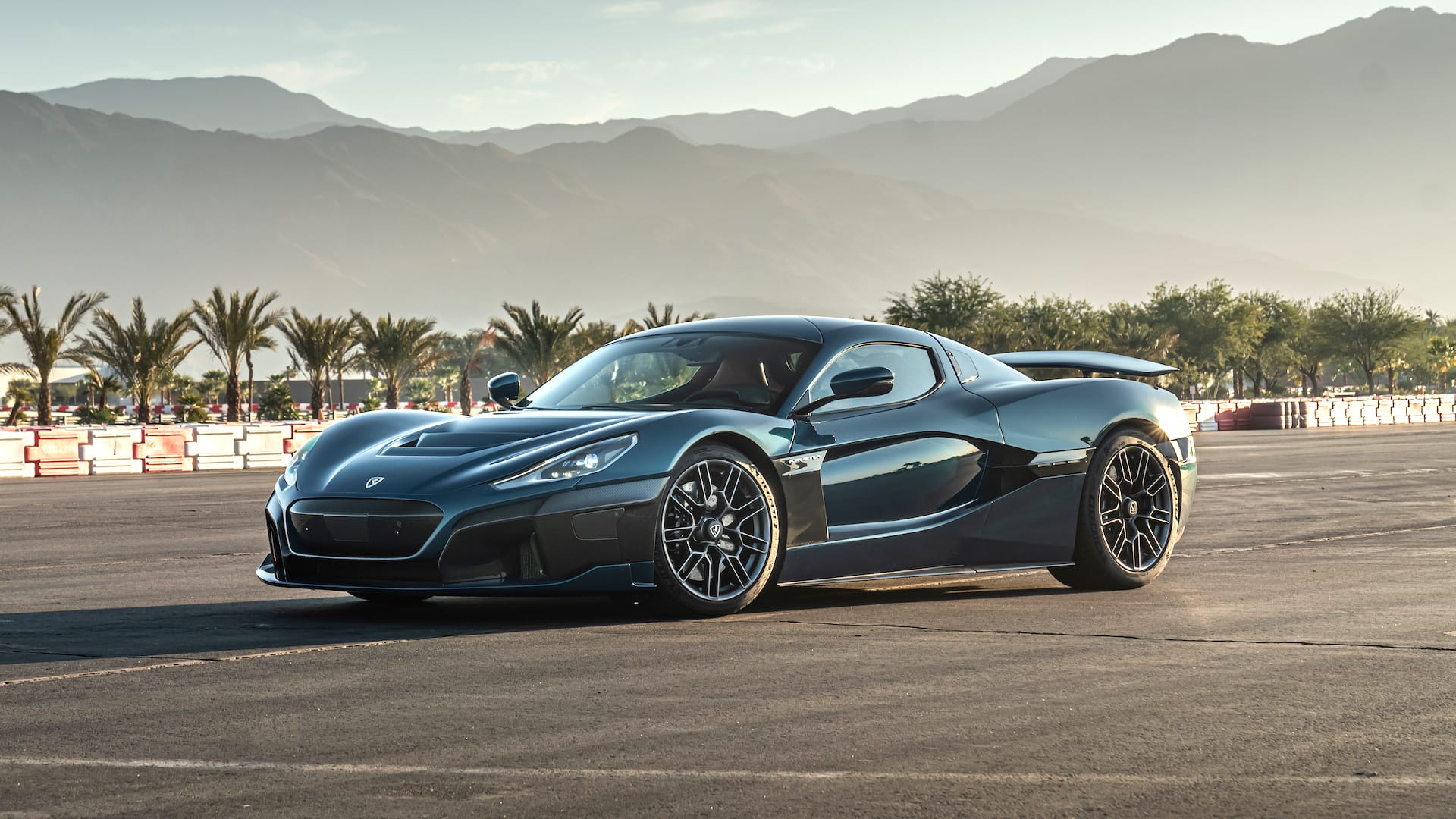
The Rimac Nevera has set a new world record for acceleration. At the Famoso Raceway drag-strip in California, the all-electric hypercar covered a standing quarter-mile in just 8.852 seconds
Its terminal speed as it crossed the quarter-mile marker was 167.51 mph.
This allowed the 1,914 hp Rimac to officially claim the title of being the world’s fastest accelerating production car.
Going beyond Plaid
The previous production car quarter-mile record of 9.247 seconds was set by the electric Tesla Model S Plaid earlier this year.
However, the Rimac packs almost 900 horsepower more than Elon Musk’s latest effort. Four separate electric motors (one for each wheel), launch control and Rimac’s All-Wheel Torque Vectoring 2 system allow for instantaneous acceleration.
To ensure the performance runs would count towards official production car records, the Nevera used standard Michelin Pilot Sport 4S rubber.
For comparison, the 1,500 hp Bugatti Chiron Sport is the closest combustion-engined rival to the Nevera. It clocks the quarter-mile in a distant 9.4 seconds.
More to come from the Nevera
Rimac had previously set an unofficial quarter-mile time earlier this year, while testing in its home country of Croatia. Even with the Nevera now independently verified as a record breaker, Rimac promises software updates will supply yet more performance.
Speaking about the new record, company founder and CEO Mate Rimac said: “The Nevera is about so much more than speed. With the largest battery pack ever fitted to a production car, it can travel 340 miles on a single charge”.
He added: “With in-house-developed Rimac All-Wheel-Torque Vectoring 2, it’s as agile as it is fast, and with electrically adjustable dampers and active aerodynamics it’s comfortable and quiet on a cruise, and a performance machine on a track”.
Rimac will make 150 examples of the Nevera. Production takes place in the same facility as the closely related Pininfarina Battista hypercar.
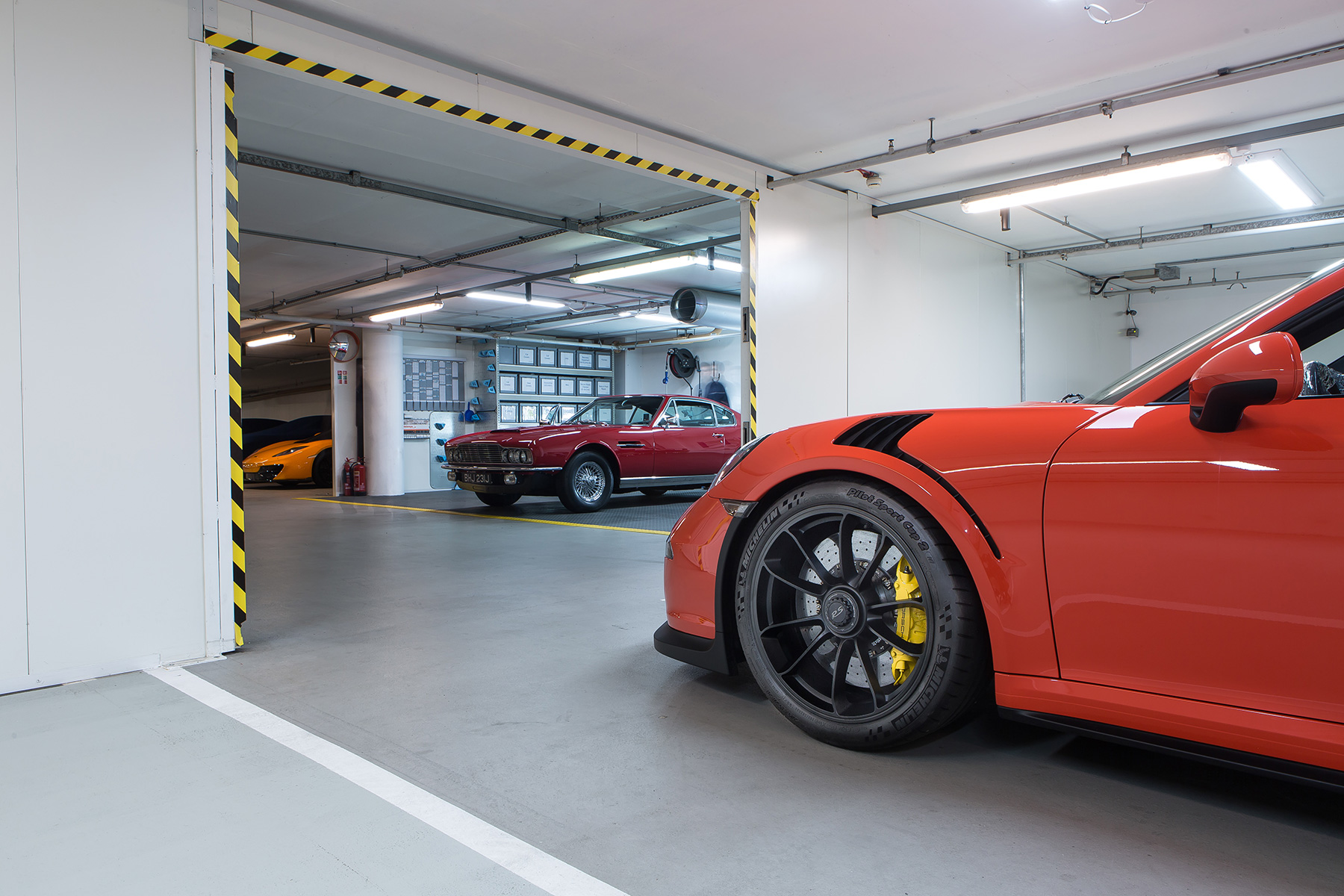
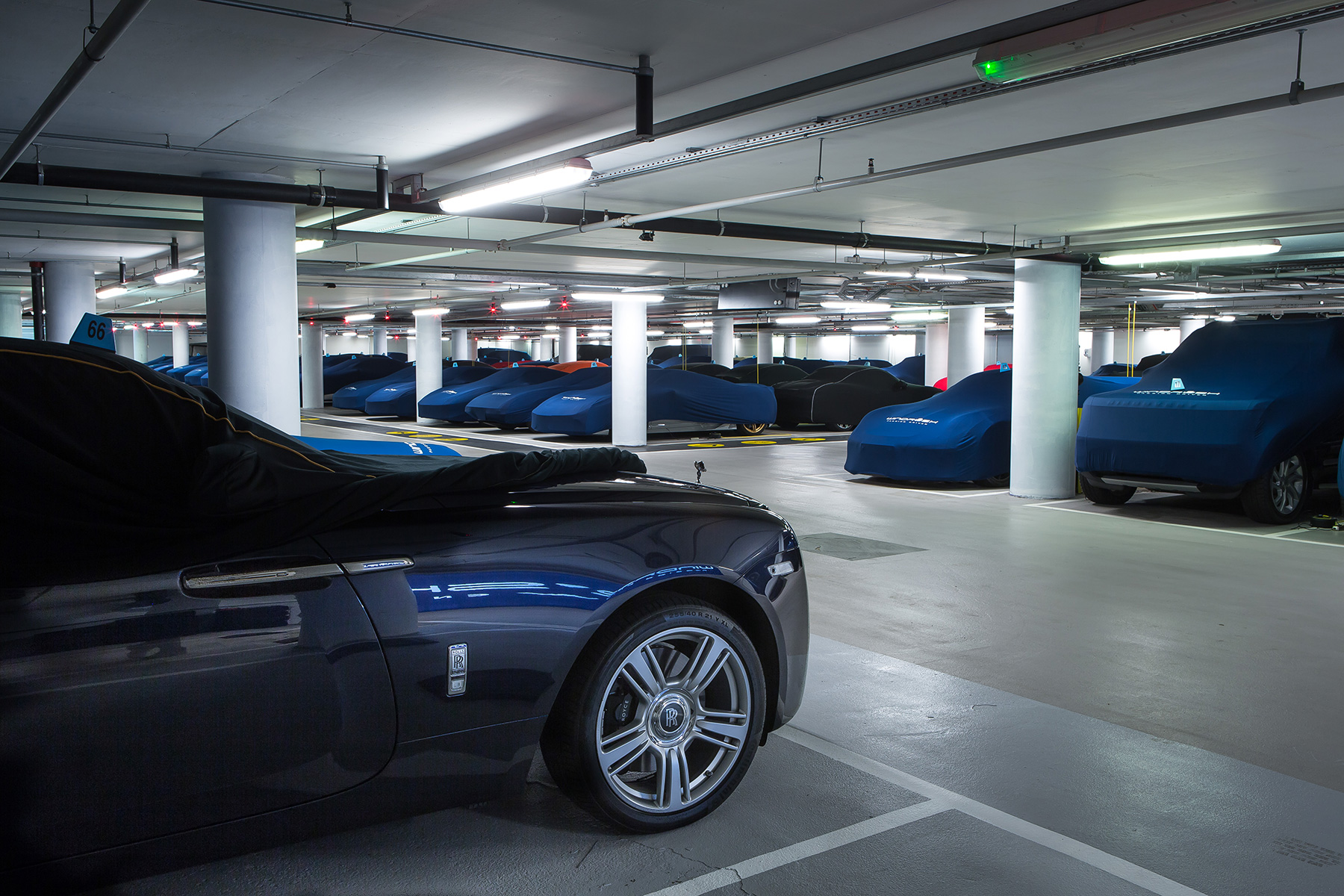
Imagine your lottery-win dream garage: polished floors, gleaming white walls and rows of rare, exotic Ferraris, Lamborghinis and Aston Martins.
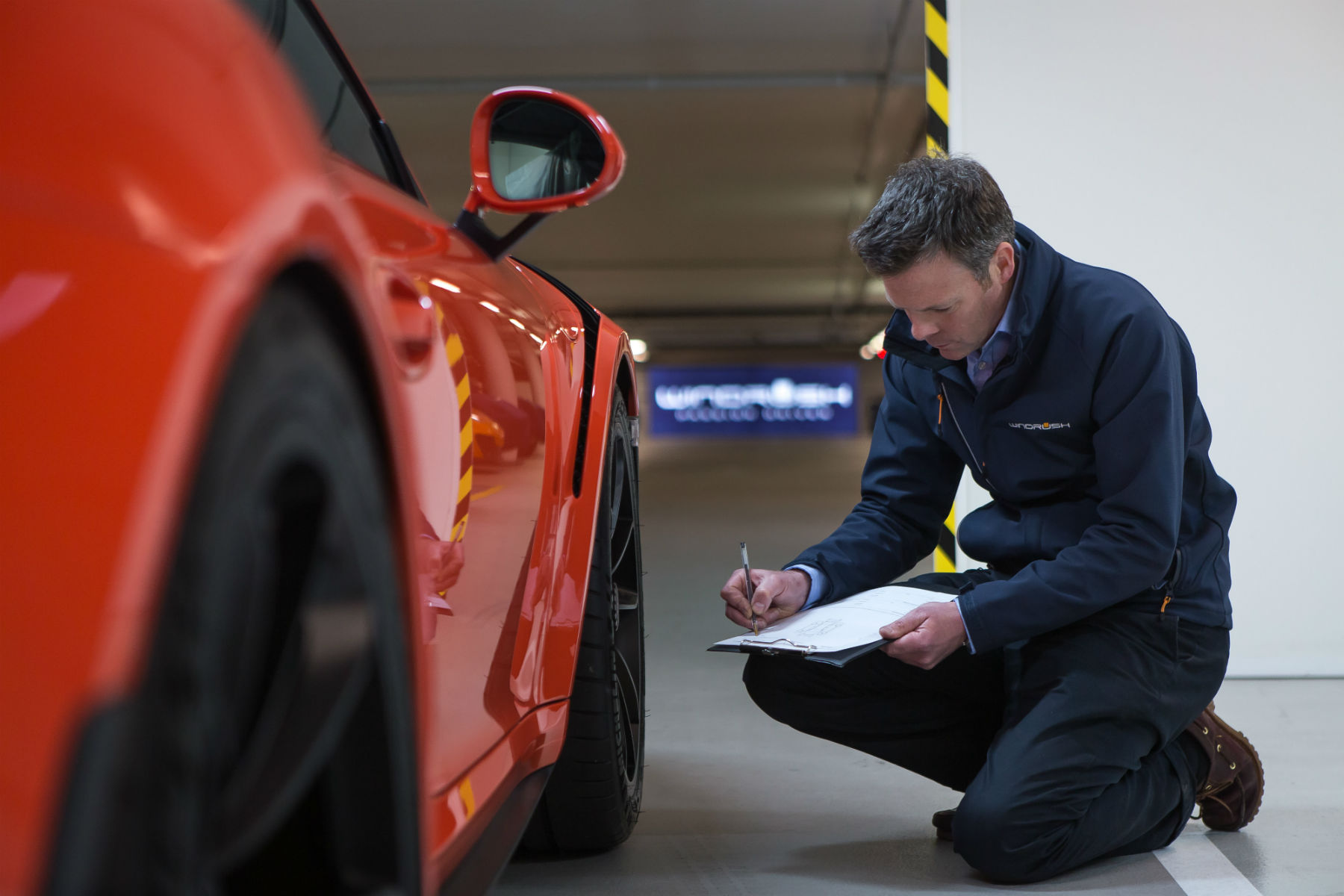
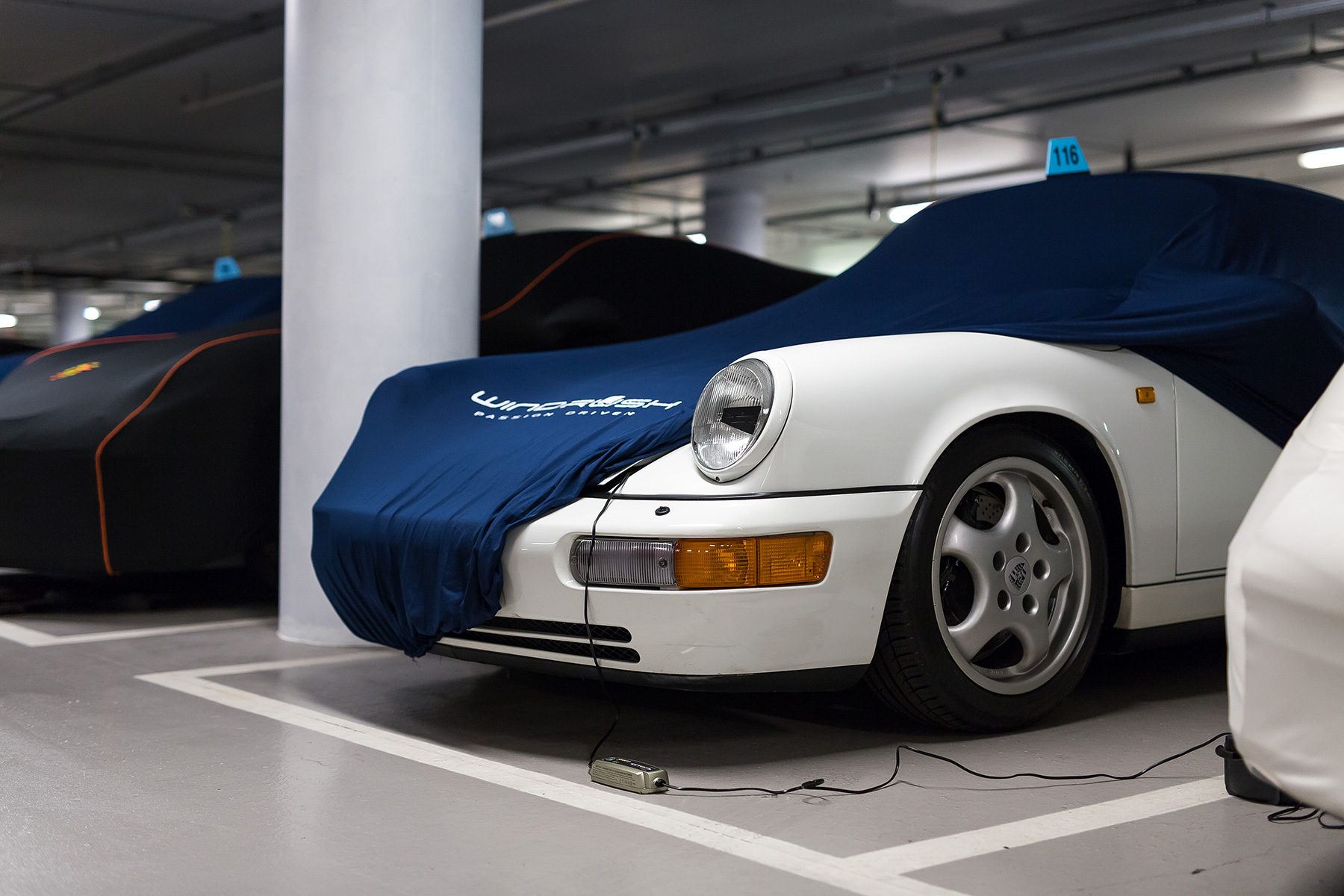
That’s the scene greeting me as the door glides back and I enter a cool, dehumidified chamber known as the ‘bat cave’. I’m at a secret location underneath Shepherd’s Bush, discovering where Londoners store their supercars. Welcome to Windrush.
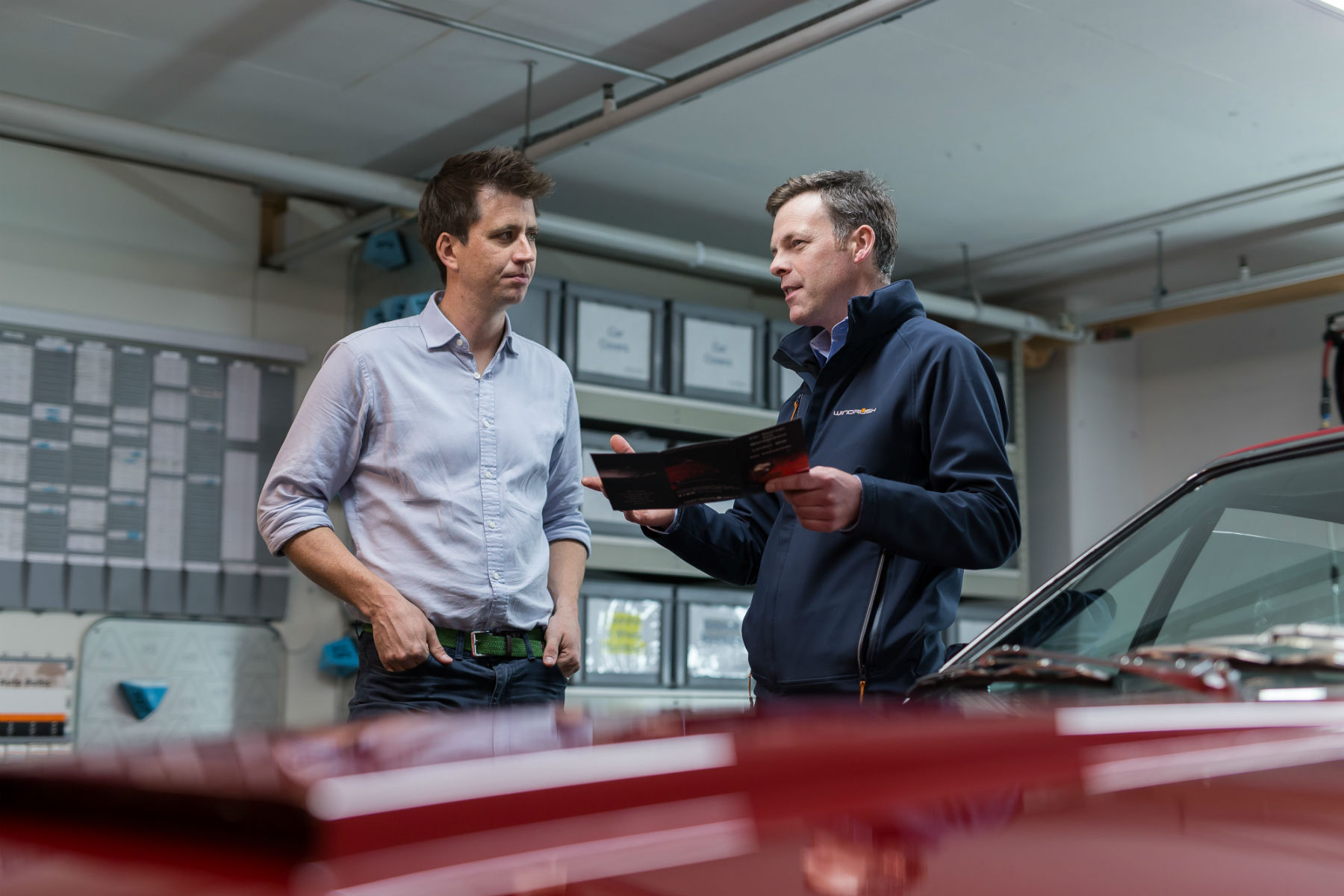
Founded by Tim Earnshaw after he quit a job managing logistics for Ferrari’s F1 team, Windrush offers secure storage for special cars.
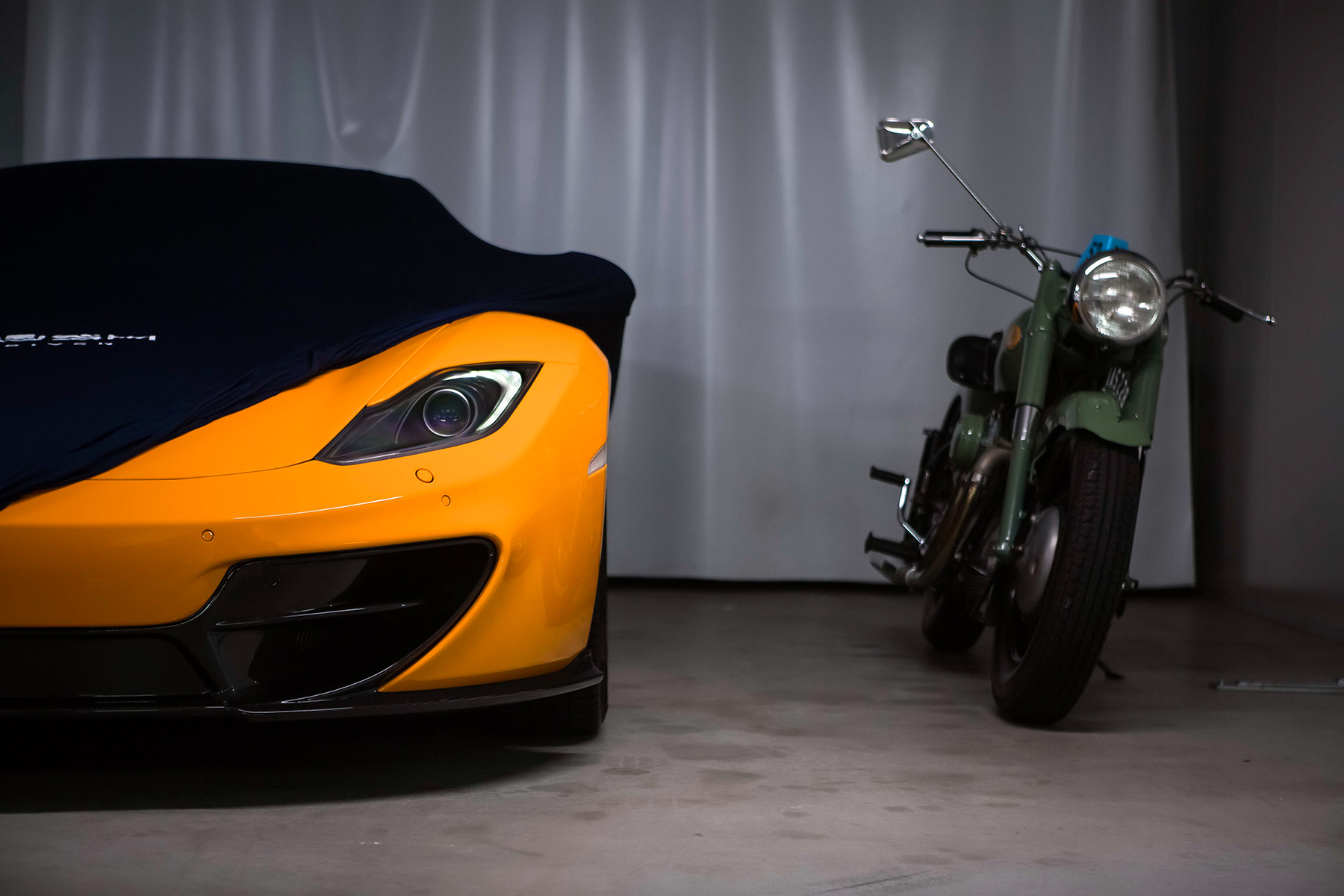
Not everything here is worth six or seven figures, though – some simply have sentimental value. “We had an Austin Metro City that a client bought because he’d passed his driving test in one,” explains Tim. “Each car is treated equally, though, irrespective of whether it’s a Metro or a McLaren.”
At the moment, all the cars are covered up, but I’m itching to discover what lies beneath. First though, let’s meet the man himself.
Tim’s love of cars started at school, where he bunked off games lessons to help at a firm building Lotus 7 replicas. When the gearbox broke on his parents’ Land Rover, he took it to the workshop and repaired it himself. “It was incredibly satisfying,” he remembers.
Soon he began work on his own replica, using a Morgan 4/4-style body and MGB mechanicals. “The process took five years,” says Tim, “but I learned how to fabricate, weld, panel-beat, fit a wiring loom and much more.”
The finished car was his pride and joy, but several months of parking on the family farm took their toll.
“Windrush started from the simple need to store the car,” Tim explains. “I set to work converting one of the farm out-buildings into a clean, secure lock-up, but there was plenty of surplus space. I saw a business opportunity.”
He advertised locally and soon had a Jaguar E-Type and Mitsubishi Evo VI alongside his ‘Morgan’. “I built a website and the company grew from there, although it was five years before I took the plunge and left Ferrari.”
Today, Windrush stores, cleans and maintains around 300 cars: 200 in the Cotswolds and 100 in the London location we’re visiting today. Time for a guided tour…
Prancing horse power
With a degree of OCD that can only be admired, the team have lined up all the cars by marque. We start with the Ferraris, which make up roughly a quarter of cars here.
There are two oh-so-pretty Dinos – both sought-after ‘chairs and flares’ editions with Daytona-style seats, flared wheelarches and Campagnolo alloys – followed by a pair of Berlinetta Boxers: one grey, the other traditional Rosso Corsa red.
Next up are two F430s, one registered in the Middle East, followed by a 550 Maranello and a 612 Scaglietti.
The 612 was always judged one of Pininfarina’s poorest efforts, yet it looks oddly handsome now. Perhaps there’s space for one in my dream garage after all.
The rest of the row gets progressively more modern: FFs, GTC4Lussos a 458 Speciale and several 488 GTBs.
One of the 488s is a one-off with custom paint that we’re politely asked not to photograph. Likewise, several cars belonging to a “well-known Instagrammer” are off-limits. No matter, onto the best of British.
Rule Britannia
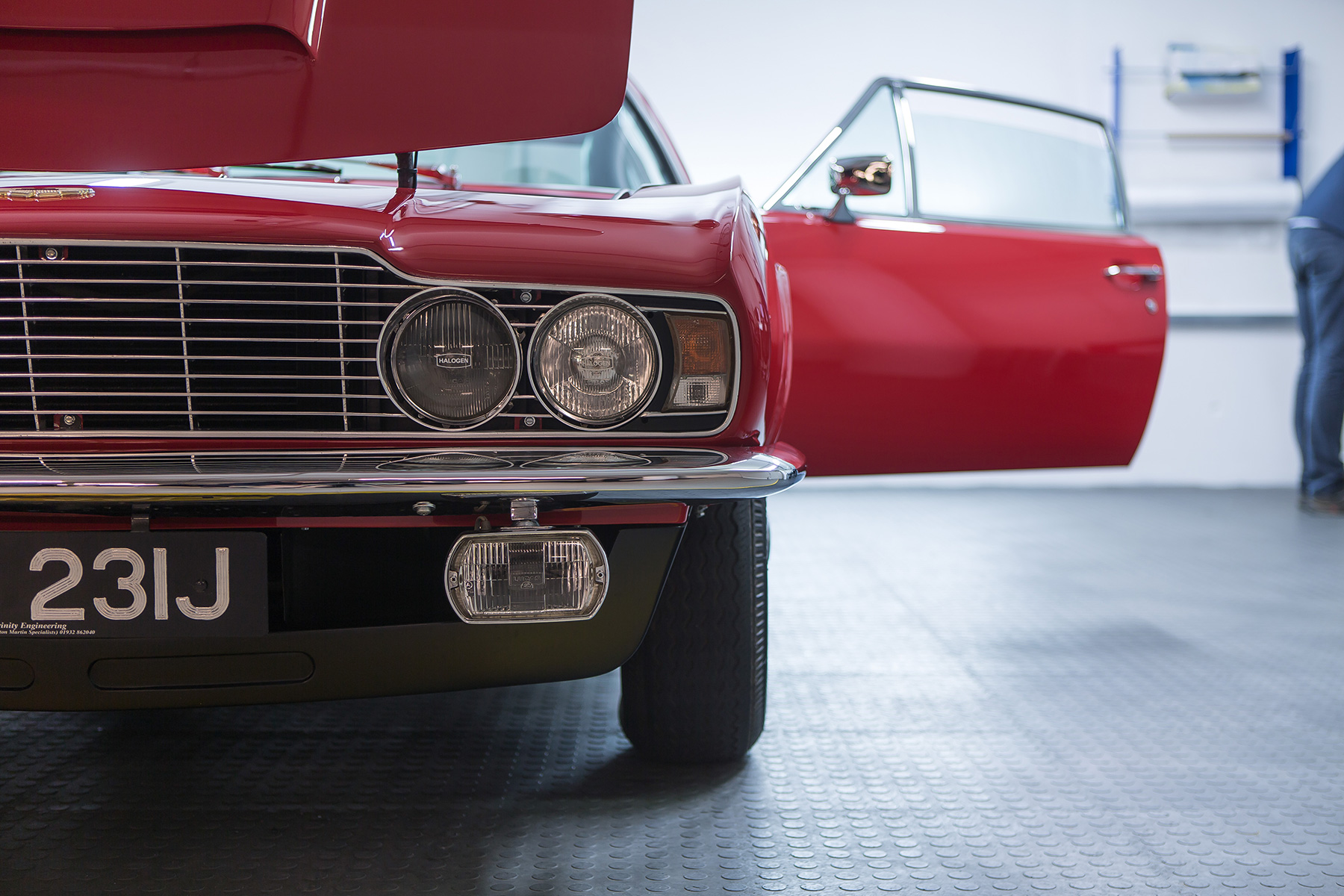
The mouthwatering mix of Aston Martins includes DB5s and DB6s, two original V8 Vantages and a rare and rather handsome DBS.
Parked side-by-side, the contrast between the classics – upright, muscular GTs – and the modern Astons – low-slung sports cars – is immediately apparent, but both hold their own appeal.
There are Rolls-Royces and Bentleys here, too. Some of the coachbuilt Rollers are very valuable indeed and thus can’t be photographed, so we snap a Wraith – along with a Bentley Mulsanne and Continental GT (the latter in shocking pink).
Other local heroes include two examples of the McLaren 720S, a British Racing Green Jaguar XK120 and a number of E-Types, their sleek silhouettes recognisable even before the covers are lifted.
Porsches and a Pagani
Porsches are well represented, too. I count two Cayman GT4s and three RS 911s. There’s even the Holy Grail: a 1973 911 Carrera 2.7 RS – arguably the greatest ‘neunelfer’ of all.
The number of 993-generation (1994-1998) 911s is interesting to note, and a sure sign of this still-relatively-modern Porsche’s appreciating classic status. Rare Carrera RS and Turbo S versions are the highlights here.
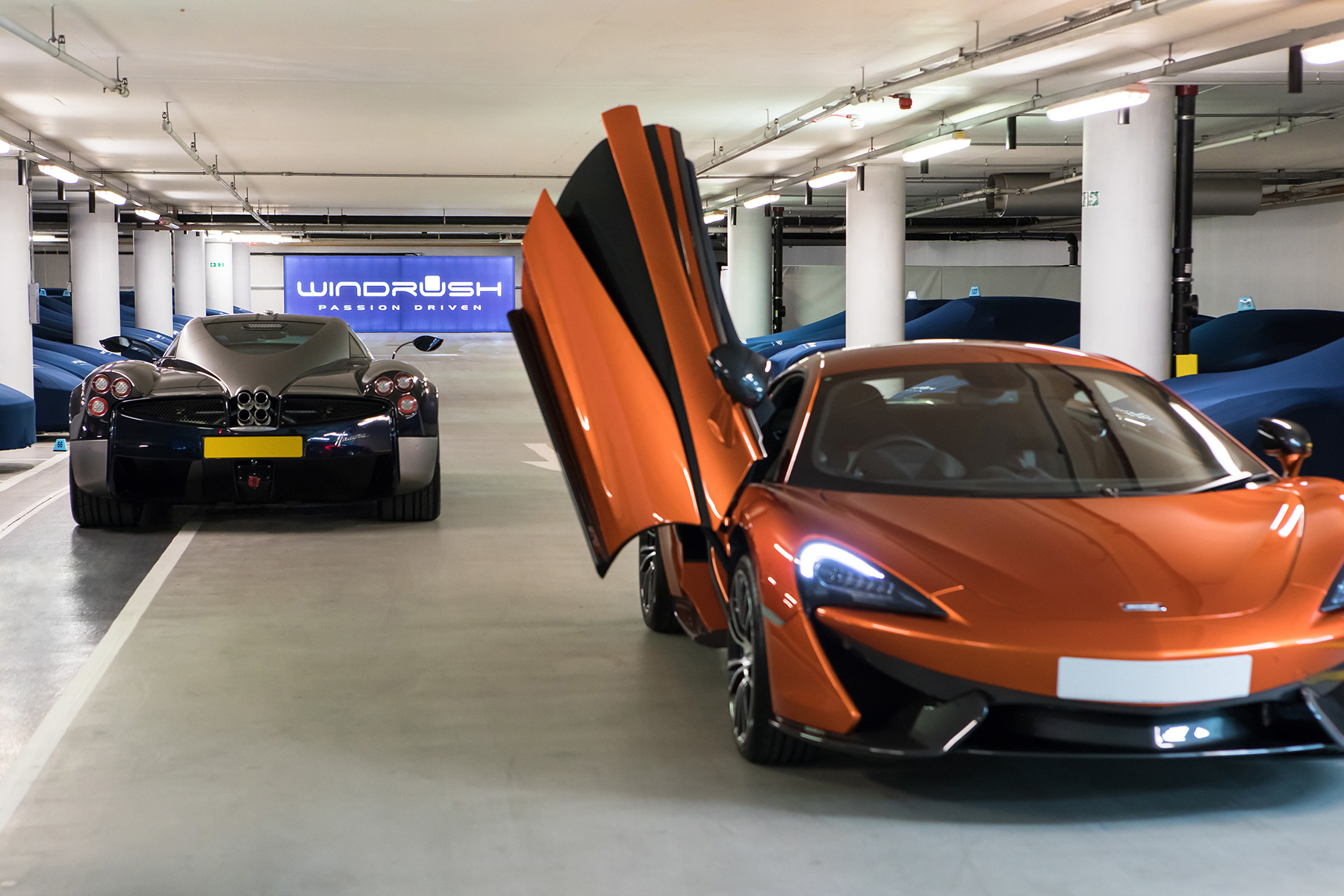
However, we’ve saved the best until last. At the far end of the building is a special trio of hypercars belonging to one wealthy customer.
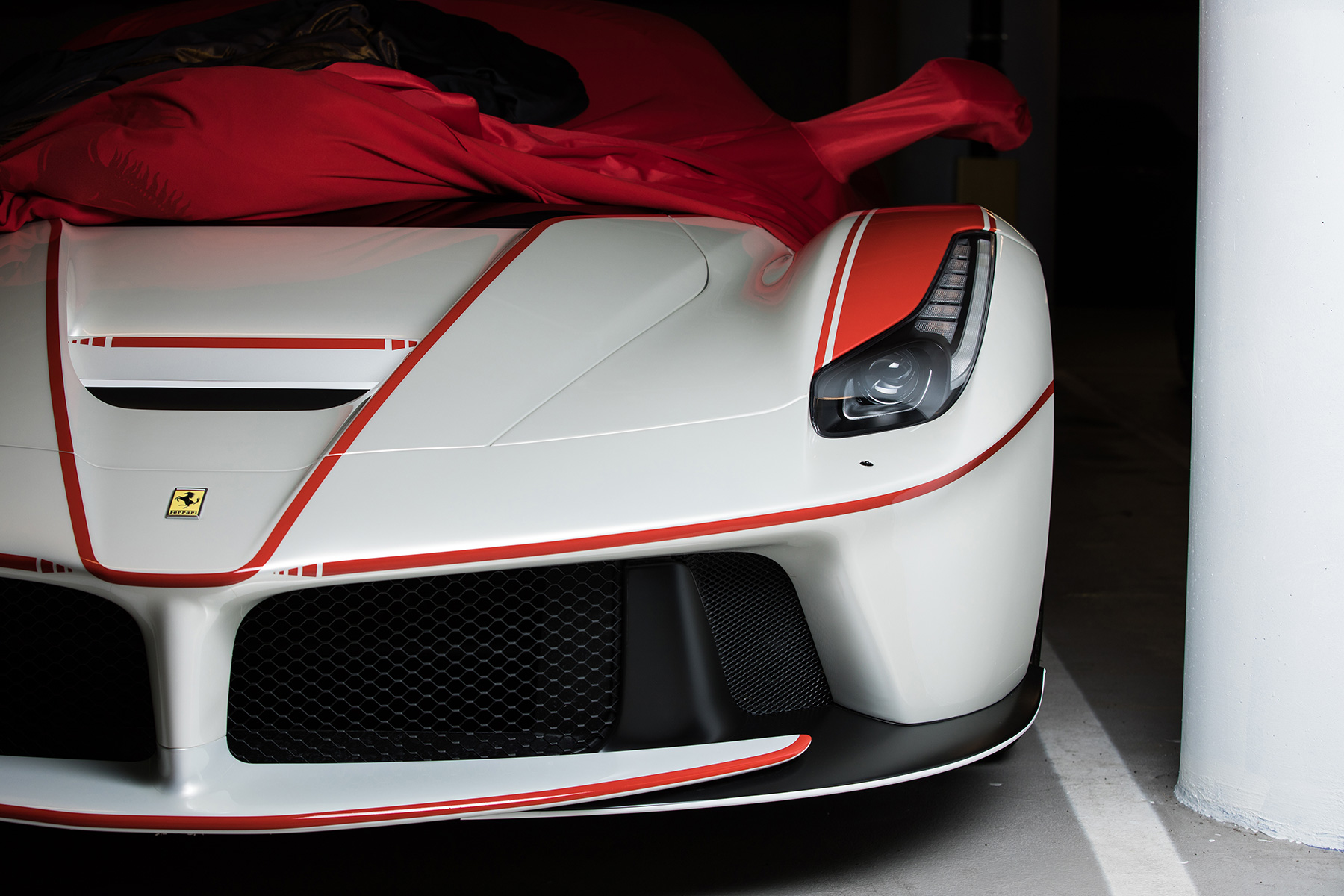
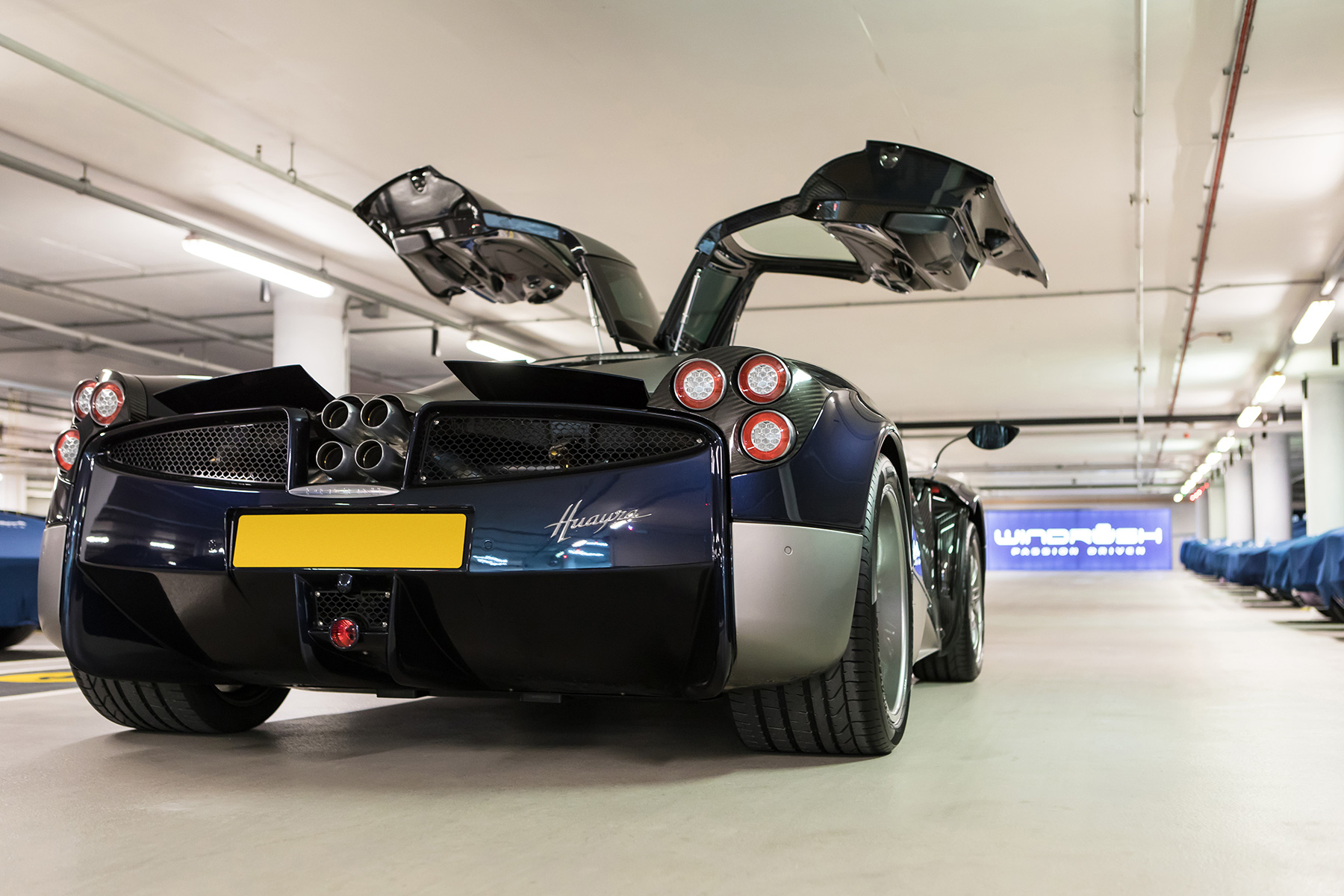
There’s a LaFerrari on FXX-K wheels, a special-edition Ferrari 599 GTO and a Pagani Huayra – one of seven in the UK at the time of writing.
Allan from Windrush fires up the LaFerrari and 6.3 litres of Italian V12 reverberates through the underground echo-chamber.
It sounds raw and red-blooded: a reminder that cars like these are alive with thrilling kinetic energy, not simply static investments. The stuff of dreams, in fact.
An ultra-low mileage McLaren F1 has achieved a new auction record as part of Monterey Car Week in California.
Offered in the Gooding and Company Pebble Beach Auction, the 1995 F1 had covered only 243 miles from new.
Preserved in time-capsule condition, it received a huge winning bid of $20.5 million (£14.8 million).
Two, very careful, previous owners
Finished in a one-off paint hue named Creighton Brown, this particular F1 was the 25th production example to be built. Inside, the three-seater cockpit is finished in Light Tan and Dark Brown leather.
Being one of only 106 cars made naturally makes the F1 rare. However, that the 6.1-liter V12 engine has covered such a low mileage, ramped up the interest.
First delivered to Japan when new, the car was kept in museum-like condition. Gooding and Company noted that most mileage came from promotional filming on a closed circuit.
Sold to an American enthusiast in 2014, a marginal mileage has been added since. Despite this, extensive maintenance and servicing schedules were followed with meticulous detail.
Setting new auction records
The F1 was sold still wearing its original date-coded Goodyear Eagle F1 rubber. A commemorative Tag Heuer watch, FACOM tool chest, titanium tool kit, and bespoke fitted luggage were all included.
All of this helped push the 240 mph car to set a new auction record for the sale of a McLaren F1.
The previous F1 record was set in 2019, by an ultra-rare LM specification car converted by McLaren Special Operations. That particular car sold for $19.8 million (£14.28 million).
Most spell-checkers draw a wiggly red line under the word ‘homologation’. In essence, it’s the requirement to build a certain number of road cars in order to satisfy racing regulations. It’s also responsible for some of the most exciting cars ever to wear number plates.
Group B rallying, which was banned after several serious accidents in 1986, produced its fair share of homologation specials.
The Audi Sport Quattro, MG Metro 6R4, Lancia Delta S4, Ford RS200 and Peugeot 205 T16… all are household names, and rightly so. But how many people remember the Opel Manta 400?
The Manta seen here was sold via online auction website Collecting Cars. It’s backed by Top Gear presenter Chris Harris and always has a diverse selection of classics consigned for sale.
The cars here represent few highlights from those listings, starting with the mightiest Manta…
Opel Manta 400
The Manta 400 uses the same 2.4-litre four-cylinder 16v Cosworth engine as the earlier Ascona 400. That car – the European version of the Vauxhall Cavalier – achieved some WRC success, piloted by the legendary Walter Röhrl.
However, the rear-driven Manta found itself immediately outclassed by four-wheel-drive rivals, including the all-conquering Audi Quattro.
In road-going guise, the fuel-injected Manta makes a modest 144hp, although a dry weight of 1,128kg means acceleration is brisk. A live rear axle makes for frisky handling, too – despite the presence of a ZF limited-slip diff.
View this post on Instagram
Opel Manta 400 (1983). One of 245 made for Group B homologation – and only 59 with those stretched Irmscher wheelarches. Up for sale soon via Collecting Cars.
A total of 245 Manta 400s were made, only 59 with the Irmscher bodykit seen here. Those steroidal wheelarches stretch over wider Ronal alloy wheels, while a jutting spoiler sits atop the bootlid.
The interior is equally eye-catching, with the Recaro seats trimmed in oh-so-70s ‘Opel Blitz’ cloth.
This 1983 Manta finally sold for £57,500 in the online auction – a relative bargain for such a rare homologation hero.
Porsche 968 Club Sport
Porsche is masterful at charging more for less. You want no back seats, fewer luxuries and fabric door-pulls? It’ll cost you. It wasn’t always this way, though. Back in the mid-nineties, the Club Sport was a hefty £5,000 cheaper than a standard 968.
At 1,335kg, it was at least 50kg lighter too. Factor in a 10mm suspension drop and a pair of fixed-back Recaros, and the result was B-road bliss. With only 1,923 built, the Club Sport has since become a sought-after cult classic.
The four-cylinder Porsche isn’t especially quick – 0-60mph in 6.1sec and 158mph – but it’s beautifully balanced, the weighty steering alive with textured feedback. It’s less intimidating than a contemporary 911, but no less rewarding.
With just 41,000 miles on the clock, this 968 had been in storage for the past four years. It sold for £40,500, including the ‘A968 POR’ registration plate.
Ferrari 550 Maranello
A V12 Ferrari with an open-gate manual gearbox? Where do we sign? Launched in 1996, the 550 Maranello channelled the spirit of the classic 365 GTB/4 ‘Daytona’, with a 485hp naturally aspirated engine beneath its long, elegant bonnet.
The 550 morphed into the 575M from 2002. However, many Ferrari experts, including Ed Callow of Collecting Cars, reckon the 550 is a sweeter drive. It’s not short on straight-line speed, either: 0-62mph takes 4.4sec and top speed is 199mph.
Well, this 550 Maranello is proving as lovely as I’d hoped.
Thigh-busting clutch and open-gate manual make you work for it, but the NA V12 is just glorious. pic.twitter.com/rWr967uc3W
The 1,774kg Ferrari turns in with alacrity that belies its size. Its clutch demands a determined shove, and that thin metal wand needs careful guidance across the gate. Nonetheless, the reward for getting it right is like little else. The V12 is simply sublime, piling on speed in a linear rush to the redline.
For our money – and you’d have needed £62,500 for the 24,000-mile example here – the 550 suits darker colours such as this Blu Tour de France, rather than trad-Ferrari Rosso Corsa. Just keep your grubby hands off that cream leather.
The Caravan and Motorhome Club Towcar of the Year awards identify the best cars for towing in different categories. This year, 40 towing cars were chosen for evaluation.
Each car was assessed by a panel of judges, while the Caravan and Motorhome Club’s one million members were invited to share their experiences about the vehicles in the running for the awards.
While towing capacity is important, the judges also looked at boot space, roof load limits, nose load limits and even the presence of a full-size spare wheel.
The 40 cars were then put into caravan weight categories, ranging from under 1,100kg to over 1,700kg. There were additional classes for family, pick-up and alternatively fuelled towing cars, too.
The Skoda Superb Estate SE L Executive 2.0 TDI 150PS DSG is the overall winner. Of the estate car, the judges said: “A regular in the towcar top three, and this year’s Superb appears to be no exception. You can’t go wrong with one of these. If you want a large estate, the Superb has to be on your shortlist.”
Skoda Octavia also a winner
As well as securing the title of Caravan and Motorhome Club Towcar of the Year 2021, the Skoda Superb also finished top in the 1,300kg to 1,400kg category. There was a win for the smaller Skoda Octavia Estate in the 1,200kg to 1,300kg category.
Nick Lomas, director general of the Caravan and Motorhome Club said, “Caravan holidays have never been more popular and it’s important to the Club to make sure we provide relevant information to our members – and all those interested in touring and towing – on the vehicles that are available to them.
“The Club, with its 110+ years of experience, has worked with respected industry colleagues and journalists, all of whom are themselves caravanners, to bring together this invaluable set of data and information. The Club also offers a free technical advice helpline and training courses for those interested in starting out with the pastime.”
Best cars for towing 2021
Caravan weight under 1,100kg: Renault Captur
Caravan weight 1,100-1,200kg: Seat Leon Estate FR 1.5 TSI 150 manual
Caravan weight 1,200-1,300kg: Skoda Octavia Estate SE L First Edition 2.0 TDI 150PS DSG
Caravan weight 1,300-1,400kg and overall winner: Skoda Superb Estate SE L Executive 2.0 TDI 150PS DSG
Caravan weight 1,400-1,500kg: Vauxhall Insignia SRI VX-Line Nav
A Lego Technic Ferrari 488 GTE has hit an incredible top speed of almost 130mph.
The scale replica of the real-world AF Corse no.51 Ferrari racer achieved the high speed on the Autodromo di Modena circuit in Italy.
However, the Lego 488 GTE did need some assistance on its quest for performance.
Small scale, big speed
The Lego Technic Ferrari 488 GTE does boast a miniature V8 engine with moving pistons. However, to reach 129mph (208kph), the real AF Corse Ferrari was brought along to help.
Attaching the Lego model to its big brother involved the use of a special mechanical arm. A total of eight cameras, and even two drones, were used to record the event.
An ex-Formula 1 driver was the perfect person to place behind the wheel of the real Ferrari. Giancarlo Fisichella is now a Ferrari Competizioni GT driver, responsible for piloting the 488 GTE in the World Endurance Championship.
A video was then created, making it appear like the Lego Ferrari was lapping the circuit under its own power.
Bringing Lego to life
Made from almost 1,700 pieces, the Lego Technic Ferrari 488 GTE measures 48 cm (19 inches) long. Although smaller than the real thing, the £169.99 ($169.99) model is much more affordable.
Camillo Mazzola, Marketing Director at the Lego Group Italy, commented: “The Lego Technic Ferrari 488 GTE is packed with authentic features and beautiful design elements from the original racing car model. It is so similar to the real one, and all that it needed to really come alive was to be able to speed through a real racing car circuit and today it has happened!”
He added: “As a true Lego fan and motor racing lover, I couldn’t miss this special event and it was really exciting to take part in this great project with our partner Ferrari.“
The Isle of Islay, just off the west coast of Scotland, is home to around 3,000 inhabitants. Accessible from the mainland only by ferry or air, it’s an isolated place. Mobile phone signal is barely existent – and if you can get it, your (post-Brexit) operator will assume you’re abroad and charge you exorbitant rates.
It’s no surprise then, that Rover managing director Spencer Wilks and his chief engineer brother Maurice liked to escape the West Midlands for their family retreat on the island. Not that getting a mobile phone signal was a concern over 65 years ago.
Although the Isle of Anglesey in North Wales is often considered the birthplace of the Land Rover (it’s where Maurice drew an initial sketch of the car in the sand), Islay is where it really developed as an idea.
So, with Defender production due to end this year, we headed out to Islay to discover the island that inspired an iconic vehicle – and drive a line-up of the Defender’s predecessors.
Series I
The Series I, or simply the Land Rover as it was known back then, was introduced in 1948.
The example we drove is owned by the Dunsfold Collection. Apparently it’s manager Phil Bashall’s pride and joy, and that’s evident from its simply immaculate condition.
The car is a 1954 Series I 107-inch pick-up – the equivalent of today’s Defender 110 truck cab. There’s little evidence that it’s 67 years old, but there are plenty of quirks that set it apart from today’s Defender.
The wipers, for example, are manually operated. An interesting concept on a wet Scottish island. And the speedo is set in the middle and bobs around telling you vaguely how fast you’re daring to go. VMax from its 53hp 2.0-litre petrol engine is somewhere around 50mph.
‘Charming’ is the word.
Series II
Technically, this isn’t a Series II, but a Series IIA. Cosmetically there’s little difference to the II, but at this point a 2.25-litre diesel engine was introduced to the Land Rover for the first time.
The Series IIA on Islay is a 2.25-litre petrol, however. The first vehicle we drive after landing on the island, it’s a quick lesson in driving older cars. With no synchromesh on lower gears, it requires double de-clutching. Combine that with brakes lacking in servo assistance, and we soon discover how difficult it is to slow down an old Land Rover while heading downhill into a cute Islay village.
The steering doesn’t help the experience, either. Driving in a straight line was tricky – something we put down to an ‘old Land Rover’ thing, but actually turned out to be a dodgy steering box.
Still, despite these issues, it’s hard to deny the Series IIA is a lovely vehicle in which to potter around a Scottish island. Made in 1965, it looks like something out of Heartbeat, while its 2.25-litre petrol engine provides adequate power for Islay’s minor roads.
Series III
This isn’t our first encounter with MJP 936W – a 1980 109-inch Series III. We first got to drive it around Land Rover’s off-road course in Solihull during a visit to the Defender production line.
It’s as terrifying as I remember, with (quite literally) the turning circle of a bus and ancient drum brakes. But it’s also brilliant fun. By now I’m starting to get used to dropping down through the gears rather than relying on the brakes – a technique few of us use in our everyday driving.
It’s got the same 2.25-litre petrol engine as the Series IIA, but with a load of extra mass. It’s certainly more suitable for pootling around than getting anywhere in a hurry.
90 40th Anniversary
The launch of the 90 and 110 in 1983 represented a turning point for Land Rover that some hardcore enthusiasts still struggle to accept. It’s when Land Rover made the switch to coil-sprung suspension, instead of leaf springs.
Driving this Land Rover 90, it’s hard to argue that leaf springs are better in any way. Not only do the coil springs provide a more comfortable ride, they also give more axle articulation when off-road.
But that’s enough about suspension – what makes this 90 so special? Well, it was produced to celebrate 40 years of Land Rover production in 1988. The plan was to launch a limited run of 40 special editions, all bearing the number ‘40’ on the number plate. However, with the 1980s being a turbulent time for car production in the UK, strike action led to the project being cancelled.
Just two were built. This one was finished in traditional Land Rover Bronze Green paint, with even the wheelarches colour-coded. It was equipped with a khaki soft-top, providing a nod to soft-top models of earlier Land Rovers.
Driving it around Islay, there’s just something about it that feels so right. Possibly the perfect compromise between old and new, it’s easy to drive, but still feels like you’re driving a classic vehicle.
110 V8 County Station Wagon
The 110 County Station Wagon represents a shift away from farmers’ workhorses to recreational family vehicles. With more comfortable seats than the regular 110, as well as a number of upgrades over the years (from exterior stickers to a radio-cassette player), the CSW made the 110 genuinely desirable for the first time.
Powered by a 3.5-litre Rover V8, you’d expect the 110 CSW we drove on Islay to be pretty rapid. But with just 134hp and a kerb weight nudging two tonnes, it’d struggle to keep up with a newer Transit-engined Defender. Still, if you do boot it (and try not to think about the fuel bills if you do), it does at least sound good.
The extra length of the 110 compared to the 90 can also make things tricky off-road – while negotiating a narrow, rocky descent onto a beach, for example, the shorter vehicles were much happier to lift a wheel and get on with it.
Defender 90 Heritage Edition
Launched as a final send-off for the Defender, our first impressions of the Heritage edition were that it looks stunning in its Grasmere Green paintwork.
After driving its predecessors, it even feels modern – albeit still very different to a new Defender.
The 2.2-litre TDCI diesel engine is quite vocal, but it does have a degree of performance to go with it. By that, we mean it’ll keep up with normal traffic…
It’s still definitely a Defender, though. The whole experience is a bit Marmite. However, if you’re of the Defender mindset, you will love it.


 Imagine your lottery-win dream garage: polished floors, gleaming white walls and rows of rare, exotic Ferraris, Lamborghinis and Aston Martins.