Home Blog Page 386

From F1 to GT: The history of McLaren road cars in pictures

0

McLaren is known the world over for its success on the racetrack, but in recent years it has also challenged Ferrari and Porsche on the road. Not many race car constructors could pull off the move, but McLaren has. Here, we chart its history.

More McLaren on Motoring Research:

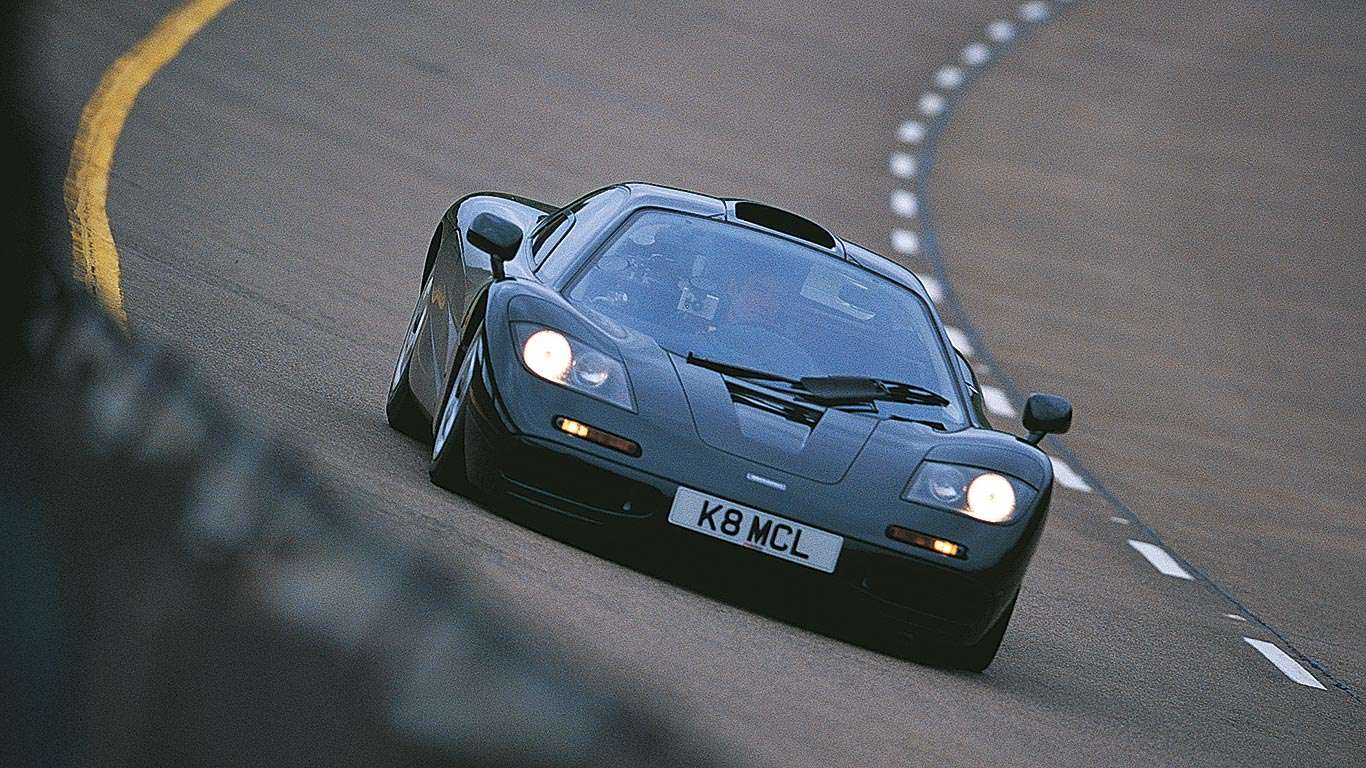
McLaren F1 (1993)

The revived McLaren company had also targeted a move from racetrack to road for years, but only decided to do so in the late 1980s. Legend has it, the decision came after team boss Ron Dennis and designer Gordon Murray got chatting in an airport after a delayed flight.

The McLaren F1 became the firm’s first-ever road car at launch in 1992 – and, with a 242mph top speed, easily the world’s fastest. Fittingly, it’s P1 in McLaren’s road car codename chronology.

Ironically, the F1 went full circle back to the racetrack and won Le Mans…

Mercedes-Benz SLR McLaren (2003)
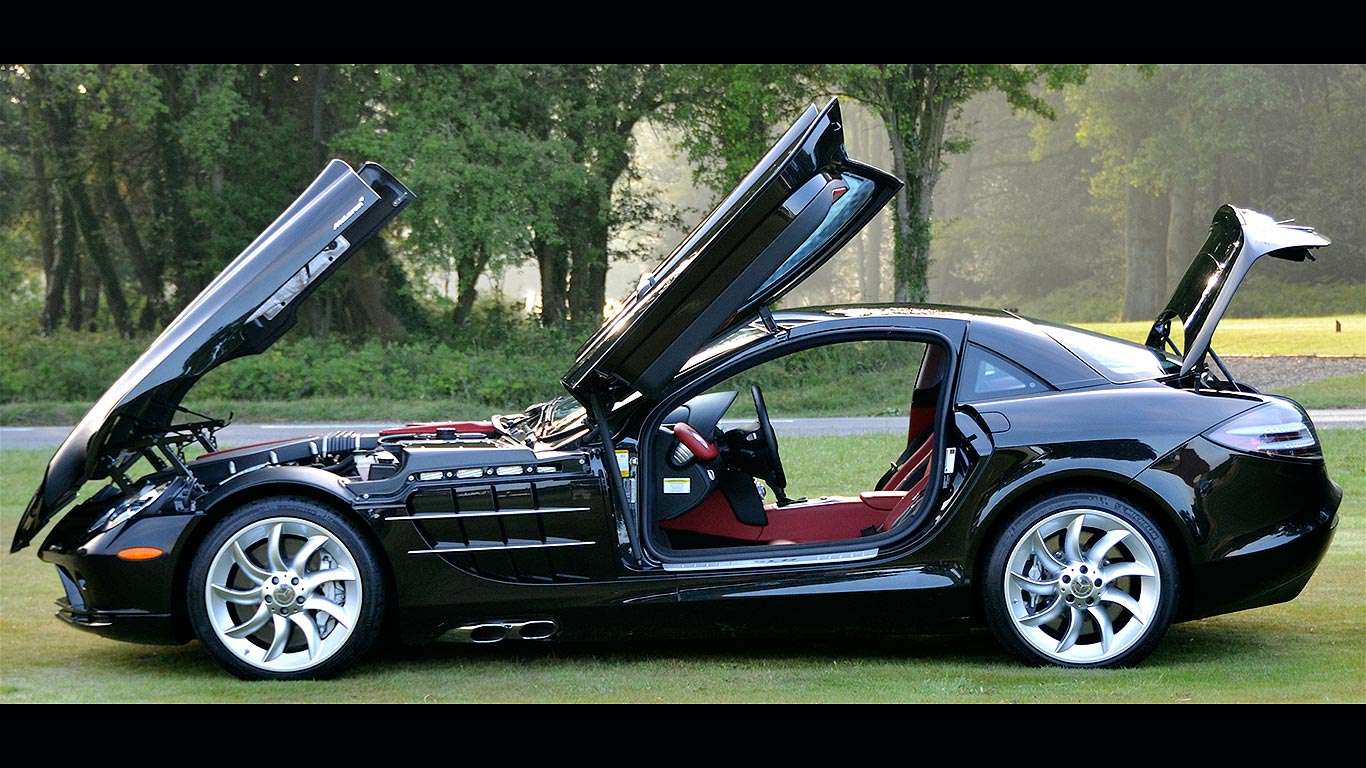
Skip forward a few years (and a few abandoned projects) for McLaren’s next road car: the 2006 Mercedes-Benz SLR McLaren. Codenamed P7, it was a Mercedes-Benz concept that McLaren put into production – hence the name hierarchy.

A faster 722 version, a Roadster, the limited-run Sir Stirling Moss and McLaren Edition MSO versions would follow

McLaren MP4-12C (2011)
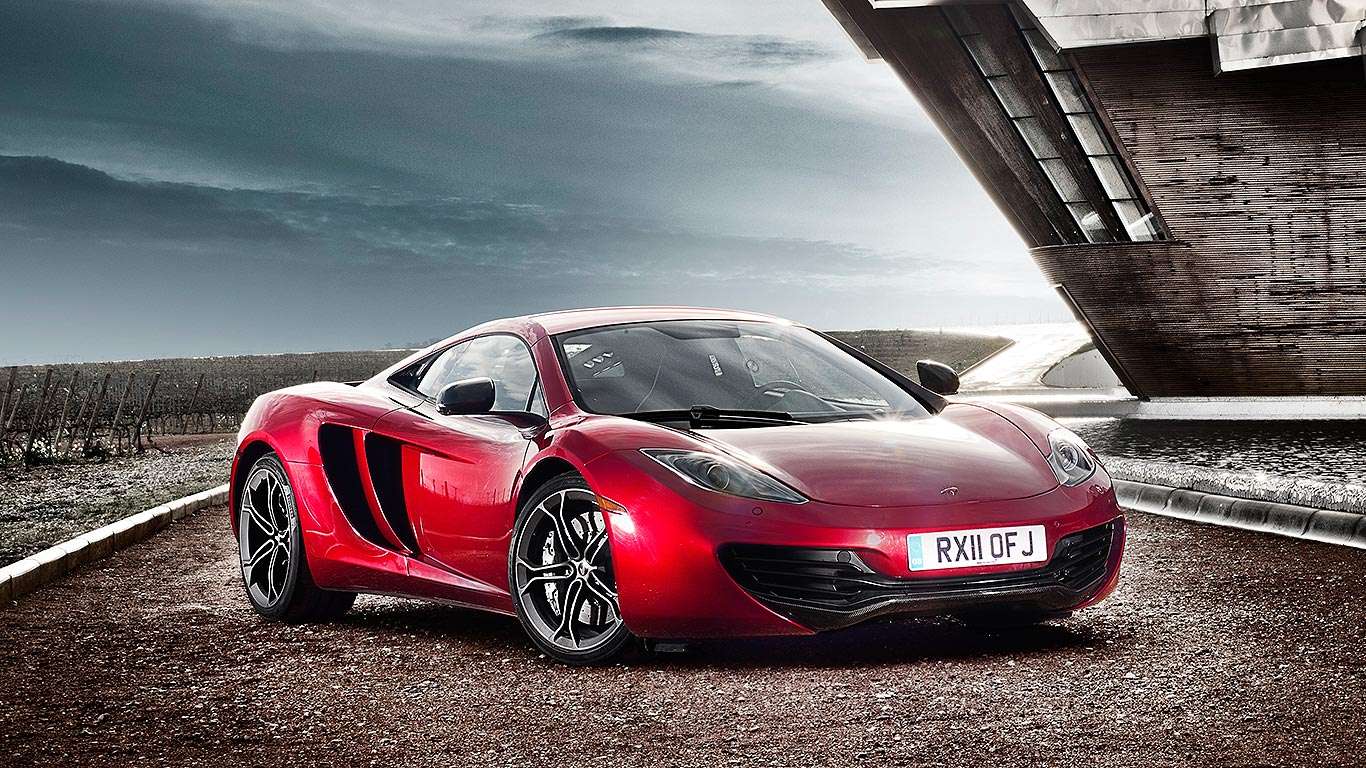
McLaren’s breakthrough road car, the ‘P11’ MP4-12C (you’ll note a few more McLaren ‘P’ concepts were lost along the way). At launch, McLaren announced to the world it was a Ferrari-beater: it wasn’t quite, but it would soon develop into one.

At the end of 2012, McLaren dropped the MP4 bit from the name: it was now officially just ‘12C’. As well as adding a drop-top Spider, it also boosted power from 600 to 625 horsepower, tweaked other parts of the drivetrain and fitted proper door release buttons rather than the troublesome ‘swipe to open’ launch system.

McLaren P1 (2013)

Revealed at the 2012 Paris Motor Show, the McLaren P1, codenamed P12, was a stunning hypercar that’s part of McLaren’s pinnacle Ultimate Series range. Just 375 were made, with 58 track-only GTR variants following. Its active aero, gratuitous turbo ‘whoosh’ and road-hugging track mode are now the stuff of legend.

McLaren 650S (2014)
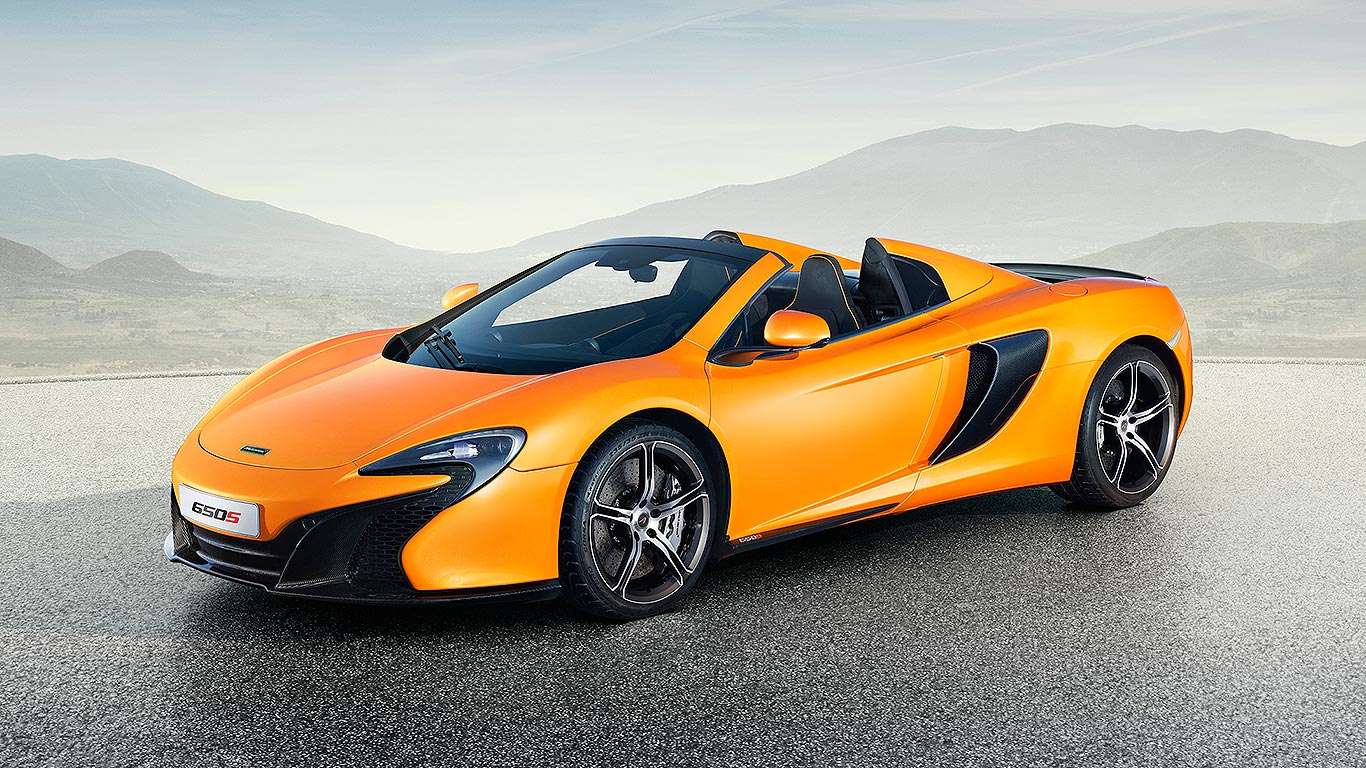
In 2014, McLaren revealed the 650S at the Geneva Motor Show. Dubbed ‘P11M’, it was a 12C wearing a P1-style nose. The idea was to offer 12C and 650S alongside one another, but orders for the 12C naturally dried up. McLaren thus discontinued the 12C (and offered the 3,500 existing 12C owners a ‘650S upgrade’ pack). The 650S was also available as a drop-top Spider.

McLaren 675LT (2015)
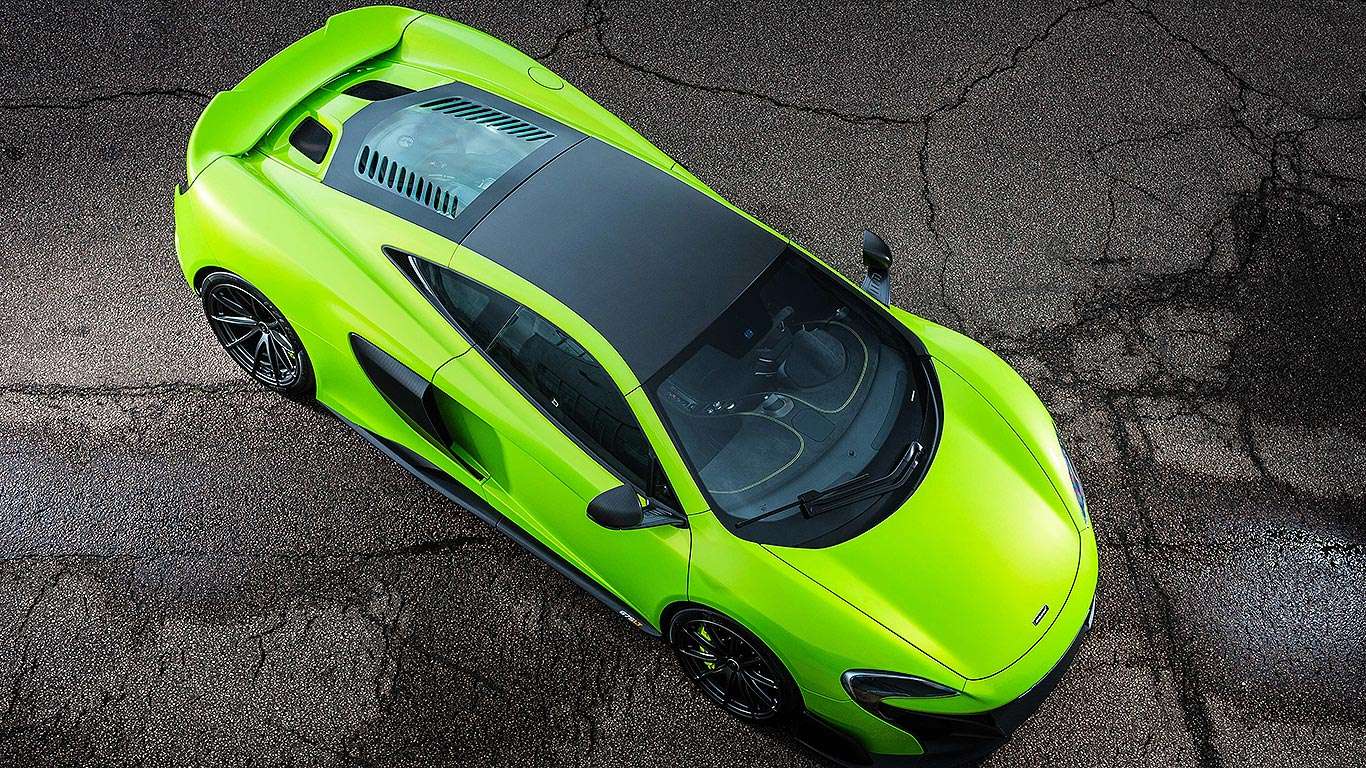
In 2015, the mighty 675LT arrived. That’s LT for ‘longtail’, harking back to the 1997 F1 GT. A full-length rear airbrake, hyper-tuned suspension and a wild 675 horsepower engine made for an exceptional drive (and enough speed around a track to almost match the P1). Weirdly, they also took a tin-opener to this most hardcore of models, for the Spider variant.

McLaren 570S (2015)
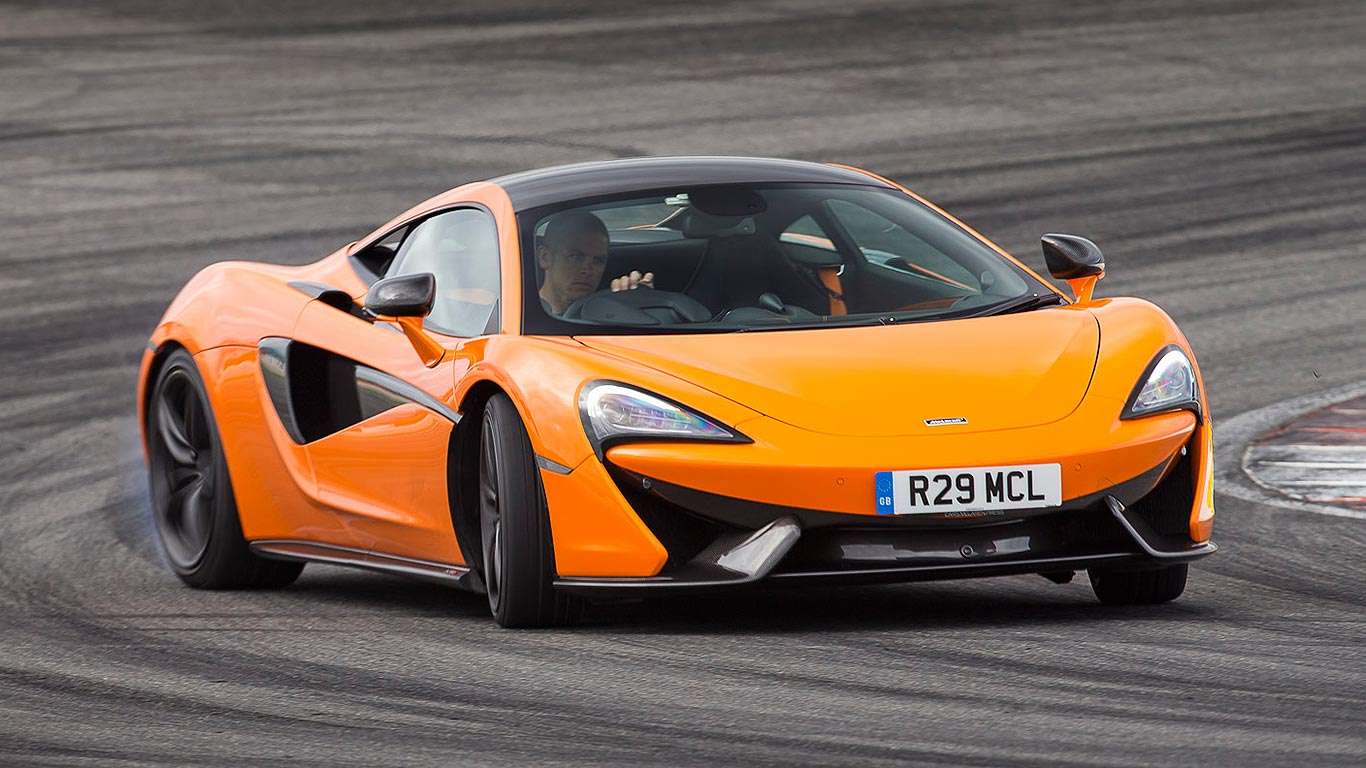
McLaren rounded out 2015 with what was to prove its important car yet – the 570S. A more affordable, more accessible sports car to take on the Porsche 911 and Audi R8, this is the car that saw McLaren Automotive grow to its target of building 4,000 road cars a year – and beyond. A drop-top 570S would follow, for those who want their Sports Series McLaren with a bit more sky.

McLaren 570GT (2016)
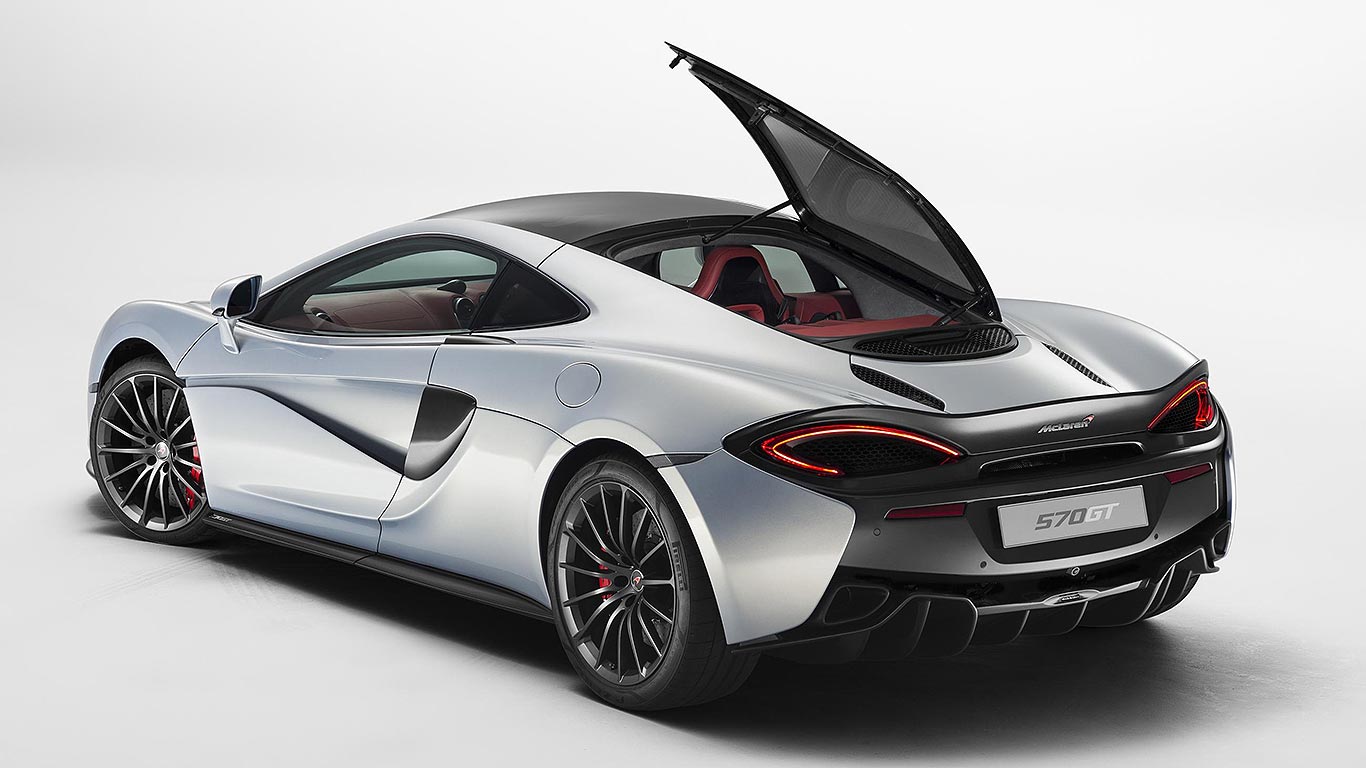
The 570GT was the first modern McLaren that wasn’t billed as an out-and-out sports car. It was more rounded, with (slightly) more supple suspension and a side-hinged glass tailgate that revealed a load bay bigger than many superminis. It’s this GT theme that the firm has subsequently developed further…

McLaren 720S (2017)
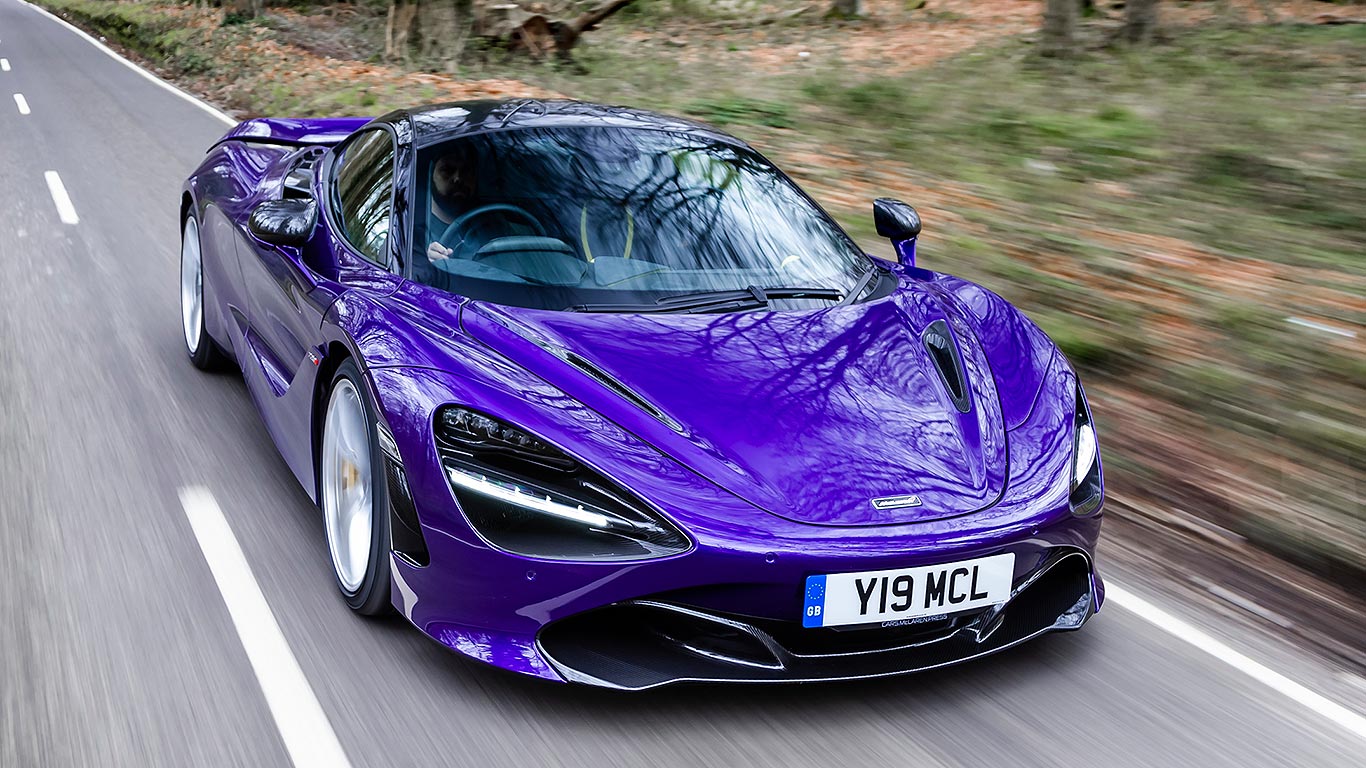
The mighty McLaren 720S was the firm’s Super Series replacement for the 650S – and the first time it had given one of its cars a ground-up makeover. The name says it all: 720 horsepower. Performance is absolutely incredible: no wonder it scooped the 2019 World Performance Car of the Year prize. Now available in open-air Spider flavour, too.

McLaren Senna (2018)

McLaren’s next Ultimate Series model was a curious follow-up to the P1. Once you get past the controversial styling, you find no hybrid systems and less power than the car that preceded it. That’s because the Senna is all about pure track work – lightweight function over form. You know what doesn’t give as much downforce as a Senna? Most conventionally pretty cars. You know what weighs a lot more? The P1, with its batteries. We reckon this 800hp tribute to Ayrton goes well enough without extra electric puff.

McLaren 600LT (2018)
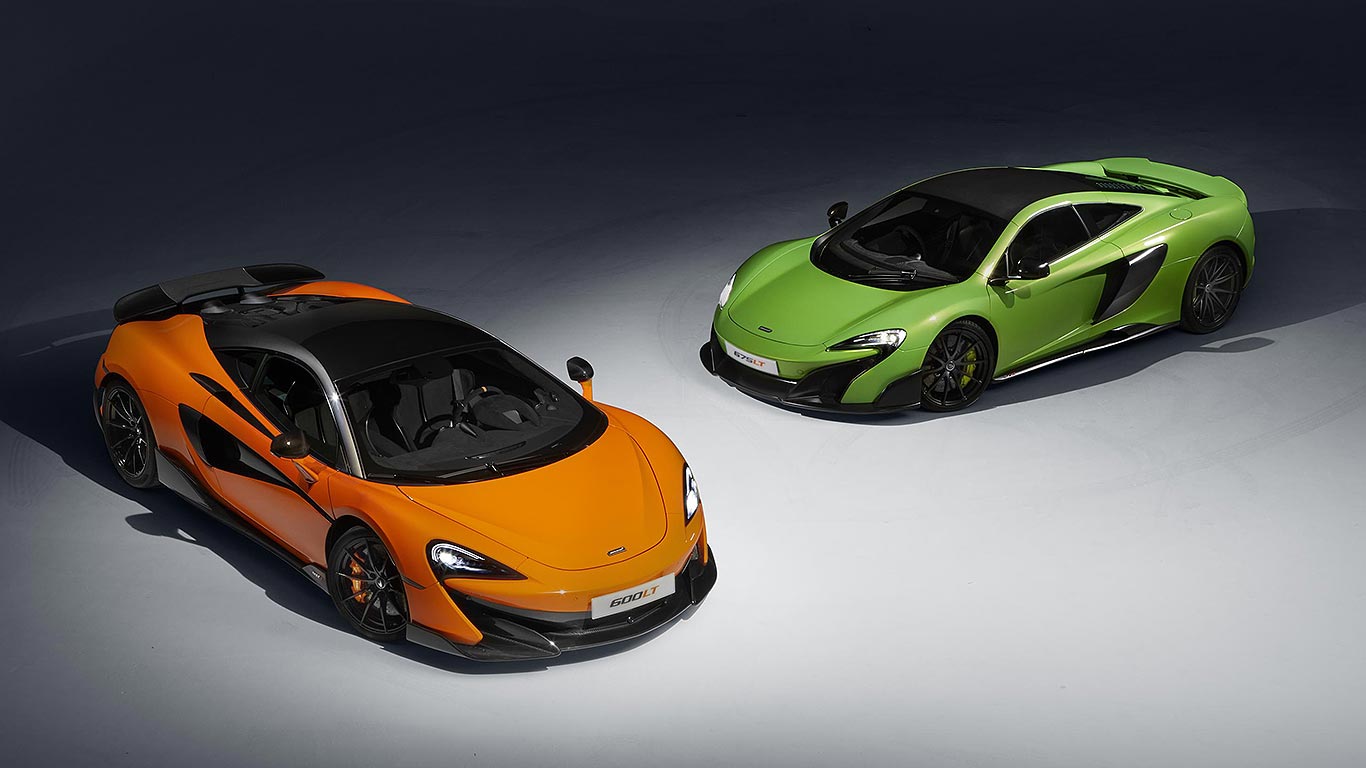
Long-awaited, given the superb reaction to the 570, was this more hardcore 600LT variant. You know the drill: weight down, power up, handling tuned, aero added. This fire-spitting GT3 RS-baiter topped many Car of The Year votes, including our own. Curiously, this hardcore track version is also available with the wind-in-the-hair experience. Further testament to the stiffness of that incredible carbon tub.

McLaren Speedtail (2019)
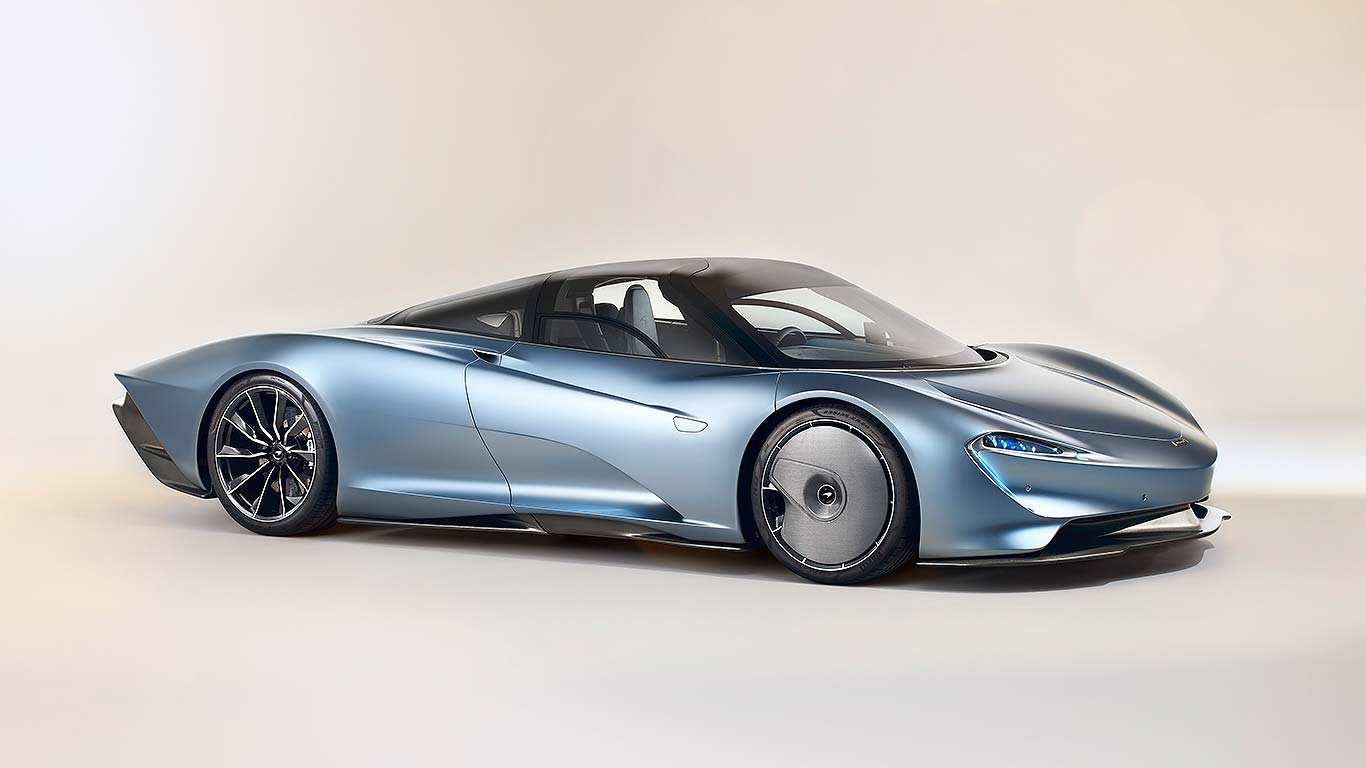
The Speedtail is the second wave of McLaren’s two-pronged hypercar attack. It’s pretty much the opposite of the Senna in every way. This car is all about being smooth and comfortable: a hyper GT. A 250mph 1,000hp hybrid whale-tail private jet for the road, it will also carry three occupants, with the driver in the middle – a nod to the F1 that started it all.

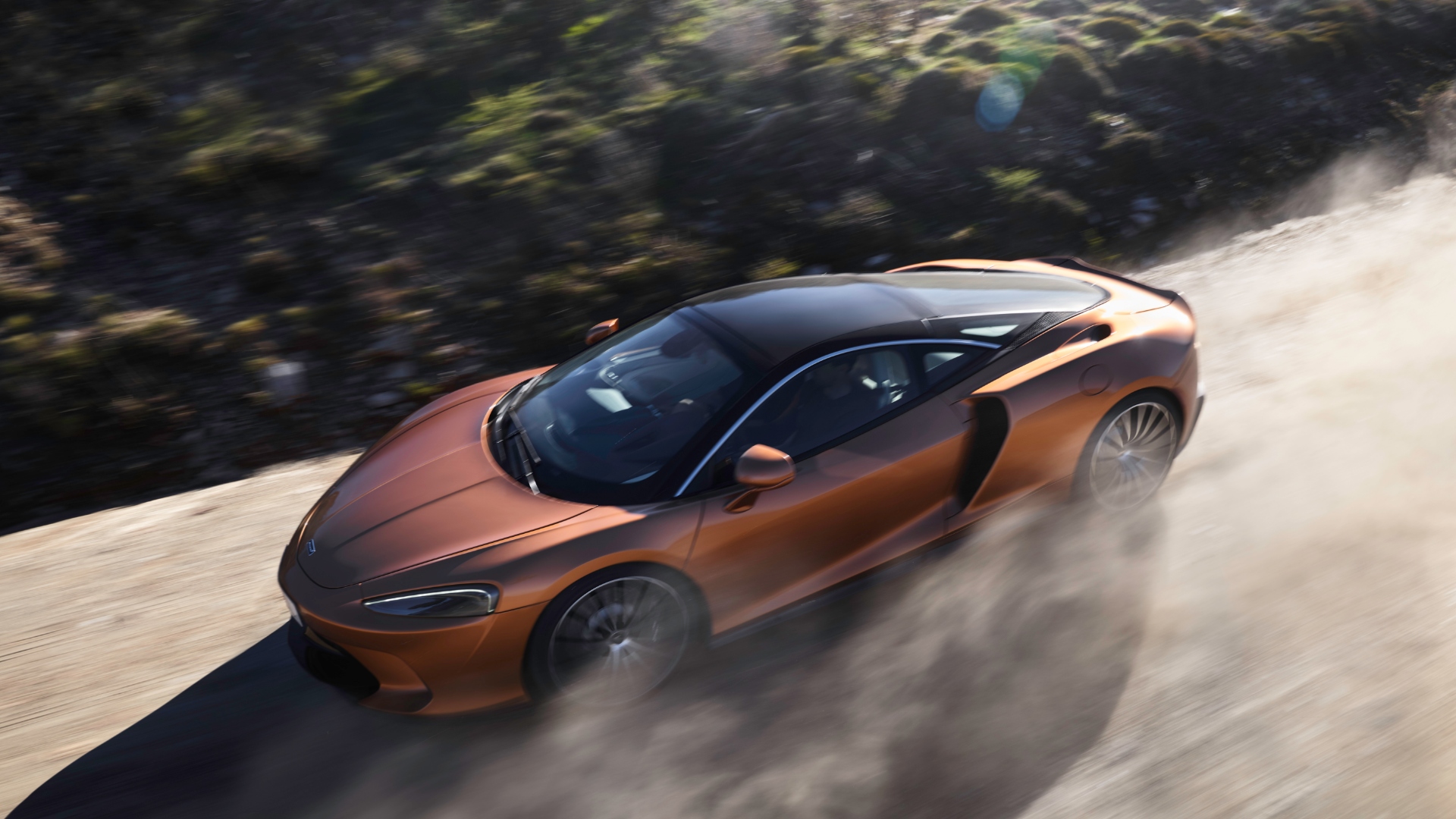
McLaren GT (2019)
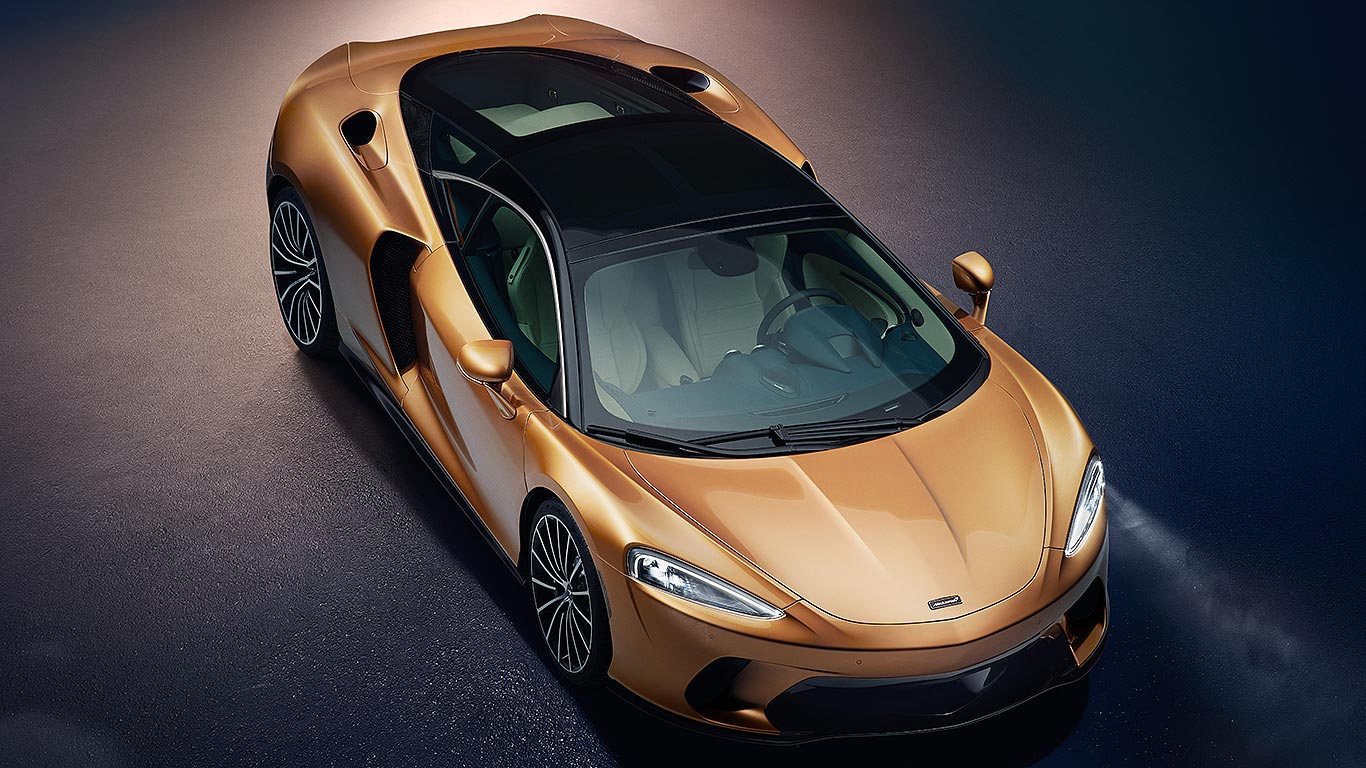
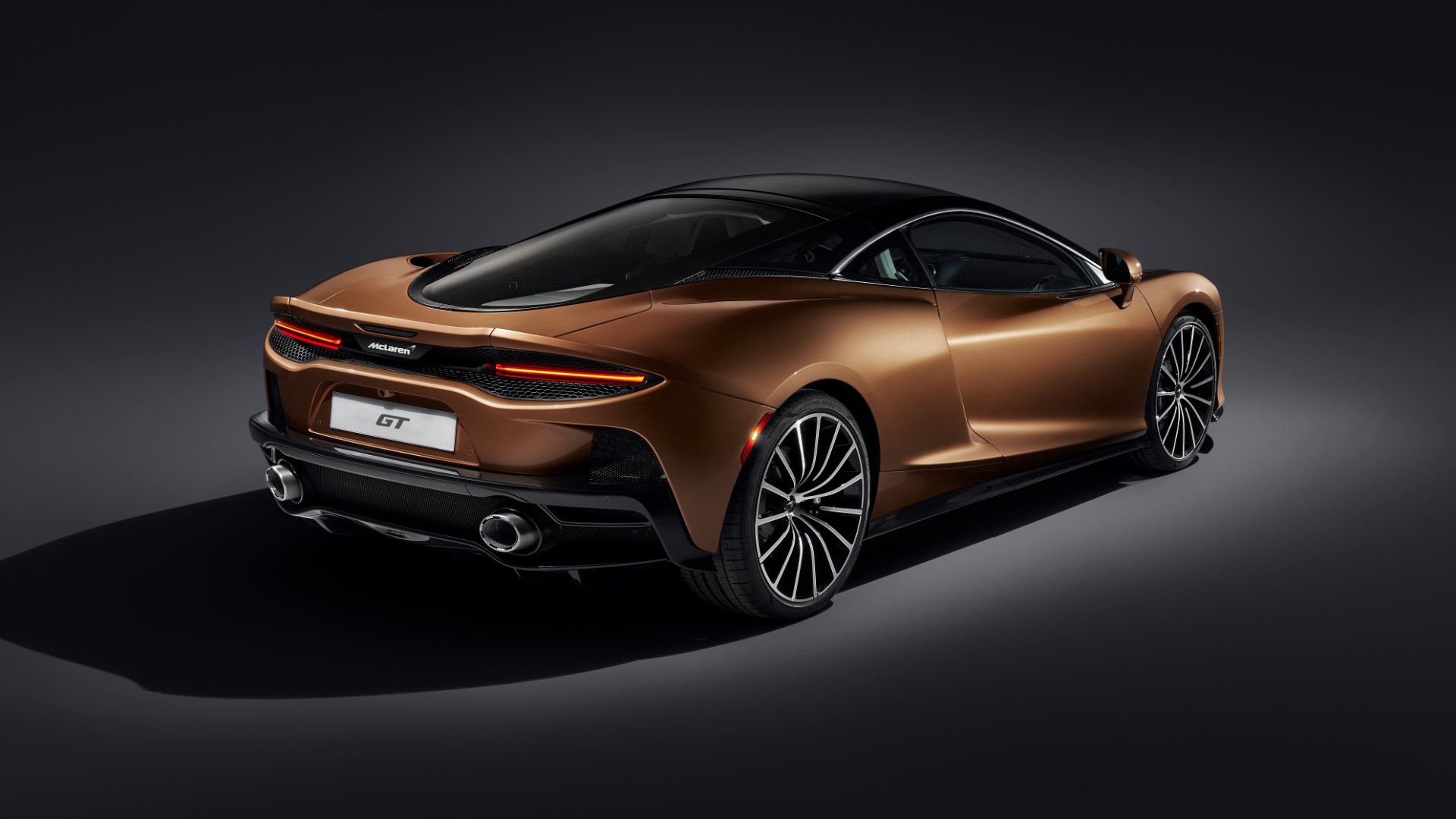
Finally, the GT. It’s a new model inspired by the success of the 570GT. This is the third of McLaren’s road cars (after the 570GT and Speedtail) to shirk outright track performance for grand touring prowess. Its sleek looks immediately mark it out as something more nuanced than its bewinged brethren. Its boot will take overnight bags and golf clubs with ease, while a new infotainment system should be a big improvement. Still want that Aston Martin DB11 AMR?

Advertisement

McLaren GT: all you need to know about the baby Speedtail

0

McLaren GT

McLaren has unveiled its new GT model. It will be the fifth independent model in the range, excluding LT, Spider and GT versions of its 570 and 720 models.

You might wonder where it sits in the McLaren range. The Sports, Super and Ultimate Series models are easily divided by performance, price and exclusivity.

McLaren

The GT is intended to be a bit more nuanced, shirking a focus on outright performance for a specific use: Grand Touring. Think of it as a middle ground between the 570GT and the Speedtail, though definitely closer to the former…

The first true McLaren Grand Tourer

McLaren GT

It doesn’t quite find a home within the existing three-level structure of McLaren’s lineup. It’s still a McLaren – mid-engined, with a twin-turbo V8 and a carbon tub – but everything has been tuned and geared towards being a cosseting continent crosser.

McLaren GT

So that means the ride comfort, cabin refinement, control optimisation and weights have all been geared towards amenability and daily usability. The new Proactive Damping Control suspension system is instrumental in realising the GT’s new more cosseting personality.

The ride height and ground clearance have even been developed with urban driving and speed bumps firmly in mind. 

McLaren GT: elegance over aggression

McLaren GT

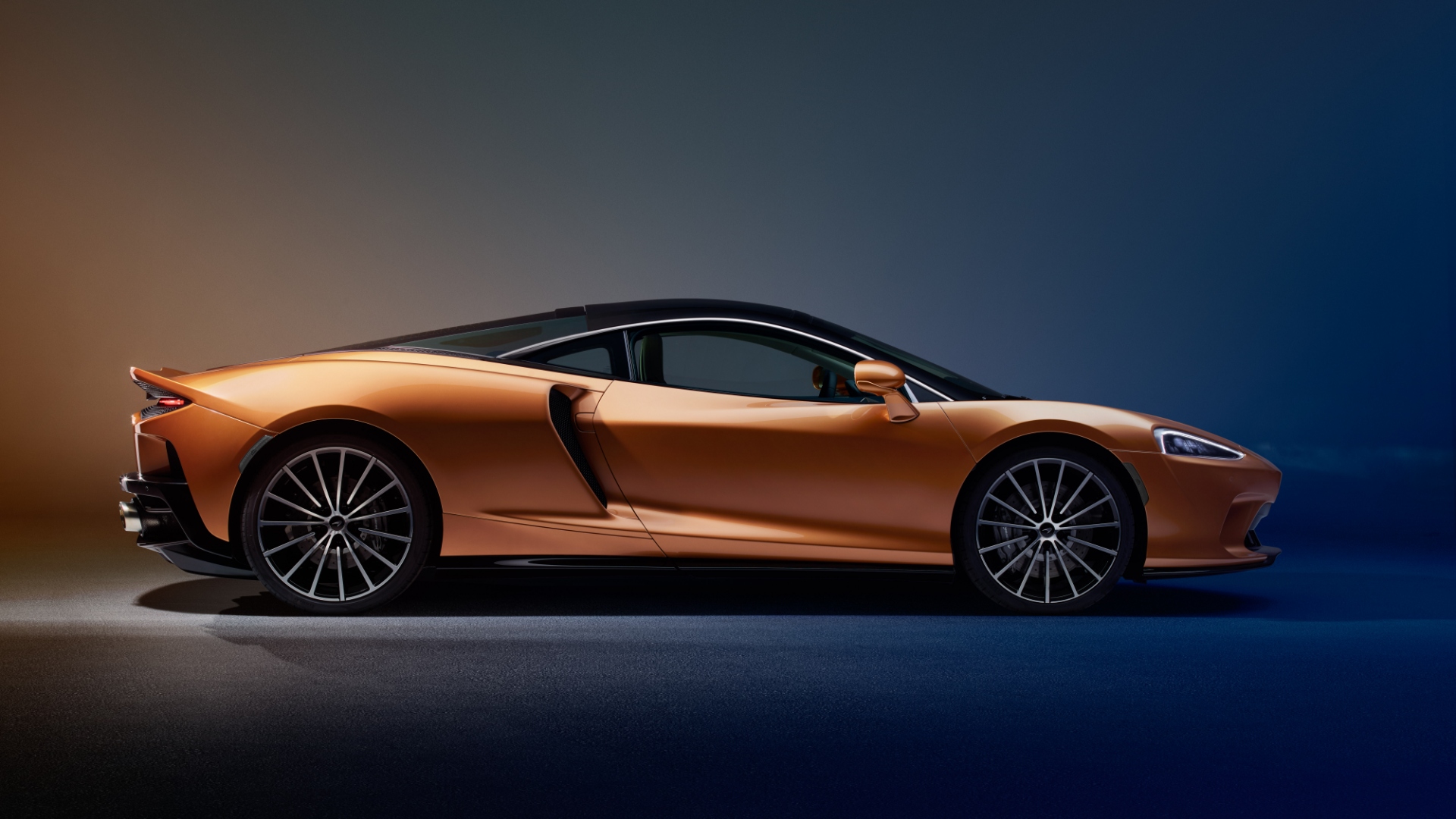
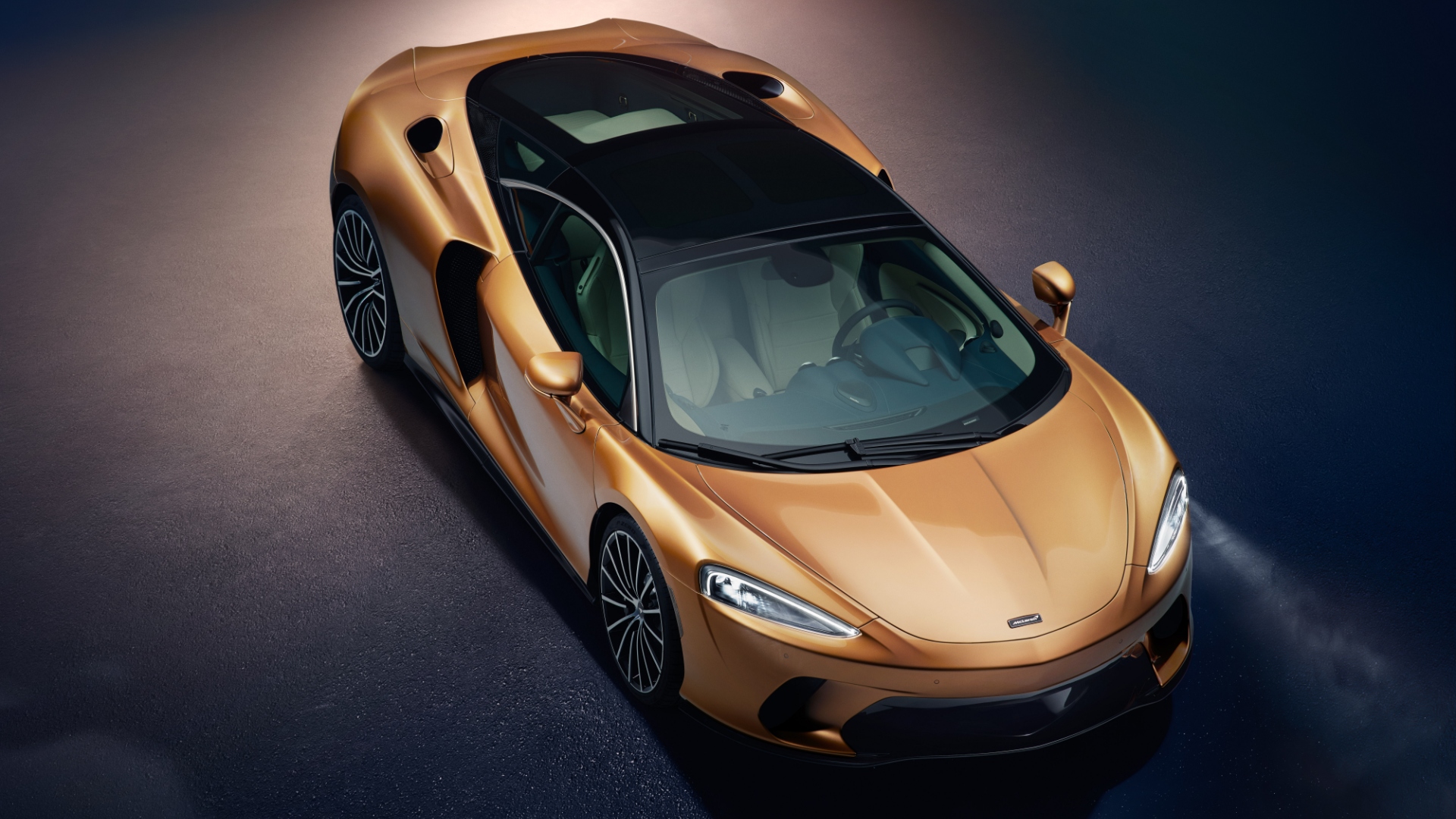
While the GT is recognisably a McLaren, some of the marque’s more controversial design elements are gone, in favour of a more traditional look.

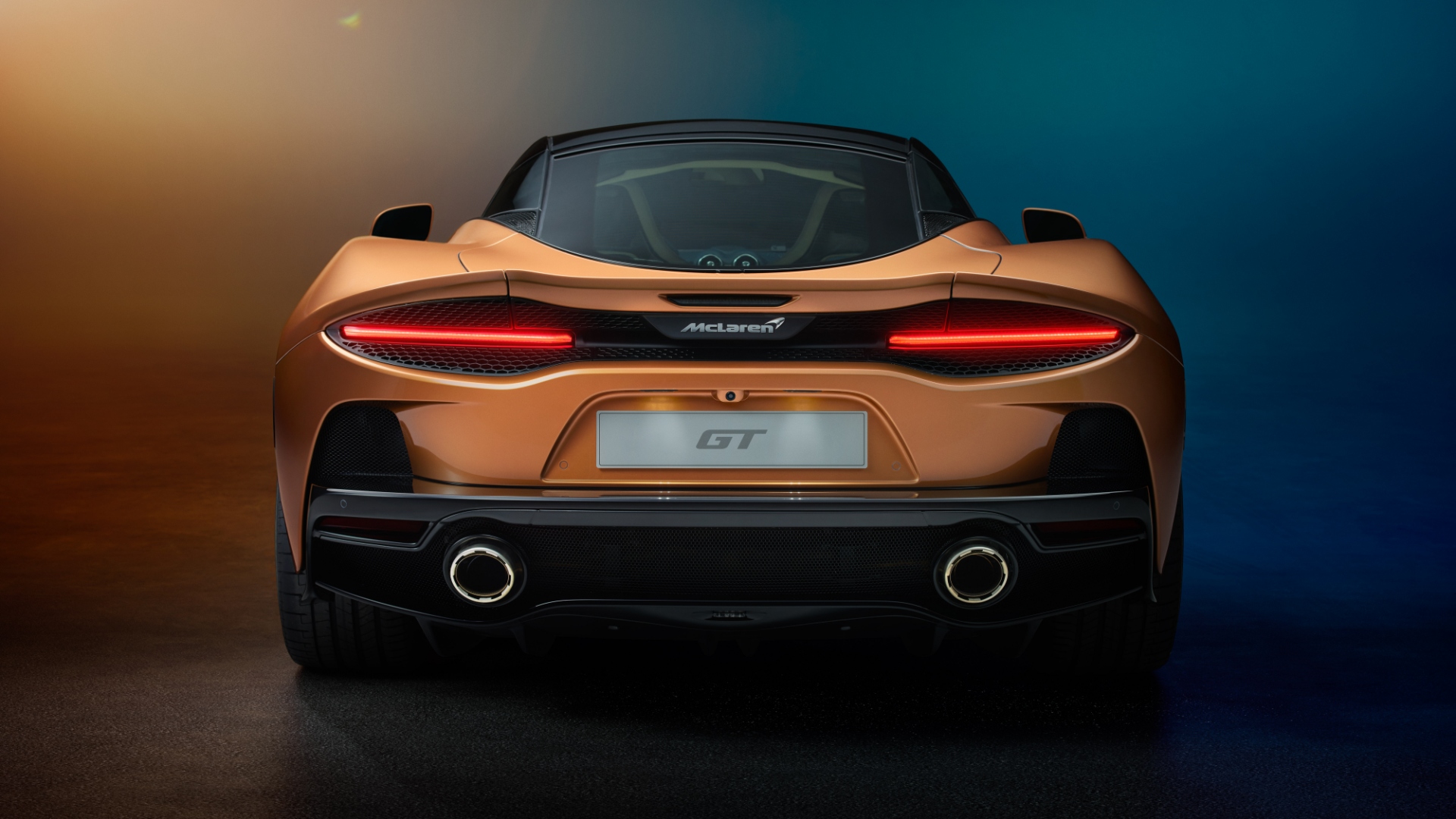
That means no 720S-style ‘eye sockets’ or even lights in the shape of a McLaren logo, as per previous cars. It’s a simple, slim and elegant light design, with no excessively-sized vents at all. That means most of the madness of the Senna is nowhere to be seen.

We say most, given that those gaping side vents rear of the doors look oddly familiar…

McLaren

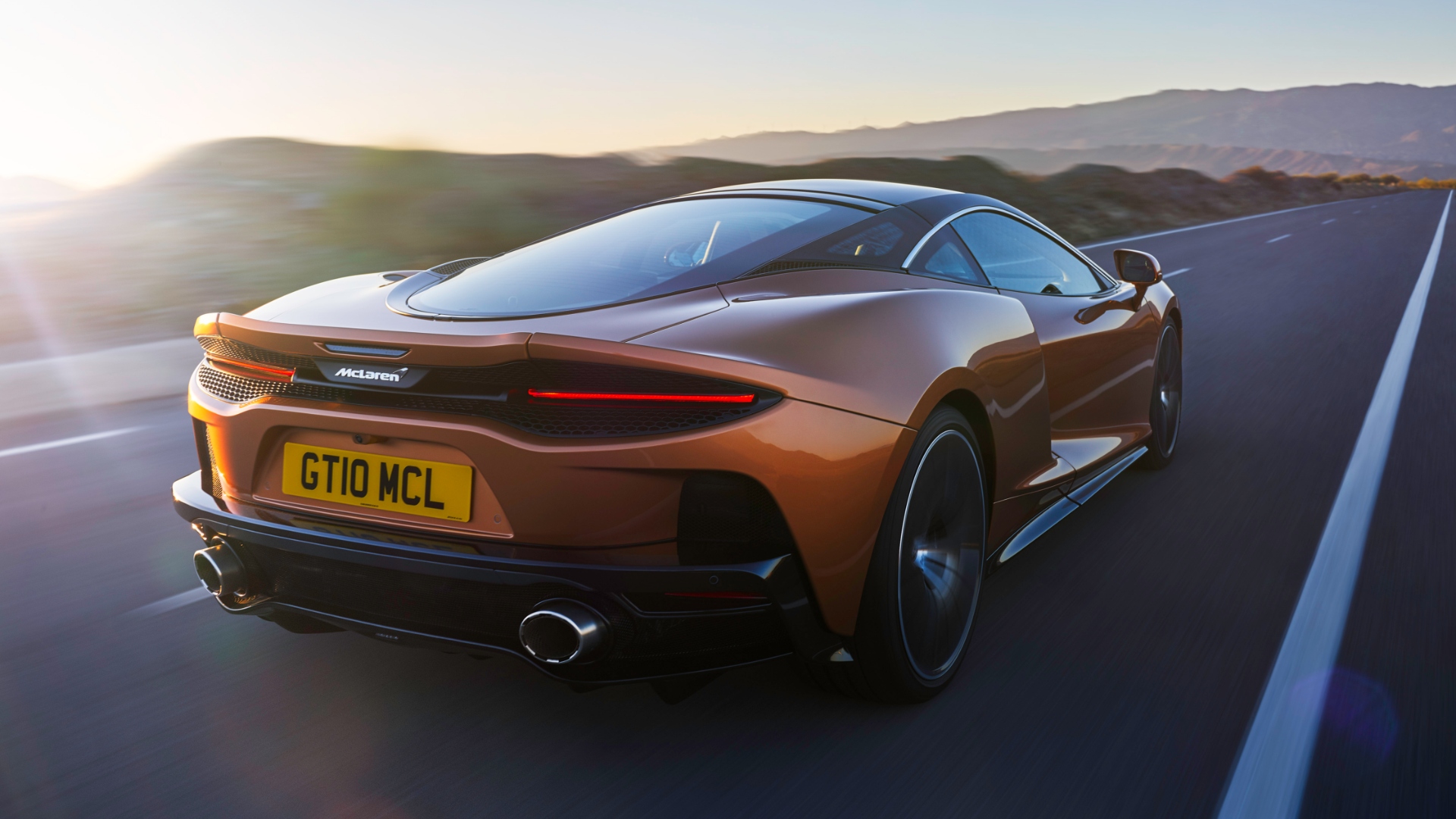
There isn’t even any active aero, as far as we can tell. There’s no aggressive splitter, no jagged aero-focused rear end. The exhausts are low down and the diffuser is by no means intrusive.

The air exit vent, within which the elegant strip lights reside, is of a stylish and modest shape, sitting under a subtle ducktail into which the top of the car tapers.

McLaren

The styling, while more subtle than what we’ve grown accustomed to from McLaren, isn’t where the GT-ness is at its strongest, though.

You have to step inside.

The cabin of the McLaren GT

McLaren

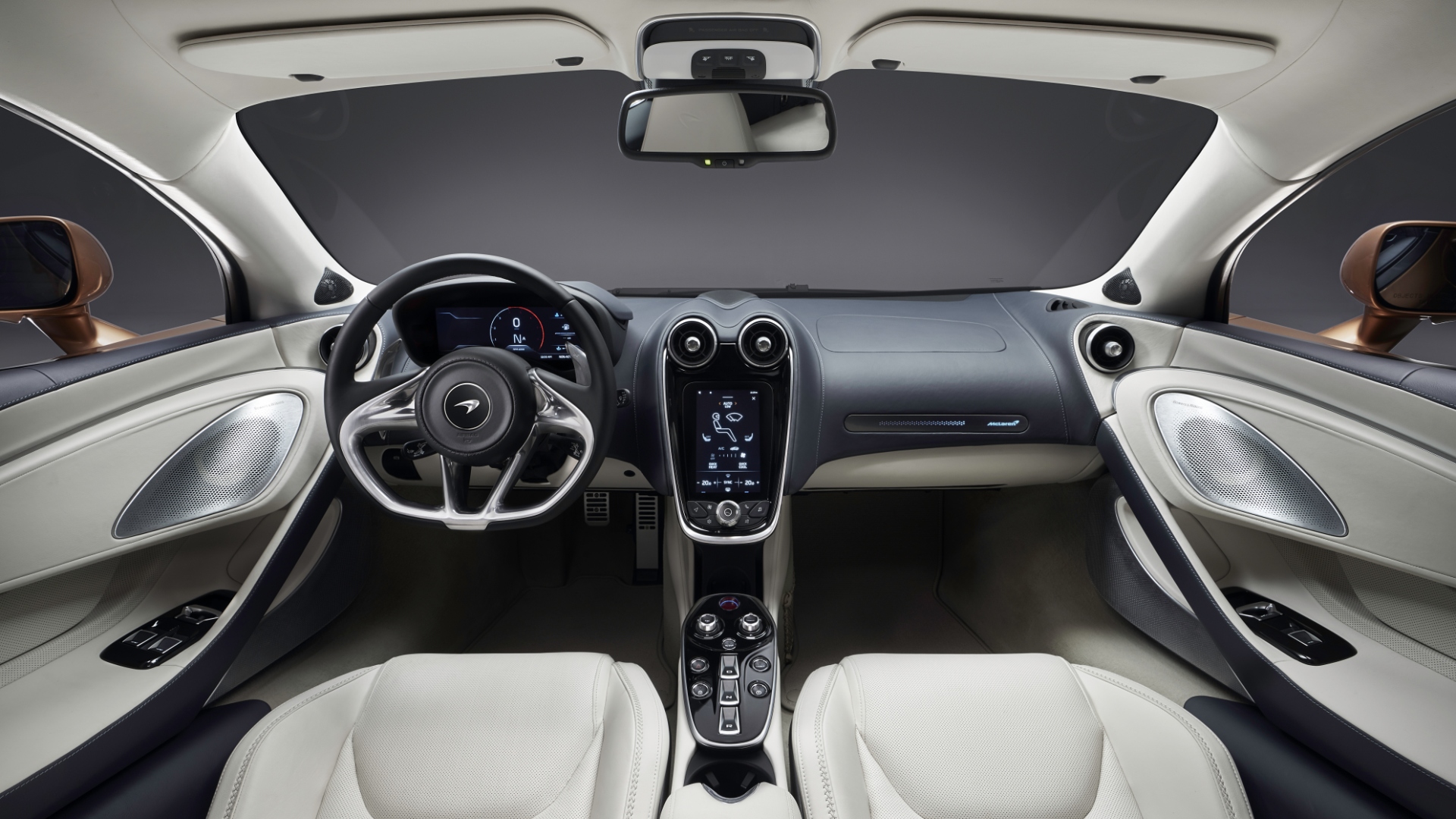
Some of the finest luxuries in motoring are space and light. While the GT is no four-up tourer like a Ferrari GTC4Lusso, it has an overabundance of transparent surfaces that bathe the cabin in light to give it an airy feel.

The obvious large glass areas are joined by a transparent roof and buttress elements, first seen on the 720S Spider.

To look at, besides being nicely naturally lit, the interior is familiar McLaren. It does, however, feature the new (much improved and much needed) HERE infotainment system, which is McLaren’s most sophisticated system to date.

McLaren GT

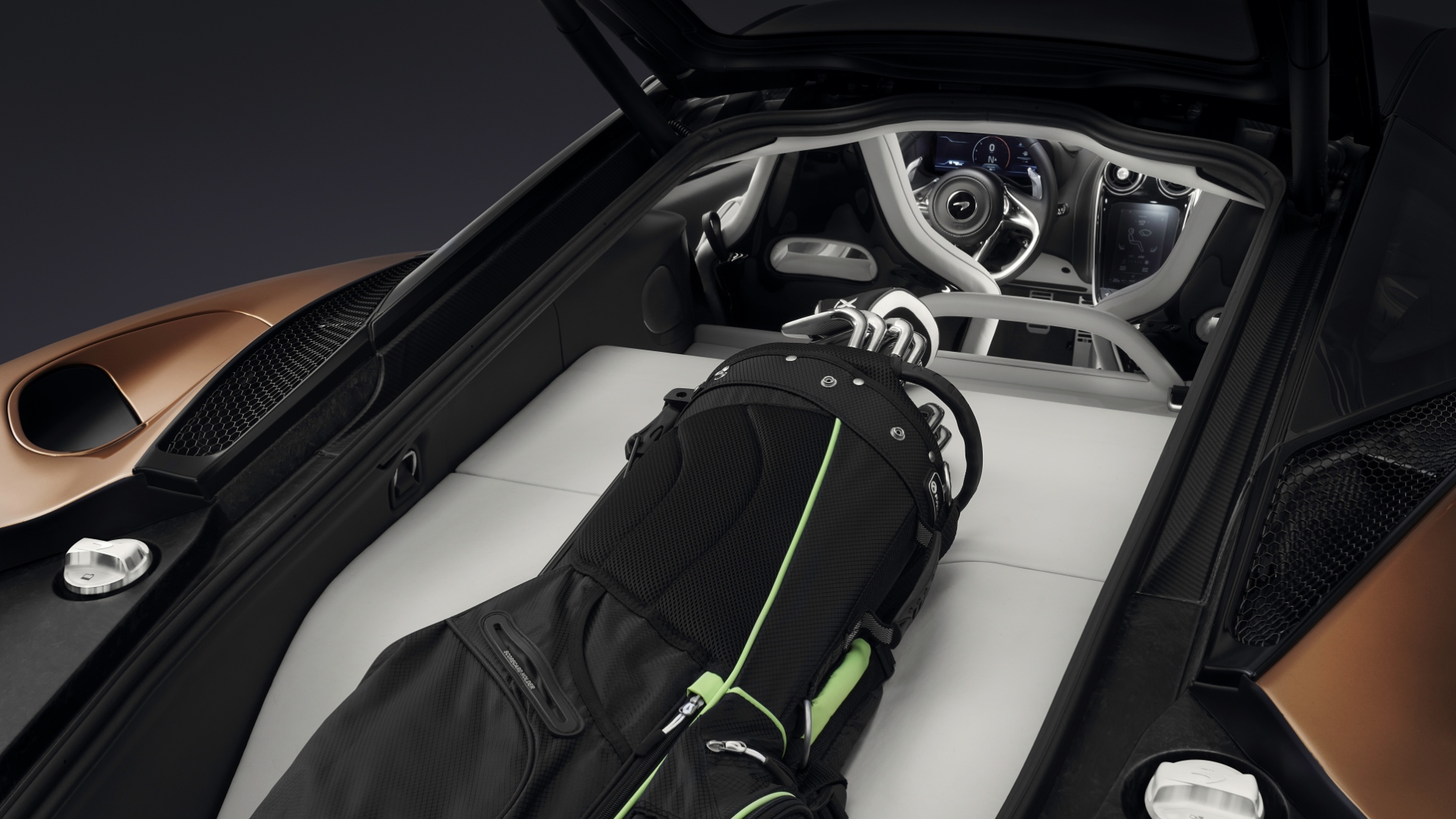
One thing a GT car needs is a sizeable boot. The GT comes complete with 570 litres of storage space including the front trunk (or ‘frunk’).

In the back, McLaren knows the audience it wants for this car.

McLaren

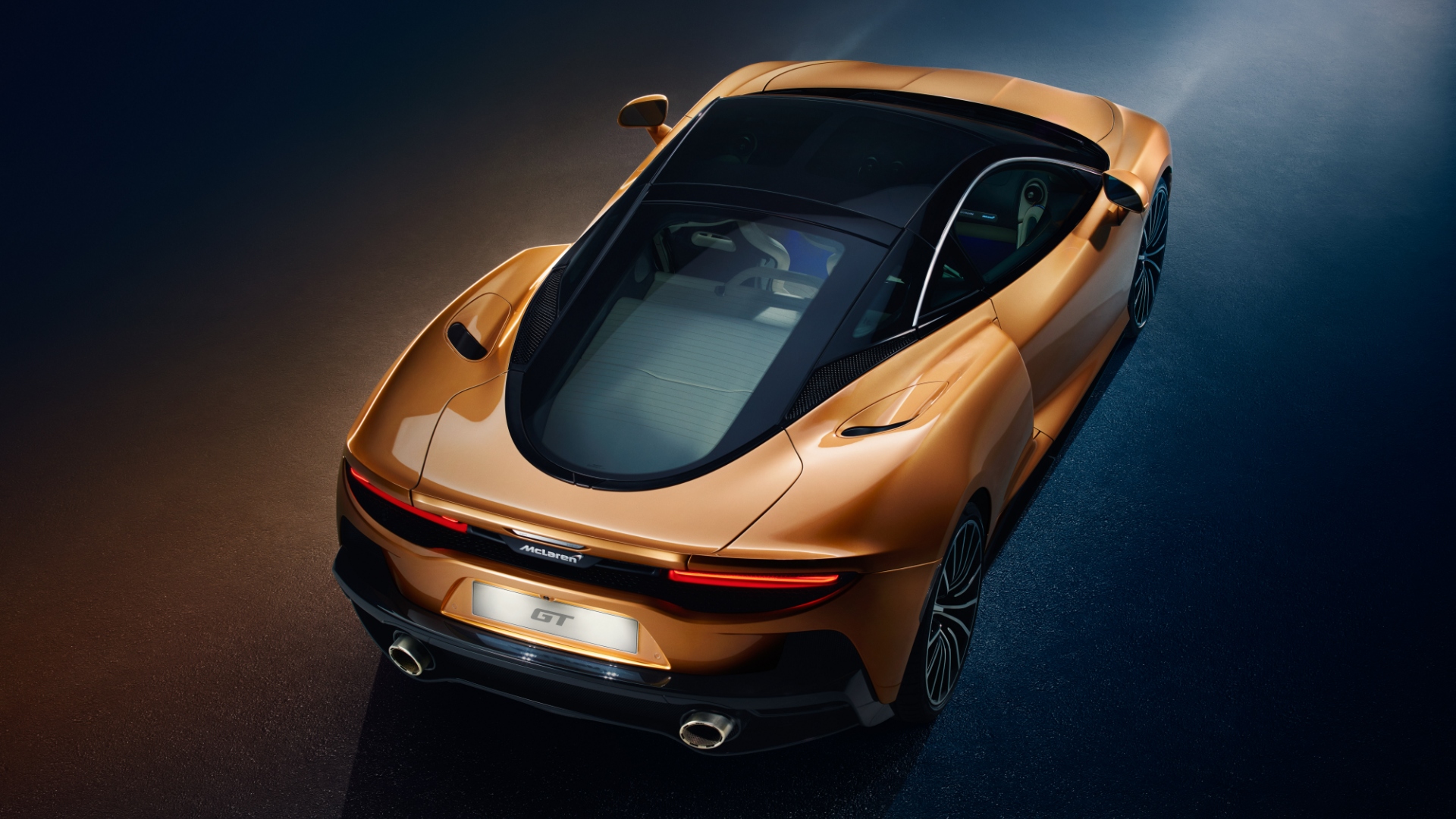
The rear storage is big enough for a set of golf clubs, big bags and skis, and accessible via the front-hinged, full-length glazed tailgate (under which you’d find an engine in most supercars).

That lid is available with power operation, for the ultimate in McLaren GT convenience…

Power and performance: it’s still a supercar

McLaren GT

While a Grand Tourer, it’s still the McLaren of Grand Tourers. As such, you can expect serious performance for when you’ve finished relaxing.

The 4.0-litre twin-turbo V8 is a development of the units found in the 720S and Senna. With 620hp and 464lb ft of torque, it’s the least powerful of the three, but provides a ‘torque curve to ensure seamless, relentless acceleration’.

McLaren

Because 0-62mph times aren’t very GT, McLaren quotes a nine-second 0-124mph time. Assume that 62mph will arrive in the low threes. Top end, it’ll be going 203mph.

Truthfully, performance figures are almost an irrelevance in this car. As long as it’s got good overtaking power (it’s a McLaren, so this is a given), it does the job.

How much is it and when can I have one?

McLaren GT

The McLaren GT is available to order now, and if your name is one of the first on the list, you can expect delivery ‘towards the end of 2019’. Prices start from £163,000, but we expect a nicely-specced car will be closer to £200,000.

Twenty thousand cars? At this rate, McLaren Automotive will hit 25,000 units in no time at all.

Advertisement

Revealed: the parking habits that annoy people most

0

parking habits

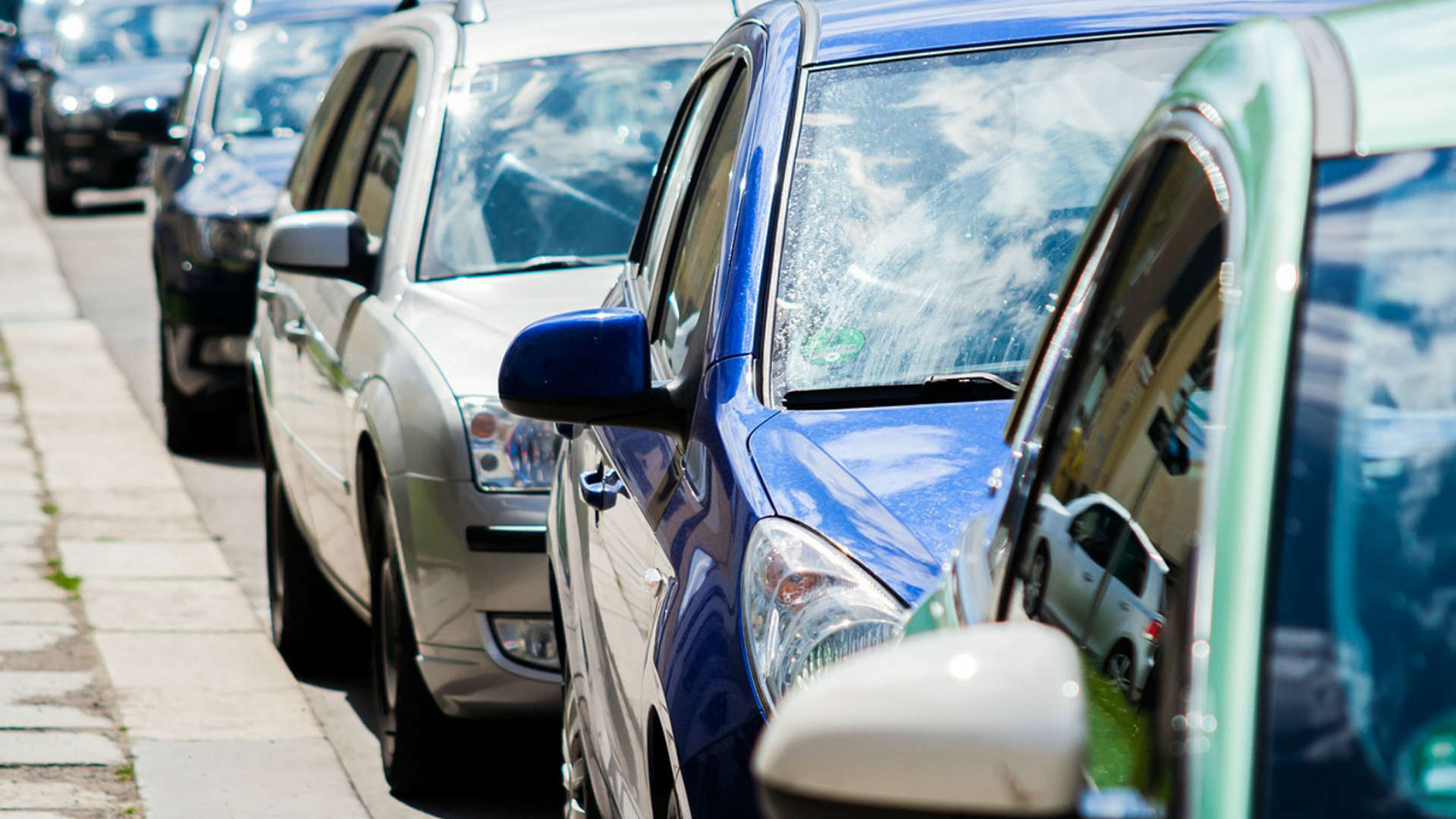
Parking in a Blue Badge bay without a disability is the parking habit that angers motorists the most. This is according to research conducted by YourParkingSpace.co.uk.

Twenty-three percent of the 500 people surveyed said misuse of a Blue Badge bay is the worst parking habit, followed by people who park too close to your car (22 percent).

On that point, why is it, when you park in an isolated parking bay, well away from the supermarket entrance, you always return to your car to find a ‘parking buddy’ parked alongside you?

Invariably, it’ll be a mid-range hatchback with a missing wheel trim and more pockmarks on its doors than a teenager’s face.

Hit and run parking

Anyway, back to the survey…

Taking up too much space when parking is another bad habit likely to wind people up (18 percent), followed by using a parent-and-child bay with no children (14 percent), parking on the pavement (13 percent), and not leaving contact details after denting a vehicle (10 percent).

Last year, the Department for Transport (Dft) announced plans to introduce a pavement parking ban, following the example set by London, where parking on the pavement has been illegal since 1974.

‘Parking can be a contentious issue’

Disabled Blue Badge holders only

Harrison Woods, managing director of YourParkingSpace.co.uk, said: “It’s reassuring to see that parking in a Blue Badge bay without a disability is the parking habit that makes most people angry as it is totally unacceptable.

“Parking can be a contentious issue and the actions of other motorists can make some car drivers see red, whether that’s parking too close to another vehicle, taking up too much space or parking where it is not allowed.”

Yesterday, we listed the cheapest and most expensive airport car parking in the UK.

Advertisement

Car museum starts charging – but locals still get in free

0

Coventry Transport Museum

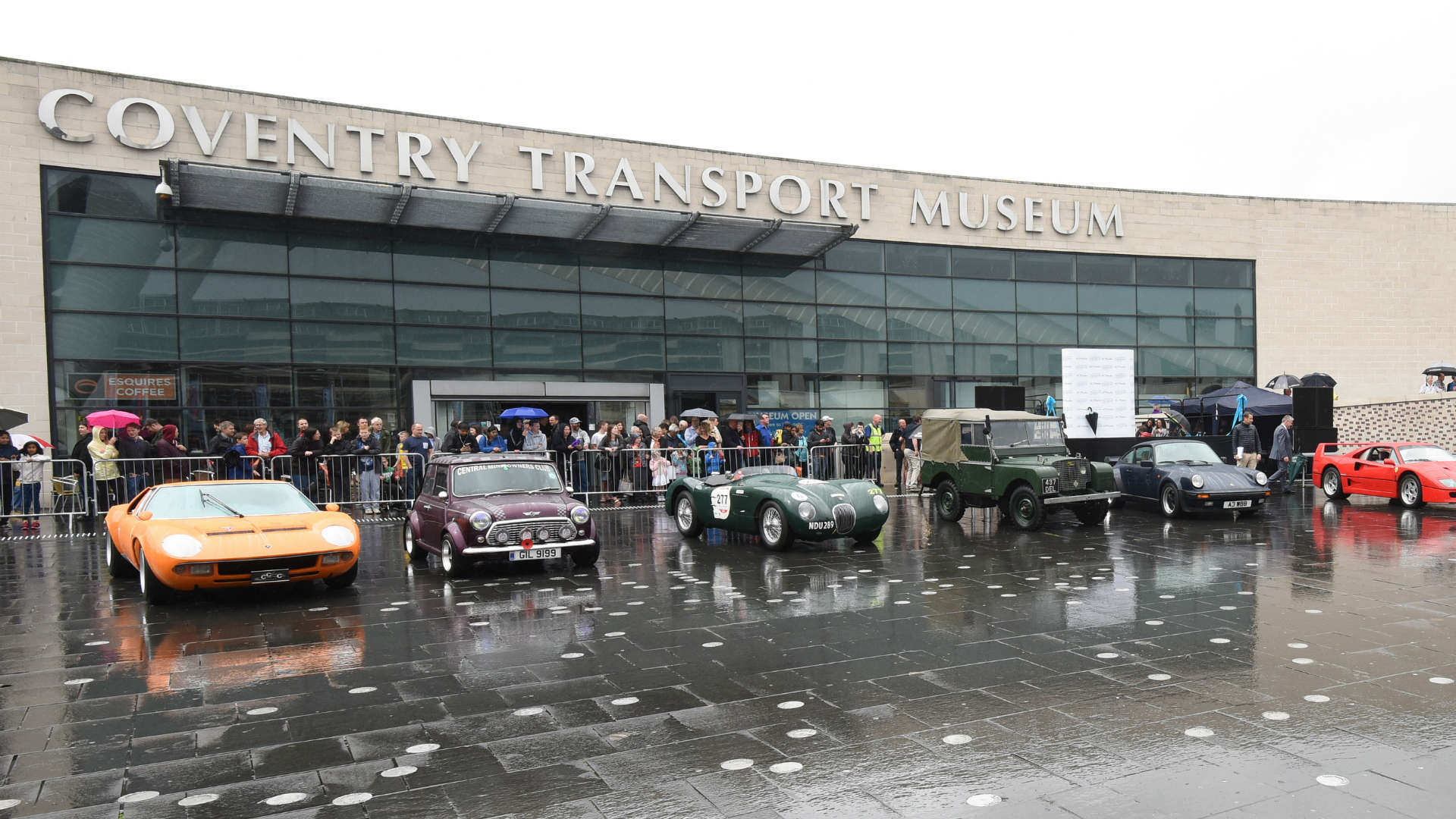
The Coventry Transport Museum is to introduce new admission charges – but city residents will still be able to get in free.

The new charges – which take effect from Sunday 30 June – mean adults will be charged £14 to enter the museum, which first opened in 1980.

Coventry is home to an eclectic collection of cars, commercial vehicles, motorcycles and cycles, including the ThrustSSC World Land Speed Record car, Queen Mary’s Daimler and the Daimler Fleetliner used for Coventry City’s FA Cup winning tour of the city.

As a result of the charges, the museum says visitors can expect to see some ‘fundamental differences’, including a new programme of temporary and touring shows from across the globe.

At present, the museum is funded through grants from Coventry City Council and Arts Council England, but the admission charges will supplement this alongside income generated through commercial activities.

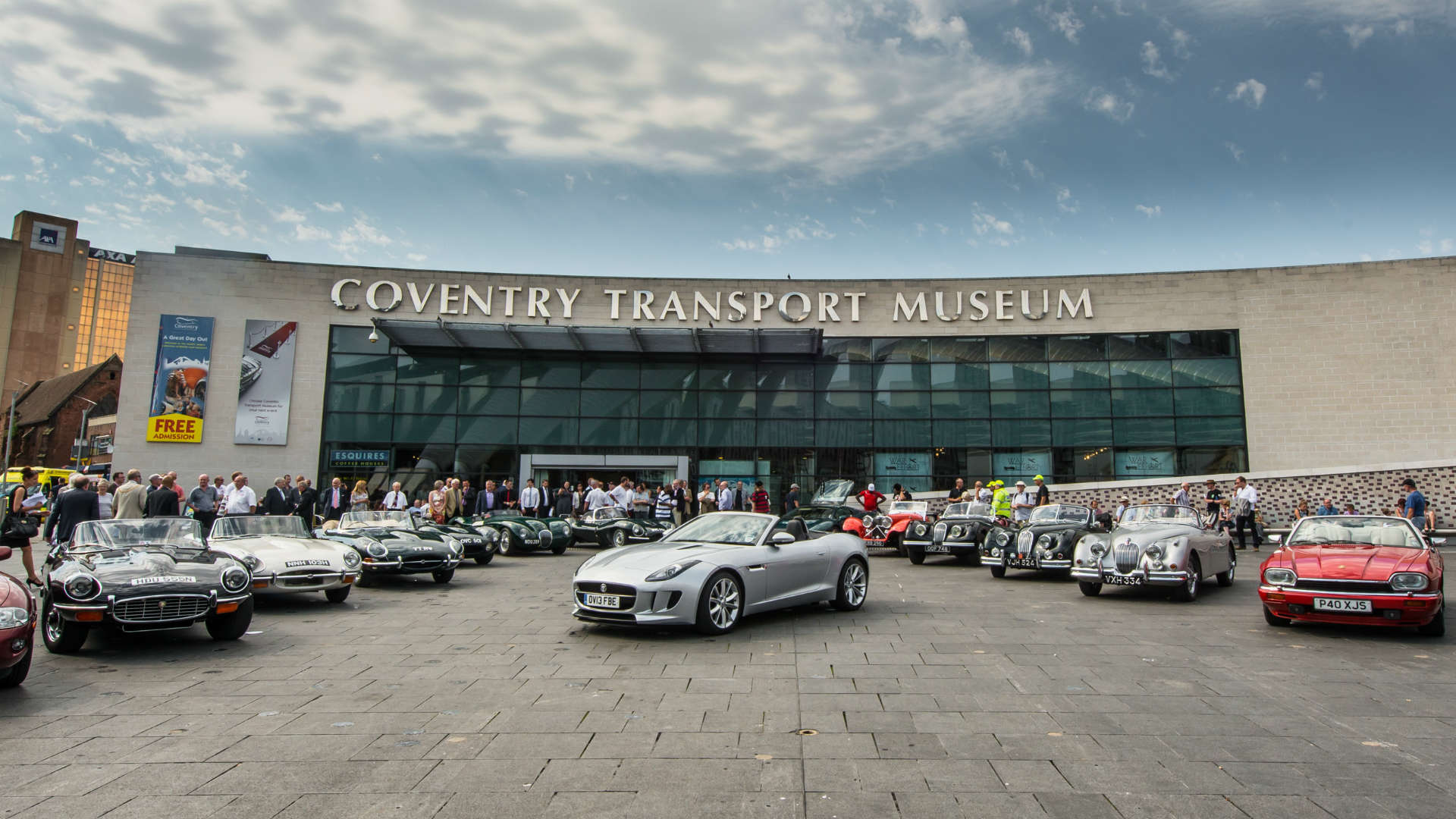
Jaguars at Coventry Transport Museum

Coventry residents will get free access by using new GoCV discount and loyalty cards, launched by the City Council. These are free to all city residents.

Paul Breed, chief executive of Culture Coventry, said: “Last year we set a four-year business plan, which included several objectives and investigative streams to explore.

“One of the objectives was to look at ways to generate further income to ensure we are a sustainable and financially robust organisation, prepared for future challenges.

“But the carefully considered decision to implement admission charges goes beyond income generation – the additional revenue gives us the chance to bring an exciting range of innovative, exceptional and interactive activities and exhibitions to the museum which will attract visitors from all over the country and beyond.”

Coventry Transport Museum charges (from 30 June)

Adults: £14.00
Concessions (senior and student): £10.50
Junior (5-16 years): £7.00
4 or under: FREE
Essential carer: FREE
Family (2+2): £35.00
Small family (1+3): £28.00
GoCV card holders: FREE

For more information, see the Coventry Transport Museum website.

Advertisement

One in 10 now buy a used car without seeing it first

0

Sight unseen car buying

Sight-unseen used car purchases are on the up, according to new research. One in 10 (11 percent) of buyers are now taking the plunge without seeing their new vehicle first.

The data comes from an AA Cars poll of 19,350 drivers. Its theory is that online portals are yielding more consumer trust, as buyers put their faith in the transparency of used car listings.

It’s also worth noting that the average used car is getting younger and, as a result, more expensive. So there is potentially less risk, even if buyers are generally paying more.

How to sell a car online

Sight unseen car buying

What’s more, 52 percent of those who hadn’t bought a car ‘sight-unseen’, said they would consider it – if the car was examined by a pre-sale vehicle inspector from a trusted brand.

What else makes consumers more likely to buy cars online? Forty-eight percent said dealers being upfront and transparent, particularly regarding a buyer’s right to cancel. Predictably, discounted prices would get more fingers clicking (44 percent). And 44 percent also said an affiliation with a trusted body to verify the quality of a dealer’s stock would increase appeal.

One of the most important things for an online advert is presentation. More pictures, more videos and exhaustive information about the car would make 37 percent of browsers more likely to buy. Ultimately, it’s about reassurance – that’s why we go to view cars in the first place. Get that across online and you’re on to a winner.

Sight unseen car buying

“A decade ago, the idea of buying a car without seeing it in person was highly unusual,” said James Fairclough, CEO of AA Cars.

“These days, consumers are much more comfortable with buying valuable products they haven’t seen first – namely due to the sheer volume of listing information and all-angles pictorial evidence that is provided by respected portals online, making a prospective buyer feel like they have practically kicked the tyres themselves.

“Buyers can also increasingly feel at ease as they are sheltered by the Consumer Rights Act of 2015 which gives them a ‘right to return’ a car if it develops a fault in the first 30 days of ownership – or to ask for a repair in the first six months after it was bought.”

Advertisement

Van traffic has nearly DOUBLED in Britain since 1993

0

van traffic

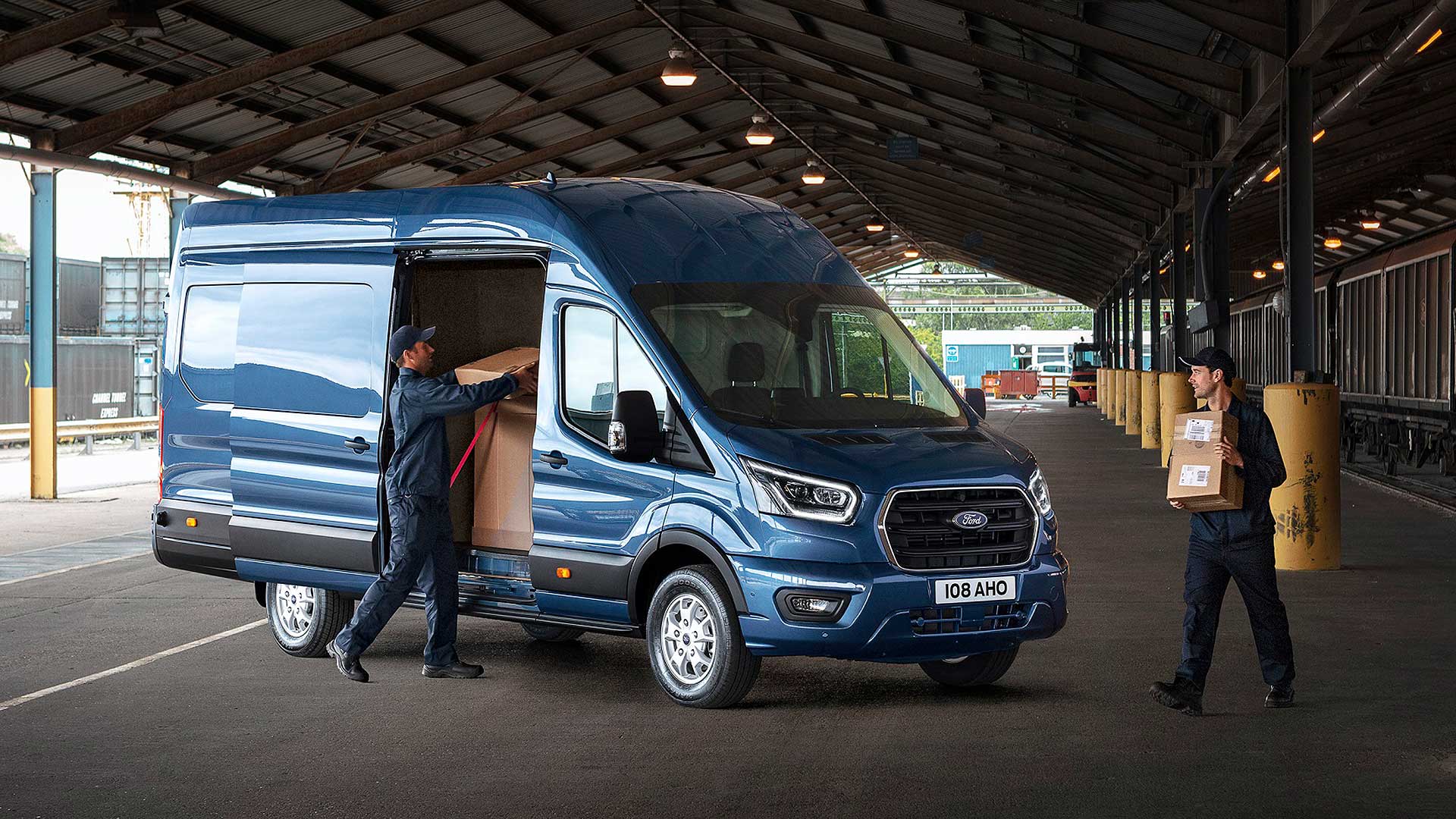
Van traffic on British roads has increased by almost 100 percent since 1993, according to latest official government figures.

It means that van traffic has reached a record high of 51 billion vehicle miles. Vans now account for 16 percent of all motor vehicle traffic, compared to just 10 percent in 1993.

For context, traffic from cars and taxis is down from 82 percent to 78 percent. The distance covered by cars and taxis has risen by a more controlled 21.4 percent, albeit still to a record high of 255 billion miles.

However, although van traffic is significantly up, the rate of growth appears to be slowing down. 2018 statistics show a 0.9 percent increase from 2017. Car traffic was up just 0.2 percent.

Going further back, van traffic is up 1,143 percent since 1949, with lorries up ‘just’ 119 percent and buses and coaches actually down eight percent.

van traffic uk

Broadly speaking, vans have a similar daily travel pattern to cars, although the afternoon peak for van traffic is between 3pm and 5pm, an hour earlier than cars.

[Insert something here about van drivers clocking off an hour earlier…]

Predictably, the proportion of vans on the road at weekends is generally lower than weekdays, even at peak periods.

Rather than van drivers covering greater distances, the government says the increased traffic is due to growth in the number of licensed vans on the road.

The number rose 88 percent between 1994 and 2018, up from 2.1 to 4.0 million. Meanwhile, the average annual mileage per van has remained stable at around 13,000 miles per year.

‘Particularly worrying’

New Ford Transit

Commenting on the figures, RAC head of roads policy Nicholas Lyes said: “The number of miles travelled on our roads hardly changed in 2018 compared to the previous year, but interestingly, the forms of transport used has.

“Van traffic, despite experiencing slower growth in 2018, still saw a slight increase which sets a new record high.

“Cycling miles also rose and is now 34 percent above what it was 25 years ago, but there has been a continued decline in the number of miles travelled by buses and coaches which is particularly worrying in an age when, as a society, we are trying to get people to use public transport more.”

Advertisement

Revealed: the cheapest and most expensive airport car parking

0

Edinburgh Airport parking

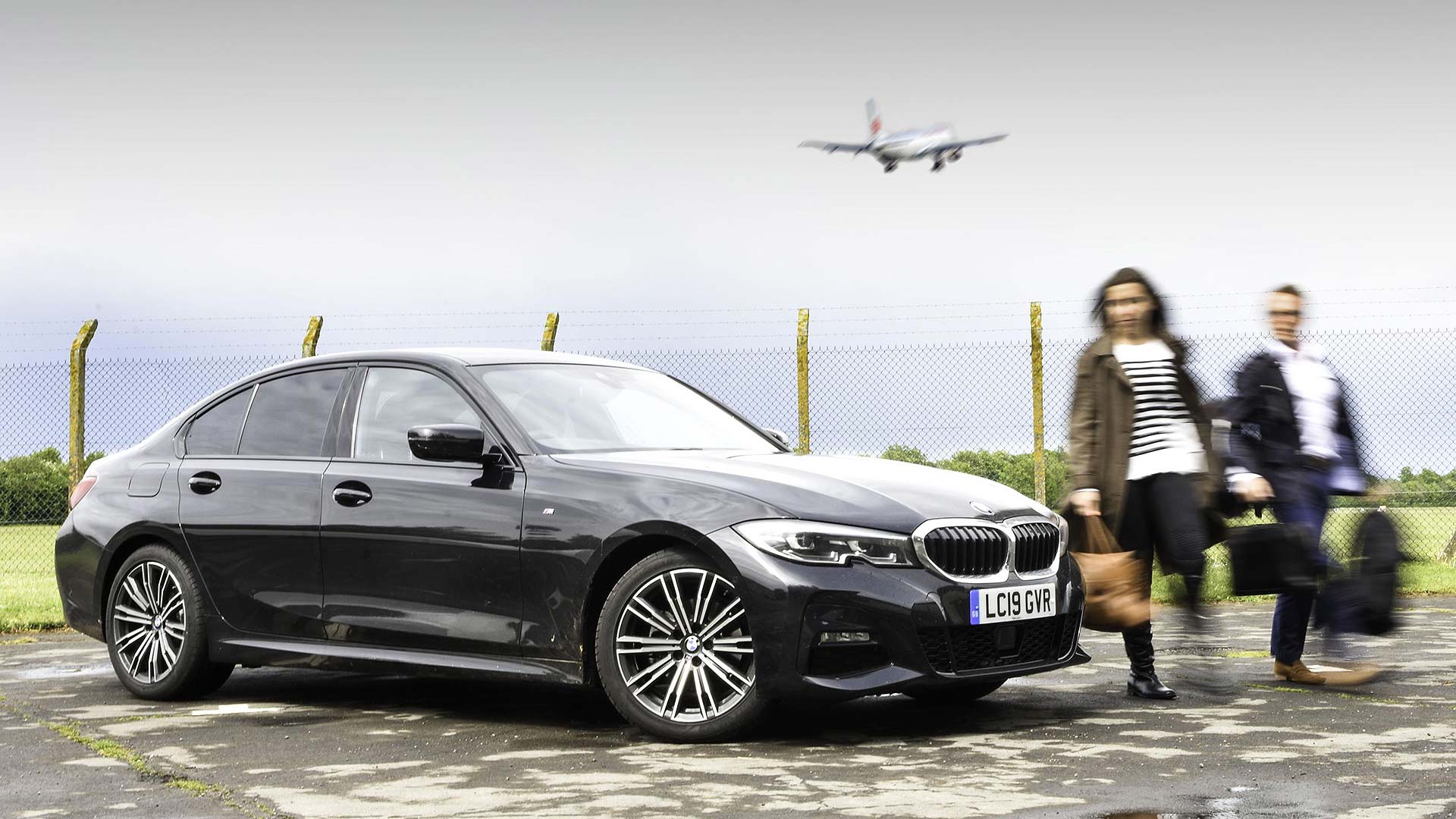
Holidaymakers flying from London City Airport for a two-week break are paying nearly £200 just for their car parking, new research has revealed. 

London City has, by far and away, the most expensive airport parking in the country, with the cost nearly FOUR TIMES more than an equivalent two-week stay at Edinburgh Airport.

Travellers using Gatwick Airport might be interested to know that that a two-week stay in the South Terminal is £3 MORE EXPENSIVE than in the North Terminal. Talk about a North/South divide… 

Driiveme airport car parking

Even more surprising is the fact that Heathrow Airport isn’t one of the top five most expensive airport car parks. Southend, Manchester and Liverpool join London City and Gatwick above Heathrow on the list.

My Late Deals carried out the extensive survey. It sourced the costs from the official airport websites, with prices based on the official car parks. A two-week stay in August was used for the purposes of the research.

The least expensive airport parking was found in Edinburgh (£43.99), followed by East Midlands (£58.49) and Stansted (£59.99).

How to save money on airport parking

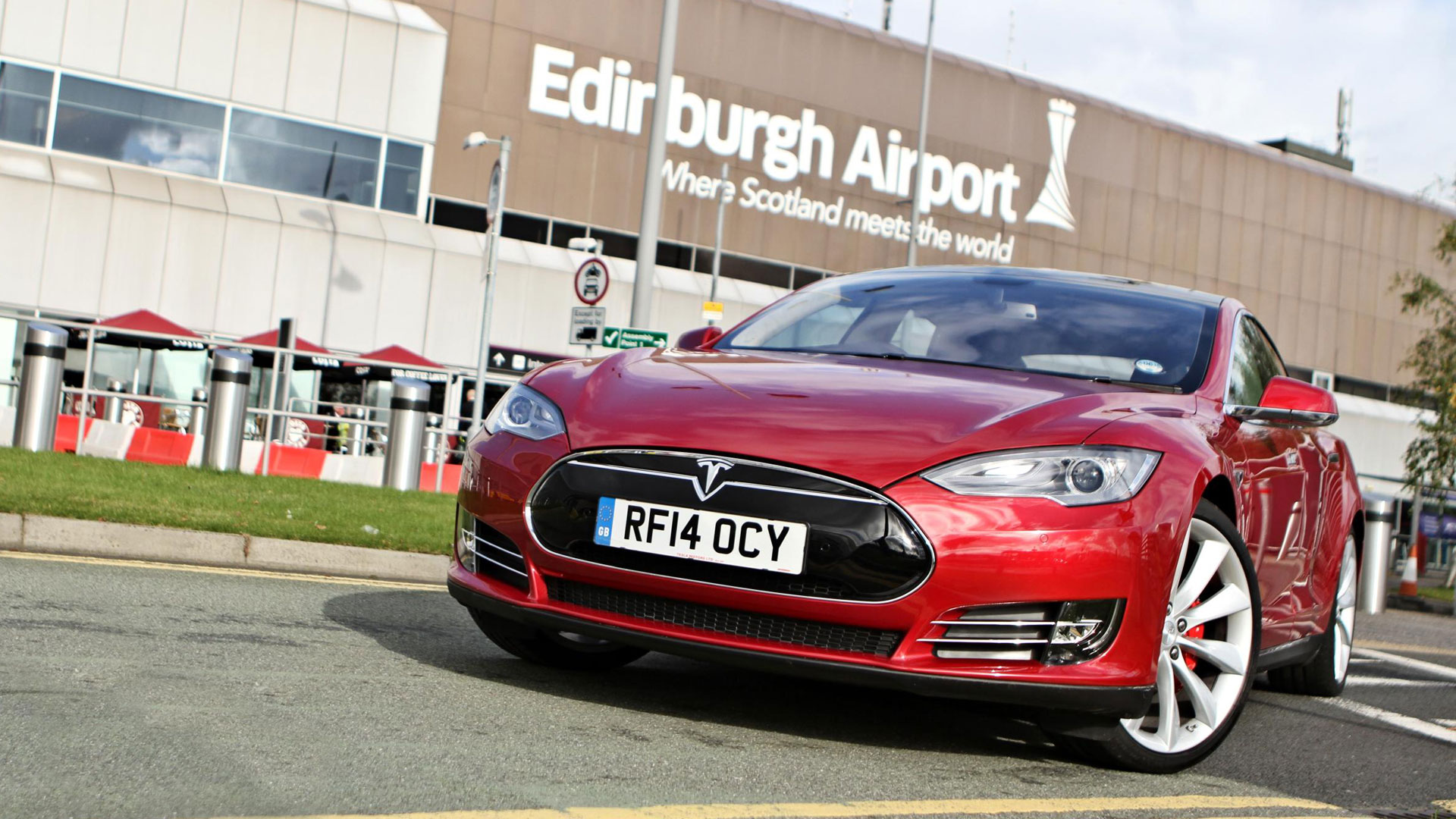
Tesla at Edinburgh Airport

You should arrange your airport parking as soon as you’ve booked your holiday, as pre-booking can shave up to 60 percent off the price you’d pay if you just turned up and paid at the airport.

James Lewis of Holiday Extras said: “Around 87 percent of bookings are booked within nine weeks of the departure date. However, it is those who booked earlier than nine weeks that actually get the better deal (by better deal, I mean cheaper price per night).

“Price and availability go hand in hand – if availability is low, suppliers will increase their prices in order to slow demand. So booking earlier, perhaps at the point of booking the holiday, will guarantee availability and the lowest prices.”

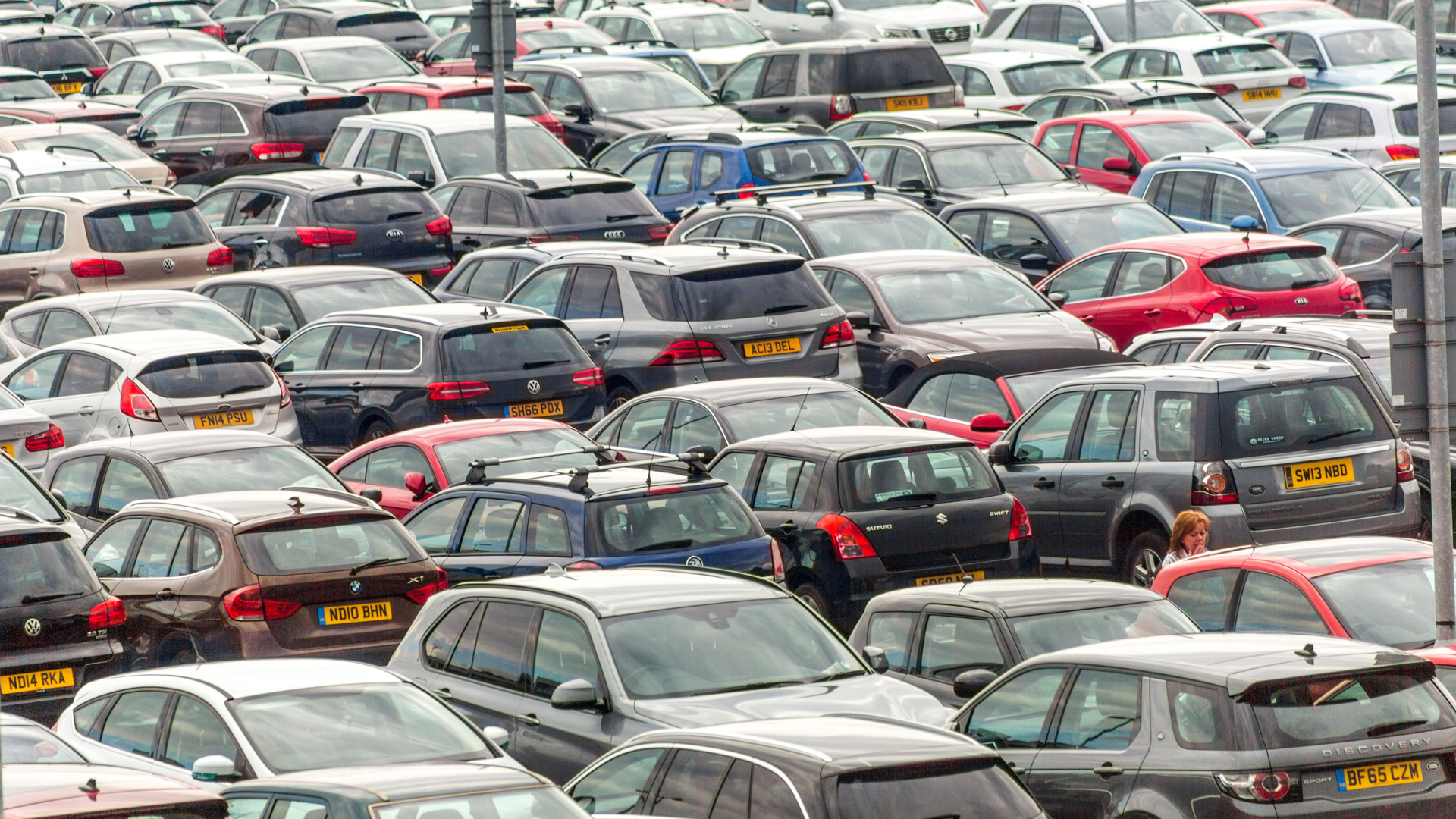
Vehicles in a closely-packed car park
Closely-packed car park

Shopping around for the best deal can also save you money. There are a number of price comparison websites to consider, while most car park operators will run promotions and special offers.

The proximity to the terminal will also play a part in how much you’ll pay for parking. In short, the closer you park, the more you’ll pay, while valet parking will cost considerably more.

Remember to check the reviews and use a trusted operator. Saving a few quid might seem like a good idea, but if your car is left in a muddy field while you sun yourself on a beach, it might take the shine off your holiday experience.

The most expensive airport parking

1. London City £196.50
2. Gatwick (South Terminal) £115.00
3. Gatwick (North Terminal) £112.00
4. Southend £104.99
5. Manchester £101.99
6. Liverpool £97.99
7. Heathrow £97.40
8. Luton £93.99
9. Cardiff £91.00
10. Bristol £90.99

The least expensive airport parking

1. Edinburgh £43.99
2. East Midlands £58.49
3. Stansted £59.99
4. Doncaster Sheffield £62.49
5. Belfast International £62.99
6. Belfast City £65.99
7. Leeds Bradford £66.00
8. Glasgow £66.87
9. Southampton £69.00
10. Birmingham £69.99

All costs based on a two-week stay and correct as of 2 May 2019. Prices for for illustrative purposes only – visit the official airport parking operators for up-to-date quotes.

Advertisement

Time is running out to bid on this eclectic collection of 25 vehicles

0

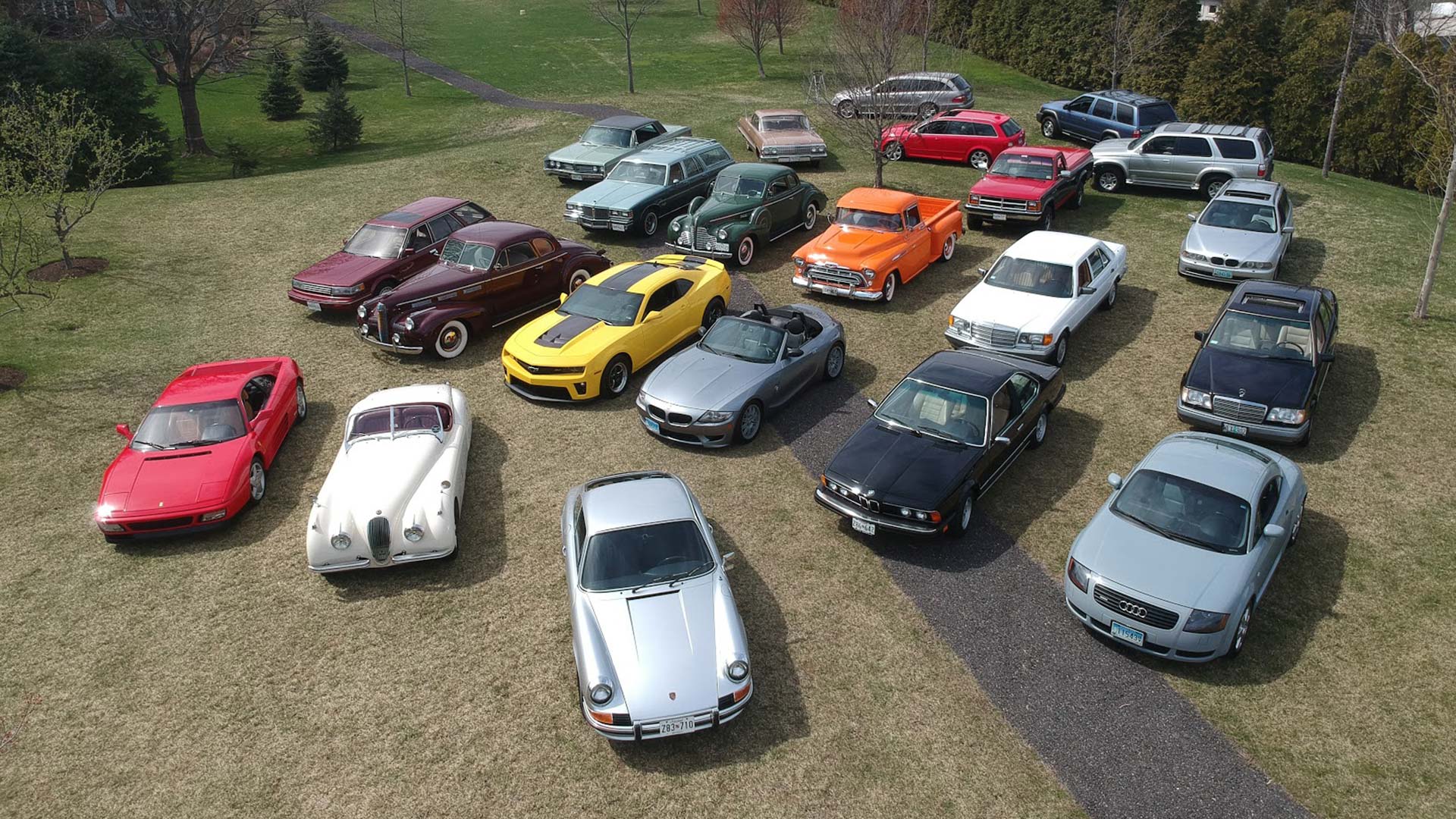
Bring a Trailer 25 car auction May 2019American auction website Bring a Trailer is currently playing host to the sale of a rather intriguing collection of cars and trucks.
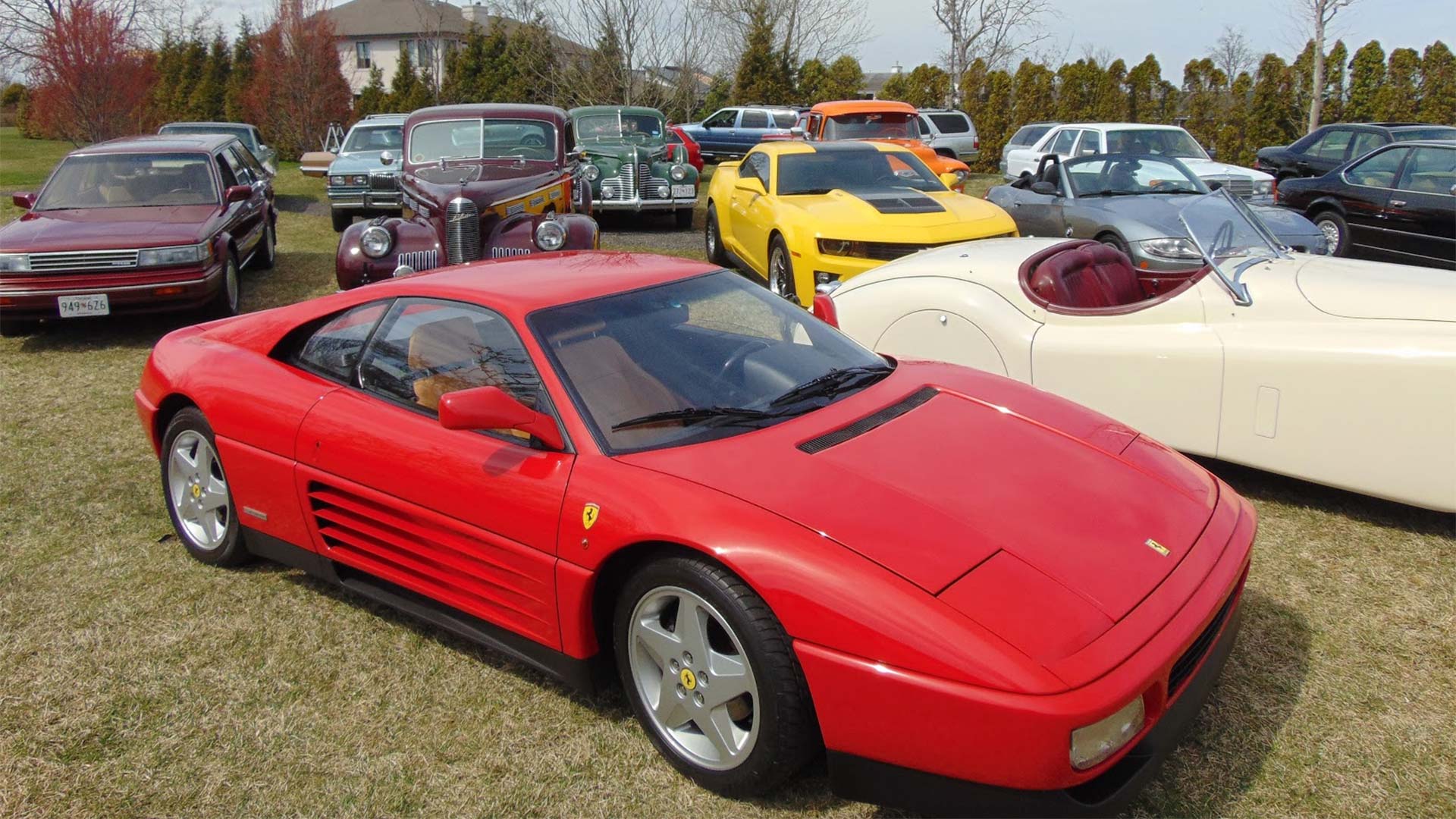
The seller has acquired many of the cars through the site previously, but has decided to liquidate his assets in one fell swoop.

With all cars being sold with no reserve, this really is a case of everything must go.

Bring a Trailer 25 car auction May 2019Almost every category of popular and niche automotive collecting trends are represented, with the variety of vehicles ranging from the 1940s right through to the modern age.
Station wagons have clearly been a particular pleasure of the anonymous collector, with estate models accounting for five of the vehicles on sale. Trucks, SUVs, and classic sports cars are also part of the mix.

We’ve taken a look at just some of the cars up for grabs before the digital hammer falls on Thursday May 16th.

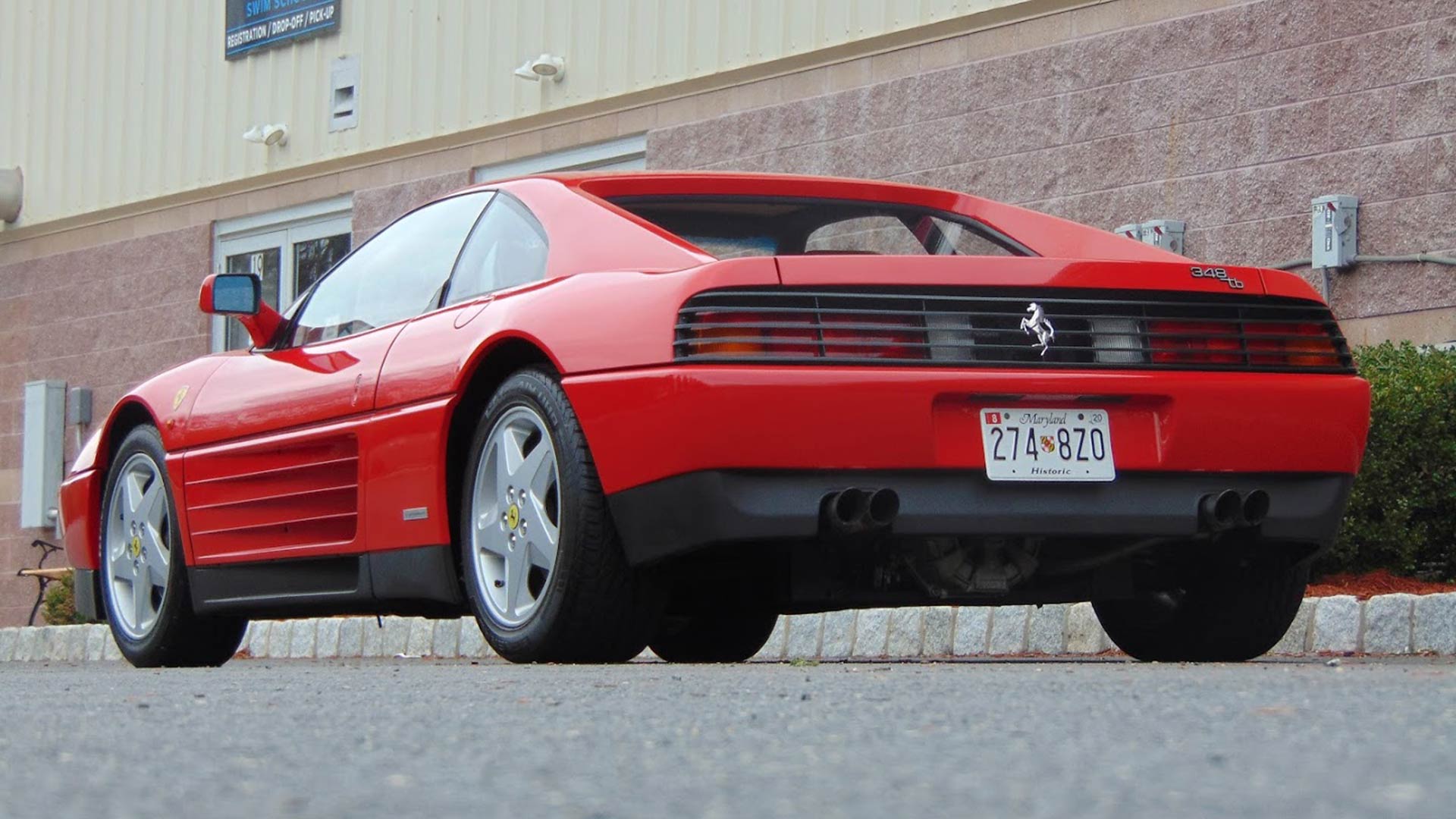
1991 Ferrari 348 TB

Bring a Trailer 25 car auction May 2019Don’t be fooled into thinking this is some Pontiac Fiero-derived replica. No, there is a genuine mid-engined V-8 Ferrari up for grabs in this auction.

Although often overshadowed by the F355 which replaced it, the 348 does at least have the claim to being one of the final cars developed under the scrutiny of company founder Enzo Ferrari.

Originally delivered to Switzerland, this car made it to the USA in 2016, after a Canadian detour. All service records are present, and it even has an aftermarket Tubi exhaust to help the 300 horsepower engine sound even sweeter.

1957 Chevrolet 3100 Custom Pickup

Bring a Trailer 25 car auction May 2019Even more eye catching than the Ferrari is this extensively modified Chevrolet pickup truck, finished in bright orange.
The truck underwent major changes between 2000 and 2005, with the frame powder coated and a 302-cubic inch V-8 engine from a 1969 Camaro Z/28 added under the hood.

With orange highlights throughout the interior, and even matching wheels, you’ll certainly need to be bold for this tangerine dream.

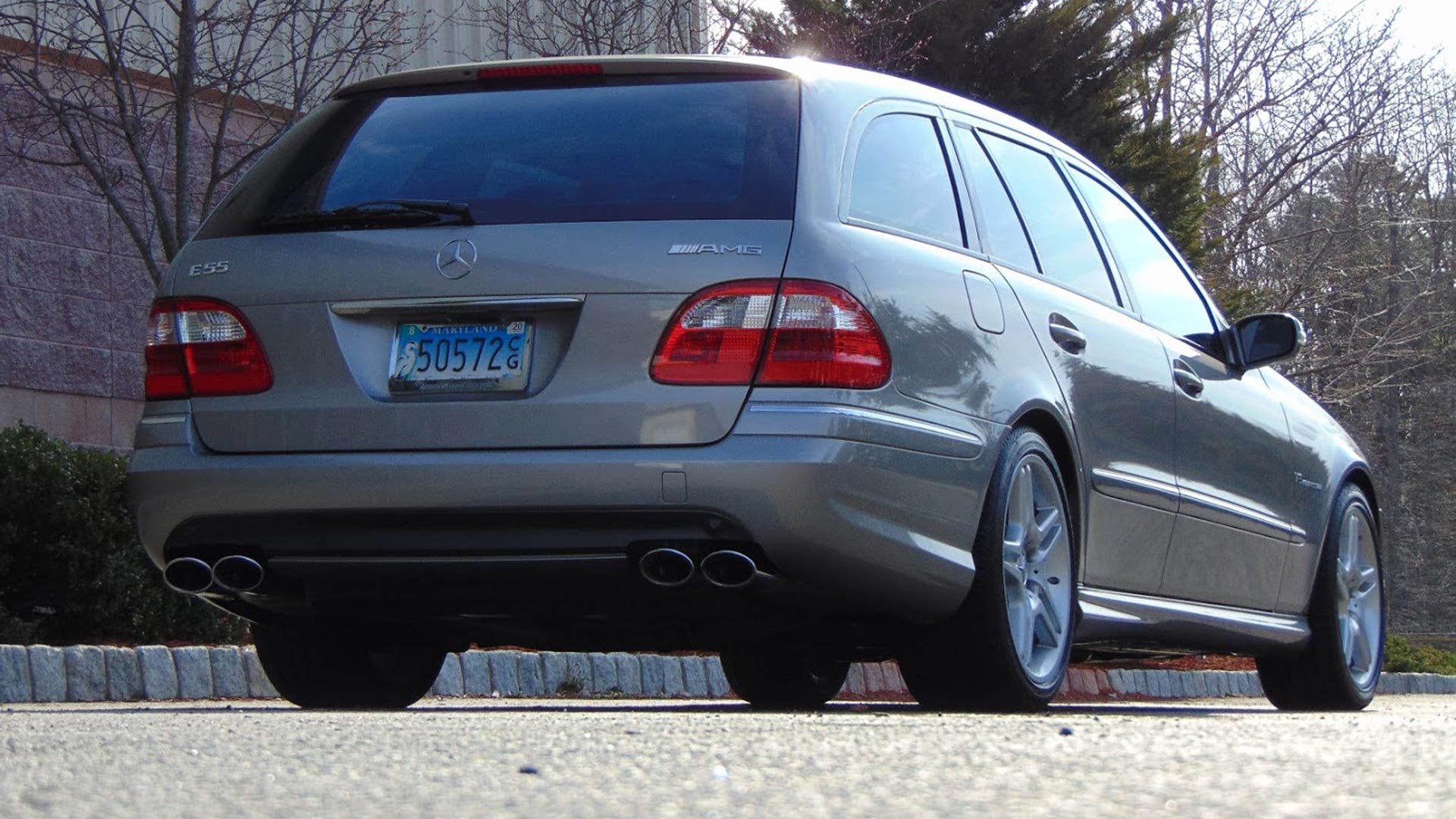
2005 Mercedes-Benz E55 AMG Wagon

Bring a Trailer 25 car auction May 2019From a time when performance Mercedes-Benz products still retained a substantial degree of subtlety is this rapid load-lugger.
According to Bring a Trailer, this is just one of 193 examples of the W211 E55 wagon sold in the United States. Power comes from a 5.4-liter supercharged V-8 engine, producing 469 horsepower and 516lb-ft of torque. Top speed is limited to 155mph, with the 0-60mph sprint taking less than 4.5 seconds.

The standard air suspension was serviced in 2018, with new rear shocks fitted and the ride height recalibrated. Folding third-row rear seats mean you can easily justify buying this E55 as a practical family station wagon.

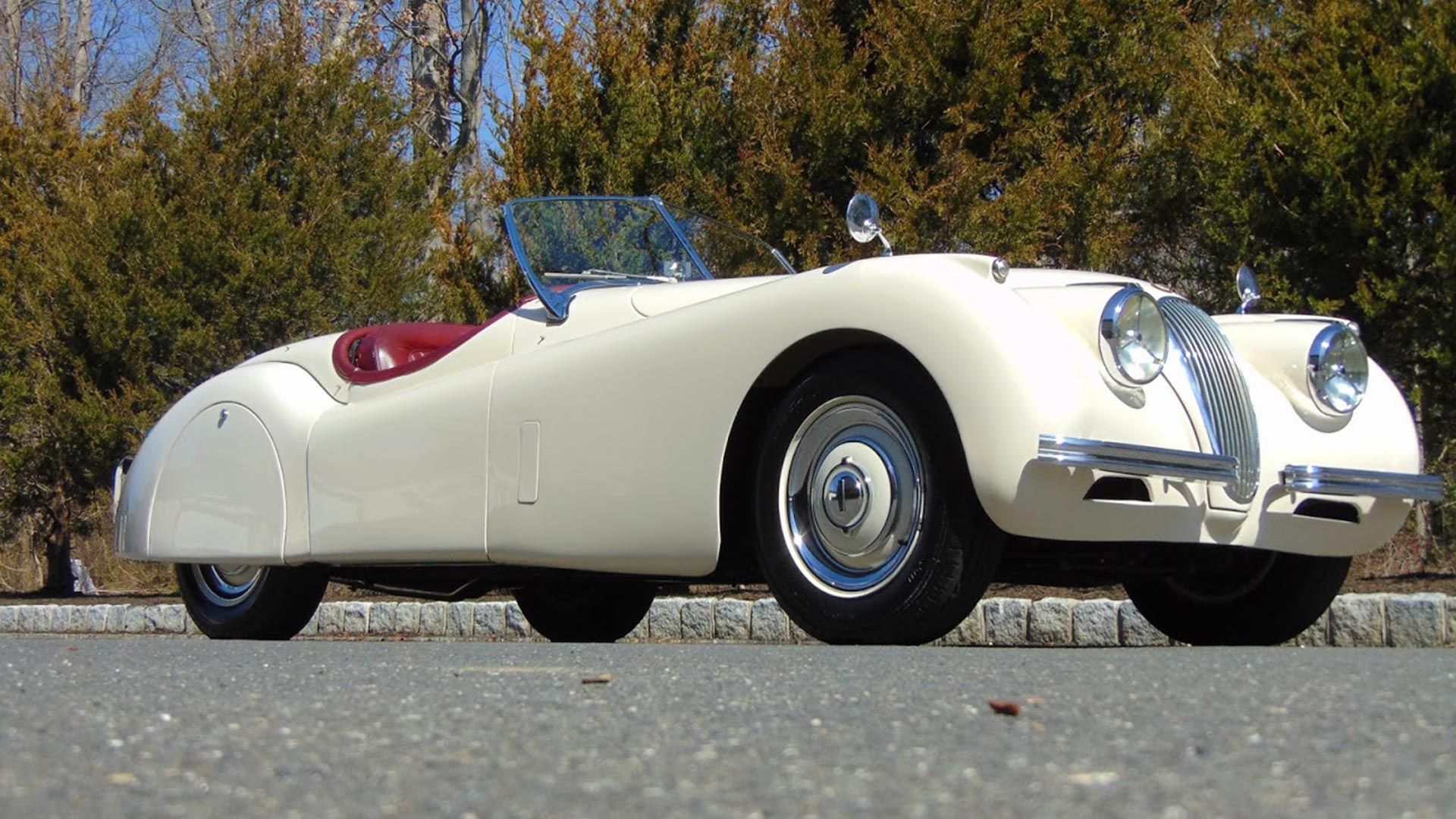
1953 Jaguar XK120 Roadster

Bring a Trailer 25 car auction May 2019Male supermodel David Gandy has recently taken delivery of a Jaguar XK120, which was custom built to his exacting specifications. However, if you happen not to be a millionaire underwear model, then this Jag may be more attainable.

This particular car is said to have been owned by the same family from new, all the way until being acquired by the current owner in 2007. The car underwent a full body-off restoration in the 1980s, with substantial maintenance also performed in 2017.

Driving the rear wheels through a four-speed manual gearbox, the 4.2-liter inline-six engine is fed by triple Weber carburettors. When new, the XK120 was responsible for setting a number of speed records, although it looks just as good being driven at a sensible pace.

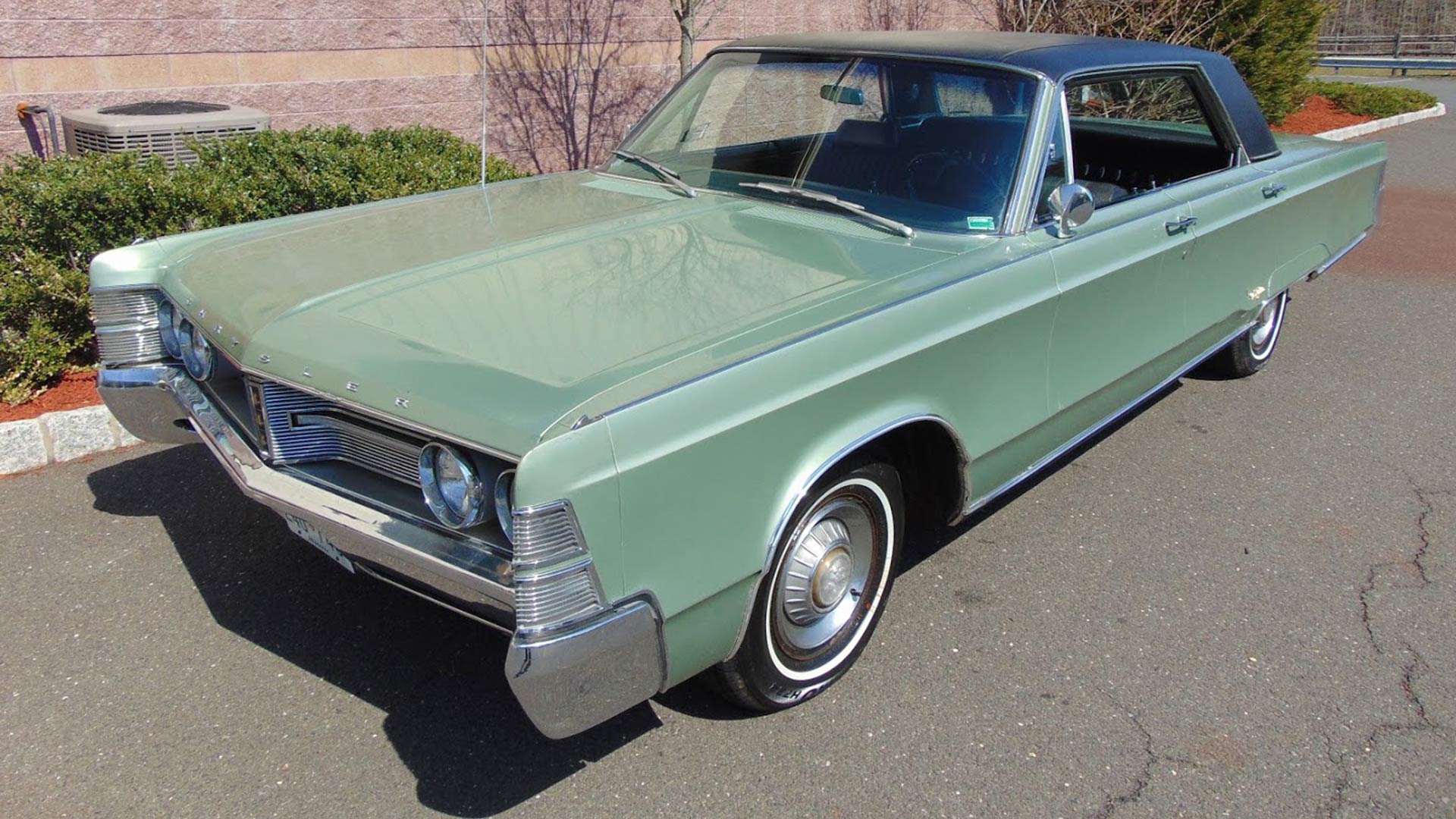
1967 Chrysler New Yorker

Bring a Trailer 25 car auction May 2019In terms of price per square foot, this giant ‘67 New Yorker could well be the best value piece of real estate for sale in this collection.
The four-door hardtop New Yorker, with its 124-inch wheelbase, is still vast even by modern standards. Even bigger is the 440-cubic inch RB V-8 engine, connected to a three-speed TorqueFlite automatic transmission.

Beneath the Haze Green paintwork, the frame of this New Yorker does show evidence of corrosion. However, the car has undergone regular maintenance in recent years, and appears to be a well-preserved example of how it originally left the factory.

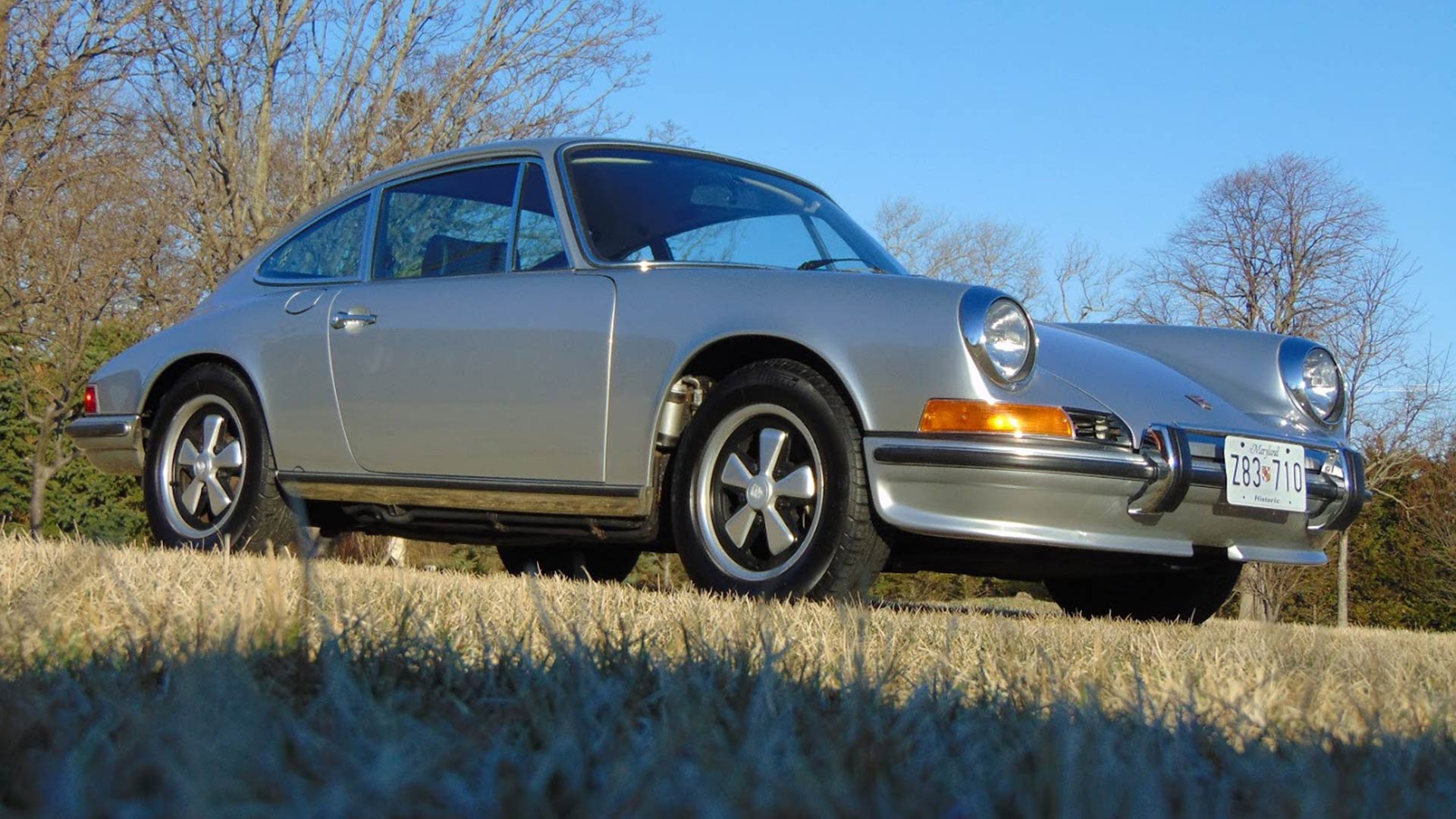
1972 Porsche 911S

Bring a Trailer 25 car auction May 2019No collector car auction in 2019 would be complete without a Porsche 911, and this particular sale does not disappoint.

Both interior and exterior of this 911S have undergone updating in recent years, with the Metallic Silver paintwork renewed in 2016. Seats, door cards and other trim items were refreshed in 2017, with a range of mechanical work also performed.

This 2.4-liter flat-six machine is currently the car with the highest bids from the collection of 25 vehicles, and causing some debate amongst commentators about the origins of the 915 five-speed manual gearbox.

With no reserve this Porsche, and all the other 24 vehicles, will sell come Thursday. We will just have to wait and see which one sparks the biggest bidding war.

Advertisement

Why Volkswagen is already planning the second life for its electric car batteries

0

vw electric car batteries

The battery is one of the most expensive parts on an electric car, but what do you do with it when the vehicle reaches the end of its life? Volkswagen has the answer.

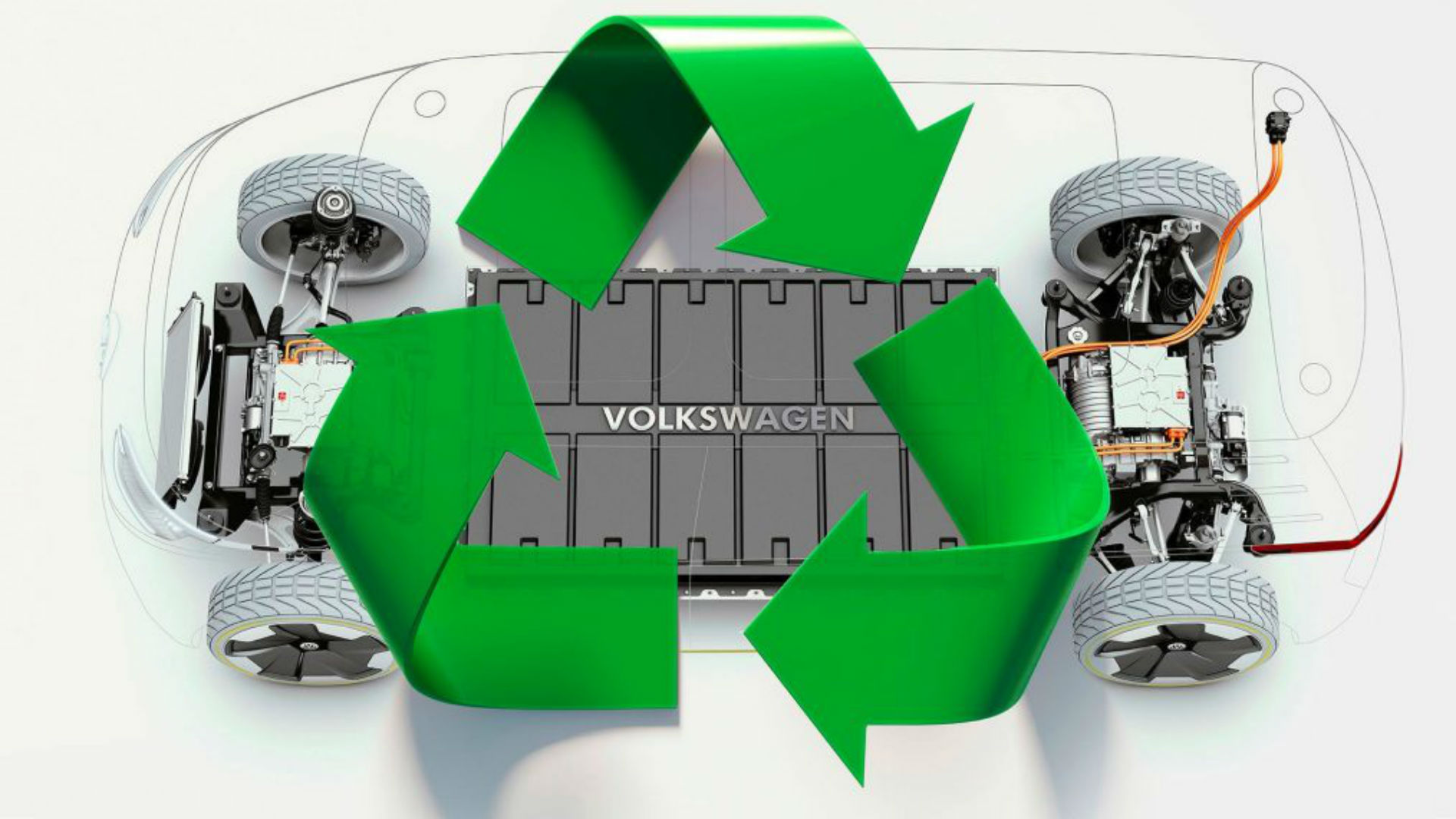
Doing nothing is not a solution, but Volkswagen will adopt a two-pronged strategy: re-use and recycle.

While an older lithium-ion battery that’s been in use for a decade may not be suitable for powering a vehicle, it could still have its uses. Amazingly, the battery pack in the 2019 e-Golf can store as much energy as a typical household consumes in one day.

Which is why Volkswagen intends to use the battery packs from its electric vehicles in a network of portable recharging stations. Designed to hold up to 360 kilowatt-hours of energy, these stations can charge up to four vehicles at a time.

And because they’re portable enough to be used in hard-to-charge locations, they can ‘pop-up’ at music festivals, public events and car shows. Clever stuff.

At some point, a battery will lose its ability to store energy, which is where Volkswagen’s component plant in Salzgitter, Germany, will be called into action. From next year, the facility will have the capacity to recycle approximately 1,200 tons of EV batteries every year – that’s around 3,000 vehicles.

The company wants to recycle 97 percent of the raw materials in the battery packs, up from the present 53 percent and more than the 72 percent expected at the Salzgitter plant.

Shredded batteries

electric car batteries shredded

A special shredder will separate the components into a black powder containing the valuable raw materials cobalt, lithium, manganese and nickel. Mining these materials is both bad for the environment and hugely expensive, so using them again is a win-win.

Such strategies are required to cope with the expected rise in demand for electric vehicles. Volkswagen expects to be building a million EVs by 2025, each one with an expected lifespan of 10 to 15 years.

Advertisement

£2.75 million ‘Bond spec’ Aston Martin DB5 comes to life

0

Bond Aston DB5

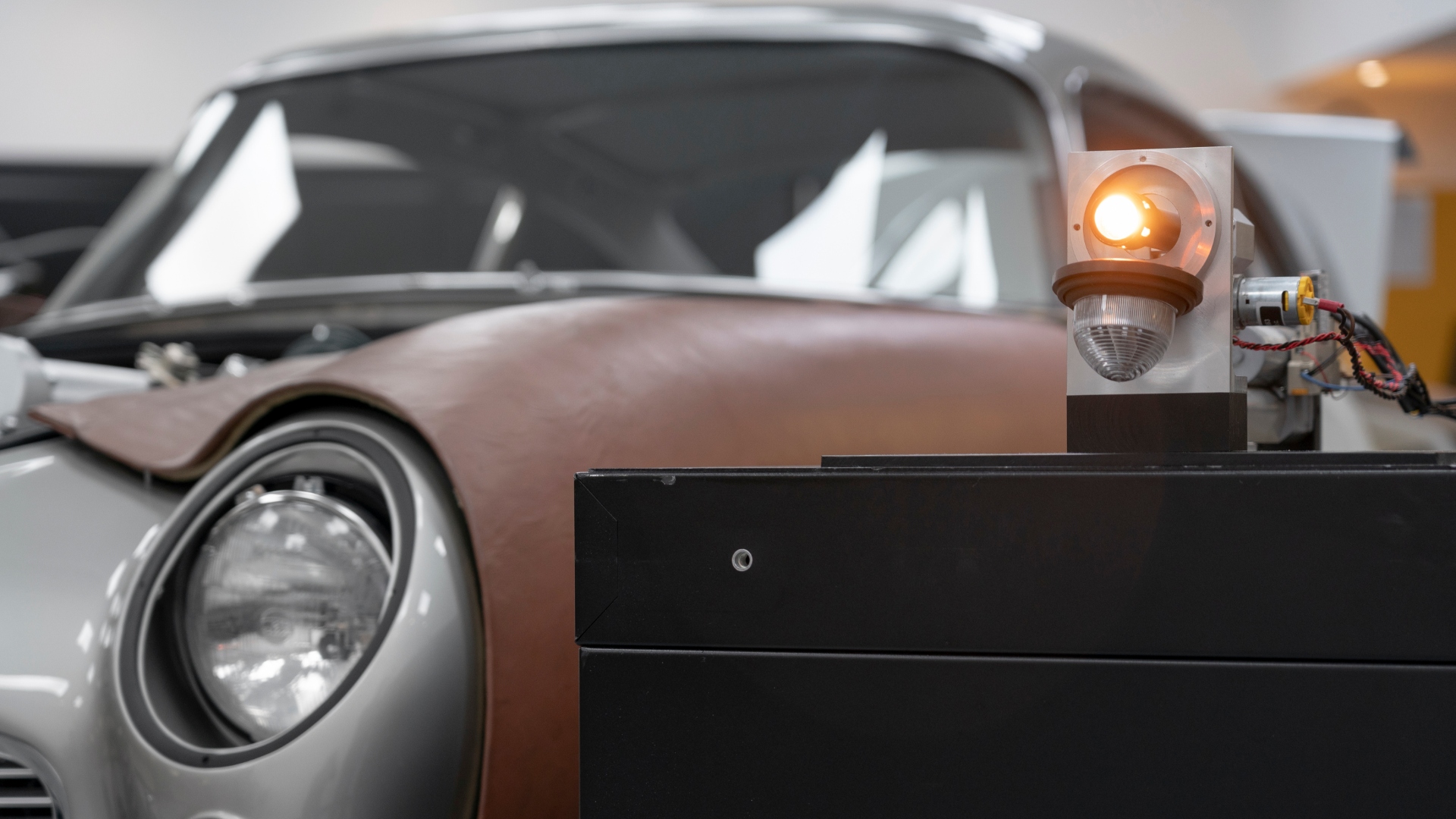
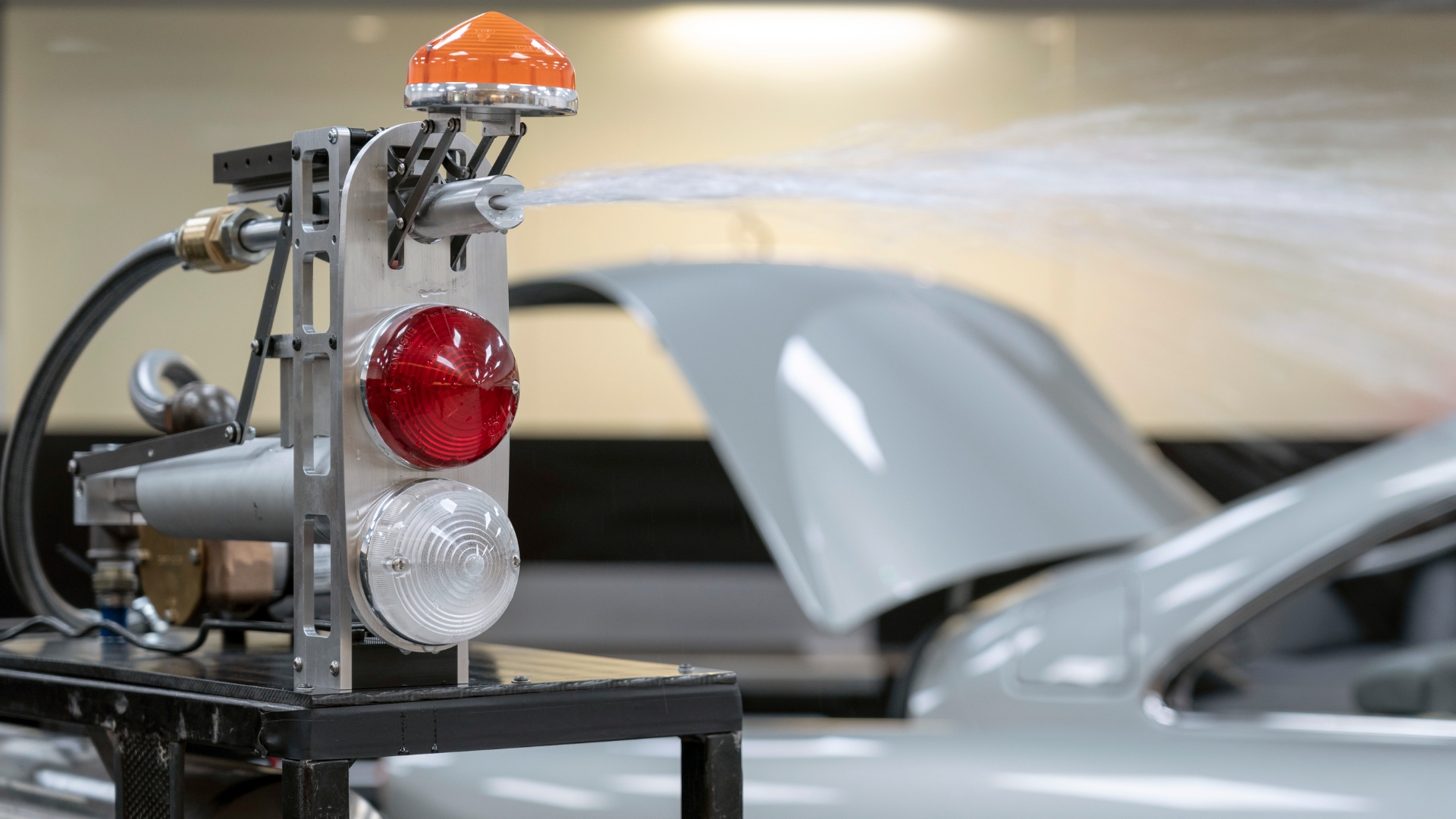
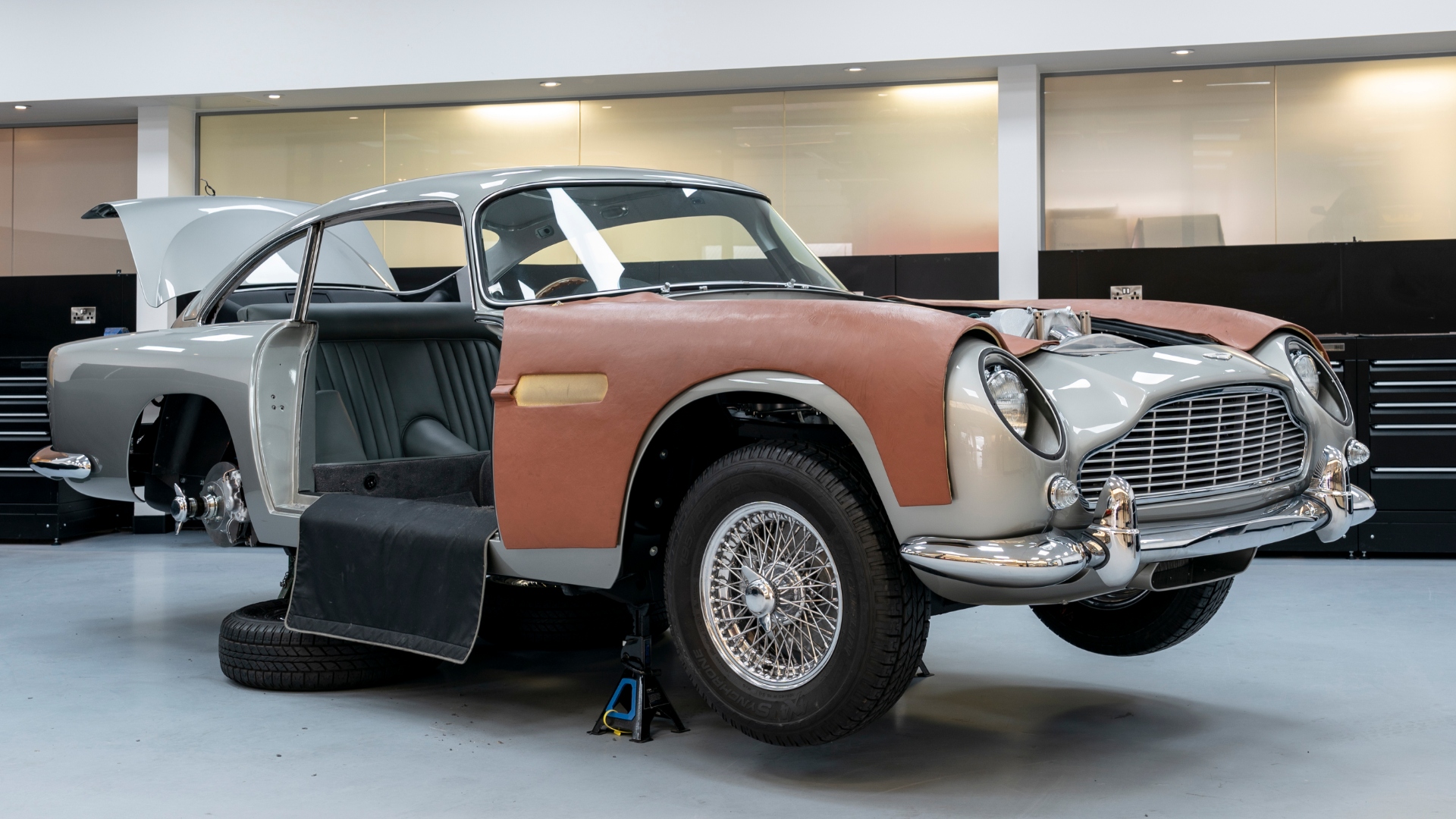
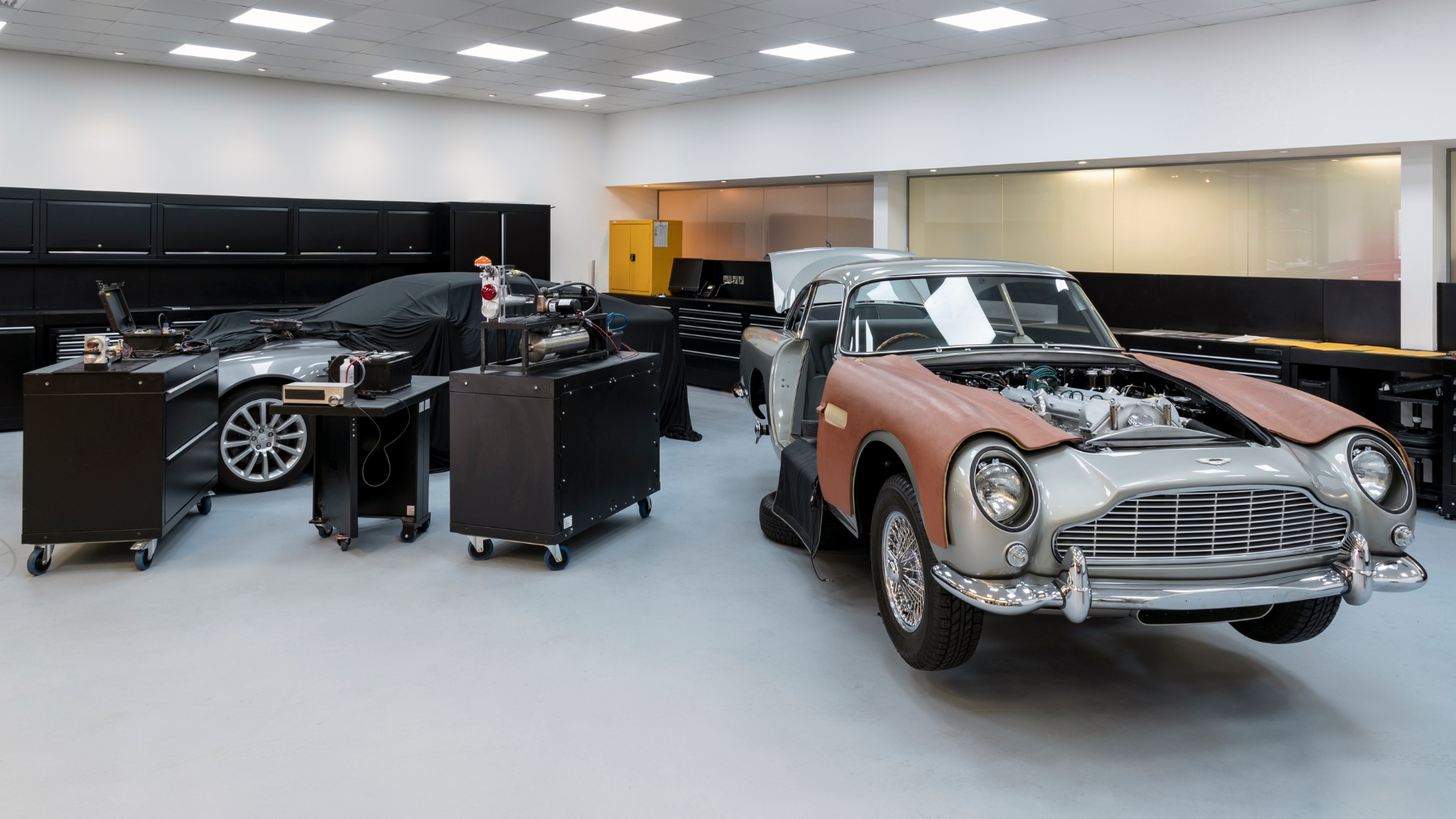
Aston Martin has built a prototype for its forthcoming run of ultra-special Bond-spec DB5 recreations, as the marque moves to bring movie magic to 25 lucky owner’s garages.

Bond’s car brand of choice is working with Oscar-winning special effects master Chris Gorbould OBE to make the gadget-clad Aston a reality.

The first engineering and development car is officially taking shape over at Aston Martin Works in Newport Pagnell, with testing of the gadgetry now underway.

First deliveries are expected in 2020.

Aston Martin

“The main challenge has been to recreate the gadgets from the film world and transfer them into a consumer product,” Chris explained.

“We have licence in the film world to ‘cheat’ different aspects under controlled conditions. For instance, we might have four different cars to accommodate four different gadgets.

“We obviously don’t have that luxury on these classic Aston DB5s, as all the gadgets have to work in the same car all the time.”

Chris’s main projects are the front guns, smoke screen and oil slick gadgets. Aston’s engineers are handling everything else.

Bringing Bond’s DB5 to life

Aston Martin

That does beg the question, though. Exactly how much of Bond’s extensive gadget (and weaponry) arsenal is truly going to be fully functional on these 25 recreations? Well, needless to say, you won’t quite need a licence to kill to go with your driving licence…

You can expect the full lineup of gadgets Bond had on his DB5 in Goldfinger, but not all of them will be functional.

Aston Martin

For example, on the inside, the radar screen and tracker map are simulated. So too is the full ejector seat, though there is an optional ‘teaser’ for it.

However, the phone in the driver’s door, gear knob actuator button, arm-rest-mounted switchgear and under-seat weapons storage will feature.

The rear smoke screen, revolving number plates, rear bullet-proof shield and front-to-rear battering rams will make it, too. Whether the shield is actually bulletproof is another question.

Sadly, the oil slick delivery system and machine guns will be simulated, rather than truly functional. Boo!

Bond Aston DB5

Apparently, the guns will appear, though, and deliver a “realistic effect” according to Gorbould. We don’t think they’ll be shooting anything, but you can expect some noise while driving around your estate pretending to be Bond.

On that, you’re going to need to have an estate to enjoy it. You won’t need a licence to kill, and you won’t need a driving licence either. That’s because the £2.75 million (plus taxes) Bond-spec DB5 isn’t road legal.

Aston Martin

A wise move, potentially. A car that can ‘simulate’ machine guns probably isn’t suitable for the public highway.

Given how it’s technically brand new, it probably doesn’t meet modern safety and emissions standards, either. Though apparently there will be ‘sympathetic modifications’ to make sure it’s built well and reliable – both car and gadgets…

Advertisement