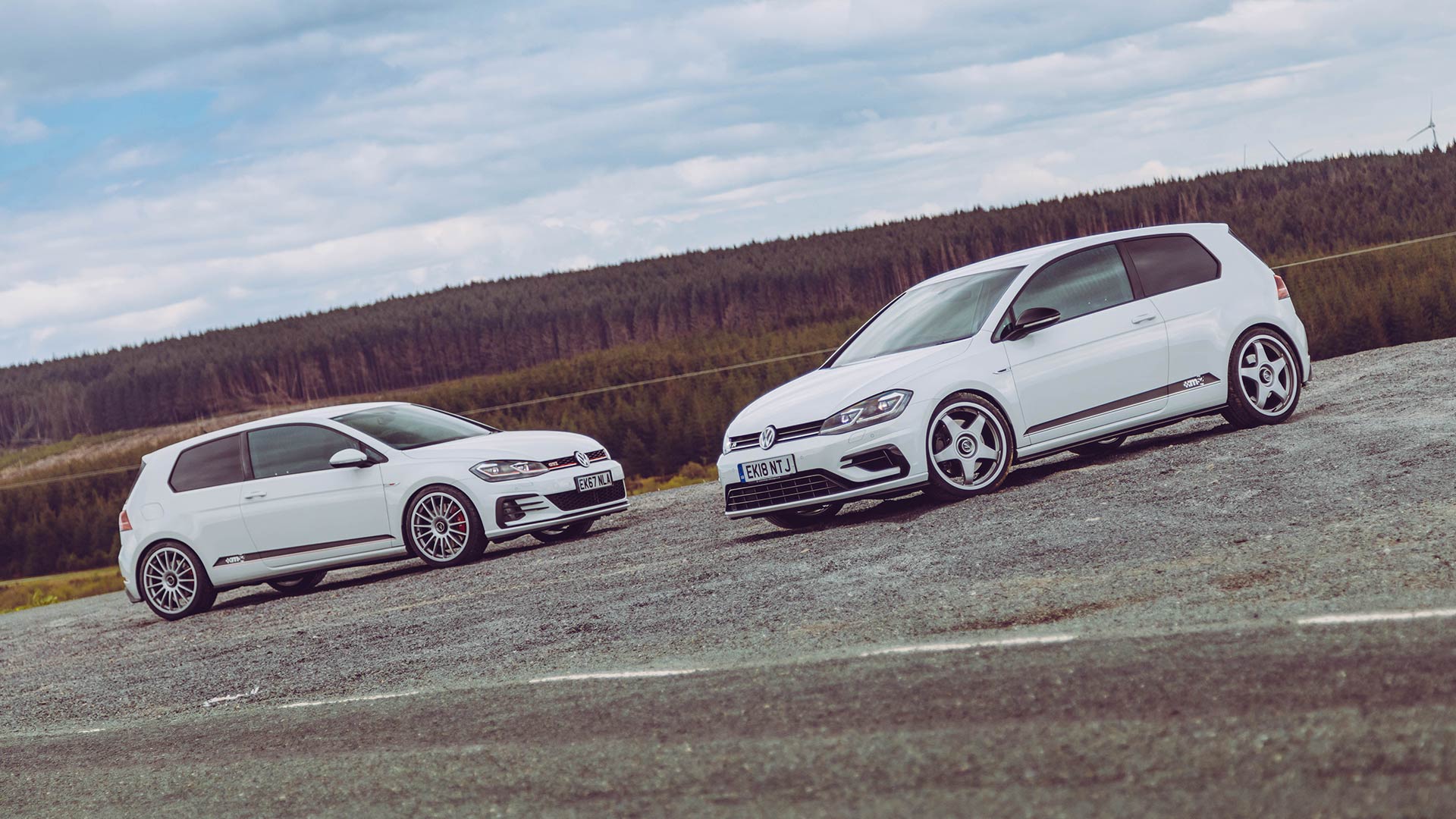
A new collaboration between two car modification companies will bring new options to the Volkswagen tuning scene.
Performance parts and engine upgrade specialist Mountune has formed a new company, partnering with alloy wheel manufacturer Fifteen52, to offer products on both sides of the Atlantic.
The new M52 brand will initially focus on the latest versions of the Volkswagen Golf R and GTI.
Forging new empires
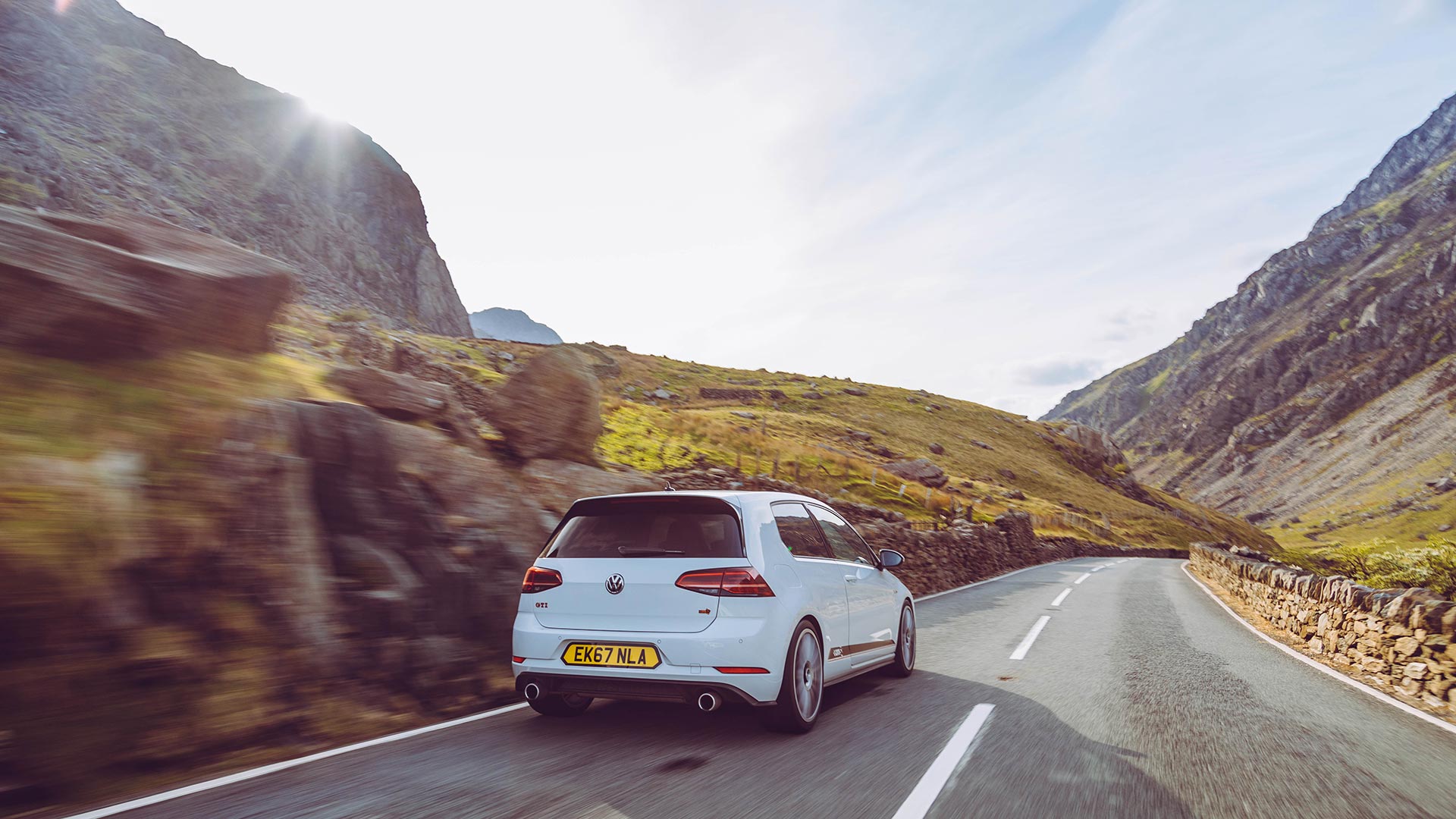
Mountune re-established itself as a major player in the aftermarket sector with its range of products for the Mk6 Ford Fiesta ST in 2008.
However, it was the global success of the Mk7 Fiesta ST, and the officially-endorsed Mountune upgrades for it, that pushed the company to even greater recognition.
Mountune Performance parts are now sold by Ford dealerships, allowing owners the ability to keep their original manufacturer warranty.
Fifteen52 began in 1996, and its range of monoblock alloy wheels become iconic via their association with motorsport. Ken Block has famously used Fifteen52 rims on many of his Hoonigan projects.
Talkin’ about Dub
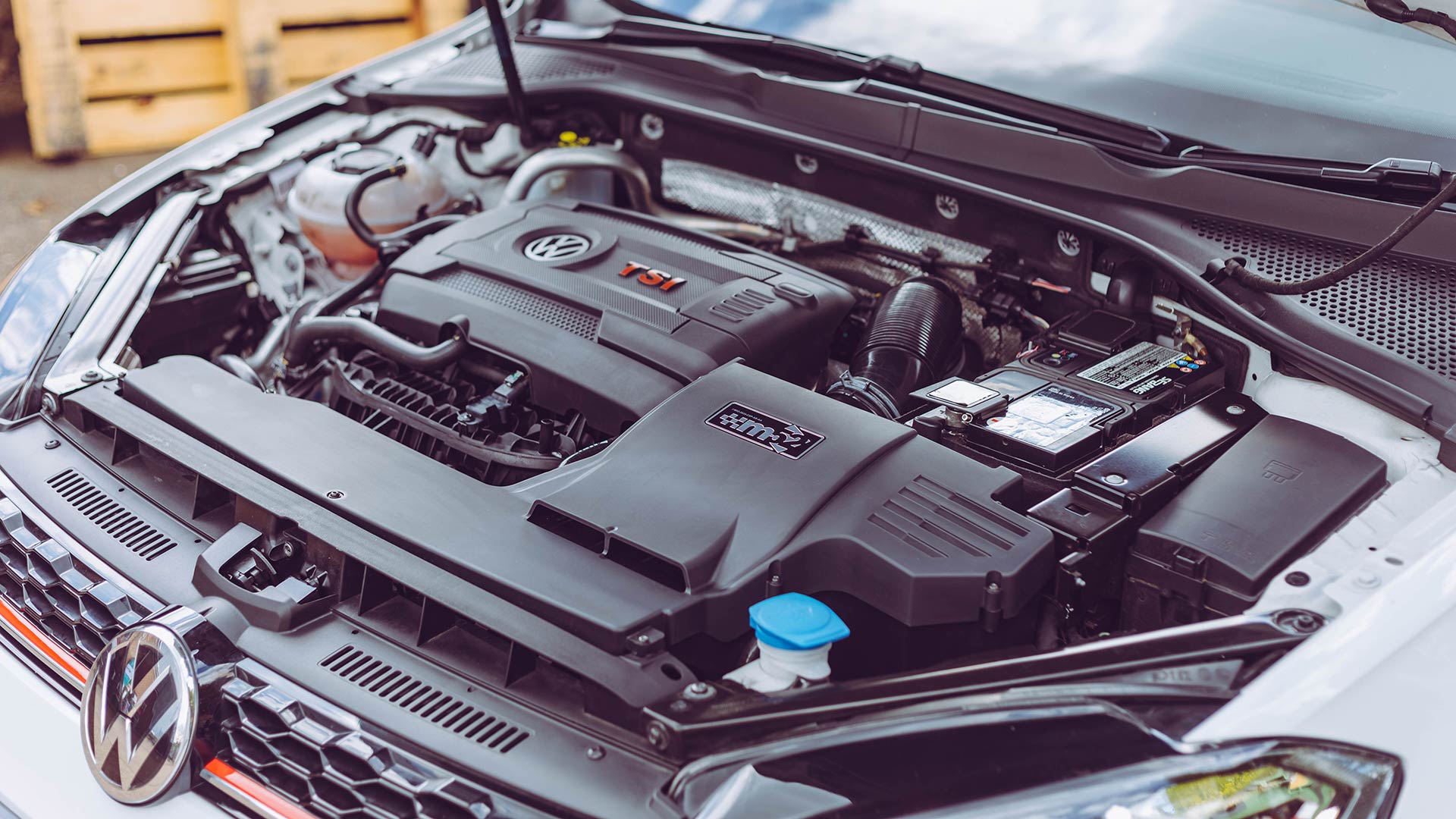
The new M52 brand will sell performance parts, along with alloy wheel packages, designed to fit the Mk7 Golf R and GTI.
Initial offerings include ECU upgrades, which boost the output of the turbocharged Golf R to a considerable 355hp and 369lb ft of torque. GTI fans can also see power increased to 306hp and 350lb ft, meaning sizeable gains over stock.
Lowering springs for the suspension, upgraded brakes, billet engine bay parts, and even a custom X3 induction system, are also available to order from the M52 online shop.
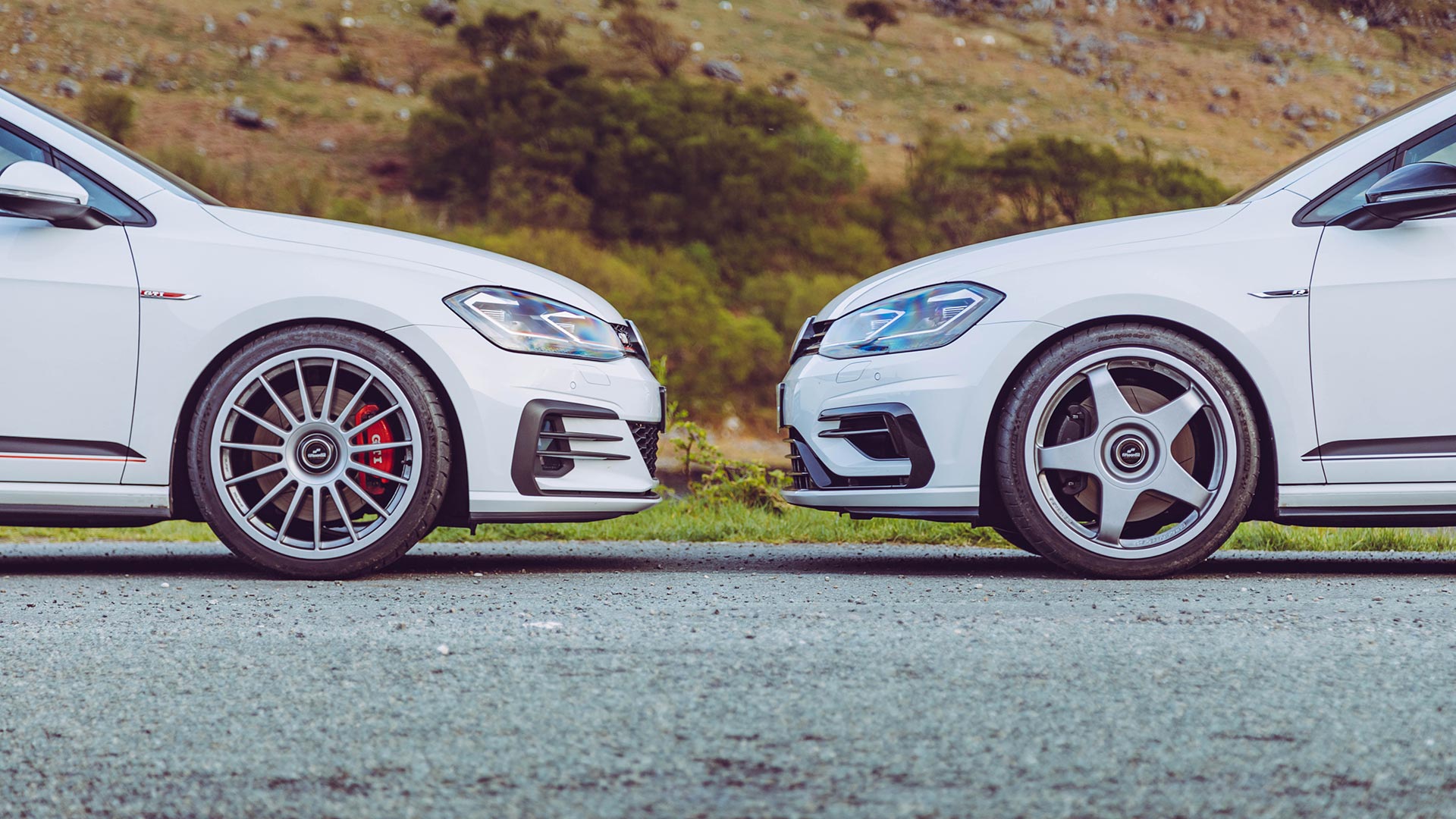
Fifteen52 has also created two brand-new 19-inch alloy wheel designs, inspired by the Super Touring motorsport era from the 1990s. Customers can pre-order the new rim designs now, with the first deliveries expected in the coming months.
Loyalty to the badge
Alongside performance parts and wheels, M52 will also offer a range of branded merchandise and accessories. In the sometimes heated world of the Volkswagen tuning scene, showing your allegiances is important.
Alec Pell-Johnson, director of Mountune, commented that the new collaboration is “an exciting chapter in our history” as the M52 brand was launched. Matt Croke, owner of Fifteen52, also added that: “This will be an epic brand in the performance aftermarket and offer something new to the VW community”.
The two companies first worked together on a special edition of the Volkswagen Golf GTI for the 2017 SEMA tuning show. Billed as a homage to the 1986 Group A World Rally Championship Golf GTI, the show car won considerable praise at the industry event.
To readers of a certain age, McLaren Automotive celebrating the 20,000th car to be built in Woking might seem a tad surprising.
After all, when production of the iconic F1 ceased in May 1998, McLaren customers had every reason to believe they would be part of a select group of owners. Just 106 cars were built, making the F1 one of the most exclusive cars on the planet.
Little changed for more than a decade, until the next road car – an MP4 12C – left the McLaren Production Centre in July 2011. Today, you have more chance of seeing a newly-registered McLaren than you do a new Lotus.
Last year, McLaren built 4,800 cars, with output remaining at around 5,000 a year into the next decade, before increasing to 6,000. The company must strike a balance between maintaining exclusivity and satisfying increasing global demand.
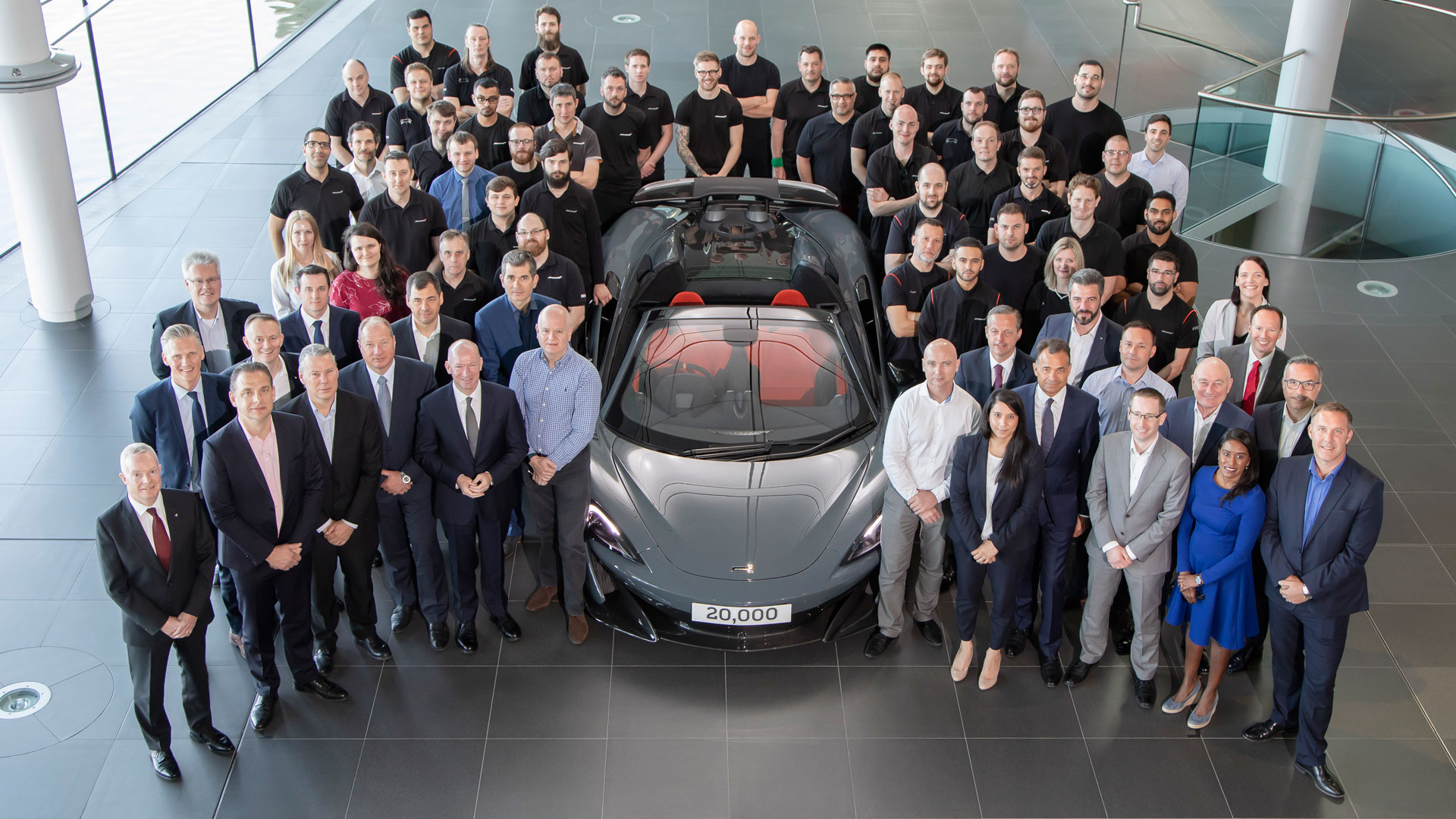
Production has doubled from around 10 cars a day to more than 20, with 90 percent of the cars built in Woking exported to more than 32 different markets. This truly is a success story for British manufacturing – now marked by the 20k landmark car, a Chicane Grey 600LT Spider.
‘An important milestone’
Mike Flewitt, McLaren Automotive CEO, said: “Achieving our 20,000th car built is an important milestone for McLaren Automotive. Last year we hand-assembled just over 4,800 cars and we plan to maintain around 5,000 cars a year for the immediate future.
“While demand for our products continues to grow, we aim to balance that to maintain exclusivity for our brand and our customers. It is fitting that we celebrate this achievement with a 600LT Spider which has been a huge success for us with all production slots for the coupe variant now sold out.”
McLaren Automotive employs 2,300 people and is the largest part of the McLaren Group. There are four distinct product groups – Sports Series, Super Series, Ultimate Series and Motorsport – with cars sold via 80 retailers across the world.
The company will unveil a new Superlight Grand Tourer on 15 May, before it makes its first public appearance at Top Marques Monaco at the end of the month.
Improving modern classic cars has become big business, with companies such as Singer and Redux demonstrating the possibilities.
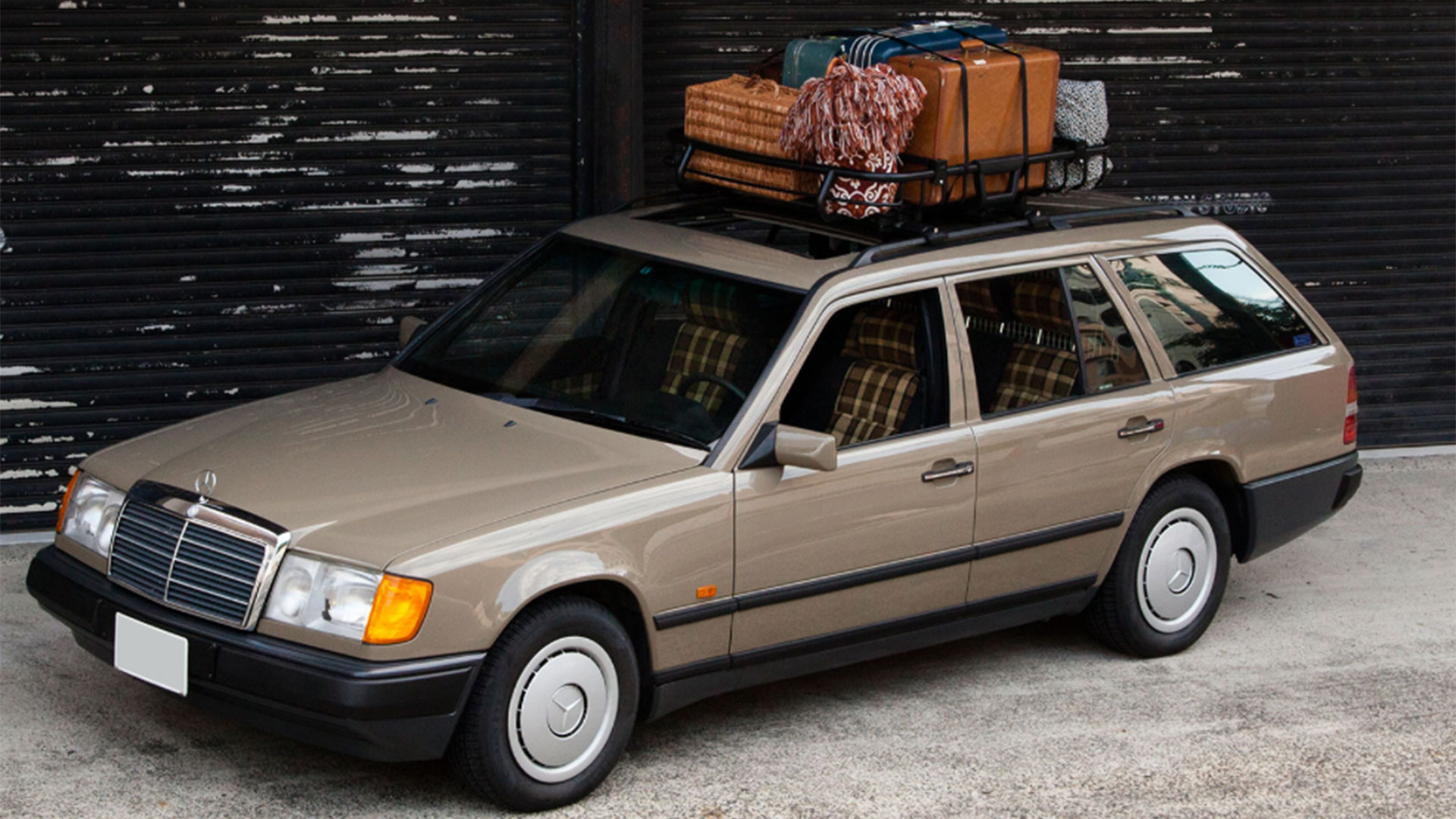
However, one Japanese firm is taking a rather different approach, instead returning the W124 and S124 series of the Mercedes-Benz E-Class back to its purest form.
Kanagawa-based Arrows specialises extensively in this particular E-Class model, which was produced from 1984 through to 1996.
It is the earliest cars which Arrows takes inspiration from, and looks to restore later versions of the W124 and S124 E-Class back to how the very first examples left the production line.
On the outside, that means a complete respray in one of three original Mercedes-Benz colours. Customers can choose from ‘Pueblo Beige’, ‘Rodeo Gray’, and also ‘Light Ivory’ hues.
The latter will be familiar to anyone who has taken a ride in a German taxi, and immediately reinforces the aim of Arrows to make these cars look as subtle as possible.
Any large alloy wheels are binned, with a set of 15-inch steel wheels bolted in place instead, and combined with genuine Mercedes-Benz wheel trims.
Arrows does not delve into upgrading the engine for more performance. But buyers are able to choose from donor cars with a 2.0-litre four-cylinder engine, or 3.0 and 3.2-litre six-cylinder units depending on preference.
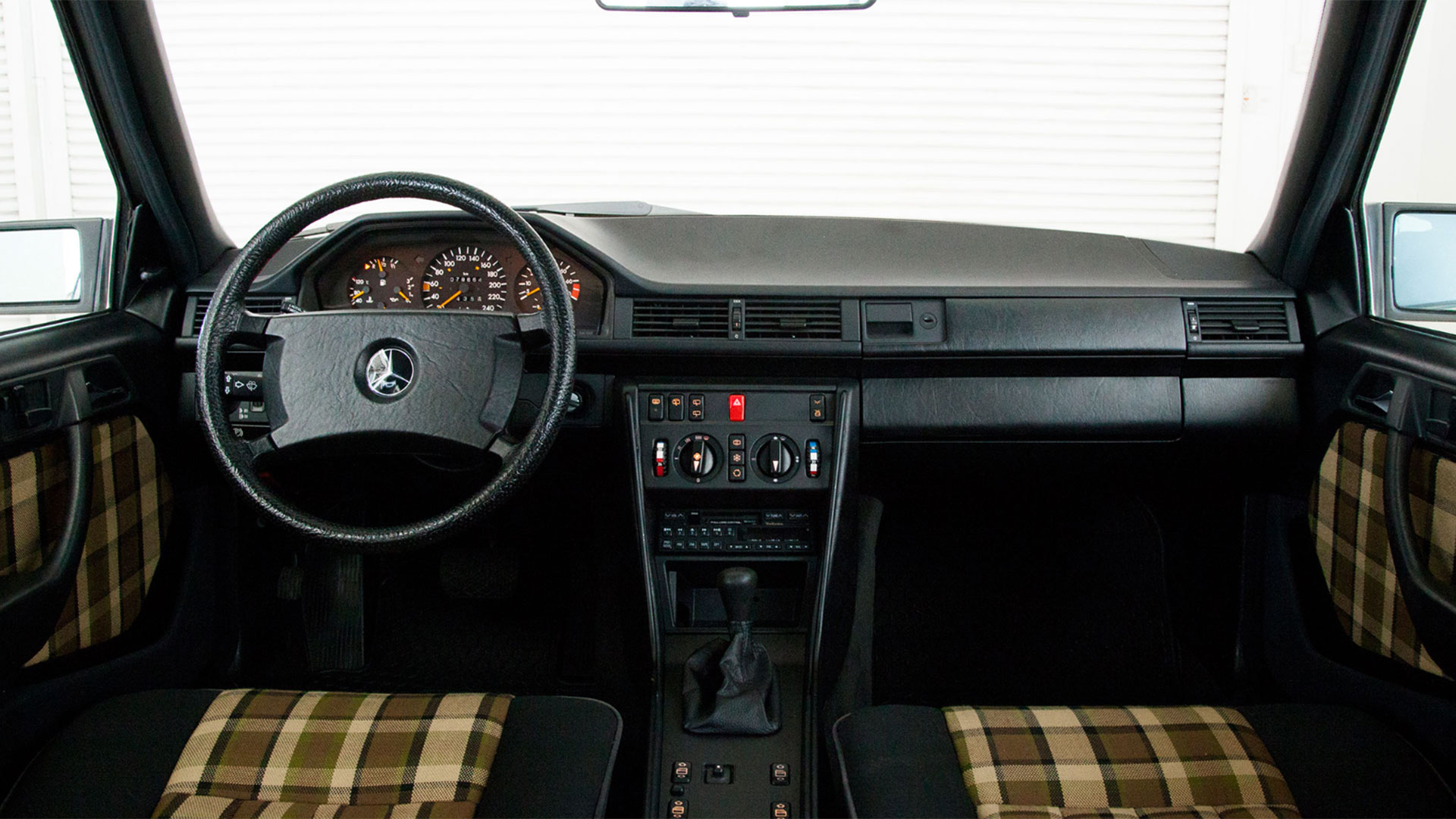
The interior also sees a minimalist overhaul, adding the distinctive check pattern cloth trim to the seats and door cards. Arrows sources the material from a German manufacturer, keeping it as close to the original as possible.
Wood trim is removed from the interior as well, taking the Classic Line back to the most basic example of the W124 with plain black plastic used instead.
Even the steering wheel is swapped out, and replaced with a simple earlier version without an airbag. Although it is larger in diameter, Arrows believes that the thinner rim makes for a better driving experience.
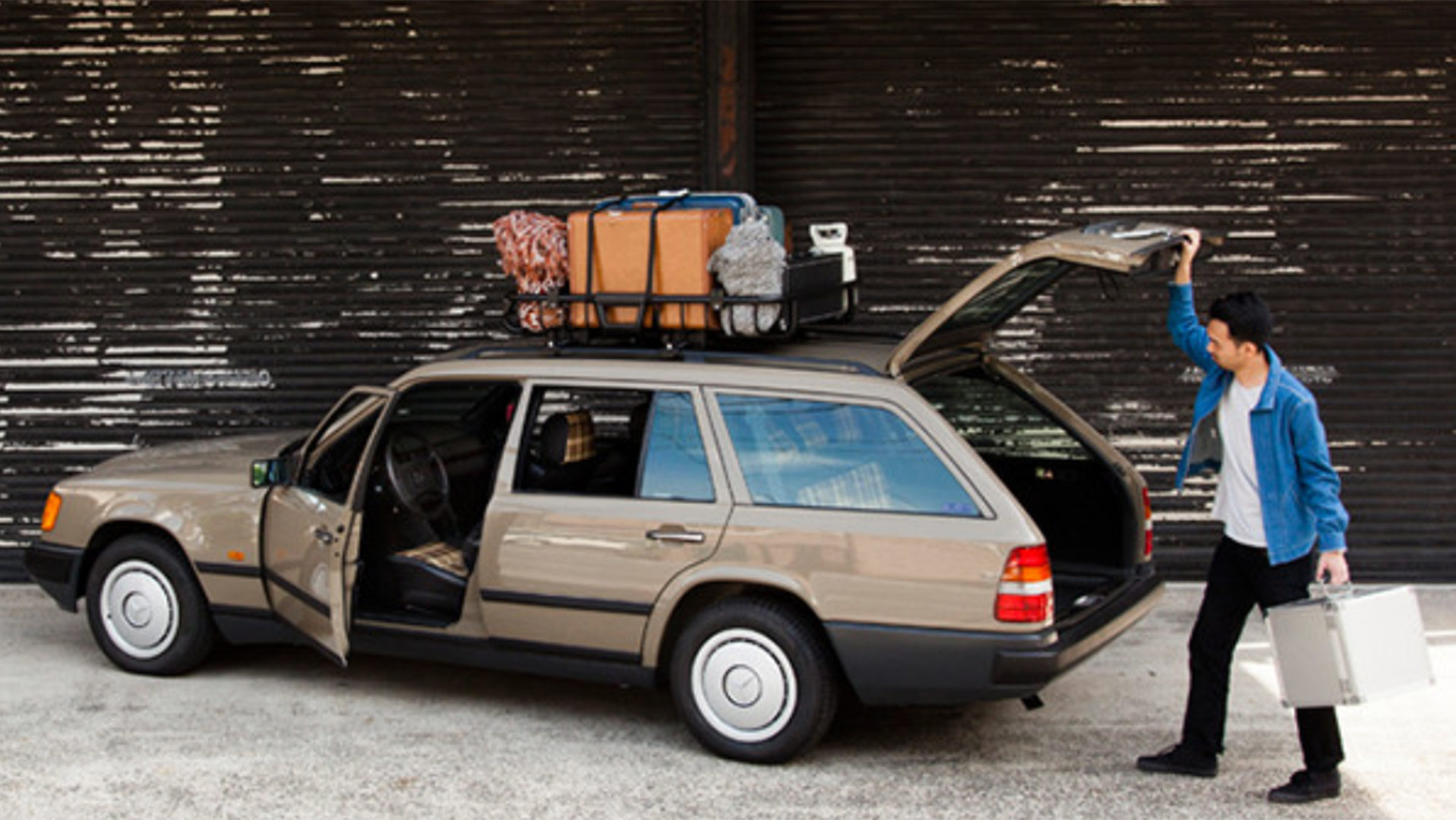
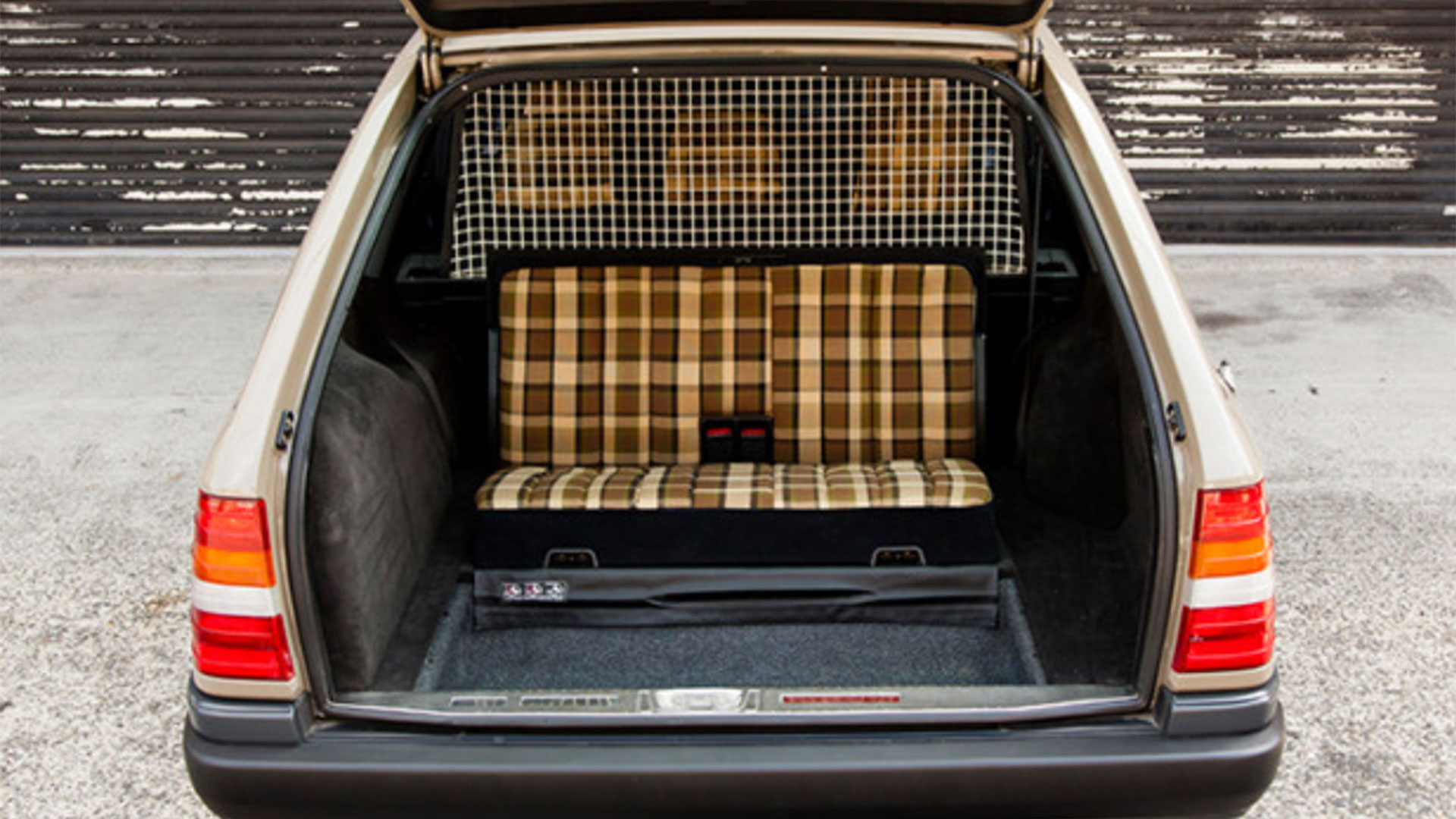
The estate version of the E-Class Classic Line does retain the extra seats in the boot, with a roof rack available to be added as an option. Who needs a seven-seater SUV when you can have a beige Mercedes from the 1980s?
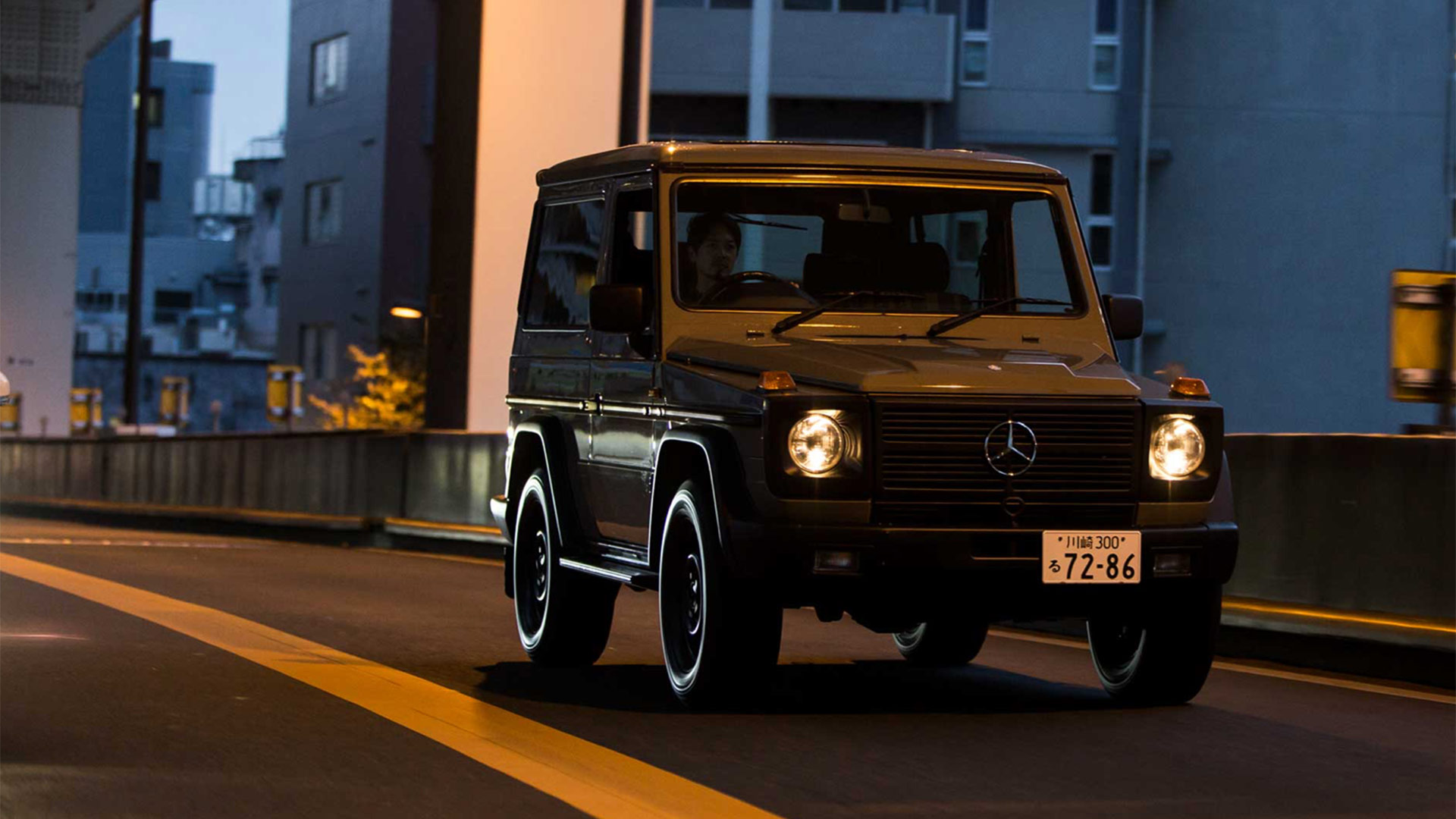
For those who do want off-road ability, Arrows is also able to apply the Classic Line treatment to the venerable Mercedes G-Wagen.
Prices for the E-Class Classic Line transformation begin at ¥2,000,000 (£14,000) where the owner supplies an existing vehicle. Asking Arrows to source a donor vehicle pushes the starting price to ¥3,500,000 (£24,000) instead.
That may seem a lot for a simple Mercedes-Benz, even if W124 Mercs are predicted to increase in value. However, the work by Arrows serves as a refreshing riposte to never ending cycle of horsepower and exterior chintz on modern cars.
With this in mind, new figures collated by Euro Car Parts reveal exactly how far the UK’s top 10 best-selling cars go on a full tank of fuel.
This isn’t a list of which cars do the most miles per gallon, or which are the cheapest to fill. Rather, it favours a combination of overall efficiency and healthy tank size.
For example, a car that can do 100 mpg but only has a 30-litre fuel tank, will not go as far as a car that can get 50 mpg but has a 70-litre fuel tank.
The figures here are therefore are worked out by multiplying a car’s tank size in litres by its claimed average miles per litre (mpg for we Brits). Researchers chose the highest possible combined fuel economy for each of the top 10 cars.
What popular car goes the furthest on a tank of fuel?
#
Car Make
Distance Travelled (miles)
Tank Size (L)
Cost to Fill Tank (GBP)
1
Ford Focus
1,112.69
52
£66.75
2
VW Golf
1,046.12
55
£70.40
3
Audi A3
1,046.12
55
£70.40
4
BMW 3 Series
1,014.42
60
£76.80
5
Vauxhall Astra
874.94
48
£61.44
6
Renault Clio
855.92
45
£57.60
7
Ford Fiesta
821.05
42
£53.76
8
VW Polo
803.08
40
£51.20
9
Mini
639.30
44
£56.32
10
Vauxhall Corsa
606.28
45
£57.60
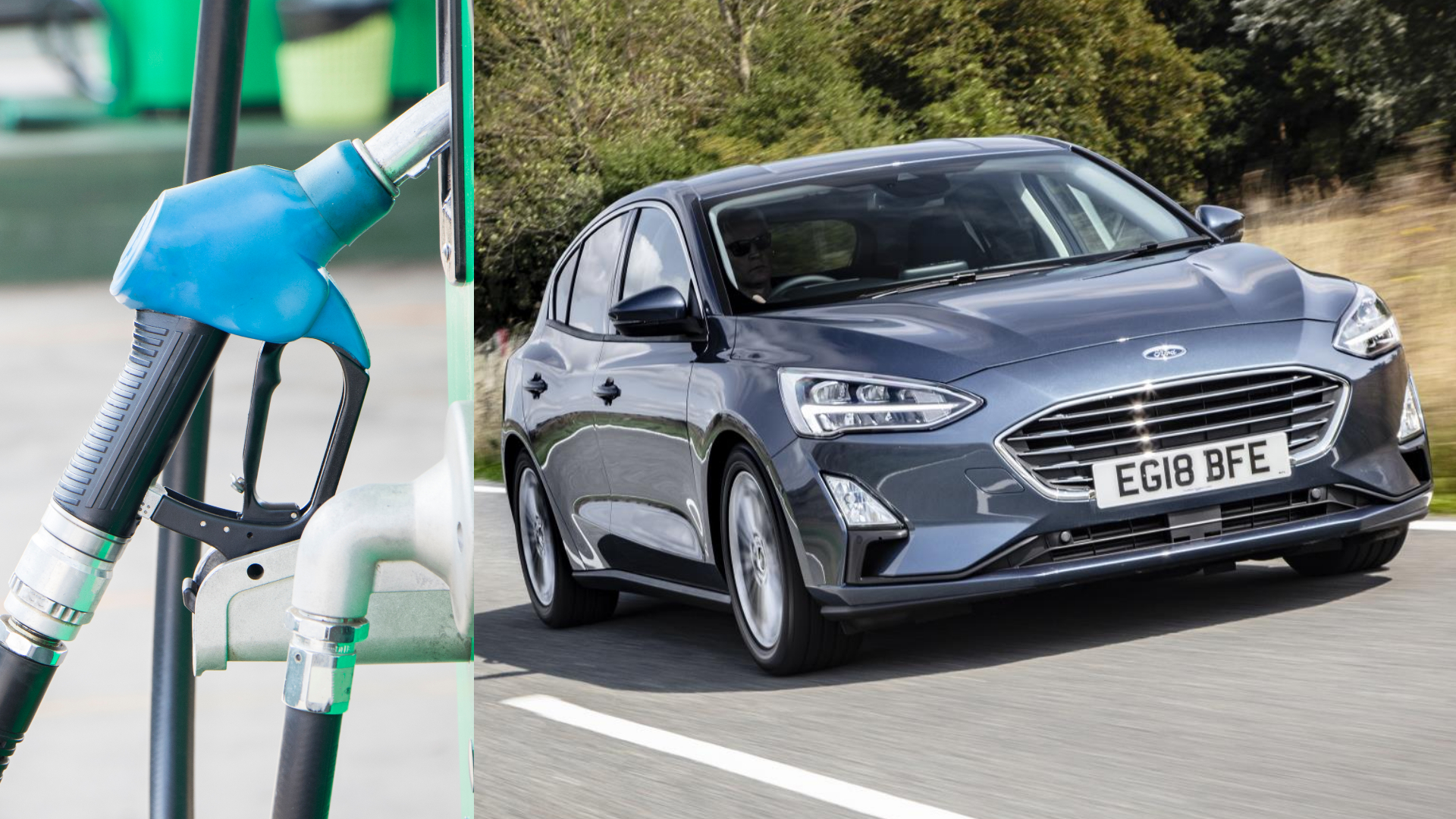
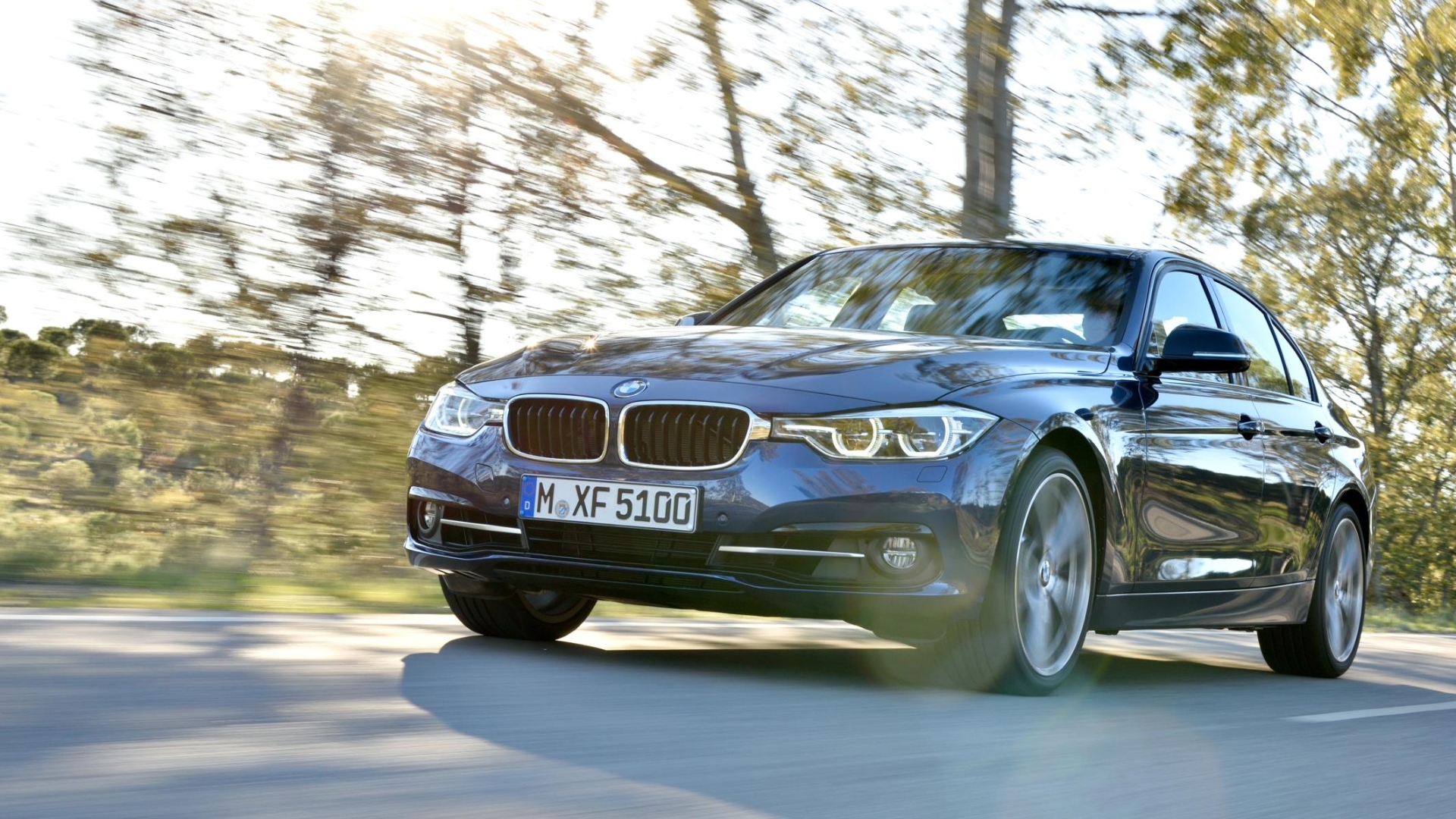
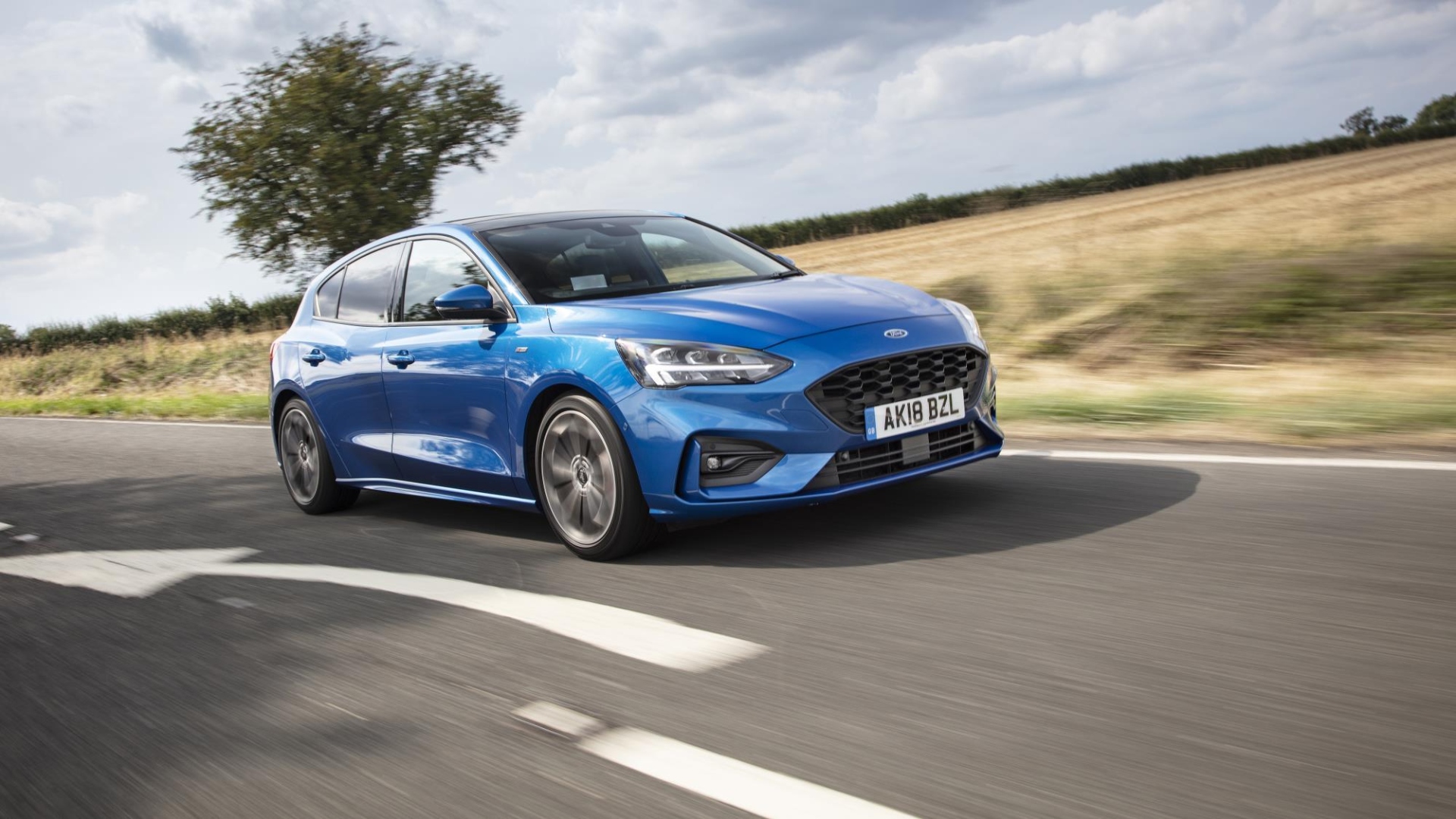
It’s the Ford Focus, which can manage a spectacular 1,112 miles on a 52-litre tank of fuel. The Focus comfortably goes over 1,000 miles, for under £70.
The VW Golf, Audi A3 and BMW 3 Series are also in the 1,000-mile club, going 1,046 (Golf and A3) and 1,014 miles on a tank. That being said, the Golf and A3 cost £70 to fill their 55-litre tanks, while the 3 Series costs £76 to fill with 60 litres of fuel.
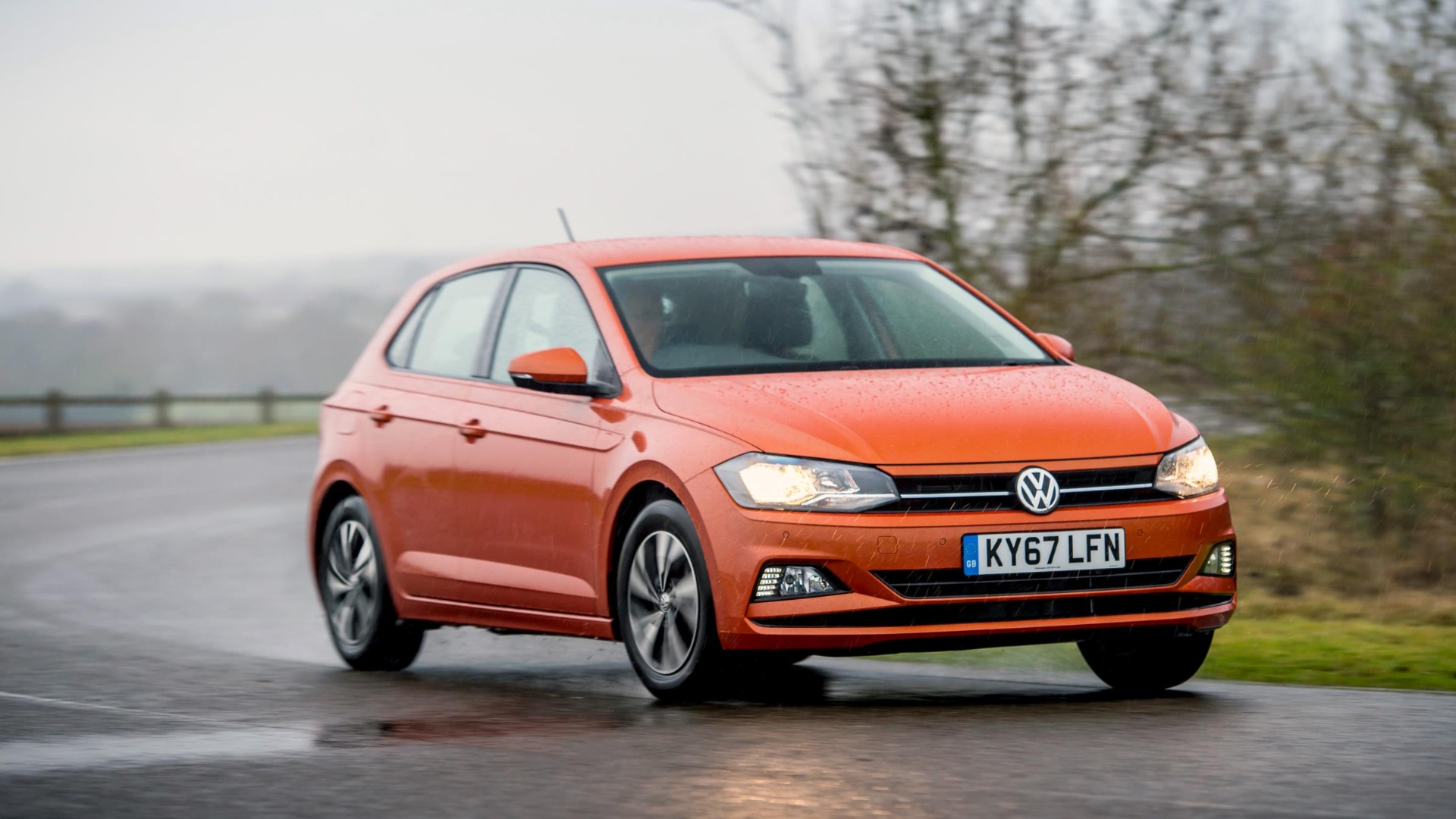
As for the cheaper cars to fill, the VW Polo claims eighth place overall, going 803 miles for just £51 to fill its 40-litre tank. The best-seller Ford Fiesta puts in a good shift, too, going 821 miles on its £53 42-litre full tank for seventh place overall.
Here’s how to find the cheapest petrol and diesel near you.
In fact, it’s the Focus, Polo and Fiesta that lead in terms of pennies spent per miles driven. The Focus costs 7.1p per mile of travel, while the Polo and the Fiesta cost 7.6p and 7.8p respectively.
The Focus and the Fiesta came out on top as best-sellers in the calculations, which collated both new and second-hand sales figures from between January and December 2018. The tank costs were based on an assumed average unleaded price of £1.28, as stated on the RAC’s fuel watch website.
“It’s worth considering which cars are the most fuel efficient,” said Chris Barella, Vice President of Sales at Euro Car parts.
“The overall savings you could make could go towards the cost of a whole car after a few years. Not only is driving efficiently good for our pockets – it’s also better for the environment.”
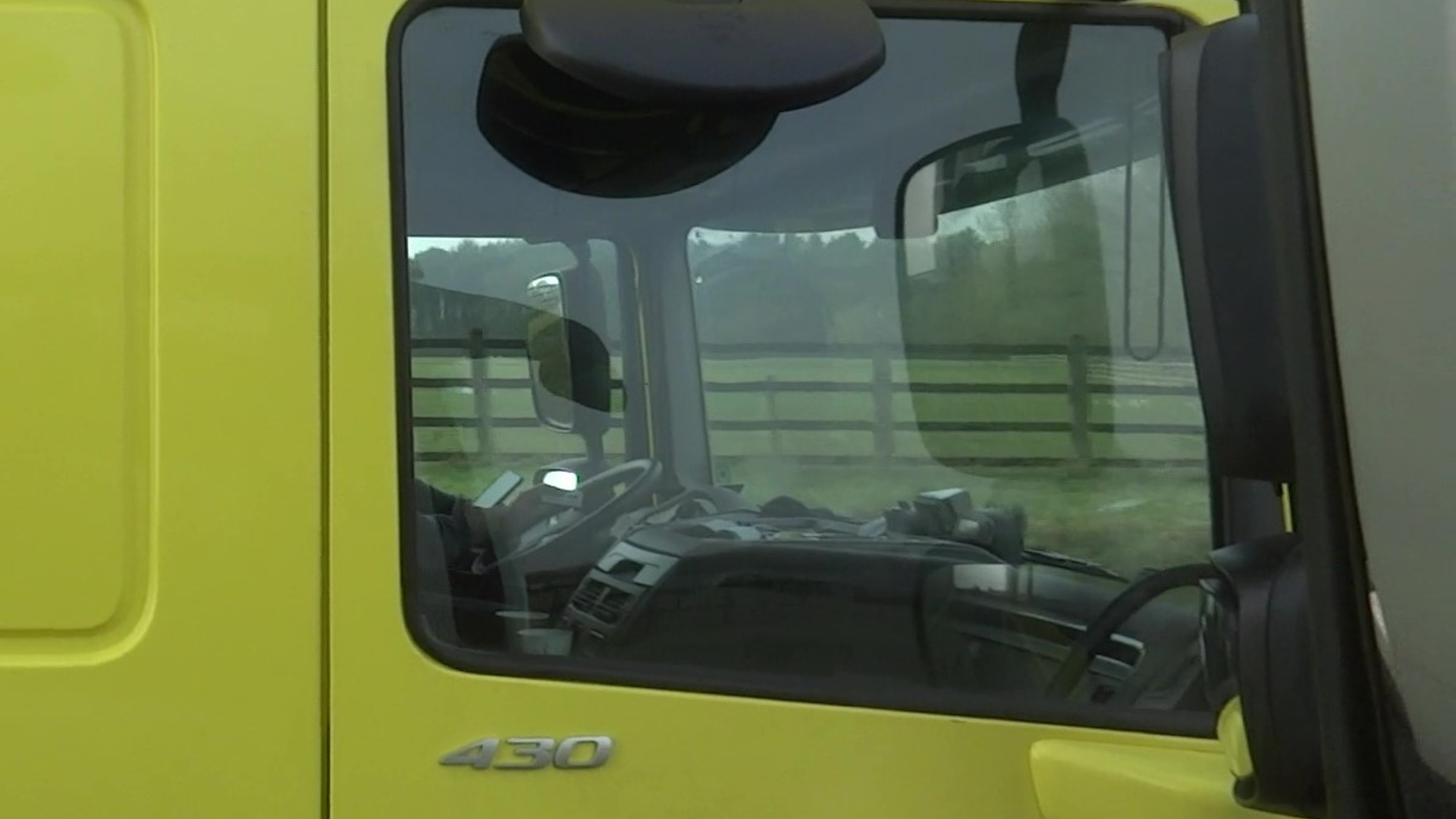
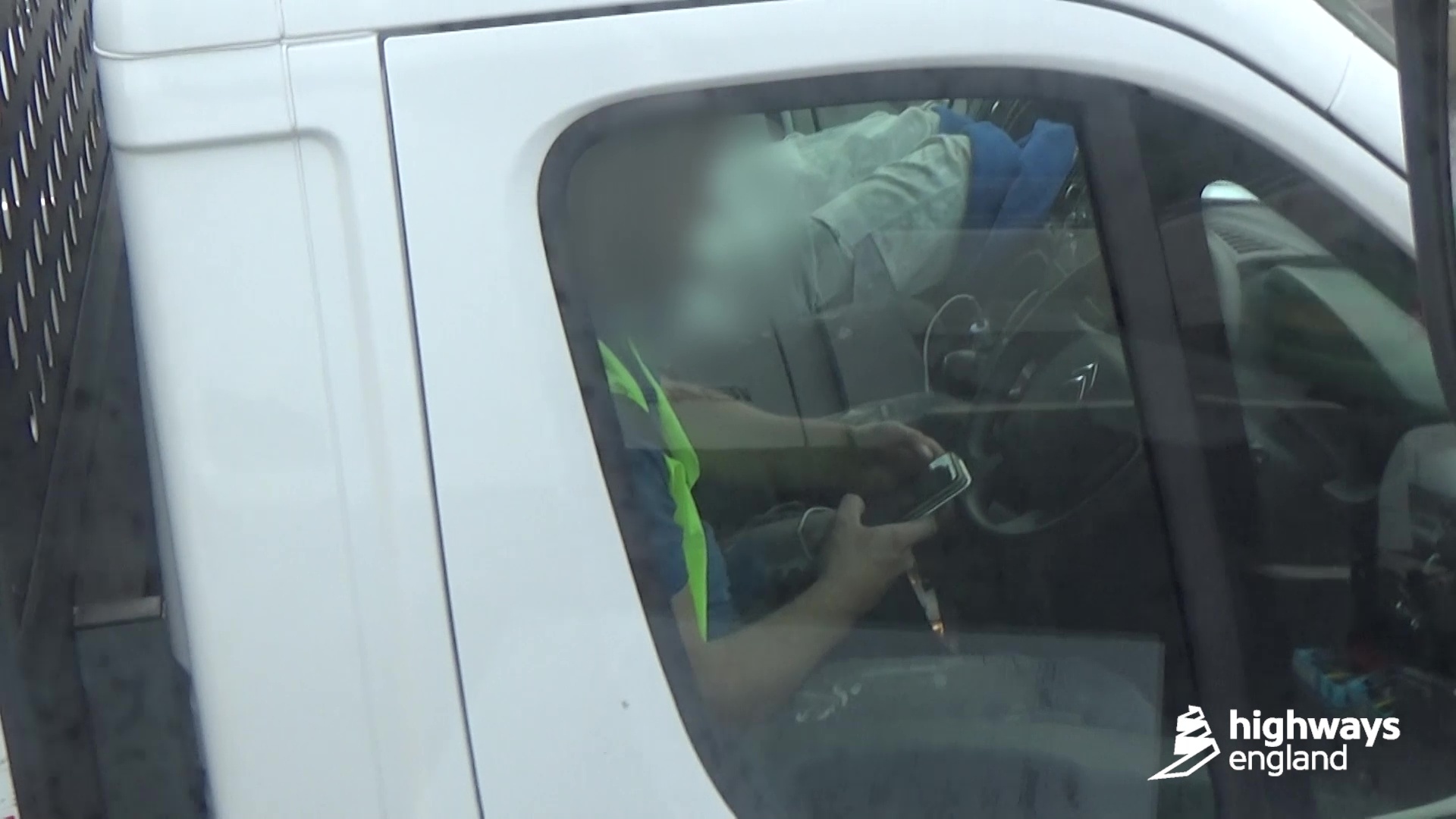
A truck driver has been caught driving with no hands on the wheel. Instead of steering his HGV, he was busy with a smartphone in one hand, and a credit card in the other.
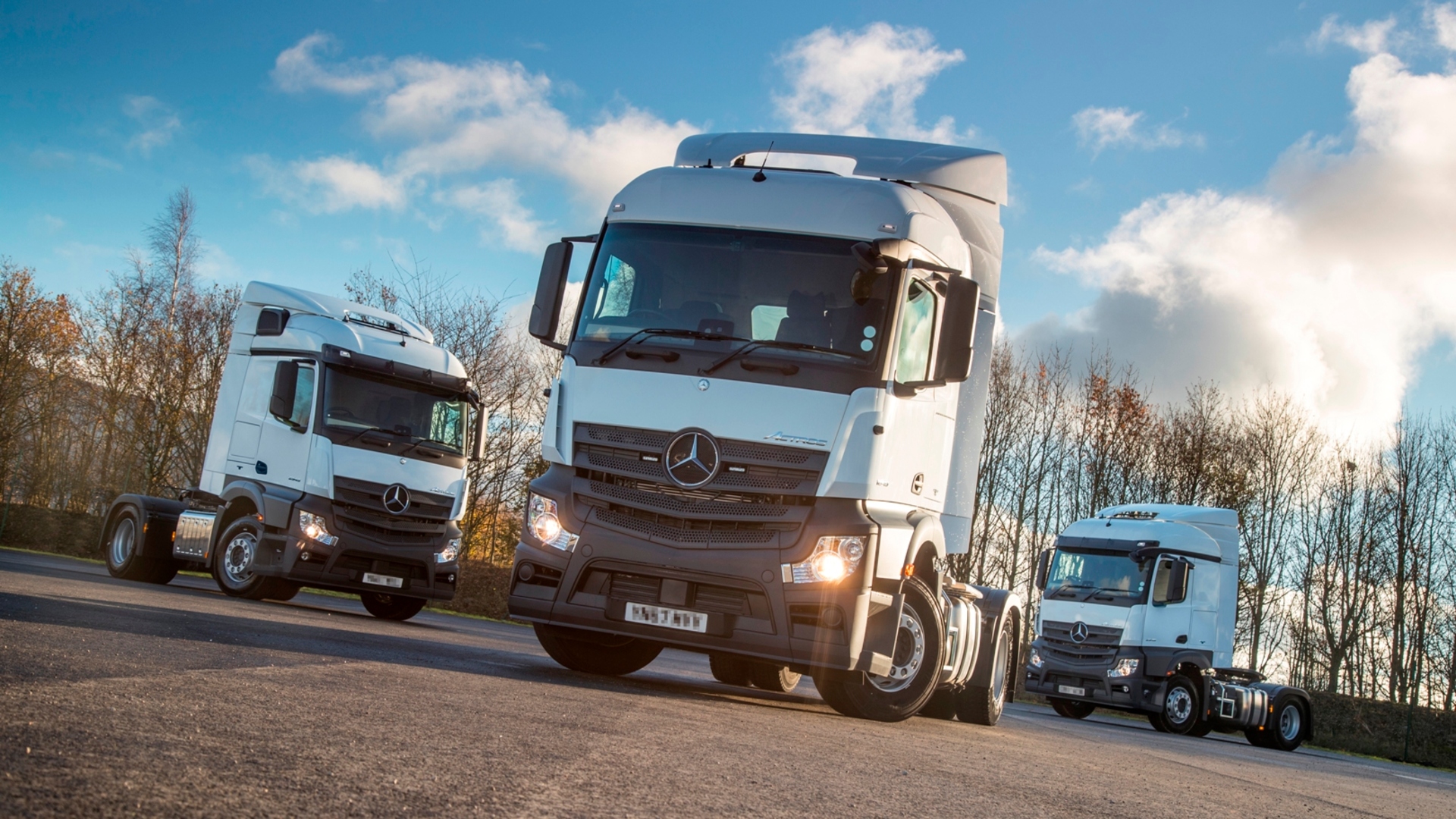
How do we know this? Becuase it was caught on film by an unmarked ‘Supercab’ following it along the M40 near Leamington Spa.
Equipped with CCTV to capture errant truckers, the Supercab is one of three Highways England’s undercover lorries monitoring ‘taller’ vehicles. Regular vehicles are too low to see into the cabs and spot wayward driving.
These Supercabs have been operating for the past year, as part of ‘Operation Tramline’. Over 3,500 offences have been recorded by the 29 Police forces making use of them.
Of these, 1,062 drivers have been caught using a mobile phone, similar to the shocking case above. On a related note, 262 were ‘not in proper control of the vehicle. Just 118 were caught speeding, but as many as 1,195 drivers were not wearing a seatbelt.
Of those 3,500-plus offences, there have been 73 prosecutions made as a direct result of the work of the Supercabs, as well as 462 penalty charge notices issued.
“Operation Tramline is a successful collaboration between the police and Highways England,” said Chief Constable Anthony Bangham, National Police Chiefs’ Council Lead for Roads Policing.
“We remain committed to tackling those who take unnecessary risks with their own safety and the safety of others on our roads by allowing themselves to be distracted while driving. The consequences of these actions are often devastating.
“We will continue to work alongside Highways England on Operation Tramline and will prosecute drivers who ignore the risks.”
Supercabs: the Police’s secret weapon
‘Supercab’ is no overstatement about these machines. While the three Supercabs don’t come with a Lamborghini badge, they do come specially equipped to go to work, at speed, helping police Britain’s motorways and A roads.
They’re de-restricted, being able to speed right up to the normal national speed limit, making them quicker than any other lorry on the road. They also have flashing lights ready to go, should the Police find themselves in an emergency situation.
“We introduced the three new HGV Supercabs last year to help keep the roads safe and tackle dangerous driving by people who have either got into bad habits or are simply ignoring the law,” said Richard Leonard, Head of Road Safety at Highways England.
“The cabs have helped to identify over 3,000 unsafe drivers over the past year.” Leonard added he hoped they would “encourage everyone to think about what more they could do to improve how they drive”.
One of the most iconic names in Japanese motoring history is back. Yes, the fifth-generation Toyota Supra is finally here as of its reveal in full at the 2019 Detroit Auto Show, after a 17-year hiatus. The first drives are taking place and we’ll give our verdict on the new GR Supra imminently. Can it live up to the hype?
The Supra’s ancestors include some of Japan’s most legendary performance cars. The brawny six-cylinder sports coupé first debuted in 1978, then the last Supra rolled off the production line in 2002 after 593,337 had been made. Toyota Supra, this is your life, so far…
A40: the first generation
The first incarnation of Toyota’s ultimate sports coupé was actually a more powerful version of the smaller Celica. First called Celica XX, and powered by a 2.0-litre six-cylinder engine, the XX was launched in 1978. The Supra badge would arrive a year later.
The Celica XX hit the US in 1979, and was christened Celica Supra to avoid a naming clash with a brand of beer. The legend was born. Engine size grew to 2.6 litres, but power was just 110hp. With a 0-60mph time of 10.2 seconds, it was a little more slack than super, and definitely not an out-and-out sports car.
The original Celica Supra continued for another two years, aimed at the luxury end of the coupé market. Its smooth straight-six engines and high-end trappings provided Toyota with a grand tourer to take on Datsun’s established range of Z-cars.
A60: the second generation
July 1981 saw the arrival of the second-generation Celica Supra (still christened Celica XX in Japan). More angular than its predecessor, the new car was the same as the third-generation Celica from the B-pillar backwards.
As before, though, the Supra’s longer front end allowed Toyota to drop in six-cylinder engines, including its new 145hp, 2.8-litre 5M-GE unit. A five-speed transmission was standard. Contemporary Celicas, meanwhile, still had two fewer cylinders.
Independent rear suspension, flared wheelarches and pop-up headlights gave an air of supremacy over the first-generation Supra, while ‘Performance Type’ (P-Type) and ‘Luxury Type’ (L-Type) models offered differing levels of equipment.
The Supra arrived in Europe in August 1982 and Toyota only brought 100 cars per month to the UK. Priced just above entry-level Porsche 924s, the Japanese car shared the German model’s front-engine, rear-wheel-drive ‘transaxle’ layout.
The second generation of Toyota’s big sports coupé also enjoyed success in the British Saloon Car Championship and Ulster Rally, campaigned by motorsport stars such as Win Percy, Barry Sheene and Per Eklund.
A70: the third generation
The third iteration of the Supra landed in August 1985, and moved the car on style-wise. More curvy lines lent the car an elegant, more grown-up look. The Supra also finally diverged from its Celica heritage, gaining a platform all its own.
Technically, the car had moved on, too. Part-aluminium double wishbone suspension featured on every corner, attached to links that filtered vibrations entering the interior. Toyota Electronically Modulated Suspension (TEMS) was available on some models, with ABS braking across the range.
In 1986, the Supra added another string to its bow. A removable targa top pandered to fresh-air fanciers who appealed for a hair-ruffling version of the Toyota coupé when it first appeared. Targa-topped US models gained the enticing ‘Sport Roof’ moniker.
Dependent on market, six-cylinder engines from 2.0 to 3.0 litres were available in the Mk3 Supra. Top of the tree from 1987 was a 235hp turbo. At long last, the Supra had the go to match its show: 0-60mph took 6.4 seconds.
The Supra got even hotter in 1988. The 270hp Turbo A was built to homologate the car for Group A racing in domestic and European touring car series, as well as the World Rally Championship. The limited-edition Supra 3.0 GT Turbo A was the period’s fastest Japanese production car. Zero to 60mph took just 5.0 seconds, and the 3.0 GT Turbo romped to 167mph.
An optional White Pack made the Supra brighter than the rising sun, while in 1991 Toyota dropped its JZ engine – which would also appear in its successor – into the Supra to create a 276hp powerhouse. It needed to move the game on thanks to the arrival of competitors such as the Honda NSX, Mazda RX-7 ‘FD’, and Nissan 300ZX.
A80: the fourth generation
Production of the A70 Supra ended in 1992. The fourth-generation A80 car was unveiled at the 1993 Chicago motor show, and was the culmination of four years of development. A more slippery shape with an optional rear spoiler signalled its performance potential.
Like the A70, the A80 Supra was leaner in its construction – even the carpet fibres and rear spoiler were hollow to shed weight – but was also more powerful than ever before. A naturally-aspirated or twin-blower 3.0-litre JZ engine gave between 220hp and 326hp. The six-speed Turbo gave true supercar-bothering performance.
So powerful was the new Supra, even rivals such as the Porsche 911 Carrera had problems keeping up. Brits and Europeans were only offered turbocharged models, and it’s easy to see why they shaded their German rival: the benchmark 0-60mph sprint was dispatched in a scorching 4.6 seconds.
With the Mk4, motorsport was once again on the agenda. The most competitive generation, the A80 did stints at Le Mans, Pikes Peak, mountain races in Switzerland, the US SCCA series, and was a leader in the All-Japan GT Championships from 1995 to 2003. In 2007, a modified Super GT car became the first hybrid to win a motor race: the 500bhp Denso SARD Supra HV-R took victory in the Tokachi 24-Hour endurance event.
Perhaps the fourth-generation Supra’s biggest claim to fame was to embed itself in the minds of car enthusiasts via its appearance in myriad computer games, including the legendary Gran Turismo and Need for Speed series. The A80 was also a big screen star, featuring in the first The Fast and the Furious film of 2001. The ride of Brian O’Conner, played by Paul Walker, the 700hp be-winged orange Supra inspired a host of copycat cars.
Even though UK sales had stopped in 1996, US drivers could still get their hands on a Supra until 1998. Costly upcoming emission regulations finally killed the Supra in 2002, the Japanese market not able to reverse an ever-decreasing annual sales tally. The Supra joined its Celica and MR2 relatives in Toyota’s sports coupé scrapyard.
The Toyota Supra is revived
However, in 2014, Toyota hinted at a return of its icon. Designed by Toyota’s Calty Design Research facility in Newport Beach, California, the FT-1 concept debuted at the North American International Auto Show in Detroit. In a case of life simulating art – and with a link to the A80 – the FT-1 also appeared in Gran Turismo 6 and the virtual car was used to pitch the concept to Toyota president Akio Toyoda.
The FT-1 (Future Toyota 1) was said to herald the ‘most capable, most exciting generation of vehicles the company has ever produced’. Billed as the ‘ultimate world-class sports car’ and ‘a true enthusiast track car in the iconic lineage of 2000 GT and Supra’, the FT-1 whipped up a frenzy among Supra fans.
2018 Geneva show star
The fifth-generation of Toyota’s range-topping sports coupé was shown as a thinly-veiled ‘modern racing concept’ at the 2018 Geneva Motor Show. We knew the GR Supra Racing Concept was the finished article, albeit with race-spec body addenda. It looks ready to take to the grid at Le Mans and battle GTE-class monsters.
The return of an icon
The new Supra was finally revealed in January 2019. It made its in-the-metal debut at the Detroit Motor Show. It’s twinned with the new BMW Z4 – including engines, transmission and much of the cabin – and there were questions over whether it would wind up being a bit too ‘BMW’. Enthusiasts also worried whether the legendary 2JZ-equipped A80 would find a true successor in the new car.
Going racing… again
Toyota wants the new Supra to win on the racetrack, just as previous generations did. This Supra GT4 Concept was unveiled at the Geneva Motor Show, as a preview for a racer that could go toe-to-toe with Aston Martin, Porsche and McLaren in GT4 racing.
A Supra… NASCAR?
Yes, you read that right. ‘Race on Sunday, sell on Monday’ isn’t dead, especially in America. Toyota knows this, and as a truly global car, the Supra has to conform to certain market tastes. That’s led to this rather interesting creation: a NASCAR in a Supra suit. Spot the differences between it and the GR Supra Racing Concept…
2019’s Suprastar sports car?
Now, the Supra is out in the world and Motoring Research is getting behind the wheel of the new Supra. Will it be as the detractors say – a thinly-veiled re-badged Z4? Or will it be a sports car befitting the legendary name? We’ll let you know very soon…
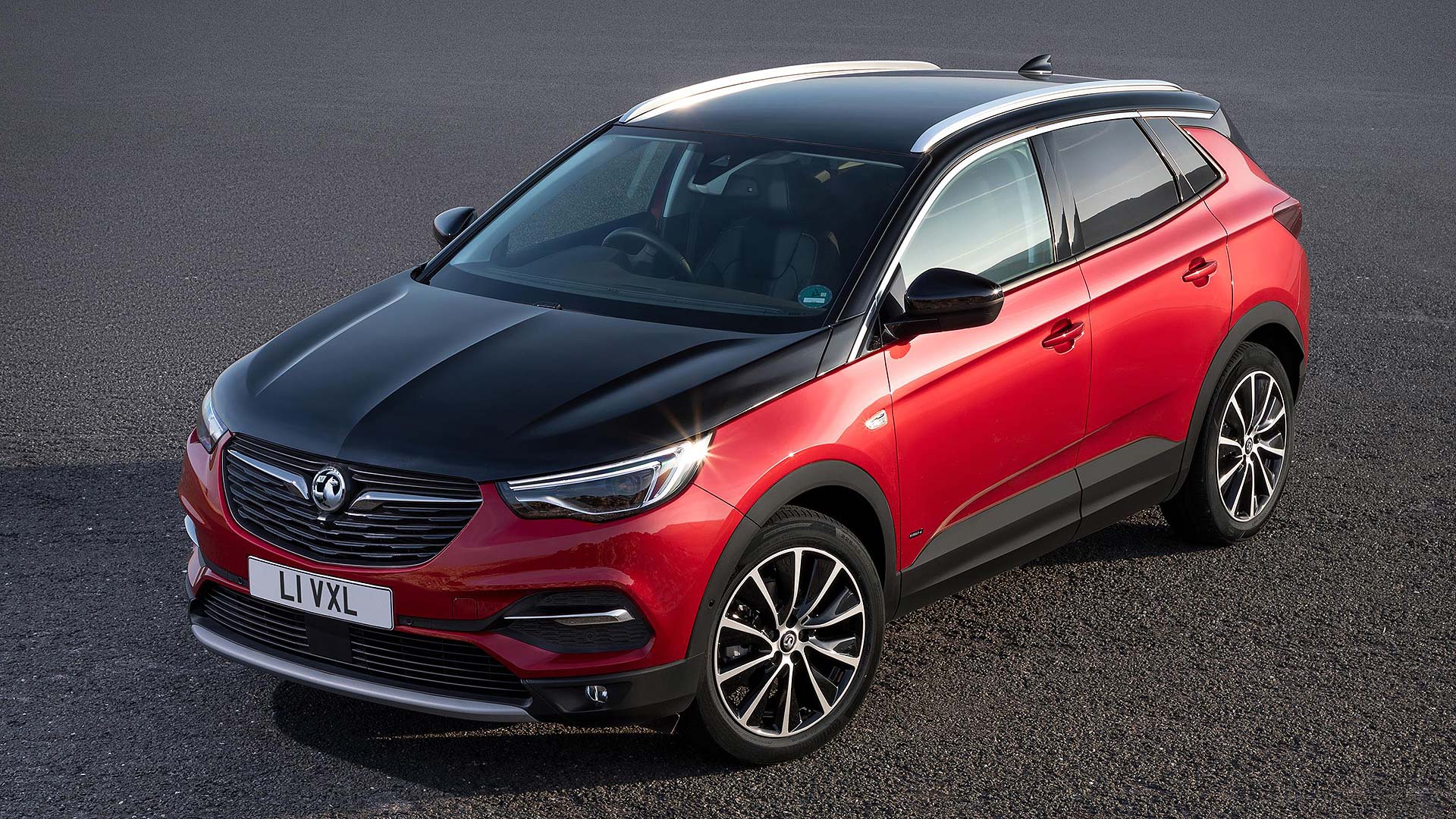
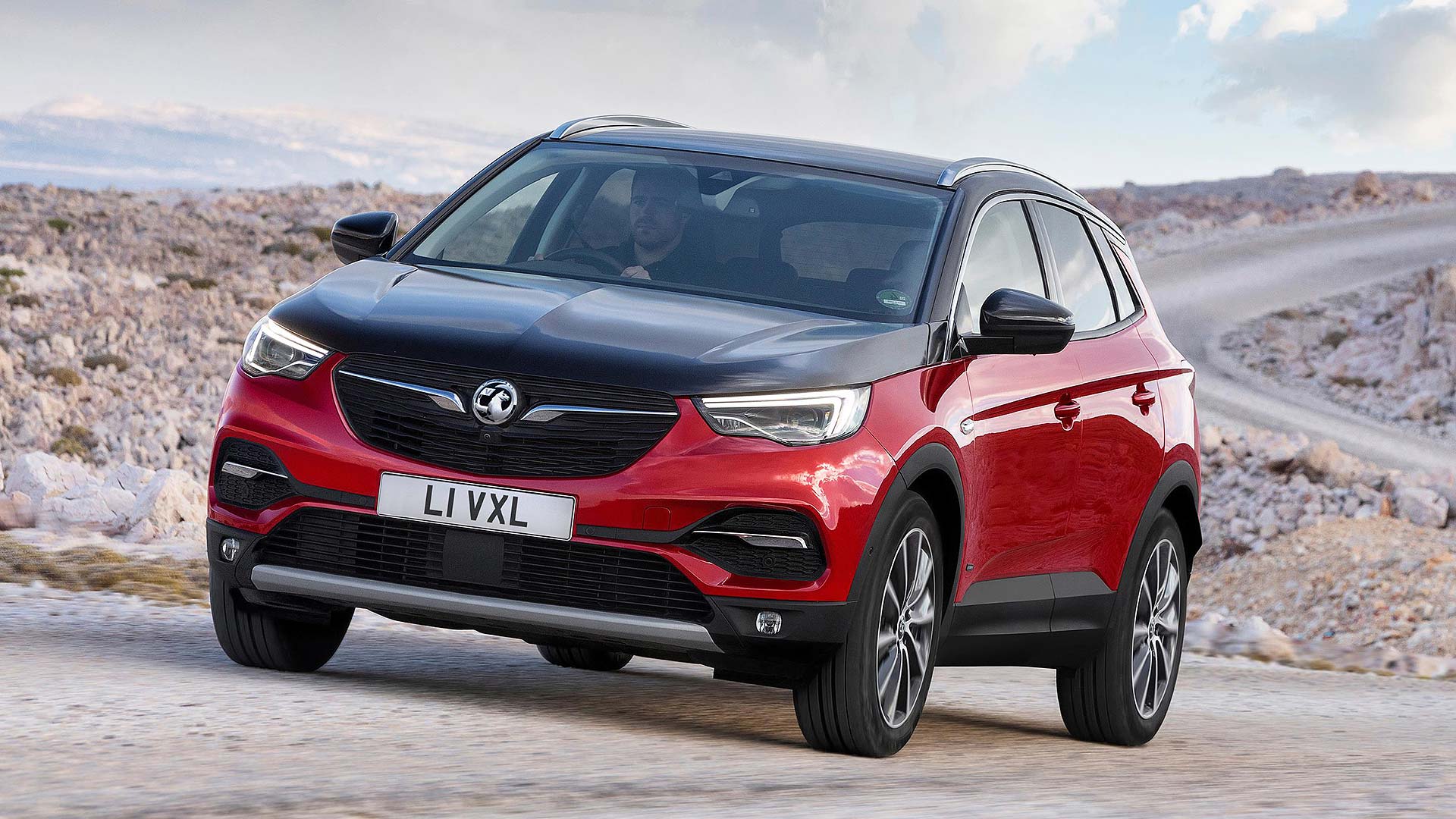
The British brand’s first ever plug-in car, it pairs a 200 horsepower 1.6-litre turbo petrol engine with TWO electric motors. Combined, these put out 109 horsepower, and are powered by a 13.2 kWh lithium ion battery.
The overall package delivers an impressive combination of 300 horsepower, four-wheel drive traction, 128 mpg and CO2 emissions of 49 g/km.
Vauxhall has fitted an eight-speed automatic gearbox to the engine; this contains one of the two electric motors. The second is mounted in the back, driving the rear wheels, but only ‘on demand’. It doesn’t run when not required, saving power and battery range.
The Grandland X Hybrid4 has a pure electric mode. If the battery is fully charged, it has a range of 30 miles, in ‘electric’ mode. The most efficient mode, however, is ‘hybrid’, which constantly switches between engine and electric drive.
Fast-chargers can be used (if PHEV drivers are not banned from using them, that is…), to rapidly top up the battery. Even using a 7.4 kW wallbox, a full recharge takes less than two hours.
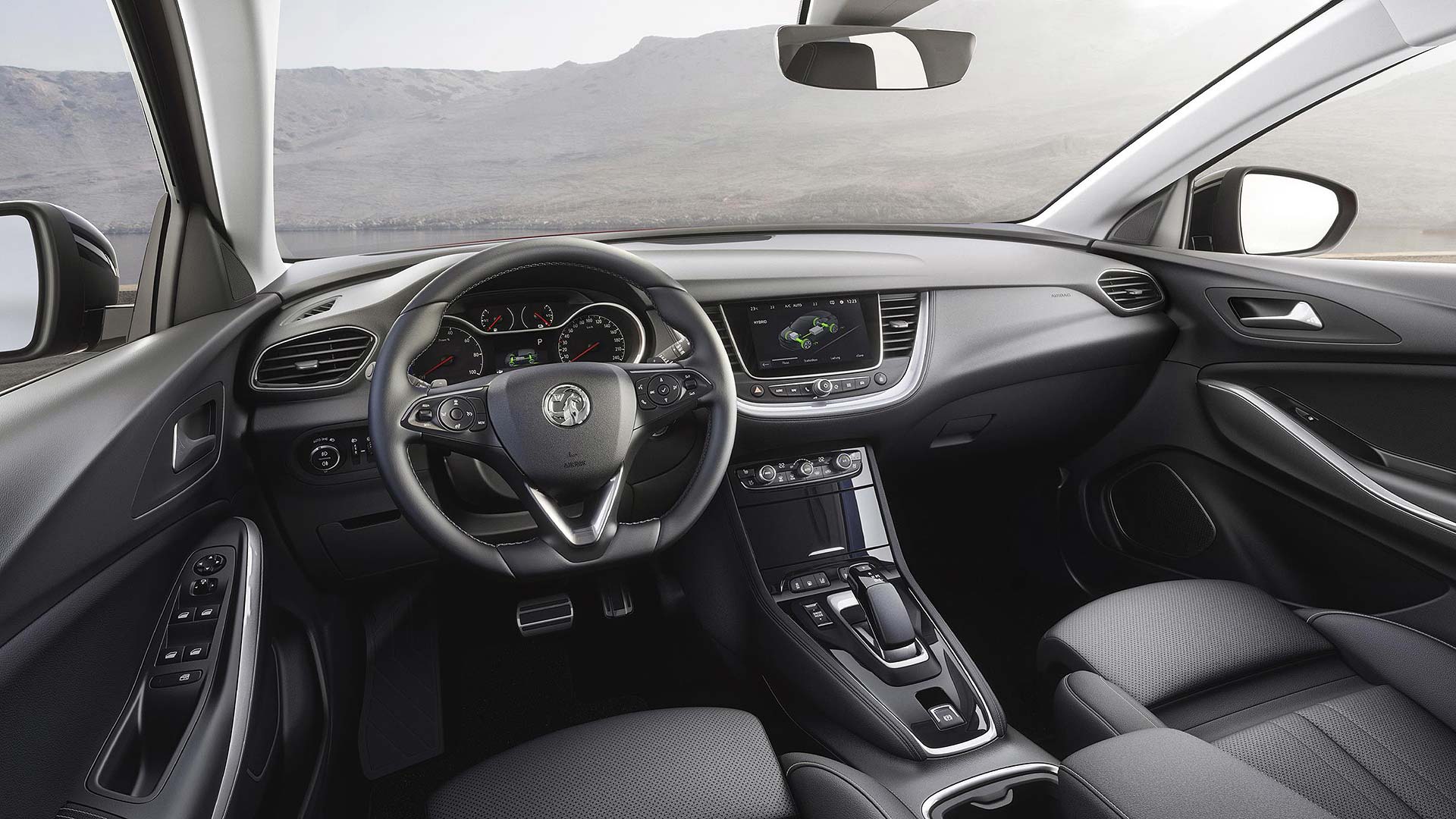
Sat nav is fitted as standard, and includes a mode that can guide drivers to the nearest charging station. Journeys can be planned to include charge stations en route, and Grandland X Hybrid4 owners will benefit from membership of Vauxhall Free2Move Services – opening up 85,000 charging points across Europe.
Vauxhall says the Grandland X Hybrid4 is quickly going to set a trend within its range. By 2024, every car it sells will be electrified – and fully electric cars are also part of this plan, with the first Vauxhall Corsa EV opening for ordering before the year is out.
Hopefully, the arrival of new models such as the Grandland X Hybrid4 can help turn around a decline in British plug-in hybrid sales: last month, they were down by more than 34 percent.
David Gandy is quite a good looking chap. He also looks half-decent in a pair of M&S undies. And now, he’s has taken delivery of a bespoke Jaguar XK120.
Life must be pretty tough for the male model.
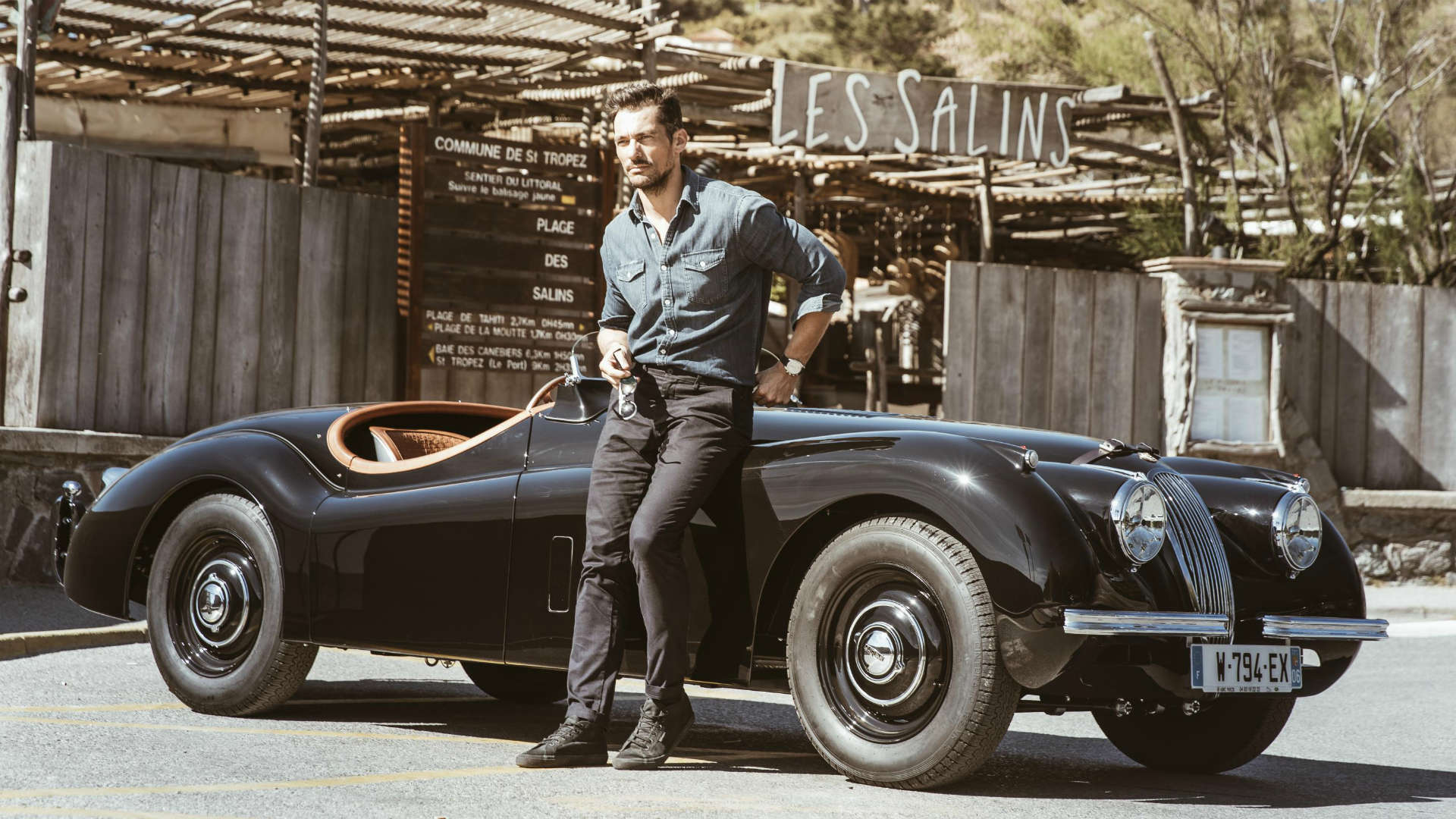
Having taken part in the Mille Miglia, Gandy commissioned Jaguar Classic to source and restore an XK120 for use in classic motorsport events. The result is a specification inspired by the original XK120 Lightweight.
The project started with the sourcing of a 1954 base car from California and finished after 11 months and 2,700 hours. Everything was completed at Jaguar Classic’s Classic Works facility in Warwickshire.
To make it race-ready, the team boosted the performance of the 3.4-litre straight-six engine from 180hp to 225hp and added a new exhaust system with dual pipes. Further upgrades include a racing-style four-speed gearbox, disc brakes with four-pot calipers at the front, and fully adjustable dampers.
Gandy – who is worth an estimated £12.5 million – has made a living out of looking good and once said that “anyone can have a body like mine, but it’s hard work”. Needless to say, the XK120’s body had to live up to Gandy’s high standards.
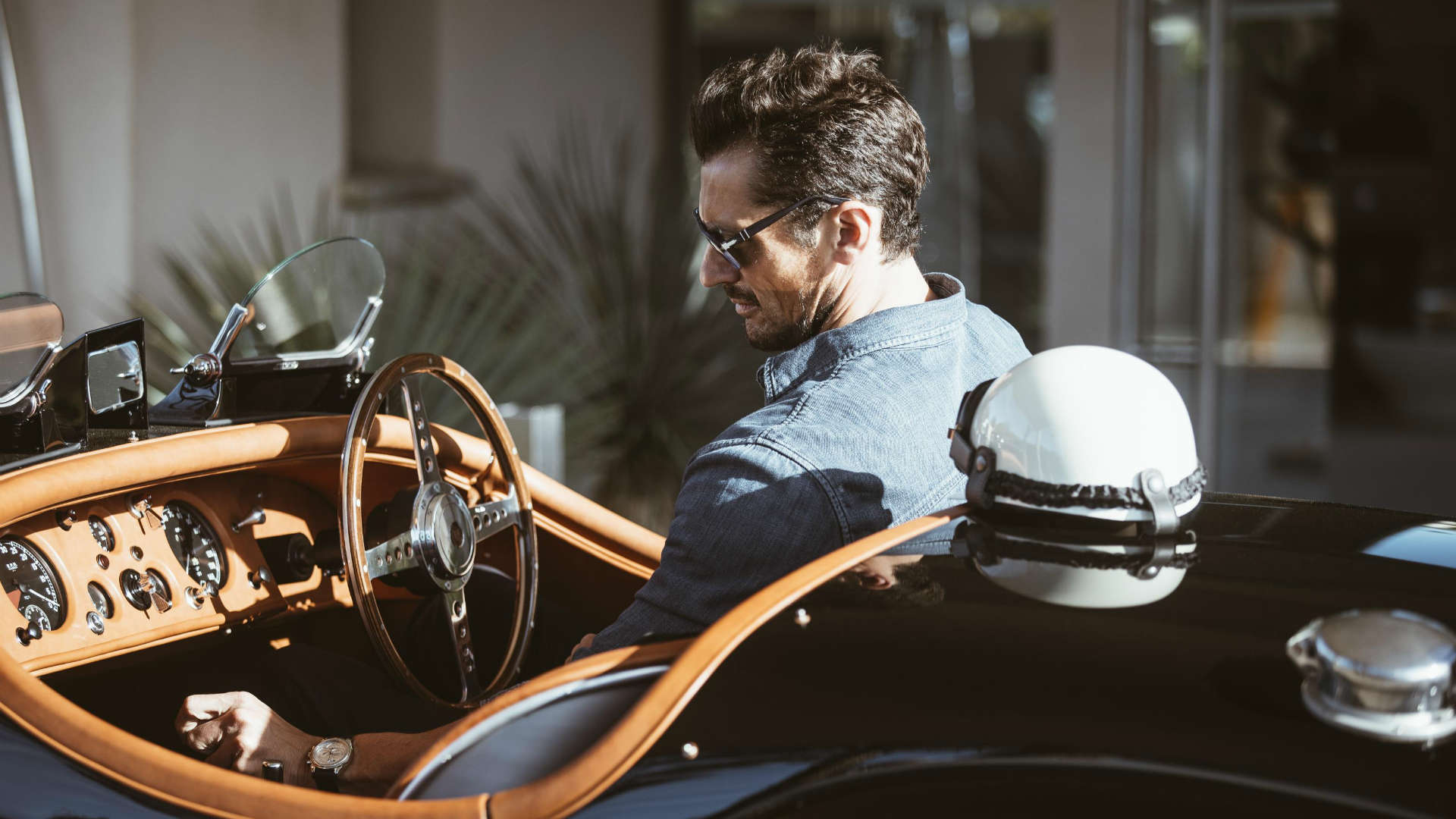
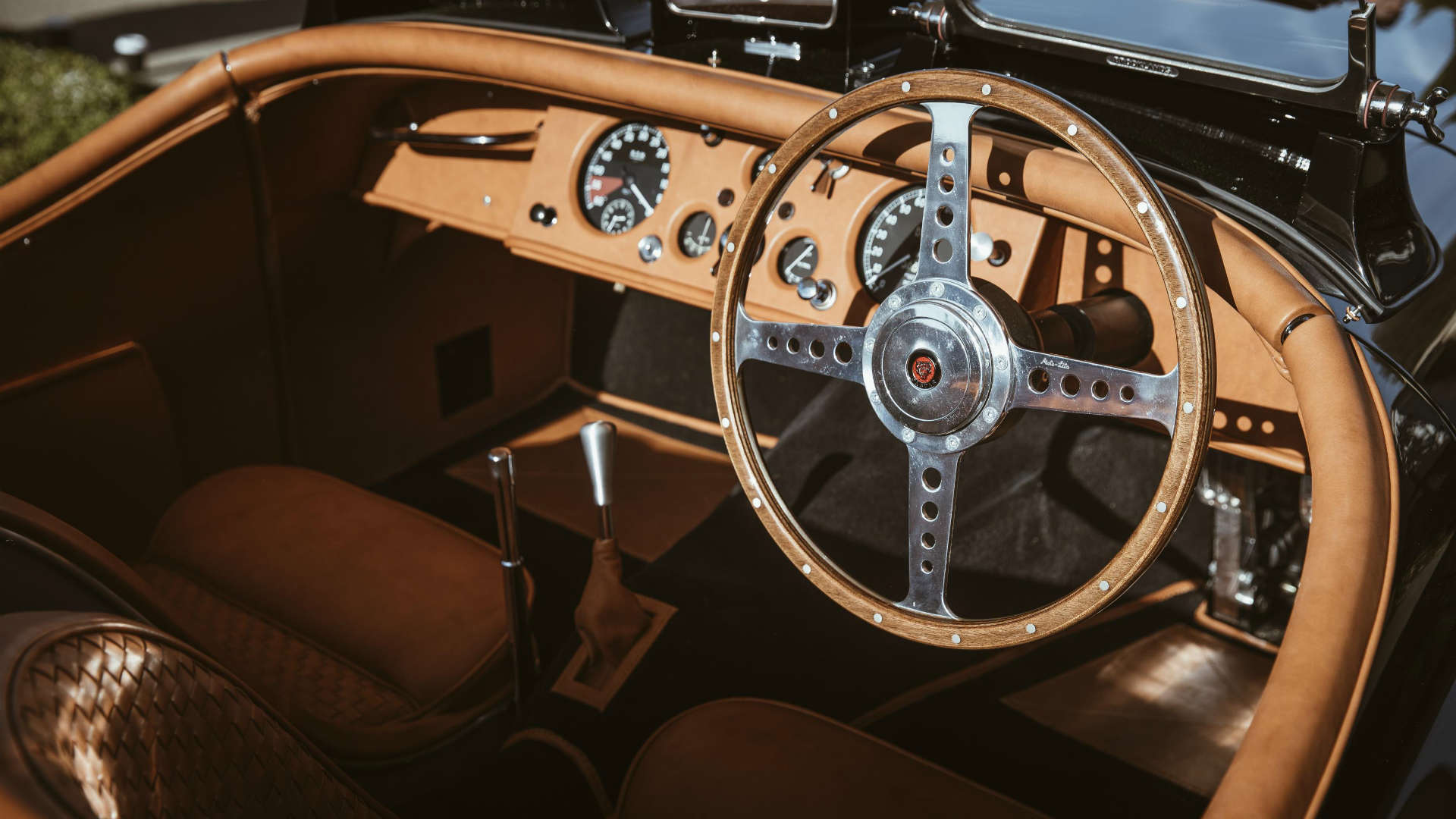
Which is why the bespoke XK120 is finished in solid black, made up of 13 litres and four coats of paint. Also note the use of a flip-top fuel cap, plus twin aero screens, a tip of the hat to the XK120 Lightweight.
Inside, Jaguar Classic removed one of the batteries behind the driver’s seat to free up space for Gandy’s 6ft 2inch frame, while a smaller steering wheel has been used to free up legroom. The seats are finished in Aged Saddle tan leather with a bespoke lattice design.
David Gandy, said: “Having driven a Jaguar XK120 at the Mille Miglia in 2013 and 2014, I knew that I wanted to own one of these incredibly special cars. The team at Jaguar Classic have done such a remarkable job engineering this car and executing everything that I asked for and it was amazing to have such an in-depth involvement in its creation.”
Calum McKechnie, head of Jaguar Classic, said: “This unique XK120 showcases the expertise, skill and craftmanship that Jaguar Classic makes available for all of its customers. Not only were we able to bring this iconic sports car back to life mechanically, but the attention to detail and the bespoke design of the interior sets David’s car apart.”
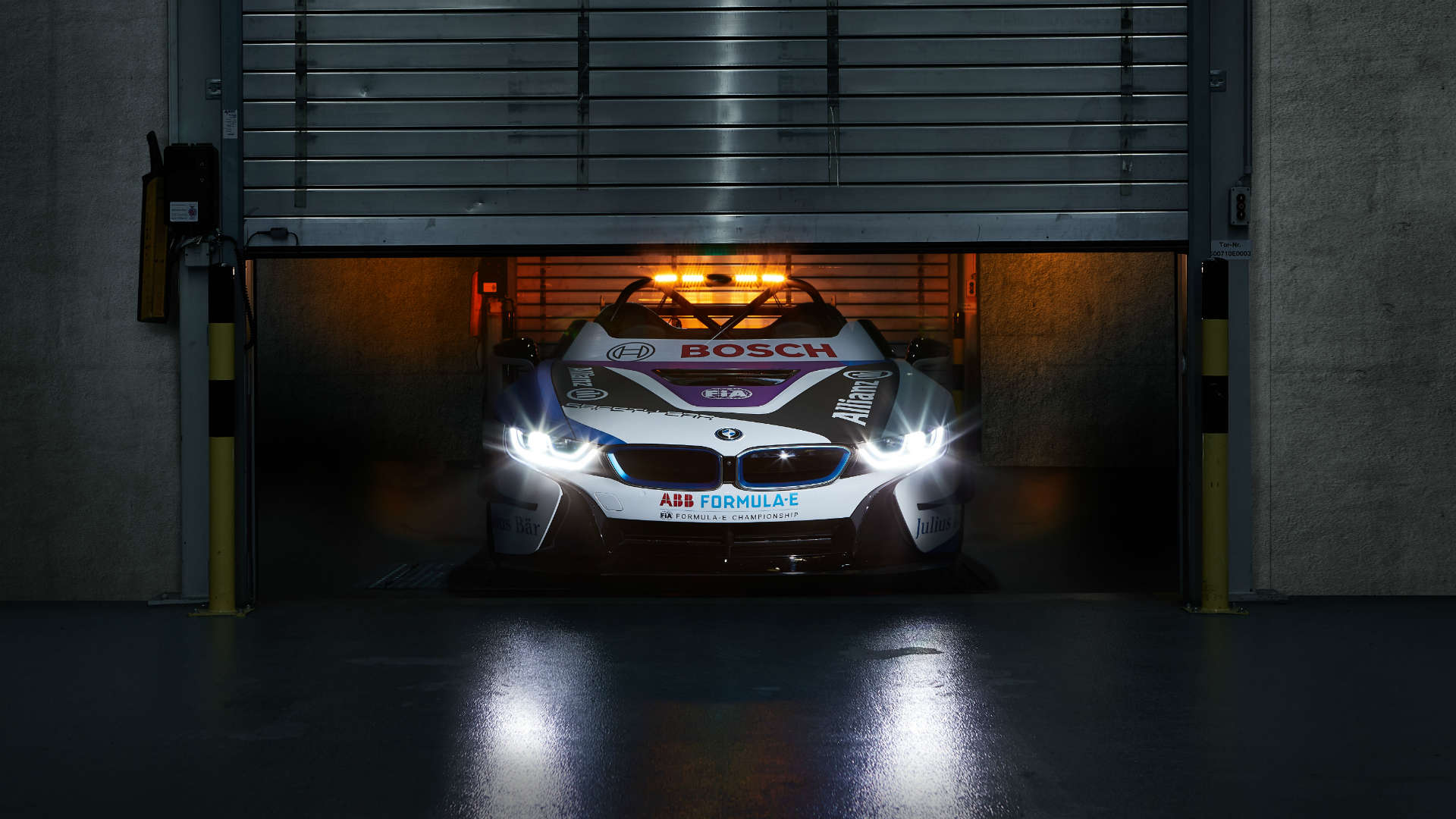
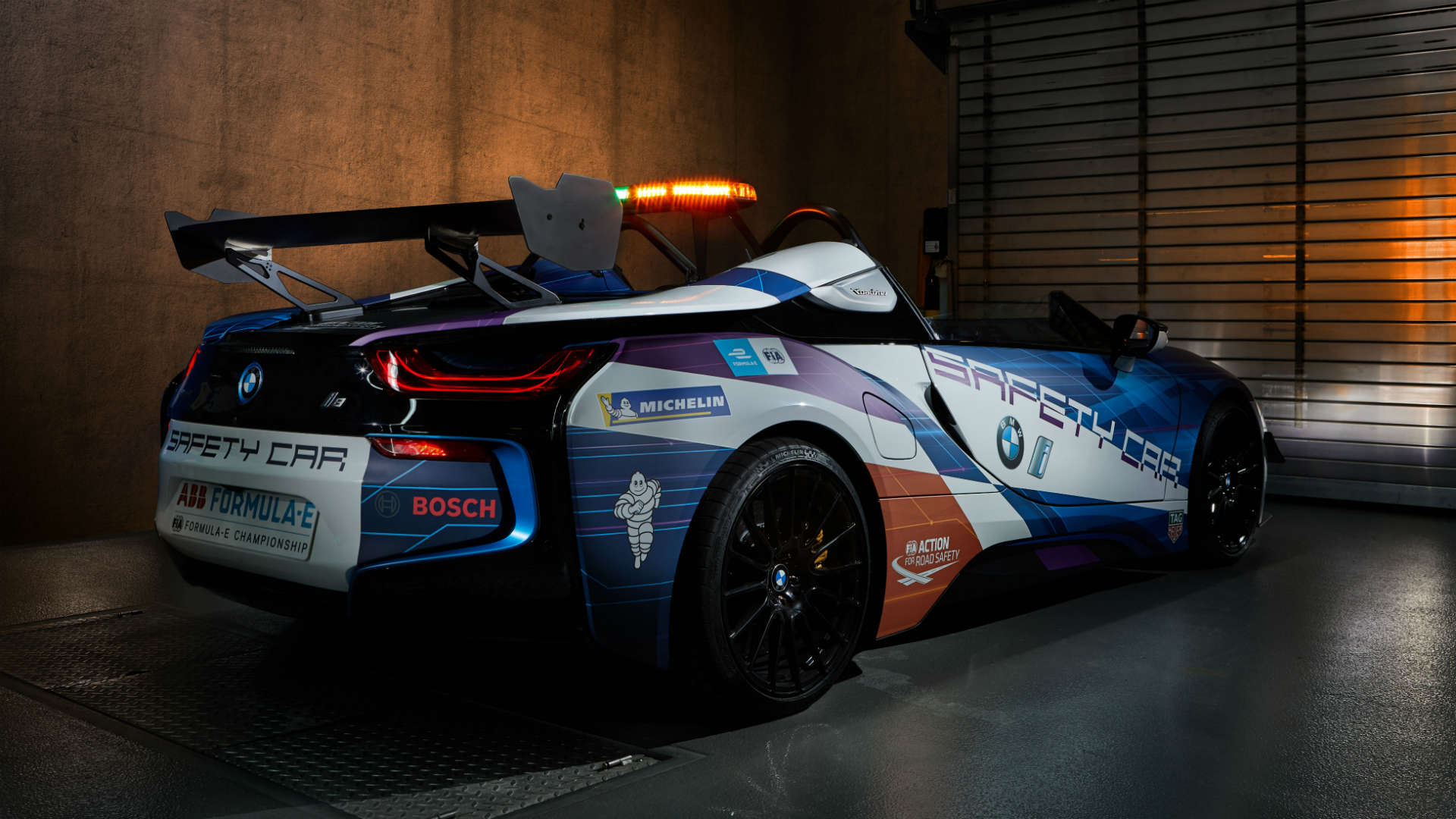
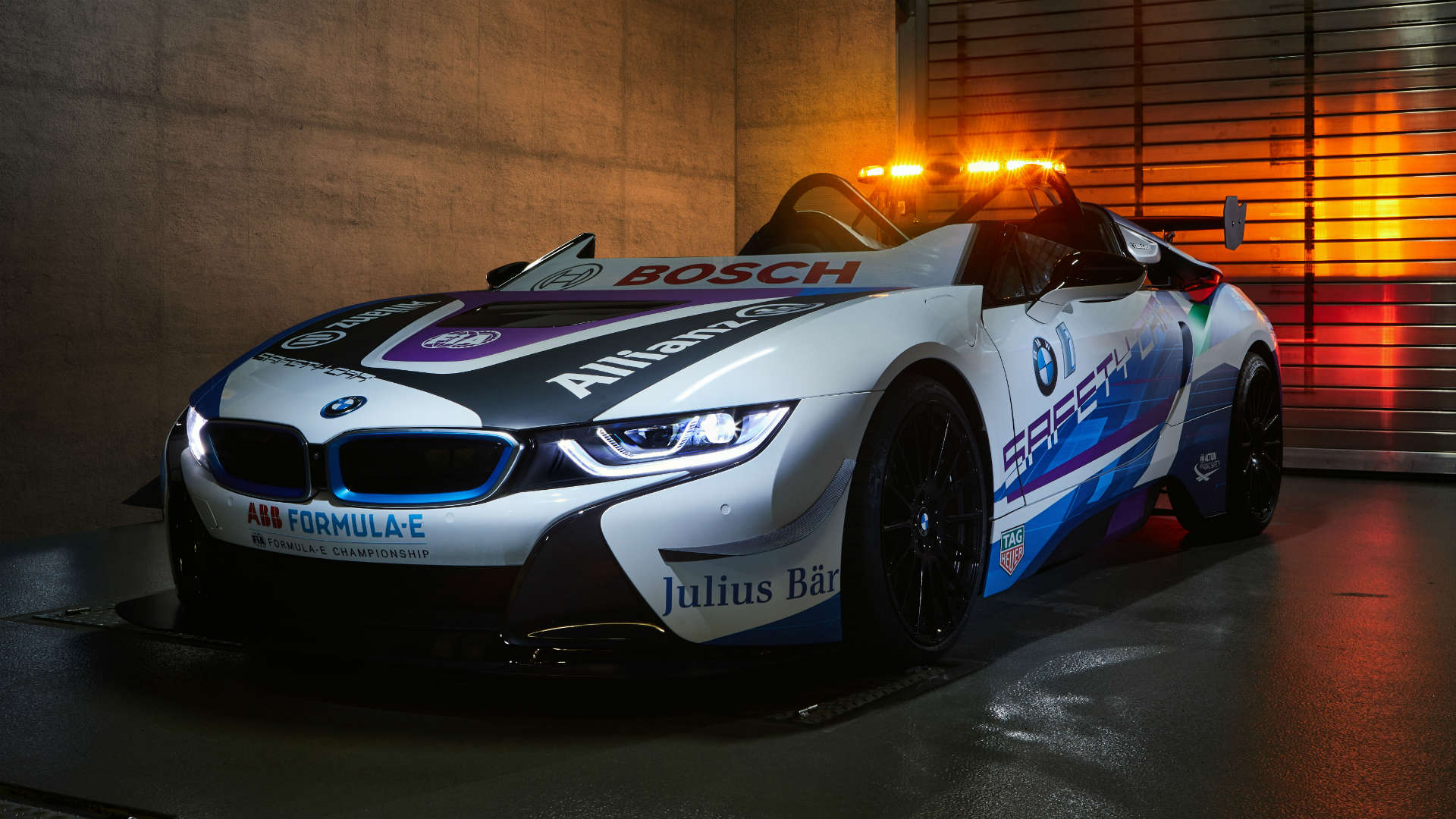
The new BMW i8 Roadster unveiled at the Monaco E-Prix for the Formula E championship is the world’s first open cockpit safety car.
BMW says no major modifications were necessary, but as is obvious from the photos, the i8 Roadster is not what you’d call stock.
For a start, the windscreen is shorter than the production model, while the rear wing creates a spectacle, even in the glamorous surroundings of Monte Carlo.
A centre of gravity 15 millimetres lower than the standard i8 Roadster, M carbon ceramic brakes, an FIA-approved roll bar and a front splitter complete the makeover, creating what BMW calls ‘the perfect basis for a safety car’.
The usual safety car kit includes a light bar above the rear wing, a communication and GPS antennas, a comms system in the cockpit, and a rear-view camera.
The overall effect is something that wouldn’t look out of place in a Hot Wheels blister pack, thanks in part to a livery that combines blue, purple, orange and green. You can decide whether or not the end result is a success. It certainly stands out, which is kind of the point of a safety car…
Formula E founder and CEO Alejandro Agag said: “The BMW i8 Roadster safety car has a striking design – something which differentiates it from anything we’ve seen before, and what better setting for its presentation than at the Monaco E-Prix.
“BMW has been a partner since the inaugural season, and their continued support as a vehicle partner and now as a team shows their commitment to electric mobility.”
Jean-Eric Vergne won the Monaco E-Prix and now tops the Formula E drivers’ championship. The next race takes place in Berlin on 25 May.
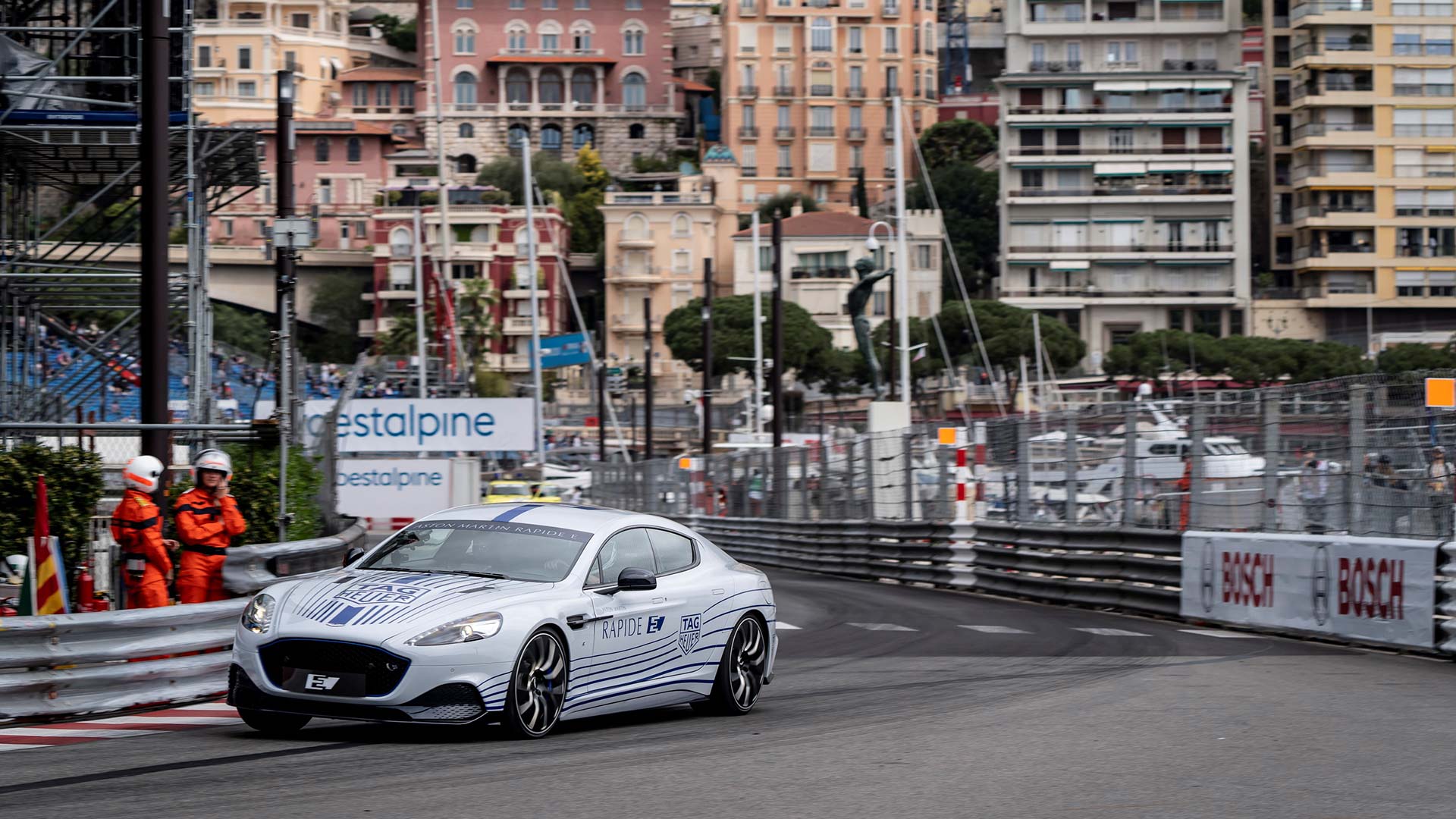
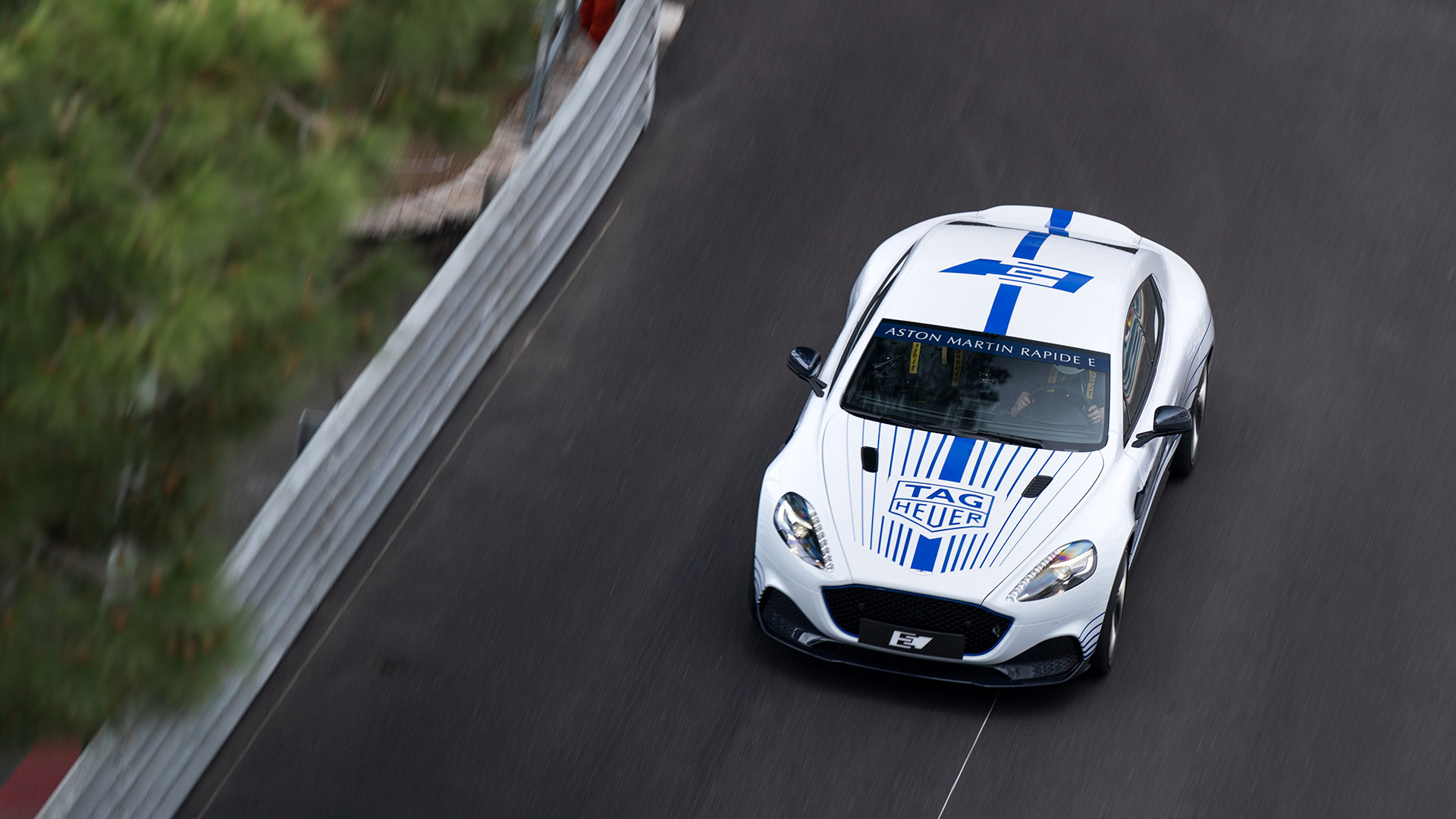
The first all-electric Aston Martin has taken to the streets of Monaco for a dynamic debut, demonstrating the quick progress made on the limited-edition model.
Aptly, the Rapide E hit the tarmac ahead of the latest round in the 2018-19 Formula E Championship, proving a neat link between road and race car technology.
Williams Advanced Engineering, the high-tech offshoot of the legendary Williams Formula 1 racing team, has been supplying battery packs for Formula E since the series began.
In fact, Williams has received a Queen’s Award for Enterprise due to its battery technology work, and recently won a contract to supply the first electric touring car series with components.
All charged up
The Oxfordshire-based company has also worked in partnership with Aston Martin on the development of the Rapide E, bringing its battery technology experience to the project.
Replacing the existing the 6.0-litre V12 engine in the regular Aston Martin Rapide, along with the associated ancillaries, has not been the simplest of tasks with bespoke solutions needed.
However, the efforts of both companies have resulted in a battery-powered Aston, which still manages to retain the performance of the petrol-engined original.
Plug in, baby
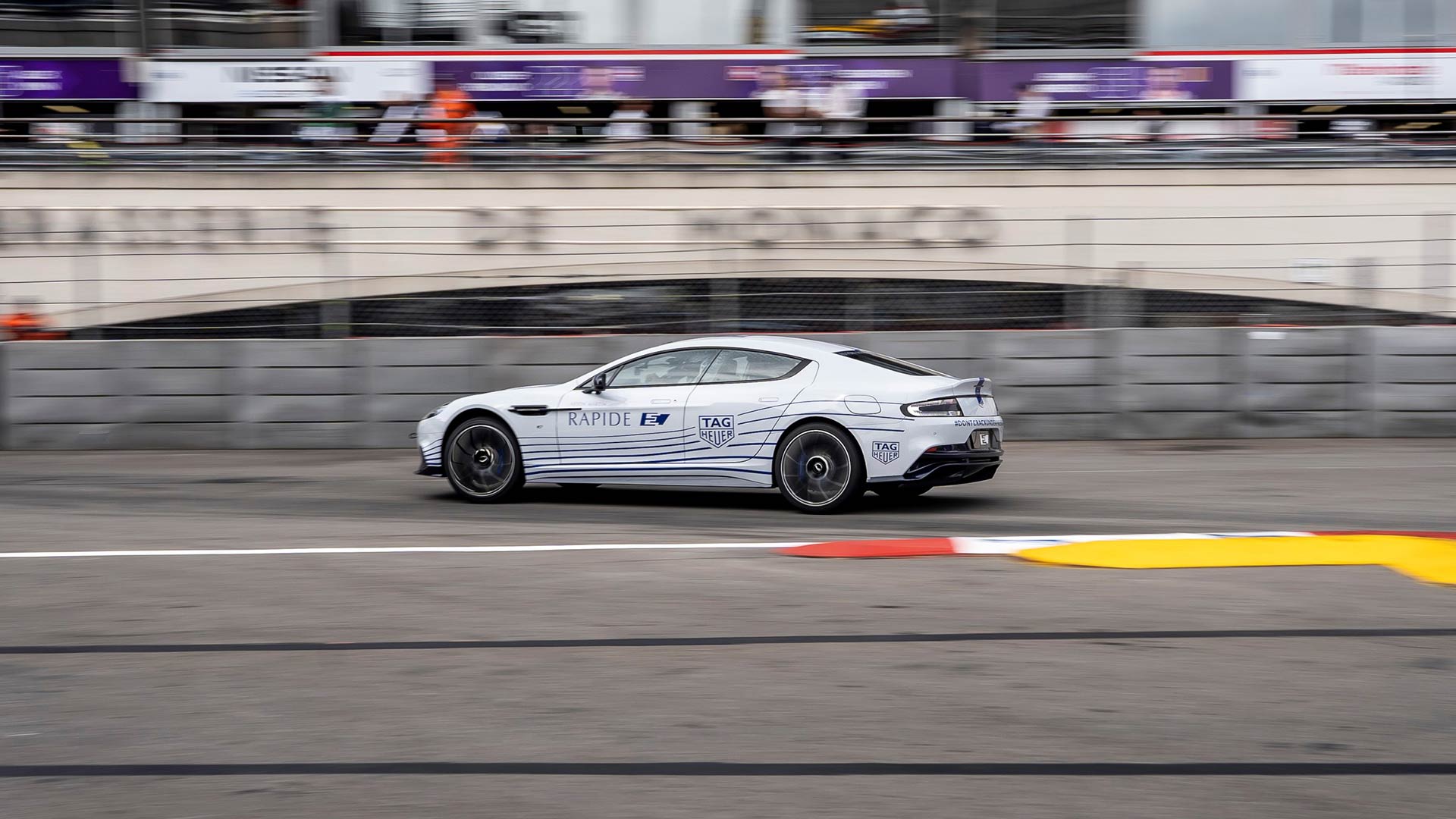
Featuring a 65kWh battery pack where the V12 engine and gearbox used to reside, the Rapide E has two electric motors driving the rear wheels.
Combined together, the two motors produce a total of 612hp, along with a tyre-shredding 701lb-ft of torque.
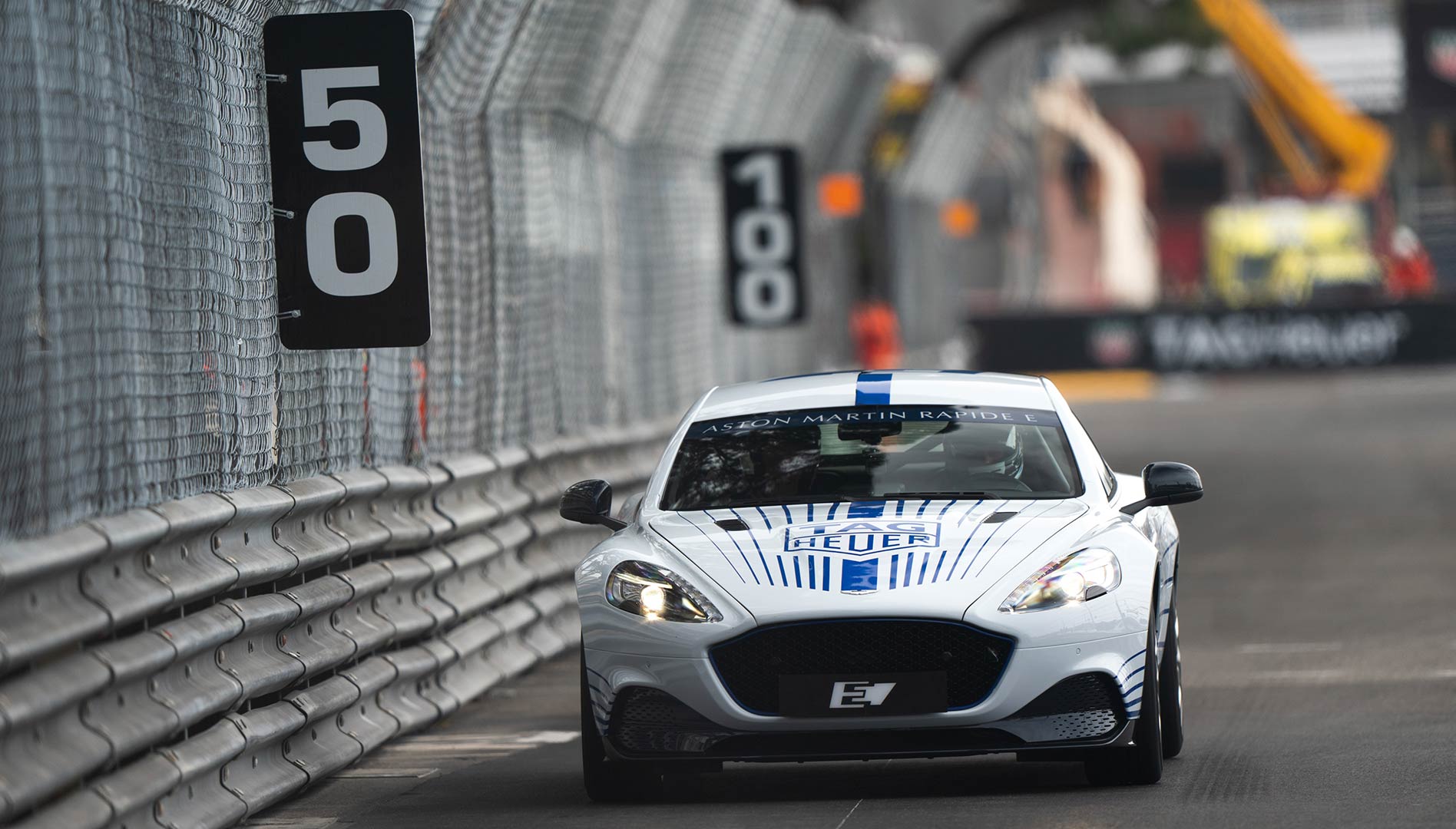
With such a level of performance on offer, it perhaps seems right that Aston Martin enlisted the help of Aston Martin works driver, and 24 Hours of Le Mans winner, Darren Turner to thread the Rapide E between the unforgiving Monaco barriers.
Act now, supplies are running out!
Speaking after his trip around the Monaco circuit, Turner commented: “I’ve had the privilege to join the Aston Martin engineering team at various stages of the car’s development and the performance that’s on offer in Rapide E really is incredible. The car has the kind of torque and punch that you’d expect from an EV, but they’ve really worked hard to retain the dynamic characteristics of what makes an Aston Martin special.”
Due to the bespoke components involved, production of the Rapide E has been limited to just 155 units. Following the official launch at last month’s Shanghai Auto Show demand has been high, but some cars are still available.
Aston has not released pricing for the Rapide E, but does plan to begin production at the new St Athans factory at the end of 2019.
 A new collaboration between two car modification companies will bring new options to the Volkswagen tuning scene.
  Mountune re-established itself as a major player in the aftermarket sector with its range of products for the Mk6 Ford Fiesta ST in 2008.
  The new M52 brand will sell performance parts, along with alloy wheel packages, designed to fit the Mk7 Golf R and GTI.
  Alongside performance parts and wheels, M52 will also offer a range of branded merchandise and accessories. In the sometimes heated world of the Volkswagen tuning scene, showing your allegiances is important.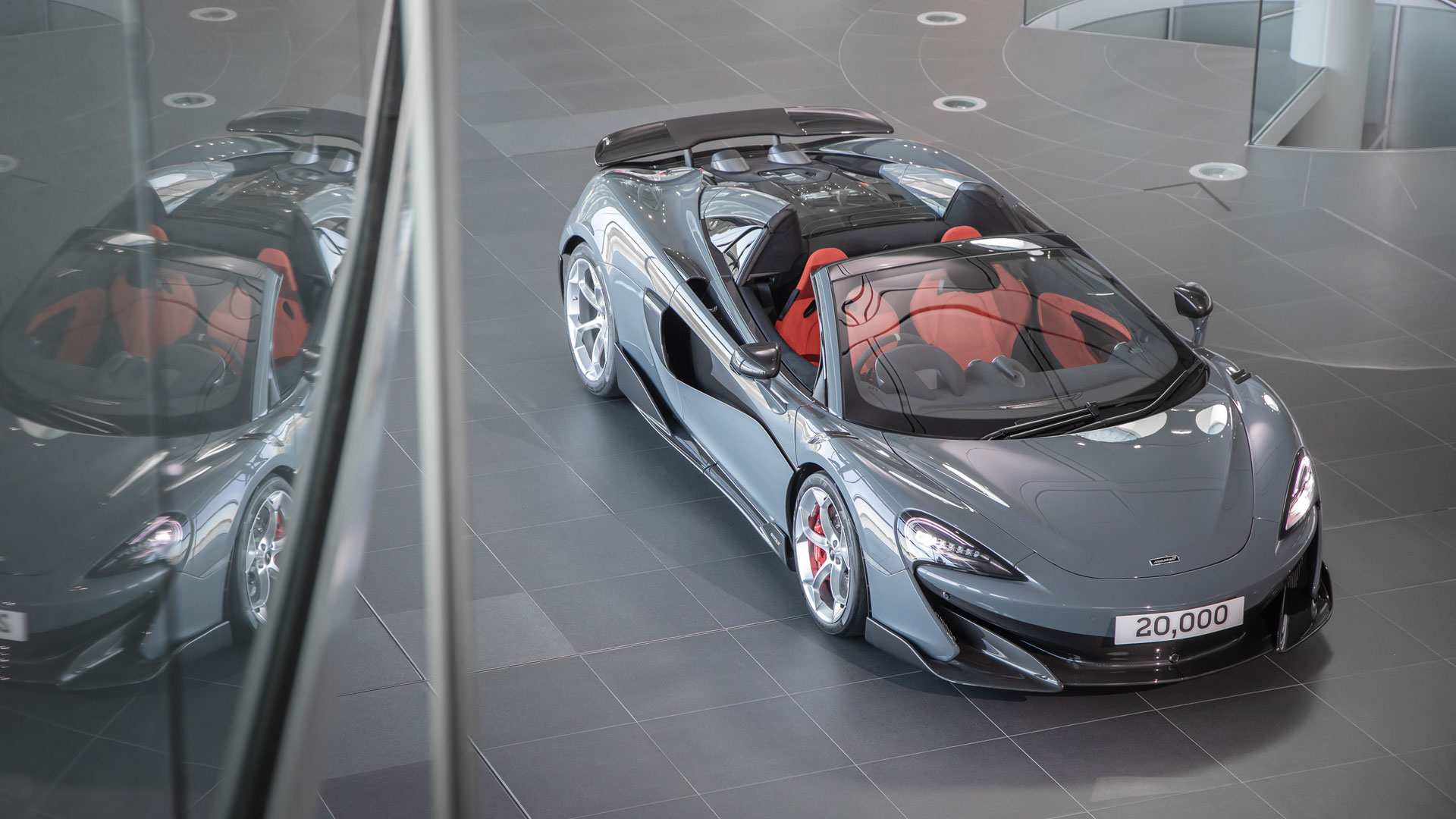


 Vauxhall is joining the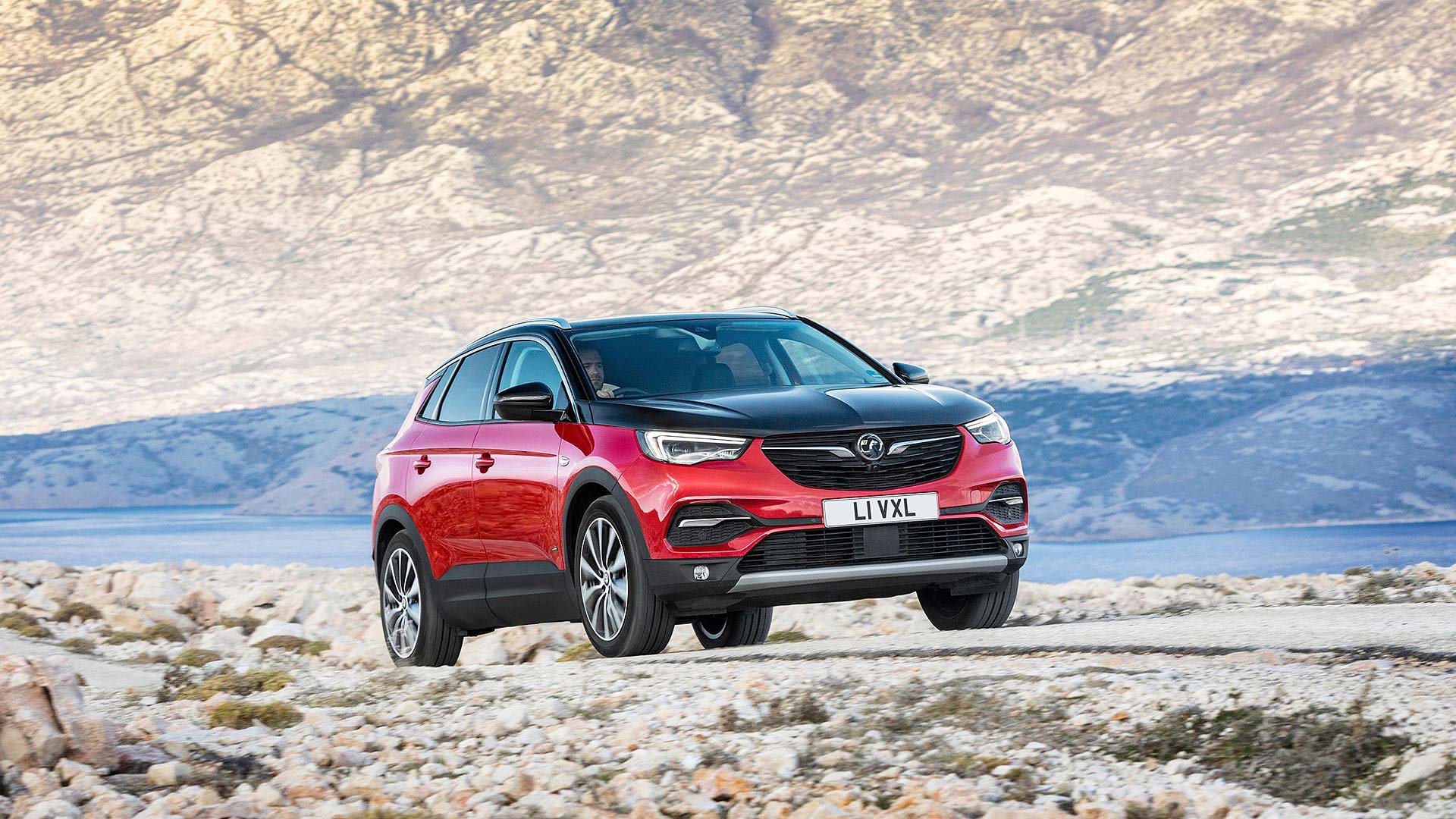
 The first
  The Oxfordshire-based company has also worked in partnership with Aston Martin on the development of the Rapide E, bringing its battery technology experience to the project.
 Featuring a 65kWh battery pack where the V12 engine and gearbox used to reside, the Rapide E has two electric motors driving the rear wheels.
 Speaking after his trip around the Monaco circuit, Turner commented: “I’ve had the privilege to join the Aston Martin engineering team at various stages of the car’s development and the performance that’s on offer in Rapide E really is incredible. The car has the kind of torque and punch that you’d expect from an EV, but they’ve really worked hard to retain the dynamic characteristics of what makes an Aston Martin special.”