BMW has belatedly introduced Android Auto into its newest cars, five years after the technology first went live.
All new models from this summer will feature the Google smartphone-pairing tech, alongside the existing Apple CarPlay system.
What’s more, it is a wireless Android Auto system, which doesn’t need to be plugged in: owners simply place their device on the wireless smartphone charging pad.
Despite being slow with Android Auto, BMW was one of the first automotive brands to offer wireless Apple CarPlay.
Android Auto features include Google Assistant, Google Maps, WhatsApp, Spotify and Amazing Music. And not only is information displayed in the central screen, navigation directions are also shown in the instrument cluster and optional head-up display.
BMW only announced its decision to support Android Auto in December 2019, years after Hyundai became the first brand to offer it.
The functionality only works on the latest BMW Cockpit Operating System 7.0, which means factory-fresh cars and some earlier 2019 models.
Over-the-air updates should bring the technology to nearly-new models, while all BMWs leaving showrooms from this summer will be fitted with Android Auto tech.
BMW earlier caused controversy with Apple CarPlay by not fitting it for free and offering it as a subscription service instead.
Later, owners were given a free year before having to pay for it.
In late 2019, the car firm admitted defeat and started offering Apple CarPlay for free.
A flexible new car insurance product promises to give young drivers the best prices and flexible cover without asking endless questions.
Dubbed a ‘fuss-free’ type of car insurance, LV’s Flow is targeting younger drivers who may find traditional products too complicated and expensive.
The online-only cover works by offering a fixed price for the first month, and then a guaranteed maximum price for the following three months.
There is no long-term commitment and motorists can change or even cancel their policy whenever they want – without incurring extra costs.
Flow is described by LV MD Heather Smith as car insurance that reflects the changes in how people buy products and services online.
“Flow gives drivers a simplified insurance experience, with a quick journey, competitive pricing and the flexibility to change their policy as and when they want to.
“Whatever drivers want to do – change the mileage, change the driver or even change the car – Flow means it can be done quickly and easily.”
Significantly, Flow customers are not penalised for not having a no-claims bonus – indeed, it is not even factored into the quote itself.
Premiums are instead based exclusively on their claims history and their specific circumstances.
Motorists are not asked never-ending questions either. Instead, they upload a picture of their driving licence and then answer 14 straightforward questions.
The company promises to then calculate “the best possible price”.
LV says the monthly car insurance product is the first in a number of services that will be offered as part of the Flow brand.
New research suggests the coronavirus crisis means petrol and diesel car sales may have already peaked.
Sales of regular cars have collapsed during the Covid-19 pandemic, with registrations down nearly 40 percent in the first half of 2020.
Electric car sales were down too – but they fell at a slower rate. Indeed, in some markets, EVs actually recorded modest growth.
Annual car sales are not expected to return to the levels seen before coronavirus until 2024 – but this recovery will be driven by electric cars and plug-in hybrids, not by petrol and diesel motors.
Indeed, it is likely we have already seen the sales peak of regular non-electric cars.
Deloitte head of vehicles Jamie Hamilton said this has passed “relatively unnoticed.
“With total annual car sales unlikely to return to pre-pandemic levels until 2024, even if sales growth in the petrol and diesel market returns, it is likely to experience a decline in market share thereafter.”
Electric acceleration
Deloitte research indicates electric car sales are set to grow much faster than earlier predicted. By 2030, over 31 million battery electric and plug-in hybrid new cars will be sold globally.
That’s 10 million more cars than originally forecast.
Deloitte’s Mr Hamilton says this acceleration is due to the cost of EVs falling, although barriers still remain in terms of driving range and a perceived lack of charging infrastructure.
The UK is, surprisingly, set to outperform the global market in terms of electric car sales, though.
Favourable government policies and awareness of climate change have already driven EV sales in Britain.
Now, the 2050 zero emissions target and 2035 ban on the sale of polluting vehicles is set to accelerate it further.
If the UK continues to invest in charging facilities to overcome customer concerns, electric cars could take a market share as high as 65 percent by 2030 – almost double the global average.
Used car demand has continued to surge since lockdown ended, resulting in used car prices growing at their fastest rate in almost two years.
The average used car now costs £13,888, reports Auto Trader, 4.6 percent more than this time last year.
It is the fourth month running that used car prices have risen.
Auto Trader data director Richard Walker said the increases are due to demand and supply being out of step – customers are out there, but the supply side has taken longer to emerge from lockdown.
While customer demand shows no signs of easing from its record levels, supply constraints are now easing, said Mr Walker.
“We expect the growth rate we’ve seen in recent months to stabilise somewhat, rather than continue to accelerate each month.”
Diesel up, electric down
Auto Trader data (based on analysis of 900,000 vehicles each month) shows it’s petrol cars that are driving prices up.
Average petrol prices rose 5.6 percent in July, although diesel car prices weren’t far behind with 4.1 percent growth.
Diesel car prices actually grew at the fastest rate in almost six years.
Surprisingly, electric car prices actually fell 4.3 percent, as supply starts to exceed demand.
Demand for EVs is up 75 percent in a year – but supply has outpaced this, increasing almost 88 percent.
The still-high price of the average used electric car is probably capping demand at the moment: it is £25,639, more than twice the price of the average petrol-engined car.
Demand for electric cars is expected to grow as models start to become cheaper.
Auto Trader also found demand for vehicles aged 10-15 years surged 23 percent, helped by their affordability.
Ironically, this led prices to actually go up 10.4 percent, to over £4,200. This was not helped, adds Mr Walker by supply actually dropping 16 percent last month.
Highways England is urging drivers to consider the welfare of their dog on long journeys. This comes as millions of Brits are taking advantage of the easing of lockdown measures to go on a staycation.
Recent research suggests that a third of people are planning a staycation this year. Many of these holidaymakers will be taking a dog.
Highways England has therefore teamed up with the Driving with Dogs website to suggest some dog-friendly locations situated just off main tourist routes. Whether it’s a day out or a long journey to a holiday destinations, these places are perfect for your pooch.
Highways England head of road safety, Richard Leonard, said: “We want all our customers, including the four-legged ones, to arrive at their destinations safely this summer.
“I’d urge drivers to make sure they plan a break into longer trips as well as preparing for any journey, especially in hot weather, by stocking up on water and checking travel conditions before setting off.”
Dog-friendly locations close to main roads
A38, Plympton, Devon – Saltram House (National Trust). Dogs are welcome in the woods and parkland.
M5, junction 18, Bristol – Blaise Castle. Woodlands, meadows and limestone gorge spread over 650 acres.
M6, junction 5 or 7, Sutton Coldfield. Former deer park with 2,400 acres of open space, including seven lakes.
M60/M62, Greater Manchester – Heaton Park. Around 600 acres of parkland.
A46, Lincolnshire – Hartsholme Country Park and Swanholme Lakes local nature reserve.
A12, Blaxhall Common, Suffolk. A peaceful nature reserve.
M25, junction 8, Reigate, Surrey – North Downs Way and Gatton Park.
Top tips for travelling with a dog
PDSA vet Anna Ewers Clark has advice for motorists travelling with a dog this summer. “As campsites, holiday homes and places where we can enjoy a day out begin to reopen, many of us will be planning days out and holidays in the UK.
“It’s important to remember to keep our pets safe and happy as we do that, especially if you’ll be spending a long time in the car.”
Advice from the PDSA includes:
Keep your dog restrained and secure in the car. A harness is recommended for large dogs, while carriers are suitable for small dogs.
Consider travel time. Keep travel as short as possible and plan rest breaks along the way.
Check the temperature in the back of the car. The back seat or boot can heat up very quickly, making it dangerously warm for your dog.
Put your dog on a lead before you open the car doors. Get them out of the car on the pavement side.
Carry plenty of drinking water and a bowl, even on short journeys.
If you’re planning a road trip this summer, click here to find out how to keep abreast of the latest traffic information.
So-called ‘crash for cash’ schemes, in which collisions are staged in order to file fraudulent insurance claims, are a ‘real and growing threat’. That’s according to a leading vehicle protection and management technology provider.
Indeed, figures from the industry body Cifas, suggest car insurance fraud is one of the fastest growing forms of insurance fraud in the UK. Crash for cash claims increased 45 percent in 2019 – well above the industry fraud average of 27 percent.
According to the Insurance Fraud Bureau (IFB), fraudulent claims cost around £340 million a year. Consumers will feel the effect of this in the form of higher insurance premiums.
Director of investigative services at AX, Neil Thomas, said: “Criminals will do anything to milk the motor industry and drivers, evolving their tactics to keep people guessing and avoid detection.
“We can’t completely stamp out their activities, but we can collectively do more to curtail what is a real and growing danger to drivers. Recent experience has shown how some criminals have used the Covid-19 pandemic lockdown to plan motor insurance frauds, and they are now intent on cashing in at the expense of innocent motorists.”
What are ‘crash for cash’ schemes?
In simple terms, a crash for cash scheme involves the staging of a non-fault collision to file an insurance claim. There are three types of crash for cash schemes:
Staged collisions
Fraudsters damage vehicles to give the impression that a real crash has occurred. Examples include taking a sledgehammer to a car or purposely crashing two vehicles.
Ghost collisions
A fraudster submits a fictional insurance claim for a collision that never took place. This takes advantage of instances where claims aren’t investigated.
Induced collisions
Where a fraudster drivers in an erratic or manipulative way to engineer a crash. Examples include criminals letting somebody out of a junction only to crash into them, slamming on the brakes in front of an innocent motorist, or extorting cash from a driver rather than through an insurance company.
Guarding against crash for cash schemes
AX has the following advice for drivers hoping to protect themselves against crash for cash schemes.
Recognise the warning signs
Many fraudsters will drive cars with previous rear-end damage or with the brake lights disabled. Also look out for erratic driving or passengers looking behind.
Investigate collisions and claims
Gather evidence from the crash scene. Make a note of the key facts and identify potential witnesses. It speaks volumes that such incidents are called a Road Traffic Collision (RTC) and not a Road Traffic Accident (RTA). Few, if any, collisions happen by accident.
Invest in a dashcam
A dashcam, vehicle tracking device or telematics can protect a driver against fraud.
New car registrations grew 11.3 percent in July 2020 following the June reopening of dealerships in England, Northern Ireland, Wales and Scotland.
The June sales increase is the first since December 2019.
Dealership closures due to the coronavirus crisis have had a severe impact on new car registrations and deliveries. They fell 44 percent in March, 97 percent in April, 89 percent in May and 35 percent in June.
The Society of Motor Manufacturers and Traders says that despite the July recovery, year-to-date registrations are still down almost 42 percent.
‘Pent up demand’
Pent-up demand helped drive July new car registrations to 174,887 vehicles, says the SMMT.
Demand from private buyers was particularly strong, growing 20.4 percent. This was helped by strong finance incentives, with eight of the 10 top brands offering flexible finance initiatives including offset payments.
Fleet car sales, however, only grew 5.2 percent and business car sales actually fell 11.8 percent.
“July’s figures are positive, with a boost from demand pent up from earlier in the year and some attractive offers meaning there are some very good deals to be had,” said SMMT chief executive Mike Hawes.
“We must be cautious, however, as showrooms have only just fully reopened nationwide and there is still much uncertainty about the future.”
Mr Hawes said it will only become clear by the end of September whether the turnaround in new car registrations is part of a long-term trend.
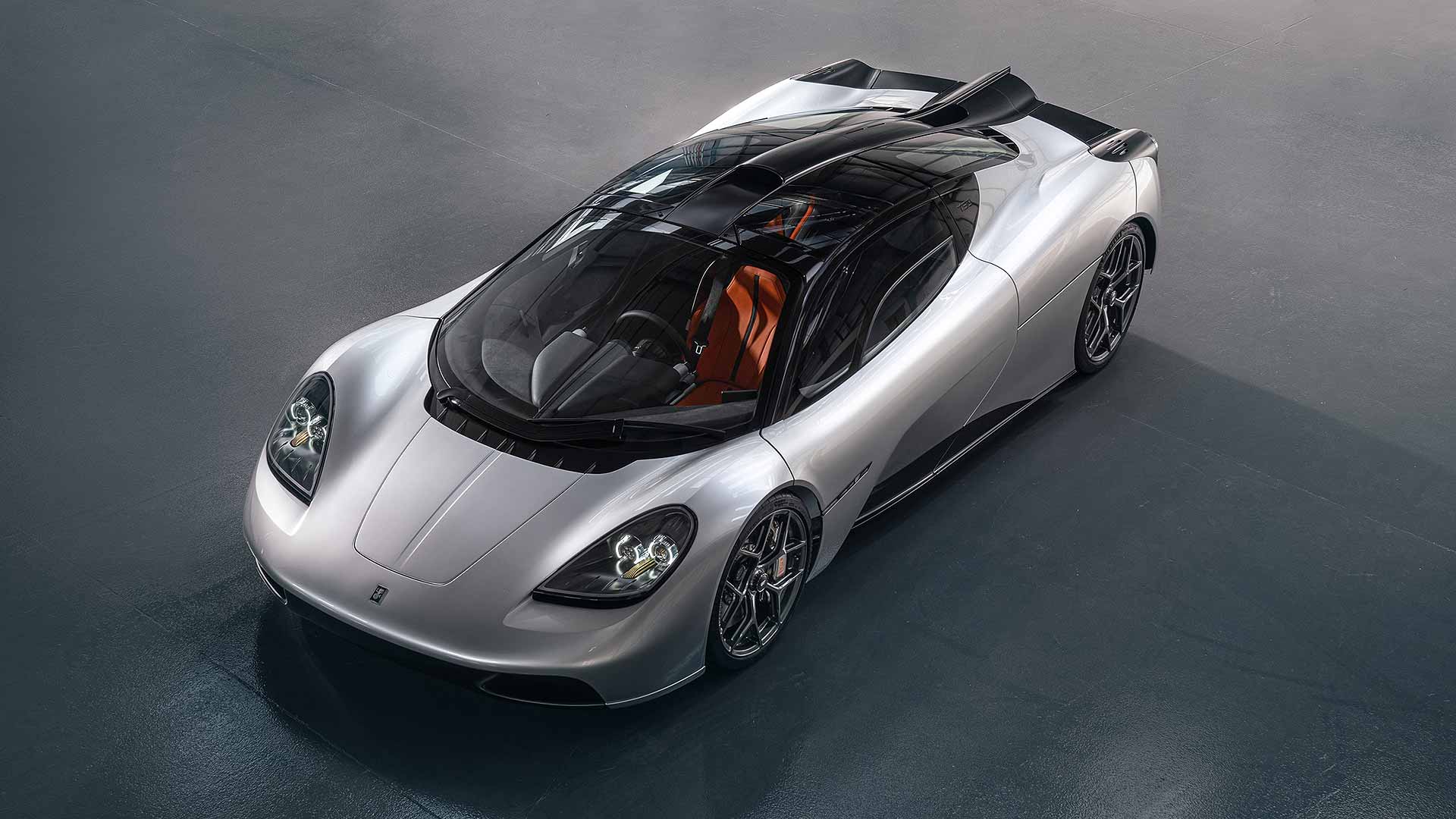
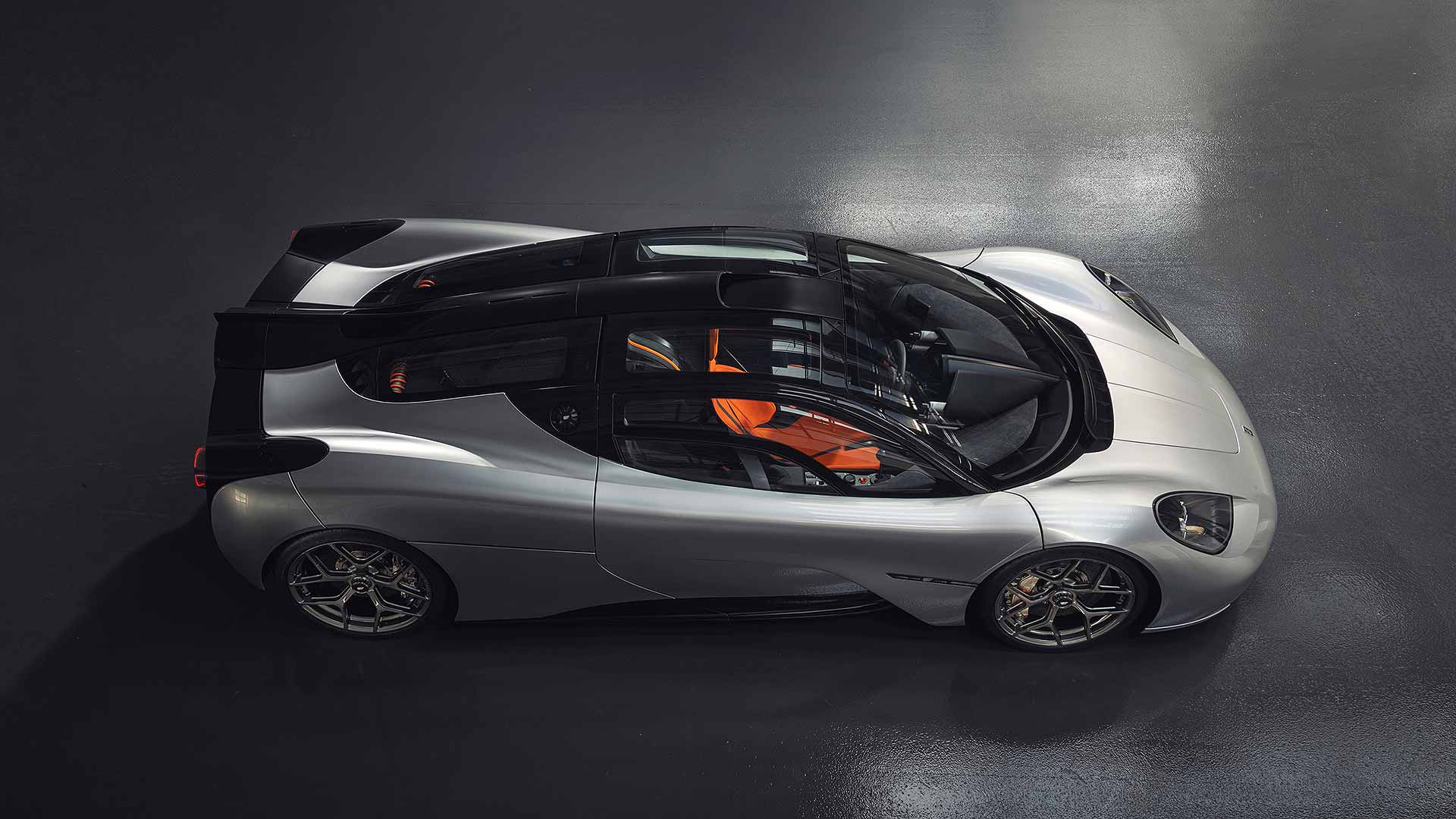
The Gordon Murray Automotive T.50 could be the best driver’s car of 2020. Maybe the finest driver’s car ever. Gordon Murray redefined things once, back in 1992, with the original McLaren F1. The T.50, his 50thcar in 50 years of automotive design, aims to do that again. Murray vows never to build another supercar, so the T.50 could just be the purist benchmark of the breed forever more.
The spec is remarkable. It weighs just 986kg, or little more than a Lotus Elise. Yet has a 3.9-litre Cosworth V12 engine putting out 663hp, with not a turbocharger in sight. It revs to a ludicrous 12,100rpm, with a six-speed manual gearbox – rather than a paddleshift – adding to the intensity.
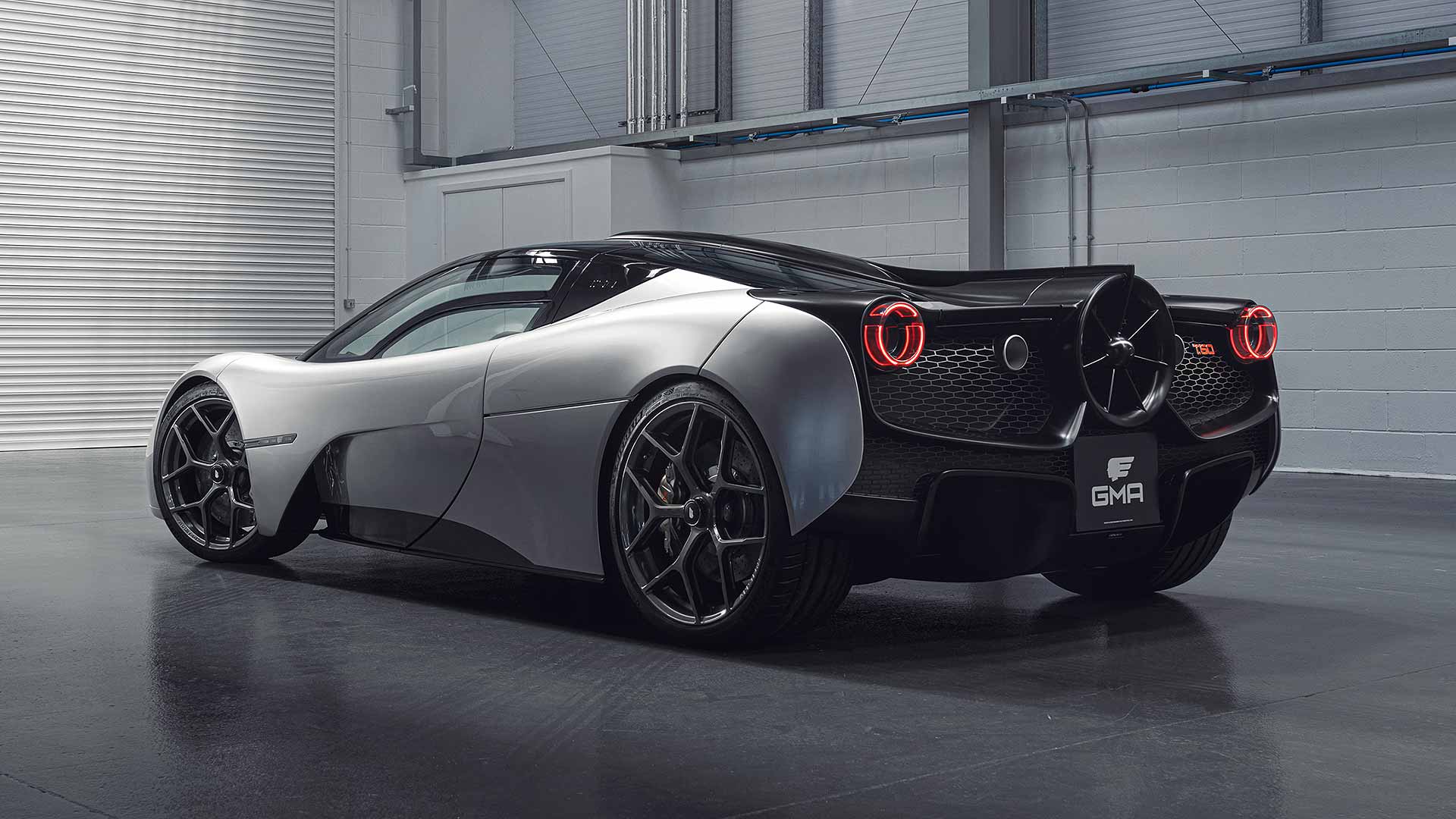
And it’s a fan car. Just like the Brabham BT46 Formula 1 car that infamously raced once, and won, before being banned. Gordon Murray designed that, too. The T.50 road car uses the same concept, with a big round fan at the rear that literally sucks the car to the ground with the ‘most advanced and effective aerodynamics ever seen on a road car’.
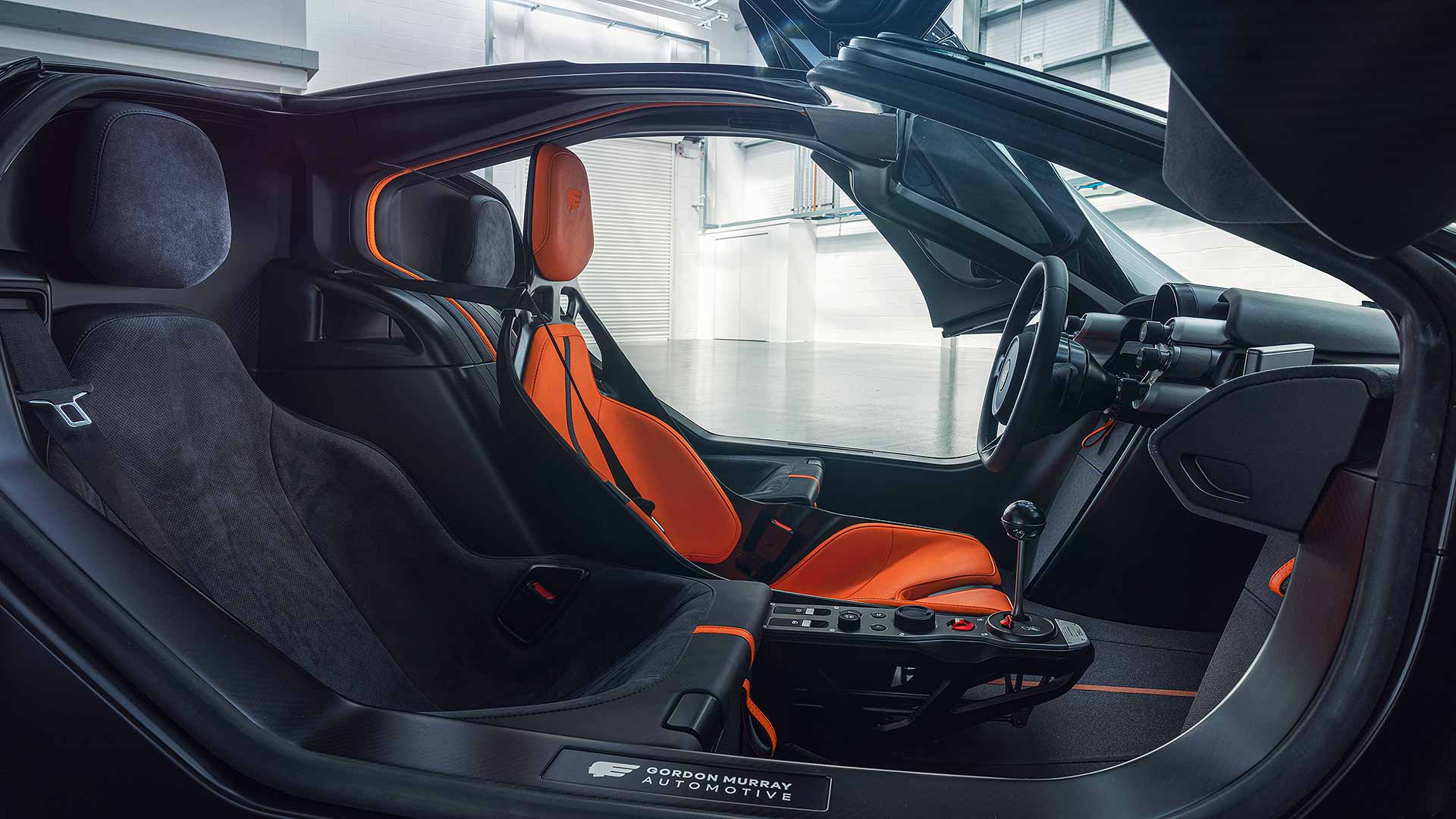
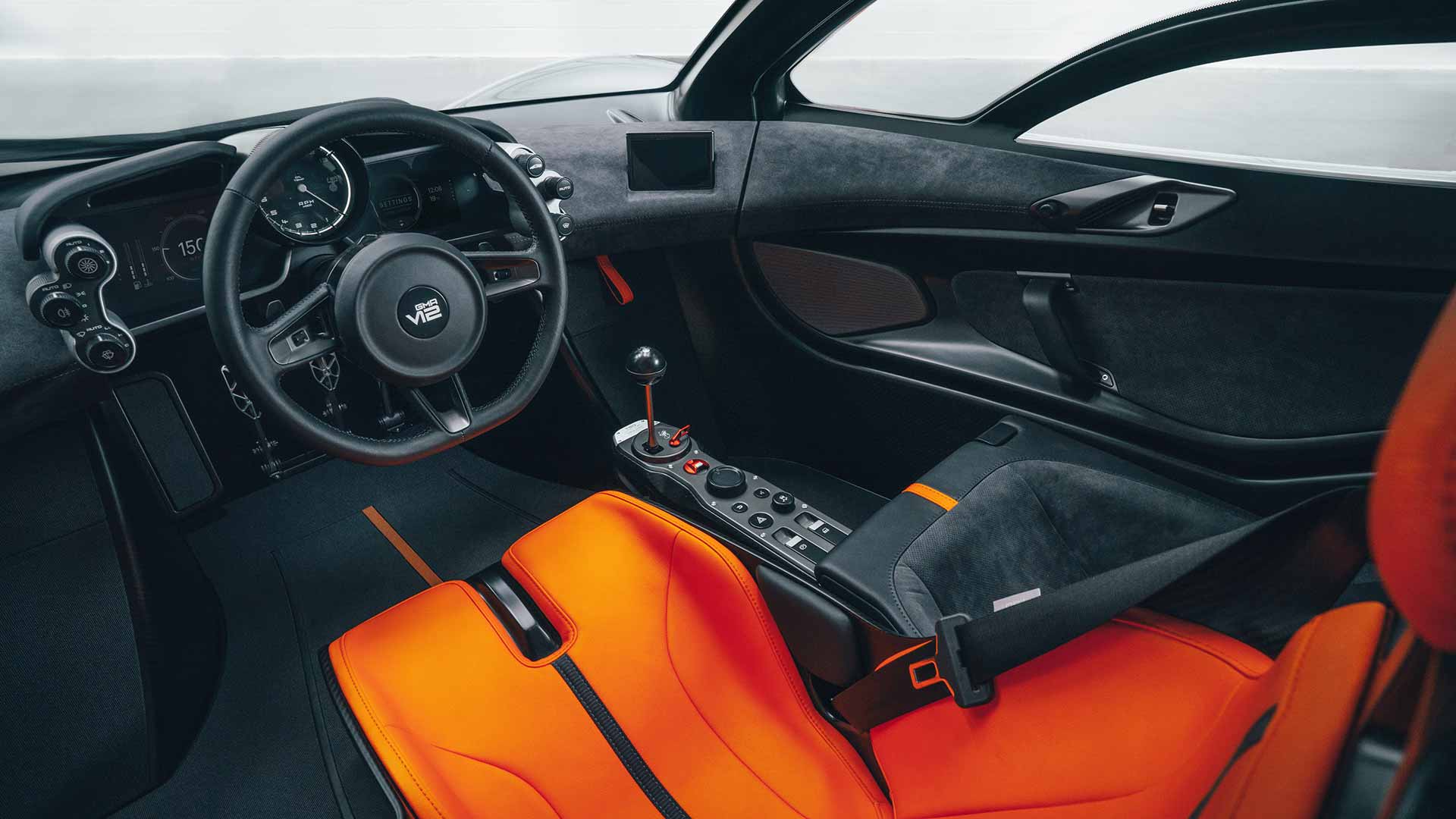
The son of F1 carries the family genes with its central driver’s seat and three-seat layout. It has nearly as much luggage space as a Ford Fiesta. It’s refined and relatively comfortable in everyday driving. It even has a bespoke high-end Arcam sound system that gets the seal of approval from famous audiophile Murray.
Priced from £2.8 million and set to be built from 2022, only 100 examples of the T.50 will be built. Here’s why the company believes this is the world’s most driver-centric car of all.
Fan zone
The fan is the talking point. There’s nothing else like it. The 400mm fan is the defining feature of the rear, with the centre of the car designed around it. It supports the functionality of dual active rear spoilers and interactive diffusers hidden underneath the car.
The idea of the fan is to speed up the flow of air passing below the body – something called ‘ground effect’. But it can also manage airflow over the top of the car, to balance downforce and drag. The fan is powered by a 48-volt motor that spins at up to 7,000rpm.
It all sounds mind-boggling, so let’s try to explain things via the six aero modes available:
· Auto: the default, where the fan has little effect
· Braking: again automatic, the rear spoilers are deployed to a maximum 45-degree angle, the fan operates at high speed and the diffuser valves open. The result is double the downforce and 150mph to zero in 10 metres less than normal.
· High Downforce: the first of four driver-selectable modes (via a controller on the left of the instrument pack), where the rear spoilers are deployed to +10 degrees, diffuser valves open and the fan spools. Result? 50 percent more downforce.
· Streamline: the rear spoilers are set to -10 degrees, diffuser valves partially close, while the fan operates at high speed, which draws air from the top of the car to reduce drag and create a ‘virtual longtail’ aerodynamic effect. That means 15kg of thrust and a 12.5 percent reduction in drag.
· V-Max Boost: the most extreme mode. This uses Streamline mode, but powers the fan by the 48-volt starter-generator, freeing up engine power. With added ram-air induction, it gives an output boost to 700hp.
· Test: the mode for showing off to your mates. When stationary, the fan spools up to maximum 7,000rpm, the twin rear spoilers cycle through their full range and the diffuser valves open and close before returning to rest. Cue the applause.
Light is right
The GMD T.50 will be one of the lightest new cars on the road, full stop. Thank a carbon fibre monocoque that weighs just 150kg, an engine that weighs 178kg and a gearbox that is 80kg. A typical supercar, according to Murray, weighs a third more – 1,436kg versus the T.50’s 986kg. A basic Ford Fiesta weighs 1,136kg.
Notably, the T.50 is 150kg lighter than the McLaren F1, which is going to make the experience of the world’s lightest, highest-revving V12 something extraordinary. The engine “was never going to be anything other than a V12,” says Murray. There’s nothing to match the response, sound, free-revving feel and turbo-free purity.
The Cosworth V12 will rev from idle to redline in 0.3 seconds: that’s a pickup speed of 28,400 revs per second. Yet it delivers over 70 percent of its pulling power from 2,500rpm. And, with ease of use in mind, there are actually two engine maps, with a more relaxed one limiting revs to 9,500rpm and power to 600hp, delivering the best efficiency and emissions.
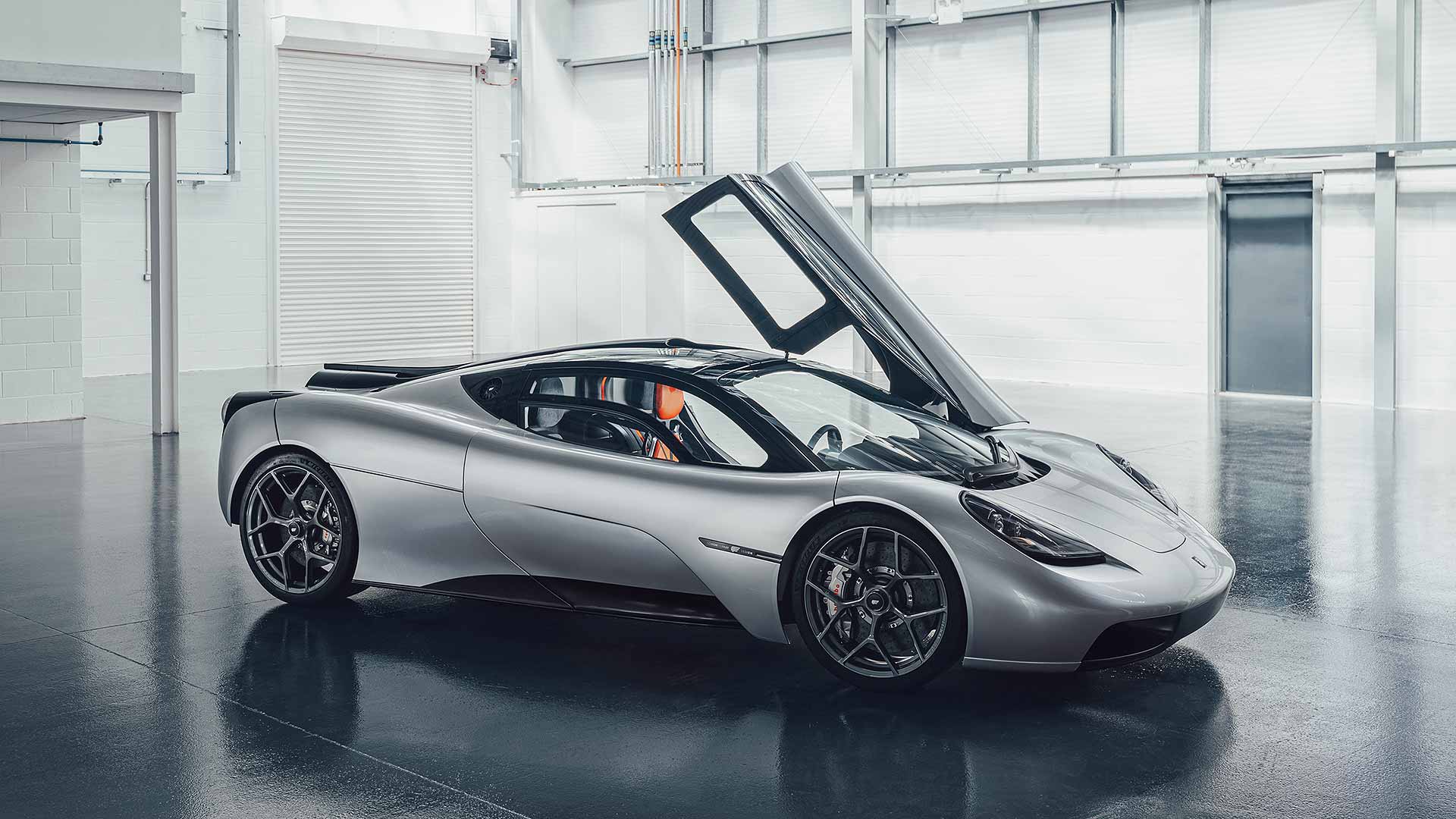
It’s also not covered beneath a plastic housing. Murray hates them. Instead, the orange cam covers, inlet trumpets and exhaust manifolds are on full display to wow everyone when the dihedral doors are opened.
Of course, it’s a six-speed manual, not a paddle shift, with an Xtrac gearbox boasting a narrow gate and short throw (with plenty of feel and control through solid titanium pedals). Murray says it provides “the ultimate gearchange”. He’d know: he signed it off personally.
The everyday supercar
Gordon Murray has no time for awkward, inconvenient supercars. When he designed the McLaren F1, he bought a Honda NSX to provide inspiration, rather than the flawed Ferrari 348 equivalent. The F1 had three seats and decent luggage space; so too does the T.50.
In each rear haunch is a 90-litre space big enough for a flight case. If you only carry one passenger, there’s a special suitcase that fits into a passenger seat, boosting space to 288 litres. And there are five stowage bins in the cabin – two above the passenger footrests, two more under each passenger seat, plus a fifth behind the driver’s headrest.
The T.50 is easy to get in and out of, despite its central seat (vividly coloured in contrast to the others, for max single-seater cues), visibility is said to be excellent, and the size of the car is manageable. It’s described as Porsche Cayman-sized, and so much wieldier in the city and on narrow roads than a regular supercar. It even has speed-bump-friendly ground clearance of up to 140mm.
There are no parts bin components here: it’s all bespoke, just as in the McLaren F1. Pride of place is given to the 120mm analogue rev counter, floodlit and with a milled aluminium needle. Aluminium is also used for the rotary controls that surround the instruments, while the right-hand display nods to modernity with a colour screen that includes Apple CarPlay and Android Auto. So too do the dual rear-view monitors either side of the cabin, which substitute for old-fashioned door mirrors.
The timeless supercar
The effectiveness of the fan means the T.50’s aerodynamics are largely beneath the surface. It doesn’t need the exaggerated wings, vents and ducts Murray so dislikes. “I was determined to create a clean and pure shape that would remain timeless, ensuring the T.50 will still look fresh in 30 years.”
There’s a central line that stretches from the Gordon Murray Design mermaid badge on the nose, moving inside the cabin as it heads rearwards. Towards the back, it’s mirrored by a central spine running from the air intake into the top of the fan.
The LED headlights also nod to the McLaren F1, says Murray. They are also at least 15 percent brighter than any supercar that’s gone before. Then there’s the roof-mounted air inlet, which is pure McLaren F1. While the shape is simple, the rear deck has plenty of aero-influenced shaping, all to direct air towards the twin active spoilers.
Murray says the badge is “probably the oldest automotive logo in the world”. The Murray family first used it in the 12th century. Meanwhile, the blue, red and green colouring mirrors the Murray clan’s tartan.
Simply extraordinary
The T.50 is pure Gordon Murray. Pure, yet intricately engineered without compromise, meeting extraordinary targets and promising plenty. As more and more cars take over from the driver, this is putting them back, literally, at the centre of the experience.
“The agility, responsiveness and reward of a lightweight vehicle simply cannot be matched,” says Murray. Lightness is his mantra. It’s why he drives an Alpine A110 today, after spending years in a Smart Roadster. It’s why weekly ‘weight watchers’ meetings were called, where the weight of components down to nuts, bolts and fixings was scrutinised.
We’re wowed by it already. The meticulous way Murray and his team have focused on creating not only the purest, lightest and most driver-centric supercar ever, but also one of the most refined, comfortable and usable too. It’s a ferociously exciting project. Yes, it’s almost £3 million, and still two years away, but if the promise revealed today is fulfilled in 2022, the McLaren F1 may yet have a genuine successor. And the world, out of nowhere, an all-new supercar benchmark. Maybe, just, THE petrol-engined supercar benchmark, ahead of the switch to electric.
Gordon Murray has done it once. With the T.50, can he do it again?
Buying a Skoda Yeti could save you money on your car insurance. That’s according to new research into the cost of insuring a family car.
It found that it costs an average £282.22 a year to insure a Skoda Yeti. This is compared to a cost of £617 to insure a Volkswagen Golf. The average cost to insure a family car is £472 across all hatchback and estate models.
Reading between the lines, it pays to drive something out of the ordinary. Following the crowd doesn’t mean you’ll save money on car insurance. Indeed, none of the makes and models with the cheapest polices are included in the top 10 most popular family cars.
Cheapest average cost of car insurance for family cars
Vehicle make
Vehicle model
Average price
Skoda
Yeti
£282.22
Fiat
Qubo
£285.91
Citroen
C3
£287.36
Honda
HR-V
£289.49
Hyundai
Kona
£297.09
Dacia
Logan MCV
£297.09
Skoda
Roomster
£299.16
Suzuki
SX-4
£300.05
Hyundai
iX20
£306.17
Suzuki
Celerio
£306.40
Interestingly, three out of the top 10 most expensive cars to insure are Tesla models. The Model X is the most expensive (£1,406.72 a year), followed by the Model S (£1,056.19). The Tesla Model 3 is the fourth most expensive, commanding an average premium of £1,003.28 a year.
Dave Merrick, head of car insurance at MoneySuperMarket, said: “If you’re looking to buy a new car, it is always worth pricing up the cost of insurance before committing to a purchase.
“Our data shows the most popular cars in each region aren’t necessarily the ones that have the best insurance premiums. In fact, it is often the opposite – the most popular cars tend to have significantly higher insurance costs. There are many factors to consider when choosing a family car and, in order to keep costs down and keep on top of your finances, shopping around will help you find the best deal.”
Click here for more ways to save money on your car insurance.
Fuel prices rose for the second consecutive month in July, adding nearly £2 to the cost of a full tank. This is according to new RAC Fuel Watch figures.
The price of unleaded increased to 114.27p from a low of 111.06p at the start of the month. This means it now costs £62.58 to fill a typical tank with unleaded – an increase of £1.77.
There’s better news for diesel drivers, although a full tank still costs £1.62p more now than it did at the beginning of June. The cost of a litre diesel went up from 115.09p to 118.04p.
The price rises come despite the wholesale price of petrol falling by 2p across the month. The cost of diesel also fell, but by just 0.22p. Retailers should be reducing their pump prices over the next week or two, says the RAC.
RAC fuel spokesman Simon Williams said: “July was another bad month for drivers with a 3p a litre rise in the price of fuel. This means petrol’s 7p a litre more expensive than it was at the end of May (107p on 31 May) and diesel is 6p more (111.86p on 31 May), something drivers will no doubt have noticed as each complete fill-up is costing almost £2 more.
“The higher prices at the pump have been driven by the cost of oil increasing steadily to around $42 a barrel from a low of $13.21 in April. But drivers may well be given some respite as oil producers are planning on ramping up production despite the risk of renewed lockdowns around the world.
“This could easily lead to supply outstripping demand and therefore a reduction on the forecourts of the UK. As it there is some scope for retailers to already be reducing their prices. If they play fair with drivers we ought to see 2p a litre come off the price of unleaded and nearer 4p come off diesel.”
Where to find the cheapest fuel
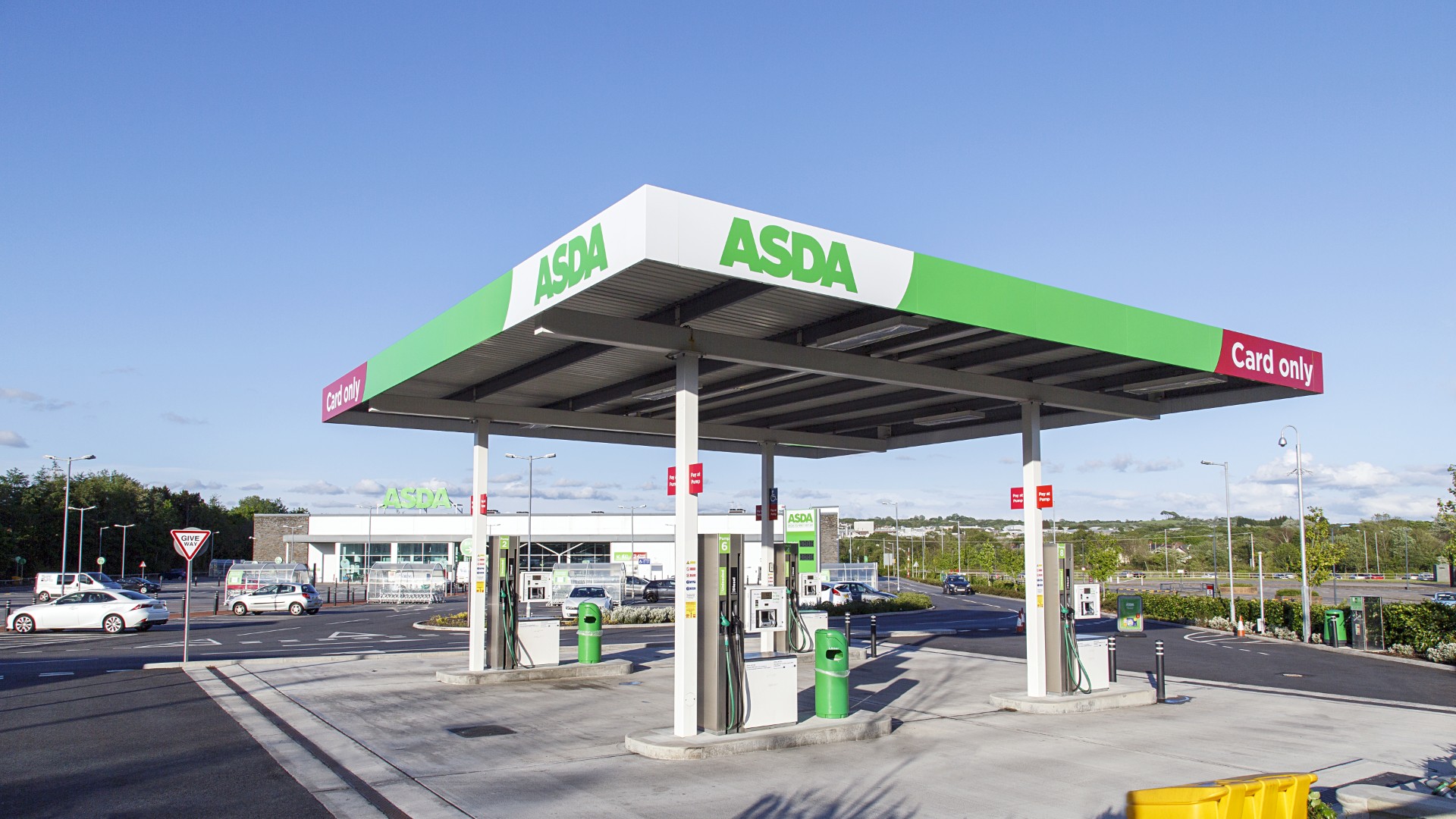
According to the RAC, Asda is the cheapest supermarket for fuel, with a litre of unleaded costing 108.63p a litre. The others average just over 109p a litre.
Asda is also the place to go for the cheapest diesel, with a litre costing 112.68p. The price at Sainsbury’s was 113.39p, while Morrisons and Tesco were both 114p.
There are a number of ways to find cheaper fuel. These include using a price comparison website, the Waze app or a connected car. Click here for more advice.