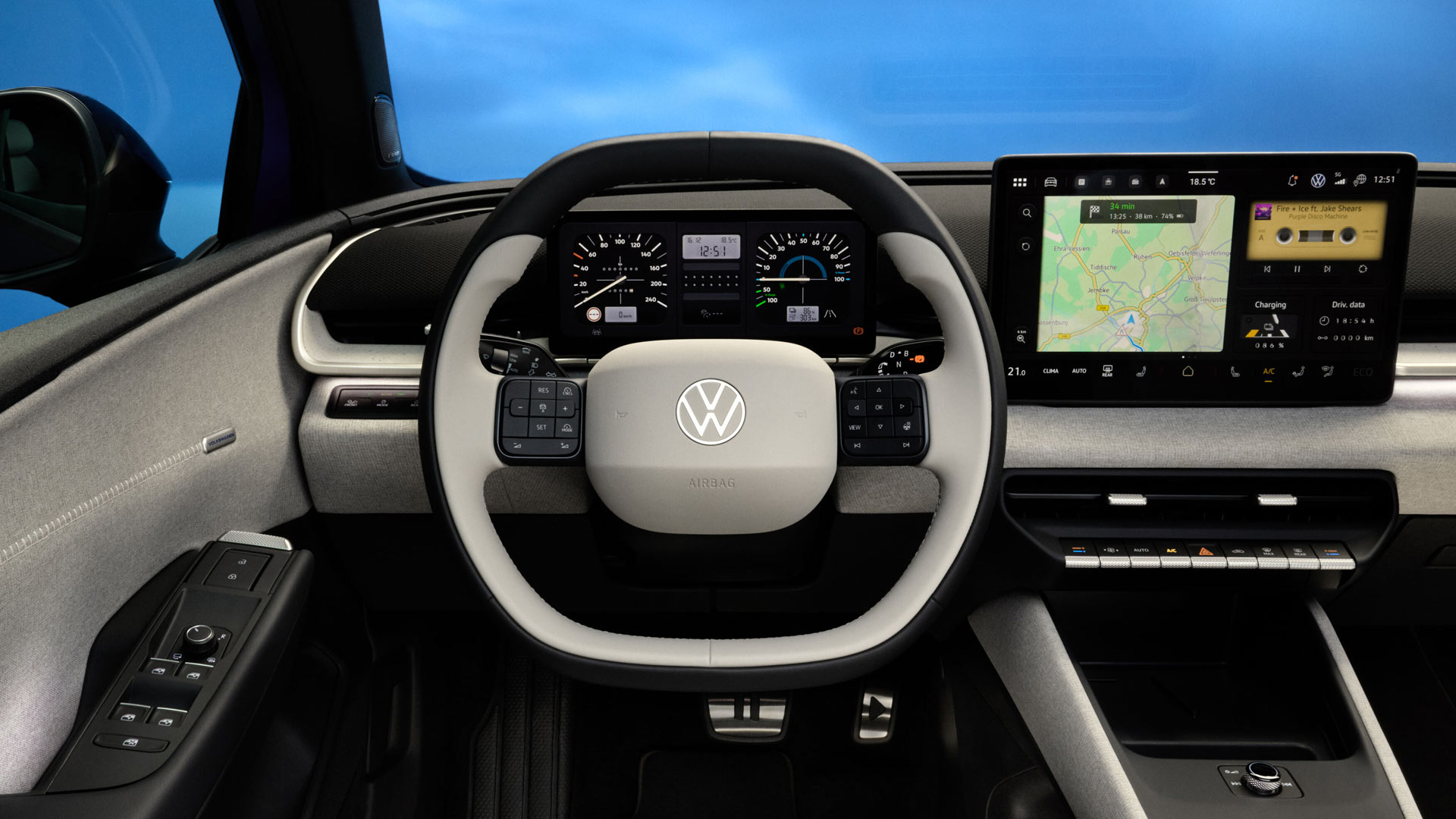
Volkswagen has released photos of the interior of its forthcoming electric ID. Polo supermini, ahead of the car’s launch later this year.
Intended to sit alongside the petrol-powered Polo, the new Volkswagen ID. Polo will compete with compact EVs such as the Fiat Grande Panda and Renault 5 E-Tech.
An evolution of the ID. 2all concept car, first shown in 2023, the production ID. Polo continues the interior design theme demonstrated by the show car.
As anyone who has driven a modern Volkswagen can attest, the touchscreen-based media system is very intuitive to use. The German marque made updates and upgrades, but feedback clearly remained negative.
Indeed, Volkswagen cites customer input as a key driver behind the return of physical buttons, including the return of ‘familiar VW operating patterns’.
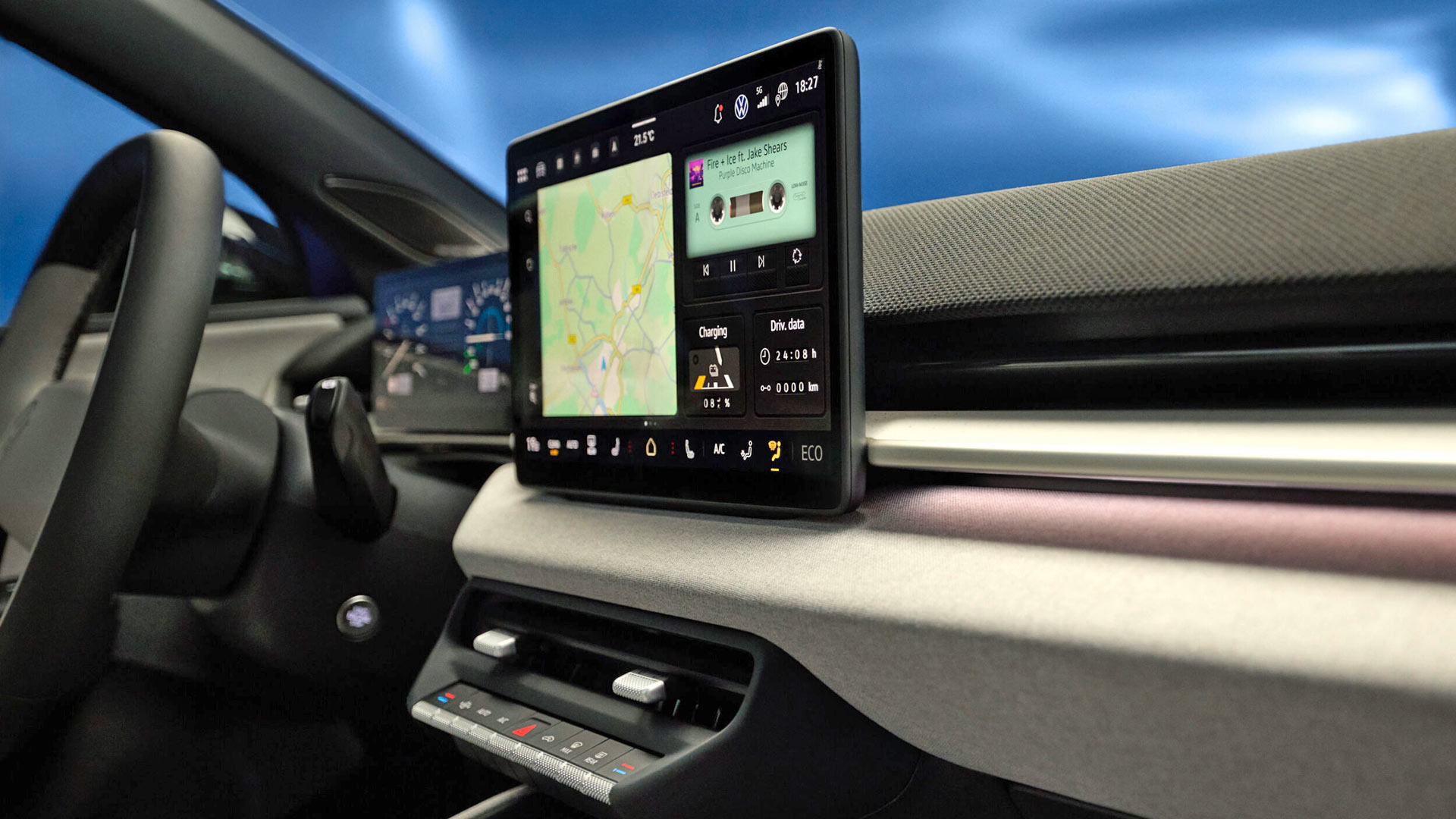
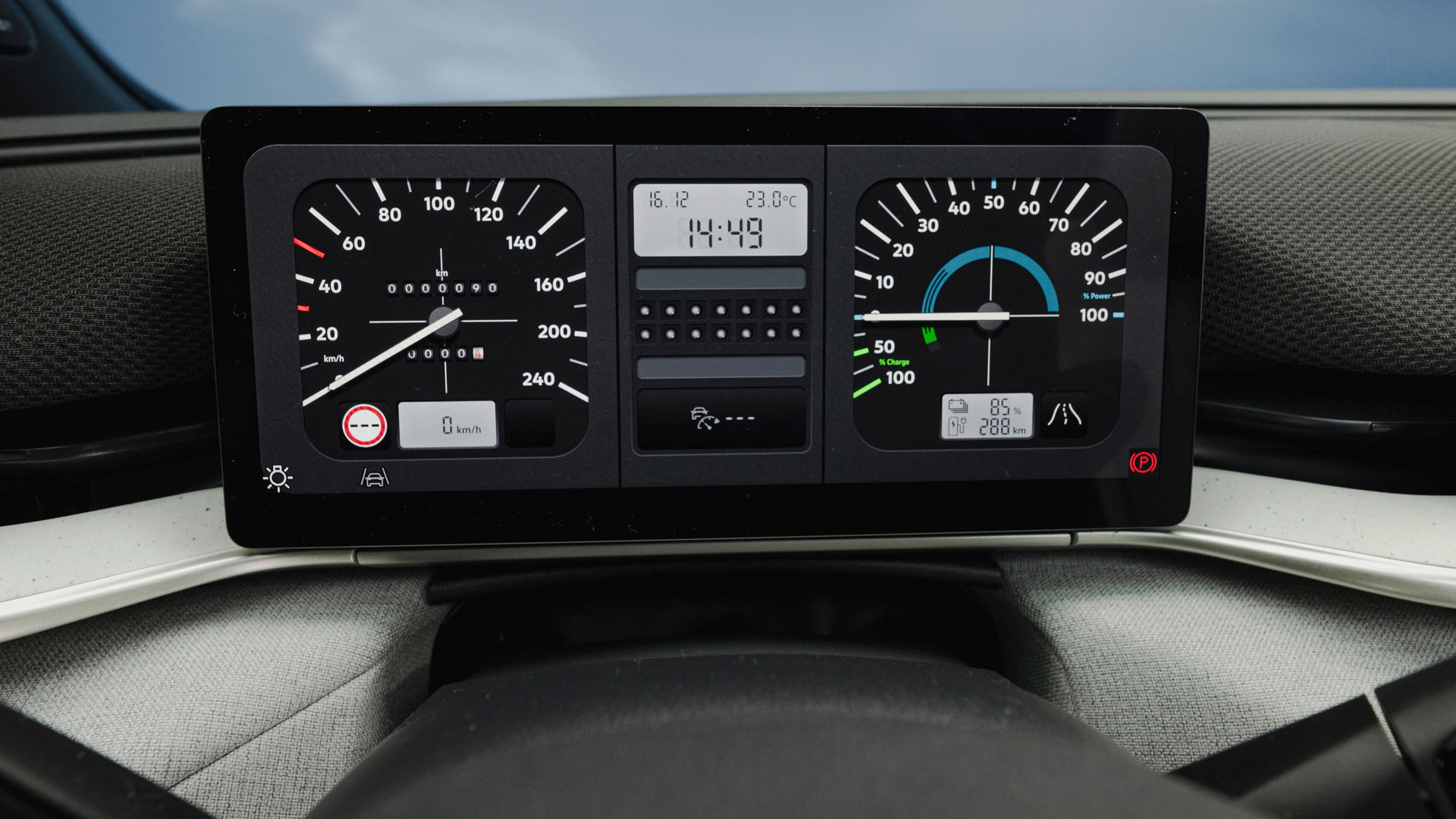
Other changes include a neater layout for the 13-inch central touchscreen and 10.25-inch digital instrument display, combined with a more logical menu layout for the infotainment system.
A row of buttons beneath the central touchscreen includes separate controls for the air-con and heating. The steering wheel also features traditional buttons, rather than the divisive haptic pads seen on recent Volkswagen products.
An interior that ‘feels like a friend’
Along with the extra buttons, the interior of the ID. Polo uses fabric coverings for the dashboard and door inserts that are made from recycled materials.
Volkswagen has also added a special ‘Easter Egg’ for the infotainment system, available with just one button press. Doing so transforms the digital displays to imitate a retro VW model from the 1980s.
This means square analogue-style dials for the driver, plus a cassette tape image on the central touchscreen to show the music being played.
Volkswagen’s chief designer Andreas Mindt said: “We have created an interior that feels like a friend from the very first contact.
Clear physical buttons provide stability and trust, warm materials make it appealing, and charming details such as the new retro views of the instruments show the typical Volkswagen wink.”
‘Tis the season to be clearing a frozen car windscreen on a frosty morning. It’s a task that none of us enjoy, but is essential for good visibility while driving. So how best to defrost your windscreen and ensure the wipers can function properly?
Firstly, if you’re fortunate enough to own a car with a heated windscreen, you might never encounter this issue. Equally, if you own an electric car, you may be able to heat the cabin in advance using a connected phone app – a process called preconditioning – so your EV is defrosted and ready to go.
For the rest of us, though, prevention is better than cure – so the following tips may prove useful. Visit the Advice section on Motoring Research for more ways to make driving cheaper and easier.
Clearing ice from a car windscreen
One thing you absolutely must not do when attempting to clear ice from a frozen windscreen is pour on boiling water. The sudden temperature change may cause the glass to crack instantly. Modern car windscreens can be costly to replace, particularly if driver assistance sensors, such as forward-facing radar or cameras, need to be recalibrated as part of the process.
Using a proper ice scraper, rather than a bank card or similar, will protect the glass and stop your fingertips from going numb. If you own a Skoda, you will find a handy scraper inside the fuel filler flap. Otherwise, they are available from motoring accessory stores.
Don’t be tempted to use one of the ‘home made’ de-icers suggested on social media, such as washing up liquid, WD-40, vodka (!) or vinegar. These products are not designed for automotive use and can damage paintwork, rubber and plastics. Instead, invest in a can of de-icer, which you can keep in the glovebox during the winter months.
Your car’s wipers may well be stuck solid to the frozen windscreen, too. Prising them free risks permanent damage to the blades, leaving you out of luck – and out of pocket. A new wiper blade for a Ford Focus, for example, can cost between £10 and £25.
You’re also unlikely to have one to hand on a cold, frosty morning. So you can add being late for work or school to your list of problems…
The simplest fix is to lift the wipers away from the windscreen when you park up. This is easy in most cars, although in some vehicles it may not be possible without opening the bonnet. With the wipers clear of the glass, there’s no chance of them becoming stuck to the screen.
While you’re there, rub some full-strength alcohol along the entire length of the wiper blades. This will prevent the wipers from sticking to the screen if the temperature drops.
If your car has a windscreen wiper de-icer, you’re in luck. Marques such as Subaru and (US-market) Lincoln offer wiper de-icers that clear the lower part of the windscreen. The systems work automatically – as shown in the video above – so owners may not realise they are operating.
Covering your car’s windscreen
To protect the wipers and the windscreen, you should consider investing in a cover. These cost from £10 – although the pricier options tend to be more robust and offer better protection – and they sit between the wipers and the screen to prevent ice from forming.
Some windscreen covers use magnets, others use tags to tie them to the A-pillars, while the Delk Frostblocker even comes with door mirror covers. At around £25, it isn’t cheap, but it could save you money on de-icer and wiper blades. And just think of the precious minutes it will save you on a frosty winter morning.
One further piece of advice: if your car has automatic wipers, be sure to turn them off before defrosting the windscreen. As the ice thaws, the wipers will sweep across the screen, and any residual ice will damage the rubber.
British winters may be getting warmer, but there is still a widespread risk of ice and snow on the roads, particularly in higher altitude areas and across Scotland.
If and when such conditions arise, travel can be dangerous, so you should limit driving to necessary journeys only.
We have pulled together advice on driving in snow and ice from National Highways and professional racing driver Jordi Gené. Read on for how to stay safe when the going gets slippery.
Look well ahead
The first rule of driving in the snow is one you should apply to driving as a whole: look far ahead to anticipate what is coming up. It’s all the more pertinent in low-grip conditions, however, given that it takes so much longer to slow down or even steer the car.
Snow can delay drivers’ reaction times by 34 percent, while National Highways says it can take up to 10 times longer to stop in icy conditions.
The slower you drive, and the more distance you allow to the vehicle in front, the more time you have to react. “Anticipate what’s ahead and take it easy, that’s the basic rule for driving in harsh conditions,” says Jordi Gené.
Use engine braking
A useful technique for steep descents is called engine braking. In a car with an automatic gearbox, you simply release the accelerator. In a manual, you can select a lower gear that sees the engine revs rise higher (e.g. shifting from third down to second).
While using your foot brake could easily cause the wheels to lock up and skid – or activate the anti-lock braking system (ABS) – engine braking will slow and control the wheels without grabbing at them like brake pads.
Engine braking should thus limit the risk of accelerating or skidding. Then you can start to carefully apply the brakes. “Driving downhill in low gears will help you stay in control and takes a lighter toll on the brakes,” adds Gené.
Keep it smooth
You should keep a careful eye out for dark patches of black ice on the road. Once in a low-grip area, it’s important not to make sudden adjustments to the car’s controls. Yanking the wheel or stomping on the brake pedal will only increase your likelihood of losing grip. The goal should be to pass over or through ice and snow as smoothly as possible.
Overtaking is rarely worth the risk in these conditions, even if the temptation is there with gritters out on the roads.
“It’s important to stay calm and avoid making sudden manoeuvres,” says Jordi. “You have to turn the wheel gently and lightly step on the brake until you’ve passed the ice patch and the wheels begin to grip again.”
Use fog lights if needed
This is for the benefit of other road users. Fog lights are only for when fog, rain or snow is particularly dense, such that it could prevent other drivers from seeing you.
Fog lights, particularly at the rear of the car, are not fitted to help you see outwards. They are for other road users to see you more easily.
Read Motoring Research’s guide to how and when to use your car fog lights here.
Park your car properly
Phew, you’ve arrived. Time to lift the wipers up so they don’t stick to your windscreen and rear window. Also, make sure you leave the car in first gear (with a manual gearbox) or Park (with an automatic). This will increase the likelihood of it still being there when you return.
Other than that? Winter tyres are a game-changer for driving in cold weather, although few drivers in the UK use them. Our guide to winter tyres explains the pros and cons.
Snow chains are also an option in the most extreme circumstances. However, if the weather warrants them, perhaps it’s best not to make the journey at all. Remember, if other drivers slip and slide to a halt, you could get stuck behind them.
The V12 and V8 engines live on, but every new Lamborghini delivered to the UK in 2026 will come with a hybrid powertrain.
Launched earlier in 2025, the new Temerario has now entered production in Sant’Agata, Italy, completing a fully hybridised three-model range.
Replacing the aged Huracan, the Temerario (pictured above in blue) sits beneath the flagship Reveulto (yellow) in Lamborghini’s supercar lineup.
The model range is completed by the Urus SE SUV (orange), which arrived in UK dealerships at the start of 2025.
Temerario continues hybrid charge
An arch-rival for the Ferrari 296 GTB and McLaren 750S, the Lamborghini Temerario combines a 4.0-litre twin-turbocharged V8 with three electric motors.
Perhaps most impressive of all is the engine’s searing 10,000rpm redline, as explored by Tim Pitt when he drove the latest Lamborghini for Motoring Research.
‘The linear rush of acceleration gains a frenzied urgency beyond 7,000rpm, accompanied by a hard-edged metallic shriek,’ said Tim’s review. ‘Changing up so late feels unnatural at first – I was instinctively pulling the right paddle at about 8,000rpm – but hold your nerve and the Temerario is as unhinged as you’d hope.’
UK a major market for Lamborghini
The UK remained one of the most important markets for Lamborghini sales in 2025. It is among the top five worldwide, joining the United States, Japan, Germany and Italy.
Such is the demand for new Lamborghinis in the UK, there is now an average waiting time of 12 months between an order being placed and a customer delivery.
Lamborghini has also expanded its dealer network across Britain, opening a new London Mayfair showroom during 2025.
This takes the current total of UK Lamborghini dealerships to 12, with more locations to be added in 2026.
More to come in 2026
The importance of the UK to Lamborghini was demonstrated by the global debut of the Temerario GT3 race car at the 2025 Goodwood Festival of Speed, plus the successful Lamborghini Day UK event in September.
“Lamborghini enters 2026 in this market with the most comprehensive hybridized super sports car offering in our segment,” said Davide Sfrecola, who took over as head of Lamborghini UK in 2025.
“Importantly, Lamborghini’s appeal with our clients, for our models’ infamous design and benchmarking performance, is enhanced by our hybridisation programme, with technologies making our cars easier and more fun to drive but as emotionally charged as ever.
“This year has witnessed new products, important customer and public events, and expansion of our UK network. And 2026 will see an exciting evolution of the same.”
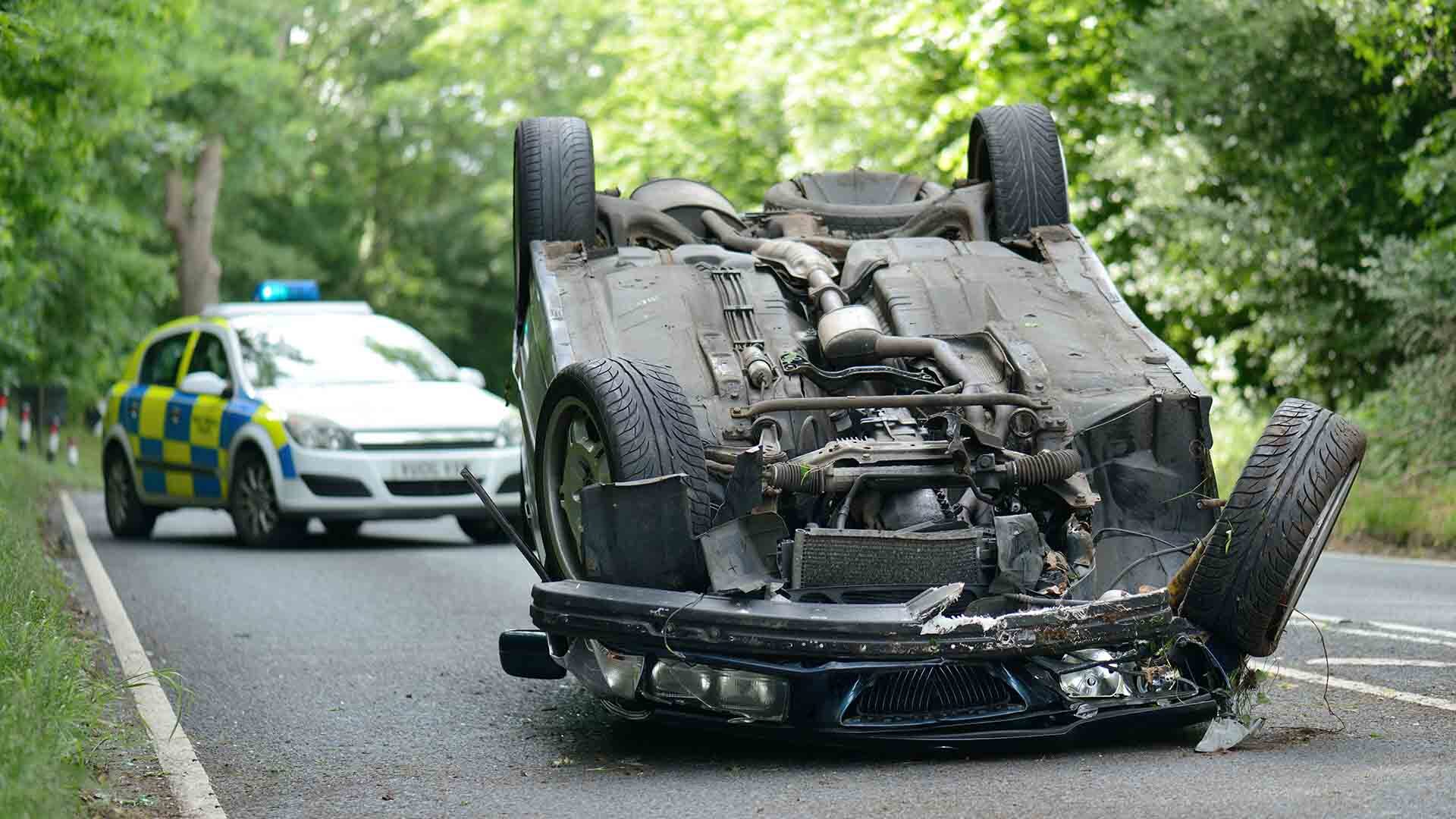
UK motorists experienced numerous types of road accidents in 2025, but one stood out more than others.
With some 67,000 drivers making use of the AA’s Accident Assist service during the past year, the organisation analysed the traffic collisions it was called out to.
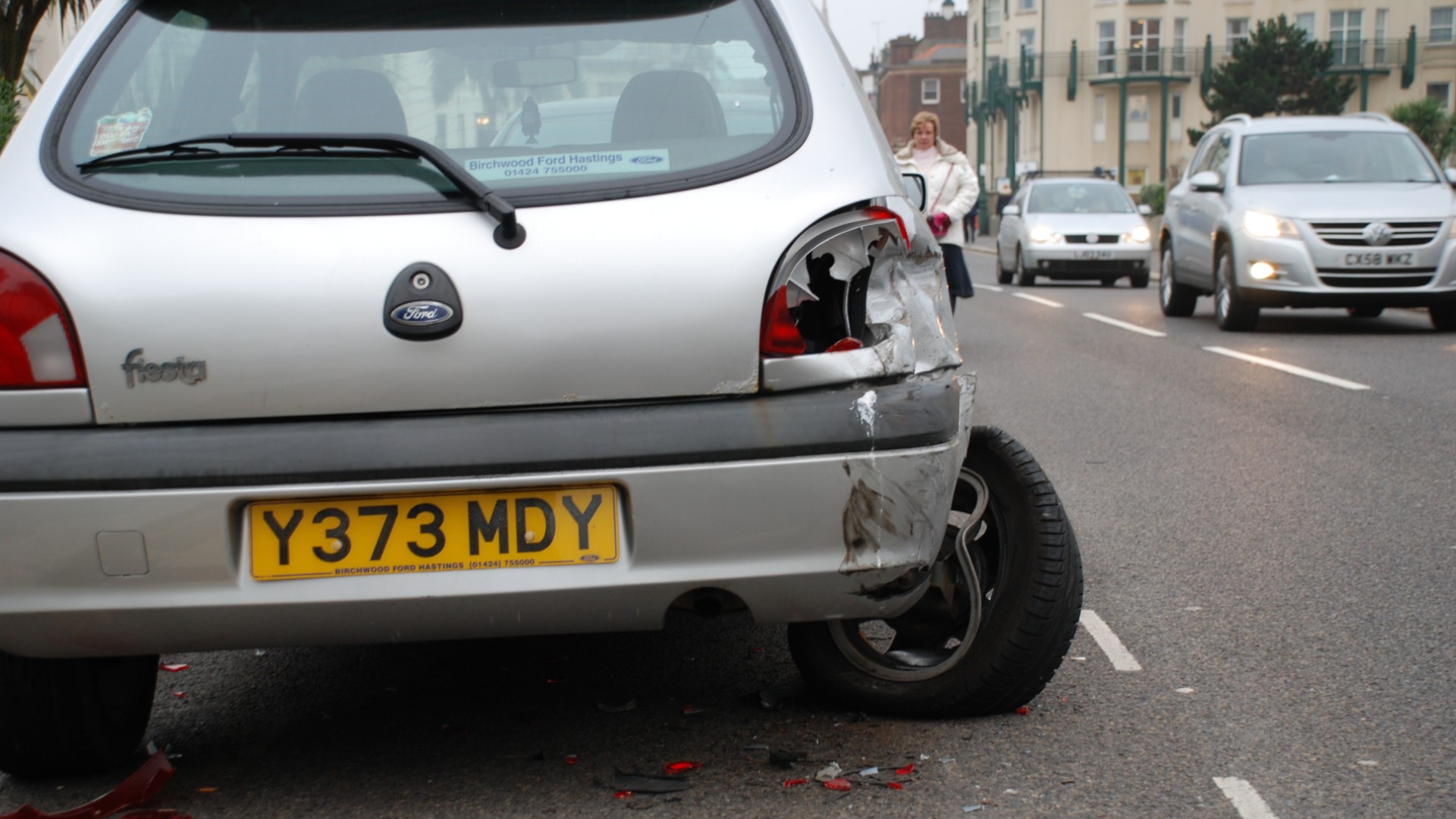
Forty percent of all accidents reported were, perhaps unsurprisingly, classed as hitting another vehicle while driving.
Examples given by the AA included two cars attempting to pass on a narrow road, resulting in their wing mirrors colliding and breaking.
Most collisions are avoidable
In the survey sample, this equates to nearly 27,000 collisions between two vehicles on the move. However, the AA notes that many other accidents could potentially have been avoided.
Close to a fifth (19 percent) of collisions involved drivers hitting a parked car. And 10 percent saw motorists simply roll into the back of another vehicle in traffic.
Hitting a kerb was the fourth most common occurrence, followed by collisions with open car doors, then striking an object in the road.
Walls, hedges and barriers were other static objects hit by drivers during 2025. Collisions with deer complete the top 10.
Make a New Year’s resolution to focus
Other incidents reported included drivers forgetting to put the handbrake on, then rolling into a nearby car, along with hitting a wall at their own home. It suggests that many accidents are the result of simple lapses in concentration.
Tim Rankin, managing director for AA Accident Assist, said: “Being involved in a crash is incredibly stressful and can affect people in different ways. Aside from any physical injuries, people could be mentally and emotionally affected for some time.
“Our data reveals that in many cases, a momentary loss of concentration is a key factor in the collision happening. Be that being too close to the vehicle in front, forgetting to put the handbrake on, or misjudging the space in car parks.
“As we head into 2026, a new year’s resolution for all drivers could be to allow more space between yourself and other road users showing respect, slow down and keep your eyes on the road. That would reduce the number of crashes, save people money and push insurance costs down.”
Unless your car has a heated windscreen, using an ice scraper is a familiar – if rather unpleasant – routine on cold winter mornings. But what if you find ice on the inside of the windscreen?
Ice forms because moisture has condensed on the glass, then frozen when the temperature inside the car drops below zero. The easiest way to remove the moisture may simply be to open the doors and ventilate the car.
If you need a quicker result, start the engine, grab your ice scraper and use the heater blowers to direct heat onto the windscreen.
Laying a cloth or towel over the top of the dashboard will soak up the water from the melting ice. Do not use de-icing fluid on the inside of the car, as the vapours can be harmful to your health.
Watch out for your wipers
If you buy a new Skoda, you’ll find an ice scraper inside the filler flap (pictured above). Otherwise, it’s best to carry one in the car.
Don’t attempt to free frozen windscreen wipers by switching them on, as you could burn out the motor. Make sure the wipers are loosened before you start the car – and not left in automatic, rain-sensing mode.
Many modern cars have an integrated moisture sensor that helps the air conditioning system assess the dew effect on the windscreen. This should prevent the screen from fogging up.
Using air recirculation or having the air conditioning switched off may also cause to windscreen to fog up. To prevent this, we suggest using the air-con in ‘auto’ mode, so it maintains a constant temperature inside the car.
‘I can see clearly now…’
Keeping the inside of the windscreen dry will prevent ice from forming overnight. Knock snow from your shoes before getting in and remove wet coats from the car when you park it.
You could even take out the carpet mats to dry them in your home overnight, or use rubber mats during the winter months. The latter will also be much easier to clean.
Finally, when it comes to clearing snow and ice from the outside of your windscreen, do not use a credit card or anything that wasn’t designed for the purpose.
An ice scraper and de-icing fluid are the best solutions if ice has formed, while using a windscreen cover overnight is the best means of ice prevention.
When the Porsche ‘901’ was unveiled in September 1963, CAR magazine’s Frankfurt Motor Show report devoted more column inches to the boat-hulled Amphicar Model 770 than the upmarket successor to the 356. Nobody imagined this quirky coupe, which looked like an elongated Volkswagen Beetle and had an air-cooled engine behind its back axle, would still be going strong more than 60 years later.
The 901 was swiftly renamed after Peugeot claimed ownership of three-digit numbers with a zero in the middle, but the silhouette, mechanical layout and unique character of the 911 have endured. Today, Stuttgart builds vastly more SUVs than sports cars, yet the 911 is Porsche. Can you imagine the company without it?
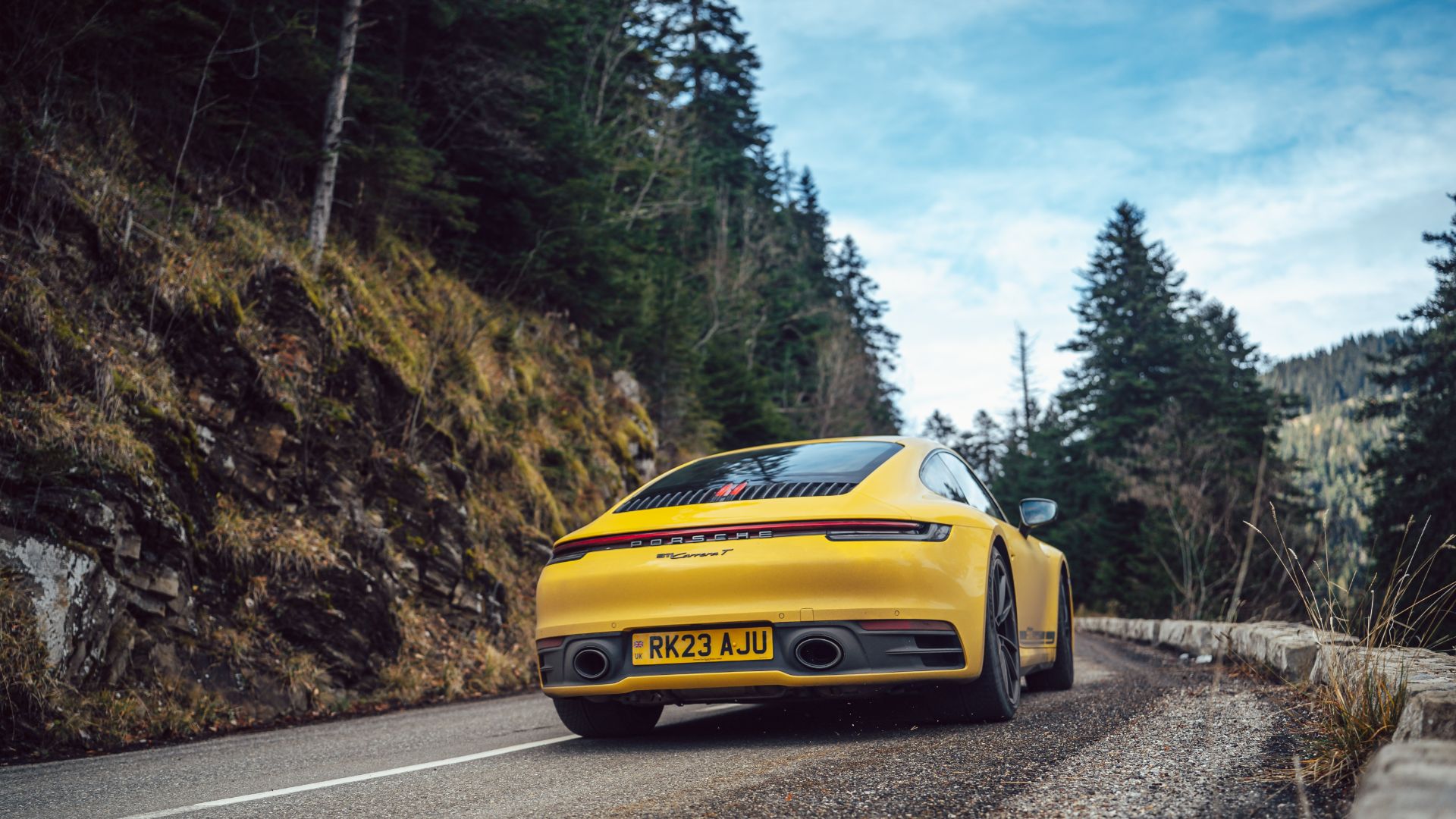
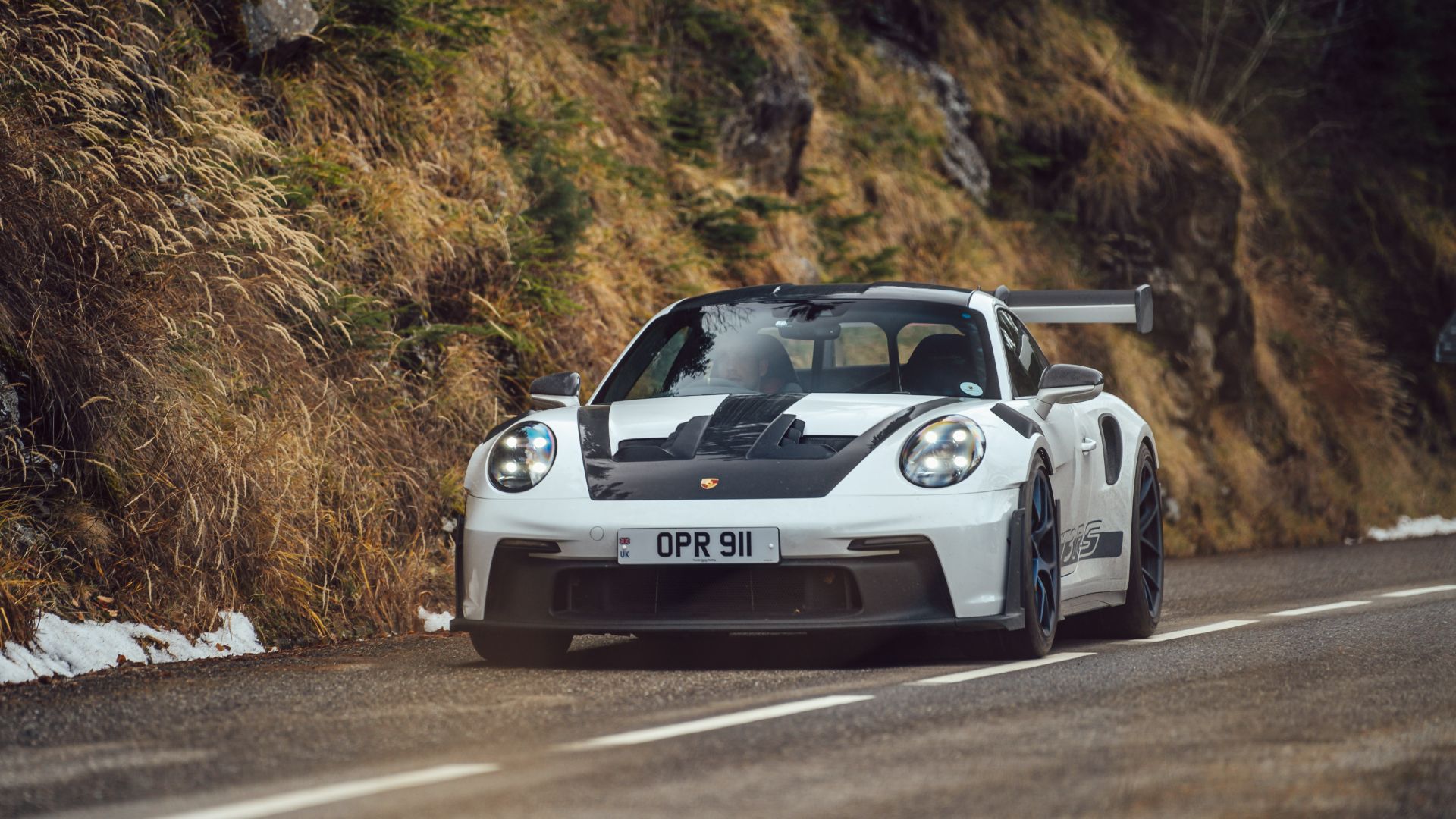
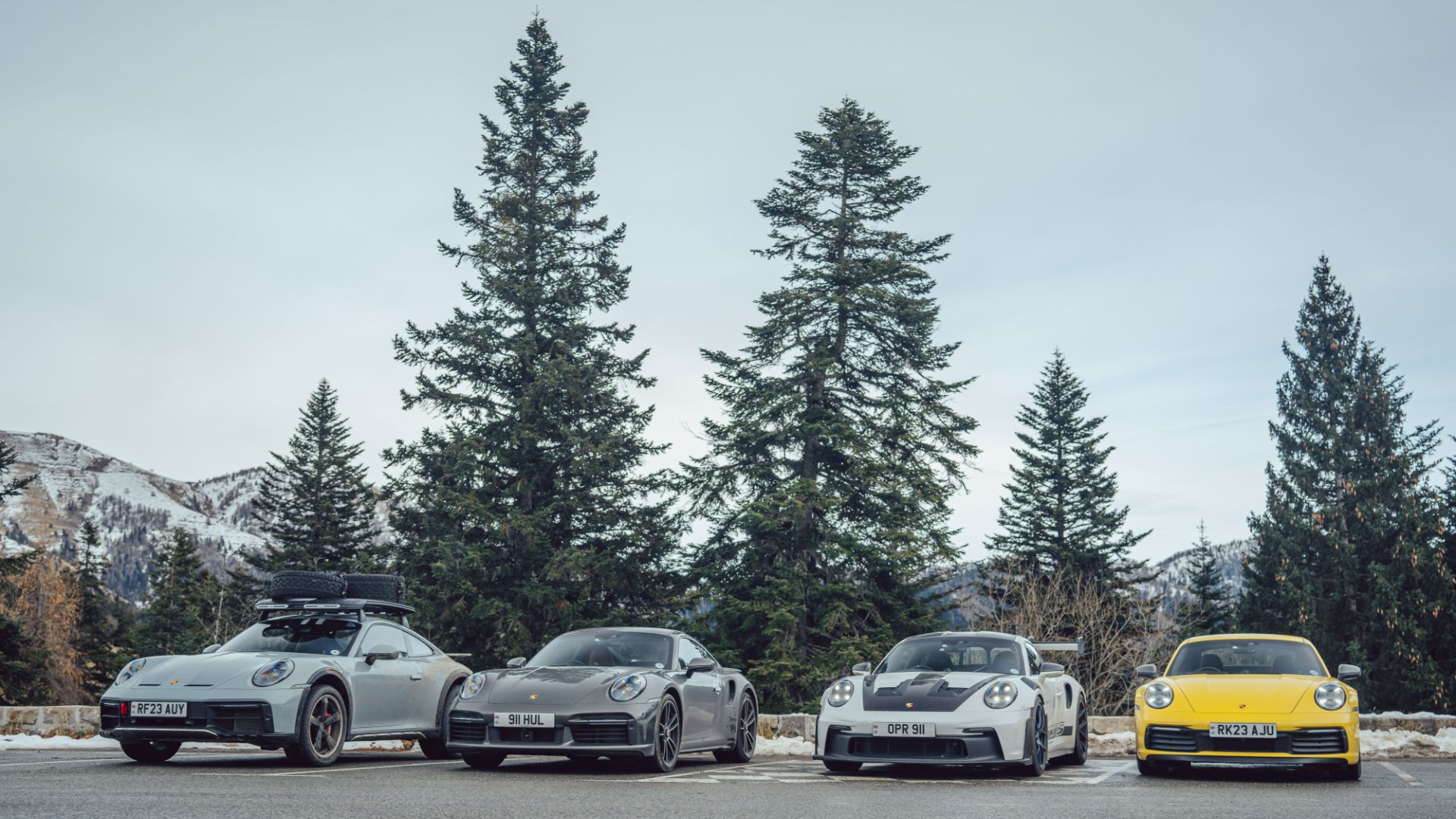
The breadth of the modern Neunelfer lineup is demonstrated by the four cars gathered here – all examples of the outgoing ‘992.1’ generation. There’s a back-to-basics Carrera T, rough-and-tumble Dakar, supercar-slaying Turbo S and track-focused GT3 RS.
Our road-trip takes us from the French city of Lyon to the glittering Cote d’Azur, including parts of the Monte Carlo Rally route, to explore just how far Porsche’s icon has evolved.
Porsche 911 Dakar
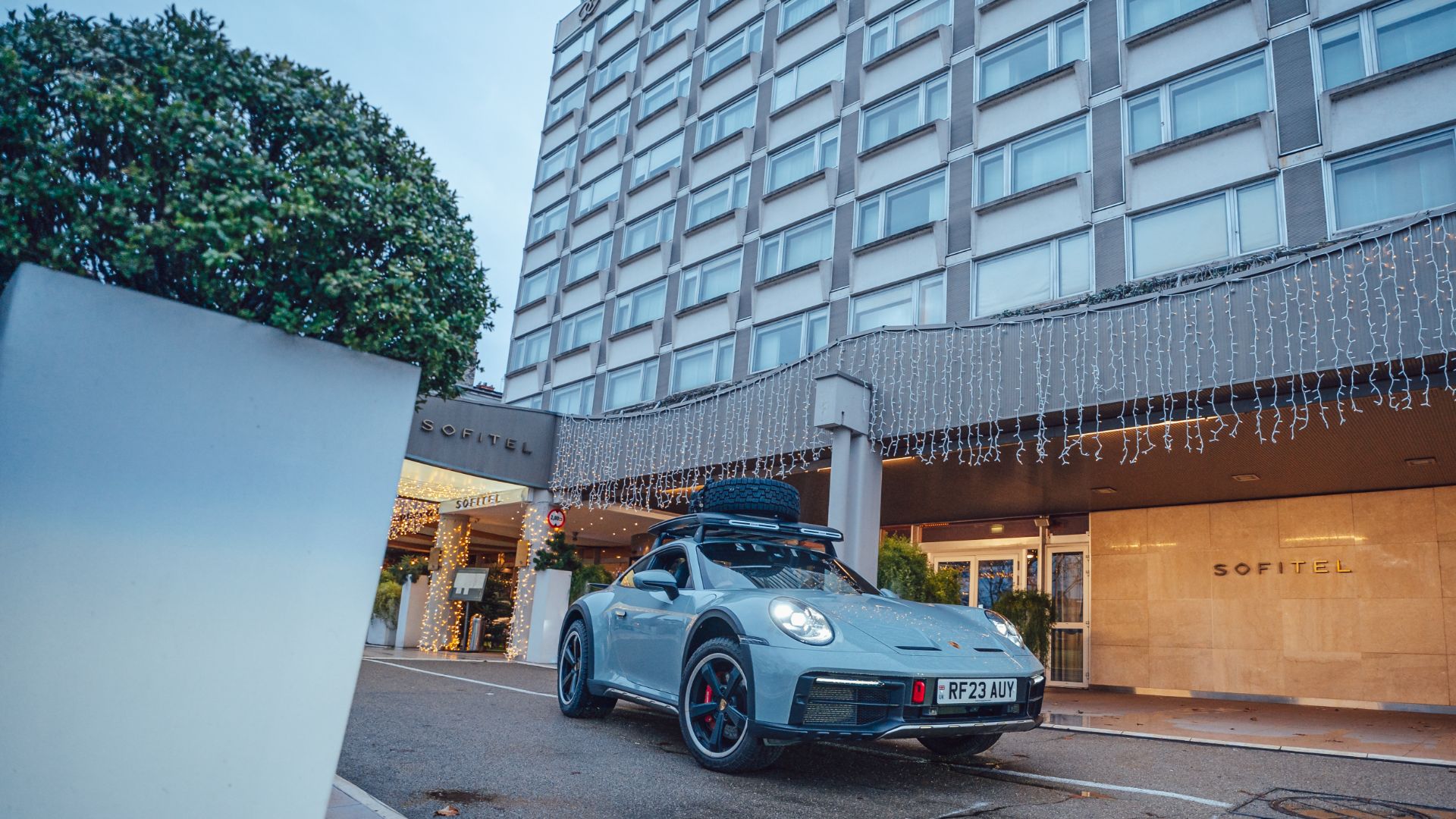
I’m handed the keys to the Dakar first. Inspired by the 953 that won the Dakar Rally in 1984, it represents something new: the only car here without a precedent in roadgoing 911 history. Its air-lifted stance (up to 80mm taller than a standard Carrera), rugged body cladding and optional roof rack make it catnip to Lyon’s car spotters.
Ironically, the attributes that make the £173,000 Dakar adept over rough terrain also prove beneficial when negotiating urban kerbs and potholes. After battling through the morning rush hour, I finally join the A43 autoroute heading south west, the raucous and muscular 480hp flat-six – shared with the mid-range 911 GTS and mated to a PDK paddle-shift gearbox – making light work of the motorway miles.
Climbing into the Alps now, heading for roads used in the Monte Carlo Rally (but not, er, the Dakar Rally). pic.twitter.com/UVfTOnWAJl
The Dakar doesn’t drop the ball when the Alps loom large either. Carving through steep switchbacks towards the snow-dusted Col de la Croix Haute, it feels oddly reminiscent of a classic 911. The increased body-roll and movement in the all-terrain tyres’ chunky tread blocks allow me to gauge the limits of grip – and occasionally exceed them. It’s simple, old-fashioned fun.
By the time I reach the first rendez-vous point in the town of Gap, I’m convinced this mutant crossover is my favourite 911 of recent times. With all 2,500 examples of the limited-edition Dakar now sold, let’s hope Porsche revives the idea in future.
Porsche 911 Turbo S
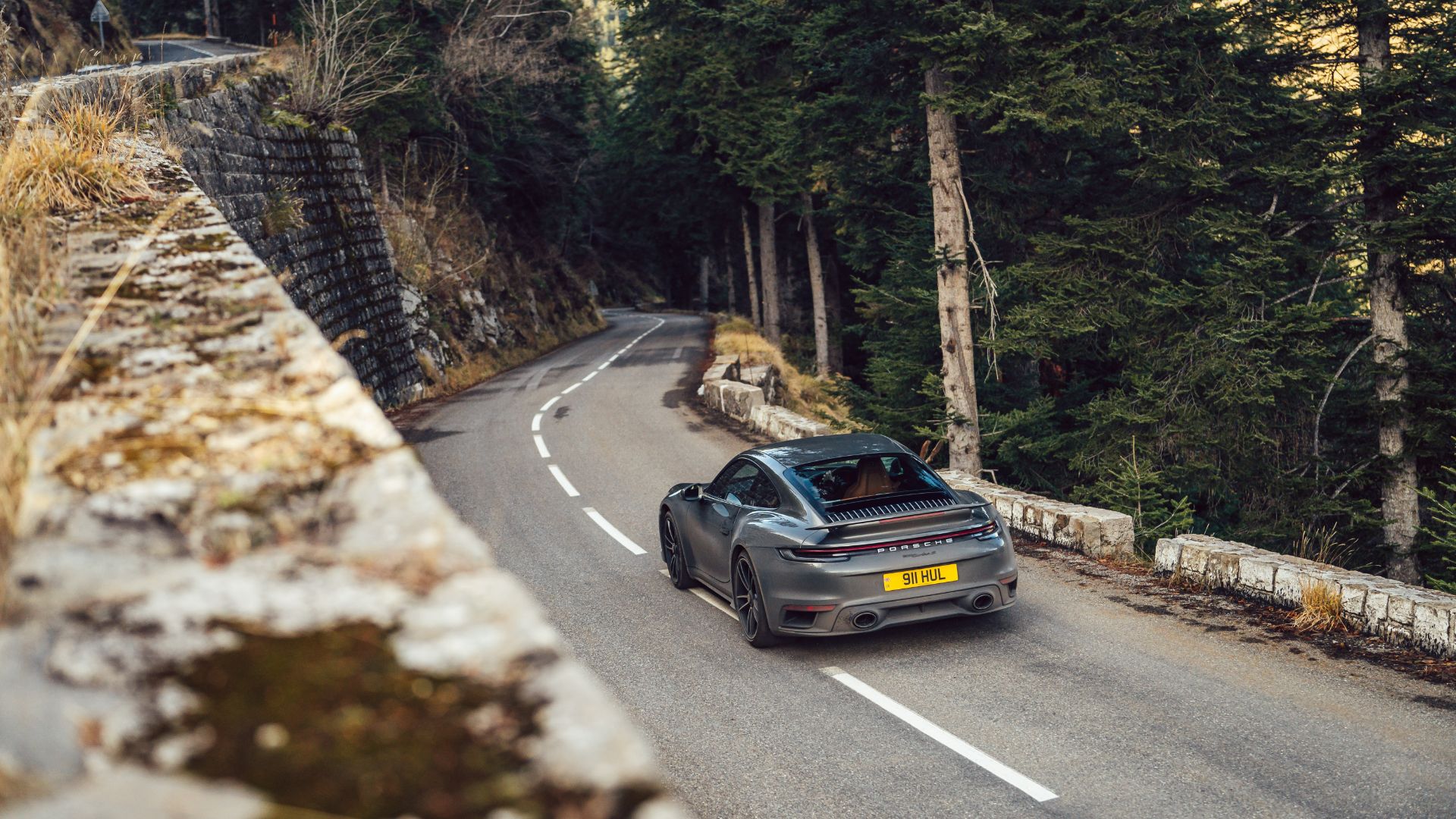
I swap into the Turbo S for the next leg of our journey, starting with a cruise-controlled 130kph (81mph) blast on dual carriageways, then climbing back into the mountains towards the famous Route Napoleon. This £180,600 flagship of the ‘regular’ 911 range – recently replaced by the £199,100 992.2 Turbo S – turns fewer heads than the oddball Dakar. But what it lacks in Instagram appeal, it makes up for in sheer speed.
The 911 Turbo first blasted onto autobahns and bedroom walls in 1975, its force-fed 3.0-litre engine serving up 260hp, 0-62mph in 5.5 seconds and a top speed of 155mph. The corresponding figures for this outgoing Turbo S are 650hp, 2.7 seconds and 205mph. Yet while the original 930 gained a reputation as a wayward ‘widowmaker’, the four-wheel-drive 992 is the consummate all-weather supercar.
Swapped into the 992 Turbo S for the next leg down to the Route Napoleon.
Love the spec of this current ‘911 HUL’: Aventurine Green with a Heritage Design interior. pic.twitter.com/cytgSJFIgo
Fittingly, it starts to rain, but with Wet mode selected to tame its responses and huge 10-piston carbon-ceramic brakes underfoot, the Porsche feels almost impervious to the slippery conditions. Driving it quickly induces a state of calm and singular focus that tallies with the car’s own character.
Whether I lean into its abilities as a long-striding GT or unleash its performance on increasingly steep and spectacular Alpine roads, the Turbo S has all bases covered. If I had to turn around now and drive the 750 miles back to London, this is the 911 I’d choose.
Porsche 911 Carrera T
If the Turbo S elevates the 911 to hitherto unimagined heights, the rear-driven Carrera T feels like a return to its roots. Lighter, rear-wheel drive and deliberately driver-focused, it combines the base 385hp 3.0-litre Carrera engine with a manual gearbox. For £105,700, you also got 10mm lowered sports suspension, a mechanical differential and a rortier exhaust (the equivalent numbers for the latest 992.2 Carrera T are £111,300 and 394hp).
I found the ‘T’ rather stiff and unforgiving in the UK, but on the smoother tarmac of the Route Napoleon it feels poised and precise. Tracing the route of Napoleon’s 20-day march that ended at the Battle of Waterloo in 1815, this is truly one of Europe’s great driving roads. You could enjoy it in a Dacia Sandero, let alone a Porsche 911.
Next up: the Porsche 911 Carrera T.
Some 265hp down on the Turbo S, but it’s the only car here with a manual ’box. pic.twitter.com/MfQOU5qyoQ
Key to the Carrera T’s appeal is that seven-speed manual ’box. With its notchy shift action and weighty clutch pedal, it keeps your limbs and brain engaged in the process of driving – and encourages you to wring out more revs.
As the road coils tighter and the washed-out winter sun sinks behind the jagged peaks, I enjoy a moment of serendipity. It’s the right car at the right time – and very much in the right place.
Porsche 911 GT3 RS
The right place for the bewinged 911 GT3 RS is arguably a racetrack, not the Col de Turini with snow swirling through the darkness. Best known as a stage in the Monte Carlo Rally, the road consists of 34 hairpin bends that climb to a height of 1,607 metres. After many hours behind the wheel, it seems like a fitting finale.
The bloodline of the GT3 RS dates back to the epochal Carrera 2.7 RS of 1973, adding a healthy infusion of Porsche’s RSR race cars. With outrageous aero, ball-jointed double wishbone front suspension and a 525hp naturally aspirated engine that revs to 9,000rpm, it’s the most extreme 911 ever to wear number plates.
Final stage of the road-trip now, over the Col de Turini and down to Monaco.
You’d expect the RS to feel intimidating in these conditions. Yet its incredible configurability – including multiple settings for damper compression and rebound – means you can tailor the car to the road.
And when that road is the Col de Turini, this ultimate Rennsport draws out its claws, delivering a brilliant blend of barely contained savagery and nuanced, confidence-inspiring control. It’s utterly mesmeric.
To see you, Nice
I arrive at Nice airport late in the evening, exhilarated and exhausted, toss the GT3 RS keys to Porsche’s PR man and dash for my plane. Despite a last leg from the mountains that felt like a frantic sprint finish, I make the flight home with minutes to spare.
The four cars I’ve driven today all provided very different experiences, yet they share a DNA that runs through every 911. Porsche’s range has since become even more diverse, as the 992 GTS and new Turbo S introduce hybrid technology for the first time. It might be into its seventh decade, but this iconic sports car shows no sign of slowing down.
If you have left buying your Christmas tree to the very last minute, Hennessey has a rapid delivery solution.
The Texas-based tuning firm and hypercar manufacturer has released details of its latest high-speed Christmas Tree Run, making use of a new 2026 Chevrolet Corvette ZR1.
By reaching an astonishing 196mph, Hennessey has broken its own record – set in 2022 with a modified Venom 1000 Ford Mustang.
A maximum of almost 200 mph would be impressive by itself, let alone with a 5.5-foot (1.7-meter) Christmas tree strapped to the roof. More than 200 lights were wrapped around the tree for good measure.
The practical American supercar?
Revealed last year, the Chevrolet Corvette C8 ZR1 is the first turbocharged production model in the all-American sports car’s history.
Its twin-turbo 5.5-liter flat-plane V-8 generates 1,064 hp, along with 828 lb-ft of torque. The C8 ZR1 can blitz a quarter-mile in 9.6 seconds.
The latest Hennessey Christmas Tree Run was staged on the runway at Chase Field in Beeville, TX, with professional driver Spencer Geswein behind the wheel.
With a new record set, Hennessey also tested the C8 ZR1 ZTK Track Pack-equipped Corvette without a tree attached. This saw an impressive 206 mph reached before Geswein ran out of runway.
Fast, loud, and festive
Alex Roys, recently confirmed as Hennessey’s new president, said: “Hennessey’s Christmas Tree Run has evolved from a crazy little holiday stunt into one of the most fun traditions. Every year we strap a tree to something a little wilder and a little faster.
“It’s the kind of event that reminds you why this whole thing started… because cars should be loud, fun, and just a little bit unhinged. Running the 2026 Corvette ZR1 was a perfect finale to another amazing year for the Hennessey team.”
In 2021, the company hit 183 mph in a modified Audi RS6 Avant owned by the wife of company founder, John Hennessey.
Pushing the limits of festive fun
Since starting the Christmas Tree Run in 2017, Hennessey has tried to up the performance stakes each time. The full list of cars tasked with festive deliveries includes:
Swedish electric car brand Polestar has teamed up with Dolby and Bowers & Wilkins to create a festive music playlist.
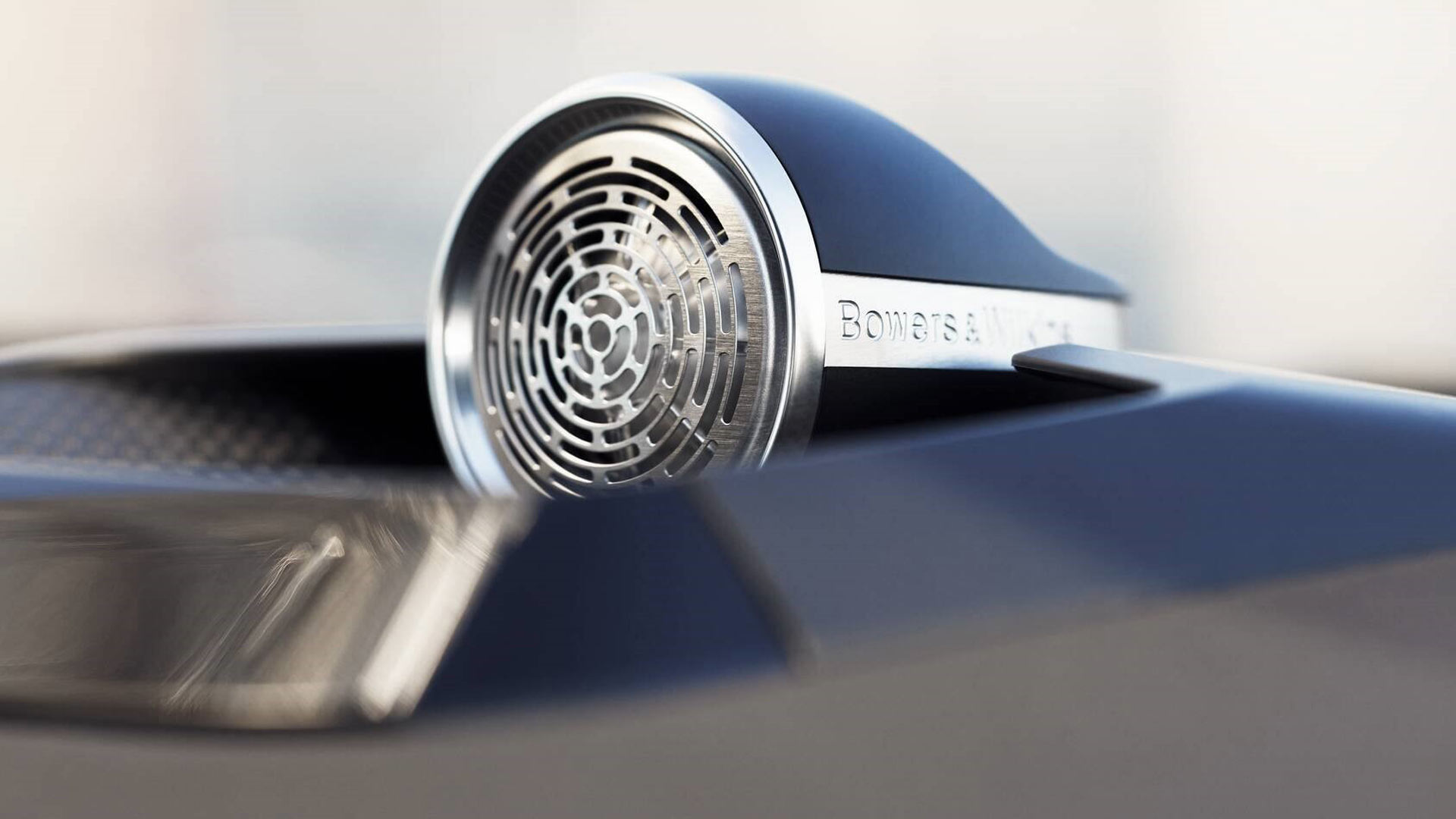
Designed to make use of the premium Bowers & Wilkins audio system available for the Polestar 3, it includes a special remastered version of the ‘Silent Night’ Christmas carol.
The Polestar 3 was the first vehicle in the world to feature Bowers & Wilkins sound system with integrated Dolby Atmos technology.
Some 25 speakers are fitted as part of the Polestar’s audio setup, with a 1,610 watt power output, 3D surround-sound and active road noise cancellation.
Making sound a core Polestar experience
To maximise the effectiveness of Dolby Atmos, ‘Silent Night’ has been reworked to ‘bring greater depth, clarity and dimension’ to the festive favourite.
The new version is said to allow listeners to experience the song’s ‘layered harmonies, choral textures and delicate instrumentation’, with a ‘sense of space and realism’ that traditional stereo setups cannot deliver.
Matt Galvin, managing director at Polestar UK, commented: “Sound is a core part of the Polestar experience, and our partnership with Dolby allows us to bring an entirely new level of immersion to in-car listening.
“Reimagining ‘Silent Night’ in Dolby Atmos celebrates the quiet, calm nature of electric driving while demonstrating the incredible level of detail that our Bowers & Wilkins system can deliver. We’re proud to collaborate with Dolby on this next chapter of audio innovation.”
Delivering the gift of Christmas music
Jane Gillard, head of music at Dolby, said: “Dolby Atmos transforms the in-car listening experience by placing every instrument, vocal and harmony in precise three-dimensional space. Unlike traditional stereo, where sound is limited to left and right channels, Dolby Atmos allows audio to move around the cabin, above you, beside you and in front of you, creating a truly immersive soundscape.
“Christmas music is full of layered vocals, choirs and delicate instrumentation, and Dolby Atmos lets those elements shine. When combined with the near-silent cabin of an electric vehicle, it creates a peaceful, enveloping atmosphere that’s perfect for long journeys home for the holidays.”
The remastered version of ‘Silent Night’ is available on major streaming platforms that deliver Dolby Atmos content. These include Tidal, as part of the Dolby Atmos DrivEVing Home for Christmas playlist.
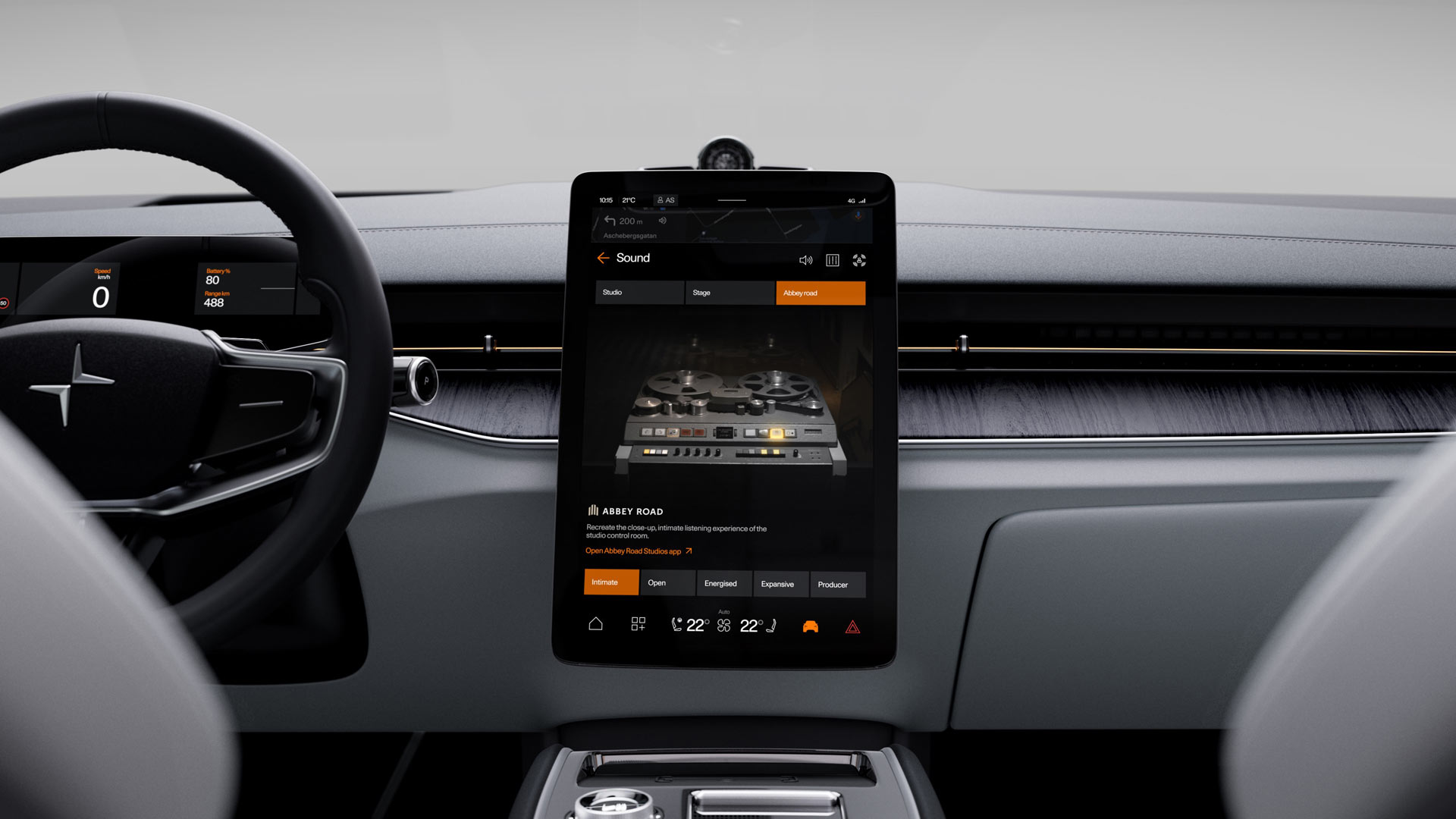
Earlier this year, Polestar and Volvo added a new Abbey Road sound mode, which emulates the audio experience of being inside the famous London recording studio.
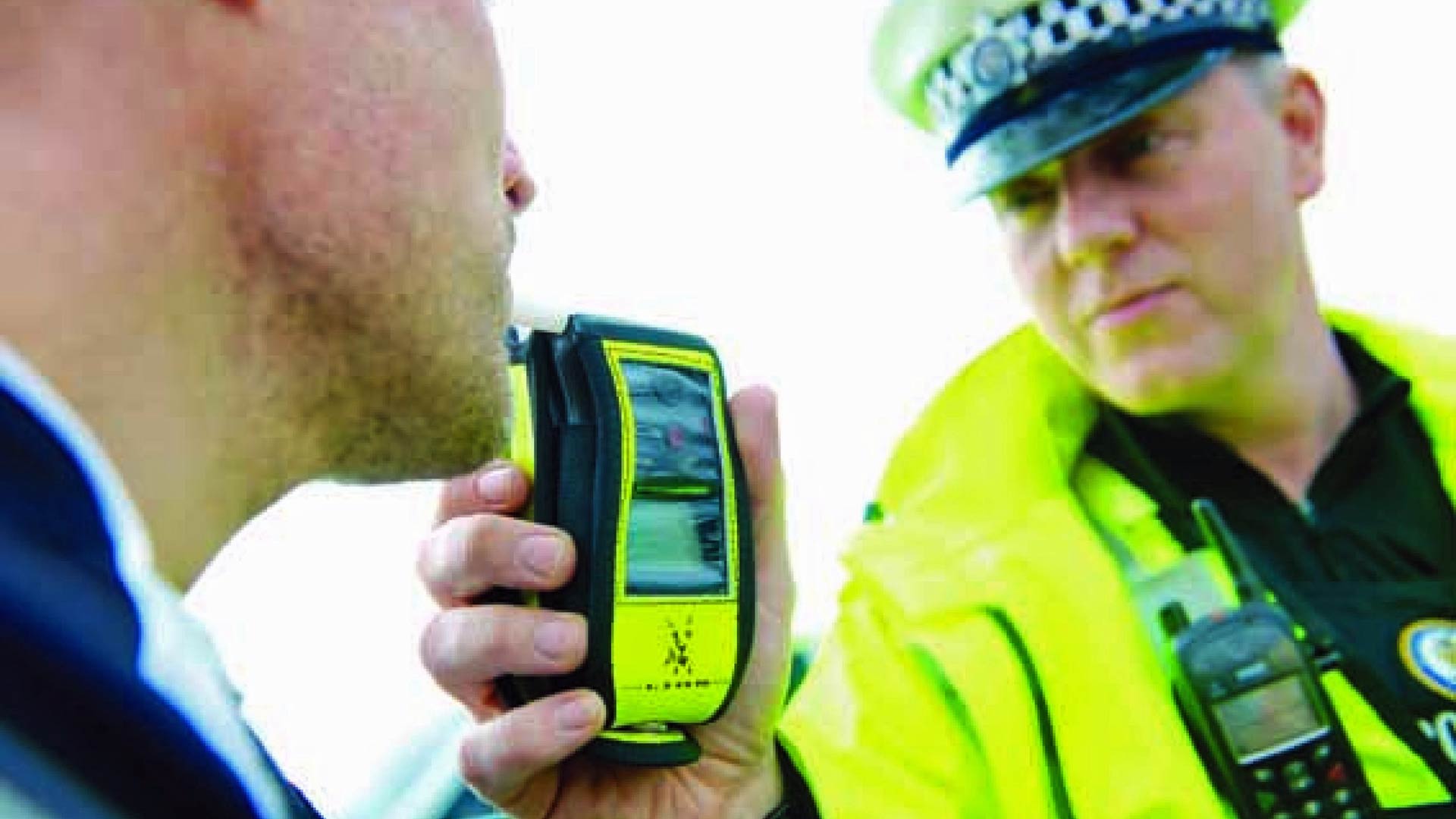
Research has found many British motorists are unsure about the alcohol content of popular festive foods, putting them at risk of being over the drink-drive limit.
While almost half (48 percent) felt confident about identifying festive drinks with risky levels of alcohol, only 18 percent said the same about seasonal food.
Sherry trifle was noted as a risk by 44 percent of those questioned. This was followed by Christmas pudding, identified by 38 percent of survey respondents.
The research was undertaken by car insurance provider, Tempcover. It found just over a third (37 percent) of people were ‘very confident’ about identifying the alcohol levels in Christmas delicacies.
However, brandy butter, red wine gravy and sauces made with port and cranberry were still frequently overlooked by those surveyed, despite alcohol featuring in their recipes.
Although the relative alcohol content of many festive foods can be low, the cumulative effect of consuming them alongside an alcoholic drink may be enough to tip motorists over the drink-drive limit.
Luxury Christmas puddings are typically the worst offender, containing 20-30 percent alcohol by volume. It means overindulging on dessert could cause problems for drivers beyond just indigestion.
Motorists still unsure on drink-drive limit
Tempcover’s research also found that only a third (35 percent) of motorists could correctly identify the drink-drive limit for England, Wales and Northern Ireland.
The legal limit in these areas of the UK is 35 micrograms of alcohol per 100ml of breath, or 80 milligrammes per 100ml of blood
Scotland has a lower limit of 22 micrograms of alcohol per 100ml of breath, or 50 milligrammes per 100ml of blood.
Claire Wills-McKissick, an insurance expert at Tempcover, says: “Our research shows that many drivers are unaware of the alcohol content in seasonal foods, and a large proportion remain unsure about the legal drink-driving limit.
“Exceeding the limit carries serious consequences, including a minimum one-year driving ban, up to six months in prison and an unlimited fine. If you’re in any doubt, don’t take the risk and avoid getting behind the wheel.”